Categories
Christianity Today Europe Published Articles

Do Artsakh’s Armenians Need More or Less ‘Christian’ Advocacy?

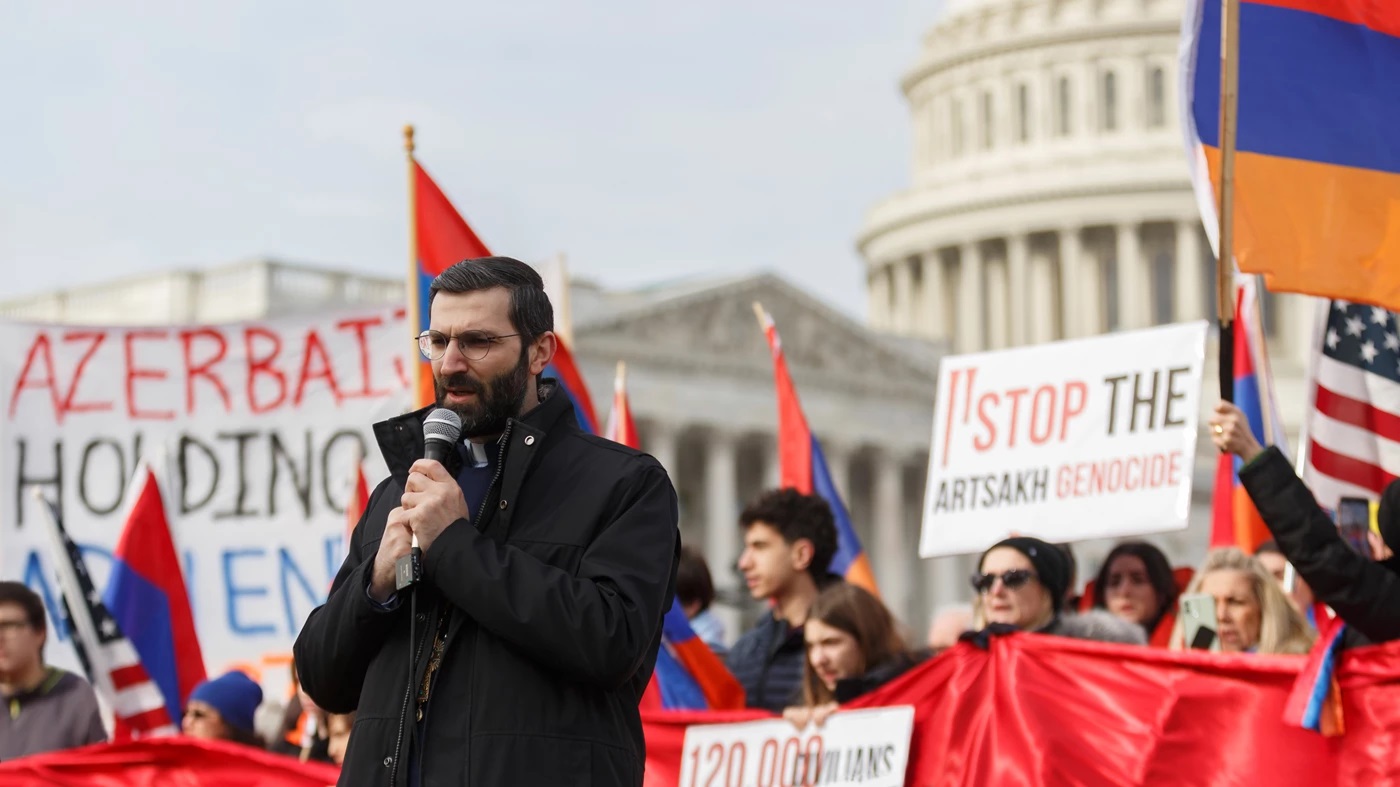
Image: Bryan Olin Dozier / AP Images

It was almost a good news story.

After nine months of blockade, humanitarian aid finally reached the Armenian Christians of Nagorno-Karabakh on Monday. But almost immediately, ending three years of tense ceasefire after a 2020 war, Azerbaijan renewed on Tuesday its military assault on the mountainous Caucasus enclave.

And following today’s surrender and promised disarmament of local separatist forces, the region will almost certainly revert to the sovereignty of a neighboring nation that Armenians fear—and a former chief prosecutor of the International Criminal Court warns—is preparing a genocide.

Thousands massed at the airport in the capital of Stepanakert, preparing to leave.

Advocates for Armenia are at a loss. But of the three aforementioned adjectives—humanitarian, Armenian, or Christian—which ones were most effective in pressing for humanitarian aid? And now in a new phase of the conflict, which will be the most crucial in mobilizing further support?

CT spoke with six religious freedom experts about best practices in Christian advocacy.

What compelled this week’s minor breakthrough?

One week before the initial agreement, US Secretary of State Antony Blinken called Aliyev to express “concern over the deteriorating humanitarian situation.” According to the official State Department readout, however, neither the word Christian nor Armenian was spoken by the senior diplomat. Religion and ethnicity were completely ignored.

But one CT source stated that Blinken’s outreach to Azerbaijan “ticked up” following the June visit to Armenia by Sam Brownback, former US ambassador-at-large for international religious freedom. And at a congressional human rights hearing on Nagorno-Karabakh after his return, in calling for legislative action his language was completely different.

“120,000 Christians are being suffocated,” Brownback stated, “blockaded by Azerbaijan.”

His trip was arranged through Philos Project, which works to ensure the citizenship rights of minority Christians and their ability to “flourish” in the region. President and founder Robert Nicholson said some believing advocates in the West are oddly reluctant to embrace their ancient brothers and sisters.

“Christians often make the mistake in thinking that the Christian thing to do is not specifically advocate for Christians,” he said. “But love for the brethren is the preeminent marker of New Testament faith, so I double down in my support.”

Like all sources interviewed, Nicholson resisted characterizing the Nagorno-Karabakh issue as Muslims persecuting Christians. Yet sectarianism is a factor, as both Armenia and Azerbaijan have effectively merged their religious and ethnic identities. And with the latter’s attempts to erase the former’s historic Apostolic faith from the enclave, Nicholson said it would be improper to neglect their status as Christians.

Both humanitarian concerns and religious solidarity were mentioned in Philos’s open letter to President Joe Biden in January. But in its bipartisan effort to influence US foreign policy, sometimes the word Christian is strategic to highlight.

“The best people on this issue have been Democrats,” Nicholson said. “Conservative Republicans who identify as Christians seem not to have gotten the memo, and we are trying to bring them in.”

So is Joseph Daniel, Middle East and North Africa manager for International Christian Concern (ICC), who handles its Armenia file. ICC’s public policy work, however, is a secondary priority to raising awareness in the church, with its persecution.org website aptly titled to get more believers to care. While such an approach helps with fundraising, he said it also puts them in a bit of a “Christian bubble.” But for Armenia, the religious label is…

This article was originally published at Christianity Today, on September 20, 2023. Please click here to read the full text.
Categories
Christianity Today Middle East Published Articles

The Cost of Religious Freedom

This article was originally published on September 20, 2018, and in the October issue of Christianity Today.

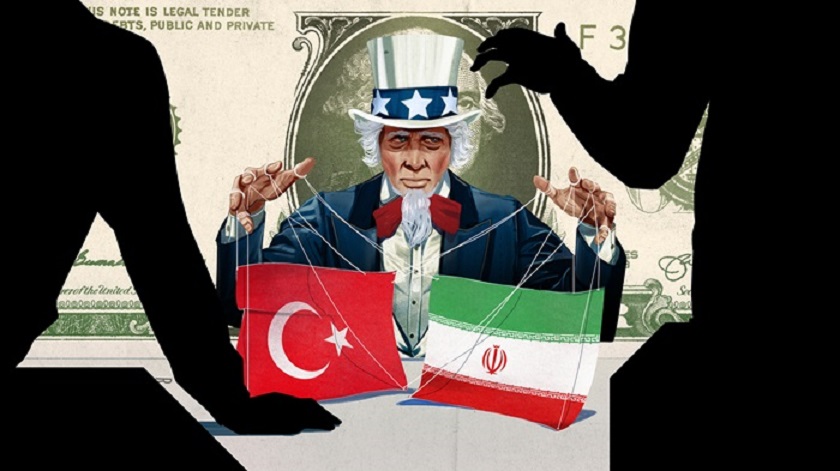
Turkey Iran Sanctions Advocacy
Image: Jonathan Bartlett, via CT.

This article expands my previous coverage of Andrew Brunson and the US-Turkish crisis to include also issues related to advocacy for Christians in Iran.

Why did advocacy succeed for the drug dealers but not the pastor? And what should be made of Youcef Nadarkhani, the Iranian house church leader released in 2013 after much international advocacy—only to be arrested and beaten this past July?

“Christians engaged in this part of the world always walk a knife edge regarding how to respond to unjust imprisonment,” said Mark Bradley, an author of three books on Iran and Christianity.

“Some prefer to remain under the radar. Others prefer to get as much support from politicians and journalists as possible. It is impossible to know which is more effective.”

Todd Nettleton, chief of media relations for Voice of the Martyrs, said some persecuted Christians hope for sanctions that will either push politicians to reform or the people to revolt.

But with the experience of working in 68 countries, he described others who believe a society unfettered by sanctions leads to openness to the gospel and a demand for rights and freedoms.

“In our work, we encounter Christians living in hostile and restricted nations who fall on both sides of this debate,” he said. “We stand with them regardless of the action or inaction of earthly governments.”

Please click here to read the full article at Christianity Today.


Categories
Christianity Today Middle East Published Articles

To Defend Mideast Christians, Can Advocates Critique Islam?

Advocates Critique Islam
Photo by Win McNamee/Getty Images

This article was first published in the January print edition of Christianity Today.

What’s the best way for Middle Eastern Christians in America to help fellow believers back home? A single misspelled email address inadvertently revealed the breadth of this dilemma for activists in the diaspora.

The mishap sparked a spat this summer between two prominent US Arab groups: the Arab American Institute (AAI), a polling and policy organization led by James Zogby, and Coptic Solidarity (CS), which champions the religious freedom of Egyptian Christians and other minorities.

Zogby, who has a Lebanese Maronite background, was a scheduled participant in CS’s annual Washington conference, which leaders often use to advise DC’s foreign policy establishment on Middle East issues.

But two days before the June 15 conference, Zogby unexpectedly withdrew.

Zogby explained in an article weeks later that he withdrew after receiving word that some controversial anti-Muslim “hate groups” would be at the conference and that the title of a panel in which he was participating had been revised to suggest that violence and impunity are endemic in Muslim and Egyptian culture.

“The best way to reinforce the message of the haters of Christians in Egypt is by giving them the ammunition that Copts in the US are working with Islamophobes in Washington,” Zogby told CT. “I felt it important to call out CS for what I strongly believe is a wrong-headed and potentially dangerous path.”

Stunned by Zogby’s withdrawal and his public criticism, CS wrote an angry response, accusing Zogby of a “dhimmi mentality,” a reference to the secondary status of non-Muslims in the historic caliphate.

“He intentionally tried to hijack our event and tarnish our reputation,” Lindsay Griffin, CS’s director of advocacy and development, told CT.

According to organizers, participants had received the revised speaker list and panel names a full month before the conference. But Zogby didn’t. His email address was misspelled, so he never received a May 9 message outlining the changes that later led him to withdraw.

But while the spark that ignited the conflict between the groups was an honest mistake, the issues at the center of the dilemma are real…

Please click here to read the full article at Christianity Today.