During and immediately following the 2011 Egyptian uprising, Coptic activism reached new heights. Copts organized and came together to call for protection for their communities and rights more generally. However, particularly since the fall of the Muslim Brotherhood and the election of President Abdul-Fattah el-Sisi, such activism has declined. Today, the number of active, effective Coptic movements can be counted on one hand. This leaves the church carrying the mantle of Coptic identity, allowing the pope to decide whether or not to engage in politics. Thus far, Pope Tawadros has opted to back the new government, and Coptic citizens are following his example.
The article recounts Coptic activism since the revolution, and then introduces the remaining players:
But in terms of traditional political activism, the landscape is quite barren. There are two primary movements that remain: the Coalition of Egypt’s Copts (CEC) and the Maspero Youth Union (MYU). Both are small, with 88 and 40 voting members, respectively. At the height of the Maspero protests before the massacre, the MYU laid claim to the support of over ten thousand, judged unofficially via Facebook conversations and attendance at demonstrations. Today it counts only a few hundred active members.
The article describes the former as aligned with the state, the latter as supportive but wary while clinging to revolutionary ideals.
From the conclusion:
But if the MYU leads, will anyone follow? Copts other than MYU members and supporters view Coptic activism to be negligible in influence and advocate for transcending Coptic concerns. Youssef Sidhom, editor of the Coptic newspaper Watani, speaks for many when he says that the Coptic community must move on from sectarian labels and evolve in two directions. At the grassroots level, he says, activists must transform into community leaders and aid their neighborhood constituencies. And at the national level, they must emerge as politicians and address issues beyond the Coptic cause. While Coptic activists had their moment during the uprisings, Sidhom points to parliament as the coming and enduring challenge in which Copts must legislate rights to support full citizenship and demonstrate leadership on the national stage.
But almost by definition, activists operate outside the sphere of formal power and put pressure on it. Few activists have space to operate these days, as the state has greatly limited the scope of civil society. Time will tell if the CEC or the MYU can muster the influence to capture the favor of the Coptic community—and more importantly, of Egypt as a whole.
Heads of the religious discourse committee of the Family House
‘National unity’ has long been a part of Egyptian political discourse. Spun positively, it celebrates the equal contributions of Muslims and Christians as one people in the national fabric. Spun negatively, it is crass propaganda used by the ruling class to demonize Islamists and scare both Copts and international observers into supporting the status quo.
Experienced positively, national unity represents the normal everyday life of Muslim and Christian neighbors interacting with each other as people, with nary a thought of religious differences. Experienced negatively, national unity is little more than the hugs and kisses exchanged by top religious leaders covering over a potent sectarianism that too often lashes out at the religious other.
But until recently, national unity was only an idea, of which the substance or emptiness was determined by the speaker. In Egypt today this is beginning to change; national unity is becoming an institution.
The idea was born following the horrific October 31, 2010 attack on Our Lady of Salvation Church in Baghdad, in which 58 people were killed and threats issued also against Egyptian Copts. The Grand Sheikh of the Azhar, Ahmad al-Tayyib interpreted this al-Qaeda sponsored atrocity within larger efforts he believed were meant to damage the religious unity of the whole region. He proposed to then-Coptic Orthodox Pope Shenouda to create an Egyptian antidote called the Bayt al-Eila or ‘Family House’, the necessity of which was further demonstrated following the bombing of the Two Saints Church in Alexandria in the first hours of January 1, 2011.
The Egyptian Family House was formally created as an independent national institution by cabinet decree in 2011, but the ongoing instability created by the January 25, 2011 revolution meant that little was initially done to develop it. But from the beginning the Family House was meant not to be a place of religious dialogue, said Dr. Hamdi Zaqzouq, the secretary-general, but of dialogue between the common people to strengthen their general relations. They will not discuss the differences of doctrine, nor seek primarily to solve any outbreak of sectarian strife. Rather, it is a comprehensive effort to reduce the causes of such strife, so as to revive the popular slogan of the 1920s national movement against British colonialism: Religion is for God and the nation is for everyone.
This article is based on an interview with Dr. Hamdi Zaqzouq and his secretary Muhammad al-Banna, on October 12, 2014. Please click here to read the full article at Arab West Report.
In the year 1321 Muslim mobs, with tacit allowance from the Mamluk Sultan, destroyed 60 churches in Egypt and openly attacked Copts on the roads and in their homes. Incitement included accusations Christians supported the invading Mongols in their ‘coup’ attempt against the state.
According to UK-based Fadel Soliman, these days may soon return. Coptic support for President Sisi and his coup against the democratically elected Islamist presidency of Mohamed Morsi has resulted in a ‘poisoned atmosphere’ between religious adherents.
‘I am so worried about the future of Egypt,’ said Soliman, ‘especially about the reactions of Muslims toward you.’
Soliman issued this comparison in the context of a larger argument about restoring hope to Muslim youth who own the dream of ruling by sharia. Too many, he laments, are attracted by the success of the so-called Islamic State following the ‘betrayal’ of the democratic dawn.
‘Either give the way to Muslim youth to try to reach their dreams through peaceful means,’ he told Lapido Media, ‘or they will definitely seek violent means. This is normal, this was expected to happen.’
Soliman is the Egyptian founder and director of Bridges Foundation, a UK-based NGO that aims to overcome misconceptions about Islam. His work has been praised by diverse figures such as Representative Michael Doyle of Pennsylvania and the liberal satirist Bassem Youssef of Egypt. He has consistently condemned terrorism and appealed to the Islamic State for the return of Alan Henning, later beheaded.
He is also an Islamist, arguing sharia law supports and enhances the principles contained in the Universal Declaration of Human Rights. He wishes justice for Egypt, to which he has not returned since the dispersal of the pro-Morsi sit-in at Rabaa where he witnessed sixteen of his students killed.
Correct?
But the crucial question is – if his argument is correct will frustrated Islamists flock to a jihadist vision? And similarly, should policymakers encourage ‘moderate’ Islamists as a counterweight to al-Qaeda and the Islamic State?
The argument is very popular in academic circles, informing much of the enthusiasm of the initial Arab Spring. Khalil al-Anani of Georgetown University in Washington DC, writing in Foreign Affairs, speaks for many in his worry about a return to authoritarianism in Egypt.
‘Through its clampdown on political dissent, Cairo has created a fertile ground for ISIS and groups like it,’ he wrote,‘with the potential to recruit young people, Islamists, and moderates alike.’
Indeed, most Muslims in Egypt are religiously conservative. The 2013 Pew survey showed 74% want sharia to be the law of the land, with 56% believing Egypt’s current legal system is deficient. The Muslim Brotherhood and Salafi parties captured nearly three-quarters of the parliament in the 2012 elections. It would appear these numbers represent those are ripe for radicalisation.
But Soliman’s appraisal of Egyptian politics fails to account for the millions of Muslims and Christians who rejected the presidency of Morsi. Coup or not, the subsequent ‘yes’ votes for the constitution and Sisi’s presidency each exceeded the 13 million Morsi won in 2012.
These numbers do not negate the conviction of Islamists that they have been cheated out of gains fairly won. Their grievances have been buttressed by the 632 people killed at Rabaa, according to Egypt’s semi-governmental National Council for Human Rights. A minimum of 6,400 people have been detained for ‘rioting’, according to the Ministry of the Interior.
Bigotry
But the assumption these frustrations will drive Islamists to violence is simply a form of bigotry, according to Samuel Tadros of the Hudson Institute in Washington DC.
‘I disagree with this line of argument,’ he said. ‘It is shallow and insulting to Muslims. It is the bigotry of low expectations.’
Where Soliman sees the path to violence as normal—despite his firm rejection—Tadros sees responsibility.
‘Violence is a choice,’ he said. ‘It is not an inevitable one. Just as some have chosen the path of terrorism, there are millions of men and women who have chosen not to become terrorists, not to kill their enemies.’
Estimates of Egyptians fighting in Syria and Iraq range between 5,000 and 8,000. Islamist movement expert Ahmed Ban of the Nile Center for Strategic Studies believes this makes up 20-30% of their fighting force.
These are significant numbers. But according to two recent polls, only three to four percent of Egyptians view the Islamic State in positive terms. Viewed in light of a population of 90 million, small percentages cause considerable worry. But Egyptians, including the mass of Islamists, are not rushing headlong into jihadism.
Soliman says that every time he criticizes the Islamic State his Facebook and Twitter feeds light up in protest.
But Khaled Dawoud of Egypt’s Constitution Party, writing for the Atlantic Council, says the majority of Egyptians in Syria and Iraq travelled there during the presidency of Morsi. It was not the failure of Islamism that boosted jihadism, but its success.
Egypt has instituted travel restrictions to Turkey to prevent the further flow of citizens to the Islamic State. Terrorism continues in the restless Sinai where the Islamic State has formed a local chapter. The threat is real.
Prioritising values
But even peaceful Islamists have a distinct illiberal agenda, writes Shadi Hamid of the Brookings Institution in his acclaimed book Temptations of Power. The premise that democracy would moderate them did not prove true in Egypt. In an excerpt from the Atlantic he describes the conflict this makes for observers, but Egyptians bear the greater struggle.
‘The ensuing—and increasingly charged—debate over the role of religion in public life put Western analysts and policymakers in the uncomfortable position of having to prioritise some values they hold dear over others,’ he wrote.
In the ongoing debate about how to include Islamists in the political order, foreign governments and Egyptians will set their agenda according to particular interests and principles.
But the implicit threat of jihadism should not be given a place of priority. It is neither sufficiently true nor morally honorable.
This article was originally published at Lapido Media.
Members and friends of the St. Michael’s Church congregation gather to pray.
One child is dead and eight women are hospitalized following the Sunday explosion of three gas bottles, sparking a fire in the Kilo 4.5 neighborhood of Nasr City in Cairo. The group of ladies were preparing a meal for a meeting at the St. Gabriel Center, a Sudanese social center and ministry of St. Michael’s Anglican Church in Heliopolis.
Youssef Attiya, a nine-month-old infant, succumbed to smoke inhalation and died this morning. His mother Mona Ismail remains in critical condition in the Galaa Hospital of Nasr City.
Ikhlas Ali is also in critical condition, suffering burns over 90 percent of her body. She is two months pregnant and the wife of Rev. Hassan Jemes, associate pastor of St. Michael’s in charge of the Sudanese congregation. Hospital staff at the Nile Emergency Center in Nasr City said she has little chance to survive, according to Rev. Jos Strengholt, dean of East Cairo Anglican churches and priest-in-charge at St. Michael’s.
Another child, nine-year-old Sonita Musa, suffered a bad head wound but was discharged this morning. Her mother Aziza Ibrahim remains hospitalized but is in stable condition. According to Shawgi Kori, director of St. Gabriel’s Center, Ibrahim helped around eight other women and children escape the fire, pushing several through a window, before being injured herself.
The meal was to be in commemoration of a child relative of one of the church members who recently died in Sudan. The explosion blasted pots of boiling oil to the ceiling, which then sprayed onto several women. The church community is now organizing rounds of visitation to care for the injured and the needs of their families.
The St. Gabriel’s Center serves the large Sudanese refugee population of Nasr City without discrimination. It runs a clinic, a vocational training program, English lessons, and provides a social outlet especially for women and youth in the neighborhood. One of the injured women is a Muslim.
“These are women associated with our church,” said Rev. Strengholt, stating only two have medical insurance. “We are committed to helping them whatever we need to do.”
Prayers are requested for the injured at this time. For more and updated information please contact Rev. Strengholt through the church website.
This article was first published at the Anglican diocese website.
Fr. Yu’annis sat in his small office waiting for a delegation to come, fearfully aware it might not. Having made all the arrangements, he was eager for a prominent Coptic businessman to visit the hundred year old church in his village, see the plot of land he had purchased, and envision together how a small hotel could lure religious pilgrims following the route of the Holy Family.
Being a practical priest, Yu’annis put aside the objection that his village of Qufada is not actually on the official route of the Holy Family. Several kilometers from the central city of Maghagha in the governorate of Minya, Qufada is a bit of a backwater. The nearby villages of Ishneen al-Nasara and Dayr al-Garnous are no closer, but they each boast a well from which the Holy Family is said to have sipped.
Unlike these, Qufada is not mentioned in the ancient manuscripts of the church. No matter, thought Yu’annis, given the geography it is certain they passed through. In any event neither Ishneen al-Nasara nor Dayr al-Garnous have a hotel either, so there is an opportunity to exploit. God knows his people need it.
After describing Qufada and Fr. Yu’annis’ local relations, here is a little more about his project and the man he hopes can implement it:
With this in mind, Yu’annis bought a plot of land next to the church in hope his hotel idea might result in tourist income and local employment. He secured Hamdi’s support and pays him a small sum of money each month to secure the premises. That this is necessary undermines somewhat an absolute understanding of Muslim-Christian harmony; Hamdi once remarked in frustration that though Christians are only 15 percent of the village, the one church is larger than all mosques put together. Correct or not in his estimation, it is personal relations and greased wheels which keep communal peace.
But the peace is present, so Yu’annis proceeds. And thus he sits in hope for the arrival of the delegation, which turns to frustration when it does not arrive.
The awaited businessman is Munir Ghabbour, owner of the luxury Sonesta hotel in Cairo and a number of enterprises beside. Now 70 years old, Ghabbour wants to use his wealth to leave behind a Coptic legacy, strengthening that of the Holy Family. Many churches along their route are operational but decaying. Poignantly similar are the Christians; poverty and emigration, not to mention pockets of religious extremism, eat away at what was once a flourishing Coptic presence.
Mounir Ghabbour
I wrote about Ghabbour in reference to a new government initiative to promote Holy Family tourism here. The priest and businessman have a relationship stretching back many years, but the key to the project is support of the church:
But the lynchpin for the deal is a different person altogether. Bishop Aghathon heads the diocese of Maghagha for the Coptic Orthodox Church, responsible for all spiritual matters and many temporal ones beside. Yu’annis could not fail to inform his bishop of such a high profile visitor, who promptly requested to receive the businessman in the local cathedral.
Or rather, the old cathedral. Poorly built and suffering severe structural damage, Bishop Aghathon had long petitioned the government for a new building. For years he was frustrated, and thus he went political. Small demonstrations were held and the bishop complained in the press. His demeanor was much different than that of his predecessor Bishop Athanasius of Minya, who died in 2000 and had his diocese divided into several smaller dioceses. Bishop Aghathon was appointed to Maghagha, and proved less adept at fostering local relations.
This, at least, is the opinion of Yu’annis, who found his own success in securing building permits halted after the death of Athanasius and the ascension of Bishop Aghathon. Relations also faltered between the bishop and the priest, as the latter’s attention increasingly focused on his own village. Previously the twenty-four churches he facilitated were scattered throughout the area.
But Bishop Aghathon’s political approach finally proved successful after the revolution. In May 2011 the Maspero Youth Union formed during a massive Coptic sit-in near Tahrir Square, protesting the burning of a church in Cairo. Completely unrelated to events in Maghagha, during negotiations with the then-ruling Supreme Council of the Armed Forces, Coptic youth activists included Bishop Aghathon’s cathedral permit within their list of demands. It was granted, and construction of the new cathedral is currently ongoing.
But in the old cathedral he received Ghabbour and his delegation and planned the events of the day. First would be a visit to Ishneen al-Nasara, then to Dair al-Garnous, and finally, if time permitted, Qufada. Back in his village Yu’annis waited, unable to have a say in the bishop’s ordering of affairs.
He continued to wait, as the bishop showed the businessman other project opportunities. I describe the diocese and local conditions, but then come back to the priest:
All the while, Yu’annis waited in Qufada, making occasional phone calls about the delegation’s whereabouts. Bishop Aghathon urged the businessman back to the cathedral, and said Qufada was an hour away by car, at least. In this he appeared to pad his calculation over estimates in the original schedule, and told Ghabbour he could visit Qufada next time. That village was not on the Holy Family route, he persuaded, and the church had recently been renovated anyway.
It took a comparable amount of time to return to the cathedral, where a multi-course meal awaited. Delicious, time could have been spent in Qufada instead, had the bishop honored the priest’s original intention. Yu’annis himself then traveled to Maghagha, exchanged pleasantries with the bishop, and greeted his friend. They parted ways fifteen minutes later as Ghabbour needed to return to Cairo for an appointment. Yu’annis was disappointed, but understood how the formalities of church hierarchy needed to be honored first.
But it is not simply a matter of formality. In the Coptic Orthodox Church the bishop is one step removed from the pope and near-autonomous within his diocese. No priest can act without his approval; no church project can progress without his oversight. Ghabbour cares little for local squabbles, he simply wants to leave a legacy and assist area development. Working with the bishop can unlock any door.
But for Bishop Aghathon, working with Ghabbour can fund any door. The businessman remains in control of his own money, and will only pay for projects that are viable and fit his vision. The bishop’s pitch appeared to convince him, along with the appearance of the churches. If anyone comes to visit and sees this, he said, we will lose face. But Ghabbour’s vision is larger than churches, and includes his priestly friend. All he needs is land and an idea. Yu’annis has the former, but may need to modify the latter.
All three individuals are looking to intervene in an area of decline, through a tradition that may also be fading. From the conclusion:
Does this mean the Holy Family tradition itself does not have many days left either? To be sure this is not a warning for ‘days’ but years or decades, but as the Christians of Iraq are demonstrating, the existence of community is precarious. Coptic Christianity is not similarly threatened, but if trends continue toward poverty and emigration, will enough remain to care for the churches still being built and renovated? Or will they be the permanent reminder of a bygone era, symbols of a history cherished by believers elsewhere?
Perhaps then the tourists will come, and the hotel will be necessary.
Please click here to read the full article at Arab West Report.
The sound bomb exploded right behind the Egyptian Museum on Cairo’s Tahrir Square, throwing Ibrahim Morgan’s Swedish tour group into a temporary panic.
Then they settled back down and finished their tea.
This latest tactic in Egypt’s Islamist insurgency is meant to instill terror without harming civilians. It seeks to convey a message to citizen and tourist alike: Egypt is unstable.
This has been the dominant narrative abroad regarding Egypt, thanks to three years of instability, four presidents, and two revolutions. However, some locals like Morgan disagree.
“We know it is nonsense what the media says about Egypt,” Morgan said after the November 28 incident. “This group is here and they have had a great time.” The Swedes nodded in appreciation.
But relatively speaking, they are among the few. Since hitting a highwater mark of 14.7 million visitors in 2010, Egypt’s tourism numbers declined by a third, devastating the economy. The sector represented more than one-tenth of Egypt’s GDP, and tens of thousands have lost their livelihood.
Once stability—or its perception—returns, the numbers will likely rebound. The Giza pyramids, the temples of Luxor and Aswan, and the medieval mosques of Islamic Cairo will long attract international visitors.
But in October, the government launched a unique campaign to increase a segment representing only 1.9 percent of total tourists: Christian pilgrims. To do so, Prime Minister Ibrahim Mehlab and Coptic Orthodox Pope Tawadros II promoted the most noteworthy biblical example.
“Jesus was the first ‘tourist’ to Egypt,” said Tawadros at the launch event, according to AsiaNews. “For us, for our community, his stay in this land has been a blessing for the present and for the future.”
Please click here to read the full article at Christianity Today.
Egypt has a youth problem. According to official statistics, 31 percent of the population is under the age of 14, and 24 percent of the population is between 18 and 29. Integrating them into the social and political fabric of society is expected to be challenging, especially given the raised expectations of the revolution.
Egypt also has an education problem. According to official statistics, 25 percent of the population over 10 years old is illiterate. According to UNICEF, student participation is generally not encouraged by teachers, and less than ten percent of schools meet national standards for quality education.
Egypt, of course, is well aware of these problems. Twenty-eight year old Joyce Rafla is part of the government’s answer for both. Last May, presidential media advisor Ahmed al-Muslimani handed the ‘White Book’ to President Abdel Fattah al-Sisi. It represented the completion of a project started under interim president Adly Mansour, tajdid al-nukhba, seeking to find new talent to eventually replace the old guard.
The White Book contained the names of 152 Egyptian graduates of top notch universities worldwide. Joyce Rafla was included among ten from Columbia University, alongside Harvard, MIT, Stanford, Moscow, Tokyo, and the Sorbonne, among others.
A year earlier as the government was conducting its search, Rafla was invited with around twenty other graduates from the education field to produce a practical vision for the nation’s education system by 2030. The two month effort was part of an objective to design strategies to place Egypt within the top ten nations by 2050.
Rafla’s work in the committee must have caught the attention of important people. In August 2014 she received a phone call from the president’s office, asking her to be an advisor to Sisi. Three specialized councils have since been formed, all by presidential appointment, seeking balanced age and gender composition. Rafla is one of six females on the Education and Scientific Research Council, and lowers the average age of the eleven members to 40.
Rafla is a pedagogy and assessment officer at the American University in Cairo (AUC), and also a consultant for the Education Support Program funded by USAID. Her international connections may have been a factor in her selection, as with other AUC professors on the council. Tarek Shawki, the council head, has long experience with UNESCO. Malak Zaalouk is associated with UNICEF. And Amal Essawi worked as a researcher in the UK for ten years.
Other council members come from the universities of Cairo, Alexandria, and Ain Shams. Represented also are experts from the National Research Center and the ministries of Education, Higher Education, and Communications. All members on the council are volunteers. Twice weekly meetings and preparation requires nearly two extra days of work on top of their normal responsibilities.
The overall diversity of membership represents a new advisory approach in the Sisi administration. Rafla explained that traditionally the Egyptian president had one advisor in each specialized field, but by contrast, Sisi desires a multiplicity of perspectives coming to consensus. The council stands outside the cabinet ministries, but must seek buy-in from these and other relevant institutions before they present ideas to the president.
And within this body of advice, Rafla speaks for the youth. “I am there to disrupt the normal order of things,” she told EgyptSource, adding that she has never felt overlooked due to her age. “Sometimes there are suggestions that won’t resonate well with a young person, that’s when I jump in.”
But quickly the council faced the accumulated frustrations of previous educational reform efforts. AUC held a panel discussion in November with five members of the council, four of which, including Rafla, are among its staff. The poorly chosen title, ‘Three Immediate Solutions to Egypt’s Education Crisis’ attracted a large crowd, but then their ire.
“I went to an event about education in Cairo this week hoping to hear about solutions,” wrote Amal Abou-Setta in al-Fanar Media. “Instead I felt like, yet again, I only listened to an elaborate description of the problems.”
Rafla admitted the divergence between presentation and title, but clarified the three initiatives. Better investment in teacher training, a licensing system with ongoing testing for university graduates, and merit-based university education providing full scholarship primarily to students who continue to meet minimum benchmarks of success.
These are among 31 short, medium, and long-term projects the council submitted to Sisi on December 2. The meeting lasted two hours, during which the president gave extensive feedback and demonstrated genuine concern, Rafla said. It was their second meeting with Sisi, and they are scheduled to meet with him once every one to two months.
Rafla’s current role is to make an overview of all previous international education projects in Egypt, to recognize patterns of success and failure. She is also conducting field visits outside of Cairo and with relevant civil society organizations to strengthen the necessary cooperative environment.
But will it work? Rafla is optimistic, though fully aware of the challenges. The president has insisted that reform is needed urgently. But amid the criticism of some in her own generation, she sees one of her main tasks as encouragement. She can do so as long as she herself believes.
“If we have a good project, the president has the political will to reform education,” Rafla said. “The minute I feel it is not so, I will lose hope.”
This article was originally published on Egypt Source.
A condensed version of this article was printed in the December 2014 edition of Presbyterians Today. Please click the link below to open it in pdf, and here to view the magazine’s feature articles.
God’s planning is perfect. In 2008, long before the Arab Spring fixed world attention on the Middle East, the women of the World Day of Prayer International Committee designated Egypt to write the program for their 2014 event, held on March 7. In retrospect, God arranged for the more than 170 member nations to focus on Egypt during this critical time.
“All around the world people are praying for us today, and this should fill us with serenity and thanks,” announced Rev. Emil Nabil to the 300 mostly middle aged women at the main gathering in Cairo, one of over twenty locations hosting a WDP event. But off the podium the assistant pastor of the Heliopolis Evangelical Church, affiliated with the Presbyterian Synod of the Nile, had a somewhat different take.
“This event is not very well known here, even among Christians,” he said. “It has a following among women, but needs better communication.” Meanwhile at the English language service across town, Rev. Chris Chorlton announced tongue-in-cheek, “I asked ten Egyptian friends about the World Day of Prayer, and no one knew anything about it.”
The first World Day of Prayer was held in 1928, and even at that early date Egypt was among the participants. The local Presbyterian church led the efforts, with other denominations joining thereafter. By 1970 the WDP committee of Egypt drew from all national churches, but outside of individual participation the majority Orthodox – 90 percent of Egyptian Christians – remained largely aloof.
“Not many people are ecumenical, especially in the past,” stated Dalia Hanna, one of the younger Presbyterian WDP organizers. “It is getting better now, but there is some fanaticism in all denominations.”
Hannah was raised Orthodox but had a born-again conversion experience in her church sponsored Bible study group. But as her priests bickered over the legitimacy of their small fellowship, she decided to worship near her work at the American University in Cairo, at the famed Kasr el-Dobara, the largest Protestant Church in the Middle East. “The more I got involved the more the Lord led me back to build bridges with other denominations,” she said.
In the process Hanna was challenged with her own inner fanaticism. She traveled with the Egypt delegation to the June 2012 WDP quadrennial meeting in New York City, engaging with women from around the world about the Samaritan woman, the devotional prepared by her team. Hanna was shocked to find that not everyone present considered the object of Jesus’ attention to be a sinner. Similar debate about the nature of Islam confounded her.
“We had cultural differences that could lead to conflict,” she said, “but when you are exposed to such an environment you have to learn to be tolerant of others, even though your first reaction is to say, ‘You are wrong.’”
Similar, if easier transformations were witnessed back in Egypt as the working committees planned the program and the order of service. Mervet Akhnoukh, chairperson of the board of the Coptic Evangelical Organization for Social Service, cherished how Protestant, Catholic, and Orthodox women found common purpose.
“We prayed that our work would be of God, and we became friends,” she said. “The committee was a great ecumenical example, we became like one in the process of working together.”
Her committee included many Orthodox women, but the key toward wider knowledge of the World Day of Prayer rests with the clergy. In preparation for the yearly WDP, organizers hold monthly meetings to plan and pray, rotating through the different denominations. Orthodox priests welcome the group into their halls, but look to the pope for official sanction to be a part of a non-Orthodox service.
Hanna commended the recently deceased Pope Shenouda as a man of God, but described how doctrinal issues sometimes made Orthodox church leadership wary of the other denominations. But the new pope has brought a spirit of openness, she said, and this year it paid dividends.
The WDP committee presented their program to Pope Tawadros at the one year anniversary celebration of the Egypt Council of Churches (ECC), a landmark achievement he inaugurated with the other denominations. The pope gave his blessing, communicated publicly on the ECC Facebook page. And for the first time in many years, an Orthodox priest attended the main gathering, bringing along thirty women from his church, most of them from the younger generation.
Fr. Bishouy of the Orthodox Church, Rev. Makram Naguib of the Heliopolis Evangelical Church (host), and Fr. Rafik Greish of the Catholic Church
“There is more cooperation and more unity among the churches, there is a new spirit to share with one another,” said Fr. Bishouy Helmy, general secretary of the ECC. “If the invitation was received earlier we could have done more, and hopefully next year we can host it in an Orthodox church.”
If Orthodox participation is poised to increase, this will go a long way in fulfilling the longstanding goals of these dedicated prayer activists.
“We want every woman to know she is a member of the body of Jesus and should serve him as much as she can, fully integrated in her family, her church, and her society,” said Nadia Menis, who personally won the papal endorsement and has been involved with the World Day of Prayer since 1967. “We want to uplift women concerning her health, her creation in the image of God, and her equality with men – creating awareness throughout the world.”
The World Day of Prayer is dedicated to such awareness, but this year as a byproduct helped make the world more aware of Egypt. Cinda, a PCUSA staff member working with the Evangelical Theological Seminary of Cairo, joined a WDP event in Canfield, Ohio by Skype video, and related her personal experiences in Egypt. She noted the official program told only of the revolution of 2011, and wanted the church in America to be up-to-date. She focused on the Christian example given after churches were burned throughout the country this past summer.
“These brave Egyptian Christians,” Cinda told them, “it was as if the biggest, meanest bully on the playground smacked that wiry kid with the glasses in the face and the playground monitor looked the other way. The victim just stood up with his bloody nose and his broken glasses and stared back at the bully. No raised fists. No running away.” She related how Pope Tawadros declared the buildings could be considered a burnt offering, if it was necessary for Egyptian freedom.
The troubled national situation dominated the prayers of Egyptian WDP participants. Egyptian Christians have joined the government in condemning the popularly deposed president’s Muslim Brotherhood as a terrorist organization, and deplore Western opinion that calls his removal a coup d’etat. They ask God now for a good president in the upcoming elections, for stability, and for improved economic conditions. They pray for the educational system, and against fanaticism and corruption. They pray for regional peace, the return of tourism, and for all Egyptians to know God’s love. And as appropriate for an ecumenical gathering, they pray for unity and the favor of God.
“Give us wisdom to know how to go through this difficult period,” prayed Fr. Bishouy to close the service. “Fulfill your promise: ‘Blessed be Egypt, my people’, where Jesus drank from our River Nile.”
Three of the organizers led a presentation honoring Egyptian women through the ages
Sara Hanna has spent her last five years in a desert oasis, but despite this she is as normal a young adult as you could find anywhere: a 29-year-old university graduate keen to make a difference with her life.
‘I want to do something with meaning, to give my life for other people,’ she told Lapido Media. ‘I have a good education but others haven’t had the chance. I must create these opportunities for others.’
Many restless youth will dabble in volunteer social work for similar reasons. Others will seek a career in the field. But few can match Hanna’s experience on the Cairo-Alexandria desert road, or hope to witness the transformation she will help create.
Her last five years were spent at Anafora, an experimental community created by Bishop Thomas of the Coptic Orthodox Church.
And on 23 November in Anafora, she was one of 26 Egyptian MA graduates of the Catholic University of Lyon, France, in a ceremony coordinated with the community’s fifteenth anniversary.
‘I have lived here because I believe in the vision of Bishop Thomas and the message of Anafora,’ Hanna said. ‘It is to lift up every person.’
The name Anafora means ‘to lift up’ in the ancient Coptic language, and is used of the sacrificial offering presented in the Orthodox liturgy.
Bishop Thomas presides over the diocese of Qusia, 270 kilometers from Cairo in the heart of Upper Egypt. The Asyut governorate where he is based suffers from 70 per cent poverty and 33 per cent illiteracy.
Couple these statistics with a traditional, conservative mentality, and Bishop Thomas concluded that drastic measures were necessary.
Bishop Thomas
‘We wanted to be more free, more relaxed,’ he told Lapido Media. ‘To do this we needed to have Anafora outside their local setting.’
Today around 100 people, mostly from Qusia, have come to work in the retreat centre and various farming and educational programs on the 120 acre property. Hundreds of young people come every year and mix with international visitors, cross-pollinating in cultural exchange.
And like Hanna, some of them stay.
She is from Cairo and now directs the educational programs at Anafora. She supervises the tutoring of 50 high school dropouts, aged 16-41, to prepare them to return to Qusia and complete their high school degree. Fifteen others are in a vocational training program, learning skills through which they can gain employment or start small businesses back home.
In development is a nine-month certificate course in addiction counseling, in cooperation with the NET Institute in Florida.
Sister Partheneya, Hanna’s fellow graduate, estimates 40 per cent of male students in the Qusia ‘Son of the King’ youth program suffer from addiction to drugs, alcohol, cigarettes, or pornography. Five priests are enrolled and plan to create Qusia’s first addiction recovery center, which will be open to all.
But the joint program with the Catholic University is Bishop Thomas’ highest level of educational investment. Hanna and her colleagues received the equivalent of an MA in Local Development and Human Rights.
Furthermore, within five years Hanna will become the leader of an Anafora team and take on all the training. Until then professors will come from France and adapt their teaching to the local context.
It is the first extension program offered by the university, but they hope to replicate it elsewhere.
‘Bishop Thomas is a visionary and helped create a new idea,’ Olivier Frerot, the vice-rector at the Catholic University of Lyon, told Lapido Media. ‘He is creating civil society from the bottom up.’
Among the graduates were 15 priests and two sisters. It is normal in Qusia for the better-educated priests to also serve as community leaders. The next batch of students has much more laity.
‘When you want to implement a new culture and elevate the whole society, you must convince the leaders first,’ said Fr. Angelos Faltas, one of the graduating priests. He partners with Muslim NGOs to combat illiteracy, and has begun an internship program with five local factories to train 100 men for the labour market every three months.
But it is not just the leaders that Bishop Thomas needs to convince. It took 10 years before Anafora finally saw local acceptance of his transformative vision.
One proof is in the prestigious American University of Cairo’s scholarship program. Each year since 2004 the university selects two students from each governorate, and 60 per cent of those from Asyut have come from the diocese of Qusia, said the bishop.
These students are honoured as role models for the community, representing Egypt at the highest levels. The only challenge is to get some to stay. Internal migration draws the best and brightest away from nearly all villages in Upper Egypt.
The priests will stay, as they are bound to the church. But from distant Anafora, Hanna explains her hope for the training.
‘It helps people know how to develop their local community,’ she said. ‘Now they will think how to stay and serve, rather than how to leave.’
This article was originally published at Lapido Media.
Of all the slogans of the Egyptian revolution, ‘One Hand’ was among the most popular. At various times it was shouted by the thousands to indicate the unity of Muslims and Christians, or the unity of the people and the army, or more recently in the fight against terrorism.
But along this progression the utopian unity of Tahrir Square has faded. It has been challenged by political struggles and sectarian rhetoric, which have at times intermixed.
Perhaps, then, in recognition of the dual truths of religious unity and diversity, Bishop Mouneer Hanna of the Anglican diocese of Egypt opened the final session of the 2014 Imam-Priest Exchange with a different hand analogy.
‘Let us hold hands together,’ he said, ‘for the sake of Egypt.’
The Imam-Priest Exchange is one of the most dynamic projects of the Egyptian Family House, an entity created in 2011 by the Azhar and Coptic Orthodox Church. The Protestant and Catholic denominations are also vital participants, and the Anglican Church has taken the lead in training religious leaders in dialogue and practical partnership.
The Family House has a mandate to interact with government ministers through its committee work in education, media, youth, and religious discourse. But it is this latter committee which is actively preparing its second mandate: Taking the message of national unity to the grassroots.
For it is here that the real challenge of terrorism and sectarianism must be fought. No matter the international scope of these issues gripping the region, too many Egyptians are drafted into extremism.
‘This session coincides with a bloody period that Egypt is going through, killing Muslims and Christians together,’ said Sheikh Muhi al-Din Afifi, head of the Azhar’s Islamic Research Center. ‘We must spread a culture of citizenship, love, peace, and coexistence.’
The military aspect of this challenge is important, Bishop Mouneer emphasized. ‘But ideology is more important and this is why we are here today,’ he said.
‘I hope and trust this will not be our last meeting, but the beginning of our mutual work.’
November 3-5 witnessed the final of four sessions during which 35 imams and 35 priests from throughout the country lived together, attended training seminars, and visited local historical and religious sites. Their dialogue, so to speak, was not the formal discussion of religious doctrines, but rather the exchange of life, rubbing shoulders over meals and jokes.
They repeated the program experienced a year earlier by seventy others, to be repeated again in 2015 with seventy more.
The first session concerned how to get to know each other, followed in the second by how to live together. But as participants grew more comfortable the purposes grew more demanding. Session three was on how to cooperate, and session four on how to work together.
‘I beseech you to have joint work together throughout Egypt,’ said Afifi, ‘not just religious but also medical and developmental.’
It was not easy in the beginning. During the first session the 2013 graduates were brought back to testify of their experiences. Imams and priests demonstrated their newfound friendships, as just a year previously they had not known each other.
However, there remains challenges in these relationships. Some spoke that a priest would never be welcome in a mosque, nor an imam in a church. Some emphasized the glories of their own religion, and some described others as not really wanting to be there in the first place.
‘It is very hard work,’ said Saleem Wassef, the project director and a lay minister in the Anglican Church. ‘But I stress to them we are here to emphasize a culture of “me and you together,” rather than simply “me or you.”’
These grumblings, however, were outnumbered by testimonies of interaction. Fr. Mityas of Fayoum visited Sheikh Ali when his wife fell ill. Fr. Suriyal of Ismailia visited schools and hospitals with Sheikh Abdel Rahman. Fr. Kyrillos of Port Said solved sectarian problems with Sheikh Hassan. And Sheikh Hisham of Mallawi visits coffee shops with various priests of his city, asking people their impressions about men of religion.
These social appearances are to Bishop Mouneer one of the most important outcomes of the meetings.
‘We are not here to listen to lectures and visit locations,’ he told participants, ‘but each one after leaving here must look for the closest imam or priest near to him and make relationships, hold seminars, and walk in the street together.’
Indeed, as imams and priests left their hotel in Dokki they needed to go about four blocks to a main road where the bus could take them to their next location. Onlookers stopped conversations and turned to watch the unusual spectacle.
Some priests confessed they had all but stopped walking alone in the streets of their cities, being subject to insults and even spitting. But walking together makes a great difference.
‘Egyptians love men of religion,’ said Fr. Arsanious of Beni Suef, ‘and if they see a priest and an imam together it influences them to work together and overcome fanaticism.
‘These displays of love are like the leaven that spreads through the whole community.’
Fr. Arsanious wants to help open a regional branch of the Family House in his area. Fr. Mikhail and Sheikh Emad hope to begin work in the Cairo slum of Kilo Arba wa Nus.
If successful, they will follow in the footsteps of the previous class which opened branches in Alexandria, Luxor, Port Said, Ismailia, and Giza. This is where the real work takes place, outside the conferences, which will prove their lasting value. Will the friendships forged between imams and priests over the course of a year carry over into continued cooperation?
In expectant hope, Wassef trained them how to measure the fruit of their friendship. Are they working together as a team? Have they touched all classes of their local area? Have they incorporated others already at work in civil society? And have they written out a plan to accomplish the above, with deadlines?
‘We are working hard to exchange a culture of hatred with a culture of love,’ said Wassef. ‘This is for the welfare of our country, to change the minds of Muslims and Christians toward one another.
‘The project helps reach unreached places.’
This article was originally published at the website of the Anglican Diocese of Egypt.
A desperate Egypt reaches out to the West, trying to communicate the dire threat of terrorism.
A celebrity researcher ties this terrorism to the Muslim Brotherhood, and the West yawns.
But 33 soldiers died last Friday in separate brazen attacks on security personnel in Sinai, and now Egypt’s Christian leaders have picked up the mantle to call for help.
‘Egypt now needs the support of its friends,’ wrote Revd Mouneer Hanna, Anglican Bishop of the Diocese of Egypt, in an open letter on the diocesan website. ‘This support involves understanding of the real situation.’
One week earlier Revd Andrea Zaki, general director of the Coptic Evangelical Organization for Social Services, joined a semi-official Egyptian delegation to the United States. It was made up of diplomats, journalists, civil society members, and men of religion, who were eager to present Egypt’s perspective to a sceptical West.
On many issues Zaki found an agreeable reception. But their counterparts in Washington DC bluntly told the group that the Egyptian government has not provided ‘clear evidence’ linking the Muslim Brotherhood to the ongoing terrorism campaign.
Due process
Perhaps this is because Egypt appears to be giving this ‘evidence’ first to the people, and only later through judicial channels. This reversal of due process causes Western observers to be dismissive.
‘Isn’t he that guy on television with the crazy theories?’ remarked a European journalist as Abdel Rahim Ali walked into the room to hold a press conference on 1 November on the possible emergence of ISIS in Sinai. The mixed crowd of Egyptians and Westerners awaited his evidence.
Ali expects the ‘Supporters of Jerusalem’ – a home-grown terrorist outfit operating out of Sinai – to soon announce their allegiance to ISIS. Abu Hamza al-Muhajir, he said, was an associate of Abu Musad al-Zarqawi in the Islamic State of Iraq and believed to be killed by US forces in 2010.
But some evidence suggests he is still alive and operating out of the Sinai with the Supporters of Jerusalem, Ali said.
On 4 November, without mentioning al-Muhajir, Reutersconfirmed Ali’s prediction of the merger with ISIS. But Egyptian state-run Ahram Onlinedenied the news, quoting from what is alleged to be the Supporters of Jerusalem’s official Twitter account, @3Ansar_B_Almqds.
Leaked conversations
In Ali’s presentation, however, the source of his evidence was not provided, fitting with his general modus operandi. Host of the popular television show, ‘The Black Box’, and editor-in-chief of al-Bawaba newspaper, Ali regularly releases leaked conversations of revolutionary and Islamist figures.
Despite their illegal nature, Ali operates freely. And he freely admits his sources are connected to the security apparatus.
One of the most damning allegations concern leaked recordings of phone calls between President Morsi and Ayman al-Zawahiri, leader of al-Qaeda. In them an agreement is made to cease operations against Egypt while allowing jihadist groups to exist on Egyptian soil.
In this context, reference in Bishop Mouneer’s open letter about the Brotherhood finds verification. He spoke of the Muslim Brotherhood leader Mohamed el-Beltagi’s statement from the pro-Morsi sit-in at Rabaa in Cairo, prior to its bloody dispersal.
‘We do not control the situation on the ground,’ Beltagi said in a July 2013 video on YouTube. ‘But what is happening in Sinai …will stop the moment …the president [Morsi] returns to power.’
Bishop Mouneer told Lapido Media that, like many others, he is not happy that thousands of people are currently in prison without judicial rulings. He understands this makes the West feel Egypt is being very harsh with the Muslim Brotherhood.
But after listing a long litany of Brotherhood offenses – attacks on protestors, churches, and calls for jihad in Syria – he provides Egyptian perspective on this reversal of due process.
The courts are slow, he said, and Egypt is in a state of war against terrorism: ‘In times of war countries sometimes take extraordinary measures, such as America with Guantanamo Bay.
‘In order to educate the people and influence public opinion, [security] leaks some of these things.’
But of these recordings and allegations, Bishop Mouneer cannot say what is true and what is not, as long as Ali does not release his sources.
Similarly, Zaki does not feel compelled to make the case against the Muslim Brotherhood for the sake of his American audience. ‘This is the responsibility of the government,’ he told Lapido Media.
But he does want to convey Egypt’s general satisfaction with the situation following the post-30 June deposing of Morsi. The military answered the call of millions, he said, and the people ratified this action in subsequent elections.
Acceptance
This message is beginning to be heard. Zaki said the Americans expressed their acceptance of President Abdel Fattah al-Sisi’s government, as well as the necessary role of Egypt’s military in fighting terrorism.
Economic support will also be forthcoming at the expected 21 February economic summit in the resort city of Sharm el-Sheikh, the Americans told him. Egypt will present investment opportunities in fifteen projects worth $100 billion.
But the message of Egypt’s popular belief in Muslim Brotherhood culpability in terrorism is still awaiting judgment in the West. The Whitehall report authorised by the British government remains delayed.
‘I have no idea about the link between the Muslim Brotherhood and al-Qaeda,’ said Bishop Mouneer, expressing more caution than many Egyptians.
‘But I know one thing, we were going backwards during the time of Morsi.’
This article was originally published on Lapido Media.
Twenty-three Egyptian liberal activists were sentenced to three years in prison for demonstrating against the protest law on Sunday. Amid the ongoing clampdown on dissent, the common observer can sigh, but be forgiven for asking: Whatever happened to those Coptic youth activists? Did that massacre at Maspero all but end their influence? Or like most Copts do they support the current regime and its policies?
On October 9, 2011, twenty-seven Coptic Christians were killed during a protest against ongoing attacks on churches, the majority underneath the wheels of military vehicles, which plowed through their demonstration. The Maspero Youth Union, born in the spring of that year, was the most vocal and organized of an emerging Coptic activism that was considerably quieter thereafter.
Close observers of Egyptian politics will recall hearing their name here and there amid the tumults of the revolutionary struggle. They most recently appeared in a small candlelight vigil, commemorating the three year anniversary of the Maspero massacre and calling for justice against former top military brass.
But it is not true they have been silent, insisted Mina Magdy, general coordinator of the MYU. They have issued statements to the media, mobilized for elections without endorsing a candidate, and participated in government-sponsored youth outreach. They appeared before the constitutional committee to advocate for favorable clauses and communicated with thousands of Copts through social media.
Andrawus Ewida, head of the committee responsible for MYU work in the governorates, went further. MYU activists, he explained, were a prominent contributing force behind the Tamarrod protests against then-President Mohamed Morsi. But this mobilization was not advertised out of fear that their participation would allow labeling it as a Coptic movement. Affiliated members also carried out documentation of the subsequent August 14 attacks on churches across the nation, he said.
But even granting their continuing activity, the question is fair: What influence do they maintain on the Coptic street? What relevance do they have in the political process? For many Coptic observers, the answer is nil.
Ishak Ibrahim, a researcher with the Egyptian Initiative for Personal Rights, lauded the MYU for its role in mobilizing Copts into the political process through their protests. But after June 30, he said, the power and place of demonstrations has declined, and the MYU has not evolved sufficiently into a viable organization.
Youssef Sidhom, editor-in-chief of the Coptic newspaper Watani, agreed. He finds them genuine and positive in demanding justice for the incident of the Maspero massacre. But their composition as a religious-identity based group is not helping the Coptic cause, which is best addressed under Muslim leadership with great intermixing. And in the chief issue of the day—the shaping of liberal alliances in the coming parliamentary elections—the MYU has been absent, he finds.
Save for assertions of their influence among Coptic youth, the MYU largely agrees with these critiques. But the group is currently in a period of reorganization to set themselves right.
On October 17, Magdy won internal MYU elections against a challenge from Ewida, for a one year renewal of his position as general coordinator. He is tasked with reformulating the statutes and bylaws, while parsing the membership list and defining its criteria. He hopes to officially register the MYU with the government, and prepare for formal election of the group’s political office and six other standing committees.
Magdy realizes the MYU is not well connected to political or revolutionary groups, though he forswears participation with the April 6 Movement or the Revolutionary Socialists, due to their ongoing issues with the regime. However, he lends the MYU’s voice to calls to rescind the protest law and free imprisoned activists who protested against it. Ewida adds there is not enough transparency to distinguish between regular protestors and the terrorists of the Muslim Brotherhood.
Indeed, the two candidates for leadership of the MYU had similar perspectives on almost all matters, administrative and political. Besides their stance on the protest law, they argue for full freedom of expression and the regular litany of Coptic issues: building and rebuilding churches and a law against discrimination. Rather boldly, they also advocate rescinding the blasphemy law and regulating conversion both to and from Islam. They insist they do not want to be a sectarian organization, but rather a pressure group on any government.
But even within the election are signs they have a long way to go. Early on during the height of their street demonstrations, the MYU claimed 10,000 members. Now they measure their active members in the hundreds. Only those most active were given the right to vote—twenty-three.
This number included six representatives from the governorates, where MYU representatives operate in Alexandria, Port Said, Suez, and Ismailia. But Ewida contested the election vote, saying procedural issues prevented six others from casting ballots and that members in other governorates were not sufficiently recognized. The official tally was 16-6 for Magdy (with one unable to vote), and the MYU legal committee ruled against Ewida’s appeal.
Ewida described his candidacy, though, as an exercise in educational democracy. He did not plan to win, but wished to have the group experience a true election and witness an opposition. He hopes the results push Magdy to recognize minority questioning of his leadership, to seek group consensus for his decisions, and to be held accountable for efficient MYU reorganization.
For his part, Magdy is eager to see the elections demonstrate something more—a Coptic political group experiencing a peaceful election cycle. This experience, he hopes, will compare positively with so many other post-January 25 entities which have suffered splits and divisions. Perhaps this, above all, is what may win the Maspero Youth Union relevance. Now it is up to Magdy, Ewida, and their activist colleagues to demonstrate the utility of a democratic order.
This article was originally published at Egypt Source.
A man named ‘lantern’ finds a buried treasure, and with the money builds a church and extends a priesthood. If only all tales of Coptic Orthodox churches were so adventurous. (Some are.)
The village of Qufada, home of the Virgin Mary and St. Abaskhiroun Church, is about a 30-45 minute drive from Maghagha, 160 kilometers south of Cairo, in the governorate of Minya.
The church was built in 1910 by Fanus Abaskhiroun [‘Fanus’ means ‘lantern’ in Arabic]. He was a building contractor of average means, when one day he discovered buried gold on a plot of land he was developing.
Fr. Yu’annis, one of two priests currently serving in the Qufada church, related this fact and the story which follows. He says the tale of the gold is probably 90 percent true. Even today ordinary Egyptians illegally mine for Pharaohnic treasure on restricted archeological sites, so Fanus simply had a hundred year head start.
Throughout Upper Egypt, there are many villages with churches, and many villages without – despite a local Christian population. Fr. Yu’annis, who descends from a priestly heritage stretching thirty generations, described it this way:
… historically the issue of building churches rested with the good will of Christian landowners. Where they feared God and cared for the people, as in the example of Fanus and Qillini Pasha, churches were built. Yet there are several other villages in Maghagha today which do not have a church yet did have wealthy Christian residents.
Please click here to read the full article at Arab West Report, including a description of the last four generations of lineage. Here is Fr. Yu’annis at work, with a few other additional pictures:
The sign reads: Oh Lord, remember your servant Fanus Abaskhiroun and his children and his grandchildren, who have concerned themselves with this holy place in the kingdom of heaven. Amen. 1910 AD.
From my recent article at Arab West Report, continuing a series on the formation of Egypt’s constitution:
By self-description, Mus’ad Abū al-Fajr really wasn’t that important. In almost every categorization he was in the minority. But he also counts himself a ‘son of the revolution’ and fully worthy. And as a Bedouin, his participation in Egypt’s constitutional Committee of Fifty was itself one of its greatest accomplishments.
Selected as a ‘general personality’ independent of any institution, Abū al-Fajr isn’t sure why he was chosen. But he is confident it is linked to his status as a revolutionary from Sinai, active in protest in public squares since 2004. From 2007-2010 he was jailed on charges of ‘inciting riots’, and was released only a few months before the January 25 revolution. He immediately joined in on the National Movement for Change, found himself active in Tahrir Square, eventually became part of the National Salvation Front, and then worked on behalf of Tamarod to depose Muhammad Mursī.
But there were many revolutionary candidates to choose from for inclusion in the Committee of Fifty, so it was his status as a Bedouin that stood out. Therefore from the moment of his inclusion Abū al-Fajr considered that the region of Sinai was going to win at least a minimum of its rights. He knew that if he would withdraw from the committee – along with Hajāj Udūl of Nubia, with whom he cooperated extensively – it would cost the project much credibility and the symbolic vote of their regions. The task, then, was to achieve more, not just for the Sinai but for the people, for whom Abū Fajr described himself as continually defending.
Here is the gain:
His primary achievement, Article 236, represented the minimum. Treating Sinai along with the underdeveloped border areas of Nubia, Matrouh, and Upper Egypt, it promises a ‘comprehensive economic and urban development’ with ‘participation of the residents’. These are promised the ‘priority in benefiting from them’ in a manner that takes into account ‘the cultural and environmental patterns’ of each area. Ten years is given as the limit, with the law to spell out the particulars.
And here is why it wasn’t more:
But in fact, Sinai was to be mentioned more frequently. It was to be in the preamble, in the articles on cultural diversity, and those preventing discrimination based on geography. It was not the writing committee that played the chief role in removing it, he says, but direct pressure from the military seeking support for its own controversial article.
Abū al-Fajr described this as Article 204 on the military trial of civilians. He says he could have achieved more for Sinai had he simply agreed to it. He judges this from his experience in the work and discussions of the committee, but stood against it nonetheless. Besides himself, only five others voted to reject the article in the end.
Most of those interviewed described a few setbacks here and there, but were very positive about the document as a whole. Abul Fagr’s reaction is unique:
And the end result is a constitution he is happy with, recognizes a few flaws, but yet does not consider a revolutionary document, and is ultimately not worthy of Egypt. He does not even believe it will last.
Please click here to read the full article at Arab West Report.
Regla Gamal, standing next to her brother’s memorial plaque, translated: The martyr, Subhi Gamal Nassif
Three years after Maspero and Regla Gamal is still wearing black.
On 9 October 2011 her 26-year-old brother, Subhi, was shot dead during a mostly Coptic demonstration in what became known as the Maspero massacre.
Twenty seven Egyptian Christians were killed by the army as thousands protested against attacks on their churches, the majority crushed under the wheels of swerving military vehicles.
To date only three lower ranking soldiers have been convicted, each being sentenced to between two to three years in prison. Despite the best efforts at justice by Coptic activists and relatives of the victims, their differences have led to infighting that is hindering their cause.
‘These are clothes of mourning,’ Gamal, 39, told Lapido Media. ‘I will not stop wearing black until justice comes and those responsible are judged.’
Egyptian tradition dictates female relatives of the deceased wear black for a period of 40 days, up to a maximum of one year. But at the memorial service held in the Cairo church where their remains are interred, most of the women among those now known as ‘the families of the martyrs’ were similarly dressed.
The night of the massacre Wael Saber, one of three official spokespeople for the Union of the Families of Maspero Martyrs (UFMM), watched horrified as his brother Ayman was hit by an army personnel carrier.
‘The state has dragged its feet,’ he told Lapido Media. ‘We demand transparency and justice, and will not be silent in front of their blood.’
Purposefully silent, however, were the mostly Coptic activists of the Maspero Youth Union (MYU). Formed in solidarity with Egypt’s revolution, they called for the march that ended in tragedy. To mark the anniversary the MYU braved Egypt’s current security crackdown with a candlelight vigil.
Sympathisers
Dozens of sympathisers gathered, but included only two relatives of those slain.
This is because the UFMM was formed in response to the MYU and other activists speaking in the name of the victims’ families and soliciting donations on their behalf, Saber explained.
Fady Yousef, president of the Coalition of Egypt’s Copts called the MYU a ‘corrupt entity’.
‘They are not loved because they have made profit off their blood,’ he said, referring to money raised by MYU that didn’t reach families of the victims.
Mina Magdy, a spokesman for MYU, denied any wrongdoing, stating they have spent countless hours with Saber and the families to demonstrate their innocence.
One of the founding members of MYU, Mina Thabet, attributes the discord to the corrupt media. ‘The regime depends on people repeating the same accusations [against activists] over and over until they believe it, and this is what is happening,’ he said.
Bickering
But the bickering between activists and families carried over into the memorial service, attended by busloads of relatives. The hubbub and media show offended many.
‘Ninety per cent of those here today have come to be seen and to have their picture taken,’ complained Wagdi Gamal, Regla’s brother.
Veteran Coptic activist Hany el-Gezery was there and also criticized the MYU. ‘They want to be a hero and to show they exist,’ he said. ‘But in this case the only voice that counts is of the families of the martyrs.’
Political father to many of the activists, Gezery recently dissolved his own Coptic movement to merge more fully into the national effort to support the current president, Abdel Fattah al-Sisi. But he wants the former top brass held accountable.
‘I saw General Hamdy Badeen [Egypt’s former head of military police] with my own eyes, standing there as it began,’ he told Lapido Media. ‘I accuse him directly.’
During the candlelight vigil, some protestors held a banner with Badeen’s picture, along with former leaders of the military council Generals Hussein Tantawi and Sami Anan, quietly calling for justice. President Sisi, though director of military intelligence at the time, was not mentioned.
That is, until unaffiliated youth arrived and began chanting against him, calling for the end of military rule. The MYU got them to quickly quiet down and shortly afterwards ended the protest.
Saber, Gezery, and Magdy are all critical of the government for delaying attention to Coptic issues, but so far do not hold Sisi personally responsible.
‘Sentimental’
Youssef Sidhom, editor-in-chief of the leading Coptic newspaper Watani, notes that most Copts are still being patient with the new president, and believes it is a ‘sentimental’ accusation that activists accuse the former top officials without sufficient evidence.
The MYU did solicit donations, he recognizes, but knows of no lawsuit leveled against them for fraud.
Similar to both activists and families, however, he wants the Maspero case to reopen.
Until then, Regla Gamal will continue to wear black.
‘We have no hostility toward the army, but we want the case to reopen and if the military leaders are guilty they must be judged,’ she said.
‘Why this hasn’t happened yet we don’t know.’
This article was originally published at Lapido Media on October 15, 2014.
“God is allowing ISIS to expose Islam,” said Khalil’s fellow pastor, Atef Samy. “They are its true face, showing what Islam is like whenever it comes to power.”
But the savagery of ISIS, which has overwhelmed Kurdistan with more than 850,000 refugees, has prompted other Middle Eastern Christians to embrace their Muslim neighbors. This theme was heard often from members of the Fellowship of Middle Eastern Evangelical Churches (FMEEC), who met in Cairo last month for a conference on the dwindling Christian presence in the region.
“We must be a voice for Islam,” said Munib Younan, bishop of the Evangelical Lutheran Church in Jordan and the Holy Land. “We must not allow the West to see ISIS, the Muslim Brotherhood, or others like them as the face of Islam.”
Others were more reflective of the diversity among both Muslims and non-Muslims.
The article opens with a brief description of an evangelical relief trip to help refugees in Kurdistan, which I also wrote about here. It also describes cooperation attempts in the Egyptian Family House, uniting Muslims and Christians, which I hope to profile in a few days. There are other strategies described by those who attended a recent conference in Cairo, whose opinions on US-led military action I wrote about here.
But please click here to read the full article at Christianity Today.
From my recent article at Arab West Report, continuing a series on the committee which rewrote Egypt’s constitution:
The quip often attributed to Otto van Bismarck may apply to Egypt’s constitution: Laws are like sausages, it is better not to see them made. Recent articles in this series attempt to do just that; peel back the layers to watch how certain articles came to be.
But the quip does not apply as well to the preamble of the constitution, for this was largely the work of one man. Sayyid Hijāb, the esteemed Egyptian poet and winner of the 2013 State Appreciation Award in Literature, described the process.
Hegab describes his oppositional past as a possible reason he was chosen for membership in the Committee of Fifty, and then how he came to be given the preamble:
Eventually the committee agreed to authorize Hijāb and Fadl to write alternate preambles, though Hijāb consulted also with Salmāwi and Bishop Antonius, who represented the Coptic Catholic Church. After about a month both submitted their drafts, and Fadl’s was roundly dismissed. It read too much like an employee report, Hijāb described, while he purposed his to carry the vision of the revolution.
But tinkering with his draft went on throughout, up until the last minute. Hijāb faithfully continued in his subcommittee responsibilities, he said, working on the preamble from home. But while the end product differed from his original text due to negotiating the concerns of some—and the manipulation of others—he is pleased it carries forward the vision.
These concerns and manipulations were largely over religious matters of varying importance:
Most of this description was easily accepted, however. He modified language about ancient Egypt and its early discovery of monotheism, as his original text violated the sensibilities of some religious members. There was some objection to describing the early Christians as ‘martyrs’, he said, but this passed when they witnessed his suitable description of Islam. No Christians complained about describing the ‘light’ of Islam, but non-Orthodox questioned his initial description of the Christian martyrs defending the ‘true doctrine’ of the church of the Messiah. Seeking consensus, he pulled the phrase.
All Christians were pleased, though, by his unsourced reference to Pope Shenouda about Egypt being a homeland that lives in us. No one objected to this phrase either; perhaps some did not know where it came from, he surmised.
But the modern era ruffled some feathers, as he described it as a time of ‘enlightenment’ in which ‘humanity became mature’. Once again, the religiously conservative objected, seeing maturity in the message of the prophets. Hijāb had one conversation in particular with the Grand Mufti, in which he assured him the terms were common in the social sciences as descriptions of the developing world. The mufti was satisfied enough in the end, and the language stayed.
Hijāb proved flexible when he originally intended to describe the ‘sharī‘ahs’ of human rights documents, amending this only to state the constitution was consistent with UN Declaration of Human Rights. But he held ground over the objections of Salafis toward language describing the Egyptian people as ‘the sole source of authority’. These references came in Hijāb’s second section of the preamble in which he described the principles of the revolution and the basics of political vision.
Salafis view God alone as possessing authority, but they received a different goal in the end. After long discussions about defining the role of sharī‘ah within the body of the constitution, they won its mention in the preamble, defining interpretation according to the collected rulings of the Supreme Constitutional Court. Here the poetic vision of Hijāb’s text is broken, for this reference even contains a footnote, saying these rulings are to be deposited in the official minutes. Hijāb did not intend for sharī‘ah to be mentioned in the preamble at all, finding its place in Article 2 to be sufficient.
But perhaps the Salafis received a bit more, though for whose benefit cannot be said securely. The reference to sharī‘ah was won through negotiation, but Hijāb believes a second late change came through manipulation. Salafis were strong, though not alone, in arguing against reference of Egypt as a civil state. In the end a compromise was won to declare Egypt had civil governance, and this is reflected in the official draft Hijāb submitted for the final vote. But at its reading, ‘Amr Mūsa spoke ‘civil government’ in its place, and Hijāb believes it was deliberate. In any case, though he and Bishop Antonius objected, it entered the record as the preamble was voted on and approved unanimously.
Please click here to read the preamble (and constitution) in its entirety, and here to read the full article at Arab West Report.
Ehab el-Kharrat visiting refugee children in Erbil, Iraq (credit: SAT-7)
A former Egyptian member of parliament whose church is distributing aid to Iraqi refugees has spoken out about the gaps in humanitarian provision as the country heads into winter.
He expressed concern about underfunded UN campsites and thousands living on the streets.
Ehab el-Kharrat visited Erbil, a city in the Kurdistan region of Iraq that has attracted thousands of people fleeing conflict in the region.
His church, Kasr el-Dobara church in Cairo, works among relief heavyweights such as the UNHCR, Caritas, and Samaritan’s Purse.
It has sent a delegation to Iraq every ten days for the past two months, trying to stem the humanitarian tide. The congregation, which is made up of the middle and upper classes, has donated $180,000 to the relief effort with a further $120,000 from a fundraising trip to the United States.
So far it has distributed 2,500 mattresses with pillows and blankets, and it supports a network of 2,200 families that receive a food basket every two weeks.
This network is run in coordination with churches of Ankawa, a Christian neighborhood in Erbil. Ninety per cent of recipients are non-Christian – either Sunni Muslims also fleeing Islamic State, or else from the Yazidi minority.
Revd Fawzi Khalil is director of relief ministries at Kasr el-Dobara church.
He explained that the Chaldean Catholic Church of Ankawa has done an excellent job of caring for Christian refugees. Erbil’s population includes 160,000 Christians, and many have taken in fellow Christians.
As a consequence Erbil’s church grouds are packed. The Mar Eliya refugee camp is located on the grounds of the church-run school. Nearby Mar Yousef camp is in the church itself and hosts mostly Muslims and Yazidis.
Kharrat, a founding member of the Egyptian Social Democratic Party, described a pecking order of beneficiaries. After refugees living in camps in church grounds, the next most fortunate group is those taken in by Kurdish families, he said, followed by those in unfinished buildings but under the sponsorship of church groups. Kasr el-Dobara’s efforts are toward this group, primarily.
Underfunded
But thousands of Iraqis remain on the streets and in underfunded UN campsites in the desert. Kharrat noticed most tents were recycled from an earlier Syrian refugee camp, and are of deteriorating quality.
Erbil has a permanent population of 1.5m people, and UN figures show there are 1.8m displaced Iraqis. But according to UN-Iraq, the three established UN camps can host only eight per cent of the refugees.
Local families and churches take in the rest, but thousands sleep on the streets, under bridges, or in partially completed buildings, said Khalil.
In speaking to Kurdish officials, he related their complaint that under the Maliki government, Baghdad ‘failed’ to send Erbil its constitutionally guaranteed share of the budget. The new government, formed on 8 September, has promised to do so ‘but not yet delivered’, he said.
This has left the Kurdish regional government in a bind, as the UNHCR is a refugee agency, but those fleeing are technically considered internally displaced persons. With no agency possessing a clear mandate, the UN looks toward the government to lead.
Even so, UN documents detail over 346,000 people who have been reached to some degree, with Saudi Arabia touted as a particularly generous donor.
Grateful
But this effort has not impressed the Kurds, says Kharrat.
‘Kurds are grateful to the US in particular and the West in general,’ he said, ‘but are wondering why the Arabs are so slow – in both humanitarian and military aid.’
Khalil and Kharrat stated they were busy with their own work in the area but neither recalled seeing any Muslim groups among the refugees.
Islamic Relief, however, has been working in the Anbar province to the west of Baghdad. It also distributed food parcels to 1,500 Christian families displaced in Nineveh.
According to Eva Boutros, director of volunteer ministry for Kasr el-Dobara, the fact that Egyptian Christians have been present has made an impression on many.
‘Muslims and Yazidis appreciate very much that they are cared for,’ she said. ‘They know it is the church that is doing this in Iraq.’
But whether Christians, Muslims, or the UN, no one is doing enough. By December if no solution is found, the already tragic situation will turn catastrophic.
‘Hundreds of thousands are unprepared for winter,’ Kharrat said, anticipating average lows of three degrees Celsius.
‘Conditions are horrible. They survived the summer – the heat did not kill, but the freezing snow might.’
In his efforts to build a coalition to strike militarily Islamic State in Iraq and al-Sham (ISIS) targets in Iraq and Syria, President Barack Obama has been careful to avoid an overly religious discourse. Part of his appeal, however, is for the protection of Christians and other religious minorities. In his speech on September 10, Obama promised “humanitarian assistance to innocent civilians who have been displaced,” mentioning specifically tens of thousands of Christians. But his concern pushed far beyond relief: “We cannot allow these communities to be driven from their ancient homelands.” It is a noble sentiment. Obama would do well to consider, however, the many Middle Eastern Christian voices who see beyond these words something ignoble.
“In the American culture you need an evil, to fight an evil,” said Fr. Michel Jalakh, the newly appointed Lebanese Catholic general secretary of the Middle East Council of Churches. “ISIS did not come from nothing, they have lots of money and a large army, who is giving this to them? How did they emerge in one year?” If there must be a military response, Jalakh desires it come from within the Muslim world itself. Still, he sees a much simpler solution. “It is enough to shut off the water faucet,” he said. “Many of America’s allies are helping ISIS.”
Jalakh was a participant in the September 8-10 conference of the Fellowship of Middle East Evangelical Churches (FMEEC), held in Cairo. FMEEC president Reverend Andrea Zaki, also general director of the Coptic Evangelical Organization for Social Services, did not express conspiratorial origins to ISIS, but feared a similar practical outcome. “Who will define the moderate groups?” he stated in response to arming Syria’s rebels. “I’m afraid that any militarization will go again to the radicals.”
Please click here to read the full article at MENA Source, including more quotes, both con- and somewhat pro-, sprinkled with a brief analysis.
From my article at Arab West Report, from before Egyptian presidential elections but pertinent now with the escalation in Gaza:
Arab West Report, Editor-in-Chief Cornelis Hulsman recently highlighted the mutual recourse to anti-Semitic accusations on the part of both opponents and supporters of the current government. He referenced research complied by MEMRI, in which General Sīsī and the Muslim Brotherhood are simultaneously declared to be Jewish in origin and committed to a Zionist agenda.
The prominent Sufi sheikh, ‘Alaa al-Dīn Abū al-‘Azā’im, recently offered an example of such rhetoric. In an interview designed to explore both the Sufi contribution to the June 30 revolution deposing President Mursī, and the motivation thereof, ‘Azā’im consistently inserted accusations of the Muslim Brotherhood and Salafis being allied to Israel. Despite efforts to focus on the local issues involving Sufi citizens, ‘Azā’im could not help himself from resorting to international conspiracies.
Examples include the following:
The article lists his charges, but here is an excerpt from his response at the end of the interview about whether or not the Western world is right in considering such comments anti-Semitic:
First, he said the Qur’an commands us to be merciful to everyone – Jews, Christians, the whole world, even unbelievers. Mohamed’s constitution in Medina was civil, giving everyone the right to choose his own religion and pray as he wishes, again, emphasizing this right was given even to unbelievers. Jews are welcome to live in Egypt, and before 1967 when they were plentiful, he had good relations with them. While a student in Asyut University, ‘Azā’im’s Jewish colleague tried to persuade him to marry his sister. He referenced Pope Shenouda, stating he said we all worship one God – Muslims, Christians, and Jews – so he should gather us together rather than us fighting each other.
But second, this fighting is what earns Israel his animosity. Jihad in the Muslim sense may only be waged if a country attacks you, or has attacked you. Look at what Israel does, he said, killing Muslims every day. They occupied our land, so it should be jihad, until they leave.
There is a necessary difference between Israel and the Jews. Arabs often conflate the two; do Westerners as well? Where is the line properly drawn?
Please click here to read the full article at Arab West Report.
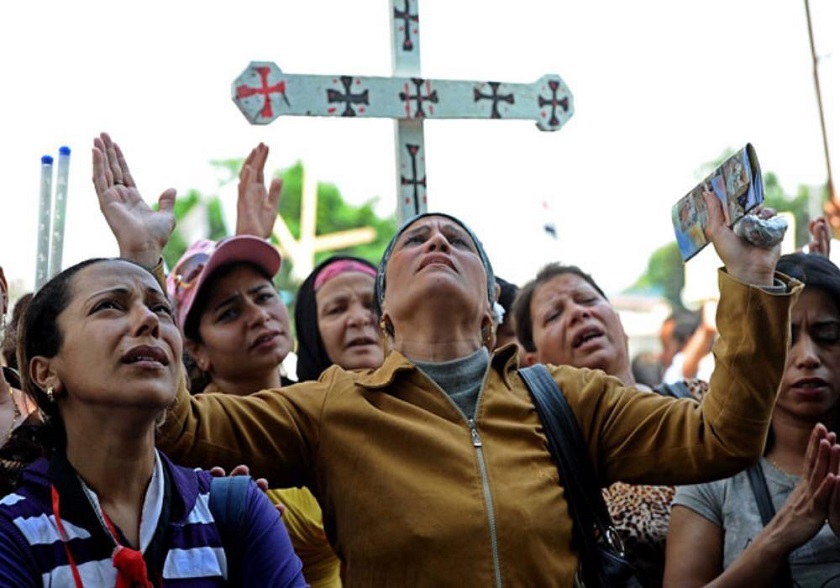

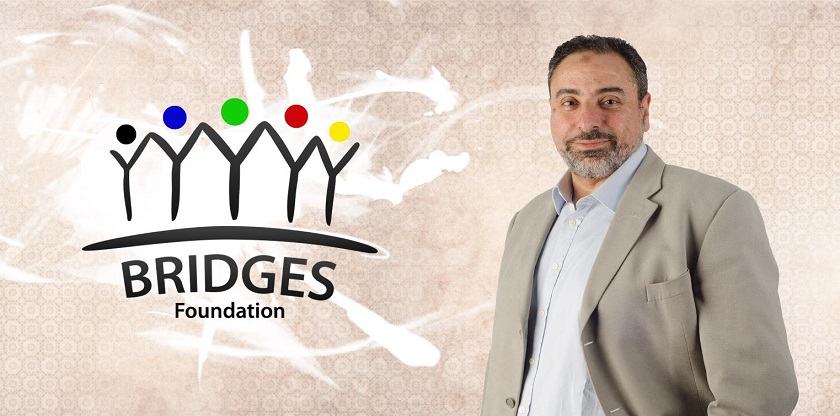


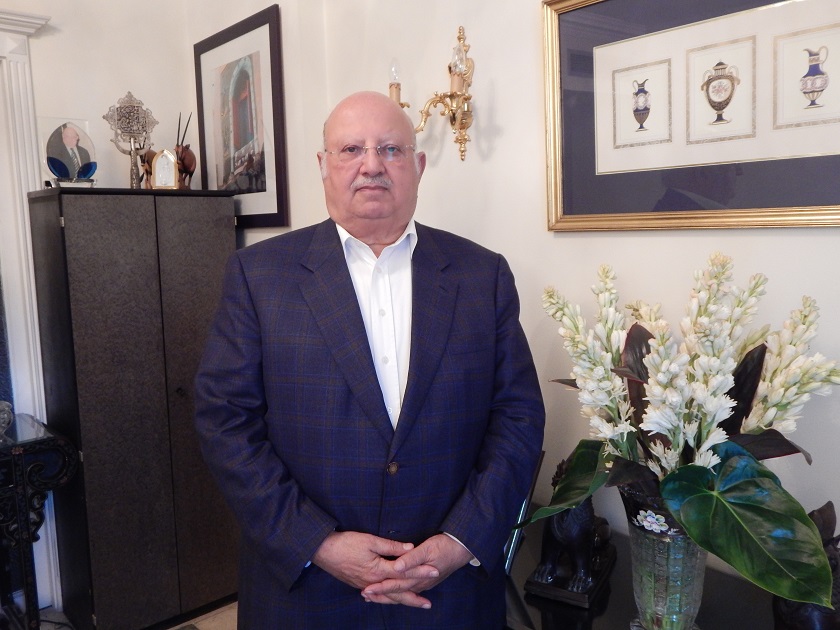


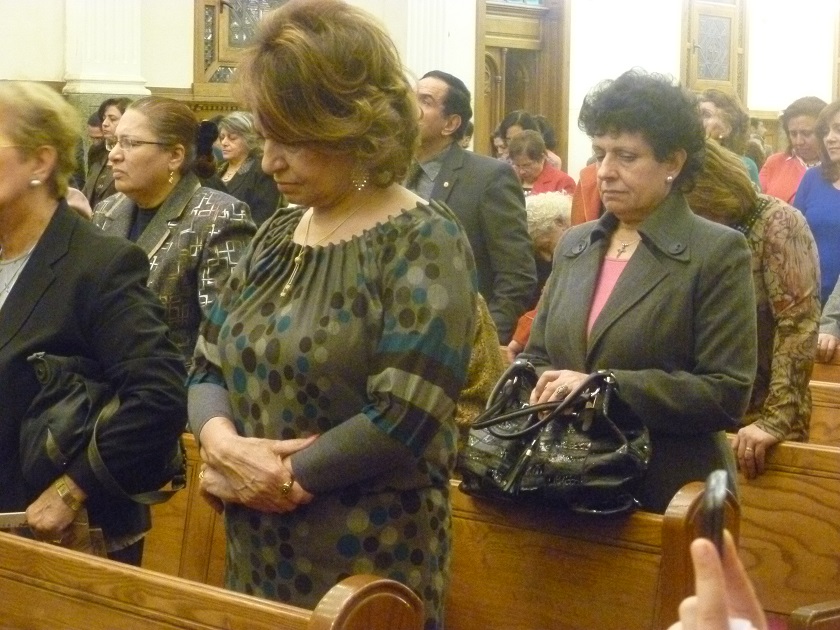
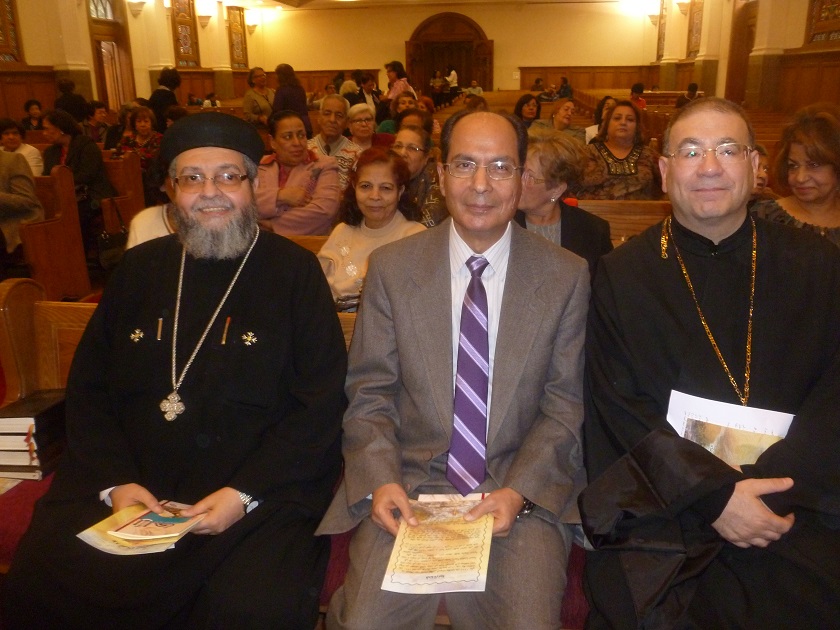
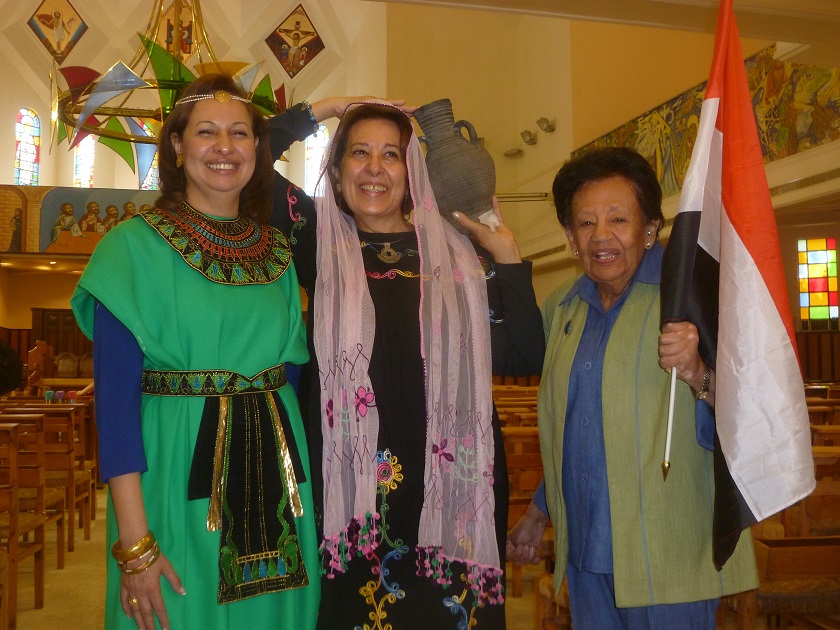


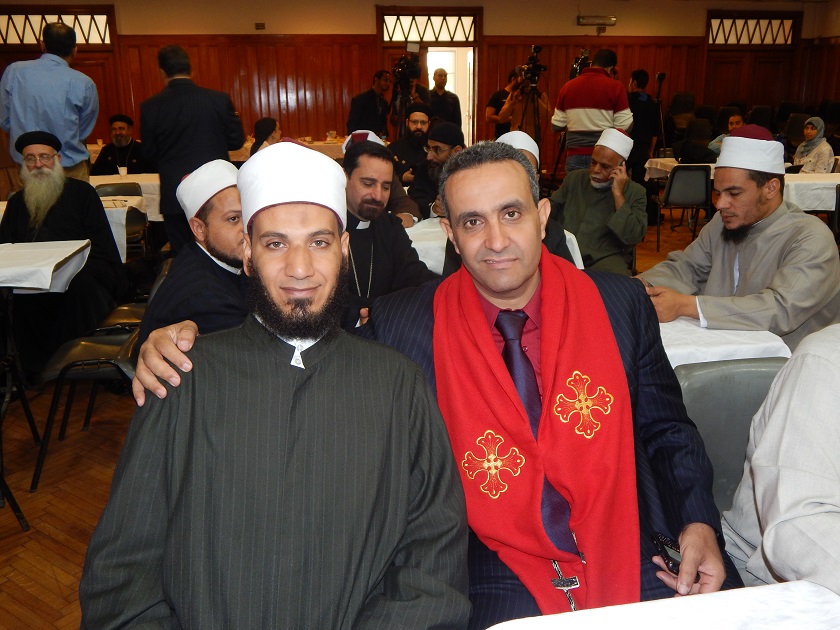
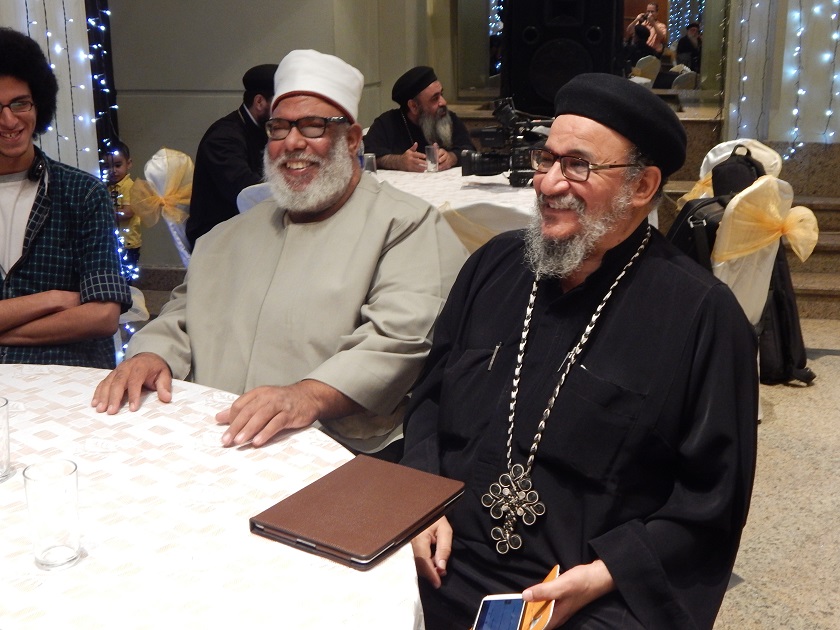
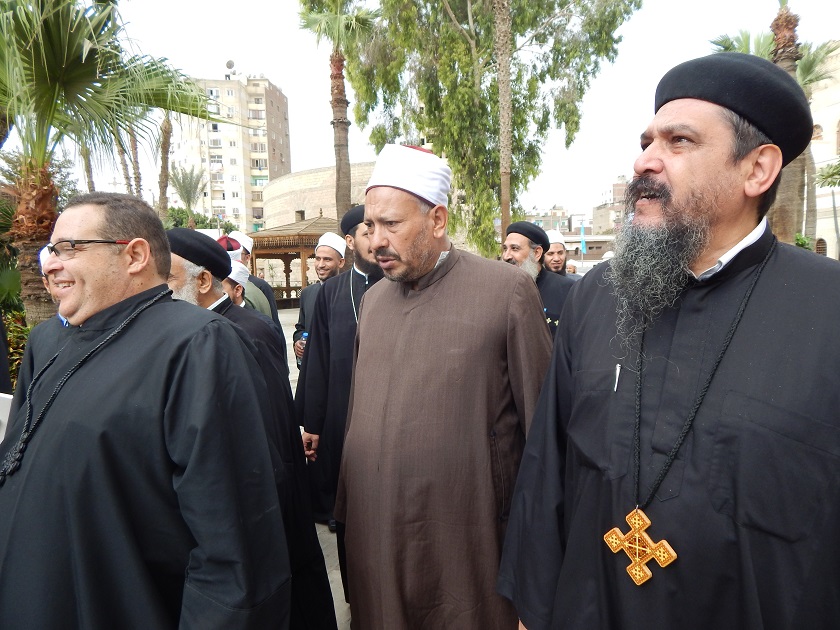

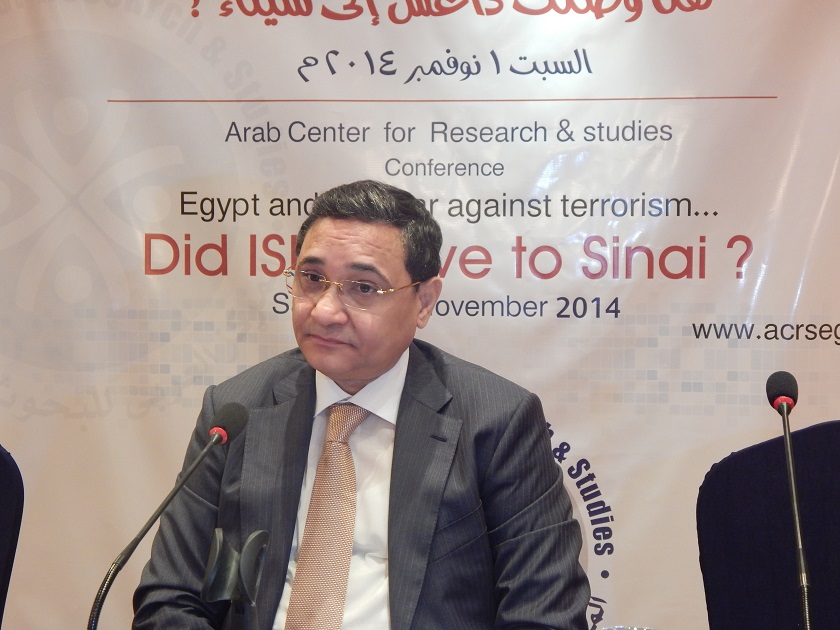
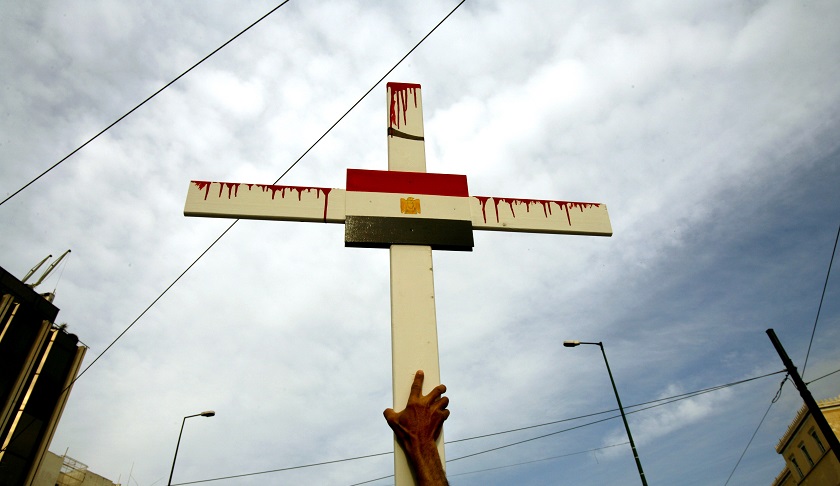
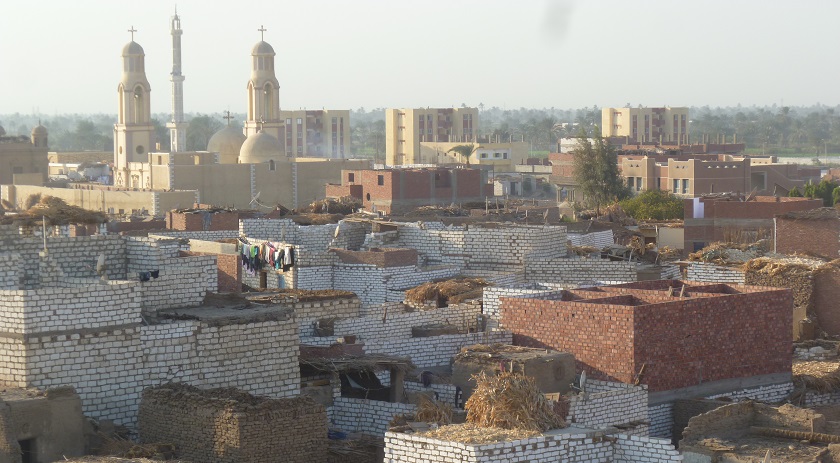

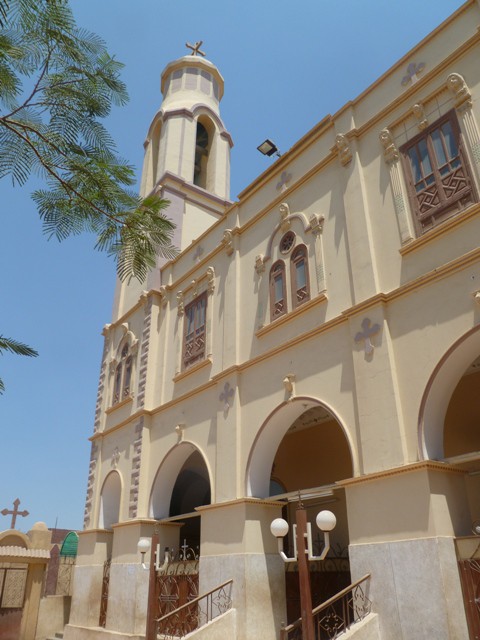


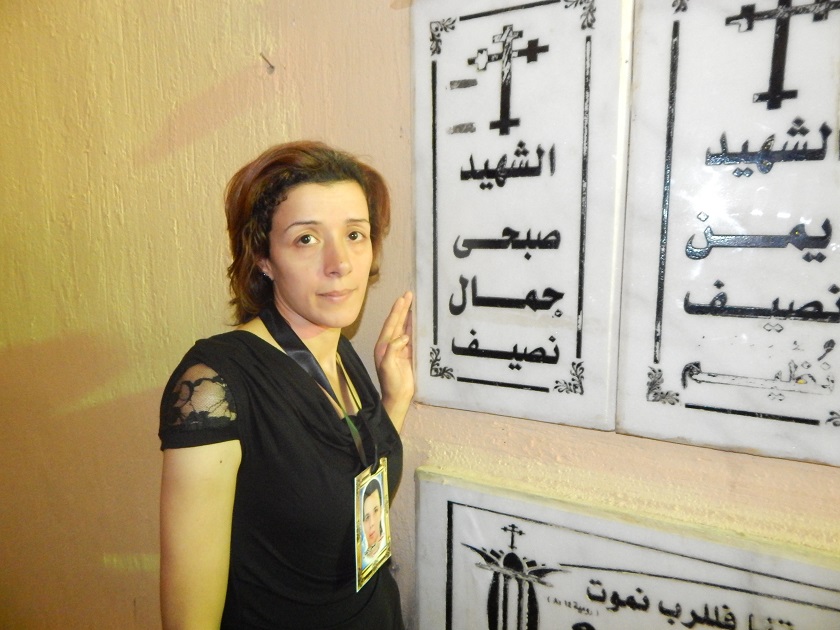
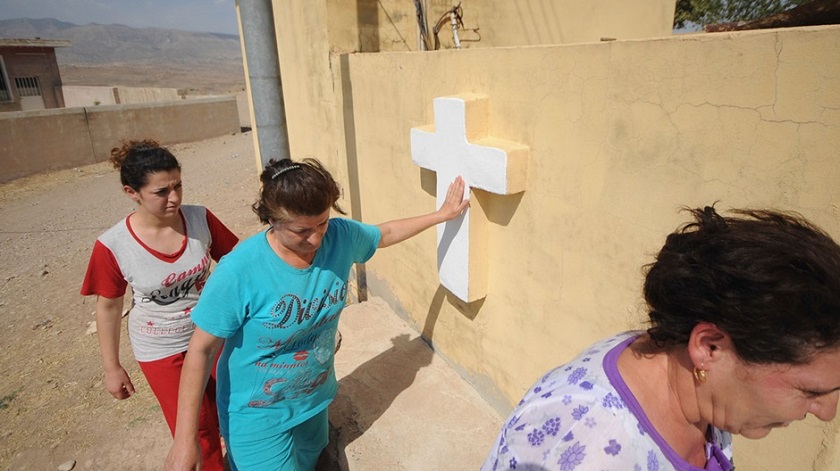


 Jayson Casper