Categories
Lapido Media Middle East Published Articles

The Russian Airline Disaster and Islamic State in Egypt

Abu Osama al-Masry
Abu Osama al-Masry, blurred in a Wilayat Sinai propaganda video; from SITE Intel Group

Who downed Russian airline flight 9286 as it left tourist resort Sharm el-Sheikh in October, killing all 224 on board?

Russian officials have confirmed a bomb brought down the plane, while Whitehall has labelled shadowy leader of the new ISIS affiliate Wilayat Sinai – Abu Osama al-Masry – ‘a person of interest’ in on-going investigations.  Egypt has yet to release details from their investigation.

‘Foreign tourists, workers, and troops in Egypt are at greater risk than ever’, wrote Zach Gold in Egypt Source.

‘Whether [WS] was responsible or made an opportunistic claim, the group’s willingness to even rhetorically target foreign interests in Egypt is another dangerous marker in a pattern of threats’, he added.

A former Azhar student and clothing importer Abu Osama al-Masry claimed responsibility on behalf of Wilayat Sinai. ‘They were shocked by a people who sought the hereafter, loved death, and had a thirst for blood’, he said.

‘We will inherit your soil, homes, wealth, and capture your women! This is Allah’s promise’.

Jurisprudence

‘Eloquent in quoting the Qur’an’: Abu Osama al-Masry, blurred in propaganda video. Photo: SITE Intel Group

Al-Masry, a nom-de-guerre indicating he is Egyptian, is said to have been born in northern Sinai but grew up in Sharqiya in the eastern Nile Delta.

The 42-year-old former student at the Muslim world’s most prestigious seat of learning, al-Azhar in Cairo, al-Masry is said to be ‘well versed in Islamic jurisprudence’ and ‘eloquent in quoting the Quran’.

Wilayat Sinai, meaning ‘the province of Sinai’, pledged allegiance to the Islamic State on 10 November, 2014.

It was previously known as Ansar Beit al-Maqdis (ABM), translated roughly as ‘Supporters of Jerusalem’ – implying the same apocalyptic zeal as IS.

Lapido Media nailed this affiliation a year ago – and the fact of the reluctance of the West to believe it amid the complexity of Egyptian culture and the prevalence of ‘conspiracy theories’.

On 5 November 2014, we wrote:  ‘Ali expects the “Supporters of Jerusalem” – a home-grown terrorist outfit operating out of Sinai – to soon announce their allegiance to ISIS. Abu Hamza al-Muhajir, he said, was an associate of Abu Musad al-Zarqawi in the Islamic State of Iraq and believed to be killed by US forces in 2010.

‘But some evidence suggests he is still alive and operating out of the Sinai with the Supporters of Jerusalem,’ Ali said.

Shifting

If the Russian airline attack is confirmed, it will not have been the first time Wilayat Sinai has targeted foreigners.

Strategy, however, is shifting from attacking tourism in Egypt as part of an economic war, to attacking tourists in retaliation for their nation’s policies.

In February 2014 the group killed two South Koreans and an Egyptian driver in a bus traveling from St Catherine’s Monastery in the Sinai.

They also claimed responsibility for the hideous executions of American oil worker William Henderson in August 2014, and the Croatian Tomislav Salopek in August 2015.

Wilayat Sinai’s fighting force is estimated between a low of one to two thousand militants, and as high as five to twelve thousand.

The sparse population of North Sinai is approximately 435,000, or forty per square mile.

Unlike the Islamic State, WS’s composition is mostly local, consisting of veteran jihadists, disaffected Bedouin, and disillusioned youth. Some foreign fighters come from Palestine, Saudi Arabia, and Syria, and WS have issued a call for more.

Egypt has accused Turkey of providing support for Wilayat Sinai, posting names and pictures of alleged operatives they have captured.

Wilayat Sinai also benefits from members who previously served in the Egyptian military, before defecting or being expelled.

Walid Badr, a former major in the army, was the suicide bomber in the September 2013 assassination attempt on the interior minister. One month later former officers Emad Abdel Halim and Hisham Ashmawi led an assault on a checkpoint in Sinai killing 31 people.

History

WS, under its original guise of Ansar Beit al-Maqdis was formed sometime in 2011 in response to the Egyptian revolution of 25 January.

Egyptian security says ABM breathed new life into existing bands of militants such as al-Tawhid wa al-Jihad, which had conducted operations against tourism hotels in Sinai in 2004, 2005, and 2006.

After formally merging, ABM originally targeted Israel, launching a few cross-border attacks and several acts of sabotage against the Egypt-Israeli gas pipeline.

President Mohamed Morsi authorised military action against ABM after it killed 16 border guards in August 2012. But he is also understood to have preferred negotiation and tried to limit their influence through dialogue with other Sinai parties.

After Morsi’s removal from office on 3 July, 2013, ABM shifted focus and deliberately targeted Egyptian security forces.

Abu Osama al-Masry deemed Morsi an apostate and equated democracy with atheism – a typical militant Islamist trope.

But ABM sought to take advantage of the military-versus-Muslim Brotherhood conflict to paint itself as the defender of Muslims.

Al-Qa’eda

A leaked Egyptian security document from February 2015 accused the Muslim Brotherhood of working with Al-Qa’eda to send three thousand fighters to the Sinai.

Morsi, like the transitional military council before him, released jihadis from prison.

But an Egyptian researcher says that while he permitted militants a degree of operation, he did not nurture them as a ‘last resort’ to protect his office.

In addition to the acts of terrorism listed above, ABM has been a leading force in a long list of attacks in Sinai and the Egyptian mainland.

The small Christian population of roughly 650 families in the Sinai have also suffered at their hands. Many have relocated, though local Muslims have promised to protect them.

Wilayat Sinai
Logo of Wilayat Sinai

Imitating

Four hundred attacks killing seven hundred soldiers: Wilayat Sinai. Photo: SITE Intel Group

Targeting Christians is only one of the ways Wilayat Sinai is imitating the Islamic State.

Mixing terror and piety, they have beheaded opponents and moved against drug trafficking. They have appealed to the sympathy of Bedouin tribes and distributed money to those whose homes have been destroyed in the conflict.

But Wilayat Sinai has so far failed to reproduce the primary marker of the Islamic State – territorial acquisition. They hide out in the desert, mix with the people, plant roadside bombs, and adopt guerilla tactics, but have failed to claim and hold land.

It has not been for want of trying.

Wilayat Sinai has led over four hundred attacks on security forces between 2012 and 2015, killing an estimated seven hundred soldiers.

On 1 July, 2015 militants led a full-day assault on the city of Sheikh Zuweid, following multiple coordinated attacks on surrounding checkpoints. The effort failed when the military employed F-16s in the city’s defense.

Reporting on Sinai is difficult as the government has criminalised publication of information that contradicts official statements.

One month ago on 22 October, an army spokesman declared ‘full control’ over the Sinai, but terror attacks continue.

An anonymous officer said failings stemmed from unfamiliar terrain and a scorched-earth policy that alienated the population. There are also conflicting reports as to whether local tribes are joining the fight or just watching idly by.

But an anonymous militant admitted the military have severely restricted their operations, and the closing of tunnels on the Gaza border has dried up the weapon supply.

Europe

Human Rights Watch has criticised the government over the creation of a buffer zone meant to destroy the network of tunnels long exploited by traffickers and terrorists alike. Between July 2013 and August 2015 HRW reported the destruction of at least 3,255 homes and properties.

Israel claims that Hamas is aiding Wilayat Sinai, though leaders deny any connection to this ‘black extremism’.

But on Egypt’s Western border the Islamic State has been more successful in setting up a franchise. They call Libya ‘the strategic gateway’, noting its proximity to Egypt, Tunisia, African nations of the Sahel, and Europe.

In spring 2014 Libyans in Syria returned to Derna near Benghazi and pledged allegiance to the Islamic State. Fledgling states have been created for each of Libya’s three traditional regions: Cyrenaica, Tripoli, and the Fezzan.

This has sparked terrorist activity in Egypt’s Western Desert as well. In July 2014 ABM claimed responsibility for an attack in Farafra that killed 22 soldiers. Last month in pursuit of terrorist targets, the military accidentally killed eight Mexican tourists in the Bahariya oasis.

Splits

The terrorism network in Egypt is fluid. Abu Osama al-Masry indicated his support for the Islamic State as early as 30 June, 2014, praying for them to conquer Baghdad. By September reports of co-operation and training emerged.

But by November the eventual pledge of allegiance was disputed, with veterans said to support Al-Qa’eda, yet with the youth vote winning out.

Since then splinter groups have formed, though there is no evidence of direct conflict. Jihadi Ribat was created in December 2014, eschewing support for Islamic State claims to the caliphate. The aforementioned former military officer Ashmawi split with others in July 2015 to formal-Murabitoon.

Ajnad Misr declared its intention to focus on attacks against security personnel in Cairo, in January 2014. It has been implicated in over 25 attacks, but focuses on Egypt rather than a global cause.

There even appears to be diversity within the Islamic State network. Recent attacks on the Italian Consulate in Cairo and on a security directorate in Shubra el-Kheima were claimed by Islamic State in Egypt, not Wilayat Sinai.

The Egyptian government claims progress in the fight against terrorism, and last week killed Ashraf el-Gharably, reportedly a top commander in Wilayat Sinai. The UK has offered the support of special forces to help kill or capture Abu Osama al-Masry.

The British government declared Wilayat Sinai, then ABM, a terrorist entity in April 2014.

‘Egypt deserves support, not punishment,’ Anglican Bishop of Egypt Mouneer Hanna Anis told Lapido Media, critical of Russian and British decisions to restrict air travel to Egypt estimated to cost the nation nearly £185 million per month.

‘My prayer is to see the international community working together to fight terrorism.’

This article was first published at Lapido Media.

Categories
Arab West Report Middle East Published Articles

In Memoriam: Ezzat al-Salamony

Yesterday I received the unexpected news that Ezzat al-Salamony died … back in August. He was a leader in al-Gama’a al-Islamiya (the Islamic Group), designated a terrorist entity by the United States. Over the past few years I was able to interview him a couple of times.

According to al-Shuruk, Salamony died in the Tora Prison hospital, from an intestinal blockage. He had been jailed as part of the ‘Alliance to Support Legitimacy’ case.

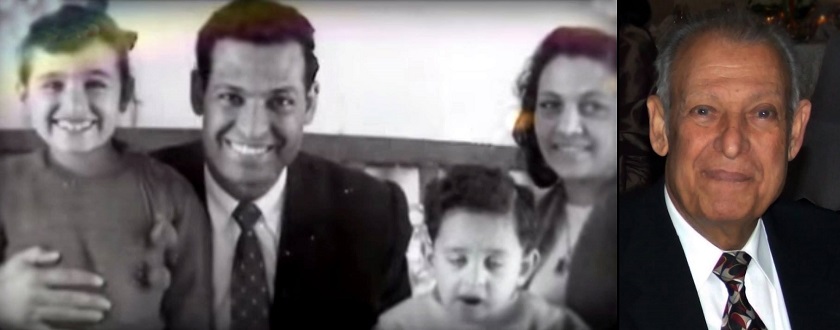
Here is a picture of Salamony demonstrating in support of former President Morsi, proudly wearing a Rabaa sign.

Ezzat al-Salamony Rabaa
(from al-Shuruk)

Originally from Sohag in Upper Egypt, Salamony studied at al-Azhar Univerisity, graduating with a BA in Commerce. He joined the Islamic Group in 1979, served on its Shura Council in Cairo, and preached in mosques throughout the city, unaffiliated with the Ministry of Endowments.

He was married with three daughters. I do not know his age, though his youngest daughter was in college at the time.

As Salamony recounted, his first arrest came at the hand of President Sadat in 1981, lasting for a year and a half. Jailed repeatedly thereafter for short periods of time, he spent fifteen years in prison under President Mubarak, finally released in January 2006.

Salamony stated he was never involved in violence, though he admitted members of the Islamic Group committed ‘mistakes’ throughout this period. But on the whole he defended their record, stating they were much maligned by the regime and that most violence was defensive.

Our conversations ranged over many topics, including the history of the Islamic Group, the practice of hisba (commanding right and forbidding wrong), Islamist figures Morsi released from prison, the Innocence of Muslims film, and the Blind Sheikh, Omar Abdel Rahman.

I always found Salamony to be friendly, engaging, and eager to give a correct impression about Islam and the Islamic Group. Given his appearance and reputation, I was surprised he always arranged our meetings in a popular and upscale Nile River meeting area administered by the Egyptian military. He appeared to be a member, and we drank tea together.

I do not know if he was involved in violence following the fall of Morsi, though he certainly opposed what he considered to be a coup. We lost contact after this period.

But I was somewhat surprised also to find him prior to Morsi’s fall at a Salafi-Jihadi demonstration outside the French Embassy. He took the microphone and shouted:

“We tell these grandchildren of the Crusaders, we are the grandchildren of Saladin.”

“It is not right for the fields of battle to be in our lands, we must carry the battle into theirs.”

“We have the duty of jihad.”

Among the many chants that day was this, adapting the January 25 revolutionary cry: Al-Shaab, Ureed, Khilafa min Jadeed

“The people want a new caliphate.”

It was difficult to reconcile the peaceful, friendly character I encountered in the cafe with this one angrily shouting before a crowd. I understood that whatever kind of preacher he was, whether he employed violence or not, both then and now he was certainly a threat to the state.

Even so, his explanations of jihad and hisba were always nuanced, though his commitment to the eventual worldwide application of sharia was clear. I cannot imagine he would be in support of the current claimant to the caliphate, but I cannot be sure.

And now he is dead, so I cannot know.

The three years from January 25 to the last throes of popular pro-Rabaa resistance against President Sisi were a very strange time in Egypt. All constraints were thrown off, and every activist element of society took full advantage of the freedom available.

So it is hard to look back and evaluate Ezzat al-Salamony. Was he a long misunderstood Islamist finally anticipating success? Was he a conman deceiving a naive American into sympathy?

God – and likely the Egyptian intelligence – only knows, and now he will judge. May Ezzat al-Salamony rest in peace.

Ezzat Salamony
Ezzat al-Salamony

This article was originally published at Arab West Report.

Categories
Lapido Media Middle East Published Articles

First Peace Studies Programme in the Arab World Gets Off to Tentative Start

A man whose young brother has just been slain by an Israeli soldier is restrained by friends. Photo: ‘William’, Peace Parcels

The Israeli government appears to be shunning a Palestinian peace studies course – even as a third intifada escalates.

The Arab world’s first Master’s degree in Peace Studies – developed by a Bethlehem college – is getting the brush-off from a government whose commitment to peace is already being questioned from within the Jewish world.*

Bethlehem Bible College (BBC) aims to train Muslim, Christian, and Jewish peacemakers to build bridges instead of walls.

But 24-year-old ‘William’, a Canadian, and one of five international students in the inaugural class, cannot obtain a student visa.

Instead he must come and go every three months as a tourist. Afraid of deportation, he shields his identity online and makes no mention of his studies to the authorities.

‘My fear is maybe they would become aware of what I’m doing and reject any subsequent tourist visas,’ William, using a pseudonym, told Lapido.

‘It has been a step of faith, but I figured I would just take the risk and do it.’

BBC was established in 1979 to offer theological education to Palestinian Christian leaders. William is motivated to help Christians in the West shift away from theological positions that are biased towards Israel.

Accredited by the Palestinian Ministry of Higher Education, BBC has a long history of opposition to the Israeli occupation. It was founded by Bishara Awad, brother of Mubarak Awad, who in 1983 created the Jerusalem-based Palestinian Centre for the Study of Nonviolence.

Often called the Gandhi of Palestine, Awad was deported by Israel in 1988. He returned to teach the first MA module, but like William and the team of international professors, he also had to come as a tourist.

According to the 2012 European Commission report, Higher Education in the Occupied Palestinian Territory, international students are able to enrol in Palestinian universities.

In practice, however, it is ‘very rare’ due to the difficulty of obtaining Israeli permission to enter the country.

Education

William was advised by the BBC not even to try. But this has not stopped him from full immersion in Palestinian society, gaining a first-hand education that peace studies students in other universities can only read about.

On 5 October he witnessed an angry crowd of hundreds passing by campus. They chanted ‘Allahu Akbar’ and threw stones at security after 13-year-old Abdel Rahman Abdullah was shot in the chest by Israeli security.

He describes witnessing the agony of Abdullah’s brother [pictured above in blue hat]. ‘It was heart wrenching,’ he says.

‘He was weeping and flailing, his anguish was so horrible to see. I’m tearing up just thinking about it right now.’

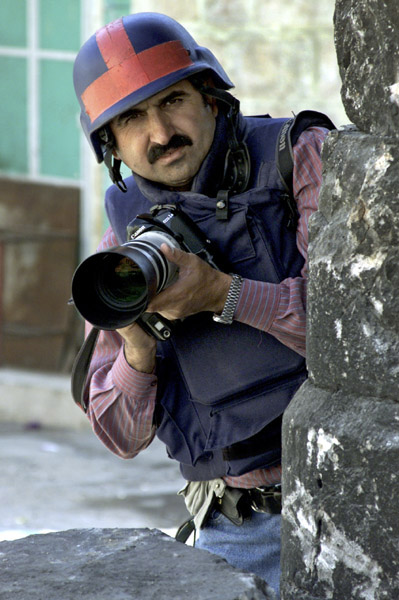
Hashlamoun: ‘I choose nonviolence’. Photo: Watan Centre

For Nayef Hashlamoun, a veteran Muslim activist from Hebron and one of two Muslim students in the programme, witnessing such anguish has become commonplace.

‘My life is for my homeland, but I cannot kill,’ he said. ‘I choose the way of nonviolence, I choose instead to carry a camera.’

Hashlamoun worked for twenty years with Reuters as a photojournalist, and founded the Watan conflict resolution centre in 1985.

He has pursued peace studies at American University and the School for International Training in Vermont, but events in Palestine always brought him back.

Over time he became friends with the Awads, who invited him to BBC. Mubarak Awad went on to found Nonviolence International, which has translated much of the literature on peace studies into Arabic.

‘They are Christians and I am Muslim, but I will be proud to have a degree from BBC as our relations are as brothers,’ he said. ‘And now I can pursue my education at home.’

Nonviolence

The three-semester MA is taught in English and requires 39 credit hours, including a practicum or thesis.

It features distinguished professors from around the world including Nancy Erbe, Fulbright Specialist in Peace and Conflict Resolution, Mohamed Abu Nimer, Director of the Peacebuilding and Development Institute at American University, and Edward Kaufman, formerly of the Harry S. Truman Research Institute for the Advancement of Peace at the Hebrew University.

Jews are welcome at the centre, but none has so far enrolled. Two of the twelve students identify as nonreligious, and four local Palestinians are auditing.

Kuttab: ‘Violence has not promoted our rights’. Photo: World Can’t Wait

Jonathan Kuttab, chairman of the BBC board and a human rights lawyer in Israel and Palestine, hopes officials from Fatah and Hamas will also join.

‘Nonviolence is far more effective than violence, which certainly has not helped us in working for our rights,’ he told Lapido. ‘For me, this is an easy sell.’

In the current context Kuttab is critical of Benjamin Netanyahu for provoking violence from Palestinians. But he also criticises Mahmoud Abbas for policing his own people on Israel’s behalf at the expense of nonviolent resistance.

‘There is a lot of acceptance of nonviolence in the Palestinian community,’ he said, ‘but the Palestinian Authority has been so weak in pursuing our rights that it has given peace a bad name.’

Education is limited in its direct impact, said Kuttab. But he is hopeful that beyond increased international attention in peace studies circles, the programme will deepen local commitment to nonviolence through strong engagement with the academic literature.

‘We have to revive what real peace and real nonviolence mean,’ he said.

‘Bethlehem is the birthplace of the Prince of Peace, where else should we have this programme?’

No spokesman was available from the Israeli government as this story went to press.

*War Against the People: Israel, The Palestinians and Global Pacification by Jeff Halper, published by Pluto Press. 2015.

This article was first published at Lapido Media.

Categories
Americas Published Articles Zwemer

Are Muslims Political Pawns?

Ben Carson (via the Chicago Tribune)

All press is good press. Perhaps not always true, it is often a maxim of politics. A day after the backlash over his ‘a Muslim should not be president’ comment, Ben Carson announced windfall fundraising of one million dollars.

But perhaps it is also a maxim of religion? With the name of Islam dragged through the mud of Republican politicking and right-wing punditry, the Council for American-Islamic Relations (CAIR) seized the media spotlight and announced a campaign to freely distribute the Quran to citizens and civic leaders alike.

Back in 2001, CAIR chairman Nihad Awad reported that 34,000 Americans converted to Islam after the attacks of September 11.

It is a very natural phenomena. Media loves a negative story, which draws attention to an otherwise obscure issue. People begin to investigate, and discover the issue is not as completely negative as first reported, or stems from an extreme fringe. Then the counter-narrative emerges, in which the issue is hailed as good, or at least complicated. Conflicted over the original outrage, a moderating tone enters the issue into the mainstream.

From here, the politicking – or proselytizing – continues with precious momentum.

If conservative American evangelicals are not already concerned about Ben Carson’s comments, perhaps they should consider another pillar of culture war outrage: gay marriage.

I was raised in the 1980s. My first memory of homosexuals was local news coverage of a gay pride parade in some northeastern city, as transvestites and drag queens shouted at the cameras in an otherworldly display of an underground subculture I could never have imagined. The TV announcer could barely contain his chuckle, if I remember correctly.

Sitcoms and movies were rife with mocking humor. The AIDS scare lent credence to cries of God’s judgment. But over time society discovered the human behind the identity. Media attitudes shifted, both shaping and reflecting public opinion. The louder the protest, the greater the spotlight. Today the Supreme Court declares marriage equality.

Consider the distance traveled in three short decades. Imagine Islam in America three decades to come.

Note that in the examples above no statement is offered on the merit of Carson’s comment nor the appropriateness of gay marriage. There is a place in America for worthy debate on the morality and policy of queer issues. There is a place to discuss the nature of Islam and its compatibility with American values.

At least there should be. The fact this space is shrinking is perhaps commensurate with the retributive empowerment of the previously marginalized. May the conservative American evangelical reflect, and where necessary, repent.

But consider also the sub-Christian flaw in my argument above, quite akin to much popular discourse about Islam. The motivation is fear. Perfect love will not permit this.

Punditry highlights the illiberal character of sharia law and links the savagery of ISIS to the Quran and Islamic history. But it equates this otherwise worthy research with Islam in its entirety. Worse, it suspects imitation within every Muslim. Beware, it cries, lest one day we see Syria in Springfield.

My argument risks being similar. Beware, I cry, lest the crassness of your rhetoric win ground for Islam.

There is a better way. The conservative American evangelical must win ground for Muslims.

Islam is a religion, an idea, a way of life. Let it be praised or criticized according to its merits. But the better way is to do so with respect, humility, and hope. Muslims around the world deserve honest assessment of their faith. Whether of its religious, social, or political aspects, Christians should speak.

But Muslims in America deserve much more from their Christian neighbors. The better way is to bless, rather than demonize. To secure rights, rather than restrict them. To speak up in their defense, rather than rally a political base.

Conservative American evangelicals should be the first to depoliticize this issue entirely.

What this argument lacks is sufficient consideration of the proper place of denunciation. There is truth that is opposed to error. There are valid interests opposed to vile manipulations. There are Muslims in America and the world with political agendas to match any lobby from the right or the left.

There is a place for religion in politics. But great care should be taken against the politicization of religion. America has navigated this minefield for centuries, and Islam provides a particular challenge.

“But no religious test shall ever be required as a qualification to any office or public trust under the United States,” says the constitution. Let American citizens vote as they wish, from any, all, or no religious motivation.

But let American Christians both engage and transcend the politics of the day to embrace a kingdom greater than the republic. Their obligation is to help all participate in both.

This article was first published at the Zwemer Center.

Categories
Christianity Today Middle East Published Articles

Died: Menes Abdul Noor, 85, Former Pastor of Middle East’s Largest Evangelical Church

(from KDEC)
(from KDEC)

From my article on Christianity Today, co-written with Tim Morgan, published September 18:

Menes Abdul Noor, who served as pastor of Kasr el-Dobara Evangelical Church in Cairo, Egypt, for over three decades, died on Monday, September 14, from Parkinson’s disease. He was 85.

Under his leadership, the 8,000-plus Presbyterian congregation became the largest Protestant church in the Middle East.

Abdul Noor authored and translated over 100 books, and taught at the Haggai Institute and Evangelical Theological Seminary in Cairo for more than 25 years. He is survived by his wife, Nadia, his son Farid, and his daughter Violet. He had six grandchildren and four great grandchildren.

His memorial service Wednesday was attended by officials of the Orthodox, Catholic, and Anglican churches, as well as a representative of Al-Azhar, the foremost Muslim institution in the Sunni world. It was also broadcast live on the SAT-7 Arabic satellite television network.

Please click here to read the full article at Christianity Today, including quotes and anecdotes from an unpublished CT interview with Abdul Noor in 2008.

Categories
Lapido Media Middle East Published Articles

Planting a Tree for Peace Means More than ‘Hugs and Kisses’

(from Michel George)

If the Islamic State is uprooting civilization, one response is to plant a tree.

At Palmyra in Syria, religious fanatics took an axe to the witness of generations past.

At Ismailia in Egypt, religious leaders take a shovel to secure a witness for generations future.

And by the banks of the Suez Canal, Egypt’s recently expanded national project, imams and priests both learn and demonstrate a lesson that transcends religion.

‘We want to open their eyes to see how great their country is,’ said Saleem Wassef, ‘not in terms of their Muslim or Christian heritage, but for all of us as citizens.’

Wassef is the coordinator of the ‘Imam-Priest Exchange’, a three year project run by the Egyptian Family House. Each year 35 pairs of Muslim and Christian leaders are brought together in friendship, trained to cooperate in practical expressions of national unity.

The ‘Exchange’ is supported strongly by Bishop Mouneer of the Anglican Church. Supervised by the head of the Islamic Research Council, Sheikh Muhi al-Din al-Afifi, and a leading figure in the Orthodox Church, Fr. Butros Bastorous, it urges participants to dialogue.

The Family House was created in partnership by the Azhar and Egypt’s Christian denominations shortly after the 2011 revolution, in an effort to preserve good religious relations.

Despite much trauma locally, as the whole region exploded in religious violence, Egypt stayed relatively stable.

Last month, to great celebration, Egypt opened a new waterway in the Suez Canal to permit two-way traffic, decreasing travel time and potentially doubling revenue. Funded entirely by the local investments of businessmen and farmers, Muslims and Christians, it was a moment of pride after four trying years.

(from Michel George)

 Consecrate

On 1 September the Imam-Priest Exchange followed behind to consecrate the effort.

At the oldest church in Ismailia the imams planted three olive trees. Then at the Young Men’s Muslim Association, priests did the same.

‘It is necessary to bring our people together,’ said Wassef. ‘Planting a tree means love and prosperity, and is sign for the future that you are working for the coming generations.’

In a previous generation under then-President Mubarak, Egypt would often make a great show of national unity. Religious leaders would come together at major events and exchange what became locally known as ‘hugs and kisses’.

But many felt they were only patching over religious tensions. ‘Hugs and kisses’ would often follow an episode of violence.

So the Family House mandate is to diffuse tension and preempt violence in practical projects of great symbolism. Branches have been created in Alexandria, Asyut, and other major cities throughout the country. One of the most active is in Ismailia.

Sheikh Abdel Rahman (R) and Fr. Suriyal

‘The Grand Imam of al-Azhar [Ahmed al-Tayyib] wants us to move from closed meetings out to the streets and the people, walking among them,’ said Sheikh Abdel Rahman Mahmoud, a leading figure in the local branch.

‘When they see so many imams and priests walking together they are amazed; they have not seen this in Egypt or elsewhere.’

Rehabilitation

Hundreds attended their public lecture. Dozens came up to them on the street, took pictures, and asked how they could participate.

Mahmoud and Fr. Surial Aziz coordinate with other imams and priests to visit up to four local schools a week, demonstrating religious unity. They are even working to open sub-branches in two of Ismailia’s larger neighborhoods.

Ismailia is a success story of the Family House vision, but for Wassef in the Imam-Priest Exchange, the visit is only one step of the process. The next day he took them to a drug rehabilitation center.

A patient gives his testimony of recovery. The director lectured on the spiritual role in healing. Wassef wants each participant to return home, find his religious opposite, and together meet the needs of their shared community.

And the Suez Canal is a reminder.

‘If imams and priests visit our national projects it will inspire their role in society as religious leaders in promoting citizenship,’ Wassef said.

‘They go back to their cities and villages and tell the story of pride in their country. Egypt is serving not only its own people, but the whole world.’

If religious unity holds in Egypt as Iraq and Syria burn, they just might.

This article was first published at Lapido Media.

Categories
Atlantic Council Middle East Published Articles

Where the Church Ends and the Citizen Begins

(from Coptic Media Center)

This article was first published at Egypt Source.

Accusations against the Coptic Orthodox Church are many. It is in bed with the regime. It desires a political role. It monopolizes the Coptic voice, keeping the faithful within its walls. It is not difficult to find evidence that can fit the accusations. But as the church talks to its own people, not only is it aware of these perceptions, it is actively working to dispel them.

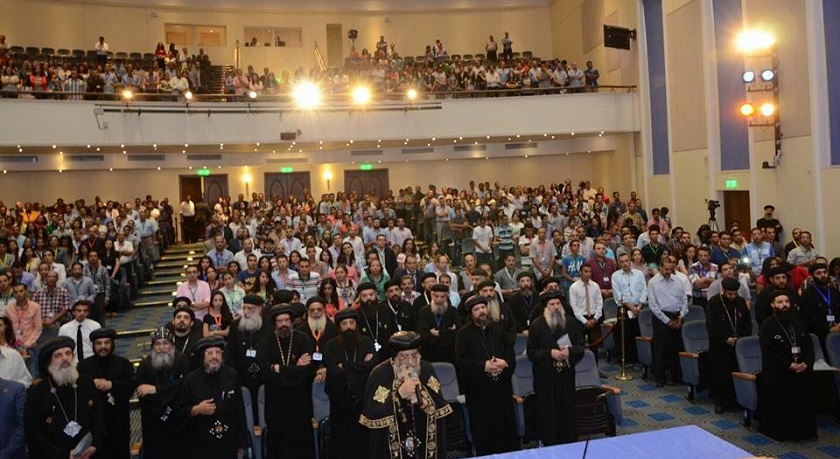
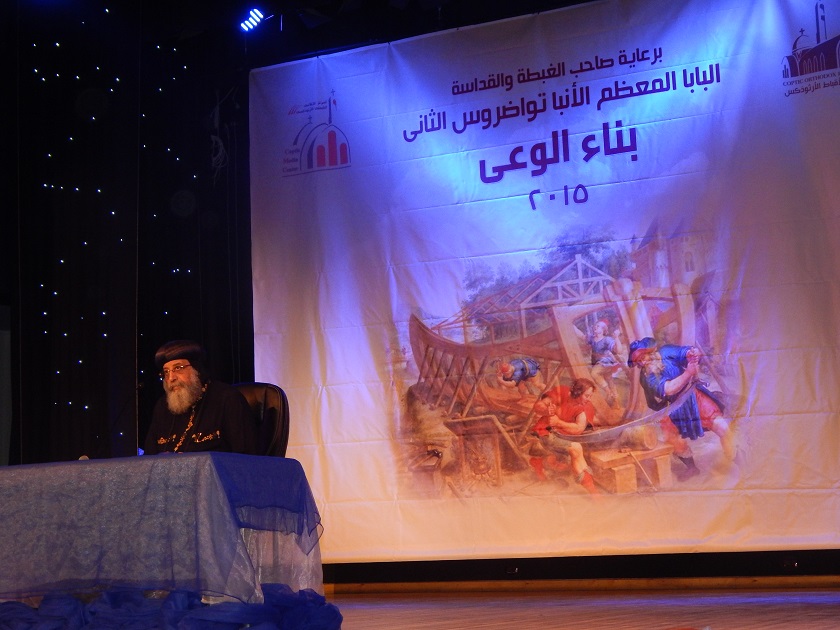
“The church is a pure spiritual institution,” Pope Tawadros said to the gathered crowd of 700 youth, emphasizing also a societal role. “It is the national church of Egypt, it is ancient. But we must not be closed upon ourselves.” Tawadros was speaking at a conference entitled “Building Consciousness,” organized by the Coptic Media Center (CMC), the media arm of the church. Hosted in Cairo, it followed two gatherings in Upper Egypt, with an upcoming meeting in Alexandria and the Delta. Participants are handpicked as active and influential leaders able to carry the message back to their churches.

Building Consciousness, according to CMC head and church spokesman Fr. Boules Halim, is a multi-year campaign designed to create educated, enlightened Orthodox Christians, able to think for themselves and engage with society. “They should vote and join political parties,” he said. “They should build their society and not be secluded. Connection to [the] church should not encompass their whole life.”

For many Copts this would be a radical departure. During the long era of now-ousted President Hosni Mubarak and the late Pope Shenouda, Egyptian citizens, including Copts, were depoliticized. As the state withdrew from social service provision, the church stepped in to fill the gap for its flock. Spiritual programs also multiplied, but as devotion increased so did the sense of the church as an alternate society, a place safe for Copts away from the trials of the world.

The state presented itself as a bastion of stability and semi-secularism against an Islamist threat. The church received the mantle of Coptic political leadership. The relationship had its ups and downs as it negotiated issues of sectarian violence, family status laws, and Coptic criticism from the diaspora.

The thrust now is to prepare Coptic citizens for leadership, but Building Consciousness is not a new emphasis of the church, according to Halim. It is the renewed application of Christian teaching to replace a reality that was forced upon them. “Society refused us,” he said, citing, for example, discrimination in state youth centers and sport programs. Speaking on the relationship between Mubarak and Shenouda, he said, “This is how the state wanted it, it was the nature of that stage.”

Egypt is now in a new stage, having passed through revolutionary tumult. While a large majority of Copts have strongly endorsed the regime of President Abdel Fattah al-Sisi, Halim is cautious, though encouraged. “Until now we still don’t have a convincing picture of citizenship, but there is hope,” he said. “The early signals say to us, ‘Come and participate,’ and the government is creating a conducive climate.”

Both Tawadros and Halim emphasized that the church will play a national role to encourage electoral participation. Attempting to allay concerns that this initiative opens up the church to similar criticisms made of Egypt’s short-lived Brotherhood government, they say it calls on all citizens to vote for the most qualified candidates and not on the basis of religion. It will use church networks to urge Copts to the polls, but will not endorse candidates, nor filter Coptic politicians through the political parties. This may happen at the local level, Halim conceded, but it is refused. There is no central electoral strategy in the church.

Besides politics, the Coptic citizen should be active also in the development of the country. But this area reveals potential contradictions in the message. The church has an organizing role, said Halim. He envisions a future in which every diocese has both a Coptic hospital and a Coptic school, open to all, without discrimination. As registered private schools, they will follow the national curriculum. The few schools currently operating have only a handful of Muslim students, as Copts have flocked to enroll. But once there is sufficient number, Halim hopes the student body will be distributed equally according to religion.

“If we can have a role in education, it will contribute greatly to better consciousness and open minds,” he said. “When enlightenment reaches the other it is more powerful. It produces coexistence, knowledge, love, and common cause.” During his presentation Tawadros advocated similarly. “We must serve society within the possibilities available,” he said, “completing the government in the provision of services.”

Such plans have provided fodder for Islamist critics accusing the church of proselytizing. While nothing in the conference suggested this aim, it is clear the church preaches a certain conception of society. One of the pillars of Building Consciousness is emphasis on the dual nature of Coptic and Egyptian identity. This, while at peace with Muslims, may be at odds with an Islamist agenda.

Viewed through the lens of the last four years of struggle and polarization, the issues are also quite political. The church insists it is not involved in the micro issues of elections and policies. But its vision is to shape society in the acceptance of macro issues of citizenship and national identity.

Here, the church wants Coptic citizens up to the task, even as it leads the effort. But in their eyes there is little contradiction, as the church with its members is the body of Christ. If it desires Coptic citizens to play an active role in society, it falls upon church leadership to teach them to do so. Where does the church stop, and the Christian begin?

According to Halim, the church as an institution desires strongly to leave these matters aside and return strictly to a spiritual, shepherding role. But too much is at stake in this transitional period. “If one calls for the church to have no role whatsoever, this will be when full citizenship becomes a reality,” he said. “But as long as citizenship is lacking, the country needs us.”

Pope Tawadros Building Consciousness

Categories
Christianity Today Middle East Published Articles

Why Christianity is Surging in the Heart of Islam

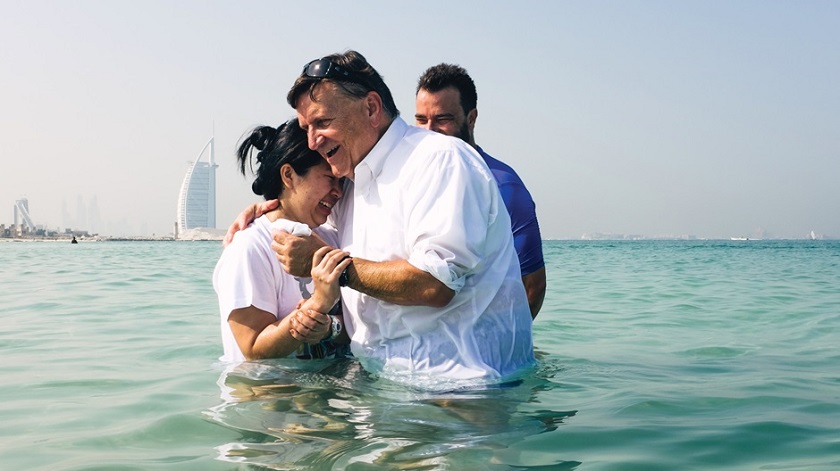
Public baptism service in the Gulf, in front of Dubai's Burj al-Arab. Photo courtesy of Fellowship of the Emirates.
Public baptism service in the Gulf, in front of Dubai’s Burj al-Arab. Photo courtesy of Fellowship of the Emirates.

My article for Christianity Today was published September 11, 2015. Here is an excerpt:

Espada, an architect, is one of the millions of foreign workers transforming the former desert oasis into a global center for business and travel. The UAE’s Dubai is the fifth-fastest-growing city in the world; its population is now more than 80 percent migrant.

The great majority of migrant workers in the region come from India and Southeast Asia, sometimes suffering exploitation in labor camps to send a collective $100 billion back home. As an American, Espada is unusual.

But as a Christian, he is not. Today the Pew Research Center numbers Christians in the Arabian Peninsula at 2.3 million—more Christians than nearly 100 countries can claim. The Gulf Christian Fellowship, an umbrella group, estimates 3.5 million.

These migrants bring the UAE’s Christian population to 13 percent, according to Pew. Among other Gulf states, Bahrain, Kuwait, and Qatar are each about 14 percent Christian, while Oman is about 6 percent. Even Saudi Arabia, home to Islam’s holiest cities (Mecca and Medina), is 4 percent Christian when migrants are counted.

Together, they represent the largest Christian community in the Middle East outside of Egypt. But their experiences vary considerably.

In Bahrain and Kuwait, Muslims can enter church compounds. In Qatar, guards allow only foreigners. Saudi Arabia’s Grand Mufti (the nation’s highest official of religious law) has called for all churches in the peninsula to be destroyed.

Surprising to many observers is how many of these churches there are.

Please click here to read the full article at Christianity Today. Next post I’ll share some photos of church buildings.

Categories
Christianity Today History Published Articles

Before We Conquer, Have We Tried Love and Tears?

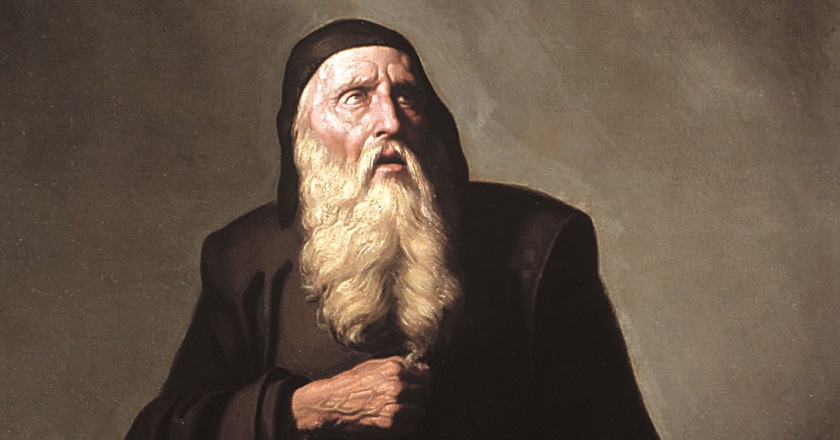
Ramon Llull (image frombalearidesdigital.com)
Ramon Llull (image from balearidesdigital.com)

From my article at The Behemoth on the 13th century Spanish missionary, Ramon Llull. This year marks the 700th anniversary of his death.

Most missionary careers are not launched by a suicide. Neither do most end with deliberate martyrdom. What Ramon Llull did in between rebuked a Christian Europe fighting jihad with its own crusades.

The Mediterranean world in the 13th century witnessed a conflict in transition. The 1212 Battle of Toloso signaled the decisive decline of Muslim civilization in Spain. But in 1291, the crusader city of Acre fell, the last major outpost of Christian power in the Holy Land. Merchants from Genoa and Venice established control of seafaring trade routes. But Arabic philosophy governed the discourse of European intellectual circles.

Born around 1235 in Majorca (a Spanish island near Barcelona his father helped to liberate), Llull was a product of this time. King James I of Aragon granted the family land, and Llull served in the court of his son. A troubadour in the classic sense, he was an accomplished musician and poet, also authoring treatises on horsemanship and warfare. Palma, the family home, was a center of shipbuilding. And Llull was a devotee of courtly love, a palace and literary tradition that germinated in Andalucía.

Here, arresting his licentiousness, God got his attention.

Deep in flirtation with a married woman of the court, Llull’s wooing poem was interrupted by a vision of the crucified Christ. Blood dripping from head and hands, Jesus looked at him reproachfully. Llull immediately retired to his chambers, but was not yet converted. The married father of two tried to resume his poem a week later.

God intervened again, later giving the vision a third time. Now around 30 years old, Llull surrendered to the compassion of Christ, abandoning the king’s court in Aragon.

Back in Majorca, …

The Behemoth is an ad-free, subscription-based sister publication of Christianity Today. The article is behind a paywall, but for those interested a free 30-day trial is available.

Categories
Lapido Media Middle East Published Articles

The Egyptian Street is Still Alive…

Nahda Group
Credit: Kyrellos Atef

Thousands are in jail for breaking the protest law. Revolutionary hope takes a backseat to stability and security.

Yet, despite the crackdown on opposition politics, an unlikely source of protest is taking back the streets.

‘Even now, I am calling for the revolution to continue and the rejection of dictatorial paths,’ Fr William Sidhom told Lapido. ‘But I have no weapons except my words.’

The motivation is liberation theology. The medium is street theatre.

The 68-year-old Jesuit is one of the few Egyptian Christians influenced by the Latin American movement. He has written fourteen books, five on the subject.

In the 1960s and 1970s, activist Catholics pushed the church not just to care for the poor, but to liberate them from political and economic structures that held them in place.

Pope Francis has warmed to this heritage, designating the murdered Salvadorian bishop Oscar Romero a saint. But in Egypt, Sidhom said, the church is afraid.

Fr. William Sidhom
Fr. William Sidhom

‘There is no faith without justice,’ he said, ‘but the understanding in the Arab world is to stay far away from politics or you will go to prison.’

So instead, Sidhom, the self-proclaimed Christian Marxist, has surrounded himself with Muslim activists.

From 2011 onward they were at the forefront of the Egyptian revolution. Youssef Ramez, the youthful Coptic general-coordinator of Sidhom’s Nahda Association, said the NGO was a centre for much of the early artistic graffiti in and around Tahrir.

Nahda is located in the working-class neighborhood of Faggala, only a thirty-minute walk from the iconic square. For the past fourteen years Sidhom has sponsored acting, painting, music and literacy for residents and artisans alike.

In 2005 he partnered with Mostafa Wafi’s ‘Popular Imagination’ street theatre troupe, placing the Muslim leftist and human rights activist in charge of art and cultural activity.

In 2012 they created the Nahda Art School, whose acronym deliberately forms the Arabic word for ‘people’.

Saturday before sunset prayers, the people hit the street.

‘What are their demands?’ asked an intrigued resident playfully as the group of twenty moved from the centre to an open sidewalk in front of the local chemist.

With five Sudanese refugees at the head of the procession, the students chanted an African tune before launching into a fifteen-minute sketch.

Then they marched back to the centre, again in song. Several peered from their balconies. Traffic along the narrow side street came to a halt.

‘This is new,’ laughed a driver as his four-year-old daughter gaped from the passenger seat on her mother’s lap. ‘We haven’t seen this in Egypt before, but it is good.’

Nahda DriverThe Nahda effort to share culture with local residents is rare but not quite unique. ‘Our Street Cinema’, funded partially by the British Council, shows current and vintage films in the streets of Salam district in Cairo.

‘Mahatat for Contemporary Art’ stages opera presentations in residential balconies in the Delta cities of Port Said, Damietta and Mansoura.

But ‘Art is a Square’ grew too popular—and perhaps too provocative—for its own good. Despite receiving on-and-off funding from the Ministry of Culture, security forces shut down its monthly offerings of art and music.

The Nahda sketch had an ‘indirect’ political message, said Italian-trained acting coach Hamdy el-Tounsy.

His students designed content under his supervision, consisting of several short scenes from everyday life. Issues included racism, sexual harassment and drug use. But nestled in was also a reference to an opposition newspaper, doubling as a pun about absent human dignity.

‘There are many messages that can be received,’ said Tounsy, ‘but it is up to each person what impacts him.’

Wafi’s ‘Popular Imagination’ troupe has produced street theatre performances about public space, freedom for women, and emigration. But it was The Colours’ Revolution that carried a direct political message.

‘Dictatorship destroys diversity,’ he told Lapido. But Wafi’s greater concern is ‘daily politics’, the kind that organizes neighborhoods and clears garbage from the streets.

Last year, as Islamist protests were squashed under President Sisi, Colours was performed over 150 times throughout Egypt.

Each performance is cleared first with local neighborhood leaders—café and chemist owners in the most recent example. Should the police show concern they assure all is OK.

Even so, Wafi considered and then declined a revision of Colours. ‘The atmosphere is not right,’ he said. Currently in production is a play about water pollution.

Wafi considers himself a non-practicing Muslim, but is positive about Sidhom’s liberation theology. Copts’ strong attachment to the church, he believes, hurts the concept of citizenship. But Christians in Sidhom’s circles are driven to help the poor and marginalized.

The sponsorship of the church also gives cover to Nahda’s work, he said. Independent activists have much less space to operate.

Catholic Church spokesman Fr. Rafic Greiche said that Egyptian church hierarchy distances itself from liberation theology because of Latin American associations with communism and violence.

Ramez said that apart from Christian activists, almost no Copts have even heard of it.

But for Sidhom, the believer must ‘defend justice, build society, and secure the interests of the poor’. There are many methods, some revolutionary.

His path is development through the sharing of culture.

‘Revolution is not to change ten officers with ten others, but to change society,’ he said. ‘This requires great patience.

‘So rather than people going to the theatre, we take the theatre to the people.’

Nahda Audience

This article was originally published at Lapido Media.

Categories
Africa Christianity Today Published Articles

Does Saying an Islamic Creed Deny Our Christian Faith?

Woman escaping after terrorists targeted Christians at a university in Garissa, Kenya
Woman rescued after terrorists targeted Christians at a university in Garissa, Kenya

This article was published at Christianity Today on August 26.

During the 2013 terror attack at the Westgate Mall in Nairobi, Kenya, al Shabaab gunmen paused for a moment and made an announcement in Swahili: All Muslims could come forward and leave.

Among those trying to escape was Joshua Hakim, who covered up the Christian name on his ID as he showed it to the gunmen.

“They told me to go,” Hakim later told The Guardian. “Then an Indian man came forward, and they said, ‘What is the name of Muhammad’s mother?’ When he couldn’t answer, they just shot him.”

Other terror attacks by al Shabaab, a Somali terrorist group with ties to al Qaeda, have followed a similar pattern. Those who could prove they were Muslim—by reciting a prayer in Arabic or answering questions about Islam—were allowed to go free. Those who couldn’t were killed.

As a result, some Kenyans have begun to share tips online about how to pretend to be Muslim, just in case. This includes learning to recite the shahada—Islam’s main creed—in Arabic.

This pragmatic response to terror attacks is understandable. But is it biblically sound? Kenyan Christian leaders are divided on the issue.

No, says David Oginde, head of Christ is the Answer Ministries, one of Kenya’s largest parachurch organizations with 45,000 members. “A true Christian must be ready to live and to die for the faith,” he said.

But two professors at St. Paul’s University, a conservative Anglican institution in Nairobi, say the answer isn’t that clear-cut. Reciting the shahada doesn’t amount to denying Christ, says Samuel Githinji, a theology lecturer.

The article also included Arab theologians, who mostly responded that pretending to be a Muslim is not acceptable, but forgiveness should be offered to those who succumb. It also touched on similar themes in Christian history, during the Roman era.

Here is the conclusion:

The persecutions of old backfired, bringing many into the Christian fold. It is too early to write of the impact today. But Ajaj is hopeful, and counsels faithfulness when called upon.

“I hope they give a good testimony, and glory to God’s name.”

Of course nothing is certain. Martyrdom may not change a hardhearted terrorist. Pretending may not save your life either.

But for the record, the mother of Muhammad is Aminah bint Wahb.

Please click here to read the full article at Christianity Today.

Categories
Diocese of Egypt (Anglican) Middle East Published Articles

Alexandria School of Theology Confers First MA Degrees

AST Graduation

Ten years after its founding, the Anglican Alexandria School of Theology (AST) celebrated its first graduating class to receive the degree of Masters of Arts in Theology. The four students joined the July 18th commencement exercises with 27 others who received a Bachelors in Theology, plus one who completed a two-year diploma program.

Rev. Samy Fawzy, principal of AST, congratulated the graduates for their efforts over the past four years, despite the difficulties Egypt has experienced. Rev. Atif Mehany, dean of the Evangelical Theological Seminary in Cairo, urged them further in his commencement address to overcome the challenges following the Arab Spring and fulfill their responsibilities to serve both church and society.

Rev. Fawzy conferred the degrees with Bishop Grant LeMarqand, vice-chairman of the board of AST, and Rev. Mouneer Hanna Anis, chairman of the board of AST, bishop of Egypt, North Africa, and the Horn of Africa, and president bishop of Jerusalem and the Middle East. They were joined by Bishop Peter Tasker, representing the archbishop of Sydney and AST partner institution Moore College in Australia.

Class representative Philip Bishay offered thanks to the staff and professors of AST on behalf of a diverse body of many denominations, who through dialogue and unity completed each other, he said. He encouraged all in attendance to let the light of God fill their hearts, which will then shine no matter the darkness around them.

AST MA Graduates

This article was first published at the Anglican Diocese webpage.

Categories
Arab West Report Middle East Published Articles

Family House Committee Work

Family House Committees

The Egyptian Family House is an institution created to preserve and promote religious unity between the nation’s Muslims and Christians. Its mandate includes both advising the government on proper policy and encouraging the grassroots by multiplying branches throughout the country.

I have written previously on its general structure. Recently with Arab West Report I had the opportunity to publish summaries of its committee work, which I will excerpt below. Please click on the link in each section to read the full article.

The Family Culture Committee (from AWR):

But it was the work of the family culture committee in the governorates that was most impressive. Ghālib was meeting with representatives of the family culture committees from the various cities which have created Family House branches.

In only three months, five regional branches had conducted four seminars each. The majority of these were not in the larger population areas, but in the villages, even in open squares. They were giving their reports, telling also of at least two incidents of sectarian conflict in Mallawi and Luxor where committee members were able to recruit Family House affiliated religious leaders to reconcile feuding families. There were also more mundane examples where peace was achieved within single families—parents with children, husband with wife.

The Emergency Committee (from the same article):

It consists of five Muslims, all associated with the Azhar, and five Christians, two from the Orthodox Church and one each from the Anglicans, Catholics, and Protestants. Two of these Christians are retired policemen, able to help facilitate relations with security when trouble arises. Azhar members, meanwhile, ensure religious institution cooperation.

The committee activates when trouble arises, and Jirjis and his team have intervened to quell sectarian conflicts in Aswan, Minya, Mallawi, Deir Mawas, Hurghada, and Jabl al-Tayr. Details of the work can be sensitive and are often to be off the record. But by engaging trusted people the committee is able to research the true report of what took place, from which they can issue recommendations. At times, though, a security solution takes priority.

Sometimes the dispute involves conversion from one religion to another. Other times it is over church building. In all cases the committee goes to the source. Have official conversion papers been issued by the Azhar? Has security given written license to the church? Media reporting can often give conflicting opinions, but engaged with officials at the highest levels, the committee is usually able to make a sound determination.

The Media Committee (from AWR):

These values are promoted by the Family House in a general way, and having priests and sheikhs work together is important. But what relation does this have with the media committee?

Our committee must shine the light on this work. If we do this, it will become a pattern for other media to follow. What we are waiting for is it to be stimulated.

What about the website? It is laid out well but seems underdeveloped.

It is still experimental. We want to use it to cover events, but actual accomplishments are not yet that many. The website is somewhat empty, and I have an appointment with Dr. Matanī to select two from our media center [of the church] to work on it. But centralized organizations can be slow.

In our media center we have press releases and our website is active because it has someone dedicated to it. The Family House media committee could stand also to be decentralized a bit. But first we must meet, then take a decision, and so on.

Dr. Matanī and I must press on the other committees to be active and give us the news of what they do.

What will you do when you begin to receive reports?

My idea is that in highlighting the positive values we want society to see, we do more than just put it on the website. We should make something professional and then give it directly to media outlets and satellite channels. But it is clear the financial resources are not yet allocated sufficiently for something like this.

The Education Committee (from AWR)

The idea of the Family House is that we are a family, all together. But how can we live together when each one is raised in an incorrect way? We have witnessed this, and in the education committee we are trying to do something about it.

The first problem is that there are no teachers of religious education, whether Muslim or Christian. The teacher of Islamic religion is often the Arabic teacher. And the teacher of Christian religion, almost anyone can become a school employee no matter their weak qualifications.

So the problem is that they teach religion, but not religious education?

As you said, the subject is religious education, and it should be education, but most of it is just religion. There is no prepared cadre of religious education teachers in the ministry. We are asking the Ministry of Education to create such teachers, both Muslim and Christian.

And the religious classes should remain separate?

Yes, even though there is a wide shared space. I was responsible for the national standards in education committee for the cabinet as concerns religious education, and we sat with the committee in the ministry responsible for Islamic education. We discussed concentrating on our shared items and put aside areas of difference like doctrine. But concerning things like relationships, civilization, and contemporary issues like cloning, for example, let us find the common ground in the two religions.

Values are also shared around the world, even in places that do not have religion. Security, cleanliness, order – these are represented in verses from both the Quran and the Bible.

So do you want to substitute doctrine and in its place put values within the religious education curriculum?

Religious education should teach the spirit of Islam to Muslims and the spirit of Christianity to Christians. The goal is to give the right practices in life. How do you interact with the other? How do you interact with someone who is different than you? This is the educational component we are looking for, from within religion.

We are a religious country, whether Muslims or Christians, and it was this way from the age of the Pharaohs. We live, we eat, we die, and we will be held accountable. This is a constitutional part of the Egyptian character, for us to fear God. Even the thief, before he steals, will say, ‘God protect me.’ From deep within us, religion is important.

So we cannot remove the essence of religion from the schools. Not everyone will go to mosque or the church. We have to take the opportunity in schools to teach it. But the new idea, and it has actually happened, is to have a new book simply entitled, ‘Values’. It takes the common values from Islam and Christianity and teaches them to everyone, in the same classroom.

So this is a new book for a new course? Where will it be taught?

It is a course titled ‘Values’ for all class levels. It will not be tested, but will be taught during activities, such as when the school takes a special excursion to camp, or have a seminar, for example. We have prepared it for the elementary, and will complete it for the other levels. It has been approved by the pope, the grand sheikh of the Azhar, and the minister of education, who have all written introductions. I believe it will be used starting next year.

This, then, will be offered alongside the regular religious education classes?

The regular religious education books will continue to be used, but we are taking these books – along with the Arabic and social studies books – and will try to remove those elements which injure or harm the religious other.

In the days when Fathī Sarūr was the minister of education, there was an elementary book issued and its first lesson was, ‘I am a Muslim’. So what of the Christian student? The minister became aware and had it removed, but things of this manner remain. Things that call Copts ‘infidels’, for example.

This exists in the curriculum?

It was. But this is present in verses of the Qur’an. So if it is included for memorization in the Arabic class, the Coptic student will be harmed. Our committee is taking all the curriculum books to study them, but the ministry has also begun to study this to make sure they are removed. Last year we witnessed this, but we are continuing our review.

As a committee we can only issue recommendations, but there is a response from the ministry. There is a very good relationship between us.

Please click on the links above for the full articles, at Arab West Report.

Categories
Lapido Media Published Articles Religious Freedom

The Surge in Concern for International Religious Freedom

Lord Alton: speaking up. Photo: Lord Alton

THE social contract . . . limits on power . . . liberty of conscience . . . doctrine of toleration . . . human rights . . . Each is under attack around the world and Lord David Alton wants the government to do something about it.

The Independent Crossbench Peer has tabled a debate in the House of Lords this Thursday (16 July) to focus on the issue that underpins them all: religious freedom.

Alton has framed the debate to focus on the ‘clear links’ between freedom of conscience and both the prosperity of a nation and the litany of other rights its citizens enjoy.

It will also discuss ‘greater political and diplomatic priority’ in support of Article 18 of the UN’s Universal Declaration of Human Rights, guaranteeing freedom of thought and religion.

One debate participant is Lord Jonathan Sacks, former UK Chief Rabbi. Addressing a UK-Israel policy conference in late June he noted that ‘wars are won by weapons, but peace is won by ideas.’

And each of the above principles which shape the modern world, he said, ‘began life as religious ideas.’

Within the UK the debate over secularism may question the value of this assertion. But it is undeniable that international religious freedom has received greater attention across the political and social spectrum.

Rhetoric

Richard Honess is a board member of Atheists Alliance International and the international liaison officer for Atheism UK. Dr David Landrum is the director of advocacy for the Evangelical Alliance.

Unlikely bed-fellows, both have spoken forcefully in support of religious minorities around the world.

‘The right to religious freedom is essential,’ Honess told Lapido. ‘All we ask is in return that atheists also have that same right, the right not to believe.’

Honess finds the UK guilty of privileging Christianity and believes the foundation of freedoms to be personal liberty under the law—not faith. He looks at Africa and the Islamic world and finds witch hunts against homosexuals and the lashing of dissidents in the name of religion.

‘The Atheist Alliance International will continue to lobby the EU and the UN,’ he said, ‘but this has to stop and I fear that we are long way from that.’

Landrum, on the other hand, released a report to Parliament detailing how UK Christians’ freedoms are ‘restricted’. But he sees religious liberty as receiving a far higher profile than it used to, driven by horrors witnessed in the Middle East.

‘We need to educate society about the value of religious freedom for all freedoms,’ he told Lapido, ‘and keep our politicians focused on persecuted minorities abroad.’

A growing and influential segment of these politicians sees this as their key mission. The All Party Parliamentary Group for International Freedom of Religion or Belief was formed in 2012, and is co-chaired by Baroness Elizabeth Berridge.

In addition to a host of Christian organisations, it is supported also by the British Humanist Association and Sikh, Bahai, and Ahmadiya Muslim groups.

‘The level of awareness and involvement among MPs on issues of international freedom of religion was higher in the last parliament than at any point in the past twenty years, and there is every evidence that this is just as true now,’ said Stephen Rand, advocacy consultant for Open Doors and web editor for the APPG.

The election manifestos of the Conservative, Labour, Liberal Democrat, DUP, and Green parties all included language supporting religious freedom abroad.

‘But it is too early in the life of this government to judge whether the rhetoric will become reality,’ Rand added.

Safeguarding rights: Baroness Berridge and Bishop Angaelos. Photo: Brian Pellot/RNS

One sign of the rhetoric is the recent honour given to Coptic Orthodox Bishop Angaelos, appointed Officer of the Order of the British Empire by the Queen for his services to international religious freedom.

‘Greater acknowledgment of this issue,’ Angaelos told Lapido, ‘is fitting within the UK’s understanding of what it means to safeguard human rights.’

It was ‘imperative’, he added, for both individuals and nations to protect them.

Reality

There are signs the UK government is getting the message.

According to the Pew Research Center, 76 per cent of the world’s population live in countries with high or very high restrictions on religion.

The 2011 Foreign and Commonwealth Office Report on Human Rights and Democracy found that religious freedom was ‘crucial to ensuring conflict prevention and post-conflict peacebuilding.’ It has since been updated to include ‘countries of particular concern’, numbering 27 in the most recent edition.

Put negatively, the June 2015 volume of the Harvard International Law Journal noted ‘nations that criminalise blasphemy tend to foster an environment where terrorism is more prevalent, legitimised, and insidious.’

The FCO report insists it is ‘important’ to secure religious freedom as part of the government’s ‘wider security agenda’.

The report was quoted in ‘Article 18: An Orphaned Right’, prepared by the APPG in 2013. It will form the basis of the coming House of Lords debate.

It also contains ten recommendations to the government on how to ‘mainstream’ a religious freedom approach into foreign policy.

One year later Baroness Warsi chaired the first meeting for the Foreign OfficeAdvisory Group on Freedom of Religion or Belief, fulfilling recommendation three.

An additional three have been positively acted upon, with evidence suggesting all have been considered.

But is advice enough? Do reports translate into policy?

Lord Alton continues to push the debate. His own view is clear: ‘Countries have to make the cause of those who suffer for their religion or belief the great cause of our times,’ he wrote in GIS.

‘Christians, Jews and Muslims privileged to live in free societies have to challenge cold indifference and speak up and defend humanity.’

This article was first published at Lapido Media.
Categories
Lapido Media Middle East Published Articles

The Faith of Egypt’s Judges

Maged: ‘A holy mission’. Photo: Catharine Skipp/University of Miami School of Law

This article was first published at Lapido Media.

Multiple assassinations and repeated threats fail to make Egypt’s judges buckle.

The hammer of terrorism meets the rock of faith, with Muslim and Christian alike proclaiming a reality of inner peace.

‘What is the worst that can happen?’ Judge Adel Maged, vice-president of the Court of Cassation, the highest judicial court in Egypt, asks. ‘If they kill us, we become martyrs in our holy mission to dispense justice.’

Western media is full of explosive images of ISIS and others seeking death for the sake of Islam. Maged calls it ‘distorted’, seeking political gain.

Quietly, Egypt’s judges paint a different picture as the fight comes to them.

Bombs have been planted outside the homes of several. In mid-May bullets riddled the car of three judges travelling to their courthouse in the Sinai.

Six weeks later the Islamic State published agonising video of the atrocity. Hours afterwards a remotely detonated bomb killed Egypt’s public prosecutor, Hisham Barakat, on his way to work.

No one has yet claimed responsibility for the outrage on 29 June, and investigations are ongoing.

‘It is wrong for the tyrants to jail our brothers,’ Islamic State’s affiliate in Sinai said in a statement, referring to the judges in an audio message translated by Reuters one month earlier. ‘Poison their food . . . surveil them at home and in the street . . . destroy their homes with explosives if you can.’

But it is not just hardline extremists threatening judges. Lapido Media previously detailed Muslim Brotherhood endorsement of a document calling for ‘retribution’.

At issue is the death sentence issued to former president Mohamed Morsi and several hundred of his supporters. Thousands of others languish in prison.

Duty

The 52-year-old Maged thinks it is ‘ironic’ that such groups, like himself, see death as martyrdom. But while God will judge between them, he says, it will not deter him from his religious duty with the law.

‘The Quran says, “Do not let the hatred of a people prevent you from being just,”’ said Maged, a founding member of the research group Islam, Law and Modernity at Durham University, UK, where he is an honorary professor.

‘These threats will never stop us from treating all parties fairly and impartially, regardless of their social, political, or religious affiliation.’

Despite the threats against the judiciary, Maged’s daughter is following in his footsteps, studying law in Cairo. His eight-year-old son is undergoing British schooling. His family is nervous, and his wife is praying for the circles of violence to cease in all Arab countries.

Those under the direct target of terrorists should be given more security, Maged said. But the killing of random judges in the Sinai show that all are vulnerable.

But though he has taken ‘extra precautions’ at home in his upscale suburb in Cairo, Maged is undaunted. ‘We are used to working with all sorts of criminals,’ he said. ‘These incidents will never make us afraid, as God is our protector.’

Ramzy: ‘Everything is in God’s hands’. Photo: Ahram.org.eg

Meanwhile, on his way to work Judge Amir Ramzy lazily gazes at the water buffalo browsing in green fields alongside the agricultural canals.

It is a strange serenity for someone whose name is on a death list.

Ramzy is among those directly targeted, his name found on a list on a terrorist captured in January 2014. Even then he declined an offer of extra security.

It is no different now.

‘I believe in God and everything is in his hand,’ the president judge of the criminal court in Benha told Lapido. ‘But I will die when it is written, no one can add a single day to his life,’ referencing the Biblical wisdom.

Ramzy’s driver navigates narrow roads and frequent speed humps during the 55-kilometer-trek north of Cairo through the Nile Delta.

His courthouse is fitted out with extra security, much of which he can bypass due to his position.

At the door to his chambers two policemen stand guard.

Cameras should be installed at every entrance, he says, but there are simply too many judges to guard on a personal basis. And so he commutes, alone.

Religion

Ramzy counts 7,000 judges and 6,000 prosecutors in Egypt. Ninety per cent, he believes, are as religious as he is.

‘All of us know very well that we are targets for these murderers,’ said the 41-year-old father of two, a boy of 14 and girl of 11.

‘My family is afraid, but we are Christians and we pray every morning, putting our lives in God’s hands.’

But religious or not, fear is natural. Remaining anonymous, some judges express it.

‘I am concerned about going to work,’ one judge told Egypt Source after the public prosecutor was killed, adding that other colleagues were concerned for their safety.

‘We feel a lot of pressure now,’ he continued. ‘If they can get to him, they can get to anyone.’

Perhaps. But for Maged, he and his fellow judges have a sacred duty.

‘Ours is a practice of the Prophet that must be performed,’ he said. ‘We are going about our normal lives.’

Both images are from the web. Copyright applied for.

Categories
Lapido Media Middle East Published Articles

Teaching Migrant Workers their Rights: Good News from the Gulf

Hack 1a
Mona Demaidi (R)

This article was originally published at Lapido Media.
Migrant workers long abandoned to slave-like conditions in the Arabian Gulf have found an unlikely weapon in their fight against exploitation: hackers.

Young Arab computer geeks are creatively helping vulnerable foreign labourers break into a culture that either ignores or abuses them.

Last April New York University Abu Dhabi hosted the fourth annual Hackathon for Social Good in the Arab World at their campus in the United Arab Emirates (UAE).

More than 150 top university students from seventeen countries competed to design practical apps to innovate solutions for social problems, during a three-day marathon.

An app called Guide Me won the Audience Choice Award, aiming to inform migrants of their rights in law.  It also monitors abuse.

26-year-old Mona Demaidi, a mentor from Palestine and a lead programmer for the app is a PhD candidate at the University of Manchester in the UK. ‘Our region needs transparency,’ she told Lapido Media. ‘This project will give data and facts, as we don’t have access to information. And here, it will change lives.’

With a team of eight students she helped create a system to log calls to a central database from a free helpline to record and track complaints about abuse.

All audio, it will operate in twelve different languages, providing labour law and feedback options for anonymous or on-the-record complaints.

Information is also available on a website, to be accessed from a kiosk at every labour camp.

Sana Odeh - Hackathon
Sana Odeh (R)

‘We’re not coming from the West dictating what the problem is and what the solution should be,’ said Sana Odeh, the NYU professor and organizing force. ‘These must come from the students. The power of a hackathon is to unleash students’ skills and connect them to the world.’

And though the younger generation is different, there is a significant gap to overcome.

‘We always want to hide our problems, we don’t want to talk about them,’ Demaidi said. ‘But the information collected will be good for the workers, good for the companies, and good for the government.’

According to the Pew Research Center, the Arabian Gulf is home to fifteen million migrant workers, the majority from India, Pakistan, and Bangladesh.

In the UAE they make up 84 per cent of the population, the highest rate in the world. Qatar, Kuwait, and Bahrain follow next on the list.

Thompson
Revd Andrew Thompson

One link between these workers, the Hackathon, and the government is Anglican priest Revd Andrew Thompson of St Andrew’s Church, Abu Dhabi.

‘The nation has good laws,’ the British vicar who has served in the region for the past 27 years, told Lapido. ‘We just want to assist the government in letting the workers know what they are.’

UAE labour law demands payment of a salary every month. Employers must provide health care, vacation, and sick leave, within a working week of 48 hours. Passports may not be confiscated.

Unfortunately, each of these provisions is regularly violated.

Given the vast expanse of labour camps, oversight is difficult, Thompson told the UAE-based National. And companies that encounter problems simply shut up shop and open elsewhere.

But ignorance and illiteracy keep many migrants from knowing their rights in the first place.

St Andrew’s Church compound is part of the Anglican Diocese of Cyprus and the Gulf.  Thompson hosts and oversees an international community of more than ten thousand weekly worshippers, in 45 congregations with 17 language groups.

Thanks to those like Thompson and his teams of volunteers, they now have the law translated into twelve different languages.

Instead of lambasting local negligence, as much of the media do – even Migrants’ Rights complain this is counter-productive – Thompson believes in supplementing it.

‘Once you shame an Arab you lose him for life,’ said Thompson. ‘We want to honour all that is right and good, and fill in the gaps where the government isn’t working.’

As a priest, Thompson recognizes the religious roots of identifying corruption in society, but he has chosen a different way. Both are necessary, but he is making a practical difference.

‘Some say there should be a prophetic voice,’ he said. ‘We want to be prophetic hands.’

Categories
Arab West Report Middle East Published Articles

How the Egyptian Family House Quells Sectarian Tension

Sheikh Hassan and Fr. Kyrillos

This article was first published at Arab West Report.


Port Said is known as a revolutionary city, famed positively for its resistance in the wars with Israel, negatively for the February 2012 massacre of soccer fans during the confusing days of the Arab Spring.

But fortunately, Port Said has never been a sectarian city, said Fr. Kyrillos Ghattas of St. Mina Coptic Orthodox Church, one of eight Coptic Orthodox churches serving an integrated Christian population, among fifteen overall. In the past Port Said was a cosmopolitan mélange of different cultures, and the spirit of coexistence continues to this day.

This heritage makes Port Said a natural home for the Egyptian Family House, witnessed in the warm Easter greetings offered to Bishop Tadros. The governor and top officials from the Azhar, police, and local university spoke of the importance of local relations and congratulated the Christians on the occasion of their feast.

And though Port Said has experienced far less sectarian tension than other parts of Egypt, no city is immune. Ordinary struggles, mixed with family pride and factional attitudes, can poison relations even between neighbors. What is necessary is a system of wise men attuned to sense the early warnings, and to engage in early response.

The Family House was established in 2011 as a joint initiative between the Grand Sheikh of al-Azhar Ahmed al-Tayyib and then-Coptic Orthodox Pope Shenouda. Worried over the sectarian violence witnessed in Iraq, they invited the Catholics, Protestants, and Anglicans also to work together to preserve national unity in Egypt.

The Egyptian revolution slowed implementation, but over time committees were formed for this religious body to communicate directly with cabinet ministers. And a mandate was received to create local branches at the grassroots level, so that national unity might come to mean more than just the ‘hugs and kisses’ of top level religious dignitaries, interpreted by many as masking a neighborly but latently sectarian people.

This year marks the third year of one of the Family House’s most dynamic projects. Seventy participants – thirty-five imams and thirty-five priests – live together for three days, four times a year, being trained in dialogue and practical partnership.

Each of the previous two years witnessed an additional seventy, some of whom went on to help establish Family House branches in Alexandria, Luxor, Mallawi, and among others, Port Said.

Fr. Ghattas was one of the participants in the year two training with his colleague Sheikh Hassan Abdel Dayim. Together they are two of the 27 members of the Port Said central committee, among roughly 100 active participants.

Dayim explained part of their work is to visit together in schools, youth centers, hospitals, and conferences. Some sort of public Family House work takes place on average once a week, he said.

‘Jesus and Mohamed both call to be united, to build society and keep it from harm,’ said Dayim. ‘In this we have the responsibility to help quell problems between families.’

A dispute among teenage boys in May 2014 provided a good example. A Christian youth flirted with a Muslim young woman, and her brothers intervened and began insulting him along with the Christian neighbors who had come to his defense. The situation worsened as a fight broke out and one of the Muslims suffered severe bruises and a broken arm. Such a scene is not uncommon in Egypt, when harassment touches family honor. But involving opposite religions, the situation threatened to escalate and both sides filed reports with the police. One of the Christians was arrested and held in jail. Fearful, the Christians fled, vacating their home for a week.

Fr. Ghattas heard of this issue through neighborhood gossip and consulted with Dayim on how to handle it. When he went to visit the families he found the Muslim home full of knives and bladed weapons. The Christians, meanwhile, called for help from a handful of relatives from Asyut in Upper Egypt who came with guns. The family itself had migrated to Port Said around five years earlier.

Fr. Ghattas pressed upon both families the need for a peaceful solution, speaking in the name of the Family House. But he made use of the Family House status as an approved government institution, warning of the influence he would have also with police. Combining religious and civic responsibilities, Fr. Ghattas led both families to agree this was just a problem between youths which spiraled out of control.

He also helped the Christians to accept that they were primarily at fault, having begun the flirting and causing the bodily harm. From their own initiative the family purchased two sheep for roughly $300 – a substantial sum in their poor neighborhood – and gave it to the offended family. The Muslims slaughtered the sheep, placed their hands in the blood, and pressed the mark against the walls. Afterwards some of the meat was distributed to even poorer neighbors. Through this act reconciliation was achieved, the Christian was released from prison, and the families today continue to live in peace.

Such is a practical demonstration of the value and promise of the Family House, but like the initiative as a whole the fruit is still ripening and not yet fully grown.

Reviewing the incident, Dayim emphasized that ideal Muslim reconciliation should not require compensation. Furthermore he recognized that though marking the wall is a common cultural practice, the blood is unclean and should not have been touched.

Fr. Ghattas reflected that it might appear the Christians ‘purchased’ the reconciliation, and though the Muslim elders rebuked their children for the insults, there was no apology for the lesser share of their family’s guilt. Fr. Ghattas believed the Muslims felt they were only slightly at fault, and were doing enough by forgiving the offense and returning to live in neighborly peace. But both sides withdrew their complaints with the police immediately after the reconciliation session, and through several visits afterwards Fr. Ghattas can testify that peace has indeed prevailed.

‘This is what the culture says to do to solve these types of problems,’ said Fr. Ghattas. ‘It is not altogether right, but it is the right solution in this case.’

Much about the Family House seems all right. But privately some imams and priests express less than conciliatory attitudes about the other. Though some cities have witnessed continuing cooperation, others have not yet been able to translate budding relationships into joint work on the streets.

But even where there is success, after three years there will be only 210 religious leaders who have been actively trained in the program. Surely the same spirit exists among hundreds more, but what is this among millions of Egyptians?

‘Sowing the values and morals of citizenship is like a drop in the desert,’ said Lubna Abdel Rahim, a trainer in the program and unit leader in the Ministry of Education, speaking of her ministry’s efforts.

‘But if we cooperate in all our institutions this drop can become a garden.’

Such is the promise of the Family House, still awaiting the nourishment to flower further. Port Said is a worthy place to begin and if the Easter visit is any indication, the effort is well under way.

Categories
Atlantic Council Middle East Published Articles

When Sectarian Conflict Finds a Local Solution, Copts Lose

EIPR's Ishak Ibrahim; Arabic translation of press conference title: Whose Customs?
EIPR’s Ishak Ibrahim; Arabic translation of press conference title: Whose Customs?

This article was first published at Egypt Source:

What is the value of a presidential visit to the papal cathedral for a seventy-year-old Copt driven from his village? What good are warm relations between Abdel Fattah al-Sisi and Pope Tawadros if relations remain tense between Youssef Tawfiq and his Muslim neighbors?

A new report by the Egyptian Initiative for Personal Rights (EIPR) says this problem runs far deeper than Sisi and Tawfiq. Over the past four years, twenty-three other Copts have been forcibly displaced from their homes out of forty-five cases examined by EIPR where community justice—rather than legal procedure—has mediated sectarian clashes.

In Jordan, far from the village of Kafr Darwish in Beni Suef, 70 miles south of Cairo, Tawfiq’s son Ayman was alleged to have shared insulting pictures of Muhammad on his Facebook page. Upon hearing the rumor, which Ayman denies, a mob gathered and set fire to his family’s homes and fields. An overwhelmed mayor and village officials, with police present, conducted what is known as a ‘customary reconciliation session’ (CRS). Meant to subdue tensions and restore order, village elders debated a just solution.

Ayman’s father, mother, and sixteen other relatives were ordered to leave town.

“Customary reconciliation sessions are said to stop sectarian tension, but our analysis shows that they only serve to ignore it,” said Amr Abdel Rahman, head of the civil liberties unit at EIPR. Report author Ishak Ibrahim was even more explicit. “If people reject the ruling it can result in more sectarian conflict, but it helps the aggressors escape the consequences of their actions,” he said.

As EIPR details in its forty-five cases, rarely are individuals from the mob arrested. When they are, many times the reconciliation agreement stipulates the relinquishing of judicial procedure. All of this is contrary to the law. Article 63 of the Egyptian constitution forbids the forced displacement of any citizen. Article 95 insists all judicial rulings must be personal, not collective. While Article 185 of the penal code allows a victim to waive prosecution in certain circumstances, these do not include looting, arson, or intimidation.

The EIPR report shows two primary controversies: The first is the free practice of religious ritual, including the building, expansion, and renovation of churches. At 31 percent, it is only slightly more frequent than clashes involving romantic relationships between a Muslim and a Christian, at 29 percent. Land and property disputes constitute 16 percent and expressing opinions on religious matters make up 8 percent, as in the case of Ayman.

At times sectarianism is at the heart of the problem; at times normal community problems escalate along sectarian lines. But among the most controversial aspects of CRS is the presence of police.

“Traditional sessions do not conflict with the law at all, they have to do with the prevention of bloody conflict,” former security director for Minya Sayyid Nour el-Din, told OnTV, defending police practice. “The security presence is to protect the sessions, not to come up with their solution.” But in some cases EIPR studied, the police participated in issuing decisions. In others they randomly arrested people on both sides to exert pressure to accept the CRS process.

EIPR does not condemn CRS entirely, as in non-sectarian cases it has the potential to reach a consensual opinion and avoid lengthy legal processes. For Youssef Sidhom, editor-in-chief of the Coptic newspaper Watani which helped break the story in Kafr Darwish, reaching a fair outcome in sectarian conflict is rare. “Usually it is humiliating, as it forces the will of the stronger party upon the weaker,” he said. “When security officials let this be done under their eyes and blessing, it is a very grave mistake.”

At stake is the sovereignty of the state, he said. But perhaps it is getting better? The report said there were twenty-one cases under transitional military governance after the fall of Mubarak, at a rate of one per month. President Morsi’s year in office witnessed fifteen, at a rate of 1.25 per month. Under Mansour and Sisi, only nine cases were reported over eighteen months through the end of 2014, when the reporting concludes.

Then again, Ibrahim said there have been six cases in the first half of 2015. The problem is not going away.

After a media outcry, the governor of Beni Suef intervened and security returned Youssef Tawfiq and his family to their homes in Kafr Darwish. Sidhom believes President Sisi acted quietly behind the scenes. “I don’t consider this a happy ending as the law is still not enforced,” he said, noting that to his knowledge, none of the mob are in prison nor have any in the police force been disciplined. “You cannot live under the mercy of the president rather than the rule of the law.”

As with much else in today’s Egypt, the issue falls to Sisi. He has done much to try to change a culture—visiting the cathedral and calling for the reform of religious discourse. But will he follow through to change a reality? Will he be able?

Egyptians have respect for the strong leader. They have less respect for those who ‘talk.’ If Sisi sets the right tone—backed by holding accountable those responsible for undermining state sovereignty—others will walk in step with him and help transform the culture over the long run.

But not if he is weak. The president has shown a strong hand in asserting control over the Egyptian state—despite international criticism over violations of human rights. Similarly, if Sisi is intent on a new relationship with Egypt’s religious minority (as implied by his rhetoric and meetings with Pope Tawadros), he will have to face possible domestic and institutional criticism to assert it further by arresting aggressors and disciplining enablers.

“We put responsibility on the government,” said Ibrahim. “It is the one tasked to protect citizens and their rights.”

Categories
Africa Christianity Today Published Articles

Why Christians are Fleeing One of Africa’s Oldest and Largest Christian Homelands

Ethiopian Christians at prayer at a rock-cut church, via NBC news photo blog.

From my new article at Christianity Today:

April was a terrible month for Ethiopian migrants. Tescma Marcus and his brother Alex were burned alive during xenophobic attacks in South Africa. One week later, Eyasu Yekuno-Amlak and his brother Balcha were dramatically executed in Libya by ISIS, along with 26 others.

One reason Ethiopians were involved in high-profile tragedies at opposite ends of the continent: Their nation is the second-most populous in Africa as well as the second-poorest in the world (87 percent of Ethiopia’s 94 million people are impoverished).

Roughly two-thirds of Ethiopians are Christians. The majority of these belong to the ancient Ethiopian Orthodox Tewahedo Church; the rest primarily to Protestant denominations such as the Ethiopian Evangelical Church Makane Yesus (which recently broke ties with the Evangelical Lutheran Church in America over theological concerns).

The Orthodox and Protestants have long had in common the search for a better life. Increasingly, they share even more.

Veteran SIM missionary Howard Brant celebrates that “the two groups are coming closer and closer together” in Ethiopia, which he calls “one of the great success stories of evangelical Christianity.”

Please click here to read the full article at Christianity Today.

Categories
Middle East Published Articles World Watch Monitor

Community ‘Justice’ Expels Copts from their Homes

A customary reconciliation session in Ismailia, from Misr el-Balad
A customary reconciliation session in Ismailia, via Misr el-Balad

My new report for World Watch Monitor, published June 17:

Forgive Emad Youssef if he and his extended family felt quite confused. The crowd welcoming them back to the village had only a few days earlier demanded they leave.

“They said this is the first time something like this has happened in our village,” he told private satellite channel, OnTV “and that, Inshallah, it won’t happen again.”

Yet it happens frequently in Egypt – at least 23 times in the last four years, according to new research released by the Egyptian Initiative for Personal Rights. Whose Customs? – a 78-page report by the group – points out that the period from 2011-2014 saw 45 instances in which sectarian strife was settled, in different ways, outside the law through “Customary Reconciliation Sessions.”

In concept, Customary Reconciliation Sessions are community-based conflict resolution, long established in Egyptian tradition. If two residents have a dispute, solving it through the judicial system is long and costly. Instead, “wise men” of the village will hear both sides and issue a binding ruling. Religious leaders are often involved.

If the dispute is violent, the Customary Reconciliation Session is a method to calm tensions and prevent escalation. Police are usually present to enforce security.

But in the case of Youssef and his relatives, all Coptic Christians, the session took place because police did not do their job in the first place.

”This (the forced ‘relocation’) happened while the police were in the village, and they did nothing to stop them,” a local Copt, choosing anonymity, said.

Emad’s brother Ayman is a migrant worker in Jordan, accused of sharing pictures deemed insulting of Muhammad on Facebook via his cell phone. Ayman claims he is innocent. Nevertheless, on May 27 a mob gathered in his home village back in Egypt, attacking the houses and fields of his family and their Coptic neighbors. The village of Kafr Darwish, about two-thirds Muslim, is located in Beni Suef, 70 miles south of Cairo.

Reports say that some local Muslim neighbors tried to defend the family, but the mayor was not able to control the situation. Officials and village leaders conducted a Customary Reconciliation Sessions and issued a verdict placating the mob. In Ayman’s absence his family was punished, resulting in the expulsion of 18 individuals, including Ayman’s mother and his 71-year-old father.

The displaced told of their ordeal as they were “traveling from one town to another and not finding a place to accommodate us.”

In this one instance, five families of 18 members had to contend with living in one room. “They expelled us while we have done nothing, we are struggling to provide for ourselves,” they said before their return.

Media is often inattentive to Upper Egyptian issues, but in this case the outcry was immediate. Popular broadcaster Ibrahim Eissa declared, “How is that we have an enlightened president but a Salafi [ultraconservative Muslim] state? We don’t have the courage to say: These are their homes and their life is here. Whoever stands against them and the law will be judged by the law!”

A day before Eissa said this, the Beni Sweif state governor had tried to intervene, announcing the displaced families would return. This only resulted in further attacks in the village. But the following day control was established. The governor convened a meeting in the village, with high profile political, religious, and security figures – and more than 2,000 residents.

According to Mideast Christian News, the governor announced that the law does not allow the displacement of any Egyptian from their home. He promised to restore the properties that had been damaged.

But Youssef Sidhom, editor-in-chief of the Coptic newspaper Watani, which helped first report the story, is not aware of even one Muslim arrested for the attacks. MCN reported that Christian villagers submitted the names of 20 individuals involved.

“I don’t consider this a happy ending, it is not a healthy situation and the law is not enforced,” Sidhom told World Watch Monitor.

Fanatics ”may harm Christians,” he said, ”but the greater harm is done to the sovereignty of the state.”

Ishak Ibrahim

 (right) with Amr Abdulrahman at the Egyptian Initiative for Personal Rights press conference in Cairo, 10 June 2015
Ishak Ibrahim (right) with Amr Abdulrahman at the Egyptian Initiative for Personal Rights press conference in Cairo, 10 June 2015

The incident was unique in that the state intervened to overturn the results of a Customary Reconciliation Session. But Ishak Ibrahim, lead author of the Egyptian Initiative for Personal Rights report, said the non-prosecution of offenders is common. In the vast majority of cases studied, no arrests were made. In the few that were, the accused were released shortly thereafter. The reconciliation agreements often stipulated the relinquishing of legal procedures.

“If people reject the ruling it can result in more sectarian attacks,” said Ibrahim, “but accepting it helps the aggressors escape the consequences of their actions. We put responsibility on the government because it is the one tasked to protect citizens and their rights.”

Article 63 of the Egyptian constitution forbids the forced displacement of any citizen. Article 95 insists all judicial rulings must be personal, not collective. And while Article 185 of the penal code allows for a victim to waive prosecution in certain circumstances, these do not include looting, arson, or intimidation.

But the waiver of prosecution has not applied to Christian aggressors.

Not all incidents begin as sectarian. In 29 per cent of the studied cases, community tension resulted from a romantic relationship between a Muslim and a Christian, and in 16 per cent conflict emerged from land or other property disputes.

In each one where the Christian was at fault, legal prosecution continued after penalties, often exorbitant, had been stipulated by a Customary Reconciliation Session. But when the Muslim is at fault, reconciliation and social peace are emphasized. Sometimes there are no penalties whatsoever; other times the church has opted for waiving them to keep the peace.

Bias against Christians is also apparent in disputes with religious origins. Thirty-one percent of cases have to do with the practice of Christian religious ritual, including attempted church construction and repair.

Only one case was resolved in their favor.

‘Relocated’

Even the “Martyrs” Church, established by a presidential decision to honor the 20 Egyptian Copts killed in Libya by the self-proclaimed Islamic State, had to be “physically relocated” following protests and a subsequent Customary Reconciliation Session.

Eight per cent of cases had to do with expressing opinions on religious matters. The majority involved simply “liking” a Facebook page deemed insulting to Islam, and resulted in expulsion of the offender from his village.

World Watch Monitor previously reported on Gad Younan, a teacher from Minya arrested with some of his students for a video in which they made fun of Islamic State. Mideast Christian News  has recently reported that judicial procedures resulted in his release on bail pending further trial, but that the Customary Reconciliation Session agreement continues to demand he not return home.

“Customary reconciliation sessions are said to stop sectarian tension, but our analysis shows that they only serve to ignore it,” said Amr Abdulrahman, head of the civil liberties unit at the Egyptian Initiative for Personal Rights.

Abdulrahman explained that those who conduct the reconciliation sessions often view them as above and apart from the law. This status is buttressed by the police presence that implicitly endorses the process.

And in a rare departure from Coptic restraint in criticism of the government, Bishop Aghathon of Minya accused local authorities of collusion with conservative Muslims in Customary Reconciliation Sessions. He told a Coptic satellite television channel that, in one incident in his diocese, the typical mob protest was instigated by security.

General Sayyid Nour el-Din, former director of security in Minya, defended the use of Customary Reconciliation Sessions. “It does not conflict with the law at all, it has to do with the prevention of bloody conflicts,” he told OnTV. “The security presence is there to protect the sessions, not to come up with their solution.”

Nour el-Din said security has to be especially vigilant as Islamist groups are looking for any excuse to explode the situation. Strong especially in the poorer southern governorates, their presence coincides with the use of Customary Reconciliation Sessions following sectarian incidents. The Egyptian Initiative for Personal Rights reported 48 per cent of cases are from Upper Egypt, 33 per cent from Minya alone.

The Muslim Brotherhood officially condemned the forced displacement of Copts in Kafr Darwish, while blaming the church for tearing apart national unity through its support of the government.

This latter sentiment was emphasized by Amr Abdul Rahim, a former member of parliament from al-Gama’a al-Islamiya, an Islamist group implicated in many attacks on Copts in Upper Egypt during the 1990s.

“The church is part of Sisi’s regime,” Abdul Rahim said. “(The church clergy) have to wake up and realize they are playing with Coptic lives and leading them to a holocaust.”

Though Abdul Rahim insists that “Muslims” are not against Copts, his criticism makes no distinction between Islamist ideology and Muslim identity.

‘Roots of the Problem’

Statistics assembled by the Egyptian Initiative for Personal Rights indicated the use of one Customary Reconciliation Session per month during the interim rule of the military, when, following the fall of Mubarak, a security vacuum existed and Islamist groups felt themselves in the ascendency. During Morsi’s Muslim Brotherhood-led presidency, the rate rose to 1.25 per month.

It declined under interim president Mansour and incumbent president Sisi following the removal of Morsi, but the practice continues all the same. The report by the Egyptian Initiative for Personal Rights noted six incidents, outside the scope of its report, in the first half of 2015 alone.

“From Mubarak to today, no regime has dealt with the roots of the problem,” said Ibrahim, the report’s lead author.

Sidhom tied Customary Reconciliation Sessions to an unreformed educational system that does not properly instill the values of citizenship. Related is a weak state apparatus that submits to the pressure of militant action apart from the law.

But Ibrahim emphasized he is not against Customary Reconciliation Sessions in principle.

“Anything that extinguishes sectarian tension is beneficial, as long as the process of law continues,” he told OnTV. “The problem is that it is a replacement for law, often compelled upon the weaker party, reflecting the local situation of power.”

But where power is balanced and tension is not high, Christians, like Muslims, avail themselves readily of a Customary Reconciliation Session, especially in view of a judicial system saddled with millions of new and pending cases.

“In 90 per cent of the cases, CRS is beneficial,” Fr. Yu’annis Anton of the Coptic Orthodox Church in Minya told World Watch Monitor. “Relationships are reconciled and everyone takes his rights.”

Anton speaks from a long experience with Customary Reconciliation Sessions, underlining their utility in non-sectarian cases. This is not the case of Kafr Darwish, he said, which was an emergency situation.

The Egyptian Initiative for Personal Rights noted that its 45 cases detail only Customary Reconciliation Session use following sectarian clashes, not the practice itself.

Perhaps following in the footsteps of Jesus, Emad Youssef chooses to reflect positively.

“This trial was from God, who has used it to increase the love shown to us by Muslim neighbors,” he said.

“They have made reconciliation,” added the 71 year old father. “We have returned home, in goodness and peace.”