Categories
Middle East Published Articles Religion Unplugged

Copts Pick Up the Pieces: An Interview with Bishop Thomas

A condensed version of this interview was first published at The Media Project on May 4, 2017.
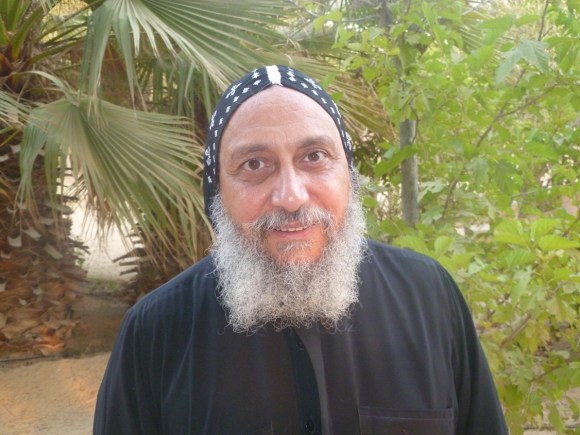
Bishop Thomas
Bishop Thomas

Coptic Christians, the Middle East’s largest Christian community, account for roughly ten percent of Egypt’s population and have endured generations of exclusion and restrictions. Their struggles for equality have been aggravated by a series of gruesome and deadly attacks carried out by ISIS criminals. The latest act was a pair of bombings on Palm Sunday targeting packed churches in Alexandria and Tanta, which took the lives of 45 Christians and wounded more than 100 others, according to Human Rights Watch. ISIS previously targeted Copts in Cairo in a December, 2016, bombing that killed 30 and in a January, 2017, attack in the Sinai peninsula that killed eight. ISIS has stated its intention to extirpate Christianity from the Middle East.

TMP Egypt contributor Jayson Casper spoke to Bishop Thomas, head of the Coptic Orthodox diocese of Qusia and Meir, 170 miles south of Cairo, to find out how Copts are reacting to the latest attacks and what they expect for the future. Born in 1957, Thomas became a monk in 1985 and bishop in 1988. In 1999 he founded Anafora, a retreat center along the Cairo-Alexandria desert road, which became a community dedicated to ecumenical welcome and human development. Fluent in English alongside his native Arabic, he is a key source of insight on the situation of Christians in Egypt.

The Easter holiday is a joyous occasion but Egypt and her Christians are going through a difficult time after the Palm Sunday bombings. How are Copts doing these days?

There was a blend of grief, shock, anger, and question marks about what’s happening. People recall similar incidents from the past – the December bombing at St. Peter and St. Paul Church in Cairo, the 2010 Alexandria bombing, and further back in history. There has been a development in the attacks against Christians, and people are comparing it to what is happening in Syria and wondering if this will come to Egypt.

But the church holds to Christian principles, giving the people a Christian message. Love, and conquer evil through good. If we believe in the forgiveness Christ gave to us, we have to give it to others. Think positively, and do not be afraid. Don’t generalize but be fair. We cannot put the work of Islamic extremists on normal Muslims who haven’t done anything.

And normal people from the families of the victims have made statements that are very powerful. The widow of the doorman at St. Mark’s Cathedral in Alexandria said she forgives them. There is the question: How can Copts forgive like this? We are trying to nurture a holistic faith in society. Believing our life is not limited to this world makes it becomes stronger.

It will be good to come back to the teachings of the church, but first I want to ask about what is seen in the media. Coptic reactions are portrayed as fear, anger, and disillusionment. Things aren’t getting better and the government isn’t taking care of us. Is this an accurate picture? How strong and widespread are these feelings?

The Copts have a clearer understanding because we know the growth of Islamic fundamentalism has to be dealt with in a deeper way than just police or military forces. Security measures are only a part. The foundation is the ideology, needing the reformation of education. Copts are angrier at the education system than the security situation.

We look at things realistically, even though we were hoping for a calmer, more peaceful situation with the new government after the Muslim Brotherhood regime. We hoped it would be more active in reform. Some Copts are disappointed, but we are aware it is a long-term change, needing the support of the private sector, NGOs, and the religious sector. The curriculum of al-Azhar has to be looked at, in how they portray Christians, as does the public school curriculum.

We see also two kinds of media. One is trying to understand the situation and sympathize in the tragedy. The other is condemning Christians and encouraging more of the same. This must be dealt with firmly. If someone encourages attacks on others this is a crime against humanity, and it must be declared as such.

These things are being discussed among the youth and on the Coptic street. Even still, we are saying we love and we forgive—Jesus told us to love our enemies and do good to them—so his love encompasses the whole world and our fight is not against flesh and blood. It is against evil principles and thoughts; it is a struggle of ideology. Humanity must be linked with religion, and not to a particular religious group. As Christians we view everyone within the circle of God’s love, so we must love everyone, even those who persecute and attack us. We are against evil, but not against human beings. Instead we pity them.

There are some voices in Egypt who are promote this idea, but will it always be within the elite? It has to be implemented at the grassroots through the educational system.

You mentioned the importance of ideology. The president has spoken many times about the importance of reforming religious rhetoric, it seems he is aware of the comprehensive nature of this issue, beyond a military solution. But we see crimes against Copts go unpunished and a failure to pursue educational reform. Do the Copts still have optimism the government will move in this direction so that it will reach the grassroots, over time? Or is their frustration it is either only talk and politics, or that the state is unable to address ideological reform?

There is a group of people who hope it will change, who say we should encourage the process of reformation. There is another who says it will not happen, it is too long-term and the ideology is fixed among too many scholars. Personally, I think those who are disappointed are thinking about emigration, and I think another wave will come very soon, which is very bad. Christians have to stay in Egypt and be empowered here.

The process of reformation goes beyond just a president. He is trying to do his best but the society has many layers, and the undercurrent is stronger than what the official government says. What we need is to focus more on the undercurrent, which requires lots of work.

This gives Christians the responsibility to build up society. We have to be more active in peacemaking. This is an art that needs training, and helps build trust in the community. But we must also address the power balance, which aids the stability of society. Christians abroad and the international community can help Copts achieve this. We must work on projects and fill professions that the society needs.

Such as?

In my area of Qusia we created a school that provides education in languages and an open, creative atmosphere, not dictation. Many Christians and Muslims started to come. It is run by the church, but society needs it, and it is unique in the area.

People meet and interact, but not in a religious framework. They come for the sake of their children, and discuss ethics and childrearing. We create many educational programs through this platform, and this gives us hope that these meeting points help give us status in society.

Similar things like hospitals and social events help society unite, and the church should take the lead. It presents us to society in a new way and counters disinformation against us.

But this problem is bigger than Egypt, and we have to look at it from a global perspective. Islamic fundamentalism and political Islam must be addressed. We have seen the results over several decades, in addition to the recent developments in Syria and Iraq and Lebanon and Palestine. The Middle East has been almost depopulated of its Christians, and in Egypt we are the largest community left. Will these conservative forces succeed in pushing our Christians to the West, or not?

Let’s return shortly to immigration, but first address some of the spiritual teachings you mentioned earlier. The wife of the doorman in Alexandria gave a phenomenal testimony of forgiveness, that came from her faith. But as we judge the Coptic mentality between anger and frustration and the church teachings to resist fear and hold on to joy, to what degree does the Christian message of hope truly permeate them as people?

One of the spontaneous reactions has been the full attendance of Sunday evening prayers, right after the Palm Sunday morning bombings. All during Holy Week our churches have been packed. People are praying with enthusiasm and demonstrating persistence that we are here, we’re staying here, and this is our faith. Through their actions they are demonstrating their hope.

No doubt there have been tears, but still they come. There is sadness in their hearts, but they still hold to the responsibility that God has given: We are not afraid, we love, and we ask for justice. These are the three folds the church has been teaching, and the people’s reaction has been a beautiful portrayal.

Many people see only the church teaching suffering and martyrdom, but within this there is justice, a very important aspect that balances with love. Love and forgiveness create peace and positive attitudes, but at the same time love is not weak, it is strong, that is why there is no fear. Love and justice must be intertwined. I love, but I ask for my rights. I’m a human being, and I must be dealt with in my home country like a citizen, with security and equal rights.

The heritage of martyrdom in the Coptic Church promotes acceptance and forgiveness. But what is its connection with justice?

There have been many saints who were martyred because they asked for their rights. St. George, St. Mina, St. Mercorious – they stood up for their faith, defending other people. This is why it was their fate to become martyrs. Martyrdom is not just someone putting a bomb in a church. It is mainly people declaring their faith, hold to their rights, asking for justice, but ending in death.

So I don’t see a contraction, and many in the Coptic community are asking what we must do to achieve justice. I don’t know how it will be implemented. Communication with scholars, writers, and journalists from the Muslim side, to empower the cause?

If I take an American example, in achieving justice for the black community there were three main aspects. The first is Rosa Parks, and how she was made able to ask for her rights. Our teachings can help prepare the individual and create many more.

The second is Martin Luther King, who was a man of faith, but also of truth. He was able to communicate love and Christian principles in a context of injustice. The church has to give the message.

The third, which is very much needed, is Elanor Roosevelt. She represents the political arena and media, which were not of the black community. If the Christians in Egypt make a better effort to reach out to the Muslim community, its intellectuals and scholars, and discuss with them in more openness to empower them to join in the faithful fight for justice, it will be a great help.

But it is also needs an international effort, for the ideology is global. If conservatism is strong in the world there must be collaboration in the reformation of thought and the interpretation of texts in light of citizenship and humanity. There is much work ahead of us, and if it is not undertaken we may end up in a worse situation.

Is there something that makes the Copts of Egypt different from the Christians of the rest of the region, something that has enabled them to survive and resist the temptation to violence?

We don’t want to blame the victims, which is important to state clearly. We stand in sympathy and solidarity with the people of Syria, Iraq, and the region. We have seen what happened in Sinai, when the Christians evacuated from the area. We don’t know if this will continue.

A faithful attitude of ‘love your enemies’ and forgiveness gives a positive message to the other side, but we don’t know what will happen. It is a big question mark. Allow me to be spiritual and say it is the hand of God that is protecting this people here for a reason. I don’t know why, but keeping the Christian community in stability in Egypt may give a message of stability to the whole Middle East.

Yet over the past few decades, as you mentioned, Coptic immigration to the West has increased dramatically.

And it will continue to increase, no one can say it will stop. This makes us weaker, because who emigrates? Those who are able – the rich, the educated, those able to make a living outside. But they leave behind the weaker ones. If someone wants to care for their family we cannot tell them stop, to stay. We can encourage them it will get better, but if they have decided to go, they will.

But we recognize the negative impact. Still, Copts in the diaspora help with financial support, educational programs, and are a voice in the international community. This is very much appreciated. The presence of Christians in the Middle East remains a big question mark these days. If things continue, I don’t know how long we can last.

Yet in Egypt we have a very strong belief in the promise found in Isaiah 19, that there will be an altar in the land of Egypt. This gives the Christians a very strong hope that we will always be here and nothing can break us. This belief gives us power and helps explain why the church is flourishing despite difficulties, attacks, and persecutions. The church is strong, and people are determined to stay and stand firm in their faith.

Thank you, Bishop Thomas.
Categories
al-Monitor Middle East Published Articles

Is Sufism the Answer to Extremism in Egypt?

Egypt Sufism Extremism
(Peter Crawford)

This article was first published at al-Monitor.

If the Egyptian government wants to combat the spread of radical religious ideology, it would do well to return to its Muslim roots. At a conference held at the headquarters of the Azamiyah Order in Cairo on April 21, which Al-Monitor attended, presenters argued that Sufi Islam is the authentic expression of Egypt’s Muslims.

The conference emphasized the brotherly bond between Muslims and Christians, following the Palm Sunday bombings on April 9. But Sufis are singled out as infidels by the Islamic State (IS), too.

“I have told President [Abdel Fattah] al-Sisi to take care of the Sufi leaders,” Sheikh Alaa Abu al-Azayem told Al-Monitor. “We are the ones who stand against terrorism, fighting not with weapons but ideas.”

Sufism is widely considered the default setting for Egypt’s Muslim community, and tombs of popular Sufi saints dot the landscape up and down the Nile…

Please click here to read the full article at al-Monitor: http://www.al-monitor.com/pulse/originals/2017/04/egypt-sufism-tolerance-radical-islam.html#ixzz4fkjJoUzm
Categories
Christianity Today Middle East Published Articles

Forgiveness: Muslims Moved as Coptic Christians Do the Unimaginable

This article was first published by Christianity Today on April 20, 2017.

Coptic Forgiveness
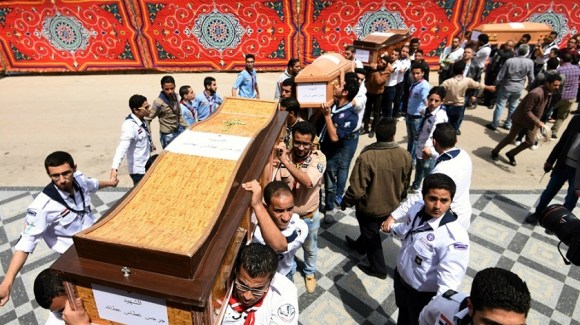
Image: MOHAMED EL-SHAHED / AFP Coffins are carried to funeral of Egyptian Christians killed in Palm Sunday bombings.

Twelve seconds of silence is an awkward eternity on television. Amr Adeeb, perhaps the most prominent talk show host in Egypt, leaned forward as he searched for a response.

“The Copts of Egypt … are made of … steel!” he finally uttered.

Moments earlier, Adeeb was watching a colleague in a simple home in Alexandria speak with the widow of Naseem Faheem, the guard at St. Mark’s Cathedral in the seaside Mediterranean city.

On Palm Sunday, the guard had redirected a suicide bomber through the perimeter metal detector, where the terrorist detonated. Likely the first to die in the blast, Faheem saved the lives of dozens inside the church.

“I’m not angry at the one who did this,” said his wife, children by her side. “I’m telling him, ‘May God forgive you, and we also forgive you. Believe me, we forgive you.’

“‘You put my husband in a place I couldn’t have dreamed of.’”

Stunned, Adeeb stammered about Copts bearing atrocities over hundreds of years, but couldn’t escape the central scandal.

“How great is this forgiveness you have!” his voice cracked. “If it were my father, I could never say this. But this is their faith and religious conviction.”

Millions marveled with him across the airwaves of Egypt.

So also did millions of Copts, recently rediscovering their ancient heritage, according to Ramez Atallah, president of the Bible Society of Egypt which subtitled and recirculated the satellite TV clip.

“In the history and culture of the Copts, there is much taught about martyrdom,” he told CT. “But until Libya, it was only in the textbooks—though deeply ingrained.”

The Islamic State in Libya kidnapped and beheaded 21 mostly Coptic Christians in February 2015. CT previously reported the message of forgiveness issued by their families and the witness it provided.

“Since then, there has been a paradigm shift,” said Atallah. “Our ancestors lived and believed this message, but we never had to.”

Please click here to read the full article at Christianity Today.

Categories
Christianity Today Middle East Published Articles

ISIS Attacks Major Christian Monastery in Egypt

St. Catherine's Monastery
Saint Catherine’s Monastery (Photo: Shaul Golan)

This article was first published by Christianity Today on April 19, 2017.

Two weeks after killing 47 Egyptians in twin church bombings on Palm Sunday, the Islamic State claimed a fresh attack on the ancient monastery of St. Catherine on the southern Sinai peninsula.

One policeman was killed and four injured during an exchange of gunfire at a checkpoint about half a mile from the monastery entrance. Police were eventually able to gain control and force the militants to flee, according to the Ministry of Interior as reported by Ahram Online.

ISIS claimed responsibility in a terse statement via their official news agency, Amaq. However, local speculation suggested it may have been a result of skirmishes between disgruntled tribes and the government.

St. Catherine’s is named after the fourth-century martyr from Alexandria, and was built in the sixth century by the Byzantine Emperor Justinian. The monastery belongs to the Greek Orthodox Church, and was declared a UNESCO world heritage site in 2003.

In the mid-19th century, the fourth-century Codex Sinaiticus was discovered in St. Catherine’s ancient library, at the time the oldest near-complete text of the Bible. The library boasts more than 8,000 early printed books, and is considered second only to the Vatican in collection of early biblical manuscripts.

“We admire the monastery for digitizing its collection for research,” said…

Please click here to read the full article at Christianity Today.

Categories
Christianity Today Middle East Published Articles

An Eye on Egypt after the Palm Sunday Bombings

This article was first published at Providence Magazine.

Church Bombing Above
Church of Saint George in Tanta, Egypt, after Islamic State’s Palm Sunday bombings. By Omar Elhady, via Twitter.

Episode one. “They are just following the teachings of their book, and the example of their prophet,” said a Coptic friend following the twin church bombings in Tanta and Alexandria on Palm Sunday, killing dozens. I refrained from rolling my eyes, as this was a moment for comfort amid tragedy. Such a refrain is not uncommon among some Egyptian Christians, that while not all Muslims are terrorists, Muslims who follow their religion tend in that direction.

But then he continued. “Just a little while ago my friend told me that those men are now in heaven, because they killed non-Muslims.”

If my eyes weren’t rolling, they were now bulging from their sockets, aghast. Your friend? He would say such a thing to you, to your face?

Episode two. “I am praying for the Copts,” said another Egyptian Christian friend. “When you know your enemy you can retaliate. But who are these terrorists? If the Copts explode we could become like Lebanon, and no one wants that.”

My eyes have never had so much activity, astounded again. Lebanon? Is that in play? I can’t recall ever hearing such sentiment from a Copt. Over the past several years, the polarized Egyptian narrative has warned of civil war, of forces internal and external wishing to divide the nation. But it always seemed exaggerated, and never sectarian. Islamist and non-Islamist forces might collide, but Egypt has no Christian pockets of population that might form a regional militia. The country is integrated and homogenous, Muslim and Christian living side-by-side.

Taken together these episodes illustrate a worrisome development within a longstanding reality. Muslims and Christians tend to be friends, neighbors, and quite similar in common culture. At the same time, there is a latent but tangible reservoir of mistrust. It activates occasionally, especially when community issues turn into matters of honor over houses of worship, land, or women. But for the most part among a 90 million plus population, religious distinction is managed relatively well.

Therefore, the most disturbing aspect of the bombings is that it has now happened twice. Last December the Islamic State ran a suicide bomber into a chapel adjacent the papal cathedral, killing 29 mostly women and children. They vowed it was just the beginning.

But to say “twice” is misleading. Palm Sunday was the second of two major bombings targeting Christian civilians, amid scores of previous attacks against security personnel. But other smaller acts less well reported have left the sadly repetitive “community” pattern and veered into clearly sectarian motivation.

Last February hundreds of Copts fled their homes in northern Sinai as the Islamic State went on a killing spree. But prior to this in various locations across Egypt, there were several unexplained murders of Coptic citizens. And in Alexandria a Coptic merchant had his throat slit on a crowded public street, by a Muslim offended at his sale of alcohol.

No evidence has yet emerged that the individual incidents were explicitly planned by the Islamic State. But research by Mokhtar Awad and others have revealed an emerging strategy within the group to spark an Iraq-style sectarian war in Egypt. As their project wanes in the self-proclaimed caliphate, the land of the Nile becomes a new field to mine.

Will it work? It is a more different bet than before, when the sectarian divide was between Shia and Sunni, who also inhabited distinctive majority areas. But Awad notes that a sectarian mentality has long been cultivated in Egypt by Islamists and overlooked if not abetted by the state. Copts have responded and nurtured religious distinction as well, though within their traditional Christian ethos of monasticism, martyrdom, and loving your enemy.

Perhaps the Islamic State is betting their resilience cannot hold out forever, that an explosion against somebody is coming. Perhaps they hope the Muslim keenness on national unity will erode over time, should Copts—even a Copt—lash out in retaliation or appear too “uppity” in the demand they be treated as equal citizens.

So far it is a bad bet. The church counsels patience and the eternal crown of glory. Each attack against Copts has prompted a firm re-insistence of togetherness from state and society. Similar militant attacks in the 1990s turned the Muslim street decidedly against the jihadis.

But the world now is a different place, and the tactics exceed anything witnessed previously in Egypt. A second incident suggests there will be a third, and fourth, and so on. Even if Egypt is unlikely to become Syria, Palm Sunday suggests more bloodshed is coming.

Any American policy response will be fraught with difficulty, mixed up in the morass of Middle Eastern politics. Support too closely and risk accusation of backing repressive governments. Step away and risk accusation of empowering illiberal Islamists. Either one will beg claims of interference and violation of sovereignty. God bless the diplomats who must navigate carefully.

But in lieu of policy, the eyes can be put to better use than described above. One, dart vigilantly. Scan surroundings, beware of trouble, and look for solutions. Two, tear liberally. Tragedy demands we weep with those who weep, in sympathy and solidarity.

Otherwise, amid ongoing violence they may glaze over. Otherwise, amid religious distinctiveness they may grow jaundiced. Jesus demanded that our eye be “single”, lest the whole body be full of darkness.

It may be an apt metaphor for Egypt, a nation with many troubles and contradictions. The Islamic State is trying to exploit them. Be keen not to fuel the polarization, for the eyes of the Lord are everywhere, keeping watch on the wicked and the good.

Categories
Christianity Today Middle East Published Articles

ISIS Church Bombings Kill Dozens at Palm Sunday Services in Egypt

Tanta Bombing
Photo: Nariman El-Mofty, AP

This article was first published at Christianity Today on April 9, 2017.

Attacks at two Coptic Orthodox churches in Egypt’s Nile Delta killed more than 40 people and injured more than 100 others during Palm Sunday services—including the one where Pope Tawadros II was worshiping.

ISIS claimed responsibility. In February, the Egypt chapter of the Islamist extremists had released a threatening video calling Coptic Christians “our priority and our preferred prey.” Soon after, about 100 Christian families fled their homes in the Sinai Peninsula amid a string of murders.

Reuters reports more details on the bombing in Tanta at Mar Girgis (St. George) Church, which killed at least 27 and injured more than 70. CNN reports more details on the Alexandria bombing at St. Mark’s Cathedral, which killed at least 16 and injured more than 40. [Before ending its live updates, state media outlet Ahram Online put the final toll from Egypt’s health ministry at 29 dead in Tanta and 18 dead in Alexandria.]

Nader Wanis, director of the Arkan Cultural Center in Alexandria, was worshiping at the Anglican Pro-Cathedral only two streets from St. Mark’s when the bomb went off. “It was only a few minutes before serving communion and it shook our whole church,” he told CT. “We were scared, but insisted to continue.”

Please click here to continue reading at Christianity Today.

Categories
Asia Christianity Today Published Articles

They Will Know We are Christians by Our Drinks

This article was first published in the April print edition of Christianity Today.

Muslim World Alcohol

The deadliest incident faced by the persecuted church last Christmas wasn’t radical Islamists. It was alcohol.

Liquor mixed with aftershave killed about 50 people at Christmas parties in a Pakistani village, and sickened about 100 more.

In Pakistan, as in many Muslim-majority nations where Shari‘ah law forbids drinking, alcohol is closely identified with Christianity. The nation’s primary alcohol producer, for example, riffs on the Bible in advertisements. Founded in 1860 by the British, Murree Brewery’s slogan, “Eat, drink, and be Murree,” echoes the repeated biblical idiom for short-term pleasures.

Perhaps as surprising as the existence of a Pakistani brewery is the fact that 12 Muslims were among the victims of the fatal Christmas parties. But in 2007, then–Murree CEO Minnoo Bhandara told The Telegraph that 99 percent of his customers are Muslims. And in the Middle East, alcohol sales increased 72 percent from 2001 to 2011, according to market research.

Still, in most Muslim countries only Christians may buy or consume alcohol. But not all do. Wilson Chowdhry, chairman of the British Pakistani Christian Association, estimates that about half of Pakistani Christian men drink. Roman Catholics are slightly more inclined; Protestants less so. But the women of both branches of Christianity, he says, are fully opposed.

Chowdhry, an evangelical, believes alcohol is licit for the Christian; but in deference to his wife, he does not drink. Common arguments in Pakistan will feel familiar to Americans…

Please click here to read the full article at Christianity Today.

Categories
Christianity Today Middle East Published Articles

Egypt’s Anglicans Face ‘Existential Threat’… from Fellow Protestants

Egypt Anglican Protestant
Image: KC McGinnis / Lightstock

This article was first published in the March print edition of Christianity Today. I provided additional reporting.

Egypt’s top Anglican leader is accusing its top evangelical leader of attempting a “hostile takeover” to prevent Egyptian Anglicans from achieving state recognition as an independent national church.

The dispute first surfaced in 2001, but this past summer Egypt’s High Administrative Court ruled against Anglican independence. This means the Anglican Diocese of Egypt must function as a full member of the Protestant Churches of Egypt (PCE).

Representing 18 denominations, the umbrella group coordinates the registration of marriages, deaths, property ownership, visas, and other legal—but not doctrinal—matters.

“The most important thing for me is the unity of the Protestant community,” said Andrea Zaki, president of the PCE and a Presbyterian pastor. “I don’t want it to be divided. This would weaken Protestants, and not develop the strengths we have.”

The Anglicans originally filed their case against the Egyptian government. The PCE says soon after, the court obliged them to join as defendants in the Anglican effort at independence.

After the June 2016 ruling, Anglican bishop Mouneer Anis filed a new suit in a lower court. Zaki followed up with key Egyptian agencies to apply the ruling, and the Ministry of Interior informed the Anglican diocese in September that it needed PCE approval for a visa application for an overseas worker.

At a December court hearing, Anglican attorneys addressed procedural faults in the June ruling. That court did not address their petition for the Egyptian president to recognize their denomination as independent, as they believe the law gives him the right to do.

“We were in Egypt before the Protestant church formed,” said Anis, one of the top leaders among conservative Anglicans in the Global South. When he took office in 2000, the Ministry of Interior ratified his documents; this continued until September 2016, after the PCE asked the ministry to stop.

Please click here to read the full article at Christianity Today.

Categories
Diocese of Egypt (Anglican) Middle East Published Articles

Archbishop Mouneer Consecrates First Arab Anglican Bishop for North Africa

bishop-fawzy-north-africa

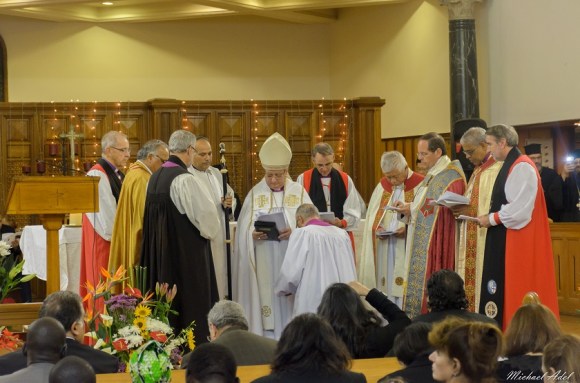
In a moving ceremony at All Saints Cathedral, Cairo on February 27, 2017, Archbishop Mouneer Hanna Anis consecrated his ‘dear brother’ Rev. Samy Fawzy as the first Arab area bishop for North Africa.

Bishop Fawzy succeeds Bishop Bill Musk, who presided over the diocese encompassing Algeria, Tunisia, and Libya since 2008. Bishop Musk was honored and thanked for his time of service, and participated in Fawzy’s consecration.

Joining also to lay hands on the new bishop was Bishop Grant LeMarquand of the Horn of Africa and Bishop Michael Lewis of Cyprus and the Gulf.

Also present were Archbishop Foley Beach of the Anglican Church in North America, Archbishop Rennis Ponniah of Singapore, and other Anglican representatives from around the world.

Bishop Lewis conveyed the congratulations of Archbishop Justin Welby of Canterbury, welcoming Bishop Fawzy into the fellowship of Anglican servant leadership.

Archbishop Welby also praised the Diocese of Egypt for its role as a bridge between Muslims and Christians as well as among the various Christian denominations.

He also issued a firm plea to the government of Egypt to continue recognizing the Anglican Church as an independent denomination, in light of ongoing legal disputes that jeopardize this status.

Archbishop Beach also welcomed Bishop Fawzy, greeting him in the name of GAFCON, and celebrating their partnership in the gospel while assuring of his continued prayers.

Archbishop Ponniah encouraged Bishop Fawzy that in the ‘boat’ of Christian service, it is the Lord Jesus who brings it safely to shore. He also welcomed him into the Global South effort that is catching many fish for the Kingdom of God, celebrating the recent accomplishments in Egypt of a new conference center and administrative buildings for the Alexandria School of Theology.

Congratulations were also offered by Fr. Bishoy Helmy, representing Pope Tawadros of the Coptic Orthodox Church, Rev. Rifat Fehmy, representing Rev. Andrea Zaki of the Protestant Churches of Egypt, and Bishop Kyrillos William of Asyut, representing Patriarch Ibrahim Ishak of the Coptic Catholic Church.

Fr. Helmy in particular praised the appointment of Bishop Fawzy, recognizing him as one with humility, an ecumenical spirit, and dependence upon the Word of God.

Bishop Fawzy graduated from the Faculty of Engineering at Cairo University in 1985, but set aside his career to pursue Christian ministry. Later he obtained a Doctorate in Theology from the University of Wales, and upon returning to Egypt was ordained to serve the church in Alexandria, where he was appointed dean in 2013.

Archbishop Anis remarked Bishop Fawzy was distinguished in his pastoral care, especially “among the wounded, oppressed, and marginalized.” He shared a quote which was dear to him at his own consecration as bishop, written by St. Augustine of Hippo, also from North Africa.

“For you, I am a bishop. But with you, I am a Christian. The first is an office accepted; the second is a gift received. One is danger; the other is safety. If I am happier to be redeemed with you, than to be placed over you, then I shall as the Lord commanded, be more fully your servant.”

Archbishop Anis told Bishop Fawzy he reviews this quote each day, and encouraged him to do the same.

“Truly the church needs trustworthy shepherds who love the Lord with all their hearts, and who will exert every effort to guide the people of God to live out the message of Christ, the message of love,” said Archbishop Anis.

“I have seen this in Dean Samy.”

This article was first published at the Anglican diocese.

Categories
Christianity Today History Published Articles

The Forgotten Final Resting Place of William Borden

william-borden
Courtesy of Bethany House

This article was first published at Christianity Today on February 24, 2017.

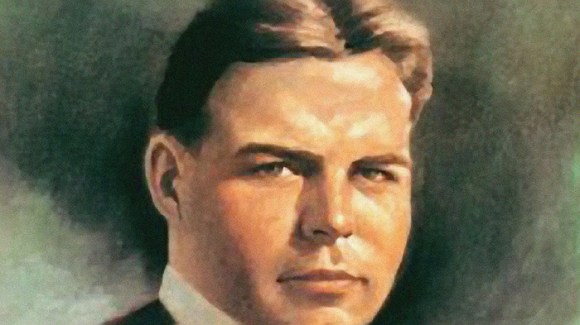
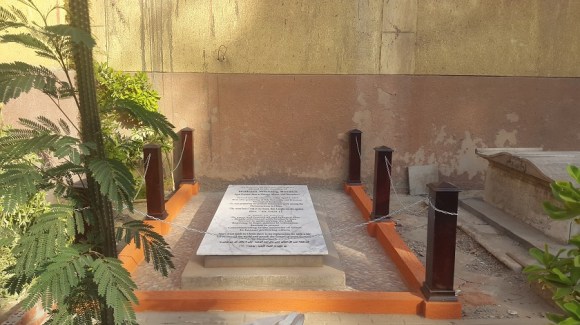
Tucked away in the northwest corner of the American cemetery in Cairo lies the neglected grave of William Borden, one of the most celebrated missionaries of the 20th century Student Volunteer Movement. Heir to a family fortune, the Yale graduate instead devoted his life to Christ, pledged in service to the Muslims of China.

But at age 25 Borden died in Egypt, having contracted spinal meningitis while studying Arabic in preparation. His will distributed nearly everything to mission groups and Christian ministries, leaving him only a cement slab as a gravestone. Engraved at the bottom were words uttered in memorium, “Apart from Christ, there is no explanation for such a life.”

That is, if anyone could read them. A recently erected wall in the poorly tended cemetery pressed square up against his plot. This meant that the gravestone now faced the wrong direction, requiring the rare pilgrim to slither in between the wall and the grave to read the inscription. It was an ill testament for one whose death was mourned from Chicago to New York to Cairo to China.

Even stranger is the fact that what Borden is perhaps most known for—the inspirational quote that he is reputed to have written into his personal Bible, “No reserves. No Retreats. No Regrets”—has not been found by historians or biographers.

Is the central anecdote of Borden’s life a case of hagiography? That it has not been found does not mean it is not true. But as with many Christian heroes, the reality is more inspiring than any potential fiction.

Please click here to read the full article at Christianity Today.

william-borden-grave

Categories
Christianity Today Middle East Published Articles

Egyptian Exodus: 100 Christian Families Flee ISIS in Sinai

christians-flee-sinai
Fayed El-Geziry/NurPhoto / Sipa USA via AP A Christian who fled ISIS brings belongings into the Evangelical Church in Ismailia.

This article was first published at Christianity Today on February 27, 2017.

As Coptic Christians flee Egypt’s Sinai Peninsula in unprecedented numbers, a Protestant church is there to receive them.

“We were the first to respond,” said Atef Samy, associate pastor at Kasr el-Dobara Evangelical Church in Cairo. “Two of those killed were very dear to our church.”

In the last few days, more than 100 families have left their homes in Sinai for the Suez Canal city of Ismailia, 125 miles west.

On February 19, the Egypt chapter of ISIS released a video calling Copts “our priority and our preferred prey.” Three days later, one man was shot and his adult son burned alive.

“This is sheer terrorism,” Samy said. “They want to embarrass the government and claim they can cleanse the Christian presence.”

In recent weeks, seven Copts have been killed. Witnesses say they were murdered in cold blood, with no negotiation, theft, or attempts to convert to Islam.

Hit lists are also reportedly being circulated, warning Christians to leave or die.

“I am not going to wait for death,” Rami Mina, who left Arish on Friday morning, told Reuters. “I shut down my restaurant and got out of there. These people are ruthless.”

Samy declined to name those killed, but identified them as born-again Christians active in ministry. His church quickly mobilized to help others leave, and provided support to the Ismailia church that has assisted dozens. Mattresses, blankets, food, and medical supplies are the most pressing needs.

Adel Shukrallah, responsible for youth ministry in the Evangelical Church of Ismailia, is heading the Protestant relief effort locally.

Please click here to read the full article at Christianity Today.

Categories
Christianity Today Middle East Published Articles

Who Awaits the Messiah Most? Muslims

isis-eschatology

This article was first published in the Jan-Feb print edition of Christianity Today.

Jesus did not show up to defend ISIS—and the first to celebrate was a Muslim.

“The [ISIS] myth of their great battle in Dabiq is finished,” Ahmed Osman, a Free Syrian Army officer, told Reuters in October after coalition forces drove more than 1,000 extremists from the backwater Syrian city known as the Armageddon of Islamic eschatology. The jihadists had expected the Messiah to appear and bloody his lance on approaching Christian crusaders.

Muslim belief in the end-times return of Jesus may seem surprising, but according to recent polls, they expect him with greater anticipation than do many American Christians.

A Pew Research Center survey in 2012 found that more than half of Muslims in Iraq, Lebanon, and Tunisia—and just under 50 percent in Morocco and the Palestinian territories—believe in the “imminent return” of Jesus. Outside the Arab world, more than half of Muslims in Turkey, Pakistan, Malaysia, and Thailand say Jesus will return to Earth in their lifetime.

By contrast, a 2015 poll by the Brookings Institute found that only 12 percent of US evangelicals believe that Jesus will return in their lifetime.

Past polls communicate a greater expectancy. In 2010, Pew found that 27 percent of US Christians expected Jesus to definitely return within the next 40 years, while another 20 percent found it probable. Among white evangelicals, 34 percent said “definitely” while 24 percent said “probably.”

The Qur‘an alludes to the return of Jesus (accompanied by a figure called the Mehdi), who on the Day of Resurrection will be a witness against Christians who claim him as the Son of God. But Muslim eschatology is derived primarily from Islamic traditions that have varying degrees of canonicity.

The exact timing of events does not tend to be the concern of Muslim theologians. But the general narrative is that Jesus will descend to Earth, kill the pigs, break the crosses, perform the pilgrimage to Mecca, defeat the Christian armies of Rome, kill the Antichrist, and usher in a period of worldwide Islamic prosperity.

Please click here to read the full article at Christianity Today.

Categories
Diocese of Egypt (Anglican) Middle East Published Articles

Chris Wright and the Bible of Reformation

chris-wright
Photo: Michael Adel, Bridges Cultural Center

This article was first published at the Anglican Diocese of Egypt.


Visiting Egypt for the 500th anniversary of the European Reformation, Chris Wright aptly taught on Biblical preaching. And in his public lecture to nearly 300 people on January 26, he focused on the centrality of the Bible for all reformation.

Ecclesia semper reformanda,” Wright said. “The church must be continually under reformation, renewed by the Bible.”

Bishop Mouneer Hanna Anis of Egypt invited Wright to All Saint’s Cathedral in Cairo to train Anglican clergy how to minister the Word of God in their churches. In a series of four presentations he emphasized godly preaching must be both Biblically faithful and culturally relevant.

Wright is the international ministries director of the Langham Partnership, dedicated to educating pastors toward theological maturity. The ministry began under John Stott, rector of All Souls Church at Langham Place. Wright has a PhD in Old Testament ethics from Cambridge University, and encouraged the clergy not to neglect this great treasure.

“The Old Testament was the Bible of Jesus,” he said. “And if we neglect it we deprive our congregations of a great deal of depth about who Jesus is.”

Wright is the author of more than 15 books, and his Knowing Jesus through the Old Testament is one of ten that have been translated into Arabic.

And in his translated public lecture, he expounded on how Ezra and Nehemiah set a reformation pattern later followed by Luther, Calvin, and other Protestant pioneers.

Expounding on Nehemiah 8-10, Wright outlined four essential movements. The first focuses on the ears, as the Word of God is read and listened to. As Ezra and Nehemiah brought together the whole people, so did Luther make the Bible accessible for the masses. And not just the masses, but political and spiritual leaders also come under its authority.

The second movement focuses on the mind, as the Word of God is translated and taught. As Ezra and Nehemiah helped now-Aramaic speaking Jews understand the original Hebrew, so also Luther translated the New Testament from Greek into the German vernacular. Both also ensured that those they instructed were equipped to teach others.

The third movement focuses on the heart, as the Word of God produces weeping and rejoicing. Ezra and Nehemiah led the people into an understanding first of their sinfulness before God, but also in realization he is their gracious redeemer. Similarly did Luther guide Germans in knowledge of judgment and grace, and provided also a wealth of hymns and liturgy for communal response in praise.

The fourth movement focuses on the hands, as the Word of God prompts finding and doing. Ezra, Nehemiah, and Luther were purposeful students of the scripture, engaging it far beyond the duty of ritual. And as Luther would rediscover that though salvation is through faith alone, he and the Old Testament reformers insisted it is a faith that never stays alone. True faith produces the fruit of transformation as God’s commands are put into practice.

These movements are an essential part of Biblical preaching, as Wright made clear in his seminar lectures as well. In addition to the Anglican Alexandria School of Theology, Bishop Mouneer Anis invited also the Orthodox, Catholic, and Evangelical seminaries to participate. Though expecting around 60 people, 135 attended, including the Archbishop of Sudan and three additional Sudanese bishops.

To all he gave the same message, as relevant in Europe 500 years ago as it is today.

“As heirs of the Reformation,” said Wright, “we must search the scriptures together and respond with all sincerity and joy.”


Categories
Lapido Media Middle East Published Articles

After the Terror: How Egypt’s Museum of Islamic Art is Fighting Back

museum-of-islamic-art
Photo: Michael Adel

This article was first published at Lapido Media.

THREE years after the car bomb that devastated world-famous Museum of Islamic Art, in Cairo, Egyptian culture is thumbing its nose at Islamic terror.

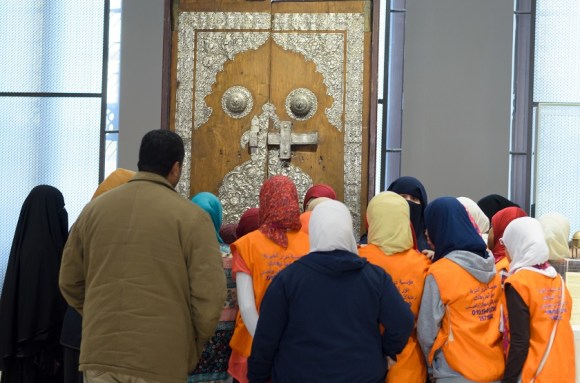
And in pride of place in the central rotunda is a nineteenth-century mosque door carved by Yehuda Aslan, a Jewish craftsman.

On 24 January, 2014 the Museum of Islamic Art (MIA) in Cairo was the secondary casualty of the bomb that killed six, and injured dozens in a blast targeting the Cairo Security Directorate across the street. The attack was claimed by the Sinai Province of the Islamic State.

It also smashed the façade of the historic museum built in 1903, damaging 179 pieces, ten beyond repair.

Two weeks ago the museum reopened in grand ceremony.

‘This is our heritage, not only for Egypt or Muslims, but for humanity,’ said Ahmad al-Shoky, the museum director.

‘If you destroy it, we will rebuild it, and make it better than before.’

Considered the largest museum of Islamic art and artifacts in the world, the MIA holds more than one hundred thousand pieces from throughout the Muslim world.

The earliest dates back to 652AD, a tombstone from year 31 of the Muslim era that bears signs of the Umayyad regime.  It is the oldest mark of Islam in Egypt.

Al-Shoky presided over the opening of sixteen additional exhibits, tripling the items on show to the public. The richness of Islamic history, he believes, blunts the appeal of terrorism.

‘The museum is not only about good art, but a good message,’ al-Shoky told Lapido. ‘We have reworked our displays to show how Islamic art contributes to world civilization.’

Tolerance

And a central part of this civilization, he says, is religious and cultural tolerance. The door to the as-Sayyida Zaynab Mosque by Yehudah Aslan is just one example.

Zaynab whose shrine is at the mosque named after her in Old Cairo, was the prophet Muhammad’s granddaughter, and ‘patron saint’ of Cairo.

‘We are not against any religion, and welcome anyone who can produce something for the world,’ said al-Shoky. ‘This message is short, but powerful, and you can find it in many of our halls.’

Umayyad era art (661-750 AD) is introduced with a note of influence from Byzantine, Coptic, and other civilizational sources.

The medicine and science exhibits highlight the contributions of the Christian Bakhtishu family doctors, and the Muslim, Mary the Astrolabe, from the Abbasid era (750-1253 AD).

And the Fatimid era (909-1171 AD) speaks of joint celebrations with ‘Christian fellow citizens’ for the holidays of Epiphany and Maundy Thursday.

Renovations were supported by a £2.1 million equivalent grant from the United Arab Emirates. Additional donations and expertise were shared by the United States, Italy, Germany, Austria, Switzerland, and UNESCO.

Before the explosion, if two hundred visitors came, it would be terrific, al-Shoky said. Since the reopening, the MIA has averaged more than two thousand.

Children

And not only adults. The redesign includes an educational wing for children. Around 150 have come every day.

‘Art teaches children that Islam is not a terrorist religion,’ said Yumna Khalid, a 20-year-old volunteer guide studying Islamic archaeology at Egypt’s Ain Shams University.

‘It is not like what people say now about Islam. No, we have had brilliant artists and scientists.’

Maher Daniel agrees.  He is an award-winning cartoonist and animation director for Egyptian state television – and a Christian.

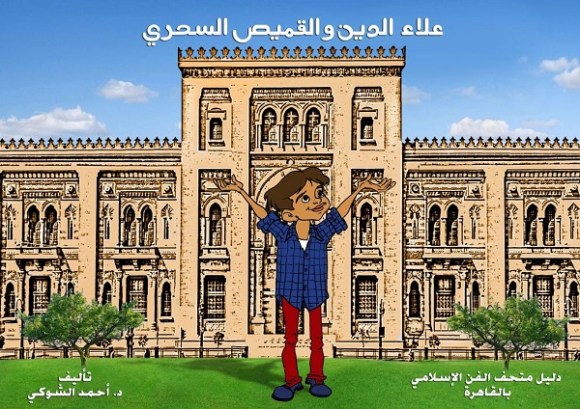
He contributed the illustrations to the children’s guidebook free of charge. Aladdin and the Magic Shirt spins a fantasy tale introducing the reader to the main pieces of each exhibit.

aladdin-and-the-magic-shirt

‘Egypt has passed through several crises, and children have not received enough attention,’ says Daniel. ‘The museum strives to address [the child’s] mind, promoting our shared heritage, for both Muslims and Christians.’

This does not mean he whitewashes the past, or the present. But Daniel says the space for extremism in Egypt is shrinking, and if there is an opportunity to help, you must help.

‘Our hope is in the enlightened Muslims, who are seeking reform and trying to shake the dirt from Egypt,’ he said.

‘But God only knows, in history these things ebb and flow.’

Manal Salah brought her twelve-year-old son to see the museum. He particularly liked the hall of weapons, marveling at the ninth-century Ottoman sword bearing the name of Mohamed the Conqueror.

‘The reopening of the museum is a positive sign,’ she said. ‘And we are optimistic for the future. If God wills, all will be well.’

museum-of-islamic-art-building

Categories
Americas Christianity Today Published Articles

What Arab Church Leaders Think of Trump Prioritizing Persecuted Christian Refugees

qaraqosh-christians
Ahmed Jadallah / Reuters Preparation for Qaraqosh’s first Sunday mass since the Iraqi Christian town was recaptured from ISIS (October 30, 2016).

This article was first published at Christianity Today on January 30, 2017.

Married in December to a Syrian woman with American citizenship, Fadi Hallisso went to Beirut to apply for a green card.

A Syrian Christian, Hallisso has worked with refugees in Lebanon since 2012. Funded by different American agencies, he was no stranger to the US government. He even testified about the situation in Syria to the US State Department and to Harvard Divinity School.

But this week, Hallisso was told he was no longer welcome to apply. The new US administration said so.

“It is very humiliating to be put in the category of potential terrorist,” said Hallisso. “Just because I carry a certain passport.”

As more details of President Donald Trump’s new security policies emerge—including a promise to prioritize Christian refugees for resettlement in America—much appears lost in translation.

“This executive order has created a new atmosphere very hostile to people in the region,” said Chawkat Moucarry, World Vision’s director for interfaith relations—and Hallisso’s uncle. “Unwritten rules seem to be implemented as a result.”

Is Trump’s executive order on refugees a de facto “Muslim ban”? Is it not? Is it prudent? Is it overdue? As American Christians debate these questions from the small towns of Middle America to the nation’s major airports, so also Arab Christians are trying to figure out what is going on.

“I read the executive order,” said Adeeb Awad, chief editor of al-Nashra, the monthly magazine of the Presbyterian Synod of Syria and Lebanon. He remarked…

Please click here to read the full article at Christianity Today.

Categories
Middle East Published Articles Religion Unplugged

Did the Bombing of Cairo’s Copts Also Hold a Message for Muslims?

isis-sufi-mosque
ISIS destroys a Sufi shrine in Mosul, Iraq.

This article was first published at The Media Project.

When a bomb ripped through the women and children praying together at the St. Peter and St. Paul Church in Cairo on Dec. 11, the nation’s grief was expressed through a Muslim doll.

The suicide attack claimed by the Islamic State – Sinai Province took place on the national holiday of moulid al-nabi, the Prophet Muhammad’s birthday. The larger Islamic State has since called for bombings of Christian churches in the USA, with the aim of creating “bloody celebrations” there, as well.

Egyptians have begun trying to make sense of this latest wave of violence in Cairo, and the arousa doll has propelled expressions of grief. A popular cartoon depicted the arousa, traditionally given to Muslim girls, weeping in the black clothes of mourning. Behind her stood a somber crucifix.

Twenty-seven people died in the bombing, and their families have been changed forever. The Coptic community is approaching the Christmas season with fear wondering if another church will be targeted.

But does the timing of the attack suggest Muslims also have reason to be afraid?

The moulid, popular with most Egyptians and in particular the mystical Sufi trend, is rejected by many Salafi interpretations of Islam to which the Islamic State belongs.

It is a day for sweets, visiting family, and giving gifts. It is also a day Christian religious leaders congratulate their Muslim counterparts, reciprocated on Christmas.

But celebration of the moulid is condemned by Salafis as a religious innovation.

Coincidence or not, their extremists chose this day to escalate their insurrection and signal their willingness to inflict mass casualties.

“The message could be, ‘You love the moulid, and you like the Christians?’” said Sheikh Alaa al-Din Abul Azayim, head of the Azamiya Sufi order. “’Then on this day we’ll kill your friends – and you are next.’”

Please click here to read the full article at The Media Project.

moulid-al-nabi-arousa

Categories
Arab West Report Middle East Published Articles

The Insanity of a Travel Ban to Siwa

temple-of-the-oracle
The temple of Jupiter Amun, whose oracle proclaimed Alexander the Great to be a god.

In defiance of his own nation’s restrictions, Cornelis Hulsman not only went to Siwa, he invited international student interns, Egyptian nationals, media professionals, and just about everyone else in Egypt to travel with him.

“Western travel advice to Siwa is insane,” said Hulsman, the Dutch deputy head of the Center for Arab West Understanding (CAWU). “We are taking this trip to make a statement. You say it is unsafe, we’ll show you it is safe.”

On the surface, insanity might look a lot like prudence. Siwa, an oasis in Egypt’s Western Desert, is only 50-70 kilometers from the porous border with Libya. Last year in the Bahariya Oasis, 400 kilometers southeast, eight Mexican tourists were killed accidentally by an Egyptian army hunting for militants. In Sinai on the opposite border, an Islamist insurgency continues to plague the peninsula, with terrorist attacks sporadically spilling over into the mainland. And in broader context, Russia and Britain have restricted flights to Egypt after a Russian airliner crashed in the Sinai desert on October 31, 2015, with responsibility claimed by the Islamic State.

Many nations have responded by issuing various travel restrictions to Egypt in general, and CAWU has compiled a complete list. But The Netherlands, France, and Canada have specifically included Siwa, and Hulsman believes this is preposterous. The successful return of his trip of 29 suggest he may be right. So also do the daily and nightly buses departing from Cairo.

Off the beaten path of traditional Egyptian tourism, Siwa’s remoteness has always been the chief hindrance preventing development of the sector. Ten hours is required to move from Cairo to the North Coast, over to Marsa Matrouh, and then 300 kilometers south through barren and desolate desert.

But compared to Alexander the Great’s eight day journey in 331 BC it is practically instantaneous. Modern day travelers can see the ruins of the Temple of Jupiter Amun, whose oracle declared Alexander a god and blessed him in conquest of the world. They can also visit natural hot springs and sand baths, as well as mingle among the only Berber culture indigenous to Egypt. The Siwan people have guarded their independence for centuries and still speak their own language.

Hulsman has looked for opportunities to link CAWU’s internship program with local organizations such as the Desert Research Center. ‘Amr ‘Abd al-Hamīd, head of the DRC in Marsa Matrouh, told him the government has been cutting funding. But universities in countries applying a travel ban to Siwa are prohibited from sending students to restricted area. Interns on Hulsman’s trip went in their personal capacity, not as part of his official program.

But normal tourists are scared off on their own. One issue is insurance, explained Muhammad Hassan, the owner of Siwa Shali Resort, with 36 years of experience in the tourism industry. If anything goes wrong, whether terrorism or a simple car accident, a policy will not be honored if the tourist went against his own nation’s warning. Egyptian insurance is available, says Hulsman, but would the average tourist know how to find it?

At the height of the Egyptian tourism boom in 2010 and before the Arab Spring, 30,000 international tourists spent part of their summer in Egyptian Mediterranean resorts, Hassan said. Eight thousand of these chose to continue on to Siwa. But by 2015 traffic dried up almost entirely, and only an estimated 300 foreigners visited Siwa from abroad. In 2016, no one.

“When you issue warnings like this, you are waging war against our primary economic sector,” Hassan said. “You harm not the government, but the people, who then get angry with the government. I’m not being political, I’m just a businessman.”

There is no military or police authorization needed to reach Siwa, Hassan noted, though several checkpoints are set up between Marsa Matrouh and Siwa to check identification. But to go into the desert on a safari to surf the dues needs three. He first secures license from military intelligence, border patrol, and the local police before dispatching any tourist.

And the military is in constant surveillance of the desert area between Siwa and Libya, Hassan said. Terrorists go where the land is empty, which might be a problem further south. He has no problem with a travel restriction issued for Jilf al-Kabīr in southwest Egypt, for example, where Libya, Chad, and Sudan come together.

Hulsman also noted the different security atmosphere in Siwa. Apart for the normal tourist policeman assigned to the bus, there was no police convoy. Traveling to Upper Egypt, however, he has had vehicles travel in front or behind.

Similar was the on the ground experience. In Upper Egypt police ask that any large group be kept together, as easier to secure. But the foreigners and Egyptians alike freely roamed the grounds during an annual Sufi festival in Siwa, chatting with locals and wandering off with them. The security apparatus is much more relaxed there than elsewhere, Hulsman said, confident in the area’s safety.

Unfortunately, this is a reality lost on many Western governments. Mounir Neamatalla, Siwa’s wealthiest investor and owner of the Adrere Amellal: Desert Ecolodge that welcomed Prince Charles in 2006, is eager to change this. In early October he flew an 80-plus mostly foreign delegation to Siwa, including ten heads and deputy heads of diplomatic missions. But the message has not yet filtered through to decision makers in Western foreign ministries, and the travel restrictions remain.

Not for long, if Hulsman has his way. And now he has 29 more who can attest to his vision.

This article was first published at Arab West Report.

Categories
Africa Published Articles World Watch Monitor

Sudanese Pastors Pressured to ‘Inform’ or Stand Trial

This article was first published by World Watch Monitor on December 16, 2016.

sudan-map

Forty-eight year old father of three Revd Yamane Abraha received an ultimatum in Khartoum following a trip to Ethiopia in the fall of 2015.

“(Sudanese government) security threatened me, saying I would have to appear in court either as a witness, or an accused,” the Evangelical Baptist Church of Khartoum pastor told WWM. “But my father was sick, so unlike others I couldn’t escape.”

Abraha was one of several Sudanese Christians gathered abroad to pray for their nation. Among them were Revd Hassan Abduraheem Kodi Taour and Revd Kuwa Shamal, Sudan Church of Christ pastors from the Nuba Mountains region.

Also attending was Czech Christian aid worker Petr Jašek. According to Middle East Concern, these three had helped facilitate financial assistance to pay for the medical treatment of a Darfurian university student who had suffered burn wounds when government security attacked a campus demonstration in Omdurman, north of the capital Khartoum.

Sudanese at the meeting suspected there were spies around their Addis Ababa hotel. Then shortly after their return to Khartoum, the police arrested Taour, Shamal and Jašek, in December 2015. They have now been in detention for a year. Detained along with them is Abdulmonem Abdumawla, also from Darfur, who helped facilitate the medical treatment for the student.

The four are charged with waging war against the Sudanese state, espionage, conspiracy to carry out criminal acts, and undermining the authority of the state through violence. Trial proceedings finally begun in August have been postponed repeatedly in recent months. They could face the death penalty.

Delayed escape

Abraha was not arrested until three months after his colleagues, on 13 March, and then held for only one day. Security ordered him to report back daily, and on 24 March told him he would have to appear in court in the role of his choice: testify against the others, or be charged along with them.

On 26 March his father died.

Abraha gathered his family and traveled eight hours east by bus to bury him in their hometown of Kassala, on the border with Eritrea. And there he dropped off the radar, ditched his cell phone, and waited.

Two weeks later he returned to Khartoum and set his plan in motion. Nervously he checked his surroundings before going to buy a ticket to Egypt.

With his wife he exchanged notes on paper serviettes, which they wet and discarded when read. Discreetly they packed their children’s belongings, lest they tip off authorities at school.

Abraha then checked with a friendly security officer that his name was not on a watch list. And on 20 April, he told his children they would have a family picnic near the airport. Relatives—and kids—were surprised to learn they were saying ‘goodbye’.

In Egypt, Abraha is now involved in training for discipleship and church planting, and supervises 15 house churches among Sudanese refugees.

Over 31,000 Sudanese in Egypt are registered with the UN High Commission for Refugees, according to its August 2016 report. Unofficial estimates can exceed well over one million.

Most have fled the ongoing violence in Darfur and the southern regions of Blue Nile and Nuba Mountains bordering South Sudan.

Recurring pattern

But Abraha’s story is not unique.

Barnaba Timothous, who fled to Egypt three years earlier, had also been pressed to testify against Christian colleagues. Doing student campus ministry, he was accused of taking foreign money.

“I was told that if I would cooperate nothing would happen to me,” he told WWM. “But if not, nothing would protect me from them.”

Some people criticized him for his decision to leave. He did so quickly, taking one bag and telling no one in his family. And though he stated he was not personally involved in ministry among Muslims, he refused to betray those he knew.

“I will not be involved in issues that hurt the body of Christ and bring suffering to innocent people, just because they follow Christ as savior,” he said.

“The Islamic government of Sudan is persecuting the leaders of churches and ministries. And now our students no longer trust each other, fearful someone might report them.”

Timothous, who has since been joined by his mother and sister, is now working amongst students at several university campuses in Egypt.

WWM has spoken with other Christian leaders who tell similar stories.

Excuse for crackdown

”The [Sudan] government wants sharia and is cracking down on the church,” said Kamal Fahmy, head of the religious freedom advocacy group Set My People Free.

He recalled President Omar al-Bashir’s threat, on the eve of South Sudan independence in 2011, to make Sudan a fully Islamic state, the removal of foreign NGOs thereafter, and the expulsion of South Sudanese in 2013.

“Authorities felt Pastors Hassan and Kuwa were shaming them, bringing a bad report,” Fahmy told WWM.

“In the rebel areas the church is doing humanitarian work and is not involved in the conflict, but it does expose the atrocities the Sudanese government is committing.

“It will find any excuse to accuse them.”

Pastors have been arrested, churches have been destroyed, and land has been confiscated, according to the US State Department’s 2015 Report on International Religious Freedom.

And on 6 Oct the European Parliament passed a resolution against Sudan, specifically naming the four detainees.

Noting the EU partnership with Sudan toward ‘better migration management’, the resolution ‘reaffirms that freedom of religion, conscience or belief is a universal human right that needs to be protected everywhere and for everyone … especially in the case of apostasy.’

But in January 2015, Sudan actually expanded its apostasy laws to include criticism of the Prophet Mohammad’s wives or early companions.

Fahmy, who recently penned an open letter to the UN with the Forum for Religious Freedom-Europe, links an oppressive religious climate to development issues, which he says “assaults the core of human nature”.

“Apostasy laws … have negative social and political consequences everywhere they are in force,” he wrote. “They create instability and inspire violence.”

“Without freedom to change beliefs there is no religious freedom,’” he told WWM. “Going to paradise is not compulsory.”

Categories
Middle East Providence Published Articles

A Rough Stretch in a Season of Waiting: Egypt’s Christians and the Cathedral Bombing

cathedral-bombing
Photo by Omar Elhady, via Twitter (@ElHady).

This article was first published at Providence Magazine.

“There has been a bombing at the cathedral,” said the pastor at the local Methodist church in a lower-class area of downtown Cairo. “Several are dead, and we pray for our nation.”

It took me a moment to comprehend, but the gravity of his words indicated more than a simple illustration. I opened my cell phone to check the news and saw the bold headline: 25 dead and 49 injured in an attack on the Coptic Orthodox cathedral. The spiritual center of Egyptian Christianity had been mercilessly violated.

Only a few minutes earlier, the sermon considered John the Baptist and how his life of faithfulness ended with his head on a platter. Here again now was another modern Egyptian example of martyrdom, one more in a long line since the similar bombing of a church in Alexandria six years earlier. Several women sobbed quietly, as the men sat in stunned silence.

But a little later as they exited the service, the collective sense felt more like resignation. The men exchanged pleasantries and went home; the women lingered a little longer in conversation. What was unthinkable at the start of the Arab Spring had become unsurprising. In Alexandria 23 Copts died when a car bomb went off outside the church, but that attack, at least, soon gave way to the hope of a new revolution. The cathedral atrocity gives no inspiration, as Egypt remains muddled in a regional fog of war and terrorism.

In-between the two bombings were the 2013 revenge attacks on dozens of churches throughout the nation, as frustrated Islamists blamed Christians for the overthrow of the Muslim Brotherhood-affiliated President Mohamed Morsi. And the usual stream of sectarian incidents continued apace, as the state failed to hold accountable the mob violence of Muslims objecting to a church in their village, or an interfaith love affair, or any other typical but ill-justified collective form of Coptic punishment. It has been a rough stretch for Egypt’s Christians.

But not nearly as rough as the Christians of Iraq and Syria, or the Muslims of Libya, Yemen, and elsewhere have endured—and the Copts know this. They stand behind their Muslim Brotherhood-vanquishing president, and give much slack to a government they know is under tremendous pressure. Everywhere they turn it seems some new conspiracy is bent on dragging Egypt into the Middle East morass. The economy is in shambles, tourism is nonexistent, and save for the mandatory utterances of support following terrorism, they feel the international community never speaks except in censure. For this reason many have expressed favor at the election of Donald Trump. He likes our president, they say, and at least he’ll leave us alone.

For Copts are tired of being treated as pawns. A few days before the bombing, Foreign Policy ran a story entitled, “How Egypt’s Copts Fell Out of Love with President Sisi.” Even Chuck Colson’s Breakpoint piled on, ostensibly seeking to help by demanding the US president support Egypt’s Christians. “Meet the new persecutor,” said the article subtitle, “same as the old one.” Some on the left seem intent on buttressing the narrative of Copts in the way of a deserved Islamist democratic future. Some on the right seem intent on painting Muslims as sharia-inspired agents of Christian antipathy.

Both articles do well to draw on actual Coptic voices, and important ones. The news they convey is vital to learn in a world where, unless made a pawn, the Copt is often ignored. But they miss the nuance of the Coptic reality. Perhaps they can be forgiven for not knowing enough; perhaps they are guilty of pushing an agenda.

Back in Egypt, the Copts are well aware of incumbent discrimination and state weakness. But they cheer on a president who attends Christmas mass with the pope, and a military that rebuilds the churches Islamists destroyed. A new law for church building may or may not fully address the issues surrounding freedom of worship, but at least this regime—the first in 160 years—issued a law at all.

And following every tragedy, the common Muslim tends to open his or her bosom. Private taxi services Uber and Careem offered free rides to the hospital for blood donations. Many have missed the fact this bombing took place on the birthday of Islam’s prophet, a traditional day of merriment. The attack was therefore an assault on Muslims as well, Christians note. A popular cartoon draws the traditional holiday doll in the black clothes of mourning, as behind her stands a somber crucifix.

Thus between the kindness of the Egyptian soul and the sectarianism latent in an identity-driven society, the Copt is left waiting for national transformation. The rhetoric of the current regime seeks to revive a spirit of Egyptian nationalism, if only it can sludge through current challenges to reach a modicum of stability. Every maltreated Copt who fails to obtain justice is another reminder of how far the country has to go. And the cathedral bombing is another example of the powerful forces that stand against an idealized future.

But from the demonized past and lingering present, the Muslim Brotherhood condemns the bombing in one breath and blames it on regime-church collaboration in another. As long as this is the alternative, Copts find their best option in the preservation of a strong-handed government and a nominally secular society. Some in their community continue faithfully to agitate for human rights and a less political role for the church. Many agree but feel security and economy must be prioritized. Most hope for an open society of enlightened Egyptians, if only a generation away.

The Methodist church sermon that ended with John’s head on a platter began with the miracle that led to his birth. Elderly Zachariah and sterile Elizabeth likely long gave up hope of a child, the pastor surmised. Even so, “Your prayer has been heard,” said the angel. God is faithful, even when his people falter. John, the pastor noted, also doubted the one he baptized.

Where in this parable are Egypt’s Copts? Soon to be beheaded, or of pious prayers fulfilled? Likely somewhere in between, still inclined to pray for their nation.

Categories
Christianity Today Middle East Published Articles

Cairo Church Attack Kills 25 at Center of Egyptian Christianity

coptic-cathedral-bombing
KHALED DESOUKI/AFP/Getty Images

This article was first published by Christianity Today, on December 11, 2016.

At least 25 people were killed and 49 injured when a bomb exploded around 10 a.m. this morning during a worship service at the spiritual center of Christianity in Egypt.

It is the worst terrorist attack on Copts since the New Year’s bombing of a church in Alexandria in 2011 that killed 23 people.

A worship service of mostly women was targeted in the St. Peter and St. Paul church, adjacent to the St. Mark’s Cathedral and papal residence of Pope Tawadros II, the leader of the Coptic Orthodox community in Egypt and worldwide.

Tawadros was traveling in Greece at the time of the attack. He will cut short his visit and lead funeral prayers tomorrow in the Nasr City district of Cairo.

So far, there has been no claim of responsibility for the attack.

“This is an unbelievable act against Egypt first and Christians second,” Andrea Zaki, president of the Protestant Churches of Egypt, told Christianity Today.

Please click here to read the full story at Christianity Today.