Categories
Christianity Today Middle East Published Articles

How Egypt’s Goverment is Trying to Get Christians to Follow Jesus

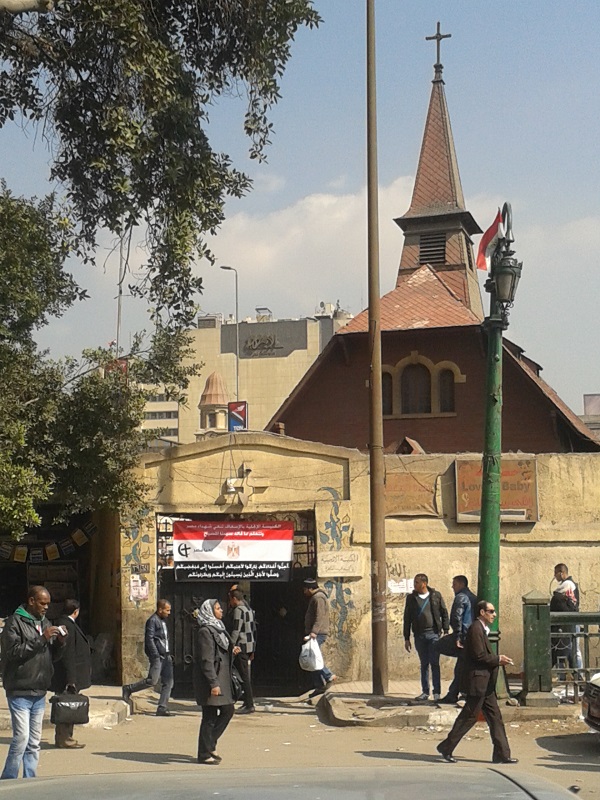
Holy Family in Egypt Icon 1

This article was published at Christianity Today on December 23, 2014.

The sound bomb exploded right behind the Egyptian Museum on Cairo’s Tahrir Square, throwing Ibrahim Morgan’s Swedish tour group into a temporary panic.

Then they settled back down and finished their tea.

This latest tactic in Egypt’s Islamist insurgency is meant to instill terror without harming civilians. It seeks to convey a message to citizen and tourist alike: Egypt is unstable.

This has been the dominant narrative abroad regarding Egypt, thanks to three years of instability, four presidents, and two revolutions. However, some locals like Morgan disagree.

“We know it is nonsense what the media says about Egypt,” Morgan said after the November 28 incident. “This group is here and they have had a great time.” The Swedes nodded in appreciation.

But relatively speaking, they are among the few. Since hitting a highwater mark of 14.7 million visitors in 2010, Egypt’s tourism numbers declined by a third, devastating the economy. The sector represented more than one-tenth of Egypt’s GDP, and tens of thousands have lost their livelihood.

Once stability—or its perception—returns, the numbers will likely rebound. The Giza pyramids, the temples of Luxor and Aswan, and the medieval mosques of Islamic Cairo will long attract international visitors.

But in October, the government launched a unique campaign to increase a segment representing only 1.9 percent of total tourists: Christian pilgrims. To do so, Prime Minister Ibrahim Mehlab and Coptic Orthodox Pope Tawadros II promoted the most noteworthy biblical example.

“Jesus was the first ‘tourist’ to Egypt,” said Tawadros at the launch event, according to AsiaNews. “For us, for our community, his stay in this land has been a blessing for the present and for the future.”

Please click here to read the full article at Christianity Today.

Holy Family in Egypt Icon

Categories
Christianity Today Middle East Published Articles

Facing ISIS, Middle Eastern Evangelicals Exchange Strategies

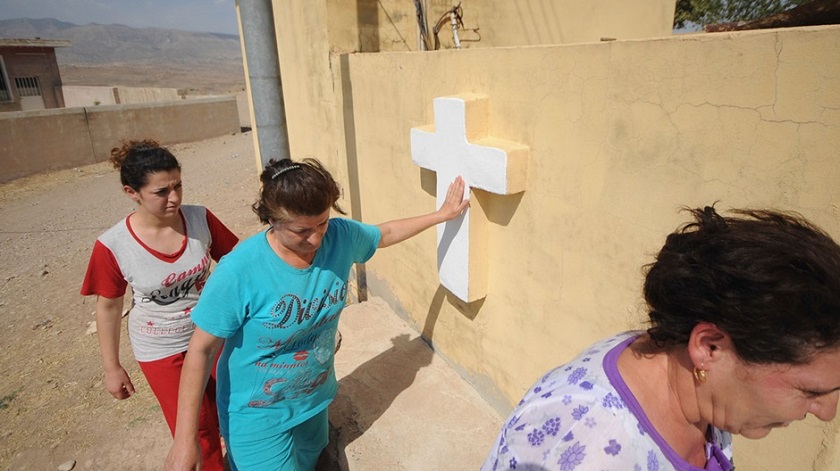
Christian refugees from Mosul find a home in Merga Souva Iraq. -- Gail Orenstein / AP Images
Christian refugees from Mosul find a home in Merga Souva Iraq. — Gail Orenstein / AP Images

From my article at Christianity Today, published October 14, 2014:

“God is allowing ISIS to expose Islam,” said Khalil’s fellow pastor, Atef Samy. “They are its true face, showing what Islam is like whenever it comes to power.”

But the savagery of ISIS, which has overwhelmed Kurdistan with more than 850,000 refugees, has prompted other Middle Eastern Christians to embrace their Muslim neighbors. This theme was heard often from members of the Fellowship of Middle Eastern Evangelical Churches (FMEEC), who met in Cairo last month for a conference on the dwindling Christian presence in the region.

“We must be a voice for Islam,” said Munib Younan, bishop of the Evangelical Lutheran Church in Jordan and the Holy Land. “We must not allow the West to see ISIS, the Muslim Brotherhood, or others like them as the face of Islam.”

Others were more reflective of the diversity among both Muslims and non-Muslims.

The article opens with a brief description of an evangelical relief trip to help refugees in Kurdistan, which I also wrote about here. It also describes cooperation attempts in the Egyptian Family House, uniting Muslims and Christians, which I hope to profile in a few days. There are other strategies described by those who attended a recent conference in Cairo, whose opinions on US-led military action I wrote about here.

But please click here to read the full article at Christianity Today.


Categories
Christianity Today Middle East Published Articles

As Egypt Picks Next President, Christians Play Biggest Political Role in Decades

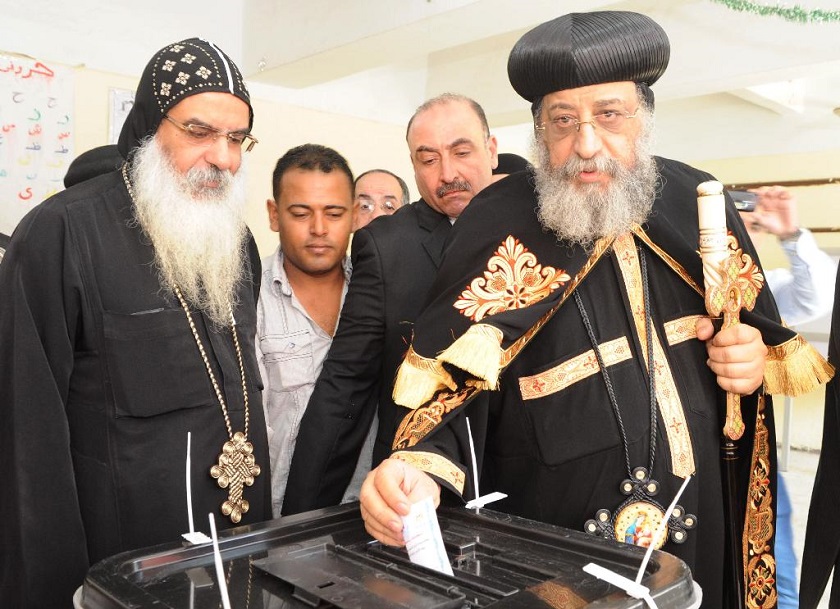
EGYPT-VOTE-COPTS

From my article at Christianity Today, published May 27, 2014:

For Egyptian Christians, today’s presidential election is not much of a contest.

Most support General Abdel Fattah al-Sisi in appreciation for his role in deposing previous president Mohamed Morsi and ending the rule of the Muslim Brotherhood. A smaller, younger contingent leans toward leftist politician Hamdeen Sabbahi out of appreciation for the revolution and skepticism of another military leader. But most on both sides expect Sisi will win handily, and most welcome the new era to come.

“This election [brings] great expectations to welcome a new Egypt with Muslims and Christians as equal citizens,” said Fawzi Khalil, a pastor at Cairo’s Kasr el-Dobara Church, the largest evangelical congregation in the Middle East.

But while most Christians are solidly in the camp of Sisi, many are taking advantage of the opening of political space after the January 2011 revolution to win leadership positions in a variety of political parties.

The article highlights one Christian woman who has become the first to head a political party in Egypt, supporting Sabbahi, and a man who is a founding member of another, supporting Sisi. A third figure is a human rights advocate seeking fair treatment for the Muslim Brotherhood, standing against the tide.

Please click here to read the full article at Christianity Today.

Categories
Christianity Today Middle East Published Articles

175 Leaders Urge US Support in Christianity’s Historical Heartland; Egyptian Churches Not So Sure

From the Ethics and Religious Liberty Commission

From my latest article in Christianity Today, published May 9, 2014:

More than 175 Christian leaders crossed denominational and political divides this week to urge the United States government to do more to help the rapidly diminishing, historic Christian populations of Syria, Iraq, and Egypt.

The solidarity pledge—signed by National Association of Evangelicals (NAE) president Leith Anderson, Focus on the Family founder James Dobson, Southern Baptist Theological Seminary president Al Mohler, and Samaritan’s Purse president Franklin Graham, among other prominent names—presented on Capitol Hill asks for the appointment of a special envoy on Middle East Religious Minorities, a review of foreign aid, and refugee and reconstruction assistance.

“These defenseless religious communities are facing an existential crisis, which threatens their very survival in the lands they have inhabited for centuries,” said Rep. Frank Wolf (R-VA), a longtime religious freedom advocate who helped create the U.S. Commission on International Religious Freedom (USCIRF) in 1998. “The faith leaders … recognize that unless the American church begins to champion this cause, the foreign policy establishment will hardly lead the way. They are committing to be their ‘brother’s keeper,’ whether in Nineveh, Cairo or Homs.”

But Egyptian Christians have a longstanding reticence about outside help:

“We value so much the prayers and concerns of our Christian brethren around the world, and in the U.S. especially,” said Fawzi Khalil, pastor at Kasr el-Dobara Church in Cairo, the largest evangelical congregation in the Middle East. “But we don’t believe outside pressure would be best for our daily life with our Muslim friends. The government of Egypt with local Christian leaders are best suited to fix our problems.”

Please click here to read the full article at Christianity Today, including testimony from other Egyptian Christians and one US Copt who is a signatory.

Categories
Christianity Today Middle East Published Articles

Why Egypt’s Christian Families are Paying Ransom

Coptic Ransom

From my recent article at Christianity Today, published online on January 8, 2014, and in the Jan/Feb print edition:

In 2011, Nadia Makram, 13, was walking home from church near her working-class Cairo neighborhood when she vanished.

Her mother, Martha, went to the police, who refused to file a report. Soon after, Martha received a call demanding $15,000. She went back to the police, who registered a complaint but noted only Nadia’s disappearance.

When the police did nothing, Martha gathered money from family and friends and traveled to a village 65 miles south.

Martha met Nadia’s 48-year-old kidnapper in the home of the local mayor. After she handed over the money, the men showed her what they called a “marriage certificate.” Nadia, they said, had converted to Islam and married her abductor. Martha left empty-handed—an increasingly common story among Coptic Christians. Abductions have increased sharply in the past few months.

The article deals with grassroots efforts to uncover these cases, some of the details in paying ransoms, theological reflection from an Egyptian seminary professor who’s relative was a victim, and budding hopes that a new government ministry might partially solve this issue.

Please click here to read the rest of the article at Christianity Today. (photo credit: AP/Thomas Hartwell)

Categories
Christianity Today Middle East Published Articles

Churches Gain, Islamists Lose in Latest Draft of Egypt’s Constitution

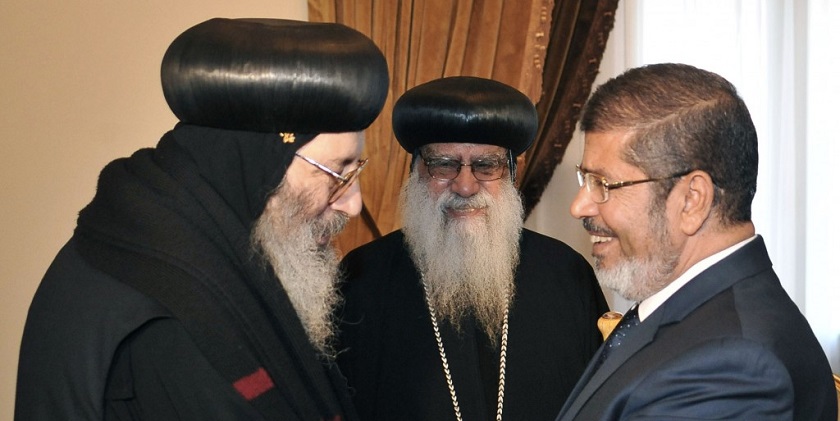
Morsi and Bakhomious

From my recent article in Christianity Today, published December 10, 2013:

Egyptian Christians will soon have a law to regulate church building. But this is only one achievement celebrated by Copts in the revised national charter scrubbed of most of its Islamist tinge.

“Christians have freedom of belief and practice,” said Safwat al-Baiady, president of the Protestant Churches of Egypt and a member of the constitutional committee. “And for the first time in the history of Egypt’s constitutions, building churches becomes a right.”

Article 235 of the new draft constitution addressed this longstanding complaint, where permission to build or repair required presidential and security authorization.

Egypt’s constitution of 2012, written by an Islamist majority under the now-deposed president Mohamed Morsi, also provided for many personal and religious freedoms. But that text included clauses of limitation “according to shari’ah law.”

Please click here to read how limitations on freedom were removed – or not – from the constitution, at Christianity Today.

Categories
Americas Christianity Today Published Articles

Move Over al-Jazeera: Arabic Christian TV Also Comes to America

SAT-7 North America

From my recent article at Christianity Today, published August 25, 2013, posted today to coincide with the launch of SAT-7 North America:

Al Jazeera America received a major boost this week in its controversial attempt to build a U.S. audience. But the Qatar-based news station, whose channel will now be carried by Time Warner Cable, is not the only Middle East satellite giant coming to penetrate the market.

Soon the Arab world’s top Christian broadcaster, SAT-7, will also start reaching into American homes.

Unlike Al Jazeera, which aims to reach 48 million U.S. homes, 17-year-veteran SAT-7 is aiming for only four million. This is the estimated number of Arabs in the United States and Canada.

“Since the start of the Arab uprisings in 2011, there has been an acceleration in the number of Arabs—especially Christian Arabs—leaving their homelands for North America,” Terry Ascott, SAT-7’s founder and CEO, told CT. “Launching now is a response to the growing number of people who are leaving and want to stay in touch with home.”

Please click here to read the rest of the article at Christianity Today.

Categories
Christianity Today Middle East Published Articles

A Tale of Two Weddings

Burned Church Wedding

From my new article at Christianity Today, published October 23, 2013, on why protesting a drive-by shooting is complicated for Egypt’s Christians:

The wedding party stood outside the church, eagerly awaiting the ceremonious arrival of the bride. Instead, drive-by shooters killed four, including two children and the groom’s mother, and injured 18.

Beyond its poignancy, the attack in Cairo’s industrial neighborhood of Warraq was significant for being one of the first to target Egypt’s Christians specifically, versus the now-common attacks on their church buildings.

“Since the revolution, this is the first instance Coptic people were targeted randomly in a church, with weapons,” said Mina Magdy, general coordinator for the Maspero Youth Union, a mostly Coptic revolutionary group formed in response to church burnings in 2011 after the fall of President Hosni Mubarak.

Please click here to read the rest of the article at Christianity Today, which describes the pulling back of protests so as not to be associated with anti-‘coup’ sentiment. There is also a video of the second wedding, held in a burnt-out church in Upper Egypt, which you can watch here (4:14 mark).

Categories
Christianity Today Middle East Published Articles

Remembering Egypt’s Maspero Massacre through its Most Prominent Martyr

Marry Daniel
Marry Daniel

This article was originally published at Christianity Today on October 9, 2013.

I never met Mina Daniel, but today many in Egypt consider him a hero and a martyr. Recently, I met his sister.

Two years ago this week, the 20-year-old Daniel was gunned down during a peaceful Coptic protest outside the Maspero state TV headquarters in downtown Cairo on October 9, 2011. More than 25 others died and scores were injured by military vehicles swerving through the crowded demonstration, or by local thugs who attacked the scattering remnants.

To this date, only a few low-level officers have been handed sentences, ranging from two to three years in prison.

Commemorating the massacre, Copts gathered in the Cave Church of Muqattam in the mountains outside Cairo, a scene of many interdenominational prayer services. Last year, on the first anniversary, thousands of Muslims and Christians marched together to Maspero from Shubra, a northern Cairo district with a high percentage of Coptic residents.

The religious unity of both events was just as Daniel would have wanted it.

“Mina didn’t care if you were a Mina [a typical Coptic name] or a Muhammad,” his sister Marry told me. “He dealt with everyone as created in the image of God.”

Please click here to read the rest of the article at Christianity Today.


Categories
Christianity Today Middle East Published Articles

Despite 600 Deaths, Egypt’s Christians Support Military’s Eviction of pro-Morsi Protestors

Sit-In Dispersal

From my recent article in Christianity Today:

Despite the deaths of more than 500 Muslim Brotherhood supporters and the resulting retaliation against Christian targets nationwide, Egypt’s Christian community stands with yesterday’s decision by the military-backed transitional government to break-up the pro-Morsi sit-ins.

“If a peaceful sit-in took place in Times Square and locked down the city, how long would it take American authorities to disperse it?” said Ramez Atallah, head of the Egyptian Bible Society. “The government spent six weeks trying to solve this crisis, and finally used force. What were the alternatives?”

Youssef Sidhom, editor-in-chief of Coptic newspaper Watani, explained why one alternative—to simply allow the protests to continue indefinitely—was not a better choice.

“If it had been a peaceful protest, we should leave it there. Have the army encircle it to prevent more weapons from entering, and wait for their morale to falter,” he said. “But the sit-in surrounded 20 to 30 high-rise apartment buildings, and the people had to submit to daily checks by the Muslim Brotherhood simply to go in and out of their neighborhood.

“They were terrorists, holding hostage thousands of residents.”

Please click here to read the full article at Christianity Today.

Categories
Christianity Today Middle East Published Articles

Egyptian Christians Killed After President’s Ouster

Copts Killed

From my article in Christianity Today, published July 9, describing both Christians and Muslims killed in a worrisome escalation of violence. But this excerpt concerns another matter for Christians in particular: Should they have joined the revolt in the first place, on Biblical grounds?

Bishop Mouneer also called the [military] action an answer to prayer, which raises certain theological questions. In Romans 13 Paul writes that Christians are to be subject to the governing authorities. Does Christian participation in a popular uprising strain this interpretation?

“The leader must support human rights,” said Bishop Marcos. “Because Morsi did not it was acceptable to work against him.”

A more nuanced position is articulated by Rev. Emad Mikhail, president of the Alexandria School of Theology.

“The Bible in the first century does not address the situation of free expression as we have in many places today,” he said. “There was no voting and no means to change the system except through violent action.

“If we vote out a president [as in modern elections] this is not understood to violate Romans 13. I consider peaceful demonstrations to be like a vote.”

Please click here to read the whole article at Christianity Today.

Categories
Christianity Today Middle East Published Articles

Egyptian Christians Brace for (and Debate) New Round of Protests

From my June 28 article published on Christianity Today:

Frustrated Egyptians will take to the streets June 30, on the one year anniversary of President Morsi’s inauguration. Dubbed the ‘Rebellion Campaign’, the grassroots movement announced the collection of fifteen million signatures to depose the president and demand early elections.

“The situation in Egypt is very serious,” wrote Bishop Mouneer Hanna of the Anglican Diocese of Egypt. “I do not know where this situation will take us. I feel that Egypt is at the verge of violent demonstrations, another revolution, or civil war.”

‘Rebellion’ organizers pledged their demonstrations will be non-violent, but Muslim Brotherhood leaders warn a violent turn – perhaps organized by supporters of the former regime – will undue the successes of the Egyptian revolution. Yet they insist on holding counter-demonstrations in advance of June 30, setting the stage for clashes between the two sides.

Please click here to read the full (brief) article on Christianity Today.

Categories
Christianity Today Middle East Published Articles

Conversion Confusion

Conversion Confusion Image

From my latest article in Christianity Today, from the April edition and published online on the 18th:

Nadia Mohamed Ali was raised in a Christian home, but when she married Mustafa Mohamed Abdel-Wahab in 1990, she converted to Islam. After his death, she obtained new identity cards—required under Egyptian law—that declared her and her seven children Christians.

Then came the ruling by a criminal court this January: “Egyptian Court Sentences Family to 15 Years for Converting to Christianity” read the Western headlines. Several U.S. religious freedom watchers declared Ali’s sentence a “real disaster” that “underscores the growing problem of religious intolerance” under Egypt’s new, Muslim Brotherhood-backed government. A shocking headline, indeed.

A cut-and-dry case of religious persecution? Not quite.

“They were imprisoned for fraud, not for conversion,” says Mamdouh Nakhla, founder of the Word Center for Human Rights in Cairo. The Coptic lawyer claims the family paid government workers to forge new identity cards. They registered their religion as Christian under Ali’s maiden name so that she could obtain her inheritance.

There is an underground market for such fraud:

“I was introduced to a certain priest—now deceased—who knew a certain Christian who works in the Civil Registry,” says Sheikh Saber (using his Muslim name, not his forged Christian identity). “He takes the bribe and distributes the money around for assistance in covering it up.” In 2003 Saber obtained new IDS, birth certificates, and a marriage license for his family. The cost of this illegal “service” now runs up to $2,500 per person.

The article proceeds to discuss in some depth the role of inter-religious love affairs and marriage in conversion, to which difficult social conditions also contribute. But there are accusations the conversions are not just a product of sociology:

Meanwhile, some Muslims target Coptic Christians for marriage to convert them. “The Coptic people are downtrodden,” says Isaiah Lamei, a priest who provides pastoral care for troubled Copts. “Muslims take advantage and get them to sign papers of conversion [so Copts can] fix their problems.”

Every year, Lamei ministers to 30-40 families in his diocese that have been approached by Muslims offering such “help.” “These problems can be emotional or financial,” he says. He estimates that in his diocese every year, “two or three convert to Islam.”

It’s hard to verify whether Muslims really marry Copts just to draw them into Islam. But it’s also hard to verify the sincerity of Muslim conversions to Christianity.

“We must be cautious,” says Cornelis Hulsman, editor in chief of the Arab West Report. “I have met converts who are sincere, and I’ve met converts who have other interests.”

Nakhla agrees. “Some converts come to me and say they want to marry a Christian. Or they request money, or work, or an apartment,” he says.

From time immemorial mankind has known of the power of religion in both fraud and piety, manipulation and sincerity. It is frustrating to navigate the divide.

Examples of grace and ‘ungrace’ abound, but in service of both mankind and God, toward whom religion is said to direct, the navigation is necessary.

Please click here to read the full article on Christianity Today.

Categories
Christianity Today Middle East Published Articles

Is Coptic Evangelism in Africa Really on the Rise?

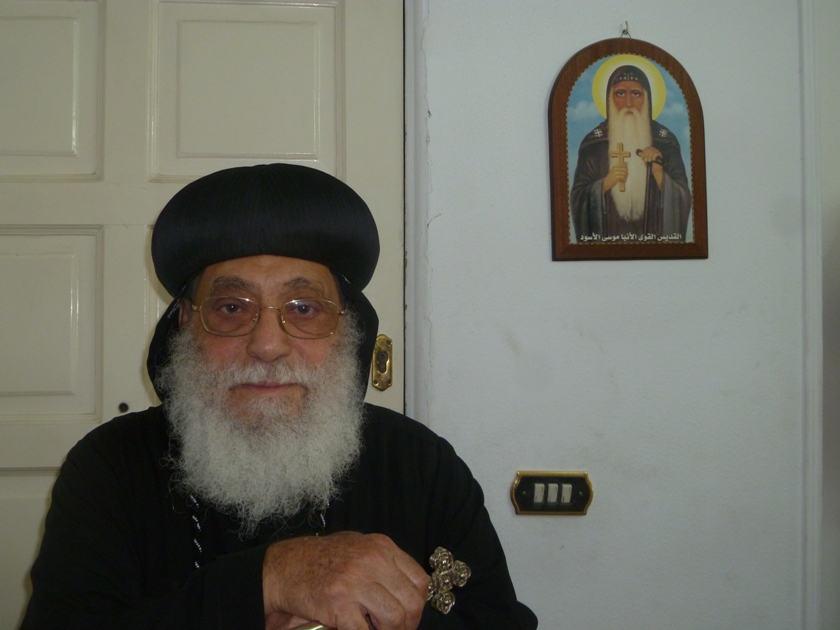
Bishop Antonious Marcos, missionary bishop for Africa. Behind him is a picture of the Coptic saint know as St. Moses the black.
Bishop Antonious Marcos, missionary bishop for Africa. He served first in Kenya and now in South Africa. Behind him is a picture of the Coptic saint known as St. Moses the black.

From my latest article on Christianity Today, published March 28, 2013:

Many Egyptian Christians wear their faith on their sleeve—literally. The cross tattooed on the wrist of Coptic Orthodox believers is a public display which marks their identity for all to see.

Such a quiet witness usually avoids reproach. But recently in Libya, radical Muslim militias detained dozens of expatriate Christians in Benghazi. Amid allegations that captors seared off such tattoos with acid, one Christian died from medical complications during the ordeal, and a Libyan church was repeatedly attacked.

Accusations of evangelism have been at the heart of a series of recent incidents of violence—including the first Coptic martyrs of the modern era—against Copts in Libya, Sudan, and Egypt. Which raises the question: Are Copts starting to recover their missionary heritage?

This article was co-written with a colleague from Sudan, who mentioned the following incident:

Last December, two Coptic Orthodox priests were arrested after baptizing a female convert from Islam. Since the arrests, stories about arrests of Westerners and other Christians attempting to spread the faith circulated in media linked to the state security apparatus, although the accuracy of the reports is hard to ascertain.

Though some Sudanese Copts have enjoyed business success under the Islamist government of President Omar al-Bashir, other denominations have seen their churches destroyed either by mobs or by the state, which cites the breaching of planning laws. With the independence of South Sudan removing the great majority of the nation’s Christians, Bashir has promised a 100-percent Islamic constitution.

Tensions are high also in some Egyptian villages:

There are signs Muslims feel threatened in Egypt as well. Recently churches have been attacked in Beni Suef and Aswan over female converts to Christianity alleged to be hidden inside. Generally this is understood as a Muslim community effort to save face when a woman breaks community traditions or runs away with a lover. Others think true faith might have a role.

“It is an untold story that every now and then a Muslim can be convinced and convert to Christianity,” said Youssef Sidhom, editor-in-chief of the Coptic newspaper Watani. “It is always done secretly, but somehow here it became public. In Upper Egypt especially, this creates a social scandal regardless of the direction of the conversion.”

But far from politically and religiously sensitive conversions in Muslim lands, the Coptic Orthodox Church maintains missionary bishoprics in sub-Saharan Africa:

The reality is the Coptic Orthodox Church remains committed to planting churches—just not in the direction of Muslims. In the 1970s, Pope Shenouda consecrated the first of two bishops for service in sub-Saharan Africa. Today, 65 churches serve more than 400,000 Copts in Kenya, Zambia, Congo, and other nations.

“The early riches of the Orthodox tradition are spreading again in Africa,” said Antonious Marcos, appointed missionary bishop to Kenya in 1976 and now based in South Africa. “Our church is a missionary church, because it was started by a non-Egyptian: John Mark.”

This was a very interesting article to research and write, showing a side of Coptic Christians often not well known in the West. As for the question in the title, are they recovering their evangelistic impulse: Well, they are accused, it seems some are, and reality is just as murky as with Christians around the world.

Please click here to read the full article on Christianity Today.

Categories
Christianity Today Middle East Published Articles

Egypt’s Five Largest Denominations Unite for the First Time

Egypt Council of Churches

From my recent article in Christianity Today, published February 22:

February 18, 2013 may prove a monumental day in the modern history of Egyptian Christianity. Heads of the five largest denominations – Coptic Orthodox, Catholic, Protestant, Greek Orthodox, and Anglican – created the Egyptian Council of Churches. Since the dawn of Catholic and Protestant missions in the 17th and 18th Centuries, Egypt’s Christians stand united.

“I believe history will record this day as we celebrate the establishment of a council for all churches of Egypt,” said Pope Tawadros II of the Coptic Orthodox Church, which boasts approximately 90 percent of all Egyptian Christians. “I think such a step was delayed for years.”

The rest is a brief summary, in which participants actively deny any political role for the council, closing instead with these words of faith:

“The Lord has answered prayers which have been offered for thirty years,” said Baiady. “Our diversity must become a source of richness rather than a struggle.

“Unity is built on fruitful, humble love which favors the other over the self.”

Please click here to read the whole article, containing quotes also from the Catholic and Anglican representatives. It is a good step, a formal admission to the unity asserted by most Christians I know here.

Categories
Christianity Today Middle East Published Articles

Titling a Story on a Religious Divide

Believe TV

From my recent article on Christianity Today, published online on January 10, 2013:

The stakes have been raised for Christian satellite broadcasting in the Arab world.

On November 28, a Cairo court sentenced to death Nakhoula Basilli Nakhoula and six other Coptic Christians—who all live outside Egypt—for their alleged roles in producing The Innocence of Muslims. The film, which mocks the Prophet Muhammad, prompted violent protests worldwide.

Nakhoula is relatively safe since he and the Way, the satellite channel that broadcasted the film, are based in the United States. But the sentence drew attention to how such channels have proliferated in recent years, seeking to present the gospel to Arab Muslims by—in part—directly criticizing Islam.

“Since satellite TV is widespread across the Middle East and is uncensorable, it is obviously a key way to make the good news of the gospel available,” said Terence Ascott, CEO and founder of SAT-7.

Please click here to read the whole article, which includes testimony from Egypt based religious broadcasters SAT-7 and Coptic CTV, as well as internationally based Coptic Logos TV, and Life TV.

The location can make a difference. While the legal consequences vary from nation to nation, Islam as a religion highly discourages conversions away from the faith – certainly public ones. There is a range of response; some advocate death, others social estrangement, and some say (quoting the Qur’an, not necessarily definitively) there is no compulsion in religion.

I am comfortable with the fairness and objectivity of the article, and every source spoke on the record. But based in Egypt where almost everything religious is highly sensitive, there is one element of the story beyond my control – the title.

Every magazine takes the prerogative to title an article according to their best understanding of audience marketing. After all, it is the title which draws the reader to the content. I always suggest a title; sometimes it is accepted, sometimes it is discarded. Generally there is collaboration on the matter. Usually the choice of final title doesn’t make very much difference to me, and most often their wording is best.

This article originally was published in print, that is, for local distribution in the US market only. This means it would exist largely away from any local Egypt sensitivities.

But it was also purposed to publish online eventually. This means the article is open and available to all. The sensitivities remain.

My original suggestion was: ‘Broadcasting the Gospel in Arabic: For Christians or Muslims?’ One suggestion along the way, which I liked best, was: ‘Target Audience’.

In the print edition the final choice was: ‘Carrot or Stick?’ with a subtitle of ‘Broadcasters debate best way to reach Muslims’. And online the title became: ‘How Should Christian Broadcasters Evangelize to Muslims?’

I think these titles somewhat miss the point, because much of the existing Arabic language religious broadcasting is produced for the Christian audiences of the Middle East. Even the channels which speak more directly about Islam are watched extensively by Christians, featuring testimonies, for example, of Muslims who have become Christians. For a community in regional numerical decline, such ‘proof’ that their religion is truly from God is comforting amidst the challenges of being a minority.

Therefore, the balance necessary in choosing a title is certainly tricky. Each publication has its own standards and religious convictions, but for the evangelical audience of Christianity Today, it is a given that the message of Jesus is for all – including Muslims. Of course media should give them exposure of and invitation to the teachings of Christianity, in their own language.

Meanwhile, for most in Egypt, it is Islam which should draw the converts. It is anathema that a Muslim might leave Islam to any religion at all, and many are offended when others try to encourage the process. As the article points out, this is even more so when the attempt directly criticizes Islam or Muhammad.

Christianity Today also has another article on the subject, which highlights some navigating a middle ground. It is an interview unlikely to fully please either the Christian or the Muslim.

In America, religion is largely a private matter, with religious ideas being free game on an open market. One should respect the convictions of an individual, but religions themselves are subject to ridicule, criticism, indifference, allegiance, support, belief, or robust apologetic – as the case may be. Most Americans accept this as good and natural.

In Egypt, religion is largely a public matter, with religious ideas protected to preserve social harmony. One should allow, almost begrudgingly, an individual to harbor divergent views in his heart, but the religions themselves – at least concerning Islam and Christianity – are from God and not to be questioned. Most Egyptians accept this as good and natural.

In this light, the title options chosen for the article come from a very American perspective, designed to draw the most readership. My favored titles strive to be as neutral, yet descriptive, as possible. The content is the content, accepted by both. Hopefully all who read will get a fair picture of what is at stake.

Related Posts:

Categories
Christianity Today Middle East Published Articles

Egyptian Christians Face the Future Under New Islamist Law

Face the Future

From my new article on Christianity Today, published December 28, 2012:

Egyptian Christians spent this year’s Advent season awaiting more than the celebration of Jesus’ birth. Christmas Day dawned with Copts still processing the rushed passage of a new Islamist-backed constitution and its implications.

Days before voting began on the hastily completed charter—which, despite only 33 percent turnout and accusations of fraud, passed December 25 with 64 percent of the vote—more than 10,000 Christians gathered at an interdenominational prayer vigil in Cairo’s famous “Cave Church.”

Please click here and here for more information about this prayer gathering. But the article continues:

“Morsi has not kept his promises to be a president for all Egyptians when he had a chance to do so, and he is losing credibility,” said Ramez Atallah, president of the Bible Society of Egypt. “When the leader is not working for consensus, it makes it very hard for anyone else to do so.”

Yet Atallah still advises Christians to remain politically active while grounding their expectations in the necessary dual perspective of Christianity.

“We must be good citizens,” he said. “This panic is not justified in our faith, even if it may be justified in terms of politics.

And here is a section on liberal ‘hope’ for political reversal in the midst of anticipated economic difficulty:

But as liberals have consistently failed to win at the polls, some place a morose hope in Egypt’s expected financial difficulties to aid their parliamentary campaign.

“There is an economic disaster coming,” said Michael Nabil, an Egyptian accountant. Since the revolution, Egypt has lost more than half of its foreign currency reserve fighting inflation and devaluation. “This will affect the situation negatively for the Muslim Brotherhood and give the opposition more credibility,” he said.

I had hoped to write this week’s Friday Prayers for Egypt about the economy, but was unable to. Perhaps after the climax of the constitution nothing this week seemed so urgent for prayer. That is not true, of course, but like many in Egypt, I feel somewhat drained, and this week was a week of recovery. Western Christmas celebrations helped.

The main issue for the prayers would have been the feared coming economic collapse. It may well happen, but is also tinged with manipulative rumors that seem almost designed to produce a panic.

Finally, a quote on what seems a very proper perspective for Egyptian Christians:

“There is no connection to political stability and the success of the gospel,” said Atallah. “In fact, the opposite might be true: People depend more on God in difficult times.”Maybe God will use the Muslim Brotherhood to do his will in Egypt, even if we don’t want them to be in charge,” he said.

Please click here to read the entire article on Christianity Today.

Categories
Christianity Today Middle East Published Articles

What Egypt’s Christians Think of Hastily Completed Constitution

Christian Constitution

From my recent article on Christianity Today:

Addressing the nation in a televised interview Thursday, President Mohamed Morsi welcomed the sudden completion of Egypt’s draft constitution after months of gridlock.

Amid public outcry against his decision last week to grant himself immunity from judicial review, Morsi praised the constitution’s speedy completion as a necessary step in order to end the nation’s transition to democracy and reestablish separate executive, legislative, and judicial authority.

He also dismissed questions about the legitimacy of the document, especially given the withdrawal of Christian and many liberal members of the assembly drafting it.

“The withdrawal of the church from the constitutional assembly is nothing to worry about,” Morsi said. “It’s important to me that they be part of it, but not to worry.”

The article features the voice of Rev. Safwat el-Baiady, president of the Protestant Churches of Egypt, one of the church’s official representatives who withdrew from the constitutional assembly. His perspective is given on the more controversial articles, including the role of sharia law, the Azhar, and society in determining both law and social morality.

Please click here to finish reading at Christianity Today.

Related Articles:

Categories
Christianity Today Middle East Published Articles

Egypt Erupts Again: Christians Resist Muslim Brotherhood President’s Power Grab

Cross and Quran Held Aloft at Tahrir

From my new article on Christianity Today:

The recent deaths of two teenagers best communicate the situation in Egypt today.

Gaber Saleh, a 16-year-old revolutionary activist, was killed in confrontations with police in Tahrir Square last Sunday. That same day, Islam Massoud, a 15-year-old Muslim Brotherhood member, was killed in clashes between supporters and opponents of President Mohamed Morsi in Damanhour, a city in the Nile Delta.

The deaths reveal a nation deeply divided by the decision of Morsi last week to appropriate all governing authority until a new Egyptian constitution is completed and a new parliament elected. Protests have broken out throughout the nation; Tahrir Square has once again filled to capacity. Many of Egypt’s judges have decried the attack on their independence, with the two highest appellate courts joining others in a nationwide strike.

The nation’s Christians are firmly in the opposition camp.

At least officially, Egypt’s Christians are not calling to depose Morsy:

“This is a national issue, not a Christian one,” says Safwat el-Baiady, president of the Protestant Churches of Egypt and a former member of the constitutional assembly.

“As Christians, we are not calling for the downfall of the president. And we do not fight against the authorities. As a church, we ask only for a suitable constitution for Christians and Muslims.

“But normal people have the right to be in the squares.”

Some, if not many, might hope for it, but the outrage is directed primarily at his constitutional declaration. It has led a vice president to resign from his administration:

Morsi’s opposition is not just in the street. Samir Marcos, Morsi’s vice president for democratic transition and the most prominent Coptic member of his administration, has resigned.

“I refuse to remain [in my position],” he told the international Arab newspaper Asharq Alawsat, “in light of this presidential decision that is crippling to the democratic transition process … and which is contrary to what I am trying to achieve through my position.”

One idea floated now is that his powers could be submitted to a referendum, or yield to a referendum on a rushed constitution:

This might also create a scenario where a weary public votes “Yes” in the constitutional referendum to follow, simply to end the deadlock and restore stability. In the process, liberals and Christians fear, the public would accept a flawed and religiously tinted constitution.

Of course, either way the people vote, a deadlock might continue. The Muslim Brotherhood will hold a rally on Saturday to support the president, whereas they previously canceled a competing protest out of fear for “bloodshed.”

“In order to save Egypt from going back to square one—dropping into chaos and nearly civil war—we have to think of a compromise,” said Sidhom. “But I fail to see how or where.”

Please click here to read the whole article at Christianity Today.

Related Posts:

Categories
Christianity Today Middle East Published Articles

Egyptian Churches Give Up on Helping Create New Constitution

From my new article on Christianity Today:

In another blow to Egypt’s democratic transition, representatives of the Muslim nation’s three main Christian bodies jointly decided to end their participation in writing a new constitution.

“The constitution … in its current form does not meet the desired national consensus and does not reflect the pluralistic identity of Egypt,” said Bishop Pachomious, acting patriarch for the Coptic Orthodox Church. The announcement was made one day before Pope Tawadros II assumed the papal throne of St. Mark, the gospel writer.

A primary complaint is over the role of shari’ah. Article Two of Egypt’s 1971 constitution, as well as the current draft of the new constitution, enshrines the “principles” of shari’ah to be the primary source of legislation. Pope Tawadros does not dispute the article as currently defined—including its designation of Islam as the religion of the state. But all churches reject its expansion.

“They left Article Two as is, but then added another article defining the principles of shari’ah.”

Please click here to continue reading at Christianity Today.

Related Posts: