Categories
Americas Christianity Today Middle East Published Articles

Trump or Netanyahu? American Evangelicals Support Israel, Yet Signs of Change

Image: Frédéric Soltan / Corbis / Getty Images

In the public spat between Donald Trump and Benjamin Netanyahu, who would American evangelicals support? A new survey suggests it might be the Israeli.

Polled shortly after the Gaza war last May, it also reveals a substantial generational gap in level of support for Israel and a lack of impact by pastors from their pulpits.

And it happens to release this week, following Trump’s explosive comments.

In excerpts from a recently released interview, the former president blasted the former prime minister for his statement of congratulations to Joe Biden after the 2020 election.

“Nobody did more for Bibi. And I liked Bibi. I still like Bibi,” stated Trump in an expletive-laced diatribe, using Netanyahu’s nickname. “But I also like loyalty … Bibi could have stayed quiet. He has made a terrible mistake.”

Netanyahu responded with praise for Trump. But in noting a friendship with Joe Biden, he also honored the longstanding partnership between the US and Israel.

During his presidency, Trump moved the American embassy to Jerusalem, acknowledged Israeli sovereignty over the Golan Heights, and negotiated with five Muslim-majority nations to normalize relations with the Jewish state.

American evangelicals joined Netanyahu in appreciation. According to a new online poll surveying a multiethnic panel of approximately 1,000 self-identified evangelical and born-again Christians, 35 percent say they became more supportive of Israel because of Trump’s policies. Only 11 percent became more supportive of Palestinians, while 53 percent had no change.

And overall, 68 percent of American evangelicals believe the Jewish people today have the right to the land of Israel, by virtue of the covenant God made with Abraham which “remains intact today.” (About 23% say they don’t know.)

The survey, conducted by professors from the University of North Carolina–Pembroke in conjunction with Barna Group, was released today but conducted in July, well before public knowledge of Trump’s falling out with Netanyahu.

The 15-year Israeli prime minister scored a 74 percent favorable rating, based on the share of evangelicals who gave him a score of 6 or greater on a 10-point scale. One in five (22%) gave him the top rating possible. The survey did not include a direct comparison. But given the fact that it included…

This article was originally published at Christianity Today on December 15, 2021. Please click here to read the full text.
Categories
Christianity Today Middle East Published Articles

Sunday Worship Comes to the Gulf

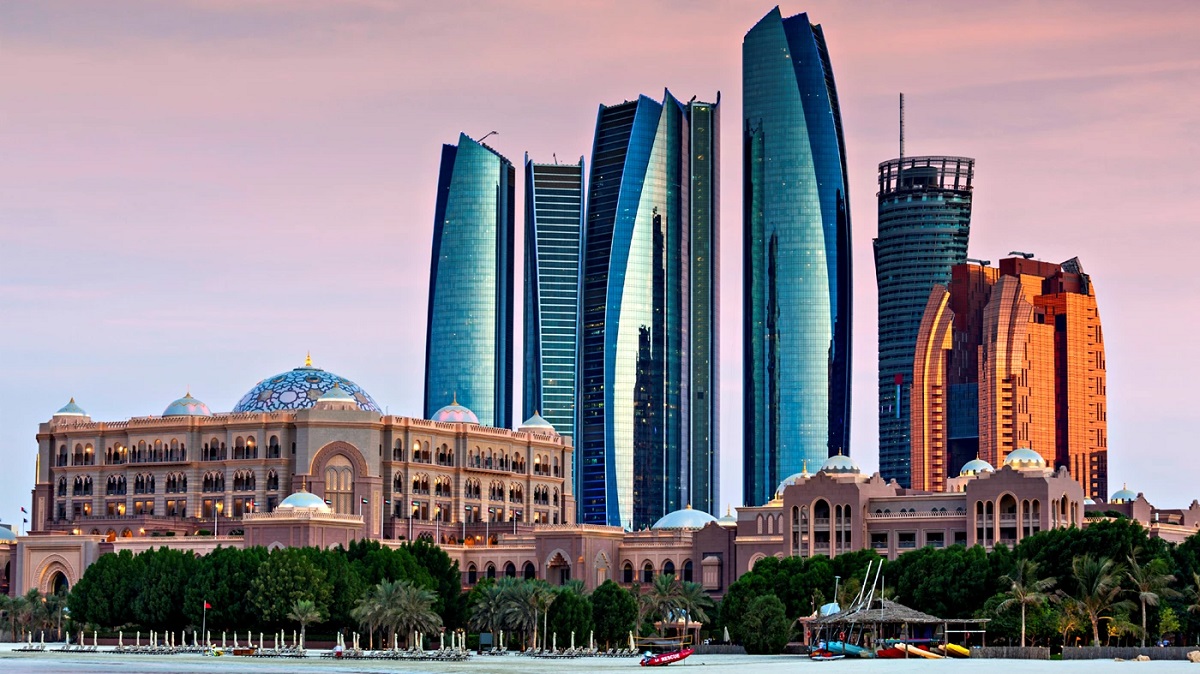
Image: Walter Bibikow / Getty Images
Etihad Towers and Emirates Palace Hotel in Abu Dhabi, UAE.

The United Arab Emirates (UAE) wants to create a more friendly financial climate. Christians, say local evangelical leaders, are among the unintended beneficiaries.

“The business of Dubai is business, even though they are committed Muslims,” said Jim Burgess, evangelical representative to the Gulf Churches Fellowship, referencing the UAE’s economic hub. “But worshiping on Sunday—our traditional day to celebrate the resurrection of Jesus—will be a great blessing.”

Seeking better alignment with international markets, the Emirates is adopting a Monday to Friday workweek. The weekend had previously begun with Friday, in deference to Muslim communal prayers. Christians aligned their corporate worship accordingly.

“It is a bit strange to worship on a Friday, but you get used to it,” said Hrayr Jebejian, general secretary of the Bible Society of the Gulf, who lives in Kuwait. “The [UAE’s] reasons are purely financial, but for Christians it will be like going back to normal.”

Of the UAE’s 10 million people, 88 percent are migrant workers. The Pew Research Center estimates 13 percent are Christians, coming largely from India, Indonesia, and the Philippines, in addition to Western expats.

It is necessary to keep and attract good talent. Alongside officially secular Lebanon and Turkey, the UAE is now the third Middle Eastern nation to keep the Western calendar. But it comes with a tweak. All public sector employees will be dismissed at…

This article was originally published by Christianity Today on December 14, 2021. Please click here to read the full text.

Categories
Christianity Today Middle East Published Articles

Coup Reversal Divides Sudan’s Christians

Courtesy: Susanna al-Nour

As a young mother in Sudan, Susanna al-Nour struggled like many others with rising prices and shortages of goods. International support pledged after the 2019 revolution was slow to materialize. The government struggled to disburse promised aid. And tribal groups protesting in the east were blocking access to essential imports coming through the Red Sea city of Port Sudan.

And then this October things got worse.

Citing divisions among politicians, Abdel Fattah al-Burhan, the general heading Sudan’s mixed military-civilian Sovereign Council, launched a coup against the popularly selected prime minister, Abdalla Hamdok.

Phone and internet connections were cut, Hamdok was detained, and security forces raided neighborhoods to arrest supporters of his government, roughing up others. Thousands poured into the streets, including Nour’s husband, an evangelist and pastor’s assistant at Faith Baptist Church in the Soba area of the capital, Khartoum.

“With a small child, I couldn’t go because of the tear gas,” she said. “But it was necessary to demonstrate against the regime.”

Sudan’s Christians were then solidly in support of Hamdok, sources told CT. Two months later, sources no longer speak in consensus.

At the time, enraged and without communication, the nation went into a standstill. Nour’s online studies through a seminary in Lebanon became impossible. So did her husband’s student ministry—as most young people were marching to reverse the coup.

Back in 2019, Hamdok quickly became the symbol of the revolution. Chosen by consensus among the political and revolutionary groups that deposed the 30-year Islamist dictatorship of Omar al-Bashir, his leadership was one of the few unifying factors in a rapidly fraying partnership between civilians and the military.

And then he wasn’t…

This article was originally published at Christianity Today, on December 10, 2021. Please click here to read the full text.
Categories
Christianity Today Middle East Published Articles

Iran’s House Churches Are Not Illegal, Says Supreme Court Justice

Image: Courtesy of Article 18.

Currently at least 20 Christians are jailed in Iran because their faith was deemed a threat to the Islamic republic’s national security. Of the more than 100 Iranian believers imprisoned since 2012, all have faced similar charges.

But a recent decision by a Supreme Court justice gives hope to them all.

“Merely preaching Christianity … through family gatherings [house churches] is not a manifestation of gathering and collusion to disrupt the security of the country, whether internally or externally,” stated the judge, Seyed-Ali Eizadpanah.

“The promotion of Christianity and the formation of a house church is not criminalized in law.”

Two years ago, nine converts from the non-Trinitarian Church of Iran in Rasht, 200 miles northeast of Tehran near the Caspian Sea, were arrested in raids on their homes and church.

Sentenced to a five-year prison term in October 2019, Abdolreza Ali Haghnejad, Shahrooz Eslamdoust, Behnam Akhlaghi, Babak Hosseinzadeh, Mehdi Khatibi, Khalil Dehghanpour, Hossein Kadivar, Kamal Naamanian, and Mohammad Vafadar are now eligible for release.

The ruling, announced November 24, is “unprecedented,” according to multiple Iranian Christians and international advocates.

“The judge’s main argument is what we have been saying for years,” said Mansour Borji, advocacy director for Article 18, a UK-based organization promoting freedom of religion in Iran that tallied the cases noted above from available public records.

“But it astonished us to hear it at such a high level.” It also cuts against the grain of international understanding. The US State Department’s latest religious freedom report on Iran…

This article was originally published at Christianity Today on December 3, 2021. Please click here for the full text.

Categories
Christianity Today Middle East Published Articles

Reaching Youth for Christ During Sudan’s Coup

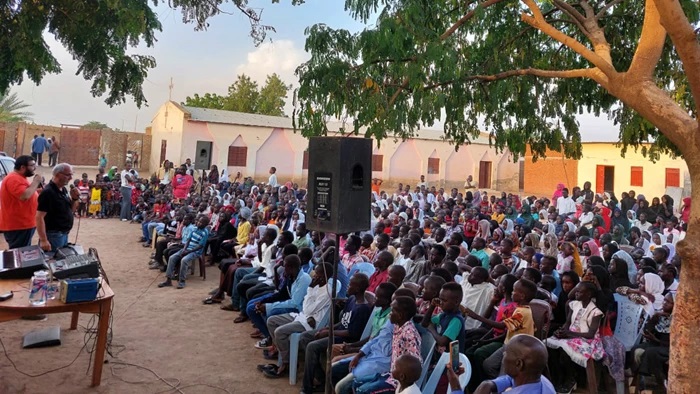
Image: John Sagherian
An outdoor YFC youth meeting in al-Thawra near Wad Madani, Sudan

At 6:30 a.m. last Monday, John Sagherian and Elie Heneine went down to the lobby of their three-star hotel in eastern Sudan and found a crowd gathered around a TV. Filtering in, they heard the news.

The military had staged a coup in the capital, Khartoum, 90 miles to the northwest.

“Instantly, everything we planned for that day was up in the air,” said Heneine, a 27-year-old staff worker with Youth for Christ (YFC) Lebanon. “Oh well, youth work is very organic.”

Sagherian, the 74-year-old YFC regional director, had long been “dying to visit” Sudan. Two years earlier, he had identified a promising country director named Sabet, who since then had recruited seven other volunteer staff members. Sabet even ignored the capital, concentrating instead on the poorer hinterland.

The Lebanese team of two were finally scheduled to meet their new Sudanese colleagues later that day. As malaria had been among their concerns, they had taken 100 mg of medication every day for two weeks prior. The visa had also been a complication, requiring multiple layers of bureaucracy. But it was the BBC app that now troubled Joy, Heneine’s American wife of five months, as Sudan increasingly filled her news feed.

Heneine himself was at peace. Not only was he used to instability as a Lebanese Christian, but Sabet and others assured them everything was fine—despite the political tumult between the once-cooperating military and civilian leaders.

In 2019, the Sudanese army backed massive protests to overthrow 30-year dictator Omar al-Bashir. A spate of religious freedom reforms replaced his Islamist governance, normalization agreements were signed with the nation’s former enemy Israel, and the US removed Sudan from its list of state sponsors of terrorism.

The economy was struggling, but the World Bank was poised to help. Sudan was almost ready to rejoin the community of nations. But politicians were bickering, and a military coup had been suppressed only one month earlier.

In the background was disagreement over sending Bashir to the International Criminal Court to be tried for war crimes in Darfur. Deeper still were issues of army control of large sectors of the economy. And at an unspecified but fast-approaching date, the transitional Sovereign Council was supposed to switch to civilian leadership. Two days before the coup, the YFC team had traveled three hours over bumpy roads with multiple checkpoints to reach…

This article was originally published at Christianity Today, on November 3, 2021. Please click here to read the full text.
Categories
Christianity Today Middle East Published Articles

Lebanon’s Christians Resist Exodus from Worst Economic Collapse in 150 Years

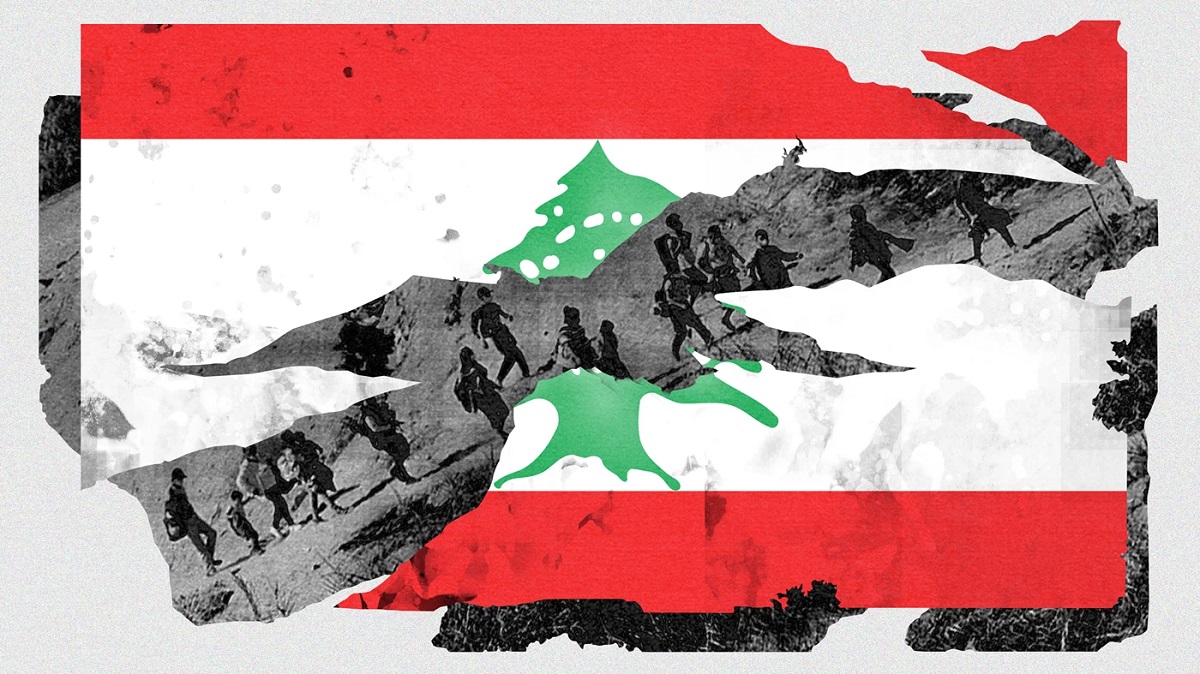
Image: Illustration by Mallory Rentsch / Source Images: WikiMedia Commons / Nick Ut / Getty Images

In 2019, as Lebanon witnessed an unprecedented uprising against its entire political class, evangelical sermons grappled with applied theology:

Whether to join in for justice or honor the king.

Two years later, amid an economic collapse the World Bank says is the worst in 150 years, Lebanese Christians face an even greater pastoral challenge:

Whether to stay and help or escape abroad.

The nation has largely made up its mind.

Estimates indicate as many as 380,000 people have left Lebanon. Every day witnesses another 8,000 passport applications. Food prices have increased 557 percent since the uprising, as the inflation rate has now surged past perennial basket cases Venezuela and Zimbabwe.

Once featuring an economically vibrant middle-class, Lebanon now has a poverty rate of 78 percent. The minimum wage of $450 per month has devalued to a mere $33.

“Ask first: Where can I love the Lord, obey the Lord, and serve the Lord—me and my family?” Hikmat Kashouh, pastor of Resurrection Church Beirut, preached in his recent sermon.

“Praying faithfully, we may come up with different decisions.”

Kashouh urged people not to emigrate easily, to seek counsel with church leaders, and to help the suffering whether they stay or leave.

Fellow evangelical pastor Walid Zailaa, however, was blunt in his assessment.

“Your presence is important. How can we enact God’s will if you are not here?” preached the pastor of Faith Baptist Church in Mansourieh. “If you want to search for a better life for yourself and your children, it is your right.

“But it says to God: You are not able to provide for me in Lebanon.”

Even the lions and tigers are leaving.

“Lebanon is not fit for man or animal,” said Bassam Haddad, who runs discovery Bible studies alongside relief efforts. “But I am optimistic—not for the country, but for God’s work.” Since 2012, his lay-led church services…

This article was originally published at Christianity Today on October 29, 2021. Please click here to read the full text.
Categories
Christianity Today Middle East Published Articles

Worried Christians ‘Wait and See’ After Sudan Coup

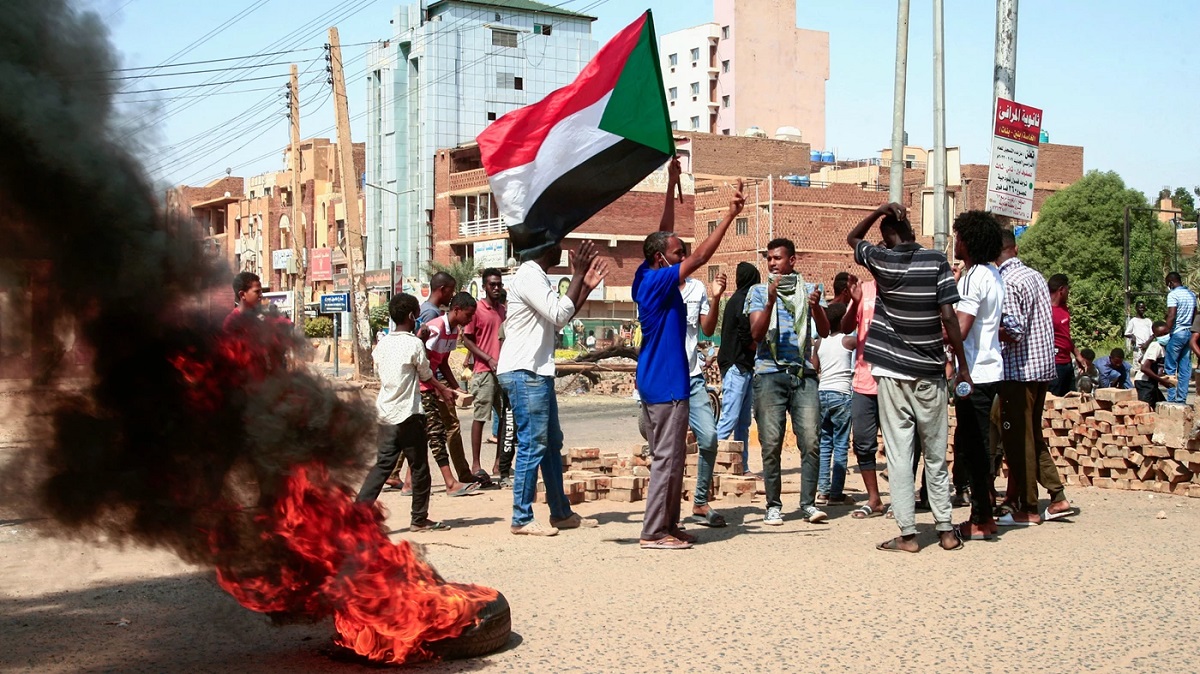
Image: AFP / Getty Images

Amid a near complete phone and internet blackout, Sudan’s Christians are on high alert following a military coup.

Yesterday the head of the North African nation’s transitional Sovereign Council, Gen. Abdel Fattah Burhan, arrested its civilian prime minister, Abdalla Hamdok, his wife, and other officials.

Hamdok, who called the arrests a “complete coup,” called for protests. The Forces of Freedom and Change alliance, which organized the original 2018 revolution that ousted 30-year dictator Omar al-Bashir, called for civil disobedience.

Thousands have filled the streets and were met with repression. Reports say 10 people have been killed and 80 injured.

CT spoke with an American ministry leader who was able to contact a Christian source in Sudan. The leader requested anonymity to preserve their ability to travel. The source was very careful in communication.

“All I can really say is that it is very important to pray for peace and security for all in Sudan,” said the leader, “and that the voice of the people would be heard.”

Meanwhile, a Sudanese Catholic leader felt secure enough to be specific. “The international community should…

This article was originally published at Christianity Today on October 26, 2021. Please click here to read the full text.
Categories
Christianity Today Middle East Published Articles

Egypt’s President Promotes Religious Choice During Human Rights Rollout

Image: Mohamed el-Shahed / AFP / Getty Images
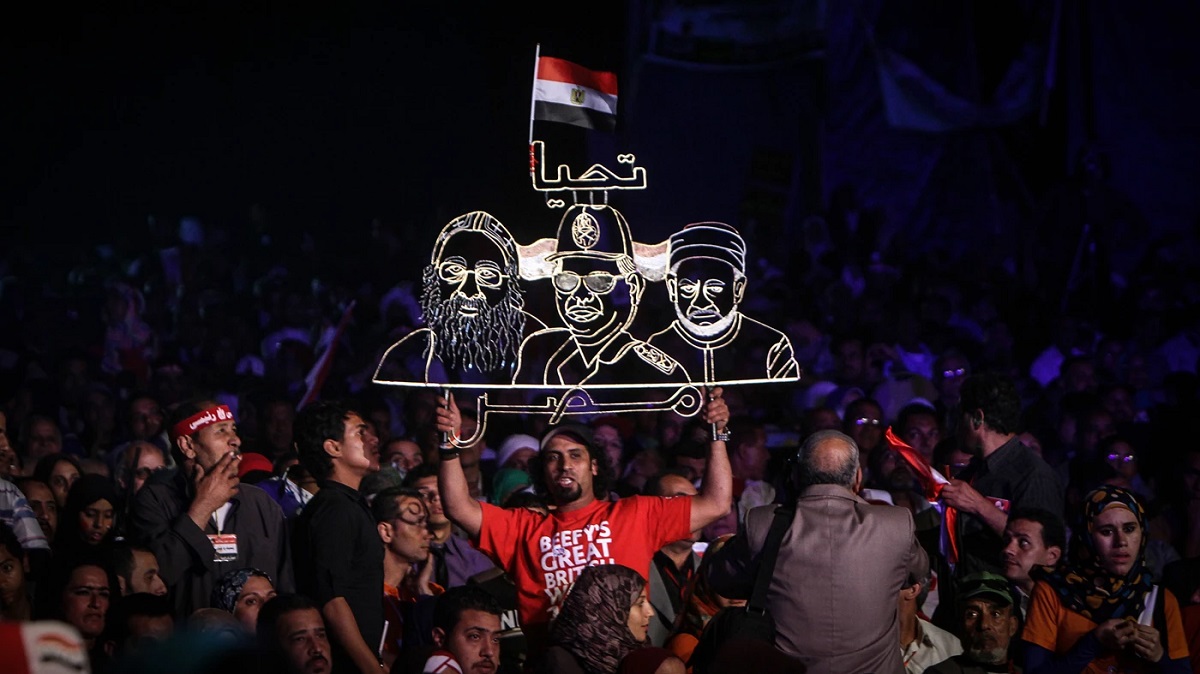
A neon sign portraying now President Abdel Fattah al-Sisi (center) between Coptic Pope Tawadros II (left) and Grand Imam of al-Azhar Shiekh Ahmed el-Tayeb (right) during a rally in Cairo in May 2014.

Committing Egypt to a five-year program of human rights reform, President Abdel Fattah al-Sisi did not mince words about religion.

“If someone tells me they are neither Muslim nor Christian nor a Jew, or that he or she does not believe in religion, I will tell them, ‘You are free to choose,’” he said. “But will a society that has been conditioned to think in a certain way for the last 90 years accept this?”

The comment sent shockwaves through Egyptian society.

“Listening to him, I thought he was so brave,” said Samira Luka, senior director for dialogue at the Coptic Evangelical Organization for Social Services. “Sisi is fighting not only a culture, but a dogma.”

Last month, the government released its first-ever National Human Rights Strategy after studying the path of improvement in 30 other nations, including New Zealand, South Korea, and Finland. The head of the UN Human Rights Council praised the 70-page document as a “key tool” with “concrete steps.”

Egypt’s constitution guarantees freedom of belief and worship and gives international treaties such as the Universal Declaration of Human Rights the force of law. But Article 98 of the Middle Eastern nation’s penal code stipulates up to five years in prison for blasphemy and has been used against atheists and Christians alike.

Will Sisi’s words signal a change?

Since his election in 2014, Egypt’s head of state has consistently spoken about the need to “renew religious discourse,” issuing a challenge to Muslim clerics. And prior to the launch of the new strategy, his comments even hinted at a broader application than atheism.

“We are all born Muslims and non-Muslims by ID card and inheritance,” Sisi stated. “Have you ever thought of … searching for the path until you reach the truth?”

Egypt’s ID card indicates the religion of each citizen. It can be changed to state Muslim in the case of conversion, but cannot be changed to Christian. Prominent public figures have called to remove the label, and debate ensued at the new strategy’s launch. Some argue the ID’s religion field is used by prejudiced civil servants and private businesses to discriminate against the minority religion.

Sisi’s timeframe of “90 years” roughly corresponds to the 1928 founding of the Muslim Brotherhood. And Luka’s “dogma” indicates a widespread social acceptance of interpretations of Islam that privilege the religion’s place in law and culture.

According to a 2013 survey by the Pew Research Center, 88 percent of Egyptian Muslims believe converting away from Islam should be punishable by death.

Calling for the application of sharia law, the Brotherhood won Egypt’s presidency in 2012, only to be overthrown by then-defense minister Sisi the following year after massive popular demonstrations.

Since then, Egypt declared the group to be a terrorist organization, and has moved to eradicate their influence from public life. Thousands—including unaffiliated liberal activists—are in prison or self-imposed exile. Bahey Eldin Hassan, director of the Cairo Institute for Human Rights Studies (CIHRS), called Egypt’s human rights situation “catastrophic.”

Concerned, President Joe Biden withheld $130 million of $1.3 billion in yearly aid to Egypt last month, conditioning it on the release of human rights and civil society activists.

Three days earlier—on September 11—Sisi launched the new human rights strategy to a national television audience. In addition to his comments about religion, he declared 2022 to be the “year of civil society.”

But a new law passed this summer to regulate NGOs was largely panned by human rights advocates. And Hassan stated that the 9/11 timing indicated the document’s primary audience. So too did the fact that the drafting committee was headed by the foreign minister.

“Before it was circulated in Egypt,” he said, “the strategy was published on the webpage of the Egyptian embassy in DC.”

A week later, charges were dropped against four NGOs.

Egyptian Christians, however, are far less critical…

This article was originally published at Christianity Today on October 18, 2021. Please click here to read the full text.

Categories
Christianity Today Middle East Published Articles

Good News for Iraq’s Christians: More Autonomy, Less Dhimmitude

Image: Courtesy of Archbishop Bashar Warda
Chaldean Catholic Archbishop Bashar Warda stands in front of the Catholic University of Erbil, located in the Iraqi Kurdistan capital city’s Ankawa district.

This week, the Christian enclave of Ankawa in Erbil, the capital city of Iraqi Kurdistan, was designated by the autonomous region’s prime minister as an official district, giving believers there administrative autonomy starting next week.

They will directly elect their own mayor, and have charge of security.

Prime Minister Masrour Barzani called Ankawa a home for “religious and social coexistence, and a place for peace.”

Archbishop Bashar Warda, the Chaldean Catholic archbishop of Erbil, called it an “important” and “strategic” decision.

“Our confidence in the future of Kurdistan makes us encourage Christians not only to stay,” he said, “but also to invest in this region.”

Ordained a priest in 1993, Warda was consecrated in his current position in 2010. With Iraq’s hemorrhaging of Christians since the 2003 US invasion, Warda’s bishopric in the autonomous Kurdish region soon became a providential band-aid.

Beginning in 2014, ISIS drove Christians from Mosul and their traditional homeland in the Nineveh Plains, and thousands took refuge in Erbil and other cities in the secure northeast. From 1.5 million Christians in 2003, the Chaldean Catholic church now estimates a population of fewer than 275,000 Christians.

Warda has long been investing to turn the tide.

In 2015, he established the Catholic University of Erbil, and has coordinated relief aid from governments and charities alike. The situation stabilized following ISIS’s defeat in 2017.

But freedom does not come from politics alone. Two years ago, Christians endorsed widespread popular uprisings against the political class. Violently suppressed, the movement’s main celebrated achievement was early elections under a new law designed to promote better local and small-party representation.

Polls open on October 10, and a quota gives Christians five of 329 seats in parliament. However, Warda’s Baghdad-based patriarch has called for a Christian boycott, fearing fraud.

Warda wants a Christian revival. Buoyed by the March visit of Pope Francis, he believes that ISIS broke the fundamental religious and cultural underpinnings of Islamic superiority. Christians no longer are seen as second-class citizens.

In an interview on the sidelines of the IRF Summit convened in Washington in July, Warda told CT about his welcome of missionaries, the Catholic way of witnessing to Muslims, and whether a revived Christian influence in Iraq will lead to future church growth.

Since the defeat of ISIS in Iraq, what challenge has been hardest for the church?

With all the displaced people, images of scattered tents immediately come to mind. But the hard part is not to provide them with food, sanitation, or medical supplies. This is not easy, but it is obvious.

The hard part is to restore their dignity. They understand that ISIS is a criminal gang. And they can bear the wounds of the innocent, knowing they had nothing to do with this dispute.

But their question is “Why?” yet also “What now?”

Men are the providers for the family. Sitting around doing nothing, they tell me, “Bishop, we don’t want money; we want a job. I want to deserve my food.”

Suppose there is aid sufficient to rebuild homes, churches, and schools and even to provide jobs. You have said that this is not enough. It does not establish the basis of citizenship and pluralism.

That is true. But without homes, churches, schools, and jobs, the people will leave the country. And then there are no citizens left.

With a rebuilt community, you can go to the government to speak about the constitution, defending the people’s full rights under the law. There is a link. First have the community; then talk about implementing ideals.

Before ISIS, when the community was stable, were you able to seek your rights?

For 1,400 years there was a sort of social contract: Islam is the religion of the nation, and you are the People of the Book. But know that Islam is the honorable religion of God, which means you are second. In the Quran it says…

This article was originally published at Christianity Today, on August 8, 2021. Please click here to read the full text.
Categories
Christianity Today Middle East Published Articles

How a Jewish Evangelical Won Trust with Arab Muslim Leaders

Image: Courtesy of Joel Rosenberg
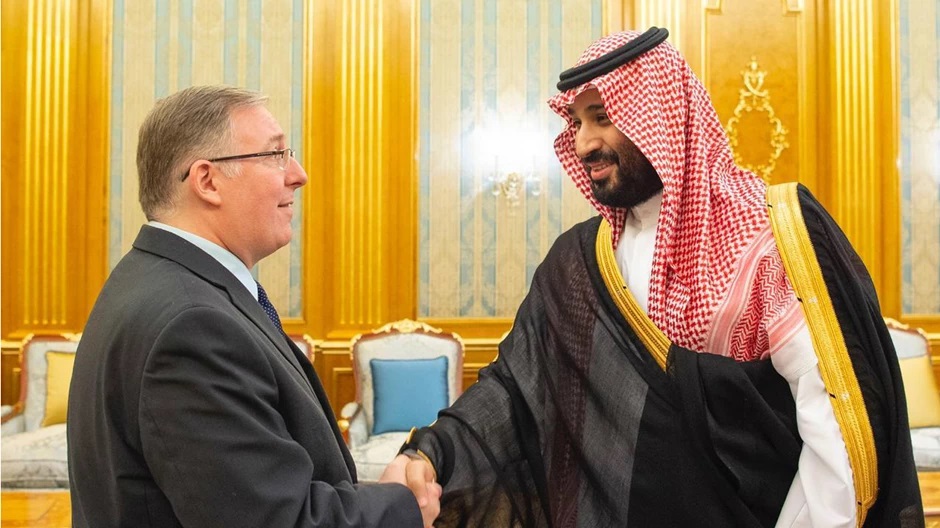
Crown Prince Mohamed bin Salman (right) greets Joel C. Rosenberg at the Royal Court in Jeddah on September 10, 2019.

Fans of Joel Rosenberg’s Middle East apocalyptic fiction can now read his real-time account of real-world peace.

Through behind-the-scenes meetings with kings, princes, and presidents, the Jewish evangelical and New York Times bestselling author had an inside scoop on the Abraham Accords.

For two years, he sat on it.

His new nonfiction book, Enemies and Allies: An Unforgettable Journey inside the Fast-Moving & Immensely Turbulent Modern Middle East, released one year after the signing of the normalization agreement between Israel and the United Arab Emirates (UAE), finally tells the story.

During an evangelical delegation of dialogue to the Gulf nation in 2018, the Crown Prince of Abu Dhabi, Mohammed bin Zayed (MBZ), told Rosenberg of his groundbreaking and controversial plans—and trusted the author to keep the secret.

Named after the biblical patriarch, the accords were Israel’s first peace deal in 20 years. In the five months that followed, similar agreements were signed with Bahrain, Sudan, Kosovo, and Morocco.

Might Saudi Arabia be next? Mohammed bin Salman’s (MBS) comments to Rosenberg remain off the record. But asked if his reforms might include building the kingdom’s first church, the crown prince described where religious freedom falls in his order of priorities.

Enemies and Allies provides never-before-published accounts of Rosenberg’s interactions with these leaders, in addition to Egypt’s President Abdel Fattah al-Sisi and Jordan’s King Abdullah. Included also are exchanges with former president Donald Trump and vice president Mike Pence.

CT interviewed Rosenberg about navigating politics and praying in palaces and about whether he would be willing to lead similar evangelical delegations to Turkey or Iran:

You describe your relationships, especially with the UAE’s MBZ, as ones of “trust.” How did you nurture that? Did you sense it was different than their official diplomatic connections?

I’m not sure I have a good answer for that. Why would Arab Muslim leaders trust a Jewish evangelical US-Israeli citizen?

In the case of King Abdullah, he had read my novel and decided to invite me to his palace rather than ban me from his kingdom forever. The book was about ISIS trying to kill him and blow up his palace. In our first meeting, we spent five days together, and it was not on the record. We were building trust.

I didn’t have that with any of the others. In every case, we were invited rather than us going and knocking on the door. With the case of [MBZ], his ambassador Yousef Al Oteiba had seen the coverage of our Egypt and Jordan trips. He has very good relations with these countries and was able to get the backstory, asking, “Who is this guy Rosenberg? How did it go? Should we do the same?”

I think it has much more to do with being a follower of Jesus Christ. They didn’t know me, but they seemed to trust that followers of Christ who call themselves evangelicals would be trustworthy. That we are genuinely interested in peace, in security in the region, and in a US alliance with the Arab world. And in terms of the expansion of religious freedom, all of them wanted to talk about these things.

They were making a bet that the evangelical community in the United States, while being deeply—though not uniformly—pro-Israel, still has a deep interest in peace and assessing their countries and their reforms fairly. It was the sincerity of our faith that led to trust.

But you still had to nurture trust. How?

I’m sure they vetted me, and in reading my work, they saw I have a deep respect for Muslims. I’m not infected with Islamophobia. I’ve traveled from Morocco to Afghanistan. And I’ve done what I can to strengthen Christian communities in the Arab and Muslim worlds. I’m not your classic…

This article was originally published at Christianity Today, on October 1, 2021. Please click here to read the full text.

Categories
Christianity Today Middle East Published Articles

Moroccan Christians Welcome End of a Decade of Islamist Government

Man walking past voting wall, Marrakesh, Morocco

For the first time in his life, Rachid Imounan cast a vote—and overturned Morocco’s Islamist-oriented government.

He is not alone.

Turnout surged to 50 percent as liberals routed the Justice and Development Party (PJD), which led the North African nation’s parliament the past 10 years. Its share of the 395-seat legislature dropped from 125 to 13.

The PJD finished eighth overall.

“We thank Jesus, the Islamists are gone,” said Imounan, a church planter who lives in the southern city of Agadir. “God answered our prayers, and now we have the government we wanted.”

Aziz Akhannouch of the National Rally of Independents (RNI) was sworn in as prime minister by King Mohamed VI on September 11, after his party captured 102 seats. He is tasked with forming a coalition government to guide Morocco through its current economic downturn.

A constitutional monarchy, Morocco has held multi-party elections since its independence in 1956. But to stave off protests during the Arab Spring, in 2011 the king instituted reforms and transferred significant power to the prime minister.

Mohamed VI retains final say over several government positions, however, and is revered as “Commander of the Faithful” as a direct descendant of Islam’s founding prophet Mohammed.

Christians described “liberal” parties as those that favor freedom—excepting challenges toward the person and position of the king, whose authority is respected by all political entities. Islamists, meanwhile, wished to impose sharia law, cover women, and remove pork and alcohol from neighborhood supermarkets.

“Akhannouch is a businessman. Whether you worship the sun or the moon, he doesn’t care,” said Youssef Ahmed, one of Morocco’s few second-generation Christians.

“He won’t persecute anyone.” Open Doors ranks Morocco…

This article was originally published at Christianity Today on September 21, 2021. Please click here to read the full text.

Categories
Americas Christianity Today Middle East Published Articles

Crusaders No More: What Arab Christians and Muslims Think of Mascot Changes

Image: Illustration by Mallory Rentsch / Source Images: Courtesy of Valparaiso University / Subjug / Getty Images

Nestled in the Ozark Mountains of Missouri, Evangel University will no longer evoke the Middle East—or the Middle Ages.

Since 1955, the flagship Assemblies of God institution has cheered on its Crusaders, replete with helmeted knight and steed.

This semester, the university will soon announce its new mascot after considering almost 300 submitted suggestions—including 77 animal names, 69 military names, and 38 biblical names. The change was made in light of the school’s 55,000 alumni serving internationally.

“The world has changed significantly since the 1950s, when the Evangel community, intending to depict strength, honor, and commitment to the faith, first identified a Crusader as the school’s mascot,” stated interim president George O. Wood in March, when the decision was made to drop the name.

“Today, we recognize that the Crusader often inhibits the ability of students and alumni to proudly represent the university in their areas of global work and ministry.”

For some alumni, the change is a long time coming. The review process first began in 2007.

“When you want to share the love of Christ, you don’t want to identify with something that shuts down conversation,” said Emily Greene, class of 2008. “It is the equivalent of saying ‘jihadist’ to a US Christian, evoking a cruel persona.” Greene grew up as a history-loving missionary kid in Muslim-majority Kazakhstan. But her father…

This article was originally published at Christianity Today on September 9, 2021. Please click here to read the full text.
Categories
Christianity Today Middle East Published Articles

Evangelicals Ask Pope Francis to Help Save Lebanon

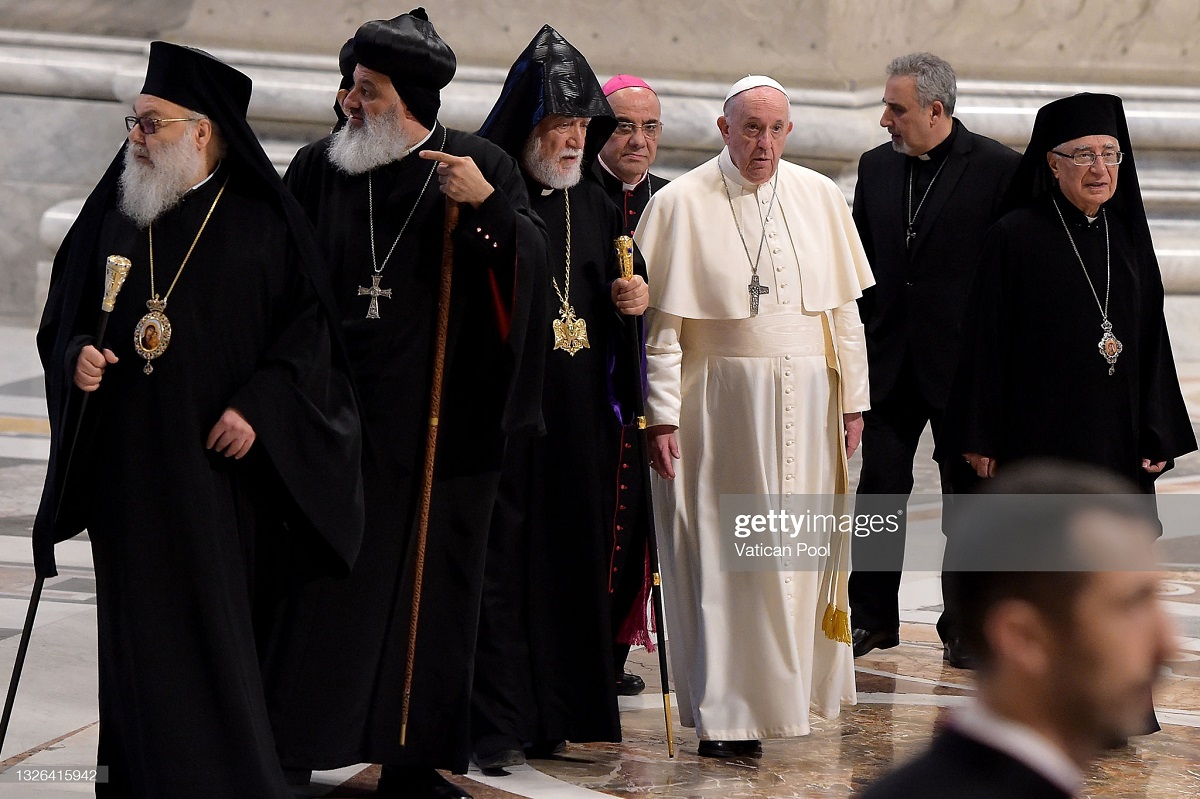
Pope Francis, flanked by senior leaders of the various Christian Churches and communities of Lebanon. Kassab is 2nd from right.

Pope Francis has a message to consider from Lebanon’s evangelicals.

“We are not comfortable in our sectarian system, and thank God that we are not a part of the politics that led the country to collapse,” said Joseph Kassab, president of the Supreme Council of the Evangelical Community in Syria and Lebanon.

“We are not benefiting, and it hurts us like the vast majority of the Lebanese people.”

Last week the Catholic pontiff invited Lebanon’s Christian denominations to the Vatican for a time of prayer and reflection. Ten patriarchs, bishops, and church leaders gathered, as Francis encouraged them to speak with one voice to the politicians of their nation.

Lebanon has been unable to form a new government since its prior one resigned 11 months ago, following the massive explosion at Beirut’s port. As its Christian, Sunni, Shiite, and Druze political parties wrangle over representation, more than half the population now falls below the poverty line.

Following a default on national debt, personal bank accounts have been largely frozen as the Lebanese lira has lost over 90 percent of its value. The World Bank estimates the economic collapse to be among the world’s three worst in the last 150 years.

“We blame and condemn our Christian and Muslim political leaders equally,” said Kassab.

“We have to say this loudly.”

The nation’s longstanding sectarian system, however, works to recycle these leaders. Lebanon’s president must be a Maronite Christian, its prime minister a Sunni Muslim, and its speaker of parliament a Shiite Muslim.

The 128 parliament seats are divided evenly between Muslims and Christians, with one reserved for Protestants. But confessional distribution extends into ministerial and civil service positions, including the army, police, and intelligence services.

Each community seeks to maximize its interests, while being careful not to upset the sectarian balance.

“Positions are distributed by religious identity, not qualification,” said Kassab. “Francis called us to push our politicians toward the common good, but we are imprisoned in this system.” Closed door discussions were…

This article was originally published at Christianity Today, on July 8, 2021. Please click here to read the full text.
Categories
Christianity Today Middle East Published Articles

Do Flags Belong in Churches? Pastors Around the World Weigh In.

Image: Illustration by Mallory Rentsch / Source Images: Anthony Choren / Karl Fredrickson / Joseph Pearson / Unsplash

This year, July 4 falls on a Sunday. As American churches consider how to recognize the holiday during the service, we decided to revisit a question CT posed to American church leaders back in 2013. Here’s what their counterparts from 11 different countries have to say in 2021. Answers are arranged from yes to no.

Egypt: Sameh Maurice, senior pastor, Kasr El Dobara Evangelical Church, Cairo

Yes, I agree in displaying the flag of my country in the church, the flag of my country only and not other countries, as it is a spiritual and not a political orientation.
The purpose of raising the flag is to keep my heart united with my people in prayer for the salvation of their souls. It’s to remember that I must stand in the gap for my people that they may know the Lord and see the light of the gospel, and to tell my country and my people how much I love them and pray for them.

Jordan: Hani Nuqul, pastor, Evangelical Free Church in Jabal Al Hussein, Amman

I strongly believe that each church building should post the flag on the building and in the sanctuary. As an elder and pastor, we made this decision a few years ago to do so in order to show our loyalty as citizens to the country of Jordan. We believe that by doing so, we are a good example and testimony to others and also following the teachings of the Bible.

As the Evangelical Free Church council, we have taken the decision to put the Jordanian flag in all local churches that belong to the council along with the church logo and flag.

This article was originally published by Christianity Today on July 2, 2021. I contributed additional reporting. Please click here to read the full text.

Categories
Christianity Today Middle East Published Articles

Messianic Jews Say ‘Fake Rabbi’ Was Wrong Way to Reach the Ultra-Orthodox

Image: Illustration by Rick Szuecs / Source Images: Blake Campbell / Tanner Mardis / Unsplash / Ktoytor / Getty / Envato

How far can one go to “reach the Jews”?

The apostle Paul put himself “under the law” to give the gospel to his Hebrew brethren (1 Cor. 9:20).

Allegedly a Gentile, Michael Elkohen did the same to reach the modern Jews most fastidiously under the law—the Haredim, often known in English as “ultra-Orthodox.”

Approximately 1.2 million Haredim live in Israel, jealously guarding their traditions.

Dressed in black-and-white garb with a hat, long beard, and side curls, in 2011 Elkohen appeared next to an Iranian Christian on MorningStar TV and prayed for a Muslim world revival.

“When Jesus walked the earth, he was Jewish,” Elkohen told the host, Rick Joyner. “The church, the non-Jewish part of the body, is supposed to stir us to jealousy.”

For more than a decade, his would-be jealous Haredi neighbors were completely unaware. To the insular community in the French Hill section of Jerusalem, Elkohen was a beloved rabbi, scribe, and mohel—performing circumcisions.

In April, the Israeli anti-missionary organization Beyneynu sent shockwaves through the Haredi world with a report claiming that Elkohen was in fact a missionary from New Jersey, whose father is buried in a Mennonite cemetery.

“Other anti-Semites attack the Jews as individuals or as a people,” said Tovia Singer, a rabbi and founder of Outreach Judaism. “But the missionaries are attacking the Jewish faith and working to erase it from the planet.”

The spiritual damage is considerable.

Though there is no evidence anyone was converted in Elkohen’s community, Singer claims that the alleged missionary’s manuscripts and religious services are all invalid. And his presence at prayer may have falsely achieved minyan, the necessary quorum of 10 adults, prompting Torah readings that to Haredi Jews now constitute speaking God’s name in vain.

The 42-year-old Elkohen first moved to Israel with his family in 2006, obtaining citizenship after presenting papers as a Jew related to a famous mystical rabbi in Morocco. Having obtained rabbinical ordination through an online Orthodox US institution, in 2014 he went on to study at a yeshiva in the West Bank.

It was then he gained the attention of the anti-missionary organization Yad L’Achim, who confronted him. Confessing his evangelistic purpose, Elkohen replied that he had since “repented” and “chose Judaism.”

A few years later, Elkohen was living quietly among the Haredim when they rallied around him as his wife—who said she was descended from Holocaust survivors—died from cancer. The community raised money to support the husband and five children in need.

But in April, Elkohen’s 13-year-old daughter told classmates about Jesus.

Beyneynu investigated and felt it had to act. There are 30,000 missionaries in Israel, the organization estimates, and 300 organizations dedicated to evangelizing Jews.

Messianic Jews were quick to distance themselves.

Michael Brown, a popular radio host, author, and apologist, circulated statements from Jews for Jesus, Chosen People Ministries, and One for Israel that deplore deception.

“I know of no Messianic Jews who support what he did,” Brown told CT. “We are open and forthright about our faith.” Tsvi Sadan, an author, stated that Elkohen was “probably…

This article was originally published at Christianity Today on June 23, 2021. Please click here to read the full text.

Categories
Christianity Today Middle East Published Articles

Lebanon’s Christian Schools Are Full of Muslims—and They Need Help

Image courtesy of NESN

The 2021 graduating class of the National Evangelical School in Nabatieh (NESN) is entirely Shiite Muslim.

While certainly not the image of a typical Christian school in the United States, it is hardly an outlier in Lebanon, where 35 evangelical schools average student bodies that are two-thirds Muslim.

Located 35 miles south of Beirut, Nabatieh originally had a 10 percent Christian population when American Presbyterian missionary Lewis Loe founded the school in 1925. Based in the city’s Christian quarter, NESN drew students from all sects until the civil war drove the once integrated communities apart. From 1978 to 1982, Israeli occupation forced the school to close altogether.

When the city was attacked again during the 2006 war, the school’s bomb shelter gave refuge to frightened children. Relative peace since then has allowed the shelter to become a storage room, but less than 40 Christian families remain in the city. Even so, NESN draws from surrounding villages to maintain a Christian share of 10 percent among its 100-some faculty.

But the new crisis facing Lebanon is financial. Year-end inflation for 2020 was 145 percent, as food prices surged over 400 percent. The World Bank judged the economic collapse to be one of the world’s three worst in the last 150 years.

Teacher salaries have lost nearly 90 percent of their value.

Three years ago, NESN’s 100-foot Christmas tree was Lebanon’s largest. This year—as debt equaled the entire operational budget minus teacher salary—the school could not afford even the Charlie Brown version.

A highlight of the school calendar, Christian elements are welcomed by the local Shiite population—including its substantial number of Hezbollah-affiliated families, said principal Shadi El-Hajjar.

Since he assumed leadership in 2013, the student body of 1,400 has more than doubled.

“We teach compassion, forgiveness, and love of enemies,” Hajjar said, “but as culture and practice, not religion.

“This makes us unique, and draws people to the school.”

It was not always this way.

Decades of appreciative tolerance…

This article was originally published on June 16, 2021, at Christianity Today. Please click here to read the full text.

Categories
Christianity Today Middle East Published Articles

Algeria Returns a Historic Church, But Stops Christian Worship at 20 Others

Image: Zineb Tadj / EyeEm / Getty Images
Oran, Algeria

Algerian Christians finally have something to celebrate.

Amid a rash of church closures the past two years, the North African nation’s Council of State returned a historic worship site in Mostaganem, a port city on the Mediterranean coast, to the Algerian Protestant Church (EPA).

The EPA loaned the building, which dates to the French colonial era, to the Ministry of Health in 1976. But in 2012, when the site’s medical clinic changed locations, the local governor gave the facility to an Islamic charitable association.

The EPA sued, and the case was decided in its favor in 2019.

That year, however, marked an escalation against Protestant churches. Three of Algeria’s largest congregations were shut down, and the Mostaganem authorities failed to implement the court decision.

Now they have.

But with 20 other churches ordered to cease activities—and 13 sealed completely—Algerian Christians remain cautious.

“Just because we have the keys,” said Nourredine Benzid, general secretary of the EPA, “doesn’t mean the case is over.”

Benzid’s Source of Life Church in Makouda was among those closed in 2019. Located in the mountainous Tizi Ouzou district, the area is home to many of the nation’s estimated 100,000 Christians. By contrast, the Mostaganem church was…

This article was originally published at Christianity Today on June 10, 2021. Please click here to read the full text.
Categories
Christianity Today Middle East Published Articles

Rockets, Riots, Sermons, and Soccer: Christian Views on the Conflict in Gaza and Israel

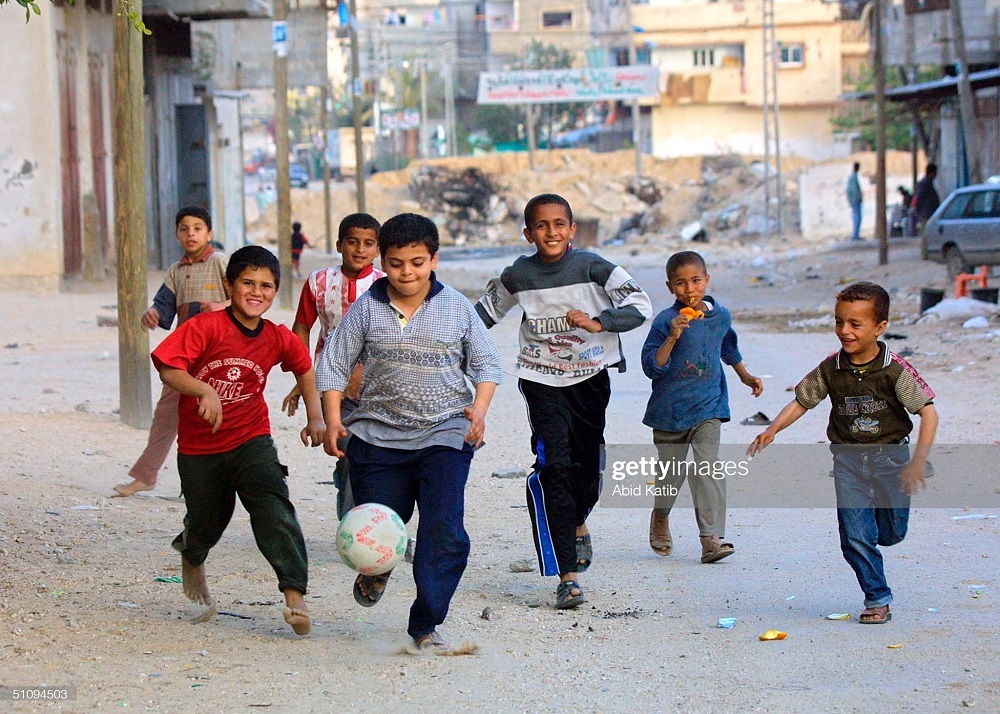
Palestinian Boys Play Game Of Soccer. (Photo By Abid Katib/Getty Images)

Bombs fall in Gaza as rockets target Israel.

Frustrated Arab rioters are met by extremist Jewish settlers.

And in the middle of it all, Danny Kopp sent his boys out to play soccer.

Numbers were down at the Jerusalem neighborhood park frequented by Jew and Arab alike, but his 13-, 10-, and 8-year-old sons still translated between the sides.

“These encounters, as small as they are, remind belligerents that coexistence is still viable,” said the chairman of the Evangelical Alliance in Israel.

“Wholesale vilifying is simply inaccurate.”

But it is easy to do, if attached to a favored narrative.

Since the outbreak of fighting on May 10, Israeli bombs have leveled almost 450 buildings in Gaza, including six hospitals, nine health centers, and the headquarters of the Associated Press. Hamas authorities count 232 dead, including 39 women and 65 children. More than 1,900 people have been injured, and 52,000 displaced from their homes.

But 160 of these have been militant fighters, said Israeli authorities. Hamas’s indiscriminate barrage has launched more than 4,000 rockets and killed 12 people—including two children—while injuring hundreds. Israel’s Iron Dome defense system has intercepted most rockets, but Iranian sponsorship of Hamas has led to a dramatic increase in missiles able to target Jerusalem.

Such long-range weapons represent 17 percent of the thousands of missiles fired this month. Nine years ago, they represented only 1 percent.

A ceasefire is now in place. President Joe Biden pledged to work through the United Nations and the Palestinian Authority to rebuild Gaza. The US would prevent such aid from restocking Hamas’s arsenal, while allowing the replenishing of the Iron Dome’s defenses.

The weapons evolve, though the animosity is familiar.

But what has shocked and saddened a dozen sources interviewed by CT—half Jewish and half Palestinian—is the ethnic violence that has torn through previously peaceful towns of coexistence. In Lod, Haifa, Nazareth, and elsewhere, Arab rioters have set 10 synagogues and more than 100 Jewish homes on fire, while looting or damaging hundreds more.

Israel called up 7,000 reservists to quell the violence. But reports say police have been far more lenient with Jewish settlers who have responded in kind, though with less damage. Video recordings, however, depict settler attempts to seize Arab Israeli properties.

The outbreak of violence is tied to Israeli legal proceedings to evict Palestinians from their homes in the East Jerusalem neighborhood of Sheikh Jarrah. The families have resided there for generations, and the land dispute has alternate explanations. Protests were met with violence, which then spread to the al-Aqsa Mosque. Hamas fired rockets in solidarity.

And amid the backdrop of this quagmire, Kopp sent out his children.

On Saturday, he preached the same message to his mixed Jewish-Arab Narkis Street Congregation in Jerusalem, asking his flock to purposefully hear both sides.

“Jesus constantly broke out of his information bubble,” he said, “engaging every kind of person imaginable and on a consistent basis.”

Across the separation wall, however, Munther Isaac’s Sunday sermon had a different tone. “What is required is not…”

This article was originally published at Christianity Today on May 20, 2021. Please click here to read the full text. Additional reporting by Jeremy Weber.
Categories
Christianity Today Middle East Published Articles

Christian Street Artist Honors Beirut Explosion Victims with 204 Illegal Portraits

Nine months later, Brady Black was fed up—and inspired.

Last August, one of the largest non-nuclear explosions in human history leveled Lebanon’s main port and thousands of homes.

Charities and churches scrambled to help, as 204 people were killed.

The government has done next to nothing.

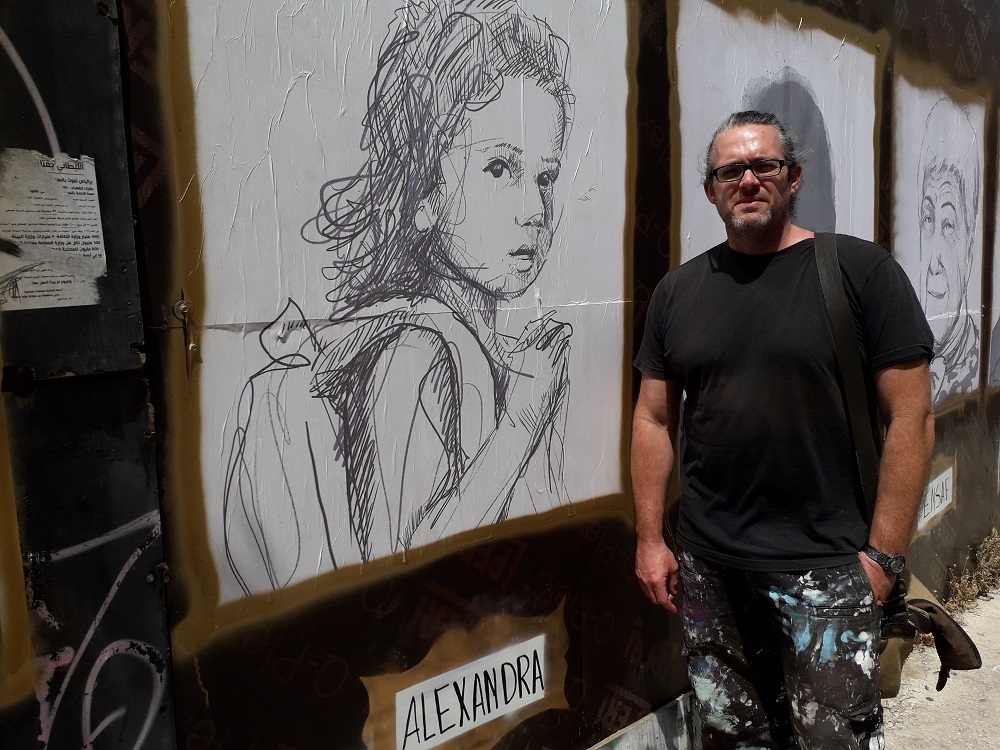
But now, each victim has a portrait across from Beirut’s famed Martyrs Square.

“Families were protesting, holding up pictures of their relatives as they demanded justice,” said Black.

“They wanted them to be seen. So we made it loud.”

An American street artist resident in Lebanon since 2015, Black teamed up with Art of Change to illegally create the capital city’s largest informal portrait gallery. Run by a secular British artist and a Lebanese Muslim from the heterodox Druze sect, the art institute co-founders sponsored Black’s evangelical idea for “good mischief.”

Scouring the internet for every name and image that could be found, Black digitally drew each face with the utmost care—with one caveat. No matter the importance of the victim or the degree of fame achieved in their death, each was limited to one hour of his creativity.

An hour he bathed in prayer for the surviving family.

“People come up to me, frantically asking, ‘Where is my son?’” said Black of his installation.

“‘Come with me,’ I tell them. ‘I know exactly where he is.’” Each victim’s portrait is…

This article was originally published at Christianity Today, on May 10, 2021. Please click here to read the full text.

Categories
Christianity Today Middle East Published Articles

ISIS Executes Christian Businessman Kidnapped in Egypt’s Sinai

Image: Wilayat Sinai / Telegram screenshot
Nabil Habashi Salama, a Coptic Christian kidnapped from Bir al-Abd in North Sinai, speaks before his execution in the propaganda video of an Egyptian ISIS affiliate.

The Islamic State has claimed another Christian victim.

And Egypt’s Coptic Orthodox Church has won another martyr.

“We are telling our kids that their grandfather is now a saint in the highest places of heaven,” stated Peter Salama of his 62-year-old father, Nabil Habashi Salama, executed by the ISIS affiliate in north Sinai.

“We are so joyful for him.”

The Salamas are known as one of the oldest Coptic families in Bir al-Abd on the Mediterranean coast of the Sinai Peninsula. Nabil was a jeweler, owning also mobile phone and clothing shops in the area.

Peter said ISIS targeted his father for his share in building the city’s St. Mary Church.

In a newly released 13-minute propaganda video entitled The Makers of Slaughter [or Epic Battles], a militant quotes the Quran to demand the humiliation of Christians and their willing payment of jizya—a tax to ensure their protection.

Nabil was kidnapped five months ago in front of his home. Eyewitnesses said during his resistance he was beaten badly, before being thrown into a stolen car. It may be that these were kidnappers, because in the video that shows Nabil’s execution, he said he was held captive by ISIS for 3 months and 11 days.

On April 18, he was shot in the back of the head, kneeling.

“As you kill, you will be killed,” states the video, directed to “all the crusaders in the world.”

It addresses all of Egypt’s Christians, warning them to put no faith in the army. And Muslims which support the Egyptian state are called “apostates.” Two other Sinai residents—tribesmen who cooperated with the military—are also executed in the video.

Peter said that in the effort to drive Nabil from his faith, his teeth were broken.

His daughter Marina joined in the tribute. “I will miss you, my father,” she wrote on Facebook. “You made us proud…

This article was originally published at Christianity Today on April 19, 2021. Please click here to read the full text.