Categories
Arab West Report Middle East Published Articles

Nadia Mostafa: The Hypocrisy of the Coup and its Constitution

Nadia Mustafa
Nadia Mustafa

From my recent article at Arab West Report, continuing a series on the composition of Egypt’s constitution. Nadia Mostafa is the former director of the Program for Dialogue and Civilizational Studies at Cairo University. She is also an Islamist, though not a formal supporter of the Muslim Brotherhood. But she is a severe critic of the events which removed him from power.

She did not want to even discuss the content of the constitution, unfortunately, deeming it illegal. But she was very willing to express her displeasure with several contributing forces:

Chief among them are the very Salafis the Brotherhood cooperated with, in error. In supporting their demand for Article 4, giving the Azhar a role in legislation, and Article 219, defining the principles of sharī‘ah, the Brotherhood gave into unnecessary, non-historical, and ultimately fear-inducing intimations of a religious state. But when the Salafis sided with the coup leaders, Mustafá notes, look how quickly they dropped these two articles. All the Nour Party desired, it seems, is to take the place of the Brotherhood in the political spectrum.

Next she takes aim at the liberals:

Early in the transitional period these same liberals bemoaned the extremism of the Salafis and the interference of their Saudi Arabian backers. Now, they speak of the Salafis as possessing political acumen and of the Saudis as important financial backers for Egypt.

Similarly, liberals rejected the constitution of 2012 because it was an unrepresentative document crafted by an Islamist majority. But this did not prevent them from orchestrating an unrepresentative majority of their own, which all but excludes political Islamists, except for those who play by the measure of the coup. And as for their rhetoric saying the Muslim Brotherhood was invited but refused, what sort of invitation can be accepted when the president and his aides are held incommunicado, and the organization brandished as terrorists? Their goal, Mustafá believes, is to eliminate political Islam, or at the least any political Islam that has leverage.

Finally, she criticizes the church:

Excited by the possibility of gains in the constitution, some Coptic groups threatened to boycott or urge a ‘no’ vote if they did not win a special parliamentary quota. But when this failed to materialize, Pope Tawadros stepped in to support a ‘yes’ vote in the referendum. Christians, Mustafá believes, are not seeking their rights but to limit the rights of political Islamists, allied with seculars against the Islamic identity of the country.

But she also has critical words for the Brotherhood:

She and others of similar mind advised the presidency that Mursī was leaning too heavily on the support of Salafis rather than maintaining unity with liberals and other moderates. She believes there should be a separation between the preaching of a religious organization and the rhetoric of its political spinoff. A civil system must allow for religion in the public square, but politicians should not play with religion for political gain. When many call for the leadership of the Brotherhood to leave, she agrees, provided the same be true for current leadership across the board. The old guard, everywhere, must yield to the youth.

Please click here to read the full article at Arab West Report.

Categories
Atlantic Council Middle East Published Articles

Anti-Coup Terrorism: License and Reluctance

Street Terrorism

From my recent article on Egypt Source. Here is the license:

Recently on the Istanbul-based pro-Brotherhood channel named Raba’a Sheikh Afifi called on Muslims to resist the coup, but not with weapons. “This will enable them to commit their crimes against us with full freedom,” he said.

It is not that the use of weapons is wrong, however. Afifi quotes the 10th Century jurist Ibn Hazm to say that such fighting is prohibited if it will not prove victorious. Since the security forces are better armed, this strategy will backfire, he explains.

“All we can try to do is terrorize them,” Afifi continues, “by burning their cars, threatening them, burning their homes, and other such efforts.” He says this is consistent with peaceful resistance and alleges it is legitimate under sharia law.

And here is the reluctance:

Even so, the idea is uncertain to at least one of the sheikh’s followers. “It is a way among many ways to resist the coup,” said Hani Fawzi, general-secretary of the Asala Party, very hesitantly. “But maybe it will work only five or ten percent.”

Please click here to read the full article at Egypt Source.

Categories
Arab West Report Middle East Published Articles

How to Amend the Egyptian Constitution

During final discussions over the constitutional text

From my recent article at Arab West Report, continuing a series on the development of Egypt’s constitution:

Following the passage of the 2012 Egyptian constitution in a disputed and divisive referendum, Muslim Brotherhood leader Muhammad al-Biltājī praised the text and tried to assuage opponents of any flaws it might contain.

Calling it a human effort, and therefore not without errors, he said, “I hope we all seek to implement what is good for the people of this homeland. Certainly, we will amend whatever future days will prove needs amendment.”

Shortly before passage of the 2014 Egyptian constitution in a largely uncontested referendum due to opposing boycotts, supporters praised the text and tried to assuage those unconvinced due to a few controversial articles.

Lamīs al-Hadīdī, a prominent television news anchor, rallied for a yes vote and said, “This is not a divine document, and by the way, this document can be amended. If you are fine with 80 percent of the constitution, or even 60 percent, then you have to go and vote yes.”

Apart from their propagandist intent, these statements beg the question: What is the process for amending the constitution? Both documents are remarkably similar, drawing on the 1971 constitution, but with one key difference added in 2014.

The article seeks to describe the procedure, but this excerpt from the conclusion will simplify and describe the difference in question, the key difference in both 2012 and 2014 from the 1971 text, and why both might be there:

To summarize, then, with basic context, it appears the authors of the two constitutions following the January 25 revolution recognized the necessity of giving hope to popular opposition to certain articles in their proposed charters. By lowering the initiation process from one-third to one-fifth, both constitutions allowed a minority presence in the parliament to stimulate constitutional change.

It is unclear why two discussion periods of debate are necessary, but in preserving the general process of constitutional amendment, the authors of both texts maintained the overall difficulty of securing an amendment, as is reasonable.

On the other hand, without an established tradition of a balanced parliament it may be argued that passing an amendment is a relatively easy process. Given the dominant Islamist makeup of the first post-revolution parliament, perhaps they intended the ability to further Islamize the constitution beyond what was negotiated among political forces. Similarly, given the popular turn against the Muslim Brotherhood, perhaps civil forces anticipated reducing further the tinge of religion negotiated with the Islamist Nour Party. In either case, no public referendum in Egypt has ever been defeated [and requires only 50 percent approval].

Any discussion of intentions is purely speculative, but it appears the authors of the 2014 constitution were cognizant of the possibility of Nour Party or old regime electoral domination, either of which might chip away at their constitutional text. Perhaps aware of their own to-date failings to mobilize politically, these liberal authors added the clause to prevent any circumscribing of freedom and equality. It is unclear, however, the manner in which this clause will be interpreted.

Analysis aside, the process of amending the Egyptian constitution remains remarkably consistent over time. Securing the stability of the constitutional order will require the development of a diverse parliament, from which all future changes will need to find substantial cross-party agreement. This assessment, however, may be overly optimistic given that neither post-revolutionary constitution was passed with widespread societal consensus.

Please click here to read the whole article at Arab West Report.

Categories
Current Events Lapido Media Middle East Published Articles

The Egyptian-Canadian Surgeon Going Home to Serve the Poor

Dr. Sherif Hanna
Dr. Sherif Hanna

From my new article in Lapido Media:

A new collaboration – in an old mission hospital – will train Egyptian surgeons to serve in rural settings.

Sixty per cent of Egyptian doctors work abroad – but a unique collaboration will fight this trend.

Incredibly perhaps, Egyptian Christian Dr Hanna Sherif is relocating from an élite life in Toronto, Canada to the small village of Menouf in the Nile Delta for the next five years, in defiance of a US State Department warning of ‘risks of travel’.

An acclaimed liver surgeon and academic, Sherif is returning to his country of birth after a forty three year absence to run a new in-country surgical training programme…

Here is a brief excerpt about what he will do, and the motivation thereof:

Harpur’s resident trainees will benefit from 10-15 visiting surgeons each year, and will spend six months of their programme in large hospitals in Kenya, Cameroon, and South Africa.

In exchange the residents will work at least one year in the handful of PAACS-accredited Christian hospitals in Egypt for every year they are financially supported.

Rural hospitals, including old mission hospitals, are often not well equipped and generally pay low salaries, said Hanna. As such they fail to attract well-trained surgeons.

In addition, Dr Amr al-Shoury, a leading figure in the ongoing partial doctors’ strike in Egypt, the government system pays abysmally poor wages to medical professionals.

He told Ahram Online this drives 60 per cent of doctors abroad.

Thompson believes maintaining the standards of care for the poor under these circumstances in the least attractive districts requires a special commitment.

‘Christian hospitals will go out of business if they cannot hire well-trained specialists that are committed to their values,’ said Thompson. ‘Ours is to honour and glorify Christ in his command to care for the sick.’

Please click here to read the full article at Lapido Media.

Categories
Arab West Report Middle East Published Articles

Hagag Oddoul: Nubia Recognized in the Egyptian Constitution

Hagag Oddoul
Hagag Oddoul

From my recent article at Arab West Report, continuing a series of interviews with members of the Committee of Fifty which wrote the constitution. Hagag Oddoul is a novelist of Nubian origin, and an advocate for their cause. The article describes his background as well as that of his people, and this excerpt defines that cause as it became defined in the constitution:

Article 236, however, was his crowning achievement, and he did not have to play the withdrawal card to win it. It specifically refers to Nubia as a geographical area:

The state shall develop and implement a plan for the comprehensive economic and urban development of border and underprivileged areas, including Upper Egypt, Sinai, Matrouh, and Nubia. This is to be achieved by the participation of the residents of these areas in the development projects and the priority in benefiting from them, taking into account the cultural and environmental patterns of the local community, within ten years from the date that this Constitution comes into effect, in the manner organized by law.

The state works on developing and implementing projects to bring back the residents of Nubia to their original areas and develop them within 10 years in the manner organized by law.

It should be noted the term ‘right of return’ does not appear in this article, and that is fine with Udūl. He recognized this expression was charged with connections to the Palestinian issue, which would only serve to distract the discussion. It is the concept he advocated for, and he faced little opposition from his colleagues.

Recognition that the border areas of Egypt needed development that involved local residents was easily achieved, the language of which pleased Udūl as a great achievement. But there was some discussion about how to term the responsibility of the state in returning the residents of Nubia to their original areas. He personally wanted the state to be ‘obligated’, while a lesser wording ‘to secure’ was also rejected. In the end he was satisfied with ‘works’, because it was accompanied by a timeframe of ten years. Being measurable, it must happen.

Oddoul also describes the negotiations over anti-discrimination articles and those pertaining to culture. Please click here to read the rest of the article at Arab West Report.

Categories
Arab West Report Middle East Published Articles

Debating Religious Freedom in the Constitution: European Concerns and Egyptian Realities

L: Amr Moussa, head of Egypt's constitutional committee; R: Catherine Ashton, EU representative for foreign affairs
L: Amr Moussa, head of Egypt’s constitutional committee; R: Catherine Ashton, EU representative for foreign affairs

From my recent article at Arab West Report, focusing on the critique of Dr. Wolfram Reiss, professor of historical and comparative studies of religions at the University of Vienna, and the response of Bishop Antonios of the Coptic Catholic Church:

Reiss believes that the post-Mursī constitution of 2014 removed the worst features of the 2012 charter, in particular the role given to the Azhar in review of legislation in Article 3, and the definition of sharī‘ah along traditional lines of jurisprudence in Article 219.

Yet despite the amendment and removal of certain articles, Reiss finds that the constitution of 2014 does not provide a sufficiently new basis for any of the urgent questions which have long prompted interreligious debate. The question of the building and repair of churches is postponed, religious freedom is guaranteed only for already recognized groups, the question of apostasy is not addressed, and the mention of political representation for Christians is very vague.

“I do not see any progress concerning religious freedom and the status of the Christians in Egypt,” he wrote in an email to Cornelis Hulsman. “So I see the ‘new’ constitution as a preservation of the status quo only. I would be grateful if you (or H.G. Anba Antonius) could convince me that I am wrong.”

The article elaborates his concerns and adds Hulsman’s description of background context. Reiss had read the full transcript of an earlier interview with Bishop Antonios, and responds:

As for the articles specifically discussed concerning religious freedom, Bishop Antonios both agreed and disagreed with the comments of Reiss. “Anything in the world might not be done correctly and could go wrong,” he said. “There has to be a public will for the constitution to be applied.”

This was his comment specifically about Article 53 on discrimination, but it concerns also the issues of apostasy and the rights of non-monotheistic religious adherents. The constitution states that freedom of belief is ‘absolute’, improving and strengthening the language of earlier versions. Of course this means one has the right to change religions. Concerning Baha’is in particular, Article 6 on citizenship states that obtaining official papers proving his personal data is a right, so how can the religion field be recorded incorrectly? But, he understood, the reality for both could be different.

Reality also dictated the acceptance of Articles 2 and 3, as well as 235 on church building. His personal opinion is with Reiss, that it would be better if the language of the constitution did not differentiate by religion. This even included Article 244 on Copts in parliament. Bishop Antonios is against quotas of any kind.

On this article he agreed with Reiss that the language was vague, but that this provided flexibility. It may be preferable to have a certain system to promote Copts in parliament given current realities about the lack of familiarity with democracy, but the law on this matter can change year by year as the reality changes. Ongoing political dialogue, as well as the will of the public, will determine implementation.

Please click here to read the full article at Arab West Report.
Categories
Arab West Report Middle East Published Articles

Salafi-Jihadis, Sinai, and the Anticipation of Terrorism

L: Mohamed al-Zawahiri, R: Mohamed Morsi

This post recalls two articles published last year at Arab West Report but not referenced on the blog, on the SalafiJihadis. The testimony is poignant based on current developments:

“We are distinguished from other Islamic trends by not accepting partial solutions,” he said. “The Brotherhood has understandings with the Americans, and they are not working on behalf of the shar’īah but to keep power for themselves.” As for the Salafīs, “They were a pure religious movement, far from politics, but when we see how the Nour Party has behaved after the revolution we see a great similarity to the state security apparatus, finding consensus with the military and even with the liberals.”

This jihad, however, does not target the West directly, though he lauds al-Qā’idah, justifies the Benghazi operation, and warns Americans their blood is not safe in Muslim lands. In fact, though his rhetoric is violent – “We have come to smash the pillars which the people have gotten used to” – the Salafī-Jihadi effort consists entirely of preaching, however much the State Department says otherwise.

“We do not carry weapons in Egypt,” he said. “We are engaged only in an intellectual battle. The security wants to charge us with being armed, but we reject this completely.”

The above quotes from Ahmed Ashoush, a colleague of Mohamed al-Zawahiri. They are accused of links with the Muslim Brotherhood and of fueling Sinai-based terrorism to protest his removal from power.

The second article reflects an email exchange with two experts on Islamist movements, Khalil al-Anani and Ahmed Zaghloul. Here is an excerpt from the latter, on the propensity of different groups toward violence:

Do you believe they are engaged in or preparing for an armed struggle and/or terrorist activity in Egypt or the region?

A large number of the remaining Jihad Organization has renounced violence; so has Jamā’at al-Islāmīyah following their ‘Revisions’ and created a political party with members in the Egyptian parliament. These are the classic organizations associated with violence.

But the idea of using violence is still present and will never disappear. There are a number of vine-like organizations in the Sinai which have conducted violent operations recently. There are others who have adopted the ideas of al-Qā’idah in Egypt.

But the source of danger is not the known groups but the sleeping cells who maintain the idea of jihad. Some of these have traveled to Iraq, Libya, or Syria for the jihad there. As long as there are places subject to aggression there will be suitable areas for these cells to be active.

Reality changes frequently, as does the ability to accept comments at face value. But these testimonies are offered in the ongoing effort to determine what is happening in Egypt, for the good of the country. Please click here to read the full articles at Arab West Report.

Categories
Arab West Report Middle East Published Articles

Bishop Antonious: A Full Transcript on Constitutional Proceedings

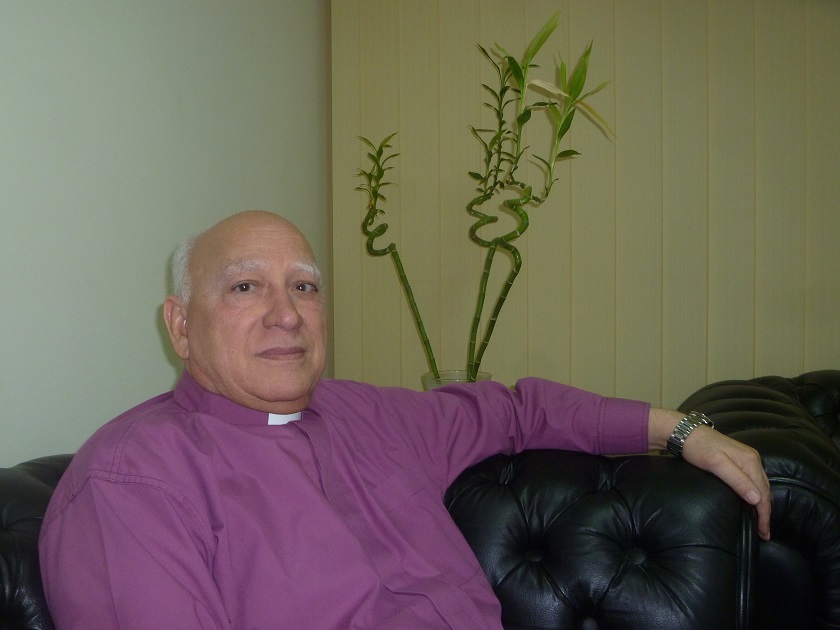
Bishop Antonios

Bishop Antonious Aziz of the Coptic Catholic Church served as his church’s representative on the Committee of Fifty which rewrote Egypt’s constitution. He agreed to an interview with Arab West Report on December 10, 2013, shortly after the final text was approved by the committee and just over one month before ratification by the Egyptian people in a referendum on January 14-15. In the interview he provided clear and frank insight into the inner workings of the committee.

Arab West Report has provided a full transcript of the interview, available here. To summarize, Bishop Antonious described the process of his selection by the president and church, and the subcommittees on which he served. Each member assigned himself a place in one or more of five groupings: Basic Components of the State, Rights and Freedoms, System of Governance, Listening, and Drafting.

The bishop worked in the first and last of these subcommittees, making him uniquely qualified to comment on the passage of the key religious articles, from start to finish.

The listening committee received proposals from hundreds of citizens, forwarding these to members of the appropriate group. The group would interact with these alongside their own proposals, taking internal votes to forward their consensus text to the drafting committee. The drafting committee would then amend both wording and content as they saw fit, sending the article back to the subcommittee to produce a consolidated text. This text would then be debated by the full Committee of Fifty, which after agreement would enter a final, non-binding review by the Committee of Ten. These ten were constitutional experts who provided the Committee of Fifty the initial amended copy of the 2012 constitution, from which to work. Finally, every article required a 75 percent vote of approval to merit placement in the constitution, and the majority of articles passed without difficulty.

Getting to the place of passage, however, often entailed much difficulty. This was nowhere more evident than the religious identity articles which lead the constitutional text. Because of the difficulty, these were postponed until the end.

Bishop Antonious described the interaction between the church, Azhar, and Salafi Nour Party representatives. In Article 1, should Egypt be part of the Muslim nation (ummah)? Should Article 2, making sharī’ah the primary source of legislation, remain in the constitution? Should it be further interpreted, as done in Article 219 of the 2012 constitution?

Should Article 3, giving rights in personal status and religious organization to Christians and Jews, be extended to non-Muslims in general? Should Article 7 maintain language from 2012 giving the Azhar a role in the process of legislation? In all these articles and more, Bishop Antonious provided insight into the manner of discussion which eventually produced agreement. He also describes the personal interaction and attitudes experienced along the way.

Not everything in the final text met with Bishop Antonious’ agreement, and he is frank about some of these areas. But even so, the end result is a constitution with which he is deeply satisfied. Please click here to read the full transcript of the interview at Arab West Report.

Photo credit: ACN

Categories
Atlantic Council Middle East Published Articles

The Face of Egypt’s Educational Flaws

Egypt Swine Flu School

From my recent article on Egypt Source:

Education in Egypt has long been criticized, a fact recognized by the authors of the new constitution. Articles 19, 21, and 23 oblige the government to spend four percent of its gross national product on public education, two percent on higher education, and one percent on scientific research. These targets must be met, according to Article 228, by the school budget of 2016 and gradually increase thereafter until meeting international norms.

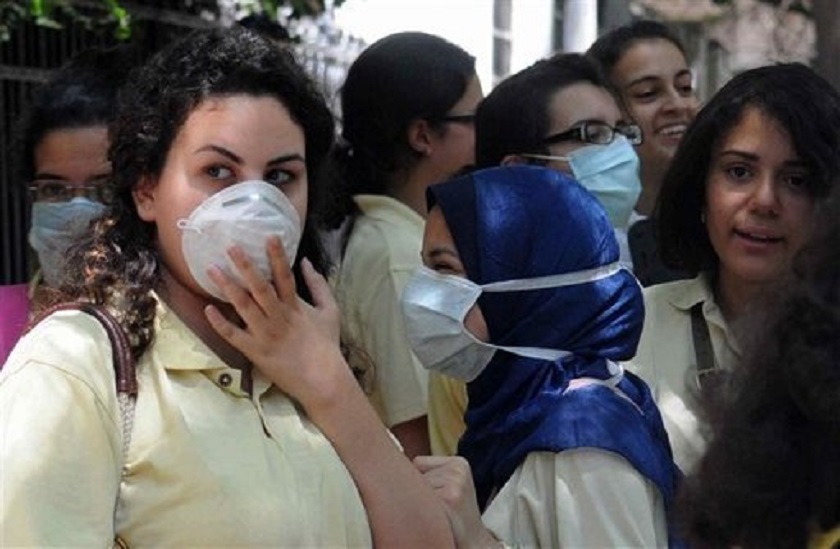
The constitutional referendum was approved on January 15, as high school students were readying to complete their exams before winter break. Their return to school was scheduled for February 9 but has now been postponed twice. The official reason is due to the 38 deaths from the H1N1 virus, though some suspect political instability plays a role. Regardless, students are now due to return on March 9, creating a near month-and-a-half long vacation. Elementary students, meanwhile, have been out of school since early January.

Constitutional solutions, if implemented, will take time to fix the system. But to see the extent to which Egyptian education is broken requires a first-hand profile. Ibrahim Awad is a 22-year-old resident of Helwan, though he prefers not to use his real name. He illustrates the degree to which a culture of education is lacking both in many schools and many citizens.

Ibrahim is delightful, though depressing. One small illustrative excerpt:

“I would go to school, but do nothing. Students smoked in class, and the teacher wouldn’t even show up,” Ibrahim said. He was similarly truant, and no one held him accountable. “Teachers considered that we were failing students and not worth their effort.”

The only reason he graduated was the culture of bribing the teacher with Pepsi and cigarettes. More than eager to shuffle the students through, the teacher looked the other way when Ibrahim helped his illiterate colleague by writing answers on both their tests.

Please click here to read the full article at Egypt Source.

Categories
Arab West Report Middle East Published Articles

Adel Maged: Transitional Justice in the Constitution

Adel Maged
Adel Maged

From my recent article at Arab West Report, in a series of interviews about the composition of Egypt’s constitution. Adel Maged is the vice-president of the Court of Cassation, and has recently written a draft law on ensuring a process of transitional justice in Egypt. Its details are in the article, but here is an excerpt describing his effort to enshrine the concept in the new constitution:

Mājid’s law can come into existence through a simple presidential decree. He sought, however, to ground the concept of transitional justice more fully by inclusion in the 2013 amendments to the Egyptian constitution. Early on during the period of listening sessions, with Suzi Nāshid, a Coptic professor of economics at Alexandra University, who previously was selected to serve on the Shūrá Council, he presented his vision to the official dialogue committee in the fifty member constitutional assembly.

But so did representatives of Counselor Muhammad Amīn al-Mahdī, the head of the recently established Ministry of Transitional Justice. It also proposed the creation of a commission, but insisted that the ministry be included in it.

According to Mājid’s interpretation, this would ruin the most important characteristic of the commission: its independent standing. The ministry is an official arm of the executive branch, which could potentially threaten the necessary neutrality of the process. How can the government investigate itself?

Mājid believed the members of the constitutional assembly recognized the need for independence in transitional justice, but succumbed to the pressure of the ministry and failed to issue a decisive judgment on the matter. He declined to speculate on their reasoning, but suggested we speak with ‘Azzah al-‘Ashmāwī, the representative of the National Council for Childhood and Motherhood, who served on the listening committee. But the end result was the inclusion of an open-ended Article 214 into the constitutional text, which states:

In its first session after the enforcement of this constitution, the House of Representatives commits to issuing a transitional justice law that ensures revealing the truth, accountability, proposing frameworks for national reconciliation, and compensating victims, in accordance with international standards.

Basically, the committee enshrined the principle of transitional justice, but left the hard decisions of definition, composition, and methodology to the coming parliament. Fair enough, believed Mājid, but he would have preferred a stronger guarantee that his vision – based on extensive study of international models – would become a reality.

Please click here to read the full article at Arab West Report.

Categories
Atlantic Council Middle East Published Articles

Christians, Mostly, Embracing Sisi

Sisi Demonstration

From my recent article in Egypt Source:

Ultimately, the formation of a new government in Egypt should be about one word: Competency. But the current nature of politics substitutes another word entirely: Sisi. Local analysis revolves around the question of what the development means in terms of the defense minister’s anticipated candidacy for president, and when he will take off his uniform to announce it.

Egyptians have been waiting for some time to know the answer, and Coptic Christians are among the most expectant.

“If Sisi is a candidate I will definitely support him,” said Naguib Abadir, a Coptic founding member of the secular Free Egyptians Party. “Egypt needs a president with charisma and who commands the respect of the people.”

But not all as are enthusiastic:

This endorsement extended to the person of Sisi, celebrated in posters plastered everywhere on Egyptian streets. “They come to the streets and make a festival, carrying Sisi pictures and saying to him, ‘Come and rule Egypt.’” But while Madgy admitted many Coptic civil society leaders will likely vote for Sisi, some in the Maspero Youth Union are offended at the billing of Sisi as a revolutionary candidate. The goals of the revolution – bread, freedom, and social justice – have not yet been achieved, he explained, so how can we celebrate?

And a segment is outright opposed:

Samaan also supported the removal of Morsi, but finds the actions of the military amount to a coup. Sisi is not to be trusted, he believes. The constitution is good, but Samaan questions whether or not it will be applied. The military establishment poised to run the country once again is the same body that served under Mubarak, he said, and that regime was no friend of Copts, nor honored the constitution.

From the conclusion:

But these are worries for another day. Copts, like most Egyptians, long for stability and have placed their hope in the military to see the country through these troubled times. If initial signs are worrisome to those in the West, Egyptians plead for patience. The nation has changed after January 25, they say, and cannot go back to the status quo.

In the meanwhile, yet another post-revolutionary government is asked to prove it. A Sisi presidency will likely settle the question either way, but for the most part, Copts have embraced the optimism.

Please click here to discover the rationale behind each opinion, and read the whole article at Egypt Source.

Categories
Arab West Report Middle East Published Articles

Mohamed Abd al-Salam: The Azhar on Religion in Egypt’s Constitution

Mohamed Abd al-Salam

From my recent article at Arab West Report, continuing a series of interviews with members of the committee that wrote the constitution. Mohamed Abd al-Salam is a judge and the legal adviser to the Grand Sheikh of al-Azhar, Ahmed al-Tayyib. He discussed a number of religious articles briefly, and gave insight into the controversy whether Egypt should have a civil state, a civil governance, or the expression eventually adopted – controversially – a civil government:

The Azhar did play an active role on a different controversial issue, however, that of the identity of the state. Salām stated that some members wanted to define Egypt as a ‘civil state’, but the Azhar, the Nour Party, and other members expressed caution. In their opinion the great majority of Egyptian equate the term ‘civil’ with ‘secular’, and Salām rejected that Egypt was a secular state for Islam was its official religion. But neither is Egypt a religious state – in the sense of the Western, theocratic understanding – nor is it military. In fact, Salām did not oppose the term outright, but preferred to see the idea expressed within the constitutional text, rather than as a description of the state itself.

Again, the Azhar returned to studying the issue, and it was the Grand Mufti, Shawkī ‘Allām, who proposed what would become the compromising solution. In his description, Salām stated both words around which a controversy would develop. Civil ‘governance / government’ was an acceptable substitute for a civil state. He believed the majority opinion in law held that ‘government’ was a more precise word, but that the Azhar had no objection to either phrasing. Some committee members objected, saying that ‘governance’ was the agreed upon terminology. ‘Amr Mūsa, however, announced ‘government’ from the podium – twice – and it was voted upon in consensus, said Salām.

Please click here to read the rest of the article at Arab West Report.

Categories
Arab West Report Middle East Published Articles

Naguib Abadir: The Experience of a Reserve Member in the Constitutional Committee

Naguib Abadir
Naguib Abadir

From my recent article in Arab West Report, continuing a series of interviews with members of the committee which wrote the constitution. Abadir is a founding member of the Free Egyptians Party, and was selected to participate as a stand-by member in case of possible resignations. But he was far more active than that:

Within his own subcommittee, Abādīr related he was free to influence the discussions, lobby, and explain his viewpoints. He never felt like a second class citizen. He was present at the internal voting of the subcommittee, and witness to the early contentious debates on Egypt’s identity issues.

‘Early’ debates, because midway through the process the reserve members were sent home. He complained to no avail, but provided insight as to the process of these contentious debates, which were eventually decided long after he left:

Abādīr explained that this liberal majority did not want Egypt defined in light of religion. They desired a civil state that had nothing to do with religion, dealing with citizens irrespective of their beliefs. They tried to insert this word ‘civil’ into Article 1, but met stiff resistance from the Azhar representatives and the Nour Party. Ten were in favor and only four against, but the word was removed. Later on it was attempted to be put into the preamble, but again the Azhar and Nour Party objected, so it was substituted for ‘civil government’, rather than a ‘civil state’. This was done in conjunction with removing language that placed Egypt as part of the Islamic ummah, which has ideas pointing toward a caliphate, and instead listing it as part of the Islamic ‘world’.

In Article 2 Abādīr stated his group wanted to make sharī‘ah ‘a’ source of legislation, removing the word ‘the’ that had been changed by President Sadat in 1980. ‘Everyone’, he said, thought this article should be phrased differently, but they decided to leave it unchanged. ‘Responsibly so,’ he commented, for in the charged atmosphere Egypt is in any adjustment would cause more trouble than it was worth.

So when the internal subcommittee vote proceeded, Abādīr expected it to pass unanimously among all fourteen members present. It did not. Zarqā’ of the Nour Party objected, and said he would support it only in conjunction with Article 219, which in the 2012 constitution provided a specific interpretation of the principles of sharī‘ah. This was somewhat out of order, Abādīr said, because their subcommittee was only tasked with discussing the first fifty or so articles of the 2012 text. But having brought it in, the committee immediately threw it out. Eventually the committee would semi-compromise in the preamble by leaving the interpretation of sharī‘ah bound by the collected rulings of the Supreme Constitutional Court. These, Abādīr said, rely on the sharī‘ah only where no scholars disagree, leaving the principles of sharī‘ah to equal the broad principles of humanity.

But the earlier resistance to Article 219 prompted Zarqā’ to leave the committee entirely – on health grounds, as reported in the press. The Nour Party did not withdraw from the committee, but substituted Ibrahim Mansour in his place. But Abādīr had a different take on these ‘health’ reasons. He stated that Zarqā’ said when he saw us he felt he wanted to throw up, that we were nauseating, and these were the exact words of his declaration. He felt that we were insulting all his beliefs. Mansour, he said, was more diplomatic in his listening, though their opinions were the same.

But in his absence the subcommittee discussed Article 3. Previously this article gave Christians and Jews the right to refer to their own ‘sharī‘ah’ in matters of personal affairs, religious rites, and leadership selection. Abādīr said liberals wanted to change it to state ‘non-Muslims’, but the Azhar representatives would not accept this, as it would open up rights for religions not recognized in Islam. Though the internal vote was ten to three, above the target threshold of 75 percent, they failed.

Article 4 of the 2012 constitution dealt with the Azhar, which became Article 7 in the new charter. Here there was unanimity with the Azhar, for all wanted to remove the previous stipulation stating the opinion of the institution had to be taken in all matters of legislation that might concern sharī‘ah. Otherwise, Egypt might find itself in the Iranian model in which the mullahs have a say in every law.

In most of the other articles discussed in the subcommittee, Abādīr stated, there was general consensus. Only on these first four did contention arise, prompting Mūsa to take them away and basically ignore the work and the votes of the subcommittee.

Please click here to read the full article at Arab West Report.
Categories
Arab West Report Middle East Published Articles

Hosam al-Massah: The Disabled Member of Egypt’s Constitutional Committee

Hosam al-Massah
Hosam al-Massah

From my recent article on Arab West Report, in a series of interviews with members of the committee which wrote the new constitution. Hosam al-Massah is afflicted with cerebral palsy, yet works as a lawyer in the Ministry of Finance. He represented Egypt’s disabled community through the National Council for Persons with Disabilities:

He certainly believes the constitution supports his community. The first article to tackle was the hardest, he said, because the idea of adding clauses specifically mentioning the disabled was a new concept for many. This was Article 53, establishing equality and non-discrimination, and the disabled are mentioned alongside factors of religion, belief, sex, origin, race, color, language, social class, and political or geographical affiliation.

Massah was even able to mention ‘dwarfs’ specifically in the constitutional text. But his biggest triumph, explained in detail, was how he ensured ‘adequate representation’ for the disabled in parliament:

He did not attempt like some groups, however, to argue early on for a quota. He calculated he would not have the influence to push it through, and did not want to appear weak and spoil the effort at the beginning.

Instead, Massāh took advantage of the controversy that emerged over Articles 243 and 244 together. Article 243 concerned giving ‘appropriate representation’ to workers and farmers, who earlier had a longstanding 50 percent parliament quota removed. There was no real objection to 243, but members were aware of opposition to 244 and preemptively voted against 243 in order to force their hand. 33 members voted in favor, but 13 said no, he tallied in his notes. In turn, and lacking any mention of the disabled at this point, Article 244 also failed to reach the 75 percent threshold, with 27 in favor and 15 against.

Committee rules stipulated that if an article passed with less than 75 percent, it be discussed again. ‘Amr Mūsa as committee head called the members into private chamber, and it is here Massāh took advantage of his opportunity. He found three or four allies, and said he would not vote for Article 243 unless people with disabilities were added to the text of Article 244. In the end, both articles passed, with 46 and 44 votes respectively. Celebrating his achievement and responding to my marveling at his acumen, he smiled wryly. “I am a lawyer,” he remarked.

Massah comments also on military articles and the system of taxation, and the article seeks also to convey the color of his exuberant personality. Please click here to read the rest at Arab West Report.

Categories
Arab West Report Middle East Published Articles

Safwat al-Baiady: Negotiating Religion in the Constitutional Committee

Safwat al-Baiady
Safwat al-Baiady

From my recent article at Arab West Report, continuing a series of interviews with members of Egypt’s constitutional Committee of Fifty. Safwat al-Baiady is the head of the Protestant Churches of Egypt, and lent his experience in how the committee’s religious members came to agreement on contentious articles. Here is his perspective on Article 3, giving Christians and Jews the right to refer to their religious laws in personal affairs and religious organization:

But one part of society that was not represented by the committee, Bayādī stated, were the Baha’īs. He personally argued that Article 3, guaranteeing Christians and Jews the right to govern themselves according to their own religious laws, should be phrased instead for ‘non-Muslims’. This wording won the majority in the ‘fundamentals of the state’ subcommittee on which he served, with ten votes for and only four against – the representatives of the Azhar and the Salafi Nour Party.

But when the subcommittee sent the article to the writing committee, it came back changed. Bayādī said the Azhar’s Muhammad Abd al-Salam, consultant for the Grand Imam Ahmad al-Tayyib, led the charge against this wording. Bayādī said he was very mad, and told the committee their job was in wording, not to change the meaning of the article and throw the majority outside. They responded they were also members of the full committee and had the right to their own ideas. In the end, Bayādī admitted that perhaps the change was wise, as it would not be good to upset the religious elements in society who look to the Azhar and Salafi scholars. After all, they want people to vote for the constitution.

In the committee, Bayādī said, everyone had to compromise, getting something and leaving something. This is the way to resolve differences, and he described an article the church left behind. Having already received a number of useful articles, which will be described below, Bishop Antonious of the Coptic Catholic Church proposed an article granting approval and independence to the Egyptian Council of Churches. Formed after the revolution, the council had been operating but had no official recognition. Majority approval was easy in the subcommittee, but after submission to the writing committee it was removed. Bayādī said that no one opposed early on because it did not concern them as non-Christians. But upon further deliberation committee members felt they had already received enough attention in the constitution. ‘Amr Mūsa pledged his help to get the president to give his official approval, which pleased Bayādī. But what the president gives he can take away, and if in the constitution it would be harder to revoke.

Baiady also described the battle to remove the old Article 219 interpreting sharia law, as well as the article assigning a specific age of childhood. He gives a grammar lesson in Article 64 on establishing places of worship, and describes the shenanigans over securing ‘appropriate representation’ for Christians in the coming parliament. Here is an excerpt on the fight over the term ‘civil’, and to what it should apply:

The final controversy Bayādī described came at the time of the vote itself. The preamble of the constitution declared Egypt to be a modern democratic state with civil governance. This last phrase – civil governance – was very difficult to achieve, and even Bishop Bula, to Bayādī’s surprise and anger, said he did not care for the word ‘civil’. The Salafīs in chief opposed this designation, and the Grand Mufti found the proper compromise when he supported ‘civil governance’. Everyone clapped, and the matter was over.

Or so it seemed. At the final vote Mūsá read ‘civil government’. Muna Dhū al-Fukkār, who was elected as his assistant, spoke out to correct and help him. But the vote took place and passed. According to the official transcript, of which he showed a copy, Mūsá afterwards stated that he misspoke and meant ‘governance’. But the next day, at a dinner function with the army, they received the official copy of the constitution with the words ‘civil government’. Bishop Antonious especially was very upset, saying the text was changed. Some say it doesn’t matter, Bayādī related, for government can mean the whole system of government and not just the ministers. In any case, he does not want to spoil the whole bouquet because of the insertion of one thorn, but he does believe it was meant to be changed, and not simply a mistake, due to opposition to what the mufti proposed.

For this and more, please click here to read the full report at Arab West Report.

Categories
Arab West Report Middle East Published Articles

Mervat al-Tellawi: Women’s Rights in the Constitution

Mervat al-Tellawi
Mervat al-Tellawi

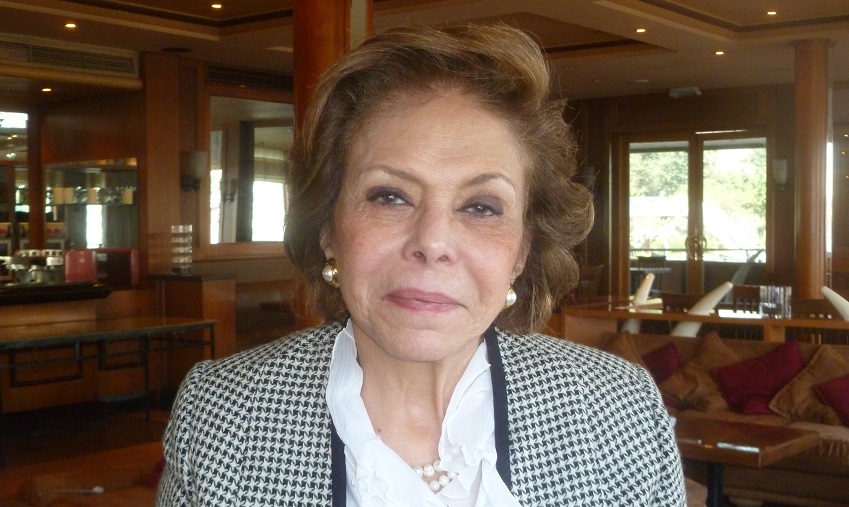
From my recent article in Arab West Report, continuing a series of interviews with members of the constitutional committee. Mervat al-Tallawi is the head of the National Council for Women. She described that strengthening of articles concerning women’s rights was not difficult, setting right the Islamist tinge from 2012. But Tellawi felt these protections were not enough, given the realities of Egyptian society:

So the text of Article 11 makes clear that women have the right to serve in high government and judicial positions, which actually did meet quite a bit of opposition in the committee – from a surprising source. The Salafī representative objected in clear and straightforward manner, as expected, and the Azhar did not speak either in favor or against. But otherwise liberal members protested, naming Diā’ Rashwān of the journalist syndicate specifically, the head of the lawyers’ syndicate (Sāmih Ashūr), the head of the doctors’ syndicate (Khayrī ‘Abd al-Dā’im), and the head of a university (not specified, either Jābir Nassār of Cairo University or Ahmad Muhammadīn of Suez Canal University). She anticipated religious representatives might oppose her efforts, but was taken aback by these educated and liberal figures.

Article 11 also spoke against violence against women, which was passed unopposed. But it also called for ‘appropriate representation’ for women in parliament, which also proved controversial. Originally, Tallāwī asked for ‘just and balanced’ to be the phrasing on this issue, but Sayyid Badawī of the Wafd Party objected, saying this meant she wanted fifty percent. No, she replied, but if specification is needed let us officially propose a one-third parliament representation for women. The others mentioned above joined in what became a three hour fight, the end result of which was the wording of ‘appropriate’. This only postpones the battle, Tallāwī stated, until the drafting of the electoral law which will define what appropriate means, but there are several acceptable modalities. Perhaps the law will oblige parties to place women high on their voting lists; perhaps each governorate will assign three seats to be contested by women only. Other options can be discussed.

Tellawi also addressed the much overlooked, but vital sphere of local governance, and ensured women would have a place therein:

If social conservatives, though, had objection to appropriate women’s representation in the parliament, they did not object to a full quota in the local councils. Article 180 stipulates women must receive one quarter of elected positions, with one quarter to youth, and half to workers and farmers, with undefined appropriate representation for Copts and the handicapped. The only issue raised against the women’s representation here was if there were a sufficient number of women capable of serving administratively. Without a doubt, Tallāwī assured, giving specific names and stating the National Council for Women had 20,000 rural women who helped communicate between the council and illiterate women in the villages. But people are not aware of this, and men tend to only see men as qualified. But the members of the committee did not treat this issue with the same importance given to parliament.

She comments also on the controversial articles concerning the military and civil governance versus civil government. Please click here to read the full article at Arab West Report.

Categories
Christianity Today Middle East Published Articles

Why Egypt’s Christian Families are Paying Ransom

Coptic Ransom

From my recent article at Christianity Today, published online on January 8, 2014, and in the Jan/Feb print edition:

In 2011, Nadia Makram, 13, was walking home from church near her working-class Cairo neighborhood when she vanished.

Her mother, Martha, went to the police, who refused to file a report. Soon after, Martha received a call demanding $15,000. She went back to the police, who registered a complaint but noted only Nadia’s disappearance.

When the police did nothing, Martha gathered money from family and friends and traveled to a village 65 miles south.

Martha met Nadia’s 48-year-old kidnapper in the home of the local mayor. After she handed over the money, the men showed her what they called a “marriage certificate.” Nadia, they said, had converted to Islam and married her abductor. Martha left empty-handed—an increasingly common story among Coptic Christians. Abductions have increased sharply in the past few months.

The article deals with grassroots efforts to uncover these cases, some of the details in paying ransoms, theological reflection from an Egyptian seminary professor who’s relative was a victim, and budding hopes that a new government ministry might partially solve this issue.

Please click here to read the rest of the article at Christianity Today. (photo credit: AP/Thomas Hartwell)

Categories
Arab West Report Middle East Published Articles

A Security Source Speaks on the Sinai

Sinai_Terrorist

From my recent article at Arab West Report, describing an interview with a former security officer in the Sinai, who wished to remain anonymous. In light of the current accusations leveled against the Muslim Brotherhood, his comments, issued in May 2013, are very pertinent:

These known political figures, including leading Salafi-Jihadis such as ‘Adil Shahātah and Ahmad ‘Ashūsh, are currently playing a political role and not in charge of the operations on the ground, he said. But they still indirectly administer their policies and act as a go-between for the jihadists and non-violent political Islamist groups, and even the Mursī administration.

The Islamists, the advisor says, have divided up roles between themselves – this one to be violent, this one to be political – and having multiple entities helps fill the political space. The Muslim Brotherhood in particular is the head, and their deputy supreme guide Khairat al-Shātir is one of the chief beneficiaries of the tunnel economy. They have three main uses for Salafi and jihadist entities.

The first is to win elections. In keeping a unity among real groups that do compete with each other, they ensure better results at the ballot box. The second use is as a threat for their competition, liberal and secular minded Egyptians who might find it necessary to cooperate with a ‘moderate’ Muslim Brotherhood to ensure they do not side publicly with the more extremist Salafis. The third use is similar, but aimed at the West. By being in league with jihadist elements, the Muslim Brotherhood can demonstrate they are the only ones capable of deterring their violence.

And while the military is currently destroying the aforementioned tunnels, here is how the state used to deal with them:

But if Bedouins were frozen out of official state business, they thrived in the unofficial business of the tunnel system to Gaza. The advisor numbered tunnel totals around 1200, and at their height during the 2008-09 Operation Cast Lead a single tunnel could earn up to one million US dollars per day. The tunnel could be rented for one hour at a cost of $20,000 US, with administrative taxes taken on the other side by Hamas.

Before the revolution, Egypt used the tunnels as a foreign policy tool. Whether for pressure on Israel or Gaza, or indirectly on Iran, Saudi Arabia, and Qatar via their Sinai proxies, the flow of goods into Gaza could be variously eased or restricted. The nature of goods, also, could serve the state’s unofficial international policies. Technically, the Bedouins ran the tunnels, for all crossed through their land. But the government watched, which also provided an additional incentive for the tribes to cooperate.

The article also describes the demographic features of the Sinai and estimates the violent, jihadist elements. But given the severity of current political accusations, two lines from the conclusion are vital:

In reference to the information therein he assured its veracity. ‘This is not analysis,’ he said, ‘it is intelligence.’

Arab-West Report has not verified his assertions.

Please click here to read the full article at Arab West Report.

Categories
Arab West Report Middle East Published Articles

Mohamed Abla: A Voice for Culture in the Egyptian Constitution

Mohamed Abla
Mohamed Abla

From my recent article at Arab West Report, the first in a series of interviews of members of the committee which wrote Egypt’s constitution. Mohamed Abla is an internationally acclaimed Egyptian artist and was a leading figure in the protests against the appointment of an Islamist head to the Ministry of Culture. As such, protection of culture became a constitutional necessity:

One area that was mostly uncontroversial, but dear to his heart, was the inclusion of several articles promoting culture. Articles 47-50 oblige the state to foster cultural development and protect its cultural heritage, but this section was strange to many only in that it was new. In the end, only Salafīs opposed.

Most of the interview dealt with controversial elements, however. One area in question was the decision of the committee to yield the decision on electoral order and system to the president. Some have wondered if this was cooked in advance to make way for Sisi’s presidential campaign:

‘Ablah said this was completely absent from their negotiations. Some members favored presidential elections first, other parliamentary. Some favored a parliament elected by individual candidacy, some by party list or something in-between. As they debated, positions shifted. In the end, the Committee of Fifty decided two things. First, they were unable to come to an agreement. Second, they were unequipped to come to an agreement. Technical matters such as these require data that would take a long period to study judiciously. Given their sixty day timeframe, proper determinations were not feasible. The president, however, will be able to summon all the tools of state to engage in social dialogue, gather pertinent data, and make a decision in the best interests of the country. Beside, ‘Ablah stated, such matters should not be made permanent in the constitution. Members desired flexibility in the political system; if an individual candidacy is preferred now, perhaps party list will be better in ten years when political life is stronger.

‘Ablah admits he was an anomaly in the committee, as he is not connected to the government. But as such he may have been ignored in any backroom political machinations. He saw very little, however, that even approached the idea of trading votes for certain articles. “These issues were not postponed for anyone’s interests.”

Please click here to read the rest of the article at Arab West Report.

Categories
Aid to the Church in Need Middle East Published Articles

Made to Feel Inferior: A Christian Family on Ordinary Life in Egypt

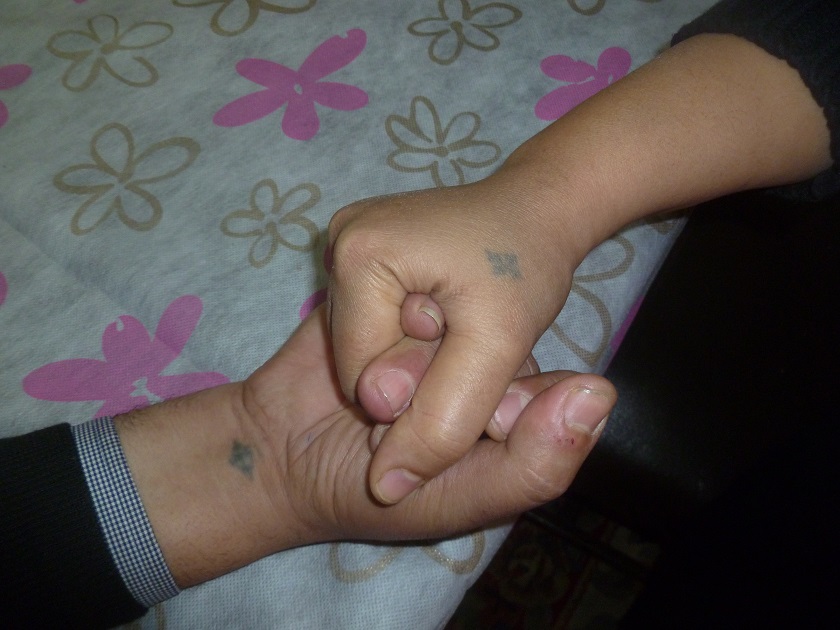
The hands of husband and wife, otherwise unidentified in the article

From my recent article for Aid to the Church in Need:

Life is not easy for Christians in Egypt, and the strain is taking its toll. Beyond the reports of churches burned and homes attacked, there is also a more subtle hardship affecting ordinary families. While not universal, mistreatment and discrimination are unfortunately all too common.

“Every day we leave our house, not knowing what will happen,” says Girgis, an Egyptian Catholic who preferred not to use his real name.

His wife, however, has the irritating stories:

“The other day, I was climbing into the (public transportation) van with my two children as usual,” Maria tells her story, “and I called out the name of my neighborhood just to confirm. But the driver said he wasn’t going there, so I got out to ride in the correct one.”

“But then a Muslim woman came on board and asked for the same neighborhood, and the driver let her in, taking the last place. I was outraged and complained, but the man replied, ‘I’m free to let in who I like and force out who I like.’”

Within the past year, similar incidents happened half a dozen times. It is not a daily occurrence, but it leaves a painful wound, especially when repeated with such regularity.

The wife gives other examples, and the following is her testimony from the conclusion:

“I try to be a Christian,” she said. “I try to be kind, but I also try to show the person this behavior is not appropriate.”

It often makes little difference. In fact, witnesses to her mistreatment usually downplay what happens, telling her it’s ok, or not to worry about it.

She does have good relations with Muslims in her apartment building; she even freely tutored a neighbor’s child in French, without charging the family. Yet, as a family, they have few if any real Muslim friends, the couple affirms.

Girgis views the situation of Egypt’s Christians as follows: “There are two types of persecution: Physical, when you are threatened with death, and mental, which is worse.”

“If you are killed, it’s over. But if you are subject to mistreatment it may drive you to kill yourself. We are made to feel inferior. This is the persecution that is present in Egypt.”

In saying so, Girgis made clear to me that the burning of churches and attacks on families are not best understood as persecution, but as the result of political and social struggles. Rather, it is the incessant needling as described in the interview they see as the persecution Egyptian Copts generally face.

I am happy to tell their story, for I have heard many similar complaints from others. It reveals a slice of life that is true.

My only concern is that their story be received as the only truth. I have heard other Copts tell me of generally warm relations with Muslims, and of friendships that are real and genuine. Within the article I hope this sentiment is expressed.

The reality is a mix, and the deep Coptic frustration with the sectarianism of many of Egypt – even if it doesn’t touch them personally – is worthy to convey. But somewhat paradoxically, it is very difficult to get sense of this sectarianism as an outsider. Within the Coptic community it sometimes feels like groupthink; within the Muslim community it is often denied completely.

Of course, there is no one community for either religion. One Muslim I know heads an NGO for combating religious discrimination. Another I know, from the same neighborhood as the wife in the article, told me he sees Coptic women everywhere and they get on just fine.

Some Copts may suffer a setback at work and attribute it to anti-Christian bias. And while some Muslims at least rhetorically, if not worse, make Christians feel inferior, many others are likely just ignorant of what others suffer.

The partial solution is to tell each others stories.

Alas, I made several attempts to conclude this post with a practical result of what comes next – and failed. It is strange; I am glad to convey this family’s struggle, and yet feel conflicted at the same time. I don’t want such an example to be used to misrepresent Egypt, even while this example does represent Egypt. Just not entirely. But what can an article convey? Go read a book! Or better, an encyclopedia. Perhaps you can enroll in a Middle Eastern Studies masters program instead.

But that is my burden. It is my job to help tell Egypt’s story correctly, and to do so within the criteria of each publisher. I trust that if you read this blog consistently you trust my effort to give the big picture. But in any individual article, published in any individual source – the work stands alone to be judged. Or rather, to judge Egypt. Please click here to read the whole article at Aid to the Church in Need, and judge accordingly.

And as for solutions? What comes next? I trust the telling of stories is helpful, but how?