This article was originally published at Lapido Media.
Migrant workers long abandoned to slave-like conditions in the Arabian Gulf have found an unlikely weapon in their fight against exploitation: hackers.
Young Arab computer geeks are creatively helping vulnerable foreign labourers break into a culture that either ignores or abuses them.
More than 150 top university students from seventeen countries competed to design practical apps to innovate solutions for social problems, during a three-day marathon.
An app called Guide Me won the Audience Choice Award, aiming to inform migrants of their rights in law. It also monitors abuse.
26-year-old Mona Demaidi, a mentor from Palestine and a lead programmer for the app is a PhD candidate at the University of Manchester in the UK. ‘Our region needs transparency,’ she told Lapido Media. ‘This project will give data and facts, as we don’t have access to information. And here, it will change lives.’
With a team of eight students she helped create a system to log calls to a central database from a free helpline to record and track complaints about abuse.
All audio, it will operate in twelve different languages, providing labour law and feedback options for anonymous or on-the-record complaints.
Information is also available on a website, to be accessed from a kiosk at every labour camp.
Sana Odeh (R)
‘We’re not coming from the West dictating what the problem is and what the solution should be,’ said Sana Odeh, the NYU professor and organizing force. ‘These must come from the students. The power of a hackathon is to unleash students’ skills and connect them to the world.’
And though the younger generation is different, there is a significant gap to overcome.
‘We always want to hide our problems, we don’t want to talk about them,’ Demaidi said. ‘But the information collected will be good for the workers, good for the companies, and good for the government.’
According to the Pew Research Center, the Arabian Gulf is home to fifteen million migrant workers, the majority from India, Pakistan, and Bangladesh.
In the UAE they make up 84 per cent of the population, the highest rate in the world. Qatar, Kuwait, and Bahrain follow next on the list.
Revd Andrew Thompson
One link between these workers, the Hackathon, and the government is Anglican priest Revd Andrew Thompson of St Andrew’s Church, Abu Dhabi.
‘The nation has good laws,’ the British vicar who has served in the region for the past 27 years, told Lapido. ‘We just want to assist the government in letting the workers know what they are.’
UAE labour law demands payment of a salary every month. Employers must provide health care, vacation, and sick leave, within a working week of 48 hours. Passports may not be confiscated.
Unfortunately, each of these provisions is regularly violated.
Given the vast expanse of labour camps, oversight is difficult, Thompson told the UAE-based National. And companies that encounter problems simply shut up shop and open elsewhere.
But ignorance and illiteracy keep many migrants from knowing their rights in the first place.
St Andrew’s Church compound is part of the Anglican Diocese of Cyprus and the Gulf. Thompson hosts and oversees an international community of more than ten thousand weekly worshippers, in 45 congregations with 17 language groups.
Thanks to those like Thompson and his teams of volunteers, they now have the law translated into twelve different languages.
‘Once you shame an Arab you lose him for life,’ said Thompson. ‘We want to honour all that is right and good, and fill in the gaps where the government isn’t working.’
As a priest, Thompson recognizes the religious roots of identifying corruption in society, but he has chosen a different way. Both are necessary, but he is making a practical difference.
‘Some say there should be a prophetic voice,’ he said. ‘We want to be prophetic hands.’
Port Said is known as a revolutionary city, famed positively for its resistance in the wars with Israel, negatively for the February 2012 massacre of soccer fans during the confusing days of the Arab Spring.
But fortunately, Port Said has never been a sectarian city, said Fr. Kyrillos Ghattas of St. Mina Coptic Orthodox Church, one of eight Coptic Orthodox churches serving an integrated Christian population, among fifteen overall. In the past Port Said was a cosmopolitan mélange of different cultures, and the spirit of coexistence continues to this day.
This heritage makes Port Said a natural home for the Egyptian Family House, witnessed in the warm Easter greetings offered to Bishop Tadros. The governor and top officials from the Azhar, police, and local university spoke of the importance of local relations and congratulated the Christians on the occasion of their feast.
And though Port Said has experienced far less sectarian tension than other parts of Egypt, no city is immune. Ordinary struggles, mixed with family pride and factional attitudes, can poison relations even between neighbors. What is necessary is a system of wise men attuned to sense the early warnings, and to engage in early response.
The Family House was established in 2011 as a joint initiative between the Grand Sheikh of al-Azhar Ahmed al-Tayyib and then-Coptic Orthodox Pope Shenouda. Worried over the sectarian violence witnessed in Iraq, they invited the Catholics, Protestants, and Anglicans also to work together to preserve national unity in Egypt.
The Egyptian revolution slowed implementation, but over time committees were formed for this religious body to communicate directly with cabinet ministers. And a mandate was received to create local branches at the grassroots level, so that national unity might come to mean more than just the ‘hugs and kisses’ of top level religious dignitaries, interpreted by many as masking a neighborly but latently sectarian people.
This year marks the third year of one of the Family House’s most dynamic projects. Seventy participants – thirty-five imams and thirty-five priests – live together for three days, four times a year, being trained in dialogue and practical partnership.
Each of the previous two years witnessed an additional seventy, some of whom went on to help establish Family House branches in Alexandria, Luxor, Mallawi, and among others, Port Said.
Fr. Ghattas was one of the participants in the year two training with his colleague Sheikh Hassan Abdel Dayim. Together they are two of the 27 members of the Port Said central committee, among roughly 100 active participants.
Dayim explained part of their work is to visit together in schools, youth centers, hospitals, and conferences. Some sort of public Family House work takes place on average once a week, he said.
‘Jesus and Mohamed both call to be united, to build society and keep it from harm,’ said Dayim. ‘In this we have the responsibility to help quell problems between families.’
A dispute among teenage boys in May 2014 provided a good example. A Christian youth flirted with a Muslim young woman, and her brothers intervened and began insulting him along with the Christian neighbors who had come to his defense. The situation worsened as a fight broke out and one of the Muslims suffered severe bruises and a broken arm. Such a scene is not uncommon in Egypt, when harassment touches family honor. But involving opposite religions, the situation threatened to escalate and both sides filed reports with the police. One of the Christians was arrested and held in jail. Fearful, the Christians fled, vacating their home for a week.
Fr. Ghattas heard of this issue through neighborhood gossip and consulted with Dayim on how to handle it. When he went to visit the families he found the Muslim home full of knives and bladed weapons. The Christians, meanwhile, called for help from a handful of relatives from Asyut in Upper Egypt who came with guns. The family itself had migrated to Port Said around five years earlier.
Fr. Ghattas pressed upon both families the need for a peaceful solution, speaking in the name of the Family House. But he made use of the Family House status as an approved government institution, warning of the influence he would have also with police. Combining religious and civic responsibilities, Fr. Ghattas led both families to agree this was just a problem between youths which spiraled out of control.
He also helped the Christians to accept that they were primarily at fault, having begun the flirting and causing the bodily harm. From their own initiative the family purchased two sheep for roughly $300 – a substantial sum in their poor neighborhood – and gave it to the offended family. The Muslims slaughtered the sheep, placed their hands in the blood, and pressed the mark against the walls. Afterwards some of the meat was distributed to even poorer neighbors. Through this act reconciliation was achieved, the Christian was released from prison, and the families today continue to live in peace.
Such is a practical demonstration of the value and promise of the Family House, but like the initiative as a whole the fruit is still ripening and not yet fully grown.
Reviewing the incident, Dayim emphasized that ideal Muslim reconciliation should not require compensation. Furthermore he recognized that though marking the wall is a common cultural practice, the blood is unclean and should not have been touched.
Fr. Ghattas reflected that it might appear the Christians ‘purchased’ the reconciliation, and though the Muslim elders rebuked their children for the insults, there was no apology for the lesser share of their family’s guilt. Fr. Ghattas believed the Muslims felt they were only slightly at fault, and were doing enough by forgiving the offense and returning to live in neighborly peace. But both sides withdrew their complaints with the police immediately after the reconciliation session, and through several visits afterwards Fr. Ghattas can testify that peace has indeed prevailed.
‘This is what the culture says to do to solve these types of problems,’ said Fr. Ghattas. ‘It is not altogether right, but it is the right solution in this case.’
Much about the Family House seems all right. But privately some imams and priests express less than conciliatory attitudes about the other. Though some cities have witnessed continuing cooperation, others have not yet been able to translate budding relationships into joint work on the streets.
But even where there is success, after three years there will be only 210 religious leaders who have been actively trained in the program. Surely the same spirit exists among hundreds more, but what is this among millions of Egyptians?
‘Sowing the values and morals of citizenship is like a drop in the desert,’ said Lubna Abdel Rahim, a trainer in the program and unit leader in the Ministry of Education, speaking of her ministry’s efforts.
‘But if we cooperate in all our institutions this drop can become a garden.’
Such is the promise of the Family House, still awaiting the nourishment to flower further. Port Said is a worthy place to begin and if the Easter visit is any indication, the effort is well under way.
What is the value of a presidential visit to the papal cathedral for a seventy-year-old Copt driven from his village? What good are warm relations between Abdel Fattah al-Sisi and Pope Tawadros if relations remain tense between Youssef Tawfiq and his Muslim neighbors?
A new report by the Egyptian Initiative for Personal Rights (EIPR) says this problem runs far deeper than Sisi and Tawfiq. Over the past four years, twenty-three other Copts have been forcibly displaced from their homes out of forty-five cases examined by EIPR where community justice—rather than legal procedure—has mediated sectarian clashes.
In Jordan, far from the village of Kafr Darwish in Beni Suef, 70 miles south of Cairo, Tawfiq’s son Ayman was alleged to have shared insulting pictures of Muhammad on his Facebook page. Upon hearing the rumor, which Ayman denies, a mob gathered and set fire to his family’s homes and fields. An overwhelmed mayor and village officials, with police present, conducted what is known as a ‘customary reconciliation session’ (CRS). Meant to subdue tensions and restore order, village elders debated a just solution.
Ayman’s father, mother, and sixteen other relatives were ordered to leave town.
“Customary reconciliation sessions are said to stop sectarian tension, but our analysis shows that they only serve to ignore it,” said Amr Abdel Rahman, head of the civil liberties unit at EIPR. Report author Ishak Ibrahim was even more explicit. “If people reject the ruling it can result in more sectarian conflict, but it helps the aggressors escape the consequences of their actions,” he said.
As EIPR details in its forty-five cases, rarely are individuals from the mob arrested. When they are, many times the reconciliation agreement stipulates the relinquishing of judicial procedure. All of this is contrary to the law. Article 63 of the Egyptian constitution forbids the forced displacement of any citizen. Article 95 insists all judicial rulings must be personal, not collective. While Article 185 of the penal code allows a victim to waive prosecution in certain circumstances, these do not include looting, arson, or intimidation.
The EIPR report shows two primary controversies: The first is the free practice of religious ritual, including the building, expansion, and renovation of churches. At 31 percent, it is only slightly more frequent than clashes involving romantic relationships between a Muslim and a Christian, at 29 percent. Land and property disputes constitute 16 percent and expressing opinions on religious matters make up 8 percent, as in the case of Ayman.
At times sectarianism is at the heart of the problem; at times normal community problems escalate along sectarian lines. But among the most controversial aspects of CRS is the presence of police.
“Traditional sessions do not conflict with the law at all, they have to do with the prevention of bloody conflict,” former security director for Minya Sayyid Nour el-Din, told OnTV, defending police practice. “The security presence is to protect the sessions, not to come up with their solution.” But in some cases EIPR studied, the police participated in issuing decisions. In others they randomly arrested people on both sides to exert pressure to accept the CRS process.
EIPR does not condemn CRS entirely, as in non-sectarian cases it has the potential to reach a consensual opinion and avoid lengthy legal processes. For Youssef Sidhom, editor-in-chief of the Coptic newspaper Watani which helped break the story in Kafr Darwish, reaching a fair outcome in sectarian conflict is rare. “Usually it is humiliating, as it forces the will of the stronger party upon the weaker,” he said. “When security officials let this be done under their eyes and blessing, it is a very grave mistake.”
At stake is the sovereignty of the state, he said. But perhaps it is getting better? The report said there were twenty-one cases under transitional military governance after the fall of Mubarak, at a rate of one per month. President Morsi’s year in office witnessed fifteen, at a rate of 1.25 per month. Under Mansour and Sisi, only nine cases were reported over eighteen months through the end of 2014, when the reporting concludes.
Then again, Ibrahim said there have been six cases in the first half of 2015. The problem is not going away.
After a media outcry, the governor of Beni Suef intervened and security returned Youssef Tawfiq and his family to their homes in Kafr Darwish. Sidhom believes President Sisi acted quietly behind the scenes. “I don’t consider this a happy ending as the law is still not enforced,” he said, noting that to his knowledge, none of the mob are in prison nor have any in the police force been disciplined. “You cannot live under the mercy of the president rather than the rule of the law.”
As with much else in today’s Egypt, the issue falls to Sisi. He has done much to try to change a culture—visiting the cathedral and calling for the reform of religious discourse. But will he follow through to change a reality? Will he be able?
Egyptians have respect for the strong leader. They have less respect for those who ‘talk.’ If Sisi sets the right tone—backed by holding accountable those responsible for undermining state sovereignty—others will walk in step with him and help transform the culture over the long run.
But not if he is weak. The president has shown a strong hand in asserting control over the Egyptian state—despite international criticism over violations of human rights. Similarly, if Sisi is intent on a new relationship with Egypt’s religious minority (as implied by his rhetoric and meetings with Pope Tawadros), he will have to face possible domestic and institutional criticism to assert it further by arresting aggressors and disciplining enablers.
“We put responsibility on the government,” said Ibrahim. “It is the one tasked to protect citizens and their rights.”
Forgive Emad Youssef if he and his extended family felt quite confused. The crowd welcoming them back to the village had only a few days earlier demanded they leave.
“They said this is the first time something like this has happened in our village,” he told private satellite channel, OnTV “and that, Inshallah, it won’t happen again.”
Yet it happens frequently in Egypt – at least 23 times in the last four years, according to new research released by the Egyptian Initiative for Personal Rights. Whose Customs? – a 78-page report by the group – points out that the period from 2011-2014 saw 45 instances in which sectarian strife was settled, in different ways, outside the law through “Customary Reconciliation Sessions.”
In concept, Customary Reconciliation Sessions are community-based conflict resolution, long established in Egyptian tradition. If two residents have a dispute, solving it through the judicial system is long and costly. Instead, “wise men” of the village will hear both sides and issue a binding ruling. Religious leaders are often involved.
If the dispute is violent, the Customary Reconciliation Session is a method to calm tensions and prevent escalation. Police are usually present to enforce security.
But in the case of Youssef and his relatives, all Coptic Christians, the session took place because police did not do their job in the first place.
”This (the forced ‘relocation’) happened while the police were in the village, and they did nothing to stop them,” a local Copt, choosing anonymity, said.
Emad’s brother Ayman is a migrant worker in Jordan, accused of sharing pictures deemed insulting of Muhammad on Facebook via his cell phone. Ayman claims he is innocent. Nevertheless, on May 27 a mob gathered in his home village back in Egypt, attacking the houses and fields of his family and their Coptic neighbors. The village of Kafr Darwish, about two-thirds Muslim, is located in Beni Suef, 70 miles south of Cairo.
Reports say that some local Muslim neighbors tried to defend the family, but the mayor was not able to control the situation. Officials and village leaders conducted a Customary Reconciliation Sessions and issued a verdict placating the mob. In Ayman’s absence his family was punished, resulting in the expulsion of 18 individuals, including Ayman’s mother and his 71-year-old father.
The displaced told of their ordeal as they were “traveling from one town to another and not finding a place to accommodate us.”
In this one instance, five families of 18 members had to contend with living in one room. “They expelled us while we have done nothing, we are struggling to provide for ourselves,” they said before their return.
Media is often inattentive to Upper Egyptian issues, but in this case the outcry was immediate. Popular broadcaster Ibrahim Eissa declared, “How is that we have an enlightened president but a Salafi [ultraconservative Muslim] state? We don’t have the courage to say: These are their homes and their life is here. Whoever stands against them and the law will be judged by the law!”
A day before Eissa said this, the Beni Sweif state governor had tried to intervene, announcing the displaced families would return. This only resulted in further attacks in the village. But the following day control was established. The governor convened a meeting in the village, with high profile political, religious, and security figures – and more than 2,000 residents.
According to Mideast Christian News, the governor announced that the law does not allow the displacement of any Egyptian from their home. He promised to restore the properties that had been damaged.
But Youssef Sidhom, editor-in-chief of the Coptic newspaper Watani, which helped first report the story, is not aware of even one Muslim arrested for the attacks. MCN reported that Christian villagers submitted the names of 20 individuals involved.
“I don’t consider this a happy ending, it is not a healthy situation and the law is not enforced,” Sidhom told World Watch Monitor.
Fanatics ”may harm Christians,” he said, ”but the greater harm is done to the sovereignty of the state.”
Ishak Ibrahim (right) with Amr Abdulrahman at the Egyptian Initiative for Personal Rights press conference in Cairo, 10 June 2015
The incident was unique in that the state intervened to overturn the results of a Customary Reconciliation Session. But Ishak Ibrahim, lead author of the Egyptian Initiative for Personal Rights report, said the non-prosecution of offenders is common. In the vast majority of cases studied, no arrests were made. In the few that were, the accused were released shortly thereafter. The reconciliation agreements often stipulated the relinquishing of legal procedures.
“If people reject the ruling it can result in more sectarian attacks,” said Ibrahim, “but accepting it helps the aggressors escape the consequences of their actions. We put responsibility on the government because it is the one tasked to protect citizens and their rights.”
Article 63 of the Egyptian constitution forbids the forced displacement of any citizen. Article 95 insists all judicial rulings must be personal, not collective. And while Article 185 of the penal code allows for a victim to waive prosecution in certain circumstances, these do not include looting, arson, or intimidation.
But the waiver of prosecution has not applied to Christian aggressors.
Not all incidents begin as sectarian. In 29 per cent of the studied cases, community tension resulted from a romantic relationship between a Muslim and a Christian, and in 16 per cent conflict emerged from land or other property disputes.
In each one where the Christian was at fault, legal prosecution continued after penalties, often exorbitant, had been stipulated by a Customary Reconciliation Session. But when the Muslim is at fault, reconciliation and social peace are emphasized. Sometimes there are no penalties whatsoever; other times the church has opted for waiving them to keep the peace.
Bias against Christians is also apparent in disputes with religious origins. Thirty-one percent of cases have to do with the practice of Christian religious ritual, including attempted church construction and repair.
Only one case was resolved in their favor.
‘Relocated’
Even the “Martyrs” Church, established by a presidential decision to honor the 20 Egyptian Copts killed in Libya by the self-proclaimed Islamic State, had to be “physically relocated” following protests and a subsequent Customary Reconciliation Session.
Eight per cent of cases had to do with expressing opinions on religious matters. The majority involved simply “liking” a Facebook page deemed insulting to Islam, and resulted in expulsion of the offender from his village.
World Watch Monitor previously reported on Gad Younan, a teacher from Minya arrested with some of his students for a video in which they made fun of Islamic State. Mideast Christian News has recently reported that judicial procedures resulted in his release on bail pending further trial, but that the Customary Reconciliation Session agreement continues to demand he not return home.
“Customary reconciliation sessions are said to stop sectarian tension, but our analysis shows that they only serve to ignore it,” said Amr Abdulrahman, head of the civil liberties unit at the Egyptian Initiative for Personal Rights.
Abdulrahman explained that those who conduct the reconciliation sessions often view them as above and apart from the law. This status is buttressed by the police presence that implicitly endorses the process.
And in a rare departure from Coptic restraint in criticism of the government, Bishop Aghathon of Minya accused local authorities of collusion with conservative Muslims in Customary Reconciliation Sessions. He told a Coptic satellite television channel that, in one incident in his diocese, the typical mob protest was instigated by security.
General Sayyid Nour el-Din, former director of security in Minya, defended the use of Customary Reconciliation Sessions. “It does not conflict with the law at all, it has to do with the prevention of bloody conflicts,” he told OnTV. “The security presence is there to protect the sessions, not to come up with their solution.”
Nour el-Din said security has to be especially vigilant as Islamist groups are looking for any excuse to explode the situation. Strong especially in the poorer southern governorates, their presence coincides with the use of Customary Reconciliation Sessions following sectarian incidents. The Egyptian Initiative for Personal Rights reported 48 per cent of cases are from Upper Egypt, 33 per cent from Minya alone.
The Muslim Brotherhood officially condemned the forced displacement of Copts in Kafr Darwish, while blaming the church for tearing apart national unity through its support of the government.
This latter sentiment was emphasized by Amr Abdul Rahim, a former member of parliament from al-Gama’a al-Islamiya, an Islamist group implicated in many attacks on Copts in Upper Egypt during the 1990s.
“The church is part of Sisi’s regime,” Abdul Rahim said. “(The church clergy) have to wake up and realize they are playing with Coptic lives and leading them to a holocaust.”
Though Abdul Rahim insists that “Muslims” are not against Copts, his criticism makes no distinction between Islamist ideology and Muslim identity.
‘Roots of the Problem’
Statistics assembled by the Egyptian Initiative for Personal Rights indicated the use of one Customary Reconciliation Session per month during the interim rule of the military, when, following the fall of Mubarak, a security vacuum existed and Islamist groups felt themselves in the ascendency. During Morsi’s Muslim Brotherhood-led presidency, the rate rose to 1.25 per month.
It declined under interim president Mansour and incumbent president Sisi following the removal of Morsi, but the practice continues all the same. The report by the Egyptian Initiative for Personal Rights noted six incidents, outside the scope of its report, in the first half of 2015 alone.
“From Mubarak to today, no regime has dealt with the roots of the problem,” said Ibrahim, the report’s lead author.
Sidhom tied Customary Reconciliation Sessions to an unreformed educational system that does not properly instill the values of citizenship. Related is a weak state apparatus that submits to the pressure of militant action apart from the law.
But Ibrahim emphasized he is not against Customary Reconciliation Sessions in principle.
“Anything that extinguishes sectarian tension is beneficial, as long as the process of law continues,” he told OnTV. “The problem is that it is a replacement for law, often compelled upon the weaker party, reflecting the local situation of power.”
But where power is balanced and tension is not high, Christians, like Muslims, avail themselves readily of a Customary Reconciliation Session, especially in view of a judicial system saddled with millions of new and pending cases.
“In 90 per cent of the cases, CRS is beneficial,” Fr. Yu’annis Anton of the Coptic Orthodox Church in Minya told World Watch Monitor. “Relationships are reconciled and everyone takes his rights.”
Anton speaks from a long experience with Customary Reconciliation Sessions, underlining their utility in non-sectarian cases. This is not the case of Kafr Darwish, he said, which was an emergency situation.
The Egyptian Initiative for Personal Rights noted that its 45 cases detail only Customary Reconciliation Session use following sectarian clashes, not the practice itself.
Perhaps following in the footsteps of Jesus, Emad Youssef chooses to reflect positively.
“This trial was from God, who has used it to increase the love shown to us by Muslim neighbors,” he said.
“They have made reconciliation,” added the 71 year old father. “We have returned home, in goodness and peace.”
Mohamed Abdel Maksoud, a Salafi signatory of Egypt Call.
A leading American academic has denounced the latest Muslim declaration against elected Egyptian President Abdel Fattah al-Sisi as a call for ‘religious violence’.
Samuel Tadros of Hudson Institute in Washington DC told Lapido that ‘Egypt Call’, a 13-point document published last week by 159 Muslim scholars from 35 nations, and endorsed by the Brotherhood, provided ‘Islamic justification’ for the fight against Sisi.
‘This document is as direct a call for violence as you may ever get,’ Tadros said. ‘This is a religious verdict on the regime as unbelievers.’
As President Sisi visited Germany and secured an eight-billion-Euro energy deal, two policemen were shot dead near the Giza pyramids.
Meanwhile, the Muslim Brotherhood sponsored protests in Berlin. ‘Tell Merkel to stand up for democracy and human rights in Egypt,’ tweeted Ikhwanweb, their official English account.
Both activities find justification in the new document which reinforces already grave questions about whether the Muslim Brotherhood is behind violence in Egypt.
Question
The text of Egypt Call declares, ‘It is a religious obligation to resist the regime, working to finish it off through all legitimate means.’
Points 11 and 12 recognize the international struggle, condemning nations that have stood with Sisi, while praising governments, politicians, human rights organizations, and others who have criticized him. Point 13 specifically mentions civil disobedience.
But point 4 makes it personal. Mentioning specifically rulers, judges, policemen, soldiers, muftis, media, and politicians, it says: ‘Retribution against them is necessary.’
Press conference in Istanbul for Egypt Call. Ghoneim (mentioned below) is back row, 5th from left.
The sharia views them as killers, it says, and they deserve the judgment of those who kill. But the text also insists – without specificity – that this must be according to legitimate methods.
So: What is legitimate?
Ambiguity
Jihad as a concept can be viewed along a spectrum from the struggle to submit to God, to the fight to submit the world to him.
The Brotherhood has long perfected the art of ambiguity. In January, it called on followers to prepare for a ‘relentless jihad.’
It has issued statements that condemn ongoing violence, but also praised previous Brotherhood militancy.
For Tadros, the ambiguity is now gone.
He sees in Egypt Call the concept of ‘loyalty and disavowal’, often interpreted in the modern world by jihadis as the rejection of all who do not fit their definitions of sharia.
The doctrine requires viewing those disavowed as non-Muslims, or unbelievers.
Tadros recognizes, however, that the word ‘unbeliever’ is not found in Egypt Call. Rather, in detailing how the Sisi regime has fought against Islam, allied with enemy Zionism, and killed and imprisoned thousands of innocents, it lets readers make this judgment for themselves.
Over 500,000 have indicated their support on the official website.
According to Joas Wagemakers, a prolific writer on political Islam and lecturer at Radboud University in the Netherlands, ‘loyalty and disavowal’ has some Quranic inference.
But it was developed by the early Kharijite movement that rebelled against the caliphate.
Wagemakers, in his chapter in editor Roel Maijer’s Global Salafism, says Sunni Islam rejected the concept until ibn Taymiyya resurrected it in the fourteenth century. Modern-day extremists use it to justify rebellion against a Muslim ruler.
Point 2 of Egypt Call references one of the principle Quranic verses underpinning the doctrine.
But it does not specifically use the terminology, nor label the regime as non-Muslim.
Tadros attributes this to internal philosophical disputes on technical points about legitimate rebellion. But these religious scholars, he says, do not see themselves as offering points on strategy.
According to the research of Michael Cook, a professor at Princeton University and author of Forbidding Wrong in Islam, majority scholarly Sunni opinion is against the idea of opposing even an oppressive ruler.
Most say it will result in more harm than good, even if legitimate.
But the heritage of sharia includes voices which advocate a quiet rebuke, and others who advocate outright militancy. Where does the Brotherhood fall?
Some ask whether retribution is to come from formal judicial tribunals after they restore Morsi. A recent report from the semi-governmental National Council for Human Rights said 1,250 Muslim Brotherhood members had been killed in the eighteen months after Morsi’s overthrow.
Others question whether they have advocated the kind of assassinations seen at Giza. The same report said seven hundred security forces had been killed during the same time period.
Perspective
Egypt Call does not provide details, but a brief look at the signatories offers perspective. Tadros has identified several of them from previous research he did into Egyptian Islamism.
While in Germany the Brotherhood tweeted about democracy and human rights, one of the signatories Said Abdel Azeem, an Egyptian Salafi leader denounced democracy on YouTube as ‘an idol that people worship apart from God,’ and said that it permits all sorts of excess in personal freedoms. The film has received more than 28,000 views.
Azeem has taken a stand against jihadis who kill Muslims they deem apostates, but another signatory, Atiya Adlan, adheres to the Sorouri strand of Salafism that adopts the concept of ‘loyalty and disavowal’, declaring the ruler who does not govern by sharia to be an unbeliever.
And signatory Mohamed Abdel Maksoud, a pro-Brotherhood Salafi leader, has previously hailed the jihad of Osama bin Laden.
More acutely applicable to the Egyptian struggle, he called for the killing of Syrian President Bashar al-Assad, and praised the vengeance taken against Egyptian police.
Though not a signatory, Wagdy Ghoneim spoke at the press conference in Turkey that introduced Egypt Call.
‘The military regime headed by the infidel and apostate Abdel Fattah al-Sisi is fighting Islam and religion,’ he said. ‘He led a coup against Morsi because Morsi desired to bring back the Islamic caliphate.’
Ghoneim has called for the killing of pro-Sisi journalists. When the Islamic State beheaded Copts in Libya, whom he called ‘Crusaders’, Ghoneim had no condemnation but launched a diatribe against the Coptic Church.
At a popular level, the official Facebook page of the Brotherhood’s political party in Maadi, Cairo, shared video of ‘revolutionaries’ firebombing an empty train.
None of this is proof that the Brotherhood is behind the violence in Egypt. But it chips further away at the veneer of ambiguity, even as they cling to it.
The editor-in-chief of the Muslim Brotherhood’s official English website did not respond to a request for clarification.
This article was originally published at Lapido Media.
Staff, students, and local friends of the al-Amana Center
Imagine David Cameron in Norfolk, about to speak on ‘British values’. He then invites forward a Muslim Brotherhood leader, and asks him to explain Islam.
And in the Zippo’s Circus-like atmosphere, the audience leaves pleased.
Transfer the scene to the Sultanate of Oman, and witness an American Christian pastor make clear the gospel in the austere heartland of Ibadi Islam.
Now picture a tolerance that predates Britain’s embrace of multiculturalism—on the border of Saudi Arabia.
The analogy is not perfect. Sultan Qaboos bin Said is an absolute monarch, ruling since 1970. Proselytisation is forbidden in any direction.
But the Shiva Temple in the capital of Muscat has served the Hindu community for over 200 years. Since the early 1900s the government has given land to build churches.
Saudi Arabia’s chief cleric has repeatedly called for all non-Muslim houses of worship in the Arabian Peninsula to be destroyed in accordance with sharia law.
Clearly, Oman does not share Wahhabi convictions. There appears a similarity in strict practice, but not in the approach to others. The Ibadi branch of Islam is far older than the eighteenth-century Saudi creed, dating to its formative scholar from the old capital in Nizwa in AD 711.
And to this region where Islam originally took hold, the Ministry of Religious Affairs invited Revd Douglas Leonard to speak.
Heritage
Leonard is the director of al-Amana Centre in Muscat, an outgrowth of the Reformed Church in America’s (RCA) mission dating back to 1893. Today its focus is on interfaith dialogue.
Leonard expected a quiet discussion with twenty imams. He found a huge tent full with 500 people, over a thousand outside, and twenty imams seated in the front row. Three television stations were present, broadcasting his lecture to the whole nation.
It was a lecture, not a Billy Graham crusade. But it focused on countering misconceptions about Christianity, dealing with differences and not content to settle for ‘common ground’.
A kindly reception was guaranteed by his official introduction as part of the heritage of ‘Dr Thoms’, an RCA missionary-surgeon remembered fondly. Omani’s eyes soften, Leonard said, and tell stories of how he healed their grandparents, or delivered then when they were born.
Leonard also teaches a course each semester at the College for Sharia Sciences. Its thousand strong student body goes on to become imams, jurists, lawyers, and bureaucrats.
‘The government wants every Omani to gain appreciation of other religions,’ he said.
Piety
Ibadism sees tolerance amid conviction as the essence of original Islam.
Twenty years after the death of Muhammad the nascent caliphate was in civil war. Unlike the eventual Shia, they rejected Caliph Ali when he agreed to negotiate with Muslim rebels deemed insufficiently pious. And unlike the eventual Sunni, they did not reconcile with the rebels after their victory established a hereditary throne.
History records one of the leading rejectionist parties as the Kharijites, a violent and puritanical sect who declared anyone in disagreement a non-Muslim, much like ISIS today. But though they emerged from the same political position, Ibadis separated completely from the Kharijites and became quietists. They insist on piety but do not judge, as only God can know one’s heart.
Ibadis are less than one per cent of Muslims worldwide. But in Oman they are a majority, with a substantial Sunni minority. Shia are roughly five per cent, though the government does not keep official statistics. In law and practice, all mosques are open to all faith interpretations.
According to the CIA World Factbook, Oman’s population is 3.2 million, 30 per cent of which are foreign workers. An estimated 85 per cent are from India, mostly from the southeastern state of Kerala where Hindus and Christians together have shaped the culture.
Centuries of trade across the Indian Ocean have nurtured an open spirit. A few Hindus and Christians have become citizens.
But nearly all Omanis are Muslim, and the demographic explosion of foreigners since the oil boom has put pressure on traditional society. Sultan Qaboos has developed interior cities such as Nizwa, but despite employing extensive foreign labor the city has not been allotted a church.
Doing so would be sensitive, Leonard said, just as building a mosque can be sensitive in parts of the West. But in his experience the people are kind and the government wants to do all it can to facilitate the ability of foreign Christians to worship.
Appreciation
And one reason Leonard is trusted is because he does all he can to facilitate the ability of Omani and Christian alike to appreciate the other.
Over the past five years al-Amana has hosted 42 American university students in a semester-abroad program. Besides taking introductory classes on Arabic and Islam, they have been matched with 40 Omanis in ‘scriptural reasoning’.
Much interfaith dialogue does not go into the details of religious difference, afraid to cause offense or devolve into argument. Scriptural reasoning seeks to honor each faith at its core, studying the texts as holy in the eyes of the other, and not just stop at common ground.
Each year for the past four the Omani government has sent ten religious sector employees to Cambridge University for training, where Leonard is an instructor. One became emotional reading the Sermon on the Mount, saying he would now tell other Muslims that what they say about Christians is wrong.
An experience mirroring that of Kory McMahan, a junior at Northwestern College in Iowa and al-Amana’s most recent graduate.
‘At my school there is no Muslim voice, but it deserves to be heard,’ he told Lapido Media. ‘I can’t speak for Muslims but I can share what I have seen and learned.’
Leonard hopes the pattern of religious tolerance in Oman can be replicated throughout the Middle East, as well as combat anti-Muslim sentiment in the West.
‘Ours is a 120 year example of Muslims and Christians working together,’ he said. ‘Imagine what would happen if instead of being suspicious, we came together for the common good.’
Whether in Norfolk or Nizwa, British and Omani values may not be that far apart.
This article was originally published at Lapido Media.
As Prime Minister Benjamin Netanyahu concludes cantankerous negotiations to finalise his right-wing cabinet, Palestinian-Israeli evangelicals are hoping for something better.
Alienated by campaign rhetoric stigmatising Arab citizens as an electoral threat, they turned in response to the source they know best: the Gospel.
In doing so, they seek to reverse a disturbing trend of isolation from society as a whole, and in particular their Jewish neighbors.
‘Are we not asked to be the salt and light of the earth?’ asked Revd Azar Ajaj, president of Nazareth Evangelical College, in an open letter shortly after the Israeli elections.‘How important, then, to show love to those who have been styled as our “enemies”. In fact we are asked to be peacemakers.’
And from April 16-18, he gathered 60 local and international leaders to discuss how.
The ‘Evangelicals and Peacemaking’ conference was sponsored in part by the Baptist Mission Society UK. It urged participants as Palestinian Christians in Israel to seek justice and reconciliation to create a state for all its citizens.
Present at the conference was Salim Munayer, head of Musalaha, which since 1990 has bucked the trends of intifadas and settlement building to call for peace between Israeli Jews and Palestinians.
The election rhetoric was quite discouraging, Munayer told Lapido Media.
Netanyahu rallied his supporters saying the Arabs were coming out to vote ‘in droves’. His foreign minister Avigdor Lieberman told Ayman Odeh, head of the Arab Joint List which placed third in total Knesset seats, ‘you’re not wanted here.’
Meanwhile the Joint List – a merger of secular, communist, and Islamist parties – included the symbolic presence of a politician calling for a caliphate in Jerusalem. It received the strong endorsement of Hamas.
Pressed between a regional rise in Islamism, mirrored by the gains of religious Zionism, Christians are being squeezed.
And as a result, they are withdrawing from both.
Separation
Evangelical leaders estimate their numbers in Israel are only around 5,000, among 157,000 Christians and 1.4 million Muslims. Israel’s population is 7.91 million, according to the 2012 census.
‘Most interaction between Palestinian Christians and Israeli Jews comes by necessity, not as a result of a relationship,’ Munayer told conference attendees. ‘We see them at school, at the bank, but much more must be done.’
And it has never been worse, according to his research co-authored with Jewish professor Gabriel Horenczyk from the Hebrew University of Jerusalem. The October 2014 issue of International Journal of Psychology details how Christians have soured toward Jews.
In 1998, the predominant attitude of over 200 Arab Christian adolescents surveyed was of integration with Israeli Jewish culture. By contrast, the attitude toward Arab Muslim culture was one of separation.
But 10 years later, adolescents exhibited a primary posture of increasing separation from both.
‘Many of us have given up on trying to improve our relationship with both the Jews and the Muslims of Israel,’ Munayer said. ‘We say it is a waste of time, they are not going to change, they are becoming more religious, and they don’t want us.’
Munayer’s Musalaha is doing all it can to fight the reality of this withdrawal. It has created a three-hundred-page curriculum on reconciliation between distinct peoples, applying its principles during inter-ethnic summer camps and encounter groups.
But he increasingly aims to influence society as a whole, not only at the grassroots but also in academic engagement. Munayer received his PhD from the Oxford Centre for Mission Studies at Cardiff University, and is collaborating with a number of young Israeli Christian and Jewish scholars to further his research.
For example, in a survey of 700 Muslims, Christians and Druze, Sammy Smooha of Haifa University found only fifty per cent of Christians have Jewish friends they have visited at home. But 57 per cent have experienced discrimination, and thirty per cent reported receiving threats or humiliation.
These and other findings were presented at a January conference on Palestinian Christian Identity in Israel, co-hosted by Musalaha and the Hebrew University. It was unprecedented, Munayer said, for an Israeli university to sponsor such an event.
Bridges
And it is an Israeli Jew who is helping Ajaj take his baby steps toward peacemaking, moving beyond his simple convictions.
‘Very little is being done to build bridges with the Jews,’ he told Lapido Media. ‘I’m still in the beginning of the journey and I pray that good things come out of it.’
In October last year Ajaj participated in an interfaith dialogue at a Jewish conference centre. A rabbi from the village of Kiryet Tiv’on, ten miles from Nazareth, invited him to speak at his synagogue during Hanukah and explain the Ten Commandments on his radio program.
In May they begin a six-month experiment to bring eight from each community to discuss matters of faith and society.
‘We are classified as enemies, but we don’t accept this,’ Ajaj said of the national political discourse. ‘So we must encourage those who are silent to take action and express respect for the other.’
Ajaj hopes the April conference can empower Nazareth Evangelical College as a centre for theological education in peacemaking. But as a minority within a minority within a minority, there is only so much they can do.
To help, Ajaj recently invited leaders from seven different denominations to a conference on Christianity in the Holy Land. Several said it was their first meeting with an evangelical.
But with Christians withdrawing into a self-imposed ghetto mentality as Israeli Arab citizens are labelled a demographic threat, these evangelicals are calling for a halt.
‘If we want a better future built on respecting and loving the “other”, then let us take part in building it,’ Ajaj wrote. ‘Otherwise, those with other values will determine what this future will be.’
So boasted the black-clad narrator of the latest ISIS video, this time chronicling their slaughter of 30 Ethiopian Christians captured in Libya. Two months earlier, the victims were Coptic Christians, whose beheadings came entitled: A message signed with blood to the nation of the cross.
But what is the ‘nation of the cross’?
Some have embraced the terminology. The Christ Church United Methodist of the Woodlands, Texas, posted a Je Suis Charlie inspired message of support: ‘Here am I, I too, am a member of the nation of the cross.’
But Bishop Angaelos of the Coptic Orthodox Church in the UK thinks they are making a grave mistake.
‘This divisive terminology implies that we as a “nation” of Christians are at war with the “nation of Islam”,’ he wrote to the youth of his church.‘Of course this is not the case, and we must not be coerced into a state of enmity.’
ISIS labeled the ancient Ethiopian Orthodox Church an ‘enemy’, likely for the ongoing Ethiopian military response against the Islamist terrorist group al-Shabab in Somalia. Likewise, the Coptic Orthodox Church is targeted to a great degree for the Egyptian government’s crackdown on the Muslim Brotherhood.
But ISIS is not just after these churches. ‘Our battle is between faith and blasphemy,’ the narrator declared. ‘We swear to Allah: You will not have safety, even in your dreams, until you embrace Islam.’
In seeing itself as a caliphate, Angaelos told Lapido Media, ISIS wants to put itself at war with Christianity.
Alarmed
‘Because there is a Muslim ummah, there must be in their eyes a Christian ummah, the nation of the cross,’ he said, using the Arabic word that can be translated as ‘nation’.
‘This is why I am very alarmed when people use it naively, because they are buying into a rhetoric that is not ours.’
And according to Muslim scholars, ‘nation of the cross’ is not part of Islamic rhetoric either.
The word ummah is used 62 times in the Qur’an, sometimes referring to ‘peoples’ in general. But over time it becomes more specific to the Muslim community, according to Frederick Denny’s chapter, ‘The meaning of ‘ummah’ in the Qur’an’, in The History of Religions.
Christians and Jews are viewed as an ummah as recipients of divine revelation, but Christians are labeled ahl al-kitab, or ‘people of the book’.
‘This phrase [nation of the cross] is unknown, ISIS has invented it to divide people,’ Muhga Ghalib, dean of Islamic Studies at al-Azhar University told Lapido Media. ‘We have the three religions: Islam, Christianity, and Judaism, and we are brothers in humanity.’
The editor-in-chief of the Muslim Brotherhood’s official English website agreed. ‘I cannot really make any reference of “nation of cross” to Islamic heritage, or history, and I’m not sure what the origin is,’ Hazem Malky told Lapido. ‘It looks like something they use in their own literature to serve their needs and ideology.’
But even where the rhetoric turns negative in Islamic history, terms like ahl al-dhimmah or kuffar are employed, to refer either to a protected community paying jizya tax, or to infidels.
ISIS’ video also highlights the fact that Syria’s Christians admit paying the tax, having been brought to the point of submission. Rejecting the nation-state system, ISIS sees the caliphate at war with distinct religious communities with the aim of subjugating them.
Obscure
Its extremist scholars have made a science out of reviving obscure concepts in Islamic history, like the selling of sex slaves and the burning of captives. These are rejected by the vast majority of Muslims today.
But even a group with traditional animosity against Christians finds the term ‘nation of the cross’ unfamiliar. Hany Nour Eddin, a member of Egypt’s dissolved parliament with the formerly militant al-Gama’a al-Islamiya, told Lapido Media ISIS tries to invoke the Crusades in its effort to pit East against West.
‘ISIS uses the logic of power and jihad in order to create conflict,’ he said. ‘They are trying specifically to recruit the Islamist current to their side, telling them the democratic experiment has failed.’
Bishop Angaelos, on the other hand, interprets it as the recruitment of an enemy.
He says ISIS wants a military response motivated by Christian sentiment. ‘The West must not give in. This ideology must fall, otherwise those killed will be replaced by others,’ he says.
Instead, those motivated by Christian sentiment have a responsibility to exhibit their faith.
After the beheading of the Copts by ISIS, Angelos tweeted #fatherforgive, and it quickly went viral. When BBC and CNN reported it, the popular discourse shifted.
Angaelos is calling for his own redefinition of terms to be taken up more broadly, to prevent the world being sucked into a false dichotomy.
‘When we disengage from this language, we move away from the simplicity of Christian West versus Muslim East, because it’s wrong,’ he said. ‘I find this concept of the Muslim world quite offensive. Do I not have a place? For millions of Christians, this is our world also, plus Baha’is and non-believers beside.’
He adds that ‘the nation of the cross’ does not fit the West in its religious diversity. Coining a phrase foreign to Islam, Christianity, and modern civilization, ISIS is threatening to set the terms.
‘They are killing Muslims not just Christians’ says Angaelos. ‘This ideology considers everything unlike itself an enemy.’
Archbishop of Canterbury Rev. Justin Welby visited the Anglican All Saints Cathedral in Cairo and opened his sermon with a surprising comparison. Earlier he visited Egyptian President Abdel Fattah al-Sisi, Grand Sheikh of al-Azhar Ahmad al-Tayyeb, and Coptic Orthodox Pope Tawadros II.
“It has been an interesting and useful day,” the archbishop told the packed cathedral of his high profile itinerary, “but worshipping with you is the most important part.
“Here we meet with Jesus Christ and become his witnesses.”
Welby’s visit was to offer condolences for Egypt’s most recent witnesses, the twenty Coptic Christians and one Ghanaian martyred in Libya in February. The word ‘martyr’ is derived from a Greek word meaning ‘witness.’
Symbolically, Welby delivered to Pope Tawadros twenty-one letters written by grieving British families. One is believed to have been related to David Haines, the aid worker captured in Syria and beheaded last year.
“Why have the martyrs of Libya spoken so powerfully to the world?” Welby asked. “The way these brothers lived and died communicated that their testimony is trustworthy.”
The Most Rev. Dr. Mouneer Hanna Anis, archbishop of the Anglican diocese of Egypt, North Africa, and the Horn of Africa, hosted Welby and welcomed him warmly.
But an unfortunate symbolism coincided his visit with the release of another video from the Islamic State in Libya, this time of Ethiopian Christians. Two groups totaling twenty-eight people were martyred, one beheaded and the other shot in the head.
Welby paid tribute to them, along with others killed for their faith in Kenya and Nigeria.
He noted the certainty of their resurrection, but stated, “We must grieve for them, support their families, and seek to change the circumstances that lead to their deaths.”
Welby’s sermon did not go into specifics, but he has earlier defended military strikes against the Islamic State in Syria and Iraq, while urging local governments to exercise their mandated use of force to restore order.
And concerning the flood of refugees to the region, “Europe as a whole must stand up and do what is right,” he told the BBC, and share the burden of accepting them.
According to the UN High Commission for Refugees, over 125,000 Syrians have fled to Egypt. Refuge Egypt, a social service arm of the Anglican Church in Egypt, extends food and medical care to those the UNHCR designates as of particular concern.
Welby praised the Christians of the Middle East for their trustworthy witness. But in order to be communicated, it must be acted out.
“If the church hears the world’s cries for help, but turns its back,” he said, “they will not believe in the love of Christ.”
Visiting with President Sisi, the archbishop heard him emphasize that Egyptian Christians are not a minority, but enjoy their full rights as all other Egyptian citizens.
Visiting with Grand Sheikh Ahmed al-Tayyib, he heard that love and mercy are the two elements that must characterize both international and human relations, and that the true picture of Islam and Christianity must be presented to the world.
“When a community is full of light,” Welby said in his sermon, “people will see through it and perceive God, and know they are loved by Christ.”
During communion, he sought to demonstrate this. Aware the Coptic Orthodox and Catholic bishops present could not share in full fellowship, Welby went to them and knelt down, asking for a blessing. In response, the two reciprocated and each prayed for the other in turn.
So many are having hard times in this region, Welby said, he wanted to come and offer condolences. Finishing his sermon, hepromised the audience that he was praying for them in the Middle East, but closed with a request of his own, for the West.
“Please pray for us, that in our comfort we do not forget to be faithful witnesses.”
A few excerpts from my article for Christianity Today, published April 20:
Once again, ISIS has orchestrated and filmed the dramatic mass killing of African Christians who refuse to deny their faith.
This time, the approximately 28 men targeted by the Libya affiliate of the self-proclaimed Islamic State (also known as Daesh) were Ethiopian Christians. In February, the killing of 21 mostly Egyptian Christians drew widespread horror and fears of future massacres, but also led to Egypt’s largest Bible outreach.
…
The video was released the same day the Archbishop of Canterbury, Justin Welby, arrived in Cairo to offer condolences for the previous martyrs in Libya: 20 Coptic Orthodox Christians and a sub-Saharan African. (CT reported how their deaths were unifying Egypt and inspiring Muslims throughout the Arab world, as well as honored in the Coptic calendar.)
“Why has Libya spoken so powerfully to the world?” asked Welby during a public sermon. “The way these brothers lived and died testified that their faith was trustworthy.”
…
The Ethiopian government has not yet been able to confirm the video, or certify the victims are its citizens.
But Grant LeMarquand, the Anglican bishop of the Horn of Africa, says they certainly appear to be.
“If they were given the chance to convert and did not,” he told CT, “they should be considered what ISIS calls them: ‘People of the Cross’, and therefore true followers of the crucified one.”
Bishop Angaelos, the general bishop of the Coptic Orthodox Church in the United Kingdom, underscored the Ethiopians’ testimony.
“Once again we see innocent Christians murdered purely for refusing to renounce their faith,” he said in a statement.
“As Christians, we remain committed to our initial instinct following the murder of our 21 Coptic brothers in Libya, that it is not only for our own good, but indeed our duty to ourselves, the world, and even those who see themselves as our enemies, to forgive and pray for the perpetrators of this and similar crimes,” he said. “We pray for these men and women, self-confessed religious people, that they may be reminded of the sacred and precious nature of every life created by God.”
Please click here to read the full article at Christianity Today.
IN IRAQ, ISIS zealots smash centuries-old artifacts and blow up churches. In Yemen, Shia militias plough through cities as Sunni neighbour Saudi Arabia rains down missiles.
Egypt is not without its own religious tension, but a timely interfaith art exhibition in Cairo intersects with perhaps the only potentially good news coming out of the region.
Iran may be rejoining the international community, and Iranian-born Azadeh Ghotbi is coming to London.
Born a Muslim, educated in a Catholic school and married to an atheist beside a Jewish bridesmaid, Ghotbi has lived in five countries across three continents.
Her parents fled the Islamic Revolution when she was a child.
Today,Ghotbi is one of 47 premier and emerging artists featured at the CARAVAN visual arts exhibition. Founded in Cairo in 2009, its yearly offerings travel the world, dedicated to the message of interreligious peace and cultural understanding between East and West.
‘I jumped at the opportunity to participate in this noble mission,’ Ghotbi told Lapido Media. ‘I highlight in my art that strength and beauty come through openness to the “other” and the cross-fertilisation of differences.’
Soar
[Change your viewpoint. Photo: Sixpillars.org]
Her piece is entitled Crossroads, and her message fits perfectly with the theme of the exhibition, The Bridge.
‘I have suffered the consequences of religious obtuseness,’ she wrote in her artist’s statement, ‘but have benefitted immensely among open-minded souls from diverse religious backgrounds.’
Ghotbi’s art has been exhibited in top galleries in Europe, the United Statesand Iran. The last of these has informed several pieces.
Faced straight on, the black letters of peace are hard to read behind the iron bars of a cage. But the inset of the letters is radiant turquoise, a colour she associates with the beauty of Iran, and only visible if you changeyour viewpoint.
‘As for the small fragile turquoise bird that represents hope, peace and freedom for us all,’ she explains,‘I left the cage door ajar for it!’
Ghotbi crafted Peace in 2013, eager for change.
Savvy
Two years later, Ghotbi is enthusiastic about the framework agreement signed by Iran and Western nations. As Tehran reduces its nuclear capabilities and allows comprehensive inspections, international sanctions will be gradually eliminated.
Sanctions have disproportionately hurt the poor and middle class, she said, while strengthening the political hand of the hardliners. The US Congressional Research Service reported a five percent contraction of the Iranian economy in 2013 along with a 56 percent currency devaluation and a 45 percent rise in the rate of inflation.
‘What Iran needs eventually is political change from within,’ said Ghotbi. ‘It’s youthful and highly educated population is quite savvy, but desperate for more freedom and better economic opportunities.’
‘I am very pleased about the deal going ahead,’ he told Lapido Media. ‘We have to work toward peoples coming together.
‘Opening up Iran, which it will do, allows more people to experience the “other”, on both sides.’
Indirect
An American, Chandler grew up as a minority Christian in mostly Muslim Senegal. He was deeply influenced by the local arts scene, but also disturbed by the tensions between the two faiths.
It was not until his ten years as an Episcopal priest in Cairo’s historic St. John’s Church that a vision began to form. Initially, CARAVAN was held only in Egypt, but over the past two years more than 300,000 have viewed the traveling exhibition in London, New York, and Washington, DC.
This year, The Bridge opened at the oldest church in Paris, the Eglise Saint Germain-Des-Pres, during the United Nations week for interfaith harmony. Following its current station in Cairo it will move to St Martin-in-the-Fields, Trafalgar Square from June 1 – July 31.
But CARAVAN is not intended only for the Western elite, as important as it is for them to see this example of cooperation between Arabs, Persians, Muslims, Christians, and Jews. The exhibition will travel also to rural areas in the United States, where misunderstanding of the Middle East is prevalent.
‘Art provides a context to address issues indirectly,’ Chandler told Lapido Media. ‘ It provides an atmosphere of contemplation and discussion that is neutral, when being direct causes tensions to rise.’
And in the Middle East, where spin-off projects are in development in Jordan, Tunisia, and Malta, the indirect approach of art can make all the difference.
Sheikh Abdel Aziz of the Azhar and Bishop Mouneer of the Anglican Church, observing the CARAVAN artwork.
According to Bishop Mouneer Hanna Anis, archbishop of the Anglican diocese of Egypt, structured efforts at dialogue between religious professionals have not impacted reality.
‘We have to be creative so that dialogue reaches the people,’ he said at the exhibition opening in Cairo. ‘Paul-Gordon has done this through art, to help build harmony between cultures, and to bring people together.’
The Middle East needs CARAVAN, Ghotbi believes, but art is not enough.
Education, jobs, and women’s rights are necessary to ease religious clashes between groups that used to coexist peacefully.
Chandler agrees, noting that transformation through art is a long term process.
‘Art doesn’t stop conflict, but that is not its function,’ he said. ‘It can’t change events but it can change people.’
However much the Middle East needs this message, it can also export the example. 47 artists are living testimony.
Priests and imams celebrate the second birthday of Fr Kyrillos’ son
A scant eighty feet from St. Mina Coptic Orthodox Church in Port Said, two small bombs exploded last month. Despite the second detonation being delayed until after a crowd had gathered and police were summoned, no one was killed. Even so, it is one more mark of an insurgency aiming to destabilize Egypt.
‘It is a psychological message that terrorism is near you,’ said Fr. Kyrillos Ghattas, the local priest.
Fortunately, despite the hundreds killed in the waves of protest and violence in the aftermath of the Arab Spring, Egypt has not suffered the horrors witnessed in Syria and Iraq. But throughout the region struggles over political power are mixed with sectarian rhetoric that targets religious minorities.
‘Some people try to stoke the flames of hate,’ said Ghattas of his otherwise idyllic Mediterranean city, ‘to turn them against their Christian neighbour and get them to leave their homes.’
But unlike Syria and Iraq, Egypt has an antidote. It is embryonic in development, but carries promise to resist the regional trends. It is the Egyptian Family House, created by Al-Azhar University and Coptic Orthodox Church to resist the sectarian pull and preserve national unity between Muslims and Christians. Catholic, Anglican, and Protestant churches are also included.
Egypt’s Grand Sheikh Ahmed al-Tayyib and then-Coptic Pope Shenouda were distraught after the 2010 attack on the Our Lady of Salvation Church in Baghdad, and worried when extremists declared they were coming for Egypt next. In 2011 the Family House received official approval, though the 25 January revolution delayed much of the work of setting it up.
‘National unity’ has long been a rally cry of the Government, which paraded imams and priests in official ceremonies, exchanging hugs and kisses at the highest levels. But on the street ordinary Egyptians would grumble. Neighbourly relations were ample and interreligious friendships not uncommon, but a sectarian spirit was latent in many and easily exploited.
By contrast, the Family House was authorised to extend national unity in two directions. First, it was given authority to interact directly with cabinet ministers to address policies that result in division. Committees were created to tackle religious discourse, educational curriculum, media coverage, and youth affairs, among others.
But second, the Family House has authority to replicate itself in branches throughout the country at the grassroots level. One of the most dynamic early initiatives aims to supply the raw materials in this effort.
January 2012 witnessed the launching of a three-year programme to bring together imams and priests in common cause. Paired off, they live together for three days, four times a year, while as a group of 70 they receive training in dialogue and practical partnership. The programme takes them to historic religious sites, churches, and mosques, which for many represents the first time to step foot in a house of worship of a religion not their own.
The project was run through Al Azhar. Hailed as a bastion of moderate Islamic thought, it aimed to counter sectarian trends in Egypt and coordinated the supply of imams. The Orthodox offered the largest percentage of priests, and each other denomination chose their multiple participants.
Midway through the first year the Family House received sizeable psychological encouragement from the highest levels. Abdel Fattah al-Sisi, the military leader who overthrew President Morsi following widespread demonstrations, began publicly speaking of the need to address sectarianism.
‘I pledge to implement mechanisms that will reform religious discourse,’ said Sisi, ‘so that Egyptians don’t witness any more violence.
‘I personally have lived and grown up in a town where problems between Muslims and Christians were nonexistent, but radical extremism has caused division.’
This division was not easily overcome. One Christian participant accused the Muslims of lack of hospitality – a great insult in the Arab world – as he accused them of hoarding welcoming food and drinks intended for the whole group. Some said that a priest would never be welcome in a mosque, nor an imam in a church.
‘It is very hard work,’ said Saleem Wassef, the project director. ‘They can be very hardheaded, as everyone thinks they are right.’
Slowly attitudes began to change. Bishop Yohanna Gulta of the Coptic Catholic church gave an address on the Trinity, demonstrating its essential monotheism. This message was confirmed by a respected Muslim scholar, after which some of the more sceptical imams began to mellow, Wassef said.
Particularly pleased was Fr. Mikhail Thabit, a Coptic Catholic priest in 6 October City outside of Cairo. Before relocating north he served 23 years in Hegaza, 570 kilometres deep in the often sectarian-laden provinces of Upper Egypt.
‘It was a Judas kiss,’ he said of his previous official gatherings with sheikhs, which he described as playacting. But with participants in this exchange he felt a real warmth develop as they joked together.
‘Just because we are different it is not the end of the world,’ he said. ‘Instead, the differences enrich us if we get to know each other.’
Between official meetings, many participants did. For some this involved only the phone calls offered for religious holidays, though the recognition of Christmas and Easter even as social occasions was often a great challenge. But Sheikh Ali Abdel Rahman of Fayoum welcomed Orthodox priest Fr. Mityas to his home to visit his sick wife. For many conservative Muslims female members of the household are strictly off limits to anyone but relatives.
‘God bless all of your work for the sake of our country and our children,’ lectured the Coptic Catholic Patriarch Ibrahim Ishak, who welcomed the imams and priests to the cathedral for one of the sessions.
‘But it is very important that this reaches the people so that they can see it, be influenced by it, and be changed.’
One of the most revolutionary acts of the group was simply to walk the streets together. Some priests complained when they walk alone some will curse and even spit upon them. But as they strolled the streets of Cairo in a group, onlookers gaped in astonishment, and seeming admiration. At the Coptic Museum a school group ran up to greet the imams and priests together, and demanded a picture.
‘Egyptians love men of religion,’ said Fr. Arsanious Murid, a Coptic Catholic priest in Fayoum, ‘and if they see a priest and an imam together it influences them to work together and overcome fanaticism.
‘These displays of love are like the leaven that spreads through the whole community.’ He hopes a Family House branch will soon be established in his city.
Bishop Mouneer Hanna of the Anglican Church in Egypt urged at the close of the second year of Family House sessions that this would not be the last meeting between participants. Sheikh Muhi al-Din Afifi, head of the Azhar’s Islamic Research Council, asked the same.
And if year one is any indication, it is a developing project. Regional branches of the Family House were created in Alexandria, Ismailia, and Luxor, among others, though many cities have yet to show interest.
One city that did, however, is Port Said. There, Fr. Ghattas was able to directly intervene and prevent a Coptic family from being forced from their home.
A neighborhood scuffle between teenagers led to the hurling of insults and broken arms. The Muslim family’s home was full of knives, while the Christians – after fleeing for a week – called on relatives who brought guns.
But the potentially explosive situation was diffused when Ghattas pressed upon both families in the name of the Family House. The Christian family was primarily at fault, he judged, and led both in the acceptance of a reconciliation sacrifice. Two sheep were slaughtered and peace prevailed.
‘Jesus and Mohamed both call [for us] to be united, to build society and keep it from harm,’ said Sheikh Hassan Abdel Dayim, Ghattas’ close collaborator in Port Said.
In a region torn by strife and religious intolerance, the Family House has accepted this challenge, to keep this harm from Egypt.
This article was originally published in the 13 December, 2014 print edition of The Tablet, but is currently behind an online paywall. It is reproduced here with permission.
Sheikh Abdel Aziz of the Azhar and Bishop Mouneer of the Anglican Church, observing the CARAVAN artwork.
So much is wrong with the Arab world today, it can obscure all that is right. At the heart of both are interfaith relations, and the CARAVAN art exhibition showcases the good while addressing the bad. International in scope, its contributions stretch across continents, touching the famous and simple alike.
“We know much more about the West than the West knows about us,” said award-winning Egyptian actor Khaled el-Nabawi at the Cairo opening on March 4. “But art is sincere and can help us build bridges.”
The event was held at the upscale Westown Hub residential complex, and Nabawi is one of the famous, a group often associated with the arts scene. Prior to Cairo, CARAVAN presented at the acclaimed Eglise Saint-Germain-Des-Pres in Paris, and will travel next to St. Martins-in-the-Field, at the famous Trafalgar Square in London.
But it is the simple who are most affected by strife between the religions. And the arts often bypass them.
CARAVAN began in Cairo in 2009, seeking to promote interreligious peace and build cultural understanding. Nabawi’s words were well-chosen, for this year’s exhibition is entitled The Bridge. 47 premiere and emerging artists, all with connections to the Middle East, designed works specifically to highlight the unity of the peoples of the region – Muslim, Christian, Jewish, Arab, and Persian.
“There is no true conflict between religions in their essence,” said Sheikh Abdel Aziz el-Naggar of the Azhar, also appearing at the opening. “It comes from those who use religion for their domestic or international interests.”
Perhaps this is a message readily received by arts aficionados in Europe and upper-class Egypt. But what about the common man, manipulated by forces touching his faith?
“We as a church believe in dialogue,” said Bishop Mouneer Hanna Anis of the Episcopal Church in Egypt, prior to introducing his Ahzar colleague. “But especially after 9-11, there have been many efforts between men of religion that have not impacted reality as these conflicts continue.”
Something more is needed, and Anis praised CARAVAN specifically.
“We have to be creative so that dialogue reaches the people,” he said. “Paul-Gordon has done this through art, to help build harmony between cultures, and to bring people together.”
Paul-Gordon Chandler is the founder of CARAVAN. An American, he grew up as a minority Christian in mostly Muslim Senegal. He was deeply influenced by the local arts scene, but also disturbed by the tensions between the two faiths.
There has to be a better way, he thought, but it was not until his years as an Episcopal priest in Cairo’s St. John’s Church that a vision began to form. So while he now tours the world highlighting the religious unity represented in Middle East artists, he desires to see something greater take hold.
“In the Middle East the public visibility of things is very important, it gives credibility to endorse at the grassroots,” he said. “It is part of acclimatizing the environment toward positive religious relations.”
High-profile public events make possible the changes at street level. 40 percent of proceeds from art sales will benefit Educate Me, an educational initiative supporting the children of an underprivileged neighborhood in Giza. Last year, $48,000 was given to projects in Egypt and Morocco.
Spin-off projects for CARAVAN are in development in Jordan and Tunisia, and a Maltese-themed initiative will soon tour every nation of the Mediterranean. Middle Eastern art emerges from the region and is taken to the West, but it also returns to spread the message at home.
And lest one think the message of interfaith harmony for the West is only given to like-minded elites, Chandler is also taking The Bridge to rural settings in the United States where misunderstanding of the Arab world is prevalent.
“Art provides a context to address the issues indirectly,” said Chandler. “Art doesn’t stop conflict, but that is not its function. It can’t change events but it can change people.”
And this, for Nabawi, is the hope for CARAVAN and other artistic endeavors in the region. “I am convinced that humanity will prevail,” he said.
“Art is the only thing that can solve what politics breaks.”
This article was originally published at the Anglican diocese website.
Egypt’s President Abdel Fattah el-Sisi has not been shy about the need to reform religious discourse and relations. He is concerned about how the image of Islam has been marred by Muslims themselves, and how extremist thought has torn the fabric of Muslim-Christian unity. Visiting the Coptic Orthodox cathedral on Christmas Eve, he told the cheering audience, “We will build Egypt together. We will love each other, so the people can see.”
If these words are to become reality, the president may have a tool in an organization called the Egyptian Family House.
The article then describes the basic structure and activity of the Family House, which is mandated both to advise government ministers and replicate itself at the grassroots level. I have writtenaboutthis before from Cairo, but here is an excerpt from Alexandria:
But examination of the Alexandria branch, established in December 2012 as one of the first regional chapters, shows that these efforts, while promising, are challenged by the precedent of people of different faiths not often working together.
In Alexandria, the governor provided the Family House with a building and four employees from the public payroll. The approximately 100 members meet once a month and work with deputies from the local ministries of culture, health, and social solidarity to plan how to collaboratively serve disadvantaged populations.
But at the same time, the Alexandria branch has been slow to organize activities. One conference on citizenship was held in the presence of the governor, but attracted an audience of only 150. The branch’s family committee has also conducted two visits to lower income neighborhoods, presenting a positive image of religious unity. But little else has been done. Members are encouraged to travel together to each monthly meeting to display their cooperation publicly, but only around half are doing so, according to Father Boulos Awad, co-head of the branch.
Even within the Family House, the culture of separation and ignorance of the religious other has not been easy to overcome. Awad explained that the members have spent much of their time getting to know each other and learning how to communicate. While many imams and priests in the organization have succeeded in forging friendships—calling each other on holidays, for example—they have reported few examples of practical cooperation.
A non-clerical member of the Alexandria branch added that the deliberate pace of the group’s activities reflects the nature of the members in that they are not pragmatic, fast-acting professionals and have the mentality of religious caution. But he and Awad both agree that the participants have good intentions, and they anticipate greater success in the years to come.
Please click here to read the full article at Arab West Report.
Israel’s election wasn’t easy on its Arab Christian citizens.
From one direction, Prime Minister Benjamin Netanyahu rallied his base by warning, “The Arabs are flocking to the polls in droves.” From the other, Ayman Odeh, a Palestinian-Israeli politician from Haifa, led an unprecedented but disjointed coalition of Arab secularists, communists, and Islamists, and received the endorsement of Hamas.
The tension illustrates the struggle of Arab Israeli Christians to craft a national identity between the increasing clamor of Zionism and Islamism. The result, according to evangelical leaders: a “ghetto mentality” among Christians and fewer opportunities for public witness and ministry.
Netanyahu’s Likud emerged victorious over its left-of-center rivals, the Zionist Union, buoyed by promises to abandon prospects for a Palestinian state. Foreign Minister Avigdor Lieberman, a Likud ally, told Odeh during campaigning, “You’re not wanted here.”
As voter turnout surged, however, so did Arab participation. Odeh’s “Joint List” placed No. 3 among the 10 parties that captured seats in the Knesset, Israel’s parliament. “I’m very wanted in my homeland,” Odeh replied.
But where is this homeland for Arab Christians? The answer is quite contested.
Please click here to read the full article at Christianity Today.
A prime example of Ghalab’s wish for loving children: 10-year-old Myriam from Mosul, Iraq.
Her family fled their home last July with hundreds of thousands of other Christians, finding safety in Kurdistan’s Irbil. Essam Nagy of SAT-7 Kids visited the refugee camps and connected with Myriam, a faithful viewer who praised God for not allowing ISIS to kill them.
Asked about her feelings toward those who drove her from her home, Myriam wondered why they did this. Then she said: “I will only ask God to forgive them. Why should they be killed?”
To date, more than 1 million people have seen her witness online. [Full video at the bottom]
SAT-7’s five channels reach an audience of 15 million in North Africa and the Middle East, though it’s impossible to measure how many people watched Myriam. However, numbers can be tracked through the social media campaign, which has reached 25 times its normal audience, with subtitles of the video provided in English, Spanish, Turkish, and Chinese. Word spread not only through SAT-7 affiliates, but also in the local secular press.
Pan-Arabic al-Arabia praised Myriam for confronting ISIS with love. “Everyone who listens to her is astounded,” echoed the Egyptian Youm 7. Leading Lebanese daily al-Nahar called for the clip to be shown in the nation’s schools as a lesson in humanity.
Please click here to read the full article at Christianity Today.
Dr. Rasmy Abdel Malak is the head of the educational committee of the Egyptian Family House, an independent institution created by government decree. It is run by the grand sheikh of the Azhar in partnership with the pope of the Coptic Orthodox Church, involving Egypt’s other Christian denominations as well.
The Family House is authorized to create branches in the governorates, so that the effort to protect and reinforce national unity between Muslims and Christians will be felt at the grassroots. But it is also authorized to interact directly with government ministers, so that their suggestions will be taken into serious consideration in the framework of national policy.
It is in this second capacity Arab West Report met with Dr. Rasmy Abdel Malak Rostom, who describes the work of the educational committee of the Family House in formulating recommendations to the minister of education. The interview was conducted on November 10, 2014, by Jayson Casper and Adel Rizkallah, board member of the Center for Arab-West Understanding.
Please describe the basics of your educational work in the Family House.
The Egyptian Family House was established by a decision by the prime minister in 2012. There are a number of committees, approximately eight or nine, including one for education which I am honored to lead.
It is well known in Egypt, like in any nation of the world, that education forms the person. We have noticed instances of extremism and fanaticism among the students that come from the religious discourse in the mosques. But there are no question marks concerning the churches, it would be very rare to see similar problems.
We have begun to think how we can build up a person from youth. It is very important, from nursery and preschool certain things influence Muslims and Copts to be against each other.
The idea of the Family House is that we are a family, all together. But how can we live together when each one is raised in an incorrect way? We have witnessed this, and in the education committee we are trying to do something about it.
Please click here to read the full text of the interview at Arab West Report.
World attention has turned to the Coptic Christian community of Egypt, following the beheading of 20 of their migrant workers in Libya at the hands of the so-called Islamic State.
The Coptic Orthodox Church considers them martyrs. A new icon venerates their death and their names have been added into the Synaxarion, the liturgical church history commemorating the saints.
But who are the Copts, and what is their understanding of martyrdom?
The word ‘Copt’ derives from the Pharaonic word ‘gypt’, which through the Greek ‘Aigyptus’ became the modern-day ‘Egypt’.
Copts are therefore Egyptians, descendants of the ancient Pharaonic civilization. As such, the Orthodox, Protestant, and Catholic Egyptians call themselves Copts, as do some Muslims.
Coptic population figures are highlycontested. Some Muslims estimate as low as 3-4 percent; some Christians as high as 20-25 percent. The CIA world factbook estimates 10 percent. Official Egyptian ID cards list the religion of every citizen, but these figures are not released. Roughly 90 percent of Copts belong to the Orthodox denomination.
Coptic tradition says the church was planted through the missionary preaching of St. Mark, writer of the second Gospel in the New Testament. He was martyred in Alexandria in 68 AD.
The Coptic Orthodox Church dates its calendar from the year 248 AD, the first year of Roman Emperor Diocletian. His reign witnessed up to 800,000 Christian martyrs in Egypt.
According to Islamic tradition, Muhammad said that after conquering Egypt [649 AD] the Muslims should treat its inhabitants well. To come under the protection of the new rulers Copts had to pay the jizya tax. Those unable had to either convert or risk death.
Historian Phillip Jenkins, author of The Lost History of Christianity, says that periods of persecution waxed and waned until the end of the 12th century, when Islam became the dominant religion.
Islam considers a martyr to be one who is killed while striving in the path of God, often interpreted as participation in jihad.
In Christianity, the early church defined martyr as a technical term to mean one who was put to death for their faith, in imitation of Jesus.
Christology was an issue that divided Coptic Orthodoxy from emerging Roman Catholicism. In 451 AD at the Council of Chalcedon the Copts were anathematized over the issue, but in 1998 the two churches reconciled. Copts prefer to be known as ‘miaphysites’, where Jesus’ humanity and divinity unite to make one nature.
In many issues the Coptic Orthodox are similar to Roman Catholics, following a traditional liturgy, holding to seven sacraments, and believing that during Eucharist the bread and wine become Jesus’ actual body and blood.
They differ in that the Copts have their own patriarch. Pope Tawadros II is the 118th in a line stretching back to St. Mark. Coptic priests are free to marry, though bishops must be celibate and are drawn from monastic communities.
Coptic ascetic spirituality is exhibited through the practice of fasting. But unlike complete abstinence as in Islam’s Ramadan, faithful Copts maintain a vegan diet while fasting 210 days of the year.
Monasticism as a Christian expression is traced back to St. Anthony in the Third century. St. Benedict and John Cassian visited the Egyptian desert monks and introduced the practice to Europe.
Being a bishop-led church independent from Rome has also contributed to close relations with the Anglican Church in the UK. According to Heather Sharkey, author of American Evangelicals in Egypt, the Church Missionary Society worked to revive the Orthodox Church in the Nineteenth century, as opposed to US Presbyterians from whom most of today’s Egyptian Protestants are descended.
Competition between denominations has often led to tension, but especially since the Arab Spring Copts have deemphasized distinctions in light of the challenges of Islamism.
It has also resulted in a surge in spirituality. The late Pope Shenouda III encouraged biblical literacy and winsome preaching. Today the Bible Society of Egypt is the fourth largest in the world.
Over the past 30 years the Coptic Orthodox Church has spread throughout the world, establishing over 15 dioceses in Europe, Australia, and the Americas. Commenting on the martyrs in Libya, Bishop Angaelos of the UK demonstrates Coptic—and biblical—spirituality.
‘As a Christian and a Christian minister I have a responsibility to myself and to others to guide them down this path of forgiveness,’ he said to CNN. ‘We do forgive the killers from the depths of our hearts. Otherwise, we would become consumed by anger and hatred. It becomes a spiral of violence that has no place in this world.’
This article was published first on Christianity Today, on February 23, 2015.
Undaunted by the slaughter of 21 Christians in Libya, the director of the Bible Society of Egypt saw a golden gospel opportunity.
“We must have a Scripture tract ready to distribute to the nation as soon as possible,” Ramez Atallah told his staff the evening an ISIS-linked group released its gruesome propaganda video. Less than 36 hours later, Two Rows by the Sea was sent to the printer.
One week later, 1.65 million copies have been distributed in the Bible Society’s largest campaign ever. It eclipses even the 1 million tracts distributed after the 2012 death of Shenouda, the Coptic “Pope of the Bible.”
The tract contains biblical quotations about the promise of blessing amid suffering, alongside a poignant poem in colloquial Arabic:
Who fears the other? The row in orange, watching paradise open? Or the row in black, with minds evil and broken?
“The design is meant so that it can be given to any Egyptian without causing offense,” said Atallah. “To comfort the mourning and challenge people to commit to Christ.”
The Bible Society distributed the tract through Egypt’s churches, but one congregation went a step further.
Isaaf Evangelical Church, located on one of downtown Cairo’s busiest streets, hung a poster on its wall at eye-level with pedestrians. “We learn from what the Messiah has said,” it read over the background of an Egyptian flag. “‘Love your enemies, do good to those who hate you….’”
Pastor Francis Fahim said the poster was meant to express comfort to all Egyptians, Muslim and Christian.
Please click here to read the rest of the article at Christianity Today.
Late Sunday night at an otherwise quiet curbside café in Cairo, customers put down their tea and backgammon. They sat riveted, watching Egypt’s president pledge retaliation against the Islamic State in Libya.
Earlier in the day, jihadists released a video of the beheading of 21 Coptic Christians. Following President Abdel Fattah al-Sisi’s declaration of a week of mourning, the channel switched to images of the orange-clad victims, walking to their death on the shores of Tripoli.
“Do you see that?” one customer exclaimed, rising to point out the scene to his friend. “They dressed the Copts like in Guantanamo. This is horrible!”
The remark demonstrates the gut-level reaction of Egyptian Muslims, contrary to the desires of the Islamic State.
“There has been a very strong response of unity and sympathy,” said Andrea Zaki, vice president of the Protestant Churches of Egypt. “People are describing Copts as Egyptians, first and foremost, and with their blood they are unifying Egypt.”
The article then provides commentary from other Christian leaders, and ends with a very direct message:
This thought is the central feature of nearly all Coptic advice to Christians in the West: Support Egypt.
Sidhom speaks openly of his “grudge” against the US administration, and no longer holds hope that American organizations can help. Zaki asks Western citizens to pressure their governments to see the “reality” and designate the Brotherhood as a terrorist entity. Kharrat asks for tourism and investment, especially in Upper Egypt.
But all ask for prayer.
“We are praying for God to change the hearts of those who have been raised on extremist thoughts,” said Anton, “and that this generation of Sisi will be different.”
Please click here to read the full article at Christianity Today, published February 18, 2015.

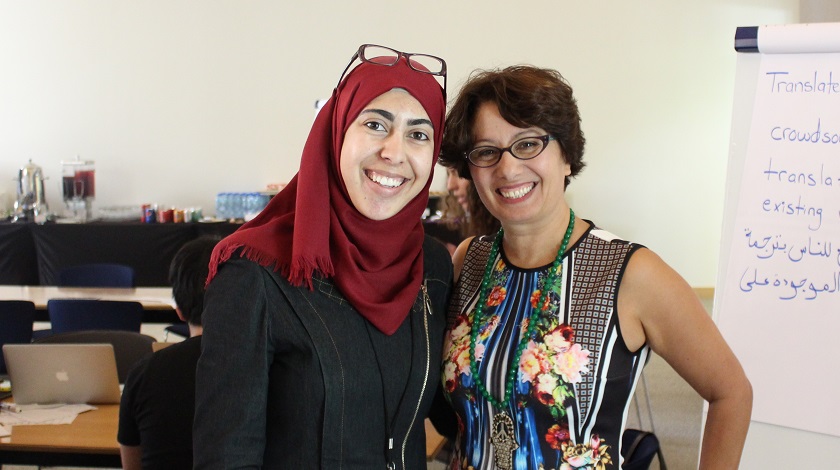
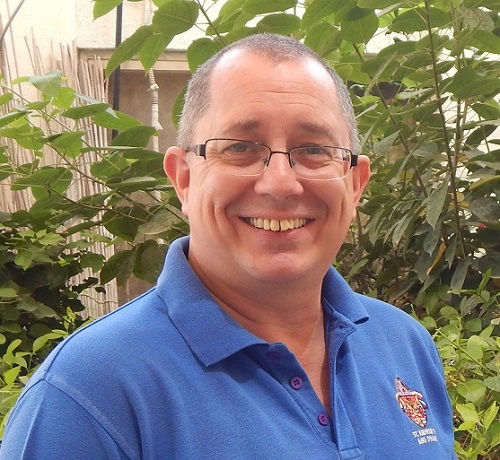
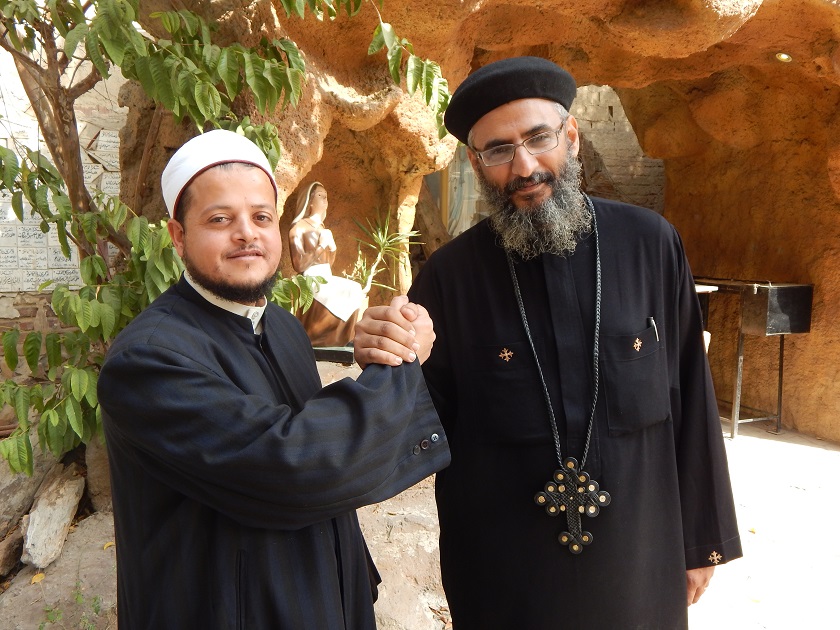
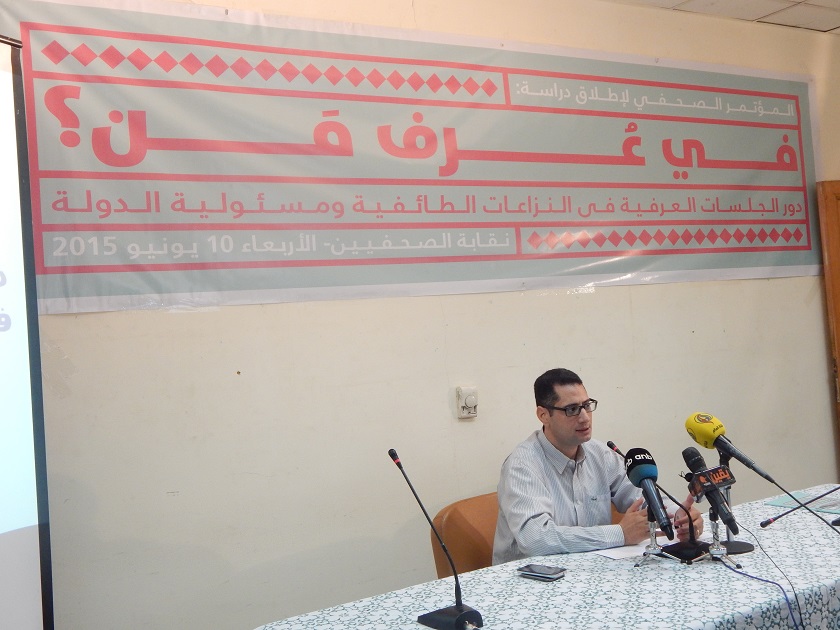
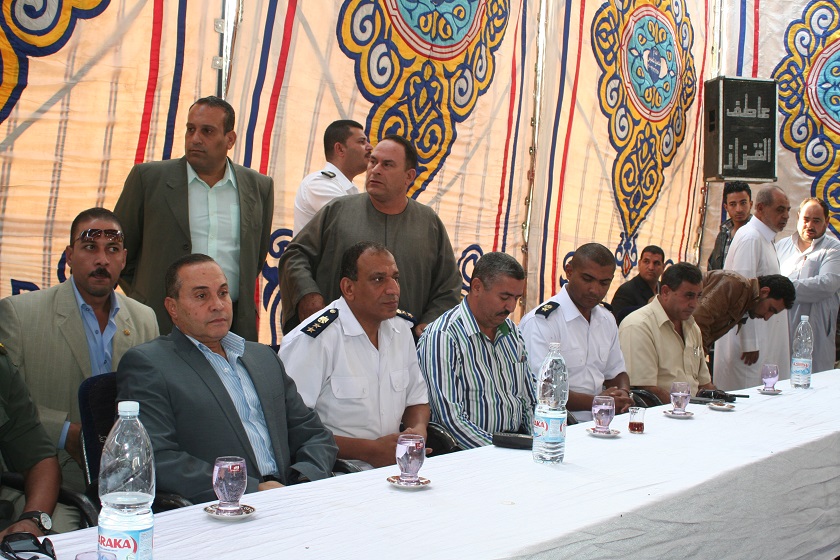

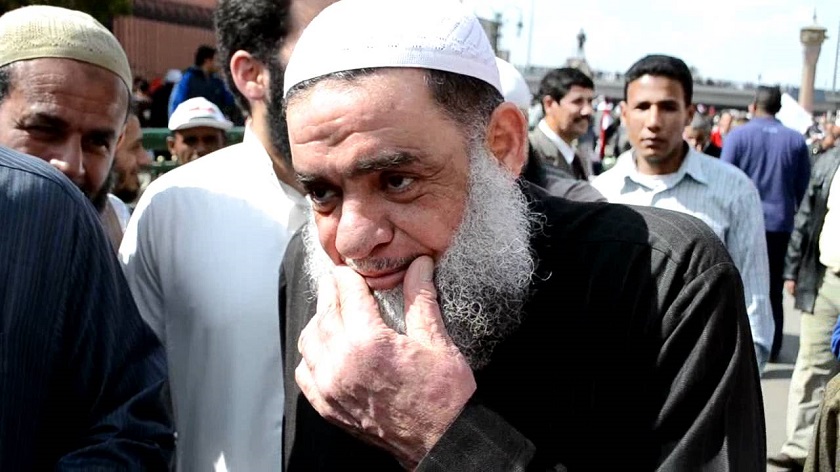
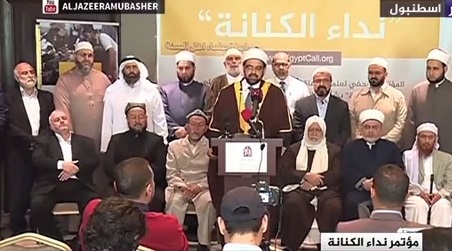


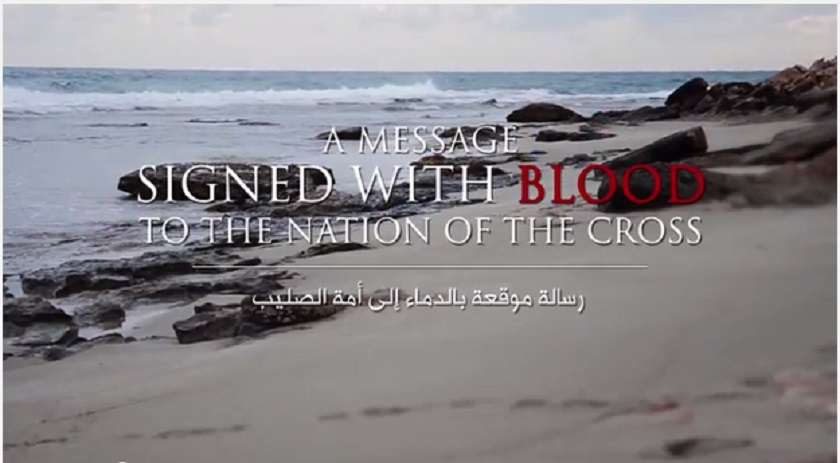

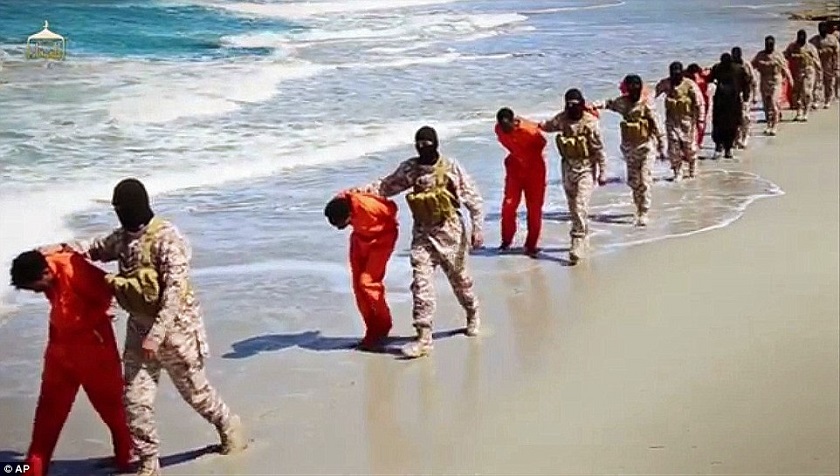


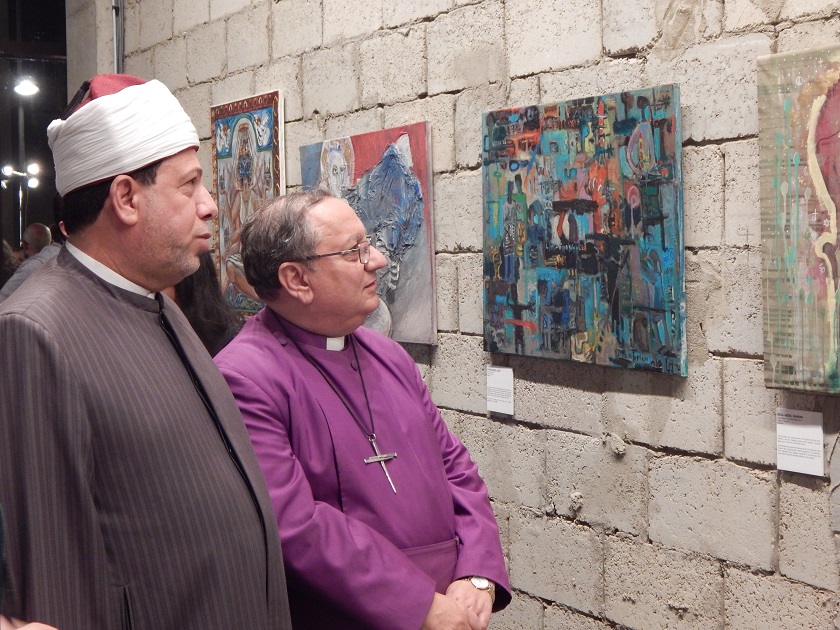
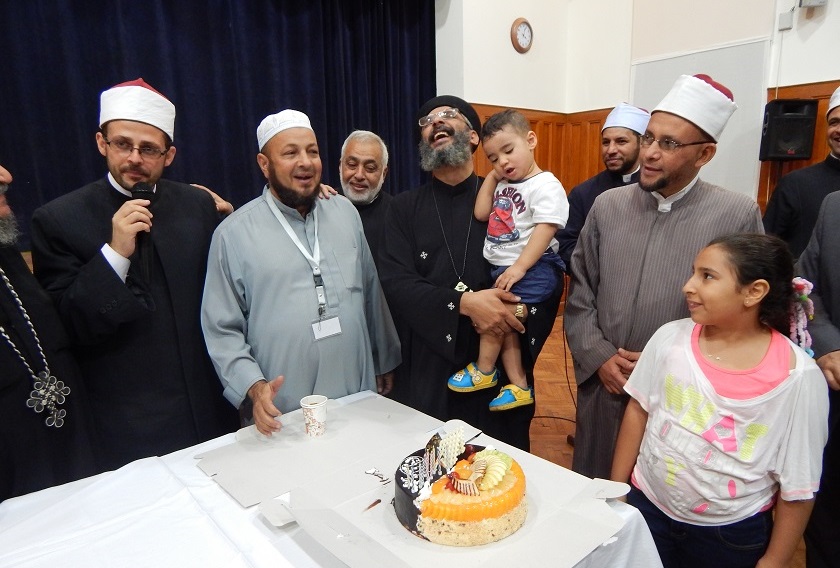
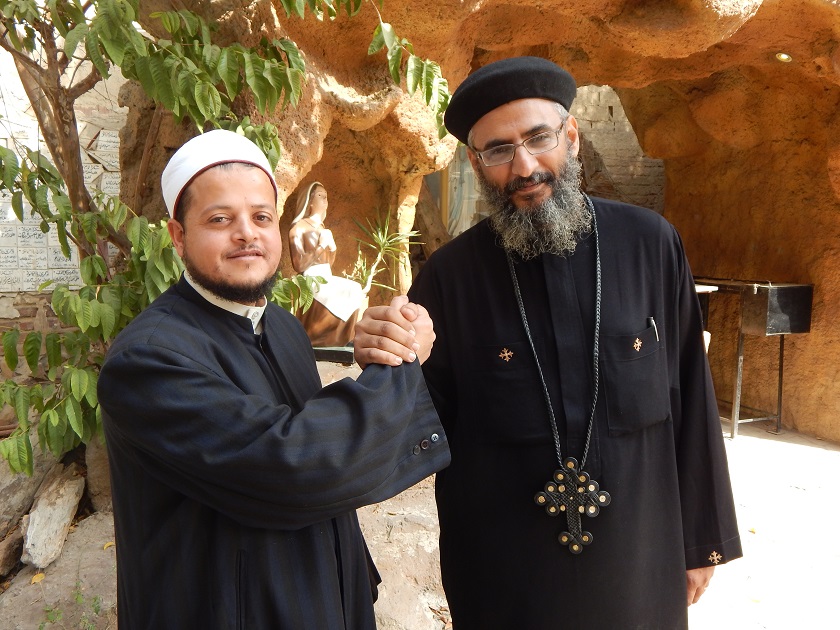



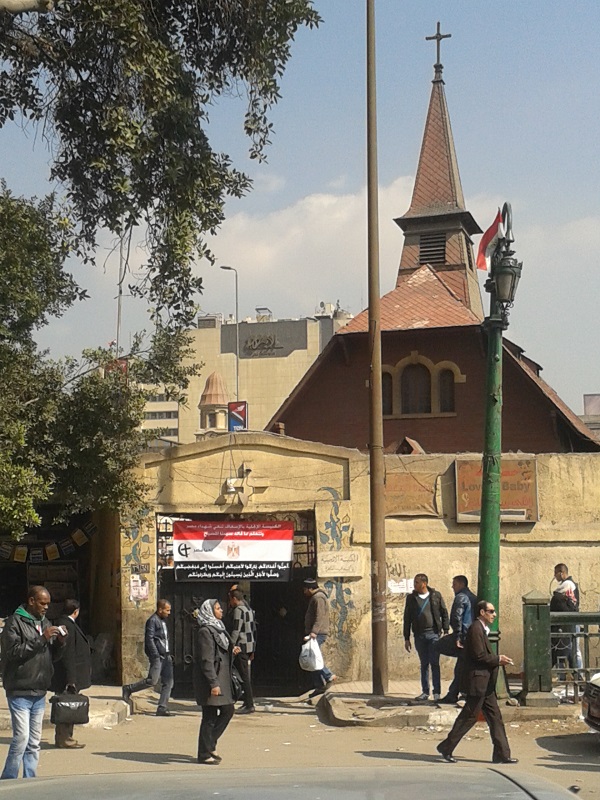

 Jayson Casper