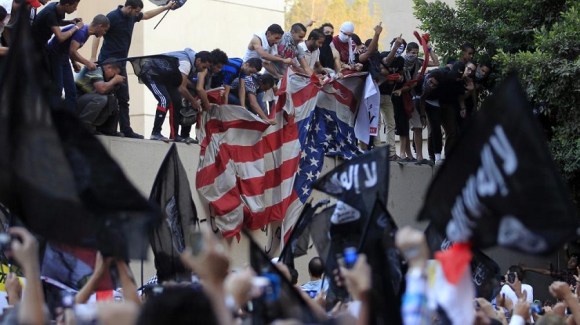
Protesters destroy an American flag pulled down from the U.S. embassy in Cairo, September 11, 2012. Mohamed Abd El Ghany / Reuters
Many Egyptians believe the United States is out to get them. Yet at the same time, the United States is the primary supplier of the Egyptian military, and ties between the two armed forces are strong.
Samuel Tadros wrote an engaging history of post-Arab Spring Egypt for the Hoover Institute, entitled “The Follies of Democracy Promotion.”
In it he brings to task the sentiment of past administrations — Bush and Obama included — who sought to pressure Egypt to open up democratically.
Some critics might say it is the underlying relation with the military and the failure to push harder for democracy that makes the United States a popular target. Tadros is cynical.
Regardless, in his conclusion he hits at a very important but often overlooked feature of the bilateral relationship:
Beyond any specific policy disagreements between the two countries throughout the years, the weakness of the alliance stems from the failure of Washington to build a constituency for the United States in Egypt.
As anti-Americanism and conspiracy theories overtook the country, no one in Egypt was willing to stand for the United States, defending the importance of the alliance.
Engagement with Egyptian society should not be limited to Cairo or to the business community, but the United States should make an effort to reach wider spectrums of Egyptian society.
And he offers several rather practical steps:
The US embassy should offer a correction to every anti-American story appearing in the Egyptian media, and those who actively spread such stories and refuse to correct them should pay a price.
A journalist consistently spreading conspiracy theories about the United States should not get invited to the US embassy Fourth of July party and he should not receive a visa to go shopping in America.
Alhurra, the US-based satellite TV channel, should be revitalized to provide fact-based news for Egypt and the region as a whole.
Above all, President el-Sisi should give a major speech making the case for the US-Egyptian alliance, detailing what America has done to help Egypt and refuting anti-American conspiracy theories. If he is committed to the alliance and wants US economic and military aid, he should be required to make the case for America to his people.
America has been content to look the other way as its reputation is trashed, assured vital interests will be [and have been] protected. And Egypt is free to pursue its favored foreign policy, independent of the United States, if it chooses.
‘Hearts and minds’ only go so far in a climate of disinformation. And America must step up to the plate and deserve the good reputation it desires.
But Tadros’ suggestions are sensible. It is strange they have not been widely discussed before.
After the latest atrocity against the Copts perpetrated by the Islamic State – killing 30 in an ambush of a church outing to visit a monastery – the following poem was circulated on social media.
It is entitled ‘A Message to ISIS’, written by Kiro al-Masry. The translation is mine and the Arabic original is given at the bottom.
I will not speak (as some have done)
And curse your religion whatever its name.
I have come that it be known:
My fathers’ religion and what it proclaims.
My fathers’ religion has love at its heart,
The meaning of which will call you to peace.
My fathers’ religion, right from the start
Offers forbearance that conflict will cease.
Your hatred and killing in no way suffices
To stop us from loving and praying for you.
My father’s religion, oh dear Uncle ISIS,
Is not a weapon to pierce you straight through.
I wish that you could come to see
Or just one time the answer seek.
That while you bomb and murder, we
Stay strong as if a mountain peak.
My fathers’ religion of spirit consists.
It is not a body whose end is the dust.
And for the spirit—despite death persists—
Awaiting are loved ones residing in trust.
My fathers’ religion, if you could discern,
Offers each wounded the medic of life.
Tomorrow when you will repent and return,
You will come to know just who is the Christ.
رسالة لكل داعش
انا مش هقول زي اللي قالوا دين ابوكم اسمه ايه
انا جاي اقـــــول دين ابويا يعني ايه
دين ابويا يعني حب يعني دعوه للسلام
دين ابوايا من البدايه دين تسامح مش خصام
رغم كرهك رغم قتلك وصاني اصليلك واحبك
دين ابويا ياعم داعش مش سلاح يطعن ف جسمك
نفسي تفهم مره واحده او تساءل نفسك سؤال
ازاي وانتوا بتقتلـــونا بنبقي صخر من الجبال
دين ابويا اصله روح مش جسد اخره التراب
يعني لما الروح بتصعد بتتلاقي مع الاحباب
دين ابويا لو بتفهم دين بيداوي كل جريح
وبكره لما تتوب وترجع هتعرف مين هو ( المسيــــح )
بقلم الشاعر : كيرو المصري
In a future post I hope to offer some commentary and reflection. But for now, take note at one way Copts are encouraging themselves in the face of atrocity and evil. Pray for them, and for ISIS likewise.
As America under Trump re-determines its policies in the Middle East, the feelings of the region’s people matter very little. ‘Hearts and minds,’ sure, but cold-calculating interests generally rule geopolitical considerations.
All the same, I can imagine the Egyptian angst in reading this recommendation by the Hoover Institute for Washington to re-up its cooperation with Cairo. Most of the article is an essay in explanation of why Egypt no longer matters, at least in the manner it once did.
Does Egypt today still matter? Some in Washington have been arguing otherwise.
True, rights of passage through the Suez Canal are helpful and so are flights over Egyptian airspace, but the United States can survive without both. Egypt’s control of the Arab League is no longer as strong as in the past and in all cases the Arab League is irrelevant anyway.
Maintaining the peace treaty with Israel is in Egypt’s own interests and not dependent on U.S. support. Al Azhar holds no sway over the world’s Muslim population, and Egypt’s cultural decline leaves it with limited soft power capabilities over Arabic speaking peoples.
From Syria to Yemen and even in neighboring Libya, Egypt has lost its ability to impact its surroundings. Even regional allies are growing frustrated with Egypt and its president. Those in the Gulf dreaming of Egypt becoming a counterbalance to Iran are realizing the futility of their investments.
In all cases Egypt is increasingly deteriorating under the weight of its own troubles and Washington has no ability to change that.
So cut the cord? Absolutely not.
Is it time then for the United States to abandon Egypt? The answer is a resounding no.
It is precisely because of Egypt’s movement towards the regional abyss that the United States needs to reinvest in the American-Egyptian relationship. Egypt is no longer a regional player but rather a playing field where local, regional and international powers are in competition over the country’s future.
The country may no longer be a contestant for regional hegemony, but it is today the primary contested prize in a struggle over the region’s future. If the Westphalian order is to be defended in the Middle East amidst state collapse and the rise of Caliphate revivalist movements, this defense has to start with the most natural of the Arabic speaking states. With ninety two million people, a state collapse in Egypt would lead to a refugee crisis of historical proportions.
No one wants a Somalia on the Nile, a Libya on Israel’s borders, or a Syria in control of the Suez Canal, the United States least of all.
This would require a policy shift, oddly enough, away from the traditional cold-calculating interests of Camp David and the Suez Canal. Instead, the US must strengthen (read: prop up?) the state.
U.S. interests in Egypt are [in] … strengthening state institutions to make sure a regime collapse does not lead to a state collapse.
Instead of focusing on military cooperation, the United States needs to develop a new partnership with Egypt that addresses the growing terrorist threat in the country, the collapse of the rule of law, the failed economic policies, the educational vacuum, and the growing sectarian hatreds that threatens the fate of the Middle East’s largest Christian community.
If US banks can stomach a ‘too large to fail’ bailout strategy, why can’t Egypt? This is easy enough to imagine from an ocean away, but locally many liberal-leaning Egyptians feel US ‘assistance’ (read: interference) has been too much, not too little.
But at the same time, this type of Egyptian assesses the problem similarly. The state is weak, they say, the economy is faltering, and education is low on the totem pole of priorities. They imagine, perhaps rightly, that sectarian issues will dry up if these failings are addressed.
So calling it a ‘bailout’ likely isn’t right. It is a call to strengthen a weakened longstanding partner, in a manner that moves beyond one or two points of American national interest.
So how to cooperate? The article referenced is meant to persuade Americans, not Egyptians. But in Cairo the tone taken risks being tone-deaf to local pride, let alone a legacy of bilateral mistrust.
Perhaps Trump, with his shock-value strategy of resetting all relations, can change that. And as stated earlier ‘feelings’ don’t matter. That’s good, because Trump puts little stock in the value of tactful rhetoric.
Just don’t imagine Egypt will be happy about it. ‘You matter because you’re a headache’ is an insult not an encouragement. The author, who identifies himself as a ‘native son of the land’, can swallow it.
I suspect few other Egyptians can do so readily. If America wishes to pursue this policy, it calls for a task even greater than the discredited ‘nation-building’ efforts seen elsewhere.
It calls for culture-influencing. And that requires real mutuality and engagement, much of it without control. Culture requires freedom, and freedom requires trust.
Whether or not Egypt warrants these in US policy eyes is one thing. Whether or not Trump’s ‘America first’ can prioritize it is another.
Egypt matters. So does every other nation and people. How any state relates to another is an indication of national character. Whatever policy chosen — and diplomats must be nimble — may both America and Egypt prove worthy.
The New York Times carried a very Christian op-ed recently, penned by a Turkish Muslim.
Mustafa Akyol is one of Turkey’s leading journalists, and argues that the crisis in the Muslim world today can be solved by turning to Jesus as example.
But first, a primer for those who don’t know the basics:
While Muslims respect and love Jesus — and his immaculate mother, Mary — because the Quran wholeheartedly praises them, most have never thought about the historical mission of Jesus, the essence of his teaching and how it may relate to their own reality.
Here is the historical comparison. The Jews of Jesus day, he said, were frustrated by their domination by Rome. Remembering well their former political golden era and ongoing religious claim of God’s favor, they found it very hard to adjust to their status as an oppressed client state in a global empire.
There were two primary reactions: the Zealots who resisted and the Herodians who collaborated. And these patterns mirror the current Muslim world:
The Islamic world has been in a crisis since the 19th century … because it was outperformed, defeated and even besieged by Western powers. Islam, a religion that has always been proud of its earthly success, was now “facing the West with her back to the wall,” causing stress, anger and turmoil among Muslims.
…
Modern-day Muslims, too … are haunted by the endless struggles between their own Herodians who imitate the West and their own Zealots who embody “archaism evoked by foreign pressure.” He pointed to modern Turkey’s founder, Mustafa Kemal Ataturk, as an “arch-Herodian” and the “Central Arabian Wahhabis” as arch-Zealots.
Into the divide steps Jesus, he said, but also the Pharisees who are well represented in Islam today:
While being pressed by a foreign civilization, they are also troubled by their own fanatics who see the light only in imposing a rigid law, Shariah, and fighting for theocratic rule. Muslims need a creative third way, which will be true to their faith but also free from the burdens of the past tradition and the current political context.
And here, Jesus is necessary:
No Muslim religious leader has yet stressed the crucial gap between divine purposes and dry legalism as powerfully as Jesus did. Jesus showed that sacrificing the spirit of religion to literalism leads to horrors, like the stoning of innocent women by bigoted men — as it still happens in some Muslim countries today.
He also taught that obsession with outward expressions of piety can nurture a culture of hypocrisy — as is the case in some Muslim communities today. Jesus even defined humanism as a higher value than legalism, famously declaring, “The Sabbath was made for man, not man for the Sabbath.”
And Akyol’s closing plea:
Can we Muslims also reason, “The Shariah is made for man, not man for the Shariah”? Or, like Jesus, can we also suggest that the Kingdom of God — also called “the Caliphate” — will be established not within any earthly polity, but within our hearts and minds?
If Jesus is “a prophet of Islam,” as we Muslims often proudly say, then we should think on these questions. Because Jesus addressed the very problems that haunt us today and established a prophetic wisdom perfectly fit for our times.
The wisdom of Jesus transcends Christianity. Gandhi is perhaps the best example of successful application outside of faith. There is no reason Muslims cannot also benefit.
But can wide transformation come through Jesus’ teaching alone, apart from his equally weighty assertions of his (and through him, man’s) unique relation to God? Can those who rightly see themselves as God’s slaves advance in Jesus’ mission of civilization and spirit, unless also seeing themselves as his sons?
All success to Akyol and other Muslims who walk this path. May they find Christians to be an encouragement along the way.
One of the ballerinas participating in the Ballerinas of Cairo project poses, Cairo, Nov. 11, 2016. (photo by Facebook/ballerinaofcairo)
Al-Monitor highlights a new effort to get art to the street. Ballerinas of Cairo has some great pictures, combining cultural physique with iconic cityscape.
By taking to the streets of Cairo, the young artists have succeeded in breaking the stereotype that ballet is an art form for the upper class only. Despite the dangers of performing on the streets and fears of negative reactions from the public, the ballerinas surprise passers-by with their performances.
…
When asked about the most difficult shows they performed, Taher said, “The performance in downtown [Cairo] was quite difficult given the heavy traffic, which made it harder for us to shoot. Our objective is an image that shows the beauty of ballet as an art as well as Cairo’s sites.”
…
According to Fathy, the idea of the project is to combine three art forms: architecture, ballet and photography. So far, Ballerinas of Cairo has performed 11 shows on several streets in Cairo, all of which were photographed.
I can’t say I’m very knowledgeable about ‘the arts’, but I admire the efforts of Egypt’s cultural scene to take their passion to the people. Here are some efforts I’ve highlighted in the past.
Perhaps one day an greater cultural appreciation of art will take hold. But without such efforts to sow seeds even along the roadside, it probably never will.
Translation: Blowing up a pagan temple in Palmyra.
Two days ago I shared my new article at Christianity Today contrasting Muslim and Christian polls about eschatology. As ISIS surged in the Middle East, it activated also Christian visions of Armageddon.
But it is good also to look at the raw material. This article by Josh Landis contains many interesting tidbits on how Syria ignites the Muslim imagination. Not only the sometimes jihad-bent Salafi trend can be animated, but the generally assumed peaceful Sufis also see the early centrality of Sham, as greater Syria is called in Arabic.
If some judge this as confirmation of Islam’s essential violent core, here is one passage to highlight. I suppose it could be read either way, but it does show the focus of the early community on empire-building:
Salafi-Jihadis may be very different from classically conceived Jihad but they believe that they are continuing in the footsteps of an old tradition which goes all the way back to the earliest days of the Prophet.
Whilst it is noteworthy that Jihad occupied a very small part of the Prophet’s life, the first books written about his life was about his battles. From there a whole literary genre called maghazi developed.
Moreover, there are historical compendiums such as Futuh al-Buldan of al-Baladhuri, one of the earliest surviving texts on how Islam conquered the classical world with offensive jihad.
Apart from the jurisprudence dealing with the legal issues surrounding the concept of religious warfare, there are plenty of works written on the battles of the Companions, as well as books dealing with the concept of Futuwwa, martial and spiritual chivalry, and of course there are biographies of famous warriors.
Contrast, perhaps, with the Civil War and WWII literature popular among Americans. Yes, it is a contrast between a nation and a religion, and therefore not exact.
But it also highlights the difficulty of examining Islam, which stands in between ‘religion’ and ‘nation’.
Let it at least be an example of the shared propensity of mankind to glorify battle. Most Muslims, and Americans, would quickly defend the rightness of their particular historical cause. Perhaps they are not wrong.
But allow it to give pause in defending the rightness of any particular current cause – religious, national, or otherwise.
And if you like, review again the CT link showing how some read forward the battle into the future, perhaps the near future, perhaps even the present.
Living in the Middle East one drinks deeply from the well of conspiracy thinking. It pollutes the mind, but also trains it.
So while Americans mused over the merits and demerits of Trump and Clinton, I feared the patterns I was watching develop.
To describe would require a full listing of faults, but I mean this post to be more humorous than serious. It excerpts from an article by Karl ReMarks, a noted Middle Eastern satirist.
In it he compares the United States with Arab nations. It is funny while being unnerving. Enjoy, so to speak.
On the secret services:
Let’s start at the beginning. During the campaign we were surprised to learn of the influence that the head of the American mukhabarat (state security, i.e. your FBI) can wield over the election process, simply by choosing to pursue a certain line of investigation. As you may know, this has been a constant feature of our politics since independence. Our surprise turned to astonishment when we started to witness the blossoming feud between the then-president-elect and the American mukhabarat, another important feature of Arab politics.
On top of that, we started to hear reports of foreign meddling in your elections, which some say may have influenced the result. Of course, we are quite familiar with that situation, too, not least because of the efforts of your own administrations over the decades. Yet it came as a surprise to hear talk of “foreign hands” and “secret agendas” in a country like America. We sympathize.
On the bright side, this was also the moment that the conspiracy theories started to spread. You know us; we’re quite fond of conspiracy theories—particularly when they involve plots by external powers—and consider ourselves connoisseurs of the genre. Your plots are a bit rough around the edges, we have to admit, but top marks for creativity. Was the election of Trump a Russian conspiracy? Was talk of the Russian conspiracy a liberal conspiracy to undermine Trump? Did the mukhabarat leak information to help Trump? Did the mukhabarat leak information to hurt Trump? Was media coverage of Trump’s mukhabarat conspiracy theories part of a liberal conspiracy theory to bring him down? They’re all so deliciously complex and open-ended, much like our own.
On the media:
Of course, another crucial aspect to this transformation is the president’s contemptuous attitude towards the media. My, the delightful similarities. From blaming the press for engaging in secret conspiracies to undermine him to threatening their access to his White House palace to refusing to take questions from certain reporters, President Trump reminds us of several of our own leaders. In fact, an Arab leader complaining about CNN coverage is pretty much a staple of our political life.
This took an interesting turn on Saturday when the president accused the media of manufacturing his feud with the mukhabarat and his Minister of Information Mr. Sean Spicer castigated the media for reporting the size of Trump’s inauguration crowd. The not-so-veiled threats by the president and Mr. Spicer to the media are very much in the spirit of Arab governance.
On protests:
And then there’s the unrest. In the lead up to the inauguration, we started to hear about youth protests against the new regime. Come on! This is bordering on plagiarism now. Please write your own plots and stop borrowing ours. Although, we usually wait for leaders to take power before we start protesting; we like your preemptive revolution approach.
…
A word of warning though, before embarking on this path. We tried the revolution thing ourselves, and it didn’t work out so well. Maybe you should just adapt to living in the new regime. We were always told that having a strongman in charge is the best solution for Arab countries, otherwise there would be chaos. Perhaps the American people are not ready for democracy after all. Let’s face it America, you look like an Arab country now.
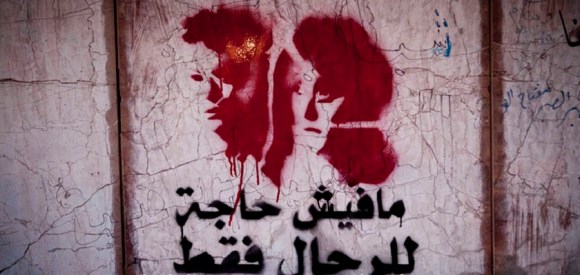
Arabic: There is no need for men only. (Photograph: Virginie Nguyen, via Mada Masr.)
Official Egyptian statistics departments have recently published sobering numbers concerning domestic violence:
At least 18 percent of adult Egyptian women have reportedly experienced physical or sexual violence at the hands of family members or close acquaintances in 2015, according to official estimates by Egypt’s Economic Cost of Gender Based Violence Survey (ECGBVS), published in June 2016.
Around 46 percent of married women aged 18 to 64 years in Egypt have experienced some form of spousal violence, whether physical, emotional or sexual, according to the same survey, which was conducted by Egypt’s official statistic body the Central Agency for Public Mobilisation and Statistics (CAPMAS), the National Council of Women (NCW) and the United Nations Fund for Population Agency (UNFPA).
One out of four married women has been subjected to physical violence at one point in their lives by their current or former husband, according to 2014 statistics from the Demographic and Health Survey.
And according to the UN, it is even worse for women outside the home. Back in 2014 I wrote about a Sunday School teacher training children to defend themselves against sexual harassment, and conveyed these figures:
According to a survey published by the United Nations Entity for Gender Equality and the Empowerment of Women, more than 99 percent of Egyptian women have been subjected to sexual harassment.
This goes far beyond playful catcalls, with 96 percent reporting their bodies have been touched and 55 percent of these having had their breasts groped.
Egyptian society and government recognizes the problem and has recently increased fines and jail terms for offenders. But this article by Mada Masr concerns a victim who thought beyond punishment into transformation. And she went the extra mile to secure a greater justice.
When one woman was sexually harassed this month in Cairo, she made an unusual move: she came to an informal agreement with her attacker’s family and juvenile prosecution to drop charges on condition that the boy get therapy and do community service.
Having caught the boy who groped her hard from behind, after quite a chase, Mariam felt more confused than victorious. Quite a crowd gathered when she caught him. It was the evening of a match and having run through a few streets, the boy tripped by a full café.
“People assumed that I was chasing him because he’d stolen something from me. They asked me and I said yes, he stole something very important, my dignity.” Some of those who had gathered suggested she leave it now, she had caught, hit and insulted him, that he was young and she should forgive him. But those who stayed on the scene, all men Mariam says, encouraged her.
Then, when the police came and the 14-year-old was being put in the van, they hit him on the back of his neck. “I freaked out,” Mariam recounts. “We all know what happens in Egyptian prisons and police stations and detention centers. I felt I was caught between two fires. Either I get my rights and this boy is subjected to violence, or I let him go, he will carry on doing it, I’ll be passive and other things I can’t accept for myself.”
Fortunately, she found allies in the 14-year-old’s parents, and in the public prosecutor. They worked out an arrangement, one the court may even return to:
She told the prosecutor about HarassMap, an NGO that encourages bystanders and institutions to speak up against harassers and have a zero-tolerance attitude toward harassment. He was not dismissive, as she had expected, and took a contact so that he could deal with HarassMap in similar cases, also informally.
There are many problems in Egypt, but also good people. And often unreported are the small changes that ripple through society, as these good people labor on:
“There has been a huge shift, primarily around the question of who should be ashamed,” Abdel Hameed says.
Here is a sobering stat related by the Economist. Interpret it as you will:
Horrifyingly, although home to only 5% of the world’s population, in 2014 the Arab world accounted for 45% of the world’s terrorism, 68% of its battle-related deaths, 47% of its internally displaced and 58% of its refugees.
Surely there is no clear cut answer to the question in the title. But allow the raw numbers to sink in.
I can’t pretend to know the answer to why Aleppo fell, but Juan Cole tells us only part of it did. The more populous section, says the University of Michigan professor, may well have been glad to see the rebels go.
There had been 250,000 Sunni Arabs of a more religious mindset and from a working class background living there under rebel control since 2012. But next door in West Aleppo, which our television stations won’t talk about, were 800,000 to a million people who much preferred to be under the rule of the regime.
This numerous and relatively well off population took occasional mortar fire from the slums of East Aleppo. They weren’t in the least interested in saving the rebels from the Russians or the Iraqi Shiite militias or from the regime itself.
Syria is an incredibly diverse society, he says, guesstimating:
And basically, the rebels alienated the people as they drifted further and further toward the better funded and more capable Salafi-Jihadi fighters.
But when the regime used heavy weaponry on the revolutionaries, the latter militarized their struggle. They weren’t able to get funding from democratic countries for their militias or for the purchase of weapons.
Many turned to Turkey and the Gulf countries like Saudi Arabia, and these patrons wanted them to adopt a clear Muslim fundamentalist identity. Most Syrians are not Muslim fundamentalists. But that is the mindset of the Saudi elite.
Maybe Western nations should have funded the struggle, then? Throughout the article Cole condemns Assad, Russia, and Hizbollah. He seems to harbor some sympathy toward the original revolution and the moderate factions.
But at the same time, this is how he describes the Muslim Brotherhood:
Many of the fighters in the rebel opposition were Muslim Brotherhood, a relatively moderate fundamentalist group in Syria which nevertheless does want to impose a medieval version of Islamic law on the whole country.
If this is moderation, what to make of that rhetoric overall? Nevertheless it was the al-Qaeda linked Nusra Front that subjected the Syrian regime to the most damage, and twice almost cut off Damascus from key supply lines before outside intervention relieved the pressure.
Why then did the Syrians not rally behind the rebels against the likes of Hizbollah (first) and Russian (second) intervention?
Most people in Syria don’t trust the Muslim Brotherhood and they really, really dislike the Salafi Jihadis.
He boils down to this:
So you get 70% of the people in the country who, having been given the unpalatable choice between the Baath regime of al-Assad and being ruled by Salafi Jihadis, reluctantly chose al-Assad.
That is why the Aleppo pocket fell.
I can’t say if he is correct or not. But amid the horrible images of Aleppo broadcast in the media, it is wise to consider a lesser heard explanation.
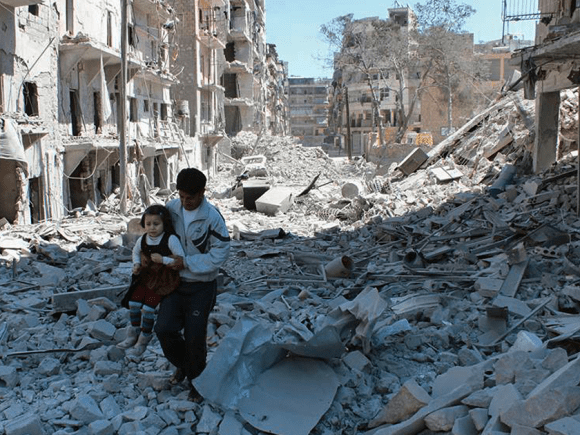
And then, look again at the photo above. No matter their orientation, there are still innocents among them. And even the less innocent are human, including the far from innocent.
AFP PHOTO / MARINA MILITARE AND AFP PHOTO / STR / AFP PHOTO / MARINA MILITARE”
Salama Moussa provides a timely reminder of the difference:
Migrants are pushed by local disturbances to seek work and survival in other lands, regardless of the land, as long as it welcomes them. Immigrants have a fixed destination and while they seek a “better” life, the definition of “better” is often broader than mere survival.
He also mentions a request difference in orientation:
Immigration carries with it the hope of integration, assimilation and acculturation. This process is rarely painless but almost always beneficial, for the immigrants and the societies that receive them.
Migrants carry the hope of returning to their homelands once the emergencies subside or sufficient material wealth is accumulated. For them assimilation and acculturation are both highly undesirable, as they would render the migrants alien when they return to their homelands.
The categories can be fluid, depending on the reception and success of either group. But he warns of the loud megaphones that often accompany the pro- and con- on either extreme of the national debate:
Matters are made worse by leaders on all sides. Some package easy national solutions indistinguishable from simple bigotry. Others are unable to see that tolerance should not be extended to habits and ideas that burst the old lands into flames.
The answer, he says, is to encourage immigration and stem migration. The latter is to help strengthen the countries of origin, that there be no impetus to leave.
Of the former, [my comment] every nation must have a responsible immigration policy, which can legitimately wax or wane over time according to national circumstances. But Salama Moussa’s take is spot-on:
The second is done by adherence to the bedrock values that have made many countries, especially in the West, a haven to the beleaguered.
Chief among those values is tolerance. The root of that very word is Latin for “supporting” and “enduring”.
This means that while accepting new immigrants we must assert that the values that opened the doors for them can not be subverted by any beliefs they bring along, and that we will work to see our values endure.
As we transition back to Egypt following a period of time in the United States, my mind is still taken a bit my American issues. Hopefully Egyptian and Middle East commentary will return over time, but glad to share insight helpful to either context.
Like immigrants and migrants and many others, our ‘sense of belonging’ is also fluid.
It is not unusual for American politicians and the State Department to call out other nations of the world for their violation of human rights.
But the past few weeks have given other nations an excuse to hit back. Laugh or cry, here is a selection of Egyptian statements about our racial issues and the UK Chilcot report on the Iraq War.
MP Margaret Azer, deputy chairman of Egypt parliament’s human rights committee, said in a statement that she was appalled by the brutality of American police.
“I think that all Egyptian MPs and defenders of human rights should move to condemn the repeated brutal use of force against black Americans and expose the bloody face of the United States and its politicised use of the issue of human rights to extort other nations,” said Azer.
Azer’s statement added that “the United States, which likes to give lectures on human rights to other nations and issue periodical reports on civil liberties in the world, was caught red handed violating human rights and crushing the peaceful protests of black Americans in the city of Dallas and other US cities.”
Ilhami Agina, an independent MP and a member of parliament’s human rights committee, also said in a statement that “the excessive use of force against black Americans in the US has exposed the ugly face of Western regimes and that these regimes are deeply involved in wide scale racial discrimination.”
“[US President Barack] Obama, who came to Cairo in 2009 to give us a long lecture on human rights, might have forgotten that it is America that needs radical reform,” said Agina.
Agina told reporters that he sent a letter to Egypt’s foreign minister Sameh Shoukry asking him to summon the US ambassador in Egypt – Stephen Beecroft – to convey Egypt’s dissatisfaction with the excessive use of force against blacks and urge the American government to reform its record on human rights.
“Egypt is now the head of the Arab summit and so it should give a say on what happens in America, but if Shoukry does not opt to do this, he should at least do as the US State Department, which always grants itself the right to comment on judicial and political issues in Egypt,” said Agina.
Ayman Abu Ela, the parliamentary spokesman of the Free Egyptians Party, told reporters that he also hopes that Egypt’s parliament will hold a session on America’s violations of human rights.
“The US administration and media, which have always accused Egypt of issuing a tough protest law have nothing to say now about their police brutality against black protesters,” said Abul Ela, also agreeing with other MPs that “the recent incidents of excessive force and police brutality in America have uncovered the falseness of American democracy and its flawed reports about human rights in the Arab world.”
Perhaps most US criticism of other nations means as little as these statements above in the practical rebuke and correction of abuses. Perhaps they reveal how indicative of the domestic political context each remark is made, rather than impact on international relations.
But sometimes, human rights abuses do result in international censure. Here is the Egyptian appeal:
The Egyptian parliament’s Committee on Foreign Affairs called on Friday for George W. Bush and Tony Blair to be tried as war criminals, saying the resounding report of a British committee investigating Britain’s participation in the war against Iraq clearly shows that there were no convincing reasons for the conflict.
“This British committee’s report – the Chilcot report – has exposed the false reasons which former US president George W. Bush and former UK prime minister Tony Blair had exploited to wage their illegitimate war against Iraq,” said the strongly-worded statement.
The parliament said that the American-led war in Iraq left more than one million Iraqis killed and millions more wounded, internally displaced or sent from their homes as refugees.
“There’s no question that George W. Bush and Tony Blair should be put on trial as war criminals not only because they are the ones who trumpeted the reasons for this war, but also because they should be held responsible for the deaths of millions of Iraqis since 2003,” the statement read.
Human rights – and their defense – are vitally important. Too important, in fact, to be left to politicians anywhere.
But without them, progress will always be limited. Empty rhetoric may be part of politics, but rhetoric sets a tone. The world is a better place even if politicians give only hypocritical lip service to human rights. Their conscience can always awaken. If so, laws and policies can change, however gradually.
Consider the alternative, if human rights are outright ignored or justified away. Sometimes, in many nations, this alternative is all too near.
Bishop Angaelos of the Coptic Orthodox Church in the UK is a frequent go-to source for Western media seeking perspective on the Christians of Egypt and the Middle East.
As localized, sporadic attacks on this community have been on the rise in recent weeks, he released a statement that is quite wise and balanced. Before quoting it in its entirety, please feel free to click here for context, and here for video of what one of these attacks looks like first-hand. This article describes security facilitating a reconciliation.
You can also click here for a statement for the Egyptian president warning of efforts to drive a wedge between the two religious communities and vowing to hold accountable those responsible for the violence. After meeting with the president, Pope Tawadros of the Coptic Orthodox Church also urged people to not allow Egyptian national unity to be broken.
Here is the statement of Bishop Angaelos:
Egypt is undoubtedly going through a formative stage of its contemporary history. Having emerged from uprisings and changes in Government, dealing with resulting pressures on its economy and infrastructure, and with the loss of foreign investment and tourism, it has become more vulnerable to a disturbing wave of radicalism.
One of the manifestations of this radicalisation is that despite a short period of apparent reprieve, it is regrettable that the time has come yet again to speak of heightened, targeted attacks against Coptic Christians in Egypt. Tensions against Egypt’s indigenous Christian community have again escalated over the past few months, and will spiral even further if not immediately addressed.
The exponential rise in attacks against Christians and Christian property in recent months can largely be attributed to three main catalysts: inflammatory false rumours and accusations regarding alleged extra-marital relationships between Christians and Muslims, incendiary rumours relating to the building of new churches, and a growing trend towards the direct targeting of priests and their families. At their most brutal, these recent attacks have culminated in the burning of churches and places of worship, the stripping and public parading of 70-year-old Souad Thabet, and the senseless murder of Father Raphael Moussa.
What must be considered very clearly and with great concern however is that an attack on any individual member of a society is an attack on that same society and what it stands for, so our prayers are not only with those who have suffered these unspeakable and horrid violations, but for the society that is undermined and made more vulnerable with each and every one of these incidents. The system of law and order in Egypt is not one for Christians, Muslims or any other individual group of people, but it is for all Egyptians, and so when violated this violation is against all.
While there are clear efforts at the national level in Egypt to attempt to curb such acts of religiously-motivated violence and lawlessness, what we have repeatedly seen at the local level is, at best, carelessness and, at worst, criminal negligence in the reaction and lack of reaction of local security service officials. This gives a clear and direct message that certain crimes will go unchallenged and unchecked, especially when perpetrators are not brought to justice. The resulting sense of impunity not only means a lack of justice for crimes already perpetrated, but also gives greater encouragement to those who will seek to do even more, and more aggressively.
While there is a rejection of these attacks on Christians by the vast majority of Egypt’s 85% Muslim population, themselves often targeted by the same radical and intolerant elements, there is a need for a robust system of law and order that appropriately responds to crime, irrespective of who it is perpetrated by or against. If this does not happen, the concern is that hopes for a more cohesive nation will disappear, and that recent events will give way to a re-emerging religious divide.
In light of all this, it is of course difficult to have a sense of hope or promise in the current situation, but mine still remains rooted in the way Christians in Egypt and elsewhere have faced persecution for millennia. They continue to draw strength from their confidence and trust in an omnipotent God, and forgive through grace that only He can provide. In this, those suffering directly from this persecution provide a great example and inspiration for us not to be engulfed by anger or resentment but in calling for justice, remain forgiving, no matter how hard, and work towards a hopeful future, no matter how seemingly impossible.
The brutal and personal nature of many of the attacks against our brothers and sisters in Egypt warrants our prayers and support for them as they continue to endure heightened levels of persecution while refusing to lose their admirable and resilient spirit, and unyielding ability to forgive according to their Christian devotion and commitment. We also pray for Egypt and its leadership, hoping that hearts and minds will be led to greater inclusiveness, justice, equality, and refuge for the oppressed, remembering that our Lord Himself once took refuge from persecution within its gracious and welcoming borders.
We are often asked what Egyptians think about current American politics and the presidential race. Our answer tends to fall into these categories:
Many hate Hillary Clinton due to her support for the Brotherhood.
Many think it doesn’t matter because US foreign policy never changes.
Many see in Donald Trump an American version of Middle Eastern demagogues.
This al-Monitor article provides a nice first preview, focusing on the views of certain political and business elites. As such, our category three is missing. But it is often helpful, and at the least entertaining, to see how they see us.
Here are a few excerpts:
Trump’s position on the Brotherhood has led to some voicing their support for him in Egypt, most notably well-known billionaire businessman Naguib Sawiris. In June, Sawiris confirmed that he backs Trump because, in his view, Clinton supports the Brotherhood.
During an interview with Al-Monitor, former Egyptian Foreign Minister Nabil Fahmy responded to a question about which candidate would be better for achieving cooperation with Egypt by saying, “The rhetoric adopted by US presidential candidate Donald Trump vis-a-vis Islam and Muslims is unacceptable and greatly offensive. On the other hand, Hillary Clinton carefully chooses her words and is a ‘veteran politician,’ with all the positive and negative connotations associated with such a characterization.”
Former deputy Foreign Minister Gamal Bayoumi said, “In superpowers like the United States, the president operates according to general policies set by state institutions and forces that have influence in political life. While the president may play a role in changing the approach, the policies remain fixed.”
In statements to Egyptian daily El-Balad June 9, Cairo’s former Ambassador in Washington Abdel Raouf El Reedy said that, overall, Clinton would be the better president for Egypt, despite her having what he called some unfavorable positions on Egypt and the Arab world. He noted that Clinton’s policies on Egypt and the Arabs would be an extension of Obama’s current policies, while attempting to avoid a repeat of the current president’s mistakes.
More testimony is needed, but will any of these voices sway your vote?
Egyptian Christians continue to offer overwhelming support to the current president. Following removal of the Muslim Brotherhood from power, Copts are inclined to overlook economic challenges and human rights infringements as they with many Egyptians appreciate Egypt’s relative regional stability. Public rhetoric esteems Christians as equal citizens as the president challenges Muslims to remove sectarianism and extremism from traditional Islamic discourse.
But this does not mean all is well. Inherited patterns continue, especially in rural and less developed areas. Middle East Concern chronicles the recent past:
On 20th May several Christian homes were attacked in al-Karam village in Minya province, as a result of a rumour about a relationship between a Muslim woman and a Christian man. During the attack the man’s mother was attacked and publicly stripped of her clothes. The woman is around 70 years old. Of the 16 people arrested for the assault, 11 were released on bail this week (three on 27th June and eight on 28th June).
On 9th June in Damshir village in Minya province four Muslims armed with knives attacked a Coptic man and his family. They alleged that construction work he was doing was intended to build a church and they threatened him and told him to leave the village. After he filed a complaint the four men were detained, but the authorities told him to stop the construction work.
On 10th June a man attacked a nun at a medical centre run by the Coptic Orthodox Church in the town of Biba in Beni Suef province. When a guard tried to help the nun he was also attacked. Later the same day the attacker returned, armed with a knife. The guard managed to lock the man out of the centre. A complaint was filed with the police, but no action has been taken so far.
On 17th June a mob of a few thousand people gathered at the house of a Copt in al-Bayda village near Alexandria, after prayers had been held at the mosque. They shouted that they would not allow a church in the village and accused him of turning the building which contains his apartment into a church. Several Coptic homes were attacked, two were seriously damaged and at least ten were looted.
On 29th June in Kom al-Loufy village in Minya province four houses belonging to Copts were set on fire after a rumour spread that two brothers were constructing a church. After the rumour started the police asked the brothers to sign a statement saying that the building they were constructing on their land was for residential purposes, however their homes and the homes of others were attacked nevertheless.
On 30th June Father Raphael Moussa was killed in Arish in Northern Sinai. Father Raphael was the parish priest of St George’s church. He was shot by several perpetrators on his way back from a church service. The Egyptian branch of the so-called “Islamic State” movement has claimed responsibility for the murder, and has threatened to carry out more killings.
But Middle East Concern also highlights possible measures that may move positive public rhetoric into written law:
In addition to these events there are currently four debates in the Egyptian parliament that could have an impact on Christian communities. These discussions include:
* possible amendments to legislation on blasphemy
* draft legislation to regulate personal status law for Christian communities
* draft legislation to regulate church construction
* two draft bills on equal citizenship for all and countering discrimination (including discrimination on the grounds of religion)
There is always work to be done. Right or wrong, Copts appreciate the trajectory of their nation but hope for better social and legal standing. This legislative term will be telling, ultimately judged over the current and coming generations.
From al-Monitor, a unique account of a Palestinian Christian in Gaza who daily accompanies his blind Muslim friend to the mosque:
“Growing up, Hatem would always perform prayers at the mosque, but after the incident five years ago, he was no longer able to do so because there was no one available to guide him there. I saw how he would shed tears whenever the call to prayer would come from the mosque. That is why I decided to take him to the mosque to pray as he did in the past.
“The first day I helped him get to the mosque, four years ago, he was so happy. So I told him I would be taking him every day to perform all the prayers. He was thrilled to hear my decision. It was as if he had found something he had lost for a long time.”
Hatem has been friends with Abu Elias for over fifteen years, who also helps him go to market and reads him the daily news. Both explain the service in reference to friendship and national solidarity over and above any particular religious devotion.
But allow also their example to be an inspiration to Americans. No matter how different the context, kindness trumps ideology.
From an article at the Zwemer Center, written by a philosopher fed up with popular coverage of Muslim issues:
One philosophical distinction that may help navigate this discussion is between essentialism and nominalism.
Don’t stop reading, he makes it simpler, distinguishing between Islamic religiosity and Muslim religiosity. Ok, that still sounds complicated, but here is the test to see if a pundit weighs forth well on Islam:
Give an account of what the authoritative texts seem to say about a given issue. Quote them as they are without resorting to interpretation.
Describe the various interpretations offered by individual Muslims and groups of Muslims through time.
Failing to take step #1 results in ignoring the authoritative primary sources of authority for Muslims. Failing to take step #2 results in ignoring the history of interpretation of those primary sources of authority and the rich diversity among Muslims on issues.
Still hard for the non-specialist? Yes, I presume so. So here are the crib notes on how each side of the US media spectrum fails (with a special shout-out to you-can-guess-who):
Failing to take step #1 results in understanding Muslim thought as a mere form of individual or cultural relativism, which it isn’t. Now when MSNBC ignores step #1, you can fault them.
Failing to take step #2 results in forming gross generalizations that perpetuate ignorance and prejudice. Now when FOX News or Donald Trump ignore step #2, you can fault them.
Actually, both MSNBC and FOX News fail on both counts, as do many, if not most, of our politicians.
Allow me to take the issue from media analysis to personal kindness and broadminded generosity. Grant Muslims the dignity of belonging to an ancient tradition they strive to navigate in diverse ways. And grant Islam the dignity of diverse followers who cannot be reduced to a single interpretation.
Criticize both freely, as necessary. But do not reduce one to the other. Our identities are true, but they do not define us. Our religions posit truth, but we do not define them. This is as true of Muslims as anyone else.
Should this last thought grow too philosophical, the author reminds us even the professional ones know how to make fun of themselves:
If the distinction doesn’t help you, then chalk it up to another example of confusion about what a philosopher does and still one more example of wondering why anyone in the world would want to do what we do.
Have a wonderful day, once you have set forth the necessary and sufficient conditions for what it means to ‘have a day’ and what could possibly be the conditions for it to be ‘wonderful’.
Smile, but take his words seriously. America, hopefully in correctable ignorance, is taking a dangerous path.
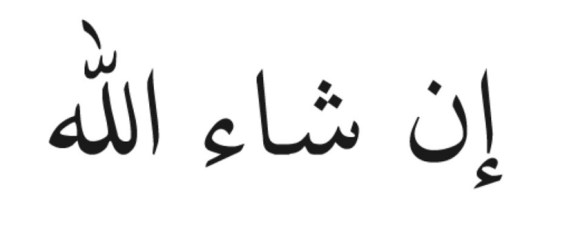
The Arabic literally translates as ‘if God wills’, but it conveys a whole lot more – usually to the foreigner’s frustration. In this article for the New York Times, Wajahat Ali explains:
It’s similar to how the British use the word “brilliant” to both praise and passive-aggressively deride everything and everyone. It transports both the speaker and the listener to a fantastical place where promises, dreams and realistic goals are replaced by delusional hope and earnest yearning.
If you are a parent, you can employ inshallah to either defer or subtly crush the desires of young children.
Boy: “Father, will we go to Toys ‘R’ Us later today?”
Father: “Yes. Inshallah.”
Translation: “There is no way we’re going to Toys ‘R’ Us. I’m exhausted. Play with the neighbor’s toys. Here, play with this staple remover. That’s fun, isn’t it?”
If you are a commitment-phobe or habitually late to events, inshallah immediately provides you with an ambiguous grace period.
Wedding Planner: “We only have the hall from 7 to 10 p.m. We’ll incur extra charges if we go past 10. Please tell me you’ll be on time.”
Wedding Attendee: “But of course! Inshallah, we’ll be there.”
Translation: “Oh, you sad, sad, silly little man. I hope you have saved a lot of money or have access to an inheritance. I’ll leave my house at 9:45 p.m.”
Inshallah is also an extremely useful tool in the modern quest for love.
Man: “So, you think we can go on a date later this week?”
Woman: “Yeah, let me think about it, inshallah.”
Translation: “No. Never. There is no way we are ever going on a date. Even if there was a zombie apocalypse and you were the last man on earth, I would not consider this an option and would rather the human species perish as a result of my decision.”
I drop about 80 inshallahs a day, give or take. I’ll get to the gym, inshallah. Yes, I’ll clean up around the house, inshallah.
Most commonly, inshallah is used in Muslim-majority communities to escape introspection, hard work and strategic planning and instead outsource such responsibilities to an omnipotent being, who somehow, at some time, will intervene and fix our collective problems.
In all the above he pokes fun at his own culture, but Ali started the article lamenting the Southwest Airline crew who removed a Muslim from the plane for uttering the word.
But he ends the above with a paragraph of introspection we must demand of ourselves. Laugh freely, but for the foreigner in the Arab world, couple your inshallah frustrations with the following friendly advice from an article in Daily News Egypt:
Living here for years, foreigners often develop a natural desire to see Egypt become a better place. Thus, they begin to express their opinions on issues that could be improved—which often leads foreigners into an unpleasant area.
Egyptians generally, and their government in particular, always want to be complimented.
Foreigners may make their remarks sincerely and with the best of intentions, but voicing any sort of criticism of the “Mother of the World” affects Egyptians’ ego and is not appreciated.
The author spends most of the article lamenting Egypt’s promotion of xenophobia whereas it should more rightly, like the majority of ordinary Egyptians, respect and welcome foreigners.
In the West we want to get to the point, and being direct–with tact–is a virtue. In Egypt the emphasis must be on tact, with directness following far behind. It is a difficult skill and I don’t claim to be anywhere near mastery.
But at the minimum, knowledge of the cultural reality will make a world of difference for the foreigner, um, God willing.
Allow them to make the inshallah lament on their own. You: Just show up on time and never mind them being late. Let your generosity of spirit mirror their own, and all will learn together.
If sharia law is for Muslims, what is its place in a Muslim-majority nation? If the answer seems obvious, that may be part of the problem.
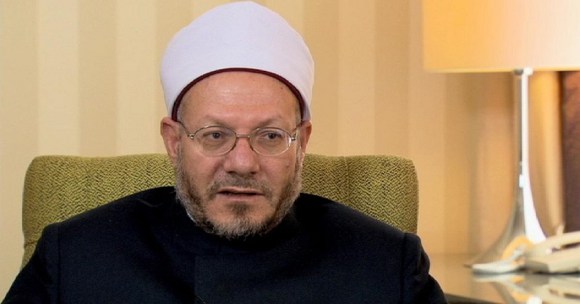
But another part is understanding sharia law in the first place, and in a helpful article on the blog of the Egyptian Ministry of Foreign Affairs, Grand Mufti Dr. Shawki Allam elaborates on what it is, and what it isn’t:
Far from a medieval code of capital punishments, the Shari’ah is a dynamic ethico-legal system designed to safeguard and advance core human values.
In fact, just as the US Constitution references the basic human values of unity, justice, tranquility, welfare, and liberty, so too each of these is also a fundamental value of the Shari’ah.
He continues:
The rules of the Shari’ah are derived from the Qur’an and the model behavior of the Prophet Muhammad, peace and blessings be upon him, which complements and/or supplements the Qur’an on issues where it may be silent or require clarifying teachings.
“Islamic law” is not just the Shari’ah but rather is a methodology and the collection of positions adopted by Muslim jurists over the last 1,400 years. That period is marked by a remarkable intellectual diversity with dozens of schools of legal thought at one point.
Interpretation is the endeavor of scholars in each generation. In other words, some rules can change with time and place. The articulation of the Shari’ah is based on built-in mechanisms which aim for articulations of “Islamic Law” to be purpose-driven and considers the prevailing customary, social and political contexts of the time.
This makes the system fluid and dynamic.
And he concludes:
The flexibility and adaptability of Islamic law is perhaps its greatest asset. To provide people with practical and relevant guidance while at the same time staying true to its foundational principles, Islam allows the wisdom and moral strength of religion to be applied in modern times.
It is through adopting this attitude towards the Shari’ah that an authentic, contemporary, moderate, and tolerant Islam can provide solutions to the problems confronting the Muslim world today.
There are many good questions that could be put to the mufti. How would he explain such-and-such behavior of Muhammad? Is Muslim history in this-or-that phase in conformity with sharia, or against it?
But on the whole, his essay is a good reminder that neither Muslims nor sharia are a monolith. As some pull from the Islamic heritage to destroy the current age, others access it in conformity – and presumably both seek first and foremost a fidelity to religion.
But a key question comes to mind.
The Ministry of Foreign Affairs is an institution of the Egyptian state. This state’s official religion is Islam, but it also promotes a concept of equal citizenship independent of religious creed. Why then does the mufti say the following?
Muslims [my emphasis] are free to choose whichever system of government they deem most appropriate for them. The principles of freedom and human dignity, for which liberal democracy stands, are themselves part of the foundation for the Islamic worldview; it is the achievement of this freedom and dignity within a religious context that Islamic law strives for.
His opening sentence is a true principle. But it is true for Egyptian Muslims, as it is for Egyptian Christians and Jews. I am certain there is nothing sinister in the mufti’s words. He has been a staunch defender of the post-June 30 Egyptian state, which is greatly appreciated by the Copts.
But there is a prevalent understanding that equates a nation and its people with a particular faith. For Egypt, this is not wholly inappropriate, as the constitution enshrines sharia as the primary source of legislation.
The mufti’s point, however, is in choosing a system of governance. In this, Egyptians must be referenced, not those of a particular religious creed.
Consider this blog post of the Egyptian Ministry of Foreign Affairs, criticizing Western nations in the wake of the Russian plane crash disaster. In it Galal Nassar, editor-in-chief of al-Ahram weekly, accuses Western capitals of desiring the Muslim Brotherhood to rule Egypt, and makes the following point:
Centuries ago, the West had its own revolutions, and managed for the most part to separate church and state. Why do they think that we cannot do the same? Why do they hold us to ridicule, rather than show respect?
Indeed, it is a form of ridicule to assume the bigotry of low expectations that a people Muslim in religion must also be ‘Muslim’ in the application of sharia law, interpreted in its most illiberal form. Sharia can be a guide; it does not have to be a code. For millions of Muslims living in Western nations this is certainly true.
His point is understood that sharia is flexible and consistent with the modern world. But the question is important: Should it be legislated?
This, in fact, would be a good question for the mufti, one he does not directly address. The closest he comes is here:
Many people are under the impression that Egypt adopted French law. This is not the case. Islamic law was rewritten in the form of French law, but retained its Islamic essence. This process led Egypt to become a modern state run by a system of democracy.
This suggests his answer is ‘no’. In Egypt, sharia is a ‘source’ of legislation, though it is also ‘primary’. But even within his argument the mufti’s implicit understanding is that Egypt is Muslim.
If asked directly, perhaps he would not say it with such clear generality. But all the same he and Nassar reflect the tension inherent in discussing Islam. Religion … politics … identity … law … they are all mixed up together.
The mufti does a good job reminding us that sharia does not have to be scary. But it is still complicated. It always has been.
This article was first published at the Zwemer Center.
While pacifism can be accused of dangerous idealism, within Christian moral theology it provides a very important balance to the just war tradition.
Interviewed in Plough, Ron Sider says adherents of the two perspectives must dialogue in cooperative friendship.
How might Just War adherents and pacifists work together?
Pacifists and Just War Christians need to assess each situation together. With some frequency, there will be situations where applying the Just War criteria will lead us to conclude, “This war should not be fought, this invasion should not take place. An alternative must be found.” There may be, however, other situations where Just War Christians will conclude that they must go to war.
But the Just War theory requires that war is a last resort, and until you’ve tried all reasonable nonviolent alternatives, war is not a last resort. Unless Just War Christians are ready to test all reasonable nonviolent alternatives, the Just War position has no integrity.
Likewise, pacifists have no moral right to pretend their way is better unless they are willing to run the same risks in a nonviolent struggle against evil as soldiers do in battle.
The context of the interview is the phenomena of ISIS, and whether or not their savagery demonstrates the folly of nonviolence.
Sider has long been a voice for pacifism, and relates that Christian Peacemaker Teams have had some success in transforming conflicts. It would have been nice if this interview presented ideas for the nonviolent defeat of ISIS, however preliminary in form and difficult to imagine.
But his statement puts the burden of proof on those who advocate military solutions. What alternatives have you tried first? What about second, or third?
Before supporting war, ask a pacifist if he or she has any ideas to offer. And pacifist, be creative and bold. The world has many problems you can speak to. If not, many others will rush to offer that which you can only criticize, from afar.






 Jayson Casper