On my walk to work these days I pass a local school, whose walls are covered with brief slogans promoting morality, health, and other social virtues. This seems to be quite common, actually, and it is interesting to read the messages promoted by the administration. Here are a few pictures highlighting each phrase, with a fairly literal translation underneath.
This is the entrance to the school, and the elaborate calligraphy to the right of the door reads: In the name of God, the merciful, the compassionate. This is a common Islamic invocation, used often to begin a speech or introduce a text. As best I can tell, though, this school is a government school, and therefore consists of both Muslim and Christian students. Government education has mandatory religious classes, which are divided according to religion. So while there is nothing in the invocation on the wall that would offend Christian sensibility, it is recognized as a distinctive Muslim formulation.
In a similar vein, the school near our old apartment was also public in nature, but each day the students were led in opening exercises which included the choral shouting of Allahu Akbar – God is great. Again, while every Christian student would agree, this phrase is recognized as distinctively Islamic. Many Christians, if they can afford it, will pay to put their children in private schools. In addition to being regarded as providing superior education, many of these parents will also complain about a perceived bias towards Islam in the school system. Are their worries legitimate? We have much to learn.
Teach your children swimming, archery, and how to ride horses.
This is a phrase believed to have originated with Omar Ibn al-Khattab, the second caliph of the Islamic state following the death of Muhammad. Omar was among the leaders most successful for spreading Arab governance throughout the Middle East and North Africa. The military implications of his saying are obvious enough. Equally obvious is that no swimming, archery, or equestrian activity whatsoever takes place within the walls of this school.
Today by all appearances the phrase is utilized to demonstrate the early importance of education in the Arab world. The military applications, common to early education practices of many empires throughout history, have given way to the more general invocation to care for the development of children. This will be seen further in the generic phrases given below.
Education: The development of nations is measured by the knowledge of their children.
Fair enough. I imagine there would be a good correlation between test scores in essential subjects and rankings on the world GDP index.
Exercising builds the body and refines one’s morals, so do it!
Despite the appearances, this is not a take on the Nike slogan. Such scholastic marketing would probably be more akin to the American system.
Put a tissue on your nose when you sneeze so you don’t infect your colleagues.
And also this one below:
Fight sickness with personal cleanliness.
The swine flu virus terrified Egypt. I do not know if this slogan predates its onset or not, but there were extensive public education campaigns on how to avoid contagion. Many schools were shut down if certain children tested positive. Upon arrival, airline travelers were asked to submit to a special medical card, and those with fever were pulled aside for further testing. Less effectively, they also killed all the pigs in the garbage district, complicating natural recycling methods. These slogans were meant to promote good hygiene among the students.
Concerning all of these slogans, a colleague of mine remarked that schools are notorious for putting forward a public image that serves to mask the deficiencies – often in the very slogans – of what goes on inside the walls. The hope is that this does not prove true for the final picture:
Be an agent for good and not a reason for evil.
With these children, and all else in Egypt, may it be so.
During the past few weeks much of my activity at the office has focused on the supervision of others’ work and report writing. While this, unfortunately, has limited my own contributions, especially in this blog, I have missed the opportunity to link readers here to the reports we have produced. These are published on the Arab West Report home page; I will look to update these a little more regularly.
One such effort we have made is a short report about sexual harassment in Egypt, and some of the recent statistics and new technological efforts that help address the problem. Should we call it a problem? Is it a problem in America? I suppose wherever there are men and women this phenomena will occur, but this paper shows some of the cultural aspects unique to Egypt. Please enjoy, if it is correct to say so…
Some of you who have been following our blog may remember some of the stories we’ve told about our doorman and his family. When we moved into our first apartment in Maadi, our doorman’s wife was just recovering from having a brain tumor removed. That didn’t stop her from inviting us to dinner! (click here) Unfortunately, we didn’t have much opportunity to get to know her, as a couple months later, the brain tumor returned and eventually took her life. That was a very sad day when her daughter told me the news, made even more poignant since I didn’t understand what she said the first two times in Arabic (click here). I attended the “funeral” of sorts, or rather, visitation of the family and was hurting for the two older girls especially as they lost their best friend and didn’t seem allowed to grieve about it. Shortly after their mother’s death, I talked with different people in the building, and even the two girls about their father remarrying. It was almost assumed by the Egyptians I spoke with, that he would remarry fairly quickly as he still had kids to raise. In talking briefly with the doorman himself, he seemed resistant to the idea. After all, he just lost his wife and it seemed the two had a good, loving relationship. No one wants to replace their lost love. Also, he didn’t want another woman coming into his house and making his daughters do all the hard work. As it was, though, without a mom in the house, the two oldest girls had a lot of responsibility, including cooking, cleaning and helping to care for the two younger kids. They certainly didn’t want a new mom, but it seemed they wanted a new wife for their father’s sake.
Now that we don’t live in the same apartment building, we don’t naturally see this family and hear their news. But a few weeks ago, after returning from some time in the states, we visited them to catch up and pass on a few gifts. I noticed that they had some of the furniture from our old apartment in their house, and I asked about it. I’m not quite sure what the answer was, but I did understand that they passed on the news of their father’s upcoming marriage next month. The girls seemed excited as it is a woman they know and knows them. She is actually the niece of their mom. She is a bit younger than the doorman, but not unreasonably so. The girls were happy with the choice, and when I congratulated their dad later, (he was outside with Jayson as I visited the girls inside), he said that he wasn’t marrying for himself, but for the children. So it kind of seems all of them are being unselfish in this endeavor!
Jayson found out some information about the new wife-to-be. She had been married before, but it seems she unknowingly became the fourth wife of a man. Once she found out he had three other wives, she quickly divorced him and returned to her village. From what the doorman and his daughters say, she’s a good woman.
And so, next month, their Dad will travel to a village outside of Cairo for a small legal ceremony without any pomp and circumstance. He will marry a new wife and bring her back to Cairo to live in the house next to the apartment building. In the meantime, he is preparing by buying new bedroom furniture for him and his wife, and probably cleaning and reorganizing the house. When I asked the girls if they will go with their dad, it seemed they said the younger kids would go, but they would stay. It sounded like they didn’t really want to go, but I doubt he would leave them at home on their own. I look forward to meeting this woman and I pray that she fits right into this household and brings some joy to this house once again.
How long do experiments last? What does commitment mean in an experiment? Is it right to experiment with church?
Having returned from a short vacation in America, we are now beginning our second year of life in Egypt. The first year was very good, and we are happy to return. While acknowledging our status as foreigners, we like to live as Egyptian a life as possible, which includes worshiping in the Orthodox Church. Orthodoxy is the denomination of the vast majority of Egyptian Christians, and though it is not our own, last year we joined in as best we could. God’s church is one, and though we may or may not agree with all of Orthodoxy’s distinctive tenets, we desire to signal our support and serve Christ’s body.
Our reception has been welcoming, but tepid. While we have described this in the past, beginning again in year two we face again the same reality. By now more than a few people know and greet us, and we have learned better the rhythm of the service and the liturgical year. We are not yet comfortable, in the way an old shoe is comfortable, but we are still not sure if the new shoe fits. Still, it is better than being barefoot.
In our estimation, being a Christian is expressed in a significant way through commitment to a local congregation of believers. Namely, we go to service, we get to know people, we explore opportunities to serve. These actions, and others, are necessary, but they are not the essence of commitment. Rather, commitment is an attitude that says, ‘This is my church.’ The response of others may make this easier or harder, but commitment is a decision dependent only on one’s self.
But have we committed? We began our attendance as an experiment, to see if the church could serve as our spiritual home in Egypt. We desired it to be; it is consistent with the sense of belonging that drives our attitude toward overseas life. I think it is clear, though, that experimentation and commitment are not synonyms. Perhaps beginning year two, we are realizing this. What does it mean for us?
An attitude of experimenting can be a means of resisting full commitment, but it is not the only one. I have previously described the non-uniform Coptic tendency to leave early or come late. In fact, it is a common habit of many Copts here to enter the Mass near its conclusion, partake of communion – necessary as the literal body and blood of Jesus – and then leave, or, enjoy meeting up with their friends and socializing.
Today one of the priests deviated from the timeless repetition of the Mass. As the congregants were approaching to receive the host, he announced that the entire Mass was holy, and the Bible readings and sermon (done earlier in the service) were also necessary for the life of the Christian. One should not take communion unless he attended the whole Mass.
The whole Mass is very long. It begins around 7am, and ends around 11am. Perhaps aware of this, yet frustrated by the many deliberate latecomers, he did not speak absolutely. Rather, he ended his interjection by saying that no one would be denied Christ’s body and blood, but that each person was responsible for himself.
We, meanwhile, may not partake, as we have not been baptized Orthodox. By now we are quite used to this, and I do not write from frustration. Neither do I wish to trigger in the reader any sense of injustice. I mean, perhaps, to highlight that belonging depends on more than commitment.
As a note, we aim to arrive at Mass at least by 9am, in time for the Gospel reading and sermon. Our commitment, as exposed by the priest, is partial at best.
The latecomers, technically, in the Orthodox theological sense, belong to the church, even if their commitment is lacking. Yet their commitment is there – they do come. We, in the Orthodox theological sense, do not belong to the church, even if our commitment is present and our belonging is desired.
We are not Orthodox, but we are able to accept them as fellow Christians. By and large, they are able to do the same with us. Yet we are not the same, and in this reality there is that which keeps us viewing ourselves as if in a glass, darkly. Will it keep us ever experimenting, no matter our commitment? Must belonging at church involve mutual acceptance? If we are barred from communion, the central act of Orthodox worship, can we belong? We can commit, we can serve, we can attend. Can we be one? Is the church truly so? Is it all an experiment? Is this appropriate, for either them or us?
Year two begins with such questions. Please feel free to share your impressions.
Emma and Hannah had been excited and preparing for this wedding for months. They were to be the flower girls, later deemed, “wedding princesses.” They were excited about wearing white dresses and pink bows and dancing. Granted, they had never been to an American wedding before, so didn’t know what to expect, but they love their Uncle Aaron, and were eager to participate in his big day.
All went well for the beginning of the trip, in fact, we may have gotten to DC without incident, if I remember correctly! We didn’t even stop once on the three-hour trip. That’s not bad with three little ones, but it helps that they are willing to wear diapers, just in case. We met up with everyone in Old Town Alexandria, VA on the banks of the Potomac River for the rehearsal.
It was a lovely night, and all were ready to do their part … except the two flower girls. Now they realized what was in store and weren’t excited about all eyes being on them. Oh well, they enjoyed playing with their glowsticks that Tayta brought and still had a night to prepare their role. We enjoyed a nice time and good dinner after rehearsal and the girls enjoyed playing with one of the bridesmaids who gave them special princess crowns.
The day of the wedding dawned beautiful and sunny … a perfect one for an outdoor event. I, unfortunately, didn’t sleep well the night before and got sick during the night. Maybe Emma’s bug had finally gotten to me. I spent the day in the hotel room while grandparents entertained the girls for awhile. They took a good afternoon nap which we thought necessary for success later in the evening. I was feeling decent in time to go down to the water to grab dinner, but since we needed another adventure, Hannah got sick in the car on the way to the wedding.
Of course I wasn’t going to let them wear their white dresses very long before the wedding, so thankfully, that wasn’t involved in the clean-up process. We returned to the hotel, and I washed up Hannah while Tayta cleaned up the car as best she could. Sorry again, Michael. Then we headed out and enjoyed a wonderful dinner with family before reporting for duty on the green. The whole ceremony was flawless. Aaron looked great and very happy. Megan was beautiful and beaming.
Even Emma and Hannah rose to the occasion as they both carefully dropped flower petals along the path, and slightly off the path, before sitting in their assigned seats.
The weather was perfect and the service was enjoyable as two lives joined together. Emma was a little antsy as she was waiting for the dancing, and Hannah just wanted to play with the seat decorations, but even Layla stayed quiet for most of the ceremony. When it was over, we had a short jaunt over the cobblestones on the way to the reception.
I had been looking forward to this reception since I heard about it. It was a “dessert reception.” I would take dessert over dinner any day so I couldn’t wait to sample everything. However, the way my stomach was feeling, I barely wanted to eat anything! Oh well, I’m glad I was well enough to attend. The girls enjoyed some dancing, and sampled most of the desserts. Everyone appeared to be having a good time dancing, laughing, talking, and getting to know one another. But since we have young children, we had to leave before it was quite over, so we headed back to the hotel around 10pm, and poor Hannah, once again, graced Uncle Michael’s car and her white dress with the “dessert reception.” It seems she may have picked up the bug.
We mostly slept well that evening, although Jayson was starting to feel the sickness creeping over to him, so in the morning both he and Hannah were down for the count. This was the day we planned to spend alone as his parents took the three girls home to New Jersey where we would join them tomorrow. We decided to stick with the plan … even if we weren’t feeling well – it would still be time together. The girls and I joined all four grandparents at IHOP for some breakfast before everyone headed back North. We packed the girls into the van to be driven home by grandparents. They had a bucket and some bags along with some snacks, drinks and diapers, for what I hoped could be an uneventful trip. From the sounds of it, though, it was anything but that. Hannah threw up before they stopped at the McDonalds across the street from the hotel! A four-hour trip took about nine hours as they made numerous stops for food and bathroom for two preschoolers, an infant, and a dog, not to mention two adults who drank their share of coffee. We’re grateful for their perseverance, but sorry it had to be such an experience!
Meanwhile, we enjoyed a leisurely afternoon as Jayson was still not feeling too great. We sat at one of the parks on the waterfront for awhile, met up one last time with Jayson’s brothers, and finally, around 8pm, headed over to the Lincoln Memorial with some bagels from Dunkin Donuts. This is the spot where we got engaged over eight years ago. The view was quite different then as our memories took place at sunrise and we were just about the only ones present. On this night, the steps were full with tourists, not a huge number, but a steady crowd coming in and out. We sat and talked and enjoyed our bagels, which was about the only things our stomach wanted at that point. It may not have been the day we originally planned, but it was special just the same, with no thought of children. Okay, well, almost no thought of them. We knew they were in good hands.
The next morning we got to actually sleep in without waking for three active girls! We grabbed some food to eat at the Teddy Roosevelt Island memorial and were happy tohave the energy to loop that trail which we also walked the day of our engagement.
Our trip home included a stop for Rita’s Water Ice which was on our wish list before returning to Egypt. We returned to the Casper’s house and found two sick adults and three active children. Fortunately, there were also two healthy adults as some relatives were staying for a few days. We were doing a pretty good job at sharing our sickness with the whole crew. We found out soon after that at least four others were hit with the bug as well. Our one hope was that the bride and groom did not catch it!
Well, our time was just about up. The last couple days for me meant packing everything we had accumulated, from clothes for the girls to peanut butter to new toys to the toiletries we brought with us … everything had to fit in our eight 50-pound suitcases. It took a solid day to pack everything we had gathered, and this was with the gracious help of grandparents taking the girls out for an outing. Fortunately most everyone had recovered and could enjoy a ride on the Staten Island Ferry for a morning. The day of our travel arrived and we packed up the suitcases right to the last minute and boarded the big van with the four grandparents for the return to Cairo. By that point, I was tired and ready to be back in Egypt, but we still had two days of travel ahead of us.
I’d have to say that the return trip went very smoothly. Although we arrived at the airport with plenty of time, we somehow managed to be one of the last people on the plane. The flight attendants were able to rearrange people to give me an empty seat next to me to put Layla for most of the flight. The girls enjoyed the in-seat entertainment systems and some of their dinner before the lights went out. And amazingly, they went to sleep for the duration of the flight at that point! Of course, with the time it takes to get airborne and serve food, there was only about four hours left of the flight when they went to sleep, but we were glad for any hours they could catch. Our layover in Amsterdam was nine hours … longer than either flight … so we checked into a hotel room for that time. It was wonderful to have a bed to lay down on if needed, a place to keep our stuff, a shower to clean up in, and internet to stay in touch with the world! The girls enjoyed the extensive play areas in the wonderfully designed airport and we stayed entertained all day, until they crashed on the bed about one hour before checkout. This means we took two crying girls out of the hotel room and down to the gate as they struggled to wake up. We were glad their crying was not in the enclosed space of the airplane.
Almost on our final leg of the three-week journey, the flight to Cairo was short and sweet. Again, the movies entertained the girls and us, Layla ate and slept, and by the time dinner was served, it was too late to turn out the lights before landing. We got off the plane, through customs, and to our luggage around 3am local time (which was only 8pm body-time) and were in our own beds by 5am that morning. Twenty-one days in America. The to and fro was rough at times, but would we do it again? Most certainly.
Our eagerly anticipated trip to the States to see family and friends and participate in Jayson’s brother’s wedding has come and gone. It was a wonderful time in so many ways, but I am reminded of the challenges of traveling with three small children as I reflect back on those three weeks.
To write all the details would take more than a blog post, and likely bore most people, so I’ll try to offer some highlights.
Our 3am flight from Cairo to Amsterdam required us to wake the girls at midnight for the one-hour trip to the airport, checking in two hours before the flight. For some reason, these two girls who sleep from 8pm to 8am most every night of their life, are always wide awake once we get them up for this middle-of-the-night flight. Their energy and enthusiasm at the beginning of the trip is enjoyable, but we know that toward the end of this two-flight, fifteen-hour trip, their over-tiredness will overtake them. None of us slept during the first flight, but I was so thankful when both Emma and Hannah konked out upon take-off on the second flight. Unfortunately, something woke both of them up about 40 minutes into the flight, bringing tears to our sensitive, exhausted 2 year old and boredom to the other. All in all, the trip went pretty well with two adults and three girls under 4, but the leg of the journey from Amsterdam to New York was a bit long for us all!
Meeting the four grandparents at the airport washed away all the tiredness and frustration for awhile, as the girls ran up and gave squeezes to all. It was the first time the two grandfathers got to meet our newborn, so the cameras were busy capturing those moments.
And, it always helps to have eight more hands to carry the three girls and luggage we brought with us. Tayta (grandmother) packed some lunches for us to eat in the car which was much appreciated by most, but reminded us all of Emma and Hannah’s tendency to get carsick. Welcome to America … where’s the bucket? Little did we know that would be a theme throughout our trip! Glad we picked up extra “air-sickness” bags in the plane.
We can’t ask for better accommodations when we are staying in America for a short time. Most of the time we are with Jayson’s family who loves to spoil the only grandchildren on that side. We have three rooms upstairs to sleep in, plus the formal living room for me to pack/unpack in, the family room which houses the girls’ toys that Emma remembered so well, and the kitchen where we eat much more than is necessary. We are truly all spoiled. Another great benefit is the side trips the girls can take with their grandparents to the library for story time, or the park for some swinging. This gives Jayson some time to keep up with his work in Egypt, and me some time to run around and gather all the gear we want to take back with us. This time, we even got to spend a night away by ourselves, which is a rare treat, and is another story in itself.
All in all, we slept in four different locations, although Jayson took a side trip giving him five spots, and logged many miles on a graciously loaned minivan driving from Central New Jersey to Eastern PA to Central PA, back through Eastern PA on the way to Washington DC and finally ending our time in Central New Jersey. Our home in Eastern PA was new to us all as my parents moved in the last year. It was a beautiful spot for the girls to play in, both inside and outside.
The guest room upstairs, which was prepared at least partially with them in mind, was perfect, as was the whole second floor which we had all to ourselves. Our youngest got to sleep in a cradle handed down through generations which first held my great grandfather over 125 years ago.
Life is different in PA as our three girls are joined by 11 other cousins and we got to spend a little time with all of them. We went on a few outings with two of the closest-in-age cousins including McDonald’s Playland, Friendly’s ice cream, and a picnic in the park.
Almost all the cousins got together for a rousing game of bowling,
and the next day enjoyed each other’s company at a big family dinner at the new house. Emma and Hannah blended in with all the cousins as if they hadn’t been thousands of miles away for the last year. It was a wonderful time to watch them ride bikes and play together. One of the highlights too, was going out to dinner with all my siblings and parents … just the adults! Great for us, and fun for the girls as two of their cousins babysat!
Life got interesting as we took an overnight trip to central PA. The girls wore out two of their uncles tackling them and running them around for two hours at a local park.
They enjoyed being read to and playing games with M&M’s and attending soccer practice where their uncles coach. The excursion would have been perfect, if not for a broken down car two hours before we planned to leave for the other side of PA, and then about six episodes of car-sickness in our borrowed vehicle which got us to our destination by about 2am.
We were really having a great time with so many different people, and the girls were sleeping well wherever we went. Unfortunately, Emma was sick on her birthday, so she got to visit a doctor in America, and couldn’t eat cake on her special day, but she was a trooper and enjoyed her brand new Candy Land and Play-Do Spaghetti Factory despite not feeling well.
We were so busy going to and fro that it was almost hard to remember that the reason we came to America hadn’t even happened yet! Our last weekend there, we headed to DC for the big wedding. All the family gathered, but pity poor Uncle Michael, who got our car repaired and was rewarded with the smell of car-sickness all the way there.
As I sat in the middle of the baby pool the other day, and let my daughters and some other kids pour water over my head and giggle with delight, I thought to myself, “Ah, this is the life. My kids are happy. I am making other kids happy. Today I am a good mom.” Of course, it wasn’t too hard to sit there and get cold water poured on me when it was 90 degrees out. So at that moment, it wasn’t too hard to be a “good mom.”
However, the day before, I spent about 20 minutes holding onto my crying, screaming 3½ year old as she said over and over again, “I want to go swimming RIGHT now. I want to go swimming RIGHT now.” And even then I was pretty calm, “No, Emma, I have already told you we aren’t going swimming right now. We have other things to do today and we will swim tomorrow.” But no matter how many times I said it or how calmly I spoke, her message was the same over and over again. And the ironic thing was, she was about to be disciplined for continuing to say this once we told her the answer was no. But I couldn’t discipline her in her current state. I had to wait until she calmed down. Even after I left her for a few minutes, and found that the wading pool had been taken down for the day, she insisted that, “No, it’s still there and I want to go swimming RIGHT now!” She wasn’t thinking or speaking rationally. But hey, she’s a 3 year old in the midst of a tantrum. This was not “the life” and I was not enjoying this at all.
Motherhood has its ups and downs. I watch and listen as my two older girls play together so nicely and hear my 2 year old offer her sister some cookies or pretzels. “Oh how great it is that they play together like that. And Hannah is sharing without being told! Yeah! We’re doing something right.” And then, less than five minutes later, I hear screams coming from the same room as Hannah teases Emma about being “this” or “that” or Emma grabs a toy from Hannah that she deems hers. “Ugh, why can’t you two get along?” is my thought which I often voice in a louder than necessary voice.
Recently I’ve noticed Emma being the Mom as Hannah is the child. Nice game. Except when I hear Emma speaking harshly to Hannah about something. “Emma, you don’t talk to your sister like that!” And then I realize, she is being the mom, and who does she learn that harsh voice from? It must be me. Surely I don’t speak like that all the time? And yet, when I do, is it necessary? I want the girls to know I’m serious, but am I loving at the same time? I don’t want Emma to speak that way to Hannah, but in truth, I speak that way to both of them at times.
I always considered myself an easy-going person. And yet, if my children knew the meaning of easy-going, and you asked them if that described me, I doubt the answer would be yes! How can I lose my patience with them so quickly?
Sometimes I get so frustrated when they disobey or forget a rule for the 100th time. “How many times do I have to tell you not to jump around Layla?!” And yet, God quickly reminds me that I disobey Him or “forget” his laws way more than 100 times. “Julie, they are my children, just like you are. Show them mercy. Give them grace. Speak the truth…in love. Nurture them.”
It’s a 24-7 job, and sometimes I feel I am not cut out for it. Yet my children are so forgiving. Less than five minutes after I lose my cool and speak harshly with them about something, they come running to me for comfort when they fall and hurt themselves. Why would they want to come to ME for comfort? I’m the mom, I suppose. It’s one of the perks of the job.
Sometime I apologize to the girls for not being patient. And a few times, when Emma notices that I am getting angry, she says, “Mommy, pray to God so you won’t get angry.” It’s funny the emotions that come when she says that. I am often not ready for such a word at that moment, and it makes me more angry. Angry that she is right. At the moment, I don’t want to let go of my anger and let God change me, but I want Emma to learn to pray to God in situations like this, so I try to pray, and it calms me down. Out of the mouth of babes…
I have a lot to learn and a long way to go in this journey of motherhood. God, give me wisdom. Protect my children from my faults. Guide me in the way I should go. And, oh yes, thank you for the three wonderful blessings you have given me to teach me all about motherhood.
A surefire way to determine a person’s priorities is to look at his or her budget and expenditures. The necessities of life demand their share, to be sure, but what becomes of disposable income? Check your own most recent bank statement, and take stock of the results. Are they what you would wish, or did you stumble into a situation you would like to revise?
Can the same test hold true for nations? If so, do the results reflect determined policy or simple inertia?
Many Egyptian activists have criticized the decision of President Obama’s administration to cut funding for the promotion of democracy by $5 million. Furthermore, these funds must be directed to NGOs and civil society organizations registered and approved by the government. On one hand this seems only natural – should the US government allow foreign donations to be received by quasi-legitimate Islamic charities, for example, which may or may not have ties to terrorist agencies?
On the other hand these same Egyptian activists would flip this comparison in their favor, stating that the government views ‘civil society’ as a threat in the same manner the US would look at these under-the-radar charities. Though this is a stretch, they maintain that Mubarak’s government only admits registration to those organizations which will not contest its rule. By funding only registered NGOs, it is said, the US ‘promotion of democracy’ only further entrenches the effective one party system which has existed since the military revolution of 1952.
The $5 million reduction is a full one-fifth decline from the previous allotment of $25 million. For all the grief President Bush received in Egypt for his policy in Iraq, Afghanistan, and Israel, many of these activists will praise him for the pressure he placed on the Mubarak government which, they say, genuinely opened the civil society field and resulted in greater freedoms across the board. Conversely, President Obama stands accused, at least by one prominent activist, as returning to the days in which the US openly ‘coddled dictators’.
When one discusses numbers in the millions a sense of precision can be lost. I live here; I have a general sense of what civil society organizations do. I have no idea, however, where even a reduced figure of $20 million is being expended. Though I don’t know who does or does not receive US aid, there are good organizations doing good work. $20 million is a staggering sum; add it up here and there and surely it can be found. It would be a fair question to research, though: However defined, does the investment result in $20 million of ‘good’?
This discussion is interesting enough, but the opening thought begged a look at priorities. A $5 million reduction suggests the Obama administration is less interested in the promotion of democracy than his predecessor. ‘Less interested’ is found to be a matter of degree, however, when the rest of US government aid to Egypt is considered:
$20 million – promotion of democracy
$35 million – education ($10 million of which is for Egyptians studying in the US)
$250 million – economic aid
Now wait…
$1.3 billion – military aid
Suddenly, $5 million becomes a drop in the bucket.
Image via Wikipedia
Egypt solidified its status as a close ally of the US with the signings of the Camp David accords, resulting in the reception of such aid packages every year thereafter. Since that time Egypt has fought no wars, with Israel or anyone else; why is this aid necessary?
While the Obama administration has been accused in the US as favoring Arab interests over Israeli, longstanding American policy, Obama’s rhetoric notwithstanding, has given Israel almost free reign to extend its will in the Palestinian territories. Those who push the envelope, however, suggesting Israel to be America’s 51st state, or more cynically, America’s boss, do not realize the significance of this military aid.
A strong Egyptian military is a necessary counterbalance to the weight of Israeli forces. Both are bankrolled by the US, of course, but if there was not a readiness in Cairo to engage in military combat, Israel would have to pay no attention whatsoever to international (including US) cries for a just settlement of the Palestinian issue. US military aid to Egypt maintains at least a semblance of regional balance of power.
Returning to cynicism, however, there can be another deduction from the breakdown of US aid to Egypt. Where are US priorities? Promotion of democracy? Yes. Education and economics? Yes.
Stability of a regional player? Absolutely. The US maintains genuine interest in political reform and expansion of freedoms. Why else would it invest millions of dollars otherwise available to domestic interests? Cynicism may respond that when differentiation is lost in the understanding of ‘millions and billions’, even the drop in the bucket can appear as a sizeable investment. This number can be paraded to US voters who view America as the city upon a hill with missionary mandate to make the world safe for democracy. At the same time, the other (larger) number can assure the establishment that such idealism will only go so far.
I wish never to surrender to cynicism. Accounting, however, is another matter. As an idealistic American, I do not wish to believe our pangs for worldwide freedom are insincere. A brief look at our foreign policy, however, makes hopeful belief difficult. How do idealism and the pursuit of national interests mix in Iraq, Afghanistan, or Yemen? The world is a complex place, and realpolitik is the mastery of complexity.
If, however, these international engagements have been completely devoid of pure motivation underneath its justifying rhetoric, faith in our system, this great experiment, is severely tested. Let us then surrender to the ways of the world, the quest for empire, and ultimately, a few pages in the textbook of history for the coming centuries.
No, America is good. I will hold this like a tenet of faith. When faith is measured, though, will it be found to equal $20 million? Slightly more (if adding in education funding), or slightly less (after accounting for inefficiency and corruption)?
What does this mean for Egypt? I’m sure this is not a revelation to experts in the field who have followed US-Egyptian relations for years, but it can be disheartening for the idealistic neophyte wishing good for all. America does care (I trust) for the gradual political reform of Egypt, but it cares far more deeply for the preservation of the existing state of affairs. President Mubarak is aging, there is no clear successor, and no viable opposition. The only candidate currently attracting attention (legitimately mobilizing a popular longing for change) is constitutionally bound from running for president unless he joins an existing political party, which he has stated he will not do. What is coming next?
There is no need for fear, or hope. The ruling system stems from the power of the military, whose strongest ally is the US government. A radical departure from the status quo is highly unlikely.
It was 11pm and I had 40,000 Egyptian pounds (approx. $8000) in my bag sitting on the seat beside me in the taxi, which was stuck in traffic. This was another night out during Ramadan.
Having three young children, I don’t go out much after dark as their bed time is 8pm. But during the month of Ramadan here in Egypt, stores change their schedules to accommodate the fasting that occurs during daylight, and feasting that takes place during dark. Whereas the best time for me to run errands is in the morning after dropping Emma off at preschool, some stores don’t open until noon or 2pm, and then they close for a few hours as people break the fast and conduct their special Ramadan prayers, only to open again from 9pm until midnight or later. So a few times this month, I found myself walking the streets of Maadi after dark running errands.
A couple times I ventured into a slightly lower class area in north Maadi, not far from our new home, where I was trying to get a blender fixed and some pants shortened. My attempts to buy ice cream at a place I recently found had mixed results. I was successful two times when I went around 10pm, but the day I went during daylight I was told they only sold ice cream at night after everyone broke their fast.
I had an idea that our family should take a walk one night after fast-breaking so the girls could see some of the lights that decorate the houses during Ramadan, and so Jayson could see one of the main streets in our new neighborhood. The plan was to walk to the main street around 7:30pm, an hour after fast-breaking, and then get ice cream at the local shop which has great ice cream for only two Egyptian pounds a scoop (approx. 40 cents). Can’t beat that deal when it comes to an ice cream store! So, all day long, I told the girls we were going for a walk that night and would have a “surprise.” So after dinner, the girls climbed into the big stroller (double) and the small stroller (umbrella) and took off north for about a ten minute walk. We pointed out the decorations on people’s houses and the girls enjoyed that. Every time she saw a light on a house, Hannah would say, “Ramadan!” Jayson got to see the main street which was only starting to liven up now that people had eaten their main meal. After another hour or so, the street would be busy with people shopping and drinking tea. Unfortunately, when we arrived at the ice cream store, the surprise was on me! They weren’t going to open until after Ramadan prayers … maybe 8:30 or so, and we really didn’t want to wait for half an hour or more at that point. So, I walked across the street and bought some nasty ice cream novelties which saved the surprise for the girls, but didn’t really appease my sweet tooth! Chalk it up to a learning experience.
Another night Jayson and I got to enjoy the spirit of Ramadan as his work colleagues took a trip downtown to break the fast all together. We met at some outdoor tables right outside Khan-al-Khalili, the famous market bazaar of Cairo, and enjoyed a delicious and quickly-served meal. As the call to prayer sounded, everyone in the whole courtyard began to eat at once. It was a fun atmosphere and surprisingly good food. We topped the evening off with a wonderful performance by the Tannoura group not too far from where we ate dinner. This was a free show of Sufi singing, dancing, twirling, and instrumentalists. Some of their stuff was pretty amazing. I would definitely recommend it. All in all, the night wasn’t too late as we were home by about 11:30.
And now onto this night. We would be traveling in just a few days, and Jayson needed some help with work errands as he had more than he really had time for before leaving. I offered to take the Euros he withdrew from the bank for work expenses, and exchange it at the moneychanger. Again, hours of operation weren’t totally conducive to my schedule with three young girls. So, this was the night I could venture out at 10pm to change the money. Unfortunately, with all of the shopping and feasting at night, the traffic is pretty heavy, so as we slowly crawled along, I considered getting out and walking home. I could probably walk it in about half an hour. But since I had so much money in my bag and it was 11pm, I thought it would be safer to stay in the taxi. Besides, I didn’t really feel like walking by this point in the day; I would rather have been sleeping!
I eventually made it home on this, my last night of Ramadan wanderings. Or, at least until next year, when we may attempt another night out for ice cream, and see what errands take me out on the streets of Maadi way past my bedtime!
Today Glen Beck led a rally in Washington, DC on the steps of the Lincoln Memorial where Martin Luther King, Jr. gave his famous ‘I have a dream’ speech. In fact, today was the anniversary of that speech, which came to symbolize the struggle and eventual triumph of the civil rights movement. Beck denied he knew about the congruity of dates until after he planned the rally, but this denial has not stopped many from labeling this rally as an offense to the legacy of King.
I will confess to not following this issue too closely. I understand Beck to be a conservative and religion-friendly newscaster, but do not know exactly what he does or does not support in detail, outside of the fairly obvious battle lines in American politics. Furthermore, I have no insight as to whether or not he is playing games with the civil rights history of our nation, but I do also see what appears to be a highly symbolic convergence of imagery. Is he honoring the legacy, exploiting and redefining it, or just, as he confessed, ignorant of the whole matter?
Perhaps given that I have not closely followed this controversy, I can easily connect it to another controversy I have not followed closely: the Ground Zero mosque. (It is an advantage of living overseas that the headline dominating news stories in the US are received with considerably fewer decibels.)
In both cases it is clear that those engaged in the controversial activity have the right to do so. Glen Beck obtained the necessary permits to conduct a rally on national property, and the mosque/community center organizers own the land on which they seek to build and have received zoning clearance to do so.
It is also clear that those who are protesting do not challenge the legality of these endeavors, but their appropriateness. Many African-Americans and their then-liberal supporters in the civil rights struggle do not share the conservative worldview of Glen Beck. They find it offensive that he advance his agenda on the same day, at the very spot that their hero’s dream is most enshrined.
Meanwhile, many New Yorkers and Americans of all stripes have defined Ground Zero as sacred ground, after the devastating attacks perpetrated there in the name of Islam. Most of these would not oppose a mosque being built elsewhere, regardless of what they think of Islam as a religion. Why, however, build it there? Even if the mosque represents Islam of another stripe, why plant its flag at the gate of such an atrocity?
The response of an individual to the sense of appropriateness may vary, as may the ‘logical’ assessment of these claims. What is disturbing in both cases, however, is that opponents are seeking either to stop or sully the endeavors through loud and distant protest. Consider: If those in favor agreed their efforts were inappropriate, would they have undertaken them? And since they do not, will they be convinced by rancor and misinformed assumptions of intent, cast from afar?
Certainly the masses feel helpless. What can a patriot in Virginia do to influence Imam Faisal in New York? How can an activist in California effect Beck in DC? Let the cry be heard in the media, on the radio, in a blog. None of this, however, has any influence on law. Worse, it has contrary affect on the people involved.
Opposition and controversy, especially when loud and public, generally serves only to cement someone in their opinions. If there is a way forward, however, imagining for a moment that these endeavors are not appropriate, it can only be found in engagement. It is possible to change the mind of a friend. Very little in the public discourse concerning either Glen Beck or Ground Zero, however, is contributing toward bridge building. On the contrary, all seems polarizing.
Here in Egypt there is a similar, though not identical, issue surrounding church building. The law is ambiguous; there is no formal discrimination but the process of gaining approval is universally acknowledged as difficult. In places a church can be constructed quickly and easily; in others the plans labor for years waiting for the governor (the governor!) to give his approval.
Oftentimes Christians decide to go ahead and build anyway (as will Muslims, at times, with a mosque), knowing that if they can get the building up then the government will not knock it down. There is far less public relations damage for a stalled authorization process than for the demolition of a house of worship. The former will languish on the desk of a bureaucrat; the latter may attract international condemnation.
Very few Egyptian Muslims would argue that there is no place for a church in a Muslim nation. It is not uncommon, however, to hear their protest that this church is too close to a mosque, or that the church steeple equals or exceeds the height of the tallest minaret in a village. Frustrated by delays in authorization Christians will often proceed without consulting their Muslim neighbors. Feeling threatened or dishonored, Muslims have sometimes reacted in violence, damaging the building that has been constructed as an affront.
Many Christians and Muslims will argue that the situation must be remedied by law – that is, a clear and impartial system must be created to govern the building of all houses of worship. There is much merit in this discussion. Unfortunately, many of these same advocates for religious freedom stop there. They press the need for legal reform, but do not continue to engage the opposite community on the ground, in real relationships.
For people on the ground, however, the issue of church building is not one of law, but of appropriateness. The law may force their hand, but this only results in furthering community tension. Neither Muslims nor Christians profit from this situation. Yet since few Muslims would oppose the right of Christians to build a church, overcoming the issue of its appropriateness can only be done through engagement.
The din of struggle and opposition will always be heard over the quiet, dogged pursuit of relationship. In both the cases of Glen Beck and Ground Zero, there may have been extensive efforts at engagement that have gone unreported, since engagement is not conducted in front of cameras.
At the same time, engagement is insincere if it is only seeking its own interest. I might sit down with my opponent once for tea to hear his argument, but if he only repeats his position each and every time, I will no longer invite him over. Engagement is willing to see the other side, validate, and appeals in humility to that which it desires.
Many today, both inside and outside of Egypt believe that sectarian tension is increasing rapidly. This is due to the same phenomena that dominate media coverage of Glen Beck and Ground Zero. These polarizing images ignore the many efforts at racial reconciliation engaged in by both liberals and conservatives. They ignore the fact that most Muslims in America live a normal middle class lifestyle in complete peace and tolerance with their neighbors.
Similarly, most Muslims and Christians in Egypt live together in peace. Where there is tension it must be addressed. Where an issue arises the media must cover it. In the face of real difficulties in certain places, though, the assertion of peace may ring hollow. If so, it does reflect a growing pattern, not of tension, but of disengagement. While percentage-wise the troubles are few, the level of harmonious interaction between Muslims and Christians decreases ever so slightly, but steadily.
This is the risk America now faces in the issues of Glen Beck and Ground Zero. Polarizing voices and opinions only serve to lessen consensus and engagement. On either racial or religious grounds, the genuine peace which exists between all Americans may ring increasingly hollow. If so, it is because these normal Americans have disengaged from their diverse communities, finding fellowship only with their kin.
Though God is often portrayed as the one with the loudest voice of all, silencing his opposition by power of miracle, he is also characterized by stillness and whisper. Jesus spoke of God’s Spirit as a gentle wind, with man knowing not from whence it came or where it is going. Many today in pursuit of their agendas
usurp God’s right of bombastic pronouncement. We would do better to search instead for his whisper, finding places where he is at work, but quietly, and ignored by most of those around.
A few days ago, I remembered something just before falling asleep. I’m so glad I did because who knows what problems it would have caused in September when we try to travel to the states for a few weeks. I remembered that we needed to get our 10-week old baby girl, Layla, an Egyptian entry stamp in her passport. Without it, she may not leave the country. And seeing as our flight is at 3am, I don’t know what would have happened if her passport was blank.
When Layla was born here in Cairo a couple months ago, we followed the procedures that were clearly outlined on the US Embassy page about obtaining a US birth certificate and passport for her. It required three trips to the embassy, but not too much hassle. At the time, we also read that an American baby born in Cairo requires an entry stamp in her US passport in order to leave the country. We had a lot going on at the time we picked up her new passport, though, so we forgot about that little detail until the other night.
Today was the day I tried to take care of that detail, and it required a trip to the dreaded “mugamma” in downtown Cairo. This was my first time to experience the place where all foreigners must go to renew visas, apply for residency, etc. Apparently, it is also the place for Egyptians to go for marriage licenses and the like, so, a lot of paperwork goes through that place in a day. Previously Jayson has taken care of visas and such at the mugamma, but this is a very busy time at work for him, and it just wasn’t possible for him to take care of this errand.
So, this morning, I packed Emma and Hannah a breakfast and lunch and sent them both to preschool. Hannah is always looking for opportunities to stay with Emma at preschool, and today was the perfect time for that. I took Layla with me and boarded the metro for the quickest and cheapest ride downtown.
I’ve written about the metro before (click here) and once again, boarded the women’s car for the ride. Immediately, a woman rose from her seat for me to sit down, and as I was sitting down, she preceded to try to cover Layla with the thin blanket I had. I thanked her, but unwrapped Layla right away as the temperature here is in the 90s, and I felt that Layla was plenty warm. Later on in the trip, another woman asked me to reposition Layla as she felt like her head was not comfortable. Very kind and doting women watching out for my baby. It’s nice.
We arrived at Sadat square without a problem and took the exit that brings you up right in front of the massive building which is the mugamma. I went to the entrance where they had walk-through metal detectors which didn’t seem to be on, as well as bag screeners which I almost had to put my backpack on until I told the woman I didn’t have a camera. Apparently that was the only security concern. I went inside and up the stairs where Jayson had described is the Immigration and Visa section. I got to know the path up the stairs and around the winding hallway past about 50 windows very well as I walked it several times in the next few hours.
After walking almost to the end of the hallway, reading the signs above the 50 windows and trying to figure out which one applied to me, I finally talked to someone at window 12. She sent me downstairs to make copies of some papers first of all, then told me to fill out the application and take it to window 32. So, I went all the way back down the hallway, past the 50 windows and downstairs to the copy center for my copies. Then back up the steps, past 32 windows until I came to the one she told me about which said “refugee” processing. Wasn’t sure that’s what I needed, but the person in window 33 was helpful. Unfortunately, it seemed I needed another document. She told me to go to “Ism Abdeen” to get a computerized birth certificate for Layla. We had the written one we received shortly after her birth here, but apparently that wasn’t good enough. After asking the name of the place several times so I could tell a taxi driver where I needed to go, I took my envelope of passports and important documents, my backpack and little Layla down the stairs, outside and to the street to find a taxi.
The taxi driver was helpful, but not sure exactly where I needed to go. We decided to go to the police station in Abdeen and ask from there. We then realized that we needed to go to “qism Abdeen” whose name makes more sense. Arabic speakers may be familiar with the Egyptian habit of dropping the “Qaph” sound which in this case made it sound like a different word to my untrained ear. Anyway, we found the place and the driver told me it should just take me 5 minutes, that it is a simple procedure to get the computerized document.
I went inside and up two flights of steps to the one place in all of Cairo where you must go for a computerized birth certificate. It wasn’t too crowded, but the woman behind the window told me the computer wasn’t working currently and to sit and wait. In the meantime, though, I could walk to the post office, about two blocks away, to buy a 20 pound stamp (about $4) for my original copy. So, I went back down the flights of stairs, outside and followed her directions, stopping in one store to be sure I was going the right way, and after five minutes, arrived at the post office. This was the nicest building I was in all day … not too crowded, air-conditioned, and very clean. It was easy to purchase the stamp and head back to the other building.
When I arrived, I checked with the woman again who told me it still wasn’t working, but that I should keep waiting. By this time it was about 10am and close to Layla’s feeding time. She was sleeping peacefully on my shoulder and I wasn’t sure how much time I would have to sit and feed her there. It was a fairly comfortable spot and it could have been done, but I opted to wait a bit and feed her later. I was hoping to do all the running around necessary and then feed her while I waited for any processing they had to do at the mugamma.
In the meantime, I had a nice conversation with the woman sitting next to me who told me it was her third trip to this office in the last few days as each time the computers weren’t working and she needed a certificate for her son by tomorrow for college. She told me this was the only place that printed this document which was a problem since there was no recourse if the computers didn’t work. What I gathered from talking to her was that you need this document for many things: school registration, college entrance, or even registering for the army. But it seems like it’s a more recent requirement as previously all birth certificates were hand-written. I’m not sure how long the computerized ones have been around, but she recommended getting several copies to have them just in case.
After about 20 minutes, there was some movement in the room as somehow someone learned that computers were working again. A line quickly formed and I had just decided to start feeding Layla, so I figured I would do that, then the line would die down and I would get my papers and go. Instead, the initial woman I talked to behind the window, came out to me, got the handwritten certificate and took it behind the counter where she immediately printed me 5 copies. It was very kind and very quick, but I felt a little uncomfortable with the seemingly preferential treatment. Here I was getting my copies, while everyone else stood in line next to me. I’m not sure why she did that. Was it because I was the only foreigner in the room, or because I was carrying my 10-week old baby? Either way, I was grateful, postponed Layla’s feeding longer, and headed downstairs to catch a taxi back to the mugamma.
I went in the entrance, once again telling the security there that I had no camera in my backpack, and back upstairs, and past the first 32 windows. This time the place was considerably more crowded than earlier. All the seats lining the walls were filled, and people were standing everywhere. I wondered where I might sit to feed Layla when I got the opportunity. At window 32, the woman I had talked to previously, looked at my papers, did some arranging, and then directed me to an officer at a desk slightly behind me for a signature. This is where the “waiting in line” became a bit annoying—mainly because there weren’t really any lines. A crowd was gathered around the desk, each one pleading his case, and I was just standing there waiting for a signature. I didn’t speak up, but held my spot by the desk, trying to show I had a baby in my arms, and eventually I got noticed. He signed my paper and sent me to window 6.
An interesting thing I noticed in the mugamma was the “No Smoking” signs posted all over the walls. I saw them earlier, but had also smelled smoke, but wasn’t sure I had actually seen anyone smoking. When I was waiting in line for the officer to sign my paper, there was a “No Smoking” sign directly behind him, and a cigarette in his mouth. I realized that if I visited the mugamma the very next day, which was the first day of Ramadan, there would be no smoking in the whole place.
As I waited in the next several lines, I have to admit, I wanted preferential treatment once again. After all, I was holding a baby. However, my baby was very content even though it was getting more and more past her regular feeding time, she slept or sucked her thumb the whole time. At the same time, I had to remind myself, that everyone waiting here probably had a reason that they, too, should get preferential treatment. And besides, I had just been treated to a bump-up in line that probably saved me half an hour back at the other office. These were good things to remember as the pushing and line-jumping and general standing and waiting got long at times.
I arrived at window 6 and waited for a couple minutes wondering if this would be my last window to wait at, but when I got to the front, they told me I was supposed to be at a different window 6 down a different corridor. Ugh. So, I went to the other window 6 and eventually, it was my turn. The woman did some things and gave me some directions for what was next in rapid Arabic, and all I really understood was that I needed another signature from an officer, but not the same one as before. So, I went around the corner and found an officer sitting at a nice desk in an air-conditioned office speaking to another couple. After a couple minutes, I hesitatingly entered the office, and sure enough, this was the right place. He signed something and sent me to window 41.
When I got there, several people were in line and I wasn’t positive this was the right window. By that point, I really didn’t want to wait in any wrong lines, but after a couple minutes, I got to the front, the woman wrote some things on the paper and said “you’re finished” in English. I questioned her as no one had put anything in Layla’s passport yet and that’s what I came for, and apparently what she meant was that I was finished with this window and could go back to the window 6 I had recently come from.
So, back to window 6, but fortunately, an officer was standing in that area trying to expedite things. He gave my application to a young soldier who went to find out where I needed to go next. I ended up back near the “refugee” window where I had started out, and the woman behind the counter wrote some things in a couple different books and asked when we were traveling. Meanwhile, the six or seven ladies behind her, sitting at a table, noticed Layla and started talking about her. After a couple minutes, one of the ladies came out to where I was and took Layla from me, and walked away. I kind of asked where she was going, but I also knew. Layla was getting her turn behind the counter.
Kids attract a lot of attention in these countries, and I remember Emma being taken behind the counter at the telephone company in Tunisia multiple times. She would sometimes sit on the counter while one of the employees let her play with the phone or a pen. A couple times, she was taken behind a door and came out a few minutes later with a cookie or cake or something sweet. These ladies who worked at the telephone company watched my belly grow when I was pregnant with Hannah so after she was born and finally came out of the stroller, they took her back there to show her off as well. This is why I didn’t react too strongly when they came and took Layla from me. We’re kind of used to it.
So finally after about ten minutes at this window, the woman handed me Layla’s passport and told me to come back in one week to get the stamp. In the meantime, they have the application and a copy of the passport. I’m not sure what they are going to do in a week’s time, or why they couldn’t just put a stamp in the passport right there, but I am hoping that my trip to the mugamma next week is short and sweet. It was a lot of hassle, but not as dreadful as some have said. And when I thought about why I was there, it’s a small price to pay to be able to take our baby with us when we leave the country!
Note: This post today was originally written in February of 2010, but never published on the blog, only at Arab West Report. I was reminded of it by the controversy in recent weeks concerning the proposed Muslim community center / mosque at Ground Zero. The leader of the project visited Egypt several months ago, and I attended his lecture. Imam Faisal Abdul Raouf was not a household name at that time, though the Ground Zero plans were already contemplated, if not underway.
The essay which follows has nothing to do with his Ground Zero plans, but addresses the larger question of the place of Islam in the West. The post is a bit lengthy, but I hope you progress through to the end to read along with my efforts to look inward at the psyche of America, indeed my own misgivings and hope, in order to find the best way forward. I wish that in light of the issues being raised at Ground Zero, my conclusion might help us find that way.
On a lighter note before we begin, I have experimented with placing a survey at two places in the post. I’ll be very interested to see your vote, and will look forward to any comments you have to offer. Thanks.
In recent days I have had the opportunity to encounter a picture of Islam as a message of love and tolerance from two very different Muslim voices, Imam Faisal Abdul Raouf and Sheikh Ahmad al-Sayih. Imam Faisal is head of the Cordoba Initiative, an independent organization seeking to promote international understanding and acceptance between the Western and Islamic worlds. He is the son of Egyptian sheikhs from al-Azhar, but was educated in Great Britain and served many years as an imam in a New York City mosque. He visited Egypt and presented his work at the Sawy Culture Wheel, sponsored by the US Embassy, in which he outlined his vision, distributed an Arabic translation of his book, and sought to recruit support and partners for his international organization. A summary of his presentation can be found here.
Sheikh Ahmad, meanwhile, is an Egyptian sheikh from al-Azhar, now retired. He has taught in Egypt, Qatar, and Saudi Arabia, and currently is concerned to combat the growing Wahhabi influence on Islam, both in Egypt and worldwide. He believes this is a corruption of Islam as it tends to reject the religious other, whereas Islam in its essence is the same message as that which was revealed in the earlier religions. Sheikh Ahmad is from the region near Nag Hamadi, where six Christian young men were recently killed exiting Christmas mass, along with one Muslim police officer, and has spoken out against this crime. I interviewed him in this context, hoping both to better understand the situation and gain counsel on how to assist in peacemaking there. A summary of this interview can be found here.
This essay will be an attempt to compare and contrast these two Muslim voices based on the reactions they produce, first in their Arabic audience, second in me, as a Western Christian. Though I was unable to interview Imam Faisal, the question and answer period of his presentation revealed the controversy his ideas elicited from the predominantly Egyptian audience. Conversely, though I have not personally witnessed the effect of Sheikh Ahmad’s teachings on Egyptian public opinion, he himself highlighted much of the controversy he has engendered. As mentioned above, both men preach a message of Islamic love and tolerance. Why should love and tolerance produce any controversy at all?
This essay will begin from the starting point of Islam as a world religion, and therefore like all its peers it is comprised of vast and flexible source material. Believers in Islam can find ample texts to support a variety of positions, and while each may argue with the other over best interpretations, inasmuch as they work from the same basis and maintain the accepted boundaries of faith—themselves open to dispute at times—they represent a message which is intrinsically Islamic. As a non-Muslim it is not my place to comment on the message of love and tolerance as opposed to extremist thought; it will be the perspective here that Islam, like all religions, can support many emphases, which can be highlighted or downplayed according to the person, movement, culture, or age.
Both Imam Faisal and Sheikh Ahmad highlight Islam as a message of love and tolerance. They differ widely, however, in their presentation and audience. Imam Faisal, though born to Azhari Egyptian parents is thoroughly comfortable in the Western cultural world, to which he speaks primarily. His English pronunciation is perfect and his dress impeccable. He declared that his motivation to help Americans understand Islam grew exponentially after the attacks of September 11, 2001, when he and his community were put to the test in defending their faith against the actions of Islamic terrorists. He discovered that America was not necessarily against Islam, but needed to see an Islam which was not a threat, first to its safety, second to its cultural values. In the course of explaining the true message of Islam over and over he saw also the need for Muslims in the West to practice their faith within this culture, so as to win a place of natural being and acceptance. Concerning the controversy in Switzerland over the building of minarets, he urged Swiss Muslims to build Swiss mosques, acceptable to the culture so as to become part of the established and normal landscape. His message was for Islam to become Swiss. He noted, also, that in his presentations he discovered a growing Western hunger for spirituality, which many were finding in Islam.
Sheikh Ahmad, meanwhile, speaks no English whatsoever, dresses like a traditional Azhari scholar, and converses even informally in Arabic diction fit for the Friday pulpit. Through his many years teaching in the Persian Gulf states he became very familiar with Wahhabi teaching, which he grew more and more to find was poisoning the precious Islamic message of love and tolerance. He writes and speaks extensively to expose the false foundations of Wahhabi thought, which he finds grounded in some of the traditions of the Prophet Muhammad, most of which his scholarly study has found to be baseless. Among these traditions is source material for violent and separatist preaching highlighted by some Muslims today, which in actuality, he believes, were composed when the later Islamic community was growing apart from the Christian milieu of the fading Byzantine Empire which it had largely conquered. His message was to return to the original preaching of Muhammad, which emphasized the community with and respect for other religions, Christianity in particular. He had special praise for the monks of Makarius Monastery in Egypt, in whom he found the real Islamic spirit of love and tolerance.
The controversy of Sheikh Ahmad’s views is found in his calling into question many of the inherited traditions of Islam. In doing so he disturbs the traditional acceptance which many Muslims have given to the traditions in general, potentially prompting a reevaluation of the faith, as so much currently accepted as Islam is built from this source. Sheikh Ahmad declares, actually, that 60% of current Islam stems from faulty traditions, and therefore must be jettisoned. This is not an easy message for ordinary Muslims to hear.
The controversy Imam Faisal’s views produced was different, as he questioned not the religious sources of Islam, but its cultural ones. Though only a quarter of the world’s Muslims are Arabs, its foundations are still largely Arabic, certainly through the language, and also through the culture of Arabia which birthed the faith and established its early patterns, generally accepted as normative. Imam Faisal, however, highlighted that in history Muslims have always adapted their faith to the local culture, and urges Muslims today to do the same in the West. If Islam there remains foreign—Arab, Pakistani, etc.—it will not become accepted. Though not as controversial as the source criticism of Sheikh Ahmad, for the Muslims of Egypt attending the Sawy Culture Wheel presentation, proud of their self-identity as leaders of the Arab world, this is not an easy message to hear.
Therefore, though the vast majority of the Egyptian Muslim audience of both Muslim voices would agree with the message of Islam as love and tolerance, the manner of establishment was discomforting for many. One called into question the accepted cultural basis of the religion, the other the accepted religious basis. The discomfort should not be surprising, for most believers of any religion inherit their values without much thought or questioning. For these, Islam is love and tolerance. Practitioners of religion, however, especially those who are forced to consider their faith outside its comfortable context, must deal with the faith in its entirety and complexity. Imam Faisal has found the fear of Islam in the West to be tied to the foreignness of the culture of its adherents. By removing the cultural component the message of love and tolerance is better received. Sheikh Ahmad, however, has found that Islam is threatened by Wahhabi emphasis on certain traditions. By invalidating this religious component the message of love and tolerance is better established. Yet in explaining why Islam is a message of love and tolerance to those who already believe this, they cause ordinary believers to think about their received faith, and examine it. This is not an easy process to bear, and controversy is the natural result.
Thinking about received traditions is not limited to Egyptian Muslims, and this Western Christian found himself in similar territory. This next section of the essay is meant as exploration of psyche, and not necessarily evaluation of ideas, certainly not confidence of convictions. Yet as I was interacting with both Muslim voices I found myself drawn to and favorable toward one, while I was questioning of and guarded against the other. I wonder which the reader, especially the Muslim reader, might suspect of me before I continue. In which ways have my biases been experienced so far?
It is important to emphasize that the message of Islam as love and tolerance is an easy one for the Western Christian to accept, and the promotion of this message within Islam would certainly call for rejoicing. The Western Christian, inasmuch as he or she knows Islam, either condemns it as a religion of violence or commends it as a religion of peace and tolerance. The more generally educated Western Christian comment on Islam may be seen in that thought with which I began this essay: Islam is composed of vast and flexible source material, from which self-described Muslim voices draw both messages. The Western Christian may or may not be as conscious that both the Western and the Christian traditions are similarly variable, but this fact is true of almost all world systems of thought. It is impossible for worldviews to hold historical and international sway unless they are of this nature.
Therefore, the Western Christian of any ideology would be glad to find love and tolerance promoted within Islam. For the Westerner, this means that adherents of the religion will not threaten us, in either our safety or our cultural values. For the Christian, this means that the dominant expression of faith can find common ground in what is often seen as a rival, and thus oppositional, religion. In theory, though practice is always a different and more difficult matter, joint declarations of love and tolerance presents Islam as an ally of both.
Yet the voice of Sheikh Ahmad is much easier to digest. From this point forward I must state that I am describing my own palpitations of heart; though I believe these to be representative of an average Western (or at least American) Christian, I can speak with no certainty about this matter. Each is invited to speak for himself.
Sheikh Ahmad dares to critique the received traditions of Islam, commenting directly on the sources which promote interpretations of violence. Should the Western Christian crassly rejoice in the long awaited exposure of Islam, he or she does so poorly. Sheikh Ahmad is purifying Islam from what he believes are false accretions from pure religion; yet what remains is still pure Islam. Still, he speaks to the Western Christian fear that violence, though certainly not the only message of Islam, exists truly within the heart of this faith. By stating it does not, he puts his foreign audience at ease. We have no idea if he is or is not correct in his assessment, but we are glad to hear it nonetheless.
Drawing only from the presentation of Imam Faisal, combining with experiences of other Western Muslim preachers, this thorny issue of sources is often left unaddressed. The message of love and tolerance is appreciated, but if background issues of both textual and historical violence remain only in the background, the Western Christian remains wary. Is love and tolerance the message of Islam when it is a minority faith, or in a weakened state, which will give way to sources, emphasized currently by some adherents of Islam, which highlight differences and propose superiority, when its foundations are stronger? Put another way, is Islam about love and tolerance in its essence, or is this a means to attract enough support until power is adequately accumulated? At that point, of course, love and tolerance will not disappear, but other messages may come out from the background. All religions must answer this question; given the complex relationship between the Western Christian and the Islamic worlds throughout history, it is asked contemporarily of Islam. Perhaps Muslims should also ask it of us.
The question I wished to pose to Imam Faisal during his presentation was this: Pope John Paul II had been a leading critic of Western violence, as in the current Iraqi war. He has also strongly condemned and apologized for Christian uses of violence, as in the Crusades, Inquisitions, and Christianization of Latin America. Most Muslims and you today condemn the attacks of September 11; are Muslims in general, and are you in particular, ready to condemn those who have committed violence in the name of Islamic empire, common to all empires, as being against the nature of true Islamic faith? Specifically, were the wars of Islamic expansion (al-futuhat al-Islamiya), in violation of Islam? Middle Age believers of both faiths mixed religion and empire without apology. Many 21st Century Christians now apologize for this; are 21st Century Muslims able to do the same?
I wavered considerably in asking this question. In the end I decided against it, for I felt I would be asking not of sincere inquiry, but of combativeness and challenge. The question may be valid, but I would not have been asking from a proper spirit. Furthermore, my question would rightly be seen as a trap. If he were to answer ‘no’, he would undue his message of love and tolerance in the eyes of the West, authenticating the suspicion of it being the message of Islam as minority or weakened faith alone. Yet if he were to answer ‘yes’, especially given his Egyptian audience, he would likely unleash a torrent of controversy, as Muslims rightly celebrate their golden ages of civilizational superiority. Yet would Islam in essence declare the manner of establishing this civilization as faulty, flawed, and sinful?
Yet there is another, more pernicious question that gets raised in the heart of the Western Christian, one which undermines his own values of love and tolerance. The message of Sheikh Ahmad is more easily digested because Sheikh Ahmad, no matter the symmetry of his values and those of the Western Christian, remains ‘other’. He remains foreign. Imam Faisal, on the other hand, is a Westerner. He is one of us, but he is a Western Muslim. Does being a Westerner overpower his Muslim identity, making it easier to accept him as ‘us’? Or is his Western state simply a garb under which beats a Muslim soul, making his acceptance more difficult, threatening to group him with ‘them’? Yet, regardless of his constitution, why do these questions concern us so?
The values of Western Christian civilization have in recent ages extended a welcome to people of all faiths. Freedom of religion is a cherished and inviolable right, and nations of the West added to their melting pot Muslims, Hindus, Buddhists, Jews, Sikhs, and allowed all to build their houses of worship, practice their rites, and even spread their religious beliefs. Perhaps America has integrated these communities better than Europe, but all have held that religion should not be a barrier to welcome and participation in society. If the reality falls short of the rhetoric it reveals the sublime ideal for which to aim.
Yet despite the declining significance of religion in Western life the cultural foundation maintains its Christian basis. This is an understated value for Westerners in general, though it is present below the surface, but it is cherished by the Western Christian. The inclusion of foreign faiths has not bothered either group, for until now they have been welcomed as full participants in society—but here is the unspoken reality—as long as their faiths remain foreign. The Muslim in the West is generally free to construct a mosque, conduct his prayers, and fast as he wishes. Yet these values, no matter if the response is of condescension or respect, remain imported, cherished by a welcomed ethnic group, but belonging to them and not to us. This Muslim may play on the work sports team, join in the national day neighborhood celebrations, and attend parent-teacher meetings at school. He is free to be an Arab, or Pakistani, or whatever citizen of the West. His Islam, or his Buddhism, or whatever, is his own, and not ours.
This is a very delicate matter, and it would not be spoken like this publically. The discourse esteems the right of religion, and the Westerner, including the Western Christian, will rejoice that the Muslim is free to have his or her Islam. Imam Faisal, however, has recognized that the natural result of immigration is transformation of culture; his efforts threaten to disturb the balance by making Islam ‘ours’.
This is not an accusation against him; in his focus and words he is very wise. More so, his discourse is inevitable. As long as communities of Muslims exist in the West, no matter their place of origin, there will emerge a Western Islam. This speaks back to the opening premise of religion as being vast and flexible. Western values and Islamic values have been and will increasingly negotiate together to produce a new, and viable, interpretation of the religion, one which will likely express itself in congruity with the greater host culture. Imam Faisal wishes to speed up this process, but it will happen with or without him. All families wish to live in peace with those around them; as Muslim families live in peace with Western culture, they will invariably be shaped by it. Their expression of Islam will likewise bend to this reality. In dominant Islamic cultures the purists, though they be misnamed, may protest, as was seen at the presentation of Imam Faisal, but these cries will be futile, falling on the deaf ears of an emerging Muslim community.
The careful reader, however, will notice that the second half of the familiar couplet has fallen out of the last paragraph. This is what will happen in the West, but what is the effect on the Western Christian? He can only be confronted by his schizophrenia. As a Westerner he is powerless to protest, for the process of assimilation is a cherished part of his being. His own ancestors negotiated this path long ago, between Protestants, Catholics, and Jews, and of which he or she is a result. Yet as a Western Christian this assimilation of other religious groups undermines the particular Christian nature of the culture. Perhaps with Islam this is felt more deeply because of ingrained historical attitudes between the faiths. If Islam becomes Western then it becomes ‘us’. Yet there is that within Christianity, as with exclusivist tendencies in all religions, to restrict ‘us’ to those likeminded. The Western Christian has no problem inviting the Muslim to become ‘us’ in a Western sense, but this entails leaving Islam as his personal, foreign expression of faith.
This is further complicated by uncertainties about Imam Faisal, here and hereafter used as an expression of Western Islamic preaching. Is he a missionary? He is free to be, of course; Western Christian values demand this. When the odd Westerner converts to Islam and dons a traditional robe, grows a long beard, and changes his name to Muhammad so-and-so, this causes little concern, for every individual is free, and he has clearly left many expressions of his culture to adopt those of the peculiar foreigners. Yet Imam Faisal is urging Western Muslims to become, and presumably to remain in the case of a convert, Western. It is more of a challenge to accept the reality of Jeremy Smithson, Muslim, wearing a three piece suit, or perhaps jeans, t-shirt, and baseball cap.
Therefore Imam Faisal is open to the challenge: Is his bridge building work done in order to make fertile ground for Islam, so that over time Islam becomes part of the Western cultural identity, and more and more Westerners find peace within its fold? Again, it is his right, but is this his message? If it is, is it admitted? The Westerner may feel the suspicion under the surface, whereas the Western Christian may be immediately more defensive. Yet how can one know? It is uncharitable to toss around accusations, and as a Westerner, the Christian cannot protest. He can only lament the declining status of his faith within his own culture, at least inasmuch as Christianity is the primary, or among the leading, informants of the culture.
Of course there are several other options available. The Western Christian can adjust and resign himself to the inevitable social demographic patterns of life. He or she can renew internal Christian energy and seek re-evangelization of the culture and the inhabitants thereof. He or she can become angry and hostile toward these new Muslim interlopers, and seek the defamation of their faith, warning of the hidden agenda behind the slogans of love and tolerance. At least, this can be done within the allowable limits of Western culture. Passing special favor onto a man like Sheikh Ahmad might be seen as a clever passive-aggressive expression of this last option.
I dare not choose between these options listed, but if there is a path to be proclaimed as ideal, it may have to decouple two of the often used expressions of this essay. The first to be dissolved is ‘Western Christian’. In doing so it leaves each identity free to be honest with its own nature, and exposes the unholy alliance between the two. Western Christian culture is the last remaining remnant of Western Christendom, which coupled Christian faith with temporal power. It is not as if there was no good produced from this union; the humanistic values of the West were ultimately formed in negotiation between faith and power. Perhaps the same could be said of the great and tolerant Islamic civilizations of history. Yet in clinging to the desire for Christian culture the Western Christian is longing for superiority, dominance, and control. Though never to be expressed in this way, when spoken in these terms it exposes the distinct unchristian nature of this desire.
This does not mean that Western and Christian should become oppositional; on the contrary they make keen allies. Yet why should not Islam, or Hinduism, or Buddhism also become allies in this endeavor? Most Western Christians have already transformed the once despised Jews into participants in an acclaimed ‘Judeo-Christian culture’. The questions posed to Islam in this essay are essential for determining if indeed this religion can become an ally in the equation, but is there any reason to suspect that possessors of a vast and flexible religious heritage could not become as such?
The second decoupling involves the epithet ‘love and tolerance’. Tolerance is a negative virtue. It speaks to the right to leave one alone to do as he wishes and to believe what he will, provided respect is granted similarly for the rights of others. As such, it is the perfect, correct, and cherished value of Western culture. The Western Christian, however, needs to evaluate where his truest identity lies. Christianity speaks not of tolerance—though it is not absent from the discourse—but of love. Love extends welcome. Love shares resources. Love forgives faults. Love hopes for the best. Love humbles itself. Love sacrifices for the success of others. Love is willing to perish rather than deny its nature.
It is difficult to translate these sentiments into practical reality, but I believe this is the necessary attitude Western Christians must adopt toward the emerging Muslim communities within their midst, as well as toward Islam worldwide, and all other religious adherents beside. If in the end these prove themselves ungracious recipients then this is the risk associated with love itself. It is poured upon all, worthy and unworthy. Christians should be conscious of their own tradition which declares them to be unworthy recipients of the love of God; how then can they be miserly toward others? If these take such love and trample upon it, undoing the very nature of the societies which welcomed them then this is the risk associated with love itself. Christians should be conscious of their own tradition in which Christ, in obedience to love became obedient to death, even death on a cross.
At this the Western Christian will long again for the Western nature of his identity; after all, from this base of power he or she can find protection. The answer of God, however, is resurrection and redemption. This hope, however, is only in God; it is the attitude of Christ which Christians must hold.
Within this arrangement the Christian, now potentially free of his limiting couplet, must face the question earlier posed to Imam Faisal: Are you a missionary? The Christian is free to be, of course, inasmuch as anyone is free to be a salesman for a preferred commodity. In fact, the commodity is valuable, both for the individual and for the world. It would do well to be marketed. Love, however, seeks not its own. The Christian must consider long and hard his motivations. Is a desire to see one’s faith in the lives of others emerging from the natural and human desire for strength, importance, and triumph, however defined? If so, these are the very attitudes denounced by Christian faith. If not from love nothing is gained, though mountains be moved in the process. Given the vagaries of the human condition, who can confess to a pure heart? God is gracious; he will redeem all which comes from love, and allow all else to be burned as chaff. Where in this equation falls the desire to see ‘love’ proclaimed by the lips of others? May each Christian, may each human, submit this question only to God.
It is imagined, not unreasonably, that Sheikh Ahmad, Imam Faisal, and the author of this essay trust that within ourselves there is the desire to please God; though this be submitted to him, it is only through our actions these desires become of use to people around us. Please judge, but be charitable. May we all extend such charity to one another.
Tonight I attended the weekly service at the local international evangelical church. We attend there sporadically, maybe once every three months, as we have been worshipping at the Orthodox Church, hoping to learn more and participate in the primary church of Egypt.
Since it was the first Sunday of the month, as is typical in many evangelical churches I know, it was also communion Sunday. It was the first time in awhile that I had taken communion, which is somewhat strange since this is offered every week in the Orthodox Church. Due to doctrinal differences, however, but mainly to the fact that we haven’t been baptized Orthodox, while we are welcome to attend the service, we are not welcome to partake in communion.
It was an interesting experience for me after being away from it for so long, and witnessing a different tradition in the meantime. Many thoughts ran through my head:
“Oh yes, the first Sunday of the month … communion Sunday.”
“The pastor said we would come to the front to take communion … something a little different. Why is it that the churches who do communion less frequently (such as evangelical churches who often do this once a month) are the ones who find the need to ‘change up’ the method of distributing communion? Meanwhile, the church which does this every week, or even more than that, will never change the way it is done. Ironic.”
“The Orthodox firmly believe that the elements become the physical body and blood of Jesus. They believe they are participating in Jesus’ suffering on the cross as they take into themselves the holy body and blood of Jesus. They can’t let a crumb drop to the ground so they cover their mouths with a napkin after the priest puts a piece of bread in their mouth. And yet that is not my tradition. I simply see these elements as representing Jesus’ body and blood. Something He told us to do to remember His suffering. So as I put the juice-dipped bread in my mouth, I asked myself, or rather, asked Jesus, ‘Who is right? Are you pleased with this? What is the point of this ceremony?’”
I have often struggled with seeing Jesus’ death on the cross in a real way. Sure, I believe it happened and I believe He did it for me, and it was a horrible, painful thing for Him. But I’ve rarely been able to really appreciate what He went through for me. I think it comes from growing up in the church and Jesus’ death on the cross being part of my life from childhood … it has become so familiar. So I understand my evangelical friends who try to “change up” the way communion is presented so that it doesn’t become rote and without meaning. We don’t want to be passive and do things out of habit. Making us get out of our seats and walk to the front of the church gets us somewhat involved, rather than waiting for the elements to be passed to us. And yet, we can still remember Jesus’ death in a real way, as we wait for the elements to come to us in their silver plates and miniature cups.
Another experience I’ve had was in Jordan. Jayson and I really enjoyed our times of communion at the church we attended there. This evangelical church followed many Brethren practices, so we had communion every week. It was a small, intimate service which included hymn-singing and a short challenge, followed by all of us, anywhere from 15-40 people, gathered around the Lord’s table, passing along a piece of bread and breaking off a bit for ourselves. Then we would pass around the common cup of wine, drink a sip, and wipe off the cup for the next believer to partake. There was something special about standing there in a circle, being able to see the faces of our fellow worshippers, reciting together the passages from Corinthians regarding Paul’s teaching on the Lord’s Supper and partaking from the same loaf of bread and common cup. Maybe I felt more of the fellowship of the saints, rather than the suffering of the Saviour, but it was a special time.
And now, unable to be part of such a fellowship on a regular basis, does this keep me from remembering Jesus’ death? How often should I specifically seek to remember his death? He told us to “remember His death ‘til he comes.” My tradition seeks to do this once a month. Others partake of the Lord’s Supper each week. Either method leaves room for forgetting Him in between, or doing this out of habit. Lord, let me remember your death daily, thanking you and serving you for your sacrifice for me.
Postscript: Following a post a few days ago on a similar subject – This Also is True – an Orthodox reader from the United States commented with an impassioned and Biblical defense of their view of communion. For those interested in this subject, I encourage you to take a look and consider what he says. Unfortunately, we cannot provide a link directly to his comment, but if you click on the title above and scroll down, you will find the dialogue between us. Here or there, please feel free to join in, be it to reflect and consider, support, or challenge what he has to say.
Here’s a short post to draw your attention to a video CNN has just produced on a figure named Mohamed el-Baradei. He is the Egyptian former head of the International Atomic Energy Agency, and is now taking a lead role in the push for ‘change’ in his homeland. He is touted as a presidential candidate in 2011, but many legal obstacles stand in his way, as well as his own hesitation and reluctance. Many in Egypt welcome him with open arms, others view him as a threat, and some believe in his ideals but not in his ability to lead. He is a fascinating character, and if you would like a look into the current and coming political scene in Egypt, this video would be a good place to start.
Aug. 10, 2010 marks eight years of wedded bliss for Jayson and me. We’ve always liked to say that we’re still on our honeymoon, and like both sets of my grandparents, we are aiming for about 65 years of marriage. One set lived almost their entire life in the same town; the other has lived everywhere and traveled the world. The other day as we were talking about our eight years together, we started to think of some interesting (to us, at least) stats for that relatively short period of time. It appears we follow one particular application of the grandparent model…
Years of Marriage: 8
Years without children: 4
Years with children: 4
Countries we’ve lived in: 4
States we’ve visited and stayed in for extended periods of time: 4
Countries we’ve visited: 8, 9 depending on how you count Palestine
Number of trans-Atlantic flights: 13
Countries children have been born in: 3
Number of times we’ve bought furniture to furnish an apartment: 3
Number of apartments/houses we have lived in together…for at least 3 months: 8
We’ve had a fairly active eight years, and are actually hoping to be a bit more settled in the next eight. It will be interesting to see the stats at year sixteen!
Our two year old, Hannah, is a thumb-sucker. She started this habit around the age of three months. She was a fussy baby in general, and she fought for awhile to find her thumb. And when she did, it calmed her a bit. She looked so cute sucking her left thumb while sleeping. And it stuck with her as she got older and less fussy. We never tried giving our girls a pacifier. I don’t really have anything against them, just one less thing to pack and remember in all our travels. At least with the thumb, you can’t forget to bring it with you!
In our time living among Arabs in different countries, we’ve noticed that they aren’t fond of babies putting anything in their mouths. Maybe that’s a generalization, but I’m sure there is good reason. Egypt, for example, is quite dirty and dusty outside, and so putting dirty little hands into little mouths isn’t a good idea. I, however, don’t think it’s a bad thing for them to put hands and chew toys in their mouths, as I believe it’s part of their development. At the same time, I really get grossed out by the combination of dirt and little hands in mouths.
And so Hannah has been a thumb-sucker for the last two years and has been told many times in two different countries, that she should not put her thumb in her mouth. She doesn’t generally heed the advice. When we first arrived in Egypt last summer, an acquaintance told us they knew of a woman who was still sucking her thumb when she got married. Therefore, Hannah should stop now! I am not too afraid that she will still be sucking her thumb when she is marrying age.
Some of our friends consistently ask why Hannah sucks her thumb or continue to tell Hannah to stop. Now that she is getting closer to 2½, we are also encouraging her not to suck her thumb at certain times. Emma was not a thumb-sucker, so I don’t have experience with breaking this habit, but one idea I’ve heard of involves limiting their thumb-sucking to nap and nighttimes. I like the idea and we are slowly beginning to put that idea into Hannah’s head. We are also telling her she cannot start preschool until she stops sucking her thumb during the day, which gives her until she is 2½. I think this may work, but only time will tell.
Presently, Hannah is sucking her thumb now more than a few months ago. I think it has something to do with the presence of a new little someone in our house. Hannah loves her sister, Layla, and the pictures below will attest to that. One of Hannah’s favorite activities right now is to lay next to Layla and just watch her, all the while, sucking her thumb. I’m not sure if Layla will learn from that! But, while Hannah loves her new baby sister, it is also a big change for her, and has brought with it some insecurity which her thumb helps her replace. So for now, I don’t mind her using her thumb for some extra comfort. But as she gets more and more love from us, and her new sister, I hope that she can gradually let go of her thumb.
Update: Hannah got a cut on the thumb yesterday, and has had a band-aid since, which has kept her thumb out of her mouth. She has seemed a bit whiny since then, suggesting that she has lost, at least temporarily, her coping mechanism. We may just extend the lifespan of this band-aid, though, and see if she can drop the habit before it comes off.
The central feature of the Coptic Orthodox liturgy is the celebration of communion. Consumed as the final element of the mass, much of what comes before is preparation. Early on, before most people arrive, are Bible readings and traditional hymns, followed by a sermon aimed to connect both to the Gospel text of the day and the lives of the Coptic faithful. By then most are in attendance, and priests and congregation alike repeat the words establishing the foremost mystery – Jesus present in body and blood.
As the priest prepares the host he chants from the passage in Luke in which Jesus institutes the Lord’s Supper:
Take, eat of it, all of you, for this is my body, which is broken for you and for many, to be given for the remission of sins. Do this in remembrance of me.
The people reply: This is true. Amen.
Then follows the presentation of the cup, and the priest proclaims:
Take, drink of it, all of you, for this is my blood of the new covenant which is shed for you and for many, to be given for the remission of sins. Do this in remembrance of me.
The people reply: This also is true. Amen.
As an aside, before returning to this mystery, then follows my favorite part of the mass, in which the congregation sings:
Amen. Amen. Amen. Your death, O Lord, we proclaim. Your holy resurrection and ascension, we confess. We praise you, we bless you, we thank You, O Lord, and we entreat you, O our God.
These sentiments are repeated throughout the mass: I believe, I confess, this is true. The priest states an understanding of the Eucharist, and the people respond: Amen, amen, amen… Lord have mercy. It is as if the utter impossibility of the event itself – bread and wine becoming flesh and blood, and that of a crucified man nearly 2,000 years ago – demands constant sublimation of the message. Appropriately, at a certain interval, all are invited to prostrate before the holy host. Many are familiar with the sight of Muslims with forehead bowed in reverence to God; though pew position disallows most Copts from complete prostration, most adjust their bodies to the degree possible. In monasteries, lacking any impediments, all humble themselves with their face to the ground.
Raised in Protestant tradition, I have little connection to these pious practices. Communion is a time of remembrance, not an infusion of the transubstantiated Son of God into my being. I label them pious; upon observing the mass many would be excepted. The congregation is prompted to confirm, “This also is true” – quite a few mutter along unengaged. At the moment of prostration, group ethics demand a response, but some heads are bowed only minimally. Among the worshippers seated on the sides of the church (and thus not facing east as demanded by tradition), a good percentage fail to turn their bodies appropriately.
In these observations no disrespect is intended; the repetition of any established pattern naturally lessens the experience of its import. What I would like to highlight is the degree to which an incident today demonstrated unequivocally that Jesus’ presence is a matter of deep conviction.
When communion commences, the men line up at the left of the church, the women at the right, and they receive a cloth napkin. Upon reaching the iconostasis the priests emerge to place the bread in the mouths of the supplicants, after which they proceed to the central aisle where another priest spoons the wine. After each element is received the napkin is placed over their mouths lest anything fall to ground.
In this particular church, women tend to outnumber the men, and as such the last few minutes consist of the final few ladies making their way through the line, some of whom carry their babies who also partake. Today it so happened that one of these babies received his portion of bread, but when the mother lowered him toward the priest to pour from the spoon, the bread, unrestrained in his toothless mouth, fell to the floor.
I cannot tell if the congregation noticed. By this time most are shuffling back into their seats or even out the door. Communion is the point of church – though there are a few minor rituals remaining, many have stopped paying attention. The priest, woman, and those around, however, were jolted into confusion. Immediately the priest bent down and placed the morsel back in the baby’s mouth, as his mother looked on horrified. When it fell again the mother quickly descended to pick it up. The priest, though, was quicker, and pushed the woman’s hand away. This time he put the bread into the woman’s mouth, and mother and child filed away into the anonymity of the crowd.
This woman was the next-to-last participant, and the one after her received the wine without incident, and the priest returned behind the curtain to join his colleagues and the deacons in cleaning the communion implements. This final worshipper, however, was still a little unsettled. She looked down at the ground where the bread had fallen, stepped to the side, and walked around. She took all care that her feet would not trample on Jesus, should any of his presence remain where he fell.
What should be made of such faith? That which struck me the most was that this belief was real. Not in the sense of intellectual credence, but of tangible reality. I cannot say if these women love their families, are considerate to others, or pray on a daily basis. Do they know God? Do they love him?
They know however, at the deepest core of their being, that Jesus is present in the bread and the wine. Maybe this is not true; maybe it is only a constructed social mechanism. Yet a further question is this: Assuming, of course, that God and Jesus somehow go together, does this faith please God?
According to Biblical testimony, God seems quite ready to receive flawed faith. Elisha the prophet bid the healed leper Naaman on his way with a barrelful of dirt on which to worship God in the manner of his idolatrous understanding. Jesus healed the paralytic at the pool of Bethesda who had no one to help him in when the angel descended to stir the waters. Surely other examples could be gathered.
Perhaps the most relevant example, though, should come from an essayist who believes that God loves and accepts him, yet cannot refrain from wondering at the legitimacy of the faith of others. No matter how orthodox my creedal faith, such an attitude betrays a pride and superiority unbefitting a creature of God. That he welcomes me into his family, despite such flaws, should give hope to us all. There may be many pretty sentiments I can conjure, but until I perceive God’s presence as fully as the women I observed today, I must remain their pupil.
We’ve had three children in three different countries, which has given us a chance to see some interesting birth rites in each country. Emma was our first child, and we wanted to have her in America to be close to family and just for the first experience. And common to our North-eastern American culture, we had a couple baby showers before her birth to get the nursery ready for her arrival. Our second, Hannah, probably had the least fanfare, although not intentionally. She was born in Tunisia, and as timing had it, we traveled to the states about 5 weeks after her birth. For this reason, we asked parents not to come, but to save their money for another trip later. After all, everyone would be able to see the new baby just a few weeks after her birth. So, little Hannah had only a couple visitors in the hospital, and then a few more at our home there. She did get some gifts just for her both from friends in Tunisia and America, but we didn’t have any parties for her. Hope she doesn’t hold that against us in the future!
Now onto Layla in Egypt. We had all we needed supplies-wise, since she was girl number three. But we asked the two grandmothers to come to Egypt, bringing all the baby clothes with them, and to help us out for a month, both preceding and following her birth. In the meantime, some of my friends started to tell me about some cultural things here in Egypt surrounding new births. I first heard about the subuu’, which kind of translates as “week”, from my Muslim friend, Nuur. She is a great friend who lives right above us, and she has told me many things about Egypt and given great advice for living here. But as she explained this cultural tradition of welcoming a new baby a week after its birth, I wasn’t too sure about it. (Apparently this tradition stems from the ancient Egyptians who only celebrated the new baby a week after the birth when it was clear the baby would live.) It all sounded quite strange to me. There were seven different seeds that you spread around your house, and you lay the baby in a sieve and shake her, and you step over her several times, and light candles, and put things in water, and even put a knife in the sieve with the baby! Can you see why I wasn’t so sure about it? She told me that if I wanted to have one of these parties for our new baby, she could arrange it for me. I didn’t want to offend her by saying no, but I wasn’t excited about it either. A few weeks after I heard about this, we traveled south to Maghagha for the Christmas holiday. And here, Jayson attended part of a subuu’ with the priest we were staying with. The priest showed up for a short period of time, to hold the baby and pray. But some of the rituals I heard about, Jayson saw at least in part. This gave us the information that the subuu’ was a shared tradition here in Egypt among both Christians and Muslims. I still had reservations about it though.
A week or so before Layla’s birth, several classmates in the Coptic class Jayson attends told him he needs to have a party following Layla’s arrival. We thought this would be a good idea, and a chance to invite all the friends we have at one time, to come see the baby. Little did we know, the classmates had a subuu’ in mind.
When one of Jayson’s teachers arrived, she carried with her the “sieve.” This is what they call it, but they dress it up to look like a comfortable circular bed for the baby. Apparently the flowers that adorn it represent domesticity and purification (which is associated with the sifting of the flour.) Although I hadn’t arranged it myself, I was curious about this tradition surrounding a new baby, and now somewhat eager to see it take place. Once most of the people arrived at the party, the subuu’ began. Jayson was able to video most of it, so you can watch it yourself, but I’ll explain what happened first to give you some context.
First everyone was given a lit candle, including our 3 ½ year old, Emma, and our 2 year old, Hannah. This made me quite nervous and I quickly went to stand by them. Within a minute or two, Jayson’s mom put out their candles and let them hold onto them without being lit. Good idea. I could just imagine them burning themselves, or lighting our couches on fire! The video picks up as everyone walks around our living room, carrying their candles and chanting. I can’t really pick up what they are saying, but I believe it is some sort of nonsense rhyme. Meanwhile, I carry the guest of honor, Layla, in her sieve.
At about 1 ½ minutes into the walking, Jayson’s teacher takes Layla from me and begins to gently shake her, or rock her, depending how you want to put it. They arrange some space to place her on the floor, where I step over her seven times to show my authority over her. The rest of the crowd is counting in Arabic as I step over her. Hannah looks on, not sure what to make of this. As long as she doesn’t get any ideas for future games with the baby!
At the 3 minute mark, they pick her up and shake/rock her some more as another classmate pounds a noisemaker in her ear. This shaking and pounding are meant to immunize the child against the hustle and bustle of life and instill in it valor and courage against hardship. If you look at poor little Layla, however, she just looks nervous as she flails her little arms and legs all over. She is thinking, “what are you doing to me?!” Along with the pounding, the classmate is saying things like, “listen to your mother, listen to your father, listen to your aunt, listen to Emma, listen to Hannah, etc.”
Jayson then pans over to our dining room table where you can see Emma sitting underneath. She started out participating in the circle walk, but didn’t like the attention it was bringing her, and decided to hide out under that table. Little did she know that it brought her more attention going there as several people pointed out to me that she was under the table and perhaps jealous of Layla’s attention. I told them that actually, she was hiding from attention she felt directed her way.
The circle-walking kind of resumed with my mom carrying Layla for another minute, and the last scene you see is little Layla herself who either looks worn out, or revved up. I thought she might not sleep that night after all that attention and noise, but fortunately, it didn’t seem to affect her too much.
It was definitely an experience for all of us, and a story to add to Layla’s photo album! Hope you can enjoy it along with us. Please click here to watch.
Back in November of 2009 I stayed for three days at a Coptic Orthodox monastery in the desert of Wadi Natrun off the road between Cairo and Alexandria. I wrote at text shortly thereafter reflecting on my visit, and hoped to publish it, both here and at Arab West Report, shortly thereafter. I even anticipated doing so in this post. A preview post on the value of monasticism was also published.
Unfortunately, the monk who welcomed me in my stay found flaws in my presentation, and did not want the text made public before correction. Often in life, one thing leads to another, and delays happen. In December we needed to finish our peacemaking project before the calendar year expired. In January and February we finalized the report writing. In the Spring I began participating in shared management of our organization. The result, however, was this text – requiring substantial revision but lacking an urgent deadline – getting pushed to the backburner.
Then came word that some of my friends from the Coptic Bible Institute were organizing a trip to the monastery, and I quickly signed up. Though I had phoned my friends the monks there several time on occasion of Christian holidays, speaking of my revised text to come, a coming visit was finally able to push me into action. The text has now arrived in the inbox of the monastery, and I hope to be able to discuss it tomorrow with my host.
This may wind up being another false pronouncement, but for those of you who have been following our blog since November (and who may have been intrigued enough to let this thought settle into the recesses of your memory), I hope that publication of my reflections may be near at hand. My stay had a great impact on me, and I hope my thoughts may open up to you a largely invisible world. Monks, after all, stay in the desert for a reason. They prefer isolation and obscurity.
At the risk of undue exposure, part of which may be influencing the holdup of the text, I hope you can gain an appreciation of the faith and practice of the community of roughly 100 men. Their testimony is human, but it is inspiring all the same. Perhaps you can read it soon.
We moved this past weekend. Not too far, just down the street, but the work involved in changing houses is incredible. I guess that’s true if you have a lot of things. Or maybe just if you do it yourself. I am trying to remember how many times I’ve moved in the past. After spending my first 17 years in the same house, I wasn’t really used to moving. Now, in the second 17 years of my life, I’ve moved quite a bit.
The move to college is a normal, expected one for an American teen, so maybe that shouldn’t count. My first real move was following college, when I moved an hour from my college town to attend grad school. This was my first apartment, cooking for myself, paying rent, buying furniture, dealing with a landlord. My stuff was minimal, and following two years of grad school, I brought it all back east in a small U-haul trailer attached to my Chevy Lumina, which henceforth overheated in the mountains of PA. But I made it back with all my stuff.
Next it was my first job, and with it, relocating to New Jersey. I actually started my job before finding a place to live, living instead with my former principal’s family. Great people. Good job. Hard to find affordable housing in New Jersey, but eventually, found some roommates and a good apartment right on Main Street in Somerville, right above a Chinese restaurant. Too bad I’m not a big fan of Chinese food. That was my residence for only a year, as my roommate wanted to be closer to New York for her commute, so we moved to Metuchen. A nice town, with a walkable main street. We lived here for three years, before I got married and moved not too far away to Piscataway.
Jayson and I were quite spoiled here. This was the top story of a split level house. We bought some furniture from newspaper ads and set up our first home, temporary as we knew it would be, nicely. It even had a pool in the backyard. Our elderly, widowed landlady lived downstairs. She was an interesting person, hailing from Nazi Germany where she was part of the Nazi Youth movement. She gave some interesting insight into Germany at that time, but was currently a diehard US Republican.
That place housed us for two years before our first overseas move together. In one sense, it is easier to move overseas, because this time, we were limited to four 50-pound suitcases, unless we wanted to pay extra. A couple with no kids and a simple lifestyle didn’t need more than 200 pounds of stuff, so we managed with our allotted luggage. Once in Jordan, we found an apartment and bought furniture and household goods, and moved in. Again, a good place. Looking back, we didn’t realize how nice it was at the time. Ground floor with a play area out back, but of course, we never needed that in Jordan. Now it’s something we think about. Another two years there and we were selling our furniture and household goods, or divvying them up among some of our Jordanian friends, and repacking our four suitcases to head to the states for six months. Another move. This time into a furnished home where we would welcome our first baby before heading back overseas.
A baby can bring with it a lot more stuff! This time we moved overseas with six 50-pound suitcases, although some of them were overweight. This time in Tunisia, we started out in a furnished place in Sfax, the large city in the south of the country. It had its peculiarities including no oven but a large Jacuzzi-like bathtub. Emma slept in our room to begin with, until we convinced our landlord to let us put her crib in their storage room in our house. It was a great place for language-learning as we shared the property with two Tunisian families. Very generous people. Again, we didn’t realize the value of the outside courtyard. A nice, tiled area for kids to run around. But, that place lasted about nine months before we headed north to the capital and searched high and low for the perfect spot in the suburb of Manouba. After a few days of searching, we realized we needed a ground floor apartment to accommodate our double stroller, and found the perfect spot after a bit. This time it was unfurnished, so, we bought furniture and household goods and set up house again. We anticipated this place being our home for awhile and began to bring things from our storage in America, because of course, we owned more than 300 pounds of stuff. I guess you could call Jayson’s parents’ garage in New Jersey a second home for us since that has housed our things since our first overseas move! As fate would have it, we set up a nice home for only about one year before moving out of Tunisia. Again, selling our stuff, packing more suitcases than we came with; of course, we also added a child in Tunisia … add a child, add more stuff! Back to the states for another six months. This time, we didn’t really move; we just lived with Jayson’s parents.
And then on to Egypt. Our luggage allowance keeps getting bigger as we add more children, but this time, we opted to pay for some extra luggage too. Partly because of the children, partly because of what we’ve learned in the other two countries. Some things are just better and cheaper to bring with you. So, we probably brought about nine 50-pound suitcases this time. We lived in a temporary place for a month, so didn’t really unpack too much, and then onto our current place which was furnished. Only needed to buy minimal house goods. But somehow, now that we’re moving just down the street, that “nine 50-pound suitcases” has multiplied exponentially. All told, we’ve taken 6 carloads and 2 pick-up truck loads of goods to our new place. Again, we added a child. We bought some furniture both for guests, and for ourselves. People have been very generous and given us things … toys, house goods, knick knacks. It all adds up. So why move again with all it entails?
We knew from the time we took our first apartment here in Maadi, that our landlord’s son would take it from us at the end of a year as he anticipated getting married. And so I had a year to look around for apartments. I looked online just about every day to see what was available through Craigslist, since that is how we found our original apartment here. As the summer approached and we narrowed down exactly what we were looking to move into, I started to call realtors and give them our specs. Most of them told me that to find an apartment on the ground floor with a small garden in the neighborhood near Jayson’s work and within our budget was near impossible. However, we stuck with our budget and eventually, a realtor found our new place. The landlord wanted us to take it right away rather than let it sit empty, and our current landlord graciously agreed to let us out of our contract a couple months early. We really felt we needed to grab an apartment when it came available as there is a great influx of foreigners at the end of the summer making the apartment search a bit harder.
And so, we move now. Not the most opportune time in many ways. Less than two months after having a baby, and rearranging our old apartment for our two houseguests, Mom and Mother-in-law, for a month. Right toward the end of World Cup action. In the midst of job transitions for Jayson at work. And in the middle of an Egyptian summer which translates into lots of sweat. But, now is the time, so move we will.
Well, I haven’t counted, but there were lots more moves in my second 17 years compared to my first! And who knows where the next one will be, but I really hope it’s not for a long while now. Funny thing is, my parents are in the process of moving now too. They have been in the same home, my childhood home, for 38 years! Talk about accumulating stuff! Well, we are too far away to help them with their car and truck loads of things, but now that we are in our own new place, I have plenty myself to unpack and arrange!
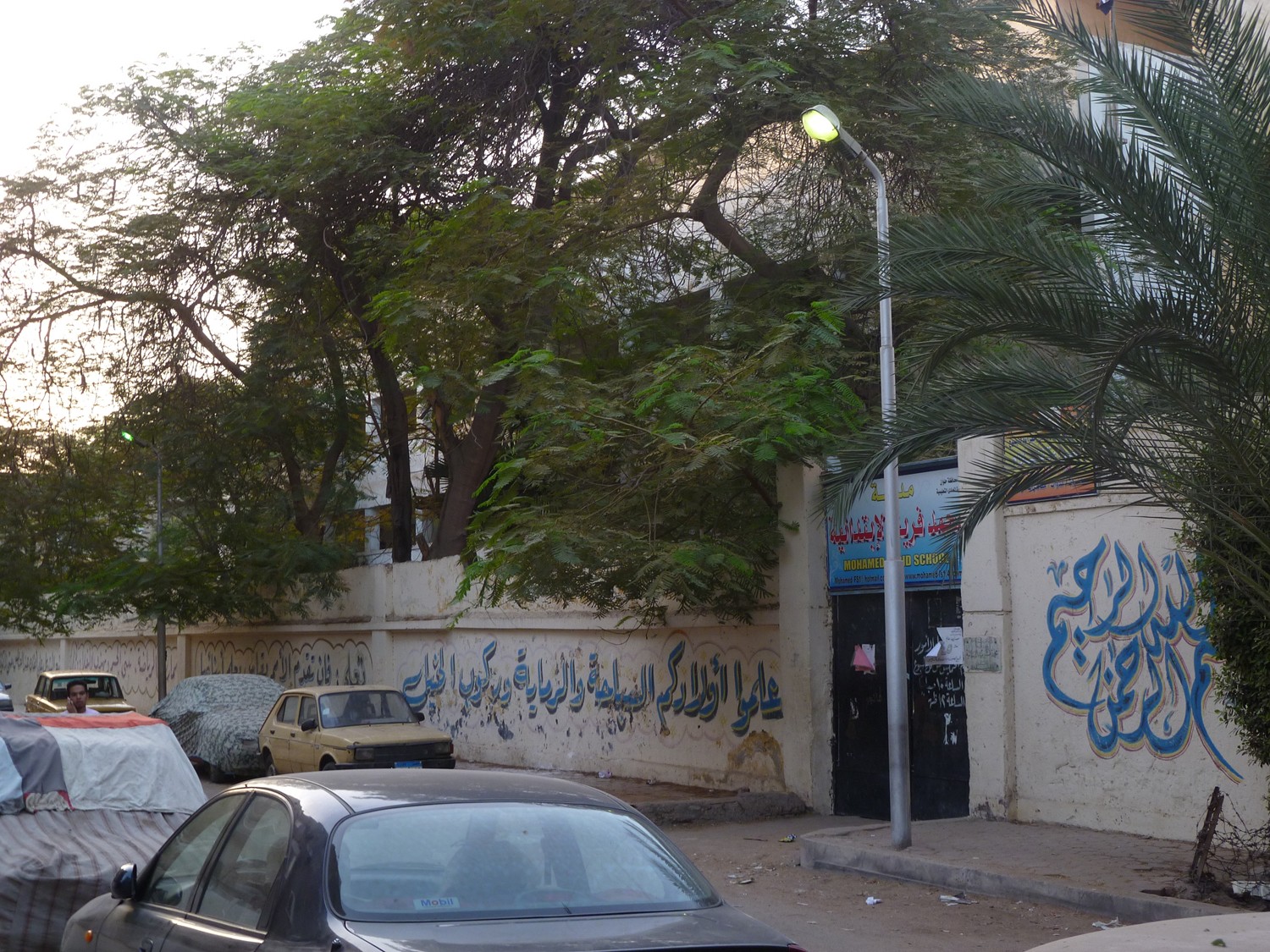

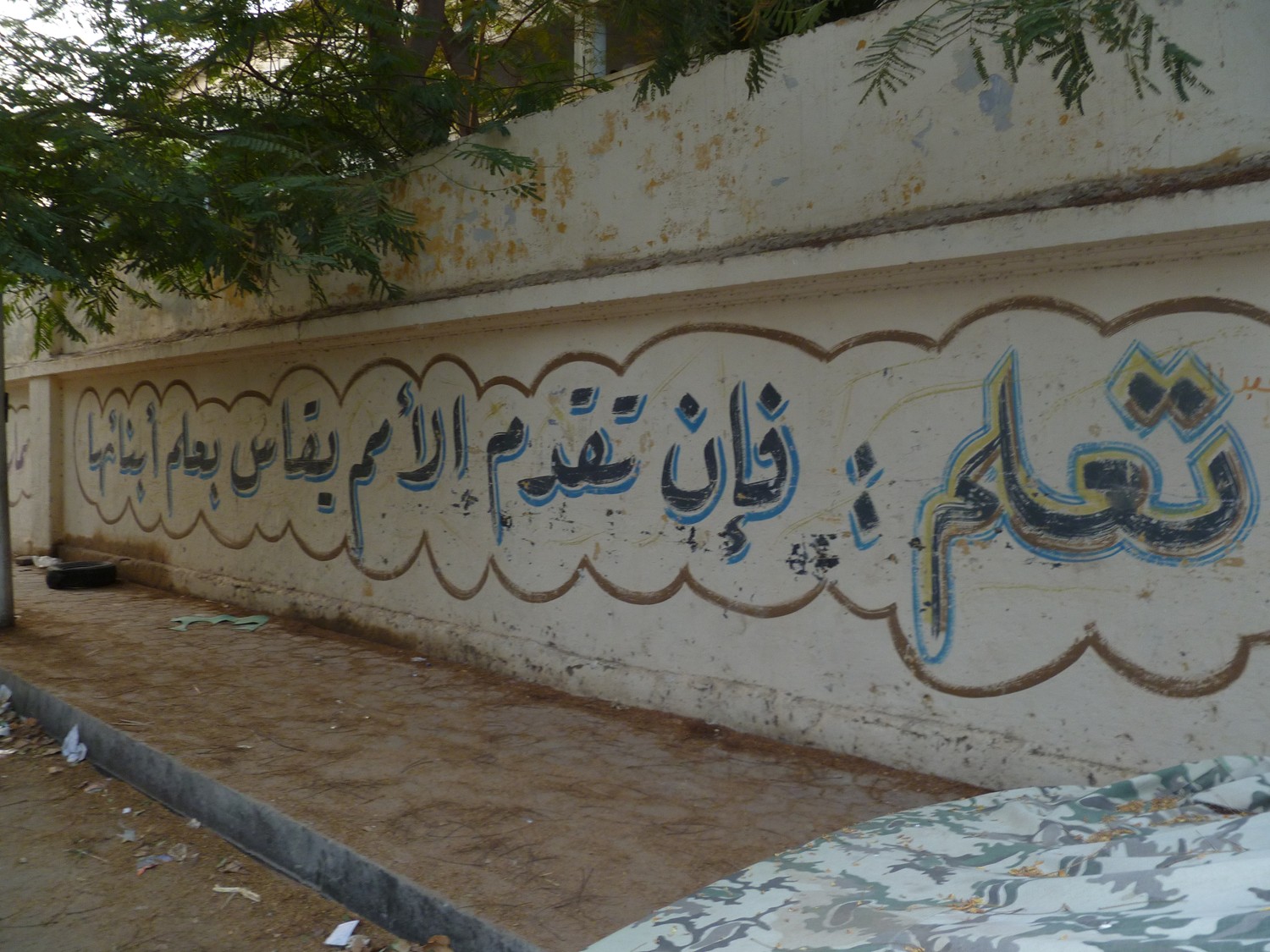

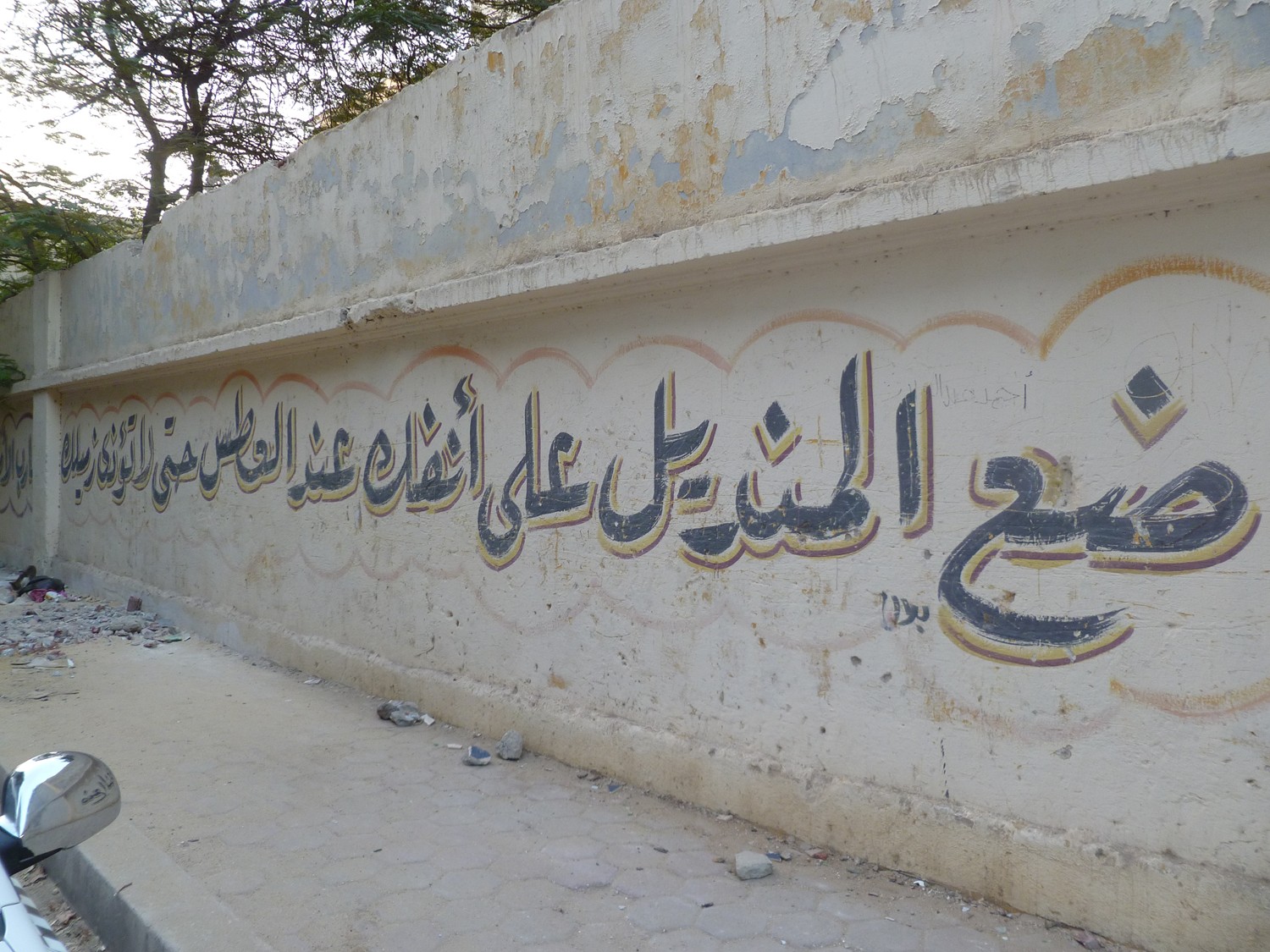
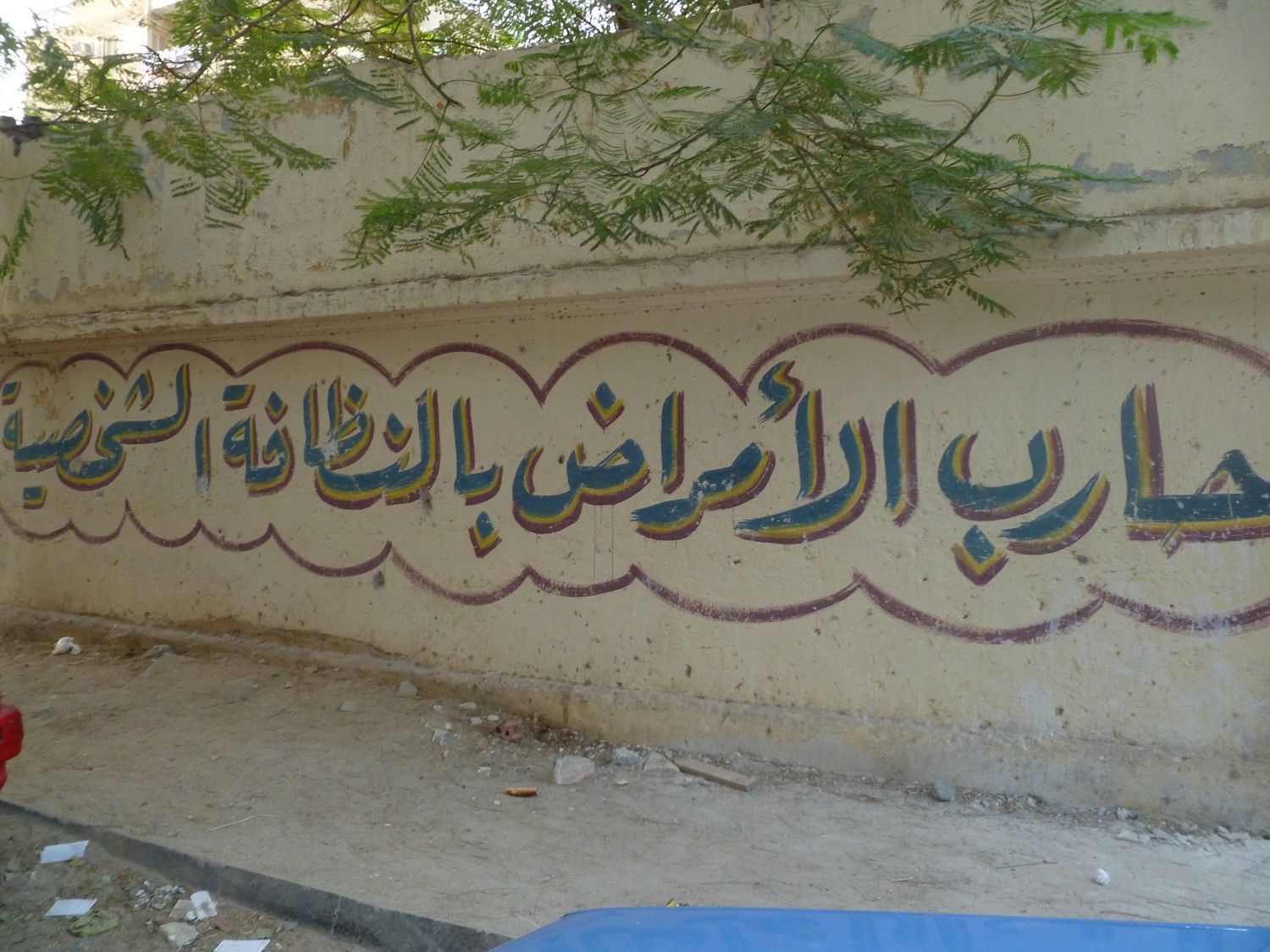
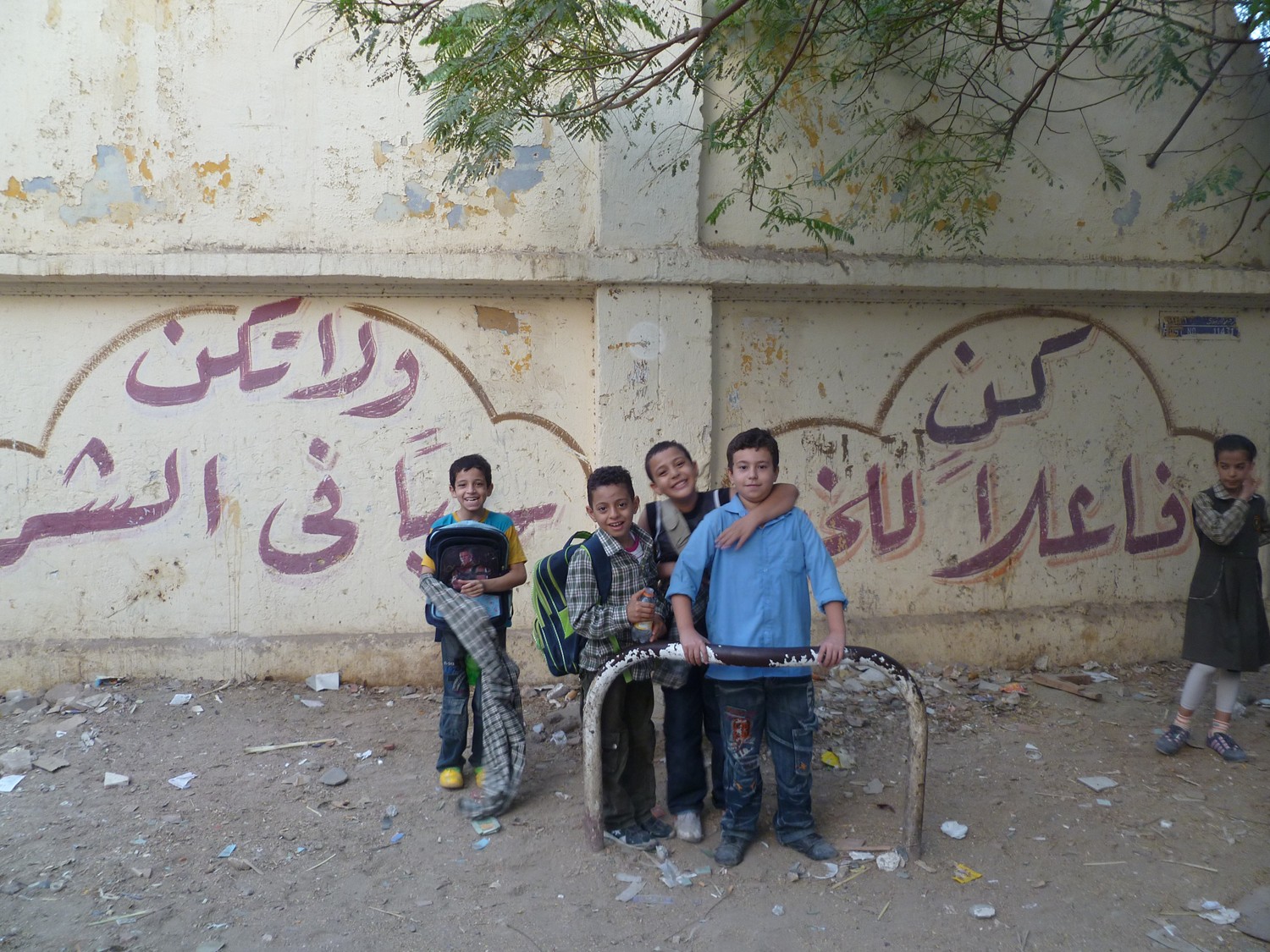


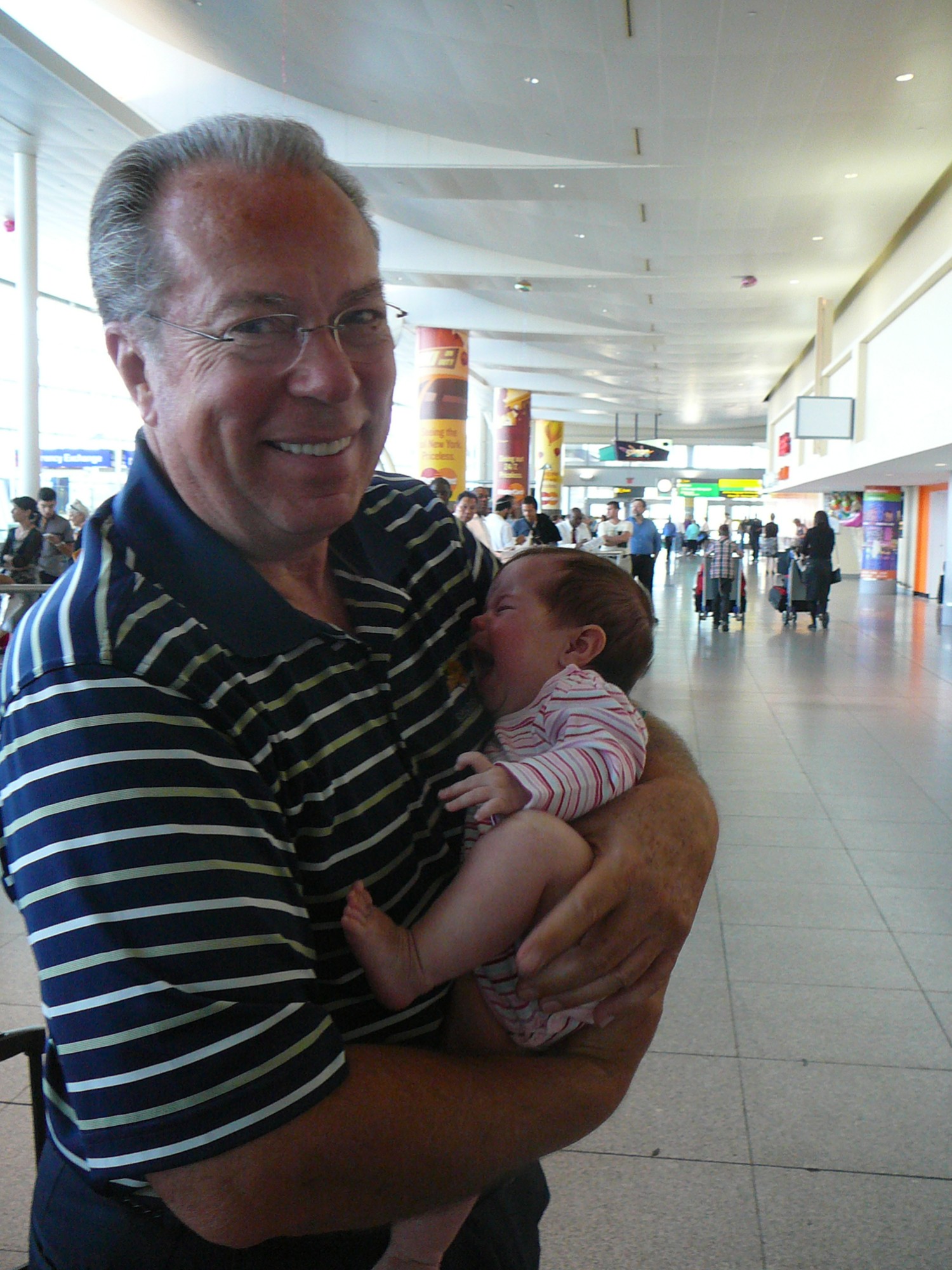
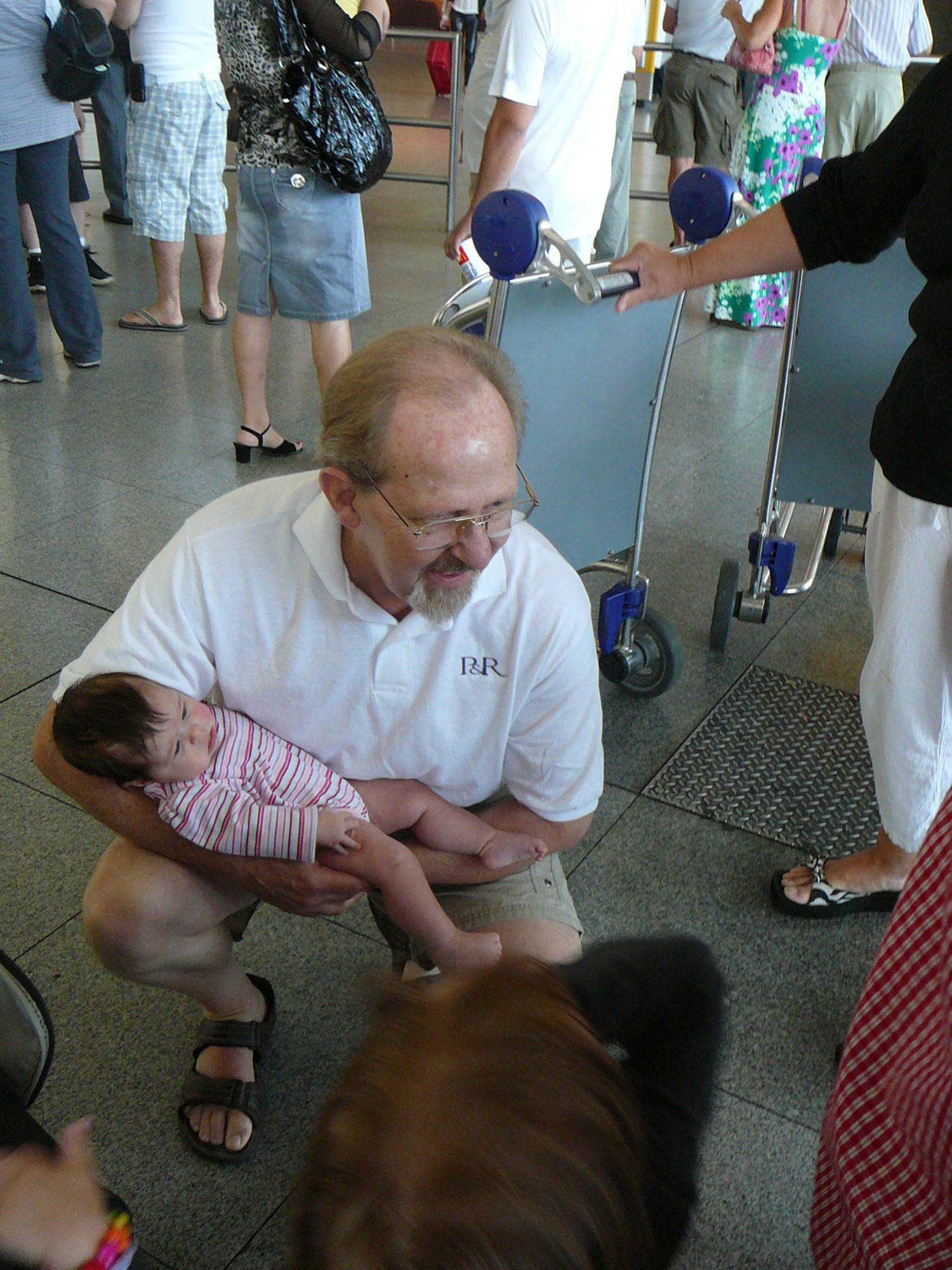


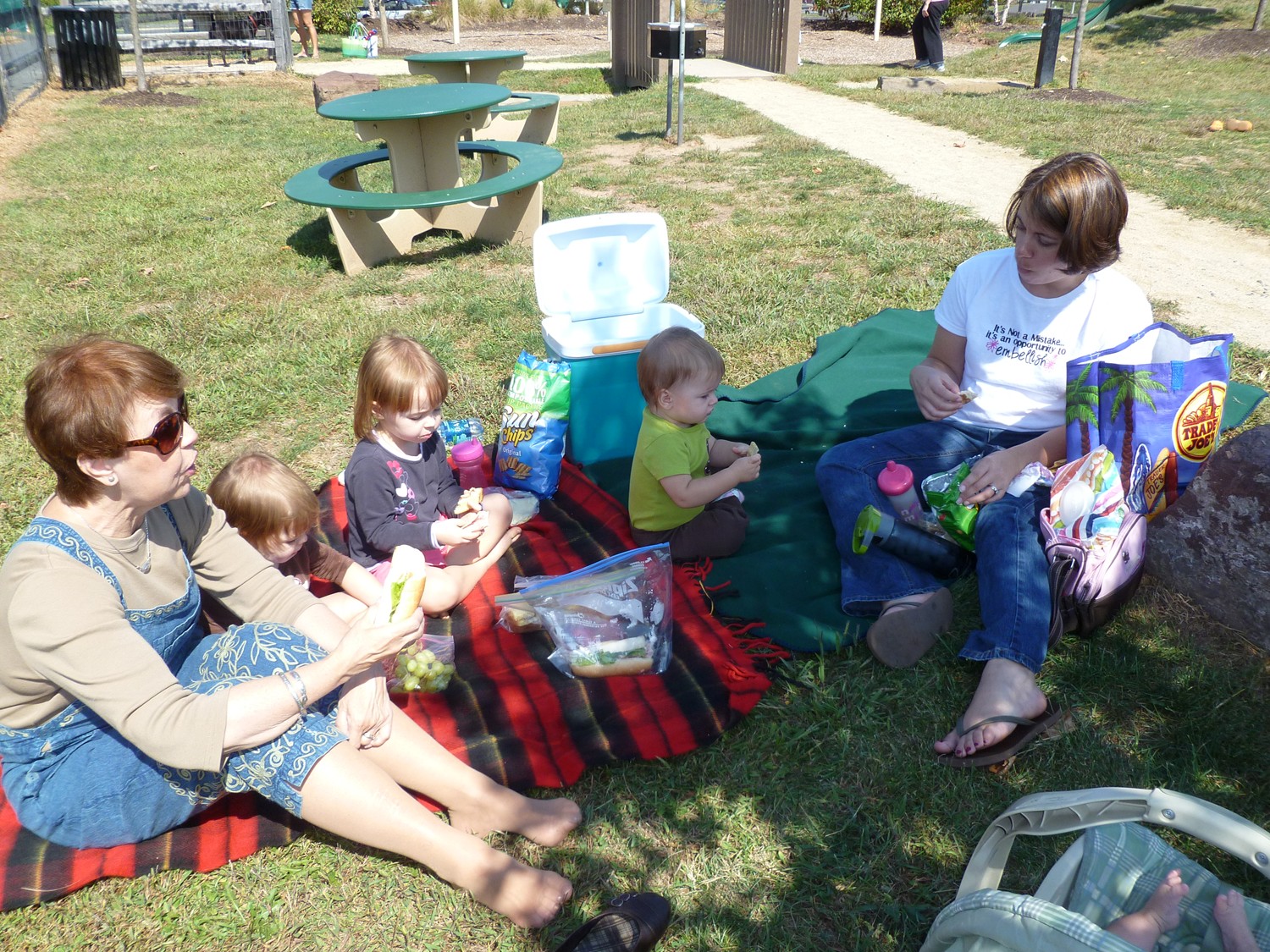

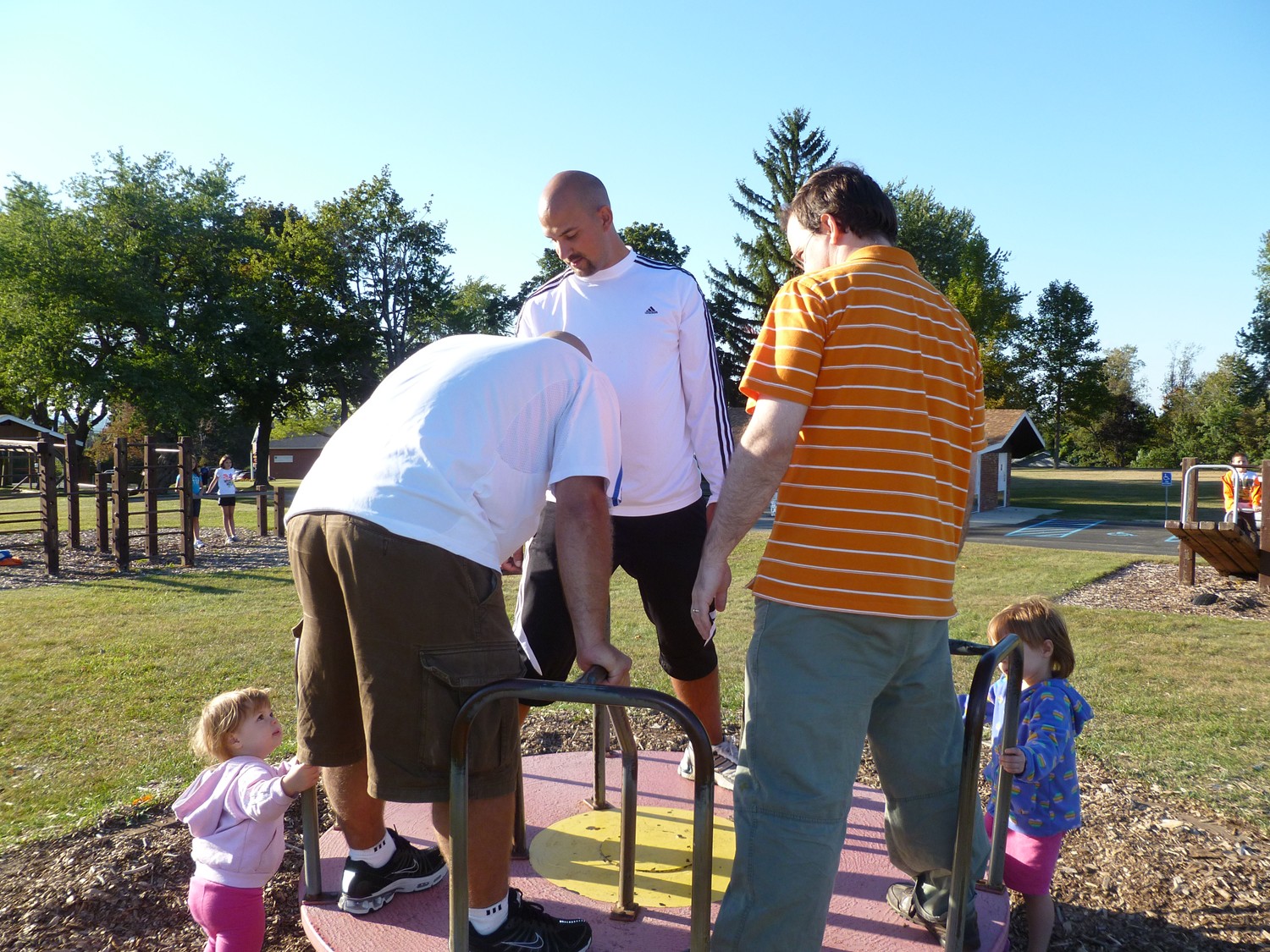




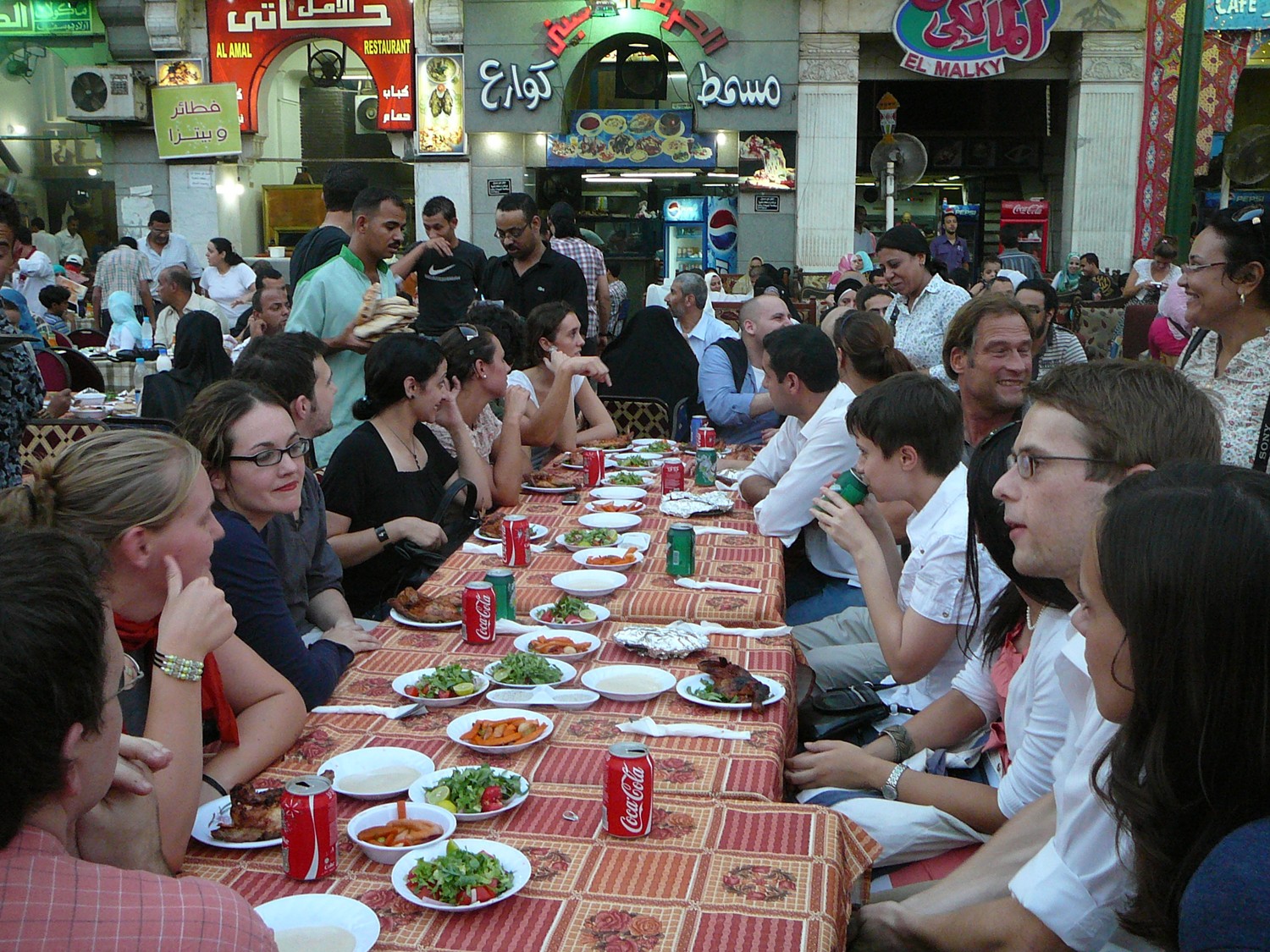


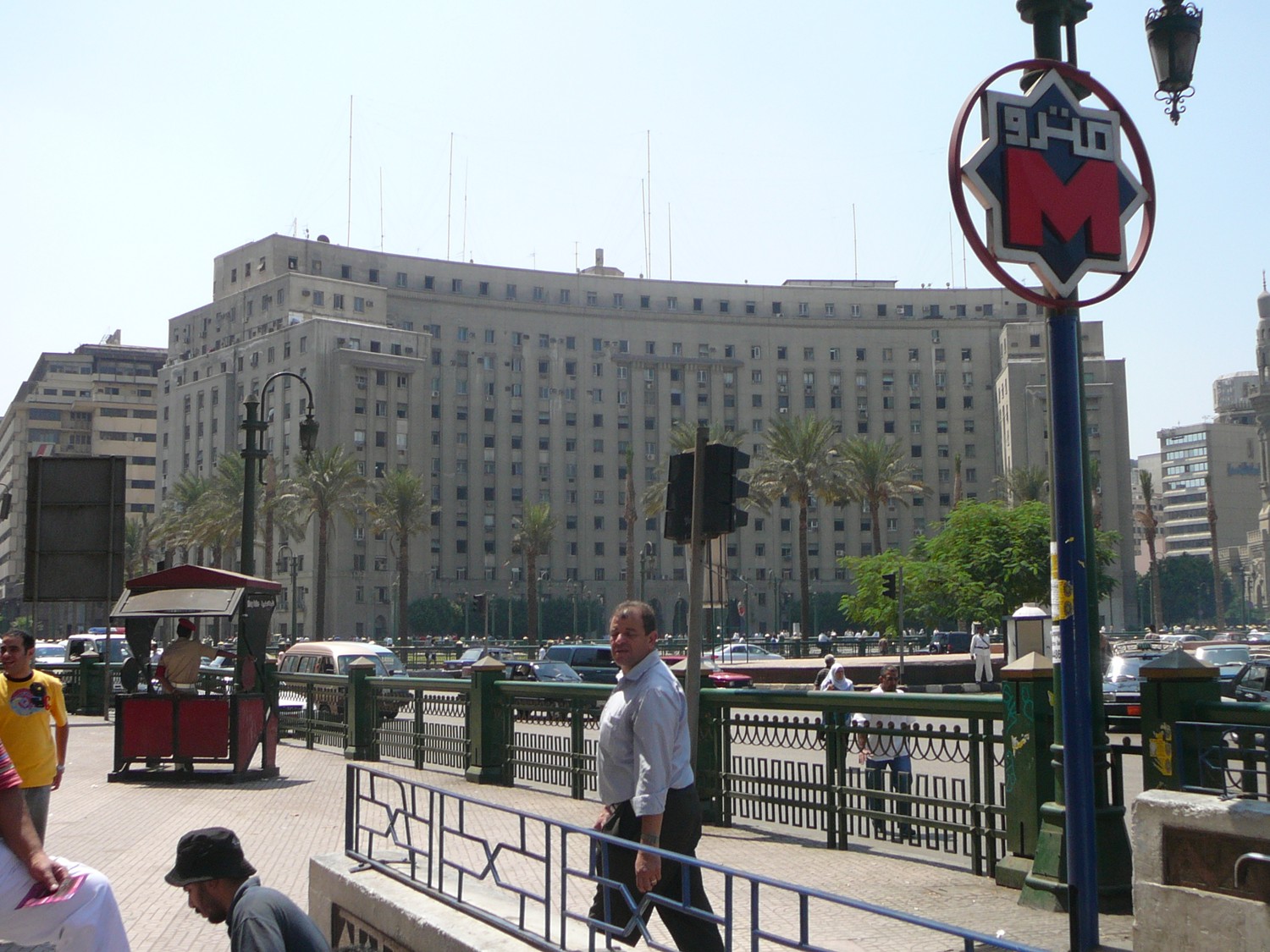


 , by Samia Abdelnour.
 Jayson Casper