Categories
Christianity Today Middle East Published Articles

Christians Assess Criticism of Turkey’s Earthquake Efforts

Image: Burak Kara / Getty Images

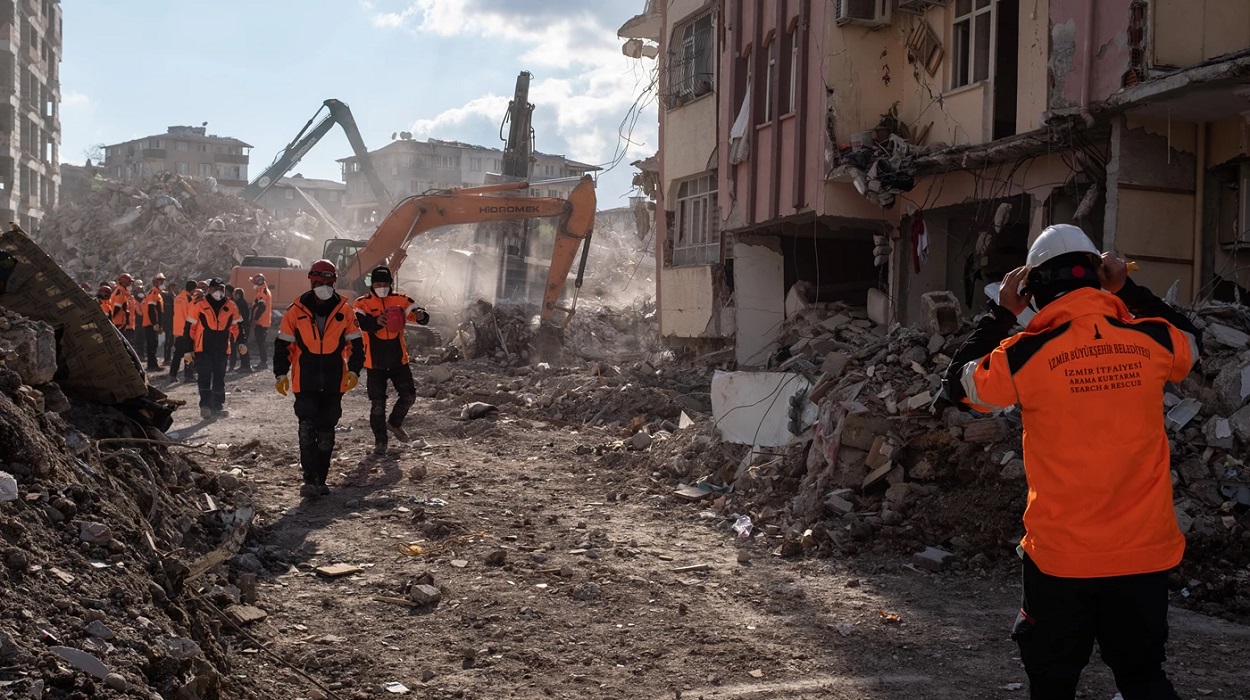
As the dust settled on the rubble of Turkish cities, citizens began asking hard questions. Why was the government response so slow, and why did so many buildings fall in the first place?

Some Christians have joined the chorus.

“During the earthquake, some serious mistakes were made,” said Melih Ekener, executive director of SAT-7 TURK, an inter-denominational satellite television ministry with offices in Istanbul. “But with the destruction of cities with large Christian populations, we are feeling more alone than ever.”

The mistakes came both before and after, he said. But the church paid a disproportionate price, as the ancient cities of Antakya, Iskenderun, and Diyarbakir collectively held the majority of Turkey’s Christians—about 1 percent of the overall population of 85 million.

President Recep Tayyip Erdogan has pledged to rebuild affected areas. And with a local death toll of over 40,000 and one million people displaced across a 10-province region roughly the size of Switzerland, any government would struggle, Ekener said.

But nodding his head at a long list of reported failures both before and after the 7.8-magnitude earthquake and 7.5-magnitude aftershock, Ekener said trust in official institutions has been shaken.

The results are tragic.

Not all can be blamed on the government. The earthquake damaged the local airport and road systems, bottlenecking equipment necessary for rescue. Freezing temperatures, lack of electricity, and the sheer scale of devastation handicapped relief efforts.

But three or more days were lost due to poor coordination in the centralizing of effort.

“The system makes sense,” said Ekener. “But it does slow things down.”

One Turkish Christian, requesting anonymity due to the sensitivity of the situation, was blunt, warning there will be consequences for mistakes.

“Earthquakes don’t kill people; the shoddy works of men do,” said the senior ministry leader. “The government failed this test, and many who could have been saved died.”

Elections are scheduled for June but may be postponed.

Analysts remarked that after a 7.6 magnitude earthquake in 1999 killed 18,000 people in northwest Turkey, the army acted quickly to lead the emergency response. But given the nation’s long history of military coups, when the Islamist-tinged Justice and Development Party (AKP) of now-president Erdogan came to power in 2002 it established civilian control over the largely independent brass.

As an unintended consequence, the military, like everyone else, had to wait on the official Disaster and Emergency Management Authority (AFAD). And AFAD, critics remarked, is headed by a graduate of an Islamic seminary with no experience in the field.

“For years, the AKP has packed almost every institution in the country with their staunch loyalists, often purging people with real know-how and expertise,” said Mustafa Akyol, a Turkish senior fellow at the Cato Institute’s Center for Global Liberty and Prosperity and an expert in Islam and public policy. “The result has been a huge loss of quality and competence.”

Following a 2016 coup attempt, the government removed tens of thousands of civil servants, many connected to a rival Islamic movement accused of conspiracy. Other civil society organizations have also been suppressed, and Akyol said an effective, national effort against disasters is impossible in a climate of suspicion against domestic enemies.

Drawing no connection, an AFAD internal report described deficiencies in personnel and earthquake preparedness. It still consisted of more than 10,000 employees.

Erdogan acknowledged “shortcomings” in the earthquake response, pledging to care for every affected citizen. But he also blamed “dishonorable people” for spreading lies and rumors against the government.

Ekener said that after delays, overall coordination has been smooth.

But while the “after” errors have been tragic, critics point to a criminal “before.”

“They failed…

This article was originally published at Christianity Today on February 23, 2023. Please click here to read the full text.

Categories
Christianity Today Middle East Published Articles

Turkish Christians Plead: Don’t Distribute Bibles After Earthquake

Image: Chris McGrath / Getty Images

An unnamed Turkish man dug through the rubble. The stench from rotting corpses filled his nostrils; the cries from trapped survivors pierced his ears. Finally, he located a little girl he could help, removed the surrounding debris, and gently pulled her from the clutches of death.

And social media cursed him.

The man filmed the whole episode on Facebook Live. And contrary to his expectations, comments of derision poured in from across the country. While his religion is unstated, Turkish Christians warned of similar earthquake exploitation from their brothers and sisters in faith.

When Bibles were distributed in Kahramanmaras, between the epicenters of the 7.8- and 7.5-magnitude quakes that killed 47,000 people along the Turkey-Syria border, local authorities responded by saying they did not want help from the church.

“This is not the way of Jesus; it is opportunistic, and doesn’t work,” said Ilyas Uyar, an elder in the Protestant Church Foundation of Diyarbakir. “We say we are Christians all the time, but it is disgusting to connect this to aid.”

The Protestant Association of Turkey (TeK) has been hard at work to establish guidelines. Last week, after expressing a “debt of gratitude” to all who have prayed and given to support relief efforts, it issued six directives.

Alongside the prohibition of Bibles and evangelistic materials was a basic request to work with the local church to navigate Turkish sensitivities. These included basic requests to coordinate aid, as well as the avoidance of political commentary and unauthorized photos.

But permission is not the only issue. A Christian group from Italy came to Diyarbakir to offer help, Uyar said. They filmed and took pictures and then asked for church assistance to move onward to Kahramanmaras.

Perhaps they will return home and help raise funds. But to spare overburdened local volunteers from playing tour guide, TeK suggested three hubs for communication and collection of donations.

The first is an organization.

First Hope Association (FHA), a disaster relief agency founded by Turkish Protestants, has long cooperated closely with the official authorities. Over 10 tractor trailers have been dispatched to deliver 55 generators, 150 beds, 200 heaters, 3,000 blankets, and 12,000 cans of food.

Over 4,000 people benefit daily from FHA hygiene trucks.

But echoing TeK concerns about Bibles, FHA board chairman Demokan Kileci described his anger at how many Christian organizations are fundraising off the disaster.

Others, he lamented, are well-intentioned humanitarian tourists.

“They fly over a group of 20 people, stay in hotels, and rent cars and to come to the area,” he said. “Meanwhile, our people can’t even find places to sleep.”

Turkey is not backwards, he continued, as it works according to European standards with professionally trained experts. And the church has started to supply psychological support for its many volunteers.

Trauma care workers and programs for children can wait for a month.

Even so, the job is too large for Turkey alone. FHA was designated by the government to facilitate the assistance of Samaritan’s Purse, which has set up a virtual mini-city with 22 tents, a 52-bed field hospital, and a rotating crew of about 100 international disaster relief specialists.

“We offered our help, and they immediately took it,” said Franklin Graham, president and CEO of the evangelical aid association. “We are open about our Christian faith, but did not come to distribute shoe boxes.”

Operation Christmas Child, the popular holiday outreach which has sent 209 million gift boxes around the world, has direct evangelistic and discipleship purposes. But in Turkey, Samaritan’s Purse is focused on the immediate need to save life, Graham said. Working through the US embassy, he praised the Turkish military for helicopter delivery to the parking lot of a collapsed hospital facility outside Antakya.

The local medical profession is devastated, he added.

A week after the quake, Samaritan’s Purse chartered a 747-sized airplane to deliver 600 oversized tents that can shelter up to 1,000 families. More than 900 have received medical care, including 25 surgeries. Graham expects Samaritan’s Purse to be present for up to four months, replenishing supplies every 10 days, and will leave everything behind when Turkey is able to assume local care.

Until then, its staff lament the fires lit in the streets to help people stay warm.

“You look at great suffering, but don’t get paralyzed,” stated Aaron Ashoff, deputy director of international projects, who takes strength from the psalms. “You need to walk into that pain, and then walk out, and say, ‘We’re Samaritan’s Purse, we are going to act.’”

So have the other two TeK hubs. Many churches and organizations are helping in relief, TeK board member Soner Turfan said. But the sister churches in Diyarbakir and Antakya were identified due to…

This article was originally published at Christianity Today on February 22, 2023. Please click here to read the full text.
Categories
Africa Christianity Today Published Articles

Nigerian Christians Explain High Stakes of 2023 Presidential Election

Image: Michele Spatari / AFP / Getty Images

Christian leaders in Nigeria are convinced: The outcome of Saturday’s election is crucial.

Against a backdrop of widespread insecurity, persecution, and corruption, on February 25 a record 93 million registered voters will decide the presidency of Africa’s most populous nation. And for the first time since the restoration of democracy in 1999, no candidate has a military background.

One contender is a Christian.

Christianity Today interviewed seven Nigerian Christian leaders, and five directly declared support for their fellow believer, Peter Obi. None indicated any other candidate. And of the 18 candidates seeking office, Obi is one of only three projected to have a realistic chance.

But with no clear frontrunner, Nigeria may face another presidential first—a runoff election. In a nod to the nation’s ethnic diversity, a first-round winner must claim 50 percent of the overall tally as well as at least 25 percent of votes in 24 of 36 regional states.

The West African nation of about 220 million—nicknamed the Giant of Africa—contains roughly 370 ethnic groups, speaking 520 languages.

Each leading candidate represents one of the three largest groups. Atiku Abubakar of the People’s Democratic Party (PDP) is a Fulani Muslim from Nigeria’s north. So is outgoing president Muhammadu Buhari, who at age 80 is completing his second of two constitutionally limited four-year terms.

Bola Tinubu, a Yoruba Muslim from the southwest, represents Buhari’s All Progressive Congress (APC). The incumbent party won elections for the first time in 2015 when Tinubu, the former Lagos governor, offered his considerable political heft. He now openly proclaims it’s “his turn” for the presidency.

The PDP and APC are traditionally Nigeria’s two strongest parties.

The third candidate is Obi, an Igbo Christian from the southeast. A political free agent formerly with the PDP, the Catholic politician joined the then-minor Labour party last May just prior to the primaries. Now he is riding a wave of youth-led popularity, with many seeing in him an alternative to an aging political class.

Beyond the ethnic, regional, and political aspects to the race, there is also the religious: Nigeria is roughly divided 50–50 between Christians and Muslims. All these factors contribute to making this year’s contest far different than the norm. And unwritten rules that in the past attempted to ensure social cohesion have been discarded.

The presidency is understood to rotate geographically between the majority-Muslim north and majority-Christian south. But this election the PDP decided instead to stick with five-time failed candidate Abubakar, perhaps in part to seize the traditionally unified voting bank of northern Fulani peoples that helped bring Buhari to power.

More painful to Christians is the failure of the APC to nominate a split religious ticket. In choosing Tinubu as a southern Muslim, the party feared losing the northern vote and assigned a northern Muslim as his running mate. The Christian Association of Nigeria (CAN)—which represents Protestant, Pentecostal, Catholic, and independent churches—pledged to oppose the Muslim-Muslim ticket, outraged at the breach of religious-political protocol.

Rather than submit to political machinery, Obi struck out on his own. Beside disrupting what had been an emerging two-party system, he also represents the political ambitions of the Igbo.

Following a series of military coups in the 1960s, many Igbo were driven from their homes in northern Nigeria. And in fleeing to their heartland in the southeast, some pronounced the creation of an independent republic. The resulting civil war from 1967–1970 killed thousands; some say the election of an Igbo president would represent a moment of national healing.

The government has made strides to ensure a transparent voting process this year by instituting biometric safeguards on voter identity. But at least 23 officials are being investigated for alleged roles in illegal registration, as authorities scrubbed 2.7 million names from the list.

Additionally, past elections have been impacted by violence and many fear repetition. There have been more than 125 attacks on federal election offices, with 280 polling stations closed in insecure areas. Already one senate candidate has been assassinated, a Labour politician in the Igbo-majority southeast state of Enugu.

Meet the Candidates

Obi’s campaign does not focus on ethnicity but on competence and youth. At age 61 he is the youngest of the main candidates, and his supporters label themselves “Obidients” in reference to the social movement that has rallied around him outside of traditional political structures. Both as a businessman and as former governor of the southeastern Anambra state, the philosophy graduate earned a reputation for thrift and left behind a budget surplus while investing in education and paying salaries on time.

His critics point to his name being mentioned in the offshore accounts investigation known as the Pandora Papers—though Obi was never charged—and a likely inability to govern smoothly if victorious, since he lacks a political base in the halls of government. The Labour party has only two representatives in the House, one in the Senate, and zero governors in the states. To assist in the north, he has chosen a Muslim vice president from the northern Kaduna state.

At age 70, Tinubu also promotes his competency and justifies his Muslim vice presidential choice by saying it reflects the principle that religion should not be a factor in politics. With a Christian wife ordained in a leading Pentecostal denomination, Tinubu downplays any fears of sectarianism. Once exiled for his pro-democracy activism among those who helped lead Nigeria away from military rule, he is credited with generating growth as governor of Lagos, the economic capital, and aims to replicate this success on the national stage.

His critics say that despite increased revenues, Lagos lagged in infrastructure development while political patronage distributed the spoils. Twice cleared on corruption charges, Tinubu was also named in a US Justice Department report about heroin trafficking, though he settled via fine without an establishment of guilt.

At age 76, Abubakar is relying on his long political history while campaigning on a platform of reuniting a divided country—noted by his Christian vice presidential partner from the southern Delta state. An oil sector businessman and former vice president under Olusegun Obasanjo, a Christian who served as president from 1999–2007, Abubakar led that administration’s economic team and instituted a series of successful reforms. Charitable, he established the American University in his northern Adamawa state, which offered scholarships to some of the Chibok girls abducted by Boko Haram jihadists.

His critics say it will be difficult for Abubakar to unite a nation when his controversial geographic candidacy divided his own party. Also accused of cronyism, he is named in a US Senate report for transferring “suspect funds” but faced no trial, while accusations have never been proven in Nigeria. And many Christians are concerned that in transferring power from one Fulani to another, Muslims will continue to dominate the nation’s top offices. Husband to four wives and 28 children, Abubakar controversially deleted a tweet condemning the mob murder of a Christian university student accused of blaspheming Islam.

“My vote is for Peter Obi,” said Emiola Nihinlola, president of the Nigerian Baptist Theological Seminary (NBTS) in southwest Nigeria, citing Obi’s performance as governor. “There are good reasons to fear that a Muslim-Muslim presidency will lead to greater discrimination of Christians.” “My preference for president is…

This article was originally published at Christianity Today on February 24, 2023. Please click here to read the full text.

Categories
Christianity Today Middle East Published Articles

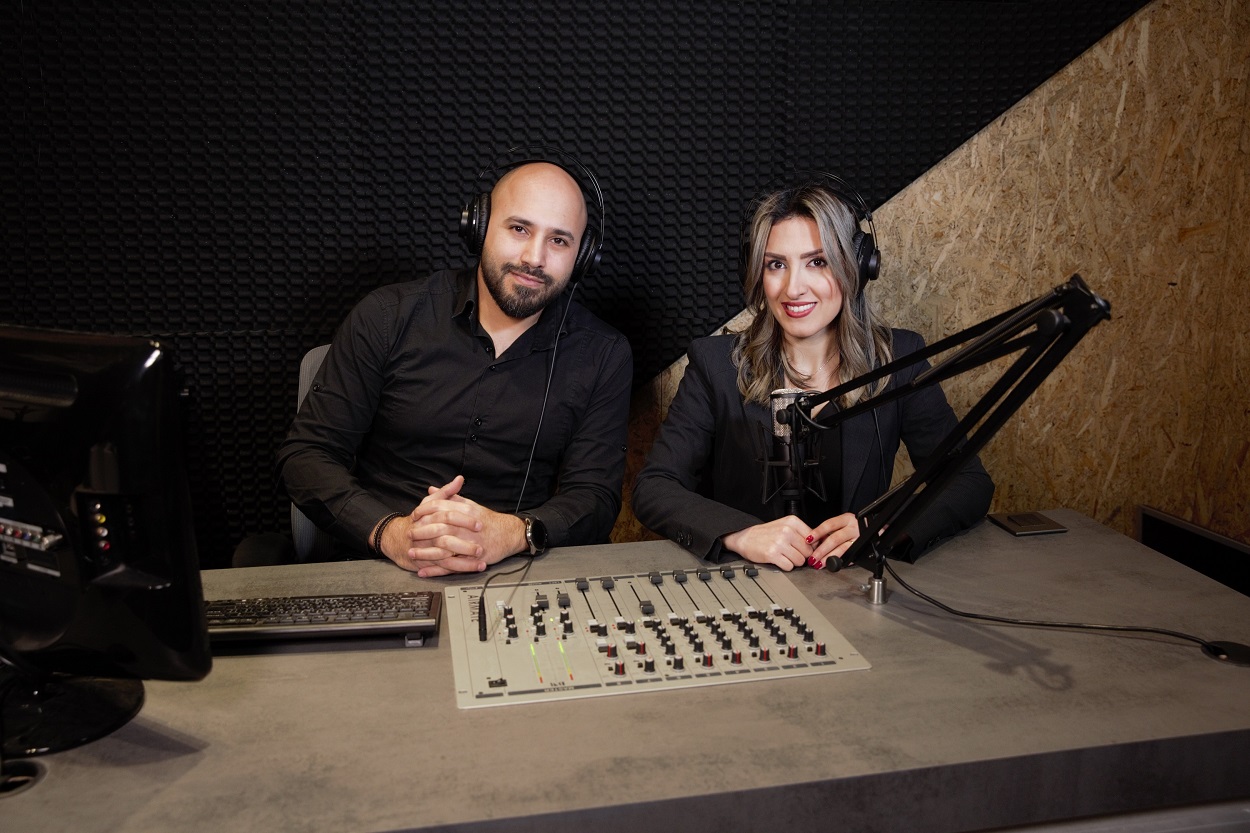
Let There Be Radio: Lebanese Evangelicals Launch FM Station

Image courtesy of BeLight FM

Radio first brought Nolla Azar fame. Then it brought her Jesus.

Today she uses it to bring others to him, via a new ministry.

“I know how to get women’s attention,” said the host of Listening to You, an afternoon talk show on Lebanon’s BeLight FM. “I use the same methods here, but for a higher purpose.”

Once working with Dubai-based MBC, one of the largest media companies in the Middle East, Azar returned to Lebanon in 2009 after desiring the warmth of home. Frustrated by the lack of opportunities she found in the local industry, she turned instead to social media and became a celebrated influencer.

Doing a podcast for women, she accumulated 275,000 followers on TikTok, boasting 17 million views. Still, she felt empty, complaining often to her mother about dissatisfaction with her finances, career, and love life.

In 2021, COVID-19 isolation sparked a spiritual search. Maronite Catholic by background, she read books about God, watched religious TV, stumbled upon a new and unheralded radio station, and gave her life to Christ.

Today, she is one of its top-rated hosts.

“When I first came [to BeLight], it was hard to balance between entertaining people and being ‘Christian,’” said Azar. “But it is God who brought me here, and when lifting people’s spirits, I redirect them to Jesus.”

She has contributed to the increasing professionalism among a motley crew that is quickly growing in popularity. BeLight began on Thanksgiving Day 2020 as an initiative of Arabs determined to launch a Protestant-led FM station in Lebanon. Many had backgrounds in TV production, but none in radio.

It began with 90-percent worship music, culled from English-language favorites and the mostly Egyptian-composed praise songs popular in Arab evangelical churches. Over time, BeLight increased its spoken content to almost 50 percent, at first through sermon recordings of Lebanese pastors and eventually developing its own unique programming.

And it has won itself an audience. According to an Ipsos advertising survey from last April, it now reaches 300,000 Lebanese, reeling from economic crisis and political turmoil. Its 7.5 percent market share trails the top-ranked pop music stations (which average 11 percent each), but puts it ahead of longstanding Catholic and Muslim offerings.

“We are trying our best,” said Mireille Eid, host of BeLight’s first talk show, Thought for Tomorrow, broadcasting five mornings per week. “People are happy listening to a message of hope, not just all bad news.”

She has grown with the job. With a sonorous voice but no radio training, Eid’s background was in theater and interior design. But her infectious style and transparent nature invites many to call in—requesting prayer or sharing their stories.

Lebanon boasts 18 official religious sects, with BeLight listeners hailing from many. “Good morning, you beautiful hearts who live in the hope that everything will be more beautiful,” said Sarah, from the Lebanese…

This article was originally published at Christianity Today, on February 8, 2023. Please click here to read the full text.

Categories
Christianity Today Middle East Published Articles

Turkish and Syrian Christians Rally Earthquake Relief

Image courtesy of SAT-7 Turk

Local Christians were among the first responders to the massive earthquake in Turkey and Syria that left more than 5,000 people dead and more than 20,000 injured. They just don’t know how to make sense of it.

“God have mercy on us, Christ have mercy,” said Gokhan Talas, founder of the evangelical Miras Publishing Ministry in Istanbul. “This is our only spiritual reflection right now.”

His first instinct was to go. But as reports came in of deep snowfall and damaged roads, he shifted gears. His wife stayed up all night making phone calls to believers in Malatya, trying to coordinate aid. And with members of his church and Protestant congregations throughout Turkey, they bought blankets, medicines, baby formula, and diapers to send onward to the afflicted areas.

“From this side of eternity, nothing is clear,” Talas said. “But our sweet Lord is suffering with us.”

He warned of scams preying on the outpouring of generosity from around the world, even among the small Turkish evangelical community of roughly 10,000 believers.

Their own supplies are being donated through İlk Umut Derneği—in English, First Hope Association (FHA), a Turkish Protestant NGO working closely with the local Red Crescent and AFAD, Turkey’s Disaster and Emergency Management Authority.

Officials said more than 5,000 buildings have been destroyed by the 7.8 magnitude quake. More than 13,000 search and rescue personnel have been deployed, supplying 41,000 tents, 100,000 beds, and 300,000 blankets. Almost 8,000 people have been rescued so far.

This includes pastor Mehmet and his wife Deniz in Malatya, longtime friends of Talas, who spent half the day freezing under the rubble until neighbors succeeded in pulling them out.

Founded in 2014 to assist the refugee flood from Syria, FHA works “shoulder-to-shoulder” with the Association of Protestant Churches, said Demokan Kileci, chairman of the FHA board.

Conveying the first batches of aid in a solid 4×4 vehicle, it took him 14 hours—double the standard time—to drive 440 miles southeast from his home in Turkey’s capital Ankara to Gaziantep, a scant 20 miles south of the epicenter.

One of FHA’s five mobile hygiene units—and a mobile bakery—stayed there. Another two were dispatched to Antakya, the ancient biblical Antioch, and a fourth sent to Kahramanmaras, site of a 7.5 magnitude aftershock.

The fifth went to Diyarbakir, another 200 miles east. Overall, 10 Turkish cities suffered devastation. With Syrian cities included, the distance covered is greater than an imagined epicenter in New York City destroying the eastern seaboard from Boston to Washington, DC.

“We are doing whatever we can to help our country,” said Kileci. “And right now, prayer is the most important.”

Multiple houses of prayer have been badly damaged. The list is long. In Turkey, it includes…

This article was originally published at Christianity Today on February 7, 2023. Please click here to read the full text.

Categories
Christianity Today Europe Published Articles

Let My People Come and Go, Karabakh Christians Tell Azerbaijan

Image: Tofik Babayeb / Getty

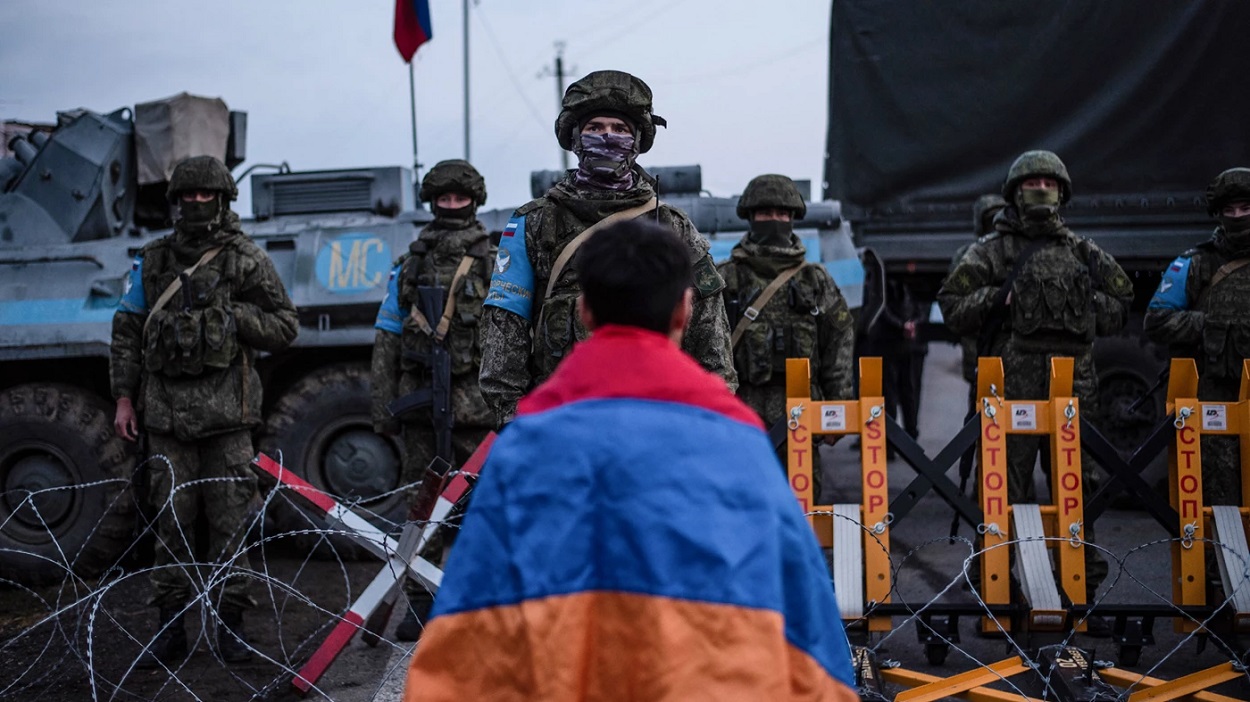
Armenian Christians have been calling for help. As their ethnic kin in the Caucasus enclave of Nagorno-Karabakh approach two full months under a near-complete blockade imposed by alleged eco-activists from Azerbaijan, the voices have amplified.

“Everyone knows this is the Aliyev regime,” stated Biayna Sukhudyan, a pediatric neurologist trapped inside the Delaware-sized mountainous region, which Armenians call Artsakh. “There is no time to wait and allow the next genocide, because this is genocide.”

The doctor referred to Azerbaijani president Ilham Aliyev, and several investigations have linked the protesters to his government. When the blockade began on December 12, official statements attributed the long-haul demonstration to illegal gold and copper mining on their still-occupied but internationally recognized sovereign territory.

In 2020, Azerbaijan launched a 44-day war to retake a region under three decades of de facto control by ethnic Armenians. Following the dissolution of the Soviet Union, Artsakh declared itself an independent state, and with Armenian military assistance was able to hold Nagorno-Karabakh and additional Azeri territories—pending peace negotiations.

A vastly improved Azerbaijani force, aided by drone technology from Turkey, recaptured three-quarters of the land through bloody combat. Russia mediated a ceasefire, and its peacekeepers guard the Lachin corridor—the one road connecting over 100,000 beleaguered Artsakh residents with Armenia and delivering the 400 tons of daily food and medicine that supply their needs.

Since the end of the war, Sukhudyan has traveled every two months to Nagorno-Karabakh, which lacked specialist doctors. This time, amid acute shortages in the market, she was compelled to stay.

Others, including children, are prevented from returning.

“I came to Yerevan for eye surgery,” stated 13-year-old Maral Apelian, who lives in Artsakh, last month. “All I want is to go back to my family at home.

“Let my people go,” she shouted, recalling Moses. “Let my people go!”

The cry was taken up immediately by Armenian hierarchs.

“Artsakh Armenians [are] in front of a humanitarian disaster,” stated Catholicos Karekin II, supreme patriarch of the Armenian Apostolic church, on day three of the blockade. “Such provocative actions are aimed at ethnic cleansing.”

One day later, his ecclesial colleague in Lebanon invoked the crucial label.

“We are witnessing deliberate and concrete steps toward the ethnic cleansing and genocide of the Armenian population of Artsakh,” stated Catholicos Aram I, whose Holy See of Cilicia represents survivors in the Levant who fled the original Armenian Genocide in Turkey. “The need for immediate humanitarian action is critical.”

Karekin also stated he was reaching out to ecumenical colleagues.

Pope Francis led a prayer for Nagorno-Karabakh on December 18. A consortium of advocacy organizations issued a genocide warning the next day, arguing that all 14 of the United Nations risk factors were present.

Mainline leaders responded next. Without repeating the severe term of warning, a joint statement by the World Council of Churches and the Conference of European Churches demonstrated their active sympathy.

“This follows a clear pattern of behavior by Azerbaijan that contradicts any claims of goodwill,” they wrote on December 20. “In these circumstances, Armenian fears of renewed genocide against them cannot be discounted.”

A day later, the National Council of Churches framed it in religious terms.

“In a season where we celebrate the birth of Jesus in a cold stable,” it stated,” it is particularly horrific that civilians are being cut off in the middle of winter.”

One month later, many are increasingly sounding the alarm. On January 13…

This article was originally published by Christianity Today, on February 3, 2023. Please click here to read the full text.
Categories
Africa Christianity Today Published Articles

Terrorist Attack on Congolese Church Prompts Plea for Christian Advocacy

Image: Zanem Nety Zaidi / Xinhua / Getty Images
The aftermath of an ADF terrorist attack at a Pentecostal church in Kasindi, DRC

Congolese Christians are calling out for help.

In the latest attack on civilians in the Democratic Republic of Congo (DRC), a terrorist bombing killed 14 people and wounded 63 others during a baptism service at a Pentecostal church in Kasindi. Located in the mountainous North Kivu province bordering Uganda, the northeast region has already been under an official “state of siege,” similar to a state of emergency, since 2021.

“The Eastern Congo has become a theater of violent extremism,” said Eale Bosela, regional director for the Association for Christian Theological Education in Africa. “People are being massacred like animals.”

The bomb attack was blamed on the Allied Democratic Forces (ADF), an affiliate of the Islamic State Central African Province, which claimed responsibility. Originally formed in 1995 as a mix of jihadist and insurgent rebels, it is one of over 120 armed groups in North Kivu.

Many Congolese were confused—and troubled.

“How can such a situation happen,” stated Kiza Kivua, a 50-year-old farmer who lost his brother in the attack, “when Kasindi is full of soldiers?”

With an estimated 500 or more fighters, the ADF was once motivated primarily by its opposition to Yoweri Museveni, president of Uganda since 1986. Pushed across the border, the militant group now has a majority Congolese membership with many foreign recruits.

A Kenyan national was arrested by the DRC for the church bombing.

“Like so many other groups, the ADF has found refuge in the region,” said Scott Morgan, chair of the Africa Working Group of the International Religious Freedom Roundtable. “But now they have taken on the mantra of attacking Christians.”

They are not the only ones. Other militant groups…

This article was originally published at Christianity Today, on January 18, 2023. Please click here to read the full text.

Categories
Christianity Today Europe Published Articles

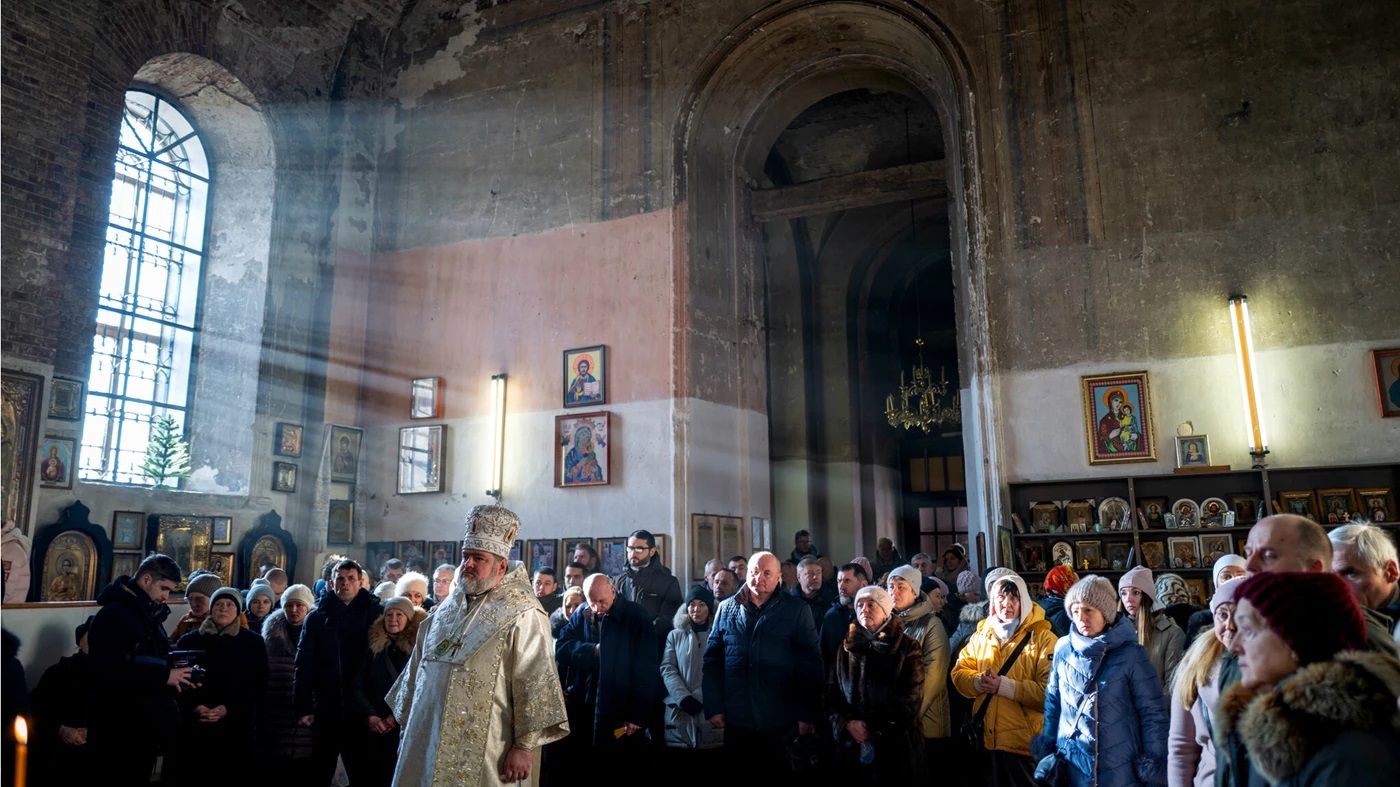
Christmas Epiphanies from the Ruins of Ukraine

Image: Spencer Platt / Getty Images

In advance of Putin’s unilateral declaration of a 36-hour truce over Orthodox Christmas today, Ukrainian seminary leaders shared their reflections on the impact of ten months of unabated conflict.

“War is exhausting—but this exhaustion does not happen overnight,” wrote Roman Soloviy, director of the Eastern European Institute of Theology. “Nevertheless, our mission continues.”

Reviewing his own emotional response since Russia invaded Ukraine on February 24, Soloviy cited the impossible choices forced upon his nation: Save your family or your neighbors? Flee the country or stay and help?

He could not read, listen to music, or watch movies for many months.

The stress only surged as reports proliferated about atrocities, complicated by the frustration that Ukrainian churches could not help everyone. Decisions needed to be made in darkness, while seeking to balance one’s own psychological health.

A Kherson seminary, Tavriski Christian Institute (TCI), was occupied by Russian forces in March and liberated in November. President Valentin Siniy recounted the grim chronology:

January: Talks about the war. Doubts about invasion.
February: Team. Responsibility. Daily Zoom calls to pray.
March: Massacre. Inhumanity. Generosity: flour, sugar, potatoes, seeds.
April–May: Russians want to reconcile, without repentance. Families separated.
June–July: Marriages. Fragility of life. Losses. Divorces.
August: TCI shelled. Books trashed. Valuables looted. Vandalism.
September: New location. Big enrollment.
October: Infrastructure destroyed. Nation freezing. Unity. Mutual assistance.
November: Liberation. Joy. First trip home. Ruined city.

For his December entry, Siniy wrote: “Christmas is the coming of God into a mean world to mean people. We pray that the Lord will show us how and where to serve.”

Oleksandr Geychenko, meanwhile, chose a different theme for the holiday. Yet it fit perfectly with Siniy’s October observations.

“This year’s Christmas for me is closely associated with the metaphor of light,” wrote the president of Odessa Theological Seminary. “Perhaps, this is my reaction to the uncertain power supply.”

Patriarch Kirill of the Russian Orthodox Church (ROC) first suggested the holiday truce, while 1,000 US-based faith leaders called for Ukraine to honor it. Nonetheless there has been exchange of shelling along the front lines, and many Ukrainians dismissed Putin’s initiative as a cynical ploy to buy time for his retreating troops. (Foreign analysts instead saw a PR bid for Russian Christian backing.)

But despite the battlefield losses, last month Russia specifically targeted Ukraine’s electrical grid, repeatedly plunging cities and civilians into darkness and cold.

Geychenko had taken his electricity for granted. Now, he sees a spiritual connection. “The light that comes from Jesus not only shines into human darkness,” he wrote, “it also…

This article was originally published at Christianity Today, on January 7, 2023. Please click here to read the full text.
Categories
Asia Christianity Today Published Articles

Afghan Christians Are Very Online

Image: Courtesy of SAT-7

Since the fall of Afghanistan in August 2021, it has been nearly impossible for Afghan Christians to find fellowship.

Not that it was easy before.

“There was no local church where I could explore my questions about God,” said Parwin Hosseini, now living in Turkey. “But once I found answers abroad, I accepted Jesus.”

Her last name has been changed for security reasons, to protect her visa status.

A university graduate from Mazar-i-Sharif, Hosseini left her home country in 2019 and, unlike most local Afghans, is not a refugee. She fled her uncle’s arrangement of her marriage to a man nearly twice her age and obtained residency pursuing a master’s degree in economics. In Istanbul, a Turkish pastor gave her a Bible in Dari, her native language, and introduced her to an Afghan church when she moved to Ankara.

She had heard of the Good Book before. Today, she facilitates its study.

“I want to help evangelize women,” said Hosseini, coordinator for the nascent Afghan Bible College (ABC), “and then equip them for ministry.”

Begun in 2020 by a Korean missionary in Turkey, ABC is an online college with some in-person training. With ten affiliated lecturers, including three with PhDs, it aims to prepare leaders for the next generation of Afghan Christians—estimated to number up to 12,000 before last year’s takeover of their homeland by the Taliban.

No one knows how many remain in Afghanistan—but 12 are ABC students.

Many other Christians joined the national exodus sparked by the US military’s sudden withdrawal. Of the nations welcoming displaced Afghans, southern neighbor Pakistan tops the list, hosting more than 1.5 million Afghan refugees and asylum seekers (and 8 of ABC’s students). Neighboring Iran to the west and Germany follow (with 3 students each), while Turkey hosts 140,000 displaced Afghans (and 20 students). Out of ABC’s 50 students spanning five nations, Hosseini gets to be a mentor to its 15 women. And with the Taliban’s late-December suspension of college education for female students, her cadre is…

This article was originally published at Christianity Today on January 4, 2023. Please click here to read the full text.

Categories
Christianity Today Europe Published Articles

Armenian Christians Endure Christmas Blockade in Artsakh

Image: Photo by Davit Ghahramanyan / AFP / Getty Images

There are no oranges in Artsakh for Christmas.

Celebrated on January 6 according to the local Orthodox calendar, holiday festivities will be curtailed this year in the disputed Caucasus enclave of Nagorno-Karabakh. Demonstrations by reported environmental activists from Azerbaijan have closed the one road connecting the mountainous territory to Armenia, and Russian peacekeeping forces have failed to intervene.

Over 100,000 Armenians depend on daily imports of 400 tons of food and medicine to the enclave they call Artsakh. With the blockade of the Lachin corridor now in its third week, local officials are warning of a humanitarian disaster as they implement price controls and ration remaining goods.

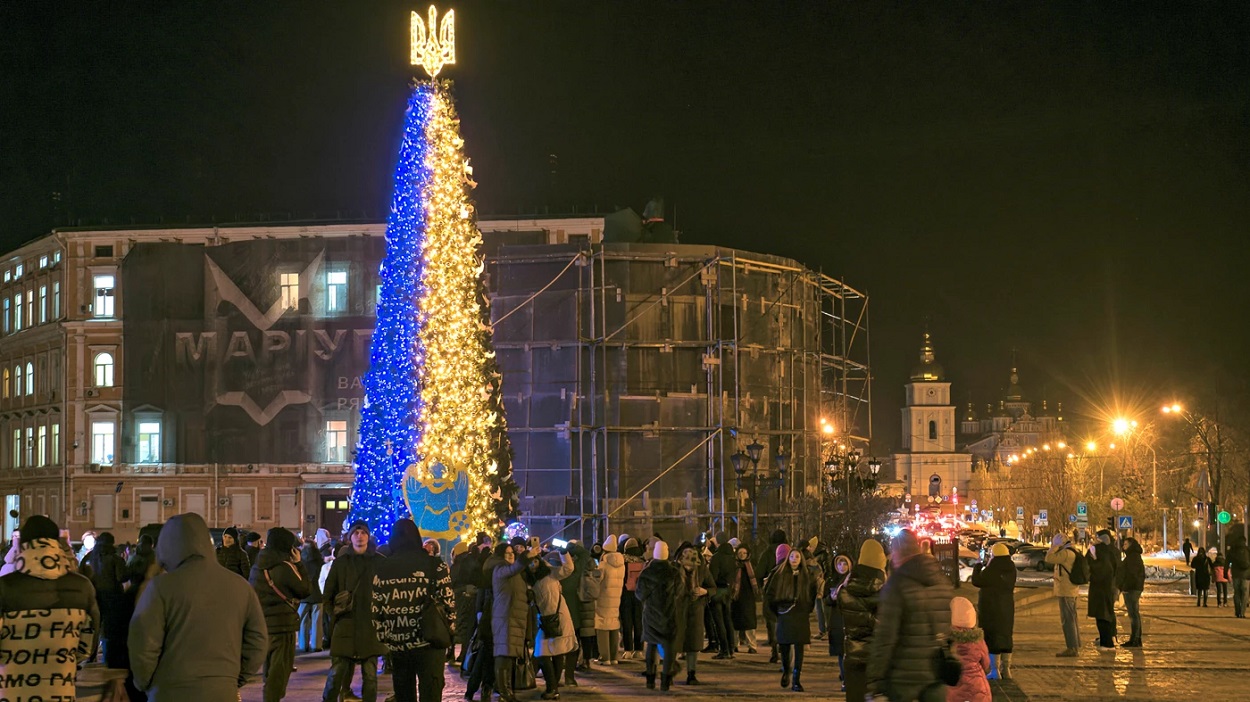
But the Christmas tree is lit in the central square of the capital, Stepanakert.

“People will carry on with the traditions as best they can,” said Aren Deyirmenjian, country representative for the Armenian Missionary Association of America (AMAA). “But we will reflect the love of a God who stays by your side, even when all goes wrong.”

During a 44-day war with 6,500 casualties in 2020, Azerbaijan recaptured three-quarters of its internationally recognized sovereign territory, before Russia engineered a ceasefire. The indigenous Armenian inhabitants controlled the enclave for the previous 30 years, claiming the right of self-determination in an unrecognized 1991 independence referendum.

Following its defeat two years ago, Armenia pursued peace treaties with neighboring Azerbaijan and Turkey, which had backed their Turkic kin with decisive drone technology. But these were interrupted by further clashes, in which Azerbaijan seized further territory in Nagorno-Karabakh and even along Armenia’s border.

And beginning December 12, Azerbaijani activists set up camp to protest alleged illegal gold and copper mining, exported through Lachin back to Armenia. Terms of the armistice left Russian peacekeepers in charge of the road, with no Azerbaijani oversight.

“We can stay here for months,” stated one demonstrator.

Local residents have reported shortages, with no fruit in Artsakh’s markets—part of the traditional Christmas Eve feast alongside fish, rice pilaf, and raisins. More critically, hospital patients lack essential medicines, with only a handful allowed transfer to facilities in Armenia proper. Gas supplies were cut for three days in the winter cold. And about 1,000 residents were stranded in the border town of Goris—including 18 members of a children’s choir which had performed in Armenia’s capital, Yerevan.

Azerbaijan has denied it is imposing a blockade. Officials have said that anyone will be allowed travel through the Lachin corridor, upon prior permission and submission to local inspection. If none pass through, they blame the Russians and Armenians.

So far, only the International Committee of the Red Cross (ICRC) has gained access to Nagorno-Karabakh. Deyirmenjian said the Armenian social affairs ministry contacted the AMAA to participate in the ICRC 10-ton aid delivery, adding 220 pounds of infant formula to the first effort, and 1,100 pounds of rice alongside two tons of sugar in the second.

Upon arrival, the AMAA center in Stepanakert, located near the only Armenian Evangelical church in the enclave, coordinated distribution in the neighborhood, including its 125 members.

So far, local morale is high.

“Our office manger told me: ‘We are happy we are on this side of the blockade,’” Deyirmenjian said. “It gave me chills.” Garegin Hambardzumyan concurs. A priest in the Armenian Apostolic church, he heads the Oriental Orthodox denomination’s Department for the Preservation of Cultural and Spiritual Values of Artsakh. Generations of Armenians have lived in the rugged, mountainous land for a thousand years, he said. They will not be…

This article was originally published at Christianity Today on January 4, 2023. Please click here to read the full text.
Categories
Christianity Today Europe Published Articles

Will Ukraine’s Threatened Ban on Russia-Linked Churches Violate Religious Freedom?

Image: Jeff J. Mitchell / Getty Images

Ukraine, a bastion of religious freedom, is moving to possibly outlaw a church.

President Volodymyr Zelensky began the month by endorsing a draft law to “make it impossible” for the Ukrainian Orthodox Church (UOC), canonically linked to Moscow, to operate. His December 1 decree followed raids on several monasteries under the UOC’s jurisdiction.

Security services searched over 350 buildings and investigated 850 people.

“We will ensure complete independence for our state. In particular, spiritual independence,” stated Zelensky. “We will never allow anyone to build an empire inside the Ukrainian soul.”

The reaction from Russia was swift—but also illustrated the issue.

“The current Ukrainian authorities have openly become enemies of Christ and the Orthodox faith,” stated Dmitry Medvedev, deputy chairman of the Russian Security Council.

Kremlin spokesman Dmitry Peskov, however, was more specific, accusing Ukraine of “waging a war on the Russian Orthodox Church” (ROC).

His comment prompted a UOC spokesman to assert his church is not Russian.

The raids—centered on the 11th-century Kyiv-Pechersk Lavra complex, known as the Monastery of the Caves—uncovered large amounts of cash, “dubious” Russian citizens, and leaflets calling on people to join the Russian army, according to Ukrainian authorities. Other material cited as evidence included prayer texts of ROC patriarch Kirill and a video of hymn singing that celebrated Russia’s “awakening.”

Kirill has publicly blessed Russia’s invasion of its neighboring nation, even promising forgiveness of sin to soldiers who die in the war. Security services also described finding UOC priests in possession of literature denying Ukraine’s right to exist and contacting Russian intelligence agents.

Sanctions were announced on at least 10 UOC members, including the governor of Kyiv-Pechersk Lavra, a UNESCO heritage site. Another, the archbishop of the Kirovohrad diocese, was accused of subversive activities.

Zelensky stated the government would examine the Lavra’s jurisdiction.

Since then, sanctions have followed on seven additional members, while the UOC stated that local authorities have issued over 70 orders to ban its activities.

In 2019, the newer Orthodox Church of Ukraine (OCU) was formed from a merger of two breakaway jurisdictions from the ROC, after which it was declared an autocephalous (independent) body by Ecumenical Patriarch Bartholomew I of Constantinople.

The new church was rejected by Moscow and accepted by Greece and other national churches, while some in the Orthodox world stayed neutral. The UOC, meanwhile, continued under the leadership of the Moscow patriarchate.

Russia’s invasion in February 2022, however, placed the UOC in a bind. Although it is the largest church in Ukraine with about 12,000 parishes, polls indicate it now receives the support of only 4 percent of the population. As a further sign of its decline in favor, only 13 percent of Ukrainian citizens of Russian ethnicity support the church.

In May, Metropolitan Onufriy, head of the UOC, declared its parishes were no longer subordinate to the ROC, though he maintained Eucharistic communion with Moscow. By then, 387 parishes had already transferred allegiance to the OCU.

Onufriy has consistently spoken out against the war, and last month he deposed three top bishops, two of whom fled to Russia. And following the raids he declared support to UOC chaplains in the Ukrainian army, while the Holy Synod—speaking from the Lavra—reiterated that the church “consistently stands for the preservation of the sovereignty, independence, and territorial integrity of Ukraine.”

After the draft law’s disclosure this month, Ukraine dismissed Elena Bogdan, state official for ethnopolitics and freedom of conscience, reportedly for her opposition to banning the UOC. She had previously confirmed Onufriy’s statement that the church was no longer governed by the ROC.

Zelensky’s decree tasked her office with the determination of UOC’s continuing ties with the Moscow Patriarchate. “Increasingly as the war grinds on and winter advances, the weaponization of religion will continue,” said Catherine Wanner, professor of history, anthropology, and religious studies at Penn State University. “All of these dynamics conspire to clamp down on…

This article was originally published at Christianity Today, on December 21, 2022. Please click here to read the full text.
Categories
Asia Christianity Today Published Articles

Muslims Love Russian Christmas. Eurasia’s Evangelicals Do Too.

Image: VYACHESLAV OSELEDKO / AFP / Getty Images

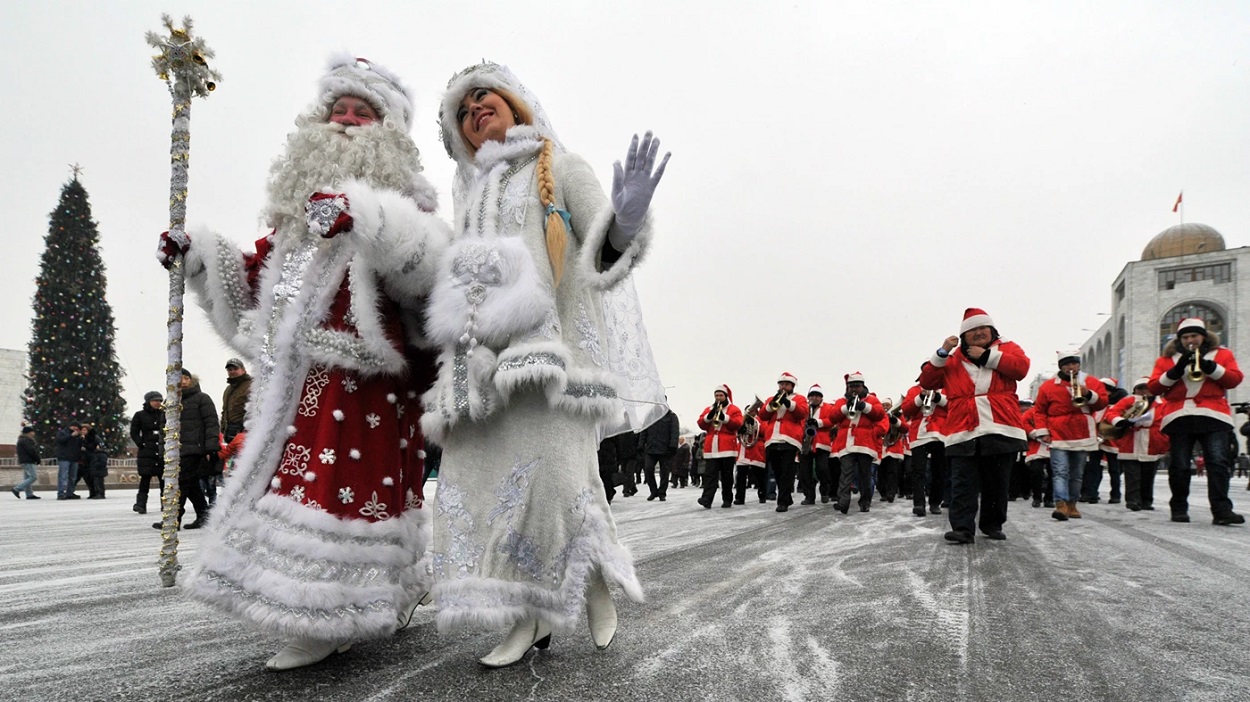
Kris Kringle should be in Kyrgyzstan.

If he is efficient, that is. The Central Asian nation, according to a 2007 study by Swedish consultants, is the geographic center best situated for his annual toy delivery campaign.

Regional evangelicals welcome his advent.

With Kyrgyzstan’s snowfall and freezing temperatures from November to April, Old Saint Nick would feel right at home in the mountainous peaks that raise the country’s average elevation to 9,000 feet. But whatever the religion of his army of elves, Father Christmas would have to adjust to Islamic customs in the valleys below.

Quick to seize on the marketing opportunity, the 90 percent Muslim-majority nation declared 2008 as “The Year of Santa Claus.”

There was eventual pushback—though seemingly confused in terms of the calendar. Frustrated with the non-Islamic revelry, in 2012 the Kyrgyz Muslims’ Religious Administration (KMRA) issued a fatwa forbidding New Year’s celebrations.

Not Christmas. Not even Xmas. The birth of Jesus reamins an official holiday.

But it is observed on January 7, not December 25. Nearly half of the nation’s 7 percent Christian population is Russian Orthodox and follows the Eastern almanac. And since Kyrgyzstan’s independence in 1991, the government has honored its primary religious minority with few Muslim objections.

New Year’s Day celebrations on January 1, however, are a holdover from the Soviet era. The atheistic communists banned Christmas in 1917 but in 1935 reconstituted it as a secular holiday, celebrated one week earlier. No baby Jesus, but no Santa Claus either.

The Russians instead promoted a vague ethereal figure named Ded Moroz, which translates as “Grandfather Frost.” And they kept the trappings of tree decorations, gift giving, and family gatherings. With Islam suppressed as well as Christianity, over time the Muslim peoples of the USSR adjusted to the imposed culture.

After the collapse of the Soviet Union, Islamic authorities in Kyrgyzstan, Kazakhstan, Tajikistan, Turkmenistan, and Uzbekistan—as well as Azerbaijan on the western bank of the Caspian Sea—largely left New Year’s alone. Nominal Muslims shared in the festivities, including the sharia-forbidden consumption of alcohol.

It was Santa Claus that offended the KMRA—or rather, the modern, globalized excess of consumerism. Declaring the holiday un-Islamic, the administration asked the faithful to avoid celebrations altogether and instead give to the poor the substantial sums they would have spent on frivolities.

The fatwa found resonance, but not enough to dent the market.

“January 7 is the religious holiday, but the ‘real’ celebrations of Christmas come from the West,” said Ruslan Zagidulin, a lecturer in missiology at United Theological Seminary in the capital city of Bishkek. “But these have nothing to do with Jesus.”

Not that such celebrations are unwelcome. While there is no set custom for the meal, many families welcome the New Year with the national dish beshmarbek, a noodle soup with meat. Others enjoy boiled mutton or horse meat, served in dishes with sour cream or yogurt.

Following a speech by the president, fireworks go off in Bishkek’s Ala-Too Square—and on countless balconies across the country. Children await the visit of Ayaz Ata, the Kyrgyz name for Ded Moroz, and his beautiful granddaughter Snegurochka, known as Kar Kiz, meaning “Snow Maiden.” But where the Soviets merged religious heritage into a secular New Year’s celebration, freedom…

This article was originally published at Christianity Today, on December 20, 2022. Please click here to read the full text.

Categories
Christianity Today Europe Published Articles

Ukraine Celebrates Christmas Twice. Now Its Orthodox Christians Can Too.

Image: Maxym Marusenko / NurPhoto / Getty Images

Thanks to Russia, Ukrainian Orthodox Christians may now partake in a Christmas feast on December 25.

The joyous, 12-dish celebration has been their timeless practice—on January 7, according to Eastern tradition. But this year, the Holy Synod of the Orthodox Church of Ukraine (OCU) has permitted its clergy to conduct religious services on the same date as Western tradition, granting a one-day exemption to the 40-day Nativity Fast.

Beginning after the feast day of St. Philip, observed by Ukrainian Orthodox on November 28, the faithful abstain from alcohol and most meat products until the first star appears on Christmas Eve, January 6. But with millions of refugees in Europe witnessing the revelry of fellow Christians in the West, the OCU decided to permit Ukrainians everywhere to decide parish by parish which date they would honor.

Liturgical reform has long been on the agenda, but war was the spark.

“For most bishops of the church, the calendar is not a dogmatic issue of faith,” said Archbishop Fedir, head of the youth department of the OCU. “Especially after the full-scale aggression of Russia, there is a desire to become part of the Western family of churches.”

Ukraine had already established December 25 as an additional official Christmas holiday in 2017, joining Belarus, Eritrea, Lebanon, and Moldova as nations that formally celebrate the birth of Christ twice.

But altering the calendar disrupts the entire church cycle. Saints’ days, sermons, and gospel readings are all impacted, with scholars engaged in response. The Holy Synod decision tasks priests with gauging the sentiment of parishioners and bishops with conducting follow-up research. Many believers love their traditions, Fedir said, and the hierarchy is wise to proceed cautiously.

The archbishop is responsible for the diocese of Poltava, 220 miles southeast of Kyiv, where one newly established congregation of young people has decided to switch from the Julian to the Gregorian calendar altogether, with his blessing. With blanket permission granted, he does not yet have a tally of how many parishes will join them—nor does the OCU’s Holy Synod.

But within her circle of Ukrainian friends, Nadiyka Gerbish finds none opposed.

“I expected it to happen, and wanted it to happen long ago,” said the author of A Ukrainian Christmas, updated and rereleased last month. “They want a solid line between them and the Russian Orthodox Church (ROC).” Gerbish, a member of Hosanna Evangelical Church in Zbarazh, a small town 250 miles west of Kyiv, condemned the support ROC patriarch Kirill has given to the invasion. And religiously, she sees the decision as part of a long-standing battle over…

This article was originally published at Christianity Today, on December 20, 2022. Please click here to read the full text.
Categories
Christianity Today Middle East Published Articles

Finding Common Ground in a Big Fish

Image: Tim Peacock

Twenty miles south of Beirut is a sandy beach called Jiyeh. It’s a rare interlude in Lebanon’s rocky coastline, and if you were out in the Mediterranean, crying for deliverance as currents swirled about you, waves and breakers sweeping over you, this is where you’d want God to command a fish to vomit you onto dry land.

And this is, in fact, the spot where ancient legend says that the Hebrew prophet Jonah was delivered safely to shore.

Jonah has long been honored here. Mosaics found in the ruins of a 1,500-year-old Byzantine church show the prophet who tried to run away from his mission to Nineveh getting turned around by a large fish. And today there is a Muslim mosque on the site with a shrine to Jonah.

The Hebrew story of the reluctant prophet is beloved not only by Christians but also by those who hold the Qur’an to be the final revelation of God. And chiseled on the shrine is the verse that he prayed from the belly of the fish, which Muhammad urged Muslims to recite when in trouble.

“The most common prayer of Muslims during times of crisis is the prayer of Jonah,” Emad Botros, professor of Old Testament at Arab Baptist Theological Seminary in Beirut, told CT. “We share a heritage with Muslims. And what is better to share than stories?”

Botros is one of a few scholars turning to Jonah as a site of common interest connecting Christians and Muslims. He has written a book, Jonah: Bible Commentaries from Muslim Contexts, the second volume in a series on reading the Bible in the context of Islam. He thinks the story of the prophet—along with other shared stories—can help start a conversation across the faiths.

“The prophets of old were the heroes of Muhammad,” Botros said. “Knowing his reflections helps us communicate our biblical stories more effectively.” The Qur’an’s account of Jonah—which Muslims believe was divinely revealed through the archangel Gabriel—is different from the version in the Hebrew Bible. In the Muslim version, the city he’s going to is…

This article was originally published in the December print edition of Christianity Today. Please click here to read the full text.

Categories
Christianity Today Published Articles Religious Freedom

US Commission ‘Outraged’ By Omitted Offenders of Religious Freedom

Image: Andreas Rentz / Getty Images

The United States has expanded its list of the world’s worst violators of religious freedom.

Two new nations—Cuba and Nicaragua—were added on Friday to the State Department’s list of Countries of Particular Concern (CPC). Two others—Vietnam and the Central African Republic (CAR)—were added to its Special Watch List (SWL). And one new organization was added to its list of Entities of Particular Concern (EPC): Russia’s mercenary Wagner group, due to its cited offenses in CAR.

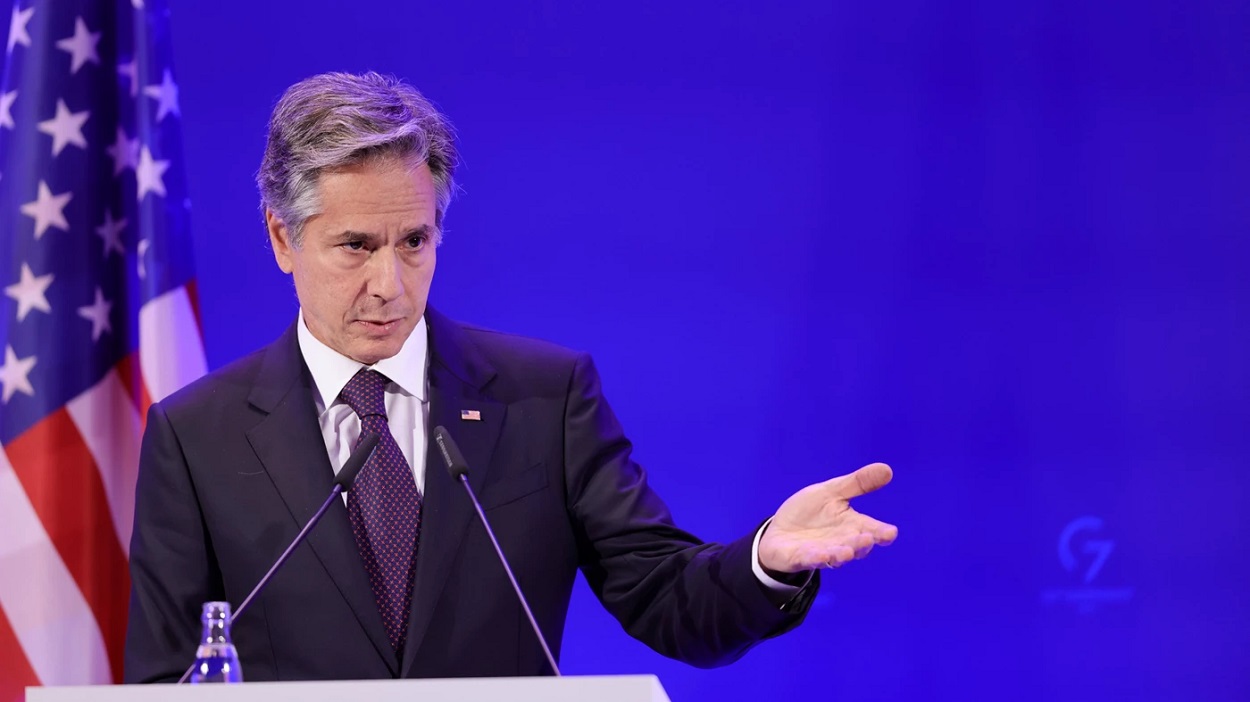
“Around the world, governments and non-state actors harass, threaten, jail, and even kill individuals on account of their beliefs,” stated Antony Blinken, US Secretary of State. “The United States will not stand by in the face of these abuses.”

His own watchdog, however, is unconvinced.

The US Commission on International Religious Freedom (USCIRF) tweeted its “outrage” over the non-inclusion of Nigeria and India. It is “inexplicable,” the independent bipartisan organization continued, given the State Department’s own reporting.

In June, Blinken released the US government’s annual Report on International Religious Freedom. Mandated by the 1998 International Religious Freedom Act (IRFA), the report chronicles violations in every nation of the world, whether by governmental or societal actors, measuring also the local legal frameworks.

The sections on Nigeria and India were particularly lengthy.

“They each clearly meet the legal standards for designation,” stated Nury Turkel, USCIRF chair. “USCIRF is tremendously disappointed that the Secretary of State did not … recognize the severity of the religious freedom violations.” This past year, USCIRF issued…

This article was originally published at Christianity Today on December 5, 2022. Please click here to read the full text.

Categories
Christianity Today Europe Published Articles

Ukraine’s Prison Fellowship Extended to Russian POWs

Image: Courtesy of Prison Fellowship Ukraine

Vyacheslav Kogut was so angry he could spit.

The Russian invasion once again drew him out of his normal ministry as executive director of Prison Fellowship Ukraine (PFU) and into relief work. The military counterattack had just liberated another village on the eastern front, where several civilians had been shot.

The source of his ire, however, was his summons back to prison.

“We have Russian prisoners of war who need clothing,” informed the warden.

“I’ll bring them skirts and dresses,” Kogut shot back, grumbling.

Internally seething at having to leave his injured compatriots, he then remembered his Bible: If your enemy is hungry, feed him—as well as, I needed clothes, and you clothed me.

He went into the storehouse that collected goods for displaced Ukrainians and took the best of its donated items. Security guards at the prison were amazed at the quality. And in addition to the regular food and supplies they offer to Russian POWs in ongoing weekly visits, his team now adds candy and sweets.

“It is a way to show many people, besides these prisoners, that God is love,” said Kogut. “And when they go back to Russia, they can never again return with guns and hatred.”

Affiliated with the international network of the Chuck Colson–founded ministry, PFU began work in Ukraine in 2002. The nation is home to a prison population of 48,000 in 85 still-surviving jails, and Kogut says his team ministers in all of them.

It was not always so. Despite its ecumenical approach from the beginning, PFU’s evangelical orientation worried some prison officials. But consistent ministry to inmates and guards alike won favor, as did the scope of entertainment options presented.

Soccer teams visited from Brazil, Eurovision stars put on performances, and—dearer to the hearts of the prisoners—summer camps were held to care for their children.

And in 2008, PFU began teaching courses on chaplaincy, receiving certificates from the central government to enter any prison in Ukraine. Within two years, Kogut said, the prejudice was overcome.

“Our mission is dependent on unity,” said Constantin Panteley, PFU secretary and a priest in the Ukrainian Greek Catholic Church. “We only bring misunderstanding about Christianity if we are divided.”

Many prisons now have separate chapels for Orthodox, Catholic, or Protestant services. But inmates often are a product of Soviet irreligion and have only nominal attachment to a denomination. Panteley has seen many converted, who then choose their favored service.

“We will win this war because of our unity of differences,” he said, drawing contrast to the persecution meted out to non-Orthodox in occupied areas of Ukraine’s eastern Donbas region. “Unlike Russia, we appreciate freedom.”

For instance, a priest may serve as a substitute if a Pentecostal pastor is not available to minister to an inmate. Even clergy from the Ukrainian Orthodox Church, which did not cut ties with Moscow until May this year, have stepped in when needed. Their cooperation survived the damage from the 2014 Russian-backed separatist movement in Donbas and the annexation of Crimea.

The strife, however, severed 20 percent of Ukraine’s prisons from the central government. But even in the contested region, PFU maintained connections with prisoners. Some hid cell phones to continue counseling. Sympathetic local citizens secretly delivered Bibles.

It all came to a halt with the Russian invasion. “The war resulted in a severe breakdown of the supply chain for food and medicine into prisons,” said James Ackerman, president of Prison Fellowship USA. “And as you might imagine, prisons…

This article was originally published at Christianity Today, on November 14, 2022. Please click here to read the full text.
Categories
Christianity Today Middle East Published Articles

Wiser than Solomon: Can Evangelicals Lead the Middle East Toward Creation Care?

Image: Sean Gallup / Getty Images

“Wisdom,” said Jesus, “is proved right by all her children” (Luke 7:35). But sometimes it takes generations to judge, as demonstrated by a new research study that threatens to tarnish the reputation of a legendary biblical paragon.

According to archaeologists at Tel Aviv University, King Solomon disregarded the environment.

Today, his spiritual descendants largely follow in his footsteps.

“We have so many working in evangelism, church planting, and leadership development,” said Michael El Daba, the Lausanne Movement’s regional director for the Middle East and North Africa (MENA). “Almost no one is working in creation care.”

Evangelicals are not alone. According to a 2021 report by the Institute for Economics and Peace, the MENA region demonstrated the least concern for climate change, including 10 of the 20 lowest-scoring nations. Only 18 percent of those surveyed in Egypt, for example, recognized it as a “very serious threat”—even as it exacerbates food insecurity.

Arab Barometer, a regional pollster, found that 68 percent of Egyptians reported running out of food before being able to get more. In half of the other MENA countries surveyed, majorities stated the same. And in 9 out of 10, majorities worried it might happen to them.

Temperatures in the region are rising twice as fast as the rest of the world, according to a study published last June in the Reviews of Geophysics. At current rates, Egypt will be nine degrees hotter by the end of the century. Iraq has already increased three degrees in the last 30 years.

Some of the damage is self-induced. The study identifies MENA as a “dominant emitter” of greenhouse gases, overtaking Europe and India. Resource extraction—as necessary as the hydrocarbons are for national economies and modern society—comes with a cost.

Just as it did with King Solomon’s mines.

Although his mines are not specifically mentioned in the Bible, copper is known to have been extracted from the Timna Valley, north of the Gulf of Aqaba in ancient Edom, a region conquered by his father David. Solomon used the minerals in the construction of the temple.

Over 4,000 acacia trees and 185,000 white broom bushes were cut down to smelt the copper, according to charcoal evidence located by the Tel Aviv researchers and published in the Scientific Reports journal. Their removal “irreversibly affected” the soil’s ability to retain moisture, sparking the desertification that continues today.

Some researchers question the association with Solomon, but contemporary abuses ensure the region grows only drier. To the north, the Jordan River’s historic discharge of 1.3 billion cubic meters of water into the Dead Sea has been reduced to as low as 20 million, according to a 2013 UN study.

A joint Israeli-Jordanian project to lessen pumping in favor of desalination aims to increase flow by up to 40 million cubic meters, but the region suffers everywhere. According to the World Resources Institute, MENA is home to 12 of the 17 most water-stressed nations in the world—and again, some of the harm is self-inflicted.

According to the World Bank, only 18 percent of wastewater in the region is reused.

“Preserving water is fundamental,” said Georges El Copti, pastor of St. Paul’s Anglican Church in Amman, Jordan. “We are part of creation, and we have to care for it.”

Copti was interviewed last month as part of the Middle East Council of Churches’ effort to promote the international “Season of Creation,” sponsored in part by the Lausanne/World Evangelical Alliance Creation Care Network (LWCCN). He spoke not only of the importance of raising awareness but also about the rainwater harvesting project at his church.

Collecting even the minimal yearly rainfall in the desert kingdom can supply 30 percent of a household’s annual water need, stated the Jordanian Ministry for Water and Irrigation. Copti’s efforts are contributing to his congregation becoming an “Eco church,” a recognition awarded by A Rocha International, an evangelical environmental organization active in 20 countries.

Since its beginning in the United Kingdom, A Rocha has led thousands of churches to commit to embedding creation care into their preaching, worship, and facility management. Spinoffs are developing in France, Ghana, New Zealand, and Switzerland—though not yet in the Middle East.

“Matter reveals God,” said Dave Bookless, director of theology at A Rocha International. “If we destroy nature, we are ruining opportunities for evangelism.”

Bookless, also a creation care catalyst for LWCCN, spoke last month in Jordan, concluding a 12-region tour to promote the Lausanne Congress conviction, ratified in 2010, that “creation care is a gospel issue within the Lordship of Christ.” The message has been…

This article was originally published at Christianity Today, on November 14, 2022. Please click here to read the full text.
Categories
Christianity Today Middle East Published Articles

Pope Francis in Bahrain: A Royal Reminder of Religious ‘Freedom of Choice’

Image: Loredana Mantello / Getty Images

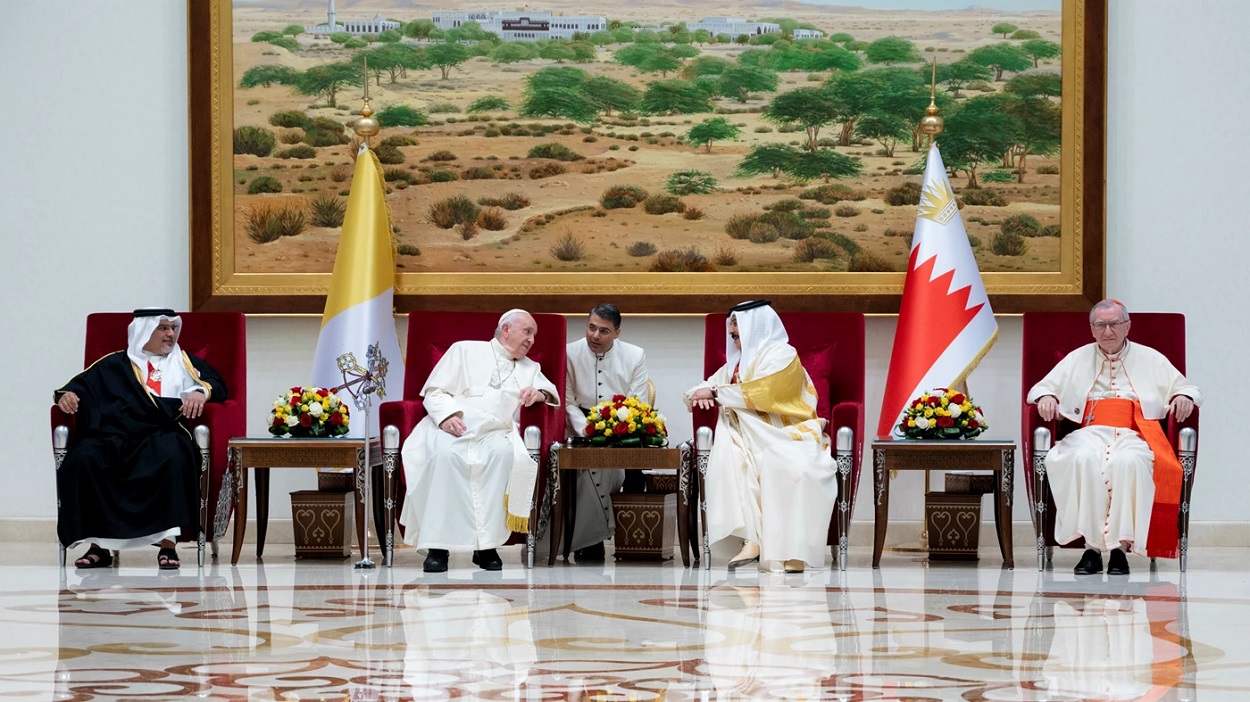
After greeting Pope Francis last week with a red carpet, a 21-gun salute, and a contingent of horses to accompany his humble vehicle, King Hamad bin Isa Al Khalifa highlighted one document to characterize his realm:

The 2017 Kingdom of Bahrain Declaration.

“[Bahrain is] a cradle of mutual coexistence between followers of different faiths,” he said, “where everyone enjoys, under our protection after that of God Almighty, the freedom to perform their rituals and establish their places of worship, in an atmosphere of familiarity, harmony, and mutual understanding.”

With Bahraini flags flying side by side with the Vatican banner, Francis was profuse in his praise. Enduring severe knee pain, he noted the country’s centuries-old “Tree of Life,” a 32-foot acacia that somehow survives in the Arabian desert.

Bahrain honors its roots.

“One thing stands out in the history of this land: It has always been a place of encounter between different peoples,” said Francis. “This is in fact the life-giving water from which, today too, Bahrain’s roots continue to be nourished.”

In the island nation the size of New York City, flanked on either side by Iran and Saudi Arabia, from November 3–6 the pope visited its 160,000 Catholic migrants—primarily from the Philippines and India—living among a population of 1.5 million, evenly divided between foreign workers and citizens.

From 111 nationalities, 30,000 gathered this past Saturday at the national stadium for Mass.

Bahrain is a Sunni Muslim monarchy ruling over a narrow majority of Shiites. Christians comprise 10–14 percent of the population, with up to 1,000 Christian citizens originally from Iraq, Palestine, and Jordan who were present at the time of independence. Alongside a 200-year-old Hindu temple, a renovated synagogue hosts prayer for Bahrain’s few dozen Jewish citizens.

But beside pastoral responsibilities, Francis came prepared to preach.

At the Bahrain Forum for Dialogue: East and West for Human Coexistence, his message was a near homily on the 2017 declaration. Addressing over 200 religious leaders from the Gulf, he urged their leadership and introspection. “It is not enough to grant permits and recognize freedom of worship,” Francis said. “It is necessary to…

This article was originally published at Christianity Today, on November 11, 2022. Please click here to read the full text.

Categories
Africa Christianity Today Published Articles

Ethiopia-Tigray Peace Agreement Contains Biblical Mandate

Image: Phill Magakoe / AFP / Getty Images

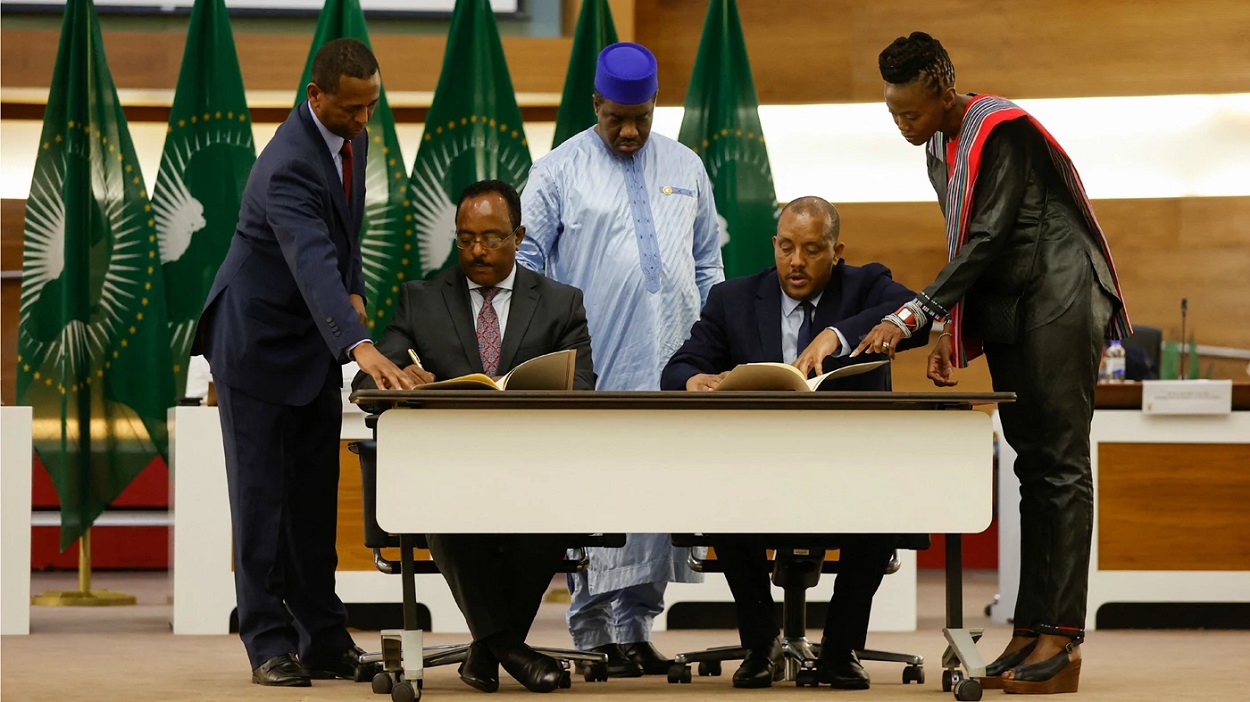
The Ethiopian war in Tigray is over.

On November 2, federal forces and rebel authorities agreed on a “cessation of hostilities,” ending a conflict believed to have killed hundreds of thousands and displaced millions. All sides committed abuses, as documented by the Ethiopian Human Rights Commission and other international observers.

“No one has been clean in this war,” said Desta Heliso, a visiting lecturer at the Ethiopian Graduate School of Theology. “As Christians, we have to feel sorry about this.”

The peace agreement, however, provides for a biblical mandate.

Most negotiations concerned military realities. The two-year conflict in the Horn of Africa nation’s northernmost region—home to 7 million of Ethiopia’s 120 million people—vacillated in advantage between the two sides and between hostilities and humanitarian truce.

The United Nations stated 5.2 million Tigrayans need assistance.

But as federal forces pressed deeper into Tigray, peace talks sponsored by the African Union (AU) in South Africa concluded with an agreement for complete disarmament of the Tigray People’s Liberation Front (TPLF) within 30 days. National troops may enter the regional capital of Mekele; assume control of all borders, highways, and airports; and expedite humanitarian aid.

Both sides agree to cease defamation campaigns, and the central government will ensure restoration of communication, transportation networks, and banking services.

But long-term peace may depend on the outcome of a minor clause included among the 15 measures. The federal government agrees to conduct a “comprehensive transitional justice policy” consistent with the AU framework.

Ethiopia will be the first experiment in implementation.

“The possibility for reconciliation is there,” said Heliso, who was formerly vice president of the Kale Heywet Church, one of Ethiopia’s largest evangelical denominations. “But some claims for justice will have to be given up for peace, painful as it might be.”

That may not be necessary. Adopted in 2019, the African Union’s 2019 Transitional Justice Policy (AUTJP) goes beyond criminal accountability—while ensuring impartial investigation—to set up measurable standards for…

This article was originally published at Christianity Today, on November 11, 2022. Please click here to read the full text.

Categories
Christianity Today Europe Published Articles Religious Freedom

Interview: The Growing British Concern for Religious Freedom for All

Image: Dan Kitwood / Getty Images

The American government has long committed itself to supporting religious freedom worldwide.

In 1998, the International Religious Freedom Act obliged the State Department to compile an annual report and designate offending nations as Countries of Particular Concern. It established an ambassador-at-large, created an independent bipartisan commission, and placed a special advisor on the National Security Council.

What about the British? Three years ago, the UK government asked itself the same question.

The answer was delivered by Philip Mounstephen, the Anglican bishop of Truro, within the province of Canterbury. The UK’s foreign secretary tasked him specifically to study persecution of Christians, and the 22 recommendations of the Truro Report were accepted in full by the government.

That does not mean they were all implemented.

This past summer, an independent review found good progress, with five points suffering “constraints” and only three with “no substantial action.” As it was released, London hosted the third in-person ministerial which gathered governments and civil society around the cause, following two ministerials hosted in Washington and an online-only one hosted by Poland amid the pandemic. (The UK event used the European nomenclature of “freedom of religion or belief” (FORB) instead of the Americans’ “international religious freedom” (IRF).)

Last month, Mounstephen visited Lebanon to deliver a lecture entitled “Why Our Religious Freedom Matters.” Hosted by the Middle East Council of Churches, the Bible Society, and Saint Joseph University, he presented an outline of Truro Report findings, broadened to include the persecuted of all religious traditions.

CT spoke with the bishop about his government’s commitment to the cause, whether Americans help or hurt, and how to overcome the younger generation’s rejection of Christian advocacy as an expression of white privilege and neo-colonialism:

CT: Our readers know that within the Anglican church there is a spectrum of evangelical and mainline faith, to use the American terms. How do you fit in?

Mounstephen: One of my roles is to be a pastor to the whole of the diocese. I can’t pick and choose and have favorites. But in British terms, I would be defined as an “open evangelical.” I believe in the authority of Scripture, in the finished and all-sufficient work of Christ on the cross, and the glorious grace of God that brings life to the dead.

And you have lived it out in your institutional service.

I was chief executive of Church Mission Society, which was an amazing opportunity to go to some of the most out-of-the-way parts of the world and see the people of God ministering with such love and care and commitment to people often very much on the margins. That was such a huge privilege.

You are a bishop, but you also have a role in global advocacy.

Yes. And I had no expectation when I took it on that it would be so. Before I officially started, I was called by the bishop of Canterbury who asked if I would undertake this work at the request of the then-foreign secretary to review how the UK Foreign Office responded—or not—to the question of the persecution of Christians.

Our team had a strong sense of the wind of the Holy Spirit leading us on. And to my great surprise, the government accepted the recommendations in full, repeatedly affirming it in documents since. It is often referred to in the House of Commons and Lords, holding the government to account for implementation.

I feel this is something God has laid on my heart to do, absolutely convinced that it is one of the major big-ticket items in the world that we must address—for the good of all humanity.

How does your advocacy continue since the publishing of the report?

I thought I would do it for six months, set it aside, and the report would gather dust on some government shelf. But I was very aware that there was no forum for civil society organizations to meet, of which there are many in the UK. So we set up the UK Freedom of Religion or Belief Forum, which I chaired for its first year of operation. It now gathers about 90 different groups, modeled on the International Religious Freedom Roundtable that has been meeting in the US for a long time.

The UK hosted the Ministerial Summit on FORB this summer, and I was involved in that. Today I am here in Lebanon because I want to continue to advocate internationally, and I am due to go to Greece to meet with members of the foreign ministry and the Orthodox church.

Because I am the bishop of Truro, and the report is known as “the Truro report,” it has a currency that is associated with me. So this is a responsibility, and I want to push forward and advocate as best I can.

And because we have this strange system in the UK, in which the 26 most senior Church of England bishops sit in the House of Lords, I will probably take my seat in a year or so, depending on turnover. This will also be a continuing platform for advocacy.

Without making your parishioners jealous, how much time can you give to the issue?

[Laughed] I have to say, people have been very supportive and encouraging. Part of my agenda for the diocese is that I want us to have more of an international perspective. Cornwall is in the far southwest of the British Isles, and it can be quite isolated, including in mentality. Helping the church in Cornwall look outwards with a generous heart to the rest of the world is intrinsic to my calling as Bishop of Truro as well.

Your report mentions the lack of interest Western politicians give to the issue. How has society changed in the three years since?

There is a formula: The bigger the country, the less internationally aware it is. By this standard the most globally aware nation would be Luxembourg. The kind of domestic political issues we have faced in the UK since the European Union referendum has tended to turn the country inwards, and I would say in an unhealthy manner.

There has been a real struggle for the UK to think about what its post-imperial role is in the world. There has been a sense that because we interfered uninvited in the past, we shouldn’t do so again now. That is understandable, but it sounds like washing your hands of responsibility—not in the least because some of the problems the world faces are still the legacy of colonial involvement.

The West has economic power that it can use for good or ill. Isolation is not a good look for any country, and international responsibility lies on the shoulders of every state.

In the younger generation, attuned to this sentiment, how do you promote FORB? I think this is a problem, and particularly in the European context this understanding of Christianity as an expression of white privilege is quite prevalent. But Christian faith these days is a phenomenon of…

This article was originally published by Christianity Today, on November 12, 2022. Please click here to read the full text.