Categories
Personal

Praying for a President

President-elect Morsy

In the last few days, President-elect Mohamed Morsy has made very encouraging signs about his inclination to govern from the center. He has met with Christian leaders, revolutionary icons, and even issued directions to not hang his picture in government buildings throughout Egypt, as was done under Mubarak.

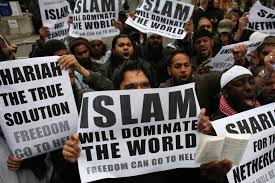
Of course, critics may say it is only posturing. A coming battle looms to pit him against the military, over the restrictions to his power made only days before the election. To assert his will, he will need the full scope of moral support from both domestic, and probably foreign, forces. The critic may point to a video like this one about what Morsy truly represents, if he wins.

Regardless of the truth of Morsy’s intentions, I am not fretting much. Instead, I have been trying to rest in the prayer I have repeated for months: God, give Egypt a good president, give Egypt a good government.

This matter of the presidency, in addition to trying to write my best analysis of events, has had me walk the tightrope of all the contradictions imposed by a foreigner’s sense of belonging.

We want the best for Egypt, and wish to enter into the struggle for it. Though, we do not know the best for Egypt, and even if we did, it is not fitting to enter into the particulars of the struggle.

Yet I read, speak with people, form my inclinations, and try to test and communicate what I learn – both with readers and with Egyptians. Faithful visitors to this blog likely have a sense of where my biases, convictions, and opinions lie.

Beneath all of this, however, is a hopeful faith. ‘Hopeful’ in that it imagines the best for the future; ‘hopeful’ further in that I wonder over this faith’s strength and reality.

This faith, I trust, undergirds the prayer. It is not specific – ‘Give Egypt a good president now, with my favored characteristics.’ Nor is it idealistic – ‘Give Egypt a good president someday, who will do all things well and in accordance with your full and complete will.’

The cynic may well say the lack of specifics or ideals means only that my prayer cannot be disappointed. I would rather say it is reflective of the balancing act required of a sense of belonging.

I want a good president for Egypt; I don’t know exactly what this looks like.

Will God answer this prayer, honoring my sincere heart? Has he answered it already? Is Morsy the man? Or is he only a stage necessary for the eventual fulfillment of this request?

I trust that faith and humility gives this sort of answer: Yes, and I don’t know. I will trust this president is the working of God’s best for Egypt, while confessing my inability to know with absoluteness the will of God.

Therefore, within the contradictions, may God bless and guide President Morsy. And as the question of God’s will shall remain forever unanswerable with him or any man, may God bless and guide Egypt.


Related Posts:

Categories
Christianity Today Middle East Published Articles

What Egyptian Christians Think about their New Islamist President

Morsy celebrating victory

My article on Morsy’s victory was originally published at Christianity Today on June 25, 2012.

In the most democratic elections since 1952, the people of Egypt have freely chosen their leader. And for the first time in history, that leader is a native-born Islamist.

Mohamed Morsy of the Muslim Brotherhood captured 51 percent of the vote, narrowly defeating his rival Ahmed Shafik (widely perceived as the candidate of the former regime) who gathered 48 percent. Jubilant crowds in Tahrir Square celebrated into the night, though for diverse reasons.

Many rejoiced at the triumph of the candidate of Islam, one who had pledged to implement Shari’ah law. Others, nervous at the prospect of Muslim Brotherhood rule, nevertheless exulted in the triumph of the revolution, first deposing Mubarak and then defeating his former minister.

Some, though not likely in Tahrir, quietly exhaled at a democratic election and rotation of power, hopeful these gains will not be reversed.

Meanwhile, at a Christian retreat center outside of Cairo, a number of Coptic women shed tears of despair over their community’s future, as they huddled around a television and watched Morsy be proclaimed the winner.

Some of the men tried to find the positive…

Please click here to continue reading at Christianity Today


Related Posts:

Categories
Prayers

Friday Prayers for Egypt: Counting Votes

God,

It should be such an easy matter. Collect the ballots and count them. Unfortunately, it has become more complicated.

One complication is the accusation of fraud. This is requiring more time to investigate the circumstances of each polling station, and in one case, of the printing house which made the ballots.

The other, and more serious, complication is the prevalence of politics. This has put the whole counting operation in question. Islamists have already done their vote count, declaring their candidate the winner. They say if the final result is not so, it is clear evidence of fraud.

God, give officials the blinders necessary to simply count the total. Give investigators the insight to tell who, if any, are cheating.

Give the military council – the ultimate arbiter – the discipline to work by principle, for the good of Egypt. May they surrender power to the choice of the people, no matter how easy, or difficult, that is to ascertain.

And God, give peace to Egypt after the announcement of a winner. There is much talk of ensuing violence, as well as much denial. May there be no sore losers; may there be no manipulated chaos.

God, give wisdom to the Brotherhood. If they win, may they govern justly. If they lose, may they accept graciously. If they are cheated, may they find recourse. If they are cheating, may they be humbled, held accountable, and come to repentance.

God, give wisdom to their opponent and those who stand behind him. If they win, may they conciliate between all parties. If they lose, may they not sabotage. If they are cheated, may they unearth the truth. If they are cheating, may they suffer the exposure of truth, be judged, and come to repentance.

In all cases, God, bring reconciliation to Egypt.

God, give wisdom to the Copts. As the country suffers – or even is blessed by – political division and disagreement, help them to stand firm. May they not be drawn into conflict; may they not suffer as scapegoats. May they as individuals act as you lead each one; may they as a community be salt and light to all. May they find guidance from you alone, much deeper than elections.

God, give wisdom to the Muslims. Give them discernment to know if those who speak in the name of Islam and politics represent an honest voice for faith. Do they deserve support, or abandonment? Do they call to a proper implementation of Islam, or misrepresent it. The votes are cast but the challenge is open. May they find guidance from you alone, much deeper than elections.

In all cases, God, bring love to Egypt. May no party be abandoned; may no party be scapegoated. May each embrace the other, with all warts and with all beauty.

God, give Egypt a good president, but give her a foundation much deeper than the leader. Give her a confident people who will not accept falsehood. Give her a culture that celebrates creativity, responsibility, and servanthood. Give her a government accountable to just law.

Give Egypt your best, God. Keep her from harm and cause her to thrive. May she be blessed.

Amen.


Categories
Personal

Egypt’s Military: Seizing Power or Extending Transition?

MB’s Badie vs. SCAF’s Tantawi

Recent moves by the military council have put in question their commitment to democracy and the democratic transition. The popularly elected parliament has been dissolved, policing powers have been extended to the army, and an addendum to the constitutional declaration has afforded the council legislative powers, independence from the president, and a substantial role in overseeing the constitution.

These steps have been called by many a ‘soft coup’, and they may well be. It may represent the army’s effort to protect its influence in Egypt no matter the coming president, but especially if it yields to Mohamed Morsy of the Muslim Brotherhood.

There is another way to view these maneuvers, however, which posits the army as the guardian of democracy and the democratic transition.

Due to failures of the political powers, Egypt has not yet formed a constitution. For all those clamoring for the army to yield power, should it put the president – whoever he may be – in charge without defined responsibilities? Should the president have the chief role in shaping the ongoing democratic transition? Were not Mubarak’s nearly unchecked powers a chief cause of the revolution to begin with?

In this manner, the army has positioned itself as the balance of power for the coming president. Asserting its neutrality, the army will give responsibility to running the internal affairs of the nation to the president, but will act as the legislature until a new body is elected. Along with the president, prime minister, and the constitutional court, the military will also hold veto power over the coming constitution, to assure it is written according to consensus.

The addendum to the constitutional declaration states the military will retain this power until the new constitution is formed and approved by the people. At that time the transition will be complete and the military will abide by the new charter.

Understood in this explanation, the military’s moves are much more reasonable.

Not that they are immune from doubt, not in the least. Many argue the chief reason the political process has been muddled has been the military playing one party off against another. The extended transition envisioned by the military allows ample room for this policy to continue. The transition may be extended, and extended, and extended…

Additionally, even under this military-favored explanation, there seems little reason for the army to re-assume policing powers, as if it were a state of emergency. In advance of announcing the election results, the army has deployed throughout the country.

Meanwhile, the explosion of rumors has made everyone suspect. Conspiracies abound, and the military is not exempt, nor should it be.

Yet it should not be declared that the military has ‘seized power’. It may, but it has not done so yet.

It, like everyone else in the political scene, does appear to be maneuvering and manipulating. Surely there is much back-room discussion and public venting of rhetoric, sincere or otherwise. The Brotherhood has set up a confrontation scenario, while it pledges not to use violence under any circumstances. Even though other Brotherhood statements predict a violent backlash if their candidate does not assume office.

Their vote count appears legitimate and has been verified by independent sources. Yet their proclamation of victory, before consideration of electoral appeals, is a political move to establish the status quo viewpoint on their behalf. It is shrewd, but also suspect.

As is the military. Observers should be careful not to take sides as both have opened themselves to accusation. Instead, the facts must be presented as best determination allows, even in the midst of deep confusion.

Such is the apt description of all Egypt. May confusion pass and all judgments be established on solid evidence. Such indeed would be a revolution.

Related Posts:

Categories
Personal

The MB’s Organizational Structure: Any Christian Similarity?

Today the court postponed ruling on a case calling for the dissolution of the Muslim Brotherhood as an entity. It will be reviewed again on September 4, at which point the group may be declared illegal and forced to disband.

The following is an effort to understand the structure of the Muslim Brotherhood, as well as an effort to compare it to a more familiar Western expression of religion: The small group Bible study. Too often the Brotherhood is only seen from its top administrative levels, which fill the headlines of newspapers and command cries of conspiracy and caliphate. It is hoped a greater understanding of its organizational reach can provide perspective about the group as a whole, through which the current legal questions are being asked.

Please feel free to skip a few paragraphs if the following details become tedious.

The lowest level of organization in the Muslim Brotherhood is called the ‘family’. This consists of between 5-9 people who meet regularly, led by an established member. It focuses on general education into the Brotherhood ‘way’, so to speak. Membership in a family is not permanent; people are shuffled so as to build better and wider community. But every Muslim Brother, no matter how lofty his title, is constituted into a regular family meeting somewhere.

The family, however, is not an administrative structure. Instead, members of families in a particular neighborhood or district comprise a ‘branch’, which numbers no more than 90 people. Once it expands beyond this number the district is divided into two branches.

The up-to-90 members of a branch then elect 40 of their number to serve on the Branch Consultative (Shura) Council. In turn, the council elects 7-9 members for the Branch Administrative Council. See this geographically, for example, as the Maadi neighborhood of Cairo.

This pattern will repeat itself as the organization moves upward in hierarchy. The basic idea is that the Administrative Council runs and supervises the activities of the Brotherhood within its geographical scope. These activities include preaching, youth, politics, religion, students, service, etc. The Consultative Council is the group with its ear to the ground, running the different programs, so that the Administrative Council can make decisions and filter information upwards in the chain of command.

Every 3-4 branches then constitute a Region. Members of the Consultative Council in each branch elect 40 members to serve on the Region Consultative Council. These 40 then elect between 9-11 individuals to be on the Region Administrative Council. Geographically, this could represent South Cairo, for example.

Next, between 8-12 regions are grouped together, and the respective Consultative Councils elect 80-90 members for Administrative Office’s Consultative Council. This group proceeds to elect 13-15 members of the Administrative Office, which runs the affairs of the Brotherhood on roughly the governorate level. At this point the geographical scope might include all of Cairo.

At the highest level of the Muslim Brotherhood, The Administrative Office’s Consultative Council elects around 100 members to the General Consultative Council. This body elects and advises the Guidance Bureau, which currently has 18 members. Finally, the Guidance Bureau elects the General Guide, sometimes called the Supreme Guide. This is the position currently occupied by Dr. Mohamed Badie. For past leaders of the Brotherhood, click here.

Those who skipped ahead can pick up reading again now.

The important consideration now is to find an understandable parallel to the Muslim Brotherhood from Western culture. Along these lines it may be easier to consider whether or not the group should be dissolved on legal grounds.

From the lowest ends of Brotherhood bureaucracy, their ‘family’ appears to be akin to the concept of a small group Bible study. For those unfamiliar with American evangelical Christian culture, these Bible studies usually comprise up to ten individuals who meet weekly to monthly to study and discuss a predetermined passage of the Bible, often with the aim of finding application in one’s life. Yet within the religious discipline is the development of fellowship, knitting the group together in mutual and oftentimes local service.

These Bible studies are often but not always connected to a local church, but have no obligation to register with the authorities in any formal way. In fact, such oversight would be interpreted immediately as a curb on religious freedom and an invasion of privacy, representing ‘Big Brother’ government at its worst.

Now, it is not uncommon for these independent small group Bible studies to use pre-developed study guides or curriculums. There are numbers of options to choose from – Beth Moore, John Piper, Wild at Heart. Sometimes there can even be leadership training options offered to small groups, sponsored by these larger organizations. Sometimes there are regional conferences which celebrate unity and build fellowship among a larger constituency.

Moreover, many churches, especially larger ones, work to create extensive networks of these small group Bible studies. Inasmuch as the pre-developed study guides offer their resources for cost, however minimal, they are registered with the government as a business or a charity. These churches also are registered with the government. The network of Bible studies, however, is not. These are simply composed of ordinary citizens who open their homes to friends and neighbors.

But what would happen if these small group networks began to informally advocate for a particular presidential candidate? Or, along other lines, what if they collected donations to organize clothing drives for poor neighborhoods in their communities? Or, what is the situation if these networks spill over national borders into Mexico or Canada?

The situation is not exactly parallel, but at increasing levels of organization and complexity the question is fair: At what point should government regulation begin?

When the Muslim Brotherhood began, Hassan al-Banna utilized this ‘small group Bible study’ methodology to spread the message of Islamic renewal throughout Egypt. He wished to see the individual, family, society, and eventually state return to the principles advocated in the Quran and prophetic traditions. It was, first and foremost, a preaching organization, composed of small groups linked together creating common identity and purpose.

At different times in its history, the Muslim Brotherhood has moved away from its roots in preaching to consider politics, or even violence. Following the January 2011 revolution the group’s leadership was faced with a choice – to remain primarily a preaching and service organization or to enter full force into the political struggle.

There were voices on each side, but the majority opinion was to create a political arm – the Freedom and Justice Party. This party pushed against the limits of Egyptian law which stated no political party may be based on religion. But the final government ruling was that the party’s ‘Islamic reference’ was sufficient distance from Islam to allow its formation. This ruling is being challenged in court, also postponed to September. Nevertheless, the political party is fully registered and accountable to government oversight.

The Muslim Brotherhood is not. It never has been.

What is the Muslim Brotherhood, then? Is it simply a collection of ‘small group Bible studies’ with a developed administrative network? No members of the bureaucracy described above receive any salary for their leadership and administration. They collect dues and use these to finance programs and activities, but individuals do not profit financially from their association; they are volunteers.

As such, it is more fitting to call the Brotherhood a non-governmental organization, perhaps along the lines of the Rotary Club. Yet given the level of financial arrangement (with international donations circulating as rumors) along with the Brotherhood’s influence on the ground, government oversight would seem necessary and acceptable.

The Brotherhood has stated it will register under the NGO law, once a new government is formed and the restrictive, perhaps oppressive laws of the past are annulled. It also states that it could never file in the past due to the efforts of the Mubarak regime to discriminate against them.

Yet one reason for such discrimination is because, ultimately, the Brotherhood does not believe in the concept of the modern nation-state. While working for the good of Egypt, the group clearly advocates for some conception of a revival of the caliphate. Not only did they consider the rule of Mubarak illegitimate, they also worked toward a future in which such national boundaries become irrelevant.

Here, we move beyond the small group Bible study model. Even if such networks were to advocate for a certain presidential candidate or the reform of certain laws, none to my knowledge are calling for a return to Christendom.

This is not to argue in favor of a court ruling against the Muslim Brotherhood come September. In the middle of revolutionary struggles over legitimacy, it is quite possible the verdict could be a political move to silence opposition. Or, it could be a threat to hang over the group’s head in effort to control their actions, if not their rhetoric. Too much is going on between all parties to draw strict lines of black and white.

Yet it is not unreasonable to ask the Muslim Brotherhood to behave transparently. To a great degree, they do. The information above was supplied freely by Islam al-Bishlawi, Central Cairo Secretary for Youth in the Freedom and Justice Party, to whom thanks is offered. Yet to my knowledge, their finances are not open for public view. Billing themselves a ‘Muslim’ organization, does such secretiveness befit Islam or run counter to its sense of ethics or morality?

In September, perhaps, the court will decide.


Related Posts:

Categories
Personal

Confrontrations Brewing between Brotherhood and Military

Saad al-Katatny, speaker of parliament

Early results of the presidential elections show Morsy the likely victor, with a small 51% to 48% margin. Official results will not be issued until Thursday, though Morsy has declared victory. Shafik is mostly silent, though he protests Morsy’s declaration.

As news of Morsy’s victory was emerging, the military council issued a supplementary constitutional declaration. It gives them the rights of the legislature following the dissolution of parliament, as well as near veto power over the coming constitution. It isolates the military from the command of the president, and establishes martial law powers for the military police.

The presidential elections settle very little.

Tomorrow is a very key day in the continuing struggle. First of all, the Muslim Brotherhood is challenging the right of the military leadership to execute the decision of the court to dissolve parliament. It claims, following past precedent but iffy legal standing, that the people must ratify this decision through a referendum.

If it was just legal challenges all would be back page news. Tomorrow, however, represents a normal working day for parliament. The Brotherhood – it is unclear though unlikely other parties would follow – is threatening to march its elected representatives to the building, so as to enter. Meanwhile, police have barricaded the entrance, fitting with the official dissolution.

What sort of protest will this become?

Even more far reaching could be a legal decision expected to be issued on the same day. A court will rule if the Muslim Brotherhood itself must be dissolved.

The Brotherhood had long been dubbed a ‘banned’ organization under Mubarak, but was allowed freedom of operation since the revolution. Yet it never registered. It is a non-state entity operating independently of all government oversight and regulation.

This was the same situation of the US and other NGOs shut down several months ago. They were allowed to operate in a quasi-legal arrangement in which registration was never granted. However much their closure represented a crackdown on pro-democracy activity, it was in accordance – somewhat – with the law.

Such is the situation of the Brotherhood now, only that unlike the Western NGOs, the MB never sought registration to begin with. It is hard to know if this is just a threat raised against the group or a card to pressure them with. But if there is a true and absolute struggle between the military council and the Muslim Brotherhood, this court decision could be a critical blow.

It is not certain what a ruling against the Brotherhood would do to a Morsy presidency, but it appears the political arm of the group would be allowed to stay. The Freedom and Justice Party did register successfully following the revolution, as did every other political party. Of course, few consider the FJP to be independent of the Brotherhood, so the separation between the two is sure to be murky.

Egypt never ceases to be interesting.

Related Posts:

Categories
Personal

My Egyptian Run-Off Election Prediction

To open, and to be clear, I have no idea who will win this election. Both Ahmed Shafik and Mohamed Morsy took about equal shares in the first round, the revolutionaries are divided between them and many are boycotting, and who knows what the average Egyptian wants, or if he chooses to vote at all.

Of course, this is simply the difficulty from the polling perspective. Things are equally unclear about the suspicions of manipulation. The status quo opinion, especially after the dissolution of parliament, is that that state is working on behalf of Ahmed Shafik. This is reasonable, but it is also open to other conspiracies.

So amidst this mass of confusion I will wade: Mohamed Morsy will be Egypt’s next president.

First, from simple vote analysis: Both Shafik and Morsy captured about 25% of the electorate. Running amidst many other candidates, it is fair to say this represents the natural constituency of both.

In third place was Hamdeen Sabbahi, who represented the non-regime, non-MB vote. A great proportion of his supporters will boycott, and the rest will likely be split equally between the two as their conscience settles on the lesser of two evils.

In fourth place was Abdel Munim Abul Futuh, and somewhat significantly behind him was Amr Moussa. Abul Futuh’s votes will likely go to a fellow Islamist, while Moussa’s will shift to the civil state advocate. It’s probable most of these voters also are not thrilled about their final choice, but there are more of Islamist ilk, so Morsy gets the edge.

That leaves the undecided. Actually, these might not matter at all. Turnout for the first round of elections was only 46%; it is expected to be lower for the run-off. Both Shafik and Morsy have powerful political machines, so these will probably cancel each other out.

But if the non-committed voter chooses, I think he will have more inclination to lean toward Morsy. Shafik does not have a project; his campaign is based on the promise of a return to stability with a heavy dose of accusation against the Muslim Brotherhood.

The Brotherhood has lost a significant portion of its popularity since their triumph in parliamentary elections, but this sentiment is probably weakest (or least recognized) among the non-politicized voter. For these, Morsy represents either 1) the choice of a ‘Muslim’ president, or 2) the choice of change.

I think these factors will push the edge to Morsy in the end.

Second, no prediction is worth its weight unless it deals also with the underlying issues of interest and possible manipulation. Again, though murky, here is my best shot.

The first issue concerns outright vote fraud. In all that follows, I have no evidence to present, but only a reading of the tea leaves. I do not expect state sponsored cheating.

The reason is legitimacy. The military council won legitimacy by protecting the revolutionaries during the initial eighteen days of protest against Mubarak. They have since lost most of this legitimacy as they have navigated the transition, but their promise was to deliver civilian rule through a democratic process.

The only way for the military to salvage legitimacy is to fulfill their promise. Fraud would evaporate it. So would brute force or coup d’etat. The military likely desires to continue playing a role in Egypt’s politics behind the scenes. The only way for this to occur is to preside over legitimate elections, no matter the outcome.

Have they steered the outcome, through the apparatus of the state? Perhaps. The question is toward whom.

It is easier to guess at whom they have steered it away from. The first elimination was of strong, independent candidates. Omar Suleiman (of the intelligence services), Khairat al-Shater (of the Muslim Brotherhood), and Hazem Abu Ismail (of the Salafis) were all disqualified on procedural grounds – all with legitimate, explainable, though somewhat tenuous reasoning.

The second elimination was the most challenging. This was the electoral contest which promoted the strident partisan candidates over revolutionary centrists. It is far too uncertain to assert the military ‘arranged’ or even ‘steered’ this outcome. Yet it is reasonable they were not displeased by the winning candidacies of Shafik and Morsy, both of whom represented the major players of the old regime.

For the second issue, it is in this context the recent dissolution of parliament and likely assumption of constitution writing can be understood.

If Shafik wins, the constitution will be written under friendly circumstances, while the election of a new parliament would likely see a less dominant Islamist presence.

If Morsy wins, the constitution still stays out of the hands of Islamists, while the absence of a parliament denies the Brotherhood a second source of legitimacy. In this scenario, Islamists are even less likely to win parliament, as the people – already wary of the MB – will keep them from having a strong mandate.

A Morsy victory will set off alarm bells among many, and for those unfavorable toward the Brotherhood there is reason for concern. The presidency will allow gradual Islamist population of the general bureaucracy. A Brotherhood triumph could set a pattern for other nations, and their success could transform the map of the Middle East. The alarm for many will be that geopolitics has shifted, and the powers-that-be (i.e., the US) now favor Islamist rule.

While shifting alliances are possible, even on a legitimate basis of popular rule, my gut still imagines it not to be the case. I think the US and the Egyptian military are fundamentally averse to the Brotherhood.

This blog has done a good job at making the case why the military might not mind, or even favor, a Morsy victory. Chief among them is that it gives the military a cover for a civilian – and in particular an Islamist – to take the fall for all coming problems, natural or instigated.

A popular theory in Egypt claims that the military yielded parliament to the Brotherhood to give it just enough rope to hang itself. Indeed, their popularity has suffered as observers discovered them as a manipulating faction dedicated to the preservation and increase of its own power.

This theory can be extended to give them the presidency in order to complete the job. Losing parliament and the constitution divests them of the tools necessary to cement their control, and leaves the president to flail in the wind.

If indeed the powers-that-be want to rid the region of the specter – and promise – of the Brotherhood, this may be a far better strategy than repression.

Unfortunately, it is a dangerous and illegitimate game – if it is being played at all. The point here is to examine why a Morsy victory may be allowed, or may be accepted, or may even be encouraged.

Of course, Shafik could win, either along the lines of status quo conspiracy, or along the lines of popular legitimacy.

Parliament may have been dissolved because it violated the law. The constitution may revert to the military because political parties could not agree on the writing committee. One should never dismiss the simple and obvious explanations.

Yet even these, I venture to guess, will lead to a Morsy presidency.

Unfortunately, too often in Egypt, there is an angle behind every obvious. This will continue until Morsy, or Shafik, or the continuation of the revolution is able to install transparency as a hallmark of government.

May this day come, through the rule of whomever.

Related Posts:

Categories
Christian Century Christianity Today Middle East Published Articles

Write-Ups in the Run-Up to the Run-Off

Egyptians vote today, but I am having trouble deciding if I wish or am able to make a prediction (especially after the last disaster). I think probably I will, but my mind is still spinning from recent events, so in all likelihood I’ll wait until tomorrow and gauge the mood after day one.

In the meanwhile I can share with you some articles published elsewhere in advance of the run-off elections.

From Christianity Today: A primer explaining who the Copts are.

This weekend, Egypt will choose as its president either Mohamed Morsy of the Muslim Brotherhood or Ahmed Shafik of the former Hosni Mubarak regime. (That is, unless fallout from a high court’s invalidation yesterday of the nation’s parliament cancels the election.) Few Egyptians are excited about these choices—including many of the nation’s Copts.

But who are the Copts? Generally understood as “the Christians of Egypt,” Copts comprise Orthodox, evangelicals, and Catholics who total 10 percent of Egypt’s 80 million people. (Egypt also has a sizeable population of Christian refugees from Sudan.) Both the euphoria and disappointment of the Arab Spring have brought these branches of Christianity in Egypt closer together as a community.

However, defining the Copts concretely is more difficult, explains Mark Nygard, director of graduate studies at the Evangelical Theological Seminary in Cairo (founded in 1863 by American Presbyterian missionaries).

“Copts are the historical Orthodox Church of Egypt. It is a fuzzy term, but strictly speaking it refers to those under the pope’s authority,” he said.

Click here to continue reading at Christianity Today.

From Christian Century: Asking if Copts did, and now will, vote for the old regime candidate.

Coptic Christians, who constitute about 10 percent of Egypt’s population, were in a unique position to influence the first round of the presidential elections on May 23–24, the first election ever in Egypt without a predetermined outcome. It appears that they sided primarily with a representative of the old regime.

The top two vote-getters were Ahmed Shafik, who was appointed prime minister by Hosni Mubarak in a last-ditch effort to save his position, and Mohamed Morsi, the candidate of the Muslim Brotherhood. With Morsi and Shafik set to compete in a runoff election June 16–17, the election seems drawn as a competition between the old regime and the Muslim Brotherhood.

Morsi and Shafik each advanced with about 24 percent of the total, edging out Hamdeen Sabahi, who finished third. Sabahi is a long-standing opposition figure and a moderate socialist and Egyptian nationalist. As the centrist candidacies of Abdel Moneim Aboul Fotouh and Amr Moussa waned, Sabahi’s popularity exploded, especially among the youth, including many Copts. Fotouh is a former Brotherhood member who sought to be a bridge between Islamists and liberals. He attracted some Copts until receiving the endorsement of ultra-conservative Salafi groups, which scared many away. Moussa is a former foreign minister who fell out of favor with Mubarak, which increased his credibility. He attracted Copts who were sympathetic to the revolution but wary of drastic changes.

Youssef Sidhom, editor-in-chief of the Coptic newspaper Watani, estimated that about 60 percent of Christians voted for Shafik, 30 percent for Sabahi, and 10 percent for Moussa. As the votes were counted, one Sabahi campaign activist lashed out at Christians, claiming that they killed the revolution. He was quickly quieted down.

Yet is the charge true? Did Copts vote solidly for the most counterrevolutionary candidate? One must also ask: Did they feel the threat of the Brotherhood compelled them to make this decision?

For Sidhom, the choice has become clear. “The revolution is now in the hands of political Islam, and Copts must make a bitter choice to support the civil state. I expect Moussa’s supporters will easily shift to Shafik, but how will we be able to convince the youth, who were so dedicated to the revolution, to do so as well?”

Click here to continue reading at Christian Century.

Finally, for any Spanish speaking readers of this blog, please click here to access the Deia newspaper from Spain which is following the Coptic perspective on elections, and interviewed me in the process.

Best wishes and success to all Egyptians.

Related Posts:

Categories
Prayers

Friday Prayers for Egypt: Parliament Dissolution and Presidential Run-Off

God,

Tomorrow Egyptians go to the polls to elect their first freely chosen chief executive. Yet they go under a cloud of uncertainty. A judicial decision rendered their chief democratic achievement obsolete: Parliament is dissolved.

The ruling found its composition unconstitutional, following a precedent which dissolved parliaments before. Yet its timing – days before the election – was odd, prompting accusations of a democratic rollback on the part of the military.

Yet the accusations were rather muted. That is, many didn’t mind seeing the parliament go. The biggest victim – the Islamist majority – failed to protest significantly either. On the contrary, they urged people to head to the polls, to continue the revolution with the ballot.

Once there, people face three choices: The candidate of the old regime, the candidate of the Muslim Brotherhood, and the choice of spoiling the ballot. The third choice will have no impact on elections, but will provide a tally of every voter choosing none of the above.

God, give wisdom to Egypt’s people. First and foremost, should they even go to vote? Many say their participation is an endorsement of the flawed, and perhaps manipulated, process. Yet if your endowed responsibility to support one’s nation demands a vote, guide those who seek your will. Which president will serve Egypt best?

But God, the sad reality is that some might prefer the other candidate to win, only to see him fail before Egypt’s many challenges. Sadder still is that this could be your will as well.

Too much is obscure, God. Did the court rule against parliament on pure legal reasoning or on political considerations? If political, in favor of whom? Does dropping an assembly of Islamists allow a representative committee to draft the constitution? Or does it compromise the concept of representative government no matter which result is actualized?

Are Islamists the best path toward open and civil government, or the embodiment of its opposite?

Is the old regime properly reformed after the revolution to rule justly, or itching for an opportunity to settle scores?

God, how can Egyptians choose? It is not an election about higher vs. lower taxes or the proper scope of guaranteed health care. It is in essence a choice of direction for a nation – but without much certainty over the reality of either candidate. It is not a decision between shades of spin, but between truth and lies – but without much evidence in either direction.

And all the above presupposes there is not a deal between the old regime and the Islamists to divide power regardless.

God, lift Egypt. May these elections be a cause of celebration over the event, if not the outcome. But may the hope be greater: Give cause also to celebrate the outcome, if only months and years later.

Steady Egypt, God. The decisive moment has arrived and signs are not encouraging. From here events may either stabilize or begin to spiral out of control. There is the chance as well the status quo of confusion carries on. Keep Egypt from harm, God. Protect her people. May none choose violence to protest their loss.

But where loss is unjust, God, give ways to continue the struggle. Set right all wrongs. Elevate righteousness and curb manipulation. Create of Egypt a place where your values incarnate. Bless this land and its people.

Prepare them for whatever comes next.

Amen.

Categories
Aslan Media Middle East Published Articles

The Goal of the Muslim Brotherhood

The Muslim Brotherhood is a difficult subject to tackle. Some of this is the fault of others – there appears to be significant bias against them in many quarters. Some of this is their own fault – they are a closed organization accountable to no government oversight.

Some of it is due to the nature of their task. Their goal – to be examined below – is currently being pursued in the arena of politics. It is the nature of politics to appeal to as many as possible, presenting one’s ideas in as amenable a form as possible. The general public is left wondering what is real and what is spin, though usually most politicians can be pegged somewhere along a definitive spectrum.

This is true of the Brotherhood as well, which has fully embraced the vagaries, if not the hypocrisy, of the political game. After the revolution they appeared as centrists, seeking to unite all political powers in cooperation with the military’s transition plan. Though unity broke down, their strategy was successful as they won the lion’s share of seats in the parliament.

As the first round of presidential elections approached, they turned to their base. They gathered conservative Salafi scholars around them and spoke of sharia law, while their handlers rallied the crowds with chants against Israel and the establishment of the caliphate. Again, they were successful, as a splintered electoral field yielded just enough votes to advance to the run-off elections.

Now, with the final round of elections only days away, the Brotherhood positions itself as a revolutionary force. Running against the ‘old regime’ candidate of Ahmed Shafik, they are mostly assuming the support of conservative, non-political Muslims while trying to assuage the substantial non-regime, non-MB electorate they will be inclusive in government and faithful to the nation. Time will soon tell if they will be successful again.

Yet despite these changing postures and the confusion it engenders, almost everyone understands the Muslim Brotherhood to be a conservative, religious entity seeking greater integration of Islam into the fabric of society and government.

The difficulty is in establishing what this means. Detractors make them out to be fascists, while promoters paint them as democrats. Brotherhood rhetoric – tailored to the audience – can lend credence to either extreme.

Therefore, the best solution is to examine what the Brotherhood says to itself. Earlier I partially translated and analyzed a book distributed by the Brotherhood which assembles excerpts from the speeches of Hassan al-Banna, the group’s founder. More recently I came across the transcript of an address given by Khairat al-Shater, the MB’s chief financier and one-time presidential candidate. The video and translation are available online.

This speech was delivered in Alexandria on April 21, 2011, significantly before current political machinations yet after revolutionary euphoria had settled. Much of the speech concerns issues of internal organization and the importance of unity and obedience. It describes a group battered by security during the previous decades, which now has finally been able to rebuild itself. Now that the democratic moment has arrived, the group must double its effort to maintain cohesion and discipline, so as to accomplish the goal of Nahda – renaissance.

This is now the Brotherhood’s presidential slogan: Renaissance… the Will of the People.

Before exploring this goal in more detail it is useful to examine why this internal cohesion is so necessary. On the one hand, Shater compares it to party discipline found in every political movement:

‘[Political] parties always talk about partisan commitment, which is synonymous with obedience; meaning that people hear and execute the party’s policy and commit to its instructions, so the analogous term we have for partisan commitment is obedience.’

Yet it is clear that Shater does not see the political arm of the Brotherhood – the Freedom and Justice Party – as an end in itself:

‘The party is a vessel born of the Western idea which has a particular nature within particular limitations; it is designed and conceived, as manifested by everything from its philosophy to its methods, for the political process which is only one part of the greater Nahda project in politics, economy, society, education, morals, values, behavior, children, women, the elderly, the young.’

Stated even more clearly:

‘It is an instrument or a vessel for the deliberation of power in the political space, an instrument for [engaging in] the conflict for the sake of obtaining power.’

Yet obtaining political power is not necessarily the end goal:

‘Our one and only concern is for there to be a government that is faithful to the method of our Lord Almighty, a government keen on establishing the lives of people on the basis of Islamic reference, whether it be us or someone else. We are different from other parties; the issue is not that we ourselves need to govern as some think.’

So while the party is only an instrument, the group – the Brotherhood itself – is the focus. Interestingly, though, it also is only an instrument:

‘The Gama’a [group – the Muslim Brotherhood] is thus an instrument and not a long-term goal. It is an instrument or means to Islamize life in its entirety and institute religion.’

In this line of thought the Brotherhood is conceived as a vanguard, but Shater is clear the responsibility for renaissance is not theirs alone, it is upon all:

‘When we talk about developing the Ummah’s [nation, in collectivity of Muslims] Nahda on the basis of Islamic Reference, we don’t mean that the Muslim Brothers are the Ummah’s representatives in developing the Nahda, but rather that they think, plan, spread awareness, and market the idea. The entire Ummah participates in developing its Nahda because the responsibility falls on the shoulder of the Ummah as a whole.’

Therefore, while the Muslim Brotherhood seeks power in order to implement this renaissance, it does not imply the monopolization of power. Current political events may or may not argue otherwise, but establishment of a dictatorship is not part of the essential Brotherhood program:

‘[We desire the revolution] to guarantee that the current government or any future government commits to the interests of the people, to building a stable political life including peaceful rotation of power, independence of the judiciary, rule of law, security, and attempts to develop the country and people and fix [their] problems.’

Yet while these aims are democratic and for the good of the nation, the group as an instrument is clearly a vanguard, derived not from useful political philosophy but from God’s method in establishing Islam, exclusively along this vision:

‘The Muslim Brotherhood’s method is that of the Prophet’s, and thus we say that the Muslim who is connected to the Gama’a and the method must believe and realize that he is on the right path and that he must not be on a path other than this one. One of the fundamental prerequisites to develop the Brother within the Gama’a is to realize that you are on the right path and that you must not be on a path other than this one.’

This vision is also necessary:

‘We say Islam disappeared from life, thus preachers of the Ikhwan [Brotherhood] undertook the work of restoring Islam in its all-encompassing conception to the lives of people, and they believed that this would only come by way of the strong Gama’a … Whoever studies the jurisprudence of instituting religion as established by our master the prophet will find that the instrument which our he used was the Gama’a.’

The stakes are high, for without this group religion itself cannot exist:

‘Omar Bin Al-Khattab [the second caliph in Islam], which some scholars attribute to the prophet himself, stated, “There is no religion without a Gama’a, no Gama’a without an Imam [leader], and no Imam without obedience.”’

Therefore, as seen above, the goal of the Muslim Brotherhood is to ‘restore Islam’. Here is how Shater states it clearly, at the opening of his address:

‘You all know that our main and overall mission as Muslim Brothers is to empower God’s religion on Earth, to organize our life and the lives of people on the basis of Islam, to establish the Nahda of the Ummah and its civilization on the basis of Islam, and to subjugate the people to God on Earth.’

The word ‘subjugate’ should not imply compulsion, for Shater says at the end of his speech:

‘Every human is free in his choice because a Gama’a is based on voluntary commitment. We chose this path; no one forced it upon us, and if our Lord Almighty said, “No compulsion is there in religion,” then definitely there is no compulsion in the Muslim Brotherhood’s method.’

But subjugation does have a clear worldwide connotation. It is achieved through the concept of Ustathia, best translated as ‘professorship’.

‘Therefore, the path was clear, thus the Rashidun [rightly-guided] Caliphs continued the stage of the Global State of Islam, and so its domain expanded, and the Persian and Roman (Byzantine) States fell as the new state of Islam emerged on the global level. This state arrived after some time to the point where it became the strongest state in existence, and therefore Ustathia was actualized in reality.’

The crisis for Muslims came centuries later:

‘The last form of the Islamic Caliphate was the Ottoman government, but last century, it first lost the state of Ustathia which had been present but in a weak form. Hence we lost Ustathia and then after this the caliphate itself collapsed.’

The Muslim Brotherhood is a patient organization, and it recognizes that preparatory work must be done in stages. Yet the end goal is clear:

‘As Ikhwan we have spent a long time working on the individual, walking along this line, working on the household, working on society. So we are now developing the Muslim individual and God willing we will continue. We are developing the Muslim household and God willing we will continue. We are developing the Muslim society and God willing we will continue. We are preparing for the stage of Islamic government after this because it is what follows the stage of society.’

While nothing Shater mentions in his speech demands the use of military force, his analogy to the Prophet allows it, seeking application of Ustathia outside the realm of the peoples of Islam:

‘We have reviewed the stages from the Individual to Ustathiya, but where are we now along these stages? I mean are we now at the stage of the Individual, Household, Society, Government, Global Islamic State or Ustathiya? To answer this question we look at our situation and our history. His Eminence the Prophet, before he met his creator, had already made headway for the Muslim Gama’a under his leadership, regarding the household, individual, and society stages, and he established the Islamic state in Medina. He then began to expand this state to cover the Arabian Peninsula, and then began the launch of the Global State of Islam; and the evidence is that Ghzawat [raid] Mo’tah took place in his time, and we all know that Mo’tah is in Jordan and not in the Arabian Peninsula.’

Shater does not speak in detail of what Ustathia would imply if realized. It seems fair, however, to translate the concept as ‘leadership of the world’. A few final comments are necessary in conclusion, therefore.

It must be remembered that while this speech was given to Brotherhood members, these ideas are discussed publically. As seen in the video above, popular preacher Safwat Hegazi interpreted this vision as anticipating a march of millions of martyrs to Jerusalem to establish the United Arab States.

Yet when asked about the idea of caliphate by Western audiences, the Brotherhood refers to ideas like the European Union or the gradual economic integration of Islamic nations. Asked specifically about Hegazi, they emphasize he is not a Brother, does not speak for the group, is not based in reality, and in any case they have enough to worry about in Egypt.

But there is no denial; the dream is simply pushed back a hundred years or more.

It is not a matter of timing since God is on their side. Long or short, they follow the path of the Prophet and will in the end be victorious.

For non-Muslims, then, or non-Brotherhood Muslims, what should the response be? It is hard to gauge.

There is no reason a nation should be prevented from integrating their religion into the fabric of society if this is the will of their people.

Furthermore, there is no reason sovereign states should be prevented from consolidation if this is the will of their people.

Then, when a civilization establishes itself it is fully natural for it to seek a place of primacy in leadership and the promotion of principle consistent with its interests.

In each of these aspects Western nations, indeed Western civilization, can see itself reflected. If it criticizes the Brotherhood, does the pot call the kettle black?

Recognizing this reality, there are three areas worthy of discussion in which to take caution concerning the Brotherhood.

First, though a sensitive topic, Islam itself must be considered – at least in the sense the Brotherhood interprets it. Do the values of Islam in their entirety, since the Brotherhood calls for full implementation, befit the world and the principles of human rights?

Second, this consideration begs the following. Is the Brotherhood a worthy vanguard? By embracing the duplicity of politics do they show themselves as true Muslims or as frauds and manipulators? This is essentially a question for Muslims within their lands of influence.

Third, whether or not Islam is a power for good in this world, the discourse of the Brotherhood reinforces the narrative of a clash of civilizations. They are clearly engaged in a civilizational struggle in which Islam must obtain worldwide leadership. Many in the West are very guilty of the same; the question is if all must desist.

The above is rendered in hopeful education about the Muslim Brotherhood’s purpose. Loud cries from many are issued with little consideration to be fair toward their intentions. Others fail to consider these matters at all, either from ignorance, complicity, or dismissal.

Neither attitude serves the public. I am hopeful this article honors their words and contributes to the better discussion of proper domestic and international response.


Related Posts:

Categories
Personal

Missing Prayers for Egypt

Apologies to all for not getting up a Friday Prayers for Egypt this past weekend. On one count I was traveling in Upper Egypt, and when I returned home I was quite fatigued and fell ill.

But on another count I hardly knew what to pray for.

Faithful readers of this theme will notice that the prayers are often similar, no matter how current political events shape them. I pray for what is right and just to triumph. I pray for those men of ill intent or selfish ambition to be exposed. I pray for the Egyptian people to live in freedom and sovereignty. I pray for peace and honor to be exchanged by all.

I try not to let my own interpretations of these matters enter the prayers, for these are only seen through a glass darkly. I thank you for praying along with me, and adding the details as you see fit.

But last Friday – albeit hampered by sickness – I had nothing.

We should be able to pray in all circumstances, of course, and to a degree I did. But finding the words to help shape your prayers for Egypt was too tricky.

Why? One, the repetition of the themes of these prayers seemed empty, for whatever reason. Two, the reason could be that so much is now out of the hands of the people and main players, and in the hands of the law.

It is harder to pray for the law.

Presidential run-off elections between the candidate of the old regime and the candidate of the Muslim Brotherhood are scheduled for June 16-17. Since I am not praying at this moment, I can be candid in stating neither one of these choices is especially appealing – a fact recognized by about half of Egyptians as well. So asking prayer for the right choice – and either candidate may the choice of God’s best – while necessary, is difficult and somewhat depressing.

But that is not what killed the prayer. On June 14 there are two court cases due which may dramatically alter the Egyptian landscape.

One concerns the constitutionality of parliament. If the technicality is applied, which has precedent in Egyptian law, parliament could be dissolved. This may throw Islamists, perhaps revolutionaries, and some liberals into a fit.

The other concerns the constitutionality of the candidate of the old regime. Parliament quickly issued a law – targeting him – to bar high placed figures from Mubarak’s government. On June 14 the court will rule if the law is applied. If so, it eliminates him as a candidate, but no one knows exactly what would happen next.

So back to the prayer – how do you offer prayer for an event that may not even take place?

With a few more days of reflection I can say we can pray for these decisions; perhaps one or the other is best for Egypt’s transition. We can certainly pray for the heart of the judges who must navigate the corridor of what the law says, what is best given the revolutionary situation, and whatever pressures are put to them, if any. There situation is not enviable.

But even here, from my vantage point the legal pretexts seem flimsy, and the question of the independence and integrity of the judiciary is under heavy suspicion. Like much in Egypt, few if any know the full truth amidst propaganda, manipulation, and lies. And in the end, all conspiracies may well be empty.

But these circumstances are poison for event-specific prayer life.

Which returns the prayers, if offered, back to the repetition of general themes:

I pray for what is right and just to triumph. I pray for those men of ill intent or selfish ambition to be exposed. I pray for the Egyptian people to live in freedom and sovereignty. I pray for peace and honor to be exchanged by all.

God intends us not only to pray without ceasing, but also to make our prayers like the incessant cries of a widow demanding her rights from an unjust judge.

I will leave the formulation to you this week, but thank you for carrying this baton, if not this cross. Egypt is certainly in need in these coming days.

Even then, if all is normal, they then have a presidential election two days later.

God, be merciful.

Amen.


Categories
Personal

Early History of Islamism in Egypt

(L) Hassan al-Banna, (R) Sayyid Qutb

Egyptian presidential campaigns have entered the mudslinging stage. Ahmed Shafiq has been on the defensive since his entry into the race, in which he is accused of being a member of the former regime and seeking to reconstitute it. He has also faced charges of financial corruption during his time as Minister of Civil Aviation.

In recent days he has hit back, especially against the Muslim Brotherhood. He has accused them of working with Qatar to sell/lease the Suez Canal to the Gulf state, and working with Mubarak to make secret deals in exchange for a proportion of parliament seats. In terms of the revolution he said they are the often-touted third party who killed protestors and burned police stations.

As best I can follow, no conclusive evidence has been issued to support his charges. Yet the political climate reminded me of a project I have been working on to establish a chronology of Islamism in Egypt since the dawn of the Muslim Brotherhood. The following list is disputed in points, and is compiled from a book entitled ‘Islamic Fundamentalism in Egyptian Politics’, by Barry Rubin. It outlines moments in history where Islamists have been violent, and others where they have shied away.

Shafiq asserts we are now in another violent period. I have significant doubts, but as with all things revolutionary, anything is possible, even plausible.

  • 1929 – Muslim Brotherhood founded by Hassan al-Banna
  • 1930-39 – MB grows to tens of thousands of members, including in police, army, and government institutions, and includes a Secret Organization for militant activity and terrorism
  • 1948 – MB raises funds, buys weapons, runs training camps, and sends volunteers to Palestine
  • 1948 – Egypt’s government dissolves the MB using emergency law from Palestine war
  • 1949, February – MB member shoots Prime Minister Mahmoud Nuqrashi, regime retaliates by assassinating Hassan al-Banna
  • 1951 – MB supplies many fighters during the Suez Canal crisis, links with Free Officers in the army including Anwar Sadat
  • 1952, July – Gamal Abdel Nasser overthrows monarchy during revolution/coup d’etat
  • 1952 – Sayyid Qutb returns from America horrified at its society, becomes a leader in the MB and was involved in meetings with Nasser
  • 1952-54 – al-Banna’s successor Hassan al-Hudaybi works as a reformist to prevent consolidation of Nasser’s power, while Qutb plays hardball and promotes seizing power
  • 1954, August – al-Hudaybi opposes Nasser’s treaty with the British over the Suez Canal and is arrested
  • 1954, October – MB member (allegedly) opens fire on Nasser; he survives and takes over as head of state, 6000 arrested as organization is outlawed
  • 1954 – Qutb arrested and sentenced to 25 years in prison, after he developed theory of jahiliyya­, which describes Egyptian society as non-Islamic
  • 1954-64 – Nasser establishes Muslim credentials as mosque building flourishes, Islamic radio is established, the Azhar is incorporated into the state and modernized, and religion is made a compulsory subject in schools
  • 1961 – Nasser undermines Azhar authority and introduces new, non-religious faculties
  • 1964 – Nasser frees MB members in prison in an effort to counter Egyptian Marxists
  • 1965, August – Nasser accuses MB of assassination plot, 27,000 arrested, 26 tortured to death, Qutb, Yusuf Hawash, and Abdel Fattah Ismail hanged
  • 1967 – Egypt suffers humiliating defeat against Israel, undermining Nasser’s legacy and legitimacy
  • 1970-85 – Government supported mosques double their religious programs, with triple student enrollment
  • 1970, October – Anwar Sadat becomes president
  • 1970 – First Islamist association founded in Qasr al-Aini Hospital among doctors and interns who treated Islamists released from prison
  • 1971, May – Sadat purges socialists and frees MB prisoners to combat them, including al-Hudaybi and future leader al-Tilimsani
  • 1971 – MB works with Sadat on new constitution making ‘the principles of the Islamic sharia a principle source of legislation’, but complain it does not make it the sole source of authority
  • 1971 – Shukri Mustafa breaks with the MB following his release from prison, sets up Takfir wa Higra
  • 1971-77 – MB cooperates with Sadat and his ‘Corrective Revolution’, until splitting over his peace initiative with Israel
  • 1973 – al-Tilimsani becomes Supreme Guide of the MB, was a close associate of al-Banna
  • 1974, April – Islamic Liberation Organization, led by Salah Sariyya (a Palestinian) fails in coup d’etat at the Military Technical Academy in Heliopolis, 92 people indicted, including 18 cadets; 30 officers and 100+ soldiers discharged for sympathy
  • 1975, July – Sadat issues full pardon to MB members still in prison
  • 1976 – Sadat creates Arab Socialist Union to open up political life, MB supports him during parliamentary elections; wins right to publish al-Da’wa journal
  • 1977, January – riots breakout over Sadat’s policy to trim food subsidies, MB mocks government for blaming the communists
  • 1977, July – Takfir wa Higra kidnaps and murders former Endowments and Azhar minister Husain al-Dhahabi, who criticized their idea of jahiliyya and isolation from society in preparation for violent overthrow of the government
  • 1978, March – Takfir wa Higra leader Shukri Mustafa hanged with four others, many imprisoned
  • 1978, September – Sadat crafts Camp David Accords with Israel
  • 1978, December – Parliament forms committee to study if current laws comply with sharia
  • 1979, March – Egypt signs peace treaty with Israel, MB opposes it and Camp David harshly, but al-Tilimsani calls on Arab League not to ostracize Sadat
  • 1979, June – Sadat suspends publication of MB’s al-Da’wa journal
  • 1979, July – Sadat accuses al-Hudaybi’s successor Omar al-Tilimsani of trying to overthrow regime
  • 1979 – Islamist independent candidates Sheikh Salah Abu Ismail and Hassan al-Gamal elected to parliament
  • 1979 – Sadat cracks down on Islamic associations, especially in universities, arresting many and limiting freedom of association, criticizing them for Muslim-Christian clashes
  • 1979 – Asyut Islamic association succeeds in forcing university to segregate students by gender
  • 1980 – Army publishes religious magazine for soldiers to keep them from radicalism, increases mosque construction on bases; government publishes two religious magazines, al-Liwa’ al-Islami and al-Urwa al-Wuthqa
  • 1981, June – Muslim-Coptic riots in Zawiya al-Hamra, Cairo; al-Da’wa accuses Copts of slandering Islam and gathering arms to kill Muslims
  • 1981, September – Popular preacher Abdel Hamid Kishk accuses Sadat of betraying Islamic principles, following his sermon Muslims exit and attack neighboring church
  • 1981, September – Sadat arrests 1500 activists, 90% of whom are Islamists, including al-Tilimsani, MB spokesmen Saleh Ashmawi and Mohamad Abdel Qudus, as well as Kishk; also arrests Copts and secular activists; government assumes control over 40,000 privately owned mosques
  • 1981, September – Among the above Sadat arrests brother of Khalid al-Islamboli who was a member of an Asyut Islamic association
  • 1981, October – Sadat assassinated by Khalid al-Islamboli of al-Jihad
  • 1981, November – al-Tilimsani denies the MB ever used violence or terrorism
  • 1982, March – Investigation into Sadat assassination sentences al-Jihad leader Mohamed Abdel Salam Farag (author of ‘The Neglected Duty’ about jihad) to death with four others, five given life imprisonment, twelve long sentences, but Omar Abdel Rahman acquitted, though he authorized the assassination with a fatwa
  • 1982 – al-Tilimsani suggests violent Islamic groups were set up by the government to counter the MB
  • 1982 – Government sends Azhar and MB clerics into the prisons to instruct extremists about proper Islam, program mostly publicity and false reform
  • 1982 – Parliament committee finishes work finding most laws already comply with sharia, the rest should be reformed gradually
  • 1984 – al-Tilimsani secures MB-Wafd Party partnership with Fuad Sirag Eddin to elect MB members through Wafd’s legal structure, wins 15% of the vote with eight seats for MB
  • 1985, February – After Mubarak permits resumption of Islamic associations’ work, Egyptian University Student Federation reestablished
  • 1985 – Wave of bumper stickers spread through Cairo bearing Islamic slogans
  • 1985, June – Hafez Salama, popular war hero, tries to launch a demonstration from his mosque in Abbasiyya, Cairo in support of sharia law, relents, re-launches later, is removed from his pulpit and arrested; MB did not support his efforts
  • 1986, April – Four officers and 29 people arrested for stealing ammunition in a plot to take over the government, linked to al-Jihad
  • 1985, May – Parliament defeats law authorizing sharia as the law of the land
  • 1986, May – al-Tilimsani dies and is succeeded by Mohamed Abu al-Nasr
  • 1986, October – Police foil an armed effort to takeover an Alexandria radio station
  • 1986 – MB breaks with Wafd over internal power struggle, joins with Liberal Party instead; Salah Abu Ismail becomes vice-president and party drops support for Camp David
  • 1986 – Security forces arrest 2500 Islamic radicals, MB raises no protest
  • 1987 – Jihadist group Survivors from Hellfire fail to assassinate al-Musawwar magazine editor Makram Mohamed Ahmed and former interior minister Nabawi Ismail
  • 1987 – Mohamed Abu al-Nasr revises MB history claiming the regime made them out to be violent promoting myths of their earlier insurrection, though he took MB oath fifty years earlier on a Qur’an and a gun
  • 1987, April – Islamist Alliance wins 17% of seats in parliamentary elections with 36 seats to MB
  • 1987, July – MB agreed with ruling NDP to support Mubarak’s bid for second six-year term
  • 1987, Members of Islamic associations sweep student elections at all faculties in Cairo University
  • 1987, MB electoral program calls for ending military cooperation with the United States, but favors Western ‘People of the Book’ over Soviet Russia

Related Posts:

Categories
Aslan Media Middle East Published Articles

What’s Behind the Mubarak Verdict?

Mubarak, transferred to Tora prison

The headlines in the West will read, ‘Mubarak sentenced to life imprisonment.’ They may also say, ‘Egyptians take to the street in protest.’ Confused?

Unless one reads more deeply the obvious connection must be that protestors wanted his head, literally. The reality is rather simple, just not within the headlines.

Mubarak and the former Minster of the Interior Habib al-Adly were convicted, but the chiefs of the Ministry of the Interior were declared innocent. The statement says there was insufficient evidence to link them to the charge of killing protestors during the revolution.

So the primary revolutionary reaction sees a political ruling pure and simple. Mubarak and Adly were thrown under the bus – though many fear the case may be overturned on appeal. Meanwhile the figures on the ground who represent the backbone of the old regime are let free. The cry is that the regime is rebuilding itself, just in time for presidential elections.

To add salt to the wound, Mubarak, his two sons, and other financial cronies were declared innocent on corruption charges.

Therefore, this is where Egypt currently stands. A year and a half after the revolution, the president is in jail, but still no one knows who actually killed the protestors.

What is far more curious is the estimation of what is going on behind the scenes. It is little coincidence that the verdict was issued today; closing arguments were presented months ago. The only difficulty is deciphering what the coincidence means.

To preface, however, it must be stated first and foremost this may have simply been a ruling according to the evidence. Sufficient or otherwise, all involved may be honest men. It is noteworthy few voices are asserting this at the moment, though some have celebrated the achievement of a guilty verdict being issued against a former Arab strongman. Like the trial itself, it is a marked change in the traditional status quo.

But it is much more fun to engage in conspiracy, however sad the fact it is still the traditional status quo.

There are three main variations espoused:

The immediate judgment, for which thousands have now descended to Tahrir Square, is that the old regime is defending its own henchmen, though Mubarak has outlived his usefulness. Fitting in with halting efforts at implementing social justice and real democracy, protestors see this judgment as one more nail in the revolution’s coffin. The final one will occur with the election of Ahmed Shafiq, by hook or by crook. Many of this ilk judge his presence in the run-off elections as due either to their outright interference, or to the fostering of conditions prejudicing the people to desire the return of law and order.

How does the confusing judgment against Mubarak aid the Shafiq campaign? This removes the conspiracy one step beyond the revolutionaries who have been sucked in. Conspiracy number two has two prongs, the second nastier than the first.

The first prong states the verdict was made exactly to draw protestors back into the square. Over the past eighteen months the legitimacy of street politics has been whittled away as the people grow tired of endless protest. Given the revolution is still largely leaderless, protestors can be relied upon to trip over themselves in greater and greater radicalization. If not, well-placed infiltrators will foul things up for them. This pattern has been seen over and over again. Repeated once more on a large scale, the public will say – ‘But they convicted Mubarak, what more does the revolution want?’

Then they will go to the booths and elect Shafiq.

The second prong posits the conspiracy is not working solely for the preservation of old regime or military council power, but for a United States and Israel who desire to see Egypt devolve into utter chaos. Here, the powers-that-be are accomplices, but the Mubarak trial and the presidential elections are simply means to pull the rug out from under those whose appetite was whet for reception of power.

This could be the socialists, or it could be the Islamists. The point, as mentioned before, is radicalization. A coming corollary to the manipulation of Mubarak’s trial could be the ruling on the constitutionality of parliament, or on the constitutionality of parliament’s law to isolate Shafiq politically, not yet applied. Any number of vague, unclear, or manipulative judgments on these issues could get people back to the streets en masse. Take care to watch if somehow or other the presidential run-off elections are ‘postponed’.

At what point will aggrieved parties take up arms? This prong of the conspiracy is salivating at the question.

The final conspiracy batted about is not nearly as nasty but nearly equal in cynicism. This has been heard most often by Coptic voices and some liberals, finding a scheme in the works to bring the Muslim Brotherhood to power.

To introduce this strand of thought, it is noteworthy the Brotherhood has called upon members to take to the street in protest of the Mubarak verdict.

Of course, drawing the Brotherhood in fits well with the different prongs of conspiracy two. Back before parliamentary elections the Brotherhood stood aside while revolutionaries were being killed on Mohamed Mahmoud St. They feared a trap, and did not want to jeopardize the elections in which they were poised to do well.

As it turns out, pragmatically, they made the right decision. But though they won the great plurality of seats, they lost almost all of their revolutionary legitimacy. Now deeply committed to the presidential election, the Brotherhood is trying to claim it back. As Shafiq is clearly a non-revolutionary candidate, they must capture the revolutionary constituency if they wish to win.

Now back at the square, they can either be discredited or radicalized, but conspiracy three posits otherwise. It notes the Brotherhood has been in close collaboration with the military/intelligence service since the revolution began. It furthermore asserts that Brotherhood-regime bickering has been mostly a show.

The point at hand is in order to cede power to the Brotherhood legitimately, the population must embrace them democratically, and by a wide margin. A wary public and international scene would demand no less. Step one engineered the victory of Shafiq, to the detriment of other candidates with more revolutionary cred. Step two is to engineer crises in order to get the Brotherhood to lay claim to revolutionary leadership.

Most revolutionaries have not bought any of the Brotherhood’s efforts at rebranding, but this does not matter much. They have already been strong-armed into at least a boycott if not grudging support for Morsy out of their deep conviction against the old regime. They have little appetite for an Islamist project, even if some to many have Islamic sympathies. But they feel they can deal with the Brotherhood whereas a Shafiq victory will crush them.

But revolutionaries have no nationwide electoral weight, though the revolution bears much electoral sympathy. The conspiracy states the public is being shown every reminder of old regime corruption – gas shortages, shady court cases, financial fraud, and even the reconstituting of the Ministry of Interior – in order to lend their vote to anyone but Shafiq. Who would this be now, after the run-off? Only the Muslim Brotherhood, as all other revolutionary forces have been set aside.

Since this scenario is so counter-intuitive to the traditional status quo, the question must be asked about why. The simple answer is that in order to remake the old regime, it needs the Muslim Brotherhood. Mubarak’s political power rested in the National Democratic Party, which was thoroughly dismantled – and headquarters burned – after the revolution. No suitable party exists to take its place, except the formerly hated Islamists.

Of course, if this conspiracy is true, there are even more possibilities. The first is that the presidency is given to the Brotherhood for the same reason parliament was given – to discredit them in the eyes of the people. Perhaps the old regime, not truly in cahoots with them, will give four years to watch them fail in handling every crisis they inherit, and others to be provoked along the way. Then, finally, Islamism can be dismissed without weapons or prison terms – the ineffective methods of the traditional status quo.

The second and third possibilities return the conspiracy to the international scene. The United States (Israel features less prominently here) desire Islamist rule perhaps to foster regional stability in accordance with democratic principles. Egypt is Muslim, let the pro-business and pragmatic Brotherhood rule, and we can get on with our lives without incessant instability from Cairo.

Or, in the apocalyptic scenario, the United States desires another eventual enemy. The war on terrorism is running thin, with the only current conflicts parried about through drone warfare. The military-industrial complex needs more than that. The region – through Islamism – must become stronger to at least enable another Cold War. This will permit defense contracts to remain plumb parcels of every budget for years to come.

Unfortunately, this scenario works well to prove the depth of depravity to which conspiracy thinking leads. Unfortunately further, this is the reality in which Egypt is currently operating.

Perhaps the Mubarak verdict was perfectly just given the standards of law. The standards of revolution, however, are always murkier.


Related Posts:

Categories
Prayers

Friday Prayers for Egypt: Pending Trials

God,

The nation has settled into the reality of an election between the Brotherhood and a figure from the old regime. They have not settled in happily, nor have they particularly made up their mind. But as the candidates negotiate for support and endorsements, seeking the middle as they only last week were seeking their base, even the final ballot is not yet guaranteed.

But if firm, God, guide the politics. Give wisdom to the electorate to make a sincere and honorable choice. May you reveal the nature of each candidate over the next few weeks.

But tomorrow could be a disruption, or it could be a collective yawn. The verdict in Mubarak’s trial is scheduled to be delivered – on live TV.

God, may justice be done. May the nation recognize the legitimacy of the verdict, and may the various partisans remain calm. Prevent opaqueness and manipulation, but care first for those on trial, and those who await recompense for past ills. In the end, God, bring reconciliation and healing to Egypt.

A little further off lies another trial, in which the constitutional court will rule if the regime figure is a legal candidate. The Parliament passed quickly a law to prevent him from running, but it was referred to the court and he was allowed to proceed.

What is best for Egypt, God? That he continues to the runoff as per the will of the people? That he be eliminated by the law as per the will of the parliament, and by extension, the will of the people?

Should Egypt be spared the choice of an old regime member and have the number three qualifier take his place? Or would his disqualification throw the whole process for a loop? Would the Brotherhood candidate run unopposed? Would the whole first round need to be redone, extending the transition?

So many interests are wrapped up in the possibility, God. Please ensure the process is transparent and the judiciary is independent. May they rule according to the law, but is the law fair? Post-revolution, is there even a law? There isn’t yet a constitution. Who can judge what is right?

Beyond these trials, there are the further pending judgments over the legitimacy of parliament, and even the legitimacy of the military council’s constitutional declaration. Any blow to these foundations could shake Egypt further. There is no timing, seemingly, but are held in abeyance.

God, honor Egypt with justice, with truth, and with transparency. Give her the right to rule over her land, to choose the people most accountable to her will. May these lead with integrity and righteousness in the weeks, and years, to come.

Make Egypt whole, God. Make her vibrant. May she reflect the glory you have given her ancient land.

Amen.

Categories
Christianity Today Published Articles

How MB-Evangelical Dialogue Began

On February 28, 2012 the leaders of the Evangelical Churches of Egypt met with the Muslim Brotherhood, and produced a document delineating the shared values of both organizations.

About a month ago I posted the text of this agreement online. Today, my article was published on Christianity Today, drawing out from leaders on both sides the substance of what exactly was agreed upon. Please click here to read it on their site.

Seventeen evangelical signatories are listed; perhaps the one most surprising comes at the very end.

Rev. Rifaat Fikry is the pastor of an evangelical church in Shubra, a densely populated suburb to the north of Cairo well known for its high concentration of Christian residents.

Rev. Fikry is well known for his strident anti-Islamist stance. In fact, it is this very posture which involved him in the dialogue in the first place.

President of the Evangelical Churches Rev. Safwat el-Bayadi and Vice-President Rev. Andrea Zaki first contemplated the quiet invitation of the Muslim Brotherhood, issued through Dr. Rafik Habib. Habib is a controversial figure in evangelical circles. He is the son of Rev. Samuel Habib, founder of the Coptic Organization for Social Services – one of the largest charity and development groups in the country.

He is also a vice-president in the Freedom and Justice Party, the political branch of the Muslim Brotherhood.

The Coptic community of Egypt is very wary of Islamists, fearing an agenda they believe will result in their marginalization and loss of citizenship rights. Knowing full well the sentiment of their flock, Bayadi and Zaki turned to Fikry as the best exemplar and most informed of those who could express Coptic fears through an evangelical lens.

They asked him to write a letter to the Brotherhood detailing every concern, complaint, and consternation. After review, Bayadi and Zaki placed their names on the document, and sent it to the Brotherhood through Habib.

As the original author, it was only appropriate for Fikry to attend the subsequent meeting. He was especially interested to sit face to face with Brotherhood leaders, to ask them the questions at the heart of his opposition. During the sessions, he did so, with boldness.

In the end, Fikry was very pleased with the document. His main complaint lies in the Brotherhood’s rejection of referencing international treaties on human rights. MB leaders were concerned this could open the door to an acceptance of homosexuality, but Fikry argued nothing of the sort. His concern was for religious rights principally.

Even as the meeting ended, Fikry maintained an anti-Islamist stance. He was skeptical; after many months he finds confirmation that the Brotherhood simply used the evangelical churches for political gain.

But he is not regretful. Fikry is clear that he will sit for dialogue with anyone. The lasting value in the meeting comes not only from the agreed upon document, but also from the beginning of relationship. Though this has not continued in subsequent months, it still exists. If Islamists reach to power – a proposition Fikry finds very unlikely – these relationships could be invaluable. If not, they are valuable all the same.

They enable a man to say his piece, and to hear an answer directly.

As the evangelical churches and Muslim Brotherhood agreed, this is part and parcel of citizenship.

The only question, for Fikry especially, is of implementation. Even so, fear thereof should not preclude the effort.

On the contrary, such fear demands it.

Note: Christianity Today also published a feature text on Egypt and the responses of Christian leaders to the transition period. Please click here for access, and click here for the article on the MB-Evangelical agreement.


Related Posts:

Categories
Christianity Today Middle East Published Articles

Egyptian Christians Back to Square One

Coptic priest casting his ballot

Posting to the blog has been a little scarce these days, after a furious run-up to the elections. The good news is that the writing focus has been directed to publications seeking coverage, and the first of these was published this afternoon at Christianity Today. I hope another one will come due next week, but for now, please enjoy this preview, and if it grabs you click below to conclude the reading on their site.

…..

After a year of new forms of political engagement, why do Copts still face the same ‘bitter choice’ of old regime vs. Islamists?

Despite the best efforts of Christian and Muslim revolutionaries, the first free presidential election in Egypt’s history has resulted in an all-too-familiar choice: old regime vs. Islamists.

The nation’s Supreme Presidential Electoral Commission confirmed on Monday that the Muslim Brotherhood’s Mohamed Morsy advanced to the run-off election against Ahmed Shafik, former president Hosni Mubarak’s last-ditch appointee as prime minister during the revolution’s early days. Both candidates gathered nearly 25 percent of the vote. Only a few percentage points behind was Hamdeen Sabbahi, whose late surge as the revolutionary choice was not enough to displace Egypt’s traditional combatants.

The majority of Copts voted for Shafik, according to Mina el-Badry, an evangelical pastor in Upper Egypt. “Not from love, but to oppose the Islamists,” he said, “because [Shafik] is from the army and will know how to run the transition, and because he is clear and firm in his word and decision.”

Youssef Sidhom, editor-in-chief of Coptic newspaper Watani, also sees the necessity of Christians supporting Shafik. “The revolution is now in the hands of political Islam,” he said, “and Copts must make a bitter choice to support the civil state.”

Yet many Copts wonder why this bitter choice has returned.

Click here to continue reading at Christianity Today.


Related Posts:

Categories
Current Events

Friday Prayers for Egypt: Presidential Elections

God,

Thank you for a successful first round of voting. Preserve Egypt these next three weeks and through the final run-off.

Thank you for the voice of the people being expressed, being free, and being diverse. May it still be heard, and may it still be decisive. May it stay free and diverse – though united – in the years and elections to come.

Yet as the election is worthy of celebration, the results – still preliminary – give pause to many. The top two candidates represent the Muslim Brotherhood and the old regime. This is the standard dichotomy, the voice of the people did not move away from it. Will a win for either be decisive, or simply prolong the struggle?

God, honor the partisans of both these sides. Recognize and honor their dedication, in many cases, to oppose their opposite. Each bears flaws, and each hosts virtue. May their struggle refine and not destroy.

But God, give wisdom to those of neither side. What would you have them do? If the see the choice as between two evils, which is the less? Must they choose? Does such a choice exercise the necessary wisdom and responsibility you give each person? Or does it make them complicit in the flaws of either?

Should love push them to embrace one or the other, clinging to the virtues they find? Is there any way to embrace both? Or is a boycott their best and most honorable option?

Egypt has succeeded today, God, but not completed its task. It is likely to remain unfinished even after the run-off. If the struggle continues, in either direction, may it not be lengthy, debilitating, or violent. May Egyptians honorably rebuild their state.

May they find you a help and support, and not a source of division. May all dichotomy end on the side of right.

Amen.

Categories
Lapido Media Middle East Published Articles

Brotherhood Faces Both Ways as Egypt Votes for President

Mohamed Morsy

The Islamist front-runner in today’s historic presidential election in Egypt, the Muslim Brotherhood’s Mohamed Morsy, has ‘clarified’ the Islamic position on conversion, in what could be seen as an appeal to liberal election watchers.

He said on the popular al-Nahar satellite TV station, on 17 May, in Arabic: ‘There is a wrong concept widely misunderstood, that the apostate [convert] is subject to Islamic punishment. This needs clarification,’ he said on the eve of the first free elections in Egypt’s history.

The man described by the Times today as an ‘uncharismatic party bureaucrat’ was not the Brotherhood’s original candidate, but emerged after the interim authorities banned Khairat al-Shater, who had spent time in jail under the Mubarak regime.

His pronouncement is startling since apostasy – renouncing Islam – carries the death penalty in much of the Muslim world.  It is not proscribed by the constitutional law in Egypt, although citizens can bring cases against those suspected of contravening any aspect of the sharia which is still the primary source of law.

Opportune

Morsy’s own conversion has come at an opportune time, on the eve of the second day of polling.  He believes he has found a new perspective on what is widely seen as the root cause of oppression in the Islamic world:  ‘The Egyptian citizen, between himself and God, if he wants to change his faith or his doctrine, he has complete freedom.’

Morsy, like all candidates, in appealing to as many voters as possible, speaks the language of Islam, with competition fierce between him, other Islamist candidates such as Abdul Moneim Abou El Fotouh and secular figures like former Foreign Minister Amr Moussa.

Current polls show Morsy trailing in as low as third or fourth position, but few people doubt the organizational capabilities of the Brotherhood to get out the vote.

For his part, Morsy predicted he would capture 60 per cent of the vote in first round elections which began yesterday (23 May) but there would be a run-off if any candidate failed to win 50 per cent-plus-one of the electorate, between the top two, on 16/17June.

He has clearly chosen this issue due to its high symbolic value among human rights advocates, with two cases of Muslims converting to Christianity currently going through the courts, according to the 2011 US Department of State International Religious Freedom Report.

A third case concerns around 100 Coptic applicants seeking re-conversion to Christianity, having previously adopted Islam.

Countries where conversion is treasonable are Iran, Saudi Arabia, Mauritania, Qatar, UAE, according to the Amman Center for Human Rights Studies’ 5th annual report in 2010, and this has a chilling effect on Egyptian religious freedom.

A case can be made against any Egyptian citizen for any crime against Islam and a judge has the ability to accept or deny that case.

In the past decade, a number of judges have taken it upon themselves to rule according to Islamic law regardless of what the constitutional law says, and have imposed draconian punishment ranging from imprisonment and torture to enforced divorce and loss of position.

The apparent arbitrariness of this as a system – since Sharia is so widely interpreted in the Muslim world – accounts for the insecurity felt by many.

Revd Fayez Isack is a pastor at the evangelical church of Kasr el-Dobara in Cairo, the largest Protestant church in the Arab world. He maintains these legal cases are only the tip of the iceberg, but there is no sound research on precise numbers.

He finds little comfort in Morsy’s statement.

‘This is typical of the way they talk. The apostate has all the rights until he becomes a threat to the system of God, and then the law of God is applied,’ he said.

According to other Protestant sources, who asked not to be named for the sake of security, there are hundreds of thousands of ‘secret believers’ who have converted to Christianity. For these, the ‘clarification’ Morsy mentioned is important.

Morsy contends that religion is a private matter – up to a point.  He stated:  ‘Anyone who keeps his trouble in his home, to himself – no one has the legal or Islamic right to knock on his door and ask what he’s doing. But when the home begins to affect society, this is where the law and the sharia have the right to interfere.’

Official Brotherhood spokesman Mahmoud Ghozlan backs up Isack’s critique. ‘Egyptian society is not like the West; calling to a different religion causes social strife, even if just one person to another.’

Jerusalem

Morsy’s appeal to liberal voters contrasts with other MB efforts to reach conservatives with a pan-Islamic vision that has horrified some commentators in the wake of the Revolution.

Sheikh Safwat Hegazi, a popular television preacher who appears frequently with Morsy at rallies, was banned from entering France in April.

Safwat Hegazi

Endorsing Morsy, he declared recently before thousands at Cairo stadium: ‘We can see how the dream of the Islamic caliphate is being realized, God willing, by Dr. Mohamed Morsi.

‘Our capital shall not be in Cairo, Mecca or Medina; millions of martyrs march toward Jerusalem.’

Ghozlan dismissed these comments, but stopped short of condemning them.

‘Egypt is a sinking ship, and we need to get back on our own feet before we can worry about regional issues.

‘This is less a strategy than a dream, and his comments are not based in any reality.

‘We are part of the Arab world and we believe in Arab unity and greater integration both politically and economically, but we would need to wait decades, even centuries, before we can see a caliphate realized.

‘Wisdom says let the statement go and seek to clarify, rather than embarrassing the person who came to support you.’

Yet another MB commentator, Hassan Abdel Sattar Mohamed, member of the media committee of the Brotherhood for south Cairo, is clearer.  He stated: ‘Hegazi sees in Morsy one who will apply the goals of sharia, and who has a vision for the unity of Arab and Islamic states.

‘We refuse the Zionist entity which occupies al-Aqsa [in Jerusalem], and we support the Palestinian cause.

‘It is the ultimate goal to have Jerusalem as the capital and to march for its liberation, but reality does not permit this now.’

Politicians around the world seek ‘big tent’ politics, but often by default fall back on the strength of their base. Seeking the centre, the Muslim Brotherhood has made countless statements on their intention to create a civil state with full citizenship rights for all.

The question that remains to be resolved is whether such statements as these on apostasy and the caliphate represent an appeal for votes – or core policy objectives.

This piece was originally published on Lapido Media.


Related Posts:

Categories
Aslan Media Middle East Published Articles

Felool and Islamists, in my Home

With Ahmed Shafiq

‘Felool’ is the Arabic word designating ‘remnants of the regime’, that is, those who lost power and influence after the revolution, having formerly benefited by proximity to Mubarak and his circles of influence. An Islamist favors a system of government in which sharia law plays a principle role in determining legislation. What then are they doing in my home?

Well, they belong there. They are my two oldest daughters, aged 5 and 4. Our youngest, age 2, does not yet have political consciousness.

Once the revolution began becoming politics, ‘felool’ expanded in meaning to include those who support some continuation of the old regime, perhaps saying things like, ‘It wasn’t so bad,’ or, ‘Not everyone in it was corrupt.’

But in many cases, ‘felool’ also served as an accusation to throw around against political opponents deemed not sufficiently revolutionary, or sufficiently Islamist.

In its final incarnation, used thereafter in this article, it applies specifically to the candidacies of Ahmed Shafiq and Amr Moussa, and their supporters.

So why is my oldest daughter felool? Here is the imagined explanation, sufficiently plausible.

The Egyptian political spectrum has evolved into basically three camps. The first camp is Islamist. Mohamed Morsy represents the Muslim Brotherhood, and while Abdel Munim Abul Futuh has sought to position himself as a centrist, he still identifies as an Islamist. Having gained the endorsement of many Salafis, he has scared away a number of former centrist or revolutionary supporters.

The second camp, as mentioned above, is felool. Ahmed Shafiq was Mubarak’s last-ditch prime minister, appointed to stem the tide of the protests. He carried on for a little while after Mubarak stepped down, but continued protests in Tahrir forced Shafiq’s sacking as well. Running for president, he does not outright call for a return to the days of Mubarak, but he does call for a return of stability and opposition to Islamists, with lip service to the youth of the revolution.

Amr Moussa is less felool, having served in Mubarak’s cabinet early in his administration but having more detachment from the regime while serving as chairman of the Arab League up until the outbreak of the revolution. Still, he is old, and certainly a product of the Mubarak era. He will be gentler with diverse political parties, most likely, but still represents stability and non-Islamism, as well as a vote toward ‘reform’ rather than ‘revolution’.

The third camp says a pox on both your houses. Hamdeen Sabbahi is an old school Nasserist, which means he is a nationalist with socialist tendencies. His campaign has been advancing as of late as many voters are fed up with the above choices. They have rejected Mubarak, but don’t trust Islamists.

This is where my daughters come in. We are an American Christian family living in Egypt. We have attempted to live in the culture, speaking the language as best we can. Within this choice we worship at the Coptic Orthodox Church, and my daughters both attended preschool therein. The oldest just completed kindergarten as the only non-Egyptian in her private school.

If you tweak out the demographics of this simple description of our lives, you will find we are predisposed to supporting the felool, and to a lesser degree, Islamists.

We are Westerners, and Islamist candidates unnerve us no matter how many reassurances they issue. (Living here, we can also see the opposite of these reassurances at times.)

Yet we also see the conservative religious make-up of much of Egyptian society, and recognize the right of a people to be governed according to its mores. Islamism should not be dismissed in principle, though certain interpretations may be.

We are comparatively wealthy, having our daughter in a private school. Those who benefitted economically from the Mubarak era are more inclined to support felool candidates.

Yet Islamists are also successful businessmen in Egypt, having much support among the middle class, which populates the private school our daughter attends.

We are Christians, and rub shoulders with the Copts. This community is desperately worried about the possibility of Islamist rule, especially the Muslim Brotherhood. Their oft-spoken preference is for Ahmed Shafiq.

As is the preference of my oldest daughter.

Yet we also place high respect on the values which drove much of the Egyptian revolution, and recognize the corruption and lack of representation characterizing much of the Mubarak regime. We sympathize with those who desire an Islamist, yet revolutionary candidate, and their oft-spoken preference is for Abul Futuh.

As is the preference of my second daughter.

My daughters do not know the names of any other candidates. Perhaps they simply picked up on the name their Western, school, and Coptic friends banter about, who themselves have picked up on the name uttered by their parents.

That is the plausible, though invented explanation. The reality is much simpler.

Driving about in a taxi the other day a Shafiq supporter tossed his political brochure into the vehicle. A little further on a truck full of Shafiq partisans beeped their horns loudly, flew high his banner, and chanted as they drove, ‘Ahmed Shafiq! Ahmed Shafiq!’

Now my daughters do the same, even the Abul Futuh supporter.

Many Egyptians have shown political acumen far beyond their nation’s democratic experience. Others, perhaps, have made their decision in a similar matter, gauging the preference of those in the area, or gravitating to the candidate with the greatest name recognition.

Surely, however, they have not done as my second daughter.

Each candidate sports a symbol to help illiterate voters find their preferred candidate on the ballot. Mohamed Morsy, of the Brotherhood’s Freedom and Justice Party, has the scales of justice. Sabbahi, the Nasserite nationalist, bears an eagle akin to that on the Egyptian flag.

My four-year-old, simply, likes Abul Futuh’s orange horse.

Translation: Abul Futuh, for president of Egypt; Number 5

As a foreigner I escape the responsibility, and privilege, of having to decide. Yet my respect and admiration goes to the Egyptian people seeking to craft the future of their nation amidst diverse paths.

At times the rhetoric has been strident, and there is sufficient cause for worry in multiple directions. Yet as we have learned much from the Egyptian people, we hope there is at least one lesson we may offer them:

Felool and Islamists may reside peacefully in the same home.


Related Posts:

Categories
Personal

My Egyptian Presidential Prediction

From left: Shafiq, Sabbahi, Mousa, Abul Futuh, Morsy

Egypt’s presidential election polls are all over the map. Most have had Amr Moussa and Abdel Munim Abul Futuh in the lead, with Mohamed Morsy of the Muslim Brotherhood trailing significantly.

And then results of the overseas ballots were revealed, putting Morsy significantly in the lead.

More recent polling indicates that the nationalist, semi-socialist candidate Hamdeen Sabbahi is gaining, as he is free from ‘contamination’ either from the former regime or Islamist trends. Meanwhile former Mubarak emergency prime minister Ahmed Shafiq is also gaining, as he projects confidence to restore stability and take the Islamists head on.

And in the last days, Moussa and Abul Futuh are seen as reeling, as their efforts to be centrists crumble as the political scene polarizes. See notable Egyptian blogger Mahmoud Salem – Sandmonkey – for analysis to this effect.

Perhaps a poll off the subject, then, may help to clarify things. Though unlikely, here is the effort. Several months ago Arab West Report authorized a survey consulting five thousand Egyptians through personal interviews throughout the Egyptian republic. They sought citizens’ opinion on Article Two of the Egyptian constitution, which states Islam is the official religion of the state and sharia law is the main source for legislation.

Following the revolution this article became a political hot potato. While some Copts and liberals found it to be a discriminatory element of Sadat-era sectarian politics, it was the conservative Islamist element that made the most use of it. They warned Egyptians at the time of the national referendum in March 2011 that a vote against the army-endorsed transition would result in a wholly new constitution (as opposed to the army-sponsored amendments) which would threaten to remove the article – and the centrality of Islam – from the national identity.

It is unlikely that this campaign affected the referendum results too seriously, but in a nation weaned on identity politics during the Mubarak era, it had an effect.

Arab West Report tested that effect several months afterwards. The results were interesting, and as follows:

  • Only 36% of Egyptians have even heard of Article Two, but once informed…
  • 88% of those polled favored keeping Article Two as it is in the constitution
  • 92% of those favoring desire to preserve Islam as the official religion
  • 43% of those favoring desire for Islamic law to govern all Egyptians
  • 12% of those favoring believe it is too sensitive to change it
  • 9% of those favoring desire a religious, as opposed to a civil, state
  • Only 2% of those polled favored cancelling Article Two from the constitution
  • 6% of those polled favor amending Article Two
  • 74% of those favoring desire to achieve equality between Muslims and Christians
  • 17% of those favoring desire to protect the civil character of the state

Obviously, a vast majority of the population is comfortable with Islam as the designated national religion. Somewhat telling is that of these, a significant plurality desire sharia law to govern as well. Furthermore, a sizable minority wishes outright definition as an Islamic state.

Though ‘significant’ and ‘sizable’, this sentiment remains a minority among the ‘vast’ support for keeping Article Two as is. What might this mean for the elections?

On the one hand, it could mean the victory of an Islamist candidate. Elections are often won by the constituency most dedicated to a particular issue, which can resonate with the population and mobilize their support. 40+% of the population desiring the rule of sharia law perhaps is ripe for activation. (Other polls put this percentage even higher.)

Yet I would argue against this trend, though I am making a prediction based on the unknowns of the Egyptian political landscape, a bet on the average Egyptian citizen.

To run down the candidates, borrowing from Sandmonkey’s analysis, each of the candidates represents a specific element of the general constituency.

Mohamed Morsy of the Brotherhood represents Brotherhood interests, and their very sizable following of adherents. Still, it is a limited and definable circle. The somewhat negative reaction to parliament following the 70+% Islamist victory will hamper their sympathy vote immediately following the revolution.

Ahmed Shafiq represents the interests of old regime, perhaps the military, business and capital, and a large share of Coptic sentiment. He has the potential to win a large number of undecided voters who react negatively to post-revolution instability, and those who favor reform over revolution. Yet over the past year the nation has adopted the idea of Mubarak’s corruption and the validity of the revolution, and he is too tainted with it to succeed.

Abdel Munim Abul Futuh, the other Islamist and former member of the Muslim Brotherhood, represents the general Islamist sentiment which is not comfortable with the Brotherhood. He is poised to capture a significant share of the Salafi vote, if not the majority, but also a significant share of the revolutionary vote. He is on friendly terms with Mohamed el-Baradei, who remains a hero to much of the revolutionary core. The unfortunate matter for him is that this core is generally elite. Though Salafis are not, his popularity is likely limited to the upper crust activists and does not spread to the countryside.

Hamdeen Sabbahi suffers a similar problem. Though a long term opposition figure, the opposition to Mubarak pre-revolution was basically a movement of dissatisfied elites. He represents the interests of many Egyptians who maintain their dissatisfaction – now with the front running choices of Islamist or old regime candidates. This includes a number of revolutionaries, liberals, and Copts, but their numbers are far too small.

This leaves Amr Moussa. A very unsexy candidate, he positioned himself early in the revolution as a candidate for president. He is tainted by association with Mubarak, but is also recognized as not having been a vital cog in the regime’s wheels. He is older in age, satisfying those who desire a transitional figure to guide the movement to democracy. He is a statesman with wide name recognition, striking a presidential figure. His skill in diplomacy suggests he will have few natural enemies, able to navigate all competing interests, both foreign and domestic.

Yet his greatest asset, I argue, is that he does not represent any interests in particular. Though it would be naïve to state this unequivocally, it is clear he is not a partisan.

I argue, neither is the Egyptian citizen.

The development of party interests and zeal is (probably) healthy for Egyptian democracy. If allowed to nurture without any one party taking immediate control, and perhaps dominance of the political scene, these diverse constituencies will mature and coalesce and lose the stridency marking current campaigning. This fanaticism is natural following a revolution, but it is also transitory.

The Egyptian public was depoliticized for sixty years. Though awakening, I do not believe it has been transformed. Moreover, the Egyptian personality is not fanatic or partisan. It is national, it is centrist, it is even, perhaps, accepting of the inevitability of a strong, dare-it-be-mentioned, Pharaonic figure.

If the public support for this election was not so strong, the result would likely be taken by the best organized particular constituency. As with the parliamentary elections, this would likely be an Islamist.

Yet the turnout for the first free, and hopefully fair, elections in Egypt’s history is expected to be overwhelming. If so, the average citizen will come to the forefront. I estimate this average citizen will support Moussa.

Might he be motivated by religious politics, perhaps. Might he be motivated by calls for stability, perhaps.

I expect rather his rejection of particular, well-definable interests. Amr Moussa, for better or worse, is best positioned to win their favor.

Alas, and alleluia, no one knows. This is a virgin electorate, and the glory of Egypt. May her vote be true, and may it be accepted by all.

May it be the beginning of popular and national sovereignty.


Related Posts: