To those young men and women and idealists of all sorts who looked longingly at the first wave of the Arab Spring:
Here, courtesy of the United Nations via Ahram Online, is a sobering statistic:
A report published by the United Nations’ Sustainable Development Solutions Network has listed Egypt as the 130th most happy nation out of 156 surveyed.
Egypt’s happiness rate dropped by 21.2 percent in comparison with 2005-2007, according to the 2013 World Happiness Report which was published in September.
According to the report, countries in the Middle East and North Africa have witnessed a decrease of nearly 60 percent in their “happiness rate.”
In today’s day and age, much of what can be considered happiness is tied to the feeling of belonging to and working for good in something greater than oneself. I certainly understand how the heroic example of the Arab Spring qualifies.
For those living this reality, however, it is not working out so well.
This is a good reminder of two things: Commitment must outlast the temporary vagaries of ‘happiness’, and, it is very important to chose that commitment wisely.
Every Friday I seek to semi-summarize events of the week and reflect on what God would desire as Egypt’s best. This becomes harder because I don’t want these to be my prayers, but something all Egyptians – Muslims and Christians, of all political stripes – can pray together.
As such, it is often reduced to the triumph of principles, the application of which might be stridently debated among those who would jointly call for justice, freedom, and the like.
I suppose this has been the plague of post-revolutionary Egypt. Still, we should not stop praying, nor should Egyptians stop seeking joint solutions beyond the principles. Too many seem ready to accept their desired solution be imposed upon their opponents.
Yes, it is hard. How can right and wrong be compromised? How can completely divergent perspectives come together?
As a result, my prayers get repetitive, and often are reduced to the posing of questions. I, myself, generally don’t know how to answer them. Inasmuch as Egyptians differ over the answers, the best we can hope for is that God will sort it out – preferably through some sort of consensus.
But can we rejoice in the triumph of one side of a dichotomy: Morsi vs. Sisi, legitimacy vs. coup, Islamism vs. liberalism, extremism vs. democracy?
After all, if God is sovereign over the promotion of kings and the deposing thereof, he is not above using the deceitful wiles of man to establish his righteous will.
But as the sides have changed so frequently, how can any have confidence God’s will is behind it all, beyond simple theological assertion?
Is he winnowing Egypt? Is he punishing her? Will one set of partisans triumph in the end after he brings them through tribulation?
I wish I had the discernment and wisdom I ask him to give the good people of Egypt. May they soon have a nation to match all of his principles, whatever that must look like.
In the meanwhile, I am glad to share this video prayer offered by an Egyptian, which wrangles over similar issues. Like mine, it is comprised more of questions than anything else. It combines images of triumph from the continuing revolution with images of its tragedy. It is moving and sobering.
It is also a prayer. Please pray along with them, and may God’s will be done. As it both opens and closes: Deliver us…
Egyptian national holidays seek to honor the deeds of the past. Their value is invested by the state, but the people can sometimes force a redefinition.
The most recent example occurred on January 25, 2011, now celebrated as the birth of the revolution. But the date was chosen to coincide with Police Day, in protest of the brutality for which they were known.
The current example is under contention, taking place October 6, 2013. The date traditionally honors the launch of the surprise attack across the Suez Canal which led eventually to the liberation of Sinai, known more often in the West as the Yom Kippur War.
Now, pro-Morsi supporters have chosen the day to launch massive protests against what they deem was a military coup. As January 25 became a popular rejection of the police state, they hope October 6 will become a popular rejection of the military state, and in particular its head, Gen. Abdel Fattah al-Sisi.
The protest weekend kicked off today, leading to sporadic clashes, and an at least initial failure to occupy desired squares such as Tahrir and Rabaa, site of the pro-Morsi sit-in violently dispersed in August.
God, what is Egypt’s history? In all nations it is part fact and part construct, defining what it means to be a citizen. Only in Egypt there is plenty to choose from, simply pick your millennium. Which is more honorable in your eyes: distilled data or cherished myth? As Egypt faces her future, give an accounting of her past. Help her self-improvement to be based on self-reflection.
But what of today, God? In one sense it is more of the same. Protests of diminished size seek to keep alive the hope of reinstating a president and returning achieved legitimacy. But they also appear to further antagonize a tired population which – at least in the cities – had largely rejected the president even before he was deposed.
The difference is twofold in possibility. First, they aim this time for the squares, which if occupied bring great symbolic value. Second, they call for numbers and have built up the hype, which if fulfilled can redefine the struggle.
God, success and failure are in your hands. Many Egyptians pray you grant them success, while many others praise you for thwarting their ambition. In a polarized nation, God, make clear the facts. Reveal all offenses and manipulations, so that culprits are exposed for all to see.
A new Egypt was born on January 25, God, but such a venerable nation can never be truly new. A part of that nation was recovered on October 6, and some hope to claim – or reclaim – her again this week. Be sovereign in Egypt, God, and give sovereignty to the people. Protect them and Egypt together.
But redefine them according to your will, that peace, justice, transparency, and love might define the nation entire.
From Egypt Independent, on a very taboo subject in which some have given their full name and testimony:
Those who have come out publicly as atheists have been not only isolated by their friends and families, but also society in general. However, others who turn down their familial religion have faced many worse trials than mere isolation.
Asmaa Omar, 24, who has just graduated the Faculty of Engineering, said that once she revealed her beliefs to her family, they began to physically and mentally torture her. Her father slapped her in the face and broke her jaw. She was not able to eat properly for seven months.
Both her immediate and extended families began to insult her. “You just want to have free relations with boys,” they would say, or “You used to be the best girl in the family,” and “Now you’re a prostitute.”
Some come from a Christian background:
Ayman Ramzy Nakhla, 42, comes from a Protestant background. He worked in preaching Christianity with the church, but then decided to abandon religion altogether. He is now not very much concerned with knowing if God really exists or not.
Nakhla’s father was a priest, and Nakha worked for ten years as librarian in the Theology College of the Evangelical Church, and as an assistant to a priest, which is an administrative position. Ramzy says that this background was the one that actually led him to lose interest in religion, getting so close to the truth of the Church made him decide to leave it.
Others from a Muslim background:
Other atheists say they believe atheism is in fact more moral than the old, rigid moral codes offered by traditional religions.
Omar says her journey began when prominent cardiologist Madgy Yaqoub managed to treat a two-year old relative of hers in open heart surgery. Rahman, the child, had a valve that did not work and another with malformation.
The successful operation led Omar to wonder how a man such as the doctor, who had lived his life saving many children like Rahma, could be thrown to hell for not being a Muslim. Omar found that religions just chose its followers to end up in heaven, and say that other people would go to hell, regardless for whatever good deeds they do in their life.
Omar says she believes in God, but is against all religions. She says she is still looking for Him and is not aware of His truth.
As a result, some mix between the two:
Some atheists, however, still feel without religion, they are missing something. Despite her rejection of religion, Kamel still misses the spiritual side, resorting to Sufism as she attends Sufis meetings and listen to sufi music, especially those of al-Naqshbandi and Nasr Eddin Tobar. She also enjoys listening to Christian hymns and is massively affected by them. She says, however, that this is just a need for spirituality, nothing more.
Kamel goes back to saying that she has not yet reached a final result for her inner conflict.
Indeed, Egypt is changing. Your vote: Is this for better or for worse?
I will excerpt the conclusions for each, but the whole article is worth reading. If you would like to skip over the quotations for my brief commentary, please scroll down to the end.
First, on the possibility of Inclusion and Integration:
Assuming there are prudent, democratic interlocutors who are truly interested in mediating a settlement with the regime, such as Beshr and Darrag, can they really command the organization’s support? The answer, most likely, is no, given that most of the key positions in the group’s decisionmaking bodies, including the Guidance Bureau, the Shura Council, and administrative units, are occupied by individuals completely loyal to the Brotherhood’s incumbent leadership and tied to it through a multilayered network of business, familial, occupational, personal, and ideological connections.
Furthermore, the Brotherhood’s leadership has masterfully employed existential fears of regime repression among the group’s members to deter any serious call for self-critique or internal revision. Brotherhood leaders have so far adamantly refused to admit their grave mistakes and betrayal of the causes of revolution and democratization. The best they can concede, based on the dovish Darrag’s statement to the media, is to support the viewpoint that the only mistake the Brotherhood made while in power was underestimating the power of the Egyptian “deep state” and its capacity to spoil the political process. Darrag believes that the Brotherhood should have adopted a “more revolutionary strategy” in order to cleanse the state. But he expresses no regrets about the authoritarian constitution, the exclusionary political process, or the divisive policies put in place by the Brotherhood while in power. Moreover, even if Brotherhood leaders admit to grave mistakes during their rule, as long as the regime continues its repressive policies against the organization, the time will not be right to critique these leaders or hold them accountable for their shortcomings and wrong deeds. Therefore, internal Brotherhood fragmentation and secession will remain highly unlikely.
Nevertheless, even if some interlocutors can hypothetically solicit a degree of support—and hence start creating a real moderate faction within the Brotherhood—this scenario presents an invitation for the breakdown of the Brotherhood’s organizational unity. As long as there are no comprehensive transformations of the group’s ideology and mission, the recalcitrant Brotherhood mass will not accept these moderates’ offers of settlement on the regime’s terms, which will be depicted as an unpalatable act of treachery. The Brotherhood might come to a historical end, and more radical groups might emerge to the right of the Brotherhood, attracting its disgruntled former supporters. So, the first scenario, which is the resolution preferred by the United States and the European Union, is highly problematic and unlikely, at least in the short run.
Second, the Violence Scenario:
Nevertheless, Islamist violence may have reached its logistical and social limitations. First of all, violence on a large scale requires a large number of people willing to execute it and a social base willing to support it. Small pockets of disaffected, radical Islamists are not enough. Furthermore, unlike in Algeria in the 1990s, topographical conditions favorable to armed insurgency do not exist in Egypt. The country also lacks a clearly proviolence social constituency large enough to provide shelter and support for fighters.
Increasing social hostility to Islamism in general and to Islamist-driven violence in particular can isolate the politics of violence and further erode public support. While radical Islamic groups in Egypt waged an armed confrontation with the state in the 1980s and 1990s, it is important to recall that during that period the public remained either sympathetic to the Islamists or opposed to them but not motivated enough to throw its weight behind the government. This time the violent Islamists will face opposition from both the state and society (or at least wide segments of society), as demonstrated by the continuous street battles between Islamists and the Egyptian public in residential areas, popular neighborhoods, public squares, and marketplaces across different cities and towns in the months since November 2012.
The Syrian scenario is also unlikely. It is hard to believe that the Egyptian army can split along sectarian, political, or ideological lines like its counterpart in Syria.
The violence scenario, if it materialized, could arguably involve more low-intensity violence, limited to specific activities and locales. It might take the form of street conflicts between Islamists and anti-Islamist individuals in different urban neighborhoods. Street violence between common people and politicized actors has been a recurrent pattern since the early days of the transitional period. Many residents consider any politicized marches through their neighborhoods to be a transgression into their territory. Friction and clashes have occurred as a result, increasing in recent weeks, and are now focused on Brotherhood marches. Yet such low-intensity violence would likely fall short of anything like the Algerian or Syrian cases.
So both the accommodation scenario and the violence scenario are improbable. This leaves only one other possible outcome—a continuation of the status quo.
Third, the Continued Protest Scenario of De-legitimization:
The Brotherhood’s odds under the continued protest scenario are not terrible. In fact, the group can already claim that it has made headway through the troubled waters of the last month. The organization is arguably (at least in the minds of some Brotherhood activists) in a much better tactical position than when protests against Morsi began or even than when he was ousted, when public sympathy for Morsi’s cause was at its lowest and the faith in the interim regime’s transitional road map was at its zenith. The biggest problem with this scenario is its extremely risky nature. The pursuit of this option would risk losing the political gains the Brotherhood has made since Mubarak’s fall: official recognition, political participation, and power sharing. Such gains could be partially sustained if the accommodation scenario were to be embraced.
The bet the Brotherhood would be making with the continued protest scenario is that it can achieve longer-term gains, such as exhausting the transitional regime until it surrenders to the Brotherhood’s conditions, if it accepts certain near-term tactical forfeits. However, a complete defeat on the part of the military and the state is likely impossible as well. Ironically, the continued protest scenario in the long run may morph into a modified version of the accommodation option as the maximum that the Brotherhood can gain given the current balance of power.
The author does not dare to predict which path the Brotherhood will take. The best, that of internal self-reform and reflection, he believes is institutionally unlikely as well as near impossible under current circumstances.
But the difficulty lies in the nature of the Brotherhood itself, which he describes even before presenting the three options:
The Brotherhood is not a “moderate” Islamist movement that can be further moderated and democratized via inclusion. Instead, it has shown itself to be an assertive, even reckless movement, invested in Islamist ideology and dominated by an entrenched leadership structure. It has demonstrated a tendency to maintain multiple public discourses in an attempt to reconcile irreconcilable sets of political vocabulary. The soft-spoken English-speaking Brotherhood cadres who communicate with Western diplomats and analysts and propagate lofty statements about the compatibility of Brotherhood objectives with liberal democracy are not exactly representative of the real Muslim Brotherhood.
To truly understand the Brotherhood, one should examine the movement at the grassroots level, in the small towns and rural areas across the Delta and Upper Egypt—the organization’s real power base and the constituency that its leaders represent. At this level, the Brotherhood does not support pro-democracy rhetoric. Instead, it is more aligned with Salafist religious interpretations and understandings of the organization’s mission and goals as expressed by Sayyid Qutb, the renowned Muslim Brotherhood intellectual of the 1950s and early 1960s. Qutb was instrumental in advancing the notion of “organization first,” which suggests that the Islamist cause is inherently connected with the creation and sustenance of the Muslim Brotherhood society as an exclusive representation of Islam.
Intellectually and culturally, the Brotherhood encompasses different schools of Islamic thought, some of which are more open-minded and reformist than others. But based on the Brotherhood’s doctrinal literature and actual behavior, it is clear that the core of the organization centers on an ideology of an “Islamist state,” “Islamic transnationalism,” or “Paxa Islamica” and on notions of a government based on God’s sovereignty instead of the people’s sovereignty.
I have only one small quibble. The constitution produced under Brotherhood leadership specifically stated ‘sovereignty belongs to the people’, over the objections of Salafi members.
Of course, the constitution included several clauses which elevated the role of sharia, and thus of God’s practical sovereignty. The author might argue the constitution was necessarily a compromise document and was certainly a step in an Islamist direction, consistent with Brotherhood pragmatism.
As far as my read on their options, the current period is characterized by choice number three – of continued street protests. The Brotherhood can maintain this for a while, but only up until a coming critical event.
Once the amended (or new) constitution is put to popular referendum, assuming its approval, the Brotherhood claim of legitimacy takes a thorough blow. The people will have democratically sanctified the mass rallies which led to the military deposing of President Morsi.
At this moment, protests will not be enough. The Brotherhood will have to choose between active campaigning for a no vote or a boycott, or else sabotage the process. They must not allow a popular vote to go against them.
How will they do this? At that moment these three choices will come to a head. They can bide their time now with protests, but in another month or so, the die will be cast.
Ninety years, God, or six months? Which is now dissolved? A recent court decision declared the recently established Muslim Brotherhood NGO illegal, but added the ruling applied to all group activities.
Sixty years, God, or nine weeks? Which one dissolved it? Does the ruling issue from the legacy of Egypt’s military government, or from a post-revolutionary government with a renewed commitment to civil democracy?
This government postponed the implementation of the ruling until litigation against Brotherhood leaders in custody is settled. But despite the decapitation, protests continue with regularity.
God, speak to those in the Brotherhood. Help them to take stock of the situation and reflect upon the best path for the nation. Will you honor their commitment among the people? Or are they only alienating themselves further? Some have sought to apologize for their mistakes, while remaining leadership dismisses this. Give them humility, God, and may their level of sincerity be evident to all.
God, help their Islamist allies to encourage them appropriately. Some have called for them to give up their zero sum struggle. Is this capitulation, or wisdom? The right must never be surrendered, but how many wrongs is the Brotherhood masking? May those of like mind counsel them appropriately.
God, guide the path of the interim government. Publicly, they say invitations for reconciliation with the Brotherhood are still open. May all trials of their leaders be transparent, just, and quick. Resolve this momentous issue so the country can continue its democratic transition.
God, encourage those who seek to stand in between. Several revolutionary activists formed a front to oppose both the Brotherhood and the military. Strengthen them so their opposition is credible and positive, a public service to hold all to account.
And God, bless those outside the struggle entirely. Reports say they are re-depoliticizing; they are fatigued, frustrated, or just wishing the nation would go back to normal. Provide for the needs of the many poor, and lift the spirits of all so as not to surrender the positive ideals of the revolution.
The Brotherhood is unlikely to go away, God, and you know best if it should or shouldn’t. Neither the quasi-political role of the military, a similar judgment your providence disposes.
But Egypt remains, as do your principles. May these dissolve so completely into each other they may never be separated. Make of them both a completely new nature.
Most people I have interacted with since our return to Cairo are very positive about the nation’s future. They are glad to see Morsi go, the Brotherhood discredited, and though they anticipate a few hiccups from disgruntled Islamists, they expect a return to stability and normalcy within a few months.
Here are two voices which suggest otherwise.
The first is from the Daily News, from Mahmoud Salem, aka Sandmonkey, a liberal blogger who does not have rosy glasses, though he once did. Quite the opposite, in fact:
The “returning” police state is an illusion; the police can’t even protect their own stations. Anyone can see that there is no state, only people who believe they have power, enforceable by guns, against a population that is hungry, armed, and has grown desensitised from violence amidst an economic situation that borders on catastrophic. Throw Islamists in the mix, a military curfew that just got extended for two more months, vanishing tourism for the third year running, and the financial and economic repercussions of the “war on terror,” and anyone can tell you that this won’t end well economically. On a separate but related note, locally manufactured cigarettes are already disappearing and reappearing in the black market.
…………
Every activist I know fears the return of the police state. Every non-activist I know is wondering where the police are.
…………
The other illusion is the return of Mubarak’s “feloul” to power, which won’t happen. You see, the businessmen feloul, the face of the NDP for years, will not be able to take over this time, because at the end of the day they are not “true feloul,” but rather, the elites who utilised the NDP for power and were used by the NDP political leadership as a front. They were in power because the NDP leadership forced them upon local leaders, had them run for office in areas where they could never win on their own; if you followed the parliamentary elections of 2005 and 2010, it already wasn’t working, with the NDP sometimes fielding four candidates against each other in every district. This used to happen when the NDP was in full operation, with a politburo and a state behind it. Now, there is no politburo, no party, no leadership or symbols, with every man for himself, and the “true feloul,” the drug dealers, arms traders and big family criminals who have armed gangs, are about to become the true rulers of the country, since they will be the only force capable of ruling the streets that are void of state control. Only the most brutal of them will end up winning a parliamentary seat in a full individual seat election.
………………
The disintegration of the state will lead to the rise of “local leadership” as a street stabilising force, which means that our streets will be gang-controlled. The state’s ability to provide security in such conditions will become rather limited or, to be more accurate, impossible. The bad security will lead to a worse economy, which means that the corrupt government officials will become more vicious with their bribe demands, which would serve as their source of income, as their actual one begins drying up. Infighting will ensue amongst different branches of the government over patronage, because a contracting economy will equal less stealing, and consequently, more ruthless infighting.
His article is lengthy and worth reading, and actually gets to some, gulp, good news. The above state of affairs will continue for three years or so, and then the exhausted powers that be will eventually run out of partners with whom to divide up the pie that is Egypt.
On the brink of becoming another Somalia, they will finally yield to the principles and goals of the January 25 revolution. It’s advocates may be the only ones to desire reforming the mess that Egypt will be by then.
Speaking of Somalia, here is a more journalistic account of this process set in motion, by Foreign Policy:
In the Sinai Peninsula, where government buildings and checkpoints have been bombarded by rocket-propelled grenades (RPGs) and car bombs on a near-daily basis in recent weeks, the Egyptian state is losing ground to ultraconservative Islamists with an alternative vision for rule of law. The growing influence of self-taught sharia judges who uphold the Quran over Egyptian law reflects an alarming erosion of state sovereignty in the Sinai Peninsula. In late August, state courts in North Sinai were forced to transfer all of their cases to the comparatively stable jurisdiction of Ismailiya, in the face of escalating attacks by armed extremists targeting government buildings and security personnel. This week, two prominent sharia judges were among 15 hard-line Salafis arrested on charges of inciting terrorist attacks, as the Egyptian government struggles to contain rising extremism. But despite the current crackdown, it is clear that the deeply entrenched sharia courts of North Sinai are here to stay.
Since the removal of former President Mohamed Morsi on July 3, the already fragile government in Sinai has been further crippled by a wave of armed attacks, ambushes, and car bombings by militants equipped with increasingly sophisticated weaponry stolen from police stations or smuggled across Egypt’s borders with Libya and Sudan. The escalation of violence has forced the closure of a critical police station in Arish and the evacuation of other government buildings, creating an institutional vacuum that sharia courts are opportunistically exploiting.
The outsourcing of traditional law enforcement functions to non-state actors is reminiscent of a pattern seen in failed states like Somalia, where powerful Islamic courts with their own private militias and ties to al Qaeda seized control over vast swaths of the country in 2006. While the sharia courts of Sinai are nowhere near as institutionalized as those in Somalia, they similarly aspire to absorb the functions of state institutions that are failing to govern.
These courts are not run by radical extremists, as the author makes clear, but some might not find much shade of difference in their end game:
Sharia judges, eager to disassociate themselves from more radical Islamists, are quick to enumerate their moderate credentials and tolerance of religious minorities. Beik insisted that the courts operate on a purely voluntary basis and would never forcibly impose Islamic law on non-Muslims without their consent. To illustrate this point, he proudly informed me that the House of Sharia Judgment has heard three cases involving claims by Christian litigants against Muslim adversaries since the revolution, and in all three cases, the Christian party prevailed — a fact he cited as evidence of the courts’ neutrality.
But although the sharia judges of North Sinai pay lip service to liberal democratic principles of inclusion and equality, they ultimately aspire to establish a parallel state governed not by Egypt’s constitution, but by a retrograde interpretation of sharia that relegates women and religious minorities to second-class citizenship. For now, their rulings are purely advisory and non-binding. But Abu Faisal predicts that his court’s decisions will one day carry the force of law in the Islamic emirate he hopes to see established in the Sinai. “Sharia is already the law of the land here,” he said. “God willing, someday it will be the law of the state.”
I maintain optimism for Egypt’s future. Prognosis, however, is currently beyond my confidence to assert.
Many Egyptians believe the United States is deeply involved in their nation’s affairs. Some believe because of strong military ties, President Obama was behind the removal of President Morsi. Others believe because of a State Department search for a new reliable partner to do their bidding, President Obama was behind the ascent of the Muslim Brotherhood and is still working to hoist them upon a wary public.
Paul Atallah is among the latter. He frequently distributes a newsletter summing up Egyptian developments in local media and provides his own commentary. If you would like to receive it, his email address is: paul_attallah@hotmail.com
He has given me permission to share his latest take on the ‘weird speech’ President Obama offered at the United Nations.
Point 1: Mohammed Morsi was democratically elected, but proved unwilling or unable to govern in a way that was fully inclusive.
Point 2: The interim government that replaced him responded to the desires of millions of Egyptians who believed the revolution had taken a wrong turn,
Point 3: but it too has made decisions inconsistent with inclusive democracy – through an emergency law, and restrictions on the press, civil society, and opposition parties.
Comment: At this point, Obama did not mention anything about MB and Islamist terrorist actions committed during the last three months which had been the cause of this emergency law, etc. and this makes the whole difference.
Point 4: Of course, America has been attacked by all sides of this internal conflict, simultaneously accused of supporting the Muslim Brotherhood, and engineering their removal from power. In fact, the United States has purposely avoided choosing sides.
Comment:Liar!
Point 5: The United States will maintain a constructive relationship with the interim government.
Point 6: We will continue support in areas like education that benefit the Egyptian people.
Comment: This argument is normally used to say: We are against the regime but we cannot harm the people!
Point 7: Our approach to Egypt reflects a larger point: the United States will at times work with governments that do not meet the highest international expectations, but who work with us on our core interests.
Comment: So we have to deal with a dirty military dictatorship against our will!
Point 8: But we will not stop asserting principles that are consistent with our ideals, whether that means opposing the use of violence as a means of suppressing dissent, or supporting the principles embodied in the Universal Declaration of Human Rights.
We will reject the notion that these principles are simply Western exports, incompatible with Islam or the Arab World – they are the birthright of every person.
Comment: Condemning the Egyptian regime and nothing about MB monstrosities. I feel that he is speaking about Syria and not about Egypt.
Point 9: And while we recognize that our influence will at times be limited; although we will be wary of efforts to impose democracy through military force, and will at times be accused of hypocrisy or inconsistency – we will be engaged in the region for the long haul. For the hard work of forging freedom and democracy is the task of a generation.
Comment: I am not quite sure of what Obama meant by this statement? Does he mean that US at a certain moment would interfere to impose democracy by military force or is he talking of the military coup that happened in order to impose democracy?
If he meant the first one so it is a warning: At a certain point we will be obliged to impose democracy through military force. But I am not sure of this translation.
If the meant the second: How was it possible to get rid of a paramilitary/religious regime?
As an example of his newsletter, here are a few other links he provides about local analysis in the Egyptian press:
It is always fun to be an American in Egypt! In our experience, Egyptians, no matter which side of this divide they occupy, have always treated us kindly and with respect.
On September 7, I posted an article questioning the legitimacy of US intelligence in Syria. Here is the response of Dale Gavlak to the article she allegedly authored:
Mint Press News incorrectly used my byline for an article it published on August 29, 2013 alleging chemical weapons usage by Syrian rebels. Despite my repeated requests, made directly and through legal counsel, they have not been willing to issue a retraction stating that I was not the author. Yahya Ababneh is the sole reporter and author of the Mint Press News piece. To date, Mint Press News has refused to act professionally or honestly in regards to disclosing the actual authorship and sources for this story.
I did not travel to Syria, have any discussions with Syrian rebels, or do any other reporting on which the article is based. The article is not based on my personal observations and should not be given credence based on my journalistic reputation. Also, it is false and misleading to attribute comments made in the story as if they were my own statements.
I, like many others, made reference to this article in the debate over who used the chemical weapons that killed scores and almost resulted in a US strike on the country. A useful comment posted there was a voice of reason that went against the conspiratorial fervor at the time.
It also jarred me. I am no fan of conspiracy, but am also wary of my nation’s militancy abroad. When I read the article I wondered why such a bombshell was reported only in Mint Press, which is not among the world’s leading journals. But the association of Dale Gavlak allowed me brush my hesitancy aside, and freely share the article along with my own reflections.
All on false pretenses, as it now turns out.
But it is still curious. Why did it take so long for Gavlak to issue this denial? And why did she do so only in personal correspondence to the Brown Moses blog? Another blog, al-Bab, includes other strange elements to this story, all centered around her identity:
There are two other oddities relating to Gavlak’s role or non-role in this affair. One is that a “Dale Gavlak” Twitter account (see screenshot) was deleted around September 3 – just a few days after the Mint Press article appeared. The other is that someone created a “Dale Gavlak” Facebook page on August 30, one day after the Mint Press article, and there are claims that the page may be a fake.
Journalism is about verification in a manner to which blogs are not held accountable. Still, reflecting on this incident – before the Gavlak revelation – made me question another story I shared.
On September 11, I posted an article describing Bishop Thomas’ defense of his church in Upper Egypt. It was shared very widely, striking a cord about Christian non-retaliation and Muslim defense of their Coptic neighbors. I didn’t feel great about how part of the story I did not copy seemed a little sensationalized, but I had heard of the attack from the bishop himself (with little detail) and I have always found him to be a sensible man.
Which is why I was surprised – and fearful – when I received this seemingly very knowledgeable comment:
This bishop is a liar, his residence is within the church perimeter that is walled and has a great gate. They did use soap and water, but no one ever attacked. They were targeting another house in the same street, and they have never approached the church where he resided in. Moreover, the fathers under his command gave some young men weapons (pistols and shot guns), they also gave them Molotov bottles to use in case if anybody attacks the church where he resides; however, no body attacked. This coward tried to protect his life by his parish!
I’ve received similar comments before, oddly enough, on Syria. I have no issue with allowing the alternate version of events, but I thought first to contact the commenter. He is obviously an eyewitness!
But no, there was no response, perhaps not unexpected with an email address of noone@nodomain.com. So I left the comment out, and let the story stand. I’m glad to have been prompted to investigate, but it also made me remember my uncertainty about the account.
Is it a true story? If the attackers had machine guns, they would not have needed to approach, and then slip and fall on the soapy pavement. I don’t yet distrust, but the comment, which I am glad to have investigated further, gave me pause.
Who would forge a story based on Gavlak’s repuation? And who would use such a weird email address to contradict a story on a blog? There is a mountain of misinformation in this region, and to some degree I have aided and abetted.
Only a small number of readers will see this reflection, compared to the many more drawn to the eye-popping stories I shared earlier. Neither one was my story; if I was writing an article I would be obliged to more fully investigate. Is this a fair enough mea culpa? This is only a blog; it is a place for reflection and questions. It is journalism which requires the verification and answers.
But in passing on both stories, I did not stop to listen to the small voice inside of me which questioned.
It is a good lesson to trust that small voice. I will aim to do so more faithfully in the future.
[For more details on this story, please read this article.]
The official space has been claimed. First, in response to massive protests the military removed Morsi from power and installed a transitional civilian government. Second, they closed down media sympathetic to a Brotherhood viewpoint. Third, they removed the standing pro-Morsi protests with much resulting bloodshed. And fourth, they jailed many Islamist leaders who stand accused of promoting violence. Each step of the way negotiations failed.
In each of these steps the transitional government has claimed both popular authority and that of the state, forcing Brotherhood sympathizers to the margins.
From there the response has been varied. In Sinai armed rebellion rages. In Upper Egypt churches were attacked. In various villages police stations were assaulted. And in many streets throughout the nation, small peaceful protests continue.
God, you care for those in authority and those in the margins. But those occupying each choose to struggle against each other.
The police recently reclaimed two margins; a sustained assault returned state authority to villages in Upper Egypt and Giza. The Brotherhood called them an attack against the people, who oppose the coup.
The ongoing rallies are a response from the margin; a sustained assault on state authority emerges as Islamists lay claim to the mantle of the youthful revolution. So far, the state permits them.
There is much to sort, God, and too much to decipher. Where do your principles direct?
You install leaders, God, which never implies your endorsement. But you do grant them authority to govern and maintain order.
In this time of crisis, God, give them wisdom with this rod. Your concerns go beyond governance and order; you care for compassion and justice. Help them to rule not simply with might, but also with heart. May the state ensure a society of opportunity and freedom.
But from the perspective of Islamists, this now only exists in the margins. As they push back against authority they risk – or rather actively disobey – the stability of the state. The margins are distant from official power, but they can choke it. With state authority weakened since the revolution, how much of Egypt is margin altogether?
Your prophets, God, have generally come from the margins. They call out against an improper order which has turned away from your principles. They have marshalled your power, God, and not sought their own.
In this time of crisis, God, give Islamists wisdom with this heritage. Your concerns go beyond criticism and protest; you care for vision and righteousness. Help them to demonstrate not simply from frustration, but also with reflection. May their movement serve the building of a better Egypt.
God, you possess all authority and power, and yet you choose to dwell in the margins. Reveal yourself to those in both places, that the fabric which binds them together may not be torn irreparably.
From the Atlantic Council, following the Muslim Brotherhood’s English and Arabic discourse on Dalga, an Upper Egyptian village seized by Islamists and recently recovered by the security forces:
The Muslim Brotherhood has been quick to roll the Dalga raid into an on-going crackdown on the organization and its supporters, but has once again offered different reactions in English and in Arabic. Arabic Brotherhood media outlets make no mention of the sectarian violence that Christians in Dalga faced. In fact, they have gone so far as to accuse Copts in Dalga of lying to gain the sympathy of the world.
On the Freedom and Justice Party’s official website, they write: “A number of Christian families started to spread false news about being detained by locals of the village as hostages and claimed that some of the village residents burned their churches. The Coptic Diaspora exploited the news to prepare the international community, particularly, American politicians for a new massacre in Dalga.
The article shows a screenshot of the FJP website, and then continues:
In contrast in English, the Muslim Brotherhood’s London office sent a statement to journalists condemning the attacks on Dalga’s Copts, expressing “solidarity” with their “Christian brothers and sisters.”
The Brotherhood’s official website, Ikhwanweb, similarly condemned the attacks on Christians, expressing solidarity with Dalga’s Copts, and called on authorities to “protect all citizens and places of worship.”At the same time, however, the statement placed the blame of the sectarian attacks on the military and ‘thugs’. The official statement read:
“The Muslim Brotherhood strongly condemn attacks on places of worship, including attacks on Egyptian Copts and churches as well as indiscriminate attacks on the innocent civilians in Dalga by the military junta, which it claims to protect Christians from “Islamist Militants.” This is part of the military junta’s propaganda to push for sectarian strife and justify their atrocities against the innocent people of Dalga for their fierce opposition of the military coup.”
Of course, it is possible the Brotherhood’s opponents are also using doublespeak. On the one hand they are terrorists; on the other, they are invited to be part of the nation’s democratic transition.
But in claiming a religious higher ground, the Muslim Brotherhood only reveals a deeper hypocrisy. In a war of propaganda it is good to be reminded regularly of such discrepancies. Here, a pundit offers her advice to all.
Polemics are poison to interfaith relations. Unfortunately the salve of dialogue and cooperation often fails to make as wide an impression, leaving wary religious communities under the assumption of mutual opposition. Polemics reduces ambiguity and nuance, allowing the non-specialist citizen to appreciate his or her own heritage when challenged by ideologies of a foreign ‘other’. Yet this reduction is achieved in a manner often repulsive to the ‘other’, no matter how much it may be reflective of part of the ideology. The specialist in interfaith relations deals with the complexity, but the audience is often limited. By speaking to the street the polemicist simultaneously comforts and infuriates.
This is very much the situation currently governing the Mediterranean world. Arab Muslims widely believe Europe is dominated by ‘Islamophobia’ – a rejectionist attitude which dismisses their faith. For example, Johannes Jansen, whom I wrote about here concerning his book, ‘Religious Roots of Muslim Violence’, writes concerning their prophet:
Muhammad, the prophet of Islam, may have been born around 570 AD in Mecca and if he existed, he died in Medina around 632 (italics mine).
Questions of historicity in the academic world are proper and legitimate, but Jansen, though a scholar, writes popularly. After first undermining the religion of Islam at its source, he reinforces its oppositional nature through irresponsible generalization:
Also printed testimonies from within the Muslim world abundantly illustrate that in general Muslims (with individual exceptions, one hopes) distrust and hate the West. They see the West as an enemy, and it is their religious background that encourages such judgements.
Critique of such ideas may be found elsewhere, but suffice it to say that when attitudes such as these reach the shores of North Africa and the Middle East, let alone communities of Muslims resident in Europe, interfaith coexistence and cooperation receives a setback.
Jan Slomp
This is why the example of European Christian leaders necessitates wider dissemination, especially as concerns their response toward the Muslim minorities in their midst. Jan Slomp is a member of the Advisory Editorial Board of the Journal of Muslim Minority Affairs, and together with Hans Voecking summarized the history of this interaction. This article is a summary of their essay, ‘The Churches and Islam in Europe’, published in Studies in Interreligious Dialogue, vol. 21, 2011.
Worthy to note is that Christian leaders did not consider the wave of Muslim immigration to be a religious issue at all, in the beginning. Instead, it was a socio-economic challenge, and churches organized to assist. In 1964 Protestant and Orthodox churches founded the Committee for Migrant Workers in Europe, while Roman Catholics formed the International Catholic Migration Committee shortly thereafter. Though these services had a religious subsection, the churches deliberately put priority on service and love before issues of doctrine and belief. They believed the Gospel called them to do so.
It soon became clear to both groups, however, that the presence of Muslim immigrants in particular placed challenges in front of local Christian congregations. In 1976 Christian leaders organized a conference to directly consider the needs of Muslim communities in Europe along with those of traditional Christians vis-à-vis their new neighbors. Ali Merad, an Algerian professor resident in France detailed the Muslim position. They needed in particular:
Proper housing
Job security
Children’s schooling
Religious education in public schools
Facilities to worship and practice Islamic festivals
Merad argued that by fulfilling these needs the Muslim world would receive a positive view of Christianity and promote reconciliation between Christian Europe and the Muslim Third World. Indigenous Arab Christians, especially, would be indispensable mediators between East and West.
Slomp relates that thirty-five years later, to a large degree, these needs have been largely addressed. Yet the conference also spelled out principles to be implemented in the churches, including:
Respect for Muslims requires greater knowledge of their religion
Islam and Christianity to be presented correctly
Churches establish offices to meet with Muslim representatives
In 1978 Christian leaders recognized many churches were still slow to relate to their Muslim neighbors in witness and service, and thus another conference was held. It tasked three committees to produce reports through which to guide Christian response. The first concerned working together with Muslims to protect and further their basic human rights as a minority community. The second envisioned positive cooperation between the two faiths in confronting secularism as a dominant ideology. The third, however, dealt with theological questions, and failed to reach consensus.
The difficulty in theology led Protestants, Catholics, and Orthodox leaders to establish a new organization in 1979, the Consultative Committee on Islam in Europe. A conference held was again motivated to encourage witness and service to Muslim neighbors, but emphasized this was especially in light of their religious freedom and the necessity of social integration. Work was established to create literature for local churches to educate properly about Islam, as well as to highlight instances in which Muslims suffered discrimination. Issues of theology, however, continued to be contentious.
Most Christian leaders in these meetings were challenging themselves to respond positively to the message of Islam as a partner in monotheism. Though keen not to water down the distinctives of Christian theology, many urged Muhammad to be accepted as a prophet within the continuing Old Testament tradition. Leaders emphasized common positions on ethics and urged cooperation in promoting spirituality. Hope was expressed that Muslims might continue to honor Jesus and be attracted to him, within an eschatological position where God would ‘restore all things (also all things Islamic transformed by him) in heaven and on earth into a unity in Christ’.
Such positions made many local churches uncomfortable, as they felt Islam was being made too akin to Christianity, which might lower the barriers for conversion away from the faith. No firm positions were taken, but in 1987 the Islam in Europe Committee was formed between Roman Catholics, Orthodox and Protestants to improve Islamic studies in all seminaries and theological faculties in Europe for the benefit of ordinary congregations, among others, by inviting Muslim teachers. In particular they wished to move beyond studies of comparative religion by allowing space for Quranic studies into the curriculum for Biblical studies, by which Islam might integrate into every aspect of theological inquiry.
However much the committee influenced local congregations, it was disbanded in 2009 in light of two encouraging developments. First, it was noticed that many churches by this time had incorporated an Islam desk to engage their congregants and communities. Second, the formal work of local churches in regional conferences was honored, as local leaders gathered to consult and exchange experiences. Across the continent churches had become aware of the peculiarities of these now Muslim citizens, and were engaging with them for the common good.
The differences in approach are apparent. Polemicists begin by viewing these newcomers to Europe as a religious other, make generalizations about their faith, emphasize points of departure, and establish a foundation of fear and opposition. While undoubtedly Christian people have engaged in such polemics, the Christian leadership of Europe has taken a different approach. They began by serving the humanity of these immigrants, subsequently recognizing the implications of their religious differences. Yet instead of opposition they sought understanding, integration, support for human rights, and even pushed the boundaries of Christian theology to find common ground.
In brief evaluation, if there were faults in the efforts of Christian leaders, it lies in the level of popular engagement. Polemicists have enough academic study to be accredited as experts, but their strength lies in simplification and mass appeal. Their message is also easily translatable through the media. European Christian leaders, on the other hand, hosted conferences, formed committees, and issued recommendations. These are not the avenues to reach the common man. Furthermore, in accepting the challenge to engage theology with Islam, they threatened the simple faith of the local believer. This can well aid the polemicist who reinforces popular belief through fear, now also of ‘compromising’ leadership.
Yet these Christian leaders are no ivory tower theoreticians. Each and every step was calculated to form wide councils of all denominational leadership, with an eye toward speaking toward the common man. Such broad consultation and engagement is done to build a network that can withstand media-driven and politicized polemicists. They printed literature and nurtured regional networks of pastors and priests. They assured the predominant message from the pulpit was one of engagement and respect. This is slow work which does not command attention. Yet despite the popularity of polemicists, it was noted that nearly all Muslim essential needs as a minority community have been met. Where this is lacking, especially as regards full integration, there may be indication the Christian message has fallen on the deaf ears of a secular population still Christian in heritage. This is a fertile ground for polemicism.
Unfortunately, there are polemicists in the Muslim world also. Despite the successes of Christian leaders in welcoming the Muslim ‘other’, many are quick to highlight Jansen or others as typical of a dominant European rejectionism. Yet the reasoned attitude in the Muslim world regards Europe as a place of freedom and equality, where Muslims have largely shared in a better life. Economics above all determine voting by the feet – immigrants continue to pour into Europe – but without the foundation of welcome labored for by Christian leaders over many decades, they might not be so eager to come.
Yet it is France’s niqab ban or Switzerland’s forbiddance of minarets that pervades common Muslim perception of Europe, aided by local polemicists. Has Murad’s prediction failed, that European attention to Muslim immigrant needs would reflect positively on Christianity and foster reconciliation? Slomp demurs that over this same time period the position of indigenous Christians in the Middle East has not improved. He takes no position on Muslim world reciprocity towards Europe, at least in this essay.
Yet this question highlights the seductive danger of polemics. ‘We’ are better than ‘they’ is the lens through which it is asked. The superiority of self and kin is inherent to human nature; Christian leaders have demonstrated the spirit of their faith is to overcome it.
Service, welcome, equality, and love – this is what the Europe Christian leaders have sought to build. In dialogue with Muslims, they may just find the ‘other’ intends the same. Jansen may doubt, but it is only through engagement that truth is discovered. Faith demands such risk; it is the salve that undoes the poison.
This essay was first published in Arab West Report in February 2012.
From Ibrahim al-Hudaiby, a former Muslim Brotherhood youth leader, in Ahram Online. He writes that the primary reason for the fall of Morsi was his personal failures and those of his group.
His list is lengthy and worth reading, but this entry in particular is worth remembering:
After 30 June, Morsi did not call for a referendum. Had he done so, he would have prevented “military intervention.” Instead, he prioritised his group that crumbles in self-criticism when it fails with the masses and unites under threat; he chose to be ousted at the hands of the army 3 July, not by the masses on 30 June. He chose to cancel out the entire scene of the masses from the picture and consciousness (there were even comical statements about using Photoshop), in order to maintain the coherence of the group.
By choosing to fall to the army, Morsi and the Brotherhood can now frame their failures as a coup d’etat. The constitution, however, gave him legitimacy to call for a public referendum. He may have won or lost, but he would have been admitting the massive public uprising against his rule.
Houdaiby’s analysis is poignant. Speaking as a former member, he attributes this decision to the Brotherhood’s inability to accept internal criticism and reflection. They chose instead to rally their faithful against an enemy, as times of crisis do not permit introspection.
This decision, he argues, has led us to the dangerous impasse we are in. From his conclusion:
After that, the Muslim Brotherhood chose to play the most treacherous card, by claiming the army was divided (for the first two weeks we heard endless rumours about splits in the Second and Third armies, etc). The military, like the Muslim Brotherhood, was also a group that needed to demonise the other in order to maintain its unity, and so it did.
This pleased some media figures and members of state institutions, which paved the way to horrendous crimes against protestors.
And thus, each side came to demonise the other.
Sad. Demonization tears society apart as it seeks to patch over internal fissures and contradictions. Let us not put anything past the susceptibility of mankind to be manipulated and deceived, but inasmuch as this demonization is a construct, must it not fail eventually?
The question is if its failure will lead to only more destruction. Will the plugged-up fissures explode, or diffuse the situation by letting out necessary steam?
Rarely do men try to speak in your name, but there are many burdened to represent what they believe you have spoken. Now, in Egypt, some of these will be denied.
Give them wisdom in responding to this development.
The government has taken new steps to ensure only licensed imams may preach on Friday. They are also preparing to close the small neighborhood mosques which populate most city streets. They feel this combination is ripe for extremist messaging. Others complain it is only extremist in rejection of a current military order.
Likely, both arguments have merit. The Azhar, the centuries old mosque and institute of learning, is a state-backed organization with a history of moderation. Often, the vitriol issued against Copts, Israel, the West, or the Egyptian establishment come from self-studied scholars specializing in Wahhabi thought. That is, if they specialize at all.
But, at times Azhar scholars have either veered off course or played sycophant to the state. And many a self-studied scholar deserves full respect for dedication and erudition.
The new proclamation ensures that all stay within bounds and on message. Part of that message, admitted openly, is to keep politics out of the mosque.
Oh how dangerous, God, are both sides of this coin. Government restricting religion displays empty hypocrisy. Religion seeking government invites empty hypocrisy.
But the argument is fair that the government should protect against incitement to hate and violence. And the role of religion in holding government accountable is worthy of every argument.
Of course, will the government enforce its ruling at all? Is it able to?
God, give discernment to Egypt’s preachers in all religions. Help them to lead the people toward peace, mercy, and righteousness.
Help them to see the injustices in the land, and to speak powerfully against them.
Help them to pray for those who lead the nation, that they might encourage all the above.
Many, God, are sincere but misguided in their ministries. Lead them to the right path. And some, God, manipulate freely and willfully. Rebuke them; silence them if necessary.
But it is not just the now-non-Islamist government that seeks to corral preachers. Pro-Brotherhood Hamas is doing the same, asking imams to tone down their criticism of Egypt. Poor relations with Cairo choke the economic life of Gaza.
As Egypt battles terrorism in the Sinai, it has also moved to close the expansive network of tunnels into Gaza. The transfer point for drugs, weapons, and jihadists, the tunnels also are Palestinians’ black market for everything from basic supplies to luxury goods. Many get rich off the trade.
Here, God, there is much to pray for. Eliminate the threat of those who will use wanton violence to achieve their ends. Hold back those tempted to inflate or exploit this threat. Bring real equity and prosperity to Sinai to curb the attraction of smuggling. And establish peace between Israel and Palestine so that borders may be opened and tunnels obviated.
God, in the desert or elsewhere, may preachers handle your will correctly. Lead them, for the sake of all.
From Egyptian Streets, elaborating on how Bishop Thomas defended his church in Upper Egypt, which I briefly mentioned in this report:
“We learned that extremists were going to attack us with machine guns, but we did not prepare ourselves for the attack with weapons. We did something simple,” says Bishop Thomas, about that day he received a message that armed hardliners were on their way to his episcopal residence in the Al Quosia-region of Lower Egypt.
Determined to defend themselves without violent means, the church fathers applied soap and water on the rocky path leading to Bishop Thomas’ residence.
“I saw them coming with their machine guns far down the road. They tried to get to the house, but they slipped and fell. They tried over and over again, without succeeding,” says the Bishop, smiling with grief as he talks about the episode.
The grief is over the many homes in his diocese which were attacked. But he is resisting the urge to demonize:
“Fear and anger does not come in my heart. Fear is the biggest enemy – this makes you lose wisdom and power,” said the Bishop gently when asked about the impact of the violence on life as a Copt. “Hatred is the biggest disease – full of revenge and the source of all evil.”
Doing so enables him to take a path different from many Copts, who have embraced the current crackdown on Islamists:
“I need to embrace the victims with love and communicate forgiveness. When the worst assaults are over, my task is to promote and facilitate reconciliation,” said the Bishop calmly while smiling. “The Coptic church is training people to see the situation from different perspectives, we teach them the difference between autocracy and democracy, and the meaning of a civil state. We are working against both a religious – and a marshal state.”
The attacks, some might say paradoxically, have brought the Muslims and Christians of his area closer together:
“Poor Muslim families brought blankets to the Christians who lost their homes, and together we formed a civil front– not Christians against Muslims– but civil society against extremism,” explained the Bishop.
Among the issues discussed jointly were defense-tactics and how to prevent any new attacks.
Images and video-clips from Muslims and Christians, who hand in hand formed a protective ring circle around churches, were shared on social media across the globe.
“No one who has not experienced sectarian violence close up will be able to imagine what this solidarity means to us, as a society,” said Bishop Thomas gratefully. “We did actually lose hope under Morsi. Now we are hoping and praying that the price Copts are paying now will benefit generations of Egyptians in the future.”
Salama Moussa writes about the Orwellian realities in Egypt today:
The narrative surrounding the January 2011 revolution has done damage to the goal of progress in Egypt. The accepted myth is that of an impossibly brave action against an exceptionally impregnable wall. While there is no denying the bravery, the Mubarak state was less an impregnable wall than a pile of rubble. Like a bridge with heft and no strength it awaited the first burst of wind under the right conditions to exhibit spectacular collapse. The Egyptian state will be made stronger and more durable by trimming rather than adding. Everything in Egypt today is the opposite of what it seems. The arbitrarily empowered policeman undermines law and order rather than enforce it. The hectoring Sheikh (or Abouna [i.e. priest]) does not promote morality, just false piety. The constantly declaiming politician does not enlighten, but obfuscates. The preening man in uniform does not protect, but menace. The deeply patriarchal men do not hold the family together, just rob it of half of its strength. The Islamists are menacing not because they are the “other” but because they are a reflection of a damaged self. A country this deep in the rabbit hole has to consider doing the exact opposite of what its instincts demand.
The goals of the 2011 revolution, Bread-Freedom-Social Justice, are catchy, vague and contradictory. The country needs a chicken in every pot not more poorly-baked and subsidized bread. Only an unfettered market will guarantee that, and such a market will initially run counter to social justice, although it will ultimately strengthen it in profound ways. Freedom is a vague concept, notable only by its absence. What will free Egypt from its current chaos is respect for the rules, which may seem initially counter to “Freedom”, but is ultimately its true servant and guardian. Incremental progress, not revolutionary action, may guarantee the most profound change in Egypt today.
He also provides an interesting lesson in (literal) bridge-building.
But speaking of the state, there is also the concept of Egypt’s ‘deep state’, which according to Amr Darrag, one of the few prominent Muslim Brothers not arrested, caused the fall of Morsi:
MM: What would you say were your biggest mistakes?
AD: We underestimated the power of the deep state. We thought that just having the revolution and elections, the deep state would diminish automatically or gradually.
When parliamentary elections took place and only 13 members from feloul [remnants of the Mubarak regime] parties made it, we thought it was a strong indication that they don’t have much influence. But maybe at that time they were still gathering themselves.
As time passed, we found that they have much more influence. They managed to have their candidate be the second top presidential candidate. If you go through the government, as I did as minister, you find out that they are really deeply rooted everywhere. A more revolutionary path would have been necessary to expedite reform.
When he says ‘everywhere’, Muslim Brothers often mean the Egyptian bureaucracy – bloated, inefficient, corrupt, and the mechanism through which most of the state moves. It can be bypassed, perhaps, but it must be placated.
The Brotherhood believed this ‘deep state’ was against them from the beginning and foiled their project. Darrag points out their ‘mistake’ was underestimating it, but let us suppose his point is true.
The mistake is not in underestimation, but in losing their revolutionary allies who would be willing to confront it with them. But I have yet to hear a Brother articulate this manner of ‘mistake’. What could they have done to keep their very fragile and distrustful coalition together?
Of course, others say the Brothers had no intention of reform, but of takeover. Either way, they failed.
But Salama Moussa’s labeling of the state as ‘brittle’ is at the heart of making sense of Egypt these days: What is the nature of the beast?
How can it be harnessed – either whittled or strengthened – for Egypt’s good? And, who can do it?
Here is his unfortunate conclusion:
The only open question is whether Egypt will be lucky enough to find leaders who can articulate this vision to its people in terms both understandable and respectful. It would run counter to the last decades of leadership, which has been alternately charismatic, theatrical, tedious, and stupid, but rarely effective.
From al-Monitor, reporting from Mt. Sinai, where a Greek Orthodox Monastery houses what it claims is the original burning bush:
In the Sinai city of St. Catherine, a few thousand people and around 800 camels have been left struggling since the first week of August, when Egyptian security authorities ordered the total shutdown of the town’s 1,500-year-old monastery. Bedouin residents of the mountainous area were forced to sell their camels, which they cannot feed, to feed their families.
Over the past 50 years, St. Catherine’s Monastery closed its gates twice, in 1977 when former President Anwar Sadat made his historic visit to Jerusalem, and in 1982 when the Egyptian military entered Sinai after the withdrawal of Israeli forces. This time, the shutdown, which wasn’t explained by any official statements from either the Defense or Interior Ministry, was allegedly ordered after a failed attempt to kidnap a monk traveling in South Sinai in June and rising suspicions of a possible attack on the monastery.
“Despite having more time to pray and practice, our priests live without crowds of visitors, we are suffering a major financial crisis, and we cannot cover the monastery’s expenses and dozens of families that we constantly support,” said Paolos, who wore his farming clothes covered in mud.
St. Catherine’s Monastery employs 400 workers from the surrounding community at its olive groves, grape farms, honey bee farms and several processing facilities including an olive oil press. As of the beginning of September, the monastery reserves decreased to a level that is barely enough to cover two months of expenditure.
“We respect the Egyptian government, and we will continue to close if they require the closure,” said Paolos, “But we will have to drastically cut down salaries and other expenditures. We are saddened to lose the income we shared with the Bedouin community.”
Monasteries making income? Located at the foot of what is purported to be the Biblical Mt. Sinai, streams of tourists come, climbing the mountain at night for a spectacular view of the desert at sunrise. The pious/superstitious/relic-ly-inclined religious tourists also pick leaves from the burning bush – now a towering hedge that drops its branches down just high enough to be reached by tippy-toe.
The Burning Bush at St. Catherine’s Monastery
We visited once, several years ago when we could climb without children. We were impressed, even though disappointed that our tour bus whisked us away right afterwards, without much chance to explore the ‘real’ monastery. And of course, being a tourist trap, there was a steady flow of income to match the steady flow of tourists.
The Ascent to Mt. Sinai
We made our trek in the winter; it would be hard to imagine doing now with our children. One day…… but this was our reward.
Since we moved to Egypt, we have learned a great deal more about monasteries. They are wonderfully spiritual places where monks abstain from the world and devote themselves to prayer. But they are also the favorite destination for Copts who frequent them as a weekend get-a-way. The monks’ residences are kept separate from publicly accessible areas, and a handful of monks are assigned the role of facilitation. Some visitors seek spiritual counseling, some seek the blessing of praying in a historic location, and others simply enjoy the time away from the bustle of Cairo.
St. Catherine’s monastery is located deep in the Sinai desert, so it is not a favored location for most Copts. But it is only an hour or two drive from the popular Red Sea resorts drawing thousands of tourists every year. Even so, it has evolved in a similar function to many of the monasteries a mile or so into the deserts surrounding the Nile Valley.
They are a hub of economic activity.
The monasteries have turned desert into farmland and cultivate agriculture and livestock. They cooperate with local villagers – usually Muslims – and employ some. They also attract unemployed Copts from throughout the country to live on or near the premises – but not with the monks – and provide labor while receiving training. Many monks will spend half the day in prayer, and the other half supervising a commercial task.
Monks have no worldly possessions, so I am not sure where the money goes. Certainly some is for the upkeep of the monastery, most of which have undergone substantial renovations. Other is for the pay of the labor, which in brief conversations I found to be better than the going rate in the village of origin. I imagine their charitable expenditures are also extensive. But I have not yet discovered the whole story.
Some more extreme Muslims accuse Copts of storing weapons in their monasteries and operating a state within a state. The first claim is baseless by all appearances, but the second has some merit. The monasteries own huge tracts of land and many Copts flock to them not only for blessing but also to purchase internally produced goods. These are also shipped to churches in the cities and sold on their premises. Muslims are welcome in the monasteries and they generally have good relations with their neighbors. But the vast majority of visitors, dare we say customers, are Copts. Their money circulates within their community.
By no means do I wish to overstate the idea of a state within a state or impinge the spiritual reputation of Egyptian monasticism. In my experience most Copts are part of their local communities, interacting with Muslims in employment and commerce, part and parcel of the national fabric. In my experience most Copts visit their monasteries out of a deep respect for their spiritual heritage and in order to take blessing from association with these historic sites and the saints associated with them. In my experience most monks are somewhat annoyed by their inundation with visitors, and wish to spend time with God in both prayer and labor.
But the ‘worldly’ aspects of monastic life exist. At St. Catherine’s, the accrued dependence upon them is threatening the monastic community. The monks, likely, will be able to retreat into their asceticism as in centuries before. The monastic enterprise, however, along with all its local relations, is subject to the whims of economic cycles and security concerns.
Perhaps Egypt’s current troubles are reminding Copts of their necessary dependence on God. Even for monks, this is an ongoing lesson easily forgotten.
Whenever Muslim Brotherhood journalist Islam Tawfiq files a story about the group’s struggle for survival for its newspaper Freedom and Justice, he fears his Internet address will tip off state security agents to his whereabouts.
Thousands of Brotherhood members have been arrested in a widening crackdown on the group since the army deposed Islamist President Mohamed Mursi on July 3.
Reporters for the newspaper, which still appears in a tiny fraction of its previous circulation, see themselves as the last people left to tell the Brotherhood’s side of the story in a country dominated by media that back the military crackdown.
The price, the journalists say, is an underground existence, moving from place to place, communicating from Internet cafes, rarely seeing family or friends.
“The greatest form of jihad is speaking up against an unjust authority,” Tawfiq, 27, said by telephone from an undisclosed location, citing the words of the Prophet Mohammad.
It also has two very interesting tidbits of information I did not know previously about the paper. The first concerns where it got its money:
He and about 50 others produce Freedom and Justice. It used to be a 16-page daily but is now half that length because, since the arrest of Saad al-Katatni, chairman of the Freedom and Justice Party and the newspaper’s financier, it has no money.
And the second concerns who printed it, and does still:
A mystery is why the government, which has closed down Islamist television channels, still allows the paper to be printed on the presses of the state-run newspaper Al-Ahram.
Some suggest it may help keep tabs on the movement, in the knowledge that the paper is struggling to stay afloat and reaching only a small audience. It also could provide a defense against accusations that the government is suppressing dissent.
The article also mentions that none of the paper’s employees are arrested, though it tells a horrific story of a photographer who was killed at a protest.
Now that we are back in Egypt after a long visit away, I am curious to find out the condition of mid-level Brotherhood members. I called one on the phone from the US and he spoke freely. Others, even prominent members, appear to speak freely in the press. Reports say that 100s have been arrested; do the rest live in immanent fear?
But courage to the FJP journalists who are still trying to tell their side of the story. I only hope they tell it objectively, rather than continuing in the pattern of partisan press they and others engaged in prior to the deposing of Morsi.
Here in Maadi, Cairo, life goes on as normal amid the political instability. This town in Minya is not so fortunate. From the AP:
A town of some 120,000 — including 20,000 Christians — Dalga has been outside government control since hard-line supporters of the Islamist Mohammed Morsi drove out police and occupied their station on July 3, the day Egypt’s military chief removed the president in a popularly supported coup. It was part of a wave of attacks in the southern Minya province that targeted Christians, their homes and businesses.
Since then, the radicals have imposed their grip on Dalga, twice driving off attempts by the army to send in armored personnel carriers by showering them with gunfire.
Local Christians are particularly suffering, at least those who have not fled:
Among the homes torched was that of Father Angelos, an 80-year-old Orthodox priest who lives close to the monastery. Yoannis’ home was spared a similar fate by his Muslim neighbors. A 60-year-old Christian who fired from his roof to ward off a mob was dragged down and killed, the activists said.
“Even if we had firearms, we would be reluctant to use them,” said Yoannis. “We cannot take a life. Firing in the air may be our limit.”
Those who remain pay armed Muslim neighbors to protect them. Yoannis said his brother paid with a cow and a water buffalo. Most Christian businesses have been closed for weeks.
Armed men can be seen in the streets, and nearly every day Islamists hold rallies at a stage outside the police station, demanding Morsi’s reinstatement.
Most Christians remain indoors as much as possible, particularly during the rallies. They say they are routinely insulted on the streets by Muslims, including children. Christian women stay home at all times, fearing harassment by the Islamists, according to multiple Christians who spoke to the AP. Most requested that their names not be published for fear of reprisals.
“The Copts in Dalga live in utter humiliation,” said local rights activist Ezzat Ibrahim. “They live in horror and cannot lead normal lives.”
The Islamic concept of jizia requires non-Muslims to pay a tax in exchange for their protection. Many Muslims argue today this principle is no longer applicable, as Christians join in the army and jointly defend their nation.
But here the Copts have no share nor desire to defend their village with these Islamists against the army. Therefore, it appears, the concept of jizia is demanded from them.
Here is an example of their protector, the man guarding the monastery-church:
At intervals, the 33-year-old father of three would stop talking, move carefully to the edge of a wall and stick his head out to check if someone was coming.
His big worry was the bearded Muslim at the gate, Saber Sarhan Askar.
Skinny with hawk-like hazelnut eyes, Askar is said by Dalga’s Christians to have taken part in the torching and looting of the monastery. Outside the monastery that day, Askar was telling priests he was there to protect it. But the orders he yelled to other priests left no doubt who was in charge.
“Bring us tea!” he barked at one priest. “I need something cold to drink!” he screamed at another soon after.
To my knowledge, this is the only incident of pro-Morsi supporters gaining a foothold in a local area. Elsewhere, they are on the run. Still, the security apparatus has tasked itself with a heavy burden.
How much blood will be shed recovering this village? If the state of the nation and economy does not improve over the next several months, might their be similar mutinies elsewhere? The state, in general, was weak before the revolution, and is weaker now.
Dalga is the only current example, and is likely to remain so. But the question is open. What will the future hold?
I confess to not following every detail that emerges about the crisis in Syria, and ask patience from those who have who can bring more to bear in this brief post. Please comment freely.
But in searching briefly for a presentation of the evidence tying the recent chemical weapons attack to the Syrian government, I was disappointed by this article on CNN:
A declassified report by the White House does not divulge all details of the evidence the United States is looking at. And it remains unclear what the “streams of intelligence” cited in the report may be and how they were collected.
It goes on to summarize the result of the evidence, presented by Secretary of State Kerry:
“We have declassified unprecedented amounts of information, and we ask the American people and the rest of the world to judge that information,” Kerry told lawmakers Tuesday.
It “proves the Assad regime prepared for this attack, issued instruction to prepare for this attack, warned its own forces to use gas masks.”
Physical, “concrete” evidence shows where the rockets came from, when they were fired, and that not one landed in regime-controlled territory, Kerry said.
“Multiple streams of intelligence indicate that the regime executed a rocket and artillery attack against the Damascus suburbs in the early hours of August 21,” the White House says in the declassified report.
“Satellite detections corroborate that attacks from a regime-controlled area struck neighborhoods where the chemical attacks reportedly occurred. … The lack of flight activity or missile launches also leads us to conclude that the regime used rockets in the attack.”
Here is an analysis of the evidence from Reuters, carried by Ahram Online:
No direct link to President Bashar al-Assad or his inner circle has been publicly demonstrated, and some US sources say intelligence experts are not sure whether the Syrian leader knew of the attack before it was launched or was only informed about it afterward.
While US officials say Assad is responsible for the chemical weapons strike even if he did not directly order it, they have not been able to fully describe a chain of command for the 21 August attack in the Ghouta area east of the Syrian capital.
It is one of the biggest gaps in US understanding of the incident, even as Congress debates whether to launch limited strikes on Assad’s forces in retaliation.
The strongest evidence, they say, comes from a link between Assad’s presidential circle and the scientific center responsible for chemical weapons:
Personnel associated with the Syrian Scientific Studies and Research Council (SSRC), which has direct ties to Assad’s entourage, were likely involved in preparing munitions in the days before the attack, they say.
A declassified French intelligence report describes a unit of the SSRC, known by the code name “Branch 450”, which it says is in charge of filling rockets or shells with chemical munitions in general.
US and European security sources say this unit was likely involved in mixing chemicals for the 21 August attack and also may have played a more extensive role in preparing for it and carrying it out.
But…
Much of the US claim that Assad is responsible was initially based on reports from witnesses, non-governmental groups and hours of YouTube videos.
Perhaps my disappointment is conditioned by the long wars in Afghanistan and especially Iraq, the case for which was built on faulty or misrepresented ‘streams of intelligence’. I understand that this work cannot be made public fully. I have a basic trust in the US government, but I also fear the behind-the-scenes maneuvering among world and regional powers, masquerading as concern over chemical weapons.
Here is an alternate explanation along with direct testimony, from Mint Press:
However, from numerous interviews with doctors, Ghouta residents, rebel fighters and their families, a different picture emerges. Many believe that certain rebels received chemical weapons via the Saudi intelligence chief, Prince Bandar bin Sultan, and were responsible for carrying out the dealing gas attack.
“My son came to me two weeks ago asking what I thought the weapons were that he had been asked to carry,” said Abu Abdel-Moneim, the father of a rebel fighting to unseat Assad, who lives in Ghouta.
Abdel-Moneim said his son and 12 other rebels were killed inside of a tunnel used to store weapons provided by a Saudi militant, known as Abu Ayesha, who was leading a fighting battalion. The father described the weapons as having a “tube-like structure” while others were like a “huge gas bottle.”
…
“They didn’t tell us what these arms were or how to use them,” complained a female fighter named ‘K.’ “We didn’t know they were chemical weapons. We never imagined they were chemical weapons.”
As stated above, this article places primary blame on Saudi Arabia, while reporting how different nations seek to influence events:
More than a dozen rebels interviewed reported that their salaries came from the Saudi government.
…
Ingersoll referred to an article in the U.K.’s Daily Telegraph about secret Russian-Saudi talks alleging that Bandar offered Russian President Vladimir Putin cheap oil in exchange for dumping Assad.
“Prince Bandar pledged to safeguard Russia’s naval base in Syria if the Assad regime is toppled, but he also hinted at Chechen terrorist attacks on Russia’s Winter Olympics in Sochi if there is no accord,” Ingersoll wrote.
“I can give you a guarantee to protect the Winter Olympics next year. The Chechen groups that threaten the security of the games are controlled by us,” Bandar allegedly told the Russians.
But it is not just Russia:
“They believed that Prince Bandar, a veteran of the diplomatic intrigues of Washington and the Arab world, could deliver what the CIA couldn’t: planeloads of money and arms, and, as one U.S. diplomat put it, wasta, Arabic for under-the-table clout,” it said.
Bandar has been advancing Saudi Arabia’s top foreign policy goal, WSJ reported, of defeating Assad and his Iranian and Hezbollah allies.
…
Although Saudi Arabia has officially maintained that it supported more moderate rebels, the newspaper reported that “funds and arms were being funneled to radicals on the side, simply to counter the influence of rival Islamists backed by Qatar.”
But rebels interviewed said Prince Bandar is referred to as “al-Habib” or ‘the lover’ by al-Qaida militants fighting in Syria.
Certainly there can be misinformation and invented testimony on all sides, but the reporter for Mint Press, Dale Gavlak, writes consistently for the AP and has contributed often to Christianity Today. I have met her once and appreciate her journalism. She states, however, she did not investigate personally in Syria, but relied on a local journalist.
In the end, is this much different than ‘streams of intelligence’? Yes, at least in part, for the journalist is named. Unfortunately, as seen above, not all of his sources are. But the two accounts are almost comically different. The first builds its case on the complexity of the attack, the second on the incompetence of the delivery.
So what should America do? Here I will pause, for I realize that geopolitical realities are messy and our ideals, perhaps, can rarely be realized. In fact, perhaps, they must often be compromised. Among the regional powers listed above, are there any with which our ideals can rest comfortably?
So shall we choose between the least bad options, using language with which President Obama has described the recommended missile strike? Or should we just stay out of someone else’s fight? If so, it is not as simple as saying we will stay out of a civil war, since so many other regional agendas are in play. Should we let them decide matters, and keep our ideals from having any influence at all?
Goodness. I hope we have moral men and women in our administration making these decisions. But I fear that as long as our intervention is portrayed in ‘humanitarian’ terms, we compromise these ideals by not being fully honest.
I fear a situation as in Libya, where a mandate was given to protect the people of Benghazi from Gaddafi’s anticipated assault. Not long afterwards US-supported NATO forces went far beyond their mandate to aid the rebels and facilitate the overthrow of the government, even though, reportedly, there were no ‘boots on the ground’.
But tough decisions must fall to someone, and I am glad the president has involved Congress. Our intervention must now be the choice of the American people, for good or for ill.
Syrian church leaders have welcomed and endorsed the call of Pope Francis for a day of prayer and fasting for Syria on Saturday, 7th September. The Pope condemned the use of chemical weapons, along with all other forms of violence, and renewed his appeal for urgent effort towards a negotiated settlement rather than military escalation. The Pope’s call has also been welcomed by other religious leaders, including the Grand Mufti of Syria.
The Syrian crisis is increasingly complex, with the chemical weapons attack of 21st August a particularly heinous example of the numerous atrocities perpetrated by a range of parties. Widespread violence between Government and various opposition groups continues, including in the major cities of Damascus, Aleppo and Homs. There are also conflicts between Kurdish groups and opposition groups as well as intra-opposition clashes.
The death toll continues to rise and the number of displaced people grows ever larger. The most reliable estimates suggest that at least four million are displaced within the country and that more than two million are officially registered as refugees in neighbouring countries (many more have not officially registered).
Syrian Christian leaders are appalled by the continuing violence and violations of human rights. Their consistent message is that a solution can only come through political dialogue and that all parties must prioritise the needs of the Syrian people.
Syrian Christians urge that we join in prayer for Syria at this time. They request our prayers that:
a. Peace, justice, and reconciliation will be established in Syria
b. Calls for renewed effort to find a political solution will be heeded by all those in authority and with influence
c. There will be effective provision for those internally displaced and for refugees
d. The international community will cease using Syria as a place to pursue their own agendas and act only in the best interests of the Syrian people.
But simply praying is not enough for everyone. Robert Miner is a friend of ours who lived for 26 years in Jordan, working extensively with the Program for Theological Education by Extension. With a small number of like-minded friends, he protested the possible strike at the American Embassy in Amman.
Robert Miner, in the middle
His petition declares:
Please take note that we strongly disapprove of the proposed US attack on Syria, which is soon to be discussed in the US Congress.
The cause of peace in Syria, as well as in the entire region, will in no way be furthered by an attack by the US and its allies on Syria, but will lead to further death, destruction, and the prolonged suffering of the Syrian people.
We demand the US withdraw its military and denounce these threats against Syria.
He also provides links to the White House, Congress, and in particular for Christians, a message of faith programed for delivery to your appropriate representatives.
May God give wisdom to all in determining the right course of action, and bring peace, justice, stability, and consensus to the Syrian people.
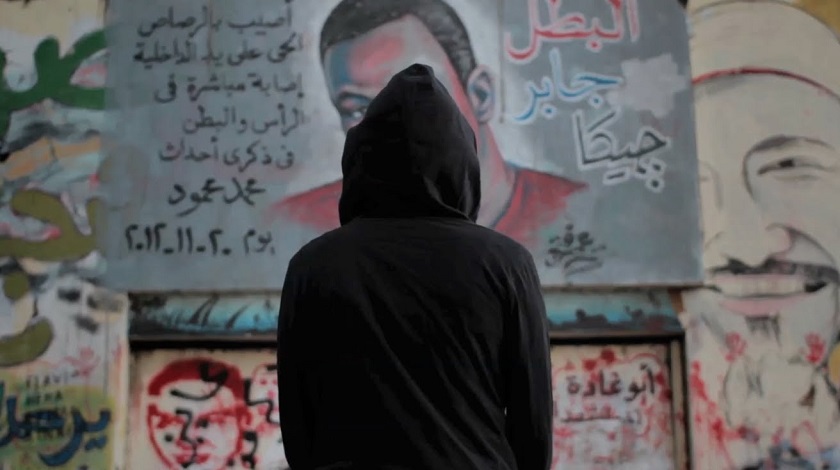


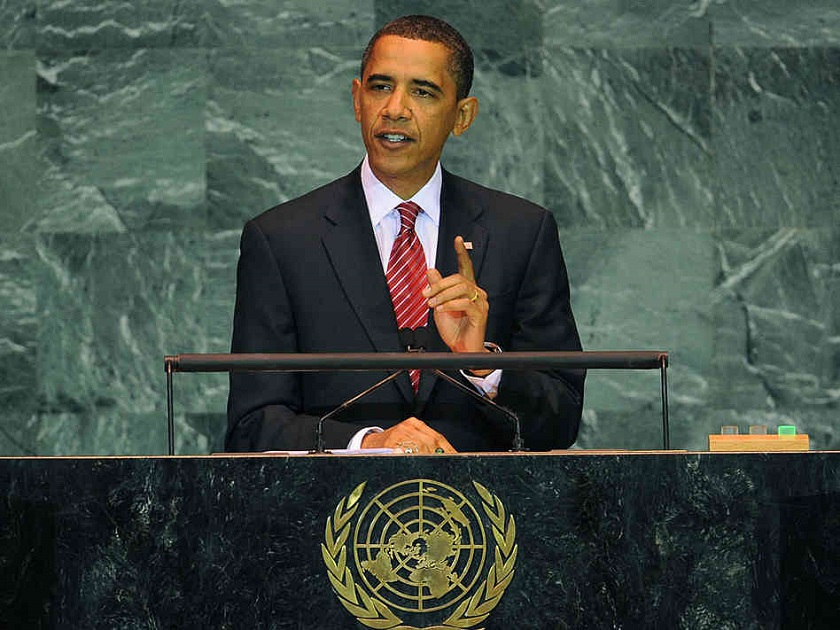
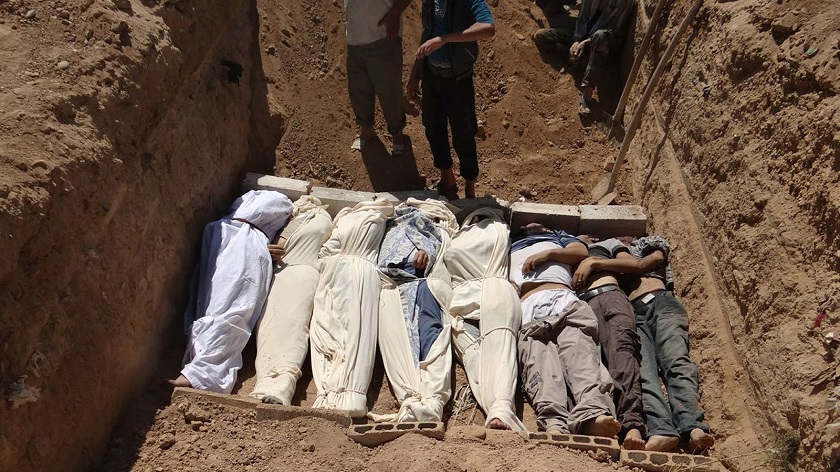




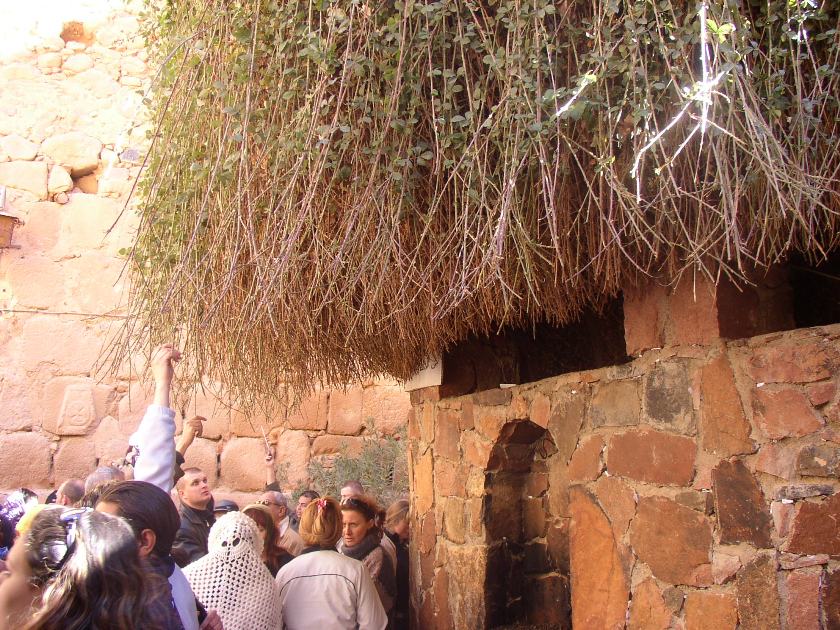


 Jayson Casper