Categories
Prayers

Friday Prayers for Egypt: Doctors, Deaths, and Dreams

Flag Cross Quran

God,

Every day Egypt steps closer to the referendum on a constitution, which if passed will validate the roadmap to restore democracy established by the military. And every week supporters of Morsi march against the new order, often met with tear gas, minor clashes, and subsequent arrests.

It has become a normal pattern, but this week three diverse events highlight something different.

The Muslim Brotherhood’s dominance of the Doctors’ Syndicate came to an end. Although protesting the overall difficulties their wing has faced, they admit being outvoted and cede control of the board for the first time in decades. A female Copt was elected as secretary-general.

Two clashes, meanwhile, resulted in an ugly loss of life. The ongoing violent conflict in Sinai resulted in the killing of a soldier whose body was paraded through the streets by local jihadists. And in the Delta a taxi driver drove into a pro-Morsi protest, injuring a woman, and was pulled from his vehicle and killed by the mob.

A news leak, additionally, released an audio recording allegedly of the military head Gen. Sisi describing his dreams from years earlier in which he knew he would one day be president of the republic. Some believe the leak was meant to discredit him as of superstitious ambition; others believe it will help his standing with ordinary people.

God, within the normal pattern, give Egypt stability, and give protestors peace. As each seems to threaten the other, decide between them by what is right. If this is to be through the vote of the people, protect the referendum and make its process and results fully transparent.

For the doctors, God, make smooth the leadership transition. Help the new opposition to be critically supportive, and the new heads to be magnanimously effective. Bless both their efforts in charity and practice, that Egypt might enjoy a better future in health care.

But conflict, God, can reduce the humanity of the opponent. Save Egypt from this path, where deaths are celebrated and easily provoked. May the determination of protestors not slip into rage; may the crimes in the Sinai be met with justice and peace. Protect the state, and protect the people. May each reinforce the other.

For it appears the current symbolic strength of the state is having dreams. Are they of you, God, or of his ambition? Along with the leak, do they mean to hurt him, or help? Are they innocent, or a manipulation? God, bless Gen. Sisi, the interim president, and all who are currently running the state. Give them wisdom to govern well. But give a collective wisdom to all concerning his possible candidacy. Speak to his conscience and speak to the nation. Bring good governance to Egypt, God, through both man and system.

For Egypt is in great need of healing. Many have died, and others are falling. May the nation’s dreams not perish alongside.

Amen.

Categories
Personal

60 Minutes on the Copts of Egypt

60 Minutes Copts

On Sunday and Monday this week I noticed an unusual spike in the views of this blog. A post I had written in April 2012 was attracting far more traffic than normal. Entitled ‘Applying the Cross (On Your Wrist)‘, all sorts of search engines were directing queries my way, looking for ‘Coptic crosses’, ‘Coptic tattoo’, and the like. Later they day I think I found out why.

On Sunday, the popular American television news magazine ’60 Minutes’ ran a segment on Coptic Christians. One of the more poignant snapshots was of a little girl being tattooed with a small cross on her right wrist. That location featured is in a popular cave church located in the garbage collecting district of Cairo, and I had profiled the tattoo man in the post linked above.

In a post two years earlier I wrote a similar article about my then four year old daughter, who drew a cross on her wrist at her Coptic preschool. ‘Emma’s Saliib‘, with ‘saliib’ the Arabic word for ‘cross’, has a few cute pictures if you are interested.

But of the program in question, CBS did a very nice job describing the Coptic community – true to form without being overdone. Please click here to watch their 15 minute segment.

And finally, if you would like more information about Bishop Thomas, who spoke about the response of Christians after their churches were burned, here is a profile, entitled ‘Almost a Jonah‘.

Having lived here for four years now, we are very partial to the Coptic community, noticing both its faithfulness and flaws. 60 Minutes made me proud.

http://www.cbsnews.com/videos/the-coptic-christians-of-egypt/

Categories
Personal

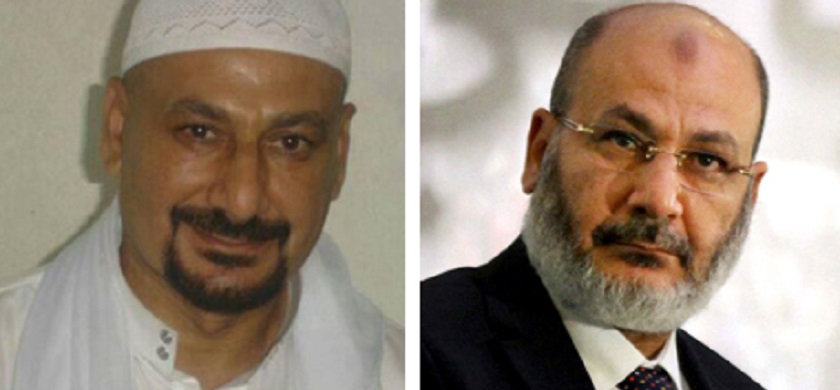
Safwat Hegazi, Body Double?

Safwat Hegazi (R, L?)

In late August and early September I published an article and two other posts about Safwat Hegazi, one of the more controversial Islamist supporters of Mohamed Morsi.

The article collected links and information about his often inflammatory speeches and public statements, calling him a Bellwether of Egyptian Islamism.

The second linked to a full article describing an interview conducted by Arab West Report at the Rabaa al-Adawiya protest site. In it he comes across as very reasonable, denying any membership in the Muslim Brotherhood.

And the third was a link to a very surprising video confession by Hegazi about his regretful association with these protests, sad to see them provoking bloodshed. That post expressed a bit of shock leading to the title, Safwat Hegazi, Stool Pigeon?

Several weeks later in a conversation with a Salafi friend, we discussed Hegazi. ‘That video,’ he said confidently, ‘was faked. Hegazi might be dead or he might be in custody, but that video looked nothing like him.’

It made me recall my initial surprise, both in his confession and appearance.

Hegazi’s trial has now begun, in which he declared the released photos were fake:

Egyptian hardline Islamist preacher Safwat Hegazy said Saturday during his ongoing trial that photos of him following his arrest released by Egypt’s Interior Ministry were fabricated, according to the Muslim Brotherhood’s Freedom and Justice Party website.

Hegazy, who appeared in court on Saturday along with FJP leader Mohamed El-Beltagy – both charged with inciting violence – reportedly said photos released online by the ministry upon his arrest in August were fake.

The photos showed him with a shaved beard and only a dyed-black goatee. Hegazy stated that he never shaved his beard prior to his arrest.

The allegedly fabricated photos of Hegazy stirred public confusion following their release over the significant changes in his appearance since his detainment. It was widely believed that he had changed his appearance to avoid detection.

Hegazy appeared in photos of Saturday’s court session with his trademark white beard.

The confusion continues. Were the released videos and pictures real, an attempt at character assassination, or irrelevant either because of his overall innocence or outstanding guilt?

But there is another twist besides:

Judges of Cairo Criminal Court recused themselves Saturday from the trial of Muslim Brotherhood leading figure Mohamed El-Beltagy and Islamist preacher Safwat Hegazy, saying it has felt unease over the case.

No further explanation was given. Was the unease due to an obvious miscarriage of justice, or fear of Islamist supporters if they carried out justice?Or, was it simply from an inability to conduct the trial, as in this related case:

A second panel of judges has withdrawn from the trial of Muslim Brotherhood leaders accused of inciting the killing of protesters.

The defendants refused to recognise the court, dubbed it “void” and “illegitimate,” and chanted “down with the military rule.”

The judges said they were unable to conduct the trial properly.

Like many questions of the revolution, we will have to wait and see, but waiting often takes a long time…

Categories
Christianity Today Middle East Published Articles

Churches Gain, Islamists Lose in Latest Draft of Egypt’s Constitution

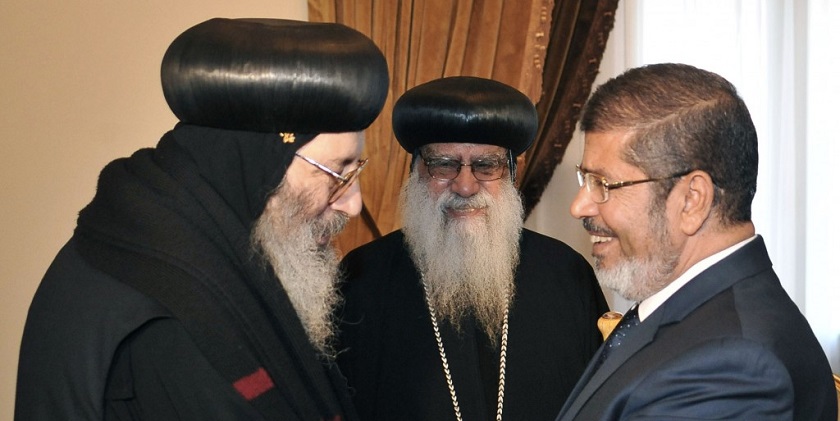
Morsi and Bakhomious

From my recent article in Christianity Today, published December 10, 2013:

Egyptian Christians will soon have a law to regulate church building. But this is only one achievement celebrated by Copts in the revised national charter scrubbed of most of its Islamist tinge.

“Christians have freedom of belief and practice,” said Safwat al-Baiady, president of the Protestant Churches of Egypt and a member of the constitutional committee. “And for the first time in the history of Egypt’s constitutions, building churches becomes a right.”

Article 235 of the new draft constitution addressed this longstanding complaint, where permission to build or repair required presidential and security authorization.

Egypt’s constitution of 2012, written by an Islamist majority under the now-deposed president Mohamed Morsi, also provided for many personal and religious freedoms. But that text included clauses of limitation “according to shari’ah law.”

Please click here to read how limitations on freedom were removed – or not – from the constitution, at Christianity Today.

Categories
Prayers

Friday Prayers for Egypt: Universities

Flag Cross Quran

God,

If protesting has waned on the streets, it has waxed in the universities. Fueled first by some in their support for Morsi, they were joined by others in opposition to a law against protesting. Still others rallied simply because police entered the campus to put it all down.

A last group, presumably the largest and not protesting, just wants to study. Actions by the former make this difficult, whether peaceful or provocative, and perhaps even criminal.

God, the problems of Egypt are well known and offered to your sovereign will. But students are a unique group in confronting these problems. Young, they are without the responsibilities that hold others back from full scale dedication. Intelligent, they see the issues others disregard and imagine solutions. Idealistic, they believe they can make a difference and forswear compromise. Perhaps naive, they may lack wisdom to know if their chosen path of activism will yield positive results.

Bless them, God. These, even the last, are your gifts to them. Their energy, their creativity, their hope, and their single-mindedness are virtues which can serve the people. Their elders have different gifts, some of which must check youthful passion.

In this current confrontation, God, weigh well between the two. Give humility to all that these virtues not be pushed into ugliness. Youth becomes narcissism, intelligence pride, idealism fantasy, and naiveté exploitation.

These may even be traits they learn from their elders. Break this cycle, God, for every youth ages. Students become leaders. Now is still a decisive moment in Egypt’s transition, even if only the universities rage. Honor their passion, and hone it for good.

For this moment may or may not call for their particular gifts. To know, youth and elders would do well to collaborate. University is as good a place as any, perhaps better, to experiment.

And for those encumbered by the activism, give them patience. Give them room for their studies, and the respect of their peers. May their dedication remind all students of the privilege they have been given.

Some for the books, God, and some for the streets. Professors to shepherd the two groups alike. Bless the universities, God. May they prepare a generation that changes Egypt, now, and in the future.

Amen.

Categories
Arab West Report Middle East Published Articles

Christian Convert Arrested in Egypt: Details and Background

Mohamed Hegazy, now known as Bishoy Armia, though not legally

From my recent article on Arab West Report:

Muhammad Hijāzī, born in Port Said in 1982, converted to Christianity in 1998 at the age of 16. Now 31, he was arrested on December 4, 2013 in the governorate of Minya on charges of espionage, inciting sectarian tension through evangelism, and unlicensed photography and journalism.

In 2007 Hijāzī became the first Egyptian convert to Christianity to petition the state to change the religion field on his ID card, and has changed his name to Bishoy Armia Boulos. According to his former lawyer, Mamdūh Nakhlah, had anyone else but Hijāzī been working in Minya, no charges would have been filed.

Nakhlah agreed to represent Hijāzī in his 2007 lawsuit, but later withdrew due to pressure from the church. His information now comes from overall familiarity with the current case, as well as contact with those in the area where he was arrested. Nakhlah believes the main charge of espionage is fabricated, but that there are enough convenient details surrounding the case to give the prosecutor a pretext to arrest Hijāzī.

Please click here to read the full article, speaking of these pretexts – including a media relationship with one of the figures involved in the production of the ‘Innocence of Muslims’ film that sparked protests throughout the region. The article also goes through the history of his efforts to register his religious change, which are still pending on appeal.

(photo from MCN via Google Images)

Categories
Middle East Middle East Institute Published Articles

Salafyo Costa: Egyptian Inclusivity

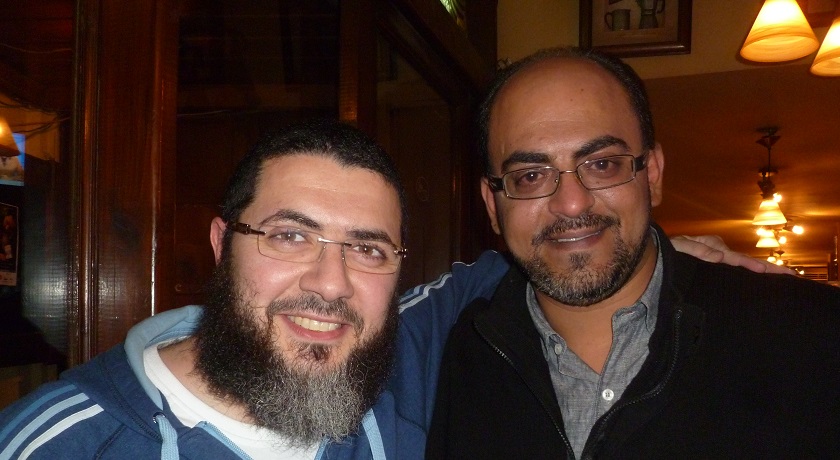
Mohamed Tolba, Salafi Muslim (L) and Bassem Victor, Coptic Christian (R)

From my recent article at the Middle East Institute:

Salafyo Costa were once the darlings of the media. Featured both in Egyptian outlets and foreign publications such as CNN, the Los Angeles Times, and the Huffington Post, the groundbreaking youth movement founded in April 2011 brought together ultraconservative Salafis, Muslim Brotherhood supporters, political liberals and leftists, and Coptic Christians. Together they forged a common identity promoting both the goals of the January 25 revolution and the necessity of unity in an increasingly polarized society.

They implemented this vision through fun. Salafyo Costa organized a soccer match pitting Salafis against Copts, they produced films satirizing political and religious divisions, and they went on field trips to Upper Egypt for charity campaigns. And they lived the life of street demonstrations against military rule. Throughout it all, the 120 members raised suspicions in their original communities, accustomed as these communities generally were to non-interaction with the religious or political “other.”

Salafyo Costa continued on relatively seamlessly until the Tamarod campaign against Mohamed Morsi. During the campaign, the group made the controversial decision to support the call for early elections. The liberal media heralded their courage, while Islamists hurled criticism, finding confirmation of earlier suspicions about the group. Following Morsi’s July 3 ouster, the media forgot them. And then they began to break rank.

The article continues by explaining how they came back together. From the conclusion:

“We revolted on January 25 to create our own manual, to write the rules of the game,” says Tolba. “But since February 11, every regime has imposed its own manual.”

Yet Salafyo Costa has stayed true to their ideals. Despite difficulties, growing pains, and losses, they continue the struggle to break down the barriers separating diverse groups. Maintaining a common commitment is obviously easier among dozens of members than millions of citizens, but in Salafyo Costa, Egypt is not without an example of inclusivity.

Please click here to read the rest of the article at the Middle East Institute.

Categories
Excerpts

Recruitment Compared: The Brotherhood vs. Salafis

From an older article at the Hudson Institute, with a very thorough description of how one becomes a Muslim Brother or a Salafi:

First, the Brotherhood uses a rigid process of internal promotion to ensure its members’ commitment to the gama’a and its cause.  The process begins at recruitment, when specially designated Muslim Brothers scout out potential members at mosques and universities across Egypt. During the process of recruitment, prospective Muslim Brothers are introduced to the organization through social activities, such as sports and camping, which give the Brotherhood an opportunity to further assess each recruit’s personality and confirm his piety.  If the recruit satisfies local Brotherhood leaders, he begins a rigorous five-to-eight-year process of internal promotion, during which he ascends through four different membership ranks, muhib, muayyad, muntasib and muntazim before finally achieving the status of ach ‘amal, or “active brother.”

During each stage of internal promotion, the rising Muslim Brother’s curriculum intensifies, and he is tested, either orally or through a written exam, before advancing to the next stage.  For example, a muayyad (second stage) is expected to memorize major sections of the Qur’an and study the writings of Brotherhood founder al-Banna, while a muntasib (third stage) studies hadith and Qur’anic exegesis.  Rising Muslim Brothers also assume more responsibilities within the organization: muayyads are trained to preach in mosques and recruit other members, and muntasibs continue these activities while also donating six-to-eight percent of their income to the organization.[11]  This process serves to weed out those who are either less committed to the organization, or who dissent with some of its principles or approaches.  Muslim Brothers’ commitment to the organization is further established through their assumption of a bay’a, an oath, to “listen and obey,” which occurs sometime after the midpoint of this promotional process.[12]

Second, the Brotherhood pursues its Islamizing project by maintaining a well-developed nationwide hierarchical organization.  At the top of this structure is the Guidance Office (maktab al-irshad), a twenty-member body largely comprised of individuals in their late fifties to early seventies.  The Guidance Office executes decisions on which the 120-member Shura committee (magles al-shura al-‘amm) votes, and orders are sent down the following chain of command: the Guidance Offices calls leaders in each regional sector (qita’), who transmit the order to leaders in each governorate (muhafaza), who pass it on to their deputies in each subsidiary area (muntaqa), who refer it to the chiefs in each subsidiary populace (shu’aba), who then call the heads of the Brotherhood’s local cells, known as usras, or “families.”  The usra is typically comprised of five to eight Muslim Brothers, and they execute the Guidance Office’s orders at the local level throughout Egypt.  Such directives can include everything from managing social services to mobilizing the masses for pro-Brotherhood demonstrations, to supporting Brotherhood candidates during elections.

The union of a committed membership and a clear chain-of-command provides the Muslim Brotherhood with a well-oiled political machine and thereby a tremendous advantage over the Salafists.  Indeed, whereas the Brotherhood is one cohesive entity that can summon hundreds of thousands of veritable foot soldiers, not to mention the millions of ordinary Egyptians who benefit from its social services, to execute its agenda, the Salafist movement is entirely decentralized and spread out among a plethora of Salafist groups, schools, and shaykhs.

In a certain sense, Salafists are mirror images of Muslim Brothers in that they privilege ideological objectives above organizational ones.  Indeed, many Salafists are “quietist,” in that they view Salafism as a personal religious commitment and reject attempts to politicize it: “I don’t have to join any organization to be more religious,” stated Bakr, a Salafist who participated in the youth coalition that organized the 2011 anti-Mubarak protests, when asked why he never considered joining the Muslim Brotherhood, he said: “There is no organization in Salafism because an organization needs a target.  And there is no target in Salafism, the only point is dawa (outreach).”  Even those Salafists who are deeply involved in Salafist organizations view their affiliation as secondary to their personal religious commitments. “Salafist streams are movements and different schools, not an organization,” said al-Gamaa al-Islamiya member Abdullah Abdel Rahman, son of the infamous “Blind Shaykh” Omar Abdel Rahman, who was convicted for his involvement in the 1993 World Trade Center bombing.  “It’s a way of life.  Anyone who follows the Holy Book and Sunna, they call him a Salafist.  They don’t have a certain person to follow.  …  They all have their own schools, but agree on one way.”

Salafism’s deeply personal, self-directed nature is perhaps most evident in the independent process through which one becomes a Salafist.  In stark contrast to the Muslim Brotherhood’s five-to-eight-year, four-stage process of internal promotion, one becomes a Salafist simply by declaring himself a “multazim,” or “obligated” to follow a literalist interpretation of the Qur’an and Sunna.  Typically, a multazim attaches himself to a specific Salafist shaykh, with whom he studies how to live a deeply conservative lifestyle.  But the multazim can choose his shaykh, unlike a Muslim Brother, who is assigned to an usra and handed a standardized curriculum.

It is a long article, written after the passage of the Islamist dominated constitution in 2012, but still relevant.

It is too early to say how things have changed, but I imagine Muslim Brotherhood recruitment is rather difficult now. Much of their upper leadership is in prison, but presumably the lower ranks can carry on activity, however impeded. I gather their usras explain much mobilizing force behind recent smaller area protests.

As for Salafis, the question is if the leading sheikhs have been compromised by cooperation with the current government. It may be much easier, however, for the average Salafi-inclined individual to resort back to a quietist, non-political faith that had long accepted the misguided rule of Mubarak, which if less than legitimate made rebellion also illegitimate for the social strife it would incur.

But the present is still being written, so we will see.

Categories
Prayers

Friday Prayers for Egypt: Constitution Open

Flag Cross Quran

God,

Egypt has taken its first concrete step forward since President Morsi was removed. By completing the draft constitution, set for a referendum in January, the roadmap for rebuilding democracy is underway.

But it is ill-defined. The constitution leaves open the order of elections, if parliamentary or presidential will occur first. It also does not determine the nature of the parliamentary system, if by individual candidates, party lists, or some combination thereof. These will be decided by interim presidential fiat.

God, constitutional delegates were unable to come to consensus, why? Are there power politics behind the scenes? Is there an explanation that is more comforting? Given the chance to shape one of the most crucial aspects of democracy – the parliament – the committee passed.

It may be, God, that Egypt needs a strong head of state, and power to determine these matters is being passed to the eventual holder of this post. Your principles, God, are higher than the details of political systems; establish one that is just, equitable, and transparent.

But do so transparently. Hold accountable those in the committee and those they represent. Hold accountable the government and the police and the military. They have been given a trust; may they prove faithful.

Within the document, for those that support the removal of Morsi in the first place, perhaps they have tried. Provisions for rights and freedoms have been strengthened, with the limiting language of religion largely removed.

Unless, God, this represents their weakening. For many against the removal of Morsi the language of religion is not to limit, but to protect. How much license should the state give to violate your law?

If it is. For others these are distracting issues of identity which mask a different problem: Many articles establish a principle, leaving definition determined by a law to come. Will parliament decide these issues wisely?

But now, God, the constitution is in the hands of the people. Help society to study well and debate thoroughly. Voting yes will continue the roadmap and potentially validate Morsi’s removal. Voting no is unclear in result, but requires a return to the drawing board.

Whether now or later, God, give Egypt consensus in her constitution. All is open.

Amen.

Categories
Excerpts

On How to Draw Electoral Districts

If this seems like a boring title, read on. This article from Foreign Policy sheds much light on how Egyptian politics works, or at least used to work, and may again:

The attempt to restore the Mubarak-era way of doing business reflects the nature of the coalition that backed Morsy’s removal in July. The most critical opposition to Morsy’s rule outside Cairo came from the large families and tribes in the Nile Delta and Upper Egypt, which comprised the Mubarak regime’s base and benefitted from its clientelist approach to politics.

“These traditional powers are the critical mass of voters,” Abdullah Kamal, a journalist and onetime official in Mubarak’s now-defunct National Democratic Party (NDP), told me. These clans, he continued, “had sympathy” for Mubarak, voted for Mubarak’s former Prime Minister Ahmed Shafik in the 2012 presidential elections, and would likely back Army chief Abdel Fattah al-Sisi if he runs for president.

For decades, these clans wielded substantial political influence. They were empowered by the Mubarak regime’s use of relatively small electoral districts, which allowed them to mobilize their family members and local supporters to win elections. And since Egypt’s parliament was largely a mechanism for distributing state resources, the clans typically used their electoral victories to deliver resources back to their districts and thereby entrench their local support. Following the 2011 uprising, however, the new electoral system entailed much wider electoral districts that diluted these traditional powers’ support. Meanwhile the Islamist parties rode their internal unity to overwhelming, nationwide victories.

While the details for Egypt’s next parliamentary elections will be determined by the government, it is widely anticipated that the next system will feature smaller districts that will re-empower the old tribal networks. Influential players within the Egyptian state are pushing for a system that would shrink electoral districts considerably.

This is likely common knowledge to those who have followed Egypt for years, but it paints a very different picture than the argument issued after the revolution. Newer, non-Islamist parties complained about the large districts because they lacked the organizing power necessary to campaign across the whole area, as well as the social base of their competition and its charitable networks. What may have been meant is that they didn’t have the time to recruit and organize these stalwart power bases of old National Democratic Party support.

That could be a very unfair accusation. But the powers that drew the electoral districts – and I would have to research more to remember who did so (was it the Brotherhood-dominated Parliament or a state appointed electoral commission?) – made what could have been a revolutionary decision to break these ‘feloul’ power brokers, and it worked out very well for Islamists.

Gerrymandering. Politics is the same the world over, isn’t it? Alright, forgive me if it was still a little boring.

Categories
Excerpts

Cairo’s Christian Garbagemen Back to Work

From the Guardian, describing a reversal in state policy to work with those who do the job best:

In 2012 former president Mohamed Morsi had made the state of the streets an electoral issue, claiming that he would clean them up in 100 days. He failed. “There’s only one solution,” said Greiss, “and that is to bring the Zabaleen back to the core of the waste collection and disposal process.”

The Zabaleen are a Christian community who migrated from Upper Egypt to the outskirts of Cairo in the 1940s. Extremely poor, they earned a living as the city’s ragpickers before turning to recycling in the early 1980s. With the help of NGOs, including APE, they have facilities for recycling plastic, paper and metal; they feed organic waste to the pigs they keep in their backyards. Animal excrement is sent to a compost plant in a Cairo suburb where it is processed and sold to farmers.

The Zabaleen currently collect some 9,000 tonnes of garbage per day, nearly two-thirds of the 15,000 tonnes of rubbish thrown away by Cairo’s 17 million or so inhabitants, and yet they have never been officially recognised by the Egyptian government.

Now 44 local companies have been registered, moving the model away from foreign based companies:

Iskandar has reversed the policy of previous governments, which tried to marginalise the work of this Christian, mainly Coptic, minority. In 2003, Hosni Mubarak‘s economically liberalising regime asked multinational corporations to handle waste disposal. “That model is not suited to Cairo, where residents are used to dustbins being emptied on each individual floor of a building. People couldn’t get used to taking down their garbage and putting it into special skips, which were later raided by thieves,” said Greiss. “As a result most people continued to pay the Zabaleen to come up and get their garbage unofficially, and then complained because they also had to pay for the foreign service company.”

If their talents are now being unleashed, without restriction, I hope we see a quick turnaround in the garbage problems allowed to fester since the revolution.

Categories
Arab West Report Middle East Published Articles

Liberal Views on the Egyptian Constitution

The word in Arabic, dostour, means constitution

From a recent article on Arab West Report, to which I contributed a section reporting from a conference held by Egyptian liberals on the ideal constitution. Somewhat surprisingly, there was a good deal of sentiment against the military council:

Essam al-Din Hassan next spoke about the principle of freedom and the encroachments against it in negotiations over the new constitution. One feature of these negotiations is the efforts of the Ministry of Defense and al-Azhar to entrench their independence from the rest of the state. In terms of the military, standing apart from the rest of the executive authority – essentially two heads of state – would be terrible for the civil state and allow Egypt to again become a military, police state.

It is not unreasonable to think, he stated, that the military might trade this status with religious forces that are also looking for gains in the constitution, especially the Salafīs. They are arguing to keep Article 219 somewhere in the text, providing a conservative, Sunni-specific interpretation to the clause in Article 2 saying sharia is the primary source of legislation. But even Article 2, he argued, designating a religion for the state, has no place in a civil state. Article 3, similarly, guaranteeing special religious rights for the Copts, only reinforces the idea of a religious state. To curb such sectarian advances, firm consensus must be gathered in the committee of fifty which is rewriting the Constitution, so that civil state principles are protected, even from the tools of democracy which might undo them.

Ahmad Raghib spoke less about the necessary constitutional provisions for human dignity than the danger of their constant undermining. He noted that previous Egyptian constitutions, such as the 1971 version which governed up until the January 25 Revolution, provided guarantees for human dignity. This did not, however, stop the state from ignoring them, or even trampling upon them as was visible in the police torture cases against Khalid Saeed and Ahmad Bilal.

Raghib expanded Hassan’s warning about the military saying most institutions of state are seeking to enshrine their independence in the Constitution. This is expressly against the will of the people, however, who should have their elected officials administratively responsible for all these institutions. Unfortunately, in the previous Constitution, the Muslim Brotherhood collaborated with these institutions to preserve Mubarak’s state and keep it and the military council immune from their crimes. He closed with the expectation that a third wave of the Revolution might be necessary to put things right and secure a true modern civil constitution.

Please click here to read the full article at Arab West Report, which contains further reporting from the conference as well as observations from an interview with Rev. Safwat al-Baiady, president of the Protestant churches of Egypt and a member in the constitutional committee.

Categories
Prayers

Friday Prayers for Egypt: Protest Law

Flag Cross Quran

God,

Egypt may still be revolutionary, but if so it is now contrary to law. Perhaps every revolution is. Besides, there is nothing like a law to regulate protest to spark more protest.

It even brought non-Islamists back to the street. Many political parties and movements spoke out against its provisions, requiring prior notification, allowing security to modify or cancel, and imposing harsh penalties on violators. International bodies condemned as well. Revolutionaries tested it immediately, meeting tear gas and arrest.

Islamists, meanwhile, hit the street regardless. Though fellow protestors are not their allies, they are, perhaps, emboldened by the sight of others opposing the government as well.

The government, according to law, confronts them both.

God, society cannot continue forever in chaos. Nor should those with a word against authorities be silenced. Does this law balance appropriately? Or is it a tool to repress dissent? Even if so, do you approve for a time?

Give wisdom to the government, God. The revolution has unleashed a popular fury that will not be subdued. But it has also unleashed a powerful backlash that clamors for calm. Where should its allegiance lie?

May it be with that which is right. May they study the norms of human rights and craft a law for Egypt in consensus with national actors. If there is need to amend, make it clear to all.

Give wisdom also to these actors. All law enshrines principles and establishes precedent. May they know what is worth fighting for and if this issue applies. Help them to hold the government accountable, in a manner winsome for the nation.

And for those who remain outside the law altogether, give them wisdom in spades. They have made it clear they will not stop protesting. Should they demonstrate their peacefulness in compliance with the law? Might it work to their advantage, or just compromise their rhetoric?

God, so many are in a maze and subject to criticism no matter their choice. Bind them all to yourself in commitment to pure intention. Give all the confidence that comes from choosing the right over the expedient. Expose all who willfully deceive in pursuit of their goals, even if righteous. And bring together the men of purpose from all agendas who can hammer home a consensus with respect for all.

But if consensus was constant, God, there would be no need for either law or protest. But you counsel both for mankind, fully aware of our foibles. In both law and protest, then, may Egypt honor you. Honor her in turn, and give her peace.

Amen.

Categories
Personal

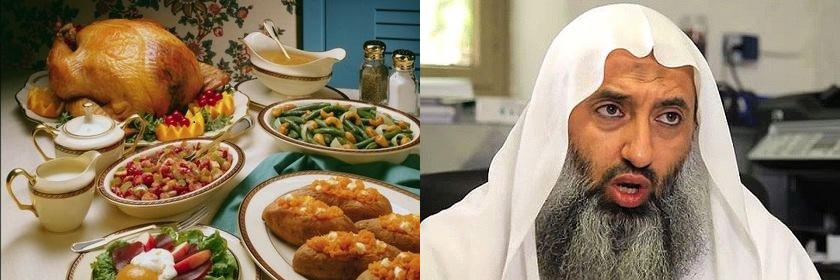
Salafi Muslims and American Thanksgiving

Salafi Thanksgiving

From Christianity Today, a very interesting article about an evangelical historian who challenges the received traditions of the Puritans:

In 1623, Plymouth Colony Governor William Bradford proclaimed the first Thanksgiving. “The great Father,” he declared, “has given us this year an abundant harvest…and granted us freedom to worship God according to the dictates of our own conscience.” He directed the Pilgrims to gather that November, “the third year since ye Pilgrims landed on ye Plymouth Rock, there to listen to ye Pastor and render Thanksgiving to ye Almighty God for all his blessings.”

Except Bradford didn’t write that. Someone—we don’t know who—fabricated this “proclamation” in the late 20th century.

The author takes note of how American Christians are at a bit of a crisis point concerning their national history:

American evangelicals seem to have reached a crisis point over the study of history, especially the history of the American founding. For decades, many evangelicals have turned to popular history writers who have presented America, especially of the colonial and Revolutionary era, as a straightforwardly Christian nation.

But take the popular belief that the pilgrims came to America in search of religious freedom. It is not wrong, he argues, but subject to misinterpretation:

He demonstrates that the quest for “religious freedom,” in the modern sense, did not really animate the Pilgrims. Yes, they wanted to find a place where they could worship God according to Scripture and the dictates of conscience. But they had already discovered those conditions in Holland, where a number of English dissenters had gone in the early 1600s.

The most pressing concern that led the Plymouth Separatists to leave Holland was that they found the Netherlands “a hard place to maintain their English identity and an even harder place to make a living.” They did not worry so much about religious persecution (at least not since they left England), but about “spiritual danger and decline.” They worried about the cultural corruption they saw around them in foreign Dutch culture, and struggled to find profitable employment that could nourish their common identity. America seemed to offer both better opportunity and a place to preserve their sense of covenanted community.

And, just to throw in one ugly incident:

We should remember, McKenzie cautions, than not long after the first Thanksgiving—which was indeed a peaceful, if tense meal between the English and their Wampanoag neighbors—the Pilgrims launched a preemptive assault on local Massachusetts Indians that resulted in violence and bitter resentments. The English even placed the severed head of one Native American on a pike outside their fort. Recalling this is telling the truth, not revisionist history.

What does any of this have to do with Salafi Muslims? Nothing at all, except by way of similarity.

The word ‘Salaf’ in Arabic means ‘forefathers’, and Salafi Muslims honor in particular the first three generations of Muslims. This was the golden age of Islam, when the community lived the teachings of the Prophet Muhammad. In all current religious interpretation – even in political and cultural matters – Salafis believe Muslims should study this period and apply its lessons accordingly to modern life.

Many Muslims honor this heritage without calling for the same level of imitation as Salafis. But most all of the faithful prefer not to open this history of these forefathers to questioning.

There are two issues at stake. The ancient challenge was given by Shia Muslims who said the community went wrong right after the death of Muhammad. Leadership, they say, should have been passed to Ali, within family lines. It was only the political scheming of these forefathers that prevented his immediate succession, and it was their further scheming that resulted in the loss of his role as caliph.

Sunni Muslims were the political and numerical victors of early Muslim in-fighting. But the Shia challenge contributed to the sanctification of these early generations who established the caliphate. They were also the assemblers of Muhammad’s sunna, his words and deeds not found in the Qur’an, so demonstrating their honesty was paramount. Just as Muslims find it terribly difficult to accept a word spoken against Muhammad, so do Salafi Muslims, and many beside, take offense if the Companions of Muhammad are questioned.

The modern challenge questions this sacred history as well. Using mostly Muslim sources, increasing numbers of historians are dissembling the received traditions about the development of the early Muslim communities. And similar to scholars who try to trace the human origins of the Bible, some also find other than divine influences in the Qur’an. The consequences can be dire for those engaged in revisionist history, or, let historians judge, telling the truth.

History, of course, is often deeply contested. Defining the past is a good way of determining the future.

For American Christians, revisiting the history of Thanksgiving is not nearly as threatening as the accusation that the Trinity was invented at the Council of Nicea, for example. But for a people confident in the idea that God has blessed America, there is often the implicit assumption that he has done so – from his sovereign purposes, of course – but also because of the Christian faithfulness of America’s founders. There is also often the modern application, with political overtones, that if America returns to her Christian heritage God’s blessing will come again.

It may well. ‘If my people, who are called by my name, will humble themselves and pray and seek my face and turn from their wicked ways, then will I hear from heaven and will forgive their sin and will heal their land,’ God said to Israel. Americans Christians consider themselves part of the family of God, his people. Should the land of America be considered a possible heir to this promise?

Either way, both American Christians and Salafis must face up to any possible ‘fabrications’ of their history. If this is a crisis point for evangelicals, it is hardly a blip on the radar for Salafis. But both groups have invested heavily in the sacred narrative of their secular traditions. As the author closes in his article:

The temptation toward idol-making seems much more pressing with the titans of America’s national history, those who line the mall in Washington, D.C. Jefferson, Lincoln, Washington: These are the ones that, despite limited evidence of orthodoxy, many of us want—or need—to be evangelical Christians, just like us. We desperately need help to know how to think about those Founders.

Similarly, what will Salafis do with the four ‘rightly guided caliphs’ – Abu Bakr, Omar, Uthman, and Ali? There were fine Muslims, surely, but what does it say that three of them were killed? What of other leaders who opposed Muhammad until the near-end, and then switched sides? Muslims are not ignorant of these controversies; in fact, Salafis study them diligently. But no one should go beyond the limits of the historic evaluation given to the Companions of Muhammad; no one should tar their reputation.

I must stop short of proscription for either community. This post began as an attempt to draw parallels between two communities not often associated together. But I am a historian of neither narrative, so I dare not make pronouncements that can be easily countered by the studied. Neither am I a theologian, certainly not of Islam to make cavalier statements about how to interpret God in their history.

But I hold as a conviction that fidelity to God requires fidelity to truth, come what may. The shaping of pious myths may aid in the development of social and cultural faith, but they are acts, ultimately, of manipulators. ‘God will bring to light what is hidden in darkness and will expose the motives of the heart.’

He may take a long time in doing so, but this Thanksgiving, let us be thankful that God will guide us into all truth.

Categories
Excerpts

A Foreign Journalist in an Egyptian Jail

From Vocative, a disturbing account that hits too close to home:

I was reporting on the marchers, and not long after I gave the policemen cigarettes, a young police recruit grabbed me by the back of the neck. He slapped me on the head repeatedly as his friend took my camera from around my neck and my phone from my pocket. He marched me toward a small alley that leads off Tahrir Street, where I could see a number of other Egyptian men being penned in by some riot police.

I fumbled in my wallet for my press pass, from the Cairo Press Center. A senior member of the riot police looked at it and saw that it said “British.” He looked up at me and back down at my photo a few times before saying, in English, “I’m sorry.”

Assuming I was free to go, I asked for my phone and motioned for my pass. But I got a hefty push in the back and suddenly found myself with the other detained men. I called to a nearby police recruit and told him I was a British journalist and said there was some misunderstanding. He told me to put my hands behind my back. When I reiterated my point, he slapped me in the face.

He describes the conditions inside the police station, and though he does not appear to have been singled out for poor treatment, it was poor all the same:

The temperature in the room was rising. A 50-year-old teacher nodded his head gently against my shoulder. I turned around and saw a face of genuine sympathy, “I am sorry,” he said.

“Look,” he motioned to a corner of the room. I had completely missed a man of at least 60 crumpled in the corner. Both his legs were covered with birdshot, blood slowly pooling around his feet. I looked at the blood, and the smell immediately became unbearable.

We could hear screams from outside the door, which would open only to reveal yet another poor man being flogged for no apparent reason. The officers smiled at one another as they beat the men. They fit the stereotype of despotic state security so perfectly it would have been funny if it weren’t so depressing.

After about 90 minutes, they decided to move us—to a minuscule, enclosed courtyard in the middle of the building. Sixty people squeezed in like sardines, sweat beading off us. The tiled floors were dusty and covered in rubbish and aberrant marks of dried blood. I was pushed to my knees once again. I turned and tried to reason with my captors, but was quickly cut off by a kick to the back. “Look straight ahead!” would be the catchphrase for the rest of the evening.

I finally turned and stayed turned, covering the back of my head. I noticed that everyone else was in exactly the same position.

This was by far the most painful part of the day. Kneeling for close to three hours, crammed so closely together there wasn’t space for me to put my hands on the floor to help shift my weight.

It does turn out ok in the end, at least for him and a few others:

Around 10 p.m., about six hours after I was arrested, we were suddenly asked to stand up. I almost collapsed as my knees. Leaning on the man in front of me, I steadied myself and we filed out of the room and upstairs. We were told to line up in front of a notice board. I read the yellowed certificates and newspaper clippings trumpeting the police station’s valiant work of the past decades.

Again, we were pulled aside, one by one, and our details recorded. I stayed there silently while they sorted us into two groups, one with around 12 men and the other with closer to 50. Everyone looked exhausted, the blood on their shirts now that dull brown color.

After some paperwork and backslapping, the policemen sent the larger group back downstairs. The smaller group and I were free to leave.

I wonder what it would have been like in an American jail? Surely nowhere is the experience pleasant, and perhaps six hours is a rather fast processing.

In either setting, I hope I never have to find out. Comfort, comfort, for all who do.

Categories
Atlantic Council Middle East Published Articles

Ebram Louis and the Contested Nature of Coptic Disappearances

Ebram Louis
Ebram Louis

From my recent article on Egypt Source:

Maryam Milad disappeared in 2012. Last seen in the church of St. Anthony in Shubra, her father believes his now eighteen year old daughter has been kidnapped and perhaps married off to a Salafi Muslim somewhere. Police, he says, have been uncooperative.

“I plead with all the authorities in Egypt,” he said at a prayer meeting highlighting more than a dozen similar cases. “Put yourselves in the place of us parents.”

According to Ebram Louis, founder of the Association for the Victims of Abductions and Enforced Disappearances (AVAED), this is just the tip of the iceberg. He has documented 500 such cases since the revolution.

The article describes his process of documentation, and reveals interesting statistics from AVAED’s findings:

But according to AVAED chief field researcher George Nushi, up to 60 percent of all cases are [stemming from initial love relations]. Most of these, he said, involve Muslims of bad intention. The girl becomes infatuated, but then she is told she cannot go home again.

There are violent cases, but they are limited in number. Even so, AVAED sees religious extremism involved prominently:

“We do not say ‘kidnapping’ in the beginning,” he said, “We say ‘disappearance.’” Nushi says only 5 percent of girls suffered violent kidnappings in the traditional sense.

How does he then have such certainty that malevolent, organized Salafi groups are involved? Of their 500 cases, ten have escaped to tell their story. These stories reveal patterns which indicate similar activity, locations, and even phone numbers.

This issue requires deep research and understanding of the Egyptian social and cultural settings, far deeper than the scope of this article. But please click here to read the rest at Egypt Source.

Categories
Prayers

Friday Prayers for Egypt: Tragedy Tripled

Flag Cross Quran

God,

The tragedies of this past week drove the government to declare three days of mourning. They serve also as a reminder of challenges, both old and new.

Twenty-seven people died when a microbus failed to stop at a crossing, colliding with an oncoming train.

Eleven soldiers died when a suicide bomber drove his car bomb into their convoy.

One security officer died when he was assassinated outside his home.

The first tragedy reminds of Egypt’s dilapidation. The last two portend of Egypt’s insurrection. God, fix and quell.

Fix the system that fails to build to code and perform regular maintenance. Fix the culture that avoids responsibility and allows corruption. And fix the human spirit that does not work as if unto you.

Quell the evil that will kill for an agenda. Quell the insurgency that targets the state. And quell the discontented spirit that places its own interests above those of others.

For there are many discontent, God, who have ample reason for their frustration. But save them from descent into either rage or resignation.

Give them hope, amid their differences. But give also the strength to resist the violence of those who force their way on others. And with it, give the greater strength of self-restraint and humility. Bring Egypt soon to consensus, that all would care for the concerns of the other.

God, tragedy often brings resolve. Increase it three-fold, that Egypt may prosper. Take the old, and make all things new.

Amen.

Categories
Atlantic Council Middle East Published Articles

Amr Darrag on the Brotherhood’s Mistakes, Sort of

Amr Darrag
Amr Darrag

From my recent article at Egypt Source:

During the lead-up to the June 30 protests demanding early elections through the violent dispersal of the pro-Morsi sit-ins, several Brotherhood members spoke in vague terms of their ‘mistakes.’ It was a conciliatory gesture of sorts, admitting Morsi’s less than stellar performance but arguing this was not enough to undo his democratic legitimacy.

It is a fair enough logic, but it was never accompanied by any details concerning these mistakes. The closest to an admission came from Salah Sultan, who apologized for the Brotherhood’s negotiating with Omar Suleiman, opening channels with the military, not being honest enough about the efforts of corrupt regime figures to sabotage the revolution, and failing to absorb youth and women in their project. His statement was posted on the webpage of the Freedom and Justice Party, but later removed and described as only a ‘personal’ viewpoint.

This has been one of my frustrations in listening to the Brotherhood post-Morsi. They speak of mistakes, but are rarely specific. I understand the political logic, but wish for greater transparency. So I was thankful for an opportunity to press the issue directly:

But Darrag, instead, is put off by the question. “I don’t actually agree on the prescription that there are mistakes that the Brotherhood has to acknowledge and apologize for,” he said. “Of course there are mistakes, I am not saying that we don’t make mistakes. But this has to come through a process that all political forces, if they want to learn from past experiences, acknowledge their mistakes.”

Rather, he anticipates this process eventually coming from those who sided with the removal of Morsi:

“It doesn’t make sense to ask one side to keep apologizing and apologizing and apologizing. I mean, this is not helping.”

Perhaps it is not helping the Brotherhood, but if they tried apologizing even once, it might help the original revolutionary cause. But consistent with his position, Darrag anticipates the reflection coming from the other side. “People think and reconsider,” he said. “I am sure that one day the majority will join us in the same way that happened on January 25th.

“But when, I don’t know.”

Please click here to read the full article on Egypt Source.

Categories
Prayers

Friday Prayers for Egypt: Morsi Speaks, Protests Diversify?

Flag Cross Quran

God,

Following the opening session of his trial, President Morsi was transferred to a public prison where he was able to release his first statement since he was deposed. He called his removal a coup, praised the people for their steadfast protests, and said Egypt would have no stability until his legitimacy was restored.

Meanwhile, the week upcoming marks the two year anniversary of some of the bloodiest protests from the interim period, when the military ruled and the Brotherhood left the revolutionary stage. Supporters of the current general are calling for a commemoration, but of the new unity between the people and the police. But it was the police who killed them, revolutionaries maintain, and the institution remains unreformed under any regime. They may protest afresh in counter-commemoration.

Will the protest movement widen? Will anti-Islamist revolutionaries recall their original ire against military rule? Or is it now nothing of the sort, and a true democratic transition is underway?

God, answer these questions in the hearts of Egyptians. May they hold their leaders accountable as they pray for them. May they join a consensual process as they protest all wrongdoings. Unite these dichotomies in both the diversity of the people and the uniqueness of the individual.

Give Morsi patience, discernment, and courage, God. He is frustrated, surely; give him hope. Judge both him and the nation, God, and bring both to a better place. Do likewise with all who support him.

Give patience, discernment, and courage to the revolutionaries as well, God. They have been frustrated for two years, having watched colleagues fall and justice fade. Will fresh protests renew their hope? Or has their hope come in newly minted unity? Reform the police institution, God, and show revolutionaries the best way to honor both their friends and their nation.

Protect Egypt, God. As she emerges after three months of a state of emergency and life under curfew, give self-discipline in place of security solutions. Amidst all her diversity in a cacophony of speaking, give her silence and reflection.

But whether within the din or its dearth, make the right voices heard. May yours be quietly audible, above all else. Then have Egypt’s roar follow.

Amen.

Categories
Books

Egypt, the Army, and the Early Christian Ethic of Life

by Ron Sider
by Ron Sider

From Christianity Today, an interview with Ron Sider, who compiled every early church writing on the subject of killing:

It’s not just just-war theory versus pacifism. The book covers war, capital punishment, gladiatorial games, infanticide, abortion, and so forth. Did the early Christian writers tie those together, or did they treat them as separate ethical issues?

They definitely tied them together. A number of times different authors—like Lactantius writing at the time of the Diocletian persecution, and earlier writers—are very clear. They explicitly say we don’t kill, and that means we don’t go to gladiatorial games, we’re opposed to abortion, capital punishment is not acceptable, and we don’t kill in war.

Did the early Christians oppose capital punishment as a social institution? Or did they just say that a Christian couldn’t be an executioner or a magistrate who might give someone a death sentence?

For early church fathers, a Christian could not have a political or judicial office where he would have the authority to pronounce a judgment of capital punishment.

They clearly stated the latter. They said Christians cannot participate in capital punishment. For them, a Christian could not have a political or judicial office where he would have the authority to pronounce a judgment of capital punishment.

Similarly, in the unanimous testimony of early Christian writers, this means Christians should not join the army:

Let’s talk about the reasons early Christians abstained from bloodshed: They talked about Jesus’ command to love our enemies, about the Mosaic command not to kill, and about the prophecy of messianic peace. Is any one of those reasons foundational to the rest?

Their most frequent statement is that killing is wrong. Killing a human being is simply something that Christians don’t do, and they’ll cite the Micah passage or Jesus’ “love your enemies” to support that. But the clear statement that Christians don’t kill is the foundation.

The most frequently stated reason that Christians didn’t join the army and go to war is that they didn’t kill. But it’s also true that in Tertullian, for example, idolatry in the Roman army is a second reason for not joining the military. But it’s not true that idolatry is the primary or exclusive reason that the early Christians refused to join the military. More often they just say killing is wrong.

But here is the rub for Egypt. The Coptic Orthodox Church honors the early church fathers, and I have not interacted with this issue to know how they treat this testimony. I would imagine that as the Catholic Church in the Roman Empire eventually came close enough to the centers of power, the Copts also developed a just war doctrine. Certainly they have a number of ‘soldier saints’ among their martyrs.

But for modern day Copts, the fact of participation in the army is often touted by political Islamists as the chief justification why the Islamic jizia tax is no longer required.

Sharia law required ‘People of the Book’ to submit to their Muslim rulers and exempted them from participation in the military in exchange for this tax. Within this system they were given the promise of domestic protection and freedom of worship within the status of second-class citizenship.

But those wars were for the benefit of the Muslim caliphate. The modern state of Egypt has a national army for defense of the borders. Two hundred years ago jizia was abolished and Copts served alongside their Muslim neighbors in the army.

But if per Sider’s testimony that proper Biblical understanding, as evidenced by the early church fathers, forbids a Christian from killing, this ‘arrangement’ is undone. If Copts sense they should abstain from war, does this open the door for the radical Islamist argument of restored jizia?

No Copt that I know of argues for conscientious objection, which does not exist in Egypt anyway, as best I know. Of course, like most Egyptians, like most humans, Copts are very reticent to kill. But they do not forbid it in the context of national duty.

But for any Christian pacifists outside of Egypt, which would you choose? You are only a pacifist out of conviction, of course, so I suspect it is unlikely you would balk at the imposition of a special tax for your refusal to fight. But would you accept the ‘second-class citizen’ part? Would you accept to be ruled by sharia law?

Even in the early days Christians faced the pragmatic question on pacifism. Here is the less than pragmatic answer:

It’s significant that Origen in the middle of the third century, 248–250, responds to the pagan critic Celsus. Celsus said, If everybody was like you Christians, the Roman Empire would collapse. Origen responded, if everybody was like us, the Roman Empire would be safe, and we wouldn’t need to kill people. So in the middle of the third century, the most prominent Christian author writing at the time responded in a way that only makes sense if Christians by and large didn’t join the military.

But the idea ‘if everyone was like us’ is woefully unrealistic. It is as if they say, please, join our movement and usher in the fall of our Empire.

Would an imagined pacifist Copt similarly argue to usher in the fall of our citizenship?

I am curious to know how church leaders today would interact with this issue.