Categories
Excerpts

Gaza and the Right to Self-Defense

There is much wrong on both sides. The situation is complex and begs for thorough analysis. All this is granted but within this debate, here is a well-researched article from Jadaliyya exposing a false rhetoric that seems eminently logical:

On the fourth day of Israel’s most recent onslaught against Gaza’s Palestinian population, President Barack Obama declared, “No country on Earth would tolerate missiles raining down on its citizens from outside its borders.” In an echo of Israeli officials, he sought to frame Israel’s aerial missile strikes against the 360-square kilometer Strip as the just use of armed force against a foreign country. Israel’s ability to frame its assault against territory it occupies as a right of self-defense turns international law on its head.

A state cannot simultaneously exercise control over territory it occupies and militarily attack that territory on the claim that it is “foreign” and poses an exogenous national security threat. In doing precisely that, Israel is asserting rights that may be consistent with colonial domination but simply do not exist under international law.

The article was first published two years ago, under near exact circumstances. It continues by detailing the legal arguments that invoke the right to national self-defense, and finds they come up short – even as judged by the Israeli High Court:

Since the beginning of its occupation in 1967, Israel has rebuffed the applicability of international humanitarian law to the  Occupied Palestinian Territory (OPT). Despite imposing military rule over the West Bank and Gaza, Israel denied the applicability of the Fourth Geneva Convention relative to the Protection of Civilian Persons in Time of War (the cornerstone of Occupation Law). Israel argued because the territories neither constituted a sovereign state nor were sovereign territories of the displaced states at the time of conquest, that it simply administered the territories and did not occupy them within the meaning of international law. The UN Security Council, the International Court of Justice, the UN General Assembly, as well as the Israeli High Court of Justice have roundly rejected the Israeli government’s position.

Again, there is much wrong on both sides. But do recall the essential foundational fact: Gaza and the West Bank are occupied territories. A just solution has escaped the international community since 1967. Proportion of fault can be debated, but Israel bears responsibility for the land it holds.

There is no winner, there is only more destruction. Unfortunately both sides seem more than willing to engage.

Categories
Prayers

Friday Prayers for Egypt: Subsidies Lifting

Flag Cross Quran

God,

The first shoe drops. President Sisi’s first substantial act of policy reduced the massive government subsidy on fuel. Though a government agency predicted a 200 percent rise in commodity prices, so far, it seems like he can make it work.

There has been a public outcry, of course, but no great surge in public demonstrations. Many economists say reducing subsidies was a budgetary necessary; in agreement or not some say the price will be paid by the poor.

But whether due to his popularity, his soft-spoken explanations, or a general weariness for protest, Sisi appears to be pulling it off.

God, if you have granted him success in this decision, grant him success in its results. May it ensure a government policy in line with resources, stimulating to the economy, and equitable for all.

This, though, if enacted wisely will be the long term result. In the immediate term there will be financial difficulty for many, no matter how many programs the government enacts to ease the pain.

The prayer is simple, God. Care for those most needy. Support the middle class. Command the wealthy to be rich in good deeds. Encourage generosity among all.

There is much speculation President Sisi is simply resetting the old order – politically for a particular elite, economically for entrenched patrons. In this step he has broken with the former policies of that order, but for whose interest?

May it be for the interest of the nation, God, and those of the people first and foremost. May a more just order emerge.

This is Sisi’s rhetoric, God, so hold him accountable through these same people, patrons, and elite.

Otherwise the dropped shoe may be lifted and its sole thrust in his face. Spare Egypt from insults; reform both the morality and the economy which produce them.

Fuel the creativity and determination toward wise and necessary policies. For the sake of Egypt, make them work.

Amen.

Categories
Arab West Report Middle East Published Articles

Anticipating Transitional Justice and National Reconciliation

Adel Maged
Adel Maged

President Sisi has been elected, and everyone wonders what will be next. Will he continue the crackdown on the Muslim Brotherhood, as indicated? What does it mean that the Salafi Nour Party is backing him? Is Sisi an Islamist-of-sorts himself? Is he a dictator in the making? Does his presidency herald a coming liberal era?

For these answers one must wait and see. But beyond the obvious divide that exists in Egypt lies one reality: The constitution obliges parliament to issue a law on transitional justice in its first session. Having suffered – or celebrated – the fall of two presidents in three years, political frustrations exist among many. Far beyond frustrations, many are dead due to political violence. Few have been held accountable.

Transitional justice promises much; in theory and often in international practice it leads to national reconciliation. Will it in Egypt?

Again, one must wait and see. But ‘Adil Mājid, vice-president of the Egyptian Court of Cassation and an honorary professor of law at the UK’s Durham University, is one with a vision. In July 2013 he wrote an article putting forward the requirements of national reconciliation at a time the concept was first discussed after the fall of Mursī.

I have translated his article here, published at Arab West Report.

A year later, Mājid is very critical of early efforts, but is hopeful that with a new president and coming parliament, the groundwork is better laid. Though obstacles remain, in an interview he described his hope for transitional justice given current realities, in the framework of his earlier article.

This vision is given here, also at Arab West Report.

Of course, even worthy endeavors like transitional justice and national reconciliation can be employed for less than worthy ends. Mājid is well aware of this possibility. But in answering the questions posed above about the Muslim Brotherhood, Islamism, dictatorship, and a liberal era, a key indicator to watch will be how it is used, worthily or otherwise. Will it heal the nation, or hurt it further?

Please read the linked reports for indications from a respected expert. Then watch carefully, and judge accordingly. Justice and reconciliation are concepts to be respected, necessary for the well-being of any nation. May they be pursued with truth and transparency.

Categories
Prayers

Friday Prayers for Egypt: Demons and the Double Anniversary

Flag Cross Quran

God,

One year later, divisions remain in Egypt. But neither pro- nor con- show strong inclination to mark the day, or rather two, that set events in motion.

On June 30 massive protests demanded early presidential elections. On July 3 the president was removed. Some call it the military fulfilling ignored demands of a revolution; others call it a coup d’etat.

One year later, God, there is still no local consensus. Help it to come. In its place are assertion, force, and demonstration.

Those in support of June 30 largely chose to avoid public celebrations. Several explosions in the area made congregation dangerous, and many chose instead to focus on work rather than play. Much of the country just wants to go back to normal, hopeful the new normal will be better.

Those against July 3 tried to rally public demonstrations, and mobilized far better crowds than had been seen in a while. Still, numbers were low compared to the past, and somewhat unconvincing. Many chose instead to gripe privately, either in fear of arrest or resignation with their lot. Much of the country just wants to go back to normal, even if the old normal was never that good.

There are more anniversaries to come, God, ones that may further this division. August 14 marks both the bloody dispersal of anti-coup protestors and the bloody attack on the nation’s churches. Consensus here may be hard to find.

What to do, God, if it cannot come? Where is social peace when each side demonizes the other? For it is not just exaggeration; when blood flows the demons are never far. Is one side right to be vanquished? How can consensus be achieved with a demon?

God, there is an exorcism needed that is far deeper than politics. It must cast out the spirit of suspicion. It must repel the urge toward rejection. It must shine light into the fog and shadows in which too many reside.

Perhaps some say the demon was exorcized one year ago, God, and perhaps they have cause. But a house swept clean can have seven demons return. Apt or not to the current reality, there is a greater habitation needed.

Come and indwell Egypt, God. With you bring peace, love, and justice. From your spirit teach both people and leaders how to apply them transparently. Shine your light, that all demons may flee.

For a desire for normalcy may only leave them dormant. Scream though they may, wholeness comes only from expulsion. Violent as they resist, they must submit to you.

Therefore may Egypt call on and commit to your goodness. Whether in support of June 30 or in opposition to July 3, may Egyptians build and not destroy. May they honor all and hate none. May they act righteously and graciously no matter their goal.

Mixing all together, God, give Egypt consensus. Heal, and give peace within themselves.

Since January 25 Egypt has many anniversaries to mark, and each one is contested. May a strong inclination go beyond them all, and set your principles in motion. Break down all divisions, and make the people one.

Amen.

Categories
Personal

Allahu Akbar, Algeria

Algeria celebrates its World Cup victory over Russia.

It has been a rather subdued World Cup so far in Maadi, Cairo. The cafes are full but by no means crowded. This World Cup has been a gem of a tournament, with average goals scored hovering around three per game.

But it is not attracting local attention in our neighborhood. Most space is empty when the matches begin. Throughout shisha smoking and backgammon hold more interest. Only a few hard core supporters cry out for a goal.

The television announcers are animated, however. A few days ago as the Russia-Algeria match crept to a close, with a 1-1 draw securing advancement for the North Africans, the Arabic boomed with each crucial clearance:

Allahu Akbar! Allahu Akbar!

But the final whistle prompted nary a cheer from the audience. There was no visible support for Russia, but little excitement for Algeria, either. While BeIn Sports, recently re-branded away from similarity to the al-Jazeera chain of stations, urged on their Arab (Muslim?) brethren, Egyptians present chattered, smoked, threw dice, or otherwise walked away at the completion of the match, as they have done for all others I have watched so far.

Egypt is not exactly a bastion for Arab nationalism, and the two national teams have a history of dislike, filled with riots and bus stonings. Algeria booted Egypt from qualification in the 2010 World Cup.

But Egypt perhaps should be such a bastion, for Nasser was the revered leader of Arab nationalism, and current president Sisi has been cast in his image. But Sisi has also fostered an Egypt-centricity against the alleged global machinations of the Muslim Brotherhood and world community. Right now, Egyptians just hope the wars engulfing their neighbors do not cross over their borders. There is a general pox on the Arab Spring in general and what it has wrought.

Algeria bears no crime in this analysis, but local Maadi residents have lent them little love.

It is still interesting to watch the ex-Jazeera broadcast celebrate. Americans are used to a local broadcast openly rooting for the home team, but would see as improper for an American announcer to openly cheer on England, say, against an African squad.

BeIn Sports is a creation of the Qatar media conglomeration, which apparently does not share the same sense of neutrality, or political correctness, or whatever this should be called. They also stand accused of overt support for the Muslim Brotherhood, earning them the animosity of millions of Egyptians. The recent sentencing of al-Jazeera journalists has been widely condemned internationally, but in local perspective the channel actively fabricated events.

Local residents highlight this video from an area near the bloody dispersal of the Rabaa sit-in, in which Islamist youth activist Abdel Rahman Ezz describes airplanes shooting live ammunition on the protestors. It is shown on the Rassd network, accused of being a Muslim Brotherhood arm, but whether or not such videos are tied to Jazeera journalists in question is a matter of contention. Certainly the judge believed so, or made it out to be, amid the hours of other completely non-related footage in their possession.

Whether or not al-Jazeera distaste plays into local soccer sensibilities is questionable, but as they have the rights to the Arabic broadcast of the World Cup, there is little other choice. Besides Algeria there is no other Arab team, and fellow Muslim Iran is also seen as Brotherhood-sympathetic, Shia in faith, and a poor team regardless. If anything, neighborhood Egyptians have been rooting for the Africans. Ghana in particular has won their favor, perhaps in direct competition to the United States with whom they were grouped.

Earlier that evening they were disappointed, as Ghana bowed out humbly while America advanced. But the reaction was still the same. Shisha, backgammon, and nonchalant departure. Maybe in the later knockout rounds, when powerhouse teams are likely to meet, local excitement will increase.

Perhaps. But even then, no matter how much God’s power is invoked by BeIn announcers in favor of Algeria versus Germany in their Round of 16 match today, Egyptians appear happy just for the distraction. Life has been hard, grand hopes have been crushed or exposed, and all they have left is Egypt.

And Egypt is not in the World Cup. Allahu Akbar, anyway.

Categories
Arab West Report Middle East Published Articles

Hala Shukrallah: The First Coptic and First Female Head of a Political Party in Egypt

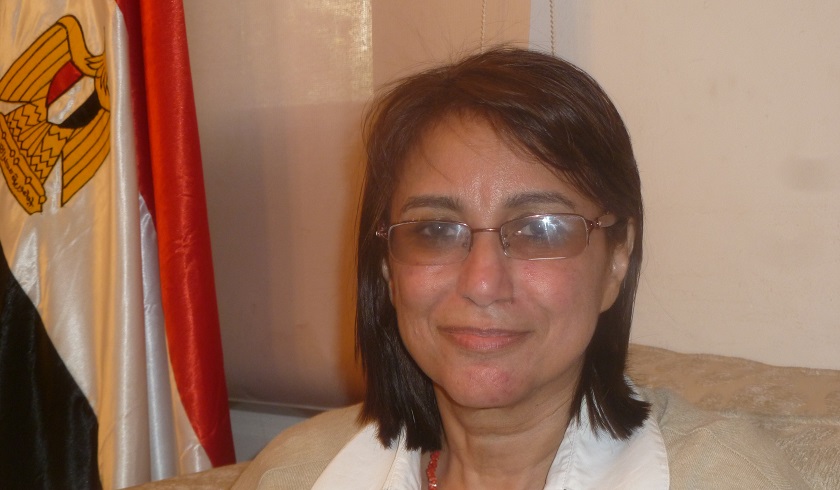
Hala Shukralla

From my recent article at Arab West Report, an interview with Hala Shukrallah of the Constitution (Dostour) Party:

Congratulations on your election as party leader, which as a Copt and as a woman is historic and unprecedented in Egypt. What does it mean both for the party and the country?

It represents a definite step forward, for at a conscious level people have not seen it as significant. A few years back this would not have been possible. The divide was not only visible, but vocalized. It would have created a backlash and instigated an attack, especially utilizing these two factors – woman and Copt.

That this was a non-issue within the party was very significant. It was not a focus at all during elections, showing that the party itself stopped perceiving these elements as a divide between people.

In society, it is another issue altogether. When we are speaking about our party we are speaking about a majority of young people. They have gone through a revolution – two revolutions – and have really changed so much of their thinking. You can understand why these things have stopped meaning so much to them.

But if you look at the way society has accepted this, and even celebrated it, this also is very significant. It shows there is a majority within society that wants to see change.

Your election was also celebrated by the Coptic community at large, which itself has gone through two revolutions and witnesses a divide between its youth and elders. How do you describe the Coptic electorate? As a citizen and voter, what is the average Copt like?

Especially since the 1970s, the Coptic sector in Egypt has been very aware there is a growing conservative element that perceives them as ‘the other’. What they have done is take a step backwards and basically hide in their own community. They have ghettoized, in a way, in the arms of the church, which has been speaking on their behalf.

From my point of view this is dangerous. I understand why they have done it, but they perceive themselves as a bloc, allowing the church to speak on their behalf, and therefore society continues to see them as a bloc, and not as individuals or citizens.

We have gone through this cycle over and over again, but it was broken on the 25th of January, when for the first time they went out into the streets and joined demonstrations. They began to protest as citizens. This was a turning point, very visible and vocal, with Muslims and Christians in Tahrir Square holding hands as citizens.

Pictures of the cross and crescent together became very important symbolism that became ingrained in the minds of Egyptians over the last three years. This has made a difference and left its mark on us.

But with the advent of the Muslim Brotherhood there was an effort to roll back this progress made in the first year of the revolution. Citizenship was debated, whether we can give minorities rights, but maybe not all rights, and so on. The discourse excluded some sectors from being full-fledged citizens. But with their growth and that of the fundamentalist movements there has been a withdrawal, once more, of Copts into the church. And the church is again speaking on their behalf.

Please click here to read the full interview at Arab West Report.


Categories
Prayers

Friday Prayers for Egypt: Tahya Masr

Flag Cross Quran

God,

Generosity is honorable. It is also symbolic. It can be a show. Make real and valuable its recent initiative.

Tahya Masr was the campaign slogan of now-president Abdel Fattah al-Sisi. It translates, ‘Long live Egypt,’ and centered his focus on the importance of the nation. During his campaign Sisi asked for sacrifice, promised two years before positive changes would be felt, and hinted at austerity. He won a landslide victory.

Sisi then re-launched the slogan as the name of a special fund created to support the economy. He pledged to donate half his monthly presidential salary, as well as half his wealth. The prime minister followed suit, as did a prominent businessman. The army offered a billion Egyptian pounds, and an imprisoned, convicted al-Jazeera journalist made a notable personal contribution.

Weigh their hearts, God, and honor them accordingly.

Given the depth of Egypt’s economic problems, this fund is unlikely to make a significant impact. But the message is clear and worthy: Those asking sacrifice are leading by example. Help the people to hold this mindset also, within their far more limited resources. Show them how to work for the greater and common good.

But perhaps, God, Sisi offers nothing that risks his comfortable life. Perhaps the army will reap its gift tenfold in new government contracts. Perhaps the businessman is protecting his place in the order. Perhaps the journalist is trying to buy his way out of trouble.

Your virtues, God, are never secure. They can be manipulated for base causes. Or they can be impinged in base accusations. True virtue produces true fruit, but is protected only by you and your reputation. Lend your honor to those who follow your virtues, God, and restrain those who abuse them.

But from whatever motivation drives those who donate, use the money well. May it help somewhere those who need it. May it be spent transparently. May it set a useful example and inspire similar generosity.

Bless the president and government, God, that they with wisdom will work hard to tackle the many challenges they face.

Bless the army and security, God, that they with determination will protect citizens from harm and know their best role in the land.

Bless the businessmen and investors, God, that they with integrity will increase their wealth and that of all others beside.

Bless the journalists, imprisoned or otherwise, God, that they with courage will know and experience a true rendering of justice as they seek the same in their coverage.

Through these and others, God, multiply all generosity. Secure Egypt’s virtue, and may she live long.

Amen.

Categories
Arab West Report Middle East Published Articles

Sharia in the Supreme Constitutional Court

Islamist protests at the Supreme Constitutional Court, December 2012

From my recent article at Arab West Report, in the series on Egypt’s constitution. This text opens with a consideration of Salafi participation in both the 2012 and 2014 charters, and proceeds then to examine their chief triumph:

This article [219 in the 2012 constitution] was quickly scrapped by the new committee, but the [Salafi] Nūr Party representative continued to press. His lone leverage was in the desire of the transitional government to frame its discourse as anti-Muslim Brotherhood, in response to a popular revolution, rather than as anti-Islamist per se, and certainly not as anti-Islam. The presence of Nūr legitimized greatly.

For their troubles, they received a small reference in the preamble of the constitution. It was agreed upon at the very close of proceedings, and states:

‘We are drafting a Constitution that affirms that the principles of Islamic Sharī‘ah are the principal source of legislation, and that the reference for the interpretation of such principles lies in the body of the relevant Supreme Constitutional Court Rulings.’

But what does this mean for future legal interpretation? Is it only a means for them to save face, or will it have real impact on future constitutional rulings? A partial answer is to examine one of these relevant rulings, from 1996, and see what it says. Two girls were expelled from school for wearing the niqab, a garment that covers all but the eyes. The court ruled against them, as they appealed to sharia law and freedom of religion:

Sharī‘ah establishes the necessity of morality, the judge argued, even quoting the Qur’an. But sharī‘ah nowhere establishes that a woman must wear a niqab. On the contrary, and in dismissive wording, it compared such a woman as kept from interacting with society and going around as a covered ghost.

The constitutional guarantees of belief and individual freedom, the judge explained, are to follow and practice a religion in the manner the religion instructs. Since scholars differ about the nature of a woman’s dress, there is no firm principle on this matter in sharī‘ah. Therefore, the government is within its rights to establish a dress code as it sees fit, while staying within the principle of modesty as is clearly required by Islam.

Sharī‘ah, the judge wrote, is principally about truth and justice, and is naturally progressive to change with the time and place. This guarantees it flexibility and vitality, so as to guard its purposes (maqāsid) in preserving religion, life, reason, honor, and property. No one scholar’s view should be made holy over another’s, and even the Companions of the Prophet made their rulings based on the benefit of the people. There is no reason to either consider or cancel them, but to judge independently based on the benefit of today.

Salafis originally wanted to tie sharia interpretation to traditional rulings, not just purposes, as interpreted by senior scholars from the Azhar. These provisions were written into the 2012 constitution but lost in its 2014 amendments. Seeing such a ruling as this, it is clear they do not trust the court.

But maybe they got what they wanted, through the court, even in what evaded them in 2012:

In order to replace the sharī‘ah-escaping word ‘principles’, the Nūr Party sought to change it in Article 2 with the more strict ‘rulings’ (ahkām). They did not gain consensus, and even in Article 219 the words translated as ‘rulings’ do not reflect the strictures of the Arabic ahkām.

But the SCC states in its May 18 judgment that Article 2 is based on the ahkām of sharī‘ah, in its foundations and general principles, using language reminiscent of Article 219. Furthermore, these ahkām may not be violated where they are maqtū’ bi thubūtiha au bi dallālitiha. This phrase means that the rulings are clear and proven, either by the Qur’an directly (thubūt) or through jurisprudential reasoning (dallālah).

But this is not restricted only to hukm qata’i, where there is one accepted meaning only. It includes also hukm zanni, where many meanings and interpretations have been suggested. The point is that sharī‘ah encompasses the historic work of scholarship, and legislation must not transgress its bounds. Within this sharī‘ah heritage, no voice is sacred and new voices may emerge with the times. But as the parliament creates law, the judiciary judges within the hedge of sharī‘ah. This is not the language of a judge seeking to ignore it.

But perhaps this is all legal semantics, and what really matters is who is in charge. From the conclusion:

It may not be the language of the constitution that is of paramount importance, but who writes it. The 2012 constitution signaled a transition to a new Islamist order; the 2014 signaled a reversal. The reversal, however, includes preamble language authored by the Salafis, and the terms of debate bound by Article 2.

If correct, this interpretation suggests the forces of reversal remain in control, and less-than-Islamist rulings are likely to issue from the SCC. But it also suggests that Salafis have a place at the table, and may through this constitutional nod win either legislation or rulings that reflect conservative religion.

In this sense, does their defense of sharī‘ah mean also the defense of their existence? It is too early to tell, but it has resulted, at least, in a public constitutional reminder that sharī‘ah remains the basis of legislation.

That this reminder can be interpreted flexibly fits well the overall ambiguity of the political situation, Nūr included.

Please click here to read the full article at Arab West Report.

Categories
Arab West Report Middle East Published Articles

Saad al-Din al-Hilali: An Azhari Rails against Religion in the Constitution

Saad al-Din al-Hilali

From my recentarticle at Arab West Report, continuing a series on the people who wrote the constitution:

Sa’d al-Dīn al-Hilālī is a professor of comparative jurisprudence at Azhar University, where he is acknowledged as an expert in both sharī‘ah and international legal systems. Perhaps for this acumen he was selected as a member of the Committee of Fifty tasked to amend the Egyptian constitution. But he does not know, because he was not one of the three members chosen to represent the Azhar officially as an institution. Instead he was picked in the category of ‘general personalities’, learned of his selection via the television, and has never received an explanation why. He is quite happy not knowing, as he can express his appreciation to God alone.

The Azhar is the premier religious institution in Egypt, perhaps in the Arab world. Many consider it to be a ‘moderate’ body; if so, Hilali is a radical in the opposite direction:

Though Hilālī preferred not to characterize the internal workings behind either the disagreements or consensus, he spoke frankly about how he communicated to his colleagues on the topic of sharī‘ah. Most accepted what will be described below, he said. Some, who prefer to rule the street by claiming they ‘protect’ sharī‘ah, taking advantage of illiterates in doing so, were less pleased.

Article 2, for example, was previously inserted in the constitution only to satisfy these illiterates. They believe such a clause is necessary for them to go to heaven, and all the while they are laughed at by those who exploit them in pursuit of power. What does it mean that Islam is the religion of the state? Nothing. What are the principles of sharī‘ah that must be the main source of legislation? Only the concepts of mercy, justice, and equality, over which no one disagrees. If the United States were to draft sharī‘ah into its constitution, would that make everyone a Muslim? If Egypt were to make Christianity the religion of the state, would he become one? No, these are personal matters between the individual and God, each of whom interprets religion in his own way.

If this sounds like the general understanding of religion in the West, read on:

Fair enough, perhaps, but does not Islam as a religion demand some measure of public enforcement, based on the will of God? Muslims are tasked with the role of ‘commanding right and forbidding wrong’, so what is involved in doing so?

Correct interpretation, Hilālī argued, is that right and wrong are calculated for all, not by the individual, and can be equated well with the principles of sharī‘ah as the constitution states. He listed as examples helping parents and neighbors, working rather than unemployment, and refusing terrorism and killing, and said the rest is to be worked out by the judiciary and the police. As for the famous hadith that instructs the Muslim to correct a wrong with his hand if he is able, with his tongue if he is not, and with his heart as the least requirement of faith, Hilālī accepted it. The hand is the hand of the state, the tongue is the voice of the preachers giving enlightenment, and heart is for everyone else outside of these contexts. In this he is in line with much historic interpretation of sharī‘ah, but not all.

But this is fine, he might say. After all, sharī‘ah is meant for guidance and knowledge. Once its details are sought to be enforced in the public square one Muslim will clash with another over what is allowed and what is forbidden. This is in fact what happened to Egypt, and remains in the current struggle. Europe eventually rid itself of religious authority, he said, and this was Egypt’s trial now. America has achieved this light in its constitution, he believed, but now seeks (through support for the Brotherhood) to deny it to us.

Please click here to read the full article at Arab West Report.

Categories
Prayers

Friday Prayers for Egypt: Early to Rise

Flag Cross Quran

God,

With a new president comes a new government, and with it a new promise. We will start our day at 7am.

Candidate Sisi did not offer many specific policy details, but he offered a specific commitment to work. President Sisi now demands it throughout the government.

It is not yet obliged on the population, though he hopes to set an example. Egyptians are well known for their late hours. The bureaucracy is long accused of less than diligence. Can Sisi change a culture?

And if so, will it help? Or are problems so entrenched no amount of elbow grease can solve them?

God, inspire Egyptians to work. Be it from Sisi, be it for Egypt, but may it hold and find motivation in you.

God, give Egyptians work. Be it from the state, be it from initiative, but may the many unemployed find labor.

God, fulfill Egyptians in work. Be it from wages, be it from meaning, but may that which they do have value and purpose.

For too much of reality violates the above. Help Sisi and the government reorient this reality. Help the individual Egyptian to reorient himself.

7am is not a sacred hour, God, but it is a good one. Lead each to know the hour of his awakening, and in it, may he own responsibility for all you have entrusted. Give more to those who prove faithful.

Begin a new promise. May it not prove false. Let each Egyptian start his day with you.

Amen.

Categories
Arab West Report Middle East Published Articles

Ehab el-Kharrat: A Protestant Political Leader in Egypt

Ehab el-Kharrat

I met with Ehab el-Kharrat in his office just off Tahrir Square on March 15, 2014, shortly before the presidential elections. Kharrat is one of the founding members of the Egyptian Social Democratic Party, and though the party remained neutral, he endorsed Hamdeen Sabbahi, one of the few high profile Coptic leaders to do so.

As we know now, it turned out to be a losing proposition, as he was crushed by Abdel Fattah al-Sisi. But as Kharrat explains, it was a principled vote more than one to back a likely winner. Being principled is important to Kharrat, and the interview explores this theme in relation to his Christian faith and deep involvement in politics.

The following is an excerpt from the transcript published at Arab West Report.

You grew up in a leftist home and had a personal conversion. Perhaps this is not the normal story of Christians in Egypt?

My father is one of the most prominent intellectuals in Egypt. He is old now at 88. He is a novelist, literary critic, and short story writer who has been acclaimed and received the most prominent awards in Egypt and the Arab region. He was even nominated by Naguib Mahfouz to be the second Nobel Prize winner from Egypt.

He used to be a Communist Party leader as a young man though he moderated as he became older. He was imprisoned two years under King Farouk. I read Marx and Freud and Sartre before I read the Bible, actually. I had a personal experience with the Lord when I was 18 with the youth of Kasr el-Dobara Church, and it was an intense spiritual experience.

I became very active in the church and I had to struggle with the question of should I still be politically active or not. I had been an active member of leftist groups at Cairo University, though never a member of secret organizations.

I became a preacher, a youth leader, and an assistant pastor at Kasr el-Dobara and was instrumental in our phenomenal growth from a couple of hundreds to our current count of five or six thousand. I was the interpreter for Billy Graham and Louis Palau, and for a number of years I was an evangelist. I think I got thirty or forty thousand professions of faith. I was counting at that time.

Most American evangelical Christians tend to lean toward the right rather than the left. Why do you find the left is a better fulfillment of your Christian faith?

If you study the Bible carefully and its emphasis on justice, the rights of the poor, anti-exploitation, and protection of the weak and vulnerable, you cannot escape that this is the brunt of the political position of the Biblical writers.

Of course there is the aspect of creation of wealth and this is a social democratic position too. I am not against personal entrepreneurship, being creative, or being rich. Many evangelicals in America are not giving enough attention to justice or the poor, but if you can find a political tendency in the Bible this is it.

It is not ‘name it and claim it,’ ‘be as rich as you can,’ or ‘trickle down policies.’ You cannot find these in the Bible. Even ‘compassionate capitalism’ as Francis Schaeffer says. When the Bible talks about the rights of the poor it is clear it is not about mercy or compassion. It is about justice.

Please click here to read the full transcript at Arab West Report, including extensive comments about his participation in the January 25 and June 30 revolutions. Here is a sample:

You don’t want to over-spiritualize the situation, but here is a spiritual question. In recent days some of the leaders of the popular opposition against Morsi have said there was police and military involvement. This suggests it was not just a grassroots movement, it was also a state manipulated movement.

Look, the movement started from our ranks, young people from the National Salvation Front. They gathered many signatures against Morsi and it was clear they had popularity. They were approached by the police and the military intelligence, and they talked to them. It is not like they became their agents, they cooperated, which is legitimate because we made clear we did not want to destroy state institutions only topple Morsi.

The signature campaign started the first of May, and I signed publicly the 10th of May with all our leaders. By early June it was clear the police and military intelligence were not going to oppose us. We made friends with the institutions, yes, but the movement was not manipulated by the government.

So this is my question, then: A Christian in politics must be straight in all he does, but politics can be about maneuvering, even manipulation. I don’t know if or where the line is crossed, but as a Christian, were lines crossed in the movement against Morsi?

I did not do any under the table negotiations and I think politics should be a clean game. The Brotherhood said that politics is a dirty game, and they played it dirty and paid the price. Whoever is not of integrity will lose. I believe politics should be straightforward whether you are a Christian or not. If you play by principles at the end you will prevail.

If the police or military intelligence dealt with us fair and square, it was ok. If they want to manipulate us we will not be manipulated. If they want to intimidate us we will not be intimidated. But if they ask if we will burn buildings and attack the Ministry of the Interior and we give them our word we will not, this is clear politics, it is clean.


Categories
Excerpts

Christians and Political Manipulation

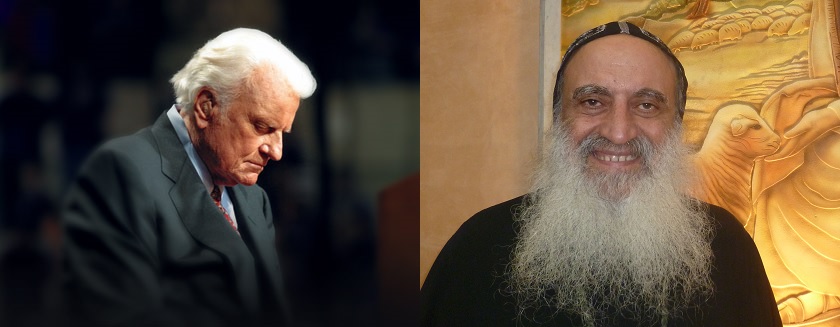
Graham and Boula

Many Egyptians these days shed no tears over the demise of the Muslim Brotherhood, seeing in them an unhealthy and manipulative merging of religion and politics. But religion, politics, and manipulation are known the world over. First take a look at this excerpt from Christianity Today, describing two evangelical leaders during the Jimmy Carter presidency:

Balmer also describes Jerry Falwell’s mendacity and Billy Graham’s duplicity as they worked to bring Carter’s presidency to an end. Falwell brazenly lied in his report that Carter had told a group of evangelical leaders he supported gay rights. Eleven days after telling the Reagan campaign that he wanted to “help short of [a] public endorsement,” Graham reassured a Carter liaison that he was “staying out of it.”

I hate to think these descriptions are true, but perhaps this only shows we are quick to believe the worst of the other while doubting it for our own kind. The anecdotes are from a new biography of Carter, so I can only assume, perhaps wrongly, it was well researched.

But no research is needed to see the all-but manipulations of Bishop Boula of the Orthodox Church. Even here my ‘all-but’ exposes my will to disbelieve, but how can you doubt when his efforts are admitted? Here is a translation of his recent comments on Egyptian television, translated by Middle East Monitor (video included):

Bishop Paula (Boula): How do I estimate it? Let me tell you what I would do for instance in Tanta. I come to each one of the churches. Let’s assume that in this particular church there are six priests. We divide it into six squares and each priest is put in charge of one square and that would be the region he is responsible for. We tell the priest: father, you are in charge of this region. How many homes are there within it? I want to appoint one young man for each group of thirty homes to prompt them and make sure to bring out those who have not yet come out. The young man who is in charge of the thirty houses would submit a report about each of these houses, one by one. In this way, we would know who went out and who did not. We call the father in charge by phone and he goes and knocks on the door. So, we have extremely accurate information about the ratio of those who went out and those who did not.

Presenter: I am saying this to you but it might be possible that those who hear us might take to mean something else. Was the Church playing politics?

Bishop Paula: No, no. Look. The Church is playing patriotism.

Presenter: It plays patriotism?

Bishop Paula: It has a patriotic role. The Church has always been a patriotic church. And in this particular time it should have a strong patriotic role. The patriotic role is the prompting role. And to be telling the truth, it includes, if possible, unifying opinions through persuasion as to who is the best (candidate).

If not for that last statement, the ‘all-but’ could remain. It is, perhaps, patriotic to stimulate and even ensure the voting of the flock. Christians should be good citizens; the church should help them know how to engage their civic responsibility.

But could he not help himself? Did the Christian in him demand he reveal the full truth? Did his pro-Sisi/anti-Muslim Brotherhood giddiness expose it? Is he just proud of himself and the monumental task he organized? Bishop Boula invited me into a meeting once during parliamentary elections in 2011. I saw his efforts then, but did not notice any ‘persuasion’. Of course, that was just one session.

But, oh, this is fuel for the Egyptian political fire, and it is well deserved. Pope Tawadros, do you have a comment given your insistence of church neutrality? I wrote you an ‘all-but’ interpretation in that article. Has Bishop Boula made me a liar?

A worthy question also for the Muslim Brotherhood, for Jerry Falwell, and for Billy Graham. May God honor you all for the good you sought within your best interpretations. May he hold you all accountable for the means by which you pursued it.

And may be be merciful to us all for our many manipulations, both great and small. We self-justify far too easily.

Categories
Excerpts

Egyptian School Children on Sexual Harassment

These two videos, with translated subtitles, come from Dignity without Borders. The first interviews boys about their perception of sexual harassment, while the second gets the girls’ perspective.

Both are intriguing and shed light on what is widely acknowledged as a significant social problem. Listen in and find out why.

Categories
Prayers

Friday Prayers for Egypt: Sexual Harassment

Flag Cross Quran

God,

The problem is well known: Over 90 percent of Egyptian women complain of sexual harassment. The problem is well witnessed: Repeatedly at mass rallies in Tahrir women are sexually assaulted by groups of men.

Finally, perhaps, the problem is well addressed: The cabinet passed a law to criminalize such conduct and is undertaking plans to address the issue culturally.

The new administration of Sisi could hardly do otherwise. His inauguration celebration witnessed another incident, marring what he hoped would be a joyous occasion launching a fresh beginning.

Instead, the bickering blame game began. Some accused the Brotherhood, others the lax morality of a coup. In it all the suffering woman was not lost; Sisi brought her flowers.

But God, are suffering women lost? Is new legislation enough? And how long will it take to change a culture?

Protect women from violence, God. Protect them from words. Protect them from eyes. Protect their dignity in all public and private space.

Cultivate men. Refine their manners, God; increase their chivalry. Change their mentality. Discipline their passions. May they esteem each and every woman they encounter.

But plenty must change outside the individual as well, God. With whatever hope the revolution brought, it has broken down and is yet to build. And even before there was much that was crumbling.

Create a productive society that honors courage and beauty. Occupy idle hands; stimulate idle minds. But address this issue not through distraction, but through purity. Transform idle hearts.

Promote modesty, God, and pursue justice. Identify the criminals and redeem them. Convict the wayward thoughts of all, and have mercy.

May Egyptians be well loved, and well honored. Men and women together.

Amen.

Categories
Excerpts

Block 1, Cell 8: A Letter from Damanhour Women’s Prison

mahinour

From Mada Masr, publishing a letter by Mahienour al-Massry, an activist from Alexandria imprisoned for illegal protest:

Ever since I set foot in Damanhour women’s prison and was placed with my inmates in ‘Block One’ — The cluster of cells assigned to those accused or convicted of embezzlement — only one thing has been on my mind and I repeat it like a daily mantra: “Down with this classist system.”

Most of my inmates have been imprisoned for defaulting on the payment of instalments or small loans. They are loans taken out by a mother buying some direly needed items for her bride-to-be daughter, or by a wife who needed money to afford treatment for her sick husband, or a woman failing to pay back a LE 2,000 ($280 US) loan on time, only to find herself slammed with a LE 3 million ($420,000 US) fine in return.

She recalls a similar, but more high profile recent case:

At this point, news reaches us of Hosni Mubarak’s three-year sentence for charges of widespread corruption, embezzlement of funds, and financial fraud in the ‘Presidential Palaces Case.’ Cracking up, I ask them, “What kind of future do you expect me to have in an unjust society, in which the regime thinks that Umm Ahmed (‘Ahmed’s mother’), who has been incarcerated for the past eight years and still has six more to go for signing a bad check worth no more than LE 50,000 ($7,000 US), is more of a dangerous criminal than Mubarak?”

Let us imagine that these women are indeed guilty, have broken the law, and are justly imprisoned, however unjust their sentence and the system behind it may be.

Mahienour and other January 25 activists forged their revolution at least in part to overturn this system. I imagine other activists are laboring with those like Umm Ahmed, to provide legal counsel and advocacy for those perhaps guilty but entrapped in this system.

This post is not for evaluation of Mahienour’s option; this choice is three years ongoing with mixed but still inconclusive results, even if she has found herself on the wrong side of the bars.

But even so she counsels:

Freedom for Umm Ahmed, who hasn’t seen her children for eight years. Freedom for Umm Dina, who is the sole provider of her family. Freedom for Niamah, who agreed to go to prison instead of someone else in return for money to feed her children. Freedom for Farhah, Wafaa, Kawthar, Sanaa, Dawlat, Samia, Iman, Amal and Mervat.

Our pains compared to theirs are nothing, as we know that there are those who will remember us, say our names from time to time, proudly mentioning how they know us. Instead, these women, who deserve to be proudly remembered, will only be mentioned at most in family gatherings.

Do they deserve freedom? Allow lawyers and judges to argue over this. But they deserve remembering. They deserve advocacy.

Lord, when did we see you in prison and go to visit you? … I tell you the truth, whatever you did for the least of these brothers of mine, you did for me.

Surely there are a number of activists who intercede already for the likes of Umm Ahmed, but is this not a challenge to lay before the Egyptian church?

Lawyers and judges can argue over Umm Ahmed, but does she even have a lawyer? What if Umm Ahmed and all in similar circumstances knew they could go to their local church and find advocacy?

This challenge would not be Mahienour’s. It is not to overturn the system, not even to reform it. Let other activists labor in these struggles, as warranted.

But that someone might stand with Umm Ahmed in the courtroom, plead her case and seek at least the minimum sentence, would this not be a service worthy of the church?

Some might be bold and say the church should stand with Mahienour also. Perhaps they are right; I do not know the details of her case. If she is jailed unjustly, if the law imprisoning her is unjust, should not the church speak?

Let Christians debate this; some might find it an improper interference in politics. Perhaps it is.

But there are no politics with Umm Ahmed. There is no statement against the system. There is no public protest, there is no agitation.

There is only solidarity with the occupant of Block 1, Cell 9. And 10, and 11. Maybe 12 deserves her fate. But Cell 13, and 14, and …

The Anglican Church of Egypt already has a program to visit foreigners imprisoned in local jails. Some have committed crimes, others are detained on visa irregularities. But the church regularly visits to encourage and furnish needed supplies. It is a good application of the above verse, and donations are welcome.

But could the churches of Egypt do more? If not the churches, could the Christians? Could they do so in close partnership with like-minded Muslims?

If so, I imagine they would please Mahienour immensely. But more importantly, they would please the women of Damanhour prison, their families, and even, it could be imagined, the state.

Here, Mahienour will likely disagree. But which would the state prefer? An activist calling “Down with this classist system,” or citizens working quietly on behalf of individual cases of justice? The guilty would still be sentenced, but the women and their families would know they were treated right. The church would ensure it was not otherwise.

And with accumulated evidence, the church could possibly ensure that all are treated right. Once a critical mass of accountability is reached, the system might naturally reset. A large segment of popular discontent with the regime might be quieted. A revolution might not be necessary.

Surely Mahienour would have been happier if she had the last three years of her life back, and with it a more just society. Let activists and citizens argue the type of activism needed, but surely there is some.

What kind can the church provide?

Categories
Prayers

Friday Prayers for Egypt: Nearing Normal

Flag Cross Quran

God,

Several hours from now Egypt will have a new president; several weeks more and a parliament is promised. These are the last two steps of the roadmap to rebuild the state, presumably after which it will function again normally.

But God, make normal good. Indications can be read toward either better or worse.

President-elect Sisi has been long discussed, seen alternately as a savior or a devil. Only time will tell, judged not only by his own character and intentions, but by the ability of the people to hold him accountable, or overthrow him entirely.

The latter is the new normal; the former has never been. God, make the presidency work, and make it work for good.

But before Sisi’s inauguration, the outgoing interim president set the rules for the parliamentary contest. The number of seats is increased. The slice for political parties is small. Copts, women, youth, farmers, disabled, and expats all have a mandated share. Some say the law resets a Mubarak-era parliament. Others see better representation and empowerment of local actors.

Some is normal, some is new. God, make the parliament work, and make it work for good.

For parliament, more prayers will come and the law may yet be modified. But for Sisi on the verge of his presidency, make known your will with him as head of state.

Bless him and strengthen him. Increase his wisdom and increase his humility. Hold him accountable; hold him to the right. Bless Egypt through him; bless Egypt despite him.

You have made him important, may he make others so. You have given him power, may he give it to others. You have given him privilege; may he not only privilege his own.

The latter was the normal, God; the former is of the spirit needed. Transform Egypt so that all leaders will serve. May Sisi set the chief example.

But among none, God, is this normal. It takes strong, balanced, and limited institutions. Its takes your character, and your heart.

Rebuild the former, and among all Egyptians, enliven the latter. Egypt is technically close to finishing her roadmap; only you know if she is close to her resurrection. May both come, and soon.

Amen.

Categories
Lapido Media Middle East Published Articles

Coptic Activist Dissolves Movement ahead of Sisi’s Electoral Triumph

Hany al-Gaziri
Hany el-Gezery, on the streets of Shubra, a Cairo neighborhood with a high percentage of Copts

From my recent article in Lapido Media:

The founding father of modern Coptic activism retires a happy man.

Egyptian Christians celebrate the election of a new president in hope of a new dawn of equality.

Two days before the vote, Hany el-Gezery, the sixty year old founder of Copts for Egypt, announced the dissolution of his pioneering movement.

‘In light of our great confidence in the noble knight that will govern, whatever his name,’ he wrote in his final statement, ‘we call on all revolutionary and Coptic movements to follow our lead and stand as one to build the future of Egypt.’

Gezery began his activism in 2005 as one of the few Christians in the Kefaya movement opposed to then-President Hosni Mubarak. Throughout his activism he labored to involve Copts in the secular political struggle.

But in 2009 Gezery made a more direct religious appeal, partnering with an Orthodox priest to found Copts for Egypt. Fr. Mattias Nasr published a popular newspaper detailing cases of discrimination, but distributed it only within the church.

The alliance aimed to shift an emerging Coptic activism from church to street.

‘We were the first Coptic movement to work in the streets,’ Gezery told Lapido Media. ‘At that time no Christian was bold enough to even open his mouth, and any demonstration would be held inside the cathedral.’

Copts for Egypt differed by coordinating with opposition political parties to recognize and oppose discrimination within the Mubarak regime.

On February 14, 2010, they led the first Coptic protest outside church walls. On January 7, 2011 they concluded a week-long rally against the bombing of a church in Alexandria.

Eighteen days later the January 25 revolution erupted. Youth activists from Copts for Egypt were active throughout, going on to found or join many other diverse movements.

Gezery now calls for them also to end this stage of the struggle. ‘All Egyptians must dissolve back into society,’ he wrote, ‘which after June 30 is free from religious factionalism.’

On June 30, 2013 the popular revolt began against President Mohamed Morsi of the Muslim Brotherhood. After one year in office he was ousted by now president-elect Abdel Fattah al-Sisi, the landslide winner in last week’s elections.

In declining to name ‘the noble knight’ of his statement, Gezery was keen to emphasis his respect for both candidates, and rest his confidence on the era, not the man.

But the man causes worry among other Coptic activists, including his own disciples.

One of these activists is now the general-coordinator of the Maspero Youth Union. Another is an advocate for missing underage Coptic girls. Please click here to read their objections and the rest of the article at Lapido Media.


Categories
Atlantic Council Middle East Published Articles

Egypt, the Election, and Sectarian Analysis

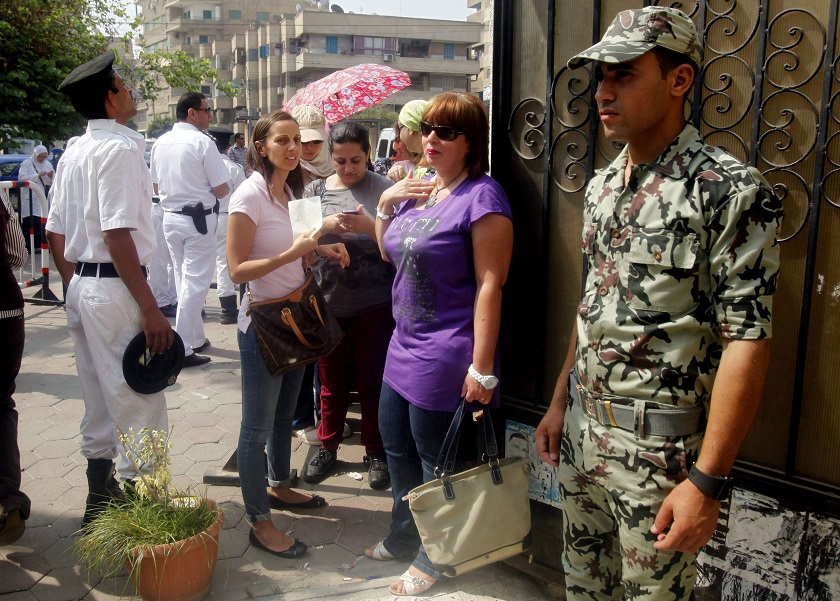
Uncovered, presumably Coptic women stand in line to vote

From my latest article at Egypt Source, exploring the controversial presidential election turnout:

One day before the beginning of presidential elections, the Egyptian Center for Media Studies and Public Opinion (ECMSPO) published the results of a counterintuitive poll. Based on personal interviews with 10,524 citizens throughout Egypt’s governorates, they predicted a turnout of only 10 percent.

More shocking, and controversial, was their estimate that 48 percent of presumed winner Abdel Fattah al-Sisi’s votes would come from Christians.

On the first day of voting the webpage of the Freedom and Justice Party (FJP), the political arm of the Muslim Brotherhood, seized on this survey. Publishing pictures of old men, smiling ladies, and assortments of priests and nuns, they featured the sectarian-laden headline: “Elderly, Women, Christians … the Trinity of Election Theater Today.”

But as reports streamed in of otherwise empty polling stations, this headline gained credibility. As the Presidential Elections Commission (PEC) decided to make the second day a public holiday, and then extend voting to a third, it cemented the impression even more.

The article takes a closer look at the polling organization, which doesn’t seem quite right. But the official totals of 47 percent turnout don’t quite seem right either. A closer look is given to the size of the Coptic electorate, but also, like Saturday’s post on Pope Tawadros, wonders about their behavior too. From the conclusion:

But cynical also is Muslim Brotherhood use of this demographic reality. To call the elderly, women, and Christians part of a ‘Trinity’ is to use theological language instinctively repulsive to Muslim sensibilities. That they call elections a ‘theater’ is reasonable given their organizational viewpoint; that they play games with religious minorities, gender, and age – as if these did not have the rights of citizenship to choose freely – is not.

Of course, the Muslim Brotherhood is not the only group making sectarian usage of the Copts. Lamis al-Hadidi, a pro-government media personality on the private CBC channel, urged them to vote reminding of their sixty churches burnt by terrorists. She, like the FJP, has crossed a line.

Perhaps individuals within the church are privately backing Sisi behind the scenes, and directing Copts to vote for him through internal discourse. If so, they too are crossing a line. But the church has had good sense to avoid this distinction publicly, officially instructing priests not to directly support a candidate.

Whether turnout is high or low, it may well prove that together, this Trinity elected Sisi. The Brotherhood may be right to fume, but they are wrong to do so with such sectarian language. Unfortunately, it is only one more example of the morass into which Egyptian politics has descended, and the mud slung by many.

But mud is slung in advanced democracies as well, and generally speaking it does not hinder straightforward readings of electoral results. The election of Sisi was supposed to be simple, though Egypt’s democracy is far from mature. Contested turnout figures are just one more bump in a very long road.

Please click here to read the full article at Egypt Source.

Categories
Prayers

Friday Prayers for Egypt: Election Turnout

Flag Cross Quran

God,

Help Egypt to know herself, and to know what she has done. When millions of people vote, this should be straightforward.

But how many millions? In one sense it doesn’t matter, as Abdel Fattah al-Sisi was elected with 97 percent of the vote. Spoiled ballots outpaced his only challenger.

With referendum-like numbers, however, turnout means everything. Some put the figure as low as 10 percent, but officially it reached 47. Local sparring exit polls are not always the most reliable, but during the contest the Egyptian media was in a frenzy over empty polling stations. Last minute decisions by the official election commission granted a national holiday for day two, and then decided to extend the vote to a third day.

If truly 47 percent, Sisi’s total is a respectable number, indicating widespread support. By contrast, Morsi’ election victory of Shafik in a highly contested race was only four percentage points higher.

If truly less, God, two scenarios are possible. First, a still popular Sisi had people fraudulently inflating his numbers to make up for an apathetic public. Second, his popularity itself is inflated, the people are not behind him, and perhaps are still behind Morsi.

But official numbers are official for a reason, and must be demonstrated false no matter the impression. The European Union’s observation team appears to validate the figure.

God, if there is fraud, expose it. Build Egypt on a solid foundation, that her house not collapse in the sand at the first onset of storm.

But if by contrast, God, you have exposed the fraud of the Brotherhood and rallied Egyptians around a better foundation, give confidence to the people and state to move forward together.

Either way, God, once he is inaugurated, bless President Sisi. May he be a wise and true man who governs well. Refine him, and may the people and state hold him accountable for all faults, preventing any to come. Help him to fulfill his charge.

And may he encourage the structuring of a system that builds institutional accountability, for a stronger foundation than that of any man.

To build well takes time, God, but it also takes skill and sincerity of intention. Give Egypt all that is necessary, and include in this blueprint a deep knowledge of where she stands.

For it is not just the turnout over one man’s candidacy, God, nor the hope millions have invested that he can put things right. It is still over the essential questions of identity, justice, and empowerment – which have plagued Egypt for years.

Unite Egypt around what is right and true, God. If uniting around Sisi is a first step, bless it and grant a second. If it is a false step, hold her footing that she may regroup. Either way, give peace and stability and discernment of spirit. Bless Egypt, her state, and all her people.

Amen.

Categories
Arab West Report Middle East Published Articles

Church and Politics Under Pope Tawadros

Sisi, flanked by Bishop Bishoy (L) and Pope Tawadros (R)

Yesterday I linked to my article on Christianity Today about the role of Copts in the current presidential elections season. It is a true article, but space limits the ability to probe the full issue of how they have been involved, particularly through leadership in the Coptic Orthodox Church. Here is a longer treatment, excerpted from my article at Arab West Report:

By appearances, the Coptic Orthodox Church is doing everything wrong. But appearances can be deceiving; officially, they are doing everything right.

But there is a messy in-between which casts doubt on it all. As convoluted as Egypt’s post-June 30 transition has been following the popular deposing of President Muhammad Mursī, the church has matched it step-by-step.

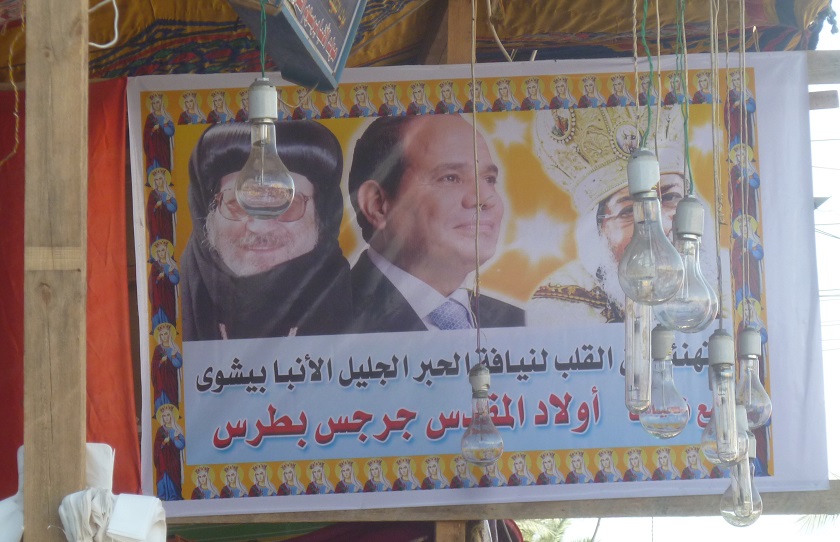
The appearances are obvious. Posters are seen throughout Cairo bearing pictures of Pope Tawadros alongside the front running military candidate. Some call out to the faithful: “The Lord Jesus calls you to support Field Marshal ‘Abd al-Fattāh al-Sīsī to preserve national unity.” Others give the reason “to stamp out terrorism,” and a third, “to stamp out the Brotherhood.”

Text messages have also been sent bearing similar slogans, calling on Christians to give their vote to Sīsī. This is confirmed by Ihāb al-Kharrāt, a Coptic founding member of the Egyptian Social Democratic Party, who in an interview with the author on May 15, 2014 called it “an abuse.”

The question is, by whom? The identity of sponsors is unknown, and the church has publicly denied any relation to the campaign on its Facebook page. Instead, as early as January 28, 2014 Pope Tawadros was rebutting rumors he was supporting a presidential candidate, and on May 4, 2014 he reiterated the church’s stance of neutrality. The church has no political role, he said on May 13, 2014 and his presence in Mursī’s removal on stage with al-Sīsī and Sheikh Ahmad al-Tayyib of the Azhar reflected national institutional backing for the pulse of the street. Thereafter, priests are instructed not to directly support any candidates.

If this official position is clear and correct enough, there is a convoluted undercurrent. On March 23, 2014 Pope Tawadros was quoted by Kuwait’s al-Watan TV channel saying al-Sīsī had a national duty to run for president. Tawadros praised him as having the discipline necessary to run the country, though everyone was free to choose the one deemed most suitable. During the interview he also disparaged the Arab Spring, describing it as a conspiracy to break up the region into smaller states.

The next day the pope backtracked, telling al-Shurūq newspaper that he had not made any official statements or given any interviews over the past 10-14 days. Notably, he did not deny the content of the interview, though this was implied. But the video of his interview was later released stating the opinions in question, though the footage is not of great quality and appears edited, possibly doctored. Even so, it appears the church made a misstep in revealing its private convictions.

But even its public stance is open to interpretation. The Facebook page which denied relation to the posters called on Egyptians to participate in the presidential elections. This itself is a political step, though perhaps legitimate in terms of fulfilling national obligations. But to what end is this participation designed?

It is these national obligations Pope Tawadros once again emphasized on May 27, 2014 the last day of voting before polls were unexpectedly extended to a third day. In the face of a Muslim Brotherhood-backed boycott campaign joined at least passively by many youth, he declared this to be unacceptable negativity and urged people to vote.

But the government campaign begs interpretation that this election is less a contest between candidates than a quest for the legitimacy of turnout. 51 percent of the eligible electorate participated in the 2012 second round vote that installed Mursī over Ahmad Shafīq as president. Mursī received roughly 13 million votes. In his presumed victory al-Sīsī would want to at least match these numbers to validate officially his popular support beyond the many substantial street rallies which buttressed the popular overthrow.

Having given many signals of favor toward al-Sīsī, official or otherwise, is church neutrality now only a superficial position? In calling for participation, is it simply echoing the state call to support, in effect, a referendum on al-Sīsī? If his opponent Hamdīn Sabbāhī stands little chance of winning, should the church position be interpreted otherwise?

It is useful to look back at Pope Tawadros’ papacy to judge the fine line he has walked between involvement in and abstention from politics.

The article continues by examining the pope’s statements about and within the political arena, since his selection in November 2012. Judging from this history, the conclusion tries to examine the current situation:

The pattern that emerges gives an indication of what it means. Despite earlier stated intention to remove the church from politics and allow civil society to speak on behalf of Copts, Pope Tawadros was quickly drawn in. His remarks largely, though not exclusively, pertained to issues that affect the Coptic community. The 2012 constitution opened space for a threatening Islamism, and the attack on the cathedral in April 2013 was unprecedented and largely ignored by Mursī, despite initial condemnation. Statements of allowance for Coptic citizens to protest suggested an effort to stay within church matters, in the spirit of the January 25 revolution in which Copts acted without church direction, even if he earlier discouraged demonstrations.

But in endorsing the protest against Mursī a day before military action against him, Pope Tawadros took a political stand. It was not necessary, and it compromises his interpretation of appearing with al-Sīsī a day later. Yes, his appearance was a national statement of unity, but he appears an eager participant. It was a full endorsement of the order to come, and a condemnation of what came before.

But fair enough, it was a national action. Subsequent reception of al-Sīsī can be seen as honoring a national hero. And endorsement of the constitution can be seen as in line with support for the national roadmap and overall stability. They can also be seen otherwise, but this is the fine line he is walking.

Therefore, urging participation in presidential elections can be seen as more of the same. It is a national measure to rebuild the state, and it can be imagined he will do similarly with coming parliamentary elections. What will be tested then will be his opinion of candidates, as there is likely to be significant Islamist participation through the Salafi Nour Party. They are currently allies against Mursī; will the church be similarly neutral between candidates then, officially?

But this narrative is complicated by the controversial statements to al-Watan, along with the semi-denial. Having tightrope-walked for so long on the borders of political-religious legitimacy, it is not surprising to see such a mistake. But it is not enough to undue his official rhetoric. The church is neutral toward all political candidates; it simply plays its role as a national institution to support the state and encourage popular participation in governance.

To say otherwise requires descending into a conspiracy that may well be present but must be proven. But even without the conspiracy, it is possible to criticize the church for playing this national political role. This can be on the basis of principle – that religion should stay out of politics altogether. It can be on the basis of wisdom – that if there is a reversal in favor of the Islamists the church now has an entrenched enemy. Or it can be on the basis of the common good – that Egypt and her Christians are served better by active Coptic citizenry, not clergy.

But this calls for a vocal Coptic lay leadership that is emerging, but not yet mature. This is unsurprising given the decades of church paternalism under Pope Shenouda, encouraged by the long authoritarianism of Mubārak. Perhaps Pope Tawadros is being pushed back into the old paradigm; perhaps he is willing and eager. Perhaps there is little alternative yet and he acts against his better principles. Noteworthy also is that Pope Shenouda began his papacy as a vocal critic of Islamist policies, under President Sādāt. Banished for 40 months in a desert monastery, he returned much more subdued and cooperative under President Mubārak. It can be estimated that contrary to his predecessor, Pope Tawadros was victorious in his criticism; how will he now conduct himself under President al-Sīsī?

Like the meaning of the church’s call to vote in presidential elections, these questions are matters of his intentions, which cannot be known fully. Appearances are not good, but official stances are reasonable. It is the in-between that rightly confuses observers.

Within a still messy revolution, anything other would be surprising. The church and its pope are fully Egyptian, and Egypt is still convoluted.

Please click here to read the full article at Arab West Report.