Categories
Arab West Report Middle East Published Articles

The Implications of Charlie for Political Islam

Fadel Soliman
Fadel Soliman

What is the message of Charlie Hebdo concerning political Islam? It must be allowed to compete and win power, lest these tragedies be repeated.

Of course, the political messages made out of terrorism are many. Some say greater security measures are needed. Others call for limitations on Muslim immigration. Some call for curbs on freedom of speech. Others demonize Islam as a whole.

But there is a powerful argument that states the flare-up of terroristic violence is tied to the grievances of Muslim people around the world. These could be the sufferings of the Palestinians, or the innocent victims of drone strikes. But one of the most animating interpretations of grievance comes in the suppression of the Muslim Brotherhood at the hand of military authorities in Egypt.

Evaluation of this argument is beyond the scope of this article. But understanding the perspective is necessary to best appreciate the mindset of the segment of Islamists who insist they are committed to the peaceful pursuit of power. In this case the spokesman will be Fadel Soliman.

Soliman is the founder and director of Bridges Foundation, who following the September 11 tragedy wished to bring peoples together by correcting misunderstandings of Islam. An Egyptian, he created a Cairo branch in 2005 under the auspices of then-Grand Mufti Ali Gomaa, and enjoyed wide favor in both countries, winning endorsements also by congressmen and military leaders in the US.

But over the course of the Arab Spring his position of favor with the government changed. Soliman was an active participant in the revolution, but was also among the protestors at the pro-Morsi sit-in at Raba’a al-Adaweya, where he witnessed sixteen of his students killed in the bloody dispersal. He has not returned to Egypt since.

In December he published a video in which the above perspective on political Islam is established. He is horrified by the emergence of the so-called Islamic State, but more so by the attraction Muslim youth are beginning to show. Millions, he said, own the dream of ruling by sharia.

When the Muslim Brotherhood demonstrated power could come through peaceful, democratic methods, they flocked to his support. But following the coup, he states, the world has witnessed an unprecedented recruitment of jihadists to Syria and Iraq. The worst, he predicts, is yet to come.

This message is given as part of a video series organized by the Munathera (Debate) Initiative, asking, “There won’t be change without…” Soliman’s answer is, “…the renewal of hope for peaceful change.” But Soliman can offer no specifics on what to do to renew this hope. He remarked about the strength of protests in the streets, and noted the violence in Syria only began when the army split. Tactics, however, are for the leaders, and he is part of no Islamist organization.

But he is an observer and knows his community. He compared the situation to a pipe with two spigots. If one is plugged up (political Islam), the water will definitely come out the other (jihadist Islam).

He did have a message for the church, however, given in Christmas felicitations offered to the leaders of Christians against the Coup. Copts should think for themselves and stop following the political dictates of the church. He believed violence is coming given the choices made to support Sisi.

“I am so worried about the future of Egypt,” said Soliman, “especially about the reactions of Muslims toward you.”

Soliman noted parallels to Mamluk Egypt when some Copts, he said, cooperated with the ‘coup’ attempt of the invading Mongols. Some viewed this as treachery, and in 1321 mobs took it out on the community as a whole, destroying churches and looting homes. Historian Phillip Jenkins says the government, after initially trying to suppress the riots, eventually looked the other way. Soliman said many Muslims today view Christian support of the coup as similar treachery.

But is this an accurate description? Copts have lauded the current climate as one in which Copts have never received such appreciation from state and society together. Muslims in the millions also backed Sisi, but many Islamists focus on Christian participation.

Soliman is clear he is not making a threat, he is describing his fear. But he speaks powerfully about the need for justice for those who have shed blood, and is convinced about the best method revealed to man.

“Sharia means absolute justice for everyone,” he said, noting his previous efforts to locate the UN Declaration of Human Rights in its contents. “So if I see a world of injustice its application is my dream.

“It is my right as a Muslim and as an Islamist to see sharia prevailing. It is my right, whether I am right or wrong.”

As mentioned above, ‘right or wrong’ is beyond the scope of this article. But right or wrong in his assessment of Egypt, right or wrong in his judgment of sharia, his vision is right in the eyes of millions.

Will these copycat Charlie Hebdo? Should the threat yield greater allowance to political Islam? Does it warrant greater curtailment? This is only one of the political debates in its aftermath, but Egypt is the ongoing laboratory.

This article was first published on Arab West Report.

Categories
Personal

Christians at the Cairo International Book Fair

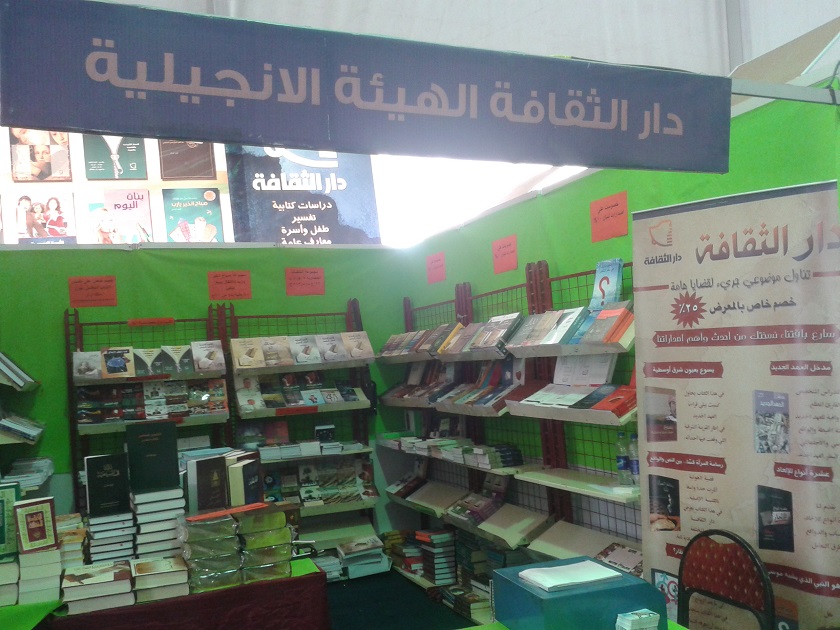
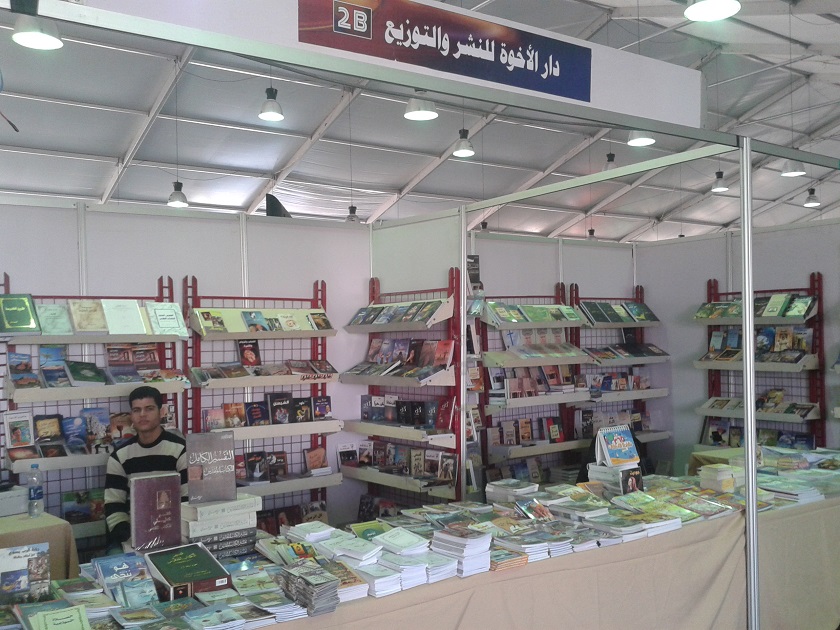
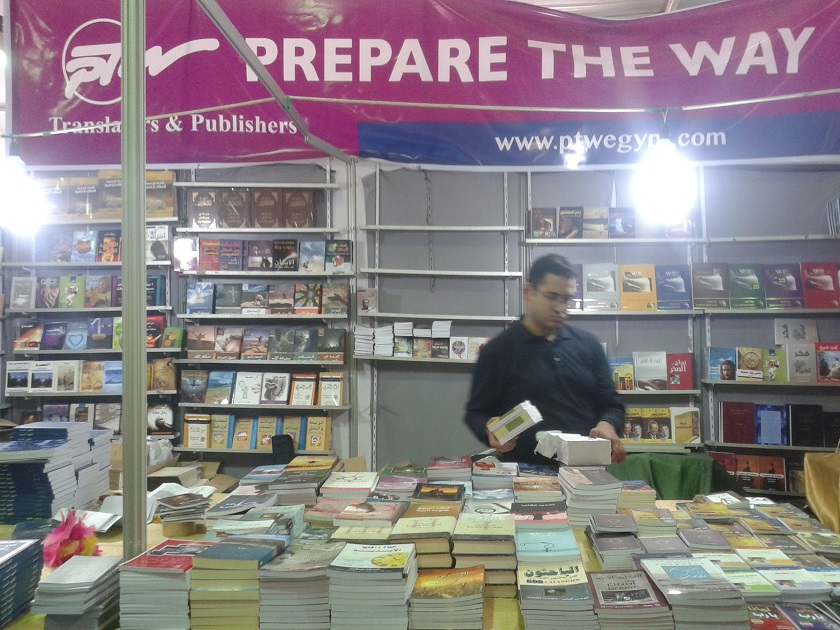
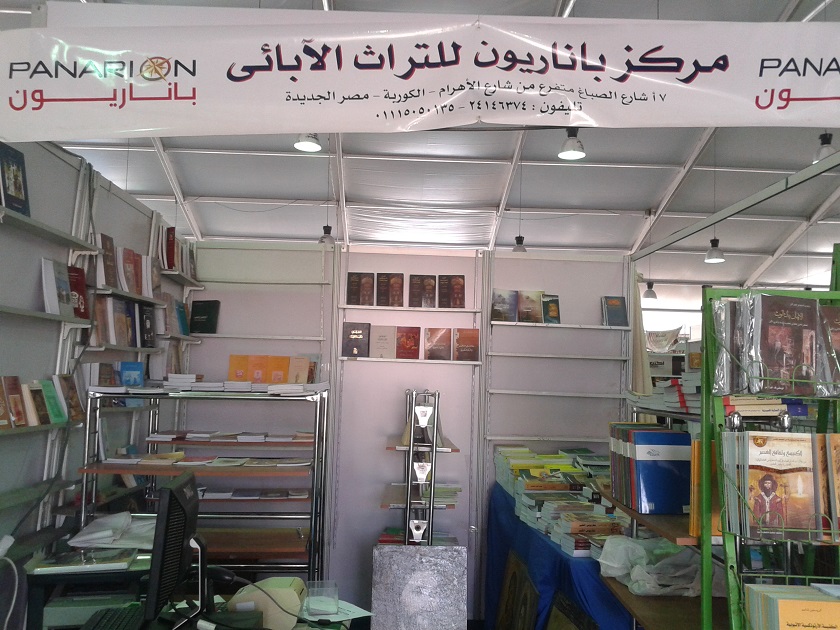
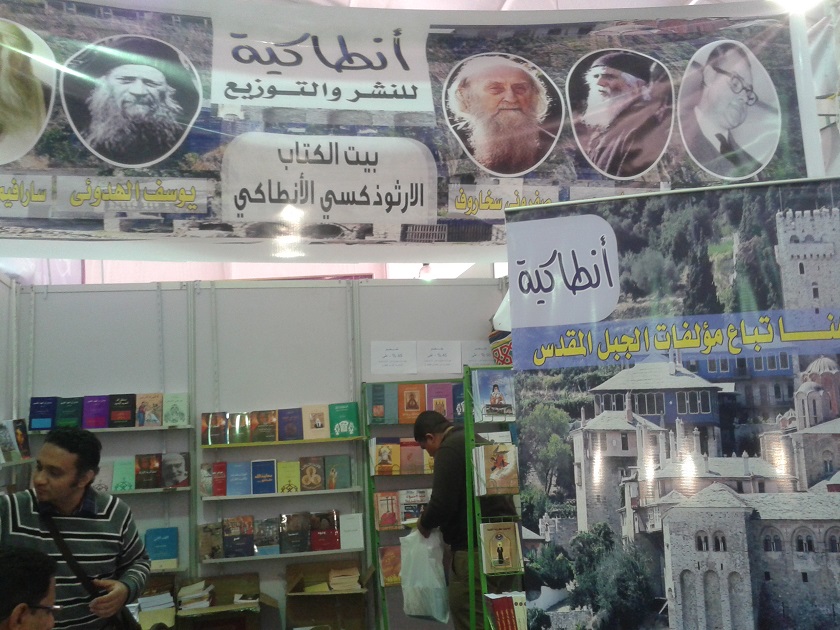
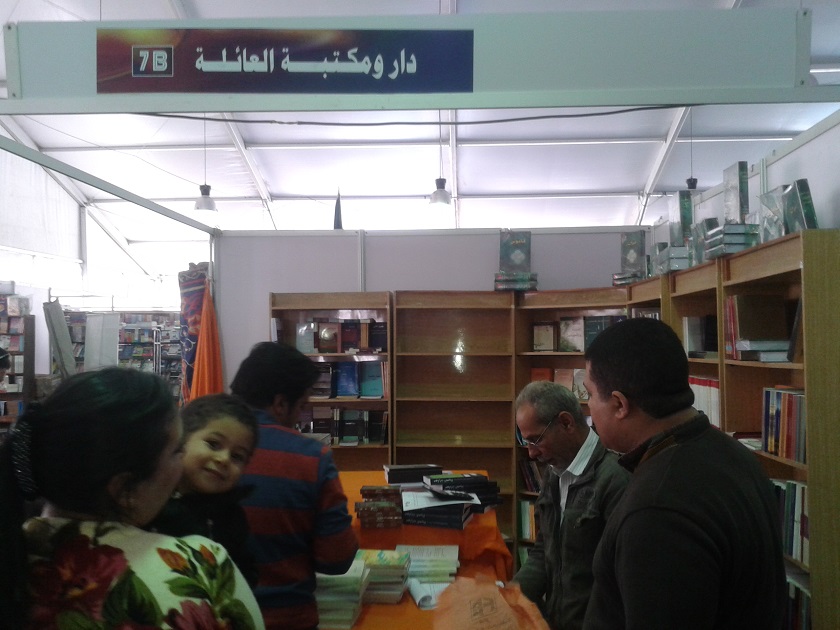
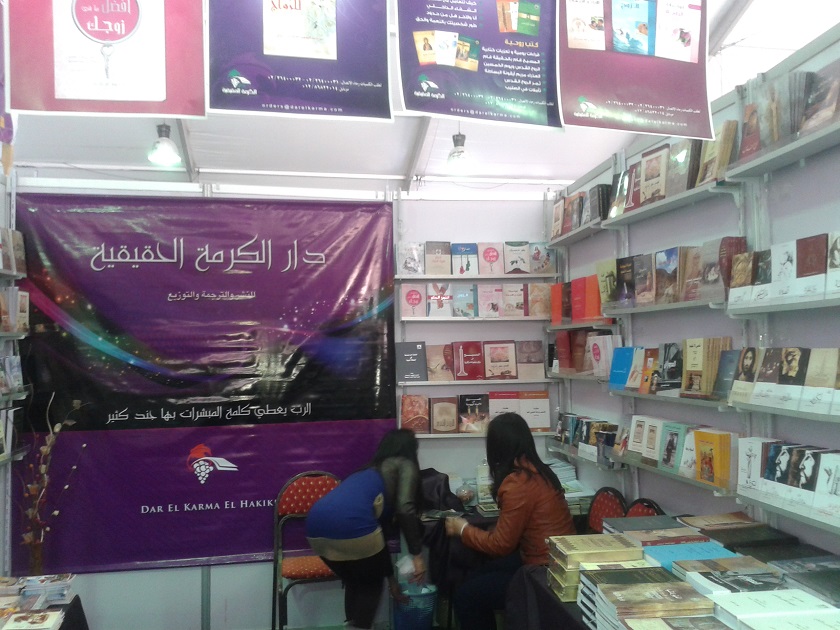
The 46th Cairo International Book Fair is coming to a close on February 12, and I enjoyed strolling through the hundreds of booths selling mostly Arabic books from around the world. The guest of honor this year is Saudi Arabia, but prominent also in a central location are more than a dozen Christian publishing booths selling their products freely.

This is not a surprise. Each is registered with the Egyptian Publishing Union and they have long had a presence at the fair. But this images to follow may not be familiar to many readers who assume either one of these two common perceptions.

First, that Christians are persecuted by a majority Muslim country. Second, that censorship is rampant as the government clamps down on alternate voices.

Both of these perceptions deserve their own comment, but here take a moment to see the diversity of Christian representation. Around two million people frequent the book fair over a two week period, browsing the marketplace as they see fit.

The Bible Society of Egypt
Local distributors of the Jesus Film
Seventh Day Adventists
Local distributors of Focus on the Family and other products
Eagles, local distributors of Focus on the Family and other products
Culture House, the leading evangelical publishing house in Egypt
Culture House, the leading evangelical publisher in Egypt
The Brethren Publishing House
Prepare the Way, a semi-Catholic but ecumenical publishing house
Panarion, publishing works of the early Egyptian church fathers
The Antioch Orthodox Publishing house, visiting from Syria
The Anglican Publishing House of Egypt
The Episcopal Publishing House of Egypt
Family Publishers
Family Publishers
True Vine Publishers

I am hopeful a full article about the Christian presence at the book fair will soon follow. Please stay tuned.

Update: The article was tied into the story about the 21 Christians killed by the Islamic State, and How Libya’s Martyrs are Witnessing to Egypt.

Categories
Prayers

Friday Prayers for Egypt: Adjusting Justice

Flag Cross QuranGod,

One is free, one is pending, and dozens are confirmed to remain behind bars. With them are others in the thousands.

But the two individuals need special hoops to bypass the system. An Australian journalist is released after a year plus in prison due to a recently passed law permitting deportation of foreigners on trial. His Canadian dual-national partner is forfeiting Egyptian citizenship to qualify for the same.

God it is sad. It is sad freedom comes so as to clean up a problem of international image. It is sad a man must deny his country to escape a system that created it in the first place. It is sad so many people are imprisoned. It is sad the image problem transfers to the justice institution as a whole.

Of course, many in jail are guilty. Some are guilty of terrorism. Some are guilty of rioting. Some are guilty of violating a protest law many believe is flawed, but is the law all the same.

But some are innocent, swept up in the crackdown. Others are peaceful, swept up in the violence. Court decisions have included acquittals, but when mass sentences are issued the attention to individual justice is questioned.

God, let justice come through the system and not in its circumvention. Let justice be clear and not subject to politicized accusations. Let justice establish the truth of these past four years.

And if the institution of justice must be adjusted to achieve this, God, give Egypt the will to enact necessary reform. If the system itself is fine, God, give Egypt judges of conviction who will honor both law and conscience.

Save Egypt from the despair of doubt and the abyss of cynicism. These will destroy a nation’s foundation. But if manipulation of justice is institutionalized there is no foundation to begin with.

Help Egypt rebuild, God, both the pillars of the state and the reputation of the same. May society be free, though the verdict is pending. May it issue in justice, only justice, and protect the freedom her people seek.

Amen.

Categories
Middle East Middle East Institute Published Articles

The Decline of Coptic Activism in Egypt

Coptic activism in decline

From my new article at the Middle East Institute:

During and immediately following the 2011 Egyptian uprising, Coptic activism reached new heights. Copts organized and came together to call for protection for their communities and rights more generally. However, particularly since the fall of the Muslim Brotherhood and the election of President Abdul-Fattah el-Sisi, such activism has declined. Today, the number of active, effective Coptic movements can be counted on one hand. This leaves the church carrying the mantle of Coptic identity, allowing the pope to decide whether or not to engage in politics. Thus far, Pope Tawadros has opted to back the new government, and Coptic citizens are following his example.

The article recounts Coptic activism since the revolution, and then introduces the remaining players:

But in terms of traditional political activism, the landscape is quite barren. There are two primary movements that remain: the Coalition of Egypt’s Copts (CEC) and the Maspero Youth Union (MYU). Both are small, with 88 and 40 voting members, respectively. At the height of the Maspero protests before the massacre, the MYU laid claim to the support of over ten thousand, judged unofficially via Facebook conversations and attendance at demonstrations. Today it counts only a few hundred active members.

The article describes the former as aligned with the state, the latter as supportive but wary while clinging to revolutionary ideals.

From the conclusion:

But if the MYU leads, will anyone follow? Copts other than MYU members and supporters view Coptic activism to be negligible in influence and advocate for transcending Coptic concerns. Youssef Sidhom, editor of the Coptic newspaper Watani, speaks for many when he says that the Coptic community must move on from sectarian labels and evolve in two directions. At the grassroots level, he says, activists must transform into community leaders and aid their neighborhood constituencies. And at the national level, they must emerge as politicians and address issues beyond the Coptic cause. While Coptic activists had their moment during the uprisings, Sidhom points to parliament as the coming and enduring challenge in which Copts must legislate rights to support full citizenship and demonstrate leadership on the national stage.

But almost by definition, activists operate outside the sphere of formal power and put pressure on it. Few activists have space to operate these days, as the state has greatly limited the scope of civil society. Time will tell if the CEC or the MYU can muster the influence to capture the favor of the Coptic community—and more importantly, of Egypt as a whole.

Please click here to read the full article at the Middle East Institute.

Categories
Arab West Report Middle East Published Articles

The Egyptian Family House: Early Structure and Activity

Heads of the religious discourse committee of the Family House

‘National unity’ has long been a part of Egyptian political discourse. Spun positively, it celebrates the equal contributions of Muslims and Christians as one people in the national fabric. Spun negatively, it is crass propaganda used by the ruling class to demonize Islamists and scare both Copts and international observers into supporting the status quo.

Experienced positively, national unity represents the normal everyday life of Muslim and Christian neighbors interacting with each other as people, with nary a thought of religious differences. Experienced negatively, national unity is little more than the hugs and kisses exchanged by top religious leaders covering over a potent sectarianism that too often lashes out at the religious other.

But until recently, national unity was only an idea, of which the substance or emptiness was determined by the speaker. In Egypt today this is beginning to change; national unity is becoming an institution.

The idea was born following the horrific October 31, 2010 attack on Our Lady of Salvation Church in Baghdad, in which 58 people were killed and threats issued also against Egyptian Copts. The Grand Sheikh of the Azhar, Ahmad al-Tayyib interpreted this al-Qaeda sponsored atrocity within larger efforts he believed were meant to damage the religious unity of the whole region. He proposed to then-Coptic Orthodox Pope Shenouda to create an Egyptian antidote called the Bayt al-Eila or ‘Family House’, the necessity of which was further demonstrated following the bombing of the Two Saints Church in Alexandria in the first hours of January 1, 2011.

The Egyptian Family House was formally created as an independent national institution by cabinet decree in 2011, but the ongoing instability created by the January 25, 2011 revolution meant that little was initially done to develop it. But from the beginning the Family House was meant not to be a place of religious dialogue, said Dr. Hamdi Zaqzouq, the secretary-general, but of dialogue between the common people to strengthen their general relations. They will not discuss the differences of doctrine, nor seek primarily to solve any outbreak of sectarian strife. Rather, it is a comprehensive effort to reduce the causes of such strife, so as to revive the popular slogan of the 1920s national movement against British colonialism: Religion is for God and the nation is for everyone.

This article is based on an interview with Dr. Hamdi Zaqzouq and his secretary Muhammad al-Banna, on October 12, 2014. Please click here to read the full article at Arab West Report.

Categories
Prayers

Friday Prayers for Egypt: More Deaths

Flag Cross Quran

God,

The week opened with numerous protesters and a few policemen dead after clashes on the revolution anniversary. It ended with many soldiers dead following terrorist attacks on their positions in Sinai.

God, be merciful to Egypt. Pretentions are dropping as pro-Brotherhood and pro-state media openly incite against one another. Beyond the lives lost the battle is for stability, perhaps interpreted as justice.

Justice for one side means exposure and conviction of a clandestine group which manipulated its way into power. Justice for the other means exposure and conviction of a cabal which manipulated them out of it.

But for too many of both, justice is interpreted as death.

And stability is the card. If it can be maintained the status quo will reveal the sins of the former. If it can be upended the reversal will reveal the sins of the latter.

All have sinned, God, and fall short of your righteousness. Make known in Egypt your justice.

And in it, God, be merciful to Egypt. Soften the hearts of all. May police work with utmost respect. May activists protest with utmost peace. When either side violates, may this commitment double among the offended.

Because among many, civility is halving. God, honor all that you can of their zeal, but shine your light upon hatred, revenge, and calculating ambition.

Let death be neither means nor goal. Rid its sting, deny its victory. God, be merciful to Egypt, and grant her your stability.

Amen.

Categories
Personal

Researching the Islamic State

Researching ISIS

I confess to not having kept up well with the so-called Islamic State. My focus has always been on Egypt, with peripheral attention given to the region. If Egypt has been difficult to understand – living here – the rest of the region seemed near impossible. And fortunately, the complicating factor of the Islamic State had stayed distant from Egypt, until recently.

I am afraid a partial reason for my inattention is a success of their strategy. The Islamic State has its roots in Iraq, where it was one of many groups blowing up lots of stuff. Amid the moral ambiguity of the US occupation, yet another suicide bombing had a numbing effect. Why read one more template of the same story?

As they expanded into Syria the tale changed slightly, but with the same effect. The Islamic State was just one of many groups with unclear origins and less clear funding sources. Whatever nobility the original uprising may have had, it was quickly lost in a devastating civil war and the international hand-wringing that talked much and did little – which may have been for the best except for all the accumulated ‘little’ done behind the scenes.

And late last summer when the Islamic State drove out the historic Christian community and enslaved other religious minorities, it just accelerated a pattern recently established but seemingly inevitable. Palpitations of horror stimulated some writing, but what could be done to stem the tide? For every sympathetic Arabic letter ن placed on a Facebook page in solidarity, the futility of a hashtag campaign just became more apparent.

Finally, the Islamic State became another tool in the tool belt of conspiracy theorists, so abundant in the Arab world. For some their leader was a Mosad operative. Others saw the dirty hand of America looking for an excuse to reoccupy the region. Turkey and Qatar were blamed. As the US-led coalition rained more bombs upon the region in an effort to ‘degrade’ their capabilities, sorting through the conspiracies was far too daunting to contemplate.

All this is said to my detriment, for as noted it fits well with Islamic State strategy. They wish to wear down the morale of their enemy and give the appearance of the inevitability of their victory. Conspiracies aside, this is a key reason why the Iraqi army fled before them. Though greatly outnumbered ISIS believed in their fight. And their fight included years of kidnapping, assassinations, and suicide bombings that convinced the American-trained military it just wasn’t worth it.

My responsibility is Egypt, so I don’t believe I have run from a fight. But allowing myself to fall behind in the scholarship on the Islamic State is a dereliction of duty all the same, for Egypt is part of the on-edge region. The emergence of the Islamic State is one of the most important developments in a long time. Far more than a radical insurgency or religious revolution, their gains are a direct challenge to the nation-state system. That they have been successful relates directly to the weakness of this system in the region.

In the past few days I have finally taken time to remedy my negligence. This has come through reading some of the journalism and research on where the Islamic State stands today, in addition to fabulous video obtained by a journalist given a unique tour of their operations. I hope this brief summary will serve to compensate any deficiency in your knowledge, with less time investment.

But if you have the time to view this 45 minute feature from Vice News, I would recommend it. Published on August 15, it predates the beheading of foreigners and represents a moment in time the Islamic State was more open to outside eyes. They have allegedly issued a set of guidelines for journalists more recently, but I suspect few would be willing to trust their hospitality, let alone agree to the stipulations therein.

The footage is from Raqqa, the 500,000 population city now known as the capital of the caliphate. Familiar with cities in the Arab world, it was surprising to witness the normalcy of the environment mixed with the normalcy of atrocity. Familiar looking desert landscapes were cut with unfamiliar trenches, filled by familiar looking men carrying unfamiliar weapons.

Far worse was the familiar looking city square filled with familiar Arab facial features severed from their bodies. The Islamic State shows no pangs of conscience in its displays of brutality, but as will be remarked later, it all fits into a code that allows, even facilitates the rule of law.

For familiar scenes abounded in roadside shops and government installations, where the Islamic State has assumed the responsibility for service provision and justice. But unfamiliar morality police roam the streets, curbing the unfortunately familiar practices of bribery and corruption. And whereas it is normal to watch fathers and sons playing in a depleted riverbed, it is less common to hear preteens spew the vilest hatred of infidels and eagerly anticipate killing them.

For as Mara Revkin has detailed in Syria Comment, the conventional wisdom about jihadists being agents of chaos is ill-founded. Supported by Sarah Birke in the New York Review of Books, she shows that the chaos inducing practices of insurgency are quickly replaced by law and order once territory is seized. Patterns of governance, she remarks, are actually quite similar to those practiced by Europeans in the dawn of their industrial nation-state building efforts.

In pattern, that is, not necessarily in practice. The task of a state is win a monopoly on violence. To do so in contemporary Syria and Iraq requires quite a bit of violence at the outset. To secure an area the Islamic State uses a combination of fighting and buying loyalty. Upon submission of either kind they first demand repentance, and then disarmament. The Sheitat tribe in Deir Ezzor chose resistance, failed, and then had 700 men slaughtered, and 1,800 disappear. When none rose to their aid surrounding tribes learned a lesson. At the least they made common cause against a common enemy in Shia-led Baghdad. Several top leaders of the Islamic State are former ranking officers in the Baathist Iraqi military.

But once an area is in submission they work to restore functionality. Employees are left in their administrative positions. Zakat is collected and social service established for the poor. Police officers are well paid, enforcing a strict code based on sharia. This includes the cutting off of hands, whipping, and crucifixion. But it is not simply a code of deterrence. The Islamic State has punished, even executed its own members who transgress. This has been key to win at least the tacit acceptance of the population, who see a measure of justice at work. Used to the corruption of the previous regime, if people lie low and stay out of trouble it seems they can get on quite well.

In theory this applies even for Christians, some of whom have agreed to pay the dhimmi jizia tax. But most have fled when given the opportunity, leaving their churches behind which have been ransacked or converted to mosques. The video depicted one interior re-designer who took particular joy in destroying the crosses worshiped by the infidels.

But even in the far worse treatment for Shia and Yazidis, the Islamic State operates according to code. Guidelines have been issued for the treatment of enemy combatants and female slaves that horrify many modern Muslims. They meticulously draw from historic sources and practice, but the point is the importance of law. They are trying to build something that will last, and expand, in imitation of the earliest centuries of Islam.

But the question is, where do they get the money to do so? Long reports by Charles Lister in Brookings Doha, and Martin Chulov in the Guardian describe the history and funding sources of the Islamic State. And the conclusion is they largely earn it themselves. This flies in the face of the conspiracy theories, though it demands investigation of different ones altogether.

The original progenitor of the Islamic State is actually from Jordan, from whence Abu Musab al-Zarqawi hailed. But he made his name in Iraq, stoking sectarian tension to enflame the conflict against the Americans. After his death leadership of then-al-Qaeda in Iraq passed to Abu Omar al-Baghdadi, who led the incarnation of the first Islamic State effort from 2006-2008, defeated by the Sahwa tribal uprisings supported by the United States. But when Abu Omar was killed in 2010, Abu Bakr al-Baghdadi assumed leadership, and in 2014 he declared himself caliph. Intelligence sources say many of these jihadis passed through Syria first, given free conduct by President Assad.

Origins of this movement, however, trace all the way back to 2004 in a US prison in Iraq. Research indicates 17 of the top 25 Islamic State leaders spent time incarcerated, which actually helped their efforts. Outside of prison insurgents and jihadis operated independently; prison put them all in contact with one another. They even wrote contact information on the elastic lining in their underwear. When released or freed in jailbreak, they reconnected to put strategies in motion. Boxers helped us win the war, said one leader in an interview.

But the new leadership was at odds with their former worldwide partners in terrorism, and even their own disciples. Baghdadi sent his deputy to Syria when the Arab Spring began. Eventually he created Jabhat al-Nusra and chose not to submit, maintaining allegiance to Ayman al-Zawahiri of al-Qaeda. The two groups have clashed several times since, including in Raqqa before the Islamic State took control.

But once in control, and in expansion to other regions, revenues skyrocketed through the sale of smuggled oil. Additional sources included extortion money, ransom payments, and general taxation. At its height before the coalition bombing campaign, revenue equaled $2 million per day. No conspiratorial funding relationship with Saudi Arabia or Qatar is needed, but still conspiracies exist. Who purchases the oil, and from where? Who lets the foreign jihadists, now numbering 18,000 of the 31,000 fighting force, across the borders?

Indications point strongly to Turkey, though regime controlled areas in Syria also have a role. But all articles indicated the Islamic State is indeed becoming a state, though fully outside the nation-state system. What is to be done?

Going further than just this collection of articles, suggestions have included American reengagement on the ground, US support to Arab nation engagement on the ground, arming ‘moderate’ rebels against the Islamic State and the Assad government in some order, or supporting Assad in his position while negotiating a better political situation. Drying up revenue sources by pressuring regional allies to clamp down on the black markets has also been demanded, but with limited success.

It should be stated that I have heard Islamic State-type rhetoric the Arab world over, long before this current emergency. Rarely have I encountered an inclination to mete out such violence in implementation, but the goals of the new caliphate resonate with many a Muslim. It connects to their glorious past, claiming fidelity to the honored scriptures and righteous ancestors. And psychologically it allows non-introspection about current woes, finding refuge in the simpler hope of ‘if only we were more faithful Muslims, God would honor us.’

Of course, Muslims the world over have condemned the Islamic State, though in various fashion. The modern world is far different than the Ottoman Empire, or any other caliphate before it. Islam can get on very reasonably as a spiritual faith, disembodied from political power. Many Muslims are quite happy here.

But there is that something in Islam that clamors for power. It is not enough to live righteously and call others also to do so. Living righteously calls for stopping evil. Stopping evil requires power. Power resides best in governance. But, oh so unfortunately, power in governance tends to corrupt.

The Islamic State is doing its best to root out corruption. They are not after personal gain (presumably), but divine principle. Their horrors are obvious, but not random. They enact a code as they understand it. But at the same time, they issue contracts of sale for their black market partners who purchase the smuggled oil. The Arab world has suffered much evil, and they are fighting back. But so easily are compromises made.

And so wretched when moral horrors find justification in religious texts, rightly or wrongly. Sharia law has a place detailing the legal uses of spoils of war. It is from this heritage the Islamic State draws its regulations on proper conduct toward female slaves.

But war is human, as is power and governance. Muslims have long defended this aspect of their revelation as divine elevation of primal realities. Many state the norms of the past must be updated with the times, but they see it as a credit to their faith that it details all aspects of human existence, even unseemly ones.

So then, what to do with this catch up reading on the Islamic State? I hope this essay is at least partial fruit, that you as well may be better informed. But what good is information in the light of atrocities? Is not more demanded?

I confess I am not well placed to offer policy analysis on what to do in Syria and Iraq. With respect to all those placed in positions of influence, I wish them wisdom, discernment, and a pure heart. The current troubles are built upon compounded errors stretching back decades, from local and foreigner alike. It is far easier to criticize than find solution, especially from the outside. I tend to wish we would leave bad enough alone, and give up policing the world. But then so much would fall apart. It is hard to be on top, responsible to defend the stability of a world order upon which one’s prosperity depends. It is also hard to stomach the interventions at times necessary to maintain it.

But these are idealistic wishes of justice and responsible economy, not the workings of realpolitik. I would like to trust American leadership cares for our prosperity in good conscience with the prosperity of others. Alas, I fear this is not always so. Interest often trumps principle, especially when in power.

I have more confidence, perhaps, in weighing religious response in interaction with the rhetoric of the Islamic State. I see how their conduct is drawn from religion, and I see how rebuttal is drawn from the same. Islam is not monolithic, it is a flexible heritage. It must be, to have been so influential across time and geography.

Therefore, on this front, both groups must be challenged from their own sources. Jihadists and those of similar thought must realize Islam has torn itself apart in history, and created mechanisms to prevent reoccurrence. One many not call a Muslim an infidel, no matter how much he sins. And preventing evil has a rich heritage of interpretation, so that a zealot in his effort to forbid wrong does not wind up creating even more. These are basic lessons of civilization, and they have a religious root.

But for those who are quick to condemn the Islamic State and demonstrate Islam is a religion of peace, this is fine rhetoric but poor research. This group also, both Muslim and non-, must struggle with sources that mirror the practices witnessed today. Many Muslims try, and their efforts have been controversial. Some have looked to find modern ethics in their own heritage, rightly reinterpreted. Others have relegated the heritage to a bygone era, however superior it was to the ethics of the time. This effort is ongoing, but few will dare to condemn, for example, the early wars of Islamic expansion.

In both instances, though, care must be taken to win people and not arguments. The goal is a better vision for peace in this world, and for those who believe, also in the next. The goal is not to demonstrate the superiority of one faith or civilization over another. It is not to tear down a beloved heritage or corrupt sincerely held doctrine. It is to challenge each and every person to live up to higher ideals of truth and love, even as these ideals are debated. It goes without saying one must subject him or herself to the same process.

This will do little to change the Islamic State, but it may do well in conversation about it.
Categories
Excerpts

The Sharia of ISIS and Azhar

Sharia Azhar ISISDoes the so-called Islamic State represent the essence of Islam, or its perversion? The answer supplied often closely aligns with one’s ideology.

But what does ISIS say for itself? Here is testimony gathered by the Guardian on what is taught in the training camps:

Unlike previous incidents of stoning adulterers and crucifixion, throwing people from high buildings [for homosexuality] did not even inspire criticism of sharia in the Middle East because many did not realise it was a sharia penalty in the first place.

But it is the obscurity of the punishment that makes it particularly valuable for Isis. The purpose is not to increase the volume of violence but also to raise eyebrows and trigger questions about such practices, which Isis is more capable of answering than mainstream clerics, who prefer to conceal teachings that propound such punishments.

Many Isis members were eager to emphasise they were impressed by such obscure teachings, and were drawn to the group by the way Isis presents Islam with absolute lucidity.

Similar is the question of whether or not Islam spread by the sword:

We spread our message by proselytisation and sword. Ibn Taymiyyah said ‘the foundation of this religion is a book that guides and a sword that brings victory’. We guide and the sword brings victory.

“If someone opposes the message of the prophet, he faces nothing but the sword. As the prophet spread the message across the Earth, we are doing the same.”

Another member echoed Abu Moussa’s reasoning. “The prophet said: ‘I have been given victory by means of terror.’ As for slaughter, beheading and crucifixion, this is in the Qu’ran and Sunna [oral sayings attributed to prophet Muhammad].

“In the videos we produce, you see the sentence ‘deal with them in a way that strikes fear in those behind them’, and that verse speaks for itself. One more thing: the prophet told the people of Quraish, ‘with slaughter I came to you’.”

The article claims that mainstream clerics prefer not to address these more sordid matters. But here is very thorough counter-tract, called an Open Letter to Baghdadi, with a 24-point refutation of the Islamic State and its practices.

It is signed by Muslim leaders around the world, exposing either the ignorance or agenda of those who rail against ‘moderate Muslims’ for not condemning ISIS. The punishment of throwing from the rooftops is not mentioned, but here is an excerpt from their section on jihad:

The reason behind jihad for Muslims is to fight those who fight them, not to fight anyone who does not fight them, nor to transgress against anyone who has not transgressed against them. God’s words in permitting jihad are: ‘Permission is granted to those who fight because they have been wronged. And God is truly able to help them; those who were expelled from their homes without right, only because they said: “Our Lord is God”. Were it not for God’s causing some people to drive back others, destruction would have befallen the monasteries, and churches, and synagogues, and mosques in which God’s Name is mentioned greatly. Assuredly God will help those who help Him. God is truly Strong, Mighty.’ (Al-Hajj, 22: 39-40).

Thus, jihad is tied to safety, freedom of religion, having been wronged, and eviction from one’s land. These two verses were revealed after the Prophet ﷺ and his companions suffered torture, murder, and persecution for thirteen years at the hands of the idolaters. Hence, there is no such thing as offensive, aggressive jihad just because people have different religions or opinions. This is the position of Abu Hanifa, the Imams Malik and Ahmad and all other scholars including Ibn Taymiyyah, with the exception of some scholars of the Shafi’i school.

And for the benefit of Egypt’s reputation, here is a list of her signatories, many of whom are affiliated with the Azhar:

4. Prof. Salim Abdul-Jalil, Former Undersecretary for da’wah at the Awqaf Ministry, and Professor of Islamic Civilization at Misr University for Science & Technology

5. Sheikh Wahid Abdul-Jawad, Fatwa Council (Dar al-Ifta’)

6. Dr. Mustafa Abdul-Kareem, Fatwa Council (Dar al-Ifta’)

7. Prof. Ibrahim Abdul-Rahim, Professor of Shari’ah, Dar al-Ulum College, Cairo University

8. Prof. Jafar Abdul-Salam, Secretary-General of the League of Islamic Universities

11. HE Prof. Sheikh Shawqi Allam, The Grand Mufti of Egypt

13. Prof. Mohammad Mahmoud Abu-Hashem, Vice-President of Al-Azhar University and member of the Centre for Islamic Research at Al-Azhar Al-Sharif

16. Prof. Mohammad Al-Amir, Dean of the Faculty of Islamic Studies for Girls, Al-Mansoura University

17. Dr. Majdi Ashour, Fatwa Council (Dar al-Ifta’)

18. Prof. Dr. Abdul-Hai Azab, Dean of the Faculty of Shari’ah and Law, Al-Azhar University

21. Prof. Bakr Zaki Awad, Dean of the Faculty of Theology, Al-Azhar University, Egypt

23. Dr. Sheikh Osama Mahmoud Al-Azhari, Islamic Preacher

35. Dr. Mohammad Abdul Sam’i Budair, Fatwa Council (Dar al-Ifta’)

41. Prof. Jamal Farouq Al-Daqqaq, Professor at Al-Azhar University

44. Prof. Mohammad Nabil Ghanayim, Professor of Shari’ah, Dar al-Ulum College, Cairo University

45. Sheikh Dr. Ali Gomaa, Former Grand Mufti of Egypt

55. HE Prof. Mohammad Al-Hifnawi, Professor of Usul al-Fiqh at the Faculty of Shari’ah and Law at Al-Azhar University, Tanta branch

56. Prof. Sami Hilal, Dean of the College of the Holy Qur’an, Tanta University

57. Prof. Sa’d al-Din Al-Hilali, Head of the Department of Comparative Jurisprudence at Al-Azhar University

63. Dr. Khaled Imran, Fatwa Council (Dar al-Ifta’)

71. Sheikh Ahmad Wisam Khadhr, Fatwa Council (Dar al-Ifta’)

72. Sheikh Muhammad Wisam Khadhr, Fatwa Council (Dar al-Ifta’)

74. Sheikh Mohammad Yahya Al-Kittani, Preacher & Imam

76. Sheikh Amr Mohamed Helmi Khaled, Islamic Preacher and Founder and President of the Right Start Global Foundation

81. Prof. Dr. Abdul Hamid Madkour, Professor of Islamic Philosophy, Dar al-Ulum College, Cairo University

83. Prof. Mohammad Mukhtar Al-Mahdi, Professor of Islamic Studies, Al-Azhar University and President of the Shari’ah Society

85. Sheikh Ahmad Mamdouh, Fatwa Council (Dar al-Ifta’)

89. Prof. Mohammad Abdul Samad Muhanna, Advisor to the Grand Imam of Al-Azhar Al-Sharif

90. Sheikh Mukhtar Muhsen, Fatwa Council (Dar al-Ifta’)

91. Professor Fathi Awad Al-Mulla, Pundit and consultant for the Association of Islamic Universities

96. Mr. Abdul Hadi Al-Qasabi, Grand Sheikh of the Sufi Tariqahs in Egypt

97. Prof. Saif Rajab Qazamil, Professor of Comparative Jurisprudence, Al-Azhar University

99. Sheikh Ashraf Sa’ad, Muslim Scholar

102. Sheikh Mahmoud Al-Sharif, Head of the Association of Sherifs in Egypt

107. Prof. Ismail Abdul-Nabi Shaheen, Vice President Al-Azhar University and Deputy Secretary-General of the League of Islamic Universities

113. Prof. Nabil Al-Smalouti, Professor of Sociology and former Dean of the Department of Humanities, Al-Azhar University

121. Dr. Amr Wardani, Fatwa Council (Dar al-Ifta’)

126. Prof. Zaki Zaidan, Professor of Shari’ah, Faculty of Law, Tanta University

At the time of this writing, Prof. Zaidan is the last of 126 signatories. I am not aware of why it is arranged in this order, but high-ranking Egyptians are listed throughout.

Deeper analysis and further study is needed to either rebut or prove the claim that ISIS is Islam, but these scholars are certain it is far from the religion.

Categories
Excerpts

Orthodox Priest: Better to Abandon Christianity

If this quote is accurate, it is a terrible indication of the divide between the Coptic Orthodox Church and members who wish a divorce for other than adultery:

Orthodox priest Abd al-Masih Basit told Al-Monitor that the church would not interfere in politics and would not take any actions against Christian parliamentary candidates on the Nour list, as some newspapers had reported it would. Yet, he added, “The Nour Party considers the Christians infidels, and therefore, any Christian who participates in the party is giving up his dignity. It is better for those who have a problem with the church regarding the personal status laws — and who view support for Nour as a solution to amending those laws through parliament — to abandon Christianity.”

The context for the article is that election law requires all political parties to field a limited number of Christian candidates. The Nour Party is Salafi, an ultraconservative form of Islam that is described in quote. The article surmises the only way for Nour to attract any Christians is to appeal to a very specific segment — if sharia law is applied to all, Islamic divorce is far easier than Christian.

Abd al-Masih Basit is a very influential theologian and apologist in the Coptic Orthodox Church. It will be necessary to confirm this quote with him before assuming it is true, but if so, it appears he has his priorities in the wrong order. The church desires to control legislation on personal and family affairs, and the constitution gives it the right to do so.

But it would be a shame if the church is willing to sacrifice the faith of its members to preserve its power.

Categories
Prayers

Friday Prayers for Egypt: National List

Flag Cross QuranGod,

What value is there in praying over the squabbling of politicians?

President Sisi gathered representatives of the political parties and asked them to agree on one national list to present to the people for upcoming parliamentary elections. Many have met to discuss, but so far they have fully failed.

But does it matter to you? Is the request valid? Is their unity desired?

At present there are four main blocs. One consists of politicians and businessmen related to the old regime. Another comes from old school opposition figures. A third gathers newer parties born after the revolution.

The final bloc is the Salafi Nour, currently awaiting judicial rulings on its continuing legality as a ‘religious’ party. To date, they have been ignored in the efforts of the first three to negotiate a common non-Islamist list.

But the first three blocs are fluid, and in the background is the success of Tunisia’s non-Islamists to squeeze out the Brotherhood-like Nahda.

If only for the prayers of Egypt’s non-Islamists, should newer revolutionaries ally with old regime figures? Is this betrayal of their birthright, or recognition of greater threat?

Guide all negotiations to what is right and best, God. But for all the bickering, these parties fight over a twenty percent slice of parliament. The rest goes to independents who may receive support of different parties, but lie outside their sphere.

God, you inhabit messy spaces. You concern yourself with man’s foibles. However often the manner is outside your preference, it is here your will is made known.

Parliament may determine a lot.

At the least it is necessary for Egypt’s stability. Therefore, God, let it come. As for its members, give Egypt good men who will serve – both constituencies and principles.

Whatever share the parties have in this measurement, honor them accordingly. If they unite over a consensual national list, honor their sacrificed interests. If they divide over core issues, honor their commitment to platform.

And if anything else, may they bear the consequences of selfish ambition.

Squabble they may, and it may be necessary. But guide each one’s concern to be part of your list, their names found in the Book of Life.

Here there is no bloc, no negotiation, no election – only grace. May every politician act accordingly.

Amen.

Categories
Lapido Media Middle East Published Articles

Islamism or Jihadism: A False Choice

Fadel Soliman
Fadel Soliman

In the year 1321 Muslim mobs, with tacit allowance from the Mamluk Sultan, destroyed 60 churches in Egypt and openly attacked Copts on the roads and in their homes. Incitement included accusations Christians supported the invading Mongols in their ‘coup’ attempt against the state.

According to UK-based Fadel Soliman, these days may soon return. Coptic support for President Sisi and his coup against the democratically elected Islamist presidency of Mohamed Morsi has resulted in a ‘poisoned atmosphere’ between religious adherents.

‘I am so worried about the future of Egypt,’ said Soliman, ‘especially about the reactions of Muslims toward you.’

Soliman issued this comparison in the context of a larger argument about restoring hope to Muslim youth who own the dream of ruling by sharia. Too many, he laments, are attracted by the success of the so-called Islamic State following the ‘betrayal’ of the democratic dawn.

‘Either give the way to Muslim youth to try to reach their dreams through peaceful means,’ he told Lapido Media, ‘or they will definitely seek violent means. This is normal, this was expected to happen.’

Soliman is the Egyptian founder and director of Bridges Foundation, a UK-based NGO that aims to overcome misconceptions about Islam. His work has been praised by diverse figures such as Representative Michael Doyle of Pennsylvania and the liberal satirist Bassem Youssef of Egypt. He has consistently condemned terrorism and appealed to the Islamic State for the return of Alan Henning, later beheaded.

He is also an Islamist, arguing sharia law supports and enhances the principles contained in the Universal Declaration of Human Rights. He wishes justice for Egypt, to which he has not returned since the dispersal of the pro-Morsi sit-in at Rabaa where he witnessed sixteen of his students killed.

Correct?

But the crucial question is – if his argument is correct will frustrated Islamists flock to a jihadist vision? And similarly, should policymakers encourage ‘moderate’ Islamists as a counterweight to al-Qaeda and the Islamic State?

The argument is very popular in academic circles, informing much of the enthusiasm of the initial Arab Spring. Khalil al-Anani of Georgetown University in Washington DC, writing in Foreign Affairs, speaks for many in his worry about a return to authoritarianism in Egypt.

‘Through its clampdown on political dissent, Cairo has created a fertile ground for ISIS and groups like it,’ he wrote,‘with the potential to recruit young people, Islamists, and moderates alike.’

Indeed, most Muslims in Egypt are religiously conservative. The 2013 Pew survey showed 74% want sharia to be the law of the land, with 56% believing Egypt’s current legal system is deficient. The Muslim Brotherhood and Salafi parties captured nearly three-quarters of the parliament in the 2012 elections. It would appear these numbers represent those are ripe for radicalisation.

But Soliman’s appraisal of Egyptian politics fails to account for the millions of Muslims and Christians who rejected the presidency of Morsi. Coup or not, the subsequent ‘yes’ votes for the constitution and Sisi’s presidency each exceeded the 13 million Morsi won in 2012.

These numbers do not negate the conviction of Islamists that they have been cheated out of gains fairly won. Their grievances have been buttressed by the 632 people killed at Rabaa, according to Egypt’s semi-governmental National Council for Human Rights. A minimum of 6,400 people have been detained for ‘rioting’, according to the Ministry of the Interior.

Bigotry

But the assumption these frustrations will drive Islamists to violence is simply a form of bigotry, according to Samuel Tadros of the Hudson Institute in Washington DC.

‘I disagree with this line of argument,’ he said. ‘It is shallow and insulting to Muslims. It is the bigotry of low expectations.’

Where Soliman sees the path to violence as normal—despite his firm rejection—Tadros sees responsibility.

‘Violence is a choice,’ he said. ‘It is not an inevitable one. Just as some have chosen the path of terrorism, there are millions of men and women who have chosen not to become terrorists, not to kill their enemies.’

Estimates of Egyptians fighting in Syria and Iraq range between 5,000 and 8,000. Islamist movement expert Ahmed Ban of the Nile Center for Strategic Studies believes this makes up 20-30% of their fighting force.

These are significant numbers. But according to two recent polls, only three to four percent of Egyptians view the Islamic State in positive terms. Viewed in light of a population of 90 million, small percentages cause considerable worry. But Egyptians, including the mass of Islamists, are not rushing headlong into jihadism.

Soliman says that every time he criticizes the Islamic State his Facebook and Twitter feeds light up in protest.

But Khaled Dawoud of Egypt’s Constitution Party, writing for the Atlantic Council, says the majority of Egyptians in Syria and Iraq travelled there during the presidency of Morsi. It was not the failure of Islamism that boosted jihadism, but its success.

Egypt has instituted travel restrictions to Turkey to prevent the further flow of citizens to the Islamic State. Terrorism continues in the restless Sinai where the Islamic State has formed a local chapter. The threat is real.

Prioritising values

But even peaceful Islamists have a distinct illiberal agenda, writes Shadi Hamid of the Brookings Institution in his acclaimed book Temptations of Power. The premise that democracy would moderate them did not prove true in Egypt. In an excerpt from the Atlantic he describes the conflict this makes for observers, but Egyptians bear the greater struggle.

‘The ensuing—and increasingly charged—debate over the role of religion in public life put Western analysts and policymakers in the uncomfortable position of having to prioritise some values they hold dear over others,’ he wrote.

In the ongoing debate about how to include Islamists in the political order, foreign governments and Egyptians will set their agenda according to particular interests and principles.

But the implicit threat of jihadism should not be given a place of priority. It is neither sufficiently true nor morally honorable.

This article was originally published at Lapido Media.

Categories
Personal

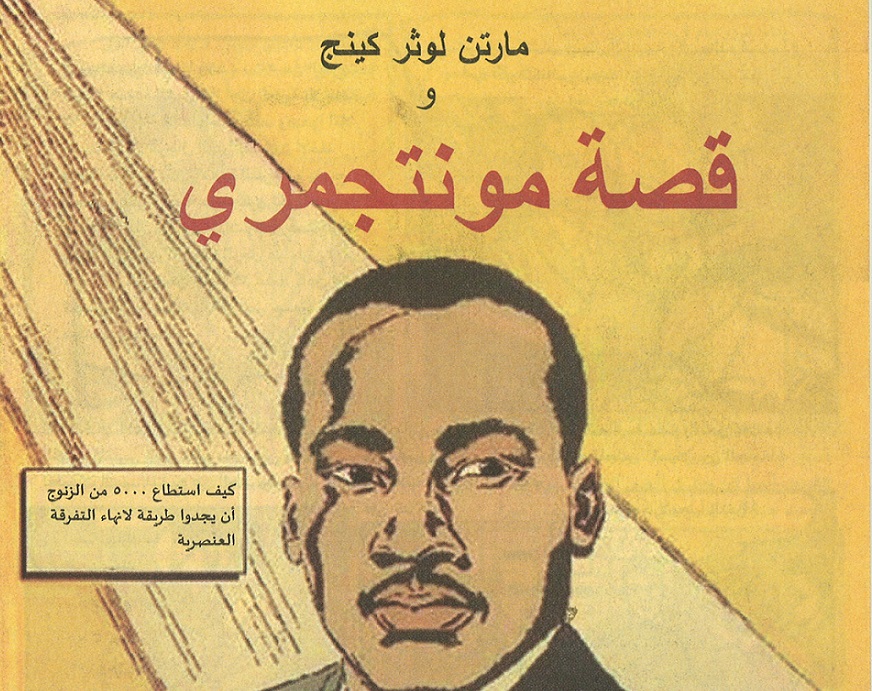
MLK for Egyptian Revolutionaries

Translation: Martin Luther King; the Montgomery Story; how 5000 black men found a way to end racial discrimination
Translation: Martin Luther King and the Montgomery Story; how 5000 black men found a way to end racial discrimination

A day late, but in honor of Martin Luther King, Jr. day in the United States, here is a list of principles to which he had his fellow non-violent activists commit.

I hereby pledge myself—my person and body—to the nonviolent movement. Therefore I will keep the following ten commandments:

1. Meditate daily on the teachings and life of Jesus.

2. Remember always that the non—violent movement seeks justice and reconciliation — not victory.

3. Walk and talk in the manner of love, for God is love.

4. Pray daily to be used by God in order that all men might be free.

5. Sacrifice personal wishes in order that all men might be free.

6. Observe with both friend and foe the ordinary rules of courtesy.

7. Seek to perform regular service for others and for the world.

8. Refrain from the violence of fist, tongue, or heart.

9. Strive to be in good spiritual and bodily health.

10.Follow the directions of the movement and of the captain on a demonstration.

I sign this pledge, having seriously considered what I do and with the determination and will to persevere.

Let us pass on the first commandment, given the primary makeup of Egyptian revolutionaries as Muslim. Some Christians might argue that without the first, however, those following are devoid of their power and without foundation.

Whatever the merits of this argument, it certainly seems like many could be adopted by anyone. On some counts many Egyptians measure up well. On others, not so much.

The Egyptian revolution was largely peaceful. But not entirely. Many protests witnessed low-level violence such as the throwing of Molotov cocktails. This was front line action, though, and the masses of protesters remained behind.

But of #2: All were focused on justice, but some let the pursuit of victory get in the way. Few prioritized reconciliation.

#3: Love was almost never put forward as a theme. Most large protests were labeled ‘day of rage’ and themes of this sort.

#6: Courtesy was in short supply. Slogans tended to demonize the opponent, and graffiti was often insulting.

#8: Islam has a similar listing. A tradition of Muhammad states that if one sees a wrong that must be put right, he should strive to do so first with his hand, then with his tongue, and then if these are not possible, with his heart. Different schools of interpretation have allowed different levels of violence in this effort, or specified who can take this action under what circumstances. In any case, while most protestors avoided the violence of the hand, violence of the tongue and heart was plentiful.

#10: The Egyptian revolution had no leader, and certainly no commanding and inspiring figure like Martin Luther King. Many have identified this as a reason for the rapid divisions that dissipated its power after the fall of Mubarak.

The issues of the civil rights movement and the January 25 revolution were certainly different. But whereas American evils have largely (though not entirely) been put right and social peace achieved, the ills of Egyptian society and state threaten to continue.

Perhaps if Egypt’s peaceful protesters had adopted the spirit and convictions of MLK and not just his methodology, things would have been different. Then again, perhaps not. Your thoughts on the differences are welcome.

Categories
Personal

A Color (Printed) Revolution?

With decent regularity pro-Morsi supporters have conducted small protest marches around our Maadi neighborhood since his removal from office in July 2013. They do not tend to be violent but usually result in ugly graffiti insulting now-President Sisi.

Recently, new graffiti has emerged, calling the people to ‘man up’ and protest on January 25, the anniversary of the original revolution. And this past week I noticed posters – on the ground – calling for a new uprising.

New January 25 ProtestsThe translation reads: Together for liberation and purging; The people want the fall of the regime; and 25 January, Egypt speaks revolution.

I do not yet have a good feel for whether or not people will respond. A recent effort to rally an Islamic revolution failed dramatically to attract numbers.

But what is significant to me about this poster is that it is printed in color. This means there is money behind the effort. Another version was even more colorful, but was in poorer condition.

Also significant is that it was on the ground, stomped upon. I did not see any such posters anywhere on the walls. Were they torn down? Did residents or police prevent their hanging?

January 25 is a week away. It will be interesting to monitor developments.

Categories
Prayers

Friday Prayers for Egypt: Atheism and Insult

Flag Cross Quran

God,

Words injure. Ideas have consequences. Give Egypt wisdom and strength of character to tread righteously in irreligious waters.

For Charlie Hebdo insists on staying in the headlines. The head of the Azhar called for Muhammad cartoons to be ignored, while a pro-Brotherhood scholar called for demonstrations and international blasphemy laws. Many expressed anger and warned of violent reactions, even as they condemned them.

And perhaps similarly, Egypt jailed a local citizen for being an atheist. He was harassed in his home town and complained to the police, but instead wound up arrested. His father testified against him, and his incarceration will last three years. He is not the only blasphemer in prison, and others are on trial.

God, all rights come with responsibility, and the law regulates limitations. Do you have an opinion on where to draw the line?

Moreover, do you wish mankind to police your honor?

Help Egypt to process these questions, God, protecting good, preserving liberty, for individual and society alike.

Give courage to speak a rebuke. Give humility to win the recipient. Give patience to bear an insult. Give confidence to respond in love.

Give the same to Egypt’s atheists, as to those offended by them. Guide both to what is true and right. Guide all in defining their place.

You are the word, God, how you respond when injured? You are the idea, from which all consequences follow. Help Egypt imitate your character, and in you find strength.

Amen.

Categories
Excerpts

The Religious Reformation of Islam

Islamic Reformation

Given the terrorism practiced by certain Muslim groups at the head of which is the so-called Islamic State, many are saying – wishing – that a Reformation might come to Islam. An article in the Revealer does an excellent job of explaining it has already come.

For centuries four traditional law schools defined sharia in rather flexible ways according to the circumstances of the time and place. But as the world modernized, sharia interpretation did not. What was flexible became fixed, and none were allowed to interact with the patterns of jurisprudence in new and necessary ways.

Islamic modernism witnessed both this stagnant heritage and the success of Europe, and tried to remedy the situation by going back to the original sources of Islam. One trend attempted to find the foreign values of the West within the Islamic tradition, and adapt accordingly. To do so it bypassed the legal schools and provided its own redefinition of traditional concepts. Shura, for example, always meant the obligation of the ruler to seek the counsel of those he ruled. To liberal Islamic modernists, this became ‘democracy’.

But not all modernists were liberal. Another trend also returned to the original sources of Islam and attempted their reapplication in the modern world. Here, there was no offense at appropriating technology and other tools of nation-states. But the goal was to seek God’s favor through better fidelity to and direct access of his original texts, and the medieval heritage of jurisprudence stood in the way. So conservative Islamic modernists also bypassed these legal schools, and emphasized the individual work of scholars to apply scriptural lessons to contemporary issues, often in illiberal patterns.

Both, in the Protestant sense, represent a ‘Reformation’. And in the article the implications are described well. But there is one section I take issue with:

The battle underway is not primarily between the young and the old, but between radically different approaches to understanding Islam: one that stresses proper legal training and respect for judicial precedent, and one that urges Muslims to open their Qur’ans and decide for themselves. The Reformation, you see, is already here. It just doesn’t look like we hoped it would.

Given the author’s great understanding of this topic, the conclusion surprised me. I think she may have been simplifying so as to better sum up her argument.

But the conservative version of Islamic modernism, which is often called Salafism, does not suffer so much from every Muslim deciding to interpret scripture on his own. Yes, this is an outcome of some trends of the Protestant Reformation, where God’s Spirit is understood to guide each person in interpretation.

Salafism, however, places great emphasis on scholarship and deep knowledge of the sources of Islam. Yes, it bypasses the traditional schools of law, and for this many Muslims criticize. But among themselves Salafis usually defer to the most knowledgeable among the community. Disciples gather around sheikhs, and indeed, these sheikhs can go terribly awry as they operate outside the bounds of traditional scholarship.

But it is not a matter of each Muslim interpreting for themselves. In fact it is the opposite. Salafis tend to defer judgment to their sheikh, even as they discuss and study together.

As for the author’s ultimate conclusion – ‘it just doesn’t look like we hoped it would’ – she displays great understanding of the oft-spoken desire of Westerners to see their own interpretive heritage within the alien world of Islam. The article is recommended.

Categories
Excerpts

Voices against Charlie

Je Ne Suis Pas Charlie

Muslims and Muslim majority nations, including Egypt, have roundly condemned the terrorist attack on the Charlie Hebdo satirical newspaper. But the ideology that informs such an attack is present not just among those with access to weapons. This Mada Masr article contains a full survey of Egyptian reactions, most of which stand against the murders. But interesting are the ordinary voices that express sympathy with the attack:

Many Egyptian social media users were not fully sympathetic toward the cartoonists killed in the incident. Business intelligence consultant Ramy Mahrous, 28, told Mada Masr that he only respects non-Muslims who are respectful of his religion.

“Otherwise, I wish anyone attacking my religion to burn alive, and I would be very happy seeing him burning,” he said.

Twitter user Ahmed Adel told Mada Masr that attacking religious symbols and religion in general is a “red line,” but Muslims generally do not take serious actions against such offenses, while the offending parties “reap the fruit of their actions.”

“Islam forced us to defend our sacred principles. [The shooting] is not an attack, it is self-defense,” he argued.

Adel recounted some incidents from Prophet Mohamed’s life that he interpreted as supportive of his position.

“All of this should make us more ardent [defenders] of our religion, if we love our religion in the first place,” he added.

In a similar vein, Sahar al-Sherbiny told Mada she believes that fervent belief could lead a Muslim to kill someone offending his or her religion.

“I don’t know many details of what happened in France, but if I saw someone offending Prophet Mohamed in front of me and I had a weapon, I would verbally warn him first. If he continued, I would kill him,” she tweeted.

Better would have been interviews with people on the street. Social media provides an artificial atmosphere that encourages the expression of more extreme views. But perhaps the relative safety also allows full disclosure.

It is wrong to generalize a people and their religion, either positively or negatively. But where there is such dissonance between cultures, it is important to see the other as a real person, and hear their real voice. It is only then that alternate policies and perspectives might make a real difference.


Categories
Diocese of Egypt (Anglican) Middle East Published Articles

Tragedy Strikes Sudanese Church in Heliopolis

Members and friends of the St. Michael’s Church congregation gather to pray.

One child is dead and eight women are hospitalized following the Sunday explosion of three gas bottles, sparking a fire in the Kilo 4.5 neighborhood of Nasr City in Cairo. The group of ladies were preparing a meal for a meeting at the St. Gabriel Center, a Sudanese social center and ministry of St. Michael’s Anglican Church in Heliopolis.

Youssef Attiya, a nine-month-old infant, succumbed to smoke inhalation and died this morning. His mother Mona Ismail remains in critical condition in the Galaa Hospital of Nasr City.

Ikhlas Ali is also in critical condition, suffering burns over 90 percent of her body. She is two months pregnant and the wife of Rev. Hassan Jemes, associate pastor of St. Michael’s in charge of the Sudanese congregation. Hospital staff at the Nile Emergency Center in Nasr City said she has little chance to survive, according to Rev. Jos Strengholt, dean of East Cairo Anglican churches and priest-in-charge at St. Michael’s.

Another child, nine-year-old Sonita Musa, suffered a bad head wound but was discharged this morning. Her mother Aziza Ibrahim remains hospitalized but is in stable condition. According to Shawgi Kori, director of St. Gabriel’s Center, Ibrahim helped around eight other women and children escape the fire, pushing several through a window, before being injured herself.

The meal was to be in commemoration of a child relative of one of the church members who recently died in Sudan. The explosion blasted pots of boiling oil to the ceiling, which then sprayed onto several women. The church community is now organizing rounds of visitation to care for the injured and the needs of their families.

The St. Gabriel’s Center serves the large Sudanese refugee population of Nasr City without discrimination. It runs a clinic, a vocational training program, English lessons, and provides a social outlet especially for women and youth in the neighborhood. One of the injured women is a Muslim.

“These are women associated with our church,” said Rev. Strengholt, stating only two have medical insurance. “We are committed to helping them whatever we need to do.”

Prayers are requested for the injured at this time. For more and updated information please contact Rev. Strengholt through the church website.

This article was first published at the Anglican diocese website.

Categories
Prayers

Friday Prayers for Egypt: Visions of Religion

Flag Cross Quran

God,

If you are the light, the good, and the pure, then it stands to reason that the closer one approaches you the more imperfections are visible. Furthermore, the accumulated wisdom in the approach to you – religion – is prone to the same exposure. Great virtue lies along your path, great vice looms a step awry.

And therefore man is a poor judge. Sometimes the deed seems obvious. Gunmen fire randomly into a newspaper office, or kill policemen guarding a church. Sometimes the act is contested. Religious leaders comment on politics, or political leaders comment on religion. And sometimes the symbol seems worthy. A president visits holiday mass, or a policeman is killed guarding a newspaper.

But in each one, God, man can find both honor or fault. Some difference stems from the choice of religion, some from the different visions of each. The path is important, God, as is the heart. Judge mercifully, but justly. May man imitate you as closely as possible.

For those who kill in your name, offended by the offense given to the revered, instill in them your own humility. For those who kill in your name, seeking retribution and reversal denied them in this world, instill in them a faith in your ordering of affairs.

For a pope who comments on politics, give him wisdom to discern reality, to speak judiciously, and to lead as a servant. For a president who comments on religion, give him wisdom to seek knowledge, to judge his limits, and to lead as a visionary.

For the symbol of state to recognize Christmas, bless intentions of unity amid accusations of politics. For the symbol of sacrifice in defense of another’s religious or irreligious voice, bless the faithfulness of duty amid uncertainties of criticism.

Should human freedom permit religious mocking? Should religious freedom permit divergence in the community?

Should Christianity stand with the powers-that-be, or simply pray for them? Does Islam need a renewal of religious discourse, or a better imitation of its origins?

God for so many the answers are obvious; for others these answers are obviously different. We are poor judges, especially in religion. Show us the light, the good, and the pure. Help us hold to conviction where our vision is true, but in our certainty show us our darkness, our bad, and our impurity.

Bless Egypt in these questions, God, as a nation may she draw closer to you. Reveal her imperfections. Give her the best wisdom in religion. Guide her on the right path. Keep her foot from slipping.

Amen.

Categories
Excerpts

Translation: President Sisi at Christmas Eve Mass

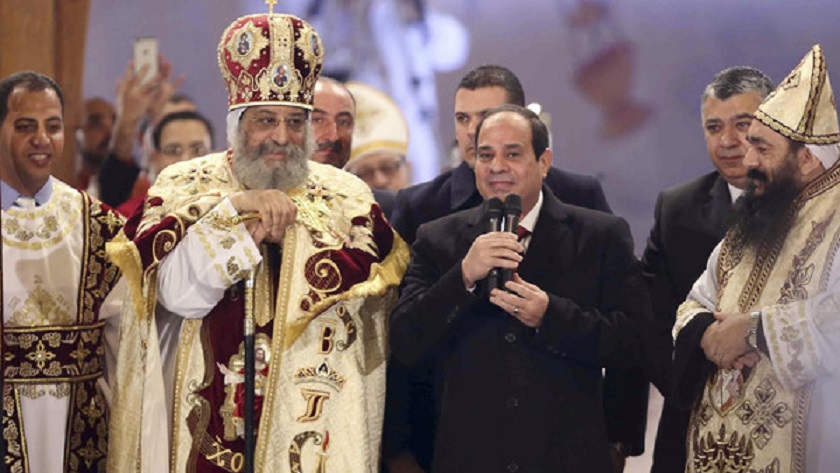
Egyptian President Sisi talks next to Coptic Pope Tawadros II as he attends Christmas Eve Mass at St. Mark's Cathedral in Cairo

Last night on Christmas Eve according to the Coptic Orthodox calendar, President Abdel Fattah al-Sisi became the first ever Egyptian head-of-state to attend the holiday mass.

His appearance lasted for about ten minutes, during which he gave a short speech. The video selection and translation is provided kindly by Paul Attallah.

It was necessary to come and congratulate you for the feast
I hope that I did not interrupt your prayers

Egypt for years taught the civilization to the whole world
and taught the civilization to the whole world
I want to tell you that the world is now waiting from Egypt
in these circumstances…

The people: We love you
Sisi: We love you too!

I thank you because frankly the Holy Pope will be upset!

It’s important that the whole world watch us: the Egyptians.
You noticed that I am not using another word than Egyptians
It could not be something different
We are the Egyptians
Nobody says: what (type of) Egyptian are you?
Listen
We are saying things
We are writing to the world a meaning
and we are opening a window of real hope and light to the people

I am saying that Egypt taught to the world all over the years civilization and humanity
Today we are present to confirm that we are able another time
to teach the humanity
and to teach the civilization once again.
Starting from here
For this reason, we cannot say but: we the Egyptians
We must be only Egyptians
Yes Egyptians

The people: One hand

Yes one hand
I want just to tell you
that with God’s will
we will build Egypt together
we will contain one another
We will love each other
We will love each other in a good way
we will love each other really
so the people can watch

I want to tell again
Happy New Year
and for all Egyptians
and for all Egyptians: greetings for the feast
Holy Pope: Greetings for the feast
Thanks and I will not take from you more time
Greetings

It is certainly a historic occasion. Merry Christmas to all Egyptians.

Categories
Prayers

Friday Prayers for Egypt: A New Year

Flag Cross Quran

God,

Every new year brings new possibilities. But old issues linger. Help Egypt to find resolution.

What should become of Islamism? Criminals can be prosecuted, but what of citizens?

What will become of human rights? Stability is necessary, but is it sustainable without them?

What can become of the economy? Tourism and investment may return, but will all take an equitable share?

God, these and other issues continue. Trials are ongoing in an uncertain judiciary. Corruption hovers as a near insolvable specter. Reform is needed in countless sectors, each with strong institutional power to resist.

A revolution was launched with all the right slogans. Four years later little has changed. Yet while the hopes of many have been dashed, others see new hope finally emerging.

In this new year, God, give hope a grounding in reality. Strengthen state, society, and citizen together. May all three come together to answer the questions above.

The answers will come amid many possibilities. Where the answer is right, give Egypt the resolve to carry it out. Bless this new year, God, and all Egypt in it. May her people know peace.

Amen.