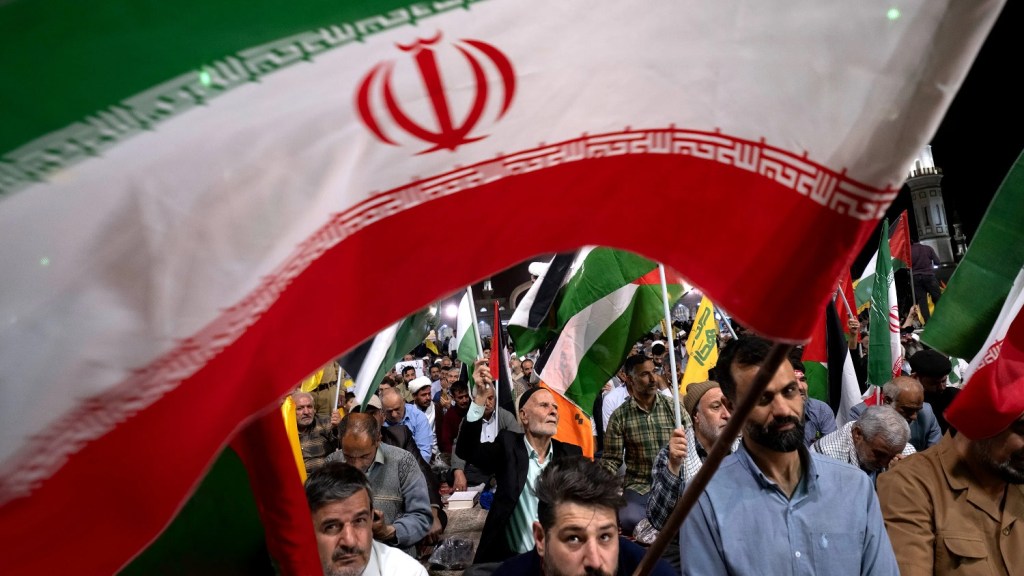
When asked last month about his goals in attacking Iran, Israeli prime minister Benjamin Netanyahu stated that he sought to stop a nuclear threat. Yet he also expressed hope for a regime change.
“The decision to act,” he said, “is the decision of the Iranian people.”
Although Iranian sentiment is hard to measure, some surveys suggest widespread disillusionment with the country’s rulers. According to the nonprofit Freedom House, Iran ranks No. 20 on its list of the least-free nations in the world. But if Iranians were free to decide, on what basis would they decide what is right?
Shiite Islam offers Iranians a standard it views as just. Iran calls itself an Islamic republic. Many Iranians may appreciate the Western understanding of human rights. But long before Freedom House existed, their sect prized two concepts through which the Shiite people can judge their governments: justice and leadership.
Najam Haider, assistant professor of religion at Columbia University, calls these the core theological beliefs of Shiite Islam. Iran’s constitution purports to enshrine them via the judiciary in wilayat al-faqih, the “guardianship of the jurist.” In plain terms, the religious scholar, an expert in sharia law, is to rule and ensure fidelity to Islam. Iranians can theoretically vote politicians out of office but the chief religious scholar is in charge. He can be removed from his post—but only by fellow religious scholars.
To understand the Iranian government we need to understand Shiite political history. This article is the first in a four-part survey, based on Haider’s Shi’i Islam, Vali Nasr’s The Shia Revival, Mark Bradley’s Iran and Christianity, and interviews with Shiite experts.
Part one is the origin story, describing why Shiites view themselves as cheated out of Muslim leadership. Part two looks at how different branches within the sect responded to this loss. Although Shiite rule is historically rare, part three considers how two premodern dynasties shed light on later developments in Iran. And part four describes two Iranian personalities who played a key role in politicizing the Shiite faith.
The starting point: Politics is never far from Islam, as the Muslim prophet Muhammad also became a head of state. But for centuries, most Shiites waited for divine intervention on their behalf, and did not push to create a government themselves.
Iran is one of only four majority Shiite countries in the world—Iraq, Bahrain, and Azerbaijan are the others—but is unique as the only nation with specifically Shiite governance. The global majority Sunni population may admire Iran for its centrality of religion, its anti-Western posture, or its opposition to Israel. But Sunnis reject the theological basis of wilayat al-faqih.
This article will focus on what Shiites think. An anecdote about…
This article was originally published at Christianity Today, on July 8, 2025. Please click here to read the full text.











 Jayson Casper