From before the revolution, many Copts have realized their community suffers from a dearth of political and civic participation. The Coptic Orthodox Church’s Bishopric of Youth, for example, has an area of focus entitled ‘Promoting Coptic Participation in Society’, which I encountered when a representative spoke at our local church encouraging the congregation to register to votein the 2010 legislative elections. When he informally polled them for who planned to vote, only a handful indicated any interest at all.
That was before the revolution, when everyone knew that election results were rigged. Yet conventional wisdom still suggests the Copts of Egypt are reticent in their political participation. Recently, a representative of the Egyptian Social Democratic Party presented a brief primer on basic civics in a Sunday School meeting at church, and while the subject received more apparent interest than earlier, the attitude still seemed subdued.
It was not always such. Copts were equal participants with Muslims when British colonialism was repulsed, and helped shape a liberal democratic polity under the Egyptian monarchy. The revolution of 1952 steadily put an end to the budding democratic system, and Copts began to feel excluded from the corridors of power. The increasing religiosity of the state under Sadat accelerated the feelings of marginalization, and Mubarak succeeded in concentrating the Coptic voice within the walls of the church, with Pope Shenouda as its spokesman in both religion and politics. Whatever merits the Copts gained from their direct line to the president, it cemented their tie to the autocratic state, especially against the feared possibility of Islamist rule.
This line of reasoning was heard recently from Bishop Boula, head of the Clerical Council of the Coptic Orthodox Church and bishop of Tanta, a city in Delta region an hour’s drive north of Cairo. He spared me a few minutes of his time in between meetings with the supreme military council, in Cairo – to discuss the Maspero affair – and an election preparation meeting with the priests under his charge, in Tanta.
He related to the priests that despite the military council being much in the wrong in Maspero, where twenty-six people were killed following protests, almost all being Copts, Christians must still support the army. It is the only functioning institution left in Egypt, and Islamists are chomping at the bit. Much of his counsel, however, was to keep the anger of Copts at bay. Priests should work to prevent other political forces from getting Copts all fired up, and too many were going out to demonstrate during a time of economic trouble. The military is having trouble running the country, and Copts should be careful not to make things worse.
There was Biblical counsel in his words as well. Christians should take care not to chant against Field Marshal Tantawi, head of the military council, as this was against Christian teaching. In response to the Maspero tragedy, the church must remind its flock that as the Bible says, ‘All things work together for good,’ and that now was a time to increase societal dialogue, not protest.
The thrust of the meeting, however, was in application of an unmentioned Biblical concept: Render to Caesar the things that are Caesar’s. Coptic attention during this time must focus on the vote of every single Christian – a chief responsibility of citizenship. Bishop Boula then reviewed the homework he had each priest prepare.
Each priest had reams of paperwork – maps, graphs, or hand drawn versions of the same. They demonstrated the results of previous instructions to select a church volunteer to be responsible for every fifty houses in his area. Many priests had done admirably; others had not done enough. These had failed to map their constituency down to the details of names and exact street location. The bishop wanted nothing left to chance, or for anyone to slip through the cracks. Not only should the volunteer know each and every Christian under his responsibility, he must also be readied to give clear instructions on voting procedures. He must master the content of www.elections2011.eg, so there would be no confusion the day of the vote.
Bishop Boula issued further instructions during the session as well. Many Christians in Tanta have their official residence outside the area, and several poorer professions, such as the doormen, come from Upper Egypt. Each priest must identify these Christians as well, and study arrangements to assure they are present in their home district for elections. If this involved the church paying their transportation back home, it is worth the expense. Even beyond the coming legislative elections, priests also must help mobilize for the more immediate syndicate board elections. All Christian professionals – engineers, doctors, journalists, etc – must be located and encouraged to vote.
It was a very impressive meeting. Bishop Boula went far beyond exhortation to convince Copts of the necessity of political participation; he actively served as campaign coordinator. It should be noted he gave no instructions on which candidate or party to vote for, only that a vote be cast. The necessity, however, was lost on no one.
According to the results of the March referendum, the elected parliament will appoint the delegates charged with writing the new constitution. The importance of these first elections, therefore, goes far beyond simple legislation. It will set the ground rules for future governance.
If as expected the Islamist parties perform well at the ballot box, will they craft a civil, democratic constitution? Only a handful of Copts admit to the possibility they would fare better under an Islamic system; the rest lean overwhelmingly with the liberal parties, at least among those who have a political inkling. Copts are commonly constituted as 10% of the population. They may be as low as 5-6%, and one partisan estimate tallied them as high as 20%. Regardless, if all mobilized they would have much electoral sway.
Does the effort of Bishop Boula represent illegitimate church interference in politics? Does it represent wholesome spiritual impetus for civic engagement? Or, does it represent the desperation of a religious community pressed between the history of autocratic rule and the fear of Islamist? How much is it a combination of all three?
The Copts of Egypt are well represented in many aspects of business and professional life, but the political arena requires savvy and acumen long left unpracticed. The Egyptian revolution has opened wide the doors to politics, but many Christians are only in the aperture. Bishop Boula is trying to push them through; God may weigh the intentions of his heart, but the ballot box will measure the extent of his success.
This article was originally published on Aslan Media.
I took a stroll through our neighborhood this morning to see the early activity surrounding our four public schools hosting parliamentary elections. Polls opened at 8am, and I crossed the street, walked a block, and began to observe.
A few things stuck me immediately. First, a long line. Over 100 people were in cue, side by side. Second, they were all men. I thought this was peculiar. Third, the guard. About four or five soldiers manned the entrance to the school, while two or three policemen monitored traffic and paid general attention to the surroundings.
Fourth, the propaganda. Opposite the school were about twenty volunteers for the Muslim Brotherhood’s Freedom and Justice Party, distinguished by their bright yellow hats with the party logo. Some were distributing leaflets, some seemed around just to establish presence. The main contribution, however, was to set up a table with two laptop computers, helping voters identify their polling station.
Some have complained about the odd distribution of voters through various districts, with family members in one home often in three different places. Still, the government has established a website in which one’s national ID number will provide the exact location for voting. The Muslim Brotherhood effort provides an uninformed voter which neighborhood school to visit. It also provides them with a leaflet for the party, on the back of which their volunteers write down the polling station info, to help with ease of access. Last Friday at church two laptops were set up in the courtyard to provide a similar service, without the leaflets.
Interestingly, the electricity to run the laptops was provided by the private school across the street, where our daughter attends kindergarten. Private schools do not serve as polling stations.
Leaving this location I walked down the street for about three blocks to visit a second school, which cleared up my confusion about gender participation. Actually, two schools here were back to back, both receiving only women voters. Two lines were formed, each having at least 200 people. I saw a few people from church, waiting their turn, optimistic and excited about this their first vote ever.
Returning back home I passed by the first school with the men, with the line just as long as when I left it. I noticed a fourth school around the corner, however, which also serviced male voters. Only about 50 were in line here, however.
Standing on the corner keeping observation there are two other minor events to relate. First, a campaign car for Mohamed Amara of the Salafi Nour (Light) Party drove by, with a prominent sticker of his mug shot on both back windows. This helped identify him as he stepped out, shook the hands of one of the Muslim Brotherhood volunteers, got back in his car, and drove away. To note, Amara is the lead local candidate on the Islamist Alliance for Egypt list, headed by the Nour Party, which is in competition with the Democratic Alliance, headed by the MB’s Freedom and Justice Party. Liberal and other parties are also in competition, of course.
Second, our elderly neighborhood gardener saw me standing around and motioned that I follow him away from the area. The presence of a foreigner, he stated, might concern and worry the people. In addition, there are police around in civilian clothes taking note, which he could see but I would be unaware of. Having seen enough anyway, it is best to follow the advice of a friendly Egyptian, so I left with him, as he was himself off to vote at a station three metro stops to the south. The Freedom and Justice Party helped him find his way.
Three final observations. First, though the Muslim Brotherhood volunteers were out in force, they were not the only ones. Many party representatives were distributing leaflets and information. I received information additionally from the moderate Islamist Wasat (Centrist) Party, the liberal Egyptian Bloc electoral alliance, and a couple independent candidates as well. I am not familiar with all campaign laws, but I have read that each of these propagandists are breaking the law forbidding party promotion at the polling stations 48 hours to the lead up of elections.
Second, given that in Egypt one’s religion can be outwardly identifiable, I can make some very rudimentary and cautious exit poll guesses. In the men’s line, about 20% of the people wore long robes, had heavy beards, or prominent prayer calluses on their foreheads. These are often signs of being a conservative Muslim, particularly of the Salafi trend. A beard and robe can be worn by any Muslim, of course, many of whom do not support political Islam. Many Brotherhood supporters, meanwhile, do not necessarily have distinctive dress, and many ordinary non-Islamist Egyptians may vote for the Freedom and Justice Party, given their longstanding role as an opposition party and the relative newness of other liberal entities.
As for the women, perhaps around 30% of those in line were non-veiled. This indicates in general that there are Coptic, or else Muslims willing to resist the cultural pressures to wear a head covering. This segment of society would be unlikely to vote Islamist, though some may. To note, only about 10% or less of the population is Coptic, and though I have no official estimates, non-veiled Muslim women appear to be a similar minority. On the other hand, wearing a veil is no necessary indicator of political affiliation. I saw only a handful of women wearing the niqab, which covers all but the slit over the eyes. This could be reflective of conservative tendency, but as in all the above deductions, caution is needed above all.
Third, everything concerning the vote seemed orderly and peaceful. Yesterday’s rains made the environment wet and muddy, but turnout was impressive and lines were respected – which is not always true in Egypt. Voters were let into the school a couple at a time, and everyone behind waited their turn. In our neighborhood at least, early signs are promising.
There may yet be surprises of many sorts, let alone in results. From what I understand, results from the individual election competitions will be announced on Wednesday, followed by runoff elections as needed. Results from the list-based competition, however, will wait until all three election stages are completed, geographically arranged across the country. Most pundits expect a plurality of votes for Islamist parties. Meanwhile some predict their victory will be overwhelming, while others think they will receive surprisingly little support. Now has begun the process to tell, for the first time in modern Egypt. May it be the first of many.
Demonstrator with Gas Mask, an Unfortunate Reality in Recent Protests
As an American Christian in Egypt I find that I instinctively view events here through the following lens: Liberals are the good guys, Islamists are the bad guys, and the army is somewhere in between, perhaps neutral, perhaps not. Complicated times beg for simplistic narratives, and this one suffices. Other groups maintain their favorites, but for most rooting interests become established, even if objectivity is sought. In crucial times such as these, witnessed in the recent clashes in Tahrir Square less than one week before scheduled legislative elections, complexity is overwhelming, and a lens is not only a false crutch, but a dangerous one. This text will aim to set the scene as honestly as possible, admitting its unfortunate bias from the beginning.
The lens is dangerous because so much is at stake, with interests colliding from numerous directions as lives fall in the process. Yet all lenses have criteria, and mine is this: Manipulation. No matter who is confined where in the ‘good guy – bad guy’ evaluation, a place is assigned by the degree to which self- or group interest is sought on less than transparent terms. All have a right to seek their interest, and politics in essence is a mutually accepted game of manipulation – none of this is rejected. What colors the lens is the favor or disfavor granted to a particular outcome of the process, even if legitimately won.
I stated my natural predisposition above; I set forth my conviction here: I am a foreigner in Egypt, and neither have nor seek a stake in the outcome of events. I wish the best for this country in accordance with the will of its people, and will honor both winners and losers of the current political struggle. What I hope is that the struggle will be transparent, and in this spirit, for the benefit of readers I will narrate events according to my best observation and judgment. Please remember that much is uncertain, and in the end, I have little idea where Egypt is headed. It is far too premature to label anyone good or bad.
The Basic Story
At his resignation following the protests beginning on January 25, President Mubarak ceded power to the Supreme Council of the Armed Forces, headed by Field Marshall Tantawi. Riding a wave of popular acclaim for their decision not to violently suppress the protests, the military council assumed legitimacy to head the democratic transition process as the only undamaged institution remaining in Egypt. This legitimacy was validated in a national referendum on March 19, endorsing the military transitional vision. It called for legislative elections to determine a parliament, whose members would choose a constituent body to write a new constitution. Following a referendum to approve the constitution, presidential elections would be held. The entire process envisioned the military returning authority to the people within six months.
Ten months later, the transitional process has been very uneven. The economy has faltered as the security vacuum has expanded. The military has stood accused of violating basic human rights, and sectarian attacks have afflicted Muslim-Christian relations. The military’s impartiality has been called into question vis-à-vis the other political powers, and a specter of ‘hidden hands’ has been blamed for many ongoing troubles. After much political wrangling, legislative elections have been set to take place in three stages, beginning November 28.
The Lead-Up
Roughly three weeks before elections, Deputy Prime Minister Ali al-Selmi introduced a supra-constitutional document meant to bind the future constituent assembly in shaping the future constitution. This document resurrected a dispute from months earlier, which divided liberals and Islamists over the guarantees necessary to preserve Egypt as a civil state. Islamists are generally believed to be the dominant plurality, if not majority, following elections, and liberals feared they might write a constitution leading to an Islamic state. Islamists and others, meanwhile, decried the process as being ‘against the will of the people’, since the national referendum gave parliament alone the right to craft the constitution. The earlier crisis was averted through the intervention of the Azhar, the chief institution of Sunni Islamic learning, in which all sides pledged to preserve basic human rights in a civil state – in a non-binding document.
Al-Selmi, with elections looming, sought to gain binding approval. His document mirrored the Azhar’s, but included clauses that gave the military privileges to guarantee the constitutional nature of the state, as well as be exempted from legislative financial oversight. Furthermore, it imposed stipulations on the makeup of the constituent assembly to draft the constitution, drawing the majority of members away from legislative designation. It imposed a timeline to complete the draft, which if transgressed would reset the whole process through a new assembly chosen entirely by the military. Lastly, it ruled that if the final constitution violated any provision of the supra-constitutional document, it would be annulled.
All Islamists fumed at al-Selmi’s initiative, and though many liberals appreciated aspects of it, most balked at the privileges given to the military. Negotiations continued, with Islamists especially threatening massive protests if the document was not withdrawn. Though al-Selmi yielded by amending objectionable sections and removing its binding nature, the protest had gained too much momentum, and went forward anyway, on November 18, ten days before scheduled elections.
Friday, November 18
Principally organized by the Muslim Brotherhood and more conservative Salafi Muslim groups, the demonstration also witnessed substantial youthful revolutionary participation, including leftists and liberals, with some Copts as well. Most liberal political parties refrained, however, believing the protest to be threatening to public stability or just being too Islamist. Yet the turnout was massive, demanding not only the withdrawal of the al-Selmi document, but also a defined timetable for military transfer of power to civilians after presidential elections in April 2012. Many political forces threatened to turn the demonstration into an ongoing sit-in protest. By the end of the day, however, most organized parties, including the Muslim Brotherhood, withdrew by nightfall. A handful of Salafi and revolutionary groups camped out overnight in tents in the central Tahrir Square garden. Their numbers vary, but top estimates equal around a couple hundred.
The next morning security forces dispersed the remaining protestors, as they have done with lingering protestors previously. On this occasion, however, something triggered a wide response among the activist and revolutionary community. By afternoon, many began descending to Tahrir Square to protest at, and clash against, the violent dispersal. These were also met by force, and rapidly thereafter the numbers began to swell. By nightfall, Tahrir was re-occupied by several thousand.
Saturday – Monday, November 19-21
These thousands encamped in the square rather peacefully, but on a side street to Tahrir a pitched, violent struggle was taking place. While over a thousand people crowded into Mohamed Mahmoud St., several hundred engaged the police force with rocks and Molotov cocktails, while police responded with tear gas, rubber bullets, and alleged live ammunition. The street led eventually to the Ministry of Interior, though the battle was as of yet a ways removed. Hundreds of injured began to multiply, along with the death of one or two. These were scurried to makeshift field clinics hosted in various parts of the square. As the frontline protestors tired or fell injured, others would surge forward to take their place.
This scene continued almost nonstop for all of Sunday, Monday, and Tuesday, not only in Cairo but also in Alexandria and multiple other cities of Egypt. Official figures now list thirty-five dead and 3,256 injured. Most of the dead are from Tahrir Square.
Inside the square was a different story. Numbers multiplied but did not fill it, and all remained peaceful. That is, until sunset on Sunday, when a joint police – army initiative stormed the square, violently dispersed thousands of protestors, and burned their tents and banners. Rather than securing the area and preventing further occupation, however, they withdrew after an hour, apparently content with destroying the sit-in preparations. As they pulled back, protestors returned, and even more descended following the operation.
Noteworthy is the makeup of the protesting crowd. Most were the leaderless masses resembling the initial January uprising – youthful, middle and lower class together, along with the oft-violent soccer hooligan bands. Yet it also included the prominent Salafi presidential candidate Hazem Abu Ismaeel, who called on his followers to join them. Though in January the Muslim Brotherhood participated in the uprising, Salafis did not, as their doctrine generally requires obedience to the ruling leader. In this case, the Brotherhood was making equivocal statements as per their participation, but eventually decided not to come, though some of their youth, especially, were undoubtedly there. Other Salafi groups distanced themselves, but Abu Ismaeel brought along with him a substantial religiously-oriented minority. It is not clear who made up those fighting on Mohamed Mahmoud St., but it appears they were both youth and hardcore activists.
All were chanting no longer about the al-Selmi document or a timetable for elections. Instead, it mirrored that of January: The people want the fall of the regime, or more specifically, the fall of the field marshal. Such chanting – as well as the fighting – went on all day Monday, and on Tuesday the demonstrators called for a million man march the next day.
During this period speculation became rampant that the solution to the crisis might lie in forming a national unity government. The possible presidential candidate Mohamed el-Baradei has been advocating for months a reset button, in which a civilian presidential council would be formed, a constituent constitutional assembly, and following their work and a referendum, elections would be held for president and parliament based upon the new system. Yet only a day before the large Friday Islamist dominated protest Baradei re-proposed his idea in the form of a national unity government. Then, on the night of the million man march he appeared on a popular satellite program to make his case to the nation.
He made it, however, with Abdel Munim Abul Futouh, a Muslim Brotherhood member who was kicked out of the party when he declared his intentions to run for president, while the group insisted it would not field a candidate for the post. They spoke of their willingness to work together for the sake of the nation, a liberal and an Islamist, to guide the transition through. Meanwhile, the April 6 Movement, a key organizing figure for the ongoing protests, also issued a call for a national unity government, naming Hazem Abu Ismail, the Salafi, as another member, a prominent judge, and leaving a space for the military to add one from its ranks.
Media reports circulated meanwhile that the government of Prime Minister Essam Sharaf was tendering its resignation, and that the military council was in deliberation over appointing Baradei as the new head. All the while, the numbers of protestors increased, and the fighting continued in the side streets.
Tuesday, September 22
The day of the million man[1] march resembled the uprising in January. Every corner of Tahrir Square was full, and every segment of society was represented – men, women, and children. Only one party was absent – the Muslim Brotherhood. Earlier in the day Mohammed el-Beltagi, one of the leaders of their political arm, the Freedom and Justice Party, announced his support for the protestors against the brutality of the police, and visited the square. Frustrated with the Brotherhood reticence to come earlier, and perhaps also with the fact he arrived with a small group and not hundreds of supporters, the protestors kicked him out and sent him away. A short while later the Brotherhood announced it would not participate, preferring not to add to the instability of the situation, and compound traffic. Other figures stated they feared a trap from the army.
Such fear did not prevent the Brotherhood from negotiating with the military council that day, joining in with other political parties. They and other Islamist currents joined the liberal Wafd Party, a longstanding member of the faithful opposition to Mubarak’s National Democratic Party. Others joined in, but the liberal Free Egyptian Party boycotted until all violence stopped against protestors. The liberal Social Democratic Party, their election coalition partners did participate, but later issued a public apology for doing so, following the events of the next few hours. Oddly enough, this included the defection of two army officers into the crowd of protestors, shouting against Tantawi, arguing that much of the military was against him. One was Captian Ahmad Shoman, who joined demonstrators in Tahrir in January as well.
Around 7pm Field Marshal Tantawi delivered a taped message addressing the nation, an act which had been generally handled by other officers. He painted a picture of the great efforts the military council has expended to bring about a democratic transition under difficult circumstance. He mentioned the faltering economy and differentiated between the army and the police. Then, to a degree, he offered the concessions.
Some minor ones were significant. He declared the investigations surrounding the deaths of protestors in Tahrir would be investigated by the general prosecutor, not the military. Additionally he transferred investigations surrounding the death of twenty-seven mostly Coptic protestors at Maspero, allegedly at the hand of the army, though some believe third-party thugs were involved. There has been much criticism that a case involving the military had received military jurisdiction.
As for the most substantial concession, he made it toward the political demonstration of Friday, not toward the mass popular demonstrations since then. He announced the military council would cede power following presidential elections no later than July 2012. He also announced the acceptance of the government’s resignation, but not until the formation of a new government, but made no mention of personnel or timetable. He did, however, declare the elections would be held according to their scheduled date, now only six days away.
Finally, he added a clever wrinkle. He stated the welcome of the military council to leave power immediately, if that was demonstrated as the will of the people through a referendum. As such, he widened the question beyond Tahrir Square to all of Egypt, where substantial support for the army remains.
As for Tahrir Square, it was furious. Protestors compared it to the first speech of Mubarak, offering meager concessions. They held up their shoes in protest. They chanted for the immediate transfer of power. They were confident the events of January were replaying themselves, and they smelled triumph. Soon they smelled something else.
All during Tantawi’s speech the fighting raged on Mohamed Mahmoud St., including the constant use of tear gas. Veterans of this struggle against the regime have been subject to tear gas for months, but in these past few days they noticed it was of a stronger makeup. Some believed it to be CR gas, which is a banned chemical weapon in the US, as opposed to regular CS gas.
Those fighting in the side streets were pushed back near to Tahrir Square, and the tear gas began to fall on its periphery. Some said it was launched into the square itself. Others stated the gas now in the square was colorless – unlike the white plumes from the regular issue – and incapacitating. Rumors stated the people were under chemical attack, even coming up from the metro ducts, to drive them from the square to make it look like Tantawi’s speech was convincing. Others stated it was only the waft from the side streets, yet recognizing how painful ordinary tear gas is. Baradei, however, tweeted it was nerve gas, and Abul Futouh concurred some sort of gas dispersal effort was underway. Many left Tahrir, but it was clear that many thousands remained as well. Confusion reigned, and protestors vowed to continue their sit-in until their demands were met, yet fearful a military crackdown might come at any minute. As the night passed, it did not.
Wednesday, November 23
The next day violence continued on the side streets though Tahrir Square remained calm. Truces were brokered to end the fighting, with one effort secured through the intervention of Azhar sheikhs, after which hugs were exchanged and protestors even began cleaning up the street from debris. Yet after each period of peace violence would inevitably flare up again. ‘Who started it?’ is a question almost impossible to demonstrate, but most place the blame on the security forces. Though Tantawi stated the police would be replaced by military personnel, this did not take place.
On Thursday the army itself intervened, separating protestors and police, and erecting a barrier between the two sides. The police were finally withdrawn and the military secured both this road and other side streets in the direction of the ministry of the interior. Furthermore a group of protestors, believed to be the youth of the Muslim Brotherhood, formed a human wall where Tahrir Square enters into Mohammed Mahmoud St., preventing passage from either direction. Salafis present in the protest also made sure to condemn the violence. Some stated they shared in the demands of Tahrir, but others insisted they were there only to protect the people.
Thursday, November 24
When calm prevailed I decided to visit the square myself. I went to the field hospital hosted by Kasr el-Dobara Church one street to the south of Tahrir Square. Rev. Fawzi Khalil stated they had even treated three police officers, in addition to the dozens and dozens of injured protestors. Yet he verified the account of strange tear gas, and that it had been directly fired into Tahrir Square for thirty minutes straight following the address of Tantawi. One of their own volunteers, Dr. Safa, had passed out while treating others.
Dr. Muhammad Menessy had been a volunteer at one of the field hospitals within Tahrir Square itself, and as a general surgeon he handled the serious cases. He moved to the church, however, following the deliberate targeting of the hospital by security forces. Though basic clinics remained, all critical injuries were moved to places of worship, here or at Omar Makram Mosque, as their safety was inviolable. He testified he had seen spent canisters of CR gas, as well as numerous cases of people convulsing and losing consciousness in repeated pattern over several hours. Though there had been no fighting at all that morning, I witnessed one patient still in the cycle of symptoms.
Before reading to leave two random events provided more context on events. First, a crowd of people came down the street in front of the church, chanting something. A thief had been caught in Tahrir Square. Apprehended by protestors, they beat him severely, and then brought him to the church for treatment, and safety. Not all were happy at his transfer, though, and some scaled the walls incensed at his delivery. These were calmed by the intervention of a Muslim sheikh who was on the premises, as well as others, and then went away.
Second, a young protestor stumbled into the clinic, fully conscious but bloodied from obvious blows to the head, which were bandaged. Able to interact, I asked if I might speak to him, wishing to discover why these youths were fighting so ferociously in the side streets. As the conversation ensued I learned he was Maged al-Semni, better known by his Twitter name @MagButter, and a member of the Alexandria chapter of the No to Military Trials organization. He was not a fighter, but was on the side streets none the less.
Al-Semni was with fellow renowned Twitter activist Mona el-Tahawy, who he had only met personally that day. They wished to see the side streets where fighting took place, but were blocked by the human wall. Instead they went to see Bab el-Luk Square, where other fighting occurred nearby. After moving in the direction of Mohamed Mahmoud St., they were noticed and fired upon. Bystanders in civilian clothes motioned to a safe place to hide out, but then were beaten there, Mona was sexually harassed, and both were turned over to the police. Maged was transferred to Tora Prison, had his cell phone stolen, spent the night with other detainees, and then released in the morning. He had worked his way back to Tahrir Square, and sought medical attention in the church clinic.
The rest of the square was in waiting mode. Friday was the call for another million-man demonstration, and though there were several thousand people milling about, it was quite easy to navigate. Some were cleaning up trash, others were handing out surgical masks for tear gas defense. I sat with a few Islamist-looking youths due to their long, scraggly beards, and asked their opinion. They were elusive about which religious or political strands they belonged to, emphasizing instead the unity of Islam. Yet one asked why America continued to incarcerate Omar Abdel Rahman, convicted for inciting the 1993 World Trade Center terrorist attacks, when he was clearly innocent. Another lauded the youth of Tahrir as akin to the youth of the early Islamic conquests, in whom religious strength resides. They were with the protest 100%, wishing to see the military council give up its power immediately. Yet they would vote in elections for anyone who promoted the good of Egypt – Islamist, socialist, or liberal – and celebrated that ‘the street’ was there with them. They believed the majority of these demonstrators wished Islamic rule. From appearances, though appearances can be deceiving, I disagreed. So did Rev. Khalil, who estimated 90% of protestors were in favor of a civil, non-religious state, however important Islam is to them as a faith.
Friday, November 25
On Friday Tahrir Square was filled as expected. There was no violence, but political wrangling began in earnest. The military council appointed Kamal Ganzouri as the new prime minister, bequeathing him with full powers to form a national salvation government, in accordance with the spoken will of the demonstrators. The square rejected him out of hand, not only was he 78 years old and been Mubarak’s prime minister in the 90s, the protestors had their own desires for a national salvation government. They selected a representative who presented what was described as the will of the square, to name Baradei as prime minister. They asked that fellow presidential candidates Abul Fotouh and Hamdeen Sabahi, a Nasserist, be his deputies, and also named a prominent economic journalist and reform minded judge to complete the council.
Friday witnessed two other competing protests, and then one more that developed following the political impasse. The International Union for Muslim Scholars called for a demonstration in support of al-Aqsa Mosque in Jerusalem, and the Muslim Brotherhood backed it. Only a handful of people attended that gathering at the Azhar Mosque. Azhar officials, meanwhile, backed the Tahrir protest, and a deputy of the Grand Sheikh spoke during Friday prayers.
The other protest was organized by supporters of the military council, and drew several thousand people. They lauded the efforts of their leaders during difficult times, and opposed the disruption at Tahrir Square. There were fears the two groups might march one toward the other, but each stayed put without confrontation.
That statement is not entirely true. A few hundred demonstrators in Tahrir Square departed and readied for a confrontation – not toward the counter-protest, but toward the prime ministry. They marched several blocks and occupied the space in front of its offices, to deny the now-appointed Ganzouri the ability to enter the building and begin his work. A standoff is in the works, and rival governments are on the horizon. Though neither Baradei nor the others have accepted any official designation, the political situation is tumultuous, with no clear endgame in sight. Meanwhile, elections are only three days away, now extended to two days per round.
Conclusion
There is much in Egypt currently that does not make sense, which opens wide the public discourse for all manner of conspiracies. Were these crowds manipulated into massive demonstrations? If so, by whom, and why? Does the military wish to sabotage elections to stay in power? Has the military struck agreement with Islamists to deliver them an electoral victory? Has the military struck agreement with liberal forces to discredit the otherwise democratic Muslim Brotherhood? Are the protesters minority revolutionaries now seeking power by pressure since they will not win elections? Are the protesters Islamists who fear their popularity might not deliver a clear victory in elections, so they are seeking an alternate route? Aspects of the above narrative can be marshaled to evidence any one of these theories.
Or, are the events just happening? Do they represent genuine anger between protestors and the police force? Do they represent political forces trying to position themselves in light of circumstances? Do they represent the military council seeking balance for the best national outcome, if through soldierly tactics or otherwise? Much is at stake in Egypt, and many wish to grasp at power. Could events simply be the conflation of mutually antagonistic strivings for self-interest, mixed with miscalculations, mistakes, and failures in dialogue?
These questions figure prominently in determination of the original question: Good guys, bad guys, and rooting interests. If all have manipulated, are they all disqualified? Or has the manipulation been within acceptable grounds of politics? Or, if one’s rooting interest is strong, have the ends of a favored party justified their means? Yet as of this writing over thirty people have died, and there is little justification for this, however blame is distributed.
Perhaps events will only be understood in retrospect, or perhaps they never will. Egyptians especially have the responsibility to gauge actions, weigh motivations, and cast their lot with one side or the other. They must do so with partial information and political biases. Through either cooperation or competition their divergent interests will come together in a decision, with winners, losers, or degrees of the same. Yet if one or more parties are manipulated out of the game entirely, they risk all becoming losers. In times of revolution, excluded parties may choose to fight, and fight violently.
I hope for peaceful solutions. I hope for transparency. I hope for an outcome pleasing to the national will, for the good of Egypt. There need not be good guys or bad guys, only sons and daughters of the nation. If there are bad guys, may they be exposed; if there are good guys, may they be successful. Yet may all be honored, and may all see the triumph of their nation, forged anew in this historic time.
[1] The term ‘million-man’ has become popular since the uprising in January, but more scientific estimates posit that at a number of four people per square meter, Tahrir Square could hold upward of 250,000 people. This is an impressive accumulation of people, but not approaching the literal figure implied.
In trying and troubling times, be a refuge for all Egyptians. Give them wisdom to know whom to trust, whom to follow, and whom to encourage in building the nation. May decisions made now be right; may they lay a solid foundation. Protect Egypt from manipulation; protect her from harm. Give clarity; expose deceit. God, move Egypt through its transition to arrive at a destination which honors her people. Bless this nation, God. Give her peace and stability; give her strength to continue. May good men and women rise to do what is right.
As clashes and demonstrations have resumed in Cairo and throughout Egypt, I have been closely following information to try and decipher what is going on. I wish soon to be able to publish a helpful summation of events, but things are happening so quickly, and in essence I remain confused about the ‘why’ of everything, as well as where it is going.
In light of this, here instead is a short human interest piece describing a video from al-Masry al-Youm, a local Egyptian newspaper, highlighting the efforts of Kasr al-Dobara Church,[1] a Presbyterian congregation one street removed from Tahrir Square, to treat the injured from the recent clashes.
This work was not unique. There were at least three areas in the square which had field hospitals, and another hosted inside Omar Makram Mosque which is a prominent feature of Tahrir. Yet the church opened its doors all the same, seeking to serve all who were in need. To note, while many churches in Egypt have adjoining clinics, this one does not. All medical supplies, in all locations, came through the donations of protestors or sympathizers with their wounded. The official count from the recent clashes count over twenty dead and over one thousand injured.
The video is a little over two minutes long, and in Arabic only. Below is a translation of both text and audio. Please click here to open the video.
Introductory Text on YouTube:
Maybe it wasn’t expected for the Kasr al-Dobara Church near Tahrir Square to become a temporary headquarters for a field hospital which treated tens of victims who fell during bloody confrontations between security forces and the army and thousands of protestors.
0:09 Caption: Kasr al-Dobara Church, Downtown Cairo, November 21, 2011
0:15 Chanting from a distance: The people want the downfall of the field marshal (Tantawi, de facto head of the ruling military council)
0:18 Caption: Victims of Tahrir in the Hospitality of Kasr al-Dobara Church
Speaker: Fayiz Ishaq
0:22 Have mercy on the tired ones. In the middle of events, this is the idea of the Bible, the idea of the church. In the middle of events we find ourselves invested in them. First of all, the church is downtown, in Tahrir Square, and this is a miracle. The church was built in the late 1940s when it was very difficult to build churches, and perhaps the reason for being here is revealed now, being so close to events.
Speaker not named, female doctor:
1:13 We knew there was pressure in the square, so we came yesterday around seven o’clock and opened the field hospital. For the first two or three hours we mainly distributed supplies. There were lots of people, and if the other field hospitals didn’t have supplies we’d send them out – tools, syringes, bandages. Then people discovered there was a field hospital here and began to come. In the first two or three hours there were about eight cases with simple injuries. By about 2:30 in the morning we heard they attacked the field hospital in the middle of Tahrir, and the doctors came here. They brought all their things and we set up three zones – here we dealt with the cases that were easy to treat, not dangerous. Over there we had two zones for the critical cases which required greater concentration.
It would be very interesting in the days to come to speak to church leaders and those involved to know more. If possible, I will relate these stories later. For now, it is good to see a church involved in its community, however temporary and extraordinary this community was.
[1] If you click on the link, the page will have a map of the church. Drag the picture down with the curser and you will soon see Tahrir Square to the north, with a large administrative building inbetween.
In fact there were two: An April deadline for presidential elections with return to civilian rule, and withdrawal of a document granting the military a special role in crafting the constitution. Furthermore, there were two groups protesting: The substantial majority was Islamist; the sizeable minority was youth/leftist/liberal reminiscent of the revolution. The latter continue their direct calls against the military-as-old regime; the former inch closer to this conclusion, but still has wiggle room to avoid it.
Bless the politics of Egypt, God. It is easy for principle to mix with self-interest, with all parties susceptible.
Bless the confluence of political forces at the demonstration, God. While they have a common aim it seems clear they do not share a common end. If they worked together despite differences, honor them. If their partnership is of convenience, protect each one from the other, should disappointment follow their parting.
Bless those who stayed behind, God. Liberal parties either condemned the demonstration as injurious to security, judged the event too Islamist, or else desired an arbiter to protect a civil constitution. If their stance was from principle, honor them. If it was of connivance, increase their faith. Egypt needs all segments engaged, that the final result might be reflective of all.
Bless the military leadership, God. Today’s demonstration placed much pressure upon them. If their goals were noble, honor them that they not yield from force on what is right. If their ambition ran unbridled, give them pause to honor the people and guide Egypt through this transitional period. Give them wisdom, give them grace, give them vision.
Bless the remaining multitudes of citizens, God. As elections approach, fill them with love of nation that they may participate fully. Guide their decisions and produce a parliament fitting for its people. Grant the people a participatory experience to cement their commitment to and share in good governance. May they hold all future officials accountable.
God, guide all in this coming week through the fallout of this demonstration. May decisions lead to outcomes of peace, consistent with justice. Bless Egypt, God, and cause her to prosper.
This post is part two, following up with an evaluation of a post-revolution Muslim Brotherhood booklet which reprints selected writings of their founder, Hassan al-Banna. For part one, which is a summary translation of the book, please click here. This post opens by finding first that which is worthy, and then re-lists controversial statements which are provided with commentary.
In evaluating this booklet, several observations emerge, which must be carefully delineated. First of all, there is much worthy of respect. The Muslim Brotherhood commands the allegiance of its followers due to its insistence on following God and Islam completely in every phase of life. There is commitment to personal piety, family wholeness, social solidarity, and national transformation. The vision is simultaneously large and minute. Furthermore, it is advanced in transparency, as should be expected for a mission built upon fidelity to God and religion.
As an aside, this puts a question to many in the Brotherhood today. The organization is accused of acting in non-, or at best partial, transparency, especially as they argue their support for a modern, civil, democratic state. How do they respond to the more controversial remarks of this booklet? Are they willing to deny them outright? Or, are they violating the commitment of al-Banna to clarity and transparency? More on this below.
Second of all, the reader should take care not to dismiss the Brotherhood’s portrayal in the booklet due to their insistence on partisan interests. It may be true the Brotherhood will clash with Western powers over several issues, and it may be that in some cases Western policy is in the right. Yet the Brotherhood advances a program on behalf of its different identities – Egyptian, Arab, Muslim – many of which are legitimate aspirations of a sovereign people. The issue in al-Banna’s day was that the Arab world did not enjoy sovereignty. Arguments are possible its full sovereignty was often limited post-independence as well. Anti-Western sentiments should not be dismissed out of hand.
As an aside, it is worthwhile to note in this particular booklet at least, there is no polemic leveled against the Jews. Al-Banna wrote before the advent of the Israeli state, which was thereafter viewed principally as another colonialist project. There is a difference between being anti-Semitic and anti-Israeli; arguing from silence, this historical text suggests there is no necessary opposition to Jews in the Muslim Brotherhood, at least in its incarnation.
Third of all, the domestic ambitions of the Muslim Brotherhood are depicted as peaceful. They begin with a call, then the formation of committed bands of believers. They seek influence in all areas of society, and eventually engage in a constitutional struggle. They wish to win the entire nation within their fold, and if successful, who can argue with their ascendance?
Addressing the question of their current transparency, then, they furthermore announce the stages of their program. Propagation, empowerment, implementation. While the stages can be simultaneous, public statements about the importance of democracy may be fully transparent for a stage in-between empowerment and implementation. This does not deny them the right to further propagate – democratically and civilly – for more and more implementation. The issue, perhaps, is that their propagation has not yet been sufficient. The test will be if circumstances propel the Brotherhood to abort their methodology and grab power prematurely. Patience has been their virtue, but is the tree yet ripe?
Critical attention, then, after this sympathetic introduction, must turn to the quite objectionable statements of the booklet. These fall into two basic categories, which overlap substantially. First, there are the statements which assert not only the superiority of Islam (permissible in terms of doctrine and belief), but also its sovereignty. Second, there are the statements which envision violent promotion of international aims. There is within Islam that which can be understood as a call to unite faith with politics, religion with state. The Muslim Brotherhood clearly believes in this interpretation. Modern members of the Brotherhood, therefore, must speak clearly to the following issues extrapolated from the booklet:
We believe Islam incorporates … the Quran and the sword.
To what degree does this involve the right of any state to monopolize violence, which would be governed by Islamic principles, to be argued as virtuous? Or, is it an invitation to carry out the principles of Islam through violent methods?
The Quran has made Muslims to be the guardians for an incapable humanity, giving them the right of superintendence and sovereignty over the world.
It is a far different matter to assert one’s faith is absolutely correct, than to take this principle and demand sovereignty over all others. Muslims should be free to argue the benefits of their religion, in both faith and policy. Yet assuming ‘the right’ of sovereignty precludes one from learning for others, who are then established in an adversarial relationship, unless they submit as those ‘incapable’.
We will establish a state which implements practically the regulations and teachings of Islam.
Perhaps it can be semantics to argue what makes a state ‘civil’ versus ‘religious’. There is no necessary reason a civil state cannot enshrine moral or religious principles in law. The question concerns the a priori nature: Must religious regulations be implemented? Furthermore, under whose interpretation? Does this include controversial rulings such as cutting the hand of a thief and death for the apostate? Though the booklet does not answer this last question, the apparent answers for the first two are: ‘Yes’, and, ‘ours’.
[We] will pursue them and raid in their own lands, until the entire world celebrates the name of the Prophet and the teachings of the Quran. The shade of Islam will cover the earth, and then what the Muslim desires will be achieved: No sedition and all religion will be for God.
Again, the preaching of Islam is free to convert the whole world, should it be successful. Yet by all appearances this statement calls for the violent, offensive, military advance of the religion. Islamic nations currently do not have the power to do so. Would they, if so equipped? Do not statements like this, unless clearly repudiated, justify those who might wish to keep the Muslim world weak and subjected, or at the least interpret the world through a clash of civilizations?
We recognize no system of government that does not emerge from the foundation of Islam. We recognize no political parties or traditional forms which the infidels and enemies of Islam have forced upon us.
Many modern Islamic scholars, politicians, and analysts find the principles of a modern democratic system within Islamic sources and history. Their academic efforts should not be dismissed out of hand. Yet the stridency of this statement begs the question if the Brotherhood is only using democracy as an ascent to power. If established, would they allow the flourishing of the democratic necessity – political parties – seemingly declared forbidden by this statement?
[We desire] an Islamic nation, desiring every part of the Islamic world to join with us.
There is no necessary reason why Islamic majority nations should not come together in some sort of union, as Europe has already accomplished to some degree. Yet this statement appears to resurrect the controversial idea of ‘caliphate’ (stated clearly elsewhere), and at the least indicates the Brotherhood’s ambition stretches far beyond the governance of Egypt. Their members may have legitimate answers, but they deserve to be served the question.
We desire the flag of God to fly high over the lands which once enjoyed Islam and the call of prayer declaring ‘God is great’, but then returned to unbelief. Andalusia, Sicily, the Balkans, southern Italy, and the islands of the Mediterranean were all Islamic colonies and must return to the bosom of Islam.
As above, the people of all nations should be free to choose their religion, and why should Muslims not harbor dreams of seeing their former territories reconvert to Islam? Yet the tone here is aggressive and militaristic, especially in light of earlier statements. Should the nations of southern Europe be on alert?
We desire to announce our call to the whole world, and to cause every tyrant to submit to it, so that there is no sedition and all of religion is for God.
People in the west should be slow to judge this statement, given the policies of their nations which have sought the downfall of tyrants. It is true a tyrant can be made to peacefully submit, and this statement does lead with the priority of ‘call’. Nonetheless, the question is fair: Who would be considered a tyrant, and should non-Muslim leaders be on alert? Is a religion, in this case Islam, a fair measure in which to pursue international justice?
We declare no Muslim to be an infidel, unless he speaks of his unbelief, or denies a fact of religion, or impugns the purity of the Quran.
There have been numerous Islamist groups which do declare those of opposing orientation to be infidels, and the Brotherhood here takes a stand against this trend, consistent with historical Muslim practice. At the same time, does this statement limit what in the west would be considered legitimate academic study or religious debate concerning the Qur’an? Furthermore, does it limit the ability of a convert from Islam to publish his new or non-faith? On this point many Muslim Brothers are quite clear in the affirmative. Those who find this a threat to religious and intellectual freedom would appear right, therefore, in opposition to the Brotherhood.
[Government] members should be Muslims who perform the pillars of Islam and not those who willfully neglect them … It is permissible to seek the help of non-Muslims should this be necessary, but not in the positions of general authority.
This is an important point for Muslim Brothers today to be clear about, as most assert that the coming Egyptian state should be one of equal rights for all citizens. Will they then clearly denounce the founding opinions of al-Banna – consistent with much of Islamic history – as a relic of the past? It is not necessary to condemn this history outright, as arguments are possible it was more inclusive and tolerant than other contemporary versions of governance. That it does not match the ideals of a modern, pluralistic world, however, appear clear.
In conclusion, given the growing international stature of the Muslim Brotherhood, it is incumbent not only upon Egyptians but also the world to clearly understand both the near- and far-term goals of the organization. Al-Banna preached the Brotherhood must be transparent; do his descendants honor his example?
Yet ultimately, what is most important is not the answers which savvy Muslim Brothers might deliver to a Western audience, no matter their level of sincerity and transparency. What matters is the meaning these words convey to a Muslim audience. This text has sought to reveal what Muslims are hearing, though it is limited in precision through the interpretation of a non-Arab, non-Muslim. Yet it appears that if this booklet represents current Brotherhood philosophy, it is distinctly different than the public image displayed to Westerners and Egyptian non-Islamists.
Egypt, the region, and perhaps the world are in a crucial phase of history. Opinions and policies must be built on fact and clarity; the Brotherhood owes it to all to define who they are, and what they want.
This is the very question many people are asking about the Muslim Brotherhood following the Egyptian Revolution of January 25, 2011. While the world was enthralled by a peaceful youth movement to overthrow a corrupt regime, many feared then, and more fear now, that the aftermath will result in national leadership in the hands of Islamists, led by the Muslim Brotherhood. Some believe the Brotherhood will transform Egypt into a theocratic state as in Iran. Others believe the movement is largely moderate, compatible with a modern democratic state. Some Muslim Brothers speak of a return to a caliphate; others speak of human rights and religious freedom. Are some stuck in the past? Do others obscure their ultimate goals? Who are they, and what do they want?
Fortunately, the Muslim Brotherhood issued a booklet answering this very question. It is subtitled: Readings from the Letters of Imam Hasan al-Banna. Hasan al-Banna founded the Muslim Brotherhood in 1928, and lived from 1906 until his assassination in 1949. Al-Banna was eager to put forth clearly his aims and understanding of Islam. He wrote:
For this reason I have wished to speak to you about the definition of Islam and its ideal picture in the souls of the Muslim Brothers, so that the foundations of which we call for, take pride in, and seek the expansion of, may be completely clear.
The booklet newly gathering his thoughts was published in April 2011, thus reflecting an effort, at least on the part of some Muslim Brothers, to make clear once again the principles of the group following the revolution. It was presented to the author of this text while attending ‘Tuesday Conversations’ at the Omar ibn al-‘As Mosque in Old Cairo. A helpful young member of the organization selected it from a wide variety of books made available at the entrance to the mosque. ‘Tuesday Conversations’ was a weekly public lecture conducted by al-Banna until it was forbidden by the government in 1948. General Guide Mohamed Badie re-launched the session under the slogan, “Listen to Us, not about Us.” This is fitting with al-Banna’s original desire to present a clear image of the Brotherhood.
The booklet is divided into two sections. The first is a general introduction to understanding the call of the Muslim Brotherhood, while the second is a more specific treatment of its definition, end, goals, means, etc. This text will provide summaries of each section which represent loose translations of the content. It will also provide direct quotes in italics, especially in areas that appear more provocative and need further explanation. The text will follow the outline provided by the booklet.
One caveat to present the reader before beginning: The Muslim Brotherhood is a flexible and evolutionary organization which has consistently changed with the times. That the information which follows is drawn from its founder and re-presented is a fair indication this vision still drives the organization. Yet it must be emphasized the current leadership may have moved on from certain statements or understandings its founder possessed, which were forged in the period of European colonialism. This can only be assessed through monitoring their statements and direct questioning in interviews, which will hopefully be possible in the days to come.
The Muslim Brotherhood is more than a political organization, though it includes this function as witnessed in the creation of its Freedom and Justice Party. Politicians of all stripes are accused of changing their statements to suit their audience, and Brotherhood politicians should not be excused from this suspicion. Yet as Mina Magdy, political affairs coordinator for the Maspero Youth Union, a largely Coptic Christian human rights organization which rejects cooperation with the Brotherhood, says,
They interact according to what people want to hear, and maybe some of them are sincere in their kind words. But we judge them according to their books, by what is written.
This text is an effort to present one example of what is written and distributed by the Muslim Brotherhood.
Who are We, and What do We Want?
Part One – A General Introduction to Understanding the Call of the Muslim Brotherhood
1. Islam … As the Brothers Understand it
Many people misunderstand both Islam and the Muslim Brotherhood. Some think of Islam as rules for worship and the provision of serenity in life. Others view it as a system of virtue and avoiding vice, while others think it is an inherited, backward tradition. As for the Brotherhood, some see it as a preaching organization for prosperity in this life and reminders of the next. Others view it as a Sufi organization promoting self-denial.
a) We believe Islam incorporates all things to organize life in this world and the next: Doctrine and worship, nation and nationality, religion and state, spirituality and work, and Quran and the sword.
b) We follow the Quran and the Sunna as practiced by the followers of Muhammad and those who followed them.[1]
c) Islam organizes all of life for all peoples at all times.
In times past Islam came under the powers of the infidel world, so that it and its empire grew weaker and lost its meaning.
The theoretical part of our call is to show people clearly the pure Islam; the practical part is to ask them to carry it out. To this we will strive, calling people to the task, expending everything for its sake, so that we live nobly either in life or in death.
Our slogan: God is our end, the Apostle[2] is our leader, the Quran is our constitution, jihad[3] is our way, and death is the path of God is our highest hope.
2. The Muslim’s Duty in Life, as the Muslim Brotherhood Understands it
The Quran is the measure by which we judge our call and our goals in life. It teaches that some people seek food or riches, or even to spread trouble and evil. But the Muslim’s goal is higher: It is to guide people to the good, giving them the light of Islam.
Therefore, the Quran has made Muslims to be the guardians for an incapable humanity, giving them the right of superintendence and sovereignty over the world. This is in service to our noble teachings and is our business, not that of the West; for the civilization of Islam, and not the civilization of materialism.
Muslims should expend themselves in sacrifice for this call, and not profit from it. As they do they create civilization, unlike Western imperialism, which promotes desires and cravings.
It is necessary we make this clear and specify it, and I think we have arrived to a place of clarity and agreed: Our duty is to have sovereignty over the world and to guide humanity to the good ways of Islam and its teachings, which alone can make a man happy.
3. The Muslim Brotherhood on the Path of its First Call
We call people along the same path Mohamed did, so that they maintain these three strong feelings:
a) Faith in the greatness of the message
b) Pride in belonging to it
c) Hope in the support of God in achieving it
Part Two – Getting to Know the Call of the Muslim Brotherhood
1. Essence of the Muslim Brotherhood
The essence of the Muslim Brotherhood is to explain carefully the call of the Quran in its entirety, in accordance with the modern age.[4] We seek to win hearts and souls to the principles of the Quran, so that we may renew our heritage and bring all Islamic viewpoints closer together.
We seek to develop and liberate the national wealth, raising standards of living, achieving social justice and security for all citizens, combating ignorance, sickness, poverty, and vice.
We wish to liberate Egypt and all Arab and Islamic lands from foreign control. We will support Arab unity and the Islamic league.
We will establish a state which implements practically the regulations and teachings of Islam, protecting them domestically and publishing them abroad.
We will support global cooperation in protection of rights and freedoms, to promote peace in the balance between faith and the material world.
Muslim Brothers are:
Strangers who seek reform among the corrupt
A new mind to judge between right and wrong
Callers for Islam and the Quran, connecting the earth with heaven
Possessors of the noblest call, the greatest aim, the strongest foundation, the securest band, who have light for the way
The Muslim Brotherhood is:
A Salafi call to return to the Islam of Quran and Sunna
A Sunni way in worship and doctrine
A Sufi truth to promote purity of self and love for God
A political organization to reform governance both home and abroad
A sporting group to build strong bodies in performance of the pillars of Islam
A scientific and cultural club to promote learning
An economic company to make clean profits
A social idea to treat social ills
2. The Goal of the Muslim Brotherhood
The goal of the Brotherhood is to create a new generation of believers from the teachings of Islam, in order to give the nations a complete Islamic imprint in all aspects of life.
3. The Message of the Muslim Brotherhood
Ruling the world, guiding all of humanity to the ways and teachings of Islam, which alone can make people happy.
For too long the civilization of materialism has divided the Muslim peoples and retarded their progress. It stands against them and the leadership of the Prophet, denying the light of Islam to the world.
We do not stand for this, but will pursue them and raid in their own lands, until the entire world celebrates the name of the Prophet and the teachings of the Quran. The shade of Islam will cover the earth, and then what the Muslim desires will be achieved: No sedition and all religion will be for God.
4. Goals of the Muslim Brotherhood
Our program has clear and specific stages and steps, since we know exactly what we want and the means by which to achieve it.
First, a Muslim man, clear in his thought, doctrine, morals, sympathies, work, and behavior.
Second, a Muslim house, in the areas above but we care also for the women as we do for the men, and for children as we do for youth. This is how we shape the family.
Third, a Muslim people, so that our message is heard in every village, district, and city.
Fourth, a Muslim government, which will lead the people to prayer and the guidance of Islam, as did the Companions of the Prophet and the caliphs Abu Bakr and Omar. We recognize no system of government that does not emerge from the foundation of Islam. We recognize no political parties or traditional forms which the infidels and enemies of Islam have forced upon us. We will work to revive the Islamic system of rule in all its forms, and we will shape an Islamic government from this system.
Fifth, an Islamic nation, desiring every part of the Islamic world to join with us, which was previously divided by Western politics and whose unity was weakened by European colonialism. We do not recognize these political divisions and will not submit to these international agreements which turned the Islamic nation into weak, torn apart, tiny states, easily swallowed by usurpers. We will not be silent as these peoples’ freedom is digested by autocrats. Egypt, Syria, Iraq, the Hijaz,[5] Yemen, Tripoli, Tunisia, Algeria, Marrakesh,[6] and all lands where Muslims say ‘There is no god but God’ – these are one large nation which we aim to liberate, rescue, and save, incorporating its parts one with the other. If the German Reich forced itself as a protector of all who had German blood, then Islamic doctrine obliges every strong Muslim to consider himself a protector of all who imbibe the teachings of the Quran. It is not possible in Islam for the racial factor to be more powerful than the factor of faith. Doctrine is everything in Islam, for what is faith except love and hatred?
Sixth, we desire the flag of God to fly high over the lands which once enjoyed Islam and the call of prayer declaring ‘God is great’, but then returned to unbelief. Andalusia,[7] Sicily, the Balkans, southern Italy, and the islands of the Mediterranean were all Islamic colonies and must return to the bosom of Islam. If Mussolini saw as his right to recreate the Roman Empire, whose so-called ancient empire was built on nothing but avarice and pleasure, then it is within our right to restore the glory of the Islamic Empire which was founded on justice, fairness, and spreading light and guidance to the people.
Seventh, we desire to announce our call to the whole world, and to cause every tyrant to submit to it, so that there is no sedition and all of religion is for God.
Those incapable cowards who suppose this is all fantasy or dreams are simply suffering from weakness of faith that God has cast into the hearts of Islam’s enemies. We announce clearly that every Muslim who does not believe in this program and work for its realization will have no fortune in Islam.
5. The Preparedness of the Muslim Brotherhood
Those who follow this path possess a faith that cannot be shaken, confidence in God that cannot grow weak, and souls which rejoice most in their martyrdom. Furthermore, they possess great psychological power, having a strong will, firm loyalty, great sacrifice, and knowledge of faith. They implement the Quranic verse which states: God will not change a people until they change themselves.
6. The Means of the Muslim Brotherhood
As stated in the Muslim Brotherhood foundational system law, we pursue our goal through the following means:
Preaching – through letters, publications, newspapers, magazines, books, and delegations both here and abroad
Nurturing – inclusive of spiritual, intellectual, and physical
Directing – so that all issues of life might be guided practically to their Islamic solution
Work – creating economic, social, religious, and scientific establishments, in addition to mosques, schools, and clinics, to get rid of all which is harmful, such as drugs, drinking, gambling, and prostitution
It is true that speeches, lectures, money and other means may help identify an illness and proscribe a cure, but the only means to solve it are through deep faith, precise strengthening, and continuing work.
The general means we pursue our goals are:
First, spreading our call and convincing people of it until it becomes the general opinion.
Second, using all proper elements necessary to strengthen the firm support for reform.
Third, engaging in a constitutional struggle until our call is supported by official professional clubs and the executive powers. Then, when the time is right, we will nominate ourselves for parliamentary bodies.
We will not deviate from these means unless we are forced to, but we will not refrain from declaring our position openly without ambiguity, ready to bear the results of our work.
We will not burden anyone but ourselves, or court favor except among our own. We know that which is God’s is best and will remain. We know expending yourself for truth is the key to immortality. There is no call except that which comes from striving for God, and there is no striving for God which is not met with persecution. But then comes the hour of victory when the Quranic verse is achieved:
When the apostles give up hope and think that they were treated as liars, there reaches them Our help, and those whom We will are delivered into safety. But never will be warded off our punishment from those who are in sin.
7. Peculiarities of the Muslim Brotherhood Call
It is a call to God, resisting the materialism of the world. It is a universal call, rejecting racism or distinction between persons. Unlike other contemporary calls, it is composed of:
Distance from points of contention
Distance from the cult of personality and pride
Distance from political parties and associations
Care for growing stronger in gradual steps
Securing work and production through promotion and advertisement
Great acceptance among the youth
Rapid spread through villages and cities
8. Foundations of Understanding Islam in the Muslim Brotherhood
So that all understand Islam in the manner we do, we present these twenty foundational statements:
1) Islam is a complete order of life, inclusive of state and nation, government and people, creation and power, mercy and justice, culture and law, science and jurisdiction, material and resources, earning and wealth, jihad and preaching, army and idea, trustworthy doctrine and true worship.
2) The Quran and Hadith are the reference for every Muslim.
3) Faith and worship give light and sweetness, but illumination, impressed ideas, and visions are not part of Islamic principles.
4) Amulets and sorcery must be fought against.
5) The teaching about the imam and the one who stands for him[8] is not based on Islamic texts, and opinions about this always change.
6) We accept all that the earliest Muslims did which fits with the Quran and Hadith, but we do not oppose those who view things differently.
7) Everyone who does not possess sufficient standing in religion should follow an imam until he does.
8) Differences in subordinate matters should not divide Muslims.
9) Be careful about discussion of matters which often descend into minutia.
10) The most sublime Islamic doctrines are the knowledge of God, his unity, and his transparency.
11) We must rid our faith of heresies, but in a proper way which does not lead to evil.
12) Certain matters between Muslims are for jurisprudence, examining them with proofs and evidence.
13) The early companions of Mohamed should not be criticized.
14) Do not adorn tombs of the deceased or call upon the help of departed saints.[9]
15) It is wrong to call upon God’s help through the intercession of his creation.
16) Customs of a people should not change religious norms.
17) The basis of all work is our doctrine, which should push us toward perfection.
18) Islam frees the mind and enables modern science.
19) The opinion of sharia and the opinion of reason should not conflict with each other, though true science always submits to true doctrine.
20) We declare no Muslim to be an infidel, unless he speaks of his unbelief, or denies a fact of religion, or impugns the purity of the Quran, or explains it outside of what the tools of the Arabic language can accommodate, or behaves in a way unexplainable except by unbelief.
9. Working for Islam according to the Muslim Brotherhood
The Muslim should continually work to reform himself, set straight his Muslim home, guide his society, and liberate his country from any foreign, non-Muslim political, economic, or spiritual power.
He should work to reform his government until it becomes truly Islamic. Its members should be Muslims who perform the pillars of Islam and not those who willfully neglect them, to implement the regulations and teachings of Islam.
It is permissible to seek the help of non-Muslims should this be necessary, but not in the positions of general authority, as long as he agrees on the general basis of the Islamic system of governance.
The characteristics of this government are a feeling of subjection, kindness towards its subjects, just dealings with the people, keeping itself from the general wealth, and economy in working with it.
The obligations of this government are the provision of security, making laws, promoting education, keeping itself strong, preserving general health, watching over the general interest, developing wealth, protecting capital, strengthening morals, and issuing the call to Islam.
The rights of this government, when it performs its duties, include loyalty, obedience, and assistance through its people and their money.
The Muslim should then work to restore the international position of the Islamic nation, so that its lands are liberated and its glory revived in the return of the lost caliphate and all desired unity.
Then, finally, the Muslim should work for professorship of the world by spreading the call to Islam in all corners… (quoting the Quranic verse):
Fight them until there is no sedition, and all of religion is for God.
10. The Process of Formation is among the Firm Principles of the Muslim Brotherhood
Moving gradually in steps: All aspects of our call move in three steps:
Propagation, definition, and preaching the idea so it is received by the masses in all classes of people.
Empowerment, selecting helpers, preparing soldiers, and outfitting the troops[10] among those who are called.
Implementation, work, and production.
Many times these three stages can work simultaneously. The preacher calls to Islam, while he also chooses people and educates them, while he also works to implement the goals.
11. Describing the Muslim in the Call of the Muslim Brotherhood
He is characterized by:
Believing in the idea with faith, sincerity, zeal, and work
[1] Following the practice of these three groups is also a key distinction of the Muslim party called Salafi, though it is not restricted to them alone.
[3] The term jihad incorporates an idea of ‘striving’, of which violence and warfare are possible but not necessarily implied.
[4] The designation of ‘modern age’ moves the Brotherhood beyond the aforementioned Salafis, who generally speaking reject philosophical world advancements in favor of the original vision of Mohamed and his companions.
[5] The Red Sea coastal region of present day Saudi Arabia, within which are the holy cities of Mecca and Medina.
Exiting our local metro station the other day I saw this sign posted above the entrance:
It translates: The hijab (Islamic head covering) is a religious obligation, just like prayer. Cover yourself before you are held accountable.
That sounds ominous, but it can read that the holding accountable is done by God. Still, in some countries there are groups of religious police. It is interesting to note this sign is posted without any reference to its author. Muslim Brotherhood? Salafi groups? Unknown.
Is it a warning, a reminder, or an encouragement? At the least it is a sign of the times.
I woke up this morning to a troubled phone call from a friend. His mother, with whom he is very close and of whom he is the primary caretaker, died sometime during the night. There were only a few hours until the whirlwind of a Coptic funeral began.
My friend, at the level of my daughter, during happier times
He told me the prayer service would begin at 11:30am, and I arrived with mutual friends having met coincidentally at the microbus line taking us into a poorer area of Maadi. St. George’s Coptic Orthodox Church is a smaller structure sandwiched between commercial buildings along the route, and was where my friend and his family worshiped for many years. We sat in the courtyard waiting for the main group to arrive.
Around noon the family entered. The women were dressed completely in black; several were wailing. The men were more subdued, and a number carried the casket into the church, placing it on a platform in front of the iconostasis, behind which is the sacramental altar. When the priest arrived, mass began.
Mass followed its basic structure, including recitations of the Lord’s Prayer and the Nicene Creed. One gentleman read from the resurrection passage of I Corinthians 15, while my friend labored valiantly through the reading in John where Jesus states he is the resurrection and the life. The priest reminded that all will die, and our reaction should be to prepare now to face judgment. The traditional Egyptian funeral greeting – ‘the remainder (of the deceased’s life) to your life’ – is suspect, however, as it posits a life ended before its time. Death is only a door to eternity, he clarified, in which there is no remainder.
At the close of prayers all exited, with the men carrying the casket to load into the hearse. Surely enough, its license plate read ‘Cairo, under request’. This was explained to me previously in the context of the Coptic protest march from Shubra to Maspero, in which some wore white garb stenciled with the hearse’s label signaling their readiness for martyrdom. Prophetically, many of the protestors did die; a moving memorial tribute march occurred yesterday. A video news clip can be seen here.
My friends and I followed the hearse in a taxi, going downtown to Old Cairo to the Latin Cemetery. As best I could tell, there were no plots in the earth. Instead the grounds were filled with mausoleums, the cheapest of which could be purchased for 30,000 LE, approximately $5,000 US. Each unit then became the property of the family to be passed down through the generations. Caskets would be piled on top of each other until they would dry rot with the passing of time. They would then be removed, the bones inside placed in a box which would then be interred in a common area, with no special marking. Interestingly, many names in this ceremony were of foreign origin – Italian, French – though Egyptian names were prevalent also. Catholic in origin, the cemetery accepted anyone. Somewhere in history my friend’s Orthodox ancestors purchased space – in corridor 18, plot 86.
When the mourners arrived they either did not know this number or else did not know how to navigate the grounds. One in charge then quickly led the pallbearers who hustled under the weight of the heavy casket. Once there, what appeared as chaos erupted. The casket was carried into the crypt, as the wailing of the women began again. One of the male relatives had to be physically removed from inside, not wishing to depart from the beloved matriarch. Other men cried out, including my friend: Goodbye, mama. Everything happened so fast, and then the door was shut.
Whoever did so then reapplied the plastic-bag-like covering to the lock, to avoid corrosion so another body might enter, at the next appointed time. Mourning individuals huddled together, still inconsolable, but calm settled over the majority. When the priest arrived (though he had no responsibility), the men formed a greeting line around the corner from corridor 18. We walked quickly through, shaking the hands of each. We whispered condolences, but nothing of ‘remainder’. Following the lead of friends, I kissed my friend on both cheeks.
With this, everyone left. The time was about 2:00pm. The intensity of grieving must stem from the compacted burial schedule. The mother died sometime during the night; prayers were lifted by noon; she was buried only two hours later.
I cannot say why culture or religion dictates such a rapid process, but its implications were observed following the deaths at the Maspero protest. Church tradition and priests seeking to be helpful urged the families of the victims to take their bodies quickly and bury their dead. Activists on hand, however, assumed the terrible task of convincing grieving loved ones to delay these rites and have their dead undergo autopsy. As such, public record now indicates the number of dead by gunshot or crushing, under the weight of government armored personnel carriers. Fears existed these would otherwise have been swept under the rug.
My friend’s mother was no victim; there was no need for an autopsy. She was simply a kind woman who received the devotion of her family, and the appreciation of us as foreigners who were blessed on occasion by her hospitality. Women of her kin will continue to wear black for some time, and in forty days a commemoration service will be held. The moment of grief is explosive, but time is allotted for more gradual mourning.
Yet my friend is confident that death is only a door to eternity. When he called me with the news he stated, with broken voice, that his mother had ‘relocated’. With Muslims, the standard and commendable reply is, ‘God have mercy upon her.’ Copts have their own special phrase, connoting something like, ‘God prepare her for Paradise.’
The mourning is no less severe, nor the need for consolation. Hope, however, springs eternal. ‘I go to prepare a place for you…’
Advance prayers are necessary this week, God, as a possibly crucial next stage approaches. Elections are on the horizon, but a closer hurdle looms. A proposal exists that would shape the next constitution, granting the military an influential role, while limiting the influence of the elected parliament. As Egypt never clearly defined the eventual outcome of its democratic transition, some liberals find the effort to be a belated, but necessary guidepost. Other liberals, and nearly all Islamists, find it as an effort to shift transitional authority from the people to the military, essentially undoing the result of the March referendum.
There is push and pull among all political forces, God. Surely these maintain concern both for the nation and their own interests. Yet Islamists are threatening a major demonstration against the proposal on the coming Friday. Extreme scenarios include a Tehran moment when the revolution swings religious, or a major crackdown on the Islamist movement. The greater likelihood is that neither side possesses the strength necessary to assert its will; compromises will be reached sufficient to avert any crisis. This is politics, and it is fair.
But it is also dangerous, God. Give wisdom this week to leaders on all sides. Help understanding to be reached through consensus, not raw power, and certainly not violence.
Move Egypt forward, God. Lead her to a government that reflects the will of the people. Lead the people to a will that reflects your own. Grant Egypt safe and transparent elections. Grant her a stable, effective, and representative government. Give her honest men and women who put the interests of others before their own.
Hold to account, God, all who allow the balance of own and national interests to go askew. Keep Egypt from evil. Give faith, hope, courage, and conviction to those who must stand for what is right. May these be as many as possible – the citizenry in general – even as they may disagree on its terms. Honor them, God, and grant them success.
Give grace this week, God. Extend it through elections. Protect Egypt; keep her safe as you make her strong.
As a result of the Arab Spring and the fall of Mubarak, Egypt is witnessing a surge in political participation as young revolutionaries enroll in the political process. One such figure is Mahmoud Salem, otherwise known from his blog as ‘Sandmonkey’. Salem was an early activist against Mubarak, using social media such as Facebook and Twitter, in which he tongue-in-cheek labeled himself a ‘micro-celebrity’. Since then his fame has grown electronically, having over 50,000 followers. By contrast, NBA superstar Deron Williams of the New Jersey Nets has only 33,000.
As the democratic transition has stuttered in Egypt, Salem realized the necessary commitment now was not activism alone but political and civil society participation. Though discouraged by current post-revolutionary conditions, he decided to run for office in the People’s Assembly, from his home district of Heliopolis, seeking to do something good for his son for the future of Egypt. This remark came from a political stump speech delivered in Heliopolis on November 3. The invitation was issued to the Sandmonkey, fittingly, through Twitter.
Disappointingly, nowhere near the 50,000 followers of Salem attended. By my count there were only twenty-six Egyptians, joined by fifteen foreigners. Salem spoke for about twenty minutes, answered questions for another twenty, and then left quickly at 9pm to get to another meeting.
Perhaps it served as a dry run. It is not an easy thing to run for office, or to become a politician. Until learning of the reasons for his quick exit, I figured he was either disappointed by the turnout or else reticent to ‘press the flesh’ and interact with potential voters, however few. At least he had one more notch on his belt in making campaign speeches, imagined to be much more difficult than writing an engaging blog post.
During his presentation Salem spoke of his hopes for Egypt as well as his focus on the local district of Heliopolis. The chief problem the country faces, on both the national and local level, is poor administration of work. This is seen currently in three areas: security, economy, and transparency.
In terms of security, Salem spoke of his efforts to interact with local policemen, though as a unit the police force is widely despised. They told him there has not been a great increase in crime, as popularly believed, but that the police feel impotent after the revolution to police as before. They requested, and Salem supports, an effort to equip them with cameras so that their interactions with the people are recorded. Such evidence would keep police from abusing their position, as well as protect from the abuse of false accusation. Salem also spoke of the popular committees which defended their neighborhoods during the revolution. These must continue and expand their work, representing positive community participation upon which the new Egypt should be built.
In terms of economy, Salem concentrated on the local needs of Heliopolis. Though the district is comparatively well off, it suffers as the money to pay government services throughout Egypt is collected almost entirely from the tax base of Cairo and Alexandria. More money must be retained locally, as garbage collection and hospital care in Heliopolis stands in need of improvement.
In terms of transparency, Salem spoke of the problems of bureaucracy, in which he like many hates going to government offices. The people are underpaid, and thus seek bribes, as the labyrinth-like process scuttles confused applicants from one line to the next. Instead, a simple 1-2-3-4 order should be established everywhere, to streamline movement and pay only at the end.
The question and answer period was dominated with concerns about the sectarian tensions in Egypt. Salem spoke of the role of the state, especially in the 70s when President Sadat gave a religious veneer to government that continued, to a lesser degree, under Mubarak. But he also spoke of the role of society, lamenting the poor integration of Muslims and Christians, as well as the poor understanding Muslims have of Christianity – a problem generally not reciprocated, he believed. His general advice was to encourage Copts to participate in society and politics, stating they would achieve their rights if only they properly mobilized. There are an estimated 400,000 to 600,000 Muslim Brothers in Egypt, he stated, if their extended family members are counted. By contrast, he counts twelve million Copts.
I attended this event curious to see what an activist looked like. Young, middle class, social media friendly Egyptians are credited with driving the revolution, but are increasingly marginalized and accused of serving foreign agendas. What is the reality with Sandmonkey? I have read his blog in the past and been impressed by his analysis; it was hoped a face to face encounter would be more telling.
I was surprised by his appearance. I had assumed an ‘activist’ would be a grizzled combatant. Instead, he appeared more akin to a teddy bear. His normalcy was appreciated, as was his speaking demeanor. Salem was comfortable addressing the room, but not polished, and certainly not charismatic. While admitting the difficulty in addressing a handful of people, there was little that was magnetic in his presentation. Void of rhetoric, he simply spoke what he believed, and of what he was doing to study and improve the lot of his country. He was very much a non-politician.
Conversation after the event mirrored my appreciation for his style and person, but added a resignation that he was likely to fail. I was more hopeful, if only from faith. It is true that he does not speak the language of the street and would be hard pressed to win over large crowds. Yet if he met the person on the street, could he not win him over through sincerity of heart? Can he do so sufficiently to win Heliopolis? That is the art of politics.
It is an art that surely Salem is learning on the fly. Sandmonkey has 50,000 votes won in Egypt and abroad, but the tens of thousands of Heliopolis residents need much more than a Twitter account. Salem knows this, and has thrown his hat in the ring to pursue the transformation. He, and many activists like him will soon discover if they have what it takes – experiencing now what may only pay off in the future. Win or lose, it is a necessary process for Egypt, but also a test for the revolutionary generation. They overcame their apathy and political restraints in January 2011; can they mobilize and strengthen civil society in November, in 2012, and beyond? Mahmoud Salem is among those leading the charge.
How good and pleasant it is for brothers to live together in unity. Elections in Egypt need not fracture unity, nor the writing of a new constitution. Yet they may. Perhaps they have. Or perhaps they will forge a new unity.
Foundations are being laid, God. Grant the people a firm cornerstone of a constitution. Give them a clean and pure political process to build upon. So much is important in these coming days. Strengthen the people to stand for the good of Egypt. Awaken them to take hold of the destiny of their nation. Focus their discernment to sort right from wrong. Purify their heart in innocence and wisdom, to find what it is you desire for this country.
God, cause all those who manipulate and seek their own to be exposed. Rebuke them, God, to prevent their machinations. Bring them to confession, and then to restoration. Let unity prevail, even as agendas clash. May good triumph; may it love and honor all who stand against it.
God, bless Egypt. Give her rulers wisdom, her people determination. Guide her in the days to come.
Video footage is from inside the Coptic Hospital, where many injured and dead were taken. The halls are crowded with people with a steady murmur in the air.
0:10 Person sitting on side of hallway with an obvious but not life threatening head wound
0:20 Dead body lying on floor; it appears his throat has been cut and has bruises to his head
0:37 To his left is another body which appears to be alive, with someone attending him
0:47 A cover is removed from a bloody corpse with horrific head wounds
1:08 A pool of blood is shown on the floor
1:20 Another corpse is shown lying on the ground with a head wound
1:50 Video switches to another hallway, where another corpse is lying on the floor
2:20 Camera returns to the corpse of 0:47, from this angle it appears he could have been run over by an APC
Video footage is from inside a hallway of the building housing at the aforementioned January 25 TV studio, which was stormed by military personnel.
0:03 Two dead bodies are lying side by side, the one to the right appears to have wounds in his shoulder and head
0:36 A man standing against the wall has blood dripping from his head, but appears ok
0:52 Another corpse is shown with a heavy wound to his head
1:15 Moving up a short flight of steps, a man is lying on the ground writhing with a pool of blood under his leg
1:30 A man crouches over a body on the floor who appears to be alive; pools of blood are all around
1:44 Video switches to another angle, showing three dead bodies lying in a hallway
Analysis: None necessary. These people were killed brutally.
Compiled Footage
The final three videos assemble footage from throughout the day, as compiled by their author. Important events therein not highlighted earlier will be identified by minute.
0:01 An APC speeding through traffic, swerving, but slowing as it approached a person directly so as not to run him over
0:17 People surrounding a soldier, beating him, as a priest tries to intervene and bring him to safety (clearer footage of that shown in video nine earlier)
0:56 A military vehicle is shown burning, perched up on top of a road divider
0:09 Footage from the march from Shubra under the bridge when attacked from above, some protestors throw stones back at them, many take cover under the bridge, no weapons or clubs are evident
3:55 Pieces of a man’s skull are held in a cloth up to the camera, people say he was crushed by a ‘tank’ (APC, presumably)
4:21 Crying women and children from inside the Coptic Hospital
4:38 Dead bodies on the floor, one is covered with a picture of Jesus, another – Michael Mossad – has his hand clasped by his fiancé, Vivian Magdy
5:15 A man identifies himself as Ibrahim Azouz, states that when they arrived at Maspero the army fired into the first row of people, a little latter the APCs went swerving through the people on the street, driving over some, it’s horrible, it’s the army, the army that is supposed to protect us, they kill us like animals
6:00 Distraught men are shouting and weeping
6:50 A man identifies himself as from Ezbat al-Nakhl,and as the brother of Mina inside who they killed, who killed him? Mohamed Tantawi, the field marshal, the Lord will take revenge on him, and not just him, all of them
7:28 Scenes from the funeral at the Coptic Orthodox Cathedral in Abbasiya, Cairo
0:40 Close up view of the pickup truck proceeding from the Shubra march, it has loudspeakers and a priest riding upon it, with several other passengers
3:33 A man stumbles in view of the camera, bearing a head wound of some sort, someone calls for water and pours it on his head
6:20 Dead bodies strewn on the pavement
6:55 Another view of the skull in the cloth, presented by a priest, the boy carrying it identifies himself as Samih Gerges, his brother, perhaps age 12; priest says Fr. Philopater and Fr. Mityas have also been subjected to beatings, and were attacked; a car later pulls up and the priest gets in and they drive away
Final Analysis
The central and most important question to be determined from events of Maspero is this: Who shot and killed the victims? Unfortunately, on this point the video evidence is silent. No footage has been located to show either that protestors fired on the armed forces, or that military personnel fired on protestors. The causes of their death, from the standpoint of video, cannot be determined.
This does not mean that either side is innocent of the charge. Many testimonies exist stating the army opened fire, and the ‘confession’ of the soldier on the bus (in video 21) must be investigated.
From the other direction, the military council maintains the death of an unstated number of their men, as testified to by the soldiers on State TV. Their refusal to release names is announced as due to the threat of loss of morale among troops and increased tension within the nation. However legitimate these concerns, they do not aid the cause of investigation.
The presence of a third party cannot be dismissed on video evidence, neither can accusations of sniper activity, which would presumably be off camera. For further determination more footage is needed, either from amateur video, television networks such as German TV, or the closed captioned cameras at Maspero itself. These latter cameras have recently come to light through the human rights lawyer Amir Salem, who obtained their footage from the January 25 revolution.
Though video evidence is not able to absolve protestors absolutely, available footage demonstrates the vast majority of protestors were peaceful and unarmed (videos 2, 3, 5, 6). They were attacked previously in their march, yet failed to respond with any of the arms they are accused of possessing. Yet it must be noted that individuals within the march are witnessed carrying instruments which could be used as clubs (video 5), which are evidently not the crosses carried by many demonstrators.
Evidence is also slim which establishes protestors as the initiators of violence in general. Yet it is also clear that some demonstrators behaved in a provoking manner with the military police, striking at them and throwing stones at their lines (video 8). Once events unraveled, however, there are many scenes of protestors violently assaulting military personnel (videos 9, 18, 19). While it may plausibly be argued that violence was escalated as thugs entered the scene – cautiously established by video 15 – within the chaos there are images of protestors with crosses striking at the military, as well as a man wearing a martyr’s robe who tosses a large stone on a helpless soldier (video 9). Ultimately, however, video is unable to determine who among the rioters in question was a demonstrator or a thug, a Muslim or a Christian.
Considering the military role in violence, video cautiously establishes that a cordon was established to prevent the march from Shubrā from meeting up with the protest at Maspero (videos 7, 8, 13), which was then dispersed forcefully (videos 6, 7, 9). The manner this was done appears consistent with previous military efforts to disperse protests, sit-in or otherwise, and does not betray any predisposition for lethal violence.
Even the use of APCs to disperse lingering protestors does not necessarily betray such predisposition. Video does not establish well why the rioting ensued following the dispersal of protest. Equally plausible – in terms of video – are that frustrated protestors lashed out at the army, the military initiated sustained violence for its own purposes, or that a third party played one side against the other. Yet within this chaos there is footage both of APCs which carefully maneuver through the crowds so as not to strike protestors (videos 14, 18) as well as footage that depicts intention to kill (videos 9, 11). While it is plausible to imagine some had orders to inflict casualties, it is also plausible to imagine casualties resulting from individual soldiers, either panicked or enraged at events.
Yet other evidence raises questions which the military council must provide answers for, besides that of the soldier’s statement from the bus. Why did a driver move an empty military bus into the middle of the road, and then leave it there (video 17)? Why were so many military vehicles present which were left unattended, and thereafter set ablaze (video 13)? What was the soldier doing in the midst of the crowd, milling about unaccosted (video 9)?
Similarly, there are questions for the leadership of the Coptic protests to answer. How is it that demonstrators and their leaders were unaware of those in their midst with clubs (video 5)? Having been attacked under the bridge in the procession from Shubra (video 37), why was there not adequate caution about possible violence at Maspero? What were the intentions of Fr. Philopater in waving the procession towards the police cordon (video 8)? Why were some protestors dressed as martyrs, and who encouraged them to do so (video 2)?
Perhaps the greatest questions need to be posed to state media. In the episode at Maspero, did they act as a mouthpiece for the military council, independently, or at the behest of a third party? Was the footage of interviewed soldiers legitimate? Even if so, how was such inciting coverage allowed to be broadcast unedited (videos 23-25)? Why was a call issued for citizens to defend the army? Who wrote the news brief Rasha Magdy read on air (video 29)? Who issued the correction only one soldier was killed (video 33)? Why were the announced dead soldiers declared ‘martyrs’ (video 24, 29, 30)?
In conclusion, most of these questions posed are unable to be answered conclusively though video. Perhaps the analysis of eyewitness testimony and further investigations will contribute insight, though this is beyond the scope of this report. It is of concern that current investigations are conducted under military jurisdiction, bypassing the civil judiciary or an independently established commission.
For now, this effort is simply to collect existing evidence located on video, and present it openly for all who wish to investigate further. It is hoped to prevent all sides from selective interpretation of events in ignorance, willful or otherwise, of a counter-narrative to their favored account. Ultimately, it is hoped that the truth of events will come to light – partially through this analysis – so that justice and reconciliation may be pursued from a firm foundation.
The events at Maspero received a sectarian coloring, deservedly or otherwise. Christians in Egypt received alleged confirmation that the army is against them, or at least willing to exploit them, in deference to a larger Muslim constituency. Muslims in Egypt received alleged confirmation that Copts are disloyal, seek privileges beyond their due, and are potentially armed. If unchecked, these colorings threaten to undo Egypt at its seams. Muslims and Christians must be keen to forge good relations to confront these allegations.
To repeat, ultimate responsibility and culpability in the events of Maspero are not established through video evidence. The above colorings, therefore, must be studied in light of available evidence, but not assumed via predispositions where evidence is lacking. Evidence points to infractions from all sides; all are guilty, to one degree or another.
Yet this report must conclude with the most important question unanswered: Who shot the victims? Until this truth is established, all suspicions remain open. Unfortunately, this allows all colorings to linger. For the sake of Egypt, national unity, and basic justice, an answer must be found.
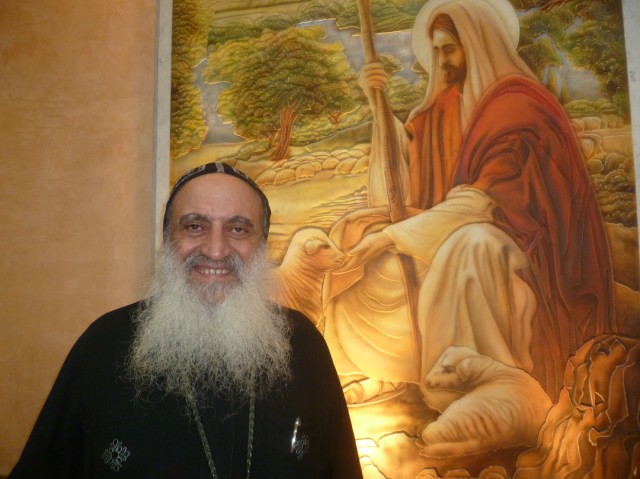


 Jayson Casper