Egypt’s first free elections in over thirty years did not err on the side of simplicity. Even so, this did not deter massive national participation and excitement, as 54% of the nation lined up for hours on the street to cast their ballot. Many, however, admitted to having little knowledge about the political process, enabling accusations of fraud and voter manipulation. In this they mirrored many casual Western observers who valued the accomplishment of the elections, but were confused by the mind-boggling complications.
The results were simple: Islamists won a major victory, securing around 70% of the seats. The tale of this victory, and what it means for Egypt, is the subject of this recap.
The Set-Up
Egyptian elections for the People’s Assembly were conducted in three stages over a period of nearly two months. Each of Egypt’s 27 governorates was then subdivided into electoral districts, according to population. Two-thirds of the seats were awarded by proportional representation according to votes cast for their party. The remaining third was chosen by individual ballot for the candidate alone. Of the total representatives chosen, fully one-half were required to be workers or farmers. Together, the People’s Assembly consists of 508 seats, 10 of which were appointed by the military council.
Confused? Naturally. The process did not result from consensus planning or a democratic heritage. Instead it was cut and pasted from a mishmash of Egyptian history through pressure and compromise between political parties and the military council.
The 50-50 division between workers/farmers and professional seats is a holdover from President Nasser. He stipulated a place for the common man in the People’s Assembly in accordance with his Arab nationalist and socialist policies, but in reality the designation was little more than an administrative token. The military council represents a continuation of his legacy, and insisted on keeping the division. Political parties did not raise significant objection.
There was loud protest, however, over the electoral system. The party list format groups candidates together under broad alliances. Citizens then cast one vote for their party of preference, which is awarded seats per district according to the total percentage won. If a district, for example, represents ten seats, every party must field ten candidates. Should the party capture 60% of the vote, its top six candidates would claim seats.
This was the system Egypt utilized for elections in the 1980s, before switching to an individual candidacy format more akin to politics in the United States. The winner was the first to capture 50%+1 of the ballots cast, requiring a run-off for the top two candidates, if necessary. Intentional or not, this allowed for simpler vote-rigging and intimidation of voters, allowing the National Democratic Party to win a sweeping (fraudulent) victory in 2010.
Fearful the remnants of the NDP would claim victory after the revolution through similar methods, political parties argued to return to a party list system. Through subsequent pressure on the military council the percentage of such party list candidates moved from one-third, to one-half, and finally to two-thirds. The military council refused to abandon individual candidacy altogether, leading to fears it would promote old regime fortunes in the election process.
These fears were also buttressed by their refusal to allow international observation of the elections. Instead the military council decreed the nation’s judges would supervise legitimacy, but this created a problem of logistics. In order to guarantee a judge at every ballot box, the elections were divided into three stages. Stage one took place in the governorates of Cairo, Alexandria, and others, while stages two and three mixed between the governorates of the Delta and Upper Egypt.
In the end, the military council did allow limited international observation. Former US President Jimmy Carter was prominently involved through his Carter Center, with its longstanding work in democracy promotion. While noting irregularities, he ultimately judged the elections ‘acceptable’.
The Parties
The military council further placated popular demand and issued a law to bar former members of the NDP from participating in elections. Though this law was struck down by the court, it proved to be unnecessary. A number of old regime parties acquired legal registration and ran in elections, but altogether secured only 3.5% of the seats.
The true competition centered on five parties/alliances, though initial efforts sought to maintain one national effort to unite all political forces. This hope quickly degenerated into a liberal-Islamist divide, as fears rose some wished to craft Egypt into a religious state.
Soon greater divisions emerged on both sides. The broad Democratic Alliance was led by the Freedom and Justice Party of the Muslim Brotherhood. It tried to position itself a religious but centrist force, keeping an alliance with the historically liberal Wafd Party. It faltered, however, as conservative Salafi Muslims split to form their own alliance, under the banner of the newly created Nour Party. Eventually, the Wafd also decided it could not align with the Muslim Brotherhood in good faith, and decided to go it alone.
On the liberal side, political parties from both the right and left of the economic spectrum formed the Egyptian Bloc, dedicated to the civil state. Yet the young revolutionaries felt marginalized, and split to form a left-leaning activist alliance named The Revolution Continues. A major factor in the dissolution of all alliances was the placement of candidates on the party list and assignment to favorable individual districts. The interests of party outweighed formation of a common front.
The Results
In the end this hurt the liberal far more than the Islamists, if indeed it was a factor at all. The Democratic Alliance headed by the FJP did slightly better than anticipated, winning 45% of the seats. The surprise of elections was the showing of the Islamist Bloc headed by the Salafi Nour Party. Assumed to be marginal and full of political novices, they captured a solid 25% of the People’s Assembly.
The liberal Egyptian Bloc fared decently in the first stage of elections due to concentrations of upper class and intellectual pockets in the big cities. Their appeal failed to materialize in the rest of the country, however, in the end receiving only 7% of the seats. The Wafd Party captured a slightly higher number, as their name recognition echoed through the rest of the nation winning the allegiance of most non-Islamist-inclined voters. Despite the popular appeal of the revolution, however, the Revolution Continues Alliance faltered miserably, winning only 2% of parliamentary representation.
The Stakes
Though the powers of the People’s Assembly remain undetermined, the military council has bequeathed it full legislative authority. This raises significant questions for the coming period. Will the Islamist forces align to move Egypt in the direction of a religious state? Will liberal forces find common ground with the Muslim Brotherhood’s FJP to marginalize the Salafis? Will the FJP evolve into a new NDP with the blessing of the military council, to revive the former regime? Or, will they gradually continue the revolution in effort to send the military council back to their barracks?
Not much is clear except the existence of a popularly elected legislative body. This in itself is an achievement of the revolution.
note: This article is a bit dated but has been held until publication in the Maadi Messenger, a monthly magazine for the expatriate community in Cairo.
Essam el-Erian, a senior leader in the Egyptian Muslim Brotherhood, called into question the Brotherhood’s commitment to the peace treaty with Israel.
Essam el-Erian
He commented on the ongoing NGO crisis embroiling the United States and Egypt. American and local NGO personnel in Egypt stand accused of fermenting chaos under the guise of democracy promotion.
The US has warned $1.3 billion in annual aid is in jeopardy if the charges, denied as frivolous, are not dismissed.
Erian told Lapido Media, ‘If the US withdraws its aid it gives us the right to review our side of the agreement as well. Aid is a part of the Camp David Accords, or why else would the US be giving this money to Egypt?’
There is only one problem. Former US president Jimmy Carter, who orchestrated the accords in 1978, stated, ‘There was no commitment of any finances going to Egypt as the result of the Camp David Accords.’
Is Erian ignorant of the text of these accords, or is something else in play? According to Raymond Ibrahim of Jihad Watch, Erian’s words fit into a larger context of Islamic behavior based on ‘circumstance’.
‘All Islamists understand that the treaty with Israel is a matter of necessity (i.e., Egypt cannot at the moment defeat Israel, therefore it is in its own interest to agree to peace). Might as well get money out of it.’
Ibrahim recently highlighted a video of Yasser al-Burhami, a prominent sheikh with the Salafi Call, an ultraconservative Muslim association. Burhami comments on how Mohamed at times made peace with the Jews, and at other times, subdued them through force and imposed jizia, a payment by non-Muslims in return for protection within the Muslim community.
Burhami then generalizes, ‘The prophet’s methods of dealing with infidels are available for Muslims to replicate depending on their situation and their capabilities.’
Speaking to Lapido Media, Ibrahim gave application. ‘Islamist politics and worldview are quite clear that once capability allows, Islam must go on the offensive.’
Gamal Nassar, a leader in the Muslim Brotherhood from Giza, Cairo, reinforces the notion of circumstance while commenting on Erian’s statement. ‘Things have changed since the revolution, and the US must realize it is not the same as before.’
Sheikh Osama al-Qusi is an independent Salafi scholar often criticized in his community for distinguishing between the affairs of religion and the affairs of the world.
Osama al-Qusi
Qusi notes that Burhami is correct in terms of Mohamed adapting to his circumstances, but notes many Islamists take this as license to be Machiavellian. Even so, ‘Just because Mohamed did something politically does not mean it applies to us. No, we must leave politics to the politicians.’
Furthermore, circumstance does not change the Islamic attitude toward other communities. ‘We are peaceful with those who are peaceful with us, and we fight against those who fight against us.’
Yet for many Islamists, ‘us’ applies to all Muslims. Essam al-Sharif is a leader for the Salafi-based Authenticity Party in Warraq, a district of Cairo. ‘According to sharia law, I have the obligation to defend Muslims.
Essam al-Sharif
‘If the Camp David Accords do not allow us to help the Palestinians in Gaza it is invalid and we must fight Israel. In sharia we respect the borders of this world administratively to honor our agreements, but they do not override our duty to support Muslims.’
Sharif believes Muslims must treat non-Muslims well whether they are strong or weak regardless of their circumstances. Yet this does not preclude jizia, and Muslims must be honest about it.
‘If we say we will not collect jizia, this is hypocrisy. No, non-Muslims must pay it, even if we are too weak to collect it now.’
Sheikh Abdel Muti Bayyoumi is a member of the Azhar’s Islamic Research Academy, a pillar of the Islamic establishment in Egypt. He dismisses Burhami completely, saying he is not specialized in jurisprudence, and is not fit to issue religious rulings.
Bayyoumi agrees the Quran allows Muslims only to fight those who fight against them. Where there is a pact of peace, however, Muslims must work with non-Muslims for justice.
As this concerns Israel and the opinion of Erian, ‘There is no relation between US aid and the Camp David accords. Thus, we are still bound to the treaty so long as Israel also keeps to it and does not review it first.’
Interestingly, Carter suggests issues of justice have been neglected in the treaty.
‘There is one element of the Camp David accords that has been abandoned in the past, even in Egypt, and that is the protection of the Palestinian rights.’
Interpretations of Islam are part and parcel of post-revolutionary Egyptian attitudes toward peace with Israel. Some reflect Burhami’s attitude about ‘circumstance’, and others Bayyoumi’s attitude about justice.
Sheikh Hamdi Abdel Fattah is a unique personality in Egypt. Little known outside of his home region of Maghagha in Upper Egypt, he is a candidate for parliament running under the banner of the Salafi Nour Party. In and of itself, there is nothing unusual here – the Nour Party has searched for and nominated local popular candidates throughout Egypt. What is unique is that Sheikh Hamdi has the endorsement of the local Coptic Orthodox priest of his village, Fr. Yu’annis.
This interview discusses why Sheikh Hamdi has received Coptic support, but also explores his understanding of the application of sharia law in the modern world. Sheikh Hamdi is eager to correct common misperceptions, but, perhaps unwittingly, confirms others. Topics include tourism, war booty, jiziah, dress, legislation, and the legality of democracy.
Sheikh Hamdi is an engaging and friendly person. He was sincere and believable, and I trust he will work on behalf of the Copts, as he promises. At the same time it was a challenging interview, as getting him to answer intended questions proved difficult. Whether this was due to language issues, culture and worldview differences, or political doublespeak is hard to say. Nonetheless, Sheikh Hamdi provides an insightful view into the mindset of a modern day Salafi, both confirming and undoing typical stereotypes.
As a final note, Sheikh Hamdi lost his electoral race. After stage one he finished in second place behind the candidate of the Muslim Brotherhood, and thus qualified for the run-off. Though he lost the run-off, the judge ruled to nullify the result, given the level of fraud witnessed on behalf of his competition. Sheikh Hamdi stated there were 40,000 additional votes cast illegally for his opponent. Nevertheless, rather than a second run-off, the ruling was issued simply to accept the results of the first round voting. Sheikh Hamdi replied, ‘It is God’s will,’ and refused to be angry. Still, he holds out hope for a reversal.
JC: Please introduce yourself to us.
HAF: My name is Alaa’ al-Din Abdel Fattah Muhammad, but I am known by the name of Sheikh Hamdi Abdel Fattah. I have a general institute for the calling of people to religion. I worked thirteen years in Saudi Arabia as a mosque lecturer and teacher of the Qur’an. I am a member of the Maghagha Reconciliation Committee which works according to traditional regulations.
I joined the Salafi Nour Party immediately after it was established, and presented myself as a candidate to which they agreed. I did this after reading their platform which I determined to be moderate. It is comprehensive and without fanaticism toward anyone. Among its priorities is the call to implement sharia law, but it emphasizes to do this gradually.
Among the accusations against the Nour Party is that it will prevent tourism, but this is not logical. On the contrary, our program is very powerful. If you compare Egypt, with all its civilization and history, Jordan, Turkey, and Malaysia all have higher tourist incomes. This is because we rely on luxury tourism only. We can boost conference tourism, which not only can bring more money that luxury tourism, it also profits the nation scientifically as doctors and professors bring knowledge in addition to money spent on airfare, hotels, clubs, and general expenses.
There is also medical tourism. We should build world-class hospitals that will draw the majority of medical travelers from the Gulf and from Africa, rather than them going to America or France, where the costs are very high. Here, we have the medical proficiency and lower costs. This will again raise our scientific benefit as well as financial from airfare and hotels, as before.
Yes, we will also promote luxury tourism, but only that which is religiously legitimate. It is not necessary to mix the sexes on the beach. We have many unmarried young men. When they view these mixed settings the result can be one of sin. What is the problem with establishing some family-only or single-sex chalets, where you can enjoy yourself freely without temptation? Turkey has done this, for example. Should there not be freedom for this, is this not respect for freedom? You might say we should be open-minded, but I reply I don’t want anyone to see my wife. So as you call for freedom for the other, I also call for the freedom to keep my wife from being seen.
JC: Would you also allow for beaches where people wish to mix with the other sexes?
HAF: Exactly. But I know from tourists they wish to inquire about the customs of the country in which they are visiting. But are we forgetting about the tourists from the Gulf when we concentrate on Europe? Gulf countries have more tourists, and Egypt is the closest country to them. Right now, they are going to Turkey.
Then, another issue concerns the Copts. What is their status under sharia law?
JC: This is a very important topic and we will approach it soon, but let’s return to you as a person. You are from the village of Qufada, and friends with Fr. Yu’annis. You are also a sheikh, but was does this mean? How did you become a sheikh? Are you an Azhar graduate?
HAF: No, I have a diploma from the High Institute for Calling which is a private center attached to the Religious Legitimacy Association of Egypt.
JC: What do you do in Maghagha, what is your job?
HAF: I am a real estate agent, buying and selling buildings, apartments, shops, etc.
JC: Do you preach in the mosque?
HAF: Yes, but not in one in particular. I preach often both in Qufada and outside.
JC: Here in Qufada, you are good friends with Fr. Yu’annis.
HAF: Yes, Muslim-Christian relations here in the village are very strong. It is friendship, not just greeting each other in the streets. If there are problems, even between two Christians, we come to the church to help solve them.
JC: You are speaking of your work with the reconciliation committee. Tell me more about that.
HAF: In most instances the reconciliation committee is able to solve problems faster than the legal system. It takes only one session, and the decision is binding on both parties. We search for the truth, no matter who it is with.
Every day we sit to solve problems between Muslim. Often we sit to solve problems between Christians. But what happens is when there is a problem between a Muslim and a Christian the media twists the issue somewhat to become a religious matter. They take refuge in religious chauvinism and turn it from a personal struggle into a religious one. There are occasions where a Muslim boy and girl will make an improper relationship, and the same with Christians. But if it happens between religions, we must treat it with reason and wisdom in the same manner we would otherwise. We don’t accept any religious chauvinism in either direction.
JC: One of the benefits of the reconciliation is that it is fast.
HAF: Yes, court cases can take years. This is one of the problems our party wishes to address.
JC: But what if the issue is criminal, especially if blood is shed?
HAF: In our religion we must confront strife before it grows, and shedding blood is among the worst things for us. Our prophet said, in his farewell address during the pilgrimage, your blood, your money, and your honor are sacred to you. Is this just for Muslims? No, it is for anyone of religion, whether Christian, or Jewish, or Buddhist. Blood may not be shed except by right, such as in punishing murder.
JC: But is there a verse in the Qur’an that permits the taking of female prisoners during war?
HAF: Yes, this is present in sharia law, and was part of Arab tradition before Islam. In war, it was permitted to take as booty money, horses, sheep, camels, men, and women. If a woman was taken she became a female slave. But does this exist today? No, it was a description of the culture that was present in its day. Today, there is no jihad.
JC: But if it returns?
HAF: When will jihad return? If a nation attacks America, will it not respond militarily? It is not permitted for Muslims to announce jihad unless their lands or honor are violated. If they are not attacked, they will not attack others.
JC: So this would apply in Palestine, where their lands have been taken?
HAF: Yes, it is permitted for Muslims to respond in the manner of which they have been violated. If he destroys my house, I will not stomach this, I will destroy his house. But I may not destroy two houses. If you attack me, I have the right of defense. This is even international law.
JC: So, in application of sharia as Muhammad permitted in his era, is it allowed for their women to be taken as the spoils of war?
HAF: Is Israel a democratic country? No, it is a Torah-governed country. Why then does the world protest if I say I want an Islamic state which implements sharia law? If jihad is made mandatory and our women are taken, it is permissible to take them in kind, but it is not necessary. In sharia we have what is called ‘exchange’. If there is a prisoner taken he can be swapped, and this is what happened in the period of ibn Taymiyya.
There were many battles in his day with Christians, and the Christian forces took both Muslim and Christian prisoners. Ibn Taymiyya went to the Christian king and asked for the prisoners to be returned, and the king told him to take the Muslims. Ibn Taymiyya refused, saying the Christians are under our protection. I will not take a Muslim and leave the Christians behind, but insist on taking the Christian prisoners first.
Or consider when Amr ibn al-‘As entered Egypt. Christians were under the most horrible situation during this time under the Romans, to the extent the patriarch went into hiding. Who protected him? Amr ibn al-‘As. He made a pact with him and guaranteed his safety.
JC: This reminds me of a question: Why did the Muslims stay in Egypt and not return to their lands after defending the Copts?
HAF: This is what the families of Egypt wanted. Why? The Copts at that time were under severe persecution. They requested the Muslims to stay, since this represented security for them from the Romans.
The proof? One day, when the son of Amr ibn al-‘As was horseracing with a Christian, the Christian spat on him. In response he hit the Christian and said, ‘Will you spit on the son of the most noble?’ The Christian then lodged a complaint with Caliph Omar ibn al-Khattab in Medina, who summoned not just the son, but his father as well. The Caliph asked the Christian if this was the one who hit him, and he ordered the Christian to hit him in return, which he did. Then the Caliph said, ‘Now, hit the most noble one also,’ referring to Amr ibn al-‘As, who at that time was the ruler of Egypt. You see that Islam does not permit oppression for anyone, whether ruler or ruled.
The caliph then sent the Christian away and asked Amr, do you not take from him the jizia? Will you take it from him while he is strong and then leave him weak that he has to beg in the streets? Give him a salary from the public funds of the Muslims.
Today, many Copts feel that jizia is a form of contempt or shame. But does he not pay taxes? Fine, we will cancel the word jizia, and call it taxes. We’ll say, ‘Pay your taxes, and what will you get in return? No one will attack you in your worship, or your doctrine, or your homes, or your persons, or your money, or your honor. You will have complete security, and have your protection guaranteed. If you don’t want to enter the army, you won’t have to.’
JC: Will it be permitted for him to serve in the army?
HAF: Yes.
JC: Will this be in replacement of jizia?
HAF: No, jizia will still be taken, but if you want to enter the army, go ahead, and even so I am committed to your protection.
JC: So if the Salafis gain control of government in Egypt, what will you do with jizia?
HAF: Let’s talk first about the perspective of Muslims toward Christians if the sharia is implemented. We will treat them with righteousness, respect, friendship, and justice. In terms of rights, everyone will be the same. There will be no difference between a Muslim and a Christian. In terms of their family affairs – marriage, divorce, inheritance – we will not apply sharia here but they can judge themselves.
JC: What rights will they have exactly?
HAF: They will have all rights. The prophet said, ‘What is for them is for us,’ which means, if I can take salary, or gain positions, or have houses, or …, in everything that has to do with putting together a government there is no difference between Muslim or Christian.
JC: Even the high positions in government?
HAF: Yes, and there will be equivalence in their salaries as well.
Is there a constitution today that guarantees the rights of minorities like the sharia law? No. They are ahl al-dhimma, under our protection. They have rights over us and we have responsibilities toward them. As long as they don’t kill me, or raise a weapon against me, or attack me, I am obliged to protect them and give security to them and their houses of worship as well.
JC: But does not this designation as ahl al-dhimma raise the status of the Muslim over that of the Christian?
HAF: No, but the opposite. They will be more comfortable than the Muslims.
JC: Yes, maybe he is comfortable, but is he equal?
HAF: Let’s look at a Muslim and a Christian student. If the Christian scores higher on his marks, is it right for me to appoint the Muslim to a position over him? No.
JC: Is there a verse that says, ‘Do not take them [Jews and Christians] as friends/guardians? (Qur’an 5:51)
HAF: This is not speaking about Christians, so to speak. Of Christians it says, ‘You will find the nearest of them in affection to the believers those who say, “We are Christians.”’ (Quran 5:82)
But the most difficult religion, which hates all of humanity, is that of the Jews. They hate Christianity also. In Palestine, do they make any difference between Muslim and Christian? No, they will kill them both.
So the Jewish religion has the most hate for humanity, but as for Christianity, there is friendship, ‘because among them are priests and monks and because they are not arrogant’ (continuing verse above).
JC: To be sure I have not memorized the verse, but people tell me that the one I mentioned warns Muslims from allowing Christians to take positions above them.
HAF: This does not intend Christians in particular. But let me ask you a question: Did you know that in Britain there is a law preventing the prime minister from being other than a Protestant? Why? The majority is Protestant, so the prime minister must also be Protestant. So if we have a nation where the majority is Muslim, what should we expect the ruler to be?
JC: The issue of the ruler is one thing, but that of positions in society is another. What is intended by the word ‘guardians’ in that verse?
HAF: Guardianship is that of which you lean on for support, or to which you hand over your affairs. But it does not mean the one who is with you, it speaks of the foreigner.
There is domestic politics, and there is international politics. It is not possible that I give the guardianship to someone outside – a Jew, for example. Or let’s speak about American support. Will America give funds and let you spend them as you wish? Or will they demand conditions and severe restrictions?
JC: Sure, you should not accept the money in the first place.
HAF: Right, and in truth, we are not a poor country. There has been a study showing the sand of Sinai is among the best quality in the world for the production of glass? Erdogan, the Turkish prime minister, when he visited Egypt said all he did was to close the faucets of corruption. In terms of Africa we are the number one producer of natural gas, and eighth in terms of the world.
JC: Very good, so you refuse the guardianship of foreign powers, but domestically – can a Copt head a ministry? Can he run a company? Can he be a school principal?
HAF: What is the problem with any of this? As long as he has the qualifications, why not?
Did you know that our educational policy in Egypt is a complete failure? That is why in our party we will work on developing education. Statistics show the most intelligent children in the world are Egyptian. But as soon as he enters school he becomes the stupidest student in the world.
JC: Allow me to move to a different subject. I live here and I know the genius of the Egyptian people (both laughing). Something that is not known, though, is your commitment to the values of democracy. Some of your sheikhs speak of it as something foreign, imported, and not Islamic.
HAF: What does the word ‘democracy’ mean? It is that a people are ruled by the people. But if there is a heavenly law…? Here’s a question: If you have an appliance, like a TV, will you turn to the agent or just some person when it needs fixing? The agent, of course, since he knows the appliance.
So if God created humanity, he knows what is good for it, and what will keep it from corruption. This is why he gave his law.
JC: In terms of faith, this is fine. But what in terms of democracy?
HAF: You will not find democracy or freedom greater than what is found in the sharia. We say you are free as long as you do no harm. There are three types of harm: to doctrine, to public property, and to private property. Does freedom give one the right to transgress on the will of others?
JC: What happens if the majority does not desire the rule of sharia?
HAF: Some people say the Salafis will cut of hands (of thieves). This is correct, but at the same time, it is wrong. If your hand is to be cut off, you must first be offered five things: work, a living wage, a home, a wife, and a means of transportation. If you have all five, and you still transgress against the property of others, what do you deserve?
JC: This is logical, but you are justifying why the sharia is good. If the people choose this punishment, fine. But I am asking, what if they change their mind? What if you fail in your policies? Can the people then choose against you?
HAF: Of course, we accept this. If we feel we are not able to perform our duty for the people, we will resign. We are not seeking parliament seats for pride. These are seats of service.
Some in the former ruling party used their seats to grant favors and enjoy immunity. We want to take away this immunity from members of parliament, as pertains to affairs outside parliament. We will work as any other citizen.
JC: Has not one of the Salafi sheikhs declared democracy to be unbelief?
HAF: This is Eng. Abdel Munim al-Shahat. What does he mean by unbelief? It is what we have been talking about. But the media exaggerates this issue, calling him the official spokesman of the party. He is not; there are two: Dr. Nader Bakar and Dr. Yusri Hammad. He is simply a candidate.
But what did he mean by democracy and unbelief? Is democracy the rule of the people by the people? No, for us ruling is only for God.
JC: Let us suppose you and the Muslim Brotherhood make an alliance in parliament. You will be able to create the laws you wish. After the term is over, following six years, you will allow for the people to choose once again, even for other parties?
HAF: Yes. Let us speak of the president. We want to put conditions on the position so we don’t have a return of dictatorship. We must make sure the parliament does not become subservient to the president. The parliament must hold the president accountable, not the other way around.
JC: So in parliament, who decides if a law is consistent with or contrary to the sharia?
HAF: The sharia functions as does the constitution. So any law must move in accordance with the constitution, just as it must with sharia.
JC: So taking an example: Must a woman cover with the hijab, the niqab, or is she free to wear what she wants?
HAF: Nothing religious will be imposed on anyone. We will advise only, and the one who refuses is free.
JC: Are there differences among Muslims as to what sharia is exactly?
HAF: No, not as concerns the roots of sharia, all are in agreement.
JC: What about new interpretations, consistent with the modern era?
HAF: This has to do with the details, not with the roots.
JC: Or, what if a Muslim interprets concerning bank interest. Might one say that the regulations of sharia were good for their era, but argue that today such policy is allowed?
HAF: We will work with the banks gradually. Most banks in Egypt work with interest. We will let them be, but we will also create sharia-compliant banks.
JC: Fine, but this is not my question exactly. Let the people choose their policy. But what if a Muslim wants to argue in terms of sharia that interest is allowable? Sheikh al-Azhar did this in terms of Mubarak’s policies. Maybe he was wrong, but can he not argue this way and differ in terms of sharia? And if so, who rules?
HAF: In terms of Sheikh al-Azhar, we must return to a situation where he is chosen by his peers and not appointed by the president, so that he does not become subservient to politics.
JC: You are justifying your position here, but you are just a person.
HAF: No, this is the position of everyone. It is textual in sharia, interest may not be taken from a loan. Many speak about interest being too high, and how we must lower it. But why should you lower it when it shouldn’t be there originally? Isn’t God the one who knows what is best for humanity?
We reject a religious state. Why? A religious state is one where the ruler states that what he decides is from God. No. We want a civil state which is ruled by sharia. If the ruler makes an error we declare his error, and if he is correct, we say thank you and accept it.
The religious state, as the media makes out that we believe in, is the equivalent of Europe in the Middle Ages where the church ruled by God’s law and there was no room for discussion. The church ruled as if it was in the place of God.
We say we are not in the place of God on earth. No, we present the law of God, and we implement the law of God, but not with haughtiness or pride.
JC: So if the parliament passes a law that violates sharia…
HAF: We will say no.
JC: But who’s word prevails? Who decides?
HAF: If the majority is now Islamic, should not the will of the majority prevail?
You are a Christian, and you will raise your children to be Christian. I, likewise, am a Muslim and do the same. But if we take someone like the liberal Amr Hamzawi, who says I will let my children choose their faith… Do the traditions of Egypt allow someone to do this?
There must be preservation of the identity of Egypt. You are an American and you have your customs, but is it acceptable to implement your customs on the people of Egypt?
If we look at the spread of AIDS in the world, is it greater among liberal countries, or among those who preserve their cultural heritage and respect religion?
JC: Laws can protect religion, but at the same time, cultures and peoples change. Perhaps you will make a constitution that establishes a civil state ruled by sharia. It is the role of the courts to judge laws according to the constitution. If the parliament makes a law that some believe violate the sharia, will the judge rule against it?
HAF: If any project in Egypt violates the sharia, I will oppose it, and I expect the whole party will as well.
JC: But if your legislative power isn’t enough to oppose?
HAF: We will do our best. But if a matter transgresses the will of the majority, we not accept it. But we respect freedom in everything except that which is against the established principles of religion. And we respect all minorities.
JC: This issue leads to the last, and most important, question: Why should a Copt vote for the Nour Party?
HAF: Today in a conference someone asked me if we would be like previous parliament members, or if we would work for the interest of Muslims.
I told him I consider myself a candidate for Christians, before I represent Muslims, even if they don’t give me their vote. If I am selected for a seat, I represent the district, not just those who vote for me. This is democracy, and it is also sharia. I will treat the Christian like the Muslim, and in fact be sure to be responsible for them.
While campaigning someone approached me and said, ‘I am a Christian, but by God I will vote for you. You are a respectable and just man.’ I didn’t know who he was, but he had been involved in a reconciliation meeting in which I honored his rights.
I have spoken with Copts in all sincerity. I can be found in the mosque, but I can also be found in the church. I am confident I will capture their votes greater than any other candidate, even if he is a Christian.
Why? I am not interacting with them as if I seek their votes. Actually, elections are a very recent thing. I have behaved this way with Copts for a long time now. I do not speak of ‘national unity’, I speak about the ‘national fabric’. National unity implies there is a difference between us but we come together to solve it and reconcile. No, I say that Egyptian society – Muslim and Christian – is one fabric. The blood of one is the blood that drips from the other.
Who are the Muslim Brotherhood, and what do they represent? Having thousands of members means that many people are able to speak as representatives, whether they are qualified or designated to do so or not. Yet if one relies only on an official spokesman, it is difficult to know if the comments are sanitized for public consumption, especially if directed towards a Western audience. A useful remedy can come through personal interviews, though one must still be wary of a politician’s skill in PR.
Cornelis Hulsman, editor-in-chief of Arab West Report, secured such an interview in June 2011 with Osama Farid, the son of Dr. Farid (94), secretary-general of the Muslim Brotherhood, several decades ago and until today highly revered in the Muslim Brotherhood.
Based on his notes I prepared this report.
Osama Farid echoed the caution needed in applying any and every statement a Muslim Brother makes as the heartbeat of the group, saying care should distinguish between the organization and the community. As an example he spoke of Subhi Saleh, who in the past several months has made outspoken comments on how the Muslim Brotherhood will apply Sharia law if elected, and that Muslim sisters should take care to only marry within the group. Salah had been a high profile Muslim Brother in the aftermath of the revolution, having served on the legal committee to propose constitutional amendments submitted for the March 19 referendum. Osama Farid, however, states categorically that he does not represent Muslim Brotherhood thinking, though he gets frequent attention in the press.
The press has been equally misleading, states Osama Farid, by characterizing the Muslim Brotherhood as beset by internal splits. Yes, he says, there is a difference of opinion on several issues, and there are different attitudes in how to deal with change. This is normal in an organization of its size, but reflects only the biased press the Brotherhood has dealt with for years.
Is, then, Osama Farid a capable source of information for the group? As a the son of a Guidance Bureau member he speaks from authority, and in this interview provides insightful comments on his personal history with the Brotherhood, the current relationship between the Brotherhood and its political arm, the Freedom and Justice Party, the relationship with Hamas and attitudes toward Israel, as well as other comments on Salafis and other Islamists in the contemporary arena. Osama Farid is an accomplished businessman; his investments once included a fleet of private airplanes for charter.
Members
Osama Farid described several periods of the Muslim Brotherhood. In the 1970s many members of the al-Gama’a al-Islamiyya joined the group. Osama Farid states that al-Gama’a was internally divided, however, over the question of violence. The members opposing violence broke away and enrolled into the more established Muslim Brotherhood, which had committed itself to a nonviolent methodology. The large influx represented a sort of second founding for the historic organization, which began in 1928 founded by Hasan al-Banna.
Osama Farid expresses admiration for the thought of Sayyid Qutb, a Muslim Brotherhood ideologue executed in 1966. Osama Farid described his execution as a tragedy, and celebrated him as a great thinker whose philosophy was on par with Georg Friedrich Hegel. Though many believe Qutb was a primary factor in the radicalization of the Muslim Brotherhood, Osama Farid countered that Qutb’s view of hakimiyya (God’s sovereignty) has been mistranslated and misunderstood by the majority of media and critics.
The Brotherhood, Osama Farid says, looks to select members who enjoy a good reputation in society, and who demonstrate leadership in morals, athletics, and intellect. If agreeable, candidates are given a syllabus to progress through. Yet regardless of entry, many Muslim Brothers have wound up imprisoned for their association and/or activities – over 30,000 in the group’s history, according to Osama Farid. His own uncle, Saleh, spent twenty-five years in prison.
Relationship with the Freedom and Justice Party and current politics
As an organization, the Muslim Brotherhood seeks to engage Egyptians to build a good culture of citizenship. Historically, though always having a political component, this has meant the provision of social services, engagement in society, helping the jobless (with priority to members but including all). They have also supported the families of imprisoned members, and provided legal services to those run afoul of the government. Only following the revolution, however, has the Muslim Brotherhood been able to channel their social gains into a legal political party.
The Muslim Brotherhood believes the primary purpose of government is to cultivate the good life for the people, so they can be happy. Yes, the government should be concerned with matters of Sharia, but it also needs to promote a culture of tolerance. The Freedom and Justice Party, Osama Farid believes, is working towards this end.
For example, the Muslim Brotherhood, through their party, will seek neither the majority of seats in parliament nor the presidency. Yet he also believes that the ruling military council should fulfill its vow to the people and turn over soon the matter of governance to the people. The military council made agreement to do so in six months, providing elections first for the parliament, then the Shura Council (upper house), then the presidency, and culminate in the drafting of a new constitution. They should not deviate from this, though some decry liberal parties and others have not yet had time to develop their constituencies. Farid, though, believes this to be their own problem, and of more serious concern is the return to civilian rule.
The Freedom and Justice Party (FJP) has faced criticism within Egypt on several fronts, and Osama Farid provided perspective on certain issues pertaining. Political parties must be independent, and in the case of the FJP not be based on the organization of the Muslim Brotherhood. The Freedom and Justice Party is believed by many to simply be an extension of the Muslim Brotherhood. Osama Farid said the current leadership of the party was proposed by the broad Shura Council of the Brotherhood, and chosen by the Guidance Bureau. Yet he confirmed that this was only for the creation of the party, and that after their initial term expired all positions would be determined by internal party elections.
Yet Osama Farid also provided some statistics that suggest an ongoing strong linkage between the party and the Brotherhood. 40% of the party membership originated in active, working members of the Muslim Brotherhood, all of whom had 10-15 years of experience in the group. Though not a majority, there is the potential for significant overlap between the agendas of the two entities.
In another controversial accusation, some believe there to be a secret pact between the Muslim Brotherhood and the military council. Osama Farid finds it normal that there is a direct line of communication between the two since the Brotherhood has a large following, but the military council also has established links with other political forces.
Osama Farid also gave historical perspective to suggest that the Muslim Brotherhood has not been averse to making such deals. In 2005 many Muslim Brotherhood members ran as independents for parliament, as the group at that time was banned from official participation. Eight-five of these members won a seat, and Osama Farid believed it could have been much more had the elections not been rigged. Yet he stated that within the context of political corruption, the Muslim Brotherhood cooperated with the authorities to determine which Brotherhood candidate would be victorious in which district. That was politics at the time, and the Muslim Brotherhood played along.
Relationship with Hamas and Israel
Another fear expressed about the Muslim Brotherhood in Egypt concerns their relationships with Hamas and their Israel policy in general. Osama Farid stated that Hamas are our brothers, but that while there is coordination between the two groups, the level of coordination is low. Personally, Osama Farid hopes this coordination will increase, but he recognizes the sensitivity of the issue keeping the groups largely separate.
Osama Farid also stated that each group secures its own financing. While there is no money that moves from the Muslim Brotherhood in Egypt to Hamas (though there has been sharing of medical supplies during Israeli operations), the Brotherhood does provide consultative services if needed, though Hamas takes its own decisions. As an example Osama Farid revealed that the Brotherhood intervened to secure the release of the Israeli soldier Gilad Shalit, but their advice was not heeded.
Concerning Israel, Osama Farid stated the Muslim Brotherhood believes that all international resolutions directed at Israel (such as UN #242) should be implemented. While he does not want normal relations with Israel, he also stated the Muslim Brotherhood does not want war. He stated they know the line between the ideal and the possible, and that the Brotherhood is realistic. Any war with Israel would be suicide. In this matter and in political matters of all sorts, he believes the Brotherhood to be a wise and moderate organization, aiming for stability both domestically and internationally.
Salafis and Other Islamists
In presenting the Brotherhood as a moderate organization, he contrasted it starkly with another Islamist group emerging in Egyptian politics, the Salafis. Having never been in political life previously, Osama Farid explained, the Salafis were taken advantage of by Mubarak since many opposed participation in politics. For many Salafis, the God-appointed leader should be obeyed without question. These believe democracy to be akin to kufr (unbelief), and though they may enter into upcoming democratic elections, they are not democratic. Osama Farid believed they needed to be monitored due to the danger they posed; it is quite possible they could win a large percentage of parliament.
The Salafi role in society, by contrast, is quite positive, Osama Farid explained. They help families and widows, provide finances for the poor to go on pilgrimage to Mecca, as well as for needed school supplies and fees. Yet they have an aggressive social agenda, focusing on gaining control of the larger and more influential mosques where they are strong in number. Small mosques, Osama Farid elaborated, are not as influential, and will often follow the ideological trend of the largest mosque of the area.
Osama Farid also provided a description of Salafi organization in Alexandria, considered a stronghold of the movement. There are three main Salafi trends, the largest of which is led by Sheikh Hasan Yaqub, drawing support from the slum areas of the city. These three trends have organized a Shura Council for each of Alexandria’s fifteen districts, and each trend supplies five members so that each council has fifteen members. As such they have established themselves in the city, and their influence is strong.
Osama Farid recommended contacting Salafi sheikh Safwat Hejazi for more information. Though he is not their official coordinator he unofficially links between the Salafis and the Muslim Brotherhood.
Osama Farid made briefly a few closing comments about al-Gama’a al-Islamiyya. These also are participating in politics since the revolution, and the group has sought to make revisions to its former methodology, especially in forswearing the use of violence. Mitwali al-Sharawi is in the lead of the revision group, but not all members accept the changes. Without placing him in either category, Osama Farid commented on al-Gama’a al-Islamiyya leading figure Abbud al-Zumur, who is unapologetic over his involvement in the assassination of President Anwar Sadat. Osama Farid believed al-Zumur to be deficient in Islamic jurisprudence.
The essential question posed concerning the Muslim Brotherhood remains: Do their public statements reflect internal policy, or, especially when speaking to the West do they put on a moderate face? It is never possible to know a man’s heart or to discern fully his true intentions. Yet the information provided by Osama Farid displays a level of openness suggesting his words to be both transparent and authoritative. Certainly he has commented on matters often not addressed in Brotherhood public discourse.
As such, this interview is offered for public consumption, so that interested parties might hear from the Muslim Brotherhood through an Egyptian who knows them well. In the controversial and confusing public square of Egypt, it is necessary to filter the news from the din. Much more is necessary, but it is hoped this contribution may help shape English language readership in their understanding and opinion of the Muslim Brotherhood.
In Tahrir and in squares throughout the nation, Egyptians once again filled public space. In fact, by appearances they did so in greater numbers than at the height of the January 25 revolution which deposed President Mubarak. What is not clear altogether is why they were there, or who they represent.
Tomorrow may tell.
Some Egyptians, the revolutionaries, are very clear. They demand the fall of the regime, just as they did a year ago. Mubarak, they say, was only the public face of a military regime that still stands. For Egypt to be truly free, the army must return to its barracks, guard the borders, and yield to a civilian president.
There are different variations on this theme. Some want power immediately transferred to the parliament, with its speaker as head of government as an interim measure. Others desire the formation of a civilian presidential council to guide through the writing of a constitution and election of a president proper. Nearly all, however, find the military council to be leading the counter-revolution seeking to preserve the status quo under a new guise, and many find the Muslim Brotherhood to be complicit in a power sharing agreement.
The Muslim Brotherhood is also in the square. Their presence is less clear. They have taken the lion’s share of responsibility to secure entrances to Tahrir, to prevent unruly factions or clandestine weapons to enter. They stop short of proclaiming today as a day of celebration, but they are pleased. One of their leading figures declared revolutionary legitimacy is in the hands of parliament, and no longer in Tahrir. Yet they still speak of an unfinished revolution, though they rarely speak ill of the military council. Another leader has proposed the idea of a ‘safe exit’ for the military, implying they have committed crimes while in power. Yet they firmly stick to the announced military timetable to hand over power, after presidential elections in June.
Salafis are also in the square, but their voices are diverse. Some are very anti-military council, others less so, equally pleased with their gains in parliament. Yet Salafism is not a united movement, even having banded together under a political party. While committed throughout their ranks to a state which enforces sharia law – however gradually – some see military rule as an obstacle while others see it as a fight not worth waging, as long as they have room to transform Egypt socially. Salafi presence is not a dominant makeup of today’s protest, but they are there.
Then there is the average citizen, who is impossible to qualify. The military council has been heavily lauding the January 25 revolution, billing today’s anniversary as a great celebration. They praise the heroism and bravery of the youth. They also praise the armed forces, as guardians of the revolution. Revolutionaries claim they have brainwashed the people through state media; equally likely is that the average citizen has always trusted the army, as most men have served within its ranks. Is the average citizen there to celebrate with them?
Or has the average citizen, at least in Tahrir, come to see the military council as the problem? Following the most recent clashes on Qasr al-Aini Street outside the Cabinet building, a female volunteer at a field hospital in Tahrir was beaten by military personnel and in the attack stripped of her full length niqab, revealing a provocative blue bra. This image was widely circulated, and a newspaper the next day posted it on its front page, with the title – Kazeboon (Liars). The military denied using force to dismiss the sit-in, and this paper was outraged.
In the weeks following this incident activists have created a Kazeboon movement, taking a projector through the lower class streets of Cairo and showing footage of the clashes in public spaces. They have often been resisted forcefully by military sympathetic residents, or, according to some accusations, paid thugs.
Has this campaign affected the average citizen? Is this why the numbers in Tahrir have swelled?
What is clear is that the numbers came from everywhere. Previous demonstrations used Tahrir as a gathering point; this effort recalled January 28, 2011 when marches set off from around the city to converge there. Most of these marches today appear to have been of revolutionary sentiment, and found Tahrir Square filled before they even arrived. As such they encamped in the side streets and on bridges crossing the Nile, while the mixed groups described above gathered around their various stages – Islamist, liberal, socialist, and families of the martyrs.
The differences are immense, one year to the next. In 2011 the demonstrators were met by security forces who confronted them with batons, water cannons, and tear gas. From a different angle, once the demonstrators secured the square after the withdrawal of security, there were no stages in Tahrir; all the people were one. Now, the paths to Tahrir were open to all, but divided once they arrived.
This description illustrates why tomorrow may be indicative. Revolutionary groups have announced efforts to conduct an open sit-in. Meanwhile, the Muslim Brotherhood has announced they are leaving the square. The average citizen will go back to his home and sleep. What will he do tomorrow? Today, the numbers were immense; what will they look like tomorrow?
Perhaps tomorrow will not be deciding, in the same manner January 26 meant little last year. Yet still, the script is flipped. On January 25 the demonstrations were led by activists, with the Muslim Brotherhood wavering on the sidelines, and the Salafis largely maintaining political quietism. The 26th and 27th were met with smaller confrontations, but momentum was building in anticipation of Friday, the 28th, the Day of Rage. On the weekend, following Friday prayers, the nation was asked to validate the revolution. They, including the Muslim Brotherhood, did.
This time, religious groups have begun in participation, but at least in the case of the Brotherhood, now withdraw. Tomorrow, the 26th, will see a sit-in, but what will be of Friday, a day earlier this calendar year, on the 27th? Tomorrow and continuing there will be no conflation of Tahrir revolutionary celebrants; all who continue will be revolutionaries.
Without the Brotherhood and their vast skills of mobilization, can they succeed?
The question may not be that simple, as we still have a day in-between to change the equation. Since the fall of Mubarak sit-ins have ended violently. Often there has been an attempt at escalation, which eventually was met by force. Some say the escalators are infiltrators seeking conflict so as to mar the public opinion of continued revolution. Others say the escalations have been peaceful, and met with a security response that has been unwarranted and reminiscent of the Mubarak regime, or worse. What will happen with tonight’s sit-in, if anything?
Already some of the revolutionaries have moved the place of protest from Tahrir Square about three blocks to the north to the Maspero Radio and TV Building – the seat of state media. In occupying this site they wish to highlight what they believe to be media distortions, but they do so at a point of great state sensitivity. Will they be allowed to stay? Or, do some wish to storm it altogether? If so, are they infiltrators looking to spark a fight?
Also in the air are rumors the demonstration will move to the military hospital where Mubarak is residing, so as to bring him to the square for trial. Additionally a procession is foretold that will move to Tora Prison to bring his sons and other remnants of the regime yet to receive full trials. If these are more than rumor, they will certainly merit resistance. But who issues the rumor/plan – revolutionaries or infiltrators?
Engineered or otherwise, the spark that may change the equation is violence. A simple attempt by police to violently clear a small sit-in in November made immediate waves on Twitter. Within hours it brought a deluge of support, leading to five days of street fighting on Mohamed Mahmoud Street outside Tahrir. The square itself filled once more, leading to the sacking of the government when all was said and done.
Surely the military council will not use violence tomorrow, but who knows? Or, will someone use violence in effort to pin blame on them, or their supposed plain clothed thugs? If violence occurs, will it keep people away, or attract them in numbers? So much is unknown.
Equally unknown is the reaction if no violence occurs. How big will the sit-in be? Will it grow on Friday? Can it maintain itself until forcing the military council to hand over power somewhere? Will it maintain its presence until June, waiting for presidential elections? So much is unknown.
And, equally unknown is where the Muslim Brotherhood will be. By siding against Tahrir now do they reveal an understanding with the military council? Or, are they the best revolutionaries of all, seeking to undo the military state via an elected parliament with widely accepted legitimacy? Do they risk losing their own popular legitimacy among the people? Or, are they waiting in the wings – perhaps as before – to see where the winds blow? The Brotherhood has consistently denied any interest in securing the presidency since the first days of the revolution. Yet if the military council were to fall, might they claim this prize as well, maintaining public posture that they never sought it?
Of course, the next few days may pass entirely without incident. If it is true the majority sentiment from January 25 is against military rule, perhaps today is only a preview of June, in case of delayed presidential elections or the ascension of a military candidate. The Brotherhood, and the people, may not wish confrontation now – might the numbers padded through their mobilization have been a warning shot?
Such is Egypt during revolution, one year on. It is nearly impossible to read the tea leaves, as conventional wisdom is consistently turned on its head, and surprises await around every corner. Even today, no one expected these numbers.
While noting irregularities, former US president Jimmy Carter, through his Carter Center for promoting democracy, has judged the elections to be “acceptable.” When the first post-Mubarak parliament opens session today (January 23) its composition will be 72 percent Islamist.
The celebrated chant of Tahrir Square – “Muslims and Christians are one hand” – has given way to sectarian politics in which liberal parties, favored by the great majority of Copts, received a crushing defeat.
The Democratic Alliance, dominated by the Freedom and Justice Party (FJP) of the Muslim Brotherhood, has won 46 percent of the seats. The more conservative Salafi Nour Party has captured 24 percent. A handful of smaller Islamist parties add another 2 percent. Liberal politicians, who were once hopeful, are reeling from their losses. Coptic Christians are left pondering their murky future.
Today, The Wall Street Journal published an op-ed article about risks to freedom that observed, “Especially critical is protection for Copts, the canaries in Egypt’s coal mine. The fate of Egypt’s democracy—and the chances for the emergence of non-Islamist options—will rest on whether this millennia-old community, as well as an array of other groups, feels comfortable in the new Egypt.”
Amin Makram Ebeid, a Coptic intellectual and author, summarizes four primary Coptic responses:
A minority, though sizeable, is planning to emigrate.
The largest group is looking for spiritual, perhaps even mystical solutions.
A smaller party is dedicated to stay and fight for their rights, especially in securing a non-Islamist constitution, which according to the national referendum in March is the provenance of parliament.
Finally, there is a group that is looking to cooperate with Islamists, provided Copts do not lose their identity in the process.
Paula Magdy, a 24-year-old volunteer librarian in a Coptic Orthodox Church in Cairo, illustrates the group seeking spiritual solutions. “We pray to God to save us, but I am not afraid. Up until now we have not been sure about anything. Maybe they have won elections, but we will win the war?”
Fawzi Khalil, a pastor at Kasr el-Dobara Church also estimates most Christians fall into the spiritual solution category, with only about 10 percent actively participating in shaping the political outcome for Copts.
Standing their Ground
Emad Gad is one of the 10 percent, representing the group wishing to stay and fight. He is a Coptic leader in the liberal Egyptian Social Democratic Party, winning a parliament seat in the north Cairo district. Naturally, he offers political perspective.
“We don’t fear the result of elections because there were many violations that skewed results. In any case, parliament will not form the government, the president will, and the military council also maintains its influence.”
For him, the constitution is the largest battleground, but liberals are working on an agreement with Islamists for each party to nominate a limited number of members to the committee which will draft it.
Nevertheless, “If Islamists reach toward a Saudi-style government we have many means to resist. Certainly the new generation is able to go once again to the streets. I expect Egypt will remain a civil state.”
Fr. Philopater
Father Philopater will also stay and fight, but his is a religious perspective. A controversial priest in the Coptic Orthodox Church who has repeatedly clashed with the hierarchy, Philopater expects a continuation of the suffering of Copts.
“The one benefit is that persecution will now be obvious, as under Mubarak it was always assigned to hidden hands or deviant people.”
Furthermore, Copts should not cooperate with Islamists. ‘It is true some speak of protecting Copts, but others speak about jizia, call us infidels, or instruct Muslims not to greet us in the street.’
Ebeid agrees with non-cooperation. “Christians should not support them in their quest for power. If we sell ourselves, why should liberal Muslims continue to fight?”
Cooperating with Islamists
Then there is the group which promotes cooperation. Rafik Habib, son of a now-deceased prominent Protestant pastor, represents a tiny Coptic constituency that actually favors Islamist rule. He is among roughly one hundred Copts who are founding members of the Brotherhood’s FJP, and serves as one of its vice-presidents.
He believes Egypt must accept the essential religious basis of society, not deny it.
“Secularism surrounds Christianity and the church and weakens its role in society. Under an Islamic state it can be completely different because the main function of the Islamic state is to protect religion, not to restrict it.”
Youssef Sidhom
More typical are Copts who wish to cooperate with Islamists but due to necessity. Among these is Youssef Sidhom, editor-in-chief of the Coptic newspaper Watani.
“In order to keep any vicious Islamist appetite at bay we must stay at the table with them and remind them they promised not to hijack Egypt.”
Unlike Philopater, Sidhom has a degree of trust in the leaders of the Muslim Brotherhood, who through his interactions with them finds them to be decent people.
“I believe the Brotherhood wants to prove they can create a form of democracy that respects the rights of all Egyptians.”
Similar to Social Democrat Gad, however, Sidhom is prepared.
“Our Plan B if Islamist groups seek an Islamic state is to oppose their constitution in a referendum, but if it is accepted, Copts and liberal Muslims – 40 percent of the population – will take again to the streets.”
All Politics is Local
While these responses are varied, it is “the street” that decides. This is not the street of Tahrir Square, but the poor, crowded neighborhoods in every city of Egypt.
In Warrak, a suburb of Cairo, Shadia Bushra, a 45 year old Coptic widow, cast her vote for the Freedom and Justice Party.
“I don’t know much about politics, but I followed the general view of the neighborhood.”
Essam Sharif
It did not hurt that when her local church failed to intervene to defend her rights in a property dispute, Essam Sharif, her Salafi neighbor and a leader in the Nour Party stood by her side, retained a lawyer, and helped win the judgment against wealthier Christian neighbors.
“I told her I would have done the same if she was opposed by Muslims,” stated Sharif.
Stated Islamist commitment to the rights of all has also won support from Copts in Maghagha, a small city in Upper Egypt. Sheikh Hamdi Abdel Fattah is a candidate for the Nour Party.
“I will consider myself the candidate of Christians ahead of Muslims, even if they do not vote for me. As such, I have to demand their rights. This is both democracy and Shari’ah law.”
Sheikh Hamdi and Fr. Yu’annis
Father Yu’annis is a Coptic Orthodox priest in Maghagha and has campaigned openly for Abdel Fattah.
“I don’t support him as a Salafi or as a Muslim, but as a person. He is from our village and I hope all Salafis will be like him.”
Yet he is pragmatic as well. “If we see more than two-thirds of the people are for an Islamic state we cannot stop them from having it, so as the Egyptian proverb says, ’With him who wins, play with him’. I must do my village duty to stand by him, so he won’t say I caused him to lose, and if he wins, he will be thankful.”
Perplexing Questions
The seismic politic changes in Egypt during the past 12 months are still underway. Copts and others fill this resulting uncertainty with fears and expectations in wildly different directions.
Essam Thabit, a Coptic school teacher in Maghagha, believes all will be well. “Whoever comes to power will make sure they treat Christians better than the old regime, even though they know Christians won’t vote for them. I expect many churches to be built.”
His Coptic colleague Yasser Tekla from the neighboring city of Beni Mazar expects, and oddly welcomes, the worst. “I will vote for the Salafis now so they will come to power and people will see them truly, and then reject them afterwards.”
Many Copts hesitated during the revolution, while others joined wholeheartedly. The initial celebrations of Tahrir – where Muslims and Christians alternated protecting each other at prayer – have been followed by multiple instances of bloody sectarian conflict.
This has prompted Copts to ask themselves hard questions: Should Copts take refuge in the military council against Islamists, or with Islamists against the military-as-old-regime? Should they enter the political arena and trust its processes, or enter their churches and trust in God?
So far, clear answers to these questions seem beyond the reach of Egypt’s Christian minority.
Following the revolution the status of Article Two in the Egyptian constitution has been a subject of great debate, as it serves to great degree to define the identity of the state. It reads: Islam is the religion of the state, Arabic is its official language, and the principles of Islamic law are the chief source of legislation.
Hani Labib, managing director of the Center for Intercultural Dialogue and Translation, moderated the discussions, which were held at the Association for Upper Egypt in downtown Cairo.
Labib provided an identical introduction to each of the three groups. He stated clearly that CIDT does not take an official position on Article Two. Yet given that this article has become a point of contention between groups who wish it to remain as it is, to be amended, or to be removed altogether, Labib asked each participant to provide answers to three questions:
Do you wish the article to remain in the constitution?
Do you believe the article is in need of amendment?
What is the proper formulation for Egyptian society?
Not all participants answered these questions clearly, yet most provided insights to illuminate the discussion and did not shy away from controversy. Summaries of their responses are below.
The Clerics’ Roundtable
Fr. Rufaeel Tharwat, a Coptic Orthodox priest, opened the discussion by stating that Article Two provided peace and security to Egypt. Nevertheless, he recognized that the 40% of the population which is illiterate demand that clerics from both religions interpret it correctly for the people. This would help assure that the government is for the nation and not for any particular part of it. In accordance with this, he wishes assurances that judges would not be able to use Article Two so as to change the law as they see fit. One particular area of concern – worthy of amending the article – is that non-Muslims be guaranteed to be ruled by their own religious laws. This would help ensure the principles of citizenship and prevent any possible loss of rights on the basis of Article Two.
Fr. Philopater Gameel, a Coptic Orthodox priest and leader in the Maspero Youth Union, followed by stating the worthiness of some of these points, but found that the emergence of more radical Islamic groups necessitated the cancellation of Article Two, keeping the constitution from any religious reference. He stated he had proof, for example, that judges have used Article Two to protect Muslims following crimes against Copts, as sharia, he maintained, does not allow execution of a Muslim for the killing of a non-Muslim. He fears also the article could be used to impose jizia (a tax on non-Muslims), as well as support accusations of takfir (calling someone an infidel). Article Two would be improved if it contained a clause to allow non-Muslims recourse to their own religious law, but this would only solve some of the issues, so it is best to remove the article altogether.
Abd al-Fattah Asakar, an Islamic writer and apologist, offered a completely different understanding of the Egyptian religious scene. He said there is only one religious community – Muslims and Christians together – for they are all monotheists and Egyptians. Anyone who harms a Copt harms God himself, for in his eyes the value of a Copt is more than the value of, say, a Pakistani Muslim. The Islamic liberal system is the best the world has ever known for protecting human freedom – even that of an atheist – but some have corrupted it by following men, such as the un-Islamic Salafis. There is no problem with Article Two, for a Muslim is a Christian and a Christian is a Muslim, but there are problems with the people and cultured Egyptians must educate better about true religion. All the same, he favors the amendment of the article to include a clause mentioning also the Gospel and the Torah.
Muhammad Muhammad Abdo is a professor of sharia and law from the Azhar University, and finds that Article Two is a guarantee for Copts as it is for Muslims, and should stay as it is. He agrees that Copts and Muslims have always lived closely together in one country, and that problems lie with the people, not the article itself. As for those who fear the article, he says it refers only to the broad principles of the law, protects diversity, and cannot be applied on laws in particular. Keeping a religious reference, on the other hand, prevents Egypt from going the way of Europe in adopting secularism with the resulting change in society; people must always be religious to something.
Fr. Antonious Aziz is a Coptic Catholic priest who is against any reference to religion in the constitution, even in personal status laws. He stated that Spain is assumed to be a Catholic nation, but it allows homosexuality, and the church takes no role in legislation, but rather supports human freedom. Consider the Bahai or atheist, he said. Shall a religion legislate against even these? No, religion should not have a dominating role in any state; it is not needed, for everyone has a conscience.
Muhammad Hajaj, a lawyer, like others looked to history and proclaimed that Muslims and Copts have cooperated in order to secure a state of justice. Problems that have existed recently, he claimed, were sown by the former regime. The constitution is meant to speak to broad principles, not details; as a sequential document he wondered why there was a problem. Article One establishes Egypt first and foremost as a democratic republic built on citizenship, and only then does Article Two build on this foundation. Further articles also establish equality between citizens and protect the right of religious practice. If anything, the article should be amended to remove the word ‘principles’, since such a word is dependent upon interpretation.
Osama al-Qusi is a doctor and Salafi preacher of Islam, and also believed the former regime’s corruption, oppression, and lack of transparency hurt the national fabric. Ibn Taymiyya for one praised the just government, even if it was not Muslim. Furthermore, if we say there is no compulsion in religion, how can we judge someone by a religion not their own? As such, this is present in Article Two, which would not differ if we amended it to say ‘all heavenly religions’, for example. Each religious community should be able to govern itself by its own laws, under the system of a general law for the nation.
Rev. Rifaat Fikry is an evangelical pastor in Shubra, who finds no civilized country in the world which puts religion in the forefront of its constitution. Secularism is needed, which is not that people leave God but that all are treated equally regardless of religion. In 1923 the constitution did establish Islam as the state religion, but it made no mention of sharia until the ‘believer president’ Sadat inserted it, and people have been playing with sectarian conflict since then. He agrees that Egyptian society is not ready to cancel Article Two, but it should be amended to say: “Islam is the religion of the majority of the population. Arabic is the official language of the country. Principles of all religions’ shari’ahs and international treaties for human rights are the principal sources for legislation.”
The Media Roundtable
Said Shuaib, a journalist, stated he was against Article Two, since the constitution does not represent the majority but the entire country. Sanctity of belief must be protected, and as such the constitution should be free of religious bias. For those who believe the article protects the Islamic identity of the state, he recommended the identity of Egypt is more properly grounded in that it protects the rights of all people equally.
Alaa Azmy, a journalist, is also for cancelling Article Two from the constitution, since he recognized a large part of the problem lies in that the general population does not understand the terms of debate. Therefore, the article should be dropped, an education campaign launched, and then a general societal debate should take place without calling one group religious and the other infidels. Currently, Article Two not only harms Copts, but Copts and Muslims together.
Wafaa Wasfy, a journalist, is against Article Two since in effect it cancels the state in favor of religion. Noting that Egypt is a religious society, she finds its people can sometimes run behind ideas rashly without sufficient thought. As such, society should move gradually in accord with what people can accept. This way, decisions made now might also be acceptable fifty years from now.
Bashir Abd al-Raziq, an editor, believes that Article Two is acceptable, but not in the way it currently is used by different groups for different interpretations. It must either evolve into something that all – Muslims, Christians, and Jews – can agree on together, or else it should be dropped entirely.
Robair al-Faris, a journalist, is against the merger of religion and state, but finds that as the majority of the population is illiterate, this means democracy will be the rule of them over the rest, which is dangerous. As such, he is not against cancelling Article Two, but it must be done the right way. First steps include removing the religious reference from the ID card, and then from education, so students do not receive religious orientations. Only then will society be prepared to accept cancellation of this article.
Said Tawfiq, a journalist, is in favor of keeping Article Two, since the problem is not in the text but in its application. Nevertheless, it should be amended to better guarantee the rights of Copts. A major problem lies in the fact that the governments of the region have always played with religion, but politics is a part of Islam, and who can reject Islam? Many people have reservations against the article, he believes, but will be afraid to speak up out of deference to the will of the majority.
Remon Edwards, a journalist, supports cancelling the second article, but believes reform in education and the media is necessary first. There should be no religious reference in the constitution, but the liberal parties who espouse such a position generally do not conduct activities in the street, so the message does not reach the majority poor.
Hassan Yahya, a journalist, finds that there is no value in Article Two, since every group interprets it according to their own understanding. Religious questions, he finds, have only mattered in the last several decades, forced upon the region by Israel as a Jewish state. Currently, it is Salafi groups causing problems, especially as they circulate a treatise called ‘The Curse of the Groups of the Coptic Nation’, which accuses Pope Shenouda of seeking to create an independent Coptic state.
Finally, Ibtisam al-Gindy and Shaimaa al-Shawarbi, both journalists, are in favor of amending Article Two. Al-Gindy believes it is biased against the Copts but if it is amended to include a guarantee for Coptic rights then it can remain. Al-Shawarbi meanwhile thinks it should be amended to make sharia ‘a’ source of legislation only, and not the primary one. She adds that if this article were to assist the ascent of the Muslim Brotherhood to power, she would be in favor of its cancelation.
The Civil Society Roundtable
Nabil Ahmed Helmi, professor of international law, believes that Egypt has always had a civil government, but that following the revolution Islamist and extremist voices emerged to frame the discussion that liberals are trying to turn Egypt into a civil government. A state does not have a religion, though a majority may. For this latter reason, even though he wants to keep religion from the state, it will be impossible to remove the article; the best that can be done is to amend it.
Imad Felix, a lawyer, weighed in saying that it is not improper to have the principles of Islamic sharia as a source of legislation. The difficulty comes in making sure these principles do not harm the members of other religious communities. It is essential in the coming period to make sure the religion of the majority does not control or influence the minority populations.
Samia Arisha, a writer, stated she was afraid of the future in what might be done through Article Two, agreeing that it would be difficult to remove, and harder still to speak about this with the groups that play with religion. The question is how to amend it. Can it respect the confession of Islam as the religion of the minority while protecting individual freedom? Can each religious community be given to rule by its own sharia? Regardless, anyone who threatens a person outside of his own group’s sharia must be tried in a civil court.
Irini Thabit, professor of languages at Ain Shams Univeristy, for example, questioned if the discussion concerning principles of sharia was in terms of popular understanding, or legal. She asked furthermore if Islamic sharia addressed both Muslim and Christian concerns. Helmi, acting as a moderator, answered yes to the latter question, saying there is no compulsion in religion and Christians are free to govern themselves in religious matters. He added as well he was upset the Jews left Egypt, for then the nation would have even more diversity.
Mahmoud Khayyal, a doctor, also was not sure of the parameters of the discussion, asking if interest was in the opinions about Article Two, or what was best to do with it in the future. He stated though born a Muslim he is an agnostic, and is against Article Two, even if amended to let other groups work according to their religious laws. What would be the outcome, he wondered – 4,000 religions needing to be written into the constitution? Furthermore, resting on the ‘principles’ of sharia does not help either, for principles can change also – look at Afghanistan. No, the article should be cancelled altogether.
Munir Mogahed, an engineer, agreed that Article Two should be cancelled, since the constitution is a proscriptive document, not a descriptive one. Therefore, if remaining, it allows a judge to rule not just based on the law and constitution, but also on his particular interpretation of sharia. Besides the law, the article will also lead to making education religious as well. These factors will push Egypt in the direction of becoming a sectarian country, which is a shame, since Article Two was scripted in bad form, for worldly reasons based on politics.
Tharwat Kharbali, a lawyer, spoke from an Islamist perspective, having been a Muslim Brother and active in the Wasat Party. He agreed there was a danger from extremist religious perspectives, saying there was no place for Wahabism in Egypt. Salafism does not help either, since during the era of the Prophet and Companions, whom they imitate, there were liberals and extremists also. The constitutional court must prevent such developments. He found Erdogan of Turkey to be an example, for during a conference he attended he addressed the concerns of his city (Istanbul), while others pontificated about Islam. Article Two is important, and should remain in the constitution, but it should be amended to define Egypt as a secular state with an Eastern understanding.
Medhat Bishay, a writer, agreed about the power of the Islamist trends, who speak loudly against liberals making the country secular to the level of rhetoric that they will die as martyrs to prevent this. Given the backwardness that exists in Egypt, great care must be taken. This is in light of the desire to bequeath a good nation to our children, requiring wisdom for the moment.
Felix spoke again, wondering if the solution would be to amend the article so as to include respect for international agreements. But he also believed the media would not be helpful, as so many people would require knowledge and definition of what these agreements are. Helmy closed believing the fear expressed was not completely necessary, for the military will never allow extremist trends to rule Egypt. The army, he stated, wishes to rule in accord with Egypt’s nature as a country, but unfortunately, 99% of the population is not able or engaged to have a discussion on the topic as we are doing today.
The title of this post requires far more than this excerpt, but Project Syndicate gives a very useful article on Egyptian Salafism:
Al-Nour is one of two Egyptian Salafi groups that were organized and centralized decades ago, the other being the relatively apolitical Ansar al-Sunnah (Supporters of the Sunnah). The roots of the organization go back to 1977, when the Muslim Brothers dominated the Islamic Group at Alexandria University. In reaction, students with Salafi convictions, mainly studying in the faculty of medicine, formed the “Salafi School,” arguing against the Muslim Brotherhood’s ideology and domination of Islamist activism.
By mid-1985, the Salafi School was calling itself the “Salafi Call Society.” It had its own educational institution, the al-Furqan Institute, a magazine entitled Sawt al-Da‘wa (the Voice of the Call), and a complex social-services network. The Zakat Committee (Islamic tithe) was in charge of funding and administering orphanages, support of widows, relief work, and free health clinics and other community facilities.
To manage its operations in Alexandria and elsewhere, the SCS leadership established an executive committee, a governorates committee, a youth committee, a social committee, and a general assembly. All of this was accomplished under the hazardous conditions of Mubarak’s rule, which banned the movement’s leaders from leaving Alexandria without travel permits from the State Security Investigations Service. The regime regularly closed their institute, banned their publications, and arrested their leaders.
This oppression perhaps explains the SCS leadership’s initial reaction to last January’s revolution. “They would have bombed us from the air if they saw our beards in Tahrir!” said one of the SCS leaders. Indeed, the SCS leadership did not officially back the revolution until the final days before Mubarak’s fall, although their mid-ranks and grassroots activists did join the protests. This includes Emad Abdel Ghafour, the head of al-Nour Party.
The article goes on to describe possibilities following elections, including whether or not the Salafis will align or collide with the Muslim Brotherhood. It is an informative discussion; read the rest here.
I hope to continue to study this topic, not in the least because it is easy to label Salafis as ‘ultra-conservative’, and have already become a prop in the propaganda of ‘support us (the old regime/Muslim Brotherhood/military council) or face the Salafis’. They may well be ultraconservative, they may well be a worse political outcome than any of the above. At this point, however, I can state that among those I have spoken with, they are all nice people. Nice does not mean politically capable or desirable, but it is more than they are often given credit for.
In the days to come I hope to share some of my findings.
During the January revolution in Egypt many, including Christians, feared the worst. Behind the euphoria of courageous demonstrations for freedom lurked an Islamist threat believed to be anti-Western and anti-Christian. Nearly a year on, early results foretell its decisive victory. The Muslim Brotherhood’s Freedom and Justice Party is tagged to receive 40% of the vote, while the ultra-conservative Salafi Muslim coalition won an additional 20%. Liberal parties, socialists, and those connected to the former regime divided the rest among themselves. The early pessimism appears to be warranted.
Yet according to a leading Egyptian Coptic intellectual, Youssef Sidhom, editor-in-chief of the Coptic newspaper Watani, pause should be given before adopting this sentiment. Most important to realize is these early results pertain to only one-ninth of parliamentary seats. Due to Egypt’s complex election structure, the polls of November 28-29 included nine of twenty-seven governorates. Each governorate elects only one-third of seats through traditional single-winner competition. The remaining two-thirds are determined by proportional party vote, and these will not be revealed until after all three election stages have been completed. ‘Though Copts and liberal groups have been greatly disappointed,’ states Sidhom, ‘we must encourage their continued participation in the next two rounds.’
Yet it is true that preliminary results are not encouraging for those opposed to the Islamist project, as the greatest concentrations of liberal sentiment, including Cairo, were part of first round voting. Of concern is the current plan for parliament to draft Egypt’s new constitution. If an absolute Islamist majority rules, they may be able to pressure the military to ignore agreed upon principles to define Egypt as a civil state guaranteeing rights for all its citizens. An optimist by nature, Sidhom is prepared for this worst-case scenario. ‘If Egypt is hijacked into an Islamic state we will oppose this in the ratification referendum. If it is passed, Copts and liberals, representing 40% of the population, will take again to the streets. A parliamentary majority has the right to pass legislation, but the constitution, which governs legislation, should reflect the will of the whole nation.’
Nevertheless, Sidhom does not expect this dire outcome. Having participated in dialogue with Islamist leaders including the Muslim Brotherhood, he believes them to be ‘decent people’ despite the ‘vast area of mistrust which has not been overcome through their nice words’. He is puzzled by why Islamists reject efforts to craft a ‘Bill of Rights’ type document to bind all political parties to certain civil constitutional principles. Yet, ‘I believe the Muslim Brotherhood wants to prove they can create a type of democracy which respects the rights of all Egyptians. Perhaps they reject the document because they do not want it said they did so only by being forced.’
To ensure this result, Sidhom believes liberal parties must not adopt the role of opposition and reject Islamists in the upcoming parliament. Rather, as the Brotherhood’s Freedom and Justice Party has intimated, they should join a coalition government. ‘This does not mean liberals give up their values, but instead represent their national duty not to leave the scene entirely for Islamists. In order to keep any vicious Islamist appetite at bay we must be at the table with them, to remind them they promised not to hijack Egypt.’
As for the Christian community, this is also a time of transition. Coptic turnout is estimated around 70%, exceeding the national percentage. Yet as Pope Shenouda of the Coptic Orthodox Church ages, the future is uncertain. Sidhom states, ‘Too many priests either encourage Christians to stay in the church, or else to go into the streets and fight.’ It is good Copts are operating politically independent of the church, he believes, but their manner of demonstration often does not reflect Christian values. ‘Copts do not know how to do this; our culture is hurting us now.’
As for whether or not Christians have gained anything since the revolution, Sidhom says, ‘I believe we should give democracy a chance to work. It is illogical to imagine changes by now, but this will rectify itself over time.’ He does not fear great sectarian troubles as in other countries, as long as Christians fulfill their responsibilities. ‘Egypt is not Nigeria or Lebanon; Copts are scattered throughout the whole country. Our only hope is to integrate completely into the political and social arenas.’
Sidhom’s hope will be put to the test in the coming few years. May his vision prove true, over much prevailing fear.
note: This text was written following the close of the first round election phase. The third and final phase begins in a few days.
Mahmoud Salem, the self-moniker-ed Sandmonkey, has made a few previous entries into this blog. Several months ago when the revolution appeared to be faltering over the summer, this widely-read Egyptian blogger outlined the reasons for his optimism. Later on, I had the opportunity to hear and wrote about his campaign speech as he ran for parliament in the recent elections (and lost). He has been quiet on the internet since then, but resurfaced with a new post – Underneath– which I will excerpt from below.
‘Underneath’ is Sandmonkey’s effort to put to words his diverse thoughts about the current Egyptian situation. Several weeks ago protestors were fighting the police in Mohamed Mahmoud Street off Tahrir Square; now they are fighting the army in Qasr al-Aini Street a further 90° to the south. The mood is sour, people are dying, and a media battle is underway about who deserves the blame.
Within this context Sandmonkey’s earlier optimism is gone. What remains is his lucid commentary as a revolutionary partisan. The opinions are his, but they summarize what many are thinking. Or perhaps more appropriately, what many are confused about. I rank myself among the confused, and trust he will forgive my additional comments interspersed with his own.
This is not an uplifting post. You have been warned.
On the Context
My helplessness reached its peak when my friend S. came over two nights ago, and she was not alright. Fighting to release the thousands that are getting military tried over the months has been a draining crusade for her, and it only got worse the moment she got involved in trying to ensure that the death reports of those killed in Mohamed Mahmoud do not get forged, which meant she had to be at the Zeinhom morgue the night those bodies would come in, surrounded by wailing families and crying loved ones, seeing dead bodies after dead body come in, and almost getting arrested by the authorities that didn’t want her stopping the cover-up. She told me after wards that she now sees those dead bodies everywhere, and she can’t escape them. But that night, 2 nights ago, she had just come back from Tahrir, where a man, standing inches away from her, ended up getting set on fire due to an exploding Molotov cocktail. She could see the fire engulf him, the smell of burnt flesh and hair, his agonizing screams for help. She was silent. Very calm and silent. She was sitting next to me and I couldn’t reach her, and all I could do is hold her without being able to tell her that things will be alright. Because… how? How will they be alright exactly?
Human rights activists have stated that over 10,000 people have been sentenced under military law since the revolution. The ‘No to Military Trials’ campaign has been helping individual cases and seeking a halt to the entire process. Certainly many of these 10,000 – I do not know how the number is calculated – have committed crimes of different natures. With the police ineffective and the judicial system painfully slow, the military has stated it must use military law to keep security and ensure justice. Activists claim it has been used against demonstrators – who get labeled as thugs – and in any case even a criminal is due a trial before a civilian judge. This particular activist is fighting hard against what she believes to be stark injustice, and seems nearly spent.
On Culture vs. Politics
One of the biggest mistakes of this revolution, and there are plenty to go around, was that we allowed its political aspects to overshadow the cultural and social aspects. We have unleashed a torrent of art, music and creativity, and we don’t celebrate or enjoy it, or even promote it. We have brought the people to a point where they were ready to change. To change who they are and how they act, and we ignored that and instead focused all of our energies in a mismanaged battle over the political direction of this country. We clashed with the military, and we forgot the people, and we let that small window that shows up maybe every 100 years where a nation is willing to change, to evolve, to go to waste.
It is true Egypt exploded in hope and creativity following the revolution. I don’t know if idealistic artistic utopia can last forever, but it has certainly been sidelined by the political struggle for power. Particularly damaging has been the Islamist vs. liberal rhetoric which has dominated, casting many into a defensive politics of fear and culture war. This is not fertile ground for the arts.
On the Elections
The parliamentary elections are fraudulent. I am not saying this because I lost- I lost fair and square- but because it’s the truth. The fraud happened on the hands of the election workers and the Judges. People in my campaign were offered Ballot boxes, employees and judges in polling stations were instructing people who to vote for and giving unstamped ballots to Christians in polling stations where they are heavily present to invalidate their votes, and the Egyptian bloc has about half a ton of correct ballots- ones that showed people voting for them- found being thrown in the streets in Heliopolis, Ghamra, Shubra, Zaitoun, Alexandria, Suez and many other districts. The amount of reports of fraud and legal injunctions submitted against these elections are enough to bring it all down and have it done all over again. Hell, a simple request for a vote recount would be enough to expose the fraud, since the ballots were thrown in the street. The people, however, are not privy of this, because it all looked very functional and organized to them. This is very important, because it tells you the shape of things to come.
The Egyptian Bloc is the grouping of liberal parties which organized for a civil society, but appeared to be motivated chiefly by opposition to Islamist parties. Sandmonkey ran with the support of this coalition. All sides have engaged in electoral violations to some degree, but what he reports here, if true, demonstrates organized fraud. One member of the Egyptian Social Democratic Party – a member of the Egyptian Bloc coalition – went as far as to state the current violence is meant as a distraction from the electoral violations. Beginning one day after the vote, the world did not look at the elections but the violence which followed, maintaining the belief the elections were sound because they were comparatively free from violence. From my readings this is little reported internationally.
We had one of our campaign workers fall victim to a hit and run “accident”, a campaign operative getting arrested by the military police at a polling station for filming the army promoting the Salafi Nour Party (with a big banner carrying the Noor Party slogan being placed on the side of an army truck) and his film confiscated of course, our campaign headquarters got attacked with Molotov cocktails by thugs sent by a “moderate” Islamist centrist party, the hotel we were staying in got repeatedly attacked by thugs till 3 am, with the army platoon leader protecting the hotel informing me that if I don’t resolve the situation, he will “deal violently” with those outside and inside the hotel, the Leader of the 3rd Egyptian Army calling us looking for me, the Chief of Security for Suez doing the same thing, lawyers and thugs working for a semi-leftist party filed police reports against us claiming we hired them and owed them money when we didn’t, and the other campaign manager finally going to deal with the situation, ends up getting arrested, and the two campaign members that were with him were left outside under the mercy of groups of thugs, and we managed by the grace of God get them all out unharmed and we escape Suez while trucks filled with guys with guns going around Suez looking for us.
Oh, and we also sent in one of our campaign operatives dressed as a Salafi into the Suez central committee for vote counting, where army personnel assured him that they have helped the Noor Party and told him that they hooked them up with two seats, while winking.
Well, this is testimony. Take it or leave it. The Noor Party represents the electoral alliance of Salafis, who campaigned both against the Egyptian Bloc and the Muslim Brotherhood dominated Democratic Alliance. I have heard tales that American democracy was similar a hundred or so years ago. Doesn’t make it right, if true, but it might put a brake on judgmentalism, though not on demands for transparency.
So, why would the military be “helping” the Salafi Noor Party get votes? Well, mainly because they invented them. It was a match made possible by State-Security, who probably alerted the military of how reliable were the Salafis in their previous “cooperation” to scare the living shit out of the population into submission and supporting the regime. … Ensuring that the Salafis have a big chunk of the parliament (one that is neither logical or feasible considering their numbers in Egypt) achieves two goals: 1) Provide a mechanism for the security apparatus to keep the Muslim Brotherhood in check if they ever thought of using religion as a weapon against SCAF (As far as the Salafis are concerned, the MB are secular infidels) and 2) to really frame the choice in our (and the international community’s) heads between a “Islamist country or a military regime”, because, let’s face it, The MB are not scary enough for the general population. But the Salafis? Terrifying *#@!.
Even before the revolution there was suspicion that state security had its hands in the Salafi movement. The rationale was that their theology promoted obedience to the ruler, whereas the Muslim Brotherhood continually advocated for reform, criticizing the president and his policies. Salafis were supposedly built as a counterweight, and allowed freedom to propagate in mosques whereas the Brotherhood was constantly curtailed. As Mubarak maintained a policy of ‘it’s me or the Brotherhood’, the military council has now raised the Salafis to play the same game (it is maintained).
In speaking with Salafis since the revolution they counter this argument, saying their silence was because they did not want to take on a regime that would crush them if they got out of line. They preferred to focus on the moral reform of society along Islamic lines, and let politics be. For what it is worth, those I have spoken with have seemed perfectly nice and normal people. Some of their leaders on the other hand, at least in the media, well …
On the Electorate
There is a disconnect between the revolutionaries and the people, and that disconnect exists in regards of priorities. Our priorities are a civilian government, the end of corruption, the reform of the police, judiciary, state media and the military, while their priorities are living in peace and putting food on the table. And we ignore that, or belittle it, telling them that if they want this they should support what we want, and deriding their economic fears by telling them that things will be rough for the next 3 to 5 years, but afterwards things will get better on the long run. Newsflash, the majority of people can’t afford having it even rougher for 3 to 5 years. Hell, they can’t afford to have it rough for one more month. We tell them to vote for us for a vague guarantee and to not to sell their votes or allow someone to buy their loyalty, while their priorities are making sure there is food on the table for their families tonight. You sell them hope in the future, and someone else gives them money and food to survive the present. Who, do you think, they will side with?
Living in upscale Maadi, I don’t have a pulse on the economic state of Egypt, but conventional wisdom states it is degrading rapidly. Egypt was always suffering from poverty, however, and to my knowledge the state is maintaining its subsidies. At the risk of ‘letting them eat cake’, I wonder about the dire situation of the common family. They are poor, but are they destitute?
Nonetheless his point is interesting. It is well demonstrated Islamist parties joined their campaigning with social charity to sell meat or supplies or gas bottles at discount prices. Would liberal parties not ‘stoop that low’? Do they not know how, being far from the street? Meanwhile, praise God for their charity, but was it a masquerade for their manipulation? Only God knows their hearts.
Here is a fun fact: About 40% of the people head to the polls not knowing who they will vote for, and are simply there because they are afraid of the 500LE fine they must pay for abstaining to vote; about another 50% go to the polls with a piece of paper that has the names & symbols of the people they will vote for, people that they don’t know, or their history or anything about them. They simply asked their friends and they told them that these are “good people to vote for”, and this is true across the board in all classes, upper and lower, uneducated and educated. And you can’t blame them really, because each district has over 100 candidates fighting over 2 seats and only 4 weeks to campaign. If you are the average new voter, there is no time to meet or evaluate or educate yourself about all of them in order to choose objectively between them. I know people that voted for me simply because I was the only candidate they met. I am not kidding.
I don’t know where he got his statistic from, but the fine for not voting is correct, as is his description of the peoples’ virgin political experience. He could have continued with a description of how 1/3 of seats go to individual candidates, and 2/3 go to party lists, both of which must have 50-50 professional vs. worker/farmer representation. By compromise politics or design, these elections must have been among the most confusing ever.
On Liberal Opposition to the Islamists
So many times I have met people who are terrified at the electoral successes of the Islamic parties in the election, and while they acknowledge that there “must be a deal” between the SCAF and the Islamists, they sit back with a knowing smile and tell me: “But you know what? The SCAF are not stupid. They will screw the Muslim Brotherhood over. They are just waiting for the right moment and they will destroy them. You just wait and see!”
I tell them that they are disgusting for thinking this way. That they are like a raped woman who is rooting for her rapist to rape the other woman who got away so that she wouldn’t be the only raped one.
A violent and pejorative metaphor, but he describes liberal thought well. I don’t know they express this with the glee he puts into their mouth, but there is an expectation of this eventuality – unless there is a deal, which if it holds returns to the United States for their still-undetermined support of Islamists, which confuses everyone. Furthermore, the expectation is often one of relief. ‘If we don’t win at least they won’t either.’
And he is right to condemn it.
On the Army
I love it when a fellow revolutionary asks me: “I don’t understand what’s going on. Why are the Police/Military shooting and killing people and prolonging street conflicts in Mohamed Mahmoud/Qasr al-Aini? What do they want? What’s the big plan?”
Well, to put it simply, the big plan is the same as the immediate plan: they want you dead. It’s not that they want to kill opposition; they want to kill the opposition, literally. This country ain’t big enough for the both of you, and they have everything to lose. And they have guns. And the media. And all the keys of power. And you want to overthrow them. How do you think they will react to that? Give you cookies?
I think his zero-sum analysis of power sharing is apt in the post-revolutionary struggle for power. But it is hard to imagine ‘the point’ is to be killing people. If they wanted people dead they could be much more efficient in their killing. Furthermore, it is not the major activists who are dying for the most part, but the average man in the street (as best I know – apologies to those who know them better). Do they want to kill off the opposition by attrition? Are there infiltrators in the military? This is where things get so confusing again. Unless Sandmonkey has hit the nail on the head.
On Tahrir, and Confusing the Symbol with the Cause
But here is the truth: Tahrir is not a magical land, one which if we occupy we can hold all the magical keys of our kingdom and bring down the evil regime of whomever is in Power. Tahrir is a square. A piece of land. A symbol, but a piece of land nonetheless. And just because it worked before, it doesn’t mean it will work again. We are like an old married couple trying to recapture the magic of their early days by going to the same place they went to on their honeymoon, or dance to the same song they fell in love to, and discovering that it’s not working because there are real problems that need to be resolved. Symbols are nice, but they don’t solve anything.
And this is why I didn’t get involved: I couldn’t understand the Battle for Mohamed Mahmoud, because it’s a battle to hold on to a street of no actual significance or importance, and yet some of the best youth this country had to offer died or lost their eyes or were seriously injured protecting it. The same thing goes for the current battle. What is the purpose? What is the end Goal? A battle for the sake of battle? Just like maintaining a sit-in for the sake of maintaining the sit-in, even though a sit-in is supposed to be a means to an end, not an end in itself? I mean, I would understand if the aim was to occupy Maspiro or something, but they are not even attempting that. They are maintaining a fight in the street, because they got attacked at that street, so the street immediately becomes a symbol and we must fight back and not be driven away even as we get beaten and killed. Because it’s all about the Symbol, and not about the cause or the goal, and people are dying.
Maspero is the center of State TV broadcasting, which critics maintain is whitewashing military abuses during these clashes. The confusion I mentioned above can be partially resolved here, in that the protestors are themselves confused. They are fighting a battle with little point, and the police and army oblige them. Determining the perspective on police and army still leaves ample room for confusion, but this clears up why so many people are sacrificing themselves. It is sad.
Conclusion
There must be a way out, but I can’t seem to find one without more blood getting spilled. There is no panacea here, no exit strategy. Just helplessness, and waiting for whatever it is that will happen next, even though we can rest assured it won’t be good news. I am sorry that I cannot comfort you, but maybe, just maybe, this is not the time to be comforted.
Here is where his pessimism reigns, and where he himself is probably most distraught. Sandmonkey is an ideas person who focuses on solutions. Here, he has none. Perhaps it will come soon, perhaps not. In this, at least, for now, he needs comfort. Comfort offered helps one regroup. Of course, in all this he could be wrong and deluded. Regardless, he and everyone else deserves comfort all the same.
Mohamed Mahmoud Street, with barricades in the near- and far-ground, erected by the army
note: This is Part Two of the Mohamed Mahmoud Clashes. For Part One dealing with surrounding conspiracies, click here.
Balancing Conspiracy with Testimony
Each of these conspiracy theories has several flaws; indeed each flaw is revealed in the theory of its opposite. Furthermore, the theories thrive not on fact, but on speculation where facts are absent. In each of the above suspects there is little transparency; even where it exists it is doubted due to the sizeable stakes allotted to the winners. For more clarity direct testimony is needed.
Even testimony, however, is colored by the media. Furthermore, activists have their own causes which filter through their narrative. Even so, this report is able to present the testimony of one ‘combatant’ in the Mohamed Mahmoud Street clashes. His perspective appears credible, and sheds light on why many, perhaps, were there. At the least it reveals why he took part.
The testimony comes from a Coptic Christian resident of Shubra, Cairo, who prefers to remain anonymous. Though he has spoken of his tale on Facebook and Twitter, he believes these avenues to be largely ignored by the police. Foreign media, on the other hand, is monitored and suspect.
Non-Revolutionary Pedigree
Mina, as he will henceforth be called, was an onlooker during the January revolution, connected only to the pro-Mubarak State TV. Slowly he became politicized as he considered joining, but refrained, fortunately, the morning of the infamous Battle of the Camel. Yet momentum triumphed and he descended to Tahrir the Friday after Mubarak resigned, swept up in the euphoria.
Interestingly, Sheikh Yusuf al-Qaradawi, the renowned Islamist scholar connected with the Muslim Brotherhood, gave the traditional Friday sermon. Mina’s church community in Shubra was long suspicious of the revolution as the agenda of political Muslims, and Mina found himself in the position of having to represent Tahrir Square to apprehensive friends and family. Qaradawi’s words, he said, were inclusive and wise.
Over the months that followed Mina became increasingly concerned about the fate of the revolution vis-à-vis the ‘remnants of the former regime’ or the slow-moving government cabinet. He followed devotedly major activists on Twitter and saw events through their lens. He lent his presence during many major summer demonstrations. Yet he also grew critical of the sectarian Christian slice of revolutionary activity. Following each sequential attack on a church or Christian community, he foreswore the Coptic-specific protests in Maspero in favor of wide ranging condemnations issued from Tahrir, only two blocks away.
Over time, in fact, Mina began to see his chief revolutionary contribution to lie in translation of Tahrir to the traditional Coptic residents of Shubra, at least those within his circle of influence. He began to go less and less to the square, instead spending more time defending it among his friends on Facebook.
In Mohamed Mahmoud Street
Until, that is, the Twitter community broadcast the injuries suffered in Tahrir Square on November 19. He followed along horrified, and then went down the next morning when he found a friend of like mind.
The idea was not to engage the police, but to swell the numbers of demonstrators. It was a well known rule among protestors that small crowds meant increased chances for violent suppression. Hoping simply to be one of many, Mina and his friend arrived in Tahrir and found some, but no signs of conflict.
It did not take much searching. Tahrir was peaceful but they followed the commotion to Mohamed Mahmoud Street and found themselves via a side street immediately at the front lines.
Their description fits with that above. Protestors and police swayed through patterns of advance and retreat. Though the security movement was based on tactics, the crowd relied on emotion and passion. Mina was drawn in; police brutality was a central point of the January revolution, a principal cause of transitional frustration, and was once again in play. His friend threw rocks, but Mina chose not to. Both soon fell into the semi-violent rhythm: Watch the tear gas canister shot through the air to gauge its landing spot, run away, re-congregate, and advance again from another angle. As protestors were either shot by pellets or collapsed from tear gas inhalation, a Salafi riding a motorbike would come and ferry the injured back to Tahrir makeshift field clinics. To Mina and his friend, this man was a hero.
Characterizing the Combatants
The Salafi was notable by his beard and robe, but fit right in with the diversity of the crowd. It was clear to Mina that some were upper class as they twiddled on Twitter or were outfitted with expensive gas masks. Then there were others with torn sandals, shabby clothing, and a piece of cloth tied under their nose for protection. Yet they were one, and Mina was with them.
They were the good guys. They coordinated with residents to remove cars from the street so they were not damaged in the clashes. They climbed the buildings to put out fires caused by errant tear gas canisters landing in residential apartments. There was no vandalism. At one point during a temporary halt in hostilities, the protestors cleared the street from all rocks and debris.
The police, meanwhile, were the absolute bad guys. Groupthink solidarity took hold and Mina and his friend purposed not to abandon their newfound colleagues. At one point after several hours they pulled away to buy a sandwich to refuel for the evening, and a stranger asked sympathetically for them not to leave them. It was their furthest thought. They were in it together, and they were angry. They were determined not to yield their ground to police. They would not be defeated.
Mina relates there were no plans to storm the Ministry of the Interior. Yet he confessed also he somewhat fantasized about it – what they would do if the police gave up. Its burning would not have been for the sake of destruction, he explained, but for the sake of its corrupt symbolism. The people must win; the institution needs purging. Though never feeling on the cusp of victory, their greatest advance led them within eyesight, 700 meters away.
The Role of the Army
To Mina’s surprise, their conflict was not with the police alone. Earlier in the day Mina and his friend tended to nature’s call in a computer mall on Bustan Street, a few blocks north from the conflict flashpoint. Shortly later they found themselves in a mix-up with the military, who, unknown to them, had just cleared Tahrir Square completely with the help of the police. In Taalat Harb Square he witnessed a soldier fire a tear gas canister directly at a protestor, who turned just in time to avoid being hit in the chest. Yet before this conflict tarried too long, the scene was quiet as all security forces withdrew. Their displaced local group lurched back to Tahrir, found it empty, and reoccupied. Meanwhile, the battle continued on Mohamed Mahmoud.
During the evening hours Mina believed the military was involved again. He judged from their brown uniforms and sturdy build, as opposed to the black of the riot police with their equipment covering their normal Egyptian scrawny bodies. At nightfall only the soccer hooligan contingent continued scuffles with the police, who were now more passive behind a barricade. On a Mohamed Mahmoud side street leading to Sheikh Rehan Street, however, the protestors fought the army.
Nightfall was much more violent, with more casualties. Tear gas canisters could not be sighted in the sky, and victims fell from gunshot, not just pellets. He saw dead bodies. Mina had never repeated calls against the military council, though he joined many in condemning military trials for civilians. Yet that night in the street he prayed God would not allow military rule to continue. He did what he could on his part, maintaining his presence until the early morning hours.
Once home he was grilled by family and friends. Once again they wondered why he was there at a Muslim protest. Two days earlier Islamists, primarily, had called for a massive demonstration which led to the small sit-in violently dispersed. He was far too tired to answer, or even to think coherently. After several hours of sleep he arose, answered all possible questions on this Facebook page, and referred all inquisitors there. He did not return to Tahrir, which continued its protest for several days. Mina relates his community now understands better what took place, trusts him, and is sympathetic.
Conclusion
It is only one testimony, and should not be generalized. Nevertheless the sentiment that comes through is of a situation that escalated quickly, pungent with emotion and a lingering sense of grievance. Anger and solidarity drove the protestors, not strategy. Where there is no strategy, there is also no conspiracy – at least not from their part.
While testimony is lacking, it may well be anger and solidarity which drove the police as well. Images from this and other confrontations with protestors depict police taunting and celebrating against their rivals. Rivalry may be an apt description; it is said police feel as if they ‘lost’ in January, while protestors feel their ‘win’ has not been cemented as the Ministry of Interior fails to reform. The explosion at Mohamed Mahmoud Street may have stemmed from these unresolved tensions.
This is not to absolve any ringleaders from the charge of conspiracy, whoever they may be. Rumors are the catalyst for conspiracy, and Twitter is fertile ground. Surely most retweets were innocent; could some have been planted to provoke an onslaught of support? Were the specters of Tahrir in play?
Little else from Mina’s testimony adds to charges against the other suspects listed above, except for his tentative identification of military contribution to the clashes. While the reasons behind clearing Tahrir Square remain mysterious, the contingent at nighttime may well have been seeking to stand between the two factions. Or not, but Mina’s words alone are not sufficient to state either way.
The main contribution is simply to highlight his own heart during the Mohamed Mahmoud clashes. Conspiracies concern the big picture, the puppet master, but may well have no basis at all in reality. On the other hand, Mina and thousands of others represent the detail. They do not represent puppets. They are the reality. They are flesh and blood willing to put their lives on the line for the most visceral – and perhaps noble – of reasons. Their mistakes may have been many; their wisdom may have failed them. Yet they were there, and may we trust they were there for good.
If testimony was available from the side of the police, it is quite possible similar nobility would come through. Individual policemen also represent the detail. They too are the reality. They stood their ground in front of what must have appeared an angry mob. They did their job.
If either one were puppets, may God forgive those who abused them. Much of Mohamed Mahmoud, and even Tahrir Square in its entirety, may only make sense in retrospect, several years from now. Until then, while focus is needed on the big picture, the individual details must not be forgotten. These are the lives fighting for Egypt’s future, just as much as any army general or political leader. Conspiracy may enwrap them all, but it must not obscure them. Each is given a share, and each will be held accountable.
May God honor all who strive for right.
Translation: Martyrs Street, formerly Mohamed Mahmoud Street
A few weeks ago I had the opportunity to interview Bishop Boula of the Coptic Orthodox diocese of Tanta. While we discussed several subjects, the timely publication stemming from our meeting concerned how local Christians are preparing for parliamentary elections, under the guidance of the church. Click here to review if you missed it earlier.
The bishop’s schedule was busy and unpredictable, and I was obliged to stay three days in order to meet with him. This afforded a pleasant opportunity to understand local relations, and to enjoy the comfort of St. Mina Monastery. On the site of an ancient monastery which was the birthplace of St. Mina, an early Coptic martyr under the Roman persecution, it is no longer a residence for monks but serves as a guest house and retreat center.
Please enjoy a walk through the grounds in these two videos. The first is about nine minutes long, and the second is five. I narrate as I walk, based on what I learned while there.
The pictures below highlight certain aspects as well:
Overlooking the garden grounds from the guesthouse is a giant mural of St. Mina.On the other side is a giant mural of Jesus.The guesthouse contains a large meeting hall. It hosted an area wide youth meeting as well as a priests’ election planning meeting while I resided there.In the foreground is an 18th Century church, rebuilt several times since then. Behind it are the older cells for meditating visitors.The church’s icons were painted to highlight the ‘Eastern’ character of Christianity, to highlight the religion’s diversity.The garden contains life-size statues of the Holy Family nativity scene…… and of their Flight to Egypt.It also has a very romantic bridge crossing over a lagoon. The couple should take care of the Virgin Mary watching from above the waterfall.The entire garden complex, pictured within the surrounding village farmland.Me and Bishop Boula, inside his office at the monastery.
The monastery lies in the village of Ebiar. From the train station in Tanta to the village would cost a simple 1 LE ($0.18 US) in a microbus, and then an additional 3 LE from the village center to the monastery in a smaller tuk-tuk (three wheeled motorized rickshaw).
Ebiar has approximately thirty Christian families which make up an estimated 10% of village population. They have good relations with neighboring Muslims, though they mention the occasional harassment of a Christian girl or the under-the-breath cursing of a successful Christian businessman. Christians, like Muslims, tend to be farmers, traders, or government employees. Though they interact in all manner of relations, Christian families live almost exclusively around the church – which is not unusual in village settings in Egypt.
St. Mary Church, in the heart of the village.The view inside the church.
The St. Mary Church is over 200 years old. The icon of the Virgin Mary is well known in the area as being a source of healing to those who intercede through it. The church is presided over by Fr. Boula, who was appointed in 1981 and is beloved by all. He is celebrated for his assistance to the poor, attracting people from surrounding villages as well as Tanta itself.
Muslims in Ebiar fall into three categories. The first and traditional category is that of a simple farmer. In this they would be nearly indistinguishable from village Christians. Over the last few decades, however, several from Ebiar now identify with the Muslim Brotherhood. Their percentage equals about 30-40% of the village. Practically every family, however traditional, has a Brotherhood member – if not a Salafi – influencing the rest. Salafis make up an additional 30% of the population, but have less influence due to their recent public emergence. Though my visit was substantially before elections, the Salafi Hizb al-Nour (Party of Light) banner flew prominently over the main road.
As I spent most of my time in the monastery complex I was unable to experience the reality of Ebiar village life. Yet through testimony and extrapolating conventional wisdom about village life, it appeared to fit the norm. Christians make up a small percentage, center their existence around a church, and enjoy traditionally good relations with a rapidly politicizing Muslim population.
In the weeks and months to come, it will be interesting to see if elections have any impact on Christianity in Ebiar. The village is traditional and poor, yet hosts a massive and elaborate Christian monastery. Bishop Boula – from Tanta – is mobilizing Christians to vote, and while he does not give instructions, nearly all Christians are motivated by worry over Islamist government. Meanwhile, the emerging political identity of village Muslims is exactly that, whether Brotherhood or Salafi.
Will traditionally good relations keep politics a separate slice of life, allowing Muslims and Christians to interact as always? Or will the language of suspicion on both sides inject a subtle poison, unintentionally damaging much? Will Fr. Boula’s love for the poor characterize Christians of the village, or will his simplicity be trumped by the grandness of the monastery?
Village life has always faced challenges, and the free exercise of politics is simply the newest visitor to Ebiar. Perhaps the mutuality, integration, and respect of traditional village life prevail over unavoidable trends. Perhaps Bishop Boula, Fr. Boula, Brotherhood and Salafi leaders, and village elders all find common cause in love and support, rather than rivalry. I bet the Egyptian nature of the village holds; elections will come and go as life goes on.
Cairo is the beating heart of Egypt, but her villages are the nation’s lifeblood. I only wish I knew more about their reality.
A primary accusation against the Muslim Brotherhood is that it is two-faced in its politics. Within Arab contexts the organization, it is said, promotes a radical Islamist agenda, yet when addressing Western audiences its discourse becomes more moderate. A comprehensive answer to this charge is not possible within a single interview, and may be impossible altogether. The Muslim Brotherhood is composed of diverse membership, all of which may be categorized as Islamist in the sense of esteeming the role of Islam in government, but which harbor different visions as per means, extent, and implementation. This interview is but one man’s opinion on some of the hard issues Western critique levels at the Brotherhood, but it is hoped that he is, to a degree, representative.
Dr. Gamal Nassar is a journalist, writer, and the director of the Civilizational Center for Future Studies. He has been a member of the Muslim Brotherhood for over thirty years, and served nine years as media advisor to the General Guides Muhammad Mehdi Akef and Muhammad Badie. He is a founding member of the Brotherhood’s Freedom and Justice Party (FJP), and one of the 550 members of the regional party office in Giza. He is a graduate of Cairo University, with MA degrees in Philosophy and International Negotiation.
The following text will convey Dr. Nassar’s perspective on the relationship between the Muslim Brotherhood and the FJP, the Salafis of Egypt, and Hamas of Gaza. It will also seek his perspective on the writings of Hassan al-Banna from the treatise, ‘Who are We, and What do We Want?’ as described in a previous text. Dr. Nassar spoke passionately, authoritatively, and clearly on these topics.
The Freedom and Justice Party
Why does the Muslim Brotherhood have just one party, and why is it kicking out members who seek other political visions? What is the political vision of the FJP? What is the role of Islam? Furthermore, is it truly independent, as required by law, or under the direction of the Brotherhood? Each of these questions betrays distrust that the Muslim Brotherhood is being sinister. Are they after democracy, or an Islamic state?
Dr. Nassar celebrates that after the revolution all segments of society have had the freedom to craft political parties. Though only about 10% of Muslim Brotherhood activity is political in orientation, it is appropriate their politics formalizes into a party. Why only one party? It is pragmatic – otherwise the power of the Muslim Brotherhood would be diffused.
The extent of rebellion, he states, has been greatly exaggerated in the press. Yes, there have been several breakaway parties from the Muslim Brotherhood – the Renaissance Party, the Pioneer Party, and the Egyptian Current Party – but those members, generally acknowledged as youth, represent less than 1% of Brotherhood youth membership.[1] Sixty percent of the Muslim Brotherhood, in fact, are youth (under 40 years old), which is the same percentage as society at large. Dr. Nassar wondered that perhaps the Brotherhood might allow free political participation for members in the future, but that for now those leaving do not represent a new trend – in the 1990s the Wasat Party also emerged from the Brotherhood organization, and is independent today.
As for the independence of the FJP, Dr. Nassar related that party leadership tendered their resignation from their Brotherhood responsibilities in the Guidance Bureau and Shura Council, though they maintained general membership. The FJP is administratively and financially independent, taking its own decisions.
Does their continuing membership, however, imply necessary obedience to the general guide? This is not the way the Muslim Brotherhood functions, Dr. Nassar replied. First of all, the general guide does not issue instructions unless they are thoroughly studied by the group. Second of all, membership in the Muslim Brotherhood is akin to membership in a club. Anyone is welcome to join, but there are rules to abide by. The FJP operates within the framework of these rules.
Dr. Nassar made it clear that the FJP, like the Brotherhood in general, desires a civil state. It rejects the idea of a religious state, for this has never existed in the history of Islam. Yet what then about the ‘Islamic frame of reference’ which the party espouses? What does this entail?
The frame of reference is in one sense recognition of the heritage of Islamic civilization. In another and more telling sense, it is the obligation of the government to not issue laws which violate Islamic sharia. Dr. Nassar stated that sharia protects Muslims and Christians alike, guaranteeing their citizenship. This was seen with Muhammad during his Compact of Medina, in which Muslims, Jews, and pagans lived equitably under Muhammad’s rule. It was also witnessed during the caliphate of Omar ibn al-Khattab, when he entered Jerusalem and guaranteed freedom of worship to Christians now under his rule.
The decision on what violates the sharia, he added, is not to be made by religious scholars. An Islamic frame of reference is not the rule of men of religion. Rather, it places the decision in the hands of the regular judiciary, culminating in the constitutional court. This is the prerogative of a civil system.
Laws permitting adultery and the drinking of alcohol, for example, would be struck down as clearly contradicting sharia. Dr. Nassar believed, however that forced wearing of the hijab would not be enacted, as this was not a clear matter. He did state that the Brotherhood would encourage all women to be appropriately modest in their dress.
The Salafis
Well enough that the FJP wants a civil state, but what about Salafis? Does not the Brotherhood cooperate with them, even as they call openly for an Islamic state? Do they not call democracy a form of unbelief? Will democracy in Egypt be a one-time event?
Dr. Nassar acknowledged that the FJP cooperates with Salafi groups in Egypt, but that it does also with liberal and socialist perspectives. When asked the difference between the Brotherhood and Salafis, though, he stated there was no essential difference, only in non-essential matters. A key distinction was that traditionally Salafis avoided politics, while it has always been a component of the Brotherhood program.
Dr. Nassar went on to clarify, then, that when Salafis call for an Islamic state, he believes they are asking in essence for the same thing he described above. The problem is that the term ‘secular state’ has entered the political discourse, and Salafis take this to be anti-religion. They compensate by calling for an Islamic state, to make sure religion and politics are not separated.
Dr. Nassar realized that some were afraid Salafis, as well as the Muslim Brotherhood, would treat democracy like a ladder to power, and then kick it away once it was obtained. This is not the case, with the FJP at least. He believes in a democratic system that rotates and shares power. The Brotherhood does not seek to dominate the political scene. Rather, it is working for an overall goal of promoting an Islamic renaissance, not just for Egypt, but for all Muslim peoples and the world at large. It is a civilizational project, not to be achieved by force, but by wisdom, preaching, and good communication.
In terms of Egypt, however, Dr. Nassar appeared agitated. We are not from Mars, he declared, we are Egyptians. Everyone has the right to seek to gain authority, as do we. Yet it is the people who are to choose in elections, and we hope they will choose us. Just look at the recent university elections in Ain Shams. We lost; did anything bad happen afterwards? No, our goal is to serve the people, and Egyptians know well enough what they want.
Hamas and Israel
Is Hamas part of the Muslim Brotherhood network? Are their terrorist activities supported by the Brotherhood in Egypt? What does the Brotherhood think of the Camp David Accords? Of Israel as a state? Of Jews in the Middle East?
Dr. Nassar described the Muslim Brotherhood as an ideological organization, spread worldwide in over eighty countries including the United States. Yes, the general guide represents the Brotherhood in the world, but there is no worldwide organizational structure, and each region is free to shape its own policy as long as it does not go against the general principles of the group. This is the situation with Hamas; they know their circumstances best.
To begin with Egypt, however, Dr. Nassar acknowledges the Muslim Brotherhood does not recognize the state of Israel. All the same, they deal with the situation in reality, and are asking for the amendment of the Camp David Accords, given that the treaty works in favor of Israel and to the detriment of Egypt. Yet any international adjustments, such as these, must be ratified by the Egyptian parliament.
Asked, however, if reality permitted, would the Muslim Brotherhood seek the disappearance of the Israeli state, Dr. Nassar said this was not only the wish of the Brotherhood, but of Egyptians and all Arabs. He was clear that Islam called Muslims to support the followers of Judaism and Christianity, but that it was also clear Muslims should fight those who fight them. The state of Israel is akin to a thug who entered your home by force. Is it not right to resist his occupation? Should the homeowner recognize the thug’s right to be there? Should he enter negotiations with the thug in order to get him to leave? Should he accept any situation that grants the thug the living room and kitchen in exchange for the bedroom? Should there be a democracy in which the thug gets to vote? This is all ludicrous, Dr. Nassar explained, and as such the resistance of Hamas is legitimate.
Even the means Hamas utilizes, such as the firing of rockets into Israel, is legitimate. Dr. Nassar noted that Israel also fires rockets into Gaza, which kill indiscriminately. Yet the residents of southern Israel are not strictly civilians – they are settlers and occupiers; they have usurped the land. Even outside of the West Bank and Gaza, the Jews there have come from Europe, Russia, Africa and elsewhere, taking land that was not theirs. Should Palestinians then only ask for up to the 1967 lines? No, the whole land is occupied, and it is moral to fight back against oppression.
In this sense, in the ideal, even a one state solution would not properly satisfy justice. Dr. Nassar stated that while the Jews of Palestine resident for generations had every right to live in the land, the others should go back where they came from. Reality may not permit this, as the Zionist lobby is strong, especially in America. Why else is the United States threatening to veto UN membership for Palestine, when South Sudan has been granted a state? The US is neither for democracy nor justice, simply its own interests. By contrast, the Muslim Brotherhood idea is moderate, believes Islam is incorporated in all aspects of life, and intends to reform humanity.
Commenting on the Writings of al-Banna
Click here for a previous text exploring ‘Who are We, and What do We Want?’
The Quran establishes Muslims as guardians over an incapable humanity, giving them the right of superintendence and sovereignty over the world.
God has chosen Muslims to be guardians, or witnesses, to the world because they have received his grace. Humanity is not able to know the truth or what is good, suffering many problems and limitations. Muslims should therefore rise to meet this need, acting as guardians – though not as father to child – to benefit, advise, and direct the people.
In terms of sovereignty, previous prophets like Moses and Jesus were sent only to their own people, but Muhammad was sent to the whole world. In the world there is a struggle between right and wrong which will continue until the resurrection. Muslims enter this struggle to bless the whole world peacefully – not through war – and spread the message of Islam. As this message spreads, it will also take sovereignty over the areas that accept it.
We will pursue them and raid in their own lands, until the entire world celebrates the name of the Prophet and the teachings of the Quran.
Even though they are a minority, Muslims are in Europe, for example, and can play a role in spreading Islam there. European civilization is filled with materialism and desires, which Islam can balance with its focus on spirituality. This should be done with wisdom and good communication, and not with force, for there is no compulsion in religion.
Why not use a different word, then? And do not Muslims celebrate the raids of Muhammad?
When al-Banna wrote his message what I explained was understood naturally; ‘raiding’ was not intended. What is meant is that the religion should spread, but it is not my job to force you. I can only advise you, since freedom of religion is very important.
The Muslim should then work to restore the international position of the Islamic nation, so that its lands are liberated and its glory revived in the return of the lost caliphate and all desired unity.
We desire the flag of God to fly high over the lands which once enjoyed Islam and the call of prayer declaring ‘God is great’, but then returned to unbelief. Andalusia, Sicily, the Balkans, southern Italy, and the islands of the Mediterranean were all Islamic colonies and must return to the bosom of Islam.
‘Caliphate’ is only a word; what is intended is the unity of the Islamic nations, not dissimilarly to the European Union. We want them to cooperate, even to have a single leadership decided by elections.
Yes, this should also include the former Muslim lands – this should be the goal of every Muslim, not just the Muslim Brotherhood. ‘Colony’ in Arabic linguistic terms is positive – it means to develop and build up. What European nations did, however, was to destroy and exploit, seeking to make the colonies European. In terms of those nations mentioned in the text, they were originally Islamic, until the European raids took them away.
We desire to announce our call to the whole world, and to cause every tyrant to submit to it, so that there is no sedition and all of religion is for God.
The Muslim should work for professorship of the world by spreading the call to Islam in all corners (quoting the Quranic verse): Fight them until there is no sedition, and all of religion is for God.
A tyrant, like Israel today, overturns what God has made natural for people. This is the meaning of sedition; it should be fought against, so that religion – the natural state – is for God. Elsewhere the Quran teaches that you should only fight someone who fights you, and that this should be a last resort.
Yet if it is your job to spread Islam and others deny and fight you, should you be silent? Reason says you should fight back; people must know that God’s will is to be implemented. Yet if it is said that the United States is oppressing Muslims, this does not mean there should be a counterattack in the US. No, the foundation of preaching religion is in wisdom and good communication; fighting is only a last resort.
Do not adorn tombs of the deceased or call upon the help of departed saints.
If Sufism in its interpretation of Islam helps people to lift up their souls, it is very good. Yet if they deviate from proper religion, the Muslim has an obligation to make their error clear to them. This also is the role of the state, to raise consciousness as per right religion. Yet we should stop no one from visiting tombs, nor should we tear them down as happened in Saudi Arabia. A large part of the problem is simple ignorance, but yes, the practice should be prevented.
[1] Bassam Qutb, who had his membership frozen for supporting the presidency of Abdel Munim Abul Futouh, running in defiance of a Brotherhood decision not to pursue the presidency, estimated in June that 4000 youth were similarly disciplined. Unofficial estimates put total Muslim Brotherhood membership between 400,000 and 700,000 people, suggesting Dr. Nassar’s figure to be accurate.
I took a stroll through our neighborhood this morning to see the early activity surrounding our four public schools hosting parliamentary elections. Polls opened at 8am, and I crossed the street, walked a block, and began to observe.
A few things stuck me immediately. First, a long line. Over 100 people were in cue, side by side. Second, they were all men. I thought this was peculiar. Third, the guard. About four or five soldiers manned the entrance to the school, while two or three policemen monitored traffic and paid general attention to the surroundings.
Fourth, the propaganda. Opposite the school were about twenty volunteers for the Muslim Brotherhood’s Freedom and Justice Party, distinguished by their bright yellow hats with the party logo. Some were distributing leaflets, some seemed around just to establish presence. The main contribution, however, was to set up a table with two laptop computers, helping voters identify their polling station.
Some have complained about the odd distribution of voters through various districts, with family members in one home often in three different places. Still, the government has established a website in which one’s national ID number will provide the exact location for voting. The Muslim Brotherhood effort provides an uninformed voter which neighborhood school to visit. It also provides them with a leaflet for the party, on the back of which their volunteers write down the polling station info, to help with ease of access. Last Friday at church two laptops were set up in the courtyard to provide a similar service, without the leaflets.
Interestingly, the electricity to run the laptops was provided by the private school across the street, where our daughter attends kindergarten. Private schools do not serve as polling stations.
Leaving this location I walked down the street for about three blocks to visit a second school, which cleared up my confusion about gender participation. Actually, two schools here were back to back, both receiving only women voters. Two lines were formed, each having at least 200 people. I saw a few people from church, waiting their turn, optimistic and excited about this their first vote ever.
Returning back home I passed by the first school with the men, with the line just as long as when I left it. I noticed a fourth school around the corner, however, which also serviced male voters. Only about 50 were in line here, however.
Standing on the corner keeping observation there are two other minor events to relate. First, a campaign car for Mohamed Amara of the Salafi Nour (Light) Party drove by, with a prominent sticker of his mug shot on both back windows. This helped identify him as he stepped out, shook the hands of one of the Muslim Brotherhood volunteers, got back in his car, and drove away. To note, Amara is the lead local candidate on the Islamist Alliance for Egypt list, headed by the Nour Party, which is in competition with the Democratic Alliance, headed by the MB’s Freedom and Justice Party. Liberal and other parties are also in competition, of course.
Second, our elderly neighborhood gardener saw me standing around and motioned that I follow him away from the area. The presence of a foreigner, he stated, might concern and worry the people. In addition, there are police around in civilian clothes taking note, which he could see but I would be unaware of. Having seen enough anyway, it is best to follow the advice of a friendly Egyptian, so I left with him, as he was himself off to vote at a station three metro stops to the south. The Freedom and Justice Party helped him find his way.
Three final observations. First, though the Muslim Brotherhood volunteers were out in force, they were not the only ones. Many party representatives were distributing leaflets and information. I received information additionally from the moderate Islamist Wasat (Centrist) Party, the liberal Egyptian Bloc electoral alliance, and a couple independent candidates as well. I am not familiar with all campaign laws, but I have read that each of these propagandists are breaking the law forbidding party promotion at the polling stations 48 hours to the lead up of elections.
Second, given that in Egypt one’s religion can be outwardly identifiable, I can make some very rudimentary and cautious exit poll guesses. In the men’s line, about 20% of the people wore long robes, had heavy beards, or prominent prayer calluses on their foreheads. These are often signs of being a conservative Muslim, particularly of the Salafi trend. A beard and robe can be worn by any Muslim, of course, many of whom do not support political Islam. Many Brotherhood supporters, meanwhile, do not necessarily have distinctive dress, and many ordinary non-Islamist Egyptians may vote for the Freedom and Justice Party, given their longstanding role as an opposition party and the relative newness of other liberal entities.
As for the women, perhaps around 30% of those in line were non-veiled. This indicates in general that there are Coptic, or else Muslims willing to resist the cultural pressures to wear a head covering. This segment of society would be unlikely to vote Islamist, though some may. To note, only about 10% or less of the population is Coptic, and though I have no official estimates, non-veiled Muslim women appear to be a similar minority. On the other hand, wearing a veil is no necessary indicator of political affiliation. I saw only a handful of women wearing the niqab, which covers all but the slit over the eyes. This could be reflective of conservative tendency, but as in all the above deductions, caution is needed above all.
Third, everything concerning the vote seemed orderly and peaceful. Yesterday’s rains made the environment wet and muddy, but turnout was impressive and lines were respected – which is not always true in Egypt. Voters were let into the school a couple at a time, and everyone behind waited their turn. In our neighborhood at least, early signs are promising.
There may yet be surprises of many sorts, let alone in results. From what I understand, results from the individual election competitions will be announced on Wednesday, followed by runoff elections as needed. Results from the list-based competition, however, will wait until all three election stages are completed, geographically arranged across the country. Most pundits expect a plurality of votes for Islamist parties. Meanwhile some predict their victory will be overwhelming, while others think they will receive surprisingly little support. Now has begun the process to tell, for the first time in modern Egypt. May it be the first of many.
Demonstrator with Gas Mask, an Unfortunate Reality in Recent Protests
As an American Christian in Egypt I find that I instinctively view events here through the following lens: Liberals are the good guys, Islamists are the bad guys, and the army is somewhere in between, perhaps neutral, perhaps not. Complicated times beg for simplistic narratives, and this one suffices. Other groups maintain their favorites, but for most rooting interests become established, even if objectivity is sought. In crucial times such as these, witnessed in the recent clashes in Tahrir Square less than one week before scheduled legislative elections, complexity is overwhelming, and a lens is not only a false crutch, but a dangerous one. This text will aim to set the scene as honestly as possible, admitting its unfortunate bias from the beginning.
The lens is dangerous because so much is at stake, with interests colliding from numerous directions as lives fall in the process. Yet all lenses have criteria, and mine is this: Manipulation. No matter who is confined where in the ‘good guy – bad guy’ evaluation, a place is assigned by the degree to which self- or group interest is sought on less than transparent terms. All have a right to seek their interest, and politics in essence is a mutually accepted game of manipulation – none of this is rejected. What colors the lens is the favor or disfavor granted to a particular outcome of the process, even if legitimately won.
I stated my natural predisposition above; I set forth my conviction here: I am a foreigner in Egypt, and neither have nor seek a stake in the outcome of events. I wish the best for this country in accordance with the will of its people, and will honor both winners and losers of the current political struggle. What I hope is that the struggle will be transparent, and in this spirit, for the benefit of readers I will narrate events according to my best observation and judgment. Please remember that much is uncertain, and in the end, I have little idea where Egypt is headed. It is far too premature to label anyone good or bad.
The Basic Story
At his resignation following the protests beginning on January 25, President Mubarak ceded power to the Supreme Council of the Armed Forces, headed by Field Marshall Tantawi. Riding a wave of popular acclaim for their decision not to violently suppress the protests, the military council assumed legitimacy to head the democratic transition process as the only undamaged institution remaining in Egypt. This legitimacy was validated in a national referendum on March 19, endorsing the military transitional vision. It called for legislative elections to determine a parliament, whose members would choose a constituent body to write a new constitution. Following a referendum to approve the constitution, presidential elections would be held. The entire process envisioned the military returning authority to the people within six months.
Ten months later, the transitional process has been very uneven. The economy has faltered as the security vacuum has expanded. The military has stood accused of violating basic human rights, and sectarian attacks have afflicted Muslim-Christian relations. The military’s impartiality has been called into question vis-à-vis the other political powers, and a specter of ‘hidden hands’ has been blamed for many ongoing troubles. After much political wrangling, legislative elections have been set to take place in three stages, beginning November 28.
The Lead-Up
Roughly three weeks before elections, Deputy Prime Minister Ali al-Selmi introduced a supra-constitutional document meant to bind the future constituent assembly in shaping the future constitution. This document resurrected a dispute from months earlier, which divided liberals and Islamists over the guarantees necessary to preserve Egypt as a civil state. Islamists are generally believed to be the dominant plurality, if not majority, following elections, and liberals feared they might write a constitution leading to an Islamic state. Islamists and others, meanwhile, decried the process as being ‘against the will of the people’, since the national referendum gave parliament alone the right to craft the constitution. The earlier crisis was averted through the intervention of the Azhar, the chief institution of Sunni Islamic learning, in which all sides pledged to preserve basic human rights in a civil state – in a non-binding document.
Al-Selmi, with elections looming, sought to gain binding approval. His document mirrored the Azhar’s, but included clauses that gave the military privileges to guarantee the constitutional nature of the state, as well as be exempted from legislative financial oversight. Furthermore, it imposed stipulations on the makeup of the constituent assembly to draft the constitution, drawing the majority of members away from legislative designation. It imposed a timeline to complete the draft, which if transgressed would reset the whole process through a new assembly chosen entirely by the military. Lastly, it ruled that if the final constitution violated any provision of the supra-constitutional document, it would be annulled.
All Islamists fumed at al-Selmi’s initiative, and though many liberals appreciated aspects of it, most balked at the privileges given to the military. Negotiations continued, with Islamists especially threatening massive protests if the document was not withdrawn. Though al-Selmi yielded by amending objectionable sections and removing its binding nature, the protest had gained too much momentum, and went forward anyway, on November 18, ten days before scheduled elections.
Friday, November 18
Principally organized by the Muslim Brotherhood and more conservative Salafi Muslim groups, the demonstration also witnessed substantial youthful revolutionary participation, including leftists and liberals, with some Copts as well. Most liberal political parties refrained, however, believing the protest to be threatening to public stability or just being too Islamist. Yet the turnout was massive, demanding not only the withdrawal of the al-Selmi document, but also a defined timetable for military transfer of power to civilians after presidential elections in April 2012. Many political forces threatened to turn the demonstration into an ongoing sit-in protest. By the end of the day, however, most organized parties, including the Muslim Brotherhood, withdrew by nightfall. A handful of Salafi and revolutionary groups camped out overnight in tents in the central Tahrir Square garden. Their numbers vary, but top estimates equal around a couple hundred.
The next morning security forces dispersed the remaining protestors, as they have done with lingering protestors previously. On this occasion, however, something triggered a wide response among the activist and revolutionary community. By afternoon, many began descending to Tahrir Square to protest at, and clash against, the violent dispersal. These were also met by force, and rapidly thereafter the numbers began to swell. By nightfall, Tahrir was re-occupied by several thousand.
Saturday – Monday, November 19-21
These thousands encamped in the square rather peacefully, but on a side street to Tahrir a pitched, violent struggle was taking place. While over a thousand people crowded into Mohamed Mahmoud St., several hundred engaged the police force with rocks and Molotov cocktails, while police responded with tear gas, rubber bullets, and alleged live ammunition. The street led eventually to the Ministry of Interior, though the battle was as of yet a ways removed. Hundreds of injured began to multiply, along with the death of one or two. These were scurried to makeshift field clinics hosted in various parts of the square. As the frontline protestors tired or fell injured, others would surge forward to take their place.
This scene continued almost nonstop for all of Sunday, Monday, and Tuesday, not only in Cairo but also in Alexandria and multiple other cities of Egypt. Official figures now list thirty-five dead and 3,256 injured. Most of the dead are from Tahrir Square.
Inside the square was a different story. Numbers multiplied but did not fill it, and all remained peaceful. That is, until sunset on Sunday, when a joint police – army initiative stormed the square, violently dispersed thousands of protestors, and burned their tents and banners. Rather than securing the area and preventing further occupation, however, they withdrew after an hour, apparently content with destroying the sit-in preparations. As they pulled back, protestors returned, and even more descended following the operation.
Noteworthy is the makeup of the protesting crowd. Most were the leaderless masses resembling the initial January uprising – youthful, middle and lower class together, along with the oft-violent soccer hooligan bands. Yet it also included the prominent Salafi presidential candidate Hazem Abu Ismaeel, who called on his followers to join them. Though in January the Muslim Brotherhood participated in the uprising, Salafis did not, as their doctrine generally requires obedience to the ruling leader. In this case, the Brotherhood was making equivocal statements as per their participation, but eventually decided not to come, though some of their youth, especially, were undoubtedly there. Other Salafi groups distanced themselves, but Abu Ismaeel brought along with him a substantial religiously-oriented minority. It is not clear who made up those fighting on Mohamed Mahmoud St., but it appears they were both youth and hardcore activists.
All were chanting no longer about the al-Selmi document or a timetable for elections. Instead, it mirrored that of January: The people want the fall of the regime, or more specifically, the fall of the field marshal. Such chanting – as well as the fighting – went on all day Monday, and on Tuesday the demonstrators called for a million man march the next day.
During this period speculation became rampant that the solution to the crisis might lie in forming a national unity government. The possible presidential candidate Mohamed el-Baradei has been advocating for months a reset button, in which a civilian presidential council would be formed, a constituent constitutional assembly, and following their work and a referendum, elections would be held for president and parliament based upon the new system. Yet only a day before the large Friday Islamist dominated protest Baradei re-proposed his idea in the form of a national unity government. Then, on the night of the million man march he appeared on a popular satellite program to make his case to the nation.
He made it, however, with Abdel Munim Abul Futouh, a Muslim Brotherhood member who was kicked out of the party when he declared his intentions to run for president, while the group insisted it would not field a candidate for the post. They spoke of their willingness to work together for the sake of the nation, a liberal and an Islamist, to guide the transition through. Meanwhile, the April 6 Movement, a key organizing figure for the ongoing protests, also issued a call for a national unity government, naming Hazem Abu Ismail, the Salafi, as another member, a prominent judge, and leaving a space for the military to add one from its ranks.
Media reports circulated meanwhile that the government of Prime Minister Essam Sharaf was tendering its resignation, and that the military council was in deliberation over appointing Baradei as the new head. All the while, the numbers of protestors increased, and the fighting continued in the side streets.
Tuesday, September 22
The day of the million man[1] march resembled the uprising in January. Every corner of Tahrir Square was full, and every segment of society was represented – men, women, and children. Only one party was absent – the Muslim Brotherhood. Earlier in the day Mohammed el-Beltagi, one of the leaders of their political arm, the Freedom and Justice Party, announced his support for the protestors against the brutality of the police, and visited the square. Frustrated with the Brotherhood reticence to come earlier, and perhaps also with the fact he arrived with a small group and not hundreds of supporters, the protestors kicked him out and sent him away. A short while later the Brotherhood announced it would not participate, preferring not to add to the instability of the situation, and compound traffic. Other figures stated they feared a trap from the army.
Such fear did not prevent the Brotherhood from negotiating with the military council that day, joining in with other political parties. They and other Islamist currents joined the liberal Wafd Party, a longstanding member of the faithful opposition to Mubarak’s National Democratic Party. Others joined in, but the liberal Free Egyptian Party boycotted until all violence stopped against protestors. The liberal Social Democratic Party, their election coalition partners did participate, but later issued a public apology for doing so, following the events of the next few hours. Oddly enough, this included the defection of two army officers into the crowd of protestors, shouting against Tantawi, arguing that much of the military was against him. One was Captian Ahmad Shoman, who joined demonstrators in Tahrir in January as well.
Around 7pm Field Marshal Tantawi delivered a taped message addressing the nation, an act which had been generally handled by other officers. He painted a picture of the great efforts the military council has expended to bring about a democratic transition under difficult circumstance. He mentioned the faltering economy and differentiated between the army and the police. Then, to a degree, he offered the concessions.
Some minor ones were significant. He declared the investigations surrounding the deaths of protestors in Tahrir would be investigated by the general prosecutor, not the military. Additionally he transferred investigations surrounding the death of twenty-seven mostly Coptic protestors at Maspero, allegedly at the hand of the army, though some believe third-party thugs were involved. There has been much criticism that a case involving the military had received military jurisdiction.
As for the most substantial concession, he made it toward the political demonstration of Friday, not toward the mass popular demonstrations since then. He announced the military council would cede power following presidential elections no later than July 2012. He also announced the acceptance of the government’s resignation, but not until the formation of a new government, but made no mention of personnel or timetable. He did, however, declare the elections would be held according to their scheduled date, now only six days away.
Finally, he added a clever wrinkle. He stated the welcome of the military council to leave power immediately, if that was demonstrated as the will of the people through a referendum. As such, he widened the question beyond Tahrir Square to all of Egypt, where substantial support for the army remains.
As for Tahrir Square, it was furious. Protestors compared it to the first speech of Mubarak, offering meager concessions. They held up their shoes in protest. They chanted for the immediate transfer of power. They were confident the events of January were replaying themselves, and they smelled triumph. Soon they smelled something else.
All during Tantawi’s speech the fighting raged on Mohamed Mahmoud St., including the constant use of tear gas. Veterans of this struggle against the regime have been subject to tear gas for months, but in these past few days they noticed it was of a stronger makeup. Some believed it to be CR gas, which is a banned chemical weapon in the US, as opposed to regular CS gas.
Those fighting in the side streets were pushed back near to Tahrir Square, and the tear gas began to fall on its periphery. Some said it was launched into the square itself. Others stated the gas now in the square was colorless – unlike the white plumes from the regular issue – and incapacitating. Rumors stated the people were under chemical attack, even coming up from the metro ducts, to drive them from the square to make it look like Tantawi’s speech was convincing. Others stated it was only the waft from the side streets, yet recognizing how painful ordinary tear gas is. Baradei, however, tweeted it was nerve gas, and Abul Futouh concurred some sort of gas dispersal effort was underway. Many left Tahrir, but it was clear that many thousands remained as well. Confusion reigned, and protestors vowed to continue their sit-in until their demands were met, yet fearful a military crackdown might come at any minute. As the night passed, it did not.
Wednesday, November 23
The next day violence continued on the side streets though Tahrir Square remained calm. Truces were brokered to end the fighting, with one effort secured through the intervention of Azhar sheikhs, after which hugs were exchanged and protestors even began cleaning up the street from debris. Yet after each period of peace violence would inevitably flare up again. ‘Who started it?’ is a question almost impossible to demonstrate, but most place the blame on the security forces. Though Tantawi stated the police would be replaced by military personnel, this did not take place.
On Thursday the army itself intervened, separating protestors and police, and erecting a barrier between the two sides. The police were finally withdrawn and the military secured both this road and other side streets in the direction of the ministry of the interior. Furthermore a group of protestors, believed to be the youth of the Muslim Brotherhood, formed a human wall where Tahrir Square enters into Mohammed Mahmoud St., preventing passage from either direction. Salafis present in the protest also made sure to condemn the violence. Some stated they shared in the demands of Tahrir, but others insisted they were there only to protect the people.
Thursday, November 24
When calm prevailed I decided to visit the square myself. I went to the field hospital hosted by Kasr el-Dobara Church one street to the south of Tahrir Square. Rev. Fawzi Khalil stated they had even treated three police officers, in addition to the dozens and dozens of injured protestors. Yet he verified the account of strange tear gas, and that it had been directly fired into Tahrir Square for thirty minutes straight following the address of Tantawi. One of their own volunteers, Dr. Safa, had passed out while treating others.
Dr. Muhammad Menessy had been a volunteer at one of the field hospitals within Tahrir Square itself, and as a general surgeon he handled the serious cases. He moved to the church, however, following the deliberate targeting of the hospital by security forces. Though basic clinics remained, all critical injuries were moved to places of worship, here or at Omar Makram Mosque, as their safety was inviolable. He testified he had seen spent canisters of CR gas, as well as numerous cases of people convulsing and losing consciousness in repeated pattern over several hours. Though there had been no fighting at all that morning, I witnessed one patient still in the cycle of symptoms.
Before reading to leave two random events provided more context on events. First, a crowd of people came down the street in front of the church, chanting something. A thief had been caught in Tahrir Square. Apprehended by protestors, they beat him severely, and then brought him to the church for treatment, and safety. Not all were happy at his transfer, though, and some scaled the walls incensed at his delivery. These were calmed by the intervention of a Muslim sheikh who was on the premises, as well as others, and then went away.
Second, a young protestor stumbled into the clinic, fully conscious but bloodied from obvious blows to the head, which were bandaged. Able to interact, I asked if I might speak to him, wishing to discover why these youths were fighting so ferociously in the side streets. As the conversation ensued I learned he was Maged al-Semni, better known by his Twitter name @MagButter, and a member of the Alexandria chapter of the No to Military Trials organization. He was not a fighter, but was on the side streets none the less.
Al-Semni was with fellow renowned Twitter activist Mona el-Tahawy, who he had only met personally that day. They wished to see the side streets where fighting took place, but were blocked by the human wall. Instead they went to see Bab el-Luk Square, where other fighting occurred nearby. After moving in the direction of Mohamed Mahmoud St., they were noticed and fired upon. Bystanders in civilian clothes motioned to a safe place to hide out, but then were beaten there, Mona was sexually harassed, and both were turned over to the police. Maged was transferred to Tora Prison, had his cell phone stolen, spent the night with other detainees, and then released in the morning. He had worked his way back to Tahrir Square, and sought medical attention in the church clinic.
The rest of the square was in waiting mode. Friday was the call for another million-man demonstration, and though there were several thousand people milling about, it was quite easy to navigate. Some were cleaning up trash, others were handing out surgical masks for tear gas defense. I sat with a few Islamist-looking youths due to their long, scraggly beards, and asked their opinion. They were elusive about which religious or political strands they belonged to, emphasizing instead the unity of Islam. Yet one asked why America continued to incarcerate Omar Abdel Rahman, convicted for inciting the 1993 World Trade Center terrorist attacks, when he was clearly innocent. Another lauded the youth of Tahrir as akin to the youth of the early Islamic conquests, in whom religious strength resides. They were with the protest 100%, wishing to see the military council give up its power immediately. Yet they would vote in elections for anyone who promoted the good of Egypt – Islamist, socialist, or liberal – and celebrated that ‘the street’ was there with them. They believed the majority of these demonstrators wished Islamic rule. From appearances, though appearances can be deceiving, I disagreed. So did Rev. Khalil, who estimated 90% of protestors were in favor of a civil, non-religious state, however important Islam is to them as a faith.
Friday, November 25
On Friday Tahrir Square was filled as expected. There was no violence, but political wrangling began in earnest. The military council appointed Kamal Ganzouri as the new prime minister, bequeathing him with full powers to form a national salvation government, in accordance with the spoken will of the demonstrators. The square rejected him out of hand, not only was he 78 years old and been Mubarak’s prime minister in the 90s, the protestors had their own desires for a national salvation government. They selected a representative who presented what was described as the will of the square, to name Baradei as prime minister. They asked that fellow presidential candidates Abul Fotouh and Hamdeen Sabahi, a Nasserist, be his deputies, and also named a prominent economic journalist and reform minded judge to complete the council.
Friday witnessed two other competing protests, and then one more that developed following the political impasse. The International Union for Muslim Scholars called for a demonstration in support of al-Aqsa Mosque in Jerusalem, and the Muslim Brotherhood backed it. Only a handful of people attended that gathering at the Azhar Mosque. Azhar officials, meanwhile, backed the Tahrir protest, and a deputy of the Grand Sheikh spoke during Friday prayers.
The other protest was organized by supporters of the military council, and drew several thousand people. They lauded the efforts of their leaders during difficult times, and opposed the disruption at Tahrir Square. There were fears the two groups might march one toward the other, but each stayed put without confrontation.
That statement is not entirely true. A few hundred demonstrators in Tahrir Square departed and readied for a confrontation – not toward the counter-protest, but toward the prime ministry. They marched several blocks and occupied the space in front of its offices, to deny the now-appointed Ganzouri the ability to enter the building and begin his work. A standoff is in the works, and rival governments are on the horizon. Though neither Baradei nor the others have accepted any official designation, the political situation is tumultuous, with no clear endgame in sight. Meanwhile, elections are only three days away, now extended to two days per round.
Conclusion
There is much in Egypt currently that does not make sense, which opens wide the public discourse for all manner of conspiracies. Were these crowds manipulated into massive demonstrations? If so, by whom, and why? Does the military wish to sabotage elections to stay in power? Has the military struck agreement with Islamists to deliver them an electoral victory? Has the military struck agreement with liberal forces to discredit the otherwise democratic Muslim Brotherhood? Are the protesters minority revolutionaries now seeking power by pressure since they will not win elections? Are the protesters Islamists who fear their popularity might not deliver a clear victory in elections, so they are seeking an alternate route? Aspects of the above narrative can be marshaled to evidence any one of these theories.
Or, are the events just happening? Do they represent genuine anger between protestors and the police force? Do they represent political forces trying to position themselves in light of circumstances? Do they represent the military council seeking balance for the best national outcome, if through soldierly tactics or otherwise? Much is at stake in Egypt, and many wish to grasp at power. Could events simply be the conflation of mutually antagonistic strivings for self-interest, mixed with miscalculations, mistakes, and failures in dialogue?
These questions figure prominently in determination of the original question: Good guys, bad guys, and rooting interests. If all have manipulated, are they all disqualified? Or has the manipulation been within acceptable grounds of politics? Or, if one’s rooting interest is strong, have the ends of a favored party justified their means? Yet as of this writing over thirty people have died, and there is little justification for this, however blame is distributed.
Perhaps events will only be understood in retrospect, or perhaps they never will. Egyptians especially have the responsibility to gauge actions, weigh motivations, and cast their lot with one side or the other. They must do so with partial information and political biases. Through either cooperation or competition their divergent interests will come together in a decision, with winners, losers, or degrees of the same. Yet if one or more parties are manipulated out of the game entirely, they risk all becoming losers. In times of revolution, excluded parties may choose to fight, and fight violently.
I hope for peaceful solutions. I hope for transparency. I hope for an outcome pleasing to the national will, for the good of Egypt. There need not be good guys or bad guys, only sons and daughters of the nation. If there are bad guys, may they be exposed; if there are good guys, may they be successful. Yet may all be honored, and may all see the triumph of their nation, forged anew in this historic time.
[1] The term ‘million-man’ has become popular since the uprising in January, but more scientific estimates posit that at a number of four people per square meter, Tahrir Square could hold upward of 250,000 people. This is an impressive accumulation of people, but not approaching the literal figure implied.
Exiting our local metro station the other day I saw this sign posted above the entrance:
It translates: The hijab (Islamic head covering) is a religious obligation, just like prayer. Cover yourself before you are held accountable.
That sounds ominous, but it can read that the holding accountable is done by God. Still, in some countries there are groups of religious police. It is interesting to note this sign is posted without any reference to its author. Muslim Brotherhood? Salafi groups? Unknown.
Is it a warning, a reminder, or an encouragement? At the least it is a sign of the times.
Just to pass on briefly, with no verified authenticity or knowledge of details, here is a picture taken of a solidarity demonstration over Christian deaths at Maspero. If a Salafi, as the original link asserts, it would represent a very necessary coming together of two sides almost completely isolated from each other. May they be brought closer, though through other means than this.
On Friday, September 30, 2011 a structure purporting to be a church was attacked and destroyed in the village of Mari-Nab, near Edfu, in the governorate of Aswan. Since then there has been much confusion in the media about what took place. Arab West Report editor-in-chief Cornelis Hulsman traveled to the village with Lamis Yahya, a researcher in Coptic affairs, and conducted interviews with Muslim and Christian residents, along with security. This report represents his notes taken and telephoned back to Cairo. A full report will be forthcoming following further research.
Mari-Nab is a large village with a population of over 50,000, but with a very small Christian presence. Muslim testimony estimated no more than 30 Christians in the whole village, while Christian testimony varied from between 30-50 families. Testimony from security personnel estimated 70 Christian people. Christians, along with the church-in-question, all reside in the same area of the village along the banks of the Nile.
The attacked structure used to be the home of the now deceased Muawwad Yusuf, who bequeathed it to his son who is no longer resident in the village. Muslims presented official documents stating the building to be a residence (manzil) and apartment (shiqqa), while Christians presented official documents stating its approval as a church. Christians also offered photos prior to the attack demonstrating the inside of the building functioned as a church, but from the outside there were no signs of distinctive church architecture. Arab West Report obtained copies of all documents and will proceed to investigate further.
The incident developed, it appears, from Christian efforts to modify the external architecture, specifically, by adding domes to the roof of the structure. Fr. Salib, deputy to Bishop Hedra of the Bishopric of Aswan, is responsible for the oversight of Edfu and its villages. He stated negotiations concerning the building have been going on for months, and that Christians have sought to be very accommodating. Christians agreed, for example, not to display any crosses on the building, but Fr. Salib complained that Muslim demands grew more and more strident. Construction of the domes proceeded, beginning during the Muslim month of Ramadan (August 2011).
Following Friday prayers Muslim youths descended on the church and began to destroy the domes. Christian testimony puts their number at around 3000, while security estimated around 1000 youths. Christians provided pictures and video evidence of the attack. Initial Muslim testimony denied these youths to be from the village, claiming they had come from elsewhere. Security sources disagreed, stating they were indeed village youth, and this was corroborated by Sheikh Habib, imam of a mosque in Mari-Nab.
Sheikh Habib, however, denied the youth acted upon instructions of the mosque or village elders. It was noted, though, he appeared to suffer little regret about the destruction.
Both Muslim and Christian testimony relates there has been an absence of government in the village. Cornelis Hulsman confirmed related visual evidence observed in his taxi ride to the village from Edfu, noting there were no checkpoints along the way, as is typical in Upper Egypt.
When the attack proceeded security arrived but stood around the church and allowed the destruction. The head of the security, a general, stated he did not have enough personnel to put a stop to the youths, and he appeared agitated he was required to come for intervention in this area. He felt it was below his status to sit outside Christian houses in a village. Fire engines also did not appear on the scene to douse the flames consuming the building.
There are some reports of damage to Christian properties within the village of Mari-Nab, though the indication is that the Muslim action targeted the church alone. Though restricted in his movements, Hulsman offered his camera to a local Christian to photograph other acts of aggression. Much was inconclusive. One shopkeeper brought evidence that his kiosk/small grocery had been vandalized, but it had not been burned. One Christian complained about the destruction of over 2000 mango trees, but photographs depicted damage against a small, newly planted area. Fr. Salib believed the mango accusation to be an exaggeration. Certainly it is possible that in the melee some youths extended their attack to Christian properties, but it was clear that if they intended to target the entire Christian community the damage would have been far more extensive.
By Friday evening Muslims and Christians came together in a traditional reconciliation session. They agreed, ostensibly, to return to the status quo in the village. This meant that Christian worship could continue in the building, but that the structure should maintain its anonymous appearance. Nevertheless, the purported ‘agreement’ did not hold much weight with Christians, as Fr. Salib later called a lawyer to inquire about legal procedures necessary to affect the desired changes.
Both Muslim and Christian testimony relates that relations between the two groups had been good prior to this incident, but other evidence reveals tensions and discontent. Hulsman met with a Muslim sheikh who referred to local Christians as infidels (kufara’), though such application was rejected by Sheikh Habib. Meanwhile in their ordinary discourse Christians were calling local Muslims ‘arab, signaling their status as Bedouins and not true Egyptians. Similarly, Muslims called local Christians ‘foreigners’ (khawaga), a term often applied to non-Egyptians resident in the country. By observation, Hulsman found both Muslims and Christians to be farmers, traders, and local businessmen, identical in all but religious identity.
Christians were very eager to speak with Hulsman, relating they were afraid and feel they are being targeted by Muslims. They spoke of persecution, though evidence was limited to the restrictions in their ability to build a church. Several inquired about how to emigrate and live abroad.
Muslims denied the above charges, but stated openly they did not want the church in their village, as it would change village identity. They complained also about how Coptic expatriates represent religious affairs in their nation.
The village of Mari-Nab is located 4km away from the nearest formal church building. Village Christians are visited by Fr. Makarious, who is responsible to serve surrounding villages on an itinerant basis.
Many media responses to this incident blamed the attack on ‘Salafis’. In his inquiries, Hulsman found some Muslims politically to favor the Muslim Brotherhood as the best option available. Other Muslims confessed to be Sufis, understood generally as a particularly inclusive and tolerant interpretation of Islam. Residents denied any local representation for the Nour Party, a recently created political party of Salafi orientation. Hulsman found Muslims of the village to be traditional, and certainly conservative. He did not find this attack to be ‘Salafi’, however, in any shape currently advanced in popular media discourse.
All the same, the incident is worrisome, regardless of the original and official license of the building in question. The Arab West Report investigation will continue, with significant questions remaining:
Why were local Christians insistent on transforming the external structure of the building?
Was this strictly a local initiative or from the greater diocese or church hierarchy?
What impact did the lack of security presence have on Christians to begin construction of the domes without community agreement? What impact did it have on the Muslim decision to aggressively end their efforts?
What pushed the Muslim youths to gather and attack the structure, on this particular occasion?
Was there encouragement, either direct or indirect, from village or religious leadership? Was there influence from outside the area, or Salafi trends in general, such as through satellite television?
Where is the mosque of Sheikh Habib located in reference to the church? Are other mosques in closer proximity? From which mosques did the youths exit?
What are the details of the reconciliation session, and why did Christians agree to its terms?
The final report will seek to include as much perspective on these questions as possible. For context about this type of incident please review a 2009-10 AWR investigation into a similar attack on a building/church in Ezbet Bushra, near Beni Suef. It is anticipated the final report will also seek to draw conclusions and posit recommendations in the aftermath of the attack.
For now, it will suffice to pose a question to each religious community. For Christians, will you win a church but lose its people? Though it may be possible to legally secure a formal church in the village, will the eventual result be increased tensions, greater emigration, and loss of Christian identity in Upper Egypt?
For Muslims, will you deny a church but scar a people? Though intimidation may be able to limit outward Christian identity, will the end result be social fragmentation, domestic and international approbation, and loss of Islam’s reputation as a tolerant religion in Egypt?
This is a challenging time in Egypt, wisdom is needed on all sides. Wisdom, however, is best built on solid information. It is hoped that continued investigations will illuminate the facts in Mari-Nab, so that agendas on any side are not inappropriately advanced.
All men have ideals; it is when they are tested that they are revealed as true or false, or somewhere in-between. Psychologists have identified the ‘fight or flight’ response to conflict: One either meets it head on or withdraws from the scene. Neither one nor the other is wisdom necessarily, but rather the gut reaction to a situation of danger. Such urges presumably can be resisted in either direction, but decisions made in these few seconds will either haunt or honor the character of a man.
On May 14 the Coptic sit-in protestors at the Egyptian TV and Radio Building at Maspero, along with their Muslim sympathizers, faced such a challenge. I have written about this previously here, and in more detail shortly thereafter here. In an effort to disperse their sit-in ‘thugs’ led by certain Salafi Muslim elements attacked their location, using guns, knives, stones, and Molotov cocktails. For this text I have had opportunity to speak with Fadi Phillip, one of the leaders of the Maspero Youth Union (MYU) which called for the protest. He was on the scene, and described his role in and perspective of the attacks.
Fadi is the English language media representative for the Maspero Youth Union; as such he is not generally to be found on the front lines. Some Copts are assigned roles with security, others in the clinic. In general, though a leader, Fadi works hardest when things are calm and journalists arrive to seek a story. When the attacks began he was idle, far from the front lines, like most other protestors. As a leader he tried to spring into action, but the situation was spiraling out of control.
Quickly he ran to the front lines to inquire what was going on. Whoever he spoke with grasped his badge and seemingly rebuked him for not knowing. The MYU is well organized internally, but a sit-in attracts all sorts. This enthusiastic Copt, from wherever he came, was eager to defend the group, but he did not fall in with or recognize Fadi’s titular leadership identity.
The initial attacks were not hand-to-hand combat, but rather the ‘thugs’ taking advantage of their elevated position on the bridge and off-ramp to fire pistols and hurl Molotov cocktails. Fadi joined in with a group trying to get MYU parked cars away from the range of the attackers. With most sit-in protestors still far removed from the front lines, using keys was not possible. Fadi and others broke the windows of many vehicles to disengage the parking brake and then roll the cars to safer position.
During the altercation Fadi ran back and forth several times between the front lines and the group, which included many female protestors. On one occasion he went to the police, who were standing by in the open area between the protest group and the front line attackers. He asked them to get involved, but they communicated they had no orders to do so. He then went to the army, which was deployed closer to the sit-in site, and told them eight people were not injured. When an officer stated only that those afraid should go home, Fadi brazenly asserted that they would not desert their sit-in; they would not go home unless dead. Yet as another Copt was there also screaming at the officers, Fadi left him to make his point and returned again to the group.
At one point as the conflict was increasing in intensity, Fadi lifted his arms to heaven, recited the Lord’s Prayer, and asked that God would not allow his children to be eaten by dogs, should they be killed today. It was a strange prayer, but Fadi remembered that it was said of the Copts who died in the Alexandria bombing that after the major remains were collected, the smaller body parts were left in the streets and consumed by dogs. Before he finished praying, however, someone interrupted him and rebuked him, saying this was no time for stillness. After this, Fadi reengaged.
On his way back to the front lines he found an enraged Copt, pouring water all over himself and picking up a gas canister to run with into the fray. Fadi tried to reason with him, trying to stop him, but somewhere in his effort he was struck with a blunt object in the middle of his back. Stunned, he fell, and was disabled for a period of time. After this he left, limping back to the protest area.
From here on out Fadi sought to make himself useful in the clinic, which was now overflowing with injured. Though possessing no medical training, he was stitching wounds and bandaging gashes. He purposed to avoid head injuries, out of fear he might do more harm than good. Yet even so on one occasion he was given some sort of medical ointment, and spread it upon the head of one injured to the point of revealing his skull.
Among the injured were some of the ‘thugs’, captured by the Coptic protestors. One who appeared to be a ringleader suffered deep cuts and was brought into the clinic. Fadi witnessed how he was told that if he confessed on videotape to his crimes they would treat his wounds; otherwise, they would leave him languishing in the clinic. Under such duress, he confessed to being paid 500 LE (about $85 US) to take part in the attack.
A more serious confrontation took place when the Copts purposed to capture one of the Salafis involved in the attack. They formed a small group, rushed forward, and then snatched one from the front lines, tossing him backwards into the Coptic throng. The one who apprehended the Salafi suffered several stab wounds in the effort. Once captured, however, the protestors beat the Salafi relentlessly. Fadi relates this was due to their rage over the attack on their sit-in; a supplemental factor may have been the pent up anger over allegations that Salafis orchestrated several attacks on Copts after the revolution.
Some of the Copts tried to intervene from their Christian convictions. Others, including Fadi, intervened for more practical reasons. First, he said, they wanted to get information from him. Second, they wanted to secure proof that Salafis were involved in the attack, lest the media portray it as simply the work of ‘remnants of the former regime’, as has become a common accusation. Third, Fadi was concerned that the repercussions could be severe should a Muslim die in their custody. In his efforts to stop the beating Fadi was kicked in the groin as Copts fought each other over the Salafi. Eventually he was freed and transferred to a nearby ambulance and taken to a hospital. He provided no confession.
Eventually the police became involved, firing tear gas in-between the two groups to disperse them. The direction of the Nile air, however, wafted the gas toward the sit-in area, choking those who stayed back either to avoid clashes or to help in the clinic. At this time objects also began raining down from the apartments of residents situated above the sit-in area. This enraged the Copts further, but Fadi recognized they were tossing onions, which are a known local antidote to the symptoms produced by tear gas. He made effort to calm down his fellow protestors.
Though the tear gas did put an end to the fighting, Fadi related that the sounds of gunfire started again as the ‘thugs’ pulled back and the tear gas clouds obscured vision. The Copts did not know if this was from the ‘thugs’ or the police, and Fadi began to run back toward the front lines to see what was happening. On the way, though, he stopped, vomited, and then collapsed from exhaustion and tear gas inhalation. Shortly thereafter all was calm once again.
In reflecting on the event, Fadi stated that the altercation showed the need for an emergency committee in the Maspero Youth Union. Initial shots were fired from the bridge around 8pm, but the actual fighting did not get underway until 10am. The whole time, Fadi states, many Copts were itching to rush and engage the attackers, sensing they were under threat. Yet during this two hour interval wiser heads might have been able to prevent the chaotic clashed did not take place, or were at least more strategic.
Fadi stated in retrospect that the Copts should have had more discipline to hold their line at the sit-in, instead of rushing out to meet the attacking group. In their haste they ran past the army and police, which can now accurately portray the clash as between two attacking parties. Had the Copts at least waited until their assailants passed by the authorities on their way to the sit-in, it would have forced the hand of the police and army. Either they would have to interfere and stop the attacking group, or else the evidence they stood by and did nothing would be clearly confirmed.
Such are the thoughts one may have after involvement in a crisis. There are always things which could have been done differently, words that should or should not have been said, and lessons earned through simple hard knocks.
It is not possible to confirm Fadi’s testimony, but it corresponds with earlier investigation into the Maspero sit-in. Yet just has humans have a tendency towards ‘fight or flight’ when facing conflict, they also may be tempted to exaggerate the severity of danger in their flight, or the degree of heroism in their fight. Could this have been true of Fadi? You can be the judge.
In reading the testimony, however, are you able to envision yourself in his place? What would you have done? Would you have been there in the first place?
Everyone has times when they imagine themselves in a potential conflict, writing a script for how they would behave. While this is likely useful, it can also be an exercise in self-flattery. Rarely will anyone fail in such a test.
Instead, the best preparation for a test of character is simply to live by your ideals in the day-to-day monotony of life. Temptations to cut corners or compromise will be many, and the stakes, as well as consequences, will be low. Giving in to these base urges whittles away character, imperceptibly, until a crisis comes and the test is failed before one realizes it is even being administered. Conversely, moral muscles are strengthened through such exercises of resistance.
Preparation is no key to success. People of great character may stumble, and virtue may arise from the unlikeliest of sources. Grace is needed for all, to prime the pump in advance and aftermath of a crisis.
Egypt languished without active moral exercise for years, but people summoned the courage to rise in revolution. While some, and perhaps many, transgressed boundaries the great majority acted with conviction and character. In the months that have followed there have been other challenges, but the revolutionary struggle has slipped back into routine monotony. Some seem fixated on maintaining the crisis, or beginning new ones, and their intensions on the whole should not be doubted. It can be easier to summon courage in a crisis. It is more difficult to maintain character in monotony.
Yet having passed their test, can Egyptians cement their gains? I do not mean the gains of the revolution, however legitimate they may be. I mean the gains of character, taking pride in their dignity, their unity, and their integrity. Rebuilding their country will require such strength, for not all will honor these virtues.
Finally, for the reader outside of Egypt, in what stage of life are you? Where will your character lead when put to the test? What little tests are faced now, far from the heat of battle?
May we all be strengthened, encouraging one another, giving grace in time of need. May Egypt, and all mankind, meet its many challenges.
note: I hope tomorrow or the next day to post an interview with Fadi about the Maspero Youth Union.
Friday Prayers in a neighborhood of Cairo (not from this story)
Friday in Egypt is the day for Muslim prayers, which throughout Islamic history have been a communal event. Around midday the faithful flock to the neighborhood mosque, listen to a sermon, and perform their prayers.
Over the last few decades in Egypt this communal event has spilled out into the street, as Muslims unfurl their prayer rugs and close off the area to traffic for about an hour. In one explanation, this is due to the increasing number of Muslim participants. In another, this is due to the desire of many to assert their religious identity on the fabric of society. In a third, it is the preferred practice to pray in the open air, according to Sunni traditions. But it is a well established pattern and causes little social disruption.
That is, unless in you are driving during the hour when the time of prayer is approaching.
Sherry Ramzy lives in the Cairo isle of Manial enveloped within the Nile River. Out and about on Friday she was passing by the local mosque, as the street was beginning to fill with worshippers.
Hesitant to brave the crowd but already committed in her path, Sherry followed the lead of the taxi driver in front of her, who moved through carefully, but successfully.
As she trailed him, however, the taxi driver stopped to get out and pray, and a donkey cart with vegetables for sale crossed the road and set up shop, blocking the remaining small opening through the mass of people. Before too long, Sherry was surrounded. Meanwhile, the lady with the donkey cart began shouting, “She saw the prayers were beginning, she should have stopped!”
A sense of panic began to settle in. Muslim-Christian relations in Egypt are generally calm, but as the religious identity of both communities has increased, tensions have sometimes developed. Sherry is one who believes prevailing Christian and Muslim attitudes toward each other is too negative. Nevertheless, as a Christian out of place, possibly disturbing a holy Muslim moment, she began to fear. At the very least she faced sitting locked in her car for the next hour. At the worst, she could become a spark that aroused Muslim anger. Helplessness has a way of letting the imagination run wild.
Helplessness also increases the joy of rescue. Before too long the taxi driver took notice of her plight, and asked the owner of the donkey cart to move. This opened a path just wide enough for Sherry to drive through, enabling her to continue on her way. She took notice that her salvation came from one with a long beard and white robe, and wondered if he was not only a Muslim, but a Salafi.
Salafi Muslims follow a conservative interpretation of Islam, calling for the imitation of the life and practice of the Prophet Muhammad and his companions, generally rejecting modernity as inimical to Islam. They have become feared as a social force which could sideline democracy through democratic means. They have also aroused the worry of Christians, as a number of pejorative comments and physical attacks have issued from their community.
Sherry, however, wishes to see that such generalizations are not applied to the whole community. She wrote a description of her experience and posted it on her Facebook page. She desires to see good relationships formed between the Christians and Salafis of Egypt. These may have opposite goals for society, but one must not reject the other out of hand.
Sherry had an open mind and heart to Muslims before her incident, but note the power of kindness while in need. The Muslimin question did nothing more than ask a donkey cart be moved a few feet. But to do so, he needed also to inconvenience those preparing for prayer around it. It was a small matter, but required a fair number of people to adjust in favor of a displaced Christian.
The repercussions of this kindness, however, multiply. Sherry has over two hundred friends on her Facebook page; add to this those who read this article. The taxi driver could easily have ignored her; instead, a positive testimony reaches hundreds of people.
This testimony does not invalidate the true accounts of Salafi provocation, heard by thousands. Unfortunately, bad news travels far faster than good. Yet it seeks to show the humanity, goodness, and, as Sherry emphasizes, the Arabness of individuals within the movement. It may well be this testimony represents the majority.
May we be mindful of the unknown consequences – both positive and negative – that our seemingly minor actions set in motion. Furthermore, may we purpose to exhibit such kindness, especially to those considered as against us. Egypt needs repair; it needs relationships built and reestablished. Such actions have the ability to warm hearts and change opinions.
As Sherry received, may we all so give. The world is no less needy.

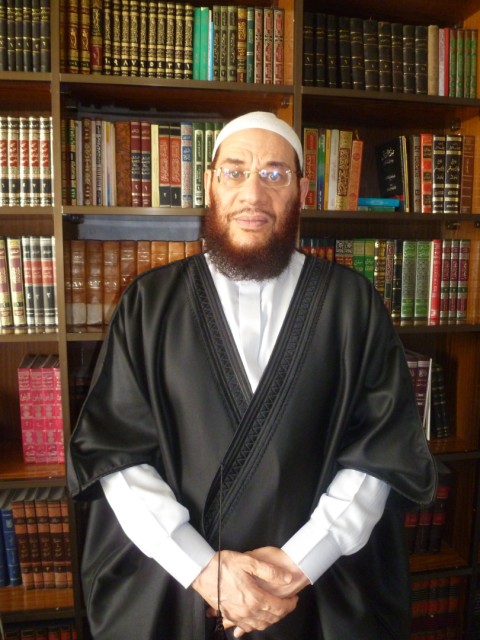
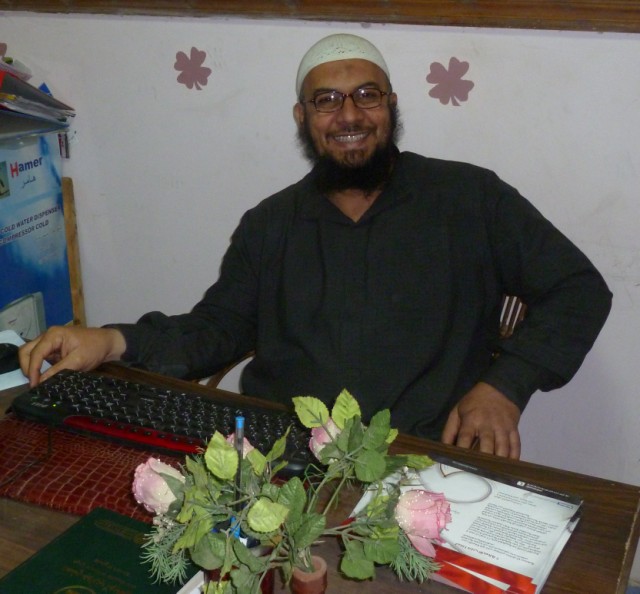
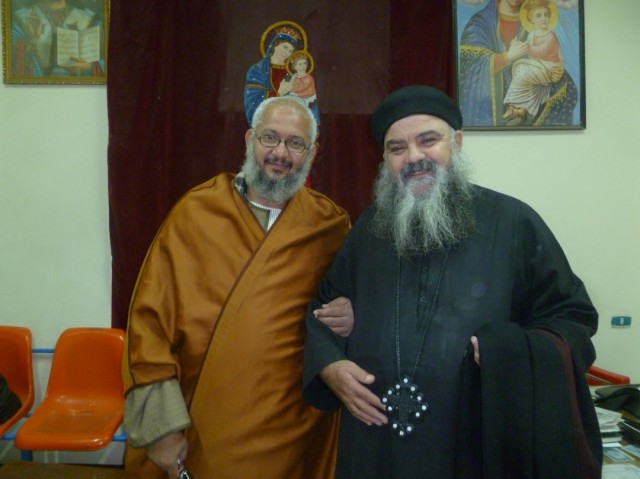


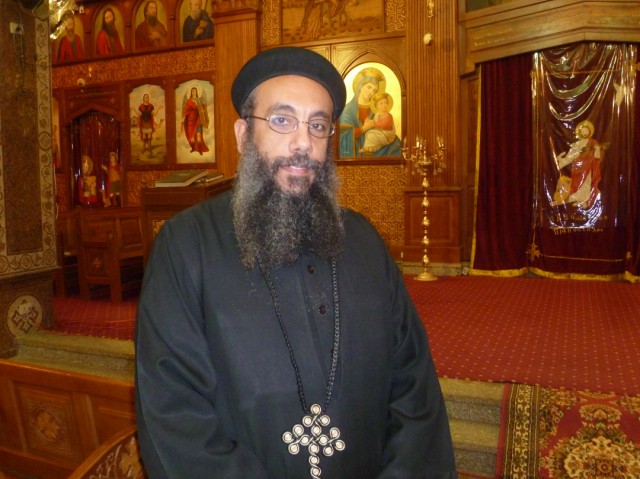
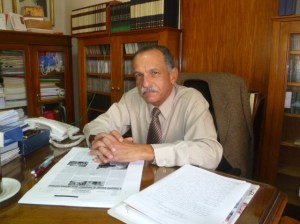

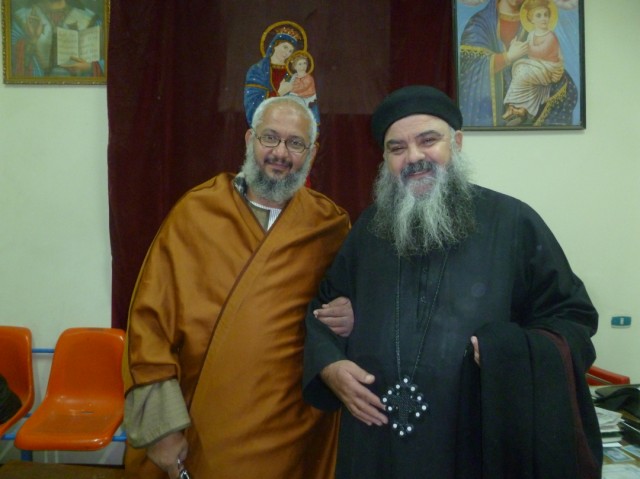
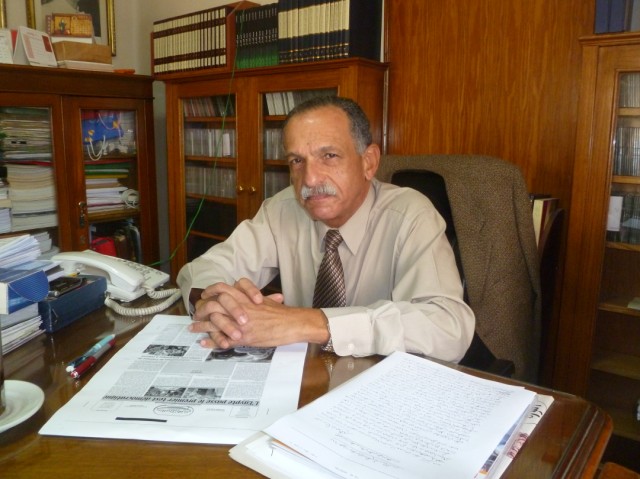

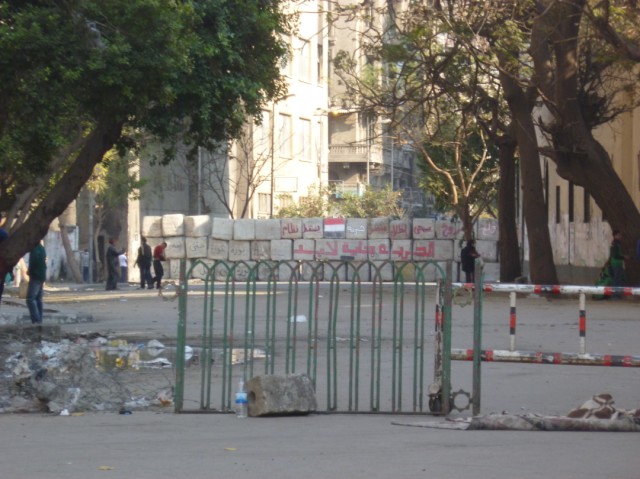
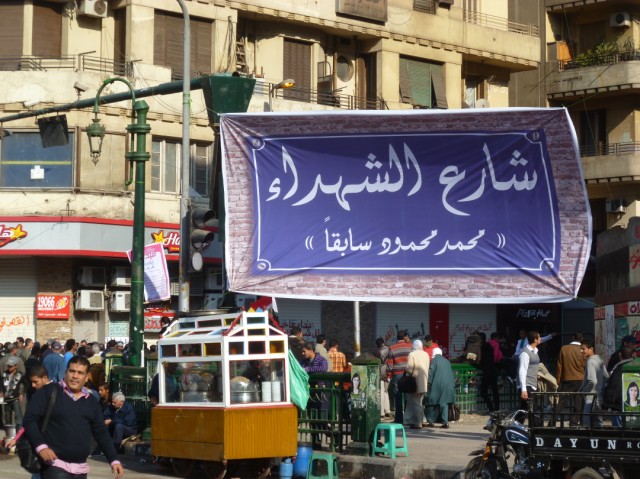




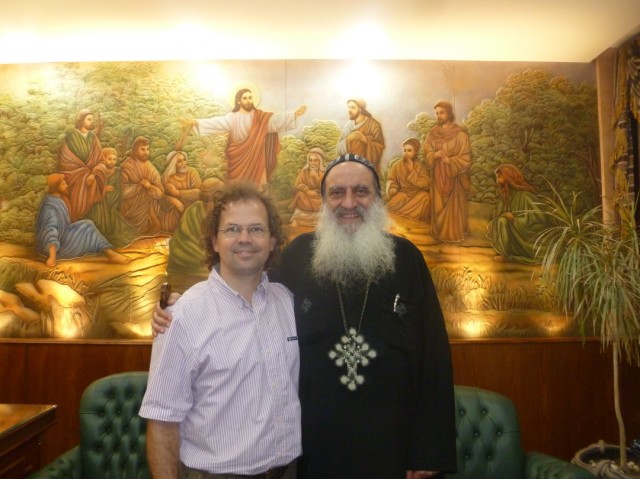

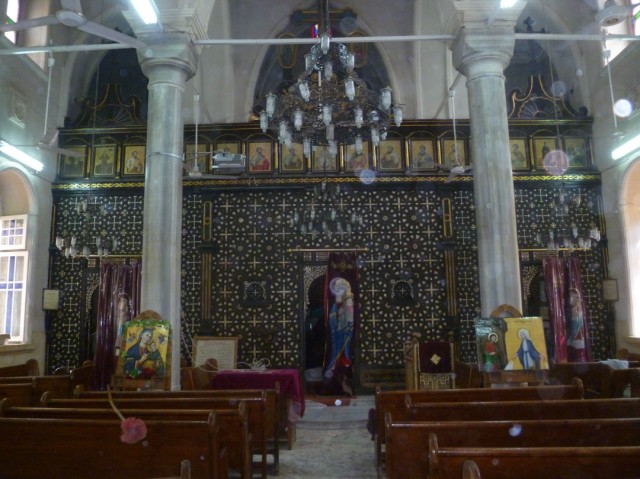


 Jayson Casper