From Egypt Independent, on a very taboo subject in which some have given their full name and testimony:
Those who have come out publicly as atheists have been not only isolated by their friends and families, but also society in general. However, others who turn down their familial religion have faced many worse trials than mere isolation.
Asmaa Omar, 24, who has just graduated the Faculty of Engineering, said that once she revealed her beliefs to her family, they began to physically and mentally torture her. Her father slapped her in the face and broke her jaw. She was not able to eat properly for seven months.
Both her immediate and extended families began to insult her. “You just want to have free relations with boys,” they would say, or “You used to be the best girl in the family,” and “Now you’re a prostitute.”
Some come from a Christian background:
Ayman Ramzy Nakhla, 42, comes from a Protestant background. He worked in preaching Christianity with the church, but then decided to abandon religion altogether. He is now not very much concerned with knowing if God really exists or not.
Nakhla’s father was a priest, and Nakha worked for ten years as librarian in the Theology College of the Evangelical Church, and as an assistant to a priest, which is an administrative position. Ramzy says that this background was the one that actually led him to lose interest in religion, getting so close to the truth of the Church made him decide to leave it.
Others from a Muslim background:
Other atheists say they believe atheism is in fact more moral than the old, rigid moral codes offered by traditional religions.
Omar says her journey began when prominent cardiologist Madgy Yaqoub managed to treat a two-year old relative of hers in open heart surgery. Rahman, the child, had a valve that did not work and another with malformation.
The successful operation led Omar to wonder how a man such as the doctor, who had lived his life saving many children like Rahma, could be thrown to hell for not being a Muslim. Omar found that religions just chose its followers to end up in heaven, and say that other people would go to hell, regardless for whatever good deeds they do in their life.
Omar says she believes in God, but is against all religions. She says she is still looking for Him and is not aware of His truth.
As a result, some mix between the two:
Some atheists, however, still feel without religion, they are missing something. Despite her rejection of religion, Kamel still misses the spiritual side, resorting to Sufism as she attends Sufis meetings and listen to sufi music, especially those of al-Naqshbandi and Nasr Eddin Tobar. She also enjoys listening to Christian hymns and is massively affected by them. She says, however, that this is just a need for spirituality, nothing more.
Kamel goes back to saying that she has not yet reached a final result for her inner conflict.
Indeed, Egypt is changing. Your vote: Is this for better or for worse?
Polemics are poison to interfaith relations. Unfortunately the salve of dialogue and cooperation often fails to make as wide an impression, leaving wary religious communities under the assumption of mutual opposition. Polemics reduces ambiguity and nuance, allowing the non-specialist citizen to appreciate his or her own heritage when challenged by ideologies of a foreign ‘other’. Yet this reduction is achieved in a manner often repulsive to the ‘other’, no matter how much it may be reflective of part of the ideology. The specialist in interfaith relations deals with the complexity, but the audience is often limited. By speaking to the street the polemicist simultaneously comforts and infuriates.
This is very much the situation currently governing the Mediterranean world. Arab Muslims widely believe Europe is dominated by ‘Islamophobia’ – a rejectionist attitude which dismisses their faith. For example, Johannes Jansen, whom I wrote about here concerning his book, ‘Religious Roots of Muslim Violence’, writes concerning their prophet:
Muhammad, the prophet of Islam, may have been born around 570 AD in Mecca and if he existed, he died in Medina around 632 (italics mine).
Questions of historicity in the academic world are proper and legitimate, but Jansen, though a scholar, writes popularly. After first undermining the religion of Islam at its source, he reinforces its oppositional nature through irresponsible generalization:
Also printed testimonies from within the Muslim world abundantly illustrate that in general Muslims (with individual exceptions, one hopes) distrust and hate the West. They see the West as an enemy, and it is their religious background that encourages such judgements.
Critique of such ideas may be found elsewhere, but suffice it to say that when attitudes such as these reach the shores of North Africa and the Middle East, let alone communities of Muslims resident in Europe, interfaith coexistence and cooperation receives a setback.
Jan Slomp
This is why the example of European Christian leaders necessitates wider dissemination, especially as concerns their response toward the Muslim minorities in their midst. Jan Slomp is a member of the Advisory Editorial Board of the Journal of Muslim Minority Affairs, and together with Hans Voecking summarized the history of this interaction. This article is a summary of their essay, ‘The Churches and Islam in Europe’, published in Studies in Interreligious Dialogue, vol. 21, 2011.
Worthy to note is that Christian leaders did not consider the wave of Muslim immigration to be a religious issue at all, in the beginning. Instead, it was a socio-economic challenge, and churches organized to assist. In 1964 Protestant and Orthodox churches founded the Committee for Migrant Workers in Europe, while Roman Catholics formed the International Catholic Migration Committee shortly thereafter. Though these services had a religious subsection, the churches deliberately put priority on service and love before issues of doctrine and belief. They believed the Gospel called them to do so.
It soon became clear to both groups, however, that the presence of Muslim immigrants in particular placed challenges in front of local Christian congregations. In 1976 Christian leaders organized a conference to directly consider the needs of Muslim communities in Europe along with those of traditional Christians vis-à-vis their new neighbors. Ali Merad, an Algerian professor resident in France detailed the Muslim position. They needed in particular:
Proper housing
Job security
Children’s schooling
Religious education in public schools
Facilities to worship and practice Islamic festivals
Merad argued that by fulfilling these needs the Muslim world would receive a positive view of Christianity and promote reconciliation between Christian Europe and the Muslim Third World. Indigenous Arab Christians, especially, would be indispensable mediators between East and West.
Slomp relates that thirty-five years later, to a large degree, these needs have been largely addressed. Yet the conference also spelled out principles to be implemented in the churches, including:
Respect for Muslims requires greater knowledge of their religion
Islam and Christianity to be presented correctly
Churches establish offices to meet with Muslim representatives
In 1978 Christian leaders recognized many churches were still slow to relate to their Muslim neighbors in witness and service, and thus another conference was held. It tasked three committees to produce reports through which to guide Christian response. The first concerned working together with Muslims to protect and further their basic human rights as a minority community. The second envisioned positive cooperation between the two faiths in confronting secularism as a dominant ideology. The third, however, dealt with theological questions, and failed to reach consensus.
The difficulty in theology led Protestants, Catholics, and Orthodox leaders to establish a new organization in 1979, the Consultative Committee on Islam in Europe. A conference held was again motivated to encourage witness and service to Muslim neighbors, but emphasized this was especially in light of their religious freedom and the necessity of social integration. Work was established to create literature for local churches to educate properly about Islam, as well as to highlight instances in which Muslims suffered discrimination. Issues of theology, however, continued to be contentious.
Most Christian leaders in these meetings were challenging themselves to respond positively to the message of Islam as a partner in monotheism. Though keen not to water down the distinctives of Christian theology, many urged Muhammad to be accepted as a prophet within the continuing Old Testament tradition. Leaders emphasized common positions on ethics and urged cooperation in promoting spirituality. Hope was expressed that Muslims might continue to honor Jesus and be attracted to him, within an eschatological position where God would ‘restore all things (also all things Islamic transformed by him) in heaven and on earth into a unity in Christ’.
Such positions made many local churches uncomfortable, as they felt Islam was being made too akin to Christianity, which might lower the barriers for conversion away from the faith. No firm positions were taken, but in 1987 the Islam in Europe Committee was formed between Roman Catholics, Orthodox and Protestants to improve Islamic studies in all seminaries and theological faculties in Europe for the benefit of ordinary congregations, among others, by inviting Muslim teachers. In particular they wished to move beyond studies of comparative religion by allowing space for Quranic studies into the curriculum for Biblical studies, by which Islam might integrate into every aspect of theological inquiry.
However much the committee influenced local congregations, it was disbanded in 2009 in light of two encouraging developments. First, it was noticed that many churches by this time had incorporated an Islam desk to engage their congregants and communities. Second, the formal work of local churches in regional conferences was honored, as local leaders gathered to consult and exchange experiences. Across the continent churches had become aware of the peculiarities of these now Muslim citizens, and were engaging with them for the common good.
The differences in approach are apparent. Polemicists begin by viewing these newcomers to Europe as a religious other, make generalizations about their faith, emphasize points of departure, and establish a foundation of fear and opposition. While undoubtedly Christian people have engaged in such polemics, the Christian leadership of Europe has taken a different approach. They began by serving the humanity of these immigrants, subsequently recognizing the implications of their religious differences. Yet instead of opposition they sought understanding, integration, support for human rights, and even pushed the boundaries of Christian theology to find common ground.
In brief evaluation, if there were faults in the efforts of Christian leaders, it lies in the level of popular engagement. Polemicists have enough academic study to be accredited as experts, but their strength lies in simplification and mass appeal. Their message is also easily translatable through the media. European Christian leaders, on the other hand, hosted conferences, formed committees, and issued recommendations. These are not the avenues to reach the common man. Furthermore, in accepting the challenge to engage theology with Islam, they threatened the simple faith of the local believer. This can well aid the polemicist who reinforces popular belief through fear, now also of ‘compromising’ leadership.
Yet these Christian leaders are no ivory tower theoreticians. Each and every step was calculated to form wide councils of all denominational leadership, with an eye toward speaking toward the common man. Such broad consultation and engagement is done to build a network that can withstand media-driven and politicized polemicists. They printed literature and nurtured regional networks of pastors and priests. They assured the predominant message from the pulpit was one of engagement and respect. This is slow work which does not command attention. Yet despite the popularity of polemicists, it was noted that nearly all Muslim essential needs as a minority community have been met. Where this is lacking, especially as regards full integration, there may be indication the Christian message has fallen on the deaf ears of a secular population still Christian in heritage. This is a fertile ground for polemicism.
Unfortunately, there are polemicists in the Muslim world also. Despite the successes of Christian leaders in welcoming the Muslim ‘other’, many are quick to highlight Jansen or others as typical of a dominant European rejectionism. Yet the reasoned attitude in the Muslim world regards Europe as a place of freedom and equality, where Muslims have largely shared in a better life. Economics above all determine voting by the feet – immigrants continue to pour into Europe – but without the foundation of welcome labored for by Christian leaders over many decades, they might not be so eager to come.
Yet it is France’s niqab ban or Switzerland’s forbiddance of minarets that pervades common Muslim perception of Europe, aided by local polemicists. Has Murad’s prediction failed, that European attention to Muslim immigrant needs would reflect positively on Christianity and foster reconciliation? Slomp demurs that over this same time period the position of indigenous Christians in the Middle East has not improved. He takes no position on Muslim world reciprocity towards Europe, at least in this essay.
Yet this question highlights the seductive danger of polemics. ‘We’ are better than ‘they’ is the lens through which it is asked. The superiority of self and kin is inherent to human nature; Christian leaders have demonstrated the spirit of their faith is to overcome it.
Service, welcome, equality, and love – this is what the Europe Christian leaders have sought to build. In dialogue with Muslims, they may just find the ‘other’ intends the same. Jansen may doubt, but it is only through engagement that truth is discovered. Faith demands such risk; it is the salve that undoes the poison.
This essay was first published in Arab West Report in February 2012.
It is a simple matter, really. No matter how many people poured into the streets on June 30 to demand early presidential elections, Mohamed Morsi had a mandate to govern for four years. “We cannot accept the loss of legitimacy because this is not our demand to compromise,” said Ahmed Kamal, youth secretary for the Muslim Brotherhood’s Freedom and Justice Party (FJP) in Helwan. “It is the will of Egyptians who chose Morsi in the democratic process.”
Fair enough. But in the mind of his supporters in the Muslim Brotherhood, he had a mandate for far more. “The people chose us,” he continued. “The Islamic ideology is to apply to the whole of life, and this is the view of our party.” Kamal’s words are punctuated by one of the key issues Morsi’s supporters grasp at: legitimacy. “When Egyptians chose it – and we do not wish to impose it – we cannot accept the idea of jumping over its legitimacy.”
Many commentators over the past year have criticized the Brotherhood for a majoritarian view of democracy. Kamal’s comments appear to bear this out. Morsi’s narrow win in the presidential elections, perhaps coupled with the sizeable Islamist win in parliamentary elections, was enough to confirm and empower the triumph of Islam. In their view, opposing their political project, therefore, is opposing Islam itself.
The interview continues to include Kamal’s views on Christians, martyrdom, and the Brotherhood conception of peaceful protest. Please click here to read the rest of the article at Egypt Source.
Dutch scholar Johannes Jansen contributed an essay – ‘The Religious Roots of Muslim Violence’ (opens in a Word document) – to a 2011 anthology entitled, ‘Terrorism: Ideology, Law, and Policy’. In it he makes the case that violence and terrorism are part and parcel of the Islamic religion, traceable to its root sources at every level of sharia construction. Jansen’s scouring of the sources is admirable, and he launches several challenges to an irenic understanding of Islam. Unfortunately, he gives short shrift to worthy counterarguments, instead presenting the reader conclusions deemed unassailable, established on the basis of his insight. While his insight is formidable, it is not conclusive. As a scholar he would do well to simply present both sides.
Johannes Jansen
That Jansen does not is unfortunate, since it bathes his text in a bias which obscures a viable link between violence and Islam. Desiring to damn Islam in its entirety, he allows a critic to dismiss his work given its failure to admit other interpretations. Jansen instead takes upon himself the role of mujtahid (one who interprets) and throws down the gauntlet as well as any extremist scholar or caller to jihad. The only difference lies in condemnation versus approval.
This text will first present the legitimate challenges marshaled by Jansen, then demonstrate some of the ways he overstates his case, and close with a selection of examples where his argumentation is simply faulty, and at times, dismissive. A serious scholar of Islam would do well to outright refute many of his judgments; this review will suffice to proceed from a generalist’s knowledge. The reader is encouraged to lend his or her own fruits of study.
Difficult Matters
Moving sequentially through the text of Jansen, the first example of a difficult challenge lies in the verse of 9:30 in the Qur’an. The reference is to the delusion of Jews and Christians in imagining that God could have a son. This idea is met with an anathema – ‘God fight them’. Jansen notes that such a verse would make friendly religious dialogue difficult between Muslims and Christians, knowing that such a curse is leveled in the text of the oft-supposed friendly partner.
Later Jansen accuses Islam of dehumanization of its enemies. In verse 5:60 God is said to have turned some Jews into monkeys and pigs. This accusation is often heard among Muslims when they chant against Israel, for example. Also in 8:55 unbelievers are labeled ‘the worst of all beasts’. Indeed, it is much easier to oppose and kill those who are not given respect for their humanity.
Jansen then moves to consider the life of the prophet, referring to 33:21 in which Muhammad is declared to be an ‘excellent pattern’ for those who hope in God. He then goes on to describe how
Muhammad and his men raided their neighbours, captured these, and sold them into slavery. Mohammed and his men robbed travellers and caravans, and assassinated critics of their behaviour. According to the Muslim sources themselves, Muhammad and his men migrated from Mecca to Medina, but once there they rewarded the inhabitants of Medina by killing a large number of them. These sources themselves report how Muhammad beheaded 700 Medinese Jews, on the flimsiest of excuses.
This text is noted here with a contempt that belies the objectivity of a scholar, and each of these incidents listed is able to receive an explanation from Muslim historians. Yet Jansen’s argument is listed in this section not for its specifics, but its reference to Muhammad as an ‘excellent pattern’. Putting aside Jansen’s bias, there are aspects of Muhammad’s life that offend modern sensibilities and morality. These are a worthy field to consider linkages between Islam and violence.
Throughout his text Jansen brings up many of the oft-cited references in the Qur’an to warfare, fighting, and killing. These will be dealt with conceptually in the next section. Yet it is interesting to note here a commendation given by the prominent Azhar University in Cairo for a definition of jihad found in an English language guide to sharia law, called ‘The Reliance of the Traveler’. Jihad is often defended, correctly, as first an internal struggle against the self. Yet here Jansen notes the reference declares
Jihad means to go to war against non-Muslims (…). The scriptural basis for jihad (…) is such Koranic verses as: (1) ‘Fighting is prescribed for you’ (Koran 2:216); (2) ‘Slay them wherever you find them’ (Koran 4:89); (3) ‘Fight the idolaters utterly’ (Koran 9:36); and such hadiths as the one related by Bukhari and Muslim that the Prophet (Allah bless him and give him peace) said ‘I have been commanded to fight people until they testify that there is no god but Allah and that Muhammad is the Messenger of Allah’ (…) and the hadith reported by Muslim ‘To go forth in the morning or evening to fight in the path of Allah is better than the whole world and everything in it.’
The challenge is not necessarily in giving nuance to these verses, but the fact that as eminent and generally moderate an institution as the Azhar has endorsed this reading of jihad.
Contested Interpretations
It is noteworthy that in twenty pages of text Jansen is only able to bring the above arguments to bear that do not receive immediate pause, at least in the eyes of this reviewer. Far more numerous is the evidence he draws from Islam that does indeed ask fair questions of the religion, but then shields the reader from alternate viewpoints. Again, the summation will proceed sequentially.
Jansen begins his argument by stating the proscribed penalty for apostasy in Islamic sharia law is death. He does not demonstrate this factually, but refers to the aforementioned ‘Reliance of the Traveler’ and quotes from the Egyptian judge Muhammad al-Ghazali who testified the murder of accused apostate Farag Foda was only to be classified as an ‘offense’ under sharia.
Indeed, the standard Muslim judgment against apostasy is death, and the offense against human and religious rights is valid. Yet other scholars condemn this interpretation through a variety of forms. One method is to understand that during the time of the prophet, affiliation with Islam was akin to the modern concept of citizenship in a nation. Apostasy, then, is equated with treason – a crime punishable by death in many modern nations. Given that this relationship no longer applies, apostasy in the contemporary sense does not merit death.
Another path of diffusing the absolutism of apostasy punishments is to recall Muhammad dealt with apostates from Islam during his life, and did not order universally their execution. Listing these two critiques does not infer the validity of textual and historical exegesis; this is a matter for Muslim scholars to decide. Rather, the point is simply to note their existence, even if a minority interpretation. Jansen fails to do so.
Jansen then critiques what he understands to be an undue Western sympathy for Islam, given that many have accepted the idea of religion as an expression of the Golden Rule. This is faulty, he argues, bringing 48:29 as evidence: ‘Muhammad is the messenger of Allah, those with him are violent (ashiddaa’) against unbelievers, compassionate amongst themselves.’ (Richard Bell’s translation)
The issue of translation in Islam is very tricky, and certain Muslim authored ‘interpretations’ of the Qur’an into English cover over issues which might offend Western sensibilities. Here, however, Jansen chooses a translation that makes his point but overstates his case. Ashiddaa’ can also be rendered as severe, strong, harsh, or powerful, though violent is possible. A more direct word for violent – ‘aneef – is not employed.
Even so, the double standard certainly betrays the essence of the Golden Rule, which is Jansen’s overall point. Yet he could have maintained this tension, identifying a source text which Muslim violence can summon, while also quoting from 3:159, ‘By the mercy of God, you dealt with them gently. And had you been severe and harsh-hearted, they would have ran away from about you; so pass over (their faults), and ask (God’s) forgiveness for them.’ This text refers to Muhammad’s dealings with a man who had killed many Muslims. When apprehended, he was treated as a guest, fed, and freed. Such treatment accords also with a hadith in which Muhammad declared, ‘He who is not merciful to others, will not be treated mercifully’ (Muslim 73:42).
Again, these examples do not undo the double standard given by Jansen, but they keep the reader from assuming Islam to be only as he describes. Jansen would have done well to provide them.
Jansen then moves into the controversial Qur’anic verses which either order Muslims to kill (2:191, 4:89, 4:91, 9:5) or to fight (2:10, 2:216, 4:74, 9:119) the unbelievers. He refers to the well known commentary of al-Jalalayn to confirm the violent nature of these verses. Next he heads off a predictable rebuttal by 2:256: ‘Let there be no compulsion in religion’, and 109:5: ‘You have your religion and I have mine’, by bringing in the concept of abrogation. Islam commonly understands that verses revealed later void the application of earlier revelation. He states,
All standard and authoritative Muslim commentaries on the Koran, without exception, hold these two peaceful and reassuring fragments to be repealed and ‘abrogated’ by the later ‘verse of the sword’, Koran 9:5.
Having established the permissibility of fighting and killing unbelievers, Jansen seeks to establish two pernicious modern applications: Assassination and terrorism. Concerning the former he refers to 5:44 in which a leader who does not apply the laws God provided is labelled an unbeliever. Since he is from the community of believers, he is therefore an apostate, and as such, worthy of death. Jansen refers to the ancient commentator Ibn Kathir, the modern ideologue Sayyid Qutb, and contemporary preacher Sheikh Abdel Hamid Kishk of Egypt.
As per terrorism, he references 8:60 in which Muslims are commanded to ‘terrorize’ the enemy. He then returns to the Azhar to refute the idea this was only a concept to be employed during history. The former head of the Azhar, Muhammad Sayyid Tantawi, is quoted in his commentary stating the verses apply ‘first of all [to] the pagans of Mecca’. ‘First of all’, Jansen argues, signifies the beginning of a longstanding and commanded practice.
The seed to nuance these perspectives is provided by Jansen himself. He quotes a 1968 gathering of Cairo scholars to state 8:60 is equivalent to the Roman maxim, ‘If you wish for peace, prepare for war.’ Jansen even says, ‘They may be right.’
Whether they are right or not is worthy for debate, but though Jansen proceeds to provide what he calls ‘the standard Muslim denial and defense’ (to be given in the next section), he does not return to this very basic explanation. Muhammad began his ministry by calling to a religion, but the interpretation is clearly possible that he ended it by establishing a state. Commands to fight and kill, then, can be understood as a civil action akin to modern warfare. Even modern warfare can be condemned, and the including of religion complicates the matter considerably. Nevertheless, these verses can be understood as combat, and not as inquisition.
Furthermore, many Islamic scholars state that warfare is the domain of the state alone, which must abide by numerous regulations, including the duty to keep peace with a non-Muslim who does not oppose you. Therefore, while in war it is common practice to ‘terrorize’ the enemy through ‘shock and awe’, for example, this is legitimate only through proper and regulated channels, not through individual action.
Individual or small group action is also associated with assassination attempts. Muslim scholars need to, and have, refuted the interpretation of 5:44 as a call to kill a less-than-faithful Muslim leader. First of all the clear context of the verse applies to Jewish leaders who failed to apply the Torah. Jansen notes this, but calls again upon Kishk to argue that if true for Jews how much more true for Muslims, who have been given sharia law by which to govern. Yet the bulk of Sunni Muslim history has held that a ruler is to be obeyed and Muslims must not declare each other to be infidels, unless such unbelief is clearly advertised. Such assassination attempts, they warn, threaten to return Islam to its early days when extremist groups tore the community apart. This minority reading has now returned with an equal threat. The legitimacy of interpretation is for Muslims to decide, but Jansen makes no reference to where the burden of proof lies, or even that a burden against his argument exists.
The same critique applies to his statements about abrogation. Where he declares that all commentators agree about verses of the sword abrogating verses of tolerance, it would be well to check his sources. That the verses of the sword are later in timeframe than verses of tolerance is not disputed, but the issue of abrogation is not at all clear. Some scholars find only a handful of verses in the Qur’an to be abrogated, others find large swaths of its content. It is simply not true that a uniform opinion on abrogation exists in Islam, though as a concept it is accepted. Application, however, is disputed, which is a fact Jansen does not simply ignore, he obfuscates.
Last to be considered briefly is the extension of the argument to the individual Muslim. Given that jihad is a duty to be carried out in warfare, and furthermore that since the Islamic caliphate no longer exists, it is now incumbent on smaller associations to further this cause. Jansen describes how this has happened without providing rationale why it is Islamically necessary to happen.
Still, he quotes prominent scholar Yusuf al-Qaradawi who states concerning suicide operations: ‘The one who carries out a martyrdom operation does not think of himself. He sells himself to Allah in order to buy Paradise in exchange.’ While this opinion should be studied in context, it appears Qaradawi describes the rationale of the martyrdom-seeker, and does not clearly provide license for his interpretation.
Failures in Argumentation
While sections one and two acknowledge the excellent, if insufficient, study Jansen has given to the Islamic sources, this final section highlights some of the ways in which he betrays his own effort. While only a few examples represent error, there are quite a few statements overvaluing his contribution. These will be followed by an unhealthy number of examples carrying a regrettable dismissive attitude toward opposing views.
Some of the errors are actually misleading use of rhetoric. For example Jansen notes how the fact of death for an apostate acts as a disincentive to advertise one’s disbelief in Islam. While certainly correct, he proceeds to state, ‘All statistics on the number of Muslims in a region or period [are] unreliable.’ With this broad stroke he renders meaningless the work of professional statisticians upon the assumption that Muslims everywhere hold to their faith out of fear of death. Unfortunately, Jansen offers no evidence to buttress this assumption.
Similar is the critique he levels at scholars and politicians for not understanding the essential violent nature of Islam. Were this properly comprehended, they would have prevented Muslims from ‘invading’ their countries. The word invade infers an organized plan, while overlooking the demographic fact that most Muslims in Europe, at least, originally were recruited to serve in low wage service industries to compensate for a relatively low continental population growth. Their increase in population share is a serious issue for European politicians today, but to label their presence an invasion is an ugly, if not deliberate, rhetorical error.
This may be true as well for Jansen’s denigration of the Qur’an for labeling Jews as ‘pigs’. A careful look at 5:60 shows God turned some Jews into apes and pigs, yet Jansen goes on to say:
It is clear that an enemy about whom Islam teaches that God himself calls him an ape, a donkey, a swine, a dog or just an animal, has no human rights. It is only proper to terrorize such subhuman unpersons.
This example leads well into a number of instances where Jansen establishes a point through the force of his own insistence. Is it indeed ‘clear’ that ‘it is only proper’ to mistreat the above mentioned groups? Is there no other possible recourse in all of Islam? Does logic dictate the necessity of agreement with Jansen’s pronouncements?
Elsewhere Jansen states, without reference to studies or statistics, that ‘large numbers’ of Muslims believe specific war passages in the Qur’an are meant to be generalized. Furthermore, it is ‘widely understood’ that Islam teaches to kill unbelievers if the cost is not too great for the Muslim community. Of course, ‘Muslims believe that outsiders hate Islam,’ which, ‘can only be understood as echoes of the fear and distrust Muslims themselves harbour against the adherents of other religions.’ The proof? ‘Printed testimonies from within the Muslim world abundantly illustrate that in general Muslims (with individual exceptions, one hopes) distrust and hate the West.
Jansen’s parenthesis in the previous example illustrates more than just his overstatements, it also reveals his dismissive bias. ‘One hopes’ there are Muslims who do not hate the West? With how many has he spoken, that he sees this as such an impossibility?
Further sarcasm is seen when he posits the chance that what is understood as terrorism is actually to be regarded as legitimate resistance. He says:
This needs to be researched seriously and extensively. Such research should definitely not be omitted or be neglected, no matter how enormous the task will be. It would be a huge project indeed, stretching out from Northern Nigeria to Chechnya, from the Darfur to East-Timor and Bali, and from Madrid, Amsterdam, Berlin, Paris and London to New York.
His highlight on ‘extensively’ is made moot through listing the sites of recent terrorist activity. As before, Jansen’s research is far too serious to utilize such mocking claims. He is not finished, however.
After listing the many verses which demonstrate the Qur’an’s instructions to fight and kill, Jansen exasperates, ‘Someone who is not convinced by these verses will not be convinced by more or even much more of the same.’ Furthermore, Muslims who seek to present an alternate interpretation of their faith by emphasizing verses of tolerance ‘forget to explain’ these have been abrogated.
Failing to recognize their effort as legitimate apologetics, Jansen proceeds to give what he calls the ‘standard Muslim denial and defence’ of their religion – in all its flimsiness. The first is to state that only perfect Arabic speakers can interpret the Qur’an, and that it is Western hatred which drives their criticism. The second is to dismiss the statements of clerical leaders, as these do not represent the people. The third and final technique is to ridicule Westerners who rely on the statements of misinformed young men involved in terrorism.
Jansen admits there is merit behind these defenses, but are they the only ones? Written by a non-Muslim, this text has presented numerous challenges to Jansen’s interpretations. Are none of these worthy to be found in the writings of ‘standard’ Muslim apologists? Jansen builds a straw man, and delights in knocking him down.
Conclusion
Much Western opinion of Islam is divided into two camps. One side finds the religion to be peaceful in essence despite misinformed extremists. The other finds the religion to be violent in essence despite the masses of ordinary Muslims who do not sufficiently understand their faith. As with most dichotomies, reality is often found in the middle.
Though Jansen places himself among the scholars of the second grouping, this text does not fault his essential questions. It is clear that there are violent source texts and examples within Islam. Yet it is also clear there is an impetus toward peace and tolerance. It is right and just for both Muslims and non-Muslims to interpret sources to determine what is the core of Islam.
The fault of Jansen lies in his failure to nuance his argument. His was not a short magazine article; it was a twenty page thesis. There was ample room to both display his conviction about a violent norm and present significant Muslim counterarguments.
His failure to do so is odd given his conviction. If Islam is essentially violent, would Jansen not wish to highlight and promote the many Muslims who seek to ground their faith on a foundation of peace? Are all who do so deceivers, wishing to delude the West to their true intentions? Can there not be validity to their wholly Islamic arguments?
This last question is the essential one. The crux of the issue is not the academic exegesis of Islam, however worthy. It is the social and cultural acceptance of interpretation that must speak to the hearts of Muslims the world over. Will violent verses be found anachronistic in the modern age, or will they define a coming renewed civilizational struggle? It is only within Islam, among Muslims, this answer can be found. Alternate viewpoints are rife, and often in competition.
Jansen may be able to demonstrate the weight of evidence – both in historic sharia understanding and in popular consciousness – lies with violent and jihadist Islam. What he will be unable to accomplish is to demonstrate this interpretation is correct. Islam is first and foremost a religion, and religions, while possessing vast storehouses of conserving tradition, are also adept at drawing from these storehouses to adapt according to the realities of the age. It is as wrong to state that Islam will adapt peacefully as it is to assert it will not. That adaptation is possible, however, is a demonstrated historical fact.
Islam, particularly in its Arab context, is before a potentially great adaptation from Morocco to the Gulf, as the masses demonstrate a desire to shed their current leadership. Whether or not the Arab Spring represents conflict or cooperation with the West is an open question. Prominent among the determining factors will be the emerging interpretation of Islam. Jansen is right to ask his questions; the answers are not nearly as fated as he assumes.
This essay was first published in Arab West Report in February 2012.
For Part One of this conversation, discussing Hani Nour Eddin’s background, please click here. For the full interview on Middle East Institute, please click here. Part Two explores Nour Eddin’s views on violence, and here is an excerpt from the published interview:
Al-Gama`a al-Islamiya is committed to nonviolence and has apologized for its past. In fact, you organized a demonstration recently to condemn political violence.
We saw that others had taken over the streets and were now using them to express their views. People might thinkthat they are the voice of Egypt. We wanted to say that the Egyptian street is not about violence and sexual harassment. Unfortunately, beautiful Tahrir Square has lost its symbolism. So we [demonstrated in] another place to avoid any contact with them. Our demonstration invited all to come and express their opinions, whether for or against the Islamist project, but with a commitment to nonviolence.
I noticed many of the speeches and chants were very Islamic, and quite severe. Instead of “no to violence,” the demonstration became about “yes to political Islam.”
Our demonstrations often take the color of the people who attend. Maybe this is because of our weakness in usingthe media; we use a strident voice to make our point and show we are strong. We are Islamists, and we do not accept separating religion from anything else, and the street welcomes this. And so they chant, “Egypt will remain Islamic!”
The protest also honored Khaled al-Islambouli [Sadat’s assassin].
Islambouli is considered one of the symbols of al-Gama`a al-Islamiya when it was in a period of resistance to the regime. We all saw Sadat as a dictator, especially in his last years when he used oppression and closed mosques. Islambouli has an honored place among us.
Even if you now confess that what he did was wrong.
If we could go back in history and reevaluate, perhaps we would not have chosen the path of violence. But what happened was necessary due to the situation. Unfortunately, the circumstances demanded it.
But this is the test of your principles. If nonviolence is a principle—not a means, not a strategy—you must commit to it.
Yes, this is right. It is a principle.
Unfortunately, for space issues Middle East Institute had to cut the conclusion, which seeks to test their commitment to non-violence through recent domestic and international examples. This part is posted here:
A few weeks earlier than your ‘No to Political Violence’ protest, Mohamed al-Zawahiri demonstrated at the French Embassy in Cairo against their military intervention in Mali. There, Ezzet al-Salamony, a leader in GI, spoke saying, “Why are they fighting us in our lands? It is we who should be fighting them in our lands!”
There are two issues here: One, Islamist support for the rebels in Mali, and two, the statement of Salamony itself. Do these violate your non-violent commitment?
I see what you’re saying. From what I know GI has abandoned violence and we will not return to it. We also agree we will not interfere in the politics of other nations. But as for that statement, he is the one responsible for it, and must justify himself.
Ok, but tell us about Mali, especially before the French intervention. Do you support the rebels from the north?
To a degree, but we do not have complete information about the nature of the Mali jihadists. Their primary slogan is the application of sharia law and building an Islamic state on the basis of it. Their situation is different; to what extent is there democracy or other means of change? We don’t know.
But we support the idea of an Islamic entity if it is true they are committed to Islam. At times some people will raise the banner of Islam but transgress it in how they behave. But yes, if they live as Muslims and seek to apply the sharia, yes, we support them.
But for the real situation between them and the Malian government, we don’t know.
But should you not condemn their jihad, as it is violent? Even if it is true the political system has not opened up the way it has in Egypt?
Again, we can’t evaluate their experience in jihad because we don’t know enough.
But you don’t know? It is clear to the world their rebellion is armed. They were marching on the Malian capital.
In the beginning it was not like this. They were a number of jihadi groups that gathered together and the government confronted them, but they began expanding their territory and announced themselves as a political entity.
But even this, expanding their territory in the north was at the expense of the legitimacy of the government. What gave them the right to seek autonomy or declare independence?
Yes, but their situation is different from that of Egypt.
But this is the point, we’re talking about a principle. In Egypt there is no necessity for violence – you have won by votes. But there the Islamist is in a position of weakness. Perhaps he is even suffering pressure. Is he allowed to resist violently?
(Laughing) I cannot condemn them before I know the circumstances which drove them to violence. Maybe it is violence in response to a greater violence upon them. What if my life or existence is threatened and there is no other way? But rebelling against a leader by forming militias? No, we must expend all peaceful and preaching means first, before resorting to violence.
Before? But your ‘Revisions’ were a complete condemnation.
The issue of jihad in Islam is legitimate, but it is not something to begin with. In our ‘Revisions’ we defined that jihad has stipulations that prevent it from resulting in even greater harm upon the people, the sharia, and the country. The jurisprudence in measuring jihad in Mali is different than the measure in Egypt.
But how can their situation be seen as worse than what you experienced here? There was a tyrant in Egypt, he oppressed you, he put you in prison, he killed you. He distorted the sharia and laughed about it. And even under all this pressure you condemned your own violent confrontation.
Because it did not result in any fruit.
So forgive me if this isn’t the right word, but does this show your condemnation of violence was opportunistic? You made a deduction violence is not working, so you give it up. You still believe in violence as a possible means of change.
No, in the reality in which we live it is not a means of change.
But maybe it is in Mali?
It depends on their circumstances; we cannot judge them.
So your commitment to violence…
We commit ourselves. We cannot compel others to be so committed.
So it is not a general interpretation of Islam. It is just your situation?
Jihad is legitimate in Islam; no one can deny this. The question is if you are engaged in it legitimately according to its stipulations.
So what are the domestic stipulations for jihad? The one in Mali is against the ruler.
Will our scholars permit their action? I don’t know. It depends on the type of ruler; it depends on the struggle between him and the various Islamic groups. I don’t have enough information to say.
Ok. Sudan.
Our party sent a delegation to Sudan shortly after it was created, to establish relations. We consider Sudan to be deeply important to Egypt, economically, socially.
What about the status of President Bashir as an international criminal?
No, there are other factors at play in these accusations. We don’t believe the government is complicated in any criminality.
So in a sentence, how do you understand what is happening in Darfur?
It began as a local tribal conflict, and then the government intervened. After that it became somewhat of a separatist movement. It was necessary for the state to preserve its authority.
As in Mali?
(Laughing) For example.
Please click here to read the whole article at Middle East Institute.
There is much that Egyptian Muslims and Christians agree upon, much which unites the two and allows them to pray similarly. But at one point the religions are rather irreconcilable: Jesus was not crucified, and therefore was not resurrected. There is no Easter, celebrated by Copts this coming Sunday.
Fair enough. There are plenty of common troubles in Egypt these days. But Easter risks becoming another one, a further point of division in a polarized nation.
God, may it not be so.
The Egyptian status quo of good neighborliness has Muslims and Christians exchange greetings on all their holidays. The Muslim purist status quo of Islamic fidelity forbids congratulating religious error. Both have been around for some time.
The purists have generally been confined to Salafis, but now the Muslim Brotherhood is caught in the middle. Their mufti has given allowance to greet on Christmas, but Easter should be avoided.
The middle ground makes some sense, as Muslims accept Jesus as a prophet born miraculously from the Virgin Mary. But in Muslim eyes Christians are in religious error to hold the prophet born as the Son of God; why should neighborliness cover one and not the other?
God, bless the purists and give them wisdom and discernment. Honor them for fidelity to unpopular conviction, especially as many behave as good neighbors every day of the year. Give them love for these neighbors even as they seek to guide them to the right path. May it be for the sake of truth, and involve no division or discrimination.
God, bless the Copts as they interpret this refusal as a public insult. Honor them for fidelity to minority religion, especially as many esteem Muslims for their faith every day of the year. Give them patience and grace for those who find offense in them. May it result in greater love between all and honest discussion in that which divides.
But for all who play with the issue, God, issue your divine condemnation. Some purists seek to isolate the Copts and those who stand with them. Some non-Islamists seek to demonize their opponents as agents of social disintegration. Where accusations are true may you muffle their voice and end their influence.
The Easter issue does not warrant such rhetoric, God; calm things down. If you gave your son to be crucified your followers can take an insult. If you alone rescued your prophet from violent rejection your followers can allow you to continue this battle.
God, you know best the truths of religion, but you know also the needs of Egypt. Help the people to mind the balance, finding both in love and unity.
From my latest article in Christianity Today, from the April edition and published online on the 18th:
Nadia Mohamed Ali was raised in a Christian home, but when she married Mustafa Mohamed Abdel-Wahab in 1990, she converted to Islam. After his death, she obtained new identity cards—required under Egyptian law—that declared her and her seven children Christians.
Then came the ruling by a criminal court this January: “Egyptian Court Sentences Family to 15 Years for Converting to Christianity” read the Western headlines. Several U.S. religious freedom watchers declared Ali’s sentence a “real disaster” that “underscores the growing problem of religious intolerance” under Egypt’s new, Muslim Brotherhood-backed government. A shocking headline, indeed.
A cut-and-dry case of religious persecution? Not quite.
“They were imprisoned for fraud, not for conversion,” says Mamdouh Nakhla, founder of the Word Center for Human Rights in Cairo. The Coptic lawyer claims the family paid government workers to forge new identity cards. They registered their religion as Christian under Ali’s maiden name so that she could obtain her inheritance.
There is an underground market for such fraud:
“I was introduced to a certain priest—now deceased—who knew a certain Christian who works in the Civil Registry,” says Sheikh Saber (using his Muslim name, not his forged Christian identity). “He takes the bribe and distributes the money around for assistance in covering it up.” In 2003 Saber obtained new IDS, birth certificates, and a marriage license for his family. The cost of this illegal “service” now runs up to $2,500 per person.
The article proceeds to discuss in some depth the role of inter-religious love affairs and marriage in conversion, to which difficult social conditions also contribute. But there are accusations the conversions are not just a product of sociology:
Meanwhile, some Muslims target Coptic Christians for marriage to convert them. “The Coptic people are downtrodden,” says Isaiah Lamei, a priest who provides pastoral care for troubled Copts. “Muslims take advantage and get them to sign papers of conversion [so Copts can] fix their problems.”
Every year, Lamei ministers to 30-40 families in his diocese that have been approached by Muslims offering such “help.” “These problems can be emotional or financial,” he says. He estimates that in his diocese every year, “two or three convert to Islam.”
It’s hard to verify whether Muslims really marry Copts just to draw them into Islam. But it’s also hard to verify the sincerity of Muslim conversions to Christianity.
“We must be cautious,” says Cornelis Hulsman, editor in chief of the Arab West Report. “I have met converts who are sincere, and I’ve met converts who have other interests.”
Nakhla agrees. “Some converts come to me and say they want to marry a Christian. Or they request money, or work, or an apartment,” he says.
From time immemorial mankind has known of the power of religion in both fraud and piety, manipulation and sincerity. It is frustrating to navigate the divide.
Examples of grace and ‘ungrace’ abound, but in service of both mankind and God, toward whom religion is said to direct, the navigation is necessary.
Please click here to read the full article on Christianity Today.
From Ahram Online, an op-ed arguing on behalf of Islamists, that Islam is essentially political:
A final point. Some of the opposition figures keep invoking the term “political Islam,” as if the term were a source of shame to Islamists.
Well, political Islam is not the invention of the Muslim Brotherhood or other Islamists. It is rather solidly rooted in Islam and its holy scripture, the Quran.
I am not going to discuss certain arguments made by anti-Islam secularists who claim that the rule of Sharia is not a must upon Muslims and that Muslims might opt for modern Western-style democracy without violating the tenets of their faith. These arguments are quite nonsense, even for first grade Muslim children.
But I do want to point out that one cannot reject political Islam as a matter of principle, without rejecting Islam itself.
Yes, one might disagree with certain Islamist modalities, behaviours and interpretations. We all reject violence and terror committed in the name of religion. And we all would like to see a kinder and gentler practice of Islam everywhere.
But we must never allow ourselves as Muslims to compromise the main principles of our faith in order to appear more in tune with the age, and more acceptable to the West.
As a non-Muslim, it is never wise to argue what Islam is or is not. This, ultimately, is for Muslims to decide. But just as many demonize Islam saying it is a terrorist and illiberal religion, others assert the opposite, making it a personal faith akin to the Christianity of the West.
Religion and culture easily bleed together; certainly many Western Muslims do practice a personal faith. This voice, however, asserts that Islam is inherently political. It may be (and is) able to live peacefully as a minority faith, but it is not content here.
Consider a similar example: Does the word ‘Jew’ represent a faith or an ethnicity? Many Jews are agnostic or atheist; some convert to Christianity yet still consider themselves Jews. Perhaps there are few converts to Judaism outside of the ethnicity, but the line is sufficiently blurred to be confusing. Are you an anti-Semite if you deny the historicity of Moses?
Along the same lines, is Islam a faith or an ideology? Many Muslims are non-political, but does the faith demand more? Those who have claimed the mantle of leadership in the Arab Spring overwhelmingly say yes. Do they distort their religion? Or, do they compromise the many western Muslims who are forced to defend themselves from polemicists suspicious of them as a fifth column?
Judaism was birthed as the religion of a chosen family, marked by circumcision, wary of outsiders. Islam was birthed as the religion of a state, marked by confessions of loyalty, enveloping the outsider. Each one today houses the paradoxes of its emergence.
Can anyone attempt a similar consideration of Christianity?
From EgyptSource, arguing this is the best bet for the opposition, where dialogue should become shura (official consultation):
On the first point, the prevailing opinion – which may even be the consensus – is that Shura is mandatory. Hence, in Islam, the ruler must resort to Shura to obtain the opinion of experts, politicians, and scholars. National dialogue, in fact, is a form of Shura. The second point, and this is the crux of the matter, revolves around the results of the Shura — whether this opinion is binding on the ruler or merely “a consultative opinion” (in contemporary jargon) or “a guiding opinion” (in the vocabulary of Islamic jurisprudence). This issue has many nuances, and this article lacks room to address all of them, but the prevailing opinion among jurists and Islamic scholars is that Shura is binding on the ruler. This means that the opinion resulting from consultation or dialogue is a binding opinion on the ruler, and he must enact it regardless of whether the opinion was the consensus or majority opinion of those consulted.
Curious to see if the opposition sees it this way, as an opportunity. Curious further to see if Morsi does, as an obligation.
There is no way around political discourse in Egypt involving Islam. The question for secularists is how much does even useful recourse to Islam establish the playing ground on Islamist footing?
The popular image of Salafi Muslims in Egypt is of a lower-class, older generation, perhaps limited in educational achievement. This is not their fault, many might patronizingly sympathize, as President Mubarak is blamed for letting the school system rot to keep the population ignorant, poor, and non-threatening to his rule. It is commonly stated as well he allowed the Salafi trend to prosper at the expense of the Muslim Brotherhood, because their religious orientation preached obedience to the Muslim ruler, no matter his flaws.
However useful this description may be, it does not comprise the whole of Egyptian Salafism, and a clear example is Ahmad al-Qadri.
At the time of this interview Qadri was an advisor to the Salafi Nour Party in energy affairs. He is now the official English language spokesman for the Salafi Watan Party, which recently split away. These political developments can be read here, but this article is more a profile of him and his worldview.
Here, for example, he describes how he became a Salafi:
For Qadri, his grayness was exposed by life abroad. He studied for his PhD at Strathclyde University in the UK from 2006-2009, and immediately found the local Muslim community to be either black or white, secular or religious. The psychology of minority status pushed immigrant Muslims either to seek integration with the larger culture, or else to dive deeply into their own religious heritage. Glasgow as a city was about 17% Muslim – mostly Pakistani – while the university could be as much as 30%.
From the beginning Qadri was tested. The university committee to welcome new students served wine at their reception. Women freely extended their hands to greet him. Upon polite refusal – as an ordinary Egyptian Muslim, not as a fanatic – he was politely asked why, and what relation Islam had to such social awkwardness.
These experiences pushed him to read subjects he cared little about while growing up. His personal studies led him to the books and YouTube sermons of popular Egyptian Salafi scholars like Muhammad Hassān and Muhammad ‘Abd al-Maqsūd. By 2007 he started growing out his beard. He eventually became vice-president of the Muslim Students Association at his university, which was composed primarily of Salafi students from the Persian Gulf and North Africa.
Qadri differentiates between Islamist groups, especially highlighting mainstream Salafis perspective on jihadists:
Even so, Salafis should be differentiated from other Islamist groups, though all agree on the necessity of applying sharia law. The Muslim Brotherhood has a Salafi orientation, but desires to change society from the top. For this reason they seek political power. The problem will be, however, if they do not perform well society will reject them. This may cause the loss of the whole sharia project.
There are other Islamists who have sought to live according to sharia law in other ways – ways rejected by Salafis. Some, such as Takfir wa Hijrah (Excommunication and Exodus), curse society as non-Muslim and form isolated communities to themselves. Some such groups then move further along into advocating violence to overthrow the government and seize power. Such jihadis are also ‘Salafi’ in the manner of viewing Islam through the lens of the Qur’an and Hadith, but are rejected by the mainstream Salafi movement. Salafi leaders such as ‘Imād ‘Abd al-Ghaffūr and Yūsrī Hammād have traveled to Sinai where many extremist have taken refuge to convince tribal leaders and the youth the jihadi perspective is wrong. Jihadis themselves, however, cannot be talked to at all, as Qadri finds them unwilling to accept anyone as a Muslim except themselves.
His views on religious defamation and the freedom of conversion seem to bounce back and forth between liberal and conservative notions, but where liberal they are surprising and muddle the waters:
Additionally, Salafis support a law against denigration of religions which would apply equally to Christians and Jews. This law, however, would not prevent conversion from one religion to another, or to none at all. Nor would such a law apply to the conversation, or even the printing, of one religion respectfully describing the other. A Christian can freely communicate that for them, Islam is a false religion and Muhammad was a liar. Several years ago a highly visible convert to Christianity, Muhammad Hijāzī, created a stir in the media. Salafi groups raised no case against him.
In this area Qadri was more difficult to understand, for he stated as well that there should be censorship of thoughts that harm the Islamic religion to keep sectarian strife from society. He also defended the case brought against Nasr Abu Zayd, who was sued for his academic writings on Islam. The court referred the case to the Azhar, which ruled they proved him a non-Muslim. As such, he was ordered to divorce his wife, and he fled to the Netherlands for asylum leaving his wife behind.
In explanation, Qadri stated a Muslim is free to become a non-Muslim, but if so he forfeits his rights. A family should be protected from the shame of having their daughter be married to a non-Muslim at any point in her life. Furthermore, the apostate will lose his Islamic inheritance rights. Yet he is free to join another creed, and even free to publish his reasons why.
This privilege does not extend to non-monotheistic religions, however. A Muslim may become a Buddhist in his heart, but no community of Buddhists may build a temple in Egypt. The same applies to Shi’a Islam.
Finally, from the conclusion, asking rhetorically the common doubt toward all articulate Islamsts:
Qadri presents these opinions as shared by the Egyptian Salafi community, many of which are not young, know no English, and are far more comfortable conversing over ancient texts. Is this accurate? Or has Qadri learned the art of speaking to the West, having been tested in the hallowed halls of Scotland academia?
Perhaps there are generational gaps. Perhaps there are educational gaps. Among all peoples there are frauds and charlatans, politicians and propagandists. The testimony here is only that Qadri was a very nice, pleasant individual, who appeared to speak sincerely and passionately about his faith. Judgment on the Salafi movement can only be rendered upon how they benefit – or damage – Egypt, but in his demeanor it is hoped that the Salafi community will demonstrate Qadri to be a standard representative.
Please click here to read the full article on Arab West Report.
The Muslim Brotherhood are repairing schools, serving the poor and beautifying streets.
While violent protests and political impasse grab the headlines, the Muslim Brotherhood has launched a much quieter campaign to commemorate the two year anniversary of the January 25 revolution.
Hatem Abd al-Akhir is the leader of the Brotherhood’s Freedom and Justice Party (FJP) in the city of Helwan, to the south of Cairo.
‘We wanted to celebrate the revolution in a different way,’ he told Lapido Media. ‘But other parties are trying to interrupt society and start another revolution.’
The Muslim Brotherhood built its reputation on providing social service to the poor. As the economy declines and their popularity diminishes, they peg the opposition as agents of instability.
Ahmed Kamal is the FJP youth secretary in Helwan. ‘We’re trying to get Egypt into a new stage of building and development,’ he said to LM. ‘This is the message we want to convey both inside and outside Egypt.’
To do so, the Brotherhood is planting one million sapling trees throughout Egypt, one hundred of which are in Helwan. Kamal led teams of youth digging holes in the limited dirt of the urban landscape, boring even into the sidewalk.
Hatem Abd al-Akhir
Abd al-Akhir, meanwhile, participated in the effort to provide a million citizens with healthcare. An ophthalmologist, he offered free eye examinations to diabetic patients and at-cost treatment for any operation.
As the manager of the Helwan Eye Center, he assures normal costs for patients are 30 percent below market standard. Yet the centre still makes a small profit, illustrating a mix of business and charity, politics and social good.
‘The Muslim Brotherhood is a logistics service for advertising,’ he said describing the campaign. ‘We want to propagate values in our community which will help keep the peace.
‘When we offer low cost service we oblige others to not raise their prices above what is acceptable.’
But in a time of great social and political upheaval, it is unsurprising some are critical.
Ahmed Ezzalarab is the deputy chairman of the liberal, opposition Wafd Party. ‘They are trying to distract people by giving a different image of development, but it is too late,’ he told Lapido Media. ‘They are being exposed for their secret agenda which the people are rejecting.’
Ezzalarab does not dispute their social work, but recognizes it is necessary to oppose the Brotherhood for their poor record in power. In recent weeks train accidents and building collapses have claimed the lives of dozens of citizens.
‘Governance has never been worse in Egypt’s history,’ he said. ‘They cannot run the country administratively; everything they touch fails.’
But in describing a secret agenda, Ezzalarab appeals to conspiracy.
‘We are completely against the violence, which is working to distract the people from the peaceful nature of the opposition,’ he said. ‘It is being funded by Wahabi and Gulf money, because they are scared to see civil forces come to power.’
Ezzalarab believes the Brotherhood is panicking, fearful the army will step into the violence and unseat them from power. Perhaps he is right. Brotherhood leaders are clearly propagating the conspiracy theory.
Anas al-Qadi, Brotherhood spokesman said on the official MB website, Ikhwanweb.com: ‘This is the difference between the Muslim Brotherhood marking the memory of the revolution with greatly appreciated services, and so-called civil forces celebrating the revolution with flagrant acts of arson and violence, spreading chaos and destruction and vandalism.’
The website also accused one of the newly organized vigilante groups, Black Bloc, of being an arm of the Coptic Orthodox Church.
Any of the various accusations may be correct, but they are presented without evidence and signal that both social service and social violence are a means to an end.
Ahmed Kamal
‘If you are trying to apply Islam as you understand it, you have to reach authority by all legal and peaceful means,’ said Kamal. ‘To do this you have to show people why they must support you.’
Kamal was responding to the charge that the Brotherhood is putting good works on display, contrary to Islam.
‘We need to differentiate between being a Muslim and being part of an Islamist program which competes with other parties,’ he said.
‘As a Muslim, you can choose to tell or not tell of your good works, it depends on your intention. If you tell you can be a role model that others will follow, but God will judge you in either case.’
But for now, Egypt is the judge, and the verdict is a cliff-hanger.
Egypt’s Grand Mufti Ali Gomaa has approved a death sentence delivered in absentia for seven Coptic Egyptian expats accused of producing and acting a movie deemed insulting to Islam.
The declaration was made Tuesday by a judge at the Cairo Criminal Court.
Egypt’s State Security Court had sentenced the defendants in November to death and referred the verdict to the mufti for approval.
I hope politics did not come into this decision. The Mufti is generally known as a wise and moderate figure, who enjoys friendship with many Christian leaders. Among them is Bishop Mouneer of the Anglican Church, who has called for the criminalization of defamation of religion at the UN, but certainly not the death penalty.
The politics could come because the Mufti (as well as the Grand Sheikh of al-Azhar) are targeted figures by the emerging Islamist parties who are salivating over control of Egypt’s religious institutions. Both the Mufti and the Grand Sheikh are holdovers from the Mubarak era. The Mufti may not feel comfortable standing in the way of this decision and watching the Islamists explode. Given that all the accused are resident outside of Egypt, perhaps he feels the damage is limited.
Only the damage will come to Islam in the eyes of the West. Does Islam truly call for the death of all who insult its prophet? Yes, the film was offensive and insulting – its round and absolute condemnation is necessary.
But the Mufti’s decision sets a precedent in the new Egypt. As the new constitution calls for the religious institutions to have a greater role in determining legislation, it is a moderate figure who first authorized one of Islam’s most controversial rulings.
The eyes of the West will be offended, but the real damage to Islam may well resoundlocally.
The Salafi political movement experienced massive transition in the past two weeks, enduring splits, recriminations, and leadership changes. Having long foresworn the political process, it is right and natural for growing pains to characterize their apparent embrace of democracy. Taking stock, three observations describe their current standing.
These are:
The process is transparent, but is the result foreordained?
The rhetoric is clear, but are they learning spin?
The inspiration is worrisome, but does it determine?
From the first:
The main question directed to Islamist politicians is if they truly believe in democracy or simply use it as a ladder to power. Egypt’s constitution declared its governing system to be both democratic and of an undefined shura (consultation). The shura provision was added at the request of Salafis, whose ideas of democracy issue from the selection process of the early Islamic caliphs, which was consensual. If internal elections are any indication, Salafis are willing to be transparent about their leadership choices, but greatly prefer the predetermined aspects of shura.
From the second:
There are reasonable reasons to reject quotas as well as to trust sharia provisions toward non-Muslims. Yet probing beyond the headlines exposes differences of nuance, if not outright contradiction.
Opponents of Salafis do credit them for being straightforward and sincere, unlike their opinion of the Muslim Brotherhood. As they develop political skill, however, it appears Salafis also are learning the unfortunate art of spin.
From the third:
Then effortlessly, unprompted, and without rancor, he slid into a passionless diatribe. “When we reach the stage of our empowerment, we will collect jizia from the Copts.
“Permissible for us are the blood and spoils of those who disbelieve in God and refuse his prophet,” he said. “This is not for the people of the book, as long as they do not fight us. But inside and outside Egypt they are fighting us, taking millions from America to accumulate weapons.”
…
So when Sheikh Abdel Khaleq Mohamed states at an official party function, “Democratic work is unbelief, but as long as it leads to the victory of God’s religion it is permissible to us,” does he represent its official line? Or does party president Ehab Shiha, who clarified the misquote, adding after ‘unbelief’ the words ‘… as a doctrine’ which were clipped in the article? On the contrary, Shiha accepts the definition of democracy as ‘government by the people, of the people, and for the people’ as long as it does not transgress the laws of God.
Please click here to read the full article on EgyptSource.
The picture of a women’s rights pioneer was deleted from a high school textbook because she was not wearing a hijab, prompting fierce condemnation from political parties, human rights organizations, feminist groups and a number of public figures.
…
Doriya Shafiq is one of the pioneers of the women’s liberation movement in Egypt from the first half of the 20th century. She campaigned for the rights of Egyptian women to vote and stand as candidates to be included in the 1956 Constitution.
Aside from campaigning against the British presence in Egypt, Shafiq also was a researcher and founded literary journals. She was granted a PhD in philosophy from the Sorbonne in France in 1940, after writing a thesis titled “Women in Islam, which claimed that women have twice the rights under Islam than they do under any other legislation.
Little snippets of news like this do not tell the whole story, of course. Is the curriculum changed frequently? Had this woman been included forever or only added recently? How are other women leaders treated? Was this the only unveiled women or are there several others still featured?
All the same, it is very important to follow changes to the educational curriculum. Despite the rancor it sometimes causes, I am glad American education is determined at the state level. But if this was the system here, what would the result be in traditional governorates? What authority should the central government have to shape the minds of young people?
From my recent article on Christianity Today, published online on January 10, 2013:
The stakes have been raised for Christian satellite broadcasting in the Arab world.
On November 28, a Cairo court sentenced to death Nakhoula Basilli Nakhoula and six other Coptic Christians—who all live outside Egypt—for their alleged roles in producing The Innocence of Muslims. The film, which mocks the Prophet Muhammad, prompted violent protests worldwide.
Nakhoula is relatively safe since he and the Way, the satellite channel that broadcasted the film, are based in the United States. But the sentence drew attention to how such channels have proliferated in recent years, seeking to present the gospel to Arab Muslims by—in part—directly criticizing Islam.
“Since satellite TV is widespread across the Middle East and is uncensorable, it is obviously a key way to make the good news of the gospel available,” said Terence Ascott, CEO and founder of SAT-7.
Please click here to read the whole article, which includes testimony from Egypt based religious broadcasters SAT-7 and Coptic CTV, as well as internationally based Coptic Logos TV, and Life TV.
The location can make a difference. While the legal consequences vary from nation to nation, Islam as a religion highly discourages conversions away from the faith – certainly public ones. There is a range of response; some advocate death, others social estrangement, and some say (quoting the Qur’an, not necessarily definitively) there is no compulsion in religion.
I am comfortable with the fairness and objectivity of the article, and every source spoke on the record. But based in Egypt where almost everything religious is highly sensitive, there is one element of the story beyond my control – the title.
Every magazine takes the prerogative to title an article according to their best understanding of audience marketing. After all, it is the title which draws the reader to the content. I always suggest a title; sometimes it is accepted, sometimes it is discarded. Generally there is collaboration on the matter. Usually the choice of final title doesn’t make very much difference to me, and most often their wording is best.
This article originally was published in print, that is, for local distribution in the US market only. This means it would exist largely away from any local Egypt sensitivities.
But it was also purposed to publish online eventually. This means the article is open and available to all. The sensitivities remain.
My original suggestion was: ‘Broadcasting the Gospel in Arabic: For Christians or Muslims?’ One suggestion along the way, which I liked best, was: ‘Target Audience’.
In the print edition the final choice was: ‘Carrot or Stick?’ with a subtitle of ‘Broadcasters debate best way to reach Muslims’. And online the title became: ‘How Should Christian Broadcasters Evangelize to Muslims?’
I think these titles somewhat miss the point, because much of the existing Arabic language religious broadcasting is produced for the Christian audiences of the Middle East. Even the channels which speak more directly about Islam are watched extensively by Christians, featuring testimonies, for example, of Muslims who have become Christians. For a community in regional numerical decline, such ‘proof’ that their religion is truly from God is comforting amidst the challenges of being a minority.
Therefore, the balance necessary in choosing a title is certainly tricky. Each publication has its own standards and religious convictions, but for the evangelical audience of Christianity Today, it is a given that the message of Jesus is for all – including Muslims. Of course media should give them exposure of and invitation to the teachings of Christianity, in their own language.
Meanwhile, for most in Egypt, it is Islam which should draw the converts. It is anathema that a Muslim might leave Islam to any religion at all, and many are offended when others try to encourage the process. As the article points out, this is even more so when the attempt directly criticizes Islam or Muhammad.
Christianity Today also has another article on the subject, which highlights some navigating a middle ground. It is an interview unlikely to fully please either the Christian or the Muslim.
In America, religion is largely a private matter, with religious ideas being free game on an open market. One should respect the convictions of an individual, but religions themselves are subject to ridicule, criticism, indifference, allegiance, support, belief, or robust apologetic – as the case may be. Most Americans accept this as good and natural.
In Egypt, religion is largely a public matter, with religious ideas protected to preserve social harmony. One should allow, almost begrudgingly, an individual to harbor divergent views in his heart, but the religions themselves – at least concerning Islam and Christianity – are from God and not to be questioned. Most Egyptians accept this as good and natural.
In this light, the title options chosen for the article come from a very American perspective, designed to draw the most readership. My favored titles strive to be as neutral, yet descriptive, as possible. The content is the content, accepted by both. Hopefully all who read will get a fair picture of what is at stake.
When it comes to Egyptian education and Islam, Christiane Paulus is both a critic and supporter. So much so, she adopted both.
Paulus is a German national, resident in Egypt since 1998. She is currently a professor of Islamic studies and Protestant theology at the Azhar University, through the medium of the German language. Her journey here is a story all its own.
Paulus studied Protestant theology and postmodern philosophy in Marburg, Germany, with the intention of becoming a Lutheran minister. But in 1988, before her final tests, she married her husband, an Egyptian Muslim. Unless he converted to Christianity, the church ruled she could not receive her preaching license, as both spouses needed to be of the faith.
Years thereafter Paulus remained in her Christian faith, even after moving to Egypt with her family.
Paulus does describe what she finds are the culturally derived faults of the Egyptian education system, with consequences falling directly on religious and political relations:
Dialogue, Paulus believes, is a subject of the social sciences – a discipline largely ignored in Egyptian education. Curriculum, methodology, and pedagogy have remained stagnant since the Nasser era, when a resistance to new ideas was the norm. Since then, however, both students and teachers have sought to escape the system. At the basic level this involves the reliance on private tutors; for those able it means enrollment in private or foreign schools.
Women, she noted, are in general educated relationally. This equips them for dialogue more readily than men. But in addition to educational lacking, the Egyptian culture is bound by concepts of honor and shame. Together with pride, this produces an atmosphere of ‘not talking’. An Upper Egyptian husband, for example, will ignore his wife and stay silent with her when upset. Outside the family, discord produces the same result. The first casualty of Egypt’s political division is a lack of communication between liberals and Islamists.
But her focus in presentation was on what drew her to Islam as a religion. Much of this was due to the influence of her husband and his family, but it was also from historical study:
In 2005 Paulus read a book by the Egyptian Muslim theologian Amin al-Kholy, an active intellectual in the early 20th Century. ‘Islam and the Connection to Christian Reform’ summarized his presentation on the Protestant Reformation, representing the Azhar at the 1935 Brussels conference on the religious sciences.
Kholy noted that the early Protestant reformers – prior to Luther – emerged from areas long occupied by Muslims. From Spain under the Reconquista, Lyon, and Monaco, figures such as Peter Waldus and William of Ockham adopted ideas originating in Islam, translated them into Latin, and began applying them to criticize European Catholic Christianity. The Muslim populations of these areas had been forcibly converted into Christianity but retained their Islamic beliefs in secret. A few centuries later, Islamic-cum-Protestant ideas such as no mediation between man and God, private reading of the Scriptures, and clerical marriage began to take hold.
But she remains critical of prevalent Islamic thinking as well, which generally leaves their received religious heritage unquestioned:
Of course, a great deal of irrationality has entered the Muslim world, too. Where education is lacking the religious discourse takes over everything. Contrary to the prevailing religious spirit, Paulus says each individual Muslim has the right to read and evaluate Islam’s religious sources – the Qur’an and Hadith – weighing their value. The condition is to keep the Islamic culture of discussion respectful, objective, and academic.
This individuality also comes out in Paulus’ decision not to wear a headscarf.
Paulus is a charming person who is clearly a deep and sensitive thinker. Her testimony was given in a presentation with brief time for questions and answers; otherwise, it would have been useful to probe many of her arguments further. Please click here to discover them by reading the whole article on Arab West Report, and here for an Arabic language article on Paulus.
But less interesting than arguments is the story of an individual human being, seeking to make sense of the world. Tomorrow I hope to post a link to another recent article I have written, this time in the other direction.
Good reporting here from Ragab Saad on EgyptSource.
As is, not only does the current draft constitution challenge the concepts of human rights and freedom, it also allows the state to become a guarantor for society, defies the idea of a modern state and seeks to sow the seeds of a religious state in Egypt.
He then goes piecemeal through the draft to highlight contradictions and vague wordings. Here, on the empowerment of the state to protect ‘cultural authenticity’:
The first part of the draft constitution stipulates the state’s protection of the “cultural and civilizational unity” of Egyptian society, adding that it shall ensure “the authentic character of the Egyptian family, and the protection of its traditions and moral values.” It also indicates that the state has an obligation to “empower authentic Egyptian traditions.” The use of such vague terminology can only be seen in the framework of the state’s efforts to impose a patriarchal understanding of society, one which allows interference in its citizens’ private lives.
On religious rights and diversity:
Ironically, the chapter on rights and freedoms imposes several restrictions. In Article 30, the draft constitution states that all citizens are equal before the law, and will not be discriminated against on the basis of religion and belief, among other things. Yet in Article 37, the draft constitution restricts the right to build houses of worship to the three monotheistic religions – Judaism, Christianity and Islam. Article 37 distinguishes between citizens on the basis of religion, and is an example of how the draft constitution itself contains contradictions.
On women’s rights:
In regards to women’s rights, Article 68 (previously Article 36) ensures the equality of men and women without prejudice, as long as it is not in conflict with the “provisions أحكام of Islamic law.” This is another example of the draft constitution’s inconsistency, since Article 2 states that the “principles مبادئ of Islamic law” are the main source of legislation. This inconsistency reveals an inherent desire to move further away from the idea of gender equality, and chips away at gains made in Egypt in regards to women’s rights.
From his central conclusion:
If this constitution passes, it will be the first Egyptian Constitution that adopts a specific religious doctrine for the state. It also means that ancient texts on Islamic jurisprudence, and others that may not even exist anymore, will become sources of Egyptian legislation from which a parliamentary majority may select what it wants from its provisions, instituting authoritarianism in the name of religion.
A legal challenge to the assembly writing the constitution has now shifted from the Administrative Court to the Supreme Constitutional Court. If struck down, President Morsy has granted himself the authority to institute a new body, and the process will start over.
But the shift will take a minimum of 45 days, perhaps granting the assembly enough time to finalize the draft and present it to the public. Even the public referendum might be hurriedly tackled.
What happens, however, if the court strikes the constitution down at this stage? More political chaos could be on the horizon for Egypt.
Egypt’s legal and judicial history is historic and impressive. Yet like other societies with a strong legal tradition, litigation is common. One result is often the slow pace of justice as cases can be tied up in court for years.
Yet this fact betrays the speed in which blasphemy cases have been processed recently. A number of Copts are under investigation or have already been sentenced for insulting Islam. The most recent case involves two children under the age of eleven.
What is behind this, God? Blasphemy laws have existed from before the revolution, so it is not simply a product of an Islamist regime. But the number of cases following the anti-Islamic film feels unprecedented. They are brought by individuals, not the state.
Weigh on the hearts of these men, God, to convict them if their zeal outpaces their mercy, if they are driven by judgment, or worse, by vindictiveness. Give wisdom to the judges as well, God. May they handle these cases with discretion and wisdom, submitting both to law and conscience.
Speak also to the accused, God. Rebuke them if they have intended offense; comfort them if they are unjustly tried.
There is even a Muslim under investigation, depicted on video burning a Bible. Many have noted his trial proceeds slowly, and he is not being detained. He acted at the scene of the US Embassy, perhaps enraged at the film in question.
If he was rash, help him seek forgiveness. If he was making a statement, give him guidance. If he sowed the seeds of discord in society, rebuke him.
But with him, God, and with all the others, spare them the judgment of law. And for those who cannot pray this sincerely, may the law be designed to justly honor both holy sanctities and inviolable freedoms.
And apart from the law, may honorable men of religion rush to forgive the offenders and show mercy. May they intercede for the accused in both this life and the next.
Weighty issues are at stake, God, beyond the dignity of each of these individuals. A constitution is soon to be written, which may well include provisions against blasphemy. Odd thoughts lend to conspiracy; was the outrage over the film meant to rally support? Could these cases be fast-tracked to provoke outrage and rally against?
And within this context, conflicting reports surround the small Coptic community in Rafah. They received threats if they did not leave the area. It seems some did, while the bishop denies they were forced. This may simply reflect the foibles of human nature. But if not, the story fits perfectly into either a conspiracy against Copts by Islamists, or into a conspiracy involving Copts (as either pawns or abettors) against Islamists.
But God, end the avails to conspiracy! In all these scenarios human lives are at stake. Open Egypt to a culture of transparency, so that men may live in dignity and know the reality of the challenges they face. Cease manipulations and constrain all manipulators. Establish soon a political system based on just principles and the consensus of society. May the constitution be written wisely and celebrated by all.
God, the impossibility of this task is well known, but intervene. Change the hearts of troublemakers and sincere disputants alike. Knit them together in this crucial stage, so that they may differ properly in the days to come.
Honor Egypt, God, and give her peace. Give her peace of mind.
A few days ago I posted an article I wrote for Lapido Media exploring the religious motivation and justification for protesting an insult to Islam. Much of the perspective rested on the answers of Abdel Rahman al-Barr, a member of the Guidance Bureau of the Muslim Brotherhood and a specialist in the Islamic sharia.
Due to the events al-Barr was unavailable for a face-to-face interview, but graciously provided his time in answering my written questions. For deeper understanding of the subject treated in the article, here is the transcript in full:
A popular chant during the protest was: ‘With our souls and our blood we will redeem you, oh Islam!’ What does ‘blood’ imply, and how will it ‘redeem’ Islam?
This phrase means the speaker is ready to give his life for the sake of his religion, willing that his blood may flow in its defense. If it becomes necessary he will enter a military confrontation to defend Islam even if he must face being killed or martyred in the path of God.
The film was clearly offensive to Islam. But what does Islam teach about defending the religion against insult? Even if peaceful, why are such demonstrations religiously necessary?
Religion is one of the sanctities that man will protect and defend with all he has, even if this leads to giving his life. In the case of this offensive film it is necessary to announce refusal, condemnation, and anger with the most powerful expressions. We request the government with allowed this film to appear – that is, the United States of America – to prevent [its showing] and to hold those who made it accountable, as they have instigated hatred and incited animosity between peoples. Expressing this refusal is a religious obligation, because Islam requires the Muslim to reject error and seek to change it with his hand, if he is able. If he cannot he must reject it with his tongue, and demonstrations are one of the ways to do so.
During the demonstrations, some called the Copts of the Diaspora, especially those involved in the film, ‘dogs’ and ‘pigs’. What does Islam teach about the use of insults against those who insult it?
Those who use such phrases are likely from the common people – not scholars – who were pushed by their anger from the enormity of the crime. But Islamic teachings call for the use of good phrases which do not insult. God the exalted said in the Qur’an: ‘Speak well to people’, ‘Say to those who worship me, “Speak what is good”’, ‘Return the evil with that which is good’, and ‘Return what is good if there is animosity between you’.
The Qur’an states in al-Nahl, 125: ‘Invite to the way of thy Lord with wisdom and beautiful preaching and argue with them in the best manner.’ Even peaceful protests seem to diverge from this, and open the door for many to express anger poorly. How do demonstrations, though politically legal, help shape an Islamic morality? How should anger be expressed in Islam?
We must know that free demonstrations are a new experience for our people, as the repressive regimes dealt with them extremely harshly, to not allow them. Because of this, until now the culture of demonstration remains disfigured for many. Maybe this will improve in the future, but the careful observer will note that demonstrations organized by the Muslim Brotherhood are better disciplined even in the slogans and phrases used. This is because Islamic morality is moderate in both satisfaction and anger. Powerful expressions of anger must respect justice and avoid triviality. The Qur’an says: ‘God does not like the public mention of evil except by one who has been wronged’. So if a man is oppressed he may use forceful phrases to express this oppression, but without triviality or debasement.
Almost no Americans had ever heard of this film until Egypt began to demonstrate against it. To what degree to Muslim religious leaders bear fault for the excesses of these protests, as the Brotherhood called originally for escalation?
Religious scholars are not the ones who began the incitement, and they had no means to prevent it. Those who incited people were some activists who knew of it from the internet, and from here the common people began talking about it. It is natural the scholars could not stay silent in the face of this rejected crime. Personally, if it was in my power I would not have given this subject any importance because it is a vile work. Its producers do not posses human decency or creative value, and the film has no artistic merit. But the new media in its modern form diffuses the insignificant to work up the people – this is what happened with this vile film lacking creative value. Of course, the expansive publication via media had the largest influence on the common people, stirring them up and giving attention to this insulting film.
Thanks to Amr al-Masry for translating the questions into Arabic; any errors in translating the answers are my own, with graciousness asked specifically for the verses from the Qur’an.
The demonstrations and violence surrounding the anti-Muhammad film Innocence of Muslims reveals two worlds which could not be further apart.
The West cherishes freedom of expression and allows religious ideas to be subject to debate, denial, and even ridicule.
Meanwhile, efforts to enshrine blasphemy provisions in Egypt’s new constitution are well underway, surely to receive a boost from this most recent outcry.
Those most offended took to the streets and unleashed the vilest invectives against those who insulted their prophet. Lapido filmed people at the US embassy in Cairo who were noisy, though not riotous.
Of the involvement of a supposed Israeli-American Sam Bacile (now known to be an alias for an American Copt Nakhoula Bacile Nakhoula) the crowd shouted, ‘Khyber, Khyber, oh you Jews! The army of Muhammad will return!’ Khyber refers to Muhammad’s victorious 629 AD siege of a Jewish oasis in the Arabian Peninsula, where he imposed the jizia tax for the first time.
Of the involvement of Coptic-American Maurice Sadek in the movie’s promotion, the crowd shouted, ‘Copts of the diaspora are pigs!’ A sign held aloft declared, ‘We are all bin Laden, you [Coptic] dogs of the diaspora.’
And besides the ubiquitous ‘Allahu Akbar!’ protestors chanted, ‘With our lives and our blood we will redeem you, oh Islam!’
Lapido Media spoke with two Islamists about the recent protests, in a bid to understand.
Mohamed Omar Abdel Rahman
Mohamed Omar Abdel Rahman of the Islamic Group received Lapido the evening of the first day’s protest, when the flag of the US embassy was removed and burned.
His family has maintained a sit-in protest on the opposite side of the embassy for over a year, demanding the release of their father, Omar Abdel Rahman. Better known as the Blind Sheikh, he is in prison in America over his role in the 1993 World Trade Centre bombings.
Abdel Rahman is not a religious scholar, but a veteran jihadist from the wars in Afghanistan.
‘For any offence against Islam,’ he said, ‘the Muslim has the right to defend himself against the one who says it, and shouting “our lives and our blood” displays his love of his religion.
‘It does not mean to kill an embassy employee, but if the filmmaker comes to Egypt, he will be torn limb from limb. This is permitted in Islam.’
Concerning the signs praising bin Laden and calling foreign Copts ‘dogs’ and ‘pigs’, Abdel Rahman stated this was not meant literally, but ‘to scare them’.
‘They want to destroy Egypt and are its enemies, so this frightening is permitted in Islam.’
Asked about condemning all foreign Copts without distinction, Abdel Rahman stated this was a misunderstanding of Arabic rhetoric, where the general was meant to convey the particular, and exaggerate the grievance.
The use of insults was also misunderstood by the West, conveying not literal figuring but contempt.
‘This also is allowed in Islam,’ he stated, when invited to compare such contempt with the Qur’anic verse extolling ‘good preaching’ against a non-Muslim challenger.
‘Everything has its time and place,’ said Abdel Rahman. ‘It makes no sense to issue simple good preaching during jihad. If someone is attacking you, you resist and fight back, you do not just say a good word.’
Abdel Rahman al-Barr
Lapido then asked Abdel Rahman al-Barr, a member of the Muslim Brotherhood’s Guidance Bureau specializing in the shariah, to comment in a written interview.
By this time the American ambassador to Libya had been murdered, the embassy and school attacked in Tunisia, with outbreaks of violence in many other parts of the Muslim world.
‘Religion is one of the sanctities that man will protect and defend with all he has, even if this leads to giving his life,’ he said.
‘In the case of this offensive film it is necessary to announce refusal, condemnation, and anger with the most powerful expressions.’
To explain what makes this a religious obligation, al-Barr drew from a well-known tradition of the prophet.
‘Islam requires the Muslim to reject error and seek to change it with his hand, if he is able. If he cannot he must reject it with his tongue, and demonstrations are one of the ways to do so.’
Al-Barr noted that many of the demonstrators were ‘common people’, and Egypt did not have a culture of demonstrating. He hinted that the slogans used might be questionable.
‘Islamic morality is moderate in both satisfaction and anger,’ he said. ‘Powerful expressions of anger must respect justice. The Qur’an says: “God does not like the public mention of evil except by one who has been wronged” (4:148).
‘So if a man is oppressed he may use forceful phrases to express this oppression, but without triviality or debasement.’
Al-Barr blamed the media for taking an obscure film and throwing it in the face of Muslims. He gave no credence to the idea that religious scholars had a share in the blame for the excesses which took place, but did suggest some regret.
‘It is natural the scholars could not stay silent in the face of this rejected crime. Personally, if it was in my power I would not have given this subject any importance because it is a vile work.’
Instead, ultimate blame lay elsewhere, indicating the vast difference in cultural perspectives.
He concluded: ‘We request the government which allowed this film to appear – that is, the United States of America – to prevent [its showing] and to hold those who made it accountable, as they have instigated hatred and incited animosity between peoples.’
This article was first published on Lapido Media on September 19, 2012


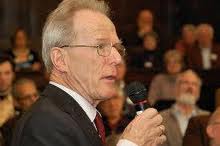
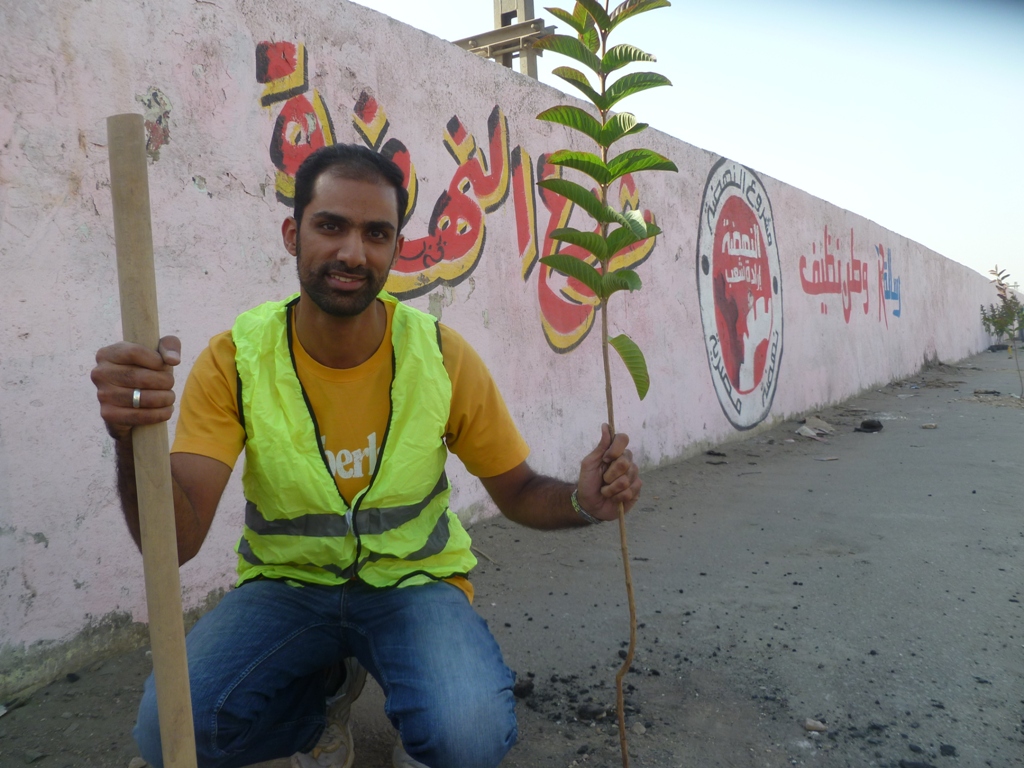


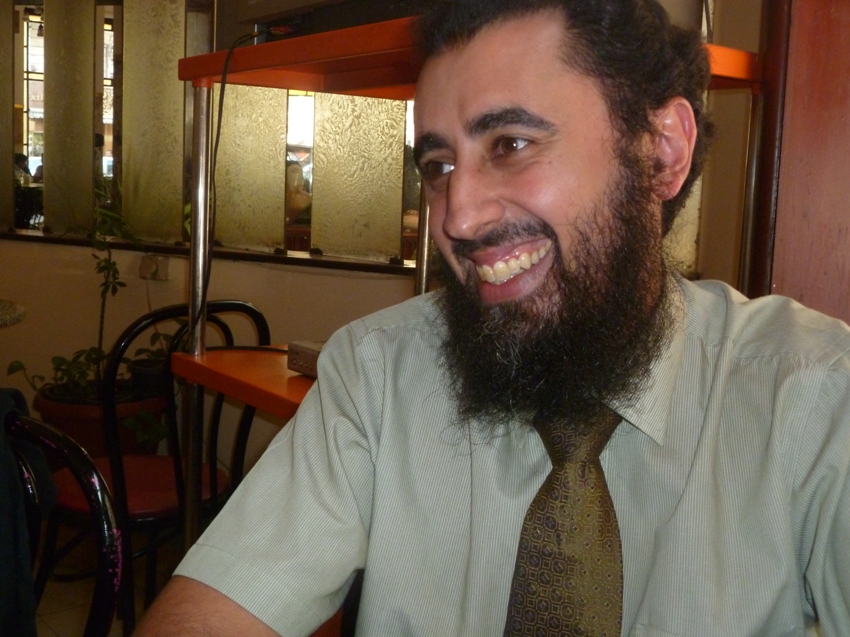
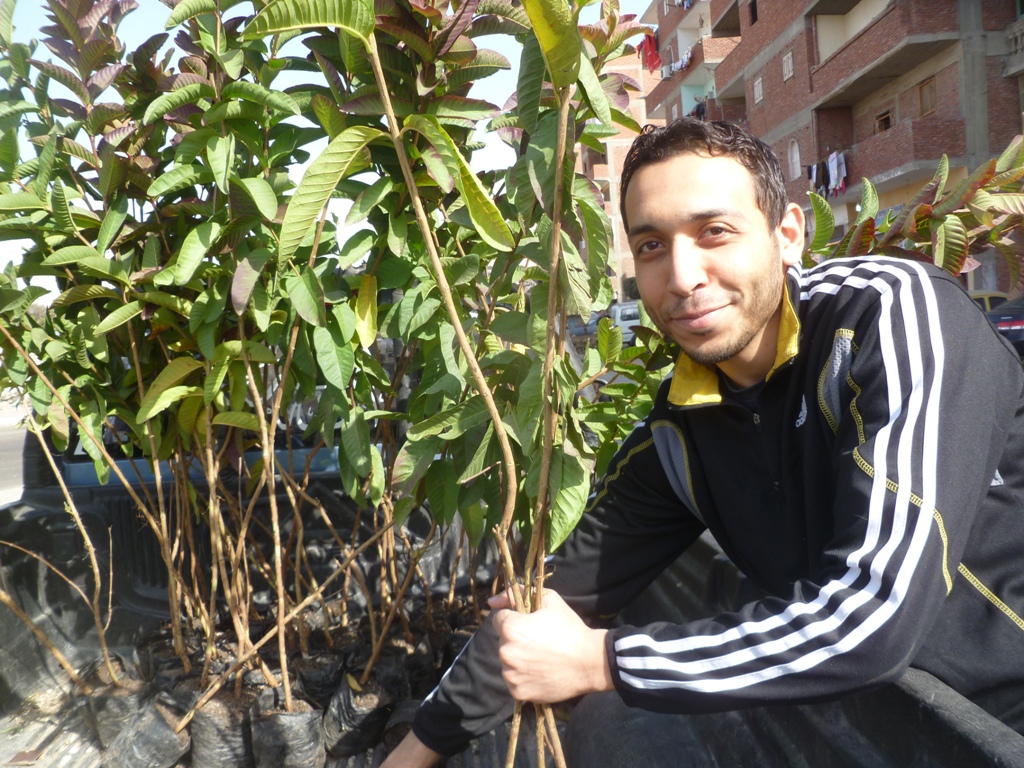

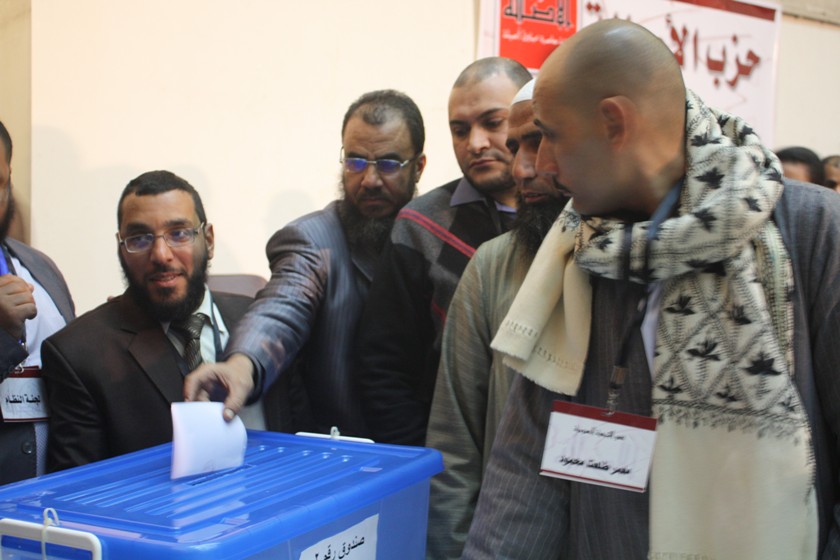



 Jayson Casper