To mark September 11, Muslims in Egypt stormed the US Embassy.
Actually, it is not that simple. Certain Copts resident in America produced an amateur film purporting to expose the frails and falsities of Muhammad, and advertised its release for September 11. Word carried back to Egypt, of course, prompting protest from religious institutions, Muslim and Christian alike. Salafi Muslims in particular called for a protest at the US Embassy, and they were joined by hardcore soccer fans in denouncing the film as well as the US government for allowing it to be made. The US Embassy, for its part, issued an official condemnation, calling the effort an abuse of freedom of expression.
Several thousand Egyptians gathered at the entrance of the embassy, falling into roughly two categories. While it was clear all participated, bearded Salafi Muslims largely stood peacefully, while the soccer youth led vociferous, and playful, chants. It was the latter which scaled the walls of the embassy, pulled down the US flag, and burned it.
Later, they also draped a black Islamic flag over the signage of the embassy, above its entrance. These flags were in abundance and resemble the standard used by al-Qaeda. It is al-Qaeda, however, which appropriated the black flag from earlier in Islamic history, which was used in Muhammad’s campaigns. It bears the Islamic creed: There is no god but God, and Muhammad is his apostle. Its use at this rally does not imply the presence of al-Qaeda.
I did not witness the US flag being desecrated, but Egyptian security was present in abundance and permitted the action. I was told that the Islamic contingent of the protest calmed the youth and did not permit a more serious storming of embassy grounds, if this was even intended. Security seemed to rely on these Islamists to make certain things did not get out of hand.
The atmosphere was charged, but calm and peaceful. Even so, offensive chants were issued and questionable signs displayed. Foreign Copts were called ‘pigs’, and the Jews were warned about the soon return of Muhammad’s army. One sign declared, ‘We are all bin Laden, you (Coptic) dogs of the diaspora,’ another celebrated the heroes of September 11, asking God’s mercy upon them. Please click here for a brief video of the protest, and pictures follow below.
I would not say this demonstration was representative of Egyptian society; several thousand people are a small scale protest. Yet dangerous ideas are afloat and society is yet in an unstable transition. I felt somewhat uncomfortable in their midst and kept a low profile, yet spoke with some and suffered no ill reception. Afterwards I spoke at length with some Islamists there I know well, and hope to convey their thoughts in a separate post, perhaps tomorrow.
Such is Egypt these days, for better or for worse. May God bless them.
Black flag draped over US Embassy signYouth Leading ChantsTranslation of graffiti: Muhammad is God’s ApostleProtest bannerSome signs were in English for foreign understandingCalling for Egyptian nationality to be revoked from foreign CoptsSome Copts were present in solidarity with offended MuslimsTranslation: We are All bin Laden; continues underneath, You (Coptic) Dogs of the DiasporaTranslation: God have Mercy on the Heroes of September 11
This article was originally published at Lapido Media on August 1, 2012.
US Secretary of State Hillary Clinton declared religious freedom in Egypt to be ‘quite tenuous’ following the releaseof the 2011 International Religious Freedom Report. Despite chronicling several instances of sectarian violence against Coptic Christians, their community finds itself increasingly divided over its longstanding support for America.
At issue is Clinton’s alleged support for the nation’s first Islamist president, Mohamed Morsy.
The Orthodox Church and Coptic politicians boycotted a recent meeting with Clinton as she visited the fledgling democracy. Some Copts, meanwhile, demonstrated at the US Embassy against her visit.
Bishoy Tamry
‘We believe there is an alliance between the Obama administration and the Muslim Brotherhood, which supports fascism in the Middle East,’ said Bishoy Tamry, a leader in the primarily Coptic Maspero Youth Union, formed following post-revolution attacks on Cairo churches.
‘The US thinks the Brotherhood will protect their interests in the region but it will be over our bodies as minorities.’
President Morsy won a highly contested election rife with rumors of fraud and behind the scenes negotiation between the Brotherhood, Egypt’s military council, and the United States.
‘We knew the next president must have US support,’ said Tamry, ‘because the military council rules Egypt and the US pays the military council.’
Egypt receives $1.3 billion annually in US military aid, compared with $250 million in economic assistance.
Yet, according to Youssef Sidhom, editor-in-chief of the Coptic newspaper Watani, Copts have been disproportionately affected by these rumours.
‘Copts fell victim to the conspiracy theory that said Morsy did not win and Shafik [his opponent] was in the lead. I found no compelling evidence of this conspiracy.’
Nevertheless, Copts find reason to believe the US is taking sides in an Egyptian political question. Muslim Brotherhood deputy leader Khairat al-Shater stated his group’s priority is a ‘strategic partnership’ with the United States.
Clinton, meanwhile, urged President Morsy to assert the ‘full authority’ of his office. Egypt is currently undergoing a struggle between the Brotherhood and the military council over the political transition to democracy.
Bishop Thomas
Bishop Thomas of the Coptic Orthodox Church told Lapido Media, ‘We did not meet with Clinton because of the unclear relationship with the Brotherhood and the support they have given it.
‘Things are not settled in Egypt,’ he said. ‘Why was she in such a hurry to come?
‘The current administration does not understand the agenda of the Brotherhood which has been clear for decades – to revive the caliphate and apply shariah law.’
Emad Gad is one of two Copts elected to the now dissolved parliament. He received an invitation to meet with Clinton, but refused.
‘In exchange for Morsy’s being named president,’ he said, ‘the Brotherhood is expected to protect Israel’s security by pressuring Hamas – the Brotherhood’s branch in Palestine – not to launch military attacks against Israel, and even accept a peace agreement with Tel Aviv.’
Sameh Makram Ebeid
Sameh Makram Ebeid, the second Coptic parliamentarian, gives a different emphasis. Though not invited to the meeting with Clinton, he agreed with the refusal of Gad and other Coptic politicians.
He told Lapido: ‘There are two objections to her visit. The liberal forces say – true or false I don’t know – the Americans were in cahoots with the Brotherhood and handed them the country.
‘The second is that you should not meet with the Copts as Copts, but as part of the liberal movement, as the third way between military and Islamist.
‘She wanted to meet with individual liberal politicians, but they were all Christians,’ he said. ‘If you start segregating the country you’re making a big mistake.’
Segregating and dividing the country was also a concern of Revd. Safwat el-Baiady, president of the Protestant Council of Churches. In an interview with Lapido, he said the Orthodox clergy withdrew from the meeting only one hour before it started, but that Protestants, Catholics, and Orthodox laity attended.
Baiady told Clinton of Coptic fears of a repetition of Iraq, where Christians fled the country following American interference. He also spoke of Egyptian concerns the US would divide Egypt, especially the Sinai, using it as a solution for the problem of Hamas.
‘She is a good listener and took many notes,’ said Mr Baiady.
‘Clinton said we have to back the winners and those who lead the country. They have the best organization and power on the ground, based on the parliamentary elections.
‘We have to support the people, she said, and not oppose them.’
Raed Sharqawi, a reporter present at the Coptic demonstration, agrees with Clinton.
‘America has relations with every nation in the world,’ he said. ‘The US is also the shield for the Copts, and always will be. This protest is foolish.’
As Egypt’s transition muddles forward, there is ample room for confusion. The military and the Brotherhood emerged as the two strongest forces, making Copts wonder about their future. Within this mix, Clinton’s visit in support of Morsy has led to this near unprecedented rupture in Coptic-American relations.
‘The US will make us into another Pakistan,’ said Tamry as the protest continued. ‘We have come to say don’t interfere in our business.’
Translation: Bread, Freedom, Social Justice; a Constitution for All Egyptians for the Sake of Egypt; No to the Constituent Assembly
The call went out in the media, Facebook, and by text message: The Maspero Youth Union summons Copts for a mass demonstration at the cathedral to demand the church withdraw from the constituent assembly. In the end, twenty people came. Most were members of the Maspero leadership.
The constituent assembly consists of 100 members chosen by the now dissolved parliament to write the constitution. It represents the second effort, after the first assembly was itself dissolved by the courts for appointing parliamentarians and failing to properly represent the full spectrum of Egyptian society. Many believe the second assembly fails similarly, though a court decision has been postponed.
While the assembly exists in limbo it is continuing its work, along with its delegates chosen by Egypt’s churches. Many liberal politicians have withdrawn in protest of Islamist domination, but unlike the first assembly, the church has not yet followed. The Maspero Youth Union demands they do.
From a Coptic and liberal perspective there are worrying signs. The current wording of the draft keeps the word ‘principles’ concerning Islamic sharia as the main source of legislation. Yet it also designates a religious authority – the Azhar – to define what ‘principles’ means. Though the Azhar is currently understood as a moderate Islamic bulwark, the current wording places religious scholars above elected legislators in crafting law. Furthermore, the Azhar is subject to change in membership; it may not always be moderate.
Furthermore, the current draft defines Egypt as a ‘consultative’ state, alongside other modifiers such as democratic, constitutional, and modern. ‘Consultative’ is not clearly defined, but is derived from an Islamic concept in which people advise the ruler. It may be benign, but was insisted upon by Salafi groups who also argued against inclusion of the modifier ‘civil’.
Additionally, Egypt as a country is defined as ‘part of the Arabic and Islamic nation and tied to the African continent’. The previous constitution labeled Egypt an Arab republic, and mentioning Africa is perhaps a useful recognition in comparison to the neglect of the Mubarak regime. Yet whereas Islam had previously been designated the state religion, labeling Egypt as part of a larger Islamic entity opens possibilities toward wider integration. It certainly tightens the identity of the nation along a particular religious expression.
Perhaps the church has not yet withdrawn its representatives due to the draft inclusion of another phrase: ‘Christians and Jews shall resort to legislation derived from their own religions.’ Though many argue the current constitutional reference to sharia law already grants Christians and Jews this right, others say it is necessary to codify the principle. Is it possible the church has agreed to the other phrasings in exchange for this right of independence vis-à-vis the state?
The Islamist leanings in the initial draft compelled the Maspero Youth Union to pressure the church to withdraw from the constituent assembly. They called for a protest at noon on Friday, following the church service held in the cathedral.
That only twenty people came is an indication in search of an explanation. The Union formed following attacks on churches in the initial months following Mubarak’s resignation. At their height they mobilized thousands to protest the destruction of a church in Upper Egypt, which led tragically to the Maspero massacre at the hands of the military. Since then they have had little public presence, though their spokesmen have continued to comment in the media.
Could high noon heat have kept protestors away? Are the issues in the assembly insufficiently known to the general Coptic community? Is the protest premature? Does a pending court ruling on the assembly’s dissolution persuade most that street politics is unnecessary?
It is uncertain. The result, however, suggests the Union has lost a great deal of its popular legitimacy and mobilizing ability. Anonymous critics present at the demonstration suggested the church was even using the Union in search of provide popular cover for their desire to withdraw, though perhaps all did not know this. If true, and if the Union was playing a requested role, the call for a protest rings hollow. Might the common Copt have noted a lack of authenticity?
In the end, the protest was rather inauthentic. Organizers did their best to shout slogans for the few cameras and assembled media, but there was no audience to rally.
Mina Thabit
‘We came to express our objection to the church continuing in this assembly,’ said Mina Thabit, a founding member of the Maspero Youth Union. ‘These are religious representatives for the church, and do not politically represent the Copts.
‘They do not have the wisdom or experience to deal with this situation. The constitution will wind up being far from the principles of human rights, and represent racism, ethnicity, and discrimination between people.’
Indeed, these are worrying concerns. It is too bad no one came to share them with.
Yesterday, in a third attempt, I was able to see the final resting place of Pope Shenouda.
All efforts were arranged by my friend Rashad, who I met through studies at a Coptic Orthodox theological institute, and who regularly organizes group trips to the various monasteries of Egypt. One such ordinary trip was to the Fayyoum region, where I had a daddy-daughter date with my firstborn.
The first attempt was canceled before it started. Rashad realized half the Coptic world was on its way to St. Bishoy Monastery in Wadi Natrun where Pope Shenouda was interred. Though he called around to solicit fellow pilgrims, he called it off later that same day.
The second attempt was a week later, and my second-born and I made our way to Wadi Natrun before realizing the other half of the Coptic world preceded us. Rashad wavered in continuing on hearing reports of the great traffic; when he heard of several deaths as Copts crushed against each other, he redirected us to the nearby Makarious Monastery instead. I had hoped to write comparing the shrine of Shenouda to that of his predecessor Pope Kyrillos, which I visited just before Shenouda’s death. Instead, I simply reflected on the effort to do so, focusing also on the shrine of the martyrs from the 2010 bombing in an Alexandrian church.
The third attempt succeeded. The trip was relatively uneventful, save for a flat tire on the way. Once again the monastery was packed – the visiting communion attendees filled half of the massive cathedral built on its grounds.
Afterwards we delayed and had breakfast in the monastery cafeteria, allowing everyone else to jostle their way into the shrine. An hour later, we were able to walk through briskly.
Briskly it was. There were attendants inside asking people to keep to their orderly lines and move quickly through the building. People threw prayers written on scraps of paper onto Pope Shenouda’s above-ground tomb, seeking his intercession. As they circled they touched their hands to the marble, seeking his blessing.
If either were to be had, they were had quickly. Within two minutes we were outside again. By now the crowds were low, and I returned for a second circumambulation in order to take the following video.
Click here for the four minute tour, with accompanying commentary.
It was both surprising and impressive to see the guardrails and organization at the pope’s tomb. Thinking back to the news of the deaths by crushing, my curiosity wondered if they were present that day. Unfortunately, I failed to discover an answer. Either way seems possible – the area was very tightly constructed.
St. Bishoy Monastery was Pope Shenouda’s choice for his remains. In 1981 he was banished here by President Sadat. After President Mubarak restored him to the papal throne in 1985, he established a practice of returning regularly for prayer and contemplation.
To close, here are a few pictures of the monastery, including other shrines housed therein.
Inside the ancient church of the monastery, which was founded in the 4th Century. These icons likely date back a few centuries.The shrine of St. Bishoy, which the sign claims contains his uncorrupted remains.The remains of Pope Benjamin the 8th, 82nd patriarch of the church.With Rashad, whose living remains are a frequent source of blessing.
One of the distinctive marks of a Coptic Christian is the cross tattoo worn on the wrist. Sometimes applied as early as forty days after birth (and following baptism), the tattoo is a permanent identification marker signaling to all the faith and community belonging of the bearer.
Girgis Ghobrial
Girgis Ghobrial is an electrical engineer by training and a tattooist by passion. For over twenty-three years he had made a ministry of applying the tattoo to the wrists of Copts.
Translation: Apply Crosses with the Most Modern Medical Procedures
This is his shop at the St. Simon Monastery in the Muqattam Mountains east of Cairo. The location deserves its own description, but in short it is the recently developed church complex dedicated to serving the poor of ‘Garbage City’. This community of Coptic Christians has long been the trash collectors of Cairo, recycling over 90% of collected waste.
Loading trash just outside the monastery complex
Ghobrial contributes to the ministry with his skills and time. He is present at the monastery every Friday and Sunday for services, charging around $4 US for a cross tattoo and $25 US for a more elaborate tattoo, such as in the picture below.
Still bearing the smudges of ink and blood
All proceeds are donated to the monastery, and if a customer is unable to pay, he offers his trade at reduced prices or for free. Ghobrial made certain to emphasize the cleanliness of his operation. Every needle is replaced for each new job.
Smiling freely
Mina, with the cross tattooed on his arm in the picture above, said the operation does not hurt very much. As for motivation, he was getting the same image a friend of his bears. Many of the area youth were milling around the booth. Tattoos, they say, are just a part of the local culture, usually among youths in poorer areas. Most of their friends chose to do so, and they imitate. Being Christians, however, their choices tend to be crosses or images of the saints.
Available templates, all Christian-related
Local priests, they report, do not provide any special encouragement for or against tattoos, even the common one on the wrist. The tattoo booth, however, signals an official acceptance of the practice, and its location is right before the entryways to the two main churches – both in caves in the mountains – which seat tens of thousands of worshippers each.
Friday night evening service
In the Bible, in Leviticus 19:28, the following command is issued:
You shall not make any cuttings in your flesh for the dead, nor tattoo any marks on you: I am the Lord.
It should be noted, however, that a few verses earlier is another command, seemingly much less important:
Nor shall a garment of mixed linen and wool come upon you.
In the New Testament, I Corinthians 6:19 declares the body to be a temple of the Holy Spirit, without any reference to tattoos but with the designation the body belongs to God and is meant for his honor.
Does a tattoo of any nature honor God? Do the tattoos of these Coptic Christians?
If part of the Christian life is the imitation of God, perhaps Isaiah 49:17 is useful to note:
See, I have engraved you on the palms of my hands.
Surely this verse is neither command nor outright license for Christians to get tattoos, but it does put the matter somewhat in perspective. If God signals his love for his people through the image of a tattoo, perhaps the Copts’ love for God displayed on their wrists is equally acceptable.
All the same, I don’t like it very much. Why do something you can never get rid of?
Hmmm, but is that not also the demand, result, and promise of faith?
Demand: Suppose one of you wants to build a tower. Won’t you first sit down and estimate the cost to see if you have enough money to complete it? In the same way, those of you who do not give up everything you have cannot be my disciples. (Luke 14:28, 33)
Result: Or don’t you know that all of us who were baptized into Christ Jesus were baptized into his death? We were therefore buried with him through baptism into death in order that, just as Christ was raised from the dead through the glory of the Father, we too may live a new life. (Romans 6:3-4)
Promise: For I am convinced that neither death nor life, neither angels nor demons, neither the present nor the future, nor any powers, neither height nor depth, nor anything else in all creation, will be able to separate us from the love of God that is in Christ Jesus our Lord. (Romans 8:38-39)
Perhaps a tattoo of faith is easier, but its glory is far less. Either way, let its mark be a choice made in freedom.
Related Posts:
Emma’s Saliib (Cross; Emma is our daughter, imitating her friends) – February 26, 2010
Five people were killed yesterday at St. Bishoy Monastery, crushed to death visiting the shrine of Pope Shenouda. I was nearly there, along with my three year old daughter.
It was meant to be part two of my visits to the shrines of the most recent popes. The second leg was not planned with the first; a day before Pope Shenouda’s death I was with Coptic Orthodox friends on a trip to St. Mina Monastery near Alexandria, to visit the shrine of Pope Kyrillos (Cyril VI).
These same friends then organized a trip the first weekend after Pope Shenouda’s burial, but postponed it out of fear of the expected massive crowds. Instead we set off on the second weekend, but ran into similar trouble.
Feeling semi-guilty for disappearing for the second time over three weekends, I volunteered to take my daughter with me. I had done so earlier with the oldest child, and we had an enjoyable outing. Of course, the country wasn’t exploding at the time.
To avoid the early morning rush my organizing friend decided to first stop at the nearby Baramous Monastery for breakfast. This monastery celebrates two Roman Christian brothers born into a wealthy family who left all and went to live in the desert. As per her custom, my daughter enjoyed playing in the dirt after mass, and then we enjoyed our shared meal of fried bean sandwiches, French fry sandwiches, and lentil dip.
Making a monastery of her ownWith friends from our group
It was then we sat and waited, and waited. Monastery trips with Copts are usually festive times of visiting ancient sites, buying lots of religious trinkets, and taking blessing from the monks while seeking their intercession. On this occasion, understandably more somber due to the pope’s death, there was simply a discontented confusion.
Our organizer was incessantly on the phone with someone from St. Bishoy Monastery where we were headed. As the minutes ticked by he received more and more encouragement to stay away. At first it was simply too crowded. Eventually we learned they had closed off the area. Finally he was informed that several pilgrims had been killed.
Even so, it was difficult to convince our group not to continue on. The whole point of this trip was to visit the pope’s final resting place, and for many this meant securing a great blessing. The organizer sought to convince them God would reward them according to their intention, and that even Pope Shenouda himself would be displeased if we continued. Should we contribute to the chaos and disruption of his sanctuary, simply for our personal blessing?
Eventually we left to seek blessing from another nearby monastery, St. Makarios. This 4th Century saint lived celibate with his wife (who was forced upon him by his family) until her death, when he was finally free to devote himself to God. He was the first monk to settle in the Wadi Natrun desert, where four historical monasteries now continue.
The line of buses, after half an hour of waiting to get in
It turns out, however, nearly every other would-be St. Bishoy Monastery visitor had the same idea. We sat in our bus for an hour simply waiting to be processed at the gate. After eventually getting inside, we joined the dispirited crowds milling about the premises for about half an hour, until the monks reclaimed their silence and had everyone leave. From here we had our final meal together, and began the trek back home.
Though disappointed to not see the pope’s burial grounds – the whole reason for the trip – I was pleased to go to St. Makarious where I had resided three days in a monk’s cell and had a few friends. But even this hope failed, as one elderly monk told me there was no way he was leaving his quarters to wade through the masses who would surround him looking for blessing. Then I learned a younger monk I knew also could not greet me, as he was recovering from open heart surgery.
The day was not supposed to be like this, and I am glad I had my daughter with me to pass the time and enjoy her company. She was blissfully unaware of everything but the dirt, happily making her own mini-monasteries wherever she could.
It was supposed to me more like part one of the papal shrine tour, only amplified in both numbers and grief. Two weeks earlier I was among a similar crowd of pilgrims, brought to St. Mina’s Monastery the weekend after the celebration of Pope Kyrillos’ death. St. Mina was a Roman Christian soldier who left the army to practice monasticism, and was later martyred. Pope Kyrillos adopted him as his patron saint.
The grounds were packed, the crowds were in revelry.
Here are some photos of his shrine:
And here is the scene around his tomb:
A Coptic priest seeking the pope's intercessionOrdinary Copts, taking blessing from his tomb
Finally, here is a crowd gathered around his ‘hymn of praise’, chanting his virtues and extolling his life. Click here to watch a video of this scene.
It is difficult to know what to make of such devotion. To provide snide evidence of the backwardness of Coptic spirituality, consider this picture:
At the Baramous Monastery this garden scene has water flowing continually from the ceramic pitcher. Without exploring further, I assumed it was a simple hydraulic function common in many suburban fountains. The assumption of several passers-by, overhearing their conversation, was that this was a miracle of the monastery.
Yet to provide sympathetic evidence of the suffering depths of Coptic spirituality, consider these pictures:
Translation: The martyr Mina Wagdy FakhryOur group leader, in contemplationTranslation: The martyr Peter SamiTranslation: Verse from Ps. 65:4; the martyr Sabri Fawzi WissaTranslation: The righteous shine like the sun in the kingdom of their father (Mt. 13:43)
St. Mina’s Monastery hosts also the remains of Christians killed on New Year’s Eve 2010, when a bomb exploded outside the Two Saints Church in Alexandria. I have written earlier about the shrine dedicated to these martyrs inside the church, but I had never seen such a memorial previously.
In the United States one can often see a small cross erected on the side of the road where a loved one was killed in a traffic accident. There are memorials for those killed in war, during 9-11, or in other national tragedies. Yet America, best I know, has no religious martyrs.
Egypt, on the other hand, is full of them. The Coptic calendar dates from 284 AD, when Diocletian became Roman emperor and ushered in the bloodiest period of Christian persecution.
Popes Kryillos and Shenouda died natural deaths, but they provided historical leadership for the church of martyrs. Celebrated saints have interceded through miracles for countless Copts through the centuries. Pope Kyrillos has done the same, and now Pope Shenouda is poised as well.
Perhaps the cynic points out: Could he not then have prevented the deaths of three Copts in Cairo, and five at the monastery – all who were there out of love for him?
As I mentioned, it is difficult to know what to make of such devotion.
For those who share in Christian faith, these are your brothers and sisters. As much as they stand to benefit from Western experience in hydraulics, we stand to benefit from Coptic experience in spiritual immanence.
As Pope Shenouda has placed on the lips of every Egyptian Christian: God is present.
From Left: Makram Ebeid, Hulsman, Windfuhr, Casper, Labib
Near thirty journalists gathered at the Cairo Foreign Press Association headquarters to gain insight on the process involved in selecting a successor to the recently deceased Pope Shenouda. Arab West Report presented its research on the subject, accepting also further inquiries.
The March 27 meeting was opened by FPA board member Sayid Ghuriyat, and presided over by FPA chairman Volkhard Windfuhr.
AWR Editor-in-Chief Cornelis Hulsman began by mentioning the 1957 regulations which govern issues concerning papal selection. AWR published a translation of these regulations into English on the internet for the first time in history, which can be accessed here.
The 1957 regulations make it clear that all papal candidates must be a minimum of 40 years old and have at least 15 years of experience living as a monk in a monastery. Yet other questions of eligibility can be perplexing.
For example, until the 20th Century only monks were eligible for selection as pope, not bishops. This changed for the first time in the 1920s when a diocesan bishop was selected, breaking with church tradition going back to the Nicene Council. The influential but controversial Makarius Monastery in Wadi Natrun supports the idea of returning to this ideal.
Hulsman noted another eligibility interpretation allows for the election of general bishops who do not serve in a diocese but rather in specific fields like education. Then Bishop Shenouda was the first general bishop in Coptic history, and was elected as pope from this position. Given the legitimizing popularity of Pope Shenouda, current Coptic consensus would allow for the election of another general bishop.
Finally, a minority position in the Coptic Church believes it is acceptable for a diocesan bishop to be elected pope. Though done in the past, it is widely believed such an action would contradict the 1957 regulations. The number two man in the church, Bishop Bishoy, is general secretary of the papal council, but also the bishop of Damietta, thus disqualifying him in the process.
Hulsman concluded his presentation by summarizing the research of AWR Managing Editor Hany Labib, introducing the leading candidates for the papacy from the community of bishops. Details of this research can be accessed here.
AWR Researcher Jayson Casper then presented the influence of expatriate Copts on the selection process. Though the population of Copts both within Egypt and abroad is disputed, both high and low estimates establish that between 10-25% of Coptic Orthodox Christians live outside of Egypt.
Many expatriate Copts logically complain they have no voice in the process of selecting the next pope, given the 1957 regulations reflected a situation before widespread Coptic emigration. Two factors limit this complaint however. First, ordinary Copts in Egypt also have little to no voice in the selection process, as it is a largely internal process conducted by the church, and explained further below.
Second, the most influential voice in the electoral process belongs to the bishops of the church, of whom roughly 20% preside over foreign dioceses. This is in approximate accordance with the population of Copts living abroad, so through their bishops they maintain an influence.
Casper provided statistics for these bishops, mentioning them by continent:
Africa: 4 bishops in 14 countries with 90+ churches and three monasteries, most of which are indigenous
Asia/Australia: 3 bishops in 11 countries with 70+ churches and two monasteries
Europe: 10 bishops in 10 countries, including the indigenous dioceses of England and France
North America: 5 bishops serving 240+ churches and two monasteries
South America: 2 bishops in 2 countries, including an indigenous movement in Bolivia
Nevertheless, foreign Copts have put forward a proposal to have each overseas bishop present ten or so lay members of his diocese to serve on the committee selecting the pope. Approximately half of these bishops are conservative and traditional say these Copts, and ignore the issue. The others have at least sympathetically listened, but it is not anticipated this proposal will be adopted.
Finally, Casper noted that among the often overlooked achievements of Pope Shenouda’s reign was his ability to institutionalize the Coptic Orthodox Church around the world. Not only may this extension of the hierarchy prevent Copts from dissolving into their adopted culture, but positively may result in a revival of Orthodox Christianity around the world, fitting with the church’s original missionary posture.
AWR board member Amin Makram Ebeid, from a prominent and historical Coptic family, then briefly provided his personal reflection on the process. He hopes the next pope will be transitional, so as to eventually return the church to its traditional spiritual role. He nevertheless noted that the sacred and the secular have been mixed in Egypt since the days of the Pharaohs, noting the difficulty of the task.
Finally, Labib provided the details of the selection process through the forum of questions and answers. Specifically, those who will select the pope are constituted from the Holy Synod (the presiding bishops), the Community Council (20+ lay members who tend to administrative affairs), and the managing group for Coptic properties. In addition to these are a select number of public figures, journalists, and politicians.
This group of over 100 members first selects a nomination committee of 18, to be composed of nine clergy and nine laity (their names have been made public here). These will tend to all proposed candidates, of whom either five or seven will be accepted. These names return to the larger group for the official vote, and the top three names will then be put forward by ecclesiastical lot, with the final choice made by God.
Unless there are extenuating circumstances, the process should take between two to three months.
Labib noted that interim chairman of the Holy Synod Bishop Pachomius insisted the 1957 regulations will remain unchanged. New interpretations, however, will be considered. Some journalists present believed this would open the process up to undue controversy, but Labib and others disagreed. They found it to be an appropriate adjustment to changed circumstances as well as favoring greater transparency.
For example, Labib returned to the question of whether or not a diocesan bishop could become pope. Though often reported as ‘no’ in the media, the 1957 regulations stipulate that any bishop may become pope. Regulations stipulate also the candidate must be celibate, but herein lies the rub. In traditional Coptic understanding, a bishop is ‘married’ to his diocese. Should this then preclude eligibility for the papacy? Traditionally, yes, but the question is open for reconsideration. Labib echoed church voices, however, in insisting the church is not Tahrir Square. It is an ancient institution not subject to the whims of the street.
Labib was asked about the different trends present in the church. He described two, suggesting the choice of pope might be determined as a choice between these two trends.
One trend he labeled the rigid, almost confrontational. Labib believed this trend was growing due to tensions over the emergence of Islamist groups. Bishop Bishoy is at the head of this trend, as is Bishop Armiya.
The second trend he described as moderate, seeking consensus and conciliation. Bishops such as Musa, Yu’annis, and Marcos represent this trend.
In answering a separate question Labib noted Pope Shenouda was between the two trends, especially over time. While very confrontational before his banishment to the monastery in 1981, he became much more conciliatory after his return. Thereafter his conduct varied issue by issue as he deemed best.
Another question concerned whether or not these trends pertained to intra-church issues such as divorce and relations with other denominations. Another pertained to whether or not ordinary Copts are putting pressure on the selectors for their papal preference.
Labib stated that social issues are not a resonating factor and do not serve to be discussed by the church at this time. These intra-church matters must wait until the election of a new pope and then probably about six months or so afterwards, before they re-emerge for discussion or decision. In any case, if there is a semblance of popular pressure, it consists in the fact that the ordinary Copt is fearful the community no longer has a representative or protector in front of the state and/or Islamists.
One question wondered if the current constitutional crisis and threatened Islamist dominance affects Coptic concerns over the selection of the pope. No, Labib replied, as the selection is a wholly internal matter unaffected by parliament or the constitution. If the church purposed to amend the 1957 regulations this would have needed ratification in parliament, which could have complicated the issue.
To close the press conference after this note Windfuhr remarked that which binds Egyptians together is much stronger than that which divides them, believing Egypt would ultimately succeed in its transitional phase, however difficult it may be. Along these lines he noted that the great majority of all Egyptians received news of Pope Shenouda’s death with emotion and sympathy. Even those who made a show of their rejection in parliament by failing to stand for a moment of silence probably went home and regretted it, he remarked. If not, they were surely rebuked by their families upon arrival.
In appreciation, the Foreign Press Association ended the press conference with everyone standing for a minute of silence.
The evening was supposed to be about Fatima Naout and Pope Shenouda. It turned out to be so much more.
That it included Fatima Naout is semi-exceptional in itself. St. Mark’s Coptic Orthodox Church in Maadi invited her to be the keynote presenter for a memorial service for Pope Shenouda. Naout is a Muslim.
Yet she is well known in Egypt – and celebrated by Copts – as a staunch defender of citizenship, liberal principles, and Coptic rights. There are many Muslims like her, of course, but she goes further. She has memorized many verses of the Bible and lauds Christians over the sublime teachings of their religion.
She stated she loves to go to church because she is jealous of Christians. She finds much in Islam to be their antithesis.
During her presentation Naout made many beautiful remarks about Pope Shenouda, and was received warmly. It was not until the end, however, that the evening got really interesting.
Mahmoud arrived, complete with the full length beard marking a Muslim of Salafi persuasion.
He was noticed quickly, and must have explained himself sufficiently, for before too long he was brought to the front to speak. He apologized for being late, and offered his condolences over the death of Pope Shenouda, offering kind words about their spiritual leader.
The church was electrified. In the days after Pope Shenouda’s death a popular Salafi preacher forbade Muslims from saying the common cultural expression over a death, ‘God have mercy on him.’ Shenouda was an infidel, and the head of the infidels, and God would not have mercy on an infidel, especially one who brought such sectarian tension to Egypt and wished to create an independent Coptic state.
In parliament the Muslim Brotherhood speaker Saad al-Katatni paused proceedings and asked everyone to stand for a moment of silence out of respect for Pope Shenouda. The Salafi members stayed in their seats, except for those who chose to walk out.
The entrance of a Salafi into a memorial for Pope Shenouda, then, caused quite a stir. Later on Naout’s Christian secretary apologized to Mahmoud publically. When she saw him come in she immediately feared he was going to blow himself up in the church.
Mahmoud stated he was afraid himself. Before coming in he thought he would be searched rudely, if not barred at the gate. Instead, he was astounded at his welcome.
These confessions came later. After his two minute offer of condolences the service ended with a final hymn, and all exited. Mahmoud, however, had a crowd around him outside.
Naout and Mahmoud
Some wanted to get a point across, though were friendly in doing so. It was certainly an opportunity to address a Salafi on their own turf, with numbers in their favor. Mahmoud was gracious and didn’t seem to be bothered by his instant celebrity.
Most of those present, however, simply offered their welcome, and thanked him for coming. He was invited back, so that he might see how Christians pray and get a fuller picture of the faith and the community. He appeared willing to do so.
The whole while Naout was still inside speaking with the organizers of the service, but made a point to speak to Mahmoud. When she exited and found him, the crowd around them doubled in size.
Eventually it led to a spontaneous second seminar. Naout and Mahmoud sat at a quickly arranged table and simply talked about their understandings of religion. Several in the crowd asked questions.
By this time Mahmoud’s story was known, though he repeated it for those who did not hear. He came only to hear Naout speak.
After the revolution the Muslim Brotherhood launched a campaign entitled, ‘Listen to us, don’t listen about us.’ Aware of their poor reputation in the press and their late entry into the revolution, the Brotherhood enjoined people to learn directly from the organization about its principles and values.
Mahmoud wanted to do the same, in reverse.
Given that Naout has such a poor reputation among Salafis, he heard about her presentation and came to the church to listen. Unfortunately, he was late and missed most of it. Yet the swell of attention and the interest of Naout to engage with such an open attitude led to his invitation to speak directly to the whole assembly.
I identified with him, had respect and sympathy for him, but advised him to think twice about doing it. I probably shouldn’t have, but it was my reaction after having been in his shoes. I will never regret wearing them, but I feared he was unprepared, and I feared the Coptic audience.
Several weeks ago I was in Tahrir Square, and I stumbled upon a tent representing the Coalition to Support New Muslims. This was a group that provoked/responded to – depending on perspective – great sectarian tension over the summer concerning a woman named Camilia Shehata. She was the wife of a priest who disappeared, fueling rumors she had been either, one, kidnapped and forced to convert to Islam, or two, converted willingly and was kidnapped by the church to prevent the announcement.
The Coalition to Support New Muslims rallied behind her according to their interpretation, and led multiple marches of thousands of conservative Muslims. On one occasion they marched threateningly past the Coptic Cathedral, the seat of Pope Shenouda.
I had long been curious about this group, but had no idea how to get in contact with them. By this occasion in Tahrir Square the Camilia Shehata issue had long since passed, but here I was at their doorstep.
I was received warmly and learned extensively of their perspectives. Despite the fact that Shehata appeared publically with her husband and child on satellite television and confessed her belief in Christianity, the Coalition held to the fact that she had indeed converted, and the church pressured her to return. Of note, the television station she appeared on was foreign based, and she spoke from abroad.
After a little while, though, the conversation changed. There were ten to fifteen people in the tent, and they began asking accusatory questions about Christianity. The Coalition, incidentally, had begun as individual members identified themselves on Paltalk, a popular chat service that hosts multiple rooms for interfaith, um, dialogue.
In reality it is a place of proselytizing, on all sides. The Muslims of the Coalition were long practiced at combating Christian witness on the site, and doing their best to convince in the other direction.
Unlike Mahmoud, they did not have the attitude of ‘listening to us, not about us’ to learn, but to pick Christianity apart. After finishing the basics about the Coalition and Camilia Shehata, they turned their sights on me.
It was not pleasant. A question would be posed, an answer attempted, and then someone else would jump in from a different direction. They were not rude, just purposed, and in the end, annoying (not all, of course, mostly one in particular). It was as if they had never interacted with a real live Christian before, and certainly not a foreigner.
And now, Mahmoud was in the same place.
He handled himself well, as did the audience. The only challenge came from Naout. She asked him about the difference between Quranic verses composed early in Mecca, which are largely irenic, with those from when he later resided, and ruled, in Medina. This is from where ‘verses of the sword’ issue, and most Muslim exegetes consider later revelation to abrogate the earlier. How could he, a kind and open-minded Muslim, accept such commands to kill and discriminate?
It was the sort of question I feared for him, as Naout is well versed in these matters and a strong personality, while Mahmoud, presumably, just wanted to learn. He ducked deftly enough, and no one was out for blood. The overwhelming sentiment in the audience was gratefulness that a Salafi had joined them. The evening ended with the idea Mahmoud could return with other Salafi colleagues, ones able to answer the question well, and the church could host them in seminars to get to know each other better. Fr. Butrous of St. Mark’s Church even offered to visit a Salafi mosque to do the same on their turf. Mahmoud indicated these were good ideas.
They are, in fact, beautiful ideas. The beauty stems from both sides, though in different manners. Mahmoud made the effort to get to know the other. He risked his own community’s condemnation by offering condolences for the pope. He even risked the chance the police guard outside the church might have misunderstood his intentions and gotten into trouble.
The beauty of the church stems from their reception. Copts feel under tremendous pressure from Islamists in general, and Salafis in particular. By and large, they did not take their unprecedented opportunity to lay into a Salafi who was actually kind hearted enough to listen to what could have been their many legitimate complaints. Instead, they welcomed him, and made certain his visit was appreciated.
It is beautiful, but it is also revealing. The Coptic Church is widely panned as being an insular institution whose people have grown more and more isolated within its walls. Salafis can be understood somewhat similarly. There is very little connection between the two groups, and as such, acrimony is frequent on both sides.
I cannot say what the real Salafi attitude is toward Christians, if it differs from that of many of their high profile leaders. Yet the church attitude demonstrated that even if Christians are isolated, they desire to be known. Most may not desire it enough to be as brave as Mahmoud, but when offered a chance to interact with a Salafi, they jumped at the chance. They are desperate to give a good, and corrective, impression.
Naout closed the impromptu session by referring back to Pope Shenouda. She claimed this evening was ‘one of his miracles’. Indeed, had the pope not died, this memorial service would not have been held, Naout would not have been present, and Mahmoud would never have set foot in a church. Is it a miracle?
The answer is probably dependant on theology. Is it safe to say it is a miracle of the revolution? Is God arranging to bring the diverse strands of Egyptian belief closer and closer together? Is it just a token sociological accident? Or has good already begun to emerge from Pope Shenouda’s death?
Regardless, greater interaction between Copts and Salafis, Islamists and liberals, urbanites and villagers, and all manner of Egyptians is desperately necessary. Tonight, Pope Shenouda, Fatima Naout, and Mahmoud all circumstantially intertwined to begin a small chapter.
The atmosphere at Pope Shenouda’s funeral today was not what I expected. At first it was dull, and then sympathetically chaotic.
Entrance to the church itself could only be secured with a personal invitation, so I made my way early to the courtyard of the Coptic Orthodox Cathedral to witness the swelling throngs. Over the past few days since his death thousands upon thousands of Copts gathered to collectively mourn both outside and inside the church, where Shenouda’s body was sitting-in-rest, perched upon his papal throne.
The only issue: The crowds did not come.
The inside of the church was packed with dignitaries, as was visible from the giant movie screen set up both in the courtyard and in the garden below. I maneuvered to a platform by the side of the stairs, to try to capture a picture of when the whole area would lurch with mourners.
As the sun beat down and I tired from standing as the funeral service proceeded, it became apparent the crowds were not coming. The upper level of the courtyard at the entrance to the church was packed, but with hundreds, not thousands. This entryway was shut to seal off the proceedings, while dignitaries entered from a smaller door to the side.
I walked around wondering. The entrance I came through amid tight security had now been shut, as had the other gates to the cathedral. Temporary cloth walls cordoned off other areas.
Apparently, authorities wanted to keep the official funeral as peaceful and ordered as possible. The day before three Copts died and dozens were injured as a semi-stampede erupted among those trying to pay their last respects.
At this point I wondered what would happen if all the doors remained closed. Despite the fewer numbers there were still over a thousand people outside the church, not including the several thousand inside. Might there be another stampede when the service ended?
Yes, but in the other direction.
Near the close of service the funeral leader read off the list of names present. These included top military brass, major presidential candidates, senior figures from the Muslim Brotherhood and other parties, and ambassadors from around the world. Nearly all major religious denominations were also present. It was an impressive list.
But not to the crowd waiting outside. They listlessly attended to the names, and awaited the final farewell video of Pope Shenouda.
When it came, they raised their hands and tearfully waved him goodbye.
Then when they were bid farewell in peace, the crowd rushed across the entranceway courtyard to the balcony for one last glimpse of his physical body. He was taken from his throne and escorted outside to the street, where he would be flown for burial at St. Bishoy Monastery in Wadi Natroun.
When this scene ended, as most were unable to see, a small contingent started to physically break down the cathedral door to enter inside. Only the rapid reaction of the church’s scouts prevented this from happening.
I did not quite notice how it happened next, only that a few minutes later another door was forced open. It may have been aided by those inside seeking a more rapid exit, but before long the crowd was jamming itself through the narrow entrance, past the cries of those inside forbidding the action.
The object was Pope Shenouda’s throne. Before too long scores of Copts had surrounded it, trying to get close enough to touch. These were seeking blessing, as the pope had only minutes early been occupying the seat. Most would never get that close to either a pope or his chair again.
Many Copts believe in the physicality of blessing, and they have scriptural warrant to do so. It says in Acts 19:11-12,
God did extraordinary miracles through Paul, so that even handkerchiefs and aprons that had touched him were taken to the sick, and their illnesses were cured and the evil spirits left them.
The Coptic Orthodox Church believes itself to be an extension of the original apostolic authority. As Peter became pope in Rome, so did Mark the gospel writer in Alexandria. Their power given to work miracles continues today.
I cannot say whether the following is official doctrine or not, but one mourner told me that no injections had been given the corpse of Pope Shenouda. He died three days ago but his body has not yet begun the process of decay. He has sat-in-state since then, for public display and affection, as a mark of God’s approval.
I found the example of the priest in the video to be inspiring. His spiritual leader had just died, all order was breaking down inside the cathedral, and he sat patiently in the papal chair serving the crowd. Instead of rebuking them, he assisted the gathering of tissues from those who were too far away, touched the chair, and gave them back. May God bless him.
Today was a sad day, and I wish I was not so occupied with gathering pictures so as to more fully join in. The Bible commends us to mourn with those who mourn. At times I did, especially when witnessing others shed tears. But for the most part I was too distracted with the surroundings.
May God bless the Copts, give them space to mourn and sympathy from their neighbors, and an eventual next good pope to come.
Sheikh Hamdi Abdel Fattah is a unique personality in Egypt. Little known outside of his home region of Maghagha in Upper Egypt, he is a candidate for parliament running under the banner of the Salafi Nour Party. In and of itself, there is nothing unusual here – the Nour Party has searched for and nominated local popular candidates throughout Egypt. What is unique is that Sheikh Hamdi has the endorsement of the local Coptic Orthodox priest of his village, Fr. Yu’annis.
This interview discusses why Sheikh Hamdi has received Coptic support, but also explores his understanding of the application of sharia law in the modern world. Sheikh Hamdi is eager to correct common misperceptions, but, perhaps unwittingly, confirms others. Topics include tourism, war booty, jiziah, dress, legislation, and the legality of democracy.
Sheikh Hamdi is an engaging and friendly person. He was sincere and believable, and I trust he will work on behalf of the Copts, as he promises. At the same time it was a challenging interview, as getting him to answer intended questions proved difficult. Whether this was due to language issues, culture and worldview differences, or political doublespeak is hard to say. Nonetheless, Sheikh Hamdi provides an insightful view into the mindset of a modern day Salafi, both confirming and undoing typical stereotypes.
As a final note, Sheikh Hamdi lost his electoral race. After stage one he finished in second place behind the candidate of the Muslim Brotherhood, and thus qualified for the run-off. Though he lost the run-off, the judge ruled to nullify the result, given the level of fraud witnessed on behalf of his competition. Sheikh Hamdi stated there were 40,000 additional votes cast illegally for his opponent. Nevertheless, rather than a second run-off, the ruling was issued simply to accept the results of the first round voting. Sheikh Hamdi replied, ‘It is God’s will,’ and refused to be angry. Still, he holds out hope for a reversal.
JC: Please introduce yourself to us.
HAF: My name is Alaa’ al-Din Abdel Fattah Muhammad, but I am known by the name of Sheikh Hamdi Abdel Fattah. I have a general institute for the calling of people to religion. I worked thirteen years in Saudi Arabia as a mosque lecturer and teacher of the Qur’an. I am a member of the Maghagha Reconciliation Committee which works according to traditional regulations.
I joined the Salafi Nour Party immediately after it was established, and presented myself as a candidate to which they agreed. I did this after reading their platform which I determined to be moderate. It is comprehensive and without fanaticism toward anyone. Among its priorities is the call to implement sharia law, but it emphasizes to do this gradually.
Among the accusations against the Nour Party is that it will prevent tourism, but this is not logical. On the contrary, our program is very powerful. If you compare Egypt, with all its civilization and history, Jordan, Turkey, and Malaysia all have higher tourist incomes. This is because we rely on luxury tourism only. We can boost conference tourism, which not only can bring more money that luxury tourism, it also profits the nation scientifically as doctors and professors bring knowledge in addition to money spent on airfare, hotels, clubs, and general expenses.
There is also medical tourism. We should build world-class hospitals that will draw the majority of medical travelers from the Gulf and from Africa, rather than them going to America or France, where the costs are very high. Here, we have the medical proficiency and lower costs. This will again raise our scientific benefit as well as financial from airfare and hotels, as before.
Yes, we will also promote luxury tourism, but only that which is religiously legitimate. It is not necessary to mix the sexes on the beach. We have many unmarried young men. When they view these mixed settings the result can be one of sin. What is the problem with establishing some family-only or single-sex chalets, where you can enjoy yourself freely without temptation? Turkey has done this, for example. Should there not be freedom for this, is this not respect for freedom? You might say we should be open-minded, but I reply I don’t want anyone to see my wife. So as you call for freedom for the other, I also call for the freedom to keep my wife from being seen.
JC: Would you also allow for beaches where people wish to mix with the other sexes?
HAF: Exactly. But I know from tourists they wish to inquire about the customs of the country in which they are visiting. But are we forgetting about the tourists from the Gulf when we concentrate on Europe? Gulf countries have more tourists, and Egypt is the closest country to them. Right now, they are going to Turkey.
Then, another issue concerns the Copts. What is their status under sharia law?
JC: This is a very important topic and we will approach it soon, but let’s return to you as a person. You are from the village of Qufada, and friends with Fr. Yu’annis. You are also a sheikh, but was does this mean? How did you become a sheikh? Are you an Azhar graduate?
HAF: No, I have a diploma from the High Institute for Calling which is a private center attached to the Religious Legitimacy Association of Egypt.
JC: What do you do in Maghagha, what is your job?
HAF: I am a real estate agent, buying and selling buildings, apartments, shops, etc.
JC: Do you preach in the mosque?
HAF: Yes, but not in one in particular. I preach often both in Qufada and outside.
JC: Here in Qufada, you are good friends with Fr. Yu’annis.
HAF: Yes, Muslim-Christian relations here in the village are very strong. It is friendship, not just greeting each other in the streets. If there are problems, even between two Christians, we come to the church to help solve them.
JC: You are speaking of your work with the reconciliation committee. Tell me more about that.
HAF: In most instances the reconciliation committee is able to solve problems faster than the legal system. It takes only one session, and the decision is binding on both parties. We search for the truth, no matter who it is with.
Every day we sit to solve problems between Muslim. Often we sit to solve problems between Christians. But what happens is when there is a problem between a Muslim and a Christian the media twists the issue somewhat to become a religious matter. They take refuge in religious chauvinism and turn it from a personal struggle into a religious one. There are occasions where a Muslim boy and girl will make an improper relationship, and the same with Christians. But if it happens between religions, we must treat it with reason and wisdom in the same manner we would otherwise. We don’t accept any religious chauvinism in either direction.
JC: One of the benefits of the reconciliation is that it is fast.
HAF: Yes, court cases can take years. This is one of the problems our party wishes to address.
JC: But what if the issue is criminal, especially if blood is shed?
HAF: In our religion we must confront strife before it grows, and shedding blood is among the worst things for us. Our prophet said, in his farewell address during the pilgrimage, your blood, your money, and your honor are sacred to you. Is this just for Muslims? No, it is for anyone of religion, whether Christian, or Jewish, or Buddhist. Blood may not be shed except by right, such as in punishing murder.
JC: But is there a verse in the Qur’an that permits the taking of female prisoners during war?
HAF: Yes, this is present in sharia law, and was part of Arab tradition before Islam. In war, it was permitted to take as booty money, horses, sheep, camels, men, and women. If a woman was taken she became a female slave. But does this exist today? No, it was a description of the culture that was present in its day. Today, there is no jihad.
JC: But if it returns?
HAF: When will jihad return? If a nation attacks America, will it not respond militarily? It is not permitted for Muslims to announce jihad unless their lands or honor are violated. If they are not attacked, they will not attack others.
JC: So this would apply in Palestine, where their lands have been taken?
HAF: Yes, it is permitted for Muslims to respond in the manner of which they have been violated. If he destroys my house, I will not stomach this, I will destroy his house. But I may not destroy two houses. If you attack me, I have the right of defense. This is even international law.
JC: So, in application of sharia as Muhammad permitted in his era, is it allowed for their women to be taken as the spoils of war?
HAF: Is Israel a democratic country? No, it is a Torah-governed country. Why then does the world protest if I say I want an Islamic state which implements sharia law? If jihad is made mandatory and our women are taken, it is permissible to take them in kind, but it is not necessary. In sharia we have what is called ‘exchange’. If there is a prisoner taken he can be swapped, and this is what happened in the period of ibn Taymiyya.
There were many battles in his day with Christians, and the Christian forces took both Muslim and Christian prisoners. Ibn Taymiyya went to the Christian king and asked for the prisoners to be returned, and the king told him to take the Muslims. Ibn Taymiyya refused, saying the Christians are under our protection. I will not take a Muslim and leave the Christians behind, but insist on taking the Christian prisoners first.
Or consider when Amr ibn al-‘As entered Egypt. Christians were under the most horrible situation during this time under the Romans, to the extent the patriarch went into hiding. Who protected him? Amr ibn al-‘As. He made a pact with him and guaranteed his safety.
JC: This reminds me of a question: Why did the Muslims stay in Egypt and not return to their lands after defending the Copts?
HAF: This is what the families of Egypt wanted. Why? The Copts at that time were under severe persecution. They requested the Muslims to stay, since this represented security for them from the Romans.
The proof? One day, when the son of Amr ibn al-‘As was horseracing with a Christian, the Christian spat on him. In response he hit the Christian and said, ‘Will you spit on the son of the most noble?’ The Christian then lodged a complaint with Caliph Omar ibn al-Khattab in Medina, who summoned not just the son, but his father as well. The Caliph asked the Christian if this was the one who hit him, and he ordered the Christian to hit him in return, which he did. Then the Caliph said, ‘Now, hit the most noble one also,’ referring to Amr ibn al-‘As, who at that time was the ruler of Egypt. You see that Islam does not permit oppression for anyone, whether ruler or ruled.
The caliph then sent the Christian away and asked Amr, do you not take from him the jizia? Will you take it from him while he is strong and then leave him weak that he has to beg in the streets? Give him a salary from the public funds of the Muslims.
Today, many Copts feel that jizia is a form of contempt or shame. But does he not pay taxes? Fine, we will cancel the word jizia, and call it taxes. We’ll say, ‘Pay your taxes, and what will you get in return? No one will attack you in your worship, or your doctrine, or your homes, or your persons, or your money, or your honor. You will have complete security, and have your protection guaranteed. If you don’t want to enter the army, you won’t have to.’
JC: Will it be permitted for him to serve in the army?
HAF: Yes.
JC: Will this be in replacement of jizia?
HAF: No, jizia will still be taken, but if you want to enter the army, go ahead, and even so I am committed to your protection.
JC: So if the Salafis gain control of government in Egypt, what will you do with jizia?
HAF: Let’s talk first about the perspective of Muslims toward Christians if the sharia is implemented. We will treat them with righteousness, respect, friendship, and justice. In terms of rights, everyone will be the same. There will be no difference between a Muslim and a Christian. In terms of their family affairs – marriage, divorce, inheritance – we will not apply sharia here but they can judge themselves.
JC: What rights will they have exactly?
HAF: They will have all rights. The prophet said, ‘What is for them is for us,’ which means, if I can take salary, or gain positions, or have houses, or …, in everything that has to do with putting together a government there is no difference between Muslim or Christian.
JC: Even the high positions in government?
HAF: Yes, and there will be equivalence in their salaries as well.
Is there a constitution today that guarantees the rights of minorities like the sharia law? No. They are ahl al-dhimma, under our protection. They have rights over us and we have responsibilities toward them. As long as they don’t kill me, or raise a weapon against me, or attack me, I am obliged to protect them and give security to them and their houses of worship as well.
JC: But does not this designation as ahl al-dhimma raise the status of the Muslim over that of the Christian?
HAF: No, but the opposite. They will be more comfortable than the Muslims.
JC: Yes, maybe he is comfortable, but is he equal?
HAF: Let’s look at a Muslim and a Christian student. If the Christian scores higher on his marks, is it right for me to appoint the Muslim to a position over him? No.
JC: Is there a verse that says, ‘Do not take them [Jews and Christians] as friends/guardians? (Qur’an 5:51)
HAF: This is not speaking about Christians, so to speak. Of Christians it says, ‘You will find the nearest of them in affection to the believers those who say, “We are Christians.”’ (Quran 5:82)
But the most difficult religion, which hates all of humanity, is that of the Jews. They hate Christianity also. In Palestine, do they make any difference between Muslim and Christian? No, they will kill them both.
So the Jewish religion has the most hate for humanity, but as for Christianity, there is friendship, ‘because among them are priests and monks and because they are not arrogant’ (continuing verse above).
JC: To be sure I have not memorized the verse, but people tell me that the one I mentioned warns Muslims from allowing Christians to take positions above them.
HAF: This does not intend Christians in particular. But let me ask you a question: Did you know that in Britain there is a law preventing the prime minister from being other than a Protestant? Why? The majority is Protestant, so the prime minister must also be Protestant. So if we have a nation where the majority is Muslim, what should we expect the ruler to be?
JC: The issue of the ruler is one thing, but that of positions in society is another. What is intended by the word ‘guardians’ in that verse?
HAF: Guardianship is that of which you lean on for support, or to which you hand over your affairs. But it does not mean the one who is with you, it speaks of the foreigner.
There is domestic politics, and there is international politics. It is not possible that I give the guardianship to someone outside – a Jew, for example. Or let’s speak about American support. Will America give funds and let you spend them as you wish? Or will they demand conditions and severe restrictions?
JC: Sure, you should not accept the money in the first place.
HAF: Right, and in truth, we are not a poor country. There has been a study showing the sand of Sinai is among the best quality in the world for the production of glass? Erdogan, the Turkish prime minister, when he visited Egypt said all he did was to close the faucets of corruption. In terms of Africa we are the number one producer of natural gas, and eighth in terms of the world.
JC: Very good, so you refuse the guardianship of foreign powers, but domestically – can a Copt head a ministry? Can he run a company? Can he be a school principal?
HAF: What is the problem with any of this? As long as he has the qualifications, why not?
Did you know that our educational policy in Egypt is a complete failure? That is why in our party we will work on developing education. Statistics show the most intelligent children in the world are Egyptian. But as soon as he enters school he becomes the stupidest student in the world.
JC: Allow me to move to a different subject. I live here and I know the genius of the Egyptian people (both laughing). Something that is not known, though, is your commitment to the values of democracy. Some of your sheikhs speak of it as something foreign, imported, and not Islamic.
HAF: What does the word ‘democracy’ mean? It is that a people are ruled by the people. But if there is a heavenly law…? Here’s a question: If you have an appliance, like a TV, will you turn to the agent or just some person when it needs fixing? The agent, of course, since he knows the appliance.
So if God created humanity, he knows what is good for it, and what will keep it from corruption. This is why he gave his law.
JC: In terms of faith, this is fine. But what in terms of democracy?
HAF: You will not find democracy or freedom greater than what is found in the sharia. We say you are free as long as you do no harm. There are three types of harm: to doctrine, to public property, and to private property. Does freedom give one the right to transgress on the will of others?
JC: What happens if the majority does not desire the rule of sharia?
HAF: Some people say the Salafis will cut of hands (of thieves). This is correct, but at the same time, it is wrong. If your hand is to be cut off, you must first be offered five things: work, a living wage, a home, a wife, and a means of transportation. If you have all five, and you still transgress against the property of others, what do you deserve?
JC: This is logical, but you are justifying why the sharia is good. If the people choose this punishment, fine. But I am asking, what if they change their mind? What if you fail in your policies? Can the people then choose against you?
HAF: Of course, we accept this. If we feel we are not able to perform our duty for the people, we will resign. We are not seeking parliament seats for pride. These are seats of service.
Some in the former ruling party used their seats to grant favors and enjoy immunity. We want to take away this immunity from members of parliament, as pertains to affairs outside parliament. We will work as any other citizen.
JC: Has not one of the Salafi sheikhs declared democracy to be unbelief?
HAF: This is Eng. Abdel Munim al-Shahat. What does he mean by unbelief? It is what we have been talking about. But the media exaggerates this issue, calling him the official spokesman of the party. He is not; there are two: Dr. Nader Bakar and Dr. Yusri Hammad. He is simply a candidate.
But what did he mean by democracy and unbelief? Is democracy the rule of the people by the people? No, for us ruling is only for God.
JC: Let us suppose you and the Muslim Brotherhood make an alliance in parliament. You will be able to create the laws you wish. After the term is over, following six years, you will allow for the people to choose once again, even for other parties?
HAF: Yes. Let us speak of the president. We want to put conditions on the position so we don’t have a return of dictatorship. We must make sure the parliament does not become subservient to the president. The parliament must hold the president accountable, not the other way around.
JC: So in parliament, who decides if a law is consistent with or contrary to the sharia?
HAF: The sharia functions as does the constitution. So any law must move in accordance with the constitution, just as it must with sharia.
JC: So taking an example: Must a woman cover with the hijab, the niqab, or is she free to wear what she wants?
HAF: Nothing religious will be imposed on anyone. We will advise only, and the one who refuses is free.
JC: Are there differences among Muslims as to what sharia is exactly?
HAF: No, not as concerns the roots of sharia, all are in agreement.
JC: What about new interpretations, consistent with the modern era?
HAF: This has to do with the details, not with the roots.
JC: Or, what if a Muslim interprets concerning bank interest. Might one say that the regulations of sharia were good for their era, but argue that today such policy is allowed?
HAF: We will work with the banks gradually. Most banks in Egypt work with interest. We will let them be, but we will also create sharia-compliant banks.
JC: Fine, but this is not my question exactly. Let the people choose their policy. But what if a Muslim wants to argue in terms of sharia that interest is allowable? Sheikh al-Azhar did this in terms of Mubarak’s policies. Maybe he was wrong, but can he not argue this way and differ in terms of sharia? And if so, who rules?
HAF: In terms of Sheikh al-Azhar, we must return to a situation where he is chosen by his peers and not appointed by the president, so that he does not become subservient to politics.
JC: You are justifying your position here, but you are just a person.
HAF: No, this is the position of everyone. It is textual in sharia, interest may not be taken from a loan. Many speak about interest being too high, and how we must lower it. But why should you lower it when it shouldn’t be there originally? Isn’t God the one who knows what is best for humanity?
We reject a religious state. Why? A religious state is one where the ruler states that what he decides is from God. No. We want a civil state which is ruled by sharia. If the ruler makes an error we declare his error, and if he is correct, we say thank you and accept it.
The religious state, as the media makes out that we believe in, is the equivalent of Europe in the Middle Ages where the church ruled by God’s law and there was no room for discussion. The church ruled as if it was in the place of God.
We say we are not in the place of God on earth. No, we present the law of God, and we implement the law of God, but not with haughtiness or pride.
JC: So if the parliament passes a law that violates sharia…
HAF: We will say no.
JC: But who’s word prevails? Who decides?
HAF: If the majority is now Islamic, should not the will of the majority prevail?
You are a Christian, and you will raise your children to be Christian. I, likewise, am a Muslim and do the same. But if we take someone like the liberal Amr Hamzawi, who says I will let my children choose their faith… Do the traditions of Egypt allow someone to do this?
There must be preservation of the identity of Egypt. You are an American and you have your customs, but is it acceptable to implement your customs on the people of Egypt?
If we look at the spread of AIDS in the world, is it greater among liberal countries, or among those who preserve their cultural heritage and respect religion?
JC: Laws can protect religion, but at the same time, cultures and peoples change. Perhaps you will make a constitution that establishes a civil state ruled by sharia. It is the role of the courts to judge laws according to the constitution. If the parliament makes a law that some believe violate the sharia, will the judge rule against it?
HAF: If any project in Egypt violates the sharia, I will oppose it, and I expect the whole party will as well.
JC: But if your legislative power isn’t enough to oppose?
HAF: We will do our best. But if a matter transgresses the will of the majority, we not accept it. But we respect freedom in everything except that which is against the established principles of religion. And we respect all minorities.
JC: This issue leads to the last, and most important, question: Why should a Copt vote for the Nour Party?
HAF: Today in a conference someone asked me if we would be like previous parliament members, or if we would work for the interest of Muslims.
I told him I consider myself a candidate for Christians, before I represent Muslims, even if they don’t give me their vote. If I am selected for a seat, I represent the district, not just those who vote for me. This is democracy, and it is also sharia. I will treat the Christian like the Muslim, and in fact be sure to be responsible for them.
While campaigning someone approached me and said, ‘I am a Christian, but by God I will vote for you. You are a respectable and just man.’ I didn’t know who he was, but he had been involved in a reconciliation meeting in which I honored his rights.
I have spoken with Copts in all sincerity. I can be found in the mosque, but I can also be found in the church. I am confident I will capture their votes greater than any other candidate, even if he is a Christian.
Why? I am not interacting with them as if I seek their votes. Actually, elections are a very recent thing. I have behaved this way with Copts for a long time now. I do not speak of ‘national unity’, I speak about the ‘national fabric’. National unity implies there is a difference between us but we come together to solve it and reconcile. No, I say that Egyptian society – Muslim and Christian – is one fabric. The blood of one is the blood that drips from the other.
While noting irregularities, former US president Jimmy Carter, through his Carter Center for promoting democracy, has judged the elections to be “acceptable.” When the first post-Mubarak parliament opens session today (January 23) its composition will be 72 percent Islamist.
The celebrated chant of Tahrir Square – “Muslims and Christians are one hand” – has given way to sectarian politics in which liberal parties, favored by the great majority of Copts, received a crushing defeat.
The Democratic Alliance, dominated by the Freedom and Justice Party (FJP) of the Muslim Brotherhood, has won 46 percent of the seats. The more conservative Salafi Nour Party has captured 24 percent. A handful of smaller Islamist parties add another 2 percent. Liberal politicians, who were once hopeful, are reeling from their losses. Coptic Christians are left pondering their murky future.
Today, The Wall Street Journal published an op-ed article about risks to freedom that observed, “Especially critical is protection for Copts, the canaries in Egypt’s coal mine. The fate of Egypt’s democracy—and the chances for the emergence of non-Islamist options—will rest on whether this millennia-old community, as well as an array of other groups, feels comfortable in the new Egypt.”
Amin Makram Ebeid, a Coptic intellectual and author, summarizes four primary Coptic responses:
A minority, though sizeable, is planning to emigrate.
The largest group is looking for spiritual, perhaps even mystical solutions.
A smaller party is dedicated to stay and fight for their rights, especially in securing a non-Islamist constitution, which according to the national referendum in March is the provenance of parliament.
Finally, there is a group that is looking to cooperate with Islamists, provided Copts do not lose their identity in the process.
Paula Magdy, a 24-year-old volunteer librarian in a Coptic Orthodox Church in Cairo, illustrates the group seeking spiritual solutions. “We pray to God to save us, but I am not afraid. Up until now we have not been sure about anything. Maybe they have won elections, but we will win the war?”
Fawzi Khalil, a pastor at Kasr el-Dobara Church also estimates most Christians fall into the spiritual solution category, with only about 10 percent actively participating in shaping the political outcome for Copts.
Standing their Ground
Emad Gad is one of the 10 percent, representing the group wishing to stay and fight. He is a Coptic leader in the liberal Egyptian Social Democratic Party, winning a parliament seat in the north Cairo district. Naturally, he offers political perspective.
“We don’t fear the result of elections because there were many violations that skewed results. In any case, parliament will not form the government, the president will, and the military council also maintains its influence.”
For him, the constitution is the largest battleground, but liberals are working on an agreement with Islamists for each party to nominate a limited number of members to the committee which will draft it.
Nevertheless, “If Islamists reach toward a Saudi-style government we have many means to resist. Certainly the new generation is able to go once again to the streets. I expect Egypt will remain a civil state.”
Fr. Philopater
Father Philopater will also stay and fight, but his is a religious perspective. A controversial priest in the Coptic Orthodox Church who has repeatedly clashed with the hierarchy, Philopater expects a continuation of the suffering of Copts.
“The one benefit is that persecution will now be obvious, as under Mubarak it was always assigned to hidden hands or deviant people.”
Furthermore, Copts should not cooperate with Islamists. ‘It is true some speak of protecting Copts, but others speak about jizia, call us infidels, or instruct Muslims not to greet us in the street.’
Ebeid agrees with non-cooperation. “Christians should not support them in their quest for power. If we sell ourselves, why should liberal Muslims continue to fight?”
Cooperating with Islamists
Then there is the group which promotes cooperation. Rafik Habib, son of a now-deceased prominent Protestant pastor, represents a tiny Coptic constituency that actually favors Islamist rule. He is among roughly one hundred Copts who are founding members of the Brotherhood’s FJP, and serves as one of its vice-presidents.
He believes Egypt must accept the essential religious basis of society, not deny it.
“Secularism surrounds Christianity and the church and weakens its role in society. Under an Islamic state it can be completely different because the main function of the Islamic state is to protect religion, not to restrict it.”
Youssef Sidhom
More typical are Copts who wish to cooperate with Islamists but due to necessity. Among these is Youssef Sidhom, editor-in-chief of the Coptic newspaper Watani.
“In order to keep any vicious Islamist appetite at bay we must stay at the table with them and remind them they promised not to hijack Egypt.”
Unlike Philopater, Sidhom has a degree of trust in the leaders of the Muslim Brotherhood, who through his interactions with them finds them to be decent people.
“I believe the Brotherhood wants to prove they can create a form of democracy that respects the rights of all Egyptians.”
Similar to Social Democrat Gad, however, Sidhom is prepared.
“Our Plan B if Islamist groups seek an Islamic state is to oppose their constitution in a referendum, but if it is accepted, Copts and liberal Muslims – 40 percent of the population – will take again to the streets.”
All Politics is Local
While these responses are varied, it is “the street” that decides. This is not the street of Tahrir Square, but the poor, crowded neighborhoods in every city of Egypt.
In Warrak, a suburb of Cairo, Shadia Bushra, a 45 year old Coptic widow, cast her vote for the Freedom and Justice Party.
“I don’t know much about politics, but I followed the general view of the neighborhood.”
Essam Sharif
It did not hurt that when her local church failed to intervene to defend her rights in a property dispute, Essam Sharif, her Salafi neighbor and a leader in the Nour Party stood by her side, retained a lawyer, and helped win the judgment against wealthier Christian neighbors.
“I told her I would have done the same if she was opposed by Muslims,” stated Sharif.
Stated Islamist commitment to the rights of all has also won support from Copts in Maghagha, a small city in Upper Egypt. Sheikh Hamdi Abdel Fattah is a candidate for the Nour Party.
“I will consider myself the candidate of Christians ahead of Muslims, even if they do not vote for me. As such, I have to demand their rights. This is both democracy and Shari’ah law.”
Sheikh Hamdi and Fr. Yu’annis
Father Yu’annis is a Coptic Orthodox priest in Maghagha and has campaigned openly for Abdel Fattah.
“I don’t support him as a Salafi or as a Muslim, but as a person. He is from our village and I hope all Salafis will be like him.”
Yet he is pragmatic as well. “If we see more than two-thirds of the people are for an Islamic state we cannot stop them from having it, so as the Egyptian proverb says, ’With him who wins, play with him’. I must do my village duty to stand by him, so he won’t say I caused him to lose, and if he wins, he will be thankful.”
Perplexing Questions
The seismic politic changes in Egypt during the past 12 months are still underway. Copts and others fill this resulting uncertainty with fears and expectations in wildly different directions.
Essam Thabit, a Coptic school teacher in Maghagha, believes all will be well. “Whoever comes to power will make sure they treat Christians better than the old regime, even though they know Christians won’t vote for them. I expect many churches to be built.”
His Coptic colleague Yasser Tekla from the neighboring city of Beni Mazar expects, and oddly welcomes, the worst. “I will vote for the Salafis now so they will come to power and people will see them truly, and then reject them afterwards.”
Many Copts hesitated during the revolution, while others joined wholeheartedly. The initial celebrations of Tahrir – where Muslims and Christians alternated protecting each other at prayer – have been followed by multiple instances of bloody sectarian conflict.
This has prompted Copts to ask themselves hard questions: Should Copts take refuge in the military council against Islamists, or with Islamists against the military-as-old-regime? Should they enter the political arena and trust its processes, or enter their churches and trust in God?
So far, clear answers to these questions seem beyond the reach of Egypt’s Christian minority.
note: This article was published on Lapido Media. The version below contains a few more quotes which did not make the final edit.
Young Coptic activists disrupted Christmas mass in St. Mark’s Cathedral in Cairo on January 7, shouting slogans against the military council.
Around ten individuals coordinated to erupt the moment Pope Shenouda, head of the Coptic Orthodox Church, extended Christmas greetings to military members, as captured on YouTube.
Among these was Gen. Hamdy Badeen, head of the military police. Many activists hold him responsible for the deaths of 27 people during a mostly Coptic protest at Maspero in October.
The pope has faced challenges leading the church during the revolution. Even so, he welcomed those whom many activists consider at odds with the Copts. This represents not only the military council, but also the Muslim Brotherhood, reported previously by Lapido Media.
Ramy Kamel
Ramy Kamel organized the Christmas protest in the cathedral – a rarity in the hierarchical church where the holiness of the pope is widely respected.
‘It has not yet been three months since Maspero and they invite the military council?’ Kamel stated.
Sameh Saad of the Maspero Youth Union echoed this dismay.
‘We are very angry because the Pope invited them. Nothing has happened to hold anyone in the military accountable since Maspero, and we do not want to greet them.’
‘Still, we will be silent because we love the pope.’
Kamel had been a leading member of the Maspero Youth Union, but resigned due to silence like this.
‘The organization was becoming content simply to issue statements, but people need to be awoken into action.’
Nevertheless, if not for his mother, Kamel would have passed the holiday at home. He states church security threatened him with attack dogs if he led a demonstration inside the cathedral.
Ramy Kamel's Mother, with grandson
Karima Salama is Kamel’s mother. ‘I pushed him to go. The common Copts here in our neighborhood are outraged, so how could my son sit at home doing nothing?
‘We must not say the pope makes mistakes but here he did.
‘The church should welcome all but the pope should not have invited them.’
Bishop Bisenti emphasizes such open reception in defense of the pope.
‘The pope expresses his love to welcome all, and if they want to come they are invited as brothers.
‘Those who reject this are looking from the point of view of punishment for what happened in Maspero, but we look from the point of view of love.
‘The question of punishment is left to the judge and we will accept this.’
The military council has stated lower ranking officers are being investigated concerning the tragedy at Maspero. Official charges, however, have only been leveled against activists.
A week before Christmas, Coptic confusion increased over the church’s reluctance to demand military accountability. Pope Shenouda stated peace and security prevailed in Egypt due to the military council, as reported in the local press.
Amir Bushra, another member of the Maspero Youth Union, was among those affected by Kamel’s protest.
‘I personally apologize to Ramy Kamel because I was opposed to doing anything in the cathedral, but realized I was mistaken when I saw Pope Shenouda with Gen. Hamdy Badeen.
‘The church should take pride in her sons, because their chants are the chants of all who lost loved ones at Maspero.’
A subsequent blow of protest was issued a week later at mass by Fr Yuhanna Fuad, priest of the Virgin Mary Church in Old Cairo, and presented on YouTube. He was present at the cathedral on Christmas.
‘Hamdy Badeen greeted me. I apologize I kissed him and shook his hand and was pictured with him. He arranged this to improve his image.
‘You have to know that your priest is honest and has to say the truth. These people are unjust. They are liars and thieves, holding on to power.’
Samir Morcos is a respected writer and researcher in Coptic Church affairs. He states, ‘This is a new dynamic we must accept after January 25, especially among the young people.
So it must be noted that while Bishop Musa [bishop of youth affairs] justified the presence of the military council, he did not condemn the youth.’
Samir Zaki, who works under Bishop Musa as the general secretary for encouraging civic participation, makes clear this perspective.
‘The system works that security and VIPs always come to Christmas, and we issue invitations to allow them through the doors of the cathedral. The military council stated they are coming to wish Christmas greetings. Should we not say thank you?’
As concerns the demonstrating youth, Zaki states, ‘The pope put forward the official church position, but they were representing their personal opinion. No one has done anything to them.’
Samir Morcos believes no one knows exactly the extent of Coptic frustration with the church, in its accommodation to the military council.
It is clear, however, there is an undercurrent of revolutionary sympathy. Ramy Kamel wants it to transform the church.
‘No one should be able to represent the position of the church absolutely, no matter who he is.’
For many, this itself is a revolutionary idea.
Please read the published article on Lapido Media.
The Coptic Orthodox Church is filled with the stories of saints, so much that the production of their movies has become a cottage industry. They are not always the best acted or of the highest Hollywood production value, but they open a window into the worldview of Egyptian Christians.
I first heard of St. John the Short when I visited the Monastery of St. Makarious, located in the Wadi Natrun Desert between Cairo and Alexandria. It is there I saw his relics; the monastery also houses those of John the Baptist, Elisha, and the Three Makarii, after one of whom the monastery is named.
The Relics of John the Baptist and Elisha the ProphetThe Sign above the Previous PhotoRelics of the Three Makarii
St. John the Short’s relics came to settle here as it was his abode for most of his monastic life, indeed, his life entire. John left Bahnasa near Minya in Upper Egypt at the age of 18. He was raised by Christian, God-fearing parents, though his mother was distraught he fully followed his spiritual commitment into monasticism. His father was more accepting, as was his older brother who bore family responsibilities preventing his own monastic choice until after his parents passed away.
John’s path to monasticism led him to a company of hermits who abused him incessantly in tests to decipher his commitment. In general a monk is by nature an individualistic solitary; the film presents them with few social skills. Yet for the most part it was a ruse, and John proved faithful. Eventually an angel appeared to the abbot and commanded him to accept John into their band.
Even so, the testing continued, leading to the event for which John is best known. The abbot instructed John to find deadwood in the desert, plant it, and then water it every day from a river twelve miles away. Faithfully, John did so, as obedience is a mark of Christian character. The abbot was astonished, for John kept at his work, never complaining a word.
This was only the beginning of the astonishment. After a long duration (stated in Coptic records as three years), the deadwood sprouted leaves, produced fruit, and became a full-grown plant. In popular Coptic lore it is known as the Tree of Obedience.
The Tree of Obedience, in Wadi Natrun
Years later John would give example to the fact that however monks desired independence and were often caustic with each other, beneath it all was a foundation of love. The abbot who abused John for so many years grew to love him like a son, and John cared for him in his debilitating illness over twelve years.
John’s miracles were many. The film displays him driving out a demon from a woman who aimed to kill him. He gave sight to the child of a woman to whom he was led from charity to give bread. He healed the stuttering of a man for whom he also cured his withered hand.
Yet despite his miracles he cared most for the cure of souls. A wealthy woman in the nearby village discovered the joy of the Lord when she gave away her possessions to the poor. Yet upon their exhaustion, none cared for her in return, and she slipped gradually into a life of ill repute. John went to her and rebuked her, but with the love of one who cried over a broken masterpiece.
The woman repented and followed John through the desert to take residence in a nunnery. John pushed her, urging her on as penance for her descent into sin. When she could go no further John allowed the opportunity for both to sleep, yet awoke in the morning to find her dead. He wept at his error, cursing himself that he allowed her to die before her sins could be expunged. Yet an angel appeared to him to lift his sorrow. God had forgiven her sins at the moment of repentance, and had now accepted her into paradise.
Eventually John moved from Wadi Natrun to the present day area of Suez. The film does not give the reason, but Coptic records state it was in response to Bedouin raids on area monasteries. Yet in Suez he faced another danger; the Roman prelate Clopas demanded to see who was giving comfort to the tortured village Christians.
He did not have opportunity to torture John himself. God struck Clopas with a painful disease, semi-comically labeled in the film as ‘chicken pox’. It drove him blind and gave him unbearable shivers. A palace servant instructed Clopas to beg healing from John, as he had healed others. When all other options failed, he humbled himself to do so.
In what struck me as odd, John refused. He sent message to Clopas he would not come unless he renounced his gods and worshipped Jesus, the Son of God. Encouraged to come, John heard his confession, and restored Clopas to full health.
John came to Suez in 395 AD, and died in his nearby isolated cave in 409 AD. An angel visited him the day of his death to declare his acceptance before God, that he had finished the course. Coptic records state he led the majority of Suez’s inhabitants to Christianity.
In an earlier post I wrote about Coptic miracle stories and the pervasive acceptance of these throughout the community. I also wrote once about the value of monasticism, though I don’t wish to rehash either of these reflections here.
Perhaps the only remark is the didactic simplicity of these films, seeking to bring the life of the saints into greater focus for the modern world. The cheesiness factor relates mostly to them being dated, but didactic films are often not that entertaining anyway.
Pope Shenouda opens each of these films with footage from one of his weekly meetings forbidding the improper copying and distribution of these films. He states that those who made them have a right to their intellectual property. In Hollywood, the FBI issues such a warning, threatening imprisonment or fine. In Egypt, it is the head of the church, threatening nothing in particular, but you know where this can go…
I mostly jest. I do enjoy the films, though their re-watch-ability is nil. But as I opened, they are a wonderful window into popular Coptic spirituality. The question is if I profit spiritually myself, or only as a sociological student. The former is far better, and St. John the Short offers lessons, to be sure.
Yet I am far too Western to give too much credence to the details of the story. Perhaps here there is a spiritual lesson to come, when I receive my comeuppance.
There is another question: Tonight, should we watch the more modern tales of Sister Irini, or Pope Kyrillos? Any suggestions?
Following two years of bloody winter holidays, and following also resounding Islamic success in elections, the Muslim Brotherhood coordinated with security forces – and probably Orthodox Church leadership – to stand watch outside church buildings throughout Egypt.
I was able to visit one installation in Helwan, to the south of Cairo. After moving from church to church in the district of Maadi, finding no Brothers present, I happened upon a Christian taxi driver who told me they were at his church, to which he subsequently brought me. It would have been difficult to find on my own.
I wrote about this story for Lapido Media, a British website focusing on telling religious aspects of the news which might be overlooked by other outlets. That the Brotherhood would come and spend Christmas with Copts is a fairly big deal, but many Western news agencies missed it. Not only is the event newsworthy, but so is its undercurrent. Please click here to read the story.
The basic question is this: Is the Brotherhood coming to Christmas celebrations because they love Copts as fellow citizens and Egyptian brothers? If so, this is wonderful.
Or, does their effort to ‘defend’ Christians issue from a place of Islamic superiority which offers protection to religious minorities in exchange for their acceptance of an Islamic system of government? If so, this is concerning.
Read the story for several wonderful quotes which insist upon the former. Yet upon pushing them for their eventual goal – after reestablishing security, economy, and demonstrating the virtues of Islamic government – they deftly skirted the issue. They insisted it was not proper to speak about Christians under dhimmi protection ‘now’.
I don’t necessarily doubt their sincerity. I believe that most Brothers, being Egyptians, have a love of their fellow Copts. It is a laudable feature of Islam that it urges Muslims to defend the rights of (at least Abrahamic) religious minorities.
Every religion has a natural chauvinism with which it imbues believers concerning their own faith. One of the prominent interpretations of Islam insists it has the right to rule – and rule justly – but to accord non-Muslims a special place in subservience to an Islamic order. Even if the Muslim Brotherhood does not have a ‘strategy’ to turn Copts into dhimmis, this aspect of their faith may be bubbling to the surface, no matter their simultaneous sincere expressions of love and equality.
Being a dhimmi may not even be a horrible thing, but neither is it liberal democracy. Currently the Muslim Brotherhood straddles the fence, insisting both on a civil state with equality of citizenship and an Islamic reference to guide legislation. Can they pull it off? Time will tell.
Yet despite the desires of many Muslim Brothers to postpone this question, it is essential it be answered now. Otherwise, the system may take root and produce effects from sources far more deeply rooted than assertions of national unity. These assertions are true, they are even sharia. Yet historically, sharia also often included dhimnitude.
Muslim Brotherhood overtures at Christmas hint in both directions. As one Brother states in the article, he wants Christians to know what is in their heart. This is good, but Copts also deserve to know what is in their vision.
Following the revolution the status of Article Two in the Egyptian constitution has been a subject of great debate, as it serves to great degree to define the identity of the state. It reads: Islam is the religion of the state, Arabic is its official language, and the principles of Islamic law are the chief source of legislation.
Hani Labib, managing director of the Center for Intercultural Dialogue and Translation, moderated the discussions, which were held at the Association for Upper Egypt in downtown Cairo.
Labib provided an identical introduction to each of the three groups. He stated clearly that CIDT does not take an official position on Article Two. Yet given that this article has become a point of contention between groups who wish it to remain as it is, to be amended, or to be removed altogether, Labib asked each participant to provide answers to three questions:
Do you wish the article to remain in the constitution?
Do you believe the article is in need of amendment?
What is the proper formulation for Egyptian society?
Not all participants answered these questions clearly, yet most provided insights to illuminate the discussion and did not shy away from controversy. Summaries of their responses are below.
The Clerics’ Roundtable
Fr. Rufaeel Tharwat, a Coptic Orthodox priest, opened the discussion by stating that Article Two provided peace and security to Egypt. Nevertheless, he recognized that the 40% of the population which is illiterate demand that clerics from both religions interpret it correctly for the people. This would help assure that the government is for the nation and not for any particular part of it. In accordance with this, he wishes assurances that judges would not be able to use Article Two so as to change the law as they see fit. One particular area of concern – worthy of amending the article – is that non-Muslims be guaranteed to be ruled by their own religious laws. This would help ensure the principles of citizenship and prevent any possible loss of rights on the basis of Article Two.
Fr. Philopater Gameel, a Coptic Orthodox priest and leader in the Maspero Youth Union, followed by stating the worthiness of some of these points, but found that the emergence of more radical Islamic groups necessitated the cancellation of Article Two, keeping the constitution from any religious reference. He stated he had proof, for example, that judges have used Article Two to protect Muslims following crimes against Copts, as sharia, he maintained, does not allow execution of a Muslim for the killing of a non-Muslim. He fears also the article could be used to impose jizia (a tax on non-Muslims), as well as support accusations of takfir (calling someone an infidel). Article Two would be improved if it contained a clause to allow non-Muslims recourse to their own religious law, but this would only solve some of the issues, so it is best to remove the article altogether.
Abd al-Fattah Asakar, an Islamic writer and apologist, offered a completely different understanding of the Egyptian religious scene. He said there is only one religious community – Muslims and Christians together – for they are all monotheists and Egyptians. Anyone who harms a Copt harms God himself, for in his eyes the value of a Copt is more than the value of, say, a Pakistani Muslim. The Islamic liberal system is the best the world has ever known for protecting human freedom – even that of an atheist – but some have corrupted it by following men, such as the un-Islamic Salafis. There is no problem with Article Two, for a Muslim is a Christian and a Christian is a Muslim, but there are problems with the people and cultured Egyptians must educate better about true religion. All the same, he favors the amendment of the article to include a clause mentioning also the Gospel and the Torah.
Muhammad Muhammad Abdo is a professor of sharia and law from the Azhar University, and finds that Article Two is a guarantee for Copts as it is for Muslims, and should stay as it is. He agrees that Copts and Muslims have always lived closely together in one country, and that problems lie with the people, not the article itself. As for those who fear the article, he says it refers only to the broad principles of the law, protects diversity, and cannot be applied on laws in particular. Keeping a religious reference, on the other hand, prevents Egypt from going the way of Europe in adopting secularism with the resulting change in society; people must always be religious to something.
Fr. Antonious Aziz is a Coptic Catholic priest who is against any reference to religion in the constitution, even in personal status laws. He stated that Spain is assumed to be a Catholic nation, but it allows homosexuality, and the church takes no role in legislation, but rather supports human freedom. Consider the Bahai or atheist, he said. Shall a religion legislate against even these? No, religion should not have a dominating role in any state; it is not needed, for everyone has a conscience.
Muhammad Hajaj, a lawyer, like others looked to history and proclaimed that Muslims and Copts have cooperated in order to secure a state of justice. Problems that have existed recently, he claimed, were sown by the former regime. The constitution is meant to speak to broad principles, not details; as a sequential document he wondered why there was a problem. Article One establishes Egypt first and foremost as a democratic republic built on citizenship, and only then does Article Two build on this foundation. Further articles also establish equality between citizens and protect the right of religious practice. If anything, the article should be amended to remove the word ‘principles’, since such a word is dependent upon interpretation.
Osama al-Qusi is a doctor and Salafi preacher of Islam, and also believed the former regime’s corruption, oppression, and lack of transparency hurt the national fabric. Ibn Taymiyya for one praised the just government, even if it was not Muslim. Furthermore, if we say there is no compulsion in religion, how can we judge someone by a religion not their own? As such, this is present in Article Two, which would not differ if we amended it to say ‘all heavenly religions’, for example. Each religious community should be able to govern itself by its own laws, under the system of a general law for the nation.
Rev. Rifaat Fikry is an evangelical pastor in Shubra, who finds no civilized country in the world which puts religion in the forefront of its constitution. Secularism is needed, which is not that people leave God but that all are treated equally regardless of religion. In 1923 the constitution did establish Islam as the state religion, but it made no mention of sharia until the ‘believer president’ Sadat inserted it, and people have been playing with sectarian conflict since then. He agrees that Egyptian society is not ready to cancel Article Two, but it should be amended to say: “Islam is the religion of the majority of the population. Arabic is the official language of the country. Principles of all religions’ shari’ahs and international treaties for human rights are the principal sources for legislation.”
The Media Roundtable
Said Shuaib, a journalist, stated he was against Article Two, since the constitution does not represent the majority but the entire country. Sanctity of belief must be protected, and as such the constitution should be free of religious bias. For those who believe the article protects the Islamic identity of the state, he recommended the identity of Egypt is more properly grounded in that it protects the rights of all people equally.
Alaa Azmy, a journalist, is also for cancelling Article Two from the constitution, since he recognized a large part of the problem lies in that the general population does not understand the terms of debate. Therefore, the article should be dropped, an education campaign launched, and then a general societal debate should take place without calling one group religious and the other infidels. Currently, Article Two not only harms Copts, but Copts and Muslims together.
Wafaa Wasfy, a journalist, is against Article Two since in effect it cancels the state in favor of religion. Noting that Egypt is a religious society, she finds its people can sometimes run behind ideas rashly without sufficient thought. As such, society should move gradually in accord with what people can accept. This way, decisions made now might also be acceptable fifty years from now.
Bashir Abd al-Raziq, an editor, believes that Article Two is acceptable, but not in the way it currently is used by different groups for different interpretations. It must either evolve into something that all – Muslims, Christians, and Jews – can agree on together, or else it should be dropped entirely.
Robair al-Faris, a journalist, is against the merger of religion and state, but finds that as the majority of the population is illiterate, this means democracy will be the rule of them over the rest, which is dangerous. As such, he is not against cancelling Article Two, but it must be done the right way. First steps include removing the religious reference from the ID card, and then from education, so students do not receive religious orientations. Only then will society be prepared to accept cancellation of this article.
Said Tawfiq, a journalist, is in favor of keeping Article Two, since the problem is not in the text but in its application. Nevertheless, it should be amended to better guarantee the rights of Copts. A major problem lies in the fact that the governments of the region have always played with religion, but politics is a part of Islam, and who can reject Islam? Many people have reservations against the article, he believes, but will be afraid to speak up out of deference to the will of the majority.
Remon Edwards, a journalist, supports cancelling the second article, but believes reform in education and the media is necessary first. There should be no religious reference in the constitution, but the liberal parties who espouse such a position generally do not conduct activities in the street, so the message does not reach the majority poor.
Hassan Yahya, a journalist, finds that there is no value in Article Two, since every group interprets it according to their own understanding. Religious questions, he finds, have only mattered in the last several decades, forced upon the region by Israel as a Jewish state. Currently, it is Salafi groups causing problems, especially as they circulate a treatise called ‘The Curse of the Groups of the Coptic Nation’, which accuses Pope Shenouda of seeking to create an independent Coptic state.
Finally, Ibtisam al-Gindy and Shaimaa al-Shawarbi, both journalists, are in favor of amending Article Two. Al-Gindy believes it is biased against the Copts but if it is amended to include a guarantee for Coptic rights then it can remain. Al-Shawarbi meanwhile thinks it should be amended to make sharia ‘a’ source of legislation only, and not the primary one. She adds that if this article were to assist the ascent of the Muslim Brotherhood to power, she would be in favor of its cancelation.
The Civil Society Roundtable
Nabil Ahmed Helmi, professor of international law, believes that Egypt has always had a civil government, but that following the revolution Islamist and extremist voices emerged to frame the discussion that liberals are trying to turn Egypt into a civil government. A state does not have a religion, though a majority may. For this latter reason, even though he wants to keep religion from the state, it will be impossible to remove the article; the best that can be done is to amend it.
Imad Felix, a lawyer, weighed in saying that it is not improper to have the principles of Islamic sharia as a source of legislation. The difficulty comes in making sure these principles do not harm the members of other religious communities. It is essential in the coming period to make sure the religion of the majority does not control or influence the minority populations.
Samia Arisha, a writer, stated she was afraid of the future in what might be done through Article Two, agreeing that it would be difficult to remove, and harder still to speak about this with the groups that play with religion. The question is how to amend it. Can it respect the confession of Islam as the religion of the minority while protecting individual freedom? Can each religious community be given to rule by its own sharia? Regardless, anyone who threatens a person outside of his own group’s sharia must be tried in a civil court.
Irini Thabit, professor of languages at Ain Shams Univeristy, for example, questioned if the discussion concerning principles of sharia was in terms of popular understanding, or legal. She asked furthermore if Islamic sharia addressed both Muslim and Christian concerns. Helmi, acting as a moderator, answered yes to the latter question, saying there is no compulsion in religion and Christians are free to govern themselves in religious matters. He added as well he was upset the Jews left Egypt, for then the nation would have even more diversity.
Mahmoud Khayyal, a doctor, also was not sure of the parameters of the discussion, asking if interest was in the opinions about Article Two, or what was best to do with it in the future. He stated though born a Muslim he is an agnostic, and is against Article Two, even if amended to let other groups work according to their religious laws. What would be the outcome, he wondered – 4,000 religions needing to be written into the constitution? Furthermore, resting on the ‘principles’ of sharia does not help either, for principles can change also – look at Afghanistan. No, the article should be cancelled altogether.
Munir Mogahed, an engineer, agreed that Article Two should be cancelled, since the constitution is a proscriptive document, not a descriptive one. Therefore, if remaining, it allows a judge to rule not just based on the law and constitution, but also on his particular interpretation of sharia. Besides the law, the article will also lead to making education religious as well. These factors will push Egypt in the direction of becoming a sectarian country, which is a shame, since Article Two was scripted in bad form, for worldly reasons based on politics.
Tharwat Kharbali, a lawyer, spoke from an Islamist perspective, having been a Muslim Brother and active in the Wasat Party. He agreed there was a danger from extremist religious perspectives, saying there was no place for Wahabism in Egypt. Salafism does not help either, since during the era of the Prophet and Companions, whom they imitate, there were liberals and extremists also. The constitutional court must prevent such developments. He found Erdogan of Turkey to be an example, for during a conference he attended he addressed the concerns of his city (Istanbul), while others pontificated about Islam. Article Two is important, and should remain in the constitution, but it should be amended to define Egypt as a secular state with an Eastern understanding.
Medhat Bishay, a writer, agreed about the power of the Islamist trends, who speak loudly against liberals making the country secular to the level of rhetoric that they will die as martyrs to prevent this. Given the backwardness that exists in Egypt, great care must be taken. This is in light of the desire to bequeath a good nation to our children, requiring wisdom for the moment.
Felix spoke again, wondering if the solution would be to amend the article so as to include respect for international agreements. But he also believed the media would not be helpful, as so many people would require knowledge and definition of what these agreements are. Helmy closed believing the fear expressed was not completely necessary, for the military will never allow extremist trends to rule Egypt. The army, he stated, wishes to rule in accord with Egypt’s nature as a country, but unfortunately, 99% of the population is not able or engaged to have a discussion on the topic as we are doing today.
Bishop Cosman is the presiding bishop of the Coptic Orthodox Church in the diocese of North Sinai, consisting of an area 200km long and 127km deep. This roughly stretches from Port Said to Suez along the west (though these cities do not belong his bishopric).
Bishop Cosman states that the population of his bishopric is roughly 400,000-500,000 people, of whom about 3,000 are Christians, represented by 740 families. By contrast, over 2,000 Christian families live in the urban Cairo district of Hadayak al-Maadi. The bishop relates that the low population density makes for a quiet life, and that Christians have good relations, by and large, with their neighbors.
There are two principle cities in North Sinai, Rafah and Arish, each of which has been in the news recently with regularity. Rafah is the site of the crossing into Gaza, which was reopened following the reconciliation of rival Palestinian factions Fatah and Hamas. As the reconciliation has sputtered, however, so has the crossing of goods through the border, as many restrictions remain. Illegal tunnels in the area compensate in black market trade, and near here Gaza Palestinians stand accused of crossing the border to infiltrate through Sinai to Eliat, where several Israelis were murdered in a terrorist attack.
Arish, meanwhile, has been the site of internal Egyptian unrest. On Jan. 29 following a massive, peaceful Muslim Brotherhood and Salafi demonstration in Tahrir Square and elsewhere, including Arish, masked gunmen attacked the city police station in a shootout lasting several hours. Flyers were distributed calling for an Islamic emirate in the Sinai, linked to a supposed local al-Qaeda branch. This event that prompted the entry of the Egyptian military, though special agreement had to be secured first with Israel, as much of the area is demilitarized as mandated by the Camp David Accords.
Each of these two cities hosts a Coptic Orthodox Church. Arish is the seat of the bishopric, which was built in 1939 in the neighborhood of Dahya. Rafah, however, hosts the only licensed church, which was built in 1996. This church, however, was destroyed during the lawless initial days of the Egyptian revolution, and has not yet been rebuilt despite promises by the state, according to Bishop Cosman. He states the Christians are waiting patiently to take their rights to pray in Rafah Church. He does not know who committed this crime, as the sixty-plus attackers covered their faces while wielding automatic weapons.
In addition to the two churches the diocese owns three additional ‘service buildings’ that resemble ordinary structures but host regular masses and provide social outlets for the Christian community. Two of these buildings are in Arish itself, with the other in Masa’id, a smaller town roughly 12km to the east. A community of five priests, in addition to Bishop Cosman, serves the Christians of the area.
Only two of these priests, however, stem originally from the diocese of North Sinai. Neither does Bishop Cosman, who hails from Beheira in the Delta region, and was appointed ten years ago from the St. Mina Monastery to the west of Alexandria. That even two priests are local is quite an accomplishment, however, as nearly all of the area Christians originally emigrated from other quarters.
The original inhabitants of the territory of the diocese are native Arishis, some Palestinians, and large Bedouin families which historically roamed the desert. To this number came significant Nile Valley transplants seeking work, beginning in the 19th Century. The Christians of North Sinai belong to this last group, and live mainly in the cities of Arish and Rafah, though some are in the smaller, inland villages of Hassana and Nikhl, and some in temporary worker outposts connected to projects. Like the inhabitants of the area, Christians tend to be poor. They are employed primarily as teachers, employees of government ministries, or in construction.
As stated earlier, Bishop Cosman emphasized the Christians of North Sinai enjoy good relations with all their neighbors, as well as the Bedouins, which is one reason he does not suspect them of involvement in the Rafah church attack. These relations are cemented through mutual visits during holidays and funerals, though the small number of Christians stipulates their reach in the community is not that far.
Yet the real danger in the area comes neither from the Salafis nor the Bedouin, but the lawless and criminal elements hiding in the desert. Even so, the bishop seemed mostly unconcerned. “We trust in God,” was his simple reply.
The region of Sinai is mysterious, beyond the experience of either urban or rural Egyptians. It exists in the nexus of struggle between Egypt and Israel, state and Bedouin, and civilization and tribe. Within this flashpoint is a small community of Christians, mostly imperceptible in each of these conflicts. Yet their faith maintains they are salt and light nonetheless. Further research, including hopeful visits to the area, is necessary to determine if it is true.
Translation: Martyrs of the Two Saints' Church; New Year's Eve, 2010
One year ago this evening Egypt was rocked by an explosion in Alexandria, killing twenty-one and injuring over 170, at the Two Saints’ Church in the Sidi Bishr region. One year before that, at Coptic Christmas on January 7, six Christians were killing along with a Muslim security guard at a church in Nag Hamadi, in the governorate of Qena, when a Muslim opened fire as they exited following mass.
It has been a difficult spell for Egypt as a whole, and for its Christians in particular. This year opened with a revolution holding great promise of Muslim-Christian unity, but has been largely displaced with liberal-Islamist political competition and attacks on Copts in Atfih, Imbaba, Maspero, and elsewhere. The nation is trembling, but some hopeful Copts see connections, in which God intervenes to avenge his children.
In Egyptian culture a death is commemorated on the 40th day, as loved ones gather to remember the deceased. Back in September of 1981 then-President Sadat arrested over 1500 political opponents, and within this sweep he banished Pope Shenouda to a monastery withdrawing official recognition of his leadership. Before the 40th day fell, Sadat was assassinated by the hand of a Muslim extremist.
Fast forward to Alexandria, and a similar pattern emerges. The Two Saints’ Church was bombed on January 1. Though the government blamed Islamic extremists from Gaza, it is widely believed to have been the work of Habib al-Adly, President Mubarak’s Minister of the Interior. Roughly forty days later, on February 11, President Mubarak resigned his position following a revolution which appeared out of nowhere.
Incidentally, it was also roughly forty days after the massacre of mostly Coptic protestors at Maspero on October 9, that the government of Essam Sharaf fell during the clashes of Mohamed Mahmoud Street.
Has God been at work in Egypt, redeeming the blood of Christians through political events? While largely open to interpretation, it is noteworthy this has not been the desire of the Two Saints’ Church.
Cross at the Entrance to the Memorial; See Translation Below
The Coptic Orthodox Church maintains its identity as a church of martyrs. The church calendar begins Year One counting from the time of the Roman Diocletian persecution in the 4th Century; saints are commemorated in icons, relics, and hymns of praise. Following this spirit, the Two Saints’ Church dedicated space to the memory of these modern day martyrs.
The cross in the picture above houses a bloody cloth salvaged from the bombing, but the selected verse is telling. Quoting Steven, the first Christian martyr, it calls out: Oh Lord, do not hold this sin against them (Acts 7:60).
It is very powerful, considering further the commemoration to the right of the cross.
Jesus, Surrounded by his Slain Children
The mural of Jesus was originally outside the church at street level, when it was damaged by the blast. Damaged also was the façade of the church, splattered with blood. Damaged completely were those whose pictures now ring the mural of Jesus, having received the crown of martyrdom. They now have their own hymn of praise to the left (translated below), and the maroon box overflowing with paper represents prayer requests for which their intercession is asked.
When the explosion happened I had never been to Alexandria. Inquiries about the area gathered that the Sidi Bishr area in which the church was located was a poorer district, and I imagined the church to be along these lines as well. Original video from inside the church at the time of the explosion does not suggest a place of great wealth either. It appears to be just a simple place of worship.
A recent visit to Alexandria revealed it to be quite the opposite.
Sanctuary of the Two Saints' ChurchJesus, with the Four Evangelists in a Mural above the SanctuaryFacing the Street are St. Mark and Pope Peter, Patrons of the ChurchThe Church is Directly Opposite an Equally Massive Mosque
Upon reflection, it is fair to wonder about the oft-repeated Coptic practice of building elaborate churches amidst areas of poverty. It is also fair to wonder about the dueling massive places of worship on opposite sides of the street, and what this conveys of Egypt. Yet the primary impression I received from my visit was the audacity of the attack in its chosen location.
Alexandria as a city is the birthplace of Christianity in Egypt and the original seat of the Coptic papacy. I cannot say why the Two Saints’ Church was chosen out of the many places of Christian worship in Alexandria. Clearly, however, a message was delivered – striking at a place of Coptic ecclesiastic pride. This was no small and easily targeted church. It was a slap in the face targeting Coptic comeuppance.
What was the message exactly cannot be known, at least until the perpetrators are properly convicted. Until now the revolutionary government has not reopened investigations, despite repeated legal requests from Alexandria’s local church leadership. Yet given the uncertainty, and given the carnage, the response is all the more Christ-like:
Oh Lord, do not hold this sin against them.
As the Egyptian revolution sputters along, at times bloodily, this is a message in dire need of remembrance. One year following Alexandria the blood of these pre-revolutionary martyrs calls out from the ground, saying, ‘Where is your brother?’ Muslims and Christians must rediscover such unity, if the gains from the revolution are to be preserved.
Song of Praise for the Martyrs of the Two Saints’ Church
Note: After each line is a repeated refrain: The martyrs of the Two Saints’ Church
In the Church of the Two Saints – There are victorious martyrs – We praise them every moment
Our Coptic Church – Is worthless in Alexandria – Martyrs of Christianity
At the beginning of the year – Their spirits rose peacefully – With the Lord of humanity
The time of St. Mark has returned – With the beginning of celebrations – With our new martyrs
Your blood dripped like liquid – Like of St. Mark the Apostle – In the surrounding streets
Oh children of the seal of martyrs – Heaven has called you – And you answered the call
The oppressors killed you – And we ask of God – Always lifting up prayer
Give all consolation – To the families of the martyrs – And give us faith and hope
With shouts and wailing – Rachel has cried once more – Over all martyrs in this generation
We all announced our mourning – Throughout the whole country – After the explosions
Their limbs flew off – As their intestines also exited – From the bodies of the children
You have consecrated our lands – We in the midst of your blood – For the sake of our Redeemer
We make a record of – Our patience over the departure – of the martyrs of Iraq,
Nag Hamadi, Umraniyya – Kushh and Alexandria – Rejoice Oh Orthodoxy
Hearts have been broken – Over every beloved martyr – Blessed are you, children of Job
Your path is sweet and beautiful – We sing it in our hymns – A bouquet of long remembrance
In your remembrance we welcome you – As you arrive to your Redeemer – And we call to you in our prayers
Light us to be a candle – As our eyes are full of tears – Mention us before Jesus
Today St. Mark is joyous – As well as Pope Peter – That you have joined them now
You have become our intercessors – In the monastery of St. Mina – With Pope Cyril and St. Mina
Pray at all times – For Pope Shenouda the faithful – That the Lord the Helper will support him
Oh children – You have become our treasure – Mention every soul
The final refrain: The mention of your name in the mouths of all believers – Everyone says: Oh God of the martyrs of the Two Saints’ Church, take care of us all
Following publication of a report detailing video evidence from the October 9, 2011 attack on a mostly Coptic demonstration at Maspero, a few people have sent in additional evidence. This appendix report updates the original text.
Video is of the television feed from al-Arabiya. The scene depicts an APC rapidly driving south along the Cornish, with the Nile River visible on the right. The vehicle swerves back and forth as protestors flee, mostly along the sidewalk on either side. At the 0:03 mark a flash of light is visible from the gun of the soldier who is standing through a hole at the rear of the APC. His gun is pointing downward into the crowd of people. Video does not demonstrate if a protester was injured as a result of this shot. The video thereafter runs on a loop, with the editor providing a red circle to highlight the soldier at 0:08.
Bilal Fadl is a popular columnist and television presenter, and here he hosts a segment on Maspero for the channel Tahrir. The first video he presents is covered earlier in the main report, but the second provides additional evidence not discovered earlier.
5:43 Presents a video in which citizens/thugs descended on Maspero to confront the protestors, from the direction of the north along the Cornish
6:45 One of those pictured is carrying a long knife
7:00 These people are filmed mingling with the security forces, military and police
8:27 Person seen holding a glass bottle in his hand
9:43 Someone calls out, ‘Is that a Christian, is that a Christian, hit him!’
10:04 Person pictured raising his arm and striking downward, unclear who is involved
11:38 Scene switches in video, now presenting from a side street near the Hilton Hotel
11:41 Person carrying sticks in both hands scurries down the sidewalk
12:39 Two people (identified as Christians) are brought out and are struck by people and police alike
13:30 Video fast forwarded but scene continues as one of the two stumbles on the ground and is struck again
13:46 Some civilians surround the person and push away the police and soldiers striking him
Analysis
For the most part, the evidence presented here reinforces what is already known. The first video demonstrates that military personnel fired their weapons, while the second video reinforces evidence that citizens (thugs?) heeded the call of the media to come to Maspero to defend the armed forces.
As witnessed, many of these people were armed, and they mingled freely among the police and military. For the most part, however, the video scenes are free from violent activity. The comfort displayed on the part of security could represent familiarity – as according to one theory the military/police have employed thugs to do their dirty work. On the other hand, it is equally plausible the citizen/thug presence among the security forces represented the aftermath of a largely settled situation, as the demonstrators had already been largely dispersed.
Yet the video confirms that within this aftermath there were significant violations going on. General testimony states that bands of citizens/thugs were roaming the streets looking for Christians to accost. Not only does the video display how the military and police allowed this activity to take place, it shows also how at times they took part. As the Maspero case has now been referred from military jurisdiction to the public courts, it is imagined the individuals identifiable in this video will be required to give account for their actions, and inactions.
The first video, however, is even more important for legal review. Clearly the soldier aimed his weapon into the crowd. What is not clear is whether or not he discharged live ammunition, or a simple blank. If a blank, why would it not be fired into the air, as has been witnessed as standard procedure when looking to quiet an unruly demonstration? Might the soldier have been looking to further scare the protestors by aiming at them in a threatening manner? It is possible.
Yet it is also possible that this video demonstrates the manner in which several protestors were killed by live ammunition. The fact of these deaths has been established; official testimony states the military was issued only blanks, and that an unidentified third party was likely involved. With a public investigation now authorized, these claims, along with this and all other video, must now be subject to a transparent review.
Many questions still remain concerning the tragic outcome of the Maspero events. Readers are invited to submit additional evidence collected in order to further examine what took place.
A few weeks ago I had the opportunity to interview Bishop Boula of the Coptic Orthodox diocese of Tanta. While we discussed several subjects, the timely publication stemming from our meeting concerned how local Christians are preparing for parliamentary elections, under the guidance of the church. Click here to review if you missed it earlier.
The bishop’s schedule was busy and unpredictable, and I was obliged to stay three days in order to meet with him. This afforded a pleasant opportunity to understand local relations, and to enjoy the comfort of St. Mina Monastery. On the site of an ancient monastery which was the birthplace of St. Mina, an early Coptic martyr under the Roman persecution, it is no longer a residence for monks but serves as a guest house and retreat center.
Please enjoy a walk through the grounds in these two videos. The first is about nine minutes long, and the second is five. I narrate as I walk, based on what I learned while there.
The pictures below highlight certain aspects as well:
Overlooking the garden grounds from the guesthouse is a giant mural of St. Mina.On the other side is a giant mural of Jesus.The guesthouse contains a large meeting hall. It hosted an area wide youth meeting as well as a priests’ election planning meeting while I resided there.In the foreground is an 18th Century church, rebuilt several times since then. Behind it are the older cells for meditating visitors.The church’s icons were painted to highlight the ‘Eastern’ character of Christianity, to highlight the religion’s diversity.The garden contains life-size statues of the Holy Family nativity scene…… and of their Flight to Egypt.It also has a very romantic bridge crossing over a lagoon. The couple should take care of the Virgin Mary watching from above the waterfall.The entire garden complex, pictured within the surrounding village farmland.Me and Bishop Boula, inside his office at the monastery.
The monastery lies in the village of Ebiar. From the train station in Tanta to the village would cost a simple 1 LE ($0.18 US) in a microbus, and then an additional 3 LE from the village center to the monastery in a smaller tuk-tuk (three wheeled motorized rickshaw).
Ebiar has approximately thirty Christian families which make up an estimated 10% of village population. They have good relations with neighboring Muslims, though they mention the occasional harassment of a Christian girl or the under-the-breath cursing of a successful Christian businessman. Christians, like Muslims, tend to be farmers, traders, or government employees. Though they interact in all manner of relations, Christian families live almost exclusively around the church – which is not unusual in village settings in Egypt.
St. Mary Church, in the heart of the village.The view inside the church.
The St. Mary Church is over 200 years old. The icon of the Virgin Mary is well known in the area as being a source of healing to those who intercede through it. The church is presided over by Fr. Boula, who was appointed in 1981 and is beloved by all. He is celebrated for his assistance to the poor, attracting people from surrounding villages as well as Tanta itself.
Muslims in Ebiar fall into three categories. The first and traditional category is that of a simple farmer. In this they would be nearly indistinguishable from village Christians. Over the last few decades, however, several from Ebiar now identify with the Muslim Brotherhood. Their percentage equals about 30-40% of the village. Practically every family, however traditional, has a Brotherhood member – if not a Salafi – influencing the rest. Salafis make up an additional 30% of the population, but have less influence due to their recent public emergence. Though my visit was substantially before elections, the Salafi Hizb al-Nour (Party of Light) banner flew prominently over the main road.
As I spent most of my time in the monastery complex I was unable to experience the reality of Ebiar village life. Yet through testimony and extrapolating conventional wisdom about village life, it appeared to fit the norm. Christians make up a small percentage, center their existence around a church, and enjoy traditionally good relations with a rapidly politicizing Muslim population.
In the weeks and months to come, it will be interesting to see if elections have any impact on Christianity in Ebiar. The village is traditional and poor, yet hosts a massive and elaborate Christian monastery. Bishop Boula – from Tanta – is mobilizing Christians to vote, and while he does not give instructions, nearly all Christians are motivated by worry over Islamist government. Meanwhile, the emerging political identity of village Muslims is exactly that, whether Brotherhood or Salafi.
Will traditionally good relations keep politics a separate slice of life, allowing Muslims and Christians to interact as always? Or will the language of suspicion on both sides inject a subtle poison, unintentionally damaging much? Will Fr. Boula’s love for the poor characterize Christians of the village, or will his simplicity be trumped by the grandness of the monastery?
Village life has always faced challenges, and the free exercise of politics is simply the newest visitor to Ebiar. Perhaps the mutuality, integration, and respect of traditional village life prevail over unavoidable trends. Perhaps Bishop Boula, Fr. Boula, Brotherhood and Salafi leaders, and village elders all find common cause in love and support, rather than rivalry. I bet the Egyptian nature of the village holds; elections will come and go as life goes on.
Cairo is the beating heart of Egypt, but her villages are the nation’s lifeblood. I only wish I knew more about their reality.
From before the revolution, many Copts have realized their community suffers from a dearth of political and civic participation. The Coptic Orthodox Church’s Bishopric of Youth, for example, has an area of focus entitled ‘Promoting Coptic Participation in Society’, which I encountered when a representative spoke at our local church encouraging the congregation to register to votein the 2010 legislative elections. When he informally polled them for who planned to vote, only a handful indicated any interest at all.
That was before the revolution, when everyone knew that election results were rigged. Yet conventional wisdom still suggests the Copts of Egypt are reticent in their political participation. Recently, a representative of the Egyptian Social Democratic Party presented a brief primer on basic civics in a Sunday School meeting at church, and while the subject received more apparent interest than earlier, the attitude still seemed subdued.
It was not always such. Copts were equal participants with Muslims when British colonialism was repulsed, and helped shape a liberal democratic polity under the Egyptian monarchy. The revolution of 1952 steadily put an end to the budding democratic system, and Copts began to feel excluded from the corridors of power. The increasing religiosity of the state under Sadat accelerated the feelings of marginalization, and Mubarak succeeded in concentrating the Coptic voice within the walls of the church, with Pope Shenouda as its spokesman in both religion and politics. Whatever merits the Copts gained from their direct line to the president, it cemented their tie to the autocratic state, especially against the feared possibility of Islamist rule.
This line of reasoning was heard recently from Bishop Boula, head of the Clerical Council of the Coptic Orthodox Church and bishop of Tanta, a city in Delta region an hour’s drive north of Cairo. He spared me a few minutes of his time in between meetings with the supreme military council, in Cairo – to discuss the Maspero affair – and an election preparation meeting with the priests under his charge, in Tanta.
He related to the priests that despite the military council being much in the wrong in Maspero, where twenty-six people were killed following protests, almost all being Copts, Christians must still support the army. It is the only functioning institution left in Egypt, and Islamists are chomping at the bit. Much of his counsel, however, was to keep the anger of Copts at bay. Priests should work to prevent other political forces from getting Copts all fired up, and too many were going out to demonstrate during a time of economic trouble. The military is having trouble running the country, and Copts should be careful not to make things worse.
There was Biblical counsel in his words as well. Christians should take care not to chant against Field Marshal Tantawi, head of the military council, as this was against Christian teaching. In response to the Maspero tragedy, the church must remind its flock that as the Bible says, ‘All things work together for good,’ and that now was a time to increase societal dialogue, not protest.
The thrust of the meeting, however, was in application of an unmentioned Biblical concept: Render to Caesar the things that are Caesar’s. Coptic attention during this time must focus on the vote of every single Christian – a chief responsibility of citizenship. Bishop Boula then reviewed the homework he had each priest prepare.
Each priest had reams of paperwork – maps, graphs, or hand drawn versions of the same. They demonstrated the results of previous instructions to select a church volunteer to be responsible for every fifty houses in his area. Many priests had done admirably; others had not done enough. These had failed to map their constituency down to the details of names and exact street location. The bishop wanted nothing left to chance, or for anyone to slip through the cracks. Not only should the volunteer know each and every Christian under his responsibility, he must also be readied to give clear instructions on voting procedures. He must master the content of www.elections2011.eg, so there would be no confusion the day of the vote.
Bishop Boula issued further instructions during the session as well. Many Christians in Tanta have their official residence outside the area, and several poorer professions, such as the doormen, come from Upper Egypt. Each priest must identify these Christians as well, and study arrangements to assure they are present in their home district for elections. If this involved the church paying their transportation back home, it is worth the expense. Even beyond the coming legislative elections, priests also must help mobilize for the more immediate syndicate board elections. All Christian professionals – engineers, doctors, journalists, etc – must be located and encouraged to vote.
It was a very impressive meeting. Bishop Boula went far beyond exhortation to convince Copts of the necessity of political participation; he actively served as campaign coordinator. It should be noted he gave no instructions on which candidate or party to vote for, only that a vote be cast. The necessity, however, was lost on no one.
According to the results of the March referendum, the elected parliament will appoint the delegates charged with writing the new constitution. The importance of these first elections, therefore, goes far beyond simple legislation. It will set the ground rules for future governance.
If as expected the Islamist parties perform well at the ballot box, will they craft a civil, democratic constitution? Only a handful of Copts admit to the possibility they would fare better under an Islamic system; the rest lean overwhelmingly with the liberal parties, at least among those who have a political inkling. Copts are commonly constituted as 10% of the population. They may be as low as 5-6%, and one partisan estimate tallied them as high as 20%. Regardless, if all mobilized they would have much electoral sway.
Does the effort of Bishop Boula represent illegitimate church interference in politics? Does it represent wholesome spiritual impetus for civic engagement? Or, does it represent the desperation of a religious community pressed between the history of autocratic rule and the fear of Islamist? How much is it a combination of all three?
The Copts of Egypt are well represented in many aspects of business and professional life, but the political arena requires savvy and acumen long left unpracticed. The Egyptian revolution has opened wide the doors to politics, but many Christians are only in the aperture. Bishop Boula is trying to push them through; God may weigh the intentions of his heart, but the ballot box will measure the extent of his success.
This article was originally published on Aslan Media.


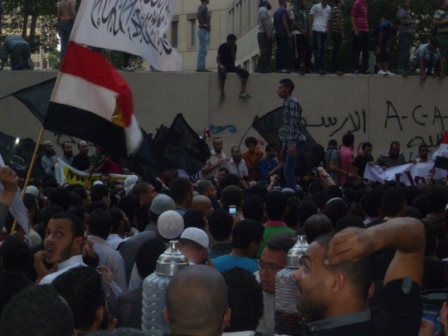

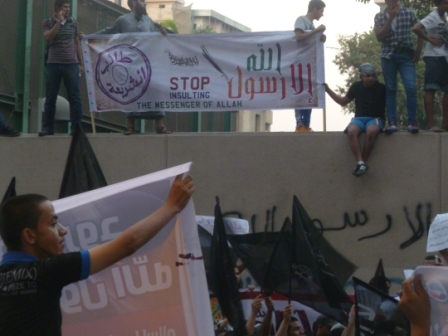


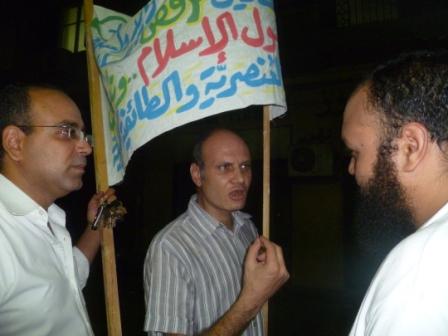
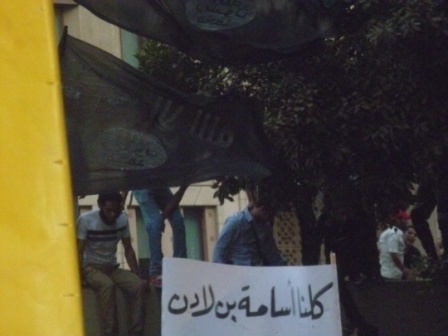
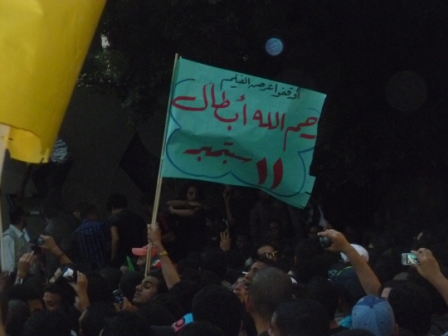


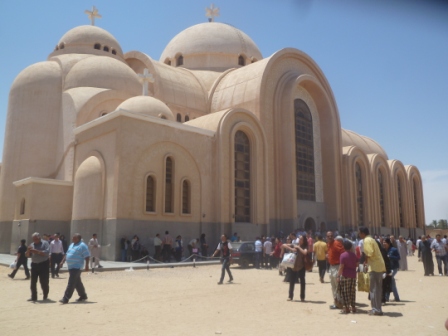
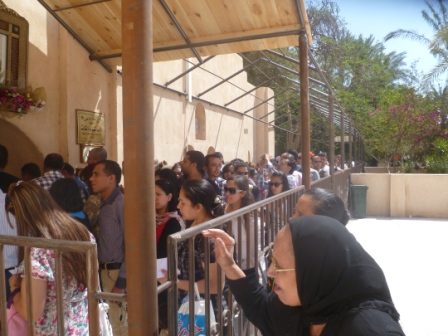


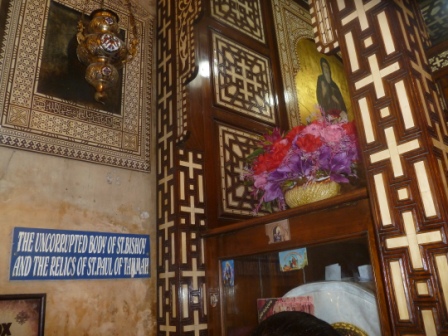
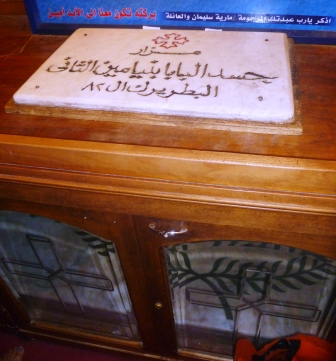


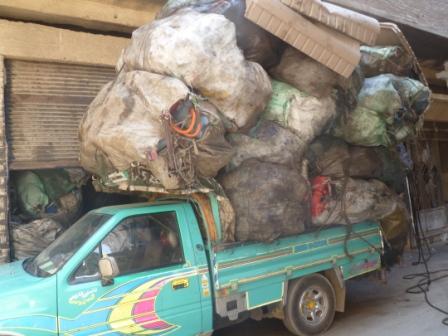


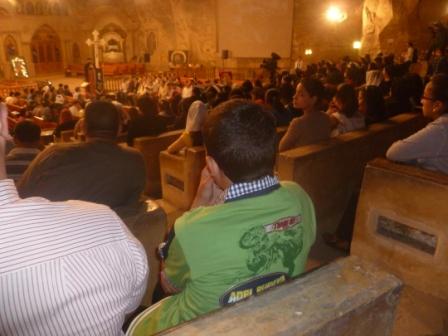
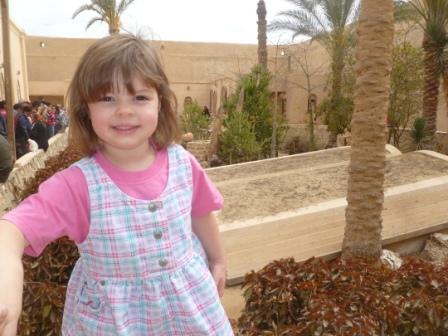


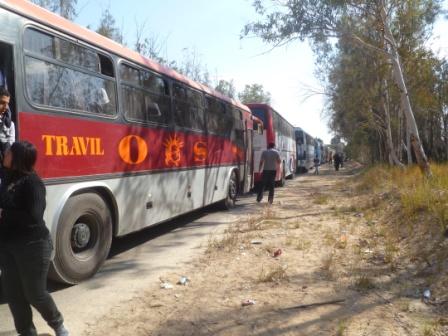


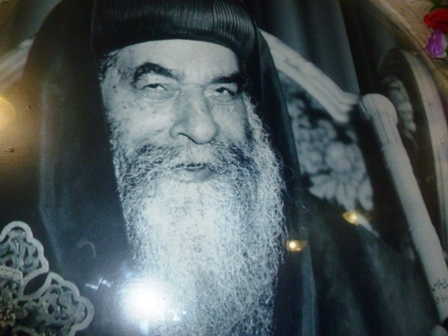


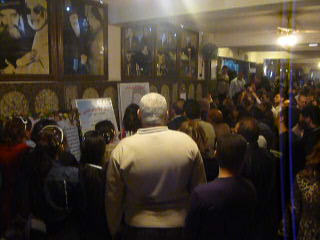
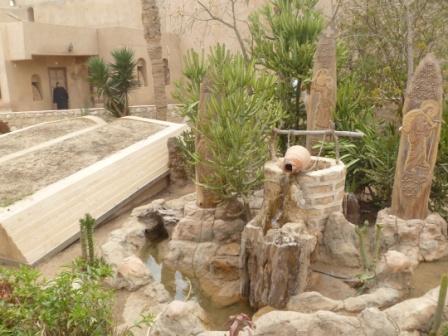


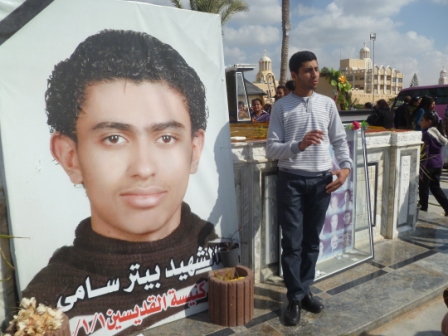
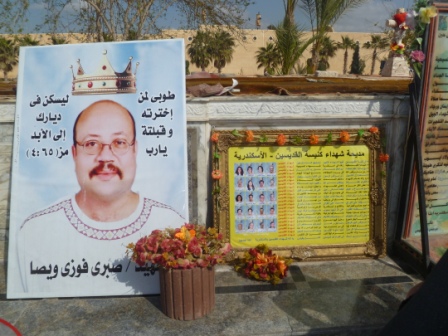
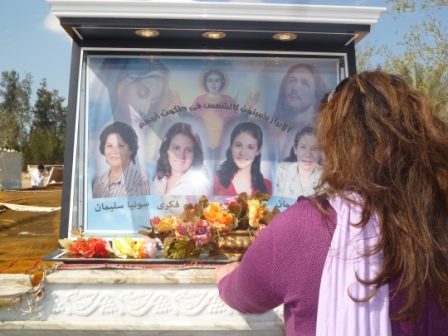
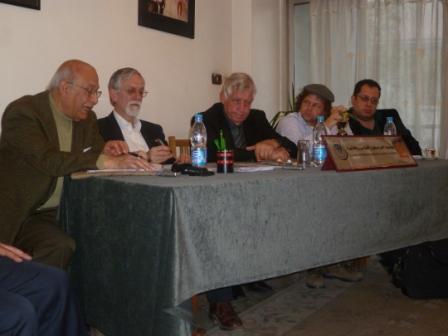
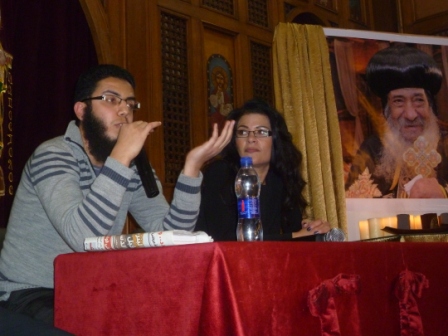


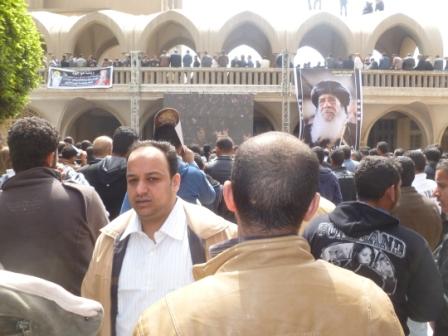
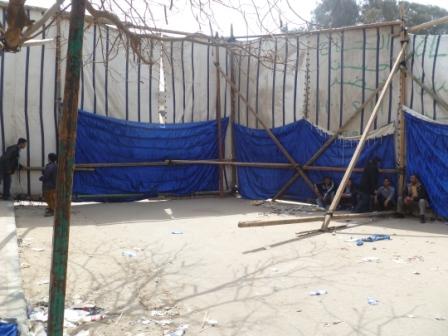
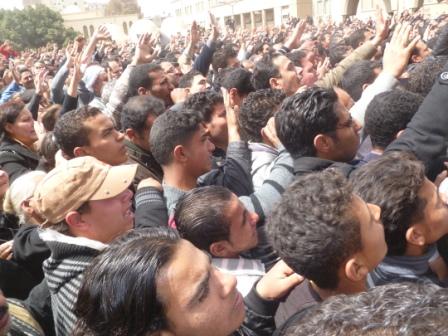
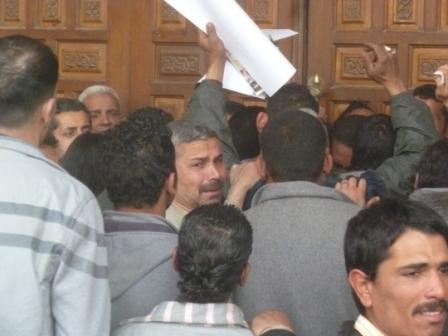
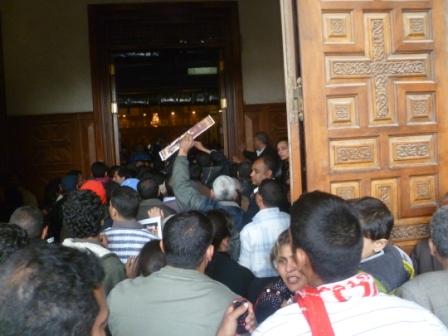
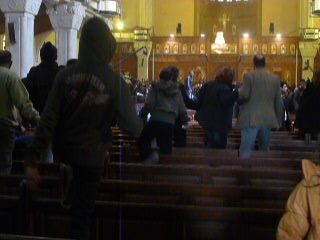
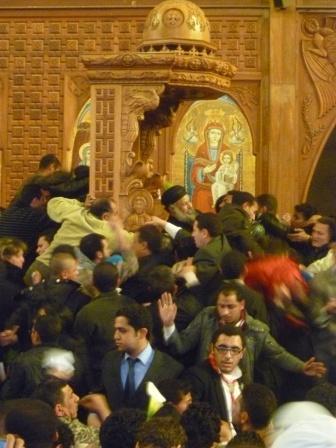

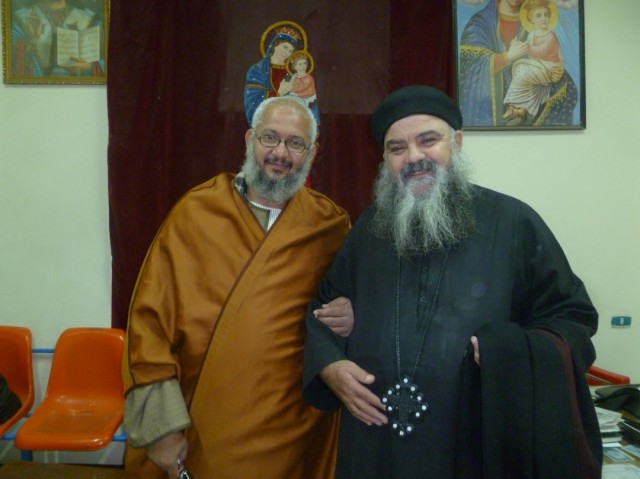

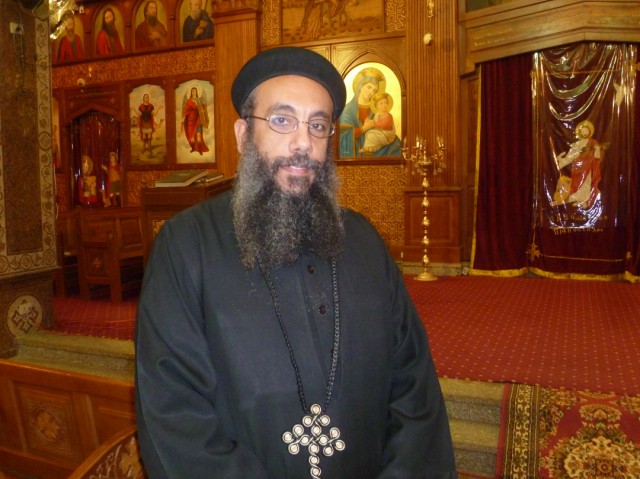

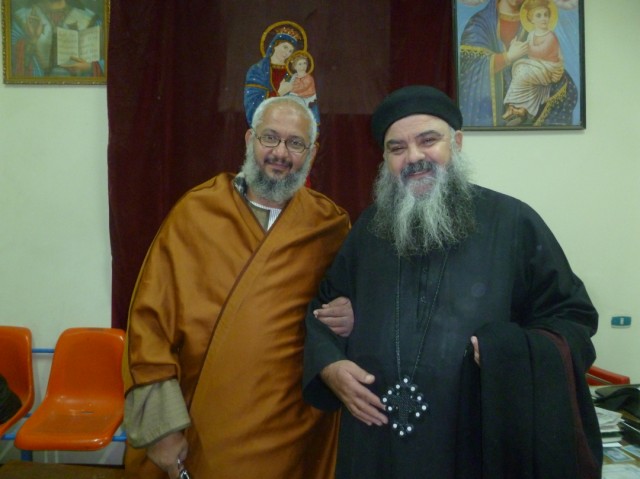
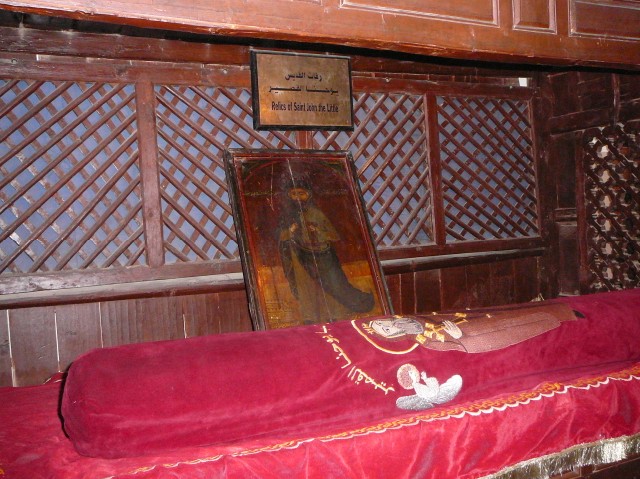


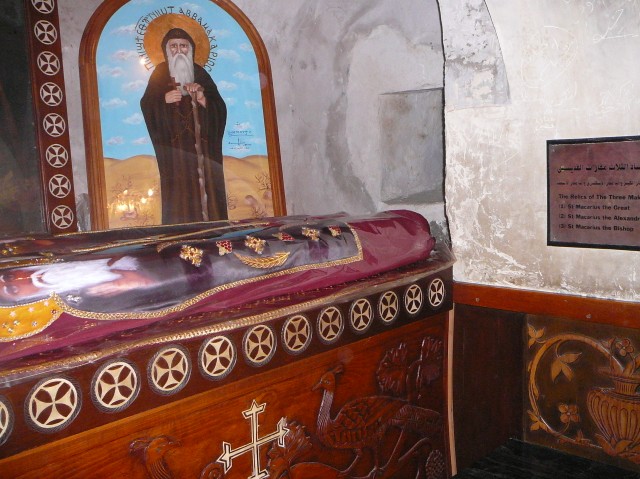

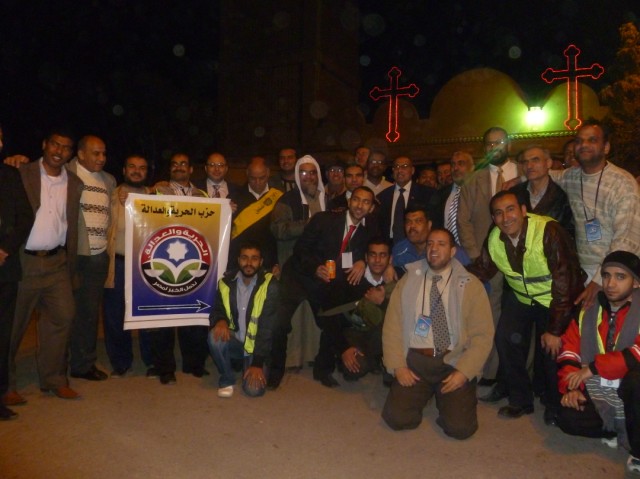


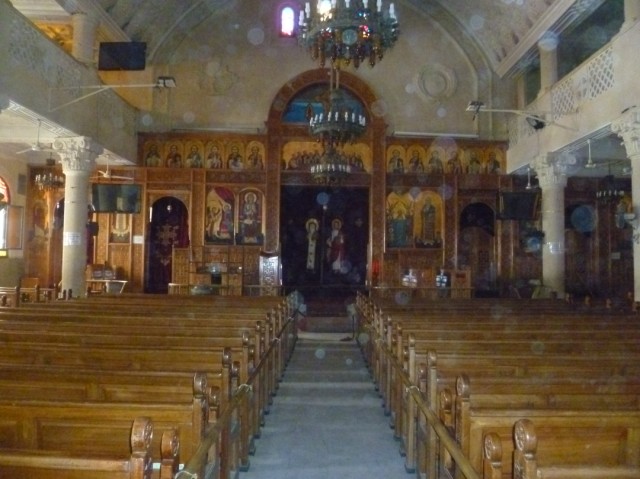


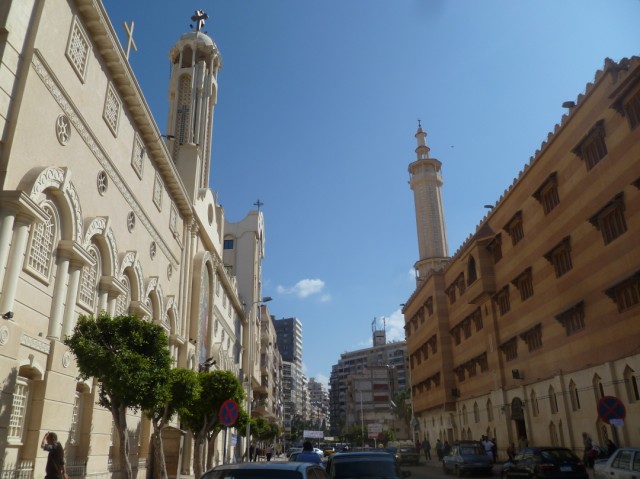


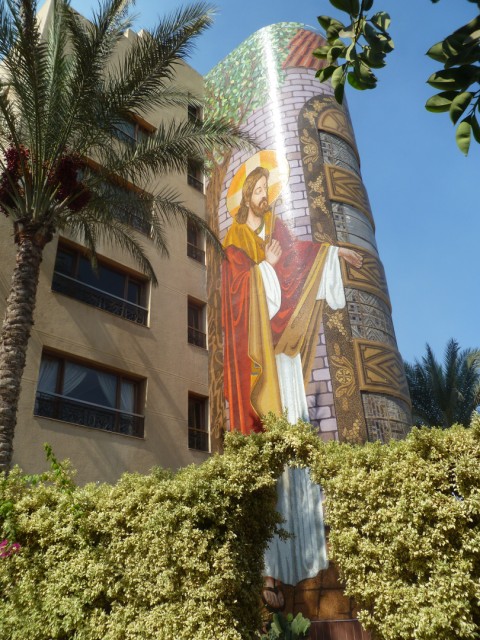



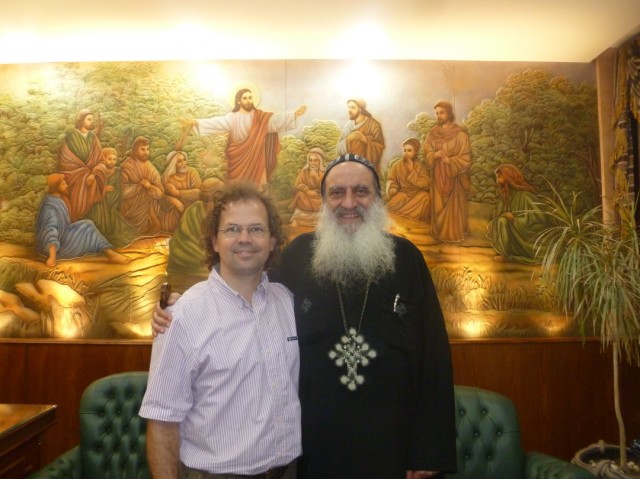

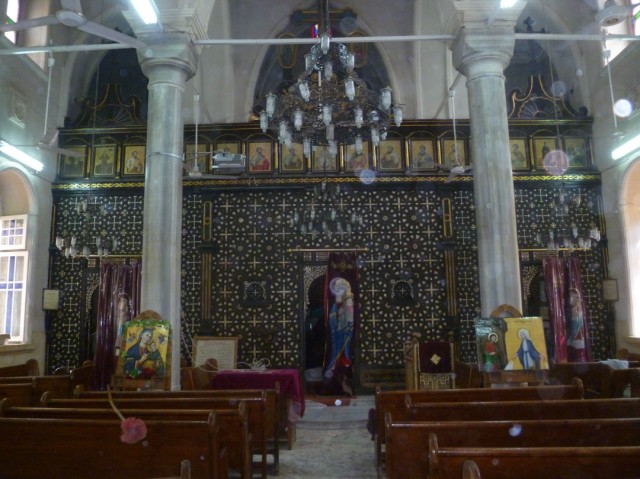
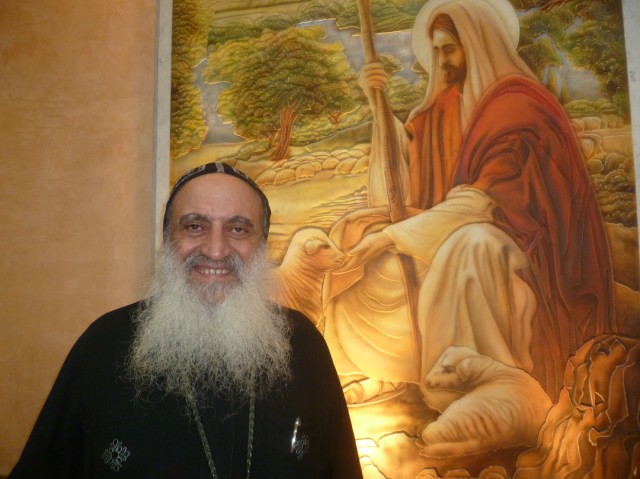
 Jayson Casper