Categories
Christianity Today Europe Published Articles

Why Armenian Christians Recall Noah’s Ark in December

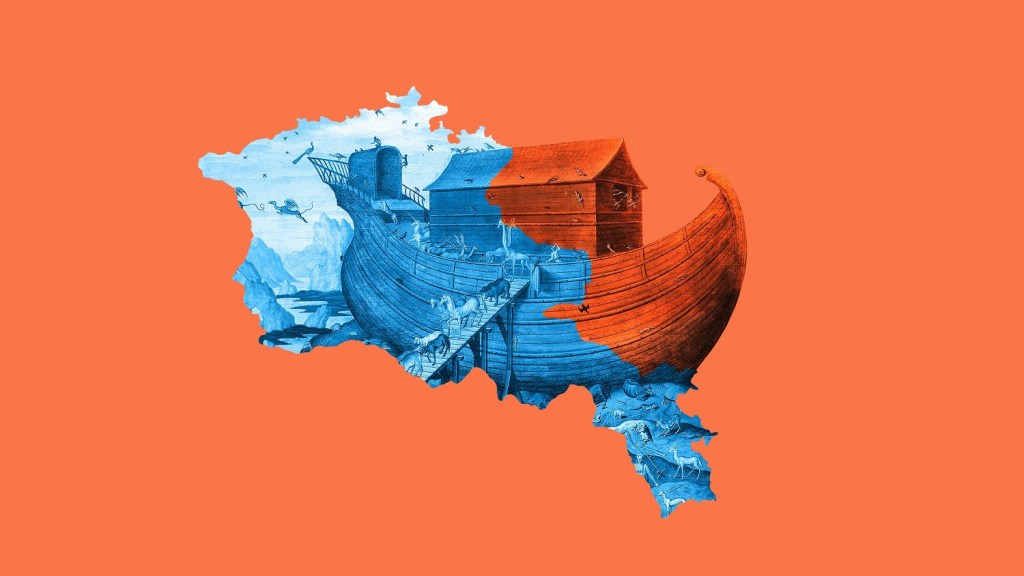
Illustration by Elizabeth Kaye / Source Images: Wikimedia Commons

If you want a break from Santa this December, try Hagop instead, an Armenian tradition that dates back as far as Old Saint Nick.

Santa Claus, the modern icon of Christmas, is derived from traditions associated with Saint Nicholas, a fourth-century bishop of Greek descent who was known for giving gifts. He is also mentioned among the church fathers at the Council of Nicaea in AD 325, for which the Nicene Creed is named.

If Nicholas was indeed at the council, he may have met Saint Hagop, who was also reputedly there. English speakers refer to him as Jacob of Nisibis, though in the Armenian language both Jacob the biblical patriarch and the Nicene saint are called Hagop. He is believed to have been a relative of Saint Gregory the Illuminator, who converted the Armenian king to Christ in circa AD 301. As a result, Armenia became the world’s first Christian nation.

Whereas Nicholas eventually became a secular stand-in for Jesus, Hagop is intimately associated with Noah. The Armenian Apostolic Church commemorates Saint Hagop in the second week of December—not because of any connection to Christmas (which its churches celebrate on January 6), but for his reputed role in demonstrating the historicity of Noah’s ark.

Many children delighted by tales of the animals that boarded the ark later turn skeptical, questioning the reliability of this miraculous story. But doubt about the Flood is nothing new. Back in the fourth century, Hagop heard reports that the local population did not believe the biblical account of Noah. A wandering ascetic, he undertook his own search for evidence and journeyed to Mount Ararat.

According to tradition, an angel appeared to Hagop in his sleep as he rested near the mountain peak and left a wooden fragment of Noah’s vessel by his side. Today, it is preserved within a reliquary dating to 1698, lying below an ornate gold cross and housed in Armenia’s St. Etchmiadzin Cathedral.

For many Western audiences, the story of Noah recalls little more than flannelgraph cutouts from Sunday school. But for Armenians, he is a national ancestor and figure of transcendent meaning. In fact, one of Armenia’s top soccer clubs is named FC Noah, and recently played a match against the English powerhouse Chelsea FC.

CT spoke with four Armenians to understand more fully Noah’s importance to their people, whether living beneath the shadows of Mount Ararat in the Caucasus Mountains or in the extensive Armenian diaspora. Each one shared memories of childhood, perspectives on tradition, and lessons from Noah for Christian faith today.

Hrayr Jebejian

Armenian general secretary of the Bible Society of the Gulf, headquartered in Cyprus and resident in Kuwait

The story of Noah and the ark fascinated me when I was a child growing up in the Armenian Evangelical Church. The fact that the ark landed on Mount Ararat gave us a special sense of pride as Armenians, that our land is mentioned in the Bible. We are an ancient people. As we grew older, for some the sense of wonder turned into skepticism: How did the animals march two by two, and was the Flood truly worldwide?

But as Armenians…

This article was originally published at Christianity Today on December 13, 2024. Please click here to read the full text.

Categories
Christianity Today Middle East Published Articles

The Middle East’s Favorite Christmas Carol Is About War and Hate

Image: Illustration by Elizabeth Kaye / Source Images: Getty / Youtube

This past holiday season—like many before it—the Arab world’s favorite Christmas carol spoke directly to war and suffering.

With Orthodox Christians observing their 12 days of Christmastide from January 7–19, their churches in the Middle East were the latest to sing “Laylat al-Milad” (On Christmas Night). Written in the 1980s during Lebanon’s civil war, the song has been performed by classical divas, worship leaders, and children’s choirs alike. It has offered comfort during the regional conflicts since, from the Syrian civil war to ISIS’s reign of terror to the current war between Israel and Hamas in Gaza.

Its haunting melody and lyrics speak less about a baby in a manger than the life that baby demands that we live. And also of the life that baby makes possible:

Chorus:
On Christmas night, hatred vanishes
On Christmas night, the earth blooms
On Christmas night, war is buried
On Christmas night, love is born

Verse 1:
When we offer a glass of water to a thirsty person, we are in Christmas
When we clothe a naked person with a gown of love, we are in Christmas
When we wipe the tears from weeping eyes, we are in Christmas
When we cushion a hopeless heart with love, we are in Christmas

Verse 2:
When I kiss a friend without hypocrisy, I am in Christmas
When the spirit of revenge dies in me, I am in Christmas
When hardness is gone from my heart, I am in Christmas
When my soul melts in the being of God, I am in Christmas

The Christmas season in the Middle East can be a double blessing. Advent begins one month before the Catholic and Protestant holiday on December 25, while festivities continue weeks further until the Orthodox celebration on January 7 and its Epiphany on January 19. But this season, in sympathy with a muted Christmas in Gaza, Holy Land Christians canceled their public revelry.

Yet they still gathered to sing and worship in church.

In Israel’s northern town of Kafr Yasif, the Baptist church “kissed their friends” in congregational greeting as the praise band led a joyous rendition of “Laylat al-Milad.” In Amman, Jordan, an evangelical orphan ministry gathered around 300 Muslim and Christian at-risk children to celebrate, as the Baptist school choir serenaded their parents. And in Erbil in Iraq’s Kurdistan region, the Alliance church included the carol in a merry gathering of potluck fun and gift exchange.

The Syrian-born manager of Lebanon’s BeLight FM radio station said he played “Laylat al-Milad” at least once daily. And an Egyptian director of SAT-7, the Christian satellite TV network, called it a clear holiday favorite.

CT asked evangelical leaders in each location for their reflection on the seasonal standard:

George Makeen, ministry content consultant for SAT-7:

To get a sense of how this song resonates with Arab Christians, picture the end of World War I, when churches were full of people celebrating the end of conflict despite the destruction all around them. They knew the suffering was over and could anticipate the future rebuilding. But for us, we are fragile and see no way out of our situation. We ask: God, how long? But we don’t think it will end any time soon.

Yet in Christ, we celebrate anyway.

This song conveys the true meaning of Christmas. It reminds us of hard realities, and that as soon as we become aware of these realities—this is when we are most aware of Christmas. This paradox is not what is usually heard in Christmas songs, but like everything else in our faith…

This article was originally published at Christianity Today on January 12, 2024. Please click here to read the full text.

Categories
Africa Christianity Today Published Articles

Christmas Massacres Challenge Secular Explanations of Nigeria Conflict

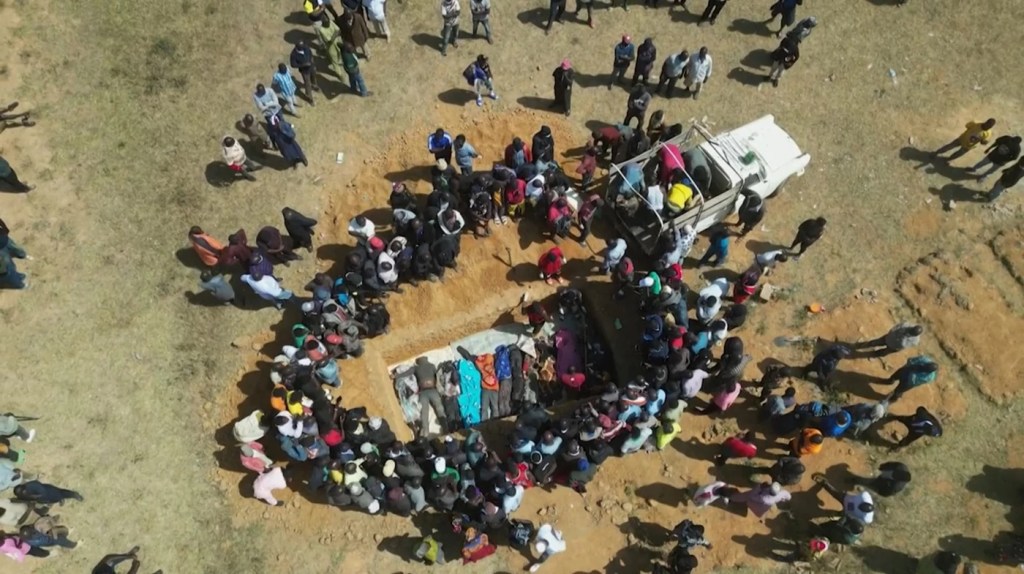
Image: Kim Masara /AFPTV / AFP / Getty Images

At least 140 Nigerian Christians were killed over the Christmas holiday.

Attacks on 26 villages in Plateau State began December 23, led by suspected extremists among Fulani Muslim herdsman against Christian farming communities. Some media reports cite nearly 200 dead, with many missing as local residents fled from gunmen into the bush.

Grace Godwin was preparing Christmas Eve dinner when her husband burst in with news from the neighboring village, ordering her and the children into the fields. Rebecca Maska similarly took cover but was shot and bled for three hours until help arrived, while her son had his hand chopped off with a machete before escaping. Magit Macham dragged his wounded brother to safety and hid overnight until the attackers moved on.

“These attacks have been recurring,” Macham told Reuters, having returned home from the regional capital of Jos to celebrate Christmas. “They want to drive us out of our ancestral land.”

For years, violence has plagued the West African nation’s Middle Belt, where a predominantly Muslim north intersects with a predominantly Christian south. Land right issues are also contested, as semi-nomadic cattle herders press against settled agrarian hamlets in Africa’s most-populous nation.

The Christmas massacres were the worst attacks since 2018. A local publication tallied an additional 201 deaths in Plateau State in the first half of 2023. Across the Middle Belt, at least 2,600 people were killed in 2021, according to the most recent data by the Armed Conflict Location and Event Data Project.

The Northern Governors’ Forum called the attacks “reprehensible and heinous.” It was further condemned by the national Muslim organization Jama’atu Nasril Islam, which called the attacks “barbaric” but within the context of a “cycle of violence.”

The chairman of the Miyetti Allah Cattle Breeders Association, however, blamed the “whole problem” on…

This article was originally published at Christianity Today on December 29, 2023. Please click here to read the full text.
Categories
Christianity Today Middle East Published Articles

Christmas Celebrations Canceled in Bethlehem, Jerusalem, and Jordan

Image: Uriel Sinai / Stringer / Getty Images

There will be no Christmas lights in Bethlehem this year.

In solidarity with the suffering in Gaza due to the Israel-Hamas war, last week Christian leaders and municipal authorities in the West Bank city decided to cancel all public festivities. For the first time since modern celebrations began, the birthplace of Jesus will not decorate the Manger Square tree.

It is “not appropriate,” stated local authorities.

But the Bethlehem decision is only the most recent. One week earlier, the Patriarchs and Heads of the Churches in Jerusalem asked Christians in the Holy Land to refrain from “unnecessarily festive” Christmas activities. Catholic churches in Galilee requested the same, as did the Council of Local Evangelical Churches in the Holy Land.

“Due to the thousands killed—and in prayer for peace,” said its president, pastor Munir Kakish, “we will only hold traditional services and devotionals on the meaning of Christmas.”

The initiative, however, came first from Jordan, home to the world’s largest concentration of Palestinian refugees—many of whom have become citizens. On November 2, the Jordan Council of Church Leaders (JCCL) announced the cancellation of Christmas celebrations.

Christmas is a public holiday in the Muslim-majority nation, with many city squares and shopping malls feted with seasonal decorations. But congregations throughout the country will now forgo the traditional festivities of public tree lighting, Christmas markets, scout parades, and distribution of gifts to children.

Religious services in all locations will continue.

“In our homes we can celebrate, but in our hearts we are suffering,” said Ibrahim Dabbour, JCCL general secretary and a Greek Orthodox priest. “How can we decorate a Christmas tree?”

The formal Jordanian Christian declaration reflected respect for the “innocent victims” and denounced the “barbaric acts” of the Israeli military. It recognized the “difficult time” in both Gaza and all Palestine, noting the destruction of homes, schools, hospitals, and places of worship.

It pledged that offerings collected last weekend would be donated to Gaza.

Dabbour, whose parents were refugees from the now-Israeli cities of Ramla and Jaffa in the 1948 war, was born in Amman and serves as the chairman of the Jordan Bible Society. He linked the current war to that original displacement, calling for dialogue rather than further fanaticism-inducing violence.

But beyond solidarity within the depressed national mood, Dabbour said the council, representing 130,000 Christians in the Hashemite kingdom, had another purpose in the declaration.

“Many Muslims do not know the history of Christianity, thinking we are a people of the West,” he said. “But we are the sons of St. Peter, here for 2,000 years. We want to show society that we are one people.”

Jordan’s evangelicals believe they have a further obligation.

“We have a role to speak to our friends in the West,” said David Rihani, president and general superintendent of the Assemblies of God Church of Jordan. “Jesus did not teach us to blindly side with anyone against another.”

He cited a widely shared video of Tennessee-based pastor Greg Locke calling on Israel to turn Gaza into a “parking lot” and to blow up the Dome of the Rock to make room for the Third Temple and usher in the return of Jesus. Local evangelicals, Rihani said, refuse to be associated with such Christian Zionism.

Adherence to the Christmas decision, however, issues from Jordanian culture.

Growing up 10 miles northwest of Amman in the traditional city of Salt, a UNESCO World Heritage site, Rihani recalled that both Muslims and Christians would frequent any neighborhood wedding celebration—no invitations necessary. But if there was a funeral, any previously scheduled wedding would be either postponed or held quietly among the family.

Weddings mid-war are now treated the same.

“The announcement was not even necessary,” said Imad Mayyah, president of the Jordanian Evangelical Council (JEC). “No Jordanian is celebrating anything.”

Founded in 2006 and representing the Assemblies of God, Baptist, Nazarene, Free Evangelical, and Christian and Missionary Alliance denominations, the JEC released its own statement on Tuesday.

“The Christmas holidays, when we remember the birth of our savior Jesus Christ, comes upon us while we are in the midst of a human tragedy that is ravaging our region,” stated the evangelical council. “In obedience to the Holy Word of God and in line with [both Christian and public sentiment, the JEC] has decided to limit the celebrations of Christmas to religious ceremonies and church prayers within our churches.”

The JEC also prayed for…

This article was originally published at Christianity Today on November 22, 2023. Please click here to read the full text.
Categories
Christianity Today Middle East Published Articles

Saudi Arabia Embraced Coptic Christmas. Could Its First Church Be Next?

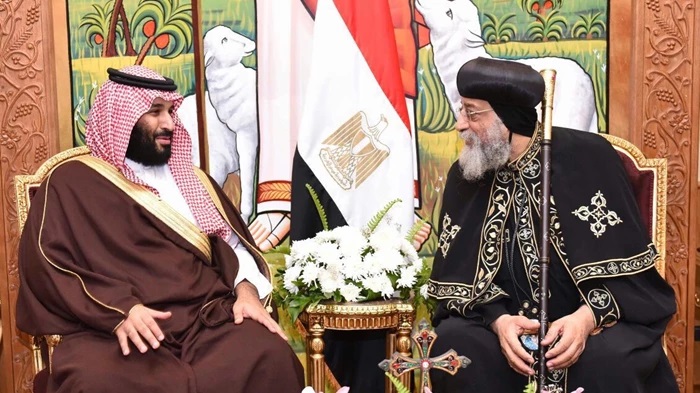
Image: Markas Ishak / The Coptic Orthodox Church Press Office / Getty Image

Saudi Arabia stunned foreign policy observers this month by publicly agreeing to normalize relations with Iran, under Chinese sponsorship. The deal between the neighboring Sunni and Shia arch rivals, known for sectarian proxy fights, is expected to ease tensions within Islam.

Meanwhile, the kingdom has recently taken less publicized steps toward another religious normalization: public Christian faith.

In this case, Egypt is the supporting nation.

“Nine years ago, I was told, ‘Pray, but don’t publicize it,’” said Bishop Marcos of Egypt’s Coptic Orthodox Church. “This time, Saudi Arabia is publicizing it themselves.”

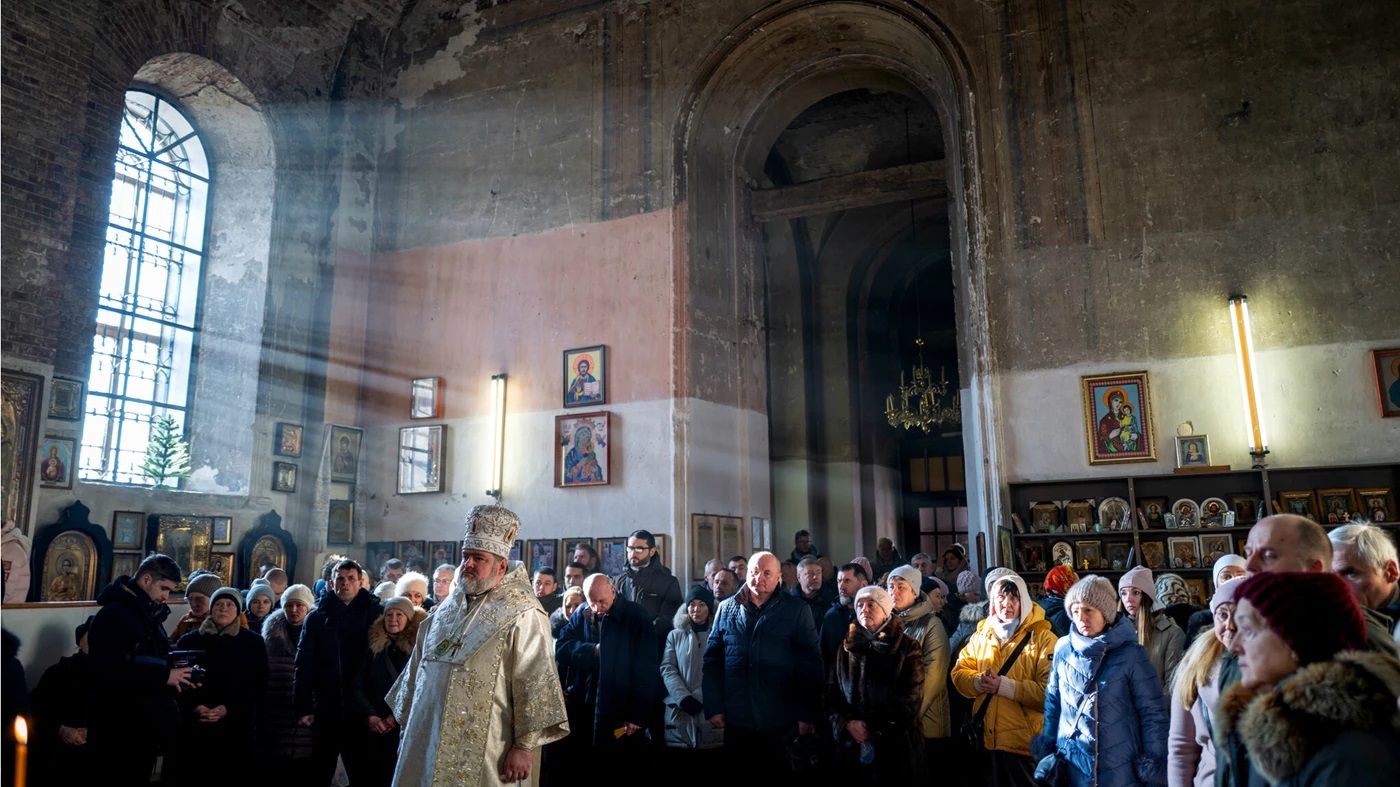
On January 7, Marcos headlined a month-long pastoral visit by celebrating the eastern Christmas liturgy amid 3,000 Coptic Christians residing in the kingdom. Facilitated by the Egyptian embassy, additional services in Riyadh, Jeddah, Dammam, Khobar, and Dhahran were “held under the full sponsorship of the Saudi authorities.”

It was the first public Christmas celebration admitted by the Islamic nation, home to the pilgrimage sites of Mecca and Medina. Muslim traditions cite Muhammad as forbidding the existence of two religions in Arabia, though scholars differ as to the geographic scope.

But Marcos’ trip was not the first Christian worship permitted.

He began praying about visits to Saudi Arabia after being sent in 2012 to help solve a dispute between authorities and an Egyptian Christian migrant worker. Marcos estimates there are about 50,000 Copts in the kingdom, among 2.1 million Christians—mostly Filipino Catholics.

None have a church to worship in. Open Doors’ World Watch List ranks Saudi Arabia No. 13 among the 50 countries where it is most difficult to be a Christian today. Visiting Coptic clergy used to meet the faithful in neighboring Bahrain.

But when Marcos returned in 2014, he said he conducted liturgies for about 4,000 believers. Leaks covered by the Qatari news network Al Jazeera resulted in some attention, but the Saudis told him they were not troubled by it. Weeks-long pastoral trips continued annually, and in 2016 Saudi King Salman bin Abdel Aziz visited Coptic Pope Tawadros II in Egypt.

It was 2018 that led to further openness. Crown Prince Muhammad bin Salman (known as MBS) visited the Coptic Orthodox cathedral in Cairo in March, taking a famous photo with Tawadros in front of an icon of Jesus, the Good Shepherd. He invited the Coptic pope to visit Saudi Arabia, while encouraging continuation of Marcos’ visits.

That December, the first liturgies were officially reported. Not everyone was pleased. Medhat Klada, spokesman for the European Union of Coptic Organizations…

This article was originally published at Christianity Today, on March 29, 2023. Please click here to read the full text.
Categories
Christianity Today Europe Published Articles

Christmas Epiphanies from the Ruins of Ukraine

Image: Spencer Platt / Getty Images

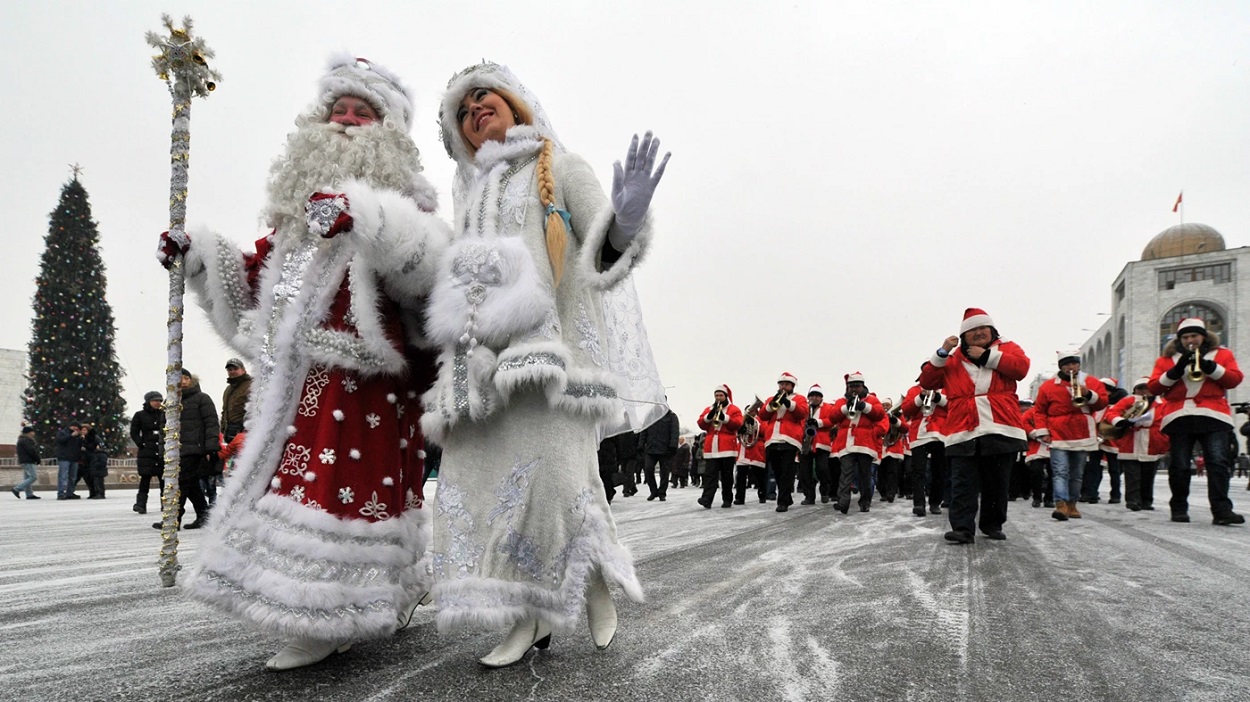
In advance of Putin’s unilateral declaration of a 36-hour truce over Orthodox Christmas today, Ukrainian seminary leaders shared their reflections on the impact of ten months of unabated conflict.

“War is exhausting—but this exhaustion does not happen overnight,” wrote Roman Soloviy, director of the Eastern European Institute of Theology. “Nevertheless, our mission continues.”

Reviewing his own emotional response since Russia invaded Ukraine on February 24, Soloviy cited the impossible choices forced upon his nation: Save your family or your neighbors? Flee the country or stay and help?

He could not read, listen to music, or watch movies for many months.

The stress only surged as reports proliferated about atrocities, complicated by the frustration that Ukrainian churches could not help everyone. Decisions needed to be made in darkness, while seeking to balance one’s own psychological health.

A Kherson seminary, Tavriski Christian Institute (TCI), was occupied by Russian forces in March and liberated in November. President Valentin Siniy recounted the grim chronology:

January: Talks about the war. Doubts about invasion.
February: Team. Responsibility. Daily Zoom calls to pray.
March: Massacre. Inhumanity. Generosity: flour, sugar, potatoes, seeds.
April–May: Russians want to reconcile, without repentance. Families separated.
June–July: Marriages. Fragility of life. Losses. Divorces.
August: TCI shelled. Books trashed. Valuables looted. Vandalism.
September: New location. Big enrollment.
October: Infrastructure destroyed. Nation freezing. Unity. Mutual assistance.
November: Liberation. Joy. First trip home. Ruined city.

For his December entry, Siniy wrote: “Christmas is the coming of God into a mean world to mean people. We pray that the Lord will show us how and where to serve.”

Oleksandr Geychenko, meanwhile, chose a different theme for the holiday. Yet it fit perfectly with Siniy’s October observations.

“This year’s Christmas for me is closely associated with the metaphor of light,” wrote the president of Odessa Theological Seminary. “Perhaps, this is my reaction to the uncertain power supply.”

Patriarch Kirill of the Russian Orthodox Church (ROC) first suggested the holiday truce, while 1,000 US-based faith leaders called for Ukraine to honor it. Nonetheless there has been exchange of shelling along the front lines, and many Ukrainians dismissed Putin’s initiative as a cynical ploy to buy time for his retreating troops. (Foreign analysts instead saw a PR bid for Russian Christian backing.)

But despite the battlefield losses, last month Russia specifically targeted Ukraine’s electrical grid, repeatedly plunging cities and civilians into darkness and cold.

Geychenko had taken his electricity for granted. Now, he sees a spiritual connection. “The light that comes from Jesus not only shines into human darkness,” he wrote, “it also…

This article was originally published at Christianity Today, on January 7, 2023. Please click here to read the full text.
Categories
Asia Christianity Today Published Articles

Muslims Love Russian Christmas. Eurasia’s Evangelicals Do Too.

Image: VYACHESLAV OSELEDKO / AFP / Getty Images

Kris Kringle should be in Kyrgyzstan.

If he is efficient, that is. The Central Asian nation, according to a 2007 study by Swedish consultants, is the geographic center best situated for his annual toy delivery campaign.

Regional evangelicals welcome his advent.

With Kyrgyzstan’s snowfall and freezing temperatures from November to April, Old Saint Nick would feel right at home in the mountainous peaks that raise the country’s average elevation to 9,000 feet. But whatever the religion of his army of elves, Father Christmas would have to adjust to Islamic customs in the valleys below.

Quick to seize on the marketing opportunity, the 90 percent Muslim-majority nation declared 2008 as “The Year of Santa Claus.”

There was eventual pushback—though seemingly confused in terms of the calendar. Frustrated with the non-Islamic revelry, in 2012 the Kyrgyz Muslims’ Religious Administration (KMRA) issued a fatwa forbidding New Year’s celebrations.

Not Christmas. Not even Xmas. The birth of Jesus reamins an official holiday.

But it is observed on January 7, not December 25. Nearly half of the nation’s 7 percent Christian population is Russian Orthodox and follows the Eastern almanac. And since Kyrgyzstan’s independence in 1991, the government has honored its primary religious minority with few Muslim objections.

New Year’s Day celebrations on January 1, however, are a holdover from the Soviet era. The atheistic communists banned Christmas in 1917 but in 1935 reconstituted it as a secular holiday, celebrated one week earlier. No baby Jesus, but no Santa Claus either.

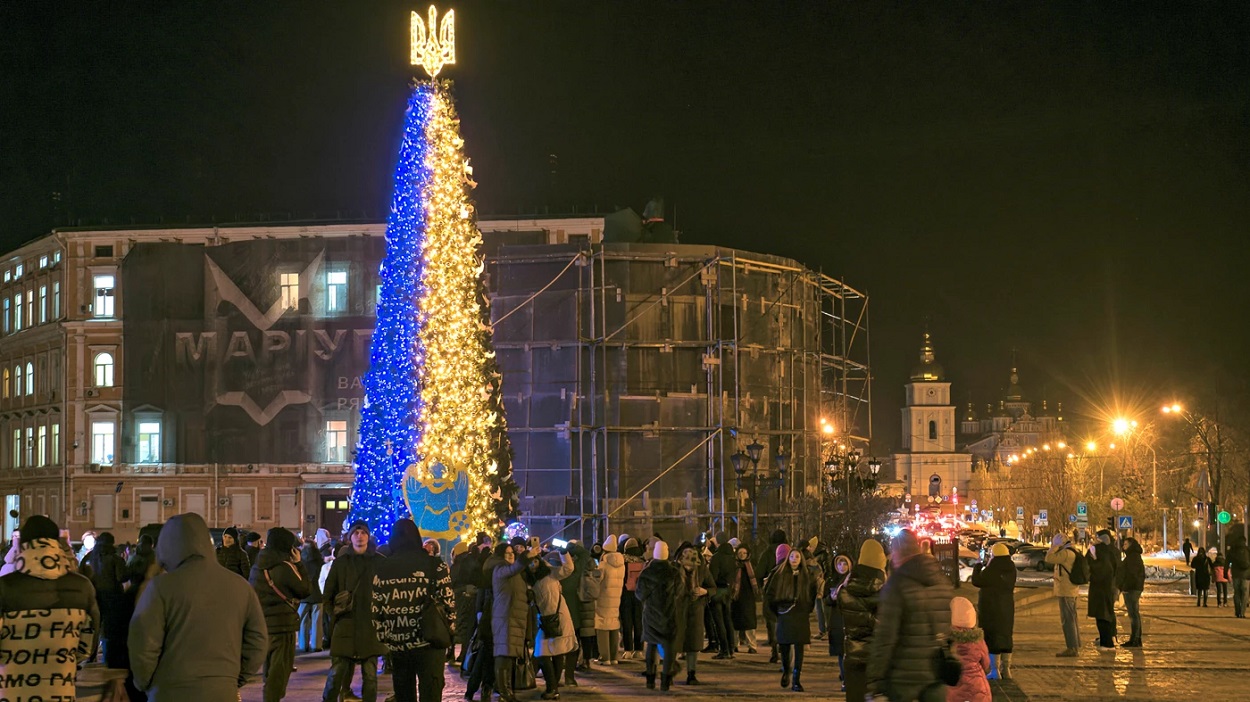
The Russians instead promoted a vague ethereal figure named Ded Moroz, which translates as “Grandfather Frost.” And they kept the trappings of tree decorations, gift giving, and family gatherings. With Islam suppressed as well as Christianity, over time the Muslim peoples of the USSR adjusted to the imposed culture.

After the collapse of the Soviet Union, Islamic authorities in Kyrgyzstan, Kazakhstan, Tajikistan, Turkmenistan, and Uzbekistan—as well as Azerbaijan on the western bank of the Caspian Sea—largely left New Year’s alone. Nominal Muslims shared in the festivities, including the sharia-forbidden consumption of alcohol.

It was Santa Claus that offended the KMRA—or rather, the modern, globalized excess of consumerism. Declaring the holiday un-Islamic, the administration asked the faithful to avoid celebrations altogether and instead give to the poor the substantial sums they would have spent on frivolities.

The fatwa found resonance, but not enough to dent the market.

“January 7 is the religious holiday, but the ‘real’ celebrations of Christmas come from the West,” said Ruslan Zagidulin, a lecturer in missiology at United Theological Seminary in the capital city of Bishkek. “But these have nothing to do with Jesus.”

Not that such celebrations are unwelcome. While there is no set custom for the meal, many families welcome the New Year with the national dish beshmarbek, a noodle soup with meat. Others enjoy boiled mutton or horse meat, served in dishes with sour cream or yogurt.

Following a speech by the president, fireworks go off in Bishkek’s Ala-Too Square—and on countless balconies across the country. Children await the visit of Ayaz Ata, the Kyrgyz name for Ded Moroz, and his beautiful granddaughter Snegurochka, known as Kar Kiz, meaning “Snow Maiden.” But where the Soviets merged religious heritage into a secular New Year’s celebration, freedom…

This article was originally published at Christianity Today, on December 20, 2022. Please click here to read the full text.
Categories
Christianity Today Europe Published Articles

Ukraine Celebrates Christmas Twice. Now Its Orthodox Christians Can Too.

Image: Maxym Marusenko / NurPhoto / Getty Images

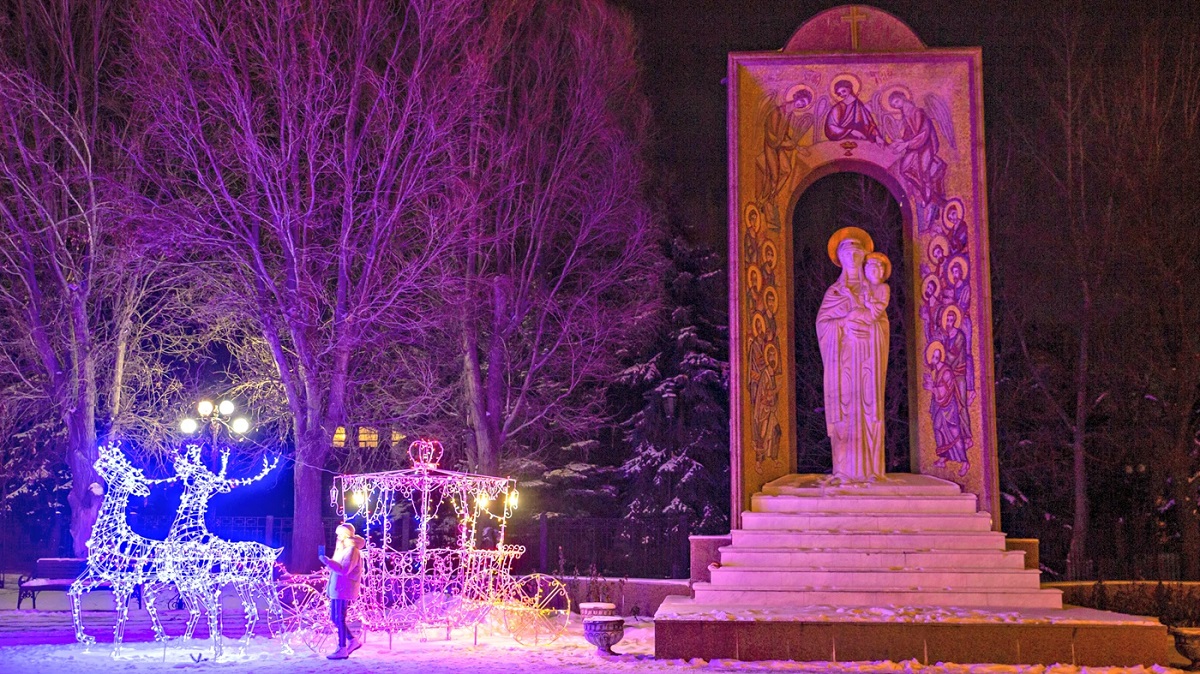
Thanks to Russia, Ukrainian Orthodox Christians may now partake in a Christmas feast on December 25.

The joyous, 12-dish celebration has been their timeless practice—on January 7, according to Eastern tradition. But this year, the Holy Synod of the Orthodox Church of Ukraine (OCU) has permitted its clergy to conduct religious services on the same date as Western tradition, granting a one-day exemption to the 40-day Nativity Fast.

Beginning after the feast day of St. Philip, observed by Ukrainian Orthodox on November 28, the faithful abstain from alcohol and most meat products until the first star appears on Christmas Eve, January 6. But with millions of refugees in Europe witnessing the revelry of fellow Christians in the West, the OCU decided to permit Ukrainians everywhere to decide parish by parish which date they would honor.

Liturgical reform has long been on the agenda, but war was the spark.

“For most bishops of the church, the calendar is not a dogmatic issue of faith,” said Archbishop Fedir, head of the youth department of the OCU. “Especially after the full-scale aggression of Russia, there is a desire to become part of the Western family of churches.”

Ukraine had already established December 25 as an additional official Christmas holiday in 2017, joining Belarus, Eritrea, Lebanon, and Moldova as nations that formally celebrate the birth of Christ twice.

But altering the calendar disrupts the entire church cycle. Saints’ days, sermons, and gospel readings are all impacted, with scholars engaged in response. The Holy Synod decision tasks priests with gauging the sentiment of parishioners and bishops with conducting follow-up research. Many believers love their traditions, Fedir said, and the hierarchy is wise to proceed cautiously.

The archbishop is responsible for the diocese of Poltava, 220 miles southeast of Kyiv, where one newly established congregation of young people has decided to switch from the Julian to the Gregorian calendar altogether, with his blessing. With blanket permission granted, he does not yet have a tally of how many parishes will join them—nor does the OCU’s Holy Synod.

But within her circle of Ukrainian friends, Nadiyka Gerbish finds none opposed.

“I expected it to happen, and wanted it to happen long ago,” said the author of A Ukrainian Christmas, updated and rereleased last month. “They want a solid line between them and the Russian Orthodox Church (ROC).” Gerbish, a member of Hosanna Evangelical Church in Zbarazh, a small town 250 miles west of Kyiv, condemned the support ROC patriarch Kirill has given to the invasion. And religiously, she sees the decision as part of a long-standing battle over…

This article was originally published at Christianity Today, on December 20, 2022. Please click here to read the full text.

Categories
Christianity Today Europe Published Articles

On Ukraine-Russia Border, Evangelicals Endure as Invasion Looms

Image: Alexander Reka / TASS / Getty Images
A Christmas light installation in Luhansk, Ukraine, by a monument to the 2000th anniversary of the Nativity of Christ, on December 24, 2021

Ukraine celebrates Christmas twice, honoring both the Eastern and Western church calendars. Yet this season, Pentecostals spent the week leading up to December 25 in prayer and fasting while Baptists did the same from Christmas Day to New Year’s Day.

The reason: tens of thousands of Russian troops amassed on the border, threatening a full invasion.

Russian-backed separatists have held control of the Donbas region of southeastern Ukraine since 2014. This past November, the European Evangelical Alliance (EEA) declared Donbas “the area of Europe where the church suffers the most.” In total the conflict has killed over 14,000 people and displaced 2 million of the region’s 5 million people.

“Prayer is our spiritual weapon,” said Igor Bandura, vice president of the Baptist Union of Ukraine. “God can undo what the politicians are planning.”

This past Friday, US President Joe Biden warned Russian President Vladimir Putin that any further invasion of Ukraine would result in “a heavy price to pay”; Putin replied that any new sanctions would trigger a complete breakdown in relations. On Monday, Biden told Ukrainian President Volodymyr Zelensky that the US and its allies would “respond decisively” to Russian aggression; Zelensky signaled appreciation for the “unwavering support.”

Trying to help years ago from the Russian side, Vitaly Vlasenko was labeled a spy.

Traveling 650 miles south from Moscow to Luhansk, Ukraine, at his own expense, the now–general secretary of the Russian Evangelical Alliance (REA) waded into a war zone.

By 2018, separtist leaders in Donbas had crafted laws to re-register churches, ostensibly under the principle of freedom of conscience and assembly. But two years prior, authorities in Luhansk declared Baptists and Pentecostals a security threat. Pastors had been murdered; churches were seized.

“Our brothers in Christ in Ukraine are crying out: ‘Why don’t you pressure Russia to stop this aggression?’” said Vlasenko. “We tell them we are a small minority with no standing and no clear information, and officially Russia is not a part of this conflict.”

It does not go over well, he admits. Relations between evangelicals in the neighboring nations have become strained, and some assumed the worst of his December 2018 trip to speak with rebel authorities about the registration process.

Only the KGB-connected could get access, Vlasenko heard.

In reality, Vlasenko said the visit was arranged through prior connections with the Russian Orthodox Church metropolitan in Luhansk. Your church received registration, the REA leader told his Orthodox counterpart; where is our Christian solidarity?

Without registration, churches were disconnected from the gas and electricity grid. All remaining evangelical churches were operating illegally, but some still had use of their facilities. But now it was winter, and cold.

The metropolitan agreed the situation was wrong and facilitated contact with the religious affairs official. Vlasenko was told registration would be given to all who completed procedures. He passed on the information to Ukrainian colleagues. But today, he said, relations are at a standstill.

“I understand they are in a difficult situation,” Vlasenko said. “Most churches have their headquarters in Kyiv, so how can they accept registration and explain this to their brothers in the [Ukrainian] capital?”

But Donbas churches face a choice: Continue to suffer, or continue in ministry. Vlasenko stays neutral, as he cannot advise them as a Russian.

Religious freedom problems in Donbas listed by the EEA include…

This article was originally published by Christianity Today on January 4, 2022. Please click here to read the full text.

Categories
Prayers

Lebanon Prayer: Mehry Christmas

God,

You promise joy, and joy you give. But how can we say it to others?

Sometimes ourselves we struggle to find.

But it is there.

In the return home. In the familiar carol.

In the small splurge we no more can afford.

In the smile of our children.

These are true, and they are good. Even when absent, we know they are real.

Just as you are.

So should we shout out: Merry Christmas!

Or whisper like a secret shared?

The in-between irony, a good middle ground,

The great incarnation for lives that are tired.

Worn out. Tattered. Shabby. Used.

Mehry Christmas.

These also are real. And true, even when we believe they are absent.

Then, as now.

Joy. Inbreaking. A world of drab.

Much we can do in our efforts to fix it.

A deal to trade judge for six parliament seats.

And then meet together, a loan to secure.

Even the nations, united, come visit.

Encouragement. Warnings. More of the same.

God only you know if the rumors are real.

But even when absent, the plan behind doors.

Not yours, God.

You place it on a lampstand. You shout it from the roof.

Go. Tell it on the mountain.

And you are with us, to the end of the age.

God, maybe a deal would fix things. Maybe it got foiled.

You free us, God, to dive right in.

But yet, to float above.

Bless the hands grubby from grime and from sweat. From trying to budge the unbending.

But chastise, God, the dirty.

Your counsel hard—to cut it off—lest two-handed Hades await them.

For too many, hell is here now.

It is real. But it is not true.

You are with us.

Joy.

It deserves to be whispered.

Amen.


To receive Lebanon Prayer by WhatsApp, please click this link to join the closed comments group.

Lebanon Prayer places before God the major events of the previous week, asking his favor for the nation living through them.

It seeks for values common to all, however differently some might apply them. It honors all who strive on her behalf, however suspect some may find them.

It offers no solutions, but desires peace, justice, and reconciliation. It favors no party, but seeks transparency, consensus, and national sovereignty.

How God sorts these out is his business. Consider joining in prayer that God will bless the people and establish his principles, from which all our approximations derive.


Sometimes prayer can generate more prayer. While mine is for general principles, you may have very specific hopes for Lebanon. You are welcome to post these here as comments, that others might pray with you as you place your desires before God.

If you wish to share your own prayer, please adhere to the following guidelines:

1) The sincerest prayers are before God alone. Please consult with God before posting anything.

2) If a prayer of hope, strive to express a collective encouragement.

3) If a prayer of lament, strive to express a collective grief.

4) If a prayer of anger, refrain from criticizing specific people, parties, sects, or nations. While it may be appropriate, save these for your prayers alone before God.

5) In every prayer, do your best to include a blessing.

I will do my best to moderate accordingly. Thank you for praying for Lebanon and her people.

Categories
Christianity Today Middle East Published Articles

Christmas Unites a Divided Iraq

A picture taken on December 30, 2016 shows people walking past Christmas and New Year’s decorations displayed outside a shopping mall street in Arbil, the capital of the autonomous Kurdish region of northern Iraq. / AFP / SAFIN HAMED via Getty Images

Seventeen years since the fall of Saddam Hussein, the fractious Iraqi nation—divided mostly between Sunni, Shiite, and Kurdish Muslims—remains unable to agree on a national day.

But they can agree on Christmas.

Last week, the parliament unanimously passed a law to make Christmas a “national holiday, with annual frequency.”

The latter phrase gave great “joy and satisfaction” to Cardinal Louis Raphael Sako, patriarch of the Chaldean Catholic Church. Last October, he presented an official request to Iraqi President Barham Salih to make Christmas a permanent public holiday.

“Today Christmas is truly a celebration for all Iraqis,” said Basilio Yaldo, bishop of Baghdad and Sako’s close associate. “This is a message of great value and hope.”

In 2008, the government declared Christmas a “one-time holiday.”

In 2018, the parliament amended the law to make Christmas for all citizens.

But after each occasion, it was not renewed.

“The declaration is beautiful, but it is very late,” said Ashur Eskrya, president of the Assyrian Aid Society–Iraq. “But our trouble is not in holidays, it is in…

This article was originally published at Christianity Today, on December 21, 2020. Please click here to read the full text.

Categories
Christianity Today Middle East Published Articles

Christmas Celebrations Canceled in Iraq After Deaths of 400 Protesters

Iraq Protests Baptist
Pastor Ara Badalian leads members of National Baptist Church in prayer at Baghdad’s Tahrir Square. Image: Courtesy of National Baptist Church

This article was first published at Christianity Today, on December 9, 2019.

Distributing food to protesters with 40 fellow church members under the Jumariyah bridge near Tahrir Square in Baghdad, Ara Badalian made a poignant observation.

“This movement is a flood, occupying the hearts of the youth and the poor, without any religious discrimination,” the pastor of National Baptist Church recalled to CT. “It has broken down all the walls that divided Iraqis.”

It is at the bridges—about a dozen span the Tigris River, which bifurcates the Iraqi capital—where most violence has taken place. The protest movement, which began in October, has resulted in more than 400 deaths, around a dozen of them security personnel. Over 17,000 people have been injured.

In response, the Chaldean Catholic Church decided last week to refrain from holding public celebrations of Christmas, trading tree decorations and holiday receptions for prayers of intercession.

“Instead of bringing hope and prosperity, the current government structure has brought continued corruption and despair,” Bashar Warda, the Chaldean archbishop of Erbil, told the United Nations Security Council last week.

“[Iraqi youth] have made it clear that they want Iraq … to be a place where all can live together as equal citizens in a country of legitimate pluralism and respect for all.”

Protesters have demanded the dissolution of parliament, widespread government reforms, and amendment of the sectarian-based 2005 constitution.

Ratified following the United States-led 2003 Iraq War, the current constitution gives the Middle East nation’s Shiite majority (55% of the population) the leading position of prime minister, as well as the influential interior and foreign ministries.

The Sunni minority (40%) receive the speaker of parliament and the defense ministry. The Kurds, who comprise only a third of the Sunni population but are concentrated in their own autonomous northern region, receive the presidency and finance ministry.

Islam is established as the religion of the state and the foundational source of legislation. Christians are among three religious minorities guaranteed religious freedom, though the constitution protects the Islamic identity of the majority.

While the protests have been cross-sectarian in Baghdad, they’ve paradoxically been strongest in the nine Shiite provinces in southern Iraq.

“People don’t want foreign interference from anywhere…

Please click here to read the full article at Christianity Today.

Categories
Christianity Today Middle East Published Articles

O Come, Ye Gazan Christians, to Bethlehem

Gaza Christians Bethlehem
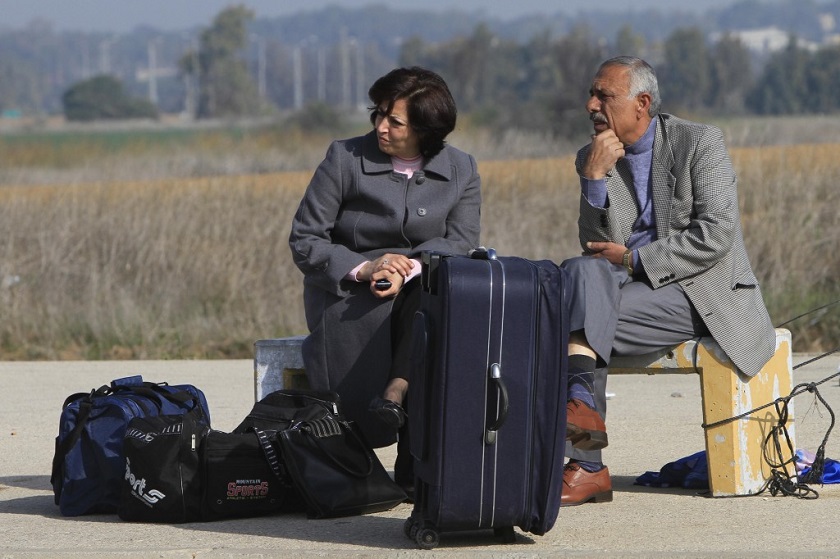
Palestinian Christian couple from the Gaza Strip leaves through the Israeli Erez crossing, Thursday, Dec. 24, 2009 (photo credit: Tsafrir Abayov/Flash90)

This article was first published at Christianity Today, on December 20.

Bethlehem’s Church of the Nativity has restored its sparkling mosaics and marble columns to their original glory for the first time in 600 years.

“It has become such a beautiful church,” Ziad al-Bandak, head of the local project committee of Christian leaders, told the AP. “Every Christian in the world would love to see it now.”

Palestinian Mayor Anton Salman expects 1.2 million tourists will make their way to Christ’s birthplace this year. Among them, following an Israeli reversal, will be those who most long to visit for Christmas—the Christians of the Gaza Strip.

“In Gaza, they talk about the West Bank as if it is heaven,” said Hanna Maher, Egyptian pastor of the Gaza Baptist Church. “People love to go for Christmas; there are so many churches.”

In Gaza, there are three. According to the 2017 census, 47,000 Christians live in the Palestinian territories (1% of the population), but only about 1,000 live in Gaza.

Last week the Christian advocacy group Middle East Concern (MEC) reported that nearly all who applied to enter Israel to visit the West Bank for Christmas failed to receive permits, except for those older than 55.

Applicants younger than 16 were also approved, consistent with restrictions instituted last Christmas and maintained through Easter. A previous policy limited travel to those between ages 16 and 35.

The MEC report was confirmed by Maher, who stated that initially just 200 travel permits had been granted, and Christians, sharing stories of the delayed permit applications, began to assume those outside the age limit would not be allowed to travel.

But their prayers were answered this week…

Please click here to read the full story at Christianity Today.

Categories
Christianity Today Middle East Published Articles

Does One Huge New Church in Egypt Make Up for Troubles with 24 Small Ones?

Sisi New Coptic Cathedral
(via Ahram Online)

This article was first published at Christianity Today on January 10, 2018.

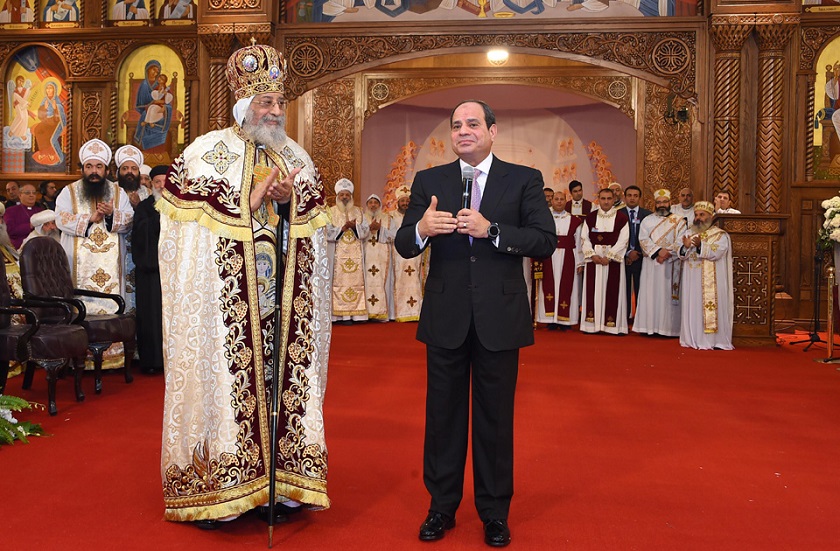
Celebrating Christmas with Egyptian Christians for the fourth consecutive year, President Abdel Fattah al-Sisi presented the largest gift under the tree: A new cathedral.

Sisi was the first president in Egypt’s history to even attend a Christmas mass. During last year’s celebration, he promised to build Egypt’s largest church and largest mosque in a yet-to-be-developed new administrative capital.

Three weeks earlier, 27 people had been killed in a suicide bombing in a chapel adjacent the old cathedral and papal residence, St. Mark’s in Cairo.

“Evil, destruction, and killing will never defeat goodness, peace, and love,” Sisi said at this month’s cathedral inauguration. “We are one, and you are our families. No one can ever divide us.”

Coptic Orthodox Pope Tawadros II called the new church, named The Nativity of Christ, a “divine arrangement.”

But also…


One week prior to the Helwan incident, a church in Atfih, 60 miles south of Cairo, was ransacked—not by terrorists, but by dozens of local Muslims offended by the rumor that a bell would be installed in the unlicensed village church.

In a recent report by EIPR, Egypt witnessed 20 similar sectarian incidents at churches over a 13-month period. Ibrahim said the total is now up to 24.

EIPR’s reporting timeframe began with the issuance of Egypt’s new church building law, meant to eliminate such problems…

Please click here to read the full article at Christianity Today.


Categories
Books Personal

The Christmas Rabbits of C.S. Lewis

Watership Down
(via http://cromeyellow.com/watership-down-by-peter-diamond/)

Creation is alive with the spark of God, often witnessed in the innocence of children. For those made curious by the title, it is actually an amalgam of two oddly related God moments recently experienced through the pen of two celebrated English writers.

The first came through reading Watership Down to my children. The classic Richard Adams epic is the adventure of several rabbits who break away from their warren. A note of foreboding by the youngest of the herd has not been heeded, but his history of keen perception convinces his colleagues among the rabble.

At a resting place along the way, Dandelion comforts the tired rabbits with the tale of Frith, their god.

It is a “How the Elephant got his Trunk” story, for rabbits. Their chief ancestor engaged in friendly witticism with Frith, and eventually found himself in conversation with the deity while bottom-up stuck in hole.

Earlier in the story, Frith multiplied the rabbit’s enemies as the ancestor thumbed his nose at the request to curb his prodigious copulation.

Impressed by the ancestor’s pluck while still vulnerable, Frith blessed the rabbit’s bottom with quickness and speed, with which it can ever evade them—but must run.

It is a delightful creation account, but my oldest daughter remarked Frith isn’t a real god. He is too much akin to his creatures, and too involved in playful banter with his creation.

I explained that the stories of many gods are similar. They live with humans and interact with them.

My younger daughter then piped in, “That’s kinda like our story, too.”

I was struck by her use of the word “story.” To my daughter the Christian story is the implicitly true account of the universe, but her instinctive description of it is as narrative. Unlike her elder sibling, she didn’t mind the resemblance.

A few hours later I was reading a Christianity Today article about a recently discovered article of C.S. Lewis, called “A Christmas Sermon for Pagans,” originally published in a forgotten issue of the once popular The Strand magazine, but nowhere listed within Lewis’ extensive bibliography.

The article notes Lewis’ observation that despite post-Christian peoples sometimes being called “pagans,” they are nothing of the sort. True pagans inhabited a world full of mystery, magic, and wondrous creatures.

Comparing the two, Lewis wrote, is:

like thinking … a street where the houses have been knocked down is the same as a field where no house has yet been built. … Rubble, dust, broken bottles, old bedsteads and stray cats are very different from grass, thyme, clover, buttercups and a lark singing overhead.

The enchantment of pagan reality is superior to a dreary modernity, Lewis thought. He found danger in modern man’s machine-like approach to nature, even to humanity itself.

But Christianity is an interesting middle-ground:

It looks to me, neighbours, as though we shall have to set about becoming true Pagans if only as a preliminary to becoming Christians. … For (in a sense) all that Christianity adds to Paganism is the cure.

It confirms the old belief that in this universe we are up against Living Power: that there is a real Right and that we have failed to obey it: that existence is beautiful and terrifying.

It adds a wonder of which Paganism had not distinctly heard—that the Mighty One has come down to help us, to remove our guilt, to reconcile us.

In some sense, coming back to my youngest daughter, Christianity is the fulfillment of Frith.

[To note for those truly interested: G.K. Chesterton explored very similar themes in his The Everlasting Man.]

Islam, a post-Christian religion held by most Egyptians we live among, takes great offense at the Christian claim of incarnation. While Allah intervenes in human affairs and may extend his great mercy, it is not fitting that he would become a man, sleep, snore, and defecate.

Frith, meanwhile, created the universe from his droppings. The Muslim impulse is very similar to that of my daughter, where a real god should not be so intimately involved with his creation.

It took the younger child to see it right.

“Every evening, when Frith has done his day’s work and lies calm and easy in the red sky,” wrote Adams, “[the ancestor and his descendants] come out of their holes and feed and play in his sight, for they are his friends, and he has promised them that they can never be destroyed.”

The magic of our ancestors fed the stories of our childhood. Modern man has grown too sophisticated to believe them, and Christianity played a significant role. We are not to fear the world.

The pagans did. Post-pagans, with much Christian help, shook their fear and enslaved their former enchanter. What will set the world—and us—free again?

Christmas is coming.

In one corner there may be snark at notions of traveling stars and virgin birth amid inebriation and the best of consumerism.

In another corner there may be snark at the right number of wise men and the seasonal location of a manger, amid legalism and the best of consumerism.

This year, around the Christmas tree appropriated from our pre-Christian ancestors, be rightfully pagan. Feast. Revel. Sing.

Be also rightfully Christian. Share. Serve. Marvel.

As Lewis wrote to the pseudo-pagans of his day, this may be our “way back not only to Heaven, but to Earth too.”

It is a lesson far more easily grasped by children. Perhaps also, by rabbits.

Categories
Personal

Mothers and Daughters, Mothers and Sons

victims-cairo-cathedral
(via Egyptians Streets)

A reflection from Julie:

Today marks a strange day.  Just one week ago, a suicide bomber killed over 25 people, mostly women and children, as they worshipped in church here in Cairo.  And one week from today, people all around the world will celebrate the joyous birth of a Savior during Western Christmas.  On one end of the bookend is a most tragic event; on the other, a most joyful one.  And yet for both events, that is only part of the story.

The bombing last week hit close to home. Although we are not from the Orthodox tradition of faith, we have worshiped at the local Coptic Orthodox church since we arrived in Cairo seven years ago.  We are familiar with the layout of the sanctuary, including the segregation of men and women.  The right side of the pews, facing the altar, is for the women and consequently most of the children.  The men sit on the left side of the church.  In our church there can be some mixing toward the back, and that is often where our family sits.  But for the suicide bomber, whether this was his target or just the nearest group he could reach, his bomb exploded in the women’s section.

Mothers and daughters lost their lives.  Sisters, friends, aunts, and grandmothers.  Mothers lost daughters and daughters lost mothers.  In at least one family, both the mother and daughter died, and another daughter was injured.  In another family, two sisters died, just graduated from school.  As I looked at the pictures of some of the victims, I couldn’t help thinking about the Sunday school teachers with my kids every week.  Young, vibrant, with their whole lives ahead of them.

One report mentioned the timing of the explosion.  During mass there is always a “giving of the peace.”  This has been a favorite time for our children as they slide their hands between the hands of other congregants, their siblings, and us, and then kiss their own fingertips, while saying “peace of the Messiah.”  This was the time, purposefully for not, that the suicide bomber entered the church.  Instead of peace, how tragic this man would give only violence.

Yet the Coptic Orthodox Church, thought mourning, still rejoices.  It is a church built on a history of pain, persecution, and suffering.  Children hear the stories of martyrs from centuries past and marvel at their strong faith and unwavering resolve to follow Jesus despite the threat of death.  Adults aspire to stand firm in the face of fear.  One friend told us he wished he was counted worthy to be there and die.  We are glad he wasn’t one of 25-plus now added to the church roster.

Such hope can sound trite.  A band-aid for the pain or an elixir to numb feelings after tragedy.  But it is not.  Mothers are grieving.  Fathers are burying their children.  Children try to understand where their mom has gone.  All of the pain is real and felt.  Yet they have a deeper faith that can help support those who are mourning.

Though the Coptic Orthodox calendar has Christmas on January 7, most of the world will celebrate just one week from today.  There is so much joy and happiness that surrounds this event.  For me it means baking, spending time with my family, fellowshipping with friends, making Christmas ornaments, and attending special church services.  And of course, we know the Christmas story where angels appeared to shepherds and announced the good news with great joy!  Amazing things happened more than 2000 years ago.

But tragic things happened too.  As I reflected this week on the bombing—with Christmas so near—I thought of the mothers in Bethlehem who lost their sons.  As Herod’s jealousy grew over the rumors of a new king, he ordered his soldiers to kill all the baby boys in Bethlehem two years and younger.  Can you imagine?  Murdered as they slept in their beds.  Seized while nursing. Moments earlier they were crawling down the corridor or toddling toward their moms.  What pain, what tragedy.

Christmas is a joyous celebration because it signals the birth of the Prince of Peace who will—one day—bring peace to this world. But this year not all are festive with blinking lights and wrapping paper. Besides the families of the Egyptian martyrs, some are dealing with debt, divorce, death, and disease. The world is dealing with refugees, war, terrorism, and racism.  Not exactly the happiest Christmas message.

How do we, how do I, handle all the tragedy in the world and still somehow celebrate the birth of my Savior?  This reflection is how I will start; I will remember the bigger picture.  Some are suffering; some are rejoicing.  I will pray for both.  I will help others.  I will be kind.  I will teach my children what I must continually learn: To not just focus on my own joy this Christmas, but to look outward and consider others.

We are mothers and daughters, mothers and sons.  Let us pray for peace on earth and goodwill toward men.

Categories
Prayers

Friday Prayers for Egypt: Christmas, Terror

Flag Cross Quran

God,

As Egypt receives echoes of both hope and horror, make true the promise and put down the threat. Help the people live in peace.

The president once again visited the papal cathedral for Christmas mass. He esteemed the unity of the nation and assured all destroyed churches would be repaired this year.

But terrorists once again killed policemen, destroyed pipelines, and targeted tourists—this time at a popular beach resort. It is a reminding blow to the notion that Egypt is secure.

So God, help Egypt remember correctly.

May she recall neighborly relations between religions. May she resolve through pain of innocents lost.

Let churches be rebuilt and Muslims also celebrate. Let grief heal wounds and reach out in forgiveness.

Otherwise echoes risk ringing empty. Hearts will be hardened and divisive lines reinforced.

God, amplify the sounds of hope. Revive the pulse of justice. Erase the marks of hostility.

Egypt has a long way to go. Echoes alone are monotonous. Strike forth a symphony, and bid her rejoice.

Amen.

Categories
Prayers

Friday Prayers for Egypt: Visions of Religion

Flag Cross Quran

God,

If you are the light, the good, and the pure, then it stands to reason that the closer one approaches you the more imperfections are visible. Furthermore, the accumulated wisdom in the approach to you – religion – is prone to the same exposure. Great virtue lies along your path, great vice looms a step awry.

And therefore man is a poor judge. Sometimes the deed seems obvious. Gunmen fire randomly into a newspaper office, or kill policemen guarding a church. Sometimes the act is contested. Religious leaders comment on politics, or political leaders comment on religion. And sometimes the symbol seems worthy. A president visits holiday mass, or a policeman is killed guarding a newspaper.

But in each one, God, man can find both honor or fault. Some difference stems from the choice of religion, some from the different visions of each. The path is important, God, as is the heart. Judge mercifully, but justly. May man imitate you as closely as possible.

For those who kill in your name, offended by the offense given to the revered, instill in them your own humility. For those who kill in your name, seeking retribution and reversal denied them in this world, instill in them a faith in your ordering of affairs.

For a pope who comments on politics, give him wisdom to discern reality, to speak judiciously, and to lead as a servant. For a president who comments on religion, give him wisdom to seek knowledge, to judge his limits, and to lead as a visionary.

For the symbol of state to recognize Christmas, bless intentions of unity amid accusations of politics. For the symbol of sacrifice in defense of another’s religious or irreligious voice, bless the faithfulness of duty amid uncertainties of criticism.

Should human freedom permit religious mocking? Should religious freedom permit divergence in the community?

Should Christianity stand with the powers-that-be, or simply pray for them? Does Islam need a renewal of religious discourse, or a better imitation of its origins?

God for so many the answers are obvious; for others these answers are obviously different. We are poor judges, especially in religion. Show us the light, the good, and the pure. Help us hold to conviction where our vision is true, but in our certainty show us our darkness, our bad, and our impurity.

Bless Egypt in these questions, God, as a nation may she draw closer to you. Reveal her imperfections. Give her the best wisdom in religion. Guide her on the right path. Keep her foot from slipping.

Amen.

Categories
Excerpts

Translation: President Sisi at Christmas Eve Mass

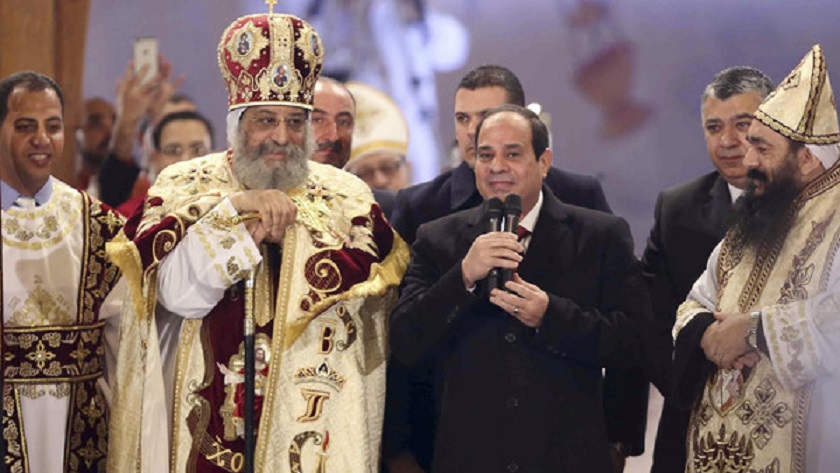
Egyptian President Sisi talks next to Coptic Pope Tawadros II as he attends Christmas Eve Mass at St. Mark's Cathedral in Cairo

Last night on Christmas Eve according to the Coptic Orthodox calendar, President Abdel Fattah al-Sisi became the first ever Egyptian head-of-state to attend the holiday mass.

His appearance lasted for about ten minutes, during which he gave a short speech. The video selection and translation is provided kindly by Paul Attallah.

It was necessary to come and congratulate you for the feast
I hope that I did not interrupt your prayers

Egypt for years taught the civilization to the whole world
and taught the civilization to the whole world
I want to tell you that the world is now waiting from Egypt
in these circumstances…

The people: We love you
Sisi: We love you too!

I thank you because frankly the Holy Pope will be upset!

It’s important that the whole world watch us: the Egyptians.
You noticed that I am not using another word than Egyptians
It could not be something different
We are the Egyptians
Nobody says: what (type of) Egyptian are you?
Listen
We are saying things
We are writing to the world a meaning
and we are opening a window of real hope and light to the people

I am saying that Egypt taught to the world all over the years civilization and humanity
Today we are present to confirm that we are able another time
to teach the humanity
and to teach the civilization once again.
Starting from here
For this reason, we cannot say but: we the Egyptians
We must be only Egyptians
Yes Egyptians

The people: One hand

Yes one hand
I want just to tell you
that with God’s will
we will build Egypt together
we will contain one another
We will love each other
We will love each other in a good way
we will love each other really
so the people can watch

I want to tell again
Happy New Year
and for all Egyptians
and for all Egyptians: greetings for the feast
Holy Pope: Greetings for the feast
Thanks and I will not take from you more time
Greetings

It is certainly a historic occasion. Merry Christmas to all Egyptians.

Categories
Personal

Not Quite Home for Christmas

Lonely Christmas

I have lived overseas now for about eight years.  We have lived in three different countries, but even so, I feel quite at home here in Egypt, where we have been for four years.  We have lots of friends and my life is busy with four young kids.  For me, living overseas is the norm.  While I love so many things about America, and I would love to live in the same state, or even town, as my family, I am perfectly content living as an expat.

But there are times when homesickness strikes.  Times when you just wish you could be two places at once, or that you could travel over the ocean as easily, and cheaply, as driving from New Jersey to Pennsylvania.  And one of those times is the holidays.  Particularly Christmas.

The family I grew up in still gets together on Christmas despite growing from the original 7 to now 29 people.  And if I sit and think about that too long, especially at the time they are actually gathering, which is usually when I am sleeping here, that can make me sad.  I would love to be with my family on Christmas.  But of course, I am with my family on Christmas as I celebrate with my husband and kids.  What is the difference?

The last few years I have felt that Christmas has snuck up on me.  We celebrate American Thanksgiving, and before I can think about it, I have to have the Christmas Advent calendar up in order to count down to the 25th.  Meanwhile, here in Egypt, the official holiday of Christmas isn’t until January 7, according to the Coptic calendar.  And while you can see lots of Christmas trees and wrapping paper on display at local shops, there isn’t exactly the festive atmosphere that you would find in the States.  One of the biggest reasons the 25th almost comes without notice is that my girls have a regular school day and are either studying for or taking their mid-term exams.  The church where we worship has begun Christmas choir practice for the girls, but their program will be on New Year’s Eve.

And so I am learning what I need to do personally to make Christmas special for me and my family in our home here in Egypt.  I need people and special celebrations.  If we aren’t invited to others’ celebrations, then I need to host celebrations for us (or maybe for me!)  I need to bake and enjoy the time spent in the kitchen with my kids, as that is one of my favorite memories from Christmases in Pennsylvania… all the kitchen preparation beforehand.  I need to listen to Christmas music and make an effort to teach my kids the carols they should know.  We need to attend Christmas productions and concerts at local churches.  And we need to set new traditions that make our Christmases ones that our children will one day miss.

This year I am hoping to host three Christmas teas.  What is easier, and tastier, than making a bunch of Christmas sweets, and inviting others to join and indulge?  One group will be teachers from my daughter’s Egyptian school, where I have begun teaching on a very part-time basis.  This is an experiment and something totally new for them.  Another group will be of Egyptian Christian friends.  Again, a bit of an experiment, but we can celebrate the holiday together, perhaps for some of them in a new way.  And the last group will be of other foreign moms like me.  This will be the most naturally comfortable and possibly the tastiest as they provide some of their favorite traditional sweets.

No matter where we are, if with my husband and our children gathered together, we are home. And this home is now Egypt.  It requires some adjustments and creativity, and perhaps some courage to step out and try new things.  One of our Egyptian traditions is sailing on a felucca on the Nile River on Christmas morning. It is very different from the craziness that ensues when 17 grandchildren descend on my parents’ house on Christmas day.  But these are special times and new memories that we make ourselves. Perhaps one day our own children will have a longing for Egypt. But we pray they will be able to celebrate wherever they are, even if not quite home.