
Categories
Christianity Today Middle East Published Articles

Who Writes History When There Is No Winner?

Peter Charlesworth / Getty

Eight somber Muslims sat around white plastic tables on the gold-tinged red carpet of Sayyida Aisha Mosque in Sidon, Lebanon. Arabic sweets beckoned, but few partook. The seriousness of the occasion—reviewing their memories of Lebanon’s 15-year civil war that ended in 1990—seemed to make several uneasy. They did sip their tea.

Four were Lebanese native to Sidon. Four were Palestinian refugees. Several wore beards, some long and scraggly, others short and trimmed. One was a former fighter in the war. Another lost family members when a Christian militia massacred inhabitants in Tel al-Zaatar.

Beginning in 1975, Christians, Muslims, and Palestinians plunged Lebanon into a regional conflict that included Israel and Syria, leaving 150,000 dead. Those convening the meeting, a Lebanese evangelical and a Druze follower of Jesus, hoped to unravel the reasons behind the highly contested conflict. Their host, chief judge for the Sunni Muslim court in Sidon and imam of the mosque, lent his legitimacy to the sensitive proceedings.

As participants received a 12-page document presenting Lebanese history that preceded the war, they were taken aback by reading a fully Christian perspective. But then the story shifted to Muslim perspectives, divided between Lebanese and Palestinian views. Three versions of history, none legitimized over the other.  

Many Christians do not call Lebanon’s tragedy a civil war. They emphasize how Palestinian refugees brought local destruction in their fight against Israel. Meanwhile, Palestinians emphasize displacement from their homeland and their need for a base from which to fight Israel. Lebanese Muslims sympathized with Palestine but aimed to change a sectarian political order that disproportionately favored Christians.

When the group finished reading the document, the evangelical stood up.

“Which narrative do you sympathize with the most?” he asked.

Martin Accad, president of the Beirut-based Near East School of Theology, spoke in his capacity as founder of Action Research Associates (ARA), which is working on a project that presents civil war history through multiple narratives. Cofounder Chaden Hani took notes. Their project is unique because, in schools, history books end shortly after the country’s independence in 1943 and avoid discussion of the sectarian struggles that followed.

A few participants dominated the mosque conversation with their viewpoints. An elderly Palestinian former fighter mostly sat silent. Accad asked about their emotions, which prompted different responses. “Sadness at what happened,” said one. “Fear it might happen again,” said another. A third noted, “I am happy we are finally trying to talk objectively about what took place.”

To move on from the conflict, Parliament passed a general amnesty law in 1991 that pardoned all political and civil war–related crimes. Former militia leaders became politicians and ignored the peace accord to write a unified history textbook as each sect clung to its narrative.

In 1997, Lebanon mandated a new educational approach. After three years of work, the cabinet formally adopted the history curriculum. But it was never implemented due to political interference behind the scenes.

“History is written by the winners,” said Accad. “But there was no winner in Lebanon.” Christians and Muslims fought each other, and as allegiances shifted, each religion split into rival factions that clashed as well.

Accad said history became…

This article was originally published at Christianity Today, on December 18, 2025. Please click here to read the full text.

Categories
Christianity Today Middle East Published Articles

The Priest and Social Worker Deradicalizing Jihadists in Prison

Patrick Baz / Stringer / Getty

Maya Yamout stared at the hardened jihadist sitting across from her over a plastic desk in the unkempt library prison. Books littered the floor. The man, a veteran al-Qaeda militant in the notorious Block B of Lebanon’s Roumieh jail pushed forward a glass of tea.

“Where’s the sugar?” Yamout asked.

The curt question fit their relationship. In their previous brief encounters, the prisoner called Yamout a spy, a pig, and all manner of insults that belittled her as a Muslim woman who did not wear a veil.

Yet this time, her mischievous smirk made the terrorist smile. Two weeks earlier, when he was sick, Yamout inquired about his health from prison guards and brought medicine and shampoo on her next visit. Once he recovered, he invited the visit, prompting the nervy but playful exchange. Sensing a breakthrough, Yamout proposed therapy. He accepted.

Eventually, filled with shame, he apologized for how poorly he treated her.

“To reach a prisoner, you have to bond over something,” said Yamout, the cofounder of Rescue Me, a Lebanese crime prevention and deradicalization organization.

But Yamout is clear: This something should not be religion. She’s found that speaking about faith often gets entwined in politics and leads to endless debate. It also rarely addresses what radicalized a militant in the first place.

Yet Marwan Ghanem, a priest in the Maronite Catholic church and president of the Lebanese chapter of Prison Fellowship International (PFI), takes the opposite approach. He centers his ministry on the story of Jesus and Zaccheus, believing the tax collector’s model of repentance can help any prisoner restore a debt to society.

Yamout and Ghanem worked independently in separate sections of Roumieh but met often for mutual encouragement. Despite their differences, when Yamout left in 2024 to pursue a PhD at the University of Swansea in the UK and budget restrictions at Rescue Me pinched its ability to go into prisons, she asked Ghanem to continue her work with extremists. She simply counseled him to go slow with religion, avoid provocation, be patient if insulted, and remember the prisoners’ humanity.

“Kill them with kindness,” Yamout said, “and kindness will prevail.”

Rescue Me, which Yamout and her sister Nancy founded in 2011, primarily worked among at-risk youth in the Hayy al-Gharbia neighborhood of Beirut until funding cuts in 2017 curtailed its service among the Lebanese poor as well as Syrian and Palestinian refugees.

Many in hopeless situations became easy targets for Islamic extremist groups, she discovered. And when prison overcrowding assigns ordinary criminals to Block B—designated for terrorist offenses—even the nonreligious can be radicalized through their need to belong, Yamout said.

She said Block B extremists fall into four categories. A quarter of her cases sought retribution for wrongs they suffered or the poverty they endured. Another quarter put a religious overlay on their frustration, while 35 percent did the same with politics. The remaining 15 percent are simple psychopaths—“I joined ISIS to smell the blood,” one told her.

Another prisoner she met fell into the second category. Born into Lebanon’s impoverished northern city of Tripoli …

This article was originally published at Christianity Today on December 3, 2025. Please click here to read the full text.
Categories
Christianity Today Middle East Published Articles

Grassroots Efforts Bring Together Diverse Sects in Iraq

Illustration by Christianity Today / Source Images: Getty

Three years ago in Iraqi Kurdistan, an adherent of the Kakai faith posted on social media that he had been called an infidel by a Sunni Muslim sheikh.

Kakai is a synthesis of Zoroastrianism and Shiite Islam, with between 110,000 and 200,000 followers in Iraq. Persecuted throughout their history, some Kakai consider themselves an independent religion, others a sect of Islam. But most Kurds are Sunni. The offending adherent felt a clear threat; some interpretations of Islam call for the killing of infidels.

Abdo Saad, regional programs director for Adyan Foundation, a Lebanon-based organization promoting interfaith dialogue and equal rights, reached out from his office in Erbil, Iraq, to the local ministry for religious affairs, alerting officials to the danger the Kakai follower may have faced. The authorities intervened and spoke to the sheikh privately. The Kakai man told Saad the issue had been resolved. But the ministry took no further action against the cleric.

Saad was not satisfied. In the honor-shame culture of the Middle East, it is often possible to resolve issues of religious freedom behind the scenes. Many converts to Christianity, for example, can live in relative peace if their Muslim families are not devout. Most authorities are not out to arrest believers.

However, if a conservative cousin publicizes the convert’s new faith, trouble may ensue. Wise officials may calm the situation, perhaps by relocating the convert to a different part of the city. They do not want Muslim extremists to discover the offense and call into question the religious legitimacy of a government that does not enforce the Islamic ban on apostasy.

Yet in the Middle East, only Lebanon allows a convert to officially register his or her new faith. For other nations in the region, religious scruples often trump religious freedom. Governments resolve many social issues along similar patterns, but human rights advocates lament that—as with the Sunni sheikh and Kakai Kurd—officials do not take a public stand.

Lebanon boasts one of the Arab world’s more robust expressions of political and cultural commitment to religious freedom. But Saad said the concept of rights-based citizenship has not sufficiently taken hold in any nation to enable a transition to a free and open democracy. He counsels Christians and Muslims to listen well to each other’s concerns so they can reform their nations together.

“I don’t have the answer for what this should look like,” he said. “I hope our grassroots work will push the leaders, but I don’t know.”

His uncertainty is warranted for Iraq as well. Under the dictatorship of Saddam Hussein, a Sunni, the nation had a nominally secular regime that integrated allied elites from different sects into its authoritarian governing structure. During the transition to democracy under US occupation, Iraqi political parties immediately organized along religious lines, and the majority Shiites captured power.

Sunni insurgencies followed, culminating in the creation of ISIS. Shiite militias backed by Iran joined the international coalition to defeat the jihadist threat but then kept their weapons and eroded national sovereignty. Neighboring Syria may witness a similar transition to conservative Sunni power now that a former al-Qaeda member has overthrown the Alawite-led regime.

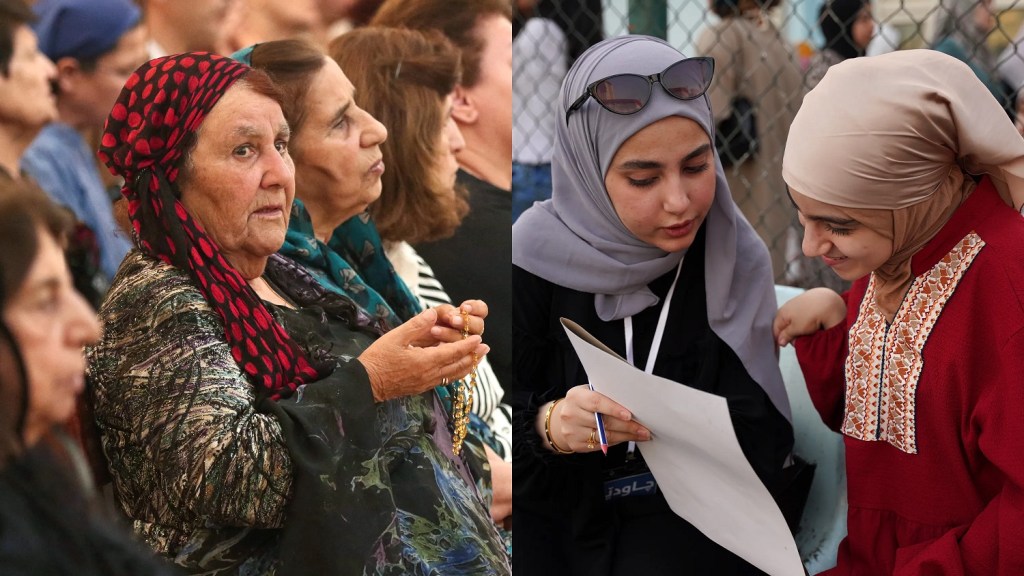
Adyan registered in Iraq in 2022. An early project aimed to replicate the Lebanon success of Alwan, a school-based program to foster religious diversity and acceptance. Alwan means “colors” in Arabic. The Iraqi government welcomed the effort but insisted on calling it by the less kid-friendly name “Education on Active and Inclusive Citizenship,” as the original name made them think of the LGBTQ rainbow. Due to local sensitivities, the interfaith group accepted.

Other projects worked on social cohesion, Saad said. In a Chaldean Catholic city in the northern area of Nineveh, a Christian, Muslim, and Yazidi led joint efforts to renovate a public square damaged by ISIS. They restored electricity, installed benches, and held a public dinner. Some played backgammon long into the evening.

Similarly, in the southern city of Basrah, Iraq, with an overwhelmingly Shiite population, Adyan helped a Shiite and a Sunni lead a festival of diversity in the main city square. Artists and singers entertained onlookers, when a member of the minority Mandaean religion took the stage. He told Saad this was the first time he felt comfortable speaking publicly about his faith, in which John the Baptist is the greatest prophet.

Within a sectarian society, good social relations are possible—even common. It is harder to…

This article was originally published at Christianity Today, on October 29, 2025. Please click here to read the full text.
Categories
Christianity Today Middle East Published Articles

I Was the Enemy Jesus Told You to Love

Photography by Sandra Singh for Christianity Today

When I was 16, a new student named Zakariya showed up at school. His forehead bore fan-shaped scars that identified him as a member of the Dinka people group—south Sudanese minority rebels, many of whom were Christian. My enemies. Zakariya was nice to everyone and scored the top grades in class, which made me hate him more.

As devout Muslims, my family and I were committed to Islam’s central place in the government. But our application of our religion was radical, since we prayed for Allah to destroy those who opposed us.

For two years, I added a request for Zakariya’s destruction to my daily noontime prayers. One night, that prayer was answered. My friends and I climbed a tree with our bayonet-fixed rifles and watched as a flashlight approached in the distance. It was Zakariya, who we knew walked this way each evening.

When he was beneath our tree, we ambushed him, beating him mercilessly with our fists and rifle butts. In a frenzy, I stabbed him repeatedly with my bayonet.

“Allahu Akbar,” I muttered in pride as we walked away from his mangled body. We left him for dead, and he never returned to school.

I was born into one of independent Sudan’s three leading families. My great-grandfather had joined the 1881 Islamic revolt against the British. Members of my family helped enshrine sharia law in our country. My father led the military in Darfur, where he later served as governor.

As the only son, I was to inherit this legacy. Our family believed our highest allegiance transcended the nation to include all Muslims in a global Islamic community called an umma. This inspired a tradition—unknown to me at the time—of early commitment to religious learning. So when I was 8 years old, my father drove me 500 miles north of Khartoum and dropped me at a desert madrasa to learn the Quran. He gave me no explanation and barely said goodbye.

At the madrasa, I was shaved bald and given a white robe and prayer cap for my daily uniform. Our group of ten boys sat in a straw hut and memorized Arabic verses with a long-bearded shaykh. The Quran was in his right hand; in his left he held a leather whip to punish our frequent mistakes. Allah must be like this too, I thought. I cried at night for 17 days straight.

When my father came to pick me up two years later, there was no embrace, but I saw he was proud of me. At home, I recited the entire Quran to my family and received a camel as my reward.

In my family’s eyes, I was now a man. Instead of playing soccer, I practiced disassembling and reassembling a Kalashnikov rifle and playacted ambushes against our enemies. Maybe it was preparation for Zakariya. By the time I graduated from high school in 1989, I was ready for jihad and to die as a martyr. I was the perfect son my father had dreamed of.

But my role model wasn’t my father. It was…

This article was originally published in the September/October print edition of Christianity Today. Please click here to read the full text.

Categories
Christianity Today Middle East Published Articles

Loving Muslim Neighbors Without Watering Down Your Faith

MOHAMMED HOSSAM / Contributor / Getty

When Wageeh Mikhail was a boy, a Muslim mob attacked his Presbyterian church and killed his Sunday school teacher in the Upper Egyptian city of Minya. Though he remembers little about the event itself, he recalls praying for the assailants. And he still feels emotional remembering how he honored the childhood lessons that told him to love his enemies.

It was not the last time he had to.

Three decades later, in the aftermath of the Arab Spring, Islamist supporters of Egyptian president Mohamed Morsi alleged that Christians had collaborated against him and used that pretext to set dozens of churches on fire. In some locations, Muslims defended the local houses of worship.

Among these was Mikhail’s childhood church. The subsequent Sunday, grieving members worshiped in the burned-out pews—this was the extent of their protest. And across the country, Christians refused to escalate the conflict. 

Though Mikhail was living in Cairo at the time, he mourned from afar and again remembered his Sunday school lessons. Today, Mikhail is the director of the Network of Centers for Christian-Muslim Relations (NCCMR) and has a clear message: Muslims are not the enemies of Christians.

“Islam has been a practical and theological challenge to the Christian faith,” he said. “But we must work together.”

CT previously introduced Ramon Llull, a 13th-century Franciscan hermit from the re-Christianized island of Majorca in modern-day Spain, who advocated winsome relations between Muslims, Christians, and Jews. During the Crusades, he penned a novel in which a representative sage from each religion argued persuasively about his faith, without rancor, and the three remained friends.

NCCMR is similarly countercultural today but in a different direction. In a world in which interfaith dialogue can seek a relativistic commonality among the monotheistic religions, NCCMR’s partners, representing 18 centers in 13 countries with five additional applicants, recognize the call to conversion as an essential part of each religion. At formal events, the members agree to forgo Christian evangelism and comparable Muslim da’wa. Yet as individuals they are free to witness. Mikhail emphasized that all participants believe in freedom of religion—and its propagation.

“Christians have to evangelize,” he said. “The one who said ‘Do not kill’ also said ‘Go and make disciples.’”

NCCMR has faced sensitive issues beyond evangelism. During last year’s inaugural meeting, several attendees voiced concerns over rumors of an international conspiracy to merge Islam and Christianity into one religion. Mikhail assured them the network’s mutual commitment was to honor each faith as an exclusive religion with claims to divine truth.

Keeping in spirit with Llull’s characters, members agreed to avoid arguments and direct challenges over their respective religion’s superiority. Yet the network also made clear that NCCMR is not for religious leaders who assert that all paths will lead to God.

Mikhail appreciates Llull. But his vision for dialogue comes from his ancestors. In the early 1990s, he studied at the Evangelical Theological Seminary in Cairo (ETSC). Though many of his professors were Egyptian, they used textbooks largely imported from the US. From this he assumed that all good theology came from the West. An American reoriented his theological geography.

In Mikhail’s third year…

This article was originally published by Christianity Today on July 23, 2025. Please click here to read the full text.

Categories
Christianity Today Europe Middle East Published Articles

How a 13th-Century Spaniard Modeled Interfaith Friendship

WikiMedia Commons / Edits by CT

Sitting with a student distraught by religious war, a God-fearing academic lamented the chaos in Syria, the destruction of Iraq, and the existential tensions seemingly ever-present in the Holy Land.

“What a great fortune it would be if … every man on earth could be under one religion,” he said. “[Then] there would be no more rancor or ill will among men, who hate each other because of the contrariness of beliefs.”

The academic’s answer, unfortunately, underestimates the human capacity for conflict. Beyond the bloody geopolitics, Islam, Christianity, and Judaism have split into sects and factions, to the point of killing fellow believers who share the same text yet hold different beliefs.

But for some, the “rancor and ill will” have prompted a corrective impulse to unite the faiths through interfaith dialogue. And the impulse is not new. The God-fearing academic? He’s a character from a book written in the 13th century by Ramon Llull, a Franciscan hermit and early proponent of an initiative still controversial among many believers today. Countercultural even then, The Book of the Gentile and the Three Wise Men addressed a world severely lacking in peaceful religious pluralism.

When Llull published his book in the 1270s, Crusaders were strengthening castles in Syria. The Mongol horde had sacked Muslim Baghdad—but then suffered defeat in Palestine, in the fields of Galilee. Llull wrote from what is now Spain, during the Reconquista, a military campaign to restore the Iberian Peninsula to Christendom. The Muslim realm, which they named Al-Andalus and became known as Andalucia, had been comparatively tolerant of Christians and Jews.

Llull lived on the island of Majorca, where his father settled after James I of Aragon declared victory in 1229. In the decades that followed, Christian kings in the liberated lands increased restrictions on non-Christian monotheists resident since the 8th century Islamic conquest. Some they forcibly converted, and within a few centuries, they expelled nearly all Muslims and Jews.

Llull, writing in Latin, Arabic, and his native Catalan, advocated for converting the non-Christians by rational argument, not the sword. While he did defend the Christian conquest of Muslim lands, he also founded missionary schools and traveled to North Africa, where he disputed with Islamic scholars.

Few of his contemporaries…

This article was originally published by Christianity Today on July 22, 2025. Please click here to read the full text.
Categories
Christianity Today Middle East Published Articles

What Do Iraq’s Persecuted Yazidis Believe?

John Moore / Getty

Hadi Maao has faced multiple challenges in his 22 years of life. At age five, his mud-brick house fell on him, a result of nearby car bombings. At age 12, he fled to the mountains when ISIS displaced his people. At age 19, he dodged police while seeking asylum in Europe. Today, he lives and works legally in the Netherlands, while missing and worrying about his family still living in camps in northern Iraq.

Yet he maintains hope.

“God is always by my side,” Maao said. “And when I pray, he assures me of his presence.”

The thought sounds very evangelical. Yet Maao is Yazidi, a member of a minority religious community in Iraq that dates back to ancient Mesopotamia.

CT profiled Maao in part 1 of this series. In part 2, we described the challenges of Christian aid groups who help Yazidis in Kurdistan, the northern Iraqi region hosting many camps for the displaced. USAID cuts, also described in part 1, have drastically reduced humanitarian service.

Alongside his faith, Maao credited the prayers of his foreign Christian friends for his continued well-being. Conversion to another religion is forbidden to his people, Maao said. But he believes there is only a “thread of difference” between Yazidis and Christians.

This is far from the case in theology. Maao said that in ethics and conduct, the communities are close and keep good relations. But he made the comparison as the two minority religious groups have faced persecution from the majority Muslims, many of whom charge Yazidis with devil worship. Christians sometimes speak similarly, claiming Yazidis worship Lucifer.

The Bible does not give many details about the origin of Satan’s evil—only that in pride the angel rebelled against God and God cast him out of heaven. But in Islam, the Quran relates that when Allah created Adam, he commanded the angels to bow before the human creation. Believing himself superior, Satan refused.

Maao said that in the Yazidi story, God rewarded this angel (which they believe was a spirit called Melek Tawûs) for his refusal, as he would only worship God. In another version, however, Melek Tawûs’s disobedience was forgiven with his repentance, evidenced by tears that quenched the fires of hell. Maao stated that Yazidi beliefs are relayed by oral tradition, creating…

This article was originally published at Christianity Today on July 3, 2025. Please click here to read the full text.

Categories
Christianity Today Middle East Published Articles

One Muslim Sect Confesses a Trinity. It Includes Simon Peter.

Muhammad Haj Kadour / Contributor / Getty

As an Alawite, Ziad identifies with the main markers of Islam.

“Our book is the Quran, our prophet is Muhammad, and our direction of prayer is the Kaaba in Mecca,” he said.

Ziad, a pseudonym granted because of the still-unstable situation in Syria, believes in God and called out to him during the Sunni militant attack on Alawite cities and villages in the coastal northwest. However, he does not perform the prescribed ritual prayers, fast for Ramadan, or consider a pilgrimage to Mecca necessary. And he drinks alcohol, which is forbidden for other Muslims.

Yet mainstream rejection of his sect goes far beyond these offenses. To understand why most Muslims consider Alawite beliefs heretical, we must first know a little about the religion’s main sects—Sunni and Shiite.

When Muhammad died in AD 632, disputes arose within the community over who would assume leadership. Sunnis, who today represent 85 percent of Muslims, hold that the prophet left this choice open for believers to decide. They chose Abu Bakr, an early convert and respected tribal leader, as the first caliph.

Shiites, on the other hand, hold that Muhammad designated his cousin Ali as his successor and that the tribal confederation bypassed his will. Ali was eventually chosen as the fourth caliph but assassinated within an Islamic civil war. The caliphate thereafter passed into hereditary rule. This political history matters practically little to Alawites, but they share with Shiites the belief that Ali was the first imam.

Most Shiites count a succession of 12 imams from the bloodline of Ali, whom they say God endowed with supernatural insight to interpret the Quran and Muslim religious traditions. The 12th imam is believed to have concealed himself—entering a period of what is called “occultation”—and will reappear at the end of the age.

However, Alawites follow…

This article first published at Christianity Today on June 25, 2025. Please click here to read the full text.
Categories
Christianity Today Middle East Published Articles

The Young Lawyer Who United Lebanon’s Christians in Worship

Credit: Maronite Catholic archdiocese of Antelias

Lebanon has 12 officially registered Christian sects. Jesus prayed the church would be one. Once Mark Merhej did the math, the solution was worship. And in January 2024, the 29-year-old Maronite Catholic layman brought together representative patriarchs, bishops, and pastors from nearly every ecclesial family to pray collectively for the peace of Beirut.

Merhej began planning the event three years before the Israel-Hezbollah war, contemplating how to bring unity to the fractured Lebanese body of Christ. As the two belligerents exchanged missiles over the nation’s southern border, over 10,000 Lebanese Christians joined in worship with Merhej’s 300-person ecumenical choir and orchestra to pour out their hearts in pursuit of God’s presence. 

“Worship is the communal experience of God’s lordship and grace,” Merhej said. “The world outside—the war—is irrelevant.”

Merhej aimed to bring a higher vision to the troubled Christian community. That January, during the official week of prayer for Christian unity—usually a perfunctory affair—he filled the Beirut Forum with soaring hymnodies of Byzantine chants and intoned hallelujahs. Members of the choir, inspired by their interdenominational harmony, wanted to keep performing. And the bishops, he sensed, resonated with his ecclesial vision.

But after the event, Merhej stepped back.  

As Beirut wrestled with the war, Merhej wrestled with God. He came to believe God wanted him to withdraw not only from a vibrant music ministry but also from his budding relationships with senior clergy members. At first, he didn’t understand this directive, and for months he let others take the initiative. But as he grew in his personal faith, planning a scaled-back but similar event one year later helped him discern God’s purpose for his rest.

The heavenly realms

Growing up, Merhej was mostly unaware that local Christians divided themselves between six Catholic, five Orthodox, and one Protestant council that includes several denominations. Theological schisms had split the Levant church over the centuries, which further splintered as Vatican, British, and American missionaries competed for new church members from historic Christian traditions.

In 1974, the newly formed Middle East Council of Churches (MECC) brought together Eastern Orthodox, Oriental Orthodox, and Protestant clergy to strengthen relations among minority Christians. (Catholics joined in 1990.) Today, though the MECC community has organized numerous service projects and theological dialogues, spiritual unity has not extended to religious practice. Some churches will not take Communion together, nor participate in joint liturgical services.

Merhej grew up in the mountains of Lebanon in a Maronite Catholic community. Surrounded by Muslim…

This article was originally published at Christianity Today on February 17, 2025. Please click here to read the full text.

Categories
Christianity Today Middle East Published Articles

A Christian and a Shiite Confront Loss in Lebanon

Anadolu / Getty

In early October, in a Christian village in southern Lebanon, “Samira” (we’re using pseudonyms due to the political situation) decided to water her lemon trees. The autumn winds were dry this season. Rain was less frequent. The frail, hunched-over grandmother filled her bucket and went outside.

Samira’s husband had died two years earlier. Her children had long ago moved away, seeking better opportunities in Beirut, but her daughter owned the house next door and made frequent trips back, recently refurnishing the interior with modern decor. Samira loved the home’s colorful bedspreads in the rooms where her great-grandchildren often stayed.

But such visits were infrequent these days. A year earlier, Hezbollah had entered the Israel-Hamas war in Gaza by shooting missiles into Israel. Israel had pushed back, and the exchange of fire between the Shiite militia and Israel drove thousands from their homes on both sides of the border. And in late September, Israel increased its bombing campaign against suspected Hezbollah sites throughout the country. Nevertheless, Samira had remained, adamant that her Christian village was not a target.

Samira had just begun watering her lemon trees when everything went black…

This article was originally published at Christianity Today, on January 8, 2025. Please click here to read the full text.
Categories
Christianity Today Middle East Published Articles

Can a Lebanese Seminary Move Beyond the Liberal-Conservative Impasse?

Courtesy of Near East School of Theology

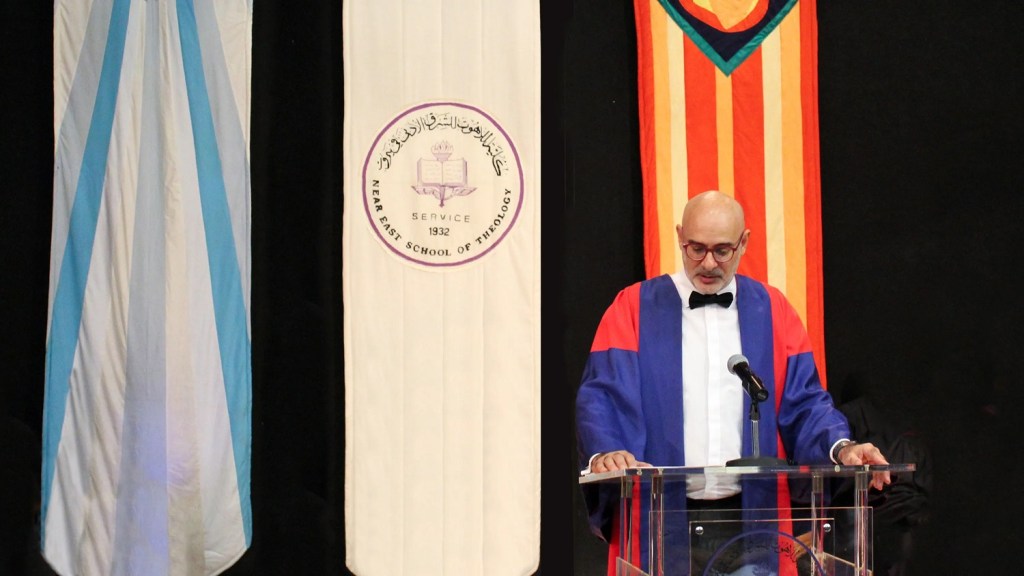
The oldest Protestant seminary in the Middle East has a new vision.

Officially founded in 1932 but with origins dating back to the 19th-century missionary movement, the Near East School of Theology (NEST) is operated by the Presbyterian, Anglican, Lutheran, and Armenian Evangelical denominations.

Installed this week, its 11th president is a nondenominational Lebanese evangelical.

Martin Accad, formerly academic dean at Arab Baptist Theological Seminary (ABTS), was installed on Sunday at the historic institution’s Beirut campus. He graduated from NEST in 1996 with a bachelor of theology degree, eventually earning his PhD from the University of Oxford. Awarded scholarships by the World Council of Churches and the evangelical Langham Partnership, Accad is a locally controversial theologian who, like NEST, straddles the liberal-conservative dichotomy.

Author of Sacred Misinterpretation: Reaching Across the Christian-Muslim Divide, Accad has urged believers to approach Islam in a manner that avoids the twin pitfalls of syncretism and polemics. But before joining NEST he resigned his prior academic position at ABTS to apply his biblical convictions within Lebanon’s contested political scene. Creating a research center, his last four years have been spent in pursuit of reconciliation between Lebanon’s often-divided sectarian communities.

Accad will now bring his vision to a new generation of Middle East seminarians.

Although doing public theology is novel for the institution, NEST has long sought, with some struggle, to balance the two streams of its early predecessors’ commitments to evangelistic outreach and service-oriented witness. Its founding in 1932 resulted from a merger of two programs, each with its own distinctives.

One stream of NEST’s roots dates to 1856, when American missionaries began what Accad describes as a discipleship training program in the mountains of Lebanon. Along with providing pastoral development, it functioned as a mission station for sharing the gospel in local villages with non-Protestant Christians and diverse Muslim communities. Its remote location was also designed to isolate these early “seminarians” from the corruption of city life in Beirut.

American outreach to Armenians and Arabs in the Ottoman Empire (modern-day Turkey) led to the creation of similar schools beginning in 1839. After the Armenian genocide in World War I, these efforts relocated to Athens where they coalesced into a seminary that adopted an ecumenical, Enlightenment-informed model, emphasizing the importance of social service. This was especially true in its approach to Islam—sympathetic and comparative with an eye toward reconciliation.

The merger of these two programs created NEST, which eventually settled in the cosmopolitan Hamra neighborhood of Lebanon’s capital. Although it is situated near three historic Protestant liberal arts colleges—now known as the American University of Beirut (AUB), the Lebanese American University (LAU), and the Armenian-led Haigazian University—early cooperation was shattered by the Lebanese civil war in 1975 and has not been re-established.

Accad wants to restore this collaboration and embody an integration of scholarship and discipleship. CT spoke with him about Protestant distinctives, “electric shock” pedagogy, and how to understand the mainline-evangelical divide in the Middle East.

Why does serving as president of NEST appeal to you?

We need to rethink what it means to be a seminary student today. This question is a key issue globally, but especially in the Middle East. Ideally, the seminary leads the church to be relevant in society. This requires beginning with society and determining its needs. And then the seminary addresses the church—what does the pastor need? Finally, it works backward and designs a program to fit this profile.

Historically, NEST has been an ordination track. This is the traditional model, and it is still necessary if the church believes that it is. But I want to explore with the churches their vision for seminary training, for congregational service, and for regional witness—and how NEST can help prepare leaders to implement this vision.

How do you plan to prepare leaders to serve the church?

Nontraditional, focused tracks are becoming the way people want to learn. Accrediting bodies speak of micro-credentials that may contribute toward academic goals but have value in and of themselves and fit into the bigger puzzle of what students want to do with their lives.

But this system of training should not be only for evangelicals. I want NEST to attract…

This article was originally published at Christianity Today on September 27, 2024. Please click here to read the full text.
Categories
Christianity Today Middle East Published Articles

Gaza War Strains Bible Scholars’ Model of Christian Conversation

Mlenny / Getty

When Jesus told the 12 disciples to shake the dust off their feet in protest of any town that did not receive them, it is easy to forget their mission was among fellow believers in Yahweh. Jews were speaking to Jews, and the message was simple: The kingdom of God is near.

But Jesus foresaw even greater opposition than rejection, according to Matthew 10. His disciples would be dragged before councils, flogged in the synagogues, and betrayed to death by their own brothers, he warned. “I am sending you out like sheep among wolves.”

Christian discourse on the Holy Land conflict is often similarly contentious.

“A conversation is needed,” said Darrell Bock, senior research professor of New Testament at Dallas Theological Seminary (DTS). “People talk at each other, not to each other. But with the emotion and distance between the two positions, is it even possible to try?”

Not from what another Bible scholar witnessed when each camp gathers alone.

“Their conferences only preach to the choir,” said Rob Dalrymple, course instructor of New Testament and biblical interpretation at the Flourish Institute, the seminary for evangelical Presbyterians in the ECO denomination. “Nothing changes; it only reinforces how bad the other side is.”

Each academic belongs to a community traditionally associated with one or the other side of the Israel-Palestine conflict. DTS teaches dispensationalism, which anticipates the restoration of Jews to the Promised Land before the return of Christ. Presbyterians adhere to covenant theology, which interprets the promises given to Israel—including the land—as fulfilled in Christ.

The Jews of Jesus’ day also had factions. But while “shake the dust off” was the instruction given to disciples in the face of opposition to the gospel, to all who believed in him he gave a very different message in the Sermon on the Mount:

Take the log out of your own eye first.

One group of Bible scholars…

This article was originally published at Christianity Today on October 7, 2024. Please click here to read the full text.

Categories
Christianity Today Middle East Published Articles

Iranian Christians Question Reformist Credentials of New President

Image: Majid Saeedi / Stringer / Getty

The surprise election in Iran of the sole reformist candidate for president was met with an unsurprising reaction from the United States.

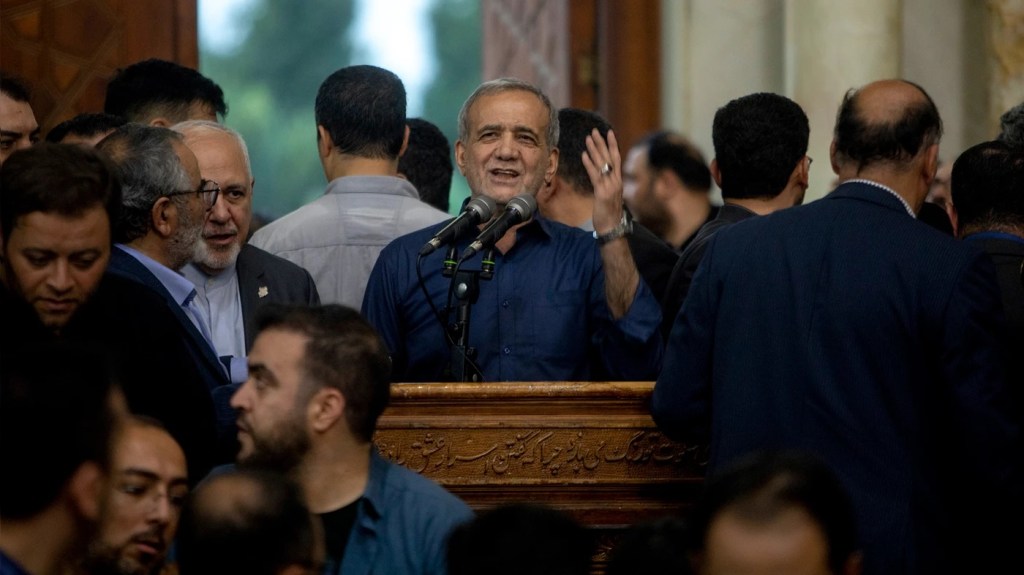
Heart surgeon Masoud Pezeshkian tallied 53 percent of the vote for a clear but narrow victory over hard-line former nuclear negotiator Saeed Jalili in an electoral process the State Department labeled “not free or fair.”

It followed the May 19 death of the previous president in a helicopter crash.

With “no expectation [of] fundamental change,” the perspective from Washington echoed that of Javaid Rehman, the United Nations Special Rapporteur on the Situation of Human Rights in Iran. The Pakistani-British lawyer stated that a new president is unlikely to improve the Islamic Republic’s record.

Iranian Christian sources in the diaspora agree.

“The result highlights a superficial change in leadership,” said Robert Karami, an Iranian Church of England pastor outside London and a board member of Release International, a UK-based advocate for the persecuted church. “It does not matter who holds the presidential office as long as the Supreme Leader remains in power.”

Pezeshkian, age 69, was one of six candidates permitted to run by Iran’s 12-member Guardian Council, appointed by head of state Grand Ayatollah Ali Khamenei. Dozens of candidates were disqualified, including former president Mahmoud Ahmadinejad. Analysts speculated the inclusion of Pezeshkian was intended to increase voter turnout—but if so, the strategy initially failed and may have backfired.

Only 40 percent of the electorate participated in the first round held on June 28, the lowest tally since the 1979 Iranian revolution. It resulted in the first runoff since 2005, leading to a hostile campaign in which leading figures claimed Jalili would rule Iran like the Taliban in Afghanistan. Voters partially responded, as election day on July 5 witnessed an increased turnout of 50 percent.

But not Mansour Borji, who boycotted the diaspora ballot stations in the UK.

“I participated in the election by…

This article was originally published by Christianity Today on July 9, 2024. Please click here to read the full text.
Categories
Christianity Today Middle East Published Articles

Iranian Christians Contemplate God’s Justice after President’s Death in Crash

Image: Majid Saeedi / Stringer / Getty / Edits by CT

Iranian Christians in the diaspora shed few tears over the death of President Ebrahim Raisi, killed in a helicopter crash along with the foreign minister and six others in the northwest mountains of Iran.

The leadership vacuum will be filled within 50 days by a new election. But it comes at a tumultuous time for the Islamic Republic, which last month launched an unprecedented missile attack against Israel. Coming in the context of the Israel-Hamas war in Gaza, Iran’s other proxies in Lebanon, Syria, Iraq, and Yemen have harassed the Jewish state and its Western allies.

Supreme leader Ayatollah Ali Khamenei declared five days of mourning, assuring there would be no change in the nation’s direction.

Raisi’s term in office was beset by internal protests over religious repression, alongside discontent with an inflationary economy. But while he oversaw restoration of diplomatic ties with rival Saudi Arabia, relations with the West severely deteriorated due to strengthening ties with Russia and China, as Iran enriched its uranium supply in suspected pursuit of a nuclear weapon.

“Countless thousands of Christians are specifically praying for God’s will in Iran,” said Lana Silk, CEO of Transform Iran, which oversees a network of churches in the nation. “I believe his hand is on all these key events.”

She advised the Western church to pray for new God-fearing leadership.

Of the now deceased leader, Christians expressed a diverse emotional response.

“From all of my contacts, the reaction among educated and socially engaged Iranians is joy,” said Shirin Taber, executive director of Empower Women Media, dedicated to the promotion of international religious freedom. “With the potential for change, there is always hope.”

An Iranian-American Christian, she said these deaths demonstrate that…

This article was originally published at Christianity Today, on May 23, 2024. Please click here to read the full text.

Categories
Christianity Today Published Articles

Who Restricts Religion More, Politicians or the People? Pew Crunched the Global Data.

Image: Spencer Platt / Getty / Edits by CT

Government restrictions on religion are at a global high.

Social hostility toward religion, however, has ticked downward.

So concludes the Pew Research Center in its 14th annual analysis of the extent to which 198 nations and territories—and their citizens—impinge on religious belief and practice.

Some sort of harassment of religious groups was recorded in all but eight.

The 2024 report, released earlier this month, draws primarily from more than a dozen UN, US, European, and civil society sources, and reflects conditions from 2021, the latest year with fully available data.

The global median on Pew’s 10-point scale of government restrictions reached 3.0 for the first time ever, continuing a steady rise since the baseline score of 1.8 in 2007. Overall, 55 nations (28%) recorded levels marked “very high” or “high,” only two lower than last year’s total of 57.

Nicaragua was highlighted for harassment of Catholic clergy.

Regional differences are apparent: The Middle East and North Africa (MENA) scored 5.9, up from its baseline score of 4.7. Asia-Pacific scored 4.2, up from 3.2. Europe scored 3.1, up from 1.7. Sub-Saharan Africa scored 2.6, up from 1.7. And the Americas scored 2.1, up from 1.0.

Pew’s 20 measures of government restrictions included efforts to “ban particular faiths, prohibit conversion, limit preaching, or give preferential treatment to one or more religious groups.”

Some pertained to COVID-19, such as Canada’s fines against open churches.

A further 13 measures for acts of religious hostility by individuals or groups included “religion-related armed conflict or terrorism, mob or sectarian violence, harassment over attire for religious reasons, and other forms of religion-related intimidation or abuse.”

Social hostilities toward religion continued to trend downward since a high of 2.0 in 2018, decreasing to 1.6, the lowest score since 1.2 in 2009. But 43 nations (22%) still recorded levels marked “very high” or “high,” though significantly fewer than the 65 offending nations in 2012.

Nigeria was cited for clashes between Muslim herders and Christian farmers.

The order of regional differences in social hostility…

This article was originally published at Christianity Today, on March 18, 2024. Please click here to read the full text.
Categories
Christianity Today Middle East Published Articles

‘Dune’ Centers Islamic Imagery. These Muslim-World Novels Center Christ.

Image: Illustration by Mallory Rentsch Tlapek / Source Images: Unsplash / WikiMedia Commons

Can you imagine if Dune took place in the ocean instead of the desert? One Christian novel does.

With Dune: Part Two now in theaters, moviegoers are once again treated to the cinematic spectacle of Frank Herbert’s popular sci-fi epic. Less known is how his 1965 novel bears witness to the influence of Muhammad.

And even less known are the efforts of Christians to translate their Muslim world experience into novels that communicate the gospel.

“We tend … not to recognize how much Islam has contributed to our culture,” stated Herbert in a 1976 radio interview. “But we owe Islam enormous debts of gratitude.”

The American author blended many religious themes into his six-volume series but deliberately filled his sand-infused apocalyptic landscape with tribal conflicts, Shiite concepts, and Bedouin-inspired characters. Hero Paul Atreides becomes the Mahdi, mirroring the Muslim messiah-like figure anticipated at the end of the world. And as he wins acceptance among the nomadic Fremen people, he takes the name Muad’Dib, adapted from an Arabic word for “teacher.”

Their desert religion is called Zensunni , mixing Islam with the Buddhism Herbert eventually adopted.

Dune is often credited as an inspiration for Star Wars and its Eastern cosmology. But there’s similar world-creating literature by three Muslim-world Christian workers writing in the genres of sci-fi, contemporary thriller, and young adult fiction.

Each bears witness to the love of Jesus.

“As far as I am aware, this is the first time that violent Islamists, followers of Jesus from Muslim backgrounds, and science fiction have been combined,” said Steve Holloway, author of Pelagia. “Conveying an Islamic story arc is one of the key motivations for writing the book.”

Set 40 years in the future, Pelagia tells the story of Ben Holden, a special forces agent turned professor of particle physics, and Suliman Battuta, a medical doctor and leader of a clan of nomadic “seasteaders” who herd tuna in the South Pacific Gyre, stretching from the coastlines of Chile to the Micronesian islands.

Holden’s scientist wife is murdered by the New Caliphate, a coalition of land-based Middle Eastern nations who want her project data for their jihadist aims. After surviving a later attack, Holden takes refuge with Battuta’s floating community of third-generation Yemeni followers of Isa al Masih, the Quranic name for Jesus the Messiah. Their status as apostates sets them in search of freedom of belief on the high seas.

Imagine the Wild West in submarines, with the fate of the world at stake.

The science of the novel is within humanity’s grasp today, said Holloway, whose book won the endorsement of Fish Farmer magazine, which called it a combination of films Captain Phillips and Minority Report. Currently overseeing a sea cucumber project in Indonesia, Holloway, senior strategy associate for Frontiers, served 12 years in a Southeast Asian nation where his team nurtured a small underground church as they researched ocean farming for the government, before expulsion from the country in 1998. A marine biologist, he read sci-fi as a kid and loved the world of Dune.

Motivated to show how followers of Jesus from Islamic communities flourish best in their original environment, he wrote Pelagia for a general global audience—including Muslims—and depicts austere jihadis with sympathy. There are no “cartoon bad guys” in his novel.

“It is more Tolkien than Lewis,” Holloway said. “Secular reviewers say it has a spiritual theme that doesn’t get in the way of a good story—I take this as a compliment.”

Yet it does have a conversion story, something missing from Someone Has to Die, book one in a trilogy written by Jim Baton, the pen name of a veteran Christian teacher serving in Indonesia. But whereas the futuristic setting of Pelagia is a step removed from Holloway’s ministry, Baton is still involved in the nitty-gritty of peacemaking.

His nom de plume means “bridge” in Indonesian.

“A thriller novel is perfect for our modern world of terrorism,” Baton said. “But I describe jihadists as human beings who have suffered, long for justice, and want the world to be a better place—and, that God loves them.”

In Someone Has to Die, Abdullah is a former terrorist seeking to atone for his past deeds by…

This article was originally published on February 29, 2024. Please click here to read the full text.

Categories
Christianity Today Middle East Published Articles

Petra Means Rock Churches: Jordan Permits Site’s First Prayers in 1,400 Years

Imagine yourself as Indiana Jones, traversing the narrow, nearly mile-long Siq gorge, with mountain cliffs towering on either side. Turning a corner then reveals the vast expanse of the ancient city of Petra and its majestic Treasury, the first-century rock-carved tomb of an ancient Nabatean king. You pass by the 121-foot-tall structure and its statues of Roman and Egyptian gods, making your way up a steep 800-step ascent to the equally impressive Monastery.

But before reaching Petra’s largest monument, you turn off the path into a different sort of ruin, mosaics lining the floor around half-sized recycled columns as incense wafts through the air. But unlike in the Harrison Ford movie, you do not meet an 11th-century knight preserved by the Holy Grail. Instead, the Greek Orthodox metropolitan of Jordan passes you a cup of Holy Communion.

In January, he offered the first Christian prayers in Petra in 1,400 years.

Other generations of film aficionados may prefer The Mummy Returns, Transformers: Revenge of the Fallen, or even Mortal Kombat: Annihilation. While onsite Hollywood productions provide revenue for Jordan, this is dwarfed by the $5.3 billion the country earns from its tourism industry. In 2022, Petra received 900,000 visitors, nearly one-quarter of the national total.

But now, the Hashemite kingdom is adding a religious component.

“It is a great blessing to be in this holy place in Petra,” said Archbishop Christoforus, before proceeding to offer the bread and wine. “We are not thinking of what surrounds us in stone, but of the saints and spiritual identity in its heritage, history, and civilization—and our great and blessed [Jordanian] homeland.”

In 2021, Jordan launched a five-year national tourism strategy with an emphasis on religious sites, including the Vatican-endorsed pilgrimage locations of Jesus’ baptism at Bethany-beyond-the-Jordan; Mount Nebo, from which Moses viewed the Promised Land; and Mukawir, home to a Herodian palace where John the Baptist may have been beheaded at the biblical Machaerus. Approximately 85 percent of tourists come for cultural and heritage purposes, and one-quarter of baptism site visitors travel from the United States.

With such tourists likely to visit Petra already, Jordan would like to extend their stay.

“Unfortunately, Petra is known mostly for its Treasury and Siq,” said Fares al-Braizat, chief of the Board of Commissioners of the Petra Regional Authority. “There is plenty more it can offer, and the churches are an additional discovery.”

Ten have been discovered so far, with excavations ongoing. But the fifth-century Byzantine cathedral was only discovered in 1990 and fully unearthed eight years later. Restoration has proceeded sufficiently not only to inspire Braizat to add Petra to Jordan’s list of Christian historical sites but also to revive the ancient city’s religious heritage. It only adds to the nation’s reputation as an open-air museum, he said.

Jordan’s evangelical community is appreciative.

“How can you have a historic church site and not bless it with prayer?” said David Rihani, president of the Jordanian Assemblies of God. “Petra shows that the government cares about the history of Christianity in this land.”

The biblical history is even longer. Petra may have been inhabited…

This article was originally published at Christianity Today on February 26, 2024. Please click here to read the full text.

Categories
Christianity Today Middle East Published Articles

Report: Iran Arrested 166 Christians in 2023, Targeting Bible Distributors

Religious reeducation did not work on Esmaeil Narimanpour.

First arrested by the Iranian government in 2021, he and seven other converts to Christianity were cleared by the state prosecutor, who stated that their change of religion was not a crime under Iranian law. The following year, he was ordered with several others to attend ten sessions with Muslim clerics to “guide” him back to Islam.

Last December, Narimanpour was arrested again, this time on Christmas Eve.

The case is one of several highlighted by “Faceless Victims: Rights Violations Against Christians in Iran,” the 2024 annual report released jointly by advocacy organizations Article18, Open Doors, Middle East Concern, and CSW and presented at the British Parliament.

“This is a great example of agencies working together,” stated Mervyn Thomas, founding president of CSW (formerly Christian Solidarity Worldwide), at the event. “Iran claims to ensure freedom of religion or belief for all; but that is nonsense, as this report shows.”

Not yet convicted, Narimanpour is one of 166 Christians arrested and 103 detained by Iran during the 2023 reporting period. Another 22 have been sentenced, and 21 imprisoned.

While sentencings decreased by 8 from 2022, this year witnessed an additional 32 arrests and 41 detainments. Article18 has tracked incidents in Iran since 2015, when arrests were at a peak of 193. Detainments have fluctuated yearly between 26 in 2018 and this year’s high, while sentencings ranged between 12 in 2015 and a high of 57 in 2020.

The British parliament gathering included testimony from former prisoner Farhad Sabokrooh. Arrested with his wife in 2011, the couple served one year in prison and had their previously registered church closed down after 25 years. Accused of being a spy for Israel and the United States, he told the gathering that he was forced into a false confession, sentenced without his lawyer present, and once released was threatened with death if he did not leave Iran within one month.

“My plea to you is to hold the regime accountable,” Sabokrooh stated. He later noted, “They somehow feel Christians are orphans and have no one to protect them. We have to reverse that.”

The 36-page sixth report was released on February 19 to coincide with…

This article was originally published at Christianity Today on February 21, 2024. Please click here to read the full text.

Categories
Christianity Today Middle East Published Articles

Church Attack Leaves Turkish Christians Troubled and Confused

Image: Emrah Gurel / AP Images

Turkish Christians are shaken by last weekend’s terrorist attack on a Catholic church in Istanbul.

Claimed by ISIS, it comes amid threats that have already caused some believers to shy away from Sunday services. And like the rest of their nation, Christians are confused by details that eschew easy explanations.

“Everyone is a little nervous, questioning the future,” said Ali Kalkandelen, president of the Association of Protestant Churches (TeK). “And for the next few weeks—even months—everyone will watch their backs.”

Two masked gunmen casually walked into Mass at Santa Maria Catholic Church on Sunday morning, shot into the air, and killed one person. Security footage then shows them leaving the building, only slightly less casually than when they entered.

A statement issued by Martin Kmetec, archbishop of Izmir and president of the Episcopal Conference of Turkey, expressed his community’s “shock” that an innocent person was killed in a “sacred space of faith in God.” It demanded better security for churches, a curb on the culture of hatred and religious discrimination, and that the truth be revealed.

Shortly thereafter, security services arrested two foreign nationals, from Russia and Tajikistan. ISIS later published a statement saying the attack was in response to its call to “target Jews and Christians everywhere.” The statement was followed by another from a group calling itself ISIS’s “Turkey Province,” which said that it fired its pistols during the unbelievers’ “polytheistic rituals.”

While ISIS has conducted multiple terrorist attacks in Turkey, this is the first claimed by a local branch. The so-called province first emerged in 2019 but had only produced one propagandistic video.

But on January 4, ISIS’s spokesman called for worldwide targeting, which it later tallied to 110 attacks in 12 countries, killing or wounding at least 610 people. Turkey had already detained 2,086 suspected terrorists and arrested 529 since June 2023. Dozens more were detained following the Santa Maria attack, and 23 will be deported.

Kalkandelen said that amid the ongoing arrests, church attendance has declined. Families have kept their children at home, while new believers and seekers keep their distance. The TeK statement expressed condolences to the Catholic community, confidence in the authorities, and a plea to stop provocative discourse.

“This terrorist attack is obviously not an isolated or freak act,” stated the Protestant association. “From now on, the dark power behind it must be fully exposed so that it can no longer … terrorize Christians, minorities, and anyone with common sense.”

Condemning the attack, Istanbul’s mayor said the second referent was imprecise. “There are no…

This article was originally published at Christianity Today on January 31, 2024. Please click here to read the full text.

Categories
Christianity Today Middle East Published Articles

Sharia Law Makes a Solid Case for Christ

Image: VladyslavDanilin / Getty

For 1,400 years, Christians have wrestled with how to defend their faith to Muslims. While Islam accepts Jesus as a prophet, it denies his divinity. And as for his sacrifice for sin on the cross, the Quran denies the crucifixion and by extension the resurrection, claiming instead that God took him directly to heaven.

Christian responses have often been polemical, seeking to invalidate the message and morality of Muhammad. They have also been apologetic, sometimes employing legal arguments that Muslims view as manmade and changeable—thus lacking authority to adjudicate matters of eternal significance.

Baptist pastor Suheil Madanat seeks instead to ground the authenticity of the gospel account within Islam itself. In Evidence for the Crucifixion and Resurrection of Jesus Christ Examined through Islamic Law, the former president of the Jordan Baptist Convention (2016–2022) consults expert sharia compendiums and relevant scholarly works to learn sharia’s criteria for validating relevant evidence—including eyewitness testimony, confession, expert opinion, and circumstantial evidence—and examines the New Testament accounts against it.

Endorsed by scholars at Southwestern Baptist Theological Seminary, Southern Baptist Theological Seminary, Fuller Theological Seminary, and Jordan Evangelical Theological Seminary in Amman, the book is a new resource for Muslim apologetics and comparative religion. CT interviewed Madanat about liberal source criticism, the divergence in resurrection accounts, and his ultimate hope for Muslims who read his book.

How does traditional Islam look at the Bible?

In principle, they accept both the Old and New Testaments as the word of God, but they believe that they have been largely corrupted. Though they accept that some accounts read today still have some truth, they do not accept the Bible as authentic. This is especially the case for the parts that contradict Islam—mainly the divinity, crucifixion, and resurrection of Jesus.

How do Arab Christians tend to address these objections?

Most of what I read in Arabic is a polemical approach rather than apologetic. They are more concerned about attacking the ethics of Muhammad and the teaching of the Quran rather than defending the Scripture. I have not seen much done to vindicate the authenticity of the Bible, though some is done in academic circles.

But I must add that Muslim scholars do not provide solid testable evidence that can be argued against. They say the Bible is corrupt, but what is the alternative? The Quran speaks about preserving the divine text, but where then is the authentic text? How did God allow this? When did the corruption happen exactly? To be sure, they do tell a story of the alleged corruption, but it contradicts plain historical facts.

They do not give objective answers to these questions, inviting the polemical reply.

Is this why you wanted to defend the Bible through an Islamic framework?

My task here is not to defend the whole Bible but the reliability of the accounts of crucifixion and resurrection, the backbone of our Christian faith. The libraries of the West are full of conservative responses to liberal source criticism and other critiques, but they do not mean much to most Muslims. Since the Quran says that the Bible is corrupt, they ask: Why should we care about an intra-Christian dispute?

But when I say I want to examine evidence for Chistian claims through the filters of divine Islamic law—it immediately catches their attention.

What is your method?

Islamic law has established strict criteria to examine eyewitness testimonies, but those who experienced the crucifixion and resurrection of Christ are long deceased. Their evidence exists only in documentary form—the Gospels. These must be first authenticated, so they can be equivalent to live eyewitness accounts, and then examined. The problem is that…

This article was originally published at Christianity Today, on December 22, 2023. Please click here to read the full text.