Categories
Christianity Today Europe Published Articles

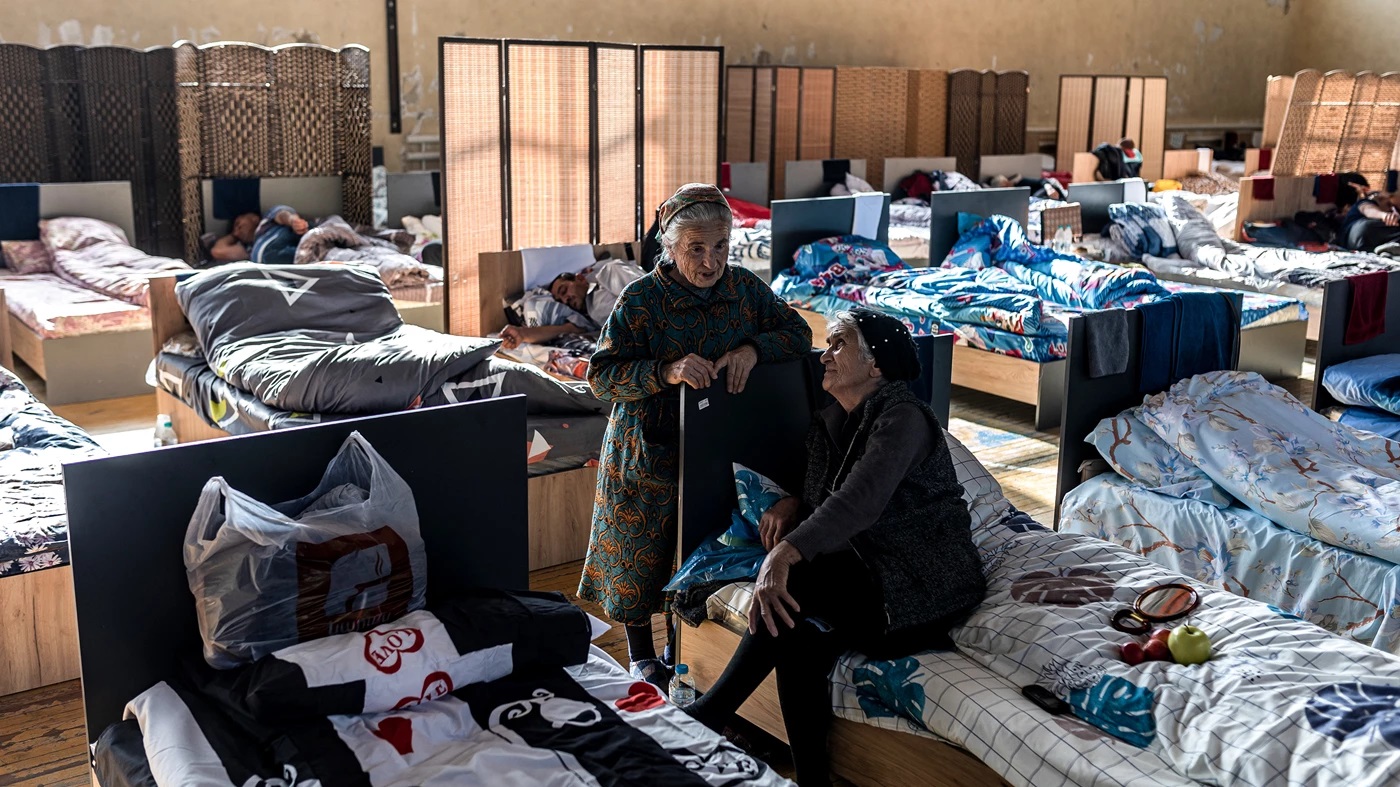
Armenia Struggles to Aid 100,000 Artsakh Refugees After War

Image: Diego Herrera Carcedo / Stringer / Getty

Karolin is one of 30,000 Armenian children without a home—again.

Fleeing the mountainous enclave of Nagorno-Karabakh in the face of Azerbaijan’s assault last month, the 12-year-old girl had an unexpected encounter. After crossing the Lachin corridor westward to Goris in Armenia proper, she found her beloved social worker waiting.

Arpe Asaturyan, founder of Frontline Therapists (FLT), was astounded as well. Amid the 100,000 refugees from what Armenians call their homeland of Artsakh, she had found the very same child displaced three years earlier. A special bond formed with then-9-year-old Karolin, who had gripped her tightly before returning home.

Located within internationally recognized Azerbaijani territory, the Armenian enclave suffered a bloody 44-day war in 2020. Over 6,000 soldiers died before a Russian-backed ceasefire left local Armenian authorities in control of only a portion of formerly held Artsakh land.

Karolin and her family went back anyway, vowing to continue their multigenerational presence. But after suffering malnutrition during an Azerbaijani-imposed nine-month blockade, they trudged three days in the slow-moving convoy of cars and buses across Lachin—the only road connecting the enclave with Armenia.

Over the week-and-a-half exodus, Artsakh residents crossed at a rate of 15,000 per day.

But the bittersweet reunion with Karolin is far from the worst of Asaturyan’s ordeal. Suffering in the chaos of relocation and the fog of war, several mothers told their children they would find their daddy in Armenia.

As counselor, Asaturyan was asked to tell them that their fathers had died.

“It is heartbreaking, and you know this will be the worst day of the rest of their lives,” Asaturyan said. “With all that has happened, it is hard to find faith.”

When the 2020 war broke out, the California native left behind a successful practice in trauma counseling to join her ethnic kin in ministering to returning soldiers and new widows. Funded by the Armenian diaspora, she oversees a small staff of paid and volunteer therapists providing free mental health services.

But in the weeks following last month’s conflict, her office turned into a humanitarian hub. Already, 20 truckloads of aid have been sent to Goris and the summer camp refuge in central Armenia where she first met Karolin.

“They know their life there was tenuous—they even laminate their documents,” Asaturyan said. “This is still the shock phase, but grief is set aside as bereft mothers must struggle now to find a job.”

The Armenian government initially prepared to receive 40,000 displaced from Artsakh; that was the single-day inflow on September 27 alone. The total number represents 3.4 percent of Armenia’s population, added to an existing refugee population of about 35,000. This does not include at least 65,000 Russians who fled to Armenia due to the Ukraine war, driving up real estate prices by 20 percent with skyrocketing rents.

The Armenian government is providing a relocation payment of $260 per person, with a promised monthly support of $100 to assist with rent and utilities. The UN High Commission for Refugees has called for $97 million in international assistance, and the United States has led the way with a pledge of more than $11.5 million.

“Peanuts,” said Marina Mkhitaryan, executive director of the Armenian General Benevolent Union (AGBU), a 180-year-old organization with institutional links to the Armenian Apostolic Church. “The level of support only adds insult to injury.”

Partnering with World Central Kitchen, AGBU has helped provide 80,000 nutritious hot-food boxes to those in greatest need. Soon AGBU will shift to dry-food packages so families can cook their own meals for up to four days. But a strong focus is on integration, equipping the displaced to live on their own.

A logistics center assists with mundane matters like official documentation, establishing bank accounts, and understanding taxes. And AGBU has partnered with a local employment agency to help the displaced find jobs and to provide training in entrepreneurship and the skills necessary for entry-level positions in Armenia’s strong IT sector.

But, being careful with terminology, Mkhitaryan wants more for Artsakh’s former residents than current stability.

“These are displaced persons who will eventually return to our historic homeland,” she said. “Refugee implies a state of no return, and that is not our stance.” Pastor Vazgen Zohrabyan believes this will only be possible…

This article was originally published at Christianity Today, on October 16, 2023. Please click here to read the full text.

Categories
Christianity Today Europe Published Articles

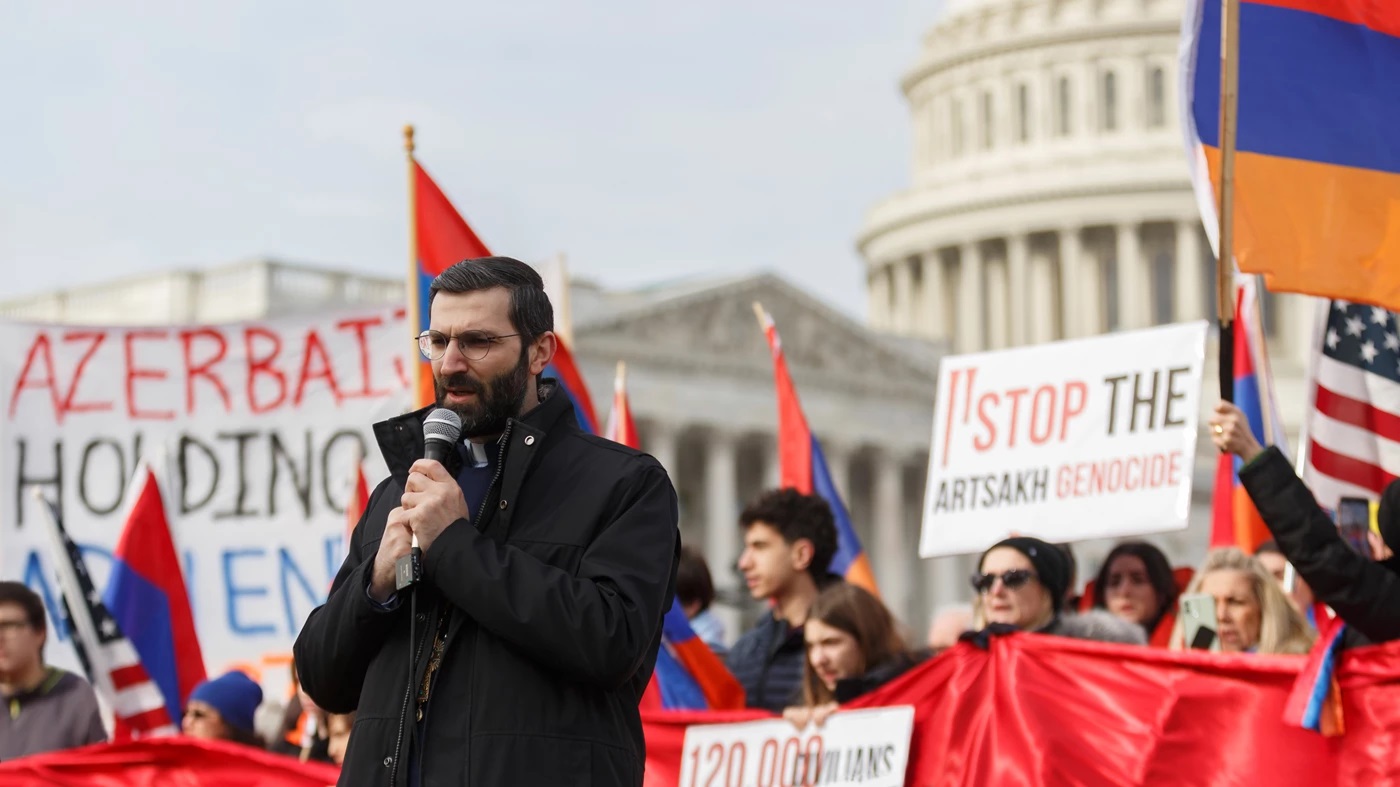
Artsakh Exodus: Armenians Mourn as 98,000 Flee Christian Homeland

Image: Astrig Agopian / Stringer / Getty / Edits by CT

Suddenly, more than 80 percent of people in Nagorno-Karabakh have fled.

Last week the unrecognized Armenian republic, called “Artsakh” by its 120,000 residents, suffered an invasion by Azerbaijan, which is recognized internationally as sovereign over the enclave nestled in the Caucasus Mountains.

At least 32 people were killed in the assault that violated a Russian-backed ceasefire, with at least 68 more killed six days later in a suspicious fuel depot explosion.

But more than the death count, fear of genocide is driving people to flee—more than 97,700 as of 6 p.m. Friday evening, according to Armenian officials [updated]. Though the enclave is home to around 400 holy sites now at risk of erasure, one official stated that 99.9 percent of Artsakh’s Armenians will cross the border to Armenia, the world’s first Christian nation.

The same crossing had been blocked by Azerbaijan since December 2022.

Near-starvation conditions ensued, with humanitarian aid allowed entry one day prior to the Azerbaijani offensive. The Artsakh government issued a decree to dissolve itself as of January 1, ceding control of a territory it declared independent after the fall of the Soviet Union in 1991.

Armenians controlled Nagorno-Karabakh since 1994, after a three-year war resulted in the deaths of 30,000 people, displacing an additional 100,000 in mutual exchange between Armenia and Azerbaijan. Peace talks faltered since then, as they continued to fail after 2020, when a 44-day war resulted in Azerbaijan reclaiming much of the enclave. A further 7,000 were killed before the Russian ceasefire.

Azerbaijan has promised that Armenians in the territory will be integrated as full citizens with equal rights, joining other non-Azeri ethnicities which comprise 8 percent of the population. In the Shiite-majority nation with a substantial Sunni minority, the small Christian community generally reports overall freedom of religion.

The European Parliament and Minority Rights Group, however, have stated that Azerbaijan’s ethnicities suffer discrimination. Artsakh Armenians fear much worse.

Imagine if 80 percent of Hartford, Connecticut, suddenly fled to New York.

The Armenian diaspora is stunned. The Armenian Apostolic Church has declared a worldwide day of prayer for October 1. And on October 5, Europeans for Artsakh has called for a rally in Brussels, to coincide with planned peace talks between the Armenian prime minister and the Azerbaijani president.

Like many, Hrayr Jebejian is at a loss. The general secretary of the Bible Society in the Gulf, also a Lebanese-born Armenian, resides in Kuwait and spoke to CT about his overall state of depression—but also his enduring trust in God.

How has the loss of Artsakh impacted you personally?

I am an Armenian. No matter how objective or balanced I seek to be, there is a lot of emotion. It is depressing. Even as a believer I am trying to pull myself together, so that I can continue to live my everyday life. It is affecting me that much.

I want to work, but I have no motivation. I have friends in Artsakh, I’ve been checking in on them, and they are traumatized. A teacher there told me: How can we stay, when there is a sword over our head?

Did you have hope when humanitarian aid was first allowed in?

I was closely following developments, and all the suffering from the blockade. Thirty thousand kids live there! And international experts said that ethnic cleansing was taking place. I can’t say this outcome wasn’t expected. It was expected.

But it all happened so fast.

From a political perspective, Artsakh had an elected president and parliament. Azerbaijan is a dictatorship, passed from father to son. If you put the Armenians into the middle of that, when they were used to democratic opposition and criticizing the government, it will be very difficult for them.

We don’t know how many people will stay. But there is no trust.

But the ancestral land and ancient monasteries are so important to Armenians. Are there voices calling for them to stay anyway and insist on the promises of equal citizenship?

There is a…

This article was originally published at Christianity Today, on September 29, 2023. Please click here to read the full text.

Categories
Christianity Today Europe Published Articles

Do Artsakh’s Armenians Need More or Less ‘Christian’ Advocacy?

Image: Bryan Olin Dozier / AP Images

It was almost a good news story.

After nine months of blockade, humanitarian aid finally reached the Armenian Christians of Nagorno-Karabakh on Monday. But almost immediately, ending three years of tense ceasefire after a 2020 war, Azerbaijan renewed on Tuesday its military assault on the mountainous Caucasus enclave.

And following today’s surrender and promised disarmament of local separatist forces, the region will almost certainly revert to the sovereignty of a neighboring nation that Armenians fear—and a former chief prosecutor of the International Criminal Court warns—is preparing a genocide.

Thousands massed at the airport in the capital of Stepanakert, preparing to leave.

Advocates for Armenia are at a loss. But of the three aforementioned adjectives—humanitarian, Armenian, or Christian—which ones were most effective in pressing for humanitarian aid? And now in a new phase of the conflict, which will be the most crucial in mobilizing further support?

CT spoke with six religious freedom experts about best practices in Christian advocacy.

What compelled this week’s minor breakthrough?

One week before the initial agreement, US Secretary of State Antony Blinken called Aliyev to express “concern over the deteriorating humanitarian situation.” According to the official State Department readout, however, neither the word Christian nor Armenian was spoken by the senior diplomat. Religion and ethnicity were completely ignored.

But one CT source stated that Blinken’s outreach to Azerbaijan “ticked up” following the June visit to Armenia by Sam Brownback, former US ambassador-at-large for international religious freedom. And at a congressional human rights hearing on Nagorno-Karabakh after his return, in calling for legislative action his language was completely different.

“120,000 Christians are being suffocated,” Brownback stated, “blockaded by Azerbaijan.”

His trip was arranged through Philos Project, which works to ensure the citizenship rights of minority Christians and their ability to “flourish” in the region. President and founder Robert Nicholson said some believing advocates in the West are oddly reluctant to embrace their ancient brothers and sisters.

“Christians often make the mistake in thinking that the Christian thing to do is not specifically advocate for Christians,” he said. “But love for the brethren is the preeminent marker of New Testament faith, so I double down in my support.”

Like all sources interviewed, Nicholson resisted characterizing the Nagorno-Karabakh issue as Muslims persecuting Christians. Yet sectarianism is a factor, as both Armenia and Azerbaijan have effectively merged their religious and ethnic identities. And with the latter’s attempts to erase the former’s historic Apostolic faith from the enclave, Nicholson said it would be improper to neglect their status as Christians.

Both humanitarian concerns and religious solidarity were mentioned in Philos’s open letter to President Joe Biden in January. But in its bipartisan effort to influence US foreign policy, sometimes the word Christian is strategic to highlight.

“The best people on this issue have been Democrats,” Nicholson said. “Conservative Republicans who identify as Christians seem not to have gotten the memo, and we are trying to bring them in.”

So is Joseph Daniel, Middle East and North Africa manager for International Christian Concern (ICC), who handles its Armenia file. ICC’s public policy work, however, is a secondary priority to raising awareness in the church, with its persecution.org website aptly titled to get more believers to care. While such an approach helps with fundraising, he said it also puts them in a bit of a “Christian bubble.” But for Armenia, the religious label is…

This article was originally published at Christianity Today, on September 20, 2023. Please click here to read the full text.
Categories
Christianity Today Europe Published Articles

Let My People Come and Go, Karabakh Christians Tell Azerbaijan

Image: Tofik Babayeb / Getty

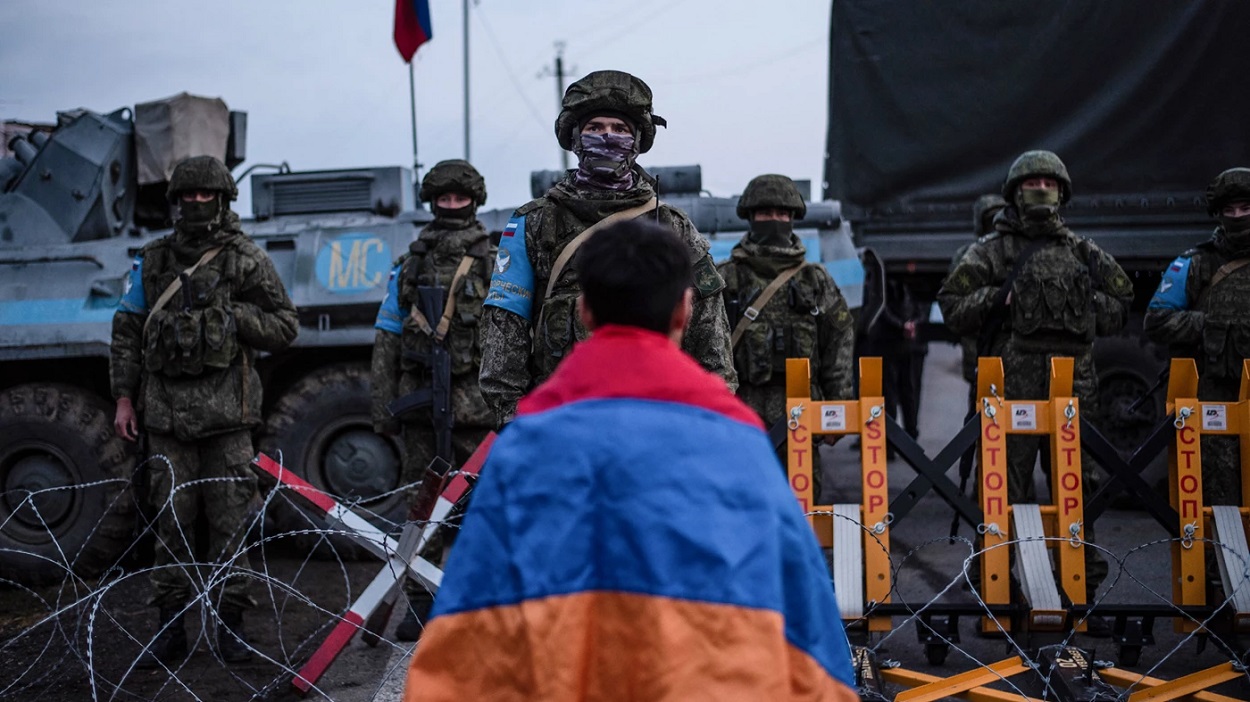
Armenian Christians have been calling for help. As their ethnic kin in the Caucasus enclave of Nagorno-Karabakh approach two full months under a near-complete blockade imposed by alleged eco-activists from Azerbaijan, the voices have amplified.

“Everyone knows this is the Aliyev regime,” stated Biayna Sukhudyan, a pediatric neurologist trapped inside the Delaware-sized mountainous region, which Armenians call Artsakh. “There is no time to wait and allow the next genocide, because this is genocide.”

The doctor referred to Azerbaijani president Ilham Aliyev, and several investigations have linked the protesters to his government. When the blockade began on December 12, official statements attributed the long-haul demonstration to illegal gold and copper mining on their still-occupied but internationally recognized sovereign territory.

In 2020, Azerbaijan launched a 44-day war to retake a region under three decades of de facto control by ethnic Armenians. Following the dissolution of the Soviet Union, Artsakh declared itself an independent state, and with Armenian military assistance was able to hold Nagorno-Karabakh and additional Azeri territories—pending peace negotiations.

A vastly improved Azerbaijani force, aided by drone technology from Turkey, recaptured three-quarters of the land through bloody combat. Russia mediated a ceasefire, and its peacekeepers guard the Lachin corridor—the one road connecting over 100,000 beleaguered Artsakh residents with Armenia and delivering the 400 tons of daily food and medicine that supply their needs.

Since the end of the war, Sukhudyan has traveled every two months to Nagorno-Karabakh, which lacked specialist doctors. This time, amid acute shortages in the market, she was compelled to stay.

Others, including children, are prevented from returning.

“I came to Yerevan for eye surgery,” stated 13-year-old Maral Apelian, who lives in Artsakh, last month. “All I want is to go back to my family at home.

“Let my people go,” she shouted, recalling Moses. “Let my people go!”

The cry was taken up immediately by Armenian hierarchs.

“Artsakh Armenians [are] in front of a humanitarian disaster,” stated Catholicos Karekin II, supreme patriarch of the Armenian Apostolic church, on day three of the blockade. “Such provocative actions are aimed at ethnic cleansing.”

One day later, his ecclesial colleague in Lebanon invoked the crucial label.

“We are witnessing deliberate and concrete steps toward the ethnic cleansing and genocide of the Armenian population of Artsakh,” stated Catholicos Aram I, whose Holy See of Cilicia represents survivors in the Levant who fled the original Armenian Genocide in Turkey. “The need for immediate humanitarian action is critical.”

Karekin also stated he was reaching out to ecumenical colleagues.

Pope Francis led a prayer for Nagorno-Karabakh on December 18. A consortium of advocacy organizations issued a genocide warning the next day, arguing that all 14 of the United Nations risk factors were present.

Mainline leaders responded next. Without repeating the severe term of warning, a joint statement by the World Council of Churches and the Conference of European Churches demonstrated their active sympathy.

“This follows a clear pattern of behavior by Azerbaijan that contradicts any claims of goodwill,” they wrote on December 20. “In these circumstances, Armenian fears of renewed genocide against them cannot be discounted.”

A day later, the National Council of Churches framed it in religious terms.

“In a season where we celebrate the birth of Jesus in a cold stable,” it stated,” it is particularly horrific that civilians are being cut off in the middle of winter.”

One month later, many are increasingly sounding the alarm. On January 13…

This article was originally published by Christianity Today, on February 3, 2023. Please click here to read the full text.
Categories
Christianity Today Europe Published Articles

Armenian Christians Endure Christmas Blockade in Artsakh

Image: Photo by Davit Ghahramanyan / AFP / Getty Images

There are no oranges in Artsakh for Christmas.

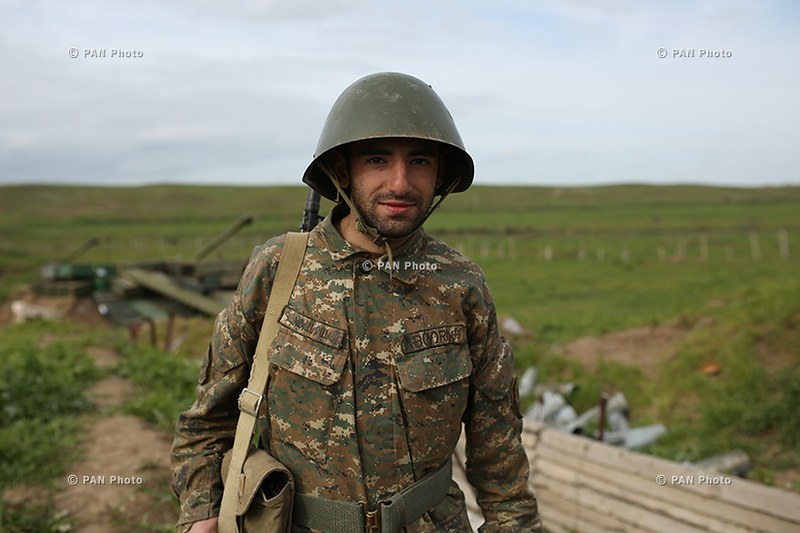
Celebrated on January 6 according to the local Orthodox calendar, holiday festivities will be curtailed this year in the disputed Caucasus enclave of Nagorno-Karabakh. Demonstrations by reported environmental activists from Azerbaijan have closed the one road connecting the mountainous territory to Armenia, and Russian peacekeeping forces have failed to intervene.

Over 100,000 Armenians depend on daily imports of 400 tons of food and medicine to the enclave they call Artsakh. With the blockade of the Lachin corridor now in its third week, local officials are warning of a humanitarian disaster as they implement price controls and ration remaining goods.

But the Christmas tree is lit in the central square of the capital, Stepanakert.

“People will carry on with the traditions as best they can,” said Aren Deyirmenjian, country representative for the Armenian Missionary Association of America (AMAA). “But we will reflect the love of a God who stays by your side, even when all goes wrong.”

During a 44-day war with 6,500 casualties in 2020, Azerbaijan recaptured three-quarters of its internationally recognized sovereign territory, before Russia engineered a ceasefire. The indigenous Armenian inhabitants controlled the enclave for the previous 30 years, claiming the right of self-determination in an unrecognized 1991 independence referendum.

Following its defeat two years ago, Armenia pursued peace treaties with neighboring Azerbaijan and Turkey, which had backed their Turkic kin with decisive drone technology. But these were interrupted by further clashes, in which Azerbaijan seized further territory in Nagorno-Karabakh and even along Armenia’s border.

And beginning December 12, Azerbaijani activists set up camp to protest alleged illegal gold and copper mining, exported through Lachin back to Armenia. Terms of the armistice left Russian peacekeepers in charge of the road, with no Azerbaijani oversight.

“We can stay here for months,” stated one demonstrator.

Local residents have reported shortages, with no fruit in Artsakh’s markets—part of the traditional Christmas Eve feast alongside fish, rice pilaf, and raisins. More critically, hospital patients lack essential medicines, with only a handful allowed transfer to facilities in Armenia proper. Gas supplies were cut for three days in the winter cold. And about 1,000 residents were stranded in the border town of Goris—including 18 members of a children’s choir which had performed in Armenia’s capital, Yerevan.

Azerbaijan has denied it is imposing a blockade. Officials have said that anyone will be allowed travel through the Lachin corridor, upon prior permission and submission to local inspection. If none pass through, they blame the Russians and Armenians.

So far, only the International Committee of the Red Cross (ICRC) has gained access to Nagorno-Karabakh. Deyirmenjian said the Armenian social affairs ministry contacted the AMAA to participate in the ICRC 10-ton aid delivery, adding 220 pounds of infant formula to the first effort, and 1,100 pounds of rice alongside two tons of sugar in the second.

Upon arrival, the AMAA center in Stepanakert, located near the only Armenian Evangelical church in the enclave, coordinated distribution in the neighborhood, including its 125 members.

So far, local morale is high.

“Our office manger told me: ‘We are happy we are on this side of the blockade,’” Deyirmenjian said. “It gave me chills.” Garegin Hambardzumyan concurs. A priest in the Armenian Apostolic church, he heads the Oriental Orthodox denomination’s Department for the Preservation of Cultural and Spiritual Values of Artsakh. Generations of Armenians have lived in the rugged, mountainous land for a thousand years, he said. They will not be…

This article was originally published at Christianity Today on January 4, 2023. Please click here to read the full text.

Categories
Asia Christianity Today Published Articles

Foxhole Faith in Nagorno-Karabakh

Note: This article was written prior to the cessation of hostilities concluded between Azerbaijan, Armenia, and Russia.

The Armenian mountain stronghold of Shushi is under attack.

The second city of Nagorno-Karabakh, one of its oldest artifacts is a 15th-century Bible. Earlier in the conflict this year, its 19th-century cathedral was struck twice and damaged by missiles.

But Azerbaijanis—who call it Shusha—celebrate it also as a cultural heritage. Many of their famous poets and musicians hail from the once-mixed city.

As the six-week war progressed, Azerbaijan steadily retook the plains below. But facing the coming winter, its military faced a stark choice: impose a siege, or scale the mountain.

Without Shusha, President Ilham Aliyev said, the job is only half done.

Despite its Armenian-majority population, Nagorno-Karabakh was assigned to Azerbaijan in the 1920s by Joseph Stalin. Both nations became independent in 1991, and the mountainous enclave conducted a referendum to declare itself the Republic of Artsakh. Ethnic warfare gripped the region, with 30,000 killed and around 1 million displaced.

Population transfers largely emptied each nation of its opposite ethnicity.

At the time of the ceasefire in 1994, Armenians controlled roughly 20 percent of Azerbaijan. No nation recognized Artsakh, and internationally sponsored negotiations began—and eventually stalled.

But buoyed by a financial windfall from oil and gas exports to Europe, as well as advanced weapons from Israel and Turkey, in late September Azerbaijan pressed its military advantage. If successful, it will perch above Stepanakert, the capital city of Nagorno-Karabakh, only six miles away.

“After 28 years, the adhan [call to prayer] will be heard in Shusha,” celebrated Aliyev. “Our victory march continues.”

Armenian forces say the fighting continues.

“So far, Armenians have successfully pushed back all attempts to take over this homeland,” said Harout Nercessian, the Armenia representative for the Armenian Missionary Association of America (AMAA).

“We will never surrender Shushi.” But within the debate over whether the conflict with Muslim-majority Azerbaijan is a religious war with Christian Armenians, signs of faith, piety, and pleas for divine favor mark many of the partisans, including…

This article was originally published at Christianity Today, on November 9, 2020. Please click here to read the full text.