Categories
Christianity Today Middle East Published Articles

A Shiite and a Catholic Find Refuge—and Friendship—at Baptist Seminary Shelter

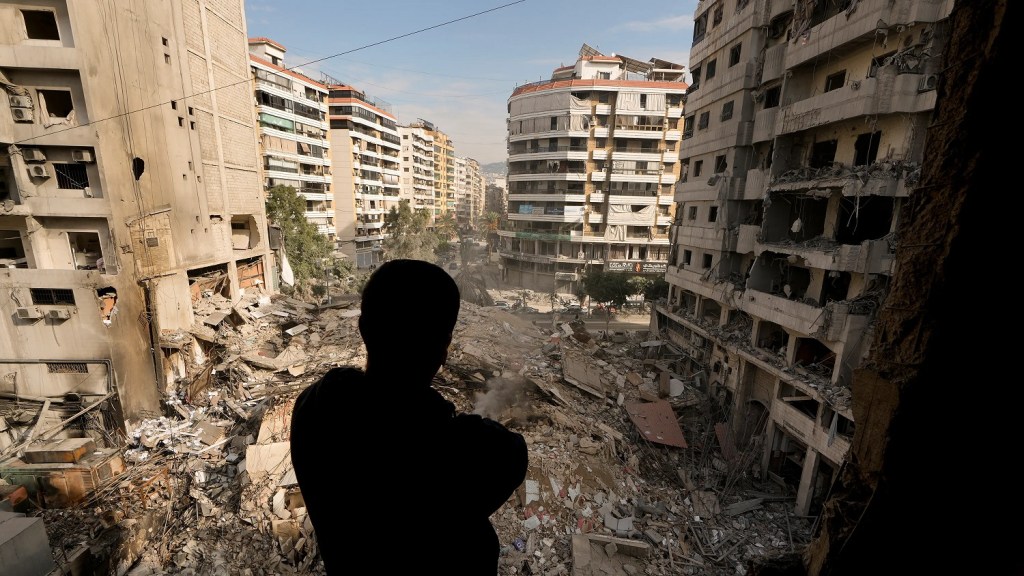
Bilal Hussein / AP Images

While an explosion reverberated across the valley from Beirut to the foothill village of Mansourieh, two men puffed on their cigarettes in resignation. Israeli jets were striking another apartment building in the Dahiyeh region of Beirut, Lebanon’s capital city, likely killing a Hezbollah militant or targeting an underground weapons depot within the tightly packed urban area.

Neither man cared about politics or the war, brought to their doorstep by last year’s decision of the Shiite Muslim militia to launch rockets into Israel to support Hamas. Tit-for-tat attacks had crossed the southern border for the 11 months that followed, as neither side wanted to engage in a larger conflict. That fighting displaced tens of thousands on both sides while leaving the rest of Lebanon largely unscathed—yet ever worried about an escalation.

It came in September. On the 17th, Israel declared the return of northern citizens to their homes to be an official war goal. Hours later, an Israeli sabotage operation exploded Hezbollah pagers, killing 13 and wounding around 4,000 militia-linked individuals. Then, on September 23, Israeli missiles struck throughout Lebanon, and hundreds of thousands fled their homes. Lubnan Assaf, a 42-year-old Shiite Muslim, and Awad Saab, a 72-year-old Greek Catholic, somehow found their way to the Arab Baptist Theological Seminary (ABTS) guesthouse—and became friends. At its peak, the evangelical institution housed almost 250 displaced individuals, about one-third of whom were fellow Christians.

ABTS offered daily chapels and provided three meals a day—but no televisions. Isolated from the news and away from static entertainment, couples walked in the seminary gardens while children rode scooters down the access road from the library. Assaf and Saab played a Rummy-like card game until 10 p.m., exchanging details about their abandoned neighborhoods.

Assaf gave Saab the daily update that his auto-accessory shop on the edge of Dahiyeh had not been looted. Saab replied that his eight-month pregnant daughter, one of 15 people who remained in their southern village on the frontline of the Israeli ground invasion, was still doing all right. Both whittled away the hours in relative boredom, as each over time expanded his spiritual horizons.

Assaf’s Story

Assaf’s apartment in the working-class Shiite neighborhood of Ouzai, located in Dahiyeh near the Beirut airport, overlooks a local café and the Mediterranean Sea. His shop serviced mostly middle-class Christians who frequented the area, well-known for its inexpensive furniture and manufactured goods.

Over the years, Assaf saved up enough money to build a home in his family village of Younine, 11 miles northeast of Baalbek, an ancient Roman city preserved in the Bekaa Valley, Lebanon’s agricultural heartland. Driving from Beirut means passing by marijuana fields that fuel an unofficial economy run by local Shiite tribes that reportedly collaborate loosely with Hezbollah.

Artful calligraphy from the Quran adorns the walls of Assaf’s home. His wife, Mira, and their 15-year-old daughter wear the hijab. When war came to Dahiyeh, they relocated for safety, while Assaf returned to Beirut to oversee his shop. The next day, an Israeli missile…

This article was originally published at Christianity Today on December 20, 2024. Please click here to read the full text.

Categories
Books Christianity Today Middle East Published Articles

The Best Advice on Engaging Muslims, from Arab Evangelical Scholars

Image: iStock / Getty Images Plus

American evangelicals often find themselves frustrated in their approach to Islam.

Two options are consistently placed before them: a polemical argument few are educated enough to engage in, or an awkward dialogue urging friendship but emptied of theological significance.

Help, therefore, may come from abroad—where evangelicals interact with Muslims everyday.

A new book, The Religious Other: Toward a Biblical Understanding of Islam, the Quran, and Muhammad, answers both concerns. An anthology of recent academic contributions to Arab Baptist Theological Seminary (ABTS), located in Beirut, Lebanon, the publication delves into the details of the debate over how evangelicals should view the rival religion.

But it also promotes a “kerygmatic method,” based on the New Testament Greek word for proclamation and connoting among biblical scholars the core message of early church gospel preaching. The book applies the term to seek a middle ground between polemics and apologetics on the one hand, and syncretistic and common ground approaches on the other.

Built on a foundation of academic rigor, this method aims for a tone of love within a spirit of Jesus-centered proclamation.

CT interviewed Martin Accad, editor of the anthology and associate professor of Islamic studies at ABTS. Though he remains on faculty, he recently resigned from his leadership positions at the seminary to found Action Research Associates, seeking holistic application of the kerygmatic method within the troubles of sectarian Lebanese society.

Accad described the value of the book for evangelical engagement with Islam, but also how its principles can guide interaction with “the religious other” in both Lebanon and the United States:

Out of the 30 contributors to this book, only 9 are from the West, while 16 are Arab voices. What is the impact of this diversity?

Having so many Arabs is unusual for this type of book, especially those who are not of a polemical bent. Much of the agenda of missions and dialogue has been driven by Western questions, girded by the theology of the provider.

The contributions, therefore, de-objectify the conversation. We do not claim to be authoritative, but I hope that our voices will come with some authority, as we highlight our primary concerns in this part of the world.

“Toward” a biblical understanding suggests you have no definitive Christian conclusion about Islam, the Quran, and Muhammad. What message does the book want to give?

The primary goal of the book is theological, and is the crowning of years of work at ABTS. The Religious Other wants to explore what Islam really is. But I have come to the realization that a lot of what drives evangelical approaches to ministry among Muslims is polemical, rather than conciliatory and collaborative.

One of the book’s central hypotheses is that Islam cannot be oversimplified. Essentializing the “other” leads to conflict, because it fails to see them in their entirety, or as they perceive themselves.

There can be no definitive biblical understanding of Islam, because…

This article was originally published at Christianity Today, on April 9, 2021. Please click here to read the full text.

Categories
Christianity Today Middle East Published Articles

Trapped in Lebanon, Sudanese Students Find Refuge at Seminary

Image courtesy ABTS

While Liberty University came under criticism for allowing students the option to stay on campus during the coronavirus outbreak, many other schools were also faced with a dilemma concerning the 1.1 million students who came from abroad.

According to a Quartz survey of 36 universities who host a third of the United States’ international students, 26 told those students to leave campus.

Penn State gave three days notice. Harvard gave five. Duke, among others, offered emergency financial aid to help international students return home. Princeton allowed their residency to continue—until the end of the semester.

But Sudanese students at Lebanon’s Arab Baptist Theological Seminary (ABTS) did not have a choice—even with tickets in hand.

Lebanon was one of the first nations to implement COVID-19 restrictions. Its first case was recorded on February 21, and by March 9 schools were shut down.

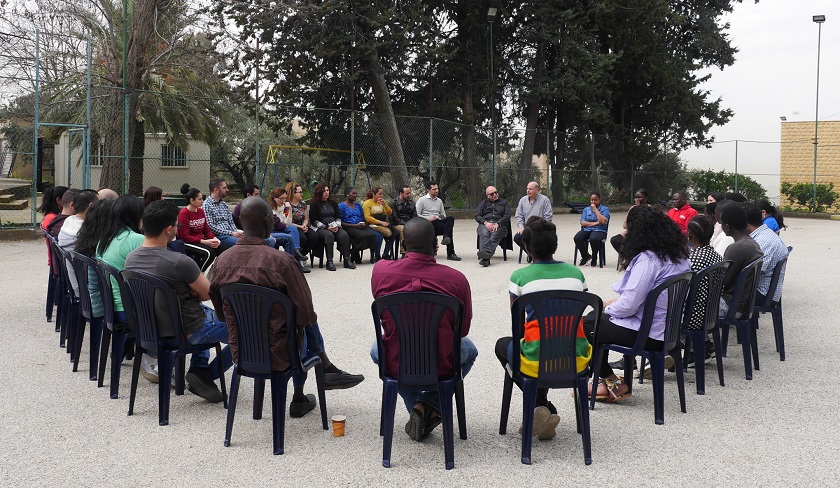
Four days later, at a regularly scheduled seminary picnic, Bassem Melki prepared to break the news.

“It was a joyous atmosphere,” said the ABTS dean of students, “but I had sadness in my heart because I knew what I had to say.”

Founded in 1960 and located in the mountains overlooking Beirut, the seminary…

This article was first published at Christianity Today, on June 10, 2020. Please click here to read the full text.