Categories
Christianity Today Middle East Published Articles

What Trump’s Evangelical Advisors Took Out of Egypt

Egypt Evangelical Delegation 2
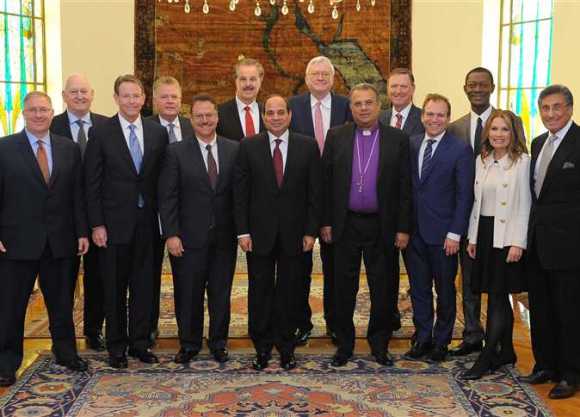
Image: A. Larry Ross US evangelicals meet with Egypt’s grand mufti.

This article was first published at Christianity Today on November 14, 2017.

Jim Garlow walked cautiously through the cavernous halls of Egypt’s Ministry of Islamic Endowments. He prayed: Why am I here, God? What do you want me to see?

The pastor of Skyline Church in San Diego was part of a 12-member delegation of American evangelicals. Their mission: To offer friendship to the president of Egypt.

But as largely a Who’s Who of Christian Zionists and otherwise pro-Israel pastors and ministry leaders, the mission could easily go awry in a majority-Muslim nation where even the Coptic Orthodox Church still officially bans pilgrimage to neighboring Jerusalem.

Mike Evans, founder of the Friends of Zion Heritage Center in Jerusalem, is a lifelong friend of Israeli president Benjamin Netanyahu. Mario Bramnick, senior pastor of New Wine Ministries Church in Florida, is president of the Latino Coalition for Israel. Tony Perkins, president of the Family Research Council, leads tours to Israel. They were assembled by Joel Rosenberg, a Jewish Christian with dual US and Israeli citizenship and author of the fictional The Last Jihad series.

But Rosenberg had recently made a new friend, giving him confidence that this visit might be God’s will.

Last year in March, he spent five days in Jordan as a guest of King Abdullah, who had just read his book. Intrigued after noticing himself as a named character in Rosenberg’s latest series on the ISIS threat, the Muslim ruler wanted to know more. (Rosenberg assured Abdullah that his character didn’t die in the series, which the king went on to finish reading.)

Not long thereafter, God placed on Rosenberg’s heart a different Middle East leader: President Abdel Fattah al-Sisi of Egypt.

Invited as 1 of 60 Middle East experts to a forum held during Sisi’s state visit to President Donald Trump in April, Rosenberg walked up and boldly introduced himself.

“I’m Jewish,” he told CT. “I’ve got some chutzpah.”

Rosenberg thanked Sisi for rescuing Egypt and its Christians from the Muslim Brotherhood. He commended the president for reaching out to Jews and to Roman Catholics.

“But there is one group I don’t see: evangelicals,” he told Sisi. “It’s not your fault; probably we haven’t asked. But would you like us to bring a delegation of leaders to come and visit you?”

Seven months later, Garlow was in Cairo.

“Each step of the way I learned so much,” he said. “There were insights I had never known…”

Please click here to read the full article at Christianity Today.

Egypt Evangelical Delegation
Press el-Sisi: Egyptian President el-Sisi (front center) receives a first-ever delegation of American Evangelical leaders in the Presidential Palace after a frank and transparent dialogue about challenges in the region and opportunities for cooperation.
Categories
Middle East Providence Published Articles

Islamism: Contextualist or Essentialist? Or Both?

My new article for Providence Magazine.

Islamism Contexualist Essentialist
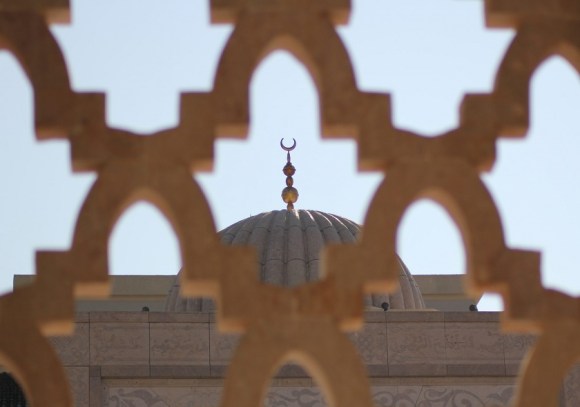
Photo Credit: Mosque in Tunisia. By Tarek, via Flickr.

In an excellent review of Shadi Hamid and Will McCants’ Rethinking Political Islam, Olivier Roy says there are generally two ways to think about Islamism.

Writing in Foreign Affairs, he first briefly introduces three important shockwaves—the Arab Spring, the fall of the Muslim Brotherhood in Egypt, and the emergence of Islamic State (ISIS)—that have affected the debate.

As Hamid and McCants write, “After decades speculating on what Islamists would do when they came to power, analysts, academics—and Islamists themselves—finally have an answer. And it is confusing.”

The confusion tends to be filtered into analysis based on one’s predisposition.

There is a contextual approach, as Roy explains: “The policies and practices of Islamist movements are driven less by ideology than by events and sees such groups as reactive and adaptive.” He elaborates:

Contextualists believe that Islamist groups seek to adapt to circumstances and country-specific norms (for example, by recognizing the monarchies in Jordan and Morocco). The groups’ main goal is to survive as coherent organizations and political actors. And their use of religious rhetoric is often little more than “Muslim-speak”—a way to express a unique identity and articulate grievances, especially against the West.

There is also an essentialist approach: “Islamists are fundamentally ideological and that any concessions they make to secularist principles or institutions are purely tactical.”

A corollary to this argument is the idea—extolled by critics of Islamism but also some of its adherents—that Islamic theology recognizes no separation between religion and politics, and therefore an authentic Islamist cannot renounce his ideological agenda in favor of a more pragmatic or democratic approach.

The presentation is skillful, and after researching Islamist movements and parties across the Muslim world, Roy offers a conclusion…

Please click here to read the rest of the article at Providence Magazine.

Categories
Middle East Patheos Published Articles

Secondary Separation, in Islam

Secondary Separation Islam

In fundamentalist Christian circles there is an approach to the world known as ‘secondary separation’. While the Bible notes Christians are not of this world, there is tension when Jesus says they are also in this world, and should not expect to be removed.

Fundamentalism is one expression of this tension, that leans in the direction of withdrawal. A key verse is II Corinthians 6:17, “Come out from them and be separate,” quoting an Old Testament passage focusing on holiness.

Separation from the world is therefore a necessary Christian posture, though defining ‘them’ and ‘separate’ can be difficult. Fundamentalists take it a step further, saying that ‘them’ includes also those Christians who do not separate sufficiently.

This is secondary separation, and it has been most famously applied against Billy Graham. The renowned evangelist has been celebrated by most Christians for his gospel fidelity and salvation message.

But it that ‘most’ that offends this fundamentalist spirit. His crusades have cooperated with too many insufficiently fundamentalist churches, which they believe compromises the call to be separate.

In partnering with those who are not theologically pure, he risks endorsing their relative liberalism.

It is interesting to note a similar approach exists in Islam.

The posture of takfir is the process of declaring someone a kafir, an infidel. Longstanding Islamic jurisprudence says this should almost never be done to a Muslim, unless he or she openly renounces their faith.

But there is a verse in the Quran that provides Muslim fundamentalists, if the term is appropriate, a powerful retort. Sura 5:44 says, “And whoever does not judge by what Allah has revealed, then it is those who are the disbelievers,” using the plural of the Arabic word kafir at the end.

This verse has been applied by Muslim insurrectionists throughout the ages against their Muslim rulers who they accuse of not properly implementing sharia.

Certainly Muslims also struggle with the tension of their texts, and they are invited to provide proper interpretation.

But leave it to ISIS, the so-called Islamic State, to take it a step further.

Should it be necessary: There is little similarity between Christian fundamentalists and Islamic terrorists. But a devotion to God and a commitment to his way may sometimes prompt an antagonistic stance not only to the world, but also to fellow believers.

And from an article in Jihadica, “The Caliphate in Disarray,” there is also a similarity in secondary takfir.

Turki al-Bin’ali, the self-proclaimed ‘Grand Mufti,’ or chief cleric, of ISIS, was killed several months ago in a US airstrike. His death set off a wave of eulogies, but also counter-eulogies and accusations. Some even speculated his location was tipped off to the enemy that he be eliminated as leader.

Takfir is one of the issues that divides ISIS and al-Qaeda, with the latter being slightly more reticent to call non-affiliated Muslims non-believers. It is a sensible position if you are trying to recruit, not to limit your pool of applicants.

Then again, the number willing to die in their cause is considerably limited by their viciousness. Perhaps then it is best to recruit only the purest of the pure. But as seen with Christian fundamentalists, purity is easily nitpicked.

As a result: theological division among those who believe they have already most dedicated to God’s path through jihad.

Al-Bin’ali’s nemesis on this issue, the Meccan-born Ahmad ibn ‘Umar al-Hazimi, preached a rigorous approach to takfir. The following excerpt may be challenging in its Arabic references, but careful reading will establish a clear similarity with secondary separation:

In his lectures, he [al-Hazimi] espoused a controversial doctrine known as takfir al-‘adhir, or “the excommunication of the excuser.”

The notion of takfir al-‘adhir is derived from two concepts in Wahhabi theology. The first is the requirement of takfir; the second is the inadmissibility of al-‘udhr bi’l-jahl, or “excusing on the basis of ignorance.”

According to the founder of Wahhabism, Muhammad ibn ‘Abd al-Wahhab (d. 1792), it is incumbent upon all true believers to excommunicate—that is, to make takfir of—those deemed unbelievers, as well as to excommunicate those who fail to excommunicate them.

As Ibn ‘Abd al-Wahhab stated—and this is the line around which the Hazimi-Bin‘ali debate revolves—“Whoso fails to make takfir of the polytheists, or has doubts concerning their unbelief, or deems their doctrine to be sound, has [himself] disbelieved.”

The duty of takfir is generally accepted in Jihadi Salafism, but there is some debate over al-‘udhr bi’l-jahl, that is, over whether ignorance may serve as a legitimate excuse for holding errant beliefs, and so shield one from the charge of takfir.

For al-Hazimi, who follows the traditional Wahhabi view, al-‘udhr bi’l-jahl is categorically invalid, meaning that the ignorant heretic is to be declared an unbeliever.

Moreover, as he says, anyone who regards ignorance as an excuse for the heretic’s unbelief is also to be declared an unbeliever. Hence the idea of “the excommunication of the excuser.”

Perhaps in truth this is a tertiary takfir, with standard Wahhabism being the secondary. But herein is the problem: Once you start judging a fellow believer’s faith, where does the cycle stop?

Fortunately for Christian fundamentalists, it does not continue to the bombing of a Billy Graham crusade. But there is many a former fundamentalist who has become jaded when he or those he respected found themselves on the wrong side of a Christian fatwa. Sometimes it moves them to a more nebulous evangelicalism; sometimes they leave the faith entirely.

But they are not killed. ISIS, while flip-flopping repeatedly on the issue, did not hesitate to execute proponents of the at-the-time-minority outlook. Others died in airstrikes under what is described as ‘murky circumstances’. The article features more of the back-and-forth diatribe, which revealed also a discontent in ISIS over corruption, dishonesty, unfulfilled prophecies, and the loss of territory.

All the above is a reminder that the tension in religious faith is not only maddening for the sincere believer, but necessary. If God said both this and that, both are true no matter the apparent inconsistency or challenge of application.

It is easy to side with that (or this) most congenial to personal temperament, but mature faith must grapple with both and live accordingly.

In the world, but not of it. Judge by God’s sharia, but don’t judge. The challenge applies to more than we might at first imagine.

My article was first published at Patheos.

Categories
Americas Christianity Today Published Articles

What Arab Leaders Think of USAID Funding Persecuted Christians

This article first published at Christianity Today on November 2, 2017.

USAID Christians
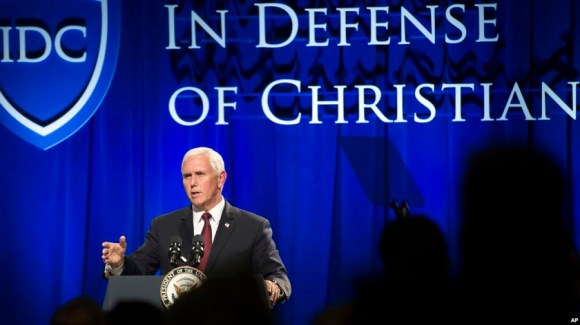
Vice President Mike Pence addresses the In Defense of Christians’ fourth-annual national advocacy summit in Washington, Oct. 25, 2017. Credit: AP, via VOA News.

Here are a few excerpts from my new article.

First, the reason:

Zalal Life distributed 300 food baskets and bottles of water. The government of Hungary donated $2 million in aid for reconstruction. The United Nations wasn’t there.

“People are not happy with the UN; they are using money for administration,” said Bahro. “The help is coming from churches and Christian organizations.”

Second, the condition:

“If the US can help Christian organizations directly, it will be good—if it can be done without discrimination,” he said.

“They must serve Muslims and other minorities also. We live together, and want to remain together in our communities.”

Third, the complication:

“Having the US transfer funds directly to persecuted Christians could be a good thing, but American politics will surely mingle in,” the Israeli Arab Christian said.

“They will want to brag about the aid to show their success, and to prove to the Christian Right that [President Donald Trump] delivers on his promises.”

Fourth, the danger:

Farouk Hammo, pastor of the Presbyterian church in Baghdad, agreed. “The bottom line is that we do not recommend direct aid from the States to Christians,” he said.

“It will agitate our Muslim brothers negatively against the Christian community.”

Fifth, the reality:

But the Jordanian leader respects Trump and is cautiously in support of the USAID policy change if done well, as it will empower the church to do the ministry.

“Maybe we will be targeted more,” he said. “But in some countries, it can’t get worse.”

Sixth, the possibility:

If USAID offered to help, Bitar would accept it—if it is not conditioned on any political agenda. He has little fear of local reaction.

“Muslims will be happy,” he said. “They like to send their children to schools run by Christians.”

Finally, the outcome:

Amid conflicting Christian reactions and unknown Muslim response, the policy change represents a new approach. Will it make things better or worse?

“Here in our area, the Kurdish Muslims trust Christians,” Bahro said. “In Arab areas, I don’t know.”

Please click here to read the full article at Christianity Today.


Categories
Middle East Providence Published Articles

How Do Copts Endure their Martyrdoms?

From my article published at Providence Magazine:

Copts Endure Martydrom
Photo Credit: Egyptian Coptic Christians attend Orthodox Good Friday mass at the Hanging Church in Coptic Cairo, Egypt, on April 10, 2015. Xinhua/Pan Chaoyue, via Flickr.

“On a day like today,” Fr. Samaan Shehata was murdered in Cairo. The day was October 12, but he likely read those very words in mass just one day earlier, introducing the lives of the saints.

Hunted down and stabbed repeatedly by a Muslim extremist, his name now joins their list. Dozens have preceded him in the last few years alone, gunned down in a bus, bombed in a church, beheaded in Libya.

Godfather to Shehata’s children, Fr. Yuannis Anton said these deaths are a “tax” that Copts must pay for the peace of the church and nation. These are difficult days for Egypt, he said, and the fight against terrorism is a fight for stability.

“In the language of the church, it is our cross to bear,” he said. “But we pray with Jesus not to hold this sin against them. We are not angry nor ask for vengeance, this is not our spirit.”

Similar stances have repeatedly wowed the world as Coptic faithful forgive their enemies. But even when their call instead emphasizes justice, there is an odd sense of jealousy that indwells many in the community.

“I wish I was with him, and lost my life with him,” Fr. Biemen Muftah told C-Sat, who was with Shehata at the time of the murder. “I wish I was as ready as he was, and could be in the place he is now.”

Choking back tears, he said, “We have lost a good priest on the earth, but gained the best intercessor in heaven.”

It is these intercessors Copts learn about “on a day like today,” every time the mass is celebrated.

Called the Synaxarium, the liturgy features daily hagiographic biographies of the celebrated saints of the Coptic Orthodox Church. Read after the Acts of the Apostles and before the Gospel, it features 726 entries, 237 of which involve martyrdom. In daily readings, nearly half the year encourages the faithful to suffer even unto death…

Please click here to read the rest of the article at Providence Magazine.


Categories
Middle East Published Articles Religion Unplugged

Religious Freedom for the Muslim World: The Unlikely Activism of Kamal Fahmi

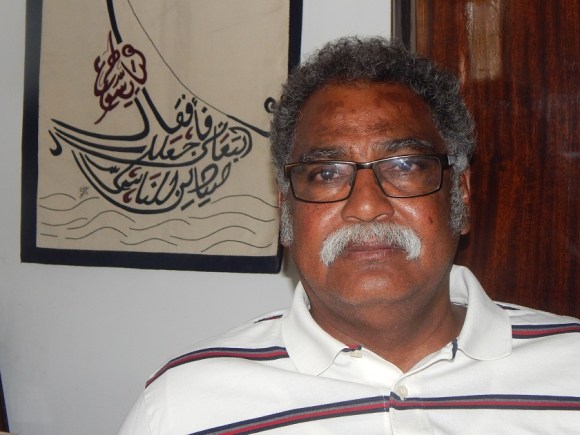
Kamal Fahmi

A few excerpts from my article for The Media Project.

Kamal Fahmi sat with Mazen, a Yemeni teenager at a community center in Taiz, Yemen’s third-largest city and cultural capital. Mazen’s father was there, who arranged the meeting.

Impressed with the boy’s intelligence and demeanor, Fahmi learned of their troubling problem.

Mazen didn’t want to study Islam in school.

Fahmi had heard this story before. Visiting Yemen as he had in nations across the region, converts were considered Muslim by birth and in all official paperwork. And for those underage, Islamic education came as part of the package, even if they didn’t believe in it.

Fahmi was sympathetic, but tried to downplay the problem. After all, born into a Christian family in Sudan, he had studied Islam in school also. Hold to your faith, he counseled, but pass the tests.

Yet something in the boy stirred him, as well as the nature of his family. Mazen was not a convert, and neither was his father. His grandfather was, decades earlier. Three generations of Christians, yet still considered Muslims. The injustice gnawed at him.

“They love their country, they are not criminals, they are not spies,” Fahmi said. “If anything, they have become better citizens.

“They should be free to follow what they believe.”

It is not only an issue in the Muslim world, of course:

Worldwide, 26 percent of nations criminalize blasphemy, including Russia, Italy, Myanmar, and the Bahamas. But apostasy law is more characteristically Islamic, with only India and Nigeria as non-Muslim-majority countries.

Please click here to read the full article at The Media Project.

Categories
Middle East Published Articles World Watch Monitor

The Public Spectacle of a Slain Coptic Priest

Fr. Samaan Shehata
Fr. Samaan Shehata, with Pope Tawadros. From an image circulating on social media.

This article was first published at World Watch Monitor.

The images are horrific. Fr. Samaan Shehata, a 45-year-old Coptic Orthodox priest lay dead on the ground, stabbed and beaten by a young man wielding a meat cleaver.

Blood dripped down his face into his long, black beard. Dirt discolored his flowing, black robe. His cross pendant rested peacefully on his chest, eerily imitated in the cross-like stabbing etched onto his forehead.

Many details remain unknown, but early indications point to extremism. Fr. Samaan was from Beni Suef, visiting a family in Cairo 150 kilometers north in a lower-class, urban suburb of Cairo.

It may well be he was targeted only for the clothes he was wearing – in Egypt, a clear indication of his religious profession.

He was left a public spectacle. So far, no claim of responsibility, no message of intention. There are possible hints circulating of mental instability.

Perhaps. Outright murder is rare in Egypt. Despite the increased terrorism suffered by Copts in recent years, this killing is unusual. There is a chance it was random.

But few think so. Coptic social media immediately proclaimed Fr. Simaan a martyr, adding him to the growing scroll.

The image, however, may have lasting effect, reinforcing a decades-old message: The streets are not the place for priests…

Please click here to read the rest of the article at World Watch Monitor.

Categories
IDEAS Published Articles

Dealing with Death at a Distance – 5 Tips for Saying Goodbye

Death at a Distance

The expat life has many benefits, but one of the hardest challenges is being far from family.  This can be felt the most when you hear of someone who is sick, receives a bad medical prognosis, or is in an accident.  Living in a foreign country is hard when a loved one is dying.

What can you do if you can’t travel home as they near the end of their life? Sometimes job, school commitments, or extenuating circumstances prevents travel.  This was our situation last Spring when my mother-in-law succumbed to cancer.  Fortunately, my husband made it home the day before she died, but her health declined too quickly for all of us to travel in time.  My four children and I had to say our good-byes from afar.

1)      Be creative in saying “I love you” and other significant emotional statements.  When I heard my mother-in-law entered hospice care, I knew her time was short. I videoed each of my children telling their grandmother the things they appreciated about her and doing with her. Then I did the same, and was in tears the whole time. Over Skype, we played them for her.  Whatever she heard in her deteriorating shape, it was healthy and healing for us.

2)      Communicate honestly and openly with your children about what is happening.  Sometimes we have the idea that we must “be strong” for our children, our spouse, or others around us.  Actually, this is unhelpful in grief as emotions are better verbalized.  I sat down with my children and we talked candidly that their grandmother would die very soon and we would not see her alive again.  I cried as I said this, and all four kids followed suit.  We talked about what was happening.  We said what made us sad.  We said what we wished could be different.  And we hugged and we cried.  Together.

3)      Make special time to grieve.  That night I received the message that my mother-in-law passed away.  In the morning, I held the kids home from school so we could remember her, cry when we wanted to, and laugh when we could.  We did some favorite activities from times together, like play-doh and blowing bubbles.  We knew that we would be grieving for a while, but though the day was hard, it was memorable and set us on the path toward healing.

4)      Travel to attend the funeral or memorial service.  Though we made a good beginning in Egypt, I still felt like her death would not sink in until we traveled to New Jersey.  We figured out missing school work and made preparations, but time and money are resources well spent on grieving together with family.  The memorial service or funeral brings even more friends together, allowing memories to be shared and sorrow expressed.

5)      Give your kids a picture or special memento of the one who died as a physical reminder.  Even though it hurts to see it at times, triggering emotions for all the things we will miss about her, it is still better to remember.  That which is tangible connects best with our senses and emotions.

To be honest, I don’t want to go through this again.  I don’t want to have to say good-bye from afar.  But I have many more loved ones that may die or go through serious illnesses when I am living overseas.  Following these steps has helped our whole family grieve well, even at great distance. I hope they will also be helpful for you.

Click here to read the original post, as Julie tells the full story of how she processed grief from afar. This summary reflection was requested by our organization, IDEAS, to help expats around the world dealing with similar situations.

Categories
Christianity Today Middle East Published Articles

Saudi Arabia’s Neighbor Defends Religious Freedom of Individuals

This article was originally published by Christianity Today, on September 13.

Bahrain Declaration 2
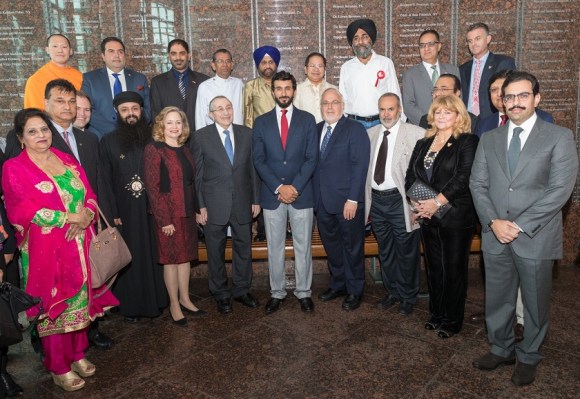
Prince Nasser bin Hamad al Khalifa (center), with Bahrain Declaration attendees. Credit: Simon Wiesenthal Center.

The cause of religious freedom received a significant boost from the Muslim world today. The island Kingdom of Bahrain—connected by bridge to Saudi Arabia—has declared “freedom of choice” to be a “divine gift.”

“We unequivocally reject compelled observance,” states the Bahrain Declaration for Religious Tolerance, released September 13 in Los Angeles with Muslim, Christian, and Jewish leaders in attendance. “Every individual has the freedom to practice their religion, providing they do no harm to others, respect the laws of the land, and accept responsibility, spiritually and materially, for their choices.”

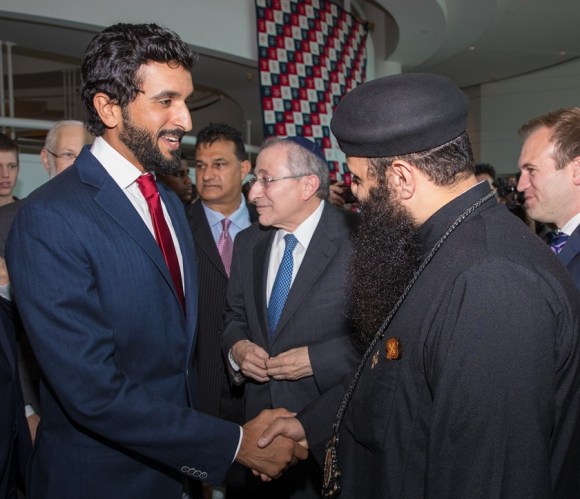
Prince Nasser bin Hamad al Khalifa of Bahrain signed as an official envoy of the Gulf nation’s king. Johnnie Moore, a board member of the National Association of Evangelicals, and Rabbi Marvin Heir of the Simon Wiesenthal Center also participated, joining ambassadors from Saudi Arabia, the United Arab Emirates, Egypt, and Israel.

“The King is acting decisively, courageously, and seriously,” said Moore, noting also Bahrani sponsorship of a religious tolerance center in the capital city of Manama, as well as the sponsorship of a chair in religious coexistence at La Sapienza University in Rome.

“The declaration goes farther than any similar document that I’m aware of.” …

Please click here to read the full article at Christianity Today.

Bahrain Declaration
Prince Nasser bin Hamad al Khalifa, with a Coptic priest. Credit: Simon Wiesenthal Center.
Categories
Middle East Published Articles World Watch Monitor

Terrorist Threat Forces Egyptian Churches to Cancel Summer Activities

My new article at World Watch Monitor.

Church Trips Canceled
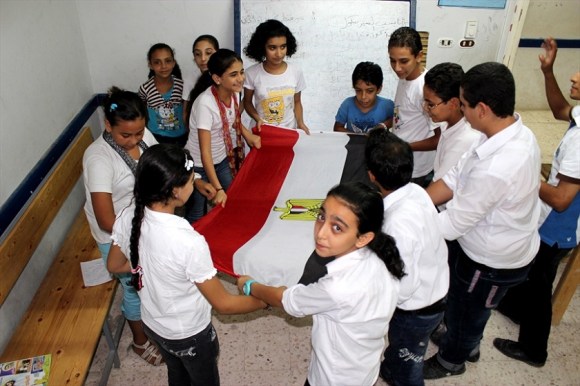
Egyptian Christian children gather round the country’s flag in a group activity, Aug 2012

The churches of Egypt are temporarily shutting down their summer activities.

“I asked all our churches and conference centres to cancel their trips and events for the next three weeks,” Dr. Andrea Zaki, president of the Protestant Churches of Egypt, told World Watch Monitor. “There is news they could be targeted by radicals.”

An unofficial translation of his official statement reads: “Warm greetings in the name of Jesus. In light of recent developments, please stop all church trips and conferences [for] the next three weeks of July 2017. This is a serious matter. Any trip or conference [that continues] will be the personal responsibility of the organiser.”

Zaki confirmed the information came directly from the security agencies. Fr Boules Halim, official spokesman for the Coptic Orthodox Church, told World Watch Monitor his denomination issued similar instructions, asking churches to wait for further information once the three-week moratorium expires.

Please click here to read the full article at World Watch Monitor.

Categories
Christianity Today Middle East Published Articles

Want to Help Christians Stay in the Middle East? Start with Your Vacation

This article first appeared in the July print edition of Christianity Today.

Middle East Christian Tourism
(Credit: robertharding / Alamy)

Call Ann Fink crazy, but the intrepid grandmother has a tradition to uphold. She’s toured Israel, Jordan, and Egypt with 8 of her 13 granddaughters. Victoria, a preteen, is number 9.

“Her parents are not afraid,” said Fink, a Pennsylvania native, while visiting Egypt with Victoria. “We believe we can die at any time. Only God knows when and where.”

Neither tourist knew just how much visits like theirs support the region’s beleaguered Christians.

From a high-water mark of $7.2 billion in 2010, tourism revenue in Egypt has fallen by 76 percent following the unrest of the Arab Spring. The decline has devastated the economy and, with it, Egypt’s Christians.

Copts, an estimated 10 percent of the population, make up more than half of tour operators and more than a quarter of the tourism workforce, according to Adel el-Gendy, a general manager in the Tourism Development Authority. Christians have better connections to the West, he said, and are often more skilled with languages.

Gendy, a Muslim, has been assigned development of the Holy Family route—25 locations that, according to tradition, were visited by Jesus, Joseph, and Mary as they fled Herod’s wrath. Relaunched with government and church fanfare in 2014, the route is close to being designated as a World Heritage site by UNESCO, he said. But the project has struggled as tourists stay away.

The route runs through Old Cairo, which boasts churches dating back to the fourth century but feels like a ghost town. Souvenir shops are open, but their lights dim. “Our income has dropped by 90 percent,” said Angelos Gergis, the Coptic Orthodox priest at St. Sergius Church, built above a cave where tradition says the Holy Family stayed three months. “We are assigned to assist 100 poor families in the area, but we used to help so many more.”

There are no tourist fees at Christian religious sites, but many visitors leave donations. “You can see things in Egypt you won’t see anywhere else,” he said. “And if you have any sympathy for us, please come. Your visit does help…

Please click here to read the rest of the article at Christianity Today.

Categories
Americas Published Articles Religion Unplugged

Small Town Offers ‘Sign’ of Welcome to Refugees in the United States

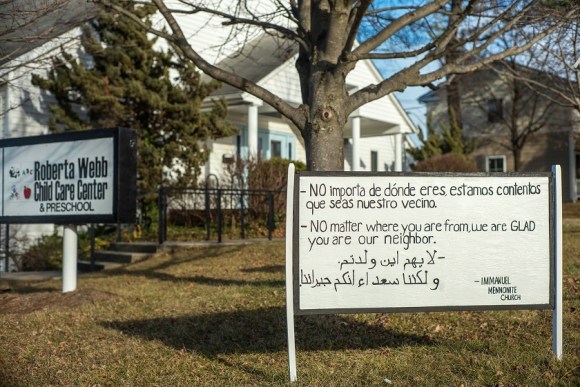
Mennonite Welcome Sign
(via http://www.welcomeyourneighbors.org)

This article was originally published at The Media Project.

Biking one day in the city of Harrisonburg, Virginia, nestled in a valley in the Shenandoah Mountains of the eastern U.S., 33-year-old Pastor Matthew Bucher tumbled and fell.

Bloody and sore, he found himself in front of the local mosque. He looked up and read a sign.

“No matter where you are from, we’re glad you’re our neighbor,” it read in English, Spanish, and Arabic.

Bucher understood because he had written that sign – in all three languages.

“Suddenly, I knew the hope the sign offers,” he said. “I was the one in need of help, switching roles.”

The sign was born 15 months earlier, during the August, 2015, Republican presidential debate. Anti-immigrant hectoring was a prominent feature, and Bucher led his small congregation at Immanuel Mennonite Church to do something about it. 

Rather than filling neighborhood yards with political signs backing one candidate or another, Bucher’s church created a sign of their own.

“I was shocked at the rhetoric used against immigrants,” he said. “So I thought to put out a sign of welcome. Spanish speakers in the church helped, as did Arabic friends.”

That first sign in front of his church two years ago has since multiplied into an estimated 100,000-plus throughout the country, said Bucher.

The sign is recent, but its heritage extends back almost four centuries. 

Mennonite Christians know what it means to be strangers. Driven from Switzerland in the 17th century, the persecuted Anabaptist community, from which the Mennonites descend, found refuge in Pennsylvania. One hundred years later many of those families relocated to the Shenandoah Valley.

Bucher, a Pennsylvania native, became the pastor of Immanuel Mennonite one year before the presidential debate. But from 2007-2011, he lived as a stranger himself, the only American in the small, Upper Egyptian city of Qusia, 170 miles south of Cairo. Teaching English in partnership with a Coptic Orthodox bishop, his sojourn was a transformative experience.

“I received hospitality in Egypt, and here in Virginia I have been accepted and trusted as a pastor,” he said. “I want to extend that (hospitality), just as Jesus did. He and his parents were cared for as refugees, too.”

Harrisonburg is a fitting place for hospitality. Census data states the population of 50,000 residents is 16.7 percent foreign-born. Students in the public schools come from 46 countries, including Iraq, Jordan, Honduras, Mexico, and Ukraine.

Yet there have been only four police officers killed in the line of duty in the town since 1959. Nicknamed “The Friendly City” since the 1930s, Harrisonburg is also an official Church World Service refugee resettlement community.

“Listening to the current American national dialogue. . . one would assume that mixing nationalities, religions and ethnic groups in such close quarters would produce enough emotional tinder to fuel a blaze of angry divisions and open fighting in the streets,” wrote resident Andrew Perrine in the Washington Post. “Yet it does not.”

Instead, Bucher’s signs have found a home. The green, blue, and orange background was chosen so as not to correspond with any national flag, and 300 signs were initially distributed through six area Mennonite churches in March 2016. Another 300 were sold later at a local fair, next to the church’s tamale stand. By October, one month before presidential elections, another 1,000 were printed.

They sold out within a week.

That month the church created a Facebook page. Overwhelmed by interest, in December they created a website. Signs sell for $21.95, including shipping, but a free download is provided to print locally.

Money from proceeds is donated to the Mennonite Central Committee, the local New Bridges Immigrant Resource Center, and the Roberta Webb Child Care Center hosted at Immanuel.

Anyone selling in their own communities (usually for $10 with local pickup) is encouraged to donate to the charity of their choice. Unless they just give them away, as did a 68-year-old Buddhist, Kathy Ching.

Ching arrived from China in 1974 and ran a restaurant in Lansdale, Pennsylvania, for 40 years. During that time she helped 15 employees immigrate to the U.S., but now says of President Donald Trump, “He’s not letting people in.”

“Why do they want to come to America?” asked Ching. “Because their own countries are in trouble, and they want freedom.”

She learned of the sign through a neighbor, and purchased four at St. John’s United Church of Christ.

Pat Rieker made them available. A longtime member of St. John’s, Rieker was so pained at the anti-immigrant sentiment in America she felt her health was suffering. Feeling she had to do something, she mobilized her church after seeing the signs at nearby Plains Mennonite.

“It made me feel I was spreading some kind of message of hope and inclusion amid an atmosphere of hate,” she said. “To me, this is not the message of Christianity.”

Plains Mennonite in Hatfield, Pennsylvania, was one of the first in the area to display and distribute the signs. Associate Pastor Paula Stoltzfus had family and friends in Harrisonburg and followed the campaign on social media. She informed the church, and with a history of welcoming refugees from Sudan, Iraq, and the Congo, it mobilized easily.

“It was an idea whose time had come, reminding us to be a good neighbor,” said Pastor Mike Derstine. “This should not be a political issue but an expression of our faith.”

Similar grassroots stories have now resulted in 70 volunteer distribution centers in 32 U.S. states. Two churches in Idaho have circulated over 500 signs. In Portland, Oregon, the sign appeared at a memorial for two men who were killed in May while intervening to stop a white extremist harassing a young Muslim woman.

In addition to the signs at the local mosque in Harrisonburg, Bucher has sold to the synagogue and several atheists. Though the initial distribution moved through Mennonite churches, he estimates they only total 30-40 percent of total reach.

“I never asked my friends what religion they are. It doesn’t matter,” said Ching. “We are of different religions, but we all have a good heart.”

Yet it is Bucher’s Anabaptist heritage and Christian commitment that drive his particular service. His church’s motto is: Real people following Jesus’ radical call to love and service.

One local Baptist church pastor asked to meet him, suspicious of a liberal agenda. In the tense discussion that followed a spilled glass of tea helped them break the ice. But the conversation only turned once the pastor became convinced this Mennonite really did love Jesus.

“We must speak of power and privilege, sure. But many on the other side cannot accept Trump or his followers, either,” Bucher said. “Stand against violence and bad leadership, yes. March and demonstrate, yes.

“But be transformed by the love of God. Change is hard, but it is what we are called to do together.”

Bucher tells a story from Lancaster, Pennsylvania, a traditionally rural Mennonite community now with a majority non-Mennonite city center. The municipality has resettled 20 times more refugees than the rest of the United States.

A lady put one of Bucher’s signs out on her lawn. She came home one day and found a Syrian on her front steps. Speaking no English, the hijabed woman took her neighbor by the hand and led her across the street into her own home.

Opening up the computer, she typed in Google Translate.

“Thank you so much,” read the neighbor. “Your sign made us feel welcome. We are glad this is what America is about.”


Categories
Christianity Today Middle East Published Articles

Should Christians Join Muslims in Breaking Ramadan’s Daily Fast?

This article was first published at Christianity Today, on June 22, 2017.

St. Andrews Iftar

For most American Christians, Ramadan is a novelty; something heard of, but rarely seen. For Middle Eastern Christians, it is everywhere.

For some, it is an annoyance. The month-long fast from sunrise to sunset can make for a cranky Muslim neighbor. Productivity tends to slow. Religiosity tends to rise.

But for other believers, it is an opportunity.

“The Evangelical Church of Maadi wishes all Egyptians a generous Ramadan,” proclaimed the flowery banner hung in the southern Cairo suburb. Such signage is not uncommon (and Muslims also display Merry Christmas wishes for Christians). But saluting “all Egyptians” is a statement.

“I want our brother Muslims to feel that we are one [as Egyptians], and it will make him happy in his heart,” said pastor Naseem Fadi. “We both celebrate Ramadan.”

Beside the need to have good relations with Muslims, Fadi also emphasized his biblical obligations. “Our faith tells us to love everyone,” he said. “And when we reach out to others, we teach them about ourselves.”

Across the Middle East, Christians join in the festive spirit—often by hosting an iftar, the traditional fast-breaking dinner…

Please click here to continue reading at Christianity Today.


Categories
Middle East Published Articles TIMEP

How the Egyptian Church Secures Itself

This article was first published at TIMEP.

Cairo Abbasiya Butrusiya
St. Peter and St. Paul Coptic Orthodox Church in Cairo, bombed December 2016 – Creative Commons on Wikipedia

This past Palm Sunday two suicide bombers killed over 45 people at two churches in northern Egypt. One made his way all the way to the altar at St. George’s Cathedral in the Nile Delta city of Tanta, while the other was stopped at the gate outside St. Mark’s Cathedral in Alexandria, where he detonated his explosives. These attacks—along with the December 2016 bombing of St. Peter’s and St. Paul’s Church at the cathedral compound in Cairo, the May massacre of 30 Copts in Minya, and ongoing violence in Arish and elsewhere—have raised questions about the Egyptian state’s ability to protect Christian citizens from the threat of terrorism. But amid the breakdowns, church leaders have developed routines and relationships with security authorities to provide a joint system of security.

On Easter Saturday evening, the chief Easter celebration in Egypt, I went to the midnight vigil at a Coptic Orthodox church in Cairo. The streets were cordoned off and a barrier channeled the throngs of worshippers through a tight security check. Police vans with heavily armed officers were everywhere. Yet as I approached behind several Egyptians getting their bags searched, a layman from the church caught my eye and motioned me forward. Nodding to the police, he allowed me to quickly pass through the metal detector and into the service.

One week later, it seemed Easter had been an aberration. The normal two to three policemen kept watch on the church from a distance. A couple church doormen glanced casually as I walked by them after passing through the metal detector. Yet in conversations with several church officials about internal security, they seemed satisfied that the apparently reduced police presence offered sufficient protection…

Please click here to read the full article at TIMEP.


Categories
Middle East Providence Published Articles

Will the Ambush of a Church Retreat Ambush Also Coptic Faith?

This article was first published at Providence Magazine.

Ambush Coptic Bus Minya
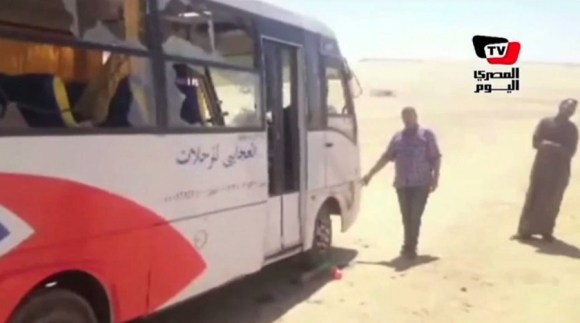
(Photo Credit: Screenshot of Associated Press raw footage of bus that was carrying Coptic Christians going to church retreat when they were ambushed in Egypt on May 26.)

As word spread that 28 Coptic Christians were killed by terrorists, ambushed on their way to a church retreat in Upper Egypt, it was a little while before the realization hit: I was on a church retreat in the Delta.

Being in the opposite direction offered no sense of safety. Only one month earlier the Islamic State sent two suicide bombers to spoil Palm Sunday in churches in the Delta cities of Tanta and Alexandria. But this attack seemed different, another escalation. Coptic outings like the fated one to St. Samuel the Confessor Monastery near Minya in Upper Egypt represent one of the favorite activities of Orthodox Christians throughout Egypt, a mixture of spirituality and social fun. This killing could be a message for Christians to stay in their homes. Whether at worship or leisure, they are ISIS’ favorite target.

But the mentality is worse. Before the Palm Sunday bombings, the Islamic State drove Christians from their homes in northern Sinai, forcing them to take refuge in the Suez Canal cities or Cairo. There is an element—very small but determined and dangerous—that wants Egypt rid of Christianity.

It will be a very difficult task. The roots of the faith go back two thousand years. Copts claim first-century St. Mark the gospel writer as the founder of their church, and third-century St. Anthony the hermit as the founder of monasticism. Gruesome death is no stranger to the Coptic Orthodox Church; its liturgical calendar begins at the era of Diocletian, the Roman emperor who set thousands of martyrs to the sword. It is not likely the church is going anywhere.

But will they think twice before going again to a monastery? St. Samuel is off in the desert, an ancient expression of the Christian impulse to simplify and flee the allurement of the world. Copts in Upper Egypt go to the monastery 120 miles south of Cairo on the Western Desert road to seek the saint’s blessing, and perhaps the spiritual guidance of a monk. But with little else in the way of area entertainment, they also go for a picnic and to have a good time.

So also do they go to Anafora, a modern expression of the Christian impulse to simplify and uplift the marginalized of the world. This is where I was, 90 miles north of Cairo on the Alexandria Desert road, when I heard the news of the savage attack on the bus to St. Samuel. The rest of the day the atmosphere was sullen. Founded only two decades ago and not a monastery but a place of lay retreat and development, Anafora is usually vibrant and bustling with activity. But what joy can there be in the face of such evil?

Yet there must be. That evening the staff at Anafora quietly celebrated the birthday of one of their sisters. The founding bishop urges Copts to not give into fear, but to insist on both love and justice. Is this not the message of Christianity, to resurrect life after suffering death? The Coptic Orthodox Church has incarnated this model for two thousand years, will they not continue?

Friday begins the weekend in Egypt in accordance with the Muslim day of communal prayer. Most churches make this their primary worship service as well, and many Christians take advantage of the quiet roads and time off to commune with fellow believers in their monastery of preference. There are dozens scattered throughout the country, and surely next Friday they will be full again. Copts have not stopped going to church after the suicide bombings. I suspect they will not stop celebrating their heritage of monasticism and martyrdom either.

But the question of continuance must be asked. Since the Arab Spring, emigration has dramatically increased in anecdote, though official figures cannot be verified. And for decades within Egypt, economic realities even more than sectarian tension have driven internal migration from villages to cities. Are there enough of strong faith and eternal Christian values to stay and persevere? Or is it those of strong means and international Christian connections who leave, regardless of faith? In any case, the less-well-off are left behind.

But poor, rich, and in-between, the Copts of Egypt still number in the millions. Now by far the largest Christian community in the Middle East, they also claim a Biblical promise. “Blessed be Egypt, my people,” God says through the prophet Isaiah, and with Muslims the Copts see God’s hand of preservation upon the land of the Nile. But Isaiah also listed Assyria, modern-day Iraq now bereft of Christians, as God’s handiwork. With Israel named as God’s inheritance, is the best the Copts can hope for a tenuous middle ground?

There may not be much sympathetic American Christians can do to help, but do try to understand. And as you enjoy your church outing in the weeks to come this summer, do so with remembrance and prayer. Think too of the allurements of the world, the blessings of simplicity, and the necessary uplift of the marginalized. Think of St. Samuel, and of Anafora, and of an ancient bond of faith.

If from there you can only grow frustrated, remember the importance of love, justice, and joy. Trust God will work out his purposes and join him along the way, even as ambushes await.


Categories
Christianity Today Middle East Published Articles

Righteous Anger: Egypt’s Christians Respond to ISIS

This article was originally published at Christianity Today, on June 1.

Tanta Martyrs Shrine
Shrine to the martyrs of Tanta in St. George’s Church, killed by a suicide bomber on Palm Sunday.

They couldn’t even wash their dead.

Thirty Coptic Christians were gunned down by ISIS, ambushed in a church bus on a weekend outing to a popular monastery in the Egyptian desert. Their families gathered to receive their loved ones in a local hospital, but were met with a mixture of ill-equipped facilities and overwhelmed staff. They even had to fetch their own water.

As if another reason was necessary, Coptic anger turned the funeral march into a protest.

“With our souls and blood we will redeem you, oh Cross!” they shouted. Some seemed to take aim at Islam. “There is no god but God,” they chanted, before changing the second half of the Muslim creed, “and the Messiah, he is God.”

Other chants took no aim at all, thrashing wildly in anger. “We will avenge them, or die like them.”

Many observers say such anger plays right into the hands of ISIS, which is keen to turn Egypt against itself.

Six weeks earlier, after twin suicide bombings on Palm Sunday, Bishop Boula of the Coptic Orthodox diocese of Tanta found himself in a similar situation. Hospitals did not have enough refrigeration units to keep the 25 bodies of those martyred at St. George Church. Crowds were gathering, and anger was surging.

Quickly, he made the decision to bury them together in the church crypt reserved for bishops. Honoring the dead with their leaders of ages past, he then marshaled the youth to provide order and security for the semi-spontaneous funeral service.

“It cooled the fire of all the people,” he later recounted on satellite TV. St. George was renamed to include “the righteous martyrs of Tanta,” with a shrine erected outside the crypt.

It was perhaps the most practical of Coptic efforts to process their anger. Forgiveness is another, as Copts have moved Muslims and wowed the world with their example


Please click here to read the full article at Christianity Today.

Categories
Christianity Today Middle East Published Articles

Terrorists Kill 26 on Church Bus Trip to Popular Monastery

This article was first published at Christianity Today, on May 26, 2017.

Minya Bus Attack
(via Reuters and Ahram Online)

Terrorists ambushed a Coptic church bus trip on Friday near Minya in Upper Egypt, killing at least 26 and injuring 25, including many children.

Egypt’s interior ministry reported that three 4×4 vehicles of 8 to 10 gunmen dressed in military uniforms opened fire on the vehicle, which was on its way to St. Samuel the Confessor Monastery in Samalout, 140 miles south of Cairo.

There was no immediate claim of responsibility, but the attack—which occurred on the eve of Ramadan—follows church bombings claimed by the Islamic State on Palm Sunday and in advance of Christmas.

Last week, Egyptian authorities arrested 48 individuals, securing confessions of belonging to a terrorist cell linked to the Islamic State.

“I am grieving. It is sad and shocking,” said Bishop Thomas of the Coptic Orthodox diocese of Qusia, 75 miles from the monastery. “But at the same time, I know this is not new. I was expecting things like this to happen. And it will not be the last.”

Please click here

to read the rest of the article at Christianity Today.

Categories
Christianity Today Middle East Published Articles

Art after Terror: Meet the Egyptian Church that Welcomes Muslims

This article was first published at The Media Project.
Art after Terror Alexandria

Two weeks after the Palm Sunday suicide bombing in Alexandria, security at the St. Mark’s Anglican Pro-Cathedral was tight. Police cordon, metal detector, bags checked – even eyeglasses needed to be removed.

But inside, tucked away behind the expectant bustle, volunteer leaders circled with hands together and let out a shout, as if to the whole world.

“Believe me, the solution is love!” they cried, raising their hands to heaven.

Ninety percent were Muslim.

Widely known in Egypt as an Islamist stronghold, for decades many Muslim youth in Alexandria had proclaimed the Muslim Brotherhood slogan: Islam is the solution.

And similar to churches throughout the country, St. Mark’s is couched behind thick, high walls. Save for official visits on Christian holidays, few Muslims would need to enter.

But society needed it, decided Nader Wanis. In 2012 in cooperation with church leaders, he opened the Corners for Creativity cultural center in the 150-year-old cathedral, seizing on an opening in the Arab Spring.

Despite the positive signs of youth engagement and interfaith cooperation during the Egyptian revolution, at the time there were also marks of tension. A year earlier conservative Salafis burned a church in Cairo believing a Muslim woman was kidnapped inside. Before that the Two Saints Church in Alexandria was bombed by unknown assailants on New Year’s Eve.

“The church has been misunderstood by the Egyptian street,” said Wanis. “There are rumors we have weapons, fornication, and sorcery inside.

“As long as the church stays closed, Muslims can think whatever they want. But the cultural center is a means to let people in.”

Welcome

Since then they have come in droves, and the community has welcomed it. Over one thousand each year have graduated from diverse training programs in singing, drawing, photography, acting, writing, fine arts, and graphic design. All are run by volunteer leaders.

On this occasion dozens of artists gathered for the monthly art exhibition and handicraft market. Paintings and sculptures lined the walls of the church in absolute reversal of their original purpose. Hijabed women offered their homemade crafts behind foldaway tables set up in front of the massive church door.

The volunteers’ pep talk met behind the welcoming ribbon soon to be cut by two deans from Alexandria University and a local businessman. And afterwards everyone gathered to honor participants in the sanctuary, where Muslims and Christians sang together about religious harmony and community service. “Believe me, love is the solution,” was one of their most enthusiastic.

But it almost didn’t happen.

The church attack ensured it did.

Nader was worshiping at St. Mark’s when the walls shook from the explosion at the Orthodox cathedral five minutes away, killing 17. Earlier the center had considered postponing the exhibition due to the university exam schedule. But after finishing communion he immediately called his team to determine the necessary response.

The 40 volunteer leaders gathered daily in discussion and decided to hold the exhibition and announce it as Masr al-Samida, Egypt the Resistant. Difficult to translate into English, it connotes the suffix ‘-proof’, as in ‘water-,’ or fittingly, ‘bomb-.’

“We insist on creating peace,” said Wanis. “As a church we will not be scared, we will not close in on ourselves again because of one or two incidents, we will not build more walls.

“Now, Muslims and Christians are together. If they explode us again we will die together.”

Message

Mohamed Moussa is one of the longest serving volunteers at the center. A fourth-year journalism student at Alexandria University, he is responsible to organize the exhibition.

“The message is that we are one people, persevering,” he said. “Every time something happens it only brings us closer.”

Moussa knew nothing of the center four years ago, but stumbled into a media course. Touched by the ethos he remains, now in charge of a medium far from his chosen education.

“When you are here you feel there is no difference between a Muslim and a Christian,” he said. “If anything they treat us better than them.

“We are one family, and we are getting bigger.”

Part of the allure of the center goes beyond interfaith unity. Volunteers are given additional training by Wanis and others in administration, marketing, and leadership. But this last word is anathema.

Volunteers are called khadim, the traditional word in the church that means “servant.”

“We are in a church, so they use our language,” Wanis said. “We reject the common terminology and its logic, because we do not lead, we serve.”

And the contrast could not be clearer for the newest volunteer.

“There is no ‘I’ here, we are all together and work together,” said Bassant Fawzy, a 21-year-old art student at Alexandria University.

“People with knowledge and skills tend to keep them to themselves, but here we teach each other.”

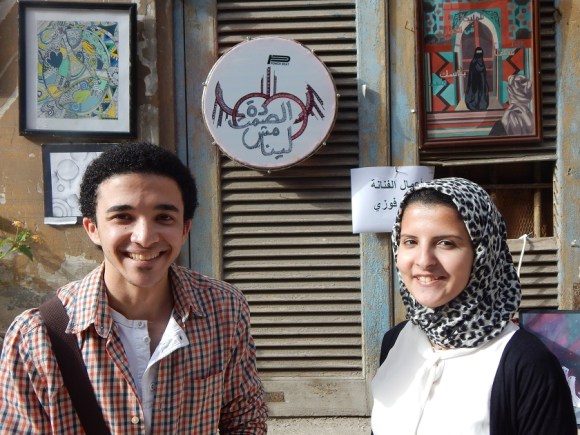
Only one week a “servant”, she brought along her friend Ibrahim Mohamed, who was surprised and impressed to see Islamic-themed art in a church building. Without his knowing, Fawzy borrowed his traditional drum and decorated it with a phrase from the popular song The Nation’s Heart is Wounded, “It is not for us to be silent.”

“We need hope to overcome the crisis,” Mohamed said. “We want everyone to know we support our country in all it is going through. And with terrorism in the churches we must say it here, in the heart of a church.”

Response

When Wanis started Corners for Creativity he did not know how Muslims would respond. Four topics were expressly forbidden: Religion, politics, sex, and soccer – four topics that divide society. But still today nervousness abounds.

“Some Christians are afraid for me,” said Bassem Mounir, a fine arts student and four months a servant. “After the bombings they are worried about Muslims coming into a church.

“But this church opens its doors to everyone, as if we are all brothers.”

At the ceremony each participant received a certificate, honored by the university deans. On the screen above flashed a prayer: God, remember the terrorists who love you and will even give their lives for you, but who neither know you nor your love for all people.

“There is a virus spreading through society to divide it, working through religion,” said Mohamed Helal, dean of the faculty of fine arts. “Religion builds walls, but art transcends them – and this is what Nader is doing.”

The effect has been transformative for Christian and Muslim alike.

“It makes people in our church feel like they are part of the community,” said Bishop Samy Fawzy Shehata, head of the Anglican churches in Alexandria. “It is not healthy to have walls around you, it is a kind of sign that you are an exclusive group.”

Instead, he believes, the church must present an essential message, in light of extremism that pulls people apart.

“We’re trying to show the community that it is possible to live together in peace,” he said.

“It’s not that difficult, you just open the door.”


Categories
Middle East Published Articles Zwemer

Islam and the Bigotry of Conviction

the-muslim-world

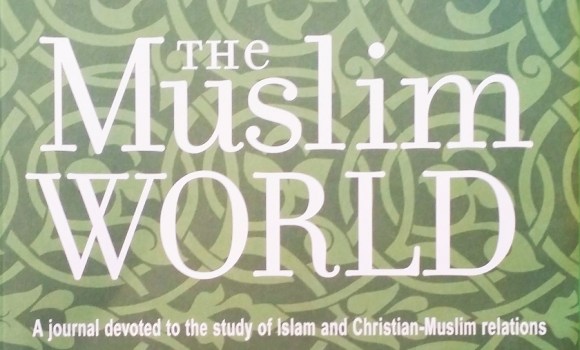
The Muslim World (TMW) is one of the leading academic journals covering Islam worldwide. Strange it would call its own history “bigoted”.

It was founded in 1911 by Samuel Zwemer, a founding father of Protestant missions in engagement with the oft-rival monotheistic faith. Now published by Hartford Seminary, like much of the Protestant mainline its original evangelistic fervor has faded.

Still I was startled to read the concluding sentence of an informative historical biography TMW published in commemoration of their 100th edition:

A century later, TMW has successfully broken ranks with religious provincialism and bigotry, and lives up to the present motto of the Seminary “exploring differences and deepening faith.”

Is this a fair account of all but TMW’s most recent scholarship?

The article notes the academic rigor exhibited from its beginnings to the present day, and despite this conclusion is charitable towards its earliest pioneers and the belief system that propelled them. But it chronicles the development of TMW from a Protestant missionary endeavor to a nonsectarian survey of Muslim-Christian relations. Begun by “the apostle to the Muslim world,” it is now edited by a Muslim.

Editors had to choose between faithfulness to its evangelizing mission to the Muslim world, and thus remain a primary resource for missionary activities, or tilt toward an academic oriented journal concerned with dialogue with Islam. …

To be sure, the journal might have faltered and disappointed many in its hundred years of existence; however, its faithfulness as a forum for academic articles on Islam (both current and past) and Christian-Muslim relations has survived.

Zwemer is called a “pioneering scholar of Arabic” and noted as a professor at Princeton Theological Seminary. He is said to have had “a keen knowledge and understanding of Islam and Muslims,” who included contributions from the “best minds of its times.”

But at the same time it appears to reduce his era of TMW to a historical record of peculiar mentality:

For posterity, the journal represents an invaluable source of missionary activities and scholarly papers on Protestant theologians’ and missionaries’ perception of and thought about the Arab and Muslim world. In that sense, TMW is a priceless wealth of information thanks to Zwemer.

A shift took place under the subsequent editor, one the author approves of. Edwin Calverley (1948-1953) did not necessarily break with the missionary heritage, but wished to reorient presentation:

Associate editor under Zwemer, his first editorial promised “nothing inaccurate, unfair or ill-mannered about Islam.” Calverley’s meticulous academic mind and concern for truth and his determination impressed his contemporaries. He sought to enable readers (missionaries and theologians) to discover what Muslims thought of themselves.

But the editor the article seems to respect most is Kenneth Cragg (1953-1960), the Anglican Arabist:

He led the journal toward a professional and academic authorship. There is no doubt that Cragg’s command of the issues at hand and his own expertise allowed him to make bold changes in the direction of the journal. He took seriously the conscience of Islam and Muslims’ sincere and deeply held set of convictions about the one and only God.

Unlike Macdonald, he did not see Islam as a Christian heresy or as a symbol of man’s perversity as Zwemer, or another way of salvation as liberal theologians. He saw Islam as a theological problem and not as a religious problem or a socio-cultural one.

Cragg asked both Christians and Muslims to show hospitality of mind and a proper attention to the religious other. He invited them to “enlarge [their] hospitality of heart and thought.” His bold and creative writing allows for Islam to speak for itself.

William Bijlefeld (1968-1992), however, followed with a definitive focus on Muslim-Christian relations as the journal’s reason for existence. The author notes his contributions dispassionately but provides a telling quote:

We may be liberated of much confusion and frustration if we interpret the concept of mission not in the sense of an attempt to ‘impose truth’ on others, but as an honest effort to reflect and realize in our time the Compassion of God who IS the truth.

This is still a Christian sentiment, but is it a proper understanding of the heritage of Zwemer and others? Did they see their efforts as imposing truth, as described? Would it not rather be one of deciphering and demonstrating, however polemic in orientation?

Here the stage is set for the author’s joltling conclusion, following two cursory paragraphs about most recent developments. The journal now accords with this long range plan:

Strong academic programs, creative scholarship in the study of Islam and Christian-Muslim relations; local, national and international initiatives in Christian-Muslim relations; and leadership to religious communities and congregations in interfaith and ecumenical relations.

For this let TMW be saluted. And in the drift away from Zwemer’s heritage no critique is needed. This is the development of much Protestant theology over the past 100 years.

It is worthwhile to review this history through the lens of a publication. And as mentioned, the author is by no means disrespectful. All of which makes his concluding sentence so surprising.

“Religious provincialism.” Very well, that can be seen as a fair enough term for Christian exclusivity. Such a belief may indeed influence one to interpret only through the light of one’s own faith.

But is this “bigotry”? Such a term suggests instead its application on the speaker. Christian exclusivity is a belief, as is the accompanying missionary mandate. That one imagines God will ultimately condemn the religious other has no necessary bearing on one’s treatment of that other in this world.

Zwemer and his colleagues confidently critiqued Islam and found it lacking. Perhaps they also devalued the Muslim mind for holding to it so tenaciously. But as best I know, they studied conscientiously and argued respectfully.

The author does not bring out anything otherwise. And if Zwemer bears even a tinge of bigoted guilt for his attitudes, the author commends later editors of similar Christian belief for their academic care and faithfulness in representing Islam.

Where then is the bigotry? Is it in this quote from Zwemer?

We hope to interpret Islam as a world-wide religion in all its varied aspects and its deep needs, ethical and spiritual, to Christians; to point out and press home the true solution of the Moslems; namely, the evangelization of Moslems; to be of practical help to all who toil for this end.

These words are taken from TMW’s first editorial. But Zwemer repeated them again in his final editorial in 1947. His call for mission held steady from first to last, and in yielding editorship it was stipulated the journal continue upon the same philosophy.

Did it continue with Cragg? The author quotes him from shortly before he became editor, writing in TMW:

Our readiness to make Christ known and loved is the direct measure and consequence of what, so known and loved, He means to us. An apology to Christian mission is no more, no less, than an apology for the Christian faith.

And Cragg was even clearer in his own book, The Call of the Minaret:

If Christ is what Christ is, He must be uttered.  If Islam is what Islam is, that “must” be irresistibly. Wherefore there is misconception, witness must penetrate: wherever there is the obscuring of the beauty of the Cross it must be unveiled: wherever men have missed God in Christ He must be brought to them again.

The language of Cragg reflects a different age than of Zwemer; does it reflect a different conviction? Either way, if either is bigotry then most Muslims must also be damned. So must everyone who holds to a conviction and wishes others to discover its value. In his labeling of the now-rejected heritage of TMW surely the author is calling the reader to the truth-as-he-understands-it. And should he not be praised for so doing?

Whatever your conviction, study well the convictions of others. Report them accurately. If you are motivated to do so to disprove and dispel, so be it. The effort is worthy, and closer will all parties come to the truth.

But let your motivation move deeper, and do so in respect, honor, and love for the one who holds opposite conviction. You are equals. You are human.

At core, I suspect both Zwemer and the author of this article to be of this character. That either one may betray the principle is understandable; conviction of truth can make blind to malpractice.

But it need not, and should not. Right conviction of truth not only commands the mind but also orders the heart. Love is the protective virtue. Christian faith is a primary source for both, though too many fail to draw them in balance. Perhaps other faiths share similar struggle.

The Muslim World was, and is, a chronicle of this struggle. Let all embrace it, read, and learn. Listen well, and speak freely.

This article was first published at the Zwemer Center.

Categories
Informed Comment Middle East Published Articles

Pope Francis, Islam, and Peace-Building

This interview was first published at Informed Comment.

Kamal Boraiqa
Dr. Kamal Boraiqa

Dr. Kamal Boraiqa is a lecturer at al-Azhar University and a member of al-Azhar Center for Dialogue, the al-Azhar Observer for Combating Extremism, and the Egyptian Family House. With a PhD from al-Azhar in Islamic Studies, he has served as an imam at the Santa Rosa Islamic Center in the United States and as a visiting scholar at the UK’s Birmingham University Center for the Study of Islam and Muslim-Christian Relations, and is a member of the African Union steering committee to link policy makers and religious leaders.


Dr. Kamal, as an al-Azhar scholar, what aspects of Pope Francis’ visit and speech resonated with you the most, especially in terms of your responsibilities in dialogue?

The meeting itself was a message to the whole world that the three heavenly religions – Islam, Christianity, and Judaism – are against violence, fanaticism, and radicalism. One who contemplates the speeches of Pope Francis and Sheikh Ahmed al-Tayyib will learn many lessons.

First, that faith is incompatible with violence, for violence is the negation of every authentic religious expression. Religious leaders are called, therefore, to unmask the violence that masquerades as purported sanctity and is based more on the “absolutizing” of selfishness than on authentic openness to the Absolute. We have an obligation to denounce violations of human dignity and human rights, to expose attempts to justify every form of hatred in the name of religion, and to condemn these attempts as idolatrous caricatures of God. Holy is his name, he is the God of peace.

Religion, however, is not meant only to unmask evil. It has an intrinsic vocation to promote peace, today perhaps more than ever. This is done through teaching the younger generations, because education becomes wisdom if it draws out of men and women the very best of themselves, in contact with the One who transcends them and with the world around them, fostering a sense of identity that is open and not self-enclosed.

Sincere dialogue is the only alternative to civilized encounter, lest we are left with the incivility of conflict. Wisdom seeks out the other, overcoming the temptation to rigidity and closed-mindedness. It is open and in motion, at once humble and inquisitive. It values the past and sets it in communication with the present, within suitable hermeneutics.

Pope Francis demonstrated this when opened his speech with “As-Salaam Alaikum.” This traditional Muslim greeting in Arabic means, “Peace be upon you,” and reflects his great respect and appreciation of the Muslim faith.

But he followed up also with a practical call. He said that in order to prevent conflicts and build peace, it is essential that we spare no effort in eliminating situations of poverty and exploitation where extremism more easily takes root. He also spoke forcefully about blocking the flow of money and weapons to those who provoke violence.


How does al-Azhar contribute to the fight against radicalism?

Al-Azhar’s strategy to combat radicalism is both local and international. Its system of education is built upon layers and layers of exchange through dialogue and the acceptance of difference of opinion and interpretation. Al-Azhar’s moderate curricula teaches and encourages the proper understanding of Islam that is far away from extremism. It reflects the true spirit of Islam and the essence of Islamic heritage in both rationality and rhetoric.

Spiritually, al-Azhar embodies Islamic moderation and tolerance, the two fundamental characters of the three monotheistic religions in general…

Please click here to read the full interview at Informed Comment.