This article was first published at Christianity Today, on February 4, 2020.
Deep within the Orthodox heartlands of the Balkans, one might expect local evangelicals to celebrate the passage of Montenegro’s first religious freedom law.
Instead, as tens of thousands fill the streets to protest against it, the relative handful of believers find themselves on the sideline of a struggle between giants.
And the stakes could further shake the greater Orthodox world.
Europe’s 6th-least evangelical country is also one of its newer nations. Having achieved independence from Serbia in 2006 through a tightly contested referendum, Montenegro is now seeking autocephaly—spiritual independence—for its local Orthodox church, viewed as a schism by the Serbian Orthodox.
Protests have erupted in Belgrade also, with thousands rallying last month against Serbian “suffering” in Montenegro and other neighboring nations. Crosses, icons, and church banners peppered the demonstrations.
But in Montenegro, rather than waiting for a liberating tomos (decree) similar to the one issued to Ukraine by Archbishop Bartholomew of Constantinople, who is the ecumenical patriarch for Eastern Orthodox communities, the government is acting to register all of its religious communities.
The protesting ethnic Serbian citizens of Montenegro fear the religious freedom law is nothing but a trojan horse for an elaborate ecclesiastic land grab targeting Serbian Orthodox Church properties.
“The law is a step forward, as it helps us ‘small religious communities’ have a legal basis to operate,” said Sinisa Nadazdin, pastor of Gospel of Jesus Christ Church located in the capital city of Podgorica and one of the nation’s five registered evangelical churches.
“But none of us want to enjoy this benefit if it will create in Montenegro…”
Please click here to read the full article at Christianity Today.
This article was first published at Christianity Today on February 3, 2020.
Having finished his Sunday sermon from Psalm 18 on God as a stronghold who delivers his people from their enemies, Enoch Adeboye then led them to a cemetery.
It was an ironic yet appropriate choice.
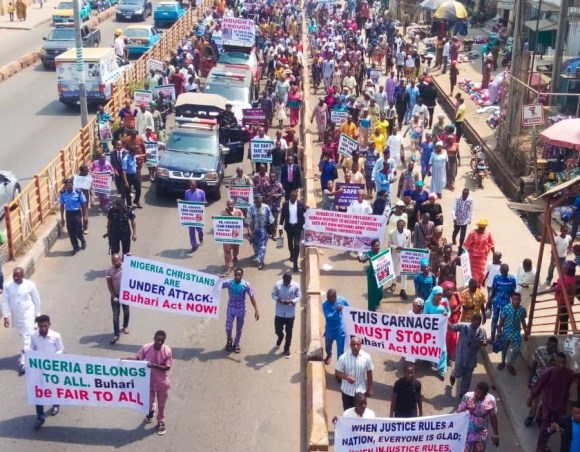
Wearing a bright green tuxedo, the General Overseer of the Redeemed Christian Church of God (RCCG) in Lagos, Nigeria, marched three miles yesterday holding a placard that declared: “All Souls are Precious to God.”
Adeboye and his congregation, one of the largest in the world, answered the call issued by the Christian Association of Nigeria (CAN) for a three-day fast this past weekend, concluding in a prayer walk. Based on reports from its state chapters and local media, CAN estimates 5 million people marched in 28 of Nigeria’s 36 states on Sunday.
“Though we have protested before, this event took a new dimension,” CAN president Samson Ayokunle told CT.
“With one voice, we said ‘no’ to killings, ‘no’ to security negligence, and ‘no’ to the persecution of Christians in Nigeria. It is a wake-up call to the government.”
Launched on January 29 to protest the beheading of Brethren pastor Lawan Andimi, the chairman of a regional CAN chapter in Adamawa state, by Boko Haram two weeks earlier, the prayer was also a protest at the Nigerian government’s failure to stop the abductions and killings.
Terrorist attacks, as well as clashes between mostly Muslim herdsmen and mostly Christian farmers, resulted in more than 100 deaths in January alone.
“Lord, have mercy on Nigeria, let there be peace and security,” said Adeboye. “God sees all things and knows where the terrorists are hiding.
“We pray that God send his light to Nigeria and expose the evildoers in the country.”
In the perspective of CAN, these reach into the upper levels of government.
“O Lord, in Jesus Name, expose all the…”
Please click here to read the full article at Christianity Today, and here to read the op-ed submitted by Muhammadu Buhari, president of Nigeria.
This article was first published at Christianity Today, on January 28, 2020.
After three years of anticipation—and dread—President Trump announced the launch of his “Deal of the Century” to achieve peace between Israel and Palestine.
With Israeli Prime Minister Benjamin Netanyahu at his side, he outlined details for a proposal that would recognize a Palestinian state following extensive land swaps and security arrangements.
Palestinian Authority President Mahmoud Abbas was not present, having broken off communication with the White House following several US decisions deemed biased toward Israel.
Abbas immediately rejected the plan, which Palestinians had long declared “dead on arrival.”
But Netanyahu’s acceptance was enthusiastic, declaring himself willing to begin negotiations with the Palestinians on such terms. A day earlier, Netanyahu’s challenger Benny Gantz also signaled his party’s agreement with Trump’s proposal.
With three Arab states lacking a peace treaty with Israel in attendance—Oman, Bahrain, and the United Arab Emirates—Trump hopes there will be a regional push to implement his plan.
And with $50 billion promised as investment for the nascent Palestinian state, the president believes all the necessary pieces are in place.
“All previous generations from Lyndon Johnson tried and bitterly failed,” Trump said. “But I was not elected to do small things, or shy away from big problems.”
It only required he approach peace in a “fundamentally different” manner…
Following a summary the article includes the perspective of
Joel Rosenberg, co-founder of the Alliance for the Peace of Jerusalem
Salim Munayer, head of the Jerusalem-based Musalaha reconciliation ministry
Daoud Kuttab, a Palestinian journalist and secretary of the Jordan Evangelical Council in Amman
Hanna Massad, a Palestinian pastor who led Gaza Baptist Church for 12 years and returns regularly
Gerald McDermott, Anglican Chair of Divinity at Beeson Divinity School who recently wrote The New Christian Zionism: Fresh Perspectives on Israel and the Land
Yohanna Katanacho, a Palestinian pastor and academic dean at Nazareth Evangelical College
Lisa Loden, the Messianic Jewish co-chair of the Lausanne Initiative for Reconciliation in Israel–Palestine
Joel Chernoff, general secretary of the Messianic Jewish Alliance of America
Martin Accad, chief academic officer at Arab Baptist Theological Seminary in Beirut
John Hagee, the founder and chairman of Christians United for Israel
Todd Deatherage, cofounder and executive director of Telos Group, which seeks to build a “pro-Israeli, pro-Palestinian, pro-peace movement”
Wissam al-Saliby, the Geneva-based advocacy officer for the World Evangelical Alliance
Ibrahim Nseir, Syrian pastor of the Presbyterian Church of Aleppo
Please click here to read the full article at Christianity Today.
This article was first published at Christianity Today, on January 28, 2020.
Middle East Christians might shrug their shoulders. They might even fret and worry. But perhaps Qassem Soleimani got what he deserved.
“We regret what happened. We do not want anyone to die, because Christianity wants the good of all,” said Ashty Bahro, former head of the Kurdistan Evangelical Alliance.
“But a person leads himself to his own destiny.”
Soleimani, head of Iran’s special operations Quds Force, was killed by a US rocket strike on January 3. It was a rapid escalation following the Iran-linked death of an American contractor, a retaliatory attack on the responsible Iraqi militia, and the storming of the US embassy in Baghdad.
According to the US State Department, Soleimani, who reported directly to Iranian Supreme Leader Ayatollah Khamenei, was responsible for 17 percent of American deaths in Iraq from 2003 to 2011.
He also enraged Sunni Muslims by engineering the subsequent Iranian defense of Syria’s regime, led by President Bashar al-Assad. With Russia and the Iran-backed military wing of Lebanon’s Hezbollah, the shelling of rebel-held cities resulted in the displacement of thousands during Syria’s civil war.
But Soleimani was also acclaimed for his role in fighting ISIS, personally directing Iraqi militias from the front lines.
Thus, Middle East Christians have mixed feelings about his death—and the immediate aftermath.
Some Syrian believers see no benefit to anyone.
“Iran was working with the US government in certain agreements. Why did you destroy them?” asked Maan Bitar, pastor of the Presbyterian churches in Mhardeh and Hama, noting both the fight against ISIS and the nuclear deal.
“This will prompt a severe reaction that will hurt…”
Please click here to read the full article at Christianity Today.
This article was first published in the December print edition of Christianity Today.
The shooting started right away. Columba Stewart had just touched down in Timbuktu when Islamist militants launched another attack.
The fighters were trying to retake control of Mali, after United Nations forces had pushed them back. As Stewart made his way through the ancient city in 2017, the rebels fired on security guards and the guards shot back.
Stewart was whisked to a safe room at the hotel. Waiting in the windowless interior room, he prayed. He sipped a little scotch. And he waited for hours. He knew what he had to do. Stewart is a monk—a Benedictine brother at St. John’s College, in Minnesota, part of the order that built libraries in the Middle Ages, preserving and reproducing Bibles by hand, along with psalters, books of martyrs, and Greek and Arabic philosophy.
So Stewart knew his responsibility in Timbuktu. He had to save the ancient manuscripts.
When the shooting stopped, Stewart spent the next two days training Malians to run a mobile digitization studio to preserve the more than 300,000 Islamic manuscripts that al-Qaeda might have destroyed.
“We don’t always know trouble is coming, but we have a history of being there just in time,” Stewart said. “People can say it’s serendipity, but I believe in providence.”
Stewart joined the Benedictines in 1981 and now serves at executive director of the Hill Museum and Manuscript Library (HMML) at Saint John’s. He has rescued documents in Lebanon, Syria, and Iraq, as well as Egypt, Ethiopia, and India—saving biblical texts and some of the most significant documents for the church in the Middle East, as well as Muslim texts.
Unlike manuscript hunters of the past, he leaves the treasure behind. He trains local leaders to…
Please click here to read the full article at Christianity Today.
This article was first published at Christianity Today on January 15, 2020.
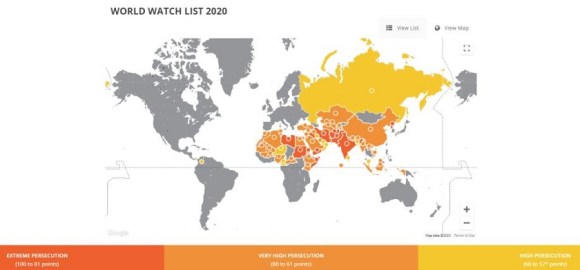
Every day, 8 Christians worldwide are killed because of their faith.
Every week, 182 churches or Christian buildings are attacked.
And every month, 309 Christians are imprisoned unjustly.
So reports the 2020 World Watch List (WWL), the latest annual accounting from Open Doors of the top 50 countries where Christians are the most persecuted for their faith.
“We cannot let this stand,” said David Curry, president and CEO of Open Doors USA, during the 2020 list’s unveiling in Washington, DC, this morning. “People are speaking out and we have an obligation to hear their cry.”
The listed nations comprise 260 million Christians suffering high to severe levels of persecution, up from 245 million in last year’s list.
Another 50 million could be added from the 23 nations that fall just outside the top 50—such as Mexico, Chad, and the Democratic Republic of the Congo—for a ratio of 1 in 8 Christians worldwide facing persecution.
Last year, 40 nations scored high enough to register “very high” persecution levels. This year, it reached…
Please click here to read the full article at Christianity Today.
This article was first published at Christianity Today, on January 13, 2020.
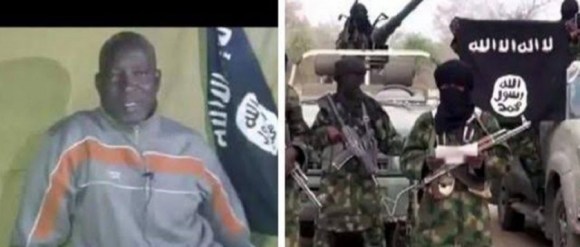
A hostage video released last week by Boko Haram did far more than issue another Nigerian plea for rescue.
It revealed a modern-day Shadrach.
“By the grace of God, I will be together with my wife, my children, and my colleagues,” said Lawan Andimi, a Church of the Brethren in Nigeria (EYN) pastor in the troubled northeastern state of Adamawa. “[But] if the opportunity has not been granted, maybe it is the will of God.
“Be patient, don’t cry, don’t worry. But thank God for everything.”
It is testimony even to his captors, said Gideon Para-Mallam, the Jos-based Africa ambassador for the International Fellowship of Evangelical Students (IFES).
“This is completely different from most hostage videos,” he said. “[Andimi] appeared as one who has already conquered death, saying to his abductors…”
Please click here to read the full article at Christianity Today.
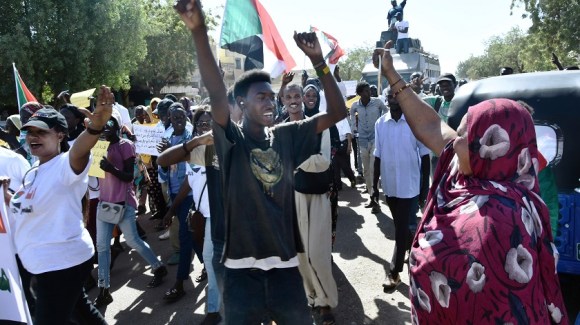
In this Monday, Dec. 23, 2019 photo, Christians march through the streets to celebrate the birth of Jesus in Khartoum Bahri, Sudan, north of the capital Khartoum. More than eight months after the army forced out long-ruling autocrat Omar al-Bashir, who upheld harsh interpretations of Islamic laws, Sudanese Christians are hoping for more religious freedom. (AP Photo/Mohamed Okasha)
This article was first published at Christianity Today, on December 28, 2019.
“Hallelujah! Today, we are happy that the Sudanese government has opened up the streets for us so we can express our faith,” said Izdhar Ibrahim, one of the marchers. Some Christians had been frightened before “because we used to encounter difficulties.”
The changes started in 2011, after South Sudan gained independence from Sudan following a long war and a referendum. South Sudan is mostly Christian and animist, a belief that all objects have a spirit. Al-Bashir’s government then escalated its pressure on the remaining Christians, human-rights campaigners and Christians say.
Al-Bashir, who came to power in an Islamist-backed military coup in 1989, failed to keep the peace in the religiously and ethnically diverse country.
Noah Manzul, one of the church elders, said the march was treated almost as if it were a “crime.”
Its return is “an expression of religious freedom,” Manzul said. “We can live our lives with ease.”
Manzul’s social work with homeless children and orphans got him into trouble under al-Bashir, when he was accused of trying to convert the children to Christianity, an allegation he denies. Activities like singing hymns in the teeming market outside the church were stopped, he said.
To be sure, some Christians said they were not impacted negatively by al-Bashir’s government, and officials at the time disputed that the government targeted Christians.
But Suliman Baldo, senior adviser at the Enough Project, which supports peace and an end to atrocities in Africa’s conflict zones, said the ultimate goal under al-Bashir was “to limit the influence of the church.” Under his rule, Christian church properties could be seized, Baldo said, adding some churches were demolished, and some preachers were arrested.
During past holiday seasons, many recalled, posters would appear on the streets warning against celebrating with the kofar, or infidels, a reference to Christians.
Now, the constitutional declaration that guides this transitional period no longer refers to Islam as the primary source of legislation in Sudan. A Christian woman was appointed to the nation’s interim ruling Sovereign Council.
And December 25 was declared…
Please click here to read the full article at Christianity Today, to which I contributed additional reporting.
This article was first published by Christianity Today on December 28, 2019.
In another filmed massacre, 11 Nigerian Christians were executed by the Islamic State West African Province (ISWAP) over the Christmas holiday.
Wearing the orange jumpsuits made familiar by similar executions of Egyptian and Ethiopian Christians in Libya, the first Nigerian victim was shot in the head by the black-clad terrorists who then slit the throats of the remaining ten. It is understood to be the largest group killed by ISWAP, a Boko Haram splinter group, so far.
“This message is to the Christians in the world,” stated the 56-second propaganda video, released December 26, in both Arabic and Hausa, according to The New York Times.
“Those who you see in front of us are Christians, and we will shed their blood as revenge for the two dignified sheikhs.”
The reference is to Abu Bakr al-Baghdadi, the former ISIS caliph killed by US troops in an October raid in Syria, and Abu al-Hassan al-Muhajir, his purported successor, who was killed the next day.
The video offered no information about the victims, other than that they were recently seized in Nigeria’s northwest Borno state. But an earlier video was released by ISWAP in which captured aid workers appealed to Nigerian President Muhammadu Buhari, as well as to the Christian Association of Nigeria (CAN).
Four aid workers were killed by ISWAP earlier this month. Dozens of others are believed to still be in captivity, including Leah Sharibu, a teenage girl kidnapped almost two years ago whose perseverance under pressure has inspired Nigerian Christians.
The International Crisis Group estimates the jihadist group consists of between 3,500 and 5,000 fighters.
“These agents of darkness are enemies of our common humanity, and they don’t spare any victim, whether they are Muslims or Christians,” stated Buhari, according to al-Jazeera.
Nigeria’s population of 200 million is evenly divided between Muslims and Christians.
Muslim victims have been many, agreed CAN in an earlier statement. But it stated the widespread killing in Nigeria’s north has predominately targeted Christians, who make up 95 percent of those currently detained by jihadists.
“The government has been paying lip service towards securing their freedom,” stated CAN, mentioning in particular…
Please click here to read this article at Christianity Today.
This article was first published at Christianity Today, on December 13, 2019.
Following years of frustration, Armenian Christians worldwide received a double blessing this week.
For the first time in its history, the US Senate recognized the Armenian Genocide. And after 11 years of practical vacancy, the Armenian community in Istanbul, Turkey, elected a new patriarch.
“It is very emotional for the Armenian world, and anyone who wants to see the truth incarnated,” Paul Haidostian, president of evangelical Haigazian University in Beirut, Lebanon—the only Armenian university in the diaspora—told CT concerning the resolution.
“But it is very obvious this was the opportune moment to be bipartisan.”
Led by Sen. Ted Cruz, a Republican from Texas, the unanimous passage yesterday drove his co-sponsor Sen. Robert Menendez to tears.
“I’m thankful that this resolution has passed at a time in which there are still survivors of the genocide,” said the Democrat from New Jersey, pausing for 20 seconds before being able to continue. “[They] will be able to see that…
Please click here to read the full article at Christianity Today.
Pastor Ara Badalian leads members of National Baptist Church in prayer at Baghdad’s Tahrir Square. Image: Courtesy of National Baptist Church
This article was first published at Christianity Today, on December 9, 2019.
Distributing food to protesters with 40 fellow church members under the Jumariyah bridge near Tahrir Square in Baghdad, Ara Badalian made a poignant observation.
“This movement is a flood, occupying the hearts of the youth and the poor, without any religious discrimination,” the pastor of National Baptist Church recalled to CT. “It has broken down all the walls that divided Iraqis.”
It is at the bridges—about a dozen span the Tigris River, which bifurcates the Iraqi capital—where most violence has taken place. The protest movement, which began in October, has resulted in more than 400 deaths, around a dozen of them security personnel. Over 17,000 people have been injured.
In response, the Chaldean Catholic Church decided last week to refrain from holding public celebrations of Christmas, trading tree decorations and holiday receptions for prayers of intercession.
“Instead of bringing hope and prosperity, the current government structure has brought continued corruption and despair,” Bashar Warda, the Chaldean archbishop of Erbil, told the United Nations Security Council last week.
“[Iraqi youth] have made it clear that they want Iraq … to be a place where all can live together as equal citizens in a country of legitimate pluralism and respect for all.”
Protesters have demanded the dissolution of parliament, widespread government reforms, and amendment of the sectarian-based 2005 constitution.
Ratified following the United States-led 2003 Iraq War, the current constitution gives the Middle East nation’s Shiite majority (55% of the population) the leading position of prime minister, as well as the influential interior and foreign ministries.
The Sunni minority (40%) receive the speaker of parliament and the defense ministry. The Kurds, who comprise only a third of the Sunni population but are concentrated in their own autonomous northern region, receive the presidency and finance ministry.
Islam is established as the religion of the state and the foundational source of legislation. Christians are among three religious minorities guaranteed religious freedom, though the constitution protects the Islamic identity of the majority.
While the protests have been cross-sectarian in Baghdad, they’ve paradoxically been strongest in the nine Shiite provinces in southern Iraq.
“People don’t want foreign interference from anywhere…
Please click here to read the full article at Christianity Today.
Nasrallah (L) and Kamel (R), both working to address Coptic grievances, find different receptions from the state. Image: Associated Press / Jayson Casper
Two stories here, so the article deck is an important follow-up to the headline:
Meanwhile, Coptic activist who insists true religious equality does not yet exist goes to prison on terrorism charges.
Here’s the intro to the first:
Coptic lawyer Huda Nasrallah may have won a great victory for Christian women in Egypt. Last week, a Cairo court ruled in her favor, dividing the family inheritance equally between her and her two brothers.
…
Nasrallah’s verdict followed the decision of two other courts to reject her appeal on the basis of the sharia law stipulation that a male heir receive two-thirds of the inheritance.
This past summer, the Egyptian Initiative for Personal Rights (EIPR) took up her cause. In a campaign called “Christian on ID card, Muslim in Inheritance,” it claimed millions of Coptic women suffer similarly.
Coptic men are sometimes all too willing to go along with it, Nasrallah told the Associated Press. But she is “thrilled” by the verdict, and hopes it will inspire other women.
“It is not really about inheritance; my father did not leave us millions of Egyptian pounds,” she said. “If I didn’t take it to court, who would?”
And here is the second:
But a few days earlier, Coptic activist Rami Kamel may have suffered a great setback for all Egyptian believers. He was arrested for his reporting of sectarian tension, and accused of joining a terrorist group.
…
A founding member of the Maspero Youth Union when Egypt’s military tanks rolled over Coptic protesters in 2011, he later documented sectarian strife between Muslims and Christians.
He is now facing charges of joining a terror group and spreading false information, his lawyer told Agence France-Presse. Additional charges include harming public peace, inciting strife between Muslims and Christians, and agitating against the state.
“There is no credible evidence to support these charges,” said Thabet, who last spoke with Kamel a few days before his arrest. Around 10 days prior, security called Kamel in for informal interrogations as a warning to stop his activity.
But Kamel continued, speaking out against the recent arrest of Khalil Rizk, a Coptic labor rights activist charged with joining a terrorist group.
Please click here to read the full article at Christianity Today.
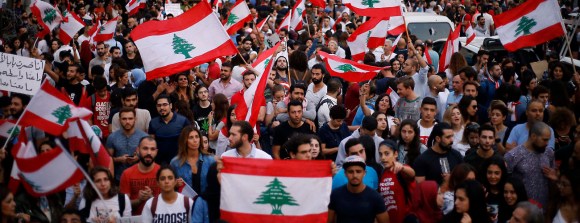
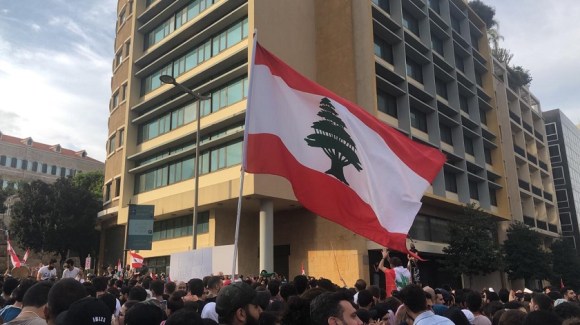
Anti-government protesters chant slogans against the Lebanese government as they hold Lebanese flags during a protest in Beirut, on October 26. (AP Photo/Bilal Hussein)
Does a revolution need a leader?
As the rocks rained down near the tent of Ras Beirut Baptist Church’s effort to discuss the question, suddenly the faith of the Christians gathered there was put to the test.
For the past month, Lebanese evangelicals have debated Scripture, sharing sermons online. One viral effort urges believers to stay away from widespread demonstrations in submission to authority. Another licenses participation in the popular push for justice.
Trying to find a third way, RBBC has visited the protest site weekly at Beirut’s Martyrs Square to discuss issues related to the revolutionary movement.
“We are not supporting a political agenda, but listening to people about why they are coming down to the streets,” Joe Costa, RBBC youth leader, told CT. “You cannot evangelize people if they are hungry or hurt. You have to be with them where they are.”
And this time, the church’s tent was at the front line as dozens of Hezbollah flag-waving partisans approached on their motorcycles.
Since October 17, citizens of Lebanon and its multi-confessional democracy have shed their religious identities in largely peaceful demonstrations against their political leaders. Some politicians have responded by justifying the violence of their followers, without authorizing it. Other politicians have expressed sympathy, asking for trust to make things better.
But long seen as the untouchable defenders of their communities’ interests, over the decades many political leaders have become wealthy.
“Corruption is like decay in our bones,” Hikmat Kashouh, pastor of Resurrection Church of Beirut (RCB), told CT. “No single person doubts it, including those in authority today.”
The current protest movement is leaderless and has no formal demands, but in general seeks…
Please click here to read the full article at Christianity Today.
Bishop Efraim Tendero announces the legal recognition of a Palestinian Evangelical Alliance at the general assembly of the World Evangelical Alliance. (Image: Jeremy Weber)
After 12 years of waiting, evangelicals in Palestine now claim they have greater civil rights than their fellow believers in the Holy Land.
Earlier this month, the president of the Council of Local Evangelical Churches in the Holy Land—which represents congregations and ministries located in the West Bank, East Jerusalem, and the Gaza Strip—triumphantly held aloft his evidence at the once-a-decade general assembly of the World Evangelical Alliance (WEA).
“Here is the presidential decree signed by … President Mahmoud Abbas,” Munir Kakish told the approximately 800 WEA delegates from 92 nations gathered in Bogor, Indonesia. “Our hearts are full of thankfulness to God for this new declaration.”
When the Palestinian Authority (PA) was created in 1994 following the Oslo Accords, pastors of local evangelical churches met to create a council in order to have a voice with the new government, Kakish told CT.
Ministering in the Holy Land since 1978, Kakish pastors two churches: an independent congregation in Ramallah, Palestine, and a Baptist congregation in Ramla, Israel. They are only 30 miles apart, but divided by the Israeli separation wall.
“I knocked on [the PA’s] doors many times,” he said. “But now the timing was right, and the personnel … were understanding.
“Most of all, it was our persistence to obtain our civil rights as Palestinian citizens.”
Over time, the council—which Kakish has led since 2007—gained credibility as…
Please click here to read the full article at Christianity Today.
The education minister in Lebanon had just canceled classes nationwide due to an explosion of popular anger at proposed taxes. Public squares in Beirut and other cities swelled with demonstrations. The two students asked Steve White, principal of the Lebanese Evangelical School (LES), if he would join them and protest too.
White, a Lebanese citizen since 2013, became principal in 2000, succeeding his English father who’d held the post since 1968. Founded by a British missionary in 1860, LES preaches the gospel clearly and is one of the top schools in Lebanon. But it bucks the sectarian trend of community enclaves as 85 percent of its students are Muslim—most coming from the Shiite community. Discussion about religion and politics is forbidden.
The protests began October 17. At the height of student interest, White arranged four school buses for a unique civic education. Though he knows his students well, he couldn’t tell their breakdown by sect: Sunni, Shia, or Christian.
Which fit perfectly with the protests.
“I got excited because it was not religious,” said White. “It was nonsectarian: all of Lebanon together, no flags, no parties, they were cursing everybody.”
White did not approve of the cursing. But he did of the “everybody.” The slogan adopted by protesters: “All of them means all of them.” It targeted the leaders of Lebanon’s multiple religion-based political parties, accusing them all of corruption.
Transparency International ranked Lebanon No. 138 out of 180 in its 2018 corruption perception index, listed from clean to corrupt.
Traditionally viewed as the guardians of each sect’s interests, Lebanese political parties would regularly voice vague charges of corruption against unnamed colleagues. But unlike previous protest movements, which carried the banners of each party, this one hoisted only the Lebanese national flag with its distinguishing cedar tree.
Accordingly, White forbade students from bringing the flag of LES.
Whether inspired, sympathetic, or threatened, political leaders had little choice but to express solidarity.
According to the World Bank, one-quarter of Lebanon’s population lives in poverty. Citizens pay exorbitant fees for privately generated electricity, as the tiny Arab nation of 6 million on the shores of the Mediterranean Sea has the fourth-worst public provision in the world. Smaller than Connecticut, public debt is 150 percent of GDP. Prior to the protests, strikes threatened to cripple bread and gasoline services, as the US dollars needed to import materials dried up from the market.
People started to fear economic collapse.
In order to unlock millions of dollars of promised international investments, the government announced new taxes—including upon WhatsApp, a popular free messaging service— to lower the deficit. An austerity budget loomed, with some effort at reforms it was long unwilling to tackle. Sectarian political squabbling had prevented an agreed-upon national budget for the prior 12 years.
The subsequent protests caught the government off guard. Promising a solution in three days, officials hastily agreed to cancel tax increases, fix the electricity sector, slash their own salaries, pass laws to fight corruption, and impose a one-time tax on lucrative banks in order to balance the budget.
It wasn’t enough.
“We’ve had the same names and parties for 30 years. Why should we give them another chance?” said Nadim Costa, head of the Near East Organization, an evangelical ministry serving the poor, marginalized, and displaced across the Arab world.
“There is a spiritual dimension to what is going on…”
Please click here to read the full article at Christianity Today.
Following Turkey’s recent incursion into Syria and establishment of a “safe zone” in coordination with Russia, the beleaguered nation faces another refugee crisis. According to the United Nations, 6.7 million Syrians have registered with their High Commission for Refugees. Turkey hosts the largest share, with 3.4 million, followed by Lebanon with 1 million.
The United States: 21,645, according to official State Department figures, from the start of the Syrian civil war in 2011. Of those, 536 were admitted in the last 12 months.
Of the total, 21,245 are Muslim, compared to only 211 Christians, including five Protestants. Tony Alkhoury is not one of them. But his is a story of potential for those allowed in.
Born in Homs and an evangelical Christian, he is 1 of 450 Syrians in the US on an active student visa.
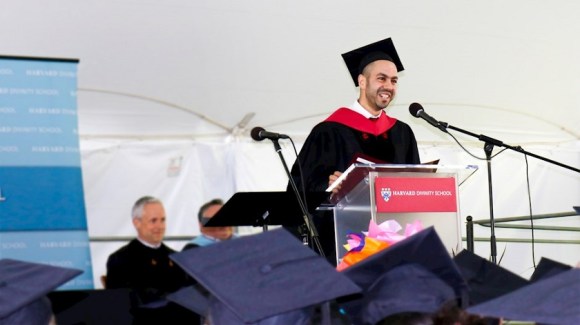
In Arabic, Alkhoury’s family name means “the priest.” Currently pursuing a PhD in practical theology at Fuller Seminary, in 2016 he began a unique cross-cultural ministry adventure—at Harvard University.
Through it drove the divinity student to the depths of depression, it ended with rapturous applause.
“I want to live, I want to love, and I want to be loved,” he told the student body, which selected him to deliver the commencement address this past May. “I want to fight to keep hope and make meaning of all the things that I do not have control over.”
In the prime of his life, Alkhoury witnessed the destruction of Syria. America might have been a refuge for many, until President Donald Trump’s travel ban.
Syrian visas reached a high point of 15,479 in 2016, the year of Alkhoury’s arrival. In January 2017, Trump issued his executive order banning citizens of initially seven Muslim-majority nations—challenged consistently in the courts and modified to include non-Muslim countries—and the number dipped to 3,024. In 2018, it fell to 41.
The meaning of it all, for which Alkhoury has long been seeking, has been years in the making.
Born in 1984 to Orthodox parents, he attended the local Alliance church in Homs. In 2005, he felt a call to full-time ministry.
Alkhoury became a youth pastor, volunteering also in peacemaking initiatives. Initially excited by the Arab Spring…
Please click here to read the full article at Christianity Today.
The United States did not resettle a single refugee in October.
According to 30 years of records from World Relief, last month was the first time a calendar month went empty. For the past five years, the October average was 4,945 refugees resettled.
Among those impacted: persecuted Christians.
The humanitarian arm of the National Association of Evangelicals tracked the number of arrivals from the 10 countries identified by the US State Department as Countries of Particular Concern for violating religious freedom. The 5,024 Christians whose cases were accepted in fiscal year 2019 is a decrease of two-thirds from the 15,341 who were accepted in fiscal 2015. A maximum of 5,000 is allotted for victims of religious persecution in fiscal 2020—for all religions and countries.
Resettlements of non-Christians are also declining. For the same time period, Yazidi refugees from Syria and Iraq have declined 91 percent. Jewish refugees from Iran have declined 97 percent. And Muslim refugees from Burma have declined 76 percent.
“This isn’t just heartbreaking—it’s unjust,” stated Scott Arbeiter, president of World Relief, noting the State Department announced a limit of 18,000 refugees for fiscal 2020.
“I urge the administration to reconsider its approach and set a cap that better represents the compassion and hospitality of the American people.”
But Secretary of State Mike Pompeo defended the policy.
“Addressing the core problems that drive refugees away from their homes helps more people more rapidly than resettling them in the United States,” he stated, pointing out an estimated backlog of one million asylum cases.
“Helping displaced people as close to their homes as possible,” stated Pompeo, noting the $9.3 million the US has spent to alleviate humanitarian crises, “better facilitates their eventual safe and voluntary return.”
The Religious Liberty Partnership, birthed at a Lausanne Movement gathering and now numbering Christian organizations from 20 countries, has highlighted three biblical responses to persecution: accept and endure (2 Tim. 3:10–13); challenge and resist (Acts 22:25–29); or flee (Acts 9:23–25).
Jesus says the same in Matthew 10:23 (NIV): “When you are persecuted in one place, flee to another. Truly I tell you, you will not finish going through the towns of Israel before the Son of Man comes.”
But with Christian attention focused this past weekend on the International Day of Prayer for the Persecuted Church, the RLP document—reaffirmed with the Refugee Highway Partnership (RHP), a partner of the World Evangelical Alliance, in 2017—suggests that the clear choice of the local leaders who shepherd the displaced echoes Pompeo.
“Amongst church leaders across the Middle East, there is a strong consensus that indigenous Christians should…
Please click here to read the full article at Christianity Today.
(Image: Lefteris Pitarakis / AP. Clergy representing minority communities in Turkey gathered Sunday in a monastery in southeastern Turkey to pray for Turkish soldiers fighting in the cross-border operation against Syrian Kurdish fighters.)
As reports circulated that Turkey had violated its five-day pause in operations against the Kurds on the Syrian border, President Recep Tayyip Erdogan’s rhetoric intensified. If Kurdish fighters did not withdraw from their positions, as agreed between Erdogan and President Donald Trump, Turkey would “crush their heads.”
The front now appears quiet as Turkey has secured its “safe zone” in cooperation with Russia.
In America, as reported in the press, Christian opinion has been almost universal in its condemnation. But the Christian landscape in the Middle East, home to the oldest and some of the most enduring persecuted traditions in the faith, offers a complex array of responses.
CT has previouslycovered anti-Turkish sentiment from the Syriac, Assyrian, and Protestant communities of the region.
But there is an underreported—and contested—pro-Turkey and anti-Kurdish contingent as well.
Arameans:
“President Trump is right on Syria!” stated Johny Messo, president of the World Council of Arameans, in a press release. “These ‘heroes’ have oppressed vulnerable Arameans, taken their innocent lives, Kurdified their lands, and still use a tiny Christian group as their mouthpiece.”
The Arameans, though an ancient expression of Christianity, represent a 20th-century revival of identity tied to the ancient biblical land of Aram. Communities exist in Syria, Turkey, and elsewhere in the region, and have been recognized by Israel.
While the West has rallied behind the democratic Syrian enclave that permits religious freedom, Messo says what it commonly called Kurdistan is actually…
Please click here to read the full article at Christianity Today.
The Armenian Orthodox Church is one of the oldest Christian churches in the world. According to tradition, Armenia was evangelized by Jesus’ disciples Bartholomew and Thaddeus. In 301 A.D., it became the first nation to adopt Christianity as its official religion.
An Oriental Orthodox denomination, the Armenians are in communion with the Coptic, Syriac, Ethiopian, and Malankara (India) churches. They differ with Catholics and Protestants over the 451 A.D. Council of Chalcedon decision to recognize Christ as one person with two natures: human and divine. Oriental Orthodox Christians declare Christ has one nature, both human and divine.
The Armenian Church is governed by two patriarchs, entitled Catholicos. One, Karekin II, is Supreme Patriarch for all Armenians and sits in Armenia.
CT interviewed Aram I, Catholicos of the Great House of Cilicia, which was once located in modern-day Turkey but since the Armenian Genocide relocated to Antelias, Lebanon, five miles north of Beirut. His jurisdiction includes the Armenians of the Middle East, Europe, and North and South America.
Aram I discussed the genocide, the US House of Representatives resolution this week to finally recognize it, and Armenians’ desired response from Turkey.
How do you respond to the US resolution recognizing the Armenian Genocide?
Yesterday I made a statement welcoming warmly this action taken. I believe it is very much in line with the firm commitment of the United States of America in respect to human rights. The rights of the Armenian people are being violated. After more than 100 years, we tried to bring the attention of the international community that the Armenian Genocide is a fact of history.
Whether we call it genocide or massacre or deportation, the intention is important. The intention of the Ottoman Turkish government at the time was to destroy [and] eliminate the Armenian people for political reasons. The presence of Armenian people in the western part of present-day Turkey and [historic] Cilicia was an obstacle to their project of pan-Turkism.
This is our legitimate claim: that the international community make a visible, tangible manifestation of their concern in respect to human rights, and recognize the Armenian Genocide. It was carefully planned and systematically executed by the government at the time.
Our people all around the world warmly greeted this action of the House of Representatives. It is our firm expectation that…
Please click here to read the full article at Christianity Today.
Armenian Americans breathed a sigh of relief this week when the US House of Representatives overwhelmingly approved Resolution 296 to recognize the Armenian Genocide.
Around 1.5 million Armenians were killed between 1915 and 1923, as the defeated Ottoman Empire transitioned into the modern Republic of Turkey. Less than half a million survived.
The resolution also mentions the Greek, Assyrian, Chaldean, Syriac, Aramean, Maronite, and other Christian victims who lived in Asia Minor and other Ottoman provinces at the time.
If the House legislation is passed in the Senate and signed by President Donald Trump, the United States will be committed to commemorate the genocide, to reject its denial, and to educate people about it in order to prevent similar atrocities in the future.
But if Armenian Americans are finally pleased, the diaspora in the Middle East—much closer to the Turks and the lands taken from their ancestors—demurs.
“It certainly heals some small aspect of our century-long national wound,” said Paul Haidostian, president of the evangelical Haigazian University—the only Armenian university in the diaspora—in Beirut, Lebanon.
“There is some sense of relief. But it should not be exaggerated.”
Nor should it be underestimated, he told CT. All Armenians…
Please click here to read the full article at Christianity Today.









 Jayson Casper