Categories
Christianity Today Middle East Published Articles

The Piece of Jerusalem: Middle East Christians Explain Trump’s Embassy Gambit

This article was first published at Christianity Today, on December 5.

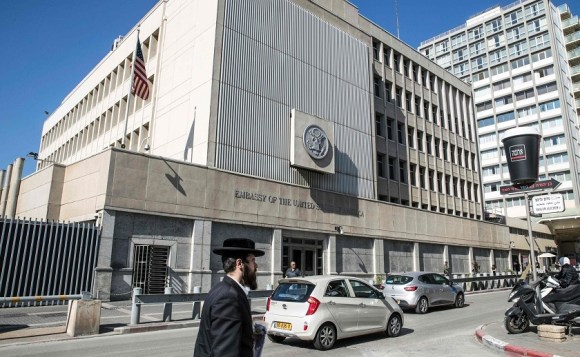
Israel Embassy Jerusalem
The United States embassy currently located in Tel Aviv may be moved to Jerusalem. (Image: Jack Guez / AFP / Getty Images, via the LA Times.)

President Donald Trump is expected tomorrow to recognize Jerusalem as the capital of Israel.

Doing so would fulfill a campaign promise. It would upend decades of American foreign policy.

And it would simultaneously encourage and unnerve the Christians of the Middle East.

“I am obviously pleased, as an Israeli,” said David Friedman, a professor at the Messianic Jewish Theological Institute and former dean of King of Kings College in Jerusalem.

“Jerusalem is the capital of Israel, de facto, concretely. Our government sits there. So why should President Trump continue ignoring reality?”

But 65 miles north in Arab-majority Nazareth, another Christian educator has a dramatically different response.

“It is a bad idea,” said Botrus Mansour, a Baptist elder and co-chair of the Lausanne Initiative for Reconciliation between Israel and Palestine. “It will increase resentment and possibly spark unnecessary violence, making peace harder to obtain.

“America will lose any remaining legitimacy it had as a fair broker.”

Israel occupied Arab East Jerusalem in 1967, and passed a law in 1980 declaring the city its eternal, united, and undivided capital. The United Nations declared the act null and void, by a unanimous resolution in which the United States abstained.

Palestine also desires Jerusalem as the capital of a future state. So American policy has been…

Please click here to read the full article at Christianity Today.

Categories
Americas Christianity Today Published Articles

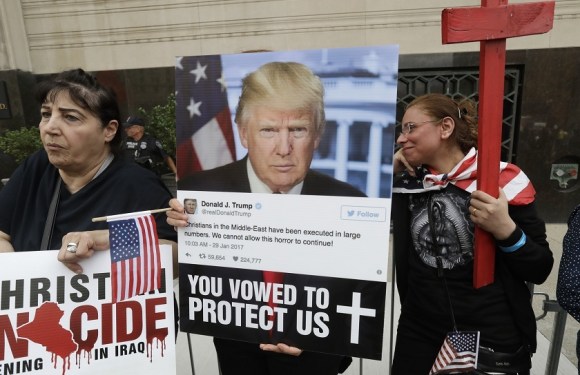
Christians Could Return to the Middle East, Thanks to Trump (Deportations)

Iraq Trump Deportation

This article was originally published in the October print edition of Christianity Today, co-authored with Griffin Jackson.

When Haitham Jazrawi started working at Kirkuk Presbyterian Church in Iraq in 1991, there were 72 families. Today, there are still 72 families—but only two of the originals remain. During his 26-year tenure as caretaker and then pastor, Jazrawi has seen a turnover of more than 300 families due to emigration.

Such an outward flow has been the norm in churches across the Middle East. In Iraq and Syria, countries ravaged by years of war and the terror of the Islamic State, roughly two-thirds of Christians have fled.

Among Jazrawi’s congregants, 50 percent are internally displaced from elsewhere in Iraq. “They come as refugees from inside our country,” said the Kirkuk pastor, “from the Nineveh Valley, from Nineveh, from other villages and cities.”

Soon, they may also come from outside of Iraq. With the Trump administration threatening to deport more than 1,400 Iraqis, hundreds of whom are Christians, a rare irony may present itself: the forced movement of Christians into the Middle East.

This summer, hundreds of Iraqis were behind bars in holding centers around the United States, slated for deportation to Iraq. The majority were Christians, and most were rounded up in Detroit in a massive June raid executed by Immigration and Customs Enforcement (ICE).

“Not only would they be breaking up families that have been here for decades,” said Nathan Kalasho, a local advocate for the detainees, “but they would be sending an already targeted minority to a country that no longer welcomes them…”

Please click here to read the full article at Christianity Today.

Categories
Christianity Today Middle East Published Articles

The Game of Thrones Christians Should be Watching

Saudi Crown Prince Mohammed bin Salman shakes hands with Lebanese Maronite Patriarch Bechara Boutros Al-Rahi during their meeting in Riyadh
Saudi Crown Prince Mohammed bin Salman shakes hands with Lebanese Maronite Patriarch Bechara Boutros Al-Rahi during their meeting in Riyadh, November 14, 2017. Bandar Algaloud/Courtesy of Saudi Royal Court/Handout via REUTERS

This article was first published at Christianity Today on November 16, 2017.

Before the crown prince of Saudi Arabia stunned the world with his sudden arrest of dozens of fellow princes and millionaires on corruption charges, he stunned many Christians with his stated desire to moderate its version of Islam, commonly dubbed Wahhabism.

Saudi Arabia was founded in 1932 as an alliance between Bedouin warriors of the al-Saud tribe and strict Salafi Muslim scholars following Mohamed ibn Abd al-Wahhab. Discovering oil six years later, it also became one of the Muslim world’s wealthiest nations. The combination has led many religious freedom advocates to blame Saudi petrodollars for funding a worldwide rise in Islamist extremism.

But last month, Mohammad bin Salman said his conservative Muslim country would return to “what we were before: a country of moderate Islam that is open to all religions and to the world…”

Please click here to read the full article at Christianity Today.

Categories
Christianity Today Middle East Published Articles

What Trump’s Evangelical Advisors Took Out of Egypt

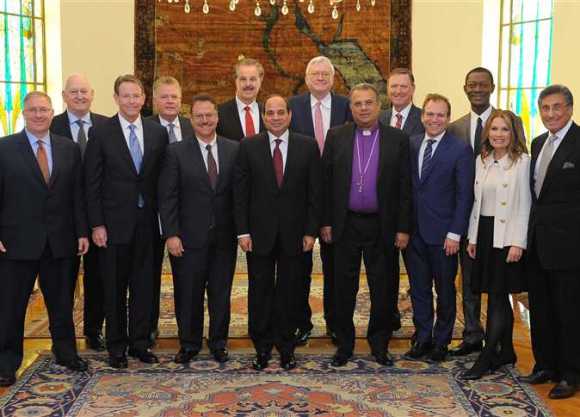
Egypt Evangelical Delegation 2
Image: A. Larry Ross US evangelicals meet with Egypt’s grand mufti.

This article was first published at Christianity Today on November 14, 2017.

Jim Garlow walked cautiously through the cavernous halls of Egypt’s Ministry of Islamic Endowments. He prayed: Why am I here, God? What do you want me to see?

The pastor of Skyline Church in San Diego was part of a 12-member delegation of American evangelicals. Their mission: To offer friendship to the president of Egypt.

But as largely a Who’s Who of Christian Zionists and otherwise pro-Israel pastors and ministry leaders, the mission could easily go awry in a majority-Muslim nation where even the Coptic Orthodox Church still officially bans pilgrimage to neighboring Jerusalem.

Mike Evans, founder of the Friends of Zion Heritage Center in Jerusalem, is a lifelong friend of Israeli president Benjamin Netanyahu. Mario Bramnick, senior pastor of New Wine Ministries Church in Florida, is president of the Latino Coalition for Israel. Tony Perkins, president of the Family Research Council, leads tours to Israel. They were assembled by Joel Rosenberg, a Jewish Christian with dual US and Israeli citizenship and author of the fictional The Last Jihad series.

But Rosenberg had recently made a new friend, giving him confidence that this visit might be God’s will.

Last year in March, he spent five days in Jordan as a guest of King Abdullah, who had just read his book. Intrigued after noticing himself as a named character in Rosenberg’s latest series on the ISIS threat, the Muslim ruler wanted to know more. (Rosenberg assured Abdullah that his character didn’t die in the series, which the king went on to finish reading.)

Not long thereafter, God placed on Rosenberg’s heart a different Middle East leader: President Abdel Fattah al-Sisi of Egypt.

Invited as 1 of 60 Middle East experts to a forum held during Sisi’s state visit to President Donald Trump in April, Rosenberg walked up and boldly introduced himself.

“I’m Jewish,” he told CT. “I’ve got some chutzpah.”

Rosenberg thanked Sisi for rescuing Egypt and its Christians from the Muslim Brotherhood. He commended the president for reaching out to Jews and to Roman Catholics.

“But there is one group I don’t see: evangelicals,” he told Sisi. “It’s not your fault; probably we haven’t asked. But would you like us to bring a delegation of leaders to come and visit you?”

Seven months later, Garlow was in Cairo.

“Each step of the way I learned so much,” he said. “There were insights I had never known…”

Please click here to read the full article at Christianity Today.

Egypt Evangelical Delegation
Press el-Sisi: Egyptian President el-Sisi (front center) receives a first-ever delegation of American Evangelical leaders in the Presidential Palace after a frank and transparent dialogue about challenges in the region and opportunities for cooperation.
Categories
Americas Christianity Today Published Articles

What Arab Leaders Think of USAID Funding Persecuted Christians

This article first published at Christianity Today on November 2, 2017.

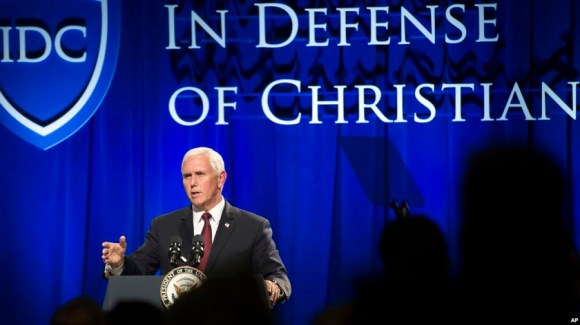
USAID Christians
Vice President Mike Pence addresses the In Defense of Christians’ fourth-annual national advocacy summit in Washington, Oct. 25, 2017. Credit: AP, via VOA News.

Here are a few excerpts from my new article.

First, the reason:

Zalal Life distributed 300 food baskets and bottles of water. The government of Hungary donated $2 million in aid for reconstruction. The United Nations wasn’t there.

“People are not happy with the UN; they are using money for administration,” said Bahro. “The help is coming from churches and Christian organizations.”

Second, the condition:

“If the US can help Christian organizations directly, it will be good—if it can be done without discrimination,” he said.

“They must serve Muslims and other minorities also. We live together, and want to remain together in our communities.”

Third, the complication:

“Having the US transfer funds directly to persecuted Christians could be a good thing, but American politics will surely mingle in,” the Israeli Arab Christian said.

“They will want to brag about the aid to show their success, and to prove to the Christian Right that [President Donald Trump] delivers on his promises.”

Fourth, the danger:

Farouk Hammo, pastor of the Presbyterian church in Baghdad, agreed. “The bottom line is that we do not recommend direct aid from the States to Christians,” he said.

“It will agitate our Muslim brothers negatively against the Christian community.”

Fifth, the reality:

But the Jordanian leader respects Trump and is cautiously in support of the USAID policy change if done well, as it will empower the church to do the ministry.

“Maybe we will be targeted more,” he said. “But in some countries, it can’t get worse.”

Sixth, the possibility:

If USAID offered to help, Bitar would accept it—if it is not conditioned on any political agenda. He has little fear of local reaction.

“Muslims will be happy,” he said. “They like to send their children to schools run by Christians.”

Finally, the outcome:

Amid conflicting Christian reactions and unknown Muslim response, the policy change represents a new approach. Will it make things better or worse?

“Here in our area, the Kurdish Muslims trust Christians,” Bahro said. “In Arab areas, I don’t know.”

Please click here to read the full article at Christianity Today.


Categories
Christianity Today Middle East Published Articles

Saudi Arabia’s Neighbor Defends Religious Freedom of Individuals

This article was originally published by Christianity Today, on September 13.

Bahrain Declaration 2
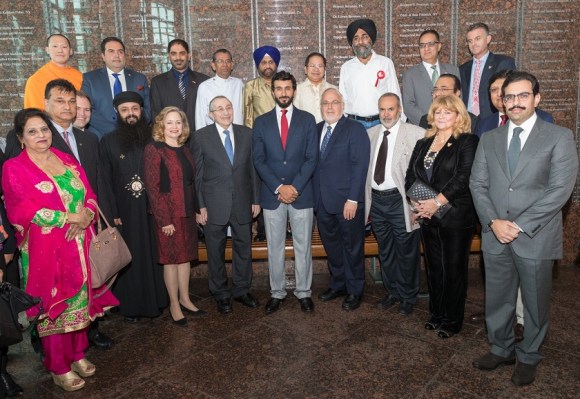
Prince Nasser bin Hamad al Khalifa (center), with Bahrain Declaration attendees. Credit: Simon Wiesenthal Center.

The cause of religious freedom received a significant boost from the Muslim world today. The island Kingdom of Bahrain—connected by bridge to Saudi Arabia—has declared “freedom of choice” to be a “divine gift.”

“We unequivocally reject compelled observance,” states the Bahrain Declaration for Religious Tolerance, released September 13 in Los Angeles with Muslim, Christian, and Jewish leaders in attendance. “Every individual has the freedom to practice their religion, providing they do no harm to others, respect the laws of the land, and accept responsibility, spiritually and materially, for their choices.”

Prince Nasser bin Hamad al Khalifa of Bahrain signed as an official envoy of the Gulf nation’s king. Johnnie Moore, a board member of the National Association of Evangelicals, and Rabbi Marvin Heir of the Simon Wiesenthal Center also participated, joining ambassadors from Saudi Arabia, the United Arab Emirates, Egypt, and Israel.

“The King is acting decisively, courageously, and seriously,” said Moore, noting also Bahrani sponsorship of a religious tolerance center in the capital city of Manama, as well as the sponsorship of a chair in religious coexistence at La Sapienza University in Rome.

“The declaration goes farther than any similar document that I’m aware of.” …

Please click here to read the full article at Christianity Today.

Bahrain Declaration
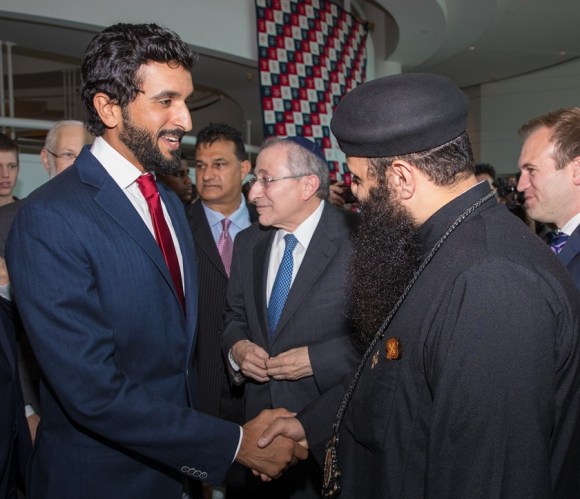
Prince Nasser bin Hamad al Khalifa, with a Coptic priest. Credit: Simon Wiesenthal Center.
Categories
Christianity Today Middle East Published Articles

Want to Help Christians Stay in the Middle East? Start with Your Vacation

This article first appeared in the July print edition of Christianity Today.

Middle East Christian Tourism
(Credit: robertharding / Alamy)

Call Ann Fink crazy, but the intrepid grandmother has a tradition to uphold. She’s toured Israel, Jordan, and Egypt with 8 of her 13 granddaughters. Victoria, a preteen, is number 9.

“Her parents are not afraid,” said Fink, a Pennsylvania native, while visiting Egypt with Victoria. “We believe we can die at any time. Only God knows when and where.”

Neither tourist knew just how much visits like theirs support the region’s beleaguered Christians.

From a high-water mark of $7.2 billion in 2010, tourism revenue in Egypt has fallen by 76 percent following the unrest of the Arab Spring. The decline has devastated the economy and, with it, Egypt’s Christians.

Copts, an estimated 10 percent of the population, make up more than half of tour operators and more than a quarter of the tourism workforce, according to Adel el-Gendy, a general manager in the Tourism Development Authority. Christians have better connections to the West, he said, and are often more skilled with languages.

Gendy, a Muslim, has been assigned development of the Holy Family route—25 locations that, according to tradition, were visited by Jesus, Joseph, and Mary as they fled Herod’s wrath. Relaunched with government and church fanfare in 2014, the route is close to being designated as a World Heritage site by UNESCO, he said. But the project has struggled as tourists stay away.

The route runs through Old Cairo, which boasts churches dating back to the fourth century but feels like a ghost town. Souvenir shops are open, but their lights dim. “Our income has dropped by 90 percent,” said Angelos Gergis, the Coptic Orthodox priest at St. Sergius Church, built above a cave where tradition says the Holy Family stayed three months. “We are assigned to assist 100 poor families in the area, but we used to help so many more.”

There are no tourist fees at Christian religious sites, but many visitors leave donations. “You can see things in Egypt you won’t see anywhere else,” he said. “And if you have any sympathy for us, please come. Your visit does help…

Please click here to read the rest of the article at Christianity Today.

Categories
Christianity Today Middle East Published Articles

Should Christians Join Muslims in Breaking Ramadan’s Daily Fast?

This article was first published at Christianity Today, on June 22, 2017.

St. Andrews Iftar

For most American Christians, Ramadan is a novelty; something heard of, but rarely seen. For Middle Eastern Christians, it is everywhere.

For some, it is an annoyance. The month-long fast from sunrise to sunset can make for a cranky Muslim neighbor. Productivity tends to slow. Religiosity tends to rise.

But for other believers, it is an opportunity.

“The Evangelical Church of Maadi wishes all Egyptians a generous Ramadan,” proclaimed the flowery banner hung in the southern Cairo suburb. Such signage is not uncommon (and Muslims also display Merry Christmas wishes for Christians). But saluting “all Egyptians” is a statement.

“I want our brother Muslims to feel that we are one [as Egyptians], and it will make him happy in his heart,” said pastor Naseem Fadi. “We both celebrate Ramadan.”

Beside the need to have good relations with Muslims, Fadi also emphasized his biblical obligations. “Our faith tells us to love everyone,” he said. “And when we reach out to others, we teach them about ourselves.”

Across the Middle East, Christians join in the festive spirit—often by hosting an iftar, the traditional fast-breaking dinner…

Please click here to continue reading at Christianity Today.


Categories
Christianity Today Middle East Published Articles

Righteous Anger: Egypt’s Christians Respond to ISIS

This article was originally published at Christianity Today, on June 1.

Tanta Martyrs Shrine
Shrine to the martyrs of Tanta in St. George’s Church, killed by a suicide bomber on Palm Sunday.

They couldn’t even wash their dead.

Thirty Coptic Christians were gunned down by ISIS, ambushed in a church bus on a weekend outing to a popular monastery in the Egyptian desert. Their families gathered to receive their loved ones in a local hospital, but were met with a mixture of ill-equipped facilities and overwhelmed staff. They even had to fetch their own water.

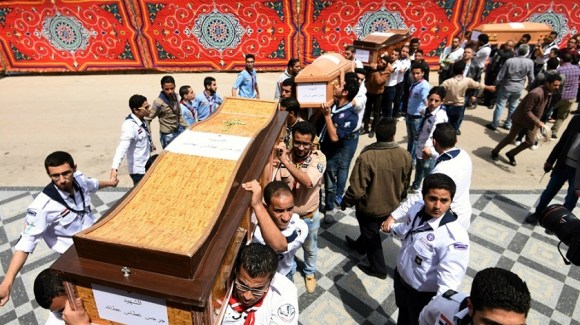
As if another reason was necessary, Coptic anger turned the funeral march into a protest.

“With our souls and blood we will redeem you, oh Cross!” they shouted. Some seemed to take aim at Islam. “There is no god but God,” they chanted, before changing the second half of the Muslim creed, “and the Messiah, he is God.”

Other chants took no aim at all, thrashing wildly in anger. “We will avenge them, or die like them.”

Many observers say such anger plays right into the hands of ISIS, which is keen to turn Egypt against itself.

Six weeks earlier, after twin suicide bombings on Palm Sunday, Bishop Boula of the Coptic Orthodox diocese of Tanta found himself in a similar situation. Hospitals did not have enough refrigeration units to keep the 25 bodies of those martyred at St. George Church. Crowds were gathering, and anger was surging.

Quickly, he made the decision to bury them together in the church crypt reserved for bishops. Honoring the dead with their leaders of ages past, he then marshaled the youth to provide order and security for the semi-spontaneous funeral service.

“It cooled the fire of all the people,” he later recounted on satellite TV. St. George was renamed to include “the righteous martyrs of Tanta,” with a shrine erected outside the crypt.

It was perhaps the most practical of Coptic efforts to process their anger. Forgiveness is another, as Copts have moved Muslims and wowed the world with their example


Please click here to read the full article at Christianity Today.

Categories
Christianity Today Middle East Published Articles

Terrorists Kill 26 on Church Bus Trip to Popular Monastery

This article was first published at Christianity Today, on May 26, 2017.

Minya Bus Attack
(via Reuters and Ahram Online)

Terrorists ambushed a Coptic church bus trip on Friday near Minya in Upper Egypt, killing at least 26 and injuring 25, including many children.

Egypt’s interior ministry reported that three 4×4 vehicles of 8 to 10 gunmen dressed in military uniforms opened fire on the vehicle, which was on its way to St. Samuel the Confessor Monastery in Samalout, 140 miles south of Cairo.

There was no immediate claim of responsibility, but the attack—which occurred on the eve of Ramadan—follows church bombings claimed by the Islamic State on Palm Sunday and in advance of Christmas.

Last week, Egyptian authorities arrested 48 individuals, securing confessions of belonging to a terrorist cell linked to the Islamic State.

“I am grieving. It is sad and shocking,” said Bishop Thomas of the Coptic Orthodox diocese of Qusia, 75 miles from the monastery. “But at the same time, I know this is not new. I was expecting things like this to happen. And it will not be the last.”

Please click here

to read the rest of the article at Christianity Today.

Categories
Christianity Today Middle East Published Articles

Art after Terror: Meet the Egyptian Church that Welcomes Muslims

This article was first published at The Media Project.
Art after Terror Alexandria

Two weeks after the Palm Sunday suicide bombing in Alexandria, security at the St. Mark’s Anglican Pro-Cathedral was tight. Police cordon, metal detector, bags checked – even eyeglasses needed to be removed.

But inside, tucked away behind the expectant bustle, volunteer leaders circled with hands together and let out a shout, as if to the whole world.

“Believe me, the solution is love!” they cried, raising their hands to heaven.

Ninety percent were Muslim.

Widely known in Egypt as an Islamist stronghold, for decades many Muslim youth in Alexandria had proclaimed the Muslim Brotherhood slogan: Islam is the solution.

And similar to churches throughout the country, St. Mark’s is couched behind thick, high walls. Save for official visits on Christian holidays, few Muslims would need to enter.

But society needed it, decided Nader Wanis. In 2012 in cooperation with church leaders, he opened the Corners for Creativity cultural center in the 150-year-old cathedral, seizing on an opening in the Arab Spring.

Despite the positive signs of youth engagement and interfaith cooperation during the Egyptian revolution, at the time there were also marks of tension. A year earlier conservative Salafis burned a church in Cairo believing a Muslim woman was kidnapped inside. Before that the Two Saints Church in Alexandria was bombed by unknown assailants on New Year’s Eve.

“The church has been misunderstood by the Egyptian street,” said Wanis. “There are rumors we have weapons, fornication, and sorcery inside.

“As long as the church stays closed, Muslims can think whatever they want. But the cultural center is a means to let people in.”

Welcome

Since then they have come in droves, and the community has welcomed it. Over one thousand each year have graduated from diverse training programs in singing, drawing, photography, acting, writing, fine arts, and graphic design. All are run by volunteer leaders.

On this occasion dozens of artists gathered for the monthly art exhibition and handicraft market. Paintings and sculptures lined the walls of the church in absolute reversal of their original purpose. Hijabed women offered their homemade crafts behind foldaway tables set up in front of the massive church door.

The volunteers’ pep talk met behind the welcoming ribbon soon to be cut by two deans from Alexandria University and a local businessman. And afterwards everyone gathered to honor participants in the sanctuary, where Muslims and Christians sang together about religious harmony and community service. “Believe me, love is the solution,” was one of their most enthusiastic.

But it almost didn’t happen.

The church attack ensured it did.

Nader was worshiping at St. Mark’s when the walls shook from the explosion at the Orthodox cathedral five minutes away, killing 17. Earlier the center had considered postponing the exhibition due to the university exam schedule. But after finishing communion he immediately called his team to determine the necessary response.

The 40 volunteer leaders gathered daily in discussion and decided to hold the exhibition and announce it as Masr al-Samida, Egypt the Resistant. Difficult to translate into English, it connotes the suffix ‘-proof’, as in ‘water-,’ or fittingly, ‘bomb-.’

“We insist on creating peace,” said Wanis. “As a church we will not be scared, we will not close in on ourselves again because of one or two incidents, we will not build more walls.

“Now, Muslims and Christians are together. If they explode us again we will die together.”

Message

Mohamed Moussa is one of the longest serving volunteers at the center. A fourth-year journalism student at Alexandria University, he is responsible to organize the exhibition.

“The message is that we are one people, persevering,” he said. “Every time something happens it only brings us closer.”

Moussa knew nothing of the center four years ago, but stumbled into a media course. Touched by the ethos he remains, now in charge of a medium far from his chosen education.

“When you are here you feel there is no difference between a Muslim and a Christian,” he said. “If anything they treat us better than them.

“We are one family, and we are getting bigger.”

Part of the allure of the center goes beyond interfaith unity. Volunteers are given additional training by Wanis and others in administration, marketing, and leadership. But this last word is anathema.

Volunteers are called khadim, the traditional word in the church that means “servant.”

“We are in a church, so they use our language,” Wanis said. “We reject the common terminology and its logic, because we do not lead, we serve.”

And the contrast could not be clearer for the newest volunteer.

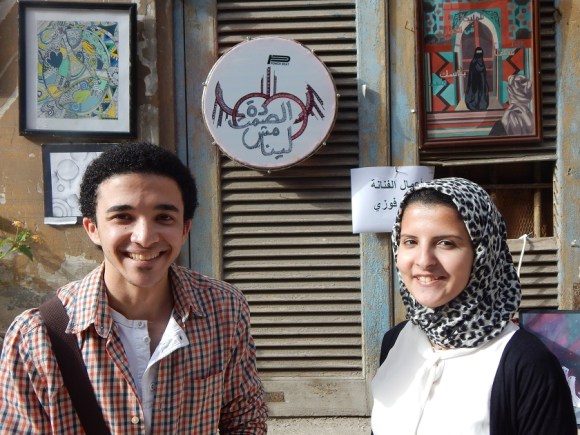
“There is no ‘I’ here, we are all together and work together,” said Bassant Fawzy, a 21-year-old art student at Alexandria University.

“People with knowledge and skills tend to keep them to themselves, but here we teach each other.”

Only one week a “servant”, she brought along her friend Ibrahim Mohamed, who was surprised and impressed to see Islamic-themed art in a church building. Without his knowing, Fawzy borrowed his traditional drum and decorated it with a phrase from the popular song The Nation’s Heart is Wounded, “It is not for us to be silent.”

“We need hope to overcome the crisis,” Mohamed said. “We want everyone to know we support our country in all it is going through. And with terrorism in the churches we must say it here, in the heart of a church.”

Response

When Wanis started Corners for Creativity he did not know how Muslims would respond. Four topics were expressly forbidden: Religion, politics, sex, and soccer – four topics that divide society. But still today nervousness abounds.

“Some Christians are afraid for me,” said Bassem Mounir, a fine arts student and four months a servant. “After the bombings they are worried about Muslims coming into a church.

“But this church opens its doors to everyone, as if we are all brothers.”

At the ceremony each participant received a certificate, honored by the university deans. On the screen above flashed a prayer: God, remember the terrorists who love you and will even give their lives for you, but who neither know you nor your love for all people.

“There is a virus spreading through society to divide it, working through religion,” said Mohamed Helal, dean of the faculty of fine arts. “Religion builds walls, but art transcends them – and this is what Nader is doing.”

The effect has been transformative for Christian and Muslim alike.

“It makes people in our church feel like they are part of the community,” said Bishop Samy Fawzy Shehata, head of the Anglican churches in Alexandria. “It is not healthy to have walls around you, it is a kind of sign that you are an exclusive group.”

Instead, he believes, the church must present an essential message, in light of extremism that pulls people apart.

“We’re trying to show the community that it is possible to live together in peace,” he said.

“It’s not that difficult, you just open the door.”


Categories
Christianity Today Middle East Published Articles

Forgiveness: Muslims Moved as Coptic Christians Do the Unimaginable

This article was first published by Christianity Today on April 20, 2017.

Coptic Forgiveness
Image: MOHAMED EL-SHAHED / AFP Coffins are carried to funeral of Egyptian Christians killed in Palm Sunday bombings.

Twelve seconds of silence is an awkward eternity on television. Amr Adeeb, perhaps the most prominent talk show host in Egypt, leaned forward as he searched for a response.

“The Copts of Egypt … are made of … steel!” he finally uttered.

Moments earlier, Adeeb was watching a colleague in a simple home in Alexandria speak with the widow of Naseem Faheem, the guard at St. Mark’s Cathedral in the seaside Mediterranean city.

On Palm Sunday, the guard had redirected a suicide bomber through the perimeter metal detector, where the terrorist detonated. Likely the first to die in the blast, Faheem saved the lives of dozens inside the church.

“I’m not angry at the one who did this,” said his wife, children by her side. “I’m telling him, ‘May God forgive you, and we also forgive you. Believe me, we forgive you.’

“‘You put my husband in a place I couldn’t have dreamed of.’”

Stunned, Adeeb stammered about Copts bearing atrocities over hundreds of years, but couldn’t escape the central scandal.

“How great is this forgiveness you have!” his voice cracked. “If it were my father, I could never say this. But this is their faith and religious conviction.”

Millions marveled with him across the airwaves of Egypt.

So also did millions of Copts, recently rediscovering their ancient heritage, according to Ramez Atallah, president of the Bible Society of Egypt which subtitled and recirculated the satellite TV clip.

“In the history and culture of the Copts, there is much taught about martyrdom,” he told CT. “But until Libya, it was only in the textbooks—though deeply ingrained.”

The Islamic State in Libya kidnapped and beheaded 21 mostly Coptic Christians in February 2015. CT previously reported the message of forgiveness issued by their families and the witness it provided.

“Since then, there has been a paradigm shift,” said Atallah. “Our ancestors lived and believed this message, but we never had to.”

Please click here to read the full article at Christianity Today.

Categories
Christianity Today Middle East Published Articles

ISIS Attacks Major Christian Monastery in Egypt

St. Catherine's Monastery
Saint Catherine’s Monastery (Photo: Shaul Golan)

This article was first published by Christianity Today on April 19, 2017.

Two weeks after killing 47 Egyptians in twin church bombings on Palm Sunday, the Islamic State claimed a fresh attack on the ancient monastery of St. Catherine on the southern Sinai peninsula.

One policeman was killed and four injured during an exchange of gunfire at a checkpoint about half a mile from the monastery entrance. Police were eventually able to gain control and force the militants to flee, according to the Ministry of Interior as reported by Ahram Online.

ISIS claimed responsibility in a terse statement via their official news agency, Amaq. However, local speculation suggested it may have been a result of skirmishes between disgruntled tribes and the government.

St. Catherine’s is named after the fourth-century martyr from Alexandria, and was built in the sixth century by the Byzantine Emperor Justinian. The monastery belongs to the Greek Orthodox Church, and was declared a UNESCO world heritage site in 2003.

In the mid-19th century, the fourth-century Codex Sinaiticus was discovered in St. Catherine’s ancient library, at the time the oldest near-complete text of the Bible. The library boasts more than 8,000 early printed books, and is considered second only to the Vatican in collection of early biblical manuscripts.

“We admire the monastery for digitizing its collection for research,” said…

Please click here to read the full article at Christianity Today.

Categories
Christianity Today Middle East Published Articles

An Eye on Egypt after the Palm Sunday Bombings

This article was first published at Providence Magazine.

Church Bombing Above
Church of Saint George in Tanta, Egypt, after Islamic State’s Palm Sunday bombings. By Omar Elhady, via Twitter.

Episode one. “They are just following the teachings of their book, and the example of their prophet,” said a Coptic friend following the twin church bombings in Tanta and Alexandria on Palm Sunday, killing dozens. I refrained from rolling my eyes, as this was a moment for comfort amid tragedy. Such a refrain is not uncommon among some Egyptian Christians, that while not all Muslims are terrorists, Muslims who follow their religion tend in that direction.

But then he continued. “Just a little while ago my friend told me that those men are now in heaven, because they killed non-Muslims.”

If my eyes weren’t rolling, they were now bulging from their sockets, aghast. Your friend? He would say such a thing to you, to your face?

Episode two. “I am praying for the Copts,” said another Egyptian Christian friend. “When you know your enemy you can retaliate. But who are these terrorists? If the Copts explode we could become like Lebanon, and no one wants that.”

My eyes have never had so much activity, astounded again. Lebanon? Is that in play? I can’t recall ever hearing such sentiment from a Copt. Over the past several years, the polarized Egyptian narrative has warned of civil war, of forces internal and external wishing to divide the nation. But it always seemed exaggerated, and never sectarian. Islamist and non-Islamist forces might collide, but Egypt has no Christian pockets of population that might form a regional militia. The country is integrated and homogenous, Muslim and Christian living side-by-side.

Taken together these episodes illustrate a worrisome development within a longstanding reality. Muslims and Christians tend to be friends, neighbors, and quite similar in common culture. At the same time, there is a latent but tangible reservoir of mistrust. It activates occasionally, especially when community issues turn into matters of honor over houses of worship, land, or women. But for the most part among a 90 million plus population, religious distinction is managed relatively well.

Therefore, the most disturbing aspect of the bombings is that it has now happened twice. Last December the Islamic State ran a suicide bomber into a chapel adjacent the papal cathedral, killing 29 mostly women and children. They vowed it was just the beginning.

But to say “twice” is misleading. Palm Sunday was the second of two major bombings targeting Christian civilians, amid scores of previous attacks against security personnel. But other smaller acts less well reported have left the sadly repetitive “community” pattern and veered into clearly sectarian motivation.

Last February hundreds of Copts fled their homes in northern Sinai as the Islamic State went on a killing spree. But prior to this in various locations across Egypt, there were several unexplained murders of Coptic citizens. And in Alexandria a Coptic merchant had his throat slit on a crowded public street, by a Muslim offended at his sale of alcohol.

No evidence has yet emerged that the individual incidents were explicitly planned by the Islamic State. But research by Mokhtar Awad and others have revealed an emerging strategy within the group to spark an Iraq-style sectarian war in Egypt. As their project wanes in the self-proclaimed caliphate, the land of the Nile becomes a new field to mine.

Will it work? It is a more different bet than before, when the sectarian divide was between Shia and Sunni, who also inhabited distinctive majority areas. But Awad notes that a sectarian mentality has long been cultivated in Egypt by Islamists and overlooked if not abetted by the state. Copts have responded and nurtured religious distinction as well, though within their traditional Christian ethos of monasticism, martyrdom, and loving your enemy.

Perhaps the Islamic State is betting their resilience cannot hold out forever, that an explosion against somebody is coming. Perhaps they hope the Muslim keenness on national unity will erode over time, should Copts—even a Copt—lash out in retaliation or appear too “uppity” in the demand they be treated as equal citizens.

So far it is a bad bet. The church counsels patience and the eternal crown of glory. Each attack against Copts has prompted a firm re-insistence of togetherness from state and society. Similar militant attacks in the 1990s turned the Muslim street decidedly against the jihadis.

But the world now is a different place, and the tactics exceed anything witnessed previously in Egypt. A second incident suggests there will be a third, and fourth, and so on. Even if Egypt is unlikely to become Syria, Palm Sunday suggests more bloodshed is coming.

Any American policy response will be fraught with difficulty, mixed up in the morass of Middle Eastern politics. Support too closely and risk accusation of backing repressive governments. Step away and risk accusation of empowering illiberal Islamists. Either one will beg claims of interference and violation of sovereignty. God bless the diplomats who must navigate carefully.

But in lieu of policy, the eyes can be put to better use than described above. One, dart vigilantly. Scan surroundings, beware of trouble, and look for solutions. Two, tear liberally. Tragedy demands we weep with those who weep, in sympathy and solidarity.

Otherwise, amid ongoing violence they may glaze over. Otherwise, amid religious distinctiveness they may grow jaundiced. Jesus demanded that our eye be “single”, lest the whole body be full of darkness.

It may be an apt metaphor for Egypt, a nation with many troubles and contradictions. The Islamic State is trying to exploit them. Be keen not to fuel the polarization, for the eyes of the Lord are everywhere, keeping watch on the wicked and the good.

Categories
Christianity Today Middle East Published Articles

ISIS Church Bombings Kill Dozens at Palm Sunday Services in Egypt

Tanta Bombing
Photo: Nariman El-Mofty, AP

This article was first published at Christianity Today on April 9, 2017.

Attacks at two Coptic Orthodox churches in Egypt’s Nile Delta killed more than 40 people and injured more than 100 others during Palm Sunday services—including the one where Pope Tawadros II was worshiping.

ISIS claimed responsibility. In February, the Egypt chapter of the Islamist extremists had released a threatening video calling Coptic Christians “our priority and our preferred prey.” Soon after, about 100 Christian families fled their homes in the Sinai Peninsula amid a string of murders.

Reuters reports more details on the bombing in Tanta at Mar Girgis (St. George) Church, which killed at least 27 and injured more than 70. CNN reports more details on the Alexandria bombing at St. Mark’s Cathedral, which killed at least 16 and injured more than 40. [Before ending its live updates, state media outlet Ahram Online put the final toll from Egypt’s health ministry at 29 dead in Tanta and 18 dead in Alexandria.]

Nader Wanis, director of the Arkan Cultural Center in Alexandria, was worshiping at the Anglican Pro-Cathedral only two streets from St. Mark’s when the bomb went off. “It was only a few minutes before serving communion and it shook our whole church,” he told CT. “We were scared, but insisted to continue.”

Please click here to continue reading at Christianity Today.

Categories
Asia Christianity Today Published Articles

They Will Know We are Christians by Our Drinks

This article was first published in the April print edition of Christianity Today.

Muslim World Alcohol

The deadliest incident faced by the persecuted church last Christmas wasn’t radical Islamists. It was alcohol.

Liquor mixed with aftershave killed about 50 people at Christmas parties in a Pakistani village, and sickened about 100 more.

In Pakistan, as in many Muslim-majority nations where Shari‘ah law forbids drinking, alcohol is closely identified with Christianity. The nation’s primary alcohol producer, for example, riffs on the Bible in advertisements. Founded in 1860 by the British, Murree Brewery’s slogan, “Eat, drink, and be Murree,” echoes the repeated biblical idiom for short-term pleasures.

Perhaps as surprising as the existence of a Pakistani brewery is the fact that 12 Muslims were among the victims of the fatal Christmas parties. But in 2007, then–Murree CEO Minnoo Bhandara told The Telegraph that 99 percent of his customers are Muslims. And in the Middle East, alcohol sales increased 72 percent from 2001 to 2011, according to market research.

Still, in most Muslim countries only Christians may buy or consume alcohol. But not all do. Wilson Chowdhry, chairman of the British Pakistani Christian Association, estimates that about half of Pakistani Christian men drink. Roman Catholics are slightly more inclined; Protestants less so. But the women of both branches of Christianity, he says, are fully opposed.

Chowdhry, an evangelical, believes alcohol is licit for the Christian; but in deference to his wife, he does not drink. Common arguments in Pakistan will feel familiar to Americans…

Please click here to read the full article at Christianity Today.

Categories
Christianity Today Middle East Published Articles

Egypt’s Anglicans Face ‘Existential Threat’… from Fellow Protestants

Egypt Anglican Protestant
Image: KC McGinnis / Lightstock

This article was first published in the March print edition of Christianity Today. I provided additional reporting.

Egypt’s top Anglican leader is accusing its top evangelical leader of attempting a “hostile takeover” to prevent Egyptian Anglicans from achieving state recognition as an independent national church.

The dispute first surfaced in 2001, but this past summer Egypt’s High Administrative Court ruled against Anglican independence. This means the Anglican Diocese of Egypt must function as a full member of the Protestant Churches of Egypt (PCE).

Representing 18 denominations, the umbrella group coordinates the registration of marriages, deaths, property ownership, visas, and other legal—but not doctrinal—matters.

“The most important thing for me is the unity of the Protestant community,” said Andrea Zaki, president of the PCE and a Presbyterian pastor. “I don’t want it to be divided. This would weaken Protestants, and not develop the strengths we have.”

The Anglicans originally filed their case against the Egyptian government. The PCE says soon after, the court obliged them to join as defendants in the Anglican effort at independence.

After the June 2016 ruling, Anglican bishop Mouneer Anis filed a new suit in a lower court. Zaki followed up with key Egyptian agencies to apply the ruling, and the Ministry of Interior informed the Anglican diocese in September that it needed PCE approval for a visa application for an overseas worker.

At a December court hearing, Anglican attorneys addressed procedural faults in the June ruling. That court did not address their petition for the Egyptian president to recognize their denomination as independent, as they believe the law gives him the right to do.

“We were in Egypt before the Protestant church formed,” said Anis, one of the top leaders among conservative Anglicans in the Global South. When he took office in 2000, the Ministry of Interior ratified his documents; this continued until September 2016, after the PCE asked the ministry to stop.

Please click here to read the full article at Christianity Today.

Categories
Christianity Today History Published Articles

The Forgotten Final Resting Place of William Borden

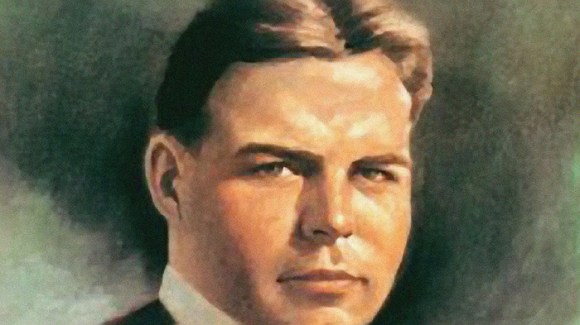
william-borden
Courtesy of Bethany House

This article was first published at Christianity Today on February 24, 2017.

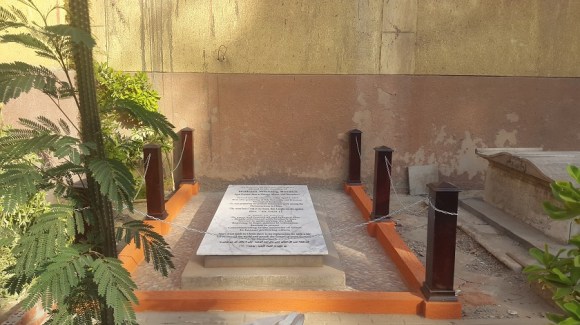
Tucked away in the northwest corner of the American cemetery in Cairo lies the neglected grave of William Borden, one of the most celebrated missionaries of the 20th century Student Volunteer Movement. Heir to a family fortune, the Yale graduate instead devoted his life to Christ, pledged in service to the Muslims of China.

But at age 25 Borden died in Egypt, having contracted spinal meningitis while studying Arabic in preparation. His will distributed nearly everything to mission groups and Christian ministries, leaving him only a cement slab as a gravestone. Engraved at the bottom were words uttered in memorium, “Apart from Christ, there is no explanation for such a life.”

That is, if anyone could read them. A recently erected wall in the poorly tended cemetery pressed square up against his plot. This meant that the gravestone now faced the wrong direction, requiring the rare pilgrim to slither in between the wall and the grave to read the inscription. It was an ill testament for one whose death was mourned from Chicago to New York to Cairo to China.

Even stranger is the fact that what Borden is perhaps most known for—the inspirational quote that he is reputed to have written into his personal Bible, “No reserves. No Retreats. No Regrets”—has not been found by historians or biographers.

Is the central anecdote of Borden’s life a case of hagiography? That it has not been found does not mean it is not true. But as with many Christian heroes, the reality is more inspiring than any potential fiction.

Please click here to read the full article at Christianity Today.

william-borden-grave

Categories
Christianity Today Middle East Published Articles

Egyptian Exodus: 100 Christian Families Flee ISIS in Sinai

christians-flee-sinai
Fayed El-Geziry/NurPhoto / Sipa USA via AP A Christian who fled ISIS brings belongings into the Evangelical Church in Ismailia.

This article was first published at Christianity Today on February 27, 2017.

As Coptic Christians flee Egypt’s Sinai Peninsula in unprecedented numbers, a Protestant church is there to receive them.

“We were the first to respond,” said Atef Samy, associate pastor at Kasr el-Dobara Evangelical Church in Cairo. “Two of those killed were very dear to our church.”

In the last few days, more than 100 families have left their homes in Sinai for the Suez Canal city of Ismailia, 125 miles west.

On February 19, the Egypt chapter of ISIS released a video calling Copts “our priority and our preferred prey.” Three days later, one man was shot and his adult son burned alive.

“This is sheer terrorism,” Samy said. “They want to embarrass the government and claim they can cleanse the Christian presence.”

In recent weeks, seven Copts have been killed. Witnesses say they were murdered in cold blood, with no negotiation, theft, or attempts to convert to Islam.

Hit lists are also reportedly being circulated, warning Christians to leave or die.

“I am not going to wait for death,” Rami Mina, who left Arish on Friday morning, told Reuters. “I shut down my restaurant and got out of there. These people are ruthless.”

Samy declined to name those killed, but identified them as born-again Christians active in ministry. His church quickly mobilized to help others leave, and provided support to the Ismailia church that has assisted dozens. Mattresses, blankets, food, and medical supplies are the most pressing needs.

Adel Shukrallah, responsible for youth ministry in the Evangelical Church of Ismailia, is heading the Protestant relief effort locally.

Please click here to read the full article at Christianity Today.

Categories
Christianity Today Middle East Published Articles

Who Awaits the Messiah Most? Muslims

isis-eschatology

This article was first published in the Jan-Feb print edition of Christianity Today.

Jesus did not show up to defend ISIS—and the first to celebrate was a Muslim.

“The [ISIS] myth of their great battle in Dabiq is finished,” Ahmed Osman, a Free Syrian Army officer, told Reuters in October after coalition forces drove more than 1,000 extremists from the backwater Syrian city known as the Armageddon of Islamic eschatology. The jihadists had expected the Messiah to appear and bloody his lance on approaching Christian crusaders.

Muslim belief in the end-times return of Jesus may seem surprising, but according to recent polls, they expect him with greater anticipation than do many American Christians.

A Pew Research Center survey in 2012 found that more than half of Muslims in Iraq, Lebanon, and Tunisia—and just under 50 percent in Morocco and the Palestinian territories—believe in the “imminent return” of Jesus. Outside the Arab world, more than half of Muslims in Turkey, Pakistan, Malaysia, and Thailand say Jesus will return to Earth in their lifetime.

By contrast, a 2015 poll by the Brookings Institute found that only 12 percent of US evangelicals believe that Jesus will return in their lifetime.

Past polls communicate a greater expectancy. In 2010, Pew found that 27 percent of US Christians expected Jesus to definitely return within the next 40 years, while another 20 percent found it probable. Among white evangelicals, 34 percent said “definitely” while 24 percent said “probably.”

The Qur‘an alludes to the return of Jesus (accompanied by a figure called the Mehdi), who on the Day of Resurrection will be a witness against Christians who claim him as the Son of God. But Muslim eschatology is derived primarily from Islamic traditions that have varying degrees of canonicity.

The exact timing of events does not tend to be the concern of Muslim theologians. But the general narrative is that Jesus will descend to Earth, kill the pigs, break the crosses, perform the pilgrimage to Mecca, defeat the Christian armies of Rome, kill the Antichrist, and usher in a period of worldwide Islamic prosperity.

Please click here to read the full article at Christianity Today.