Categories
Personal

The Church in the Shadow of Israeli Elections

Azar Ajaj 1

Rev. Azar Ajaj is the president of the Nazareth Evangelical Theological Seminary. An Arab Israeli, he helped shape my recent article for Christianity Today about the identity struggles of Arab Christians during the recent elections.

Asked by many friends about these elections, Ajaj decided to pen a letter in response. The summary and quotes below are shared with his permission.

Nearly 80 percent of Arab Israelis voted for the ‘Joint List’, he remarked, motivated by its focus on a two-state solution and equal rights for their community. The list captured the third most seats in parliament, an achievement made possible primarily through the unlikely unity of its disparate collection of secularists, communists, and Islamists.

Lest this be seen as a testimony to the political system in Israel, Ajaj also remarks upon the other salient feature of the election – the triumph of the right wing. An excerpt here is useful to judge the impact of their campaigning on the Arab, and in this case Christian psyche, striking a “distinctively negative chord.”

“What was different this time was the competition between the right wing parties to bolster one’s credentials as ‘least tolerant’ to the Palestinian Israeli community,” he wrote. “This sadly included, a few times, the use of racist expressions, and certainly involved using words that do not promote respect to Arab citizens, words which present them as strangers and enemies of the country.”

Ajaj’s concern in the letter, however, is not political but pastoral. What should the church do in light of this reality?

They must identify with the sufferings of their people, he said, which does not exclude criticism of certain responses. They must seek a prophetic voice to advocate for justice on behalf of the poor and the oppressed, while praying diligently for those in authority.

But given that Arab Israelis have been designated an enemy, this necessarily activates a peculiar Christian response.

“Are we not asked to be the “light and salt of the earth?” he wrote. “How important, then, in such circumstances to promote and show love to those who have been styled as our ‘enemies’. In fact we are asked to be peacemakers.

“Therefore, it would be important that the church at this dark time seek to build relationships and establish a dialogue with the Jewish community in Israel, as well as the Muslim one.”

Christians must participate in creating the future they desire, Ajaj warns, “Otherwise, those with other values will determine what this future will be.”

The church, he believes, is living in the shadow of these elections, but it still has a mission within it. If successful, future elections might be different.

“God willing,” he hopes, “one day we will speak of an election in the shadow of justice, mercy, love, and respect.”

Categories
Personal

The Great Game

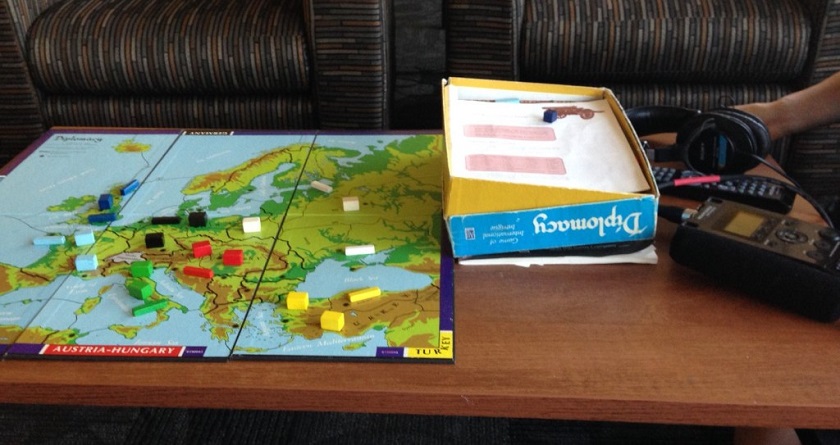
Diplomacy the Great Game

Growing up, I loved the game Diplomacy. Die-hard aficionados compete in hours-long, even days-long competitions vying for mastery of early 20th Century Europe. For both lack of sufficient passion — and players — I enjoyed the computer version.

The basic premise is to be one of the seven great powers at the time — England, France, Germany, Italy, Austria-Hungary, Russia, or Turkey. Each nation is more or less equally matched at the start of the game, the point of which is to conquer the continent.

There are only a few basic rules to learn, and no dice. Winning is determined by best marshaling of forces, but primarily, through negotiations. No country is strong enough to win on its own; the empire usually turns on which ally will stab the other in the back first, but not prematurely.

Living and reporting in Egypt sometimes feels the same.

Especially during the high days of the revolution, so much didn’t make sense. Why is the (NDP, MB, US, insert your favorite actor here) acting against its interests? Or are they? Expand the question regionally and the changes were so rapid that it was hard to keep enough. Add enough conspiracy theory to fill in the gap, debate control vs. competency, and it is no wonder so few have been able to predict the outcomes.

Part of the problem is living in the middle of it all. Diplomacy, after all, is an overhead look. The ‘Great Game of Nations’ is won and lost in boardrooms, over phone calls.

And in this spirit, this recent article by Brookings takes a look at the region:

There is no place in the world today where chaos is more prevalent and the reestablishment of order more critical than the Middle East. The “great game” between rival great powers may have originated in Central Asia but it found its most intense expression at the “crossroads of empire” in the Middle East. As long as American interests are still engaged the United States cannot desist from playing it.

The US used to rely on regional pillars, it argues, specifically Israel, Egypt, Saudi Arabia, and Turkey. These nations could be relied upon to maintain the status quo.

This worked well up until the aftermath of 9/11. The US abandoned the status quo in effort to remake Iraq. The Arab Spring also introduced a wild card.

In the process, the existing order collapsed and has been replaced by failing states, ungoverned areas, and the rise of Al Qaeda and ISIS. One should not be too nostalgic for the old order: its stability was regularly punctured by conflicts and coups and purchased at the price of repression.

The article criticizes President Obama for reacting to regional crises on a piecemeal basis. A grand strategy is needed, and the author sees two possibilities:

1. Joint Condominium with Iran: The essence of this approach is for the United States to concede Iran’s dominance in the Gulf in return for its agreement to curb its nuclear program, reduce its support for Hezbollah in Lebanon, Hamas and Palestine Islamic Jihad in Gaza, the Houthis in Yemen, and Basher al-Assad in Syria and contribute instead to the construction of a new regional American-Iranian order.

2. Back to the Future: This approach would require the United States to return to its dependence on its traditional allies in the region: Saudi Arabia, Egypt, Israel and Turkey. The objective of this renewed “pillars” strategy would be to restore the old order based on the containment of Iran, the roll-back of its advances in Lebanon, Syria, Iraq and Yemen, and the curbing of its nuclear program. This same coalition of traditional allies would then have the sense of security to work more effectively with the United States against ISIS and Al Qaeda.

The author recognizes the difficulties in each strategy, but in part two of his article argues for option #2.

Fair enough. It is not my point here to argue one way or another, but to remark the sanity that is restored by having a ‘great game’ lens through which to interpret events. In each crisis a push-and-pull dynamic can be seen, and at times the American administration appears to be at odds with itself.

Do we want an Iran deal, or not? Do we prefer Arab autocracies, or political Islam? The questions are endless, and beyond the direct interests of the US regional rivalries are at play as well.

One in particular is aptly described by Foreign Affairs, analyzing Egypt and Turkey. Like Brookings, it begins with chaos:

The chaos in the Middle East has tested many relationships, not least the one between Egypt and Turkey. Shortly after the fall of Hosni Mubarak in 2011, Turkey became one of Egypt’s chief regional supporters. When the new president, Mohammad Morsi, was himself pushed out of office in 2013, Turkey shifted course. With General Abdel Fattah el-Sisi in power in Egypt, Turkey quickly became one of the country’s main adversaries in the Levant.

In the earlier analysis, both represent US interests in the pillars strategy. As such their rivalry is serious:

In the immediate term, it seems likely that the regional rivalry between Egypt and Turkey will exacerbate the Libyan civil war. Further out, it could throw the whole region in to worse chaos.

Reading the Egypt-Turkey article, it was easy to see the development of events. But through the lens of Brookings, it is not easy to see why. Clearly Turkey favors the Muslim Brotherhood. But good relations between nations in business and coordination can continue under any government. It almost feels as if Turkey feels that Sisi threw a wrench into a well-developed plan.

Such plans are part and parcel of great game thinking, but they are also only one step removed from conspiracy thinking. Egypt is full of ideas that Sisi has defended the nation — indeed, the region — from the schemes of US-Israeli-Qatari-Turkish efforts to remake the region. And given how strongly Saudi Arabia and the UAE have supported Egypt, there are definitely different agendas at play.

But what are they?

As much as great game thinking can give a sense of sanity, it also threatens to eliminate agency. As I spin my wheels to understand the region, I sometimes feel every article I read — or even write — is subjugated to someone else’s larger purpose. That is not to accuse respected journalists and analysts of bias, though sometimes I wonder. Rather, it is that any article about human rights in Egypt, or about the duplicity of the Brotherhood, or or or, winds up fitting in to some version of a great game agenda.

The news is not neutral, even if the reporters strive to be.

What then to do? Continue striving. Everyone else is, even those actively manipulating, whether engaged in conspiracies or only propagating the theories.

But the main ones striving are the ordinary people who actually make events happen. Maybe the (US, MB, Egyptian army, insert your favorite actor here) actually desired a revolution. But they did not go down to the streets.

Striving also are those who did not go down to the streets, but could have. Fulan al-Masry [the Arabic equivalent of John Doe] is as real a person as Barack Obama. Both deserve to have their stories told well.

Is this only a hopeful faith in agency, where all real decisions are made by those with power? Maybe. But to conclude with a different kind of faith:

He changes times and seasons; he deposes kings and raises up others. He gives wisdom to the wise and knowledge to the discerning.

Maybe this also is a misplaced faith. But it too is a lens for a better sanity. God will achieve his purposes in the world, through and in spite of the strivings of all.

So we might as well strive for what is right and good. Anyone doing otherwise risks being of the devil. And the devil, in diplomacy or otherwise, is in the details.

Categories
Personal

Photos: The Orthodox Church and the Tragedy in Libya

As Egypt mourns the victims killed by the so-called Islamic State branch in Libya, the Coptic Orthodox cathedral has been a center of attention. Every day the official spokesman has issued press releases and pictures updating the situation; all photos that follow are credited to the Coptic Media Center.

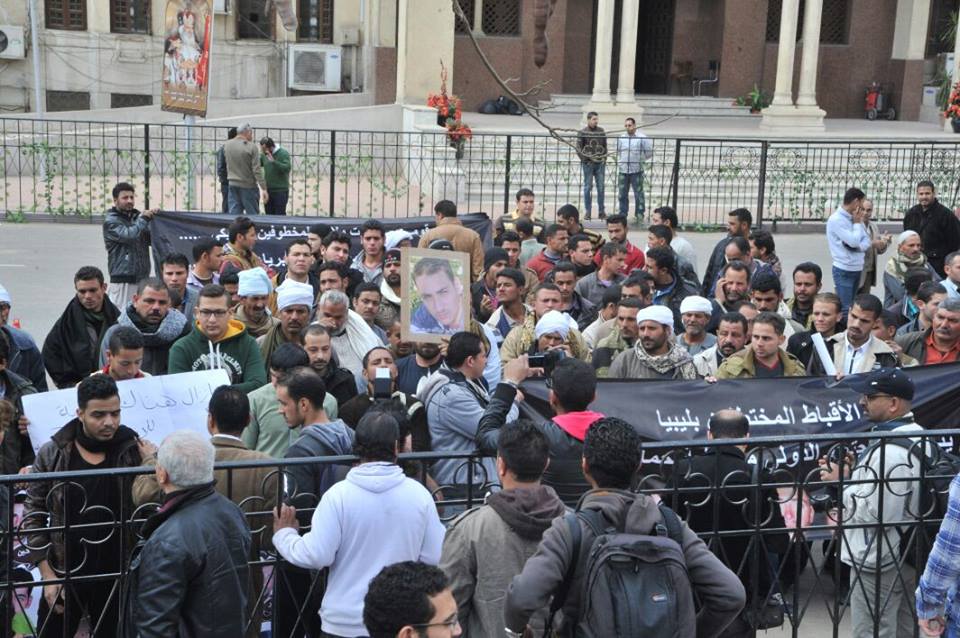
On Friday, February 13, following the announcement by the Islamic State that they were holding 21 Coptic Christians, the cathedral permitted their families to hold a small protest.
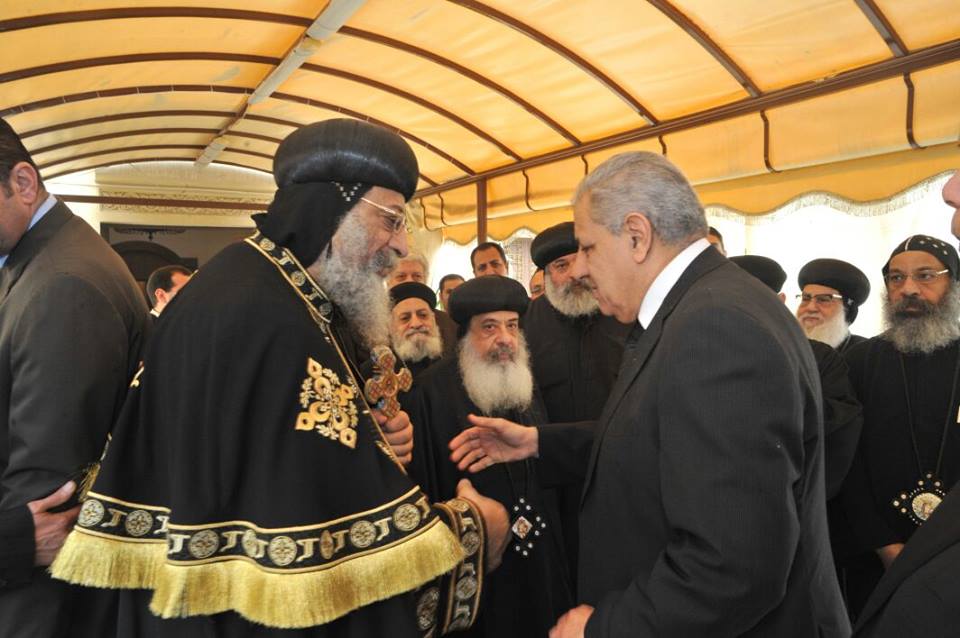
On February 14, Prime Minister Ibrahim Mehlab met with the families, promising best efforts and to take care of them while in Cairo.
On February 16, after the Islamic State released its video of beheading its victims, President Sisi visited Pope Tawadros to express his condolences.
He was followed by Prime Minister Ibrahim Mehlab.
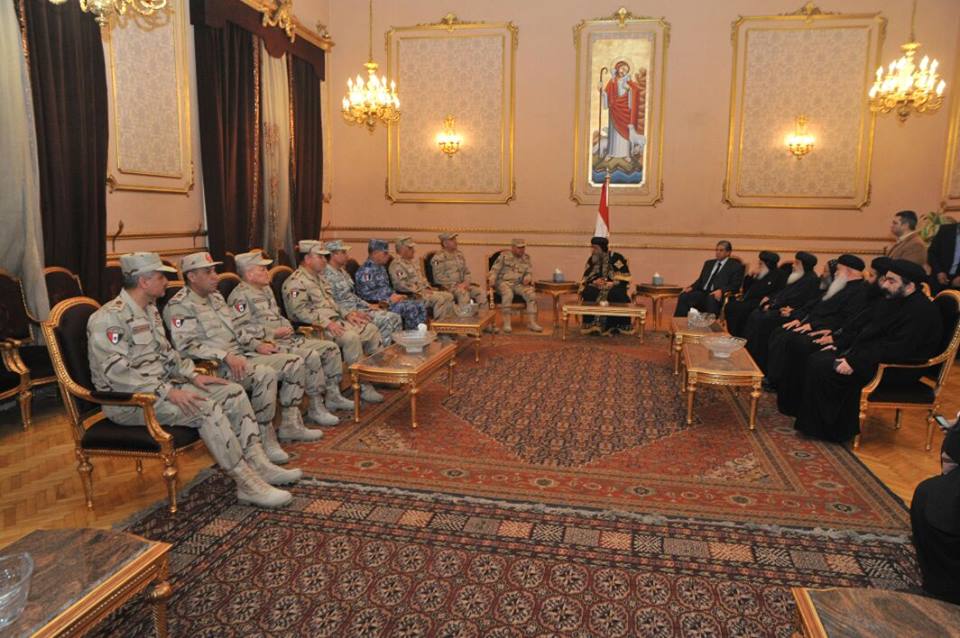
Also offering condolences was a delegation from the military, including the Minister of Defense, Sedki Sobhi.
Also paying condolences were the ministers of social solidarity, health, and youth.
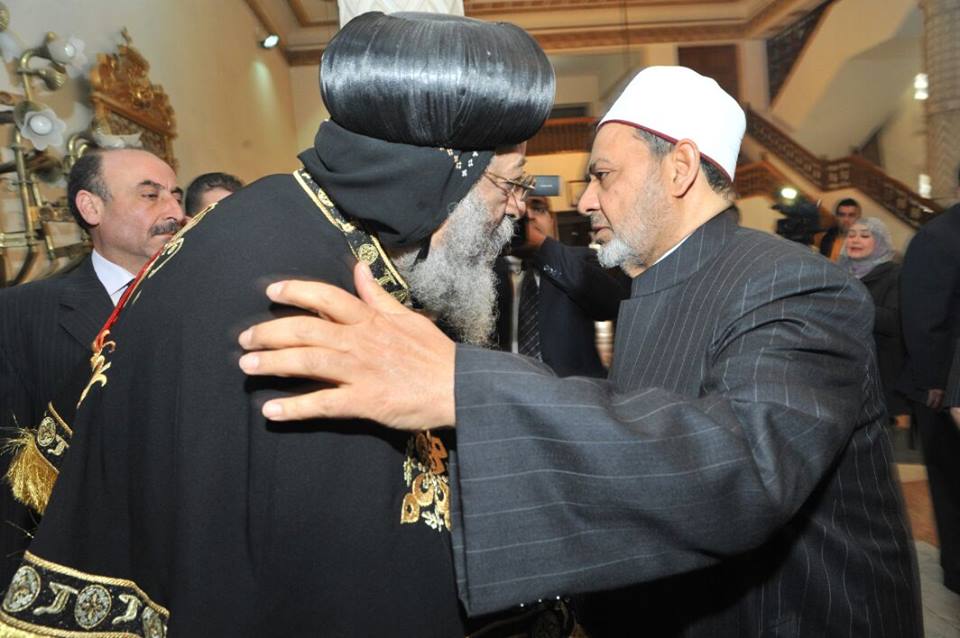
Following these was a delegation from the Azhar, including the Grand Sheikh Ahmed al-Tayyeb.
Later that evening Pope Tawadros received the condolences of the US ambassador, R. Stephen Beecroft.
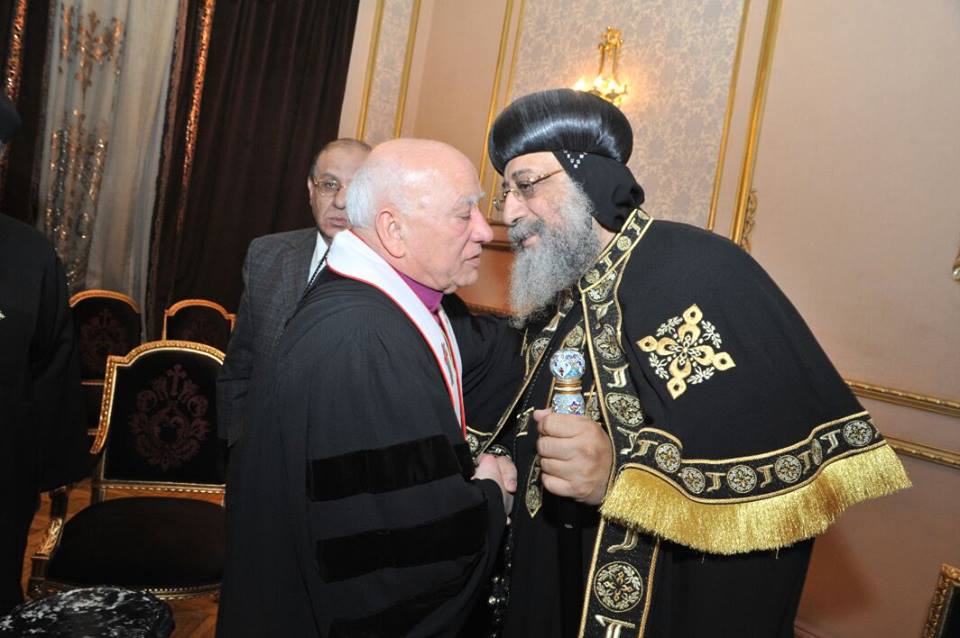
Also offering condolences was a delegation from the Protestant Churches of Egypt, headed by Safwat al-Baiady.
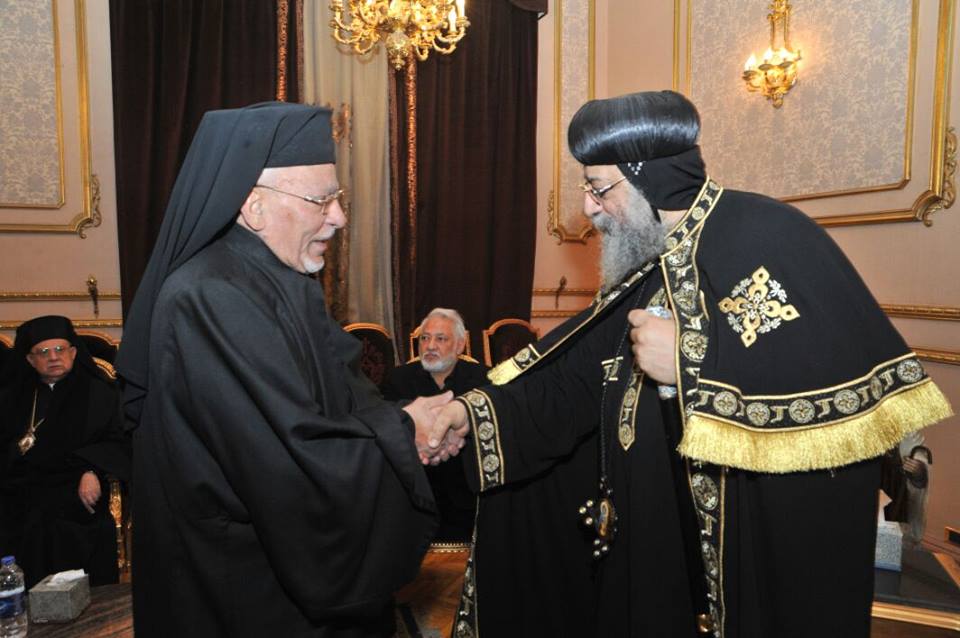
Many other churches also paid condolences, including Coptic Catholic Bishop Yohenna Qulta.
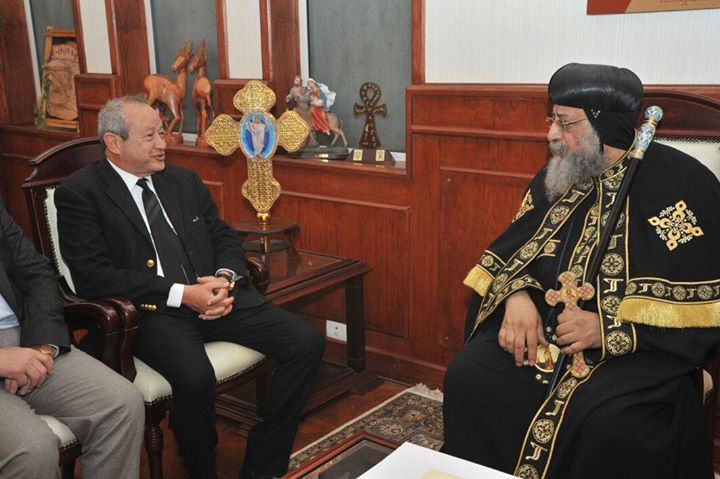
Also visiting the pope was prominent Coptic businessman Naguib Sawiris.
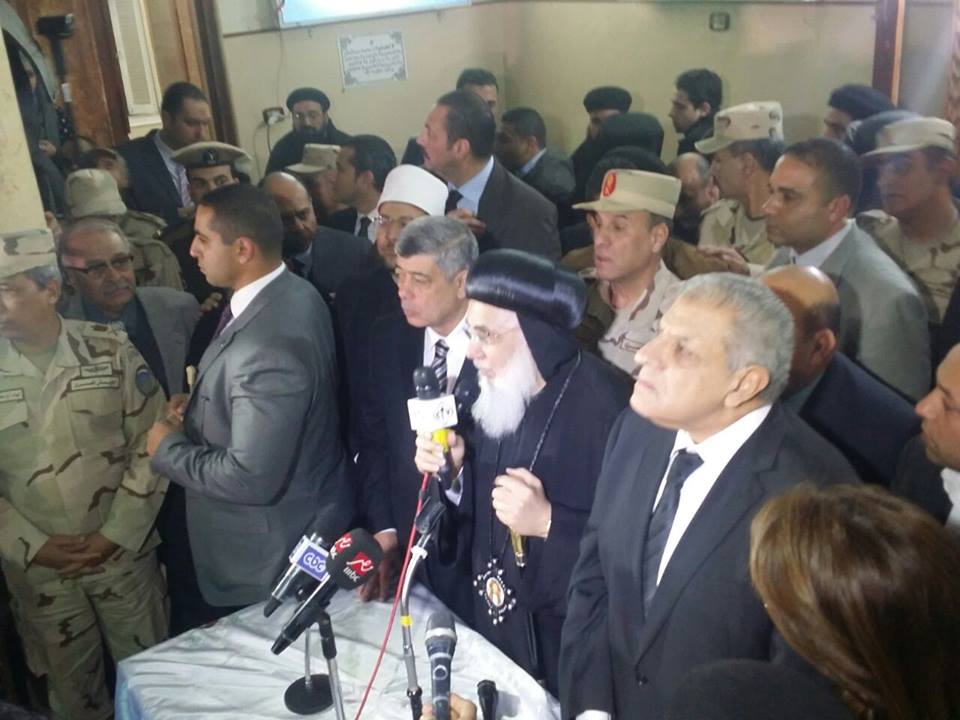
Prime Minister Ibrahim Mehlab and Minister of the Interior Mohamed Ibrahim and the governor of Minya visited Bishop Paphnotius of Samalout to console the families and promise the state would build a new church in the name of the martyrs.

The link given above is to the Facebook page of the official spokesman of the Coptic Orthodox Church, which contains pictures of many other visits.

Christians in Egypt have taken great comfort in the expressions of sympathy from state and Muslim citizens alike. It is a difficult time for the church, but the tragedy is serving to unite the nation.

‘in all things God works for the good of those who love him, who have been called according to his purpose.’

Categories
Personal

Egypt’s Struggle to Return to Normal

Four years have passed since Egypt’s revolution began in 2011. They have been inspiring years; they have been difficult years. Some say they have resulted in much good; some say they have resulted in a restoration of the bad.

But millions of Egyptians simply a desire a restoration of the normal. The state is striving to deliver, as stability will cement the current political reality. Those opposed are trying to disrupt it, and herein lies the clash.

The news is full of evidence on both sides. Jihadist groups are waging a war against the state, killing policemen and soldiers with unfortunate regularity. And a day before the revolution anniversary a peaceful leftist march to Tahrir square was met with the violence of the state, in which one female activist died.

Between these two is the Muslim Brotherhood and its sympathizers. They claim no relation to violence, but are actively seeking to prevent stability. Their principle tool is demonstration.

The state has left them to conduct small demonstrations in local neighborhoods. But whenever they seek a sizable gathering they are met with the resistance of the police, often with arrest, and sometimes with casualties. It is worthy to note their marches are illegal, as a law exists to regulate them which requires prior announcement to the authorities. Many across the Egyptian political spectrum find this law to be repressive, but it is the law all the same. Brotherhood protests ignore it, not wishing to acknowledge the authority of the state after the removal of President Morsi. Even if they did, would they receive a permit?

But it is in this context that the quiet struggle to return to normal is being waged.

In our local neighborhood of Maadi there is a foot bridge over the Metro tracks. One one side it is located between upper- and lower-class areas, and on the other is a relatively middle-class area stretching to the Nile River. Ever since the revolution began and police enforcement deteriorated, small tuk-tuks have traversed all economic sectors, and barely squeeze into the foot bridge as they complicate passage for all pedestrians.

A tuk-tuk is a three wheel vehicle like a rickshaw. It is very useful in poorer neighborhoods where taxis cannot navigate the narrow streets. But drivers are often underage, reckless, and a hazard for driving everywhere else. The state has not yet shut them down in our neighborhood, though there have been some threats to do so.

In recent days the local government has repaired the foot bridge, and placed a large cement block at the entrance. Pedestrians can easily pass by, but tuk-tuks are barred. Motorcycles can still make it, but at least it is an improvement.

So far, this discussion has nothing to do with national politics. But the effort of the state to bring the neighborhood back to normal, however slowly, is clear. They even covered the foot bridge with a fresh coat of paint.

Maadi Foot Bridge Graffiti

But not a few days later was it covered with graffiti. ‘Man up and hit the streets on January 25,’ it urges. ‘Sisi is a pimp,’ is written in blue. It is ugly, crass, and defaces public property. It is also one of the few methods they have to get their message out.

This is the quiet struggle, not covered in the news. It shows why so many people dislike the Brotherhood and revolutionaries in general these days. They want life to go back to normal, they want stability for their country, and they want to walk over a nice bridge.

Of course, in its efforts, the local government didn’t even do that great a job. A few baseboards are not laid quite right, threatening to trip the pedestrian if his foot lands falsely. It is this lack of commitment to quality that contributed to revolutionary conditions in the first place, and may lend some sympathy to the protesters. In recent days it appears the bridge is under repair again.

As the outside world watches the larger struggle, sympathy is asked for the normal citizen. If in the end this revolution yields a transparent and accountable system of liberty and democracy, they stand as the passive beneficiaries. But in the process of getting there, excuse them for saying a pox on all your houses.

Categories
Personal

Christians at the Cairo International Book Fair

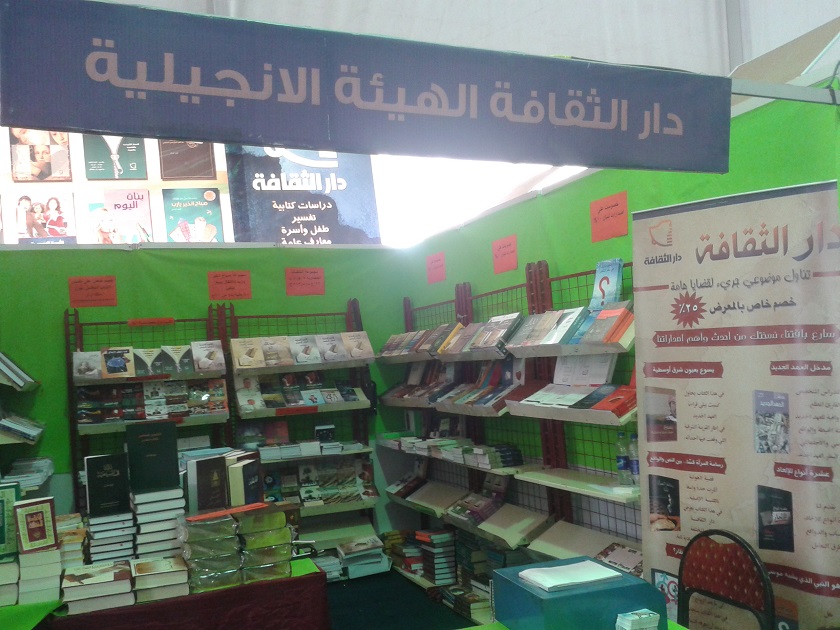
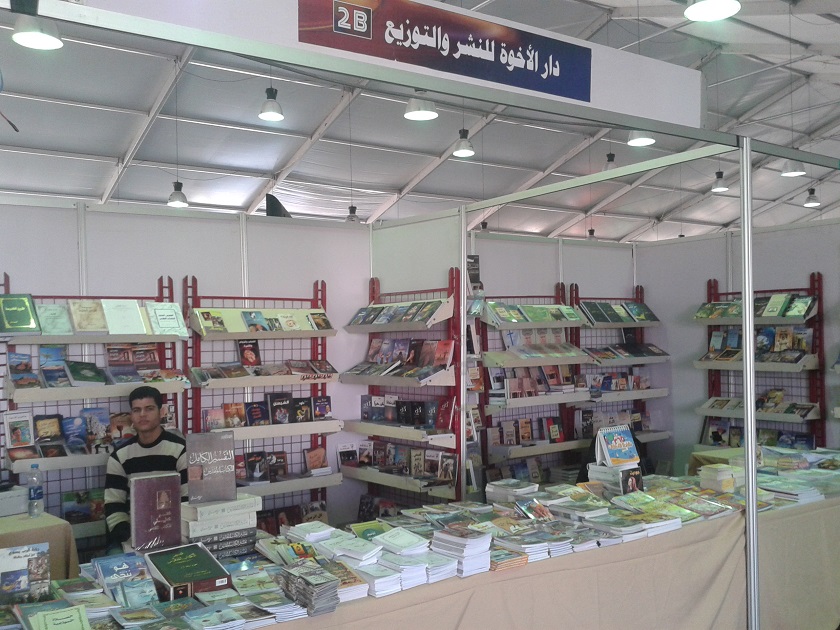
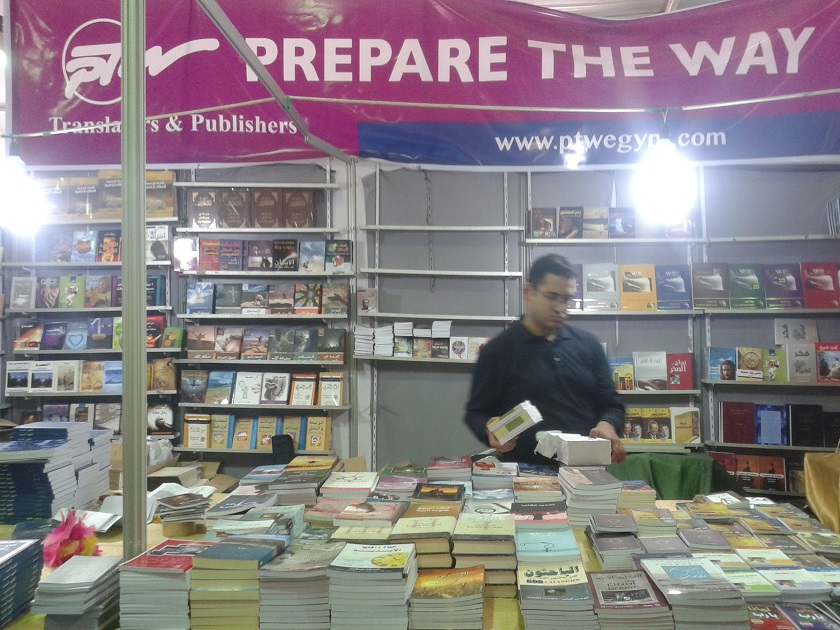
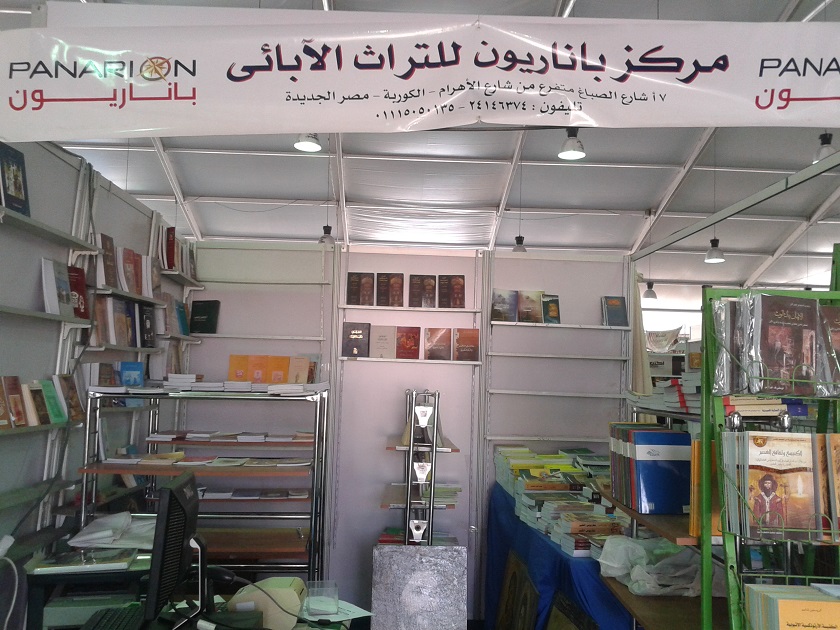
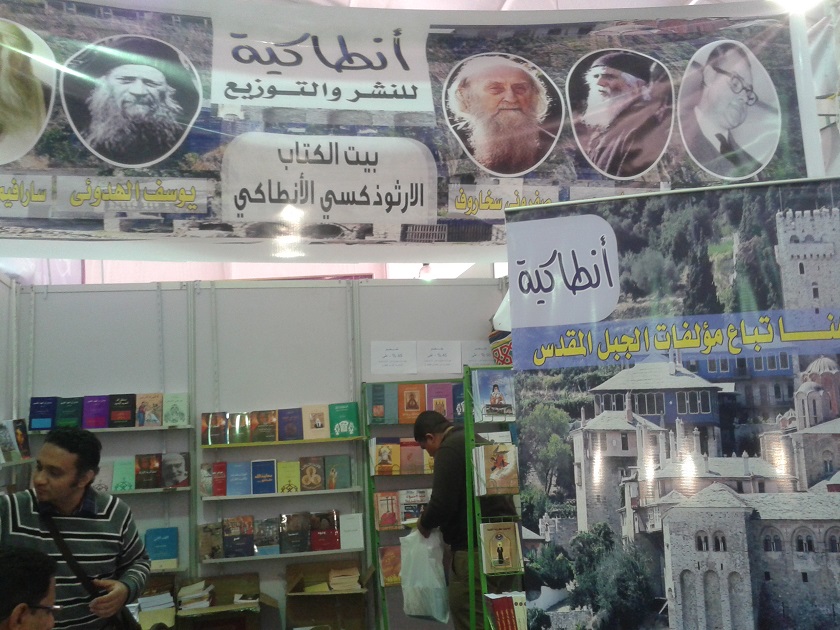
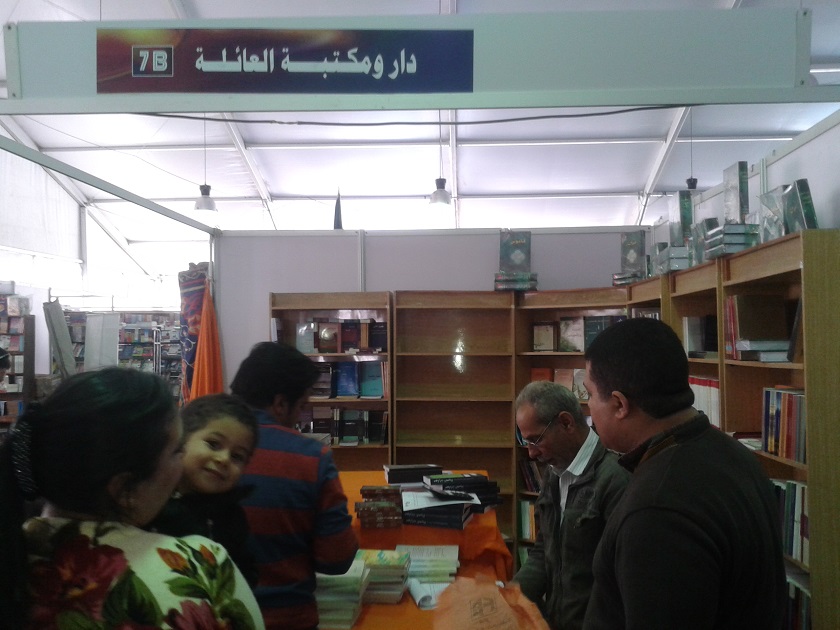
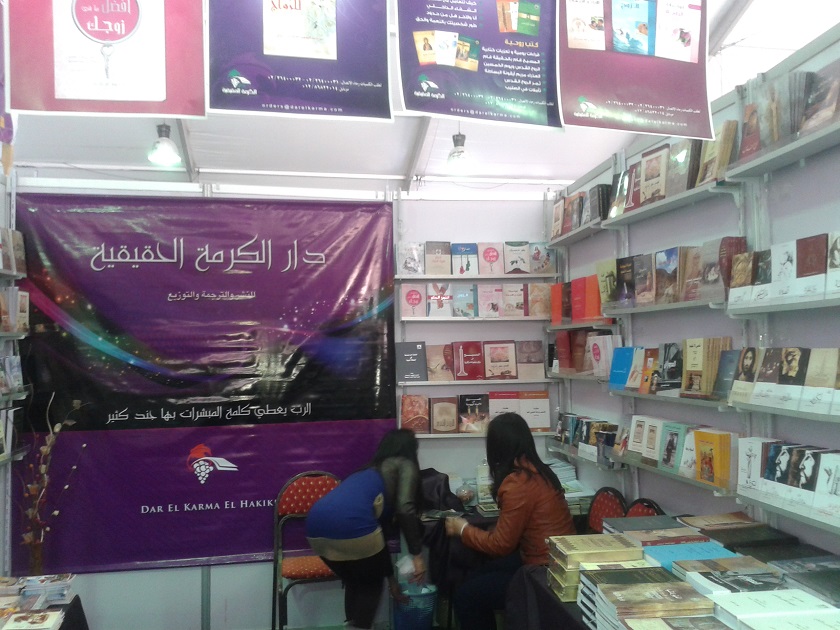
The 46th Cairo International Book Fair is coming to a close on February 12, and I enjoyed strolling through the hundreds of booths selling mostly Arabic books from around the world. The guest of honor this year is Saudi Arabia, but prominent also in a central location are more than a dozen Christian publishing booths selling their products freely.

This is not a surprise. Each is registered with the Egyptian Publishing Union and they have long had a presence at the fair. But this images to follow may not be familiar to many readers who assume either one of these two common perceptions.

First, that Christians are persecuted by a majority Muslim country. Second, that censorship is rampant as the government clamps down on alternate voices.

Both of these perceptions deserve their own comment, but here take a moment to see the diversity of Christian representation. Around two million people frequent the book fair over a two week period, browsing the marketplace as they see fit.

The Bible Society of Egypt
Local distributors of the Jesus Film
Seventh Day Adventists
Local distributors of Focus on the Family and other products
Eagles, local distributors of Focus on the Family and other products
Culture House, the leading evangelical publishing house in Egypt
Culture House, the leading evangelical publisher in Egypt
The Brethren Publishing House
Prepare the Way, a semi-Catholic but ecumenical publishing house
Panarion, publishing works of the early Egyptian church fathers
The Antioch Orthodox Publishing house, visiting from Syria
The Anglican Publishing House of Egypt
The Episcopal Publishing House of Egypt
Family Publishers
Family Publishers
True Vine Publishers

I am hopeful a full article about the Christian presence at the book fair will soon follow. Please stay tuned.

Update: The article was tied into the story about the 21 Christians killed by the Islamic State, and How Libya’s Martyrs are Witnessing to Egypt.

Categories
Personal

Researching the Islamic State

Researching ISIS

I confess to not having kept up well with the so-called Islamic State. My focus has always been on Egypt, with peripheral attention given to the region. If Egypt has been difficult to understand – living here – the rest of the region seemed near impossible. And fortunately, the complicating factor of the Islamic State had stayed distant from Egypt, until recently.

I am afraid a partial reason for my inattention is a success of their strategy. The Islamic State has its roots in Iraq, where it was one of many groups blowing up lots of stuff. Amid the moral ambiguity of the US occupation, yet another suicide bombing had a numbing effect. Why read one more template of the same story?

As they expanded into Syria the tale changed slightly, but with the same effect. The Islamic State was just one of many groups with unclear origins and less clear funding sources. Whatever nobility the original uprising may have had, it was quickly lost in a devastating civil war and the international hand-wringing that talked much and did little – which may have been for the best except for all the accumulated ‘little’ done behind the scenes.

And late last summer when the Islamic State drove out the historic Christian community and enslaved other religious minorities, it just accelerated a pattern recently established but seemingly inevitable. Palpitations of horror stimulated some writing, but what could be done to stem the tide? For every sympathetic Arabic letter ن placed on a Facebook page in solidarity, the futility of a hashtag campaign just became more apparent.

Finally, the Islamic State became another tool in the tool belt of conspiracy theorists, so abundant in the Arab world. For some their leader was a Mosad operative. Others saw the dirty hand of America looking for an excuse to reoccupy the region. Turkey and Qatar were blamed. As the US-led coalition rained more bombs upon the region in an effort to ‘degrade’ their capabilities, sorting through the conspiracies was far too daunting to contemplate.

All this is said to my detriment, for as noted it fits well with Islamic State strategy. They wish to wear down the morale of their enemy and give the appearance of the inevitability of their victory. Conspiracies aside, this is a key reason why the Iraqi army fled before them. Though greatly outnumbered ISIS believed in their fight. And their fight included years of kidnapping, assassinations, and suicide bombings that convinced the American-trained military it just wasn’t worth it.

My responsibility is Egypt, so I don’t believe I have run from a fight. But allowing myself to fall behind in the scholarship on the Islamic State is a dereliction of duty all the same, for Egypt is part of the on-edge region. The emergence of the Islamic State is one of the most important developments in a long time. Far more than a radical insurgency or religious revolution, their gains are a direct challenge to the nation-state system. That they have been successful relates directly to the weakness of this system in the region.

In the past few days I have finally taken time to remedy my negligence. This has come through reading some of the journalism and research on where the Islamic State stands today, in addition to fabulous video obtained by a journalist given a unique tour of their operations. I hope this brief summary will serve to compensate any deficiency in your knowledge, with less time investment.

But if you have the time to view this 45 minute feature from Vice News, I would recommend it. Published on August 15, it predates the beheading of foreigners and represents a moment in time the Islamic State was more open to outside eyes. They have allegedly issued a set of guidelines for journalists more recently, but I suspect few would be willing to trust their hospitality, let alone agree to the stipulations therein.

The footage is from Raqqa, the 500,000 population city now known as the capital of the caliphate. Familiar with cities in the Arab world, it was surprising to witness the normalcy of the environment mixed with the normalcy of atrocity. Familiar looking desert landscapes were cut with unfamiliar trenches, filled by familiar looking men carrying unfamiliar weapons.

Far worse was the familiar looking city square filled with familiar Arab facial features severed from their bodies. The Islamic State shows no pangs of conscience in its displays of brutality, but as will be remarked later, it all fits into a code that allows, even facilitates the rule of law.

For familiar scenes abounded in roadside shops and government installations, where the Islamic State has assumed the responsibility for service provision and justice. But unfamiliar morality police roam the streets, curbing the unfortunately familiar practices of bribery and corruption. And whereas it is normal to watch fathers and sons playing in a depleted riverbed, it is less common to hear preteens spew the vilest hatred of infidels and eagerly anticipate killing them.

For as Mara Revkin has detailed in Syria Comment, the conventional wisdom about jihadists being agents of chaos is ill-founded. Supported by Sarah Birke in the New York Review of Books, she shows that the chaos inducing practices of insurgency are quickly replaced by law and order once territory is seized. Patterns of governance, she remarks, are actually quite similar to those practiced by Europeans in the dawn of their industrial nation-state building efforts.

In pattern, that is, not necessarily in practice. The task of a state is win a monopoly on violence. To do so in contemporary Syria and Iraq requires quite a bit of violence at the outset. To secure an area the Islamic State uses a combination of fighting and buying loyalty. Upon submission of either kind they first demand repentance, and then disarmament. The Sheitat tribe in Deir Ezzor chose resistance, failed, and then had 700 men slaughtered, and 1,800 disappear. When none rose to their aid surrounding tribes learned a lesson. At the least they made common cause against a common enemy in Shia-led Baghdad. Several top leaders of the Islamic State are former ranking officers in the Baathist Iraqi military.

But once an area is in submission they work to restore functionality. Employees are left in their administrative positions. Zakat is collected and social service established for the poor. Police officers are well paid, enforcing a strict code based on sharia. This includes the cutting off of hands, whipping, and crucifixion. But it is not simply a code of deterrence. The Islamic State has punished, even executed its own members who transgress. This has been key to win at least the tacit acceptance of the population, who see a measure of justice at work. Used to the corruption of the previous regime, if people lie low and stay out of trouble it seems they can get on quite well.

In theory this applies even for Christians, some of whom have agreed to pay the dhimmi jizia tax. But most have fled when given the opportunity, leaving their churches behind which have been ransacked or converted to mosques. The video depicted one interior re-designer who took particular joy in destroying the crosses worshiped by the infidels.

But even in the far worse treatment for Shia and Yazidis, the Islamic State operates according to code. Guidelines have been issued for the treatment of enemy combatants and female slaves that horrify many modern Muslims. They meticulously draw from historic sources and practice, but the point is the importance of law. They are trying to build something that will last, and expand, in imitation of the earliest centuries of Islam.

But the question is, where do they get the money to do so? Long reports by Charles Lister in Brookings Doha, and Martin Chulov in the Guardian describe the history and funding sources of the Islamic State. And the conclusion is they largely earn it themselves. This flies in the face of the conspiracy theories, though it demands investigation of different ones altogether.

The original progenitor of the Islamic State is actually from Jordan, from whence Abu Musab al-Zarqawi hailed. But he made his name in Iraq, stoking sectarian tension to enflame the conflict against the Americans. After his death leadership of then-al-Qaeda in Iraq passed to Abu Omar al-Baghdadi, who led the incarnation of the first Islamic State effort from 2006-2008, defeated by the Sahwa tribal uprisings supported by the United States. But when Abu Omar was killed in 2010, Abu Bakr al-Baghdadi assumed leadership, and in 2014 he declared himself caliph. Intelligence sources say many of these jihadis passed through Syria first, given free conduct by President Assad.

Origins of this movement, however, trace all the way back to 2004 in a US prison in Iraq. Research indicates 17 of the top 25 Islamic State leaders spent time incarcerated, which actually helped their efforts. Outside of prison insurgents and jihadis operated independently; prison put them all in contact with one another. They even wrote contact information on the elastic lining in their underwear. When released or freed in jailbreak, they reconnected to put strategies in motion. Boxers helped us win the war, said one leader in an interview.

But the new leadership was at odds with their former worldwide partners in terrorism, and even their own disciples. Baghdadi sent his deputy to Syria when the Arab Spring began. Eventually he created Jabhat al-Nusra and chose not to submit, maintaining allegiance to Ayman al-Zawahiri of al-Qaeda. The two groups have clashed several times since, including in Raqqa before the Islamic State took control.

But once in control, and in expansion to other regions, revenues skyrocketed through the sale of smuggled oil. Additional sources included extortion money, ransom payments, and general taxation. At its height before the coalition bombing campaign, revenue equaled $2 million per day. No conspiratorial funding relationship with Saudi Arabia or Qatar is needed, but still conspiracies exist. Who purchases the oil, and from where? Who lets the foreign jihadists, now numbering 18,000 of the 31,000 fighting force, across the borders?

Indications point strongly to Turkey, though regime controlled areas in Syria also have a role. But all articles indicated the Islamic State is indeed becoming a state, though fully outside the nation-state system. What is to be done?

Going further than just this collection of articles, suggestions have included American reengagement on the ground, US support to Arab nation engagement on the ground, arming ‘moderate’ rebels against the Islamic State and the Assad government in some order, or supporting Assad in his position while negotiating a better political situation. Drying up revenue sources by pressuring regional allies to clamp down on the black markets has also been demanded, but with limited success.

It should be stated that I have heard Islamic State-type rhetoric the Arab world over, long before this current emergency. Rarely have I encountered an inclination to mete out such violence in implementation, but the goals of the new caliphate resonate with many a Muslim. It connects to their glorious past, claiming fidelity to the honored scriptures and righteous ancestors. And psychologically it allows non-introspection about current woes, finding refuge in the simpler hope of ‘if only we were more faithful Muslims, God would honor us.’

Of course, Muslims the world over have condemned the Islamic State, though in various fashion. The modern world is far different than the Ottoman Empire, or any other caliphate before it. Islam can get on very reasonably as a spiritual faith, disembodied from political power. Many Muslims are quite happy here.

But there is that something in Islam that clamors for power. It is not enough to live righteously and call others also to do so. Living righteously calls for stopping evil. Stopping evil requires power. Power resides best in governance. But, oh so unfortunately, power in governance tends to corrupt.

The Islamic State is doing its best to root out corruption. They are not after personal gain (presumably), but divine principle. Their horrors are obvious, but not random. They enact a code as they understand it. But at the same time, they issue contracts of sale for their black market partners who purchase the smuggled oil. The Arab world has suffered much evil, and they are fighting back. But so easily are compromises made.

And so wretched when moral horrors find justification in religious texts, rightly or wrongly. Sharia law has a place detailing the legal uses of spoils of war. It is from this heritage the Islamic State draws its regulations on proper conduct toward female slaves.

But war is human, as is power and governance. Muslims have long defended this aspect of their revelation as divine elevation of primal realities. Many state the norms of the past must be updated with the times, but they see it as a credit to their faith that it details all aspects of human existence, even unseemly ones.

So then, what to do with this catch up reading on the Islamic State? I hope this essay is at least partial fruit, that you as well may be better informed. But what good is information in the light of atrocities? Is not more demanded?

I confess I am not well placed to offer policy analysis on what to do in Syria and Iraq. With respect to all those placed in positions of influence, I wish them wisdom, discernment, and a pure heart. The current troubles are built upon compounded errors stretching back decades, from local and foreigner alike. It is far easier to criticize than find solution, especially from the outside. I tend to wish we would leave bad enough alone, and give up policing the world. But then so much would fall apart. It is hard to be on top, responsible to defend the stability of a world order upon which one’s prosperity depends. It is also hard to stomach the interventions at times necessary to maintain it.

But these are idealistic wishes of justice and responsible economy, not the workings of realpolitik. I would like to trust American leadership cares for our prosperity in good conscience with the prosperity of others. Alas, I fear this is not always so. Interest often trumps principle, especially when in power.

I have more confidence, perhaps, in weighing religious response in interaction with the rhetoric of the Islamic State. I see how their conduct is drawn from religion, and I see how rebuttal is drawn from the same. Islam is not monolithic, it is a flexible heritage. It must be, to have been so influential across time and geography.

Therefore, on this front, both groups must be challenged from their own sources. Jihadists and those of similar thought must realize Islam has torn itself apart in history, and created mechanisms to prevent reoccurrence. One many not call a Muslim an infidel, no matter how much he sins. And preventing evil has a rich heritage of interpretation, so that a zealot in his effort to forbid wrong does not wind up creating even more. These are basic lessons of civilization, and they have a religious root.

But for those who are quick to condemn the Islamic State and demonstrate Islam is a religion of peace, this is fine rhetoric but poor research. This group also, both Muslim and non-, must struggle with sources that mirror the practices witnessed today. Many Muslims try, and their efforts have been controversial. Some have looked to find modern ethics in their own heritage, rightly reinterpreted. Others have relegated the heritage to a bygone era, however superior it was to the ethics of the time. This effort is ongoing, but few will dare to condemn, for example, the early wars of Islamic expansion.

In both instances, though, care must be taken to win people and not arguments. The goal is a better vision for peace in this world, and for those who believe, also in the next. The goal is not to demonstrate the superiority of one faith or civilization over another. It is not to tear down a beloved heritage or corrupt sincerely held doctrine. It is to challenge each and every person to live up to higher ideals of truth and love, even as these ideals are debated. It goes without saying one must subject him or herself to the same process.

This will do little to change the Islamic State, but it may do well in conversation about it.

Categories
Personal

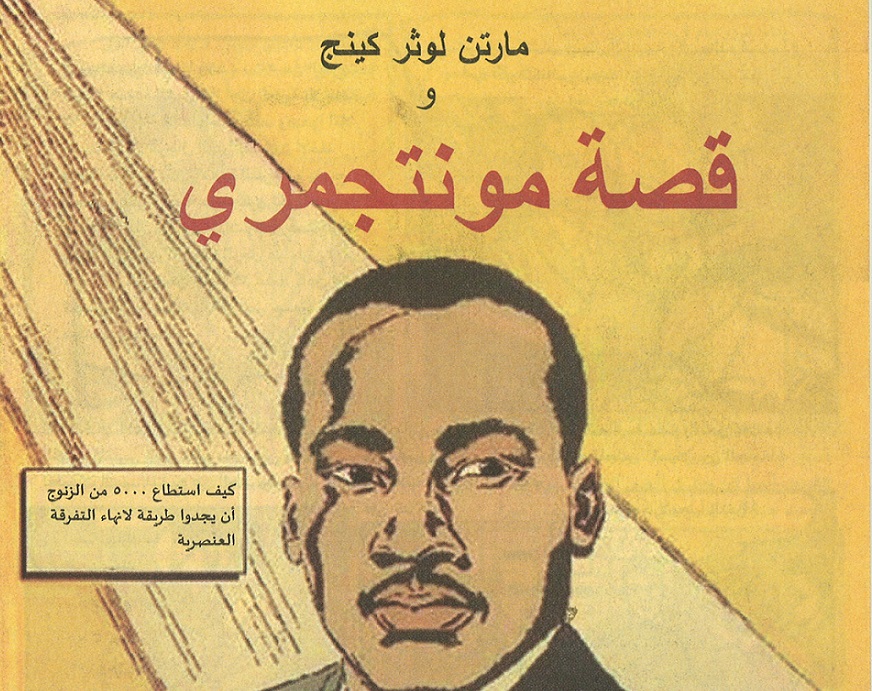
MLK for Egyptian Revolutionaries

Translation: Martin Luther King; the Montgomery Story; how 5000 black men found a way to end racial discrimination
Translation: Martin Luther King and the Montgomery Story; how 5000 black men found a way to end racial discrimination

A day late, but in honor of Martin Luther King, Jr. day in the United States, here is a list of principles to which he had his fellow non-violent activists commit.

I hereby pledge myself—my person and body—to the nonviolent movement. Therefore I will keep the following ten commandments:

1. Meditate daily on the teachings and life of Jesus.

2. Remember always that the non—violent movement seeks justice and reconciliation — not victory.

3. Walk and talk in the manner of love, for God is love.

4. Pray daily to be used by God in order that all men might be free.

5. Sacrifice personal wishes in order that all men might be free.

6. Observe with both friend and foe the ordinary rules of courtesy.

7. Seek to perform regular service for others and for the world.

8. Refrain from the violence of fist, tongue, or heart.

9. Strive to be in good spiritual and bodily health.

10.Follow the directions of the movement and of the captain on a demonstration.

I sign this pledge, having seriously considered what I do and with the determination and will to persevere.

Let us pass on the first commandment, given the primary makeup of Egyptian revolutionaries as Muslim. Some Christians might argue that without the first, however, those following are devoid of their power and without foundation.

Whatever the merits of this argument, it certainly seems like many could be adopted by anyone. On some counts many Egyptians measure up well. On others, not so much.

The Egyptian revolution was largely peaceful. But not entirely. Many protests witnessed low-level violence such as the throwing of Molotov cocktails. This was front line action, though, and the masses of protesters remained behind.

But of #2: All were focused on justice, but some let the pursuit of victory get in the way. Few prioritized reconciliation.

#3: Love was almost never put forward as a theme. Most large protests were labeled ‘day of rage’ and themes of this sort.

#6: Courtesy was in short supply. Slogans tended to demonize the opponent, and graffiti was often insulting.

#8: Islam has a similar listing. A tradition of Muhammad states that if one sees a wrong that must be put right, he should strive to do so first with his hand, then with his tongue, and then if these are not possible, with his heart. Different schools of interpretation have allowed different levels of violence in this effort, or specified who can take this action under what circumstances. In any case, while most protestors avoided the violence of the hand, violence of the tongue and heart was plentiful.

#10: The Egyptian revolution had no leader, and certainly no commanding and inspiring figure like Martin Luther King. Many have identified this as a reason for the rapid divisions that dissipated its power after the fall of Mubarak.

The issues of the civil rights movement and the January 25 revolution were certainly different. But whereas American evils have largely (though not entirely) been put right and social peace achieved, the ills of Egyptian society and state threaten to continue.

Perhaps if Egypt’s peaceful protesters had adopted the spirit and convictions of MLK and not just his methodology, things would have been different. Then again, perhaps not. Your thoughts on the differences are welcome.

Categories
Personal

A Color (Printed) Revolution?

With decent regularity pro-Morsi supporters have conducted small protest marches around our Maadi neighborhood since his removal from office in July 2013. They do not tend to be violent but usually result in ugly graffiti insulting now-President Sisi.

Recently, new graffiti has emerged, calling the people to ‘man up’ and protest on January 25, the anniversary of the original revolution. And this past week I noticed posters – on the ground – calling for a new uprising.

New January 25 ProtestsThe translation reads: Together for liberation and purging; The people want the fall of the regime; and 25 January, Egypt speaks revolution.

I do not yet have a good feel for whether or not people will respond. A recent effort to rally an Islamic revolution failed dramatically to attract numbers.

But what is significant to me about this poster is that it is printed in color. This means there is money behind the effort. Another version was even more colorful, but was in poorer condition.

Also significant is that it was on the ground, stomped upon. I did not see any such posters anywhere on the walls. Were they torn down? Did residents or police prevent their hanging?

January 25 is a week away. It will be interesting to monitor developments.

Categories
Personal

Protecting the Bad under Threat of the Worse

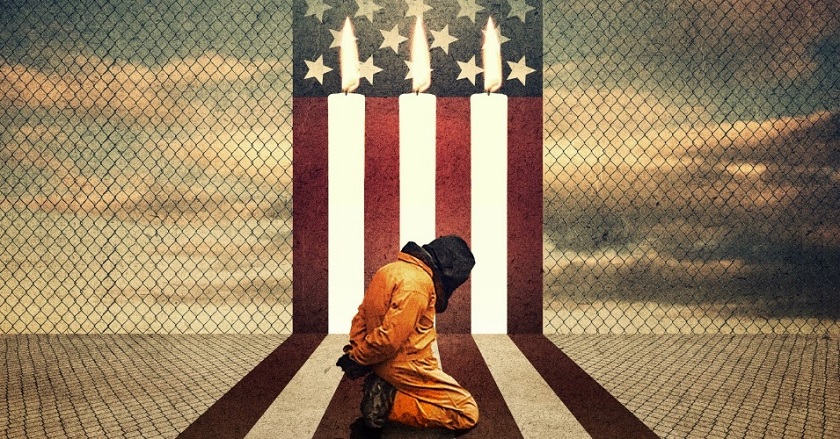
US Torture

In the United States, torture is no longer an allegation. As the US Senate released findings from thousands of internal CIA memos, the nation confirms — and makes public — the horrific treatment given to detainees.

Some of the debate, however, concerns whether or not the Senate errs by releasing the details. The argument accuses politicians of putting American lives at risk for the sake of political gain. If our enemies see this, they may act out against us. Indeed, as those living abroad, a few days earlier the US embassy put out an alert advising vigilance in the coming days.

It is debated whether or not American torture resulted in intelligence necessary to thwart terrorist threats. The report says no, others say yes.

But the basic premise of the desire to keep sordid details hidden is that transparency would result in greater harm. It is hard to imagine ‘greater harm’ for the human beings tortured, some of whom were innocent, others, certainly less so.

But what is asked is trust that we allow the good guys to do a certain amount of bad, so that the bad guys will not be able to do worse. There is a perverse logic here, and the argument may be true. As an American, I like to believe we are good guys, in the end.

Even in the face of terrible bad.

There is worse, of course, and it does not take much effort to find it. But without transparency, our good guys doing bad may well become the bad guys doing worse. In this case, it seems pretty clear some of them did.

Whether or not it was ‘legal’ is for the courts to decide. But it was immoral, and those responsible should be held accountable. Without accountability, the good to bad to worse progression becomes far more likely.

Is there a message for the rest of the world? Will our [cough] commitment to transparency and accountability inspire others to do the same? Likely not. If anything it will expose us to charges of hypocrisy, and perhaps embolden the worse-doers even more.

Intrepid human rights campaigners around the world are shuddering right now. Their work has always been difficult, even dangerous. Now, any fundamental American interest in the cause has been exposed. We have long been accused of only caring about human rights around the world where we had political benefit in doing so.

When convenient, it is accused, we look the other way. Apparently, we do so within our own borders also. Or, perhaps from shame, we outsource desired torture to others.

But if the rest of the world wants to point fingers at America, it must be noted that fear of the worse protects the bad among many. Here is a long litany of Israeli crimes against Palestinians, addressed to Christians who stand in (poorly informed?) support. Much of the pro-Israel rhetoric says the military action is necessary to defeat terrorism, against the specter of Islamist Hamas.

And I recently spoke to a Coptic activist in Egypt who, while fully opposed to the Muslim Brotherhood, accuses the government of sparking fear in order to ignore demands for greater human rights.

‘Worse’ can be found easily in the so-called Islamic State, or among the drug cartels of Mexico. At what point does our worse begin to approach theirs?

Only when we begin to cover it up, make excuses, or seek its justification. The US Senate has taken the first step of transparency. America’s test now is to continue with accountability.

One school of thought, with a certain wisdom, says to deal with the rest of the world only on the basis of interest. It is foolish to imagine we can force the world to be moral, and we may well need immoral allies.

But we can be moral ourselves. Whether with race or torture, this is an opportunity for national soul searching. It is necessary to confess and repent.


Categories
Personal

Thankful for Islamic Identity

Translation: We are those who pledge allegiance to Muhammad. The Battle for Identity, November 28. On the flag is the Muslim creed, there is no god but God, and Muhammad is his messenger.

Happy Thanksgiving to American friends and family, but as you are thankful today be aware about tomorrow, at least as concerns your interest in Egypt. Friday may be black here as well.

There are two reasons this could be true.

First, the Salafi Front has called for nationwide demonstrations, seeking a ‘Muslim Youth Uprising’. They announce their intention to ‘impose Islamic identity’, feeling it weakened by secular efforts against sharia. Within their propaganda are pictures of the black flag of Islam, used by the Islamic State in Syria and Iraq. This connection does not come through in their rhetoric (that I have seen), and the flag has a place in Islamic history beyond current use by jihadis. They do, however, support a caliphate in principle and have criticized the government for calling it terrorism.

Second, this same government has promised to meet the protests firmly, threatening live ammunition if they turn violent or destructive. If Egypt has another round of deaths the day will surely be black.

It is difficult to say if the turnout will be simple or substantial. Egypt’s largest Salafi party has condemned the protests, as have the official religious establishments. But noteworthy is that the Muslim Brotherhood has announced its support, though it has not publicly indicated if it will participate.

The Brotherhood statement indicates a desire to ‘preserve’ Islamic identity, avoiding the Salafi Front’s use of ‘impose’.

It would be good if they were able to be contacted within Egypt, to further explore their meaning. Certainly the Brotherhood needs others to protest with them, as they are in a very poor situation currently. If the regime is to fall, they need allies.

But here, it is the Brotherhood supporting others. And what does it mean that they have chosen these allies?

In the West there is understanding that the Muslim Brotherhood is a moderate Islamist organization. Indeed, since the fall of Morsi they have been consistent in their public posture not to employ violence. Whether or not this is truly the case is contested, but they present themselves as a democratic organization that can be trusted to govern well within the norms of the international system. If political change comes to the region, so goes the argument, better the Muslim Brotherhood through the ballot box than the jihadis through the sword.

In Egypt people have been aware of Muslim Brotherhood double-speak for some time. But in announcing their support for a rally to ‘impose Islamic identity’, could their intentions be clearer? Some room should be given for nuance, of course, and desperate people do desperate things. The enemy of my enemy is my friend, it could be argued.

Please monitor the news tomorrow, and see how events are reported. Will the demonstrators be labeled as Salafi crazies, akin to the Islamic State? Or will it be a ‘revolutionary’ action, against the ‘coup’?

And be thankful for your identity, whatever it is. In Egypt as in America there is much to be thankful for, no matter the current unrest. Many, of course, are disagreeing to the point of protest. Be thankful for this right as well, if you have it, but be wary about imposing.

Does an Islamic identity demand its imposing? This Thanksgiving, the Muslim world is being forced to confront the question. For the good of the world, be thankful the conversation is happening, and may all decide rightly.


Categories
Personal

Rain, One Day Later

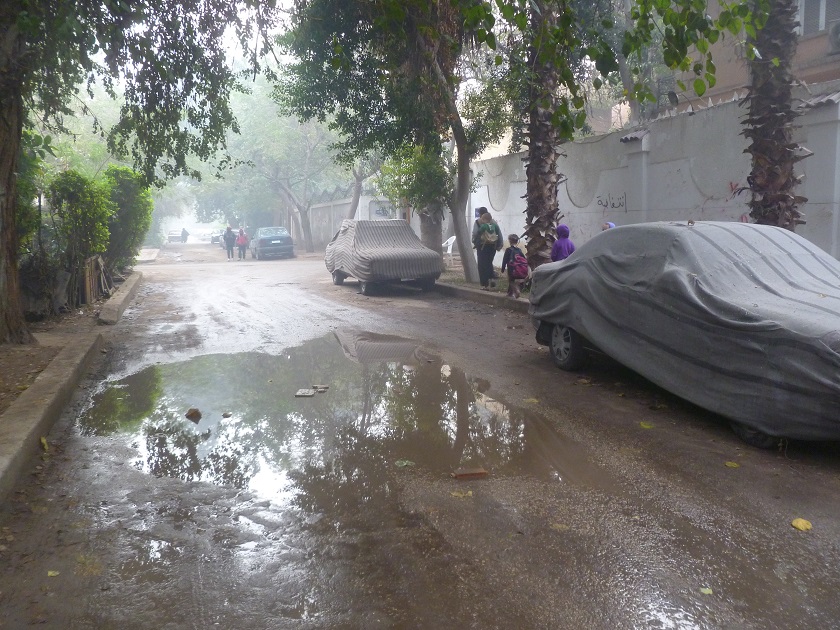
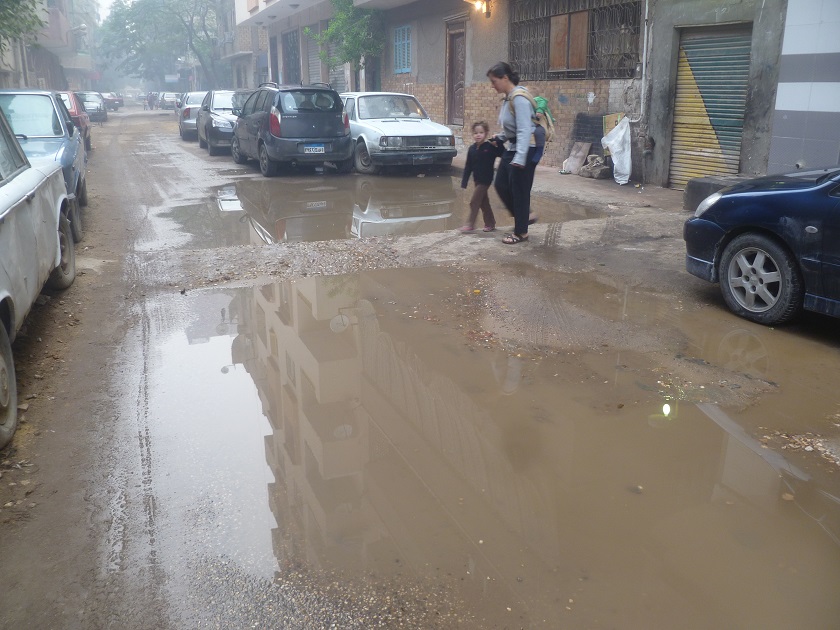
Yesterday Egypt experienced one of its very few yearly rainstorms, for which its roadways are terribly unprepared. I realize great swaths of the United States are covered with snow these days, so there is little room to complain.

But nonetheless, the puddles and mud left behind a day later complicate the daily walk to school. Here are a few pictures to share the adventure.

Setting out from our house we avoided the puddle on the street, choosing instead the slightly less muddy path on the sidewalk.
Usually Alexander is pushed in a stroller, but today we left it behind. The stroller also carries the girls' backpacks, and it wasn't long on the way they got tired of carrying them themselves.
Usually Alexander is pushed in a stroller, but today it was wise to leave it behind. The stroller also carries the girls’ backpacks, and it wasn’t long until they got tired of carrying them themselves, and saddled their mother instead.
This is the puddle right in front of the entrance to Emma's and Hannah's school. The black vehicle is a tuk-tuk, stuck in the mud-mud.
This is the puddle right in front of the entrance to Emma’s and Hannah’s school. The black vehicle is a tuk-tuk, stuck in the mud-mud.
Layla often skips along merrily on her way to preschool.
But she got a little weary of squeezing through gaps around the puddles.
The rain does little but move around Cairo's trash problem.
The rain does little but move around Cairo’s trash problem.
As we navigate the street approaching Layla's preschool, Alexander looks on attentively.
As we navigate the street approaching Layla’s preschool, Alexander looks on attentively.
Ok, we staged this one a bit. It wasn't absolutely necessary to traverse the speed bump to move along further, but it was a fun picture.
Ok, we staged this one a bit. It wasn’t absolutely necessary to traverse the speed bump to move along further, but it was a fun picture.
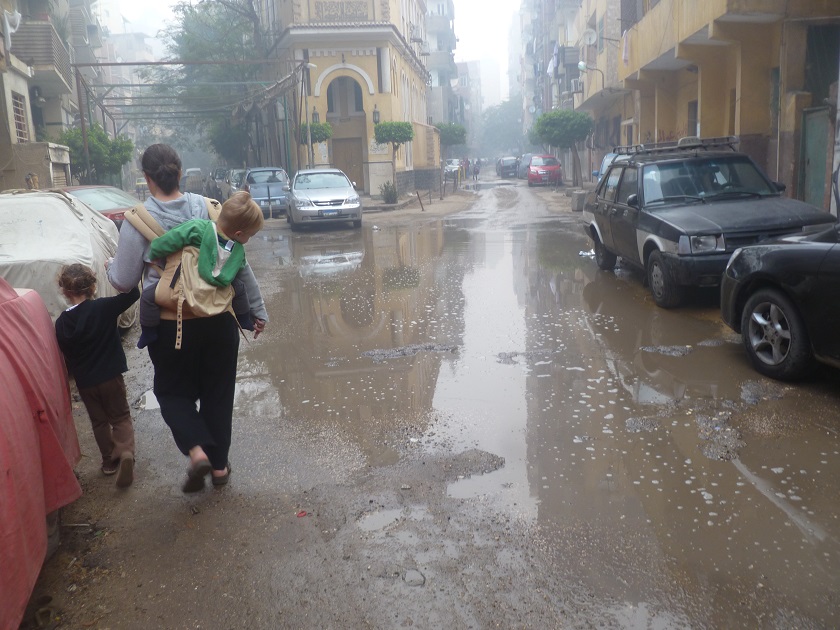
For comparison, four years ago we made a video of this walk to preschool, back when Hannah was going. Please click here for dry roads and our family at an earlier moment.

Categories
Personal

How Can Egyptians Smoke, Looking at This?

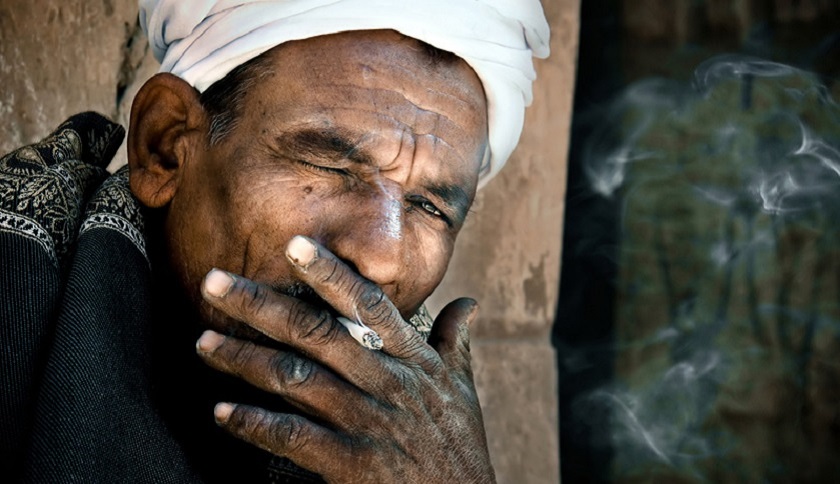
Old man smoking

A recent Ahram Online article quoted from the Egyptian minister of health, stating nearly a quarter of all Egyptians smoke, including 46 percent of adult males. This, he said, is one of the highest rates in the world.

But every time one of these Egyptians reaches to take a cigarette, one of these images stares him or her in the face:

Smoking Warning

The yellow bar advertises the local number to help quit smoking, warning it damages health and causes death. The images are more specific.

The old man: Smoking leads to senility and early impotence.

The child: Secondhand smoking afflicts children with lung disease and asthma.

The foot: Smoking causes gangrene of the foot.

The mouth: Smoking causes tongue cancer.

Here’s a larger image of the tongue:

Smoking Tongue

The campaign to label cigarette boxes is mandated by Egyptian participation in the UN’s Framework Convention on Tobacco Control. Earlier images were much less graphic, though one still touched on impotence as a motivating threat.

Cigarette impotence

The yellow warning reads: Warning, smoking ruins heath and causes death. The harmful effects of smoking afflict both the smoker and non-smoker.

Well and good, but what is meant to capture the attention is this: Over a long period of time, smoking affects marital relations.

This image is directed to women:

Smoking Baby

The yellow warning is the same, but the specific message says: Being among smokers harms the pregnant woman’s fetus and causes miscarriage.

These kindlier messages have been placed on cigarette boxes since 2008. The scarier images since 2012.

I’m not sure how many Egyptians smoked six years ago, but surely more should call the advertised number: 16805

Categories
Personal

The Immigration of Roots

Over the past several years, and increasingly over the past several months, Iraq has nearly been emptied of its historical Christian population. This short film by the newspaper al-Badeel explores how Egyptian Christians contemplate the issue of immigration. It is subtitled in English, and provides a very good overview of how many Copts view the subject.

Egypt, of course, has not faced nearly the same level of chaos and disintegration as Iraq. But the film is full of images of burned churches that remind of the difficulty the nation has endured. Egypt also comprises a far higher population – both overall and of Christian citizens – which make it better able to withstand a gradual emigration which has resulted in Coptic Orthodox churches the world over.

But emigration takes its toll, usually robbing a nation of its best and its brightest who can afford to move overseas and stand a decent chance at finding work. This theme is stated often by those interviewed, while the theme of religious persecution is generally nuanced though it lingers.

Have sympathy, and enjoy the window into a slice of Coptic consciousness. Alas.


Categories
Personal

Update from Mhardeh, Syria

In my recent article for Christianity Today, I described one of the strategies Middle Eastern Christians are employing to face the threat from ISIS: Fight.

Sometimes, though, talking isn’t enough. This reality has driven Syrian pastor Maan Bitar to urge his congregation to take up arms and fight. His Presbyterian congregation is among the 22,000 all-Christian residents of Mhardeh in Syria. Their city is besieged by Islamist militants.

Mhardeh is shelled every day, Bitar said, killing at least 50 civilians and injuring hundreds more. The city’s Christians, alongside government forces, have so far been successful in preventing the militants from entering the city.

“I know I have the right as a human being to defend myself,” he said, “but I try to give my people a Christian justification.… Still, if I kill someone I need to say to Jesus, ‘I know I have sinned. I have not met your perfection.’”

This above article is recently updated based on an email received from Rev. Bitar. Here is his message in its entirety:

The city is besieged by FSA and Al Nusra, who drove away the civilian population of the neighboring villages to take over Mhardeh and make it their stronghold to fight the regular army from Mhardeh.

Now Mhardeh is shelled everyday by the Syrian rebels and Al Nusra fighters who have given dozens [of] ultimatums [and] threats: Leave your homes. Mhardeh is ours. It’s Halal (permissible under Islamic Sharia to conquer).

Mehardeh has been hit so far by 1500 mortar shells and rockets. The death toll of civilians has exceeded 50, and there are hundreds of injured, among the deaths and injured [are] women and children. Sometimes rockets are deliberately launched when school children are leaving school.

The Syrian regular army, with Mhardeh civil defense and volunteers, has prevented them from invading Mhardeh and has driven them away, and now it is targeting their strategic positions in other farther towns. However, they number [in the] thousands and are intent on causing much harm and damage to [the] Mhardeh population and town.

Categories
Personal

Other Stories from Kurdistan

The situation for refugees in Erbil, Kurdistan, Iraq is dire. I was pleased to be able to convey this perspective in a recent article for Lapido Media, highlighting the relief efforts of a local Cairo church, Kasr el-Dobara.

But there are other interesting stories to be told, more than could be honored in a reasonable word limit. Here then are a few other anecdotes that had to be cut in the editing:

KD Christian refugee

Coordinated with US airstrikes, Kurdish Peshmerga forces have begun to reclaim villages overrun by ISIS. But many displaced Christians in Erbil, the Kurdish Iraqi city which has received hundreds of thousands of refugees, have little confidence to return.

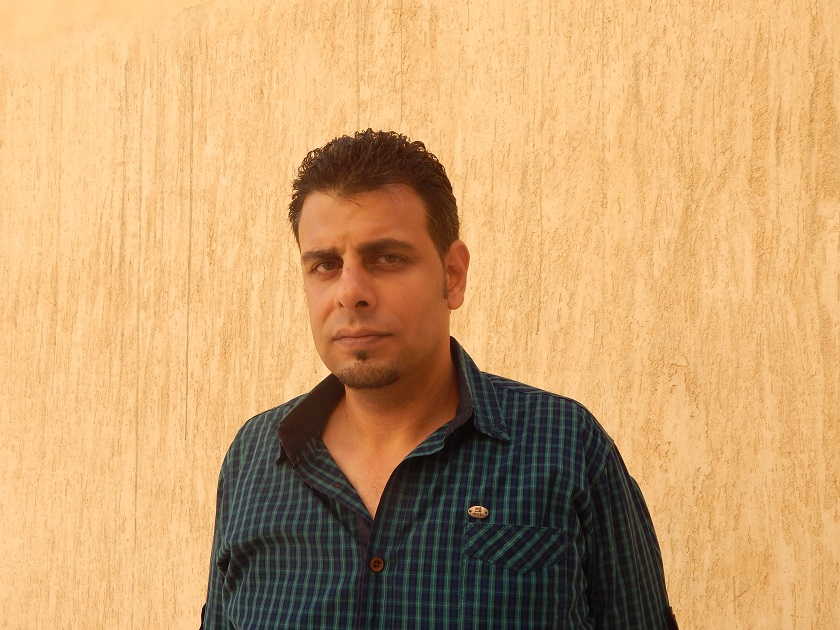
‘I don’t want to go back to the same neighbors who betrayed me,’ a roughly 60 year old blind man from Nineveh told Revd. Fawzi Khalil. ‘They surrendered me to the terrorists.’

Khalil is the director of relief ministries at Kasr el-Dobara Church in Cairo, Egypt, and is part of the church’s efforts to deliver much needed aid. He has spoken to dozens of individuals with similar stories; names and faces begin to blend together.

The man in the photo above is the blind man, supplied by Rev. Khalil. It is amazing to have met so many with such terrible stories.

KD Erbil refugees

Khalil explained that the majority Chaldean Catholic Church of Ankawa has done an excellent job of caring for Christian refugees. Erbil’s population includes roughly 160,000 Christians, and many have taken in their religious brethren.

As a consequence Erbil’s churches are packed, and the Mar Eliya refugee camp is located on the grounds of the church-run school. Nearby Mar Yousef camp is in a church itself, and hosts mostly Muslims and Yazidis.

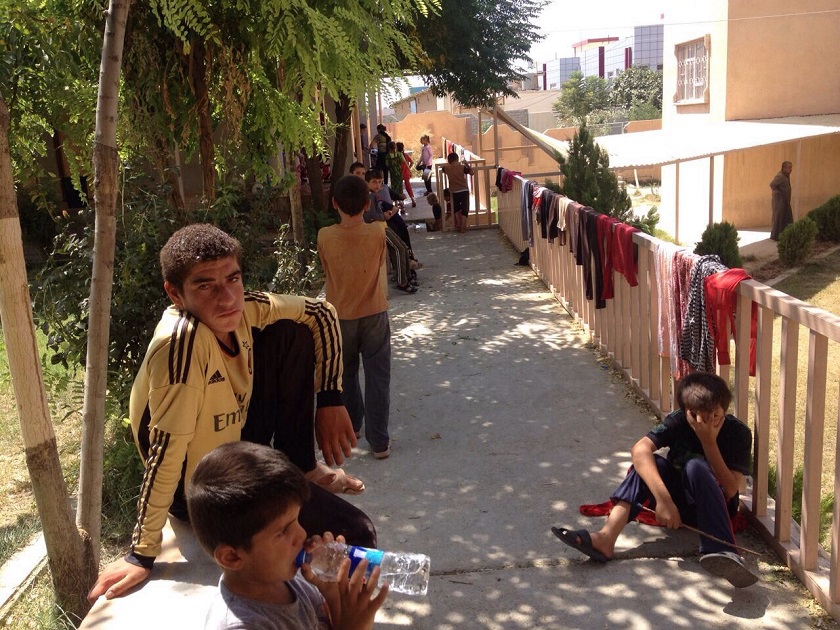
The photo above, also from Khalil, pictures what these campgrounds are like. People and their scant belongings sit around idly. I was surprised by how green the area is. But from another photo, not all refugees are so fortunate:

SAT7 refugee camp

This photo is from SAT-7, whose Ehab el-Kharrat was quoted extensively in the original article. Many campgrounds are located in the desert, and according to Eva Boutros, who was also interviewed, many have inadequate water supplies. Dozens of children gathered around a sole faucet, she witnessed, trying to get clean.

But Boutros also told a story of other children, who enjoyed with her relief team a special break from the agony of refugee life:

One of the Christian refugees is named Soha. Age 22, she graduated from university and was looking forward to her new job in Mosul before the ISIS onslaught. Now she must care for her brother’s three children who have been separated from their mother.

‘Now, all I have is a mattress, a donated plate of food, and two pairs of clothing,’ she told Eva Boutros. ‘This is the end of my youth.’

Boutros is the director of volunteer ministry for Kasr el-Dobara, but accompanied a joint Orthodox-Catholic-Protestant team organized by the Chaldean Church in Heliopolis, Cairo.

This team brought tents, medical supplies, blankets, and children’s underwear, all donated by Egyptian companies.

But Boutros recognized many of the refugees needed something more, and took 280 young women, including Soha, shopping at the local mall.

‘It was fun for us, and fun for them,’ she said, describing a moment of happiness amid a desperate situation.

Perhaps her woman’s touch gives her greater memory for personal detail, as opposed to Khalil. But she praises a different source.

‘I remember each person, their face and their story,’ she said. ‘The Lord sent us to tell them, we are suffering with you.

‘They need you to hug them, stay with them, and listen, listen, listen.’ Kasr el-Dobara’s team included a professional psychiatrist, who spent hours counseling women and children in their trauma. Childcare specialists did their best to entertain the kids each evening.

Finally, here is an amateur video made by the Kasr el-Dobara team, showing their team in action and giving thanks to those who have donated.

Categories
Personal

More from the Maspero Memorial: Video, Pictures, and Anecdotes

On October 10, it was quite an adventure simply to get to the memorial service for the martyrs of Maspero. ‘The church in 6 October City,’ is what both people and press related, and Google Maps said there is only one, downtown. 6 October City is also one of Cairo’s satellite cities, and thus not very easy to access.

But the name of the church – St. Michael’s – did not match the name of the church on Google. I was faced with the choice of having to taxi out and hope it was correct, which would be quite expensive, or discover the routes of public transportation, which would take me downtown and then leave me there. In either case I was not confident the only church in town was the right one.

Wael Saber
Wael Saber

In the end I contacted Wael Saber, described in my earlier article as one of the spokesmen for the Union of the Families of Maspero Martyrs (UFMM), to try and double-check the location of the memorial service. He proposed a solution without which I would have been completely lost. I could meet him at 7:30am in downtown Cairo, where he was arranging a bus to transport dozens of relatives.

Within the controversy described in the article, this bus was good evidence that Saber is indeed appreciated by at least many relatives as the spokesman of the group. More below will contest that claim, but as we weaved out of Cairo and through the expanse of land on the way to 6 October City, we did not quite reach it. Instead the bus veered to the left, out into the desert.

I had no idea where we were headed, but I’m glad I searched Google thoroughly looking for a second church. I did not find one, but on the outskirts of town was a new cemetery, and it quickly became clear we were now driving through it.

The sign reads: Cemeteries of St. Michael, 6 October City. The vast gray expanse behind are the Muslim graves.

The majority of the mausoleum structures were clearly for Muslims, but as we drove through to the back of the cemetery a huge church rose up above the whole area. It was odd to see the massive structure with no comparable mosque nearby. Later, a church employee told me the size was necessary to hold mourners for the funerals held here, especially given that the remains of the martyrs of Maspero often attract a crowd. The church does hold regular mass, he also said, but busses in the worshipers from surrounding areas.

St. Michael's Church. The sign to the bottom left says 'Come to me', with Jesus speaking to Maspero martyrs.
St. Michael’s Church. The sign to the bottom left says ‘Come to me’, with Jesus speaking to Maspero martyrs.

I spoke with him outside the crypt holding the remains not only of the Maspero dead, but also those killed in an earlier attack on a church in Imbaba, Cairo, as well as those killed in a later drive-by shooting during a wedding in the Cairo neighborhood of Warraq. The church was built in 2011, and Saber told me he has papers stating church leadership will rename it to the Church of St. Michael and the Maspero Martyrs.

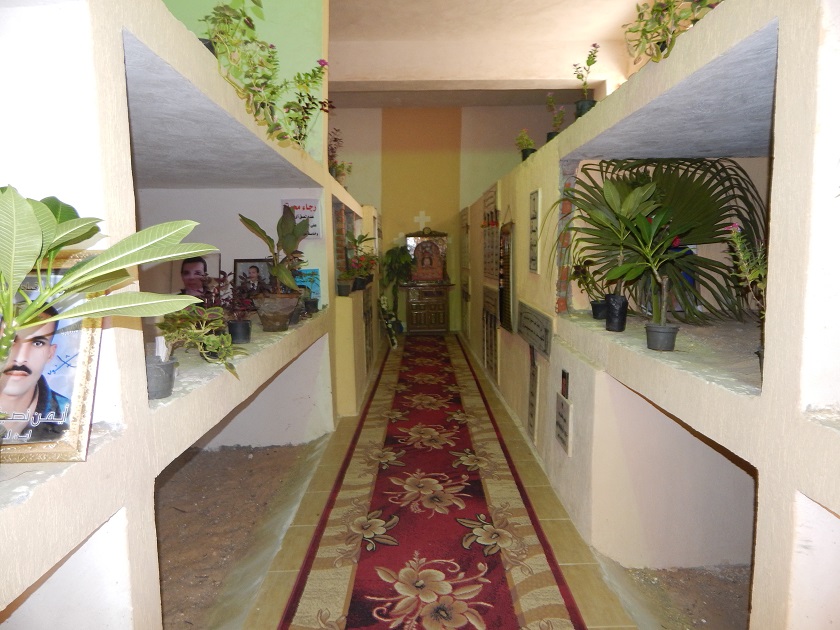
Inside the crypt of the Maspero martyrs. One must remove shoes before entering.
The plaque reads: The Martyrs of Maspero, with a date of October 10, 2011. One relative explained it is the 10th because that is when the autopsies were finalized, though the massacre took place on the 9th. The phrase above says: Their bodies are buried in peace, and their names live throughout the generations.
The plaque reads: The Martyrs of Maspero, with a date of October 10, 2011. One relative explained it is the 10th because that is when the autopsies were finalized, though the massacre took place on the 9th. The phrase above says: Their bodies are buried in peace, and their names live throughout the generations. Honored below are Nassif Ragi, Michael, Musad, and Wael Mikha’il.

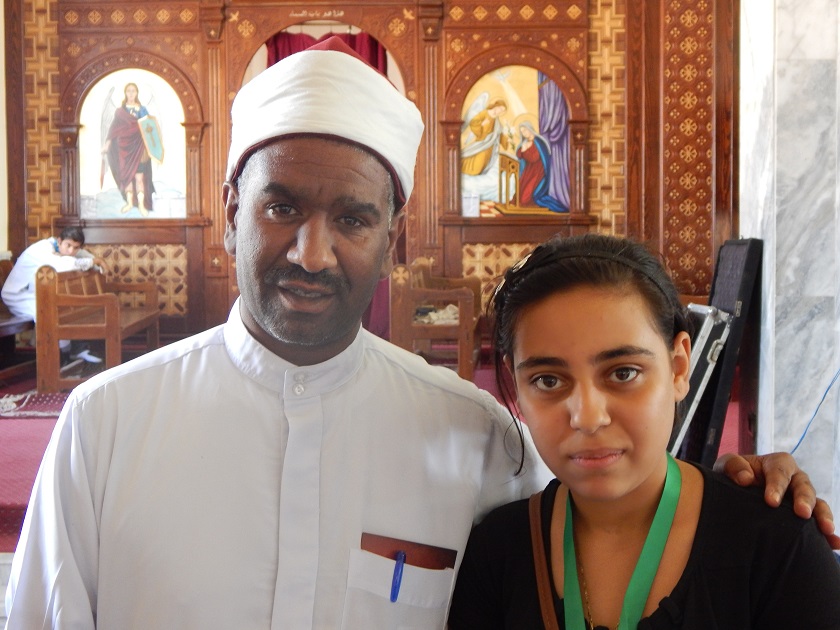
It has been a difficult three years for Egypt’s Christians, but also for her Muslims. At the end of the mass I spoke with Sheikh Ahmed Saber, who is the imam of a mosque near the Maspero Radio and Television building, the epicenter of the Coptic protests and the site of the eventual massacre. Over the course of time he has become a friend – first to the activists, later to the families – and was keen to be present at the memorial service.

Ahmed Saber, with one of the younger relatives of the deceased.

Unfortunately, he did not have much to say about the course of justice, preferring to make non-politicized statements. Perhaps this was wise – it just wasn’t useful for my article. But he also stated he was there in a personal capacity, not representing the Azhar institution despite his clerical garb. But it was acceptable the Azhar was not there, he said, for the church and Azhar agree upon 99 percent – which is citizenship, human rights, and social justice – and disagree about only 1 percent – doctrine.

Therefore, he said, having official church representatives was the same as having Azhar representatives.

Except, the official church representatives did not come either. Earlier it had been stated that the influential bishops of Central Cairo and Giza would be in attendance, but at the last moment they excused themselves due to travel necessities. This seemed odd to me, but none of the Copts I spoke with were troubled by it, stating both were present at the 2nd memorial service a year earlier. Having now lived long in Egypt my mind flirted with the conspiratorial, but there was nothing to latch on to, so it also escaped my article.

Another interesting comment from the sheikh was in relating an earlier conversation between St. Anthony and St. Boula, two of Egypt’s earliest monks. St. Anthony instructed him that Copts should pray first for the Nile, then for the ruler, and then for the patriarch. Sheikh Saber found this to be an example of wisdom, and elaborated upon it while quoting several Bible verses. He was certainly a unique individual. Muslims often attend special services in the church as welcome visiting dignitaries, but are invited or allowed to leave midway through before the serving of communion. Sheikh Saber remained politely the entire time.

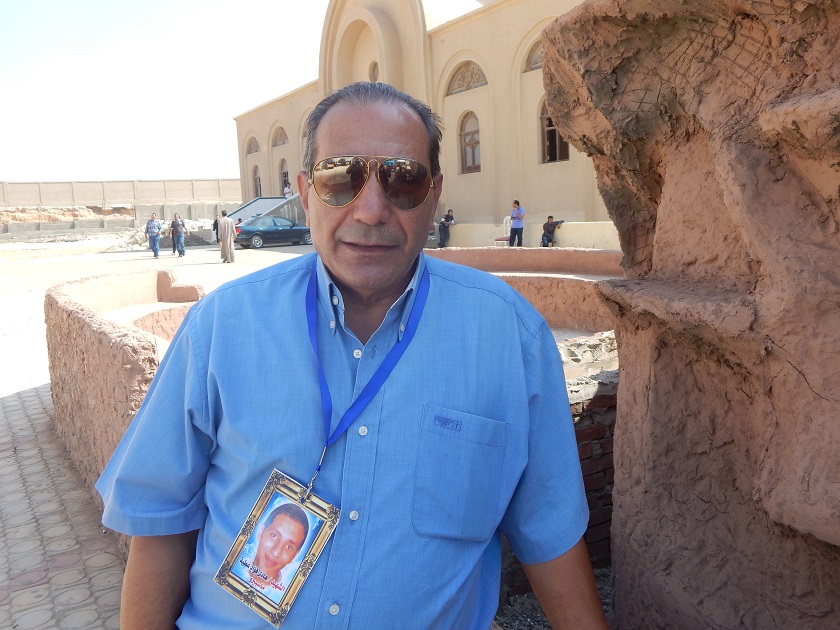
Fuad Attiya
Fuad Attiya

Afterwards I did my best to interview as many family members as I could. Wael Saber’s contact was given to me by one side of the activist division, Fuad Attiya by the other. The activist told me Attiya represented 14 of the martyr families, and that Saber was supported by only three or four. The following needed to be cut from my article due to word limit, and I didn’t mind as I felt the back-and-forth exchange of accusations was becoming petty. But it is nonetheless insightful:

The three UFMM spokesmen were appointed by the families as they were the most active relatives working on their behalf, Saber said. This testimony was confirmed with others at the memorial service and was evidenced by a busload of relatives for whom he arranged transportation.

But not by all. Fuad Attiya is the 69 year old father of Hady, his 22 year old son killed by gunshot in the demonstration. He invited the MYU to attend the church memorial service.

‘There is no Union [speaking of the UFMM],’ he told Lapido Media. ‘No one speaks on behalf of the Maspero martyrs. This is a lie.’

Another relative told me Attiya provided for the light snacks shared by the martyrs’ families after the service. Perhaps this is not as strong an indication of support as the bus provided by Saber, but he did appear a respected senior figure to those I spoke with, including Saber. Attiya, however, did not confirm the ‘14 families’ idea spoken of by the activist, but he clearly was not happy with Saber’s assumption of leadership.

But following the commemorative funeral procession shown above, quarrels broke out here and there between the various parties. It was not long thereafter the MYU activists decided to leave. I wondered if they had been asked to. Here is another segment of the article that needed to be cut:

Mina Magdy, general coordinator of the MYU agreed with Gaziri it was a day for the martyrs. They attended the memorial mass to express condolences, and left shortly after it ended. He is saddened by the accusations against the group and explained they have spent countless hours with Saber and the families to demonstrate their innocence.

He believes lies have been told by the media to harm their organization, and many of the families have been taken in. He also thinks Saber is jealous of the MYU’s political influence, something he wants for himself.

Saber admits he will represent the UFMM not just in matters pertaining to the justice of their case, but also as citizens about the affairs of the nation. He announced their participation in the June 30 protests that led to the military-backed overthrow of former President Mohamed Morsi, for example.

Magdy made it clear to me they were not attending the mass to attract attention to themselves as an organization, but to participate in an event that devastated them as well. They left of their own decision, he said, so as to leave the focus of the day for the families, even though both Attiya and the priests conducting the service asked them to stay.

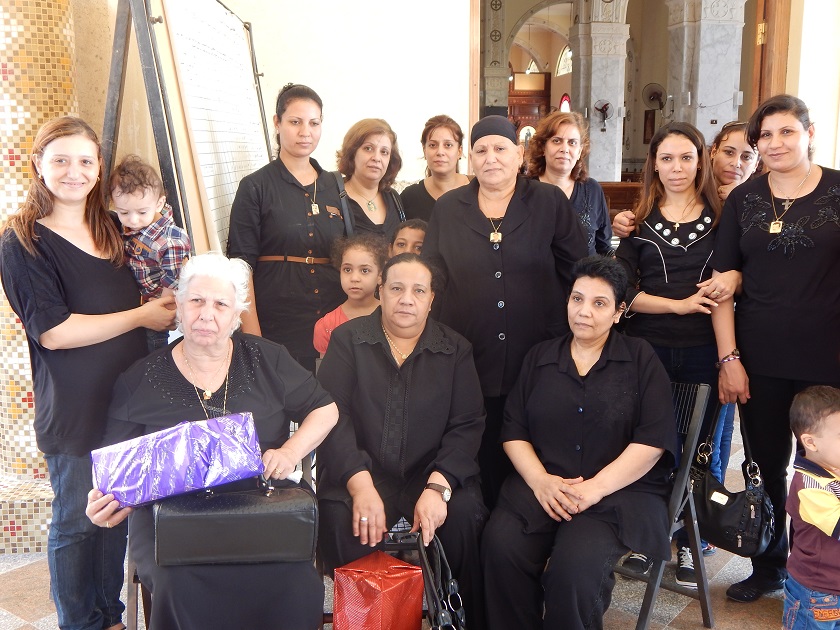
Relatives of the martyrs, dressed in black.
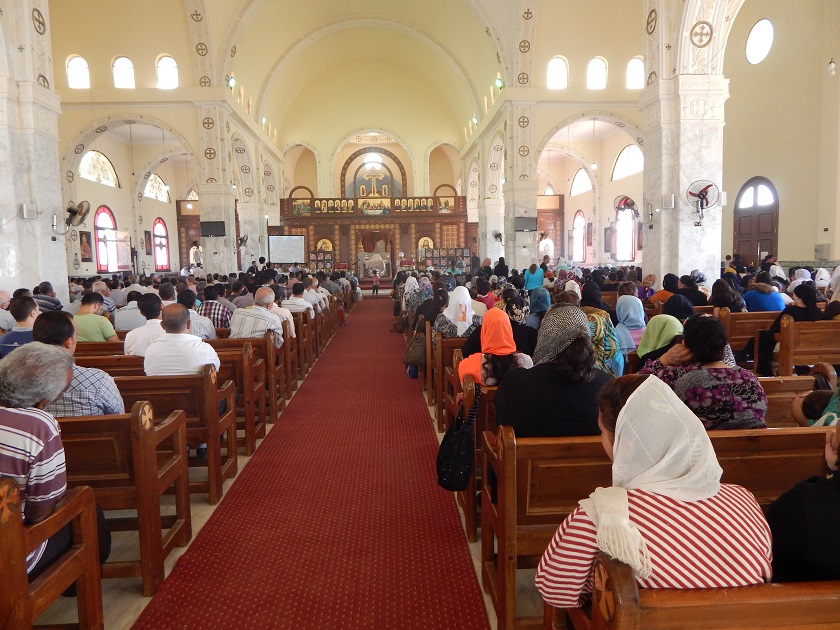
Attendance at the memorial mass

I have known the activists of the Maspero Youth Union for a long time, and it is difficult for me to believe they have profited off the names of the martyrs. In human nature, however, anything is possible, and Magdy spoke of the privacy of the organization when I asked if I could review their financial records. He assured me, though, that they have shown bank reports and other evidence to the families. He will accompany them to court if any produce evidence of wrongdoing by any in the MYU, but so far no one has.

Youssef Sidhom, quoted in the article, also stated that when his newspaper collects donations it makes them public and details the expenditures, so that all is done in full transparency. Unfortunately, many in Egypt’s activist spectrum – from the Muslim Brotherhood at one end to the Maspero Youth Union on the other – operate outside the structures of oversight and keep all their financial dealings in-house. Mina Thabet told me the donations the MYU helped solicit were processed through a certain priest, so there is a channel to follow up with these investigations.

Wael Saber also stated that in order to cut out the ‘middle man’ of the MYU and others he printed with permission the phone numbers of every activist family, so anyone who wanted to help could do so directly. Here also is a channel to follow up on the counter-accusations that he is an opportunist. The families can be asked about him directly, which he invited me to do.

But the whole matter is sad. Certainly if there is fraud, this is sadder still. And if Saber and others are deliberately marring the reputation of the MYU then this also deserves condemnation.

There is that within me that wants to get at the truth of the story, motivated by a desire that a better understanding might overcome this animosity – or perhaps prove the worthiness thereof. But even the telling of the divisions I hope has a small impact on showing this ugly face to the activists and families themselves. The death of these 27 individuals was a tragedy; it deepens in sorrow with the witness of infighting.

October 10 was also my birthday. After the melancholy experience I returned home and was received by my own family which does not suffer from so much division. Of course in comparison we have hardly suffered at all.

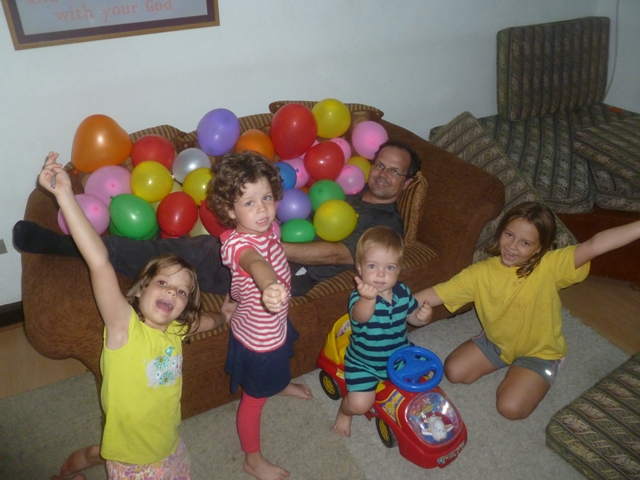
40 Balloons

But as my children covered me with 40 balloons, I was reminded of the good gift of unity in a community of love. The bulk of my day was unsettling; the ending repaired all harm. I pray Egypt might receive a similar experience soon.

Categories
Personal

Poverty and Politics in Ezbat al-Haggana

As Egypt considers its coming parliament, discussed among pundits and politicians alike, actual voting power lies far off the beaten track in slums such as Ezbat al-Haggana. Nagwa Raouf, founder of the House of Blessing local charity, says two million people live there.

“We have told the people, ‘Do not sell your vote, it is your dignity’,” she stated, but the call goes on deaf ears. During the 2012 presidential campaign, Ahmad Shafiq and Amr Moussa offered the equivalent of US $0.83 to cast a ballot on their behalf.

Islamist groups which had been active in Ezbat al-Haggana did not sell their vote, Raouf explained, though she was not happy with them either.

“The Muslim Brotherhood has worked with the people for eighty years, giving them money, clothes, and meals for Ramadan,” she stated. “But what have they done to uplift the people?

“Salafis are the same but worse, as they are close minded.”

In an area where the majority live below the poverty line, Raouf sought out a neighborhood Muslim imam to sanction a unique, if cynical, solution.

“With the sheikh we agreed to tell them to take the money, but then go and vote for someone else,” she said.

Ezbat al-Haggana is located in northeast Cairo, off the ring road, not far from high class developments built away from the downtown. With no housing provided, Upper Egyptians looking for work erected a shanty town not far from construction.

According to Raouf, thirty years ago Egypt’s Border Guard sold the Haggana land to its officers, who in turn sold it to local residents. It took twenty years for the government to provide local sewage and electrical service.

Despite the evident poverty, construction is booming, especially after the revolution. Local regulations forbid apartments from going over four floors, but this is widely disregarded. Contractors from outside the area make a partnership with land owners, offering to build additional apartments upon their one floor home. Contractor and owner split the floors, which in turn are sold or rented to others.

Or, perhaps, they are kept in family. It is common for 15-20 people to live in a single home, as migration trends from Upper Egypt dictate families live together, and near to neighbors of the same region. Though Haggana divides informally its sub-districts by native origin – Asyut, Minya, Sohag, etc – Muslims and Christians are intermingled along the same pattern.

Likewise, religious relations follow the Egyptian pattern. Raouf states that Muslims and Christians are fine neighbors, but the problem of church building traveled with the migrants.

There is one official, licensed church in Ezbat al-Haggana, but several unofficial meetings in family homes. Next to one of these someone recently erected an unlicensed mosque.

Local Muslims, Raouf explains, welcome Christian worship – but to a point. They know full well that services are conducted by their neighbors and have no objection. Problems begin when Copts seek to transform the exterior of their building to reflect formal church architecture. Muslims feel their allowance has been betrayed, while Christians feel their identity is denied by the refusal of official permissions. Fortunately, Haggana’s community leaders have had the wisdom to avoid stoking tensions in this area.

It is these community leaders who guard its people against outsiders, which can make even charity work difficult.

“First you have to love,” said Raouf. “Then you have to get to know them, then trust them, then win their confidence, and then finally you can help.”

Raouf’s House of Blessing succeeded by first working through an already established NGO, The Mountain of Mercy. She asked workers there to recommend ten families who stood in dire need of improved housing. Interviewing them one by one, she looked for who could help themselves.

She settled on a family originally from Aswan who settled in Haggana thirty years earlier. Raouf noticed the woman of the household kept her children in school and carried potable water to her home each day. She was industrious and principled.

The House of Blessing collected money from the Islamic zakat giving of family and friends. They demolished the woman’s home entirely and built for her and her family a two story dwelling, with a small shop attached to the outside. Half of the nearly US $6,000 project is paid by the charity, with the other paid by the family in the form of a no interest loan.

Raouf and the woman exchanged the warmest of greetings.

This type of fundraising is difficult in Egypt, however. To transform a nearby alleyway Raouf caught the attention of a Saudi Arabian television show, whose producer funded and filmed the construction of two complete buildings. Eight whole families were outfitted, benefitting over sixty people. Whereas many alleys in Haggana are stained by garbage or general disrepair, this one sported a dignified cement floor. Many months later, it was still in pristine condition.

“To change people you must change their home,” believes Raouf. “Before, people would look at this alley and say, ‘We are satisfied, should we go against what God has given us?’

“But God wants us to live well.”

Raouf believes residents should also live well politically. As she first benefitted from the reputation of others, she now lends her own to those who believe similarly. Before the fall of Morsi she assisted contact for the Muslim Brotherhood’s Freedom and Justice Party, the moderate Islamist Wasat Party, and the liberal Egyptian Social Democratic Party.

“I work with different political parties so that people can experience them and compare between them,” she stated.

On the occasion of the Muslim Eid al-Adha holiday, the Social Democrats were in town. They hosted a party and community dialogue on the process of writing a constitution. Held at a park outside of town, attendance was small.

“It is not a long term battle,” said Nancy Muneer, deputy director for the party in East Cairo, “but a very long term battle.”

No natural politician, Muneer has been working in areas like Ezbat al-Haggana since the 2011 revolution – but never before.

“My son joined the revolution, before which he had zero hope,” she said. “I am upper middle class but I can’t stand to see people eating garbage off the street. We have everything we need to live in a better way, we just need a system.”

Muneer is in charge of women and youth affairs in the party, and she has been transformed by the experience.

“I am involved because I love people and love Egypt. Many of us are like this,” she said. “It is very addictive, because you fall in love with these people. They are so simple, genuine, and humble.”

There are also so foreign to her world. Muneer’s experience underscores why liberals may have such difficulty in mobilizing the people. It is not necessarily that the poor of Ezbat al-Haggana are Islamist, ignorant, or easily swayed by religion. They are simply not known.

“We go to Gazira Club and City Stars,” she said, “but Ezbat al-Haggana is what real Egypt is like, and we don’t know it.”


Note: This article was originally written in 2012, but not published. I reviewing some of my older work I believe it is still very relevant to the Egyptian scene, even with the removal of many Islamist parties. The same political dynamics exist. Finally, at last contact, Mouneer is no longer working with the Social Democratic Party, having opted out of politics.

Categories
Personal

Striking ISIS: Egyptian Participation and Christian Angst


bombing-isis

Many Christian religious leaders in the Middle East expressed great reserve against the US plan to strike at ISIS in Syria. But one particular Egyptian politician, a Christian, argues forcefully for it—including Egyptian participation. Now that the bombs have begun to fall, his words are also worthy of consideration.

“We should go, if only symbolically with a few planes,” said Ehab el-Kharrat, a founding member of the Egyptian Social Democratic Party. “We must not give a message to our local terrorists that we are backing off.”

Egyptian President Sisi has promised coordination with the US-led coalition, but has not contributed any forces. He recently stated Egypt is neither for Assad nor the opposition, though it does maintain membership in the Friends of Syria group organized early against the regime. Sisi has, however, compared the Islamist forces fighting in Syria to the Muslim Brotherhood, accused of coordinating ongoing attacks in Egypt.

Kharrat believes Egypt, and the international community in particular, should have been much more forceful, from an earlier date, but narrowly focused. He says many in his party agree, though it has taken no official stand.

“The decision not to arm the Free Syrian Army was a serious mistake and we must do so now as soon as possible,” he said. “Assad is not the answer, he is a cruel dictator, worse than Mubarak, similar to Saddam.”

Kharrat criticized the Muslim Brotherhood and Salafis for understanding the procedures of democracy, but not its philosophy – unless they reject it to begin with. But leaning on Assad, like some Christians are at least reluctantly willing to do, does not work either. It has produced the ills Christians are currently suffering.

“Autocratic regimes give ground to breed Muslim extremists like bacteria,” he said.

Bishop Muhib Younan of the Evangelical Lutheran Church in Jordan and the Holy Land agrees. “We have relied on secular autocrats who oppress others,” he said, “but must recognize also that democracy is a damaged concept.”

The trouble is that many Middle Eastern Christians, and certainly Egyptian Copts, feel trapped. Their experience with Islamists leads them to mistrust open democratic procedures that may bring them to power. But the secular states they have relied upon do not necessarily protect them beyond rhetoric.

Some in Egypt, such as Mina Fayek, a Cairo based blogger and activist, complain the Egyptian state has not yet rebuilt the churches attacked by Islamist mobs following the dispersal of the pro-Morsi Rabaa sit-in. The army promised it would be done; over a year later little work has progressed.

Others, such as Rami Kamel, a veteran Coptic activist, see both state and church inaction over the recent Gabl al-Tayr incident, where 22 Copts and three policemen were injured dispersing a sit-in protest over a missing woman believed to be kidnapped. “Sisi and the state will never go to the church,” he said, “because the church’s role has ended.”

But to imagine these sentiments as indicative of Coptic opinion would be greatly misconstrued. Christians are among Sisi’s greatest supporters.

If he follows through with his rhetoric, perhaps they should be. Commenting on the airstrikes in Iraq and Syria to the AP, Sisi said much more was necessary.

“The comprehensive strategy we’re talking about — part of it would be the security and military confrontation, correct, but it would also include fighting poverty,” he said. “We are also talking about improving education, which is important, as well as changes in the Islamic religious discourse.”

This coincides exactly with Kharrat’s opinion, though the second part awaits a demonstration of Sisi’s commitment.

“In Tunisia, Libya, Egypt, Syria, and all our states, the question of religion and politics must be resolved,” he said. “The only solution is a democratic and liberal system.”

As for Syria, Kharrat believes the practical only solution is to strike a deal with Assad to remove him from power, but assure him of non-prosecution, and the Allawites of non-persecution. Both Allawites and Christians must be incorporated into the new government, but only from outside the Baathist regime.

But the immediate task is to fight the Islamist rebels: ISIS, Nusra, and whoever else. Whether or not anyone else is left standing to take on Assad is a fair question, but not a few Christians, at least for now and however much they distrust America, are glad that ISIS is being hit.

Categories
Personal

An Apology to Egypt

I’m sorry, Egypt, and please accept my apology. Perhaps you will view this as only a half-apology, so allow me to give my excuses first.

We were not here this summer, spending two months in the United States. It was a very nice time, but full of travel, conferences, and professional development. My computer crashed in the middle of it. And yes, there was vacation also. It was very refreshing.

You see, Egypt, you can be quite demanding. I guess I’m moving from excuses to pent-up frustration – but I’ll assure you, this is still excuse. The past three years I have rejoiced with you, wept with you, and at times felt like cursing you.

You have had a habit of moving from one crisis to the next. As soon as one horror passes, another surfaces. It has been exhausting.

But I have always prayed with you.

That is, I trust you are praying also. I have tried to find the prayers of all people in your society, and honor them in navigating the complicated pathways of politics, religion, and culture. It has not been easy; you are deeply at odds with yourself.

But this summer you gave a respite. Things calmed down. You stayed out of the news. I know not everything is right with you, but you could take a perverse comfort that others were much worse. Maybe I took that comfort with you.

So while I was away, it was easier to trust that things were ok. And maybe they were, though I knew also that not everyone agrees. But I could go on with my business and keep a bit of emotional detachment.

This isn’t the sort of thing that is good to admit, I know.

Believe me, I didn’t forget you. Every day I checked the news, though truth be told it was often just the headlines.

And every day I prayed for you. Well, most every day. But I failed to write them down and share with others. This is what I apologize for. I didn’t know the details well enough – I wasn’t connected enough – to publicly pray beyond the generalities.

Maybe that is an excuse as well. If so, it was also the reality. I hope the important thing is a restoration going forward.

I am back, and back to work, but still catching up. I will aim to restart Friday Prayers next week. Please pray them with me again. I hope others will as well. I seek your good, even if I don’t always know what it entails.

Please forgive me. Are we ok?

Categories
Personal

Allahu Akbar, Algeria

Algeria celebrates its World Cup victory over Russia.

It has been a rather subdued World Cup so far in Maadi, Cairo. The cafes are full but by no means crowded. This World Cup has been a gem of a tournament, with average goals scored hovering around three per game.

But it is not attracting local attention in our neighborhood. Most space is empty when the matches begin. Throughout shisha smoking and backgammon hold more interest. Only a few hard core supporters cry out for a goal.

The television announcers are animated, however. A few days ago as the Russia-Algeria match crept to a close, with a 1-1 draw securing advancement for the North Africans, the Arabic boomed with each crucial clearance:

Allahu Akbar! Allahu Akbar!

But the final whistle prompted nary a cheer from the audience. There was no visible support for Russia, but little excitement for Algeria, either. While BeIn Sports, recently re-branded away from similarity to the al-Jazeera chain of stations, urged on their Arab (Muslim?) brethren, Egyptians present chattered, smoked, threw dice, or otherwise walked away at the completion of the match, as they have done for all others I have watched so far.

Egypt is not exactly a bastion for Arab nationalism, and the two national teams have a history of dislike, filled with riots and bus stonings. Algeria booted Egypt from qualification in the 2010 World Cup.

But Egypt perhaps should be such a bastion, for Nasser was the revered leader of Arab nationalism, and current president Sisi has been cast in his image. But Sisi has also fostered an Egypt-centricity against the alleged global machinations of the Muslim Brotherhood and world community. Right now, Egyptians just hope the wars engulfing their neighbors do not cross over their borders. There is a general pox on the Arab Spring in general and what it has wrought.

Algeria bears no crime in this analysis, but local Maadi residents have lent them little love.

It is still interesting to watch the ex-Jazeera broadcast celebrate. Americans are used to a local broadcast openly rooting for the home team, but would see as improper for an American announcer to openly cheer on England, say, against an African squad.

BeIn Sports is a creation of the Qatar media conglomeration, which apparently does not share the same sense of neutrality, or political correctness, or whatever this should be called. They also stand accused of overt support for the Muslim Brotherhood, earning them the animosity of millions of Egyptians. The recent sentencing of al-Jazeera journalists has been widely condemned internationally, but in local perspective the channel actively fabricated events.

Local residents highlight this video from an area near the bloody dispersal of the Rabaa sit-in, in which Islamist youth activist Abdel Rahman Ezz describes airplanes shooting live ammunition on the protestors. It is shown on the Rassd network, accused of being a Muslim Brotherhood arm, but whether or not such videos are tied to Jazeera journalists in question is a matter of contention. Certainly the judge believed so, or made it out to be, amid the hours of other completely non-related footage in their possession.

Whether or not al-Jazeera distaste plays into local soccer sensibilities is questionable, but as they have the rights to the Arabic broadcast of the World Cup, there is little other choice. Besides Algeria there is no other Arab team, and fellow Muslim Iran is also seen as Brotherhood-sympathetic, Shia in faith, and a poor team regardless. If anything, neighborhood Egyptians have been rooting for the Africans. Ghana in particular has won their favor, perhaps in direct competition to the United States with whom they were grouped.

Earlier that evening they were disappointed, as Ghana bowed out humbly while America advanced. But the reaction was still the same. Shisha, backgammon, and nonchalant departure. Maybe in the later knockout rounds, when powerhouse teams are likely to meet, local excitement will increase.

Perhaps. But even then, no matter how much God’s power is invoked by BeIn announcers in favor of Algeria versus Germany in their Round of 16 match today, Egyptians appear happy just for the distraction. Life has been hard, grand hopes have been crushed or exposed, and all they have left is Egypt.

And Egypt is not in the World Cup. Allahu Akbar, anyway.