Categories
Personal

The World Cup and Objectivity: Scenes from the US Defeat

It has now been a few days since the US World Cup defeat against Ghana. While it is only about now that I could bring myself to write about it, recovering from the disappointment of shattered dreams, I must also apologize for opening old wounds for those of you now similarly recovered. Well, I’m sure there are a few-to-many non-soccer readers of this blog who wonder what the fuss is about. For you, hopefully the cultural scene will be entertaining; for those still mourning, all I can say is that we mourn together. Ah, the sting of what could have been.

As mentioned last post, to watch the game I went to downtown Cairo, meeting up with friends who live there. Maadi, the affluent suburb in which we live is a far cry from the vibrancy of city life. Here, while I have enjoyed watching matches in the local coffee shops frequented only by Egyptians, there has never been fervor in the audience, which has ranged from five or six to a high of forty or so, for the England-Algeria match. Interested fans, yes; cheering for goals, sort of. The scene is one of subdued approbation, perhaps akin to that of an accompanying friend at a pee-wee soccer game. “Nice job, kid.”

Downtown was entirely different. I was met at the metro by my friend, who led me through the busy streets for several minutes. We passed by many shops with TVs tuned to the game, and not a few cafés which were starting to fill up. We, however, were heading to the big screen TV in the open air, found recently by my friend, who enjoyed also the inexpensive tea and hookah.

When we turned the corner we entered a wide promenade, and the masses emerged. Every few feet I expected us to stop, as we passed by open-air cafés with large TV screens. Midway through we reached our goal. This café, wherever the physical location may have been, had arranged perhaps two hundred chairs around a projection system casting the game on the outside wall of a building. As we took our seat I scanned the whole promenade – surely there were several hundred to a thousand people gathered to watch the match. Of course, this was the US vs. Ghana – not exactly a blockbuster fixture unless you care for one of the teams. I didn’t bother to watch Japan-Paraguay, for example. Imagine what the crowd could have been for the England-Germany or Spain-Portugal match. Having not yet returned, I cannot say. It is a bit of a hassle to get downtown, and I enjoyed these matches from Maadi.

As game time approached, however, we discovered that we were among partisans. There were scattered other Americans here and there, and a few from our office met up to watch with us. The Africans, though, were present in the dozens. A number cheered at the close of the Ghanaian national anthem, but everyone erupted with their first goal less than a quarter hour into the game. We were outnumbered, and greatly.

They may have been Africans of any nationality, but they were supporting the lone African team to emerge from group play. The Egyptians who filled in the rest of the crowd rediscovered their African identity as well, and cheered wildly as we sunk dejectedly into our seats following yet another early deficit.

The crowd quieted as the Americans eventually took the better of play and converted a penalty kick to tie the game. They were quite nervous as we pressed for the winner denied repeatedly by good goaltending or profligate finishing. In extra time they found cause to cheer again, having been gifted their second goal, and held out happily to victory. One voice cried out in English, in an accent I couldn’t place, “Good bye America!” and I felt like spitting water in his face – whoever, wherever he was. Amazing the evil that sport can summon.

We left walking back with our friends, some of whom were European sympathizers, who may have felt it odd to watch Americans lament the outcome of a soccer game, but offered comfort nonetheless. I was too downtrodden to really notice the reaction of the African / Egyptian crowd, so I am afraid I cannot report. This is the problem, I suppose, when a journalist gets involved in the stories he covers. Objectivity goes out the window.

It is true, though, that the episode gains the touch of humanity often missing in the nightly news. In our work I feel like a pseudo-journalist; I must tell the story, but I have a goal beyond objectivity. We wish to aid understanding and peace building both here in Egypt and in intercultural relations in general. You are free and invited to question the descriptions given above, or in any other reports offered. Yet at the same time, please receive the dual assurance: I will not manipulate stories, and I will strive to care about our subjects, investing myself wherever possible. If either one of these is neglected, then why bother at all?

A final note, to return to the soccer narrative: Looking back, I can identify two premonitions that tugged at me as the game was about to begin. First, I do not generally consider myself a patriot, but I increasingly coordinated my clothing with US colors as the tournament went on. That evening I wore my red t-shirt only to find that it was Ghana wearing nearly the exact same color. I thought of removing it, but propriety intervened. Should I have done otherwise?

Second, our oldest daughter has always had difficulty pronouncing the name of her Uncle Aaron. In her parlance, he becomes ‘Uncle Gyan’. Gyan, though, is the name of the Ghanaian forward, and the player who tallied the winning goal. Why did this thought enter my head in the minutes before kickoff? What cosmic effect did the failure to exorcize it have on the outcome of the game? Was it worsened by the fact I remained shirted? Amazing the lunacy that sport can summon.

So, another four year World Cup cycle awaits. Ecstasy to agony is the story for all but the champion, including the legions of fans who fall by the wayside. Fortunately, the metro stays open until 1:00am during the summer, so the miserable ride home cost only eighteen cents rather than a four dollar taxi fare. Egypt is a wonderful country, even if their soccer fans side against us. Alas.

Categories
Personal

Soccer, Twitter, and Electricity

With one day to go regarding the USA World Cup match tomorrow afternoon, I thought I would give a short summary of our experience with the last game, a last minute 1-0 triumph over Algeria.

I wish there was a lot to say. There could have been on two fronts.

On the first we are at fault. Having attended and reported on the England-Algeria match from a local coffee shop, I would have been curious to see who local Egyptians rooted for in the US-Algeria game. Would they finally find solidarity with their North African cousins, so that soccer animosity be overcome in antipathy against the United States?

I cannot say. A 5:00pm local start time suggested we end the day a little early at work, and my English colleague and I organized an office viewing at a local trendy restaurant, with few Egyptians present. It was a great place to watch the game – big screen TV and surround sound – but little cultural flavor.

On the second front the power grid is to blame. Our group from work, plus Julie and the girls and one other wife, numbered about ten, with seven Americans, but all pulling for the Yanks. For those who watched, you know the game was tense, and all were riveted to the screen.

(A drama reducing pause and clarification is needed, though. Shortly after intermission Julie and the girls went down to play on the playground, and were joined later by the other wife. So, not all were riveted. Even so, this was a good sign, for the US comeback against Slovenia commenced once my family similarly descended for the slides and swings.)

With about twenty minutes to play, the power went out. This is a frequent summer occurrence in Maadi. There is a disproportionately higher middle to upper class population, both foreigner and Egyptian, and the air conditioner use will overload the power grid, which will blackout a neighborhood or apartment building from anywhere to five minutes to an hour or longer.

This was not to be of the five minute variety.

Fortunately, Egypt is better equipped in another variety of technology. One colleague had a Blackberry and was able to pull in from the wide 3G network updates on his Twitter account. As the clock ticked, we stared at the black screen, waiting for resumption, but also getting 140 character status reports on the ever increasing missed American chances. Huddled mostly silent around a cell phone, we also lamented the loss of the air conditioning, trapped inside in 100 degree heat.

As all was lost, suddenly a colleague received a phone call from a friend informing of the winning goal. As we wondered in disbelief if it was a prank, seconds later Twitter confirmed the victory. Our cheer roared, informing the rest of the clientele about the result, and all went home happy, if bittersweet at missing the classic moment. Still, it is a story to be remembered forever.

Tomorrow I will bypass the restaurant in favor of a downtown café. With the US game not starting until 9:30pm local time, it will not be a family affair. Instead, I will join friends in the heart of Cairo, taking in my first game there, hoping also to find the pulse of the city for the World Cup in general. US-Ghana is not a powerhouse matchup, but will it take the imaginations of local Cairenes nonetheless? If there is a story to tell, be sure I will relate it. I just hope that the ending is happy.

Categories
Personal

The Government Bakery, Part Two

Note: For part one, click here; it was the first post Julie wrote on our blog. This post, for those concerned, was actually written before Julie gave birth, and is just being published now. I have stood in line myself by now a few times. Maybe as you read you will be more concerned, but that is for you to decide…

I went to buy some bread this morning.  I’ve been back to the government bakery many times since that first visit back in September.  We learned that really, it was the closest, and in some ways, most convenient place to buy bread.  I am almost feeling like an expert in this department, although I’m sure I have a lot to learn.  I’ve actually started shopping at a different government bakery than the first one with the bars and cockroaches, but those things are not the reasons I switched.  As I was learning my way in the neighborhood, one day I walked past the original government bakery and down a few blocks I saw more pita bread laying on the ground.  (Well, mostly on newspaper on the ground, or ledges above the ground.)  I thought it strange to see another bakery because this was literally less than three minutes walk from the first bakery, but I also noticed that the bread looked lighter than the other place.  I wasn’t too crazy about the other bread for some reason; it wasn’t like the bread we had in Jordan, maybe too much wheat?  Guess that’s more healthy, but when I saw this bread, it looked like it may be tastier.  So, I determined to try it the next time we needed bread.

Unfortunately, it took me a few trips to realize that this bakery does not have the same hours as the other one, and they close at 3 in the afternoon.  I had learned that if I visited the other bakery in the evening, maybe 6 or 7, I usually didn’t have to wait for bread at all.  That was wonderful, but it didn’t sound like I had that option here.  I would have to decide if the better taste was worth the longer wait.  So once I finally was able to visit this bakery while it was open, I found the order of things much the same as the other bakery.  When I asked the man who gave out the bread what time was the best to come, so as not to wait too long, he said that all times were the same … busy.  Oh well.

So, this morning I went to this second bakery to buy bread.  It opens at 7am, and as Egyptians in general like to stay up late at night, they don’t always rise so early in the morning.  I do think that the closer to 7am I can get there, the less wait time I will have.  Of course, I don’t really want to get up that early either, just to buy bread.  But, I got there around 7:30 and waited about half an hour before I got my turn in line.  This time also allows me to leave the girls at home with Jayson, if I go on a Saturday, and that saves them having to sit in the stroller for half an hour watching the people go by.  I noticed some new things this time.

First of all, they had a delivery happening at the time.  A large flatbed truck drove up with about 50 bags on it.  Two men walked back and forth with large hooks in their hands … carrying 50-kilo bags of flour (over 100 pounds).  They would stick the big hook in the bag then turn around as they kind of twisted the bag up onto their back and shoulders.  Looked like a lot of heavy work to me!  But they unloaded the whole truck before I got my bread.

When I first arrived, several ladies were sitting around waiting for their turn, and I walked to the line to get my place and one of the ladies there told me that two of the sitting ladies were before me.  I kind of liked how they had a system that allowed people to rest if they needed too.  Being 6 months pregnant, I wasn’t sure I wanted to stand in line for half an hour, but being American, I felt like I needed to keep my place in line.  I didn’t exactly trust their system.  It worked, though, although I noticed that I got a little more stressed as people ahead of me were getting their bread, and my place in line wasn’t moving too much, and I felt like those ladies who were sitting should come stand in their place so we could move forward and assure that no one else would take our spot.  I didn’t ever lose my spot, but I did discover that there are actually three sections to the line, rather than two that I noticed before.  There is a men’s line and women’s line, as I mentioned last time, but these lines are for the people who want to buy about 20-30 pitas.  For those who only want to buy five pitas (for 4 cents) they can go right to the front of the line calling out their small order.  When I was there today, there were several of those women and they made their own line in between the men’s and women’s lines.  I don’t think I’ve mentioned that besides being the only non-Egyptian there, I am also the only non-head covered woman in the line.  At least that has been my experience every time I’ve bought bread.  One of these days I will have to ask some of my Christian Egyptian friends if they ever visit the government bakery.  So far, I haven’t noticed any.

So that’s the update on the bakery.  It’s the best deal in town for bread, although it does cost a bit of time.

Categories
Personal

Historic Public Dialogue

For the first time in the history of modern Egypt Muslims and Christians engaged in public dialogue at the popular level. On May 15 an evangelical pastor and a Muslim preacher discussed the topic: The Concept of Salvation in Christianity and Islam. Nearly 250 people crowded into the downtown lecture hall of the Sawy Culture Wheel on the banks of the Nile River in Cairo. They received a complete presentation, replete with Bible and Qur’anic verses, and were given ample time for questions and answers. An event with almost no precedent, it proceeded with both excitement and respect, in sharp contrast to general practices of inter-religious communication.

Representing the Christian position was Pastor Nagy Maurice of the largest evangelical church in Egypt and the Arab world, Qasr al-Dobara, located in the heart of downtown Cairo. Initiative for the seminar, however, came from the Muslim preacher Fadel Soliman, director of Bridges Foundation, an organization dedicated to the peaceful worldwide presentation of Islam, and long time leader of a mosque in New Jersey. Knowing the difficulty Islam has to gain a hearing in the Western world he did not want the same error repeated in Egypt. When first approached to lecture on this topic he insisted a Christian leader join him to speak about his faith. Perhaps normal in the West, the Sawy Culture Wheel agreed to take this risk.

An increasing religiosity among both Muslims and Christians has made the discussion of religion among the most sensitive topics in society. On the one hand, dialogue between top level religious dignitaries projects the image of national harmony, which correctly describes historic relations and official policy but downplays a growing sectarian tension. On the other hand satellite preachers from both religions frequently engage the opposing creed with polemics and occasional vitriol. The result is a wary culture that knows the topic can lead easily to troubles, and a government that desires to avoid these troubles at all costs.

Soliman first sought out a representative from the Coptic Orthodox Church, which composes 90-95% of the Christians in Egypt. His overtures were met with caution and then polite refusal, prompting his frustration. “They are missing an opportunity to speak of their faith. They have created in their minds a belief of persecution, and then act according to it.” Yet according to Sawsan Gabra, director of the Center for Arab West Understanding, “Orthodox would only welcome such an event if it were held in the church. They do not like public gatherings.” Indeed, there was no official Orthodox representation, even in the audience, reluctant to join an unsanctioned event. According to Sheikh Sa’d al-Din Fadel, director of religious programming at the Sawy Culture Wheel, though their events are published in advance, “We did not inform the authorities of this seminar, being unsure about their reaction.”

Each presenter was given twenty minutes to describe the position of his faith, and then five minutes for summation. The moderator emphasized this was a dialogue, not a debate, and pressed the need for respect upon the audience. Fadel estimated the crowd to be about 75% Muslim, but was likely more as it included over 100 Muslim women clothed in hijab, the head covering seen as normative by most Egyptian Muslims. By the time Maurice began his remarks the original chairs were all filled, and organizers were busy trying to accommodate the overflow, which spilled into the aisles making for standing room only.

The atmosphere was both expectant and curious, as people listened attentively to Maurice and Soliman present clearly the message of salvation as described in the divergent scriptures. Neither disparaged the beliefs of the other, and applause was given to all in the end. There was nary a disruption in the audience from either side.

During the question and answer period the majority of queries elicited further explanation about Christian theology. According to Mohamed Hassan, an Islamic Studies Masters student in the audience, this was appropriate. “Most people in Egypt are unable to discuss religion without it leading to trouble, because they are ignorant of the other’s beliefs. Today we started to break down this wall.” The normalization of religious dialogue is quietly but historically underway.

Categories
Personal

Already a Part of Me

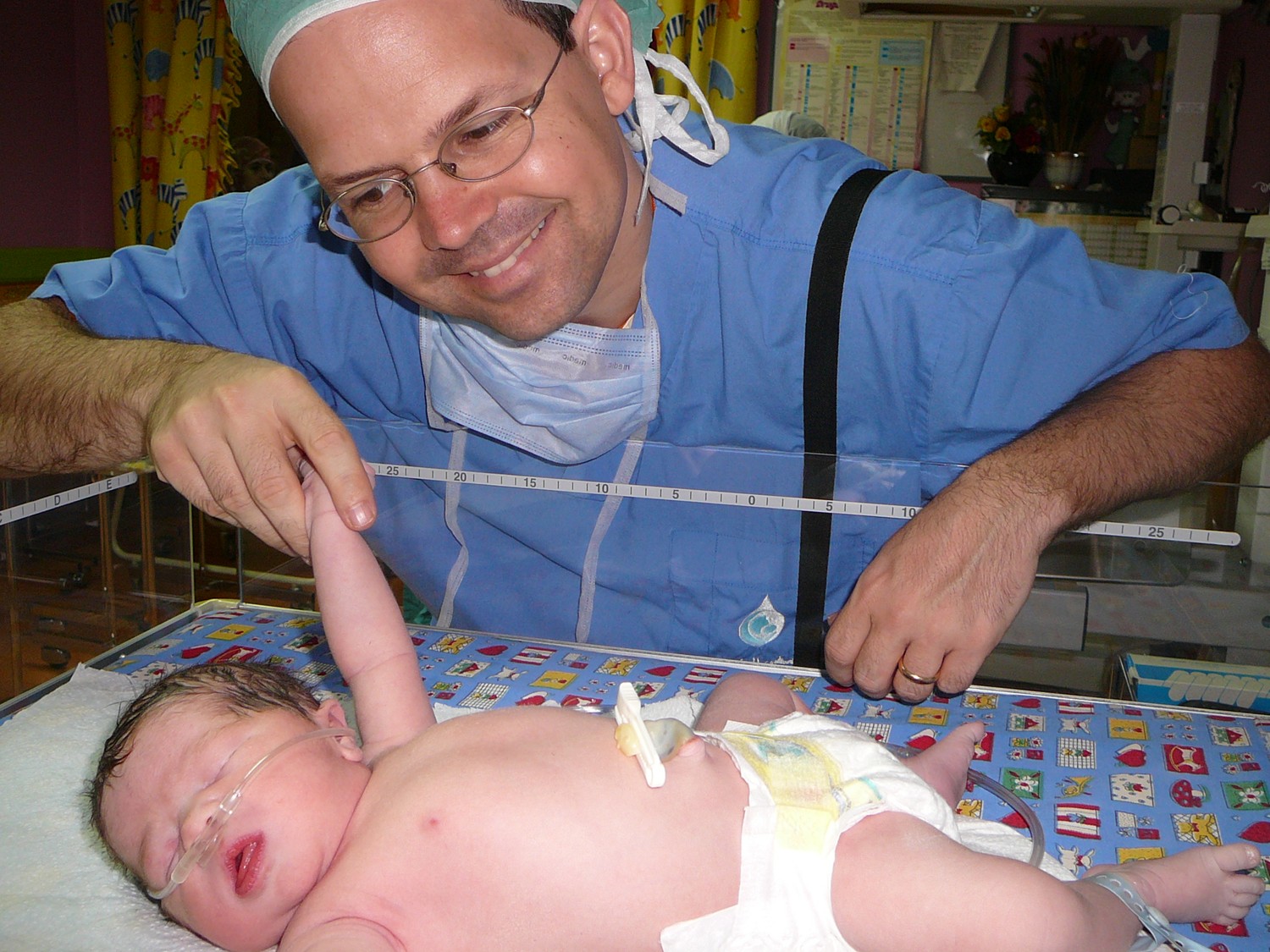
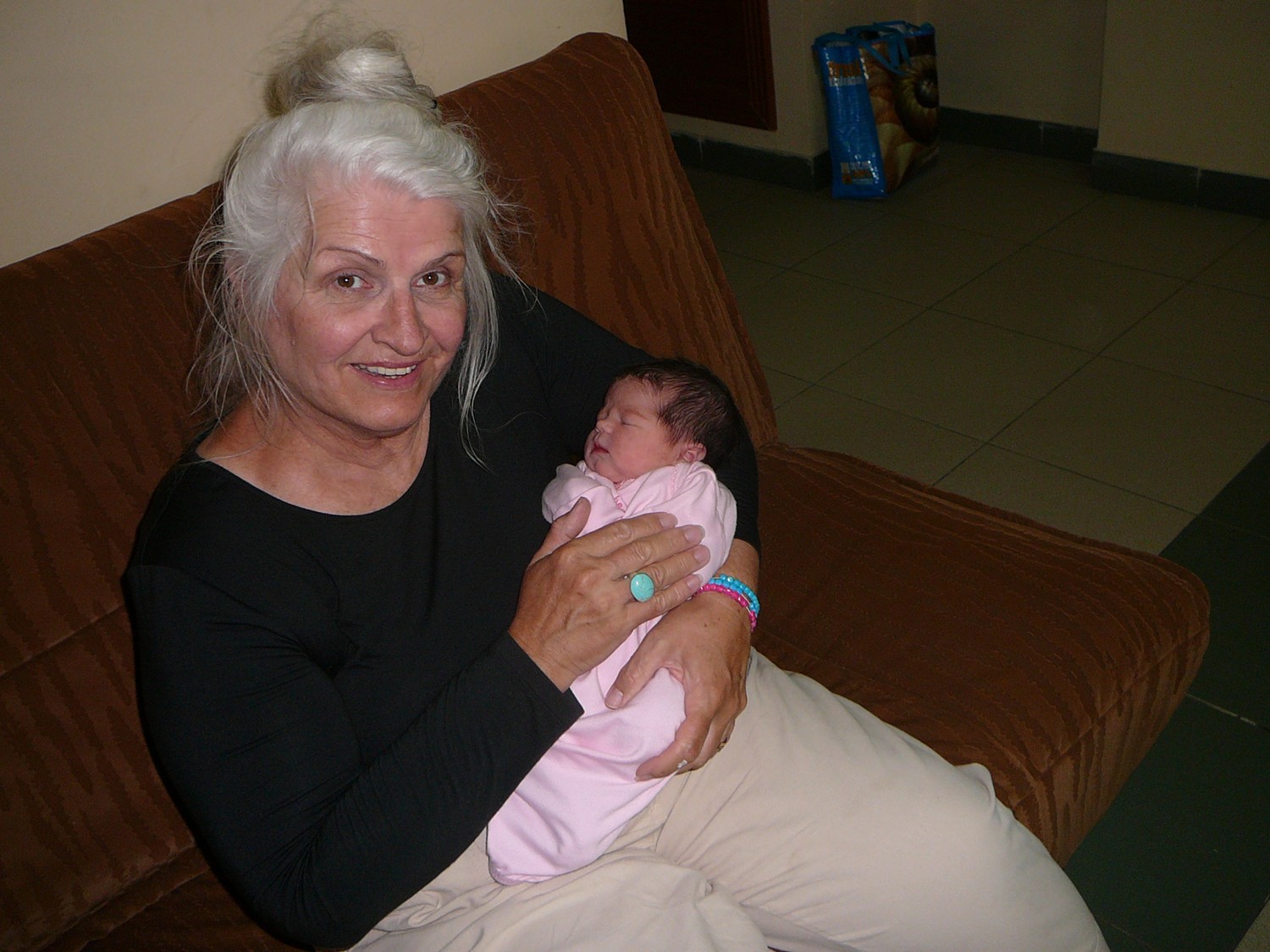
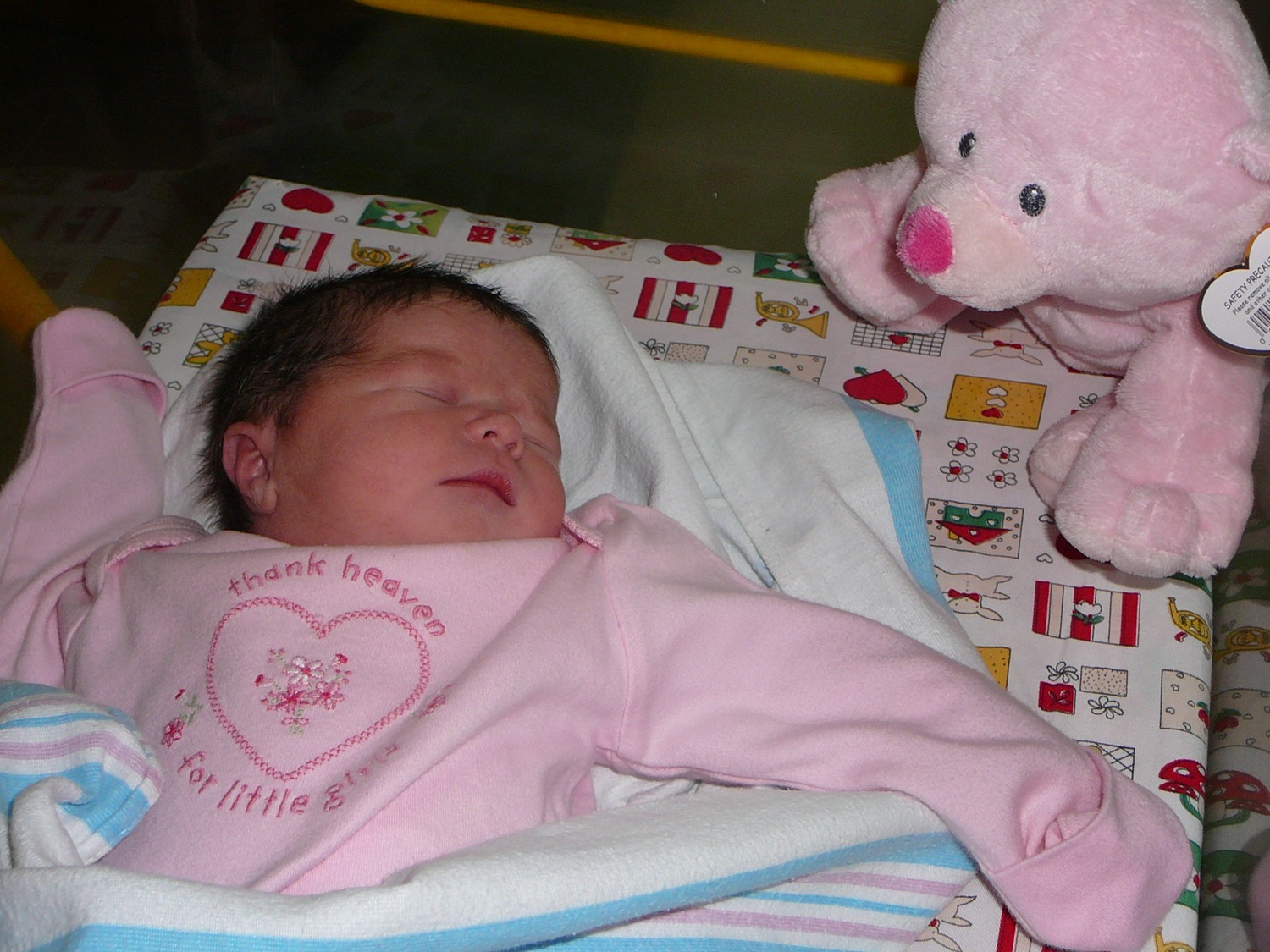
Born today was our third daughter, Layla Peace. She entered this world at 12:30pm. She weighed 6.8 pounds, and measured 19.3 inches. These are the statistics.

Of more importance is her reception. The lead-up to her birth was quite strange for us. Emma was anticipated to be a natural birth, but found the umbilical cord around her neck which prompted an unexpected but necessary c-section. With Hannah we knew that a c-section was a possibility, but walked and walked and walked in the days set before the deadline by the doctor. Not eager to exit, she was removed at knife point.

A second c-section meant that all subsequent children would be so delivered. From the first pregnant visit to the doctor we set the birth date, and waited for it to come. The soon arrival of our daughter was a number on a calendar, not a period pregnant with anticipation. Perhaps the excitement wanes for everyone after the miracle has been experienced more than once. Perhaps there are latter born children who have grown to resent their timing on the scene.

May God preserve us from such complacency; likely, he has already done so. In each of the previous two c-sections I have dutifully stood by Julie’s side, though positioning renders the expression more accurately as ‘sat by Julie’s head’. Draped between her neck and her bosom is large cloth, rendering mute any visual of the proceedings. I have not had inclination to peer beyond. On the one hand, it is best to stay behind and offer support. One the other, should I faint at the sight of my wife’s inner organs the complications added to major surgery surely would not be appreciated.

For baby number three, however, the cloth was barely the size of a handkerchief. While blocking Julie’s view, all was open and exposed for me to see. In order to avoid it I would have to cower nearly cheek-to-cheek at the level of her gurney.

Interestingly, Julie not only encouraged me to look, but also to take pictures. The conversation has not yet begun as to making these public, but we will start any such post with suitable warning. I suppose after three times behind the curtain, she was curious as to what they were doing to her. No shame in that, of course.

Now, I know. To be honest, it was fascinating. I will save the details for later, just in case we do write about it. Layla, though, will never lack for something special. She was the one I watched come out.

Of course, any parent will say – I believe – that they fell in love with their child the first he/she laid eyes on him/her. Keeping that sentence grammatically neutral somewhat ruins the sentiment, but maybe that is fair. Does not one have to say such things? Julie agreed, but put it more sincerely, less romantically, but more poetic: She was already a part of me; the love was already there. I agree.

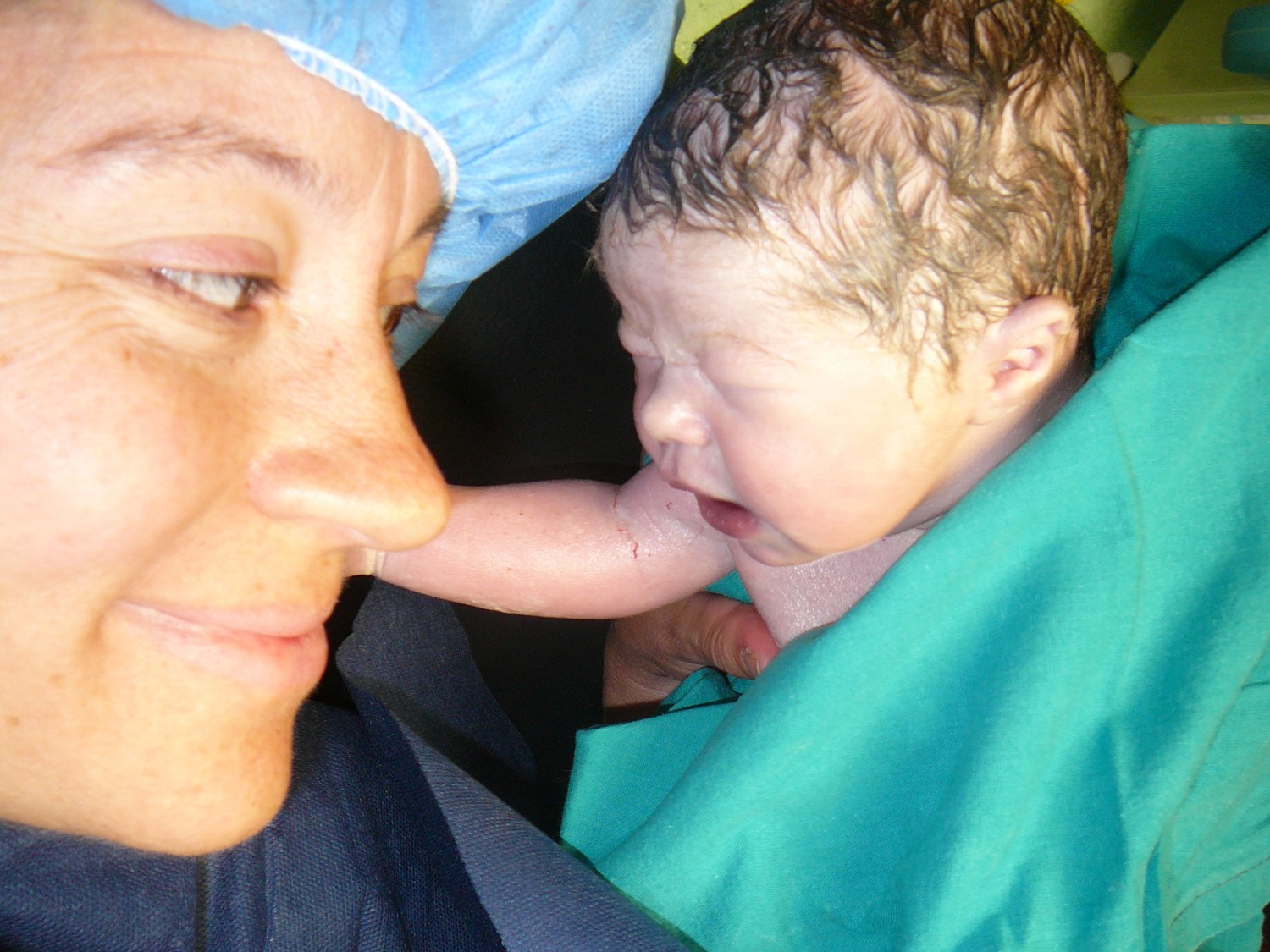
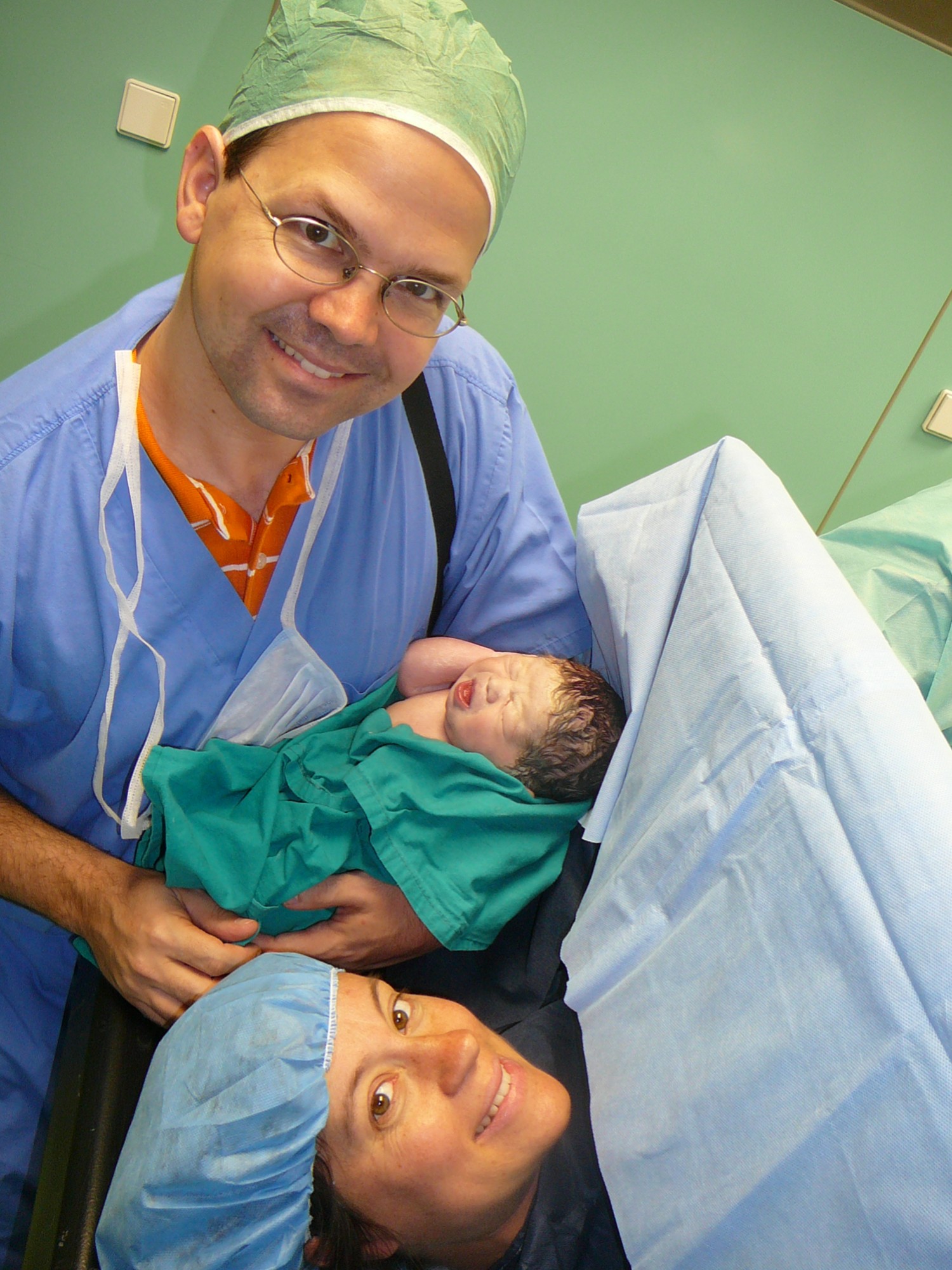
Maybe you have been wading through this prose waiting to get to the pictures, so I will make you wait no longer. Please enjoy a few of Layla’s first photos.

Now, a video of Layla for 45 seconds in the first hour of her life.

Finally, one of Emma and Hannah enjoying their new sister.

Categories
Personal

Tabulations and Clues

One day left to go, so here are some statistics and a final picture.

There were 20 people who responded with guesses.

Among these there were 29 guesses.

None got both names right.

No one guessed the first name correctly.

The middle name was guessed correctly.

The most popular first name was Sarah, at 24%.

The most popular middle names were Grace (41%) and Joy (34%).

Neither of these choices are correct.

The correct first name contains two letters twice each.

One letter is found in Julie’s name, the other in both Emma’s and Hannah’s.

Another letter is found in Jayson’s name.

Further guesses are welcome.

The answer, God willing, to be given tomorrow.

Categories
Personal

Assigning Names

To be born on Thursday, God willing, will be our third daughter. Number one was born in the United States, though conceived in Jordan. Number two was born in Tunisia, and in a few days a third birthplace enters our family. The Arabs call such terminology ‘masqat ras’, or literally, ‘the place your head falls. If all goes well, it will simply be into the hands of the doctor.

In Julie’s family every child – five altogether – was born in the same town; in mine, three of four of us were born in different states. We are taking it a notch up by changing up the countries. While we don’t know the laws in detail, let us anticipate an oft-asked question: No, our children do not have dual citizenship. From what we have learned, our kids are Americans, though we hope of course that they will consider themselves more than that.

We are aware such nonchalance is open to critique: We get the privileges of our nationality, should we not take more pride in this association? We are glad to be Americans, and we look to represent her well overseas. There is a certain perspective, though, that moderates one’s patriotism while living overseas.

While this seems unavoidable to us, we have seen others who do their best to resist. This comes in two forms. Either one becomes a super-patriot, or else winds up near-denouncing every flaw exposed in cultural comparison.

We hope we can avoid either extreme, and the ‘sense of belonging’, we think, is an aspect of appreciation. Belonging need not be singular; since we have the freedom to belong to the place we reside, we can also belong to the place of passport. These are not mutually exclusive, though there is mutual negotiation between these and our other identities.

So when we say above that we hope our daughters ‘will consider themselves more than’ Americans, it is in hope that a particular identity will predominate. This is that they belong to God, even while they can belong to the cultures in which they live and move and have their being. We hope the names we give them contribute to this.

With daughter number one, we chose the name long before birth, and told everyone in advance to the point she became a relationship with all even at four or five months in utero. With daughter number two, we played a game letting family and friends guess between five names we liked, and the whole while we even wavered ourselves, privately, as to which we would choose. Daughter number three is a child of the blog, and thus we will put this out there for all to see and participate in. Poor girl.

In any case, please play along. The names we choose need to be at least somewhat manageable in both English and Arabic. That may not be a great clue for too many of you, but it is something to work with. The other hint is that it will follow the pattern set by our first two, though we leave it to you to figure out how. I’d say it’s a loose pattern, to save you mathematical minds from computing the numerology.

Emma Hope Casper

Hannah Mercy Casper

We really couldn’t think of a prize, especially given that this ‘contest’ is open to our general readership, so if you would like to suggest your reward along with your guess, all reasonable offers will be considered. Please leave your name choice in the comments, and everyone can join in the fun. Especially us.

Categories
Personal

A Hint of Belonging

A few days ago I came across some interesting articles in the newspaper that had to do with statistics on smoking in Egypt. The next day there was an article on a government program to encourage removal of high polluting older model taxis with more recent, higher efficiency models. Tie the two together under the title of ‘Exhaust’ or something like that, and I figured there could be an interesting blog post.

Today at the office we were discussing the design of a revised editorial policy we wish to highlight for our electronic magazine. Arab West Report has an emphasis in presenting and analyzing articles from the Egyptian press, and occasionally elsewhere, which encourage greater understanding in the twin realms of Arab-West relations and Muslim-Christian relations. Within this discussion I wondered if the blog post mentioned above would ‘fit’ under our revised policy. After all, neither smoking nor taxis are essential matters for increased understanding in our world.

On the one hand I was interested to know my audience. A blog post can be very informal, whereas a report for our publication should be written more academically. On the other hand I wanted to know when I should write it. If it is a blog post I should write on my own time, whereas a report can be researched and composed during office hours. It was a tongue-in-cheek conversation, as there is plenty of overlap between the two categories, but it was also a useful discussion for the application of our policy.

Both the editor and I were trying to find ways to make it work, during which time I had an enlightening moment elucidating our efforts to belong to Egypt. Searching for an angle, I mentioned that an aspect of life in Cairo is that it is very polluted, which can negatively impact the reputation of Egypt abroad. “An article like this,” I said, “highlighting efforts to reduce pollution levels, could help them understand us better over here.”

I do not smoke, and I do not often ride in taxis. Yet for some reason the stream-of-consciousness dialogue produced the pronoun ‘us’ in identification with Egypt’s problems and a concern to represent her well. I recognized this immediately, and both laughed and marveled, which may suggest this sense of belonging is not yet fully ingrained. Only when we are oblivious will we truly belong. Still, it was a small hint that progress is being made.

Note: By the way, we have a baby coming soon, in all likelihood one week from today. Watch for updates, including a contest to guess the name. Next posting, I’ll give some hints…

Categories
Personal

The New York Times in Cairo: Michael Slackman

Michael Slackman is the Cairo Bureau Chief for the New York Times, having served in this position for the past five years. Previously he worked in Albany, Los Angeles, and Russia, and this summer he will be ending his stay in Egypt to become bureau chief of Berlin. This move is forced upon him, as he has become blacklisted in Iran, and all but blacklisted additionally in Syria, Libya, and Algeria. Covering the Middle East is nearly impossible if the doors to these nations are closed. He leaves sadly, but with full appreciation for life abroad and the privileges it brings in being able to see the world through the eyes of another.

This is the perspective Slackman spoke of during a public lecture the evening of April 15 at the Abraham Forum. This initiative was developed by St. John’s Church as an effort to build bridges between East and West, Muslim and Christian, at the point of intersection in the church’s backyard of Maadi, Cairo. Rev. Paul-Gordon Chandler introduced Slackman with these words, believing the reflections of such a high placed journalist would help enlighten the local expatriate community about realities in the Middle East.

Slackman began his presentation by remarking that if those in attendance had done a Google search on his name, they may not have been interested to come. Spoken tongue-in-cheek, he explained how his work has come under much criticism. He has always made it his ambition to engage people in a free and open exchange of ideas, allowing the subjects he covers to be able to express themselves in a forum otherwise impenetrable. Unless the media carries their voices, the people of the Middle East will remain unheard.

Though Slackman emphasized he only reports, never advocates, this interest in conveying faithful representation has engendered significant controversy. He tries to show the cultural and political nuances of the word ‘terrorism’. He depicts wide questioning of the Holocaust. He even writes how the oft-perceived trash dump is in reality a loosely organized but effective recycling center. In all matters he defends his practice as both good journalism and in the interests of the United States. Should not a policy maker desire to know the reality of what people are thinking?

Slackman gains his perspective through the challenging but rewarding work of face-to-face journalism, certainly with political figures but primarily with people on the street. Though he requires the use of a translator he states that it is very easy to get to know Egyptians. As he has “hung out” with them he has sensed that they desire to make themselves known. Both here and elsewhere this gives him an appreciation for the “little things” that make such a difference in understanding a people and their culture.

Unfortunately, he states, these little things were lost on the United States during the invasion of Iraq. Everyone who lives in the Arab world understand that the hand signal for ‘slow down’ is to turn your palm upward and put your fingers together, bobbing it up and down. The US military signal, however, is to raise your fist and knock, as if against a door. Slackman stated he was reticent to say what this signal meant to the people of Iraq, as it was quite uncouth, but this failure to communicate caused countless incidents as Iraqis approached checkpoints and each misunderstood the ‘go slow’ signals of the other. Add this to the fact that the military could not comprehend that the “We love Bush” slogans they received were only the knee-jerk reaction mirroring the “We love Saddam” chants offered to the prior ruling power, and Iraq was a disaster waiting to happen, but could have been prevented.

A vital difference highlighted by Slackman which goes far beyond the “little things” is the role of religion in society. In the United States it is common that a newspaper have a religion reporter, who occupies a rather minor and generally limited sphere of importance. This pattern though is impossible in Egypt and the Middle East, where religion touches upon and intertwines with every subject imaginable. For most people of the region the first identity is ‘Muslim’, second is the particular nationality, and third is ‘Arab’. Any reporting must take these factors into consideration.

Unfortunately, not only is it difficult for many Western reporters to appreciate the primacy of religion, the nature of religious perspective is also incomprehensible to them. His first example was from conversation with Fayyoumi fisherman near the Cairo island of Manial. When asked what religion meant, they esteemed the traditional pillars of Islam – prayer, fasting, etc. – but emphasized it was that God had placed a ceiling on their life, and they were to be content therein. Questioned if this indicated they did not have to work hard they disagreed. Within their allotment they must work hard to succeed. Transcending their position in life, however, was impossible. It is, as is always heard, in sha’ allah – if God wills. Due to this fact, and the fleeting nature of life, the only solution is to pray.

The second example was from Saudi young men who accompanied him on trips to the desert. Over time he got them to open up and from them he learned much about their society. One such lesson, however, was quite disturbing. One young man accused Slackman of being reckless. When asked why, he responded that he did not consider the danger joining these young men in the desert accompanied by his female translator. Should he wish, the man stated he would get rid of Slackman and then sexually approach the woman, raping her if she resisted. The other young men all nodded along, none disturbed or offended by this line of communication. When asked how this fit into their understanding of morality and religion, they stated that the mistake of a man stays in his pocket, but the mistake of a woman shames the whole tribe. Apparently, for him, this was enough.

On a third occasion Slackman was being asked about his religion, and he responded with admirable notions: I try to be a good person, I look to help others, I maintain a good family. To his surprise this was responded to with the follow-up question, “So you don’t believe, then?” Since then Slackman has utilized his lesson from the fisherman, and now answers, “Life is fleeting, so what is there to do but pray?” This answer has received much better reception. Reflection on these episodes, however, has led Slackman to criticize much Western religious reporting as focused on ritual, rather than on spirituality; unfortunately, as he finds in many Middle Easterners, this is how they manifest their religion.

When asked specifically about religious relations in Egypt, Slackman compared the situation to race relations in the United States. When whites are polled about the state of relations most hold that things are just fine. Most blacks, however, state they are the same as always and not getting better. It is a matter of majority-minority difference in perceptions. Without confirming local Coptic opinion, he has experienced, and conveys, that they almost universally decry their position.

In proceeding to describe the murders committed at Nag Hamadi he indicated sympathy for some of their complaints. After the atrocities the government in issuing its condemnation clearly and unequivocally stated that this was not a sectarian incident. Yet when it put forward its explanation, it did so in clear and unequivocal sectarian language. They did not put it that an Egyptian took revenge against an Egyptian rapist, but instead it was for the Christian rape of a Muslim girl. Unless the government acknowledges that sectarian tension is a problem, Slackman insisted, things will never improve.

Throughout his lecture Slackman often reiterated his great privilege of living overseas in general and in the Middle East in particular. This has not been for the Pyramids, or the Nile, but because of the nature and friendliness of the people themselves. He ended his presentation, however, with a statement of disappointment. The first is that he had to leave the region due to blacklisting, and that in particular he would not again be allowed to enter Iran. It is such an interesting country, the most pro-American of any regional population.

His second disappointment was that he was never able to interview President Mubarak. Had he the chance, he would have asked two questions. First, what do you believe is your legacy? Secondly, with all seriousness, why can you not pick up the garbage? These questions best summed up the political and social coverage he has devoted to Egypt. Michael Slackman was faithful to the people of Egypt and devoted to cover both breaking news and slice-of-life stories. The next Cairo Bureau Chief will have big shoes to fill, and at least these two questions to pursue.

To read a recent article by Michael Slackman on the health of President Mubarak and the future of Egypt, click here.

Categories
Personal

Arrival Complications

In our last post we described the arrival of our moms to stay with us for a month during which time Julie will deliver our third child. Their flight was smooth enough, a direct flight from JFK airport in New York, landing about an hour and a half late, but with no complications.

Getting to the airport – and getting home again, was a bit more complicated. We have acquired a list of phone numbers for local taxi drivers and airport shuttles, so we called around and got the best deal. (Incidentally, the hour ride to the airport is only about $20 – round trip.) We stated the time, got the price, fixed the passenger number, declared the amount of luggage, and asked for a car with a roof rack to facilitate the ride home. Right on time the car parked at my office, and all was ready.

Except for the roof rack. The car was comfortable enough – four doors, roomy, and air conditioned. It even had a big trunk. Big, as it turned out, fit two large suitcases plus a smaller carry-on, but this left two other large suitcases and a smaller carry-on to be manipulated inside, around a driver, me, and two not-yet-elderly grandmothers. Perturbed at the failure to procure the requested transportation, we took off anyway, as the plane was due to land shortly.

As I mentioned earlier, the plane was late, we got there early, there was a mix-up with the airport restaurant lunch I bought to eat and pass the time, and when they finally arrived, I saw them behind the glass, just standing there, for what seemed like forever.

Our moms had successfully bought their visas, moved through passport control, and maneuvered through the twists and turns of the airport like professionals, putting to rest their initial fears about doing so without their husbands. Reaching baggage claim their suitcases rolled off the conveyor belt one right after the other, and they mounted them on the luggage cart, provided free by the Cairo airport. Except, that is, for one bag, for which they waited, and waited, and waited, and waited.

This is where I spied them through the tinted glass on the other side of customs. I could tell they had their bags, but wondered why they were just standing there. There was no official holding them up, and having waited far longer than I had planned already, I was getting both tired and anxious.

As it turns out, the last bag was held up in New York by the generally reliable (read on) Transportation Security Administration for a hand search. This was not discovered until they got home and opened it, finding a small note from the TSA describing the procedure. At the time they simply rejoiced that the bag finally arrived, as did I, and we stuffed ourselves into the car for the hour ride home.

The next day I went to work as normal, and did the same Thursday morning. I began the day by reading the daily Egyptian news, when among the regular musings about the Mubarak presidency and protests about this or that, I was astonished to find this headline:

NY Passenger with Lethal Weapons in Luggage Detained at Cairo Airport

As it turns out an Egyptian professor of botany in a New York university was arrested for trying to pass two handguns, hundreds of bullets, two swords, and eleven daggers through customs on his way out after picking up his bags. There is no speculation about his purposes, but there was never any fear he had intentions for the airplane. Nevertheless, there is an interesting question to ask:

How did he get these weapons past the formidable TSA? Score one for security in the Arab world!

On a personal note, what would this incident have done to the arrival process one day earlier with our moms on board? Reading the article put my trivial complaining described above in proper perspective. We are glad our moms are visiting, and thankful as well they arrived safe and sound.

You can read the original article here. (Don’t worry, it’s in English.)

Categories
Personal

Mother-in-Law x2

Hama Hama, Lo Malak as-Sama

A mother-in-law is a mother-in-law, even if she is an angel of heaven.

(Egyptian proverb)

As Julie is due to deliver our third child later this month, my mom and her mom arrived today to help out with whatever they can. They will stay with us two weeks before and two weeks after, raising the eyebrows of many of our Egyptian friends.

The attitude of Americans to a mother-in-law is probably well known to most of our readers; the proverb above signals this may be an international sentiment. In traditional Arab/Egyptian culture the mother-son bond is very strong, trumping even the relationship between a husband and wife. In fact, it is not uncommon (though this is changing) that a newlywed couple move directly into the housing compound, if not the family home of the husband itself. This puts a new wife in subjection to the mother of the groom, and a competition can develop for the son’s/husband’s affection. Furthermore, marriages traditionally were encouraged/arranged to be within the extended family or tribe. Close proximity of relatives is seen as a societal strength; it can also be a stimulant for mother-in-law friction.

No cultural explanation is necessary to wonder about how two mothers-in-law might jostle over the attention of grandchildren. Both will wish to help; both may have different ways of helping, or more dangerously, different advice about child rearing in general. The wife-mother-mother-in-law triangle can be difficult to navigate. Spread this out over a month … we have received sympathies from both sides of the Atlantic.

To put the reader at ease, and moreover any family which might be reading, my mom and Julie’s mom have a good relationship. They come from two different but neighboring states, but as they live near the common border the two families have exchanged visits even when we are not around. Both have left husbands behind to themselves; neither has traveled extensively alone. We anticipate this visit will have a positive bonding experience between the two, and with two and soon a third grandchild to go around, there will be ample opportunity to divide the affections. Both Julie and I enjoy the other’s family, including the mother-in-law. People raise their eyebrows, but we just chuckle and express our appreciation for them coming.

Of course, we will know better in a month. We think they are angels; might the Egyptians have a clearer perception?

Categories
Personal

Microbus Fiasco

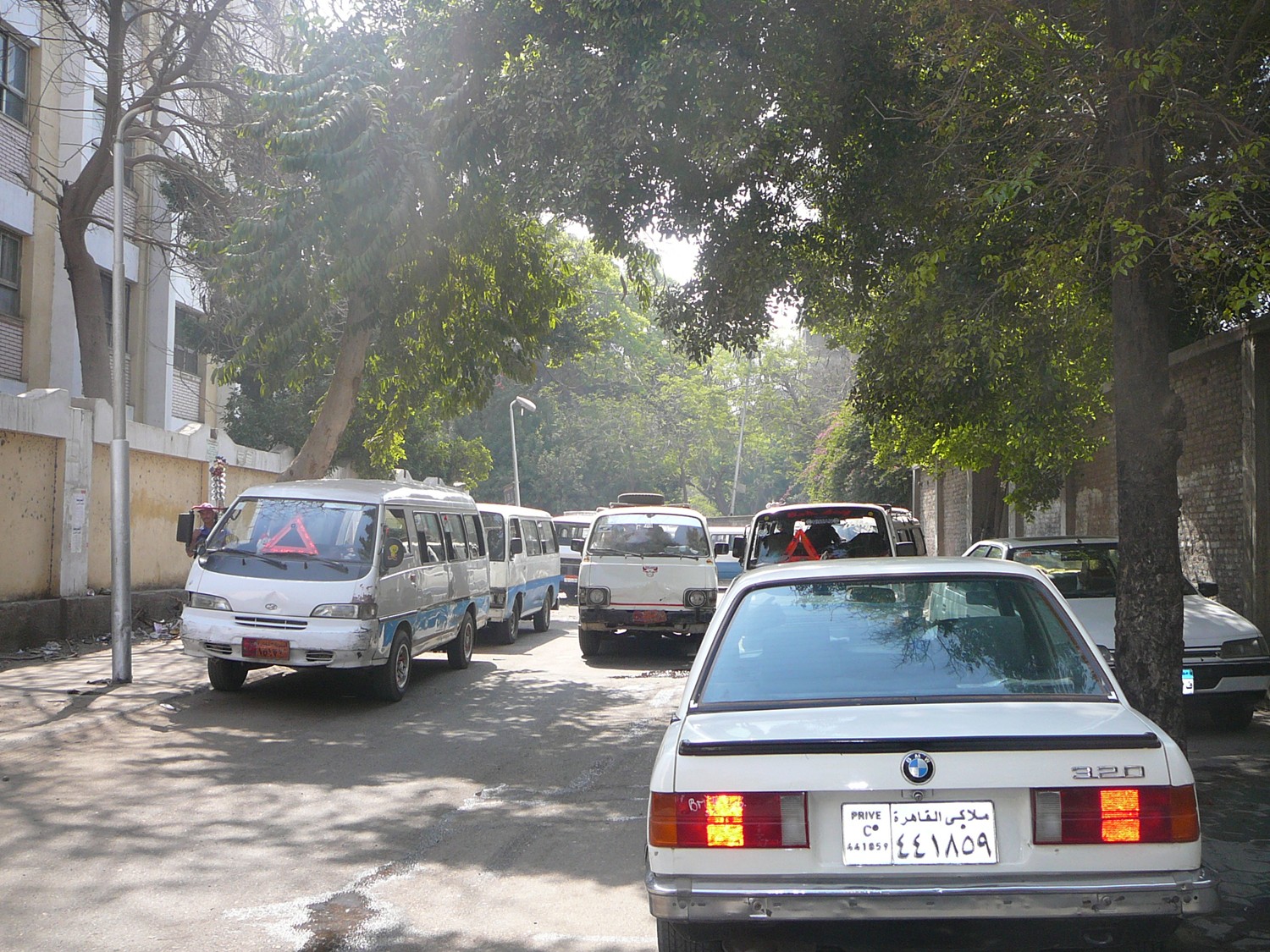
We have a microbus stop outside our apartment building.  What this means is that anywhere from one to twenty minivans are parked in one or two lines, just a few feet from our front door, and they snake around the corner toward the main road.  It sometimes means a lot of noise and people traffic as there are busy times for people to be riding this mode of public transport.  Also there are small scuffles at times among the drivers and perhaps passengers, which involve yelling and frequent honking of horns.  For us personally, it means more air pollution, and sometimes, a longer walk to the main road if we choose to take the clean-air route and go all the way around the block.  All in all, it’s not terribly inconvenient or bothersome most of the time, but it would be nicer if this microbus stop was in another location.

We have rarely ridden on this microbus line as it goes to a section of town that we usually have no need to frequent.  It’s a poorer, more crowded neighborhood a little north of Maadi.  But the other day, on Easter, in fact, we planned to ride the microbus to the end of the line to have dinner at the home of one of Jayson’s friends.  It was quite an experience.

We exited our building and found a long line of microbuses, as usual, but we also found our doorman, our landlord’s son, and a police officer right outside the gate of our building.  We didn’t notice right away that there was a problem, but as Jayson spoke with the officer, who has a friendly relationship with him, and I was briefly talking to the doorman, there was some commotion around us, and the officer told Jayson he was busy at the moment.  A minute later, our landlord’s son got into his large white car, and backed it up and parked it blocking the entire line of microbuses.  He got out of the car, slammed the door and walked away from it.  Meanwhile, the doorman is saying to him, “Hey, no, this is wrong.  Give me the keys.”  But the son ignored him and walked around in a huff.  I thought, hmmm, this is interesting, we were just ready to board the microbus to meet our friend.  Hope he moves his car soon.  Surely, the police officer will do something about this.

So, Jayson and I, with the two girls, our bag, and a bag of chocolates for our host, boarded the microbus and waited.  And waited and waited and waited.  The microbus was full, as were the four or five that were surrounding us, but no one was moving because the big white car totally blocked the possibility.  The landlord’s son was standing on the street yelling and talking with the doorman, and some of the microbus drivers were yelling too.  Many of the passengers were looking around wondering what was happening and what they should do.  Jayson and I just sat there, with our girls in our laps, watching the scene.  Another son came down from their apartment to either watch or help, but his car stayed parked there for about ten minutes while the people who wanted to ride the microbus waited and questioned and fumed and threw their hands up.  At one point, most of the people in our microbus exited and walked away to find another way to their destination.  We didn’t really know where our destination was; we just had instructions to ride the microbus to the end of the line, and besides, we were interested in what would happen in this situation, so we stayed put.

I wondered where our landlord was, and thought that she could intervene and talk some sense into her son.  I mean, it seemed he had some problem with the drivers, but what about all these poor passengers who were now stuck?  I was also getting nervous for him as the crowds were gathering and tensions were getting high.  Jayson wondered at one point if he should get out and ask what was happening, and perhaps the presence of a foreigner would kind of shame the son into doing what’s right.  I wondered if he knew we were sitting inside one of the microbuses waiting to go, if that would make him move.  I mean, this is a guy who is often sitting in his parent’s living room while I visit with his mom.  Would he want to inconvenience his parents’ tenants?  But, we thought it best to just watch and learn.

After about ten minutes, he got in his car and drove off, swerving a bit wildly, down the street and screeching around the corner.  Well, I thought, now he’s safe from the crowds for the time being, and we can finally get moving.  But, the microbuses did not move.  It seems the drivers were quite upset about this whole thing and kind of went on strike for a little while.  At one point, one of the drivers who had been yelling and very agitated, started to run back behind us in the line of vans.  Two of the girls in our microbus got very nervous at that point and were afraid he was going to get into his bus and do something drastic.  So they quickly exited, along with some others.  But just as they were getting out, he ran up the sidewalk with a club in his hand.  I thought it would be best to stay in the van!  As is typical in Egyptian fashion, some of the other men around calmed him down enough to keep him from doing anything with that club (click here for a cultural explanation and personal reflection).  It was a little scary for a minute, and as the crowds continued to gather, since the microbuses had now been standing still for fifteen minutes, I wondered what could happen.  The drivers were angry, and surely the passengers would start to get angry that now the path was cleared and the drivers refused to go.  What a mess.

Meanwhile, Jayson called his friend and apologized for our delay and tried to explain the situation to him.  After he hung up, and it seemed there was no movement to go anywhere, we finally got out ourselves, and walked to the end of the street where we found a taxi who was taking a few other passengers to our destination.  Once inside the taxi, we asked one of the other passengers if she knew what the problem was.  She explained that one of the people who lives in the building by the microbuses (we knew who that was) was upset because the microbuses are loud and bothersome day after day and he finally got fed up and parked his car in their way.  Wow, I thought.  Yes, I could agree that they are sometimes louder and more bothersome than they need to be, but what good did it do for him to put his car there?  Surely this would not encourage the drivers to be more concerned for his comfort and well-being by keeping things quieter and not beeping incessantly when it wasn’t necessary.  No, instead it seems he just made stronger enemies who would now probably go out of their way to bother him.

We don’t know how long things were at a standstill on our street.  We arrived at our destination via taxi and had a nice dinner and time with Jayson’s friend, and by the time we were ready to return home, the microbuses were up and running again.  We haven’t seen our landlord or talked to the doorman about the situation, and we probably wouldn’t bring it up.  It is a curious thing, though, and provided a bit of entertainment and cultural insight on an otherwise nice, normal holiday.  Happy Easter.

Footnote:  A few days later I visited another neighbor who lives upstairs.  It seems she may have been home during this fiasco, and perhaps watching from her balcony.  She explained that maybe the son had a little more justification in doing what he did.  It seems he was parked on the side of the street and a microbus hit his car.  Whether this was on purpose or just because the driver was being a little careless, I don’t know.  But when he yelled at the driver, it seems the driver hit it a second time, intentionally for sure.  So, that is what started the whole thing.  When I asked my neighbor about all the innocent passengers who were inconvenienced, that didn’t seem to matter too much to her.  Her feelings are that the microbus drivers are generally not nice people.  She says they talk crudely to each other, but I don’t notice it because I don’t understand what they are saying.  She complains that they cause a lot of problems on our street, and it would be best if they could go somewhere else.  She wants to write a petition, signed by the residents of our building, and if Jayson and I sign on, she thinks it will go a long way in moving this line somewhere else.  We’ll see if anything happens with this plan.

Categories
Personal

From Poverty to Riches

Note: This text was prepared recently but recalls a personal trip I took with my family to visit Maghagha during the Coptic Christmas holiday in January 2010. While there we visited Holy Family sites, but also a rapidly developing pilgrimage center focused on the memory of Fr. Abd al-Masih al-Manahari. Upon watching the film produced by the church commemorating his life, these two sources combined to inform this text, replete with personal reflection and photos.

The Coptic Orthodox Church possesses a strong monastic spirit which esteems abandoning the pleasures of this world in preference to those of the hereafter. Yet even in this world God is believed to compensate his servant with spiritual riches which satisfy far greater than any earthly lucre. Not all are called to this life; few can even imagine themselves in pursuit of it. Nearly all Copts, however, find in those who dedicate their lives entirely to God a source of spiritual proof of faith, for which glory is given to God, much of which flows through his servant. This human-directed commemoration is known as al-magd al-batil, or vainglory, which these servants spend their life escaping. Upon their death, however, they can no longer flee.

The Egyptian countryside is dotted with churches built upon or in proximity to the tombs of these saints. Most of these figures lived centuries ago, during the times of monastic establishment or widespread martyrdom. Certain saints have more modern origins, such as during the Islamic ages even through the colonial period. The sites have become places of pilgrimage to which Copts journey to remember their lives, seek their intercession, and receive their miracle-working power. In an earlier essay I wrote about our first encounter with such miracle stories, in which the bodies of many of these saints are preserved from decay. Westerners in general find it difficult to give credence to these stories, imagining them to be vestiges of a bygone era in which scientific inquiry was less developed. Even Western Christians, who are more inclined to believe in the possibility of the miraculous, find little similarity between this understood pre-modern faith and their own. Yet the saying is often repeated here: God never leaves himself without a witness.

The witness to faith through miracles is not understood as a foundational phenomenon only. The first Christians preached Jesus, “who was a man accredited by God to you by miracles” (Acts 2:22), and their own authority was established as “everyone was filled with awe, and many wonders and miraculous signs were done by the apostles” (Acts 2:43). Salvation, “first announced by the Lord, was confirmed to us by those who heard him … testified by signs, wonders, and various miracles” (Heb. 2:3-4). Paul confirms that these miracles are, in fact, “the things that mark an apostle” (II Cor. 12:12). Copts celebrate their communion in “one holy, catholic, apostolic church”, and trace the succession of their leadership all the way back to Mark, through the ages in direct connection to this apostolic authority. Christianity was confirmed in the beginning through miracles, and its proof continues to be found in God’s concern exhibited through his saints, both living and dead. This witness elevates Christianity from a philosophy to a divine reality, incumbent for belief by all humanity. The level of witness may ebb and flow, but it never disappears.

Scanning the modern age in Egypt, however, may question this conviction. The tombs of the saints are testified to as places of miracle, drawing even Muslims to petition God through these Christian wonder-workers. Yet where are the living witnesses? At one time these saints were flesh and blood humans—devoted, no doubt, to the complete service of God, but no different than their common neighbor. That is not a fair claim, however, for they were different from most men in their voluntary poverty, and if the stories are to be believed, in their ability to petition God for direct and indubitable intervention in the lives of those around them.

This dependence upon the miraculous, coupled with a scarcity of living saints, has contributed to the growing popularity—and wealth—of locations surrounding the holy tombs. When one asks for intercession it is usually accompanied with a vow to be fulfilled sometime after the miracle has been received. This can be in the form of a service rendered, prayers offered, or money donated to the church housing the tomb. There is no scandal here; no one is getting rich off of these stories. Monies are applied to build and repair the church of the saint, with legitimate concern to accommodate the ever increasing number of pilgrims, as well as to assist the poor in the area. Yet the living saint would have cowered at the thought of receiving ‘compensation’ for his expression of grace, let alone the attention which would be afforded him. This is al-magd al-batil which kept most of these saints ever in search of obscurity. With their bodies in the ground, no matter how well preserved, the magd can finally accumulate.

During the season of Coptic Christmas we had opportunity to travel to Maghagha to stay with Fr. Yu’annis, a priest who introduced us to many of the Christian sites of the area. You can read about these accounts here. He also spoke with us about the best practices for church building as well as what Christians should do following the horrific events of Nag Hamadi, which you can read here and here. He also brought us to a modern day pilgrimage site, such as described above, located in the village of Manahara. The story which follows is an account of the life of Abd al-Masih al-Manahari, as depicted in a film, produced under the supervision of Bishop Mina of the diocese of Girga, who researched his life and recorded the stories attributed to this remarkable man.

Abd al-Masih al-Manahari was born in 1892 near the village of Mattai, in the governorate of Minia, located 150 miles south of Cairo. As the only son in a family with several daughters, he caused much consternation to his father for his preference to visit the local monastery over devotion to the family farm. Yet God blessed the production of the farm for his oversight, and whenever his father would limit his time in the monastery several cattle would die. As he grew older he wished himself to become a monk, but could not obtain his father’s permission. Though he loved his boy, he knew that monks neither married nor owned property, so the farm would pass to others, and who would care for him as he aged? In desperation the father brought him a young woman who offered herself to his son, but he refused, sending her away with great pain in her stomach until she publically repented in front of his father, at which point he prayed for her and she was cured. Angry with his father, but knowing also his fears, he asked if he could be released to the monastery if God granted his mother a son in his stead. When his father said yes, he declared it would be so, and shortly thereafter a second boy was born to the family.

Abd al-Masih, which translates into ‘Slave of the Messiah’, then traveled to the Monastery of Fr. Makarius, located in Wadi Natrun in the desert between Cairo and Alexandria. Here he studied from the established monks, serving them but also distinguishing himself as a man of spiritual insight. Here he learned the lesson of al-magd al-batil, which oddly enough drove him away from the monastery. Knowing the honor received by monks he sought to flee to become a hermit in the desert. Upon his return, however, he overheard people speaking about him as the great monk dedicated only to God. Paradoxically, he thought the only place to escape was the world, so he departed to live in the village of Manahara, dressing as a monk, but under the guise of tomfoolery.

Everywhere he went Abd al-Masih mentioned he wished to get married. For a monk this was akin to giving up his vows, so he presented the image of a man with worldly wishes. He always turned down any proposal received, but his reputation began to be established in the village. Furthermore, he would pay the children a small amount of money to dance around him and call him ‘the crazy monk’. Yet at the same time his concern for the people around him became known through small miracles he would work on their behalf. He would present an amount of money to a needy family, matching exactly their debt without any details being exchanged. He would restore a chicken to life when it died in advance of the holiday. He would even be witnessed praying through the night with holy lights surrounding him, once even being seen in communication with the Virgin Mary.

Some of his miracles were for his own benefit, as God enabled. On one occasion he knelt by the river bed and asked the fish to jump directly into his basket. Another time he demonstrated he was as the holy saints of the monastic establishment, able to traverse great distances in minimal time by transforming himself into a bird. To cap his life he gave two great prophesies, which established his recognition by God as a saint. In the first he was comforting a fellow monk who was overlooked for service, telling him he would be appointed a bishop when the otherwise unknown monk so-and-so became pope. No one believed him, but not long afterwards Pope Kyrillos VI was installed, and he appointed Bishop Mina, the very one mentioned above, to his post.

In the second Abd al-Masih received two visitors in approach of the Easter feast, each one vying to invite the monk to his home. Abd al-Masih refused them both, declaring he had a prior engagement, in that he was to be married on Easter, and in fact, one of the two was to join him that day. The colleague in question nodded solemnly, for by now it was well known that this was no crazy, deviant, marriage-bent monk, but a man fully dedicated to God. As predicted, Abd al-Masih’s desire was finally fulfilled, as on Easter, April 14, 1963, he was wedded to his beloved, joining the saints in communion as the bride of Christ. His friend died that same day.

While Abd al-Masih lived in Manahara he occupied only a small room in which he would sleep, eat, and pray. When we visited his now vast and grand pilgrimage site, this room is preserved in its original form, as a reminder of his poverty and humility. It is a stark contrast to the grandeur of the palatial church and complex now surrounding it, especially the bookstore which sells tacky trinkets with his face printed on mugs, ornaments, and pictures of remembrance.

According to local testimony, however, the place deserves its laud. Fr. Yu’annis told me the story of how this complex came to be. One day after Abd al-Masih’s death, the regionally unknown saint appeared in a vision to a local embroiderer named Mukhtar. He had been praying for a cure for his cancer, and in his moment of despair Abd al-Masih materialized before him, and handed over his shawl, telling him to lay it on his stomach and he would be healed.

In the film this shawl figured prominently in Abd al-Masih’s first miracle, which began cementing his reputation in the village. A young girl was suffering from a violent illness and was at the point of death. The family had brought doctors but each one left saying that the matter was now in God’s hands. The girl’s mother implored her husband to call upon the village monk, of whom it was said he was one of God’s saints, but he resisted knowing him only as the ‘crazy monk’. When her pressings finally caused him to yield Abd al-Masih came and knelt beside her, laying his shawl on her head, and prayed to God. Miraculously, the girl arose, and the two of them exited the room together to be met by the rejoicing parents.

With Mukhtar, however, Abd al-Masih gave not only a healing, but also a commission. Upon granting his shawl he spoke to Mukhtar, authorizing him to use it for the healing of all who needed help, accepting no money. At the end of his instructions he disappeared, but left the shawl behind. With this word Mukhtar began his thereafter daily practice of taking the shawl to Abd al-Masih’s grave, entrusting it to the religious authorities for application of healing according to their wisdom, returning at the end of the day to take it home with him again. It is said that upon his death, Mukhtar will bequeath the shawl to the bishop.

Over time Abd al-Masih became far more famous in death than he had ever been in life, and the miracles performed through his shawl outnumbered those performed during his days on earth. Fr. Yu’annis confirmed personally the miraculous healings. On one occasion he invited Mukhtar to come with him, with the shawl, to his village of Qufada. One woman there had been suffering from a steady hemorrhage, but upon being touched in faith by Abd al-Masih’s shawl she was healed, and remains in good health to this day. Furthermore, Fr. Yu’annis declared that the body of Abd al-Masih has been miraculously preserved by God from decay, and is displayed publically once a year on the anniversary of his death. In this manner God honors in perpetuity the glory of his saints.

Be it God’s intention or not, this process also contributes to the glory of their surroundings. Here is a picture of the residence in which Abd al-Masih spent his days:
Following the work of Mukhtar and Abd al-Masih’s shawl, in the late 1960s this church was built on the site:

By no means is this an ostentatious display, but it does depict a progression from the single room residence and decrepit church (no picture) in which Abd al-Masih worshipped. Consider, however, the most recent building project on the site of this mendicant holy man’s grave:

In addition, consider how this man, once ever on the run from al-magd al-batil, is now commemorated throughout the site. Here is his original photo compared with the iconic image by which Coptic Christians choose to remember him:

Other images from the pilgrimage site include:

Here are his relics, to which people come to seek his intercession. Behind the priest on the green board is the Arabic text of a song of praise to Abd al-Masih, which commemorates his virtues.
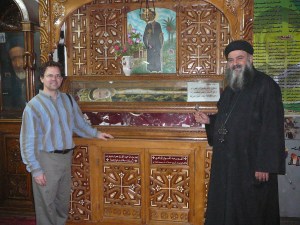
It is difficult to reconcile these images with the reality of his life. A man of simplicity, poverty, and humility becomes the focal point of a dazzling, luxurious, personal cultic center. Yet at the same time, the extraordinary nature of his life suggests the appropriateness of commemoration. Certain questions demand further study:

Did Abd al-Masih al-Manahari truly conduct the miracles attributed to him in the film? These are verified through the research of Bishop Mina, but how thorough were his methods? Such an account can be built only upon personal testimony; were the subjects of his inquiry predisposed to interpret events as miraculous? Could they have invented certain tales fitting within the known pattern of saintly powers? Is there any hint of duplicity, if not for personal benefit then for that of the church and the faith? Or was Abd al-Masih truly one of God’s witnesses?

Is the story of the apparition to Mukhtar to be believed? How did the shawl come into his possession? It existed previously somewhere after the death of Abd al-Masih; wherever that place was, presumably it is no longer there. What of the continuing miracles? In at least one case, there is a credible personal testimony, received by a friendly priest in whom no duplicity was noticed. Is there a power of belief that itself produces miraculous results? Once the history/legend is sufficiently produced, can the best examples of these accepted tales fuel a continuing mania? Is his body truly preserved? April 14, apparently, produces yearly verification.

Supposing these accounts to be true, what does it mean? If Abd al-Masih was a saint, commended by God in both life and death, is this for his memory, or for a greater purpose of establishing the veracity of Orthodox Christianity? To what does Abd al-Masih witness? Orthodox Christianity generally holds itself to be the true expression of God’s religion, as spoken before, attributed by miracles. Yet how should the miracles of other expressions of faith be considered? Is there a difference in degree between the Christian Protestant faith healers and the Islamic Sufi awliya’ salihiin (literally, good guardians, functioning in a role similar to that of Christian saints)? Are all non-Orthodox, or at least all non-Christian, miracles demonic? Does God need this witness at all, from anyone?

Finally, what interpretive light does this phenomena shed on the miraculous in historical religion? Firstly, is Abd al-Masih a verification of the stories of the centuries old saints, such as Anthony, George, Bishoy, and Abanoub? Or might he serve as a modern example of how their reputations were created and preserved? Secondly, does the comparison carry backwards even to the founding of the faith in the miraculous stories of Jesus and the Apostles? Historical and apologetic studies have dealt with the second question in depth; presumably anthropological and sociological studies have dealt with the first. What are the results?

Without having studied the modern disciplines of the first question, and with some previous reading in the theological and critical disciplines of the second, I see four possible answers. The first is that of complete verification; Abd al-Masih, like the apostolic witnesses before him, was used by God to demonstrate the ‘rightness’ of Christianity. The second is its opposite; though many involved may have been honestly duped, Abd al-Masih, or at least the religious leaders who co-opted his story, was a charlatan and a deceiver. The third returns to a religious response, but one less exclusivist. God has mercy on humanity through many paths; Abd al-Masih was his agent to serve the Orthodox Christians of Manahara and Upper Egypt, though other figures are equally his ‘witnesses’. The fourth seeks to preserve the sincerity of the stories with respect to scientific realities. Psychological and psychophysical studies are necessary to determine how such events can be unanimously testified but yet scientifically impossible; Abd al-Masih tapped into a power that is part of humanity but as of yet is alien to measurement.

For now evaluation of these results is not possible, as further study would be required. What is most interesting is the picture of Abd al-Masih as an example of Coptic spirituality. Celibate, mendicant, and sensitive to the divine, he represents the ideal Christian picture which most are not able to replicate. In return for his sacrifices he enjoyed special favor, which was used primarily to bless others, but from which he enjoyed extraordinary communion with God. Upon his death this favor continued, at which time his legend rapidly spreads. The Christians who are not able to follow his example signal their approval by visiting his grave, seeking his intercession, and donating to his remembrance. In a world lacking an abundance of saints (is it not always?), men like Abd al-Masih can receive the adulation of many. That this adulation results in a complete upheaval of the values they practiced while alive is simply one of the paradoxes of Coptic Christianity.
Categories
Personal

Metro Etiquette

Tonight I rode on the metro here for the first time WITH the kids and WITHOUT Jayson.  I’ve taken the metro by myself, and with Jayson, and with Jayson and the kids, but not on my own with the kids.  It actually went quite smoothly as the girls cooperated beautifully.

I am always impressed on public transportation at people’s kindness to the stranger.  I first noticed it in Tunisia when we would ride the bus.  When I entered the bus with a small child (or two), inevitably, someone would rise from their seat and offer it to me.  I haven’t ridden public transportation in the US ever, so I don’t know if the same rules apply there, but I always appreciated being able to sit down with the little one(s).

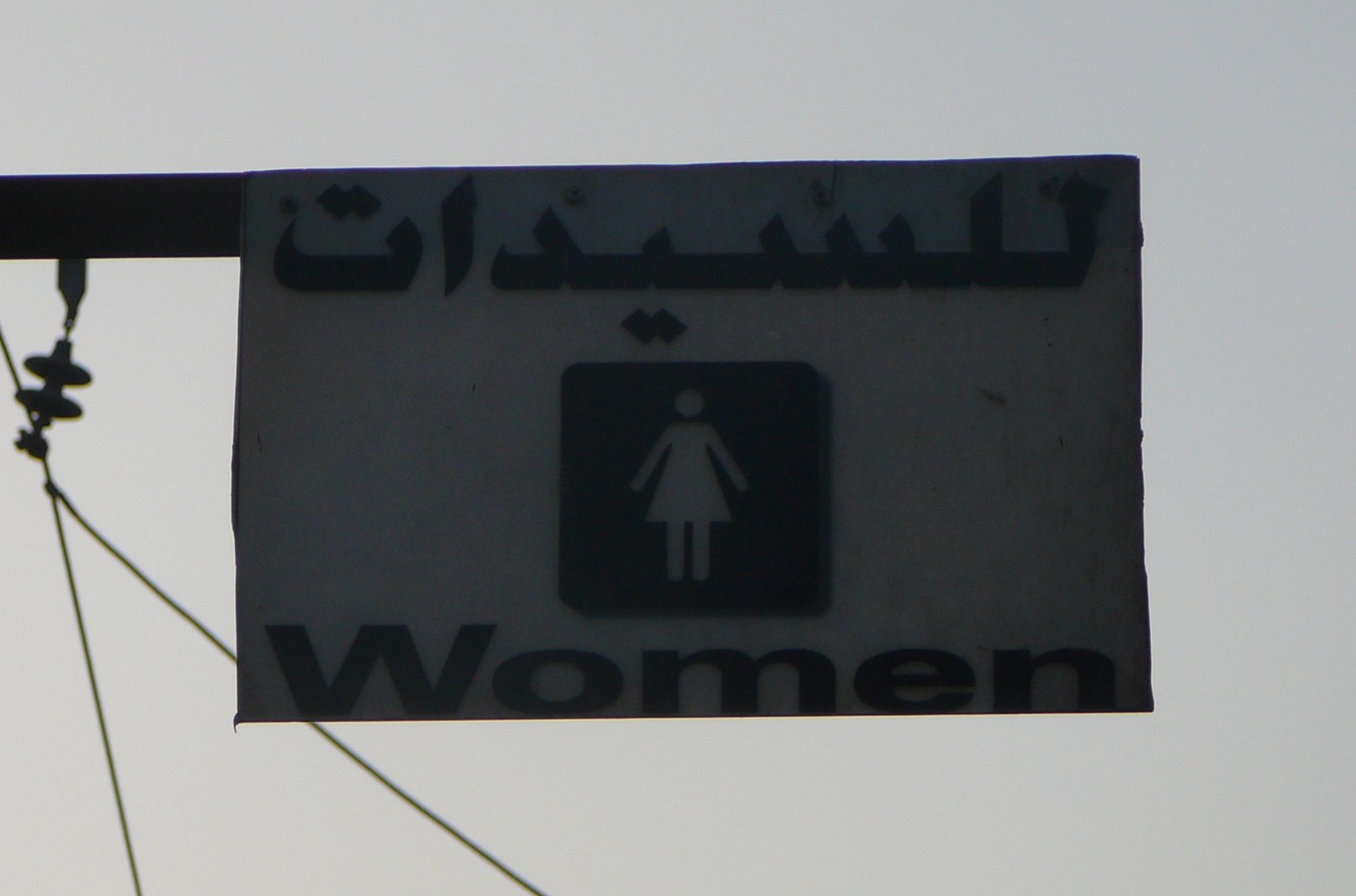
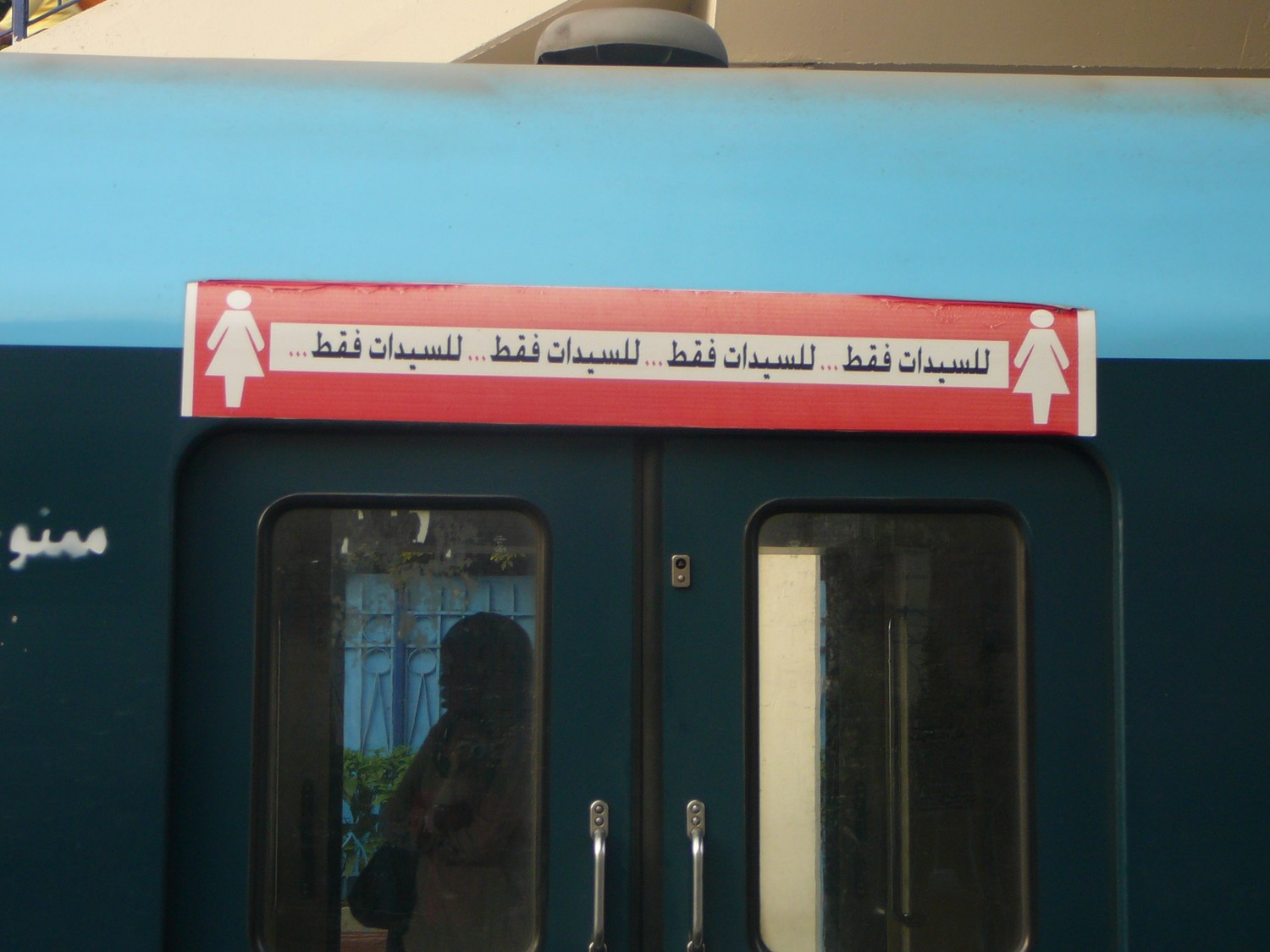
I think the same rules apply here in Egypt, but there is an interesting twist here.  One of the best features of the Egyptian metro system is their inclusion of a “ladies only” car.

Actually, there are two cars on each metro that are just for women.  I believe they differ slightly in that one of the cars allows men after a certain hour, but the other one is only for women all the time.  This is nice since the metro is often crowded, and at times crowded conditions can invite unwelcome attention.  Knowing one can enter a car reserved for just women gives a certain peace of mind.

I’ve ridden the metro by myself only a couple times, and have always chosen the women’s car at those times.  I was surprised a couple times to see some men in this car, but they definitely kept their distance from the women.  I could see that the women ruled in this car, and sometimes they would tell the men they shouldn’t be there.  Other times it seemed the men were with the women, but again, they kept their distance from the women they didn’t know.  The whole science of the “ladies only” car would be an interesting one to study if I had time to just ride the metro whenever I wanted.

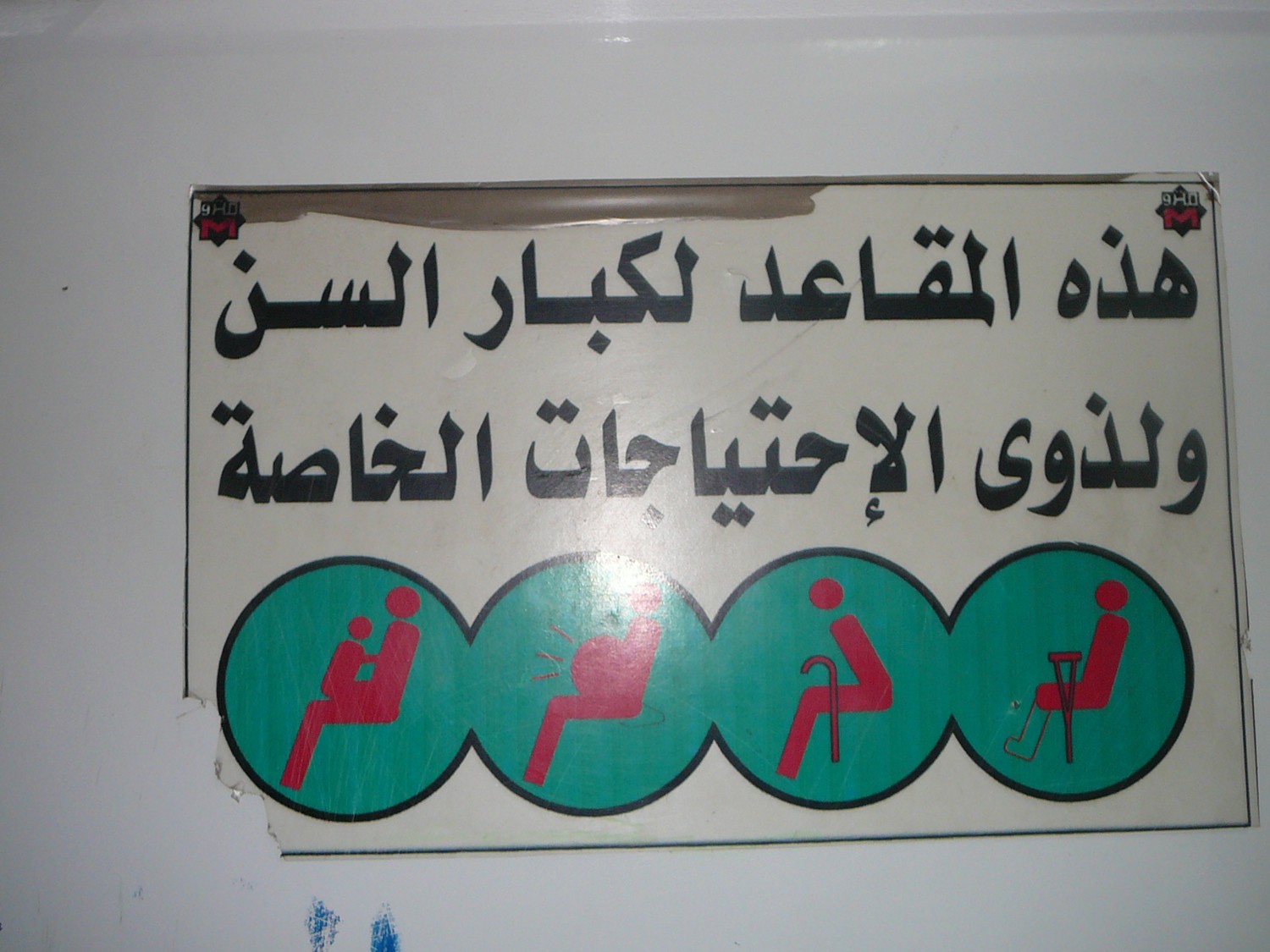
But, alas, I don’t.  I can, however, make some observations from what I saw tonight. Jayson had a meeting downtown so we took the first leg of the journey together on the men’s car.  When I was on the first leg of the journey someone gave their seat up for me pretty quickly.  Later on, after Jayson left, I wondered if that might be one of the negatives of the ladies car.  I think that in general, the men might feel a little more obliged to give their seat up for a woman with small children, but for some reason, other women might not.  In some ways, you would think that they would feel more sympathy and offer their seat more readily, but I think there is something inside a man that just wants to help a woman in “distress.”  Anyway, at least on the first leg, someone offered me a seat.  I sat down with Hannah on one leg as it’s hard to put her in the middle of my lap as baby #3 is taking up more space these days.  Emma wanted to sit on her own so she sat right next to me.  I remember thinking at that point that it was nice to be in this position.  I never really had to think about getting up to offer someone a seat, as long as I had two little ones with me.  After all, there is a sign there which indicates the seats are there for, to translate literally, people with special needs: the elderly, the pregnant, women with young children, and the handicapped.

I didn’t even have to notice others’ needs as long as I was one of the needy ones.  As such, we had a nice, comfortable ride all the way to the first stop where we switched metros and Jayson went on his way.

The second leg took a little more work, but not too much.  These particular women must not have believed in the “woman in distress” theory, because when I boarded with two children in tow, and a third in my belly, no one made a motion to move.  Instead, an American twenty-something woman, who was also standing, noticed me, and asked someone if I could take her seat.  The sitting woman readily got up for me, but again, she didn’t do it on her own.  So we got to sit for that leg of the journey as well.

The return trip, also in a women’s car, went pretty well as someone got off their seat almost immediately and let me sit in a seat.  The girls were able to enjoy some lollipops that I had promised them during this twenty minute leg of the journey before we had to switch metro lines one last time.  We got on our last metro at a main station, so even the women’s car was quite crowded, and I as I looked around at the women seated, trying not to make eye contact exactly, but trying to notice if anyone made any slight motion to me, I realized that no one was making a move to get up.  Oh well. I did my best to keep my balance holding two little hands.  But nearby was a woman dressed in the niqab (a head covering that also covers the whole face except for two eye holes), and holding a toddler on her lap.  Her six year old daughter may have been on her lap as well, I didn’t notice at first, but almost immediately she saw my need and offered half her lap for one of my children.  Emma refused, so I put Hannah there instead where she played fairly happily for most of the ride.  I kind of marveled at the woman’s kindness as I thought about my ride earlier that evening when I didn’t even look for other people in need since I was the needy one.  I was grateful for her kindness and she even got up halfway through the ride when Hannah refused to sit on her lap any longer, and offered her seat to me.  Granted, she was getting out earlier than I was, but still, she gave up her space for me.

This was a good lesson for me to not just expect other’s kindness, and in some ways, demand it of them as I fit the description of a “needy passenger.”  Instead, I should look for ways that I can help others in need. I owe a big ‘thanks’ to the stranger in the niqab for teaching me about seeing others’ needs above my own.

Categories
Personal

Civil Society

A few months ago I was able to interview a professor at Cairo University who is the head of the program for civilizational studies and dialogue. She has been a friend of our center for many years, and in our introduction we were able to discuss a favorite topic of hers – the role of Islam in civil society. In particular we discussed dialogue between Muslims and Christians concerning citizenship, tolerance, peace, and acceptance of the other. I hope to post this interview next, perhaps in a few days. I have held off on doing so for a little while, however, wanting first to write about the concept of civil society. This is a term I had not encountered until I came to Egypt, so I am presuming a similar ignorance on the part of many readers. Your forgiveness is asked upon my faulty underestimation.

One of the reasons, I believe, that the term civil society is not part of common parlance in America is that it is part of common life. Civil society represents the interactions of ordinary citizens which serve to strengthen the democratic character of the nation’s fabric. Democracy is not primarily the process of elections in which voters select their representatives. While this is true, this definition is built upon the foundation of a populace which joins freely into public associations which support the common good. As this is a regular feature of much American life, there is no need to speak of civil society; it is already there.

Many observers lament that this is not true of Egypt. More than lamenting, however, they have made civil society the goal for which they strive. Not neglecting the importance of crafting democratic governmental structures, they posit that the implementation of democratic measures is mostly fruitless unless the people already think and act democratically. What is a participatory government if the people are non-participatory in society? One indication of a strong civil society is found in the number of active non-governmental organizations. These can be charity groups, scrapbooking clubs, unions, or voluntary associations of any nature. One expert in the field told me that among an Egyptian population of 80 million there are only 500 of these groups active in the whole country.

I cannot say how many groups are active in the United States, but such volunteerism has been present from the founding of the nation. Having the advantage of a country built by population transfer, involving initiative and personal sacrifice simply to arrive, the United States crafted civil society far more rapidly than the nations of Europe which needed first to overcome the cultures of aristocracy and serfdom. Religious observance also played a leading role. Alexis de Tocqueville wrote in 1835 in ‘Democracy in America’ about the associational nature of the country centering in near universal church attendance. Though the power of belief has waxed and waned in national history Americans have always been people to bond together, join a cause, and support the common welfare.

Welfare is an apt word for civil society, for the question centers in who is responsible for it. The modern welfare state is a noble invention, striving to share the nation’s resources with those less fortunate. Yet at the same time it necessarily introduces the thought that it is the government’s responsibility to tend to the welfare of its citizens. I wish to make no absolute statements about the rightness or wrongness of this policy; certainly there are examples of both good and poor administration. The point is that the assumption of welfare locates the power base of a people; to the degree that in the modern state welfare is entrusted to / controlled by / abandoned to the government, civil society suffers accordingly.

At the dawn of the last century Egypt was awash in nationalist fervor as both Muslims and Christians actively participated, together, in the cause of complete independence from the British and Turkish powers. Budding enterprises of political parties, unions, newspapers, and broadcasting were built by the elite and began to filter down into popular consciousness. This process, if not arrested, was thereafter controlled by the state after the free officers’ revolution on 1952. Enacted to rid the country of corruption and lingering dependence on foreign powers, like all modern nation-states the ruling system assumed to itself the care of the people. Altruism, expediency, or Machiavellian power machinations can all be argued about the origin of state motivation; the result is that many Egyptians fault the state, perhaps rightly, for failing to deliver on its promises of care. Welfare, however, is still left to centralization.

The civil society movement is an attempt to change this attitude. Of course there are many charitable organizations and religiously motivated groups throughout the country. Yet whereas America was founded on initiative and participation, Egypt has a six thousand year history of peasantry governed by a ruling elite. The elite have experienced cycles of ascendancy and decline; the population cycles of prosperity and hardship. Civil society existed during these millennia; especially during the Mamluke and Ottoman periods the mercantile guilds wielded influence which eventually led to the modernization project of Mohamed Ali. Sufi orders also gave religious structure to society. The abortive participatory experiment of the early 19th Century, however, did not produce roots deep enough to maintain a lasting civil spirit.

If America looks askance, it should be careful; civil spirit is not a right of inheritance. Robert Putnam has remarked in his book ‘Bowling Alone’ that civil society in the United States is declining. Conservative commentators may immediately place the blame on the growing welfare state of America; the message of this essay may provide them fuel. Yet simply identifying the problem puts them only in the position of the Egyptian critics who decry their government yet neglect civil participation. A more likely American culprit is the spirit of independence and self-reliance, foreign to Egypt, which while rightly encouraging the individual to ‘pull himself up by his bootstraps’ wrongly chastises the lesser for failure to do so, leaving him to his own devices. Egyptian society is remarkable for the preservation of the lower classes amidst poverty and population explosion, all because at the most basic level everyone knows that welfare is the responsibility of family and community. None are left to fend for themselves, no matter the alleged scandal of government neglect.

Civil society, then, is a middle class phenomenon, as well as a middle class necessity. It is uncharitable to condemn the American welfare state critic as was done a paragraph earlier, for in all likelihood such a one gives to charity, goes to church, and votes in elections. What is uncertain is the degree to which his or her participation extends to the larger society. The question is not of direct visits to an orphanage or soup kitchen; it is about coaching soccer, mothers’ associations, and general neighborliness. Yet the rebuttal is heard and understood: Who has time for more than job and family basics? Perhaps the more accurate critique is of a spirit of materialism that demands maintenance of a certain social or financial level that renders free time a scarcity. It is a fair question to ask the extent to which ‘community’ even exists in American neighborhoods, at least in suburbia. Economic factors are certainly real; but they are equally complained in both the United States and Egypt.

One final comment about Egyptian civil society is necessary before yielding the floor to the professor from Cairo University about the place of Islam. Much of the civil society initiative in Egypt, either in dialogue between Muslims and Christians or more generally, between Islam and the West, has been espoused by Coptic Christians. Their efforts point in two directions. The first is toward their own people. I wrote in a recent essay about the failure of Copts to participate in Egyptian elections. This is but one symptom of a growing tendency to retreat into the church and their own community. The Coptic Orthodox church offers a wealth of meetings, services, and social activities for Christians, but the revival this has accentuated generally requires participation within the walls of the church. Historic American church attendance strengthened the bonds of community, but America was a largely mono-religious society. Catholic numerical expansion later in history had its own church centered activities, but these differently religious citizens were able to fit into an already existing non-religious civil society network, built upon a common Christian heritage. In Egypt the situation is different for the time and relational investment given to the church and to fellow Christians is accompanied by a parallel reduction in social bonds created with Muslim neighbors. These exist, of course, and are good, but simple neighborliness is not social integration. Christian advocates of civil society recognize this, and are doing their best to change this emerging pattern. Strengthening civil society strengthens citizenship, and this is a key Christian concern, leading to their second directional effort.

Among the interpretations of Islam is a civil system which calls for the protection, yet subjugation, of religious minorities. Christians and Jews should have full right of worship in an Islamic order, with freedom to structure and conduct their own affairs, yet they should not share fully as equal participants in the running of government and society. Actual practice of this system has varied widely in Islamic, and specifically Egyptian, history. Christians have been both a repressed and humiliated minority and possessors of important ministerial posts, especially in finance. It is only in the modern age, however, that they have been citizens, equal under the law. Viewing a resurgence of Islam in recent decades many Copts view civil society, built upon a secular foundation, as the best safeguard against the return of dhimmitude. The idea is not anti-Islamic per se, but it is motivated by a fear of Islamic encroachment into the public square.

Yet why should not Muslims, as religious citizens, also share in the crafting of civil society? As they represent over 90% of the population, is it not appropriate that their moral values shape the nation in which they live? Dr. Nadia Mostafa of Cairo University summarizes Muslim frustration with secular and Christian dominance of civil society discourse, though she herself is an active participant. Her testimony will follow in the next post.

Categories
Personal

Joseph and the Sheep, part two

Click here to read part one.

The next morning Joseph arose, opened the wolf’s cage and placed a rope around his neck. He led him to the sheepfold and opened the gate, then beckoned the sheep to pasture. Obediently as always, though with a sense of apprehension, they moved forward. Still and silent, the wolf looked on.

The day progressed as each day before, with the lone exception being the wolf sitting at Joseph’s side. The sheep milled about, each to his own business, eating grass as hunger dictated. By midday Joseph signaled for all to advance to the river and led the procession with wolf in tow. Once arrived, they all drank.

The afternoon held more of the same. Joseph stood solemnly with the wolf by his side as the sheep would graze. Yet for some reason the wolf grew more and more agitated. It started slowly with a low, guttural bellow. A little while later his tail began to sway, slightly more than usual. Sometime later, he began to twitch.

The two sheep who earlier had tried to communicate with the wolf were the first to notice the change in constitution. Sympathetically, they approached to inquire and offer their greetings. They had realized that all morning the wolf had been neglected, as each sheep, including themselves, had simply pursued their normal routine. The wolf, they thought, had behaved all day, but was never extended a welcome.

Just as the sheep were gaining their awareness, the wolf was losing his. The twitching had become a full on shake; he was not suffering from loneliness, but from hunger. Denied his prey the day before, it had been far too long since he had eaten. The sheep’s grass did not appeal at all.

As the sheep sauntered closer his instincts kicked in. Explosively he launched himself at the tender sheep who froze in their tracks. Inches away from descending upon them he jerked back, as Joseph held the rope taut. The wolf collapsed and whimpered in pain as the sheep, cautiously, gathered around.

At this point in the story Emma spoke up. “Maybe they should kill a kharouf, or a baqara.” I cannot tell if she knew exactly what she was saying, but she gave me the ending necessary. The word baqara is Arabic for cow, but kharouf is Arabic for sheep.

Joseph gathered the extended rope and began again to tie the wolf’s mouth and front legs. Just then an older sheep moved forward sadly, but deliberately. He spoke to Joseph while looking at the wolf, “It is true a wolf must eat meat. We sheep love you Joseph, and enjoy the meadow and the river and the sheepfold. But we also know that the day will come when we are slaughtered so that men can eat. I am the oldest sheep here, and therefore the next to die. Take me now, sacrifice me, and give my meat to the wolf. Then he can stay with us, be filled, and not attack.”

Joseph looked at his sheep with compassion; all nodded their heads in agreement, implicitly knowing their time would also come. Joseph drew his knife and cut up the generous sheep.

That evening the wolf ate more deliberately than he ever did before. As Joseph led the sheep back to the fold he brought the wolf, bound now only by the original rope around his neck, back to the cage. He entered, sheepishly, and Joseph spoke to him. “Tomorrow you will come out with us again, only this time, there will be no rope. You will be fed by the meat provided yesterday, and drink with the sheep from the river. You will stay by my side, and I will watch you. Take care, but join our flock.”

The next morning the sheep went out again, walking with one eye askance at the wolf who was walking unbound by Joseph’s side. During the morning grazing the two sheep wandered but then remembered to greet the wolf. From afar they made their way towards him, making sure their approach kept Joseph in between the two parties. Taking notice of them the wolf’s ears shot up. He burst past Joseph, knocking him down as he raced in their direction. The sheep had imagined being less timid, but their primal fear resurfaced as the wolf’s fangs emerged. As he leaped their “Baaaaaaa” hung in the air like an icy chill but then trailed off as the wolf, strangely, missed his mark. The sheep looked back to find the wolf covered in blood, his jaw clenched around the throat of a jackal which had moved against the sheep from behind.

Joseph came quickly and all the other sheep looked on. He rubbed his hand against the fur of the wolf and whispered his thanks into his ear. Then he collected the carcass of the jackal to prepare later for food, redeeming the life of the now-oldest sheep, if only for a time. The two sheep, meanwhile, had recovered from their shock and nestled their noses into the wolf’s side. “Next time,” they said as they smiled, “perhaps you can talk to him first; maybe he would be friendly. But you will have to be very brave…”

Note: ‘cut up’ is the language Emma uses for how sheep die. To find out why, read this earlier post.

Categories
Personal

Joseph and the Sheep

Sometimes I like to tell Emma and Hannah stories. I ask Emma for a subject and then Hannah for one, and try to combine the two into a tale or song. On this occasion, just before Julie was to put them to bed, Emma asked for Joseph, as in the one with the fancy colored coat, and Hannah asked for sheep. As I take liberty with the story, the tale which follows has no resemblance to the Biblical Joseph save for his name. I hope you enjoy; the ending will have a question I hope you find insightful, and for which your comments are appreciated.

One day Joseph was out tending his sheep. He brought them to green grass which he had them eat, and to sparkling waters which he had them drink. (Emma and Hannah were sitting on the floor as I sat on the bed, and they were encouraged to bend to the floor to eat and drink as well. Feel free to do the same.)

One day as they were enjoying their normal day the sheep spotted a wolf in the distance. They were scared, and looked to Joseph to know what to do.

Joseph was a kind shepherd with a good heart; not only did he love his sheep he wanted all animals to live in peace. He brought two sheep in close to speak with them privately.

“I would like you two sheep to be very brave,” he said. “When the wolf comes I would like you to stand your ground and not run away. As he approaches greet him simply, and say ‘hello’. I will go and hide behind that nearby tree. If the wolf greets you back and is friendly, all will be well. If not, I will jump out from behind the tree so that he does not harm you. Can you do this?”

The sheep were afraid, but trusted Joseph. As the wolf descended the hill they stepped forward timidly, so as to be the first sheep he would come across in the flock. As the wolf noticed this, the rapid pace of his bounding slowed; it was not often the sheep would come to him.

“H-h-hello Mr. Wolf, h-h-how are you?” the sheep initiated nervously.

The wolf stopped, but gave no reply. His back legs coiled and his lips drew back revealing the pointed tips of his fangs. Just as he was about to spring upon his prey Joseph leaped out from behind the tree, catching the wolf in mid-air, and wrestled him to the ground. He took out his rope and bound his mouth and his front legs. As the sheep cheered, Joseph took a peg and tied the wolf to the stake in the ground, and each sheep went back to his grazing.

As the day progressed Joseph led the sheep to other pastures, taking the wolf along with them, and several hours later returned to the river to drink. The two sheep watched curiously as Joseph walked the wolf, still bound by the rope, everywhere they went. As he untied his mouth and allowed him also to drink, however, they could no longer hold their peace.

“Why are you taking that wolf with us wherever we go?” they asked. “He tried to kill us all, you should have left him bound, tied to the ground to die. Yet now you even loosen his mouth to give him to drink? Why are you helping him?”

The wolf raised his pointed ears as he continued to lap up the river water. “It is true this wolf tried to kill you, but we must show him kindness even so. It may be that if we do not treat him as he deserves that he will change and also be kind in return. You were very brave when you tried this at first; you must continue to be brave. But do not be afraid, I will not let him harm you. Tomorrow I will take him with us again out to pasture. I will even let him run freely, though he will stay connected to my rope. If he cannot change, I will take him far away from you, so that he will not bother you again. But this is something which we must try.”

The sheep nodded warily, and Joseph led the flock back into their fold. The wolf he pulled aside to put into a separate cage. As he closed the gate he looked sympathetically at the wolf.

“Tomorrow we will return to the fields,” he spoke as he untied the rope from his mouth and front legs, which had been reapplied after leaving the river. “I will even keep these ropes away from you, save for this long one around your neck. You will be with us and I will treat you kindly as I treat my sheep, but I will watch you closely. I will send you far away, back to the wild, should you try to harm them.”

The wolf nodded, Joseph left, and the sheep bleated in the distance. After pacing about his cage for what seemed like an eternity, the wolf went to sleep.

Tell me, what should happen next? Emma and Hannah were engrossed in the story, and I was thankful it was time for them to go to sleep themselves. To be honest, I had no idea where to go next. Should the wolf reform and join the flock? Should he lash out once more and be banished forever? More importantly, what lesson should be woven into this tale?

Up until now I have had no qualms with the implicit sermonizing. It is good to stand firmly, but friendly, against an oppositional threat. Once subdued, kindness must be offered instead of revenge. I will be very proud if my daughters behave this way.

Yet there are wolves in this world, and generally speaking, they do not change. If the story continues with a repentant wolf, will I be painting a false idealism which will set them up for failure and pain? Or, if the wolf resumes his attack in the morning – worse if he pretends to be reformed – will I confirm, to modify the metaphor, that a leopard cannot change his spots, and therefore we should always be guarded?

It is only a story, and it will fade from memory. Life teaches the best lessons. Stories, however, provide the interpretive context.

The next morning the girls awoke and immediately desired the conclusion of the story. Not knowing exactly what to do, I began by retelling the story from the beginning. Along the way, Emma provided the answer…

Part two will follow in a couple days. Until then, if you have suggestions for how the story should continue and end, please feel free to share in the comments.

Categories
Personal

Stop and See the Flowers

Autumn has always been my favorite time of year.  Maybe it’s because the weather is cooling; maybe it’s because my birthday falls in October; or most likely, it’s because of the beautiful colors one can see in our home area of Pennsylvania and New Jersey.  I remember when I lived in Jordan and was asked what my favorite season was.  A few people told me that “autumn” is a strange answer.  There really wasn’t anything too special about autumn in Amman, and it just signaled the beginning of the cold, rainy weather.  If my Jordanian friends could see the fall foliage in my neck of the woods, however, they would understand my preference.

I may be developing a new favorite season, and if so, it is thanks to my two little girls, Emma and Hannah.  Emma, at 3½, pretty much knows all her colors, but Hannah (almost 2) is just learning to differentiate what is green, blue, purple, pink, orange, etc.  It seems she knows what some of them are, but just when we think she’s getting it, we ask her what color the tree is and she says, “Blue.”  Oh well.  It takes time.

The other day, as we were walking through our neighborhood taking Emma to her preschool, one of us noticed some of the colorful flowers that have begun to bloom here in Maadi.  I have never been a big fan of plants and flowers and don’t know the names of them, but for the first time, I started to notice the colors surrounding us.  As we walked along, the girls excitedly pointed out the pink and orange and purple flowers.  After a few minutes Hannah, especially, got excited every time she saw a color.  “Look Mommy!” she would exclaim.  Her enthusiasm is so wonderful as she kicks her feet in the stroller and points toward the tree, “Pink!”  What a wonderful way to learn colors!  Of course, God’s painting involves more than basic colors, and I find myself saying, “Well, yes, that is kind of purpley-pink,” or, “yellowish-orange,” or whatever, but hopefully she will slowly get the idea.

Thanks to my girls for showing me some of the natural beauty that surrounds us here in Maadi.  I know we’re blessed being in this part of the city where there is grass and trees and flowers; it’s not the norm in Cairo.  Of course, kids can see beauty in anything, and today as we walked, they were noticing the different colors of the cars parked along the street.  I might rather have noticed the dents, scratches, and rust. It’s a good reminder to appreciate what you see around you … whether that’s God’s handiwork in creation, or man’s creativity in imitation!

Categories
Personal

Rain, Rain, Go Away

The other day it rained in Cairo.  While this might not seem strange to you, rain in Cairo is not a common occurrence.  I would estimate that we have had some rain about five times in the six months that we’ve been here.  And that has mostly been light showers once or twice throughout a particular day.  So, when I go out in the morning, I sometimes will go on our balcony to check the temperature and see if we need jackets or not, but the idea of it raining never crosses my mind.

The day it rained, I didn’t even check the temperature, so I took the girls downstairs in the double stroller, on the way to Emma’s preschool, and was surprised to see the wet ground and smell the rain.  It wasn’t raining too hard, and because of the stroller canopies, I was the only one who would really get wet, so I didn’t want to change plans for the morning and take a taxi.  I figured that’s it is Cairo anyway, and we certainly wouldn’t have too much rain.  I was surprised that I did get wet on the way to preschool, but it had mostly slowed down by the time we got there. 

Hannah and I dropped Emma off, and then went to run some errands.  First we were going to drop some things off at an American friend’s house where we visited for about an hour as Hannah played with their little boy.  I noticed at one point as I looked out the window that it was raining quite hard, and I hoped it would stop because I had some errands I really wanted to run that morning.

By the time we left our friend’s house, it had slowed quite a bit, so we went to the grocery store and then to the post office and finally to a local restaurant to pick up a container of hummus.  I put Hannah’s shade back at the restaurant so I could keep my eye on her while I picked up the hummus, but then went and put it back down when I noticed she was getting rained on.  Fortunately this was our last stop and we got back home before getting too wet.

When we went out later to pick Emma up, I decided to take a taxi since this time I knew the rain was a problem.  We taxied there and back, but did notice the sun was shining and the clouds were clearing by this time.  It seemed simply to be another typical, though infrequent, rainy day for Cairo.  Jayson came home for lunch a short while later and said it was very nice out.  This encouraged me to put out some of the laundry I had kept inside earlier because of the rain. 

Later that afternoon, after the girls woke from their naps and I was doing something in the kitchen, I heard a strange noise.  It took me a few minutes to realize that the sound was that of pouring rain!  I quickly remembered the laundry and ran to the balcony to bring it in, but not until after it had caught quite a bit of dirt from the rain.  It also caught a few little hail balls.  Wow, how cool!  When I opened the balcony door and Emma and Hannah heard the sounds, they were quite scared.  It also was thundering and lightning which is something they haven’t heard now for six months.  I know it can be scary for many kids, and ours were no exception.  I was pretty excited since a storm was so rare here, but I also realized that Jayson would be walking home soon and was wondering how he was going to make it home dry!  He returned about half an hour later with a shirt that was wet and dirty from a strong Cairo rain.  Fortunately the thunder and lightning didn’t continue long enough to disturb the girls from going to bed, but the storm did seem to make an internet connection difficult which messed up plans to Skype grandparents.  It probably didn’t help that they were getting a strong snowstorm at the same time we were having our rainstorm.  I wondered what all the rain was going to do to the roads we usually walk around town.  The next day was Friday, first day of our weekend, and the day we usually attend church.  We’d have to see if the way would be walkable.

The next morning I looked out on the balcony and it had stopped raining, but it was chilly, and everything around was wet, including a small lake at the schoolyard across the street.  I knew that trying to walk to church with the stroller would be quite messy and perhaps impossible at some points, and our normal Friday schedule of sitting at their outdoor coffee area while Emma attended Sunday School would not work too well either due to the cold and the wet.  So, we opted to stay in all day.  It made me realize that it’s kind of hard here to find things to go out and do, if the weather is bad.  It’s a good thing the weather isn’t bad too often!  

I did actually get to venture out later that day on my own, as the girls were napping.  I needed to do some shopping in another part of town, and Jayson being home allowed me to get this done without the girls in tow.  I first of all walked a few blocks to board one of the local minibuses to travel to another part of town. I noticed the main street where I like to walk for shopping was basically a lake.  It confirmed that taking a stroller out would have been a bad idea.  We drove through a lot of large puddles on our way to the store and I noticed lots of people out and about.  I remembered that today was the celebration of the ‘Mawlid’ (the Prophet Muhammad’s birthday.)  This isn’t a big holiday among Muslims, and isn’t one they are commanded to observe, but there have been special traditions and foods associated with this day in each of the countries we’ve lived in.  I felt bad that the weather may have hindered some of the visiting or celebrations for some on this day, but did notice that some of the amusement rides that people put up for these holidays were still in use.  We passed one section of town where there was a temporary carousel and two large swings for the kids to enjoy for the day.  I am guessing that each child would have had to pay one or two guinea (18-36 cents) for a few minutes on the ride.  The rain didn’t stop them from this fun.

I went out again the next day, and the big puddles had evaporated a bit.  It was still very messy to walk from our house to the main street as the water combined with the dirt and grime of the street to make for a very messy path.  But brave it we did and all in all, we didn’t get too wet.  It looked like things would be close to normal by Sunday, in time for us to begin another work week and return to Emma’s preschool.  It was weird to have so much rain in one day, and it affected our whole weekend.  Hopefully it at least cleaned the air a bit and watered the land.

Categories
Books Personal

Life as Politics

Not too long ago Prof. Asef Bayat, presented a lecture at the American University of Cairo on the topic “Life as Politics: How Ordinary People Change the Middle East”, taken from his recently published book of the same name. Prof. Bayat is a professor of sociology and Middle Eastern studies and holds the Chair of Society and Culture of the Modern Middle East at Leiden University, the Netherlands. The summary below presents a very interesting look at how Middle Eastern society is evolving, without direction or organization from the powers-that-be, either from inside or outside the region.

Many theorists around the world wonder when change will finally come to the Middle East. They see the monumental political and economic developments in Eastern Europe and Southeast Asia, and look with resignation at the Arab world which seems stagnated in autocracy and conservatism. Likewise, Arab activists themselves find the pace of change too slow, working to implement democracy and civil society but are increasingly frustrated by governments more intent on holding on to power. What spells the correct answer?

A closer consideration would note that much change has already transformed the Middle East. Over the past several decades the phenomena of globalization, Islamization, and urbanization have impacted the region, and historically Arabs have been involved in nationalist movements against colonizing influences. Even so, both regional and international scholars have identified three general positions concerning change.

The first is not widely held to popularly in the Middle East, but there are those who state that if change is to come it must originate from outside the region. Since people are not seen as effectual actors, influences must begin abroad; President Bush’s doctrine of regime change is witnessed here. The second position is that one must wait for change to happen. They hope for, think about, and educate for change, but are limited in what they can actually do to bring it about. After all, revolutions cannot be planned, but what should one do while waiting, especially if some potential outcomes of revolution might be worse than the status quo?

The third position is that of the activists who strive to make change. While social and governmental restrictions exist, there has been much progress on the part of some movements like those of women’s rights and labor unions. Still, progress has been slow overall, which has led many social scientists, though not activists, to look elsewhere in the region for examples of change. Prof. Bayat identifies these in what he calls a ‘non-movement’.

While traditional movements tend to be the activities of leisure, however passionate, of those with at least some social standing, and is a result of a planned activity coordinated with others, a non-movement is fragmented, disperse, and chaotic. Instead, it is the collective representation of individual actions on a massive scale. Specifically, Prof. Bayat highlights three: the urban migration into the cities, the activity of women, and youth identity.

The capital cities of the Middle East are a magnet attracting the rural poor in search of some economic benefit. Their arrival, however, causes disruption of property rights and legitimate commerce as shanty towns are erected and sidewalk shops sell knock-off brands and ignore copyright protection. Yet the numbers are so large that governments are impotent to do anything about it other than small scale intervention, and thus these new émigrés settle into the landscape of the city, prompting the question, who really owns it? They are a threat, to be sure, but they also represent a profound change in the makeup of society, but as a non-movement are traditionally overlooked as agents of change.

Women are more commonly seen as agents of change, but they better qualify as a non-movement alongside more traditional avenues of women’s activism. Yet the pattern of their individual actions dictates that diverse outcomes result from their participation in life. On the one hand the increasing use of a hijab or niqab signals a religious protest against a perceived un-Islamic, authoritarian regime. Yet on the other hand women are increasingly participating in life, even in the mundane activities of going to the bank, mechanic, or university. Over time the increased opportunity for reflection on life outside of domestic isolation causes women to ask the questions of necessity and curiosity – why is my inheritance limited, why are child custody laws in favor of men? Be it seen in increasing religiosity or liberation, these actions are planned by no one, yet have dramatically affected the social relations of Middle Eastern society.

Youth activity is similar. Increasing population rates have created a burgeoning youth demographic which is corralled and controlled through education. Wary of the power of unencumbered youth the government has attempted to co-opt their participation in its favor by celebrating their role in the formation of the state, at the same time using all available resources and pressures to keep them in check. Yet the public space provided in the schools and the universities allows for the congregation and self-consciousness of youth, who in different ways express their identity through dress, hairstyle, and hobby. While kept from a politics of protest, they nonetheless express a politics of presence and practice that has left a distinctive mark on the region, yet because it is not a traditional movement in the manner of engagement often seen in youth, it is generally unobserved.

The distinguishing characteristic of these non-movements is that they reflect the ordinary activity of ordinary people leading an ordinary life. There is no leader, no collaboration, and no grand strategy. As such, an authoritarian government has nothing to fight. The vast co-incidence of common activity overwhelms its ability to respond, and positive change develops from the bottom up. Though an activist would be left unsatisfied with the scope of change, social advancement occurs for the poor, liberation for the woman, and identity for the youth. In a region marked by oppressive and restrictive social controls, these developments are not insignificant.

These observations demonstrate the platitude that there is always a way to express a will for change. The subtitle of the book, however, is a bit misleading. The impression is given that the text will describe activity and thought—how is it possible for ordinary people to change their society? Instead the book is written as sociology—how is change occurring as ordinary people live, without acting or thinking? The study is noteworthy, but not proscriptive. There is much to analyze as one views the region from a bird’s-eye view, but little to communicate to the people of the Middle East. In fact when questioned about how an activist might utilize or mobilize a non-movement on behalf of a cause, Prof. Bayat warned this could undo all progress. Activism would bring the non-movement to the attention of the government, and provide a target for repression. By becoming self-conscious the strength is lost.

Unfortunately, this seems to leave the local actor in the dilemma posed above. Should change be initiated from outside, be waited upon inside, or be created by joint action? Each of these positions comes fraught with danger and difficulty, but the study of non-movements offers no solution. If anything it proposes that the option to wait is the only recourse. While surely Prof. Bayat would not endorse this conclusion, it seems the result for the Middle East is that change happens, but it cannot be made to happen. So while a theoretician may be thankful for more data to study in the process of change in the region, the activist is left unsatisfied. Is this not the natural state for an activist, however, facing the question of how to create change from nothing? Life as politics leaves no room for politics, only sociology. Change occurs for the ordinary person, but the ordinary activist longs for a movement, not a non-movement. He or she must look elsewhere for the answers.

To purchase this book from Amazon, click here: Life as Politics: How Ordinary People Change the Middle East