Categories
Arab West Report Middle East Published Articles

A Call to Coptic Weaponry, from Abroad

As a quick update, I am working on a new text concerning the development of Christianity in Egypt that could be ready in a little while. In the first days following a new birth, replete with requisite sleepless nights (worse for Julie than for me), it is a little harder to write. In the meanwhile, I remembered this text I wrote following the Nag Hamadi incident which we published in Arab West Report, but I neglected to post it until now. It exemplifies part of our work which is a media critique of the local press, along with a personal reflection. I hope you enjoy.

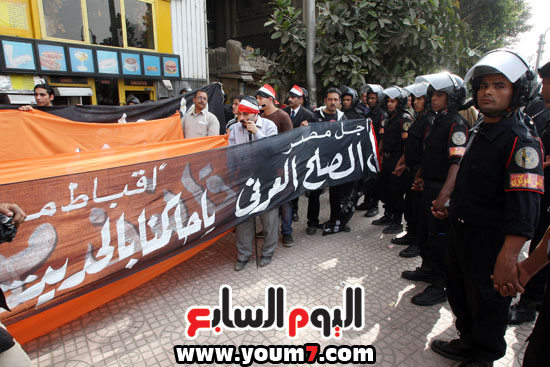
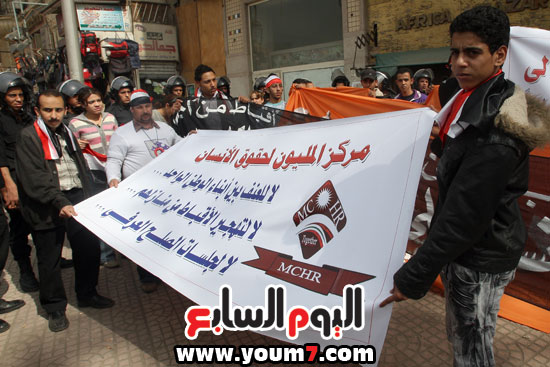
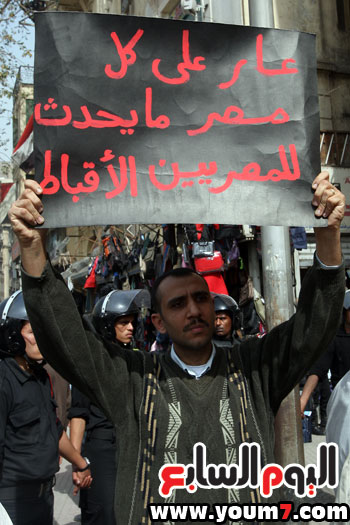
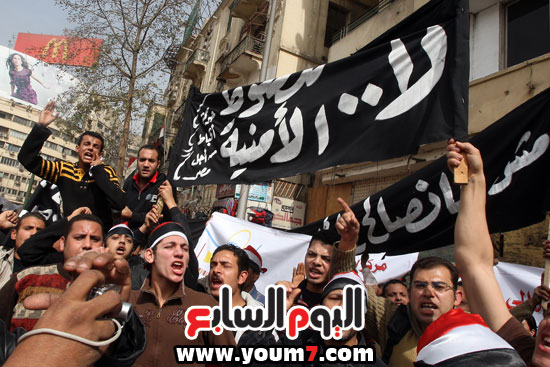
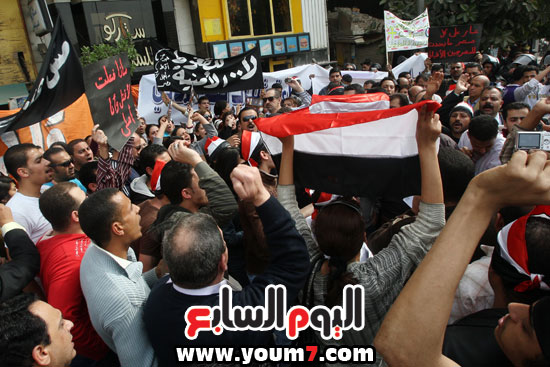
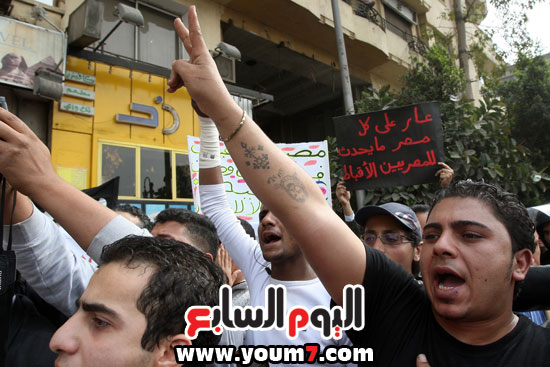
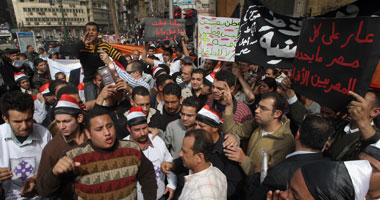
The January 27th edition of Akhir Sa’a, an Egyptian weekly newsmagazine affiliated with the government, printed the bold headline “Expatriate Copts Encourage Egyptian Christians to Carry Weapons against Muslims and Security.” The story, complete with pictures of handguns, rifles, and peaceful demonstrations both inside and outside Egypt, commands immediate attention from the reader, especially given the charged sectarian atmosphere following the tragedy of Nag Hamadi, in which six Christians were gunned down randomly upon exiting Coptic Christmas Eve mass, January 6, 2010. This incident has drawn condemnation from all sectors of Egyptian society, but many Copts view it as but one more example in an extended progression of violence against their community. Though this aggression is unorganized, its perceived increasing frequency is causing great alarm. It has not, however, caused any domestic call to arms.

Expatriate Copts are a controversial topic in Egypt. Wealthier and more politically active than their compatriots in Egypt, many seek to lobby their adopted governments to put international pressure on Egypt to defend Christian well being. Through their bilingual websites they are able to inform both Western and Egyptian populations of Coptic issues, but from a position of advocacy, not news. Pope Shenouda has at times condemned their excessive reactions and demonstrations, which threaten to disturb the generally peaceful, though at times uncertain, attitude that prevails between Christians and Muslims, and between Christians and the government. At the same time, the results of their advocacy are popularly seen in many Egyptian Copts who rely on their foreign ‘reporting’ over a distrusted local press, which results in an increasing attitudinal divide between them and their perceived ‘Islamic’ neighbors and government. Naturally, Muslims and government are disturbed by the generalist and sensationalist characterizations of these expatriate Coptic websites, and an article which exposes their stridency is certain to sell copy.

The article itself appears to be fairly balanced, but builds only on one article and one comment to a different article, both posted on the website of the ‘US Copts Association’ – www.copts.com. The comment comes from an article written by Rafat Samir, who identifies himself as a human rights activist, lamenting the November 2009 attack on Christians in the village of Farshut, in which shops were looted and homes were burned. Significantly, he does not call for Christians to arm themselves in response. The Akhir Sa’a article, however, quotes from a comment posted to the article, which states:

It is necessary for Copts to arm themselves as quickly as possible, with immediate training also for women in the use of weapons. Priests must also carry weapons to defend themselves against Muslim attacks and those from the Islamic police. The only solution is that every Christian martyr be followed by the killing of ten Muslims.

In choosing this comment, the most vitriolic reaction among the fourteen comments posted, Akhir Sa’a selects simply the voice of a common man, but amplifies him as a representative of ‘expatriate Copts’. The second source for the magazine comes from an article written by Father Yuta, a pseudonym used by an otherwise unknown figure, who represents himself as a priest of the Coptic Orthodox Church. Though official church pronouncements have stated that this voice in hiding does not represent church opinion, he is a frequent commentator to the US Copts Association website. Again, the magazine references him as someone who is calling for general armament to meet the threat posed by atrocities such as Farshut and Nag Hamadi. Though his statements will be presented later, it is interesting to note that of the 104 comments which follow Father Yuta’s article, of those which present a clear opinion, nearly 75% speak against him. Below it will be clear why this is the case.

The magazine is wholly out of line in transforming these two voices into the general headline ‘expatriate Copts’, but it can posit an excuse in the tagline of the US Copts Association: Representing all Christians of Egypt. This, however, is clear exaggeration on the part of the website, for which neither expatriate nor Egyptian Copts bear responsibility. While the article fails to quote an official church representative about the personality of Father Yuta, it does quote Sameh Fawzy, director of Citizens for Development and a well-known Coptic commentator who declares,

This type of language bears no relation to Christian identity, which forbids the use of violence or the answering of violence with violence. Certainly it is not possible for Copts to interact with these ideas.

It is interesting to note that among the team which prepared the article was an attendee of our recent media workshop, which trained in the techniques of balanced and objective journalism. The article was structured fairly, giving space to all sides for expression. That this was an article at all, however, is an example of irresponsible reporting. One article and a reader comment do not equate to the general ‘expatriate Copts’ proclaimed in bold lettering. Though the headline may not have been under his control, he is making a mountain out of a molehill. The voices he presents are worthy to be highlighted, but expatriate Copts do not deserve to be lumped together with them.

There is little story here at all. Egyptian journalist Osama al-Ghazoly notes that Akhir Sa’a is among the least influential and least read newsmagazines, and in the month since publication there has been no development of the story whatsoever. Yet a stark headline such as this one demands attention, as well as arrest of the idea. The call is shocking and immediately prompted our office to call for an article in response.

Regardless of the differing Christian stances toward self-defense, practical, social, and legal considerations all demand the condemnation of the call to armament. Copts represent less than 10% of the population of Egypt. These exceptional expatriate voices are calling for a general attitude of armed opposition toward both neighbors and government, and are urging wealthy expatriate Copts to fund the enterprise. Even if increasing, the acts of aggression against Christians almost always have an additional social interpretation, and represent isolated incidents from among thousands of peaceful villages. A general armament would likely be viewed by the population at large, living in peaceful coexistence if not complete social integration with Christians, as an act of aggression. Any exchange of violence would result in a bloodbath for the Copts. How much more so since the call is for Christians also to arm themselves against the government! It is the state which is best equipped to provide protection and equality of citizenship, yet these voices urge it to be viewed as the enemy.

It would be one thing to state that these voices call only for the use of weapons in self-defense, but even this is uncertain. Instead, Father Yuta states, in an article published on the US Copts Association website in Arabic, though noticeably absent in its English version,

I completely shoulder the responsibility before God, and I understand the Scriptures very well when I tell Copts that they have to respond strongly to Muslims’ attacks. Christianity prohibits its followers from attacking anybody; however, it does not prohibit them from defending themselves. Therefore I call on every Copt who finds himself before a Muslim who wants to assault or kill him, to kill that Muslim to defend himself. Similarly, if you find yourself before a Muslim trying to kill another Copt, you must hurry to prevent that Muslim from killing the Copt. If a Muslim attempted to burn a Copt’s home, Copts should put that Muslim’s home on fire. Every Copt should cooperate with the other Copts. If Muslims put a church on fire, then Copts should put the nearest mosque to that church on fire too.

Furthermore,

Copts should not hide in their homes leaving Muslims to burn their houses! They should go out and defend their homes using all the means and possible weapons to defend themselves. If a soldier shoots a Copt, all Copts should attack all the security officers and take weapons to shoot the security officer and police officer of the highest rank in the site, because he is responsible for giving fire orders against Copts. If this happened no officer will give a shooting order against Copts, because the price will be so high.

And finally, if anyone is concerned that in these actions he will be sinning against God,

I tell all Copts of Egypt that there is no absolution and no blessing for he who does not defend himself and the life of his Coptic brethren who are attacked or assaulted by Muslims or by the Egyptian security apparatus. To all Copts in Egypt I say: You have the absolution and the blessing if you defend yourselves against Muslims. To those who fear punishment if they are killed attacking Muslims I say: If you think you are committing a sin then I carry it for you on the Day of Judgment, and hence you are innocent before God who gave us the power to bind and to release.

A case can be made that there is logic behind this call, but it appears to be far from a Christian ethic. While Christians are divided about the right and extent of legitimate self-defense, Father Yuta is advocating an eye for an eye, and more. Yet Jesus declared in Matthew 5 that an eye for an eye was no longer valid, commanding his followers to not resist an evil person, but to turn the other cheek. It is correct that Christians should not shrink back from attack, but Father Yuta puts forward his idea of resistance in neglect of Hebrews 10:32-39, which speaks directly to the situations Copts have faced in Farshut and elsewhere:

Remember those earlier days after you had received the light, when you stood your ground in a great contest in the face of suffering. Sometimes you were publicly exposed to insult and persecution; at other times you stood side by side with those who were so treated. You sympathized with those in prison and joyfully accepted the confiscation of your property, because you knew that you yourselves had better and lasting possessions. So do not throw away your confidence; it will be richly rewarded. You need to persevere so that when you have done the will of God, you will receive what he has promised. For in just a very little while, “He who is coming will come and will not delay. But my righteous one will live by faith. And if he shrinks back, I will not be pleased with him.” But we are not of those who shrink back and are destroyed, but of those who believe and are saved.

While no Copt should submit meekly to the confiscation of a home, abandoning completely the rule of law in a modern state, these verses praise the Christians in question for maintenance of their joy during their trials. It calls for perseverance, not resistance, for their confidence in eternal possessions will be rewarded regardless of the state of their temporal goods. In fact, undue attachment, signaled through resistance, is the very ‘shrinking back’ which Father Yuta proposes. It results in God’s displeasure, not approbation.

Yet a proper question is addressed to the US Copts Association: Why have you published such an opinion? In their mission statement, accessible from both the Arabic and English webpages, they state:

We would like to make it very clear that we aim to realize these objectives solely through peaceful and legitimate means.

Instead, in this article it is clear that Copts are called, when attacked, to vigilante collective retributive justice. This call runs counter to common sense, Biblical mandate, and the website’s own mission statement. It deserves an official retraction.

As stated earlier, the call to armament is not heard in Egypt; it is only uttered by the few, frustrated voices which operate within the confines of safety and freedom of Western democracies, or else behind the mask of anonymity. Though their advice is clear, their judgment is in question. Yet at the same time, they make clear to Copts in Egypt the path that lies before them. Armed resistance in international geopolitics can at times be understood for oppressed and occupied ethnic minorities, seeking freedom from a dominating power. This is not at all the description of the situation for Copts in Egypt. Coptic Christians and their Muslim neighbors are equally Egyptian, and national law regards all with equality, however uneven in occasional misapplication.

Yet even if the situation did reflect ‘oppression and occupation’, Copts would need to choose their greater identity. Would they wish to exist as a political—even military—bloc, seeking rights and protection in the carnal ways of the world? Or would they wish to live and behave according to higher ethical ideals, as would be expected in their identity as Christians? It is not suggested that these positions are absolutely exclusive; Christians maintain membership in two worlds, the temporal and the eternal, and life demands negotiation between the two. Yet whereas Father Yuta urges Egyptian Christians in one direction, spokesmen are necessary to urge the opposite response, toward peace, forgiveness, and love. Unfortunately, as concerns publications like Akhir Sa’a and other media, this alternate formulation of Coptic identity sells far fewer newspapers.

Categories
Arab West Report Middle East Published Articles

Islam and Civil Society

Dr. Nadia Mostafa is a professor of international relations and the director of the Program for Civilizational Studies and Dialogue at Cairo University. A devoted Muslim, she shared her thoughts about building and developing civil society in Egypt. The conversation began with Dr. Mostafa’s efforts to discover at bit about me and how I had come to visit in her office. While discussing briefly my association with Arab West Report she also asked about my education, and I answered stating at the end my master’s pursuit in Islamic Studies. She was intrigued, and we talked about this for a while. Within this subject we talked about her friendship with, but not membership in, the Moral Rearmament Association, a local Egyptian non-governmental organization, as well as her participation in multi-party efforts at civil society construction.

Dr. Mostafa admires the work of groups like the MRA for seeking to craft an ethical basis for civil society. This is a good and worthy endeavor, but she hesitates to commit herself to their effort because, being a political scientist, she cannot accept their indifference to political aspects. In taking this civil stance they still are making a political decision. Morality is an important part of civil society discourse, but there are realities of power which must be addressed, both nationally and internationally. Specifically, she takes aim at the Egyptian government for stifling political debate within the country. All groups, whether Communist, Socialist, or Islamist, should have full political participation in shaping public policy. The failure to include them results in the increase of violent protest as well as the lethargy in public political participation in general.

Dr. Mostafa also commented that though she freely and eagerly cooperates with non-governmental initiatives to strengthen civil society, she also takes issue with many of their presumptions. First, she mentioned that nearly all of the groups working on behalf of this shared goal were Christian or Western. Islamic groups tend to exclusively work in charity, and she implicitly criticized Muslims for neglecting this important task, while qualifying this is due to the constraints and pressures the authorities put on their activities. Second, the Christian and Western groups which rightly aim at strengthening civil society tend to view Islam as the problem which needs to be addressed. While partnering extensively with Muslims, they see Islam as deficient in promoting a worldview of tolerance, acceptance, and diversity. This, however, is faulty; Islam has proved a source of human rights more than any other thought or religious system. On an international and national government plane, this bias is utilized within the human rights discourse to exclude a priori any Islamist participation in politics. Though this is not the stated goal of non-governmental Christian and Western groups, they are often aligned with the government in pursuit of a secular order, which they label a “civil state”. Islam, however,  though rightly understood as more than a religion by the West, is also more than a political system. Islam promotes a strong human ethic and social justice commitment which admits plurality and the legitimacy of difference. The Islamic world view does not challenge the West as such, but the materialistic, hegemonic faces of modernization and globalization. Therefore, “civil society” should not be addressed as the opposite of religion or as having a religion-free frame of reference. Islamic visibility in the public sphere is not a threat to multiculturalism and civility.

At this I looked to probe a little deeper, and I referenced our earlier discussion about my Islamic studies. I highlighted that one aim of my research was to demonstrate that what is called ‘liberal’ Islam, that is, a Western preference for Muslims who also favor principles of democracy, tolerance, and human rights, etc., has a legitimate connection to Islam as a religion. It is often seen that liberal political Muslims may also be seen, perhaps by the more conservative faithful, as also being liberal religious Muslims, in that they have moved away from aspects of their faith. My claim was not to assert that either conservative or liberal Islam is the proper interpretation, only that liberal political Islam does not need to be seen as apostate – it may be embraced as a faithful expression of interpretation in the modern world.

Dr. Mostafa appreciated this line of study, but I asked her perspective on areas where I am still lacking. In defense of Christian and Western civil society proponents, while their bias may be evident, can it be understood, and perhaps justified? Specifically, the goal of civil society is to create the principles of citizenship. Many, however, see within Islam a call for dhimmitude. Admitting that the dhimmi system was superior to Western treatment of minorities for much of history, it is clear that the principles of the system do not equal the principles of citizenship. Proposing the question, is dhimmitude a necessary part of Islam, or is it a historical divergence from the religion?

Dr. Mostafa responded by speaking of the true persecution suffered by minorities under dhimmitude during certain epochs of history, but related this to Muslim-Christian geopolitical struggle, which then rebounded upon the Christians within Islamic territory. When Muslim nations have been strong, however, she stated that minorities were treated well. While her analysis was correct, I wondered if it contained an essential defense of the system. She distinguished between dhimmitude as a principle, norm and value, and dhimmitude as a system of procedures that organizes the state of non-Muslims. The earlier reflects a religious Muslim recognition of other previously revealed religions. So their adherents should be respected and fully protected as human beings who enjoy complete religious freedom. The latter is not fully described in Quran; it has been influenced, positively or negatively, according to the national or international context, but the negative one was an exception in history. Currently, when prominent Islamist thinkers and activists talk about citizenship, their ijtihad (reasoning) is not taken seriously by secular or by Coptic extremists. These stress Islamic visibility in the public sphere as a threat to their citizenship rights, which is fully wrong.

In a similar manner Dr. Mostafa had earlier criticized President Obama’s speech in Cairo in a slight way. While his delivery was good and positive, it was incomplete, for it presented only a peaceful, largely personal vision of Islam, in accordance with Western appreciation for religion in general. He avoided, she said, any reference to jihad, which though widely misunderstood as forceful imposition of personal belief, is part and parcel of true Islamic thought, and should not be apologized for. Jihad is incumbent as armed defense of their faith when Muslims are under oppression and occupation. Though this confession was clearer than that of dhimmitude, Dr. Mostafa revealed, openly and proudly, her Islamic core.

Yet at the same time, Dr. Mostafa denied that dhimmitude is a necessary expression of Islam in the modern world, and lives out this belief by her enthusiastic participation in crafting civil society. Islam, she believes, is open, tolerant, and accepting of others, and is not a clerical system like that found in Iran. Instead, the caliphate has always been a political phenomenon, and politics is subject to change. While she never issued an absolute claim that dhimmi status categorically is against the principles of Islam, she gives strong assurance to Christians and proponents of human rights that Muslims and their religion share equal goals as equal members of a society to be built upon the foundation of citizenship.

These Christian and Western groups, however, often go too far, specifically in their demand to cancel article two of the Egyptian constitution which establishes Islam as the religion of the state and the principles of Islamic Sharia as the main source of legislation. Every society has its order which defines the state, and by attacking the constitution in this way some extremist Copts are attacking the order of society.

Furthermore, Christian and Western groups do more harm than good as they constantly discuss civil society in terms of overcoming religious sectarianism. Religious relations in Egypt are healthy and strong; this over-focus only highlights the aberrant incidents, and communicates they are more prominent than in reality. As a consequence, civil society is weakened as accusations are exchanged across religious lines, rather than seeing these incidents as usually non-religious in their origin.

As we progressed we were conscious of the time, and I thanked Dr. Mostafa for sharing her views and helping my Egyptian education, but I also wanted to discuss some aspects of our work. I spoke of her colleague who informed me of the reconciliation sessions held in the Dar al-Ifta’ for Muslims who find themselves in personal conflicts with each other, be it business, family, or otherwise. She tracked with me in that if such a sheikh could be paired with a respected representative of the church, perhaps such reconciliation meetings could also be held between Muslims and Christians. She suggested, however, a different source of information. She told me of the Coptic Evangelical Organization for Social Services, who arranges extensive interreligious dialogue and cooperation. She believed they might be a better path to arrange inquiries about our peacemaking efforts. I agreed this was a good idea, but that our sources, unfortunately, are already primarily Christian, and it would be good also if she would not mind helping to arrange a meeting with the sheikh.

She did not mind, and gave me his phone number also. The man in question is the director of training in the Dar al-Ifta’, and she has worked with him previously, though not currently. She, with others, had assisted in helping imams expand their knowledge base from simply Islamic jurisprudence and Islamic studies to also include awareness of culture, politics, and society. Apparently, somewhere along the way this program was scaled back, so that this aspect of it no longer exists. Dr. Mostafa was not currently aware of what the remaining training program entailed, or for whom it was designed. In the past however, it was not just for aspiring imams before their appointment, but included even the imams of prominent mosques.

With this I thanked Dr. Mostafa once more for her time and assistance. Though we did not speak extensively of the subject for which I came, she did supply me with the requested reference, and I had opportunity to make a relationship with one who is often mentioned as a sympathetic supporter of our organization.

Categories
Arab West Report Middle East Published Articles

Easter, Reluctantly

Easter in Egypt is a negotiated reality; this is true for both the nation’s Christians and myself.

All last week at work I wondered about the holiday schedule. Ours is a multi-religious and liberal office; if someone wishes a religious holiday, they can pretty much have it. The Copts who work with us would take the day off and go to be with family, some traveling six hours away by train to Upper Egypt. What about the foreigners, though? Or the Muslims, would they be expected to work? Unlike Christmas, Easter is not a national holiday in Egypt. Islam celebrates the birth of Jesus from the Virgin Mary, but denies the resurrection indirectly, for it denies first the crucifixion, believing Jesus ascended into heaven before his arrest. Though the government is not Islamic, in this matter it toes the line with the Muslim majority by not confessing the holiday.

Toeing the line is partial, however, as I discovered at work. National law allows Christians to take the day off from work en masse, but reckons it as a claimed vacation day. Given the reality of a national holiday the day after Easter – Shem al-Naseem, or literally, ‘Smelling the Breeze’ – this policy allows Christians to celebrate their holiday, but allows all citizens to create for themselves a four day weekend. Shem al-Naseem is a cultural vernal festival dating back to Pharaonic times; Muslims and Christians celebrate it equally, though I have not yet researched why it is tied to the Easter holiday. Some Copts see this as an implicit national recognition of Easter, though it is missing from the official calendar.

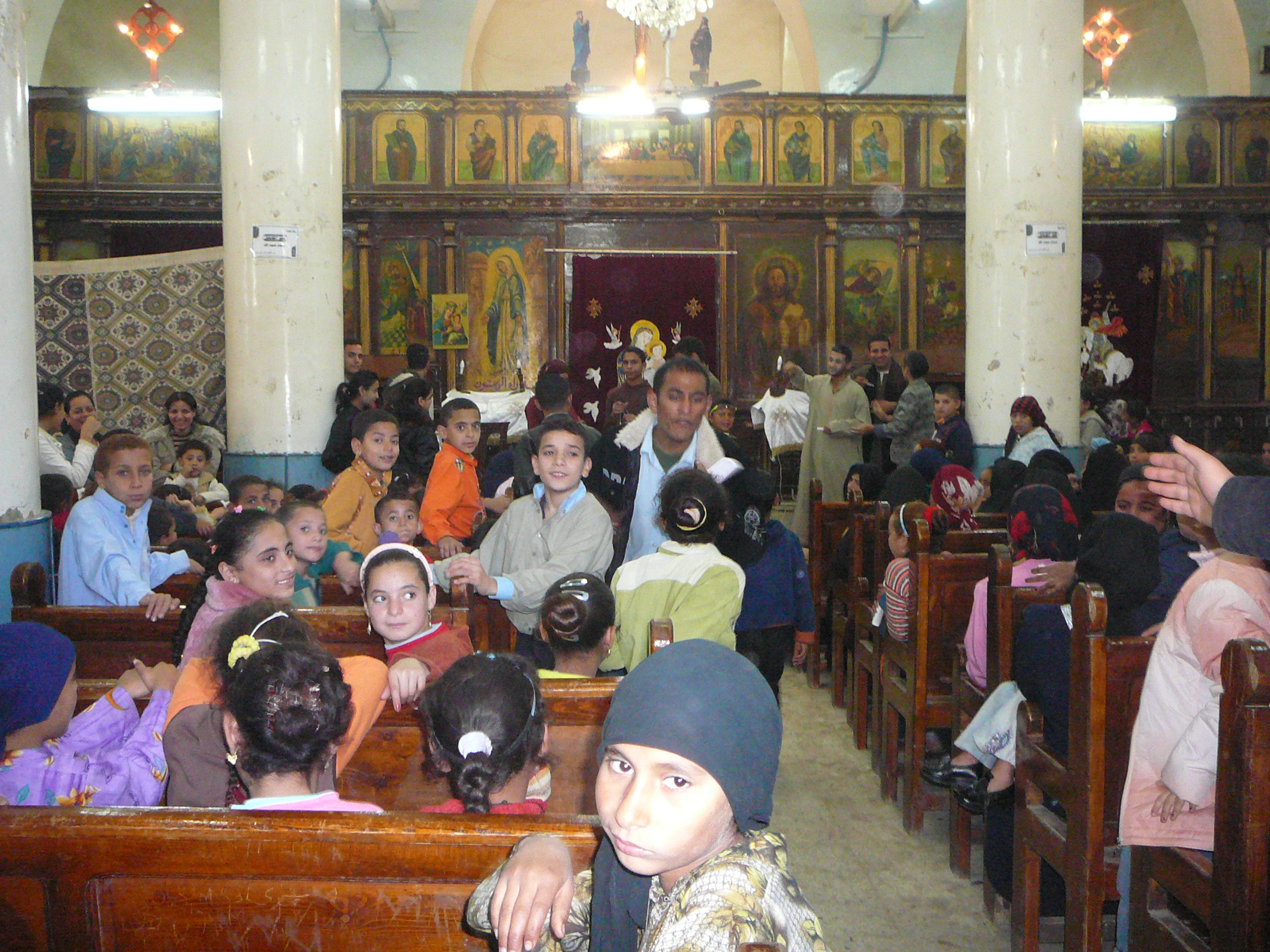
An event at our office disclosed to me another shade of Easter in Egypt. We have been trying to arrange an interview with a prominent Muslim scholar from al-Azhar University, and my supervisor told me we would meet Tuesday after Easter. I was quite happy with the news, but she continued adding that he originally asked for Saturday evening, but we proposed Tuesday instead. This news meant little to me, though I was somewhat glad not to have a work appointment on the weekend. I shrugged my shoulders however, saying, “OK, whatever the sheikh wants would have been fine.” I figured we should bow to his schedule, but at this my supervisor, a Coptic Christian, was aghast. “What,” she exclaimed, “don’t you celebrate Easter?” It took me a few seconds of puzzlement, but then I remembered that church celebrations always occur on the eve of a holiday, not the day of. The day of is a feast; a day to indulge after weeks of fasting. Children gather at the church to play and the priests open their offices to receive the well wishes of visitors, but there is no mass.

In the West we celebrate Christmas Eve, but there is no such thing as Easter Eve. Yet if you remember the events of Nag Hamadi, the murderer targeted the church around midnight the day before Christmas. As there is no correlation between Coptic Christmas and the Western calendar of December 25, this fact can easily be lost on the non-Orthodox reader. This year it so happens that Coptic and Western Easter fall on the same date. Yet even I, living here now for eight months and more tuned in than most foreigners to Orthodox affairs, was caught off guard by an Easter Eve service.

Unfortunately, once I had learned of it I was not that excited. We experienced the Christmas Eve service in Maghagha, which was wonderful as we enjoyed it with the family of a local priest in his small village. Yet we arrived by train halfway through the service, so we did not have to endure a four hour mass ending at midnight with two squirming, sleep deprived children. Managing them for an hour and a half was enough, but once it was over we went to the priest’s home and enjoyed a sumptuous feast of meat, meat, and more meat. You can read about this experience here.

Easter Eve in Maadi had none of these advantages. Though we have been attending the local Orthodox Church since shortly after arrival, we have yet to make good friends there. In saying this I do not blame them; there are many legitimate reasons for this, which I describe here. Yet even so, the celebration for us would be the four hour mass, with two children, and no meat. We decided to pass.

I continued to waver. I was fully agreed that our girls should sleep and Julie would be home with them, but what about myself? I could go alone. In the days leading up to it I went back and forth on this decision several times. As a family we went to the international church Good Friday service, and we were content to let that be our Easter church attendance. We figured we would join the children’s escapades on Easter morning at the Orthodox Church, and in the afternoon a Coptic friend from the Bible Institute had invited us to join them for lunch Easter afternoon. So all in all we set aside time for the holiday, both by ourselves, with foreigners, and with Egyptians. I could appreciate a quiet evening home on Saturday, so why bother with another mass?

On the other hand I kept being jabbed by a conscious that reminds me we are trying to belong to the Coptic Orthodox Church. Who could confess this desire and yet ignore Easter, the holiest of holidays? There is a virtue in discipline, but I will not claim it here, for my assessment of personal motivation is far too cloudy, with a likelihood of showers. Is worshipping God and being thankful for the Resurrection anywhere near my decision making process? Hardly. Part of the reluctance of going alone is that there will be no ‘credit’. Usually, my daughter Hannah sits on my lap during the service, so I get ‘credit’ for being a good and spiritual father. Furthermore, the service will be packed and any individual will be lost among the crowd. Somewhere in my mind is the idea that if I am faithful in attendance over time I will be noticed and get ‘credit’ in this quest for acceptance and belonging. There would be none of that on Saturday. Worse, I was fully conscious that I could get at least get ‘credit’ in this blog, which would be impossible if I didn’t go. I will not bother to untangle these threads of condemnation, but in the end, go I did.

As I approached the church I was glad I did. I arrived at 8:45, less than an hour after it had begun. On most occasions the church would be about quarter full at this juncture in the mass, but tonight I noticed they had set up two outside areas with live feeds supplying the action on big screen TVs. These already had numerous people sitting comfortably in the cool evening breeze, but I pressed inside anyway and found a seat on the stairs leading upwards in the balcony. If nothing else, this was to be an experience.

As I took my place I noticed my supervisor with a friend of hers in the opposite corner. Ah, credit! The evening was starting out great. About half an hour later it got even better. During this time most of the mass, unfortunately for me, was held in Coptic. Coptic is a dead language except in liturgy, but it has been aggressively promoted in recent decades by church leadership seeking to strengthen Christian identity by, among many other methods, resurrection of the ancient Egyptian vernacular tongue. Many in the audience were chanting along, having memorized the hymns, reciting along with words they would otherwise have no idea of the meaning.

Suddenly, they switched into Arabic, chanting, as slowly as possible as the lights dimmed and the curtain was drawn across the opening in the iconostasis, “al-Masih qaam, bil-haqiqati qaam,” translating the phrase any Easter-going Christian would recognize, “Christ is risen; he is risen indeed.” Except that in accounting for the solemn, deliberate rendering it would more be like this: Chri-i-i-i-i-i-ist is rise-e-e-en; he-e-e-e-e-e-e is ri-i-i-i-s-e-e-e-e-en i-i-i-i-i-i-i-i-i-inde-e-e-e-e-e-e-e-e-e-e-e-e, e-e-e-e-e-e-e-e-ed. It was eerie, but effective.

Meanwhile, in the Orthodox Church the iconostasis serves to separate the altar from the congregation, holding icons of Jesus, Mary, and the twelve disciples on a lattice which allows preparation of the Eucharistic host to be viewed by all. The main view, however, is through a wide opening in the center, which as mentioned was closed by a curtain as the lights dimmed. Symbolizing the curtain in the ancient Jewish temple which divided the sanctuary from the Holy of Holies, which only the high priest could enter once a year, the mass continued for several minutes in near darkness. Then, with the loud clash of cymbals the lights flashed on and the priest reopened the curtain, setting off a spell of ululation from the women congregants. The curtain was torn in two; Christ had risen from the grave. The mass continued, appropriately, with the reading of the Gospel account of the empty tomb.

I wish I could say the euphoria continued, at least in me. Sadly, though ultimate responsibility rests only in my own human heart, I can find blame in all others around. Allow me to explain.

As I described, I was getting caught up in the presentation. Before the darkness the Bible readings were of such inspiring passages as the resurrection body of I Corinthians, the first Pentecost sermon in Acts, and the Petrine celebration of Christ’s once-for-all death and descent into Hell to preach there the Gospel. When the lights dimmed I was caught completely by surprise, but found myself one with the worshippers even shedding a tear in the darkness. Why, then, did I find the flood of light just a little bit cheesy? Why did the ululation ring hollow, and end sooner than it seemingly should have? For me this was a first time experience, but for everyone else it was observed for however many years that person had been alive. In the darkness, there is no choice but to be silent; with the light comes rejoicing, but who can fake an excitement when it is completely expected? Worse, once the lights came back on several in the congregation began to exit.

I could only guess that most of these were women who needed to get back home to prepare the after mass feast. Surely they were to be excused, but their number increased as the mass continued on. Another large contingent left after the sermon, and the congregation dwindled to about the size of a normal, non-holiday mass. I looked at the time and noticed there was still another two hours to go, and the original ideas of wishing a quiet evening at home as opposed to yet-another-mass returned. If everyone else was leaving, why shouldn’t I? If only from stubbornness to see it through to the end, I stayed.

As I anticipated, it became just an ordinary mass, only on speed, which made things worse. Because of the additional events of the holiday the rest of the liturgy was accelerated to make sure everything ended by midnight. This included my favorite sing-along hymns, which stood in stark contrast to the earlier ‘He is risen’ solemnities. Not only was I conscious of everyone leaving, wondering why I was there, I was also growing tired and sleepy. Still I soldiered on – not the best attitude for worship, but still.

At the end communion was distributed, which surprised me, since there was no communion at the Christmas Eve service. For Lent the Orthodox will fast all day Friday, and then again for eight hours on Easter Eve leading up to the midnight Eucharist. After all had partaken the priest turned to address the congregation, rebuking them for failing to maintain an attitude of reverence in the church, beginning early their Easter revelry. With this, announcements were given, holy water was sprinkled on all, the Lord’s Prayer recited, and everyone exited.

I had told Julie that if offered I would accept an invitation to join someone for the Easter midnight feast. I did not really expect one to be given, but neither did I go out of my way to be friendly. Perhaps this is either a virtue or vice – I was not engaging but at least I held back from worming my way into someone’s hospitality. Instead I went forward to greet the priests, again straddling the line between sincerity and duplicity. On Easter one is to call all friends and wish them a happy holiday, and doing so in person now with the priests I whom I know additionally from the Bible Institute is an even better gesture. Of course, it also grants me the ‘credit’ I earlier was not expecting, grand manipulator that I am. Pausing to see if the third priest I know was also available (he was not), I made way to leave.

Exiting the church I maneuvered between a wonderful scene of Copts dressed to the nines, mingling with friends and exchanging Easter greetings in the cool air of 12:15am. I also exited to witness two other scenes which return to the theme of Easter negotiation in Egypt. Stretched grandly across the street between the trees of the traffic circle was hung a cloth banner impossible to ignore. In bold lettering it wished the brother Christian Copts of Egypt a ‘Glorious Resurrection Holiday’, to translate literally, presented by Muhammad Murshidi and Hussain Magawir, members of the national parliament. Remembering the earlier statement of Islam about Easter, these two Muslim names can either be praised for their commitment to tolerance and national unity or else admonished for shameless pandering for votes. In my opinion, I think the first is more likely, and this was my initial reaction, nearly causing another tear to trickle.

The second scene dried it up, though further reflection might stimulate the tear duct further. As I was walking away back home I saw on the other side of the banner six policemen keeping watch in the center of the traffic circle. I stopped to count; altogether around the church I found sixteen policemen on patrol. For context, churches in Egypt are always under guard, but only two or three are usually to be found, at least in Maadi. It was a clear and immediate reminder of Nag Hamadi, and the efforts of the government to prevent any similar tragedy from marring a second Christian holiday. Praise God, all was fine, as things are 99% of the time in Egypt. It is the 1%, however, which reminds the Egyptian Christian, and this foreign observer, that Easter is a holiday necessary to negotiate with a Muslim majority nation.  

Categories
Arab West Report Middle East Published Articles

On Building Churches

Another report I had earlier prepared, published in www.arabwestreport.info and on our peacemaking project webpage at www.enawu.com, is now posted here. This is a fascinating tale about how Christians can build churches in Egypt. This is a controversial subject, and human rights lawyers from both Islam and Christianity highlight the lack of one law to guide both mosque and church construction. Even so, the story told here of Fr. Yu’annis, who earlier was featured for his comments on Nag Hamadi, shows the power of personal relationships in getting a job done in Egypt. For those of you who have heard that in Egypt a presidential decree is necessary even to change a light bulb in a church, you are encouraged to read on…

On January 6 six Coptic Christians were murdered as they exited Christmas Eve mass in the town of Nag Hamadi, Qena. This event followed recent attacks on Christians in the towns of Farshut, Dayrut, Izbet Bushra, and elsewhere. While events like these are usually tied to other issues in the communities in which they occur, and not simply devices of persecution aimed at the Christian population, many Copts have interpreted these events as evidence of the weakness of the government in providing protection, if not willful negligence of their rights. They then succumb to the idea that the nation is Islamic and against them, and this attitude colors their every perception, including the advantages which Copts enjoy today.

Another area which mobilizes Coptic frustration against the state is in its policy of church building. Since early Islamic times the so-called Pact of Omar, the third caliph of the Islamic state, allowed Christians many freedoms of worship in their own community, but forbade the construction of new churches or the renovation of old ones, without the specific authorization of the head of state. While this policy has been unevenly applied throughout history, it is true that Christians have suffered because of it. Often cited in more recent history is the Hamayonic Script, which was employed in the Ottoman Empire to regulate ecclesiastic matters. Although popular consciousness, both Muslim and Christian, still operate under the assumption of this ruling, according to Dr. Nabil Luka Bebawy, a Coptic member of the Shura Council, it has no standing whatsoever in Egyptian law.

Nevertheless, it is apparent that the difficulty experienced in building churches differs from the relative ease in which mosques are constructed. Christians complain that even when permission to build a church is granted, the local security authorities will often prevent them. While this can be in fear of offending local Muslim sentiments and bringing on sectarian strife, Christians sometimes accuse security itself of Islamic bias in preventing construction. Human rights advocates, both Muslim and Christian, have called on the government to pass the Unified Law for Building Houses of Worship, which would streamline the process and place each community on equal footing. Though this issue has stalled in Parliament, the approval for building churches was shifted from the national authority to the regional, and each governor is now responsible for issuing or denying the request to build.

The following story is about Fr. Yu’annis of Qufada, a village in the bishopric of Maghagha and the governorate of Assiut. It will illustrate the frustrations of the Christian community, but also provide an example of how they can be transcended. While the difficulties faced in building churches are true and real in many parts of the country, the conduct of Christians can make a difference in alleviating them. At the very least, it will demonstrate that discrimination against Christians is not systematic, and that building churches to meet community needs is possible.

In 1996, Fr. Yu’annis was a forty year old priest. Though he was still relatively young he had already acquired seventeen years of experience, serving in the historic Holy Family site and village of Shanin al-Nasara. This village was then in the bishopric of Beni Suef, under the authority of Bishop Athanasius. After the death of the bishop in 2001 the bishopric was divided into five smaller districts, and Fr. Yu’annis found himself situated in the newly created bishopric of Maghagha. The successes of Fr. Yu’annis, however, all date previous to the bishop’s death, which was to be an ominous date for another reason in the story to be told.

Bishop Athanasius was acclaimed as a wise and generous leader, looking beyond the interests of the Christian community. He was aware not only that Muslims suffered the same difficulties as Christians—unemployment, underdevelopment, unsanitary conditions—but also that the best way to ensure Christian success in the area was to knit the two religious communities together. In the neighboring governorate of Assiut there had been a rise in Islamic militancy, and had produced a counter-reaction of Christian withdrawal from society. In hopes of alleviating this social trend, Bishop Athanasius created a charitable non-governmental organization, Better Life, which though administrated by Christians actively and intentionally served both communities. As a result, Bishop Athanasius enjoyed great popularity and influence in the region.

During his tenure Bishop Athanasius consecrated many priests, many of which followed his example. Fr. Yu’annis was one of them, and spoke very highly of his bishop, whose lead he tried to follow. The recognition of the importance of good relations with the authorities, however, did not come right away, though ignorance or naiveté may have been a cause.

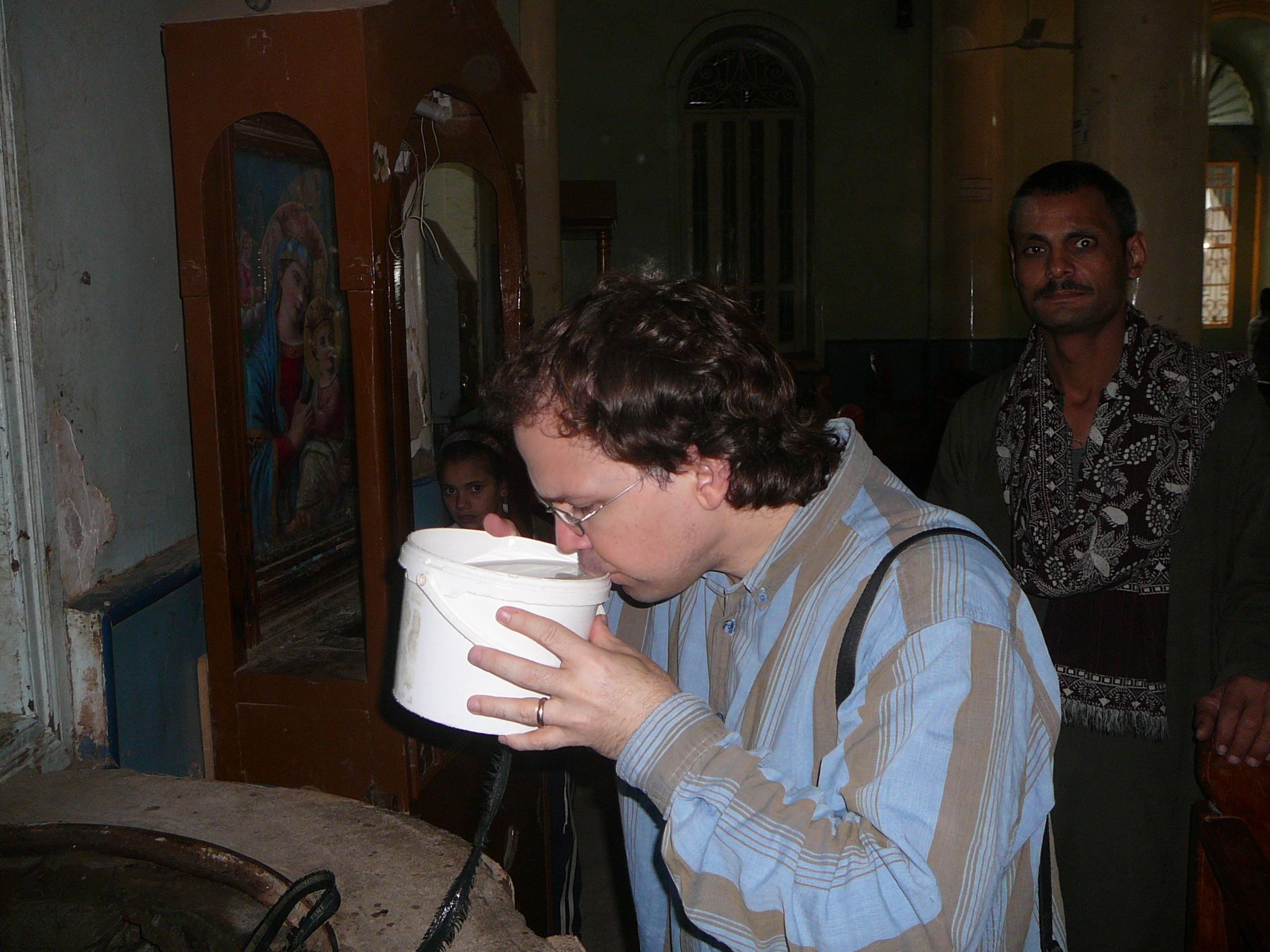
As mentioned earlier, Shanin al-Nasara is a Holy Family site, reputed to be the first landing place of Jesus, Mary, and Joseph in Upper Egypt after they departed from Maadi, Cairo. Here they rested seven days, and drank from a well whose location is still preserved today. Due to this fact the town receives thousands of pilgrims every year, and local leadership under the initiative of Fr. Yu’annis decided it would be fruitful to build a conference center adjacent to the ancient church. As construction began, however, security immediately arrived and stopped the building. Fr. Yu’annis was taken to the police station for questioning. He would later testify that he did not think he was doing anything wrong, as he was not building a church, but a center for services.

The police did not see it that way. According to Fr. Yu’annis he spent the night in the station, not behind bars but yet under guard. The next day the policeman interrogated him very harshly, insulting both him and his mother. Upon insisting he was not building a church the officer mocked him, “President Clinton insisted he did nothing with Monica, and we should believe that you are telling the truth?” Nevertheless, after several hours Fr. Yu’annis affixed his name to a document stating his intentions for the building, and was released.

Fr. Yu’annis left the station and traveled immediately to Cairo. In typical modern day Coptic fashion he was thinking, in all probability correctly, of demanding his rights. Knowing a Christian there who had a relationship with the Ministry of the Interior, Gen. Habib Adli, he asked for an audience. Though the minister was unavailable he did succeed in meeting his deputy, Gen. Rida al-Habbal, and told him what had happened. The general responded sympathetically to his story, and sent him back to Minia to meet Gen. Muhammad Sadek, an inspector for State Security. Incidentally, the two men’s wives were sisters to each other.

Gen. Sadek received Fr. Yu’annis warmly and asked him what was wrong. Upon recounting the incidents he began to cry, and the general placed his hand on the priest’s shoulder, telling him he would take care of everything. Security clearance to build the service center was granted, and the officer who maltreated him was docked pay, reassigned elsewhere, and reduced in rank. The greatest offer, however, came next.

Gen. Sadek asked Fr. Yu’annis if the church was experiencing any other difficulties with its houses of worship. “Most certainly,” he replied, and he began telling the officer about each one. Upon completion he was asked if he wished to be the official church representative before the security agency, so that there would be good contact between them and the church. Fr. Yu’annis smiled broadly, and took his leave to present this idea to Bishop Athanasius.

The bishop was of course pleased by this arrangement, and sent Fr. Yu’annis back to meet Gen. Sadek, presenting him with an ornate Qur’an, complete with gold tinged pages and raised lettering, as an expression of thanks. The general accepted this gift, and their relationship began. Bishop Athanasius had earlier explained to Fr. Yu’annis that there is an important distinction between a blessing and a bribe. A bribe is given when one asks for that which is outside his right; a blessing is given as encouragement and thanks for one who will help obtain that right. A Christian should have no part in the former, but the latter is quite normal and necessary in Egypt. As the years went by Fr. Yu’annis and Gen. Sadek would mutually exchange several gifts, including sheep and chocolate on the occasions of holiday. They maintain their friendship to this day.

Each time Fr. Yu’annis would approach Gen. Sadek with a church building issue he would present the facts, making certain to be accurate, never exceeding that which was necessary for Christian worship in a particular community. With this report the security would investigate the area in question, agree on the assessment of the church, and grant authority to build, renovate, or expand under certain conditions. As all—bishop, priest, and security—were conscious of the sensibilities of local Muslims and their possible disturbance by the building of a church, everything was done through consensus and avoidance of ostentation. The church tower, for example, was kept below the height of the village mosque minaret. Aware that the church was a tool for worship, not for projection of identity, neither the bishop nor the priest had any objections, which kept also the objections of local Muslims at bay. In the positive atmosphere previously created by the social development activities of Bishop Athanasius, Fr. Yu’annis helped facilitate the approval of building, renovating, or expanding twenty-four churches, which will be listed below.

These churches were built over a period of five years which ended in 2001. This year marked two unfortunate occurrences for the area. First, Bishop Athanasius died, and his bishopric was divided into smaller districts. The bishops newly consecrated for these areas by definition lack the experience and insight of their predecessor, and have not yet been able to earn the same level of respect. Second, Gen. Sadek was promoted outside of the area to a position in Cairo, and Fr. Yu’annis has not succeeded in cultivating as close a relationship with his successor. Perhaps personal mistakes have been made; perhaps the sectarian climate affects both Muslims and Christians. The result, however, is that since 2001 there have been only two authorizations granted for building activity in the area.

This story lends credence to both sides of the Coptic debate about the society they live in. On the one hand, it both begins and ends with the fact of difficulty in obtaining authorization. There is no Unified Law for Building Houses of Worship, and everything seems to depend on the whims of personal relationship. Yet on the other hand the reality of personal relationship suggests that Christians can find wide freedom to erect structures as necessary, provided they consider the contexts in which they live. Though this does not provide the clear cut rule of law which so many desire, it is fitting with Egyptian society at all levels; Egypt is not a country of rules but of relationships. Within these relationships Christians, like all Egyptians, can live and worship freely. Without them Christians, like all Egyptians, can be lost.

Churches in Maghagha

1)      The Church of the Archangel

2)      The Church of St. Dimyana

3)      Lighthouse Church of the Holy Virgin

4)      The Church of St. Mark – Seat of the Bishopric

Village Churches around Maghagha

5)      The Church of St. Mark, Abbad Sharuna

6)      The Church of the Archangel, Sharuna

7)      The Church of St. George, Gazirat Sharuna

8)      The Church of St. George, Belhasa

9)      The Church of St. George, Sheikh Masud

10)   The Church of St. George, Barmasha

11)   The Church of the Holy Virgin, Beni Walims

12)   The Church of St. Mark, Nazlet Asr

13)   The Church of St. George, Sheikh Ziyad

14)   The Church of the Archangel, Dahrut

15)   Social Service Building, Shanin al-Nasara

16)   The Church of the Holy Virgin and Bishop Samuel, Izbet Rizq

17)   The Church of the Holy Virgin, Abasiya

Beni Mazar

18)   The Church of the Apostles, Ashruba

19)   The Church of the Holy Virgin, al-Mahtan

20)   The Church of the Holy Virgin, Nazlet Gulf

21)   The Church of the Holy Virgin, Batruga

Mattai

22)   The Church of St. Athanasius, Kafur

23)   The Church of the Holy Virgin, al-Kawadi

Samalut

24)   The Church of the Archangel, al-Qatusha

Categories
Arab West Report Middle East Published Articles

An Azhar Sheikh on Nag Hamadi

Continuing a viewing of material which we prepared for our peacemaking project reporting which has not yet been posted here on the blog, I here list below an interview I had with a fairly prominent and controversial sheikh from the Azhar University. During our conversation we spoke about two subjects primarily: First, his very modern and reformist views of Islam; second, his opinion on the events which took place in Nag Hamadi. For the first comments I encourage you simply to read on; for the second I can preview that he provides an insightful view of how many Muslims of Egypt view this tragedy. For a balancing perspective on how most Christians view the event, please click here for an interview I had with a Cairo bishop in the Orthodox Church. If you would like to read my reflection on these divided perspectives, you may click here. Now follows the report from the Azhar sheikh, for your reading pleasure:

Dr. Ahmad al-Sayih is a controversial figure in Egypt, though I was not aware of this before seeking an interview with him. Instead, I had met him informally for the first time at a meeting of the Moral Rearmament Association, an Egyptian NGO with which he is friendly, but not a member, during which he made very open comments about Islam and Christianity being one religion and of the necessity cooperation between them. This put the idea in my head of speaking with him about potential assistance with the Center for Arab West Understanding in our efforts to promote social peace and reconciliation in Egyptian areas which have experienced conflict. Though I filed this information away for later use, a more pressing reason to interview him came after the incidents of Nag Hamadi, in which six Christians were killed upon exiting Christmas Eve mass, along with a Muslim policeman assigned to guard the church. Shortly thereafter I learned Sheikh Ahmad was from the governorate of Qena in which Nag Hamadi is located; might he be an acceptable spokesperson to travel and speak of peace?

As it turns out, Sheikh Ahmad is from a small village which bears his family name, situated only 30 kilometers from Nag Hamadi. Izbet al-Sayih, where he is from, has only five to six Christian families—which live in peace with their more numerous Muslim neighbors who guarantee their safety—but is part of the larger community of al-Qara, which is one-third Christian. Sheikh Ahmad testified that local Christians speak of him as ‘their’ sheikh. Continuing up the administrative ladder, al-Qara is connected to Abu Tisht, which is equal in level and population to Farshut, where it is reported that a Christian young man raped a Muslim girl, leading in the belief of many to the violence experienced both there and in Nag Hamadi. Abu Tisht, meanwhile, is connected to the regional capital of Qena.

Sheikh Ahmad received me in his home in Madinat Nasr, a suburb of Cairo, and immediately gave me insight into his prodigious volume of authorship as well as his favored subjects of controversy. He has written 157 books and hundreds of articles in Arabic newspapers and journals around the world. Many of these books are concerned with commentary on the Qur’an or on commentators of the Qur’an, resurrecting ancient manuscripts and updating their language and relevance to the Islamic community. The other prominent subject of his attention is combating the un-Islamic nature of Islamist movements, most notably the Wahhabis of Saudi Arabia and many strains of the Muslim Brotherhood. This critique would be controversial enough, as their ideas have wide if not full acceptance by many in Egypt. He proceeded, however, to carve deeper into general Muslim understanding.

Sheikh Ahmad produced for me two recent newspaper articles which conveyed this thoughts—and the strong reactions against them—declaring both polygamy and the ‘torture of the grave’ to be heretical. Common Islamic belief holds that a man may marry up to four wives at one time, provided he can care for them equally, and that upon death all people, including Muslims, undergo a ‘squeezing’ as the angels interrogate them about their faith, measuring them against true doctrine. These ideas, especially the latter, have been debated among Muslims for centuries but are widely held today as correct belief. Sheikh Ahmad challenges these prevailing ideas, and furthermore declares that 60% of what Muslims believe today to be accumulated superstition (khurafa).

These superstitions were attributed to falsified words and stories attributed to the Prophet Muhammad by his early followers. He specifically blamed the Gnostic sect (al-Ghunusia) for many of these forgeries, which have worked their way into the holy sources of Islam through authenticated collections of these hadith. I asked if the great researchers of these collections, including Bukhari and Muslim, were part of this ‘conspiracy’. He nodded in great enthusiasm that I had understood him properly.

These were not always the beliefs of Sheikh Ahmad, though the story of his ‘conversion’ was not discussed during this interview. After leaving Qena he studied directly at al-Azhar University, and was in time enrolled among its professors. After many years he was seconded for five years to a university in Qatar, where he drew the attention of Um al-Qura University in Mecca. Al-Azhar was unwilling to allow him to transfer under a similar arrangement asking him instead to teach five years in Egypt before taking the post. With this understanding he completed his doctoral studies in Islamic doctrine and philosophy and attained the position of dean in the faculty of dawa (the call to Islam). Thereafter he resigned to take the more lucrative paying post in Saudi Arabia, where he taught for nine years. He spoke of his deep exposure to Islamist ideas during his time abroad, with which he grew increasingly frustrated. He also commented that he had attended over fifty international Sufi conferences, professing a great preference for this line of though, though he himself was not a Sufi as he was not attached to a teacher (murid) in an established school (tariqa). He described how in a visit to Makarius Monastery in Wadi Natrun, Egypt, he recited the opening sura of the Qur’an over the relics of John the Baptist and Elisha, praying in their churches, and esteemed the Christian monks there and elsewhere as the truest of Sufis, who are the best of all Muslims.

Following our discussion of Islamic doctrine I asked Sheikh Ahmad specifically about Nag Hamadi. He mentioned three main tribes, but concentrated on two of them, one of which he divided into three smaller tribal units. He spoke first of the Arab, which he divided into the Qulaiyat, of which he is a member, Washishat, and Samaana groupings. He stated that there were over three million Qulaiyat spread throughout Upper Egypt, but that 60% of the governorate of Qena was from the Ashraf tribe, which claims descent from the Prophet Muhammad. Historically the Ashraf were at odds with all tribes in the region, but are no longer characterized as such. The other tribe he described was the Hawara, who had originally migrated from the Maghreb many generations ago, and with whom the Arabs still have tension. Christians, he described, are not related to these tribes by blood, as they predate the tribes, but come under association with the dominant tribes of their village. This gives them status of near-members, and the Christians associate themselves proudly with the village they occupy as well as with its prominent tribe. Christians will participate in defending the honor of the village and the Muslim tribes provide protection for the Christian inhabitants. Sheikh Ahmad described this as the normal set of relations.

In this context I offered the question that there was no sectarian struggle in Nag Hamadi, and Sheikh Ahmad immediately agreed, stating that the whole affair was first the fault of a Christian, and secondarily of the government. Once the promiscuous relationship between the Muslim girl and the Christian young man, who was an employee of her family, was discovered in her village of al-Shaqifi, traditional customs called for the death of both. This would be regardless of their relationship being consensual or not, or if the girl was underage or not. As to these matters Sheikh Ahmad professed no knowledge. The honor of the family was violated, however, so the young man should be killed, after which the girl would be killed by her own father, as all marriage prospects would hereafter be forfeit.

The young man is from a village called Qum al-Ahmar, which has only one or two Christian families. If he had been killed straightaway none of the subsequent troubles would have happened. He, however, fled to his relatives in Farshut to seek protection. Tribal revenge was then exacted on Christian businesses in the city. The sheikh himself volunteered the information that the Christian businessmen of Farshut are very wealthy and control area finances, but when I asked him if there was financial motive in the attack or else a deliberate play against Christian influence, he denied this, stating that the only establishments attacked belonged to the young man’s relatives. This would be an important indication of the validity of his analysis, which needs to be verified through other sources.

During this time the young man was arrested, coming under police protection, making the customary right of the family to take revenge impossible. Sheikh Ahmad placed much blame on the local security forces for miscalculations and lack of consideration of the consequences of their arrest. Had they allowed tribal custom to run its course, meaning he would have been killed, all would have been fine. I asked him about the relationship of Islam to these customs, and he strongly asserted that there was none. Why then, I questioned, could he state this? Granted that it is the reality of the situation, with which all people must adapt, but as a man of religion how could he believe this was the best situation? Sheikh Ahmad agreed that while Islam would call for the punishment of a sex offender, the religion called for this to carried out by legitimate authorities, not by vendetta.

The situation became further complicated when the families of the Christian young man fled from Qum al-Ahmar to the seat of the bishopric in Nag Hamadi. Here they received welcome and protection, but according to the sheikh also made the bishopric a viable target for revenge, as it had interfered in a blood feud. This, he believed, is why the church was subsequently attacked.

This explanation prompted two serious questions. First, why did the families flee the village if they were under the protection of the dominant Arab tribe? Sheikh Ahmad had previously explained that Qulayiat would prevent the entrance of any foreign tribal element that sought to harm local inhabitants. Regardless of the guilt or innocence of the young man, the village would protect its own, and avenge any act perpetrated against its sons or daughters, Christian or Muslim.

Sheikh Ahmad did not have a satisfactory answer for this question. He imagined that perhaps someone in the bishopric convinced the families they would be better off under its protection, as life in the city of Nag Hamadi was less governed by the dominance of tribal altercations. Still, though an understandable sentiment it made me wonder about the realities of protection offered to the Christians of the area. A previous testimony from Nag Hamadi, from the Coptic community, described the Christians in good relations with the Hawara tribe, which was at odds with the Arabs, who among the tribes were the most antagonistic toward the Christians. Without putting too much confidence in his description, might the Arab Qulaiyat of Qum al-Ahmar been divided in their tribal loyalties? The Muslim girl also belonged to the tribe of Qulaiyat. Aware of any hint of vacillation perhaps the Christian families felt their safety strongest in the church? Of course, the testimony of the sheikh about the refuge of these families in the bishopric demands confirmation, as it is the first we have heard of this connection to the attacks of Christmas Eve.

The second question was answered more confidently. Many commentators, both Coptic and Muslim, have questioned the attack on the church as a violation of tribal custom. They state that revenge must be enacted upon the extended family of the accused; never would shots be fired recklessly into a crowd of innocents. Even if the families were stationed inside, the gunmen opened fire randomly. Many have alleged this is not traditional tribal practice.

Sheikh Ahmad related a story which may refute this line of argument. A few years ago a policeman in the region assaulted a villager, kicking him repeatedly in the groin and stomach, inflicting injuries from which he later died. The police officer was from outside the area but his origin was known; the villager was a member of the Washishat tribe of the Arabs. Shortly thereafter the Washishat organized an attack on the local police headquarters where this officer was stationed. No effort was made to travel to seek out his family. It was sufficient to attack the symbol of his authority and exact revenge on the group, even though his fellow officers were not relatives and had nothing to do with the excesses of the guilty policeman. Perhaps being frustrated in their inability to kill the young man the sense of revenge was then turned against the symbol of his community.

I asked Sheikh Ahmad about another item of information learned earlier, that the ‘Baltaga’, the violent underclass which was responsible for most civil unrest, and from whom, it is said, the gunman of Nag Hamadi originated, had great representation among the Arab tribe.  He agreed that this was correct, but added that all the tribes had their ‘Baltaga’. Asked about their self-identity he related that these would view themselves as heroes (abtal). They are the ones who carry out the dirty work of tribal revenge, which this element takes very seriously. They could alternatively be described as guns-for-hire. Sheikh Ahmad stated that it would not be fitting for a respectable member of the tribe to take a gun himself and exact revenge if the honor of his family demanded it. Instead, he would commission the ‘Baltaga’ to do the job, and it would get done. There are known families famous for their participation in this ‘trade’, and when I suggested the word ‘mafia’ he signaled that I had understood.

Earlier in our conversation Sheikh Ahmad stated his desire to travel to Nag Hamadi with members of the Moral Rearmament Association as soon as the security situation would allow. He mentioned that he wished to speak about the message of humanity which binds all men together, and not simply of Islam, no matter its true relation to the principles of humanity. He wished to emphasize that Muslims and Christians were brothers and that such a crime was an assault against all. Despite his understanding of tribal customs in no manner did he wish to communicate his support; after all, the Prophet declared that the life of a person was more inviolable than the sanctity of the Ka’aba.

I esteemed this message, but emphasized that a general message of religious tolerance did not seem to be necessary based on his assessment of interreligious relations in the area. Instead the situation appeared to call for a religious assault on the culture of revenge killings, emphasizing patience and forgiveness over the desire to retaliate. Might it be possible, for example, to go to the ‘Baltaga’ and instruct them about their violation of Islam in fulfilling their tribal customs? This, he conjectured, would be useless. These patterns have been ingrained in the population since Pharaonic times, and could not be changed through personal communication. His solution was gradual and broad, of which he was optimistic in its success. It would take fifty years, he declared, but the greater culture of openness and tolerance is already spreading in Upper Egypt. There was a time, as previously mentioned, that the Ashraf tribe was at war with everyone; now, they live in peace with the others. His own tribe until recently forbid intermarriage with other groupings, and even maintained a practice of slavery. Today these remnants of traditional culture have passed away. This transformation is slowly penetrating even smaller villages, and it will not be long until a better moral consciousness has settled into the majority. Though this infiltration is happening primarily through television and media, he is hopeful that his general message soon to be delivered may play a role, however small.

With this comment we exchanged good wishes for success and cooperation as we jointly wish to promote this general culture of peace. Sheikh Ahmad referenced the similar work being done through Dr. Rifaat Ahmad of the Jaffa Center, with whom we have had previous acquaintance. He also agreed to provide a review for the peacemaking paper summarizing our findings in preventing and assuaging incidents of conflict, provided we translate the document into Arabic. In all of these matters it is hoped that we may have found another friend in contributing to a network of social peace and reconciliation, one who has been involved far longer than we have. No matter how controversial some of his views may be, we desire to work with all, and Sheikh Ahmad appears to be a powerful contributor.

Categories
Arab West Report Middle East Published Articles

A Survey of Priests

One of the most interesting projects and papers which have been produced over the past few months was a survey of diocesan priests we conducted under the authority of the bishop of Beni Suef. This was done following the incident at Izbet Bushra, described in the last post, in an effort to determine how this was experienced by other priests in the area. More importantly, it asked a number of questions concerning their community interactions with Muslims. From this we made an elementary statistical analysis which produced insightful finding for good practices which lead toward peace. I have printed the abstract below, under which is a link to the full report, which is quite a bit shorter than previous ones to which I have linked. I hope you enjoy.

The clashes between Muslims and Christians in Izbet Bushra on June 21, 2009 resulted from a dispute in the village over using a private residence for community prayer services. Though details from the event are hard to confirm, it appears that Christians anticipated many difficulties in gaining permission to build a traditional church structure, and therefore used deception to build a residence for the priest with a prayer hall under the guise of being a factory. Though much critique has been leveled at the government of Egypt concerning the right of Christians to build churches, from the example of Izbet Bushra and elsewhere, this paper seeks to look at the issue from another perspective. What are the community patterns necessary to avoid the occurrence of religious tension? Though the practical question is not addressed it is a worthy introduction: Had there been good relations between the Muslims and Christians of Izbet Bushra to begin with, might the Christian desire to build a church have engendered any controversy at all?

In the aftermath of the conflict we obtained permission from Bishop Stephanos of Beba and el-Fashn to conduct a survey of the priests in his diocese. In it we asked a number of questions designed to discover the patterns of relationship between the Christian and Muslim communities within each priest’s jurisdiction. We also asked a number of questions concerning their knowledge and opinion of the incident which took place in Izbet Bushra.

From the survey results we were able to make basic observations establishing several patterns to the key question asked each priest: How are would you describe relations between Muslims and Christians in your area of service? The three options given were: Improving, About the Same or Stable, and Deteriorating. There are definite correlations which emerge when studying the data. Among the questions asked are:

  • Does your area employ private residences for worship?
  • What is your relationship like with the area imam?
  • Are there joint projects between Muslims and Christians in your area?
  • Do Christians in your area serve in the police or security forces?
  • Do Muslims and Christians frequent the same area shops?
  • What is your method for dealing with clashes?
  • Who is the first person you would inform in the case of a clash?
  • What is the demographic data from your area, population of Muslims and Christians, number of mosques and churches, registration status of each, etc.

These questions and others produce observations which make strong suggestions about ideal community practices which lead toward improving religious relations or away from a condition of deterioration. As such, they are offered as suggestions to the Christian community in general, in hope of producing interreligious harmony which may prevent the incident of violent conflict over the normal and natural disputes which occur whenever people exist together in community. One may easily surmise that community involvement and personal interaction lead toward improving relations between residents of an area; this paper presents statistical information which demonstrates the correlation.

Click here for the full report.

Categories
Arab West Report Middle East Published Articles

Izbet Bushra

Following upon the text from yesterday which introduced our summary report, I post here the abstract for the paper which described our findings from the case study which informed it. Should you wish to read the full paper, it will provide a window into the vagaries and contradictions of Egyptian media reporting on incidents of violent conflict. The paper is an effort to sort through these reports to determine what really took place, but to go further and suggest paths for reconciliation. This was more or less the first case I received in Egypt with Arab West Report; until recently almost all subsequent activity was related to it.

On June 21, 2009 violent conflict broke out between Muslims, Christians, and security forces of Izbet Bushra, a small village located in the governorate of Beni Suef, approximately 120 kilometers south of Cairo. The issue at hand was Coptic prayer services being conducted in a private home, which caused offense to Muslim neighbors, who constitute approximately 60% of village population. Damage was done to the building as well as to other Christian homes, and people from both sides were injured in the altercation. Security arrested many and imposed curfew, after which Christians conducted a sit-in protest at the cathedral in el-Fashn, the location of the bishopric to which Izbet Bushra belongs. This was followed shortly thereafter by reconciliation session between all sides, which freed all perpetrators from custody and produced an oral agreement to compensate afflicted parties and authorize an official church in a different location in the village. Until today that promise has not been kept; security relates that sufficient tension has not yet been removed from the village.

These lines may represent a summarized timeline of the events following June 21, but they hardly represent the entire story. This paper explores the issue of Izbet Bushra in depth, seeking to discover the larger context behind the incident as provide integration of as many facts and testimonies as could be collected. This has been done through access to the many media reports published about village, as well as through investigative research undertaken by the Arab West Report team or by others commissioned on our behalf. The result is a thorough collection of data that rounds out the story, providing depth and color.

Unfortunately, a wealth of data also produces confusion. Testimony from the two sides is contradictory, as are the news reports which depended on these oppositional sources. Yet background can be provided in stating that the house used for public prayer services was not an innocent effort to conduct Christian worship. While it is true that no formal church building exists in Izbet Bushra, and that the procedures for obtaining permission to construct a church are burdensome and lack transparency, the Christians of the village purposely deceived both government administration and Muslim neighbors in declaring the building in question to be built as a factory. Upon its completion it was then first made into a residence for the priest and then employed in its lower hall for church services. While this fact makes more understandable the Muslim reactions, details even here and in the attack which followed remain unclear.

This paper first arranges all testimony, no matter how contradictory, into a narrative flow in order to give a timeline of events. It then records a best attempt at synthesis in order to distinguish from fact and speculation, offering a faithful and unbiased effort to understand exactly what took place. This recording is not done for its own sake, however, as our interest in Izbet Bushra lies ultimately in social reconciliation between the two parties. In this hope the paper concludes with suggestions for each religious community in order to seek for a solution to restore village harmony. These proposals are offered humbly, and we await the right opportunity in which we might engage village leaders to encourage them toward dialogue and reconciliation.

Click here to read the full paper.

Categories
Arab West Report Middle East Published Articles Reconciliation

Social Reconciliation

The end of February was a very hectic time for us. The peacemaking project I have written about here from time to time was coming to and end and all reports were to be submitted by the 28th. (If only it was a Leap Year!) While many reports were done, several still required editing, and everything had to be put online. In the end we made it, and you can see the results at www.enawu.com, if you click on the ZIVIC-Conflict Resolution tag on the left hand column.

In the meanwhile, I thought it would be interesting to share the lessons we learned with everyone. Not only will this give a good picture about what we have done in Egypt since arrival, it will also give a thorough introduction into conflict in Egypt, of which a fair proportion is religiously based. In this spirit we will try over the next few weeks to provide the most interesting reports, and where applicable, give you the link to the full paper which was written. For faithful followers of Julie’s posts, don’t worry, we will intersperse these as well.

Today will begin this effort, and the text which follows is the abstract of the comprehensive paper summarizing our experiences over the last six months. The full paper length is about forty pages, so take care to download it when you have a moment to spare, or else save it for future reading, say, your summer vacation at the beach. For those interested, it will be a one way mind meld between me and you, as I tried to include almost everything I have learned since arrival in Egypt. I hope you enjoy; your comments are welcome.

In all nations of the world, conflict is normal, and Egypt is no exception. Violent conflict in Egypt, however, is not. Though the Egyptian population has always been a peaceful people, many are noticing the increasing violence exhibited throughout society, much of which is along religious lines. There is a growing religiosity that imbues both Muslims and Christians with a powerful sense of identity to their community of faith. While only in the rarest of cases does this push either group towards violence, it does contribute to an unfortunate culture of sectarian analysis, which interprets these events along religious lines. This tends often to deepen the sense of religious division, cultivating further cyclical patterns of aggression, sometime passive, against the other, be it physical in outright attack, or psychological, in accusations of disloyalty or persecution. Reporting styles of the media, with all its variety, generally tends to fuel this established pattern by either labeling an incident a sectarian event or else denying the religious dimension completely. Balanced and objective journalism disappears in the process.

This paper recognizes that these are the witnessed features of conflict in Egypt, but many other factors lie beneath the surface. Underreported are the population pressures and economic difficulties which push normal disputes over resource allocation past the threshold of traditional resolution mechanisms into the pursuit of violence. One of these traditional mechanisms is the ‘reconciliation session’, which in principle restores community harmony but in practice often complicates the situation. Whether in land registration, church building policy, or an overwhelmed judiciary the law of government is applied weakly in many parts of Egypt. This tends to an overreliance upon ‘reconciliation sessions’, which are often conducted with a lack of transparency mirroring other aspects of the state. Security practices, though naturally present following an outbreak of violence, are but another example. Any mistakes made or weaknesses perceived are denied, and these therefore un-admitted factors combine with underreported demographic changes to produce the painfully visible instances of violence which torment the Egyptian consciousness.

This paper explores these issues in more depth, but also seeks a way out. Using Johan Galtung’s methodology of conflict resolution following medical practice of diagnosis, prognosis, and therapy, this peacemaking project suggests better practices. The diagnosis is explained above. Prognosis involves proscribing corrective changes to the major sections of Egyptian society: Government, Church, Local Leadership, the Media, and Non-Governmental Organizations. Therapy then posits a procedure to lead into social reconciliation following conflict. First, root causes and contextual studies must be determined and addressed. Second, community leaders from all sectors must be identified and supplied with information. Third, these are then encouraged into dialogue through a mediator who both knows the area and is accepted therein. Fourth, pending these discussions to be focused on just negotiation and relational unity, supportive projects can be considered to assist in community reintegration. It is hoped that this will be a predominantly Egyptian initiative, for local problems demand local solutions. Yet the eyes of outsiders, Cairene or otherwise, may be helpful.

This paper is submitted for review by all, but a selected number of advisors have written their critique and added their observations. These are also presented for further evaluation, and the reader is welcomed to offer both constructive criticism and proposals. For such an endeavor a network is necessary; to the degree you are willing we invite you to join.

Click here for the full paper.

Categories
Arab West Report Middle East Published Articles

A Departing Third Opens an Unclear Future

Yesterday, March 10, 2010, the Grand Sheikh of al-Azhar died of a heart attack while visiting Saudi Arabia. Sheikh Muhammad Tantawi led the inimitable institution, considered by many if not most Sunni Muslims to be the leading Islamic university in the world, since his appointment by President Mubarak in 1995. Together with President Mubarak and Pope Shenouda of the Coptic Orthodox Church, Sheikh Tantawi presided over a period of considerable change during his tenure, and their lives, each one in their eighties, spanned epochal changes in Egyptian society. As the first of these three elder statesmen has passed on, Egyptians may wonder about the next generation of leadership, and the directions it may take.

During his career Sheikh Tantawi was a lightning rod of criticism from all corners of Egypt, making rulings considered too liberal or too conservative, depending on the source. Among the chief condemnations made of his tenure was that he was compliant more to the will of the state than to the principles of Islamic jurisprudence. Though a religious figure, he was also a political appointee; such remarks had ample target. For Muslims frustrated with an apparent secular regime he was its worst symbol, as he was attached to the heart of Islamic learning in the Arab world, the chief figure expected to uphold the purity of Islam.

A brief litany of his most controversial rulings includes issues straddling the religious/secular/political divisions which characterize Muslim debates today. In terms of women’s issues he fought against the burka, the full body covering opening only with slits for the eyes. He denied the Islamic foundation of the cultural practice of female genital circumcision. He ruled also that Islamic sharia did not forbid a woman president. In terms of the Western debate on terrorism and jihad he ruled that Islamic jihad must only be a defensive measure. He condemned the attacks of September 11, but wavered on suicide bombings against Israeli targets. Yet he also worked tirelessly as a mediator for peace, both in Israel/Palestine and Iraq. He was also a firm defender of equality between Copts and Muslims in Egypt, and enjoyed a warm relationship with Pope Shenouda. In all of these matters he pleased some but not others, but many were left frustrated that he either went too far, or not far enough, in his rulings. His lasting reputation as a political stooge or a man of principle will be debated long after his death, which marks the end of an era in Egyptian history, and the initiation of an unclear future.

Sheikh Muhammad Tantawi was 81 years old. Currently his Christian religious counterpart Pope Shenouda is 86. President Mubarak, meanwhile, is also 81. Pope Shenouda was selected by lot to fill the patriarchal chair of St. Mark upon the passing of Pope Kyrillos in 1971. Sheikh Tantawi was appointed to fill the post of al-Azhar, being promoted from the position of Grand Mufti, upon the passing of Gad al-Haq, who was known as a conservative Islamic figure, and with whom he had clashed several times. President Mubarak, meanwhile, became president upon the assassination of President Sadat in 1981. None of the three obtained their post by the will of the people, yet all have defined the political, Islamic, and Christian positions for the majority of Egyptian citizens. Their influence has been incalculable.

Now, Sheikh Tantawi has passed on. In some respects he is probably the least significant of the three. Regardless of the prestige of al-Azhar in Islamic history in the modern state it has become an extension of government bureaucracy. This does not imply Sheikh Tantawi was not sincere in his rulings. It is simply a statement that Muslim religion in Egypt is tied to political rule, and in the multiplicity of religious interpretations al-Azhar is no longer inviolable for the Muslim faithful.

This is much less so when it comes to the power of the church. Orthodox Christians in Egypt represent 90-95% of Christianity, and the majority of these look to Pope Shenouda, though without infallibility, as the undisputed leader and example of Christian thought and practice. There is no connection to the state; though President Sadat once banished Pope Shenouda to a monastery he could have no role in selecting a replacement. President Mubarak, interestingly, reestablished him to his papal chair. The pope is a towering figure in Egypt; in recognition of his advanced age the church is wary of decisive policy. Pope Shenouda has set the course; it will be continued until he also passes away, and then God will select by lot another leader. The church, quietly, does have divergent voices; only God knows which one will emerge.

Since the wick of Sheikh Tantawi was consumed before that of President Mubarak there is less apprehension concerning the next appointment of Grand Sheikh of al-Azhar. It is anticipated that the president will appoint someone similar, certain not to stray too far from the political perspectives of government. Yet the status of sheikh is not similar to that of pope, though by tradition he maintains the post until his death. As a political appointee it is possible, though unlikely, that the next president may depose the current figure and select his own man. Still, choosing the interpretive head of the Islamic world is not as simple as choosing a minister of agriculture; there will be substantial pressures on the next president to satisfy the demands of every religious interest. The identity of this next president, however, is an open question, perhaps for the first time since the revolution of 1952 introduced military rule to Egypt.

Some observers believe simply that following President Mubarak’s anticipated decision to end his political career—the next elections are in 2011—another general from the military/security sector will be internally selected to continue governance. His presidency will be popularly validated through elections, and the course of Egyptian politics will continue as it has for the past sixty years: Secular in orientation, focused on development, cautious with human rights and freedoms, wary of the power of religion.

This prediction bears a substantial wildcard, however, which has not yet featured in the modern Egyptian state. President Mubarak has a son who is acclaimed by some as a potential successor. Gamal Mubarak, however, is not a military man. While he may (this is debated) enjoy the backing of his father, he is less likely to garnish the behind the scenes support of the military elite. Furthermore, while many Egyptians appreciate the stability of the Mubarak presidency, they are reluctant to witness the instillation of his son, reducing the status of the republic to that of the nepotistic Pharaohs.

One final possibility is that true democracy does emerge, but with what result? While political Islamist interests do not represent a majority of the population they are adept at the political game of campaigning and elections. If allowed to participate they may ride the religious slogan of ‘Islam is the Solution’ into the presidential palace on the backs of a populace frustrated by lack of the secular regime’s advancement of freedom and economy. Or, there are other candidates outside the traditional government sector which command wide respect, but are criticized as candidates for lack of political acumen. The former head of the United Nations nuclear watchdog agency and winner of the Nobel Peace Prize, Muhammad al-Baradi, is one such gentleman. Though he is understandably reluctant to throw his hat into the ring, he represents the hope of many Egyptians longing for civilian, democratic governance.

Though it be said that only God chooses the pope, space can be granted for the behind the scenes maneuvering of Orthodox bishops. Pope Shenouda has created a church bureaucracy similar to that enjoyed by the state by dividing growing bishoprics and appointing bishops loyal to his philosophy of Christianity. The Holy Synod comprises these bishops in their entirety, and with the General Lay Council of the Church is tasked with election of three candidates according to church tradition, which can be variable. Among these three, then, God makes the selection, through a blindfolded child who draws the lot.

Sheikh Muhammad Tantawi’s life spanned the rule of three kings, three presidents, and both war and peace with Israel. He witnessed the transformation of the country from a British colony with Turkish vestiges into a modern bureaucratic state. His passing signals the beginning of an era of change for Egypt, though the direction is yet uncertain. Not until Pope Shenouda and President Mubarak – may God preserve their lives – join him in the world beyond will this direction fully come to light. May their successors receive God’s wisdom for the substantial challenges each will face in filling the shoes of such monumental personalities.

Categories
Arab West Report Middle East Published Articles

Coptic Participation in Elections

Samir Zaki is an employee of the Egyptian National Bank, but his passion associates him with the Bishopric of Youth under the leadership of Bishop Musa, in which he encourages Coptic Christians to fully participate in society. On January 2, 2010 he was invited to present a lecture at St. Mark Church in Maadi, Cairo on the necessity for Copts to participate in Egyptian elections. For two weeks previous Fr. Ishaq had closed the Friday mass with an invitation to the church to attend this important lecture. He stressed that this was vital to the life of Copts in Egypt, noting the success of Copts abroad in affecting American politics due to their coordinated efforts. Though St. Mark Church boasts a regular attendance of five hundred people, only fifty came to attend the lecture, mostly from the older generation. Perhaps this is enough indication of Coptic neglect of elections, and an apt foreshadowing of what was to come.

Samir began his address discussing religion, asking in reference to the Coptic mass, do we pray for Christians alone or do we pray for the whole world? Everyone nodded in agreement that Coptic prayers implore God’s blessing on all, and Samir followed up by asking rhetorically if it were to be that Muslims were slaughtering other Muslims, would we not pray for them? All agreed that of course they would. The church, he maintains, teaches us that we belong to the communities in which we live, and we are to care for that world in which we find ourselves. Christians, Jesus declares, are the salt of the earth; salt is an agent of preservation. Just as food without salt tastes bad, so this world without Christian participation leaves it lacking. Samir implored the audience to present a good taste to those around them.

Following this introduction he moved into history. Beginning with Muhammad Ali he mentioned the major political figures in modern Egyptian history, celebrating them for their modernizing influences and allowance of Coptic participation in society. Sa’id Pasha allowed Copts to participate in the army and lifted the payment and stigma of jizia (an Islamic tax on non-Muslim peoples) from both Christians and Jews. Later, when the British occupied the country Copts followed the leadership of Muslim leaders Mustafa Kamal and Sa’d Zaghlul in resistance and nationalism. The Wafd party enjoyed wide Coptic membership, and the unity flag of cross and crescent flew over the city streets. During this time Cops occupied influential posts, even as foreign minister and leader of Parliament. It was a golden age, but an age that was brought about as Copts invested themselves in the national cause.

This positive situation continued but then reversed itself over time. The causes may be numerous, but from an era in which 15% of the Parliament was represented by Copts, today there is but one percent. At this point Samir shifted his focus and addressed the audience. He asked how many of the fifty present had voted in the last elections. Only ten people raised their hands.

At the beginning of the presentation Samir distributed a small handout encouraging Copts to register in the upcoming elections. Now he referred to the paper, which also contained instructions on how to complete the form required at the police office. He said a voter registration card is a symbol of citizenship. Copts are proud of their current status as citizens of Egypt, but they neglect this important expression of citizenship.

He continued, however, asking questions which revealed the depth of their neglect. How many people have run for a position on the school board? Four people raised their hands. How many have sought a leadership position in a non-church related NGO? One person raised his hand. How many have run for leadership in their professional union? Zero.

Having exposed their flaws, he sharpened his critique, turning to social participation. He asked how many people have even ten Muslims that they know well, even Muslims with whom they exchange friendly greetings? Perhaps the audience was battered; perhaps the question did not demand an answer. Silence was a sufficient confession.

Applying his point he spoke with pathos to the audience—we complain about our situation, but we have isolated ourselves, and have withdrawn from society. If this situation continues, he assured, in fifteen years there will likely appear a government minister, a preacher, a television announcer, someone who will declare, “Look at these Copts, they stand alone, keeping to themselves. They care nothing for us.” This sentiment, he warned, could become fatal.

He explained further. If you know a Muslim, he assured, he can see you as a friend, or at least a good person. Yet if he does not know you he will not think of you at all, and will likely think nothing of you. Why should he be blamed? He has nothing upon which to build a good opinion.

At this point one in the audience could not take it any longer. He protested, and Samir gave him the microphone. It is not we who have withdrawn, he lamented; it is they who have refused us.

Samir commiserated. There is a fanaticism which exists in society, and it exists even in sectors of the government. Yet at the same time, there is much room for us to participate—areas in which we suffer no hindrances. Even here, however, we are absent.

With this comment one woman countered angrily. In the faculty of medicine in the university certain Christians sought to cooperate together to improve things, especially since many of their members had good relations with the higher authorities. Yet when there were accusations of fraud the authorities ignored them, refusing even to launch an investigation. When we do participate, she argued, we are discriminated against, and our good standing does nothing to help us. Is there any question why there is increasing apathy?

Samir admitted that these incidents occur, but he raised a different issue, this time in the doctors’ union. Copts make up 35% of the membership, while those associated with the Muslim Brotherhood constitute only 6%. Why then did the 6% win? One reason was that many of the 35% did not even bother to vote, reflective of a larger malady in which Copts lack a culture of elections. Each and every member of the 6% was organized, not just in making sure to cast a ballot, but to maneuver behind the scenes with the legal tricks that can swing the outcome if properly manipulated. Copts are ignorant of these methods, largely because they have abandoned politics to others.

By the time he had finished this explanation, many in the audience were clearly murmuring. One spoke out. Why is our attitude negative, he asked? It is because we have tried to participate, but it has been to no avail.

The communal discontent was growing, and Samir’s partner approached to take the microphone. With the new speaker everyone fell silent, and Michael introduced his words with a confession of his comparative youth in view of the audience, but agreement with Samir. Do not be surprised, he counseled, Jesus has promised that we will be persecuted. Yet as we are a minority, we must keep to a positive attitude. We must be the ones who bring the social, or electoral, or union agenda which is superior to that of anyone else. If our plan is better, we will gain influence, respect, and votes, even from Muslims. Who will not support the best ideas for the community at large? Instead, he expressed, we bring nothing.

Samir built upon his words. Look at us, he said, we have the maglis al-milli, the denominational council, and we do not even participate in this! Why do we vote for nothing?

A younger woman advanced to take the microphone. She spoke with understanding of his message, but related that as a young woman she is afraid. Elections sometimes turn violent; it is better simply to stay away.

Samir answered sympathetically. Yes, he agreed, but this is mainly a phenomenon in Upper Egypt; in Cairo we do not face this difficulty.

The protest in the pews became palpable. The woman who spoke earlier of the faculty of medicine spoke again. She personally had gone to vote in an election, and was physically barred from entering. This was not just Cairo, it was Maadi!

Others told similar stories or raised other protests, and Samir tried to answer them all, but he was losing the audience. One person supported him—there are two thousand Copts living in Maadi, and the elections here are always close. If we vote with one mind we will swing the vote to whomever we wish. Another person simply stood and left in protest. Fr. Ishaq advanced to the podium and everyone quieted down. Samir understood the time was soon to end, and delivered his practical message.

The deadline for registration in the upcoming elections is January 31, he explained, and following this there is an election in June, another in October, and then a presidential election next January. Please, he implored, go to the police station and register, but do not go alone. Take your family, your friends, your co-workers with you. Whatever you think about this discussion today, go and register, and make yourself eligible to vote. You can consider what you want to do afterwards.

Fr. Ishaq took the microphone, and thanked Samir for coming. He continued emphasizing the importance of Coptic participation in the society in general, and in the elections in particular. He ended the evening with Samir’s earlier technique: Now with all we have heard, how many of you will go to be registered? Fifteen raised their hands.

I wondered about Samir’s opinion afterwards. Did this evening represent a victory of five, or a colossal failure? It is a struggle he clearly believes in, but it appears to be an uphill battle. As I left I greeted him, though he was pressed to leave. “May God encourage you,” I spoke in comfort. “It’s ok,” he replied, “I have been at this now for fifteen years.”

Categories
Arab West Report Middle East Published Articles

A Coptic Demonstration

Two days ago the Coptic community of Egypt witnessed a unique event. On Sunday, February 14, Valentine’s Day, a rally was organized downtown by over two hundred Coptic participants in protest over the Nag Hamadi killings on Christmas Eve and the subsequent handling of the case by the government. Here below is an email which described the event with illuminating pictures (the text is from the email except for translations):

(translation: Shame on Egypt for what is happening to Egyptian Copts)


Pictures .. 200 Christians demonstrated in Tahrir Square

Sunday, February 14th, 2010 – 17:43 

 More than 200 Christians today in Tahrir Square, led by the Liberal Party of Egypt and the Copts of Egypt and the Center for a million of human rights, and demanded an end to attacks on the Copts.
The demonstrators chanted slogans against Abd al-Rahim al-Ghoul, MP and accused of being behind the crime of Nag Hammadi.For his part, he said Hani Jazeeri Chairman of the Movement “Copts of Egypt to” go to the Peoples note was provided by Dr. Fathi Sorour, Speaker of the People, calling for the adoption of discussion of the bill Uniform Building places of worship in the current session and cancel meetings of peace and the rule of martial law and bring the perpetrators to the actual trials fair and accountability form of political and public leaders and security events in the Nag Hammadi and other sectarian incidents.


(translation: The traditional reconciliation sessions govern us with a rule of iron)

(translation: The Million Center for Human Rights – No to violence among the children of one homeland… No to forcing the Copts to vacate their homes… No to traditional reconciliation sessions…)

(translation: Shame on all of Egypt for what is happening to Egyptian Copts)

(translation of the black sign with white letters in the previous pictures: No to pressures from security)


There are many factors here which need brief explanation. Notice first the tattoos on this man’s arm, and in other pictures. Nearly all Copts tattoo a simple cross on their right wrist or hand, but this man’s tattoo is very elaborate, with also a picture of a Christian saint. It is expressive of a deep identity allegiance to Coptic Christianity.

MP Abd al-Rahim al-Ghul is a local politician in Nag Hamadi which was not supported in the previous election cycle by the bishop, resulting in the Christian vote going to his opponent who then won the election. Furthermore, after he denied any relationship with the alleged killer who gunned down the Christians exiting the church, a photo surfaced in which he was pictured standing side-by-side with him. It is important to note that the investigations continue but the trial of the alleged killer has not yet begun.

Reconciliation sessions are a traditional way of adjudicating disputes outside the rule of the law. While innocent in and of themselves, many Copts feel that previous incidents like Nag Hamadi have been ‘solved’ through these ‘reconciliation’ sessions which have been forced upon them by the security forces. In many cases though compensation has been paid by the government to victims the criminals who attacked Christian homes or churches have gone free. In defense of the government it is often difficult to establish guilt in a mass action, and therefore criminal proceedings are difficult.

The uniform bill for building houses of worship is a legislative proposal to stipulate the same regulations and freedoms for both mosque and church construction. Currently, while there is great freedom and simple regulations for building a mosque, it requires the permission of the governor to build, expand, or repair a church. Human rights activists of both religions have called for this bill, and a recent survey by Watani International, a Christian owned daily newspaper, declares that 60% of MPs support the bill as currently drafted, while a further 29% support it with some reservations. Nevertheless, the issue has stalled, and in light of the Nag Hamadi incidents the government has promised to revisit the bill in next year’s legislative session.

Focusing on the demonstration itself, however, there are interesting points to note. Official permits for demonstrations are rare given in Egypt, though demonstrations can begin and have an effect without quick putdown by the government. As is seen in the pictures the police are standing guard, but obviously not breaking up the proceedings. It is unknown, though unlikely, that permission for this demonstration was received beforehand, but prior warning may have been given to secure a police presence, or else security became aware through monitoring the public online organizational activity. Later information revealed that the demonstration proceeded from Tahrir (Liberation) Square, which is the center of downtown Cairo, to the nearby Parliament building, but upon the movement of the demonstration the crowd was dispersed by the authorities.

Arabs outside of Egypt have remarked about the substantially greater freedom enjoyed here than in other nations of the region. As such, as a political event, does this rally speak well of Egypt? Obviously, it is protesting the conduct of the government in the handling of the Nag Hamadi case, but in allowing the at least temporary gathering does this indicate a growing allowance for freedom of expression?

At the same time, it is noteworthy that only three newspapers covered this event. While this could be understandable by the government newspapers this is odd for the party press and independent dailies. These often carry a moderated anti-government message in the selection and presentation of the news. Why would this event not receive their attention?

This question is more significant given the unprecedented nature of the demonstration. While the Western reader is likely accustomed to every interest group holding protests here and there, not only is such demonstration rare in Egypt in general, it is almost unheard of among the Christians. The demonstrations which do occur are almost exclusively held on church property. Expatriate Copts in America, Europe, and Australia often hold demonstrations abroad, seeking to pressure the governments of their adopted countries to pressure the Egyptian government in turn. In general these efforts are not appreciated by Coptic Orthodox Church leadership, which seeks to cultivate a positive relationship with the government, which is very critical of outside interference in its affairs. Nevertheless, individual Copts often look with longing at the freedom enjoyed by their oversees compatriots, and revel in the criticism leveled at a government which is increasing viewed as being ‘Islamic’ or at least discriminatory against Christian interests. For the first time, it seems, Christians in Egypt have adopted these methods locally.

It is an open question to consider if this is a positive or negative development for local Christians. On the one hand, they are taking an active role in the political process, carefully navigating the uncertain allowance of the government to publicly air their complaints. By all indications the demonstration was peaceful. Furthermore, it is an internal and not international response. The protest was joined by local human rights organizations and organized by an opposition political party. The demonstration reveals a growing sphere of civil society participation to be enjoyed by many, if not all, and Christians are among those benefiting. This appears to be a positive development for both Egypt and its Christian community.

On the other hand, is this the best method for airing Christian grievances? In all indications the activity was political; should this be the domain of church-related issues? Furthermore, though the demonstration was peaceful, it was not full of peace. Notice the faces and postures of the demonstrators. These are angry and confrontational, and the slogans are provocative, anti-government in implication if not in direct formulation. Is this proper Christian behavior?

The Christian is here faced with his dual identity as members both of a state, in which he or she enjoys the common rights of citizens, and members of a religion, in which he or she is called to high standards of conduct in preference to the interests of others over his own, and is chiefly called to represent God and Jesus over earthly concerns. While it is good and beneficial, most Christians agree, for Christians to participate actively in the affairs of this world, most Christians also agree the manner of this participation must be regulated by the teachings of Jesus and other Scriptures.

It is difficult to imagine a public demonstration of protest which does not protest, or an angry litany of complaint which is not angry. This demonstration straddles the line between the rights of a citizen and the responsibilities of a Christian. It is difficult to know the balance. It is a negotiation Egyptian Christians have been involved in for some time, but now face a new field of application; may God give them grace. Concerns of the government and the Muslim majority also play a substantial role in their choices; no activity is conducted in a vacuum. These choices will provoke reactions and consequences which could go in any number of directions. Wisdom is called for, with prayerful consideration. Or, perhaps there has been too much prayer already – now is the time to act!

Biblical examples are multifaceted. Christians can find examples of prayerful resignation to circumstances, pious submission to government, astute political maneuvering, decisive claiming of rights, and zealous upheaval of the status quo. Which, if any, of these options is best for the Christians of Egypt? Which is best for the nation as a whole? Who should make this decision? Can various groups answer the question differently? What are the consequences of each? What are the potential benefits? Which best cements the rights of citizens? Which best testifies to the love of God?

May God grant Egypt his blessing, and its citizens his wisdom.

Categories
Arab West Report Middle East Published Articles

Coptic Activist and Upper Egypt Reporting

On December 15-16, 2009, the Center for Arab West Understanding conducted a media workshop in Cairo, inviting representatives from the major newspapers in Egypt, and correspondents came from many of the regional centers as well. The topic of the workshop was “Objective and Balanced Reporting in Controversial Issues”, and was organized due to the perception that journalists will often emphasize the sensationalist aspects to a story rather than simply reporting the facts. One indication of this is witnessed when an ordinary altercation between a Muslim and a Christian is reported as a sectarian incident. It is not uncommon for the rumors then to spread, aided by the media, and a true sectarian incident follows in its wake. Whereas the details of this development must of course be reported in a sectarian light, many journalists neglect the original cause, leaving the nation and watching world in ignorance of the wider context, damaging the reputation of Egypt in general and Muslim – Christian relations in particular. Potentials for reconciliation—a particular focus of our center—are especially difficult in this light. 

Though not a newspaper, one of the more egregious perpetrators of journalistic negligence operates from outside the country. Among the many fair and balanced Copts who live abroad in the United States, Europe, or Australia are a handful of activists who through their websites highlight the worst incidents of what they term “persecution” of the Copts. While certainly there are incidents of targeted attack upon Christians in Egypt, these expatriate Copts leave out the greater context of generally peaceful relations and freedom of worship which characterize the nation as a whole. Instead, they rail against the failures of the government to prevent the atrocities which do occur, and rally their fellow Copts living abroad to protest and demonstrate against the administration. A number of their complaints can be seen as valid, but the tenor of their discourse poisons the national unity, and increasingly even Copts in Egypt access their reports to survey the political and religious landscape. Yet the question must be posed: Operating outside of Egypt, where do such sites get their information?

Enter Nermine Rida into the picture. As we contacted the editorial boards of the major newspapers her name was suggested as a worthy journalist to invite from Upper Egypt, writing for the regional newspaper, ‘The News of Minia’. While this paper has little to no distribution outside of Minia, it is not uncommon for the larger Cairo-based newspapers to work with freelance regional journalists such as Nermine, rather than assume the larger costs of an employed regional staff. In fact according to her and other journalist testimony from our workshop, only one paper – al-Masry al-Youm (the Daily Egyptian, one of the largest independent newspapers) – has employees in Minia on a regular monthly salary. Fortunately, he was able also to attend our training.

While many journalists had interesting stories to tell, Nermine attracted further attention due to her admission that she was a contributor also to Copts United, one of the internet sites described above. Upon further conversation, however, she admitted that she no longer participates with this organization. One of the primary reasons is financial – they do not pay well. On average for articles she submitted for publication as a freelancer for regular Egyptian newspapers she has earned less than a third of that by submitting to Copts United. Furthermore, the monies due her from Copts United were often not paid at all, and when promised required her to travel to Cairo to meet a local representative from whom she could collect her money. 

This admission seemed perplexing, for expatriate Copts are wealthier in general than their Egyptian counterparts. Given that they lack the information necessary on the ground, why would they not pay above the given rate to get the stories they need to fuel their propaganda? Nermine related this was part of their strategy, which was another reason she no longer works with them. In the internet age, anyone can be a reporter. The stories, news feeds, pictures, and video which appear on Copts United, she claims, come from people on the street. These submit their amateur work to the website, and sometimes receive compensation, sometimes not. Their reward is appearing on the website and contributing to the “defense” of the Coptic people. While this in and of itself does not represent a major problem, she claims that Copts United encourages their sources not to report on the wider context of the story or to quote from opposing statements. If they can obtain their information in this manner, why should they pay a seasoned journalist?

The answer to this question is provided by Osama al-Ghazoly, who is a seasoned journalist, writing currently for Rose al-Yusef. He states that unless there are professionals editing these comments taken in the heat of the moment, putting them into proper context, the situation is very dangerous. Context and opposing viewpoints are essential for balanced and accurate reporting. These, however, according to Nermine, are the very things Copts United consciously neglects.

Due to her insistence on keeping to proper journalistic standards Nermine enjoys a good reputation in the area, though with certain Copts her relations are strained. While many Coptic activists will angle their stories to present “persecution” against Christians, Nermine reports that out of fifty shooting incidents in Minia this year, only two were between a Muslim and a Christian. By keeping her stories within this context she can be trusted to report about real incidents, even sectarian ones, when they occur.

 Unfortunately, Nermine relates that the situation for journalists in Upper Egypt can push them into sensationalism. Her main occupation is not as a journalist, but as an elementary school teacher, and though she has a fixed salary, like most in the area, it is not high. Reporting about conflict, especially religious, is not more financially rewarding for the reporter, but can be more rewarding for the editorial boards which want more than simple reporting about ordinary community squabbles. While her freelance activity can add supplementary income, it is her journalistic principles which establish her reputation, which she claims is of greater value than her wage. Yet as stated above, with only two journalists from one newspaper employed in their field on a full-time basis, it is no surprise that reports from the area are characterized by incomplete data, missing sources, personal bias, and clear sensationalism. A lack of professionalism stems from a lack of training, as most newspapers do not invest in the development of their Upper Egyptian human resources. 

While we spoke with many of the other journalists present in our workshop, this conversation with Nermine Rida proved especially valuable. Her perspective on two otherwise little known subjects—the relation of expatriate Coptic activists to Egyptian media and the working conditions of Upper Egyptian journalists—will help us to understand the background obstacles to promoting reconciliation. Though our main task does not seek to confront these maladies, through consideration of the opposing voices our own message can be presented more clearly. Reconciliation depends on, among other things, a clear presentation of the facts and root causes of conflicting interests. Unfortunately, either due to unapologetic bias or insufficient quality control, neither Coptic activist nor Upper Egyptian reporting is known for its clarity.  

To view this report online, please click here.

Categories
Arab West Report Middle East Published Articles

Bishop Marcos on Nag Hamadi

The recent killings in Nag Hamadi have engendered various reactions throughout Egyptian society. Some have cursed the darkness, while others have closed up their eyes and ears altogether. Some, however, have been spurred to action, but sensitivity, distance—geographically and culturally, and ignorance make it terribly difficult to know what to do. We at the Center for Arab West Understanding (CAWU) find ourselves in this third grouping. We have a project designed to encourage peacemaking, and we have a region in Nag Hamadi which is in need of peace. We also possess internal compunction to make a difference, but find these motivations are like the hitting of a head against a wall; what can we do? With fractions of ideas we sought counsel from a trusted advisor, Bishop Marcos of the Coptic Orthodox Church, of the diocese of Shubra al-Khayma.

Bishop Marcos, in addition to providing spiritual leadership for an influential district of Cairo is also the point person for communication activities of the church. He also serves as a board member for CAWU, and has provided us with advice and insight for many years. Our group was composed of Eng. Sawsan Gabra, head of CAWU, Osama al-Ghazoly, and Jayson Casper, and shortly after arrival we welcomed additional parties to our conversation.

Bishop Marcos had informed us by telephone as we sought to gain an audience with him that he was traveling on Sunday to Nag Hamadi with a delegation from the United States and Australia. The news that he was to visit the area was encouraging—we hope that he might provide great service to the church and city—but what was this foreign delegation?

As we began our conversation the facts became clear and Bishop Marcos introduced us to the foreigners in question… (click here to continue)

Categories
Arab West Report Middle East Published Articles

Stubborn Ideologies and Uncertain Details

In the wake of the Nag Hamadi killings prevailing Egyptian sentiment has asserted the essential unity between Muslim and Christian, presenting the Christmas massacre as an aberration of the norm. The dominating idea is that Egypt is a country with two religions, but one culture. Muslims and Christians have studied and worked, suffered and prospered, and lived and died as one people, sharing in communal bonds of fraternity, celebrating jointly their religious feasts. Though this is an idealized presentation, it is also largely the truth, and the promotion thereof can be a powerful reminder to all sides as they reel from the weight of this tragedy. Easily the Christian can now see himself under attack; easily the Muslim can see his religion being hijacked. If the idea of ‘two religions but one culture’ can take hold of the popular consciousness it can prove to keep these communities united in the face of sectarian dissent or denial, as will be seen below. The ideologies of the two communities, however, may prove a stubborn barrier. 

Popular unity can only be celebrated if it is believed, and many Coptic sentiments lament its absence. For these, the events of Nag Hamadi are simply further confirmation of the deteriorating state of Coptic acceptance in society. They see a culture and governance which is increasingly Islamic, and picture themselves outside of it. They believe the cries of national unity to be hollow, uttered by politicians worried more about preserving the national image than preserving the safety and rights of its Coptic citizens.

Indicative of this ideological stranglehold is a conversation recently conducted with a prominent Coptic intellectual. This is a fine man with interreligious friendships and respect for his government. In discussing the Nag Hamadi incident, however, he was adamant about this being an example of persecution against Christians by militant Islamist elements within his country. He is careful not to label the action ‘Islamic’, for he esteems the Muslim interpretation of faith offered by his colleagues, which he admits is known as ‘liberal’. Whereas many have seen the aggression instead as an expression of tribal sentiment in reaction to the shame incurred from the rape of a 12 year old girl in a nearby village, he rejects this explanation. He has heard it said—and from a Muslim source—that it was not a rape but consensual relations, and not with a minor, but a legal adult. He has heard this; he has no confirmation. Nevertheless the ‘refutation’ of the claim of rape takes away the possibility of tribal honor killing. The only possible scenario remaining is that of religious extremism. Inasmuch as the killing took place at a church on the holiest of holidays, the subtleties of the rape account are easily brushed aside in the preservation of a prevailing ideology. 

While many Muslims have a real belief in their essential unity with Christians in the fabric of their country, they have other issues to confront. Namely, how could such a crime be committed by Muslims, with that religious identification emphasized over the epithet ‘Egyptian’ as the attack was upon a church, during Christmas? The external appearance of the incident is entirely sectarian; having moved through a period of active and admitted Islamic violence in the previous decades, the average Muslim is loathe to witness its reappearance. They believe their religion to be essentially peaceful and such aggression to be against the faith. Acts such as Nag Hamadi, if understood in sectarian light, could provoke a crisis of faith.

Indicative of this ideological stranglehold is a conversation recently conducted with an average but pious Muslim young woman. This is a fine woman with interreligious friendships and respect for the Christian religion. In editing a text from the Coptic intellectual I asked her to help me supply some of his missing references to Qur’anic verses. The author had identified several verses which encourage Muslims toward peace and coexistence, for which he had supplied the references, but also spoke of other messages which some extremists utilize to preach violence. Here he gave no references, and the process of editing required they be supplied. 

My colleague became very reluctant. Rightfully claiming that she was not a scholar, she was slow to state what verses might be intended, lest a wrong understanding be given of her religion. “Of course,” I said, “we just need references, you know, the verse that says ….” “But that verse does not mean violence,” she defended, “the Prophet said …” “It is not our viewpoint, we are only editing,” I replied, “we carry the voices of everyone, no matter what their opinion.” She continued to demur, wondering if in doing this work we would be aiding the writer in this wrong interpretation of Islam. She did see enough of the writer’s text to admit that he was being balanced and only describing the views of certain Muslims, but the simple motion toward anything which might attach violence to Islam was nearly paralyzing.

This attitude can be seen specifically in the popular rush to identify the attack at Nag Hamadi with the rape of the 12 year old girl. If such a heinous crime can be attributed to distant tribal customs then Islam bears no responsibility, only the Muslim—if he can be called that—who perpetrated it. The general, peaceful Muslim then can carry on in the conviction that his religion is peaceful without having to be disturbed by an act of violence that carries all the markings of sectarianism. This is not to say that Islam supports violence, it only suggests the complications in the text for crafting one’s internal theology. As concerns the attack on the church and motivations involved, the subtleties of the crime can be easily brushed aside in the preservation of a prevailing ideology. 

The facts of Nag Hamadi are not clear. The motivations of those involved are less so. The facts of the rape in the nearby village are not clear. The connections to the killings in Nag Hamadi are less so. This scenario has not stopped pundits, commentators, lawyers, human rights activists, expatriate Copts, politicians, journalists, priests, and foreign media from pronouncing their opinion. This chorus has been joined by others who issue statements without sources, and others still who labor to report only the facts. This is normal in such a tense and explosive atmosphere; it will take time to sort through the chaff to get to the wheat. Even then, among many the official pronouncements will lack credibility, sending the issue back into the morass of presuppositions and rumors.

Who among us does not hold to an ideology through which he or she interprets reality? The reader is invited to critique the ideology which has informed this article. Nevertheless, in an issue as charged and vital to Egyptian peace as Nag Hamadi, it proves difficult for even the best of humanity to set aside an ideology before the facts are in place. Instead, indications and deductions, however logical, cement the established viewpoint and establish the discourse of each community. Egypt is a country of two religions; the analysis of reactions of both demonstrates that it is also a country of one culture.

Categories
Arab West Report Middle East Published Articles

A Priest’s Opinion on Nag Hamadi

During our stay in Maghagha for Coptic Christmas, we got to see Christian reactions first hand as the news about the killings in Nag Hamadi began to spread. We discussed this somewhat in our reflections on Day One and Day Two of our Christmas celebration. There was shock, discouragement, and resignation. Sadly, many Copts believe that they lack the necessary concern of the authorities to prevent such atrocities, and even to respond by arresting and prosecuting the perpetrators.

I do not wish to comment about the validity of these perceptions, but they are widely held. One of the results is that many Copts suffer from a disengagement with society; having been let down so many times they are reluctant to participate anew, and put no trust in government to intervene positively. Though these reactions can be seen as natural and potentially legitimate, it can also be said that this will lead to only further rupture between Muslims and Christians, and between Christians and the state. Many Copts recognize this, and are fervently urging their fellow believers to re-engage.

In the wake of such despair it is difficult for many Copts to find a positive vision. We were fortunate, however, to be staying in the home of one such priest. I asked Fr. Yu’annis (John in the Coptic language) what he would do if he were a priest in Nag Hamadi. He answered in three parts, addressing the government, Muslim leaders, and the Christian community. A summary of the conversation which followed has resulted in a report, and is now presented here…

During the Coptic Christmas celebrations I had the opportunity to stay with my family in the home of Fr. Yu’annis in Maghagha. Fr. Yu’annis is a priest for the Coptic Orthodox Christian community in Qufada, but maintains his residence in Maghagha, the seat of the bishopric, about fifteen minutes away by car. We were able to witness with him the events of January 6, in which gunmen waited in ambush outside a church in Nag Hamadi, Qena, and shot dead six Christians as they exited Christmas mass. One Muslim police officer was also killed in the attack.

Fr. Yu’annis has been a longstanding friend of Arab West Report, which has noticed his exceptional manner in relating to government officials and Muslim neighbors. He has been instrumental in securing permission to build or expand over twenty churches in the bishoprics of Maghagha, Beni Mazar, and Mattai, during a time in which many Egyptian Christians complain of difficulties in this regard. Based on this background, I asked Fr. Yu’annis what he would do if he were a priest in Nag Hamadi. How should a Christian leader respond to such a violent act against the community?

Fr. Yu’annis answered in three parts. The first and immediate action would be to go to government officials, ask questions, and listen. These would include the governor, mayor, and leaders of the police force. He would ask them, simply, what they plan to do about this. He would not interfere, but he would continue to inquire. It would be hoped that through these interactions he might craft good relationships with these officials, but also signal to them that he is following the events and will not let the matter drop. Ultimately, authority and responsibility lie in the hands of the government, and it is best to remain in good communication with all its representatives.

The second action should be directed toward Muslim community leaders, including the mosque preachers but not limited to them. The point here is not to level accusations but to strengthen relationships. Even so, a rebuke could be in order, though it must be properly delivered.

Fr. Yu’annis remembered the Biblical story of David, after he had committed adultery with Bathsheba and had her husband killed by sending him to the front lines of battle. God sent to him the prophet Nathan, who told him of a poor villager whose one sheep was taken from him to be slaughtered for the guest of his rich neighbor, even though this man had many sheep of his own. David was outraged and ordered that this man be taken and put to death. Nathan replied promptly, “You are the man!” David was caught in condemnation through his own words and made conscious of his sin, for which he then repented.

Though the parallel is not complete, this is the manner with which Fr. Yu’annis would approach Muslim leaders. Nathan came to David as a friend; so would Fr. Yu’annis approach the Muslims. Nathan refrained from displays of anger and outright accusation; Fr. Yu’annis would similarly recognize the futility of such an effort. Instead, like Nathan he would ask a question: If we had done this to you, killed your worshippers exiting a mosque, what would be your response toward us? In seeking to help these leaders understand the event from the perspective of the other, he would also seek to establish their own claim of responsibility for the climate in which this atrocity was committed. Accepting this responsibility, he hoped, might lead not only toward initiatives of rapprochement, but also toward personal and community repentance.

Finally, Fr. Yu’annis would direct his third action toward the Christian community. He would urge the people toward patience and forgiveness, but would also give a harder command. Though it would be easy to retreat in frustration at the tensions present between the two communities, the Christians of Nag Hamadi must resist this temptation. Instead, they must make certain to preserve the normal and natural relationships they have with individual Muslims of their community. Where these do not exist Christians should be active to craft them. The atrocity was committed by one to three individuals, who may or may not have been connected to other elements in the area. Regardless of a possible wider scope, they do not represent the majority Muslim sentiment, which would condemn this crime. If Christians retreat, however, they would give Muslims cause to doubt them, and where there is little relationship, there is little concern. Instead, by preserving and strengthening the relationships that do exist they send a powerful statement of community unity in the face of difficulty and potential sectarian strife.

Fr. Yu’annis was powerfully affected by the events at Nag Hamadi, and as we discussed them and listened to the incessant media reporting from which it was impossible to turn away, his eyes welled up with tears. Not only were these for families torn asunder, but also for a community which appears about to suffer the same fate. In such cases, it is far better for policy to be determined by sadness than by anger; may his thoughts also be conjured by the priests of Nag Hamadi.

Categories
Arab West Report Middle East Published Articles

Coptic Christmas: Day Three

Today we visited two “Holy Family Sites” near Maghagha.    For those who know the Bible story, you may remember that due to the threat of Herod’s soldiers coming to kill the babies under age 2 in Bethlehem, Joseph took his small family down to Egypt before returning to Nazareth.  From what I know and remember, the Bible doesn’t say much more than, “They went down to Egypt,” but here in Egypt, there is a whole route mapped out where Joseph, Mary, and Jesus, i.e. The Holy Family, went.  I am not sure where all the information comes from, but just about a month ago, I learned that Maadi, the town where we live in Egypt, was one of the Holy Family stops.  There is now a church built on the spot, right along the banks of the Nile.  In some ways, this reminds me of our visit to Jerusalem a few years ago where we walked along the Via Delarosa … the path Jesus took to the cross.  There is a lot of history and archeology that could map a basic route he walked, but there are also places along the way that seem impossible to believe, like the place where Jesus stumbled and fell and his hand print is embedded in the wall.  But, the Holy Family tour is one of the important Coptic things in Egypt, and since Maghagha is near two of these sites, we took the opportunity to visit.

Our gracious host, a priest in a village near Maghagha, was unable to go with us this morning, but he did provide a driver, and another priest, to accompany us.  Not only that, but we rode in the Bishop’s private van … complete with air conditioning and curtains on the windows.  We felt a little like secret service or something since no one could see in.  It was very clean and comfortable … at least before we started the trip.

Traveling to the first site, Dair al-Garnous, took about 40 minutes.  I had been prepared for Emma to get car sick because she sometimes does, and I warned her that if she started to feel sick, she should close her eyes and lay her head back.  After about 30 minutes, she said she wasn’t feeling good, so she actually laid down in the empty back seat.  Hannah laid on my lap most of the time, not sleeping exactly, but resting.   I should have taken that as a clue that she wasn’t feeling well, but I didn’t think of it.  With about ten minutes left in the trip, although we didn’t really know how much longer it would be, Hannah wanted to join Emma in the back.  I didn’t mention yet that the road we traveled on was sometimes just dirt, very bumpy, and required lots of stopping to let the donkey carts, people, or other animals pass by, so it wasn’t a very smooth ride.  I took Hannah back myself because I didn’t want her to fall over.  A couple minutes after getting to the back, Hannah lost her breakfast all over herself and me.  I quickly called for Jayson’s assistance and he got me the bag I had prepared for Emma.  It didn’t do too much good since Hannah didn’t give us the warning that Emma usually does, and my clothes and hers were pretty much a mess.  I sent Emma toward the front because I didn’t want her to get sick from the smell, and I would have liked to get out of there at that point too since my stomach wasn’t doing too well either from all the bumping around.  Jayson offered me his undershirt to wear under my sweater; fortunately I had taken off my sweater since it was warm in the van, so I could wear his undershirt under my still-clean sweater.  I had a change of clothes for Hannah since she is still being potty trained, so I took off her dirty clothes and let Jayson hold her in her dressed-down state while I changed and cleaned up.  All in all, we didn’t get too much in the van itself.

When we were about one minute away, Hannah and I were changed and Jayson was holding Emma when she said “bag.”  We quickly grabbed the bag Hannah had used and caught Emma’s breakfast.  Poor kids!  She managed to stay quite clean thanks to her forewarning, and Jayson did too.  Good thing as we didn’t have any more clothes to spare!  And with that, we arrived at the site, all four of us feeling a bit queasy, and glad to get out, walk around a bit in the fresh air.

This first site was actually the second of the two in order of Jesus’ visits.  Since it was Friday morning, the day of worship for most Egyptians, the church at the site was filled with children having Sunday school.

This place was interesting because it was in an entirely Christian village of about 12,000 people.  No Muslims live in this town.  The well where Jesus’ family drank from was locked up, but we saw it, and by the end of our time there, they found a key so Jayson could drink from it. 

We all drank some Sprite to settle our stomachs, and I visited the bathroom while Jayson and Emma climbed the steps to the top of the under-construction new church

so they could see the whole village.  Since this post has been graphic enough, I won’t share too many details of the bathroom.  It wasn’t the most pleasant experience, and they didn’t have anything but a hole in the ground, and I did think to myself while I was in there, “Oh boy, what a trip this has been,” but we made the best of it, and Hannah and I soon joined the other two at the top of the building.  I remember being glad that both girls lost their breakfast in the van, as I thought they might have trouble using the facilities if they needed them. 

The view was very interesting with lots of unique things on people’s roofs like pigeons, chickens and ducks, which people raise to sell.   The roofs here are flat so that allows for people to store things, or raise things on them until they may decide to add another floor to their existing building. 

The steeple of the evangelical church in town was not too far from this site. 

The one unique thing about what we saw from our view was that there were no mosques … a rare thing in Egypt.

But, as I said, this was an entirely Christian village, and we later found out that when a Muslim family wanted to move in, they were refused.

After looking around for a bit and taking some pictures, we climbed back into the van … somewhat hesitantly.  We knew the ride to the next place would also be bumpy, but we hoped for the best.  We all sat as close to the front as we could, and each held a daughter on our lap.  The girls took a short nap and Jayson and I kept our eyes closed as we rode to the next place.  Fortunately it didn’t take too long to get to Shineen al-Nasara, which means ‘garden of the Christians’ in the Coptic language, where the Holy Family had come directly from Maadi (our current town) and spent seven days before traveling on.  This was an interesting place for us to visit because this is where our host had been priest for about 20 years. They had a life-size manger scene set up and the girls enjoyed getting close to baby Jesus and the animals, cardboard, though they were. 

Then we entered the church where Jayson took pictures and the girls played “church,” and I just sat and rested.  The church was decorated with streamers and balloons for the holiday celebrations of New Years and Christmas.

It was an interesting look considering Coptic churches are filled with icons of Jesus, Mary, the apostles and other saints; the streamers and balloons didn’t quite fit in.  The church also houses a 500-year old baptismal, a small one, since it is for infants.

We couldn’t stay in the church too long since a funeral was about to take place.  Just 30 seconds after we exited, the wailing women came into the church followed by a group of men carrying a coffin high above their heads.  We went to a different building in the complex where they had two smaller churches, a guesthouse and a large reception room. 

We climbed to the roof to get a better view of the surrounding area and we could see the thirteen domes on top of the church—representing the twelve apostles, with a larger one representing Jesus. 

We climbed back down the steps and saw another well which the Holy Family drank from, and also the plaque on the wall with the names of the people who helped to build the building, our priest being one of them.

Then it was time to climb back in the van for our return trip to the priest’s house for lunch.  We had planned to visit a third site after lunch, but seeing what the long car rides did to the girls, and knowing they really needed afternoon naps, especially as we planned to go to someone else’s house for a 9:30pm dinner, we decided to split responsibilities and let Jayson visit the site while I stayed home and napped with the girls.  So Jayson may write about his visit in a later post.

The rest of the day was somewhat restful—after too big of a lunch, the girls and I, along with the priest’s wife, all took naps, while Jayson and the priest went to visit the site of a modern day saint, whose lowly dwelling place has now been transformed into a massive church as a place for local pilgrimage. It was a late nap for Emma and Hannah, but we figured a late night was coming up, and we were right.

Around 8:15pm, the priest and Jayson finally returned home to pick us up to take us a few blocks to one of his daughter’s houses.  She had visited us the night before and really wanted to meet the girls, but they were already in bed.  It worked out for our schedules to visit and have dinner with her and her husband on this night so we climbed 8 floors to their new apartment as they are still waiting for their elevator to be installed.  Everyone was quite concerned for me, being pregnant, but the steps didn’t bother me at all.  Even Emma and Hannah walked the whole way up.  The apartment was very nice, and we enjoyed some nice conversation as Emma proceeded into a separate living room where she eventually put all of the pillows from the couches, maybe 6 or 7 large pillows and 3 or 4 smaller ones in all, on the floor and created a pillow train to jump on. 

She was having a blast, and Hannah joined her. 

Even though I am sure the furniture was brand new, our hosts didn’t mind and in fact, enjoyed the entertainment the girls provided.  At around 9:15, they asked if we wanted to eat dinner yet, or just feed the girls, and I said that we were ready to eat dinner, but I guess it was still early for them.  They kind of agreed as 10pm is more normal for them, so we compromised and said between 9:30-9:45 we could aim to eat.  Good thing the girls got late naps! 

Dinner was delicious, but once again, way too big!  We had a plate full of rice, large pieces of chicken, kefta, another meat dish, cut up raw vegetables and okra.  At just about every meal, we had to eat some of everything, and I felt like I ate quite a bit, yet at each meal they asked me, “Why haven’t you eaten anything yet?  Why does your plate look the same as when you started?”  We really had to insist that we had enough, everything was delicious, and thank you, thank you, thank you!  We sat and talked and drank Pepsi and ate fruit for another hour or so after dinner was over, as the priest fell asleep on the couch after his very busy few days. 

Finally, after 11pm, we were able to take a group picture

and then leave their house, descending the 8 flights of stairs and returning to our hosts’ house.  Fortunately, our next day wasn’t starting too early, and we could sleep in.  But for now, the Christmas celebrations were over and therefore Day 3 ends this series of posts!

Merry Christmas to all and to all a good night.

Categories
Arab West Report Books Middle East Published Articles

Two Thousand Years of Coptic Christianity

Two thousand years of Coptic Christianity is the title of a book by Otto Meinardus, a renowned scholar on the history, practice, and theology of the Coptic Orthodox Church. His work is widely accepted as the standard reference book for all inquiries into the development of this particular expression of faith. Upon reading it, I could only agree.

My strongest agreement, however, is expressed in its description as a reference book. When I asked a well read friend to recommend me a book with which to understand the Coptic Church, he immediately thought of Meinardus. While gladly loaning me his copy, though, he added, but this is a book you must eventually buy for yourself. I didn’t understand this at the time; like with most books I wished to read it, profit from it, and then give it back to its owner. Rarely if ever does a book get read twice – why should anyone ever purchase?

Upon my reading I discovered why, though the jury is still out if I will eventually buy it for myself. The first half of the book is a comprehensive survey of Coptic history, beginning not even with Mark—believed to be the founder of Christianity in Egypt—but with Jesus. The Gospels tell the story of the Holy Family’s flight to Egypt to escape the sword of King Herod. While the Gospel details are few, Coptic legend-slash-history thoroughly establishes their itinerary, proceeding even to sites hundreds of kilometers from Palestine in Upper Egypt. At each significant place of their travel there is a church dedicated to the event. These churches have an ancient history, lending credibility to antiquity of the tradition.

Meinardus does not judge. Though he comments often on this progression, he generally presents the details and leaves the historical queries to other works. His treatment of subsequent Christian development is similar. He tells the tales that surround the preaching and martyrdom of Mark, and of the first communities of Christians that began the transformation of the Pharaohnic character of Egypt. Elements of this story involve the miraculous, which does not stop with the end of the apostolic age. Meinardus continues to list the traditions surrounding the acts of prominent bishops and monks, and especially the martyrs from the eras of persecution. Monasteries and martyrdom are among the pillars of Coptic Christianity, and Meinardus provides a window into the worldview of the church.

He also delves into the development of theology, which is easier to document. Treatment is given to the great Christological debates which divided the early church, but proceeds into the production of Coptic canon law. The great figures who wrote these documents and the ancient liturgies, so obscure to Western readers, are given their names and accomplishments in print. Meinardus has respect to the cloud of witnesses which has gone before, and honors their legacy.

Yet not all the names are obscure. Athanasius, the great champion of orthodoxy against the Arian heresy and compiler of the Biblical canon of Scripture, was the pope of the Coptic Church. Cyril and Gregorius are not as well known, but are still familiar names to students of church history. St. Anthony, the founder of monasticism, was Egyptian, as was the Thebian Legion whose memory is enshrined in many European cities for their refusal to deny their Lord and subsequent martyrdom. Coptic Christianity, in fact, lies behind much of the history of Christianity in Europe, as their monks and missionaries carried the Gospel throughout the continent, and to Ireland especially. Many people are aware of the vital role played by the Irish in the Christianization of Europe; less known is that the origin is Coptic. Meinardus supplies the names and stories of the Egyptian contributors.

Meinardus continues the story into the middle and modern ages, describing the interactions of the church with Islam, during both its tolerant and repressive epochs. Less detail than I desired was given to the question of why the church declined over time, but this is a difficult issue to address; histories are written of triumph and progression—who records the record of loss? Nevertheless, Meinardus provides a window into this near-unknown era, and understanding of the history will take many readings simply to establish familiarity. This becomes easier as modernity approaches, and Meinardus describes Coptic dealings with successive Turkish, French, and British empires. Special attention is given to the deep revival of the church during the 20th Century, which continues to this day. A blog post all its own is necessary, however, to do justice to this phenomenon.

All that is listed above was both interesting and worthy of owning as a personal record, though the story in its broad strokes may be told elsewhere. The second half of Meinardus’ book, though, both establishes and possibly condemns it to serve as a reference book. From here on Meinardus becomes a list-maker, as nearly every monastery, church, and saint’s shrine is given a place in his text, complete with details of the relics therein. I read the majority of the book while I was staying at Makarius Monastery in Wadi Natrun, which is home also to additional historic monasteries established as early as the 4th Century. It was fascinating to read the history of where I was. The other chapters were a chore to read, however, simply because I have no context to appreciate them. If I anticipate a future visit to such-and-such village in Upper Egypt I will open Meinardus and read of the churches there, but otherwise, what good does this information do me?

I hope, however, to visit such-and-such village. I imagine that our work will take me throughout Egypt to discover the many different facets of Egyptian life, Christian and otherwise. To view the foundational facts will require reference to Meinardus, and for this his book seems essential to own. I would recommend the first half of the book to anyone interested in Coptic Christianity, but I will likely in time find better, or at least equal, books to recommend. As a reference book, however, Two Thousand Years of Coptic Christianity will likely stand alone. It is recommended to anyone desiring to study Coptic Christianity, and for long term life in Egypt, if there is a desire to honor its Christian heritage, it is a must.

Click here to purchase from Amazon: Two Thousand Years of Coptic Christianity

Categories
Arab West Report Middle East Published Articles

‘Massacre’ in ‘Assiut’

Did the title of this post get your attention? If so, that is part of the problem of journalism in general, and of the press in Egypt in particular.

Among our work at Arab West Report is the translation of articles from the Egyptian press from Arabic into English. These are then put online, but while the summaries are generally only available to subscribers, occasionally I will be able to share some full text reports.

I have selected this link today about an incident which took place in Dayrut, in Upper Egypt several hours south of Cairo. While the articles we select often, though not always, have to do with religion, they represent the whole spectrum of life in Egypt in both Muslim and Christian thought and identity. Sometimes, however, the articles have to do with conflict between the two groups, and I have chosen this story both because it affected me personally and because it illustrates some of the realities about our life and work.

Please click on this link first.

Here you see illustrated the often sensationalist journalism that easily damages interreligious relationships. The author called this incident ‘a massacre’. Granted, it is a sordid story, but only two people died, though the gunfire was intense. The word ‘massacre’ however takes your attention. Indeed, I selected it first from among the thirty or forty articles we translated last week simply due to this title. The place-name in the title is also of consequence: Assiut. This is a large city in the south of Egypt with large concentrations of Christians, moderate members of the Muslim Brotherhood, and extremist Muslim splinter groups. Recent history has witnessed violent conflict in this area. Daryut is a village in proximity to Assiut, but is not even on its outskirts.

Once read, however, the author has done his job, even if the story does not measure up to the lead-in. Unfortunately, however, the title plays up the idea of sectarian conflict – Muslims ‘massacred’ Christians in ‘Assiut’. While the incident was nothing of the kind, this is the impression that is left in people’s mind, especially if they, like many of us, do not continue to get the whole story. It is a much more interesting headline than a revenge killing in some obscure village. In fact, such a story would likely not even warrant a headline.

But now read this link.

I paid attention to this story not just because of the word ‘massacre’ but also because our work involves the difficult goal of peacemaking between communities in tension. After reading the first story my mind moved on, but then the next day this report was issued, and my heart sunk.

There is so much I do not understand. After having lived in the Arab World for some time I do understand the concept of an honor killing. The first story made sense to me, though it is a world removed from our experiences in the West. Still, certainly someone who would violate the honor of my daughter would stir within me the desire for revenge acted upon in Dayrut. This second story, however, is incomprehensible.

Why would this incident escalate to the point that it did? It was a horrible crime, an honor killing came in response, and the matter should have been settled. What did the failure to release the killer incite in the community at large? Why would they respond this way against their innocent Christian neighbors?

I realize that sectarian conflict exists, but it should not have been ignited here. In our work we strive to understand the root issues involved, doing our best to always make the worst incidents understandable in context, even if justification is impossible. We also strive to remain neutral; we do not represent the church, we do not side with the Christians, we do not proclaim persecution. In reading this story, however, I was dumbstruck. The Christian identity in me, which is true and undeniable—its cancelling is not requested in our work, either from us or from our Muslim colleagues—proposed the word ‘barbarism’. Burning houses, destroying shops – what could cause this act of rage? Or was it an act of intentionality or opportunism? Either way, it calls out for the label of ‘barbarism’; the only question is the matter of degree.

Still, there must be some qualifying factors. It was clear from the first article that the author was sensationalist in choosing the word ‘massacre’. Here, the word better applies, though thankfully no one was killed. Surely they could have been; does this suppose that this was a targeted message and not a simple act of rage? Or can we picture it in appreciation of the culture that will allow violence but stops short of the taking of life? Our own culture can learn a lesson here, even in the midst of such ‘barbarism’. 

I wondered further, what does it mean that they burned houses? The picture in my head is of my parents’ home being reduced to ashes. Is that the reality? Or were the fires from smaller scale Molotov cocktails? Or of the shops which were destroyed; does this refer to rocks thrown through the windows? The reporting is full of detail, but especially as a foreigner the context is lacking. Though surely this is a regrettable occurrence, might it be the random activity of disenfranchised youth? From the article this could be the case. Or, it could be simple barbarism. Or, it is more likely something in between.

I have no picture yet of what that in between might be. This, however, is much of our work. This article succeeded in stimulating within me the type of Christian reaction which only worsens the situation. My immediate assumption was one of barbarism, and though this will not poison within me my estimation of Muslims, it may color my perception of the Muslims of Upper Egypt. But why should I allow a journalist to dictate my reactions?

Our work must move beyond our emotions to get at the true story, inasmuch as this is possible. We must look for the benefit of the doubt, but in the end, we must also call a spade a spade. Yet our work intends to go beyond good reporting, as necessary as this is. We wish to aim for peacemaking, but if we cannot without prejudice approach both sides in a spirit of understanding and in a commitment to truth, we will fail. We may fail anyway, but with spirit and truth, we may at the very least, hope.  

Postcript: Since these incidents took place there has been more reporting about Dayrut. Click here for a more detailed account of the atrocities, published by a Coptic newspaper in Egypt, Watani International. (‘Watani’ means ‘my country’ or ‘my homeland’ in Arabic). Finally, click here to read a press review of several newspapers, which provides a more even-handed treatment of the issue, including the most recent information.

Categories
Arab West Report Middle East Published Articles

The State of the Egyptian Press

A few days ago I was able to provide a look into our work through the full text of our weekly published reports. I was able to attend a lecture at the American University of Cairo featuring Jihan Sadat in which she talked about her husband’s legacy in striving for peace and women’s rights. It was a pleasant tale, though made somber by the fact of his assassination, though it has now been over twenty years since it took place.

 Today’s link to my report discusses a more controversial subject. In the West we can have a nose-in-the-air attitude toward human rights in the rest of world. We are rightly proud of our freedoms and principles, yet while we wish these to be generalized in the whole world, we usually assume that ours is the measuring stick by which other societies are to be judged.

 I do not mean to call this assumption into question, only to point it out. The reality in the rest of the world is complicated. Though independent analysis would likely confirm the greater freedoms found in the West, it would also state the longer heritage we have had in crafting and guaranteeing these freedoms. It would also mark our many missteps along the way.

 Hisham Kassem has spent his life involved in Egyptian journalism. He is uniquely placed to comment on the state of the Egyptian press, and granted access to his viewpoint in a lecture delivered to the Netherlands-Flemish Institute in Cairo. If anything, I was surprised by how few people were there, especially given the importance of his remarks. In addition, most of the audience consisted of foreigners.

 Though his lecture was delivered before that of Jihan Sadat, we debated a little longer about publishing it. His comments are not inflammatory, but journalism is a sensitive subject here, even though, as he states, Egypt is one of the most open nations of the Middle East. In the end we thought to allow it, for they are his comments, not ours. Since he feared not to publish his views, neither should we. The text of the report follows below:


Prior to the revolution of 1952 Egypt had a strong tradition of journalism with independent newspapers driven by a market economy. President Nassar, however, institutionalized the press, giving newspaper licenses only to his close confidents. He also established an official position of state censor… (click here for link)

Categories
Arab West Report Books Middle East Published Articles

My First Report

One of the primary activities of my organization here in Egypt is the translation of articles from the Arabic press into English. We select between twenty to forty articles every week, with an emphasis on religious issues, but not to the exclusion of other factors which also affect Arab-West relations. We also publish our own reports within the weekly selection, which can be analysis of the news, critique of media reporting, or simply a selection of interesting voices which lend toward a broader understanding of the Arab World in general, and of Egypt in particular.

 I am not involved in this process on a regular basis. We have a team of native speaking Arabs who provide the translation, and English speaking foreigners who work on the editing. We also have a variety of interns from around the world, including Egypt, who can write reports such as those described above. Although my work lies elsewhere, on occasion I also will have opportunity to contribute.

 I have provided here a link to my first report. The work I do will not always be put on display, but when it is appropriate I will also provide reference here in the blog. I am glad that some of my work will also help readers here get a better glimpse of Egyptian society, as well as our small participation in it.

 My report summarizes a lecture given by Jihan Sadat, the wife of the former president of Egypt, Anwar Sadat, who was assassinated by Muslim extremists, in no small part due to his signature on the Camp David Accords establishing peace with Israel. Here is the text below:

On October 11, 2009 Her Excellency Dr. Mrs. Jehan Sadat presented a lecture to the Women’s Association of Cairo at the Oriental Hall of the American University of Cairo. Mrs. Sadat served as First Lady of Egypt from 1970 until her husband’s assassination at the hands of Muslim extremists on October 6, 1981. Mrs. Sadat began her lecture by noting the incongruity of this day as paying honor to two disparate concepts:  a celebration of her husband as a man of peace, and a celebration of war as the means to liberate Sinai from Israeli occupation. Though a principled man of peace his whole life, Mrs. Sadat spoke of the October War, launched on October 6, 1973 by her husband, as a necessary step in achieving peace by demonstrating the strength of Egypt. Having won popular acclaim in Egypt and throughout the Arab World, however, Sadat returned to his peaceful constitution, pursuing a policy of rapprochement with Israel in effort to secure peace in the region. In 1978 Sadat visited Jerusalem and addressed the Knesset, fully aware of the implications of his decision. Furthermore, Mrs. Sadat states, he knew upon signing the Camp David Accords with Israel in 1979 that he could pay for this initiative with his life. Nevertheless, he pressed forward, and though his ideas were rejected entirely by his Arab brothers at the time, leading to Egyptian isolation from the Arab League, today his views are accepted by many, and imitated by some. Mrs. Sadat declares that her husband’s methods are not the only way to achieve peace, but they are the only ways which have worked. 

Mrs. Sadat spoke also of her own struggle, stating that she could have fallen into despair and brokenness following her husband’s assassination. She described him as a good husband and father; they traveled everywhere together and considered one another as partners. Yet despite her state, she knew that her husband would be disappointed if she surrendered to her grief, so she has decided to embrace life, looking forward to the day they will be together again, but yet laboring to keep his legacy alive. This she achieves through involvement as a Senior Fellow at the University of Maryland through an endowment for the Anwar Sadat Chair for Peace and Development. She also has written a new book, My Hope for Peace, published in March of this year, to promote her and her husband’s efforts for a better world, focusing on principles for peace, and also on the subject of women’s rights. 

From the Belfour Declaration in 1917 to the 1948 establishment of the State of Israel, continuing through the 1973 October War and its aftermath, Mrs. Sadat declared that her husband recognized the bloodshed, displacement, and hatred which characterized Arab-Israeli relations, resulting in no clear winning side. Though he had achieved success in the war, his faith pushed him to desire more, believing peace was more important than military victory. In pursuit of this goal he developed five principles which guided his conduct during negotiations and the pursuit of peace.

  • All people desire to live in peace
  • Realistic and pragmatic admission of the animosity between conflicting sides
  • Direct and continual involvement of leadership to drive the engine of peacemaking
  • The necessity of forgiveness
  • The brotherhood of Arabs and Jews

 In commenting on the current possibility for peace, Mrs. Sadat expressed hope. Jordan has followed Egypt in signing a peace accord with Israel, and though recent Israeli policy toward the Palestinians has been belligerent, she believes that Palestinians should be able to coexist with Israel. They should have their own state as well, with Israeli assurances of being able to live in peace. Finally, she praised President Mubarak for his continuation of her husband’s policies, working tirelessly to keep the two sides in negotiation. 

Mrs. Sadat also spoke passionately on the subject of women’s rights, highlighting the visit of President Obama to Cairo and his statement that our daughters can contribute to society as much as our sons. She believed that President Obama and her husband would have been good friends. Though her husband shared her convictions on women’s rights, Mrs. Sadat laughed that she continually nagged him about it. “Yes, yes,” he replied, “but I have also to build schools and hospitals; I will get to it eventually.” He did, and the ‘Jehan Laws’, as they are known, helped women achieve greater rights in terms of alimony and child custody following a divorce. Mrs. Sadat declared that women’s rights are not an issue for Islam, rather, it is an issue concerning how certain people practice Islam, and that this is true for any religion. A recent survey conducted by John Esposito of Georgetown University interviewed over forty thousand Muslims in over forty countries, and highlighted that Muslim women around the world want the right to work, to vote, and to serve in government, but are concerned far more about extremism and corruption than they are about issues of dress code. Mrs. Sadat said that religion and rights are not mutually exclusive, and praised the history of feminism in Egypt, urging the current generation to keep their story alive, but noting that their message has been woven into the tapestry of Egyptian culture. She also issued special praise for Mrs. Mubarak for her devotion to the cause of women’s rights, noting that more than ever before Egyptian women are going to school and becoming doctors, ministers, and professionals of all varieties. 

Mrs. Sadat closed her remarks by expressing her personal hope that she has made a difference with her life. She hopes that women get their rights, not because they struggle for them, but because they deserve them. She prays for peace everywhere, not just in Egypt, but also in Sudan, in the Middle East, and wherever there is violent conflict. She hopes to leave behind a better world for her three daughters, eight granddaughters, and four great granddaughters. She has lived a full and worthy life, and though she looks forward to standing again side by side with her husband, she will not retire while so many issues, including her husband’s legacy, stand in need of promotion.

Concerning a direct question about the pursuit of peace and reconciliation in the local context, Mrs. Sadat acknowledged that it is not beneficial to go to a village woman and tell her to change her behavior, giving the example of family planning. It is in the interest of the woman and her family to have many children, since they will be put to work to gain income, though underage labor is against Egyptian law. If instead she can be given a job, this will reduce the necessity for her children to work, creating strides in children’s rights, and will encourage her to have less children, thus achieving the desired change. She also commented that mothers, in addition to the educational system, play a vital role in educating children about peace, helping others, and proper human interaction. For the local context especially, economic projects and education are vital in the dissemination of the message of peace. 

Extrapolating, then, from the principles of President Sadat, Mrs. Sadat’s lecture provided guidance on the pursuit of local peace. In areas of sectarian conflict, first, it is important to remember that at base, all parties wish ultimately to live in peace. The conflict may have been started by misunderstanding or common affront, but as the complications escalate, it is easy to forget this principle. Second, it requires the realistic understanding that each side has hardened against the other, and the pragmatic planning to overcome mutual antagonism. This is where Mrs. Sadat’s comments about a project are especially poignant; a well designed project will bring people together, starting from the recognition they have not begun that way. 

Third, peace and reconciliation is best achieved through the active participation of recognized leadership. Chances of success are few unless local leaders can be convinced to partake, for they have the clout to maintain momentum when individual incidents threaten to derail the process. Outside leadership may be even more powerful. Fourth, forgiveness is absolutely necessary, though this is a message that can only be preached, not enforced. Proponents of peace outside the process must keep forgiveness at the center of their discourse, lest anyone slip into the ease of its neglect in the details of negotiation. Finally, in a similar way, all must hold on to the centrality of the concept of Muslims and Christians as brothers, that this be maintained as an article of faith. Keeping these principles in mind will help guide local peace efforts in the manner they guided President Sadat’s efforts in the international arena. If realized in her own country, it will fulfill Mrs. Sadat’s hopes to have made a difference, to keep her husband’s legacy alive, and to see resolution of her own prayers for peace.

 (click here to read on AWR)

click here to purchase from Amazon: My Hope for Peace