‘Felool’ is the Arabic word designating ‘remnants of the regime’, that is, those who lost power and influence after the revolution, having formerly benefited by proximity to Mubarak and his circles of influence. An Islamist favors a system of government in which sharia law plays a principle role in determining legislation. What then are they doing in my home?
Well, they belong there. They are my two oldest daughters, aged 5 and 4. Our youngest, age 2, does not yet have political consciousness.
Once the revolution began becoming politics, ‘felool’ expanded in meaning to include those who support some continuation of the old regime, perhaps saying things like, ‘It wasn’t so bad,’ or, ‘Not everyone in it was corrupt.’
But in many cases, ‘felool’ also served as an accusation to throw around against political opponents deemed not sufficiently revolutionary, or sufficiently Islamist.
In its final incarnation, used thereafter in this article, it applies specifically to the candidacies of Ahmed Shafiq and Amr Moussa, and their supporters.
So why is my oldest daughter felool? Here is the imagined explanation, sufficiently plausible.
The Egyptian political spectrum has evolved into basically three camps. The first camp is Islamist. Mohamed Morsy represents the Muslim Brotherhood, and while Abdel Munim Abul Futuh has sought to position himself as a centrist, he still identifies as an Islamist. Having gained the endorsement of many Salafis, he has scared away a number of former centrist or revolutionary supporters.
The second camp, as mentioned above, is felool. Ahmed Shafiq was Mubarak’s last-ditch prime minister, appointed to stem the tide of the protests. He carried on for a little while after Mubarak stepped down, but continued protests in Tahrir forced Shafiq’s sacking as well. Running for president, he does not outright call for a return to the days of Mubarak, but he does call for a return of stability and opposition to Islamists, with lip service to the youth of the revolution.
Amr Moussa is less felool, having served in Mubarak’s cabinet early in his administration but having more detachment from the regime while serving as chairman of the Arab League up until the outbreak of the revolution. Still, he is old, and certainly a product of the Mubarak era. He will be gentler with diverse political parties, most likely, but still represents stability and non-Islamism, as well as a vote toward ‘reform’ rather than ‘revolution’.
The third camp says a pox on both your houses. Hamdeen Sabbahi is an old school Nasserist, which means he is a nationalist with socialist tendencies. His campaign has been advancing as of late as many voters are fed up with the above choices. They have rejected Mubarak, but don’t trust Islamists.
This is where my daughters come in. We are an American Christian family living in Egypt. We have attempted to live in the culture, speaking the language as best we can. Within this choice we worship at the Coptic Orthodox Church, and my daughters both attended preschool therein. The oldest just completed kindergarten as the only non-Egyptian in her private school.
If you tweak out the demographics of this simple description of our lives, you will find we are predisposed to supporting the felool, and to a lesser degree, Islamists.
We are Westerners, and Islamist candidates unnerve us no matter how many reassurances they issue. (Living here, we can also see the opposite of these reassurances at times.)
Yet we also see the conservative religious make-up of much of Egyptian society, and recognize the right of a people to be governed according to its mores. Islamism should not be dismissed in principle, though certain interpretations may be.
We are comparatively wealthy, having our daughter in a private school. Those who benefitted economically from the Mubarak era are more inclined to support felool candidates.
Yet Islamists are also successful businessmen in Egypt, having much support among the middle class, which populates the private school our daughter attends.
We are Christians, and rub shoulders with the Copts. This community is desperately worried about the possibility of Islamist rule, especially the Muslim Brotherhood. Their oft-spoken preference is for Ahmed Shafiq.
As is the preference of my oldest daughter.
Yet we also place high respect on the values which drove much of the Egyptian revolution, and recognize the corruption and lack of representation characterizing much of the Mubarak regime. We sympathize with those who desire an Islamist, yet revolutionary candidate, and their oft-spoken preference is for Abul Futuh.
As is the preference of my second daughter.
My daughters do not know the names of any other candidates. Perhaps they simply picked up on the name their Western, school, and Coptic friends banter about, who themselves have picked up on the name uttered by their parents.
That is the plausible, though invented explanation. The reality is much simpler.
Driving about in a taxi the other day a Shafiq supporter tossed his political brochure into the vehicle. A little further on a truck full of Shafiq partisans beeped their horns loudly, flew high his banner, and chanted as they drove, ‘Ahmed Shafiq! Ahmed Shafiq!’
Now my daughters do the same, even the Abul Futuh supporter.
Many Egyptians have shown political acumen far beyond their nation’s democratic experience. Others, perhaps, have made their decision in a similar matter, gauging the preference of those in the area, or gravitating to the candidate with the greatest name recognition.
Surely, however, they have not done as my second daughter.
Each candidate sports a symbol to help illiterate voters find their preferred candidate on the ballot. Mohamed Morsy, of the Brotherhood’s Freedom and Justice Party, has the scales of justice. Sabbahi, the Nasserite nationalist, bears an eagle akin to that on the Egyptian flag.
My four-year-old, simply, likes Abul Futuh’s orange horse.
Translation: Abul Futuh, for president of Egypt; Number 5
As a foreigner I escape the responsibility, and privilege, of having to decide. Yet my respect and admiration goes to the Egyptian people seeking to craft the future of their nation amidst diverse paths.
At times the rhetoric has been strident, and there is sufficient cause for worry in multiple directions. Yet as we have learned much from the Egyptian people, we hope there is at least one lesson we may offer them:
Felool and Islamists may reside peacefully in the same home.
Despite the muddled political scene, street violence, and general unpredictability facing Egypt, most still see the upcoming presidential elections as the lynchpin of the nation’s democratic transition. As such, there is anticipation and hopeful expectation.
But there is a side of political campaigning which on a minor level does Egypt a disservice, and a good example is visible right outside our home.
Following the revolution Egypt was awash in patriotism and love of nation. It was a euphoric moment; up until this time the sense of Egypt-ness was a declining factor in personal identity and many yearned for the chance to live abroad. Suddenly, all was right with the world again. ‘Raise your head high, you’re an Egyptian!” was one of the most popular revolutionary chants.
Our neighbors expressed their national pride by painting a several feet long Egyptian flag across their front wall. For months, even as the revolution (d)evolved into politics, the flag beaconed the new Egypt and made us smile when we left the house.
Then one day, Salim al-Awa appeared. Rather, the picture of his spectacled face.
Salim al-Awa is a prominent Islamist thinker. Before the revolution he generated controversy by intimating Copts were storing weapons in their churches and monasteries. He later retracted and claimed misstatement, but the suspicion/rumor/slander was widespread even without his contribution. It, among other factors, played a role in inciting the attack on and burning of churches in Imbaba from May of last year.
Interestingly, al-Awa is also a proponent of inter-Islamic reconciliation between Sunnis and Shia. This has generated further controversy in Egypt, especially among Salafis who reject Shiism as ‘innovation’ if not outright heresy.
These are anecdotes, and they are minor ones. They are fitting for a minor candidate who does not stand much chance in the elections.
Even so, his posters are plastered everywhere, including the painted flag on our neighbor’s wall.
Then one day not long after, nearly every poster was torn down. Unfortunately, the sticker-back left an even uglier scene behind.
The defacing of candidate posters is almost as common as their ubiquity on walls across the country. In ancient Egypt, a disgraced Pharaoh would have his face removed from the hieroglyphics etched in his honor. After the revolution, a disgraced Mubarak had his name removed from schools, libraries, and the Cairo metro system.
Now, the disgracing begins before a misstep is even made. Perhaps Salim al-Awa is a flawed candidate, but he deserves the courtesy of unimpeded candidacy. Yet his image, as those of other candidates, tends to last only a few days to a few weeks before someone disfigures it.
Of course, it was his supporters who disfigured the Egyptian flag in the first place.
Democracy at its best is a culture, not simply a system. While the values of culture may disintegrate – see similar examples from the West – they also take time to build. This does not lend credence to the cries of Mubarak’s officials that Egypt was not ‘ready for democracy’. It simply means that Egypt is undergoing a new experiment, as America did over two centuries ago, stumbling and bumbling along the way.
As with all experiments, the outcome is unknown. This pertains not only to the choice of president, but the success, viability, and permanence of the new system. Perhaps this applies to American democracy as well.
In the meanwhile, posters are torn, flags are covered, and Egypt… Egypt remains. She is among the unique nations of the world that has staying power beyond a system. Millennia of history engrain not only a culture, but a civilization.
All the same, she can still be defaced. May conduct in these elections not leave a permanent scar.
Note: This article was originally published at Aslan Media.
This third and final article on Sheikh Osama al-Qusi focuses on a matter closest to his heart and specialization of study: The sunna of Muhammad, that is, what he said and did outside the recorded testimony of the Qur’an. Whereas article one provided his life history in pursuit of this knowledge, and article two pertained to its implications for Egypt and its governance following the Arab Spring, this article is an introduction to the study itself – ilm al-hadith (the study of tradition) – especially in their proper determination. In technical parlance this is called ilm al-jarh wa al-ta’deel, roughly translated as the science of criticizing and praising.
There are thousands upon thousands of historical records which state Muhammad said or did this or that. How is anyone to know if these collections are accurate or invented? Muslims themselves admit great swaths of these testimonies are not trustworthy, or are at least subject to significant doubt. Long before modern academic criticism informed Biblical study, Muslims developed means to judge their religious sources.
Though the Qur’an was sacrosanct – and remains so – scholars insisted the sunna of the prophet be examined closely. Many recognize, as al-Qusi stated, that the Qur’an is dependent upon the sunna for the elucidation of its meanings. Yet while the Qur’an was a collected and established document early in Islamic history, the sunna were simply scattered recollections from Muhammad’s companions. Their accuracy was of paramount importance in determining Islamic morality and jurisprudence.
As one tradition records, Muhammad said his community would divide into seventy-three groups; the only one to avoiding hellfire is the one that takes up what he and his companions did. These are those who follow the sunna – that is, Sunnis – and perhaps more specifically, Salafis, those who follow the ‘pious ancestors’.
This text will present the views of Sheikh Osama al-Qusi, first providing the history of sunna collection, then some of its technical aspects. It will also describe some of those who fault this technique, ending with why Sunnis represent a middle way among all those who criticize it from various directions.
History
Sheikh al-Qusi compared the beginnings of sunna collection to the process of assembling the Qur’an. Following the wars of apostasy which cemented his political authority, Abu Bakr, the first caliph, recognized many of those who had memorized the Qur’an were now dead. He ordered Zayd ibn Thabit to consult all authorities and collect all fragments, from which the Qur’an should become a recognized written text. The third caliph Uthman ibn Uffan then standardized this work further, creating six copies to be mailed to each corner of the empire, and then burned all others.
Somewhat in contrast, as opposed to the centralization of the Qur’an the sunna proliferated in fragments and collections. The second caliph Oman ibn al-Khattab began the process of gathering these testimonies and written fragments about Muhammad, but the effort began in earnest with a caliph of the Umayyad dynasty, Omar ibn Abdel Aziz, in 99 AH. Now considered by some Muslims as a ‘rightly guided’ caliph alongside the first four, Omar used his short two and a half year reign to collect all extant sources.
Omar authorized Ali Mayni to supervise this work, and he relied principally upon two other scholars, al-Zuhri and Abu Bakr ibn Hazm. The work was difficult as by this time the empire had grown significantly, with a corresponding scattering of scholars. Nevertheless, after Omar’s death in 101 AH Imam Malik ibn Anas produced the first collection of traditions, entitled al-Muwatta (The Approved).
Building on this work, the widely respected al-Muslim (d. 875 AD) and al-Bukhari (d. 870 AD) produced their collections of traditions, and were followed by al-Tirmidhi (d. 892 AD), ibn Maja (d. 887 AD), al-Nisa’i (d. 915 AD), and abu Dawud (d. 889 AD), all in the 3rd Century of Islam. These six collections are still considered ‘canonical’ by Sunni Muslims to this day.
Yet these collections also establish the necessity of tradition evaluation. al-Muslim’s and al-Bukhari’s works are distinguished over their contemporaries as they only record those traditions deemed reliable. Others simply recorded all the traditions they found, and in other works, al-Bukhari did the same. His three part work, al-Tarikh al-Kabir, al-Saghir, and al-Wasat (The Large, Small, and Medium History) includes traditions considered less than reliably demonstrated. Further influential collections were assembled by ibn Hiban (d. 965 AD) and ibn Khuzayma (d. 923 AD).
Technical Aspects
Each of these scholars engaged the evaluation of traditions at various levels, yet the process of jarh wa ta’deel was not fully standardized until the 5th Century AH, when it assumed the form which continues today. Every tradition is evaluated on its two parts, the matn (body or content) and the isnad (ascription or chain of authorities). The matn is the meat of the tradition, describing what Muhammad and his companions said or did in a certain circumstance. The isnad is its guarantee, describing how the recorder of the tradition heard it from so-and-so, who heard it from…, and so on, until the chain reaches back to the one who witnessed it directly.
Within jarh wa ta’deel, jarh concerns itself with the matn, to evaluate if the content of the tradition is consistent with greater Islamic history and teaching. Yet more important is ta’deel, to determine the trustworthiness of each person mentioned in the isnad. ‘Adalah (justice) relates to whether or not he was a moral person in his conduct, while dabt (certification) relates to his power of memory. That is, does each mentioned authority possess both the faculty to record accurately what he heard, and the character to pass it on unadulterated? If so, the text of the matn is generally accepted, which can create interesting dilemmas, as will be presented below.
The result of this process divides traditions into categories. Sahih (sound), hasn (good), da’eef (weak), munkar (denounced), and mawdu’ (fabricated) are the standard listings. The collections of al-Muslim and al-Bukhari are named sahih, reflecting their diligent work to include only those traditions which passed the test. Generally speaking, there is no need to review all the historic material again, since this was accomplished thoroughly by the early scholars and finalized by the 5th Century AH. Nevertheless, the refinement process continues, and Sheikh ibn al-Albani of Saudi Arabia was one of the most preeminent modern specialists in ilm al-hadith, the science of traditions.
Contrary Views
As has been done with academic criticism in Christianity, modern scholars, especially but not exclusively Western, have begun to examine Islamic sources to probe their reliability. While some take aim at the Qur’an itself, the traditions are an especially fertile field, with many scholars convinced most emerged not from the time of Muhammad, but from within the dynastic theological and political struggles of the growing empire.
Among non-Western scholars, the Egyptian Mahmoud Abu Raya takes on the reputation of one of the companions of Muhammad, Abu Hurayra, calling him the ‘sheikh of porridge’ for selling invented traditions to the Umayyad dynasty. Sheikh al-Qusi is untroubled by these allegations, finding them simply to be recycled charges from earlier Islamic eras. He then proceeded to describe them.
One of the chief dangers is assaulting the reputation of Muhammad’s companions – who represent the sources of most traditions – is that this threatens to rebound upon the Qur’an itself. It is the companions who memorized the Qur’an and were the source of authority when the authoritative copies were issued. If their character is in question, if they freely invented tales of traditions, may they have done the same with the Qur’an? Moreover, the Qur’an states that God specifically chose the companions of Muhammad; to cast doubt upon them, therefore, is to cast doubt upon God.
This is the chief danger of the Shia sect of Islam, which rejects the first three caliphs in favor of the fourth, Ali, who they believe to have been Muhammad’s choice for succession. They find many of the companions to have been complicit in the scheming which kept Ali from power, and instead favor only the relatives of Muhammad, believing them to be the heirs and rightful leaders of Islam.
Another early critic of the sunna were a philosophical group called the Mu’tazila. They represented the school of reason in Islam, and rejected all traditions in which reason contradicted with the matn. But in matters of faith, reason only goes so far, al-Qusi asserted. Reason is important, but where a contradiction appears, it is usually our own faculties which are deficient.
A modern example concerns a tradition in which Muhammad asserts that only God knows what is in the womb of a pregnant woman. With the advent of ultrasound technology, however, some Muslims rejected the advancement as a charade since it contradicted this saying. This is not right, believes al-Qusi, since only minor reflection is needed to allow science and tradition to find common ground.
A modern equivalent of the Mu’tazila is known as the Qur’aniyuun (Qur’anists), who dismiss the traditions entirely and rely upon the Qur’an alone. Yet they fail to realize Islam is far more than the Qur’an; by excluding the sunna much is lost. Some members of this school pray only three times a day, for example, as the familiar five is related in the traditions, not the Qur’an. In essence, they are substituting modern wisdom for the toils of centuries of scholars, creating for themselves a new ilm al-hadith, where the work has already been done. Every tradition has its isnad, and every character therein has been tested.
The Middle Way
Sunnism, therefore, stands in the center of divergent extreme positions. To make his point, however, Sheikh al-Qusi introduced an Islamic sect which was powerful in history but today is nearly non-existent. The Khawarij (Outsiders) were Muslims completely dedicated to the new religion, fanatical in their interpretation, and partisan to the companions of Muhammad.
Their loyalty to the early caliphs led to a corresponding rejection of the relatives of Muhammad, whom they viewed as seeking to make Islam a family heritage. The Shia, as mentioned before, supported the family and disparaged many companions. Eventually, Sunnism developed a middle position, honoring all early Muslim pioneers, from among the companions and the family, and forbid the practice of speaking against them. After all, as the Qur’an stated, these were chosen by God.
Similarly, Sunnism developed a middle position between the strict literalism of the Khawarij, present among some Salafis today, and the strict elevation of reason by the Mu’tazila, adopted by many critics of Islamic traditions. For Sunnis, reason is an important part of faith, but it should not triumph over revelation, which comes from a reason far greater than that of man.
Conclusion
As insightful as this conversation was, it did not treat the most important issue – reliability of the traditions. Perhaps this was inevitable, as it requires scholarship yet beyond the interviewer. Familiarity is demanded not only of ilm al-hadith, but also its modern academic critique. Sheikh al-Qusi provided another building block from which to attain to such knowledge, but though he asserted the historical soundness of jarh wa ta’deel concerning the traditions, he did not demonstrate it.
Should these lessons be learned in the future, they will be provided for the benefit of readership. For now, however, the value lies in comprehending not only the nature and disputes surrounding Islamic traditions, but also the presence of established guidelines in navigating them. This is the domain of Sheikh Osama al-Qusi and many others, receiving a lifetime of study. Such pursuit and dedication is worthy of respect. Whether or not it deserves credence is a matter of evidence and perspective, requiring more than this simple text.
Sheikh Osama al-Qusi is a Salafi Muslim scholar in Egypt who has won a level of notoriety since the revolution. Prior to January 25, 2011, Salafis were a largely unknown and mostly silent religious trend in Egypt, with strength concentrated in Alexandria. Their theology encourages absolute submission to the ruling leader, while encouraging devout imitation of the early Islamic lifestyle. As such, they were marginal, though through the influence of Gulf-promoted satellite television their numbers increased steadily.
After the revolution Salafis exploded on the scene urging a now democratic Egypt to construct itself as an Islamic state. Though democracy was traditionally a rejected concept theologically, pragmatic Salafis urged political participation to reorient a Muslim Egypt on the proper path. A number of their scholars became household names, most notably Mohamed Hassan and Safwat Hegazi, who became media figures and were encouraged by the ruling military council to intercede in sectarian conflict. Public reaction to Salafism has largely been negative, fearing the austere vision of Islam they promote, likening it to Afghanistan or Saudi Arabia. Yet the strength of their numbers is undeniable, though it is not at all certain they can translate this into political victory.
Osama al-Qusi’s moderate celebrity has not come by riding this wave, but by criticizing it. While truly a Salafi, he finds the political machinations of his group, and other Islamists such as the Muslim Brotherhood, to be a severe departure from the Salafi spirit. Furthermore, he finds that in seeking to force implementation of an ancient paradigm Muslims risk running afoul not only of domestic and international realities, but also of the Prophet Muhammad himself.
In the interview that follows Osama al-Qusi discusses these matters, as well as sheds light on diverse controversies such as violating Ramadan, converting from Islam, and brushing your teeth. He gives judgment not only on the proper source of law in modern Egypt, but also on whether or not the traditional Salafi dress and beard is mandatory for Muslims. For all of his opinions Osama al-Qusi has been sharply criticized by other Salafi figures. Yet in his own mind he remains convinced of his affiliation, and hopes his influential and historic school may be conformed to reality and modernity. Read on for yourself to judge between them:
JC: I understand that Salafism, in its basic understanding, is an imitation of the Prophet Muhammad and his Companions, the Followers of these Companions, and then the Followers of the Followers, stretching three generations. Is this correct?
OQ: Yes, Imam Malik ibn Anas, who was of the third generation and founded one of the four major legal schools in Sunni Islam, stated that nothing is useful for the latest Muslims, except that which was useful for the first Muslims.
In Islam, it is understood that all the prophets completed one another, bringing one message. As such, the doctrines of Islam do not change from one generation to another, and similarly, neither do its values or principles.
One of the issues between me and others lies in the fact that I understand Salafism to be a religion, while others make it out to be politics. But Islam in itself is not economic, nor physical, nor medical, though its values and principles inform all of these areas.
There is no such thing as ‘athletic Islam’, for example. But in any sport there is a referee, who must preside over the game according to the rules therein. Islam’s values and principles do not set the rules of the game, but they do set the attitude of the referee, who keeps all in line.
JC: But many Muslims maintain that everything is Islamic, and should be governed by religion.
OQ: This is a new idea in Islam. It comes from Sayyid Qutb of Egypt, and Mawdudi of Pakistan, who were reacting to the fall of the Islamic Caliphate, and who wished to restore it politically. But Salafism is not politics; it is doctrine, principles, and morality. It is not the details of life; it is the purposes and not the means. The means of life change from one generation to another.
JC: Why then do you maintain a long beard?
OQ: In some of the hadith, Muhammad stated that men should grow their beards, which puts this in the category of religion, as a command. It is also mentioned that earlier prophets had beards, but furthermore, it is part of nature. God did not give men their beards for nothing, and it is not fitting for men to resemble women, or vice versa. We should preserve the natural order as God created it.
The fact of God’s direct commands also applies to the hadd punishments of Islam, which are corporal in nature, such as cutting off the hand of a thief. Even so, I differ from many Muslims. Islamists say these punishments should be applied without distinction, while liberals say they were for a time and that we can change the punishment while keeping the principle. I am with neither group. God commanded these punishments just like he commanded men to pray; we cannot change his instructions. But at the same time, his instructions come with many distinctions that moderate its application.
In such a manner, God’s commands are not found in other parts of life such as business, agriculture, or others. There are few proscriptions here, if any. We must figure these out on our own, in light of Islamic principles.
JC: So you keep your beard like most Salafis, but you do not dress like them. What makes the difference?
OQ: Yes, the hadith records that Muhammad wore a long white robe, but it does not record that he commanded others to do so. He simply did this because he received it from his parents, and there is no reason to necessarily dress this way from generation to generation.
JC: Is this similar to the siwak (a traditional wooden shard used to clean teeth)? It was also used before Muhammad.
OQ: In Islam there are five categories of action. There is wajib (duty), mustahib (desired), mubah (allowed), makruh (detested), and muharram (forbidden). Most scholars put the beard and the siwak in the category of ‘desired’. He ordered them to use the instrument they found around them, and today we have other instruments. The principle is to clean your teeth.
Interestingly, if you look to areas where the siwak is found naturally, such as Yemen and Sudan, you notice that the people have very healthy teeth. This is in contrast to Egypt, for example, where it is not found.
JC: But if the instrument of siwak can change, why with hadd punishments must you keep the means of cutting off hands?
OQ: The problem with Islamists is not the means of punishment, but the application. For example, there is a hadith that states the thief’s hand is not cut off unless he steals a certain amount. There are other stipulations as well.
In Islam there are only about five or so specific hadd punishments, while there is a broader category called ta’zeer (reprimand). In this category the punishment is left for man to determine, but with hadd, as mentioned, it comes from God’s direct command. In terms of the means of cutting off a hand, however, this can change from generation to generation. It used to be with a sword, but there is no reason it couldn’t be by laser, for example, to provide a cleaner, more sanitary cut.
Some Islamists, though, say we have to apply the hadd punishments now, but this is not fitting, especially as there is so much poverty. During the time of Caliph Omar ibn al-Khattab there was a harsh famine, and he made the decision to suspend the hadd punishment of cutting of hands. As such, we should wait until the economic situation stabilizes, because then, if someone steals, he truly is a criminal, deserving of his punishment.
Unfortunately, there is not much flexibility in many Islamists. Yet if we look at the life of Muhammad we see he lived through many different stages of life. Taking note, this provides flexibility in our understanding of the Qur’an and sunna. Many Islamists, however, take the final stage of Muhammad’s life, when he entered Mecca as a conqueror and governed as its ruler, and believe this period to abrogate his other teachings and behaviors.
Yes, there is abrogation in Islam, but not of this manner, it comes in much more specific forms. In terms of his life, we should see how he behaved differently depending on his different circumstances, and learn from what he did. No, we cannot compare our situations exactly to his, but we can notice that when he was weak, he acted in one manner, and when he became strong, he changed his manner accordingly.
An example that may guide Egypt today is when Muhammad first returned to Mecca as a pilgrim, with many followers, aiming to do the umra. The leadership of Mecca denied them, and many wanted to fight, but Muhammad instead secured the Treaty of Hudaybiya with Meccan leadership. According to the treaty he decided to leave, but would have the right to return as a pilgrim in one year’s time. Upon fulfillment, Muhammad and the Muslims conducted their pilgrimage rites marching around the Ka’aba, even though it was full of idols. Though these were anathema to the Islamic religion, he did not destroy them, since he had no authority to do so.
Today, many Islamists want to apply the hadd punishments, but they do not consider if Egypt possesses the authority to do so. Islam may command certain matters, but it is not always possible to do everything we should in every time and place.
For example, what if we apply the hadd punishments, but then the United States declares this is against human rights, and cuts off their grain supply? In Islam, we must always consider the overall interest. Can we apply the laws we want? Maybe, and maybe not – the world has become as one village. We must evaluate based on what is possible, with its consequences and benefits. All this must be weighed in light of Islamic values and principles.
JC: Understood. But is not this reasoning similar to certain Islamists who delay the path to power, but desire it in the end?
OQ: Islamists believe the Islam must result in the creation of a state, for governance. I do not. Yes, you are right, there are aspects of what we can accomplish now, and what we cannot. But Islamists – the Muslim Brotherhood and the Salafis – believe that they are the ones who should rise to power.
There are two things to take into consideration: Egypt, and the Islamic state, which represents the Islamic religion, all Muslims, and does not currently exist.
The Vatican is a Catholic state, and it is the only polity that can speak on behalf of Catholics, since there is no other pope. The Islamic caliph, however, is a civil and administrative position, not a religious one. He is not a man of religion, but of politics. He speaks on behalf of Muslims, representing them. Some institutions of the state are religious, like the Azhar, and need to have a Muslim presiding over them. But Egypt is not an Islamic state, so it does not need a Muslim administrative head.
JC: But should it become an Islamic state?
OQ: In Egypt there exist both Muslims and Christians, and each one must govern their own institutions. The administrative head must allow for both to do so. Egypt does not need to become a religious state, though this does not prevent religion from having its share in the state, especially in the religious laws that govern personal status.
JC: But do not some of these laws, especially the hadd punishments, require a Muslim to implement them, since a Christian might not?
OQ: The problem is that Islamists think the whole state must become religious, with them the ones to rule it. In their conception the Christians are our ‘guests’, not citizens.
JC: But ‘ahl al-dhimma’ (the concept of Jews and Christians being a protected minority in an Islamic country) is not a horrible concept…
OC: In the Islamic state, this is correct. But we are speaking about Egypt.
Today, Muslims have been constituted into many peoples and states, which is from the wisdom of God, who created different groups of people so as to get to know each other.
JC: But should not the man of religion look to the ideal, and seek to implement it as much as possible?
OQ: Yes, but the ideal is a state that encompasses all Muslims. This is not Egypt, and does not exist.
It could be that in the future the Islamic states will unite as did the European states, and the president or caliph of that state will implement the hadd punishments in a moderate way. The problem is that people think Islam is politics. No, it is religion.
JC: But is it also governance?
OQ: No, not for me. Governance is a non-religious task.
We should craft our state based on Islamic principles, but the sharia does not have the details to say what we should do in this situation, or that situation. Its unchangeable aspects, such as the details of a marriage contract, are few.
If there is an Islamic state, the leader has the right to represent the Muslim people – all of them – but this does not exist. Even if it did, it would not apply Islamic laws on its non-Muslim people. The Qur’an states that Christians should judge themselves by what their book contains.
JC: But Egypt now has an opportunity to craft its state as it wishes. Why not craft an Islamic state?
OQ: Egypt is a Muslim state; it is not an Islamic state. I do not accept anyone manipulating religion or making a business out of it. Egypt used to be part of an Islamic state, but it itself is not an Islamic state. The president of Egypt must speak on behalf of both Muslims and Christians.
JC: But what if Egypt merges with Libya…
OQ: No, it will still not speak for all Muslims in the world.
JC: But what if it gradually unites them all?
OQ: This is a good idea, and it is what I call for. Even so, it will not prevent any religious groups from practicing their religion within it.
But for now, the president of Egypt does not have to be a Muslim, or a male. These were requirements of the caliphate, but not of the Egyptian state, which is a political and administrative institution. The best person should govern.
Unfortunately, Islamists live in the past, but the past will not return along the same means as before; times have changed. If there is to be a caliphate, it must come by new means. In fact, there will be a caliphate, for Muhammad stated there would be a caliphate at the end of the world. At that time he predicted several stages the caliphate would enter – becoming like a possession handed from father to son, as in the Umayyad period, and then would become corrupted and fawn after the wisdom of the world, as in the Abbasid period.
But how will the new caliphate come? There are many possible means. Perhaps one by one, or through the Organization of the Islamic Conference. But it will not come through the use of armies, as in the previous ages. But when it happens, then the state will be Islamic and the caliph must be Muslim, since he will represent all Muslims politically. In this situation, it will be the role of the state to protect religion, to keep it from growing weak.
But returning to Egypt, take note again that Islam is a practical religion. It is not practical for Egypt to be an Islamic state. Why? Because most of us reject a religious state.
Even many Muslim Brothers and Salafis reject the Iranian model of a religious state, for example, preferring the Turkish model. But there is also the Gaza model, and even the Hizbollah model, which is an armed entity within a state. I am not afraid if some religious trends take over government, since they will be governed by the realities of the international situation.
Can any of these models be enacted in Egypt? Reality will dictate. Perhaps the Turkish model, since it has been successful, and has been enacted in stages. But it is not as if the Turks love Islam; no, before they hated religion, thinking it was the source of backwardness and ignorance. But as their situation stabilized and their economy developed, the people became happy.
So it could be in Egypt, but whoever rules will have to deal with international realities, even if someone here or there calls for ‘ahl al-dhimma’. But no, the future of Egypt will be one of citizenship, which itself accords well with Islamic teaching. The word ‘dhimma’ comes from one with whom you have made an agreement or contract for protection, as seen in the Compact of Medina, where Muhammad first ruled over a polity of Muslims, pagans, and Jews. The concept of citizenship can be seen in his example, should it need to be justified religiously.
JC: Is this reasoning similar to that of al-Afghani and Muhammad Abdo, who sought to modernize Islam by finding modern concepts within Islam’s ancient texts?
OQ: Yes. These were good students of the Islamic school of reason, but at times they treated verses of the Qur’an as if they clashed with reason, and so sought a different explanation. I disagree; we must accept verses that our reason does not understand, and hope that someday we will. Rejection is out of the question.
In this aspect sometimes the school of reason resembles the Mu’tazila of old (an early Islamic philosophical school) who went as far as to reject even certain parts of Islamic doctrine. It is not correct to raise divisions between reason and revelation. Instead, Muslims should return to the trusted path of Salafism.
JC: Very good. But let’s return to the main subject.
OQ: Yes, that’s right. Despite all that we are saying, I believe most Islamic currents, even the extremist ones, are adjusting to the times. If they do not learn from their texts, they will learn from reality.
What I do not want to see from an Egyptian state is any law issued from parliament that goes against Islam or Christianity.
JC: But wait, who will determine this?
OQ: The parliament itself will. It is made up of Muslims and Christians. In parliament there exist many committees for different subjects – agriculture, trade. There should also be a religion committee for which members can refer to in questions of religion. I’m sure President Obama is not an expert in economic policy, but he has advisors on whom he leans for support. It should be the same way with our legislators, but ultimately, the decision only comes down to them.
JC: So what if I want to eat publically during Ramadan? Can I do that, even if I am a Muslim?
OQ: Well, let us look to the parliament; they have the authority to craft laws. Maybe they will decide to close restaurants during Ramadan. Maybe they will leave them open for Christians or tourists. Regardless, it is up to the people to decide through the parliament.
Even if there were to be groups on the street (such as exist in Saudi Arabia, religious police), their function would be to advise people to respect the values of others. Their function could not be through law. There are no details in the sharia about what to do with restaurants in Ramadan, or what to do if people eat in the streets.
JC: Shall we take an even more controversial topic, then? What about the freedom of a Muslim to change his religion, or to deny Islam?
OQ: There are certainly references in the hadith that prohibit conversion from Islam, even to the point of proscribing death. But unlike the cutting off of hands, this is not found in the Qur’an. The key question is if there is anything that establishes the prohibition of leaving the faith as absolute, or relative to its time.
The Qur’an describes a time when people were entering Islam but then leaving it quickly. This was done in an inappropriate manner, and may have even been instigating trouble. It would require more research to see if the hadith about killing an apostate are connected to this text. If so, it would have been to put a halt to this process, saying, ok, religion is not a game, make your decision and choose.
So I expect, without being sure, that this hadith came for certain reasons at a certain time. This would accord with the fact that there are other verses which guarantee the freedom of choice in religion.
In this and in many other issues, scholars consider context and previous understandings of the text. This demonstrates that the jurisprudence of Islam is very flexible.
A good example is of Imam Shafa’i, a founder of one of the four main Sunni Islamic legal schools. He lived a long time in Iraq and issued many legal rulings. Yet when he came to Egypt he issued different rulings on the same questions. This shows he adapted his decisions to the environment he was in. These differences are part of the intellectual wealth of Islam.
So, I agree completely with freedom of religion. It is fitting for this time, it is fitting internationally, and fitting in Egypt also. But, if someone is playing with religion, like as in the Qur’an account I mentioned, he is akin to acting like a spy, and should be so treated. But we cannot generalize this special case on freedom of religion in general.
JC: Thank you Sheikh Osama. In respect of the time perhaps that will be sufficient for today. But I look forward to speaking with you again soon.
One must be cautious when writing about religious leaders, as they have mastered the art of speaking to an audience. Humans have a penchant for self-deception and self-justification; when mixed with religious language manipulation is easily manufactured, even if unintentionally advanced. People who seek to represent God may be the best of all possible men; they may also be among the most devilish.
With this caveat I would like to introduce a man with a remarkable history, Sheikh Osama al-Qusi. There is a third category of religious leader, that of the innocent. With a heart given to the study of God, such a man may be naïve in the ways of the world. It is in this light I experienced Sheikh al-Qusi, following the lead of his testimony. The proper rendering of his life may be possible through further experience, but is known ultimately only to God.
Sheikh al-Qusi was born in 1954 in Cairo, after his father moved from their family home in Qusa, from which his name is derived, a village thirty kilometers outside of Luxor. He enrolled in the faculty of medicine at Ain Shams University, but instead of diligently pursuing his studies, he became attracted to the religious life of the campus.
These were the 1970s, and Egypt was undergoing a religious indoctrination following the ascent of Anwar al-Sadat to the presidency. In an effort to solidify his policy to open up Egypt to Western capitalism, he appealed to religion to counter the socialist ideology of his predecessor, Gamal Abdel Nasser. Sadat gave wide space for Islamists to operate, and one of their chief fields was the university campus. Osama al-Qusi was swept up in their enthusiasm.
He had never seen this type of Muslim before, one so dedicated and public in his faith. Their claim of persecution added to their aura, as many spoke of previous imprisonments under Nasser. Furthermore, as some of their literature remained banned, the nature of a young man almost always makes the forbidden attractive. The works of Sayyid Qutb were handwritten on notes of paper and passed around campus. His sermons on cassette tape were distributed likewise. Osama al-Qusi began to be radicalized, without even knowing it.
Sheikh al-Qusi makes the case that to him at this time, these campus evangelists were simply Muslims, albeit abnormally active in their faith. He later learned that they belonged to ‘groups’, and these groups were many. Among them was the Muslim Brotherhood, but to these were added others like Islamic Jihad and other more militant associations, but all of which were political. In time he began to sense something not quite right, especially given the multiplicity of groups. If all of these claimed to be Muslims, dedicated more than the average Egyptian, which group represented Islam correctly?
By now Osama al-Qusi had lost almost all interest in medicine, wishing to discover correct religion. In 1978 he decided to take the umra pilgrimage to Mecca, but instead of staying the permitted two weeks or so, overstayed his visa and studied Islam. This was not in any of the approved universities, however; rather, he moved from mosque to mosque under individual Islamic scholars. He lived the simplest of lives, working odd jobs just to make enough money to survive. He poured himself into the study of Islamic texts, especially the hadith, and eventually found himself in the company of a certain group of students, likewise dedicated.
By this time Osama al-Qusi came to believe that all groupings of Muslims were of deviant Islamic practice. He became convinced that Islam was practiced best in devout imitation of Muhammad and his early companions, the followers of these companions, and those who came after them. These three generations of Muslims knew Islam best, recorded the traditions as found in the hadith, and crafted the sharia law schools still foundational today. This is the core belief of what is known as Salafism, though in Saudi Arabia, it is interpreted largely through a Wahabist lens.
The students surrounding al-Qusi, however, had a different lens. These were influenced by the idea of the coming mehdi, a messiah-like figure who would appear at the end of the world. They were led by a man named Juhayman al-Utaybi, who would later lead his group to storm the Ka’aba of Mecca, the holy sanctuary visited by millions of Muslims each year. In 1979 his siege was violently put down, though not before shaking the Muslim world through this provocative action.
Osama al-Qusi was not among them, and states he knew nothing of their political/eschatological conspiracy. He did study with them of their unique interpretations, and wondered if their faith was too political, or if they had grievances with the House of Saud. In any case, he was expelled from Saudi Arabia a few months before their campaign began.
At that time the students attracted the attention of the authorities, who arrested them en masse. When the Grand Mufti, Sheikh Abdul Aziz ibn al-Baz, examined them after a month and a half in prison, he believed them to be harmless, and allowed them to be released. Osama al-Qusi, however, as a foreigner was forced back to Egypt as he had no legal residence permit. His personal teacher, though not a ringleader of the group, was also fingered as a foreigner, having come from Yemen.
This teacher was Sheikh Muqbil ibn Hadi al-Wada’i. Though a foreigner, he did possess a legal residence permit, having enrolled in the Islamic University of Medina obtaining a degree in the science of hadith, and in pursuit of his Masters degree. Upon intervention of Sheikh ibn al-Baz, he was allowed time to complete his Masters, passing with high marks, and then immediately returned to his native country.
Back in Egypt, Osama al-Qusi thought only of returning to his religious studies under the tutelage of Sheikh Muqbil. Yet he desired also to marry, and left for Yemen with his new wife, praising God that he did not wind up involved in the scandal of the Ka’aba. Little did he know he was leaving just in time to avoid another.
Following his marriage his family was disappointed that he was not returning to his medical studies. Osama al-Qusi, however, was still quite extremist in his thought. Though he had learned to dismiss the varieties of Muslim groups as contrary to Islamic teaching, through his uncle his name was passed on as one qualified to join in the band of Abdullah al-Samawi, a lesser influential group dedicated to greater Islamization of society. He listened to the sermons of Abdel Hamid al-Kishk and Hafez Salama, and still considered strongly the ideas of Sayyid Qutb. For Qutb, the concept of a nation was paganism, and the flag of a nation was an idol. Furthermore, given the mixing of sexes university study was impossible, and besides, al-Qusi’s only interest was religion.
During that time female relatives from his wife’s family were approached by two suitors from the army. Osama al-Qusi found them to be pleasant people, but they discussed at length whether or not service in the military was fitting for a Muslim. In the end, he convinced one to discharge, while the other remained. Shortly thereafter, both became his in-laws.
In 1979 Osama al-Qusi left for Yemen, found Sheikh Muqbil, and settled into the very simplistic life of a devoted Islamic student. Sheikh Muqbil had several students, for whom he provided out of his own means. Yemen was a very poor country, and the disciples lived with their teacher in a mud brick compound with a garden. Sheikh Muqbil received a small stipend for his teaching from Saudi Arabia. He and his students also received in kind gifts for teaching the village children. Teaching during the day, learning at night, eating from the garden, Osama al-Qusi, his wife, and all lived in near subsistence.
From 1979 to 1985 Osama al-Qusi remained in Yemen, never once returning to Egypt. He arrived on a student visa, which permitted his stay for one year, but again overstayed due to the joy of his religious learning. In 1981, however, he learned of another reason why it might be best to stay put.
In May of that year President Sadat conducted widespread arrests of his political opponents. Over 1500 people were arrested for being part of what were deemed ‘treasonous’ groups. These came from all sectors of society, and included intellectuals such as Mohamed Hassanain Haykal. The vast majority, though, were Islamists, and Osama al-Qusi was informed his name was on the list, due to his nominal association with Abdullah al-Samawi. The police visited his parents’ home, but they convinced them he was in Yemen. They also urged him to stay, for the time being.
Five months later Osama al-Qusi learned that the sweep was not wide enough. President Sadat was assassinated during a military parade; listening to the news on a simple radio, he was shocked to hear the names of his assailants. Khaled Ahmed Shawki al-Islamboly, the chief assassin, was the husband of his wife’s cousin and the one who remained in the army, while Abdel Hamid Abdel Salam Abdel-Al Ali was the one he convinced to leave.
Osama al-Qusi asked God’s mercy on Sadat, who had now reaped the fruit of his error in letting loose the Islamist current earlier in his presidency. He also praised God that he was kept from involvement in such error.
Meanwhile in Yemen, the group of Sheikh Muqbil began running afoul of the local Muslim Brotherhood. To help ease financial pressures the sheikh tried to gain employment for his students in the nearby universities. This effort, however, was denied administratively by Brotherhood members who occupied key posts. Osama al-Qusi explained that Yemen depends on Saudi Arabia for substantial economic support, and would naturally lean toward the Salafi/Wahabi interpretation of Islam, as opposed to the politics of the Muslim Brotherhood. Nevertheless, as the Brotherhood does elsewhere, members seek each other out, trying to infiltrate key positions in society. They seek to rule; and this, not for the good of the nation, but for their own good.
Having established themselves in university administration, the Muslim Brotherhood frustrated Sheikh Muqbil’s attempts to establish his students on firm financial footing. Soon thereafter came another opportunity, though far less suitable to the desires of Osama al-Qusi, devoted disciple.
Sheikh Muqbil’s reputation was growing, and from thirty kilometers away came leaders from a nearby village asking for a teacher. Three times Osama al-Qusi refused his sheikh, but in the end he acceded. He knew the challenges Sheikh Muqbil endured in providing for his disciples, but lamented the distance that would be between them. In those days due to Yemen’s poor infrastructure, the thirty kilometers meant an hour and a half journey by car.
During this period Osama al-Qusi finally succeeded in gaining basic financial independence, though through a circuitous route. After getting established in the village Sheikh Muqbil introduced him to the Yemen Minister of Islamic Endowments, who appointed him as village imam and provided him with a salary. Sheikh Muqbil would return on regular visits, but eventually, Sheikh Osama al-Qusi became beloved by the people of his village.
This was fortunate, as the Muslim Brotherhood proceeded to cause more trouble. Though unable to cancel his contract with the ministry, they interfered and forced his transfer to another village, much further away. For Sheikh Osama, he was loathe to be at such distance from his teacher, which would make his itinerant visits impossible. Furthermore, the villagers came to love their sheikh, and did not want him to leave.
Sheikh Osama therefore refused this assignment, which led to the loss of his contract with the ministry. The villagers agreed to provide for their sheikh, but this meant a return to the simple living off the land which he had grown accustomed to on first arrival. Soon thereafter, however, the village mayor was able to make amends. He traveled to visit the Grand Mufti of Saudi Arabia, Sheikh ibn al-Baz, and arranged for Sheikh Osama to receive a stipend directly from him. It is admitted that the competition between Salafis and the Muslim Brotherhood played a role in the mufti’s support.
Sheikh Osama’s life continued so on until 1985. Though he loved his life and learning, the absence from Egypt was especially difficult on his wife. Towards the end her psychological difficulties resulted in the semi-paralysis of half her face. Hoping that the political difficulties in Egypt had subsided, they returned home. Passing through Suez Sheikh Osama was interrogated at the police station, but was allowed to proceed without incident.
He settled with his wife in the Ain Shams area of Cairo, wishing to stay in the path of religion but wishing also to avoid regular employment which might curtail his time. Before too long he agreed with the imam of the nearest mosque to provide evening lessons, and as his reputation spread, he began teaching in more and more locations.
In terms of finance, however, life was more complicated. The situation was stable since he saved most of the money he had earned in Yemen. This he used to begin small projects – he bought a taxi, he bought a microbus, and was a managing partner in a religious publishing house – but none succeeded. Sheikh Osama readily admits he is not a businessman, nor did anyone in his family growing up have any business sense; they were all scholars. He managed as best he could and provided for his family, but there was little money in religion.
Certainly this was true of the religion he espoused. Upon his return to Egypt he sought out others of the Salafi trend, but found even the word ‘Salafi’ was not widely known. Only in Alexandria was there a following, but he found these too closely related to the Muslim Brotherhood. They called themselves Salafis since Sayyid Qutb had used the word, as indeed the Brotherhood does as well. Yet while they claim to be Salafi they also admit they follow the path of the Brotherhood. Sheikh Osama did not find a home with them.
Neither did he find common cause with other Muslim trends in Egypt, and grew increasingly frustrated. By 1996, though he was teaching regularly about Salafism in the mosques of Ain Shams, he felt isolated and alone in society. Everywhere he looked was bid’a – innovation – which went against the practices of the first three generations of Muslims. He feared especially for his children, finding their Islamic education in schools to be insufficient. Eventually he made the decision to withdraw entirely.
With basic savings from his earlier projects Sheikh Osama bought a small farm on the Cairo-Alexandria desert road, and purposed to live off the land with his family, homeschooling his children. He maintained his weekend teaching in Ain Shams, but otherwise lived in seclusion. Like all his business enterprises, the farm eventually failed.
It was the family moral failure, however, that brought Sheikh Osama back to his senses. In 1998 his oldest son, at age 13, led the family rebellion against him. ‘Why are we different? Why don’t I go to school? Why don’t I have any friends?’
It was this crisis that helped make Sheikh Osama into the man he is today. He realized he had been living his whole life ‘in the book’. Now, he knew he must live life in light of reality, ‘by the book’. Religion is life, and God’s ways must be known. Yet these ideals cannot sustain life on their own; they must be lived out, taught, and practiced, so that society is transformed to enable life by the ideal. Cursing its failures to reach this goal, however, only lead to extremism.
Sheikh Osama came to realize that as he preached the Salafi way, he must also preach against the extremism practices by so many of his community. Extremism is based on hatred and rejection of the other. Its natural extension is terrorism, which is an attack upon the other, either in word or deed.
Pursuing that path, Sheikh Osama nearly lost his family. Oddly enough, when abandoning the path, he wound up in prison for the second time.
He sold the farm and moved back to Ain Shams, with some funds but needing work. He immediately began teaching in earnest, and associated himself with an effort to build a new mosque in Ain Shams. The land upon which the mosque would be built was zoned agricultural, however, and a resident of the community raised issue against it.
Ain Shams at that time was known as an area deeply ingrained in extremist Islamic thought. He, however, enjoyed a good reputation with the authorities, given that he did not preach against the government. All the same, Egypt was ruled by the emergency law, and once arrested over the illegal mosque construction, he was bound for prison. The policemen responsible apologized, and they even made it possible for him to receive favorable reviews within prison, so that he was able to leave after only two months. He personally was not mistreated, but admits the horrible condition many prisoners endured. Yet upon his release his reputation in the area suffered a minor blow, as he was deemed to have received preferential treatment. He became known in the area, falsely he claims, as belonging to the hated state security apparatus.
Yet among Salafi tendencies his reputation continued to grow, and was about to explode, stumbling upon the best opportunity he had to date. Finally, he could earn money through religion.
Proving the corruption endemic to Egypt, the ‘agricultural’ land purposed for the mosque was eventually turned into a Suzanne Mubarak Public Library. He, however, became established at another mosque, becoming its imam. There was no salary from the Ministry of Islamic Endowments, however, as the Mohamedian Guidance Mosque, as it was named, was not registered.
Today, after lengthy and ongoing campaigns, the Ministry of Islamic Endowments claims 95% of all Egyptian mosques are registered and under its supervision. This has been done in response to extremism, which has issued so frequently from small community mosques beyond the reach of the more moderate government license. Sheikh al-Qusi’s mosque remains unregistered, but the government gave greater space to Salafi mosques, as they tended to be nonpolitical, not threatening the legitimacy of the state.
Yet this mosque, through Sheikh al-Qusi, began to attract several foreign Muslims. One of these was a Canadian of Jamaican descent, who invited Sheikh Osama to preach for one week at an Islamic conference in his home country. He did, and as fame often leads to fame, he began to receive further invitations, including in the US, Europe, and the UK. It was not unusual for him to receive $1000 for a week of work. From 1998-2001, he made over forty such trips.
2001, of course, is the year of September 11, and though Sheikh al-Qusi does not believe his name to be on any blacklists, he deemed it wise to cease his international travel. This decision was confirmed as he watched numbers of Muslims held in detention in Guantanamo Bay, and furthermore when he learned that the ‘shoe bomber’ Richard Reid, attended one of the mosques in Britain at which he had delivered lectures. Since 2001, Sheikh Osama has remained in Egypt.
Also, in 2001, his teacher Sheikh Muqbil passed away. Today, Sheikh Muqbil is considered the founders of one of the most influential Salafi schools in the world, located in Dammaj, Yemen, not far from the Saudi border. Sheikh Muqbil studied directly under Sheikh Mohamed ibn al-Uthaymeen, and attended lectures of Sheikh ibn al-Baz and Sheikh al-Albani. These three are considered the chief Salafi scholars of contemporary Islam.
Sheikh Muqbil has been clear in rejecting political Islam such as of the Muslim Brotherhood, as well as terrorism, such as adopted by al-Qaeda. He did receive envoys from Osama bin Laden, seeking his help in contacting the tribal leaders of Yemen to purchase weapons and spread influence. He rejected them, however, and told them never to visit him again, labeling bin Laden as the head of all religious ignorance. Nevertheless, several detainees in Guantanamo Bay are held specifically due to their association with Sheikh Muqbil, who was deemed to be a supporter of the Taliban and armed jihad.
Sheikh Osama, meanwhile, needed to find another source of income. From 2001-2005, he relied on donations from wealthy Egyptian businessmen who supported his Salafi preaching. Eventually, however, he found that the reception of money often brought along with it additional pressures. On one occasion a businessman offered to build Sheikh Osama a mosque, provided that he would always come and give lessons. This was easy to agree with, as he regularly provided lessons in his itinerant ministry. Sheikh Osama enjoyed the support of this businessman for a good while, up until the interference of state security demanded he stop moving about and remain in one mosque only. The businessman felt betrayed, but Sheikh Osama argued there was nothing he could do. Their relationship deteriorated thereafter.
Such experiences convinced Sheikh Osama to once more seek to rely on himself for income. Re-entering the world more and more, he decided to return to university to complete his medical studies and in 2008 received his degree. He is now a medical practitioner, though he does not make much money from this field. Instead, he offers free medical care from his mosque two days a week, and hopes this may develop eventually a separate paid clientele.
He has also begun studying for a psychology degree, but closer to his heart is his religious education – now pursued through the High Institute of Islamic Studies run by the Ministry of Higher Education. Upon graduation he will receive a diploma, which will be the first official certificate in religion he has ever possessed.
Sheikh Osama has currently become newsworthy for the promotion of his relatively liberal Salafi viewpoints. While many Islamists are calling for an Islamic state, Sheikh Osama believes that anyone, even a Copt, should be able to become president, as it is an administrative position, not a spiritual one. Though he maintains the long beard characteristic of Salafis, he now feels free to wear contemporary clothing, eschewing the long, white robe donned by most of his co-religionists. He speaks frequently on Arabic satellite news programs, though apart from al-Arabiya and ART, who gave him $100, they do not pay anything.
The big money in religion comes from traditional Salafi satellite programming, such as al-Rahma and al-Nas, from which Egypt’s major Salafi preachers have become known. Sheikh Osama has no place here, however, as his line of thought differs considerably from what he believes to be the extremism of these contemporaries.
Sheikh Osama now lives in a comfortable though not luxurious apartment in Nasr City, a middle-to-upper class neighborhood of Cairo, not far from one of the largest malls in Egypt, City Stars. He continues to follow the way of religion, but has done well enough with his money earned to carve out an existence honorable to his family. In all interactions with him, he appears to be an honorable man.
At the same time, so many questions surround him. How is it possible to have been in association with so many violent, extremist individuals, and yet maintain innocence about knowing their true intentions?
Sheikh Osama does admit his previous extremism, reformed gradually over many years. Yet could he possibly have been ignorant of all he professes? Furthermore, though he was completely open about the sources of his money at each stage in his life, short of opening up his checkbook, can it be believed he provided for his family over the past thirty years on failed businesses, in addition to greater sums earned in Yemen and through his travels?
Currently, what is to be made of Sheikh Osama’s Salafi liberalism? Is it a conscious decision in light of Egypt’s changing times? Or could it be an effort to put a modern, acceptable face on a still ultraconservative ideology? Or, by the hard edge of experience and reality has he truly experienced a personal reformation?
It is impossible to say at this point in my relationship with him, which has been thoroughly enjoyed. I currently lean toward the sincerity of his testimony, which was shared with openness and humility. Above all, he struck me as kind.
This text is not the place to examine the Salafi question, its impact on Egypt, or its stance toward Christians. It is not to examine if wholesale reform can come to the movement, if this is necessary, or how it is to be achieved. Perhaps some of these topics will be addressed through subsequent interviews.
One thing that was remarkable from Sheikh Osama’s testimony, however, was the impact of family. The anecdote of his own was given above, and the share it had in moving him away from extremism. Yet he also mentioned his father and mother, with their Upper Egyptian values of acceptance and morality. However much he was indoctrinated in extremist theology, and however much he espouses Salafism today, he notes he was inoculated against violence through proper, traditional upbringing.
Societies are liable to change, for better or for worse. There is a sentiment current in Egypt these days that may tend to give rise to extremism, in any number of directions. The best antidote to protect Egypt may simply be to be Egyptian. These remain the vast majority; may all ongoing political developments give rise to their great voice. May they be the ones to govern Egypt.
Click here for an interview with al-Qusi: On the Caliphate, Conversion, and Brushing your Teeth, and here for his explanation on the science of Islamic traditions.
Does the phrase used in the title of this post suggest images of dictatorships restricting the rights of its people? Perhaps instead the decline of representative democracy in the face of big business and multinational corporations?
On the contrary, it is the positive suggestion issued by a US congressman, though fortunately, concerning no one in his own constituency.
Joe Walsh is a Republican congressman from the 8th district of Illinois. On May 3 he penned an op-ed for the Washington Times, reprinted in the Jerusalem Post, advocating a one-state solution in Israel.
The one-state solution is not a bad idea; I have cautiously advocated for it here. The basic premise is that Israel, the West Bank, and Gaza would be incorporated into one state. This would drop the contentious negotiating and intractable issues of the two-state solution, and the difficulties of creating an independent Palestine.
The issue with Walsh is that he argues for an Israel for Israelis. It would go too far to say ‘only’, but his preference is obvious. He writes,
Those Palestinians who wish to may leave their Fatah- and Hamas-created slums and move to the original Palestinian state: Jordan.
Unfortunately, the will of sovereign Jordan does not enter into his analysis.
But the rub of his Israeli preference bears ill fruit just a few words later, when he discusses those Palestinians who do not leave.
Those Palestinians who remain behind in Israel will maintain limited voting power but will be awarded all the economic and civil rights of Israeli citizens.
Let us admit that these economic and civil rights are substantial. Yet how is it possible that a proud inheritor of ‘all men are created equal’ and ‘out of many, one’ might limit the fundamental political rights of a whole class of people?
As long as Israel maintains the Palestinians in their occupied territories, they have no claim to political rights in the Israeli system. Yet Walsh advocates the annexation of these territories, making Palestinians, at the very least, residents of Israel.
For Walsh, this does not make them citizens.
Rev. Stephen Sizer has described the dilemma of the Israeli situation. There are three choices:
1) Allow an independent Palestinian state and maintain a Jewish and democratic Israel.
2) Create one democratic state of all the territories, giving up a mandated Jewish nature.
3) Maintain the occupied territories and forfeit the democratic nature of a still Jewish state.
Walsh has amended the third choice: Create one nation but limit democratic rights.
Within the op-ed Walsh does not elaborate on his proposal. What sort of ‘limited voting power’ does he intend? Readers are invited to share if they have heard Walsh out and can demonstrate consistency with cherished American values.
On current reading, however, Walsh appears to hold to the values of Manifest Destiny and the 3/5th Compromise. At one time, these were American indeed.
May the people of the 8th district in Illinois judge if they remain so.
Back in February I had the opportunity to participate in an Arab West Report interview with Abdel Munim Abul Futuh, a presidential candidate who was formerly part of the Muslim Brotherhood. At the time he was one of many. Though several candidates are still running, he and Amr Moussa, long time secretary of the Arab League, are considered the two frontrunners.
The interview was prepared by all but conducted by AWR Editor-in-Chief Cornelis Hulsman. The following are selections which I found most interesting. Please click here for the full transcript at AWR.
Egypt is currently deeply divided, including Islamists and liberals in the sense that many Islamists and Liberals primarily operate in their own circles. This also applies to many Christians. How would you be able to unite all Egyptians, regardless of their background, to rebuild the country?
First of all, your words that Egypt is divided are not right. Egypt has pluralism, but is not divided and the basis of pluralism in Egypt is political, not sectarian or religious, like many other countries. …
The Christian brothers after the Revolution left the “ghetto” [he means that they came out of their isolation] they were in before the Revolution. They became present in the Egyptian community, participating in political parties; they are present in the Freedom and Justice Party (FJP) and other parties, doing their work. Christians went from protesting inside the church to protesting in their community, the community of all.
The nation belongs to all Egyptians, whether they are Christians or Muslims, men or women, Islamists or they have Islamic, leftist, or liberal ideologies. This is the state of our community: I believe it is a positive and a vibrant state and does not engender any division—this expression is not accurate.
When I go in circles of course these people who are crossing the boundaries are definitely there, but there are many who are not and who are afraid and they lock themselves up in their community. How would you unify them? How would you be a president for all?
The most important trait he should have is seeking and achieving the independence of the nation, meaning that the strategic decisions of the presidency seeks the interest of Egypt only, not the interest of a specific political party, or any foreign body; the interest of only Egypt and the Egyptians. This, in itself, will unify Egyptians because it means that the icon that brings them together and whom they elected to be their leader, is seeking to protect their interests.
The second most important trait is that this president is reconciled with religion. Egyptian people, Christians and Muslims, are religious from the time of Pharaohs; they are a religious people, they love religion. We do not have extremist secularism in Egypt as there is in Tunis or Turkey, which is why it cannot be imagined that a president who is against religion or who is secular will rule Egypt. There is no way the Egyptian people are going to elect him.
The third important thing is that this president seek to deepen the meaning of citizenship, so that citizens may feel that they are equal before the law and that the basis for any Egyptian to apply for any position is his qualifications not his gender, faith, or political orientation. …
The fourth trait: When there is justice with the presence of a real independent judiciary, it will make the citizens, whose rights were violated by any means, to refer to the judiciary to take their rights. Then the nation will be independent and will grow and develop.
You mentioned on October 2, 2011 that you would appoint a Coptic vice president if you win the election and then the caliphate was mentioned. What are your thoughts on the caliphate?
What is the caliphate? Caliphate is not a religious term, in all cases it is not a religious matter, it expresses the cooperation and unity of the Islamic countries, represented by the Organization of the Islamic Conference (OIC). That is it. But some of the ultra-conservative Islamists lent certain incorrect meanings.
In addition, we are not thinking about these matters now: Neither the unity of the Islamic world nor alliance, because we are occupied now with reforming the nation. What is the value of a unified world when it is ruled by dictators, corrupted, and diverted people? Of course it has no value.
Consequently, we are occupied with building our nation, not unity, unity with who? [laughing] Weak nation ruled by tyranny and corruption for 60 years! It is better to reform it and strengthen it before even thinking about cooperating with others.
According to Hasan al-Banna, founder of the Muslim Brotherhood, God has given Muslims the right of sovereignty and hegemony, what does this mean?
What is Hassan al-Banna saying? Is this book written by Hassan al-Banna? Ah yes, “Who are We and What do We Want”. That is not the meaning of the verse and when God says “…you will be witnesses over the people and the Messenger will be a witness over you.”
If he interprets, “You will be witnesses over the people” as, “You will be guardians over the people” and dominance too, that is not true. Yes of course, if he wrote that text… I do not know where that text came from. Even if that text is of Hassan al-Banna or even Ahmad Bin Hanbal, that text is unacceptable because God in the Holy Qur’annever appoints a person to be a guardian over the other. Never.
For more clarification, when Allah told his Messenger, the Prophet and the Greatest human being in the Qur’an, in the Holy Qur’an: “So remind, [O Muhammad]; you are only a reminder. You are not over them a controller.” Allah said to the Prophet that his role is to advise only! Nothing else! Not dominance, not control, not a guardian of people! …
“To be witnesses over people” has the same meaning that God told the Prophet which is to be an advisor, wise, and give advice to people, not more. The greatest thing that came in Islam is human dignity, which opposes the idea that some human being like me can be a guardian or I become inferior to him because he is a Muslim and I am Christian for example. Or he is better than me? Or he is more religious than me? Who makes him better than me? If he is better than me to God then it is between him and God! …
What kind of government does Egypt need in your opinion? One with a strong president (such as France, USA) or one in which the parliament has a stronger role?
I support the existence of a president who has specialties, strong specialties, and I support the mixed parliamentary-presidential system, not only the parliamentary system because in the parliamentary system there has to be various parties which we do not have now. Which means three or four parties competing and that is not here.
What should be the role of the President and Parliament in overseeing the budget of the army? Would the army and police take orders from the President to maintain internal security?
Everything…the army is one of the power tools like the Ministry of Foreign Affairs. That is why the parliament should observe all these power tools whether it is the army, foreign affairs, police, etc.
The army is not above the power, it is a tool. But how we go with this with the parliament budget? These are details. It can be through a committee, like the committee of defense and national security, media committee, etc… These are details, but everything should be under the knowledge of the parliament. That is how it is done in the democratic respectful countries.
How should Article 2 of the constitution function in your opinion? Especially since Article 2 was used in verdicts in courts where it concerns religious conversions.
Freedom of Belief in the Azhar document is not related to faith switching. Article 2 does not contradict with the Freedom of Belief. Islamic Sharia has been there in the constitution since 1971 and the Egyptian people, including Christian brothers, approve of it. …
It is settled that the legislation is done through the parliament and there is no other body that can legislate except the parliament. Legislation is done under the observance of the Constitutional Court and the role of clerics—Christian and Muslim, is only to advise and give opinions and not to dominate, to legislate, or to monitor the legislation.
What percentage of Egyptians is Christian and would you make public the figures of the number of Christians from the ID cards?
I am not occupied with the number of Christians or the number of Muslims, because in a nation that has citizenship these matters are not important. Publishing information as information regardless of the way it is used.
Wrong or right, it is the right for any citizen to obtain the information they need. It is not acceptable to hide any information from citizens. As for misusing this information to hurt the interest of the nation, it is another matter.
On May 16, 2011, you stated that you support full rights of conversion to any religion, saying the state should monitor this and not Church or Azhar. How would you guarantee that conversions would be fully voluntary and how transparent would state monitoring be?
I did not say “supervise” I said “enable” the state to protect the Freedom of Religion. It is not acceptable that if a Christian wants to convert to Islam, we ask the church and vice versa. It is a personal right. That is why the Azhar document that was signed by the Azhar, Pope Shenouda, Azhar’s Grand Shaykh, political party leaders, and myself is for the Freedom of Faith. It is not the role of the church, the Azhar or the state to supervise it.
What is your stance on the proposed unified law on building places of worship?
I am against these laws. People have a right to build places of worship. I am only with laws to regulate the building of places of worship like any other building, for instance a house, only to ensure that the building meet the technical requirements.
Egyptians do not need churches or mosques, they need farms, scientific research centers, colleges, factories, houses; but churches and mosques are not needed. None of the Muslims or Christians complained that they do not have a place of worship. These matters are unnecessary. The interference of the state in these matters is the reason of all the tension.
Read the full transcript at Arab West Report, here.
Read an article about this interview at Christianity Today, here.
The Muslim Brotherhood set Egyptian politics ablaze recently with their decision to nominate their chief financier, Khairat al-Shater, for the presidency. Though he has since been disqualified, they continue to run with their backup candidate, Mohamed Morsy. All political groups recognize the right of the group to do so but many have criticized them harshly, recalling their promise from early in the revolution.
The Brotherhood assured both revolutionary forces and Western observers they had no intentions for the presidency, anxious to calm fears of an Islamist takeover. They even expelled a prominent member, Abdel Munim Abul Futuh, who declared his candidacy early on.
MB Spokesman Mahmoud Ghozlan explained to me this promise was necessitated by fear the West would extinguish the revolutionary movement. Now the reversal is necessary to protect the revolution from former regime members seeking the presidency.
Perhaps this political analysis is reasonable, but the Brotherhood are not simply politicians; they are also Muslims. An anxious West expects men of religion to keep their promises.
Pressed on this question, Ghozlan was quick to answer.
‘If you want religious justification, the Prophet said: “If someone swears by his right hand, saying, ‘By God I will do this or that…’, but then sees something better than it, he may atone for his right hand, and do that which is better.”
‘There is a difference between matters of principle and political decisions. Politics is firstly concerned with the general benefit.’
Yet as the Brotherhood defines this benefit in accordance with their own, they risk confirming fears the group cannot be trusted, which some in the West extend to Muslims in general.
I inquired of scholars of three different Islamic trends to test Ghozlan’s interpretation. All three confirm the message of the tradition, though they differ in application.
Mohamed Omar Abdel Rahman
Mohamed Omar Abdel Rahman is a veteran jihadist who fought in Afghanistan. He is also the son of Omar Abdel Rahman, better known as the Blind Sheikh, currently serving a life sentence in the United States for plotting the 1993 bombing of the World Trade Center.
He contrasts two examples,
‘There is a difference between a pact and a promise. A pact is an agreement between two parties and cannot be changed without common agreement, as in the Camp David Accords between Egypt and Israel.
‘This tradition of Mohamed refers to a promise and applies only to one’s self. So this can be changed if something better emerges or if circumstances change, which the Brotherhood clearly believes has happened.’
Osama al-Qusi
Osama al-Qusi is a Salafi scholar, trained under Wahhabi thought in Saudi Arabia and Yemen. He is controversial in Egypt, however, for his oft-criticized liberal interpretations.
He believes Ghozlan is misusing Mohamed’s words.
‘There is a big difference in what I say between me and God, which is the meaning of this tradition, and what I say to other people.
‘This is a religious mistake, no matter how politically justifiable it might be.’
Abdel Muti al-Bayyoumi is a member of the Islamic Research Academy and a traditional Azhar scholar. He and his institution represent mainstream Muslim thought throughout the Sunni world.
Like Abdel Rahman, he clarifies as to the nature of the Brotherhood’s commitment. ‘This tradition does not apply because they did not swear to God but only made a promise.
‘In terms of a promise the right to change it depends on their intention; if it was good it is acceptable.
‘The matter is between them and God, but they have to offer their justification, which if good should be accepted.’
Yet Bayyoumi, like many in Egypt, find neither their intention nor their justification acceptable.
‘It appears to me they want to consolidate power. They are aiming for the presidency, the parliament, the constitution, and who knows what else.’
While a man’s word should be his bond, most admit honest circumstances can free one from a pledge. For many in the West, though, religion in politics risks staining the former and manipulating the latter.
The Muslim Brotherhood, however, believes Islam and politics to be compatible, even inseparable.
How they navigate the quagmire will affect not only their own political fortunes, but also the greater Western perception of Islam.
This article was originally published at Lapido Media.
The condition of Egypt is quietly very concerning these days. I say quietly for two reasons. First, in terms of the Western audience, most is slipping under the radar. Second, in terms of Egypt, the nation waits for presidential elections, and the areas of concern are easily ignored if no attention is paid to news headlines and their fascination with politics.
Yet it is in the realm of politics that power is often determined. Often, I say, because once again this struggle has been taken into the street.
Reminiscent of clashes prior to the legislative elections, eleven people at least were killed recently while demonstrating against the military council. Still, the odd quiet continues as these protests are near the Ministry of Defense in Abbasiyya, not in the iconic Tahrir Square.
Furthermore, they are characterized as ‘Salafi’ protests, as the initial gathering was by supporters of Hazem Salah Abu Ismail. The long-bearded presidential candidate was barred from competing at the last moment when it was determined his mother held American nationality. Current law requires candidates and their parents to hold Egyptian nationality alone.
Abu Ismail claimed fraud and conspiracy, and his followers took first to Tahrir, and then to Abbasiyya. There, they had been joined by many of traditional revolutionary spirit, looking to end military rule completely. The size of the sit-in was substantial without being overwhelming. Most in Egypt were just ignoring it.
But nothing in Egypt can be simple or straightforward. Repeatedly over the last week ‘thugs’ attacked the sit-in around midnight through the hours until dawn. As usual, the thugs are not identifiable with any particular party, but most assume some connection with either the military council or the old regime elements still clinging to their positions.
Yet this has been seen before, and the pattern is predictable. The best way to escalate a protest is to attack it. True to form, protestors have been increasing since then, and political forces, including the Muslim Brotherhood, are calling for massive protests tomorrow on Friday.
In past writing I have sought to dive into all of the different conspiracy theories to try to make sense of the senseless violence and loss of life. Perhaps reflective of the odd quiet is that my mind is boggled sufficiently after fifteen months of conspiracy that I am unable to do so and reluctant to try. Instead, the task requires description of the politics preceding the street fighting.
For months, the aforementioned Muslim Brotherhood has escalated its rhetoric against both the ruling government cabinet and the military council which stands behind it. Both prior to and following the disqualification of their own primary candidate for president – Khairat al-Shater – the MB has called for this cabinet to be sacked. In its place they ask to form the government themselves, as they reflect the majority will of the people in parliament.
The military council has refused, as is appropriate, even according to previous MB logic. During the run-up to parliamentary elections many liberal and revolutionary forces objected to the roadmap laid out by the military council. Rightly, the MB insisted on the ‘will of the people’ as represented in the results of the March popular referendum, which endorsed the military roadmap.
Yet this roadmap also made it clear the parliament had limited responsibilities which do not include executive authority. The MB recognizes this, but now translates the ‘will of the people’ into parliament composition, in which they are chief. The MB speaker of parliament took the unilateral step of suspending parliament activity as a pressure tool – since they cannot sack the cabinet themselves – and this was without any consensus from the larger body. It is not clear if he even called a full vote.
The Muslim Brotherhood is running a candidate for president, but he was the backup to al-Shater, and does not appear to enjoy wide popularity. The race – barring more surprises – has shaped into a choice between a former MB member, Abdel Munim Abul Futuh, and a former member of Mubarak’s cabinet, Amr Moussa.
Abul Futuh was expelled from the MB when he early on declared his intention to run for president while the group denied ambition to the post. He is an Islamist, but within this spectrum he is widely credited as a liberal.
Moussa, meanwhile, does not suffer unduly from the stain of Mubarak’s legacy as he enjoyed a lengthy tenure in the Arab League, away from the running, and corruption, of government. At the same time, due to his connections with government he benefits from the desire on the street to see a return to stability and is a somewhat anti-revolutionary figure, as opposed to the necessity of reform.
Some conspiracies say Abul Futuh is the secret MB candidate, and that his expulsion is theater. Others say Moussa is the candidate of the old regime, with the military seeking its re-formation through him.
And then there are the conspiracies which abound over the recent violence. Do some powers not want the issue of power decided in presidential elections? Is this the last final push before executive authority – of any stripe – is reasserted?
If so, is it from the frustrated youth who have seen their precious revolution mangled in the halls of politics?
Is it from the frustrated Salafis who have seen their populist candidate barred on the slightest of violations, if not on fraud altogether?
Is it from the frustrated Muslim Brotherhood, who also had a candidate barred and find themselves trapped in a powerless parliament?
Is it from the frustrated old regime, which finds itself on its last legs and is desperately trying to discredit the revolution and its democratic transition?
Is it from the frustrated military council, which desires to hold on to its privileges – if not its rule – while presidential frontrunners cannot necessarily be trusted to play along with it?
It is best, fitting with the lethal quiet, to put aside the conspiracies and simply say yes to all of the above, to whatever degree. There is a deep conflict over power playing out its final acts. This struggle has been rumbling ever since the revolution succeeded in overthrowing Mubarak but failing to decisively result in a change of system. Each actor has a role. As it may not result in one winner-take-all, each is seeking their biggest slice of the pie.
Given there are no deep patterns of democratic succession, it is unsurprising the conflict spills out into other means, even violence.
Yet it is the violence that is most concerning. Weapons have proliferated. Militant attacks occur in the Sinai. Suspicious fires – literal flames – have broken out across Egypt. While they may simply be the work of coincidence, the question of who is ‘burning Egypt’ has been a popular query, even if a manipulated one.
So, eleven Egyptians are dead in Abbasiyya, added to the post-revolutionary toll. Perhaps on Friday their numbers will swell further. Is more violence coming, or was the violence simply a means to increase the crowds?
Last time there was such violence, in November at Mohamed Mahmoud Street near Tahrir, it brought about a change in government as the cabinet was sacked. If the conspiracy which posits a deal between the Muslim Brotherhood and the military/old regime is in play, will we see the same soon?
Or, as a leftist presidential candidate with little chance of victory has interpreted this deal, will it result in a military coup? Recall, these protests are not in Tahrir; Abbasiyya hosts the military headquarters.
Perhaps one day Egypt will settle. Perhaps the positive social forces unleashed in the revolution will eventually coalesce into open and transparent governance.
These days are not now. It is likely Egypt must suffer a little while longer. There are three weeks remaining until presidential elections.
Perhaps, only perhaps, these will signal the end of transitional troubles.
Salafi politics has taken Egypt by storm. This has surprised many commentators who underestimated their base of thought and non-political nature. For others, it has been a validation of years of Salafi work in mosques and surrounding communities to preach Islam and help the poor.
As an aid to understanding this phenomenon, and in effort to understand it myself, this text will function as an inverted pyramid. It will start with broad strokes concerning the Salafi coalition in Egypt – the Nour Party, focus on one member in particular – the Asala Party, demonstrate their base in a typical neighborhood – Warraq, and then feature one member in particular – Essam al-Sharif. Appreciation is given for his help in gathering the story which follows.
For a historical background to Salafism in Egypt, click here for a previous post. Though lines overlap, Salafis can be distinguished from Muslim Brothers and Islamic revolutionaries based on methodology, rather than thought. All three groups desire some sort of an Islamic state in which sharia law is the basis of governance. After a history of struggle against the state, the Muslim Brotherhood foreswore violence and sought to transform society while seeking entrance into the political arena. Believing the Brotherhood to have betrayed the jihadist struggle, revolutionary groups such as al-Jama’a al-Islamiya continued to agitate against the state, seeking its overthrow.
Salafis, meanwhile, are understood to be quietist. They eschewed political participation, with some, perhaps many, declaring it to be heretical to Islamic law. At the same time their theology called for obedience to a Muslim ruler. Unlike many in the revolutionary groups, Salafis accepted the broad, liberal, and traditional interpretation of ‘Muslim ruler’, accepting Mubarak as having been given by God.
Therefore, while the state pounded revolutionary Islamic groups out of existence in the 1990s and early 2000s, and placed countless political obstacles and jail terms in the path of the Muslim Brotherhood, Mubarak generally allowed Salafis free reign to propagate their religious interpretations. While strict limits were enforced, Salafi preaching proliferated in the mosques of lower class areas as well as on popular satellite television channels. Rumors are rife concerning extensive financial support from conservative Gulf nations, but the result was the emergence – below the attention of middle class society and politics – of an authentic Egyptian Salafi movement.
Conventional wisdom states given their unique situation in the Egyptian scene, Salafis did not join the revolution of January 25. By and large this is true; many of their leaders declared such activity as religiously haram. Yet many Salafis did participate. This is the testimony of Hani Fawzi, a political activist from Helwan and party leader for the Salafi Asala Party in Nasr City, Cairo. He joined the demonstrations on January 28, as did a few of his favored Salafi sheikhs, such as Nashat Ahmad, Hassan Abu al-Ishbal, Fawzi al-Sayyid, and lastly Mohamed Abdel Maqsoud Afifi, who will be mentioned later.
Nevertheless, upon the success of the revolution and the opening of the political scene, most were surprised to see the enthusiastic participation of newly formed Salafi parties. This was accompanied by much internal discord. Some continued to criticize political participation, and those who formed parties witnessed several divisions and splits. In the end, two main groupings emerged.
The first and largest issued from Alexandria, understood to be the greatest base of Salafi strength. Leaders there created the Nour (Light) Party. Meanwhile in Cairo, the Asala (Origin) Party was formed. Other parties also emerged, but did not come to national prominence. Nour and Asala were not true rivals, however. One Salafi stated the reason to have more than one party was pragmatic. If any difficulties were encountered by one party – political, legal, administrative – the other one could assure representation.
Over the summer Egypt’s political powers negotiated alliances as the Muslim Brotherhood’s Freedom and Justice Party seized the place of initiative. They created the ‘Democratic Alliance’, seeking as broad a coalition as possible. The historic liberal party, the Wafd, joined them, as did the newly created Salafi entities. Newer liberal parties rejected the central place of the Brotherhood and doubted their democratic credentials. The Free Egyptians and the Social Democratic Party allied instead with the youth revolutionary parties, setting up a liberal vs. Islamist electoral battle.
Yet further splintering emerged. The revolutionary parties split from what became known as the Egyptian Bloc, largely over issues of representation and nomination of members. Meanwhile, the Wafd Party decided the Brotherhood-dominated Democratic Alliance did not fit with its liberal heritage, and decided to go it alone in elections.
The surprise came when the Salafis later split from the Brotherhood, although the reason is similar to that which dissolved the Egyptian Bloc. Egypt’s electoral system created a two-thirds ‘party list’ and a one-third ‘individual’ competition for seats. In the party list system, a slate of candidates would be presented, to be voted on as a whole. The number of candidates elected would correspond to the percentage of the vote captured by the list within a particular district. For individual seats, only one person could be nominated and receive support from the coalition.
In the Egyptian Bloc, youthful revolutionaries and established middle-class professionals vied for positioning at the top of the list, and for nomination in individual elections. When the youth felt they were being marginalized, they formed their own coalition. It should be mentioned additionally that leftist-liberal orientation played a role in their division, though it did not take down the alliance. The remaining Free Egyptian Party (right of center economically) and Social Democratic Party (left of center) held together in support of a liberal political system, and perhaps in opposition to Islamist trends.
The story is similar for the Democratic Alliance. The largely middle-class and politically established Muslim Brotherhood clashed with the lower-class and populist Salafis over representation in the coalition. It should be mentioned additionally that moderate-conservative orientation also played a role. Yet rather than this designation, it might be more true to label the conflict as pragmatic versus idealistic. In any case, the Salafi parties left and created a coalition under the name of their dominant partner, the Nour Party.
This coalition included the Reform and Development Party, created since the revolution by al-Jama’a al-Islamiya, the former Islamic revolutionaries. After being greatly weakened by the state, the group controversially foreswore violence in the late 1990s. Laboring internally over their identity and purpose, al-Jama’a maintained a base of support in Upper Egypt, and allied with the Salafis during the elections.
The other partner with Nour is the aforementioned Asala Party, to which the rest of this essay will turn. This largely geographical alliance – Alexandria, Cairo, Upper Egypt – gave the Salafis a national base of support, allowing each partner to draw from their positions of strength. The result has been a solid 25% of the national vote. The Muslim Brotherhood drew support from many Egyptians for its role as major opposition party to Mubarak, as well as a lack of alternatives, and not necessarily from its Islamist politics. Salafis, meanwhile, drew only from their base and their religious-identity based campaign strategy, suggesting their representation does indeed encompass one in four Egyptians.
Yet before moving on in complete acceptance of this fact, it is suspected by many the Salafis also received the benefit of official fraud. If this accusation is true, it does not necessarily imply their complicity. Rather, it is maintained the ‘old regime’ remnants in the state wish to prop up the Salafis for one of two reasons. First, given their political acquiescence to the stability of order, otherwise non-Salafi political apparatchiks and business interests believe they can rule through the Salafis and maintain a Mubarak-style regime. They would allow Salafis to institute a more conservative social order, but themselves exist outside of its reach. The assumed political naiveté of Salafis would also allow the same level of corruption in administration and policing.
The second reason proposed for state-sponsorship of the Salafis is that they are meant as a counter-balance to the Muslim Brotherhood. It is maintained the Brotherhood could not be denied leadership in the post-revolutionary order, but they are pragmatic enough to play political games. Mubarak scared the West by saying support me, or face the Brotherhood. Old regime members can now make back-door deals with the pro-business Brotherhood to say, support us, or face the Salafis. Meanwhile, to keep the Brotherhood honest, the old regime can threaten them with the populist Salafis, who can ‘out-Islam them’ if push comes to shove, especially if the state greases the wheels of low-level electoral fraud. Either way, it is a dangerous game, but many liberals believe it is being played, if only from sour grapes.
Shifting focus to the Asala Party in particular, it is interesting to note it was not the first Salafi Party formed in Cairo. This honor goes to the Fadila (Virtue) Party. According to reports, the co-founder of the Fadila Party, Khaled al-Said, had disagreements with elected chairman Adel Abdel Maqsoud Afifi, resulting in the parting of their ways. The latter then went on to found the Asala Party.
Afifi had been a general in the police force and the director of the Passports and Immigration Control section of the Interior Ministry. He is also noteworthy for being the brother of the celebrated Salafi television preacher Mohamed Abdel Maqsoud Afifi, who also served as a government chemist. His Egyptian ministry is based in Shubra, a neighborhood in the north of Cairo.
Afifi was elected president of the party, which he co-founded with Ehab Shiha, an engineer who owns a mid-level building company. Shiha is vice-president of the party, along with Mamdouh Ismail, a lawyer renowned for handing the defense of Islamist clients, especially from al-Jama’a al-Islamiya.
Subtitle: A Contemporary Vision of Original Principles
The Asala Party literature declares it to possess ‘a contemporary vision of original principles’. This vision consists of six founding principles which influence eight goals in particular.
Founding Principles
Islamic sharia law is the principle source for legislation, which guarantees justice for all denominations of the people.
The national benefit will be promoted through the search for professionals of high capability and sincerity to work in government.
The Egyptian people have the right to personal freedom of expression, and the Egyptian citizens must have their respect and dignity protected.
The Egyptian people have the right to chose their representatives in both legislative councils and executive bodies.
Elected representatives are chosen by the people to express their viewpoints, not to be considered better than them.
The ruling authorities – president of the republic and the cabinet ministers – are employees who work for the good of the people, who have the right to question, hold accountable, and judge them if they perform poorly.
Party Goals
Intellectual, social, and moral development through purifying souls and the elevation of traditional values drawn from Islamic sharia law.
Complete economic renaissance in all sectors of the state resulting in an increase in GDP through ideal use of national resources.
Just distribution of wealth and lessening the class divisions to improve the social situation of the general Egyptian people.
Preserving the dignity of the Egyptian citizen, whether inside or outside of Egypt, without looking to his social position, as the simple citizen is the primary member of society.
Complete improvement in social services necessary for the public, including educational, health, and security.
Establishing the foundation of justice and equality between citizens in their rights and the rule of law, through implementing Article Two of the constitution to ensure the regulations of Islamic sharia are the true and veritable primary source of legislation.
Crafting strong relations with neighboring countries, especially of the Nile Basin to preserve the interests of Egypt both domestically and internationally.
The return of Egypt to her position of leadership in the region, in Africa, and among Islamic nations, as deserving of her history, civilization, and the potential of her great people.
The Asala Party then went about the work of building party infrastructure. They chose Essam al-Sharif as party secretary for Warraq, a neighborhood in north-west Cairo. Warraq is a mixed industrial-agricultural area, lower class, with Christians populating in general accordance to their national percentage. There are several churches, one of which is alleged to have received an appearance of the Virgin Mary in December 2009. The name of the area is derived from the Arabic for ‘maker of paper’. As such, it hosted papyrus manufacture from ancient days as well as the first modern printing press in Egypt. It is also well known for production of women’s Islamic dress.
During elections, Warraq constituted a district along with the neighboring areas of Awseem and Manashi. The district was allotted ten seats for party-list competition. The Muslim Brotherhood backed Freedom and Justice Party captured 40% of the vote, while the Nour Party alliance received 30%, capturing three seats. Two of these three – Adel Azayzi and Abu Khadra – are from the Nour Party proper, while the third – Nazzar Ghurab – represented the Reform and Development Party of al-Jama’a al-Islamiya. The Asala Party did not field a candidate in this district, but campaigned for its partners all the same.
The campaign for individual candidates followed national law to vote for one seat for ‘professionals’, and another for ‘workers/farmers’. This peculiarity is a holdover from Nasser-era elections designed to assure better representation for the working class in his socialist system. Over a hundred candidates campaigned, but only a few had enough prominence to secure victory.
One major issue for parties was the dominance of Mubarak’s National Party in all constituencies of Egypt. This did not concern the professionals’ seat, in which Mahmoud Amer of the Freedom and Justice Party defeated Emad al-Halabi from Nour in the run-off election. This was a friendly competition in which the two candidates shook hands after the final result was declared. On the street however, the FJP candidate received the vote of a Salafi partisan, angering some within Asala. Many commentators expect a replication in the years to come. The Muslim Brotherhood and the Salafis are ideologically similar, yet competition often brings out the worst in men, even among friends.
Yet the problems of candidacy with the old regime National Party complicated the workers’/farmers’ election. Newer parties were under pressure not to nominate any Mubarak era figures, but this eliminated so many potential candidates. In the end, both the FJP and the Nour Party selected individuals, but their applications were rejected legally for not meeting worker/farmer qualifications. As such, Islamist forces failed to feature a candidate for this Warraq slot.
Even so, they represented a major voting constituency, desired by other candidates. In the initial election neither the FJP nor the Salafis endorsed a candidate. The run-off resulted in the easy victory of Mustafa Sulman, an independent candidate, over Yusuf Khalid of the Egyptian Bloc. Sharif explained both candidates had ties to the National Party, though neither occupied significant leadership. To play in politics under Mubarak meant getting your hands dirty in the party; Sharif believed Khalid’s hands were dirtier. Islamists threw their weight behind Sulman in the run-off, which was decisive.
One of the more prominent campaign tactics of the Nour Party coalition was widely criticized by other parties. Outside the party headquarters of Asala a pickup truck would arrive several times weekly, stocked with gas bottles. These are needed by the majority of residents as the state does not provide independent gas lines into each home. Due to a purported shortage in supply the black market drove up rates, yet the Asala Party sold each at the designated government price. It was assumed there was either money from the Gulf funding this program, or else government corruption to facilitate it.
Sharif explained there was indeed corruption, but that the Asala Party was combating it. The offices of the local governor would authorize certain people as agents, sell them bottles for 3LE ($0.50 US), and allow them to resell at 5LE ($0.80 US). Instead, due to shortages, bottles were being sold for as much as 20-25LE ($3.25 – $4 US). In many parts of Egypt there were protests over these shortages, with the poor bearing the brunt of others’ profit.
The Nour Party coalition went to the governor and threatened to bring him up on charges of corruption if this process did not cease. They then arranged directly with the agent at the point of loading, paying him his due price, and directing the pick-up truck to party neighborhoods in each district. There, to gathered crowds, party coordinators would sell the bottles at price, plus 1LE markup for transportation. According to Sharif, there was neither profit nor expense for the party. There was, however, great popular acclaim. When one recipient entered the party offices and asked who to vote for, Sharif stated (at least in the presence of the author), ‘Whoever you want.’ Upon insistence, he said the Nour Party is good. Asked about the Brotherhood, he said they were good also.
This program could have been done by any party, Sharif explained, but the success of the Salafis stems from their connection to the people. Sharif is a son of Warraq; he is a local businessman who owns a coffee bean shop. He is not wealthy, but is able to travel to Sudan on business to import supplies. Furthermore, he works for the Asala Party on a volunteer basis. He believes in his principles, and sacrifices for them.
As an example of sacrifice, connection to the people, but not fanaticism to the party, Sharif offered his intervention on behalf of his Christian neighbor. Shadia Bushra is a 45 year old widow, living in an apartment complex owned by her extended family. When her aunt decided to move to a more affluent quarter, she attempted to sell the building. Shadia, however, refused to leave. She was paying 10LE ($1.80 US) monthly rent for years, and a now grandfathered housing law dictated the freezing of the original rental contract. If Shadia moved she would have to find a new apartment at current market prices, which would overwhelm her and her three children. Shadia earned around 300LE ($55 US) per month working in a local nursery, and received a 120LE ($20 US) monthly stipend from the government as a widow.
Shadia’s aunt could have sold the building without forcing the move, but this would have resulted in a lower sale price, as the new owner would be legally obligated to honor the original rental agreement. Shadia, however, had long lost the original contract, and her aunt decided to take her to court.
Having been neighbors for many years, Sharif helped Shadia when the priest in the local church took the side of the wealthy relatives. He went with her multiple times to the court, and bore witness she was a long standing resident of the apartment. The judge ruled in her favor, and she is now the sole resident in an empty apartment building.
Shadia asked Sherif if he would have helped her had the litigant been a Muslim. Sherif answered he only became involved because she bore the side of right, and was acting on behalf of a neighbor. Shadia wound up voting for the Freedom and Justice Party of the Muslim Brotherhood, following the general word on the street. She gave no indication Sherif influenced her to vote in any direction.
Egypt is learning the ways of democracy, yet within a historic struggle for power. Part of the acclaim of Islamist parties is they represent a departure from the ways of corruption in the former regime, bound, as they are, by the moral strictures of Islam. Whether they will prove incorruptible is subject to much doubt, and though Sharif’s explanation of the gas bottle campaigning is reasonable, it also seems to skirt the line of the acceptable.
Yet Sharif displays a magnanimity and sincerity bearing well on his party. Its principles and goals may be another matter, requiring further analysis. Whether or not an open-minded, reasonable personality like Sharif is representative of his party is yet another question. To what degree are Salafis other-rejecting extremists, and to what degree are they simply portrayed this way in liberal propaganda, which has rarely descended to learn from or benefit the street?
Answers to these questions will require the wisdom of the years to come, yet requires immediate action in electoral decisions. Salafis are part and parcel of Egypt; their place is demanded in representation. How Egyptians decide – or are manipulated – is subject to debate; this small window into their world is offered simply as a means to understanding.
‘We came here today to satisfy our soul for its need of beauty.’ With these words Azhar Sheikh Mohamed Gamia addressed the crowd at the Caravan Festival of Arts, hosted by St. John the Baptist Church in Maadi, Egypt.
But then he continued, rather surprisingly given the oft-assumed perspectives of Muslim scholars.
‘When you look to the heavens, you see beauty and love. When you look to the kingdom of earth, you see beauty and love. When you look in the faces of people, you see beauty and love…
‘And when you look at the form of a woman, you see beauty and love.’
Rev. Paul-Gordon Chandler
The rector of St. John’s is Rev. Paul-Gordon Chandler who stated, ‘Art is one of the best means for encouraging friendship among those with differences.’
From left: Dr. Azab, Bishop Mouneer, and Sheikh Gamia
This evening, these differences were in short supply. In addition to Gamia mentioned above, Chandler introduced Bishop Mouneer, head of the Anglican diocese of Egypt, North Africa, and the Horn of Africa, and Dr. Mahmoud Azab, head of the Azhar committee for interfaith dialogue.
Bishop Mouneer declared, ‘Many things divide us, but love, the love of God, brings us together. When we love God truly, we love each other also.
‘Art also serves a role in bringing us together.’
Bishop Mouneer is also a participant in the exhibition, supplying one of his photographs. Referring to it, he stated, ‘The road ahead in the revolution is to realize we are all in one boat.
‘All in the Same Boat’ – Rev. Dr. Mouneer Anis, Egypt
‘We must take care of this boat, which is Egypt.
‘We must also row in the same direction.’
Dr. Azab declared, ‘Religion as a sign of civilization is an inspiration to scholars and artists alike.
‘Christianity is the religion of love, Islam is the religion of mercy, and Egypt is in dire need of both.’
The Caravan Festival of the Arts also featured two prominent Egyptian performers.
Yousra
Yousra is a famous Egyptian actress, and has also been honored by the United Nations as an advocate for the oppressed. She stated, ‘The arts are one of the most powerful ways to bring society together.
‘This is true even though those who wish to restrict freedom also often wish to restrict art.
‘Art unites us, it is a language of love, a language of peace; it goes straight to your heart.’
Yet Yousra expressed concern for the future as well.
‘One year after the revolution we are starting to hear voices that threaten our freedom.
‘This scares me, but it also makes me want to fight harder for it.
‘You can never negotiate a person’s freedom.’
Rula Zaki
Rula Zaki is a popular Egyptian singer. Though she offered no remarks, she captivated the crowd through her beautiful rendition of ‘People of the Book’, celebrating the unity of Muslim and Christian in Egypt.
Click here for a YouTube link of her performance with English subtitles.
The Caravan Festival of the Arts exhibition was entitled ‘The Road Ahead’, contemplating the future direction of the Egyptian revolution. It featured 45 artists from both the East and the West. All pieces are available for purchase, with 20% of all proceeds going to charities aiding the poor of Egypt.
The following are a few selected works of art. Remembering Sheikh Gamia’s praise, take note of the prominence of women:
‘She is our Mirror’ – Khalil al-Hakim, Lebanon; the portrait is of Alia al-Mahdi, who caused caused great controversy in Egypt by posting nude artistic images of herself online, in defense of revolutionary freedoms‘He Holds the Future’ – Dr. Faris Fadel, Egypt; the image suggests an emergence from the desert in full faith in God to guide the road ahead‘Unraveling’ – Julia Moran-Leamon, USA; a careful look will reveal this to be a woman’s dress, upon which is written the word ‘freedom’ in Arabic‘Motherhood and the Future’ – Dr. Ahmed Salim, Egypt; Hailing from Aswan, this image depicts the Nubian people of Egypt and their hope for the future
In addition to these, two canvases bore particularly revolutionary images:
‘Colours of Hope’ – Renee van Lille-Demetroudes, South Africa; note the iconic revolutionary scenes of priests and imams embracing, under the banners of Facebook and Twitter‘Bread’ – Julie Klimenton, UK; the text reads: By the year 2050 the population will increase to 60 million
This last painting is a reminder that no matter how beautiful is creativity, or how uniting is art, humanity must eat, and revolutions much achieve social justice. If not, all such celebrations are in vain.
Like many questions in Egypt, this one is still unanswered. The Caravan Festival is right to focus on ‘The Road Ahead.’
In Egypt, Easter is celebrated today according to the Orthodox calendar. It is a rather strange holiday as it sets off a bit of schizophrenia in the country. Unlike Christmas, which is a national holiday, Easter is a regular day.
Except it isn’t. Christians are allowed the day off, and many Muslims take it also. The Monday following Easter is a national holiday, called Shem al-Naseem (Smelling the Breeze), which is a social holiday going back to the Pharaonic age in celebration of Spring.
The government grants many holidays, both national and religious, and as Muslims and Christians together recognize the prophet Jesus, Coptic Christmas is designated officially. There is little protest of this fact, save for some Salafis who also oppose recognition of Muhammad’s birthday. For Muslims of this ilk, the only proper holidays are designated by Islam – the end of Ramadan and the sacrifice of Ishmael – and does not include the honoring of a mere man, no matter his prophetic status.
Yet whereas Christmas enjoys wide acceptance, Easter is trickier. On religious holidays Muslims and Christians exchange phone calls, wishing friends a joyous celebration. Can Muslims do so in honor of the resurrection of Christ?
Islam holds that Jesus was not crucified but rather ascended directly into heaven. Therefore, he cannot have been resurrected from the dead, as he never died.
Such a denial undoes Christianity, but it need not undo social pleasantries. Many Muslims wish Christians well on the occasion of this feast. The aforementioned Salafis do not, nor on Christmas, but maintain this is only due to religious doctrine. They argue instead we should greet our Christian neighbors and treat them well on every occasion.
This does not hold too much weight with Christians, who greet Muslim friends despite non-belief in Islam. Regardless, it is not as if this issue is tearing Egypt at the seams. Photos like the one below demonstrate the general spirit seen among many Egyptians.
Translation: the Pharmacy of the Rightly-Guided Caliphs Wishes Brother Copts Happy Holidays on the Occasion of the Glorious Resurrection Feast (Easter)
This sign was placed on the wall of the church in Kozzika, which serves as diocesan headquarters for the Orthodox of Maadi. The pharmacy in question may simply be seeking good business, but in offering Easter wishes in particular it makes a social statement.
The owner of this pharmacy has always evaded the question of his political allegiance with me, but his location is within the complex of a mosque which has ties to the Muslim Brotherhood. In the days after the revolution he hosted an area wide meeting to esteem national unity, attended by priests of the church, local religious leaders, and representatives of the ruling military establishment.
It would be wrong to say that such public Easter greetings are seen everywhere in Egypt, but they are not uncommon outside of many churches.
One reason why such wisdom is found socially is due to the wisdom of Pope Shenouda. Former President Mubarak established Christmas as an official holiday, and was pleased especially with the Christian response.
Following this decision Mubarak approached Pope Shenouda about designating Easter likewise. Pope Shenouda encouraged him not to, recognizing the majority of the nation did not accept the resurrection of Jesus. Making such a statement on behalf of the state would cause unnecessary social strife and likely a public backlash.
Such an anecdote, whether true or apocryphal, provides a glimpse into the nature of Egyptian society. The state is neither secular nor religious, but maintains an odd balance between the two. Of course, the nature of the state is under deep debate following the revolution, and both fear and hope abound as to the outcome.
Yet the reality of Egyptian society is seen well through the common wisdom displayed by the pharmacist and many others. Despite religious distinctions Egyptians across the nation offer good wishes to their friends and neighbors, even on Easter.
Unfortunately, this reality is also undergoing potential redefinition, as society fractures into different identities and isolated communities. One reason the Salafi refusal to greet Copts on their holidays does not cause much social disruption is that so few Salafis and Copts have a relationship to begin with.
If the Egyptian revolution can be made akin to the Triumphal Entry of Jesus into Jerusalem, when the crowds shouted in triumph and celebration, these current days may well represent the caustic debates while in Jerusalem, if not his outright death and time in the tomb.
Is a resurrection coming for Egypt? On this holiest of holidays, Egyptian Christians must maintain their hope. Yet more alike to Mary Magdalene and her female companions, they must confront their grief and visit the tomb – perhaps akin to visiting their Islamist nemesis which they believe has buried their Messiah of a civil state?
Parallels must not be stretched too far, but the Gospel resurrection was first experienced at the tomb. Might Egypt’s be as well? Jesus’ resurrection was entirely a surprise, and his form completely different from that of their familiar companion.
What form will Egyptian resurrection take? What surprises are in store? Will Egyptian Christians remain cowered in the Upper Room? Will the resurrected Egypt still appear to them there?
Or will the women be the herald of the new reality? They upon whom all social relationships depend may hold the secret to this resurrection. Women will always greet their friends.
Yet it was men and women together who carried the news of resurrection abroad to all the land. Egypt’s resurrection must be similar. Copts, Salafis, Muslim Brothers, secularists – solutions must be found and proclaimed together.
For Egyptian Christians, will they approach them, even after the loss of their hope? Resurrection can only follow desperation and defeat. Will they trust their Savior? Will they trust their fellow citizens?
Egyptian Salafi parliamentarian Mohamed al-Kurdi created a minor stir last week while testifying before the education committee. He declared his opposition to a USAID program to encourage English language teaching in government schools, beginning in grade two as opposed to grade four. Kurdi found this to be an example of ‘cultural imperialism’ and urged the government to cancel the grant.
The Salafi Nour Party, for its part, distanced itself from Kurdi, consenting to their member’s referral to a disciplinary hearing.
Amina Nossair, professor at the Azhar University, criticized:
‘We definitely should not neglect our mother tongue but I would remind Mr. Kurdi that learning foreign languages was advised by Prophet Mohamed.’
Nevertheless, through conversations with many Muslims in the Arab world, I have felt there is a palpable discomfort with the dominance of Western culture. Many of these conversations were conducted in English, so few would argue the language itself should be stricken from education.
Many other conversations, often in their language, have flipped the sentiment arguing Arabic is the language of God. Exasperation at Western culture is often awkwardly articulated as a desire for the reassertion of Islamic cultural dominance. In these cases the issue is seen as one of struggle, rather than respect for the uniqueness of each cultural expression.
But really, why argue in any direction? After all, who can resist the flow of culture? It is above us all.
Such a statement threatens to undo the reality of education as a shaper of values. It is this which Kurdi is addressing in reality, and reflects why the Salafi Nour Party maneuvered to receive the education file in the distribution of parliamentary committee leadership.
An example more akin to Western sensibilities may help win Kurdi sympathy, along with others frustrated over ubiquitous Pepsi commercials starring scantily clad Arab women.
Rev. Emmanuel Bennsion is the pastor for Sudanese ministries at the Anglican Cathedral in Cairo. Sudanese himself, he has lived the past twenty-four years in Egypt. Unlike many of his parishioners, however, he did not arrive as a refugee. In fact, he was a privileged student selected to study in Zagazig University in the Nile Delta.
‘Privileged’, however, is adjoined to the word ‘politicized’. Bennsion is a non-Arab Christian Sudanese from what is now the independent nation of South Sudan. He explains the independence movement is quite old, and the Arab leadership in the north moved to diffuse it as standard policy.
Bennsion stated Sudanese officials targeted bright students from the south to study in Egypt so as to assist in soft, low-key Arabization. During the 1970s up to 300 students a year were selected for the program. They would learn Arabic, gain a picture of Arab civilization from friendly interactions with colleagues, and increase their sense of belonging to Sudan-as-Arab nationality, even though they were ethnically, linguistically, and in some cases, religiously different.
Is this wise policy to unify a diverse population, or cultural imperialism of the sort which Kurdi would decry if applied in reverse?
Consider how many university students from around the world come to the United States. While many come of their own accord, seeking the best preparation for their fields, US policy actively facilitates many programs to give the best and brightest minds a taste of America. If they stay, we profit from brain drain. If they return, they have gained insight into American freedom and values, winning, perhaps, their hearts and minds.
Cultural imperialism, generous welcome, enlightenment sharing, or mere education? It is not a simple question.
Bennsion continues, however, to give what would appear to be a more sinister Sudanese cultural manipulation. All students wishing to enter government elementary schools must first complete two years of preschool in the ‘Kharwa’. Education here, he maintained, consisted entirely of Quran recitation and study of hadith.
This requirement could be avoided if the student entered a private school, but this was cost prohibitive for many. To receive a free education, all students, Christians included, needed to learn the Quran.
In Egypt, all schools teach religion, but separate Muslims and Christians into different classes, taught by approved members of the religious establishments.
Even so, many Christians complain that it is always the Christians who must leave the room, while Muslims remain behind in the normal classroom. Furthermore, the secular curriculum – science, math, and especially Arabic – is laced with Islamic concepts which all are required to learn.
Of course, Islam is the religion of the vast majority and a major shaper of cultural values. In Sudan, this was subjected upon a non-Islamic geographical region. In Egypt, there is no ‘Christian’ area, though Christians are everywhere. Should not Egyptian Copts simply adapt to their cultural setting?
How might your opinion of such issues shape your response to these American questions:
Teaching of Spanish versus English-only educational systems
Mandatory inclusion of ‘intelligent design’ theories in school textbooks
Providing financial vouchers to poor students to attend private/religious schools
Allowing Muslims students to absent themselves during class for prayers
Sponsoring school prayers or moments of silence before football games
Reciting the Pledge of Allegiance, including the phrase ‘under God’
The parallels are not exact, but evaluation of the question shapes the search for consistency. What is the proper relation between culture, religion, and freedom? Must we allow for the other what we desire for ourselves? Or is this itself a sentiment derived from a particular cultural-religious framework?
Even if so, is the sentiment superior to cultural imperialism, whether in its Western or Islamic form? Or does appeal to the sentiment itself reflect a return to the zero sum ‘clash of civilizations’ narrative?
Kurdi, however lamentably, reminds us that while we may flail at unwanted cultural expressions, education plays a real role of determination. Egypt, much like America, is in struggle to set its course.
Sudan, meanwhile, has divided over the issue. Is this lamentable? So much depends on perspective, shaped by education, the common collection of which forms a culture.
note: This article was originally published on Aslan Media.
From Left: Makram Ebeid, Hulsman, Windfuhr, Casper, Labib
Near thirty journalists gathered at the Cairo Foreign Press Association headquarters to gain insight on the process involved in selecting a successor to the recently deceased Pope Shenouda. Arab West Report presented its research on the subject, accepting also further inquiries.
The March 27 meeting was opened by FPA board member Sayid Ghuriyat, and presided over by FPA chairman Volkhard Windfuhr.
AWR Editor-in-Chief Cornelis Hulsman began by mentioning the 1957 regulations which govern issues concerning papal selection. AWR published a translation of these regulations into English on the internet for the first time in history, which can be accessed here.
The 1957 regulations make it clear that all papal candidates must be a minimum of 40 years old and have at least 15 years of experience living as a monk in a monastery. Yet other questions of eligibility can be perplexing.
For example, until the 20th Century only monks were eligible for selection as pope, not bishops. This changed for the first time in the 1920s when a diocesan bishop was selected, breaking with church tradition going back to the Nicene Council. The influential but controversial Makarius Monastery in Wadi Natrun supports the idea of returning to this ideal.
Hulsman noted another eligibility interpretation allows for the election of general bishops who do not serve in a diocese but rather in specific fields like education. Then Bishop Shenouda was the first general bishop in Coptic history, and was elected as pope from this position. Given the legitimizing popularity of Pope Shenouda, current Coptic consensus would allow for the election of another general bishop.
Finally, a minority position in the Coptic Church believes it is acceptable for a diocesan bishop to be elected pope. Though done in the past, it is widely believed such an action would contradict the 1957 regulations. The number two man in the church, Bishop Bishoy, is general secretary of the papal council, but also the bishop of Damietta, thus disqualifying him in the process.
Hulsman concluded his presentation by summarizing the research of AWR Managing Editor Hany Labib, introducing the leading candidates for the papacy from the community of bishops. Details of this research can be accessed here.
AWR Researcher Jayson Casper then presented the influence of expatriate Copts on the selection process. Though the population of Copts both within Egypt and abroad is disputed, both high and low estimates establish that between 10-25% of Coptic Orthodox Christians live outside of Egypt.
Many expatriate Copts logically complain they have no voice in the process of selecting the next pope, given the 1957 regulations reflected a situation before widespread Coptic emigration. Two factors limit this complaint however. First, ordinary Copts in Egypt also have little to no voice in the selection process, as it is a largely internal process conducted by the church, and explained further below.
Second, the most influential voice in the electoral process belongs to the bishops of the church, of whom roughly 20% preside over foreign dioceses. This is in approximate accordance with the population of Copts living abroad, so through their bishops they maintain an influence.
Casper provided statistics for these bishops, mentioning them by continent:
Africa: 4 bishops in 14 countries with 90+ churches and three monasteries, most of which are indigenous
Asia/Australia: 3 bishops in 11 countries with 70+ churches and two monasteries
Europe: 10 bishops in 10 countries, including the indigenous dioceses of England and France
North America: 5 bishops serving 240+ churches and two monasteries
South America: 2 bishops in 2 countries, including an indigenous movement in Bolivia
Nevertheless, foreign Copts have put forward a proposal to have each overseas bishop present ten or so lay members of his diocese to serve on the committee selecting the pope. Approximately half of these bishops are conservative and traditional say these Copts, and ignore the issue. The others have at least sympathetically listened, but it is not anticipated this proposal will be adopted.
Finally, Casper noted that among the often overlooked achievements of Pope Shenouda’s reign was his ability to institutionalize the Coptic Orthodox Church around the world. Not only may this extension of the hierarchy prevent Copts from dissolving into their adopted culture, but positively may result in a revival of Orthodox Christianity around the world, fitting with the church’s original missionary posture.
AWR board member Amin Makram Ebeid, from a prominent and historical Coptic family, then briefly provided his personal reflection on the process. He hopes the next pope will be transitional, so as to eventually return the church to its traditional spiritual role. He nevertheless noted that the sacred and the secular have been mixed in Egypt since the days of the Pharaohs, noting the difficulty of the task.
Finally, Labib provided the details of the selection process through the forum of questions and answers. Specifically, those who will select the pope are constituted from the Holy Synod (the presiding bishops), the Community Council (20+ lay members who tend to administrative affairs), and the managing group for Coptic properties. In addition to these are a select number of public figures, journalists, and politicians.
This group of over 100 members first selects a nomination committee of 18, to be composed of nine clergy and nine laity (their names have been made public here). These will tend to all proposed candidates, of whom either five or seven will be accepted. These names return to the larger group for the official vote, and the top three names will then be put forward by ecclesiastical lot, with the final choice made by God.
Unless there are extenuating circumstances, the process should take between two to three months.
Labib noted that interim chairman of the Holy Synod Bishop Pachomius insisted the 1957 regulations will remain unchanged. New interpretations, however, will be considered. Some journalists present believed this would open the process up to undue controversy, but Labib and others disagreed. They found it to be an appropriate adjustment to changed circumstances as well as favoring greater transparency.
For example, Labib returned to the question of whether or not a diocesan bishop could become pope. Though often reported as ‘no’ in the media, the 1957 regulations stipulate that any bishop may become pope. Regulations stipulate also the candidate must be celibate, but herein lies the rub. In traditional Coptic understanding, a bishop is ‘married’ to his diocese. Should this then preclude eligibility for the papacy? Traditionally, yes, but the question is open for reconsideration. Labib echoed church voices, however, in insisting the church is not Tahrir Square. It is an ancient institution not subject to the whims of the street.
Labib was asked about the different trends present in the church. He described two, suggesting the choice of pope might be determined as a choice between these two trends.
One trend he labeled the rigid, almost confrontational. Labib believed this trend was growing due to tensions over the emergence of Islamist groups. Bishop Bishoy is at the head of this trend, as is Bishop Armiya.
The second trend he described as moderate, seeking consensus and conciliation. Bishops such as Musa, Yu’annis, and Marcos represent this trend.
In answering a separate question Labib noted Pope Shenouda was between the two trends, especially over time. While very confrontational before his banishment to the monastery in 1981, he became much more conciliatory after his return. Thereafter his conduct varied issue by issue as he deemed best.
Another question concerned whether or not these trends pertained to intra-church issues such as divorce and relations with other denominations. Another pertained to whether or not ordinary Copts are putting pressure on the selectors for their papal preference.
Labib stated that social issues are not a resonating factor and do not serve to be discussed by the church at this time. These intra-church matters must wait until the election of a new pope and then probably about six months or so afterwards, before they re-emerge for discussion or decision. In any case, if there is a semblance of popular pressure, it consists in the fact that the ordinary Copt is fearful the community no longer has a representative or protector in front of the state and/or Islamists.
One question wondered if the current constitutional crisis and threatened Islamist dominance affects Coptic concerns over the selection of the pope. No, Labib replied, as the selection is a wholly internal matter unaffected by parliament or the constitution. If the church purposed to amend the 1957 regulations this would have needed ratification in parliament, which could have complicated the issue.
To close the press conference after this note Windfuhr remarked that which binds Egyptians together is much stronger than that which divides them, believing Egypt would ultimately succeed in its transitional phase, however difficult it may be. Along these lines he noted that the great majority of all Egyptians received news of Pope Shenouda’s death with emotion and sympathy. Even those who made a show of their rejection in parliament by failing to stand for a moment of silence probably went home and regretted it, he remarked. If not, they were surely rebuked by their families upon arrival.
In appreciation, the Foreign Press Association ended the press conference with everyone standing for a minute of silence.
The atmosphere at Pope Shenouda’s funeral today was not what I expected. At first it was dull, and then sympathetically chaotic.
Entrance to the church itself could only be secured with a personal invitation, so I made my way early to the courtyard of the Coptic Orthodox Cathedral to witness the swelling throngs. Over the past few days since his death thousands upon thousands of Copts gathered to collectively mourn both outside and inside the church, where Shenouda’s body was sitting-in-rest, perched upon his papal throne.
The only issue: The crowds did not come.
The inside of the church was packed with dignitaries, as was visible from the giant movie screen set up both in the courtyard and in the garden below. I maneuvered to a platform by the side of the stairs, to try to capture a picture of when the whole area would lurch with mourners.
As the sun beat down and I tired from standing as the funeral service proceeded, it became apparent the crowds were not coming. The upper level of the courtyard at the entrance to the church was packed, but with hundreds, not thousands. This entryway was shut to seal off the proceedings, while dignitaries entered from a smaller door to the side.
I walked around wondering. The entrance I came through amid tight security had now been shut, as had the other gates to the cathedral. Temporary cloth walls cordoned off other areas.
Apparently, authorities wanted to keep the official funeral as peaceful and ordered as possible. The day before three Copts died and dozens were injured as a semi-stampede erupted among those trying to pay their last respects.
At this point I wondered what would happen if all the doors remained closed. Despite the fewer numbers there were still over a thousand people outside the church, not including the several thousand inside. Might there be another stampede when the service ended?
Yes, but in the other direction.
Near the close of service the funeral leader read off the list of names present. These included top military brass, major presidential candidates, senior figures from the Muslim Brotherhood and other parties, and ambassadors from around the world. Nearly all major religious denominations were also present. It was an impressive list.
But not to the crowd waiting outside. They listlessly attended to the names, and awaited the final farewell video of Pope Shenouda.
When it came, they raised their hands and tearfully waved him goodbye.
Then when they were bid farewell in peace, the crowd rushed across the entranceway courtyard to the balcony for one last glimpse of his physical body. He was taken from his throne and escorted outside to the street, where he would be flown for burial at St. Bishoy Monastery in Wadi Natroun.
When this scene ended, as most were unable to see, a small contingent started to physically break down the cathedral door to enter inside. Only the rapid reaction of the church’s scouts prevented this from happening.
I did not quite notice how it happened next, only that a few minutes later another door was forced open. It may have been aided by those inside seeking a more rapid exit, but before long the crowd was jamming itself through the narrow entrance, past the cries of those inside forbidding the action.
The object was Pope Shenouda’s throne. Before too long scores of Copts had surrounded it, trying to get close enough to touch. These were seeking blessing, as the pope had only minutes early been occupying the seat. Most would never get that close to either a pope or his chair again.
Many Copts believe in the physicality of blessing, and they have scriptural warrant to do so. It says in Acts 19:11-12,
God did extraordinary miracles through Paul, so that even handkerchiefs and aprons that had touched him were taken to the sick, and their illnesses were cured and the evil spirits left them.
The Coptic Orthodox Church believes itself to be an extension of the original apostolic authority. As Peter became pope in Rome, so did Mark the gospel writer in Alexandria. Their power given to work miracles continues today.
I cannot say whether the following is official doctrine or not, but one mourner told me that no injections had been given the corpse of Pope Shenouda. He died three days ago but his body has not yet begun the process of decay. He has sat-in-state since then, for public display and affection, as a mark of God’s approval.
I found the example of the priest in the video to be inspiring. His spiritual leader had just died, all order was breaking down inside the cathedral, and he sat patiently in the papal chair serving the crowd. Instead of rebuking them, he assisted the gathering of tissues from those who were too far away, touched the chair, and gave them back. May God bless him.
Today was a sad day, and I wish I was not so occupied with gathering pictures so as to more fully join in. The Bible commends us to mourn with those who mourn. At times I did, especially when witnessing others shed tears. But for the most part I was too distracted with the surroundings.
May God bless the Copts, give them space to mourn and sympathy from their neighbors, and an eventual next good pope to come.
Just a short post today to direct to the article I contributed to Christianity Today on why the death of Pope Shenouda is also mourned by Egypt’s Protestants. If you click on the link above today you will see it highlighted as the lead story. Afterwards, please click here for the permanent link.
I hope the article will help the largely evangelical American audience better understand Coptic Christians, and the great affinity between the two communities. May they pray for the church here during this period of mourning, and for wisdom, in selecting a successor.
Here is the article opening:
Pope Shenouda, the controversial yet beloved head of the Coptic Orthodox Church in Egypt, passed away on Saturday after 40 years of leading and reforming the ancient Christian sect. His death complicates the uncertain position of Orthodox believers—who represent 90 percent of Egyptian Christians—now that Islamists have surged to leadership following Egypt’s revolution last January.
Coptic Protestants respected and appreciated the pope.
“Shenouda was a pope of the Bible,” said Ramez Atallah, head of the Bible Society of Egypt. “We are the fifth-largest Bible society in the world because [he] created a hunger for the Scriptures among Copts.”
Safwat el-Baiady, president of the Protestant Churches of Egypt, described Shenouda’s commitment to interdenominational understanding. “I have known him since before he was pope, and we served together on the Middle East Council of Churches. He would meet with us for hours and listen to our views.”
Please click here to continue reading at Christianity Today.
Abdullah, the Blind Sheikh's son, 3rd from left, and Taj al-Din al-Hilali to his left.
Seeking to keep the case of their father in front of the public eye, the family of the Blind Sheikh, Omar Abdel Rahman, organized another conference at the site of their open sit-in across from the American Embassy.
The conference was conducted by the World Forum for Moderate Islam, under the title ‘Omar Abdel Rahman: Between the Crimes of America and the Neglect of Egypt’. The highlighted speaker was to be Mohamed Shawki al-Islamboly, the older brother of the man who assassinated President Sadat. The 75 year old Islamboly, however, apologized as he was ill and unable to attend. Islamboly had recently been released from prison on health grounds, after being deported to Egypt by Iran.
Abdullah Omar Abdel Rahman, the Blind Sheikh’s son, moderated the conference. He opened by mentioning the brief clashes between pro- and anti-military council demonstrators outside the US Embassy, and gave praise to God these did not escalate further. He further announced the organization of a march from the sit-in to the nearby parliament at 9am the next day, to present a request to the parliament for intercession with the government to demand Abdel Rahman’s return to Egypt.
The next speaker was Khalid al-Sharif, the secretary-general of the World Forum for Moderate Islam. He stated that if it is the right of the United States to defend its citizens abroad (in the case of the returning NGO workers), then why is Egypt not defending its Azhar scholar and others of its citizens in the United States.
Furthermore, he stated, Omar Abdel Rahman is diabetic and cancer-stricken; it is only humane to return him to Egypt. Yet more than being an act of mercy, this request is both legitimate and legal, unlike the actions of the US government to interfere in Egypt’s judiciary and fly the NGO workers out even before their travel ban was officially lifted.
The next speaker was Osama Rushdi, head of the Front to Rescue Egypt. He argued that Omar Abdel Rahman was an innocent man framed by the US and Egyptian governments to silence his criticism of Mubarak. It is a political issue, he stated, reflecting the longstanding relationship between the two nations, in which Egypt is America’s greatest agent in the region.
Rushdi spent most of his presentation detailing how the United States has conspired previously with the intelligence apparatuses of other nations, showing similarity to the case of the Blind Sheikh. He focused on Talaat Fuad Abu Qasim, who was apprehended in Croatia and returned to Egypt where he was executed.
Rushdi criticized the United States for not yet realizing the extent to which Egypt and the region as a whole is changing. History, he declared, will not forget these crimes.
He also interceded in the case of Abdel Rahman’s lawyer, Lynne Stewart, who is in prison for facilitating communication between the Blind Sheikh and al-Jama’a al-Islamiyya. Rushdi praised her as an American and as a Christian, arguing this was the ‘alleged’ reason, but that in fact she was being punished for her defense of her client’s human rights.
On this fact Rushdi is incorrect. Whatever bias may have been suffered by Stewart for her role, Mohamed Omar Abdel Rahman, another of the Blind Sheikh’s sons, admitted to me that she did break the law and transmitted messages.
The keynote speaker of the conference was Sheikh Taj al-Din al-Hilali, the controversial ‘Mufti of Australian Muslims’. He was given a warm welcome having returned to Egypt from such a long distance.
Hilali focused his comments on Islamic history, recalling a time when the sun did not set on the Muslim caliphate. He compared the neglect given by Egypt to Omar Abdel Rahman with the vigilance of Caliph Haroun. When fighting ‘the dogs of Rome’ – comparable now to ‘the dogs of America’ – he insisted on the return of a single Muslim woman captured during war.
Hilali also celebrated the period of Islamic dominance of the Mediterranean, which he called an Islamic sea. During the 1700s even the United States had to pay ‘jizia’ to the navy of Algeria, to secure the right of shipping in the region.
Hilali then quoted the Muslim Brotherhood creed – God is our end, the Apostle is our leader, the Quran is our constitution, jihad is our way, and death is the path of God is our highest hope. He stated the weakness of the Islamic world now is due to the fact that we have no leadership and we fight each other.
In Egypt, this represents the treachery of the military council. He compared the situation to that of the Arabian Nights: Ali Baba has fled, but his 40 thieves remain.
Hilali praised the revolution, but promised a greater revolution to come. This would include going to Palestine and breaking down the wall of shame, revolting against the current borders which divide the Islamic ummah, and finally in liberating Jerusalem.
Throughout the conference a official supporter led the audience in various chants. These included:
Oh Katatni, oh Erian, where is Omar Abdel Rahman? (these are leaders in the Muslim Brotherhood)
Oh Abu Ishaq, oh Hassan, where is Omar Abdel Rahman? (these are popular Salafi preachers)
Oh Tantawi, oh Anan, why submit to the Americans? (these are leaders of the military council)
Oh Abdel Rahman, we will not leave you, even if they shoot us we’ll bring you home
Why is Omar Abdel Rahman imprisoned why America and the military trample us?
The blood of Muslims is not an offering for the Jews or the Americans (reflecting a popular anti-Jewish urban legend that Jews mix human blood with their Passover bread)
They say our sheikh is a terrorist, but America has arranged this
Oh Interior Ministry listen well, the national security forces do not belong to us
They provoke us generation after generation, fall, fall Israel
Egyptian people wake from your sleep, we want to rule by Islam
However legitimate or illegitimate the cause of Omar Abdel Rahman, speakers and chants such as these will not gain much support among a Western audience. Of course, if the basic charge against America is true, then perhaps some of the above statements can be understood differently.
Mahmoud Ghozlan, official spokesman for the Muslim Brotherhood
In recent weeks the Muslim Brotherhood has been engaged in public squabbles with the military council over formation of the government. According to most interpretations of the constitutional declaration which guides the transition in Egypt, the presidency – here the military council – has the right to appoint members of the administrative cabinet.
At first the Muslim Brotherhood requested to form a new government, but the military council refused. More recently they are stating they will field a vote of no confidence in the parliament against the Ganzouri government. Though it does not appear this will lead to its fall constitutionally, it may put pressure on the military council to sack it. The Brotherhood may then be poised to inherit this mantle given the legitimacy of its electoral gains.
A major question to be put to the Brotherhood is this: Why now? Ever since the Ganzouri government was appointed in November revolutionary forces have rejected it. The Brotherhood line has been one of patient support, fueling suspicion of a ‘deal’ between them and the military council. Yet their logic was sound; the government is only transitional.
Would their logic be even more true now, with three months remaining until a new president takes office, and with it the right of appointing a cabinet. That is, if such a right remains after drafting a new constitution.
Mahmoud Ghozlan, official spokesman for the Muslim Brotherhood, put it this way in a statement to Ahram Online:
We initially accepted this government as a replacement for the [previous] cabinet of Essam Sharaf, believing that Ganzouri had considerable experience, especially given that the most pressing issues were security and the economy. Today, however, we realize that the incumbent government is no different from its predecessor. No one was arrested for the massacres at Maspero, Mohamed Mahmoud Street, and Qasr Al-Aini under the Sharaf government, which insisted on blaming all the problems on a ‘third party’.
His mention of Maspero, however, brought back to mind previous statements of the Brotherhood at the time of the massacre, when 28 people were killed during a mostly Coptic demonstration.
At the time, Brotherhood Supreme Guide Mohamed Badie told al-Masry al-Youm he suspected former members of Mubarak’s National Democratic Party were behind the massacre. Furthermore, he rejected the widespread calls for the resignation of the government, saying, ‘Sharaf’s cabinet is a transitional one.’
In addition, ‘We must be a little patient and when there is an elected parliament that monitors the ministers and cabinet elected by the people, it will certainly set in place a long-term plan to solve all problems.’
Why is there no longer any patience? There is an elected parliament, and it is monitoring the ministers and cabinet. Speculation is possible: Was the Brotherhood confident it would capture the legislature but is less sure about the executive branch?
A more revealing memory comes from the official website of the Muslim Brotherhood, IkhwanWeb. Their statement following Maspero also urged patience for the current Sharaf government, but then ended in this manner:
Finally, we remind those who have already forgotten what General Amos Yadlin, former Director of Israeli Military Intelligence, said and published in newspapers on 2/November/2010, before the revolution:
“Egypt represents the biggest playing field for Israeli military intelligence activity. This activity has developed according to plan since 1979. We have penetrated Egypt in many areas, including the political, security, economic, and military spheres. We have succeeded in promoting sectarian and social tension there so as to create a permanent atmosphere of turmoil, in order to deepen the discord between Egyptian society and the government and make it difficult for any regime following that of Hosni Mubarak to alleviate this discord”.
Is it time to wake up?
So while Ghozlan criticizes the Sharaf and Ganzouri governments for blaming a ‘third party’, this was exactly what the Muslim Brotherhood did at the time. Who is a better third party than Israel?
Essentially, the Muslim Brotherhood is correct. No one has yet been held accountable for the massacre at Maspero, though three security personnel are currently submitted to prosecution. Certainly the Ganzouri government, as Sharaf before him, are to be held accountable for this and other as yet prosecuted offenses.
Mahmoud Ghozlan explained the perspective of the Brotherhood in a telephone interview.
The third party in these cases is still unknown, and we are unable to say who it is. It could be remnants of the NDP, corrupt businessmen who have lost their access to power, former regime members now in Tora Prison, or foreign powers.
But the role of the government is to find the culprit and keep security, and they have not done so.
In the days of Sharaf we gave him lots of opportunity, but he failed. This is the same of Ganzouri, who had much more experience for the job. But he has made the same mistakes as Sharaf, especially in terms of the Port Said massacre and the economic situation. Additionally his statement before parliament failed to impress many members, not just from the Brotherhood.
As for the difference between patience with Sharaf and eagerness now to form a government, Ghozlan clarified,
With Sharaf there was no evidence as to the political balance of power. But now after elections we see it distributed in parliament. Therefore, it is logical that these powers be left to represent the people.
Concerning the right of parliament to form a government according to the constitutional declaration, which most experts deny, Ghozlan explained,
The constitutional declaration was only temporary. In fact, the military council stated in the beginning they would only govern for six months and then return to their barracks.
It is known that any parliament in the world is responsible for oversight over the executive branch. Furthermore, we are like any other parliament with the right of legislation. Therefore, it is necessary we exercise these rights and hold them accountable.
Ghozlan was unaware if a date for a vote of no confidence has yet been set by the parliament. This is a matter in the hands of the speaker, Saad al-Katatni.
With these additional comments Ghozlan makes clearer the case of Brotherhood legitimacy. Yet however legitimate the complaint, are they operating under false pretenses? Observers must answer this for themselves, for who can know the heart of those involved. The only evidence available is their words and deeds, past and present.
Sheikh Hamdi Abdel Fattah is a unique personality in Egypt. Little known outside of his home region of Maghagha in Upper Egypt, he is a candidate for parliament running under the banner of the Salafi Nour Party. In and of itself, there is nothing unusual here – the Nour Party has searched for and nominated local popular candidates throughout Egypt. What is unique is that Sheikh Hamdi has the endorsement of the local Coptic Orthodox priest of his village, Fr. Yu’annis.
This interview discusses why Sheikh Hamdi has received Coptic support, but also explores his understanding of the application of sharia law in the modern world. Sheikh Hamdi is eager to correct common misperceptions, but, perhaps unwittingly, confirms others. Topics include tourism, war booty, jiziah, dress, legislation, and the legality of democracy.
Sheikh Hamdi is an engaging and friendly person. He was sincere and believable, and I trust he will work on behalf of the Copts, as he promises. At the same time it was a challenging interview, as getting him to answer intended questions proved difficult. Whether this was due to language issues, culture and worldview differences, or political doublespeak is hard to say. Nonetheless, Sheikh Hamdi provides an insightful view into the mindset of a modern day Salafi, both confirming and undoing typical stereotypes.
As a final note, Sheikh Hamdi lost his electoral race. After stage one he finished in second place behind the candidate of the Muslim Brotherhood, and thus qualified for the run-off. Though he lost the run-off, the judge ruled to nullify the result, given the level of fraud witnessed on behalf of his competition. Sheikh Hamdi stated there were 40,000 additional votes cast illegally for his opponent. Nevertheless, rather than a second run-off, the ruling was issued simply to accept the results of the first round voting. Sheikh Hamdi replied, ‘It is God’s will,’ and refused to be angry. Still, he holds out hope for a reversal.
JC: Please introduce yourself to us.
HAF: My name is Alaa’ al-Din Abdel Fattah Muhammad, but I am known by the name of Sheikh Hamdi Abdel Fattah. I have a general institute for the calling of people to religion. I worked thirteen years in Saudi Arabia as a mosque lecturer and teacher of the Qur’an. I am a member of the Maghagha Reconciliation Committee which works according to traditional regulations.
I joined the Salafi Nour Party immediately after it was established, and presented myself as a candidate to which they agreed. I did this after reading their platform which I determined to be moderate. It is comprehensive and without fanaticism toward anyone. Among its priorities is the call to implement sharia law, but it emphasizes to do this gradually.
Among the accusations against the Nour Party is that it will prevent tourism, but this is not logical. On the contrary, our program is very powerful. If you compare Egypt, with all its civilization and history, Jordan, Turkey, and Malaysia all have higher tourist incomes. This is because we rely on luxury tourism only. We can boost conference tourism, which not only can bring more money that luxury tourism, it also profits the nation scientifically as doctors and professors bring knowledge in addition to money spent on airfare, hotels, clubs, and general expenses.
There is also medical tourism. We should build world-class hospitals that will draw the majority of medical travelers from the Gulf and from Africa, rather than them going to America or France, where the costs are very high. Here, we have the medical proficiency and lower costs. This will again raise our scientific benefit as well as financial from airfare and hotels, as before.
Yes, we will also promote luxury tourism, but only that which is religiously legitimate. It is not necessary to mix the sexes on the beach. We have many unmarried young men. When they view these mixed settings the result can be one of sin. What is the problem with establishing some family-only or single-sex chalets, where you can enjoy yourself freely without temptation? Turkey has done this, for example. Should there not be freedom for this, is this not respect for freedom? You might say we should be open-minded, but I reply I don’t want anyone to see my wife. So as you call for freedom for the other, I also call for the freedom to keep my wife from being seen.
JC: Would you also allow for beaches where people wish to mix with the other sexes?
HAF: Exactly. But I know from tourists they wish to inquire about the customs of the country in which they are visiting. But are we forgetting about the tourists from the Gulf when we concentrate on Europe? Gulf countries have more tourists, and Egypt is the closest country to them. Right now, they are going to Turkey.
Then, another issue concerns the Copts. What is their status under sharia law?
JC: This is a very important topic and we will approach it soon, but let’s return to you as a person. You are from the village of Qufada, and friends with Fr. Yu’annis. You are also a sheikh, but was does this mean? How did you become a sheikh? Are you an Azhar graduate?
HAF: No, I have a diploma from the High Institute for Calling which is a private center attached to the Religious Legitimacy Association of Egypt.
JC: What do you do in Maghagha, what is your job?
HAF: I am a real estate agent, buying and selling buildings, apartments, shops, etc.
JC: Do you preach in the mosque?
HAF: Yes, but not in one in particular. I preach often both in Qufada and outside.
JC: Here in Qufada, you are good friends with Fr. Yu’annis.
HAF: Yes, Muslim-Christian relations here in the village are very strong. It is friendship, not just greeting each other in the streets. If there are problems, even between two Christians, we come to the church to help solve them.
JC: You are speaking of your work with the reconciliation committee. Tell me more about that.
HAF: In most instances the reconciliation committee is able to solve problems faster than the legal system. It takes only one session, and the decision is binding on both parties. We search for the truth, no matter who it is with.
Every day we sit to solve problems between Muslim. Often we sit to solve problems between Christians. But what happens is when there is a problem between a Muslim and a Christian the media twists the issue somewhat to become a religious matter. They take refuge in religious chauvinism and turn it from a personal struggle into a religious one. There are occasions where a Muslim boy and girl will make an improper relationship, and the same with Christians. But if it happens between religions, we must treat it with reason and wisdom in the same manner we would otherwise. We don’t accept any religious chauvinism in either direction.
JC: One of the benefits of the reconciliation is that it is fast.
HAF: Yes, court cases can take years. This is one of the problems our party wishes to address.
JC: But what if the issue is criminal, especially if blood is shed?
HAF: In our religion we must confront strife before it grows, and shedding blood is among the worst things for us. Our prophet said, in his farewell address during the pilgrimage, your blood, your money, and your honor are sacred to you. Is this just for Muslims? No, it is for anyone of religion, whether Christian, or Jewish, or Buddhist. Blood may not be shed except by right, such as in punishing murder.
JC: But is there a verse in the Qur’an that permits the taking of female prisoners during war?
HAF: Yes, this is present in sharia law, and was part of Arab tradition before Islam. In war, it was permitted to take as booty money, horses, sheep, camels, men, and women. If a woman was taken she became a female slave. But does this exist today? No, it was a description of the culture that was present in its day. Today, there is no jihad.
JC: But if it returns?
HAF: When will jihad return? If a nation attacks America, will it not respond militarily? It is not permitted for Muslims to announce jihad unless their lands or honor are violated. If they are not attacked, they will not attack others.
JC: So this would apply in Palestine, where their lands have been taken?
HAF: Yes, it is permitted for Muslims to respond in the manner of which they have been violated. If he destroys my house, I will not stomach this, I will destroy his house. But I may not destroy two houses. If you attack me, I have the right of defense. This is even international law.
JC: So, in application of sharia as Muhammad permitted in his era, is it allowed for their women to be taken as the spoils of war?
HAF: Is Israel a democratic country? No, it is a Torah-governed country. Why then does the world protest if I say I want an Islamic state which implements sharia law? If jihad is made mandatory and our women are taken, it is permissible to take them in kind, but it is not necessary. In sharia we have what is called ‘exchange’. If there is a prisoner taken he can be swapped, and this is what happened in the period of ibn Taymiyya.
There were many battles in his day with Christians, and the Christian forces took both Muslim and Christian prisoners. Ibn Taymiyya went to the Christian king and asked for the prisoners to be returned, and the king told him to take the Muslims. Ibn Taymiyya refused, saying the Christians are under our protection. I will not take a Muslim and leave the Christians behind, but insist on taking the Christian prisoners first.
Or consider when Amr ibn al-‘As entered Egypt. Christians were under the most horrible situation during this time under the Romans, to the extent the patriarch went into hiding. Who protected him? Amr ibn al-‘As. He made a pact with him and guaranteed his safety.
JC: This reminds me of a question: Why did the Muslims stay in Egypt and not return to their lands after defending the Copts?
HAF: This is what the families of Egypt wanted. Why? The Copts at that time were under severe persecution. They requested the Muslims to stay, since this represented security for them from the Romans.
The proof? One day, when the son of Amr ibn al-‘As was horseracing with a Christian, the Christian spat on him. In response he hit the Christian and said, ‘Will you spit on the son of the most noble?’ The Christian then lodged a complaint with Caliph Omar ibn al-Khattab in Medina, who summoned not just the son, but his father as well. The Caliph asked the Christian if this was the one who hit him, and he ordered the Christian to hit him in return, which he did. Then the Caliph said, ‘Now, hit the most noble one also,’ referring to Amr ibn al-‘As, who at that time was the ruler of Egypt. You see that Islam does not permit oppression for anyone, whether ruler or ruled.
The caliph then sent the Christian away and asked Amr, do you not take from him the jizia? Will you take it from him while he is strong and then leave him weak that he has to beg in the streets? Give him a salary from the public funds of the Muslims.
Today, many Copts feel that jizia is a form of contempt or shame. But does he not pay taxes? Fine, we will cancel the word jizia, and call it taxes. We’ll say, ‘Pay your taxes, and what will you get in return? No one will attack you in your worship, or your doctrine, or your homes, or your persons, or your money, or your honor. You will have complete security, and have your protection guaranteed. If you don’t want to enter the army, you won’t have to.’
JC: Will it be permitted for him to serve in the army?
HAF: Yes.
JC: Will this be in replacement of jizia?
HAF: No, jizia will still be taken, but if you want to enter the army, go ahead, and even so I am committed to your protection.
JC: So if the Salafis gain control of government in Egypt, what will you do with jizia?
HAF: Let’s talk first about the perspective of Muslims toward Christians if the sharia is implemented. We will treat them with righteousness, respect, friendship, and justice. In terms of rights, everyone will be the same. There will be no difference between a Muslim and a Christian. In terms of their family affairs – marriage, divorce, inheritance – we will not apply sharia here but they can judge themselves.
JC: What rights will they have exactly?
HAF: They will have all rights. The prophet said, ‘What is for them is for us,’ which means, if I can take salary, or gain positions, or have houses, or …, in everything that has to do with putting together a government there is no difference between Muslim or Christian.
JC: Even the high positions in government?
HAF: Yes, and there will be equivalence in their salaries as well.
Is there a constitution today that guarantees the rights of minorities like the sharia law? No. They are ahl al-dhimma, under our protection. They have rights over us and we have responsibilities toward them. As long as they don’t kill me, or raise a weapon against me, or attack me, I am obliged to protect them and give security to them and their houses of worship as well.
JC: But does not this designation as ahl al-dhimma raise the status of the Muslim over that of the Christian?
HAF: No, but the opposite. They will be more comfortable than the Muslims.
JC: Yes, maybe he is comfortable, but is he equal?
HAF: Let’s look at a Muslim and a Christian student. If the Christian scores higher on his marks, is it right for me to appoint the Muslim to a position over him? No.
JC: Is there a verse that says, ‘Do not take them [Jews and Christians] as friends/guardians? (Qur’an 5:51)
HAF: This is not speaking about Christians, so to speak. Of Christians it says, ‘You will find the nearest of them in affection to the believers those who say, “We are Christians.”’ (Quran 5:82)
But the most difficult religion, which hates all of humanity, is that of the Jews. They hate Christianity also. In Palestine, do they make any difference between Muslim and Christian? No, they will kill them both.
So the Jewish religion has the most hate for humanity, but as for Christianity, there is friendship, ‘because among them are priests and monks and because they are not arrogant’ (continuing verse above).
JC: To be sure I have not memorized the verse, but people tell me that the one I mentioned warns Muslims from allowing Christians to take positions above them.
HAF: This does not intend Christians in particular. But let me ask you a question: Did you know that in Britain there is a law preventing the prime minister from being other than a Protestant? Why? The majority is Protestant, so the prime minister must also be Protestant. So if we have a nation where the majority is Muslim, what should we expect the ruler to be?
JC: The issue of the ruler is one thing, but that of positions in society is another. What is intended by the word ‘guardians’ in that verse?
HAF: Guardianship is that of which you lean on for support, or to which you hand over your affairs. But it does not mean the one who is with you, it speaks of the foreigner.
There is domestic politics, and there is international politics. It is not possible that I give the guardianship to someone outside – a Jew, for example. Or let’s speak about American support. Will America give funds and let you spend them as you wish? Or will they demand conditions and severe restrictions?
JC: Sure, you should not accept the money in the first place.
HAF: Right, and in truth, we are not a poor country. There has been a study showing the sand of Sinai is among the best quality in the world for the production of glass? Erdogan, the Turkish prime minister, when he visited Egypt said all he did was to close the faucets of corruption. In terms of Africa we are the number one producer of natural gas, and eighth in terms of the world.
JC: Very good, so you refuse the guardianship of foreign powers, but domestically – can a Copt head a ministry? Can he run a company? Can he be a school principal?
HAF: What is the problem with any of this? As long as he has the qualifications, why not?
Did you know that our educational policy in Egypt is a complete failure? That is why in our party we will work on developing education. Statistics show the most intelligent children in the world are Egyptian. But as soon as he enters school he becomes the stupidest student in the world.
JC: Allow me to move to a different subject. I live here and I know the genius of the Egyptian people (both laughing). Something that is not known, though, is your commitment to the values of democracy. Some of your sheikhs speak of it as something foreign, imported, and not Islamic.
HAF: What does the word ‘democracy’ mean? It is that a people are ruled by the people. But if there is a heavenly law…? Here’s a question: If you have an appliance, like a TV, will you turn to the agent or just some person when it needs fixing? The agent, of course, since he knows the appliance.
So if God created humanity, he knows what is good for it, and what will keep it from corruption. This is why he gave his law.
JC: In terms of faith, this is fine. But what in terms of democracy?
HAF: You will not find democracy or freedom greater than what is found in the sharia. We say you are free as long as you do no harm. There are three types of harm: to doctrine, to public property, and to private property. Does freedom give one the right to transgress on the will of others?
JC: What happens if the majority does not desire the rule of sharia?
HAF: Some people say the Salafis will cut of hands (of thieves). This is correct, but at the same time, it is wrong. If your hand is to be cut off, you must first be offered five things: work, a living wage, a home, a wife, and a means of transportation. If you have all five, and you still transgress against the property of others, what do you deserve?
JC: This is logical, but you are justifying why the sharia is good. If the people choose this punishment, fine. But I am asking, what if they change their mind? What if you fail in your policies? Can the people then choose against you?
HAF: Of course, we accept this. If we feel we are not able to perform our duty for the people, we will resign. We are not seeking parliament seats for pride. These are seats of service.
Some in the former ruling party used their seats to grant favors and enjoy immunity. We want to take away this immunity from members of parliament, as pertains to affairs outside parliament. We will work as any other citizen.
JC: Has not one of the Salafi sheikhs declared democracy to be unbelief?
HAF: This is Eng. Abdel Munim al-Shahat. What does he mean by unbelief? It is what we have been talking about. But the media exaggerates this issue, calling him the official spokesman of the party. He is not; there are two: Dr. Nader Bakar and Dr. Yusri Hammad. He is simply a candidate.
But what did he mean by democracy and unbelief? Is democracy the rule of the people by the people? No, for us ruling is only for God.
JC: Let us suppose you and the Muslim Brotherhood make an alliance in parliament. You will be able to create the laws you wish. After the term is over, following six years, you will allow for the people to choose once again, even for other parties?
HAF: Yes. Let us speak of the president. We want to put conditions on the position so we don’t have a return of dictatorship. We must make sure the parliament does not become subservient to the president. The parliament must hold the president accountable, not the other way around.
JC: So in parliament, who decides if a law is consistent with or contrary to the sharia?
HAF: The sharia functions as does the constitution. So any law must move in accordance with the constitution, just as it must with sharia.
JC: So taking an example: Must a woman cover with the hijab, the niqab, or is she free to wear what she wants?
HAF: Nothing religious will be imposed on anyone. We will advise only, and the one who refuses is free.
JC: Are there differences among Muslims as to what sharia is exactly?
HAF: No, not as concerns the roots of sharia, all are in agreement.
JC: What about new interpretations, consistent with the modern era?
HAF: This has to do with the details, not with the roots.
JC: Or, what if a Muslim interprets concerning bank interest. Might one say that the regulations of sharia were good for their era, but argue that today such policy is allowed?
HAF: We will work with the banks gradually. Most banks in Egypt work with interest. We will let them be, but we will also create sharia-compliant banks.
JC: Fine, but this is not my question exactly. Let the people choose their policy. But what if a Muslim wants to argue in terms of sharia that interest is allowable? Sheikh al-Azhar did this in terms of Mubarak’s policies. Maybe he was wrong, but can he not argue this way and differ in terms of sharia? And if so, who rules?
HAF: In terms of Sheikh al-Azhar, we must return to a situation where he is chosen by his peers and not appointed by the president, so that he does not become subservient to politics.
JC: You are justifying your position here, but you are just a person.
HAF: No, this is the position of everyone. It is textual in sharia, interest may not be taken from a loan. Many speak about interest being too high, and how we must lower it. But why should you lower it when it shouldn’t be there originally? Isn’t God the one who knows what is best for humanity?
We reject a religious state. Why? A religious state is one where the ruler states that what he decides is from God. No. We want a civil state which is ruled by sharia. If the ruler makes an error we declare his error, and if he is correct, we say thank you and accept it.
The religious state, as the media makes out that we believe in, is the equivalent of Europe in the Middle Ages where the church ruled by God’s law and there was no room for discussion. The church ruled as if it was in the place of God.
We say we are not in the place of God on earth. No, we present the law of God, and we implement the law of God, but not with haughtiness or pride.
JC: So if the parliament passes a law that violates sharia…
HAF: We will say no.
JC: But who’s word prevails? Who decides?
HAF: If the majority is now Islamic, should not the will of the majority prevail?
You are a Christian, and you will raise your children to be Christian. I, likewise, am a Muslim and do the same. But if we take someone like the liberal Amr Hamzawi, who says I will let my children choose their faith… Do the traditions of Egypt allow someone to do this?
There must be preservation of the identity of Egypt. You are an American and you have your customs, but is it acceptable to implement your customs on the people of Egypt?
If we look at the spread of AIDS in the world, is it greater among liberal countries, or among those who preserve their cultural heritage and respect religion?
JC: Laws can protect religion, but at the same time, cultures and peoples change. Perhaps you will make a constitution that establishes a civil state ruled by sharia. It is the role of the courts to judge laws according to the constitution. If the parliament makes a law that some believe violate the sharia, will the judge rule against it?
HAF: If any project in Egypt violates the sharia, I will oppose it, and I expect the whole party will as well.
JC: But if your legislative power isn’t enough to oppose?
HAF: We will do our best. But if a matter transgresses the will of the majority, we not accept it. But we respect freedom in everything except that which is against the established principles of religion. And we respect all minorities.
JC: This issue leads to the last, and most important, question: Why should a Copt vote for the Nour Party?
HAF: Today in a conference someone asked me if we would be like previous parliament members, or if we would work for the interest of Muslims.
I told him I consider myself a candidate for Christians, before I represent Muslims, even if they don’t give me their vote. If I am selected for a seat, I represent the district, not just those who vote for me. This is democracy, and it is also sharia. I will treat the Christian like the Muslim, and in fact be sure to be responsible for them.
While campaigning someone approached me and said, ‘I am a Christian, but by God I will vote for you. You are a respectable and just man.’ I didn’t know who he was, but he had been involved in a reconciliation meeting in which I honored his rights.
I have spoken with Copts in all sincerity. I can be found in the mosque, but I can also be found in the church. I am confident I will capture their votes greater than any other candidate, even if he is a Christian.
Why? I am not interacting with them as if I seek their votes. Actually, elections are a very recent thing. I have behaved this way with Copts for a long time now. I do not speak of ‘national unity’, I speak about the ‘national fabric’. National unity implies there is a difference between us but we come together to solve it and reconcile. No, I say that Egyptian society – Muslim and Christian – is one fabric. The blood of one is the blood that drips from the other.
Who are the Muslim Brotherhood, and what do they represent? Having thousands of members means that many people are able to speak as representatives, whether they are qualified or designated to do so or not. Yet if one relies only on an official spokesman, it is difficult to know if the comments are sanitized for public consumption, especially if directed towards a Western audience. A useful remedy can come through personal interviews, though one must still be wary of a politician’s skill in PR.
Cornelis Hulsman, editor-in-chief of Arab West Report, secured such an interview in June 2011 with Osama Farid, the son of Dr. Farid (94), secretary-general of the Muslim Brotherhood, several decades ago and until today highly revered in the Muslim Brotherhood.
Based on his notes I prepared this report.
Osama Farid echoed the caution needed in applying any and every statement a Muslim Brother makes as the heartbeat of the group, saying care should distinguish between the organization and the community. As an example he spoke of Subhi Saleh, who in the past several months has made outspoken comments on how the Muslim Brotherhood will apply Sharia law if elected, and that Muslim sisters should take care to only marry within the group. Salah had been a high profile Muslim Brother in the aftermath of the revolution, having served on the legal committee to propose constitutional amendments submitted for the March 19 referendum. Osama Farid, however, states categorically that he does not represent Muslim Brotherhood thinking, though he gets frequent attention in the press.
The press has been equally misleading, states Osama Farid, by characterizing the Muslim Brotherhood as beset by internal splits. Yes, he says, there is a difference of opinion on several issues, and there are different attitudes in how to deal with change. This is normal in an organization of its size, but reflects only the biased press the Brotherhood has dealt with for years.
Is, then, Osama Farid a capable source of information for the group? As a the son of a Guidance Bureau member he speaks from authority, and in this interview provides insightful comments on his personal history with the Brotherhood, the current relationship between the Brotherhood and its political arm, the Freedom and Justice Party, the relationship with Hamas and attitudes toward Israel, as well as other comments on Salafis and other Islamists in the contemporary arena. Osama Farid is an accomplished businessman; his investments once included a fleet of private airplanes for charter.
Members
Osama Farid described several periods of the Muslim Brotherhood. In the 1970s many members of the al-Gama’a al-Islamiyya joined the group. Osama Farid states that al-Gama’a was internally divided, however, over the question of violence. The members opposing violence broke away and enrolled into the more established Muslim Brotherhood, which had committed itself to a nonviolent methodology. The large influx represented a sort of second founding for the historic organization, which began in 1928 founded by Hasan al-Banna.
Osama Farid expresses admiration for the thought of Sayyid Qutb, a Muslim Brotherhood ideologue executed in 1966. Osama Farid described his execution as a tragedy, and celebrated him as a great thinker whose philosophy was on par with Georg Friedrich Hegel. Though many believe Qutb was a primary factor in the radicalization of the Muslim Brotherhood, Osama Farid countered that Qutb’s view of hakimiyya (God’s sovereignty) has been mistranslated and misunderstood by the majority of media and critics.
The Brotherhood, Osama Farid says, looks to select members who enjoy a good reputation in society, and who demonstrate leadership in morals, athletics, and intellect. If agreeable, candidates are given a syllabus to progress through. Yet regardless of entry, many Muslim Brothers have wound up imprisoned for their association and/or activities – over 30,000 in the group’s history, according to Osama Farid. His own uncle, Saleh, spent twenty-five years in prison.
Relationship with the Freedom and Justice Party and current politics
As an organization, the Muslim Brotherhood seeks to engage Egyptians to build a good culture of citizenship. Historically, though always having a political component, this has meant the provision of social services, engagement in society, helping the jobless (with priority to members but including all). They have also supported the families of imprisoned members, and provided legal services to those run afoul of the government. Only following the revolution, however, has the Muslim Brotherhood been able to channel their social gains into a legal political party.
The Muslim Brotherhood believes the primary purpose of government is to cultivate the good life for the people, so they can be happy. Yes, the government should be concerned with matters of Sharia, but it also needs to promote a culture of tolerance. The Freedom and Justice Party, Osama Farid believes, is working towards this end.
For example, the Muslim Brotherhood, through their party, will seek neither the majority of seats in parliament nor the presidency. Yet he also believes that the ruling military council should fulfill its vow to the people and turn over soon the matter of governance to the people. The military council made agreement to do so in six months, providing elections first for the parliament, then the Shura Council (upper house), then the presidency, and culminate in the drafting of a new constitution. They should not deviate from this, though some decry liberal parties and others have not yet had time to develop their constituencies. Farid, though, believes this to be their own problem, and of more serious concern is the return to civilian rule.
The Freedom and Justice Party (FJP) has faced criticism within Egypt on several fronts, and Osama Farid provided perspective on certain issues pertaining. Political parties must be independent, and in the case of the FJP not be based on the organization of the Muslim Brotherhood. The Freedom and Justice Party is believed by many to simply be an extension of the Muslim Brotherhood. Osama Farid said the current leadership of the party was proposed by the broad Shura Council of the Brotherhood, and chosen by the Guidance Bureau. Yet he confirmed that this was only for the creation of the party, and that after their initial term expired all positions would be determined by internal party elections.
Yet Osama Farid also provided some statistics that suggest an ongoing strong linkage between the party and the Brotherhood. 40% of the party membership originated in active, working members of the Muslim Brotherhood, all of whom had 10-15 years of experience in the group. Though not a majority, there is the potential for significant overlap between the agendas of the two entities.
In another controversial accusation, some believe there to be a secret pact between the Muslim Brotherhood and the military council. Osama Farid finds it normal that there is a direct line of communication between the two since the Brotherhood has a large following, but the military council also has established links with other political forces.
Osama Farid also gave historical perspective to suggest that the Muslim Brotherhood has not been averse to making such deals. In 2005 many Muslim Brotherhood members ran as independents for parliament, as the group at that time was banned from official participation. Eight-five of these members won a seat, and Osama Farid believed it could have been much more had the elections not been rigged. Yet he stated that within the context of political corruption, the Muslim Brotherhood cooperated with the authorities to determine which Brotherhood candidate would be victorious in which district. That was politics at the time, and the Muslim Brotherhood played along.
Relationship with Hamas and Israel
Another fear expressed about the Muslim Brotherhood in Egypt concerns their relationships with Hamas and their Israel policy in general. Osama Farid stated that Hamas are our brothers, but that while there is coordination between the two groups, the level of coordination is low. Personally, Osama Farid hopes this coordination will increase, but he recognizes the sensitivity of the issue keeping the groups largely separate.
Osama Farid also stated that each group secures its own financing. While there is no money that moves from the Muslim Brotherhood in Egypt to Hamas (though there has been sharing of medical supplies during Israeli operations), the Brotherhood does provide consultative services if needed, though Hamas takes its own decisions. As an example Osama Farid revealed that the Brotherhood intervened to secure the release of the Israeli soldier Gilad Shalit, but their advice was not heeded.
Concerning Israel, Osama Farid stated the Muslim Brotherhood believes that all international resolutions directed at Israel (such as UN #242) should be implemented. While he does not want normal relations with Israel, he also stated the Muslim Brotherhood does not want war. He stated they know the line between the ideal and the possible, and that the Brotherhood is realistic. Any war with Israel would be suicide. In this matter and in political matters of all sorts, he believes the Brotherhood to be a wise and moderate organization, aiming for stability both domestically and internationally.
Salafis and Other Islamists
In presenting the Brotherhood as a moderate organization, he contrasted it starkly with another Islamist group emerging in Egyptian politics, the Salafis. Having never been in political life previously, Osama Farid explained, the Salafis were taken advantage of by Mubarak since many opposed participation in politics. For many Salafis, the God-appointed leader should be obeyed without question. These believe democracy to be akin to kufr (unbelief), and though they may enter into upcoming democratic elections, they are not democratic. Osama Farid believed they needed to be monitored due to the danger they posed; it is quite possible they could win a large percentage of parliament.
The Salafi role in society, by contrast, is quite positive, Osama Farid explained. They help families and widows, provide finances for the poor to go on pilgrimage to Mecca, as well as for needed school supplies and fees. Yet they have an aggressive social agenda, focusing on gaining control of the larger and more influential mosques where they are strong in number. Small mosques, Osama Farid elaborated, are not as influential, and will often follow the ideological trend of the largest mosque of the area.
Osama Farid also provided a description of Salafi organization in Alexandria, considered a stronghold of the movement. There are three main Salafi trends, the largest of which is led by Sheikh Hasan Yaqub, drawing support from the slum areas of the city. These three trends have organized a Shura Council for each of Alexandria’s fifteen districts, and each trend supplies five members so that each council has fifteen members. As such they have established themselves in the city, and their influence is strong.
Osama Farid recommended contacting Salafi sheikh Safwat Hejazi for more information. Though he is not their official coordinator he unofficially links between the Salafis and the Muslim Brotherhood.
Osama Farid made briefly a few closing comments about al-Gama’a al-Islamiyya. These also are participating in politics since the revolution, and the group has sought to make revisions to its former methodology, especially in forswearing the use of violence. Mitwali al-Sharawi is in the lead of the revision group, but not all members accept the changes. Without placing him in either category, Osama Farid commented on al-Gama’a al-Islamiyya leading figure Abbud al-Zumur, who is unapologetic over his involvement in the assassination of President Anwar Sadat. Osama Farid believed al-Zumur to be deficient in Islamic jurisprudence.
The essential question posed concerning the Muslim Brotherhood remains: Do their public statements reflect internal policy, or, especially when speaking to the West do they put on a moderate face? It is never possible to know a man’s heart or to discern fully his true intentions. Yet the information provided by Osama Farid displays a level of openness suggesting his words to be both transparent and authoritative. Certainly he has commented on matters often not addressed in Brotherhood public discourse.
As such, this interview is offered for public consumption, so that interested parties might hear from the Muslim Brotherhood through an Egyptian who knows them well. In the controversial and confusing public square of Egypt, it is necessary to filter the news from the din. Much more is necessary, but it is hoped this contribution may help shape English language readership in their understanding and opinion of the Muslim Brotherhood.


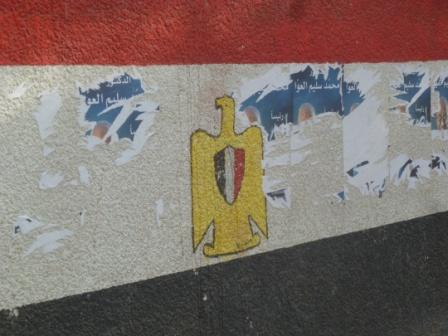
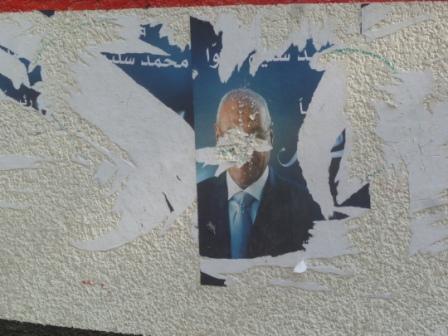
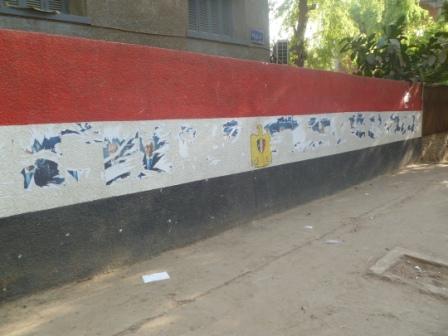

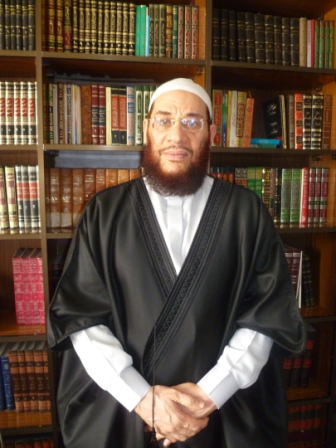



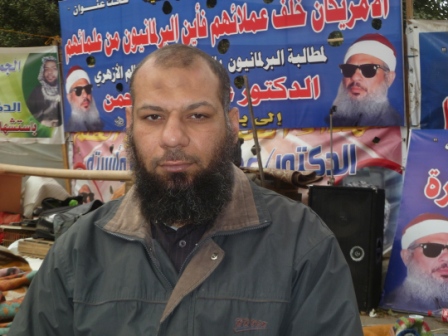







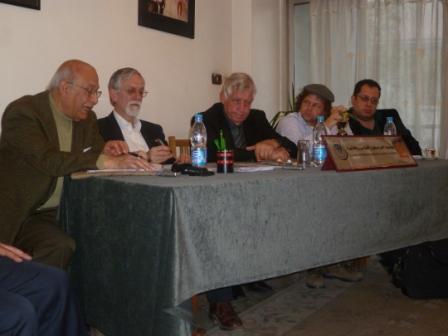


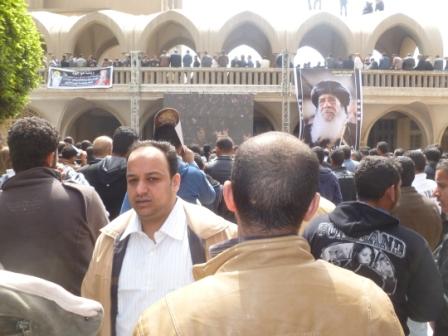
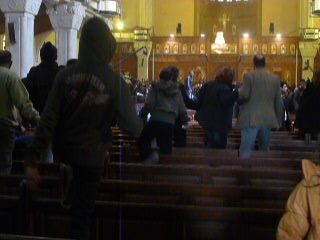
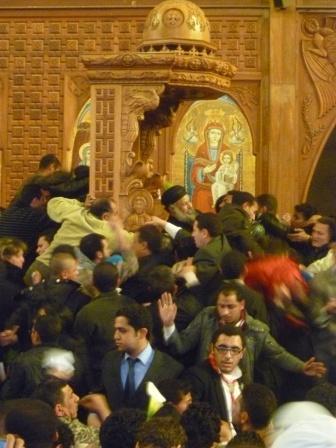


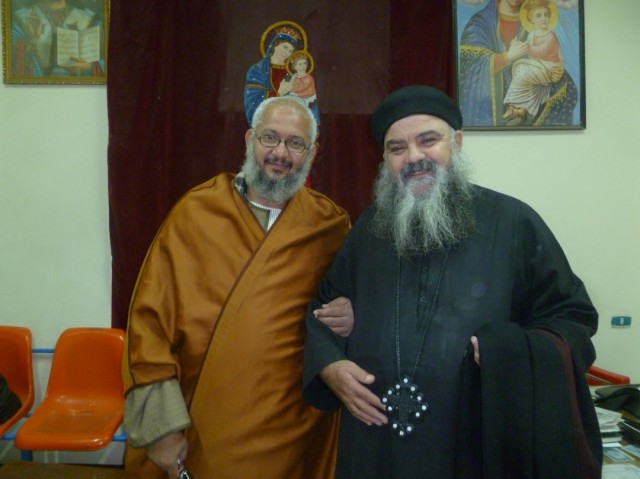
 Jayson Casper