Many in the world view Christianity as a Western religion. But even as its center of gravity shifts to the African continent, few are aware the degree to which Africa shaped the Christian mind.
Even in Africa this lesson can be missed, but the Anglican Global South made sure its delegates return home to their provinces with a proper perspective.
“Our stories shape us and how we see the world,” said Dr. Michael Glerup of Yale University and executive director of the Center for Early African Christianity. “The Global South is not new, it was the first reality of the early church.”
Glerup opened with the emphasis Cardinal Schonborn of Vienna has been trying to drive home to Europe: Christianity provides the legacy of civilization to a Western culture that has largely forgotten its roots. But Glerup demonstrated to delegates that these roots stretch back even further to Africa.
There were five early centers of African Christianity, he said, in Egypt, Carthage, Libya, Ethiopia, and Nubia. And in three particular principles, he demonstrated their sons were the first to teach Europe its eventual values.
Maurice of Luxor served in the Roman Theban Legion, fighting near Geneva. Martyred for refusing to sacrifice to the gods, he and his Christian unit also defied the command to kill innocent civilians. “Our oath to you will be of no value, if we deny our first oath to God,” Maurice told his commander, and with his words and example he taught Europe the principle of moral integrity. It was not until the 16th century that his popular portraits were changed from dark to white skin.
St. Pachomius, also from Luxor, was a pagan when visited in prison by local Christians who came to his aid. Upon his release he became a Christian, and eventually founded community-based monasticism providing compassionate service to all. Cyprian of Carthage would further cement the principle of a universal human family, teaching Christians suffering plague to tend even to the sick of their former persecutors.
The Berber Tertullian is well known among theologians as the first to coin the term ‘Trinity’ and was ahead of his time in teaching what would eventually become formulated as Orthodox Christianity. Less known was his teaching, “It is not part of religion, to compel religion; it is an act of free will.” He and fellow Berber Lactantius, the tutor of Constantine’s children, helped teach Europe the oft-neglected but esteemed principle of freedom of conscience.
Glerup’s lectures were sandwiched between two Bible studies led by senior leaders in the Global South. Archbishop Ng Moon Hing of Southeast Asia spoke on the church and the challenge of unity, while Archbishop Stanley Ntagali of Uganda spoke on the church and the challenge of false teaching.
Disunity has been a hallmark of both human and church history, Hing said, and neither theocracy nor democracy has a good track record in overcoming it. Paul’s ethic in Ephesians 2, however, establishes a new pattern in which a Christian is to be simultaneously a responsible citizen of God’s kingdom, and a faithful member of God’s household.
“Pray we can still be a family,” Hing said, “even if a diseased member must be quarantined for a time.”
The disease is connected to false teaching, said Ntagali, but like the corruption rampant in many parts of the Global South, this is a symptom rather than the disease itself.
It is secularism that has become the dominant philosophy of the world, he said, with God no longer at the center. This allows some to claim the Christian name while not following Christ, while others claim the grace of God as a license to do what they want.
Unfortunately, those who follow such false teachings disconnect themselves from the will of God in heaven. What is necessary is discernment in the patterns of the world, being transformed by the renewing of the mind. In this, Ntagali urged delegates, the Global South must be united.
If it is, if the early African heritage is recovered, perhaps again they can help shape the Christian mind, worldwide.
On the first full day of the sixth Anglican Global South conference, delegates met Egyptian President Abdel Fattah al-Sisi and began private deliberations for the eventual “trumpet”, the concluding communique.
But in preparation they were led in a Bible Study by former Bishop of Singapore John Chew, and given a lecture by former Bishop of North Africa Bill Musk. Each applied the topic at hand to contemporary issues in the Anglican Global South.
Chew began by emotionally recalling his participation in the initial Global South gathering in Nigeria in 1994, then called the South-South Encounter. It helped us get to know each other, he said, and whether the way we did it was right or wrong, it clearly led to what followed.
That meeting was followed up by the 1997 conference in Malaysia, which galvanized the conservative primates of the Global South to achieve Resolution 110 of the 1998 Lambeth Conference, rejecting homosexual practice as incompatible with scripture.
Building on this history, he asked the delegates to reflect with him on Ezekiel 37’s valley of dry bones. “Can these bones live?” asked God to the prophet, to which Ezekiel wisely responded, “Lord, you know.”
Chew suggested that similarly, in light of the crises in the Anglican Communion, a proper response is to be silent and wait on God. When division is deep-seated, action cannot overcome action, but only God’s transformation of hearts.
But God did not leave Ezekiel to be silent, said Chew. God told him to “join the stick of Judah with the stick of Israel, and I will make them one stick.” Chew noted that perhaps many in Judah were pleased to see the compromising Israelites scattered in exile, but the heart of God, indeed the vindication of his holiness, is in bringing them back together.
Chew left the implication of this teaching to weigh on the delegates without direct application, but asked them if this was their orientation: To let God achieve it, rather than their own activism.
Afterwards, Musk led the delegates in exploration of the history of the church in Carthage, Tunisia, guiding them through the Donatist controversy and the religio-political shifts in the Latin-Berber, Vandal, and Byzantine eras.
The early church was divided along cultural lines, he said, between a foreign Latin elite that favored a compassionate response to Christians who denied their faith under persecution. The indigenous Berbers, however, held to a standard of purity that insisted upon faithfulness until death.
Various church fathers responded in different ways under different circumstances, Musk explained. But he esteemed the Council of Carthage which affirmed the right of a diocese to regulate its own affairs, rejecting the right of one to discipline leaders in another.
Similarly, Musk asked delegates if they could also create a mutually supportive Global South despite differences of viewpoint, while at the same time speaking the truth as they understand it on the important issues of the day.
Like the Christians of North Africa then, Christians of North Africa and elsewhere are persecuted now. Musk urged the lesson be learned of the dangers of a divided Christian community. The Arab invasions eventually overwhelmed the church, but the seeds of its demise were sown long before. Alongside apostolic gifts, a patient, long-suffering pastoral ministry is also of vital importance.
Anglican delegates closed the day by self-selecting themselves into four taskforce groups on the topics of theological education and leadership development, economic empowerment, evangelism, discipleship, and missions, and ecumenical and interfaith relations. Their practical recommendations were forwarded to the primates for further deliberation and planning.
President Abdel Fattah al-Sisi of Egypt welcomed yesterday a delegation of 16 archbishops from the Anglican Global South, led by Archbishop Mouneer Hanna Anis, chairman of the Global South Steering Committee.
In a discussion lasting 90 minutes, Sisi affirmed the important role religious leaders play in peacemaking, helping spread a culture of tolerance and accepting the ‘other’.
Unfortunately, he said, extremists in religion do not accept diversity, calling anyone who disagrees with them an ‘infidel’ worthy to be killed.
Sisi told the archbishops that Egypt is keen to guarantee freedom of belief and worship for all its citizens, stressing the need to reform religious discourse to confront such extremism.
The archbishops commended Sisi for visiting the Coptic Orthodox Cathedral in Cairo for Coptic Christmas on January 7, to which Sisi replied it was his joy to be able to bring such joy to others.
Archbishop Ezekiel Kondo of Sudan and South Sudan thanked Sisi for looking after the refugees in Egypt, the majority of whom are Sudanese.
At the end of the meeting Anis thanked Sisi for their warm reception, and spoke of the efforts of the Egyptian diocese to build bridges between the different faith communities.
The meeting was also attended by the British ambassador to Egypt John Casson, joining Bishop Paul Butler of Durham in the UK, a member of the House of Lords.
Pope Francis, patriarch of the worldwide Roman Catholic Church, and Sheikh Ahmed al-Tayeb, Grand Imam of Al Azhar, the leading religious institution in the Sunni Muslim world, welcomed delegates at the October 3 opening of the sixth Anglican Global South Conference, esteeming the importance of their gathering.
Pope Francis expressed his “deepest appreciation” for his invitation to this “momentous event”, in remarks read by the Apostolic Nuncio in Egypt, Archbishop Bruno Musaro. Musaro assured delegates of Francis’ prayers as they discuss themes of “high significance” for both the Anglican Communion and the entire Christian community.
“Nothing is lost when we effectively enter into dialogue,” Musaro quoted from Francis’ encouragement to all people of goodwill, “Nothing is impossible if we turn to God in prayer.”
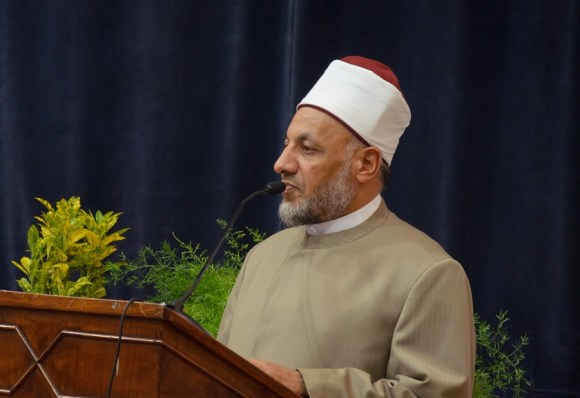
Sheikh Ahmed al-Tayeb’s remarks quoted from the Quran in his welcome to the Anglican delegates, noting how God created different peoples in the world so that they would know each other and build society.
Tayeb’s message was delivered by Sheikh Saeed Amer, chairman of the fatwa committee in Al Azhar. He esteemed the importance of the conference, hoping it would contribute to building increasingly positive Egyptian participation in the Global South.
Pope Tawadros II, patriarch of the Coptic Orthdox Church also extended his welcome to the delegates of the Anglican Global South. Through Metropolitan Bishoy he expressed his delight in the Christological agreement signed between the Anglican and Oriental Orthodox Churches in 2014, as well as the 2015 agreement on the procession of the Holy Spirit from the Father.
“[We] back you in your defense of the commandments of the Holy Scriptures,” said Tawadros to the Global South delegates, through Bishoy, while noting serious disagreements that exist between the Coptic Orthodox and the Anglican Church as a whole.
“Yet we carry on our dialogue with the Anglican Communion in order to encourage the Anglican conservatives to continue abiding to the true and genuine Biblical principles.”
Archbishop Mouneer Hanna Anis, bishop of Egypt and chairman of the Global South steering committee, welcomed the ecumenical and interfaith dignitaries, and thanked them for their participation in the conference opening session.
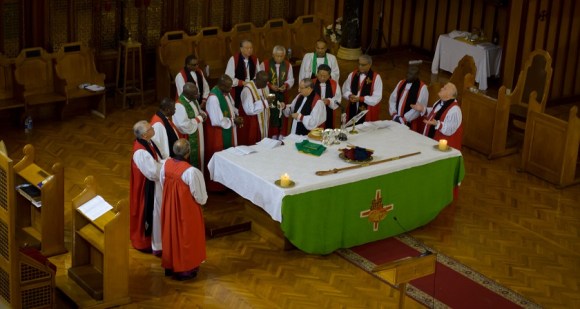
Anglicans of the Global South met today in All Saints Cathedral, Cairo, taking communion and opening their sixth conference. Archbishop Mouneer Hanna Anis of Egypt, chairman of the Global South Steering Committee, welcomed 12 primates and 90 delegates from 20 provinces of the Anglican Church.
In his opening address he gave a brief history lesson, recalling an earlier archbishop of Egypt, the 4th century Athanasius of Alexandria.
“He was known as ‘contra mundum’, ‘against the world’,” said Anis of the ancient champion against the heresy of Arianism. “He was opposed at that time even by the emperor, but eventually the false teaching disappeared, while orthodoxy flourished.”
Anis encouraged delegates to take two lessons from this history. First, drawing on the conference theme from I Corinthians 4:2, the church must be “found faithful” to the gospel received from the apostles. Second, the truth will prevail in the end.
Anis decried an “ideological slavery” in which some in the Western church use their money and influence to push their agenda on the Global South. They undermine the scripture and the traditions of the church in redefining the definition of marriage, he said, and their unilateral choices to ordain homosexual bishops is fraying the fabric of the worldwide Anglican Communion.
“I want to weep,” Anis said, “as Jesus did over Jerusalem.”
Anis also challenged delegates over the weaknesses of churches in the Global South. Corruption, tribalism, polygamy, poor treatment of women, and the prosperity gospel all show the need for greater theological education.
The church must also address the issues of poverty and economic migration, moving away from a dependency on Western aid into a more sustainable development. And as concerns terrorism and religious violence, Christians must again look to history, following the example of the martyrs, if necessary.
During the communion service, Archbishop Nicholas Okoh of Nigeria preached on the peace of Christ that is able to prevail in a crisis situation. The world has not achieved peace, citing examples in Syria, Yemen, Sudan, the Central African Republic, and his own homeland.
Christians, however, are called to be peacemakers focused on justice, fairness, and the love of God. This is also a call for world evangelization, he said, that the knowledge of the Lord may fill the earth as the waters cover the sea, quoting the prophecy of Isaiah 11.
Bishop Rennis Ponniah of Singapore prayed for the delegates, that God would melt their pride, free them from biases, and strip away all rivalries. He urged humility and submission to follow Jesus, that God would reveal what this means for them in the Global South.
“Let us weep over what breaks your heart,” Ponniah prayed. “May our faithfulness be the means by which you restore your church.”
Ecumenical and interfaith guests included representatives of Al Azhar, the Vatican, the Coptic Orthodox and Coptic Catholic Churches, and the Armenian Catholics. Political and diplomatic guests included representatives from the Egyptian Ministry of Foreign Affairs, and the embassies of the United States and Singapore.
The Anglican Church has 85 million members in 164 countries, the world’s third largest Christian denomination behind Roman Catholics and Eastern Orthodox. Anglicans in the 24 provinces of the Global South number 61.8 million, constituting 72 percent of the worldwide Anglican Communion.
Participants included archbishops from the provinces of Sudan, Nigeria, Uganda, Rwanda, Kenya, Burundi, Southern Africa, Western Africa, Indian Ocean, Myanmar, Sri Lanka, Bangladesh, Myanmar and South East Asia. Joining them from outside the Global South were archbishops from North America, Australia, and the United Kingdom.
Archbishop Anis urged them to adopt a joint statement of faith.
“Our unity in the Global South is very important,” said Anis as he closed the opening session. “We must face our many challenges together.”
From October 3-8, All Saints Cathedral in Cairo, Egypt will host the sixth conference of the Anglican Global South. Over 100 delegates from 20 provinces will discuss the challenges facing the church in the world today.
Archbishop Mouneer Hanna Anis of Egypt is also chairman of the Global South steering committee. He stated the most critical of these challenges include poverty, illegal immigration, religious violence, and the false teachings about homosexual marriage prevalent in the West.
Delegates will also discuss the importance of ecumenical and interfaith dialogue. Invited guests to the opening session include the Grand Imam of Al Azhar, Ahmed El-Tayeb, and Coptic Orthodox Pope Tawadros II.
The Anglican Church has 85 million members in 164 countries, the world’s third largest Christian denomination behind Roman Catholics and Eastern Orthodox. Anglicans in the 24 provinces of the Global South number 61.8 million, constituting 72 percent of the worldwide Anglican Communion.
Expected participants include archbishops from the provinces of Sudan, Nigeria, Uganda, Rwanda, Kenya, Burundi, Southern Africa, Western Africa, Indian Ocean, Myanmar, Sri Lanka, Bangladesh, Myanmar and South East Asia. Joining them from outside the Global South will be archbishops from North America, Australia, and the United Kingdom.
The first plenary session will be led by recently retired Bishop Bill Musk of North Africa, on the historic church of Carthage in present day Tunisia. He will be followed by Dr. Michael Glerup of Yale University and executive director of the Center for Early African Christianity, speaking on how Africa shaped the Christian mind. The final seminar will feature Dr. Ashley Null, renowned scholar of Thomas Cramner, on how Africa shaped the Anglican faith.
The sixth Global South conference was originally scheduled for Tunis in 2015, cancelled on the advice of the Tunisian authorities due to terrorist threats. But this year delegates will spend half a day touring the Egyptian Museum and Giza Pyramids, and enjoy a dinner cruise on the Nile River.
Begun in 1994 in Kenya, each of the five previous Global South gatherings issued a “trumpet,” a declaration of principles and call to stand firm on the faith received from the Apostles. It is expected that many delegates will wish to challenge the current innovations happening within the traditional centers of Anglicanism in the United Kingdom and North America.
“This is a critical moment in the life of the Anglican Church,” said Bishop Mouneer. “We pray that as we strive for both truth and unity, our efforts will be ‘found faithful’ by God Almighty.”
Note: I will be assisting the diocese with its media coverage of the event, and will provide updates as possible.
This article was first published at Christianity Today in the June print edition.
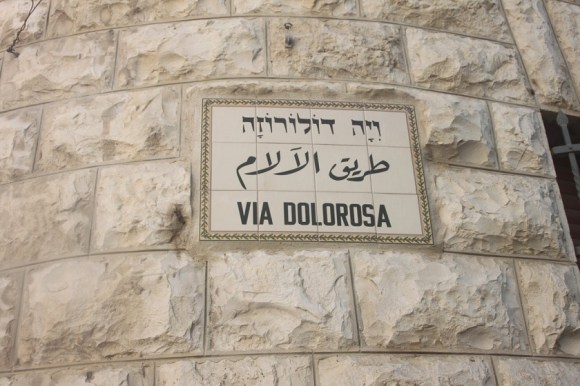
Walking down the Via Dolorosa, Nabil placed his hand on the wall where Jesus reportedly stumbled on his way to being crucified.
I am a lucky man, thought the 58-year-old. I can feel the Holy Spirit in my body.
This wasn’t how the Coptic Orthodox pilgrim had expected to feel in Jerusalem’s Old City. “Most Egyptian Christians want to visit as part of their faith,” he said, noting that he saw many elderly women dressed in black, weeping at each station of the cross. “Not me. I’m retired, I have nothing else to do, and I like to travel.”
Touring the Holy Land has been a transformational experience for Christians worldwide. In 2014, more than half of the 3.3 million tourists who visited Israel were Christians, according to the Israel Ministry of Foreign Affairs. Of these, one out of four was Protestant.
But among these tourism figures, the Arab Christian community is nearly a no-show. In 2014, Jordan sent only 17,400 tourists (which were not differentiated by religion). Egypt, only 5,200—all Copts. Lebanon forbids travel to Israel entirely.
So Close Yet So Far
There are many reasons Arab Christians don’t tour Israel. The ancient sites are right in their backyard, so familiarity breeds complacency. And economic and political conditions hamper travel.
“I grew up minutes from Mary’s Well in Nazareth, and walked to school daily past the Church of the Annunciation,” said Shadia Qubti, a Palestinian evangelical. “It’s where I met friends for coffee.”
Please click here to read the full article at Christianity Today.
This article was first published at Christianity Today in the April print edition.
With the lilt characteristic of a Southern megachurch pastor, Bob Roberts Jr. introduced the most significant Muslim statement on religious freedom in 1,400 years.
“I am a Texan, an evangelical, and a Baptist,” the NorthWood Church leader told the crowd of more than 250 leading Muslim clerics from around the world. “You have made my job to build bridges so much easier. You have gathered to call people to change.” He drew hearty applause.
“It is a very promising initiative. You could even say it is groundbreaking,” said Medhat Sabry, the Anglican Communion’s dean for Morocco and one of several non-Muslim observers (alongside Roberts) to the declaration’s signing. “But it is way too early to tell.”
This is because—from Cairo to Amman to Nazareth to Baghdad—the news caused barely a ripple in Christian communities in the Middle East and North Africa, whom the document is meant to comfort. Some Arab Christians saw a headline in the local news. Others didn’t hear of it at all.
Please click here to read the full article at Christianity Today.
Photo Credit: Wing of EgyptAir plane in November 2008. By captain.orange via Flickr.
6am in Cairo, May 19, I woke to the news of another disaster. EgyptAir flight 804 fell out of the sky en route from Paris, France. The world wondered terrorism. Egypt pondered the same, but the cause almost didn’t matter. With many Egyptians I exhaled deeply, sighing in familiar resignation, “Oh no, not again.”
Writing about Egypt these past seven years, I have shed many a tear over local developments. Most have come observing the nation’s self-inflicted wounds, as young men are anointed ‘martyrs’ after near-pointless street clashes. Others have come as once hopeful faces harden into determined grimace against either the regime or its opponents, if not altogether into despondent passivity.
But that morning there was no time for tears, and one reason was personal. The next morning I would fly with my family the same route to Paris, transferring onward back to America.
For us the inconvenience was a delayed flight, a missed connection, and acute exhaustion after a very long day. But back in the United States I could soak in the green grass, breathe the fresh air of freedom, and lament a polarized political discourse that seems offensive given our comparable blessings.
But in Egypt flight 804 is far more than an inconvenience. It is hard to weep when suffering becomes endemic, when a country steels itself against the inevitable next blow. Tears were a natural response for the families who lost loved ones. The rest of the nation simply feels under siege.
“Oh no.”
When Metrojet flight 9286 crashed into Sinai October of last year, Egypt hoped beyond hope that it was not terrorism. As ISIS claimed responsibility and Russia and the UK suspended their flights, many interpreted the hemorrhaging of nearly $250 million per month in lost tourism revenue as a targeted strike at the nation’s economy.
Fortunately the hijacked EgyptAir flight 181 in March ended safely as the result of a lovestruck looney. But for flight 804 a terrorism component would almost perversely be welcome, though no claim of responsibility has yet been issued. If Paris authorities failed at least Cairo has the misery of good company. Should EgyptAir equipment or crew prove to be at fault, another mental log gets marked against a would-be pyramids vacation.
Already it is too late. Who wants to come to a nation beset by five years of upheaval? Who wants to invest when governments are shuffled like a used deck of cards? The Egyptian pound devalues as foreign reserves evaporate. The regime desperately attempts to balance between necessary economic reforms and protection of the poor. But all the while prices are rising and only Gulf largesse buys time in hope that Egypt can get its house in order.
Set aside domestic political reform, for most Egyptians have. A dedicated few strive after the liberal reforms promised early in Tahrir Square, while the Muslim Brotherhood nurses their grudge against the many enemies they feel cheated them from power. The Western press rightfully rails against the human rights failings the government admits are a necessary compromise in search of stability. But the outcome is political stagnation as leaders ask for trust, but without the reserve of transparency on which it can be built.
The resulting gap is filled in with conspiracy, on all sides. The Muslim Brotherhood blamed the regime for the crash and warned more disasters would follow unless Egyptians unite against the alleged coup. Some regime supporters suggested Israeli involvement, and many saw evidence of a Western media campaign against Egypt. No matter what the failing, they say, Egypt is made to be at fault.
Pummeled from the right and left by events not always of their own making, it is hard to determine if conspiracies are spun just to distract the populace or if they are actually believed in full. But for want of a fully developed and accountable democratic political system, someone somewhere is always conspiring behind the scenes. It is just impossible to pin down who.
“Not again.”
In the aftermath another familiar cycle begins. Anonymously sourced quotes from foreign or Egyptian figures reveal information or posit interpretation. Egyptian authorities follow behind to deny, that no official findings have been concluded. Perhaps all is true and legitimate in the moment. But the world waits and eventually loses interest; Egyptians simply add to the list of yet unaccountable deaths, stretching back to the first days of the revolution. Still unknown is who killed the protestors.
The difficulty comes in policy recommendation, especially in an atmosphere filled with punditry. Hardheaded analysis is necessary, and God bless the diplomats who must make decisions. The Christian in us wants to help, but how to advise? In the contested arena sincere critique is taken as interference, for the Arab world has suffered at the hands of our moralizing endeavors. Foreign policy is about national self-interest; they are quite used to our situational application of principle. They are also quite used to seeking someone else to blame.
What does this imply for Egypt and terrorism, Egypt and good governance, Egypt and struggling political economy? Listen to Egypt’s groan, and sigh in return. Each disaster is felt personally, every loss a tragedy. Rather than seek strategic distance, embrace a sympathetic analysis. Mourn with those who mourn. Love mercy, act justly, and walk humbly. Suffer with them, but stay true to principle. Wounds—if from a friend—can be trusted.
Now is the time for comfort and prayer. Unfortunately, it is also the time for transparent investigation. In all her calamities, Egypt alone is ultimately responsible for the latter. The West can encourage, and demand fidelity. But without the former, we are no help at all.
This article first appeared at The Table. For more articles featuring thoughtful Christian perspectives on the the nature and embodiment of love, growing through suffering, and acquiring humility, click here.
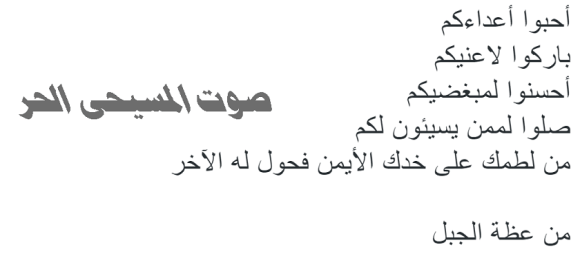
Translation: Love your enemies, bless those who curse you, do good to those who hate you, pray for those who persecute you, and whoever strikes you on the right cheek, turn to him the other also
I have long taken pride in the distinctive teaching of Christianity to love your enemy. It was not until I began learning Arabic I better appreciated what this called for.
Perhaps like many American Christians my pride was an identity marker more than a mark of Christ. I had never suffered for my faith, nor had any enemies to speak of. But in a pluralistic world of competing religious claims, widespread political polarization, and far-flung military adventures, ‘love your enemy’ became a mantra to lift me out of the morass and place my feet firmly on the moral high ground.
Only Jesus commands this, I thought; my Christian religion is different. I had always believed it was true. This was confirmation it was better.
The Sermon on the Mount allows us to cherish our ideals, with full admittance of the still mostly philosophical difficulties. Who has ever forced us to walk a mile? And beggars? They’re all in the big city. Turning the other cheek would be hard, but the envisioned moral strength? Powerful.
One morning years later I awoke surrounded by posters of smiling Arab pop stars. During vacation break from language school in Jordan I arranged for an immersion experience in the ancient city of al-Karak, home to a 12th century Crusader castle. One-quarter of the population remains Christian; one local family took me in and displaced their preteen daughter from her room.
But there at the door by the light switch a prominently placed sticker served as a reminder each morning as she left the room. Ahibbu ‘adakum. Love your enemies.
I went to the Arab world imagining a place where this command might be more practical. Muslims were not essential enemies, of course, and Jordan was well known as a place of coexistence. But perhaps they were theological enemies? In any case the region was characterized with tales of persecuted Christians. How would ordinary believers live the Sermon?
Ihsanu illa mubghideekum, the sticker continued. I was less familiar with this injunction. Baariku la’aneekum. Perhaps like many American Christians, Jesus taught me from the mountain. What I would come to learn is that Arab Christians quoted his Sermon on the Plain. Do good to those who hate you. Bless those that curse you.
The family I stayed with in al-Karak was well respected with no known enemies. But every morning their daughter entered a Muslim culture armed with instructions that have buoyed Arab Christians for 1400 years. Whether jizyah and jihad, or colleagues and citizens, they have been the minority ‘other’. American Christians, white-skinned at least, have little idea what this entails.
Going to Egypt, later still, I saw the results first hand.
I wished eagerly to explore the context. Both Matthew’s and Luke’s account end with the command to pray for those who treat you wrong, and more than other places in the Arab world, Egypt was understood to be a place of Coptic suffering. ‘It takes a presidential decree to fix a church doorknob,’ I was told. ‘Christians get attacked in their villages, and they are the ones put in prison.’ Over time I would learn that the reality is quite nuanced, but the sentiment is telling both for visceral incidents of suffering as well as the ethos they produce. Many have suspected that Christians of the region had bought a modicum of peace in exchange for evangelistic mission, beaten down by the task of communal preservation. I experienced Copts as simultaneously integrated in society and withdrawn into their churches. They would speak of Muslims as friends, but whisper of Islam as an enemy ideology.
But what of the celebrated Sermon on the Plain? How would they not just love, but also bless? Specifically and practically, how would they do good?
In one city south of Cairo I interviewed a man who provided a commendable, if telling example. Due to government difficulties in extending services to underdeveloped areas, Muslims and Christians have learned to take care of their own. Until recently Islamist groups had long provided a safety net for the majority, while the Orthodox Church ensured care for Christian widows and the Coptic poor. Neither group would profess denying help to the religious other, but both mirrored the reality of increasing emphasis on religious identity.
This man worked with a Christian agency that aimed to break the dichotomy and serve all. Unaffiliated with the church, Muslims were the employed majority as well as present on the board of trustees. By no means were they an enemy, but Christ’s love to the other was clearly among his motivations.
A jovial and cheerful man, he turned deadly serious on my next question: ‘To better reach your community, would you consider partnering with a Muslim organization?’ It seemed innocuous enough but touched a deeply sensitive nerve. ‘I swear by the Messiah,’ he answered angrily, ‘there is not one Islamic organization that also takes care of the Christians!’
He may be right; he was certainly the expert. But from the heart, the mouth speaks. Here was one of the best examples of a Christian doing good to people who many in his community would internally generalize as a sort of enemy. But despite his charity, he ultimately demonstrated an uncharitable spirit. Let there be little condemnation, but the question is fair though terribly hard: As I Corinthians 13 warns, did he risk becoming a resounding gong?
Nuance is necessary, for the other is not the enemy unless they press against you. For most Arab Christians the ordinary Muslim is an ordinary person, though the Islamist can be a threat in the desire to set his creed as the organizing principle of society. In a region with much religious conservatism, the line between Muslim and Islamist can be difficult to draw. This man railed against the latter, and perhaps with good reason. But it was clear his love for the other did not extend to love for the enemy. Instead of doing them good, whatever that could have meant practically, he was in existential competition.
In the years that followed Islamists rode a revolutionary wave into the presidential palace. Despite their conciliatory discourse with Western audiences, in Arabic some of their members and supporters uttered vile and vitriolic threats against their opponents, Christians included. One year later as Copts joined the masses that turned against the new political elite, they paid the price as their churches were burned throughout the country. Christians were praised for their patience, and rallied behind the military and millions of Muslims to oppose the Islamist enemy. In this case the term is at least rhetorically appropriate; once chosen as legislators and government ministers, they were now rejected as terrorists and an internationalist cabal.
Western opinion is divided over the veracity of this accusation, but as concerns local Christians it is largely irrelevant. Certainly they suffered; certainly they ascribed to widespread public messaging. But in the vanquishing of their enemy almost no voices of love were offered. These need not be in dissent; they might only be in pleas for due process or care for the relatives of the justly imprisoned. During Islamist rule many Christians worried and some chose to emigrate. Some, probably many, prayed for their new president. But if a few have since sought to bless the fallen Islamists who curse them still, their example has not moved the needle of Coptic opinion, where nary a tear has been shed.
How then is this spirit present in a ten-year-old girl who lost everything?
If Islamists in Egypt were a challenge, even a disaster, in Syria and Iraq they were a catastrophe. When the so-called Islamic State overran Mosul in July 2014, thousands of Christians left their homes and fled to Kurdistan. Among them was Myriam, who with her family lived in a half-built shopping mall. Interviewed a year later by the Christian satellite network SAT-7, her testimony went viral.
‘I will only ask God to forgive them,’ she said when asked how she felt about those who caused this tragedy. ‘Why should they be killed?’ Contrast her with the opinion of some Americans, who wonder why we have not yet bombed ISIS into oblivion.
Perhaps it is the depth of the loss that summons the breadth of compassion. Perhaps children are not chiseled as rigidly as adults. Beautiful testimonies of forgiveness have been offered by Egyptian Christians as well, whose family members were martyred by ISIS in Libya. Unjust suffering recalls a crucified Jesus, whose dying prayer to God was that sin not be accounted to his tormentors. From afar we recoil, and demand justice. Likewise, Egyptian Christians felt vindication when their government bombarded ISIS in Libya the next day.
Let them not be blamed on account of ‘love your enemy’. The children of Israel broke into song when Pharaoh’s army drowned in the Red Sea. David prayed for deliverance from his enemies and a psalm of exile wished their children smashed against the rocks. Romans established the role of government in the preservation of order and punishment of the wrongdoer. And one day, Christ himself will wield the rod of iron as his enemies are fashioned into a footstool. Outcry against suffering is natural and must be voiced for emotional health. Justice is real, necessary, and must never become the antonym of love.
But mercy triumphs over judgment, and love covers over a multitude of sins. The Christian ideal keeps no record of wrongs, and hopes all things. This seems impossible when facing an enemy of any caliber, let alone the Islamic State. It almost seems perverse. The higher calling of love must uphold the lower calling of justice, and demands great discernment in weighing Jesus’ instruction to be wise as serpents yet innocent as doves.
Arab Christians are in an unenviable position. The Egyptian church must navigate this wisdom-innocence paradigm with the utmost care. The Syrian-Iraqi church has been scattered. If they have not yet lived up to the fullness of ‘love your enemy’ it only serves to remind us how far we are from what they endure. That God has kept them from abject loathing is sign enough of the Spirit’s power. That they fill up in their flesh what is lacking in Christ’s afflictions is reason enough to humbly bow and support them in prayer.
Unfortunately, my proximity has not enabled the vision of practical suggestion. Lord willing, the eyes of a foreigner have helped some see afresh the demands of the gospel. Ultimately, application is up to them.
But over the years I have come to see the Sermon on the Plain as a better template than the Sermon on the Mount, especially if read in reverse.
Pray for those who mistreat you. If persecution is rare, mistreatment is not. If love if ethereal, prayer is grounding. With an act of the will I can choose to place my enemy before God. Perhaps I even begin with the imprecatory psalms. But rather than grumble or plot revenge, I turn the matter over to him.
Bless those who curse you. Once in God’s hands the prayer can change, even with rising of the nature of offense. No matter how difficult in our power, the Spirit’s power enables our will to progress further. The step is tangible, but nothing is yet asked of the heart. With gritted teeth I seek God’s grace not only for my hurt, but for the ultimate well-being of my enemy.
Do good to those who hate you. But again, God pushes the envelope as the severity of opposition increases. Anyone might curse me in a moment of frustration. Hatred takes time. But in answer to a decision that hardens a heart, my decision is to loosen my own. In asking God to bless my enemy, he transforms me to do it myself.
Love your enemies. Whatever practical action results, something mystical occurs. At least, I can only trust God that it will. Somehow, and whatever it means and feels like, love happens.
It is this love that is the hallmark of Christianity, not my initial congratulatory pat on the back that I was born into and believed in a superior faith. This is the love that can transform conflict. But it is also the love that can get trampled underfoot.
Why has the latter been the trend for Arab Christians over the past 1400 years, as their numbers have dwindled to near extinction? Have they not loved enough? Have they not stood for justice? Have they compromised too readily? Have they allowed their hearts to harden?
We cannot know, and we dare not judge. Bear well that the sermon passage ends with a plea: Be merciful, just as your Father is merciful. Look upon them with sympathy, and upon the region. They are brothers in sisters in faith, within brothers and sisters in humanity. Surely among them are the ungrateful and wicked, but as sons and daughters of the Most High, in imitation we are commanded to be kind.
And remember, the Sermon on the Plain places the Golden Rule smack within the section on loving your enemies. It is among the most beautiful verses in Arabic: Kama tureedun an yafal al-nas bikum, afalu antum aydan bihum hakatha. Do not let the foreignness of the language exaggerate further the foreignness of the concept. Enemies need love even more than the rest of us. Invite Arab Christians to help us learn.
In 2013 the French-Tunisian eL Seed became the first Arab artist to collaborate with fashion mogul Louis Vuitton. His unique “caligraffiti” style emblazoned their classic Foulards d’Artiste monogram scarf, and embellished their iconic Alzer luggage case.
Blending traditional Arabic calligraphy with street-style urban graffiti, his reputation grew as his murals transformed walls around the world with messages of peace. Condé Nast Traveler feted eL Seed (pictured above) as one of the year’s leading visionaries, even as he mingled with artists, diplomats, celebrities, and billionaires.
Three years later he was picking through trash in a city dump.
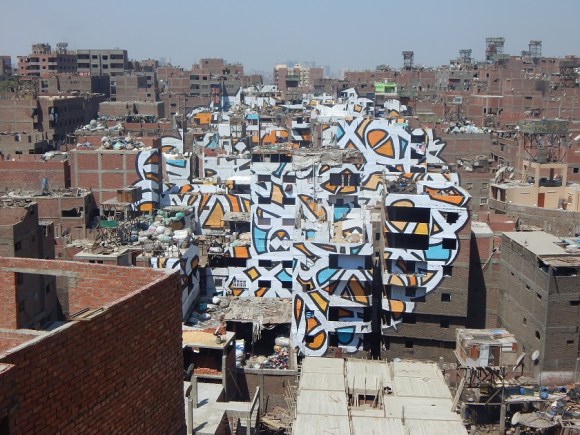
I wrote recently about the community that inhabited this dump, the Zabbaleen of Manshiat Nasser, and the cave church that rose out of its squalor in the Muqattam mountains. eL Seed designed a massive mural that encompasses the walls of 50 apartment buildings, visible only from the monastery above.
The elaborate Biblical rock carvings hewn by a resident Polish artist have made the monastery one of Cairo’s lesser-known gems, but to get there one must still brave the pungent smells below. That is exactly what eL Seed did to obtain the approval of now 75-year-old Fr. Simon.
The article also tells the story of Abanoub, a 23-year-old Manshiat Nasser resident who Fr. Simon relied upon to help eL Seed adapt to the area and win support for his project. But when he was done, neither Abanoub nor the residents could read what was written. Here is how el Seed explains this, and the following concludes the article:
“You don’t need to know the meaning to feel the peace,” he said, “but when you get the meaning, you feel connected to it.”
Though he chooses sayings that have a universal dimension, eL Seed strives also for local relevancy. In Bishop Athanasius he identified a champion of the Egyptian church, who preserved the orthodox teaching of Christ’s divine nature from the heresy of Arianism. This history may be little studied by the Zabbaleen, but the gesture was not lost on Abanoub, a church hymnist.
Though almost exclusively Coptic, Manshiat Nasser has seen its share of Muslim-Christian tensions. In March 2011, not long after Mubarak’s resignation supposedly marked the end of the revolution, clashes with Muslim outsiders resulted in deaths on both sides. But Abanoub remarked that he didn’t sense eL Seed was a Muslim even for one minute, an expression often used by members of either faith to emphasize the humanity of the other.
“Even though he is a Muslim, he wrote the quote of a Christian saint,” Abanoub said. “I don’t know why he chose it or what it means to him. But for me, if we want to see Christ, we must see the world around us.”
And this is the gift of eL Seed to the Zabbaleen of Egypt. Though the focus will always be on the trash, he has added a mark of beauty and dignity.
“The mural makes us feel important,” said Abanoub. “We’re not just a bunch of garbage collectors sorting trash. No, because of him the world’s media is shining light upon our community.”
Please click here to read the full article at The Media Project.
One of the 50 buildings of ‘Perception’, seen from the streets of Manshiat Nasser
The Holy Family came to Egypt, says the Biblical text. But it is silent on what they did once there. Coptic Orthodox tradition has filled in the details… And now they have one detail more.
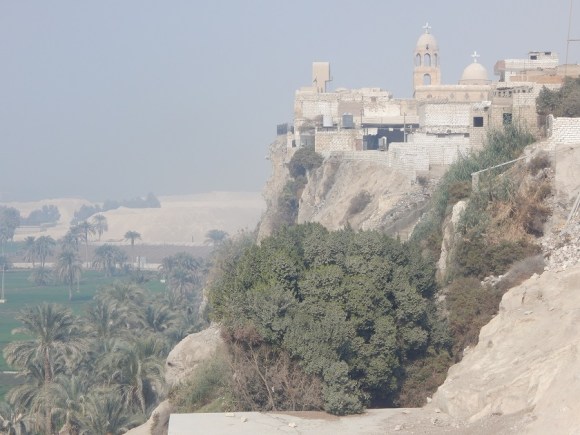
The article describes our visit to Gebl al-Tayr, or Mountain of the Bird, which is a Holy Family site recognized by Coptic tradition. The article explores some of this history, which includes an alleged reference to Empress Helena, mother of Constantine.
If some of these details strike the reader as legendary, it must also be remarked that the existence of many Holy Family sites is mentioned in the writings of antiquity. As Egypt became majority Christian prior to the arrival of Islam, these became locations of renown. This does not provide historical confirmation of the Holy Family itinerary, but it does testify to very early narratives upon which ancient churches were naturally constructed.
But other sites are much less certain. Coptic tradition designates the Patriarch of Alexandria, Theophilus, who presided from 384-412 AD, as source for many locations, which he was believed to have received in a vision from the Virgin Mary. Without impugning the character of clergy or church historians, it is not difficult to imagine the benefit – spiritual or commercial – that a diocese would draw from connection to the ancient tradition. In any case, in Be Thou There, Dr. Stephen Davis chronicles the numerical increase of Holy Family Sites from the fourth century onward.
The article then describes a modern example of this phenomena, in the duelings Asyut monasteries at Deir al-Muharraq and Durunka. But then it returns to Gebal al-Tayr:
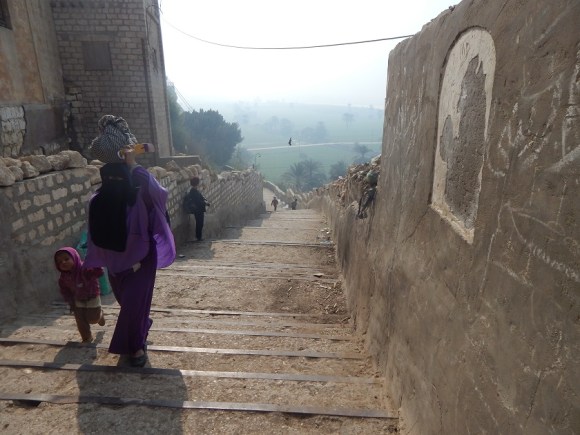
The 166 step ascent from the river below
Though this location is part of the ancient Holy Family tradition, on this visit Hulsman noticed an oddity. Approximately 500 meters down the road from the Church of the Holy Virgin, now semi-accessible from above for modern transportation, is excavation work at another part of the mountain.
A Muslim policeman-turned-impromptu-tour guide proudly described it as a recent discovery, understood to be the lodging of the Holy Family upon their return from Upper Egypt. Work had been underway for the last year, he said. Hulsman, a frequent visitor to the area, had neither heard nor seen of this before.
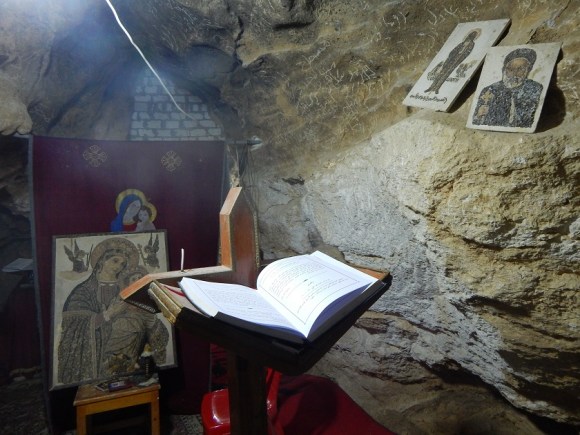
After a simple stairwell decline of around ten meters from the mountain plateau there is a gradual descent into the mouth of what opens into a long, narrow cave. Inside has the beginnings of a rudimentary altar along with icons and candles, and already there is the graffiti of visiting pilgrims. Outside a new church building has been established.
Hulsman remarked that the identification of a cave with the Holy Family fits within longstanding Coptic themes. Being so close to the ancient church, it would be natural for ecclesiastic authorities to imagine Jesus taking refuge there, as tradition indicates he did in caves throughout Egypt.
Walking back to the main site, a local priest standing with villagers stated the discovery was made around five years ago, and that Bishop Paphnotius of Samalut had done the investigations and research to ascertain its antiquity.
The new cave, recently discovered and renovated
Inside there is now an altar, icons, and modern graffiti
The article next moves to describe the modern miracle tradition at the Virgin Mary Church in Maadi, itself a Holy Family site where a Bible is said to have floated down the river and rested at its Nile descent.
It also introduces the character of Dr. Otto Meinardus, a theologian-scholar who once told Hulsman a fascinating anecdote directly related to the topic:
Perhaps in the end it does not matter to local believers. In personal discussions, Hulsman said, Meinardus would use the term ‘pious fraud’ to describe the legendary in Coptic history. In his writings he was more careful to avoid offending church hierarchy, but imagined the process like this.
Somewhere at some time a bishop’s sermon employed an illustration drawn from history, creatively illustrating a Biblical moral. Once popularized, it lodged into local consciousness and became commemorated.
But beyond imagining, Meinardus was also a one-time practitioner. He was the first to narrate the story of St. Bishoy carrying Jesus disguised as an elderly pilgrim up a mountain, only afterwards to enjoy his epiphany.
The story first appeared in his 1961 book, Monks and Monasteries of the Egyptian Desert, published in Egypt with AUC Press. All texts and icons of this event post-date his book, Hulsman said, and can be seen across Egypt including at the Monastery of St. Bishoy. According to Bishop Marcos of Shubra al-Khayma, the story was not known to the monks of Egypt until they read it in Meinardus’ book, wrote Paul Perry in Jesus in Egypt.
Perry also quotes Meinardus, saying, “That’s how tradition is, Once a story leaves someone’s mouth, it spreads like wildfire.” Though not recorded in the book he told Perry and Hulsman, “Many stories are based on dreams. Why should I not also have dreams?”
The article concludes with a story from Hulsman’s own history, how a heroic uncle morphed in memory into a family saint. Tying all the themes together, it ends with a necessary reflection:
Therefore, let the reader consider the real-time development of tradition in Jabl al-Tayr. For half a century later in Asyut, the church recognizes officially the Monastery of Muharraq as a Holy Family site, while Durunka remains disputed. Even so the latter continues to attract the faithful and is an ever-expanding site of pilgrimage. But more is at stake than simple religious commerce. Only a few verses earlier in the same chapter celebrated in Maadi, Isaiah prophesies there will one day be an altar to the Lord in the middle of Egypt. Asyut roughly qualifies, and only 70 kilometers separate the two sites. Where is the epicenter of God’s promised blessing?
Perhaps to God the details are not important. But to man, the interactions of God in human history are worthy of record. And now in Egypt, there is one more.
Please click here to read the full article at Arab West Report.
From my new article for Christianity Today’s Behemoth publication:
The Pyramids of Giza used to be in the middle of the desert. Eventually Cairo’s urban sprawl pushed right up to the Sphinx. The Citadel of Saladin towers over the city. The southern approach requires an overpass straddling the City of the Dead. In Tahrir Square, the Egyptian Museum and its famed mummies were overrun with the bedlam of a revolution.
Tourism has dropped dramatically since then, but intrepid travelers can hardly help notice the encroachment of squalor on the glories of antiquity.
What most miss is the reversal: A glory rising out of the garbage. To create it, 40 years ago one man had to literally trudge through a pigsty. Today it is simpler to reach the massive cave church complex in the Muqattam Mountains on the eastern edge of Cairo. But the journey still requires a pungent assault on the senses.
Women and children pick through 15,000 tons of the city’s collected refuse, sorting out recyclable waste from the biodegradables useful for wandering livestock. Men haul burlap trash bags twice their size into garbage trucks poised to tip from overfill…
The article tells the story of how a Coptic Orthodox priest inhabited this world and gave birth to one of Egypt’s most beautiful sites.
Please click here to read the full article and see the photos at The Behemoth.
‘Zionism is a big tent’: Settler Rabbi Hanan Schlesinger
Palestinian Christian jaws dropped in shock.
Gathered to promote their narrative to international evangelicals largely supportive of Israel, a bespectacled, long-bearded, Yarmulke-wearing Jewish settler appeared on screen.
He spoke, and their surprise deepened.
‘I am a passionate defender of Palestinian rights,’ Rabbi Hanan Schlesinger told the audience. ‘Zionism is a big tent, and there are many I disagree with.’
A New York City native, Schlesinger immigrated to Israel in 1977. He lives in the settlement of Gush Etzion, between Bethlehem and Hebron.
Many Palestinians consider Jewish settlers to be the source of all evil, he admitted. Not until two years ago had he spoken to a Palestinian as an equal.
Serving in the army, he had arrested them. For general housework, he had employed them. But after a US-based pastor encouraged him to listen to them, he had worked to be reconciled ever since.
Many attended the Bethlehem conference last week from UK. Photo: CATC
In this capacity Schlesinger was invited to the fourth biennial Christ at the Checkpoint (CATC) conference, held 7-10 March in Bethlehem. Operating at the heart of the Arab-Israeli conflict, these conferences provoke much controversy.
Provoke
This year, they chose to provoke themselves.
Fifty UK citizens joined roughly five hundred people from 24 countries to attend the conference, including 150 Palestinian Christians from Israel and the West Bank.
Interviewed on screen, Schlesinger also expressed great appreciation for those the conference aimed to challenge: Christian Zionists who prioritize Jewish Israel.
‘The Christian nation is turning over a new leaf, it is a miracle,’ he said. ‘Christian Zionism defends Israel against its many enemies, so we need all the friends we can get.’
Afterwards he mingled in the crowd. Some even approached to shake his hand.
‘It was hard for many here to see Rabbi Hanan in our audience, let alone on the screen,’ said Sami Awad, executive director of the Holy Land Trust, and a conference organiser.
‘But some came to me and said, you are challenging us in our faith.’
Like many Palestinians, Awad, who has conducted nonviolent trainings for Hamas, had found it difficult to befriend those with whom he had deep political disagreements.
Additional screened interviews with his friends in Hamas also challenged the conference towards a similar transformation.
Awad told Lapido that Jews have a basic need to live and worship in the land of their ancestors.
The fear that kept Jews, Muslim, and Christians apart, he said, came less from ‘the other’ than from those one considers on one’s own side.
‘Make uncomfortable’: Awad. Photo: University of Bristol
‘People are not afraid of Rabbi Hanan, they know he will not come here and hurt us,’ he said. ‘But we are afraid of being labeled a traitor by our own community.’
Awad and Schlesinger jointly host a study to discuss their holy texts. Muslims, Christians, and Jews all suffer generational trauma, Awad says. So the Holy Land Trust sponsors ‘healing hatred’ groups to help them overcome it together.
Transform
Likewise, Schlesinger has co-founded ‘Roots’, a Palestinian-Israeli initiative for understanding, non-violence, and transformation.
Of three thousand local Israelis and Palestinians attending his training, around two-thirds have been Jews. Of these up to forty percent have been settlers, and up to 15 percent have been soldiers sent by the army.
Ninety-nine percent of all participants, he said, are meeting ‘the other’ for the first time.
‘Something is wrong,’ Rabbi Schlesinger told Lapido Media. ‘We are living out our truth in a way that causes injustice to other people.
‘I don’t know if the land is occupied, but the people are occupied.’
This theme was echoed by another prominent Jewish critic of Israeli policy invited to CATC, Arik Ascherman, president and senior rabbi of Rabbis for Human Rights. His remarks were introduced by a video from October 2015 showing him resisting a knife-wielding Jewish settler.
‘The creation of the state of Israel—and we know it is a catastrophe for Palestinians—was the beginning of our redemption, and we want it to be a blessing shared by all,’ he said.
‘But it may be that in God’s eyes, the very things we do to hold on to the entire land make us unworthy to keep all of it.’
Criticism
CATC has been subject to much criticism, some of it theological, some of it political.
‘Israel is the only country in the Middle East where Christians enjoy religious liberty,’ Rabbi Yechiel Eckstein, founder and president of the International Fellowship of Christians and Jews, told Lapido. Last year they raised over £872 million to support Israel.
‘Even as I decry the anti-Israel rhetoric that has taken place [at CATC], I give thanks for the many, many Christians who truly know Israel and continue to support the land and her people in prayer.’
But for Awad, though resistance to the occupation is crucial, so is the befriending of an enemy.
‘I cannot be a voice to the other side in nearly the same way one of their own can,’ he said.
‘We are communal beings who only trust our own kind, so we need to make our own communities uncomfortable.’
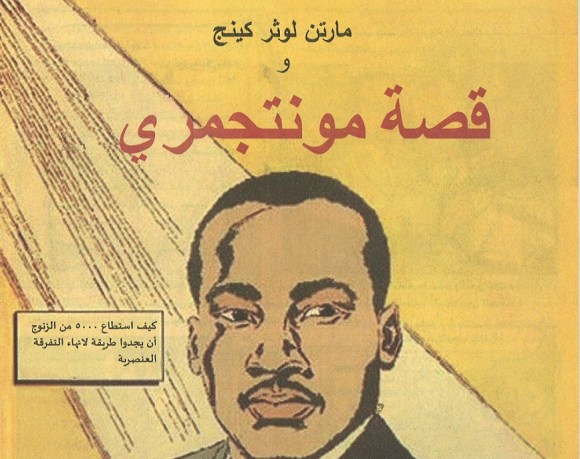
Translation: Martin Luther King and the Montgomery Story; how 5000 black men found a way to end racial discrimination
Egypt’s centre-left secularist party has an unlikely mascot: America’s most famous Baptist preacher, Dr Martin Luther King.
King is the inspiration behind a revival of liberalism in a country where prison awaits street protest of almost any kind.
Selma was the surprise choice of film to launch a new cultural moment in post-revolution Egypt.
The 2014 film chronicles King’s march from a backwater hamlet to the statehouse in Alabama.
‘We chose Selma because it shows how civil rights movements can proceed peacefully,’ said Islam Amin, founder of the Egyptian Cinema Club.
‘We also have suffered crackdowns and violence in the streets. The situation of Selma is like Egypt today.’
[Turning to culture: President of the centre-left ESDP AbulGhar (R), with the father of Egyptian cinema’s ‘new realism’ school, Daoud Abdel Sayed. Photo: ESDP]
Leading politicians attended the screening. One – Mohammed Abul Ghar – believes that as in King’s America only the President can make a difference to Egypt’s oppressive politics, as thinkers, writers, and ‘blasphemers’ find themselves facing lengthy prison sentences.
‘We are clearly against these laws, but the situation is very dangerous,’ said Ghar, president of the Egyptian Social Democratic Party (ESDP).
‘It must be the president who will take the step to change them; it is the only way.’
Martin Luther King suffered abuse from citizens and police alike, but his efforts mobilized a nation and culminated in the passing of the Voting Rights Act of 1965.
The ESDP, which won only four seats in the 596-member parliament, is frustrated with the path politics is taking.
Following the ouster of Muslim Brotherhood-affiliated President Mohamed Morsi, ESDP members occupied top posts in government, including prime minister.
But now, says Ghar, there is no government, only ministry heads he calls ‘secretaries to the president’.
So instead politicians are turning to culture.
‘It is hard to play politics these days, but we can still play culture,’ Amin, the ECC founder, said. ‘Culture, philosophy, and art spread tolerance and justice, where fascists and Islamists spread only lies and hate.’
[Logo of the Egyptian Cinema Club. Photo: ESDP]
But coming off the back of Egypt’s experience of political Islam, what chance is there for a Baptist preacher’s example?
Bassem Kamel, head of the political training department in the ESDP, drew three lessons from Selma and the life of King: change requires a long and sustained effort; violence is counter-productive, and to win you must win the people.
Selma also highlights King’s deftness with the media – something the new wave of liberals emulates. They invite popular culture-makers to maximize the attention they get, launching the film club cannily on the UN-designated World Day of Social Justice.
‘Culture and politics have a clear influence on each other,’ said Daoud Abdel Sayed, whose 40-year career in Egyptian cinema was honoured at the screening.
His school of ‘new realism’ emphasizes the modern struggles of ordinary Egyptians. ‘But the problem is the state has transformed culture into something only for élites,’ he says.
Translation
The ESDP’s film club is not the only Egyptian effort to use the memory of Dr King. In 2009, activist Dalia Ziada translated the obscure, 1958 comic book Martin Luther King and the Montgomery Story into Arabic.
Two years later in 2011 she found herself distributing thousands of copies in Tahrir Square.
‘The book was being smuggled like drugs,’ she told Lapido. ‘The real challenge we are facing now is how to keep the momentum going.
‘But there is no Selma in Muslim Egypt.’
The problem has been a 40-year process of importing a foreign Wahhabi ideology, says Ziada. A moderate, Sufi-style Islam had declined as culture and state turned conservative.
Earlier sheikhs had looked to Europe for inspiration, she said, now they looked to Arabia.
[‘No Selma in Muslim Egypt’: Dalia Ziada. Photo: Andres Alonso Photography]
‘God knows how many years we will have to wait until a 2011 revolutionary comes to power,’ said Ziada, now director of the Liberal Democracy Institute of Egypt.
‘But even if it takes forty years, I am sure this day will come,’ she adds, recalling the four-decade interlude between Selma and the election of US President Barack Obama.
Comic
Beyond the comic book there are only eight books in Arabic on the life of Martin Luther King, according to University of Michigan professor Juan Cole. But in 2012 he added another: a translation of King’s biography, published by the London-Beirut-based company Dar al-Saqi.
Others agree with Ziada that there is no comparable figure to King in contemporary Egypt. American University in Cairo professor of Arab and Islamic Civilization Mohamed Serag cites nineteenth-century Al Azhar scholar Muhammad Abduh as a possible model.
One of the founding fathers of Islamic Modernism, Abduh’s students pioneered reforms in politics, economy, and gender equality.
But today, Serag said, poor education and state policy combine to keep another Abduh, let alone a King, from emerging. ‘Despotism is the reason,’ he said. ‘Since 1952 our régimes have controlled society and do not let it prosper.’
ESDP president Abul Ghar cannot envision a change until the collapse of Saudi Arabia and its petrodollar sponsorship of religious conservatism.
‘Egypt is completely polarized,’ he added, ‘and with Islam as a religion it is very difficult. Either you become a radical salafi or you separate Islam from politics completely.’
But pushing pessimism aside, the secular party highlights a Christian minister and continues the grassroots work.
‘Yes, Martin Luther King was a pastor, and we do not have this type of figure in Egypt,’ said Kamel, the political trainer.
A little while back I was interviewed by Pilgrim Radio about my Christianity Today article on the growth of Christianity in the Arabian Peninsula.
Pilgrim Radio is a Christian non-commercial FM broadcasting network reaching the American West from Colorado to California. The mission is ‘to advance a program of Christian education using an artful blend of music and Scripture, stimulating instruction, interesting guests, and great books, all done in the public interest.’
The website carries only live content, so the director was kind enough to share the audio file with me. Please click on the player below if you’d like to listen in on the 27 minute show, on the His People program.
Coincidentally, the live program tonight (March 2) is an interview with Nicole Walters on worshiping with the Copts in Egypt.
Please click here to read the original article at Christianity Today, and here for a follow up interview CT did for a behind the scenes perspective. Click here for photos I took of the many churches being built in the United Arab Emirates.
Here and here you can read related stories from my trip at Lapido Media, about an English priest in Abu Dhabi engaging a Hack-a-Thon to strengthen migrant rights, and a missionary hospital in al-Ain that won the royal goodwill to make all the above possible.
Thanks for your interest, and I hope you enjoy.
When writing an article, though my name is given it is nice to stay in the background and let my sources tell the story. It is different getting used to radio, when the voice is mine. But this was my second effort (click here for the first — on ISIS and Christian response for the Dan Darling podcast), so perhaps more opportunities will come.
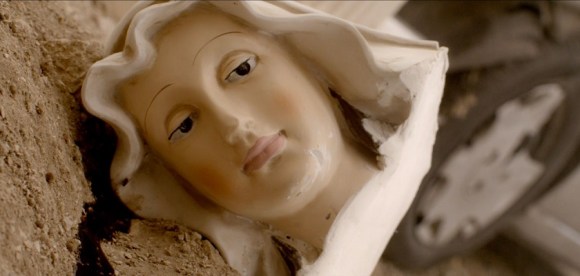
The plot to Ave Maria is as improbable as it is provocative. A Jewish settler family crashes their car into a statue of the Virgin Mary at a Palestinian Carmelite monastery in the West Bank.
Bound by the onset of Sabbath, the Jews can do little to get home. Bound by a vow of silence, the nuns can do little to help. Bound by mutual distrust and annoyance, the odd couple pairing can do little but bicker. Fortunately, spellbound by the comedic touch of 34-year-old producer Basil Khalil, critics around the world can do little but laugh.
This 14-minute short already won top prizes at film festivals in Grenoble, Montpelier, and Dubai before securing a nomination for best live-action short film at this year’s 88th Academy Awards.
Ave Maria is Khalil’s second comedic venture into the deeply divisive and often somber portrayal of the Arab-Israeli conflict…
Please click here to read the full article at Christianity Today. Here’s a sample question, followed by the trailer:
You were raised by a Palestinian Christian father and a British mother, were you comfortable in both settings?
You don’t really choose where or how you’re born, so you just live with it and make the most of it. I do believe being of both worlds did give me a more critical perspective. I know how the West sees us, and I’m able to give them something fresh, yet at the same time I know our stories and culture from Palestine so I’m able to portray accurate stories from there.
Early Saturday morning, with a heavy heart Mohamed Abla traced his whimsical silhouettes with only a few looking on. Everywhere along his stretch of the 150 foot wall surrounding the famed Khan Market in New Delhi, folk art inspired images of children, animals, and birds burst into life. Previously drab and barren, the wall previously served as a garbage dump and public urinal. Over the past three years the Delhi Street Art group has been transforming similar locations of urban blight into monuments of community pride. But on this occasion their 62-year-old Egyptian guest felt compelled to add a sullen reminder.
He drew a stick figure of the Eiffel Tower, and enclosed it in a circle.
Paying homage to Paris through Jean Jullien’s image, Abla could have thought of Egypt. Five thousand kilometers from home, his native land has also witnessed terrorist atrocities hammering away at the effort to regain stability. For the past five years revolution has jolted the street and national psyche alike. But instead of lamenting Cairo, Abla ached for India.
“I felt that Indians were worried about terrorism,” he said, “having experienced it themselves in the past. Paris was a stark reminder.”
It can sometimes take the soft heart of an artist to commiserate with a people not one’s own. But Abla’s attachment to India runs deeper than just creative sentimentality. For the past seven years he has visited frequently, dazzled by the assortment of colour and smell, bewildered by the proximity of tradition and technology. His eyes and his canvas soaked in both big city and ancient village. He noted the simplicity of people and the grandeur of temples.
And his memories poured through his paintbrush.
“The eyes through which an artist sees another culture are always fascinating,” said Sanjay Bhattacharyya, India’s Ambassador in Egypt, opening the resulting exhibition at the Maulana Azad Center for Indian Culture, in Cairo. “Abla has shown us things we haven’t seen.”
Please click here to read the full article at The Media Project, including more paintings and the artist’s history.
Umm Peter stood with dignity in the corner of her simple, cinderblock home. With an appearance weathered over the years, in grandmotherly fashion she spoke of the men of the village and the difficulties of life.
Half, she estimated, work in the Red Sea resorts of Sharm el-Sheikh or Hurghada. There is little opportunity in her all-Christian village of 200 families, a three hour drive south of Cairo in the governorate of Minya.
Umm Peter was speaking to a group of six expats, visiting from Maadi Community Church (MCC). Gathered around were her ten-year-old son, Peter, and his only slightly looking older married sister. Peter is a sponsored child of Healing Grace, a ministry of Kasr el-Dobara, the largest Protestant church in the Middle East, situated at Tahrir Square.
MCC is a partner organization, supporting one of the villages within Healing Grace.
Umm Peter’s own husband is away only half the year, and currently. There is not enough work in the Red Sea either, and he is too old for the rigors of construction.
His age, she was asked. ‘Forty-eight,’ she replied, as if he was already elderly. In village years he might be.
But there is hope Peter might not age as quickly, supported widely through the generosity of donors and the community it helps create.
‘I want Westerners who come here, who live in an expat bubble, to see another side of Egypt and how people live,’ said Rev. Steve Flora, pastor of MCC. ‘Though they barely have electricity or water they are happy, and their lives are being changed for good by the Gospel.’
Flora, who has sponsored a child in the village for the past four years, appreciates Healing Grace for the opportunity to develop a relationship with him. The church arranges visits twice a year; on this occasion twenty expats split into three groups to visit only some of the 49 families who benefit from sponsorship.
Bassel, the sponsorship coordinator for Healing Grace, said the program focuses on three components: Jesus, education, and health.
Every sponsored child is visited weekly by village staff members, who disciples him or her in an age appropriate manner. Healing Grace works with local churches to host an AWANA Club, and sends each child to a weekend retreat once a year. Peter’s favorite Bible story is Joseph and his brothers.
The program pays all school fees, including uniform and supplies, and helps provide private tutoring if necessary. Peter’s ambition is to be a doctor.
Perhaps he has been inspired during his medical checkups, provided free of charge with all necessary medicines. Healing Grace also supplies a monthly package of basic foodstuffs and twice a year outfits Peter and his siblings with new clothes.
‘These kids are different now, the sponsorship gives them health, education, and Christian community,’ said Bassel. ‘Every child deserves a chance, and we want to help transform their lives.’
Since 2009, this has been a reality for 1,275 children in 21 villages. In some Healing Grace has also installed water filtration units in a local church, open to all.
Flora remarked that within Christian denominations Healing Grace is an example and catalyst for unity. In Umm Peter’s village the sponsored children are supported equally through the Orthodox, Evangelical, and Pentecostal churches.
‘We thank you for this ministry that provides spiritual and educational needs in this village,’ said Rev. Emil of the Evangelical church, built in 1917. ‘Christianity is not about preaching only, but also serving and helping others.’
Umm Peter served tea to her guests, extending hospitality to those far better off. After praying together the group bid farewell, ready to visit the next family just down the earthen path.
Sponsorship costs $30 a month, all of which goes to support the children. Healing Grace’s overhead costs are raised separately, supporting a staff of 60 with an additional 100 volunteers. For more information about children available for sponsorship, visit healinggraceministry.org or email healinggrace@kdec.net.
‘The ministry of Healing Grace is transformative for the villages, and for us who go and see,’ said Flora. ‘We hope the comparatively wealthy expats in our own church can experience even a portion of the life change that goes on in the village.’
This article was first published in Maadi Messenger.
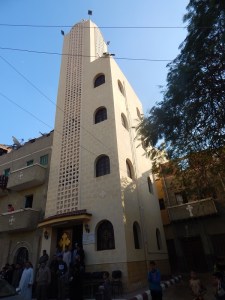
Humble St George’s Church in Belhasa south of Cairo became a home for dogs and goats after its destruction by pro-Morsi supporters during Egypt’s 2011 revolution.
Now it’s been reopened better than ever – thanks to a surprise announcement by Egypt’s President.
‘This is a beautiful gesture for a new age,’ said Bishop Biemen, Head of Crisis Management for the Coptic Orthodox Church. ‘We have been pampered.’
President Abdel Fattah al-Sisi visited the Coptic Cathedral in Cairo on 6 January – Coptic Christmas Eve – for the second year running. Amid raucous applause he did the most un-presidential thing: he apologized
‘We have taken too long to fix and renovate the churches that were burned,’ the President told Copts, one of the oldest Christian communities in the world. ‘God willing, by next year there won’t be a single house or church that is not restored.’
On 14 August, 2013, six weeks after then Defense Minister Sisi deposed President Morsi, military and police units violently dispersed his supporters as they staged two sit-in protests in Cairo.
Over the next three days angry Islamists ransacked dozens of Christian establishments across the country.
In Belhasa, 240 kilometers south of Cairo, youths climbed the roof of the neighbouring school and hurled firecrackers and Molotov cocktails into the church.
‘We prayed, we cried, we were in a difficult situation,’ Malak Ishak, a 40-year-old middle school teacher, told Lapido. ‘God, why did you let your house burn?’
The tiny community of Christian farmers and labourers abandoned the building which was charred beyond recognition, and lamented its fate.
And for the next three Christmases they trudged country roads to worship in Kom al-Akhdar village four kilometers away.
Top-of-the-line construction in Belhasa
After the initial attacks Sisi immediately promised that the military would cover the costs of all reconstruction.
But progress was slow-going and some Copts began to complain. Local media also questioned if the job would get done.
But on 14 January, one week after the President’s apology, St George’s Church was reopened. Refurbished with top-of-the-line construction material and additional floors, engineers also included a sprinkler system and fire alarm.
Fr Yuannis (R) inside Belhasa’s restored church
Fr Yuannis Anton from nearby village Qufada had helped Belhasa church get its licence in 1999, after it was converted from a simple village home.
Now drawing on his biblical heritage, he praised the generosity of the military, which covered the £270,000 cost of restoration.
‘We were very sad when the church was burned,’ he said. ‘But we held to what Jesus once said, “You do not realize what I am doing now, but later you will understand.”’
Village relations with Muslims were now much better than in the time of Morsi, teacher Malak Ishak said.
Priority
Bishop Biemen echoed this theme about the country as a whole.
Consecrated in 1961 and an engineer by background, the Bishop was chosen to coordinate the nationwide effort with the Army Corps of Engineers.
Priority was given to churches that were the only ones to serve a given area.
Consideration was also given to the security situation, with the army not being placed in situations where confrontation with still-angry pockets of Morsi supporters might occur.
Stage one involved ten locations and was originally scheduled to be completed by the anniversary of Morsi’s ouster, he said. But there were delays until the end of 2014.
Stage two incorporated the remaining 33 locations, ten of which were made a priority. But these few took all of 2015.
Reports circulated in the press about materials being dumped. Other reports cited local priests saying their burned churches had not been registered.
‘As the army procrastinated there was grumbling from Copts that the job was not getting done,’ said Ishak Ibrahim, Religious Liberty Officer for the Egyptian Initiative for Personal Rights.
‘But since Sisi’s announcement there has been a renewed push on the part of the armed forces.’
‘Our country appreciates us’: Bishop Biemen
Bishop Biemen agreed, but took the blame for the delays.
‘We have the responsibility to plan and redesign the churches, not the army,’ he said. ‘Before God and my conscience, we were working the whole time.’
Popular confusion came from two misunderstandings, he explained. The project only involved locations damaged during the three-day melée. And after supplying initial materials, the army then paid upon completion.
But since Christmas the final phase has begun in earnest. It even includes the church in Arish, in troubled northern Sinai where the army remains in conflict with an ISIS affiliate, he said.
In total the army will pay out £16.5 million on 65 locations including 52 churches and 21 additional religious buildings.
But though he said it had not been needed, Bishop Biemen is most encouraged by an apology that runs counter to much of Egyptian culture.
‘Many people view saying sorry as an act of weakness,’ he said. ‘That the President did so is a big deal, and shows us our country appreciates us and is worth defending.
‘As the Egyptian proverb says, “We have been patient, but then received everything we need.”’














 Jayson Casper