Categories
Excerpts

What Happens if US Aid to Egypt is Cut?

As the US administration has decided to suspend some foreign military assistance to Egypt, consider this article from Reuters, carried by Ahram Online, from a few weeks previous:

Richard Genaille, deputy director of the Pentagon’s Defense Security Cooperation Agency, said he hoped the Obama administration reached a decision soon on whether to continue $1.23 billion in U.S. military assistance to Egypt, given the large number of weapons shipments in the pipeline.

“We’re kind of antsy about that,” Genaille said after a speech at the ComDef industry conference in Washington. “There’s a whole bunch of contracts out there. The bills keep coming in and we’ve got to be able to pay them somehow otherwise we go in default.”

….

Funding for the weapons sales must be finalized or “obligated” by September 30, when the U.S. government’s 2013 fiscal year ends, or the funds will revert to the U.S. Treasury, officials say.

“We’re kind of hoping that sometime pretty soon they’ll make a decision one way or another – either we terminate or they actually give us some more of the Egyptian (foreign military funding) so we can pay the bills,” Genaille said.

He said the administration was trying to sort through the potential costs associated with terminating contracts, but the amount would be “substantial – in the billions.”

US ‘aid’ to Egypt is a useful foreign policy tool, worthy to be debated as a legitimate budget expenditure. But it is important to remember this aid is essentially a subsidy to the defense industry. It’s just nice to hear the Pentagon brass say so.

Categories
Excerpts

Revolution and Happiness

To those young men and women and idealists of all sorts who looked longingly at the first wave of the Arab Spring:

Here, courtesy of the United Nations via Ahram Online, is a sobering statistic:

A report published by the United Nations’ Sustainable Development Solutions Network has listed Egypt as the 130th most happy nation out of 156 surveyed.

Egypt’s happiness rate dropped by 21.2 percent in comparison with 2005-2007, according to the 2013 World Happiness Report which was published in September.

According to the report, countries in the Middle East and North Africa have witnessed a decrease of nearly 60 percent in their “happiness rate.”

In today’s day and age, much of what can be considered happiness is tied to the feeling of belonging to and working for good in something greater than oneself. I certainly understand how the heroic example of the Arab Spring qualifies.

For those living this reality, however, it is not working out so well.

This is a good reminder of two things: Commitment must outlast the temporary vagaries of ‘happiness’, and, it is very important to chose that commitment wisely.

Categories
Excerpts

Brief Portraits of Egyptian Atheism

Arabic Atheism

From Egypt Independent, on a very taboo subject in which some have given their full name and testimony:

Those who have come out publicly as atheists have been not only isolated by their friends and families, but also society in general. However, others who turn down their familial religion have faced many worse trials than mere isolation.

Asmaa Omar, 24, who has just graduated the Faculty of Engineering, said that once she revealed her beliefs to her family, they began to physically and mentally torture her. Her father slapped her in the face and broke her jaw. She was not able to eat properly for seven months.

Both her immediate and extended families began to insult her. “You just want to have free relations with boys,” they would say, or “You used to be the best girl in the family,” and “Now you’re a prostitute.”

Some come from a Christian background:

Ayman Ramzy Nakhla, 42, comes from a Protestant background. He worked in preaching Christianity with the church, but then decided to abandon religion altogether. He is now not very much concerned with knowing if God really exists or not.

Nakhla’s father was a priest, and Nakha worked for ten years as librarian in the Theology College of the Evangelical Church, and as an assistant to a priest, which is an administrative position. Ramzy says that this background was the one that actually led him to lose interest in religion, getting so close to the truth of the Church made him decide to leave it.

Others from a Muslim background:

Other atheists say they believe atheism is in fact more moral than the old, rigid moral codes offered by traditional religions.

Omar says her journey began when prominent cardiologist Madgy Yaqoub managed to treat a two-year old relative of hers in open heart surgery. Rahman, the child, had a valve that did not work and another with malformation.

The successful operation led Omar to wonder how a man such as the doctor, who had lived his life saving many children like Rahma, could be thrown to hell for not being a Muslim. Omar found that religions just chose its followers to end up in heaven, and say that other people would go to hell, regardless for whatever good deeds they do in their life.

Omar says she believes in God, but is against all religions. She says she is still looking for Him and is not aware of His truth.

As a result, some mix between the two:

Some atheists, however, still feel without religion, they are missing something. Despite her rejection of religion, Kamel still misses the spiritual side, resorting to Sufism as she attends Sufis meetings and listen to sufi music, especially those of al-Naqshbandi and Nasr Eddin Tobar. She also enjoys listening to Christian hymns and is massively affected by them. She says, however, that this is just a need for spirituality, nothing more.

Kamel goes back to saying that she has not yet reached a final result for her inner conflict.

Indeed, Egypt is changing. Your vote: Is this for better or for worse?
Categories
Excerpts

What Path will Egypt’s Muslim Brotherhood Choose?

Three options are presented in an excellent and thorough analysis from the Carnegie Endowment for International Peace.

I will excerpt the conclusions for each, but the whole article is worth reading. If you would like to skip over the quotations for my brief commentary, please scroll down to the end.

First, on the possibility of Inclusion and Integration:

Assuming there are prudent, democratic interlocutors who are truly interested in mediating a settlement with the regime, such as Beshr and Darrag, can they really command the organization’s support? The answer, most likely, is no, given that most of the key positions in the group’s decisionmaking bodies, including the Guidance Bureau, the Shura Council, and administrative units, are occupied by individuals completely loyal to the Brotherhood’s incumbent leadership and tied to it through a multilayered network of business, familial, occupational, personal, and ideological connections.

Furthermore, the Brotherhood’s leadership has masterfully employed existential fears of regime repression among the group’s members to deter any serious call for self-critique or internal revision. Brotherhood leaders have so far adamantly refused to admit their grave mistakes and betrayal of the causes of revolution and democratization. The best they can concede, based on the dovish Darrag’s statement to the media, is to support the viewpoint that the only mistake the Brotherhood made while in power was underestimating the power of the Egyptian “deep state” and its capacity to spoil the political process. Darrag believes that the Brotherhood should have adopted a “more revolutionary strategy” in order to cleanse the state. But he expresses no regrets about the authoritarian constitution, the exclusionary political process, or the divisive policies put in place by the Brotherhood while in power. Moreover, even if Brotherhood leaders admit to grave mistakes during their rule, as long as the regime continues its repressive policies against the organization, the time will not be right to critique these leaders or hold them accountable for their shortcomings and wrong deeds. Therefore, internal Brotherhood fragmentation and secession will remain highly unlikely.

Nevertheless, even if some interlocutors can hypothetically solicit a degree of support—and hence start creating a real moderate faction within the Brotherhood—this scenario presents an invitation for the breakdown of the Brotherhood’s organizational unity. As long as there are no comprehensive transformations of the group’s ideology and mission, the recalcitrant Brotherhood mass will not accept these moderates’ offers of settlement on the regime’s terms, which will be depicted as an unpalatable act of treachery. The Brotherhood might come to a historical end, and more radical groups might emerge to the right of the Brotherhood, attracting its disgruntled former supporters. So, the first scenario, which is the resolution preferred by the United States and the European Union, is highly problematic and unlikely, at least in the short run.

Second, the Violence Scenario:

Nevertheless, Islamist violence may have reached its logistical and social limitations. First of all, violence on a large scale requires a large number of people willing to execute it and a social base willing to support it. Small pockets of disaffected, radical Islamists are not enough. Furthermore, unlike in Algeria in the 1990s, topographical conditions favorable to armed insurgency do not exist in Egypt. The country also lacks a clearly proviolence social constituency large enough to provide shelter and support for fighters.

Increasing social hostility to Islamism in general and to Islamist-driven violence in particular can isolate the politics of violence and further erode public support. While radical Islamic groups in Egypt waged an armed confrontation with the state in the 1980s and 1990s, it is important to recall that during that period the public remained either sympathetic to the Islamists or opposed to them but not motivated enough to throw its weight behind the government. This time the violent Islamists will face opposition from both the state and society (or at least wide segments of society), as demonstrated by the continuous street battles between Islamists and the Egyptian public in residential areas, popular neighborhoods, public squares, and marketplaces across different cities and towns in the months since November 2012.

The Syrian scenario is also unlikely. It is hard to believe that the Egyptian army can split along sectarian, political, or ideological lines like its counterpart in Syria.

The violence scenario, if it materialized, could arguably involve more low-intensity violence, limited to specific activities and locales. It might take the form of street conflicts between Islamists and anti-Islamist individuals in different urban neighborhoods. Street violence between common people and politicized actors has been a recurrent pattern since the early days of the transitional period. Many residents consider any politicized marches through their neighborhoods to be a transgression into their territory. Friction and clashes have occurred as a result, increasing in recent weeks, and are now focused on Brotherhood marches. Yet such low-intensity violence would likely fall short of anything like the Algerian or Syrian cases.

So both the accommodation scenario and the violence scenario are improbable. This leaves only one other possible outcome—a continuation of the status quo.

Third, the Continued Protest Scenario of De-legitimization:

The Brotherhood’s odds under the continued protest scenario are not terrible. In fact, the group can already claim that it has made headway through the troubled waters of the last month. The organization is arguably (at least in the minds of some Brotherhood activists) in a much better tactical position than when protests against Morsi began or even than when he was ousted, when public sympathy for Morsi’s cause was at its lowest and the faith in the interim regime’s transitional road map was at its zenith. The biggest problem with this scenario is its extremely risky nature. The pursuit of this option would risk losing the political gains the Brotherhood has made since Mubarak’s fall: official recognition, political participation, and power sharing. Such gains could be partially sustained if the accommodation scenario were to be embraced.

The bet the Brotherhood would be making with the continued protest scenario is that it can achieve longer-term gains, such as exhausting the transitional regime until it surrenders to the Brotherhood’s conditions, if it accepts certain near-term tactical forfeits. However, a complete defeat on the part of the military and the state is likely impossible as well. Ironically, the continued protest scenario in the long run may morph into a modified version of the accommodation option as the maximum that the Brotherhood can gain given the current balance of power.

The author does not dare to predict which path the Brotherhood will take. The best, that of internal self-reform and reflection, he believes is institutionally unlikely as well as near impossible under current circumstances.

But the difficulty lies in the nature of the Brotherhood itself, which he describes even before presenting the three options:

The Brotherhood is not a “moderate” Islamist movement that can be further moderated and democratized via inclusion. Instead, it has shown itself to be an assertive, even reckless movement, invested in Islamist ideology and dominated by an entrenched leadership structure. It has demonstrated a tendency to maintain multiple public discourses in an attempt to reconcile irreconcilable sets of political vocabulary. The soft-spoken English-speaking Brotherhood cadres who communicate with Western diplomats and analysts and propagate lofty statements about the compatibility of Brotherhood objectives with liberal democracy are not exactly representative of the real Muslim Brotherhood.

To truly understand the Brotherhood, one should examine the movement at the grassroots level, in the small towns and rural areas across the Delta and Upper Egypt—the organization’s real power base and the constituency that its leaders represent. At this level, the Brotherhood does not support pro-democracy rhetoric. Instead, it is more aligned with Salafist religious interpretations and understandings of the organization’s mission and goals as expressed by Sayyid Qutb, the renowned Muslim Brotherhood intellectual of the 1950s and early 1960s. Qutb was instrumental in advancing the notion of “organization first,” which suggests that the Islamist cause is inherently connected with the creation and sustenance of the Muslim Brotherhood society as an exclusive representation of Islam.

Intellectually and culturally, the Brotherhood encompasses different schools of Islamic thought, some of which are more open-minded and reformist than others. But based on the Brotherhood’s doctrinal literature and actual behavior, it is clear that the core of the organization centers on an ideology of an “Islamist state,” “Islamic transnationalism,” or “Paxa Islamica” and on notions of a government based on God’s sovereignty instead of the people’s sovereignty.

I have only one small quibble. The constitution produced under Brotherhood leadership specifically stated ‘sovereignty belongs to the people’, over the objections of Salafi members.

Of course, the constitution included several clauses which elevated the role of sharia, and thus of God’s practical sovereignty. The author might argue the constitution was necessarily a compromise document and was certainly a step in an Islamist direction, consistent with Brotherhood pragmatism.

As far as my read on their options, the current period is characterized by choice number three – of continued street protests. The Brotherhood can maintain this for a while, but only up until a coming critical event.

Once the amended (or new) constitution is put to popular referendum, assuming its approval, the Brotherhood claim of legitimacy takes a thorough blow. The people will have democratically sanctified the mass rallies which led to the military deposing of President Morsi.

At this moment, protests will not be enough. The Brotherhood will have to choose between active campaigning for a no vote or a boycott, or else sabotage the process. They must not allow a popular vote to go against them.

How will they do this? At that moment these three choices will come to a head. They can bide their time now with protests, but in another month or so, the die will be cast.

Categories
Excerpts

Worrisome Indications of Egypt’s Future

Most people I have interacted with since our return to Cairo are very positive about the nation’s future. They are glad to see Morsi go, the Brotherhood discredited, and though they anticipate a few hiccups from disgruntled Islamists, they expect a return to stability and normalcy within a few months.

Here are two voices which suggest otherwise.

The first is from the Daily News, from Mahmoud Salem, aka Sandmonkey, a liberal blogger who does not have rosy glasses, though he once did. Quite the opposite, in fact:

The “returning” police state is an illusion; the police can’t even protect their own stations. Anyone can see that there is no state, only people who believe they have power, enforceable by guns, against a population that is hungry, armed, and has grown desensitised from violence amidst an economic situation that borders on catastrophic. Throw Islamists in the mix, a military curfew that just got extended for two more months, vanishing tourism for the third year running, and the financial and economic repercussions of the “war on terror,” and anyone can tell you that this won’t end well economically. On a separate but related note, locally manufactured cigarettes are already disappearing and reappearing in the black market.
…………
Every activist I know fears the return of the police state. Every non-activist I know is wondering where the police are.
…………

The other illusion is the return of Mubarak’s “feloul” to power, which won’t happen. You see, the businessmen feloul, the face of the NDP for years, will not be able to take over this time, because at the end of the day they are not “true feloul,” but rather, the elites who utilised the NDP for power and  were used by the NDP political leadership as a front. They were in power because the NDP leadership forced them upon local leaders, had them run for office in areas where they could never win on their own; if you followed the parliamentary elections of 2005 and 2010, it already wasn’t working, with the NDP sometimes fielding four candidates against each other in every district. This used to happen when the NDP was in full operation, with a politburo and a state behind it. Now, there is no politburo, no party, no leadership or symbols, with every man for himself, and the “true feloul,” the drug dealers, arms traders and big family criminals who have armed gangs, are about to become the true rulers of the country,  since they will be the only force capable of ruling the streets that are void of state control. Only the most brutal of them will end up winning a parliamentary seat in a full individual seat election.

………………

The disintegration of the state will lead to the rise of “local leadership” as a street stabilising force, which means that our streets will be gang-controlled. The state’s ability to provide security in such conditions will become rather limited or, to be more accurate, impossible. The bad security will lead to a worse economy, which means that the corrupt government officials will become more vicious with their bribe demands, which would serve as their source of income, as their actual one begins drying up. Infighting will ensue amongst different branches of the government over patronage, because a contracting economy will equal less stealing, and consequently, more ruthless infighting.

His article is lengthy and worth reading, and actually gets to some, gulp, good news. The above state of affairs will continue for three years or so, and then the exhausted powers that be will eventually run out of partners with whom to divide up the pie that is Egypt.

On the brink of becoming another Somalia, they will finally yield to the principles and goals of the January 25 revolution. It’s advocates may be the only ones to desire reforming the mess that Egypt will be by then.

Speaking of Somalia, here is a more journalistic account of this process set in motion, by Foreign Policy:

In the Sinai Peninsula, where government buildings and checkpoints have been bombarded by rocket-propelled grenades (RPGs) and car bombs on a near-daily basis in recent weeks, the Egyptian state is losing ground to ultraconservative Islamists with an alternative vision for rule of law. The growing influence of self-taught sharia judges who uphold the Quran over Egyptian law reflects an alarming erosion of state sovereignty in the Sinai Peninsula. In late August, state courts in North Sinai were forced to transfer all of their cases to the comparatively stable jurisdiction of Ismailiya, in the face of escalating attacks by armed extremists targeting government buildings and security personnel. This week, two prominent sharia judges were among 15 hard-line Salafis arrested on charges of inciting terrorist attacks, as the Egyptian government struggles to contain rising extremism. But despite the current crackdown, it is clear that the deeply entrenched sharia courts of North Sinai are here to stay.

Since the removal of former President Mohamed Morsi on July 3, the already fragile government in Sinai has been further crippled by a wave of armed attacks, ambushes, and car bombings by militants equipped with increasingly sophisticated weaponry stolen from police stations or smuggled across Egypt’s borders with Libya and Sudan. The escalation of violence has forced the closure of a critical police station in Arish and the evacuation of other government buildings, creating an institutional vacuum that sharia courts are opportunistically exploiting.

The outsourcing of traditional law enforcement functions to non-state actors is reminiscent of a pattern seen in failed states like Somalia, where powerful Islamic courts with their own private militias and ties to al Qaeda seized control over vast swaths of the country in 2006. While the sharia courts of Sinai are nowhere near as institutionalized as those in Somalia, they similarly aspire to absorb the functions of state institutions that are failing to govern.

These courts are not run by radical extremists, as the author makes clear, but some might not find much shade of difference in their end game:

Sharia judges, eager to disassociate themselves from more radical Islamists, are quick to enumerate their moderate credentials and tolerance of religious minorities. Beik insisted that the courts operate on a purely voluntary basis and would never forcibly impose Islamic law on non-Muslims without their consent. To illustrate this point, he proudly informed me that the House of Sharia Judgment has heard three cases involving claims by Christian litigants against Muslim adversaries since the revolution, and in all three cases, the Christian party prevailed — a fact he cited as evidence of the courts’ neutrality.

But although the sharia judges of North Sinai pay lip service to liberal democratic principles of inclusion and equality, they ultimately aspire to establish a parallel state governed not by Egypt’s constitution, but by a retrograde interpretation of sharia that relegates women and religious minorities to second-class citizenship. For now, their rulings are purely advisory and non-binding. But Abu Faisal predicts that his court’s decisions will one day carry the force of law in the Islamic emirate he hopes to see established in the Sinai. “Sharia is already the law of the land here,” he said. “God willing, someday it will be the law of the state.”

I maintain optimism for Egypt’s future. Prognosis, however, is currently beyond my confidence to assert.

Categories
Excerpts

More Brotherhood Doublespeak

From the Atlantic Council, following the Muslim Brotherhood’s English and Arabic discourse on Dalga, an Upper Egyptian village seized by Islamists and recently recovered by the security forces:

The Muslim Brotherhood has been quick to roll the Dalga raid into an on-going crackdown on the organization and its supporters, but has once again offered different reactions in English and in Arabic. Arabic Brotherhood media outlets make no mention of the sectarian violence that Christians in Dalga faced. In fact, they have gone so far as to accuse Copts in Dalga of lying to gain the sympathy of the world.

On the Freedom and Justice Party’s official website, they write: “A number of Christian families started to spread false news about being detained by locals of the village as hostages and claimed that some of the village residents burned their churches. The Coptic Diaspora exploited the news to prepare the international community, particularly, American politicians for a new massacre in Dalga.

The article shows a screenshot of the FJP website, and then continues:

In contrast in English, the Muslim Brotherhood’s London office sent a statement to journalists condemning the attacks on Dalga’s Copts, expressing “solidarity” with their “Christian brothers and sisters.”

The Brotherhood’s official website, Ikhwanweb, similarly condemned the attacks on Christians, expressing solidarity with Dalga’s Copts, and called on authorities to “protect all citizens and places of worship.”At the same time, however, the statement placed the blame of the sectarian attacks on the military and ‘thugs’. The official statement read:

“The Muslim Brotherhood strongly condemn attacks on places of worship, including attacks on Egyptian Copts and churches as well as indiscriminate attacks on the innocent civilians in Dalga by the military junta, which it claims to protect Christians from “Islamist Militants.” This is part of the military junta’s propaganda to push for sectarian strife and justify their atrocities against the innocent people of Dalga for their fierce opposition of the military coup.”

Of course, it is possible the Brotherhood’s opponents are also using doublespeak. On the one hand they are terrorists; on the other, they are invited to be part of the nation’s democratic transition.

But in claiming a religious higher ground, the Muslim Brotherhood only reveals a deeper hypocrisy. In a war of propaganda it is good to be reminded regularly of such discrepancies. Here, a pundit offers her advice to all.

Categories
Excerpts

Nothing was Inevitable

From Ibrahim al-Hudaiby, a former Muslim Brotherhood youth leader, in Ahram Online. He writes that the primary reason for the fall of Morsi was his personal failures and those of his group.

His list is lengthy and worth reading, but this entry in particular is worth remembering:

After 30 June, Morsi did not call for a referendum. Had he done so, he would have prevented “military intervention.” Instead, he prioritised his group that crumbles in self-criticism when it fails with the masses and unites under threat; he chose to be ousted at the hands of the army 3 July, not by the masses on 30 June. He chose to cancel out the entire scene of the masses from the picture and consciousness (there were even comical statements about using Photoshop), in order to maintain the coherence of the group.

By choosing to fall to the army, Morsi and the Brotherhood can now frame their failures as a coup d’etat. The constitution, however, gave him legitimacy to call for a public referendum. He may have won or lost, but he would have been admitting the massive public uprising against his rule.

Houdaiby’s analysis is poignant. Speaking as a former member, he attributes this decision to the Brotherhood’s inability to accept internal criticism and reflection. They chose instead to rally their faithful against an enemy, as times of crisis do not permit introspection.

This decision, he argues, has led us to the dangerous impasse we are in. From his conclusion:

After that, the Muslim Brotherhood chose to play the most treacherous card, by claiming the army was divided (for the first two weeks we heard endless rumours about splits in the Second and Third armies, etc). The military, like the Muslim Brotherhood, was also a group that needed to demonise the other in order to maintain its unity, and so it did.

This pleased some media figures and members of state institutions, which paved the way to horrendous crimes against protestors.

And thus, each side came to demonise the other.

Sad. Demonization tears society apart as it seeks to patch over internal fissures and contradictions. Let us not put anything past the susceptibility of mankind to be manipulated and deceived, but inasmuch as this demonization is a construct, must it not fail eventually?

The question is if its failure will lead to only more destruction. Will the plugged-up fissures explode, or diffuse the situation by letting out necessary steam?

Categories
Excerpts

Copts Unite with Muslims after Islamist Attacks

Bishop Thomas of Qussia

From Egyptian Streets, elaborating on how Bishop Thomas defended his church in Upper Egypt, which I briefly mentioned in this report:

“We learned that extremists were going to attack us with machine guns, but we did not prepare ourselves for the attack with weapons. We did something simple,” says Bishop Thomas, about that day he received a message that armed hardliners were on their way to his episcopal residence in the Al Quosia-region of Lower Egypt.

Determined to defend themselves without violent means, the church fathers applied soap and water on the rocky path leading to Bishop Thomas’ residence.

“I saw them coming with their machine guns far down the road. They tried to get to the house, but they slipped and fell. They tried over and over again, without succeeding,” says the Bishop, smiling with grief as he talks about the episode.

The grief is over the many homes in his diocese which were attacked. But he is resisting the urge to demonize:

“Fear and anger does not come in my heart. Fear is the biggest enemy – this makes you lose wisdom and power,” said the Bishop gently when asked about the impact of the violence on life as a Copt. “Hatred is the biggest disease – full of revenge and the source of all evil.”

Doing so enables him to take a path different from many Copts, who have embraced the current crackdown on Islamists:

“I need to embrace the victims with love and communicate forgiveness. When the worst assaults are over, my task is to promote and facilitate reconciliation,” said the Bishop calmly while smiling. “The Coptic church is training people to see the situation from different perspectives, we teach them the difference between autocracy and democracy, and the meaning of a civil state. We are working against both a religious – and a marshal state.”

The attacks, some might say paradoxically, have brought the Muslims and Christians of his area closer together:

“Poor Muslim families brought blankets to the Christians who lost their homes, and together we formed a civil front– not Christians against Muslims– but civil society against extremism,” explained the Bishop.

Among the issues discussed jointly were defense-tactics and how to prevent any new attacks.

Images and video-clips from Muslims and Christians, who hand in hand formed a protective ring circle around churches, were shared on social media across the globe.

“No one who has not experienced sectarian violence close up will be able to imagine what this solidarity means to us, as a society,” said Bishop Thomas gratefully. “We did actually lose hope under Morsi. Now we are hoping and praying that the price Copts are paying now will benefit generations of Egyptians in the future.”

Categories
Excerpts

The Brittle State

Salama Moussa writes about the Orwellian realities in Egypt today:

The narrative surrounding the January 2011 revolution has done damage to the goal of progress in Egypt. The accepted myth is that of an impossibly brave action against an exceptionally impregnable wall.  While there is no denying the bravery, the Mubarak state was less an impregnable wall than a pile of rubble.  Like a bridge with heft and no strength it awaited the first burst of wind under the right conditions to exhibit spectacular collapse. The Egyptian state will be made stronger and more durable by trimming rather than adding. Everything in Egypt today is the opposite of what it seems. The arbitrarily empowered policeman undermines law and order rather than enforce it. The hectoring Sheikh (or Abouna [i.e. priest]) does not promote morality, just false piety. The constantly declaiming politician does not enlighten, but obfuscates. The preening man in uniform does not protect, but menace. The deeply patriarchal men do not hold the family together, just rob it of half of its strength. The Islamists are menacing not because they are the “other” but because they are a reflection of a damaged self. A country this deep in the rabbit hole has to consider doing the exact opposite of what its instincts demand.

The goals of the 2011 revolution, Bread-Freedom-Social Justice, are catchy, vague and contradictory. The country needs a chicken in every pot not more poorly-baked and subsidized bread. Only an unfettered market will guarantee that, and such a market will initially run counter to social justice, although it will ultimately strengthen it in profound ways. Freedom is a vague concept, notable only by its absence. What will free Egypt from its current chaos is respect for the rules, which may seem initially counter to “Freedom”, but is ultimately its true servant and guardian.  Incremental progress, not revolutionary action, may guarantee the most profound change in Egypt today.

He also provides an interesting lesson in (literal) bridge-building.

But speaking of the state, there is also the concept of Egypt’s ‘deep state’, which according to Amr Darrag, one of the few prominent Muslim Brothers not arrested, caused the fall of Morsi:

MM: What would you say were your biggest mistakes?

AD: We underestimated the power of the deep state. We thought that just having the revolution and elections, the deep state would diminish automatically or gradually.

When parliamentary elections took place and only 13 members from feloul [remnants of the Mubarak regime] parties made it, we thought it was a strong indication that they don’t have much influence. But maybe at that time they were still gathering themselves.

As time passed, we found that they have much more influence. They managed to have their candidate be the second top presidential candidate. If you go through the government, as I did as minister, you find out that they are really deeply rooted everywhere. A more revolutionary path would have been necessary to expedite reform.

When he says ‘everywhere’, Muslim Brothers often mean the Egyptian bureaucracy – bloated, inefficient, corrupt, and the mechanism through which most of the state moves. It can be bypassed, perhaps, but it must be placated.

The Brotherhood believed this ‘deep state’ was against them from the beginning and foiled their project. Darrag points out their ‘mistake’ was underestimating it, but let us suppose his point is true.

The mistake is not in underestimation, but in losing their revolutionary allies who would be willing to confront it with them. But I have yet to hear a Brother articulate this manner of ‘mistake’. What could they have done to keep their very fragile and distrustful coalition together?

Of course, others say the Brothers had no intention of reform, but of takeover. Either way, they failed.

But Salama Moussa’s labeling of the state as ‘brittle’ is at the heart of making sense of Egypt these days: What is the nature of the beast?

How can it be harnessed – either whittled or strengthened – for Egypt’s good? And, who can do it?

Here is his unfortunate conclusion:

The only open question is whether Egypt will be lucky enough to find leaders who can articulate this vision to its people in terms both understandable and respectful. It would run counter to the last decades of leadership, which has been alternately charismatic, theatrical, tedious, and stupid, but rarely effective.

Categories
Excerpts

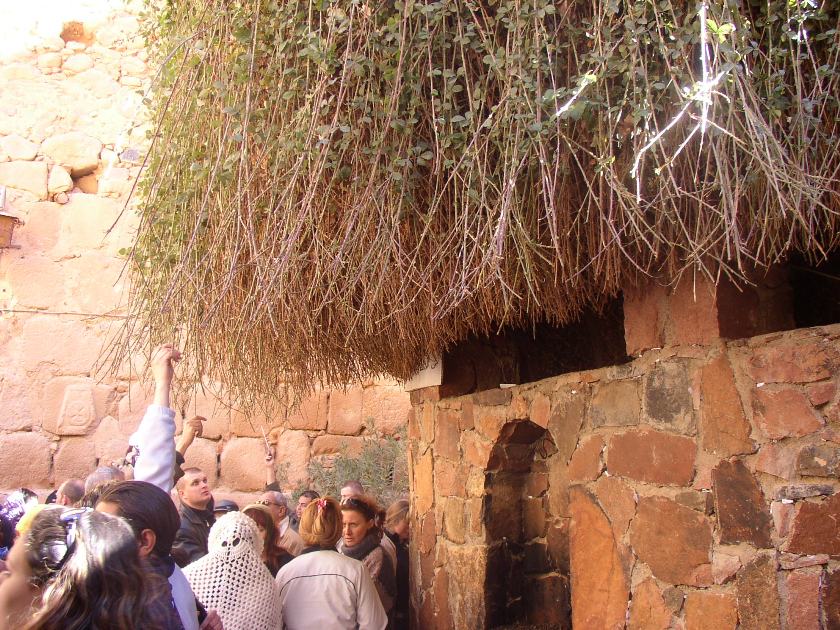
The Burning Bush is Closed

St. Catherine's Monastery at Mt. Sinai
St. Catherine’s Monastery at Mt. Sinai

From al-Monitor, reporting from Mt. Sinai, where a Greek Orthodox Monastery houses what it claims is the original burning bush:

In the Sinai city of St. Catherine, a few thousand people and around 800 camels have been left struggling since the first week of August, when Egyptian security authorities ordered the total shutdown of the town’s 1,500-year-old monastery. Bedouin residents of the mountainous area were forced to sell their camels, which they cannot feed, to feed their families.

Over the past 50 years, St. Catherine’s Monastery closed its gates twice, in 1977 when former President Anwar Sadat made his historic visit to Jerusalem, and in 1982 when the Egyptian military entered Sinai after the withdrawal of Israeli forces. This time, the shutdown, which wasn’t explained by any official statements from either the Defense or Interior Ministry, was allegedly ordered after a failed attempt to kidnap a monk traveling in South Sinai in June and rising suspicions of a possible attack on the monastery.

“Despite having more time to pray and practice, our priests live without crowds of visitors, we are suffering a major financial crisis, and we cannot cover the monastery’s expenses and dozens of families that we constantly support,” said Paolos, who wore his farming clothes covered in mud.

St. Catherine’s Monastery employs 400 workers from the surrounding community at its olive groves, grape farms, honey bee farms and several processing facilities including an olive oil press. As of the beginning of September, the monastery reserves decreased to a level that is barely enough to cover two months of expenditure.

“We respect the Egyptian government, and we will continue to close if they require the closure,” said Paolos, “But we will have to drastically cut down salaries and other expenditures. We are saddened to lose the income we shared with the Bedouin community.”

Monasteries making income? Located at the foot of what is purported to be the Biblical Mt. Sinai, streams of tourists come, climbing the mountain at night for a spectacular view of the desert at sunrise. The pious/superstitious/relic-ly-inclined religious tourists also pick leaves from the burning bush – now a towering hedge that drops its branches down just high enough to be reached by tippy-toe.
The Burning Bush at St. Catherine's Monastery
The Burning Bush at St. Catherine’s Monastery
We visited once, several years ago when we could climb without children. We were impressed, even though disappointed that our tour bus whisked us away right afterwards, without much chance to explore the ‘real’ monastery. And of course, being a tourist trap, there was a steady flow of income to match the steady flow of tourists.
The Ascent to Mt. Sinai
We made our trek in the winter; it would be hard to imagine doing now with our children
We made our trek in the winter; it would be hard to imagine doing now with our children. One day…
... but this was our reward.
… but this was our reward.

Since we moved to Egypt, we have learned a great deal more about monasteries. They are wonderfully spiritual places where monks abstain from the world and devote themselves to prayer. But they are also the favorite destination for Copts who frequent them as a weekend get-a-way. The monks’ residences are kept separate from publicly accessible areas, and a handful of monks are assigned the role of facilitation. Some visitors seek spiritual counseling, some seek the blessing of praying in a historic location, and others simply enjoy the time away from the bustle of Cairo.

St. Catherine’s monastery is located deep in the Sinai desert, so it is not a favored location for most Copts. But it is only an hour or two drive from the popular Red Sea resorts drawing thousands of tourists every year. Even so, it has evolved in a similar function to many of the monasteries a mile or so into the deserts surrounding the Nile Valley.

They are a hub of economic activity.

The monasteries have turned desert into farmland and cultivate agriculture and livestock. They cooperate with local villagers – usually Muslims – and employ some. They also attract unemployed Copts from throughout the country to live on or near the premises – but not with the monks – and provide labor while receiving training. Many monks will spend half the day in prayer, and the other half supervising a commercial task.

Monks have no worldly possessions, so I am not sure where the money goes. Certainly some is for the upkeep of the monastery, most of which have undergone substantial renovations. Other is for the pay of the labor, which in brief conversations I found to be better than the going rate in the village of origin. I imagine their charitable expenditures are also extensive. But I have not yet discovered the whole story.

Some more extreme Muslims accuse Copts of storing weapons in their monasteries and operating a state within a state. The first claim is baseless by all appearances, but the second has some merit. The monasteries own huge tracts of land and many Copts flock to them not only for blessing but also to purchase internally produced goods. These are also shipped to churches in the cities and sold on their premises. Muslims are welcome in the monasteries and they generally have good relations with their neighbors. But the vast majority of visitors, dare we say customers, are Copts. Their money circulates within their community.

By no means do I wish to overstate the idea of a state within a state or impinge the spiritual reputation of Egyptian monasticism. In my experience most Copts are part of their local communities, interacting with Muslims in employment and commerce, part and parcel of the national fabric. In my experience most Copts visit their monasteries out of a deep respect for their spiritual heritage and in order to take blessing from association with these historic sites and the saints associated with them. In my experience most monks are somewhat annoyed by their inundation with visitors, and wish to spend time with God in both prayer and labor.

But the ‘worldly’ aspects of monastic life exist. At St. Catherine’s, the accrued dependence upon them is threatening the monastic community. The monks, likely, will be able to retreat into their asceticism as in centuries before. The monastic enterprise, however, along with all its local relations, is subject to the whims of economic cycles and security concerns.

Perhaps Egypt’s current troubles are reminding Copts of their necessary dependence on God. Even for monks, this is an ongoing lesson easily forgotten.

Categories
Excerpts

On US Policy toward Egypt

From the Washington Post, in an op-ed from Nathan Brown, a respected Egypt expert:

The U.S. message to Morsi should no longer be “We’re with you, watch out for some details around the edges.” Instead, Obama officials should be telling Egyptian leaders: We’re extremely concerned about your violations of core political and legal principles; we can’t be the partner we would like to be, and the partner Egypt needs, if you undermine the fulfillment of Egyptians’ democratic aspirations.

Putting this message into practice will require much sharper, clearer public responses by the White House and State Department to violations of basic democratic and rule-of-law norms. It will mean an end to justifying the Brotherhood’s negative political steps. And the United States should indicate that the possibility of new aid is not isolated from domestic Egyptian political realities.

This tougher line should not be coupled with an embrace of the opposition. U.S. policy should be based on firm support of core democratic principles, not on playing favorites.

Recalibrating the current policy line will require careful nuance. It has to be clear that the United States is not turning against the Brotherhood but is siding more decisively with democracy.

Earlier in the article Brown goes through the litany of Brotherhood illiberal and anti-democratic decisions. Here, he puts forward what is necessary to counter the widely believed Egyptian liberal and Coptic Christian conspiracy which says the US is ‘backing’ Morsi.

Brown’s words seek to hold on to the ideal in difficult geopolitical times. It is always best to do what is right, and call others to do the same. Messy and impractical, often, and with uncertain results. But it is always best.

Categories
Excerpts

Erian on Baradei, Now and Then

From Ahram Online, exposing how one Brotherhood leader has alternated in support and harsh opposition to Mohamed el-Baradei:

Leading Muslim Brotherhood figure Essam El-Erian on Tuesday accused opposition figure Mohamed ElBaradei, along with several world leaders, of facilitating the 2003 US invasion of Iraq and demanded their prosecution by an international court.

El-Erian, vice chairman of the Muslim Brotherhood’s Freedom and Justice Party, accused former British prime minister Tony Blair, former US state secretary Colin Powell and former Italian PM Silvio Berlusconi of having been instrumental to the US invasion of Saddam Hussein’s Iraq ten years ago.

“Defendants should also include the one [ElBaradei] who covered up for the scandal… without saying one honest word that could have saved Iraq from invasion,” El-Erian asserted.

“The International Atomic Energy Agency (IAEA) and its men, including ElBaradei, who served as agency director for 12 years, should be tried,” he said.

El-Erian’s allegations were met with criticism by many commentators on online social-media networks, who accused the Islamist leader – who had earlier voiced support for ElBaradei – of “hypocrisy.”

“If Mohamed ElBaradei runs in [Egyptian] presidential elections… then we [the Muslim Brotherhood] will definitely vote for him,” El-Erian said in a 2011 interview on Egypt’s Al-Qahira Wal-Nas television channel.

In other footage dating from before Egypt’s 25 January 2011 revolution, El-Erian referred to members of the Mubarak regime who attacked and defamed ElBaradei as “a handful of saboteurs.”

“ElBaradei was director-general of the IAEA and is well-respected worldwide,” El-Erian asserts in the footage.

Perhaps Erian would have a reasonable explanation for his differing assessments, but it would be fascinating to ask him.

Categories
Excerpts

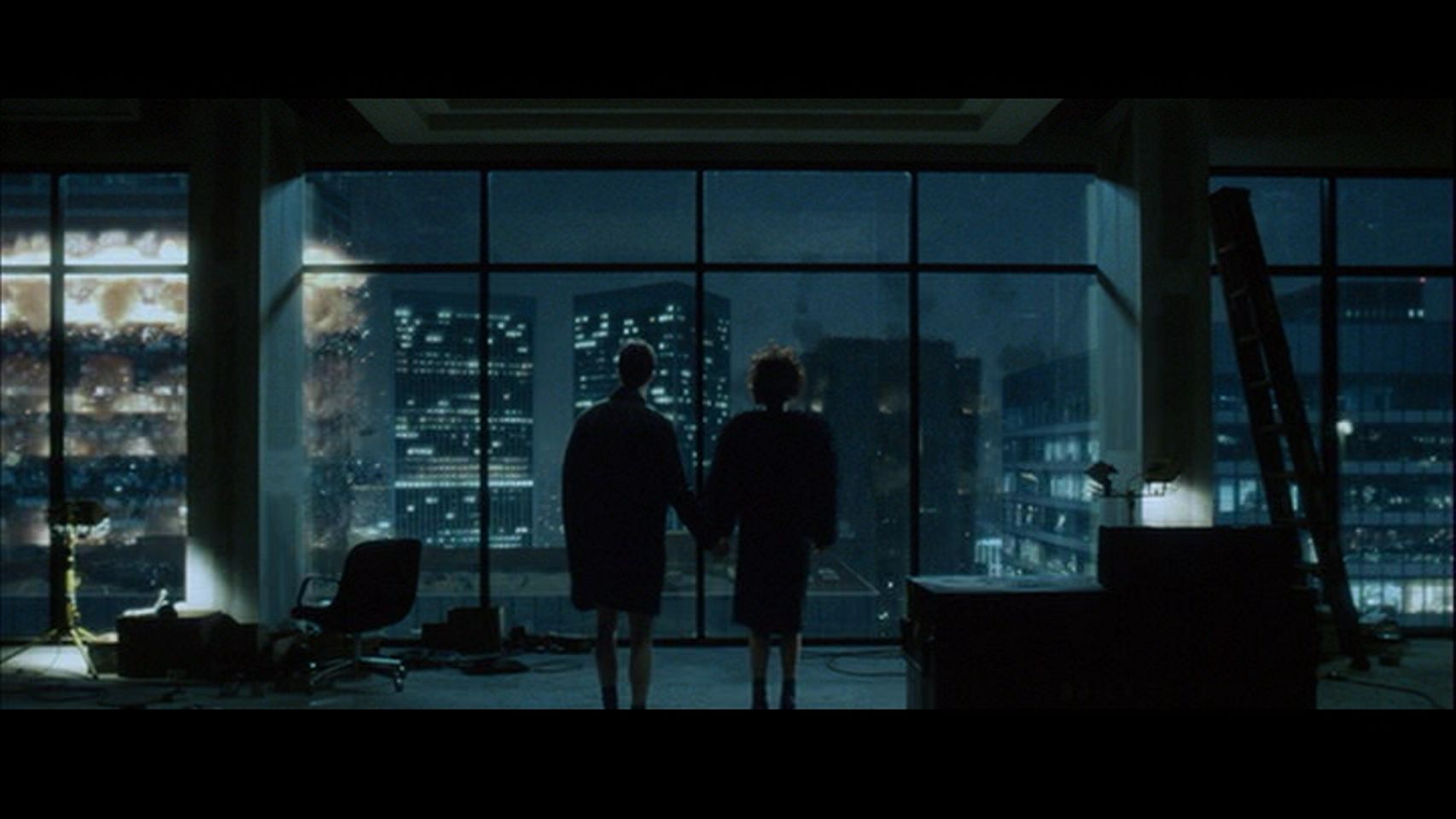
‘Fight Club’ and Egyptian Sectarianism

Fight Club

From the blog Tabula Sara, her conclusion:

The first rule of sectarianism: you do not talk about sectarianism.

In most of my writings I seek to counter inflammatory headlines about Coptic persecution. There is almost always an initial incident stemming from ordinary community disputes, of which a Christian can be at fault as easily as a Muslim.

There is almost always a context in which the incident is understandable, due to cultural peculiarities which outdate any current political leader.

But there is also a narrative that strings together almost every incident, which is frightening. Here, Tabula Sara outlines the sectarianism of Egypt in four easy steps:

There are typically four stages to a full-on sectarian crisis in Egypt. First, you have the long, hard, arduous work of actually spreading sectarian venom in society. Luckily, there is no shortage of people willing to take that noble task upon themselves.

Anyhow, after the successful spread of such rhetoric, the second stage of a sectarian crisis can begin. All it needs is a little spark, nothing big: a girl and a boy who happen to be from different religious background are rumored to be in love, a fight between two merchants, a facebook status update, a scribble on a wall etc.

In between her first two stages she absolves the political leadership while appropriately holding them accountable at the same time:

The majority of people who are involved in these attacks are arguably not paid to do so, nor ordered to so by some political figure. They are people whose minds are saturated enough with that venomous broth which has been slowly simmering in society for a long time. It is not Mubarak or Morsi who order these attacks, as some like to believe. Yes, they bear some responsibility for either leaving criminals unpunished or actively promoting sectarianism, but the fact of the matter is that sectarianism is well-founded in society so it doesn’t need a top-down approach.

She then continues:

So the violence happens, the third stage can commence. No sectarianism without victim-blaming. The circle is full when the incendiary rhetoric that was used in stage one is repeated again, this time to justify the violence or to claim it was the Copts themselves who are at fault (or whichever community is attacked).

Finally, the fourth and most important stage of any sectarian crisis commences. It is the part in which a lovely state representative with a wide smile tells us there is no sectarianism in Egypt. He then recounts stories from his youth in which he used to have a Muslim/Christian neighbor with whom he used to play in the street, or alternately, depending on the level of apparent tolerance needed, in whose house he used to eat during feasts and special occasions.

Unfortunately, in conversations aplenty, these stages are evident.

Fight Club is an organized conspiracy, and I don’t believe Tabula Sara is making this exact comparison. She is right at the edge, though, for ‘sectarianism’ has such a life of its own it is almost an entity itself. Like a cancer, it spreads and destroys, but has no earthly master, only pawns and victims.

Fight Club ends in redemption and victory, but only after death and resurrection, and amid much ambiguous destruction. Will Egypt follow the same path? Would that be good, or bad?

Please click here to read the whole article at Tabula Sara, including examples of her four stages.

Categories
Excerpts

On the Message of Bishop Raphael to Coptic Mourners

From Ahram Online, during the funeral sermon for Copts killed in sectarian violence in Khosus, but before the attack on the cathedral itself:

“This deep wound, which is not the first of its kind, leaves me with three messages in my heart,” said Rafael.

“One is to the heavens…We [Copts] believe in heavens’ justice…Christ taught us that he avenges the blood of the martyrs and that the martyrs’ blood is not forgotten by God,” he said, to which mourners responded by chanting: “With our souls and blood, we will protect the cross.”

“My second message is directed to Egypt: We will not leave…governments cannot rule by shedding blood,” Rafael added, to which mourners responded: “We will not leave; this is our country!”

“My third message is directed at Egypt’s Copts: We shall not abandon our faith,” the Bishop concluded. “The bloodshed only makes us embrace our faith even more… We will not compromise our religious ethics, which call us to love all.”

Bishop Raphael is the general bishop for the region of central Cairo, and was one of three candidates for the papacy following the death of Pope Shenouda. His first message is one of patience, but the people responded aggressively.

His second message was of anger, and is odd. The government did not kill the Copts of Khosus, though most Copts are very frustrated with President Morsi and the failure to properly investigate sectarian attacks since the revolution. Perhaps he refers to the bloodshed in Egypt under Morsi’s administration in general. Whatever his meaning, the people responded with a haughty and defiant assertion of their status as the original Egyptians.

His third message must set everything right, and the response of the people is not given. Perhaps that is appropriate, as the next stage is not yet written. Egyptian Christians are facing a tremendous challenge, and their spontaneous reaction was to return violence against attackers and security forces alike.

There is a legitimacy of defending the cathedral; enough has happened in Egypt so far to have made them fear the worst. But it is their call to Christian ethics, to love, which must take hold of clergy and laity alike.

It is no guarantee of success, but it is the way of their faith. Will God prove faithful? If so, how? It is not usually in ways which equate with our comfort.

Rarely, however, has so much been asked of believers.

Categories
Excerpts

Kidnapping Christians in Upper Egypt

From the AP, providing an excellent and balanced account of reported Christian kidnappings in Upper Egypt. Following the Fox News story I highlighted two days ago, this is the type of investigation the issue deserves. I’m both jealous and proud, and quite concerned over the content:

Crime has risen in general across Egypt, hitting Muslims as well. But the wave of kidnappings in Minya has specifically targeted Christians, and victims, church leaders and rights activists ultimately blame the atmosphere created by the rising power of hard-line Islamists.

They contend criminals are influenced by the rhetoric of radical clerics depicting Egypt’s Christian minority as second-class citizens and see Christians as fair game, with authorities less likely to investigate crimes against the community.

Over the past two years, there have been more than 150 reported kidnappings in the province — all of them targeting Christians, according to a top official at the Interior Ministry, which is in charge of the police.

Of course, I wish this official’s name was provided. Egypt is a nation of rumors, and much reporting is based on ‘sources’ obtained from the military, police, judiciary, Muslim Brotherhood, whoever – and it often seems the purpose is to steer the media discourse without owning responsibility for the accusation. But here is an official who provides his name:

Responding to the allegations that authorities do not aggressively investigate crimes against Christians, Minya’s security chief Ahmed Suleiman said it is because victims’ families negotiate with kidnappers rather than report the abductions.

“We cannot be held responsible for kidnappings that are not reported to us,” he said, blaming hardened criminals for the kidnappings.

Christians say they don’t bother to report because they have no confidence in the police.

And here is the Islamist denial of responsibility along with a highly controversial and politically expedient remedy:

Essam Khairy, a spokesman for the hard-line Islamist group Gamaa Islamiya in Minya, said “there is not a single case of Christian kidnapping that has a sectarian motive or linked to the Islamist groups.”

He blamed the “security chaos” in Egypt and said the way to stop kidnappings is to create popular committees — vigilante groups that the Gamaa Islamiya has been promoting since a spate of strikes in the police last month.

The governor the region is a member of the Muslim Brotherhood, which the article highlights holds continual meetings with local Christian leaders. But members of the party do not necessary believe in equality:

The Brotherhood and its political party frequently underline their respect for Christian rights. But at times members reveal an attitude suggesting a second-class status for the community.

On Wednesday, Yasser Hamza, an official in the Brotherhood’s party, argued in a TV interview that while the campaign slogan “Islam is the solution” is permissible, the slogan “Christianity is the solution” would not be. He was addressing specific election rules, but then broadly declared, “This is an Islamic nation with an overwhelming Muslim majority … The minority doesn’t have absolute rights, it has relative rights.”

But perhaps the reason behind these attacks is as old as it is simple:

The Interior Ministry official acknowledged that Christians are seen as less defended.

“Kidnapping Christians is an easy way to make money,” he said. They “don’t have the tribal or clan backup that will deter kidnappers and they are happy to pay the ransom to gain the freedom of their loved ones.”

Wouldn’t you? Goodness, such a horrible situation. Solving it only makes it worse. Please click here to read the rest of the article at AP.

…….

Update on the Fox News post: My wife suggested the presenter in the video may have been referring to ‘Garbage City’ as the Christian quarter and slum. If so, he is right, it is a slum, where a nearly 100% Christian population sorts and recycles the nation’s trash, living in the middle of it.

This area is very close to suburban Muqattam where the Muslim Brotherhood headquarters is. But the suburban development came long after Christian migrants from Upper Egypt settled off in their isolated mountain community. The reason has nothing to do with discrimination or lack of political rights: Garbage collection involved raising pigs, and pigs were the province of Christians alone.

The pigs have since been killed, in what appeared to be a very discriminatory act ostensibly taken several years ago now to prevent the spread of swine flu. But the Christians of Garbage City labor on, though some of their livelihood has been further removed as trash collection is outsourced to foreign based companies – who do not recycle nearly as well.

For anyone who would like more information about this community, check out the documentary ‘Garbage Dreams’. It’s quite good.

Categories
Excerpts

How Islam Saved Judaism

From the Jewish Chronicle Online, a very interesting article that casts Muslims in the role of the Biblical Esther:

Islam saved Jewry. This is an unpopular, discomforting claim in the modern world. But it is a historical truth. The argument for it is double. First, in 570 CE, when the Prophet Mohammad was born, the Jews and Judaism were on the way to oblivion. And second, the coming of Islam saved them, providing a new context in which they not only survived, but flourished, laying foundations for subsequent Jewish cultural prosperity – also in Christendom – through the medieval period into the modern world.

Here is the decisive central thesis:

Had Islam not come along, Jewry in the west would have declined to disappearance and Jewry in the east would have become just another oriental cult.

Concerning the degrading idea of ‘second class citizenship’:

Political change was partnered by change in the legal status of the Jewish population: although it is not always clear what happened during the Muslim conquests, one thing is certain. The result of the conquests was, by and large, to make the Jews second-class citizens.

This should not be misunderstood: to be a second-class citizen was a far better thing to be than not to be a citizen at all. For most of these Jews, second-class citizenship represented a major advance. In Visigothic Spain, for example, shortly before the Muslim conquest in 711, the Jews had seen their children removed from them and forcibly converted to Christianity and had themselves been enslaved.

In the developing Islamic societies of the classical and medieval periods, being a Jew meant belonging to a category defined under law, enjoying certain rights and protections, alongside various obligations. These rights and protections were not as extensive or as generous as those enjoyed by Muslims, and the obligations were greater but, for the first few centuries, the Muslims themselves were a minority, and the practical differences were not all that great.

Unfortunately, it did not last, though it did last a long time. When it ended, the experience picked up elsewhere:

This did not last for ever; the period of culturally successful symbiosis between Jew and Arab Muslim in the middle ages came to a close by about 1300. In reality, it had reached this point even earlier, with the overall relative decline in the importance and vitality of Arabic culture, both in relation to western European cultures and in relation to other cultural forms within Islam itself; Persian and Turkish.

Jewish cultural prosperity in the middle ages operated in large part as a function of Muslim, Arabic cultural (and to some degree political) prosperity: when Muslim Arabic culture thrived, so did that of the Jews; when Muslim Arabic culture declined, so did that of the Jews.

In the case of the Jews, however, the cultural capital thus created also served as the seed-bed of further growth elsewhere – in Christian Spain and in the Christian world more generally.

This is a very good article debunking much conventional wisdom, and certainly much religious polemic. Please click here to read the whole article.


Categories
Excerpts

Stop Murdering Terrorists

From Christianity Today, in an interview with Brother Andrew of Open Doors:

Not long ago of course Osama bin Laden was assassinated, and the whole world rejoiced. Thousands have died in drone assaults. What is your response to such killing?

I have been speaking in meetings in America, and part of my sermon was, “Have you prayed today for bin Laden?” People were rather shocked, and some people said, “I must confess. I have never prayed for bin Laden, but now I do it.”

Bin Laden was on my prayer list. I wanted to meet him. I wanted to tell him who is the real boss in the world. But then he was murdered, I call it. Murdered, because he didn’t shoot back. He had no resistance. That’s not warfare. And I have had too much of that. A good number of my own friends in Gaza have been assassinated. Liquidated they call it in their terminology. I call it murdered.

We must witness to people. And all the people that I now talk about in Gaza that were murdered were people that I met in their homes and I gave a Bible. I prayed with them.

The title of this post is taken from Christianity Today, and is the part of this interview the magazine chose to highlight.

Let us suppose there was certainty about the object of a drone attack being a self-confessed, proud, and practiced terrorist. The reality is that this certainty is often lacking, and many otherwise innocent people die in the process of targeting them. But let us suppose.

One of the tensions of Christianity – a very positive one – is that it encourages fidelity to both country and creator. As an American, a case can be made that drone killings are cheaper, more effective, and save more lives than traditional warfare. Certainly they keep the lives of our own soldiers from risk.

But as a Christian? The appeal to Genesis – he who sheds the blood of man, let his blood be shed – only applies if you give America jurisdiction over the rest of the world. That such a terrorist be killed may represent justice, but that anyone assume the right to kill him is another matter.

The words of Brother Andrew are poignant, because he is not just an armchair theorist. He has met with such people, and loved them. Perhaps this distracts him from the necessary cold-hearted calculation required of a nation.

But let it tug at the heart strings of Christians, who must be merciful, as God is merciful. Who must love their enemies, and do good to those who hate them. Who must from love keep no record of wrongs, refuse to delight in evil, and always protect, trust, hope, and persevere.

Dear Christian, dear citizen, live in this tension, but remain whole.

Categories
Excerpts

The Police as Part of the January 25 Revolution

From Ahram Online, reporting President Morsi’s visit to the central security force headquarters, in what must surely be a typo:

“You are the protectors of the country’s inside and outside safety [said Morsi]. The police were part of the successful crossing of the Suez Canal in the 1973 war and also part of the January 25 Revolution,” he added.

The initial demands of Egypt’s 25 January uprising, intentionally organised on the same day as the annual police day, included an end to police brutality and the State Security apparatus run by the Mubarak regime.

Much of the speech was commendable, encouraging them during difficult times:

“Any obstacles you’re facing, we will get through them – together,” he stressed.

He continued: “You are the watchful eye of the homeland. The country’s best interest needs your efforts and sacrifices.”

“You all know that our Egypt is going through a critical period, but with the aid of God and cooperation of the police and military, we will be able to pass through this phase.”

But he included also a reference to foreign interference – an old tactic of Mubarak, unless, of course, it is actually true:

“Beware, our outside enemy is seeking to create division among us, and we must not allow it,” President Morsi said in his opening speech.

One recent tweet criticized Morsi, saying he promised to visit Port Said, then only addressed them on TV, and the next day honored the institution which shot them.

Morsi’s job with the police is incredibly complex, but the January 25 comment is over the top. The revolution’s initial central focus was the end of the police state. Perhaps Morsi will get to this eventually, but here, he calls them heroes.

I can only imagine the rest of the speech gave more context, but the revision of history is not a firm foundation for social and institutional change. Yes, summon forth their better natures, but clean the skeletons in the closet, too.

Categories
Excerpts

Upper Egypt Imam Confronts Conversion

From Ahram Online, following up on a story in which Muslims surrounded a church in Kom Ombo, Aswan, to demand the release of a local woman they believed was held against her will, forced to convert to Christianity:

A sheikh addressed a crowd of men in Kom Ombo to explain the events and dispel any rumours that had been circulating.

“Some say that she had a relationship with a man [who convinced her to convert] and others claim that a woman used to visit her and talk to her about Christianity,” he began.

He said that a man from Cairo, a former Muslim and Christian convert, communicated with her via the internet and the phone.

Allegedly, the divorcee in her mid-30s, had expressed thoughts about converting to Christianity.

“He told her that no one will be able to help, not even Christians, except one priest in Cairo who is [expelled from the Church] because he’s been attempting to convert Muslims,” the sheikh said.

The crowd reacted angrily to this information, interrupting the Sheik.

“When we sat with [Church leaders] they told us that they [do not encourage] such acts and explained to us that this priest is expelled from the Church,” he continued.

“This is a mere financial issue, the [man] came and told her ‘I will help you’ in exchange for EGP 3,500’

“We will bring the man here so that everyone can take revenge on him,” he added.

The sheikh then talked to the crowds about Islamic values and presented some counter-arguments to issues in the Christian religion that affected the girl during her absence.

“The woman told us that she was not fully convinced of several things she was told [by Christians] including the concept of the Trinity,” he said.

“She came and talked to us clearly, she said ‘I do not know if I am right or wrong,'” he added.

“We asked her to write down every point of confusion and we replied to all her concerns – everything has an answer in our religion.”

The sheikh said that curiosity had prompted the woman to leave; it is not known exactly where she had been staying during the past week.

“The woman’s brother had found a Christian hymn on her phone; when we asked her about it, the she said that she had asked for it… She obviously was… You see, the devil manipulates people’s minds. She was curious,” he said.

As the sheikh spoke, men from the crowds raised questions and points of concern to them.

“Do people who [encourage others to convert to Christianity] work through the internet?” one asked.

“Look, so that you know, the nearest person on such a network is from Luxor and the rest are from Cairo and Alexandria, they log on with fake names and we can’t –” but he quickly reassures, “We will get to them all.”

“Because we have already found three of them,” he added.

Additionally, the sheikh responded to the crowds several times saying, “Anyone involved will be held to account.”

This is a fascinating transcript. Very often in Egypt conversions in either direction are due to non-religious reasons such as love affairs, escaping difficult family situations, or securing a better financial situation.

Here, however, this woman appears to have simply been attracted to Christianity, likely through her association with Christian friends.

That which the imam speaks of also likely exists. Both religions have those who promote conversion on the internet, as well as individuals working to gain converts. In Egypt, of course, only the Muslim efforts are welcome.

The church probably had nothing to do with the woman, but needed to present official denials anyway. To placate the people, the imam needed to promise investigations and justice, even retribution.

In the West we would say ‘that poor woman’, and so we should. There appears no conspiracy here, just an individual with religious curiosity and inter-religious friends. Such trouble.

But here, they say ‘that poor family’, over what this innocent curiosity has done to the community. Such a description would apply equally if a Copt was found exploring Islam, though the scope here is much wider.

In both responses there is virtue, but where in all this, if anywhere, is God most pleased? The Muslim and the Christian may have very different answers, let alone the Egyptian and the Westerner.

It is a shame, I think, we have to know about this incident at all. And I’m the one sharing it. It is just too descriptive of Egyptian reality on the subject of conversion.

Categories
Excerpts

Is Islam by Nature Political?

From Ahram Online, an op-ed arguing on behalf of Islamists, that Islam is essentially political:

A final point. Some of the opposition figures keep invoking the term “political Islam,” as if the term were a source of shame to Islamists.

Well, political Islam is not the invention of the Muslim Brotherhood or other Islamists. It is rather solidly rooted in Islam and its holy scripture, the Quran.

I am not going to discuss certain arguments made by anti-Islam secularists who claim that the rule of Sharia is not a must upon Muslims and that Muslims might opt for modern Western-style democracy without violating the tenets of their faith. These arguments are quite nonsense, even for first grade Muslim children.

But I do want to point out that one cannot reject political Islam as a matter of principle, without rejecting Islam itself.

Yes, one might disagree with certain Islamist modalities, behaviours and interpretations. We all reject violence and terror committed in the name of religion. And we all would like to see a kinder and gentler practice of Islam everywhere.

But we must never allow ourselves as Muslims to compromise the main principles of our faith in order to appear more in tune with the age, and more acceptable to the West.

As a non-Muslim, it is never wise to argue what Islam is or is not. This, ultimately, is for Muslims to decide. But just as many demonize Islam saying it is a terrorist and illiberal religion, others assert the opposite, making it a personal faith akin to the Christianity of the West.

Religion and culture easily bleed together; certainly many Western Muslims do practice a personal faith. This voice, however, asserts that Islam is inherently political. It may be (and is) able to live peacefully as a minority faith, but it is not content here.

Consider a similar example: Does the word ‘Jew’ represent a faith or an ethnicity? Many Jews are agnostic or atheist; some convert to Christianity yet still consider themselves Jews. Perhaps there are few converts to Judaism outside of the ethnicity, but the line is sufficiently blurred to be confusing. Are you an anti-Semite if you deny the historicity of Moses?

Along the same lines, is Islam a faith or an ideology? Many Muslims are non-political, but does the faith demand more? Those who have claimed the mantle of leadership in the Arab Spring overwhelmingly say yes. Do they distort their religion? Or, do they compromise the many western Muslims who are forced to defend themselves from polemicists suspicious of them as a fifth column?

Judaism was birthed as the religion of a chosen family, marked by circumcision, wary of outsiders. Islam was birthed as the religion of a state, marked by confessions of loyalty, enveloping the outsider. Each one today houses the paradoxes of its emergence.

Can anyone attempt a similar consideration of Christianity?

Related Posts: