Categories
Americas Christianity Today Middle East Published Articles

How Coptic Martyrs—and Migrants—Inform our Christian Faith

Prayers in Deir El-Garnouse Coptic church in Egypt for victims of a terrorist attack: NurPhoto / Contributor / Getty

The Coptic Orthodox church marks time by its martyrs. Its ecclesial calendar begins in AD 284, year 1 Anno Martyrii (Year of the Martyrs), when Emperor Diocletian ascended to the throne and put 800,000 Egyptian Christians to death, according to tradition. The most famous martyr of this era, military leader Saint Maurice, famously defied commands to kill fellow Christians, only for the emperor to murder his legion of over 6,000 soldiers. 

Persecution waned after Constantine declared Christianity the Roman Empire’s official religion. But during the Byzantine era, some emperors imposed the largely European understanding of Christology upon what eventually became an Oriental Orthodox church. Subsequent Islamic rule restored the Coptic patriarch and provided some religious toleration. But it also legally established Christians as second-class citizens, known as dhimmis. The number of martyrs declined, but the Middle Age Mamluk era was particularly violent.

Coptic fortunes fluctuated during the Ottoman and colonial eras, giving way to a modern state that has struggled to define the balance between equal citizenship and a Muslim majority. Among other incidents, in 2000 in the village of Kosheh, rioters killed 20 Copts following a disagreement between a Muslim and a Christian shopkeeper. After the New Year’s Eve service in 2010 in the Mediterranean city of Alexandria, a car bomb outside a church killed 21. And in 2015 in Libya, ISIS beheaded 20 Copts and one Ghanaian Christian.

Fearing the Muslim Brotherhood’s rise following the 2011 Arab Spring, 100,000 Copts fled Egypt to the US, quadrupling the size of the local diaspora. Large communities exist also in Canada, France, and Australia. Egypt ranks No. 40 on Open Doors’ World Watch List of countries where it is hardest to be a Christian. Similar reports and subsequent immigration have contributed to a common assumption that Copts experience constant persecution.

The story is far more nuanced than the flight from religious intolerance, however, says anthropologist Candace Lukasik. Her book, Martyrs and Migrants, represents 24 months of fieldwork among Upper Egyptian Copts, transnational Orthodox clergy, and recent immigrants to the United States. Not only do most Copts emigrate for reasons other than persecution, she told CT; upon arrival they often trade one set of difficulties for another.

Born a Polish Catholic in Buffalo, New York, Lukasik, assistant professor of religion at Mississippi State University, reencountered God in the Coptic Orthodox church and was baptized into its faith in 2012. Through her encounters with the church in Egypt, she believes the Coptic tradition offers tools for all believers to understand and confront the suffering and hardship of everyday life. This interview has been edited and condensed.

Why does the Coptic Orthodox Church emphasize martyrdom?

For Coptic Christians, the blood of martyrs symbolizes both Christ’s triumph over death and an eternal spiritual belonging in the body of Christ. The Coptic calendar notably doesn’t begin with Christ’s birth or the start of Christian Egypt. Instead, it starts with the Era of the Martyrs, commemorating the widespread persecution of Christians under the Roman emperor Diocletian.

During the early Islamic expansion in Egypt, stories of martyrs and persecution became crucial for the Coptic church to maintain its institutional strength as the community’s social structure evolved. And new martyrs are incorporated into the Coptic Orthodox Church’s Synaxarium, or Life of the Saints, and linked to the sacrifice of Christ on the cross. These stories of saints serve as powerful reminders of Coptic identity and reinforce their resilience and distinctiveness, whether under Arab and Islamic rule or other governments.

Coptic Christianity is a perpetually minority tradition, and Copts practice their faith through this orientation. Yet martyrdom not only is more than a symbol to give meaning to suffering and death; it represents a way of life that entails everyday sacrifice and deep connection to God.

What does this sacrifice mean for ordinary Copts?

It takes on different forms depending on social status. A middle-class Copt in Cairo experiences everyday martyrdom quite differently than an agricultural worker in rural Upper Egypt. For the former, Copts may be discriminated against at university, such as in biased grading, or face difficulties at work, such as exclusion from positions of leadership.

For the latter, arguments with a Muslim neighbor…

This article was originally published at Christianity Today, on May 29, 2025. Please click here to read the full text.

Categories
Americas Christianity Today Published Articles

How 7 Global Evangelical Leaders View Trump’s First 100 Days

Illustration by Mallory Rentsch Tlapek / Source Images: Getty

Back in November, Christianity Today spoke with 26 evangelical leaders around the world to gauge their reactions to the US electing Donald Trump for a second presidential term. At the time, the responses ranged from jubilant to indifferent to despairing.

During Trump’s first 100 days in office, he has made monumental changes impacting not only American citizens but also people around the world, including cutting international aid, levying tariffs, ending refugee resettlement, and deporting undocumented immigrants.

To see how Trump’s policies have affected Christians globally and whether his first 100 days have changed Christians’ minds about him, CT reached out to seven Christian leaders from around the world—including Mexico, Nigeria, Russia, and Nepal—who initially expressed excitement about Trump. CT has edited responses for clarity and length.

Mexico

Rubén Enriquez Navarrete, secretary, Confraternidad Evangélica de Mexico

In Mexico, Christians have mixed feelings about Trump’s presidency. For the more conservative and the upper middle class, the sentiment has been positive because they believe he is sticking to biblical principles. For the middle and lower classes, it has been negative due to his actions against migrants. This has led to doubts…

This article was originally published at Christianity Today on April 30, 2025. I contributed the entries for Nigeria and Russia. Please click here to read the full text.

Categories
Americas Christianity Today Published Articles

What Another Trump Presidency Means To Evangelicals Around the World

Illustration by Elizabeth Kaye / Source Images: Getty

As Americans headed to the polls Tuesday, the rest of the world watched to see who would become the 47th president of the United States. The election of Donald Trump affects many evangelical communities around the world in terms of foreign policy, foreign aid, religious freedom, and cultural trends. Nevertheless, Christian leaders in some countries noted that it didn’t make a difference to them who becomes the next president of the US.

CT asked 20 evangelical leaders around the world about their reaction to another Trump presidency and its practical impact on the situation of evangelicals in their countries. The responses are broken up by region: Africa, Asia, Europe, Latin America, North America, and the Middle East. CT will add more responses as they come in.


AFRICA

Nigeria

James Akinyele, secretary general, Nigeria Evangelical Fellowship

Top of Form

In light of Nigeria’s ongoing economic and political difficulties, this US election was not debated locally nearly as much as the prior two. For evangelicals, neither candidate was an easy option. Harris was considered more level-headed, but her strong support of abortion and LGBTQ rights made many uncomfortable. Trump’s moral stances resonated with our core evangelical convictions, but his own lack of morality and perceived white supremacy created some concerns. We hope he will become more open to immigration.

Some Nigerian Christian leaders said Trump’s victory is an answer to our prayers for a US president who will defend the Christian faith in Nigeria and around the world. Others said it should be accepted as God’s will, without positive or negative judgment. But just about everyone hopes he will become less controversial in his rhetoric and personal conduct. And many are sympathetic to his promise to maintain America’s role as the global policeman without being subservient to the rest of the world.

South Africa

Moss Ntlha, general secretary, Evangelical Alliance of South Africa

Trump’s win is a sad day for evangelicalism around the world. Prominent evangelicals in the US came out in full support of Trump, making it appear that to be Bible believing is to be Trump supporting. Their endorsement gives the impression that theological conservatism requires and leads to a right-wing political view that is dictatorial, opposes climate justice, sanctions genocide in the Holy Land, and approves what took place on January 6.

Many in South Africa who know the horrors of apartheid recognize how easily a populist politics that holds to a narrow vision of public morality can harm those on the margins. Trump already declared in his first term that African countries are “s—hole countries.” Lately, he has made it clear that when restored to the presidency, he would make sure that Israel has all it needs to “finish the job,” which many understand as the erasure of Palestinian existence.

We worry that having Trump in the White House will make it difficult to proclaim the gospel that “God so loved the world” that he sent Jesus to die for all, especially our Muslim neighbors. We worry that he will use the immense power of the US government to punish those who pursue foreign policies contrary to his own, such as South Africa for appealing to the International Court of Justice to adjudicate whether what we are witnessing in the Israel–Palestine conflict is genocide.

ASIA

China

A house church pastor in China

Donald Trump’s presidency could impact…

This article was first published at Christianity Today on November 7, 2024. Please click here to read the full text.

Categories
Americas Christianity Today Published Articles

Report: Support for Religious Freedom Rebounds in America

Image: azulox / Getty / Edits by CT

American support for religious freedom is trending in the right direction.

Rebounding from COVID-19 lows in 2020, the Becket Religious Freedom Index registered a new high in 2023 in its annual monitoring of “first freedom” resilience in the United States. Amid widespread political polarization, core support for the right of individuals to live according to their faith remains strong.

“Despite some efforts to turn religion into a scapegoat for our nation’s problems, most Americans believe that religion—and religious freedom—are key to solving them,” said Mark Rienzi, president and CEO of Becket. “As we celebrate Religious Freedom Day, we should remember that religious liberty remains the cornerstone of our effort to form a more perfect union.”

Results were released on January 16, marking Virginia’s 1786 passage of the statute for religious freedom which became the basis for the establishment clause of the First Amendment. Initially led by Thomas Jefferson and James Madison, the day has been commemorated in the United States ever since a presidential proclamation in 1993.

Either three centuries or 30 years later, there should be no “sky-is-falling narratives about American culture,” summarized the report.

Featuring 21 questions across six categories, the annual index measures perspectives on the First Amendment. Now in the report’s fifth year, Becket polled a nationwide sample of 1,000 Americans in October, scoring their opinions from 0 (complete opposition) to 100 (robust support).

The composite score is 69, one point higher than last year and up three points from 2019.

Becket’s report asserts the religious impulse is natural to human beings, and therefore, religious expression is natural to human culture. Through its law firm, the group defends religious rights. Through its index, Becket discovers if Americans agree.

Questions are repeated each year to measure consistency across detailed application:

  • Support for “religious pluralism” measured 84 on a 100-point scale. Experiencing a 7-point increase since 2020, this category gauges popular support for holding beliefs about God, adhering to a religion, and living out the basic tenets of religion in daily life.
  • Support for “religious sharing” measured 72. This second-highest category explores the extent to which people should be free to share their religious beliefs with others, but shows sharp divides between the religious and non-religious.
  • Support for “religion in action” measured 68. With statistically significant half-point gains since 2019, this category studies the freedom to practice beliefs beyond the walls of the home or place of worship.
  • Support for “religion and policy” measured 66. The only category not to score an all-time high, it probes the proper place of religion in crafting law and public policy.
  • Support for “religion and society” measured 65. Up 3 points from last year, this category reviews the contributions of religion and people of faith to the creation of healthy communities.
  • Support for “church and state” measured 59. Also up 3 points from last year, this most controversial category examines the boundaries of interactions between government and religion.

Beyond the questions that populate these categories, the index also gauged religious liberty opinions on three additional topics that test the levels of overall support. Two suggest pushback against a liberal ethos.

First, the Religious Freedom Restoration Act, 30 years after its passage in 1993, still…

This article was first published at Christianity Today on January 19, 2024. Please click here to read the full text.
Categories
Americas Christianity Today Middle East Published Articles

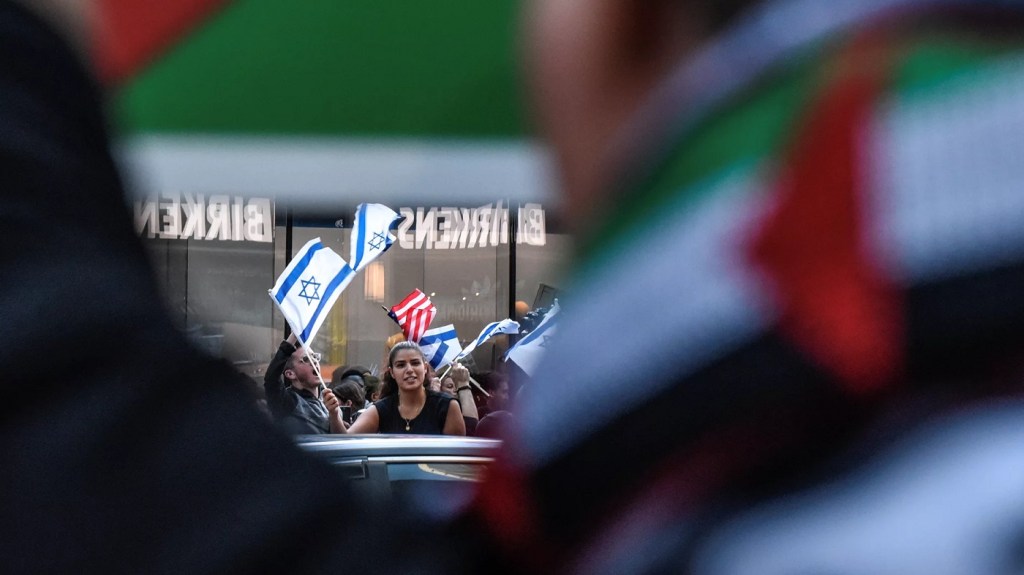
Four Views on What American Christians Think About the Israel-Hamas War

Image: Stephanie Keith / Stringer / Getty

In an age of polarization and strong opinions, a sizable share of American Christians are still “not sure” what they think about issues within the Israel-Hamas war.

A recent Lifeway Research survey, sponsored by the Philos Project, found significant convictions among self-identified believers: Strong majorities support Israel’s right of self-defense (83%), but also the Palestinian right of self-determination (76%) and the goal of a two-state solution (81%).

But many questions revealed uncertainties about the complexity of the conflict:

  • 15% are not sure about the optimal outcome.
  • 17% are not sure if Gazans are responsible for Hamas’s attacks.
  • 18% are not sure if armed Palestinian rebellion is a natural response to mistreatment.
  • 24% are not sure if Israel’s blockade of Gaza has oppressed Palestinians.
  • 24% are not sure if Israeli control of the West Bank and Gaza is illegal occupation.
  • 26% are not sure if most Gazans support Hamas’s fight against Israel.
  • 31% are not sure if Israeli settlements beyond agreed-upon borders are illegal.

Furthermore, 41 percent hover between somewhat positive (25%) and somewhat negative (16%) in their overall perception of Israel, while 11 percent are not sure at all.

For each of these issues, of course, pluralities had an opinion on one side or another, as CT noted last week. To parse out the meaning of these diverse American Christian perspectives, CT asked four evangelical experts—two from peace-focused organizations in the US, and a Palestinian Christian and a Messianic Jewish leader from Israel—to describe what they found most surprising, concerning, and encouraging about the survey results…

This article was originally published at Christianity Today, on December 21, 2023. Please click here to read the full text. Contributions from:
  • Robert Nicholson, president of the Philos Project (“promoting positive Christian engagement in the Near East in the spirit of the Hebraic Tradition”)
  • Todd Deatherage, executive director of the Telos Group (“a pro-Israeli, pro-Palestinian, and pro-peace movement seeking dignity, freedom, and security for all”)
  • Dan Sered, chief operating officer of Jews for Jesus and president of the Lausanne Consultation on Jewish Evangelism
  • Botrus Mansour, Nazareth-based chairman of the Convention of Evangelical Churches in Israel, in his personal capacity as a Palestinian Israeli Christian writer and lawyer
Categories
Americas Christianity Today Published Articles

Sola Scripturas: Can Evangelicals Befriend the ‘Protestant Reformers of Islam’?

Image: Illustration by Christianity Today / Source Images: Unsplash

If one pictures “radical Islam,” chances are the image resembles Osama bin Laden, Boko Haram in Nigeria, or the ISIS fighters of Iraq and Syria. And the connotation is that they are out to kill—or at least to turn the world into an Islamic caliphate.

They are known as Salafis: Muslims who bypass accrued tradition to imitate meticulously the example of Muhammad, his companions, and the first generation to follow them. After the death of the prophet in 632 A.D., the nascent faith’s collective zeal established a sharia-based global empire that did not end until the fall of the Ottoman Empire.

Muslims who look like these jihadist images are found in every major American community.

Matthew Taylor counterintuitively argues that, at least in the United States, Salafis actually compare better with evangelicals—the religious group with the most unfavorable perception of Muslims in general.

Author of the forthcoming Scripture People: Salafi Muslims in Evangelical Christians’ America, Taylor argues that the Salafi impulse to return to the origins of Islam parallels the evangelical desire to imitate the early church. And both communities, as the title implies, center their approach on sacred text.

The question is: Do the two scriptures take them in radically different directions?

CT asked the Fuller Seminary graduate, now a mainline Protestant scholar at the Institute for Islamic, Christian, and Jewish Studies in Baltimore, to address the common concern about Salafi extremism and to advise evangelicals on how to pursue a path of possible friendship:

What makes a Muslim a Salafi?

Salafism has very deep roots in the Muslim tradition, and the term Salaf refers to the first generations of Muslims. The idea is to get back to the original authentic practices and theology of Islam, before the tradition became corrupted or diluted.

The Salafi approach involves a direct approach to texts, a deep interest in the Hadith—a secondary scripture in Islam that includes the sayings and actions of Muhammad and the early Muslim community—and a downplaying of the traditional schools of jurisprudence. This is why many Salafis will analogize and call themselves “the Protestant Reformers of Islam.” They see their project as similar to what Martin Luther and John Calvin did in the 16th century.

Can you tell a Salafi simply by their appearance?

It is easier in non-US contexts. A beard is a strong signal that a man is an observant Muslim. And you’ll find Salafi discourse—based on specific hadiths—as very focused around the length of the beard as more than can be grasped in the hand. Traditionally, they adopt distinctive modes of clothing such as the thobe, a long, flowing robe with pants that come up just above the ankles.

Salafi women almost always wear the hijab and others the niqab, which covers the face. But after 9-11, the American security state had an intense focus on Salafis which prompted a process in which many integrated into the American Muslim mainstream, downplaying distinctive Salafi attire and even avoiding always expressly calling themselves Salafis.

How do they justify downplaying their distinctives? Salafis have a sophisticated understanding of the difference between…

This article was originally published at Christianity Today, on May 25, 2023. Please click here to read the full text.
Categories
Americas Christianity Today Europe Published Articles Religious Freedom

The British Are Coming: UK Takes Religious Freedom Torch from US

Image: FCDO YouTube screenshot

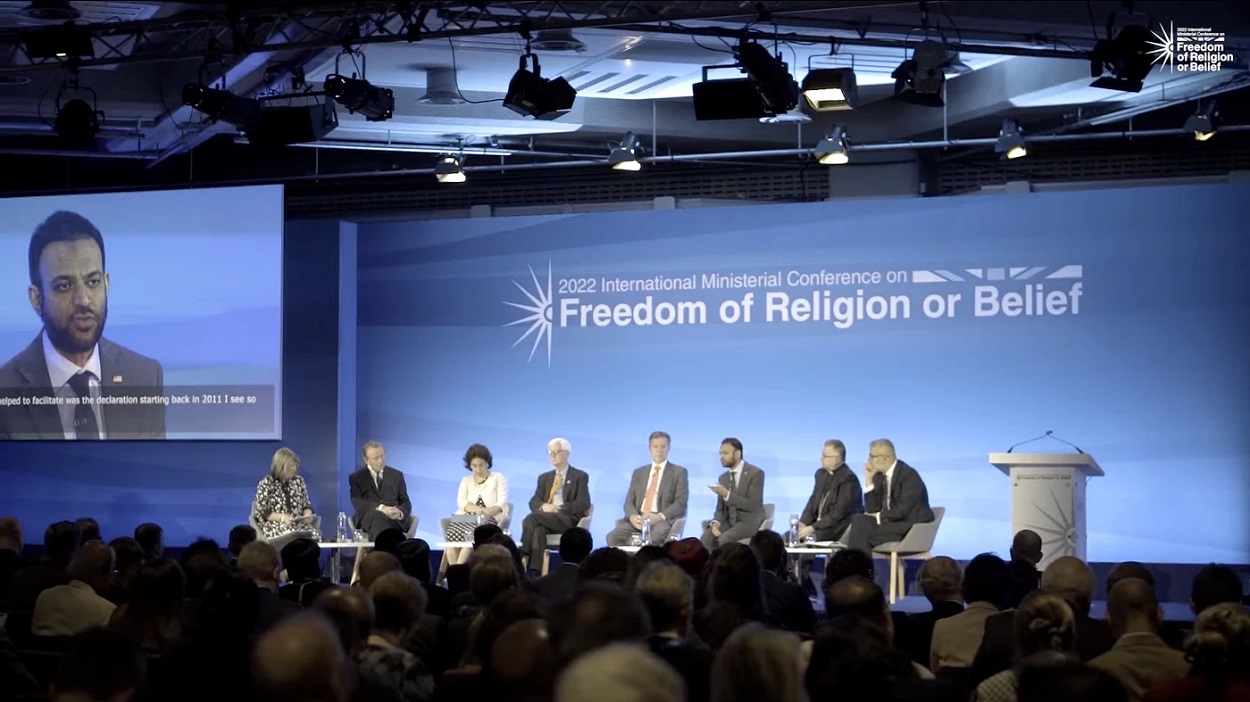
The epicenter of advocacy for international religious freedom (IRF) has crossed the pond. Last week, the United Kingdom hosted the first in-person government ministerial on the issue to be held outside the United States.

Under the Trump administration, the US State Department inaugurated the Ministerial to Advance Religious Freedom in 2018. Reconvened in Washington in 2019, the following year the event moved to Poland which was forced to conduct proceedings online due to COVID-19. Pandemic distractions prevented Brazil from hosting the ministerial in 2021, but civil society and religious groups rallied to organize an IRF Summit in DC instead.

In 2020, 27 nations seized the ministerials’ momentum to create the International Religious Freedom or Belief Alliance (IRFBA), centered around Article 18 of the Universal Declaration of Human Rights (UDHR).

Declaring that “everyone has freedom to believe or not believe, to change faith, to meet alone for prayer or corporately for worship,” IRFBA has since grown to include 36 countries, an additional five national “friends,” and two observers—including the UN-designated special rapporteur on freedom of religion or belief (FoRB), the preferred terminology for IRF in Europe.

As IRFBA chair, the UK hosted the Ministerial Conference on Freedom of Religion or Belief on July 5–6 in London.

“Millions of people are being deprived an education or a job or a home or access to justice or liberty, even to life itself,” said Fiona Bruce, the UK prime minister’s special envoy for FoRB, “simply on account of what they believe.”

The UK demonstrated leadership on the issue in 2020, when as chair of the Group of Seven—a political forum of the world’s leading democratic economies—Britain secured the first-ever mention of FoRB as a priority within the G7 official communique.

“The ministerial helped create a heightened global consciousness on FoRB, a cornerstone of all human rights,” said Godfrey Yogarajah, ambassador for religious freedom for the World Evangelical Alliance (WEA). “Where FoRB is violated, all other human rights suffer.”

Hosted at the Queen Elizabeth II Center in Parliament Square, the 2022 ministerial’s remarks were delivered by Prince Charles of Wales and Archbishop of Canterbury Justin Welby. Chief rabbi Ephraim Mirvis spoke on behalf of Britain’s Jews.

Regional foreign minister Tarik Ahmed, a Muslim, delivered a statement welcoming to the ministerial 500 delegates from more than 100 countries. Sources told CT the UK did an exceptional job integrating the dozens of civil society and religious groups into the official proceedings.

With better coordination—and a wider berth from Americans’ July 4 observance of Independence Day—attendance might have been even larger. Only a few days before the UK ministerial…

This article was originally published at Christianity Today on July 13, 2022. Please click here to read the full text.
Categories
Americas Christianity Today Middle East Published Articles

Trump or Netanyahu? American Evangelicals Support Israel, Yet Signs of Change

Image: Frédéric Soltan / Corbis / Getty Images

In the public spat between Donald Trump and Benjamin Netanyahu, who would American evangelicals support? A new survey suggests it might be the Israeli.

Polled shortly after the Gaza war last May, it also reveals a substantial generational gap in level of support for Israel and a lack of impact by pastors from their pulpits.

And it happens to release this week, following Trump’s explosive comments.

In excerpts from a recently released interview, the former president blasted the former prime minister for his statement of congratulations to Joe Biden after the 2020 election.

“Nobody did more for Bibi. And I liked Bibi. I still like Bibi,” stated Trump in an expletive-laced diatribe, using Netanyahu’s nickname. “But I also like loyalty … Bibi could have stayed quiet. He has made a terrible mistake.”

Netanyahu responded with praise for Trump. But in noting a friendship with Joe Biden, he also honored the longstanding partnership between the US and Israel.

During his presidency, Trump moved the American embassy to Jerusalem, acknowledged Israeli sovereignty over the Golan Heights, and negotiated with five Muslim-majority nations to normalize relations with the Jewish state.

American evangelicals joined Netanyahu in appreciation. According to a new online poll surveying a multiethnic panel of approximately 1,000 self-identified evangelical and born-again Christians, 35 percent say they became more supportive of Israel because of Trump’s policies. Only 11 percent became more supportive of Palestinians, while 53 percent had no change.

And overall, 68 percent of American evangelicals believe the Jewish people today have the right to the land of Israel, by virtue of the covenant God made with Abraham which “remains intact today.” (About 23% say they don’t know.)

The survey, conducted by professors from the University of North Carolina–Pembroke in conjunction with Barna Group, was released today but conducted in July, well before public knowledge of Trump’s falling out with Netanyahu.

The 15-year Israeli prime minister scored a 74 percent favorable rating, based on the share of evangelicals who gave him a score of 6 or greater on a 10-point scale. One in five (22%) gave him the top rating possible. The survey did not include a direct comparison. But given the fact that it included…

This article was originally published at Christianity Today on December 15, 2021. Please click here to read the full text.

Categories
Americas Christianity Today Published Articles

Pew: US, France, and Korea Are Most Divided—Especially over Religion

Image: Illustration by Christianity Today / Source Images: Saul Martinez / Stringer / Brandon Bell / Mohamed Rasik / Getty Images

“Conflict” is a troublesome word to describe a society. But increasingly across advanced global economies—and particularly the United States—their societies believe it is the correct label.

If there is any good news, religious conflict lags behind.

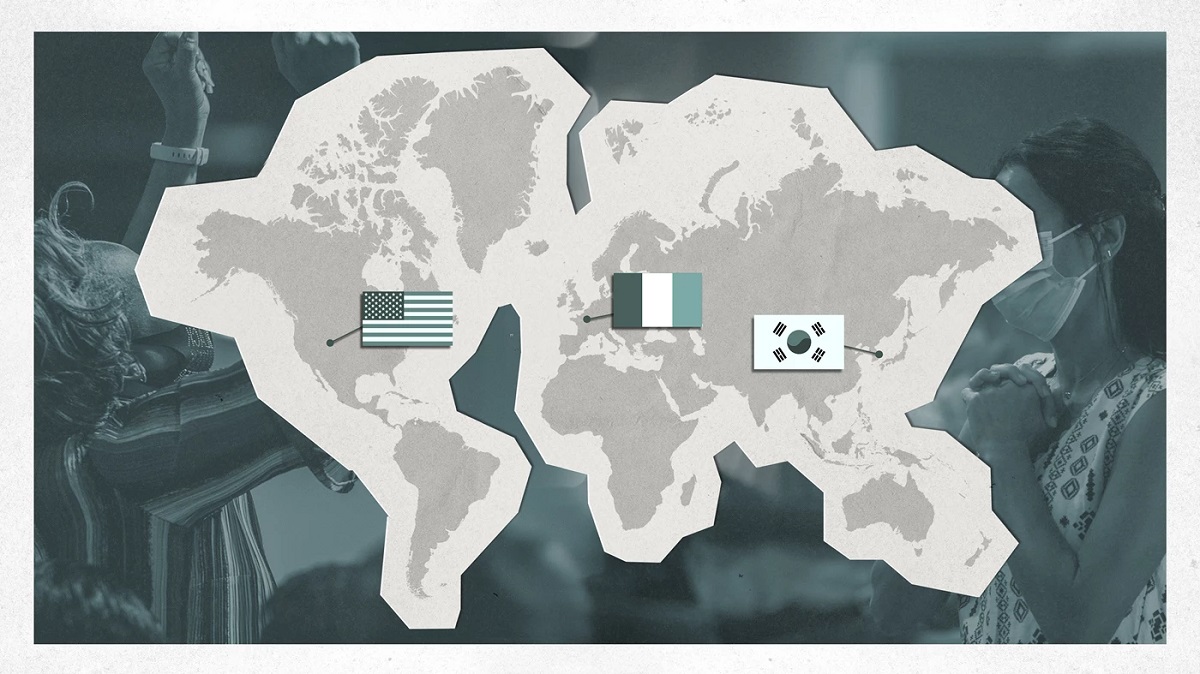
The Pew Research Center surveyed almost 19,000 people in 17 North American, European, and Asia-Pacific nations this past spring about their perception of conflict across four categories: between political parties, between different races and ethnicities, between different religions, and between urban and rural communities.

The US ranked top or high in each.

A global median of 50 percent see political conflict, 48 percent see racial conflict, 36 percent see religious conflict, and 23 percent see urban-rural conflict.

But in the US, 9 in 10 viewed political conflict as “serious” or “very serious.”

Asian nations varied considerably. South Korea matched the US at 90 percent seeing serious political polarization, with Taiwan third at 69 percent. Singapore was lowest overall at 33 percent, while Japan was 39 percent.

France (65%), Italy (64%), Spain (58%), and Germany (56%) followed Taiwan.

In terms of race, the US ranked first again, with 71 percent seeing serious conflict. France was second at 64 percent, and South Korea and Italy third at 57 percent. Singapore again ranked lowest, at 25 percent.

South Korea had the highest perception of religious conflict, at 61 percent. France followed at 56 percent, and the US at 49 percent. Germany and Belgium registered 46 percent each. Taiwan was lowest, at 12 percent.

Nearly 1 in 4 French (23%) saw religious conflict as “very serious.”

Age plays a role in perception. Pew noted that adults under 30 are significantly more likely than those ages 65 and older to see strong religious divisions in Greece (60% vs. 24%), Belgium (62% vs. 38%), Japan (42% vs. 22%), Italy (49% vs. 30%), the US (58% vs. 42%), Spain (24% vs. 10%), and Taiwan (17% vs. 7%).

Conversely, Canadians under 30 are significantly more likely than Canadians ages 65 and older to say there is no strong religious conflict (78% vs. 65%). Religious diversity, however…

This article was originally published at Christianity Today, on October 13, 2021. Please click here to read the full text.
Categories
Americas Christianity Today Middle East Published Articles

Crusaders No More: What Arab Christians and Muslims Think of Mascot Changes

Image: Illustration by Mallory Rentsch / Source Images: Courtesy of Valparaiso University / Subjug / Getty Images

Nestled in the Ozark Mountains of Missouri, Evangel University will no longer evoke the Middle East—or the Middle Ages.

Since 1955, the flagship Assemblies of God institution has cheered on its Crusaders, replete with helmeted knight and steed.

This semester, the university will soon announce its new mascot after considering almost 300 submitted suggestions—including 77 animal names, 69 military names, and 38 biblical names. The change was made in light of the school’s 55,000 alumni serving internationally.

“The world has changed significantly since the 1950s, when the Evangel community, intending to depict strength, honor, and commitment to the faith, first identified a Crusader as the school’s mascot,” stated interim president George O. Wood in March, when the decision was made to drop the name.

“Today, we recognize that the Crusader often inhibits the ability of students and alumni to proudly represent the university in their areas of global work and ministry.”

For some alumni, the change is a long time coming. The review process first began in 2007.

“When you want to share the love of Christ, you don’t want to identify with something that shuts down conversation,” said Emily Greene, class of 2008. “It is the equivalent of saying ‘jihadist’ to a US Christian, evoking a cruel persona.” Greene grew up as a history-loving missionary kid in Muslim-majority Kazakhstan. But her father…

This article was originally published at Christianity Today on September 9, 2021. Please click here to read the full text.

Categories
Americas Christianity Today Published Articles Religious Freedom

Christian and Muslim Leaders Agree on Legitimacy of Evangelism

Image: Courtesy of World Evangelical Alliance
Nahdlatul Ulama leader Yahya Cholil Staquf presents World Evangelical Alliance leader Thomas Schirrmacher with a festschrift at The Nation’s Mosque in Washington, DC, during the 2021 International Religious Freedom Summit.

The world’s largest Muslim organization accepts that Christians will try to convert its members. A new partnership with evangelicals seeks to ensure this does not lead to conflict.

Last week, the World Evangelical Alliance (WEA) signed a statement of cooperation with Nahdlatul Ulama (NU), an Indonesian association with an estimated 30 million to 50 million members. Established in 1926 to counter Wahhabi trends issuing from the Arabian Peninsula, its name means “Revival of the Religious Scholars.”

“Evangelicals very much aspire to proselytism, and so does Islam. So naturally there will be competition,” said NU secretary general Yahya Cholil Staquf. “But we need to have this competition conducted in a peaceful and harmonious environment.”

Staquf spoke from the stage of the 2021 International Religious Freedom (IRF) Summit in Washington. On its opening day, he and WEA secretary general Thomas Schirrmacher signed “The Nation’s Mosque Statement,” along with Taleb Shareef, imam of Masjid Muhammad, the first American mosque built by the descendants of slaves.

Calling for “the emergence of a truly just and harmonious world order,” the statement seeks a global alliance to prevent the political weaponization of identity and the spread of communal hatred.

Schirrmacher called the WEA’s cooperation with NU the product of deep theological dialogue, counter to the academic tendency to downplay truth claims. And as evangelicals, evangelism is at the heart of their effort.

“We are working together for the right to convert each other,” the German theologian said. “Religious freedom does not mean that we agree, but that…

This article was originally published at Christianity Today on July 22, 2021. Please click here to read the full text.

Categories
Americas Christianity Today Published Articles

New Museum Stakes Claim for the Bible in US History—Right Next to the Liberty Bell

Image: Douglas Nottage / American Bible Society

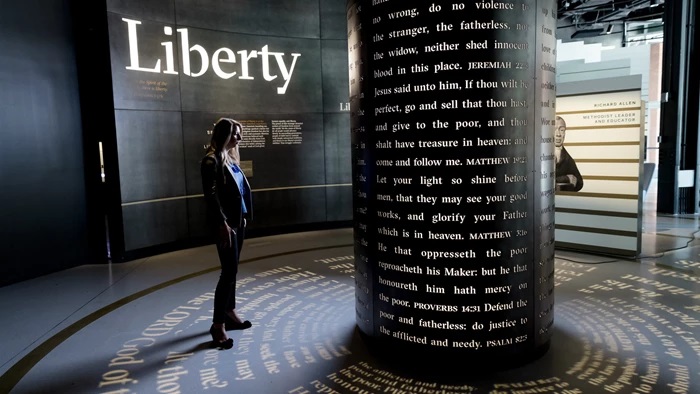
America’s “most historic square mile” got a new resident on the Fourth of July weekend. Joining the Liberty Bell and Independence Hall in Philadelphia, the American Bible Society has opened a $60 million museum to highlight the role of Scripture in the founding of the United States.

“We are leveraging history to advocate for the Bible,” said Alan Crippen, chief of exhibits at the Faith and Liberty Discovery Center (FLDC). “The American story of liberty is unintelligible without knowledge of the Bible, and how it impacted our leaders.”

The new museum gives special space to William Penn and his “holy experiment” of Pennsylvania.

Alongside his Bible, the museum displays an original copy of Penn’s 1683 pamphlet, The Great Case of Liberty of Conscience Once More Briefly Debated and Defended. Informing Penn’s vision for governance, the charter of Pennsylvania guaranteed religious freedom and sought peace with the local Lenni-Lenape Native American tribe.

The FLDC’s six exhibits are more than a storehouse of artifacts, though. Interactive exhibits present six foundational American values: faith, liberty, justice, hope, unity, and love. An electronic “lamp” allows visitors to activate additional material, and store memories for retrieval at home.

The exhibits pose additional questions for contemplation or group discussion. The First Amendment section prompts: Do you agree that a just society requires freedom of religion and dissent? Another follows George Whitfield and asks: Do you agree that people can have a direct and personal relationship with God? “Exhibits are meant to be immersive, but not to proselytize,” said Crippen. “This question is meant…

This article was originally published at Christianity Today, on September 9, 2021. Please click here to read the full text.
Categories
Americas Christianity Today Published Articles

The American Mosque: More Suburban, Less Conversion

Image: ISPU, US Mosque 2020 Survey

The American mosque increasingly resembles the American church.

New data released in the US Mosque Survey 2020 reveals a plateau of conversions, a shift to the suburbs, and a challenge with “unmosqued” youth.

“Muslims and their mosques are becoming more integrated into American society,” said Ihsan Bagby, the lead investigator, “and more adjusted to the American environment.”

Released every 10 years, the survey aims to comprehensively dispel misconceptions about the locus of Muslim community in the United States.

How might the findings guide American evangelicals?

Begin with the contrast: the increase in the Muslim equivalent of church planting.

The survey counts 2,769 mosques in the US, an increase of 31 percent since the 2010 report. The prior decade had a growth rate of 74 percent, with 1,209 mosques counted in the 2000 report.

They increasingly appreciate a nice backyard.

The share of mosques in large cities has dropped from 17 percent in 2010 to 6 percent in 2020, while the share in small towns has dropped from 20 percent to 6 percent. The survey found that 8 in 10 Muslims now live in a residential or suburban area.

“As we begin to share the same neighborhood, engaging the Muslim community is no longer just the domain of missionary specialists,” said Mike Urton, the associate director of Immigrant Mission, a ministry of the Evangelical Free Church of America.

“It is now the domain of the local church.”

The now mostly suburban Muslims also “tithe” similarly to their Christian neighbors. Including contributions toward operating expenses and the obligatory zakat charitable giving to the poor, the survey calculated…

This article was originally published at Christianity Today, on June 14, 2021. Please click here to read the full text.

Categories
Americas Christianity Today Published Articles Religious Freedom

Just a Bill: Religious Freedom Consensus Rarely Voted into Law

Antony Blinken

Secretary of State Antony Blinken called out Saudi Arabia.

The Gulf kingdom “remains the only country in the world without a Christian church, though there are more than a million Christians living [there],” he stated yesterday.

Such high-level criticism of the key US ally is a departure from the foreign policy of the Trump administration, though the State Department has listed the oil-rich nation as a Country of Particular Concern on international religious freedom (IRF) since 2004.

Blinken also highlighted recent violations in Iran, Burma, Russia, Nigeria, and China. Positive developments were noted in Sudan, Uzbekistan, and Turkmenistan.

“Our promise to the world is that the Biden-Harris administration will protect and defend religious freedom around the world,” stated Blinken, releasing the 23rd annual International Religious Freedom Report, assessing the records of nearly 200 countries and territories.

“We will maintain America’s longstanding leadership on this issue, [and] we’re grateful for our partners.”

He named several entities, but one is glaring in its absence:

The US Congress.

Six years ago, 21Wilberforce, a Christian human rights organization, launched the International Religious Freedom Scorecard to hold America’s lawmakers to account.

“There is much room for improvement,” Lou Ann Sabatier, director of communication, told CT. “It is a long and arduous process for an IRF bill to become a law, and many do not make it out of committee.”

The latest scorecard, released this week and grading the two-year term of the 116th Congress, lists 91 legislative efforts in both the Senate and the House of Representatives.

Only two became law. The daughter of one of Congress’s chief IRF champions is not happy…

This article was originally published at Christianity Today on May 14, 2021. Please click here to read the full text.

Categories
Americas Christianity Today Published Articles

Beat, Pray, Give: Catholics Want More Done for Persecuted Christians

American Catholics are signaling a dramatic surge in concern about the persecuted church.

And prayer, alone, is no longer good enough, as more say money and arms are needed too.

Asked their opinion about Christian persecution worldwide in the fourth annual survey by Aid to the Church in Need–USA (ACNUSA), 67 percent stated they were “very concerned.”

Last year, only 52 percent said the same.

Similarly, 57 percent stated the level of persecution suffered by Christians is “very severe.”

Last year, only 41 percent said the same.

The increase is “heartening,” said George Marlin, ACNUSA chairman.

“Christian persecution around the world is very grave,” he said. “[Catholics] want both their church and their government to step up efforts to do more.”

They have already been praying: 7 in 10 stated prayer is a “very important” initiative to help—the same share as last year, and up from 64 percent in the first survey in 2018.

But now, 62 percent say it is “very important” to donate to agencies that support the persecuted, up from 53 percent last year. Half say they are “very likely” to do so, up from 35 percent. And 61 percent say they gave within the last year, up from 53 percent in 2020.

And while about half believe Pope Francis is “very engaged” on the issue of persecution (52%, up from 47%), they believe their local bishop lags behind. Only 3 in 10 (30%) find him “very engaged,” marginally improved from the perception of 27 percent the year before.

The local parish seems to them similarly disconnected, with only 28 percent perceiving it to be “very engaged,” up from 22 percent last year. It is not enough, per American Catholics: 2 in 3 said…

This article was originally published at Christianity Today, on March 18, 2021. Please click here to read the full text.

Categories
Americas Christianity Today Published Articles

Trump and Biden Disagree on Sanctions. So Do Evangelicals Outside the US.

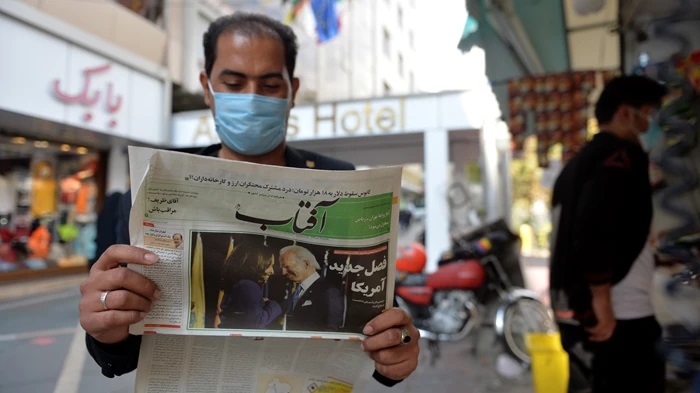
Image: Anadolu Agency / Getty Images The headline reads: A New Era for America

If President-elect Joe Biden makes good on his campaign rhetoric, his sanctions policy will meet the approval of the World Evangelical Alliance (WEA).

Back in April, as even the strongest nations reeled from COVID-19, then-candidate Biden petitioned the Trump administration for sanctions relief on the hardest-hit nations—including Iran and Syria.

“In times of global crisis, America should lead,” he said.

“We should be the first to offer help to people who are hurting or in danger. That’s who we are. That’s who we’ve always been.”

In September, the WEA joined Caritas, the World Council of Churches, and others to similarly petition the United Nations’s Human Rights Council.

“We are deeply concerned about the negative economic, social, and humanitarian consequences of unilateral sanctions,” read their statement, ostensibly singling out the United States and its European allies.

“It is a legal and moral imperative to allow humanitarian aid to reach those in need, without delay or impediment.”

One month later at the UN, China led 26 nations—including sanctions-hit Cuba, North Korea, Iran, Russia, Syria, and Venezuela—to assert that the economic impact impedes pandemic response and undermines the right to health.

This is “disinformation,” said Johnnie Moore, appointed by President Donald Trump to serve on the independent, bipartisan US Commission on International Religious Freedom (USCIRF).

He called the WEA statement “almost indefensible.”

“Sanctions against countries that imperil their citizens and the world is good policy,” Moore said. “It has proven to be an effective alternative to save lives, alongside diplomatic channels to coerce long-term positive behavior.”

Western nations had already issued fact sheets to undermine China’s claim.

Detailing food, medical, and humanitarian exemptions, the US and European Union (EU) demonstrated that sanctions target regimes and their supporters, not the general population. Christian Solidarity International, however…

This article was originally published by Christianity Today on January 15, 2021. Please click here to read the full text.
Categories
Americas Christianity Today Published Articles Religious Freedom

Polarized Americans Still Support Religious Freedom

Image: Mark Wilson / Staff / Getty
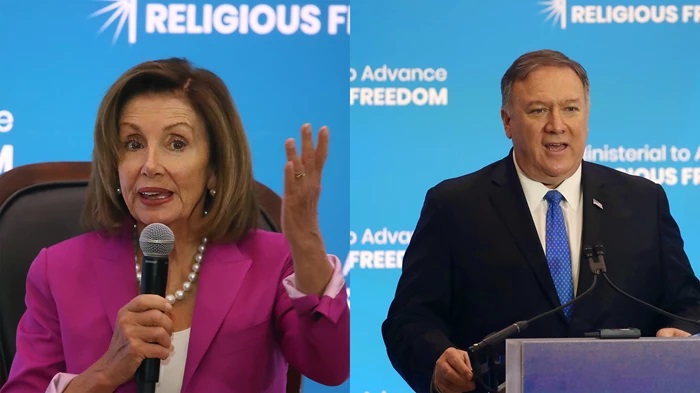
Speaker Nancy Pelosi and Secretary of State Mike Pompeo address the State Department’s second religious freedom ministerial.

Last year, American support for religious freedom survived COVID-19.

The right to free speech held firm amid racial tensions.

And vigorous backing of the First Amendment endured a contentious presidential campaign.

So concludes the 2020 Becket Religious Freedom Index, which will monitor the resilience of the United States’ “first freedom” through the yearly challenges to come.

“Americans understand religion as a fundamental part of an individual’s identity,” said Caleb Lyman, director of research and analytics at The Becket Fund for Religious Liberty.

“It is no surprise that they support strong religious freedom protections in work and public life.”

Designing 16 questions across six categories, the annual index measures perspectives on the First Amendment. Now in its second year, in October it polled a nationwide sample of 1,000 Americans, scoring their support from 0 (complete opposition) to 100 (robust support).

The composite score is 66, a statistically insignificant decline from 67 in 2019.

Becket’s report recognizes that the religious impulse is natural to human beings, and therefore religious expression is natural to human culture.

Through their law firm, they defend religious rights. Through their index, they discover if Americans agree…

This article was originally published at Christianity Today, on January 4, 2021. Please click here to read the full text.
Categories
Americas Christianity Today Published Articles

Interview: To Elect Trump, Evangelicals Could Find Common Cause with Muslims

By Alisdare Hickson (link)

In a tightly contested presidential race, might Muslims swing the US election?

Referencing the release of President Donald Trump’s tax returns in Tuesday’s debate, former vice president’s Joe Biden’s “inshallah” [Arabic for “if God wills”] may have been a nod to the strong support he receives from this community.

But according to data from the fifth annual American Muslim Poll, Muslims make up only 1 percent of the American population, only 74 percent are eligible to vote, and only 57 percent are registered.

Why then do they occupy such an outsized space in the mind of many American evangelicals? And what should evangelicals better understand about the American Muslim community and their political preferences? CT spoke with Dalia Mogahed, director of research at the Institute for Social Policy and Understanding (ISPU), which commissioned the poll.

The level of support for President Trump has doubled among Muslims, from 13 percent in 2018 and 16 percent in 2019 to 30 percent in 2020. How to you interpret this finding? We are still trying to understand it ourselves. One thing is…

This article was originally published at Christianity Today, on October 1, 2020. Please click here to read the full text.
Categories
Americas Christianity Today Published Articles

Report: ‘Tremendous Progress’ Ahead for Religious Freedom Worldwide

USCIRF 2020

This article was first published at Christianity Today, on April 28, 2020.

A new report aims to “unflinchingly criticize the records of US allies and adversaries alike” on religious freedom.

And there’s a lot to report, with more headlines each month confirming the Pew Research Center’s 10-year analysis that government restrictions and social hostilities involving religion have reached record levels worldwide.

Today’s 21st annual report by the US Commission on International Religious Freedom (USCIRF) identifies significant problems in 29 countries—but sees “an upward trajectory overall.”

“Our awareness is going to grow greater, and the problem will appear more pronounced,” USCIRF chair Tony Perkins told CT. “But as we continue to work on it, I think we will see tremendous progress in the next few years if we stay the present course.”

Created as an independent, bipartisan federal commission by the 1998 International Religious Freedom Act, USCIRF casts a wider net than the US State Department, which annually designates Countries of Particular Concern (CPC) for such nations’ violations of religious freedom, or places them on a Special Watch List (SWL) if less severe.

Last December, Secretary of State Mike Pompeo announced CPC status for Burma, China, Eritrea, Iran, North Korea, Pakistan, Saudi Arabia, Tajikistan, and Turkmenistan.

USCIRF now recommends adding India, Nigeria, Russia, Syria, and Vietnam.

And where the State Department put only Cuba, Nicaragua, Sudan, and Uzbekistan on the watch list, USCIRF recommends also including Afghanistan, Algeria, Azerbaijan, Bahrain, Central African Republic, Egypt, Indonesia, Iraq, Kazakhstan, Malaysia, and Turkey.

USCIRF’s mandate is to provide oversight and advice to the State Department. Aiming to make its recommendations more easily accessible to policymakers, this year’s report limits country chapters to two pages each and adopts the same evaluative criteria as the State Department.

To qualify, a nation must engage in or tolerate “systematic, ongoing, and egregious” violations of religious freedom. CPC status requires all three descriptors, while SWL status requires two.

In previous reports, USCIRF used a “Tier Two” category requiring only one qualifier. As a result, Laos is no longer listed.

Following 11 commission field visits, 5 hearings, and 19 other published reports, USCIRF’S 2020 annual report calls attention to religious freedom violations against all faiths, including:

  • 1.8 million Muslims in Chinese concentration camps
  • 171 Eritrean Christians arrested while gathering for worship
  • 50,000 Christians held in North Korean prison camps
  • 260 incidents of religious freedom violations in Cuba
  • 489 raids conducted against homes of Jehovah’s Witnesses in Russia
  • 910,000 Rohingya Muslim refugees in Bangladesh
  • 1 million Muslim residents excluded from the National Register of Citizens in India
  • 37 Shi’a Muslim protesters executed in Saudi Arabia
  • 5,000 Baptist calendars burned by authorities in Turkmenistan

Perkins spoke with CT about how nations move up (e.g., India and Nigeria) or down (e.g. Sudan and Uzbekistan) between lists, why the State Department doesn’t accept all of USCIRF’s recommendations (but should), and whether he has hope for the future with violations at “a historical high in modern times.”

Roughly how many countries are on your studied list?

The ones that are listed are the ones that we look at. There has been discussion if we should add Venezuela. There have been a couple of others we have considered.

Examining “Country X,” how do you evaluate if and where it belongs on your lists?

First, we begin with the statutory definition of a Country of Particular Concern (CPC). Our mandate is to identify countries with systematic, ongoing, and egregious violations of religious freedom—whether it engages in or tolerates such behavior.

One thing to be cautious of is that we don’t rank countries. It is not a comparison. Country X and Country Y may both be CPC-listed, but be miles apart on the egregious nature of their violations. We look at each country separately.

It is based upon reporting that we can validate and verify; visits that we make to these countries; and hearings we hold with expert witnesses to come in and testify. It is a combination of factors, and quite frankly it is subjective.

We try to make it as objective as possible, but it is hard to quantify some things—though we do so to the degree we can.

What happens if you disagree about the designations?

The nine commissioners…

Please click here to read the full article at Christianity Today.

Categories
Americas Christianity Today Published Articles

This Minnesota Monk Saves Middle East Manuscripts and Testifies to God’s Providence

Minnesota Monk
Image: Rui Ricardo / Folio Art

This article was first published in the December print edition of Christianity Today.

The shooting started right away. Columba Stewart had just touched down in Timbuktu when Islamist militants launched another attack.

The fighters were trying to retake control of Mali, after United Nations forces had pushed them back. As Stewart made his way through the ancient city in 2017, the rebels fired on security guards and the guards shot back.

Stewart was whisked to a safe room at the hotel. Waiting in the windowless interior room, he prayed. He sipped a little scotch. And he waited for hours. He knew what he had to do. Stewart is a monk—a Benedictine brother at St. John’s College, in Minnesota, part of the order that built libraries in the Middle Ages, preserving and reproducing Bibles by hand, along with psalters, books of martyrs, and Greek and Arabic philosophy.

So Stewart knew his responsibility in Timbuktu. He had to save the ancient manuscripts.

When the shooting stopped, Stewart spent the next two days training Malians to run a mobile digitization studio to preserve the more than 300,000 Islamic manuscripts that al-Qaeda might have destroyed.

“We don’t always know trouble is coming, but we have a history of being there just in time,” Stewart said. “People can say it’s serendipity, but I believe in providence.”

Stewart joined the Benedictines in 1981 and now serves at executive director of the Hill Museum and Manuscript Library (HMML) at Saint John’s. He has rescued documents in Lebanon, Syria, and Iraq, as well as Egypt, Ethiopia, and India—saving biblical texts and some of the most significant documents for the church in the Middle East, as well as Muslim texts.

Unlike manuscript hunters of the past, he leaves the treasure behind. He trains local leaders to…

Please click here to read the full article at Christianity Today.