Categories
Christianity Today Middle East Published Articles

Saudi Arabia Embraced Coptic Christmas. Could Its First Church Be Next?

Image: Markas Ishak / The Coptic Orthodox Church Press Office / Getty Image

Saudi Arabia stunned foreign policy observers this month by publicly agreeing to normalize relations with Iran, under Chinese sponsorship. The deal between the neighboring Sunni and Shia arch rivals, known for sectarian proxy fights, is expected to ease tensions within Islam.

Meanwhile, the kingdom has recently taken less publicized steps toward another religious normalization: public Christian faith.

In this case, Egypt is the supporting nation.

“Nine years ago, I was told, ‘Pray, but don’t publicize it,’” said Bishop Marcos of Egypt’s Coptic Orthodox Church. “This time, Saudi Arabia is publicizing it themselves.”

On January 7, Marcos headlined a month-long pastoral visit by celebrating the eastern Christmas liturgy amid 3,000 Coptic Christians residing in the kingdom. Facilitated by the Egyptian embassy, additional services in Riyadh, Jeddah, Dammam, Khobar, and Dhahran were “held under the full sponsorship of the Saudi authorities.”

It was the first public Christmas celebration admitted by the Islamic nation, home to the pilgrimage sites of Mecca and Medina. Muslim traditions cite Muhammad as forbidding the existence of two religions in Arabia, though scholars differ as to the geographic scope.

But Marcos’ trip was not the first Christian worship permitted.

He began praying about visits to Saudi Arabia after being sent in 2012 to help solve a dispute between authorities and an Egyptian Christian migrant worker. Marcos estimates there are about 50,000 Copts in the kingdom, among 2.1 million Christians—mostly Filipino Catholics.

None have a church to worship in. Open Doors’ World Watch List ranks Saudi Arabia No. 13 among the 50 countries where it is most difficult to be a Christian today. Visiting Coptic clergy used to meet the faithful in neighboring Bahrain.

But when Marcos returned in 2014, he said he conducted liturgies for about 4,000 believers. Leaks covered by the Qatari news network Al Jazeera resulted in some attention, but the Saudis told him they were not troubled by it. Weeks-long pastoral trips continued annually, and in 2016 Saudi King Salman bin Abdel Aziz visited Coptic Pope Tawadros II in Egypt.

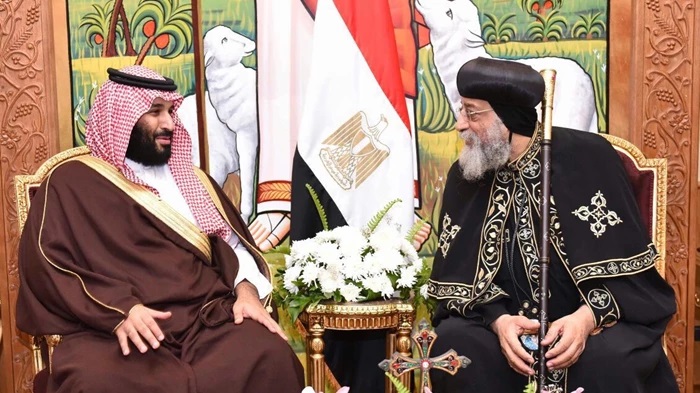
It was 2018 that led to further openness. Crown Prince Muhammad bin Salman (known as MBS) visited the Coptic Orthodox cathedral in Cairo in March, taking a famous photo with Tawadros in front of an icon of Jesus, the Good Shepherd. He invited the Coptic pope to visit Saudi Arabia, while encouraging continuation of Marcos’ visits.

That December, the first liturgies were officially reported. Not everyone was pleased. Medhat Klada, spokesman for the European Union of Coptic Organizations…

This article was originally published at Christianity Today, on March 29, 2023. Please click here to read the full text.

Categories
Christianity Today Europe Published Articles

Russian Christians Make Theological Case for Peace

Image: John Moore / Getty Images

On an Advent Sunday in a small Protestant church in St. Petersburg, a Russian pastor nervously approached the pulpit. While his senior leadership was publicly neutral about the war, he was about to preach from the Sermon on the Mount against the invasion of Ukraine.

And in the pews before him was another potential land mine.

A congregant had been bringing along a childhood friend, who happened to be a Wagner Group mercenary. Wounded during combat for Russia’s private paramilitary company, the man was not there to spy. Yet while the pastor knew his close-knit congregation well, he could not predict the fallout from his message.

Relations remained good with the pastor’s mentor afterward, while the mercenary recovered and returned to the front lines. For now, the pastor has been left free to continue in ministry and—whether known to the intelligence services or not—in clandestine theological work against the war.

“Of course, we could go out and protest, but this would get you in jail,” he said, requesting anonymity. “For us, the most effective means are to work within your spheres of influence—and ours are very small.”

Over the course of the yearlong conflict, only a tiny minority of Russian Christian leaders have voiced complaint publicly. The response from authorities has been uneven: Minor church figures have been fined or jailed, while others continue to use their names on social media.

But no major denomination in Russia has condemned the war outright.

The St. Petersburg pastor, along with about 25 of his scattered multifaith colleagues, desired to confront their silence at the biblical source. Christianity Today spoke with three of them, on condition of anonymity, for insight into the antiwar movement.

The group released its declaration to “all Christians of Russia” in advance of Christmas.

“We are terrified by the fact that many church officials and theologians … are distorting the truth of the Holy Scriptures,” the Russian Christians stated via their Christians4Peace website and Telegram channel. “[But] we are convinced that participation in this war—on the side of the aggressor—is unacceptable for any Christian.”

The provided Russian and Ukrainian downloads of the declaration include an appendix with an extended theological treatise. Last summer, the pastor and a few like-minded friends began a study group on…

This article was originally published at Christianity Today on March 17, 2023. Please click here to read the full text.
Categories
Christianity Today Europe Middle East Published Articles

Should Messianic Jews Return to Israel from Russia and Ukraine?

Image: Illustration by Christianity Today / Source Image: Pexels / Unsplash

Jews should leave Russia if they can.

The stark warning was issued by Pinchas Goldschmidt, the former chief rabbi of Moscow, as 2022 came to a close. After 30 years in office, he left two weeks after the invasion of Ukraine and later revealed the Kremlin pressured him to support the war—“or else.”

A student of history, he fears Jews will again become scapegoats as the government tries to “redirect the anger and discontent of the masses.”

The resulting question: Where does God want them to go?

Goldschmidt, currently in Israel, has been joined by 41,813 Russian Jewish immigrants since the war began a year ago, according to recent data released by the Knesset. Another 90,000 arrived without immigrant status. Israel’s immigration minister stated 600,000 Russians are currently eligible.

But according to its 2010 census, Russia has only 156,000 Jews.

The discrepancy comes from the concept of aliyah—the Hebrew word for “ascent”—in which Israel grants automatic citizenship to anyone who has at least one Jewish grandparent and has not converted to another religion. A controversial coalition deal in the new government includes revising the Law of Return to ensure these olim (immigrants) qualify under religious law—and thus reduce intermarriage. Over 70 percent of last year’s war-induced immigrants are not considered Jewish per Orthodox law, stated the Aliyah and Integration minister.

In many cases, Messianic Jews have been disqualified, and their status is disputed. But last September, the seventh World Conference of Russian-Speaking Messianic Leaders overwhelmingly declared the return to Zion to be a “blessing.”

The only dispute was whether it is also a commandment.

Russian Jews are not the only aspirants. The Knesset stated 13,490 Ukrainian Jews have also immigrated to Israel, as “Operation Homecoming” opened 18 aid centers in Ukraine and neighboring countries. An additional 1,990 Jews immigrated from Belarus.

A 2020 study identified 43,000 Jews in Ukraine—making it one of Europe’s largest Jewish communities—though those eligible to make aliyah could be as high as 200,000.

An estimated 5,000 worship Jesus as Messiah.

Of these, about 1,000 have gone to Germany, where they doubled the local community.

“Aliyah is a certain type of coming home—to the land that belongs to us,” said Vladimir Pikman, executive director of Beit Sar Shalom. “But I don’t see a direct commandment to go to Israel.”

Centered in Berlin, his is the largest Messianic Jewish organization in Europe. Its Hebrew name translates to “House of the Prince of Peace,” and has been a refuge to Ukrainian Jew and Gentile alike, providing translation, logistical help, and trauma care counseling. Of the Jews, believers in Jesus included, they took…

This article was originally published at Christianity Today, on March 7, 2023. Please click here to read the full text.

Categories
Christianity Today Middle East Published Articles

Christians Assess Criticism of Turkey’s Earthquake Efforts

Image: Burak Kara / Getty Images

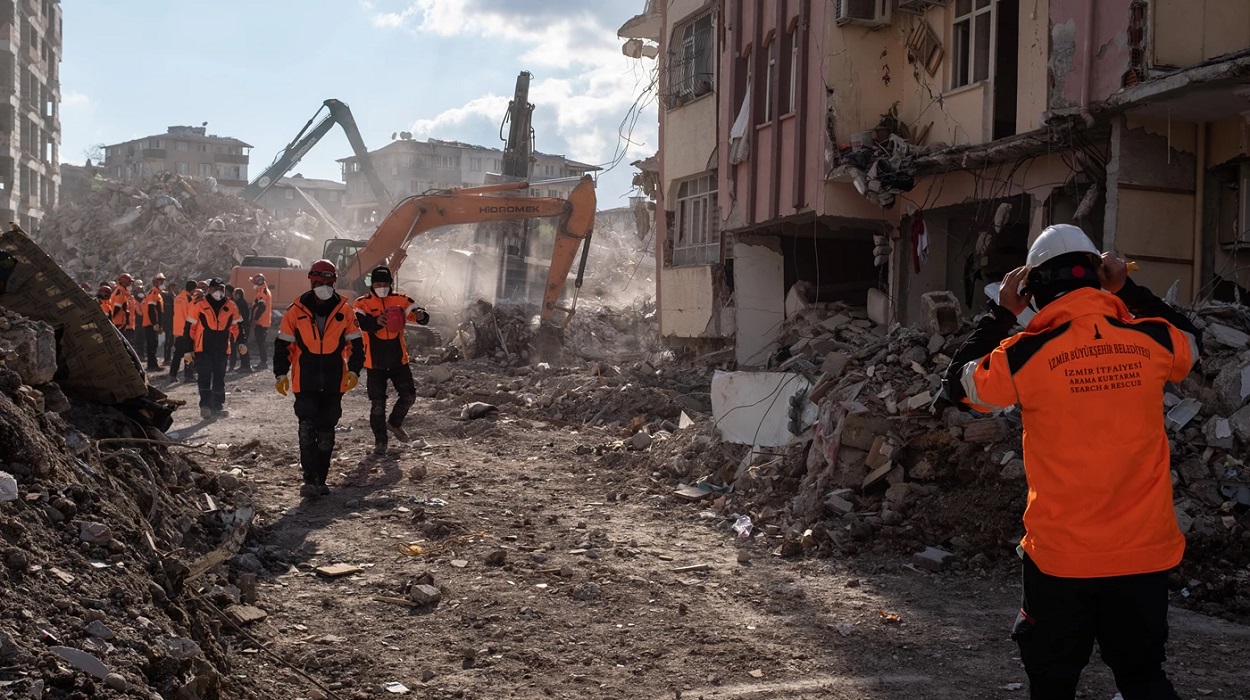
As the dust settled on the rubble of Turkish cities, citizens began asking hard questions. Why was the government response so slow, and why did so many buildings fall in the first place?

Some Christians have joined the chorus.

“During the earthquake, some serious mistakes were made,” said Melih Ekener, executive director of SAT-7 TURK, an inter-denominational satellite television ministry with offices in Istanbul. “But with the destruction of cities with large Christian populations, we are feeling more alone than ever.”

The mistakes came both before and after, he said. But the church paid a disproportionate price, as the ancient cities of Antakya, Iskenderun, and Diyarbakir collectively held the majority of Turkey’s Christians—about 1 percent of the overall population of 85 million.

President Recep Tayyip Erdogan has pledged to rebuild affected areas. And with a local death toll of over 40,000 and one million people displaced across a 10-province region roughly the size of Switzerland, any government would struggle, Ekener said.

But nodding his head at a long list of reported failures both before and after the 7.8-magnitude earthquake and 7.5-magnitude aftershock, Ekener said trust in official institutions has been shaken.

The results are tragic.

Not all can be blamed on the government. The earthquake damaged the local airport and road systems, bottlenecking equipment necessary for rescue. Freezing temperatures, lack of electricity, and the sheer scale of devastation handicapped relief efforts.

But three or more days were lost due to poor coordination in the centralizing of effort.

“The system makes sense,” said Ekener. “But it does slow things down.”

One Turkish Christian, requesting anonymity due to the sensitivity of the situation, was blunt, warning there will be consequences for mistakes.

“Earthquakes don’t kill people; the shoddy works of men do,” said the senior ministry leader. “The government failed this test, and many who could have been saved died.”

Elections are scheduled for June but may be postponed.

Analysts remarked that after a 7.6 magnitude earthquake in 1999 killed 18,000 people in northwest Turkey, the army acted quickly to lead the emergency response. But given the nation’s long history of military coups, when the Islamist-tinged Justice and Development Party (AKP) of now-president Erdogan came to power in 2002 it established civilian control over the largely independent brass.

As an unintended consequence, the military, like everyone else, had to wait on the official Disaster and Emergency Management Authority (AFAD). And AFAD, critics remarked, is headed by a graduate of an Islamic seminary with no experience in the field.

“For years, the AKP has packed almost every institution in the country with their staunch loyalists, often purging people with real know-how and expertise,” said Mustafa Akyol, a Turkish senior fellow at the Cato Institute’s Center for Global Liberty and Prosperity and an expert in Islam and public policy. “The result has been a huge loss of quality and competence.”

Following a 2016 coup attempt, the government removed tens of thousands of civil servants, many connected to a rival Islamic movement accused of conspiracy. Other civil society organizations have also been suppressed, and Akyol said an effective, national effort against disasters is impossible in a climate of suspicion against domestic enemies.

Drawing no connection, an AFAD internal report described deficiencies in personnel and earthquake preparedness. It still consisted of more than 10,000 employees.

Erdogan acknowledged “shortcomings” in the earthquake response, pledging to care for every affected citizen. But he also blamed “dishonorable people” for spreading lies and rumors against the government.

Ekener said that after delays, overall coordination has been smooth.

But while the “after” errors have been tragic, critics point to a criminal “before.”

“They failed…

This article was originally published at Christianity Today on February 23, 2023. Please click here to read the full text.