Categories
Excerpts

Escaping ISIS in Libya

From the Pittsburgh Tribune-Review
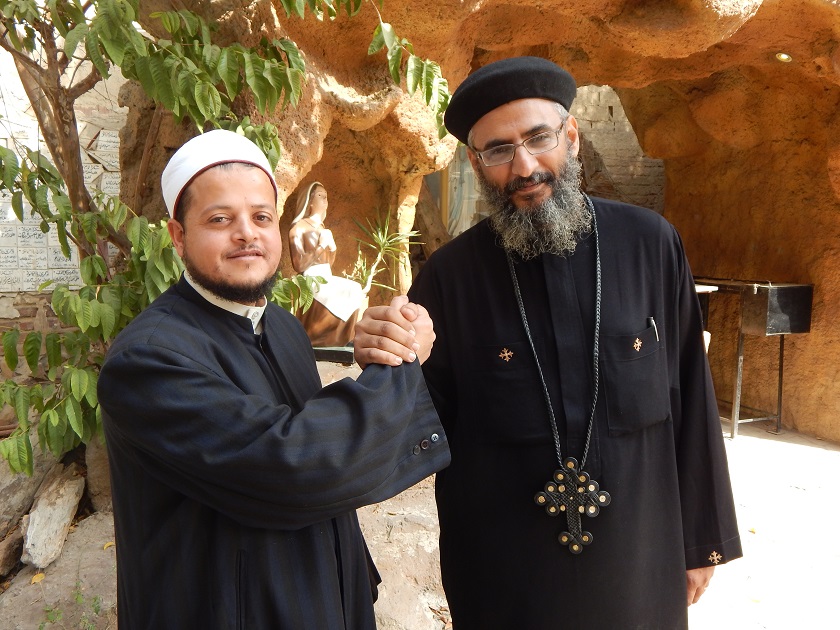
Osama Mansour (L), from the Pittsburgh Tribune-Review

Consider the horrible ordeal of Coptic Christians in Libya, as the Islamic State stormed their compound. The Pittsburgh Tribune-Review tells how one escaped, helped by his Muslim friend:

Hani Mahrouf awakened at 2:30 in the morning when fists pounded on the door of his housing compound in Sirte, Libya.

It was Islamic State gunmen, searching for Egyptian Christians.

“They had a lot of weapons,” said Mahrouf, 33, a Muslim construction worker. “They asked if we were Muslim or Christian.

“We told them we were Muslim. Then they asked for the rooms of the Christians.

“They threatened us with their guns.”

The article describes how fighters scaled the compound walls, but the story centers on one who got away:

Osama Mansour, a Christian, was sleeping in a room of the first compound when ISIS burst in. Warned of what was happening, he slipped outside and “jumped from fence to fence just ahead of the gunmen,” he said.

He escaped but was left on his own in the dangerous city, separated from his friends.

“I stayed (in Sirte) for 30 days, but I didn’t stay in the same room” from night to night, said the 26-year-old tile worker.

A man he called “Sheikh Ali,” a Muslim from his home province of Assuit, helped Mansour hide and constantly change locations. Eventually, he grew a beard in order to leave Sirte.

“ISIS had two checkpoints that they would move around. I heard they were checking for tattoos” — he pointed to the bluish-black cross that he and many Coptic Christians ink on the insides of their wrists — “and we put a plaster cast on my hand and wrist. Sheikh Ali gave me a Quran and a prayer rug for the trip.

“I had to do this — I can’t have my mother wearing black” for mourning, Mansour said.

The article says most of his companions also eventually returned home, but it does not specify Sheikh Ali. Maybe he is still in Libya, able to work. If so, Osama may be using a pseudonym to protect his friend’s identity there.

One would hope it is not to protect his identity in Egypt. Recent news has some in the village protesting the church President Sisi promised to build in the name of the martyrs.

But in Libya, in this instance, the bonds of relationship and homeland proved stronger than the militant call of extremist religion. Amid constant news of chaos and atrocity, stories like this are precious reminders of humanity.

Unfortunately, guns and ideology can change the equation.

Categories
Excerpts

Defending Rabaa

Defending Rabaa

Omar Ashour is an academic at the Brookings Institute who recently published a paper entitled, ‘From Collusion to Crackdown: Islamist-Military Relations in Egypt.’

It is an insightful retelling of two epochal moments in history, the 1952 Free Officers revolution and the 2011 Arab Spring. In both, he details how the military establishment and the Muslim Brotherhood cooperated, maneuvered, and eventually clashed.

History is contested, so those who either lived through or studied carefully these events are invited to weigh in on the anecdote that follows. But in understanding Brotherhood resistance following the June 30, 2013 protests against Morsi, this detail risks being overlooked. I, at least, had missed it.

According to Ashour, the Muslim Brotherhood was an intimate partner with the Free Officers, but then tried to resist Gamal Abdel Nasser as he consolidated power outside of democratic procedures.

At one crucial moment the Brotherhood helped organize a demonstration against him, calling for (among other things) the army to return to its barracks.

Nasser asked Abdul Qadir Audeh, the Secretary-General of the MB, to dismiss the protesters. Audeh complied, hoping to reach a compromise, but was arrested that same night by Nasser’s loyalists in the military police and was executed a year later.

Sound familiar? In 2013 the Muslim Brotherhood did not accept the ouster of Mohamed Morsi on July 3 despite the massive protests against him. Right or wrong in this decision, this is an important distinction between 2013 and 1954. The sit-in in support of Morsi had formed to counter these protests, and continued into mid-August. During this time there were intense negotiations between the two sides, with active participation of foreign diplomats.

During negotiations the Brotherhood was urging on participants to stand firm, even to the point of martyrdom. This is well known. But in connection with the anecdote above, this detail escaped me.

On July 17, 2013, Audeh’s son Khaled, a university professor, reminded the hundreds of thousands of protesters in Rab‘a Square of that mistake. “Our stance here is our way to success. I swear I will never dismiss you like my father, the martyr Abdel-Qadr Audeh, dismissed the protesters on 28 February 1954…. They tricked him and told him to dismiss the protestors and that the army would go back to its barracks and democracy would be resumed. He believed them. And then he was arrested at night and executed afterwards.”

It helps put in perspective the psychology of the Brotherhood.

Ashour’s paper considers the removal of Morsi to be a coup, for those who take offense at this designation. But it also demonstrates the Brotherhood’s claim to be a martyr of democracy is overly simplistic. For example:

By December 1952, Nasser made it clear to the MB that there would be neither free elections nor a re-installation of civilian leadership. In January 1953, the RCC dissolved and banned all political parties in Egypt. The MB did not oppose this decision because it did not affect them (they were not a political party) and also to avoid a costly clash with Nasser’s powerful faction in the RCC and the army, an opportunistic stance that would prove costly in the future.

There is another important difference between the two episodes, as the Brotherhood did not initiate the protests of 2011, joining later. But they soon demonstrated a spirit of collusion with the military, ranging from cooperation to non-confrontation. Different examples are given, but here is one sometimes forgotten.

In June 2012, a SCAF decision dissolved the lower house following a constitutional court ruling that part of the electoral law was “unconstitutional.” This decision vested all legislative powers in the SCAF only days before Egypt’s first civilian president was scheduled to take office on June 30, 2012. It was, in effect, a bloodless coup, one that passed without any international condemnation and limited domestic criticism. Because the winner in the parliamentary elections, the MB, had also won the presidency, it did not mobilize its supporters and coalition partners [against the decision].

The Brotherhood may argue it was trying to be pragmatic, accepting defeat against a stronger foe in hopes of fighting another day with a stronger hand. Perhaps. But the details Ashour provides help recount a history that is not clean and principled. This is important to remember given the righteous garb the Brotherhood now seeks to don.

In the struggle for power in Egypt, democracy is a tool. But it is only one among many. That it is the preferred tool of the Brotherhood should not lend them greater favor. It is a bare-knuckled fight, and right now they are losing badly. But they chose to step into the ring, and have grappled along with the rest.

Without granting good intentions to either the military or the Brotherhood (which may be there), let there be some sympathy. Every fight has its principles. Every struggle for what is right is met with temptation to embrace some wrong.

The Brotherhood sees the military leadership as a dictatorial junta. The military sees the Brotherhood as a radical transnational force. Both see each other as a rival.

Be careful, oh outsider, about taking sides. For Egyptians of course it is a different matter entirely.

Categories
Prayers

Friday Prayers for Egypt: Regional Agreements

Flag Cross Quran

God,

It is good for men and nations to agree. It demonstrates the fruit of relationships overcoming the thorn of interests. But it is only the beginning, and more hard work must follow.

Of course, not all agreed upon is necessarily good. Weigh recent decisions, God, and spare the region from harm.

With Ethiopia and Sudan, Egypt agreed upon a set of principles concerning an upstream dam on the Nile River. The dam is feared to reduce Egyptian water capacity. It is lauded for increased energy production. The principles help guide continuing negotiations, which had been contentious.

With the Arab League, Egypt agreed upon a preliminary commitment to create a joint regional military force. With ISIS in the background and Yemen in the immediacy, supporters hope Arabs can take responsibility for their own stability.

God, some prayers are easy. Let Egypt drink. Let Ethiopia develop. Let the Arab world enjoy peace.

But agreements are not. With a dam, Ethiopian leverage increases dramatically. With a military, Arab discord threatens greater risk. Be in the details, God.

And be with the people negotiating them. Give them good hearts to seek the common good. Give them sound minds to guard the sound interests. And give them keen discernment to sniff out the keen manipulations.

So much in the region is out of order, God. Force can solve only so much, but agreement can multiply effectiveness. Bless these recent efforts, increase trust among the leaders. As they talk, deepen their relationships.

As thorns prick, may fruit nourish. But with hard work help them till the ground for peace.

Amen.

Categories
Middle East Middle East Institute Published Articles

The Egyptian Family House: Fostering Religious Unity

Family House Port Said

From my recent article at the Middle East Institute:

Egypt’s President Abdel Fattah el-Sisi has not been shy about the need to reform religious discourse and relations. He is concerned about how the image of Islam has been marred by Muslims themselves, and how extremist thought has torn the fabric of Muslim-Christian unity. Visiting the Coptic Orthodox cathedral on Christmas Eve, he told the cheering audience, “We will build Egypt together. We will love each other, so the people can see.”

If these words are to become reality, the president may have a tool in an organization called the Egyptian Family House.

The article then describes the basic structure and activity of the Family House, which is mandated both to advise government ministers and replicate itself at the grassroots level. I have written about this before from Cairo, but here is an excerpt from Alexandria:

But examination of the Alexandria branch, established in December 2012 as one of the first regional chapters, shows that these efforts, while promising, are challenged by the precedent of people of different faiths not often working together.

In Alexandria, the governor provided the Family House with a building and four employees from the public payroll. The approximately 100 members meet once a month and work with deputies from the local ministries of culture, health, and social solidarity to plan how to collaboratively serve disadvantaged populations.

But at the same time, the Alexandria branch has been slow to organize activities. One conference on citizenship was held in the presence of the governor, but attracted an audience of only 150. The branch’s family committee has also conducted two visits to lower income neighborhoods, presenting a positive image of religious unity. But little else has been done. Members are encouraged to travel together to each monthly meeting to display their cooperation publicly, but only around half are doing so, according to Father Boulos Awad, co-head of the branch.

Even within the Family House, the culture of separation and ignorance of the religious other has not been easy to overcome. Awad explained that the members have spent much of their time getting to know each other and learning how to communicate. While many imams and priests in the organization have succeeded in forging friendships—calling each other on holidays, for example—they have reported few examples of practical cooperation.

A non-clerical member of the Alexandria branch added that the deliberate pace of the group’s activities reflects the nature of the members in that they are not pragmatic, fast-acting professionals and have the mentality of religious caution. But he and Awad both agree that the participants have good intentions, and they anticipate greater success in the years to come.

Please click here to read the full article at Arab West Report.

Categories
Personal

The Great Game

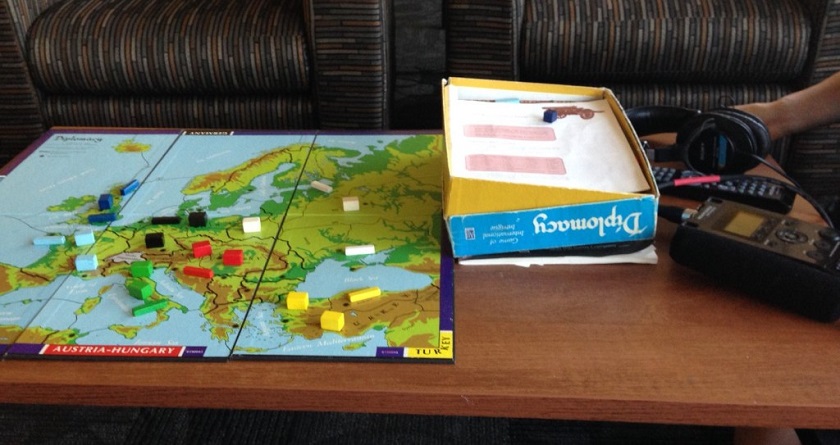
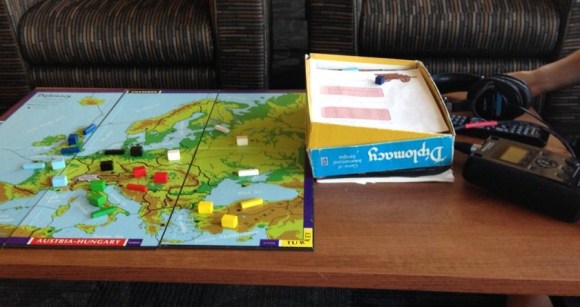
Diplomacy the Great Game

Growing up, I loved the game Diplomacy. Die-hard aficionados compete in hours-long, even days-long competitions vying for mastery of early 20th Century Europe. For both lack of sufficient passion — and players — I enjoyed the computer version.

The basic premise is to be one of the seven great powers at the time — England, France, Germany, Italy, Austria-Hungary, Russia, or Turkey. Each nation is more or less equally matched at the start of the game, the point of which is to conquer the continent.

There are only a few basic rules to learn, and no dice. Winning is determined by best marshaling of forces, but primarily, through negotiations. No country is strong enough to win on its own; the empire usually turns on which ally will stab the other in the back first, but not prematurely.

Living and reporting in Egypt sometimes feels the same.

Especially during the high days of the revolution, so much didn’t make sense. Why is the (NDP, MB, US, insert your favorite actor here) acting against its interests? Or are they? Expand the question regionally and the changes were so rapid that it was hard to keep enough. Add enough conspiracy theory to fill in the gap, debate control vs. competency, and it is no wonder so few have been able to predict the outcomes.

Part of the problem is living in the middle of it all. Diplomacy, after all, is an overhead look. The ‘Great Game of Nations’ is won and lost in boardrooms, over phone calls.

And in this spirit, this recent article by Brookings takes a look at the region:

There is no place in the world today where chaos is more prevalent and the reestablishment of order more critical than the Middle East. The “great game” between rival great powers may have originated in Central Asia but it found its most intense expression at the “crossroads of empire” in the Middle East. As long as American interests are still engaged the United States cannot desist from playing it.

The US used to rely on regional pillars, it argues, specifically Israel, Egypt, Saudi Arabia, and Turkey. These nations could be relied upon to maintain the status quo.

This worked well up until the aftermath of 9/11. The US abandoned the status quo in effort to remake Iraq. The Arab Spring also introduced a wild card.

In the process, the existing order collapsed and has been replaced by failing states, ungoverned areas, and the rise of Al Qaeda and ISIS. One should not be too nostalgic for the old order: its stability was regularly punctured by conflicts and coups and purchased at the price of repression.

The article criticizes President Obama for reacting to regional crises on a piecemeal basis. A grand strategy is needed, and the author sees two possibilities:

1. Joint Condominium with Iran: The essence of this approach is for the United States to concede Iran’s dominance in the Gulf in return for its agreement to curb its nuclear program, reduce its support for Hezbollah in Lebanon, Hamas and Palestine Islamic Jihad in Gaza, the Houthis in Yemen, and Basher al-Assad in Syria and contribute instead to the construction of a new regional American-Iranian order.

2. Back to the Future: This approach would require the United States to return to its dependence on its traditional allies in the region: Saudi Arabia, Egypt, Israel and Turkey. The objective of this renewed “pillars” strategy would be to restore the old order based on the containment of Iran, the roll-back of its advances in Lebanon, Syria, Iraq and Yemen, and the curbing of its nuclear program. This same coalition of traditional allies would then have the sense of security to work more effectively with the United States against ISIS and Al Qaeda.

The author recognizes the difficulties in each strategy, but in part two of his article argues for option #2.

Fair enough. It is not my point here to argue one way or another, but to remark the sanity that is restored by having a ‘great game’ lens through which to interpret events. In each crisis a push-and-pull dynamic can be seen, and at times the American administration appears to be at odds with itself.

Do we want an Iran deal, or not? Do we prefer Arab autocracies, or political Islam? The questions are endless, and beyond the direct interests of the US regional rivalries are at play as well.

One in particular is aptly described by Foreign Affairs, analyzing Egypt and Turkey. Like Brookings, it begins with chaos:

The chaos in the Middle East has tested many relationships, not least the one between Egypt and Turkey. Shortly after the fall of Hosni Mubarak in 2011, Turkey became one of Egypt’s chief regional supporters. When the new president, Mohammad Morsi, was himself pushed out of office in 2013, Turkey shifted course. With General Abdel Fattah el-Sisi in power in Egypt, Turkey quickly became one of the country’s main adversaries in the Levant.

In the earlier analysis, both represent US interests in the pillars strategy. As such their rivalry is serious:

In the immediate term, it seems likely that the regional rivalry between Egypt and Turkey will exacerbate the Libyan civil war. Further out, it could throw the whole region in to worse chaos.

Reading the Egypt-Turkey article, it was easy to see the development of events. But through the lens of Brookings, it is not easy to see why. Clearly Turkey favors the Muslim Brotherhood. But good relations between nations in business and coordination can continue under any government. It almost feels as if Turkey feels that Sisi threw a wrench into a well-developed plan.

Such plans are part and parcel of great game thinking, but they are also only one step removed from conspiracy thinking. Egypt is full of ideas that Sisi has defended the nation — indeed, the region — from the schemes of US-Israeli-Qatari-Turkish efforts to remake the region. And given how strongly Saudi Arabia and the UAE have supported Egypt, there are definitely different agendas at play.

But what are they?

As much as great game thinking can give a sense of sanity, it also threatens to eliminate agency. As I spin my wheels to understand the region, I sometimes feel every article I read — or even write — is subjugated to someone else’s larger purpose. That is not to accuse respected journalists and analysts of bias, though sometimes I wonder. Rather, it is that any article about human rights in Egypt, or about the duplicity of the Brotherhood, or or or, winds up fitting in to some version of a great game agenda.

The news is not neutral, even if the reporters strive to be.

What then to do? Continue striving. Everyone else is, even those actively manipulating, whether engaged in conspiracies or only propagating the theories.

But the main ones striving are the ordinary people who actually make events happen. Maybe the (US, MB, Egyptian army, insert your favorite actor here) actually desired a revolution. But they did not go down to the streets.

Striving also are those who did not go down to the streets, but could have. Fulan al-Masry [the Arabic equivalent of John Doe] is as real a person as Barack Obama. Both deserve to have their stories told well.

Is this only a hopeful faith in agency, where all real decisions are made by those with power? Maybe. But to conclude with a different kind of faith:

He changes times and seasons; he deposes kings and raises up others. He gives wisdom to the wise and knowledge to the discerning.

Maybe this also is a misplaced faith. But it too is a lens for a better sanity. God will achieve his purposes in the world, through and in spite of the strivings of all.

So we might as well strive for what is right and good. Anyone doing otherwise risks being of the devil. And the devil, in diplomacy or otherwise, is in the details.

Categories
Excerpts

The Muslim Brotherhood in Transition

Muslim Brotherhood in TransitionNeither description is right, says Ibrahim al-Hudaybi. The former Brotherhood member says the organization is not al-Qaeda, but neither is it committed to non-violence. The better reality is that it is in transition, and the future is still uncertain.

His article is translated at Mada Masr, and here is why a non-violent ethic evolved in the years before the revolution:

Socially speaking, the organization mainly includes middle class professionals, and they are conservative by definition and not willing — due to their professional positions — to make choices that might alienate them from society (or justify such an alienation) and lead to grave social consequences.

Furthermore, the organization’s leadership has been — throughout the past decade at least — chiefly composed of businessmen, with economic interests that require protection by preserving a connection with the regime, to a certain extent. This initially led the organization to adopt an extremely conservative stance towards the revolution, reducing it to a limited reformative process, without pushing for any significant changes in economic and social structures.

In addition, the Brotherhood’s social investments, in terms of schools, medical clinics, mosques, and associations, also required maintaining a certain relationship with the government, in order to preserve those investments, eventually eliminating the prospect of violence.

Hudaybi argues that Rabaa radicalized many, and as the state arrested leadership the Brotherhood was increasingly unable to hold to its traditionally tight organizational structure and discipline.

Leaders, however, and especially outside the organization want to preserve the Brotherhood brand of non-violence so as to maintain support from international human rights organizations. But at the same time, they face internal pressure:

Such conflicting motives, combined with weak organization making them unable to control the movement as a whole, some leaders have become aware that pacifism won’t be an option for long. They have tried to prevent the full engagement of members in violent acts by redefining violence, using the now famous slogan: “Anything short of bullets is peaceful.”

And this article from Foreign Policy describes the Ultras Nahdawi, which have taken up the protesting mantle. Its youth say they are not the Brotherhood, though Hudaybi (without mentioning Ultras) describes many of these similar protesting and violent groups have emerged from the younger Brotherhood ranks. But if this connection is somewhat nebulous, here is how it describes the Nahdawi association with violence:

When the police do inevitably attack one of their demonstrations, however, the Nahdawy can rely on a subset of their members to spring into action and engage with police forces: the Maghouleen, or Unknowns.

“The Maghouleen are the ones who meet the police head-on,” Faisal said, lowering his voice. “They’re an anonymous group of front-line fighters. No one knows who they are, but they are armed and will be violent if they need to be.”

So what is the attitude of the Brotherhood leadership? The article quotes a respected analyst:

Political researcher and Brookings fellow H. A. Hellyer said this sort of rhetoric has been at the center of the Brotherhood’s PR strategy since the military takeover: championing dissent but refusing to take ownership of it.

“The reality is that the Muslim Brotherhood has lost tremendously in the last year and a half and everything they’re doing right now is about maintaining a semblance of brand,” Hellyer said. This “brand” is pro-democracy, anti-violence, anti-extremism — and the Ultras don’t quite fit the bill. So even though their ideologies and goals align, the Brotherhood isn’t about to wave the Nahdawy banner.

“It’s also all about redirecting: putting a message out there but not taking responsibility for it,” Hellyer said.

The outcome, according to Hudaybi:

This violent tendency represents the Brotherhood’s “organization” only as much as “their determination to remain peaceful” does. The organization is going through a transitional phase, in which both views of violence and non-violence are being adopted, sometimes by different people, sometimes in different statements (in different languages and on different sites), and at other times by the same people in different situations.

Under this organizational disintegration, there is currently no way to determine who will prevail eventually.

And his somber prognosis:

The more we fail to handle this situation — on the social and ideological level, the first being more important — the more likely it is for the discourse which claims that there is no difference between the Muslim Brotherhood, Al-Qaeda and the Islamic State to become a self-fulfilling prophecy.

Categories
Prayers

Friday Prayers for Egypt: Neighbors

Flag Cross Quran

God,

You desire peace not just for Egypt. Honor also her neighbors, that all might live in peace together.

For two doors down, a nation is in mourning. A terrorist attack on Tunisia’s tourists threatens to undermine stability there. Comfort them, God, and give them resolve.

Resolve to defeat a terrorist menace. Resolve to hold firm to a democratic path. Resolve to see the region cooperate.

For Tunisia’s struggle is not hers alone. While she has sent more fighters to Syria than any other nation, the ones who attacked her trained in Libya. Civil war in both nurtures chaos and extremism, threatening Tunis and Cairo and others beside.

For the sake of both countries, and above all for her own people, lighten Libya’s burden, God. Establish legitimate government, to extend legitimate security. Tighten borders, but open societies. Give wisdom to outsiders who want things put straight. Give wisdom to Libyans, to straighten themselves.

To Egypt’s east, another nation needs peace. Israel does not suffer the volatility of the region, but her recent elections showcase disharmony between peoples. Guide them, God, and give them resolve.

Resolve to defeat a terrorist menace. Resolve to hold firm to a democratic path. Resolve to reconcile her differing peoples.

Reconcile, God, her Arab and Jew. Set these citizens in equality to serve jointly their nation.

Reconcile, God, the Palestinian and Israeli. Give just solutions to their disjointed hopes; inspire just leadership to enact them together.

Honor Israel and Syria, Tunisia and Libya. And with them Egypt, for a region both stable and strong. Give each one sovereignty, to bless her neighbor. Together may they live in peace.

Amen.

Categories
Excerpts

Street Music as Solution

One of the reasons given for the weakness of liberal values in Egypt is that political parties are not active on the street. Politicians tend to be elite, it is said, and are much more comfortable appearing on television and holding conferences in hotels.

This makes a difference, of course, as the media has great influence over the general political atmosphere. But it is not as successful at winning converts and changing culture. Here, the argument goes, Islamist politicians have been much more successful as they win their support through charitable activity.

In this sense, then, this initiative covered by Mada Masr is a step in the right direction:

Balcony Music 1

In four Egyptian cities over a weekend this month, one could be walking down the street and all of a sudden hear a violin, a percussion beat and the soulful singing of a trained soprano. This is what’s been happening in Port Said, Damietta, Mansoura and Cairo as part of Mahatat’s third Art of Transit tour, which took place between March 12 and 16.

Here is their goal:

“The idea is very important — to break the barrier of theaters and cinemas, which are closed spaces and charge money to bring art to the people,” Ziad Hassan says. “To reclaim public spaces for the public, so when you walk around you find all kinds of activities, are exposed to different sorts of art and deal with various people.”

Music and culture are not the exclusive domain of liberals, of course, though in Egypt the Islamists show much less interest and at times opposition.

But this outreach and similar efforts are clearly necessary. Anyone with a message must respect the target audience, best shown by going to them.

Balcony Music

Egyptian liberals could learn a lesson.

Categories
Christianity Today Middle East Published Articles

Identity Politics: Israeli Election Squeezes Arab Christians

Ariel Schalit / AP, via CT

From my article at Christianity Today, published March 18, 2015:

Israel’s election wasn’t easy on its Arab Christian citizens.

From one direction, Prime Minister Benjamin Netanyahu rallied his base by warning, “The Arabs are flocking to the polls in droves.” From the other, Ayman Odeh, a Palestinian-Israeli politician from Haifa, led an unprecedented but disjointed coalition of Arab secularists, communists, and Islamists, and received the endorsement of Hamas.

The tension illustrates the struggle of Arab Israeli Christians to craft a national identity between the increasing clamor of Zionism and Islamism. The result, according to evangelical leaders: a “ghetto mentality” among Christians and fewer opportunities for public witness and ministry.

Netanyahu’s Likud emerged victorious over its left-of-center rivals, the Zionist Union, buoyed by promises to abandon prospects for a Palestinian state. Foreign Minister Avigdor Lieberman, a Likud ally, told Odeh during campaigning, “You’re not wanted here.”

As voter turnout surged, however, so did Arab participation. Odeh’s “Joint List” placed No. 3 among the 10 parties that captured seats in the Knesset, Israel’s parliament. “I’m very wanted in my homeland,” Odeh replied.

But where is this homeland for Arab Christians? The answer is quite contested.

Please click here to read the full article at Christianity Today.

Categories
Christianity Today Middle East Published Articles

Forgiving ISIS: Christian ‘Resistance’ Videos Go Viral in the Arab World

Myriam, photo from SAT-7

From my new article at Christianity Today, published March 17, 2015:

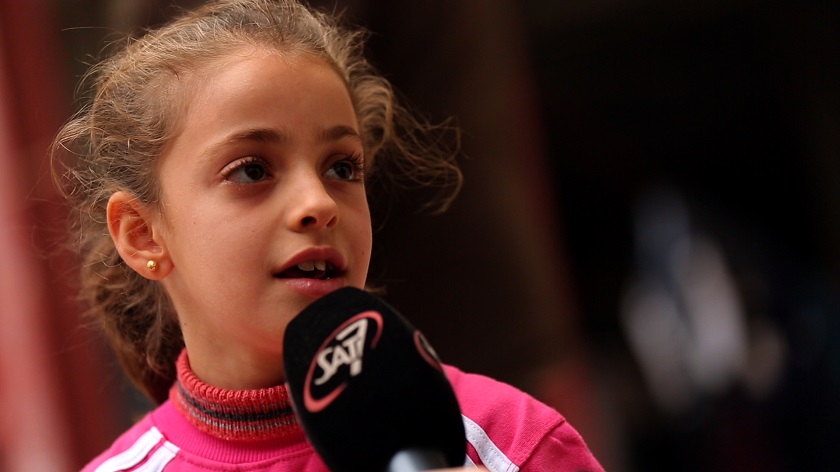
A prime example of Ghalab’s wish for loving children: 10-year-old Myriam from Mosul, Iraq.

Her family fled their home last July with hundreds of thousands of other Christians, finding safety in Kurdistan’s Irbil. Essam Nagy of SAT-7 Kids visited the refugee camps and connected with Myriam, a faithful viewer who praised God for not allowing ISIS to kill them.

Asked about her feelings toward those who drove her from her home, Myriam wondered why they did this. Then she said: “I will only ask God to forgive them. Why should they be killed?”

To date, more than 1 million people have seen her witness online. [Full video at the bottom]

SAT-7’s five channels reach an audience of 15 million in North Africa and the Middle East, though it’s impossible to measure how many people watched Myriam. However, numbers can be tracked through the social media campaign, which has reached 25 times its normal audience, with subtitles of the video provided in English, Spanish, Turkish, and Chinese. Word spread not only through SAT-7 affiliates, but also in the local secular press.

Pan-Arabic al-Arabia praised Myriam for confronting ISIS with love. “Everyone who listens to her is astounded,” echoed the Egyptian Youm 7. Leading Lebanese daily al-Nahar called for the clip to be shown in the nation’s schools as a lesson in humanity.

Please click here to read the full article at Christianity Today.

Here is the link directly to the YouTube video of Myriam.

And here is the second video featured, of a brother to two of the Coptic martyrs in Libya, calling in to SAT-7 to both thank and pray for the murderers of ISIS.

Categories
Excerpts

Why Egypt Crushes at Squash

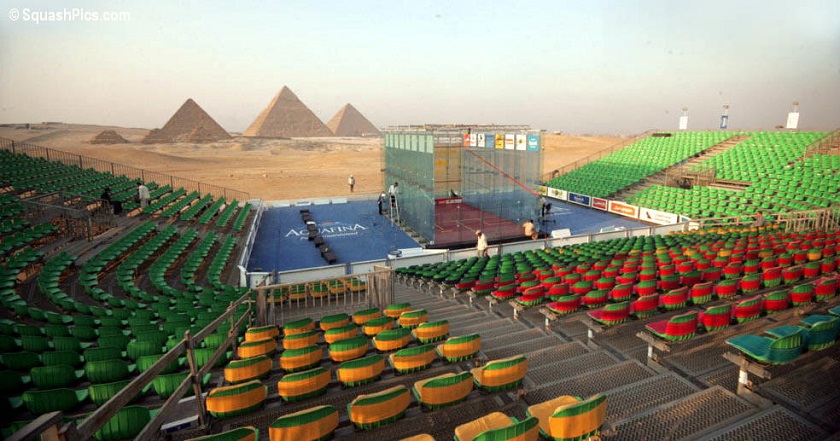
From a tournament Egypt hosted in 2006

From the Atlantic, seeking to explain Egypt’s odd dominance of a sport few Americans play:

On Friday, Egypt’s Ramy Ashour won the squash World Open—basically the Wimbledon of squash. The tournament attracts the best players from around the world. But the final game lacked a certain element of suspense: Both players, Ashour and Mohamed El Shorbagy, were Egyptian.

Even that was predictable. Egyptians dominated the international rankings this year—including El Shorbagy and Ashour, three of the Professional Squash Association’s top five players based on tournament results are Egyptian. As of Friday, Egypt has won seven of the past 12 World Opens—in the history of the tournament, which began in 1976, only Australia and Pakistan have more World Open titles.

Egypt’s prowess in the sport is beginning to extend to international women’s tournaments, junior tournaments, and even American college sports: Egyptian men have won the last three U.S. Intercollegiate Individual Championships, a tournament for the best players attending U.S. universities.

How did so many Egyptians get so good at squash?

Please see the article for details, but then go play yourself, if you can. I learned the game in college. It is far more technical and strategic than racquetball, but a great workout all the same.

Congratulations to Egypt for being the best; if only America cared.

Update: The World Squash Federation decided on March 20 to cancel the world junior championships scheduled this summer in Cairo. The cited concern is the ‘extreme radicalism in the region, not specific to Egypt.’ Unfortunate.

Categories
Prayers

Friday Prayers for Egypt: Economic Execution

Flag Cross Quran

God,

So much of a nation’s economic strength depends on perception. Egypt is poised to receive a boost this weekend, as it hosts a massive investment conference attracting business leaders and heads-of-state the world over.

But let it be real, God, and let it be good.

To be real, let it address infrastructure and corruption. Let it develop entrepreneurship and employment. Let it move beyond photo-ops and sign on the dotted line.

To be good, let it address poverty and environment. Let it develop education and benefits. Let it move beyond tycoons and strengthen both lower and middle classes.

For there are those, God, who warn this conference aims to ‘sell off’ the nation. Some are wary of neoliberalism, others of consumerism.

But some move beyond concern to sabotage. The Muslim Brotherhood seeks to raise the risk of investment calling all contracts with the coup government to be void. Allied movements push further, bombing local branches of companies in attendance.

They too want to change the perception, showing Egypt unstable and a bad investment. God, you know the reality.

For economy demands more than perception, it requires execution. But in the political sphere, Egypt recently employed the other sense of this word.

During post-Morsi violence, a pro-Morsi mob threw youths from a rooftop during widespread clashes. A year and a half later, one of this mob was executed by the state.

Some cry foul, saying they got the wrong man, or he was guilty in the mob but not of the murder.

God, so many are guilty of so much. Bring justice, but have mercy. Establish order, but bring consensus. Every man dead is a tragedy, every assault on another is a sin.

After four years of revolution, God, there is so much clean-up. Give transparency to the justice system, and courage to the prosecutors. Hold accountable all who have done wrong, and hold close the victims of injustice.

Sort them clearly, God, in this life as well as the next.

In the next life your economy is perfect. But in this one stability, justice, and rule of law are necessary prerequisites. They have been in short supply in Egypt, but grant them soon, and now.

Let them be real, God. Let them be good. And in them help all Egypt to prosper.

Amen.

Categories
Arab West Report Middle East Published Articles

The Educational Initiative of the Family House

Rasmy Abdel Malak
Rasmy Abdel Malak

Dr. Rasmy Abdel Malak is the head of the educational committee of the Egyptian Family House, an independent institution created by government decree. It is run by the grand sheikh of the Azhar in partnership with the pope of the Coptic Orthodox Church, involving Egypt’s other Christian denominations as well.

The Family House is authorized to create branches in the governorates, so that the effort to protect and reinforce national unity between Muslims and Christians will be felt at the grassroots. But it is also authorized to interact directly with government ministers, so that their suggestions will be taken into serious consideration in the framework of national policy.

It is in this second capacity Arab West Report met with Dr. Rasmy Abdel Malak Rostom, who describes the work of the educational committee of the Family House in formulating recommendations to the minister of education. The interview was conducted on November 10, 2014, by Jayson Casper and Adel Rizkallah, board member of the Center for Arab-West Understanding.

Please describe the basics of your educational work in the Family House.

The Egyptian Family House was established by a decision by the prime minister in 2012. There are a number of committees, approximately eight or nine, including one for education which I am honored to lead.

It is well known in Egypt, like in any nation of the world, that education forms the person. We have noticed instances of extremism and fanaticism among the students that come from the religious discourse in the mosques. But there are no question marks concerning the churches, it would be very rare to see similar problems.

We have begun to think how we can build up a person from youth. It is very important, from nursery and preschool certain things influence Muslims and Copts to be against each other.

The idea of the Family House is that we are a family, all together. But how can we live together when each one is raised in an incorrect way? We have witnessed this, and in the education committee we are trying to do something about it.

Please click here to read the full text of the interview at Arab West Report.

Categories
Excerpts

A Regime-Islamist Reconciliation?

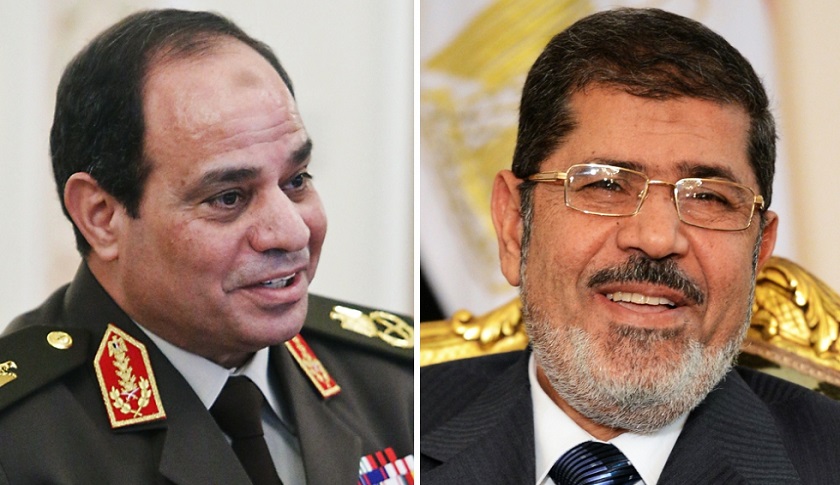
morsi-sisiVery important but under-reported news in this article from al-Ahram Weekly:

Recent developments suggest the possibility of a thaw in relations between the state and political Islam. President Abdel-Fattah Al-Sisi recently met with three members of the Dissident Muslim Brothers, a breakaway group from the Muslim Brotherhood.

There is also a reconciliation initiative, proposed by Tarek Al-Bishri, between the government and the Muslim Brotherhood. The legal scholar, known to be close to the Islamist trend, hopes the initiatives will attract Saudi backing.

After describing recent incidents of terrorism, the article provides perspective from the former Brothers:

Speaking to the press following the meeting between Al-Sisi and Dissident Muslim Brothers, Tharwat Al-Kharbawi said those attending agreed that a reconciliation with the Muslim Brotherhood is unrealistic.

Al-Kharbawi described the three-hour meeting as “an extraordinary meeting with an extraordinary man …You can rest assured that Egypt is in good hands. But we all have to work together to ensure he is not left alone.”

In the background are discussions with Brotherhood members in detention:

Al-Zafrani (ex-MB) told the press that the statements of repentance issued by some detainees was discussed. He said Al-Sisi welcomed the recantations. He quoted the president as saying that the principle of revision, admission of mistakes and repentance is acceptable as long as those issuing the declarations have not committed criminal acts.

Security sources report a growing number of imprisoned Muslim Brotherhood members are renouncing their membership of the group. Muslim Brotherhood leaders deny there is any such trend.

As for the reconciliation initiative, Bishry revealed it to a Turkish newspaper:

He also spoke of the January revolution, parliamentary elections and the importance of safeguarding the Egyptian state. “The continued existence of the state in Egypt is vital … we must preserve and perpetuate it through the participation of the people,” he said.

Al-Bishri argued that the ongoing conflict in Egypt is between three forces: the state and its backbone the army; Islamists and their grassroots organisations; and liberal elites who control the media. “The state, which is the strongest, should reach out to all,” he said.

Brotherhood dissidents dismiss Al-Bishry, finding him inclined to the Brotherhood above all.

After describing the long prison sentences given to many Brotherhood leaders, the article concludes with its analysis. The two sides are simply positioning:

In the confrontation between the state and political Islam, pressure is being sustained, on the one side, by long prison terms for Muslim Brotherhood leaders. On the other, there are bombings and violence being carried out by anti-state, pro-Islamist forces, considered by the state to be linked to the now-banned Muslim Brotherhood.

It is a game of nerves in which each side is seeking to strengthen its hand for whatever negotiations eventually ensue.

Certainly, Al-Sisi’s meetings with leaders from breakaway Muslim Brothers and reports that the new Saudi monarch is eager to settle the situation in Egypt suggest some form of social, if not political, reconciliation is increasingly likely.

Right or wrong in this conclusion, the article is worthy of consideration.

Categories
Prayers

Friday Prayers for Egypt: Parliament, Police

Flag Cross Quran

God,

News this week prompted both a sigh and a gasp. The Supreme Constitutional Court struck down provisions of the law to elect parliament, further delaying the process. And a cabinet reshuffle appointed a new minister of the interior, with speculations on the impact.

The parliament delay was almost expected, as there appears little political or popular will to complete the democratic roadmap. Some politicians accused the state of such, as the president holds the right of legislation until parliament sits.

The new police chief was quite unexpected. A number of non-Islamist revolutionary forces demanded his dismissal over ongoing violence and neglect of human rights. The new head has a background in combatting religious extremism and is tasked as new blood in the fight against terrorism.

God, set the state right. It has shuffled and wobbled for four years now, in desperate need of stability.

As parliament laws are redrafted, make the process inclusive and legal. When a parliament sits – and may it be soon – may it be representative and effective.

As the police reconfigure, make the process professional and reformist. When the chief sets his agenda, may he train, educate, hold accountable – and stamp out the violent menace that threatens Egypt.

God, in time, reverse the reaction to these institutions. May the workings of parliament produce the gasp of achievement. May the conduct of police produce a sigh of relief.

Bring peace to Egypt, God. Bring a functioning government. Through both law and order, may the country breathe normally.

Amen.

Categories
Audio

Podcast: On the Middle East, Christians, and ISIS

The Way Home - Dan DarlingThis week I had the opportunity to appear on ‘The Way Home‘ podcast, hosted by Dan Darling. Darling is the Vice President for Communications at the Ethics and Religious Liberty Commission of the Southern Baptist Convention, and he invited me to share about current events in the Middle East and in particular how they are impacting Christians. Here is his introduction:

All of us have reacted with horror at the atrocities committed by the terrorist group ISIS upon Christians in the Middle East. How can Christians pray? How should we think about ISIS?

Today on The Way Home I talk with Jayson Casper, a Christianity Today journalist who has been covering this story. He called me from Cairo to discuss how Christians in places like Egypt, Jordan, and other countries are reacting to the atrocities of their brothers and sisters in Syria and Iraq and Libya. He also gives a thorough analysis of ISIS and Islamic extremism.

Our conversation lasted about half an hour, touching on various questions. Is ISIS Islamic? How are Christians responding? How should Western Christians pray?

Please click here to open a new window and listen to the podcast.

Categories
Lapido Media Middle East Published Articles

Who are the Copts?

Muharraq Monks

World attention has turned to the Coptic Christian community of Egypt, following the beheading of 20 of their migrant workers in Libya at the hands of the so-called Islamic State.

The Coptic Orthodox Church considers them martyrs. A new icon venerates their death and their names have been added into the Synaxarion, the liturgical church history commemorating the saints.

But who are the Copts, and what is their understanding of martyrdom?

The word ‘Copt’ derives from the Pharaonic word ‘gypt’, which through the Greek ‘Aigyptus’ became the modern-day ‘Egypt’.

Copts are therefore Egyptians, descendants of the ancient Pharaonic civilization. As such, the Orthodox, Protestant, and Catholic Egyptians call themselves Copts, as do some Muslims.

Coptic population figures are highly contested. Some Muslims estimate as low as 3-4 percent; some Christians as high as 20-25 percent. The CIA world factbook estimates 10 percent. Official Egyptian ID cards list the religion of every citizen, but these figures are not released. Roughly 90 percent of Copts belong to the Orthodox denomination.

Coptic tradition says the church was planted through the missionary preaching of St. Mark, writer of the second Gospel in the New Testament. He was martyred in Alexandria in 68 AD.

The Coptic Orthodox Church dates its calendar from the year 248 AD, the first year of Roman Emperor Diocletian. His reign witnessed up to 800,000 Christian martyrs in Egypt.

According to Islamic tradition, Muhammad said that after conquering Egypt [649 AD] the Muslims should treat its inhabitants well. To come under the protection of the new rulers Copts had to pay the jizya tax. Those unable had to either convert or risk death.

Historian Phillip Jenkins, author of The Lost History of Christianity, says that periods of persecution waxed and waned until the end of the 12th century, when Islam became the dominant religion.

Islam considers a martyr to be one who is killed while striving in the path of God, often interpreted as participation in jihad.

In Christianity, the early church defined martyr as a technical term to mean one who was put to death for their faith, in imitation of Jesus.

Christology was an issue that divided Coptic Orthodoxy from emerging Roman Catholicism. In 451 AD at the Council of Chalcedon the Copts were anathematized over the issue, but in 1998 the two churches reconciled. Copts prefer to be known as ‘miaphysites’, where Jesus’ humanity and divinity unite to make one nature.

In many issues the Coptic Orthodox are similar to Roman Catholics, following a traditional liturgy, holding to seven sacraments, and believing that during Eucharist the bread and wine become Jesus’ actual body and blood.

They differ in that the Copts have their own patriarch. Pope Tawadros II is the 118th in a line stretching back to St. Mark. Coptic priests are free to marry, though bishops must be celibate and are drawn from monastic communities.

Coptic ascetic spirituality is exhibited through the practice of fasting. But unlike complete abstinence as in Islam’s Ramadan, faithful Copts maintain a vegan diet while fasting 210 days of the year.

Monasticism as a Christian expression is traced back to St. Anthony in the Third century. St. Benedict and John Cassian visited the Egyptian desert monks and introduced the practice to Europe.

Being a bishop-led church independent from Rome has also contributed to close relations with the Anglican Church in the UK. According to Heather Sharkey, author of American Evangelicals in Egypt, the Church Missionary Society worked to revive the Orthodox Church in the Nineteenth century, as opposed to US Presbyterians from whom most of today’s Egyptian Protestants are descended.

Competition between denominations has often led to tension, but especially since the Arab Spring Copts have deemphasized distinctions in light of the challenges of Islamism.

It has also resulted in a surge in spirituality. The late Pope Shenouda III encouraged biblical literacy and winsome preaching. Today the Bible Society of Egypt is the fourth largest in the world.

Over the past 30 years the Coptic Orthodox Church has spread throughout the world, establishing over 15 dioceses in Europe, Australia, and the Americas. Commenting on the martyrs in Libya, Bishop Angaelos of the UK demonstrates Coptic—and biblical—spirituality.

‘As a Christian and a Christian minister I have a responsibility to myself and to others to guide them down this path of forgiveness,’ he said to CNN. ‘We do forgive the killers from the depths of our hearts. Otherwise, we would become consumed by anger and hatred. It becomes a spiral of violence that has no place in this world.’

Check out my new writing project called Middle East Harmony for more articles like this one that build understanding between religious traditions.

This article was first posted at Lapido Media.