Categories
Christianity Today Middle East Published Articles

Palestinian Evangelicals Call Western Church to Repentance, Criticized in Return

Image: Ali Jadallah / Anadolu / Getty Images

Since the outbreak of war after unprecedented terror attacks on Israel by Hamas, Middle Eastern churches, councils, and leaders have expressed their outrage over the killing of thousands of innocent civilians.

Many Arab Christian groups have issued public statements. Most emphasized the Christian call to be peacemakers. Several have been criticized for what some see as calls not specifically addressing the suffering of civilian Jews targeted for death by terrorists.

Originating from Palestine, Egypt, Jordan, and Lebanon—with most prompted by the tragic bombing of the Anglican hospital in Gaza—the public statements range in focus and intensity. Some assert the international community overlooks the context of occupation by the Israeli state; others remind the global church of the continued Christian presence in the land.

CT studied texts from nine Arab and four Western organizations, most of evangelical conviction, and queried the perspective of an Israeli Messianic Jew and a Lebanese Armenian evangelical. The review found that few Middle Eastern statements have named Hamas as the perpetrator of terrorism, while many specifically criticize Israel itself.

One of the most recent statements is from Musalaha, which names both.

The Jerusalem-based reconciliation ministry works with Israelis and Palestinians from diverse religious backgrounds using biblical principles to engage the issues that divide them in pursuit of peace. After two weeks painfully watching the widespread carnage, its public statement centered on “lament” and called for a reconciling response.

“We lament people who, in the name of justice, have allowed rage to perpetuate the cycle of dehumanization and excuse bloodshed; as seen with Hamas’ attacks and the Israeli army’s response,” stated Musalaha. “We invite both Palestinians and Israelis to see the dignity and humanity of the other by non-violently co-resisting together for a better future.”

The region’s most representative Christian body, however, was bluntly specific about the suffering it asserts the Jewish nation-state is imposing on Gaza.

“What the Palestinian people are exposed to in Gaza is not a military reaction to a military action,” stated the Middle East Council of Churches (MECC), “but rather a genocide and ethnic cleansing, targeting the detainees of the largest prison in human history—and with premeditation.”

Its statement, the starkest of the nine Arab ones surveyed, called the war a “war of extermination,” and called for “all honorable people” to intervene.

Michel Abs, secretary general of the MECC, told CT he recognized that what he calls “the Zionist entity” was attacked and responded—and that it should have stopped there.

The MECC focused on denouncing Israel for cutting off water in the densely populated coastal strip, the destruction of medical infrastructure, and the collateral deaths of defenseless citizens. It called to stop the aggression, to lift the siege of Gaza, and to hold what Abs called “the occupying forces” accountable.

Member churches in the MECC include Catholic, Orthodox, and many Protestant denominations—most of which are called “Evangelical,” per local usage. Yet while “mainline” differences known in the American Christian landscape are not as distinct in the Arab world, the World Evangelical Alliance (WEA) incorporates bodies not represented in the MECC.

“We are generally in agreement [with the MECC statement], without necessarily adhering to each word,” said Paul Haidostian, acting president of the Union of Armenian Evangelical Churches in the Near East, a reformed church of pietistic expression and not a WEA affiliate. “But are there elements of extermination in the current war? I would think yes.”

Jack Sara, general secretary of the regional Middle East and North Africa evangelical alliance, helped craft the official WEA response to the “Holy Land conflict.” But he agreed with the MECC statement as well.

“With thousands of Palestinians dying nonstop, it clearly describes the facts on the ground,” he said. “If anything, it falls short in beseeching the world to intervene.”

Analysts have noted that Hamas embeds itself in civilian areas, and that the Israel Defense Forces (IDF) often issues warnings before striking residential structures. In preparation of an anticipated ground invasion, the IDF called on noncombatants to evacuate northern Gaza; Hamas told them to remain in place.

The United Nations, however, has stated that Gaza already represents a humanitarian catastrophe with more than 6,500 killed and a million displaced as of October 26, according to the Palestinian Health Ministry. Responding to Hamas terrorism and the deaths of 1,400 citizens, mostly civilians, Israel’s dilemma is stark, as the urban warfare necessary to pursue terrorist leaders in Gaza will further deteriorate local conditions and increasingly inflame much global opinion.

But watching many in the United States and wider evangelical world rally behind Israel, Sara’s Bethlehem Bible College (BBC) cosigned a Palestinian Christian statement of significant rebuke, calling “Western church leaders and theologians” to repent.

It opened by quoting the prophet Isaiah: Learn to do right; seek justice; defend the oppressed (1:17). “Western attitudes towards Palestine–Israel suffer from…

This article was originally published at Christianity Today, on October 27, 2023. Please click here to read the full text.

Categories
Christianity Today Middle East Published Articles

Evangelical Alliance Accepts Iran Invite. Critics Claim Broken Engagement.

Image: Fabrice Coffrini / AFP / Getty

Last June, the World Evangelical Alliance (WEA) received a peculiar invitation. On the sidelines of the 53rd meeting of the United Nation’s Human Rights Council (HRC) in Geneva, the government of Iran organized a forum entitled “The Role of Religions in Promoting Human Rights.”

The WEA was the only Christian group invited.

Upon its acceptance, the alliance—representing 600 million evangelicals—under UN protocol became an official forum co-sponsor with the Islamic Republic, designated by the United States as a state sponsor of terrorism since 1984.

Ranked No. 8 on Open Doors’ World Watch List (WWL) of the 50 nations where Christians experience the most persecution, Iran also partnered on the event with Pakistan, ranked No. 7 (both are considered “severe” offenders). Another co-sponsor was the Organization of Islamic Cooperation; 35 of its 57 members rank on the 2023 watchlist.

The intersection of topics, however, secured the participation of the HRC itself, the Office of the UN High Commissioner for Human Rights, and the Geneva School of Diplomacy. The official title of the WEA presentation was diplomatically bland: “Harnessing the immense potential of religions in cultivating pluralistic societal cohesion and global peace.”

But behind the scenes, Iran wanted something different.

“They asked us to explain: What can evangelicals contribute to the good of society?” said Thomas Schirrmacher, WEA secretary general. “I would have a bad conscience if we did not use such opportunities to testify in the court of the world.”

American critics of the UN, however, believe “kangaroo” is this court’s most suitable adjective. One month after President Donald Trump’s 2018 withdrawal from the Iran Deal, the US similarly withdrew from the HRC—protesting the hypocrisy of electing China, Cuba, Saudi Arabia, and other dictatorships among its 47 member nations. (Three years later, President Joe Biden reversed Trump’s decision.)

The WEA presentation was delivered by Gaetan Roy, the WEA’s permanent representative to the UN in Geneva. Citing the propriety of his role as a behind-the-scenes actor, Roy declined to be interviewed about his interactions with Iranian diplomats. But Schirrmacher summarized Roy’s remarks as giving specific examples of what evangelicals believe and how they defend the freedom of religion or belief for all.

“It was amazing, a result of our diligent work over many years,” he said. “In many of these countries we are seen as troublemakers, if not terrorists.”

But did the message translate? Iranian press summarized Roy’s remarks as emphasizing “the importance of the role of dialogue.” And some critics lambasted the WEA for “legitimizing” Iran in the public arena, seeming to support its propaganda as a purported defender of human rights.

“The UN is where human rights concerns should be most addressed, and the WEA should be a prophetic voice there,” said Johnnie Moore, who formerly served on the US Commission on International Religious Freedom (USCIRF). “But they are hobnobbing with diplomats and drinking tea, becoming part of the problem.”

Moore co-authored a book about Islamic terrorism in Nigeria, called The Next Jihad, together with current USCIRF chair Abraham Cooper, a Jewish rabbi. Cooper’s associated Simon Wiesenthal Center stated it was “difficult to put into words the damage done” by the WEA.

Coming in the waning days of anti-hijab, women-led protests, the WEA’s public co-sponsorship has emboldened a “murderous” Iranian regime, the center stated. And contrary to the title of the forum, it stated evangelical leaders demonstrated instead how religion can “degrade” human rights.

“For Iran, it means business as usual,” Cooper told CT. “And for the beleaguered innocents, it means their martyrdom, suffering, and muffled pleas are forsaken—by a group they were counting on for public support.”

One such Iranian woman called the WEA’s participation a “comedic drama.”

She requested anonymity as a formerly imprisoned convert from Islam. Though she is now in asylum in Europe, Iranian agents have continued to harass her.

“Every day Christians are arrested, in every corner of Iran,” she said. “WEA participation was not wise, and does not help Christianity at all.”

Also in opposition is Hormoz Shariat, president of the US-based Iran Alive ministry. If the WEA were to engage Iran in such a forum, he said, it should only be if Christian persecution is at the top of the agenda, with a pre-negotiated agreement on the principles of religious freedom.

But even then, it likely would not make a difference.

“Iranians are the masters of deception and manipulation,” Shariat said, himself a convert to Christianity. “And evangelicals are naïve when dealing with Muslims, thinking everyone behaves according to a similar moral code.”

He cited the practice of taqiyya, which he said permits a Shiite Muslim to lie.

Yes, the theological concept exists in Shiite Islam, said Sasan Tavassoli, senior lecturer at the London-based Pars Theological Institute. But its application is disputed and Christians should not be overly concerned. He is a “huge advocate” for dialogue with Iran, and lauds the WEA for seeking to build a positive relationship.

“We can hold Iranian Muslims accountable for their statements, just like everyone else,” he said. “Jesus commands us to love our enemies, and by showing respect in these gatherings, we are following him.”

Having been involved in evangelical interfaith dialogue with Iran since 2004, Tavassoli said the WEA can help “tone down” the common accusations that converts from Islam are part of a deviant cult, an imperialist tool of “Zionist Christianity.” And for former Muslims imprisoned for this reason, such connections can help quietly advocate on their behalf.

Schirrmacher said the WEA has performed this role already, securing the release of several pastors and other believers in Iran. “Such success only follows when…

This article originally published at Christianity Today, on August 10, 2023. Please click here to read the full text.
Categories
Christianity Today Europe Published Articles

Prayer in Ukraine After Six Months of War

Image: Scott Olson / Getty Images
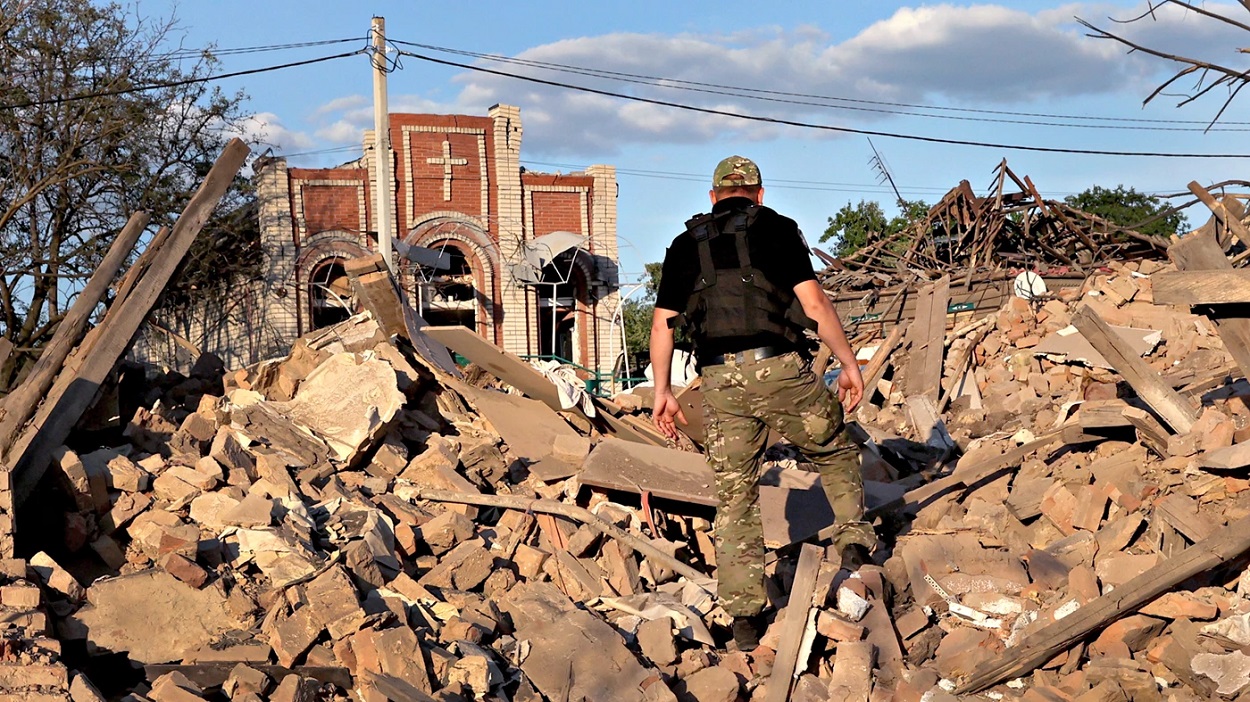
Sukovska Baptist Church was heavily damaged by a nearby missile strike in June in Druzhkivka, Ukraine, and has since conducted its Sunday services in a tent.

The World Evangelical Alliance (WEA) called for prayer.

“On this day of independence, we want to declare our dependence on God,” it stated on behalf of Ukraine, “the One who can bring true peace to the hearts of each individual person, each family, and even entire peoples.”

Joined by the affiliated European Evangelical Alliance, the WEA petition specified prayers to end the suffering, to spare the world from further repercussions, to strengthen the church’s response, and to marshal peace not through weapons, but through prayer.

Ukraine must defend itself, the WEA clarified; but Christians have a deeper hope.

“Throughout history, God has changed hopeless and dire situations in surprising ways,” stated the petition. “Let us also pray for healing and for reconciliation, and that Russia and Ukraine could live in peace as independent, sovereign nations.”

An accompanying guide for parents offers similar prayers for children.

It will not be easy. An Orthodox priest who performed last rites for the 116 people found in a mass grave in Bucha reflected on his spiritual calling.

“Saying the word forgive isn’t difficult,” Father Andriy told The Associated Press. “But to say it from your heart—for now, that’s not possible.”

As a followup to its March survey of the wartime prayers of Ukraine’s evangelicals, Christianity Today asked a sampling of Christian leaders to explain how the ongoing war has changed how they pray and what they pray for, how they understand unanswered prayers in difficult times, and how fellow Christians around the world can best pray for them now:

Denys Kondyuk, head of the missiology department at Ukrainian Evangelical Theological Seminary, Kyiv:

My prayers were more scheduled and structured before the invasion. Now they are dominated by requests for health and life, for obvious reasons. And I have seen God answer through many stories of deliverance from very dangerous situations; but of course, there are still many that suffer and die.

The prayer for the war to end is still unanswered.

Ukrainians have focused on verses that emphasize God’s justice, especially those which emphasize there is not much we can expect from people. Others, meanwhile, have found hope in the scriptures that promise our suffering is temporal, awaiting the kingdom of God.

Please pray that God guides us to serve where it is needed, and to be bold in what we do. And ultimately, for the victory of Ukraine—bringing justice to those who suffered and died.

Yuriy Kulakevych, foreign affairs director of the Ukrainian Pentecostal Church, Kyiv: We are all called to grow in Christ, which includes our prayer life. As pastor of God’s Peace Pentecostal Church in Kyiv, I am encouraging our people to…

This article was originally published at Christianity Today on August 24, 2022. Please click here to read the full text.
Categories
Christianity Today Europe Published Articles

The Hardship Is Plentiful But the Workers Aren’t Few: Evangelicals Unite on Ukraine

Image: Mission Eurasia
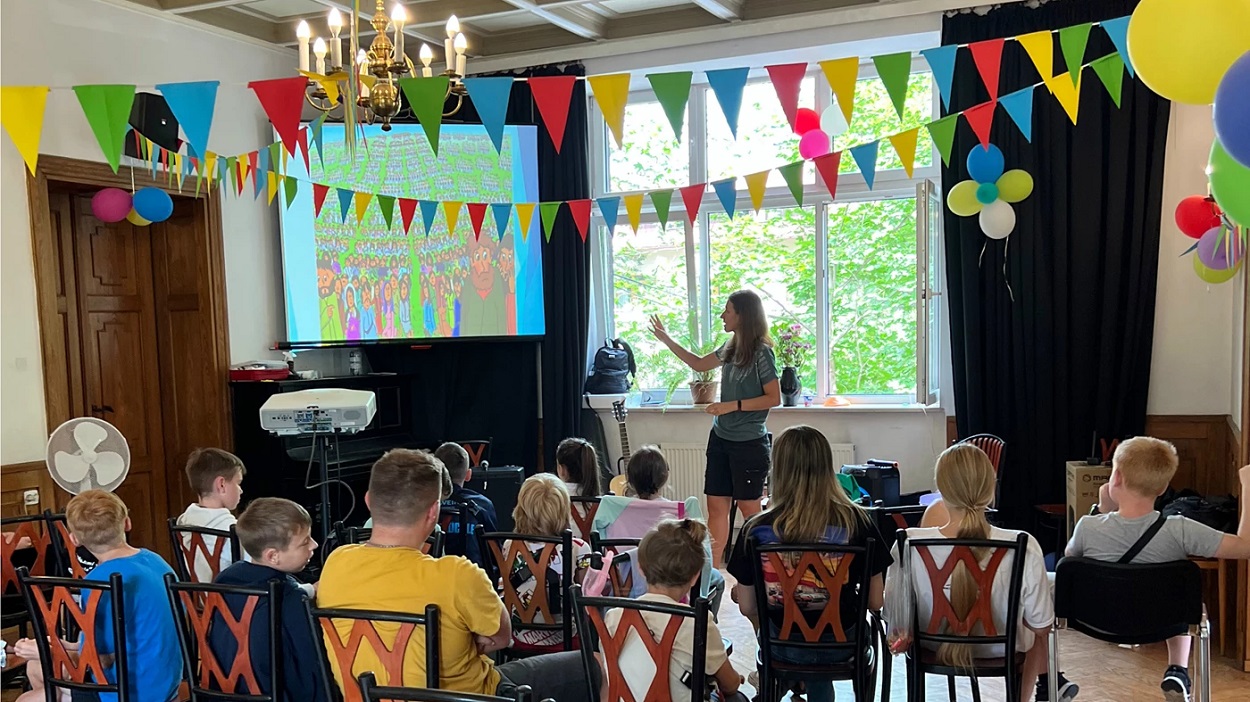
A Bible camp for displaced Ukrainian children

Her mother died of cancer. Her father was killed in the war. When her home in Donetsk was destroyed by a Russian missile, retreating Ukrainian troops brought the eight-year-old orphan and her grandparents and uncle to volunteers serving with the Chernivtsi Bible Seminary (CBS), 680 miles to the west.

Their only possessions were the clothes on their backs.

Resettled in temporary housing, last month the uncle was called back to the front lines. The girl has been sent to a Christian camp, and the seminary—serving as a ministry hub for the internally displaced—is doing what it can to assist.

“We did not think that serving a refugee is such a complicated process,” said Vasiliy Malyk, CBS president. “But no matter how difficult it may be, we can help them at least with some dignity.”

It is a team effort, and once tallied the numbers both stagger and pale in comparison to the need.

The Alliance for Ukraine Without Orphans (AUWO) has mobilized 3,000 volunteers to provide temporary housing for 6,000 people, mostly women and children. It has evacuated 38,000—more than two-thirds of which have been orphans. Nearly 59,000 people have received some sort of humanitarian aid.

“When the war started, everyone was focused on responding,” said Ruslan Maliuta, a former AUWO president and current network liaison for One Hope. “But then we realized the war is going to last, the crisis is huge, and the response will require us all to work together.”

To do so, in April the World Evangelical Alliance (WEA) launched The Response—Ukraine Special Taskforce (TRUST), with Maliuta as its leader. AUWO united with Ukraine’s Baptists, Pentecostals, and seven other national church and parachurch organizations to coordinate refugee relief efforts, alongside ten regional partners from Poland, Moldova, Slovakia, Hungary, and Romania.

“Having churches reach across denominational lines to work together has been one of the most encouraging things,” said Chris Guess, a Romanian pastor. “We have volunteers from across the globe, [as] God’s people have jumped in with us.” For example, volunteers from Argentina shipped 20,000 tons of rice.

Comparing notes from March onward, the evangelical network has mobilized 64,000 volunteers. Temporary housing has been offered to 271,000. Over 346,000 people have been evacuated, while nearly 600,000 have received humanitarian aid. Over $1.1 million has been distributed to partners.

“TRUST is coming alongside the admirable work of professional aid agencies with no intention of competing or creating a new relief organization,” said Thomas Schirrmacher, WEA secretary general. “TRUST offers a bridge that connects.”

Yet the United Nations underscores the grim reality: 6.2 million need shelter, 10.2 million need food, and 12.1 million need health assistance.

“People are on the edge of exhaustion,” said Rafal Piekarski, serving with Proem Ministries in Poland. “Our Polish resources are over. We don’t want to compete with each other, but be good stewards of what you can bring from your countries, your churches.” In May, Piekarski was one of…

This article was originally published at Christianity Today, on August 5, 2022. Please click here to read the full text.

Categories
Africa Christianity Today Published Articles

Christians Welcome Coup in Guinea

Image: John Wessels / Getty Images
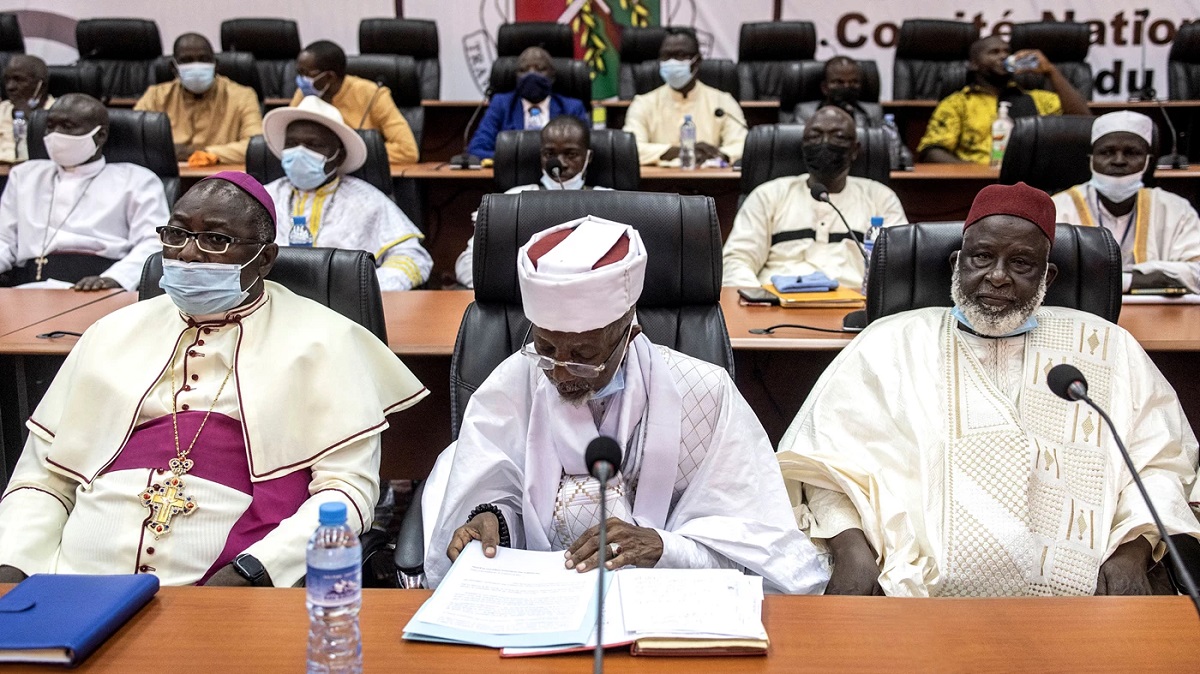
Guinean religious leaders gather at the Peoples Palace in Conakry ahead of the first session of talks with Colonel Mamady Doumbouya on September 14, 2021.

In its 63 years of independence, Guinea has had three presidents. Last month, the West African nation suffered its third coup d’etat.

This time, says the local Christian minority, their Francophone country might just get it right.

“Alpha Conde cannot return,” said Etienne Leno, a Christian and Missionary Alliance (CMA) pastor. “We are praying that the new military authorities—who we find to be wise and intelligent—will be led by God.”

On September 5, Colonel Mamady Doumbouya, head of the Guinean special forces, ousted the 83-year-old president. Once an imprisoned opposition leader, Conde became the nation’s first democratically elected head of state in 2010 and won a second term in 2015.

Leno originally found much hope in Conde’s mandate, which was ushered in after the international community aided domestic forces to remove the military junta that violently seized power in 2008. Conde improved the business, tourism, and energy sectors, restoring Guinea’s global reputation.

Local infrastructure was neglected, however, and the Oregon-sized nation lagged in domestic development. One-third of the economy was linked to the mining of bauxite, the primary resource for aluminum. Guinea boasts the world’s largest reserves, but foreign companies dominate the extraction.

Despite 7 percent annual growth, nearly 50 percent of the 13 million population lived in poverty. And by late 2019, 36 percent of the country believed Guinea was moving in the wrong direction.

And then Conde made his power grab. He pushed through a March 2020 referendum for constitutional changes to reset his term limits and in October won reelection again. Both votes were challenged by violently suppressed protests.

Almost a year later, Doumbouya had had enough.

He promised no political witch hunt as he “made love to Guinea,” but it was nonetheless clear that opposition would not be tolerated. As the colonel—sworn in on October 1 as Guinea’s interim president—assembled a national dialogue, protests in support filled the streets and Christians noted the surprising calm.

Five days after the coup, the Association of Evangelical Churches and Missions of Guinea (AEMEG)—affiliated with the World Evangelical Alliance—issued a televised statement recognizing the new authorities. Catholic and Muslim groups made similar announcements. “Relations are good in general,” Leno told CT. “Our message is…

This article was originally published at Christianity Today, on October 13, 2021. Please click here for the original text.

Categories
Americas Christianity Today Published Articles Religious Freedom

Christian and Muslim Leaders Agree on Legitimacy of Evangelism

Image: Courtesy of World Evangelical Alliance
Nahdlatul Ulama leader Yahya Cholil Staquf presents World Evangelical Alliance leader Thomas Schirrmacher with a festschrift at The Nation’s Mosque in Washington, DC, during the 2021 International Religious Freedom Summit.

The world’s largest Muslim organization accepts that Christians will try to convert its members. A new partnership with evangelicals seeks to ensure this does not lead to conflict.

Last week, the World Evangelical Alliance (WEA) signed a statement of cooperation with Nahdlatul Ulama (NU), an Indonesian association with an estimated 30 million to 50 million members. Established in 1926 to counter Wahhabi trends issuing from the Arabian Peninsula, its name means “Revival of the Religious Scholars.”

“Evangelicals very much aspire to proselytism, and so does Islam. So naturally there will be competition,” said NU secretary general Yahya Cholil Staquf. “But we need to have this competition conducted in a peaceful and harmonious environment.”

Staquf spoke from the stage of the 2021 International Religious Freedom (IRF) Summit in Washington. On its opening day, he and WEA secretary general Thomas Schirrmacher signed “The Nation’s Mosque Statement,” along with Taleb Shareef, imam of Masjid Muhammad, the first American mosque built by the descendants of slaves.

Calling for “the emergence of a truly just and harmonious world order,” the statement seeks a global alliance to prevent the political weaponization of identity and the spread of communal hatred.

Schirrmacher called the WEA’s cooperation with NU the product of deep theological dialogue, counter to the academic tendency to downplay truth claims. And as evangelicals, evangelism is at the heart of their effort.

“We are working together for the right to convert each other,” the German theologian said. “Religious freedom does not mean that we agree, but that…

This article was originally published at Christianity Today on July 22, 2021. Please click here to read the full text.
Categories
Americas Christianity Today Published Articles

Trump and Biden Disagree on Sanctions. So Do Evangelicals Outside the US.

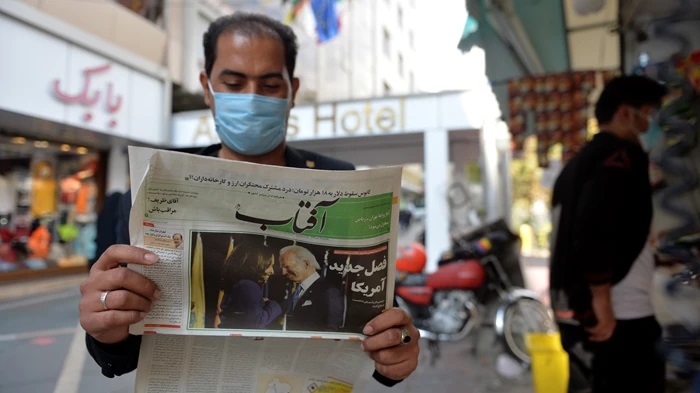
Image: Anadolu Agency / Getty Images The headline reads: A New Era for America

If President-elect Joe Biden makes good on his campaign rhetoric, his sanctions policy will meet the approval of the World Evangelical Alliance (WEA).

Back in April, as even the strongest nations reeled from COVID-19, then-candidate Biden petitioned the Trump administration for sanctions relief on the hardest-hit nations—including Iran and Syria.

“In times of global crisis, America should lead,” he said.

“We should be the first to offer help to people who are hurting or in danger. That’s who we are. That’s who we’ve always been.”

In September, the WEA joined Caritas, the World Council of Churches, and others to similarly petition the United Nations’s Human Rights Council.

“We are deeply concerned about the negative economic, social, and humanitarian consequences of unilateral sanctions,” read their statement, ostensibly singling out the United States and its European allies.

“It is a legal and moral imperative to allow humanitarian aid to reach those in need, without delay or impediment.”

One month later at the UN, China led 26 nations—including sanctions-hit Cuba, North Korea, Iran, Russia, Syria, and Venezuela—to assert that the economic impact impedes pandemic response and undermines the right to health.

This is “disinformation,” said Johnnie Moore, appointed by President Donald Trump to serve on the independent, bipartisan US Commission on International Religious Freedom (USCIRF).

He called the WEA statement “almost indefensible.”

“Sanctions against countries that imperil their citizens and the world is good policy,” Moore said. “It has proven to be an effective alternative to save lives, alongside diplomatic channels to coerce long-term positive behavior.”

Western nations had already issued fact sheets to undermine China’s claim.

Detailing food, medical, and humanitarian exemptions, the US and European Union (EU) demonstrated that sanctions target regimes and their supporters, not the general population. Christian Solidarity International, however…

This article was originally published by Christianity Today on January 15, 2021. Please click here to read the full text.

Categories
Christianity Today Middle East Published Articles

Palestinian Evangelicals Gain Official Recognition

Palestine Evangelical Council
Bishop Efraim Tendero announces the legal recognition of a Palestinian Evangelical Alliance at the general assembly of the World Evangelical Alliance. (Image: Jeremy Weber)

This article was first published at Christianity Today on November 27.

After 12 years of waiting, evangelicals in Palestine now claim they have greater civil rights than their fellow believers in the Holy Land.

Earlier this month, the president of the Council of Local Evangelical Churches in the Holy Land—which represents congregations and ministries located in the West Bank, East Jerusalem, and the Gaza Strip—triumphantly held aloft his evidence at the once-a-decade general assembly of the World Evangelical Alliance (WEA).

“Here is the presidential decree signed by … President Mahmoud Abbas,” Munir Kakish told the approximately 800 WEA delegates from 92 nations gathered in Bogor, Indonesia. “Our hearts are full of thankfulness to God for this new declaration.”

When the Palestinian Authority (PA) was created in 1994 following the Oslo Accords, pastors of local evangelical churches met to create a council in order to have a voice with the new government, Kakish told CT.

Ministering in the Holy Land since 1978, Kakish pastors two churches: an independent congregation in Ramallah, Palestine, and a Baptist congregation in Ramla, Israel. They are only 30 miles apart, but divided by the Israeli separation wall.

“I knocked on [the PA’s] doors many times,” he said. “But now the timing was right, and the personnel … were understanding.

“Most of all, it was our persistence to obtain our civil rights as Palestinian citizens.”

Over time, the council—which Kakish has led since 2007—gained credibility as…

Please click here to read the full article at Christianity Today.