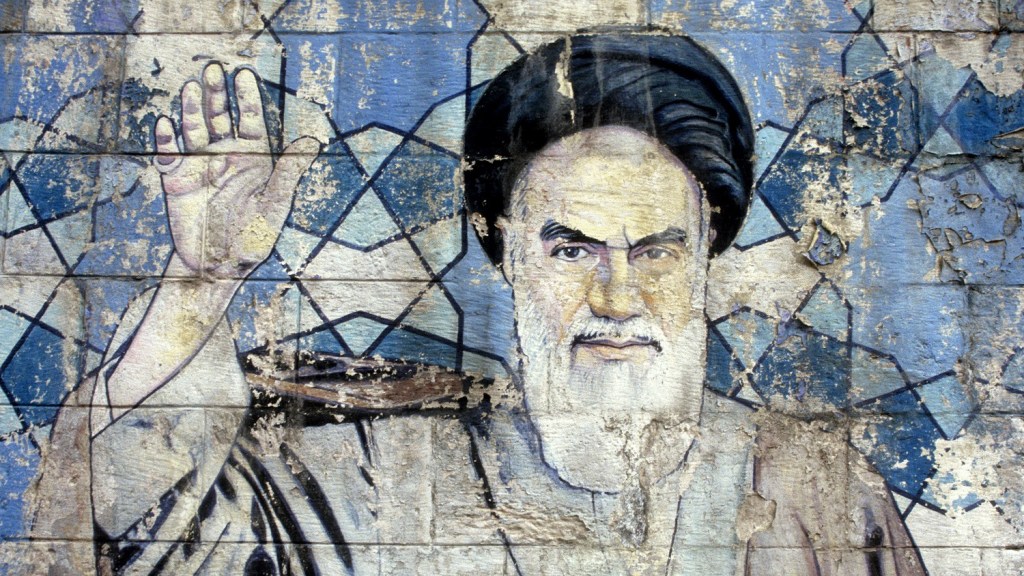
(This is part four of a four-part series on Shiite Islam and the Iranian regime. Please click here to read parts one, two, and three.)
While the first three parts of the series explored the history of Shiite Islam and how the lack of an earthly imam formed Shiite political culture, today we look at modern Iran and the rise of the Islamic republic.
Although other Shiite sects exist, Iran adopted the Twelver faith—based on a line of 12 imams. The last of these disappeared, and in the centuries that followed, the sect waited for the Twelfth Imam to return as Mahdi, a messiah-type figure, and establish global Islamic governance. In his absence, Shiites submitted to political authority without admitting its ultimate legitimacy.
Something began to shift in mid-19th century Iran as Western influence seeped into the still-Shiite but increasingly secular monarchy. In 1890, the shah granted an English business monopoly over the local tobacco industry, and in response, the masses protested the blow to national sovereignty and their personal economic interests.
Sitting at home, a leading Twelver scholar then issued a fatwa (legal opinion) declaring that continuing to smoke represented a war against the Twelfth Imam himself. The wave of support for the fatwa drove the shah to reverse his policy, and clerics began to sense their secular influence. Five years later, some joined the push for a national constitution.
Most clerics stayed quiet, however, focusing on ordinary religious affairs. But decades later in the 1960s, frustration with an unpopular shah led Ali Shariati, a Paris-educated sociologist from a clerical family, to apply a Marxist reading to the story of Hussein, the grandson of the prophet Muhammad.
Hailed as “Lord of the Martyrs,” Hussein gathered a small contingent of faithful followers and set out from Medina, the city of Muhammad in today’s Saudi Arabia, to oppose the unjust caliph who ruled from Damascus, Syria. Along the way in Karbala, Iraq, the caliph’s army intercepted Hussein’s approach, and a siege ensued. After ten days of negotiation, the army killed Hussein and his supporters.
The standard Twelver narrative held that as an imam, Hussein had divine foreknowledge of the massacre yet went to his death anyway. Faithful Shiites treated it as a redemptive act compensating for the failure of their ancestors to follow the imam. A Shiite tradition quotes Muhammad as saying, “[Hussein] shall die for the sake of my people.”
By visiting Hussein’s shrine and lamenting during the yearly commemoration of Ashura, they seek fulfillment of another traditional saying: “A single tear shed for Hussein washes away a hundred sins.” Extreme Shiites will even whip themselves with ropes or chains to demonstrate their remorse.
Shariati pushed back on that interpretation, calling for a “Red Shiism” that returned the faith to an activist posture against oppression and away from the “Black Shiism” of mourning. Shariati said Hussein had died valiantly. Though he had failed, in imitation Shiites might yet succeed in taking down the unjust shah. Shariati popularized a new phrase to remember: Every day is Ashura. Every land is Karbala.
The clergy…
This article was originally published at Christianity Today on July 11, 2025. Please click here to read the full text.




 Jayson Casper