Old events and new repercussions affected Egypt this week. The semi-independent National Council for Human Rights spoke publically about its fact-finding mission on the August 14 dispersal of the pro-Morsi sit-ins at Rabaa and Nahda Squares, in which several hundred died.
Unrelated but poignant in timing, a row erupted in the Persian Gulf as Saudi Arabia, the UAE, and Bahrain withdrew their ambassadors from Qatar. Largely at issue is Qatar’s support for the Muslim Brotherhood, which was designated a terrorist organization by Saudi Arabia, following Egypt’s lead.
God, a gulf is an apt description of perceived reality in the region. The report by the NCHR was not only rejected by Morsi supporters, it was criticized by some of its own members. They found the protestors had fired first at security, which then responded in ‘excess force’. Its criticism of the state is noteworthy, but little of its focus was on police abuses. The report has no power of law, but will those responsible for excesses be held accountable?
And God, none of the Gulf countries have strong reputations for promotion of freedom, democracy, or human rights. By contrast, most stand accused of being behind much of the terrorism in the world, at least via their citizens. There appears little principle in their spat, but much division. Its consequences, however, may be serious if there is escalation.
Help Egypt to choose her friends wisely, God. Or rather, to balance her interests. Many nations take interest in her stability/disruption, so give Egypt ability to put her own house in order.
And in this house, God, may August 14 not be swept under the rug. Much dirt has already been hid there, leading back to January 25, and beyond. Whether to protect power, interest, or principle, too many have treated cheaply the blood of Egyptians. May this accumulated stench rise to your nostrils, God, but be merciful in your judgment.
Do you not hold the kings of this world in the palm of your hand? Do the actions of bureaucrats escape your notice? What of those who plot chaos and violence? Bring justice to Egypt, God, and make your righteousness clear for all to see.
But if not, God, give eyes of discernment in the movement of events. Give faith to the people that your will shall prevail. Hold accountable all guilty; convict all who see themselves innocent. Lead the nation to repentance for all her ills these past three years, and many beyond.
There is a great gulf between self-perception and your divine standard. For the sake of Egypt and Egyptians, bridge it peacefully.
I confess to not following every detail that emerges about the crisis in Syria, and ask patience from those who have who can bring more to bear in this brief post. Please comment freely.
But in searching briefly for a presentation of the evidence tying the recent chemical weapons attack to the Syrian government, I was disappointed by this article on CNN:
A declassified report by the White House does not divulge all details of the evidence the United States is looking at. And it remains unclear what the “streams of intelligence” cited in the report may be and how they were collected.
It goes on to summarize the result of the evidence, presented by Secretary of State Kerry:
“We have declassified unprecedented amounts of information, and we ask the American people and the rest of the world to judge that information,” Kerry told lawmakers Tuesday.
It “proves the Assad regime prepared for this attack, issued instruction to prepare for this attack, warned its own forces to use gas masks.”
Physical, “concrete” evidence shows where the rockets came from, when they were fired, and that not one landed in regime-controlled territory, Kerry said.
“Multiple streams of intelligence indicate that the regime executed a rocket and artillery attack against the Damascus suburbs in the early hours of August 21,” the White House says in the declassified report.
“Satellite detections corroborate that attacks from a regime-controlled area struck neighborhoods where the chemical attacks reportedly occurred. … The lack of flight activity or missile launches also leads us to conclude that the regime used rockets in the attack.”
Here is an analysis of the evidence from Reuters, carried by Ahram Online:
No direct link to President Bashar al-Assad or his inner circle has been publicly demonstrated, and some US sources say intelligence experts are not sure whether the Syrian leader knew of the attack before it was launched or was only informed about it afterward.
While US officials say Assad is responsible for the chemical weapons strike even if he did not directly order it, they have not been able to fully describe a chain of command for the 21 August attack in the Ghouta area east of the Syrian capital.
It is one of the biggest gaps in US understanding of the incident, even as Congress debates whether to launch limited strikes on Assad’s forces in retaliation.
The strongest evidence, they say, comes from a link between Assad’s presidential circle and the scientific center responsible for chemical weapons:
Personnel associated with the Syrian Scientific Studies and Research Council (SSRC), which has direct ties to Assad’s entourage, were likely involved in preparing munitions in the days before the attack, they say.
A declassified French intelligence report describes a unit of the SSRC, known by the code name “Branch 450”, which it says is in charge of filling rockets or shells with chemical munitions in general.
US and European security sources say this unit was likely involved in mixing chemicals for the 21 August attack and also may have played a more extensive role in preparing for it and carrying it out.
But…
Much of the US claim that Assad is responsible was initially based on reports from witnesses, non-governmental groups and hours of YouTube videos.
Perhaps my disappointment is conditioned by the long wars in Afghanistan and especially Iraq, the case for which was built on faulty or misrepresented ‘streams of intelligence’. I understand that this work cannot be made public fully. I have a basic trust in the US government, but I also fear the behind-the-scenes maneuvering among world and regional powers, masquerading as concern over chemical weapons.
Here is an alternate explanation along with direct testimony, from Mint Press:
However, from numerous interviews with doctors, Ghouta residents, rebel fighters and their families, a different picture emerges. Many believe that certain rebels received chemical weapons via the Saudi intelligence chief, Prince Bandar bin Sultan, and were responsible for carrying out the dealing gas attack.
“My son came to me two weeks ago asking what I thought the weapons were that he had been asked to carry,” said Abu Abdel-Moneim, the father of a rebel fighting to unseat Assad, who lives in Ghouta.
Abdel-Moneim said his son and 12 other rebels were killed inside of a tunnel used to store weapons provided by a Saudi militant, known as Abu Ayesha, who was leading a fighting battalion. The father described the weapons as having a “tube-like structure” while others were like a “huge gas bottle.”
…
“They didn’t tell us what these arms were or how to use them,” complained a female fighter named ‘K.’ “We didn’t know they were chemical weapons. We never imagined they were chemical weapons.”
As stated above, this article places primary blame on Saudi Arabia, while reporting how different nations seek to influence events:
More than a dozen rebels interviewed reported that their salaries came from the Saudi government.
…
Ingersoll referred to an article in the U.K.’s Daily Telegraph about secret Russian-Saudi talks alleging that Bandar offered Russian President Vladimir Putin cheap oil in exchange for dumping Assad.
“Prince Bandar pledged to safeguard Russia’s naval base in Syria if the Assad regime is toppled, but he also hinted at Chechen terrorist attacks on Russia’s Winter Olympics in Sochi if there is no accord,” Ingersoll wrote.
“I can give you a guarantee to protect the Winter Olympics next year. The Chechen groups that threaten the security of the games are controlled by us,” Bandar allegedly told the Russians.
But it is not just Russia:
“They believed that Prince Bandar, a veteran of the diplomatic intrigues of Washington and the Arab world, could deliver what the CIA couldn’t: planeloads of money and arms, and, as one U.S. diplomat put it, wasta, Arabic for under-the-table clout,” it said.
Bandar has been advancing Saudi Arabia’s top foreign policy goal, WSJ reported, of defeating Assad and his Iranian and Hezbollah allies.
…
Although Saudi Arabia has officially maintained that it supported more moderate rebels, the newspaper reported that “funds and arms were being funneled to radicals on the side, simply to counter the influence of rival Islamists backed by Qatar.”
But rebels interviewed said Prince Bandar is referred to as “al-Habib” or ‘the lover’ by al-Qaida militants fighting in Syria.
Certainly there can be misinformation and invented testimony on all sides, but the reporter for Mint Press, Dale Gavlak, writes consistently for the AP and has contributed often to Christianity Today. I have met her once and appreciate her journalism. She states, however, she did not investigate personally in Syria, but relied on a local journalist.
In the end, is this much different than ‘streams of intelligence’? Yes, at least in part, for the journalist is named. Unfortunately, as seen above, not all of his sources are. But the two accounts are almost comically different. The first builds its case on the complexity of the attack, the second on the incompetence of the delivery.
So what should America do? Here I will pause, for I realize that geopolitical realities are messy and our ideals, perhaps, can rarely be realized. In fact, perhaps, they must often be compromised. Among the regional powers listed above, are there any with which our ideals can rest comfortably?
So shall we choose between the least bad options, using language with which President Obama has described the recommended missile strike? Or should we just stay out of someone else’s fight? If so, it is not as simple as saying we will stay out of a civil war, since so many other regional agendas are in play. Should we let them decide matters, and keep our ideals from having any influence at all?
Goodness. I hope we have moral men and women in our administration making these decisions. But I fear that as long as our intervention is portrayed in ‘humanitarian’ terms, we compromise these ideals by not being fully honest.
I fear a situation as in Libya, where a mandate was given to protect the people of Benghazi from Gaddafi’s anticipated assault. Not long afterwards US-supported NATO forces went far beyond their mandate to aid the rebels and facilitate the overthrow of the government, even though, reportedly, there were no ‘boots on the ground’.
But tough decisions must fall to someone, and I am glad the president has involved Congress. Our intervention must now be the choice of the American people, for good or for ill.
Syrian church leaders have welcomed and endorsed the call of Pope Francis for a day of prayer and fasting for Syria on Saturday, 7th September. The Pope condemned the use of chemical weapons, along with all other forms of violence, and renewed his appeal for urgent effort towards a negotiated settlement rather than military escalation. The Pope’s call has also been welcomed by other religious leaders, including the Grand Mufti of Syria.
The Syrian crisis is increasingly complex, with the chemical weapons attack of 21st August a particularly heinous example of the numerous atrocities perpetrated by a range of parties. Widespread violence between Government and various opposition groups continues, including in the major cities of Damascus, Aleppo and Homs. There are also conflicts between Kurdish groups and opposition groups as well as intra-opposition clashes.
The death toll continues to rise and the number of displaced people grows ever larger. The most reliable estimates suggest that at least four million are displaced within the country and that more than two million are officially registered as refugees in neighbouring countries (many more have not officially registered).
Syrian Christian leaders are appalled by the continuing violence and violations of human rights. Their consistent message is that a solution can only come through political dialogue and that all parties must prioritise the needs of the Syrian people.
Syrian Christians urge that we join in prayer for Syria at this time. They request our prayers that:
a. Peace, justice, and reconciliation will be established in Syria
b. Calls for renewed effort to find a political solution will be heeded by all those in authority and with influence
c. There will be effective provision for those internally displaced and for refugees
d. The international community will cease using Syria as a place to pursue their own agendas and act only in the best interests of the Syrian people.
But simply praying is not enough for everyone. Robert Miner is a friend of ours who lived for 26 years in Jordan, working extensively with the Program for Theological Education by Extension. With a small number of like-minded friends, he protested the possible strike at the American Embassy in Amman.
Robert Miner, in the middle
His petition declares:
Please take note that we strongly disapprove of the proposed US attack on Syria, which is soon to be discussed in the US Congress.
The cause of peace in Syria, as well as in the entire region, will in no way be furthered by an attack by the US and its allies on Syria, but will lead to further death, destruction, and the prolonged suffering of the Syrian people.
We demand the US withdraw its military and denounce these threats against Syria.
He also provides links to the White House, Congress, and in particular for Christians, a message of faith programed for delivery to your appropriate representatives.
May God give wisdom to all in determining the right course of action, and bring peace, justice, stability, and consensus to the Syrian people.
One must be cautious when writing about religious leaders, as they have mastered the art of speaking to an audience. Humans have a penchant for self-deception and self-justification; when mixed with religious language manipulation is easily manufactured, even if unintentionally advanced. People who seek to represent God may be the best of all possible men; they may also be among the most devilish.
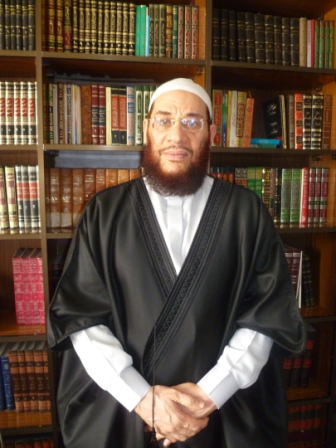
With this caveat I would like to introduce a man with a remarkable history, Sheikh Osama al-Qusi. There is a third category of religious leader, that of the innocent. With a heart given to the study of God, such a man may be naïve in the ways of the world. It is in this light I experienced Sheikh al-Qusi, following the lead of his testimony. The proper rendering of his life may be possible through further experience, but is known ultimately only to God.
Sheikh al-Qusi was born in 1954 in Cairo, after his father moved from their family home in Qusa, from which his name is derived, a village thirty kilometers outside of Luxor. He enrolled in the faculty of medicine at Ain Shams University, but instead of diligently pursuing his studies, he became attracted to the religious life of the campus.
These were the 1970s, and Egypt was undergoing a religious indoctrination following the ascent of Anwar al-Sadat to the presidency. In an effort to solidify his policy to open up Egypt to Western capitalism, he appealed to religion to counter the socialist ideology of his predecessor, Gamal Abdel Nasser. Sadat gave wide space for Islamists to operate, and one of their chief fields was the university campus. Osama al-Qusi was swept up in their enthusiasm.
He had never seen this type of Muslim before, one so dedicated and public in his faith. Their claim of persecution added to their aura, as many spoke of previous imprisonments under Nasser. Furthermore, as some of their literature remained banned, the nature of a young man almost always makes the forbidden attractive. The works of Sayyid Qutb were handwritten on notes of paper and passed around campus. His sermons on cassette tape were distributed likewise. Osama al-Qusi began to be radicalized, without even knowing it.
Sheikh al-Qusi makes the case that to him at this time, these campus evangelists were simply Muslims, albeit abnormally active in their faith. He later learned that they belonged to ‘groups’, and these groups were many. Among them was the Muslim Brotherhood, but to these were added others like Islamic Jihad and other more militant associations, but all of which were political. In time he began to sense something not quite right, especially given the multiplicity of groups. If all of these claimed to be Muslims, dedicated more than the average Egyptian, which group represented Islam correctly?
By now Osama al-Qusi had lost almost all interest in medicine, wishing to discover correct religion. In 1978 he decided to take the umra pilgrimage to Mecca, but instead of staying the permitted two weeks or so, overstayed his visa and studied Islam. This was not in any of the approved universities, however; rather, he moved from mosque to mosque under individual Islamic scholars. He lived the simplest of lives, working odd jobs just to make enough money to survive. He poured himself into the study of Islamic texts, especially the hadith, and eventually found himself in the company of a certain group of students, likewise dedicated.
By this time Osama al-Qusi came to believe that all groupings of Muslims were of deviant Islamic practice. He became convinced that Islam was practiced best in devout imitation of Muhammad and his early companions, the followers of these companions, and those who came after them. These three generations of Muslims knew Islam best, recorded the traditions as found in the hadith, and crafted the sharia law schools still foundational today. This is the core belief of what is known as Salafism, though in Saudi Arabia, it is interpreted largely through a Wahabist lens.
The students surrounding al-Qusi, however, had a different lens. These were influenced by the idea of the coming mehdi, a messiah-like figure who would appear at the end of the world. They were led by a man named Juhayman al-Utaybi, who would later lead his group to storm the Ka’aba of Mecca, the holy sanctuary visited by millions of Muslims each year. In 1979 his siege was violently put down, though not before shaking the Muslim world through this provocative action.
Osama al-Qusi was not among them, and states he knew nothing of their political/eschatological conspiracy. He did study with them of their unique interpretations, and wondered if their faith was too political, or if they had grievances with the House of Saud. In any case, he was expelled from Saudi Arabia a few months before their campaign began.
At that time the students attracted the attention of the authorities, who arrested them en masse. When the Grand Mufti, Sheikh Abdul Aziz ibn al-Baz, examined them after a month and a half in prison, he believed them to be harmless, and allowed them to be released. Osama al-Qusi, however, as a foreigner was forced back to Egypt as he had no legal residence permit. His personal teacher, though not a ringleader of the group, was also fingered as a foreigner, having come from Yemen.
This teacher was Sheikh Muqbil ibn Hadi al-Wada’i. Though a foreigner, he did possess a legal residence permit, having enrolled in the Islamic University of Medina obtaining a degree in the science of hadith, and in pursuit of his Masters degree. Upon intervention of Sheikh ibn al-Baz, he was allowed time to complete his Masters, passing with high marks, and then immediately returned to his native country.
Back in Egypt, Osama al-Qusi thought only of returning to his religious studies under the tutelage of Sheikh Muqbil. Yet he desired also to marry, and left for Yemen with his new wife, praising God that he did not wind up involved in the scandal of the Ka’aba. Little did he know he was leaving just in time to avoid another.
Following his marriage his family was disappointed that he was not returning to his medical studies. Osama al-Qusi, however, was still quite extremist in his thought. Though he had learned to dismiss the varieties of Muslim groups as contrary to Islamic teaching, through his uncle his name was passed on as one qualified to join in the band of Abdullah al-Samawi, a lesser influential group dedicated to greater Islamization of society. He listened to the sermons of Abdel Hamid al-Kishk and Hafez Salama, and still considered strongly the ideas of Sayyid Qutb. For Qutb, the concept of a nation was paganism, and the flag of a nation was an idol. Furthermore, given the mixing of sexes university study was impossible, and besides, al-Qusi’s only interest was religion.
During that time female relatives from his wife’s family were approached by two suitors from the army. Osama al-Qusi found them to be pleasant people, but they discussed at length whether or not service in the military was fitting for a Muslim. In the end, he convinced one to discharge, while the other remained. Shortly thereafter, both became his in-laws.
In 1979 Osama al-Qusi left for Yemen, found Sheikh Muqbil, and settled into the very simplistic life of a devoted Islamic student. Sheikh Muqbil had several students, for whom he provided out of his own means. Yemen was a very poor country, and the disciples lived with their teacher in a mud brick compound with a garden. Sheikh Muqbil received a small stipend for his teaching from Saudi Arabia. He and his students also received in kind gifts for teaching the village children. Teaching during the day, learning at night, eating from the garden, Osama al-Qusi, his wife, and all lived in near subsistence.
From 1979 to 1985 Osama al-Qusi remained in Yemen, never once returning to Egypt. He arrived on a student visa, which permitted his stay for one year, but again overstayed due to the joy of his religious learning. In 1981, however, he learned of another reason why it might be best to stay put.
In May of that year President Sadat conducted widespread arrests of his political opponents. Over 1500 people were arrested for being part of what were deemed ‘treasonous’ groups. These came from all sectors of society, and included intellectuals such as Mohamed Hassanain Haykal. The vast majority, though, were Islamists, and Osama al-Qusi was informed his name was on the list, due to his nominal association with Abdullah al-Samawi. The police visited his parents’ home, but they convinced them he was in Yemen. They also urged him to stay, for the time being.
Five months later Osama al-Qusi learned that the sweep was not wide enough. President Sadat was assassinated during a military parade; listening to the news on a simple radio, he was shocked to hear the names of his assailants. Khaled Ahmed Shawki al-Islamboly, the chief assassin, was the husband of his wife’s cousin and the one who remained in the army, while Abdel Hamid Abdel Salam Abdel-Al Ali was the one he convinced to leave.
Osama al-Qusi asked God’s mercy on Sadat, who had now reaped the fruit of his error in letting loose the Islamist current earlier in his presidency. He also praised God that he was kept from involvement in such error.
Meanwhile in Yemen, the group of Sheikh Muqbil began running afoul of the local Muslim Brotherhood. To help ease financial pressures the sheikh tried to gain employment for his students in the nearby universities. This effort, however, was denied administratively by Brotherhood members who occupied key posts. Osama al-Qusi explained that Yemen depends on Saudi Arabia for substantial economic support, and would naturally lean toward the Salafi/Wahabi interpretation of Islam, as opposed to the politics of the Muslim Brotherhood. Nevertheless, as the Brotherhood does elsewhere, members seek each other out, trying to infiltrate key positions in society. They seek to rule; and this, not for the good of the nation, but for their own good.
Having established themselves in university administration, the Muslim Brotherhood frustrated Sheikh Muqbil’s attempts to establish his students on firm financial footing. Soon thereafter came another opportunity, though far less suitable to the desires of Osama al-Qusi, devoted disciple.
Sheikh Muqbil’s reputation was growing, and from thirty kilometers away came leaders from a nearby village asking for a teacher. Three times Osama al-Qusi refused his sheikh, but in the end he acceded. He knew the challenges Sheikh Muqbil endured in providing for his disciples, but lamented the distance that would be between them. In those days due to Yemen’s poor infrastructure, the thirty kilometers meant an hour and a half journey by car.
During this period Osama al-Qusi finally succeeded in gaining basic financial independence, though through a circuitous route. After getting established in the village Sheikh Muqbil introduced him to the Yemen Minister of Islamic Endowments, who appointed him as village imam and provided him with a salary. Sheikh Muqbil would return on regular visits, but eventually, Sheikh Osama al-Qusi became beloved by the people of his village.
This was fortunate, as the Muslim Brotherhood proceeded to cause more trouble. Though unable to cancel his contract with the ministry, they interfered and forced his transfer to another village, much further away. For Sheikh Osama, he was loathe to be at such distance from his teacher, which would make his itinerant visits impossible. Furthermore, the villagers came to love their sheikh, and did not want him to leave.
Sheikh Osama therefore refused this assignment, which led to the loss of his contract with the ministry. The villagers agreed to provide for their sheikh, but this meant a return to the simple living off the land which he had grown accustomed to on first arrival. Soon thereafter, however, the village mayor was able to make amends. He traveled to visit the Grand Mufti of Saudi Arabia, Sheikh ibn al-Baz, and arranged for Sheikh Osama to receive a stipend directly from him. It is admitted that the competition between Salafis and the Muslim Brotherhood played a role in the mufti’s support.
Sheikh Osama’s life continued so on until 1985. Though he loved his life and learning, the absence from Egypt was especially difficult on his wife. Towards the end her psychological difficulties resulted in the semi-paralysis of half her face. Hoping that the political difficulties in Egypt had subsided, they returned home. Passing through Suez Sheikh Osama was interrogated at the police station, but was allowed to proceed without incident.
He settled with his wife in the Ain Shams area of Cairo, wishing to stay in the path of religion but wishing also to avoid regular employment which might curtail his time. Before too long he agreed with the imam of the nearest mosque to provide evening lessons, and as his reputation spread, he began teaching in more and more locations.
In terms of finance, however, life was more complicated. The situation was stable since he saved most of the money he had earned in Yemen. This he used to begin small projects – he bought a taxi, he bought a microbus, and was a managing partner in a religious publishing house – but none succeeded. Sheikh Osama readily admits he is not a businessman, nor did anyone in his family growing up have any business sense; they were all scholars. He managed as best he could and provided for his family, but there was little money in religion.
Certainly this was true of the religion he espoused. Upon his return to Egypt he sought out others of the Salafi trend, but found even the word ‘Salafi’ was not widely known. Only in Alexandria was there a following, but he found these too closely related to the Muslim Brotherhood. They called themselves Salafis since Sayyid Qutb had used the word, as indeed the Brotherhood does as well. Yet while they claim to be Salafi they also admit they follow the path of the Brotherhood. Sheikh Osama did not find a home with them.
Neither did he find common cause with other Muslim trends in Egypt, and grew increasingly frustrated. By 1996, though he was teaching regularly about Salafism in the mosques of Ain Shams, he felt isolated and alone in society. Everywhere he looked was bid’a – innovation – which went against the practices of the first three generations of Muslims. He feared especially for his children, finding their Islamic education in schools to be insufficient. Eventually he made the decision to withdraw entirely.
With basic savings from his earlier projects Sheikh Osama bought a small farm on the Cairo-Alexandria desert road, and purposed to live off the land with his family, homeschooling his children. He maintained his weekend teaching in Ain Shams, but otherwise lived in seclusion. Like all his business enterprises, the farm eventually failed.
It was the family moral failure, however, that brought Sheikh Osama back to his senses. In 1998 his oldest son, at age 13, led the family rebellion against him. ‘Why are we different? Why don’t I go to school? Why don’t I have any friends?’
It was this crisis that helped make Sheikh Osama into the man he is today. He realized he had been living his whole life ‘in the book’. Now, he knew he must live life in light of reality, ‘by the book’. Religion is life, and God’s ways must be known. Yet these ideals cannot sustain life on their own; they must be lived out, taught, and practiced, so that society is transformed to enable life by the ideal. Cursing its failures to reach this goal, however, only lead to extremism.
Sheikh Osama came to realize that as he preached the Salafi way, he must also preach against the extremism practices by so many of his community. Extremism is based on hatred and rejection of the other. Its natural extension is terrorism, which is an attack upon the other, either in word or deed.
Pursuing that path, Sheikh Osama nearly lost his family. Oddly enough, when abandoning the path, he wound up in prison for the second time.
He sold the farm and moved back to Ain Shams, with some funds but needing work. He immediately began teaching in earnest, and associated himself with an effort to build a new mosque in Ain Shams. The land upon which the mosque would be built was zoned agricultural, however, and a resident of the community raised issue against it.
Ain Shams at that time was known as an area deeply ingrained in extremist Islamic thought. He, however, enjoyed a good reputation with the authorities, given that he did not preach against the government. All the same, Egypt was ruled by the emergency law, and once arrested over the illegal mosque construction, he was bound for prison. The policemen responsible apologized, and they even made it possible for him to receive favorable reviews within prison, so that he was able to leave after only two months. He personally was not mistreated, but admits the horrible condition many prisoners endured. Yet upon his release his reputation in the area suffered a minor blow, as he was deemed to have received preferential treatment. He became known in the area, falsely he claims, as belonging to the hated state security apparatus.
Yet among Salafi tendencies his reputation continued to grow, and was about to explode, stumbling upon the best opportunity he had to date. Finally, he could earn money through religion.
Proving the corruption endemic to Egypt, the ‘agricultural’ land purposed for the mosque was eventually turned into a Suzanne Mubarak Public Library. He, however, became established at another mosque, becoming its imam. There was no salary from the Ministry of Islamic Endowments, however, as the Mohamedian Guidance Mosque, as it was named, was not registered.
Today, after lengthy and ongoing campaigns, the Ministry of Islamic Endowments claims 95% of all Egyptian mosques are registered and under its supervision. This has been done in response to extremism, which has issued so frequently from small community mosques beyond the reach of the more moderate government license. Sheikh al-Qusi’s mosque remains unregistered, but the government gave greater space to Salafi mosques, as they tended to be nonpolitical, not threatening the legitimacy of the state.
Yet this mosque, through Sheikh al-Qusi, began to attract several foreign Muslims. One of these was a Canadian of Jamaican descent, who invited Sheikh Osama to preach for one week at an Islamic conference in his home country. He did, and as fame often leads to fame, he began to receive further invitations, including in the US, Europe, and the UK. It was not unusual for him to receive $1000 for a week of work. From 1998-2001, he made over forty such trips.
2001, of course, is the year of September 11, and though Sheikh al-Qusi does not believe his name to be on any blacklists, he deemed it wise to cease his international travel. This decision was confirmed as he watched numbers of Muslims held in detention in Guantanamo Bay, and furthermore when he learned that the ‘shoe bomber’ Richard Reid, attended one of the mosques in Britain at which he had delivered lectures. Since 2001, Sheikh Osama has remained in Egypt.
Also, in 2001, his teacher Sheikh Muqbil passed away. Today, Sheikh Muqbil is considered the founders of one of the most influential Salafi schools in the world, located in Dammaj, Yemen, not far from the Saudi border. Sheikh Muqbil studied directly under Sheikh Mohamed ibn al-Uthaymeen, and attended lectures of Sheikh ibn al-Baz and Sheikh al-Albani. These three are considered the chief Salafi scholars of contemporary Islam.
Sheikh Muqbil has been clear in rejecting political Islam such as of the Muslim Brotherhood, as well as terrorism, such as adopted by al-Qaeda. He did receive envoys from Osama bin Laden, seeking his help in contacting the tribal leaders of Yemen to purchase weapons and spread influence. He rejected them, however, and told them never to visit him again, labeling bin Laden as the head of all religious ignorance. Nevertheless, several detainees in Guantanamo Bay are held specifically due to their association with Sheikh Muqbil, who was deemed to be a supporter of the Taliban and armed jihad.
Sheikh Osama, meanwhile, needed to find another source of income. From 2001-2005, he relied on donations from wealthy Egyptian businessmen who supported his Salafi preaching. Eventually, however, he found that the reception of money often brought along with it additional pressures. On one occasion a businessman offered to build Sheikh Osama a mosque, provided that he would always come and give lessons. This was easy to agree with, as he regularly provided lessons in his itinerant ministry. Sheikh Osama enjoyed the support of this businessman for a good while, up until the interference of state security demanded he stop moving about and remain in one mosque only. The businessman felt betrayed, but Sheikh Osama argued there was nothing he could do. Their relationship deteriorated thereafter.
Such experiences convinced Sheikh Osama to once more seek to rely on himself for income. Re-entering the world more and more, he decided to return to university to complete his medical studies and in 2008 received his degree. He is now a medical practitioner, though he does not make much money from this field. Instead, he offers free medical care from his mosque two days a week, and hopes this may develop eventually a separate paid clientele.
He has also begun studying for a psychology degree, but closer to his heart is his religious education – now pursued through the High Institute of Islamic Studies run by the Ministry of Higher Education. Upon graduation he will receive a diploma, which will be the first official certificate in religion he has ever possessed.
Sheikh Osama has currently become newsworthy for the promotion of his relatively liberal Salafi viewpoints. While many Islamists are calling for an Islamic state, Sheikh Osama believes that anyone, even a Copt, should be able to become president, as it is an administrative position, not a spiritual one. Though he maintains the long beard characteristic of Salafis, he now feels free to wear contemporary clothing, eschewing the long, white robe donned by most of his co-religionists. He speaks frequently on Arabic satellite news programs, though apart from al-Arabiya and ART, who gave him $100, they do not pay anything.
The big money in religion comes from traditional Salafi satellite programming, such as al-Rahma and al-Nas, from which Egypt’s major Salafi preachers have become known. Sheikh Osama has no place here, however, as his line of thought differs considerably from what he believes to be the extremism of these contemporaries.
Sheikh Osama now lives in a comfortable though not luxurious apartment in Nasr City, a middle-to-upper class neighborhood of Cairo, not far from one of the largest malls in Egypt, City Stars. He continues to follow the way of religion, but has done well enough with his money earned to carve out an existence honorable to his family. In all interactions with him, he appears to be an honorable man.
At the same time, so many questions surround him. How is it possible to have been in association with so many violent, extremist individuals, and yet maintain innocence about knowing their true intentions?
Sheikh Osama does admit his previous extremism, reformed gradually over many years. Yet could he possibly have been ignorant of all he professes? Furthermore, though he was completely open about the sources of his money at each stage in his life, short of opening up his checkbook, can it be believed he provided for his family over the past thirty years on failed businesses, in addition to greater sums earned in Yemen and through his travels?
Currently, what is to be made of Sheikh Osama’s Salafi liberalism? Is it a conscious decision in light of Egypt’s changing times? Or could it be an effort to put a modern, acceptable face on a still ultraconservative ideology? Or, by the hard edge of experience and reality has he truly experienced a personal reformation?
It is impossible to say at this point in my relationship with him, which has been thoroughly enjoyed. I currently lean toward the sincerity of his testimony, which was shared with openness and humility. Above all, he struck me as kind.
This text is not the place to examine the Salafi question, its impact on Egypt, or its stance toward Christians. It is not to examine if wholesale reform can come to the movement, if this is necessary, or how it is to be achieved. Perhaps some of these topics will be addressed through subsequent interviews.
One thing that was remarkable from Sheikh Osama’s testimony, however, was the impact of family. The anecdote of his own was given above, and the share it had in moving him away from extremism. Yet he also mentioned his father and mother, with their Upper Egyptian values of acceptance and morality. However much he was indoctrinated in extremist theology, and however much he espouses Salafism today, he notes he was inoculated against violence through proper, traditional upbringing.
Societies are liable to change, for better or for worse. There is a sentiment current in Egypt these days that may tend to give rise to extremism, in any number of directions. The best antidote to protect Egypt may simply be to be Egyptian. These remain the vast majority; may all ongoing political developments give rise to their great voice. May they be the ones to govern Egypt.
Click here for an interview with al-Qusi: On the Caliphate, Conversion, and Brushing your Teeth, and here for his explanation on the science of Islamic traditions.
Much of the world has been aghast at news coming out of Syria, as the demonstrations now common in much of the Arab world have been brutally suppressed. Government sources, however, claim they are fighting an armed insurgency. Media, notably, has been blocked from the country, lending credibility to the idea that the government has something to hide.
We have been in Jordan for a short visit, and while here I was able to meet with a Syrian Christian resident in Amman. She is originally from Allepo, and was able to provide some of her perspective on the matter. It is only one opinion, of course, but provides a local perspective that goes beyond claims and counter-claims. For a good journalistic account of Syria, here is a link from The Economist. Here is another account from Christianity Today, focusing on the Syrian Christian perspective. It will resemble much of what follows.
The source, who preferred not to be named, will be called Samiya. She did not believe she was under any suspicion, but was planning a trip to Syria to take care of some administrative matters, and thought best to keep her name out of the news.
In short, Samiya believed both accounts to be true. The Syrian people have been steadfast in their peaceful protest for national reform. The government has been countering this group with violent repression, but as in protests elsewhere, they carry on.
At the same time, certain groups within Syria have undertaken violent militia action against the regime, and have mixed in with the protestors. These have been putting certain villages under pressure, and the Syrian army has had several bloody encounters with them. Samiya believed Jisr al-Sughur, on the Turkey border not far from Aleppo, fell into this category.
Within this struggle, she believed, lies were being told on both sides. Certainly the government is not being honest concerning its suppression of peaceful protest, using the militias as an excuse for further crackdown. Yet the tales of horror have also been exaggerated by the reform party. Several weeks ago a terrible tale spread on the internet about a boy who had died in the hands of security, revealing severe torture and mutilation of his body. Samiya, however, heard statements from relatives in the boy’s family, stating that while the boy did die at the hands of security, the torture marks were administered after he was handed over to his family. They (or those within the violent opposition) desecrated him in an effort to rally more of the population against the regime.
Samiya believed these militia groups, and the families associated with them, were hardline Sunni/Salafi parties funded and encouraged by Saudi Arabia. Knowing Syria to be a key ally of Iran, Saudi Arabia would greatly wish to see the fall of the regime. In the aftermath, the minority Shia Alawite autocratic rule would give way to some sort of Sunni governance. This would also likely lead to an end of funding of the Hizbollah party in Lebanon; interestingly, the head of Hizbollah is among the only personalities to rally to the defense of the regime.
Though they have not rallied to the defense, Samiya understands Israel, oddly enough, to quietly resist the fall of the regime. Though Syrian political rhetoric is strongly anti-Israeli, there has been almost no conflict on Israel’s northern border during the Bashar al-Assad presidency. While Syria does support Hizbollah, Samiya claimed this was to create a resistance force on the border against possible Israeli expansion. Lebanon is a weak government, and Hizbollah makes difficult any future advance into Beirut – which Israel has attacked before. From there, it is only a few dozen kilometers to Damascus. In any case, while Israel considers Hizbollah a thorn in its side, it fears more greatly the chaos which might prevail should the regime fall. As with worries in Egypt, better the enemy you know, than the one you don’t.
Samiya believed that one of the reasons for Western hesitation in Syria reflects the above difference in perspective. Many believe that politics in the Middle East is orchestrated around the US-Saudi Arabia-Israel alliance. Within this set-up, Egypt is largely a pawn (though possibly now seeking more independent foreign policy), Turkey is an emerging player, and Iran is the enemy. During the Egyptian revolution the US was quick to call for the fall of Mubarak, trusting that Egypt would remain within this overall structure.
Yet with Syria, the United States finds itself between two allies. Saudi Arabia would like the Iranian ally to fall, while Israel is reticent. American equivocation can be explained by its middle position between the two. It may well be the future of Syria lies mainly in the hands of the Assad family and the protestors against it. But it also may be the future will be shaped by the direction the United States eventually leans.
As for the actual interaction between the Assad family and the protestors, Samiya believed that Bashar was not naturally a butcher, and was not the prime mover behind the repression. Rather, she believed that however he may desire to reform (though he has had several years to do so previously), family military and business forces cannot contemplate losing the primary role the Alawites maintain in society. In this repression, then, Bashar is complicit, but also too weak to do anything otherwise.
Finally, Samiya spoke of the Christian participation in the demonstrations. They have been present, but many Christians have been reluctant to speak against the regime. The Alawite minority has ruled Syria by co-opting other minority groups, including Christians, and backing the dominant Sunni upper-to-middle class. Some fear there could be sectarian war against Alawites, Christians, and Druze, should chaos grip the state while a power vacuum sorts itself out.
Samiya played down this possibility, but did state her personal preference for the regime to stay while carrying out significant reforms that would change the system over time, though democratic participation. The regime is brutal, and Samiya could not understand why more Christians, on humanitarian grounds, did not enroll in greater numbers within the peaceful demonstrations. Reform is absolutely necessary, but many Christians are standing on the sidelines.
To repeat the earlier warning, it should be understood that Samiya is only a source – outside of the country at that – and does not fully understand what is happening within Syria. Her perspective, however, helps put together information that come through piecemeal in the headlines. In truth, a jigsaw puzzle has only one correct solution, but until all pieces are collected, multiple constructed realities are possible.
May God grant peace to the Syrian people and bring about a just resolution with as little bloodshed as possible. As it is already too late, may forgiveness and grace characterize all parties in the days to come.
The pace of popular protest and change in the Middle East has been bewildering. In such cases limited information, new realities, and subtle biases make the resort to conspiracy theory understandable. Tunisia caught everyone by surprise. When the demonstrations erupted in Egypt suddenly a connection was seen, and widely feared. Who was running the show? What forces were at work?
We had the privilege of being eyewitnesses to much of what took place in Egypt, and we can state that if there were greater forces at work, we did not see them. But, this is the nature of conspiracy theory; it is below the surface, unseen.
Conspiracy theories work off of truths, and therefore have merit. But they also tend to look for unified solutions, and I would argue this often betrays them. Life is complex; multiple forces are at work, a grand narrative is near impossible.
Yet while due to our experiences I believe we have a decent handle on the complexity of Egypt, the situation in Bahrain is beyond me. The Egyptian English website of the popular independent newspaper al-Masry al-Youm carries two articles on the situation there. The first is an analysis of the return of ‘stability’ as the protests have largely come to a halt. It seems that security forces have succeeded in driving back the momentum of the demonstrators, and may be undertaking a quiet crackdown against key leaders.
The second is an interview with Dr. Abdullatif al-Mahmood, the spokesman for the National Unity Gathering proposed by the government to lead dialogue between oppositional forces. The situation has certainly moved past dialogue as a solution, but some of his words may betray his status as a neutral, trusted interlocutor.
The problem with the Shias is that most of them have no loyalty to the homeland. Their loyalty to the sect and its plots comes first. How can we trust them when they put up pictures of Khomeini everywhere they go when he was the military leader of Iran, as well as the religious and secular political leader? How can the state trust them?
A quick primer on the issues at stake: Bahrain has been ruled by a Sunni monarchy for the past two hundred years, supported by Saudi Arabia and other Gulf states. It rules, however, over a majority Shia population. I am unable to say if its rule has been just, or if it has been successful in developing a sense of national unity. Nor am I able to say if the Shia population is loyal to Iran, or if there has been Iranian interference in Bahraini sovereignty. In his interview Dr. al-Mahmood raises interesting points, which are worthy for consideration.
Yet now we run into the problem of lack of familiarity and information. Can his words be trusted? Within the article he makes this startling accusation:
This is all within the framework of a US plan to create a vast Shia state loyal to Iran in the Gulf and in Iraq.
Al-Masry: How is the US aiming for the region to become governed by Shias loyal to Iran, despite the hostility between the two countries?
Al-Mahmood: This is not true. The truth is that there is no hostility between Iran and the US. There are mutual interests and roles between the two. International relations are governed by interests and not by good or bad relations.
And the conspiracy theory deepens. But it deepens in an unexpected way. Not only is this particular uprising (at least) directed by Iran, it is orchestrated in conjunction with the United States.
Before outright dismissal, where might the truth in such an assertion lie? The United States’ interest lies firmly, if uneasily, with Saudi Arabia as the dominant regional power, if only for the open pipeline of oil supplies. Moreover, media coverage of Bahraini protests, from both al-Jazeera and CNN, has been significantly less than what was given to Egypt. Furthermore, US administration comments took President Mubarak harshly to task, whereas pressure on Bahrain’s monarchy has not moved significantly beyond the call to respect human rights. When Gulf Cooperation Council forces landed in Bahrain to help pacify the situation, the US hardly blinked. This conveys the conventional wisdom in Bahrain. Saudi interests dominate, especially since it has a minority population of Shia, and the first domino must not fall. The US will back Saudi Arabia, especially in curbing an Iranian urge to increase its regional influence.
Where then is the deeper, conspiratorial narrative? If it exists, it could go like this. In this part of the world I have heard just enough US-Iran rumors as well as assumed Western anti-Islamic biases to see a logic:
If united, the Arab world, or, variously constructed, the Islamic world could be a powerful competition to Western hegemony. Following World War I and the abolition of the Ottoman Caliphate, the Western powers, namely Britain and France, divided the region into little nation-states. These were reared on the principles of nationalism, in order to give them separate identities and keep them squabbling among themselves. The British, it is said, also nurtured radical Islamic ideologies (Muslim Brotherhood in Egypt and Wahabbism in Saudi Arabia) to further divide internal populations along religious lines. Extending the thought, the state of Israel was also planted to be a thorn in the side of the Arab world.
The biggest fault line in the Middle East, however, is the Sunni-Shia divide. (I have even heard one voice saying that modern Shiism itself is a British invention.) 90% of the world’s Muslims are Sunni, and the remaining 10% is concentrated in Iran and Iraq, with pockets elsewhere such as Lebanon, Syria, and the Arabian Peninsula. Shia Islam believes that Islamic leadership should remain within the family of Muhammad, whereas Sunni Islam developed a political theology that was more egalitarian, or, interpreted differently, justified obedience to whoever usurped leadership in the Muslim community. At one point in history a minority Shia power emerged from Tunisia and ruled much of the Arab Sunni population from Egypt. Today, it is minority Sunni governments which rule over Shia populations in Bahrain, and formerly, in Saddam-era Iraq and previously.
Returning to the conspiracy theory, then, in terms of good relations with the Islamic world and unhampered flow of oil, the US would do well to favor Sunni nations such as Saudi Arabia. Yet, if the US inherits what was (if indeed it was) British policy of divide-and-conquer, under-the-table arrangements to strengthen the minority Shia and promote Iranian interests can make sense too. After all, Iran has abundant petrol resources also, as does Bahrain.
Crazy, you might say? Isn’t Iran ruled by a maniacal despot bent on the destruction of Israel and the Great Satan of America? It certainly seems so. Does anyone believe Iran is not seeking nuclear weapons, despite their statements to the contrary? But, in the Middle East, there has often been a vast difference between public posturing and private sentiment. Could it not be so in the US as well?
Egypt is seen as a bulwark in defense of the Israeli state, being a signatory to the Camp David Accords. With the fall of Mubarak many worry that an anti-Israeli popular sentiment may undue this historic peace. Yet what is often not realized is that all the while Mubarak reaped the benefits of US support upon which preservation of peace hinged, his administration allowed if not promoted the popular sentiment against normalization of the Egyptian-Israeli relationship. The same can possibly also be seen in Syria, where President Assad’s popularity is supported by a strong anti-Israel rhetoric. Yet some analysis sees Israel currently worried if the ongoing demonstrations there unseat this ‘enemy’.
Could the official and popular sentiment in the United States against Iran also be manufactured? If so, it would provide the administration cover to maintain good ties with Saudi Arabia while it fans the flames of Shia-Sunni conflict, laying the groundwork in case a formal shift in ties to Iran ever becomes necessary. Such a scenario is easy to imagine: Saudi Arabians have links to al-Qaeda, and the nation has little semblance of democracy or respect for human rights. Iran, meanwhile, is also undergoing popular demonstrations. Should these topple Ahmedinijad, or at the least lead to a coup d’etat, might we find among the Persians a better civilizational friend? Would not the virtues of their people compare favorably to the (now labeled) backward Bedouin terrorists and debauched sheikhs of Saudi Arabia?
I am not arguing for the conspiracy theory by any means. But all conspiracy theories, at some level, make sense. What I am putting forward, especially as it concerns Bahrain, is that I don’t know much of anything. This ignorance, plus a little knowledge, is fertile ground for conspiracy. But just because you’re paranoid, doesn’t mean they’re not after you, either.
Unfortunately, this is where our world is these days. In time the confusion will dissipate and we will get used to the new realities, becoming comfortable in our illusion of understanding. Yet paradoxically, it is understanding that is vitally necessary. What I have written above is a narrative current in the Middle East. I hope I have carried it forward in a manner respecting its plausibility. Why? Not so that we might lend it credence, but so that we understand and better respect those who hold to it. They are struggling to make sense of the rapid pace of change as much as we are.
Or, they may be manipulators. If so, better understanding will help us to navigate a tricky world of power and self-interest. Those committed to good must be able to see clearly through deceit and ill motivation. Yet they themselves must not yield to the power of an overarching conspiracy theory, neglecting the complexity of each situation. Where demonstrated manipulation exists, it must be rejected. Yet they themselves must know their own heart, that in their commitment to good they are often tempted similarly to smaller manipulations. At least, they are believed smaller. Are others any different?
Among the demonstrators in Bahrain are human rights activists who appear to be committed to democracy and liberal principles of government. Perhaps they are not, or perhaps these are being manipulated by others with more sinister motivations. It is hard to know the right from the wrong. May we have humility in all we profess, conviction to profess what is good, and hope that the profession of good may be mirrored even by those of whom we doubt. Above all, perhaps faith is necessary, that God will sort out our human mess, and redeem every impulse of good, so that all intertwine in a mosaic of his good, just, and eternal principles. May we aid, and not stand in the way.



 Jayson Casper