Categories
Africa Christianity Today Published Articles

More Porridge? Senegal Protestants Debate Exchanging Holiday Foods with Muslims

Image: John Wessels / Contributor / Getty

Muslims in Senegal love to share meat. The country’s Christians share porridge.

Ending their monthlong Ramadan fast this week, the faithful in the Muslim-majority West African nation invited Christian friends to celebrate Korite (Eid al-Fitr), focus on forgiveness and reconciliation, and share a wholesome meal of chicken.

A little over two months later during Tabaski (Eid al-Adha), the mutton from sheep slaughtered in commemoration of Abraham’s sacrificing of his son will likewise be distributed to Christian neighbors. (Both feasts follow the lunar calendar and change dates each year.)

But for Christians, the sign of interfaith unity is the porridge-like ngalakh.

“Senegal is a country of terranga—‘hospitality’—and the sense of sharing is very high,” said Mignane Ndour, vice president of the Assemblies of God churches in Senegal. “Porridge has become our means of strengthening relations between Christians and Muslims.”

Sources told CT the holiday treat is highly anticipated.

In the local language, ngalakh means “to make porridge,” and the chilled dessert marks the end of Lent. Between 3 and 5 percent of Senegal’s 18 million people are Christians—the majority Catholic—and families gather to prepare the Easter fare on Good Friday.

Made from peanut cream and monkey bread (the fruit of the famed baobab tree), these core ngalakh ingredients are soaked in water for over an hour before adding the millet flour necessary to thicken the paste. It is then variously seasoned with nutmeg, orange blossom, pineapple, coconut, or raisins.

Tangy and sweet yet savory, the porridge gets its brownish color from the peanut cream.

The Christian community in Senegal traces its origin back to the 15th-century arrival of the Portuguese. And Jacques Seck, a Catholic priest in the capital of Dakar, stated that ngalakh developed during the period of French colonialism as mulatto servant women prepared their masters a meatless meal during the Lenten fast.

Ndour said that over time the tradition extended to Protestants as well.

Its believers numbering only in the thousands, the Protestant Church of Senegal was founded in 1863, becoming more visible in the 1930s. Lutherans came in the 1970s and are the second-largest Christian denomination today, alongside Methodists, Presbyterians, and newer evangelical groups.

But for some, ngalakh is controversial.

“Evangelicals do not share this tradition,” said Pierre Teixeira, editor in chief of Yeesu Le Journal, an interdenominational monthly publication. “But the rare churches that practice it broadcast a film on the gospel before distribution.”

Teixeira, a former Baptist pastor, grew up in a…

This article was originally published at Christianity Today, on April 11, 2024. Please click here to read the full text.
Categories
Arab West Report Middle East Published Articles

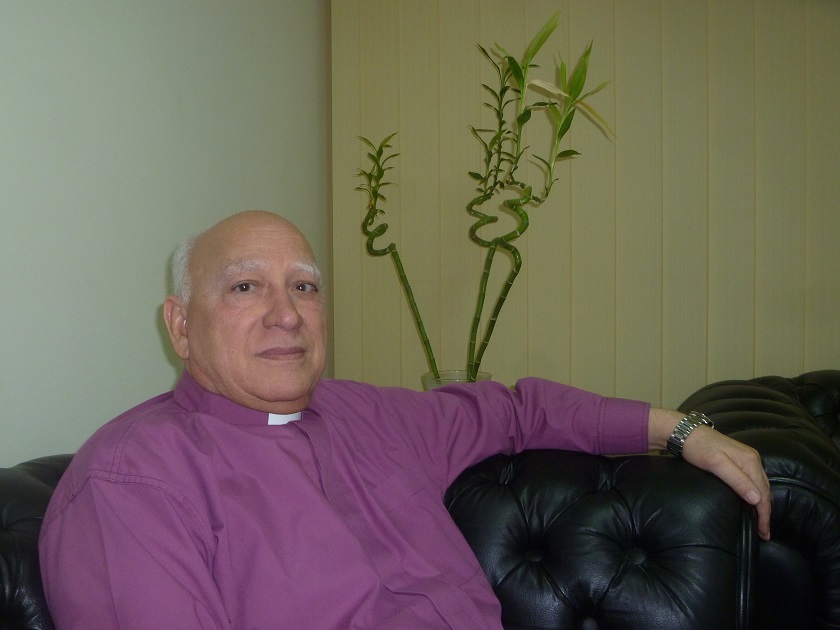
Safwat al-Baiady: Negotiating Religion in the Constitutional Committee

Safwat al-Baiady
Safwat al-Baiady

From my recent article at Arab West Report, continuing a series of interviews with members of Egypt’s constitutional Committee of Fifty. Safwat al-Baiady is the head of the Protestant Churches of Egypt, and lent his experience in how the committee’s religious members came to agreement on contentious articles. Here is his perspective on Article 3, giving Christians and Jews the right to refer to their religious laws in personal affairs and religious organization:

But one part of society that was not represented by the committee, Bayādī stated, were the Baha’īs. He personally argued that Article 3, guaranteeing Christians and Jews the right to govern themselves according to their own religious laws, should be phrased instead for ‘non-Muslims’. This wording won the majority in the ‘fundamentals of the state’ subcommittee on which he served, with ten votes for and only four against – the representatives of the Azhar and the Salafi Nour Party.

But when the subcommittee sent the article to the writing committee, it came back changed. Bayādī said the Azhar’s Muhammad Abd al-Salam, consultant for the Grand Imam Ahmad al-Tayyib, led the charge against this wording. Bayādī said he was very mad, and told the committee their job was in wording, not to change the meaning of the article and throw the majority outside. They responded they were also members of the full committee and had the right to their own ideas. In the end, Bayādī admitted that perhaps the change was wise, as it would not be good to upset the religious elements in society who look to the Azhar and Salafi scholars. After all, they want people to vote for the constitution.

In the committee, Bayādī said, everyone had to compromise, getting something and leaving something. This is the way to resolve differences, and he described an article the church left behind. Having already received a number of useful articles, which will be described below, Bishop Antonious of the Coptic Catholic Church proposed an article granting approval and independence to the Egyptian Council of Churches. Formed after the revolution, the council had been operating but had no official recognition. Majority approval was easy in the subcommittee, but after submission to the writing committee it was removed. Bayādī said that no one opposed early on because it did not concern them as non-Christians. But upon further deliberation committee members felt they had already received enough attention in the constitution. ‘Amr Mūsa pledged his help to get the president to give his official approval, which pleased Bayādī. But what the president gives he can take away, and if in the constitution it would be harder to revoke.

Baiady also described the battle to remove the old Article 219 interpreting sharia law, as well as the article assigning a specific age of childhood. He gives a grammar lesson in Article 64 on establishing places of worship, and describes the shenanigans over securing ‘appropriate representation’ for Christians in the coming parliament. Here is an excerpt on the fight over the term ‘civil’, and to what it should apply:

The final controversy Bayādī described came at the time of the vote itself. The preamble of the constitution declared Egypt to be a modern democratic state with civil governance. This last phrase – civil governance – was very difficult to achieve, and even Bishop Bula, to Bayādī’s surprise and anger, said he did not care for the word ‘civil’. The Salafīs in chief opposed this designation, and the Grand Mufti found the proper compromise when he supported ‘civil governance’. Everyone clapped, and the matter was over.

Or so it seemed. At the final vote Mūsá read ‘civil government’. Muna Dhū al-Fukkār, who was elected as his assistant, spoke out to correct and help him. But the vote took place and passed. According to the official transcript, of which he showed a copy, Mūsá afterwards stated that he misspoke and meant ‘governance’. But the next day, at a dinner function with the army, they received the official copy of the constitution with the words ‘civil government’. Bishop Antonious especially was very upset, saying the text was changed. Some say it doesn’t matter, Bayādī related, for government can mean the whole system of government and not just the ministers. In any case, he does not want to spoil the whole bouquet because of the insertion of one thorn, but he does believe it was meant to be changed, and not simply a mistake, due to opposition to what the mufti proposed.

For this and more, please click here to read the full report at Arab West Report.