Categories
Americas Christianity Today Middle East Published Articles

How Coptic Martyrs—and Migrants—Inform our Christian Faith

Prayers in Deir El-Garnouse Coptic church in Egypt for victims of a terrorist attack: NurPhoto / Contributor / Getty

The Coptic Orthodox church marks time by its martyrs. Its ecclesial calendar begins in AD 284, year 1 Anno Martyrii (Year of the Martyrs), when Emperor Diocletian ascended to the throne and put 800,000 Egyptian Christians to death, according to tradition. The most famous martyr of this era, military leader Saint Maurice, famously defied commands to kill fellow Christians, only for the emperor to murder his legion of over 6,000 soldiers. 

Persecution waned after Constantine declared Christianity the Roman Empire’s official religion. But during the Byzantine era, some emperors imposed the largely European understanding of Christology upon what eventually became an Oriental Orthodox church. Subsequent Islamic rule restored the Coptic patriarch and provided some religious toleration. But it also legally established Christians as second-class citizens, known as dhimmis. The number of martyrs declined, but the Middle Age Mamluk era was particularly violent.

Coptic fortunes fluctuated during the Ottoman and colonial eras, giving way to a modern state that has struggled to define the balance between equal citizenship and a Muslim majority. Among other incidents, in 2000 in the village of Kosheh, rioters killed 20 Copts following a disagreement between a Muslim and a Christian shopkeeper. After the New Year’s Eve service in 2010 in the Mediterranean city of Alexandria, a car bomb outside a church killed 21. And in 2015 in Libya, ISIS beheaded 20 Copts and one Ghanaian Christian.

Fearing the Muslim Brotherhood’s rise following the 2011 Arab Spring, 100,000 Copts fled Egypt to the US, quadrupling the size of the local diaspora. Large communities exist also in Canada, France, and Australia. Egypt ranks No. 40 on Open Doors’ World Watch List of countries where it is hardest to be a Christian. Similar reports and subsequent immigration have contributed to a common assumption that Copts experience constant persecution.

The story is far more nuanced than the flight from religious intolerance, however, says anthropologist Candace Lukasik. Her book, Martyrs and Migrants, represents 24 months of fieldwork among Upper Egyptian Copts, transnational Orthodox clergy, and recent immigrants to the United States. Not only do most Copts emigrate for reasons other than persecution, she told CT; upon arrival they often trade one set of difficulties for another.

Born a Polish Catholic in Buffalo, New York, Lukasik, assistant professor of religion at Mississippi State University, reencountered God in the Coptic Orthodox church and was baptized into its faith in 2012. Through her encounters with the church in Egypt, she believes the Coptic tradition offers tools for all believers to understand and confront the suffering and hardship of everyday life. This interview has been edited and condensed.

Why does the Coptic Orthodox Church emphasize martyrdom?

For Coptic Christians, the blood of martyrs symbolizes both Christ’s triumph over death and an eternal spiritual belonging in the body of Christ. The Coptic calendar notably doesn’t begin with Christ’s birth or the start of Christian Egypt. Instead, it starts with the Era of the Martyrs, commemorating the widespread persecution of Christians under the Roman emperor Diocletian.

During the early Islamic expansion in Egypt, stories of martyrs and persecution became crucial for the Coptic church to maintain its institutional strength as the community’s social structure evolved. And new martyrs are incorporated into the Coptic Orthodox Church’s Synaxarium, or Life of the Saints, and linked to the sacrifice of Christ on the cross. These stories of saints serve as powerful reminders of Coptic identity and reinforce their resilience and distinctiveness, whether under Arab and Islamic rule or other governments.

Coptic Christianity is a perpetually minority tradition, and Copts practice their faith through this orientation. Yet martyrdom not only is more than a symbol to give meaning to suffering and death; it represents a way of life that entails everyday sacrifice and deep connection to God.

What does this sacrifice mean for ordinary Copts?

It takes on different forms depending on social status. A middle-class Copt in Cairo experiences everyday martyrdom quite differently than an agricultural worker in rural Upper Egypt. For the former, Copts may be discriminated against at university, such as in biased grading, or face difficulties at work, such as exclusion from positions of leadership.

For the latter, arguments with a Muslim neighbor…

This article was originally published at Christianity Today, on May 29, 2025. Please click here to read the full text.

Categories
Asia Christianity Today Published Articles

Pakistani Christian Praised for Documenting Blasphemy Victims. Most Are Muslims.

Image: Daniel Berehulak / Staff / Getty

Last month, mob violence took the life of Lazar Masih of Pakistan. Hundreds of Muslims responded with brutality to accusations that the 74-year-old Christian had desecrated a Quran—even before he could be tried under the nation’s blasphemy law.

A year earlier, in a similar blasphemy accusation, thousands of rioters burned hundreds of 400 homes and 26 churches, sending Christian villagers fleeing for safety. The US Commission on International Religious Freedom (USCIRF) has consistently condemned this hostile climate as unjust, including in a special update issued last December.

“The brutal killing of Lazar Masih is an alarming reminder of the dangers of merely being suspected or accused of blasphemy in Pakistan,” stated USCIRF chair Stephen Schneck. “The country’s draconian blasphemy law signals to society that alleged blasphemers deserve severe punishment, which emboldens private individuals and groups to take matters into their own hands. Pakistani authorities must hold those responsible for his death accountable.”

Accountability is rare.

In 2011, Pakistan executed the assassin of Salman Taseer, a former governor outspoken in his criticism of such laws. But from 1994 to 2023, 95 individuals were killed in blasphemy-related extrajudicial attacks, according to data compiled by the Lahore-based Centre for Social Justice (CSJ). Stretching back to 1987, at least 2,449 people have faced legal accusations.

USCIRF has recommended Pakistan be classified as a Country of Particular Concern (CPC) since 2002 for its violations of religious freedom. Created by the 1998 International Religious Freedom Act (IRFA), the independent bipartisan watchdog lobbies US policy to press reform on egregious offenders.

In January, Rashad Hussein, the US ambassador-at-large for international religious freedom, commemorated the 25th anniversary of IRFA by honoring CSJ executive director Peter Jacob as one of nine award recipients for his dedication to the cause.

In particular, he praised CSJ for compiling Pakistan’s only comprehensive database of blasphemy-related arrests, prosecutions, and killings. Last year, 329 suffered under the law, and 7 people were killed before ever reaching the court.

But of the accused, only 11 were Christians. High-profile cases such as Masih’s tend to reach Western and persecution-monitoring media, overlooking the 247 Muslims who were overwhelmingly targeted in a nation that is 97 percent Muslim.

Christians still suffer disproportionately, but Jacob works in defense of all. Since CSJ has started tracking data, 52 percent of accusations have been lodged against Muslims, 32 percent against Ahmadis (a heterodox Islamic offshoot founded by a messiah-like figure), 12 percent against Christians, 2 percent against Hindus, and 2 percent are of unconfirmed identity. Nearly 600 people are currently detained in prison.

With such data, Jacob lobbies the government. In advance of last February’s elections, he won concrete pledges to address minority rights issues in the platforms of three major political parties, who went on to win over half of Pakistan’s legislative seats.

Obtaining reform is more difficult.

Last year, parliament voted to increase the punishment for blasphemy offenses from three to ten years’ imprisonment. It also added language to forbid insults against the companions of Muhammad, which can implicitly target minority Shiites.

The US State Department has adopted USCIRF’s CPC recommendation since 2018. Open Doors ranks Pakistan No. 7 on its World Watch List of countries where it is hardest to be a Christian.

Jacob founded CSJ in 2014 and has spent 35 years in human rights work. He obtained a master of laws degree from Notre Dame University and served 18 years as executive director of the National Commission for Peace and Justice, established by the Catholic Bishops’ Conference on Pakistan.

CT asked Jacob about hate speech protections for Christians, why Muslims accuse each other of blasphemy, and how faith sustains him in an uphill battle:

Why are Christians disproportionally accused of blasphemy?

Christians take pride in the fact that their leadership supported the creation of Pakistan, and remain politically and socially active in the country while contributing to its welfare and defense.

But this sentiment is in a direct clash with the monolithic view of Pakistan championed by sectarian parties and extremist groups. Persecuting minorities became politically advantageous in the pursuit of religious nationalism, and as Christians resisted the human rights violations against them, their victimization only increased in scope.

Today, it is the Shiite Muslim sect that is predominantly persecuted. But as blasphemy laws were introduced by the military government in the early 1980s, and especially since 1992 when they were fully activated, Christians have been among the foremost victims.

Are the accusations based on fact?

Given the harsh punishments in the law and an environment of hostile social behavior, it is safe to say that blasphemy, in the real sense, is almost nonexistent. The entire range of cases is either totally or partially fabricated.

Experts widely believe…

This article was originally published at Christianity Today, on June 20, 2024. Please click here to read the full text.
Categories
Christianity Today Published Articles Religious Freedom

The 50 Countries Where It’s Hardest to Follow Jesus in 2024

Image: Illustration by Kumé Pather

Almost 5,000 Christians were killed for their faith last year. Almost 4,000 were abducted.

Nearly 15,000 churches were attacked or closed.

And more than 295,000 Christians were forcibly displaced from their homes because of their faith.

Sub-Saharan Africa—the epicenter of global Christianity—remains the epicenter of violence against followers of Jesus, according to the 2024 World Watch List (WWL). The latest annual accounting from Open Doors ranks the top 50 countries where it is most dangerous and difficult to be a Christian.

The concerning tallies of martyrdoms and abductions are actually lower than in last year’s report. But Open Doors emphasizes they are “absolute minimum” figures. It attributed both declines to a period of calm in advance of Nigeria’s last presidential election. Yet Nigeria joined China, India, Nicaragua, and Ethiopia as the countries driving the significant increase in attacks on churches.

Overall, 365 million Christians live in nations with high levels of persecution or discrimination. That’s 1 in 7 Christians worldwide, including 1 in 5 believers in Africa, 2 in 5 in Asia, and 1 in 16 in Latin America.

And for only the fourth time in three decades of tracking, all 50 nations scored high enough to register “very high” persecution levels on Open Doors’ matrix of more than 80 questions. So did 7 more nations that fell just outside the cutoff. Syria and Saudi Arabia, meanwhile, entered the tier of “extreme” persecution, raising its count to 13 nations.

The purpose of the annual WWL rankings is to guide prayers and to aim for more effective anger while showing persecuted believers that they are not forgotten.

The 2024 version tracks the time period from October 1, 2022, to September 30, 2023, and is compiled from grassroots reports by teams of Open Doors workers and partners across more than 60 countries. The methodology is audited by the International Institute for Religious Freedom.

When the list was first issued in 1993, only 40 countries scored sufficiently high to warrant tracking. This year, 78 countries qualified.

Where are Christians most persecuted today?

North Korea ranked No. 1, as it has every year except for 2022 when Afghanistan briefly displaced it. The rest of the top 10 reshuffled but remained the same: Somalia (No. 2), Libya (No. 3), Eritrea (No. 4), Yemen (No. 5), Nigeria (No. 6), Pakistan (No. 7), Sudan (No. 8), Iran (No. 9), and Afghanistan (No. 10).

The deadliest country for Christians was Nigeria, with more than 4,100 Christians killed for their faith—82 percent of the global tally. Overall, 15 sub-Saharan countries scored “extremely high” on Open Doors’ violence metric. In Mali (No. 14) and Burkina Faso, jihadists exploited breakdowns in government security, while attacks on churches grew sharply in Ethiopia (No. 32).

Open Doors scores each nation on a 100-point scale. Increases of more than 4 points were recorded in…

This article was originally published at Christianity Today on January 17, 2024. Please click here to read the full text.

Categories
Africa Christianity Today Published Articles

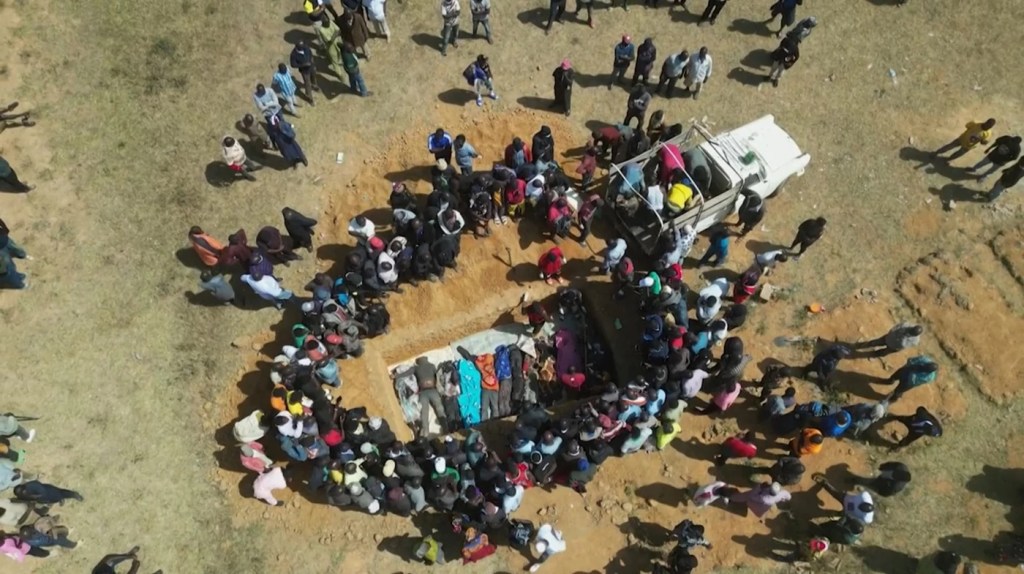
Christmas Massacres Challenge Secular Explanations of Nigeria Conflict

Image: Kim Masara /AFPTV / AFP / Getty Images

At least 140 Nigerian Christians were killed over the Christmas holiday.

Attacks on 26 villages in Plateau State began December 23, led by suspected extremists among Fulani Muslim herdsman against Christian farming communities. Some media reports cite nearly 200 dead, with many missing as local residents fled from gunmen into the bush.

Grace Godwin was preparing Christmas Eve dinner when her husband burst in with news from the neighboring village, ordering her and the children into the fields. Rebecca Maska similarly took cover but was shot and bled for three hours until help arrived, while her son had his hand chopped off with a machete before escaping. Magit Macham dragged his wounded brother to safety and hid overnight until the attackers moved on.

“These attacks have been recurring,” Macham told Reuters, having returned home from the regional capital of Jos to celebrate Christmas. “They want to drive us out of our ancestral land.”

For years, violence has plagued the West African nation’s Middle Belt, where a predominantly Muslim north intersects with a predominantly Christian south. Land right issues are also contested, as semi-nomadic cattle herders press against settled agrarian hamlets in Africa’s most-populous nation.

The Christmas massacres were the worst attacks since 2018. A local publication tallied an additional 201 deaths in Plateau State in the first half of 2023. Across the Middle Belt, at least 2,600 people were killed in 2021, according to the most recent data by the Armed Conflict Location and Event Data Project.

The Northern Governors’ Forum called the attacks “reprehensible and heinous.” It was further condemned by the national Muslim organization Jama’atu Nasril Islam, which called the attacks “barbaric” but within the context of a “cycle of violence.”

The chairman of the Miyetti Allah Cattle Breeders Association, however, blamed the “whole problem” on…

This article was originally published at Christianity Today on December 29, 2023. Please click here to read the full text.

Categories
Africa Christianity Today Published Articles

Owo Church Attack Kills Dozens of Nigerian Catholics on Pentecost Sunday

Image: AFP

Terrorists launched a gun and bomb attack at the end of a Catholic Mass in southwest Nigeria on Sunday, killing an estimated 70 worshipers according to residents and church leaders.

The terrorists attacked the St. Francis Xavier Catholic Church in Owo, Ondo state, at about 9 a.m., church leaders and residents told Morning Star News (MSN) though text messages. The carnage could have been greater. The church, one of the largest in the area, can hold up to 1,200 people, and was full at the time of the attack.

A priest at the church, Andrew Abayomi, told MSN that as the worship service was coming to an end, the terrorists threw explosive devices and shot at worshipers.

“We were in worship Mass when the terrorists attacked us. They shot at the congregation while breaking into the church by throwing improvised explosive devices at the church building,” Abayomi said. “Some of us hid inside the church as they shot randomly at us. This lasted for about 20 minutes before they retreated.”

He said it was difficult to give details about the number killed and injured, as leaders were focusing on transferring the wounded to hospitals. Circulated videos showed bloody images of men, women, and children strewed among the pews. Among other Owo residents, Loye Owolemi said about 70 worshipers were shot dead and others abducted when terrorists…

This article was originally published at Christianity Today on June 5, 2022. Please click here to read the full text.

Categories
Africa Christianity Today Published Articles

Nigerian Christians Protest Deborah’s Death

Image: Courtesy of Gideon Para-Mallam

Thousands of churches across Nigeria demanded an end to sectarian killings on Sunday, horrified by the mob assault on a female university student accused of blasphemy. But fearful of more violence, their approach differed significantly—by geography.

“The overwhelming majority of our churches in the south participated, many going to the streets in peaceful protest,” said Testimony Onifade, senior special assistant to the president of the Christian Association of Nigeria (CAN). “Gathering together, we condemned this gruesome act and demanded the government identify, arrest, and prosecute the culprits.”

But in the north, where Muslims represent the majority of Nigerians, John Hayab described 20 minutes set aside to pray for divine intervention. The president of CAN’s Kaduna state chapter lauded the “solemn” ceremony observed by all northern denominations, amid a ban on protests by local authorities as some Muslims had threatened counterdemonstrations.

Instead, a select group of 120 Christian leaders gathered in a Kaduna city church, guarded by police and security agencies.

There was good reason for caution.

Two weeks ago, in Nigeria’s northwestern-most state of Sokoto, Deborah Samuel was beaten to death and set on fire by fellow students at Shehu Shagari College of Education. Officials and police intervened in vain.

Two students were arrested. Protesting for their release, Muslim supporters proceeded to destroy an additional 11 buildings, descended on Christian shops in the city, and besieged the palace of the sultan of Sokoto who had condemned the May 12 murder.

According to her friend Rakia, Samuel’s last words were, “What do you hope to achieve with this?”

After a colleague shared Islamic material on an exam-prep social media group, Samuel posted an audio recording asking him to remove it. Friends who overheard some Muslim students deeming her response to be blasphemous urged her to retract the statement. Instead, she responded…

This article was originally published at Christianity Today on May 25, 2022. Please click here to read the full text.

Categories
Christianity Today Middle East Published Articles

Iran’s House Churches Are Not Illegal, Says Supreme Court Justice

Image: Courtesy of Article 18.

Currently at least 20 Christians are jailed in Iran because their faith was deemed a threat to the Islamic republic’s national security. Of the more than 100 Iranian believers imprisoned since 2012, all have faced similar charges.

But a recent decision by a Supreme Court justice gives hope to them all.

“Merely preaching Christianity … through family gatherings [house churches] is not a manifestation of gathering and collusion to disrupt the security of the country, whether internally or externally,” stated the judge, Seyed-Ali Eizadpanah.

“The promotion of Christianity and the formation of a house church is not criminalized in law.”

Two years ago, nine converts from the non-Trinitarian Church of Iran in Rasht, 200 miles northeast of Tehran near the Caspian Sea, were arrested in raids on their homes and church.

Sentenced to a five-year prison term in October 2019, Abdolreza Ali Haghnejad, Shahrooz Eslamdoust, Behnam Akhlaghi, Babak Hosseinzadeh, Mehdi Khatibi, Khalil Dehghanpour, Hossein Kadivar, Kamal Naamanian, and Mohammad Vafadar are now eligible for release.

The ruling, announced November 24, is “unprecedented,” according to multiple Iranian Christians and international advocates.

“The judge’s main argument is what we have been saying for years,” said Mansour Borji, advocacy director for Article 18, a UK-based organization promoting freedom of religion in Iran that tallied the cases noted above from available public records.

“But it astonished us to hear it at such a high level.” It also cuts against the grain of international understanding. The US State Department’s latest religious freedom report on Iran…

This article was originally published at Christianity Today on December 3, 2021. Please click here for the full text.

Categories
Americas Christianity Today Published Articles

Beat, Pray, Give: Catholics Want More Done for Persecuted Christians

American Catholics are signaling a dramatic surge in concern about the persecuted church.

And prayer, alone, is no longer good enough, as more say money and arms are needed too.

Asked their opinion about Christian persecution worldwide in the fourth annual survey by Aid to the Church in Need–USA (ACNUSA), 67 percent stated they were “very concerned.”

Last year, only 52 percent said the same.

Similarly, 57 percent stated the level of persecution suffered by Christians is “very severe.”

Last year, only 41 percent said the same.

The increase is “heartening,” said George Marlin, ACNUSA chairman.

“Christian persecution around the world is very grave,” he said. “[Catholics] want both their church and their government to step up efforts to do more.”

They have already been praying: 7 in 10 stated prayer is a “very important” initiative to help—the same share as last year, and up from 64 percent in the first survey in 2018.

But now, 62 percent say it is “very important” to donate to agencies that support the persecuted, up from 53 percent last year. Half say they are “very likely” to do so, up from 35 percent. And 61 percent say they gave within the last year, up from 53 percent in 2020.

And while about half believe Pope Francis is “very engaged” on the issue of persecution (52%, up from 47%), they believe their local bishop lags behind. Only 3 in 10 (30%) find him “very engaged,” marginally improved from the perception of 27 percent the year before.

The local parish seems to them similarly disconnected, with only 28 percent perceiving it to be “very engaged,” up from 22 percent last year. It is not enough, per American Catholics: 2 in 3 said…

This article was originally published at Christianity Today, on March 18, 2021. Please click here to read the full text.
Categories
Christianity Today Middle East Published Articles

If Muslims Can Build Churches in Egypt, Has Persecution Ended?

Image: Egypt Cabinet of Ministers Media Center
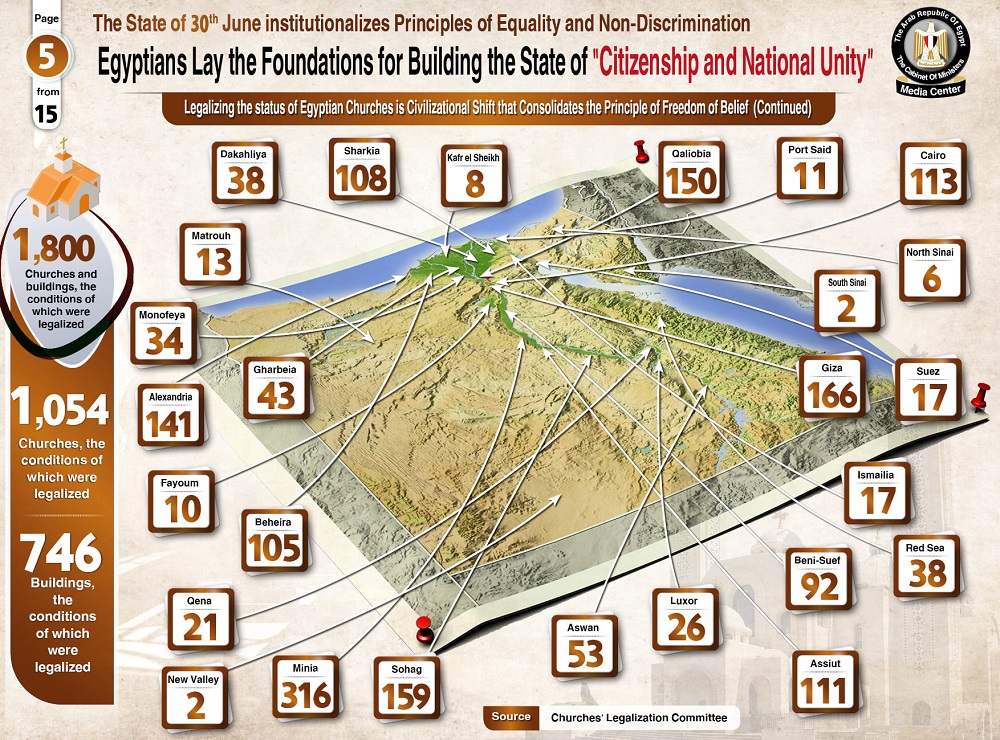
An Egyptian government infographic depicting recent progress in legalizing Christian churches.

Egyptian Christians have long struggled to build their churches.

But now, they can have Muslim help.

Last month, Egypt’s Grand Mufti Shawki Allam issued a fatwa (religious ruling) allowing Muslim paid labor to contribute toward the construction of a church. Conservative scholars had argued this violated the Quranic injunction to not help “in sin and rancor.”

The ruling is timely, as the governmental Council of Ministers recently issued an infographic highlighting the 2020 land allocation for 10 new churches in eight Egyptian cities. An additional 34 are currently under construction.

Prior to this, two prominent examples stand out. In 2018, President Abdel Fattah al-Sisi inaugurated the Church of the Martyrs of Faith and Homeland in al-Our, a village in Upper Egypt, to honor the Copts beheaded by ISIS in Libya. And in 2019, he consecrated the massive Cathedral of the Nativity of Christ in what will become the new administrative capital of Egypt, alongside its central mosque.

This is in addition to restoration work at 16 historic Coptic sites and further development of the 2,000-mile Holy Family Trail, tracing the traditional map of Jesus’ childhood flight from King Herod.

And since the 2018 implementation of a 2016 law to retroactively license existing church buildings, a total of 1,800 have now been registered legally.

Persecution has long been a term applied to Copts in Egypt, ranked No. 16 on the Open Doors 2021 World Watch List of nations where it is hardest to be a Christian. But shortly after the mufti’s fatwa, which restated a ruling last given in 2009, the Grand Imam of al-Azhar gave a pronouncement of his own…

[But there are dissenting cases also.]

Ramy Kamel, a 33-year-old activist, was once dodging tanks near Tahrir Square, protesting for Coptic equality. Ten years later, he is in jail for “spreading false news” about Coptic discrimination, and “financing a terrorist group.”

Soad Thabet, a 74-year-old Coptic grandmother, was in the Upper Egyptian village of al-Karm, minding her own business. Ten years later, she is fighting for justice after having been stripped naked and paraded through town, with her Muslim attackers acquitted.

These examples show that the term persecution remains “appropriate,” said Kurt Werthmuller, a USCIRF policy analyst specializing in Egypt…

This article was originally published at Christianity Today on February 22, 2021. Please click here to read the full text.

Categories
Current Events

117 Witnesses Detail North Korea’s Persecution of Christians

Kim Haeun/Korea Future Initiative

Two North Korean families prayed silently on the prison floor—making certain to keep their eyes open. Another detainee, a veteran of Kim Jong-il’s gulag system, asked them if they were afraid.

“No,” one of the mothers replied. “Jesus looks over us.”

The detainee began to cry, knowing the fate that awaited them. The next day, they were sent to Chongjin Susong political prison camp, and have not been heard from since.

But elsewhere in Onsong County’s pre-trial detention center, however, a different Christian prisoner closed his eyes. After confessing he was at prayer, his fellow detainees collectively assaulted him—afraid he would bring trouble on them all.

These are just some of the harrowing stories told in a 2020 report on religious persecution in North Korea. Groundbreaking in its scope, it is drawn from the testimony of 117 defectors, cross-referenced with known data.

Produced by the Korea Future Initiative (KFI), Persecuting Faith reveals 273 documented victims—76 of whom are still in the North Korean penal system. It names 54 individual perpetrators, including 34 with identifying information.

KFI hopes the information will inform future Global Magnitsky sanctions, applied against individual human rights violators by the United States and other Western nations.

Drawn from experiences stretching from 1990 to 2019, KFI’s report lists scores of violations. These include 36 instances of punishment meted out to family members, 36 instances of torture, and 20 executions. Women and girls represent 60 percent of the victims.

And Christians are disproportionately imprisoned—by far.

Open Doors, which has ranked North Korea No. 1 in its World Watch List for 19 straight years, estimates there are 300,000 Christians in the population of 25 million. Tens of thousands of these occupy the gulag. Of KFI’s 273 victims, Christians total nearly…

This article was originally published at Christianity Today, on December 21, 2020. Please click here to read the full text.

Categories
Christianity Today Persecution Published Articles

Pew and IDOP Agree: Religious Persecution Is Worsening Worldwide

Dictators are the worst persecutors of believers.

This perhaps uncontroversial finding was verified for the first time in the Pew Research Center’s 11th annual study surveying restrictions on freedom of religion in 198 nations.

The median level of government violations reached an all-time high in 2018, as 56 nations [28%] suffer “high” or “very high” levels of official restriction.

The number of nations suffering “high” or “very high” levels of social hostilities toward religion dropped slightly to 53 [27%]. However, the prior year the median level recorded an all-time high.

Considered together, 40 percent of the world faces significant hindrance in worshiping God freely.

And the trend continues to be negative.

Since 2007, when Pew began its groundbreaking survey, the median level of government restrictions has risen 65 percent. The level for social hostilities has doubled.

Over the past two weeks, Christians prayed for their persecuted brethren around the world.

Launched in 1996 by the World Evangelical Alliance (WEA), the International Day of Prayer (IDOP) for the Persecuted Church is held annually the first two Sundays in November.

This year’s campaign was called: One With Them.

“Them” is the 260 million Christians worldwide who face persecution, according to Godfrey Yogarajah, executive director of the WEA Religious Liberty Commission. Eight Christians are martyred for their faith each day.

But Christians are not the only ones who suffer.

Ahmed Shaheed, UN special rapporteur for freedom of religion and belief, said that of the 178 nations which require religious groups to register, almost 40 percent are applied with bias.

“The failure to eliminate discrimination, combined with political marginalization and nationalist attacks on identities,” he said, “can propel trajectories of violence and even atrocity crimes.”

In addition, 21 nations criminalize apostasy. “Faith has to be voluntary,” Shaheed told CT, in an interview conducted in April. “There is no value in faith if it …”

This article was originally published at Christianity Today, on November 10, 2020. Please click here to read the full text.

Categories
Current Events

Do Catholics Care about Persecuted Christians?

Embed from Getty Images

For the first time, American legislation in defense of international religious freedom has reached into the Chinese Politburo.

Last week, President Donald Trump signed into law a bill to authorize sanctions against any officials in China’s top political body responsible for ongoing persecution against the country’s Muslim Uighur minority.

Passed by Congress with only one “no” vote, the action follows on the heels of this month’s release of the State Department’s 2019 Report on International Religious Freedom (IRF).

During the report’s public release, Secretary of State Mike Pompeo lauded the United States’s commitment.

“America is not a perfect nation by any means, we always strive towards that more perfect union, trying to improve,” he said.

“[But] there is no other nation that cares so deeply about religious freedom.”

Such commitment was marked this week by the US Conference of Catholic Bishops (USCCB). Each day from June 22–29 highlights an issue of concern, whether domestic or international.

Yesterday (June 24) the focus was on China.

Last summer, the government-affiliated Chinese Catholic Patriotic Association—representing about half of China’s estimated 12 million Catholics—condemned US criticism after the State Department’s second Ministerial to Advance Religious Freedom advocated for the 800,000 to 2 million Uighurs and other Muslim minorities who have been arbitrarily detained in internment camps.

But one month later, the Chinese government permitted the first consecration of a Vatican-ordained bishop—a result of Pope Francis signing a controversial 2018 deal with Chinese authorities in an attempt to unite Rome with the underground Catholic church.

The US bipartisan consensus evident in the Uighur law reflects Pompeo’s assertion. First amendment rights guarantee freedom for all religions, and Americans generally desire for such liberty to extend worldwide.

But is there particular concern over Christian persecution? And is religious liberty eroding at home?

Two new polls suggest declining Catholic attention abroad, while the faithful grow more worried about the US. Aid to the Church in Need–USA (ACN–USA), an international papal agency that supports suffering and persecuted Christians in more than 140 countries, surveyed 1,000 US Catholics…

This article was first published at Christianity Today, on June 25, 2020. Please click here to read the full text.

Categories
Christianity Today Middle East Published Articles

Iran Releases a Third of Christian Prisoners Due to Coronavirus Concerns

Azadi Tower Iran

This article was first published at Christianity Today, on March 23, 2020.

Forced by the new coronavirus, Iran took the tiniest of steps to placate global advocacy for religious freedom.

A temporary release of about 85,000 prisoners to curb the spread of COVID-19 disease included Ramiel Bet Tamraz, an Assyrian Christian serving a four-month sentence for holding illegal church meetings.

He was one of seven Christians set free, some on bail.

The release—which also pardoned 10,000 prisoners in advance of this past weekend’s celebration of Nowruz, the Persian new year—did not include four Christians recently granted a retrial.

Ramiel’s father Victor was the pastor of the Assyrian Pentecostal Church of Tehran until 2009, when it was shut down by the government for holding services in Farsi, the Iranian national language. Arrested in 2014 for conducting services at home, in 2017 he was given a 10-year jail sentence. Released earlier on bail with his wife Shamiram, they are awaiting the outcome of court appeals.

Ramiel’s sister Dabrina has advocated for her family all the way to the White House.

“Raising awareness always helps,” she told CT, prior to her brother’s release. “When the US and international bodies speak out and address persecuted Christians, they have an enormous amount of influence.”

According to the latest annual report of violations against Christians in Iran, 17 believers ended 2019 in prison on account of their faith. Culled from public statistics describing sentences from 4 months to 10 years, the report—released in January and jointly produced by Open Doors, Article 18, Middle East Concern, and Christian Solidarity Worldwide—warned the true number could be much higher.

Open Doors, which ranks Iran No. 9 among the world’s worst persecutors of Christians, reports at least 169 Christians were arrested from November 2018 to October 2019.

Compared to those who decline advocacy, Dabrina said…

Please click here to read the full article at Christianity Today.

Categories
Christianity Today Middle East Published Articles

Despite a Murder and Visa Denials, Christians Persevere in Turkey

Turkey Korean Murder
Image: Source Images: Congin Kim / Annie Spratt / Unsplash

This article was first published in the March print edition of Christianity Today.

Five days after her husband’s murder, Jung Kyung-In named her newborn daughter “God’s Goodness”—in Turkish, not Korean.

Jung moved to Turkey with her husband, Kim Jin-Wook, in 2015. The Korean Christian couple found a place to live in an impoverished district of Diyarbakir in southeastern Turkey, 60 miles from the Syrian border.

Kim worked selling spices, but his real calling, as he understood it, was witnessing to the gospel. He took the Turkish name “Peace,” and his Christian friends in Turkey say he was a great evangelist.

“He shared the gospel in every corner of Diyarbakir without hesitation,” said Ahmet Güvener, pastor of the Diyarbakir Protestant Church, which has about 70 members. “He was not aggressive, but clear, and I think local people were uncomfortable with this.”

One day in November, Kim told Jung he was going out to evangelize. He was attacked on the street, stabbed twice in the chest and once in the back. Kim, 41, died of his wounds in a city hospital.

Authorities arrested a 16-year-old boy for the crime. He has allegedly confessed to the murder, saying he was trying to steal Kim’s phone.

Despite her grief, Jung saw this as an opportunity to testify. She wrote a letter to the boy accused of killing her husband.

“I do not understand why you did this, but I cannot be angry at you,” she wrote on her phone.

“Many people want the court to give you a heavy punishment. But I and my husband don’t want this. We pray that you become worthy of heaven, because we believe in the worth of people. God sent his Son Jesus, who forgave those who persecuted him. We also believe in that and we pray that you would also repent of your sin.”

Jung read the letter aloud to the local media. Her testimony was viewed online more than…

Please click here to read the full article at Christianity Today.

Categories
Africa Christianity Today Published Articles

Nigeria’s Government Agrees: Islamist Terrorists Target Christians

Nigeria Catholic March
Christians faithfuls march on the street of Abuja during a prayer and penance for peace and security in Nigeria in Abuja on March 1, 2020. – The Catholic Bishops of Nigeria gathered faithfuls as well as other Christians and other people to pray for security and to denounce the barbaric killings of Christians by the Boko Haram insurgents and the incessant cases of kidnapping for ransom in Nigeria. (Photo by Kola SULAIMON / AFP)

This article was first published at Christianity Today on March 2, 2020.

The Nigerian government now agrees with what church leaders have been complaining for years: Christians are the target of jihadist terrorism.

“In the wake of a renewed onslaught by our tireless military against Boko Haram and their ISWAP (Islamic State West Africa Province) allies in recent times, the insurgents have apparently changed their strategy,” said Lai Mohammed, the minister of information and culture, at a press conference last week.

“They have started targeting Christians and Christian villages for a specific reason, which is to trigger a religious war and throw the nation into chaos.”

In comments given exclusively to CT, the administration of President Muhammad Buhari clarified that this targeting is not new.

“Yes, Boko Haram is targeting individual Christians. In doing so, their target is all Nigerians, and their goal is to divide Christian brother against Muslim brother,” Mohammed, the information minister, told CT.

“What Boko Haram seeks—and always has sought—is to drive a wedge between Christians and Muslims in Nigeria.

“By targeting Christians, they seek to promulgate the falsehood that…

Please click here to read the full article at Christianity Today.

Categories
Africa Christianity Today Published Articles

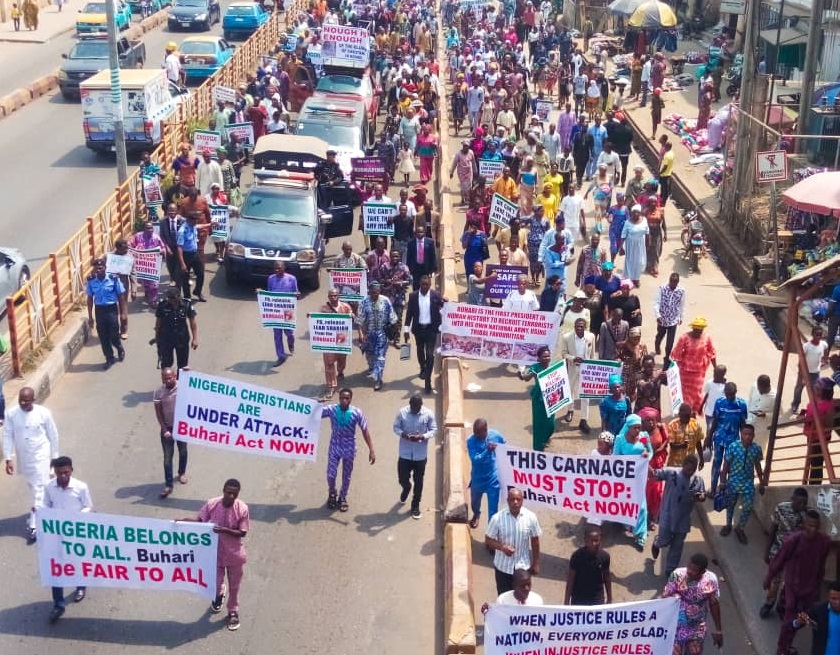
Nigerian Christians Marched Sunday to Protest Persecution

WhatsApp Image 2020-02-03 at 8.53.31 PM
Courtesy of CAN

This article was first published at Christianity Today on February 3, 2020.

Having finished his Sunday sermon from Psalm 18 on God as a stronghold who delivers his people from their enemies, Enoch Adeboye then led them to a cemetery.

It was an ironic yet appropriate choice.

Wearing a bright green tuxedo, the General Overseer of the Redeemed Christian Church of God (RCCG) in Lagos, Nigeria, marched three miles yesterday holding a placard that declared: “All Souls are Precious to God.”

Adeboye and his congregation, one of the largest in the world, answered the call issued by the Christian Association of Nigeria (CAN) for a three-day fast this past weekend, concluding in a prayer walk. Based on reports from its state chapters and local media, CAN estimates 5 million people marched in 28 of Nigeria’s 36 states on Sunday.

“Though we have protested before, this event took a new dimension,” CAN president Samson Ayokunle told CT.

“With one voice, we said ‘no’ to killings, ‘no’ to security negligence, and ‘no’ to the persecution of Christians in Nigeria. It is a wake-up call to the government.”

Launched on January 29 to protest the beheading of Brethren pastor Lawan Andimi, the chairman of a regional CAN chapter in Adamawa state, by Boko Haram two weeks earlier, the prayer was also a protest at the Nigerian government’s failure to stop the abductions and killings.

Terrorist attacks, as well as clashes between mostly Muslim herdsmen and mostly Christian farmers, resulted in more than 100 deaths in January alone.

“Lord, have mercy on Nigeria, let there be peace and security,” said Adeboye. “God sees all things and knows where the terrorists are hiding.

“We pray that God send his light to Nigeria and expose the evildoers in the country.”

In the perspective of CAN, these reach into the upper levels of government.

“O Lord, in Jesus Name, expose all the…”

Please click here to read the full article at Christianity Today, and here to read the op-ed submitted by Muhammadu Buhari, president of Nigeria.

Categories
Christianity Today Middle East Published Articles

The Top 50 Countries Where its Hardest to be a Christian

WWL-2020

This article was first published at Christianity Today on January 15, 2020.

Every day, 8 Christians worldwide are killed because of their faith.

Every week, 182 churches or Christian buildings are attacked.

And every month, 309 Christians are imprisoned unjustly.

So reports the 2020 World Watch List (WWL), the latest annual accounting from Open Doors of the top 50 countries where Christians are the most persecuted for their faith.

“We cannot let this stand,” said David Curry, president and CEO of Open Doors USA, during the 2020 list’s unveiling in Washington, DC, this morning. “People are speaking out and we have an obligation to hear their cry.”

The listed nations comprise 260 million Christians suffering high to severe levels of persecution, up from 245 million in last year’s list.

Another 50 million could be added from the 23 nations that fall just outside the top 50—such as Mexico, Chad, and the Democratic Republic of the Congo—for a ratio of 1 in 8 Christians worldwide facing persecution.

Last year, 40 nations scored high enough to register “very high” persecution levels. This year, it reached…

Please click here to read the full article at Christianity Today.

Categories
Africa Christianity Today Published Articles

Pastor Turns Terrorist Hostage Video into a Testimony

Nigeria Hostage Video

This article was first published at Christianity Today, on January 13, 2020.

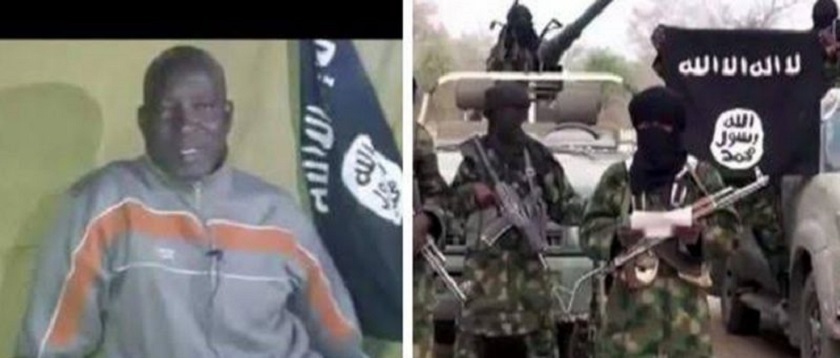
A hostage video released last week by Boko Haram did far more than issue another Nigerian plea for rescue.

It revealed a modern-day Shadrach.

“By the grace of God, I will be together with my wife, my children, and my colleagues,” said Lawan Andimi, a Church of the Brethren in Nigeria (EYN) pastor in the troubled northeastern state of Adamawa. “[But] if the opportunity has not been granted, maybe it is the will of God.

“Be patient, don’t cry, don’t worry. But thank God for everything.”

It is testimony even to his captors, said Gideon Para-Mallam, the Jos-based Africa ambassador for the International Fellowship of Evangelical Students (IFES).

“This is completely different from most hostage videos,” he said. “[Andimi] appeared as one who has already conquered death, saying to his abductors…”

Please click here to read the full article at Christianity Today.

Categories
Americas Christianity Today Published Articles

When You are Persecuted in One Place, Flee to Another. But Not to America

Flee to America

This article was first published at Christianity Today on November 5.

Zero.

The United States did not resettle a single refugee in October.

According to 30 years of records from World Relief, last month was the first time a calendar month went empty. For the past five years, the October average was 4,945 refugees resettled.

Among those impacted: persecuted Christians.

The humanitarian arm of the National Association of Evangelicals tracked the number of arrivals from the 10 countries identified by the US State Department as Countries of Particular Concern for violating religious freedom. The 5,024 Christians whose cases were accepted in fiscal year 2019 is a decrease of two-thirds from the 15,341 who were accepted in fiscal 2015. A maximum of 5,000 is allotted for victims of religious persecution in fiscal 2020—for all religions and countries.

Resettlements of non-Christians are also declining. For the same time period, Yazidi refugees from Syria and Iraq have declined 91 percent. Jewish refugees from Iran have declined 97 percent. And Muslim refugees from Burma have declined 76 percent.

“This isn’t just heartbreaking—it’s unjust,” stated Scott Arbeiter, president of World Relief, noting the State Department announced a limit of 18,000 refugees for fiscal 2020.

“I urge the administration to reconsider its approach and set a cap that better represents the compassion and hospitality of the American people.”

But Secretary of State Mike Pompeo defended the policy.

“Addressing the core problems that drive refugees away from their homes helps more people more rapidly than resettling them in the United States,” he stated, pointing out an estimated backlog of one million asylum cases.

“Helping displaced people as close to their homes as possible,” stated Pompeo, noting the $9.3 million the US has spent to alleviate humanitarian crises, “better facilitates their eventual safe and voluntary return.”

The Religious Liberty Partnership, birthed at a Lausanne Movement gathering and now numbering Christian organizations from 20 countries, has highlighted three biblical responses to persecution: accept and endure (2 Tim. 3:10–13); challenge and resist (Acts 22:25–29); or flee (Acts 9:23–25).

Jesus says the same in Matthew 10:23 (NIV): “When you are persecuted in one place, flee to another. Truly I tell you, you will not finish going through the towns of Israel before the Son of Man comes.”

But with Christian attention focused this past weekend on the International Day of Prayer for the Persecuted Church, the RLP document—reaffirmed with the Refugee Highway Partnership (RHP), a partner of the World Evangelical Alliance, in 2017—suggests that the clear choice of the local leaders who shepherd the displaced echoes Pompeo.

“Amongst church leaders across the Middle East, there is a strong consensus that indigenous Christians should…

Please click here to read the full article at Christianity Today.

Categories
ERLC Light Middle East Published Articles

A Tale of Three Churches

New Capital Cathedral
U.S. Secretary of State Michael R. Pompeo visits the Cathedral of the Nativity in Cairo, Egypt, on January 10, 2019. [State Department photo/Public Domain]
This article was first published in the Summer 2019 print edition of Light magazine, produced by the Ethics and Religious Liberty Commission.

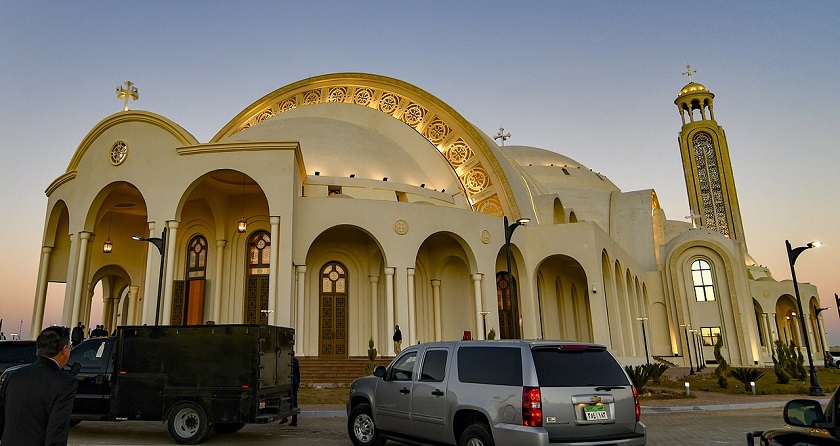
In January, President Abdel Fattah al-Sisi of Egypt stood side-by-side with Pope Tawadros II, patriarch of the Coptic Orthodox Church. Inaugurating the Cathedral of Nativity, the largest church in the Middle East, he uttered two remarkable words that reverberated through the national broadcast to Muslim homes throughout the nation.

“Merry Christmas.”

If some Christians find this phrase under siege in America, they have no idea the power unleashed by the president’s words. Eight years earlier, emboldened by the Arab Spring and empowered by the Muslim Brotherhood presidency of Mohamed Morsi, ultra-conservative Salafi Muslims sparked nationwide controversy by declaring no pious Muslim could utter the words.

Their point was theological—Christmas celebrates God becoming man in Jesus, and a Muslim cannot congratulate a Christian neighbor for such blasphemy. But the impact was social. Easygoing Egyptians had long wished each other good greetings on respective religious feasts. Salafis are better practicing Muslims than we are, many would admit, and a chill began to spread in community relations.

When then-defense minister Sisi overthrew Morsi following widespread protests against his rule, he did so with Pope Tawadros—and the head of al-Azhar, the leading Islamic institution in Egypt—standing nearby in support. As president he became the first to attend a Christmas mass, a practice he has continued. He speaks strongly about the rights of Christians and their place in the nation. And in building a new capital city he made sure the centerpiece landmarks would be the region’s largest mosque and church, built side-by-side. There is no Merry Christmas controversy today.

But do Sisi’s words fall on deaf ears? Are the arms of the state too weak? Or might he be of double mind, grandiloquent in gesture, apathetic in implementation? Two other church examples counterbalance the cathedral…

Please click here to download the print edition; my article is on page 54.