Categories
Prayers

Friday Prayers for Egypt: Corruption, Resolution

Flag Cross Quran

God,

As Egypt made one statement, it deferred on another. May wisdom couple with pragmatism, but only where is right.

An official at one of the nation’s highest courts was exposed for taking bribes. As his case was paraded in the media, the extent of corruption is not yet clear.

But the president took occasion to renew the call to clean the system, asking that all be held accountable.

May it be so, God. Establish the systems necessary to create the fear of stepping out of line. And in conjunction, develop the integrity necessary that it might not be considered.

In process, move anti-corruption efforts from the spectacular to the mundane. Equip a cadre to ferret out irregularity. Expand their influence to change a culture.

And protect them, God. From without, from any enemies created. From within, from the enemy of the soul. How easily they themselves could be corrupted. How easily their work might manipulate in turn.

So as Egypt reaches out to assist those troubled by the economy, may it reach the needy at every level.

Support has been extended not only to the poor, but to struggling tourism facilities in need of renovation and to import-dependent businesses in fear of bankruptcy.

Meanwhile internationally, it is Egypt who stands in need of support. Keep her honorable in the pursuit thereof.

After raising a resolution at the UN against Israeli settlements, Egypt withdrew it in deference to Trump. She later voted in favor of a multi-national resolution she did not join in sponsoring.

Some say she buckled in support of the more needy Palestinians. Others say she brokered favor with the strong while not abandoning a principle.

God, decipher motivation and judge accordingly. But help Egypt to be true, and support her if she is.

For Egypt has also taken complicating positions toward Syria and Yemen. She dances with Saudi as the disputed Red Sea islands remain in court. She must resolve tourism issues with Russia and Britain. America gives millions in military aid; Israel is essential in border control.

God, give Egypt resolution. Free her from corruption.

Help her to wade through troubled waters with her head held high, with the confidence that comes only from uprightness.

Wisdom, God. Pragmatism, too. Peace, justice, prosperity. May they come in their fullness, and soon.

Amen.

Categories
Prayers

Friday Prayers for Egypt: Assassination, Funeral

Flag Cross Quran

God,

Egypt witnessed a frightful return, disturbing a relative quiet. The pattern subsided but not that long ago was a viable threat. May it not be a portent of things to come.

A car bomb detonated in an upper class neighborhood, injuring one bystander but missing the deputy prosecutor-general. Fifteen months ago, his positional superior was assassinated by similar means.

God, thank you for the escape. But the signs that such men continue to nurse their grudges through violence is a disturbing development. After a year of many targeted killings, Egypt outside of Sinai has successfully enforced an extended period of calm.

May the culprits be caught, God. May those behind them be exposed and disabled. May any legitimate grievances find peaceful solution, and may justice be extended to all.

For grievances are also finding expression in the funeral of former Israeli president Shimon Peres. Egypt’s foreign minister will attend as a representative of the state. But others are critical of paying homage to a man they deemed oppressive of Palestinians.

God, give both peace and justice to the peoples of this world. In Egypt in particular, help leaders and citizens alike to find the proper balance. It is right to honor the dead. It is right to review a legacy.

May truth prevail among hearts unhardened to humbly receive and boldly respond. May they rightly impact others too possessed by the pain of past grudges, justly held or otherwise.

May the victims of all conflicts rest in peace. May the living rest the same. Heal Egypt and the region, and save her from further harm.

Amen.

Categories
Christianity Today Middle East Published Articles

Pilgrims’ Process: Why Christians Closest to the Holy Land Visit the Least

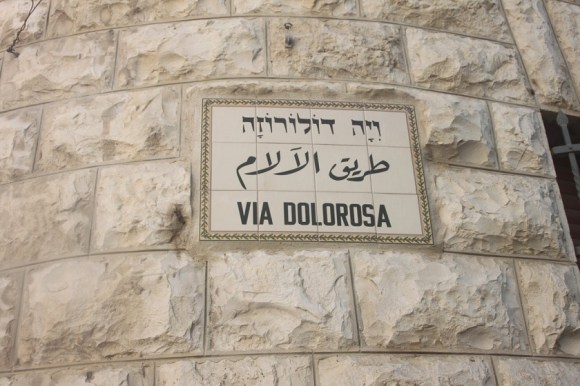
Via_dolorosa_Jerusalem

This article was first published at Christianity Today in the June print edition.

Walking down the Via Dolorosa, Nabil placed his hand on the wall where Jesus reportedly stumbled on his way to being crucified.

I am a lucky man, thought the 58-year-old. I can feel the Holy Spirit in my body.

This wasn’t how the Coptic Orthodox pilgrim had expected to feel in Jerusalem’s Old City. “Most Egyptian Christians want to visit as part of their faith,” he said, noting that he saw many elderly women dressed in black, weeping at each station of the cross. “Not me. I’m retired, I have nothing else to do, and I like to travel.”

Touring the Holy Land has been a transformational experience for Christians worldwide. In 2014, more than half of the 3.3 million tourists who visited Israel were Christians, according to the Israel Ministry of Foreign Affairs. Of these, one out of four was Protestant.

But among these tourism figures, the Arab Christian community is nearly a no-show. In 2014, Jordan sent only 17,400 tourists (which were not differentiated by religion). Egypt, only 5,200—all Copts. Lebanon forbids travel to Israel entirely.

So Close Yet So Far

There are many reasons Arab Christians don’t tour Israel. The ancient sites are right in their backyard, so familiarity breeds complacency. And economic and political conditions hamper travel.

“I grew up minutes from Mary’s Well in Nazareth, and walked to school daily past the Church of the Annunciation,” said Shadia Qubti, a Palestinian evangelical. “It’s where I met friends for coffee.”

Please click here to read the full article at Christianity Today.

Categories
Excerpts

To be a Muslim’s Eyes

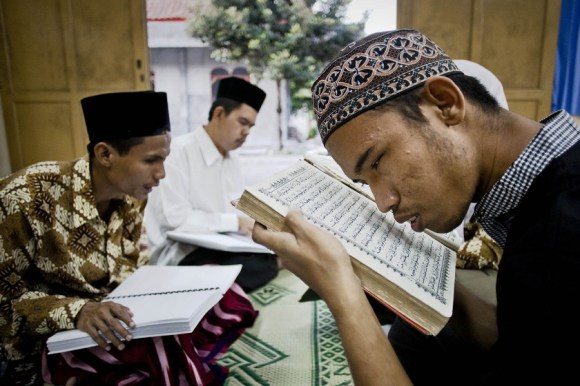
Blind Muslim
(via http://abilitykhabarnama.blogspot.com/2013/08/blind-muslims-observe-ramadan-with.html)

From al-Monitor, a unique account of a Palestinian Christian in Gaza who daily accompanies his blind Muslim friend to the mosque:

“Growing up, Hatem would always perform prayers at the mosque, but after the incident five years ago, he was no longer able to do so because there was no one available to guide him there. I saw how he would shed tears whenever the call to prayer would come from the mosque. That is why I decided to take him to the mosque to pray as he did in the past.

“The first day I helped him get to the mosque, four years ago, he was so happy. So I told him I would be taking him every day to perform all the prayers. He was thrilled to hear my decision. It was as if he had found something he had lost for a long time.”

Hatem has been friends with Abu Elias for over fifteen years, who also helps him go to market and reads him the daily news. Both explain the service in reference to friendship and national solidarity over and above any particular religious devotion.

But allow also their example to be an inspiration to Americans. No matter how different the context, kindness trumps ideology.


Categories
Lapido Media Middle East Published Articles

Jewish Settler: I am a Passionate Defender of Palestinian Rights

This article first published at Lapido Media.

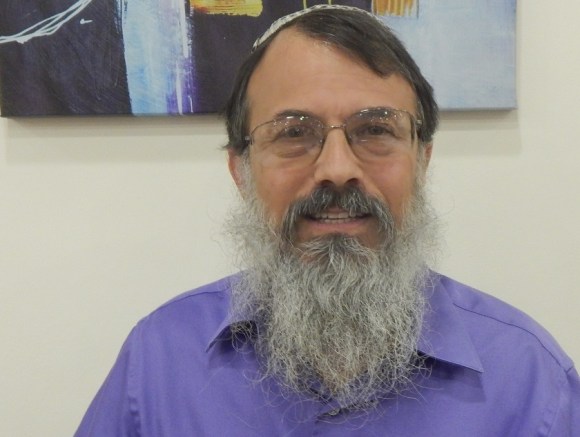
Rabbi Hanan Schlesinger
‘Zionism is a big tent’: Settler Rabbi Hanan Schlesinger

Palestinian Christian jaws dropped in shock.

Gathered to promote their narrative to international evangelicals largely supportive of Israel, a bespectacled, long-bearded, Yarmulke-wearing Jewish settler appeared on screen.

He spoke, and their surprise deepened.

‘I am a passionate defender of Palestinian rights,’ Rabbi Hanan Schlesinger told the audience. ‘Zionism is a big tent, and there are many I disagree with.’

A New York City native, Schlesinger immigrated to Israel in 1977. He lives in the settlement of Gush Etzion, between Bethlehem and Hebron.

Many Palestinians consider Jewish settlers to be the source of all evil, he admitted. Not until two years ago had he spoken to a Palestinian as an equal.

Serving in the army, he had arrested them. For general housework, he had employed them. But after a US-based pastor encouraged him to listen to them, he had worked to be reconciled ever since.

CATC Logo
Many attended the Bethlehem conference last week from UK. Photo: CATC

In this capacity Schlesinger was invited to the fourth biennial Christ at the Checkpoint (CATC) conference, held 7-10 March in Bethlehem. Operating at the heart of the Arab-Israeli conflict, these conferences provoke much controversy.

Provoke

This year, they chose to provoke themselves.

Fifty UK citizens joined roughly five hundred people from 24 countries to attend the conference, including 150 Palestinian Christians from Israel and the West Bank.

Interviewed on screen, Schlesinger also expressed great appreciation for those the conference aimed to challenge: Christian Zionists who prioritize Jewish Israel.

‘The Christian nation is turning over a new leaf, it is a miracle,’ he said. ‘Christian Zionism defends Israel against its many enemies, so we need all the friends we can get.’

Afterwards he mingled in the crowd. Some even approached to shake his hand.

‘It was hard for many here to see Rabbi Hanan in our audience, let alone on the screen,’ said Sami Awad, executive director of the Holy Land Trust, and a conference organiser.

‘But some came to me and said, you are challenging us in our faith.’

Like many Palestinians, Awad, who has conducted nonviolent trainings for Hamas, had found it difficult to befriend those with whom he had deep political disagreements.

Additional screened interviews with his friends in Hamas also challenged the conference towards a similar transformation.

Awad told Lapido that Jews have a basic need to live and worship in the land of their ancestors.

The fear that kept Jews, Muslim, and Christians apart, he said, came less from ‘the other’ than from those one considers on one’s own side.

Sami Awad
‘Make uncomfortable’: Awad. Photo: University of Bristol

‘People are not afraid of Rabbi Hanan, they know he will not come here and hurt us,’ he said. ‘But we are afraid of being labeled a traitor by our own community.’

Awad and Schlesinger jointly host a study to discuss their holy texts. Muslims, Christians, and Jews all suffer generational trauma, Awad says. So the Holy Land Trust sponsors ‘healing hatred’ groups to help them overcome it together.

Transform

Likewise, Schlesinger has co-founded ‘Roots’, a Palestinian-Israeli initiative for understanding, non-violence, and transformation.

Of three thousand local Israelis and Palestinians attending his training, around two-thirds have been Jews. Of these up to forty percent have been settlers, and up to 15 percent have been soldiers sent by the army.

Ninety-nine percent of all participants, he said, are meeting ‘the other’ for the first time.

‘Something is wrong,’ Rabbi Schlesinger told Lapido Media. ‘We are living out our truth in a way that causes injustice to other people.

‘I don’t know if the land is occupied, but the people are occupied.’

This theme was echoed by another prominent Jewish critic of Israeli policy invited to CATC, Arik Ascherman, president and senior rabbi of Rabbis for Human Rights. His remarks were introduced by a video from October 2015 showing him resisting a knife-wielding Jewish settler.

‘The creation of the state of Israel—and we know it is a catastrophe for Palestinians—was the beginning of our redemption, and we want it to be a blessing shared by all,’ he said.

‘But it may be that in God’s eyes, the very things we do to hold on to the entire land make us unworthy to keep all of it.’

Criticism

CATC has been subject to much criticism, some of it theological, some of it political.

‘Israel is the only country in the Middle East where Christians enjoy religious liberty,’ Rabbi Yechiel Eckstein, founder and president of the International Fellowship of Christians and Jews, told Lapido. Last year they raised over £872 million to support Israel.

‘Even as I decry the anti-Israel rhetoric that has taken place [at CATC], I give thanks for the many, many Christians who truly know Israel and continue to support the land and her people in prayer.’

But for Awad, though resistance to the occupation is crucial, so is the befriending of an enemy.

‘I cannot be a voice to the other side in nearly the same way one of their own can,’ he said.

‘We are communal beings who only trust our own kind, so we need to make our own communities uncomfortable.’

Categories
Lapido Media Middle East Published Articles

First Peace Studies Programme in the Arab World Gets Off to Tentative Start

A man whose young brother has just been slain by an Israeli soldier is restrained by friends. Photo: ‘William’, Peace Parcels

The Israeli government appears to be shunning a Palestinian peace studies course – even as a third intifada escalates.

The Arab world’s first Master’s degree in Peace Studies – developed by a Bethlehem college – is getting the brush-off from a government whose commitment to peace is already being questioned from within the Jewish world.*

Bethlehem Bible College (BBC) aims to train Muslim, Christian, and Jewish peacemakers to build bridges instead of walls.

But 24-year-old ‘William’, a Canadian, and one of five international students in the inaugural class, cannot obtain a student visa.

Instead he must come and go every three months as a tourist. Afraid of deportation, he shields his identity online and makes no mention of his studies to the authorities.

‘My fear is maybe they would become aware of what I’m doing and reject any subsequent tourist visas,’ William, using a pseudonym, told Lapido.

‘It has been a step of faith, but I figured I would just take the risk and do it.’

BBC was established in 1979 to offer theological education to Palestinian Christian leaders. William is motivated to help Christians in the West shift away from theological positions that are biased towards Israel.

Accredited by the Palestinian Ministry of Higher Education, BBC has a long history of opposition to the Israeli occupation. It was founded by Bishara Awad, brother of Mubarak Awad, who in 1983 created the Jerusalem-based Palestinian Centre for the Study of Nonviolence.

Often called the Gandhi of Palestine, Awad was deported by Israel in 1988. He returned to teach the first MA module, but like William and the team of international professors, he also had to come as a tourist.

According to the 2012 European Commission report, Higher Education in the Occupied Palestinian Territory, international students are able to enrol in Palestinian universities.

In practice, however, it is ‘very rare’ due to the difficulty of obtaining Israeli permission to enter the country.

Education

William was advised by the BBC not even to try. But this has not stopped him from full immersion in Palestinian society, gaining a first-hand education that peace studies students in other universities can only read about.

On 5 October he witnessed an angry crowd of hundreds passing by campus. They chanted ‘Allahu Akbar’ and threw stones at security after 13-year-old Abdel Rahman Abdullah was shot in the chest by Israeli security.

He describes witnessing the agony of Abdullah’s brother [pictured above in blue hat]. ‘It was heart wrenching,’ he says.

‘He was weeping and flailing, his anguish was so horrible to see. I’m tearing up just thinking about it right now.’

Hashlamoun: ‘I choose nonviolence’. Photo: Watan Centre

For Nayef Hashlamoun, a veteran Muslim activist from Hebron and one of two Muslim students in the programme, witnessing such anguish has become commonplace.

‘My life is for my homeland, but I cannot kill,’ he said. ‘I choose the way of nonviolence, I choose instead to carry a camera.’

Hashlamoun worked for twenty years with Reuters as a photojournalist, and founded the Watan conflict resolution centre in 1985.

He has pursued peace studies at American University and the School for International Training in Vermont, but events in Palestine always brought him back.

Over time he became friends with the Awads, who invited him to BBC. Mubarak Awad went on to found Nonviolence International, which has translated much of the literature on peace studies into Arabic.

‘They are Christians and I am Muslim, but I will be proud to have a degree from BBC as our relations are as brothers,’ he said. ‘And now I can pursue my education at home.’

Nonviolence

The three-semester MA is taught in English and requires 39 credit hours, including a practicum or thesis.

It features distinguished professors from around the world including Nancy Erbe, Fulbright Specialist in Peace and Conflict Resolution, Mohamed Abu Nimer, Director of the Peacebuilding and Development Institute at American University, and Edward Kaufman, formerly of the Harry S. Truman Research Institute for the Advancement of Peace at the Hebrew University.

Jews are welcome at the centre, but none has so far enrolled. Two of the twelve students identify as nonreligious, and four local Palestinians are auditing.

Kuttab: ‘Violence has not promoted our rights’. Photo: World Can’t Wait

Jonathan Kuttab, chairman of the BBC board and a human rights lawyer in Israel and Palestine, hopes officials from Fatah and Hamas will also join.

‘Nonviolence is far more effective than violence, which certainly has not helped us in working for our rights,’ he told Lapido. ‘For me, this is an easy sell.’

In the current context Kuttab is critical of Benjamin Netanyahu for provoking violence from Palestinians. But he also criticises Mahmoud Abbas for policing his own people on Israel’s behalf at the expense of nonviolent resistance.

‘There is a lot of acceptance of nonviolence in the Palestinian community,’ he said, ‘but the Palestinian Authority has been so weak in pursuing our rights that it has given peace a bad name.’

Education is limited in its direct impact, said Kuttab. But he is hopeful that beyond increased international attention in peace studies circles, the programme will deepen local commitment to nonviolence through strong engagement with the academic literature.

‘We have to revive what real peace and real nonviolence mean,’ he said.

‘Bethlehem is the birthplace of the Prince of Peace, where else should we have this programme?’

No spokesman was available from the Israeli government as this story went to press.

*War Against the People: Israel, The Palestinians and Global Pacification by Jeff Halper, published by Pluto Press. 2015.

This article was first published at Lapido Media.

Categories
Excerpts

An Israeli Solution to the US Racial Crisis?

Lieberman Race Protests

With America gripped by conflicting rhetoric over the nature of race relations and police performance, has anyone yet suggested this solution: Just get the African-Americans to go back to Africa?

If so, surely it would be from the political fringe. If anyone knows of a more mainstream source among right-of-center bulwarks like Fox News or Rush Limbaugh-type radio programs, please comment below.

But essentially, this is a talking point on racial issues in Israel. And it is not a marginal viewpoint, but from the center of current government.

A little over a week ago, according to Reuters:

Israeli Foreign Minister Avigdor Lieberman proposed on Friday that Arab citizens of Israel be offered financial incentives to leave the country and relocate to a future Palestinian state.

“Those (Israeli Arabs) who decide that their identity is Palestinian will be able to forfeit their Israeli citizenship and move and become citizens of the future Palestinian state,” he wrote in the manifesto, entitled Swimming Against the Stream, published on his Facebook page and his party’s website.

“Israel should even encourage them to do so with a system of economic incentives,” he said.

Lieberman’s party, Yisrael Beiteinu (Israel, Our Home), captured 11 of 120 parliament seats in the most recent elections, as part of the winning coalition with Benjamin Netanyahu’s Likud.

Encouraging Arabs to leave is not official government policy, but apparently leading Israeli politicians believe it is good rhetoric to rally their base, at the least.

America did have a moment in history when such views were put forward. Certainly the context in Israel today is different than America, both then and now.

But America, despite its faults and residual, often unconscious biases, has forged a society establishing full racial equality in law and in the mindset of most its citizens. The protests today are demanding improvement of an already present good.

The sometime (perhaps often?) poor administration of this good speaks to the widespread triumph of the ideal. Comparing it to other contexts reminds about how fleeting an ideal can be, and how easily it can be threatened.

Israel seeks to navigate two principles not easily combined given its demographic makeup. It wishes to be both a Jewish and a democratic state. As I wrote in an earlier post summarizing the critique of Stephen Sizer, especially as concerns the Occupied Territories, one of these principles seemingly must slide.

Perhaps not. But fortunately America can sidestep the question. It is not a nation for whites, blacks, Jews, Arabs, or anyone in particular. It is a nation for citizens.

Cultural questions still seek definition by many, or perhaps, there should be no definition, for many others. This debate is warranted, within the scope of the Bill of Rights.

But Lieberman’s debate is not. Certainly not in America; morally not, I and many Jews would argue, in Israel.

Or should those who disagree be sent to exile instead?


Categories
Prayers

Friday Prayers for Egypt: Gaza Again

Flag Cross Quran

God,

It is not as if this is the first time. Mutual acrimony between Israel and Hamas leads to the exchange of rockets, with deeply disproportional suffering. Now a land invasion is poised to begin.

Egypt has been the historic mediator, but this time – so far – unsuccessfully. Two years ago President Morsi, whose Muslim Brotherhood has ties with Hamas, brokered a ceasefire and relative lull in hostilities. This time the violence continues despite Egypt’s efforts, and peace is as far away as ever.

Meanwhile Egyptian society is torn. The people of Gaza lack their standard sympathy due to widespread sentiment Hamas has been destabilizing Egypt through the Sinai. But an anti-Zionism is always present, and as the Palestinian casualties mount the Egyptian frustration mounts with it.

God, is there an answer? Must Hamas be destroyed? Must so many people of Gaza die? Must rockets rain down on Israel? Must the Zionists be driven back to where they came from?

God, there must be a better answer. Help Egypt have a share in finding it. Help world sympathy for all not falter. But help Palestinians and Israelis to reconcile. Help justice to be done.

For justice is a sticking point. The terms are not equal. Palestine is under occupation. Stand with all who suffer, give them relief, and help them to honor moral convictions and call out to you.

Feeling triumphant, too many rejoice in the suffering of others. Feeling aggrieved, too many strike out at innocents. Feeling in need of world opinion, too many manufacture propaganda. Feeling in need of domestic support, too many dehumanize their enemy.

But if they call out, God, answer them and give repentance and forgiveness. Answer them and give initiative and creativity. Answer them and give a just political solution. Answer them and give social peace and mutuality.

Help them find the way, God, first through their own hearts, and then through the hearts of their enemy.

This is not the first time these prayers have been necessary; in man’s estimation it is unlikely to be the last. Remove acrimony and exchange love, God, however impossible it may seem. The sins of all are infinitely disproportionate to your grace, so have mercy.

Bring peace, God. Please.

Amen.

Categories
Excerpts

Gaza and the Right to Self-Defense

There is much wrong on both sides. The situation is complex and begs for thorough analysis. All this is granted but within this debate, here is a well-researched article from Jadaliyya exposing a false rhetoric that seems eminently logical:

On the fourth day of Israel’s most recent onslaught against Gaza’s Palestinian population, President Barack Obama declared, “No country on Earth would tolerate missiles raining down on its citizens from outside its borders.” In an echo of Israeli officials, he sought to frame Israel’s aerial missile strikes against the 360-square kilometer Strip as the just use of armed force against a foreign country. Israel’s ability to frame its assault against territory it occupies as a right of self-defense turns international law on its head.

A state cannot simultaneously exercise control over territory it occupies and militarily attack that territory on the claim that it is “foreign” and poses an exogenous national security threat. In doing precisely that, Israel is asserting rights that may be consistent with colonial domination but simply do not exist under international law.

The article was first published two years ago, under near exact circumstances. It continues by detailing the legal arguments that invoke the right to national self-defense, and finds they come up short – even as judged by the Israeli High Court:

Since the beginning of its occupation in 1967, Israel has rebuffed the applicability of international humanitarian law to the  Occupied Palestinian Territory (OPT). Despite imposing military rule over the West Bank and Gaza, Israel denied the applicability of the Fourth Geneva Convention relative to the Protection of Civilian Persons in Time of War (the cornerstone of Occupation Law). Israel argued because the territories neither constituted a sovereign state nor were sovereign territories of the displaced states at the time of conquest, that it simply administered the territories and did not occupy them within the meaning of international law. The UN Security Council, the International Court of Justice, the UN General Assembly, as well as the Israeli High Court of Justice have roundly rejected the Israeli government’s position.

Again, there is much wrong on both sides. But do recall the essential foundational fact: Gaza and the West Bank are occupied territories. A just solution has escaped the international community since 1967. Proportion of fault can be debated, but Israel bears responsibility for the land it holds.

There is no winner, there is only more destruction. Unfortunately both sides seem more than willing to engage.

Categories
Prayers

Friday Prayers for Egypt: Preaching, Sinai

Flag Cross Quran

God,

Rarely do men try to speak in your name, but there are many burdened to represent what they believe you have spoken. Now, in Egypt, some of these will be denied.

Give them wisdom in responding to this development.

The government has taken new steps to ensure only licensed imams may preach on Friday. They are also preparing to close the small neighborhood mosques which populate most city streets. They feel this combination is ripe for extremist messaging. Others complain it is only extremist in rejection of a current military order.

Likely, both arguments have merit. The Azhar, the centuries old mosque and institute of learning, is a state-backed organization with a history of moderation. Often, the vitriol issued against Copts, Israel, the West, or the Egyptian establishment come from self-studied scholars specializing in Wahhabi thought. That is, if they specialize at all.

But, at times Azhar scholars have either veered off course or played sycophant to the state. And many a self-studied scholar deserves full respect for dedication and erudition.

The new proclamation ensures that all stay within bounds and on message. Part of that message, admitted openly, is to keep politics out of the mosque.

Oh how dangerous, God, are both sides of this coin. Government restricting religion displays empty hypocrisy. Religion seeking government invites empty hypocrisy.

But the argument is fair that the government should protect against incitement to hate and violence. And the role of religion in holding government accountable is worthy of every argument.

Of course, will the government enforce its ruling at all? Is it able to?

God, give discernment to Egypt’s preachers in all religions. Help them to lead the people toward peace, mercy, and righteousness.

Help them to see the injustices in the land, and to speak powerfully against them.

Help them to pray for those who lead the nation, that they might encourage all the above.

Many, God, are sincere but misguided in their ministries. Lead them to the right path. And some, God, manipulate freely and willfully. Rebuke them; silence them if necessary.

But it is not just the now-non-Islamist government that seeks to corral preachers. Pro-Brotherhood Hamas is doing the same, asking imams to tone down their criticism of Egypt. Poor relations with Cairo choke the economic life of Gaza.

As Egypt battles terrorism in the Sinai, it has also moved to close the expansive network of tunnels into Gaza. The transfer point for drugs, weapons, and jihadists, the tunnels also are Palestinians’ black market for everything from basic supplies to luxury goods. Many get rich off the trade.

Here, God, there is much to pray for. Eliminate the threat of those who will use wanton violence to achieve their ends. Hold back those tempted to inflate or exploit this threat. Bring real equity and prosperity to Sinai to curb the attraction of smuggling. And establish peace between Israel and Palestine so that borders may be opened and tunnels obviated.

God, in the desert or elsewhere, may preachers handle your will correctly. Lead them, for the sake of all.

Amen.


Categories
Excerpts

Textbook Study Debunks Myth of Palestinian Incitement

From the Monitor, exposing a oft-unquestioned assumption that Palestinian students are educated with hatred toward Jews:

Three years in the making at a cost of $500,000, the U.S. State Department–funded report explores textbooks issued by the Israeli government, the Palestinian Authority (PA), and religious bodies. The research, overseen by Sami Adwan from Bethlehem University and Daniel Bar-Tal from Tel Aviv University and designed by Yale psychiatry professor Bruce Wexler, examined 94 Palestinian and 74 Israeli schoolbooks published between 2009 and 2011.

The study was carried out under the auspices of the Council of Religious Institutions of the Holy Land, a Jerusalem-based body representing Christian, Jewish and Islamic leaders. A team of Palestinians and Israelis trained by Adwan and Bar-Tal conducted the research, which involved going through books used in West Bank and Gaza Strip schools run by the PA, UNRWA (United Nations Relief and Works Agency) and religious bodies. On the Israeli side, the research examined books used in secular and religious schools run by the state and others catering to the needs of ultra-Orthodox students.

 
First, the objection:

Despite the report’s evenhandedness, it was boycotted by Israel’s Ministry of Education, which slammed it as “biased, unprofessional, and significantly lacking in objectivity.” The ministry issued a statement that said, in part, “The clear impression formed is that it is a ‘study’ with findings that were predetermined even before it was carried out professionally, and it certainly does not reliably reflect reality.” 

Speaking at the Jerusalem press conference where the study was released, Professor Wexler described the ministry’s statement as “false at every level,” adding, “The Israeli government would rather hold on to a propaganda claim [it] know[s] to be false than to get change in Palestinian books.”

 
Negative portrayals of the other do exist, but exist on both sides:

The report rebutted claims that Palestinian schoolbooks used highly negative depictions, noting that these were extremely rare. For example, the researchers flatly denied allegations that Palestinian books contained “calls to go murder Jews” or “praise of those who murder Jews.” In fact, the study only found six examples in the textbooks “that were rated as portraying the other in extreme negative ways other than as the enemy, and none of these six were general dehumanizing characterizations of personal traits of Jews or Israelis.” Twenty extremely negative depictions were found in the Israeli state books and 7 in the ultra-Orthodox books.

 
Here is their conclusion about the problem:

The research concluded that both sides’ books were “guilty” of using a selective narrative that undermined the story of the other, which the researchers said is not unusual in conflict areas.

 
There lies the rub. Neither side will acknowledge the legitimacy of the other frame of reference, which is generally proper, as they are contradictory. Achieving peace will ask both sides to lessen their grip on the ‘rightness’ of their cause, but will certainly ask them both to give up demonizing the other.
 
If this report is to be trusted, Palestinian schools have largely done so; Israeli propaganda has not.
 
Related Posts:
 
 
Categories
Personal

Orient and Occident: Winter Edition

Orient and Occident

From my latest article on Orient and Occident:

‘The church in Egypt is better resourced to participate in society than in other countries of the Arab world, whereas in Palestine/Israel it constitutes only 1% of the population,’ says Stephen Sizer, a renowned critic of Christian Zionism, who presented a series of lectures in Cairo, including at the Anglican Cathedral.

Sizer is an Anglican minister from the UK and directs most of his energy combating US evangelical Christians who find Biblical warrant for supporting the Zionist policies of Israel. Instead, Biblical theology should direct the Christian to support the oppressed and stand for justice, on both sides of the separation wall.

Yet local expressions of theology have failed Palestinian Christians as well. In an interview with Orient and Occident Sizer suspects a similar deficiency among many Egyptian Copts.

‘Theology that says, “Stay out of politics and worship quietly; don’t get in the way or cause problems” will lead only to a victim mentality,’ maintains Sizer. ‘We have to get out of our ghetto and show the rule of law applies to everyone.’

Please click here to continue reading the article on Orient and Occident.

Orient and Occident is the bilingual online magazine of the Egyptian Anglican Church, of which I am privileged to be the editor. We seek to highlight voices who are able to articulate how the values of faith – Christian in particular, shared widely with Islam – can be lived practically in society, and in particular the Arab world. We welcome contributions from Christians and Muslims alike.

Please click here to view the Winter edition homepage in English, and here in Arabic. This season’s edition also features the following articles:

While on this blog Julie and I always appreciate your sharing of our thoughts about Egypt, we would like to invite you particularly to share any of these articles you find enjoyable or challenging. We hope Orient and Occident will be a service to the Arab world – both by inspiring its readers inside and by sharing a vision with the world outside. Thanks for any small steps you can take to help it be better known.

Related Posts:

Categories
Lapido Media Middle East Published Articles

Palestinian Children Languish under Israeli Occupation

Baghdad Declaration

Moves by the Arab League in concert with British activists, are putting pressure on Israeli authorities to observe international legal commitments on children detained, imprisoned and tortured in Israeli jails.

The Baghdad Declaration on the Palestinian and Arab Prisoners in the Israeli Occupation Prisons, issued on 12 December, 2012, includes a devastating critique of Israeli treatment of prisoners including children, and calls for legal sanctions against Israelis involved in their detention.

The 11-point Declaration issued on the second day of the 70-nation conference in the Iraqi capital includes the setting up of an Arab fund to support Palestinian and Arab prisoners and their families.

Hosted by the Arab League under the auspices of the Iraqi Government, it was addressed by both Iraqi President Galal Eltalibany, and Iraqi Prime Minister Nori Al Maliky as well as Palestinian Prime Minister Sallam Fayyad and Secretary General of the League of Arab States, Dr Nabil Elaraby.  British jurists, parliamentarians, and representatives of civil society organizations also attended.

The Declaration calls on the United Nations and the international community to hold Israel accountable for its treatment of Palestinian prisoners, especially children, using all available legal mechanisms.

Between 500 and 700 Palestinian children are arrested by Israeli soldiers every year, according to NGOs.

Rev. Stephen Sizer
Rev. Stephen Sizer

‘I chose to speak on child prisoners because it is there that I believe we see most blatantly human rights abuses,’ said the Revd. Stephen Sizer, vicar of Virginia Water in Surrey, England, a presenter at the conference, who helped assemble the sizeable British contingent.

A widely-published critic of ‘Christian Zionism’, he is currently under church investigation following a complaint – which he opposes – of anti-Semitism issued by the Board of Deputies of British Jews.

‘Israel breaches international law by transferring minors from Palestine to Israeli jails,’ said Mr Sizer to Lapido Media, referring to the Fourth Geneva Convention. ‘They should be returned to Palestine if they have committed offences.’

Stone throwing

Sizer’s report to the conference sponsored by the United Nations and Arab League says that most of the offences committed by children are throwing stones at soldiers or settlers in illegal Jewish settlements in the Occupied Territories.

‘Armed resistance of an illegal military occupation is legitimate in international law,’ said Mr Sizer.

Gerard Horton of Defense for Children International (DCI) who also attended the conference, does not deny children offend, but says that they have legal rights like anyone else.

‘Regardless of what they’re accused of, they shouldn’t be arrested in the middle of the night in terrifying raids, they should not be painfully tied up and blindfolded sometimes for hours on end, they should be informed of the right to silence and they should be entitled to have a parent present during questioning.’

A DCI-Palestine report found that among 311 sworn affidavits taken from children between January 2008 and January 2012, 90 percent were blindfolded and 75 percent suffered physical violence. A further 33 percent reported being strip searched, while 12 percent endured solitary confinement.

Mark Negev, spokesman for Israeli Prime Minister Benjamin Netanyahu has said in the past hat rock-throwing, throwing Molotov cocktails, and other forms of violence are ‘unacceptable’ – but stopping it should not be achieved illegally.

Israeli security agency Shin Bet denies the use of unlawful methods:  ‘No one questioned, including minors, is kept alone in a cell as a punitive measure or in order to obtain a confession,’ it says.

But one 16-year old Mohamed Shabrawi (16) of Tulkarem in the West Bank, cited by DCI, tells of soldiers seizing him in his home at 2:30am. He claimed he spent the first seventeen days of his detention in solitary confinement, and was told his family would be arrested if he did not cooperate.

After twenty days he first saw a lawyer. After twenty-five days he was formally charged. Finally, he confessed to being a member in a banned organization and was sentenced to forty-five days in prison.

Horton believes the abuse of children is meant as a deterrent, as many interviewed minors state they never wish to see another soldier or go near a checkpoint.

‘Human rights abuses occur on all sides,’ said Mr Sizer. ‘We are most concerned about the use of detention by the Israelis for political purposes.’

This article was first published on Lapido Media on January 2, 2012.

Related Posts:

Categories
Prayers

Friday Prayers for Egypt: Gaza

God,

Above all, bring peace to Israel and Palestine. Stop rockets, stop killing, stop assassinations, and stop injustice. Allow all sides to argue over who most deserves these accusations, but draw them to a halt.

As for Egypt, where these arguments are few, give wisdom to the president and political leadership on how to intervene for peace. May he stand with victims and against oppression. Help him to mediate between his allies in Hamas and his oft-political targets in Tel Aviv. Help him to encourage the Americans to play a positive role. But guide him to the transcendence of politics to the resolution of conflict. May he do what is right, whatever that is.

Egypt needs unity and solidarity, God, but caution the people about rallying against an enemy. Bless all those who express concern for innocent Palestinians, and who seek to condemn the asymmetry of the strife. But for those who are angling for political gain, cause their efforts to come to naught. Grant Egyptians legitimate outrage over what has befallen their neighbors, and discernment to weigh injustice against propaganda.

And as Israel and Palestine confront their internal issues, limit the repercussions from spilling over into Egypt. Guard the border, God, and keep militancy from spreading to Sinai and beyond. For would-be militants already here, honor their sense of resistance and sacrifice. But direct their devotion to the cause of peace and justice, not to arms and invectives. May they harm no lives, be they Egyptian, Israeli, or their own.

Beat swords into plowshares, God. May those who love you lead the way.

Amen.

Categories
Arab West Report Middle East Published Articles

Taming the Islamists

A friend of mine asked me the other day what I think of this quote from the Economist:

‘The best way to tame the Islamists, as Turkey’s experience shows, is to deny them the moral high ground to which repression elevates them, and condemn them instead to the responsibilities and compromises of day-to-day government.’

For a while now, even reflecting on the situation in Palestine where the West helped overturn election results bringing Hamas to power, I have had sympathy with this viewpoint. But there are a few other nuances to highlight.

As concerns ‘condemned to rule’, we should not start by saying that governance is a curse. On the contrary, it is a privilege, a trust. That Islamists have this now is their opportunity, even if the thrust of the quote is true.

As concerns ‘tame’, it must be distinguished from another sentiment often lying underneath such analysis. Many would substitute subconsciously the word ‘defeat’.

The capriciousness of government will keep Islamists from extremism – this is how they are tamed. But it has also lessened their popularity, as they do lose the moral high ground. Many find the military has yielded power to Islamists first in parliament to give them opportunity to discredit themselves. That they now have the presidency is only further rope with which to hang themselves.

So if the author of the quote is quietly hoping for such an outcome, there is another sense in which being in power is not ‘condemnation’ – it is their opportunity to cement themselves in the system.

While on the one hand it is fine and good for Islamists to gain credibility as a political player, it is also widely suspected the Brotherhood will use its opportunity to infiltrate the system and get their people in every nook and cranny.

Then, even if ‘defeated’ at some stage in the political process, having been yielded governance even for a spell, it will have advanced their overall cause. I have no evidence other than anti-Brotherhood testimony this is their plan, but the testimony is ample and often specific.

Finally, taking Turkey as an example – the Islamists might just do well in terms of governance, and then they win.

This is a good outcome for Egypt, of course, as Turkey is an example of improved economy and civil society. But Turkey is also not the best example. From what I understand, Turkey is among the worst nations in terms of freedom of the press.

While Islamists might keep winning free elections there, and by extension in Egypt, questions exist as to how they may be softly manipulating society. This is very different from the hard corruption of a dictator, but is less than free and open democracy in a transparent system.

Finally, it should be stated that Islamism is different from the Muslim Brotherhood. Islamism in general simply represents the idea that religion should play a definitive role in shaping the political system. The Brotherhood is an organization dedicated to this goal, which may or may not be acting honestly for the good of society independent of itself. It is quite possible to be an Islamist outside the structure of the Brotherhood.

In any case, these are more questions to explore than convictions I possess. As to the overall aptness of the quote above, if these points are taken into consideration, I think it is on the whole correct.

Related Posts:

Categories
Lapido Media Middle East Published Articles

As President Morsy Preaches Peace, Muslim Brotherhood Sanctions Jihad

Morsy hailed at Tahrir Square

In both his presidential campaign and inaugural addresses, President Mohamed Morsy has assured the world of Egypt’s commitment to peace. Yet in the run-up to the final election on June 14, the Muslim Brotherhood published an Arabic article calling this commitment into question.

‘How happy would Muslims be if the leaders of the Muslims … would make recovery of al-Aqsa Mosque [in Jerusalem] their central issue – to cleanse it from the filth of the Zionists and impose Islamic sovereignty over all quarters of Palestine,’ wrote General Guide Mohamed Badie, the group’s top leader.

Furthermore, he referenced a fatwa given by ‘Muslim scholars’ without further designation, ‘Jihad with life and money for the recovery of al-Aqsa Mosque is an individual duty incumbent on every Muslim.’ The article was published on IkhwanOnline, the official website of the Muslim Brotherhood.

This message is very different from the public statements of Morsy, who emerged from the Brotherhood to win Egypt’s first free democratic presidential election.

‘We will preserve all international treaties and charters,’ said Morsy. ‘We come in peace.’

Though Israel was never mentioned by name, the inference was obvious.

The international community is watching closely as importance lies in what Morsy does, not in what he says. Still, his assurance is understood as one of the necessary guarantees to the Egyptian military as well as the United States to not stand in the way of a Brotherhood presidency.

Yet the principle of action over rhetoric is necessary also concerning domestic Brotherhood politics. As US-MB delegations were in continual contact, Badie’s article sanctioning jihad betrays little intention to honor a peace treaty. On the other hand, at this point, they are just words, not actions.

Which words should be believed?

According to Sheikh Osama al-Qusi, an Egyptian Salafi scholar with no love for the Brotherhood, the word jihad does not necessarily imply fighting. ‘The term with life designates that one must be ready to give his life for the cause of Islam. It may include engaging in battle, but this is not demanded.’

Even so, al-Qusi links ‘jihad with life and money’ to its Qur’anic source, where God instructs the Muslims, ‘Allah has purchased from the believers their lives and their properties [in exchange] for that they will have Paradise. They fight in the cause of Allah, so they kill and are killed.’

Speaking with Lapido Media, Muslim Brotherhood spokesman Mahmoud Ghozlan makes a different distinction. ‘As a citizen I am different from the state or the presidency,’ he says.

‘Just because we have gained the presidency should we give up on our principles concerning Palestine, including that Jerusalem is for us?’

Ghozlan then reiterated Morsy’s assurances that Egypt would respect all international treaties. Indeed, the rest of Badie’s article references non-violent methods to expose Israeli occupation of Palestine, such as the ‘Miles of Smiles’ aid convoys from March 2012 to break the blockade of Gaza.

Dr. Nadia Mostafa, professor of international relations at Cairo University, agrees with this non-violent interpretation. ‘We can make jihad,’ she told Lapido Media, ‘in a different way.

‘It does not mean to make a suicide bomb. Jihad with life means we must offer everything in our life for the just cause, even to the last extent in which I die.’

Badie’s article, indeed, does not call specifically for jihad. It urges patience on the Palestinian people and a focus on reconciliation between Fatah and Hamas.

Yet it also urges persistence, that they should make their ‘motto and starting point the confrontation of the Zionists’. That is, perhaps, it is a Palestinian struggle, even if they should be encouraged that ‘every sincere Muslim mujahid in every nation of the world stands with you’.

For Mostafa, Palestine is the issue which will decide the presidency of Morsy. But it must not be allowed to distract from critical domestic issues, including overcoming the secular-Islamist divide. She expects, however, a firm rejection of the Gaza blockade.

‘The Brotherhood will say what they have to say, but we must separate between them and the presidency, and I believe Morsy understands this well.’

Mohamed Morsy formally ended his membership in the Muslim Brotherhood following his official declaration as president.

As president, however, he is not expected to have much love for Israel, no matter his international obligations. Political analyst Sameh Fawzy expects a zero-tolerance strategy towards Israel.

‘Egyptians have had a very limited margin of normalization with Israel over the last decades,’ Fawzy told Lapido Media. ‘This margin is expected to be even narrower than before.’

Therefore, while the Muslim Brotherhood may well continue its strident rhetoric, Fawzy believes the Israel file will remain in the hands of the foreign ministry and security apparatus.

While these cabinet positions are still being negotiated, many analysts believe these ministries will remain firmly under military supervision, if not direct control.

This combination is not predisposed to result in war, but the consequence may well be a continuation of the status quo. For Fawzy, the bilateral outlook is bleak.

‘Cold peace is the expected option.’


Published first at Lapido Media.


Related Posts:

Categories
Aslan Media Middle East Published Articles

US Congressman Advocates ‘Limited Voting Power’

Does the phrase used in the title of this post suggest images of dictatorships restricting the rights of its people? Perhaps instead the decline of representative democracy in the face of big business and multinational corporations?

On the contrary, it is the positive suggestion issued by a US congressman, though fortunately, concerning no one in his own constituency.

Joe Walsh is a Republican congressman from the 8th district of Illinois. On May 3 he penned an op-ed for the Washington Times, reprinted in the Jerusalem Post, advocating a one-state solution in Israel.

The one-state solution is not a bad idea; I have cautiously advocated for it here. The basic premise is that Israel, the West Bank, and Gaza would be incorporated into one state. This would drop the contentious negotiating and intractable issues of the two-state solution, and the difficulties of creating an independent Palestine.

The issue with Walsh is that he argues for an Israel for Israelis. It would go too far to say ‘only’, but his preference is obvious. He writes,

Those Palestinians who wish to may leave their Fatah- and Hamas-created slums and move to the original Palestinian state: Jordan.

Unfortunately, the will of sovereign Jordan does not enter into his analysis.

But the rub of his Israeli preference bears ill fruit just a few words later, when he discusses those Palestinians who do not leave.

Those Palestinians who remain behind in Israel will maintain limited voting power but will be awarded all the economic and civil rights of Israeli citizens.

Let us admit that these economic and civil rights are substantial. Yet how is it possible that a proud inheritor of ‘all men are created equal’ and ‘out of many, one’ might limit the fundamental political rights of a whole class of people?

As long as Israel maintains the Palestinians in their occupied territories, they have no claim to political rights in the Israeli system. Yet Walsh advocates the annexation of these territories, making Palestinians, at the very least, residents of Israel.

For Walsh, this does not make them citizens.

Rev. Stephen Sizer has described the dilemma of the Israeli situation. There are three choices:

1)      Allow an independent Palestinian state and maintain a Jewish and democratic Israel.

2)      Create one democratic state of all the territories, giving up a mandated Jewish nature.

3)      Maintain the occupied territories and forfeit the democratic nature of a still Jewish state.

Walsh has amended the third choice: Create one nation but limit democratic rights.

Within the op-ed Walsh does not elaborate on his proposal. What sort of ‘limited voting power’ does he intend? Readers are invited to share if they have heard Walsh out and can demonstrate consistency with cherished American values.

On current reading, however, Walsh appears to hold to the values of Manifest Destiny and the 3/5th Compromise. At one time, these were American indeed.

May the people of the 8th district in Illinois judge if they remain so.


Related Posts:

Categories
Personal

Misnomers and Idealism in the Palestinian Question

As the Palestinian Authority prepares to request statehood from the United Nations, this essay will highlight a few terms which serve to obscure the public debate, as well as idealize the best way forward. It will not propose an answer to the ‘yes –no’ question faced by the United States at the UN, as either answer falls short of what will be offered as ideal.

The Right to Exist

This expression is often put forward to explain Israeli difficulties in securing peace with the Palestinians. To be sure, the official proclamation of Hamas to seek elimination of the Israeli state is an overwhelming obstacle to relations. Yet by seeking ‘the right to exist’ Israel overreaches.

Part of the difficulty this expression causes Palestinians and Hamas in particular is that the phrase not only establishes the Israeli state, it provides it positive moral approval. Before the prevalence of Zionism as a world Jewish movement there were limited numbers of Jews in the current geographical territories in dispute. There were also limited numbers of Palestinians, but this should not overshadow the fact the vast majority of current Jews in Israel came from elsewhere. Some of their land was purchased, some was taken through violence, terrorism, and displacement, and some was conquered through war.

Palestinians assert, rightly, that the majority of this land used to belong to them. That it does no longer is a political fact, but Israel does not simply demand recognition of their state, but also the right of its existence. Such moralistic language is a slap in the face to the thousands of Palestinian refugees forced from their homes.

Furthermore, the ‘right to exist’ expression is not the language of diplomacy and international relations. Do the Kurds have a right to exist? Do the South Sudanese? Do the French? Awkwardly, in light of American ‘Manifest Destiny’ history, does the United States? Countries come into existence through political norms of various means, and sometimes disappear. Israel is constituted among the number of legitimate states by the only organization with jurisdiction to declare in the nation-state system – the United Nations. Palestinians should admit to this reality and recognize Israel. They should not be forced to admit the morality of its existence.

Negotiated Settlement

It is right and proper that the outcome of the Israeli-Palestinian conflict be decided through negotiation. The basis for peace rests upon mutually agreed decisions taken to bring parties closer together. Ultimately, there is no substitute for this inevitability.

Yet the popular discourse in discrediting the Palestinian effort to achieve UN recognition in favor of a ‘negotiated settlement’ overlooks certain realities in the equation. First and foremost is Israel’s own status as a sovereign nation. This was not accomplished through a negotiated settlement, but by Jewish immigration, their armed militias, and ratification by the United Nations. Arab nations stood opposed to the decision, which was forced upon them by the international community. Improperly, they responded in war, which only hurt their cause further. Israel achieved its recognized status through the international means available. It is now seeking to deny Palestinians access to the same means.

Yet a further aspect of ‘negotiated settlement’ obscures the issues at hand. Israel has treated its settlements in the West Bank and Jerusalem as a topic for negotiation. It similarly treats the issue of the right of return for Palestinian refugees. In doing so, however, it seeks to negotiate two items which stand patently against international law. Yet during recent ‘negotiations’ not only has Israel sought to balance its expropriated settlement territories with traded land elsewhere, it has continued expanding its settlement claims. It is fair enough for Palestinians to consider land swaps if they so choose, but they should not be forced to. The settlements are illegal, however much they may be facts-on-the-ground. Yes, human Jewish lives reside there, and after all this time their displacement would be problematic. Yet Israeli culpability in establishing the settlements should not be a subject of negotiation, but of condemnation. How can Palestinians negotiate over that which is illegal to begin with?

If Palestinians gain access to UN membership, they will have access to file suit against Israel in the International Court of Justice. Israel has successfully resisted UN resolutions to withdraw from the occupied territories. It has successfully resisted negotiations with the Palestinians to cede full control over the territories. Israel does face the thorny issue of Hamas-led resistance to mutual recognition, but it should also be noted that only sovereign nations can recognize each other. Recognition of Israel is a proper negotiating carrot for the Palestinians, one they cannot even offer until they receive a state of their own. Member status at the United Nations, even on observer basis, may achieve this through the international court.

De-legitimize Israel

This phrase has also been utilized in the rhetoric to discredit the Palestinian effort at the United Nations. Closer examination, however, reveals the exact opposite to be true. This explains the reticence of Hamas to support the UN process initiated by the Palestinian Authority.

If anything, the creation of a Palestinian state immediately legitimizes Israel. No longer will Palestinians be able to refuse recognizing Israel without threatening their credibility in the international community. Hamas and others still maintain international justice should discredit the very establishment of the Israeli state. With a UN recognized Palestine, this claim goes by the wayside. In all likelihood, with it will go the right of return for Palestinian refugees as well. They will now have their own state to return to, even if their original home was on the other side of the 1967 border.

What the Palestinian bid at the UN does do, however, is de-legitimize Israeli policies in the occupied territories. This, though explained above, includes also disproportionate Israeli access to West Bank resources and criss-crossing the territory with settler-only lines of transportation. By moving these issues to an international forum, Palestinians do bring into question issues of legitimacy. Their overall message, however, legitimizes the Israeli state, as is proper and good.

The Arguments for No

If the above reasoning is correct, it is difficult to imagine why Israel is opposing the measure, unless it wishes to annex the territories of Judea and Samaria entirely. By granting Palestinians their state, it wins the international community as a partner to resisting any terrorism which issues from it, which would now be state-sponsored unless rigorously opposed. Perhaps more importantly to many, it also safeguards the status of Israel as a Jewish state, as the overwhelming Jewish majority would not be threatened demographically by the inclusion of additional Palestinians, either refugees seeking return or original residents in the occupied territories.

Should then the United States, with enthusiastic Israeli support, vote yes? There are a few problems lingering to suggest no. The ideal solution offered as well aims beyond it, however much it might threaten the advantages of yes.

In addition to the intransigence of Hamas, the Palestinian people suffer from a lack of true representation on the part of all their leaders. While a recent poll does suggest that 83% of Palestinians favor the move for statehood, neither Fatah nor Hamas has received a mandate through elections in quite some time. The only protests in Palestine during the Arab Spring have been against their nominal leadership, refusing their stridency in maintaining a political division. If Palestine receives statehood would the people be able to transcend this division? Would Fatah and Hamas allow them to? It remains to be seen.

Secondly and more seriously, immediate statehood would likely cement the animosity between Israel and Palestine, establishing a cold war even if there is official peace. Such a war could quickly get hot as the new Palestinian government would face the question of what to do with the Jewish settlements within its borders. Would it consider them Palestinian citizens? Would it violently uproot them? Would the settlers institute violence to seek maintenance of their now bygone privileged societal position? It is a thorny issue.

Thirdly and problematically, how do the West Bank and Gaza represent a functioning state given the lack of geographical congruity with Israel in between? As a tiny, landlocked entity save for the Gaza strip, Palestine would be barely a political district in the makeup of many countries. How could it function as an independent nation?

To vote no in the UN would throw these questions back to the negotiating table, and it is not certain a solution would be found there, either. Yet which outcome is more dangerous, yes or no?

An Ideal Solution?

It is admitted that the move away from negotiations is a move away from the ideal. A unilateral action towards statehood threatens to put the Palestinian question into the hands of the international court. While this step may greatly improve the Palestinian negotiating position, it hardens hearts and relationships, as true peace can only come from mutual embrace.

Calling for an ideal mutual embrace, however, moves the discussion from the realm of geopolitics into the realm of morality. Does the current situation in Israel/Palestine represent morality? Certainly not, on all sides. Would an imposed two-state solution represent morality? Sadly, no. Could a negotiated settlement represent a moral position? Perhaps, but these efforts have been underway for decades, and the political will seems to be lacking on both sides.

A mutual embrace, for now, purposely sidelines the fact that two peoples are largely in hostility. A solution of mutual embrace will assume the very difficult work of reconciliation. Yet the core of this idea is the undoing of two mutually contradicting narratives: A state for the Jews, and a state for the Palestinians. Roughly speaking, it calls for a one state solution.

Label this state what you want, though in fact its name will be one of the contentious issues to solve. ‘Israel’ – ‘Israelistine’ – ‘Paliel’ – ‘Israel-Palestine’ – ‘Palestine-Israel’. The very exercise of naming demonstrates the deep ethno-centrality of both sides. It is good for a people to have their own state. Is it better – more ideal – for an intermixed people to live together in one state, peacefully?

Admitting to this notion would require Zionist-inclined Jews to give up the idea of a Jewish state. Though deeply challenging, not all Jews are Zionists, and for most of history many Jews believed it a sin to seek reestablishment of a state before the appearance of the Messiah. That there is a current Jewish state is a political fact, may be the will of God, and is not immoral. But is there something better?

Admitting to this notion would require anti-Semitic Palestinians (and other Arabs) to give up the idea of a Jew-free Middle East. Though deeply challenging, not all Palestinians are anti-Semites, and for most of history many Arabs have lived peacefully side-by-side with Jews. That there are Palestinians who question Zionism-as-racism is a political fact, may be the will of God, and is not immoral. But is there something better?

What is better is the ideal of a civil democratic state with equal rights for all its citizens. Jew, Christian, and Muslim would each contribute to the success of the nation. Significant biases and economic disparities would need to be overcome. This was challenging with the reunification of Germany; it would be doubly so in this case. Yet as an ideal – that men might live together and form a representative government accountable by law – this is a more sublime goal for which to strive. In contrast to the current clamor at the United Nations, it is nearly heavenly.

Alas, ideals fall easy prey to politics and reality. Yet men of ideals can change both their politics and their reality. What is necessary is vision and commitment. Few so far have adopted the vision of one-state reconciliation; perhaps in the outcome of the UN process, if the United States does indeed vote no, more will find it.

I myself lack the full vision and courage to advocate the ideal. Even the attempt to define an ideal is subjective and often naïve. Problems in application are myriad and obvious.

Yet resistance to an ideal is often a refuge in the baser instincts of human nature. No ideal can come to be in willful ignorance of human depravity, yet the human struggle calls for virtue and sacrifice in pursuit of worthy ideals. Peace between Jews and Palestinians should certainly qualify. This is but one solution, perhaps more hopeful, in the path to its reality.


Related Post: 1967 and the Right of Return
Categories
Personal

Nonviolence and Christianity

From the Peace Fountain and Biblical Garden, New York City

I would honestly say that if I could choose a religion, I would choose Christianity and its ideal of universal acceptance, love, and forgiveness. It is all so beautiful. It is just so unfortunate that the history of Christianity has nothing to do with these ideas.

  • Eyad Sarraj, head of the Gaza Community Mental Health Program and of the Palestinian Independent Commission for Citizens’ Rights

This quote comes from a book I have been reading, entitled ‘The Body and the Blood’, which I referenced once before in this post, concerning Palestinian refugees and the ‘right of return’. The book is a journalistic account of the exodus of Christians from the Middle East, focusing on Palestine. When I finish I hope to write a short book review, but for now, I will only highly recommend it.

One of the author’s themes highlights that the Middle East has witnessed violence upon violence, in the form of Israeli occupation, Muslim resistance, and terrorism. Yet while Christians have also at times joined in the violence, their religion’s focus on nonviolence could potentially equip this minority to assume a role of peace, either in highlighting the injustice of occupation, or in rebuking the assault upon it through stones, suicide bombers, and rocket fire. Yet the Christian exodus from the area not only removes this voice from the equation, it also allows for popular Western definition of the struggle as between Muslims and Jews, in which both get dismissed as the problem then appears both foreign and intractable.

The above quote means to put the issue of nonviolence before the Western Christian audience. Not for Palestine per se, but for world history and current Christian attitudes. Eyad Sarraj is introduced as a secular Muslim from a deeply religious family. Conversion is not an issue as the entrenched religious lines of Palestine do not allow for movement between faiths, certainly not toward Christianity, and in any case as a secular individual he might not see religion as an important personal matter. The issue is his perception. Within his Islamic heritage and Palestinian politics he speaks boldly about the beauty of the Christian message. Unfortunately, he does not see its historic reality.

May the question be asked: What would have to change in order to change his perception?

Without pretending that Western governments represent Christian values, should Christians better pressure their governments according to nonviolent principles? What might this do to world affairs? What might it do for the Christian message? What kind of nonviolence is intended? What are its limits? Does nonviolence as a principle apply to groups as opposed to individuals? Does it apply to nations?

The author highlights that Jesus’ principle of ‘turn the other cheek’ is often misunderstood. Rather than passive acceptance of violence, it is an assertion of equality. To strike the right cheek, as the gospel emphasizes, requires a backhand slap from the aggressor’s right hand. In the culture of the time, this was a great insult. It was punishable by law if administered to an equal, but legally permissible if targeting an inferior. Jesus’ teaching says to turn to him the left cheek, in order to receive a proper blow. The invitation is to be struck as an equal, yet all the while not returning the violence.

If this interpretation is correct, it forces reevaluation of Jesus’ teaching of nonviolence, but also removes the popular notion that is it ethereal and hopelessly pious. It may yet be foolish, but it becomes foolishness with a purpose. It is a foolishness from utter strength, no matter how much it forsakes the worldly use of strength.

Yet what does this interpretation say to the one who possesses strength in the worldly sense? This is the position of most Western nations, and many Western Christians. Perhaps it is only to note that Jesus does not address these, at least in this passage. His interests lie elsewhere. They lie with the suffering and oppressed. Interestingly, his message is not to rebel, but it is to resist the status quo of their position. It is to stand strong.

Certainly Jesus would care for all, the strong and the mighty among them. Yet may the contemplation of these questions, regardless of where the answers lie, help Christians evaluate with whom they stand. Where Christians exist among the strong, may they exercise this strength on behalf of those not yet standing.

Categories
Personal

1967 and the Right of Return

The Israeli Separation Wall

Much of the political discourse following President Obama’s speech concerning the Arab Spring centered on his direct statement that the 1967 lines should serve as the starting point for negotiations between Israel and Palestine. His phrasing included ‘with mutually agreed swaps of land’, but was largely ignored in the subsequent hubbub. Commentators noticed that the 1967 lines, though serving as the basis of American policy for decades, had never been so publically stated by a US president.

Yet Prime Minister Netanyahu made a public statement, which, though serving as the basis of Israeli policy for decades, I had not remembered being stated so unequivocally. He proclaimed, ‘The Palestinian refugee problem will be solved outside the borders of Israel.”

Within the context of various political responses to this issue, I simply wish to remind readers of the very human lives involved in the refugee issue. Some of these were our friends when we lived in Jordan.

During the 1948 war following the declaration of the State of Israel by the United Nations, the first wave of refugees was created. War creates chaos and destruction; in the midst of this many ordinary Palestinians, with no stake in the fighting, chose to flee.

Yet many others, also with no stake in the fighting, were forced from their homes as whole villages were uprooted under threat of death. This was not a systematic Israeli policy, but neither were these isolated incidents. Yet while international law calls for the right of refugees to return to their homes, official Israeli policy following the war forbade this. Currently, it is treated as a negotiation point; that is, until Netanyahu made explicit what had previously been assumed. The ‘demographic realities’ of Palestinian refugees threaten the existence of Israel as a ‘Jewish’ state.

Among our friends in Jordan not all desired to return. Muhammad, a barber, told me his family now possessed Jordanian citizenship and had a decent middle-class life, with his children in school. He had great sympathy for the refugees struggling in camps, still possessing the keys to their grandfathers’ homes, but for himself, why would he leave? Besides, the homes for those keys no longer exist, long since turned into modern Israeli settlements.

Many say the poverty of the Palestinian refugee camps is due to Arab exploitation. Wishing to maintain an issue with which to accuse Israel, these governments fail in their humanitarian duties to incorporate Palestinian citizens into their own national fabric. These claims appear largely true. There are few saints in this dispute.

Yet there are human beings. These were the pawns in a struggle which originally were swept aside in effort to secure a Jewish predominance in the new state of Israel. They are the pawns who exist in squalor while the politics of peace rumble onward to nowhere. They will remain the pawns of a policy that denies their rights under international law, under auspices of demographic politics. Perhaps a compromise of settlement in an eventual Palestinian state will satisfy. Even so, the moral struggle is compromised as well.

What should be thought of the rhetoric of a ‘Jewish’ state? This is a difficult question since ‘Jewish’ reflects both ethnicity and religion. Many Jews in Israel are secular or atheist. Many Israeli citizens are of Arab ethnicity, Jewish, Christian, or Muslim. Does a Jewish state correspond to the unquestioned legitimacy of a French state or an Egyptian state? Does it parallel the nationalistic hopes of a Kurdish state or a Palestinian state?

Demographic realities are changing the world, challenging the ethnic block notions of nationalism on which current world politics were assembled. In certain parts of the US, ‘white’ no longer represents a majority of the population, especially as the Hispanic population increases through immigration and higher birth rates. In France, the Muslim population increases rapidly, threatening (potentially) its secular foundation. Meanwhile, certain smaller emirates in the Gulf have only a fraction of the population as national citizens, the rest being foreign workers. What do these realities spell for national heritage, and its preservation?

Americans, conceptually, can swallow demographic changes easier than other nations, as we embrace the alternate descriptions of ‘melting pot’ and ‘salad bowl’. Though degrees of diversity are debated in these expressions, both imagine that the end result is a common endeavor toward national values of freedom, liberty, and democracy.

Along American history we have swept away an indigenous people, questioned if we can integrate Catholics or blacks, but in the end our values triumphed over our prejudices. Yet currently we wonder about the threat to so significant a national identity marker as language. Can we allow demographic changes to supplant, or at least saddle alongside, our English tongue?

Along existing notions of statehood, it seems right that the ‘Jews’ should have a nation. Yet it seems wrong that they engineer their demographics to maintain an ethnic (or religious) majority for themselves. Critics of Israel invoke apartheid South Africa; though the comparison is not fair, does the policy of denying ‘right of return’ resemble a similar insistence on maintenance of ethnic power?

Israel is in a very difficult position. They can yield to a Palestinian state, in which they lose control over the area and open themselves to security threats. Or, they can simply annex the land they now occupy and lose the population battle, putting tension between their twin values of ‘Jewish’ and ‘democracy’, in which one might have to yield to the other.

Instead, it appears the policy is to maintain the status quo, no matter how much President Obama declares it to be ‘unsustainable’. Certainly Fatah and Hamas, as well as the other Arab states, share complicity in the problem. Hamas’ charter and other language to ‘wipe Israel off the map’ do not contribute to fruitful negotiations.

Yet while Palestinians suffer internally and in refugee camps, Israel profits through continued expansion of settlements and superior access to water resources. Yes, it risks nurturing the hatred given to an occupier, as well as international approbation. Yet so far, these have not been enough to push her towards a settled peace. Yet, having been invaded multiple times, on what basis can Israel trust a peace?

Yes, Israel’s position is difficult, but so is that of the ordinary Palestinian individual. Since 1948 the thousands of refugees have now become millions. Can Israel be expected to absorb these? It is the hard work of politics that does not allow sentimental morality to dictate solutions. Yet when the hard work systematically denies people their rights, and this on the basis of dubiously moral ‘demographic realities’, perhaps the sentimentality should be given more sympathy. In whatever position you take on Israel, remember the refugee who simply wants to go home.

Unfortunately, over the years on both sides, ‘home’ has become for many a zero sum game.