During the January revolution in Egypt many, including Christians, feared the worst. Behind the euphoria of courageous demonstrations for freedom lurked an Islamist threat believed to be anti-Western and anti-Christian. Nearly a year on, early results foretell its decisive victory. The Muslim Brotherhood’s Freedom and Justice Party is tagged to receive 40% of the vote, while the ultra-conservative Salafi Muslim coalition won an additional 20%. Liberal parties, socialists, and those connected to the former regime divided the rest among themselves. The early pessimism appears to be warranted.
Yet according to a leading Egyptian Coptic intellectual, Youssef Sidhom, editor-in-chief of the Coptic newspaper Watani, pause should be given before adopting this sentiment. Most important to realize is these early results pertain to only one-ninth of parliamentary seats. Due to Egypt’s complex election structure, the polls of November 28-29 included nine of twenty-seven governorates. Each governorate elects only one-third of seats through traditional single-winner competition. The remaining two-thirds are determined by proportional party vote, and these will not be revealed until after all three election stages have been completed. ‘Though Copts and liberal groups have been greatly disappointed,’ states Sidhom, ‘we must encourage their continued participation in the next two rounds.’
Yet it is true that preliminary results are not encouraging for those opposed to the Islamist project, as the greatest concentrations of liberal sentiment, including Cairo, were part of first round voting. Of concern is the current plan for parliament to draft Egypt’s new constitution. If an absolute Islamist majority rules, they may be able to pressure the military to ignore agreed upon principles to define Egypt as a civil state guaranteeing rights for all its citizens. An optimist by nature, Sidhom is prepared for this worst-case scenario. ‘If Egypt is hijacked into an Islamic state we will oppose this in the ratification referendum. If it is passed, Copts and liberals, representing 40% of the population, will take again to the streets. A parliamentary majority has the right to pass legislation, but the constitution, which governs legislation, should reflect the will of the whole nation.’
Nevertheless, Sidhom does not expect this dire outcome. Having participated in dialogue with Islamist leaders including the Muslim Brotherhood, he believes them to be ‘decent people’ despite the ‘vast area of mistrust which has not been overcome through their nice words’. He is puzzled by why Islamists reject efforts to craft a ‘Bill of Rights’ type document to bind all political parties to certain civil constitutional principles. Yet, ‘I believe the Muslim Brotherhood wants to prove they can create a type of democracy which respects the rights of all Egyptians. Perhaps they reject the document because they do not want it said they did so only by being forced.’
To ensure this result, Sidhom believes liberal parties must not adopt the role of opposition and reject Islamists in the upcoming parliament. Rather, as the Brotherhood’s Freedom and Justice Party has intimated, they should join a coalition government. ‘This does not mean liberals give up their values, but instead represent their national duty not to leave the scene entirely for Islamists. In order to keep any vicious Islamist appetite at bay we must be at the table with them, to remind them they promised not to hijack Egypt.’
As for the Christian community, this is also a time of transition. Coptic turnout is estimated around 70%, exceeding the national percentage. Yet as Pope Shenouda of the Coptic Orthodox Church ages, the future is uncertain. Sidhom states, ‘Too many priests either encourage Christians to stay in the church, or else to go into the streets and fight.’ It is good Copts are operating politically independent of the church, he believes, but their manner of demonstration often does not reflect Christian values. ‘Copts do not know how to do this; our culture is hurting us now.’
As for whether or not Christians have gained anything since the revolution, Sidhom says, ‘I believe we should give democracy a chance to work. It is illogical to imagine changes by now, but this will rectify itself over time.’ He does not fear great sectarian troubles as in other countries, as long as Christians fulfill their responsibilities. ‘Egypt is not Nigeria or Lebanon; Copts are scattered throughout the whole country. Our only hope is to integrate completely into the political and social arenas.’
Sidhom’s hope will be put to the test in the coming few years. May his vision prove true, over much prevailing fear.
note: This text was written following the close of the first round election phase. The third and final phase begins in a few days.
Leaders in the Muslim Brotherhood's Freedom and Justice Party
The latest violent crisis in Tahrir finally de-escalated through the courageous act of thousands of women marching to the square demanding an end to clashes. Meanwhile, political leverage is being sought as parties propose an idea to hurry the presidential elections. The military council succumbed to such pressure following the clashes of Mohamed Mahmoud Street off Tahrir, to guarantee these elections before the end of June 2012. Current ideas now call for elections to be as soon as January 25, the one year anniversary of the revolution.
Proponents of this idea argue that the military must be returned to its barracks as soon as possible, having mangled the democratic transition if not actively opposing it. This cry is heard from across the political spectrum, from liberals and Islamists alike.
The issue for Islamists, however, is that they have repeatedly based their decisions on the ‘will of the people’ as expressed in the March referendum. This mandate granted the army the right to oversee the transition, during which the lower house of parliament would be elected, then the upper house, then the constitution drafted, and finally presidential elections held. Should Islamists call for departure now they go against their own rhetoric.
It appears they have, and then shortly after, they haven’t.
The Ikhwanweb Twitter account represents itself as ‘The only official Muslim Brotherhood’s English website. Our Tweets represent the official opinions of the Muslim Brotherhood’. On December 19 the account tweeted:
Democratic Alliance demands #SCAF to handover both legislative and executive power to the elected parliament no later than February 2012.
The Democratic Alliance is the coalition led strongly by the Muslim Brotherhood’s Freedom and Justice Party. While it includes a variety of liberal and Islamist parties, the FJP is widely understood to control the direction of the group.
Here, the coalition demands not simply the early election of the president, but the transfer of executive power to the legislature, which, not coincidentally, is controlled by 40% FJP alongside 25% Salafi party members. By all appearances it is a power grab. It certainly represents a departure from the March referendum and the ‘will of the people’.
Perhaps in recognition of this fact, or in a desire to not confront the military directly, the website of the Muslim Brotherhood released a statement on December 21 to return to the mandate of the referendum. They state:
3 – The FJP believes that to end the violence, which erupts on the scene each time popular will requires full-throttle efforts to complete the legislative elections so the elected People’s Assembly participates in the peaceful transfer of power. Furthermore, the party deems premature all calls for immediate handover of power to the People’s Assembly Speaker-elect, and rejects them, because the idea is not compatible with the current Constitutional Declaration.
4 – The FJP asserts that demands put forward for holding presidential elections before January 25 will not solve the current crisis, because the issue is now about who is stirring strife, sedition and crises, who is acting with exemplary short-sightedness, and fails to appreciate the requirements approved by all parties in the Constitutional Declaration – which provides for elections of the People’s Assembly, then the Shura Council, drafting the new constitution, and finally the presidential elections.
Analysis elsewhere can determine the wisdom of either statement, the opportunism therein, or the best interests of the democratic transition. What is interesting is to wonder who in the Brotherhood authorized the Ikhwanweb Twitter account to demand transfer of power to the parliament? At what level did this reflect the consensus of the organization, and what transpired to result in this second announcement?
Though the Muslim Brotherhood is a pyramidal organization, its members consist of diverse trends and political pragmatism. These statements perhaps can be viewed through the lens of organizational groupthink, of internal deliberations which spilled out into the public.
Another possible insight is that these statements belie the idea the Brotherhood is the possessor of a grand conspiracy to move events along until power is consolidated in their hands. While this may or may not be an ultimate goal, the contradictory statements indicate the group is trying to figure things out as they go along, much like everyone else. In all likelihood they have a strategy, but they do not pull all the strings.
In the meanwhile, in the current relative calm of Tahrir, all political forces and the military council are regrouping, repositioning to come out on top. Even after Friday and the latest massive demonstration gathering, there is no clear indication who is winning.
Mahmoud Salem, the self-moniker-ed Sandmonkey, has made a few previous entries into this blog. Several months ago when the revolution appeared to be faltering over the summer, this widely-read Egyptian blogger outlined the reasons for his optimism. Later on, I had the opportunity to hear and wrote about his campaign speech as he ran for parliament in the recent elections (and lost). He has been quiet on the internet since then, but resurfaced with a new post – Underneath– which I will excerpt from below.
‘Underneath’ is Sandmonkey’s effort to put to words his diverse thoughts about the current Egyptian situation. Several weeks ago protestors were fighting the police in Mohamed Mahmoud Street off Tahrir Square; now they are fighting the army in Qasr al-Aini Street a further 90° to the south. The mood is sour, people are dying, and a media battle is underway about who deserves the blame.
Within this context Sandmonkey’s earlier optimism is gone. What remains is his lucid commentary as a revolutionary partisan. The opinions are his, but they summarize what many are thinking. Or perhaps more appropriately, what many are confused about. I rank myself among the confused, and trust he will forgive my additional comments interspersed with his own.
This is not an uplifting post. You have been warned.
On the Context
My helplessness reached its peak when my friend S. came over two nights ago, and she was not alright. Fighting to release the thousands that are getting military tried over the months has been a draining crusade for her, and it only got worse the moment she got involved in trying to ensure that the death reports of those killed in Mohamed Mahmoud do not get forged, which meant she had to be at the Zeinhom morgue the night those bodies would come in, surrounded by wailing families and crying loved ones, seeing dead bodies after dead body come in, and almost getting arrested by the authorities that didn’t want her stopping the cover-up. She told me after wards that she now sees those dead bodies everywhere, and she can’t escape them. But that night, 2 nights ago, she had just come back from Tahrir, where a man, standing inches away from her, ended up getting set on fire due to an exploding Molotov cocktail. She could see the fire engulf him, the smell of burnt flesh and hair, his agonizing screams for help. She was silent. Very calm and silent. She was sitting next to me and I couldn’t reach her, and all I could do is hold her without being able to tell her that things will be alright. Because… how? How will they be alright exactly?
Human rights activists have stated that over 10,000 people have been sentenced under military law since the revolution. The ‘No to Military Trials’ campaign has been helping individual cases and seeking a halt to the entire process. Certainly many of these 10,000 – I do not know how the number is calculated – have committed crimes of different natures. With the police ineffective and the judicial system painfully slow, the military has stated it must use military law to keep security and ensure justice. Activists claim it has been used against demonstrators – who get labeled as thugs – and in any case even a criminal is due a trial before a civilian judge. This particular activist is fighting hard against what she believes to be stark injustice, and seems nearly spent.
On Culture vs. Politics
One of the biggest mistakes of this revolution, and there are plenty to go around, was that we allowed its political aspects to overshadow the cultural and social aspects. We have unleashed a torrent of art, music and creativity, and we don’t celebrate or enjoy it, or even promote it. We have brought the people to a point where they were ready to change. To change who they are and how they act, and we ignored that and instead focused all of our energies in a mismanaged battle over the political direction of this country. We clashed with the military, and we forgot the people, and we let that small window that shows up maybe every 100 years where a nation is willing to change, to evolve, to go to waste.
It is true Egypt exploded in hope and creativity following the revolution. I don’t know if idealistic artistic utopia can last forever, but it has certainly been sidelined by the political struggle for power. Particularly damaging has been the Islamist vs. liberal rhetoric which has dominated, casting many into a defensive politics of fear and culture war. This is not fertile ground for the arts.
On the Elections
The parliamentary elections are fraudulent. I am not saying this because I lost- I lost fair and square- but because it’s the truth. The fraud happened on the hands of the election workers and the Judges. People in my campaign were offered Ballot boxes, employees and judges in polling stations were instructing people who to vote for and giving unstamped ballots to Christians in polling stations where they are heavily present to invalidate their votes, and the Egyptian bloc has about half a ton of correct ballots- ones that showed people voting for them- found being thrown in the streets in Heliopolis, Ghamra, Shubra, Zaitoun, Alexandria, Suez and many other districts. The amount of reports of fraud and legal injunctions submitted against these elections are enough to bring it all down and have it done all over again. Hell, a simple request for a vote recount would be enough to expose the fraud, since the ballots were thrown in the street. The people, however, are not privy of this, because it all looked very functional and organized to them. This is very important, because it tells you the shape of things to come.
The Egyptian Bloc is the grouping of liberal parties which organized for a civil society, but appeared to be motivated chiefly by opposition to Islamist parties. Sandmonkey ran with the support of this coalition. All sides have engaged in electoral violations to some degree, but what he reports here, if true, demonstrates organized fraud. One member of the Egyptian Social Democratic Party – a member of the Egyptian Bloc coalition – went as far as to state the current violence is meant as a distraction from the electoral violations. Beginning one day after the vote, the world did not look at the elections but the violence which followed, maintaining the belief the elections were sound because they were comparatively free from violence. From my readings this is little reported internationally.
We had one of our campaign workers fall victim to a hit and run “accident”, a campaign operative getting arrested by the military police at a polling station for filming the army promoting the Salafi Nour Party (with a big banner carrying the Noor Party slogan being placed on the side of an army truck) and his film confiscated of course, our campaign headquarters got attacked with Molotov cocktails by thugs sent by a “moderate” Islamist centrist party, the hotel we were staying in got repeatedly attacked by thugs till 3 am, with the army platoon leader protecting the hotel informing me that if I don’t resolve the situation, he will “deal violently” with those outside and inside the hotel, the Leader of the 3rd Egyptian Army calling us looking for me, the Chief of Security for Suez doing the same thing, lawyers and thugs working for a semi-leftist party filed police reports against us claiming we hired them and owed them money when we didn’t, and the other campaign manager finally going to deal with the situation, ends up getting arrested, and the two campaign members that were with him were left outside under the mercy of groups of thugs, and we managed by the grace of God get them all out unharmed and we escape Suez while trucks filled with guys with guns going around Suez looking for us.
Oh, and we also sent in one of our campaign operatives dressed as a Salafi into the Suez central committee for vote counting, where army personnel assured him that they have helped the Noor Party and told him that they hooked them up with two seats, while winking.
Well, this is testimony. Take it or leave it. The Noor Party represents the electoral alliance of Salafis, who campaigned both against the Egyptian Bloc and the Muslim Brotherhood dominated Democratic Alliance. I have heard tales that American democracy was similar a hundred or so years ago. Doesn’t make it right, if true, but it might put a brake on judgmentalism, though not on demands for transparency.
So, why would the military be “helping” the Salafi Noor Party get votes? Well, mainly because they invented them. It was a match made possible by State-Security, who probably alerted the military of how reliable were the Salafis in their previous “cooperation” to scare the living shit out of the population into submission and supporting the regime. … Ensuring that the Salafis have a big chunk of the parliament (one that is neither logical or feasible considering their numbers in Egypt) achieves two goals: 1) Provide a mechanism for the security apparatus to keep the Muslim Brotherhood in check if they ever thought of using religion as a weapon against SCAF (As far as the Salafis are concerned, the MB are secular infidels) and 2) to really frame the choice in our (and the international community’s) heads between a “Islamist country or a military regime”, because, let’s face it, The MB are not scary enough for the general population. But the Salafis? Terrifying *#@!.
Even before the revolution there was suspicion that state security had its hands in the Salafi movement. The rationale was that their theology promoted obedience to the ruler, whereas the Muslim Brotherhood continually advocated for reform, criticizing the president and his policies. Salafis were supposedly built as a counterweight, and allowed freedom to propagate in mosques whereas the Brotherhood was constantly curtailed. As Mubarak maintained a policy of ‘it’s me or the Brotherhood’, the military council has now raised the Salafis to play the same game (it is maintained).
In speaking with Salafis since the revolution they counter this argument, saying their silence was because they did not want to take on a regime that would crush them if they got out of line. They preferred to focus on the moral reform of society along Islamic lines, and let politics be. For what it is worth, those I have spoken with have seemed perfectly nice and normal people. Some of their leaders on the other hand, at least in the media, well …
On the Electorate
There is a disconnect between the revolutionaries and the people, and that disconnect exists in regards of priorities. Our priorities are a civilian government, the end of corruption, the reform of the police, judiciary, state media and the military, while their priorities are living in peace and putting food on the table. And we ignore that, or belittle it, telling them that if they want this they should support what we want, and deriding their economic fears by telling them that things will be rough for the next 3 to 5 years, but afterwards things will get better on the long run. Newsflash, the majority of people can’t afford having it even rougher for 3 to 5 years. Hell, they can’t afford to have it rough for one more month. We tell them to vote for us for a vague guarantee and to not to sell their votes or allow someone to buy their loyalty, while their priorities are making sure there is food on the table for their families tonight. You sell them hope in the future, and someone else gives them money and food to survive the present. Who, do you think, they will side with?
Living in upscale Maadi, I don’t have a pulse on the economic state of Egypt, but conventional wisdom states it is degrading rapidly. Egypt was always suffering from poverty, however, and to my knowledge the state is maintaining its subsidies. At the risk of ‘letting them eat cake’, I wonder about the dire situation of the common family. They are poor, but are they destitute?
Nonetheless his point is interesting. It is well demonstrated Islamist parties joined their campaigning with social charity to sell meat or supplies or gas bottles at discount prices. Would liberal parties not ‘stoop that low’? Do they not know how, being far from the street? Meanwhile, praise God for their charity, but was it a masquerade for their manipulation? Only God knows their hearts.
Here is a fun fact: About 40% of the people head to the polls not knowing who they will vote for, and are simply there because they are afraid of the 500LE fine they must pay for abstaining to vote; about another 50% go to the polls with a piece of paper that has the names & symbols of the people they will vote for, people that they don’t know, or their history or anything about them. They simply asked their friends and they told them that these are “good people to vote for”, and this is true across the board in all classes, upper and lower, uneducated and educated. And you can’t blame them really, because each district has over 100 candidates fighting over 2 seats and only 4 weeks to campaign. If you are the average new voter, there is no time to meet or evaluate or educate yourself about all of them in order to choose objectively between them. I know people that voted for me simply because I was the only candidate they met. I am not kidding.
I don’t know where he got his statistic from, but the fine for not voting is correct, as is his description of the peoples’ virgin political experience. He could have continued with a description of how 1/3 of seats go to individual candidates, and 2/3 go to party lists, both of which must have 50-50 professional vs. worker/farmer representation. By compromise politics or design, these elections must have been among the most confusing ever.
On Liberal Opposition to the Islamists
So many times I have met people who are terrified at the electoral successes of the Islamic parties in the election, and while they acknowledge that there “must be a deal” between the SCAF and the Islamists, they sit back with a knowing smile and tell me: “But you know what? The SCAF are not stupid. They will screw the Muslim Brotherhood over. They are just waiting for the right moment and they will destroy them. You just wait and see!”
I tell them that they are disgusting for thinking this way. That they are like a raped woman who is rooting for her rapist to rape the other woman who got away so that she wouldn’t be the only raped one.
A violent and pejorative metaphor, but he describes liberal thought well. I don’t know they express this with the glee he puts into their mouth, but there is an expectation of this eventuality – unless there is a deal, which if it holds returns to the United States for their still-undetermined support of Islamists, which confuses everyone. Furthermore, the expectation is often one of relief. ‘If we don’t win at least they won’t either.’
And he is right to condemn it.
On the Army
I love it when a fellow revolutionary asks me: “I don’t understand what’s going on. Why are the Police/Military shooting and killing people and prolonging street conflicts in Mohamed Mahmoud/Qasr al-Aini? What do they want? What’s the big plan?”
Well, to put it simply, the big plan is the same as the immediate plan: they want you dead. It’s not that they want to kill opposition; they want to kill the opposition, literally. This country ain’t big enough for the both of you, and they have everything to lose. And they have guns. And the media. And all the keys of power. And you want to overthrow them. How do you think they will react to that? Give you cookies?
I think his zero-sum analysis of power sharing is apt in the post-revolutionary struggle for power. But it is hard to imagine ‘the point’ is to be killing people. If they wanted people dead they could be much more efficient in their killing. Furthermore, it is not the major activists who are dying for the most part, but the average man in the street (as best I know – apologies to those who know them better). Do they want to kill off the opposition by attrition? Are there infiltrators in the military? This is where things get so confusing again. Unless Sandmonkey has hit the nail on the head.
On Tahrir, and Confusing the Symbol with the Cause
But here is the truth: Tahrir is not a magical land, one which if we occupy we can hold all the magical keys of our kingdom and bring down the evil regime of whomever is in Power. Tahrir is a square. A piece of land. A symbol, but a piece of land nonetheless. And just because it worked before, it doesn’t mean it will work again. We are like an old married couple trying to recapture the magic of their early days by going to the same place they went to on their honeymoon, or dance to the same song they fell in love to, and discovering that it’s not working because there are real problems that need to be resolved. Symbols are nice, but they don’t solve anything.
And this is why I didn’t get involved: I couldn’t understand the Battle for Mohamed Mahmoud, because it’s a battle to hold on to a street of no actual significance or importance, and yet some of the best youth this country had to offer died or lost their eyes or were seriously injured protecting it. The same thing goes for the current battle. What is the purpose? What is the end Goal? A battle for the sake of battle? Just like maintaining a sit-in for the sake of maintaining the sit-in, even though a sit-in is supposed to be a means to an end, not an end in itself? I mean, I would understand if the aim was to occupy Maspiro or something, but they are not even attempting that. They are maintaining a fight in the street, because they got attacked at that street, so the street immediately becomes a symbol and we must fight back and not be driven away even as we get beaten and killed. Because it’s all about the Symbol, and not about the cause or the goal, and people are dying.
Maspero is the center of State TV broadcasting, which critics maintain is whitewashing military abuses during these clashes. The confusion I mentioned above can be partially resolved here, in that the protestors are themselves confused. They are fighting a battle with little point, and the police and army oblige them. Determining the perspective on police and army still leaves ample room for confusion, but this clears up why so many people are sacrificing themselves. It is sad.
Conclusion
There must be a way out, but I can’t seem to find one without more blood getting spilled. There is no panacea here, no exit strategy. Just helplessness, and waiting for whatever it is that will happen next, even though we can rest assured it won’t be good news. I am sorry that I cannot comfort you, but maybe, just maybe, this is not the time to be comforted.
Here is where his pessimism reigns, and where he himself is probably most distraught. Sandmonkey is an ideas person who focuses on solutions. Here, he has none. Perhaps it will come soon, perhaps not. In this, at least, for now, he needs comfort. Comfort offered helps one regroup. Of course, in all this he could be wrong and deluded. Regardless, he and everyone else deserves comfort all the same.
Mohamed Mahmoud Street, with barricades in the near- and far-ground, erected by the army
note: This is Part Two of the Mohamed Mahmoud Clashes. For Part One dealing with surrounding conspiracies, click here.
Balancing Conspiracy with Testimony
Each of these conspiracy theories has several flaws; indeed each flaw is revealed in the theory of its opposite. Furthermore, the theories thrive not on fact, but on speculation where facts are absent. In each of the above suspects there is little transparency; even where it exists it is doubted due to the sizeable stakes allotted to the winners. For more clarity direct testimony is needed.
Even testimony, however, is colored by the media. Furthermore, activists have their own causes which filter through their narrative. Even so, this report is able to present the testimony of one ‘combatant’ in the Mohamed Mahmoud Street clashes. His perspective appears credible, and sheds light on why many, perhaps, were there. At the least it reveals why he took part.
The testimony comes from a Coptic Christian resident of Shubra, Cairo, who prefers to remain anonymous. Though he has spoken of his tale on Facebook and Twitter, he believes these avenues to be largely ignored by the police. Foreign media, on the other hand, is monitored and suspect.
Non-Revolutionary Pedigree
Mina, as he will henceforth be called, was an onlooker during the January revolution, connected only to the pro-Mubarak State TV. Slowly he became politicized as he considered joining, but refrained, fortunately, the morning of the infamous Battle of the Camel. Yet momentum triumphed and he descended to Tahrir the Friday after Mubarak resigned, swept up in the euphoria.
Interestingly, Sheikh Yusuf al-Qaradawi, the renowned Islamist scholar connected with the Muslim Brotherhood, gave the traditional Friday sermon. Mina’s church community in Shubra was long suspicious of the revolution as the agenda of political Muslims, and Mina found himself in the position of having to represent Tahrir Square to apprehensive friends and family. Qaradawi’s words, he said, were inclusive and wise.
Over the months that followed Mina became increasingly concerned about the fate of the revolution vis-à-vis the ‘remnants of the former regime’ or the slow-moving government cabinet. He followed devotedly major activists on Twitter and saw events through their lens. He lent his presence during many major summer demonstrations. Yet he also grew critical of the sectarian Christian slice of revolutionary activity. Following each sequential attack on a church or Christian community, he foreswore the Coptic-specific protests in Maspero in favor of wide ranging condemnations issued from Tahrir, only two blocks away.
Over time, in fact, Mina began to see his chief revolutionary contribution to lie in translation of Tahrir to the traditional Coptic residents of Shubra, at least those within his circle of influence. He began to go less and less to the square, instead spending more time defending it among his friends on Facebook.
In Mohamed Mahmoud Street
Until, that is, the Twitter community broadcast the injuries suffered in Tahrir Square on November 19. He followed along horrified, and then went down the next morning when he found a friend of like mind.
The idea was not to engage the police, but to swell the numbers of demonstrators. It was a well known rule among protestors that small crowds meant increased chances for violent suppression. Hoping simply to be one of many, Mina and his friend arrived in Tahrir and found some, but no signs of conflict.
It did not take much searching. Tahrir was peaceful but they followed the commotion to Mohamed Mahmoud Street and found themselves via a side street immediately at the front lines.
Their description fits with that above. Protestors and police swayed through patterns of advance and retreat. Though the security movement was based on tactics, the crowd relied on emotion and passion. Mina was drawn in; police brutality was a central point of the January revolution, a principal cause of transitional frustration, and was once again in play. His friend threw rocks, but Mina chose not to. Both soon fell into the semi-violent rhythm: Watch the tear gas canister shot through the air to gauge its landing spot, run away, re-congregate, and advance again from another angle. As protestors were either shot by pellets or collapsed from tear gas inhalation, a Salafi riding a motorbike would come and ferry the injured back to Tahrir makeshift field clinics. To Mina and his friend, this man was a hero.
Characterizing the Combatants
The Salafi was notable by his beard and robe, but fit right in with the diversity of the crowd. It was clear to Mina that some were upper class as they twiddled on Twitter or were outfitted with expensive gas masks. Then there were others with torn sandals, shabby clothing, and a piece of cloth tied under their nose for protection. Yet they were one, and Mina was with them.
They were the good guys. They coordinated with residents to remove cars from the street so they were not damaged in the clashes. They climbed the buildings to put out fires caused by errant tear gas canisters landing in residential apartments. There was no vandalism. At one point during a temporary halt in hostilities, the protestors cleared the street from all rocks and debris.
The police, meanwhile, were the absolute bad guys. Groupthink solidarity took hold and Mina and his friend purposed not to abandon their newfound colleagues. At one point after several hours they pulled away to buy a sandwich to refuel for the evening, and a stranger asked sympathetically for them not to leave them. It was their furthest thought. They were in it together, and they were angry. They were determined not to yield their ground to police. They would not be defeated.
Mina relates there were no plans to storm the Ministry of the Interior. Yet he confessed also he somewhat fantasized about it – what they would do if the police gave up. Its burning would not have been for the sake of destruction, he explained, but for the sake of its corrupt symbolism. The people must win; the institution needs purging. Though never feeling on the cusp of victory, their greatest advance led them within eyesight, 700 meters away.
The Role of the Army
To Mina’s surprise, their conflict was not with the police alone. Earlier in the day Mina and his friend tended to nature’s call in a computer mall on Bustan Street, a few blocks north from the conflict flashpoint. Shortly later they found themselves in a mix-up with the military, who, unknown to them, had just cleared Tahrir Square completely with the help of the police. In Taalat Harb Square he witnessed a soldier fire a tear gas canister directly at a protestor, who turned just in time to avoid being hit in the chest. Yet before this conflict tarried too long, the scene was quiet as all security forces withdrew. Their displaced local group lurched back to Tahrir, found it empty, and reoccupied. Meanwhile, the battle continued on Mohamed Mahmoud.
During the evening hours Mina believed the military was involved again. He judged from their brown uniforms and sturdy build, as opposed to the black of the riot police with their equipment covering their normal Egyptian scrawny bodies. At nightfall only the soccer hooligan contingent continued scuffles with the police, who were now more passive behind a barricade. On a Mohamed Mahmoud side street leading to Sheikh Rehan Street, however, the protestors fought the army.
Nightfall was much more violent, with more casualties. Tear gas canisters could not be sighted in the sky, and victims fell from gunshot, not just pellets. He saw dead bodies. Mina had never repeated calls against the military council, though he joined many in condemning military trials for civilians. Yet that night in the street he prayed God would not allow military rule to continue. He did what he could on his part, maintaining his presence until the early morning hours.
Once home he was grilled by family and friends. Once again they wondered why he was there at a Muslim protest. Two days earlier Islamists, primarily, had called for a massive demonstration which led to the small sit-in violently dispersed. He was far too tired to answer, or even to think coherently. After several hours of sleep he arose, answered all possible questions on this Facebook page, and referred all inquisitors there. He did not return to Tahrir, which continued its protest for several days. Mina relates his community now understands better what took place, trusts him, and is sympathetic.
Conclusion
It is only one testimony, and should not be generalized. Nevertheless the sentiment that comes through is of a situation that escalated quickly, pungent with emotion and a lingering sense of grievance. Anger and solidarity drove the protestors, not strategy. Where there is no strategy, there is also no conspiracy – at least not from their part.
While testimony is lacking, it may well be anger and solidarity which drove the police as well. Images from this and other confrontations with protestors depict police taunting and celebrating against their rivals. Rivalry may be an apt description; it is said police feel as if they ‘lost’ in January, while protestors feel their ‘win’ has not been cemented as the Ministry of Interior fails to reform. The explosion at Mohamed Mahmoud Street may have stemmed from these unresolved tensions.
This is not to absolve any ringleaders from the charge of conspiracy, whoever they may be. Rumors are the catalyst for conspiracy, and Twitter is fertile ground. Surely most retweets were innocent; could some have been planted to provoke an onslaught of support? Were the specters of Tahrir in play?
Little else from Mina’s testimony adds to charges against the other suspects listed above, except for his tentative identification of military contribution to the clashes. While the reasons behind clearing Tahrir Square remain mysterious, the contingent at nighttime may well have been seeking to stand between the two factions. Or not, but Mina’s words alone are not sufficient to state either way.
The main contribution is simply to highlight his own heart during the Mohamed Mahmoud clashes. Conspiracies concern the big picture, the puppet master, but may well have no basis at all in reality. On the other hand, Mina and thousands of others represent the detail. They do not represent puppets. They are the reality. They are flesh and blood willing to put their lives on the line for the most visceral – and perhaps noble – of reasons. Their mistakes may have been many; their wisdom may have failed them. Yet they were there, and may we trust they were there for good.
If testimony was available from the side of the police, it is quite possible similar nobility would come through. Individual policemen also represent the detail. They too are the reality. They stood their ground in front of what must have appeared an angry mob. They did their job.
If either one were puppets, may God forgive those who abused them. Much of Mohamed Mahmoud, and even Tahrir Square in its entirety, may only make sense in retrospect, several years from now. Until then, while focus is needed on the big picture, the individual details must not be forgotten. These are the lives fighting for Egypt’s future, just as much as any army general or political leader. Conspiracy may enwrap them all, but it must not obscure them. Each is given a share, and each will be held accountable.
May God honor all who strive for right.
Translation: Martyrs Street, formerly Mohamed Mahmoud Street
Note: Yesterday and today Tahrir Square witnessed new violence between demonstrators and the military police. Right before the start of elections, however, demonstrators were engaged in a pitched battle with the regular police. I wrote about it here, but did not delve into the surrounding issues, which were far to numerous and complicated. In this essay I do, aided by the testimony of a participant, which will be provided tomorrow in part two. As for any light shed on the larger question by today’s confrontations, well, that may still need additional reflection. May God aid Egypt.
——
One of the most confusing aspects of the recent clashes in Tahrir Square is why they happened at all. The basic story, told at length here, is that a small group of sit-in protestors were dispersed violently by police, and as word spread more and more protestors joined their ranks. Eventually several thousand, and then tens of thousands, re-converged in Tahrir, provoking another political crisis which eventually led to the resignation of the government and a promise to hold presidential elections by the end of June 2012. This is not what the protestors were demanding; they wanted no less than the return of the military to its barracks and the immediate transfer of governance to a civilian council. Yet this basic description obscures the fact that over forty people died during these few days of clashes, which is the most likely reason why there were mass crowds at all. Blood and suppression rallied the troops.
But why did they die? Most clashes occurred on Mohamed Mahmoud Street, which leads from Tahrir Square along the American University in Cairo and toward the Interior Ministry. During this time the square itself was peaceful, with one exception when police and army cleared it together, but then immediately re-allowed its occupation. From my observer standpoint the two posited explanations made no sense at all. One, the protestors were trying to storm the ministry and burn it down. Two, the protestors were defending Tahrir against the police, who wished to raid it and prevent further protests. I do believe that participants in Mohamed Mahmoud may well have believed these explanations, one against the other.
But with so many deaths and injuries, why did this fight rage for several days? Protestors could have pulled back to Tahrir and its relative safety; if the police stormed through their aggression would have been obvious. By continuing the fight the protestors enabled accusations against them.
Yet the same can be said of police. Though they suffered far fewer injuries, they could have pulled back to the Interior Ministry and set up barricades. By engaging the protestors so far from these grounds they enabled the accusations of trying to suppress peaceful proteStreet
So was either group then seeking one of these objectives? If police were seeking to clear the square, they could have done so from any number of entry points. In fact this was done (as mentioned), and required little effort at all. Why then did the fighting rage in the side streets?
Perhaps there were a few thousand protestors in Mohamed Mahmoud. Though they threw stones and Molotov cocktails, they were otherwise weaponless. Did they believe they would overcome police? Perhaps. Protests in January led to the burning of several police stations throughout the country, when the police withdrew. This is still a mysterious part of the revolution for me, but it is plausible, however unlikely, there was a real offensive underway.
A Video Depiction of the Conflict
Furthermore, video from Mohamed Mahmoud gives a different picture than the circulated images of ‘warzones’ from the media. This video was filmed on the 20th, while numbers were still growing. It was also filmed during the daylight, and testimony suggests there was more violence after dark. Yet assuming the manner of clashes was consistent throughout, the video depicts a very slow moving conflict.
A vanguard of a few dozen protestors stand at the front lines and throw stones, while another hundred or so mill behind them, with the mass of a thousand or so further back. The story is similar on the police side. One or two move forward with tear gas launchers, or bird pellet shotguns, and fire towards the crowds. Behind them are several others, with even more further back. Every once in a while they charge briefly, but all in all, the conflict rarely moves more than a few meters. Even more telling, between the two sides is the length of at least half a city block, or more. It is not trench warfare; it is a faceoff.
Even so, no one stands their ground to be killed for no reason. Something was at stake, but what?
Seeking Sense through Conspiracy Theories
The assumed implausibility of these two scenarios has led to a number of conspiracy theories. The chief line of conspiracy analysis says the protests were manufactured; excessive violence was employed and blood shed so that protestors would flock back to Tahrir Square. Telling support is marshaled in lieu of the elections, which were only a week away at the time. In whose interests were protests manipulated? That depends on the storyteller, but there are three candidates: The military, the liberals, and the Islamists, with shadowy Tahrir specters floating throughout them all.
Against the Military Council
The conspiracy for the military is simple. The armed forces have ruled Egypt since the 1952 revolution and they are loathe to give up power now. Circumstances have forced the Arab Spring upon them, and they are not entirely opposed, but must remain in control. Elections are a threat, whether liberals or Islamists come to power, so why not engineer a crisis to ‘postpone’ them, and continue to manipulate public opinion back to pre-revolutionary sentiments?
Against the Liberals
The conspiracy for the liberals is less simple. All indications pointed to an Islamist victory in elections, which could well lead to the cementing of an Islamic state in the new constitution. While ivory tower liberals could not engineer this crisis on their own, either the police or the army provoked a situation to delay elections and work towards a situation in which the powers-that-be – business interests, media, the political establishment – marginalize the Islamists. Here is where the simplicity is loStreet
One line of conspiracy imagines this crisis was meant as a trap for the Islamists. One day before the small sit-in was raided Islamist forces led a massive protest in Tahrir Square. Perhaps it was hoped that these forces would be drawn into conflict with the police, and then fall accused of fermenting violence, resulting in widespread discrediting. This is the interpretation publically issued by the Muslim Brotherhood. If it was a trap, they did not fall for it, as they refused to engage. Their official line was that participation would have led to more bloodshed.
The other line of conspiracy accounts for this possibility. The protestors of Mohamed Mahmoud were championed in many circles as heroes against the ‘Mubarak-style’ repression of police. By not joining the protests the Islamists would be seen as abandoning the original spirit of Tahrir Square for their long desired electoral success. In fact, the Brotherhood was panned by many, both political parties and simple residents of Cairo. Yet if it was a conspiracy to discredit them politically it failed, as Islamists are currently sweeping the vote in the majority of constituencies.
Against the Islamists
The conspiracy for the Islamists is complicated. Islamists are suspected of playing both sides of an issue, so they come out the winners on either result. Recounting conspiracies must therefore jump back and forth across possibilities.
In the background is the question of international support. Conventional wisdom and Egyptian history suggest the ruling powers are threatened by Islamists. Yet there is a flip side, casting shadows on all possibilities, that a shift is underway. Some observers believe the ‘West’, the US, and via their international aid the Egyptian military council as well, are now poised to accept Islamist rule provided it respects international norms and the market economy. The Muslim Brotherhood, perhaps, is pragmatic and business oriented enough to accept this arrangement.
If true, or even otherwise, why would Islamists be behind the events of Tahrir Square, which ostensibly threatened elections? It should be noted, first of all, that despite official Brotherhood denials, there were Islamists in the square. Salafis were present in good number, and many youth from the Brotherhood ‘broke rank’ and joined in as well. Brotherhood youth are revolutionary, and forged many bonds with their secular activist counterparts. Conspiracy suggests, though, they could have been there by design.
Why? There are two options. First, as long as the Brotherhood could publically deny their official presence, distance from the ‘revolutionaries’ could help their cause. As most liberal political groups threw their support behind the protestors – winning the sympathies of the Tahrir crowd – the Brotherhood remained in the background as the rest of Egypt grows tired of endless protests. Even if elections were to be postponed, the Brotherhood would do well whenever they were held. Perhaps some leaders even feared their support might not have been as strong as was rumored. An election delay, and further discrediting of Tahrir liberals, might give them a boost.
Second, if the demonstrations in Tahrir succeeded, the presence of Brotherhood youth would allow the group to stake its claim as a revolutionary force, similar to January, when official leaders remained in the background. There would be damage control to render, of course, but if the military council resigned the weight of the Brotherhood could not be ignored in subsequent negotiations.
Another scenario is that Islamists did not want the postponement of elections, but did desire the chaos leading up to it. In fact, they initiated the massive Friday protest preceding the clashes. The security situation in Egypt has been deteriorating with rumors rampant the elections would be terribly violent. Against the backdrop of Tahrir, many average Egyptians might be afraid to go to the polls. The Brotherhood is understood as benefiting from low turnout, as their political machine would be able to command its usual support. While deaths and injuries mounted, Islamists demanded elections be held on time.
Against the Revolutionaries
Finally, the conspiracy for the Tahrir specters is obscure. This theory centers on the makeup of the core demonstrators in the square. That the masses came was necessary, but others call the shots. A murky figure in this camp is Baradei, who was present among them briefly, and hailed as the savior of a proposed ‘national salvation government’.
The mechanisms to achieve success in this conspiracy are unclear however, as Tahrir has no real power. Yet many hard core activists insist on the reality of the term: Egypt has had a revolution, and it is not yet finished. Revolutions are not won through elections, but through the seizing of power by a few. Baradei is not a revolutionary, and he is not in the trenches. He is considered a liberal, connected with Islamists, and under suspicion by many. It is said he has no credibility on the Egyptian street, and could thus never win a popular vote. Is there another operation underway to bring him to power? Is Tahrir the method, whatever that means?
Part Two, focusing on a participant’s testimony, will be presented tomorrow.
A few weeks ago I had the opportunity to interview Bishop Boula of the Coptic Orthodox diocese of Tanta. While we discussed several subjects, the timely publication stemming from our meeting concerned how local Christians are preparing for parliamentary elections, under the guidance of the church. Click here to review if you missed it earlier.
The bishop’s schedule was busy and unpredictable, and I was obliged to stay three days in order to meet with him. This afforded a pleasant opportunity to understand local relations, and to enjoy the comfort of St. Mina Monastery. On the site of an ancient monastery which was the birthplace of St. Mina, an early Coptic martyr under the Roman persecution, it is no longer a residence for monks but serves as a guest house and retreat center.
Please enjoy a walk through the grounds in these two videos. The first is about nine minutes long, and the second is five. I narrate as I walk, based on what I learned while there.
The pictures below highlight certain aspects as well:
Overlooking the garden grounds from the guesthouse is a giant mural of St. Mina.On the other side is a giant mural of Jesus.The guesthouse contains a large meeting hall. It hosted an area wide youth meeting as well as a priests’ election planning meeting while I resided there.In the foreground is an 18th Century church, rebuilt several times since then. Behind it are the older cells for meditating visitors.The church’s icons were painted to highlight the ‘Eastern’ character of Christianity, to highlight the religion’s diversity.The garden contains life-size statues of the Holy Family nativity scene…… and of their Flight to Egypt.It also has a very romantic bridge crossing over a lagoon. The couple should take care of the Virgin Mary watching from above the waterfall.The entire garden complex, pictured within the surrounding village farmland.Me and Bishop Boula, inside his office at the monastery.
The monastery lies in the village of Ebiar. From the train station in Tanta to the village would cost a simple 1 LE ($0.18 US) in a microbus, and then an additional 3 LE from the village center to the monastery in a smaller tuk-tuk (three wheeled motorized rickshaw).
Ebiar has approximately thirty Christian families which make up an estimated 10% of village population. They have good relations with neighboring Muslims, though they mention the occasional harassment of a Christian girl or the under-the-breath cursing of a successful Christian businessman. Christians, like Muslims, tend to be farmers, traders, or government employees. Though they interact in all manner of relations, Christian families live almost exclusively around the church – which is not unusual in village settings in Egypt.
St. Mary Church, in the heart of the village.The view inside the church.
The St. Mary Church is over 200 years old. The icon of the Virgin Mary is well known in the area as being a source of healing to those who intercede through it. The church is presided over by Fr. Boula, who was appointed in 1981 and is beloved by all. He is celebrated for his assistance to the poor, attracting people from surrounding villages as well as Tanta itself.
Muslims in Ebiar fall into three categories. The first and traditional category is that of a simple farmer. In this they would be nearly indistinguishable from village Christians. Over the last few decades, however, several from Ebiar now identify with the Muslim Brotherhood. Their percentage equals about 30-40% of the village. Practically every family, however traditional, has a Brotherhood member – if not a Salafi – influencing the rest. Salafis make up an additional 30% of the population, but have less influence due to their recent public emergence. Though my visit was substantially before elections, the Salafi Hizb al-Nour (Party of Light) banner flew prominently over the main road.
As I spent most of my time in the monastery complex I was unable to experience the reality of Ebiar village life. Yet through testimony and extrapolating conventional wisdom about village life, it appeared to fit the norm. Christians make up a small percentage, center their existence around a church, and enjoy traditionally good relations with a rapidly politicizing Muslim population.
In the weeks and months to come, it will be interesting to see if elections have any impact on Christianity in Ebiar. The village is traditional and poor, yet hosts a massive and elaborate Christian monastery. Bishop Boula – from Tanta – is mobilizing Christians to vote, and while he does not give instructions, nearly all Christians are motivated by worry over Islamist government. Meanwhile, the emerging political identity of village Muslims is exactly that, whether Brotherhood or Salafi.
Will traditionally good relations keep politics a separate slice of life, allowing Muslims and Christians to interact as always? Or will the language of suspicion on both sides inject a subtle poison, unintentionally damaging much? Will Fr. Boula’s love for the poor characterize Christians of the village, or will his simplicity be trumped by the grandness of the monastery?
Village life has always faced challenges, and the free exercise of politics is simply the newest visitor to Ebiar. Perhaps the mutuality, integration, and respect of traditional village life prevail over unavoidable trends. Perhaps Bishop Boula, Fr. Boula, Brotherhood and Salafi leaders, and village elders all find common cause in love and support, rather than rivalry. I bet the Egyptian nature of the village holds; elections will come and go as life goes on.
Cairo is the beating heart of Egypt, but her villages are the nation’s lifeblood. I only wish I knew more about their reality.
A primary accusation against the Muslim Brotherhood is that it is two-faced in its politics. Within Arab contexts the organization, it is said, promotes a radical Islamist agenda, yet when addressing Western audiences its discourse becomes more moderate. A comprehensive answer to this charge is not possible within a single interview, and may be impossible altogether. The Muslim Brotherhood is composed of diverse membership, all of which may be categorized as Islamist in the sense of esteeming the role of Islam in government, but which harbor different visions as per means, extent, and implementation. This interview is but one man’s opinion on some of the hard issues Western critique levels at the Brotherhood, but it is hoped that he is, to a degree, representative.
Dr. Gamal Nassar is a journalist, writer, and the director of the Civilizational Center for Future Studies. He has been a member of the Muslim Brotherhood for over thirty years, and served nine years as media advisor to the General Guides Muhammad Mehdi Akef and Muhammad Badie. He is a founding member of the Brotherhood’s Freedom and Justice Party (FJP), and one of the 550 members of the regional party office in Giza. He is a graduate of Cairo University, with MA degrees in Philosophy and International Negotiation.
The following text will convey Dr. Nassar’s perspective on the relationship between the Muslim Brotherhood and the FJP, the Salafis of Egypt, and Hamas of Gaza. It will also seek his perspective on the writings of Hassan al-Banna from the treatise, ‘Who are We, and What do We Want?’ as described in a previous text. Dr. Nassar spoke passionately, authoritatively, and clearly on these topics.
The Freedom and Justice Party
Why does the Muslim Brotherhood have just one party, and why is it kicking out members who seek other political visions? What is the political vision of the FJP? What is the role of Islam? Furthermore, is it truly independent, as required by law, or under the direction of the Brotherhood? Each of these questions betrays distrust that the Muslim Brotherhood is being sinister. Are they after democracy, or an Islamic state?
Dr. Nassar celebrates that after the revolution all segments of society have had the freedom to craft political parties. Though only about 10% of Muslim Brotherhood activity is political in orientation, it is appropriate their politics formalizes into a party. Why only one party? It is pragmatic – otherwise the power of the Muslim Brotherhood would be diffused.
The extent of rebellion, he states, has been greatly exaggerated in the press. Yes, there have been several breakaway parties from the Muslim Brotherhood – the Renaissance Party, the Pioneer Party, and the Egyptian Current Party – but those members, generally acknowledged as youth, represent less than 1% of Brotherhood youth membership.[1] Sixty percent of the Muslim Brotherhood, in fact, are youth (under 40 years old), which is the same percentage as society at large. Dr. Nassar wondered that perhaps the Brotherhood might allow free political participation for members in the future, but that for now those leaving do not represent a new trend – in the 1990s the Wasat Party also emerged from the Brotherhood organization, and is independent today.
As for the independence of the FJP, Dr. Nassar related that party leadership tendered their resignation from their Brotherhood responsibilities in the Guidance Bureau and Shura Council, though they maintained general membership. The FJP is administratively and financially independent, taking its own decisions.
Does their continuing membership, however, imply necessary obedience to the general guide? This is not the way the Muslim Brotherhood functions, Dr. Nassar replied. First of all, the general guide does not issue instructions unless they are thoroughly studied by the group. Second of all, membership in the Muslim Brotherhood is akin to membership in a club. Anyone is welcome to join, but there are rules to abide by. The FJP operates within the framework of these rules.
Dr. Nassar made it clear that the FJP, like the Brotherhood in general, desires a civil state. It rejects the idea of a religious state, for this has never existed in the history of Islam. Yet what then about the ‘Islamic frame of reference’ which the party espouses? What does this entail?
The frame of reference is in one sense recognition of the heritage of Islamic civilization. In another and more telling sense, it is the obligation of the government to not issue laws which violate Islamic sharia. Dr. Nassar stated that sharia protects Muslims and Christians alike, guaranteeing their citizenship. This was seen with Muhammad during his Compact of Medina, in which Muslims, Jews, and pagans lived equitably under Muhammad’s rule. It was also witnessed during the caliphate of Omar ibn al-Khattab, when he entered Jerusalem and guaranteed freedom of worship to Christians now under his rule.
The decision on what violates the sharia, he added, is not to be made by religious scholars. An Islamic frame of reference is not the rule of men of religion. Rather, it places the decision in the hands of the regular judiciary, culminating in the constitutional court. This is the prerogative of a civil system.
Laws permitting adultery and the drinking of alcohol, for example, would be struck down as clearly contradicting sharia. Dr. Nassar believed, however that forced wearing of the hijab would not be enacted, as this was not a clear matter. He did state that the Brotherhood would encourage all women to be appropriately modest in their dress.
The Salafis
Well enough that the FJP wants a civil state, but what about Salafis? Does not the Brotherhood cooperate with them, even as they call openly for an Islamic state? Do they not call democracy a form of unbelief? Will democracy in Egypt be a one-time event?
Dr. Nassar acknowledged that the FJP cooperates with Salafi groups in Egypt, but that it does also with liberal and socialist perspectives. When asked the difference between the Brotherhood and Salafis, though, he stated there was no essential difference, only in non-essential matters. A key distinction was that traditionally Salafis avoided politics, while it has always been a component of the Brotherhood program.
Dr. Nassar went on to clarify, then, that when Salafis call for an Islamic state, he believes they are asking in essence for the same thing he described above. The problem is that the term ‘secular state’ has entered the political discourse, and Salafis take this to be anti-religion. They compensate by calling for an Islamic state, to make sure religion and politics are not separated.
Dr. Nassar realized that some were afraid Salafis, as well as the Muslim Brotherhood, would treat democracy like a ladder to power, and then kick it away once it was obtained. This is not the case, with the FJP at least. He believes in a democratic system that rotates and shares power. The Brotherhood does not seek to dominate the political scene. Rather, it is working for an overall goal of promoting an Islamic renaissance, not just for Egypt, but for all Muslim peoples and the world at large. It is a civilizational project, not to be achieved by force, but by wisdom, preaching, and good communication.
In terms of Egypt, however, Dr. Nassar appeared agitated. We are not from Mars, he declared, we are Egyptians. Everyone has the right to seek to gain authority, as do we. Yet it is the people who are to choose in elections, and we hope they will choose us. Just look at the recent university elections in Ain Shams. We lost; did anything bad happen afterwards? No, our goal is to serve the people, and Egyptians know well enough what they want.
Hamas and Israel
Is Hamas part of the Muslim Brotherhood network? Are their terrorist activities supported by the Brotherhood in Egypt? What does the Brotherhood think of the Camp David Accords? Of Israel as a state? Of Jews in the Middle East?
Dr. Nassar described the Muslim Brotherhood as an ideological organization, spread worldwide in over eighty countries including the United States. Yes, the general guide represents the Brotherhood in the world, but there is no worldwide organizational structure, and each region is free to shape its own policy as long as it does not go against the general principles of the group. This is the situation with Hamas; they know their circumstances best.
To begin with Egypt, however, Dr. Nassar acknowledges the Muslim Brotherhood does not recognize the state of Israel. All the same, they deal with the situation in reality, and are asking for the amendment of the Camp David Accords, given that the treaty works in favor of Israel and to the detriment of Egypt. Yet any international adjustments, such as these, must be ratified by the Egyptian parliament.
Asked, however, if reality permitted, would the Muslim Brotherhood seek the disappearance of the Israeli state, Dr. Nassar said this was not only the wish of the Brotherhood, but of Egyptians and all Arabs. He was clear that Islam called Muslims to support the followers of Judaism and Christianity, but that it was also clear Muslims should fight those who fight them. The state of Israel is akin to a thug who entered your home by force. Is it not right to resist his occupation? Should the homeowner recognize the thug’s right to be there? Should he enter negotiations with the thug in order to get him to leave? Should he accept any situation that grants the thug the living room and kitchen in exchange for the bedroom? Should there be a democracy in which the thug gets to vote? This is all ludicrous, Dr. Nassar explained, and as such the resistance of Hamas is legitimate.
Even the means Hamas utilizes, such as the firing of rockets into Israel, is legitimate. Dr. Nassar noted that Israel also fires rockets into Gaza, which kill indiscriminately. Yet the residents of southern Israel are not strictly civilians – they are settlers and occupiers; they have usurped the land. Even outside of the West Bank and Gaza, the Jews there have come from Europe, Russia, Africa and elsewhere, taking land that was not theirs. Should Palestinians then only ask for up to the 1967 lines? No, the whole land is occupied, and it is moral to fight back against oppression.
In this sense, in the ideal, even a one state solution would not properly satisfy justice. Dr. Nassar stated that while the Jews of Palestine resident for generations had every right to live in the land, the others should go back where they came from. Reality may not permit this, as the Zionist lobby is strong, especially in America. Why else is the United States threatening to veto UN membership for Palestine, when South Sudan has been granted a state? The US is neither for democracy nor justice, simply its own interests. By contrast, the Muslim Brotherhood idea is moderate, believes Islam is incorporated in all aspects of life, and intends to reform humanity.
Commenting on the Writings of al-Banna
Click here for a previous text exploring ‘Who are We, and What do We Want?’
The Quran establishes Muslims as guardians over an incapable humanity, giving them the right of superintendence and sovereignty over the world.
God has chosen Muslims to be guardians, or witnesses, to the world because they have received his grace. Humanity is not able to know the truth or what is good, suffering many problems and limitations. Muslims should therefore rise to meet this need, acting as guardians – though not as father to child – to benefit, advise, and direct the people.
In terms of sovereignty, previous prophets like Moses and Jesus were sent only to their own people, but Muhammad was sent to the whole world. In the world there is a struggle between right and wrong which will continue until the resurrection. Muslims enter this struggle to bless the whole world peacefully – not through war – and spread the message of Islam. As this message spreads, it will also take sovereignty over the areas that accept it.
We will pursue them and raid in their own lands, until the entire world celebrates the name of the Prophet and the teachings of the Quran.
Even though they are a minority, Muslims are in Europe, for example, and can play a role in spreading Islam there. European civilization is filled with materialism and desires, which Islam can balance with its focus on spirituality. This should be done with wisdom and good communication, and not with force, for there is no compulsion in religion.
Why not use a different word, then? And do not Muslims celebrate the raids of Muhammad?
When al-Banna wrote his message what I explained was understood naturally; ‘raiding’ was not intended. What is meant is that the religion should spread, but it is not my job to force you. I can only advise you, since freedom of religion is very important.
The Muslim should then work to restore the international position of the Islamic nation, so that its lands are liberated and its glory revived in the return of the lost caliphate and all desired unity.
We desire the flag of God to fly high over the lands which once enjoyed Islam and the call of prayer declaring ‘God is great’, but then returned to unbelief. Andalusia, Sicily, the Balkans, southern Italy, and the islands of the Mediterranean were all Islamic colonies and must return to the bosom of Islam.
‘Caliphate’ is only a word; what is intended is the unity of the Islamic nations, not dissimilarly to the European Union. We want them to cooperate, even to have a single leadership decided by elections.
Yes, this should also include the former Muslim lands – this should be the goal of every Muslim, not just the Muslim Brotherhood. ‘Colony’ in Arabic linguistic terms is positive – it means to develop and build up. What European nations did, however, was to destroy and exploit, seeking to make the colonies European. In terms of those nations mentioned in the text, they were originally Islamic, until the European raids took them away.
We desire to announce our call to the whole world, and to cause every tyrant to submit to it, so that there is no sedition and all of religion is for God.
The Muslim should work for professorship of the world by spreading the call to Islam in all corners (quoting the Quranic verse): Fight them until there is no sedition, and all of religion is for God.
A tyrant, like Israel today, overturns what God has made natural for people. This is the meaning of sedition; it should be fought against, so that religion – the natural state – is for God. Elsewhere the Quran teaches that you should only fight someone who fights you, and that this should be a last resort.
Yet if it is your job to spread Islam and others deny and fight you, should you be silent? Reason says you should fight back; people must know that God’s will is to be implemented. Yet if it is said that the United States is oppressing Muslims, this does not mean there should be a counterattack in the US. No, the foundation of preaching religion is in wisdom and good communication; fighting is only a last resort.
Do not adorn tombs of the deceased or call upon the help of departed saints.
If Sufism in its interpretation of Islam helps people to lift up their souls, it is very good. Yet if they deviate from proper religion, the Muslim has an obligation to make their error clear to them. This also is the role of the state, to raise consciousness as per right religion. Yet we should stop no one from visiting tombs, nor should we tear them down as happened in Saudi Arabia. A large part of the problem is simple ignorance, but yes, the practice should be prevented.
[1] Bassam Qutb, who had his membership frozen for supporting the presidency of Abdel Munim Abul Futouh, running in defiance of a Brotherhood decision not to pursue the presidency, estimated in June that 4000 youth were similarly disciplined. Unofficial estimates put total Muslim Brotherhood membership between 400,000 and 700,000 people, suggesting Dr. Nassar’s figure to be accurate.
Polling Station Info, Handwritten on an FJP Leaflet
The morning of elections, I marveled at the political acumen of the Muslim Brotherhood. By afternoon, I was disappointed.
At polling stations across Egypt the Brotherhood’s Freedom and Justice Party volunteers manned tables equipped with laptop computers and logged into the voter registration system to assist confused citizens where their vote must be cast. The volunteers wore yellow FJP hats and wrote down the requisite information on a specially designed party leaflet. It was a beautiful stroke – practical service to create last minute impressions. The only problem, I discovered later in the day, was that it was illegal.
Election law proscribed campaign activity during the final two days before the vote. Many parties violated the law by passing out literature to passers-by as well as those waiting captive in long lines to cast their ballot. The Brotherhood’s violation was simply more creative and effectual than all others. Shame on the rest for not thinking of it first.
But shame on the Brotherhood for doing it at all. Many volunteers denied knowing of the regulation, and likely they were innocent. Party leaders, however, either failed in knowing the law or failed more egregiously by ignoring it. Yet this is politics, which is rarely celebrated as an arena of virtue. Why then should disappointment reign?
I am among those not wishing to dismiss Islamist governance out of hand. A nation’s rulers should reflect the makeup of their people, and there is a place for religion (morality, virtue) in crafting legislation. While politics can corrupt religion – and vice versa – I would, in general, desire a God-fearing man or woman to represent me in office. Religion should promote the humility and other-centered-service required of transparent leadership. I would wish to believe the Muslim Brotherhood, being Muslims, might fit this bill.
The laptop affair violated not only the law, to which believers should submit, but also the ideals of religion. I am most familiar with Christianity, where Jesus says,
Be careful not to do your acts of righteousness before me, to be seen by them. If you do, you will have no reward from your Father in heaven … but when you give to the needy, do not let your left hand know what your right hand is doing, so that your giving may be in secret. Then your Father, who sees what is done in secret, will reward you. (Mt. 6:1-4)
Truly the Brotherhood was giving to people in need. Perhaps the reward of electoral victory, having been seen by men, is enough for them.
I must pause before pronouncing anything concerning Islam, but I understand it contains similar sentiments:
If ye disclose (acts of) charity, even so it is well, but if ye conceal them, and make them reach those (really) in need, that is best for you: It will remove from you some of your (stains of) evil. And God is well acquainted with what ye do. (Qur’an, Baqarah, 271)
Seven people will be shaded by Allah under His shade on the day when there will be no shade except His. They are … (#6) A man who gives in charity and hides it, such that his left hand does not know what his right hand gives in charity. (Sahih Al-Bukhari, vol. 2, no. 504)
Islamic morality champions niyyah, or intention, in weighing the value of good works. No man can state what was in the hearts of Brotherhood leaders when they crafted their polling station strategy. Yet they could have worked without their hats, without their leaflets, without ever mentioning their identity, and provided the exact same service.
I wish to believe an Islamist government will root out corruption. I wish to believe it will aim to create a just economic order. I worry about the absolutism of claiming ‘God’s will’ for that interpreted by men, but I wish to believe Islamist leaders are at heart decent, pious Muslims who fear God.
They may be, but early appearances suggest they are also politicians who seek to please men. It is an inauspicious start.
I took a stroll through our neighborhood this morning to see the early activity surrounding our four public schools hosting parliamentary elections. Polls opened at 8am, and I crossed the street, walked a block, and began to observe.
A few things stuck me immediately. First, a long line. Over 100 people were in cue, side by side. Second, they were all men. I thought this was peculiar. Third, the guard. About four or five soldiers manned the entrance to the school, while two or three policemen monitored traffic and paid general attention to the surroundings.
Fourth, the propaganda. Opposite the school were about twenty volunteers for the Muslim Brotherhood’s Freedom and Justice Party, distinguished by their bright yellow hats with the party logo. Some were distributing leaflets, some seemed around just to establish presence. The main contribution, however, was to set up a table with two laptop computers, helping voters identify their polling station.
Some have complained about the odd distribution of voters through various districts, with family members in one home often in three different places. Still, the government has established a website in which one’s national ID number will provide the exact location for voting. The Muslim Brotherhood effort provides an uninformed voter which neighborhood school to visit. It also provides them with a leaflet for the party, on the back of which their volunteers write down the polling station info, to help with ease of access. Last Friday at church two laptops were set up in the courtyard to provide a similar service, without the leaflets.
Interestingly, the electricity to run the laptops was provided by the private school across the street, where our daughter attends kindergarten. Private schools do not serve as polling stations.
Leaving this location I walked down the street for about three blocks to visit a second school, which cleared up my confusion about gender participation. Actually, two schools here were back to back, both receiving only women voters. Two lines were formed, each having at least 200 people. I saw a few people from church, waiting their turn, optimistic and excited about this their first vote ever.
Returning back home I passed by the first school with the men, with the line just as long as when I left it. I noticed a fourth school around the corner, however, which also serviced male voters. Only about 50 were in line here, however.
Standing on the corner keeping observation there are two other minor events to relate. First, a campaign car for Mohamed Amara of the Salafi Nour (Light) Party drove by, with a prominent sticker of his mug shot on both back windows. This helped identify him as he stepped out, shook the hands of one of the Muslim Brotherhood volunteers, got back in his car, and drove away. To note, Amara is the lead local candidate on the Islamist Alliance for Egypt list, headed by the Nour Party, which is in competition with the Democratic Alliance, headed by the MB’s Freedom and Justice Party. Liberal and other parties are also in competition, of course.
Second, our elderly neighborhood gardener saw me standing around and motioned that I follow him away from the area. The presence of a foreigner, he stated, might concern and worry the people. In addition, there are police around in civilian clothes taking note, which he could see but I would be unaware of. Having seen enough anyway, it is best to follow the advice of a friendly Egyptian, so I left with him, as he was himself off to vote at a station three metro stops to the south. The Freedom and Justice Party helped him find his way.
Three final observations. First, though the Muslim Brotherhood volunteers were out in force, they were not the only ones. Many party representatives were distributing leaflets and information. I received information additionally from the moderate Islamist Wasat (Centrist) Party, the liberal Egyptian Bloc electoral alliance, and a couple independent candidates as well. I am not familiar with all campaign laws, but I have read that each of these propagandists are breaking the law forbidding party promotion at the polling stations 48 hours to the lead up of elections.
Second, given that in Egypt one’s religion can be outwardly identifiable, I can make some very rudimentary and cautious exit poll guesses. In the men’s line, about 20% of the people wore long robes, had heavy beards, or prominent prayer calluses on their foreheads. These are often signs of being a conservative Muslim, particularly of the Salafi trend. A beard and robe can be worn by any Muslim, of course, many of whom do not support political Islam. Many Brotherhood supporters, meanwhile, do not necessarily have distinctive dress, and many ordinary non-Islamist Egyptians may vote for the Freedom and Justice Party, given their longstanding role as an opposition party and the relative newness of other liberal entities.
As for the women, perhaps around 30% of those in line were non-veiled. This indicates in general that there are Coptic, or else Muslims willing to resist the cultural pressures to wear a head covering. This segment of society would be unlikely to vote Islamist, though some may. To note, only about 10% or less of the population is Coptic, and though I have no official estimates, non-veiled Muslim women appear to be a similar minority. On the other hand, wearing a veil is no necessary indicator of political affiliation. I saw only a handful of women wearing the niqab, which covers all but the slit over the eyes. This could be reflective of conservative tendency, but as in all the above deductions, caution is needed above all.
Third, everything concerning the vote seemed orderly and peaceful. Yesterday’s rains made the environment wet and muddy, but turnout was impressive and lines were respected – which is not always true in Egypt. Voters were let into the school a couple at a time, and everyone behind waited their turn. In our neighborhood at least, early signs are promising.
There may yet be surprises of many sorts, let alone in results. From what I understand, results from the individual election competitions will be announced on Wednesday, followed by runoff elections as needed. Results from the list-based competition, however, will wait until all three election stages are completed, geographically arranged across the country. Most pundits expect a plurality of votes for Islamist parties. Meanwhile some predict their victory will be overwhelming, while others think they will receive surprisingly little support. Now has begun the process to tell, for the first time in modern Egypt. May it be the first of many.
Demonstrator with Gas Mask, an Unfortunate Reality in Recent Protests
As an American Christian in Egypt I find that I instinctively view events here through the following lens: Liberals are the good guys, Islamists are the bad guys, and the army is somewhere in between, perhaps neutral, perhaps not. Complicated times beg for simplistic narratives, and this one suffices. Other groups maintain their favorites, but for most rooting interests become established, even if objectivity is sought. In crucial times such as these, witnessed in the recent clashes in Tahrir Square less than one week before scheduled legislative elections, complexity is overwhelming, and a lens is not only a false crutch, but a dangerous one. This text will aim to set the scene as honestly as possible, admitting its unfortunate bias from the beginning.
The lens is dangerous because so much is at stake, with interests colliding from numerous directions as lives fall in the process. Yet all lenses have criteria, and mine is this: Manipulation. No matter who is confined where in the ‘good guy – bad guy’ evaluation, a place is assigned by the degree to which self- or group interest is sought on less than transparent terms. All have a right to seek their interest, and politics in essence is a mutually accepted game of manipulation – none of this is rejected. What colors the lens is the favor or disfavor granted to a particular outcome of the process, even if legitimately won.
I stated my natural predisposition above; I set forth my conviction here: I am a foreigner in Egypt, and neither have nor seek a stake in the outcome of events. I wish the best for this country in accordance with the will of its people, and will honor both winners and losers of the current political struggle. What I hope is that the struggle will be transparent, and in this spirit, for the benefit of readers I will narrate events according to my best observation and judgment. Please remember that much is uncertain, and in the end, I have little idea where Egypt is headed. It is far too premature to label anyone good or bad.
The Basic Story
At his resignation following the protests beginning on January 25, President Mubarak ceded power to the Supreme Council of the Armed Forces, headed by Field Marshall Tantawi. Riding a wave of popular acclaim for their decision not to violently suppress the protests, the military council assumed legitimacy to head the democratic transition process as the only undamaged institution remaining in Egypt. This legitimacy was validated in a national referendum on March 19, endorsing the military transitional vision. It called for legislative elections to determine a parliament, whose members would choose a constituent body to write a new constitution. Following a referendum to approve the constitution, presidential elections would be held. The entire process envisioned the military returning authority to the people within six months.
Ten months later, the transitional process has been very uneven. The economy has faltered as the security vacuum has expanded. The military has stood accused of violating basic human rights, and sectarian attacks have afflicted Muslim-Christian relations. The military’s impartiality has been called into question vis-à-vis the other political powers, and a specter of ‘hidden hands’ has been blamed for many ongoing troubles. After much political wrangling, legislative elections have been set to take place in three stages, beginning November 28.
The Lead-Up
Roughly three weeks before elections, Deputy Prime Minister Ali al-Selmi introduced a supra-constitutional document meant to bind the future constituent assembly in shaping the future constitution. This document resurrected a dispute from months earlier, which divided liberals and Islamists over the guarantees necessary to preserve Egypt as a civil state. Islamists are generally believed to be the dominant plurality, if not majority, following elections, and liberals feared they might write a constitution leading to an Islamic state. Islamists and others, meanwhile, decried the process as being ‘against the will of the people’, since the national referendum gave parliament alone the right to craft the constitution. The earlier crisis was averted through the intervention of the Azhar, the chief institution of Sunni Islamic learning, in which all sides pledged to preserve basic human rights in a civil state – in a non-binding document.
Al-Selmi, with elections looming, sought to gain binding approval. His document mirrored the Azhar’s, but included clauses that gave the military privileges to guarantee the constitutional nature of the state, as well as be exempted from legislative financial oversight. Furthermore, it imposed stipulations on the makeup of the constituent assembly to draft the constitution, drawing the majority of members away from legislative designation. It imposed a timeline to complete the draft, which if transgressed would reset the whole process through a new assembly chosen entirely by the military. Lastly, it ruled that if the final constitution violated any provision of the supra-constitutional document, it would be annulled.
All Islamists fumed at al-Selmi’s initiative, and though many liberals appreciated aspects of it, most balked at the privileges given to the military. Negotiations continued, with Islamists especially threatening massive protests if the document was not withdrawn. Though al-Selmi yielded by amending objectionable sections and removing its binding nature, the protest had gained too much momentum, and went forward anyway, on November 18, ten days before scheduled elections.
Friday, November 18
Principally organized by the Muslim Brotherhood and more conservative Salafi Muslim groups, the demonstration also witnessed substantial youthful revolutionary participation, including leftists and liberals, with some Copts as well. Most liberal political parties refrained, however, believing the protest to be threatening to public stability or just being too Islamist. Yet the turnout was massive, demanding not only the withdrawal of the al-Selmi document, but also a defined timetable for military transfer of power to civilians after presidential elections in April 2012. Many political forces threatened to turn the demonstration into an ongoing sit-in protest. By the end of the day, however, most organized parties, including the Muslim Brotherhood, withdrew by nightfall. A handful of Salafi and revolutionary groups camped out overnight in tents in the central Tahrir Square garden. Their numbers vary, but top estimates equal around a couple hundred.
The next morning security forces dispersed the remaining protestors, as they have done with lingering protestors previously. On this occasion, however, something triggered a wide response among the activist and revolutionary community. By afternoon, many began descending to Tahrir Square to protest at, and clash against, the violent dispersal. These were also met by force, and rapidly thereafter the numbers began to swell. By nightfall, Tahrir was re-occupied by several thousand.
Saturday – Monday, November 19-21
These thousands encamped in the square rather peacefully, but on a side street to Tahrir a pitched, violent struggle was taking place. While over a thousand people crowded into Mohamed Mahmoud St., several hundred engaged the police force with rocks and Molotov cocktails, while police responded with tear gas, rubber bullets, and alleged live ammunition. The street led eventually to the Ministry of Interior, though the battle was as of yet a ways removed. Hundreds of injured began to multiply, along with the death of one or two. These were scurried to makeshift field clinics hosted in various parts of the square. As the frontline protestors tired or fell injured, others would surge forward to take their place.
This scene continued almost nonstop for all of Sunday, Monday, and Tuesday, not only in Cairo but also in Alexandria and multiple other cities of Egypt. Official figures now list thirty-five dead and 3,256 injured. Most of the dead are from Tahrir Square.
Inside the square was a different story. Numbers multiplied but did not fill it, and all remained peaceful. That is, until sunset on Sunday, when a joint police – army initiative stormed the square, violently dispersed thousands of protestors, and burned their tents and banners. Rather than securing the area and preventing further occupation, however, they withdrew after an hour, apparently content with destroying the sit-in preparations. As they pulled back, protestors returned, and even more descended following the operation.
Noteworthy is the makeup of the protesting crowd. Most were the leaderless masses resembling the initial January uprising – youthful, middle and lower class together, along with the oft-violent soccer hooligan bands. Yet it also included the prominent Salafi presidential candidate Hazem Abu Ismaeel, who called on his followers to join them. Though in January the Muslim Brotherhood participated in the uprising, Salafis did not, as their doctrine generally requires obedience to the ruling leader. In this case, the Brotherhood was making equivocal statements as per their participation, but eventually decided not to come, though some of their youth, especially, were undoubtedly there. Other Salafi groups distanced themselves, but Abu Ismaeel brought along with him a substantial religiously-oriented minority. It is not clear who made up those fighting on Mohamed Mahmoud St., but it appears they were both youth and hardcore activists.
All were chanting no longer about the al-Selmi document or a timetable for elections. Instead, it mirrored that of January: The people want the fall of the regime, or more specifically, the fall of the field marshal. Such chanting – as well as the fighting – went on all day Monday, and on Tuesday the demonstrators called for a million man march the next day.
During this period speculation became rampant that the solution to the crisis might lie in forming a national unity government. The possible presidential candidate Mohamed el-Baradei has been advocating for months a reset button, in which a civilian presidential council would be formed, a constituent constitutional assembly, and following their work and a referendum, elections would be held for president and parliament based upon the new system. Yet only a day before the large Friday Islamist dominated protest Baradei re-proposed his idea in the form of a national unity government. Then, on the night of the million man march he appeared on a popular satellite program to make his case to the nation.
He made it, however, with Abdel Munim Abul Futouh, a Muslim Brotherhood member who was kicked out of the party when he declared his intentions to run for president, while the group insisted it would not field a candidate for the post. They spoke of their willingness to work together for the sake of the nation, a liberal and an Islamist, to guide the transition through. Meanwhile, the April 6 Movement, a key organizing figure for the ongoing protests, also issued a call for a national unity government, naming Hazem Abu Ismail, the Salafi, as another member, a prominent judge, and leaving a space for the military to add one from its ranks.
Media reports circulated meanwhile that the government of Prime Minister Essam Sharaf was tendering its resignation, and that the military council was in deliberation over appointing Baradei as the new head. All the while, the numbers of protestors increased, and the fighting continued in the side streets.
Tuesday, September 22
The day of the million man[1] march resembled the uprising in January. Every corner of Tahrir Square was full, and every segment of society was represented – men, women, and children. Only one party was absent – the Muslim Brotherhood. Earlier in the day Mohammed el-Beltagi, one of the leaders of their political arm, the Freedom and Justice Party, announced his support for the protestors against the brutality of the police, and visited the square. Frustrated with the Brotherhood reticence to come earlier, and perhaps also with the fact he arrived with a small group and not hundreds of supporters, the protestors kicked him out and sent him away. A short while later the Brotherhood announced it would not participate, preferring not to add to the instability of the situation, and compound traffic. Other figures stated they feared a trap from the army.
Such fear did not prevent the Brotherhood from negotiating with the military council that day, joining in with other political parties. They and other Islamist currents joined the liberal Wafd Party, a longstanding member of the faithful opposition to Mubarak’s National Democratic Party. Others joined in, but the liberal Free Egyptian Party boycotted until all violence stopped against protestors. The liberal Social Democratic Party, their election coalition partners did participate, but later issued a public apology for doing so, following the events of the next few hours. Oddly enough, this included the defection of two army officers into the crowd of protestors, shouting against Tantawi, arguing that much of the military was against him. One was Captian Ahmad Shoman, who joined demonstrators in Tahrir in January as well.
Around 7pm Field Marshal Tantawi delivered a taped message addressing the nation, an act which had been generally handled by other officers. He painted a picture of the great efforts the military council has expended to bring about a democratic transition under difficult circumstance. He mentioned the faltering economy and differentiated between the army and the police. Then, to a degree, he offered the concessions.
Some minor ones were significant. He declared the investigations surrounding the deaths of protestors in Tahrir would be investigated by the general prosecutor, not the military. Additionally he transferred investigations surrounding the death of twenty-seven mostly Coptic protestors at Maspero, allegedly at the hand of the army, though some believe third-party thugs were involved. There has been much criticism that a case involving the military had received military jurisdiction.
As for the most substantial concession, he made it toward the political demonstration of Friday, not toward the mass popular demonstrations since then. He announced the military council would cede power following presidential elections no later than July 2012. He also announced the acceptance of the government’s resignation, but not until the formation of a new government, but made no mention of personnel or timetable. He did, however, declare the elections would be held according to their scheduled date, now only six days away.
Finally, he added a clever wrinkle. He stated the welcome of the military council to leave power immediately, if that was demonstrated as the will of the people through a referendum. As such, he widened the question beyond Tahrir Square to all of Egypt, where substantial support for the army remains.
As for Tahrir Square, it was furious. Protestors compared it to the first speech of Mubarak, offering meager concessions. They held up their shoes in protest. They chanted for the immediate transfer of power. They were confident the events of January were replaying themselves, and they smelled triumph. Soon they smelled something else.
All during Tantawi’s speech the fighting raged on Mohamed Mahmoud St., including the constant use of tear gas. Veterans of this struggle against the regime have been subject to tear gas for months, but in these past few days they noticed it was of a stronger makeup. Some believed it to be CR gas, which is a banned chemical weapon in the US, as opposed to regular CS gas.
Those fighting in the side streets were pushed back near to Tahrir Square, and the tear gas began to fall on its periphery. Some said it was launched into the square itself. Others stated the gas now in the square was colorless – unlike the white plumes from the regular issue – and incapacitating. Rumors stated the people were under chemical attack, even coming up from the metro ducts, to drive them from the square to make it look like Tantawi’s speech was convincing. Others stated it was only the waft from the side streets, yet recognizing how painful ordinary tear gas is. Baradei, however, tweeted it was nerve gas, and Abul Futouh concurred some sort of gas dispersal effort was underway. Many left Tahrir, but it was clear that many thousands remained as well. Confusion reigned, and protestors vowed to continue their sit-in until their demands were met, yet fearful a military crackdown might come at any minute. As the night passed, it did not.
Wednesday, November 23
The next day violence continued on the side streets though Tahrir Square remained calm. Truces were brokered to end the fighting, with one effort secured through the intervention of Azhar sheikhs, after which hugs were exchanged and protestors even began cleaning up the street from debris. Yet after each period of peace violence would inevitably flare up again. ‘Who started it?’ is a question almost impossible to demonstrate, but most place the blame on the security forces. Though Tantawi stated the police would be replaced by military personnel, this did not take place.
On Thursday the army itself intervened, separating protestors and police, and erecting a barrier between the two sides. The police were finally withdrawn and the military secured both this road and other side streets in the direction of the ministry of the interior. Furthermore a group of protestors, believed to be the youth of the Muslim Brotherhood, formed a human wall where Tahrir Square enters into Mohammed Mahmoud St., preventing passage from either direction. Salafis present in the protest also made sure to condemn the violence. Some stated they shared in the demands of Tahrir, but others insisted they were there only to protect the people.
Thursday, November 24
When calm prevailed I decided to visit the square myself. I went to the field hospital hosted by Kasr el-Dobara Church one street to the south of Tahrir Square. Rev. Fawzi Khalil stated they had even treated three police officers, in addition to the dozens and dozens of injured protestors. Yet he verified the account of strange tear gas, and that it had been directly fired into Tahrir Square for thirty minutes straight following the address of Tantawi. One of their own volunteers, Dr. Safa, had passed out while treating others.
Dr. Muhammad Menessy had been a volunteer at one of the field hospitals within Tahrir Square itself, and as a general surgeon he handled the serious cases. He moved to the church, however, following the deliberate targeting of the hospital by security forces. Though basic clinics remained, all critical injuries were moved to places of worship, here or at Omar Makram Mosque, as their safety was inviolable. He testified he had seen spent canisters of CR gas, as well as numerous cases of people convulsing and losing consciousness in repeated pattern over several hours. Though there had been no fighting at all that morning, I witnessed one patient still in the cycle of symptoms.
Before reading to leave two random events provided more context on events. First, a crowd of people came down the street in front of the church, chanting something. A thief had been caught in Tahrir Square. Apprehended by protestors, they beat him severely, and then brought him to the church for treatment, and safety. Not all were happy at his transfer, though, and some scaled the walls incensed at his delivery. These were calmed by the intervention of a Muslim sheikh who was on the premises, as well as others, and then went away.
Second, a young protestor stumbled into the clinic, fully conscious but bloodied from obvious blows to the head, which were bandaged. Able to interact, I asked if I might speak to him, wishing to discover why these youths were fighting so ferociously in the side streets. As the conversation ensued I learned he was Maged al-Semni, better known by his Twitter name @MagButter, and a member of the Alexandria chapter of the No to Military Trials organization. He was not a fighter, but was on the side streets none the less.
Al-Semni was with fellow renowned Twitter activist Mona el-Tahawy, who he had only met personally that day. They wished to see the side streets where fighting took place, but were blocked by the human wall. Instead they went to see Bab el-Luk Square, where other fighting occurred nearby. After moving in the direction of Mohamed Mahmoud St., they were noticed and fired upon. Bystanders in civilian clothes motioned to a safe place to hide out, but then were beaten there, Mona was sexually harassed, and both were turned over to the police. Maged was transferred to Tora Prison, had his cell phone stolen, spent the night with other detainees, and then released in the morning. He had worked his way back to Tahrir Square, and sought medical attention in the church clinic.
The rest of the square was in waiting mode. Friday was the call for another million-man demonstration, and though there were several thousand people milling about, it was quite easy to navigate. Some were cleaning up trash, others were handing out surgical masks for tear gas defense. I sat with a few Islamist-looking youths due to their long, scraggly beards, and asked their opinion. They were elusive about which religious or political strands they belonged to, emphasizing instead the unity of Islam. Yet one asked why America continued to incarcerate Omar Abdel Rahman, convicted for inciting the 1993 World Trade Center terrorist attacks, when he was clearly innocent. Another lauded the youth of Tahrir as akin to the youth of the early Islamic conquests, in whom religious strength resides. They were with the protest 100%, wishing to see the military council give up its power immediately. Yet they would vote in elections for anyone who promoted the good of Egypt – Islamist, socialist, or liberal – and celebrated that ‘the street’ was there with them. They believed the majority of these demonstrators wished Islamic rule. From appearances, though appearances can be deceiving, I disagreed. So did Rev. Khalil, who estimated 90% of protestors were in favor of a civil, non-religious state, however important Islam is to them as a faith.
Friday, November 25
On Friday Tahrir Square was filled as expected. There was no violence, but political wrangling began in earnest. The military council appointed Kamal Ganzouri as the new prime minister, bequeathing him with full powers to form a national salvation government, in accordance with the spoken will of the demonstrators. The square rejected him out of hand, not only was he 78 years old and been Mubarak’s prime minister in the 90s, the protestors had their own desires for a national salvation government. They selected a representative who presented what was described as the will of the square, to name Baradei as prime minister. They asked that fellow presidential candidates Abul Fotouh and Hamdeen Sabahi, a Nasserist, be his deputies, and also named a prominent economic journalist and reform minded judge to complete the council.
Friday witnessed two other competing protests, and then one more that developed following the political impasse. The International Union for Muslim Scholars called for a demonstration in support of al-Aqsa Mosque in Jerusalem, and the Muslim Brotherhood backed it. Only a handful of people attended that gathering at the Azhar Mosque. Azhar officials, meanwhile, backed the Tahrir protest, and a deputy of the Grand Sheikh spoke during Friday prayers.
The other protest was organized by supporters of the military council, and drew several thousand people. They lauded the efforts of their leaders during difficult times, and opposed the disruption at Tahrir Square. There were fears the two groups might march one toward the other, but each stayed put without confrontation.
That statement is not entirely true. A few hundred demonstrators in Tahrir Square departed and readied for a confrontation – not toward the counter-protest, but toward the prime ministry. They marched several blocks and occupied the space in front of its offices, to deny the now-appointed Ganzouri the ability to enter the building and begin his work. A standoff is in the works, and rival governments are on the horizon. Though neither Baradei nor the others have accepted any official designation, the political situation is tumultuous, with no clear endgame in sight. Meanwhile, elections are only three days away, now extended to two days per round.
Conclusion
There is much in Egypt currently that does not make sense, which opens wide the public discourse for all manner of conspiracies. Were these crowds manipulated into massive demonstrations? If so, by whom, and why? Does the military wish to sabotage elections to stay in power? Has the military struck agreement with Islamists to deliver them an electoral victory? Has the military struck agreement with liberal forces to discredit the otherwise democratic Muslim Brotherhood? Are the protesters minority revolutionaries now seeking power by pressure since they will not win elections? Are the protesters Islamists who fear their popularity might not deliver a clear victory in elections, so they are seeking an alternate route? Aspects of the above narrative can be marshaled to evidence any one of these theories.
Or, are the events just happening? Do they represent genuine anger between protestors and the police force? Do they represent political forces trying to position themselves in light of circumstances? Do they represent the military council seeking balance for the best national outcome, if through soldierly tactics or otherwise? Much is at stake in Egypt, and many wish to grasp at power. Could events simply be the conflation of mutually antagonistic strivings for self-interest, mixed with miscalculations, mistakes, and failures in dialogue?
These questions figure prominently in determination of the original question: Good guys, bad guys, and rooting interests. If all have manipulated, are they all disqualified? Or has the manipulation been within acceptable grounds of politics? Or, if one’s rooting interest is strong, have the ends of a favored party justified their means? Yet as of this writing over thirty people have died, and there is little justification for this, however blame is distributed.
Perhaps events will only be understood in retrospect, or perhaps they never will. Egyptians especially have the responsibility to gauge actions, weigh motivations, and cast their lot with one side or the other. They must do so with partial information and political biases. Through either cooperation or competition their divergent interests will come together in a decision, with winners, losers, or degrees of the same. Yet if one or more parties are manipulated out of the game entirely, they risk all becoming losers. In times of revolution, excluded parties may choose to fight, and fight violently.
I hope for peaceful solutions. I hope for transparency. I hope for an outcome pleasing to the national will, for the good of Egypt. There need not be good guys or bad guys, only sons and daughters of the nation. If there are bad guys, may they be exposed; if there are good guys, may they be successful. Yet may all be honored, and may all see the triumph of their nation, forged anew in this historic time.
[1] The term ‘million-man’ has become popular since the uprising in January, but more scientific estimates posit that at a number of four people per square meter, Tahrir Square could hold upward of 250,000 people. This is an impressive accumulation of people, but not approaching the literal figure implied.
This post is part two, following up with an evaluation of a post-revolution Muslim Brotherhood booklet which reprints selected writings of their founder, Hassan al-Banna. For part one, which is a summary translation of the book, please click here. This post opens by finding first that which is worthy, and then re-lists controversial statements which are provided with commentary.
In evaluating this booklet, several observations emerge, which must be carefully delineated. First of all, there is much worthy of respect. The Muslim Brotherhood commands the allegiance of its followers due to its insistence on following God and Islam completely in every phase of life. There is commitment to personal piety, family wholeness, social solidarity, and national transformation. The vision is simultaneously large and minute. Furthermore, it is advanced in transparency, as should be expected for a mission built upon fidelity to God and religion.
As an aside, this puts a question to many in the Brotherhood today. The organization is accused of acting in non-, or at best partial, transparency, especially as they argue their support for a modern, civil, democratic state. How do they respond to the more controversial remarks of this booklet? Are they willing to deny them outright? Or, are they violating the commitment of al-Banna to clarity and transparency? More on this below.
Second of all, the reader should take care not to dismiss the Brotherhood’s portrayal in the booklet due to their insistence on partisan interests. It may be true the Brotherhood will clash with Western powers over several issues, and it may be that in some cases Western policy is in the right. Yet the Brotherhood advances a program on behalf of its different identities – Egyptian, Arab, Muslim – many of which are legitimate aspirations of a sovereign people. The issue in al-Banna’s day was that the Arab world did not enjoy sovereignty. Arguments are possible its full sovereignty was often limited post-independence as well. Anti-Western sentiments should not be dismissed out of hand.
As an aside, it is worthwhile to note in this particular booklet at least, there is no polemic leveled against the Jews. Al-Banna wrote before the advent of the Israeli state, which was thereafter viewed principally as another colonialist project. There is a difference between being anti-Semitic and anti-Israeli; arguing from silence, this historical text suggests there is no necessary opposition to Jews in the Muslim Brotherhood, at least in its incarnation.
Third of all, the domestic ambitions of the Muslim Brotherhood are depicted as peaceful. They begin with a call, then the formation of committed bands of believers. They seek influence in all areas of society, and eventually engage in a constitutional struggle. They wish to win the entire nation within their fold, and if successful, who can argue with their ascendance?
Addressing the question of their current transparency, then, they furthermore announce the stages of their program. Propagation, empowerment, implementation. While the stages can be simultaneous, public statements about the importance of democracy may be fully transparent for a stage in-between empowerment and implementation. This does not deny them the right to further propagate – democratically and civilly – for more and more implementation. The issue, perhaps, is that their propagation has not yet been sufficient. The test will be if circumstances propel the Brotherhood to abort their methodology and grab power prematurely. Patience has been their virtue, but is the tree yet ripe?
Critical attention, then, after this sympathetic introduction, must turn to the quite objectionable statements of the booklet. These fall into two basic categories, which overlap substantially. First, there are the statements which assert not only the superiority of Islam (permissible in terms of doctrine and belief), but also its sovereignty. Second, there are the statements which envision violent promotion of international aims. There is within Islam that which can be understood as a call to unite faith with politics, religion with state. The Muslim Brotherhood clearly believes in this interpretation. Modern members of the Brotherhood, therefore, must speak clearly to the following issues extrapolated from the booklet:
We believe Islam incorporates … the Quran and the sword.
To what degree does this involve the right of any state to monopolize violence, which would be governed by Islamic principles, to be argued as virtuous? Or, is it an invitation to carry out the principles of Islam through violent methods?
The Quran has made Muslims to be the guardians for an incapable humanity, giving them the right of superintendence and sovereignty over the world.
It is a far different matter to assert one’s faith is absolutely correct, than to take this principle and demand sovereignty over all others. Muslims should be free to argue the benefits of their religion, in both faith and policy. Yet assuming ‘the right’ of sovereignty precludes one from learning for others, who are then established in an adversarial relationship, unless they submit as those ‘incapable’.
We will establish a state which implements practically the regulations and teachings of Islam.
Perhaps it can be semantics to argue what makes a state ‘civil’ versus ‘religious’. There is no necessary reason a civil state cannot enshrine moral or religious principles in law. The question concerns the a priori nature: Must religious regulations be implemented? Furthermore, under whose interpretation? Does this include controversial rulings such as cutting the hand of a thief and death for the apostate? Though the booklet does not answer this last question, the apparent answers for the first two are: ‘Yes’, and, ‘ours’.
[We] will pursue them and raid in their own lands, until the entire world celebrates the name of the Prophet and the teachings of the Quran. The shade of Islam will cover the earth, and then what the Muslim desires will be achieved: No sedition and all religion will be for God.
Again, the preaching of Islam is free to convert the whole world, should it be successful. Yet by all appearances this statement calls for the violent, offensive, military advance of the religion. Islamic nations currently do not have the power to do so. Would they, if so equipped? Do not statements like this, unless clearly repudiated, justify those who might wish to keep the Muslim world weak and subjected, or at the least interpret the world through a clash of civilizations?
We recognize no system of government that does not emerge from the foundation of Islam. We recognize no political parties or traditional forms which the infidels and enemies of Islam have forced upon us.
Many modern Islamic scholars, politicians, and analysts find the principles of a modern democratic system within Islamic sources and history. Their academic efforts should not be dismissed out of hand. Yet the stridency of this statement begs the question if the Brotherhood is only using democracy as an ascent to power. If established, would they allow the flourishing of the democratic necessity – political parties – seemingly declared forbidden by this statement?
[We desire] an Islamic nation, desiring every part of the Islamic world to join with us.
There is no necessary reason why Islamic majority nations should not come together in some sort of union, as Europe has already accomplished to some degree. Yet this statement appears to resurrect the controversial idea of ‘caliphate’ (stated clearly elsewhere), and at the least indicates the Brotherhood’s ambition stretches far beyond the governance of Egypt. Their members may have legitimate answers, but they deserve to be served the question.
We desire the flag of God to fly high over the lands which once enjoyed Islam and the call of prayer declaring ‘God is great’, but then returned to unbelief. Andalusia, Sicily, the Balkans, southern Italy, and the islands of the Mediterranean were all Islamic colonies and must return to the bosom of Islam.
As above, the people of all nations should be free to choose their religion, and why should Muslims not harbor dreams of seeing their former territories reconvert to Islam? Yet the tone here is aggressive and militaristic, especially in light of earlier statements. Should the nations of southern Europe be on alert?
We desire to announce our call to the whole world, and to cause every tyrant to submit to it, so that there is no sedition and all of religion is for God.
People in the west should be slow to judge this statement, given the policies of their nations which have sought the downfall of tyrants. It is true a tyrant can be made to peacefully submit, and this statement does lead with the priority of ‘call’. Nonetheless, the question is fair: Who would be considered a tyrant, and should non-Muslim leaders be on alert? Is a religion, in this case Islam, a fair measure in which to pursue international justice?
We declare no Muslim to be an infidel, unless he speaks of his unbelief, or denies a fact of religion, or impugns the purity of the Quran.
There have been numerous Islamist groups which do declare those of opposing orientation to be infidels, and the Brotherhood here takes a stand against this trend, consistent with historical Muslim practice. At the same time, does this statement limit what in the west would be considered legitimate academic study or religious debate concerning the Qur’an? Furthermore, does it limit the ability of a convert from Islam to publish his new or non-faith? On this point many Muslim Brothers are quite clear in the affirmative. Those who find this a threat to religious and intellectual freedom would appear right, therefore, in opposition to the Brotherhood.
[Government] members should be Muslims who perform the pillars of Islam and not those who willfully neglect them … It is permissible to seek the help of non-Muslims should this be necessary, but not in the positions of general authority.
This is an important point for Muslim Brothers today to be clear about, as most assert that the coming Egyptian state should be one of equal rights for all citizens. Will they then clearly denounce the founding opinions of al-Banna – consistent with much of Islamic history – as a relic of the past? It is not necessary to condemn this history outright, as arguments are possible it was more inclusive and tolerant than other contemporary versions of governance. That it does not match the ideals of a modern, pluralistic world, however, appear clear.
In conclusion, given the growing international stature of the Muslim Brotherhood, it is incumbent not only upon Egyptians but also the world to clearly understand both the near- and far-term goals of the organization. Al-Banna preached the Brotherhood must be transparent; do his descendants honor his example?
Yet ultimately, what is most important is not the answers which savvy Muslim Brothers might deliver to a Western audience, no matter their level of sincerity and transparency. What matters is the meaning these words convey to a Muslim audience. This text has sought to reveal what Muslims are hearing, though it is limited in precision through the interpretation of a non-Arab, non-Muslim. Yet it appears that if this booklet represents current Brotherhood philosophy, it is distinctly different than the public image displayed to Westerners and Egyptian non-Islamists.
Egypt, the region, and perhaps the world are in a crucial phase of history. Opinions and policies must be built on fact and clarity; the Brotherhood owes it to all to define who they are, and what they want.
This is the very question many people are asking about the Muslim Brotherhood following the Egyptian Revolution of January 25, 2011. While the world was enthralled by a peaceful youth movement to overthrow a corrupt regime, many feared then, and more fear now, that the aftermath will result in national leadership in the hands of Islamists, led by the Muslim Brotherhood. Some believe the Brotherhood will transform Egypt into a theocratic state as in Iran. Others believe the movement is largely moderate, compatible with a modern democratic state. Some Muslim Brothers speak of a return to a caliphate; others speak of human rights and religious freedom. Are some stuck in the past? Do others obscure their ultimate goals? Who are they, and what do they want?
Fortunately, the Muslim Brotherhood issued a booklet answering this very question. It is subtitled: Readings from the Letters of Imam Hasan al-Banna. Hasan al-Banna founded the Muslim Brotherhood in 1928, and lived from 1906 until his assassination in 1949. Al-Banna was eager to put forth clearly his aims and understanding of Islam. He wrote:
For this reason I have wished to speak to you about the definition of Islam and its ideal picture in the souls of the Muslim Brothers, so that the foundations of which we call for, take pride in, and seek the expansion of, may be completely clear.
The booklet newly gathering his thoughts was published in April 2011, thus reflecting an effort, at least on the part of some Muslim Brothers, to make clear once again the principles of the group following the revolution. It was presented to the author of this text while attending ‘Tuesday Conversations’ at the Omar ibn al-‘As Mosque in Old Cairo. A helpful young member of the organization selected it from a wide variety of books made available at the entrance to the mosque. ‘Tuesday Conversations’ was a weekly public lecture conducted by al-Banna until it was forbidden by the government in 1948. General Guide Mohamed Badie re-launched the session under the slogan, “Listen to Us, not about Us.” This is fitting with al-Banna’s original desire to present a clear image of the Brotherhood.
The booklet is divided into two sections. The first is a general introduction to understanding the call of the Muslim Brotherhood, while the second is a more specific treatment of its definition, end, goals, means, etc. This text will provide summaries of each section which represent loose translations of the content. It will also provide direct quotes in italics, especially in areas that appear more provocative and need further explanation. The text will follow the outline provided by the booklet.
One caveat to present the reader before beginning: The Muslim Brotherhood is a flexible and evolutionary organization which has consistently changed with the times. That the information which follows is drawn from its founder and re-presented is a fair indication this vision still drives the organization. Yet it must be emphasized the current leadership may have moved on from certain statements or understandings its founder possessed, which were forged in the period of European colonialism. This can only be assessed through monitoring their statements and direct questioning in interviews, which will hopefully be possible in the days to come.
The Muslim Brotherhood is more than a political organization, though it includes this function as witnessed in the creation of its Freedom and Justice Party. Politicians of all stripes are accused of changing their statements to suit their audience, and Brotherhood politicians should not be excused from this suspicion. Yet as Mina Magdy, political affairs coordinator for the Maspero Youth Union, a largely Coptic Christian human rights organization which rejects cooperation with the Brotherhood, says,
They interact according to what people want to hear, and maybe some of them are sincere in their kind words. But we judge them according to their books, by what is written.
This text is an effort to present one example of what is written and distributed by the Muslim Brotherhood.
Who are We, and What do We Want?
Part One – A General Introduction to Understanding the Call of the Muslim Brotherhood
1. Islam … As the Brothers Understand it
Many people misunderstand both Islam and the Muslim Brotherhood. Some think of Islam as rules for worship and the provision of serenity in life. Others view it as a system of virtue and avoiding vice, while others think it is an inherited, backward tradition. As for the Brotherhood, some see it as a preaching organization for prosperity in this life and reminders of the next. Others view it as a Sufi organization promoting self-denial.
a) We believe Islam incorporates all things to organize life in this world and the next: Doctrine and worship, nation and nationality, religion and state, spirituality and work, and Quran and the sword.
b) We follow the Quran and the Sunna as practiced by the followers of Muhammad and those who followed them.[1]
c) Islam organizes all of life for all peoples at all times.
In times past Islam came under the powers of the infidel world, so that it and its empire grew weaker and lost its meaning.
The theoretical part of our call is to show people clearly the pure Islam; the practical part is to ask them to carry it out. To this we will strive, calling people to the task, expending everything for its sake, so that we live nobly either in life or in death.
Our slogan: God is our end, the Apostle[2] is our leader, the Quran is our constitution, jihad[3] is our way, and death is the path of God is our highest hope.
2. The Muslim’s Duty in Life, as the Muslim Brotherhood Understands it
The Quran is the measure by which we judge our call and our goals in life. It teaches that some people seek food or riches, or even to spread trouble and evil. But the Muslim’s goal is higher: It is to guide people to the good, giving them the light of Islam.
Therefore, the Quran has made Muslims to be the guardians for an incapable humanity, giving them the right of superintendence and sovereignty over the world. This is in service to our noble teachings and is our business, not that of the West; for the civilization of Islam, and not the civilization of materialism.
Muslims should expend themselves in sacrifice for this call, and not profit from it. As they do they create civilization, unlike Western imperialism, which promotes desires and cravings.
It is necessary we make this clear and specify it, and I think we have arrived to a place of clarity and agreed: Our duty is to have sovereignty over the world and to guide humanity to the good ways of Islam and its teachings, which alone can make a man happy.
3. The Muslim Brotherhood on the Path of its First Call
We call people along the same path Mohamed did, so that they maintain these three strong feelings:
a) Faith in the greatness of the message
b) Pride in belonging to it
c) Hope in the support of God in achieving it
Part Two – Getting to Know the Call of the Muslim Brotherhood
1. Essence of the Muslim Brotherhood
The essence of the Muslim Brotherhood is to explain carefully the call of the Quran in its entirety, in accordance with the modern age.[4] We seek to win hearts and souls to the principles of the Quran, so that we may renew our heritage and bring all Islamic viewpoints closer together.
We seek to develop and liberate the national wealth, raising standards of living, achieving social justice and security for all citizens, combating ignorance, sickness, poverty, and vice.
We wish to liberate Egypt and all Arab and Islamic lands from foreign control. We will support Arab unity and the Islamic league.
We will establish a state which implements practically the regulations and teachings of Islam, protecting them domestically and publishing them abroad.
We will support global cooperation in protection of rights and freedoms, to promote peace in the balance between faith and the material world.
Muslim Brothers are:
Strangers who seek reform among the corrupt
A new mind to judge between right and wrong
Callers for Islam and the Quran, connecting the earth with heaven
Possessors of the noblest call, the greatest aim, the strongest foundation, the securest band, who have light for the way
The Muslim Brotherhood is:
A Salafi call to return to the Islam of Quran and Sunna
A Sunni way in worship and doctrine
A Sufi truth to promote purity of self and love for God
A political organization to reform governance both home and abroad
A sporting group to build strong bodies in performance of the pillars of Islam
A scientific and cultural club to promote learning
An economic company to make clean profits
A social idea to treat social ills
2. The Goal of the Muslim Brotherhood
The goal of the Brotherhood is to create a new generation of believers from the teachings of Islam, in order to give the nations a complete Islamic imprint in all aspects of life.
3. The Message of the Muslim Brotherhood
Ruling the world, guiding all of humanity to the ways and teachings of Islam, which alone can make people happy.
For too long the civilization of materialism has divided the Muslim peoples and retarded their progress. It stands against them and the leadership of the Prophet, denying the light of Islam to the world.
We do not stand for this, but will pursue them and raid in their own lands, until the entire world celebrates the name of the Prophet and the teachings of the Quran. The shade of Islam will cover the earth, and then what the Muslim desires will be achieved: No sedition and all religion will be for God.
4. Goals of the Muslim Brotherhood
Our program has clear and specific stages and steps, since we know exactly what we want and the means by which to achieve it.
First, a Muslim man, clear in his thought, doctrine, morals, sympathies, work, and behavior.
Second, a Muslim house, in the areas above but we care also for the women as we do for the men, and for children as we do for youth. This is how we shape the family.
Third, a Muslim people, so that our message is heard in every village, district, and city.
Fourth, a Muslim government, which will lead the people to prayer and the guidance of Islam, as did the Companions of the Prophet and the caliphs Abu Bakr and Omar. We recognize no system of government that does not emerge from the foundation of Islam. We recognize no political parties or traditional forms which the infidels and enemies of Islam have forced upon us. We will work to revive the Islamic system of rule in all its forms, and we will shape an Islamic government from this system.
Fifth, an Islamic nation, desiring every part of the Islamic world to join with us, which was previously divided by Western politics and whose unity was weakened by European colonialism. We do not recognize these political divisions and will not submit to these international agreements which turned the Islamic nation into weak, torn apart, tiny states, easily swallowed by usurpers. We will not be silent as these peoples’ freedom is digested by autocrats. Egypt, Syria, Iraq, the Hijaz,[5] Yemen, Tripoli, Tunisia, Algeria, Marrakesh,[6] and all lands where Muslims say ‘There is no god but God’ – these are one large nation which we aim to liberate, rescue, and save, incorporating its parts one with the other. If the German Reich forced itself as a protector of all who had German blood, then Islamic doctrine obliges every strong Muslim to consider himself a protector of all who imbibe the teachings of the Quran. It is not possible in Islam for the racial factor to be more powerful than the factor of faith. Doctrine is everything in Islam, for what is faith except love and hatred?
Sixth, we desire the flag of God to fly high over the lands which once enjoyed Islam and the call of prayer declaring ‘God is great’, but then returned to unbelief. Andalusia,[7] Sicily, the Balkans, southern Italy, and the islands of the Mediterranean were all Islamic colonies and must return to the bosom of Islam. If Mussolini saw as his right to recreate the Roman Empire, whose so-called ancient empire was built on nothing but avarice and pleasure, then it is within our right to restore the glory of the Islamic Empire which was founded on justice, fairness, and spreading light and guidance to the people.
Seventh, we desire to announce our call to the whole world, and to cause every tyrant to submit to it, so that there is no sedition and all of religion is for God.
Those incapable cowards who suppose this is all fantasy or dreams are simply suffering from weakness of faith that God has cast into the hearts of Islam’s enemies. We announce clearly that every Muslim who does not believe in this program and work for its realization will have no fortune in Islam.
5. The Preparedness of the Muslim Brotherhood
Those who follow this path possess a faith that cannot be shaken, confidence in God that cannot grow weak, and souls which rejoice most in their martyrdom. Furthermore, they possess great psychological power, having a strong will, firm loyalty, great sacrifice, and knowledge of faith. They implement the Quranic verse which states: God will not change a people until they change themselves.
6. The Means of the Muslim Brotherhood
As stated in the Muslim Brotherhood foundational system law, we pursue our goal through the following means:
Preaching – through letters, publications, newspapers, magazines, books, and delegations both here and abroad
Nurturing – inclusive of spiritual, intellectual, and physical
Directing – so that all issues of life might be guided practically to their Islamic solution
Work – creating economic, social, religious, and scientific establishments, in addition to mosques, schools, and clinics, to get rid of all which is harmful, such as drugs, drinking, gambling, and prostitution
It is true that speeches, lectures, money and other means may help identify an illness and proscribe a cure, but the only means to solve it are through deep faith, precise strengthening, and continuing work.
The general means we pursue our goals are:
First, spreading our call and convincing people of it until it becomes the general opinion.
Second, using all proper elements necessary to strengthen the firm support for reform.
Third, engaging in a constitutional struggle until our call is supported by official professional clubs and the executive powers. Then, when the time is right, we will nominate ourselves for parliamentary bodies.
We will not deviate from these means unless we are forced to, but we will not refrain from declaring our position openly without ambiguity, ready to bear the results of our work.
We will not burden anyone but ourselves, or court favor except among our own. We know that which is God’s is best and will remain. We know expending yourself for truth is the key to immortality. There is no call except that which comes from striving for God, and there is no striving for God which is not met with persecution. But then comes the hour of victory when the Quranic verse is achieved:
When the apostles give up hope and think that they were treated as liars, there reaches them Our help, and those whom We will are delivered into safety. But never will be warded off our punishment from those who are in sin.
7. Peculiarities of the Muslim Brotherhood Call
It is a call to God, resisting the materialism of the world. It is a universal call, rejecting racism or distinction between persons. Unlike other contemporary calls, it is composed of:
Distance from points of contention
Distance from the cult of personality and pride
Distance from political parties and associations
Care for growing stronger in gradual steps
Securing work and production through promotion and advertisement
Great acceptance among the youth
Rapid spread through villages and cities
8. Foundations of Understanding Islam in the Muslim Brotherhood
So that all understand Islam in the manner we do, we present these twenty foundational statements:
1) Islam is a complete order of life, inclusive of state and nation, government and people, creation and power, mercy and justice, culture and law, science and jurisdiction, material and resources, earning and wealth, jihad and preaching, army and idea, trustworthy doctrine and true worship.
2) The Quran and Hadith are the reference for every Muslim.
3) Faith and worship give light and sweetness, but illumination, impressed ideas, and visions are not part of Islamic principles.
4) Amulets and sorcery must be fought against.
5) The teaching about the imam and the one who stands for him[8] is not based on Islamic texts, and opinions about this always change.
6) We accept all that the earliest Muslims did which fits with the Quran and Hadith, but we do not oppose those who view things differently.
7) Everyone who does not possess sufficient standing in religion should follow an imam until he does.
8) Differences in subordinate matters should not divide Muslims.
9) Be careful about discussion of matters which often descend into minutia.
10) The most sublime Islamic doctrines are the knowledge of God, his unity, and his transparency.
11) We must rid our faith of heresies, but in a proper way which does not lead to evil.
12) Certain matters between Muslims are for jurisprudence, examining them with proofs and evidence.
13) The early companions of Mohamed should not be criticized.
14) Do not adorn tombs of the deceased or call upon the help of departed saints.[9]
15) It is wrong to call upon God’s help through the intercession of his creation.
16) Customs of a people should not change religious norms.
17) The basis of all work is our doctrine, which should push us toward perfection.
18) Islam frees the mind and enables modern science.
19) The opinion of sharia and the opinion of reason should not conflict with each other, though true science always submits to true doctrine.
20) We declare no Muslim to be an infidel, unless he speaks of his unbelief, or denies a fact of religion, or impugns the purity of the Quran, or explains it outside of what the tools of the Arabic language can accommodate, or behaves in a way unexplainable except by unbelief.
9. Working for Islam according to the Muslim Brotherhood
The Muslim should continually work to reform himself, set straight his Muslim home, guide his society, and liberate his country from any foreign, non-Muslim political, economic, or spiritual power.
He should work to reform his government until it becomes truly Islamic. Its members should be Muslims who perform the pillars of Islam and not those who willfully neglect them, to implement the regulations and teachings of Islam.
It is permissible to seek the help of non-Muslims should this be necessary, but not in the positions of general authority, as long as he agrees on the general basis of the Islamic system of governance.
The characteristics of this government are a feeling of subjection, kindness towards its subjects, just dealings with the people, keeping itself from the general wealth, and economy in working with it.
The obligations of this government are the provision of security, making laws, promoting education, keeping itself strong, preserving general health, watching over the general interest, developing wealth, protecting capital, strengthening morals, and issuing the call to Islam.
The rights of this government, when it performs its duties, include loyalty, obedience, and assistance through its people and their money.
The Muslim should then work to restore the international position of the Islamic nation, so that its lands are liberated and its glory revived in the return of the lost caliphate and all desired unity.
Then, finally, the Muslim should work for professorship of the world by spreading the call to Islam in all corners… (quoting the Quranic verse):
Fight them until there is no sedition, and all of religion is for God.
10. The Process of Formation is among the Firm Principles of the Muslim Brotherhood
Moving gradually in steps: All aspects of our call move in three steps:
Propagation, definition, and preaching the idea so it is received by the masses in all classes of people.
Empowerment, selecting helpers, preparing soldiers, and outfitting the troops[10] among those who are called.
Implementation, work, and production.
Many times these three stages can work simultaneously. The preacher calls to Islam, while he also chooses people and educates them, while he also works to implement the goals.
11. Describing the Muslim in the Call of the Muslim Brotherhood
He is characterized by:
Believing in the idea with faith, sincerity, zeal, and work
[1] Following the practice of these three groups is also a key distinction of the Muslim party called Salafi, though it is not restricted to them alone.
[3] The term jihad incorporates an idea of ‘striving’, of which violence and warfare are possible but not necessarily implied.
[4] The designation of ‘modern age’ moves the Brotherhood beyond the aforementioned Salafis, who generally speaking reject philosophical world advancements in favor of the original vision of Mohamed and his companions.
[5] The Red Sea coastal region of present day Saudi Arabia, within which are the holy cities of Mecca and Medina.
Exiting our local metro station the other day I saw this sign posted above the entrance:
It translates: The hijab (Islamic head covering) is a religious obligation, just like prayer. Cover yourself before you are held accountable.
That sounds ominous, but it can read that the holding accountable is done by God. Still, in some countries there are groups of religious police. It is interesting to note this sign is posted without any reference to its author. Muslim Brotherhood? Salafi groups? Unknown.
Is it a warning, a reminder, or an encouragement? At the least it is a sign of the times.
On September 25 al-Masry al-Youm published a very interesting survey on religious perspectives conducted by the Information and Decision Support Center of the Egyptian Cabinet of Ministers. Here are a few of the significant findings; keep in mind that Christians make up between 6-11% of the population:
73% of Egyptians are religious and pray regularly.
38% are open to friendships with those of other religions, while 62% are not
87% would not mind having a neighbor from another religion, while 13% would
78% believe there are no problems between Muslims and Christians, while 19% say there are
16% wish to omit the reference to religion on the national ID card, while 76% favor it
58% stated they would not vote for a president of a religion different than their own, while 36% said they would
37% stated they would not vote for a parliamentary candidate different than their own, while 60% said they would
65% stated they would not be affected if a cleric endorsed a certain candidate, 16% said they would consider it, and 14% said they would follow it
25% stated they support the Muslim Brotherhood, 25% said they are indifferent to it, and 21% said they opposed it
Please note there are other interesting statistics in the article, but I did not include them because the percentage totals seemed to be in error. Imagining this to be the error of the article, it should add an additional grain of salt to the above figures, beyond that which should be given to statistics in general.
Observations
Should the statistics presented be accurate, however, it sheds light on Egyptian society and political questions.
It confirms that Egyptians are very religious in nature, which has been documented elsewhere.
It confirms the statement that Muslims and Christians live peacefully as neighbors in mixed communities, but confirms also the suspicion that their relationships are not very strong.
Assuming, perhaps wrongly, that many Christians would be among the 19% claiming interreligious problems, it illustrates a large number of Muslims, though certainly the minority, agree with them.
It lends confirmation that religion and identity are strongly intertwined, as the percentage of religiosity roughly equals the percentage wishing religion to remain an official national designation.
It illustrates a high percentage of the population is uncomfortable with political leadership being in the hands of a different religion, yet mostly at the level of the head of state. In Islamic history, while the caliph was necessarily a Muslim, members of other religions have often served as high level functionaries in government. It appears the majority of the population translates this notion into acceptance of interreligious parliamentary representation.
It counters the notion that religious clerics exert a great influence on the voting patterns of the population. During the March 19 referendum passed overwhelmingly by the population, opponents complained that many clerics urged their communities to vote yes, even declaring such a vote to be an Islamic duty. While 14% acceptance of a clerical endorsement is still large, it by no means characterizes the Egyptian people.
It confirms the strong popular base of the Muslim Brotherhood while illustrating also a similarly large opposition to their program. Upcoming elections may well be determined by which group successfully mobilizes their supporters and recruits the middle ground. With committed and organized members, however, these statistics may confirm that the Muslim Brotherhood has an advantage in the competition.
Representatives of the major Egyptian religious communities
Under the slogan, ‘We live together, think together, work together’, The Egyptian Evangelical Synod of the Nile opened the Religious Dialogue and Civil Society Conference September 20-22, sponsored by the Konrad Adenuer Foundation. The conference featured an impressive array of participants among Egyptian religious and civil society leaders.
Opening remarks were moderated by Dr. Imad Abul Ghazi, the Egyptian Minister of Culture. He introduced each of the many religious representatives to follow.
Archbishop Michael Fitzgerald is the Papal Ambassador to Egypt. He described the living together of Muslims and Christians in Egypt to be natural, but fragile. He lauded the efforts of the Azhar to create a ‘Family House’ in which religious leaders meet to discuss issues affecting Egypt and their communities. He urged, however, this effort to seep down to the grassroots – its imitation represented in each local community. He also described the necessity for religious communities to have a share in civil society to raise concerns against government policies. For this to be effective, he declared, religion must maintain some distance from the state.
Dr. Safwat al-Baiady is the President of the Egyptian Protestant Council of Churches. Following on the imitation of God who dialogues with man, he urged dialogue between men to transcend baser stages to the more effective. From Shared Monologue to Skillful Discussion to Reflective dialogue to, finally, Creative Dialogue, he declared that partners must enter dialogue as freemen, not slaves to their constituencies. The goal of this effort is not to defend yourself or to convince the other, but to reach common ground on the basis of friendship and love. This requires, he believed, not only self-confidence, but also confidence in the other.
Rev. Albert Ruiess is the President of the Synod of the Nile. He noted that the valuable process of reform often results in the emergence of different groups. This was noticeable in the Protestant Reformation, as it is noticeable in Egypt today. What is necessary is to find the elixir that can make Egypt one again. The Bible, he declares, teaches that humanity is one body with many different parts, and that the elixir needed to unify them is love.
Dr. Mahmoud Azab is the Azhar Advisor for Dialogue and Deputy to the Grand Sheikh Ahmad al-Tayyib. He stated that as the Azhar views Islam as a religion of mercy, so it also sees Christianity as a religion of love. He noted the historic cooperation between Muslims and Christians in Egypt, seen in their opposition to the British occupation, and more recently in the January 25 Revolution. He praised the efforts of the Azhar to guide discussion of the future Egyptian state between liberals and Islamists, declaring the Azhar document demanding Egypt to be a civil state was recognized by almost all parties. He also commended the ‘Family House’ initiative, in which Orthodox, Protestant, Catholic, and Anglican leaders join with the Azhar to promote dialogue, discuss interreligious issues, and confront extremist religious discourse, whether in churches, mosques, or on satellite television channels.
Bishop Mouneer of the Anglican Church
Dr. Mouneer Hanna is the Anglican Bishop for Egypt, North Africa, and the Horn of Africa. He provided examples of the commitment of Anglicans in Egypt to serve their communities, as well as of Anglicans worldwide and locally to engage in Muslim-Christian dialogue. He praised especially the agreement between the Azhar and the Archbishop of Canterbury, crafted after September 11, 2001, to conduct yearly sessions to better know one another. Finally, he urged application in Egypt of wisdom he learned from political leaders during a recent trip to China: I don’t care the color of the cat, as long as it catches the mouse. So in Egypt, religious affiliation should be unimportant in the civil state, as long as citizens contribute to the good of the nation.
The conference was held at the Movenpick Hotel in Media Production City, near 6 October City on the western outskirts of Cairo. Panel sessions included other well known Egyptian figures from the churches of Egypt, civil society, and the Muslim Brotherhood.
It used to seem that sectarian conflict occurred in distant regions of Egypt, mostly centered in the traditional towns of the south. In recent years these have been creeping closer and closer to Cairo, though still isolated mainly in poorer, fragmented neighborhoods which maintain a traditional Upper Egyptian mentality. Yet the question is fair: Is the trend indicative, and may such incidents affect even the cosmopolitan areas?
My family and I live in the neighborhood of Maadi, a southern suburb of Cairo which has always been and remains an upper class enclave, populated by many foreign residents. Muslims and Christians living here are well-off, well-educated, and lament any hint that the two religions cannot get along. Furthermore, safeguarding the economic interests of the community, police presence is strong, crime is minimal, and life is a level above the struggles faced in other areas of the city.
Yet our home lies somewhat on the border of a lower to middle class neighborhood called Hadayak al-Maadi. Literally translated ‘the gardens of Maadi’, there is little greenery to be seen at all, in contradistinction to the grassy circles and plentiful trees slightly south in Maadi proper. We do much of our shopping here, finding prices to be lower than in the import-focused markets of Maadi elites. We also enjoy the descent into what feels like ‘real Egypt’, though our populist notions might be dismissed by the suggestion of living there. People, however, have always been friendly, and we do not feel out of place.
Yet if a sectarian conflict were to envelop Maadi, Hadayak might seem like more fertile ground for it to begin. Despite our ventures into the area, we don’t know it well. Do Muslims and Christians get along? Are they neighbors and friends, or does each community tend to itself? I approached Fr. Arsanius, one of two priests serving at the Coptic Orthodox Church of Abu Sayfain. This church is about a fifteen minute walk from our home, located in the heart of the Hadayak area.
Relations are good here, he assures. He would not expect a sectarian conflict to arise in the neighborhood. His answer in elaboration, however, is not only nuanced, it is near contradictory.
Approximately 2,200 Christian families live in the area, and these enjoy good relations with their neighbors. In this part of town everyone knows everyone else, which confidently leads Fr. Arsanius to state there are no ‘thugs’ in Hadayak. In recent sectarian conflict in other parts of Egypt, thugs have borne the brunt of condemnation, along with Salafi Muslims of extremist ideology. Accusations continue in that the thugs in question have been brought from elsewhere to attack an area. There is nothing to be done about this, Fr. Arsanius states, but local relations would not yield to it. Furthermore, in terms of Salafis, he has seen a few resident in Hadayak, but they have no centers of activity here, and illustrate no evidence of violence.
Directly across the street from the church is the Maghfara (Forgiveness) Mosque. After the Alexandria church bombing on New Year’s Eve, one week later on Coptic Christmas local Muslims encircled the church, and several went inside during the service to express solidarity with their Christian brothers. Then, during the days of revolution the imam called publically for Muslims to protect the church, calling it ‘our church’. A few days after Mubarak stepped down, the mosque organized public speeches in celebration, to which he invited Fr. Mercurious of the church to also address the crowd. For its part, the church organized a local garbage clean-up effort; young Christians went to the mosque and asked for assistance, and many Muslim youth joined in.
Yet despite the sincere and appreciative words of Fr. Arsanius, he also expresses concern about the mosque, beginning from its very inception. Abu Sayfain Church was built in 2001, along the pattern of many church construction projects in Egypt. A local Christian owned land and in coordination with church authorities began constructing a house of worship. He did not bother seeking prior permission, as many Christians believe this is an endless process leading nowhere. The effort did not meet resistance, however, and since then the church has been fully functioning. It is currently seeking funds to construct a service building on the plot of land next to the church, hopefully to house a small medical clinic among other activities.
While the construction did not meet opposition, it did engender competition. The land across the street from the church was owned by a Muslim with Muslim Brotherhood sympathies. During this time the Muslim Brotherhood was an outlawed, but tolerated, group. Similarly, it was unable to build houses of worship through official channels. Building a mosque in general, however, is easy. It was constructed under the supervision of the officially registered NGO al-Gama’iyya al-Shara’iyya (the Religiously Legitimate Association), which some accuse of promoting Islamist ideology. This NGO is nationwide, controlling hundreds if not thousands of mosques, and operating charitable service centers. While a good number of the mosque imams would be under the supervision also of the government, ensuring moderate interpretations of Islam, Fr. Arsanius did not know if the imam here was so linked.
He did know, however, the centrality of the mosque in Hadayak Muslim Brotherhood activity. While some understand the post-revolution Muslim Brotherhood to be a centrist political organization working for a civil state, albeit with an Islamic reference, Fr. Arsanius disagreed. Yes, some of their members present a moderate, even liberal vision. Others, including important leadership, call for full implementation of sharia law, an Islamic state, and even resurrection of the caliphate. Besides, what does ‘an Islamic reference’ in a civil state even mean? To him their discourse seems disingenuously vague.
Fr. Arsanius’ son was a revolutionary in Tahrir Square. There he rubbed shoulders with youthful members of the Muslim Brotherhood, many of which seem to be in opposition to their leadership. Fr. Arsanius recognized this, and was hopeful the bonds created in Tahrir between Christians, Muslims, and even Islamists might hold true. Yet whatever the future portends, Fr. Arsanius notes the concerns of the present, tying them specifically to the Maghfara Mosque.
Over the years, it has not been uncommon for the imam to refer to Christians as kuffar, or infidels. During Muslim holidays they choose to pray outside, publically asserting their religious identity, filling the street in front of the church. When this falls on a Christian day of worship, usually one of the service times has to be cancelled since people cannot enter through the crowds. When I asked if he could introduce me to the imam, he politely declined. Though they are known to each other, Fr. Arsanius could not remember his name, but said the people of the mosque do not like America. How might they then interpret my effort, within their superficial relationship, to bring them an American?
At the heart of the Islamic religion, Fr. Arsanius declares, is the teaching to kill the non-Muslim. Oddly, this was the first comment he made as we opened our discussion. Thereafter, he proceeded to tell me about all the good relations notwithstanding.
When I asked him to explain this psychological tension in Coptic views toward their Muslim neighbors, he related the following anecdote. Last year, isolated criminal activity took place on the street in front of the church, and in the altercation the police officer assigned to guard the church shot and killed the perpetrator. Word spreads quickly in a traditional neighborhood such as Hadayak; the word which was spread, however, was that the ‘church guard’ shot and killed a Muslim. In no time at all, hundreds of neighborhood Muslims surrounded the church, perhaps seeking to burn it. Quickly the doorman closed the front gate, and other policemen came to investigate, eventually dismissing the crowd.
Were these hundreds representative of the thousands of Muslims in Hadayak, Fr. Arsanius asked rhetorically? No, we enjoy good relations with the Muslims of our area. Yet in an incident, when tensions are high along religious lines, there is an Islamic saying obliging Muslims to ‘support your brother, whether he is oppressed or oppressing’. Even if among a few, this spirit can overpower good relations.
There is tension permeating society, and the situation is fragile. Fr. Arsanius stated clearly that it is not appropriate for Copts to confront agitators head on, such as Salafi Muslims or the Muslim Brotherhood; this is not a Christian response, even if Copts appear to be increasingly adopting a confrontational stance, however non-violent. Yet he is not sure what the proper response is. How might love be extended to such as these? How might it be lived in relation to the Maghfara Mosque?
In any case, the church is committed to good relations, and Fr. Arsanius is confident these do exist. A sectarian incident is not likely to occur in Maadi. May his confidence be properly placed, both in God, and in the goodness of surrounding neighbors.
Note: It is my hope to visit also the imam of the Maghfara Mosque, and seek his perspective on community relations. I will write about this further following our discussion.
While Egypt is currently soul searching about its coming political identity, with Islamist governance among the many possible democratic choices, it is good to remember the suffering endured by these groups over the past several decades. The following excerpts are not meant to offer support for the Islamist cause, nor to deny that numbers of Islamists engaged in terrorist or violent revolutionary activity. Rather, it is an attempt to highlight the humanity of these individuals, especially in reference to the operations of state which dehumanized them.
The first selection concerns Kamal Habib, an active Egyptian jihadist from the 1970s. The excerpt comes from ‘Journey of the Jihadist’, by Fawaz Gerges. When asked, “Isn’t jihad by its very nature revolutionary rather than peaceful?” he replied:
We did not fire the first round in this battle. The rulers had closed all avenues for a peaceful transfer of power. We had no choice but to take up arms to raise Islam’s banner. The fight was imposed on us.
… Some of us arrived at different conclusions as to what could and should be done to resist aggression against our Islamic identity. The prison years also radicalized [the youth] and set them on another violent journey. The torture left deep physical and psychological scars on jihadists and fueled their thirst for vengeance.
Look at my hands – still spotted with the scars from cigarette burns nineteen years later. For days on end we were brutalized – our faces bloodied, our bodies broken with electrical shocks and other devices. The torturers aimed at breaking our souls and brainwashing us. They wanted to humiliate us and force us to betray the closest members of our cells. I spent sleepless nights listening to the screams of young men echoing from the torture chambers.
A degrading, dehumanizing experience. I cannot convey to you the rage felt by [the youth] who were tortured after Sadat’s assassination. Some left the prisons and the country determined to exact revenge on their tormentors and torturers. The authorities’ brutal methods nourished fanaticism and sowed the seeds for more violence and bloodshed.
Since the revolution, Kamal Habib is still prominent among his group, Islamic Jihad, which has abandoned violence and is seeking to form a political party. Among his recent statements has been a call to eliminate all foreign universities in Egypt, since they work against the development of Islamic thought.
The second selection is more recent, concerning the case of Adel Futuh Ali al-Gazzar, who was arrested following his return to Egypt after having been interred at Guantanamo Bay. The excerpt comes from al-Masry al-Youm, an Egyptian daily newspaper with an online English component.
Gazzar was picked up by US forces while working for the Red Crescent [the equivalent of the Red Cross in Islamic countries] in Afghanistan. He was transferred to a US prison facility in Kandahar, Afghanistan, where he was subjected to beatings, sleep deprivation, and other forms of torture, according to Reprieve, a UK advocacy group for prisoners’ rights. During this time, Gazzar lost his leg, which had been injured in a US bombing raid, due to lack of medical treatment.
He was then sent to the United States’ Guantanamo prison for terrorism suspects where he was held incommunicado for nine years. The Guantanamo bay prison camp has been widely condemned by US and international human rights organizations.
In 2010 the US government cleared Gazzar of the charges against him and released him to Slovakia. He was not repatriated to Egypt out of fear that he would be tortured.
According to the article, Gazzar had been convicted by an Egyptian court in absentia in 2001, concerning involvement in a plot to overthrow Mubarak. He was arrested at the airport so that the government would be able to assess his current legal status.
There is a current sentiment which imagines groups like the Muslim Brotherhood enjoy favor in post-revolutionary Egypt because they are best placed to both appeal to the masses on the basis of religion and secure the stability of middle and upper class economic interests. It is true that many leaders of the Muslim Brotherhood are businessmen of means. It is also true that many in Egypt accuse them of playing with religion in order to make money.
Yet like the Islamists described above, they have also suffered. Even though their political opposition was not violent, many, if not most, have spent time in prison. As such, an understandable premise is that Islamists have not accepted the fact of their oppression simply to make money. This would suggest that the above sentiment is wrong. It would suggest they have their eyes on full transformation of society, which would include a reshaping of the political system, with themselves, and those of like mind, the principle shapers.
If this interpretation would turn pragmatic and callous, it might suggest that such severe repression was necessary to keep their vision from being implemented, and might be necessary still. If it would turn cynical it might suggest that the Muslim Brotherhood should not be trusted when they make promises of sharing power; this could be a temporary measure in preparation for their ultimate designs. If it were to turn hopeful, it might suggest that having suffered, they would be loathe to inflict others with the same fate, and may indeed craft a system of governance resonant with Egyptian religious realities.
I do not mean to state I have a feel for which of these suggestions is closest to reality. Rather, I hope these portions serve only to lend a level of appreciation for the Islamists of Egypt. By all appearances, though appearances can be deceiving, they have suffered for what they believe in. While the power of conviction may make them dangerous, it also makes them worthy of respect.
Other articles and analysis may suggest ways in which they have manipulated, compromised, and disassembled throughout the years. For these, respect may possibly be withdrawn. Yet no man undergoes torture for only his self-interest. Suffering under conviction makes possible a wide and idealistic following. While this following should not be overestimated, neither should it be dismissed. If they are opposed out of fear, fear will bend before their courage. If they are engaged from appreciation, love is able to trump courage. It will do so in humility, weighing the worth of their convictions. Some may wither, others may remain.
Little else, and certainly not brute power, can challenge such powerful example.
The speakers' platform. Dr. al-Erian is seated in the middle.
Dr. Essam al-Erian, vice-president for the Muslim Brotherhood established Freedom and Justice Party (FJP), officially commenced party activity in a conference in Shubra, Cairo. The location was specifically chosen, he stated, due to the fact it was an area long neglected and marginalized by the former regime. The FJP wishes to see Egypt become completely independent of all foreign powers, especially economically, so that all, especially the poor, may benefit.
Also in attendance were Dr. Mohamed al-Beltagi and Mr. Gamal Shehata of the Muslim Brotherhood, each of whom also gave speeches. They were joined by the Egyptian poet Mohamed Goudah and artist Wagih al-Arabi, as well as Dr. Duaa’ Maghazi, a Muslim sister. Dr. Rafik Habib, the Egyptian Christian researcher and vice-president of the FJP was listed among the presenters, but was not in attendance.
Dr. Mohamed al-Beltagi
Al-Erian railed against the long scope of foreign interference in the Egyptian economy, stretching back to the British occupation, the monastic period of King Farouk, the Free Officers led by President Jamal Abdel Nasser, and culminating in President Mubarak. Each allowed foreign powers to profit off the Egyptian people. Al-Erian insisted that any current loans accepted by the Egyptian state must be completely absent of conditions.
Al-Erian was also critical of the current security situation in Egypt. He made a parallel to the failures of officers in 1973, during which their ranks were purged to remove incapable or corrupt figures. He wondered why this has not yet been done among police following the revolution, when many have been involved in torture and used live ammunition against protestors.
Yet while he was critical of the police, al-Erian offered praise and thanks to the military. First and foremost this was for their role in protecting the people during the revolution, contrary to their orders to fire upon them. He also praised the army for its promise to surrender authority to a civilian, elected government, and awaited its fulfillment in time, with full confidence.
At the same time, al-Erian denied there was an agreement between the Supreme Council of the Armed Forces and the Muslim Brotherhood, stating the FJP would not hesitate to criticize the military if it diverged from its revolutionary mandate. So far, however, their mistakes have been minor.
Speaking to the fears of an Islamist dominated government, al-Erian stated the FJP was not looking for a parliamentary majority. In fact, the party aim is to capture between 30-35% of the seats. Recalling cooperation during the revolution, he stated that the Muslim Brotherhood, nor any other group, would have been able to overthrow Mubarak on its own. The common interests of all political parties are substantial, and they should work together to craft a national unity government. The political system needs strong and diverse parties, reiterating the FJP desires a civil state based on the law.
Dr. al-Erian
Al-Erian spoke briefly about foreign policy, urging the United States to withdraw from Afghanistan, and NATO to cease operations in Libya. The Libyan people are capable to rid themselves of Gaddafi on their own, and NATO strikes only serve to demolish the country and its infrastructure.
Al-Erian closed by assuring the audience the FJP, due to the skills gained by the Muslim Brotherhood, was capable to undertake its political responsibilities and participate in rebuilding Egypt. The party welcomed all in this task, Muslims and Christians, men and women, workers and farmers, the young and the old. Furthermore, it was dedicated to serving the interests of this entire constituency.
There were approximately 800-1000 people in attendance, seated in a tent erected in a central square of Shubra under the evening sky. Most people appeared to be of lower middle class economic status.
While no space was given for questions and answers, in subsequent research we would like to probe further the relationships between the Freedom and Justice Party, the Muslim Brotherhood, and the Salafi movement. Specifically:
What is the relationship between the FJP and the Brotherhood? According to reports it is to be independent in administration and finance, yet its leaders are all Brotherhood veterans, appointed by the group. How will the political party function in practice?
What is the role of the FJP headquarters in Manial, Cairo? By appearance this is a small office on the 3rd floor of a nondescript building. Yet inside was a caretaker, with his bed set up near the conference table, with a direct line to al-Erian. The Muslim Brotherhood headquarters, meanwhile, are an impressive stand alone multi-story building recently constructed on a major road in Muqattam, Cairo. Does this suggest a practical subjection of party to greater Brotherhood leadership?
To what degree does the FJP include Muslim Brotherhood youth? These are depicted in the media of having disagreements with the traditional Brotherhood leadership. Is this a reality?
What is the relationship between the Muslim Brotherhood and Hamas? Several years ago al-Erian was heavily involved in supplying Gaza with medical supplies through the doctors’ syndicate, utilizing Hamas connections.[1] Do official links between the movements exist? Is their coordination or funding involved? However sympathetic with the plight of Gaza, does the Muslim Brotherhood approve of Hamas’ tactics?
What relationships exist between the Muslim Brotherhood and the military council? Through personal conversations between Cornelis Hulsman and Osama Farid, a Muslim Brotherhood senior figure, the group maintains a direct line with senior military officers. What is the extent of their communication? Does it differ from that between the military council and other political or social groups?
What links exist between the Muslim Brotherhood and Salafi groups? Will there be political cooperation between the FJP and Salafi parties? Some Brotherhood members have criticized the Salafis, while others have hosted conferences between the two groups. Is there an official stance?
What are the different trends among Salafis, who generally are not an organized presence in society? What are their methods of propagation? From where does their funding originate? Do they serve foreign or transnational agendas? Does the Muslim Brotherhood?
Many people, both in Egypt and the west, are asking these questions right now. While both the FJP and the Muslim Brotherhood are working hard to demonstrate they are a moderate, centrist political and social force, their answers to questions like these will go a long way in demonstrating their credibility.
One final note concerning the historical reality of the Muslim Brotherhood, highlighted by Badran, a resident of Shubra and a Brotherhood supporter: in 1948 the Muslim Brotherhood first began conversations with the Egyptian armed forces, which were repeated in 1952. This opened the political space for them, but by 1954 they suffered repression. In 1970 President Sadat, a military official, once again engaged the Muslim Brotherhood, giving wide space for operation, but by 1980 began repression once again.
This pattern is undoubtedly known and feared by the Muslim Brotherhood. Regardless of conspiracy theories which posit military favor for the group, it is certain that once again the Brotherhood has approval to operate openly. This may be one reason behind the constant reassertions of their civil, democratic, moderate intentions. If true, there is no need for repression. Yet it may be asked if they also wonder if their window of opportunity is now open, and that they intend to consolidate power before they are repressed once again.
The political future of Egypt is wide open. May all participants operate from integrity and concern for the nation. The short term horizon will be very interesting, and perhaps foundational. May peace, stability, freedom, and justice mark what is to come, Islamist or otherwise.
[1] From a personal conversation several years ago between al-Erian and Cornelis Hulsman, editor-in-chief of Arab West Report.
In the early days of the Egyptian revolution, one of the significant fears, especially in the West, was that a transition to democratic rule would usher in an Islamic government headed by the Muslim Brotherhood. This has since been established as the conventional wisdom, even in Egypt. Liberal groups urge postponing anticipated September parliamentary elections, in order to gain more time to form viable political parties able to compete with the newly created and Brotherhood-backed Freedom and Justice Party.
Conventional wisdom was established following the results of the March 19 popular referendum on amendments to the Egyptian constitution. A yes vote was the adopted position by Islamist groups, many of which portrayed the effort as a defense of religion. They won overwhelmingly, with 77% of the vote, in unprecedented 40% voter turnout.
Yet in recent days there have been a few contrarian indicators concerning widespread popular support for the Brotherhood. Gallop conducted a poll in which only 15% said they support the group. The poll does match the uncertain and contradictory state of Egyptian politics, however, for although only 1% support a theocracy, 69% believe religious leaders should have an advisory role in legislation. Depending on how campaign rhetoric is spun, the population may vote Islamist out of fear from godless liberals, or else run screaming out of fear of becoming a new Iran. Yet in terms of tangible support, if the poll is accurate, the Muslim Brotherhood is not inherently perched to assume political power.
Part of the assumption of Brotherhood popularity is built upon their reputation of providing support to the poor in social services. This is true from their inception, and in the 1940s they built a wide network of service provision throughout rural and urban Egypt. Yet in the more recent decades under Mubarak in which the Brotherhood was an outlawed, though tolerated, social presence and the only semi-legitimate opposition political force, measuring and verifying their welfare reach became more difficult. Nevertheless, the assumption remained.
This assumption has been challenged in research conducted by Daniella Pioppi. She argues:
The Muslim Brotherhood’s social activities after the Nasser parenthesis have never reached the levels of diffusion and organization of the 1930s and 1940s. Furthermore, they are generally aimed at the middle to upper classes rather than the most disadvantaged social strata. Since the repression cycle that started in the 1990s, the Muslim Brotherhood’s social activities have been drastically reduced and do not seem to play a significant role in popular mobilization, not least for lack of a clear political and social project.
Excepting the previously stated referendum, Egypt has not had open, democratic elections for over fifty years. In the absence of criteria by which to judge, it is nearly impossible to forecast the electoral choices of over 80 million Egyptians, most of whom have been depoliticized their entire life. Will the ‘uneducated, religious masses’ be swayed to vote Islamist, believing this to be a vote for God? Will the ‘taste of freedom and liberty’ make them forswear the Muslim Brotherhood, widely known as an authoritarian organization in its own right? No one knows. Neither the Gallop poll, nor the referendum should be taken as an accurate gauge of political currents.
Politics is always full of surprises. In all likelihood, an unfettered election process will produce nothing less, no matter what the end result may be.
Sandmonkey is the name of a popular Egyptian blogger, particularly active during the revolution. He now continues to strive to make sure the revolution’s advances continue toward greater liberty, freedom, and democracy. In one post of his I came across recently, he outlines seven myths about Egypt post-revolution that have been repeated pervasively. These, he believes, are pervasively wrong.
I obviously cannot attest as credibly as he can, but I hope he is correct. I encourage you to read the whole essay, but here is a summary of his analysis.
Myth One: The Army is co-opting the revolution/trying to establish another military dictatorship.
Reality: The army should be viewed as individual generals, and these are old, conservative, and now extremely overworked. Yes, they repeat the patterns of the past, but they hardly know anything else, and are being called on to solve every problem, both domestic and international. They are tired, want to get back to their barracks, and are more afraid of the people than vice versa.
Myth Two: The NDP/Mubarak is still controlling the country.
Reality: They are terribly afraid, each one waiting for their sins to be exposed to the public. Mubarak, in particular, will be deemed the greatest traitor in Egypt’s history when all is said and done. The NDP figures around him will not fare well either.
Myth Three: The Islamists are hijacking the revolution.
Reality: Salafi Muslims are terrifying normal Egyptians with their call to return to the 7th Century, and the Muslim Brotherhood is suffering from terrible internal divisions now exposed by the light after years spent underground. These groups lose popularity by the day. People exhibit condescension when they think the ‘normal Egyptian’ will be swept away by religious rhetoric. They know better, and should be trusted.
Myth Four: New Parties are the only way to save the next elections.
Reality: Existing parties are important, and the new ones will be important in time. But the real power is forming outside this system. The same groups that protected neighborhoods during the revolution have kept their spirit and are becoming social forces seeking change from the bottom up. Not only this, but their perspective is sophisticated, yet their existence is widely unknown to the elites who think ‘awareness campaigns’ are necessary everywhere outside their own backyard.
Myth Five: Amr Moussa / Baradei is the new President.
Reality: While these may pass through the crucible, by all accounts neither figure will be able to survive and pass muster with the Egyptian population. More likely is that a figure emerges closer to the elections, after these two have been long chewed up and discarded.
Myth Six: International forces will destroy the revolution.
Reality: They are trying, but will not succeed. Saudi Arabia and Israel are pushing hard to keep Egypt in an alliance against Iran, but Egypt is now demanding its sovereignty be respected. Their opening to Iran is not a victory against traditional allies, but rather a confidence in the new realities of the region, post-Arab Spring. Regional powers desire the old order, but it is fading fast. More likely is that the old order undergoes its own significant popular changes soon as well. The virus is spreading.
Myth Seven: There is doom and gloom everywhere!
Reality: Optimism is ruling the day. Yes, the economy is ailing, but the state of Egypt is akin to a patient recovering from an extended illness. The side effects of medicine and bed rest produce discomfort, but will restore health. Among other examples, consider how many young people, children even, have had their political consciousness awakened. They see the world differently than their parents ever did. Their voices, as they age, will not be easily suppressed.
My take: In the past few weeks I have been tempted to surrender to many of these myths. Many Egyptians and international observers already have. Yet it is the isolated, contrarian voice that often sees things more correctly.
It could be, though, that this is the perspective of an activist, one who has poured so much into the revolutionary effort. Such people cannot allow themselves a hint of pessimism, lest their personal commitment, on which so much rides, come to naught.
Yet in the greater struggles of life, victory is often won simply by defining the reality in which the struggle takes place. Sandmonkey is keen to highlight positive continuations of the revolution. The negative ones, producing his ‘myths’, are equally true. The Egyptian future may well depend on which perspective moves to the forefront.
Update: Sandmonkey may be fudging a bit on Myth One. Here is his latest post.
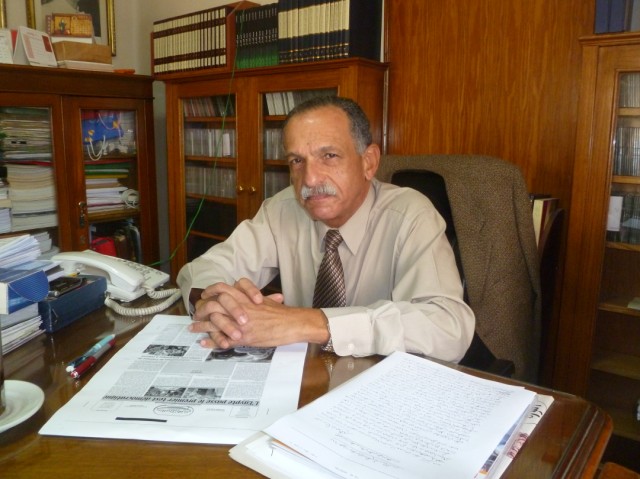


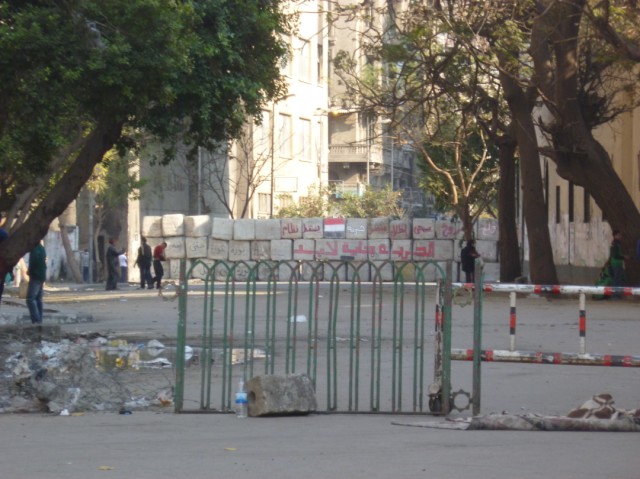
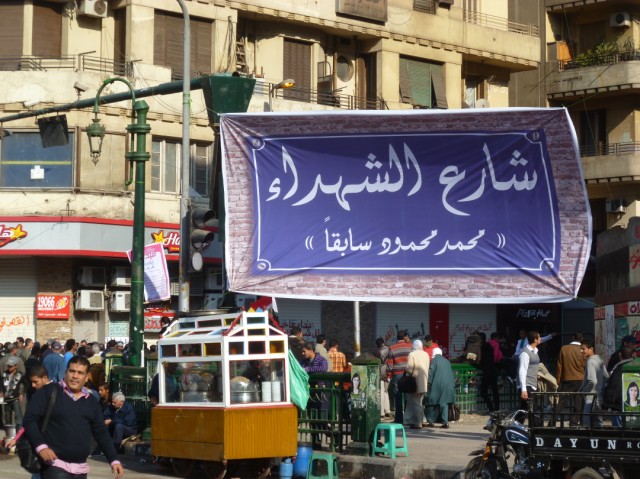


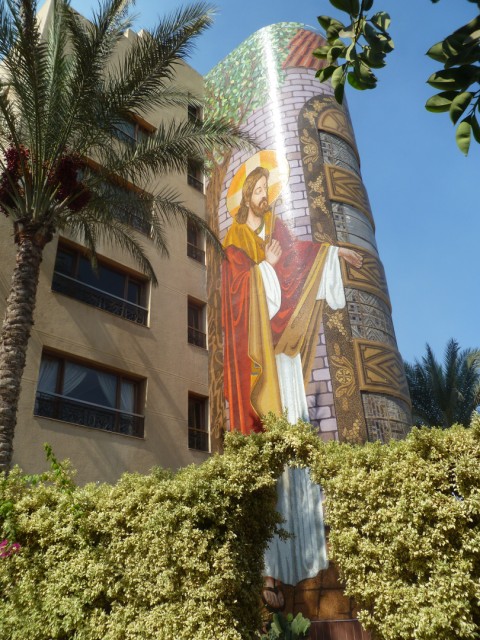
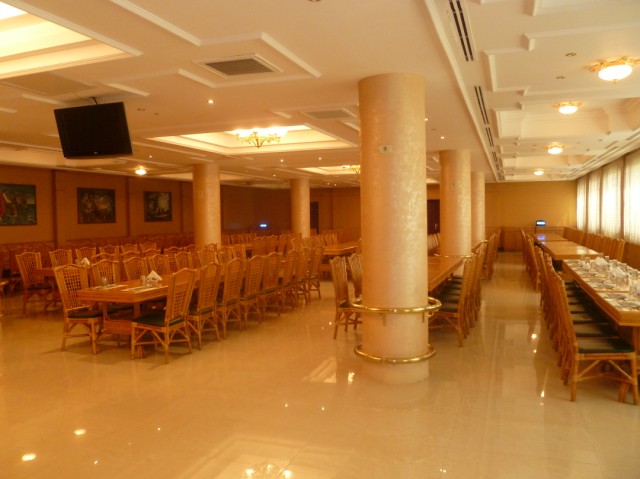



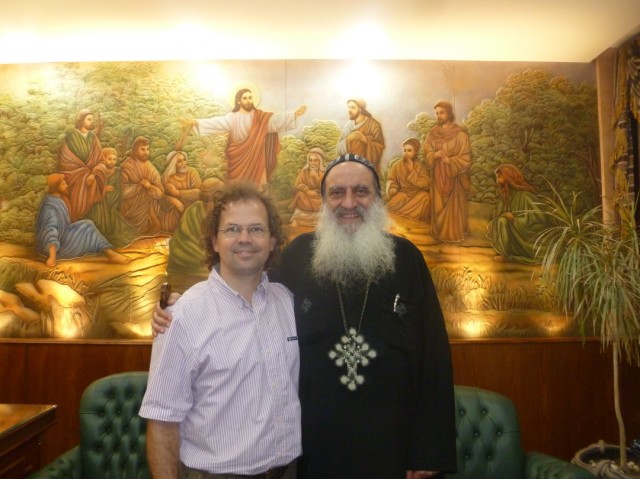

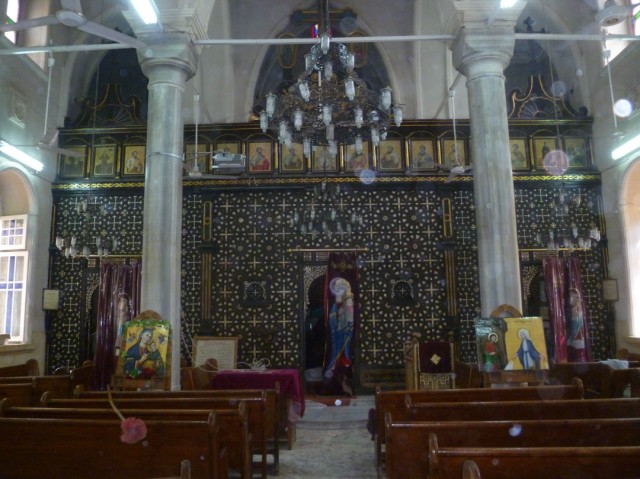


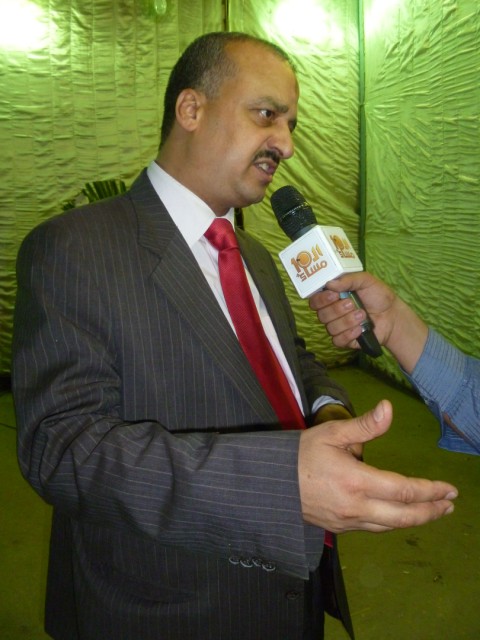

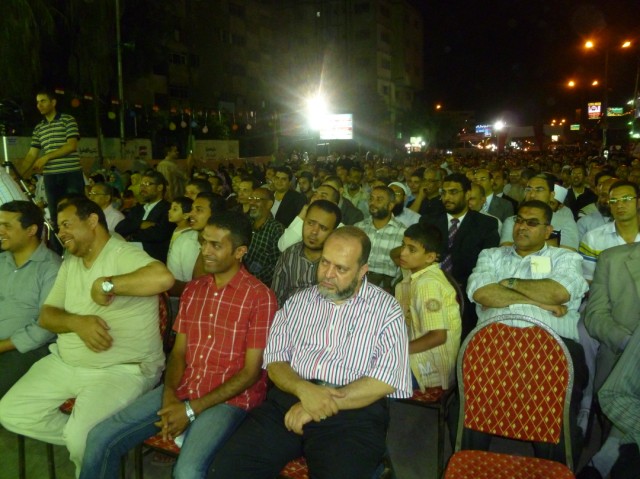

 Jayson Casper