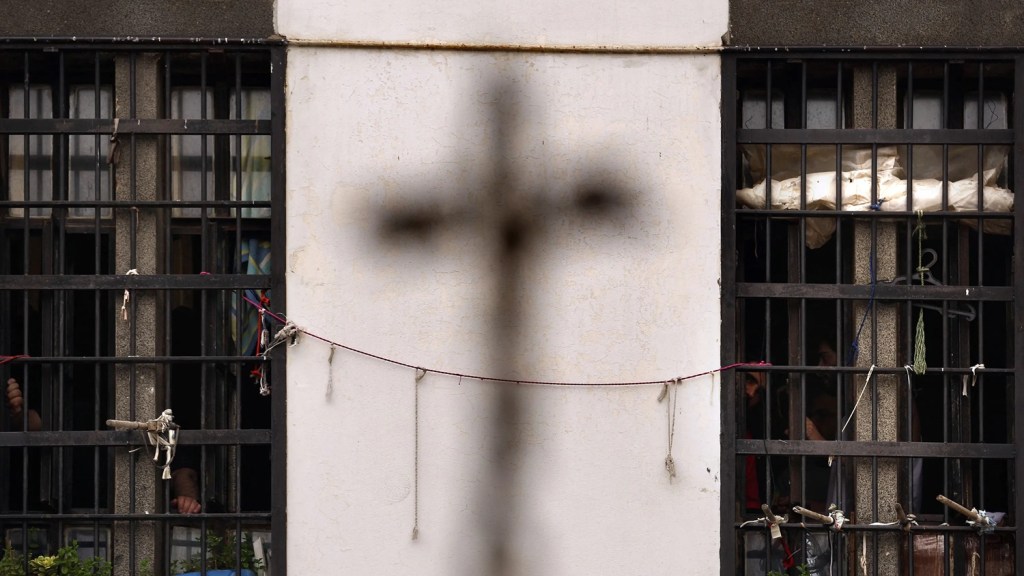
Maya Yamout stared at the hardened jihadist sitting across from her over a plastic desk in the unkempt library prison. Books littered the floor. The man, a veteran al-Qaeda militant in the notorious Block B of Lebanon’s Roumieh jail pushed forward a glass of tea.
“Where’s the sugar?” Yamout asked.
The curt question fit their relationship. In their previous brief encounters, the prisoner called Yamout a spy, a pig, and all manner of insults that belittled her as a Muslim woman who did not wear a veil.
Yet this time, her mischievous smirk made the terrorist smile. Two weeks earlier, when he was sick, Yamout inquired about his health from prison guards and brought medicine and shampoo on her next visit. Once he recovered, he invited the visit, prompting the nervy but playful exchange. Sensing a breakthrough, Yamout proposed therapy. He accepted.
Eventually, filled with shame, he apologized for how poorly he treated her.
“To reach a prisoner, you have to bond over something,” said Yamout, the cofounder of Rescue Me, a Lebanese crime prevention and deradicalization organization.
But Yamout is clear: This something should not be religion. She’s found that speaking about faith often gets entwined in politics and leads to endless debate. It also rarely addresses what radicalized a militant in the first place.
Yet Marwan Ghanem, a priest in the Maronite Catholic church and president of the Lebanese chapter of Prison Fellowship International (PFI), takes the opposite approach. He centers his ministry on the story of Jesus and Zaccheus, believing the tax collector’s model of repentance can help any prisoner restore a debt to society.
Yamout and Ghanem worked independently in separate sections of Roumieh but met often for mutual encouragement. Despite their differences, when Yamout left in 2024 to pursue a PhD at the University of Swansea in the UK and budget restrictions at Rescue Me pinched its ability to go into prisons, she asked Ghanem to continue her work with extremists. She simply counseled him to go slow with religion, avoid provocation, be patient if insulted, and remember the prisoners’ humanity.
“Kill them with kindness,” Yamout said, “and kindness will prevail.”
Rescue Me, which Yamout and her sister Nancy founded in 2011, primarily worked among at-risk youth in the Hayy al-Gharbia neighborhood of Beirut until funding cuts in 2017 curtailed its service among the Lebanese poor as well as Syrian and Palestinian refugees.
Many in hopeless situations became easy targets for Islamic extremist groups, she discovered. And when prison overcrowding assigns ordinary criminals to Block B—designated for terrorist offenses—even the nonreligious can be radicalized through their need to belong, Yamout said.
She said Block B extremists fall into four categories. A quarter of her cases sought retribution for wrongs they suffered or the poverty they endured. Another quarter put a religious overlay on their frustration, while 35 percent did the same with politics. The remaining 15 percent are simple psychopaths—“I joined ISIS to smell the blood,” one told her.
Another prisoner she met fell into the second category. Born into Lebanon’s impoverished northern city of Tripoli …
This article was originally published at Christianity Today on December 3, 2025. Please click here to read the full text.

 Jayson Casper