Dr. Kamal Boraiqa is a lecturer at al-Azhar University and a member of al-Azhar Center for Dialogue, the al-Azhar Observer for Combating Extremism, and the Egyptian Family House. With a PhD from al-Azhar in Islamic Studies, he has served as an imam at the Santa Rosa Islamic Center in the United States and as a visiting scholar at the UK’s Birmingham University Center for the Study of Islam and Muslim-Christian Relations, and is a member of the African Union steering committee to link policy makers and religious leaders.
Dr. Kamal, as an al-Azhar scholar, what aspects of Pope Francis’ visit and speech resonated with you the most, especially in terms of your responsibilities in dialogue?
The meeting itself was a message to the whole world that the three heavenly religions – Islam, Christianity, and Judaism – are against violence, fanaticism, and radicalism. One who contemplates the speeches of Pope Francis and Sheikh Ahmed al-Tayyib will learn many lessons.
First, that faith is incompatible with violence, for violence is the negation of every authentic religious expression. Religious leaders are called, therefore, to unmask the violence that masquerades as purported sanctity and is based more on the “absolutizing” of selfishness than on authentic openness to the Absolute. We have an obligation to denounce violations of human dignity and human rights, to expose attempts to justify every form of hatred in the name of religion, and to condemn these attempts as idolatrous caricatures of God. Holy is his name, he is the God of peace.
Religion, however, is not meant only to unmask evil. It has an intrinsic vocation to promote peace, today perhaps more than ever. This is done through teaching the younger generations, because education becomes wisdom if it draws out of men and women the very best of themselves, in contact with the One who transcends them and with the world around them, fostering a sense of identity that is open and not self-enclosed.
Sincere dialogue is the only alternative to civilized encounter, lest we are left with the incivility of conflict. Wisdom seeks out the other, overcoming the temptation to rigidity and closed-mindedness. It is open and in motion, at once humble and inquisitive. It values the past and sets it in communication with the present, within suitable hermeneutics.
Pope Francis demonstrated this when opened his speech with “As-Salaam Alaikum.” This traditional Muslim greeting in Arabic means, “Peace be upon you,” and reflects his great respect and appreciation of the Muslim faith.
But he followed up also with a practical call. He said that in order to prevent conflicts and build peace, it is essential that we spare no effort in eliminating situations of poverty and exploitation where extremism more easily takes root. He also spoke forcefully about blocking the flow of money and weapons to those who provoke violence.
How does al-Azhar contribute to the fight against radicalism?
Al-Azhar’s strategy to combat radicalism is both local and international. Its system of education is built upon layers and layers of exchange through dialogue and the acceptance of difference of opinion and interpretation. Al-Azhar’s moderate curricula teaches and encourages the proper understanding of Islam that is far away from extremism. It reflects the true spirit of Islam and the essence of Islamic heritage in both rationality and rhetoric.
Spiritually, al-Azhar embodies Islamic moderation and tolerance, the two fundamental characters of the three monotheistic religions in general…
Please click here to read the full interview at Informed Comment.
This article was first published in the April print edition of Christianity Today.
The deadliest incident faced by the persecuted church last Christmas wasn’t radical Islamists. It was alcohol.
Liquor mixed with aftershave killed about 50 people at Christmas parties in a Pakistani village, and sickened about 100 more.
In Pakistan, as in many Muslim-majority nations where Shari‘ah law forbids drinking, alcohol is closely identified with Christianity. The nation’s primary alcohol producer, for example, riffs on the Bible in advertisements. Founded in 1860 by the British, Murree Brewery’s slogan, “Eat, drink, and be Murree,” echoes the repeated biblical idiom for short-term pleasures.
Perhaps as surprising as the existence of a Pakistani brewery is the fact that 12 Muslims were among the victims of the fatal Christmas parties. But in 2007, then–Murree CEO Minnoo Bhandara told The Telegraph that 99 percent of his customers are Muslims. And in the Middle East, alcohol sales increased 72 percent from 2001 to 2011, according to market research.
Still, in most Muslim countries only Christians may buy or consume alcohol. But not all do. Wilson Chowdhry, chairman of the British Pakistani Christian Association, estimates that about half of Pakistani Christian men drink. Roman Catholics are slightly more inclined; Protestants less so. But the women of both branches of Christianity, he says, are fully opposed.
Chowdhry, an evangelical, believes alcohol is licit for the Christian; but in deference to his wife, he does not drink. Common arguments in Pakistan will feel familiar to Americans…
Please click here to read the full article at Christianity Today.
The New York Times carried a very Christian op-ed recently, penned by a Turkish Muslim.
Mustafa Akyol is one of Turkey’s leading journalists, and argues that the crisis in the Muslim world today can be solved by turning to Jesus as example.
But first, a primer for those who don’t know the basics:
While Muslims respect and love Jesus — and his immaculate mother, Mary — because the Quran wholeheartedly praises them, most have never thought about the historical mission of Jesus, the essence of his teaching and how it may relate to their own reality.
Here is the historical comparison. The Jews of Jesus day, he said, were frustrated by their domination by Rome. Remembering well their former political golden era and ongoing religious claim of God’s favor, they found it very hard to adjust to their status as an oppressed client state in a global empire.
There were two primary reactions: the Zealots who resisted and the Herodians who collaborated. And these patterns mirror the current Muslim world:
The Islamic world has been in a crisis since the 19th century … because it was outperformed, defeated and even besieged by Western powers. Islam, a religion that has always been proud of its earthly success, was now “facing the West with her back to the wall,” causing stress, anger and turmoil among Muslims.
…
Modern-day Muslims, too … are haunted by the endless struggles between their own Herodians who imitate the West and their own Zealots who embody “archaism evoked by foreign pressure.” He pointed to modern Turkey’s founder, Mustafa Kemal Ataturk, as an “arch-Herodian” and the “Central Arabian Wahhabis” as arch-Zealots.
Into the divide steps Jesus, he said, but also the Pharisees who are well represented in Islam today:
While being pressed by a foreign civilization, they are also troubled by their own fanatics who see the light only in imposing a rigid law, Shariah, and fighting for theocratic rule. Muslims need a creative third way, which will be true to their faith but also free from the burdens of the past tradition and the current political context.
And here, Jesus is necessary:
No Muslim religious leader has yet stressed the crucial gap between divine purposes and dry legalism as powerfully as Jesus did. Jesus showed that sacrificing the spirit of religion to literalism leads to horrors, like the stoning of innocent women by bigoted men — as it still happens in some Muslim countries today.
He also taught that obsession with outward expressions of piety can nurture a culture of hypocrisy — as is the case in some Muslim communities today. Jesus even defined humanism as a higher value than legalism, famously declaring, “The Sabbath was made for man, not man for the Sabbath.”
And Akyol’s closing plea:
Can we Muslims also reason, “The Shariah is made for man, not man for the Shariah”? Or, like Jesus, can we also suggest that the Kingdom of God — also called “the Caliphate” — will be established not within any earthly polity, but within our hearts and minds?
If Jesus is “a prophet of Islam,” as we Muslims often proudly say, then we should think on these questions. Because Jesus addressed the very problems that haunt us today and established a prophetic wisdom perfectly fit for our times.
The wisdom of Jesus transcends Christianity. Gandhi is perhaps the best example of successful application outside of faith. There is no reason Muslims cannot also benefit.
But can wide transformation come through Jesus’ teaching alone, apart from his equally weighty assertions of his (and through him, man’s) unique relation to God? Can those who rightly see themselves as God’s slaves advance in Jesus’ mission of civilization and spirit, unless also seeing themselves as his sons?
All success to Akyol and other Muslims who walk this path. May they find Christians to be an encouragement along the way.
You know best the worth of a woman. You know what is timeless, you know what is cultural.
Help Egypt to know as you do, and act accordingly.
Troubled by rising divorce rates, the president pushed for reform. Hoping a standardized process might curb rash decisions, he asked administrative witness and registration be made mandatory.
But the top religious authority ruled against it. Islamic law permits a woman to be divorced orally, with no witnesses. Registration is advisable that the woman might know her rights. But even at the moment of divorce, neither her consent nor presence are required.
God, you know if this ruling accords with Islam as you intend it. But all agree on the importance of family. Preserve and strengthen this core unit of society. Protect and enable the woman within it.
What is her best role, God? What are her firm rights? Where lie her responsibilities?
Likely unrelated but unmistakably poignant, not long thereafter the president appointed Egypt’s first female governor.
God, you know if this authority accords with Islam as you intend it. To date there has been no noticeable religious criticism. But her governorate is known for Muslim interpretation that limits the public leadership of women.
Bless her in her role, her rights, and her responsibilities.
Bless the president as he seeks to honor women and challenge religious conservatism.
Bless religious conservatives, as they seek to honor you and women according to conscience.
Bless Egypt, that she would find your way amid interpretations.
And bless the Egyptian woman, wherever she is to be found.
Translation: Blowing up a pagan temple in Palmyra.
Two days ago I shared my new article at Christianity Today contrasting Muslim and Christian polls about eschatology. As ISIS surged in the Middle East, it activated also Christian visions of Armageddon.
But it is good also to look at the raw material. This article by Josh Landis contains many interesting tidbits on how Syria ignites the Muslim imagination. Not only the sometimes jihad-bent Salafi trend can be animated, but the generally assumed peaceful Sufis also see the early centrality of Sham, as greater Syria is called in Arabic.
If some judge this as confirmation of Islam’s essential violent core, here is one passage to highlight. I suppose it could be read either way, but it does show the focus of the early community on empire-building:
Salafi-Jihadis may be very different from classically conceived Jihad but they believe that they are continuing in the footsteps of an old tradition which goes all the way back to the earliest days of the Prophet.
Whilst it is noteworthy that Jihad occupied a very small part of the Prophet’s life, the first books written about his life was about his battles. From there a whole literary genre called maghazi developed.
Moreover, there are historical compendiums such as Futuh al-Buldan of al-Baladhuri, one of the earliest surviving texts on how Islam conquered the classical world with offensive jihad.
Apart from the jurisprudence dealing with the legal issues surrounding the concept of religious warfare, there are plenty of works written on the battles of the Companions, as well as books dealing with the concept of Futuwwa, martial and spiritual chivalry, and of course there are biographies of famous warriors.
Contrast, perhaps, with the Civil War and WWII literature popular among Americans. Yes, it is a contrast between a nation and a religion, and therefore not exact.
But it also highlights the difficulty of examining Islam, which stands in between ‘religion’ and ‘nation’.
Let it at least be an example of the shared propensity of mankind to glorify battle. Most Muslims, and Americans, would quickly defend the rightness of their particular historical cause. Perhaps they are not wrong.
But allow it to give pause in defending the rightness of any particular current cause – religious, national, or otherwise.
And if you like, review again the CT link showing how some read forward the battle into the future, perhaps the near future, perhaps even the present.
This article was first published in the Jan-Feb print edition of Christianity Today.
Jesus did not show up to defend ISIS—and the first to celebrate was a Muslim.
“The [ISIS] myth of their great battle in Dabiq is finished,” Ahmed Osman, a Free Syrian Army officer, told Reuters in October after coalition forces drove more than 1,000 extremists from the backwater Syrian city known as the Armageddon of Islamic eschatology. The jihadists had expected the Messiah to appear and bloody his lance on approaching Christian crusaders.
Muslim belief in the end-times return of Jesus may seem surprising, but according to recent polls, they expect him with greater anticipation than do many American Christians.
A Pew Research Center survey in 2012 found that more than half of Muslims in Iraq, Lebanon, and Tunisia—and just under 50 percent in Morocco and the Palestinian territories—believe in the “imminent return” of Jesus. Outside the Arab world, more than half of Muslims in Turkey, Pakistan, Malaysia, and Thailand say Jesus will return to Earth in their lifetime.
By contrast, a 2015 poll by the Brookings Institute found that only 12 percent of US evangelicals believe that Jesus will return in their lifetime.
Past polls communicate a greater expectancy. In 2010, Pew found that 27 percent of US Christians expected Jesus to definitely return within the next 40 years, while another 20 percent found it probable. Among white evangelicals, 34 percent said “definitely” while 24 percent said “probably.”
The Qur‘an alludes to the return of Jesus (accompanied by a figure called the Mehdi), who on the Day of Resurrection will be a witness against Christians who claim him as the Son of God. But Muslim eschatology is derived primarily from Islamic traditions that have varying degrees of canonicity.
The exact timing of events does not tend to be the concern of Muslim theologians. But the general narrative is that Jesus will descend to Earth, kill the pigs, break the crosses, perform the pilgrimage to Mecca, defeat the Christian armies of Rome, kill the Antichrist, and usher in a period of worldwide Islamic prosperity.
Please click here to read the full article at Christianity Today.
In 2008 a Moroccan man and his 17-year old wife immigrated to America. Not long after she filed a restraining order against him, claiming her husband was raping her. The husband did not deny their sexual relations were non-consensual, but said that in his religion, the wife was supposed to submit and do all that he desired of her. The New Jersey judge found that given his understanding of Islam, he did not intend to commit a crime, and was therefore innocent. The restraining order was denied.
Cases like this set off alarm bells that shariah law is coming to America, and in fact is already here. Called “creeping shariah,” this case is given as just one further example of the United States nation forsaking its heritage in an effort to be politically correct and yield to the pressures of local Muslims to live by their own laws, and not our own.
But according to Eugene Volokh, a conservative law scholar at UCLA, it is quite the opposite. Where US judges have made reference to shariah law, they do so within parameters long established in American legal precedent. He notes, importantly, that the judge in the New Jersey case made a legal error, overturned by a higher court which granted the restraining order.
In the effort to understand this controversial and inflammatory subject, his explanation proved very helpful. Here is a list of what is and is not allowed in the American judicial system:
Allowed: Distribution of inheritance according to religious motivation
Not: Asking the court to divide inheritance according to shariah law
US law allows freedom of contract and disposition of property. One may divide one’s property in a will according to whim, or ask a religious scholar to divide it according to shariah law. But the court does not accept competency to interpret religious laws, and would reject a request asking it to do so.
Allowed: Application of foreign law to determine marriage or overseas injury
Not: Specifics of foreign law against US code or procedural discrimination of testimony
US law will accept that two foreign individuals are married if they were legally married according to the law of their country of emigration. If in foreign nations marriage is determined according to shariah, then US courts must take this into consideration for the determination of marriage in a domestic dispute. Foreign acceptance of polygamy, however, has no application in US courts.
Similarly, if an American is injured abroad and sues a company with representation in America, tort laws are determined by the nation in which the injury occurred. But should foreign tort laws limit the value of female testimony, as for example in some understandings of shariah, this has no carry-over consideration in the American lawsuit.
Allowed: Exemption from work rules for religious reasons
Not: Unless it imposes ‘undue hardship’ on an employer or is against government interest
US law permits reasonable accommodation for religious belief, evaluated on a case-by-case basis. So wearing a hijab at work or taking time from the work day to pray may or may not be granted, based on the nature of the employment in question. A famous ruling allowing Muslim taxi drivers to decline a customer carrying alcohol may or may not have been judged correctly, but what is important is that it was based on existing American precedent, not in understanding what is right in Islamic shariah.
Allowed: Granting accommodation to students or clients that impose only modest costs on the granting institution
Not: Evaluation of these requests on the basis of which religious group asks for them
US law allows public and private institutions to better serve citizens and customers by appealing to their religious sentiments, as long as this does not damage the public interest as a whole. Banks have offered sharia-compliant loans, for example, and schools with high density Muslim populations have granted a full day off on holidays rather than just excusing Muslim students. Examples of this sort apply equally to all religious petitions, and must not be judged on the basis of which religion benefits.
Allowed: Efforts to legislate Islamic morality in heavily populated Muslim areas
Not: Unless it violates the Free Speech Code or Equal Protection Clause
US law permits citizens to lobby government to pass laws reflective of morality. In local areas therefore, Muslims are as free as others to pass legislation barring alcohol, for example. Should any locality, however, seek to encode restrictions on “blasphemy” or limit the rights of women, it will stand in clear violation of existing US law and be struck down by the courts.
In addition to Volokh’s analysis, New York attorney Sadakat Kadri wrote in Heaven on Earth: A Journey through Shari’a Law from the Deserts of Ancient Arabia to the Streets of the Modern Muslim World, that US federal arbitration law has been on the books since 1925.
Arbitration law has legitimized religious tribunals for Christian conciliators and the Jewish Beth Din, giving them force of law to issue legally binding decisions. To deny similar right to Muslims, within the context above, would require reforming that law to impact all religious communities.
There are many cases offered by those who warn of creeping sharia, and each must be evaluated on its own merits. There may be examples–many or few–in which the above descriptions have been violated. The above is offered to all who have been affected by the clamor that “the Muslims are coming.”
Indeed, they are already here and are coming as citizens within a nation of laws. They are undoubtedly changing the demographic and culture of our country, as every set of immigrants has done before. That they are Muslims, outside of the general Christian heritage of most previous groups, does add a different application of the American guarantee of freedom of religion. It may also result in these newer Americans who, either unaware or rejecting of American liberty, seek to illegally restrict individuals in their own communities.
But throughout the nation’s history the constitution and bill of rights has worked remarkably well. It should be trusted to continue, no matter the unfamiliarity of those who believe also in shariah. The United States will honor them within reason, and curb any excess that violates our order. On many issues worthy debate must take place. But we must not let fear or demagoguery permit generalization or discrimination.
Let the law decide.
This article was first published at the Zwemer Center.
This article was first published at Christianity Today in the April print edition.
With the lilt characteristic of a Southern megachurch pastor, Bob Roberts Jr. introduced the most significant Muslim statement on religious freedom in 1,400 years.
“I am a Texan, an evangelical, and a Baptist,” the NorthWood Church leader told the crowd of more than 250 leading Muslim clerics from around the world. “You have made my job to build bridges so much easier. You have gathered to call people to change.” He drew hearty applause.
“It is a very promising initiative. You could even say it is groundbreaking,” said Medhat Sabry, the Anglican Communion’s dean for Morocco and one of several non-Muslim observers (alongside Roberts) to the declaration’s signing. “But it is way too early to tell.”
This is because—from Cairo to Amman to Nazareth to Baghdad—the news caused barely a ripple in Christian communities in the Middle East and North Africa, whom the document is meant to comfort. Some Arab Christians saw a headline in the local news. Others didn’t hear of it at all.
Please click here to read the full article at Christianity Today.
From al-Monitor, a unique account of a Palestinian Christian in Gaza who daily accompanies his blind Muslim friend to the mosque:
“Growing up, Hatem would always perform prayers at the mosque, but after the incident five years ago, he was no longer able to do so because there was no one available to guide him there. I saw how he would shed tears whenever the call to prayer would come from the mosque. That is why I decided to take him to the mosque to pray as he did in the past.
“The first day I helped him get to the mosque, four years ago, he was so happy. So I told him I would be taking him every day to perform all the prayers. He was thrilled to hear my decision. It was as if he had found something he had lost for a long time.”
Hatem has been friends with Abu Elias for over fifteen years, who also helps him go to market and reads him the daily news. Both explain the service in reference to friendship and national solidarity over and above any particular religious devotion.
But allow also their example to be an inspiration to Americans. No matter how different the context, kindness trumps ideology.
This article first appeared at The Table. For more articles featuring thoughtful Christian perspectives on the the nature and embodiment of love, growing through suffering, and acquiring humility, click here.
Translation: Love your enemies, bless those who curse you, do good to those who hate you, pray for those who persecute you, and whoever strikes you on the right cheek, turn to him the other also
I have long taken pride in the distinctive teaching of Christianity to love your enemy. It was not until I began learning Arabic I better appreciated what this called for.
Perhaps like many American Christians my pride was an identity marker more than a mark of Christ. I had never suffered for my faith, nor had any enemies to speak of. But in a pluralistic world of competing religious claims, widespread political polarization, and far-flung military adventures, ‘love your enemy’ became a mantra to lift me out of the morass and place my feet firmly on the moral high ground.
Only Jesus commands this, I thought; my Christian religion is different. I had always believed it was true. This was confirmation it was better.
The Sermon on the Mount allows us to cherish our ideals, with full admittance of the still mostly philosophical difficulties. Who has ever forced us to walk a mile? And beggars? They’re all in the big city. Turning the other cheek would be hard, but the envisioned moral strength? Powerful.
One morning years later I awoke surrounded by posters of smiling Arab pop stars. During vacation break from language school in Jordan I arranged for an immersion experience in the ancient city of al-Karak, home to a 12th century Crusader castle. One-quarter of the population remains Christian; one local family took me in and displaced their preteen daughter from her room.
But there at the door by the light switch a prominently placed sticker served as a reminder each morning as she left the room. Ahibbu ‘adakum. Love your enemies.
I went to the Arab world imagining a place where this command might be more practical. Muslims were not essential enemies, of course, and Jordan was well known as a place of coexistence. But perhaps they were theological enemies? In any case the region was characterized with tales of persecuted Christians. How would ordinary believers live the Sermon?
Ihsanu illa mubghideekum, the sticker continued. I was less familiar with this injunction. Baariku la’aneekum. Perhaps like many American Christians, Jesus taught me from the mountain. What I would come to learn is that Arab Christians quoted his Sermon on the Plain. Do good to those who hate you. Bless those that curse you.
The family I stayed with in al-Karak was well respected with no known enemies. But every morning their daughter entered a Muslim culture armed with instructions that have buoyed Arab Christians for 1400 years. Whether jizyah and jihad, or colleagues and citizens, they have been the minority ‘other’. American Christians, white-skinned at least, have little idea what this entails.
Going to Egypt, later still, I saw the results first hand.
I wished eagerly to explore the context. Both Matthew’s and Luke’s account end with the command to pray for those who treat you wrong, and more than other places in the Arab world, Egypt was understood to be a place of Coptic suffering. ‘It takes a presidential decree to fix a church doorknob,’ I was told. ‘Christians get attacked in their villages, and they are the ones put in prison.’ Over time I would learn that the reality is quite nuanced, but the sentiment is telling both for visceral incidents of suffering as well as the ethos they produce. Many have suspected that Christians of the region had bought a modicum of peace in exchange for evangelistic mission, beaten down by the task of communal preservation. I experienced Copts as simultaneously integrated in society and withdrawn into their churches. They would speak of Muslims as friends, but whisper of Islam as an enemy ideology.
But what of the celebrated Sermon on the Plain? How would they not just love, but also bless? Specifically and practically, how would they do good?
In one city south of Cairo I interviewed a man who provided a commendable, if telling example. Due to government difficulties in extending services to underdeveloped areas, Muslims and Christians have learned to take care of their own. Until recently Islamist groups had long provided a safety net for the majority, while the Orthodox Church ensured care for Christian widows and the Coptic poor. Neither group would profess denying help to the religious other, but both mirrored the reality of increasing emphasis on religious identity.
This man worked with a Christian agency that aimed to break the dichotomy and serve all. Unaffiliated with the church, Muslims were the employed majority as well as present on the board of trustees. By no means were they an enemy, but Christ’s love to the other was clearly among his motivations.
A jovial and cheerful man, he turned deadly serious on my next question: ‘To better reach your community, would you consider partnering with a Muslim organization?’ It seemed innocuous enough but touched a deeply sensitive nerve. ‘I swear by the Messiah,’ he answered angrily, ‘there is not one Islamic organization that also takes care of the Christians!’
He may be right; he was certainly the expert. But from the heart, the mouth speaks. Here was one of the best examples of a Christian doing good to people who many in his community would internally generalize as a sort of enemy. But despite his charity, he ultimately demonstrated an uncharitable spirit. Let there be little condemnation, but the question is fair though terribly hard: As I Corinthians 13 warns, did he risk becoming a resounding gong?
Nuance is necessary, for the other is not the enemy unless they press against you. For most Arab Christians the ordinary Muslim is an ordinary person, though the Islamist can be a threat in the desire to set his creed as the organizing principle of society. In a region with much religious conservatism, the line between Muslim and Islamist can be difficult to draw. This man railed against the latter, and perhaps with good reason. But it was clear his love for the other did not extend to love for the enemy. Instead of doing them good, whatever that could have meant practically, he was in existential competition.
In the years that followed Islamists rode a revolutionary wave into the presidential palace. Despite their conciliatory discourse with Western audiences, in Arabic some of their members and supporters uttered vile and vitriolic threats against their opponents, Christians included. One year later as Copts joined the masses that turned against the new political elite, they paid the price as their churches were burned throughout the country. Christians were praised for their patience, and rallied behind the military and millions of Muslims to oppose the Islamist enemy. In this case the term is at least rhetorically appropriate; once chosen as legislators and government ministers, they were now rejected as terrorists and an internationalist cabal.
Western opinion is divided over the veracity of this accusation, but as concerns local Christians it is largely irrelevant. Certainly they suffered; certainly they ascribed to widespread public messaging. But in the vanquishing of their enemy almost no voices of love were offered. These need not be in dissent; they might only be in pleas for due process or care for the relatives of the justly imprisoned. During Islamist rule many Christians worried and some chose to emigrate. Some, probably many, prayed for their new president. But if a few have since sought to bless the fallen Islamists who curse them still, their example has not moved the needle of Coptic opinion, where nary a tear has been shed.
How then is this spirit present in a ten-year-old girl who lost everything?
If Islamists in Egypt were a challenge, even a disaster, in Syria and Iraq they were a catastrophe. When the so-called Islamic State overran Mosul in July 2014, thousands of Christians left their homes and fled to Kurdistan. Among them was Myriam, who with her family lived in a half-built shopping mall. Interviewed a year later by the Christian satellite network SAT-7, her testimony went viral.
‘I will only ask God to forgive them,’ she said when asked how she felt about those who caused this tragedy. ‘Why should they be killed?’ Contrast her with the opinion of some Americans, who wonder why we have not yet bombed ISIS into oblivion.
Perhaps it is the depth of the loss that summons the breadth of compassion. Perhaps children are not chiseled as rigidly as adults. Beautiful testimonies of forgiveness have been offered by Egyptian Christians as well, whose family members were martyred by ISIS in Libya. Unjust suffering recalls a crucified Jesus, whose dying prayer to God was that sin not be accounted to his tormentors. From afar we recoil, and demand justice. Likewise, Egyptian Christians felt vindication when their government bombarded ISIS in Libya the next day.
Let them not be blamed on account of ‘love your enemy’. The children of Israel broke into song when Pharaoh’s army drowned in the Red Sea. David prayed for deliverance from his enemies and a psalm of exile wished their children smashed against the rocks. Romans established the role of government in the preservation of order and punishment of the wrongdoer. And one day, Christ himself will wield the rod of iron as his enemies are fashioned into a footstool. Outcry against suffering is natural and must be voiced for emotional health. Justice is real, necessary, and must never become the antonym of love.
But mercy triumphs over judgment, and love covers over a multitude of sins. The Christian ideal keeps no record of wrongs, and hopes all things. This seems impossible when facing an enemy of any caliber, let alone the Islamic State. It almost seems perverse. The higher calling of love must uphold the lower calling of justice, and demands great discernment in weighing Jesus’ instruction to be wise as serpents yet innocent as doves.
Arab Christians are in an unenviable position. The Egyptian church must navigate this wisdom-innocence paradigm with the utmost care. The Syrian-Iraqi church has been scattered. If they have not yet lived up to the fullness of ‘love your enemy’ it only serves to remind us how far we are from what they endure. That God has kept them from abject loathing is sign enough of the Spirit’s power. That they fill up in their flesh what is lacking in Christ’s afflictions is reason enough to humbly bow and support them in prayer.
Unfortunately, my proximity has not enabled the vision of practical suggestion. Lord willing, the eyes of a foreigner have helped some see afresh the demands of the gospel. Ultimately, application is up to them.
But over the years I have come to see the Sermon on the Plain as a better template than the Sermon on the Mount, especially if read in reverse.
Pray for those who mistreat you. If persecution is rare, mistreatment is not. If love if ethereal, prayer is grounding. With an act of the will I can choose to place my enemy before God. Perhaps I even begin with the imprecatory psalms. But rather than grumble or plot revenge, I turn the matter over to him.
Bless those who curse you. Once in God’s hands the prayer can change, even with rising of the nature of offense. No matter how difficult in our power, the Spirit’s power enables our will to progress further. The step is tangible, but nothing is yet asked of the heart. With gritted teeth I seek God’s grace not only for my hurt, but for the ultimate well-being of my enemy.
Do good to those who hate you. But again, God pushes the envelope as the severity of opposition increases. Anyone might curse me in a moment of frustration. Hatred takes time. But in answer to a decision that hardens a heart, my decision is to loosen my own. In asking God to bless my enemy, he transforms me to do it myself.
Love your enemies. Whatever practical action results, something mystical occurs. At least, I can only trust God that it will. Somehow, and whatever it means and feels like, love happens.
It is this love that is the hallmark of Christianity, not my initial congratulatory pat on the back that I was born into and believed in a superior faith. This is the love that can transform conflict. But it is also the love that can get trampled underfoot.
Why has the latter been the trend for Arab Christians over the past 1400 years, as their numbers have dwindled to near extinction? Have they not loved enough? Have they not stood for justice? Have they compromised too readily? Have they allowed their hearts to harden?
We cannot know, and we dare not judge. Bear well that the sermon passage ends with a plea: Be merciful, just as your Father is merciful. Look upon them with sympathy, and upon the region. They are brothers in sisters in faith, within brothers and sisters in humanity. Surely among them are the ungrateful and wicked, but as sons and daughters of the Most High, in imitation we are commanded to be kind.
And remember, the Sermon on the Plain places the Golden Rule smack within the section on loving your enemies. It is among the most beautiful verses in Arabic: Kama tureedun an yafal al-nas bikum, afalu antum aydan bihum hakatha. Do not let the foreignness of the language exaggerate further the foreignness of the concept. Enemies need love even more than the rest of us. Invite Arab Christians to help us learn.
From the Jakarta Post: President Joko “Jokowi” Widodo (center), accompanied by State Secretary Pratikno (second right), talks with Nahdlatul Ulama (NU) advisory board chairman Maruf Amin (second left) at the State Palace on March 31, during the International Summit of The Moslem Moderate Leader.(ANTARA FOTO/Yudhi Mahatma)
Secretary of State John Kerry recently confirmed what most already knew: ISIS is committing genocide against Christians and other religious minorities in the Middle East.
Many Islamic leaders knew it too. In January, 200 Muslim religious leaders, heads of state, and scholars gathered in Morocco. They released the Marrakesh Declaration, a 750-word document calling for majority-Muslim countries to protect the freedom of religious minorities, including Christians.
Last week, another 300 Muslim religious leaders from about 30 countries did much the same. Gathering in Jakarta, Indonesia, the country with the largest Muslim populus and historically known for its religious peace, the leaders denounced extremism and addressed its causes.
Texas pastor Bob Roberts, who has been actively building relationships with Muslims, thinks this is a sign of things to come. Roberts was present at the Morocco conference but not Indonesia.
“Muslim majority nations are now making statements globally and nationally to push back on extremism, and you will see more of it,” the evangelical interfaith leader told CT. “This is sending signals to their citizens and the world that the tide is turning.”
The Indonesian conference was hosted by Nahdlatul Ulama (NU), the largest Muslim organization in the world, and was opened by the vice president of the officially secular country.
Please click here to read the full article at Christianity Today.
From an article at the Zwemer Center, written by a philosopher fed up with popular coverage of Muslim issues:
One philosophical distinction that may help navigate this discussion is between essentialism and nominalism.
Don’t stop reading, he makes it simpler, distinguishing between Islamic religiosity and Muslim religiosity. Ok, that still sounds complicated, but here is the test to see if a pundit weighs forth well on Islam:
Give an account of what the authoritative texts seem to say about a given issue. Quote them as they are without resorting to interpretation.
Describe the various interpretations offered by individual Muslims and groups of Muslims through time.
Failing to take step #1 results in ignoring the authoritative primary sources of authority for Muslims. Failing to take step #2 results in ignoring the history of interpretation of those primary sources of authority and the rich diversity among Muslims on issues.
Still hard for the non-specialist? Yes, I presume so. So here are the crib notes on how each side of the US media spectrum fails (with a special shout-out to you-can-guess-who):
Failing to take step #1 results in understanding Muslim thought as a mere form of individual or cultural relativism, which it isn’t. Now when MSNBC ignores step #1, you can fault them.
Failing to take step #2 results in forming gross generalizations that perpetuate ignorance and prejudice. Now when FOX News or Donald Trump ignore step #2, you can fault them.
Actually, both MSNBC and FOX News fail on both counts, as do many, if not most, of our politicians.
Allow me to take the issue from media analysis to personal kindness and broadminded generosity. Grant Muslims the dignity of belonging to an ancient tradition they strive to navigate in diverse ways. And grant Islam the dignity of diverse followers who cannot be reduced to a single interpretation.
Criticize both freely, as necessary. But do not reduce one to the other. Our identities are true, but they do not define us. Our religions posit truth, but we do not define them. This is as true of Muslims as anyone else.
Should this last thought grow too philosophical, the author reminds us even the professional ones know how to make fun of themselves:
If the distinction doesn’t help you, then chalk it up to another example of confusion about what a philosopher does and still one more example of wondering why anyone in the world would want to do what we do.
Have a wonderful day, once you have set forth the necessary and sufficient conditions for what it means to ‘have a day’ and what could possibly be the conditions for it to be ‘wonderful’.
Smile, but take his words seriously. America, hopefully in correctable ignorance, is taking a dangerous path.
If sharia law is for Muslims, what is its place in a Muslim-majority nation? If the answer seems obvious, that may be part of the problem.
But another part is understanding sharia law in the first place, and in a helpful article on the blog of the Egyptian Ministry of Foreign Affairs, Grand Mufti Dr. Shawki Allam elaborates on what it is, and what it isn’t:
Far from a medieval code of capital punishments, the Shari’ah is a dynamic ethico-legal system designed to safeguard and advance core human values.
In fact, just as the US Constitution references the basic human values of unity, justice, tranquility, welfare, and liberty, so too each of these is also a fundamental value of the Shari’ah.
He continues:
The rules of the Shari’ah are derived from the Qur’an and the model behavior of the Prophet Muhammad, peace and blessings be upon him, which complements and/or supplements the Qur’an on issues where it may be silent or require clarifying teachings.
“Islamic law” is not just the Shari’ah but rather is a methodology and the collection of positions adopted by Muslim jurists over the last 1,400 years. That period is marked by a remarkable intellectual diversity with dozens of schools of legal thought at one point.
Interpretation is the endeavor of scholars in each generation. In other words, some rules can change with time and place. The articulation of the Shari’ah is based on built-in mechanisms which aim for articulations of “Islamic Law” to be purpose-driven and considers the prevailing customary, social and political contexts of the time.
This makes the system fluid and dynamic.
And he concludes:
The flexibility and adaptability of Islamic law is perhaps its greatest asset. To provide people with practical and relevant guidance while at the same time staying true to its foundational principles, Islam allows the wisdom and moral strength of religion to be applied in modern times.
It is through adopting this attitude towards the Shari’ah that an authentic, contemporary, moderate, and tolerant Islam can provide solutions to the problems confronting the Muslim world today.
There are many good questions that could be put to the mufti. How would he explain such-and-such behavior of Muhammad? Is Muslim history in this-or-that phase in conformity with sharia, or against it?
But on the whole, his essay is a good reminder that neither Muslims nor sharia are a monolith. As some pull from the Islamic heritage to destroy the current age, others access it in conformity – and presumably both seek first and foremost a fidelity to religion.
But a key question comes to mind.
The Ministry of Foreign Affairs is an institution of the Egyptian state. This state’s official religion is Islam, but it also promotes a concept of equal citizenship independent of religious creed. Why then does the mufti say the following?
Muslims [my emphasis] are free to choose whichever system of government they deem most appropriate for them. The principles of freedom and human dignity, for which liberal democracy stands, are themselves part of the foundation for the Islamic worldview; it is the achievement of this freedom and dignity within a religious context that Islamic law strives for.
His opening sentence is a true principle. But it is true for Egyptian Muslims, as it is for Egyptian Christians and Jews. I am certain there is nothing sinister in the mufti’s words. He has been a staunch defender of the post-June 30 Egyptian state, which is greatly appreciated by the Copts.
But there is a prevalent understanding that equates a nation and its people with a particular faith. For Egypt, this is not wholly inappropriate, as the constitution enshrines sharia as the primary source of legislation.
The mufti’s point, however, is in choosing a system of governance. In this, Egyptians must be referenced, not those of a particular religious creed.
Consider this blog post of the Egyptian Ministry of Foreign Affairs, criticizing Western nations in the wake of the Russian plane crash disaster. In it Galal Nassar, editor-in-chief of al-Ahram weekly, accuses Western capitals of desiring the Muslim Brotherhood to rule Egypt, and makes the following point:
Centuries ago, the West had its own revolutions, and managed for the most part to separate church and state. Why do they think that we cannot do the same? Why do they hold us to ridicule, rather than show respect?
Indeed, it is a form of ridicule to assume the bigotry of low expectations that a people Muslim in religion must also be ‘Muslim’ in the application of sharia law, interpreted in its most illiberal form. Sharia can be a guide; it does not have to be a code. For millions of Muslims living in Western nations this is certainly true.
His point is understood that sharia is flexible and consistent with the modern world. But the question is important: Should it be legislated?
This, in fact, would be a good question for the mufti, one he does not directly address. The closest he comes is here:
Many people are under the impression that Egypt adopted French law. This is not the case. Islamic law was rewritten in the form of French law, but retained its Islamic essence. This process led Egypt to become a modern state run by a system of democracy.
This suggests his answer is ‘no’. In Egypt, sharia is a ‘source’ of legislation, though it is also ‘primary’. But even within his argument the mufti’s implicit understanding is that Egypt is Muslim.
If asked directly, perhaps he would not say it with such clear generality. But all the same he and Nassar reflect the tension inherent in discussing Islam. Religion … politics … identity … law … they are all mixed up together.
The mufti does a good job reminding us that sharia does not have to be scary. But it is still complicated. It always has been.
This article was first published at the Zwemer Center.
A little while back I was interviewed by Pilgrim Radio about my Christianity Today article on the growth of Christianity in the Arabian Peninsula.
Pilgrim Radio is a Christian non-commercial FM broadcasting network reaching the American West from Colorado to California. The mission is ‘to advance a program of Christian education using an artful blend of music and Scripture, stimulating instruction, interesting guests, and great books, all done in the public interest.’
The website carries only live content, so the director was kind enough to share the audio file with me. Please click on the player below if you’d like to listen in on the 27 minute show, on the His People program.
Coincidentally, the live program tonight (March 2) is an interview with Nicole Walters on worshiping with the Copts in Egypt.
Please click here to read the original article at Christianity Today, and here for a follow up interview CT did for a behind the scenes perspective. Click here for photos I took of the many churches being built in the United Arab Emirates.
Here and here you can read related stories from my trip at Lapido Media, about an English priest in Abu Dhabi engaging a Hack-a-Thon to strengthen migrant rights, and a missionary hospital in al-Ain that won the royal goodwill to make all the above possible.
Thanks for your interest, and I hope you enjoy.
When writing an article, though my name is given it is nice to stay in the background and let my sources tell the story. It is different getting used to radio, when the voice is mine. But this was my second effort (click here for the first — on ISIS and Christian response for the Dan Darling podcast), so perhaps more opportunities will come.
Many have praised President Obama’s recent visit to a Baltimore mosque and affiliated school. Others have been critical, but it is important to counter a rhetoric that is increasingly casting shadows upon fellow American citizens.
But here are two Western Arab voices that express a little concern. The first is a UK-based Muslim, Nervana Mahmoud. She cites official White House photos that present a ‘cropped’ picture of American Islam.
(Official White House Photo by Pete Souza)
The leader of the West’s strongest nation has opted to strip Islam from its centuries-old, colorful diversities and frame it within a monochromatic conservative style—a self-defeating approach from a man who advocated for diversity among weary Americans who wish to shelter their country from the turbulence of the Middle East. … The lack of non-Hijabi women among the attendees, even among the children, is striking.
Nervana counts herself a liberal Muslim, and wishes this sector had been highlighted. She is confused why a progressive American politician would choose such a mosque for the spotlight.
Non-Islamist Muslims exist in America as well as in their native countries. Iranian Americans, for example, will undoubtedly tell the president tales about oppression, dress code, and the Islamic Republic of Iran. Other liberal Muslims fight against segregation, enforcing Hijab upon children.
Almost all mainstream Muslim scholars agree that Hijab for pre-puberty children is not obligatory. The American leadership that fights the Islamic State’s oppression, however, seems tolerant of such indoctrination of children.
Coptic-American Maged Atiya suggests that no matter the mosque the venue would have been criticized as unrepresentative. But he is disappointed that such a cerebral president offered such an empty speech.
It is heavy on optimism, on declarations of belief in liberal values and tolerance, and on deep faith that fundamental forces will force a happy outcome. In short, that we are destined by the arc of history to a fair, just and tolerant outcome in any struggle.
The trouble with that view is that it offers no guidance to short-term policy that will actually lead to such outcomes in the long run.
… The Baltimore speech does American Muslims injustice by lack of acknowledgement of real barriers that stand between their desire to conform to a conservative version of their faith and yet integrate effectively into American society.
He laments Obama’s missed opportunity to really tackle this issue with substance. If so, he could have addressed the core competing values.
There are major differences between the ethos of conservative Islam with its backward glances and emphasis on community sovereignty and the liberalizing trend of American society with its emphasis on the liberation and autonomy of the individual.
Glossing over these differences leaves all exposed when the conflicts inevitably come to the surface. Bigots among American non-Muslims will insist that Muslims can never be “full Americans”, while bigots among American Muslims will insist that such differences are merely manifestations of irrational hatred of Islam. This is a disservice to any effective understanding and outreach between faiths.
I am sympathetic to both viewpoints, but also willing to propose an explanation.
Whether the choice to not wear hijab or sport a long beard and traditional clothing comes from conviction, compromise, or apathy, many of these Muslims mix easily into Western life. They may or may not believe fully the tenets of Islam, may or may not pray at home or the mosque. But in the panoply of American diversity they look more or less like everyone else, and thus, I imagine, draw neither the ire nor support of culture warriors.
Perhaps Obama chose to highlight such a mosque precisely because it draws such a visual image. You, too, are welcome in America. The vitriol of much political discourse targets you, and must be spoken against. Your clothing choices reflect your faith, and for this there is freedom. We must defend it vigilantly, and publicly.
If this is a sentiment behind Obama’s choice, it may also illumine his speech. The presidency is often more a bully pulpit than a university lectern. As hard as some are hitting Muslims these days, the force of rhetoric must be returned. Where fear and suspicion are preached, let principles and idealism respond.
But the criticism of both authors is fair. The complexity of this issue must be honored, and Muslims come in a million stripes.
But they also come as individual citizens. All but the tiniest minority deserve the full scope of American freedoms. American political leadership should do justice to both these realities.
Gathered at Cairo’s prestigious Dar al-Mudarra’at military complex in early December, 150 imams and priests heard some of Egypt’s highest religious authorities praise their participation in a three-year programme to deepen religious unity.
“Working together for the sake of Egypt – we are in great need of this slogan,” said Grand Mufti Shawki Allam, in reference to the Imam-Priest Exchange, an initiative of the Egyptian Family House. “But it is also the reality in which we live.”
The Egyptian Family House was created shortly after the 25 January, 2011 revolution against President Mubarak – in partnership between al-Azhar (Sunni Islam’s leading authority), the Coptic Orthodox Church, and Egypt’s Protestant, Catholic, and Anglican denominations. The Imam-Priest Exchange began in February 2013, as popular opposition to the Muslim Brotherhood and then-President Mohamed Morsi was coalescing throughout the country.
According to Abdel Rahman Moussa, an advisor to Grand Imam Ahmed al-Tayyib and speaking on his behalf for al-Azhar, “This scene is what we have dreamed of – a sincere expression of what Egypt is, the Egypt that God has preserved.”
“We were all wondering where Egypt was going,” said Bishop Mouneer Hanna Anis, whose Anglican church sponsored the training. “But now we celebrate the return of love and the brotherly spirit.”
Each year the Exchange brought together around 70 imams and priests from across the country. Four trainings of three days each had them live and eat together as they were encouraged towards a gradual but escalating partnership.
The themes? “Let us know each other. Let us coexist. Let us cooperate. Let us work together for the good of Egypt.”
Participants not only listened to academic lectures, but also actively toured the country. Egyptian citizens looked on astonished, but proud, taking selfies with imams and priests as they walked hand-in-hand down busy streets.
Their distinguished long robes, caps, and beards added to the gravity of ancient mosques, churches, and monasteries. Together they joined fellow citizens in celebrating the opening of the Suez Canal expansion. They rediscovered a shared heritage while exploring the Coptic, Islamic, and National Egyptian museums. And in the final session they visited practical examples of interfaith development work.
“We want to go where people have done things,” said Saleem Wassef, project manager for the Exchange. “The idea is to help them think out of the box, and consider how they can repeat these experiences back in their own communities.”
Moving from remedy to prevention
Religious leaders from the two different faiths visited each others’ places of worship.
This last marker is an important departure from the previous model of imam-priest cooperation, said Nady Labib, representing the Protestant Churches of Egypt. He criticised the “hugs and kisses” displayed in the media after incidents of sectarian tension, to present an image that “all is fine” between Muslims and Christians.
The Family House has been active in quelling sectarian tension, said Fr. Augustinos Elia, assistant head of the branch in Mallawi. But the focus now is on prevention, not remedy.
“We are removing walls and building bridges,” he said. “A certain extremism still persists in society, and we are working to educate and spread awareness.”
One of the best examples is found in Ismailia, where Sheikh Abdel Rahman and Fr. Surial have visited four schools a week for the past two years. Having never before seen such respect and friendship between an imam and a priest, the girls often cry when they see the two together, they said.
Consider also the work of Sheikh Ahmed and Fr. Boula in Menoufiya, where the “My Church, My Mosque” campaign collected money from Muslims to build a church, and from Christians to build a mosque.
Even in Delga, a community whose church was destroyed following the removal of Morsi from power, Sheikh Fayed and Fr. Ayoub have worked to bring Muslims and Christians together. Medical and sport outreaches have tried to unite the people, with youths brought to Cairo to witness the Family House in action.
Wassef said the local branches of the Family House are one of the best successes of the Imam-Priest Exchange. And those trained have gone on to help establish branches in Port Said, Alexandria, and Luxor.
“At first the participants were afraid to be involved,” he said. “But once they knew about the goals, they were convinced about the need to work together for the benefit of their communities.”
Bishop Armia, assistant general secretary for the Family House, related the story of an imam who told him he used to cross to the other side of the street if he saw a priest coming his way. Now, after spending a year together in the Exchange, he has become friends with a priest from his town.
Sheikh Muhi al-Din al-Afifi related a similar experience. Head of the Islamic Research Academy, as well as the Family House committee for religious discourse, he told those gathered of his first visit to a monastery, where he was pleasantly surprised to see such faith and activity mix for the good of Egypt.
“This project works to change the inherited teachings that have sown hatred among us,” he said. “It is the tip of the spear that confronts all manner of civil strife.”
Sincerity and continuity questioned
But not all participants were totally convinced by the project, with one Sheikh saying there was ‘not enough connection between words and actions’.
Not all participants, however, were as convinced. Some grumbled that the “religious other” was present only from obligation. Others complained that there was little contact between them once they left the training.
One leader in one branch confirmed this impression. Only 20 per cent of the roughly 100 members acted from full and sincere conviction, he said. Forty per cent came because they were assigned by their religious institution, and another 40 per cent were active for personal or political gain.
Another issue is that the Family House has not yet been able to win wide national media attention. “We are here, but no one sees us,” said Sheikh Said Shoman, a participant from the Sohag branch, who encouraged much more open mixing of imams and priests in the streets. “The problem is there is not enough connection between words and actions.”
The work is slow going, the branch leader admitted, but he is not discouraged. Their branch has held 10 seminars about national unity, and smaller meetings in youth centres and villages throughout the area. As a leader, he is frequently invited to government and civil society events as a Family House representative. But he considers it natural that cooperation between religious leaders takes time.
“Progress develops as someone first sees you, then later will talk to you, and only later might work with you,” he said. “There is a will to make the Family House work but it still needs more interaction.”
Wassef estimated that around 50 per cent of Exchange imams and priests have been active in pursuing the goals of the training. But if engaging men of religion has been hard work, convincing a sceptical public has been harder.
“Some of my colleagues in the ministry used to laugh at me, and some Christians say I am wasting my time,” he said. “But you meet some people who are ready to change. The progress is slow but sure.”
Bishop Mouneer echoed this long-term perspective, telling Exchange graduates that Egypt deserves their effort to rebuild.
“We must look not to what Egypt can give us, but what we can give Egypt and the future generations,” he said. Adding a word to their slogan, he urged them, “Always, together for the sake of Egypt. This is a beginning, not an end.”
Artwork depicting the Bulgarian War of Independence, against the Turks
In advance of the Yom Kippour / Ashura holiday, CNN ran a very interesting op-ed written by Haroon Moghul about the links between Jewish and Muslim commemoration. But he drops a hint about history that can be very provocative among Muslims, though he develops it in a direction, that while essential, misses the bigger challenge.
But kudos to him for opening the door. Perhaps he has reflected more fully elsewhere.
He writes:
I know a lot of Muslims who demand the West own up to its sins. They expect Western schools, institutions and leaders to acknowledge the dark side of our history. The expansionism, imperialism, colonialism.
I wonder, though, if we could tolerate the same introspections in our mosques and madrasas. It’s easy to talk about being the victim. It’s a lot harder to talk about doing wrong. It’s easy to talk about what other people do to you. It’s hard to talk about what we do to others. Or what’s done in our name.
His very next paragraph, which I will quote below, provides the hint. But instead of pursuing it he goes on to make still worthy reflective criticism on the merging of Islam and ethno-nationalism and the political use of the religion. For example:
Today, Syrians die by the thousands, attacked by a Ba’athist regime uncritically supported by the Islamic Republic of Iran. A revolution that came to power calling the despotic shah a tyrant has now inaugurated a regime with a more murderous record. Iran, with its allies in Syrian President Bashar al-Assad and Hezbollah, have killed and tortured more than even ISIS has. Like ISIS, too, it happens in my religion’s name.
The author then asks the reader not to take his confession as an opportunity to ‘pile on the Muslim world’, and then offers criticism of American politics and culture, where we walk a similar path. It is good of him to find parallels and challenge toward the pursuit of justice, though readers will be divided if his examples hit the mark.
I beg his patience if the following is interpreted as piling on. But take note of the tense of the original hint: ‘It’s hard to talk about what we do to others,’ he writes. Not what we have done.
Here is the paragraph I delayed quoting:
When I was young, I was taught about Islam as a catalog of battles and conquests, rules and rituals. There was little serious ethical deliberation, not much in the way of cultural direction and precious little spiritual content.
Above, Moghul mentioned the Muslim tendency to ask the West to own up to its sins. Many have. Pope John Paul II, especially, offered apologies for the Christian share in the sins of our history. Perhaps today many conservative Christians must face the reality of how their support for a war in Iraq contributed to the emergence of ISIS. Not many are yet apologizing, but at least some, like Tony Blair, are beginning to reflect.
Let not Christians, or even America, be fully blamed for this tragedy. And similarly, though Moghul is right to ask Muslims to consider how they have permitted a world where Islam is so fully implicated in the most wretched of atrocities, neither Muslims nor Islam are guilty. Only those committing crimes.
But just like Christian history, Muslim history is also full of sin. At least, many Christians can look back and admit this. Are Muslims also able to do so?
Again, Moghul asks for consideration:
The first Caliph, Abu Bakr, died of natural causes. He lucked out: The second Caliph, Umar, was assassinated. The third, Uthman, was killed, too, except by his own troops. The fourth, Hussain’s father, Ali, was assassinated by radical Muslims — the Khawarij, the precursors of ISIS — while in prayer…
Who wants to focus on this history?
In fact, many Muslims near-mythologize their early history altogether. Salafis in particular look back at the first three generations of Muslims in the most uncritical terms. They wish to craft a present based on restoration of this enlightened past. Who has practiced Islam correctly, they ask? The answer is logical: Those who were closest in time to Muhammad.
But these closest in time were also those who launched Islam’s much celebrated wars of expansion. In Arabic they are called al-Futuhat al-Islamiya, the Islamic openings. They are heralded as the beginning of a golden age that saw Muslims reach the pinnacle of world civilization, as nations from Spain to India were enveloped in the fold.
It will be good to remember Moghul’s appeal not to pile on. Nearly every civilization was built upon military might. While the caliphate spread by the sword, most conversions happened voluntarily over time, though with many this-worldly inducements. Muslim history witnessed great examples of chivalry and compares favorably to some of the baser instincts of Christian expansion and crusade. And no matter the time, place, or people, war is hell.
But so was Muslim war and the ambition that fueled much of it, whether ethnic, nationalist, political, or religious. Can Muslims today look back on this period, and apologize? Even as the much needed nuance of justification is offered–and at times accepted–can this history be relegated to its ethnic, nationalist, or political causes, and Islam made innocent?
It seems Moghul’s essay points in this direction, and he knows well the firestorm he would light if the argument is pushed. These thoughts are mine, but does he share them? Can he help lead Muslims to greater critical reflection?
All press is good press. Perhaps not always true, it is often a maxim of politics. A day after the backlash over his ‘a Muslim should not be president’ comment, Ben Carson announced windfall fundraising of one million dollars.
But perhaps it is also a maxim of religion? With the name of Islam dragged through the mud of Republican politicking and right-wing punditry, the Council for American-Islamic Relations (CAIR) seized the media spotlight and announced a campaign to freely distribute the Quran to citizens and civic leaders alike.
Back in 2001, CAIR chairman Nihad Awad reported that 34,000 Americans converted to Islam after the attacks of September 11.
It is a very natural phenomena. Media loves a negative story, which draws attention to an otherwise obscure issue. People begin to investigate, and discover the issue is not as completely negative as first reported, or stems from an extreme fringe. Then the counter-narrative emerges, in which the issue is hailed as good, or at least complicated. Conflicted over the original outrage, a moderating tone enters the issue into the mainstream.
From here, the politicking – or proselytizing – continues with precious momentum.
If conservative American evangelicals are not already concerned about Ben Carson’s comments, perhaps they should consider another pillar of culture war outrage: gay marriage.
I was raised in the 1980s. My first memory of homosexuals was local news coverage of a gay pride parade in some northeastern city, as transvestites and drag queens shouted at the cameras in an otherworldly display of an underground subculture I could never have imagined. The TV announcer could barely contain his chuckle, if I remember correctly.
Sitcoms and movies were rife with mocking humor. The AIDS scare lent credence to cries of God’s judgment. But over time society discovered the human behind the identity. Media attitudes shifted, both shaping and reflecting public opinion. The louder the protest, the greater the spotlight. Today the Supreme Court declares marriage equality.
Consider the distance traveled in three short decades. Imagine Islam in America three decades to come.
Note that in the examples above no statement is offered on the merit of Carson’s comment nor the appropriateness of gay marriage. There is a place in America for worthy debate on the morality and policy of queer issues. There is a place to discuss the nature of Islam and its compatibility with American values.
At least there should be. The fact this space is shrinking is perhaps commensurate with the retributive empowerment of the previously marginalized. May the conservative American evangelical reflect, and where necessary, repent.
But consider also the sub-Christian flaw in my argument above, quite akin to much popular discourse about Islam. The motivation is fear. Perfect love will not permit this.
Punditry highlights the illiberal character of sharia law and links the savagery of ISIS to the Quran and Islamic history. But it equates this otherwise worthy research with Islam in its entirety. Worse, it suspects imitation within every Muslim. Beware, it cries, lest one day we see Syria in Springfield.
My argument risks being similar. Beware, I cry, lest the crassness of your rhetoric win ground for Islam.
There is a better way. The conservative American evangelical must win ground for Muslims.
Islam is a religion, an idea, a way of life. Let it be praised or criticized according to its merits. But the better way is to do so with respect, humility, and hope. Muslims around the world deserve honest assessment of their faith. Whether of its religious, social, or political aspects, Christians should speak.
But Muslims in America deserve much more from their Christian neighbors. The better way is to bless, rather than demonize. To secure rights, rather than restrict them. To speak up in their defense, rather than rally a political base.
Conservative American evangelicals should be the first to depoliticize this issue entirely.
What this argument lacks is sufficient consideration of the proper place of denunciation. There is truth that is opposed to error. There are valid interests opposed to vile manipulations. There are Muslims in America and the world with political agendas to match any lobby from the right or the left.
There is a place for religion in politics. But great care should be taken against the politicization of religion. America has navigated this minefield for centuries, and Islam provides a particular challenge.
“But no religious test shall ever be required as a qualification to any office or public trust under the United States,” says the constitution. Let American citizens vote as they wish, from any, all, or no religious motivation.
But let American Christians both engage and transcend the politics of the day to embrace a kingdom greater than the republic. Their obligation is to help all participate in both.
This article was first published at the Zwemer Center.
Back in May I traveled to the Gulf – Persian or Arabian as per your geopolitical preference – to research the growth of Christianity among the extensive migrant population. What I learned became an article for Christianity Today: Why Christianity is Surging in the Heart of Islam.
The excerpt provided in my earlier post ended with a hook:
In Bahrain and Kuwait, Muslims can enter church compounds. In Qatar, guards allow only foreigners. Saudi Arabia’s Grand Mufti (the nation’s highest official of religious law) has called for all churches in the peninsula to be destroyed.
Surprising to many observers is how many of these churches there are.
Hopefully you clicked to read on. If not, the answer is that the Gulf region hosts more than 40 physical church buildings in 17 cities. Many of these host multiple congregations. All operate publicly with permission of national governments.
Alongside them are house churches, most of which operate in a legal limbo outside of formal permission but generally with the awareness of authorities who watch everything closely.
My article makes clear that religious freedom in these nations is not complete, certainly not along Western conceptions. But the existence of these buildings is remarkable in its own right. They are a concession to foreign workers, certainly. One leading church leader told me that Islam, at best, only ‘tolerates’ non-Muslims.
But let us not dismiss tolerance. Many of these buildings are not tucked away into foreign-only enclaves, eyesores to be hidden from embarrassed Muslims. No, they are downtown, in residential neighborhoods, near commercial centers … and massive. At least they are in the United Arab Emirates.
Please enjoy the pictures.
St. Andrew’s Anglican Church, Abu DhabiSt. Anthony’s Coptic Orthodox Church, Abu DhabiThe Evangelical Church of Abu DhabiService at the Evangelical Church of Abu DhabiList of Churches within the Evangelical Church of Abu DhabiBibles for Sale at the Evangelical Church of Abu DhabiAnglican Christ Church, DubaiDubai Evangelical Church CentreWorship Hall inside Dubai Evangelical Church CentreIndian Mar Thoma Church, DubaiMar Ignatius Syrian Orthodox Church, DubaiThe Dubai churches pictured above are in compound just for foreign worship. But it is right down the street from the famed Ibn Battuta mall. In the distance you can see the Evangelical Church, in the foreground is a Sikh Temple.Not all churches are in buildings. Inside the Gloria Hotel in Dubai is the Fellowship of the Emirates, featured in the article as an example of Christian gathering that is welcome but exists in legal limbo.Jim Burgess, pastor of the Fellowship of the Emirates, inside the not-yet-set-up church hall.The article describes how the presence of all these churches is connected to the medical missions of 100 years earlier. This is Oasis Hospital in al-Ain, the tribal home of the royal family. The modern building to the right is the new hospital the royal family paid for to expand Oasis’ service.Upon entering the hospital, the visitor first sees the words of Jesus from John 4:13, in English and Arabic.Also prominently available and in every patient room is a Gospel of Luke and a copy of the Jesus Film.The Evangelical Church of al-Ain, hosted on hospital grounds.Service at the Evangelical Church of al-AinList of Churches within the Evangelical Church of al-AinThe Bible Society of the Gulf, in the Evangelical Church of al-Ain. The Bible Society legally distributes over 40,000 Bibles per year throughout the Gulf, whether in small depots like this or in centers within larger Protestant and Catholic churches.
If the images are striking, far from what you may have imagined about the Muslim lands of the Arabian Peninsula, click here to read the article again with new eyes.
One Christian leader compared the church in the Gulf to a potted plant that is being removed and planted in the ground.
Their consensus voice conveys two wishes: For the Christian, pray – and come – that it might flourish. For all, be thankful for regional leadership that is far more tolerant than you might think.
Public baptism service in the Gulf, in front of Dubai’s Burj al-Arab. Photo courtesy of Fellowship of the Emirates.
My article for Christianity Today was published September 11, 2015. Here is an excerpt:
Espada, an architect, is one of the millions of foreign workers transforming the former desert oasis into a global center for business and travel. The UAE’s Dubai is the fifth-fastest-growing city in the world; its population is now more than 80 percent migrant.
The great majority of migrant workers in the region come from India and Southeast Asia, sometimes suffering exploitation in labor camps to send a collective $100 billion back home. As an American, Espada is unusual.
But as a Christian, he is not. Today the Pew Research Center numbers Christians in the Arabian Peninsula at 2.3 million—more Christians than nearly 100 countries can claim. The Gulf Christian Fellowship, an umbrella group, estimates 3.5 million.
These migrants bring the UAE’s Christian population to 13 percent, according to Pew. Among other Gulf states, Bahrain, Kuwait, and Qatar are each about 14 percent Christian, while Oman is about 6 percent. Even Saudi Arabia, home to Islam’s holiest cities (Mecca and Medina), is 4 percent Christian when migrants are counted.
Together, they represent the largest Christian community in the Middle East outside of Egypt. But their experiences vary considerably.
In Bahrain and Kuwait, Muslims can enter church compounds. In Qatar, guards allow only foreigners. Saudi Arabia’s Grand Mufti (the nation’s highest official of religious law) has called for all churches in the peninsula to be destroyed.
Surprising to many observers is how many of these churches there are.
Please click here to read the full article at Christianity Today. Next post I’ll share some photos of church buildings.
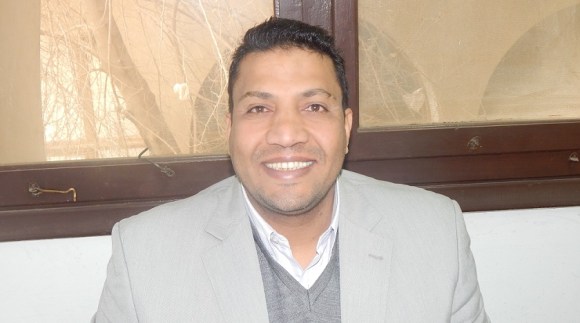




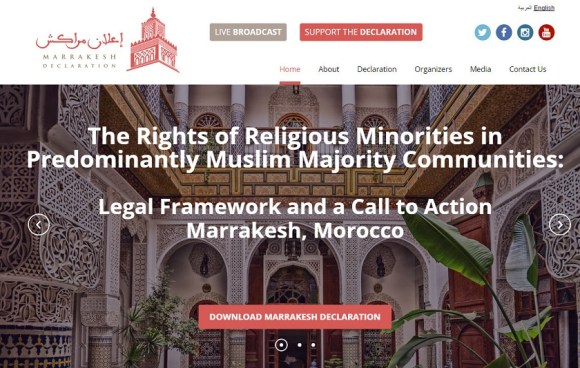
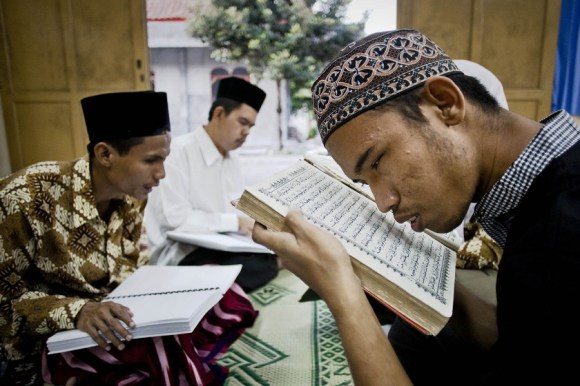
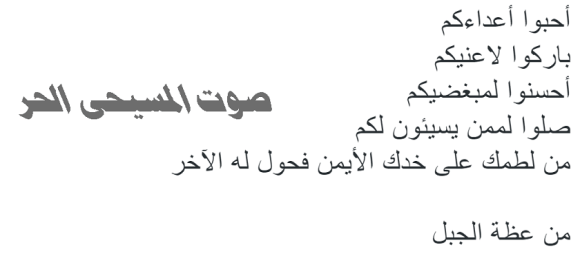
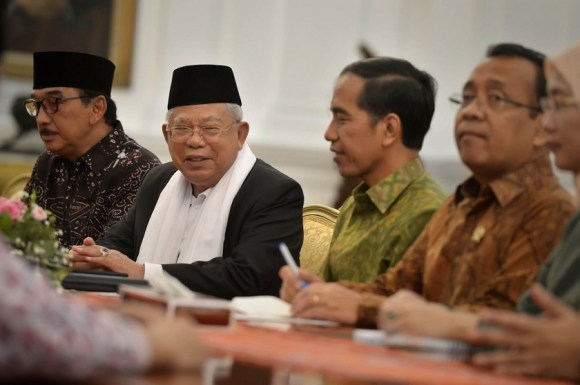
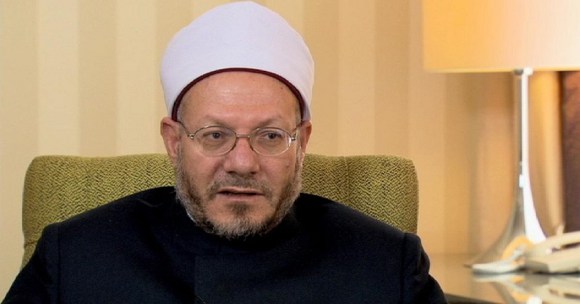


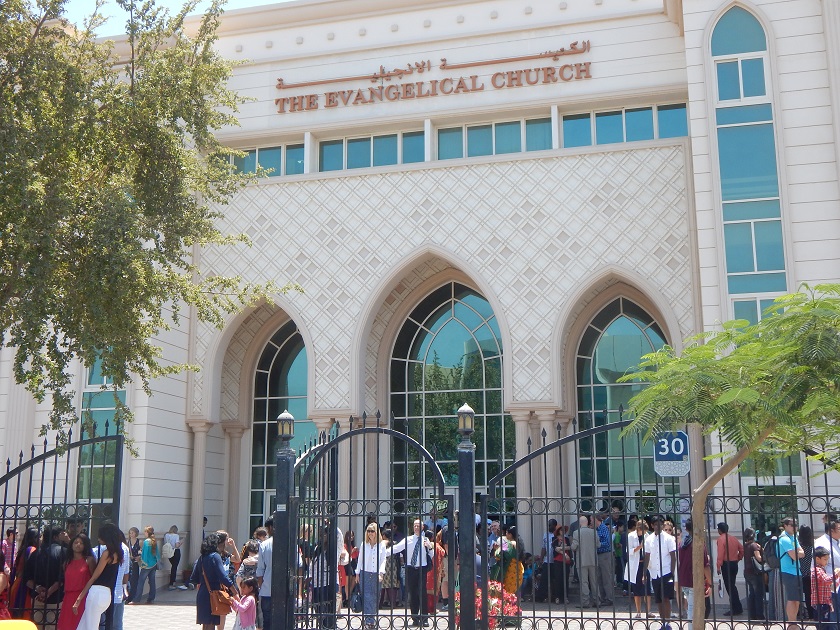
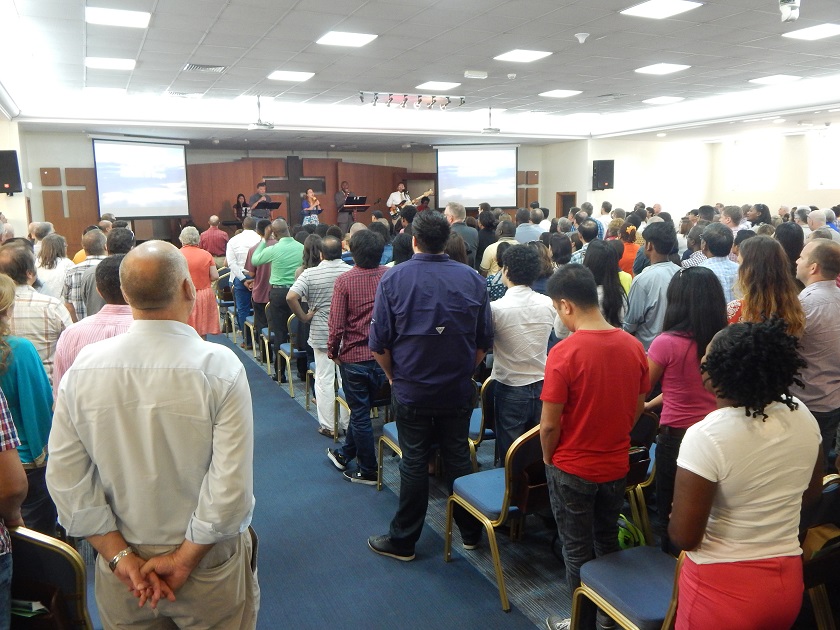


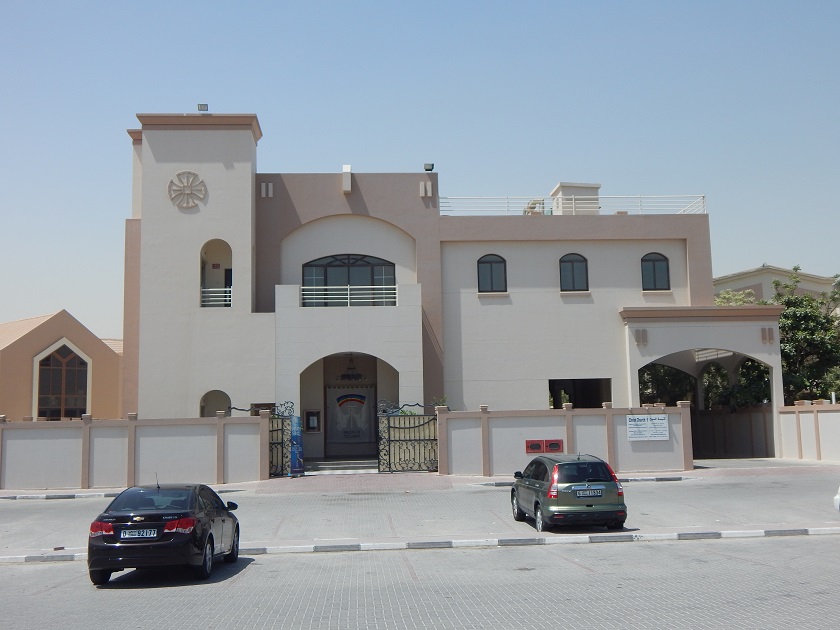


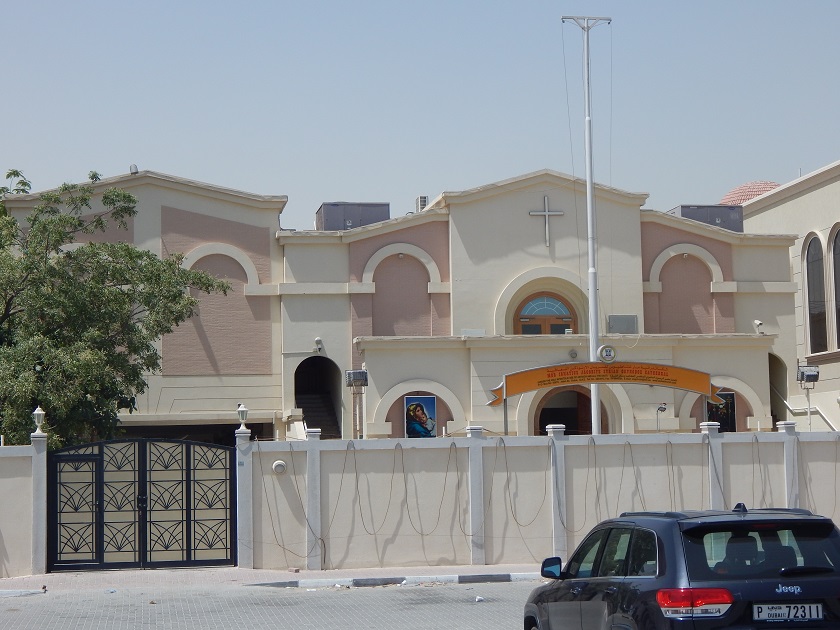


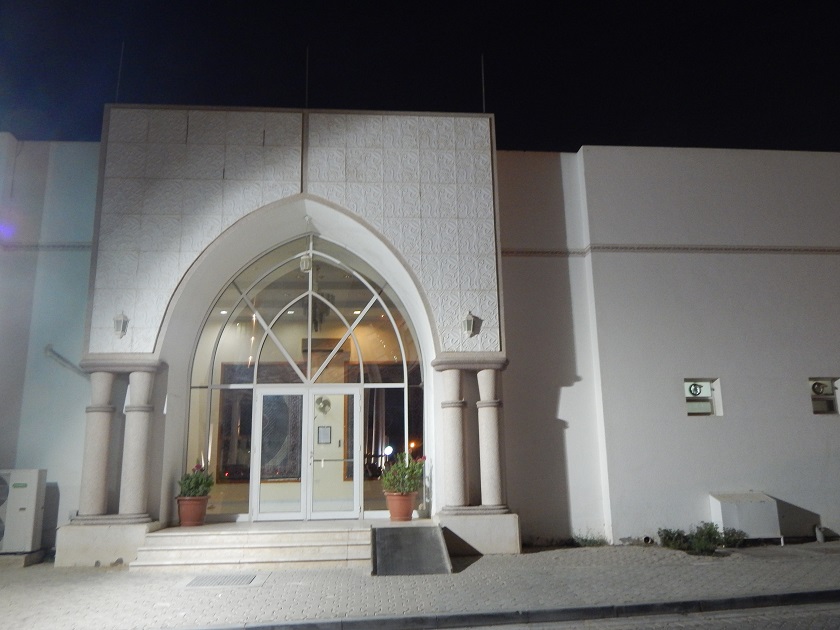

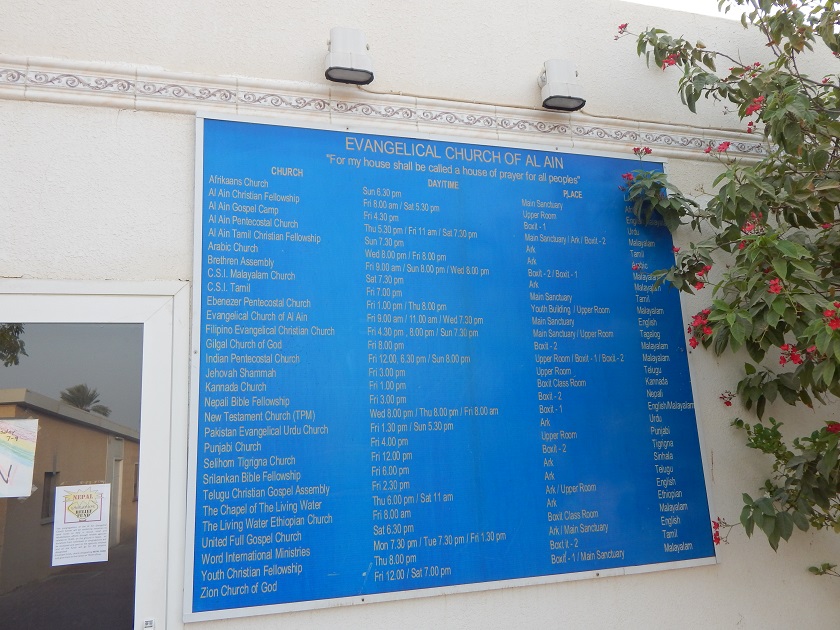

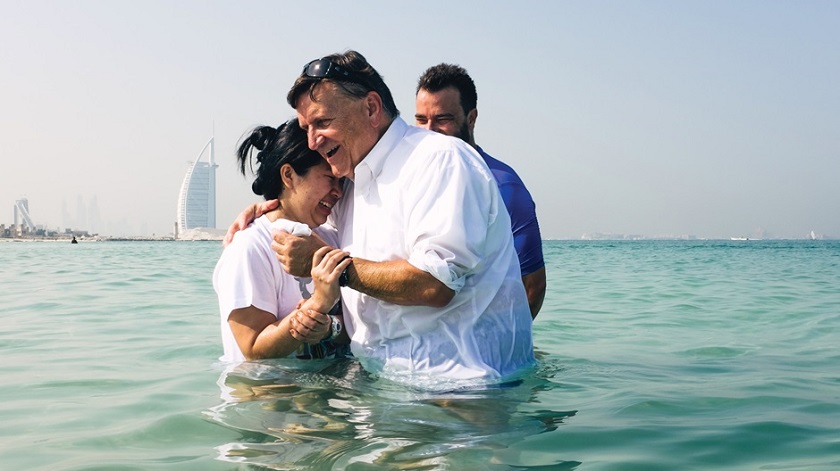
 Jayson Casper