Categories
Americas Christianity Today Published Articles

Jan Karon Looks Back on 89 Years of God’s Faithfulness

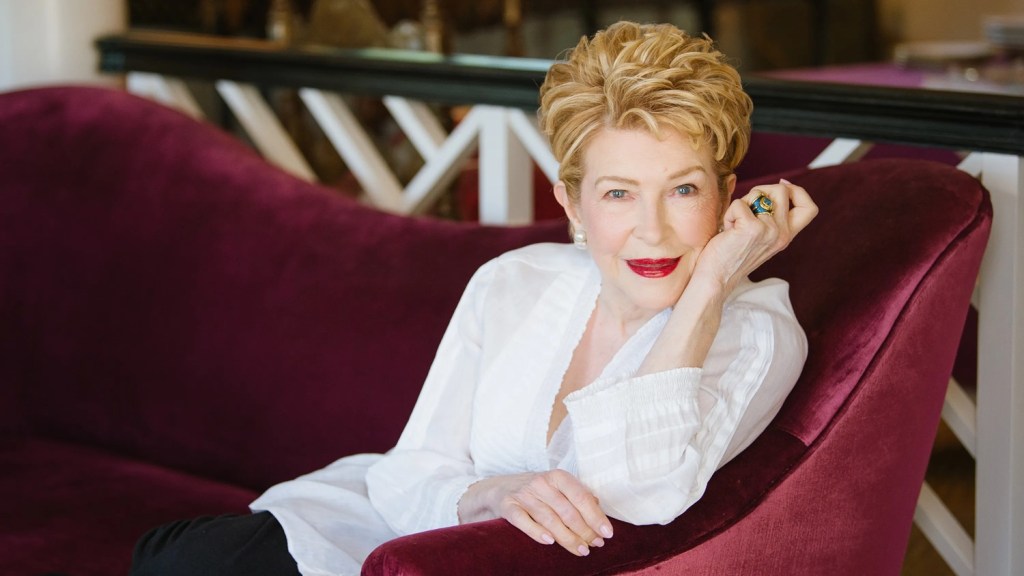
Image courtesy of Jen Fariello Photography

Roughly 80 years ago, Christian novelist Jan Karon, creator of the beloved 15-volume Mitford Years series, stood in front of a mirror and told herself she would be a writer.

Roughly five years ago, the New York Times best-selling author felt like she lost her “reason to live.”

Karon, whose books have sold tens of millions of copies, has lived a life as rich and varied as the characters in her stories. Tomorrow she turns 89.

Although Karon is adamant that she writes for a secular audience, her books bear a decidedly religious outlook. “So many people don’t know that God loves them,” she told CBS in 2005. “[But] he made us and that makes us pretty interesting to him.”

Karon’s central protagonist in the Mitford Years series is Father Tim Kavanagh, an Episcopal priest in a rural mountain town in the American South. A lifelong bachelor, he rebuffs romantic overtures, takes in a loveable but neglected boy, wins the affection of an oversize stray dog, and marries at age 62, all while providing a bit of hope—and laughter—to scores of neighbors in need of community.

Readers have found the same comfort in the books, longing to live in a place like Mitford.

Like Father Tim’s marriage, Karon’s literary career began later in life. She published her first book, At Home in Mitford, at age 57. But her spiritual story began 14 years earlier when she gave her life to Jesus. She detailed this journey in a letter to her acquaintence Jo, stored today with her papers at the University of Virginia archives. Karon invited Jo to also follow Christ, adding that she hoped she had not offended her in any way.

This typical gentle spirit comes through in Karon’s reassuring words to Jo, which in describing conversion may also describe the two halves of Karon’s life. “In abandoning what we were, we begin to find out who we are,” she wrote. “And who we are is, well, it’s a whole lot of what we were.”

Young Karon had it rough. Janice Meredith Wilson was born on March 14, 1937, in the Blue Ridge foothills of North Carolina. At age 3 she saw her parents divorce, and she went to live with her maternal grandparents. A self-described anxious and quiet nail biter, Karon would sit on the porch churning butter as “Mama” told stories. She slept on a bed made from furniture-mill scraps, where she would read a copy of Robert Frost’s poems bought with the family egg money.

First-grade teacher Nan Downs brought Karon out of her shell by encouraging her to write on the blackboard and clap the erasers. Around age 10, Karon wrote a tale inspired by Gone with the Wind and won the short story contest at school. Two years later, she moved to Charlotte, North Carolina, with her mother, who had by then remarried. But at age 14, she dropped out of school to marry Robert Freeland, eloping to South Carolina, where it was still legal to wed so young. One year later, Karon gave birth to her only child, Candace. And at age 18, after a gun accident left her husband paralyzed, she divorced him and took a receptionist job at an advertising agency in Charlotte.

Bored of answering the phone, she started…

This article originally published at Christianity Today on March 13, 2026. Please click here to read the full text.

Categories
Christianity Today Middle East Published Articles

‘Dune’ Centers Islamic Imagery. These Muslim-World Novels Center Christ.

Image: Illustration by Mallory Rentsch Tlapek / Source Images: Unsplash / WikiMedia Commons

Can you imagine if Dune took place in the ocean instead of the desert? One Christian novel does.

With Dune: Part Two now in theaters, moviegoers are once again treated to the cinematic spectacle of Frank Herbert’s popular sci-fi epic. Less known is how his 1965 novel bears witness to the influence of Muhammad.

And even less known are the efforts of Christians to translate their Muslim world experience into novels that communicate the gospel.

“We tend … not to recognize how much Islam has contributed to our culture,” stated Herbert in a 1976 radio interview. “But we owe Islam enormous debts of gratitude.”

The American author blended many religious themes into his six-volume series but deliberately filled his sand-infused apocalyptic landscape with tribal conflicts, Shiite concepts, and Bedouin-inspired characters. Hero Paul Atreides becomes the Mahdi, mirroring the Muslim messiah-like figure anticipated at the end of the world. And as he wins acceptance among the nomadic Fremen people, he takes the name Muad’Dib, adapted from an Arabic word for “teacher.”

Their desert religion is called Zensunni , mixing Islam with the Buddhism Herbert eventually adopted.

Dune is often credited as an inspiration for Star Wars and its Eastern cosmology. But there’s similar world-creating literature by three Muslim-world Christian workers writing in the genres of sci-fi, contemporary thriller, and young adult fiction.

Each bears witness to the love of Jesus.

“As far as I am aware, this is the first time that violent Islamists, followers of Jesus from Muslim backgrounds, and science fiction have been combined,” said Steve Holloway, author of Pelagia. “Conveying an Islamic story arc is one of the key motivations for writing the book.”

Set 40 years in the future, Pelagia tells the story of Ben Holden, a special forces agent turned professor of particle physics, and Suliman Battuta, a medical doctor and leader of a clan of nomadic “seasteaders” who herd tuna in the South Pacific Gyre, stretching from the coastlines of Chile to the Micronesian islands.

Holden’s scientist wife is murdered by the New Caliphate, a coalition of land-based Middle Eastern nations who want her project data for their jihadist aims. After surviving a later attack, Holden takes refuge with Battuta’s floating community of third-generation Yemeni followers of Isa al Masih, the Quranic name for Jesus the Messiah. Their status as apostates sets them in search of freedom of belief on the high seas.

Imagine the Wild West in submarines, with the fate of the world at stake.

The science of the novel is within humanity’s grasp today, said Holloway, whose book won the endorsement of Fish Farmer magazine, which called it a combination of films Captain Phillips and Minority Report. Currently overseeing a sea cucumber project in Indonesia, Holloway, senior strategy associate for Frontiers, served 12 years in a Southeast Asian nation where his team nurtured a small underground church as they researched ocean farming for the government, before expulsion from the country in 1998. A marine biologist, he read sci-fi as a kid and loved the world of Dune.

Motivated to show how followers of Jesus from Islamic communities flourish best in their original environment, he wrote Pelagia for a general global audience—including Muslims—and depicts austere jihadis with sympathy. There are no “cartoon bad guys” in his novel.

“It is more Tolkien than Lewis,” Holloway said. “Secular reviewers say it has a spiritual theme that doesn’t get in the way of a good story—I take this as a compliment.”

Yet it does have a conversion story, something missing from Someone Has to Die, book one in a trilogy written by Jim Baton, the pen name of a veteran Christian teacher serving in Indonesia. But whereas the futuristic setting of Pelagia is a step removed from Holloway’s ministry, Baton is still involved in the nitty-gritty of peacemaking.

His nom de plume means “bridge” in Indonesian.

“A thriller novel is perfect for our modern world of terrorism,” Baton said. “But I describe jihadists as human beings who have suffered, long for justice, and want the world to be a better place—and, that God loves them.”

In Someone Has to Die, Abdullah is a former terrorist seeking to atone for his past deeds by…

This article was originally published on February 29, 2024. Please click here to read the full text.