Categories
Prayers

Friday Prayers for Egypt: Gaza

God,

Above all, bring peace to Israel and Palestine. Stop rockets, stop killing, stop assassinations, and stop injustice. Allow all sides to argue over who most deserves these accusations, but draw them to a halt.

As for Egypt, where these arguments are few, give wisdom to the president and political leadership on how to intervene for peace. May he stand with victims and against oppression. Help him to mediate between his allies in Hamas and his oft-political targets in Tel Aviv. Help him to encourage the Americans to play a positive role. But guide him to the transcendence of politics to the resolution of conflict. May he do what is right, whatever that is.

Egypt needs unity and solidarity, God, but caution the people about rallying against an enemy. Bless all those who express concern for innocent Palestinians, and who seek to condemn the asymmetry of the strife. But for those who are angling for political gain, cause their efforts to come to naught. Grant Egyptians legitimate outrage over what has befallen their neighbors, and discernment to weigh injustice against propaganda.

And as Israel and Palestine confront their internal issues, limit the repercussions from spilling over into Egypt. Guard the border, God, and keep militancy from spreading to Sinai and beyond. For would-be militants already here, honor their sense of resistance and sacrifice. But direct their devotion to the cause of peace and justice, not to arms and invectives. May they harm no lives, be they Egyptian, Israeli, or their own.

Beat swords into plowshares, God. May those who love you lead the way.

Amen.

Categories
Christianity Today Middle East Published Articles

Can Egypt’s Christian Assistant President Get Democracy Back on Track?

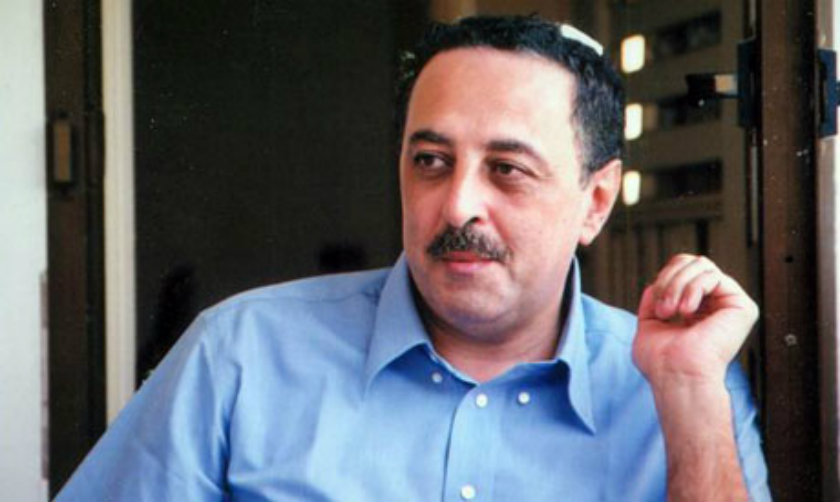
Samir Marcos

Four and a half months into Mohamed Morsy’s presidency, much of Egypt’s democratic transition is still on hold. Parliament remains dissolved. A new constitution is still pending, beset by legal challenges. In this political limbo, Morsy has appropriated even more power than former dictator Hosni Mubarak enjoyed before the January 2011 revolution.

However, alongside Morsy in this limbo is Samir Marcos, a Coptic intellectual serving as assistant president for democratic transition.

This is the opening of my new article on Christianity Today, discussing if it was wise for him to join an Islamist administration, and, if he will have a real voice. Please click here for the full article, featuring diverse Coptic answers to these questions.

“We told him, ‘Accept the position and be involved in the administration, and we will be behind you and support you. But if you feel you are being marginalized and not listened to, resign and make this clear to everyone,'” said Gaziri.

Of course, others disagree.

“The Muslim Brotherhood’s reputation in the international community will improve with him there, but Copts will not gain anything,” said Mamdouh Nakhla, head of the Word Center for Human Rights. “It is very difficult to change the regime from the inside.”

But I appreciate this perspective:

“The most unwise thing to do would be to refuse working with the administration due to its ties to the Muslim Brotherhood,” he said. “Despite our different perspectives concerning the civil state, we must maintain at least the minimum of dialogue so that we can work together for the good of Egypt.”

It is well and good to play politics, and Christians, like all people, can disagree about how to play it properly. But at the end of the day, the defining criteria must be to do what is right, even if others will take advantage.

There are degrees of right and wrong, so one must be very careful before rejecting the political stance of another. For someone like Nakhla, who is convinced the Muslim Brotherhood is a hypocritical, power hungry organization, it can certainly be ‘right’ not to aid or abet them.

Still, for good or for ill, they are currently entrusted with running the state for the good of the country. Succeed or fail, all citizens must work for the same aim. I believe Marcos is doing well.

Related Posts:

Categories
Personal

Little Pink Chicks

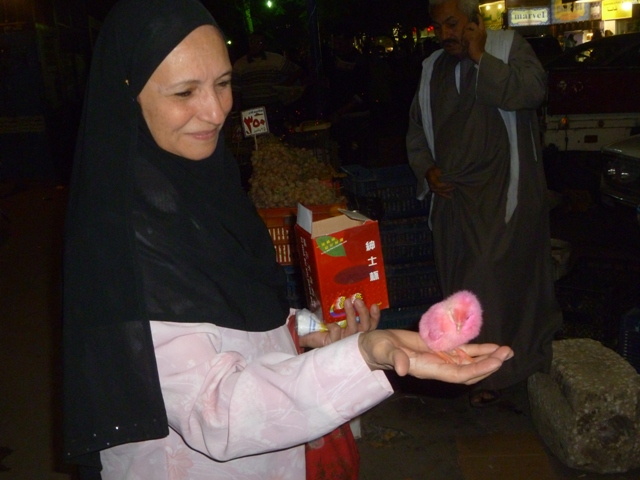
We had not noticed it in years past, somehow, but apparently it is the season for pink chicks in Egypt. Really, they are hard to miss.

Mixed among the cutlery, shoes, and fruit offered by illegal street vendors up and down the road leading to the local Maadi metro station are tiny little chicks crowded into plastic boxes. They sell for a pound apiece, the equivalent of eighteen US pennies. They fit snuggly into the palm of a hand.

Many are also painted pink. Demonstrated by the interest taken by our children, this serves to attract customers.

Street vendors have proliferated since the revolution as police have stopped enforcing whatever codes prevented them from being there. They crowd the sidewalk, spill over into the street, and generally increase pedestrian and vehicular traffic. It is practically bedlam in front of the metro station, as taxis congregate as well, awaiting customers.

The vendors are nice enough and do not impose or shout out prices. Elsewhere, tourist market peddlers are notorious for calling out their wares, hoping to prey on naïve foreigners and help separate them from their money. Most seek to be funny, but the economic situation forces the hand of both groups of aspiring entrepreneurs. It is hard not to be sympathetic when the poverty rate exceeds 40%.

A friend tells us, though, that chicks-as-gifts have been popular since she was a girl. The pink seems to be a recent novelty, but Egyptian kids have always loved having an alive toy. Most die after a few days; lack of proper care is certainly a contributing factor.

Laugh, cry, or shrug it off? How would you respond?

Update: My friend tells me that sometimes street vendors will place the chicks on a heated surface, then market them as dancing chicks from Tanzania. But she also tells me that many Egyptians will raise these chicks, and eventually benefit from either a mature rotisserie or egg-laying hen.

Related Posts:

  • Sheep – December 15, 2009
Categories
Prayers

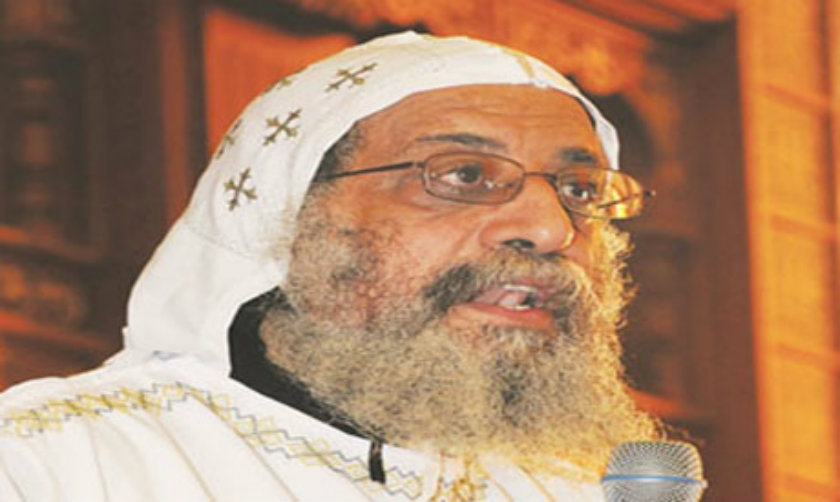
Friday Prayers for Egypt: Bishop Tawadros

God,

Prayers have been plentiful in the Coptic Orthodox Church these past few weeks. The pleas of the faithful, complete with fasting, sought wisdom and providence in the selection of a new pope. When the lot fell on Bishop Tawadros, there was much contentment.

So for now, let the prayers be simple. Give Tawadros space to prepare himself spiritually before his consecration. Humble him and speak to him, that you might give him the weakness of Christ with the strength of conviction. Allow him to take his office a servant of Copts and Egyptians alike.

Give him time, God. Spare him the immediate crisis posed to test his mettle. Help him to organize his office, his staff, and administrative responsibilities. Surround him with trustworthy people – those who will pray with him and challenge his thinking. May he win the confidence of the family of bishops.

Give him discernment, God. Wisely, he asserts he must not be a political player. Yet the demands of Egypt may challenge his preference. Help him to feed his flock spiritually, that they may apply principles practically. Protect him from the temptation to act when he must wait on you. As he carries the weight of leadership, may he know when to speak and when to stay silent. Work through the whole body, God, not only through its chief shepherd and administrator. May he know he is not the head.

God, bless Egypt through him, and bless him through Egypt. May the nation recognize him as a wise representative of an institution, and treat him accordingly. May he be worthy of them, and may his prayers be effectual for them. In particular may he bless the president; honor and work good through them both.

Give him good health and a sound mind, God. Grant Egypt the same.

Amen.

Categories
Arab West Report Middle East Published Articles

Bishop Tawadros: His Life, the Church, and the World

When the candidates for the Coptic papacy were reduced to five, Bishop Tawadros, along with all the others, gave an interview on Coptic television. The full video, along with English subtitles, can be found here.

I culled the interview for useful nuggets about the pope-to-be’s background and views about church and ministry, and arranged them for an article with Arab West Report. The full text can be found here, excerpts follow below.

Tawadros was born in 1952 in the city of Mansoura. At age five his father, a landscape engineer, moved the family to Sohag for work where they remained for three years before settling in Damanhour. Here, he studied in a Coptic school run by the sister of then-Pope Cyril VI.

Tawadros’ family was very religious; many of his uncles and cousins were or became priests. His mother was originally from the area of St. Dimyana Monastery near Mansoura, and each summer would take her family there to visit. He has two sisters.

‘All our life was related to the church,’ said Tawadros.

Later on in the interview he addressed certain issues. Here is an example.

‘As Egyptians we live with our brothers the Muslims, and it is a priority to keep this unified life,’ he said.

He spoke positively about how Pope Shenouda was called a ‘safety valve’, and then answered this question in light of necessary history.

‘Look at our beautiful diversity: a Pharaohnic obelisk, a Christian steeple, and a Muslim minaret. This is the diversity that Egypt brings to the whole world,’ stated Tawadros.

‘Do our youth know these treasures? We have many common roots, and the media should focus on them.’

It had been stated in the media that Bishop Tawadros was commended as keeping good relations between Muslims and Christians, and with Islamists in particular. Labib questions the last point.

‘You cannot say that he has had good or bad relations with Islamists, as he has no relations at all, he stated.

‘He just has no clashes with anyone. I have no documented information otherwise.’

From the conclusion:

The picture provided of Bishop Tawadros is at best incomplete, but does offer a slice into his personality and upbringing. He is a faithful son of the church. He is quiet, thoughtful, and concerned about its long term internal spiritual growth. He offered few insights into issues of state or relations with Muslims, except for the necessity of mutual esteem and preservation of unity. He grounded this relationship in the diversity of Egyptian history, which in light of current politics can be understood as a nod to its identity.

Further research, of course, is necessary. Certainly Bishop, and soon-to-be Pope Tawadros will offer more than enough insight into his papacy in the days and years to come.

Please click here for the complete article.

Related Posts:

Categories
Personal

Naming Alexander

Our daughter Emma Hope Casper is six years old and in first grade in the Egyptian private school system. As a foreigner, she is different in many ways from all of her fellow students, yet shares one important commonality.

She is known as Emma Jayson.

A few days ago we invited readers to come along side us as we considered six name choices for our newborn son. Your comments were very helpful, and gave us much food for thought. We are pleased to announce today the birth of Alexander Jayson Charles Casper, born November 6, at 12:30pm, weighing 8.15 pounds.

In that post we mentioned our son’s middle name was already decided. My name is Jayson Charles Casper, and like most Americans, I have only three names. My own father, however, made the somewhat unusual choice to give his own name as my middle.

The Egyptian pattern, and that of many Arabs, is to honor family lineage in the naming of their children. For either a boy or a girl, there is often an element of choice in the first name. But then for both a boy and a girl, the second name is taken from the father, the third from the grandfather, and the fourth and final name from the great-grandfather.

Practically speaking the name is often shortened to just the first two, and this is why my daughter is now known as Emma Jayson in school.

The idea of honoring my own family lineage was attractive to us, as was the idea of honoring this Egyptian sense of family belonging. As my father included his own name in mine, I will do the same with my son. Yet we will lengthen his name to four, extending the generational heritage. The last name, of course, will remain Casper, as we have our own national, cultural – and above all familial – traditions to honor.

Alexander will be free to do as he wishes, but imagining this pattern into the future is winsome.

As for Emma, she too is free. We will have to gauge the value of the challenge in correcting administrative records to describe her as Emma Hope Casper, but as she matures, her identity will increasingly be her own. And, should future circumstances dictate, the Egyptian/Arab pattern of marriage is for the wife to retain her own name.

Of course, we are only partially free. We are shaped by the values and principles bestowed upon us – or neglected – by our families. There was no measure of compunction in the naming of Alexander, yet I am pleased to believe the roots of this choice were sown thirty-eight years ago.

Our son and daughters will surely make future choices we find suspect, and we must gauge the level of responsibility we bear at that time. Our hope, however, is that the values and principles we give them now will inform these choices, even when we disagree.

If so, we trust these disagreements will be few; not from their correspondence with our will, but from the needlessness of concern.

Their choices, God willing, will be honorable.

Related Posts:

Categories
Aslan Media Middle East Published Articles

Voting Behind Barbed Wire

It is usually not an easy process to vote overseas. And then, all of a sudden, I had.

Weeks ago we printed out our internet registration form, necessary to secure a ballot sent from America. We also heard we could drop this off at the US Embassy in downtown Cairo, but delays – including a few days of rioting you may have heard of – kept us away.

But even then the process was complicated. Even after we received the ballot and sent it back, it was still necessary to physically mail an official registration form, even if it arrived late.

It has been a while since I voted in America, but basically all I recall is signing my name and pulling a lever. There is much I took for granted.

This includes, apparently, not having to walk through a war zone.

I exaggerate. Everything downtown is calm and has been for weeks. But the earlier riots only ended when the army intervened to impose its staple post-revolution solution: Build a wall. The main street of access to the embassy from Tahrir Square is now barricaded completely, forcing a five minute walk around the corner.

Didn’t I just lament taking things for granted? Now I complain about an extra five minute walk? The sign on the wall shows those who have a right of grievance. The shop owners outside the embassy and all along the now barricaded road are pleading with the government to take it down.

Once around the corner, however, the second security step is visible. During the original demonstration against the film protestors scaled the embassy walls and took down the US flag, replacing it with a black flag of Islam. The rest of the evening they stood atop the wall, holding placards but doing nothing in particular.

Now, barbed wire lines the embassy wall in its entirety.

Getting in was nearly as simple a process as usual. There was a line outside, ID, phone, and camera to leave at the desk, a metal detector to pass through, and then… that’s when things were different.

Normally the American Services Center of the embassy is calm and orderly, waiting in turn for your number to be called. The embassy advertized two days, however, to assist the absentee voting process, which was held outside regular visiting hours.

The line outside was due to the great crowd, let in by smaller groups to ease the congestion. There were few instructions given on what to do upon arrival. Forms were everywhere – mostly organized – but only one very helpful and very patient embassy employee inside. I had figured I only needed to drop off my ballot request form, so I was a bit confused.

And then she handed me my ballot.

I wasn’t quite prepared to vote on the spot. The main problem is that my attention is given almost entirely to Egyptian politics. Outside the headlines, I haven’t followed the US race much at all.

Basically, I hadn’t done my homework, nor had I reflected sufficiently. The only solution was to pray quickly, swallow hard, and write down a name.

With that, it was over. My envelope was sealed and placed in embassy mail. I don’t even have a hard copy registration letter for later, as they mailed that too.

Really, it was wonderful facilitation by the embassy, and a good reminder of the blessings of our system. It was a responsibility to cast a vote, but it was also a privilege.

Even behind barbed wire.

Related Posts:

Categories
Arab West Report Middle East Published Articles

Bishop Tawadros Selected by Lot to Become the 118th Patriarch of the Coptic Orthodox Church

Bishop Tawadros

Mid-Sunday morning, after three days of fasting, the Coptic Orthodox Church selected Bishop Tawadros of the Diocese of Baheira to be its 118th patriarch, succeeding Pope Shenouda III, who passed away in March of 2012. Tawadros’ name was drawn from a wax-sealed glass ball by a blindfolded child, supervised by the acting patriarch Bishop Pachomious.

Immediately after holding the paper with Tawadros’ name aloft for all to see, Pachomious then removed the other names from the remaining two balls to prevent allegations of fraud. Muhammad Hassanain Heykal, a prominent journalist, had disputed the selection of Pope Shenouda in 1971, alleging all three ballots bore the same name. Such a claim was not likely, but it resulted in doubts.

Bishop Tawadros was born in 1952 and is a graduate of Alexandria University with a degree in pharmaceutical sciences. In 1997 he was appointed as an auxiliary bishop to serve with Bishop Pachomious, now the acting patriarch. The lot was cast in his favor on his birthday, November 4, 2012.

The above excerpt is from the article I wrote for Arab West Report, reporting on Bishop Tawadros, the selection process, and issues moving forward. Please click here for the full article. Additionally, please click here for analysis from the AWR editor-in-chief Cornelis Hulsman, and here for a first-hand account from the cathedral from the managing director Hany Labib.

As for a brief description of the new pope-to-be, here is another excerpt:

Bishop Tawadros is also appreciated as one who reached out to the youth of his diocese, and kept good relations between local Muslims and Christians. He is also said to have decent relationships with Islamists.

And from the conclusion:

‘Civil society organizations can enter into confrontation with the state, but the church cannot,’ stated Sidhom. ‘Things are stable now, but it will be the time of crisis and sectarian strife that will be the real test.’

But today, and until then, Egypt’s Copts rejoice in a new leader, having asked God to grant them a ‘good shepherd’. Tawadros will need to prove himself, but he receives his position following a selection process esteemed not only clean, but spiritual – in distinction to national politics.

‘The lot lifts the election above politics as if it were for parliament.’ stated Labib. ‘The last choice is for God; this makes Christians very comfortable.’

It is a day of celebration for the Coptic Orthodox Church. May God give wisdom to their new shepherd.

Related Posts:

Categories
Christianity Today Middle East Published Articles

Tomorrow, God to Select the Next Coptic Orthodox Pope

From left: Bishop Tawadros, Fr. Raphael Ava Mina, Bishop Raphael

While Americans prepare to elect their next president on Tuesday, Egyptian Christians are leaving this Sunday’s choice for their highest leader up to a higher power: God.

On November 4, one of three final candidates will succeed Pope Shenouda III, the beloved “pope of the Bible” who died in March, as the 118th patriarch of Egypt’s Coptic Orthodox Church. But in contrast to the “group consensus” method used to select Roman Catholic popes, the casting of lots will determine whether Bishop Raphael of Cairo, Bishop Tawadros of Beheira, or Father Raphael Ava Mina, a monk from the Monastery of St. Mina near Alexandria, becomes the next spiritual leader of Egypyt’s 8 million Orthodox Christians.

This excerpt is from my article describing the papal selection process for Christianity Today. Please click here for the article in full.

It is an exciting day for Coptic Christians; may God honor their faith and grant them wise leadership. Two other angles to note:

First, all observers declared the election process prior to the lot was very organized, clear, and transparent. A limited pool of around 2,400 electors brought the number of candidates from five to three, of whom the lot will fall on one.

Some remarked the church wanted to present a picture of democracy and order that has so far escaped the Egyptian transition. Yes, for both parliament and president, democracy has been present and the lines to vote have been orderly. Yet the church has bent over backwards to ensure its election majors on the key missing ingredient in Egypt: transparency.

Second, if indeed there is transparency in selecting one of these three names, it presents an unmistakable spiritual picture of leadership to Egypt. One liberally-minded Muslim friend questions the reality of the lot, saying there is no way any large institution can leave their top leadership position to chance. He believes Bishop Raphael will be chosen; tomorrow we will see.

I am not sure how to interpret this spiritual picture, if indeed the blindfolded child has three separate names from which to draw. Yet given the wrangling, ambition, and conspiracy that has surrounded the Egyptian presidential contest – with unmistakable religious overtones – the church is saying: We trust in God.

As always, statements must be modified. The church is not saying it is a model for the Egyptian state. On the contrary, if anything, it is a rebuke by contrast. As a church we can be clearly spiritual in our leadership selection, but we are all Christians. The state, as a mixed polity, should be clearly secular.

If this is the lesson offered by the church, it is received. But it is not received with full transparency. The final choice is for God, and the election from five to three was by an accredited election. But the movement of candidates from seventeen to five was not particularly transparent. Twelve candidates were removed by a committee, and among these were the most controversial and polarizing figures.

Of the five that remained, three were of a similar disposition, while two were monks who were largely unknown. Please read the article to learn a little more of this disposition, but if the election from five and the lot from three will result in a similar pope no matter the candidate, where is the transparency?

By and large, Copts are very happy with their choices, so there is no need to complain. Furthermore, the church is not a democracy and should not be held to the standards of modern revolutionary conventional wisdom.

But on what basis were other candidates removed? Perhaps, simply, spiritual wisdom? This is not the same as transparency, on which democracy rests. Democracy can be transparent yet produce an unwise choice. But spin this differently, and the question is necessary: Is an appeal to spiritual wisdom simply a justification for paternalistic arrogance?

Now extend this question to Egypt, as President Mubarak did: Is Egypt ready for democracy?

Countless non-Islamists might look at the results and wonder, for they dare not articulate contrary to holy democratic principle, ‘No’. Democracy demands faith in the people, who can be rather fickle and easily manipulated.

Meanwhile, countless Islamists recognize ‘faith in the people’ as idolatry. They demand the coming constitution state clearly that sovereignty belongs – not to the people as currently written – but to God.

In the above, three models are presented: the reception of a system from God, the full sovereignty of people, and the paternalism that allows choice along a spectrum. Where does wisdom lie?

As I stated, I am not sure how to interpret the lessons from the papal selection process to the Egyptian society at large. I sense, however, the observations are poignant. I only wish for their proper translation.

Related Posts:

Categories
Prayers

Friday Prayers for Egypt: Terrorist Cell?

God,

It is first useful to recall what are understood to be facts. On January 28, the decisive day of the revolution, the prisons were opened. Though many were later apprehended, others are still at large.

During the volatile transition to democracy security was lax and policemen absent. It is understood many weapons entered Egypt through Libya.

Amid the controversial decisions of leadership, both the military council and President Morsy freed many convicted Islamists. Some were released long after their terms expired, others were given outright pardons.

Throughout the post-revolution months the Sinai Peninsula witnessed repeated attacks on the Israeli gas pipeline and police and military checkpoints. The president launched a high profile army crackdown on its criminals and jihadists.

So God, it is fully believable there may be terrorist cells in Egypt. If so, thank you for the discovery and apprehension of the group in Nasr City.

But some allege it is all a sham. Mostly the formerly jailed Islamists, they assert it is an attempt by security to reassert not only its authority, but also its relevance and possibly its need for emergency powers.

God, what can the average Egyptian know of these things? Should any manipulation exist, silence and thwart it. For all of Egypt’s difficulties, such has been the state of terrorism – quiet.

Keep it so, God. Keep Egypt’s political powers engaged in the peaceful transition process. Cantankerous as it is, threats and frustrations are expressed in the media or on the street. Find some way to unify all, God. May none be forced into the corner of violence, and may those who wind up on the edges of consensus recommit to a social and political struggle, neither armed nor intimidating.

Help the state to both empower and regulate the police. May they perform their duty unencumbered, serving both law and society. May the people partner, hostage to neither fear nor spite.

And of those whose consciences are seared and contemplate violence for political ends, protect the people from them. Speak to them, God, and convict them of their evil schemes. Redeem them, that they may serve not only you but others as well. Widen their vision and enlarge their hearts.

God, so much is uncertain in Egypt, but you have kept her safe. Thank you, and please continue.

Amen.

Categories
Personal

To Name Our Son in Egypt

Come November 6, I will no longer be Abu Talaat Banat – the father of three girls. Though it is not so prevalent in Egypt, in good Arab fashion I will soon be Abu ….. – the father of the name of our first-born son.

So what name will we choose? The rule is that it must work in both Arabic and English, and we prefer as well there be a connection to Egypt. Of course, it has to sound nice and have a pleasant meaning as well. Here are the choices that have made the cut, in alphabetical order:

Alexander, Jeremiah, Matthew, Nathan/Nathaniel, Osama, and Thomas.

Allow us to share some of our rationale below. Please feel free to share your opinion or prediction at the end. Who knows, maybe it will sway us.

Alexander

Arabic: Iskander – we really like the sound of this, and can imagine calling him ‘Iskander’ even around the house.

Egypt: Egypt’s second largest city – Alexandria – was named after Alexander the Great.

Bible: There are a couple Alexanders of ill repute in the Bible, but Alexander was also the son of Simon of Cyrene, who carried Jesus’ cross. Cyrene, near modern Benghazi in Libya, was associated with Egypt in history. Church history connects this Alexander with St. Mark – the founder of the Coptic Church – as heralding from the same region.

Family/Friends: Alexander is my second brother’s middle name. As with all family connections to follow, we’re not sure if this would be a positive honoring or a negative stealing – in case he wanted to use his name for any future sons of his own. Alexandria is also my mother’s middle name.

Drawbacks: Though the name nobly means ‘defender of men’, the best known Alexander was hardly such. He was a man of war and creator of empire. Of course, much of Western civilization derives from his Hellenization of Europe and the Mediterranean, but bloodshed is not the best legacy to grant a son.

More trivially, though he was my favorite sitcom character growing up, Alex from ‘Family Ties’ is not the best role model either.

Jeremiah

Arabic: Armia – It is a bit awkward in Arabic but is known in Egypt through the Coptic population. I think we would most likely call him ‘Jeremiah’ even among Egyptian friends.

Egypt: There is a Coptic bishop named Armia who is a member of the Holy Synod and was a secretary to Pope Shenouda.

But a greater connection comes through the Biblical prophet, who at the end of his life was carried captive to Egypt, where he presumably died, perhaps at the hands of his own people.

Bible: The book of Jeremiah is my favorite Old Testament book. Jeremiah puts forward an example of faithfulness to a task even when failure is promised. His personal pathos is matched only by God’s faithfulness to him in return – through his presence, not through success.

Family/Friends: We have a few friends named Jeremy, but know of no one named Jeremiah. Perhaps this in itself is a plus.

Drawbacks: The Biblical Jeremiah is known as ‘the weeping prophet’. While the above description shows our appreciation for this aspect of his character, it also could be a difficult legacy to bequeath.

Matthew

Arabic: Matta – Unlike many Arabic equivalents this is simple and easy for non-native speakers to pronounce.

Egypt: Matta al-Miskeen – Matthew the Poor – is a well-known and controversial Coptic monk. Now deceased, he was a prolific writer, fully Orthodox, but appreciated by Protestants. He also dared to criticize Pope Shenouda in his early years over the politicization of the papacy. I’ve always had a soft spot for sincere troublemakers.

Bible: The Gospel of Matthew is perhaps my favorite New Testament book, containing the Sermon on the Mount. Jesus’ choice of Matthew as a disciple, when he was from the hated Roman-collaborating tax collectors, is an inspiring act.

Family/Friends – Matthew is my father’s middle name.

Drawbacks: Our daughter Hannah complained a boy in her kindergarten class named Matthew was naughty.

Nathan / Nathaniel

Arabic: Nasaan / Nasana’eel – These are not particularly well known as names in Arabic, even among Christians, despite their Biblical origin.

Egypt: His martyrdom anniversary is celebrated on the first day of the Coptic New Year.

Bible: Nathan was an Old Testament prophet in the court of David who had the courage to rebuke his king and the wisdom to do so in a manner yielding his repentance.

Nathaniel is the alternate name for Bartholomew (in John’s Gospel), one of the twelve disciples, of whom Jesus said there was no guile.

Family/Friends: A few Nathans were friends from university days.

Drawbacks: Both Biblical characters provide good examples, but the pronouncement of being guileless was preceded by Nathaniel’s prejudice against Jesus’ hometown. Transparency is a virtue, but can lead to lack of tact. Picking straws, here, of course.

Osama

Arabic: Osama is Arabic, with no English equivalent. It is related to being exalted, as in the heavens, and is one of the words for ‘lion’. It is used by both Muslims and Christians. Does not Osama bin Jayson have a nice ring to it?

Egypt: Many of Osama bin Laden’s closest advisors were Egyptian, as is his successor in al-Qaeda, Ayman al-Zawahiri.

Bible: No direct connection, but the choice of this name comes from the example of Isaiah, who named his son Maher-Shalal-Hash-Baz, which means ‘quick to the plunder, swift to the spoil,’ and was connected to his prophetic ministry. Poor kid.

Yet the idea is that those who love us will also love our son. Those who love our son will love him in his entirety, including his name. Perhaps those who love him – and his name – will also come to love his notorious namesake and his imitators. At the very least we hope our son in this legacy can redeem a name, and perhaps even dent the association with a war on terror which has done so much harm to this world.

Family/Friends: A wise counselor and Muslim friend in Egypt is named Osama.

Drawbacks: These are obvious, really. Poor kid.

Thomas

Arabic: Toma or Tomas – We get mixed up between the Arabic and the Coptic equivalent, but both are well known in Egypt and easy to pronounce.

Egypt: Bishop Thomas is a well-known bishop in the Coptic Church, beloved by both Orthodox and Protestants.

The Apostle Thomas is also beloved by Egyptians because he is the sole disciple believed to have witnessed the assumption of Mary into heaven.

Bible: Best known as ‘Doubting Thomas’ for failing to believe the report of Jesus’ resurrection, he is less known for his great courage. As opposition to Jesus was mounting, Thomas told the disciples, ‘Let us also go [to Jerusalem] that we might die with him.’

Family/Friends: Thomas is the middle name of my third brother. It is also the favorite choice of our daughters, who picked it themselves.

Drawbacks: The doubting heritage is not best, even though courage in the midst of doubt is admirable. Thomas also means ‘twin’, which is unfortunately (?) not the case with our son to be.

So, these are our choices. The middle name can make a difference, of course, which we have chosen but will not share at this time.

For review: Alexander, Jeremiah, Matthew, Nathan/Nathaniel, Osama, and Thomas.

The name may or may not follow the pattern of our daughters, but for reference they are:

  • Emma Hope
  • Hannah Mercy
  • Layla Peace

With Layla’s name we played a similar game on our blog. For a long while it was the most viewed post we have written, and remains the most commented.

Currently, the most viewed post is about the assault on the US Embassy in Cairo. What do you say we knock that one off its perch, and celebrate something more seemly? In any case, we hope you and your friends will have as much fun with this as we will.

We look forward to sharing the good news to come.

Categories
Prayers

Friday Prayers for Egypt: Eid Sacrifices

God,

Millions of Egyptians celebrated the Muslim Feast of Sacrifice; many also witnessed the sacrifice of others over religion.

In some places Egyptians battled either institutions or each other over control of the main public squares – and with it, the right to lead the holiday sermon.

In other places the sermon itself displayed opposition to certain elements of the Egyptian population.

Likely, for most, it was a simple day of remembrance and revelry.

Abraham was willing to sacrifice his son in your name, God, but you stopped him. Likewise, many Egyptians appear willing to sacrifice each other in your name.

For Abraham, you provided a substitute. Will there be a similar scapegoat in Egypt? If so, who?

God, save Egypt and her people from this fate. May no son of the Nile be placed upon the altar; may no son of the Nile place another human being there.

What then will redeem Egyptian politics, God? How do sacrifices end?

Perhaps the answer lies in keeping the concept but changing the recipient. Is it possible for Egyptians to place themselves on the altar?

Can you raise up leaders, God, who will self-sacrifice – not for their cause – but for the other? Can you provide those who will risk and ruin their own reputations by defending all semblance of righteousness in the cause of the other?

Find these men, God, and promote them. Honor them and make them examples. May their courage expose the self-service of all who care only for their limited understanding.

Keep Egypt in faith, God, the faith that you will preserve the good however much discipline and repentance you must engender along the way.

And in the end, may even self-sacrifice fade away as Egypt self-embraces, and then embraces all others.

May only the remembrance and revelry of distant sacrifices remain.

Amen.

Categories
Atlantic Council Middle East Published Articles

A Home with No Husbands: A Glimpse at Internal Egyptian Migration

Qufada Skyline

My article about life in an Upper Egyptian village published today on EgyptSource. Click here for the full article; excerpts are in the boxes that follow, interspersed by other material needed to be cut for focus or word count.

During a visit to the city of Maghagha to learn more about surrounding village life, the local priest brought me along to a family’s baptism party in Qufada, celebrating the forty day mark of their new baby boy. Earlier at mass the child received his rites of entrance into the Coptic Orthodox Church; it is conventional thereafter to invite the priest to their home for a meal.

The Coptic home of the now deceased patriarch, Shafik Khilla, in Qufada conveys few signs of luxury but has a dignity fitting proper village family life. The ground floor houses common areas such as the reception, kitchen, and bathroom facilities, as well as a place to store the family animals during the night. The upper level contains a single room for each of the five nuclear families who maintained residence. But is ‘nuclear’ a proper word when all the husbands are away?

Today, Shafik’s sons Masry and Ruweiss are elderly, peasant farmers like their father. They spend all day in the fields watching the animals, for if they were to join in the life of the house thieves might steal them away. The men return to bed with the beasts, privileged above them by life on the upper floor. Neither attended the church service for the baptism of their grandson.

Also absent were the three husbands of the home. Masry had three sons, Samir, Medhat, and Milad. Samir and Medhat married their cousins, the two daughters of Ruweiss. Milad had to step outside the family to marry, yet by appearance all six of their children avoided the genetic defects of intermarriage. All are in school or preschool.

In the article I describe how they found work outside the village. Speaking of one husband, the priest made his wife blush:

Milad, meanwhile, found a job as a clerk in Cairo, for which he earns roughly the same salary and comes home just as infrequently. The priest playfully asked his wife why she had missed early morning mass the week before. She looked at him sheepishly and replied, ‘Oh, you know, Father, my husband was home.’

The two younger wives also received education up to the high school level, which inspired Samir’s wife to also improve her situation. She took literacy classes from the church and recited in our presence a poem she crafted about Jesus and his love. Mother to three daughters, the priest wished for her a son. She demurred, denying cultural expectations, and expressed thanks to God for what she had. Still, the priest held up both his own example and described mine as well, where three girls were finally followed by a boy. He said he would pray.

Here is the root of the problem:

‘There is no opportunity to work in Qufada,’ states Fr. Yu’annis. ‘People finish their education, but because they have no land, money, or chance to open a project, they must search elsewhere. The only other option is to work the land as a peasant farmer. ‘Work can be found in the nearby city of Maghagha, says Fr. Yu’annis, but it pays poorly and transportation costs eat a quarter of the earnings.

And from the conclusion:

Amid the cries that Islamist government may whittle away the Christians of Egypt, a far more subtle phenomenon is underway. Christians, and their Muslim neighbors, are depopulating the villages of their ancestors, simply to find a better life elsewhere. Will Samir, Medhat, or Milad ever return to live in Qufada? How long can their families live there without them?

Demographic changes as these are not unique to Egypt. As the nation undergoes vast political upheaval, no less significant are these social realities. In fact, the question is fair: For the great majority of Egyptians, which is more significant – a president, or a husband?

Please click here for the full article. I’m glad for the chance to place more slice-of-life material in the blog, but the official version is crisp and better analysis – thanks to the professional editing which suggested to cut the above material in the first place.

Related Posts:

Categories
Excerpts

Nods toward Religious Authoritarianism in Egypt’s Draft Constitution

Egypt’s Constituent Assembly

Good reporting here from Ragab Saad on EgyptSource.

As is, not only does the current draft constitution challenge the concepts of human rights and freedom, it also allows the state to become a guarantor for society, defies the idea of a modern state and seeks to sow the seeds of a religious state in Egypt.

He then goes piecemeal through the draft to highlight contradictions and vague wordings. Here, on the empowerment of the state to protect ‘cultural authenticity’:

The first part of the draft constitution stipulates the state’s protection of the “cultural and civilizational unity” of Egyptian society, adding that it shall ensure “the authentic character of the Egyptian family, and the protection of its traditions and moral values.” It also indicates that the state has an obligation to “empower authentic Egyptian traditions.” The use of such vague terminology can only be seen in the framework of the state’s efforts to impose a patriarchal understanding of society, one which allows interference in its citizens’ private lives.

On religious rights and diversity:

Ironically, the chapter on rights and freedoms imposes several restrictions. In Article 30, the draft constitution states that all citizens are equal before the law, and will not be discriminated against on the basis of religion and belief, among other things. Yet in Article 37, the draft constitution restricts the right to build houses of worship to the three monotheistic religions – Judaism, Christianity and Islam. Article 37 distinguishes between citizens on the basis of religion, and is an example of how the draft constitution itself contains contradictions.

On women’s rights:

In regards to women’s rights, Article 68 (previously Article 36) ensures the equality of men and women without prejudice, as long as it is not in conflict with the “provisions   أحكام   of Islamic law.” This is another example of the draft constitution’s inconsistency, since Article 2 states that the “principles   مبادئ   of Islamic law” are the main source of legislation. This inconsistency reveals an inherent desire to move further away from the idea of gender equality, and chips away at gains made in Egypt in regards to women’s rights.

From his central conclusion:

If this constitution passes, it will be the first Egyptian Constitution that adopts a specific religious doctrine for the state. It also means that ancient texts on Islamic jurisprudence, and others that may not even exist anymore, will become sources of Egyptian legislation from which a parliamentary majority may select what it wants from its provisions, instituting authoritarianism in the name of religion.

A legal challenge to the assembly writing the constitution has now shifted from the Administrative Court to the Supreme Constitutional Court. If struck down, President Morsy has granted himself the authority to institute a new body, and the process will start over.

But the shift will take a minimum of 45 days, perhaps granting the assembly enough time to finalize the draft and present it to the public. Even the public referendum might be hurriedly tackled.

What happens, however, if the court strikes the constitution down at this stage? More political chaos could be on the horizon for Egypt.

Related Posts:

Categories
Personal

Bishop Thomas: Almost a Jonah

In typical Coptic Orthodox clerical fashion with his flowing black gown and long white beard, you would never know Bishop Thomas was almost a Jonah.

The Jonah of old is characterized for his rebellion against God. He was commanded to preach to the people of Nineveh, went instead on a boat to Tarshish in the opposite direction, and met up along the way with a famous whale.

A point often missed in the story applies equally well to the case of Bishop Thomas: Jonah was a man of God already, at the point of his calling. He was a prophet with a well established ministry in Israel.

Bishop Thomas, meanwhile, was a missionary monk serving in Kenya. He had already dedicated his life to God, when, at the age of thirty, God interrupted.

The interruption came through Pope Shenouda, head of the Coptic Orthodox Church, now deceased. He identified Thomas for the position of bishop of Qusia in Upper Egypt, giving him one day to prepare for his ordination.

Thomas actually said no to the pope – an almost unheard of boldness in clerical circles. Yet his spiritual father encouraged him to wait and pray before making any final decision.

At the cathedral in Cairo Thomas knelt alone before the altar of God and cried the tears of resistance. He begged God to take this burden from him. The word ‘bishop’ implied title, respect and responsibility of men. Thomas preferred his quiet, unknown service among the Africans.

It was then God revealed to Thomas exactly where he was kneeling.

In the Coptic language, ‘anafora’ means ‘offering’ – that placed in sacrifice upon the altar. Thomas pictured himself no longer weeping beside the altar, but surrendered upon it.

God showed him a bishop was not a hand to rule over people, but a hand to come beneath them to lift them up. With this his heart rested and he accepted the mission – to own the work of a bishop, and not the title.

Moving to Qusia his vision – in particular the word ‘anafora’ – remained with him. He purchased empty land along the Cairo-Alexandria desert highway over two hundred miles from his parish. Here he oversaw a reclamation project he named Anafora, an offering of spiritual retreat for all who were in need.

Anafora became a retreat center open to all Christian denominations, local and foreign. It also provided employment for the people of Qusia suffering from a difficult job market. These he formed into a team able to administer the center independently in democratic manner. He teaches them even to positively say ‘no’ to the bishop, as he once did in error to the pope.

Anafora is being developed additionally into an education and training center for personal capacity building. Its focus is on women’s development, but also on men, to allow their wives to develop. Furthermore, Bishop Thomas is creating a life-size Biblical panorama to aid in scriptural education, as well as a school of mission to train in service for fields abroad. Currently France is asking for trained Arabic speakers, in cooperation with the University of Lyon.

Jonah, though he repented, remained a bitter servant even after seeing the harvest of his preaching in Nineveh. In contrast, Bishop Thomas did not succumb to rebellion but embraced the call of God. He remains full of joy in the life God has given him, a servant to all he comes across.

A whale can chasten, but not transform. Only God can change a heart.

Related Posts:

Categories
Prayers

Friday Prayers for Egypt: An FJP Ezba?

God,

Protests this week were stronger, safer, but the symbolic divide was wider. It remains to be seen who has the momentum.

As thousands filled Tahrir Square to protest lack of social justice and an unrepresentative Islamist constitution, they introduced a uniquely Egyptian term to the English speaking world. ‘Egypt is not an ezba,’ they declared, saying the Muslim Brotherhood was treating the nation as its own private estate.

At the same time, the Brotherhood’s party – Freedom and Justice – was holding elections for party president. The winner took two-thirds of the vote over his competitor, but both celebrated the display of democratic credentials.

So which is it, God? Are protestors reactionaries who lost an electoral contest and now sing of sour grapes and malign their opponents? Or have they identified patterns of governance which exclude and deny the basic goals of the revolution?

Do Freedom and Justice Party elections signal a commitment to the rule of the people in open and transparent choice? Or was the competition theatrical disguising a choice made or manipulated by Brotherhood leadership, signaling the same for Egypt?

God, it is good these issues are before the people. Give discernment as Egypt’s political forces state their case. Refine them as they navigate the task of winning the people’s trust and favor. Reject them if their politics stray too far into propaganda.

Build Egypt in these days, God. It is now known a full quarter of the people live in poverty – and half of those in Upper Egypt. A constitution is being written which will guide the nation for years to come. And these challenges must be solved by a nascent – and some fear transitory – democracy with little political consciousness.

It is required the leaders be men of good conscience, at least until the people can catch up with them and create institutions of accountability.

Bless Egypt with these men, God. Surely they exist, and surely among them are charlatans. Bring Egypt to the right ones.

And as for the president who does exist, strengthen and encourage him. Give him wisdom to govern wisely. May all he has placed in authority serve well.

Amen.

Categories
Aslan Media Middle East Published Articles

Tahrir Protestors Turn on Each Other: My Video

For the first time since the revolution, protestors from opposite camps attacked each other at Tahrir Square. The events have been well documented – and disputed. Here is my version.

Please read this EgyptSource article for a good summary of events and context. Please read here for my brief introduction in the form of a prayer. In brief, a protest against the constitution drafting committee was joined by a protest against the ‘not guilty’ verdict in the revolutionary ‘Battle of the Camel’.

The former protest was called for largely by liberal and leftist forces; the latter by Islamists and revolutionaries. Perhaps there was some overlap between them.

‘Perhaps’ is the key word in all that follows. Previous violent skirmishes all involved the people against the police force. When protestor turned on protestor it was very difficult to tell one from the other.

I arrived at around 3:30pm. As I ascended from the Metro I looked around to see sporadic rock throwing in several locations throughout the square. It took me a little while to gain my bearings. I anticipated a full crowd of dueling chants. Instead, I discovered Tahrir to be quite empty.

As I watched I was surprised to find my only reaction was to laugh. The scene was so surreal. I was standing calmly beside the Metro steps with a few dozen others, while about fifty yards away on the other side of the Omar Makram statue rocks were being hurled through the air.

Onlookers told me there was a single stage set up by the anti-constitution protest, but it was destroyed by supporters of President Morsy. Others told me it was the Muslim Brotherhood members who were attacked first by rocks, and then responded. See the EgyptSource link above for video about the stage destruction. Clearly they are Morsy supporters, but how can one tell if it was the Brotherhood or not?

While we were watching the nearby rock throwing, other bystanders told me the Brotherhood had now withdrawn from the square. Their organization has since issued contradictory statements, but the official spokesman stated their members were not present at that time at all. I could see some of those tossing rocks wore beards in Islamist fashion. But then again, anyone can wear a beard.

Eventually the scene settled down nearby, and fighting concentrated on Mohamed Mahmoud Street towards the Ministry of the Interior. Months ago the clashes there with security had been fierce. Now, the battle lines were on the edge of the square leading in, with little to suggest either side cared particularly to advance.

But who was ‘either side’? Onlookers were completely confused and had no idea who was fighting. Eventually one person who seemed like he knew said it was the two wings of the April 6 Movement fighting each other. Indeed, the black flags with clenched fist of April 6 were on both sides. Then again, anyone can hold a flag.

Please click here for my video of this scene (three minutes). The proximity is from the zoom lens, but there were a few moments I thought to judge how close the stones were coming to my vantage point. At this point I wasn’t laughing. If anything, my eyes were a touch moist watching Tahrir disintegrate.

Again, it was hard to tell who was who, but I did not see many bearded protestors; one was assaulted by fists and ran away from the scene to the relatively open Tahrir Square behind us. As for April 6, they have long been divided into two fronts with separate leadership and institutional decision making. One front has closely aligned with the Muslim Brotherhood as a revolutionary movement. Perhaps the other increasingly sees this as a betrayal. It was hard to know.

And then, the reconciliation happened, sort of. All the while the stones were being thrown other revolutionaries were gathered to the left in front of Hardees, chanting furiously, but peacefully. They made their way towards Mohamed Mahmoud Street, and upon arrival, united the two groups. Once together, they chanted the now-popular anti-Brotherhood slogan, ‘Sell the revolution, Badie,’ referring to Mohamed Badie, the Muslim Brotherhood General Guide. Perhaps they were not fighting over a supposed allegiance to the Islamists.

Please click here for my video of these scene (four minutes). It is after the reconciliation itself but shows that perhaps a quarter of Tahrir was now relatively packed, presumably by liberals and leftists.

Somehow they were still divided. A short while later the fighting broke out again.

But by now the main fighting had moved to the Talaat Harb Street entrance to Tahrir Square. This was too far away for me to determine who was who, but onlookers said the Revolutionary Socialists march had just arrived. Again, if flags are any indication, their banner was on one side, while April 6 was on the other.

At this point I decided to leave, figuring there was not much left to see. The only possible development would be if the riot police entered to stop the fighting. Indeed, that was my first thought near the Metro: Why did President Morsy not put an end to in-fighting?

One observer commented, likely correctly, this would then turn into a brawl against the police which would fall on Morsy’s account. At the same time, should it not be the role of the police to calm a civil disturbance? Was Morsy letting the protestors paint each other black? Does he not feel confident he has full control over security forces? Did he just hesitate? Or were there Muslim Brotherhood members present who were stoking tensions, even deliberately?

These are too many questions, which unfortunately fits with the lack of answers that characterizes Egyptian politics these days. Perhaps in days to come everything, everywhere, will be made known.

Perhaps.

Related Posts:

Categories
Prayers

Friday Prayers for Egypt: Camel Recall

God,

Egypt has once again produced a crisis. This one may only be mini, but perhaps official reactions will reveal its extent. Tahrir filled with rocks and Molotovs, as demonstrators faced off one to another.

The crisis was slow brewing, and then sudden. For weeks liberals have railed against the membership of the committee tasked to write the constitution, saying it was unrepresentative of society and dominated by Islamists. For days they have called for a protest against it.

Then only two days before a bombshell was announced. The accused in the revolutionary Battle of the Camel were found not guilty on all charges. The Battle of the Camel followed on the heels of Mubarak’s promise not to run for reelection, and had quieted some revolutionary fervor. Once camels and horses followed afterwards – with snipers reported as well – the protest dug in its heels. Soon Mubarak was gone altogether.

It was a strange event, making little sense even at the time. It galvanized the opposition, with blame laid at the feet of members of Mubarak’s regime. Now, they are free men.

The Muslim Brotherhood especially and revolutionary forces additionally were outraged, and pledged to fill Tahrir in protest. The Islamists had previously dismissed and criticized the already planned demonstration; now, they appeared ready to overwhelm it.

Groups in opposition with contrary demands do not make good bedfellows. With the stage set for conflict, it erupted. Throughout the afternoon and evening Egyptians threw projectiles at Egyptians. Much of the time, it was hard to tell who was who.

What to make of this, God? Amid all the confusion, perhaps prayers should be simple.

Give justice to those responsible for all protestor deaths and injuries during the revolution. Be it the accused or others, men were willfully killed. To date, almost no one has been held accountable. Establish the truth, God, so that Egypt might know. Only upon the truth can there be healing, justice, forgiveness, and reconciliation.

These are requested between demonstrators as well, God. Old wounds were opened, causing recent ones to pain all the more sharply. The issues run deep, but so does the original unity of Tahrir.

But together, God, it seems Egypt is moving backwards. Judicial observers say the court case was handled poorly. Rock throwing is juvenile. But there is no time to lament steps in reverse when a constitution is pending.

Draw Egypt back, God. Mend her spoiled relations and develop her fractured politics. Give her good leadership and active citizens. Protect protests when they are necessary, but help most issues to congeal through consensus.

And though it is a near constant refrain, God, expose the manipulators and give transparency to the process. May those who plot evil fail. Rebuke them that they may repent, but keep them from a share in shaping Egypt’s future. May this be left to those who love her and honor all her citizens.

God, establish the right and the good in Egypt. Help her to live in peace.

Amen.

Categories
Personal

My First Deodorant Purchase in Years

It’s not as bad as it sounds, but for this first time in I don’t know how many years I asked my wife to buy me some deodorant.

This does not represent a confession of guilt for failing to fit in. My Egyptian friend tells me most men on the street do not use deodorant; after many rides on the crowded summer Metro I can attest there may be validity to his words. Deodorant seems to be available only in pharmacies, and imported brands predominate, at a cost of three or four American dollars. It is simply beyond the price range for many Egyptians, over 40% of whom live below the poverty line. Besides, if everyone smells, your personal odor is a non-issue. In many ways, it seems a better, less self-conscious way to live.

But my sense of belonging does not stretch so far as to offend a neighbor’s nose. Rather, it is a shared sense of frugality.

The last time we enjoyed an extended stay in America we made liberal use of the Sunday coupons, clipping every one on basic personal hygiene. If timed well with regular sales and double or triple value coupon weeks, it is a relatively simple matter to obtain deodorant, toothpaste, and other items at no cost or a few pennies.

The last of my accumulated stash ran out yesterday.

We hope to spend some time in America this upcoming summer. Coupon donations are gladly accepted. Feel free to keep your deodorant.

Related Posts:

Categories
Prayers

Friday Prayers for Egypt: Blasphemy

God,

Egypt’s legal and judicial history is historic and impressive. Yet like other societies with a strong legal tradition, litigation is common. One result is often the slow pace of justice as cases can be tied up in court for years.

Yet this fact betrays the speed in which blasphemy cases have been processed recently. A number of Copts are under investigation or have already been sentenced for insulting Islam. The most recent case involves two children under the age of eleven.

What is behind this, God? Blasphemy laws have existed from before the revolution, so it is not simply a product of an Islamist regime. But the number of cases following the anti-Islamic film feels unprecedented. They are brought by individuals, not the state.

Weigh on the hearts of these men, God, to convict them if their zeal outpaces their mercy, if they are driven by judgment, or worse, by vindictiveness. Give wisdom to the judges as well, God. May they handle these cases with discretion and wisdom, submitting both to law and conscience.

Speak also to the accused, God. Rebuke them if they have intended offense; comfort them if they are unjustly tried.

There is even a Muslim under investigation, depicted on video burning a Bible. Many have noted his trial proceeds slowly, and he is not being detained. He acted at the scene of the US Embassy, perhaps enraged at the film in question.

If he was rash, help him seek forgiveness. If he was making a statement, give him guidance. If he sowed the seeds of discord in society, rebuke him.

But with him, God, and with all the others, spare them the judgment of law. And for those who cannot pray this sincerely, may the law be designed to justly honor both holy sanctities and inviolable freedoms.

And apart from the law, may honorable men of religion rush to forgive the offenders and show mercy. May they intercede for the accused in both this life and the next.

Weighty issues are at stake, God, beyond the dignity of each of these individuals. A constitution is soon to be written, which may well include provisions against blasphemy. Odd thoughts lend to conspiracy; was the outrage over the film meant to rally support? Could these cases be fast-tracked to provoke outrage and rally against?

And within this context, conflicting reports surround the small Coptic community in Rafah. They received threats if they did not leave the area. It seems some did, while the bishop denies they were forced. This may simply reflect the foibles of human nature. But if not, the story fits perfectly into either a conspiracy against Copts by Islamists, or into a conspiracy involving Copts (as either pawns or abettors) against Islamists.

But God, end the avails to conspiracy! In all these scenarios human lives are at stake. Open Egypt to a culture of transparency, so that men may live in dignity and know the reality of the challenges they face. Cease manipulations and constrain all manipulators. Establish soon a political system based on just principles and the consensus of society. May the constitution be written wisely and celebrated by all.

God, the impossibility of this task is well known, but intervene. Change the hearts of troublemakers and sincere disputants alike. Knit them together in this crucial stage, so that they may differ properly in the days to come.

Honor Egypt, God, and give her peace. Give her peace of mind.

Amen.