This video – with transliterated subtitles – was produced by a church choir in Minya, Upper Egypt, a region which witnessed several severe church burnings. They stand within one church’s charred remains, and sing about love and forgiveness.
May they truly live these words.
Many Christians have spoken that if these heinous attacks are the price they must pay to secure a civil state of free and equal citizenship, they are willing. But are they willing also not just to forgive alleged Islamists who committed these crimes, but also reach out to them in love and understanding? Right now, their temptation is to celebrate the upswing of their fortunes and join in the condemnation, if not demonization, of all things Islamist.
For a view of some of these crimes, please see this video, recently released by the Bible Society showing the attack on its branches in Minya and Asyut.
Yes, if they wish, condemn all things Islamist, but not all people Islamist. This is the test of their song: All crimes notwithstanding, can they differentiate between actions, ideas, and the people themselves? The love of which they sing demands they stand against the tide and seek transparent justice for all currently accused.
And then, amidst it all, to forgive. This is far easier in song than in deed, but meditation in song can transform the heart. Can it transform the Copts? Can it transform the nation? The outlook is bleak, therefore, keep singing…
The hands of husband and wife, otherwise unidentified in the article
From my recent article for Aid to the Church in Need:
Life is not easy for Christians in Egypt, and the strain is taking its toll. Beyond the reports of churches burned and homes attacked, there is also a more subtle hardship affecting ordinary families. While not universal, mistreatment and discrimination are unfortunately all too common.
“Every day we leave our house, not knowing what will happen,” says Girgis, an Egyptian Catholic who preferred not to use his real name.
His wife, however, has the irritating stories:
“The other day, I was climbing into the (public transportation) van with my two children as usual,” Maria tells her story, “and I called out the name of my neighborhood just to confirm. But the driver said he wasn’t going there, so I got out to ride in the correct one.”
“But then a Muslim woman came on board and asked for the same neighborhood, and the driver let her in, taking the last place. I was outraged and complained, but the man replied, ‘I’m free to let in who I like and force out who I like.’”
Within the past year, similar incidents happened half a dozen times. It is not a daily occurrence, but it leaves a painful wound, especially when repeated with such regularity.
The wife gives other examples, and the following is her testimony from the conclusion:
“I try to be a Christian,” she said. “I try to be kind, but I also try to show the person this behavior is not appropriate.”
It often makes little difference. In fact, witnesses to her mistreatment usually downplay what happens, telling her it’s ok, or not to worry about it.
She does have good relations with Muslims in her apartment building; she even freely tutored a neighbor’s child in French, without charging the family. Yet, as a family, they have few if any real Muslim friends, the couple affirms.
Girgis views the situation of Egypt’s Christians as follows: “There are two types of persecution: Physical, when you are threatened with death, and mental, which is worse.”
“If you are killed, it’s over. But if you are subject to mistreatment it may drive you to kill yourself. We are made to feel inferior. This is the persecution that is present in Egypt.”
In saying so, Girgis made clear to me that the burning of churches and attacks on families are not best understood as persecution, but as the result of political and social struggles. Rather, it is the incessant needling as described in the interview they see as the persecution Egyptian Copts generally face.
I am happy to tell their story, for I have heard many similar complaints from others. It reveals a slice of life that is true.
My only concern is that their story be received as the only truth. I have heard other Copts tell me of generally warm relations with Muslims, and of friendships that are real and genuine. Within the article I hope this sentiment is expressed.
The reality is a mix, and the deep Coptic frustration with the sectarianism of many of Egypt – even if it doesn’t touch them personally – is worthy to convey. But somewhat paradoxically, it is very difficult to get sense of this sectarianism as an outsider. Within the Coptic community it sometimes feels like groupthink; within the Muslim community it is often denied completely.
Of course, there is no one community for either religion. One Muslim I know heads an NGO for combating religious discrimination. Another I know, from the same neighborhood as the wife in the article, told me he sees Coptic women everywhere and they get on just fine.
Some Copts may suffer a setback at work and attribute it to anti-Christian bias. And while some Muslims at least rhetorically, if not worse, make Christians feel inferior, many others are likely just ignorant of what others suffer.
The partial solution is to tell each others stories.
Alas, I made several attempts to conclude this post with a practical result of what comes next – and failed. It is strange; I am glad to convey this family’s struggle, and yet feel conflicted at the same time. I don’t want such an example to be used to misrepresent Egypt, even while this example does represent Egypt. Just not entirely. But what can an article convey? Go read a book! Or better, an encyclopedia. Perhaps you can enroll in a Middle Eastern Studies masters program instead.
But that is my burden. It is my job to help tell Egypt’s story correctly, and to do so within the criteria of each publisher. I trust that if you read this blog consistently you trust my effort to give the big picture. But in any individual article, published in any individual source – the work stands alone to be judged. Or rather, to judge Egypt. Please click here to read the whole article at Aid to the Church in Need, and judge accordingly.
And as for solutions? What comes next? I trust the telling of stories is helpful, but how?
What is January 25 anymore? The third anniversary of the Egyptian revolution is clouded in the smoke of today’s bombs, targeting police in four prominent Cairo locations.
The original January 25 also targeted police, but through demonstrations. Much forgotten in that euphoria was the collective attack on police stations throughout the country three days later. It broke the force, which disappeared from the streets and only recently has returned to form.
But this form is decried by many as lacking the originally demanded reform. Demonstrations continue, and people die. But the bombings change the equation completely.
One side calls on the people to fill Tahrir Square in celebration tomorrow. Another calls for storming it in protest. Are the bombings meant to keep people home? Are they meant to blacken further the Muslim Brotherhood? Or are they meant simply to kill the police?
God, bring peace to Egypt. In whatever January 25 is to be tomorrow, keep angry crowds separate. It feels completely like a prayer dead on arrival, for clashes have been ongoing and seem inevitable. But an anniversary is a lightning rod, and afterwards may subside. Of course, many thought similarly three years ago.
So speak to the crowds, or rather, those in them. A non-violent protest must stay non-violent, even if attacked. If arrested, they must submit. God, if their cause is virtuous, make them virtuous. And where they are driven by anger, however righteous, do not give sin a foothold. Reevaluate.
For there are many angry with them, God. Furious. And where there is anger, however righteous, there is little compassion. In the current struggle there is right and wrong. There is also common Egyptian citizenship. Remind.
And for the police, God, maintain their morale. Surely many are afraid, and they are tasked with much. May they work with dignity and resolve, respecting themselves, those they guard, and those they stand against. Reform.
God, Egypt has much to celebrate, and much still to do. The gap between is where most argument happens, and now, most fighting occurs. Three years later, may this be the worst of the labor pains. Bring forth a new Egypt, one of which all will be proud.
But get the nation through tomorrow. Have mercy, but winnow. Establish peace, but bring justice. Resolve.
From my recent article on Arab West Report, reporting a visit to Egypt by Avila Kilmurray, a veteran peace activist from Northern Ireland. The lecture was arranged by the American University in Cairo, hoping for cross-pollination of ideas.
Her lecture was entitled, ‘Peace Building during Religious Strife: What Can Citizens Do?’ But even the title demands questions about the Egyptian particulars. Is Egypt’s religious strife the suffering of Copts at the hands of Islamists following the deposing of Morsi, or the longer patterns of discrimination and neglect on the part of the state? Or, is the strife the suffering of Islamists after the coup and crackdown on the Muslim Brotherhood, or the longer patterns of discrimination and exclusion on the part of the state? Others would deny there is religious strife at all.
Within these options Kilmurray would counsel not a definition, but a participation. Citizens are free to label the troublemakers as they wish, but they must share a common purpose toward community peace. But a further recognition is necessary, at least from Northern Ireland’s experience. It will prove especially controversial in Egypt.
Kilmurray stated that early citizen initiatives sought to exclude the extremists. There was only one problem: It did not work. As long as the sponsors of violence remained outside the process peace proved elusive. Solutions began when they were brought into the room.
Kilmurray presented in November, 2013, before the designation of the Muslim Brotherhood as a terrorist organization, but while official and popular sentiment was very much against them. They cannot be brought into the room now; what then are the possibilities for peace?
From this foundation relationships can be built, so that any proposed solutions to conflicts become mutually agreed upon, not forced. Otherwise, the culture of blame, which runs rampant when each group speaks among themselves, can result in accusation and acrimony when together.
Simply agreeing on these principles does not ensure success, however. Activist peacemakers from all sides must take care not to move too quickly. Otherwise their hopeful but perhaps reluctant constituencies grow uneasy and divisions will creep into each camp. Their commitment will be especially tested when sponsors of violence erupt again in community disturbance.
At times like this, it may be necessary for their representation to withdraw, but not absolutely. As meetings continue between normal citizens on both sides, those connected to groups of violence are to be briefed, so as to be part of the process, if from afar. When the time is right they must be encouraged to reengage, for no success can come unless every faction of society sees itself represented in these community groups.
The acrimony is present, and violence has erupted again. Are there any backdoor channels currently operating between anyone in the government and Brotherhood leaders, whether in prison or abroad? During the process of crafting the constitution, the participation of the Salafi Nour Party ensured that some Islamists could see themselves involved, though many others labeled them as hypocrites and opportunists.
But few mixed community groups exist; the above only describes the very limited official sessions. Here is one example of some citizens who are trying.
To progress, Kilmurray notes, they must leave out the politicians. But to succeed, they need them.
Community peace groups, therefore, had to have a positive agenda. Many took up the cause of human rights, holding accountable both militias and police. They also tended to operate without politicians, giving participants of sense of responsibility and risk taking that eluded electoral leaders. They would hold protests in the street condemning violence. But they would also work behind the scenes to craft a shared narrative history of ‘the troubles’, in order to work their perspective into society’s official institutions.
Participants in community groups were aware that peacemaking must not be surrendered only to the politicians, or else their rhetoric might become just one more tool in the political power grab. But lasting peace cannot be achieved without politicians, for they operate within government to make lasting agreements in the name of the divided peoples.
So perhaps this is too late, if it was feasible anyway. But from the conclusion:
Kilmurray did not speak about Egypt, but a number of her remarks engender reflection on the current political and sectarian struggles. Given the current rule of an army backed government that deposed the Islamist Morsi from power following popular demonstrations, especially critical will be any role for his Muslim Brotherhood.
I imagine Kilmurray would draw a distinction between participation of Brotherhood politicians and of citizens, both members and sympathizers. Of the former she would likely take little interest, for they, like their rivals, are involved in the back-and-forth power struggles that were unhelpful in Northern Ireland.
Instead, she would likely counsel the desperate necessity for greater civil society involvement in the issues of peace. Dialogue groups exist among clergy, and human rights groups exist as per the issue chosen. But where are the community groups that are deliberately inclusive for the sake of local relations and development?
Such groups must bring together Copts, liberals, Salafis, Sufis, Baha’is, Nubians, the non-religious, and yes, the Muslim Brothers, she would likely advocate. Here, Egypt’s challenge is potentially greater than Northern Ireland’s, for in Belfast the population is relatively evenly divided. In Egypt, the presence of any of these groups might offend the sensibilities of others right from the start on a conceptual basis. And furthermore, the inclusion of some tiny minorities might appear more a political statement than a representation of an actual community.
But community groups are not chiefly for the political statements. It might be hoped that local citizens within the above factions might bear less grievance against their neighbor. And if the tiny minorities are not present in any particular local community, there is no representation necessary. As the circles widen, however, all must be included.
This is another of Egypt’s challenges: 85 million people would engulf Belfast. Finding appropriate citizen participation to speak peace to the nation is a herculean organizational endeavor. But to start small, in each community, is the task at hand. Hold together, and hold to account. However Egypt’s sectarianism is to be defined, this is the beginning of the solution.
Please click here to read the full article at Arab West Report.
General Abdel Fattah al-Sisi is an unannounced, unofficial candidate for president, but the announced, but still unofficial campaign for him to run has long been strong. Immediately after deposing President Morsi on July 3 he denied any intention for seeking office, but has since expressed an openness without declaring himself either way, though he dropped strong hints he would run if the constitution was ratified with strong turnout.
It has, and Sisi-mania has persisted, with many politicians offering their unqualified support should he decide to announce his candidacy. There is even a lawsuit filed to compel him to run for president.
The above poster is a new initiative in this direction. It translates:
Complete the good you have done and choose your president
‘The good’ represents the massive demonstrations on June 30 which demanded early elections to remove Morsi as president. June 30 has been billed as a new revolution, but also as a corrective extension of the original January 25 uprising against President Mubarak. To others, June 30 is the counter-revolution, less against Morsi than for the state/regime which had buckled in 2011, but not collapsed.
So within this mix, the translation continues:
The day of the people’s victory and of completing the path
Take to the streets and share in supporting the nomination of
General Sisi
President of the Republic
25 January 2014
It is unknown whether or not General Sisi is behind this effort or if other state forces desire him, or, if it represents simply the will of a great portion of the populace. Almost all observers predict that if Sisi were to run for president he would win in a landslide.
Will January 25, therefore, be repackaged as the launching pad for the next president of Egypt? If so, will the original revolution lose more of its luster among a weary population, or, if not and, will the June 30 extension restore much of what January 25 meant to topple? Mubarak, of course, was a president from the ranks of the military.
January 25 was originally selected as the start-date for the revolution because of its coincidence with the national observance of Police Day. It was a protest against the police state and its brutality, but also against corruption in general throughout the regime.
Incidentally, the Interior Ministry has called on the public to rally in Tahrir on this day – without mentioning Sisi specifically. He has also floated the idea that Police Day be moved to June 30, to coincide with the revolution against President Morsi.
Let us suppose General Sisi removes his uniform, runs for president, and wins his mandate. This may reflect very poorly on Egypt abroad, giving ammunition to those who call what happened on July 3 a coup d’etat, however popular. He has the right to run, of course, but is it wise?
That may all depend on the type of president he will be. Will he restore the Mubarak state and rule similarly with token appreciation for parliamentary politics? Or will he honor the original revolutionary demands and reform both the police and the culture of politics, presiding over a true and ongoing democratic transition? Might he perhaps, with his military background and popular backing, be the only one who can accomplish this?
Doubters say the manner in which he has presided over Egypt since July 3 reflect a very low possibility of the latter. The violent crackdown against the Muslim Brotherhood, the controversial protest law, and the media campaign to tarnish original revolutionary icons all suggest resuscitation of the dominant state. Furthermore, electoral flexibility passed by the constitutional assembly to the interim president – viewed in this framework as Sisi’s puppet – allow great maneuverability to shape the coming parliament along conciliatory lines.
But throughout the previous three years there has been a lingering sentiment, now a fully raging fire, that Egypt, especially through the Muslim Brotherhood, has been the victim of a conspiracy. Morsi, it is said, won his victory through fraud and foreign pressure, recalling the Brotherhood monitors who declared his victory long before the official results were counted. Judges who participated in the alleged charade are now being investigated.
Egypt’s judiciary – alternately reviled and respected among the people – will have to judge these matters. Their decision either way will be filtered through the lens of some conspiracy. But it reminds of the question ongoing since revolutionary trials began: Who killed the protestors? Has the judicial system let murders off the hook? Were police shooting in defense of stations attacked throughout the country? Or was there simply a lack of sufficient evidence to rule against anyone?
And though many analysts dismiss these thoughts as the knee-jerk reaction of any autocratic regime that comes under popular pressure, conspiracy theorists have a powerful retort. Look at Syria, Libya, and Iraq before that. Their states and armies are all victims of foreign interference. Shall we allow Egypt to fall next?
Or, through Sisi, is it falling now? Pro-Morsi forces are also calling for mass demonstrations on January 25, at Tahrir Square and throughout Egypt. They are now warning of civil war, even as they mobilize.
The general is at the nexus of many attempts to define January 25 amid ongoing Egyptian turmoil. The success of January 25, 2014 to push Sisi to the presidency, as well as the manner in which he may eventually govern, will define the ultimate packaging of the revolution.
The referendum passed, decisively. Turnout was strong, comparatively. The meaning is debated, heatedly. And here the prayers are needed.
A few dispute the turnout, which was the key indicator. Supporters of Morsi have claimed only about ten percent of the electorate voted, while unofficial figures of both participation and affirmation supersede the results for the 2012 constitution.
Unless massive fraud is demonstrated, the people have ratified Morsi’s removal, the crackdown on the Muslim Brotherhood, the constitution itself, and perhaps, the presidential candidacy of General Sisi.
In this choice, God, bless Egypt. Bless her for the virtues displayed, for the wisdom exhibited, and in spite of the manipulations present. Whether this choice honors or dishonors your will, God, bless the nation moving forward.
For there was manipulation, God, and herein lies the arguing. State and media vigorously campaigned for a yes vote. The few campaigning for no were arrested. The boycotting opposition was either in jail or in the streets – and even here there is argument. Are the Brotherhood terrorists in label or in reality? Were their protests disrupted, or were they disruptive?
In these questions, God, bless Egypt. Make clear the status of those accused, that they may be tried and judged, sentenced or acquitted, justly and transparently. Make both their supporters and their condemners simultaneously resolute and compassionate. And protect the safety of the streets, for both traverse and protest. Too much traffic has been halted, far too much blood has been spilt.
But as Egyptians and analysts alike argue over the meaning of the referendum, sift the virtue from the vice like the wheat from the chaff. Do results indicate the sovereignty of the people or the authoritarianism of the state?
In this dichotomy, God, bless Egypt. If a mixed bag, then refine them both. Strengthen and encourage a necessary hard hand in difficult times. But rebuke and hold accountable that which violates the law, certainly, but also your standards of righteousness. In your time, God, unmix this bag that Egypt may move forward in full confidence of its cause.
And if it is not mixed at all, bless Egypt tenfold for the offense to which she is subjected, from whichever faction is in the wrong.
Harness the passion in these arguments, God, and marshal it for Egypt’s good. Then cool these fires, so that differing opinion might mutually benefit, educate, and reform. Give meaning to this struggle, and have the nation emerge clean.
Bless Egypt with her new constitution. May consensus come, and with it peace.
From Orient XXI, an insightful article on how Egypt is trying to find itself. Here is an excerpt for why it was not found within the Muslim Brotherhood:
All told, how did the Brotherhood rally against itself, within a year, such a large number of Egyptians as to make its undoing possible? How could so many of those who had elected them into power, or broadly accepted the polls’ results, reject them with such vitriol? How could the oldest, most established Islamist movement in the region become so quickly alienated in a religiously conservative society, to the point of being castigated as un-Egyptian?
Our sense is that the Brotherhood paid the price less for what it did, than for what it is. Although it presents itself and is perceived as a blend between religious movement and political party, it is mostly something else: a “secret society” and a vehicle for social mobility. By secret society we allude not to a scheming cabal but to a closed community. One does not simply join the Brotherhood, but fuses with it, marries into it, comes of age within it, and belongs to it profoundly.
There are nuances, debates, tensions even, within the organization, but being a Brother is a form of socialization, a frame of mind, a chain of command, and a perimeter within which one cultivates a distinction with the rest of society. The Brotherhood’s project, as conceptualized and proselytized by its founder Hassan al-Banna, is a dogma to which members wholeheartedly subscribe and are actively discouraged from questioning. It is a hierarchical organization where respect for (read complete obedience to) more senior leaders is a welcome sign of piety and dedication.
As such, the Brotherhood offers its members status, support and opportunities for social ascension – not least within its own ranks – in a broader environment that is not conducive to success via merit or other means. This is why leaving the Brotherhood bears such a trauma: you do not merely quit, but divorce yourself from its social, religious and business networks. For those who have gone through it, it is often a heart-wrenching process, in which one’s entire social world can turn its back. For its devoted members, therefore, the Brotherhood is more than a religious movement and a political party: it is a way of life that runs parallel to a larger society perceived as insufficiently pious and generally dysfunctional.
There can be a node of sympathy here. In the Mubarak years the Brotherhood was generally kept away from the political game, but mostly allowed to function as a social force. This force served as a network and an identity and a protest against society at large. As long as they kept to themselves they offered much both to members and to society.
But the Brotherhood also viewed itself as a vanguard to transform Egypt. And a vanguard almost by definition ends up either gaining the mantle of leadership or failing spectacularly. The January 25 revolution put the group to the test, but the broad societal basis for change meant the Brotherhood could not lead. They were a participant, a primary one, but not the vanguard.
So when they attempted to lead, especially in winning the presidency, it was not a natural progression. They couldn’t simply do what they wanted, and a vanguard is unaccustomed to having equal partners. As the article posits, perhaps they were incapable. But if a vanguard isn’t leading, it can be viewed even by semi-sympathetic would-be partners as an exclusive cabal.
The Brotherhood won the presidency, but the revolution was turned into a democratic process. Such was one of its successes, but also its loss. A revolution demands thorough, structural change; a democracy diffuses this energy into mere hopeful reform. The Brotherhood wavered between both, portraying itself as revolutionary and democratic. But in doing so it failed to win the confidence of either. As needed partners left its side, all it had to rely on was itself. It chose a populist, religiously conservative route to try to rally support, but this only cost it more among traditional state actors and elites, who became more determined than ever to resist. And again as the article describes, the people came to see them as something alien to Egypt; no matter how much they pleaded they wanted the best for the nation, they were seen in this as desiring the best for themselves.
And now they are gone. There is a node of sympathy for this loss in terms of the social attachments of their members. The dissolution of a family is always tragic, even if dysfunctional.
But there is no sympathy needed for the dissolution of a vanguard. Of course, some may outright rejoice. A vanguard is a wager for a goal greater than any family. By overreaching familial bounds, they risk contempt if they lose for laud if they win.
It is too early to write their obituary, though the contempt is palpable. But on the other hand if somehow the script is flipped, the Brotherhood might become the vanguard it always intended. If the ‘coup’ is reversed, it will be the Brotherhood in full leadership. They may wrap themselves around the January 25 revolutionary mantle, but now it will be their revolution. Perhaps then they will be comfortable; perhaps then they can win.
But must Egypt disintegrate to get there? Is this their current strategy? Or, is this the natural outcome of a revolution, rather than democratic reform?
In the meanwhile, Egypt is seeking to define its identity. The constitution notes almost every conceivable source, but grounds Egypt as the gift of the Nile. Will this satisfy? Identities involve negotiation, but they also involve choice. In a single person this can be messy; can it be simpler in a nation? The Brotherhood, in all its ambiguity, failed to provide a satisfactory answer. Will June 30? Will Sisi?
For all, let us look with sympathy. Not for the use of identity to forge political power, but for the necessity of a people to know who they are. From here, when their answer is settled, political legitimacy will flow.
From the Arabist, a long and worthy read on the past three years in the Arab world. From excitement to fear to depression, there are still deeper changes afoot. Here are a few excerpts especially poignant to Egypt:
The traditional elites are fearful of change, perhaps now more so than pre-2011, and do not appear to have this in mind. Medium-term survival is trumping long-term vision; their obsession with preserving their ascendency open-endedly is plunging their countries into the abyss. Their best argument is that the emerging elites, who could only be Islamist, are part of the old paradigm and have proven to be as power-hungry and inefficient as their predecessors. The old fallacy of stability is holding back the need for trial and error, however cautious. This bodes badly for the future. Cycles of discontent will likely repeat themselves, with the costs and barriers to change increasing each time.
And here is the practical result:
The framework is therefore a mixture of gridlock and vacuum. There are no broadly appealing ideologies, in the east or west. Economically, Western capitalism—a frequent substitute for failing political paradigms—is in crisis. In many quarters, once again apathy towards political engagement is growing, manifested in part by a retrenchment into one’s immediate community, isolationism, or virulent nationalism. People are trying to navigate the economy and society for individual survival rather than big ideas. Democracy is being tested; populism is order of the day. Modernity is bringing an identity crisis to the region as it has elsewhere. The role of Islam, which for a century has been perceived by many thinkers and citizens around the Arab world as a solution to all its ills, remains ill-defined and on trial. As a reaction, in many quarters Islamic ideology is becoming more assertive, less open to change and ever less likely to provide a fruitful structure.
Trying to find a silver lining:
Third, in this context, the challenging, slowly and painfully, of all the old narratives—pan-Arabist, nationalist, various shades of Islamism, anti-imperialism, “the resistance”—is ultimately positive because none of them work. They are used reflexively to fill a vacuum, to cover up for a lack of program, vision or ethic, and they are constantly belied and undermined by reality. Events, in a sense, are calling every narrative’s bluff.
Perhaps it is too early to judge the nationalist narrative, as Egypt is currently in the midst of (re)employing it. In any case, the author wisely ends with current reality:
That, of course, is the optimistic view. Until then, for those living through the tumult, it is all about surviving to see another, more hopeful day.
In speaking with a new, friendly family we have met recently, the young husband asked me of my opinion on the constitution, having told them I have been interviewing some of the authors. I told of my experience more than my opinion, but that I was impressed by the manner in which committee members engaged with each other and the issues.
He reacted somewhat angrily, however, about his own possible participation in the referendum. The anger, if that is the right word, seeped out as if it had been bottled up, and was certainly not directed at me.
He is just waiting things out, he said, unsure about everything. The way I write that suggests resignation, but it was issued with a tension that made our friendly visit somewhat awkward. Recognizing the fact, everyone quickly changed the conversation.
But upon reflection, and after reading the article, this husband is exactly the person from whom to test the young generational waters, living within but without clarity of all the author expresses. It is from him the coming order will emerge – however long that takes.
And that, if the author is correct, is into a future yet unknown. There is no model. Enjoy the ride.
As Egypt votes on its new constitution, this picture sums things up very well. Shortly before polls opened an unknown individual drove past a courtroom in Giza and threw a small bomb. No one died and injuries were few, and turnout in the nearby polling stations was reported afterwards as stronger than usual.
This is a testimony to Egyptian voters, but the picture captures a different image. Across the street from the courtroom is a local cafe, and customers sit stoically smoking shisha amid bomb debris scattered in the street. It is unknown if they cast a ballot.
Early reports say that nine have died in scattered protests, but that they day has generally proceeded calmly. There have been many pictures of long lines outside polling stations; there have also been many pictures of empty ones. Conventional wisdom says turnout in support of the constitution will be strongest in urban areas, while rural ones may be more inclined to boycott.
But perhaps these shisha smokers represent the nation in general, sitting idly by despite the turmoil. If the turnout is impressive, this characterization will have to be revised. If the turnout is poor, Morsi supporters will say the country rejected the ‘coup’. But throughout the past three years, waves of protests and politicians have jostled over slogans of change and promises of stability, while Egypt soldiers on.
At this moment, I have no estimate of turnout. The polling station on the way to Layla’s preschool had a long line at the beginning of the day, but was empty by her pickup in early afternoon. Whether large or small it will offer a political message, an important indicator that pundits will analyze.
The constitution will pass – that is not in question. It will provide a legal basis for continuing the transition and lead into presidential and parliamentary elections. Will the promised stability come? Or is more trouble on the horizon?
Either way, these two men will sit there, emblematic of the mass of Egyptians who want life to get back to normal. May they soon be offered that privilege, enjoyed by so many around the world.
From my recent article in Arab West Report, about warnings that Salafis, despite only having one member in the Committee of Fifty to amend the 2012 Constitution, were nonetheless exerting undue influence against a liberalizing majority. Some argued they were being placated on several issues so as to keep them involved in support of the overall roadmap:
Arab West Report does not here differ with Coptic Solidarity about the potential implications of furthering the role of sharī‘ah law in the Egyptian Constitution. Their concerns are valid and worthy for discussion. Their statement, however, allows an opportunity to provide context for this struggle.
The mobilization of Tamarrud against President Mursī culminated on June 30 in vast protests calling for early presidential elections. A significant percentage of protestors were motivated by sectarian tendencies reflected in his policies and the predominance of the Muslim Brotherhood in the administration of government. But many protestors also called for his removal due to the ineffectiveness of his government in terms of the economy, security, and general standard of living of the ordinary citizen. Finally, the decision to oust Mursī, taken on July 3, was supported also by the Nour Party, Egypt’s largest political representation of Salafīs.
It is not possible to gauge the level of ordinary Salafī support for the removal of Mursī. It is clear that many sided with the president through their participation in the sit-in protests dispersed violently on August 14. But many Salafīs also voiced consistent opposition to Mursī, though for reasons at times very different from those of their liberal and leftist allies of convenience.
Therefore, Arab West Report wishes to nuance the sentiment of Coptic Solidarity when it speaks of the “dreams of most Egyptians”. The Egyptians who bravely fought against Mursī were diverse.
Yes, diverse, though the Salafi presence was one of the less numerous participants. But their strength in the committee came from another source:
By including the Nour Party among the Azhar and Coptic Orthodox Church, the military was able to portray its action as one of national unity, to remove Mursī who had transgressed the popular will. Early overtures to the Muslim Brotherhood also contributed to this rhetoric, though whether offered sincerely or otherwise, failed to bring Mursī’s parent organization on board. But without the key role played by Nour, the military risked allowing an opposite rhetorical stratagem, that of portraying Mursī’s removal not only as a coup against democracy, but as a war against Islam. With the largest Salafī political party in cooperation, this latter accusation was severely muffled.
By acting either from brave conviction or political acumen, the Nour Party risked alienation from its key constituency that still hoped Mursī might provide the rule of sharī‘ah. As the crackdown ensued on the Muslim Brotherhood in general, non-Islamists might say that Nour’s survival as a political entity is reward enough for their participation. But as article after article is debated, Nour holds the threat of switching sides and mobilizing against a constitution free of sharī‘ah. In an already polarized environment, supporters of the new government are ill at ease risking further agitation against them, let alone igniting a voter base that may rise against the constitution in the upcoming referendum.
This, therefore, is the “intense pressure” to which Coptic Solidarity is worried the committee will succumb. It is an understandable fear. This close to a “window of opportunity” in which they can win every article demanded, will the chance be thrown away simply to placate the Salafīs?
Unfortunately, this idea that Salafi viewpoints should simply be outvoted recycles the logic of the earlier constitutional committee which exhibited Islamist numerical dominance. The failure of consensus was greatly criticized by liberals at the time. Now, it appears, some desire it.
Or, such language was simply a pressure technique of their own. If so, here is the final article excerpt, from the conclusion:
But AWR also recognizes that long term social peace depends on the ability of all Egyptian citizens to come together and decide their national charter. None must yield on principles, and Coptic Solidarity is right to advocate strongly.
As Salafīs advocate in return, it is good to take a step back to see the big picture. They also are part of the June 30 revolution. However much the Committee of Fifty represents the diverse institutions of Egypt and the participants in the overthrow of Mursī, it does not represent fully the diversity of political-religious thought. Fair enough, perhaps, as many Islamists rejected their place at the table. But unless a wide consensus of society is able to approve the final constitutional text, it will take its place in the line of charters drawn by an elite and swallowed by an unengaged people, even if they vote for it.
Salafīs should not be placated, but neither should they be alienated. Their pressure is valid.
Please click here to read the full article at Arab West Report.
In a few days Egypt will be asked to vote again. The cause is the referendum on a new constitution, but the importance is far deeper. Deeper even than a constitution, the basis of a nation’s governance? Yes, for it is not is not just a document being voted on, but the process which led to it. Six months ago the democratically elected Mohamed Morsi was deposed. At the time there were massive protests against him; will they now ratify with their vote?
Which means, in part, will they ratify with their feet in potentially long lines? Egyptians have voted five times already, and now they are starting over. Will they care?
Which means, in part, will they ratify with their heart in potentially dangerous circumstances? Anti-‘coup’ demonstrations have been on the increase, as has terrorist violence. Will there be sabotage?
Which means, in part, will they ratify with their head in a potentially still unclear roadmap? The constitution has merits to evaluate on its own, and it is yet undecided if presidential or parliamentary elections will follow next. Will it be worthy?
God, each Egyptian must answer individually, but guide the nation in the collective. Above all, protect the process from violence and manipulation, that this referendum might express the will of the people.
Give clarity, also, for how to interpret this will. Most opponents are boycotting, not rallying for ‘no’. So in the near-inevitable approval, what percentage is necessary to demonstrate mandate? What percentage of turnout?
But as long as there is boycott, God, there is no full consensus. Use this referendum to communicate to all players. If there is legal ratification but less than popular mandate, do what is necessary to have the winners draw back non-participants – all whose hands have not been stained in blood. May the constitution open the playing field, fairly and justly.
And if the people respond with enthusiasm, God, do what is necessary to have non-participants recognize their failures – all which came from their own actions as opposed to alleged manipulation. May the constitution force its reality upon all, fairly and justly.
Bless Egypt, God, with reconciliation – no matter the result. But in these days to come, help her to get to the result. Help her to maintain faith, to care. Help her to maintain vigilance, to prevent sabotage. And help her to maintain discernment, to evaluate the worth of what is before her.
God, if this referendum and constitution are part of your plan, make it clear to all in the process of ratification. Set Egypt right, and do so deeply, far deeper than any document can establish.
This older interview, from August 2012, reflects a very different reality than the one Islamists experience in Egypt today. At the time they were in the ascendency; now, many of them scurry for cover. In preparation for a larger project on Islamist movements in general, however, Arab West Report only now is publishing this interview. Selected excerpts are below.
On his activity with the group in giving public lectures:
J: What is your history with the Jamā’ah al-Islāmīyah?
S: I joined the Jamā’ah al-Islāmīyah in 1979. I was at college during that time and thank God I worked with the Group and I used to preach on Fridays and give lessons. I was arrested in 1981. I am a member of the Guidance Council in Cairo, but regardless of my position, I serve as a Friday preacher and as a lecturer in conferences.
J: In a certain mosque?
S: Nowadays, I preach in many mosques. Of course before the revolution, we were totally prevented from preaching. There are two mosques here in al-Ma’ādi and another one in ‘Atabah, and on the fourth Friday of each month, I go to any mosque, for example in Helwan or sometimes outside Cairo, like in Suez or Alexandria, according to the desires of the people who want me to preach.
J: Are these mosques related to the Jamā’ah al-Islāmīyah? When you were prevented from preaching before the revolution, how could you have such relations with those mosques?
S: We have had relations for a very long time. I was prevented from preaching but not prevented from moving freely in society or from interacting with people. They would come to us to help them with their problems whether family issues or feuds between families and things like that. Instructions can be given to mosques not to let me preach in them, but I have great relations with society.
J: Are these mosques registered at the Endowments Ministry?
S: No, they are not. They are civil associations which house mosques. These associations resemble the Association of Religious Legitimacy [a longstanding Salafī non-governmental organization registered officially in Egypt and active since the early 20th Century].
J: Are they small, neighborhoodmosques?
S: No, they are large, but it depends on the civil association. There are many that have up to four mosques. They have permission from the Ministry of Social Affairs and they run their activities through associated mosques.
J: So they are legal?
S: Yes, but they are not supervised by the Endowments Ministry, which has no authority over them. The association and its administrative board supervises them and their expenses are submitted to the Ministry of Social Affairs.
Now, the government has reestablished (or, is reestablishing) its supervision and tight control of all mosques, allowing only approved speakers to appear. It is unlikely al-Gama’a al-Islamiya is finding official favor, though there is no campaign against them publicly as like with the Muslim Brotherhood.
But should their members wind up in jail, Salamony has been there before:
J: You said that you had been arrested for a while. When was that?
S: I have been arrested more than once. The first time was during Sādāt’s September decisions in 1981. It lasted a year and a half. Then there were other arrest periods that lasted between two months to a year up until 1990. In October 1990, I was arrested and stayed in prison for 15 years until January 2006, during Mubārak’s time.
J: What was the reason for that last long arrest?
S: There were many arrests during that time. I was arrested because I was a suspect in the case of the assassination of Rif’āt al-Mahjūb, the head of the parliament. But the judge gave amnesty to all the suspects and he said about me, “I have found one suspect in this case with no charges at all; that is ‘Izzat al-Salamunī,” and then I was set free.
We left the court to go back to prison with an arrest warrant. During that period my administrative arrest was open, which means that I could go to the court and present a grievance, and then receive amnesty. After that I would have to go to the state security, stay there for a night or two, only to be arrested again with a new arrest warrant.
At the prison in Damanhour there was a fountain in the center of the village, so the prison vehicle used to take the prisoners – who supposedly had be given amnesty – and go around the fountain once or twice, then send them back to prison.
But the main reason for that arrest concerned my preaching. I was preaching freely in mosques and conferences and criticizing the former regime, the tyranny and the injustice that have been unmasked since the January 25 Revolution.
Salamony says the campaigns against al-Gama’a al-Islamiya were all politically motivated, and that he personally was not involved in any illegal activity or assassination attempts. Instead, as above, he equates his group’s efforts to those of the January 25 Revolution, and the efforts of the state to prevent such an outbreak:
J: When it comes to preaching, did you call for the revolution or for any illegal movements?
S: No, I only preached about stopping injustice and corruption, and also about giving Egyptians all their rights so that no one would be enslaved or prevented from having a respectable life.
J: Did you use any means that you regret using, or perhaps you say they was suitable at that time but not nowadays?
S: No, the means I used did not go beyond words and preaching. We also called for demonstrating against any act of injustice, but all of our practices were peaceful. But starting a demonstration during that time worried the former regime, because people were submissive to oppression. If people who had influence went to the streets it was a very dangerous thing for them.
Once when I was arrested and blindfolded, in 1989, I asked one of the policemen, “Why are you doing all of this: torturing, arrests, breaking into mosques, and people get killed, why?”
He answered, “Honestly, if we let you carrying on all your social activities, and your Islamic preaching for one year, you will reach out to people and win them over to your side. Then you will overpower us and will strike us fatally, with no weapons at all. I will not give you the chance. When I arrest some of you, beat you up, and when you go on demonstrations against us, you only scratch us, which we can handle. But we cannot let you strike us.”
This has been their philosophy: to prevent anyone other than them from having influence over people, or to break the barriers of fear and terror that people had within themselves. That is why they thought that the Jamā’ah al-Islāmīyah was dangerous.
But it was not just political activism that al-Gama’a al-Islamiya was engaged in. It was social and moral activism as well:
J: What is Hisbah?
S: Hisbah, according to Islamic Law, is the promotion of virtue and the prevention of vice. The image of this concept has been distorted to many people. Islamic law states that promoting virtue can only happen through virtue, and preventing vice can never be through vice. Although it is a very beautiful image, people try to deform it. If it is applied correctly, its great fruits would be seen clearly in society.
We have to warn people that some of the things they do are wrong and harmful such as smoking and drinking alcohol. I tell them that these things are bad for their health. But some acts require intervention, like if I am walking around and see some guys trying to kidnap a girl. Here, religion tells me to protect her, and that is exactly the prevention of vice.
The Jamā’ah al-Islāmīyah practiced that guidance part within the limits of the Islamic law, and of course there were some mistakes as we are all human beings. Sometimes one may lose one’s temper, but we cannot blame our personal mistakes on the religious concepts.
He is keen to explain the ‘mistakes’. Elsewhere in the interview he describes how many occurred when the political leadership was in prison and could neither guide nor contain their youth. Escalation of attacks between the group and the police also contributed, he said.
J: What were your mistakes? You said you are just human beings who make mistakes.
S: Some of the youth misunderstood the concept of Hisbah and exceeded the limits. For example, if I saw someone committing a vice, I would go to that person and ask him politely to stop. But if I yelled at that person, I have committed vice. Religion only allows me to do what it takes to remove that vice.
J: To give an advice, for example.
S: Yes. I may only grab that person’s hand if it will remove the vice, but I am not allowed to slap that person on the face. So there are rules. Some youth would simply hit the person without giving him advice at all, which is religiously wrong. We have always warned our youth in mosques not to do such things. We have to confess these violations as we cannot prevent others from doing vice while we ourselves do it.
J: So now you know those mistakes, but during the 1970s and before your non-violent initiative, was Hisbah applied with few restrictions?
S: As leaders in the Jamā’ah al-Islāmīyah, we tried to put limits, but we could not following each and every member working here or there. But whenever we knew that a member of the Jamā’ah al-Islāmīyah did something wrong, we told him that was wrong, from the beginning.
But as I said before they were young, and youth were the majority of our members. With all of their excitement and with their little knowledge about religion, some incidents happened frequently. But as soon as we knew about them, we always acted and stated what was wrong. If a member hit someone, which is religiously wrong, we would go to that person and apologize to him and even give him the right to avenge himself by hitting that person if he wanted to do so.
J: I have read that in public gatherings, some youth used chains to disband meetings of mixed genders. These things really happened, but you see them as violations?
S: Those violations happened indeed, but some of them were done by people who do not belong to the Jamā’ah al-Islāmīyah, but their mistakes were blamed on us. Others were done by us and we stated that, before the initiative, but we were trying to settle things down. Now, thanks to age, experience, and increased religious knowledge, there are almost no violations among our members.
J: I have also read about attacks on liquor stores owned by Copts.
S: It happened once or twice.
But this was not a policy, nor was it permitted, Salamony said. But note how in his explanation he includes terminology that is very offensive to Copts, yet still has a sense of toleration about it:
J: The author quoted from Shaykh ‘Umar ‘Abd al-Rahmān stating that it is permitted to loot the Copt’s money. He issued a fatwa about that. Do you know anything about that?
S: This is totally untrue, and I heard Dr. ‘Umar ‘Abd al-Rahmān with my own ears once – as I accompanied him in many of his tours and lectures, and been with him around the whole country – saying that Christians’ and Dhimmis’ blood is prohibited to be shed, and that our religious laws state that their money is forbidden to be looted.
Even if I think that someone is infidel, not a Muslim, this does not give me the right to loot his money or shed his blood. Doctrines should be totally separated from practical life. For example, some Christians think of others as non-believers and infidels, like the Orthodox who believe that if someone does not take communion in their church, then he is a non-believer. To them I am a non-believer.
Belief issues have to do with people’s hearts. When it comes to the practical side, in the Qur’ān, God says: “God does not forbid you from those who fight you not for religion nor drove your homes, from dealing kindly and justly with them.”
From that we get that belief is one thing and how to treat people is something else. The money or blood of any human being living in the same country with me, or anywhere else in the world, is prohibited to looted or shed, as long as that person did not attack me or my religion.
in the late 1990s and early 2000s, al-Gama’a al-Islamiya began a non-violent initiative and published their change in policy along theological lines in The Revisions. This allowed many, but not all leaders to leave prison. Since then they have not called for violence, though some return to their social activism has been evidenced. But having assassinated President Sadat in 1981, and with several attempts on President Mubarak, the absolute nature of the rejection of violence is not clear:
J: I understand what you say and I sympathize with that explanation, but a couple of days ago I read that Tāriq al-Zumur commented on Sādāt’s assassin and said that he is a martyr. But how can he be a martyr, especially after your peaceful initiative and declaring that assassination is unacceptable?
S: Here, we have more than one side of the story. As I told you, to judge an issue, I have to consider its surrounding circumstances. Sādāt arrested people and criticized religious leaders like Hāfiz Salāmah that he was Suez’s lunatic. Sādāt said politics and religion should not be combined. The treaty of Camp David was also signed at that time. The general evaluation of the situation was that Sādāt was an enemy of religion and of Egypt.
That atmosphere pushed people like Khālid al-Islāmbulī and his followers to take an action. When I regard that issue now, it is not like when I regarded it at the time it happened. They were motivated by patriotism and religion with good intuition.
So when Tāriq al-Zumur said he was a martyr, he judged them according to their circumstances, which are different from ours. All the circumstances at that time showed that Sādāt was an enemy of religion. In order not to falsely accuse al-Islāmbulī, I must evaluate his situation according to the circumstances which led him to do so.
J: Why do you not just praise him and explain what he did without calling him a martyr as if it is a kind of justification?
S: In Islam, no one has the right to call someone a martyr or not, because only God knows who is a martyr and who is not. What we say is that we consider him to be a martyr, or pray for him to be one of the martyrs, according to his good intention. We pray for our brothers who have been murdered so that God would accept them as martyrs. But we cannot insure that a certain person is a martyr, because God is the only one who decides that.
Interesting to recall is that al-Gama’a al-Islamiya did not initially favor Mohamed Morsi for the presidency. After describing similarities and differences among the Islamist groups, he explained why:
J: I understand that there is a unity among you and that there is no competition among you as you have the same purpose. But the Jamā’ah al-Islāmīyah supported Abu al-Futuh during the presidential elections instead of supporting al-Shater and Muhammad Mursī, especially Mursī. Why was this?
S: It was the result of a certain view of reality. The leadership of the Jamā’ah al-Islāmīyah at that time formed a general assembly to gather our 300 members, and over the course of the day we listened to the programs of Dr. Mursī, Dr. Al Awa, and Dr. ‘Abd al-Mun’im Abū al-Futūh. The discussion lasted for nearly 15 hours and the majority supported Dr. Abū al-Futūh’s program in the first round in a democratic way, though some supported others.
J: What were the most important points that made the majority choose Abū al-Futūh rather than Mursī?
S: The majority chose Abū al-Futūh because he was independent and was a part of the Jamā’ah al-Islāmīyah in the past. He was thought to be friends with the liberals, unlike the Brotherhood as some people dislike them. We though he could gather the people around him better than any other candidate. The main point was to have unity within society. But in the second round, the Jamā’ah al-Islāmīyah chose Muhammad Mursī because at that time, the people categorized the candidates as representing the previous regime or the revolution. So the whole group chose Dr. Muhammad Mursī and their choice was based on a realistic study of the current situation at that time.
Even at the time of Islamist success, Salamony expressed doubts about the democratic outcome. But he was certain the people would not rise against them. Looking backwards his comments are poignant:
J: As a Muslim, you will do your best to deepen the roots of Islamic law in Egypt, but my question is what if the society is against you, you will continue your struggle against the people’s will?
S: That controversial assumption has no place in Egypt because the society has a religious nature, whether Muslim or Christian. If someone wants to change the identity or the nature of that society, we will face that change in a democratic way. Unfortunately, the Islamists are being judged in an unfair way.
They are accused of not accepting the other, which is not true. We accept the other but there is a difference between accepting the other and the other forcing himself upon us and that we must follow him or totally agree with him. I accept you when you stick to your opinion and I stick to mine. We can argue together and express our opinions to society. But what happens with Islamists is that they are being prevented from expressing themselves and even from speaking.
Now, when they have recently gained control, restrictions that are not forced upon anyone else are being forced upon them. So in that case, the democracy is not complete. They are talking about democracy but when it comes to us, it is being prohibited.
Please click here to read the full interview at Arab West Report.
From Ahram Online, with a hilarious photo of Egyptian political reality in the national soccer league:
Even the referee is smiling…
For those not knowing the peculiarities of soccer, the only one who knows when the match ends is the referee. Its length is 90 minutes, but the official has discretion to add on ‘extra time’ to make up for time lost to injuries, excessive goal celebrations, etc. To signal an approximation to the players, with a few minutes left before the 90 minute mark, the referee will raise his fingers to indicate how much extra time he will allow.
For those not knowing the peculiarities of Egypt, the hand held aloft with four fingers is the adopted symbol for a mix of protestors who are some variety of pro-Morsi, Muslim Brotherhood, anti-army, anti-coup, or sympathetic with the lives lost in August when a protest camp at the ‘Fourth’ Mosque in Cairo was violently dispersed by the government.
Technically, the mosque is named after an 8th Century female Sufi saint, whose first name happens to mean ‘Fourth’.
But raising the four fingers can get one in trouble these days. A few sports figures have been suspended for flashing the sign, following a goal celebration or after a Kung Fu victory.
This referee, apparently, did not want any misunderstandings:
Atef El-Afi, who was refereeing an Egyptian league game between Gouna and El-Entag El-Harby, thought twice about how to signal that four minutes of time added on would be played.
He eventually decided to use both hands to do so, with each making a two-fingered sign.
…
“There is no place for politics in football. I just didn’t want to be misunderstood,” El-Afi told Egyptian sports website FilGoal.
“None of the Egyptian Football Association officials asked us [referees] to make any certain signs. We just want to avoid using anything that might be interpreted as political signs.”
Oh, and there is also this puppet being investigated as a terrorist mouthpiece, but that is a story for another day…
Here are some excerpts from three insightful articles about the current state of struggle in Egypt, between forces roundly and mostly accurately described as the military and the Muslim Brotherhood.
First, from The National, a publication of the United Arab Emirates:
While some parts of the Arab world are dividing along sectarian and sometimes ethnic lines, the smouldering unrest in Egypt is entirely ideological. Partisans on both sides view it as an existential struggle to define Egypt’s identity – and all conflicts of this type tend to be bitter and brutal.
…
The Egyptian government’s narrative since the overthrow of Mohammed Morsi has been that the military intervened, after overwhelming public demand, to stop the misrule of an out of control party and president who faced no other political checks. From the outset, they accused Mr Morsi and the Muslim Brotherhood of having deep ties to Salafist-Jihadist extremists in Sinai.
This account has been significantly strengthened by the evidently furious reaction of the Sinai-based extremists to Mr Morsi’s removal, and their reported offer in the days and weeks immediately following that violence would cease if he were restored to office. With both the government and the Muslim Brotherhood raising the stakes, violence has been spreading throughout Egypt.
…
The narrative of the Muslim Brotherhood and its supporters, by contrast, suggests all of this is nothing but excuses for a counter-revolutionary crackdown.
It always anticipated that the military and the rest of the Egyptian establishment would never allow an elected Brotherhood presidency and would find some rationalisation to overthrow it.
Everything that has followed has been interpreted through this framework as a campaign to destroy the Brotherhood jail, persecute and kill its members, and blame it for all kinds of things it has nothing to do with. The Brotherhood worldview predicts such a response to any political success, and its political comfort zone is much more attuned to the underground than the open air.
These competing narratives, however, are criticized as ugly and deceptive propaganda by this article in Daily News Egypt:
False narratives continue to play a dangerous role in the turmoil in Egypt. No group knows that better than the Muslim Brotherhood. Unsubstantiated claims of the group’s role in violence in Sinai and other parts of the country, along with rumours surrounding the Brotherhood’s links to foreign and domestic actors have made their way to state institutions and mainstream media, which has largely unabashedly rooted for the government in its ongoing crackdown.
…
It is sad and unfortunate to see that the Brotherhood has turned to the same tactics, constructing false narratives and facilitating the spread of baseless information for its own gain, often employing smear campaigns that closely resemble those from which they suffer.
The group is no stranger to employing sectarianism through various mediums. Even when Mohamed Morsi was president, party leaders made public statements blaming Christians and the Coptic Church for sabotaging the government while its satellite channel Misr25, which was promptly shut down on 3 July, repeatedly made claims that armed Christians were sparking violent protests.
After a summer of bloody massacres at the hands of security forces, the MB resorted to the same sectarian rhetoric, this time to paint the current conflict as one split along sectarian lines.
The FJP’s newspaper regularly publishes sectarian-driven misinformation, and has resorted to some of the most desperate forms of propaganda. It has done everything from blaming the Church’s alleged coordination with military intelligence and the US government for terrorist attacks in the country to publishing articles quoting a fake Pope Tawadros II Twitter account declared that Egypt is a Coptic state.
Following the Brotherhood’s defeat in the Doctors Syndicate elections, the FJP’s paper once again blamed the Church for playing a role.
Christians serve very useful for the Brotherhood’s narrative. In the group’s eyes, the fact that most Christians supported Morsi’s ouster is a convenient way to show that there is an ongoing “war against Islam.”
…
Needless to say the Muslim Brotherhood’s bigotry does not serve as justification to indiscriminately detain its supporters, respond to its demonstrations with disproportional force, violate a myriad of human rights standards, or even call it a terrorist organisation.
However it demonstrates that even when it suffers from the consequences of mass misinformation, the Muslim Brotherhood and FJP are willing to play a part in the game of false narratives, even if it means fomenting hatred and consequently jeopardizing the safety of other Egyptians.
Meanwhile, blogger Salama Moussa declares a pox on both their houses, and recalls a historical period where this pox decimated both:
The post-1967 years are often described as years of defeat and breakdown. There was that. The daily bread was often corrupted with saw dust. Staples were hard to come by. Oranges, for example, once plentiful, were in short supply, as they were used to pay the Soviet Union for weapons. The country suffered the effects of Israeli raids and occasional forays. But the years had a certain luminosity, as Said noted. Something felt very different in Egypt. There was an air of anticipation and possibilities. Economic growth, for the first time in several years, picked up. Students, some as young as 8 or 9, could demonstrate and even criticize the government openly. Al Azhar admitted women to its schools for the first time, and many came wearing short skirts. There was attention to merit; the commander of a major army was a Copt, for example. Government contracts were bid out fairly. Even the notorious Cairo traffic flowed smoothly, aided by newly constructed tunnels and bridges. How do we square these undeniable feelings and observations with the reality of defeat and the ever-present anxiety of failure?
Egypt between the wars, 1967 to 1973, was free of two influences that haunted it for nearly two decades prior to 1967. Nasser smashed the Muslim Brotherhood to bits. Israel smashed the army. Free from both the Brotherhood and the army, Egyptians glimpsed a vision of Egypt unchained by these two authoritarian and hectoring groups. After 1973 things changed rapidly, and not for the better. Sadat empowered the Brotherhood, initially on university campuses to counter the liberals and the left, but ultimately throughout society, and the army had its honor restored, although the best and most successful of its generals were booted out. Six days of war were followed by six years of hope and forty years of despair.
The fading year of 2013 has been one of despair in Egypt. Every week brought fresh horrors and searing images of pain. Who can forget the Port Said deaths, the lynching of Shi’a citizens, the attack on St Mark’s Cathedral, the horror of death at Rab’a, and the daily demonstrations often accompanied by injuries and deaths. The polarized country is left feeling that it must choose between one of two tormentors. That would be a false feeling. There is luminosity in Egypt, which only a third way will uncover, and chart a path forward unchained by the forces that gave the land forty years of despair.
Feel free to read these articles in their entirety, and hold on tightly.
Deaths among protestors are not new. Over the past few weeks it seems one or two have been killed in clashes with security forces every Friday. But today the government announced the death of eleven, while Morsi supporters claim nineteen. But it appears not just to be violence received; buildings and vehicles have been set on fire by protestors, and police have been injured in turn. As both sides maintain a zero sum contest, it is difficult to establish a clear picture of events.
A clearer picture the government seeks, putting forward in its first links between the Muslim Brotherhood and admitted terrorists. The son of a prominent Brotherhood leader has admitted joining the Sinai based group and liaising between the two, they say. Others scoff, recalling heavy handed police tactics from the days of Mubarak.
God, Egypt is in a difficult period. Set aside, for now, the questions of right and wrong. Preserve life. Preserve property. Preserve peace and good relations between men. For right now many are angry, and becoming increasingly so.
But do not set them aside forever, nor for long. Show the people, and show the world, the full extent of wrongdoing in Egypt. Then, God, set things right.
Are you already doing so? This has been prayed in hope many times over the past three years. How much longer? God, give Egypt patience and determination, but give her empathy and humility as well. Cultivate a healthy suspicion that honors one’s leaders as it holds them accountable.
And as others lose respect for leaders of all stripes, restore a wholesome ordering of society. Save Egypt from a decent into chaos; may fear of God and love of humanity hold steady amid the instability. But proper authorities are necessary, God. Give them wisdom and help them to act properly.
For death, God, is evidence of your incomplete will. May all Egyptians protest at this, and align their will to yours alone. First and last, may they seek your principles, and add to them every blessing beside.
Blood on the church wall in Alexandria (L); Poet Ahmed Fouad Negm (R)
At midnight of New Year’s Eve celebrations at the Two Saints Coptic Orthodox Church in Alexandria, Egypt, a bomb exploded as the crowd began to exit, killing 23. The horrific event birthed a tremendous display of Muslim-Christian unity, as a week later on Coptic Christmas churches were packed with Muslims showing solidarity, willing to die with their Christian friends should a similar attack happen again. The local priest in Maadi said that Christmas was the ‘happiest of his life‘.
The unity following the bombing spilled over into the January 25 revolution, giving a power to the demonstrations that has long since dissipated. But at the time it was contagious, capturing domestic and world attention alike, launching the Arab Spring after its birth in Tunisia.
One of the celebrants was Ahmed Fouad Negm, known in Egypt as ‘the poet of the people’ and a firm revolutionary supporter. He died this month on December 3, but is mentioned here for his poem lamenting the Alexandria attack. Thanks to Paul Attallah for bringing this beautiful work to my attention:
These people say God is love
And we all know how dangerous love is.
So, victorious hero, you had to murder helpless women,
Unarmed pensioners and innocent children to save us all
From the terrible possibility of love.
Botros and Mina should be killed.
Their brothers are already dead in Sinai
And their sons danced at your wedding
And offered their condolences at the funerals.
Marie and Aunt Thérèse deserve to die.
They are people of little virtue.
They always smile in a certain way
And say: Welcome. We value your visit.
And what about your Uncle Hanna?
Whatever the dispute, he intervenes to defend you.
He is so keen on reconciliation
That he cannot be admitted into paradise
You had better murder Sami Nagui Nagib too.
To be honest, I have my doubts about him.
He might be one of them.
He might even have a cross tattooed on his arm.
No, even better, bomb Shubra;
The Kit Kat and Opera House Squares;
Make a grave of the crater in each of these places.
The locals can take it as a warning.
Our God is called The Generous One.
One day you may appear before Him.
You will stand in His presence
And He will ask: What did these people do to you?
For what crime did you kill them who and how and why?
So tell me, hero, how will you respond, what will you say?
May God comfort the families of the victims, bring to justice the culprits, and protect Egypt from similar violence this Christmas season.
Coptic Christians have reason to celebrate… alone. While they and many others rejoice at the removal of the overall Islamist tinge of the 2012 constitution, this largely liberal-produced draft leaves other religious minorities out in the cold.
“One of the main concerns we have is that freedom of religion is limited to the heavenly religions,” said Chris Chapman, noting the non-recognition of Egyptian Baha’is in particular. “Freedom of religion is absolute and there should be no exclusion.”
The current draft of the constitution, slated for referendum on January 14, makes absolute the freedom of belief. Practicing religious rites and building houses of worship, however, is limited to Islam, Christianity, and Judaism.
But the article is not an analysis of the constitution but a description of why the largely liberal drafting committee did not secure greater rights for all, and what might be necessary for Egypt to fall in line with the international agreements it has signed. The interview is with Chris Chapman of Minority Rights Group, who recently presented his findings in Cairo.
Chris Chapman
From the conclusion:
If this constitution, however, does not fully satisfy liberal activists, a long term focus is necessary to transform a repressive environment to one respectful of human rights. “It happens gradually,” Chapman assured, “as a process of consultation and negotiation. I see Egypt as moving in the right direction, but it hasn’t got there 100 percent yet.”
Until it does, Chapman has the advantage of calling from the outside for both the rule of law and proper legislation. He urges activists and citizens alike to lobby for the rights of Copts, Baha’is, Shia, and others, but the ultimate onus falls on the government.
“This is international human rights law,” Chapman said. “If Egypt is going to live up to its obligations it must respect freedom of religion and belief.”
Please click here to read the full article at Egypt Source.
Surely the two – terrorist and bombing – go together. But who do they go together with?
Fourteen people were killed in Mansoura in the Nile Delta when a bomb ripped through the security directorate. Two days later an apparent homemade bomb exploded on the roadside, injuring five civilians but perhaps also targeting the police. The government responded by officially designating the Muslim Brotherhood a terrorist organization, making criminal a membership in the group, or even marching in their protests.
The Brotherhood has condemned the bombings, and responsibility has been claimed by a jihadist group in the Sinai. The government designation links the two together, as well as with other crimes committed against Egyptian churches, police stations, and citizens. But the prime minister recently stated no designation could come without a court ruling, which has yet to take place – whether in favor or against the accused.
Transparency, God. Whoever is behind the unsettling of Egypt, bring them to justice in the clear sight of all. Perhaps the government acts prematurely because of the severity of the threat. Worse, perhaps the government applies the label to a political enemy taking advantage of the outrage. Worst, as some Islamists imply, the government is responsible for the bombing itself.
Egypt still swims in conspiracy, God, and perhaps she still suffers one. Bring to light what is hidden and build the nation anew. For these deaths and so many previously, hold to account those who are responsible. Rid Egypt of their poison, which kills politics and opposition alike.
God, give wisdom to the Brotherhood. If the label is true then give discernment to their many followers who are likely uninvolved. Lead them to help supply the evidence necessary. But if not true, what should be their response? Currently they pledge continued protests; will this help their cause or sacrifice their supporters? With whatever ideological links exist with those in Sinai, have them do more than just condemn, but pressure for full cessation.
And God, give wisdom to the government. Make their response to terrorism winsome. Help the state to protect the people. If the label is true then give them the evidence necessary to demonstrate their plight. Give them courage to combat an enemy willing to kill and lie for power. But if not true, have mercy on the people from a government willing to manipulate, or worse.
For those in between these parties, God, reconcile. It is never too late, but the stakes are rising. Help words of creative peace to be spoken, and to find ears willing to hear.
God, terrorism and bombings are not of your kingdom, so may they neither hold sway in Egypt. Establish instead truth and justice, for these go together with you.
I have lived overseas now for about eight years. We have lived in three different countries, but even so, I feel quite at home here in Egypt, where we have been for four years. We have lots of friends and my life is busy with four young kids. For me, living overseas is the norm. While I love so many things about America, and I would love to live in the same state, or even town, as my family, I am perfectly content living as an expat.
But there are times when homesickness strikes. Times when you just wish you could be two places at once, or that you could travel over the ocean as easily, and cheaply, as driving from New Jersey to Pennsylvania. And one of those times is the holidays. Particularly Christmas.
The family I grew up in still gets together on Christmas despite growing from the original 7 to now 29 people. And if I sit and think about that too long, especially at the time they are actually gathering, which is usually when I am sleeping here, that can make me sad. I would love to be with my family on Christmas. But of course, I am with my family on Christmas as I celebrate with my husband and kids. What is the difference?
The last few years I have felt that Christmas has snuck up on me. We celebrate American Thanksgiving, and before I can think about it, I have to have the Christmas Advent calendar up in order to count down to the 25th. Meanwhile, here in Egypt, the official holiday of Christmas isn’t until January 7, according to the Coptic calendar. And while you can see lots of Christmas trees and wrapping paper on display at local shops, there isn’t exactly the festive atmosphere that you would find in the States. One of the biggest reasons the 25th almost comes without notice is that my girls have a regular school day and are either studying for or taking their mid-term exams. The church where we worship has begun Christmas choir practice for the girls, but their program will be on New Year’s Eve.
And so I am learning what I need to do personally to make Christmas special for me and my family in our home here in Egypt. I need people and special celebrations. If we aren’t invited to others’ celebrations, then I need to host celebrations for us (or maybe for me!) I need to bake and enjoy the time spent in the kitchen with my kids, as that is one of my favorite memories from Christmases in Pennsylvania… all the kitchen preparation beforehand. I need to listen to Christmas music and make an effort to teach my kids the carols they should know. We need to attend Christmas productions and concerts at local churches. And we need to set new traditions that make our Christmases ones that our children will one day miss.
This year I am hoping to host three Christmas teas. What is easier, and tastier, than making a bunch of Christmas sweets, and inviting others to join and indulge? One group will be teachers from my daughter’s Egyptian school, where I have begun teaching on a very part-time basis. This is an experiment and something totally new for them. Another group will be of Egyptian Christian friends. Again, a bit of an experiment, but we can celebrate the holiday together, perhaps for some of them in a new way. And the last group will be of other foreign moms like me. This will be the most naturally comfortable and possibly the tastiest as they provide some of their favorite traditional sweets.
No matter where we are, if with my husband and our children gathered together, we are home. And this home is now Egypt. It requires some adjustments and creativity, and perhaps some courage to step out and try new things. One of our Egyptian traditions is sailing on a felucca on the Nile River on Christmas morning. It is very different from the craziness that ensues when 17 grandchildren descend on my parents’ house on Christmas day. But these are special times and new memories that we make ourselves. Perhaps one day our own children will have a longing for Egypt. But we pray they will be able to celebrate wherever they are, even if not quite home.
‘Make sure your kids come to Sunday School tomorrow,’ their teacher told Julie. Snug in bed, my wife ignored her first call at 10:45pm, but then picked up on her second effort at 11:00. Egyptians are well known as night owls, though they don’t usually call us so late.
‘There will be special visitors,’ she told Julie in Arabic, but the key word to follow was in an unclear English. ‘They will give each child books.’
Great, we thought. Emma and Hannah both have been making progress in their Arabic reading, and now they would be receiving additional age-appropriate materials we could use at home. Only we weren’t sure she said books. It might have been boox.
Regardless, it was nice to be invited. She didn’t want our children to miss out.
Upon our arrival in Egypt four years ago we began attending the Coptic Orthodox Church, which we discovered had a wonderful Sunday School program. Coptic laity is required to complete a year-and-a-half long training course before they serve officially in any capacity. We kept a close eye on content, especially early on, as we were still learning the intricacies of Orthodoxy. But we appreciated the spirit and love with which they teach, and our kids’ participation helped us as parents feel part of the community. Besides, David and Goliath is the same in any tradition, and on the occasions they taught about specific saints it was a learning process for us, too.
But this teacher was calling from the Arabic Evangelical Church. Her earnestness was in part due to the fact our kids hadn’t gone there since we came back to Egypt after a summer in America. This wasn’t the first time she called to inquire.
The Evangelical Church is more akin to our American heritage, but consistent with the night owl nature of Egyptians, their services don’t begin until after our kids go to bed. So we never became part of that community, though we discovered their Sunday School program began right after the one at the Orthodox Church ended. The two are about ten minutes away walking distance, and our kids are not the only ones who attend both.
They, and we, appreciate this Sunday School also, but churches across Egypt changed over the summer. President Morsi was deposed, hundreds of his supporters were killed when their protest site was cleared, and the next day dozens of churches across the nation were attacked. Nearly every Friday since then, Morsi supporters have marched through the streets. Many have been peaceful, a few have been involved in unclear violence, but all have sprayed graffiti on every nearby wall or sign. Anti-Christian slogans have been commonplace, blaming them for siding with the popular revolt against the Islamist president.
As a result, many churches have moved up their service times so that people can get home before Friday demonstrations begin, just in case sectarian violence rears its ugly head. And here it is necessary to clarify that in Christian Egypt, Sunday School takes place on Friday. The weekend is Friday and Saturday, and most churches hold their main services coinciding with the Muslim day of prayer, when everyone is off.
This meant the Evangelical Church now held its Sunday School at the same time as the Orthodox Church. We had to choose, and our Egypt roots were stronger in the latter. The teacher called us regularly to invite us back, and we apologetically explained our situation.
But this time there were boox.
The teacher assured we just had to get there before a certain time, so we booked out of the Orthodox Church and made our way. Hannah, especially, led the charge pushing the stroller beside me. When we arrived we noticed a few other new faces, perhaps like our own.
That is, in the sense of ‘not regular attenders’ rather than ‘foreigners’. The open area outside the church was filled with Egyptian mothers dressed in the traditional village garb of a long robe and head covering. Granted, we haven’t attended for a while, but this Evangelical Church is more generally frequented by the middle-to-upper class residents of Maadi, the upscale Cairo district where we live. Not far away are lower-to-middle class areas, too, but village dress is not the norm for this church. Maybe they were there also for the boox?
Now, Egypt unfortunately is not known for its love of literacy. We began to suspect the teacher was not promising books, but a box. As the first few children left their classes, we saw we were right.
We didn’t know how right, though Julie started to wonder. Were these boxes from Samaritan’s Purse?
Samaritan’s Purse is an American based Christian charity, and one of their signature campaigns is Operation Christmas Child. Kindhearted people in churches across the country fill shoeboxes with toys for underprivileged children around the world, who might not otherwise receive anything for Christmas.
And out marched our three girls with huge smiles.
I’m sure Samaritan’s Purse orchestrates with churches throughout the country, distributing many boxes in poor areas. 40 percent of Egyptians live below the poverty line, so there are certainly many needy. But dollar store type toys are readily available in Egypt, and the Orthodox Church does a very good job of making Christmas special, here celebrated on January 7. Toys and treats are given freely even in rural village churches, and families sacrifice to make sure their kids have new clothes for the holidays.
I’m not saying the charity is unnecessary, but it was odd to see Samaritan’s Purse in Maadi. And it was fully ironic that a generous Florida mother sent her shoebox across the ocean to be received by our five year old daughter. Her toys were not even the made-in-China variety; Hannah got an electronic battle hamster that darts across the floor.
Perhaps God’s generosity is similar. He makes his rain fall on the just and the unjust. He gives full wage to those who work but a few hours, while praising others for contentment with the crumbs that fall from their master’s table.
We can trouble ourselves – and perhaps we should more often – why God’s generosity seems instead withheld from those who need it most. Or, we can take the lesson and apply it with whatever we have, to whoever we meet. When we visited that poor, rural church, our children were honored also. There is a similar ministry here in Cairo that gives Christmas gifts to the children of local Sudanese refugees. Perhaps the value of the Florida mother’s gift was to prompt imitation in our family to them.
In one sense we are to bless those we know in need; in another, we are to cast our bread upon the waters. We were unintended recipients of generosity, and while laughable, it is humbling. Therefore, let us be generous also, by nature, so that blessing comes to all who cross our path, many of whom will be unintended.
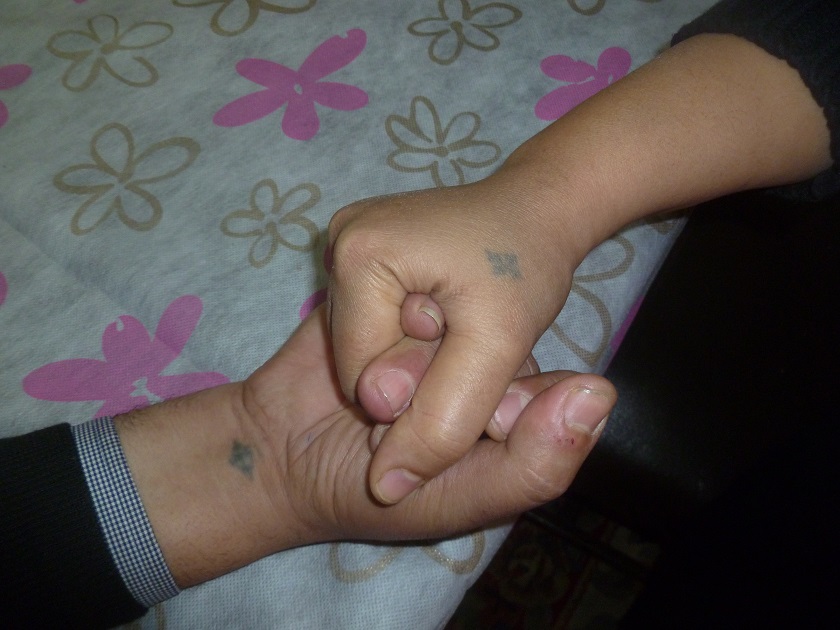

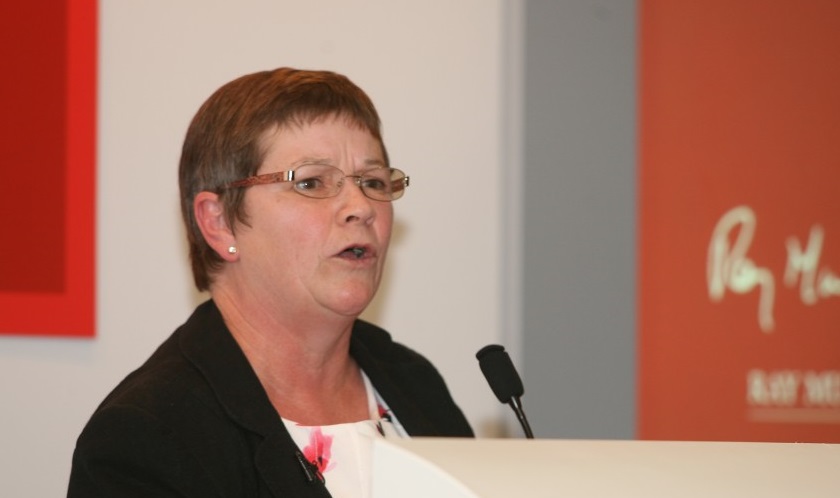
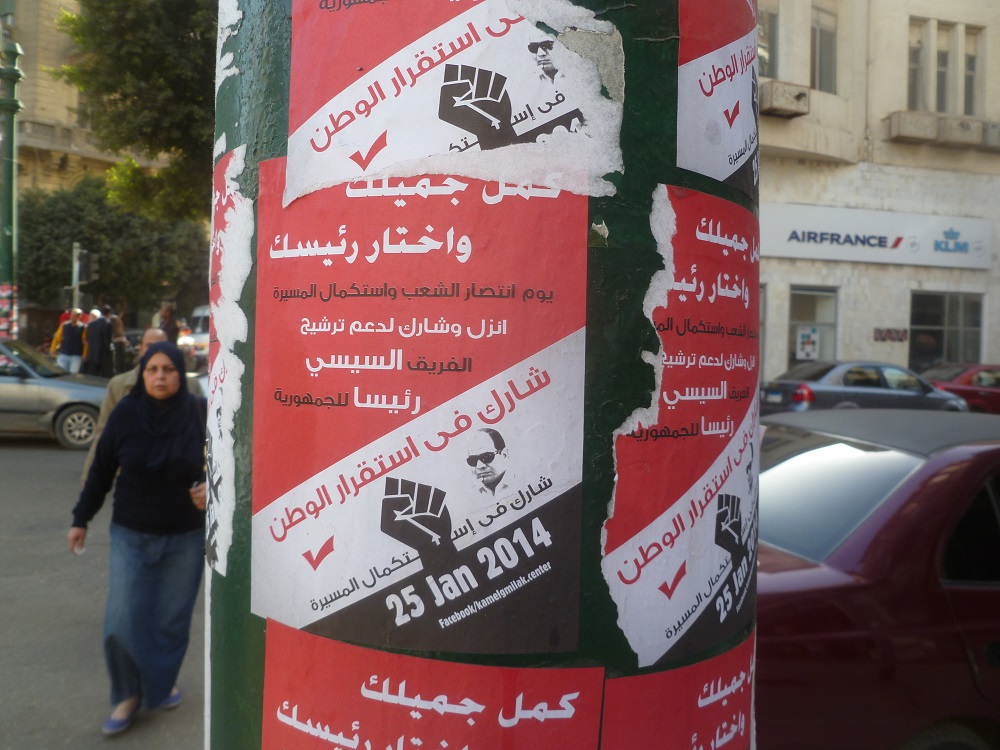


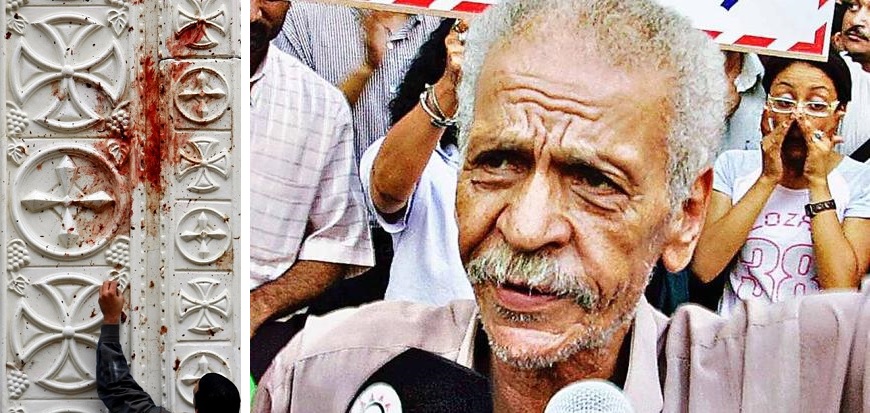



 Jayson Casper