Categories
Christianity Today Europe Middle East Published Articles

Shaken Yet Stirred: Turkish Christians Advise Moroccan Church on Earthquake Aid

Image: Courtesy of First Hope Association (FHA)

Help for Morocco is coming from Turkey. While humble in scope, the biggest impact may be on the church.

First Hope Association (FHA), a Turkish Christian disaster relief agency that provided aid after the massive earthquake that struck southeast Turkey in February, was granted permission to assist in Morocco after its own devastating quake. A four-person team arrived in Marrakesh last week.

Consistent with its Turkish policy, FHA serves all victims without discrimination, in cooperation with the local church. Connecting with a house church network in southern Morocco, the Turkish believers have distributed $30,000 worth of clothes, blankets, and hygiene kits in four mountain villages not yet reached by other aid.

“Our country has gone through the same hardships and difficulties, so we came to help and support,” said Demokan Kileci, FHA board chairman. “This is an amazing opportunity for God’s church here to show his compassion and love.”

In many ways, the parallels are striking.

Morocco and Turkey are both Muslim-majority nations, and they both have small Protestant communities that largely emerged from an Islamic background. The churches in both nations suffered in their respective earthquakes but also rallied support to aid in overall relief. And while enduring varying degrees of ostracism, the believers’ solidarity with fellow citizens has begun to win each a slowly increasing level of social respect.

“Their expression of love was immediate, without any thought of self,” said Tim Ligon, pastor of Marrakesh International Protestant Church, of the local believers he has partnered with in relief. “They counted no cost but responded with everything they had.”

But there is one major difference between the nations: Morocco does not recognize an indigenous Christian faith, while Turkey affords its people freedom of religion—including religious conversion.

Turkish Christians shared their story of faith to CT in hope that the small believing community in Morocco might profit from their experience. For there is another parallel between the nations that Turkish Protestants have taken significant steps to overcome: a history of internal division.

“The Bible tells us that spiritual power comes in unity,” said Ali Kalkandelen, president of Turkey’s Association of Protestant Churches (TeK). “It won’t be easy, but if Moroccan believers support one another and see the church as one body, the Lord will bless them, and fruit will come.”

Moroccan sources uniformly told CT about their love for Jesus and respect for King Mohammed VI, the Moroccan monarch and head of state. They also would like to see their faith recognized equally alongside Islam and Judaism.

But beyond these shared views, the sources had many different perspectives.

Some spoke of a government that discriminated against them and would not help displaced Christians. Others said the government was helping everyone and generally left the believers alone.

Some said their witness employs the Arabic word for “Lord” to hint at their distinction from Islam. Others said they say “Allah” to connect with normal Muslim use. Some distribute literature; others foreswear it as illegal. Some speak of their Christian faith to the media; others are suspicious of those who make it public.

Some said there was good cooperation between Moroccan churches and that donations should go to local believers working in the field. Others said there was distrust between the churches and that donations should be given through the national bank.

In some sense, each of these perspectives could be true. Experiences differ, as do theology and outlooks on mission. But there are Christians who exaggerate their earthquake and overall ministry for the sake of financial support, said some, while others said there were self-professed “Christians” who were not true believers at all. To any who would criticize, Jack Wald counseled…

This article was originally published at Christianity Today, on September 27, 2023. Please click here to read the full text.

Categories
Christianity Today Middle East Published Articles

Morocco Earthquake Moves Marginalized Churches to Christian Charity

Image: Carl Court / Getty

Local and foreign Christians have joined in relief efforts following last week’s massive earthquake in Morocco.

Nearly 3,000 people have died, with more than 5,000 injured. Registering 6.8 on the Richter scale, it is the North African nation’s most powerful quake since 1969 and its deadliest since 1960.

But far from the epicenter near the historic city of Marrakesh, gathered believers all had the same question.

“No one ever asks of disasters, ‘Why did it happen to them?’” said Youssef Ahmed, a senior member of Tangier Northern Church, 350 miles away. “But when it hits you, everyone wants to know God’s will.”

The house church service went much longer than usual.

Although Morocco only recognizes Islam and Judaism as domestic faiths, local believers generally say the government permits them to worship quietly in their homes—under a protective but thorough surveillance. Alcohol and pork, forbidden by sharia, are also freely available in the country. About 15 percent of citizens declare themselves nonreligious, while only 25 percent express trust in clerical leadership.

“We are not restricted in Morocco,” said Ahmed. “Just don’t be a nuisance.”

The latest US State Department report on Morocco indicates that, while “undermining the Islamic religion” is punishable with up to five years in prison, there are no known cases of Christians running afoul of the law.

But that Sunday, the former Muslims had other concerns on their mind.

“Why did it happen? We cannot know. Was it because of sin? We cannot know. Was it a test, like with Job? We cannot know,” said Ahmed, who led the lengthy discussion. “All we know is that God allowed it to happen, and his ways are righteous. We keep our faith in him.”

Encouraged in their walk, they went out to serve.

The congregation is a part of the 36-member Union of Christian Churches, which Ahmed founded in 2010. Congregants traveled south with supplies to see what they could do.

Attempting to reach isolated villages in the Atlas Mountains, where many mud-brick homes were destroyed, they were turned back by roadblocks which permitted only relatives to enter. Continuing on to Jemaa al-Fnaa Square in Marrakesh, they encountered a mass of humanity camped out in fear of continuing aftershocks. They quickly joined in with the multitude of Moroccans—and tourists—distributing water and blankets.

Much of the 9th-century UNESCO World Heritage site was undamaged, including the medieval Kotoubia Mosque which overlooks the square. But a less famous minaret had collapsed, as had portions of the 12th-century city wall. Badly damaged also was the earth-and-stone Tinmel Mosque, built by the Almohad dynasty in an Atlas Mountain valley 60 miles away before the Berber caliphate conquered Marrakesh and moved onward to Spain.

One Moroccan pastor estimates the church today is…

This article was originally published at Christianity Today, on September 15, 2023. Please click here to read the full text.

Categories
Christianity Today Europe Published Articles

Train Up a Child: Ukraine’s Christian Schools Model Wartime Education

Image: Christopher Furlong / Staff / Getty

As air raid sirens blared down the hallways, Tetiana Garkun hurried her middle school students outside the My Horizons Christian School campus into the designated bomb shelter.

Located in Khmelnytsky, 200 miles southwest of Kyiv, Ukraine’s capital, the school’s children moved in orderly fashion—a sign of how accustomed they’ve become to Russian missiles targeting military installations in nearby Lviv.

They prayed, waited for the all-clear signal, and returned to their Bible class.

Garkun’s own children, daughters aged 16 and 17, were similarly composed. Confident high schoolers who only a few years earlier were sharing their faith in Ukraine’s secular education system, they follow after their great-grandfather, a Pentecostal pastor sentenced to death by magistrates in the Soviet Union.

Times have changed, as have education authorities.

“The government encourages us to teach our students how to be Christians and live godly lives,” said Garkun. “They see that we are needed in these horrible days.”

She had earlier led the students in a discussion prompted by the official state health education curriculum: What helps us live a long life?

Model answers included a good diet, avoiding smoking, and participation in sports. But amid war, these answers no longer apply, she said, and even her prepared integration of Christian material hardly satisfied her own soul. In years past, she recited Ecclesiastes 7:17: “Do not be overwicked, and do not be a fool—why die before your time?”

However, she pondered, what about when the righteous are killed by Russian evil?

“When we follow God’s rules and truth, we lead happier and healthier lives,” Garkun said. “But I am honest. I have doubts. And I let the children know it is okay—we can be sincere with God.”

Daily devotions, regular chapel, and close-knit relations have helped sustain a teaching staff struggling to manage massive disruptions to work and family life. Garkun said her best friend, an Orthodox Ukrainian, has grown deeper in her faith since she joined the Christian school. But across the nation, 54 percent of teachers…

This article was originally published at Christianity Today, on June 22, 2023. Please click here to read the full text.

Categories
Asia Christianity Today Published Articles

Afghan Christians Are Very Online

Image: Courtesy of SAT-7

Since the fall of Afghanistan in August 2021, it has been nearly impossible for Afghan Christians to find fellowship.

Not that it was easy before.

“There was no local church where I could explore my questions about God,” said Parwin Hosseini, now living in Turkey. “But once I found answers abroad, I accepted Jesus.”

Her last name has been changed for security reasons, to protect her visa status.

A university graduate from Mazar-i-Sharif, Hosseini left her home country in 2019 and, unlike most local Afghans, is not a refugee. She fled her uncle’s arrangement of her marriage to a man nearly twice her age and obtained residency pursuing a master’s degree in economics. In Istanbul, a Turkish pastor gave her a Bible in Dari, her native language, and introduced her to an Afghan church when she moved to Ankara.

She had heard of the Good Book before. Today, she facilitates its study.

“I want to help evangelize women,” said Hosseini, coordinator for the nascent Afghan Bible College (ABC), “and then equip them for ministry.”

Begun in 2020 by a Korean missionary in Turkey, ABC is an online college with some in-person training. With ten affiliated lecturers, including three with PhDs, it aims to prepare leaders for the next generation of Afghan Christians—estimated to number up to 12,000 before last year’s takeover of their homeland by the Taliban.

No one knows how many remain in Afghanistan—but 12 are ABC students.

Many other Christians joined the national exodus sparked by the US military’s sudden withdrawal. Of the nations welcoming displaced Afghans, southern neighbor Pakistan tops the list, hosting more than 1.5 million Afghan refugees and asylum seekers (and 8 of ABC’s students). Neighboring Iran to the west and Germany follow (with 3 students each), while Turkey hosts 140,000 displaced Afghans (and 20 students). Out of ABC’s 50 students spanning five nations, Hosseini gets to be a mentor to its 15 women. And with the Taliban’s late-December suspension of college education for female students, her cadre is…

This article was originally published at Christianity Today on January 4, 2023. Please click here to read the full text.

Categories
Christianity Today Middle East Published Articles

Finding Common Ground in a Big Fish

Image: Tim Peacock

Twenty miles south of Beirut is a sandy beach called Jiyeh. It’s a rare interlude in Lebanon’s rocky coastline, and if you were out in the Mediterranean, crying for deliverance as currents swirled about you, waves and breakers sweeping over you, this is where you’d want God to command a fish to vomit you onto dry land.

And this is, in fact, the spot where ancient legend says that the Hebrew prophet Jonah was delivered safely to shore.

Jonah has long been honored here. Mosaics found in the ruins of a 1,500-year-old Byzantine church show the prophet who tried to run away from his mission to Nineveh getting turned around by a large fish. And today there is a Muslim mosque on the site with a shrine to Jonah.

The Hebrew story of the reluctant prophet is beloved not only by Christians but also by those who hold the Qur’an to be the final revelation of God. And chiseled on the shrine is the verse that he prayed from the belly of the fish, which Muhammad urged Muslims to recite when in trouble.

“The most common prayer of Muslims during times of crisis is the prayer of Jonah,” Emad Botros, professor of Old Testament at Arab Baptist Theological Seminary in Beirut, told CT. “We share a heritage with Muslims. And what is better to share than stories?”

Botros is one of a few scholars turning to Jonah as a site of common interest connecting Christians and Muslims. He has written a book, Jonah: Bible Commentaries from Muslim Contexts, the second volume in a series on reading the Bible in the context of Islam. He thinks the story of the prophet—along with other shared stories—can help start a conversation across the faiths.

“The prophets of old were the heroes of Muhammad,” Botros said. “Knowing his reflections helps us communicate our biblical stories more effectively.” The Qur’an’s account of Jonah—which Muslims believe was divinely revealed through the archangel Gabriel—is different from the version in the Hebrew Bible. In the Muslim version, the city he’s going to is…

This article was originally published in the December print edition of Christianity Today. Please click here to read the full text.

Categories
Christianity Today Middle East Published Articles

Arab Christian Scholars: Trade Minority Mindset for Abundant Life

Image: Illustration by Rick Szuecs / Source images:Joe Raedle / Staff / Carl Court / Staff / Getty / Frank Mckenna / Unsplash / Wikimedia Commons

A group of academic Christians in the Middle East has thrown down the gauntlet: The local church, bound in fear to its minority mindset, needs to walk afresh in the Holy Spirit.

“We must tell the truth and call for freedom,” said Souraya Bechalany, coauthor of “We Choose Abundant Life,” a document released last September that makes 20 recommendations. “We are powerful in Jesus Christ, but too often we don’t believe it.”

Bechalany, a professor of theology and ecumenism at the University of St. Joseph in Lebanon, joined 14 other scholars across the region to challenge local Christians to give up their self-understanding of being a minority and to work for the rights of citizenship for all in a changing society.

Local clergy, they say, have instead often wedded themselves to the regimes.

Surveying experience from the Ottoman Empire onward, the document laments how many Christians have taken refuge in sectarianism, turning their vision inward toward survival.

Arab nationalism provided an escape, as Christians took leading roles in developing a common political discourse independent of religion. So did relationships with Western churches, as Catholics and Protestants pioneered modern education and built hospitals to serve society.

But as the region’s nation-states increasingly sacrificed democratic norms in favor of political stability—whether secular or Islamic—church leaders tended in one of two directions: Ally with the authorities, or plead to patrons in the West.

“If we continue in this direction,” said Gabriel Hachem, a Melkite Catholic priest and editor in chief of the French-language journal Proche Orient Chretien, “there is no future for us in the region.”

For now, the regimes are winning, as the challenge of ISIS and political Islam have pushed Christians to support the pillars of authority in alliances of minorities. But in doing so, they sided against human rights and dignity. This is inherently unstable, Hachem said, and Christians suffer also.

Their rate of emigration is rapidly increasing. The ecumenical Abundant Life is the product of a three-year consultation involving…

This article was originally published at Christianity Today, on February 23, 2022. Please click here to read the full text.

Categories
Christianity Today Middle East Published Articles

The Secret to Deradicalizing Militants Might be Found in Middle Eastern Churches

Image: Illustration by Rick Szuecs / Source images: Sohaib Al Kharsa / Unsplash / Abid Katib / Staff / Getty

A Muslim man walked into the offices of a Christian pastor whose congregation in Lebanon’s Bekaa Valley has been serving Syrian refugees since the outbreak of civil war.

“I’ve hated you for the past eight years,” the Muslim said, “and I’ve tried to turn my community against you. But three months ago, it was your American doctors who treated me and paid for my hospital stay.

“We hate these people,” he continued, “yet they come here and show us love. Tell me the time of your services; I want to follow Jesus. How great is your Christianity!”

This story, told to CT in October by the pastor, who asked that their names not be used for security reasons, is remarkable. But it is not unique. Evangelical ministers in the Middle East readily recount conversion narratives of the most militant, radicalized Muslims. A second pastor has described how a Syrian confessed that he started coming to church to kill him. Now a believer, the man serves other refugees as a member of the congregation. A third says his once-small Christian fellowship has grown to more than 1,500 largely due to converted refugees. Perhaps as many as 10 percent of them are former extremists.

These accounts and others like them have led Scott Gustafson, a PhD candidate with Vrije Universiteit Amsterdam’s Extreme Beliefs program in Amsterdam, to a realization: Evangelical Arab ministry succeeds where millions of dollars of security-based solutions have failed in turning militant Muslims away from violence.

“No one strategizes: Let’s deradicalize the extremists,” he said. “But it is a demonstrable side effect.” In the diverse academic field trying to find secular pathways out of extremism, this is…

This article was originally published in the December 2021 print edition of Christianity Today. Please click here to read the full text.

Categories
Christianity Today Middle East Published Articles

Iran’s House Churches Are Not Illegal, Says Supreme Court Justice (Updated)

Image: Courtesy of Article 18

Update: The 9 converts to Christianity made eligible for release by November’s Supreme Court ruling remain in prison for their faith, according to Mansour Borji, advocacy director for Article 18. The judge had ruled that promotion of Christianity through house churches is not illegal.

But another case is contributing to the establishment of precedent.

A revolutionary court prosecutor in the city of Dezful, 450 miles southwest of Tehran, declined to bring charges against eight converts to Christianity. Four were arrested in April, with four others later added to the case.

Hojjat Khalaf, Esmaeil Narimanpour, Alireza Varak-Shah, Mohammad Ali Torabi, Alireza Zadeh, Masoud Nabi, Mohammad Kayidgap, and Mohsen Zadeh were facing criminal accusations for “propaganda against the Islamic Republic of Iran.”

The judge provided a written explanation on November 30. According to Middle East Concern, he stated that although apostasy is a crime according to Islamic sharia, it is not an offense according to the laws of Iran. Borji said the decision was unrelated to the recent Supreme Court ruling (below), as this case had not yet even made it to court.

“The prosecutor was simply not convinced with made up charges by intelligence officers with no shred of evidence,” he said. “But his reasoning is very important.”

This update was added by Christianity Today on December 21, 2021, for an article originally published on December 3. Please click here to read the full text.

Categories
Christianity Today Middle East Published Articles

Sunday Worship Comes to the Gulf

Image: Walter Bibikow / Getty Images
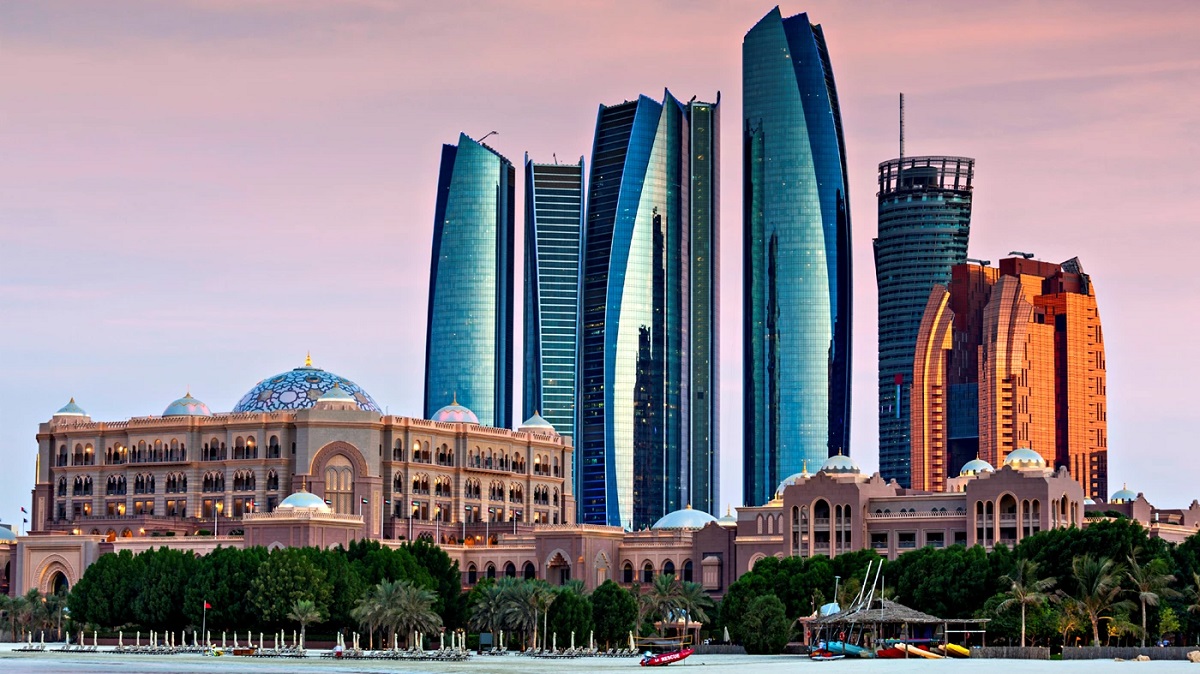
Etihad Towers and Emirates Palace Hotel in Abu Dhabi, UAE.

The United Arab Emirates (UAE) wants to create a more friendly financial climate. Christians, say local evangelical leaders, are among the unintended beneficiaries.

“The business of Dubai is business, even though they are committed Muslims,” said Jim Burgess, evangelical representative to the Gulf Churches Fellowship, referencing the UAE’s economic hub. “But worshiping on Sunday—our traditional day to celebrate the resurrection of Jesus—will be a great blessing.”

Seeking better alignment with international markets, the Emirates is adopting a Monday to Friday workweek. The weekend had previously begun with Friday, in deference to Muslim communal prayers. Christians aligned their corporate worship accordingly.

“It is a bit strange to worship on a Friday, but you get used to it,” said Hrayr Jebejian, general secretary of the Bible Society of the Gulf, who lives in Kuwait. “The [UAE’s] reasons are purely financial, but for Christians it will be like going back to normal.”

Of the UAE’s 10 million people, 88 percent are migrant workers. The Pew Research Center estimates 13 percent are Christians, coming largely from India, Indonesia, and the Philippines, in addition to Western expats.

It is necessary to keep and attract good talent. Alongside officially secular Lebanon and Turkey, the UAE is now the third Middle Eastern nation to keep the Western calendar. But it comes with a tweak. All public sector employees will be dismissed at…

This article was originally published by Christianity Today on December 14, 2021. Please click here to read the full text.
Categories
Christianity Today Middle East Published Articles

Coup Reversal Divides Sudan’s Christians

Courtesy: Susanna al-Nour

As a young mother in Sudan, Susanna al-Nour struggled like many others with rising prices and shortages of goods. International support pledged after the 2019 revolution was slow to materialize. The government struggled to disburse promised aid. And tribal groups protesting in the east were blocking access to essential imports coming through the Red Sea city of Port Sudan.

And then this October things got worse.

Citing divisions among politicians, Abdel Fattah al-Burhan, the general heading Sudan’s mixed military-civilian Sovereign Council, launched a coup against the popularly selected prime minister, Abdalla Hamdok.

Phone and internet connections were cut, Hamdok was detained, and security forces raided neighborhoods to arrest supporters of his government, roughing up others. Thousands poured into the streets, including Nour’s husband, an evangelist and pastor’s assistant at Faith Baptist Church in the Soba area of the capital, Khartoum.

“With a small child, I couldn’t go because of the tear gas,” she said. “But it was necessary to demonstrate against the regime.”

Sudan’s Christians were then solidly in support of Hamdok, sources told CT. Two months later, sources no longer speak in consensus.

At the time, enraged and without communication, the nation went into a standstill. Nour’s online studies through a seminary in Lebanon became impossible. So did her husband’s student ministry—as most young people were marching to reverse the coup.

Back in 2019, Hamdok quickly became the symbol of the revolution. Chosen by consensus among the political and revolutionary groups that deposed the 30-year Islamist dictatorship of Omar al-Bashir, his leadership was one of the few unifying factors in a rapidly fraying partnership between civilians and the military.

And then he wasn’t…

This article was originally published at Christianity Today, on December 10, 2021. Please click here to read the full text.

Categories
Christianity Today Middle East Published Articles

Moroccan Christians Welcome End of a Decade of Islamist Government

Man walking past voting wall, Marrakesh, Morocco

For the first time in his life, Rachid Imounan cast a vote—and overturned Morocco’s Islamist-oriented government.

He is not alone.

Turnout surged to 50 percent as liberals routed the Justice and Development Party (PJD), which led the North African nation’s parliament the past 10 years. Its share of the 395-seat legislature dropped from 125 to 13.

The PJD finished eighth overall.

“We thank Jesus, the Islamists are gone,” said Imounan, a church planter who lives in the southern city of Agadir. “God answered our prayers, and now we have the government we wanted.”

Aziz Akhannouch of the National Rally of Independents (RNI) was sworn in as prime minister by King Mohamed VI on September 11, after his party captured 102 seats. He is tasked with forming a coalition government to guide Morocco through its current economic downturn.

A constitutional monarchy, Morocco has held multi-party elections since its independence in 1956. But to stave off protests during the Arab Spring, in 2011 the king instituted reforms and transferred significant power to the prime minister.

Mohamed VI retains final say over several government positions, however, and is revered as “Commander of the Faithful” as a direct descendant of Islam’s founding prophet Mohammed.

Christians described “liberal” parties as those that favor freedom—excepting challenges toward the person and position of the king, whose authority is respected by all political entities. Islamists, meanwhile, wished to impose sharia law, cover women, and remove pork and alcohol from neighborhood supermarkets.

“Akhannouch is a businessman. Whether you worship the sun or the moon, he doesn’t care,” said Youssef Ahmed, one of Morocco’s few second-generation Christians.

“He won’t persecute anyone.” Open Doors ranks Morocco…

This article was originally published at Christianity Today on September 21, 2021. Please click here to read the full text.

Categories
Asia Christianity Today Published Articles

Dari TV Host: Afghanistan Will Now See ‘Pure Christianity’

Shoaib Ebadi

Afghanistan and its neighbor Iran share the Persian language. Now that the Taliban will rule from Kabul again, might the countries begin to also share a spiritual trajectory?

In 1979, the shah of Iran was overthrown in an Islamic revolution. The crackdown that followed ended the Western Christian presence in the nation. Yet today the Iranian church is one of the fastest-growing in the world, as the ruthlessness of the mullahs led many to sour on Islam and some to find new faith in Jesus.

Satellite TV ministry played a great role in spreading the gospel in Iran, and continues today across the border in Afghanistan. Christian ministry SAT-7 began broadcasting in 2002 in Farsi, the Persian dialect spoken in Iran, and in 2010 Shoaib Ebadi began its first prerecorded programming in Dari, the Persian dialect spoken in Afghanistan. His show Secrets of Life went live in 2014, and today is accessible across the whole nation.

The 55-year-old Ebadi was born in Afghanistan but became a Christian in 1999 as a refugee in Pakistan. The following year he emigrated to Canada, and today heads Square One World Media, producing Christian media in various languages around the world.

He told CT about the history of the Afghan church, the impact of the US military upon it, and his hope that “pure Christianity” might now gain a hearing in his homeland.

Some statistics put the number of Christians in Afghanistan at 8,000. Can you give us a brief history of the church?

There was a Protestant church building constructed in 1970 in Kabul during the time of the shah, but it was destroyed when the monarchy was overthrown in 1973. The Catholics had a church in the Italian embassy since 1933. But these churches were only for foreign nationals, not Afghans.

There were a handful of believers in the 1950s, as American professionals came to Afghanistan and opened an eye hospital and a technical college. Later on, in the 1990s, tentmaker missionaries came as English teachers and NGO workers. And I was in a fellowship of about 30–40 Afghan believers in Pakistan. Most eventually went to the West.

These are probably the first Afghans to know Christ in the modern era, but God only knows.

So how did the Afghan church develop after the Americans came in 2001?

Some of the believers from Pakistan, as well as other refugees who fled to Iran, went back to Afghanistan after…

This article was originally published at Christianity Today on August 30, 2021. Please click here to read the full text.

Categories
Christianity Today Middle East Published Articles

Do Flags Belong in Churches? Pastors Around the World Weigh In.

Image: Illustration by Mallory Rentsch / Source Images: Anthony Choren / Karl Fredrickson / Joseph Pearson / Unsplash

This year, July 4 falls on a Sunday. As American churches consider how to recognize the holiday during the service, we decided to revisit a question CT posed to American church leaders back in 2013. Here’s what their counterparts from 11 different countries have to say in 2021. Answers are arranged from yes to no.

Egypt: Sameh Maurice, senior pastor, Kasr El Dobara Evangelical Church, Cairo

Yes, I agree in displaying the flag of my country in the church, the flag of my country only and not other countries, as it is a spiritual and not a political orientation.
The purpose of raising the flag is to keep my heart united with my people in prayer for the salvation of their souls. It’s to remember that I must stand in the gap for my people that they may know the Lord and see the light of the gospel, and to tell my country and my people how much I love them and pray for them.

Jordan: Hani Nuqul, pastor, Evangelical Free Church in Jabal Al Hussein, Amman

I strongly believe that each church building should post the flag on the building and in the sanctuary. As an elder and pastor, we made this decision a few years ago to do so in order to show our loyalty as citizens to the country of Jordan. We believe that by doing so, we are a good example and testimony to others and also following the teachings of the Bible.

As the Evangelical Free Church council, we have taken the decision to put the Jordanian flag in all local churches that belong to the council along with the church logo and flag.

This article was originally published by Christianity Today on July 2, 2021. I contributed additional reporting. Please click here to read the full text.
Categories
Christianity Today Europe Published Articles

Fortress Europe: As Islam Expands, Should the US Imitate the ‘Christian’ Continent?

Image: loeskieboom / iStock / Getty Images

Within three decades, Muslims may comprise 14 percent of Europe.

The face of the historically Christian continent, tallied at 5 percent Muslim in 2016, may dramatically change by 2050 if high migration patterns hold.

And as Muslim families have a birth rate one child higher than the rest of the continent, the Pew Research Center projects nearly 1 in 5 people will be Muslim in the United Kingdom (17%), France (18%), and Germany (20%). Sweden is projected to become 30 percent Muslim.

And Austria, with its 20 percent projection, is on guard. The majority-Catholic nation recently published an online Islam Map, to identify mosques and other centers of politicized religion.

According to European religion experts, however, one-third of European Muslims do not practice their faith.

Conversely, this suggests that two-thirds of Muslims believe in and practice Islam. Contrast this with the median figure of 18 percent of Western Europeans (across 15 nations) who attend church at least monthly and the median figure of 27 percent who believe in God according to the Bible.

Could the fear of some European Christians be plausible: an eventual Eurabia?

Or is it Islamophobia to say so?

Or, to the contrary, should Americans look across the ocean and consider French separatism laws and Swiss burqa bans in pursuit of a shared secularism?

For concerned evangelicals, Bert de Ruiter has his own questions—about their own faith.

“If Islam is taking over Europe, is that a problem?” asked the European Evangelical Alliance’s consultant on Muslim-Christian relations. “Will God suddenly be in a panic?” Muslims will…

This article was originally published on June 3, 2021, at Christianity Today. Please click here to read the full text.

Categories
Christianity Today Middle East Published Articles

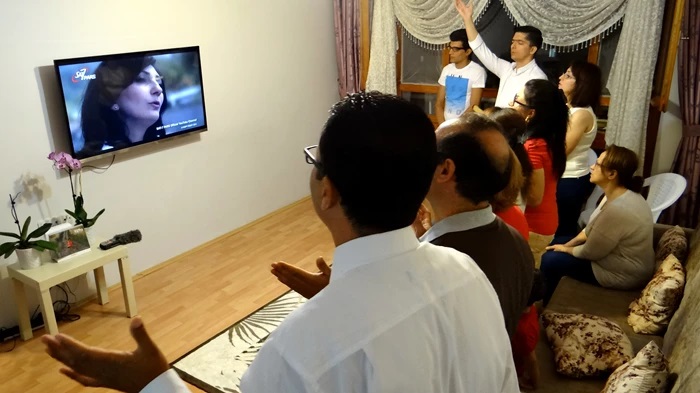
Streaming in the Desert: Middle East Discipleship On-Demand

Courtesy of SAT-7

Growing up in civil war–era Lebanon, Rita El-Mounayer’s family often had to hook up the television to a car battery.

Last month, her ministry launched the first Christian on-demand streaming service in the Middle East.

“Television was our only refuge during the war, and was a communal activity,” said the international CEO of SAT-7. “This is what we will miss with , but we have to be where the technology leads.”

SAT-7 is a pioneer in the field. Beaming Christian satellite TV programming into the Arab world since 1996, it now hosts channels specializing also in Turkish and Farsi.

In 2007, it launched a dedicated kids channel. Ten years later, a separate academy brand was created to provide schooling to Syrian refugees and later to assist with at-home COVID-19 education.

Each is now available at SAT-7 PLUS, through web and mobile apps accessible via Android or iOS. Approximately 20 percent of the broadcaster’s 25 years of content can be streamed, along with all current live programming.

“In Morocco, it used to be that viewers had to wait for days until the Christian teaching program was scheduled,” El-Mounayer said.

“Now, they can binge watch.” While the advantages for the ministry are obvious, the drawback lies in…

This article was originally published at Christianity Today, on March 18, 2021. Please click here to read the full text.
Categories
Christianity Today Middle East Published Articles

Interview: The Middle East Church Must Resemble Salt, not Rabbits

Image: Courtesy of The Middle East Council of Churches

Pope Francis will make the first papal visit ever to Iraq in March to encourage the dwindling faithful. War and terrorism have hemorrhaged the nation’s Christians, but he hopes they might return.

Meanwhile in Lebanon, Michel Abs, recently selected as the new leader of the Middle East Council of Churches (MECC), agrees with the pontiff. But in an interview with CT, he said that schools and hospitals have distinguished Christians, who he hopes might even increase in number—and quality.

And Protestants, he said, have a lever effect that raises the whole. Representing only 7 percent of the regional Christian population, they have a full one-quarter share in the council.

The MECC was founded in 1974 by the Protestant, Greek Orthodox, and Oriental Orthodox denominations. Catholics joined in 1990 to complete its diverse Christian mosaic.

According to the Pew Research Center’s 2010 Global Christianity report, Orthodox believers represent 65 percent of the Middle East’s Christians, with Catholics an additional 27 percent.

But it was the Protestants who helped give birth to the ecumenical movement that joined them together. The 1934 United Missionary Council became the Near East Christian Council in 1956, and the Near East Council of Churches in 1964.

It was renamed the Middle East Council of Churches when the Orthodox joined 10 years later. Today it includes Protestant church associations in Egypt, Syria, Lebanon, Jordan, Palestine, Sudan, Iran, Kuwait, Algeria, and Tunisia.

Council leadership rotates between the four denominations. Last September, Patriarch John X. Yazigi of the Greek Orthodox Church nominated Abs for the Eastern Orthodox four-year term. (Protestants are next in line.)

“Despite the difficulties we face today, being one is the solution,” Abs said in his acceptance address last October.

“This vine that the Lord planted two millennia ago will continue to spread, to include ever-growing areas of the planet.”

A Lebanese Orthodox, Abs represents the ecumenical diversity of the Middle East. His father was educated by Protestants, and married a Catholic. An economist and sociologist, he is a lecturer at the Jesuit St. Joseph’s University in Beirut.

CT interviewed Abs about the regional influence of Christians, the nature of persecution, and the witness of the gospel in the Middle East:

Congratulations on your election as general secretary. From this position, how do you describe the current situation of Christians in the Middle East?

It has been a difficult decade. The emerging movement of fundamentalism has harmed both Christians and Muslims. Everyone is in danger. We have to deal with turbulent times with much wisdom and solidarity. We need a long-term vision.

But I don’t think we will be eradicated from this area. Maybe we will diminish in numbers, or increase later on, but numbers are not the most important thing, despite their importance and their psychological effects.

The quality of their presence is important too. Christians are known for the quality of what they do. With respect to others, they developed efficient institutions, like universities, schools, and media. This helps, but I am still concerned with…

This article was originally published at Christianity Today on February 19, 2021. Please click here to read the full text.

Categories
Christianity Today Middle East Published Articles

Christmas Unites a Divided Iraq

A picture taken on December 30, 2016 shows people walking past Christmas and New Year’s decorations displayed outside a shopping mall street in Arbil, the capital of the autonomous Kurdish region of northern Iraq. / AFP / SAFIN HAMED via Getty Images

Seventeen years since the fall of Saddam Hussein, the fractious Iraqi nation—divided mostly between Sunni, Shiite, and Kurdish Muslims—remains unable to agree on a national day.

But they can agree on Christmas.

Last week, the parliament unanimously passed a law to make Christmas a “national holiday, with annual frequency.”

The latter phrase gave great “joy and satisfaction” to Cardinal Louis Raphael Sako, patriarch of the Chaldean Catholic Church. Last October, he presented an official request to Iraqi President Barham Salih to make Christmas a permanent public holiday.

“Today Christmas is truly a celebration for all Iraqis,” said Basilio Yaldo, bishop of Baghdad and Sako’s close associate. “This is a message of great value and hope.”

In 2008, the government declared Christmas a “one-time holiday.”

In 2018, the parliament amended the law to make Christmas for all citizens.

But after each occasion, it was not renewed.

“The declaration is beautiful, but it is very late,” said Ashur Eskrya, president of the Assyrian Aid Society–Iraq. “But our trouble is not in holidays, it is in…

This article was originally published at Christianity Today, on December 21, 2020. Please click here to read the full text.

Categories
Current Events

117 Witnesses Detail North Korea’s Persecution of Christians

Kim Haeun/Korea Future Initiative

Two North Korean families prayed silently on the prison floor—making certain to keep their eyes open. Another detainee, a veteran of Kim Jong-il’s gulag system, asked them if they were afraid.

“No,” one of the mothers replied. “Jesus looks over us.”

The detainee began to cry, knowing the fate that awaited them. The next day, they were sent to Chongjin Susong political prison camp, and have not been heard from since.

But elsewhere in Onsong County’s pre-trial detention center, however, a different Christian prisoner closed his eyes. After confessing he was at prayer, his fellow detainees collectively assaulted him—afraid he would bring trouble on them all.

These are just some of the harrowing stories told in a 2020 report on religious persecution in North Korea. Groundbreaking in its scope, it is drawn from the testimony of 117 defectors, cross-referenced with known data.

Produced by the Korea Future Initiative (KFI), Persecuting Faith reveals 273 documented victims—76 of whom are still in the North Korean penal system. It names 54 individual perpetrators, including 34 with identifying information.

KFI hopes the information will inform future Global Magnitsky sanctions, applied against individual human rights violators by the United States and other Western nations.

Drawn from experiences stretching from 1990 to 2019, KFI’s report lists scores of violations. These include 36 instances of punishment meted out to family members, 36 instances of torture, and 20 executions. Women and girls represent 60 percent of the victims.

And Christians are disproportionately imprisoned—by far.

Open Doors, which has ranked North Korea No. 1 in its World Watch List for 19 straight years, estimates there are 300,000 Christians in the population of 25 million. Tens of thousands of these occupy the gulag. Of KFI’s 273 victims, Christians total nearly…

This article was originally published at Christianity Today, on December 21, 2020. Please click here to read the full text.

Categories
Christianity Today Published Articles Reconciliation

Muslims Join Evangelical Theology Conference

It is not often that a Muslim appears at an evangelical theological gathering.

Al Mohler invited three.

The trimmed-down 72nd annual conference of the Evangelical Theological Society (ETS), held virtually this week, usually welcomes up to 2,000 top scholars to present on the most salient issues facing evangelical scholarship.

This year’s theme: Islam and Christianity.

“We are called to truth, and to understanding the world around us more accurately and thoughtfully,” said Mohler, president of Southern Baptist Theological Seminary (SBTS), who also served as ETS program chair.

“That certainly includes our understanding of Islam, which has from the beginning represented an enormous challenge to Christian evangelism, apologetics, theology, and cultural engagement.”

Roughly 15 percent of the 130-plus events addressed these challenges, including the three official plenary sessions—in typical academic parlance:

  • “The Authority and Function of the Quran in Islam,” by Ayman Ibrahim of SBTS
  • “Through the Prism: The Trinity and the Islamic Metanarrative,” by Timothy Tennet of Asbury Theological Seminary
  • “American Christians and Islam: From the Colonial Era to the Post-9/11 World,” by Thomas Kidd of Baylor University

But it was the challenge of “cultural engagement” that led ETS to reach out to the Muslim panelists. Each was invited to share their view of evangelicals, and address the issues that concern them. It could “scarcely be more relevant and urgent,” said Mohler.

Three Christians joined them on the panel, focused on “Understanding Our Neighbor.” “We don’t resist the idea we must love Muslims,” said John Hartley, a research fellow at Yale, “but we…”

This article was originally published at Christianity Today, on November 20, 2020. Please click here to read the full article.

Categories
Christianity Today Middle East Published Articles

Biden Said ‘Inshallah.’ Many Arab Christians Do Too.

Image: Illustration by Mallory Rentsch / Source Images: Win McNamee / Scott Olson / Getty Images

Unnoticed by many during the contentious first presidential debate, Joe Biden introduced a new Arabic word into the American lexicon.

Inshallah.

Technically, it is three words, in both Arabic and English: “in sha’ Allah,” or “if God wills.”

“If you take it literally, you won’t get the intent,” said Ramez Atallah, general director of the Bible Society of Egypt.

“It can also mean, ‘It will never happen,’ and this is probably what Biden meant.”

Asked by the moderator about his tax returns, President Donald Trump answered, “You’ll get to see it.”

To which the former vice president interjected, “When? Inshallah?”

Trump continued, and the moment was lost to almost all but Arabic-speaking viewers. Muslim Twitter users lit up in astonishment, wondering if they heard correctly.

Enchilada” was about as close as other ears heard.

But while one Muslim writer has humorously called inshallah the Arabic equivalent of “fuggedaboudit,” what should Christians make of the phrase?

“Everything is uncertain,” Atallah said. “We live in an unpredictable world, and no one is ever sure that what they plan will be accomplished.” He highlighted the biblical equivalent in…

This article was originally published at Christianity Today, on October 7, 2020. Please click here to read the full text.